Department of Behavioral Health and Intellectual disAbility Services
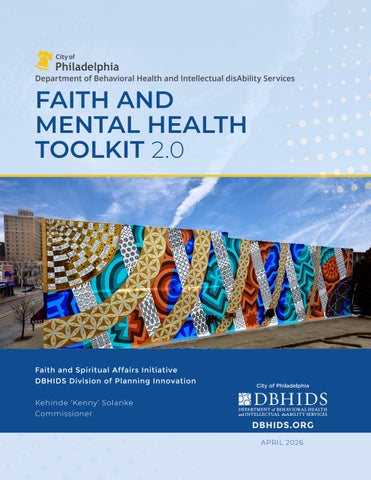
FAITH AND MENTAL HEALTH TOOLKIT 2.0

F aith and Spiritual Affairs Initiative
DBHIDS Division of Planning Innovation
Kehinde ‘Kenny’ Solanke Commissioner

APRIL 2026



MESSAGE FROM THE COMMISSIONER TO PHILADELPHIA FAITH LEADERS
Dear Philadelphia faith leaders,
As Commissioner of the City of Philadelphia Department of Behavioral Health and Intellectual disAbility Services, I extend my heartfelt appreciation for the essential role you play in nurturing the emotional and spiritual well-being of our communities. DBHIDS is committed to promoting healthy minds, healthy bodies, and healthy communities, and our mission aligns closely with your work to uplift, guide, and support individuals and families throughout Philadelphia. Together, we strive to foster a city where every person has access to compassionate, understanding, and high-quality behavioral health resources.
Faith communities have long been places of refuge, spaces where people find belonging, meaning, and support during life’s most difficult moments. We know that many individuals turn first to their faith leaders when experiencing distress, and the trust placed in you is profound. Through the Faith and Spiritual Affairs initiative and its diverse Advisory Board, DBHIDS partners with faith and spiritual communities to reduce stigma, increase awareness of behavioral health challenges, and strengthen the pathways that connect congregants to care.
This partnership is grounded in our CARE Framework, which focuses DBHIDS efforts on Connection, Access, Resilience, and Equity. CARE guides how we work with you and with each other, ensuring that we build strong relationships, clear routes to services, resilient communities, and fair, inclusive systems of support. Leading with CARE allows us to respond more effectively to the ongoing challenges facing our city and to create environments where all Philadelphia residents can flourish.
This Faith and Mental Health Toolkit reflects our shared commitment to a healthier, more resilient Philadelphia. By collaborating across sectors, faith, health, and community, we can expand access, reduce stigma, and ensure that every person feels seen, valued, and supported. Thank you for your continued leadership and for being indispensable partners in advancing wellness and recovery in every neighborhood of our great city.

Sincerely,
Kehinde ‘Kenny’ Solanke, MSW, LSW DBHIDS Commissioner
A PASTORAL AND INTERFAITH MESSAGE OF SUPPORT FOR MENTAL HEALTH AND WELLNESS
Dear friends in faith and community,
Across all faith traditions, we share a sacred responsibility to care for the whole person; mind, body, and spirit. Mental health and wellness are deeply connected to our spiritual well-being, our relationships, and our ability to live with purpose, dignity, and hope.
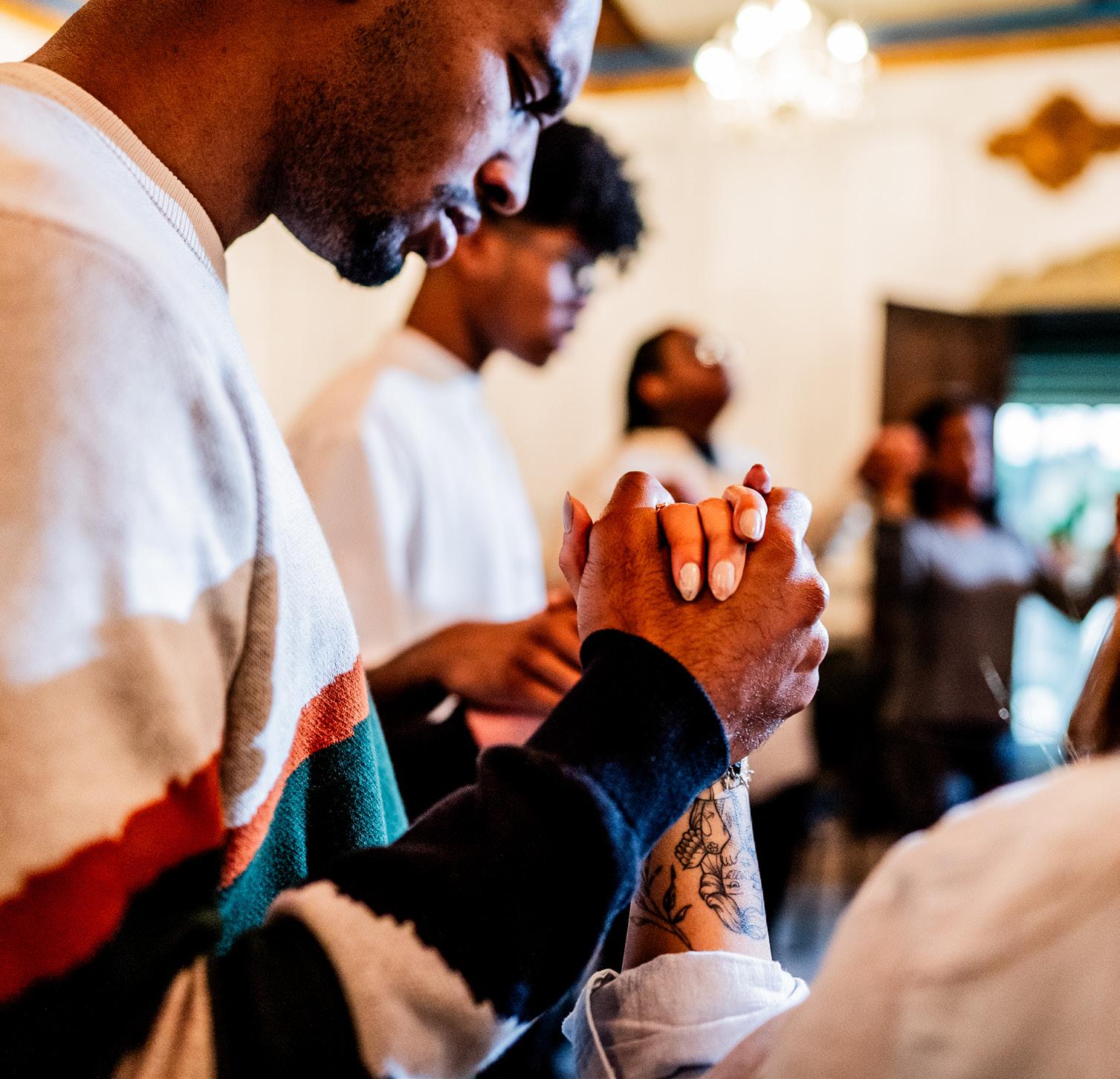
Faith communities are often places of refuge, where individuals turn to in moments of struggle, grief, and uncertainty. Whether through prayer, meditation, fellowship, or counsel, our houses of worship have long served as sanctuaries of healing. It is essential that these sacred spaces remain welcoming environments where conversations about mental health are met with compassion, understanding, and grace.
Mental health challenges do not discriminate by faith, background, or belief. They touch people of every tradition and every walk of life. Addressing mental wellness is not a departure from faith, it is an expression of it. When we encourage openness, reduce stigma, and connect individuals to supportive resources, we honor the shared values that unite us: love of neighbor, mercy, justice, and care for the vulnerable.
This Faith and Mental Health Toolkit is an important resource for faith leaders and community members as we work together to promote wellness and wholeness. Through interfaith collaboration and mutual respect, we can strengthen our communities and ensure that no one feels alone in their journey toward healing.
May this resource serve as a guide and a reminder that seeking help is a sign of courage, and that healing is possible when faith, community, and care come together.
With gratitude and continued partnership,
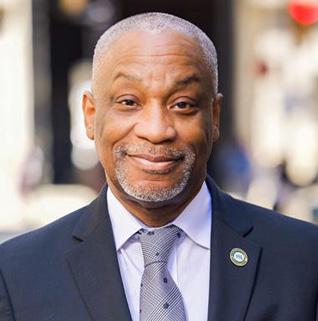
Bishop Wilfred Speakes Office of Faith-Based Initiatives and Interfaith Affairs
LETTER FROM THE MAYOR’S OFFICE OF MUSLIM ENGAGEMENT
HIGHLIGHTING MENTAL WELLNESS
Dear friends in faith and community,
Mental wellness is essential to personal dignity and community health. Across Philadelphia, Muslim residents face the same mental health challenges as others, while also navigating experiences shaped by faith, identity, migration, racism, and intergenerational trauma. Effective prevention requires approaches that are culturally informed, spiritually grounded, and connected to trusted community voices who often notice concerns first.
Research shows that Imams and faith leaders frequently act as first responders in moments of grief, crisis, and emotional strain. When individuals face distress, family conflict, or sudden disruption, many turn to their mosque, school, or a trusted faith or youth leader before engaging formal care systems. These leaders are uniquely positioned to recognize early signs of struggle, offer initial support, and help connect individuals to needed resources.
This role is deeply rooted in Islamic tradition. The Qur’an teaches, “Allah does not burden a soul beyond what it can bear” (2:286), affirming that emotional overwhelm is a real human experience deserving compassion. The Prophet Muhammad (peace be upon him) advised, “Seek treatment, for Allah has not created a disease except that He has also created its cure,” reminding us that seeking help is an act of faith and responsibility. Within this framework, Imams, educators, and youth leaders serve as trusted guides who help individuals recognize when they are carrying more than they can manage alone.
The Mayor’s Office of Muslim Engagement works to strengthen connections between Muslim communities, City resources, and systems of care. Because community leaders play a crucial role in prevention, mental wellness is a core part of our mission. Through convenings, learning spaces, and mental wellness trainings, we bring together faith leaders, educators, clinicians, and advocates to reduce stigma, improve coordination, and reinforce referral pathways between community supports and professional services. Expanding Mental Health First Aid training is central to this work, equipping trusted adults to identify early warning signs, offer initial care, and guide individuals toward appropriate services.
Philadelphia is strongest when mental wellness is approached collectively; with dignity, cultural humility, and partnership. Our office remains committed to supporting Imams, faith leaders, clinicians, educators, and community members as we work to promote early intervention, reduce harm, and ensure every resident can access care that honors who they are and meets them where they are.
With appreciation and partnership.

Sincerely,
Quaiser Abdullah, Ph.D. Director of Muslim Engagement Mayor’s Office of Muslim Engagement

THE CITY OF PHILADELPHIA DEPARTMENT OF BEHAVIORAL HEALTH AND INTELLECTUAL disABILITY SERVICES
OUR COMMITMENT
The mission of the Department of Behavioral Health and Intellectual disAbility Services is to educate, strengthen, and serve individuals and communities so that all Philadelphia residents can thrive.
We envision a Philadelphia where every individual can achieve health, well-being, and self-determination.
ABOUT FAITH AND SPIRITUAL AFFAIRS
The Faith and Spiritual Affairs (FSA) Advisory Board is dedicated to engaging faith-based and spiritual communities about behavioral health wellness supports and services and reducing the stigma associated with behavioral health concerns.
By collaborating and advocating with faith and spiritual communities, City agencies, and stakeholders, DBHIDS will enhance ways to provide health care to Philadelphia communities.
The success of FSA in the community is due largely to the diversity and support of the FSA Advisory Board which is comprised of clergy from diverse religions as well as agnostics, academics, behavioral health providers, and representatives of grassroots organizations who are committed to partnering with DBHIDS to support their communities.
To learn more, visit DBHIDS.org/FSA .
FSA programming has included:
• Annual Faith and Spiritual Affairs Conference
The annual Faith and Spiritual Affairs conference is an example of a successful model of bringing awareness and education of behavioral health issues to faith communities. The attendees have had the opportunity to learn firsthand from experts in the field of trauma, behavioral health services, incarceration, re-entry, children’s services, intellectual disabilities, HIV/AIDS, violence reduction, and services for the aging.
• Virtual Engagement
Virtual outreach has become a necessity for staying connected and sharing vital resources and information with Philadelphia residents during the pandemic. The Healing and Hope series offers faith-based organizations, clergy, and community members a platform to discuss trauma, grief, loss and offers concrete tips and strategies for healing.
• Mental Health First Aid
Trainings have taken place in churches, mosques, and synagogues, giving members of our faith communities additional tools to support individuals in crisis or experiencing behavioral health challenges. Learn more about MHFA at HealthyMindsPhilly.org .


STATISTICS
I. Sub-state Estimates for Philadelphia
• Nearly 1 in 4 adults (24.77%) in Philadelphia experienced mental illness in the past year.
• Over 1 in 20 adults (5.88%) in Philadelphia had serious thoughts of suicide in the past year.
Source: Substance Abuse and Mental Health Services Administration, Center for Behavioral Health Statistics and Quality, National Surveys on Drug Use and Health, 2021, 2022, and 2023.
II. National Statistics
• Over 15 out of 100 teenagers (15.4%) in the United States experienced a major depressive episode in the past year.
• 23% of adults (22.9%) received mental services in the past year.
Source: Substance Abuse and Mental Health Services Administration. (2025). Key substance use and mental health indicators in the United States: Results from the 2024 National Survey on Drug Use and Health (HHS Publication No. PEP25-07-007, NSDUH Series H-60). Center for Behavioral Health Statistics and Quality, Substance Abuse and Mental Health Services Administration. samhsa.gov/data/data-we-collect/ nsduh-national-surveydrug-use-and-health/national-releases
III. Census Pulse - Feeling Nervousness, Anxiety, and being on edge
Nearly half of all residents (46%) in the Philadelphia metro area felt nervous, anxious, or on edge several days or more in the last two weeks.
IV. Census Pulse – Feeling Down, Depressed, or Hopeless
Nearly 2 in 5 residents in the Philadelphia metro area felt down, depressed, or hopeless for several days or more within the last two weeks.
Source: U.S. Census Bureau Household Pulse Survey, Cycle 09.
Note: These data are experimental. Users should take caution using estimates based on subpopulations of the data – sample sizes may be small and the standard errors may be large.**
Total Population 18 Years and Older
TOOLS TO ADDRESS TRAUMA
Community Behavioral Health (CBH) Division
CBH manages the delivery of behavioral health services for Medicaid recipients of Philadelphia County. CBH authorizes payment for a vast array of services, including mental health and substance use outpatient programs, residential rehabilitation programs, inpatient psychiatric and addictions treatment programs,and family and community-based therapies. In creating and maintaining this managed care system, CBH promotes member and family participation, maximum access, public accountability, and local control, with the efficient use of available resources.
For more information about Community Behavioral Health, please call 888-545-2600 or visit CBHPhilly.org.
Evidence-Based Practice and Innovation Center (EPIC)
Over the past several decades, researchers have identified a growing number of practices that are effective in supporting people with behavioral health challenges. These evidence-based and innovative practices are important components of a resilience and recovery-oriented behavioral health system. Therefore, DBHIDS has partnered with researchers, treatment experts and providers to promote the delivery of behavioral health evidence-based practices throughout Philadelphia.
To learn more about evidence-based practices, visit our website CBHPhilly.org/cbh-providers/epic .
Network of Neighbors Responding to Violence
Comprised of trained professionals and community leaders, the Network responds to the traumatic stress associated with community violence, sudden loss, tragic accidents, suicides, burnout, and other events. Responders work alongside community leaders to provide technical assistance, facilitate group interventions, and healing spaces. All Network interventions are free and take place in community-based settings.
To learn more, contact the Network at 267-233-4837, visit our website DBHIDS.org/NoN or email NetworkOfNeighbors@phila.gov.
The Philadelphia Alliance for Child Trauma Services (PACTS)
PACTS is a network of child serving systems and organizations that provides the most effective practices for traumatized youth and their families aimed to increase the number of children who receive the most effective trauma-focused and trauma informed care in Philadelphia.
To learn more about PACTS, call Community Behavioral Health at 888-545-2600.
TOOLS TO PROMOTE EQUITY
Behavioral Health Screening Program
The DBHIDS Behavioral Health Screening initiative offers online, no-cost private mental health checkup 24/7. You will find several types of screenings, including general well-being screenings and specific screenings, like for anxiety or depression. You can also visit one of our community health fairs to complete an in-person screening and get some information on mental health and how to stay well from a trained clinician.
To learn more about behavioral health screenings, visit HealthyMindsPhilly.org.
Engaging Males of Color Initiative (EMOC)
EMOC promotes an enhanced awareness of the behavioral health challenges experienced by males of color across Philadelphia. The goal of the initiative is to improve the health status of males of color by increasing behavioral health literacy and access to resources and services, while reducing stigma and known disparities and building system capacity, in order to sustain wellness. EMOC partners with community leaders and organizations for innovative community programs addressing the unique needs of men and boys of color.
To find the next EMOC community event, visit DBHIDS.org/EMOC or email DBHIDS.EMOC@phila.gov.
Peer Culture & Community Inclusion (PCCI)
The PCCI unit at DBHIDS leads, promotes and supports system transformation with the guiding principle that people with lived experiences are paramount in fostering positive change for those in recovery. PCCI actively engages, supports and role models the promotion of hope, wellness, and empowerment throughout the behavioral health system of Philadelphia and beyond. PCCI supports Certified Peer Specialist training, Storytelling training, Same Day Work and Pay Programs, the development of the Peer Support Toolkit and more.
To learn more about Peer Culture and Community Inclusion, visit our website DBHIDS.org/PCCI-unit or contact DBHIDS.PeerCulture@phila.gov.
DBHIDS LGBTQIA+ Initiative
This initiative works to make sure all LGBTQIA+ people in Philadelphia can get fair and supportive behavioral health care. We want to find and fix gaps in services for LGBTQIA+ communities. Through training and policy reviews, DBHIDS is helping staff build cultural understanding and use trauma - informed practices. We are committed to serving everyone, no matter their identity or background. By working with community groups, health systems, and advocates, we aim to increase equity, awareness, and reduce stigma. We believe every LGBTQIA+ resident should have access to caring support and be able to live as their true selves.
To learn more, email DBHIDS.LGBTQ@phila.gov.
Engaging Women and Girls of Color (EWGOC)
Engaging Women and Girls of Color (EWGOC) is a community-driven platform that uplifts the voices of women and girls of color, including transgender individuals, to lead conversations and shape solutions around their well-being. Designed for ages 10 and up, the initiative empowers participants to share their stories, address disparities, and thrive.
To learn more about EWGOC, visit DBHIDS.org/EWGOC or email DBHIDS.EWGOC@phila.gov
Person-First Language Guidelines
Words are among the most powerful communication tools we have. They can heal, affirm, motivate, inform, build connection, inspire, praise, and educate. Yet, even without harmful intent, they can also minimize, marginalize, stigmatize, and oppress. Labeling people by their challenges (for example: homeless, alcoholic, addict, schizophrenic, diabetic) can dehumanize and reduce individuals or families to those challenges, rather than recognizing them as people living with, in recovery from, or experiencing symptoms of those conditions.
The following table is a sample of work representing years of thinking affirmatively about individuals and communities and how best to support their journeys to wellness.
The list is by no means exhaustive. To learn more about the Person-First Language Guidelines, visit our website DBHIDS.org.
Traditional Terms and Phrases
Addict/Drug
Addict/Alcoholic/Substance
Abuser
Crazy
Disabled/ Handicapped
Suggested Replacement Terms
• Person experiencing challenges with usage of alcohol and/or other drugs
• Person with a substance use disorder
• Person with a ____________ use disorder
• Living with a mental health challenge
• Experiencing mental health challenges
• Living with a disAbility
• Living with {name of the challenge}
• Ask the person how they refer to their challenge. See: Handicap below Drug Treatment
• Substance use disorder treatment
• Medication assisted treatment (MAT)
• Medication assisted recovery
Handicap
Homeless
Mentally Ill
Mentally retarded/Mental retardation
Victim
• Disability
• disAbility
• Physical/emotional challenges
• Experiencing homelessness
• Housing insecure
• Has no shelter
• Living with _________
• Experiencing challenges
• In recovery from a mental health challenge
• Intellectually disabled
• Intellectual disability/Intellectual disAbility
• Survivor
• Thriver
ADDITIONAL DBHIDS RESOURCES
Behavioral Health Training and Education Network (BHTEN)
Designed to support DBHIDS and other human services systems by planning, coordinating, and providing quality learning experiences in Behavioral Health for the entire system, including individuals and their family members, DBHIDS staff members and staff of other service provider organizations.
To learn more about BHTEN, visit their website BHTEN.com or call 215-923-2116.
Intellectual disAbility Services (IDS)
IDS works with the Commonwealth and service providers to offer quality supports and services so individuals will have choices in their lives, meaningful relationships, and participation in their community as valued citizens. IDS is responsible for planning, administering, monitoring, and coordinating Early Intervention services and services for people with an intellectual disAbility.
Homeless Outreach
DBHIDS supports five agencies, led by Project Home to engage people living on the streets of Philadelphia. The other agencies are Horizon House, SELF Inc., the Mental Health Association of Southeastern Pennsylvania and Hall-Mercer Community Mental Health Center. The majority of the persons they engage are believed to suffer from behavioral health challenges, particularly co-occurring mental health and addiction challenges.
To learn more about Homeless Outreach, visit our website DBHIDS.org
If you know someone in your community who is homeless, please contact the 24-hour Project Homeless Coordination Center Hotline at 215-232-1984.
Behavioral Health Special Initiative (BHSI)
BHSI funds substance use treatment services for individuals without insurance.
To learn more, visit the BHSI website BHTEN.com or call 215-546-1200.
Spiritual First Aid Training
A peer-to-peer spiritual and emotional care intervention structured around the BLESS CPR framework. The course transforms everyday people on the frontlines of the mental health crisis into spiritual first aid responders and mental health champions.
To learn more and sign up for a free training at DBHIDS-FSA@phila.gov.
CLOSING REMARKS FROM DEPUTY COMMISSIONER TO PHILADELPHIA FAITH LEADERS
Philadelphia, like the rest of the country, has experienced trauma and the ravages of social injustice over the past decade and beyond as evidenced by high levels of overdose, gun violence, suicide, and homelessness. The past 14 months compounded these struggles as the city confronted the COVID-19 pandemic, social isolation, stress, and death within a population already struggling to overcome one crisis after another.
The Department of Behavioral Health and Intellectual disAbility Services (DBHIDS) provides a safety net for all Philadelphia residents to help them overcome behavioral health challenges. But we recognize our services are more effective when paired with other supports, including interpersonal, social, and most importantly spiritual. What we as individuals believe about our circumstances, know about our past, and expect of our future is impacted by our faith. In recognition of this fact, DBHIDS has long partnered with faith communities to affirm the spiritual dimension of the pursuit of wellness.
It is for this reason we have partnered with the DBHIDS Faith and Spiritual Affair Advisory Board and other stakeholders to develop this Faith and Mental Health Toolkit, a resource for faith and communities. This toolkit offers effective supports to those addressing the many challenges facing our communities. This is a resource for the champions in our city, those who buffer the trauma, lead the fight for equity, and strengthen our communities.
We know that recovery will not happen overnight. We know that the challenges that beset us are many and that there is no magic bullet to solve them. We also know we are the city of brotherly love and sisterly affection, that we are a resilient people. We know, above all, that while the struggle continues, victory is certain.
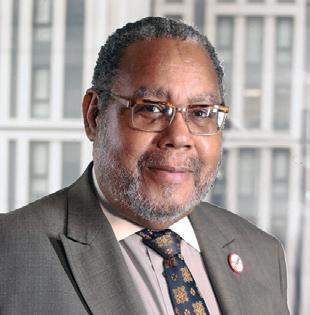
Roland Lamb
Former Deputy Commissioner (2016-2021)
City of Philadelphia
Department of Behavioral Health and Intellectual disAbility Services

OTHER RESOURCES
• American Psychiatric Association Mental Health: A Guide for Faith Leaders
• American Psychiatric Association Quick Reference on Mental Health for Faith Leaders
• HealthyMindsPhilly.org COVID-19 Mental Health Awareness & Resources
• Spiritual First Aid
• US Dept of Health and Human Services Considering Faith, Community and Mental Health
ACKNOWLEDGMENTS
Special thank you to everyone who contributed to the development of this toolkit:
Samantha Grannum, Faith and Spiritual Affairs Program Analyst
John Antonovich, Research and Information Analyst Supervisor
Hawolti Amlak, Research and Information Analyst
Suet Lim, Director of Research and Evaluation
Monava Jones, Assistant Director of Communications and Operations
FSA Advisory Committee
Mark Correa, Assistant Director of Communications and Content
Malik Gray, Director of Community Affairs: Division of Planning Innovation
Iris Lozada, Manager, Community Affairs
REFERENCES
Substance Abuse and Mental Health Services Administration. (2025). Key substance use and mental health indicators in the United States: Results from the 2024 National Survey on Drug Use and Health (HHS Publication No. PEP25-07-007, NSDUH Series H-60). Center for Behavioral Health Statistics and Quality, Substance Abuse and Mental Health Services Administration. samhsa.gov/data/data-we-collect/nsduhnational-surveydrug-use-and-health/national-releases
U.S. Census Bureau Household Pulse Survey, Cycle 09.
Burns, et al. (2023). COVID-19 pandemic’s disproportionate impact on childhood bereavement for youth of color: reflections and recommendations. Frontiers in Pediatrics, 11.
Cathryn Rodway, Saied Ibrahim, Su-Gwan Tham, Pauline Turnbull, Nav Kapur, Louis Appleby, Bereavement and suicide bereavement as an antecedent of suicide in children and young people: Prevalence and characteristics, Journal of Affective Disorders, Volume 300, 2022, Pages 280-288, ISSN 0165-0327, doi.org/10.1016/j.jad.2021.12.063. (sciencedirect.com/ science/article/pii/S0165032721013823)


MENTAL HEALTH DELEGATE HOTLINE
215-685-6440
7 days a week /24 hours a day
NEED HELP NOW
CBH non-Emergency Services
24/7 Hotline: 888-545-2600
INTELLECTUAL DISABILITY SERVICES
215-685-5900
COMPLIANCE HOTLINE
Community Behavioral Health
Report fraud, waste, and abuse
800-229-3050
cbh.compliancehotline@phila.gov
HOMELESS OUTREACH HOTLINE 215-232-1984
@DBHIDS
Cover Photo credit: Steve Weinik