







Graphic courtesy of Lucas Yang/The Observer, photos courtesy of Michael L. Umbricht and Hopeliz via Wikimedia Commons

Ethan Park Staff Writer
Maria Burrus Staff Writer
On Oct. 3, 2025, Cleveland State University (CSU) transferred control of its almost 50-year-old community-run FM radio station, WCSB 89.3, to Ideastream Public Media, a nonprofit that operates public radio and TV stations in Northeast Ohio. This purchase displaced 100 volunteers who had long been involved with the tradition of public radio broadcasting. The new program replaced the previously diverse schedule with a 24-hour, seven-day-aweek light jazz format. Although no money was exchanged, CSU gained 1000 free ad spots—which are set to run through radio stations WCSB and WCLV and TV station WVIZ— and secured a seat on Ideastream’s
Board of Trustees to oversee the organization’s operations and longterm goals.
WCSB station members and supporters were informed of the decision in a Zoom meeting, with a nearly simultaneous campus-wide email announcement. CSU administration claimed that the transfer would provide internships, learning opportunities and career experience for students. The staff was then given less than 24 hours to vacate the station.
After the transfer, former WCSB staff and volunteers reorganized under the name of XCSB to continue engaging with the Cleveland community. In early January, they partnered with The Reading Room Cleveland, in hopes of accepting taxdeductible contributions while they work to become a certified 501(c) (3).
Then, on Jan. 12, WCSB, supporters of XCSB and Allison Bomgardner, the former general manager

of WCSB, filed suit against CSU in Cuyahoga County Common Pleas Court. While XCSB as an organization is not a formal party in the lawsuit, its supporters are listed as plaintiffs alongside WCSB and Bomgardner. The suit claimed that CSU bypassed public records laws, violated the Ohio Open Meetings Act and First Amendment rights. The plaintiffs seek a jury trial to invalidate the Ideastream agreement, return control of WCSB to the former station members and recover the funds lost through this process.
Speech Law Center plaintiff Brian Bardwell is representing the radio station as the lead counsel in this case. While well-experienced in First Amendment cases, Bardwell admits that this case is a first for him. Unlike other employee v. company or citizen v. government cases, university powers to curtail free speech rights under legal loopholes are much more limited.
“Companies often have at-will employment, which allows them to fire employees at any time for any reason,” Bardwell said, clarifying the unique position the university holds.
Under the First Amendment, all citizens in the United States are entitled to the right to voice their opinions, barring special circumstances such as “shouting fire in a theatre.” However, an oft-repeated mantra across national free-speech issues seems to be freedom of speech, but not freedom from consequences. In response to this, Bardwell said, “Freedom of speech is not freedom at all. That violates the very meaning of the word.”
As the case proceeded, CSU President Laura Bloomberg reaffirmed her decision to shut down the student-run radio station and transfer their license to Ideastream Public Media. Though Bloomberg faced student protests on campus, social media responses and frustration from students, she held firm when responding to The Cleveland Stater.
“My answer is not going to be satisfactory,” she said. “No, I wouldn’t have done it differently. Although I was surprised by some of the pushback, I wouldn’t do it differently unless we weren’t going to do it at all. I stand by the decision.”
When asked about what students could do themselves to prevent similar free speech right violations, Bardwell said, “Become a mass that cannot be ignored. Gather people until they’re forced to respond to you.”
Bardwell continued to provide informative dialogue on other steps students could take, such as contacting the Foundation for Individual Rights and Education (FIRE) and keeping themselves informed of their unalienable rights.
Case Western Reserve University’s own student-run radio station, WRUW, has expressed solidarity with the supporters and station members of XCSB, publishing a statement on Instagram after hearing the news.
“As a station who has supported independent student and community programming for over 50 years, we express frustration at the decision of Cleveland State University to switch from freeform student programming to a 24/7 jazz alternative. Radio, to us, is an act of creative expression that students deserve a right to engage in, regardless of their academic path. We urge CSU to reconsider this deal for the justice of student programmers and freedom to play their chosen content on the air.”
XCSB and its community are working together to raise funds to get the station back up and running. The group plans to begin streaming on March 1 and open its new studio on May 10. On May 16, the station will celebrate ‘CSB’s 50th Anniversary. XCSB encourages DJs with previous experience and enthusiastic community members to join their volunteer staff and continue playing their favorite music on the air.
Hannah Johnson Director of Print
Due to a water main break this past weekend, Euclid Avenue and Mayfield Road were flooded. Case Western Reserve University’s Rave Alert system issued a message at 2:48 p.m. on Friday, Feb. 30, stating that Mayfield Road was closed “from Murray Hill to E. 125th; Cornell closed from Euclid to Courtyard [Marriot] parking lot.”
As a result of the water break, students making their way home from the Case Quad found themselves in cold water. One student described receiving the notification, but underestimated the condition of the street until they saw it with their own eyes.
“I saw the notice from Public Safety, but didn’t think much of it. It wasn’t until I was walking down Euclid that I understood the severity of the situation,” they said. “I had to wade through the large pools of water collecting in front of the UH
driveway, and my shoes and socks got all soaked.”
This water rushed down the intersection of Cornell Road and Euclid Avenue, some pooling in front of University Hospitals with snow buildup. When asked if the operations of the hospital were affected by the main break, a hospital spokesperson said: “No - patient care wasn’t affected.”
By Friday evening, drilling machinery was seen at the intersection of Cornell Road and Euclid Avenue, blocked off from the public by “road closed” signage and cones. The Cleveland Water Department was on the scene to deal with the incident.
Although an inconvenience for quite a few students, many did not have to deal with the ills of Euclid Avenue. Some students were unaffected by the water break, having either been off campus at its peak or taken an alternative route to return home.
Continue reading on page 3


Cleveland passes ‘Tanisha’s Law’; mental health crisis calls will change under the law
By Tracy Carloss From News 5 Cleveland
2028 Olympic Football (soccer) matches to be played at Columbus Sta- dium, hosted by Crew By Camryn Justice From News 5 Cleveland
Trump’s Border Czar to pull 700 Agents Out of Minnesota
By Jorge Mitssunaga
From The New York Times
Trump’s Call to ‘Nation- alize’ Elections Adds to State Officials’ Alarm By Nick Corasaniti
From The New York Times
Trump Signs Bill to Re- open Government
By Catie Edmondson
From The New York Times
Supreme Court declines to block California’s new mid-decade congressional map By Devin Dwyer From ABC News
New York attorney gen- eral launches federal immigration officer monitor project
By Aaron Katersky From ABC News
Defense Dept. effort to punish Mark Kelly draws skepticism from judge
By Salvador Rizzo, Tara Copp and Jasmine Golden
From The Washington Post
Trump’s Kennedy Center closure shocks the National Symphony Orchestra
By Andrea Mitchell
From NBC News
Washington Post be- gins sweeping layoffs as it sharply scales back news coverage
By Mary Cunningham
From CBS News
Police probing Peter Mandelson, ex-U.K. ambassador to U.S., as Epstein files suggest he shared state secrets
By Emmet Lyons and Leigh Kiniry From CBS News
On Saturday, vehicles were rerouted as Euclid Avenue was closed from Mayfield Road to Martin Luther King Jr. Drive due to the icy water. Sidewalks also froze over, and CWRU administration encouraged the community to avoid the area in another Rave alert message.
To accommodate for the flooding, the CWRU shuttle routes were altered during the time of the water leak. On Friday, the BlueLink and GreenLink were rerouted until Saturday afternoon and evening, respec-
tively. This past Monday, the Commuter and HEC routes were closed until 2 p.m. due to ice from the break.
A CWRU student described an incident with a Safe Ride on Friday following the initial flooding.
“We ended up spending around 20 minutes in a Safe Ride … circling around a bunch, because they had to pick up other students, but we couldn’t go directly to NRV, so it was just a really long and tedious ride.”
The recent influx of cold weather in Ohio has caused a series of
main breaks, including in the cities of Willoughby, Columbus and Youngstown.
In response to another water break in Brunswick, Ohio, Cleveland Water spokesperson Danielle Miklos said, “Outside of winter, Cleveland Water averages 3 to 5 breaks a day … During the winter months, that average increases to 5 to 7 breaks daily and even more during extreme cold spells. This increase is normal for water systems similar in age and climate to Cleveland Water’s.”
Sabrina Feldberg News Editor
Jan. 22 marked the 53rd anniversary of Roe v. Wade, the landmark Supreme Court decision that protected the right to have an abortion. In 2022, the Supreme Court’s decision in Dobbs v. Jackson Women’s Health Organization overturned Roe v. Wade under a conservative majority, leaving the question of abortion rights to be decided by individual states. The decision now affects people across the nation who are seeking to obtain safe and legal abortions.
Since the ruling of Dobbs v. Jackson, the right to an abortion has been banned in 13 states and restricted in many others.
Third-year student Sofia Ream, who has served as the President of Planned Parenthood Generation at Case Western Reserve University for a year, pointed out that abortion bans primarily affect low-income patients and abortion doctors.
“Imagine just one day you had a career, and then immediately it becomes illegal,” she said. “You’re kind of at a loss there. And then on
the patient side, you’re completely out of options almost immediately, especially if you don’t have the financial resources to travel to get an abortion.”
Many pro-choice advocates emphasize that the effects of abortion bans are particularly stacked on people in marginalized and lowincome communities. Since the overruling of Roe v. Wade, recent reports have said that the rates of abortion procedures have actually risen, proving that bans make abortions less safe, not less common. In states with abortion bans, pregnant women are almost twice as likely to die while carrying a child, during childbirth or shortly after giving birth in abortion-legal states.
“The vast majority of this country supports abortion access,” Ream said.
Research shows that around 63% percent of Americans are in favor of legalizing abortion access. This has not stopped further barriers from being implemented against such treatment.
Despite the restrictions since Roe, liberal states have made new efforts to improve reproductive care and abortion access. In 2022,
over 200 bills were introduced in state courts and of them, 42 passed. 11 states have enacted additional policies to expand access to reproductive care, like protections for those traveling from states with abortion bans. In several states, such as Maryland, New York and Vermont, voters have decided to embed abortion rights into their constitutions.
When asked what she saw for the future of abortion rights, Ream described having doubts about changes under the current administration, but she was positive about the work of state-level Democrats and congressmen, as well as advocacy groups.
“A lot of grassroots organizations have grown a lot since the overturn … of Roe v. Wade, and there’s just a lot more local and collective support for people who are in situations where they need abortion care and it’s more difficult for them to access [it],” she said. “So while I don’t think there will be an overarching reinstating of Roe v. Wade, I think that people are more aware now of that need. And so there is still a lot of hope for people in [that] situation.”

Fiona Brooks Contributing Writer
Spoilers ahead for “Percy Jackson and the Olympians” season two, “The Sea of Monsters” and “The Titan’s Curse.”
The second season of “Percy Jackson and the Olympians” is finally out and, obviously, as a fan of the books, I have thoughts. “Percy Jackson” has always held a special place in my heart—it may or may not be the reason I am pursuing a minor in Classics—which is why I have such mixed feelings about the second season.
Based off of the second book in the series, “The Sea of Monsters,” this season follows the titular Percy Jackson (Walker Scobell) as he heads into the terrifying Sea of Monsters (the Bermuda Triangle) to receive his magical quest item, the Golden Fleece. Continuing from season one, Scobell brings great wit and sharpness to the character, making him seem like the character from the books come to life. He is one of my favorite parts of the season.
However, what I’m having trouble grasping is the overall tone of the show. As a Disney+ original, the target audience is children. Seeing as “Percy Jackson” is a middle-grade book series, I can’t be offended by that. As with the books, the children at the center of the se-
ries are incredibly perceptive and intelligent, able to figure their way out of any problem. The adults of the series are absolute buffoons.
Dionysus (Jason Mantzoukas) and new-comer Tantalus (Timothy Simons) who lead Camp Half-Blood are completely incompetent fools and help build the childish fantasy that comes from this book series.
Luke (Charlie Bushnell) is one of the antagonists and a more complicated character of the series. In both the first book and season one, he acts as a mentor towards Percy but is revealed to have been an enemy the whole time, betraying Percy. In the books, Luke ends up having his heroic moment at the end. However the TV show seems much more dedicated to making Luke a “good guy,” someone you can root for. The show purposely created a new, bland character, Allison Sims (Beatrice Kitsos), to be an antagonistic force in the show, perpetrating all the more devious acts towards Percy and his friends (fighting them, threatening them, etc). All the while, Luke mostly stands around and sulks in white quarter-zip jackets that make him look like he belongs in a yacht club.
In order to make Luke more likeable, his cause for overthrowing the Olympian gods had to become more justified, too. In the books, the gods do a lot of messed up stuff: Percy isn’t allowed to take a plane any-
where because of the possibility that Zeus, king of the gods and sky, could strike the plane with a lightning bolt to kill Percy. However, this threat of violence feels more removed reading it on a page versus seeing it happen to a real-life kid. This season had many changes to the source material, though, the greatest at the end was the final reveal.
In the books, Thalia Grace (Tamara Smart) is a daughter of Zeus and a target for monsters. Five years before the book series begins, Thalia, Luke, Annabeth (Leah Sava' Jeffries) and Grover (Aryan Simhadri) make their way to Camp Half-Blood, but before they arrive, Thalia is taken out by monsters. The gods aren’t supposed to interact with their children, but Zeus, in a moment of kindness, turns Thalia into a tree. Young readers grasp the danger that faces these characters, and her loss lingers on the people closest to Percy. In the TV show, they added one final twist: it wasn’t monsters who killed her like everyone thought. Her own father, Zeus, decided to turn her into a tree—essentially killing her—because she was disobedient. Her own father killed her. I’m just not sure how the writers are going to get out of that one. Now Luke’s point about the gods being careless monsters makes much more sense.
The show also deviated from the books in making the actual mon-
sters less monster-like, adding dimension and intelligence to them to the point where Luke’s thoughts about how cruel people are to the monsters also makes sense. Percy’s crusade to maintain the status quo with the Olympians in charge makes less and less sense as Kronos hasn’t really done anything outright evil in the show yet.
I honestly think it’s a good thing to change things up from the books; not everything translates well from book to screen, and the changes allow avid readers like myself to still be surprised. However, “The Sea of Monsters” suffers from being the middle of the series. We haven’t made it to the final fight yet, so all the momentum that we built up felt like it was leading nowhere. The last battle added to the final episode—not from the books—didn’t feel warranted, coming off more as action filler because this is a TV show, and we need action scenes. Season three will drop in 2026, and I am curious to see what changes are made from there. Book three begins to deal with much heavier topics. Two of the main characters in Percy’s entourage die, and Percy even has to break the news of one girl’s death to her younger brother. I hope that the series itself matures with the audience and that the writers have a plan for the more complex dynamic between Percy and Luke to come.

Penelope Cloonan Life Editor
Jan. 24, 8 p.m., the prompt for this semester’s Play in a Day was released: “It’s a Miracle!” These intrepid writers, actors and theater enthusiasts signed up for a daunting task: write, block and perform short plays in 24 hours. An hour prior, Case Western Reserve University closed all campus operations past 5 p.m., foiling Players’ Theater Group (PTG)’s target start time in the evening. But, the play must go on!
From there, PTG’s executive board was off to the races, trying to save the tradition. When asked how she reacted to the news that CWRU would be shut down before the expected start time, Producer Taylor Bruno said, “Oh no, I hope they don't close down the buildings because it would be so sad if I couldn't get into Eldred and have everyone do this show. I hope we can come up with an earlier time.” And that they did. In the end, PTG moved up the performance time to 3 p.m., giving writers the standard 11 hours to work on their scripts and actors only five hours before their performance that afternoon.
By 7 a.m., all scripts were finished. By 9 a.m., actors were called in. For second-year Khyla Wilson-Hill, it was her first time acting since elementary school. While some of her co-actors were panicking at the timeline shift, Wilson-Hill remained largely calm. She did not know a longer timeline, so her development as an actress was

pure trial by fire. “How little time [I had] didn't hit until I was doing the script,” said Wilson-Hill, “I realized that I spent like an hour putting my lines into Quizlet, and I hadn't practiced any of them yet.” There wasn’t time to fully lose herself to stress.
In an attempt to get people warm and keep the creative juices flowing, Bruno’s advice to everyone involved
in the production was to stay in their practice rooms until they moved to Eldred. She made sure food was delivered, encouraged people to stay indoors and fostered a forgiving culture. “In the nature of playing a day where you need as much time as you can to rehearse,” said Bruno, “I guess that naturally blended into a fix for the concerns.” The timeline ended




up being a happy accident.
By early afternoon, PTG was presented with yet another hurdle: they couldn’t get into their theater. With a set time of 3 p.m., and blocking still needing to be finished, the team needed to get into Eldred Hall. At 2 p.m., with only an hour left, they finally made it into Eldred Theater. They made it work. “We had very quick tech rehearsals,” said Bruno, “But I don't think it changed the final product of the show at all.”
To mitigate the impacts of the time constraints further, PTG’s leadership cultivated a space wherein perfection was not expected. “We wanted to encourage an environment where it was okay to not have everything perfect, and it was okay to improvise and make mistakes,” said Bruno, “I think relieving that pressure … helped a lot with keeping the energy and the vibes in a positive state.” It would have been an impossible task to have all the plays go on without a hitch, and refreshingly, the players knew this and supported one another.
For Wilson-Hill’s play, this was particularly important. With a stilted timeframe in Eldred Hall, they were only able to block one piece on the stage, doing the rest in their practice space. For a first-time actor, this was even more destabilizing, but as a credit to the community of acceptance, Wilson-Hill ran with it. “Oh, it's not as great as I want it to be, and I'm probably gonna mess something up, which I did, but it's fine,” said Wilson-Hill, the green actor who missed one cue with five hours of rehearsal time—an impressive feat, “It happens that way.”
PTG made it to their 3 p.m. showtime. The curtain went up. Five plays that did not exist 19 hours prior were staged by CWRU’s own students. Wilson-Hill made her debut. Bruno pulled it off. Even sub-zero real-feel temperatures couldn’t break PTG’s spirits. “It was really fun,” said Wilson-Hill, “I really enjoyed it, and I'd probably do it again.” In a similar vein, Bruno said, “I'm so grateful that we were still able to put on this show. I'm grateful to everyone who came and also everyone who was involved. I couldn't have done it without the cast and crew.” She added, “True to the theme of this semester, it really was a miracle that we were able to do the show.”
Anjali Bhuthpur Director of Design
Sahar Kapasi Layout Designer
Dearest gentle reader,
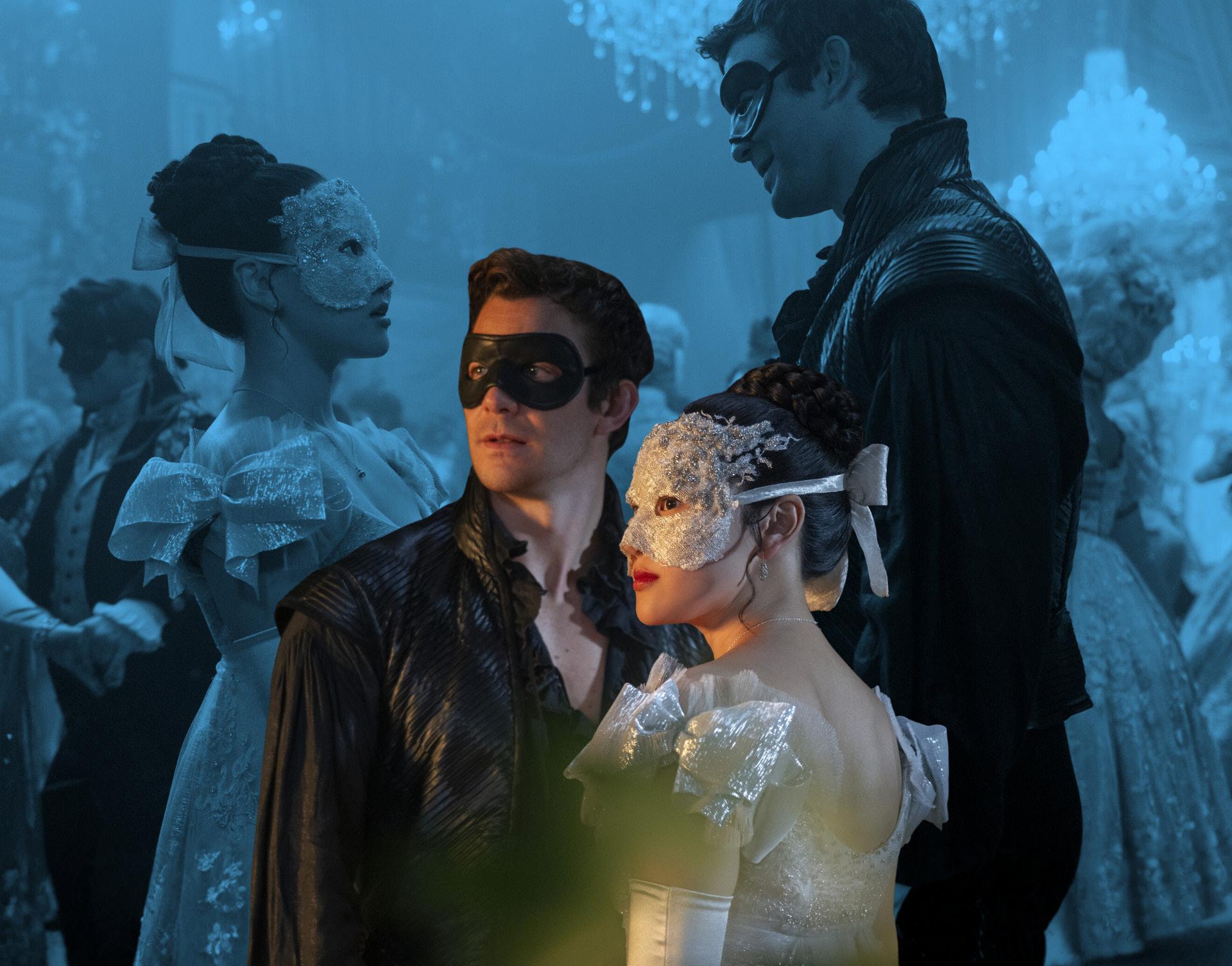
If this season has revealed anything thus far, it is that certainty is in short supply. While some may argue that little has occurred in the first weeks of the social season, such views neglect the subtle groundwork already underway. Hearts have been electrified, intentions have been declared, friendships have faltered and desires have emerged in the most unexpected of places. Instead of being left with conclusions, we are left with the sense that everyone is teetering on the edge of consequence.
And this tension is most evident at the very top of society, as even the Crown is not safe from uncertainty.
Queen Charlotte, accustomed to control and constancy, finds herself faced with a possibility she cannot order away—loss. Lady Danbury’s desire to step aside has deeply shaken the Queen in a way no other ever could. Throughout the years of steadfast loyalty and unspoken understanding, their relationship has quietly become one of this season’s most captivating storylines. However, it is restraint that shines through now. The Queen’s
refusal of her friend’s request is not marked by cruelty, but rather a fear that she has restrained for her entire life. While Lady Danbury—perceptive as ever—understands this, understanding does not make this position any easier to be in. Both are caught in a dance between affection and authority. Although Lady Danbury remains where she is, she continues to prepare for a future the Queen is not ready to confront.
Proposing Alice Mondrich as the new lady-in-waiting suggests Lady Danbury’s hope that this may alleviate the effects of her absence, although one cannot help but wonder whether this will be as easy as one may believe. Whether this preparation is enough, or whether the Queen will ultimately be forced to face the loneliness she takes such great measures to avoid, remains to be seen.
Despite the loneliness that is plaguing the Queen, society seems to have taken a different route. Many members of the ton are starting to find their dazzling matches this social season, with the bachelor of the season, Benedict Bridgerton, still searching for his mysterious lover.
Benedict Bridgerton has long positioned himself as an observer, an outsider, rather than a participant. An artist who is satisfied with standing just outside society’s suffocating expectations. Some may even go as far as to deem him a rake. And yet,
when faced with a connection that requires true risk, he flees. With Sophie Baek, he shares vulnerability and can peel back the facade he has so carefully crafted.
And yet, love without courage is a weak offer. Benedict is freely intimate, but fails to maintain honor. He proposes discretion where outward affection may be hoped for. His genuine astonishment at Sophie’s quick departure only stresses his mistaken belief that knowledge of privilege means changes in behavior.
For poor Sophie Baek, the dissatisfaction is much deeper than romantic in nature. Despite painful time spent dismantling the walls around her heart, she is reminded once more of the limits of her position as a handmaid. Having been so warmly welcomed into the fold of Bridgerton House, the heartbreak that plagues her is amplified tenfold. Torn between matters of the heart and those of the mind, we are left, dear reader, with the feeling that this decision may alter the fabric of society.
Their story is one of major imbalance. The Bridgerton boy believes himself to be generous, while Miss Baek understands the price of this generosity a little too well. As the season continues, the question lies not in whether their connection is one of sincerity, but whether Benedict is willing to become the man who deserves it. As it is in matters of the heart, dear
reader, words are meaningless without action.
Lady Violet Bridgerton serves as a reminder to all that desire does not fade even after limiting oneself to family matters. Having turned her focus solely to her children while treasuring the memory of a great love, she now finds herself unexpectedly experiencing a familiar feeling of longing once more. This reignited discovery is one of tenderness, not scandal, although her hesitation is glaring. Moving cautiously, Lady Bridgerton is balancing gratitude for what once was and curiosity for what might be yet to come.
Meanwhile, Francesca Bridgerton is searching for answers to a problem no one can answer. While this problem may not be foreign to many women of the ton, she is left with a problem that no other happy or newlywed couple around her has faced. Marriage certainly is marked by many obstacles, and this one may be insurmountable. Is this a problem of mastery? Or one of incompatibility?
As we see this season unfold, dear reader, keep your eyes and ears open. We are on the precipice of scandal. Decisions hang in the balance. The cards are on the table. I am just as unsure as you. Only time will tell.
Yours truly, Lady Whistledown

Across:
1. CWRU's library search portal, briefly.
6. "And so on," in short.
9. Groundhog ranked 4th on the Top 10 Most Famous Groundhogs list.
10. Quarterback throws.
11. Combined with 34-down, where touchdowns are scored.
15. NFL championship game.
18. Spring break travel option for many CWRU students.
20. "The Grammys were a couple days _____."
21. Reaction to CWRU turning 200 years old.
23. What Alex Honnold (who recently scaled Taipei 101) famously does.
24. Describes CWRU's range of majors.
26. Academic intensity at CWRU. Maybe.
27. Second element on the periodic table.
28. Bicentennial doesn't mean one year, it means ____ years.
29. Post water main break activity on Euclid Avenue.
32. What The Observer directors do up past 2 a.m.
36. Campus enemies, in slang.
37. CWRU’s 200th anniversary.
38. The Cleveland Museum of ______.
Down:
1. How the Super Bowl starts.
2. Primary reason you’re at CWRU.
3. What Punxsutawney Phil looks for.
4. Basic units of matter.
5. Claim about the Ugly Statue and graduation.
7. Disapproving sound, doubled.
8. What I stuffed this crossword with.
12. League behind the Super Bowl, briefly.
13. Animal honored on February 2nd.
14. What The Observer is doing right now (you should apply).
15. One of the teams playing in the Super Bowl, against 16-down.
16. One of the teams playing in the Super Bowl, against 15-down.
17. Something some CWRU students have plenty of.
19. What groundhogs do all winter.
22. Recent music award show.
23. The school (most of) you go to.
25. One team’s outcome after the Super Bowl.
30. First name of CWRU’s current President.
31. Give a professor a score online.
33. Nominated for Song and Record of the Year.
34. Combined with 11-across, where touchdowns happen.
35. Addison, a Best New Artist nominee and worst performance ranked by Billboard.

Auden Koetters Director of Digital Media
PUNXSUTAWNEY, Pa—what began as a simple overnight trip from Cleveland turned into a cold-weather odyssey involving deer encounters, unplowed mountainous roads and a four-hour wait in sub-freezing temperatures—all in pursuit of a single forecast from Punxsutawney Phil.
The journey started Sunday afternoon, with plans to arrive in Pennsylvania by nightfall. As we neared the end of our drive, a deer appeared in the headlights. The driver swerved. The car slid. Time slowed. Somehow, through pure skill and maybe divine intervention, we stayed upright. We laughed, nervously and told ourselves: Okay, that was the dramatic part. We’re fine now.
We were not fine. Roughly 20 minutes later, on a snow covered road in near-total darkness, the car slid again, this time toward the edge of the roadway. The vehicle became stuck in deep snow, requiring passengers to exit and physically push it back onto solid ground.
Eventually we reached our lodging Sunday night, where indoor temperatures suggested that heat was reserved exclusively for the bathroom. After a brief nap from 7 to 10 p.m. and a latenight Grammys viewing, we departed at 2 a.m. to arrive at Gobbler’s Knob by 3 a.m. for the opening of the grounds.
The temperature hovered near zero degrees.
For the next four hours, we stood in a frozen field listening to groundhogthemed music, watching hype videos with the production value of the Super Bowl and witnessing fireworks, flame machines, smoke cannons and confetti cannons. It was an unexpectedly theatrical set up for a rodent-centered ceremony.
Just before dawn, members of the Inner Circle—Punxsutawney Phil’s official handlers—marched through the crowd in a dramatic procession reminiscent of Moses parting the Red Sea. Each member was introduced by both their real name and ceremonial weather-centered alter ego, with lon-
ger introductions reserved for higherranking members.
To begin the ceremony, Phil’s stump door was tapped with a cane to wake him from hibernation.
He emerged.
He surveyed the crowd.
He selected a prognostic scroll.
He was hoisted into the air like Simba.
For one brief, beautiful moment, everyone forgot they couldn’t feel their toes. It was pure joy. Community. Dare I say a spiritual awakening.
Then, the scroll was read.
Six more weeks of winter were prognosticated.
The crowd erupted in boos. Circulation returned to extremities just long enough for everyone to remember how cold it actually was. The herd dissolved instantly, sprinting for the shuttles in what I can only describe as a stampede rivaled only by entering TOLI on Halloween—equal parts desperation, aggression and misplaced optimism.
We trudged back to pack our belongings and began our journey home, exhausted and emotionally hollow. Upon returning, I made the sudden, brutal realization I had left all of my device chargers in Pennsylvania—meaning my computer would die while the mountain of procrastinated schoolwork piled higher.
Worst case scenario complete.
But here’s the twist ending: Punxsutawney Phil is historically only right about 30% of the time.
Which means an early spring remains statistically probable.
And even if it doesn't arrive, we survived deer encounters, snowy roads, subzero temperatures, confetti cannons, shuttle chaos and a secret society of groundhog elders. In spite of everything, the trip delivered something better than a forecast: a story, a shared adventure and the realization that sometimes the most chaotic side quests become the most memorable of journeys.
Worst case? Winter continues.
Best case? Spring comes early.
And even if it doesn’t, it turns out pushing a car out of snow in the dead of night in rural Pennsylvania can be pretty fun too.
Honestly? Totally worth it.













Except
1. Shubenacadie Sam (Nova Scotia)
2. Punxsutawney Phil (Punxsutawney, Pennsylvania)
3. General Beauregard Lee (Jackson, Georgia)
4. Chattanooga Chuck ( Chattanooga, Tennessee)
5. Octoraro Orphie (Quarryville, Pennsylvania)
6. Wiarton Willie (Wiarton, Ontario)
7. Dunkirk Dave (Dunkirk, New York)
8. Fred la Marmotte (Percé, Quebec)
9. French Creek Freddie (Upshore County, West Virginia)
10. Birmingham Bill (Birmingham, Alabama)










During a free moment of the day, have you ever plopped yourself down on a wooden bench on Case Quad or settled in a comfortable patch of grass outside Tinkham Veale University Center? If you haven’t, we highly recommend you do so when the weather takes a turn. For those who have, you have gained a new perspective of the Case Western Reserve University campus that is easily missed while we are all hurrying from place to place, focusing on one footstep to the next. From the sanctuary of a sturdy bench, you see yourself in those around you: the group of friends cackling, the anxious test taker scrambling to their exam, the exhausted individual plodding back to their dorm or the sociable one greeting their passing friends. These descriptions may not capture who you are as a whole. We are full of emotions and characteristics that affect the way we carry ourselves, even in those moments that lead us to that Communication Intensive course we are required to take, to social functions, to extracurricular activities or even to Frib-
ley Commons. So, what sets CWRU students apart from others?
CWRU students break societal molds and are pioneers for change. Our alumni network is evidence of this. Double alumna Stephanie Tubbs Jones earned her Bachelor of Arts in social work from Flora Stone Mather College in 1971 and Juris Doctor from CWRU School of Law in 1974. She became the first Black woman elected to Congress in Ohio and passed the Child Abuse Prevention and Enforcement Act of 1999. As a student, she established the African-American Society. Alumnus Fred Gray of the CWRU School of Law dedicated seven decades to civil rights as an attorney, representing Rosa Parks and Martin Luther King Jr. in court. In 2022, Gray was bestowed the Presidential Medal of Freedom by former President Joe Biden. Alumni Joe and Anthony Russo were graduate students at CWRU in 1995 when they created their first feature film, “Pieces.” But their impact on the Marvel Universe, directing “Avengers: Infinity War,” “Avengers: Endgame,”
“Captain America: Civil War” and “Captain America: The Winter Soldier,” gave us creative masterpieces to watch while we procrastinate our
schoolwork. Knowing our historical context at an institution where reformation has always been at the forefront of those before us is important. We have big shoes to fill, and looking up to our predecessors can give us the strength to do so.
Despite our appreciation for our campus, it can be easy for CWRU students and administrators to get caught up in the numbers. In 2023, the campus broke into chaos as CWRU fell out of the top 50 university rankings, placing 53rd. This past month, TIME magazine released their inaugural ranking for “The World’s Top Universities of 2026.” CWRU was ranked No. 25 originally, then dropped to No. 27 on Feb. 2 due to a recalculation. Other ranking systems place CWRU drastically lower. For example, Times Higher Education puts CWRU at No. 145 on the list of top universities in the world. We, especially as a research institution, love to emphasize numbers over real experiences. We focus on quantitative realities and forget to hone in on the human aspect of education and community.
We are advocates for our future. Though that is admirable, as it benefits our individual success, we often turn our backs on opportuni-
ties for community engagement, and sometimes, it takes sitting on a sidewalk bench to see the community around us. Yet, the communities beyond our own deserve some care and attention too. There is privilege in being stressed about exams, upcoming assignments or academic commitments. Even so, especially in light of today’s political climate, people are stressed about more than that. While anxiety can be felt in many forms, the threat of losing family and neighbors due to the unlawful operations of ICE agents detaining people and forcing them into horrifying conditions is a very prominent one for many. We are in a privileged position to serve our local community by offering our support and activism. It is a misconception that the only way to show involvement is through monetary means or by modeling the activism we read about in historical textbooks. Community involvement can be as simple as volunteering at the local food pantry. As a school that prides itself on our change-making initiatives in research, all with aims to benefit medicine, technology and innovation, it shouldn’t be difficult to translate that spirit beyond our campus grounds.

Mariana Parilli-Castillo Copy Editor
I think it is rather interesting (and telling) that Milo Vetter’s Jan. 23 opinion piece, “Why you should have children,” only mentions women twice. Indeed, in an article all about how we (as in, college-educated, progressive people, which Vetter assumes most at Case Western Reserve University to be—even as Case For Life keeps plaguing Tinkham Veale University Center with pictures of fetuses, or whatever it is that they actually do) are supposed to start breeding before we’re outnumbered by increasingly fertile conservatives. Vetter presents this shift in population almost like a biological inevitability that might as well have been measured on Punnett squares, wherein conservatism comes ingrained with one’s DNA, and there’s no possibility for someone to become more progressive, or even, I don’t know, be part of the multiple identities that get shunned by conservatives on the daily.
Similarly, Vetter’s article carries the assumption that the literal act of procreation is instantaneous, non-problematic and equally burdensome to all affected parties. He assumes that progressives do not have children because it is inconvenient and that their selfishness for wanting good careers and means of living is the sole reason why they are not having children at the same rate as conservatives. Allegedly, this self-preserving instinct will lead to the downfall of civilization as we know it. He presents having children as an act of direct defiance against Elon Musk, as if having children is an inherently revolutionary act instead of a life-changing, risky circumstance that puts severe mental, financial and physical burden on a family—never mind the fact that, if having children comes through a traditional pregnancy, it could lead to death.
Vetter never even considers the fact that some people cannot have children, that some parental figures can have a child without pregnancy and that your children do not need to be biological to be yours, so maybe it’s too out-there to even reference the possibility of something outside of the heterosexual nuclear family. All that Vetter presents is college-educated progressive men and women having children biologically for the betterment of the nation, with absolutely no regard for how awful pregnancy can be, how many physical changes it leads to and, once again, the fact that it is possibly deadly, especially so if you’re a Black woman. Additionally, child-rearing and the burden this often imposes on women are equally disregarded. All that is mentioned is that people (again, not referencing women, even though they are often the ones who end up with the unpaid labor of keeping the house and raising children, even if it’s a double-income household) do not have children because of career compromises. Vetter mentions that South Korean women are often unable to retain jobs following childbirth, arguably implying that this is due to some mystical, unnamed force. The reality is that workplaces around the world discriminate against moth-
ers because patriarchal society still ascribes the place of women to be within a solely domestic sphere. Prospective bosses fear that, if they hire someone who just had a child, she may deprioritize her job in favor of her child.
Vetter argues that people should have kids even if they do not have the time or money to do so, stating that “poor people have been having kids since the beginning of human civilization.” Such an argument is, plainly speaking, garish and ghoulish. Generations of families struggling to feed themselves, suffering needlessly due to their economic conditions and an inability to plan a family effectively due to a lack of contraceptives, all pithily reduced to something positive by an author who really does not know what he’s talking about. Vetter does not realize that poor people are having children now and are suffering from welfare infrastructure that is outright antag-
onistic toward the people who need it the most. Additionally, Vetter’s argument is completely ahistoric, as most of the time, poor people had so many kids because doing so was an opportunity to make money. You could put your kid to work on the family farm or in a factory, and you could probably offset some of the worst costs of raising them. Vetter makes a gesture at this, saying that “it used to be that a child was a critical source of farm labor or rent. But now? People no longer think that the benefits of having children are worth the massive tradeoffs and career compromises.” It is apparent that he has not looked into the rising costs of childcare or pediatric healthcare, as it would be obvious to him that, even if we all got cool with child labor and started sending little Timmy to work in the mines after his seventh birthday, this labor likely would not be able to cover the costs of basic childrearing if some-
thing went wrong. Vetter does not realize that having a kid while being poor does not necessarily mean that you’re not getting a promotion; it means praying that your kids will have at least two meals a day while you can only eat one.
Vetter may acknowledge all these hardships and holes in his arguments, but he doesn’t seem to care. He glances at these feminist and economic arguments (though not the one regarding pregnancy) in simple sentences or offhand mentions, but he does not regard them as valid. After all, all he cares about presenting is “a progressive case for having a child.” I want children, though not in the bioessentialist way that Vetter keeps presenting, but I do not have the luxury of disregarding all considerations in the name of owning the conservatives. I am, after all, a woman, though if I were to talk to Vetter, I have a feeling that he would forget to consider this, too.

Lily Zhang Copy Editor
What does it mean to be deep?
Any mention of the idea of “depth” may bring to mind many names, objects and pieces of media: Kafka, poetry, “cinema” (not the movies!) or Renaissance paintings. It goes without saying that all of these pieces of media are considered by society to be “deep.” In fact, these
are probably some of the most wellknown mascots of intellectualism and “deepness.”
There are many issues with this notion of depth. First of all, the idea of depth, particularly what we attribute it to, is largely eurocentric. Think of the most famous art piece or a classic piece of literature. More likely than not, they are produced by an old, European man. This definition of depth has been limited by both time and geography. To be
Established in 1969 by the undergraduate students of Case Western Reserve University
Darcy Chew Executive Editor & Publisher
Hannah Johnson Director of Print
Sabrina Feldberg News Editor
Alyssa Wang News Editor
Penelope Cloonan Life Editor
Aleksandra Majewski Opinion Editor
Ellie Palaian Sports Editor
Michelle Bai Copy Editor
Riya Kulkarni Copy Editor
Siya Motwani Copy Editor
Abhishek Nambiar Copy Editor
We’ve all been there, trying to study or finish that last assignment when all we want to do is … anything else. Maybe we’re overwhelmed with the work we have to do, or maybe we feel the pressures of perfectionism and don’t want to start. We push ourselves to “lock in,” but call it quits too often, feeling guilty each time we pick up our phones to doomscroll again and again. Doing anything but the work we have piled up always seems to feel better than actually getting things done, but the sinking feeling in our stomach knowing we’ve wasted time is much worse. Can we really consider these pauses to be “breaks” if we feel worse after taking them?
Mariana Parilli-Castillo Copy Editor
Lily Zhang Copy Editor
DESIGN
Anjali Bhuthpur Director of Design
Lucas Yang Director of Design
Shareen Chahal Layout Designer
Sahar Kapasi Layout Designer
Reva Kolhe Layout Designer
Elizabeth McHugh Layout Designer
Kiera Ng Layout Designer
Nithya Pandari Layout Designer
Jana Ashour Graphic Designer
Kristina Guo Graphic Designer
Sophie Shimeall Graphic Designer
Anna Trusova Graphic Designer
We may trap ourselves in a cycle of counterproductivity and double the time it takes to complete a task. In this “popcorn brain” mindset, we work and get little done, then stop working and think about how we could be working. By the time we resume our work, we feel ashamed, not refreshed, and we stay up late in attempts to catch up.
DIGITAL MEDIA
Auden Koetters Director of Digital Media
Moses Fleischman Web Editor
Ayan Sheikh Video Editor
Matthew Stall Video Editor
Obafami Tidjani Web Editor
Phillip Kornberg Photo Editor
Tyler Sun Photo Editor
A break is not shameful, not when it has the potential to act as a tool that makes productivity much more efficient. We just need to know how to use them.
Esha Bagora Social Media Editor
Benjamin Kang Social Media Editor
Timothy Le Social Media Editor
Rhea Soni Social Media Editor
Just as an athlete wouldn’t do 150 consecutive bicep curls while strength training at the gym, as students we must take meaningful breaks in reasonable intervals. One popular example of this is the Pomodoro method, where 5 minute breaks follow 25 minutes of work (10 minutes of break to 50 minutes of work is also a popular option). By time-boxing our productivity and knowing we will be rewarded, we remain more focused when we
Ethan Daley Sports Broadcaster
BUSINESS
Tyler Vu Director of Business Operations
Riya Dixit Ad Manager
Divya Kurma Business Manager
Anya Lin Analytics Manager
Ria Trivedi Marketing & Distribution Manager
The Observer is the weekly undergraduate student newspaper of Case Western Reserve University. Established in 1969, The Observer reports news affecting students and provides an editorial forum for the university community. Unsigned editorials are typically written by the opinion editor but reflect the majority opinion of the senior editorial staff. Opinion columns are the views of their writers and not necessarily of The Observer staff. For advertising information, contact via e-mail at observer@case.edu.
LETTERS TO THE EDITOR should be e-mailed to observer@case.edu or submitted on our website at observer.case.edu. Letters can be mailed to Thwing Center 11111 Euclid Avenue, Suite 01, Cleveland, Ohio 44106. For policy and guidelines related to the submission of Letters to the Editor, refer to observer.case.edu/submit-a-letter. The Observer is a proud member of CWRU’s University Media Board. Follow The Observer on Facebook, Twitter, TikTok and Instagram @cwruobserver.
deep, you must be old and white, or you must be produced by someone old and white. This is probably why some stick their noses up at contemporary art or don’t consider pop music to be genuine music. At the end of the day, it’s all some sort of comparison of depth and value.
Second, the notion of depth in the modern-day context is, funnily enough, too shallow. Take “inspirational” quotes. Quotes are but a sentence—a minuscule snapshot taken largely out of context from some greater work. And yet, quotes seem to hold a strong stake in the field of “deep.” This is likely because quotes may be the easiest way for someone to try to impart some sense of wisdom in themselves. It seems almost offensive for someone to put time and effort into a cohesive narrative, whether it be a great movie, song or book, only for a line within it to be rather mercilessly torn out and heralded as one-of-a-kind. In the attempt to capture depth, we completely miss it. In fact, the entire idea of trying to create depth overnight is somewhat confusing. Things like wisdom occur over time and slowly form through growth. Unlike what almost every advertisement nowadays claims, very few things in life are instant, especially not these “deep” character traits.
The idea of labelling certain pieces as deep and others as not deep also holds the implication that many of these artists—whether they be painters, writers, scientists, musicians and everything in between—were intentionally trying to make their work “deep.” On the contrary, I would argue many, or at least some, of the things we may now label as intentionally “deep” were rather an unconscious product of the artist. In other words, what we thought was some intelligent and intellectual decision may have just been something that felt
right to the artist—something that made them feel the right thing at the right moment.
This also inevitably ties into social media and online trends. The term “performative” has become so overused that it almost doesn’t need an introduction, but I’ll give it one anyway. To be performative is to falsely convey some sense of depth that a person believes they otherwise don’t have. Reading, for one, seems to be the lighthouse that signals outward to the crowd; through the quiet, intimate act of reading (or pretend-reading) a book, the person is essentially yelling: “Look at me! I am something.” (The critique of this performative trend must also be backdropped by the unfortunate truth that almost every aspect of our life is performance based. The Dramaturgical theory of sociology states that social interactions are simply performances, ways of projecting oneself onto others.) That being said, the most interesting part of the performative trend is that the person who performs the trait believes they don’t actually have it themselves. It seems that most people don’t believe themselves to be thoughtful or deep and thus have to mask it through their outward actions. Given the limited definition of depth, it makes sense why the younger generation believes themselves to be less profound than those preceding them.
So, what does it mean to be deep? And how can we be deep? There may not be a true definition. But depth has much more to do with emotional resonance than it does with high-brow intelligence and culture. Depth is not an end to a means, but a simple byproduct of allowing yourself to feel and make others feel. Depth is the product of trusting ourselves and our feelings and letting them speak for themselves.

Abhishek Nambiar Copy Editor
In a move that many in the sports world were caught off guard by, football coach Bill Belichick was not voted into the Pro Football Hall of Fame in his first year of eligibility. Belichick is most known for his tenure as the head coach of the National Football League’s (NFL) New England Patriots, leading the team, in conjunction with star quarterback Tom Brady, to six Super Bowl wins over the course of two decades. Prior to that, he won two Super Bowls with the New York Jets as the team’s defensive coordinator.
For some context on the voting process, nominations for induction into the Hall of Fame can be made by anyone—but these are merely nominations, not votes. From there, the Hall’s 50-member selection committee narrows the list of submitted nominations to 25 semifinalists and then 15 finalists through preliminary votes. Then, at the committee’s annual meeting before the Super Bowl, finalists are discussed, and the list is further cut to 10, then to seven, before the selectors cast their final ballots. For this last round of ballots, voters rank their top three of the remaining finalists, and based on the final vote tally, five of the remaining nominees are inducted into the Hall of Fame.
As for my thoughts on Belichick’s snub? Well, the facts don’t lie. For someone with as many accolades to his name, for him to not get into the Hall of Fame in his first year of eligibility is nothing short of a shocker and an absolute misstep on the part of the selection committee. How is someone like Belichick—a man who effectively co-ruled the NFL for the better part of the last two decades— not a shoe-in for what is meant to be a shrine to the best-performing, most talented individuals in pro football?
Now, in some fairness to the voters, Belichick’s tenure with the Patriots is not without its blemishes. Two notable scandals come to mind in this regard. The first, “Spygate,” involved the discovery that members of the Patriots coaching staff were videotaping the signals of their division rivals, the Jets, from
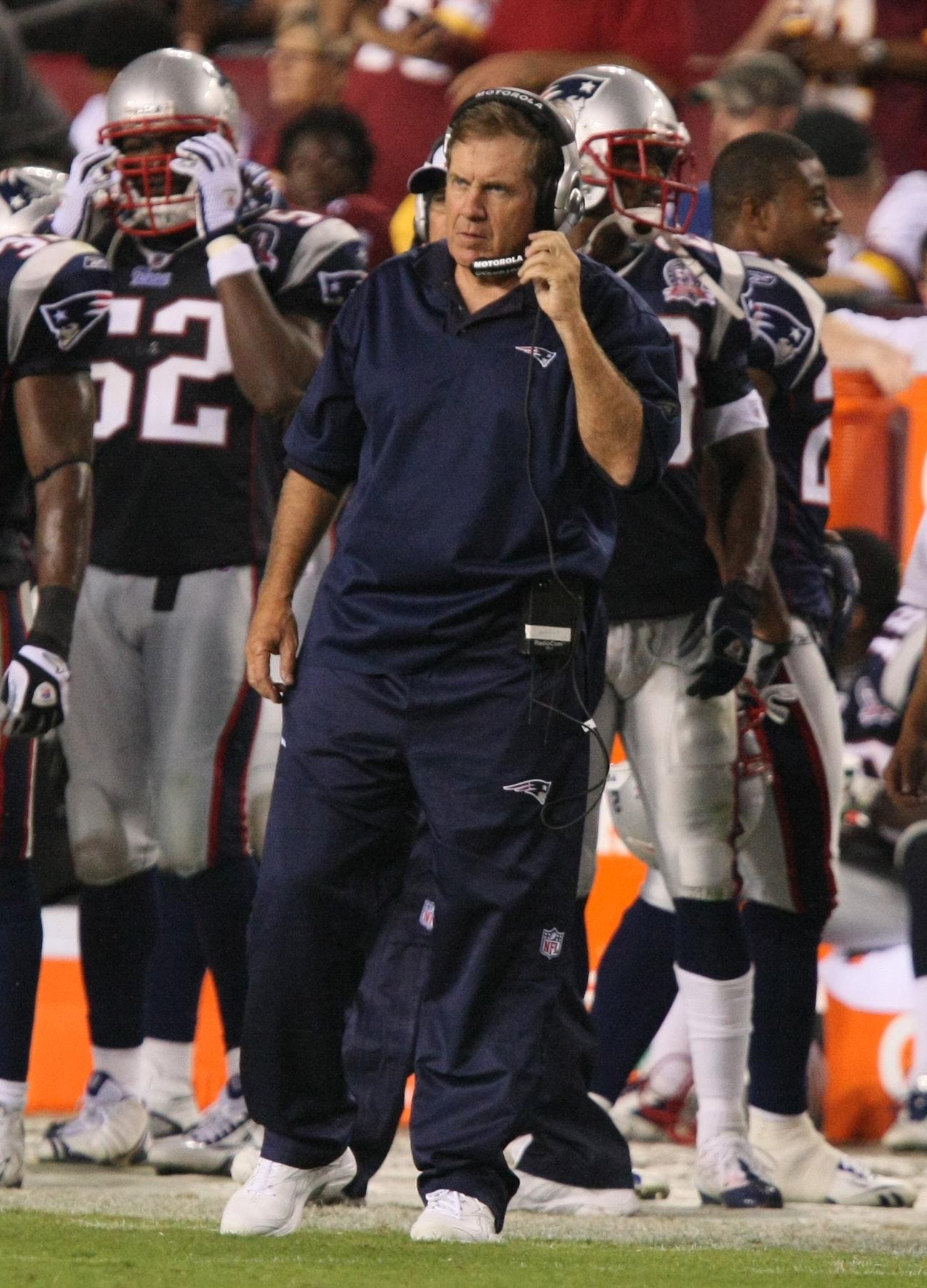
undesignated areas: an attempt to better understand the Jets’ strategies to one-up them in future games, and a move that was found to be in violation of NFL rules. In the aftermath of this discovery, Belichick was fined $500,000, while the Patriots were fined $250,000 and forced to forfeit a first-round pick in the 2008 NFL draft.
The second scandal, “Deflategate,” involved the allegation that the footballs used in the Patriots’ victory against the Indianapolis Colts in the 2014 AFC Championship Game were intentionally deflated under the orders of Tom
Brady. In the aftermath of “Deflategate,” Brady was suspended for the first four games of the 2016 season while the Patriots were fined $1 million and forced to forfeit two selections in the 2016 draft.
Even then, I don’t think these scandals are big enough dents on Belichick’s record to deny him a Hall of Fame spot. The fine for “Spygate” may have been relatively inconsequential for Belichick, given the millions he had already made by that point coaching the Patriots, but he nonetheless accepted his punishment and moved on. Nevermind the fact that the scan-
dal was nearly 20 years ago now. As for “Deflategate”? Belichick didn’t have a direct role in that scandal; Brady was the central figure. Also, the Patriots won that game 45-7 over the Colts. Intentionally deflated footballs were far from the biggest reason why the Patriots won that game.
On the topic of the Colts, I think attention also needs to be drawn towards the Hall of Fame voters in question. One of them was Bill Polian, a longtime Colts executive who allegedly told fellow voters that he thought Belichick should “wait a year” before induction because of the aforementioned scandals. Though the Hall of Fame confirmed that Polian voted to induct Belichick, the point still stands that the voting process is not immune to conflicts of interest from voters. Changes could and should be implemented by the Hall of Fame to prevent such conflicts from happening. Some meaningful changes that could be made include making votes public to increase transparency, increasing the number of voters (what do you mean only 50 people are responsible for making decisions like this?) and reforming the final ballot to allow voters to rank five finalists rather than three. Ultimately, the main purpose of the Pro Football Hall of Fame is to preserve the legacy of the greatest contributors to professional football. Not everyone in the NFL who is worthy of a spot in the Hall of Fame has a truly spotless record, of course, but the circumstances of such blemishes should still be considered in the overall context of their career. “Spygate” and “Deflategate” may have damaged Belichick and the Patriots’ brand and credibility at the time, but the general public has largely moved on from both of those scandals. Will the public move on from this snub as well? I’d say eventually, especially since Belichick will likely be inducted next year. But with all that said, if the Hall of Fame is truly meant to honor the best of the best, its process of inducting the best needs to change so that all can be ensured that their greatness—especially those of Belichick’s magnitude—are recognized without hesitation. Let us hope that such changes are implemented and that such blunders never happen again anytime soon.
freestyle skier Alex Hall and speedskater Jordan Stolz, all of whom enter the Games as favorites to capture gold medals.
On Friday, Feb. 6, the United States will make its debut at the 2026 Milano Cortina Winter Olympics during the opening ceremony with a team of 232 athletes, the largest U.S. delegation ever assembled for the Winter Games. The question now is not the size of the team, but how it will perform and what it brings to the international stage.
Of the 232 athletes, 98 are returning Olympians. Among the most notable are snowboarder Chloe Kim,
At just 25 years old, Kim has dominated the snowboarding world since bursting onto the scene at age 14, when she won gold in the superpipe at the 2015 Winter X Games. She captured Olympic gold in the halfpipe at the 2018 Winter Games and successfully defended her title in 2022. Over the course of her career, Kim has earned eight X Games gold medals and became the first athlete to win titles across all four major snowboarding stages: the Olympics, Youth Olympics,
X Games and World Championships. Kim is expected to put on a show once again in Milano Cortina after making history last year as the first woman to land a double-cork 1080— two forward flips while spinning 360 degrees—in competition. However, her Olympic preparation was briefly derailed in early January when she dislocated her shoulder and tore her labrum during training. Despite the injury, Kim is still slated to compete and remains favored to win gold. A victory would make her the first snowboarder, male or female, to win three Olympic gold medals in the same event.
At 27 years old, Hall enters the 2026 Winter Olympics as a favorite after capturing gold at the 2022 Games. Beyond the Olympic stage, he has amassed 14 X Games medals and became the first athlete to earn gold in four skiing disciplines: slopestyle, big air, knuckle huck and Real Ski. Hall also made history as the first skier to land a 2160—six full rotations—in competition, making it clear that he is poised to put on a show in Milano Cortina.
Continue reading on page 15
On the ice, 21-year-old Stolz has established himself as a dominant force in the world of speed skating. After being crowned the overall champion in the 500, 1,000 and 1,500-meter events in the most recent ISU World Cup, Stolz enters the Games with gold firmly in his sights. Also competing on the ice are husbandand-wife ice dancers Madison Chock and Evan Bates, who will be returning for their fourth Winter Olympic Games. The duo has won the past five U.S. championships and seven overall, along with claiming the last two Grand Prix Finals titles and three World Championships. Seasoned by both experience and pressure, Chock and Bates
are strong contenders to bring home an Olympic gold medal.
41-year-old Lindsey Vonn is currently set to return to the Olympic stage for a fifth time this year after coming out of retirement. Fans are eager to see how the veteran skier would measure up against a new generation of athletes, though a recent crash during a practice run has left her status for the Games uncertain.
In team competition, the U.S. hockey programs will take center stage. On the women’s side, the gold medal is once again expected to come down to a familiar showdown between the United States and Canada, as the two nations have met in all
but one women’s hockey gold medal final since the sport’s Olympic debut in 1998.
The men’s tournament, however, is far less predictable. For the first time since 2014, National Hockey League (NHL) players will be permitted to compete, dramatically leveling the playing field. Much of the spotlight will fall on the Tkachuk brothers, who are set to compete together for the United States.
By all indications, the United States appears poised for a strong showing at the Games. At the 2022 Winter Olympics, the U.S. brought home 25 medals, including eight golds, finishing fourth overall in the medal standings. Histori-
cally, Norway has been the United States’ biggest competitor at the Winter Games, holding the all-time Winter Olympic medal record with 405 medals, with the U.S. close behind at 330.
With elite veterans returning alongside a wave of promising newcomers making their Olympic debuts, the United States has come ready to compete, setting the stage for a highly competitive and entertaining Games.
The Olympics will be streamed exclusively on Peacock, with the hockey tournament beginning on Feb. 5 local time, followed by the opening ceremony on Feb. 6. Competition will run through Feb. 22.
Olivia Wen Staff Writer
Last weekend, the two-week saga of the Australian Open (AO) came to a thrilling close. In the women’s tournament, Elena Rybakina defeated No. 1 Aryna Sabalenka (6-4, 4-6, 6-4). For the men, despite a slow first set, No. 1 Carlos Alcaraz beat fourth seed Novak Djokovic, going 2-6, 6-2, 6-3 and 7-5. With his win in Melbourne, Alcaraz completed his career Grand Slam and became the youngest men’s tennis player to achieve it at only 22 years old.
Of course, these outcomes didn’t come without some upsets in the tournament; both the previous 2025 AO singles champions, Jannik Sinner and Madison Keys fell before they reached the finals. Sinner’s loss to Djokovic in a grueling five-set semi-final match came as a surprise, as he was the two-year defending champion. Keys didn’t make it as far, losing to Jessica Pegula in two straight sets (3-6, 4-6) in the fourth round.
Eyes were also on 12th seed Elina Svitolina. After a disappointing firstround loss in the U.S. Open last sum-
mer, she looked to reclaim her place at the AO. The last time she’d reached a Grand Slam semi-final was in 2023 at Wimbledon, and in her path to the semi-finals here, she knocked out No. 5 Coco Gauff and No. 7 Mirra Andreeva before losing to runner-up Sabalenka.
Gauff’s disappointing loss to Svitolina put her reputation on the line both on and off the court. Frustrated after her 1-6, 2-6 loss in a quick 59-minute match, Gauff retreated to what she assumed was a private area and smashed her racket. Exposed by a live broadcast, the clip was publicized without her knowledge, and it prompted backlash for her reaction to the match. Several top players came to her rescue, criticizing the lack of privacy at the AO, and Serena Williams reacted to the incident with a playful tweet, “Now Coco when you want I can show you how to demolish in one swipe… Serena style” on X. Additionally, many expected a better run from four-time Grand Slam champion Naomi Osaka, who has two AO titles from winning in 2019 and 2021. Before her first match, she walked onto the court flaunting a new jellyfish-inspired outfit consisting of a flowy skirt and veil,
along with a turquoise dress. She received both criticism and acclaim from the tennis community, with some claiming she should focus on tennis more than what she wears. Soon after, she withdrew from the tournament during round 3 due to abdominal injury concerns—the same concern that caused her to withdraw from the last Australian Open.
As the AO wraps up, the focus now shifts to how these players carry their

momentum—or lessons learned—into the rest of the season. With the French Open up next, athletes such as Alcaraz, Sabalenka, Gauff and Osaka will have another opportunity to refine their game and make their mark on a very different surface. While Melbourne delivered its share of surprises, the season is still young, and the next Grand Slam will offer a fresh stage for redemption, consistency and continued growth.


Track and Field
at Dr. Taraschke Team Challenge (1/30)
Men: 3rd of 5 teams (52 points)
Women: 2nd of 5 teams (73 points)
Wrestling
at Pete Willson-Wheaton Invitational (1/30-31) 9th of 30 teams
Men’s Basketball
at NYU (1/30) W 87-83 at Brandeis (2/1) L 79-90
Women’s Basketball
at NYU (1/30) L 64-93 at Brandeis (2/1) L 69-77
Swim and Dive
at John Carroll (1/31)
Men W 173-115
Women W 203-94
Track and Field
at Jud Logan Light Giver 2/7 at Bob Shannon Invitational 2/7
Wrestling
at 39th Annual John Summa Invitational 2/7
throughout the game.
Ellie Palaian Sports Editor
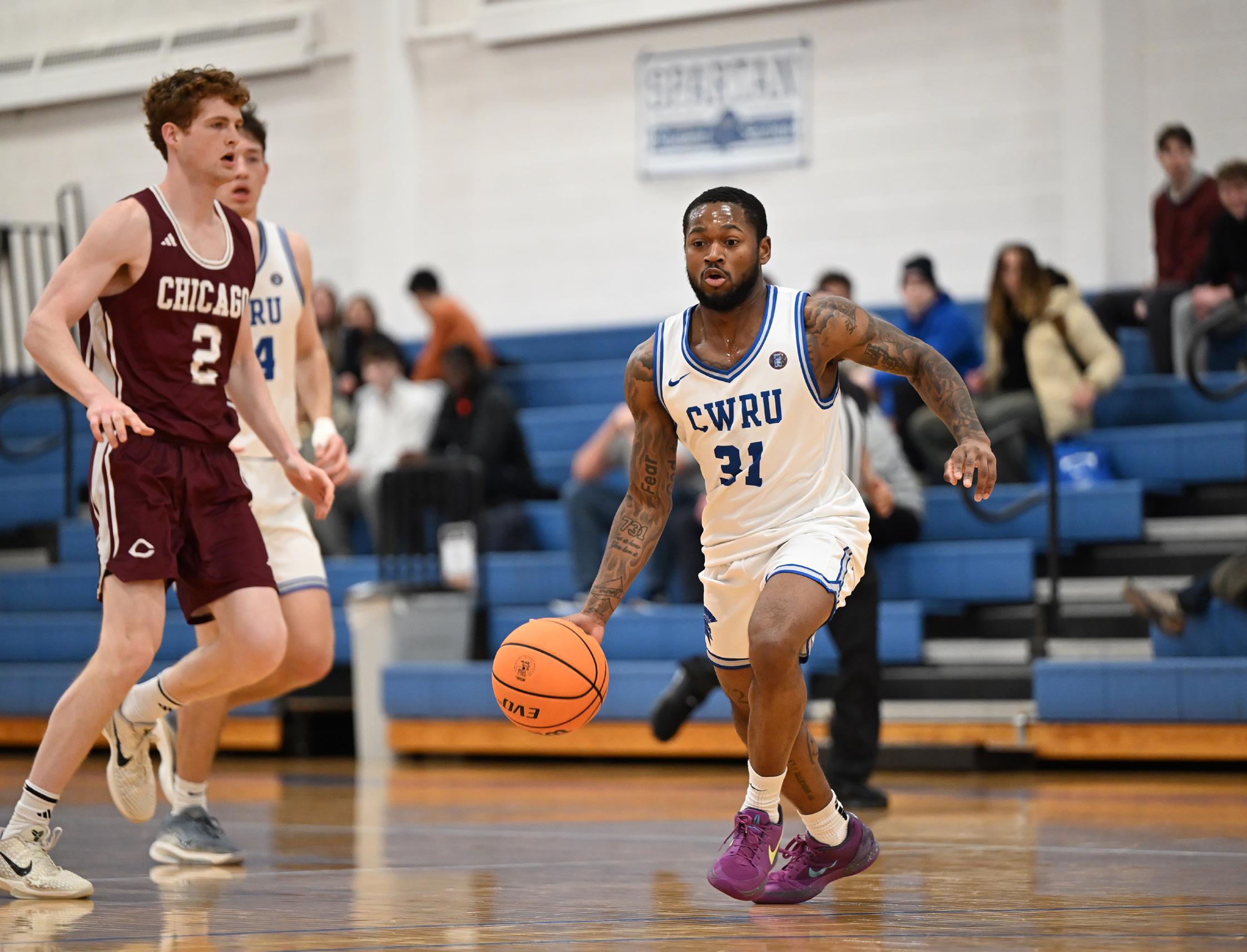
Over the weekend, the Case Western Reserve University men’s and women’s basketball teams wrapped up the first half of their conference schedules with road games at New York University and Brandeis University. The Spartans consequently dropped to 1-6 in UAA play.
The men’s team earned its first conference victory of the season on Friday, Jan. 30, defeating No. 22-ranked NYU 87-83. Graduate student forward Ethan Edwards led the way with 29 points, helping the Spartans snap a five-game losing streak.
On Sunday, Feb. 1, the Spartans faced the Brandeis Judges in a tense 79-90 loss. CWRU battled back from an early deficit against Brandeis but was never able to take the lead. The Judges jumped out to an 18-9 advantage in the first half, though the Spartans stayed close thanks to a strong bench performance from second-year guard Matthew Ellis, who scored all eight of his first-half points in a short burst. Edwards also contributed with key scoring late in the frame, and Vincent led CWRU with 12 points in the half.
Spartans briefly took the lead early in the second quarter on a 15-1 run, though NYU closed the half ahead with the score at 43-33.
In the second half, CWRU cut the deficit several times as Hartjes and Roberts helped narrow the gap in the third quarter, but NYU responded with multiple scoring runs to build a 24-point lead by the period’s end. A brief 7-0 Spartan run in the fourth quarter showed some resistance, but NYU extended its lead with an 11-0 stretch and went on to secure a 29-point win.
Men’s Basketball
Horsburgh Gymnasium, 5:30 p.m. vs Brandeis 2/8
Horsburgh Gymnasium, 2 p.m.
Women’s Basketball vs NYU 2/6
at NYU (1/30) L 64-93 at Brandeis (2/1) L 69-77
Swim and Dive
at Yellow Jacket Diving Invitational 2/7, Diving Only
CWRU battled back from an early NYU three-pointer to build a strong first-half lead. The Spartans capitalized on NYU turnovers, going on multiple scoring runs including a 10-0 surge and a 10-2 stretch—and at one point leading by 10. Despite CWRU shooting an impressive 62.1% from the field and 64.3% from three-point range in the half, NYU hit a late three-pointer to take a 51-47 lead into halftime. Edwards led the way with 19 first-half points, while fourth-year co-captain and guard Anand Dharmarajan added 14 points all from long range.
In the second half, CWRU quickly regained control, tying the game early and eventually pulling ahead on a 12-3 run to reach a 7163 lead. The Violets stayed within striking distance, but clutch shots from Dharmarajan, Edwards and first-years forward Alex Vincent and guard Anestis Hadjistamoulou allowed the Spartans to hold off a late NYU rally. CWRU survived a final NYU layup to secure an 87-83 victory, highlighted by consistent scoring from their top contributors
In the second half, Brandeis pushed its lead to 17 points early, but CWRU mounted a significant comeback fueled by fourth-year forward Andrew Fox’s six straight points and a 21-5 run that included 10 unanswered points. An an-one from Edwards narrowed the gap to 62-61, but Brandeis regained composure with timely shots that left CWRU unable to retake the lead.
The men’s team will have another opportunity to face NYU and Brandeis this weekend, this time with the advantage of playing on their home court: Horsburgh Gymnasium.
The women’s team faced two challenging road games this weekend, falling to both NYU and Brandeis. Against NYU, third-year guard Mya Hartjes led CWRU with 16 points and six assists, while fourth-year co-captain and guard/ forward Emily Plachta added 12 points and seven rebounds. Fourthyear co-captain and guard Maya Roberts scored a season-high 10 points, and junior forward Maura Schorr contributed eight points and six rebounds. CWRU fell behind early as NYU built a 20-9 lead, but Hartjes and second-year guard Taylor Angielski sparked a rally to close the first period to 21-19. The
On Sunday against Brandeis, the Spartans fell 69-77 to the Judges. Hartjes led the team with 16 points, five assists, two rebounds and two steals, while third-year guard Jordyn Call added 13 points, including 10 in the first half. Third-year forward Maura Schorr contributed 12 points and seven rebounds, and Plachta nearly recorded a doubledouble with nine points and 10 rebounds. The Spartans shot 38.7% overall, 36.0% from three and 66.7% from the free-throw line.
CWRU kept the game close early as the squad answered Brandeis’ runs with three-pointers from Angielski and Hartjes, cutting deficits multiple times and trailing by as few as two in the first half. The Spartans continued the battle in the second and third quarters but were unable to fully overcome Brandeis, who maintained a lead of up to 12 points at halftime and 10 points entering the fourth. In the final period, CWRU outscored the Judges 18-16 and closed the gap to eight points late, but it wasn’t enough to overcome Brandeis as they held on for the win.
Like the men’s team, the women will have another chance to face NYU and Brandeis this weekend, this time playing on their home court.