Observer
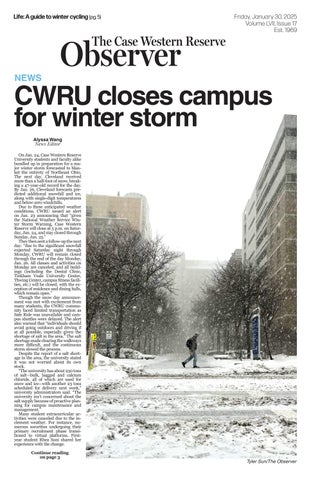
CWRU closes campus for winter storm
Alyssa Wang News Editor
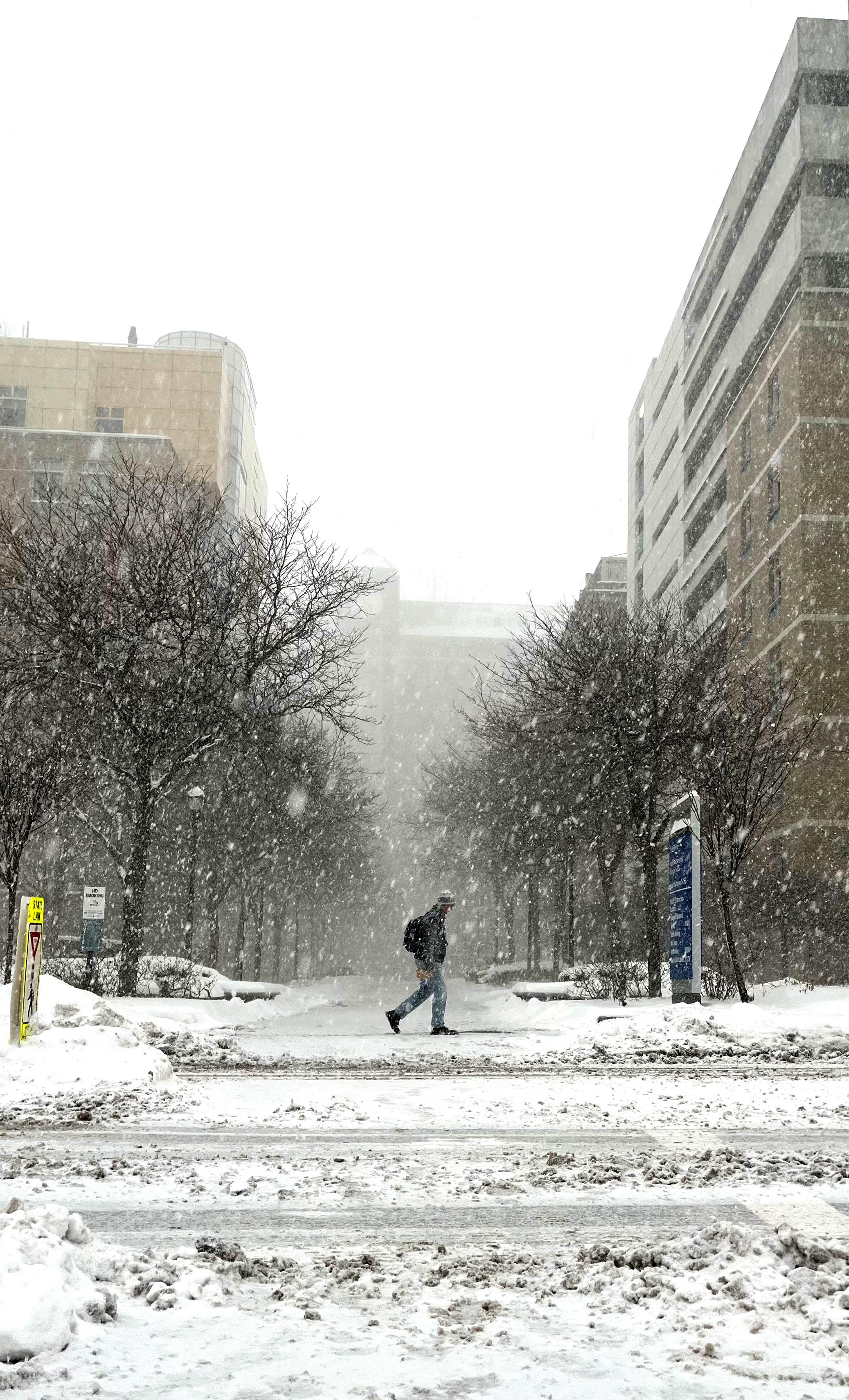
On Jan. 24, Case Western Reserve University students and faculty alike bundled up in preparation for a major winter storm forecasted to blanket the entirety of Northeast Ohio. The next day, Cleveland received more than a half-foot of snow, breaking a 47-year-old record for the day. By Jan. 26, Cleveland forecasts predicted additional snowfall and ice, along with single-digit temperatures and below-zero windchills.
Due to these anticipated weather conditions, CWRU issued an alert on Jan. 23 announcing that “given the National Weather Service Winter Storm Warning, Case Western Reserve will close at 5 p.m. on Saturday, Jan. 24, and stay closed through Sunday, Jan. 25.”
They then sent a follow-up the next day: “due to the significant snowfall expected Saturday night through Monday, CWRU will remain closed through the end of the day Monday, Jan. 26. All classes and activities on Monday are canceled, and all buildings (including the Dental Clinic, Tinkham Veale University Center, Thwing Center, campus fitness facilities, etc.) will be closed, with the exception of residence and dining halls, which remain open.”
Though the snow day announcement was met with excitement from many students, the CWRU community faced limited transportation as Safe Ride was unavailable and campus shuttles were delayed. The alert also warned that “individuals should avoid going outdoors and driving if at all possible, especially given the shortage of salt in the area.” The salt shortage made clearing the walkways more difficult, and the continuous storm slowed the process.
Despite the report of a salt shortage in the area, the university stated it was not worried about its own stock.
“The university has about 230 tons of salt—bulk, bagged and calcium chloride, all of which are used for snow and ice—with another 23 tons scheduled for delivery next week,” university administrators said. “The university isn’t concerned about the salt supply because of proactive planning for campus maintenance and management.”
Many student extracurricular activities were canceled due to the inclement weather. For instance, numerous sororities undergoing their primary recruitment phase transitioned to virtual platforms. Firstyear student Rhea Soni shared her experience with the change.
Continue reading on page 3
From irreversible to repairable: CWRU researchers explore reversing Alzheimer’s disease
Aditi Darodkar Contributing Editor
For the first time, scientists at Case Western Reserve University have identified a potential method to reverse Alzheimer’s disease (AD) rather than merely slow its progression. In collaboration with University Hospitals and the Louis Stokes Cleveland Veteran Affairs Medical Center, Dr. Andrew Pieper and Dr. Kalyani Chaubey led the novel research. Titled “Pharmacologic reversal of advanced Alzheimer’s disease in mice and identification of potential therapeutic nodes in human brain,” the study was published in Cell Reports Medicine on Jan. 20.
“For over a century, Alzheimer’s has been considered irreversible,” said Pieper, the director of the Center for Brain Health Medicines of the Harrington Discovery Institute at University Hospitals. According to Pieper, Alzheimer’s causes “profound human suffering and carr[ies] escalating social and economic costs as populations age,” and currently has no known cure.
This breakthrough centers on the brain’s energy balance, regulated by the molecule nicotinamide adenine dinucleotide, or NAD+. Disruptions in NAD+ balance make neurons vulnerable to damage, contributing to neurodegenerative diseases.
“We found a significant impairment in NAD+ homeostasis in postmortem human AD brains, a finding not previously reported by others, and observed the same deficit in our mouse models,” Pieper said. “Across humans and mice, the extent of NAD+ disruption correlated with disease severity, suggesting impaired NAD+ homeostasis contributes to pathology.”
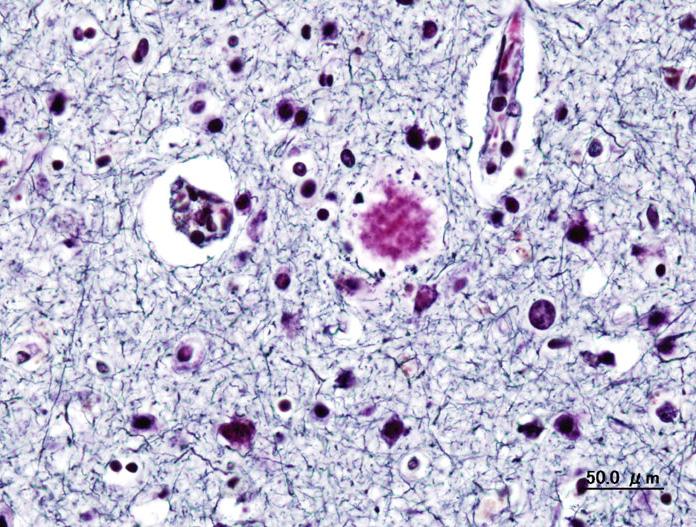
Scientists
at
Case Western Reserve University have made a break-
through in the process of reversing the effects of Alzheimer’s disease. Courtesy of KGH via Wikimedia Commons
This insight led the scientists to hypothesize that restoring NAD+ levels could enable damage recovery in AD brains. The key to do so lies in P7C3-A20, an improved version of the neuroprotective compound P7C3, which was originally discovered by the Pieper Laboratory 15 years ago. This therapeutic molecule restores NAD+ to its normal levels and has previously been shown to protect neurons in several neurodegenerative diseases.
After P7C3-A20 treatment, mice with Alzheimer’s had “fully restored cognition to levels indistinguishable from non-diseased controls, accompanied by recovery of learning and memory tasks to normal performance,” Pieper said. “In short,
the brains didn’t just stop declining. They rebuilt their structure and function[,] and enabled the mice to regain normal cognitive ability.”
Additionally, pathological signs associated with Alzheimer’s, such as “blood-brain barrier damage, oxidative stress, neuroinflammation and DNA damage [were] prevented by treatment of P7C3-A20 in AD mice,” said Chaubey, the lead research scientist of this project and postdoctoral fellow at the Pieper Laboratory.
The study used two mouse models: amyloid-driven and tau-driven. Amyloid plaques are abnormal clusters of protein between neurons, and tau proteins are normally associated with neuronal structures, but accumulates into insoluble filament tan-
gles in Alzheimer’s. These proteins are major features of Alzheimer’s and both mouse models “established AD-like pathology and cognitive impairment, confirmed by histology, molecular markers and behavioral testing,” said Pieper.
Although the experiments were performed on mice, the research team analyzed “available human AD databases and tried to find out some common signatures between mice and humans [so] that the study findings can correlate with actual human patients,” Chaubey said. Thus, both mouse models, while imperfect, “recapitulate many core molecular, histological, and behavioral hallmarks,” Pieper said.
Despite compelling pre-clinical data, translating these laboratory results into a clinical setting is expected to be gradual.
“Responsible clinical development takes time,” Pieper said. “Through Glengary Brain Health, [the company Pieper co-founded to commercialize therapies for Alzheimer’s], we are optimizing lead compounds for human trials. We are still realistically a few years before clinical testing can begin and additional years beyond that before any potential implementation, depending on trial results.”
In the meantime, the team is continuing to investigate the ability of P7C3-A20 to reverse brain damage in other brain injuries and age-related neurodegenerative diseases.
For Chaubey, this project was more than a scientific milestone. “Through these results, [for the] first time, we gave some proof of AD reversal,” she said. “It gave hope [to] the patients and their families that one day there is a treatment possibility for those who are suffering. This study is a hope for AD patients worldwide.”
Case Amateur Radio Club W8EDU receives ARRL DXCC Trident Award
Rebekah Repp Staff Writer
After many years of hard work, the Case Amateur Radio Club W8EDU has finally received the American Radio Relay League (ARRL) DX Century Club (DXCC) Trident Award, making them the first collegiate club to do so. They qualified for the award on Oct. 26, 2025 at the end of the CQ World Wide DX Contest. The contest lasted for 48 hours and allowed participants from all over the world to connect with each other. The contest, however, wasn’t the whole process; it only marked the end of a long journey for the club.
“It’s been years in the making,” third-year student and Case Amateur Radio Club President Tobias Heller said. “Some of these contacts could be as old as 15 years, but I would say we’ve made a recent effort in the past three.”
In order to receive the award, the club had to make 100 contacts, also known as two-way radio communications, in three different radio modes: voice, digital and morse code. Each contact comes from a different place,
and different countries and territories have their own station. In order for a station to count in their list, the club had to make a successful exchange with them. Contacting stations was a lot easier for the club during the contest due to the vast number of participants and stations active at the time.
“In a contest, you can either be the hunter or the hunted,” Heller said. “Generally, we’re more of the former. We’ll select a band that will reach, let’s say, Northern Africa. If it’s clear, point the antenna there, and we’ll see who we hear and make contact. Generally, someone there will be calling, and assuming we have a successful exchange, our call sign, signal strength and our International Telecommunication Union (ITU) region [is shared]. Once we exchange that information, both sides write it down in a software program, and you’ve made the contact.”
During the contest, the club completed its final 10 contacts. Their exchange with the Island of Saint Bartholomew was the final one that brought the total to 100. However, it wasn’t always easy for them to make connections.
“Generally, there’ll be a lot of peo-
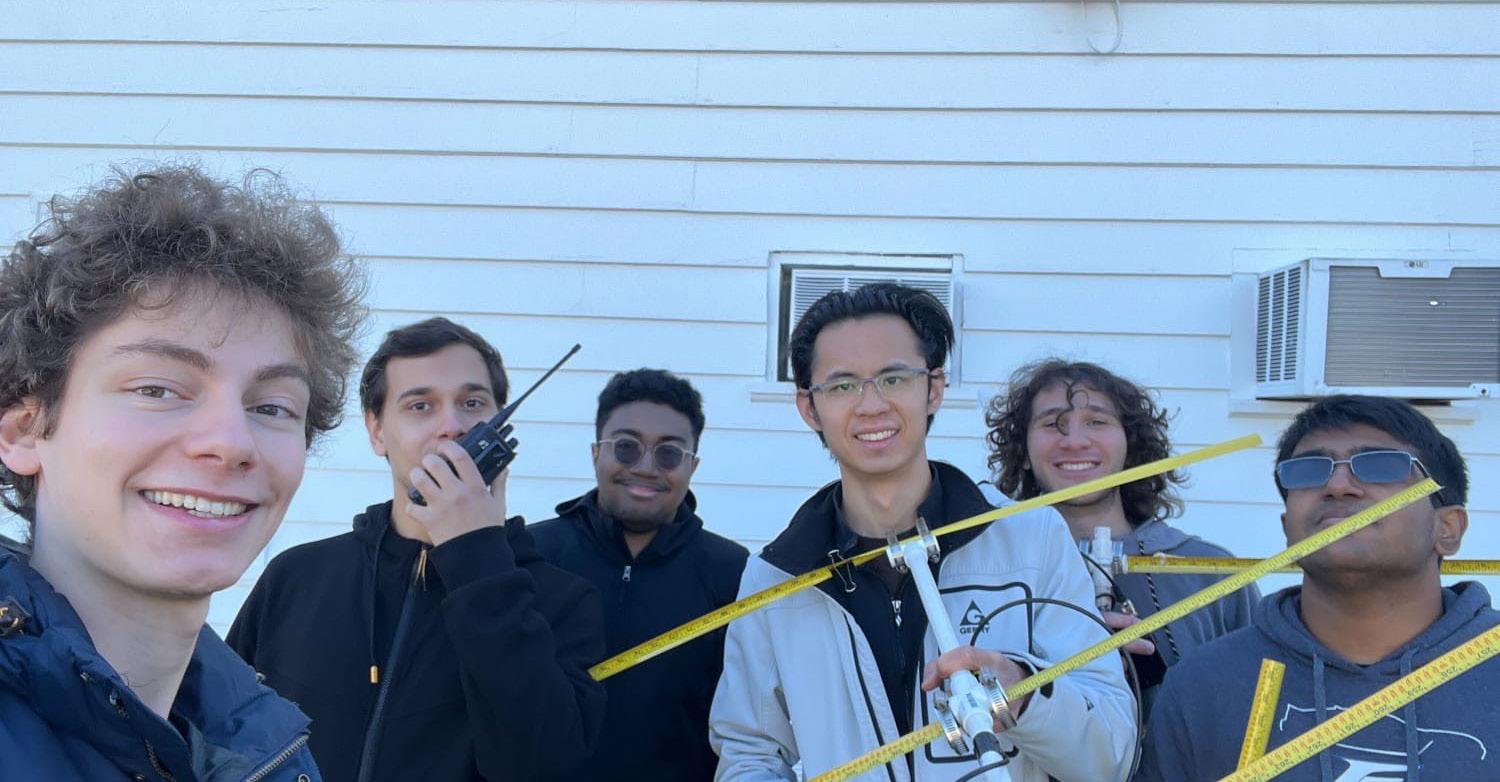
addition to years of hard work, a
ple on the band,” Heller said. “This is where it helps to have a good antenna because you want your signal to overwhelm someone else’s signal. So the person on the other end, when there’s 10 call signs coming in, they pick you. You just got to keep trying and trying and trying.”
In the end, the team successfully accomplished their long-awaited goal. With the ARRL offering an ad-
ditional award for completing 200 contacts in each category, the club now has a new milestone to pursue. Beyond that, members will continue focusing on core club activities, including communicating with operators around the world, participating in off-campus events such as fox hunts, expanding their membership and working on projects to test and develop new radios.
In
critical antenna replacement helped W8EDU become the first collegiate club to win a Trident Award. Courtesy of Tobias Heller
Brief

Cleveland’s deep freeze flirts with a cold streak not seen in more than a century By Ryan Cohick From Cleveland.com
Cleveland Clinic to expand, modernize main campus, CEO says By Julie Washington From Cleveland.com
Where Ohio lawmakers in Washington stand on funding ICE
By Morgan Trau From News 5 Cleveland
Forecasters Are ‘Pretty Confident’ Another Weekend Storm Is Brewing By Nazaneen Ghaffar
From The New York Times
Manhattan DA wants Luigi Mangione state trial to start July 1, before federal case
By Aaron Katersky
From ABC News
Rep. Ilhan Omar is attacked at town hall in Minneapolis
By Reis Thebault, Lauren McCarthy and Ashley Ahn
From The New York Times
As Minneapolis Rages, Legislators Move to Restrict ICE in Their States
By David W. Chen
From The New York Times
Two federal agents involved in Alex Pretti shooting placed on administrative leave By Marianne LeVine, Andrew Jeong, Kelly Kasulis Cho and Adela Suliman
From The Washington Post
Next ‘No Kings’ march on the horizon with flagship event in the Twin Cities
By Natasha Korecki
From NBC News
ICE’s role at Winter Olympics prompts anger in Italy
By Hallie Jackson
From NBC News
Trump Threatens Iran With ‘Massive Armada’ and Presses a Set of Demands
By David E. Sanger, Tyler Pager and Farnaz Fassihi
From The New York Times
CH4IR holds a vigil to honor those who have died in ICE custody
Moses Fleischman Web Editor
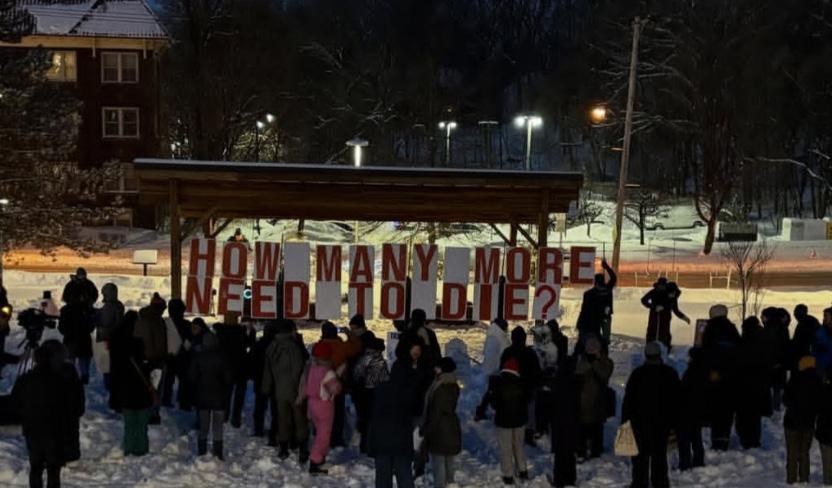
On Jan. 26, 2025, agents from U.S. Immigrations and Customs Enforcement (ICE) raided Cilantro Taqueria in Cleveland Heights’ Coventry Village. Following the raid, neighbors came together to form Cleveland Heights for Immigrant Rights (CH4IR), a group dedicated to protecting and supporting immigrants in the community. This past Jan. 26, the first anniversary of the raid, CH4IR held a vigil in honor of those who have died in ICE custody or in a conflict with ICE agents.
Sheila Keller, a leader of the group, explained the organization’s mission and the work it does to support immigrants in the community.
“[We are] a grassroots movement of people that formed after the raid on Cilantro that occurred exactly a year ago yesterday,” Keller said. “We follow in a long tradition of Cleveland Heights being a city that is willing to stand in the gap and take action for justice at times that this is required of us. In the 1970s, it was the fight to integrate our community. Now, it is the fight to protect immigrants and
the ever-eroding rights we all have in this country, regardless of immigration status.”
Keller also highlighted the organization’s advocacy efforts, continuously encouraging their city officials to take action.
“We are also asking our city council to put our money where our values are, and pass immigrant rights legislation that we have had before them for at least seven months,” Keller said. “We have met with all our elected officials one to four times [and had a] turnout of 100 members of our community to eight city council meetings to speak. We are living in a state of emergency, and we require their leadership.”
Several other speakers shared stories and perspectives at the vigil. A rabbi spoke about his recent experience traveling to Minneapolis with other faith leaders. He noted how close the community had become and how they were working to defend themselves and their neighbors from ICE. He urged his own community to join their fellow neighbors to do the same. A worker from Cilantro Taqueria spoke about the atrocities that ICE was inflicting upon individual immigrants and communities.
She thanked the group for coming to support and was heartened by the congregation of people coming together in solidarity.
To conclude the event, an organizer from CH4IR stepped forward to read the names of all those who died as a result of ICE’s actions in 2025 and 2026. After each name was called, the group responded “presente” to honor the life that had been lost.
Shay Singh, a member of CH4IR, commented on the vigil.
“[We met] to mark the year since the raid on Cilantro Taqueria and the inaction from local leaders at the violence that has escalated in our community and nationwide. Just this month, ICE has executed Renée Good and Alex Pretti in the act of protecting their neighbors. We met in the cold to remind our community that we are here for them, and we steadfastly demand that our elected leaders stand with all of their residents.”
The temperature outside hovered in the single digits as people chanted, sang and marched. It was clear that despite the freezing temperatures, attendees were filled with a fire to stand together for immigrant rights.
gether
Winter storm from page 1
“It was nice to be able to stay in with how cold and snowy it was, but I was a little disappointed that the whole campus closed down,” Soni said. “I had rush events to go to on Sunday, but they were moved to Zoom, and then, rather than getting together on Monday for bid day, they sent out bids via email. I was still excited, but it wasn’t as fun.”
The week prior, on Jan. 15, CWRU had also posted an alert to delay classes until after 10 a.m. and implement early dismissal at 4 p.m. due to the extreme weather. The university continued to provide updates about the Cold Weather Advisory, stating it would monitor the conditions and modify class sched-
ules, if necessary.
“I’m glad they canceled classes when they did,” first-year student Patrick Hwang said. “It was so cold outside, and I saw my friend slip multiple times in front of Tomlinson and around Fribley. It’s probably safer that we could just hang around the dorms.”
When determining whether to cancel or delay classes, the university’s committee, including leaders from the Office of the President, the Division of Student Affairs, the Department of Human Resources, the Division of Public Safety and the Department of Campus Planning and Facilities Management, makes the decisions. They gather data
from Cleveland’s National Weather Service forecasts and the Cuyahoga County Office of Emergency Management. They also consider when and how quickly grounds staff can clear walkways and parking lots on campus, as well as the condition of roadways near and around campus.
“The safety of the CWRU community is our number one priority,” university administrators said. “Based on [the data], the university makes the best decision to ensure the safety of its community members while fulfilling its mission of providing exceptional education, conducting groundbreaking research and engaging with the broader Cleveland community.”
A year after ICE raided Coventry Village’s Cilantro Taqueria location, community members came to-
to commemorate the lives lost in fatal interactions with ICE. Courtesy of CH4IR
Swathed in history: The CMA's 'American Printed Silks, 1927-1947'
Esha Bagora Social Media Editor
The Cleveland Museum of Art’s (CMA) newest exhibit, “American Printed Silks, 1927-1947,” showcases printed silks from a time when American textile design became popular. It offers a vibrant window into the transformative, two-decade period in which the United States became a world leader in printed silk production.
The exhibition draws from the CMA’s collection to showcase work from four American companies: Stehli Silks Corporation, H.R. Mallinson and Company, Silks Beau Monde and Onondaga Silk Company. These manufacturers emerged after World War I, as the war had disrupted supply chains and severed creative connections with European textile centers, forcing American companies to look inward for inspiration.
This shift toward domestic production carried profound patriotic undertones. As the nation sought to assert its cultural independence post-WWI, textile design became an unexpected arena for expressing American pride and self-sufficiency. Creating distinctly American fabrics was not just a business decision, it was an act of national identity-building. It demonstrated that the United States could compete with—and even surpass—European design traditions that had dominated for centuries.
Rather than continuing to imitate European patterns, these companies recognized that novel, eye-catching designs could serve as powerful marketing tools, while simultaneously establishing a national artistic identity. The fabrics on display reveal how American manufacturers successfully transformed this challenge into an opportunity. What made this pivotal mo-
ment so important was its timing. In the midst of two world wars, this creative flowering coincided with America's emergence as a global economic superpower. The textile industry’s success in developing American aesthetics paralleled broader movements in American art, architecture and design, all seeking to define what made American culture unique.
The exhibition also documents a significant technological evolution in textile production. During the 1920s and 30s, most prints were created through roller printing, a method that produced small pattern repeats with sharply-defined lines. By the 1940s, the cheaper and more versatile silkscreen printing technique gained widespread use. This shift gave designers more creative freedom, enabling them to produce textiles with larger, diverse repeats and other painterly qualities that had been difficult to achieve with roller printing.
This technological evolution can be traced through the pieces in the exhibition. Early works display the crops: precisely delineated patterns characteristic of roller printing. Later examples showcase the looser, more expressive designs brought by silkscreen techniques. The CMA holds a particularly strong collection of silkscreen-printed fabrics from the 1940s, including beautiful pieces from the Onondaga Silk Company, showcasing the technical changes.
The exhibition reminds us that fabric design is more than the creation of decorations. It reflects broader cultural currents and technological innovations. These silks capture the optimism and creativity of American design during a period of rapid change, when the U.S. was establishing its own aesthetic outside of European traditions. The bold patterns and colors represented a confident, forward-looking vision of
American style. The collection works as a narrative of American ingenuity and artistic independence. The fabrics speak to a moment when domestic manufacturers realized they didn’t need to look across the Atlantic for inspiration and could create something special on their own.
The gorgeous fabrics remain visually striking nearly a century after their creation, a testament to the enduring appeal of good design, and serve as material evidence of a pivotal moment in American cultural history, when the nation’s textile industry helped define what it meant to “look American.”
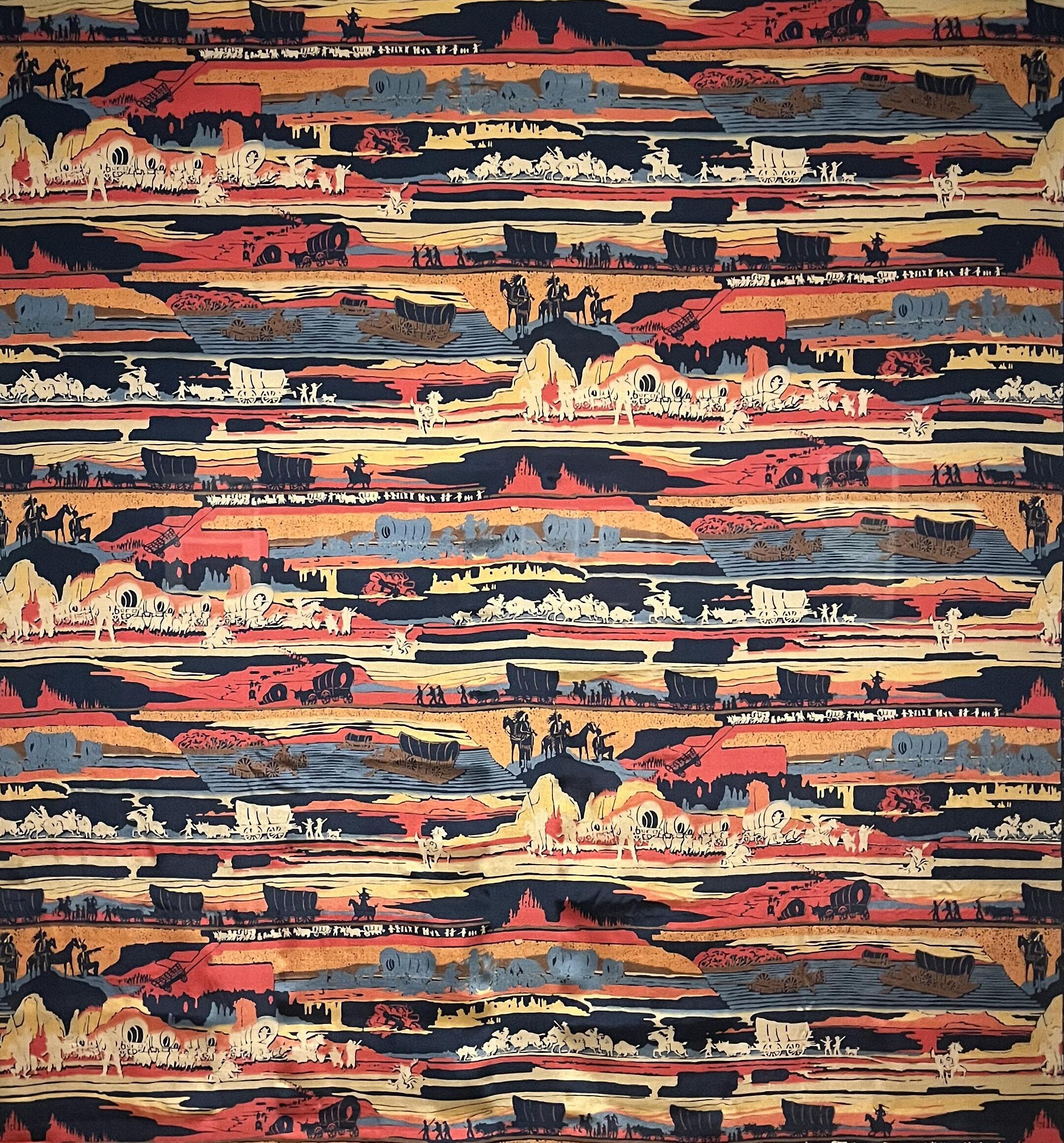
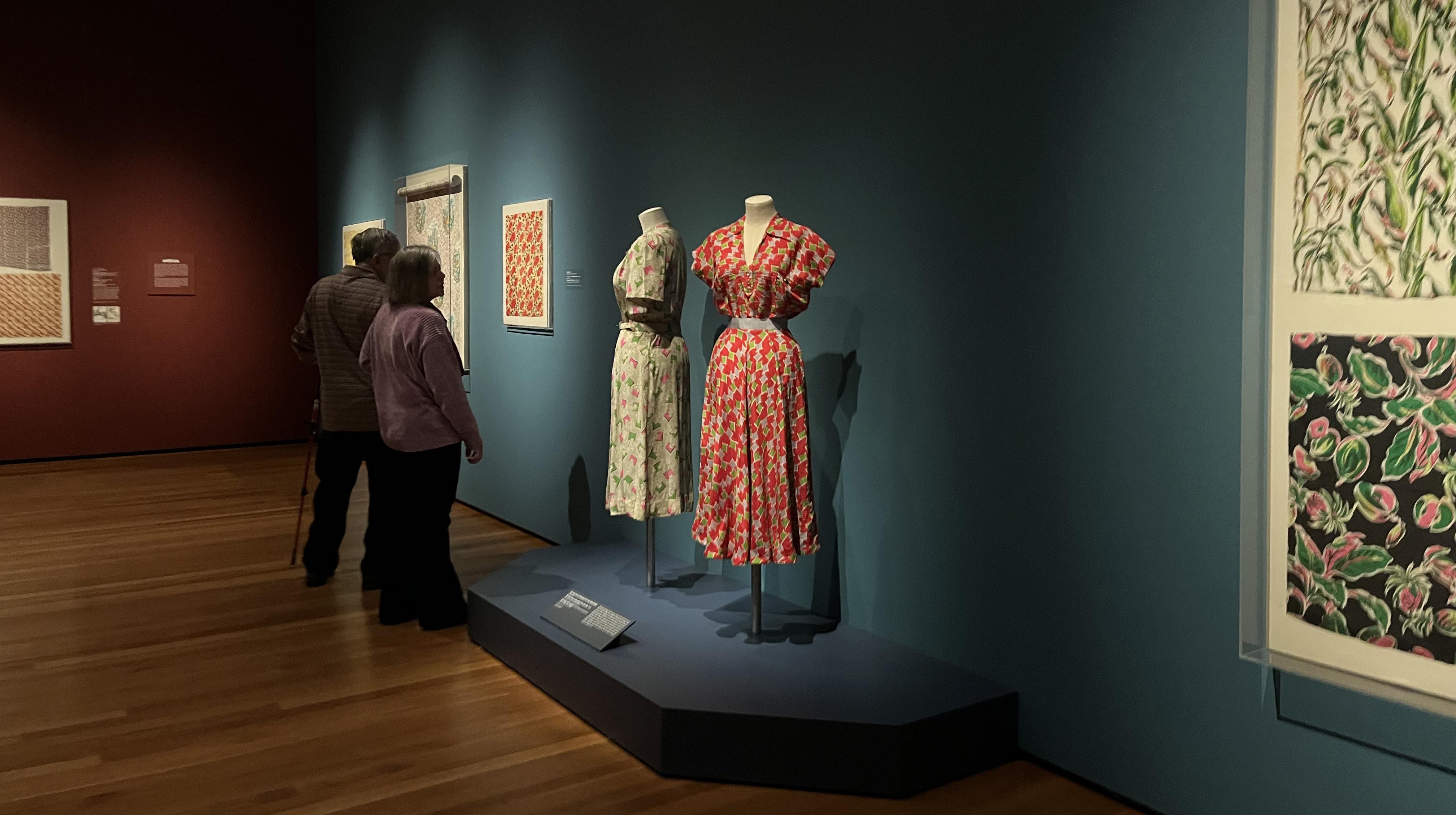
The CMA's latest exhibition showcases the evolution of the American textile industry. As screen printing techniques advanced, so did a distinctly American aesthetic tradition. Tyler Sun/The Observer
"Covered Wagons Oregon Trail" is a silk print produced by H. R. Mallinson and Company in 1929 at the advent of the Great Depression, conjuring up patriotic images in the wake of World War I. Tyler Sun/The Observer
A guide to winter cycling
Matthew Stall Video Editor
This year's winter in Cleveland has been like no other. The snow is now piled high, salt is running low, yet through all of this, you might catch a glimpse of me riding my 1997 green Specialized to class. Myself and a small collection of other determined riders on campus still love using the most efficient and fun transportation method on Earth, even when it’s below freezing. Most of you will just call me crazy, I get that. However, for those readers who are intrigued, for those who love cycling but always choose to stow away their bikes in the winter: Read on.
Winter gloves or mittens are a must have for winter cycling. If you forgo these, you will be absolutely torturing your hands with the frigid air that rushes over your handlebars. I personally prefer gloves over mittens, because I find it easier to hit the brake levers with gloves. Another advantage with gloves is that you can get ones that have a pouch to insert a handwarmer.
A coat is not necessary when cycling in the winter, and it actually makes the experience much worse. After just one or two minutes of pedaling your core will heat up, so if you wear a coat you'll end up extremely sweaty. Even in the coldest winter weather, I only wear a hoodie.
Protecting your neck is essen-
tial, but a scarf would fly all over the place in the wind. Therefore, I'd recommend wearing a buff. If you haven’t seen one before, it’s a piece of elastic fabric that wraps tightly around your neck. And that’s all your neck should need, since you simply need to prevent air from blowing across your skin.
To wear a helmet, or not to wear a helmet? Wintery conditions complicate the situation. Opting for a helmet rather than a warm winter hat will certainly make your ride much colder. Helmets are designed to maximize airflow, which is great in the summer but horrible in the winter. However, you are more likely than ever to suffer a fall during the winter, so from this perspective continuing to wear a helmet in the freezing cold is even more important than usual. Using creative clothing choices you can get the best of both worlds—warmth and safety.
Safety in harsh winter conditions doesn’t end with appropriate clothes and gear—performing preventative maintenance is necessary to keep your bike safe and reliable. Working on a bike is just about the last thing students want to do when they’re already stressed about tests. However, it cannot be understated how important it is to maintain your bike. You can prevent most catastrophic issues—which could easily lead to crashes—just by regularly inspecting your bike’s components each time you ride. There isn’t an easily accessible bike shop on or near campus, so it’s up to you
to keep your bike in working condition. Your bike will require even more maintenance during the winter, though I would argue it’s still a manageable amount of work, even during the busiest times of the semester. Here’s the key things that winter conditions change about bike maintenance.
Fenders are by far the best way to reduce the amount of work it takes to keep a bike in good condition. They stop dirt, water, snow, and salt from getting kicked up by the wheels and splattering the bottom side of the down tube. Fenders also protect your butt from getting coated by whatever is on the road. If your bike doesn’t have fenders, your down tube and other sections of the frame will get coated with road salt. Salt can speed up rusting on steel frames and ruin the paint on aluminum ones. You can easily manage the salt buildup by occasionally washing affected portions of the frame with a damp rag.
During the winter you will need to lubricate your chain more frequently than in the summer. This is the biggest mistake I notice when seeing other students bike around campus. So many of the bikes I see have bone-dry chains! Having a dry chain increases wear and makes it harder to pedal, so taking just a few minutes once each month to lubricate your chain is a no-brainer. Chain lube is cheap and a single bottle will last for a long time. You’ll also need a rag that you don't mind getting coated with grime. If
you don’t know how to apply chain lube, please watch a quick ParkTool video on the subject before trying it. Applying too much lube will drastically increase rusting and ruin your expensive chain. You’re more likely than ever to fall off your bike in the winter, so it goes without saying that you should ride slower than in the summer. You’d be surprised how much snow and ice a bike tire can handle, but once they do slip, you go down fast. I generally avoid riding and find alternative means of transport when it’s actively snowing. However, I’m back on my bike before long because the roads usually get cleared much faster than the sidewalks do. I suggest that you, too, stick to the road as much as possible. Most sidewalks and paths around campus are simply not in the shape to bike on until the snow has melted. Oftentimes only half the width of the sidewalk is usable, so if you stick to the sidewalks you’ll end up stuck behind pedestrians, going walking speed. I know it’s scary the first time you get on the road as a cyclist, but trust me, it’s better. Just make sure to stay off of busy roads like Euclid Avenue, take the full lane and follow the normal traffic patterns. I hope this inspires you to give winter cycling a try! This was a very short overview of the topic so I’d recommend checking out Shifter on YouTube for more urban and winter cycling tips. I learned all that I know about winter cycling from either him, or trial and error.
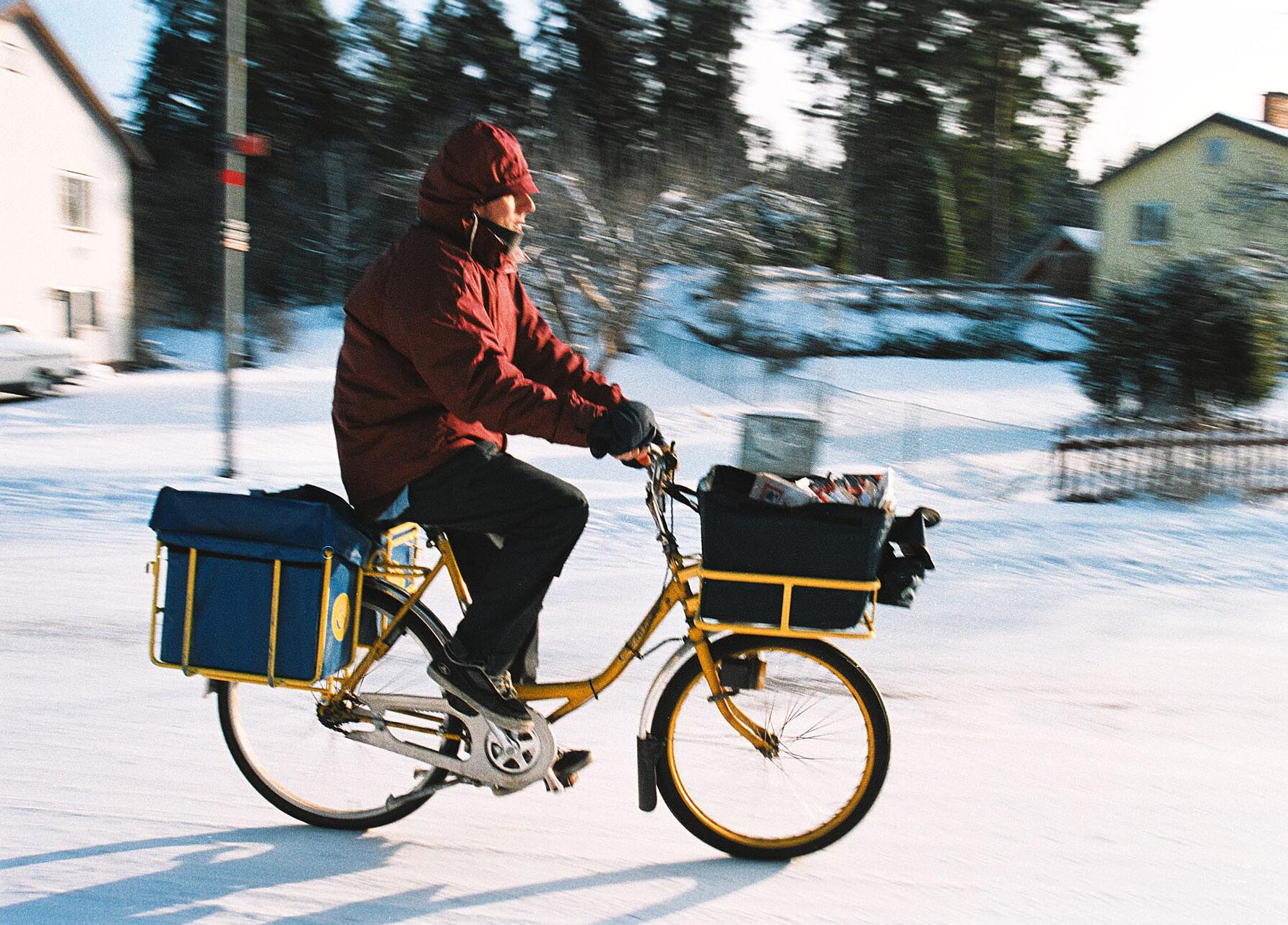
Though the roads may
‘Not Quite Dead Yet’: How to catch a killer in seven days
Riya Kulkarni Copy Editor
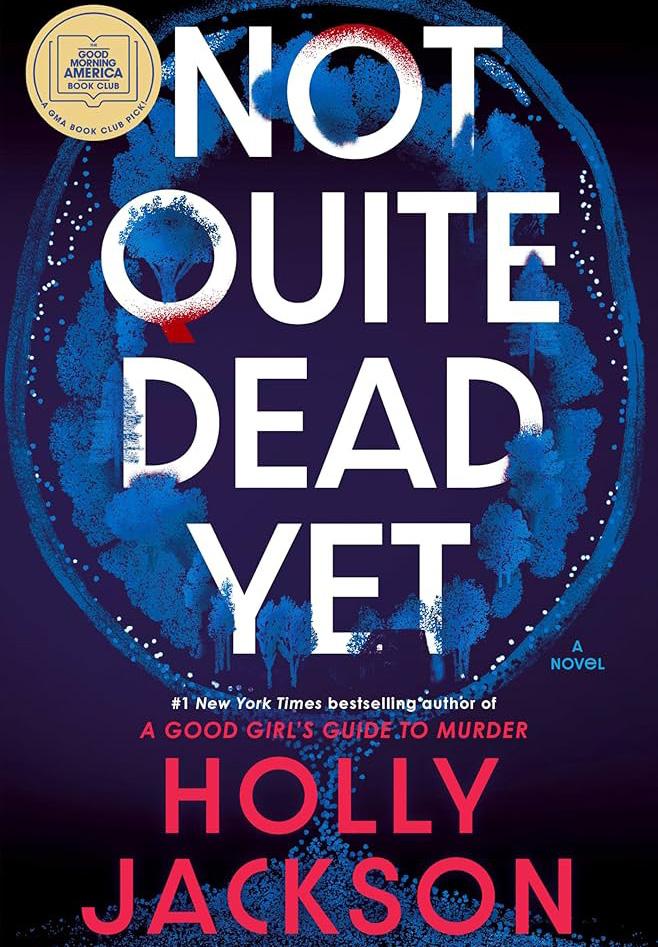
“Not Quite Dead Yet” is Holly Jackson’s (“A Good Girl’s Guide to Murder,” and “Five Survive.”) newest mystery thriller novel and a fresh look for the author. While “Not Quite Dead Yet” keeps the magic that makes her novels so easy to dive into—to the point where one begins to feel stressed with the characters—the new perspective and mature feel definitely make a difference.
The story introduces us to Margaret “Jet” Mason, a 27-year-old law school dropout who is attacked when she returns home after a Halloween party and dies when struck several times to the back of the head. Well … not quite. She survives the attack and is given the choice to undergo surgery with a 10% chance of survival, or live for the week, knowing at some point she will have a brain aneurysm. She decides to not do the surgery and uses her last week to find her killer, assisted by her old friend, Billy Finney.
One important point to note about this novel is how much more mature it is in comparison to Holly Jackson’s other works, as this is her first adult novel. No longer are the protagonists worried about applying to colleges or high school interactions; instead, we witness the beginnings of a quarterlife crisis. Jet grapples with the question of how she has spent her life thus far and is confident and cynical as she navigates the world around her. This is a much different perspective, and it’s a refreshing one. The amount of dark humor used as a coping mechanism throughout the investigation terrifies both the reader and those Jet interacts with, but we see how this conceals a deeper fear of how easily days and hours can go by when life has a deadline.
Just like Jet, we see many other characters with equally complex lives. They are realistic, not just caricatures restricted to the role of supporting our protagonist. Billy Finney is a musician,
still gaining confidence with his talent and writing his own songs to perform at the bar he works at, some of them for Jet even if she doesn’t realize it. Mr. Mason suffers from polycystic kidney disease (which gets passed down to Jet and contributes to her brain aneurysm) and has his own set of values which add to the complexity of the murder. Mrs. Mason grapples with the preemptive grief of losing Jet, remembering the pain of losing her eldest daughter Emily 17 years prior to the events of the story. This turns her into a “mama bear” who pushes Jet away. We meet Luke, Jet’s older brother, who strives to grow within his father’s company and inherit it one day. It’s easy to become invested in their fates and their lives, constantly shifting the blame and forming more theories as the story develops.
It’s clear this is a story of twists and turns, and we can never be sure that the conclusions we are forming are actually true. We stay captivated with Jet as we uncover more and more secrets, but nothing connects until the very end. This is both a blessing and a curse. Though we remain invested until the conclusion (the action never ends!) the ending feels packed and a little overwhelming. Though the pacing made sense for the plot, some questions remain unanswered due to the conclusions of various other plotlines at the end. How much mystery is too much mystery?
At the same time, I loved how much the book touched on themes of grief. There’s a sense of fear that comes with knowing one is going to die soon, so Jet’s choice to die on her own terms— not on a surgery table—is a difficult choice to make. With a week’s deadline, Jet is forced to come to terms with the death she narrowly avoided once while trying to make something of the time she has left. We are presented with her point of view as she slowly deteriorates, from struggling for words to losing vision and feeling in her arm. She grieves the life she could have lived while trying to make some use of the time she has left. Jet didn’t
see her assailant, so she is just as blind as the reader as to who could have attacked her. The reader learns with her, following each lead and hitting each dead end.
Did Jet find her killer in time? Why
was she a target? This is a journey worth following, with plenty of twists and turns to stay invested. While we the readers don’t only have a week to read this book, this is a read that should most definitely be added to the queue.
Playlist of the week: Songs for a rest-less snowy evening
Penelope Cloonan Life Editor
There is nothing like a blizzard to ring in the semester. Sparkling ice, fluffy snow and the safety of watching all that beauty from safe inside your dorm. It really is glorious, that is until you’ve been inside for four days and go stir-crazy because you can’t remember the last time you felt the sun or made the treacherous descent down the Elephant Steps. Even in the warmth of home, the snow feels oppressive. In moments like these, it helps to (slightly) rage against the snow. So, while you’re bundled up inside, feel free to scream, chant or zone out and stare at a wall to these songs.
“Snow Angel” - Reneé Rapp
Definitely a little on the nose with the title, but apt nonetheless. “Snow Angel” is certainly not about weather, but Rapp does manage to capture the feeling of being overwhelmed and in need of escape. In a magnificent bridge from the queen of ballads herself, self doubt and confusion build to a gloriously orchestral crescendo. If there is any ounce of unresolved conflict in your heart, screaming along will do
wonders for your psyche.
“Five Years” - David Bowie
Another song with a slow build to a strong finish, “Five Years” follows the singer’s slow descent into insanity and hopelessness upon finding out Earth is doomed. Not to be dramatic, but sometimes being stuck in the same routine, knowing you can’t really go anywhere for the time being feels like the end of the world. Sure, there aren’t spiders from Mars in Ohio, but there is otherworldly, lake-effect snow. Be dramatic, embrace that end of the world feeling.
“Let Down” - Radiohead
There are few artists that capture the feeling of screaming into the void better than Radiohead. When your windows frost over and the world fades away, sometimes it is helpful to fall into a wall of sound. “Let Down” drolls on and on, building to so much emotion that it becomes almost empty. There is nothing in this song except the raw feeling of needing to get out. While you may be understimulated from being stuck in the same space, “Let Down” will give you so much sensory input
that you can’t help but be brought back to life.
“Daytona” - Nep
While you might not want to be reminded of the beaches in this weather, bear with me here. Nep, self proclaimed “Florida Girl,” reminds us that feeling trapped by circumstance is not just a cold-weather feeling. She references characters the listener does not know, cultural norms that non-Floridians probably don’t understand, and yet, the listener can relate to not being heard. Through it all, Nep fights to be heard through her circumstances, and you should try to cut through the snowy haze.
“Storm Warnings” - Florence Road
Most of Florence Road’s catalog captures this restlessness well, but this piece is fitting in terms of both theme and title. Here, the storm warnings refer to red flags in relationships that you never notice, despite warnings, until you are truly left alone with your thoughts. Through it all, you should see the storm brewing, but you are blinded
by circumstance. Being snowed in can force self-confrontation like no other, and no amount of preparation can steel you for that.
“Snowbank Blues” - The Backseat Lovers
This playlist has had a lot of songs with heavy instrumentation, so let’s end with a rawer acoustic track. Snow can hide a lot, allowing people to hide themselves or be hidden involuntarily. In any case, snow serves as a mask, either for your personality or the steps outside your dorm. “Snowbank Blues” is pretty straightforward, showcasing the emotional turmoil hiding away and suggesting that it is probably worth melting away your icy exterior. There are certainly things to like about the snow if you look for it, but in order to do that, you would have to leave your dorm. Be free, unmask yourself and then immediately bundle up to head to class.
Songs left in the snow drift: “Telephones And Traffic” (Frances Anderson), “Saint Bernard” (Lincoln), “Goodnight” (Florence Road), “Ballerina Radio” (Kings of Leon), “Vampire Empire” (Big Thief) “Maple Syrup” (The Backseat Lovers).
Holly Jackson's first adult novel navigates mystery while building complex characters. Courtesy of Penguin Random House

Ice out ICE: Walking out for community
Editorial Board
Student communities across the United States are gearing up for nationwide walkouts on Jan. 30 to protest against the recent fatalities caused by members of the U.S. Immigration and Customs Enforcement (ICE) agency. On Jan. 7, Renee Nicole Good was fatally shot by ICE agent Jonathan Ross.
Two weeks later, two federal agents fired at and killed Alex Pretti, who was accused of attacking officers and wielding a gun, despite these allegations being nowhere to be found in various videos of the incident. Recently, a Reuters poll indicated that 58% of respondents agree that ICE agents have gone “too far” in the midst of Operation Metro Surge. It is not difficult to see why.
ICE has been terrorizing U.S. resi-
dents for a long time, a reality especially heightened by President Donald Trump’s outward disdain for immigrants. Earlier this year, Case Western Reserve University President Eric Kaler released a statement highlighting Trump’s new proclamation, which bars entry to “individuals from Burkina Faso, Laos, Mali, Niger, Sierra Leone, South Sudan, Syria and those with any travel documents issued by the Palestinian Authority.” Additionally, partial travel bans were placed on individuals from a host of other countries with predominantly black and brown inhabitants. These actions by the U.S. government are harmful, and, moreover, indisputably race-related, promoting white supremacy by targeting minorities. Currently, we are witnessing families being torn apart—countless videos show ICE agents forcefully shoving people into small, confined vehicles taking them to even further inhumane conditions. We are watching people be killed for trying to report on the atrocities government agencies keep behind closed doors. We are hearing of operations such as ICE’s “Operation Catch of the Day,” which reduce real people to subhuman status and aim to remove

those who have been here for years, maybe even generations, who have become part of the fabric of their communities. This is not okay. This is not normal. At times like this, community becomes even more important.
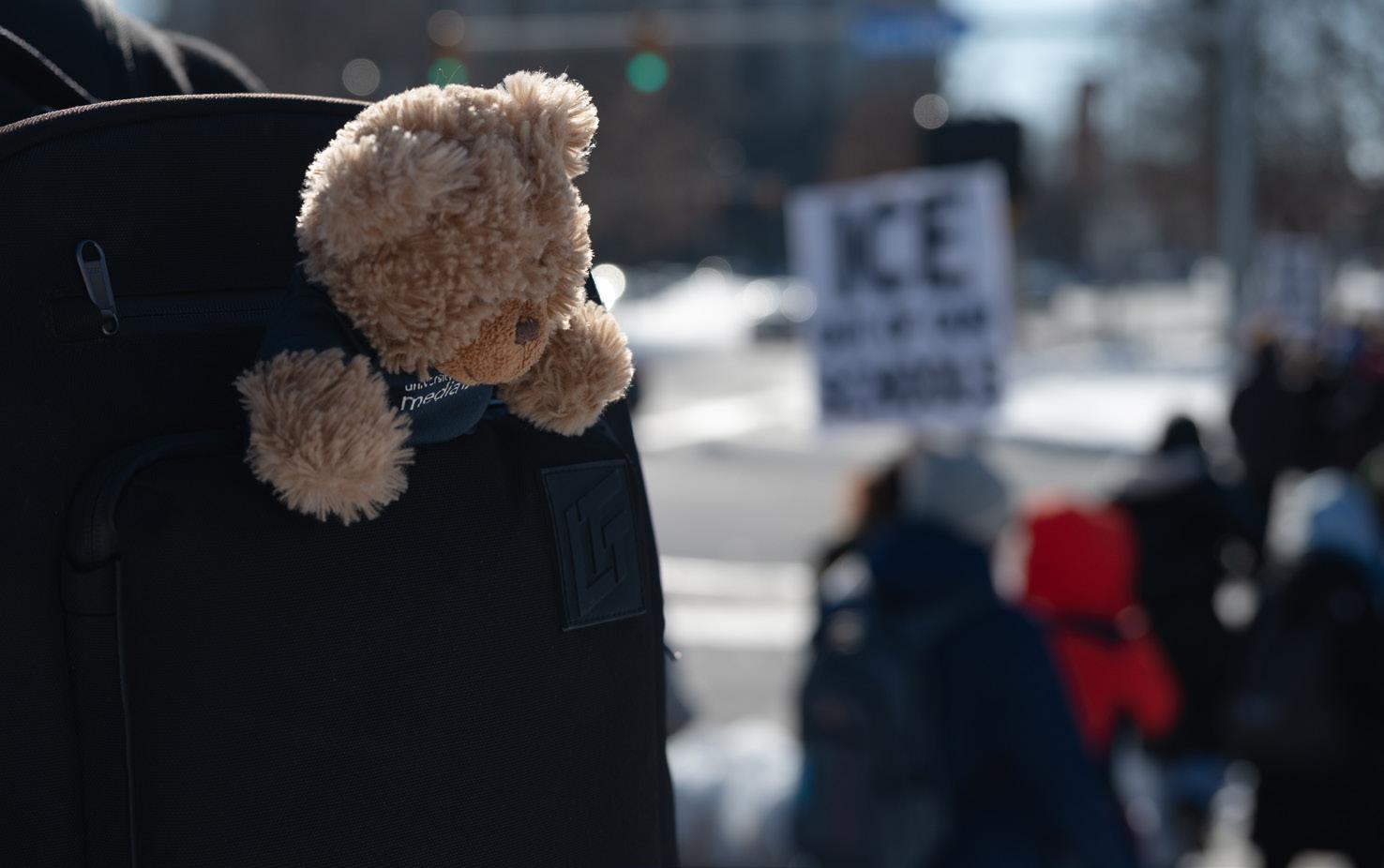
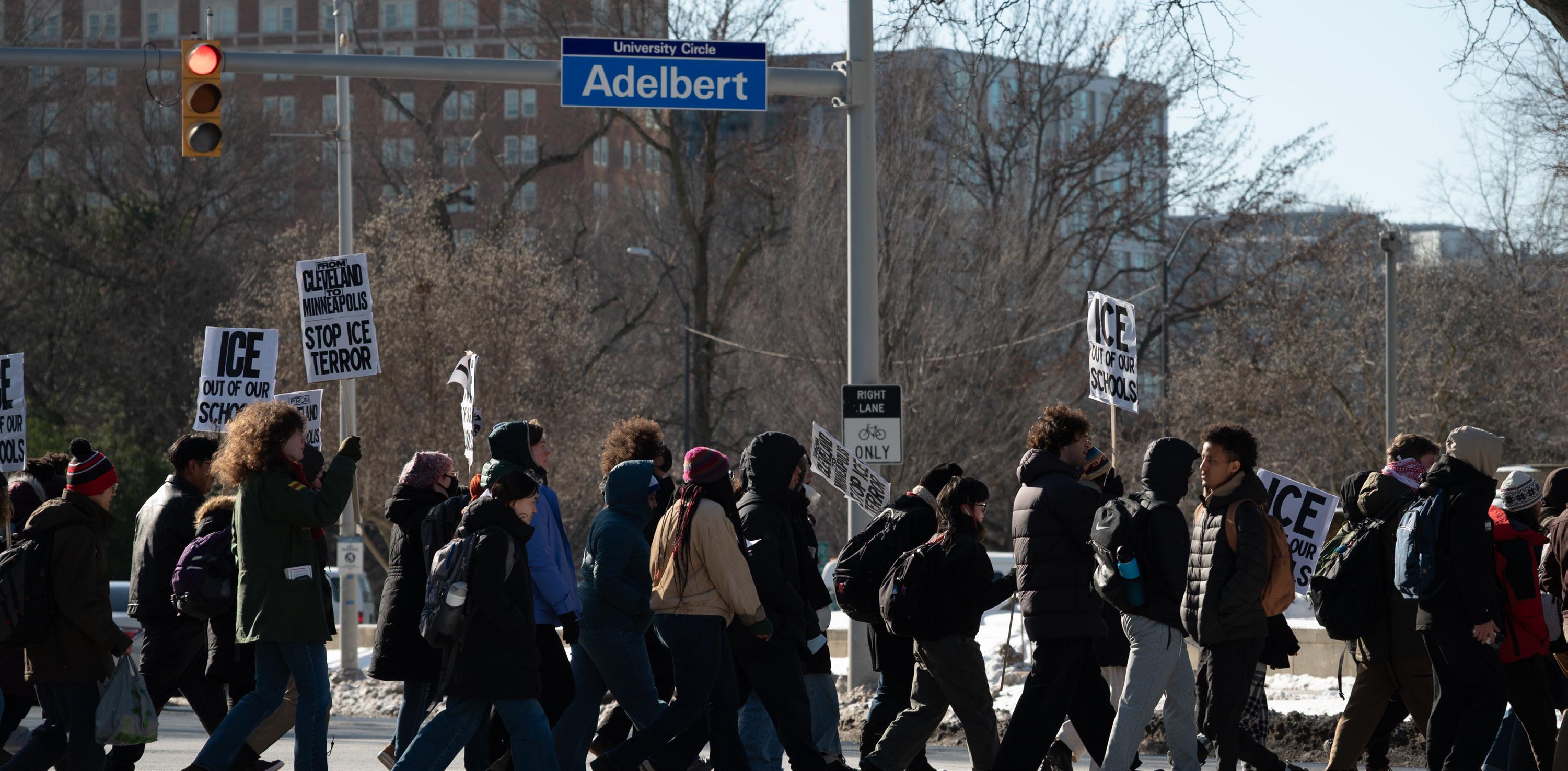
On Jan. 20, a gathering of Case Western Reserve University students organized a “Free America Walkout” on the Case Quad Binary Walkway, supporting a wave of national anti-ICE walkouts. Last Friday, hundreds of local businesses in Minnesota closed, and thousands of protesters congregated to demonstrate their disapproval of ICE’s unwarranted violence and the government’s interference in matters of immigration. The deaths of Good, a 37-year-old mother of three, and Pretti, a 37-year-old intensive care unit nurse for the U.S. Department of Veterans Affairs, only ignited tensions between U.S. residents and ICE. Religious leaders in Cleveland held a press conference on Tuesday to organize a walkout in Public Square on Jan. 30. The demonstration rallies for the eradication of ICE after recent news of Good and Pretti.
As people around the country gather to protest, we must encourage each other to care more. This past week in Cleveland, hundreds of students from Garrett Morgan High School assembled outside for a walkout during the school day, despite sub-zero weather conditions. At the Cleveland School of the Arts, students protested in University Circle. At CWRU, though, there is a more general culture of apathy. While the University Circle walkout was a great display of care for others, CWRU students, in general, seem very focused on their individual futures. As a school with many privileged individuals, working hard on academics to form a successful career, we often neglect to show adequate care for our community. And yes, it can be hard to muster up the effort when you have lab reports to write, interviews to prepare for and exams every other day, but maybe it’s time to stop and consider what this is all for. At this school, full of people pursuing careers in public health, engineering and high-powered leadership—shouldn’t the ultimate goal be serving the public good?
We should all be terrified of AI, not because of it, but because of us
Lucy Candeub Contributing Writer
The computer algorithms we’ve been using our entire lives, whether that be Google or Safari, have undeniably transformed the transfer, accumulation and generation of humanity’s knowledge. Algorithms that once started as simple search engines, easily separated from one’s private life, are becoming increasingly prominent and impossible to avoid in every sector of our lives. Recent developments in the past five years are not only changing how we understand collective knowledge, but also pointing toward the degradation of our cognitive abilities and mental health. These developments, of course, are referring to the commercialized use of large language models (LLMs) and natural language processing models (NLPs), or as they are incorrectly coined in common vernacular: “artificial intelligence.”
Before discussion on the research, evidence and impact surrounding these algorithms, I’d like to emphasize the importance of using proper terminology in discussions as serious as this. The constant push to call these algorithms “AI” is a manipulative promotional tool to separate the product (chatbots) from the companies selling them. It is not some mystical new technology, but an accumulation of algorithms being rebranded and advertised to the public in incredibly irresponsible ways. These companies are simply selling us a product, and the term “AI” is just a tactic to offload the responsibilities that are inherent to selling a product as dangerous as these algorithms. This article will be using the correct umbrella term, ML (machine learning), to refer to all the algorithms and programs utilized in commercialized AI.
The absolute worst of the worst ef-
fects of commercialized ML algorithms come from the very serious ethical concerns raised by its never-ending intellectual property and privacy violations. Obviously, AI is not intelligent. It cannot generate new ideas on its own, only work with the data it’s given. This has caused countless artists, authors and researchers to have their work outright stolen by the companies selling ML algorithms. Perhaps more violating are the companies, such as Grok (the ML product sold by X), which offer services where ML tools can be used to digitally undress any individual, including children, in any picture or video. Because of the disgusting lack of regulation and oversight, this is just one of the many examples of ML algorithms’ extreme privacy invasion. Further, ML tools have made it easier than ever for private companies, individuals and our own government to track absolutely everything in our lives—everything from where we spend our time to who we spend it with. The simple (and horrifying) fact of the matter is, without regulation, nothing will belong to you anymore: not your ideas, not your life and not even your own body.
The only way to solve these problems is proper legal oversight. Joining these efforts is absolutely crucial for the safety and sanctity of our future, but it is not the only aspect we must pay attention to as students in higher education. Several, of what I suspect will be many, research studies examining the cognitive health of ML users compared to non-ML users have recently been published, and to the surprise of no one, exclusive ML users have significantly-decreased cognitive activity, critical thinking skills, reasoning and problem-solving ability.
A 2025 study by the National Library of Medicine looked at the cognitive effort, extent of mental resources and writing performance of college students who use ML. They also looked
at those who don’t and those who use it with regulation. Using extensive methodology, including, but not limited to pupil movement/dilation tracking, Functional Near-Infrared Spectroscopy to track brain hemodynamic activity and participant surveys, they found preliminary evidence of reduced cognitive function in ML users. Because of the depth and longitudinal nature of the methodology, more data from this study will be published in the coming months. In the meantime, several other independent researchers have come out drawing the same consistent conclusions about cognitive function.
For example, “Cognitive Risks of AI: Literacy, Trust, and Critical Thinking,” published by the Journal of Computer Information Systems, examined how the use of ML tools by postgraduate students, teachers and research scholars effected critical thinking, trust calibration and AI literacy. Not only did they find users who exclusively, or near-exclusively, use ML tools to have less critical reasoning and much poorer memory retention, they also found a concerning trend emerging: exclusive ML use corresponds directly to AI illiteracy. In other words, the bias and task off-loading that ML algorithms are trained to do, entirely erodes the critical reasoning and decision making in educational and research processes.
This bias is further studied in a Cornell University study: “The LLM Effect: Are Humans Truly Using LLMs, or Are They Being Influenced By Them Instead?” This paper uncovered an uncomfortable truth about ML use: “LLM suggestions may significantly improve task completion speed, but at the same time introduce anchoring bias, potentially affecting the depth and nuance of the analysis.” This, in my opinion, is the most dangerous part of ML use in academic and research spheres. Humans are wired for bias, and, as a result, every algorithm ever created ends
up being just as biased as the humans coding it. The only difference is ML algorithms do not yet possess the critical thinking skills to look beyond the given data and code available to them. Human critical engagement and intentional ML use is the only way around these anchoring bias traps.
Despite the numerous papers already published warning of the dangers of commercialized ML use, it’s just as important in these situations to look at what good may come from this technology. And surprisingly, there is a fair amount of good that can come from it. A “Smart Learning Environments” review on the effects of ML overreliance details the importance of not cognitively offloading crucial cognitive reasoning, questioning and problem solving to external tools. While there are plenty of research papers out there exploring the brand new ways ML algorithms have been used for good, both in research and education, the one thing they have in common is an emphasis on restrained and intentional ML use. That is to say, offloading repetitive tasks that don’t require much cognitive function with ML tools is not only a valid way to go about education and research, but can actually increase efficiency and success. It becomes an anchoring bias trap when human critical thinking is minimally involved in the educational or research processes. In spite of the inconceivable damage commercialized ML use has caused, its harm to the academic sphere can be mediated through us: the next generation of educators, researchers, doctors and professionals. An overreliance on these algorithms will not only waste your time, but erode the humanity that is essential in learning and discovering. This importance cannot be understated as education has been, and always will be, the most powerful tool in social, medical, technological and philosophical change.

Kristina Guo/The Observer
LTTE: A response to Parilli-Castillo’s article
Thomas Kim-Hill Contributing Writer
Mariana Parilli-Castillo’s timely essay on Venezuela (Jan. 16) calls attention to a recent program on NPR’s Sound of Ideas (SOI) here in Cleveland. Michael Scharf, former dean of Case Western Reserve University Law School, hosted Former Ambassador at Large for Global Criminal Justice Beth Van Schaack to speak on the evolving role of the International Criminal Court in the 21st Century. Dean Scharf regularly hosts the SOI program “Talking Foreign Policy.”
Parilli-Castillo has a very comprehensive take on her two home coun-
tries, Venezuela as well as the U.S., in the wake of Nicolás Maduro being “effectively kidnapped” and “extrajudicially arrested” on “trumped-up charges” on Jan. 3.
Scharf and Van Schaack presented a complex web of legal precedents going back to WWII and the Nuremberg Trials, setting the stage for an evaluation of our present political-legal crisis. It’s too much to delve into deeply, especially given my scant knowledge of Latin American history.
But it is obvious to me that the experts failed to mention the key historical background of the Maduro coup d’etat. First, it was not the only recent attempt at removing a Venezuelan president. In 2002, Hugo Chávez was
What’s in a name?
Aditi Darodkar Contributing Writer
“What’s in a name? That which we call a rose / By any other name would smell as sweet.”
Shakespeare’s words are often invoked to argue that names are trivial, that they are interchangeable and ultimately meaningless. But for many of us, this could not be further from the truth.
In many South Asian families, names are not given to babies before or at birth. Rather, they are given months after, at the Naamkaran Ceremony, where the mother whispers the child’s name in their ear—the first time the name is uttered out loud. The name itself is mulled and debated over, ultimately chosen for its meaning. The meaning of the name is what the family hopes the child will embody, the values the baby will cherish and the person they will aspire to be.
And yet, many of us are forced to give our names up in subtle, everyday ways. Often in classrooms, teachers and classmates do not take the time to learn how to pronounce names, even in smaller settings where it would not take much effort to learn. Instead, we are given nicknames we did not choose or asked to make our names “easier” to say. In cafes, baristas hesitate, stumble or abandon our names altogether—calling out approximations, shortening them or replacing them with something else entirely.
It might seem like a minor inconvenience, but soon we confront ourselves: Am I being difficult, or am I accepting a version of myself that is easier for some-
one else to say? Often, it’s the latter. What is framed as practical becomes a quiet form of erasure. Over time, we learn to respond to nicknames that are not ours and to accept mispronunciations as inevitable.
The potential harms of this phenomenon are seen on a global scale. Research from the U.S., Great Britain and Australia confirms that applicants with anglicized or traditionally “white-sounding” names receive more callbacks compared to those with nonanglicized names, even when qualifications are the same. This leads to some candidates with “foreign-sounding” names intentionally changing their names on applications to improve their job prospects.
But it was inscribed in many of us, as early as possible, that names have importance. They hold power.
So what is truly in a name?
It is not just a moniker or a label. It is an emblem of our culture. It is a link to our heritage. And it is an honor to our histories.
So every time someone chooses their linguistic comfort over our identities, we feel undervalued. We should not have to shrink parts of ourselves so that others do not have to go outside their comfort zones. Learning a name is one of the simplest, yet most meaningful, acts of recognition we can offer another person.
A rose may smell as sweet by any other name, but people are not flowers, and names are not interchangeable. They are chosen with purpose and spoken with love. The least we can do is say them as they were meant to be said.
detained by forces in cooperation with the CIA, which was overturned by a mass mobilization of his Venezuelan supporters. Regime change has been a dominant feature of U.S. foreign policy: just think of Salvador Allende in Chile, Ngo Dinh Diem in Vietnam, Patrice Lumumba and Kwame Nkrumah in Africa, Sukarno in Indonesia and Mohammad Mossadegh in Iran!
Equally troubling was their lack of interest in Simón Bolívar. Discussing Latin American without Bolívar is like discussing American history without George Washington and Thomas Jefferson. As with Washington and the British, Bolivar expelled the Spanish in the 19th Century.
And we should not forget former
U.S. President Franklin D. Roosevelt sent his secretary of state, Cordell Hull, to a Pan-American conference in Uruguay in 1933, where Hull single-handedly established a Good Neighbor Policy that pointedly promised Latin America “non-intervention.” Former U.S. President John F. Kennedy established his Alliance for Progress aid program in a similar manner.
As a footnote we must recall the highly decorated Marine Corp Major General Smedley Butler, who wrote “War is a Racket” in 1935, in retirement. He led major campaigns into Latin America and he regretfully admitted he had been a “gangster for capitalism.” History does repeat itself.

Lucas
What can we learn from bonds that break?
Riya Kulkarni Copy Editor
We’ve all been in a position of conflict. Maybe we had a bad day and said something we shouldn’t have. Maybe our personalities didn’t align so well, and the situation was misinterpreted. Maybe we were hurt, and we’re trying not to hurt back.
These situations are as relatable as they are valid. Conflicts are a normal part of life and a consequence of having such a diverse group of individuals on this green-blue planet we call Earth. When we have a group containing many perspectives and many personalities, these perspectives will clash with each other and cause conflict.
Cultural differences are important when we consider this variety of personalities. Beyond a shared language or food is a set of shared values, practices and factors that govern the way we communicate, plan out our day or prioritize. Cultures can be classified as collectivist, prioritizing the values and needs of the group, or individualist, prioritizing the values and needs of the individual.
No one perspective can be considered superior unless it is taken in extremes. Collectivist societies may prioritize the “What will others think?” mentality too much to the point where they sacrifice their happiness or health. The need to respect one’s elders, the fear of backlash from society and the need to constantly conform to the needs of the public forms this extreme. Unnecessary pressure is placed on the individual to fit the mold of the majority, and some individual motiva-
turns into isolated, self-servient people who would much rather look out for themselves than for others.
Let me make one thing clear: these extremes that I have highlighted are caricatures of real people. Most of us fit somewhere within this spectrum of priorities, shaped by the world around us. Where we lie on this spectrum changes how we approach conflict and, most importantly, our ways of mitigating it. The simple task of deciding who to blame for the conflict, or why the conflict arose, will vary drastically.
Are all conflicts caused only by these differences? Not quite. There will always be people with predispositions toward others, people who have come up with an idea of how someone else is without exchanging a single word with them. Trying to fix a conflict with no real basis is stressful and unnecessary. Maybe the person is sleep deprived, hungry, stressed or overworked, and the world has not been kind to them. Lashing out or starting a conflict may be the only thing they have control over—a way to project stress onto something else.
More than anything else, it is how we react to conflict that can mitigate— or worsen—future conflicts. React too soon and the whole situation will snowball into something much bigger. Holding a grudge can contribute to the problem, and time to think may only make it worse.
As children, we’ve all played the game of “Telephone.” The first of a long chain of people begins to pass a message down the line until the last person reveals an incoherent phrase that may not even be in the original

tions may be suppressed. On the other hand, individualism may also be guilty of extremes. In a world where it’s almost always “every man for himself,” everyone tries to climb to the top to make a name for themselves, not caring if they squash someone else. Shortcomings are blamed on other factors and every win is given to oneself. Individual motivations are the main driving force here, and we place pressure on ourselves to do better and push harder. Society
language. Funnily enough, we don’t need other people to play with us if we have our own minds. Too much dwelling on past conflict with no further action or communication leaves each person to make up their own interpretation of the events—and further interpret that. The cycle continues, leaving one with a completely different and incredibly dramatized version of events. This feeds the growing grudge until it becomes so large that the relationship could be lost. At the very
The Case Western Reserve Observer
Established in 1969 by the undergraduate students of Case Western Reserve University
Darcy Chew Executive Editor & Publisher
Hannah Johnson Director of Print
Sabrina Feldberg News Editor
Alyssa Wang News Editor
Penelope Cloonan Life Editor
Aleksandra Majewski Opinion Editor
Ellie Palaian Sports Editor
Michelle Bai Copy Editor
Riya Kulkarni Copy Editor
Siya Motwani Copy Editor
We’ve all been there, trying to study or finish that last assignment when all we want to do is … anything else. Maybe we’re overwhelmed with the work we have to do, or maybe we feel the pressures of perfectionism and don’t want to start. We push ourselves to “lock in,” but call it quits too often, feeling guilty each time we pick up our phones to doomscroll again and again. Doing anything but the work we have piled up always seems to feel better than actually getting things done, but the sinking feeling in our stomach knowing we’ve wasted time is much worse. Can we really consider these pauses to be “breaks” if we feel worse after taking them?
Abhishek Nambiar Copy Editor
Mariana Parilli-Castillo Copy Editor
Lily Zhang Copy Editor
DESIGN
Anjali Bhuthpur Director of Design
Lucas Yang Director of Design
Shareen Chahal Layout Designer
Sahar Kapasi Layout Designer
Reva Kolhe Layout Designer
Elizabeth McHugh Layout Designer
Kiera Ng Layout Designer
Nithya Pandari Layout Designer
Jana Ashour Graphic Designer
Kristina Guo Graphic Designer
Sophie Shimeall Graphic Designer
Anna Trusova Graphic Designer
We may trap ourselves in a cycle of counterproductivity and double the time it takes to complete a task. In this “popcorn brain” mindset, we work and get little done, then stop working and think about how we could be working. By the time we resume our work, we feel ashamed, not refreshed, and we stay up late in attempts to catch up.
DIGITAL MEDIA
Auden Koetters Director of Digital Media
Moses Fleischman Web Editor
Ayan Sheikh Video Editor
Matthew Stall Video Editor
Obafami Tidjani Web Editor
Phillip Kornberg Photo Editor
Tyler Sun Photo Editor
A break is not shameful, not when it has the potential to act as a tool that makes productivity much more efficient. We just need to know how to use them.
Esha Bagora Social Media Editor
Benjamin Kang Social Media Editor
Timothy Le Social Media Editor
Rhea Soni Social Media Editor
Just as an athlete wouldn’t do 150 consecutive bicep curls while strength training at the gym, as students we must take meaningful breaks in reasonable intervals. One popular example of this is the Pomodoro method, where 5 minute breaks follow 25 minutes of work (10 minutes of break to 50 minutes of work is also a popular option). By time-boxing our productivity and knowing we will be rewarded, we remain more focused when we
Ethan Daley Sports Broadcaster
BUSINESS
Tyler Vu Director of Business Operations
Riya Dixit Ad Manager
Divya Kurma Business Manager
Anya Lin Analytics Manager
Ria Trivedi Marketing & Distribution Manager
The Observer is the weekly undergraduate student newspaper of Case Western Reserve University. Established in 1969, The Observer reports news affecting students and provides an editorial forum for the university community. Unsigned editorials are typically written by the opinion editor but reflect the majority opinion of the senior editorial staff. Opinion columns are the views of their writers and not necessarily of The Observer staff. For advertising information, contact via e-mail at observer@case.edu. LETTERS TO THE EDITOR should be e-mailed to observer@case.edu or submitted on our website at observer.case.edu. Letters can be mailed to Thwing Center 11111 Euclid Avenue, Suite 01, Cleveland, Ohio 44106. For policy and guidelines related to the submission of Letters to the Editor, refer to observer.case.edu/submit-a-letter.
The Observer is a proud member of CWRU’s University Media Board. Follow The Observer on Facebook, Twitter, TikTok and Instagram @cwruobserver.
least, feelings toward the other person have changed.
As with most things in life, a happy medium can be reached with a moderate amount of thought, a sort of “Goldilocks zone,” which leaves time to process the conflict (and not dwell on it), but also to respond at an appropriate time. An attempt to communicate must be made and any forming grudges must be held back, replaced with an open mind and a willingness to learn.
Humans are social creatures, and we thrive upon the connections we make throughout our lives. As we learn about the different people around us and spend more time with them, conflict is likely. However, when a conflict is managed appropriately, we learn so much more about the person than we could have ever found out without it. If we continue to lose relationships due to conflicts and grudges, we lose the opportunity to build these strong bonds, ones that may last a lifetime.
Anna Trusova/The Observer
Senior Spotlight: The journey from underdogs to national contenders
Ellie Palaian Sports Editor
On Friday, Jan. 23, the Case Western Reserve University wrestling team celebrated its eight graduating fourth-years: E.J. Alizio, John Conover, Aidan Gassel, Jacob Gregg, Marty Landes, Art Martinez, Justin Sweeney and Thomas Wagner.
College, a fitting tribute to the dedication and hard work of the team.
The Spartans capped off Senior Night with a commanding 50-0 victory over Washington & Jefferson
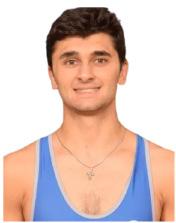
When the Class of 2026 arrived at CWRU, they were a group of 20 athletes, each told they were the key to rebuilding a struggling program that many at CWRU didn’t even
John Conover
know existed. Over the years, the class shrank, presenting challenges and moments of adversity. Yet these eight remaining fourth-years have transformed the team, taking it from an undervalued, losing program to a nationally ranked force in collegiate wrestling. Their leadership, resil-
Fourth-year wrestler John Conover has been on the mat since third grade. Hailing from Aurora, Illinois,
Conover has had a standout career as a Spartan, both athletically and academically. Like many CWRU athletes, he was initially drawn to the school for its strong academic programs, with the added bonus of being able to continue competing in the sport he loves at the collegiate level.
“It’s definitely not easy, but I’ve found that working ahead in my classes and getting help from some of my friends and teammates has definitely been helpful,” Conover said.
Outside of wrestling, Conover has long been interested in the medical field and joined the CWRU Emergency Medical Services (EMS) team. This student-run organization provides emergency medical assistance to members of the CWRU community, including students, faculty, staff and visitors.
“I joined CWRU EMS because of the great opportunities it has given me to both serve my community and gain some experience working in the medical field,” Conover said. “I currently hold the role of a crew chief which means I oversee the crew on calls and help guide some of our newer members.”
Conover is grateful to have been a part of CWRU wrestling and to have shared the past four years with his class.
“It’s been an amazing experience. I feel so blessed to be graduating with such an amazing group of guys,” Conover said. “Getting to grow with each other for the past 4 years has made us all family.”
After graduation, Conover plans to take a gap year before attending medical school, for which he will begin applying this semester. He is set to graduate in the spring with a degree in chemistry.
“It’s still hard to believe that it’s almost over,” Conover said. “I’m just cherishing these last few weeks of this season with the guys.”
Jacob Gregg
For fourth-year Jacob Gregg, the appeal of joining CWRU wrestling was the opportunity to help rebuild the program along side the 19 other wrestlers in his class. Now, four years later, Gregg is one of just eight remaining from that group and part of a nationally ranked program.
“We have built this program from the ground up and it’s been a very fun and rewarding experience to see what we all built up together and taking CWRU from a joking matter of a team before and when we first arrived to the Nationally Ranked and respected program it is currently,” Gregg said.
While at CWRU, Gregg has pursued a degree in materials science and engineering. Off the mat, he has been actively involved in research and is one of the longest-standing members of the National Science Foundation Hybrid Autonomous Manufacturing, Moving from Evolution to Revolution Engineering Research Center (NSF HAMMER-ERC) group at CWRU, where he conducts research in additive manufacturing.
“Time management has been the biggest thing for me,” Gregg said. “When I’m not in class throughout the day I try to get classwork and studying. In that way I am able to practice in the evening then finish up school work and get a good night’s rest.”
Despite an impressive athletic and academic career, Gregg says he will miss the team and the bond they share the most.
“The guys [are] everything to me, we are super close and I’d argue closer then most sports teammates just because we have all been on this ride together,” Gregg said. “They will always be my ride or die brothers and I know if I ever needed anything almost all of them would drop everything to come help me out.”
Set to graduate in the spring, Gregg has accepted a role in operations management development and hopes to stay connected to wrestling, giving back to the sport that has given him so much.
“It’s definitely surreal, it seems like just yesterday I was a freshman,” Gregg said. “Wrestling and competing has been a huge part of my life so it will be different to move away from that, although I think my body is ready to stop getting beat up. I doubt I will be leaving the sport for long and I’m sure I will end up helping or coaching somewhere very soon.”
Justin Sweeney
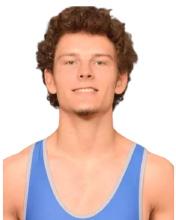
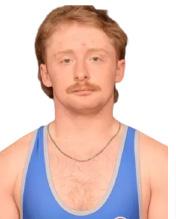
Unlike his teammates, fourth-year Justin Sweeney has only been wrestling since high school. His recruiting process was made extra difficult by COVID, because he had only been wrestling for a short amount of time. But, ultimately, Sweeney found CWRU and never looked back.
While at CWRU, Sweeney earned UAA All-Academic honors last season, and UAA All-Academic recognition in the 2023-24 season. He has pursued a degree in economics, after gaining an interest in high school.
“[I focus] fully on wrestling when it’s time to train and when it’s time to study, [I focus] fully on studying,” Sweeney said. “Wrestling in many ways helps with academics as the time commitment to the sport forces you to stay on top of your schoolwork. I’m also fortunate to have very academically inclined teammates that keep me accountable.” Sweeney also joined CWRU’s Journal of Economics last semester, co-writing a published paper and gaining experience doing empirical research.
Sweeney will graduate in the spring and will take some time off after graduation. He hopes to return home to Maryland and to continue to stay active in wrestling through coaching.
“I will miss the team for sure. But I will definitely keep in touch with the guys on the team and stay involved in the sport through coaching,” Sweeney said. “I view it as the end of a chapter, not the story. So I’m still very excited for the future.”
Sweeney is grateful for his time at CWRU and with his graduating class. He is proud of how his class and the program has developed over the past four years.
“It’s been an amazing blessing,” Sweeney said. “Myself and the other seniors have all improved dramatically at the sport of wrestling. The program has also come a long way. We fell short a few times over the years but it’s all been an opportunity for growth. It’s been very rewarding watching our hard work payoff in this final season. I’m very grateful for it all.”
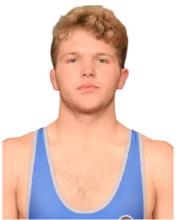
Aidan Gassel
Like Sweeney, fourth-year Aidan Gassel did not begin wrestling until his second year of high school. Despite entering the sport later than most collegiate wrestlers, Gassel quickly developed a passion for the mat, eventually earning the opportunity to compete at the collegiate level. When the time came to choose a university, he was drawn to CWRU for its balance of high-level athletics and strong academics, as well as the supportive coaching staff that helped make the transition to college Since arriving at CWRU, Gassel has steadily grown into a consistent contributor for the Spartans. During the 2024-25 season, he posted an impressive 11-2 record, earning six wins by pin and three by technical fall. He opened the season with six consecutive victories and captured first place at the Adrian Invite on Nov. 2, 2025, going 4-0 with two technical falls. His performances earned him UAA Athlete of the Week honors on Nov. 4, 2025. The previous season, Gassel finished 12-7, highlighted by winning the 197-pound bracket at the BW Invite and another UAA Athlete of the Week recognition.
Balancing the demands of a mechanical engineering major with the rigor of collegiate wrestling has required discipline and structure. Gassel credits campus resources and his teammates for helping him stay on track academically.
“[I’ve relied on] utilizing tools on campus like SI sessions and study groups with my teammates and classmates,” Gassel said. While he is not involved in activities outside of wrestling, Gassel values the close-knit environment built within the program. Over the past four years, he has grown alongside his fellow seniors, forming relationships that extend beyond the mat.
“It’s been like a family,” Gassel said.
As his final season approaches its conclusion, the reality of stepping away from competitive wrestling brings mixed emotions.
“It’s bittersweet,” Gassel said. “I hope to place at the national tournament.”
Looking ahead, Gassel’s primary goal is to make a strong final push and place at the national tournament, capping off a career defined by steady growth, resilience and dedication. Regardless of the outcome, he reflects proudly on his journey and the development he has experienced both athletically and academically during his time at CWRU.
Thomas Wagner
a two-time NWCA Scholar All-American, a two-time UAA All-Academic honoree and a two-time NCAA regional placer in 2024 and 2025.
Wagner has been wrestling for the past 11 years and ultimately chose CWRU for its competitive academics and athletics, as well as the opportunity to help rebuild the program.
“I was excited about the opportunity to be part of something being built from the ground up,” Wagner said. “Case stood out because it allowed me to compete at a high level while also pursuing an education at an elite institution.”
Wagner is thankful for his time at CWRU and the lasting relationships he has formed along the way.
“Coming in with a class of 20 was very exciting. Over the years, guys dropped off for different reasons, which was tough to experience,” Wagner said. “By junior year, the remaining eight of us had really bonded through everything we’d been through together. Those relationships and shared experiences are something I’ll carry with me long after wrestling ends.”
As he enters his final season as a Spartan, Wagner’s goals are driven yet simple: to compete to the best of his abilities and leave everything on the mat.
“My hope is that I finish the season injury free and wrestle to the best of my abilities,” Wagner said. “I’d love to be traveling to Iowa with multiple guys for the national championship. I will continue to put in full effort and stay locked in, whatever happens at the end, I will have no regrets knowing I gave it my all.”
Wagner will graduate in the spring with a degree in finance and hopes to find a job either in his hometown of New York or remain in Cleveland. While he is sad to see his collegiate career come to an end, he is excited for what lies ahead.
“It’s definitely bittersweet,” Wagner said. “I’ll miss competing, but what I’ll miss most are the guys, the road trips, and the memories made during competition weekends. I try to remind myself, ‘Don’t be sad it’s over, be happy that it happened.’ Right now, my focus is on making the most of every remaining opportunity and enjoying the journey.”

Marty Landes
Fourth-year wrestler Marty Landes has been on the mat since he was six years old, building an impressive athletic resume over the past 15 years. Just last season, Landes placed third at the UAA Championships and finished second at the RIT Invitational, continuing a trend of consistent success in competition.
Beyond his athletic achievements, Landes has also developed an equally impressive academic resume. A pre-med major aspiring to enter the medical field, he balances a demanding course load while competing at a high level in collegiate wrestling, showcasing his discipline and commitment both in the classroom and on the mat.
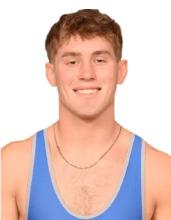
“I found that prioritizing time management was incredibly important,” Landes said. “I learned that to be successful in academics, wrestling, and extracurricular activities, I had to prioritize sleep, nutrition, and mental clarity to bring my best self into everything I do.”
Initially unfamiliar with CWRU, Landes learned more about the university during the recruiting process. After researching the school and the opportunities it offered, committing became an easy decision.
“I learned that the pre-medical opportunities here were exceptional and the university was in the city,” Landes said. “When making my final decisions for where I would go to college, I chose CWRU because I knew it would challenge me the most and completing four years at CWRU would make me the most complete version of myself.”
Off the mat, Landes is involved in a wide range of extracurricular activities. He is a member of Greek Life and actively participates in lab and research work across campus. In the Crown Lab at CWRU, Landes works under his assistant coach, Joseph Terry, studying the structure of the synaptonemal complex in Drosophila using super-resolution microscopy. He is also currently contributing to a research project at MetroHealth that investigates ultrasound detection sensitivity of congenital cardiac malformations.
Landes has long aspired to pursue a career in medicine, with the goal of becoming a physician.
“During my interactions with physicians in different settings in West Michigan, I saw the roles that physicians play and how they impacted others,” Landes said. “These interactions inspired me to become a physician. I have been exposed to clinical experiences, research, and health within the collegiate wrestling environment, which have further shaped my decision to become a physician.”
After graduation, Landes plans to take a gap year while applying to medical school. He also hopes to remain involved in wrestling, with aspirations of coaching young athletes, and perhaps even his own son one day.
“I know I will miss the sport when I am done, but I feel I have given the sport everything I have to give,” Landes said. “I will likely take a long break before I get on the mat, but I do plan to coach the sport. The last thing I want from the sport is to coach my future son throughout his hopeful wrestling career.”
Fourth-year Thomas Wagner has put together an impressive career at CWRU. Over his four years, he has been named
Art Martinez
Fourth-year Art Martinez stands as one of the most accomplished wrestlers in CWRU history. Over the past three seasons, he has earned NWCA Scholar All-American honors each year, led the team in wins since his first season and now has his sights set on a national championship.
Although Martinez drew interest from several wrestling programs, he ultimately chose CWRU for its strong aca demic reputation and ideal location.
“It was a really cool experience talking to different coaches across the country and visiting their schools,” Marti nez said. “The two things I wanted in a university was for it to be strong academically and in a city. A lot of other DIII schools only have one of those two things but CWRU had both and when I took my visit I committed on the spot in Presti’s.”
As a political science major, Martinez has earned UAA All-Academic honors each of the past two years and was named to the CSC Academic All-District Team last season. After graduation, he hopes to return home to Atlanta or relocate to Chicago to pursue a career with a law firm.
“Politics has always interested me, so I wanted to learn more about them and actually do a major which I enjoy,” Martinez said.
Martinez is proud of what the team has accomplished during his time at CWRU and how it has established itself as a competitive program.
“It has been really amazing seeing our bond grow closer and seeing the team become more successful,” Mar tinez said. “When we first got to CWRU people thought the wrestling team was a club sport, so going from that to being ranked nationally this year has been a great experience.”
Despite the team’s success, Martinez still has personal goals he hopes to achieve, including bringing home a national championship.
“I’m hoping that this year I can achieve some of the goals I’ve failed to in the last three years,” Martinez said. “Honestly, I think I can win a national championship this year so going out on top is my main goal. Firstly though I have to qualify for nationals which is another goal of mine.”
While grateful for his time at CWRU, Martinez is ready to take a step back from wrestling and turn his attention to other aspects of his life.
“It’s odd but I am definitely ready,” Martinez said. “Wrestling has taken up a lot of my time so it will be nice to get that time for myself and not cut weight anymore. On the other hand though, I will miss competition a lot and I will definitely need to find a hobby.”
E.J. Alizio

From the age of four, E.J. Alizio has been on the mat. After stepping away from the sport for several years, he rediscovered his love for wrestling in high school and later learned about CWRU through his longtime friend and teammate, Thomas Wagner.
During his time at CWRU, Alizio has pursued a degree in civil engineering with a concentration in construction management. Inspired by his father’s business, he developed a strong passion for engineering and the building industry.

“My dad runs a business to help manage affordable housing so I grew up going around New York to visit various buildings,” Alizio said. “I also took an interest in the community outreach aspect of construction and decided I wanted to work in project management once I graduated from college.”
Like many of his teammates, Alizio balances demanding athletic and academic schedules, relying on discipline to succeed in both areas.
“I embrace the ‘face it till you make it’ mindset,” Alizio said. “I know exactly what I hope to gain out of every class and I make sure that I am prioritizing my school work. So if I know I have a busier week of training I use all of my time spent out of class or not in the wrestling room trying to get ahead on work.”
While it was difficult for Alizio to lose so many members of his original class, he values the close bonds he has built with the eight teammates who remain and the friendships he has kept with those who left the team.
“We were always such a close group and we are still close with all of our teammates who left the team,” Alizio said. “I can personally say that every year one of my classmates has lifted me up and kept me on track by making sure to remind me that I have gotten so much better from the day I started at Case. We have been holding each other accountable since Discovery Week and have talked about creating a positive team culture that I believe ultimately resulted into what we have now. I couldn’t be more proud of each of my classmates and the amount of work each one put in shows. Every single one of us improved in ways that wouldn’t be possible without the support we gave each other.”
While Alizio is sad to leave wrestling behind, he is satisfied with how his career has unfolded and grateful for the experiences he has gained.
“At first it feels like added pressure to accomplish all of your goals, but slowly as we build towards the post season I have gotten more and more confident that if my career ended at any point I would be just fine,” Alizio said. “The fact of the matter is that my friends on the team would love me the same and I would still have left the sport knowing that I gave it everything I could.”
After graduating this spring, Alizio plans to travel with his family before seeking employment back home in New York. He also hopes to remain involved in wrestling through coaching.
The Class Of 2026
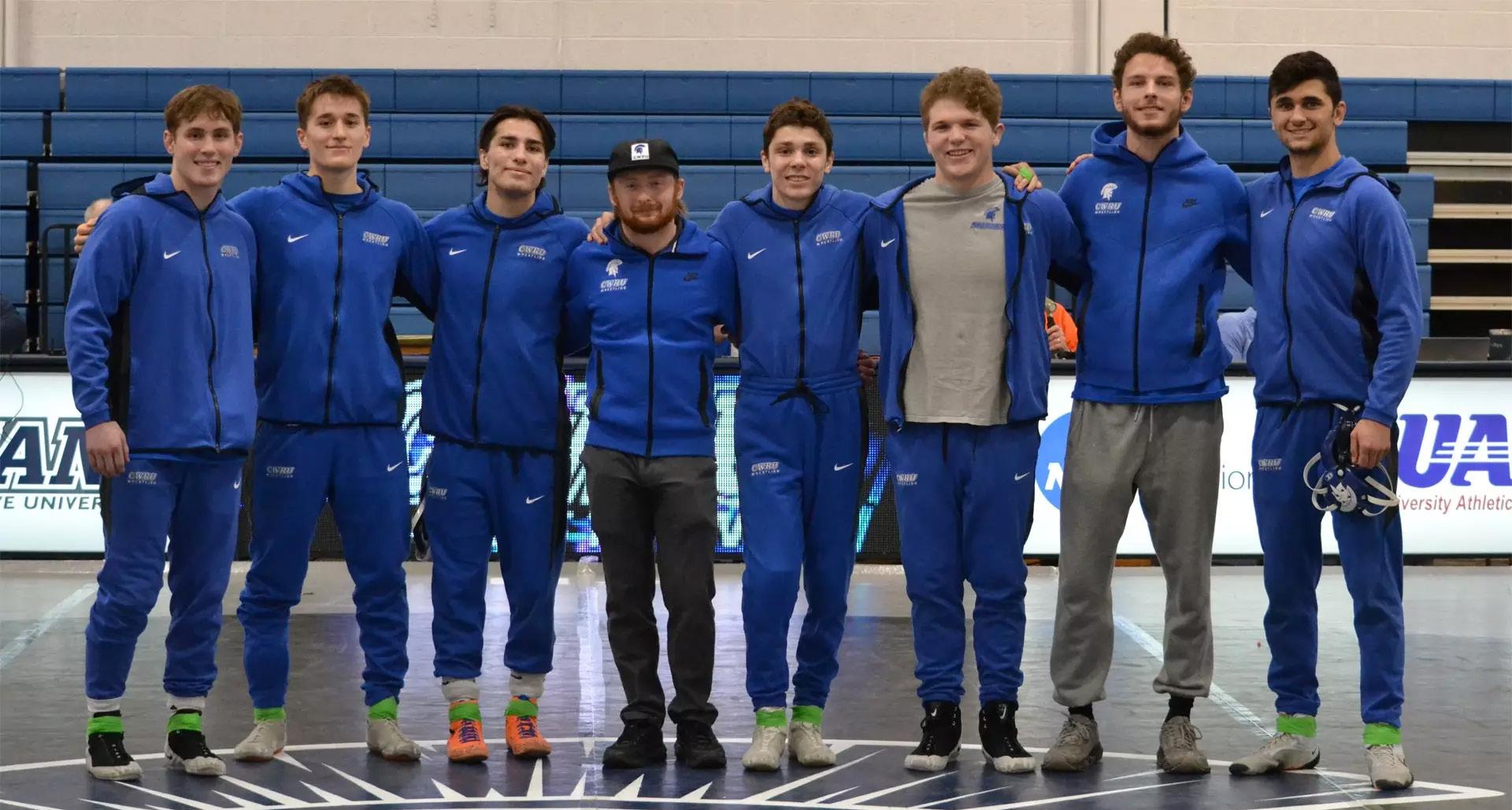
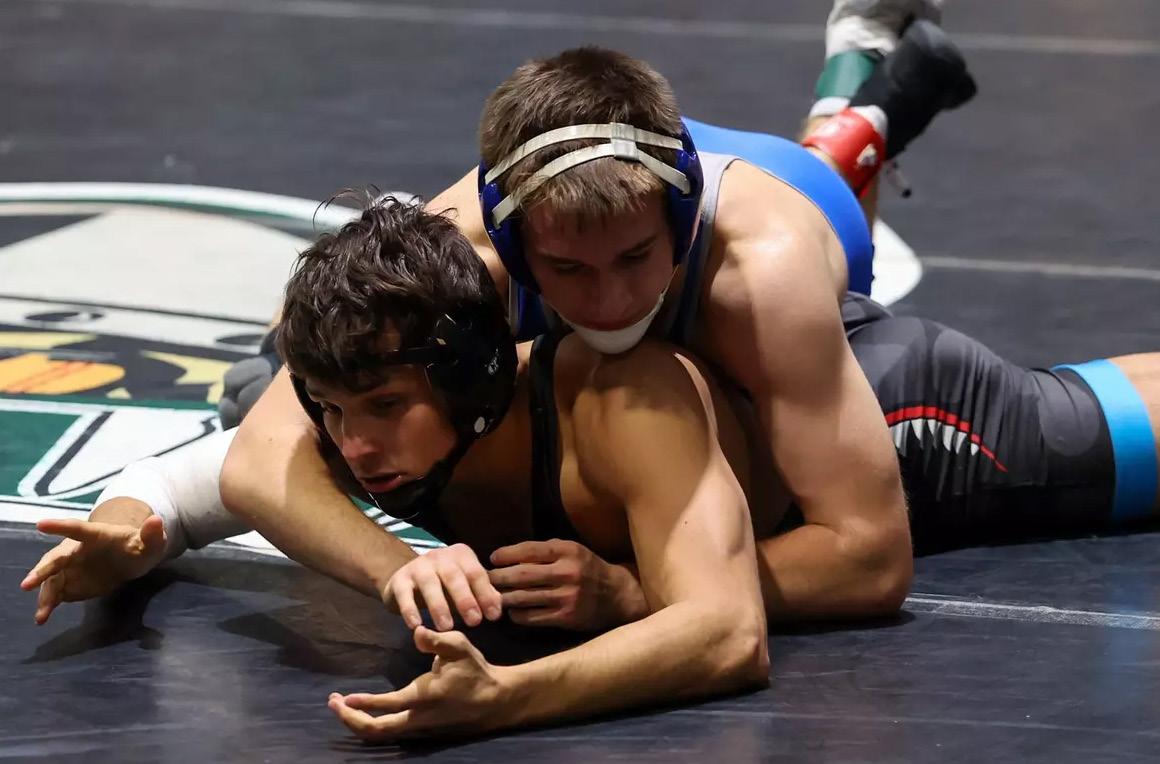
When this class first stepped onto campus, CWRU wrestling was coming off a last-place finish at the UAA Championships, a seventh-place showing in its best non-conference tournament and little national recognition. Now, four years later, the Spartans sit ranked in the top 25 for the first time in program history, have not placed below third in any tournament this season and carry an 11-2 record.
Through constant change, roster turnover and adversity, the eight remaining seniors helped redefine the identity of the program , building a culture rooted in grit, accountability and belief—a legacy that will continue long after their final match.
How tennis champions are changing women’s sports
Track and Field
Wrestling vs Washington and Jefferson (1/23) W 50-0
Men’s Basketball at Emory (1/23) L 63-72 at Rochester (1/25) L 88-97
Women’s Basketball
at Emory (1/23) L 46-90 at Rochester (1/25)
Swim and Dive
at Kenyon (1/23)
Men L 143-153
Women L 82-218 vs Oberlin (1/24)
Men W 229-64
Women W 245-49
Track and Field
at Dr. Taraschke
1/30-31
Men’s Basketball
Women’s Basketball at NYU 1/30 at Brandeis 2/1
Olivia Wen Staff Writer
In the modern sports age, the rankings for the highest-earning female athletes are dominated by tennis players. In 2025, 21-year-old Coco Gauff, 27-year-old Aryna Sabalenka and 24-year-old Iga Swiatek were the three top-paid female athletes in the world. Unsurprisingly, all three are also top-ranking Women’s Tennis Association (WTA) singles players, and each took home a Grand Slam title last year. Tennis continues to dominate the Forbes’s top-earning list, with athletes from the sport also occupying the fifth, sixth, eighth, ninth and tenth place spots on the list.
Coco Gauff, who first rose to fame with her 2019 win against Venus Williams at age 15 and went on to win her first Grand Slam title at the 2023 U.S. Open, earned roughly $33 million last year, $8 million of which came from prize money. Trailing closely behind, No. 1-ranked Aryna Sabalenka made $30 million, with half of that from prize earnings. Meanwhile, sixtime Grand Slam winner Iga Swiatek earned $25.1 million in 2025, with $10.1 million of that from on-court earnings.
Women in other sports earn far less in competition. For example, No. 4 on the list, Eileen Gu, an Olympic goldmedalist skier who competes for China, earned only $100,000 skiing, with the remainder of her roughly $23 million in earnings coming from endorsements and brand deals. Similarly, No. 11, Indiana Fever player Caitlin Clark, earned $100,000 from basketball, and the other $12 million were made from endorsements.
This dramatic comparison of onfield earnings is due to the equal amount of prize money offered at all Grand Slams and ATP/WTA 1000-level events. Spearheaded by Billie Jean King, the US Open became the first Grand Slam to provide equal prize money for both genders beginning in 1973—a standard that all Grand Slams honor today. At the currently ongoing Australian Open, both the female and male singles champions will bring home a $4.15 million AUD prize at the end of the month (roughly $2.7 million USD), and at the US Open last summer, the prize for each champ was a whopping $5 million USD.
To put just how unique this rule is into perspective, the winning team of the 2023 Women’s World Cup earned roughly $10.5 million from FIFA, while the champion of the upcoming
2026 Men’s World Cup is set to take home $50 million. Same tournament, same rules, same trophy … different payout. The usual argument is that the men’s tournament is more popular, yet tennis faces similar popularity disparities and has successfully implemented equal pay. If tennis can do it, why can’t the rest of the sports world?
Some might argue that tennis is more individualistic, that champions are fighting for their own titles and time on the court, making high earnings a no-brainer. But plenty of other individual sports also have this “champion mentality.” Take Eileen Gu, for example: Outside of Winter Olympic years, she skis for herself and her own titles, yet her prize earnings are nowhere near as high. In 2026 alone, Gauff has already made $554,000 from the United Cup, quintuple Gu’s prize earnings in 2025, and it’s only January.
Tennis has shown that equal pay for female athletes is possible when talent and opportunity are valued equally. Other sports continue to lag, but the success of tennis leaves little room for excuses. Until more leagues follow suit, female athletes will continue to face a significant gap between their efforts and their earnings, a disparity that profoundly impacts their lives.
Indiana stuns Miami to claim first national championship
Angelina Minaya Staff Writer
In a game that will be remembered for generations, the Indiana University Hoosiers pulled off one of the most unlikely and inspiring victories in college football history. At Hard Rock Stadium in Miami Gardens, Florida, Indiana defeated the University of Miami Hurricanes 27-21 to capture their first ever College Football Playoff National Championship.
The contest marked the culmination of a perfect 16-0 season for the Hoosiers, a feat not seen in major college football since Yale University’s 1894 campaign. What made Indiana’s run so remarkable was not just the undefeated record, but their transformation itself. After enduring seasons of mediocrity and inconsistency, the Hoosiers produced a confident and resilient roster under head coach Curt Cignetti. His belief in his players, strategic boldness and refusal to accept historical limitations reshaped the program. Indiana’s championship run stands as proof that sustained culture change, not just raw talent, can elevate even the most overlooked programs to the sport’s highest level.

Swim and Dive at John Carroll 1/25
The Hoosiers built an early lead behind a balanced offensive attack and a defense that repeatedly disrupted Miami’s rhythm. Indiana carried momentum into halftime, frustrating the Hurricanes as they struggled to find consistency against a disciplined defensive front. Miami responded in the second half to narrow the gap with timely scoring drives and briefly reigniting hopes of a comeback in front of a home-field crowd.
At the center of Indiana’s success was 22-year-old quarterback Fernando Mendoza, whose poise and leadership defined the game. The first ever Hoosier Heisman Trophy winner delivered a championship-caliber per-
formance and reflected after the game saying, “I’m gonna die for my team out there, and I know they’re gonna do the same for me. That’s what makes us so close. That’s what makes this national championship so special.” Mendoza’s performance cemented his status as the projected first overall pick in the upcoming NFL draft, likely to be selected by the Las Vegas Raiders.
However, Miami quarterback Carson Beck and the rest of the Hurricanes refused to go quietly. With one final drive remaining in the closing minutes, the Hurricanes had one last chance to tie the game. But Indiana’s defense came up big, and delivered their most important play of the night, intercepting a pass to seal their victory.
As the Hoosiers erupted in celebration, the Hurricanes were left stunned by a game that slipped away in the final moments. The ending was marked
by controversy as Beck walked directly off the field without acknowledging any Indiana players, coaches or staff. This drew immediate criticism from fans and commentators for being unsportsmanlike and inconsistent with leadership expected on college football’s biggest stage.
But for Indiana, the victory radiated far beyond Hard Rock Stadium. In Bloomington and across the state of Indiana, celebrations erupted as fans embraced a championship once considered impossible. For a program long associated with struggle, this title symbolizes perseverance, belief and transformation. The win capped one of the most improbable seasons in recent college football memory, turning long-held doubt into national respect. Indiana’s 27-21 victory will be remembered not only for the score, but for what it represented for a program that rewrote its own identity.
The Indiana Hoosiers defeated the Miami Hurricanes to achieve their first ever national championship. Courtesy of Indiana University