Observer
CWRU students walk out in protest of ICE
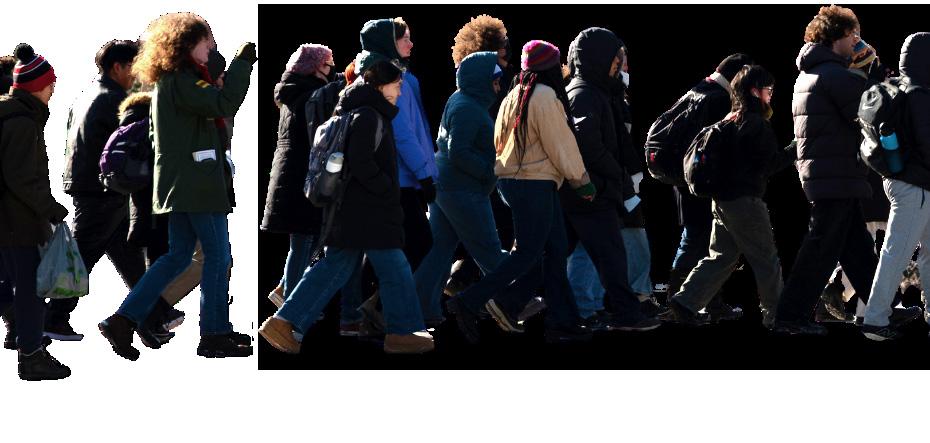
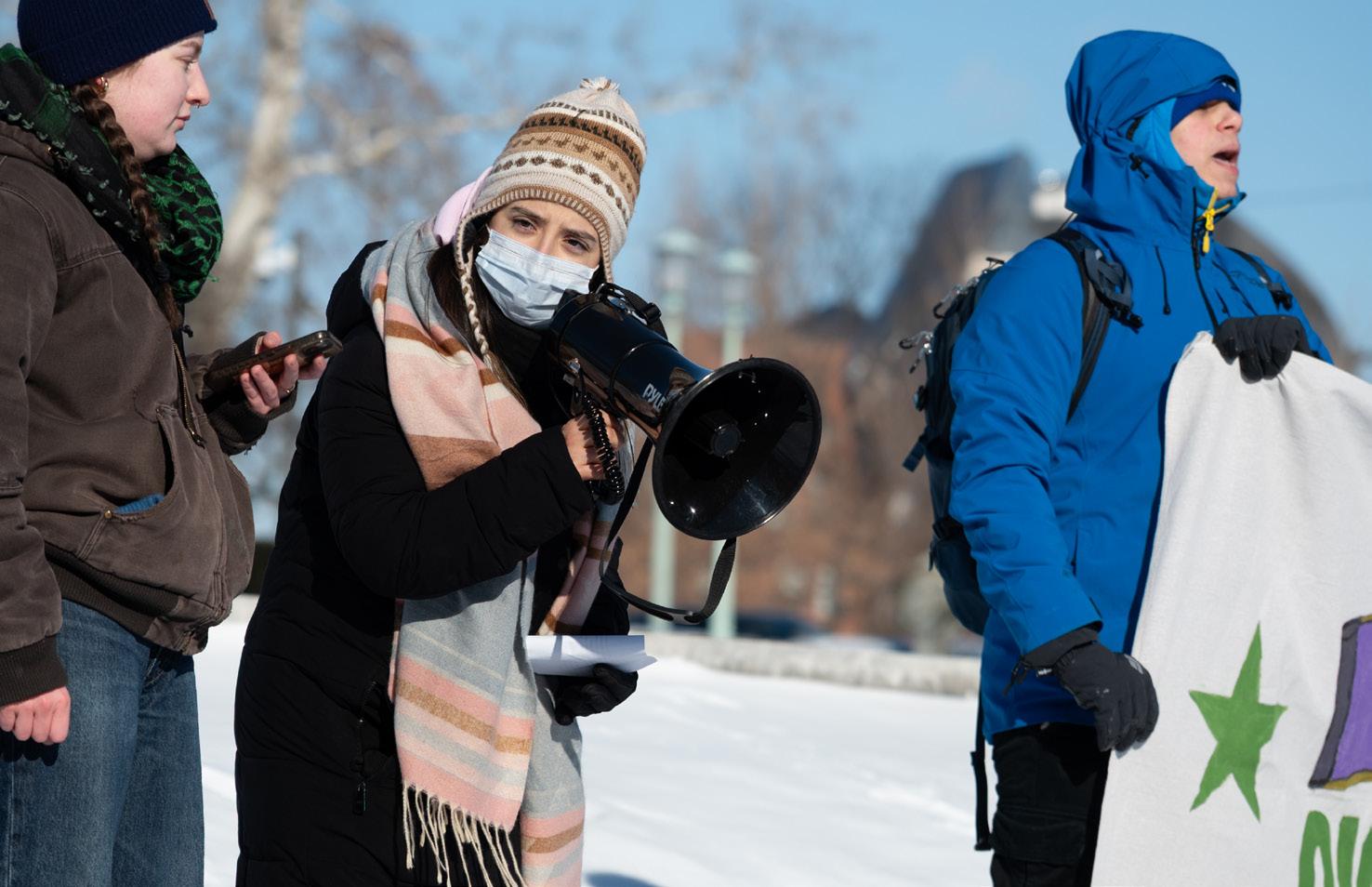
Walkout” in solidarity with the national movement protesting against recent actions taken by the U.S. Immigration and Customs Enforcement (ICE) agency.
The national walkout, spurred by the recent fatal shooting of Renee Nicole Good by an ICE officer, aimed to demonstrate and raise awareness to civilian discontent with the agency’s immigration enforcement tactics. Zoë Wagner, a fourth-year CWRU student and organizer of the demonstration, stated the group’s purpose.
“We’re out here to show solidarity,

state police force,” she said. “We’ve seen protests across the country erupt, in particular after the killing of Renee Good in Minneapolis. This obviously isn’t the first time ICE has killed anyone, but it generated a lot of momentum because of the publicity, so we want to be a part of that movement.”
Another organizer of the larger Cleveland movement, A.L., also shared their thoughts.
“I’ve been watching a pattern of authoritarian tactics—domestic military deployment, mass deportation raids,
surrender the very freedoms that make academic inquiry, artistic expression and free press possible.”
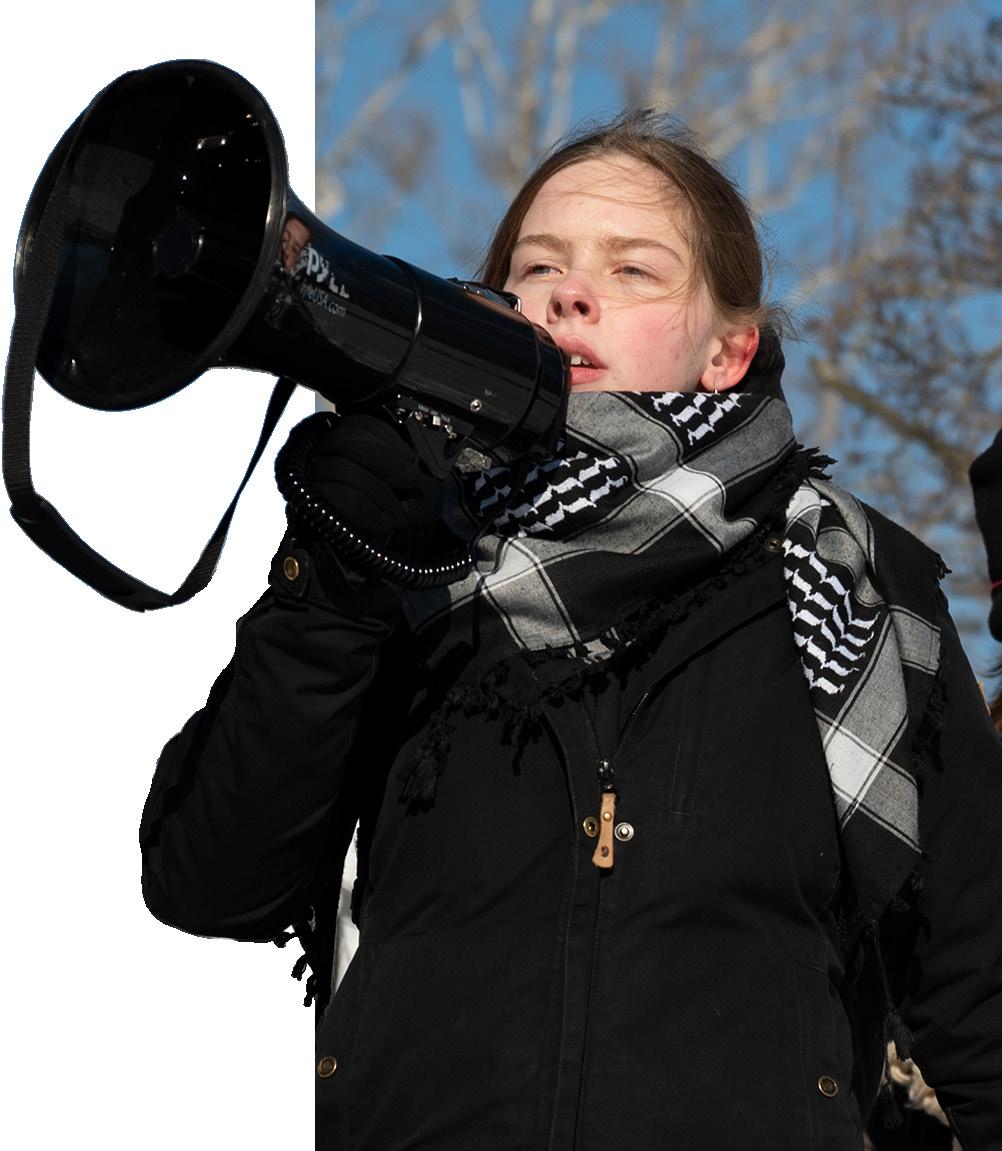
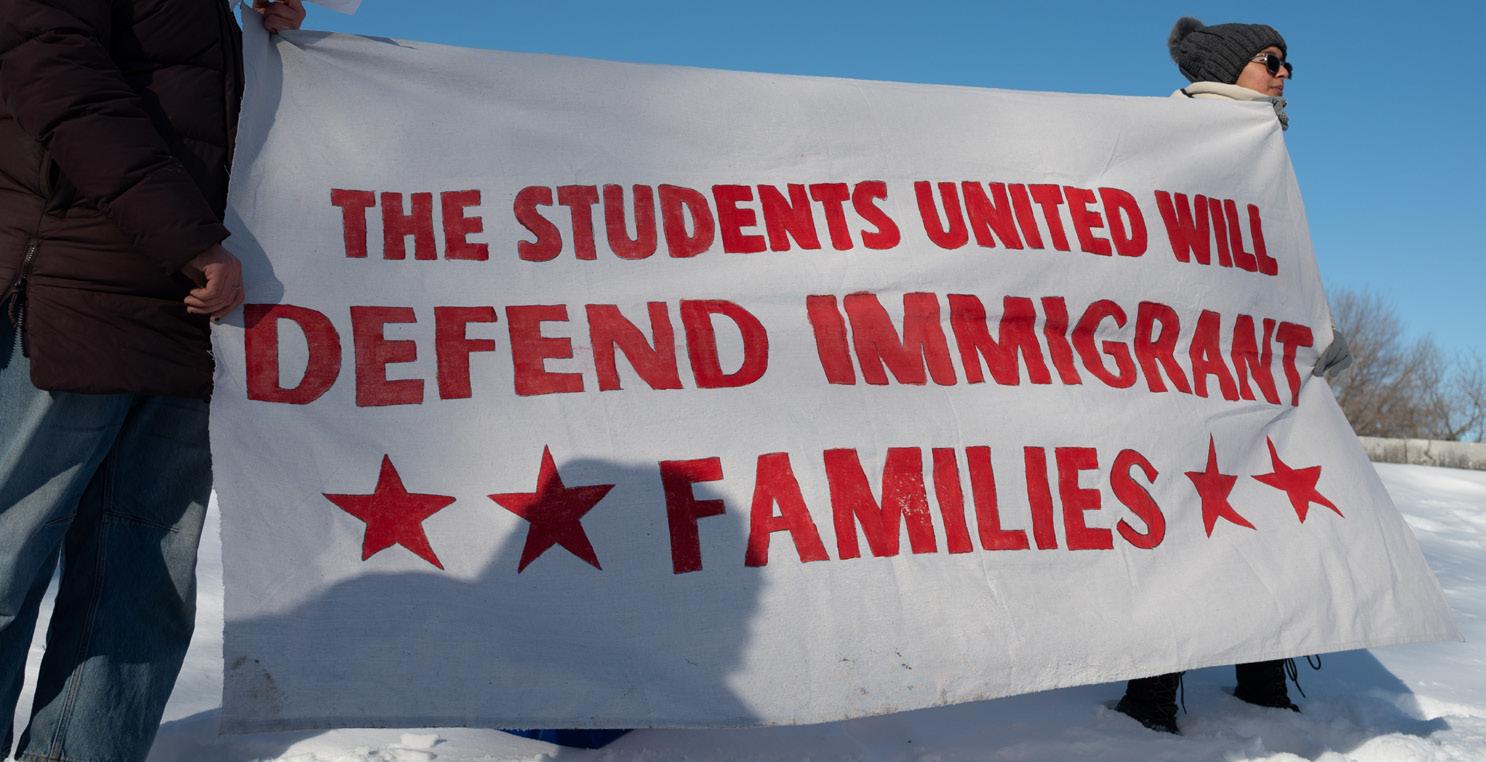
The walkout involved students gathering along the Binary Walkway at 2 p.m. for initial chanting and a short speech by third-year student Thatcher Buck. Their chants included phrases such as “Walk Out! ICE out!” and “No hate! No fear! Refugees are welcome here!”
The protesters then made their way to Wade Lagoon near the Cleveland Museum of Art for more speeches, as well as coordination of carpooling and
In a statement to The Observer, Buck, a Minnesota resident, called
ing communities across Minnesota. They don’t care about immigration status, resorting to the kidnapping of US Citizens and legal migrants,” he said. “It no longer matters if you are a good citizen, if you put in your fair share, if you are woven into the fabric of your community … It doesn’t matter who you are, ICE is at your front door. They’re watching. They’re waiting.”
Continue reading on page 2

Darcy Chew Executive Editor
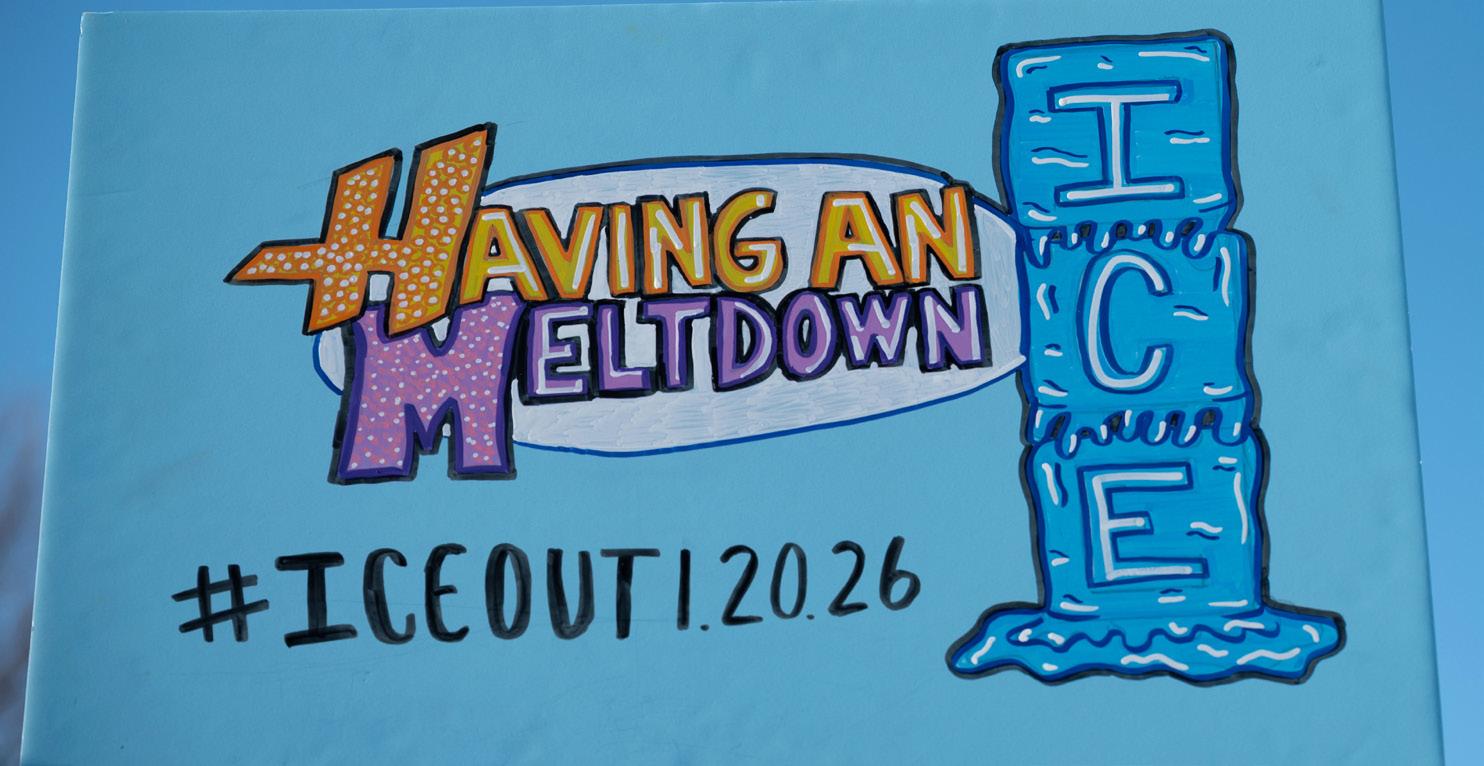
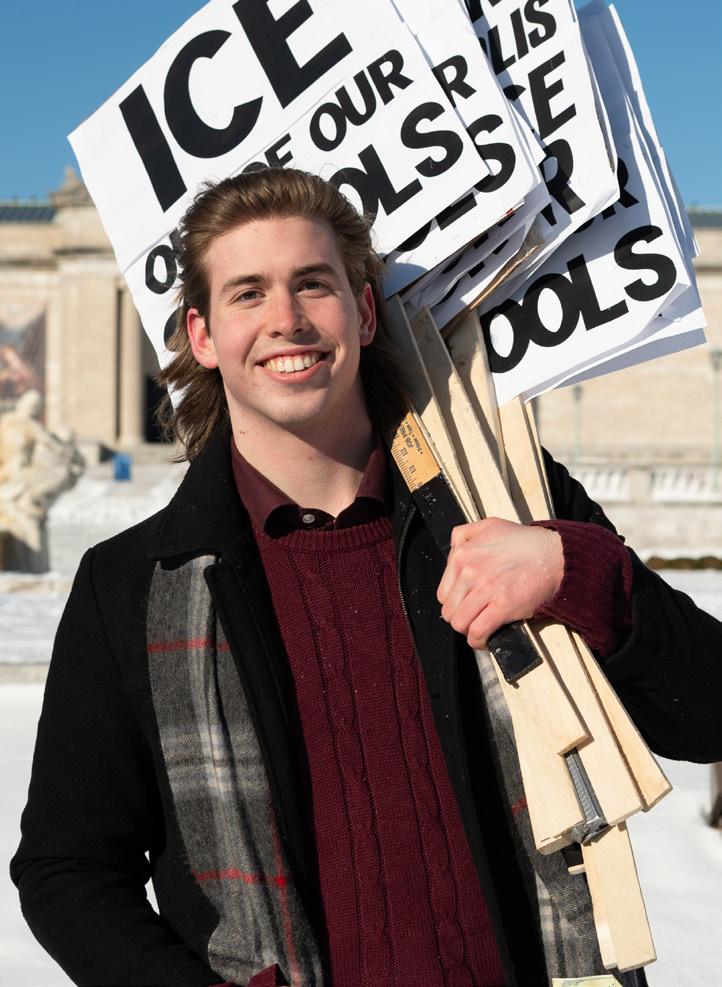
After gathering on the Binary Walkway, students chanted and marched towards Wade Lagoon to join a larger demonstration with the Cleveland community. All photos courtesy of Tyler Sun/The Observer
Matthew Stall Video Editor
CWRU’s Division of Public Safety establishes a new sexual assault response team
Noah Paniagua Staff Writer
Alyssa Wang News Editor
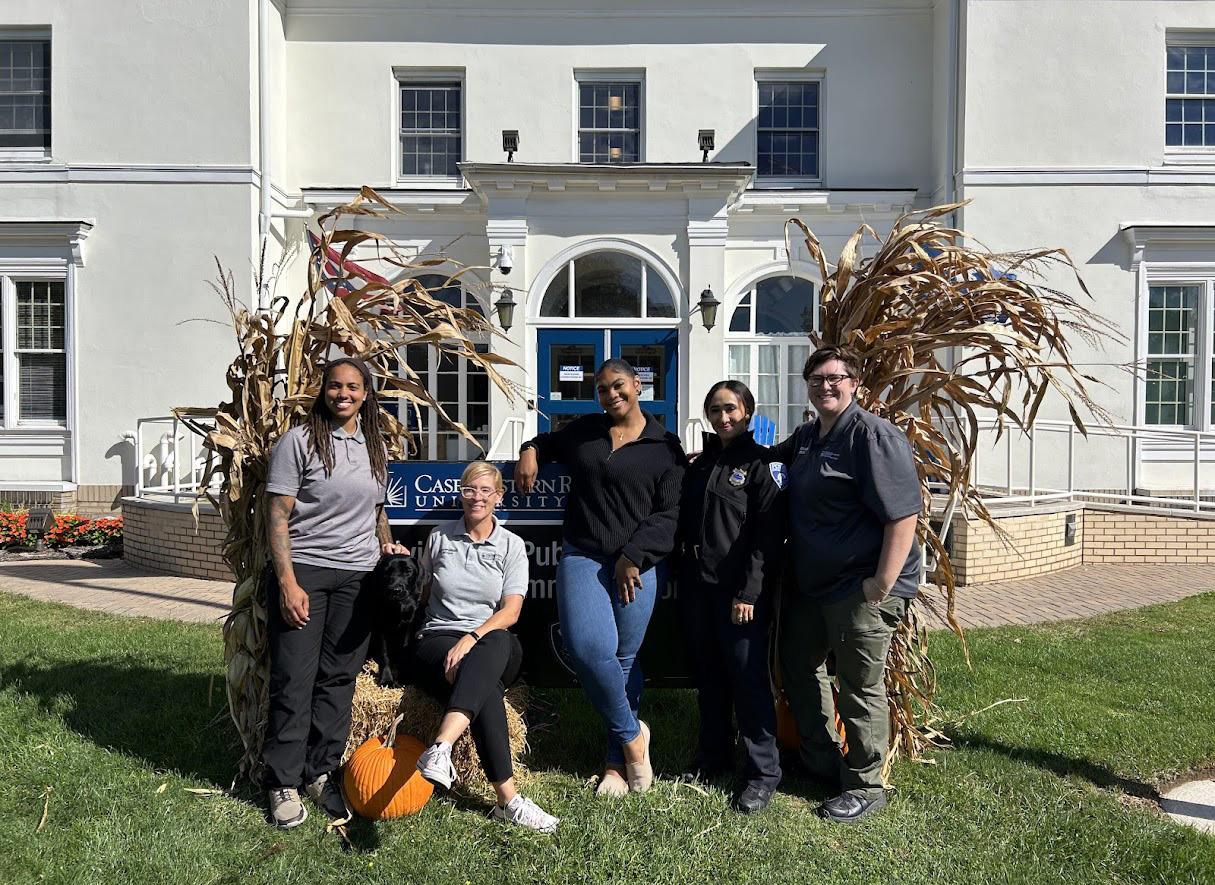
In October 2025, the Case Western Reserve University’s Division of Public Safety announced the creation of a new sexual assault response team (SART) to better aid the CWRU community.
In 2023, the U.S. Department of Justice opened a Title IX investigation into CWRU after students raised concerns about how the university handled reports of sexual harassment, particarly regarding situations connected to CWRU’s Greek Life. According to DOJ’s press release, they found that CWRU employees often failed to report sexual harassment complaints and provide support for those affected.
Following the investigation, CWRU agreed to implement new policies to address sexual harassment issues. This included publicizing Title IX policies and protocols, annual training for all students and staff, creating better and more comprehensive procedures specifically for Greek Life as well as funding the Flora Stone Mather Center for Women, the Greek Life Office and University Health and Counseling services.
With the goal of improving sex discrimination reforms and providing students with more resources, CWRU developed a number of supportive measures, one being the creation of SART.
“The motivation behind creating the Sexual Assault Response Team was to ensure that every survivor’s first interaction with the Division of Public Safety is grounded in compassion, support and trauma-informed care,” Megan Koeth, executive director of CWRU Division of Public Safety said. “Sexual violence is among the most serious calls our officers respond to. This team represents the beginning of a more coordinated, survivor-centered approach to how our university responds to sexual violence.”
All of the officers in the Division of Public Safety receive trauma-in-
formed training, including foundational training in sexual assault response, to ensure proper response to these situations. However, according to Koeth, the SART takes it one step further. They receive “advanced training on the full response process, including protection orders, crisis-intervention techniques, evidence and crime-scene management” to provide an additional layer of expertise for survivors. The team is composed of dispatchers, clinicians and officers who volunteered to undergo more than 25 hours of specialized training across 12 topics related to sexual assault and domestic violence.
In addition to expanding training, SART established collaborations with the Flora Stone Mather Center for Women, University
Health and Counseling Services and the Office of Equity.
Koeth said that the licensed counselors embedded within their division through a collaboration between University Health and Counseling Services and Public Safety “work alongside our officers to provide immediate mental-health support, help coordinate care and ensure survivors are connected with the Office for Equity, the women’s center and other campus resources.”
As SART develops, the Flora Stone Mather Center for Women plans to offer long-term survivorcentered guidance. According to Emma Getz and Megan Whitmore Sharp, confidential advocates from the Flora Stone Mather Center for Women, “[the team’s] role is to
ensure students understand their rights and resources, and to help maintain a trauma-informed, student-focused approach.” The team’s other partners will continue to provide comprehensive support and strengthen their education efforts.
“Establishing a Sexual Assault Response Team is one part of a broader effort to ensure our officers are fully equipped to support individuals in crisis or experiencing acts of violence,” Koeth said. “In the coming months, we will also be launching a new initiative focused on strengthening our response to domestic and dating violence on campus. Together, these efforts reflect our commitment to providing compassionate, trauma-informed and comprehensive support to our community.”
ICE Walkout from page 1
After the Jan. 20 protest, A.L. also invites students to participate in other activities outside of the walkout. They suggest that students focus on sustained contribution to one local issue, such as academic freedom, immigrant defense or housing justice. They also recommend becoming part of public service projects that make tangible impacts on immigrants in the area, including food distribution, Know Your Rights clinics and voter registration.
As a result of uncertainty surrounding how to navigate encounters with ICE, the American Association of Colleges and Universities released “ICE on Campus: What to Do,” a practical guide advising students to verify agent credentials, stay calm and document the interaction among other measures.
“This protest in particular is against ICE, not against [CWRU] administration, but we’d love to see more faculty,
staff administrators out with us and supporting us and supporting our international students,” Wagner said.
In response to questions concerning the CWRU administration’s plans to prioritize student safety amidst concerns about ICE, a university spokesperson redirected The Observer to the Q&A linked in President Eric Kaler’s Jan. 12 welcome email, which was initially sent out Feb. 5, 2025.
CWRU continues to signal that community members should redirect outside agents to CWRU Public Safety or CWRU Office of General Counsel, and that, under the Family Educational Rights and Privacy Act, “the university will not release student data to anyone without a judicial subpoena.”
Kaler reiterated in his Jan. 12 email that “Our international colleagues and friends continue to be an essential part of the CWRU community.”
The University’s Division of Public Safety’s new Sexual Assault Response Team seeks to empathetically address trauma-related care. Courtesy of Brianna Smith
This past Tuesday, community members gathered to speak out against ICE’s recent immigration enforcement tactics. Tyler Sun/The Observer
Brief

Cleveland running out of road salt as winter storm approaches
By Aria Janel
From Cleveland 19
Florida advances AI Bill of Rights despite restrictionsfederal
By Cody Butler
From WCTV
1st defendant sentenced in NBA gambling scheme gets 2 years in prison
By Aaron Katersky
From ABC News
Trump Drops Tariff Threat Over Greenland After Assailing Europe
By Jim Tankersley, Zolan Kanno-Youngs and Lara Jakes
From The New York Times
Federal officials launch ICE operation in Maine and begin arrests
By Joanna Slater, Perry Stein, Marianne LeVine and Theodoric Meyer From Washington Post
Supreme Court Seems Poised to Reject Trump’s Attempt to Immediately Fire a Fed Governor
By Ann E. Marimow
From The New York Times
Rahm Emanuel Calls for Age Limit of 75 for President, Congress and Judges
By Reid J. Epstein
From The New York Times
US military transfers first
150 Islamic State detainees from Syria to Iraq
By Ghaith Alsayed, Qassim Aabdul-Zahra and Bassem Mroue From AP News
US stocks recover half of the prior day’s plunge after Trump calls off Greenland- related tariffs
By Stan Choe
From AP News
Iran’s Protests Have Been CompletelyGovernmentSquashed, Says By Pranav Baskar
From The New York Times
Seven more countries agree to join Trump’s Board of Peace
By David Gritten and Rachel Hagan From BBC
Supreme Court decides the future of transgender athletes in scholastic sports
via Wikimedia Commons
Sabrina Feldberg News Editor
Lucas Yang Director of Design
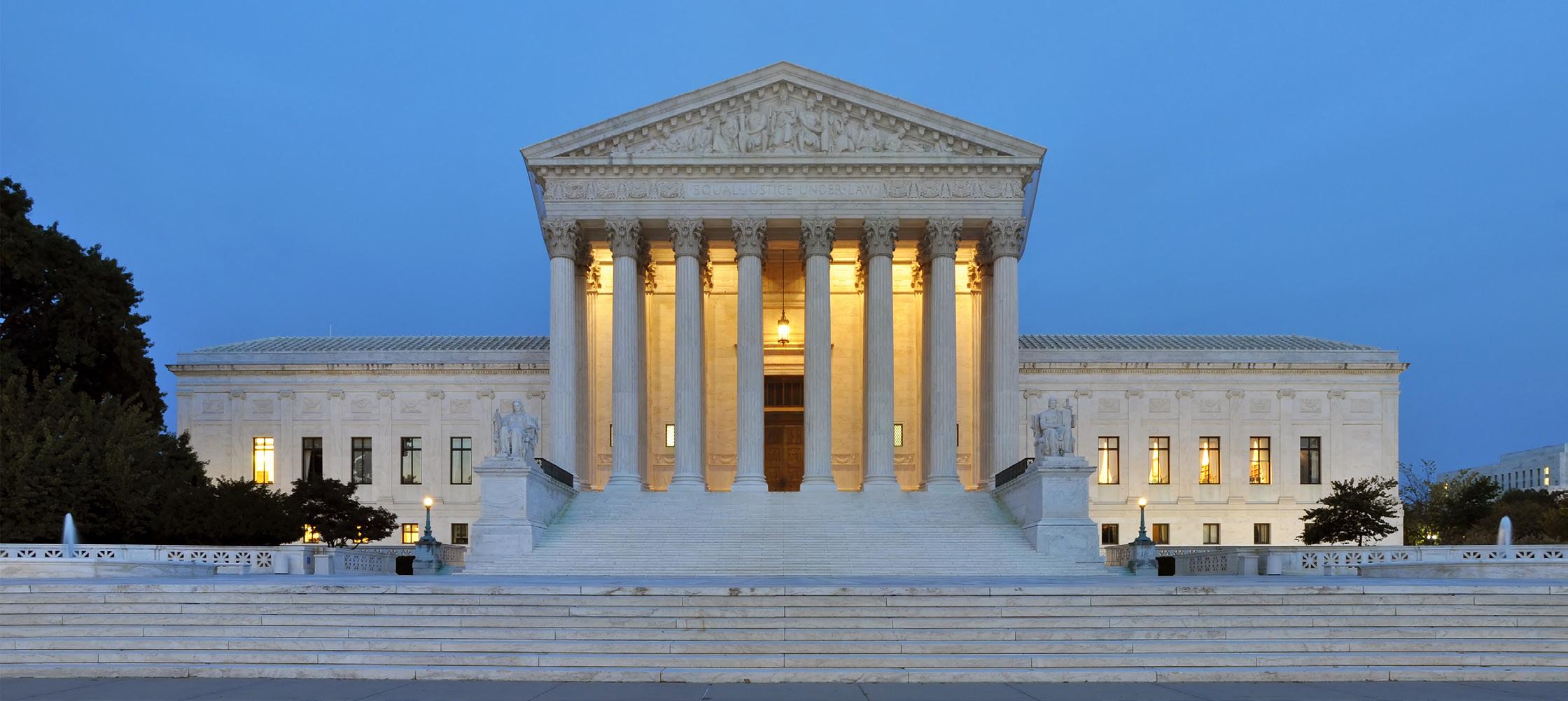
On Jan. 13, the Supreme Court heard oral arguments for Little v. Hecox and West Virginia v. B.P.J. Both cases explore the similar legal question of whether excluding transgender athletes from statesponsored sports violate the Equal Protection Clause of the Fourteenth Amendment. The rulings could impact the future of transgender rights and the legality of sex-based classification.
The West Virginia case concerns Becky Pepper-Jackson’s (B.P.J.) challenge to a state law, House Bill 3293. When she was eleven, PepperJackson was barred from joining her middle school’s cross-county team.
“I play for my school for the same reason other kids on my track team do,” Pepper-Jackson said in a press release from the ACLU. “But in 2021, politicians in my state passed a law banning me—the only transgender student athlete in the entire state—from playing as who I really am. This is unfair to me and every transgender kid who just wants the freedom to be themselves.”
House Bill 3293 barred transgender athletes from playing scholastic sports in the gender category
that they identify with. With the aid of the ACLU and Lambda Legal, Pepper-Jackson and her mother sued the state, claiming that the bill violated the Constitution and Title IX. She won preliminary injunctive relief, allowing her to compete on her school’s girls’ cross country and track and field teams.
Similarly, in 2020, transgender Boise State University student Lindsay Hecox challenged Idaho’s Fairness in Women’s Sports Act. The law banned her from trying out for the university’s women’s cross country team, despite lowered testosterone levels from hormone replacement therapy.
Oral arguments for the two cases lasted three hours. Lawyers representing all four parties fielded questions about sex-based classification, scientific research and transgender discrimination. Both liberal- and conservative-leaning justices raised concerns about the lack of precedent regarding Equal Protection challenges brought forth by transgender individuals.
“So, that’s one of the fundamental problems with laws like this, these sweeping bans, is that they refuse to look at the individual,” PepperJackson’s attorney Joshua Block, senior counsel for the American Civil Liberties’ Union’s (ACLU) LGBTQ & HIV Project said. “The whole point of our civil rights laws and the Constitution’s Equal Protection Clause
is that people should be recognized as individuals and not just part of amorphous groups.”
Advocates for the states argued differently. Hashim M. Mooppan, an appellate attorney supporting the state of Idaho, called Hecox’s case “the world’s easiest as-applied claim to reject.” Because transgender individuals comprise a “fraction of a percent,” Mooppan argued, their exclusion from sports teams on the basis of sex does not rise to the legal standard of discrimination.
Since 2020, 27 additional states have created similar bans regarding transgender women in sports, including Ohio. Other areas of transgender rights have come under recent fire, as well. In 2025, Skrmetti v. The United States saw the Supreme Court uphold a Tennessee ban against gender-affirming medical treatment for transgender minors.
When asked about her perspective on the recent cases, transfemme Case Western Reserve University student Abby attributed the current actions barring transgender people to fear.
“The argument is just predicated on fear, because [they] actually don’t really give a shit about women’s sports,” she said. “It’s like, well, here’s this easy minority to hate on right now. And fear gets me elected and I don’t have any morals or spine … Why not?”

After hearing oral arguments this January, the Supreme Court is expected to issue their rulings on two high-profile transgender rights cases in June. Courtesy of Joe Ravi
ENHYPEN's "THE SIN: VANISH" will bite you with vampiric eroticism
Helen Cai Staff Writer
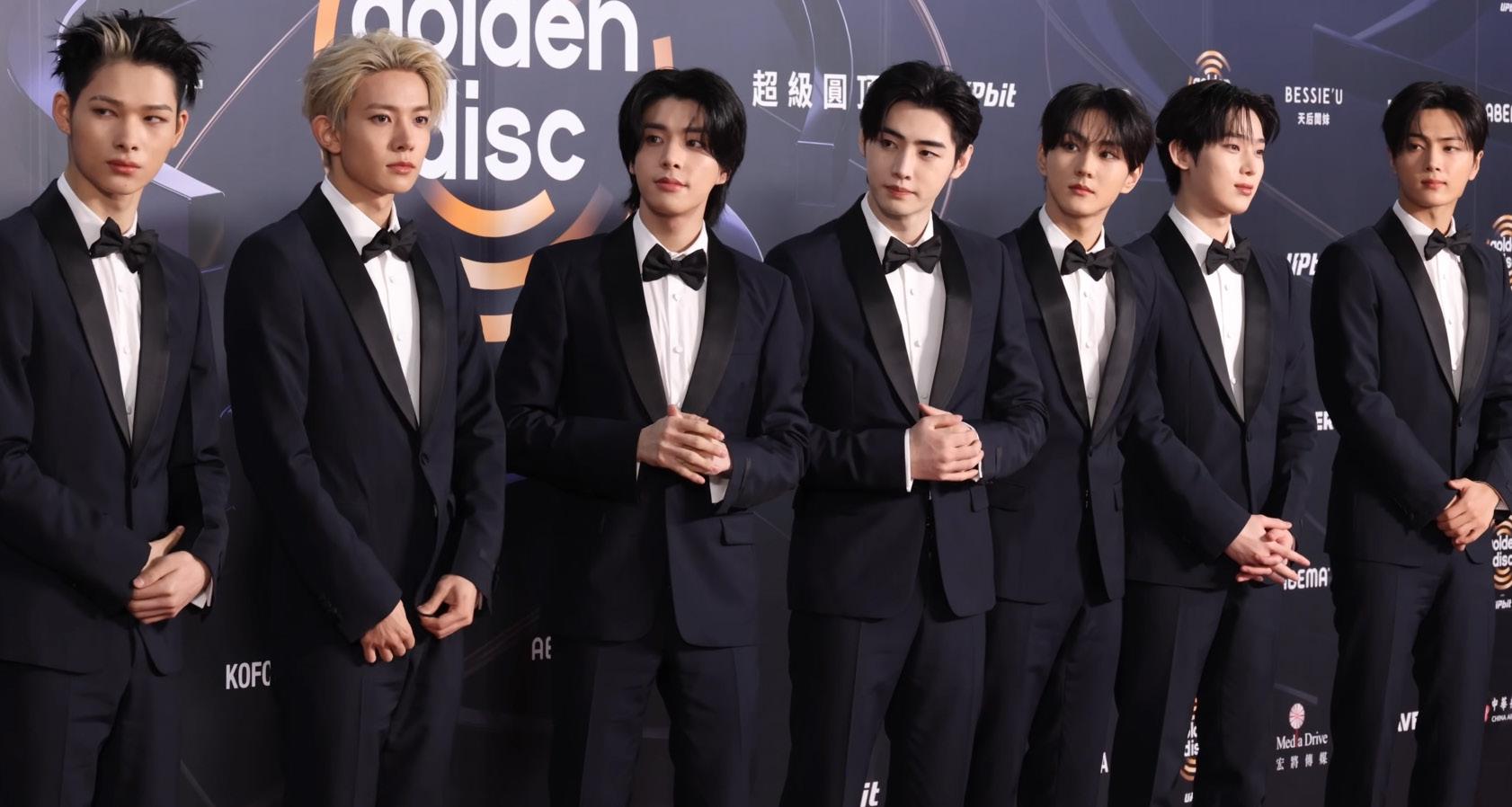
The members of fourth-generation K-pop group ENHYPEN have cloaked themselves in a Gothic opulence with their newest release, “THE SIN: VANISH.” Springing off of their previous album, “DESIRE: UNLEASH,” where they emphasized the concept of a dark, but touching, romanticism, the group channeled the aesthetic of vampiric lust that flirts with sin, transgression and the intoxicating allure of life beyond society’s taboos.
The second track, “No Way Back,” featuring So!YoON!, plays on the expressive duality between anguish and acceptance. The vampire lovers attempt to escape from the other disapproving vampires in this world, which is what begins the album’s storyline. Chaos bursts from what seems like serene retrospection, and tragedy is embraced in the form of resolve, not defeat, with the rhythm building up to a cathartic release, overflowing with rebellion.
While listeners might expect a consistent, vocal-centered album focused on continuous abandonment and escape, “Knife” takes a sharp turn towards confrontation. “On the edge of a deadly razorsharp blade…We’re dancing like we’re in a movie.” Driven by cinematic bravado, the song casts the male vampire as both a lover and a protector, where he weaponizes acts of intimacy as a means to challenge societal constraint. The track “Stealer” is the natural escalation of this concept, strengthening the tone that was already dripping with unapologetic domination. It embraces fraught power dynamics: he is an assertive force who extracts power from everyone around him, even as his lover’s wavering loyalty lingers beneath the surface.
The album’s thematic momentum shifts towards tenderness in “Big Girls Don’t Cry,” with its beat anchored by heavy kick drums and punctuated rap delivery that draws influence from Black artistry. While the lyrics are framed as gentle, they carry an undercurrent of control. There are repeated reassurances of safety that are paired with commands to remain unquestioning (“don’t ask, where are we”), introducing a subtle tension between comfort and confinement. The lyrics, despite being slightly cringeworthy, are not meant to highlight female submission. “Big dog don’t bite” conflicts with the male narrator’s domineering veneer; it is an allusion to the saying “all bark, no bite.”
Up to this point, the album has focused on a darker aesthetic. “Lost Island” is an exception, offering a refreshing tonal shift from the more intense and “hellish” tracks that precede it. It blends rap interludes with the smooth, melodic lines of members Heeseung and Sunoo. Both lovers yearn for connection and peace amidst the chaos, and they escape their oppressive society through some sort of private, Garden of Eden-like paradise.
The penultimate track, “Sleep Tight,” unveils a profound layer of male vulnerability, in addition to contrasting the previous displays of unyielding strength. The narrator’s facade gives way to a self-acknowledgement of his own susceptibility, where he recognizes the overwhelming resilience and composure of his partner. With “[t]he curtain of guilt hanging over [him],” themes of protectiveness and heartfelt care transcend possessiveness. The calmer, dream-esque melody, coupled with intimate lyricism, crafts a poignant track characterized by raw, emotional candor. In the end, the listeners are meant to understand the
complexities of this vampire couple, despite the emphasis on Gothic sin and desire.
As a K-pop album, I believe that it consistently sticks to a cohesive theme that focuses on the classic troupe of intertwined, doomed lovers. However, the concept of male vampires draining the vitality of their female counterparts, as well as serving as a metaphor for predatory desire, is overused—we see it in “Twilight” and Stoker’s “Dracula.”
What makes up for this cliche is the twist at the end with “Lost Island” and “Sleep Tight,” where the singers acknowledge that there is equality between the male and female vampire. The songs themselves aren’t too memorable and groundbreaking, but the rhythmic build up established in “No Way Back,” combined with the harmonization from So!YoON!, introduces a compelling layer of tragic depth that elevates the overall experience.

ENHYPEN's new album combines dark drama and action, making for an exciting listen. Courtesy of TV10
'People We Meet on Vacation' takes a trip from the book
Penelope Cloonan Life Editor
Major spoilers for “People We Meet on Vacation.”
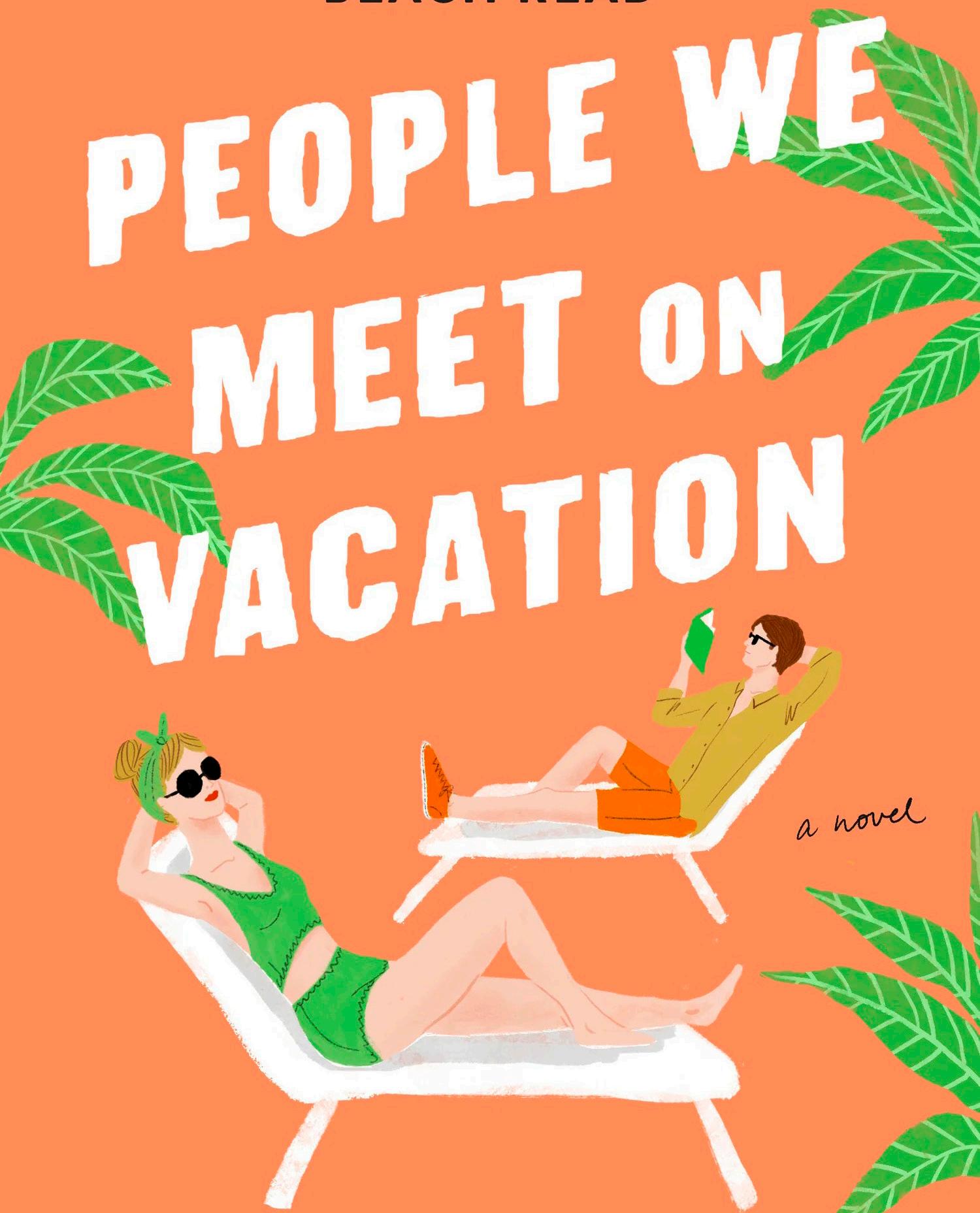
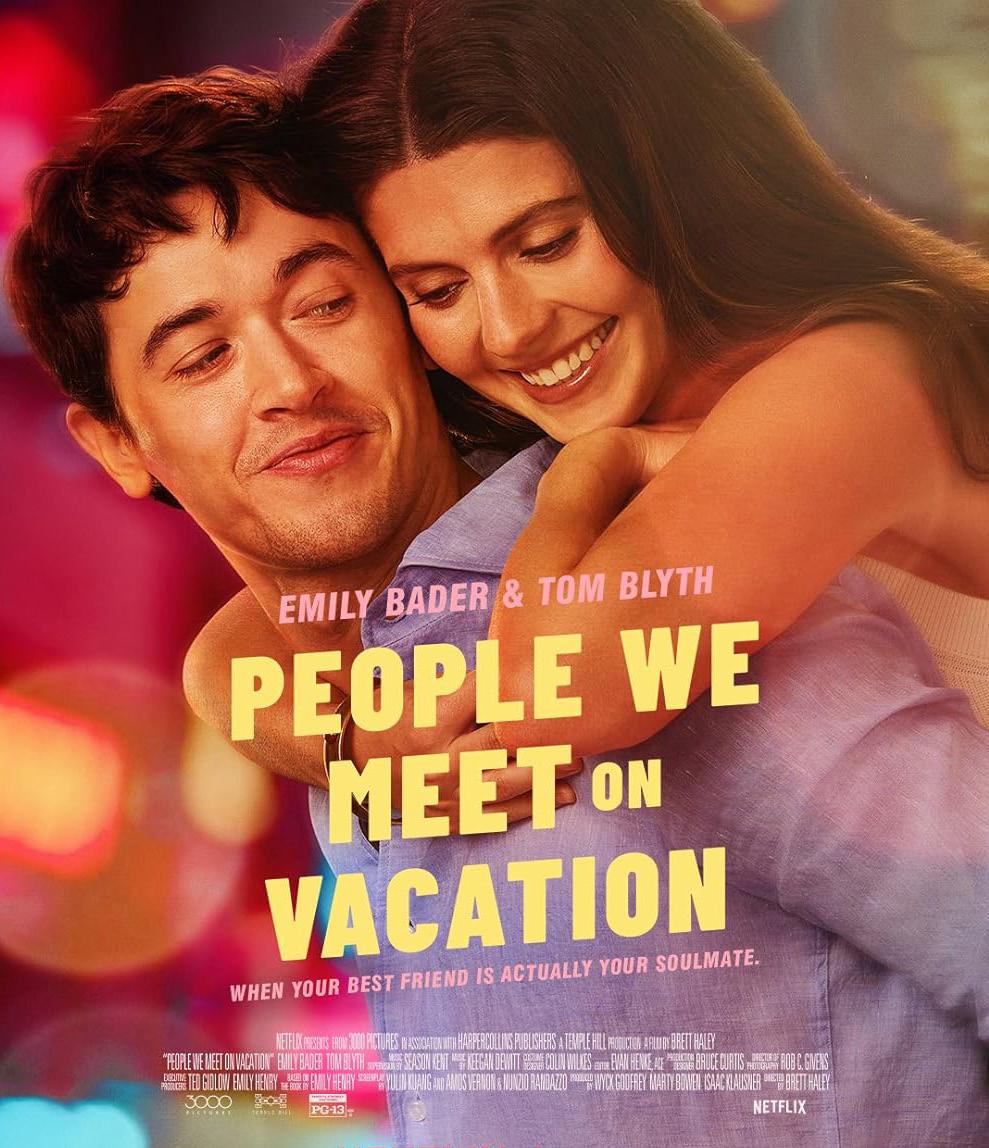
“People We Meet on Vacation” is a simple meal well made: a classic rom-com. We follow Poppy, an energetic travel enthusiast, and Alex, her uptight, history nerd best friend from college. After a rocky road trip home from their first year of college, they become fast friends and resolve to take a vacation together every year. As time goes on and the pair progress further into their careers as travel writers and overly-qualified high school teachers, these trips become more extravagant and complicated. Through it all, they always have vacation—that is, until one fateful night two years ago, when something went horribly wrong. In the present, Poppy has just been invited to Alex’s brother’s destination wedding. As one last attempt to rekindle their dying friendship, Poppy offers Alex a vacation together in anticipation of the wedding. Through flashbacks and present day miscommunications, the reader watches Poppy and Alex face their fears, come out of their shells and fall for each other.
The 2026 film adaptation is the first of popular romantic comedy author Emily Henry’s books to be adapted. Since it was first announced, there has been a lot of buzz around the film. Yulin Kuang, another romance author, was brought on to screenwrite, the actress for Poppy (Emily Bader) had just come off the wildly popular fantasy show, “My Lady Jane” and fans of Alex’s actor (Tom Blyth) were eager to see him play a hero after his stint as Coriolanus Snow in “The Ballad of Songbirds and Snakes.” While some took issue with this choice as the first of Henry’s books to be adapted,
with “People We Meet on Vacation” (2021) being her most consistently disliked book, I am not among them. “People We Meet on Vacation” is one of my favorite Emily Henry books, which is why I can confidently say that though the 2026 film is a fun time, it is only loosely based on the 2021 book.
The “People We Meet on Vacation” movie was never going to be perfect. This is an obvious side effect of adapting a 400 page book to a roughly two hour movie; things are going to get cut. As such, while the book marries present day Alex and Poppy shenanigans with sweet flashbacks to all ten vacations, the movie simply does not have the space to do so. It makes sense that the trip to Nashville, which does not push the plot forward as strongly as their first camping trip, was on the chopping block. Even their pre-wedding vacation is completely cut in favor of fleshing out the few vacations that made the cut.
In the book, each of these trips is explained fully and completely. Losing that time does not cut into the romantic aspect of the film as much as it does the friendship. One of the most charming parts of the book is the slow fall between Poppy and Alex. In those early trips, the reader really does get the sense that they are just friends. While they are the most important person in each other’s lives, there is a barrier. It’s endearing and, crucially, makes Alex and Poppy’s other partners feel more realistic. With a limited runtime, the movie just cannot capture the evolution of the couple’s love from deeply platonic to all-consumingly romantic. The movie falls short, literally.
The most glaring omission is Croatia. The Tuscany, Italy trip shown in the movie is actually a combination of two trips from the book: Croatia and Tuscany. In Tuscany, three summers ago, Poppy and Alex bring
their respective partners, Poppy has her pregnancy scare and the pair realizes that their trips are sacred and just for them. In Croatia, two summers ago, Poppy and Alex were both single, got drunk and made-out. In the fallout, Alex ghosts Poppy, and we pick up in the present. In the movie, Alex and Poppy are on the verge of cheating immediately after Poppy’s pregnancy scare, when Alex backs off and proposes to his girlfriend, Sarah (Sarah Catherine Hook). Then the fallout plays out the same. Merging these two trips overloads the emotional impact; it is too much.
The “Croatia Incident” haunts the narrative so effectively because it is just the couple; there is a sweet intimacy in being forced to reconcile what they are to each other. The movie distracts from this climax with Alex and Poppy’s partners. Alex and Poppy aren’t just a couple, they are cheaters. The audience is caught between feeling happy for the couple and empathizing with Sarah; that could kill the mood of the film.
The saving grace for Sarah is another minor change to the resolution to the film. In the film, Poppy catches Sarah at the airport as a flight attendant, not as a high school teacher back home. This shows stronger theming with Sarah representing Alex being stuck in the past, back in Ohio. Her not being a teacher also gives her a little more agency outside of Alex and makes it less like she’s trapping him with her as opposed to trapping him in Ohio. Poppy makes peace with her past and is forced to reconcile with material harm she did to Sarah while she was floating through life. It allows Sarah to move on apart from Alex. This changes what the peacemaking between Poppy and Sarah means, but it humanizes Sarah in a way this movie desperately needs.
Still, I do have one more serious problem; this summer’s change
from Palm Springs to Spain. In the book, Poppy makes a desperate attempt to reach out to Alex for a trip, but he declines because he has his brother’s wedding that weekend and Poppy pitches a vacation leading up to the wedding, under the guise that her job will fund it. Since this is the off-season for Palm Springs, Poppy must fund the barebones vacation herself. This marks a return to the travel Poppy did for her blog when it was just her and Alex, and when things start to go wrong, the chaos validates Alex’s fears that Poppy doesn’t take anything seriously. Changing the trip to Spain is certainly more beautiful, but it does not give the couple the closure they need. Before Poppy can learn to be with Alex, she needs to ground herself and fall back in love with travel. Alex, of course, needs to let loose and chase his dreams outside of Ohio. Cutting the harsher elements removes the work the couple did to be together. There is a reason that Alex and Poppy wouldn’t have worked in college, but do now; they are different people. “People We Meet on Vacation” (2026) is not a character story; it is just a rom-com, a really good one.
While “People We Meet on Vacation” is by no means a perfect adaptation, it is worth a watch as its own entity. It is colorful, both in terms of physical composition and soundtrack. Alex is a loveable, slightly-uptight nerd, and Poppy is a charming ball of energy that could hold her own against any Meg Ryan heroine. If rom-coms were taken more seriously, I would say Bader should be hearing Oscar buzz. This is all to say that the ideal way to consume “People We Meet on Vacation” is to read the book two years before watching the movie, have a vague recollection of plot beats and affection for the characters, and then fall in love with Alex and Poppy all over again on screen.
Although "People We Meet on Vacation," departs significantly from the book, it is nevertheless a charming watch. Courtesy of Penguin Random House
Courtesy of Penguin Random House

Senioritis is hitting, and we are going to pass away
Auden Koetters Director of Digital Media
When is graduation? Honestly, I’m not really sure. I could look it up, but I won’t. This is the first symptom.
Welcome to the Worst Case Scenario of senior year: senioritis, a degenerative condition in which motivation slowly dissipates, calendars become fictional and the concept of “being a student” dissolves before your very eyes.
Earlier in college, life was simple. You were a student. You went to class. You did assignments. You had opinions about syllabi and a work ethic that could reasonably be described as “existent." Your courses were carefully chosen to fulfill degree requirements, and your extracurriculars were abundant enough to make LinkedIn proud. You were busy. You were striving, thriving and barely surviving.

Then there is the promised land of after. After graduation, you become a “graduate.” For some, this means employment. For others, this means aggressively refreshing job boards. For a brave few, it means continuing their education— but in classrooms that suspiciously do not track attendance or ask you to memorize polyatomic ions. Regardless, graduates exist in society. They have roles. Their email signatures actually hold meaning.
Senioritis exists in the far more dangerous space between these two identities. At this point in your education, you are not yet a graduate: you have no diploma, job and no authority to say things like “in the real world.” However, you also are no longer a student–at least not spiritually. The registrar may disagree, but you know the truth. Classes become optional (in theory). Assignments develop a sort of negotiable quality. You find yourself enrolled in things like “Euryth-
mic Movement” and “Discovering You,” which sound less like academic requirements and more like icebreakers at a corporate retreat.
Extracurriculars? Those were surrendered last semester to the most enthusiastic underclassman you’ve ever met, who says things like “I’m just so excited to get involved” and still means it.
So, you exist in limbo: neither a student nor a graduate, drifting across campus with an alarming amount of free time and no clear purpose. So what is the solution to having no motivation left and a whole semester left to endure?
When assignments feel optional and class attendance is merely a suggestion, you may initially turn to illicit substances as a way to pass the time. After a few weeks lost in a less than productive haze, however, boredom inevitably sets in, and you find yourself searching for a new form of stimulation. At this point, it is time to turn your attention to

Case Western Reserve University’s unanswered questions.
Who actually uses the telescope on top of A.W. Smith notoriously mentioned on campus tours? Why won’t the university invest in sufficient sidewalk salt, and how many times will students slip on the binary walkway this winter? And who, actually, are the students in campus promotional materials? I have never seen them in real life and am increasingly confident they were engineered exclusively for marketing purposes.
This, perhaps, is the final stage of senioritis: the urge to finally understand the institution in full, arriving just in time for you to leave it behind.
Worse case, you learn nothing and graduate anyway. Best case, graduation eventually arrives, allegedly, and you move on to adulthood, where senioritis is replaced by an even stranger condition: nostalgia for the place that caused it.


EDITORIAL
Let it show: CWRU should prioritize student safety in dangerous weather conditions
Editorial Board
In the past week, we’ve experienced snow squalls and sub-zero wind chills, which have made it that much more difficult to scrounge up any lasting motivation to attend lectures. Wind gusts were predicted to reach up to 50 miles per hour, bringing the experience of Antarctica to our front doorsteps. The extreme wintery conditions can only be prevented by Mother Nature herself, but Case Western Reserve University could do a better job at preparing for them. “Severe weather alerts” were broadcasted on our weather apps, yet the school’s light recommendation to “use shuttles, Safe Ride and take precautions to protect yourself from the cold” seemed to suffice from the administrative perspective. What was excluded, though, were the actions that should have been taken to keep students inside as much as possible, safe from the risk of frostbite. Essentially, accommodations weren’t met and students were basically told to put on an extra layer or two.
The shuttle system isn’t a reliable one. If you’re lucky, the Greenlink (the most popular route taken by CWRU students) may provide two shuttles en route to transport students to main locations on campus. You’ll likely have to wait for the one shuttle that is available, and, even so, you are not guaranteed a seat. The shuttles are at high demand during critical periods of the day in the wintertime as is, so informing students to utilize the shuttles is a complete non-solution to the situation. It would have been admirable of CWRU to organize additional “winter shuttles,” giving more students the opportunity to take advantage of the shuttles at reasonable times of the day. Often, the shuttles do not consistently arrive at convenient times. Instead, if you wish to have any chance of making it to class on time, taking the shuttle at least half an hour before lecture is your best option.

Safe Ride is only available after 6 p.m., so its use is limited in opportunity. At this time of year, the sun sets around 5:30 p.m. so the significant drop in temperature can be felt earlier in the day. Most students are still in lecture, attending extracurricular activities and finding their way back to the dorms. It is likely that we will find ourselves or others outside at this hour. If CWRU were to create actual solutions for the bad weather, extending the Safe Ride hours would be a good start, too.
In the event of the snow squalls that rolled in last Monday, in-person classes remained in session for
the most part, and it was up to the professors to make the decision of holding online classes or cancelling lectures altogether. This creates inconsistencies among the staff of CWRU, which should act as one united front in the face of danger, no matter the degree. However, the inconsistency may be attributed to CWRU’s lack of coordination between staff members. This is why declaring online classes in extreme weather events may be a wise decision to eliminate the possibility of biases and opinions acting to influence professors’ decisions in whether or not to hold in-person lectures. It seems that committing to the
Anna Trusova/The Observer
decision of online or canceled classes attaches a stigma—if students are given the opportunity to jump into a Zoom meeting from the comfort of their own bed, then they are less likely to pay attention, wasting critical lecture time. However, our health comes first. As students in a highly academic environment, it is harder to put our needs and health first when the school’s actions, or lack thereof, send an opposing message. In spite of the weather, we have been told to deal with the cards we have been dealt. At the end of the day, we are all here to pursue an educational degree, and it should not strip us of our safety.
Don’t be that annoying kid, or do; self-advocacy in the age of perception
What do we lose when we try hard to be liked? In a college setting—which should tolerate more social freedom and individual expression than high school—perhaps the value attributed to being liked is overstated. This is especially true in the context of assertiveness and self-advocacy. Assertiveness and being annoying are often conflated, especially in the rather high-pressure environment that is college. Because of this unclear border between being assertive and being plain annoying, we might not be reaching our fullest levels of self-actualization. This concept can be illustrated with a simple example. Say, you are in class. You have already raised
your hand to ask three questions. As the teacher continues to speak, you find yourself confused and want to ask another question. But you think that others would find you annoying if you raised your hand again, and you don’t want to be perceived as that kind of student. So perhaps you don’t raise your hand, and you don’t get your confusion cleared. Maybe you do, and you walk out of class with a better understanding. In the first outcome, you definitively lose something, but what did you gain? Maintaining some abstract level of likability in this lecture hall, on this 12,000-student campus? In the second outcome, you definitively gain something, and what did you lose? A few people’s opinions, of whom you will never talk to? Of course, this scenario is isolated in the sense that it bars any logical al-
ternatives, like talking to the teacher after class. And, of course, success is not defined nor created through a single moment. But we will all, at some point, experience moments like these, where you may need to decide to take an opportunity in the spur of the moment or to continuously put yourself out there to achieve something. These small opportunities and achievements may add up to something substantial in the future.
The first consideration to make is that we all blow things out of proportion in our heads. What might seem momentarily irritating to others is likely to go unnoticed, if not in the moment, then in the long run. Furthermore, annoyance is as much a reflection on the person committing the action as the person becoming annoyed. This isn’t to say that
doing outlandish things is okay and that people are not valid for feeling what they feel. At the same time, our actions are not as magnified as we imagine.
Why do we feel the need to be liked, anyway? After all, we are all here to achieve our goals, whatever they may be, and it shouldn’t be looked down upon if we try to take advantage of the resources around us. Perhaps this innate desire to be liked traces all the way back to our ancestors, as it may have been a matter of life or death. But this isn’t the past anymore. We, especially as college students, are surrounded by almost every resource imaginable. If only we had the courage to reach for them!
Continue reading on page 8
Lily Zhang Copy Editor
Don’t be that annoying kid from page 7
Looking outside of college, this limit imposed by being liked rings especially true for women, particularly professional women in the workplace. A recent Guardian article dubbed this as “likability labour,” which essentially says that professional women are more likely to “hold back their
true opinion in order to be liked.” This is a key illustration of just how rigid a hold “likability” has on many. The continuous grasping to be liked only makes the box surrounding you more impermeable. A notable caveat in this is that being liked, or straying away from being liked, is a double-
edged sword. A professional woman at work who doesn’t act as the “office mom,” bringing cakes to the office every Friday, is unfortunately going to be viewed differently. She might be deemed as cold and calculating. But for now, we are not quite yet in a rigid professional environment.
We are still in a (mostly) flexible environment that promotes freedom, to an extent, exploration and unprecedented growth. It’s time to truly take advantage of this and reach for the stars. And to reach for the stars, maybe the first step to take is raising your hand in class.
Skeptics: Understandable or unfounded
paranoia?
Afshan Ara Staff Writer
There is no doubt that the new administration has made questionable decisions for the country. The 2016 administration was only a sneak peek at what was to come. Although Project 2025 was far-fetched for many during the 2025 election, it has taken hold across the country. Besides the outrageous war on DEI, the current administration has done things once unimaginable, a key event being appointing Robert F. Kennedy Jr. as the United States Secretary of Health and Human Services. Unfortunately, this unhinged choice has had a detrimental impact on people.
The first of his choices included cancelling funding for scientific research and cutting thousands of jobs. His unfounded comment on Tylenol’s “dangerous” effects on the fetus during pregnancy was a laughable one for many people, leading to jokes and mockery on social media. He has since used his authority to discredit the efficacy and importance of vaccines. As reasonable as some of his comments may be, such as his advice for Americans to eat healthier and exercise, the majority of his statements contain inaccuracies, ridiculous assumptions and confusing rhetoric. These statements are so polarized that they are raising concerns among public health experts and doctors alike. Even after spending several years ensuring that vaccine research would stay funded and promising to ensure vaccine research during his confirmation process, he began a coordinated attack on vaccine science.
He publicly stated that the U.S. Centers for Disease Control and

Prevention (CDC) would no longer recommend the COVID-19 vaccine for healthy children and pregnant women. This received backlash from the scientific and medical community, which could not find evidence to back his claim. He went a step further and fired the entire CDC vaccine committee and installed his own members, who are largely opposed to vaccines. The new group has made more than just shocking decisions,
such as advocating against the COVID-19 vaccination and going against vaccination guidelines for newborns that include a combination shot to prevent chickenpox, measles, mumps and rubella. These decisions have impacted people heavily. For example, a couple in Texas took this statement and chose not to vaccinate their kid against measles. Unfortunately, their newborn contracted measles and died.

The war against vaccine science is not something new. Time and time again, vaccines have faced scrutiny from both public figures and everyday people alike. Ever since the COVID vaccine was introduced, people have been skeptical of receiving it despite professional opinion advocating for it. Being a skeptic is not the problem. In fact, it is good practice to investigate anything before taking it at face value. I would, however, like to remind people who so strongly denounce scientific research that research done on vaccine efficacy is extremely arduous and labor intensive. It is not in the best interest of researchers to make baseless statements. The amount of resources and time research requires is for a reason. Additionally, doctors and scientists who have spent years educating themselves to understand the mechanisms of disease do so to ensure better health for as many people as possible. Is it true that vaccines can give people adverse reactions? Yes. Is it likely? No. That being said, I would encourage people to do their own research at a time when misinformation is rampant. By doing your own research, you should be able to understand ideas in context and statistical significance. It is easy to take the words of influencers, but it is not significantly more difficult to assess details carefully on your own. With an administration such as the current one, it is crucial to pay attention to what is changing in the world around you, especially in science, which is all about investigative exploration and evidencebased reasoning.
Jana Ashour/The Observer
The fight for an independent Fed
Isabel Haytayan Staff Writer
President Donald Trump has been consistently pressuring the United States Federal Reserve since the beginning of his term last January. Aside from numerous comments on Truth Social and other platforms, his most notable move was the attempted firing of Board of Governors member Lisa D. Cook in August 2025. That changed last week when the administration threatened the chair, Jerome Powell, with criminal indictment.
Like Cook’s alleged mortgage fraud, the investigation concerns real estate. The Department of Justice points to Powell’s testimony last summer involving the ongoing renovation of Fed office buildings as the source of the crime.
The charges mark the president’s most aggressive move so far in his ongoing push for the Central Bank to lower interest rates, an encroachment on the Fed’s traditionally independent, non-partisan role. Legal experts doubt that the case will hold much ground, but the White House is not examining exceeded budgets and construction details on the grounds of legal authority. Instead, they are doing so in an effort to erode the public’s trust in Powell and force him to cave. Despite the lack of a case, the traditionally professional, non-confrontational chairman seems to have finally reached his limit.
“This is about whether the Fed will be able to continue to set interest
mined. The world’s trust in the Fed’s ability to regulate the world’s largest economy is a key reason for the widespread stability of the dollar and the U.S. Treasury market. These benchmarks are seen as safe-haven investments—in part due to trust in the Fed to make its decisions based on data and evidence, not the whims of politicians.
A negative reaction from markets would spell disaster for Trump, who is struggling to stimulate the economy in time for the midterm elections. This motivation seems to be a major reason why he keeps pushing for rate cuts: to keep the economy booming even at the risk of major inflation.
Despite his motivations, his move startled many Republicans, who find it hard to risk major economic instability. Republican representatives have actively spoken out in defense of Powell, and officials of the Trump administration have distanced themselves from the investigation, including Trump himself. Notably, GOP Senator Thom Tillis of North Carolina, a member of the Banking Committee set to approve Trump’s nominee for the position of Fed chair in May, said he would oppose any candidate until this case is resolved, leaving the committee in a tie.
The stalling of this nomination could also shake up markets. According to Adam Posen, the president of the Peterson Institute for International Economics, a prolonged fight over Powell’s replacement could lead to “split votes and no clear direction.” An insecure Fed could impact mar-

rates based on evidence and economic conditions—or whether instead monetary policy will be directed by political pressure or intimidation,” he said in a video statement about the investigation, blatantly calling the charges a political maneuver. Others in powerful roles have not been so confrontational when dealing with the president. But it seems like Powell has the leverage to take a stand. After the Department of Justice revealed its ongoing investigation, issuing multiple subpoenas, Trump felt the financial pressure. Stocks fell, the dollar weakened and markers of inflation and credibility fears—such as the price of gold and long-term bond yields—rose. The market only recovered quickly due to Powell’s reassurance, and this is only a taste of how markets would react if the Fed’s independence were seriously under-
kets without any action. Much of the Fed’s power doesn’t come from action, but from belief. Markets move due to expectations of what the Fed will do, and unpredictability can weaken the certainty of these expectations.
Replacement uncertainty could also be destabilizing. Though Powell’s term as chair will be up in May, it is unclear whether he will be leaving his seat on the Board of Governors. Despite being appointed by Trump in his first term, Powell has been an advocate for Central Bank independence and stable monetary policy. As a highly respected and experienced economist, his choosing to stay could undermine the foothold within the Fed that Trump stands to gain with his appointment of the next chair. However, the outcome of Lisa D. Cook’s court case could change ev-
The Case Western Reserve Observer
Established in 1969 by the undergraduate students of Case Western Reserve University
Darcy Chew Executive Editor & Publisher
Hannah Johnson Director of Print
Sabrina Feldberg News Editor
Alyssa Wang News Editor
Penelope Cloonan Life Editor
Aleksandra Majewski Opinion Editor
Ellie Palaian Sports Editor
Michelle Bai Copy Editor
Riya Kulkarni Copy Editor
Abhishek Nambiar Copy Editor
We’ve all been there, trying to study or finish that last assignment when all we want to do is … anything else. Maybe we’re overwhelmed with the work we have to do, or maybe we feel the pressures of perfectionism and don’t want to start. We push ourselves to “lock in,” but call it quits too often, feeling guilty each time we pick up our phones to doomscroll again and again. Doing anything but the work we have piled up always seems to feel better than actually getting things done, but the sinking feeling in our stomach knowing we’ve wasted time is much worse. Can we really consider these pauses to be “breaks” if we feel worse after taking them?
Mariana Parilli-Castillo Copy Editor
Lily Zhang Copy Editor
DESIGN
Anjali Bhuthpur Director of Design
Lucas Yang Director of Design
Shareen Chahal Layout Designer
Sahar Kapasi Layout Designer
Reva Kolhe Layout Designer
Elizabeth McHugh Layout Designer
Kiera Ng Layout Designer
Nithya Pandari Layout Designer
Jana Ashour Graphic Designer
Kristina Guo Graphic Designer
Sophie Shimeall Graphic Designer
Anna Trusova Graphic Designer
We may trap ourselves in a cycle of counterproductivity and double the time it takes to complete a task. In this “popcorn brain” mindset, we work and get little done, then stop working and think about how we could be working. By the time we resume our work, we feel ashamed, not refreshed, and we stay up late in attempts to catch up.
DIGITAL MEDIA
Auden Koetters Director of Digital Media
Moses Fleischman Web Editor
Ayan Sheikh Video Editor
Matthew Stall Video Editor
Obafami Tidjani Web Editor
Phillip Kornberg Photo Editor
Tyler Sun Photo Editor
Esha Bagora Social Media Editor
A break is not shameful, not when it has the potential to act as a tool that makes productivity much more efficient. We just need to know how to use them.
Benjamin Kang Social Media Editor
Timothy Le Social Media Editor
Rhea Soni Social Media Editor
Just as an athlete wouldn’t do 150 consecutive bicep curls while strength training at the gym, as students we must take meaningful breaks in reasonable intervals. One popular example of this is the Pomodoro method, where 5 minute breaks follow 25 minutes of work (10 minutes of break to 50 minutes of work is also a popular option). By time-boxing our productivity and knowing we will be rewarded, we remain more focused when we
Ethan Daley Sports Broadcaster
BUSINESS
Tyler Vu Director of Business Operations
Riya Dixit Ad Manager
Divya Kurma Business Manager
Anya Lin Analytics Manager
Ria Trivedi Marketing & Distribution Manager
The Observer is the weekly undergraduate student newspaper of Case Western Reserve University. Established in 1969, The Observer reports news affecting students and provides an editorial forum for the university community. Unsigned editorials are typically written by the opinion editor but reflect the majority opinion of the senior editorial staff. Opinion columns are the views of their writers and not necessarily of The Observer staff. For advertising information, contact via e-mail at observer@case.edu. LETTERS TO THE EDITOR should be e-mailed to observer@case.edu or submitted on our website at observer.case.edu. Letters can be mailed to Thwing Center 11111 Euclid Avenue, Suite 01, Cleveland, Ohio 44106. For policy and guidelines related to the submission of Letters to the Editor, refer to observer.case.edu/submit-a-letter.
Lucas
The Observer is a proud member of CWRU’s University Media Board. Follow The Observer on Facebook, Twitter, TikTok and Instagram @cwruobserver.
erything. The Supreme Court is set to start hearing oral arguments in late January. If the court rules against Cook, it could set a significant precedent about the firing of Fed officials by the president that could make it more beholden to the Executive branch. Overall, this is a time of great uncertainty for the U.S. Economy. Trump’s heavy-handed involvement with the Federal Reserve has opened possibilities for increased presidential power that previous presidents have
never dared to touch. And the threat of unstable markets is a constant one. However, Powell encourages citizens that the Fed will continue to stand independently, helping the U.S. weather the unpredictable fluctuations of the global economy.
“Public service sometimes requires standing firm in the face of threats. I will continue to do the job the Senate confirmed me to do, with integrity and a commitment to serving the American people.”
Yang/The Observer
Courtesy of the Federal Reserve Board of Governors via Flickr
Why you should have children
Milo Vetter Staff Writer
We’re in demographic trouble. According to a report by the Pew Research Center, American fertility is at an all-time low, as roughly 1.6 children are born on average to each woman in the country. This is well below the “replacement rate” of 2.1, the fertility rate at which a population stays constant. Simultaneously, 47% of adults under 50 said they’re unlikely to have kids in the future when they were polled in 2024—up from 37% in 2018. In a world being crushed under the weight of human consumption, shouldn’t we welcome a smaller population?
Well, for an extreme example of the consequences of these trends, we can look to South Korea—their fertility rate is currently among the lowest in the world at 0.82. If current trends continue, one half of the South Korean population will be over age 65. In the U.S. today, that proportion is roughly 17%. How can any country remain solvent when half of its people are too old to work? Can any healthcare system support that many people? Who will pay for all the healthcare expenses?
The U.S., in contrast, has almost double the fertility rate. Furthermore, this problem is mitigated by the U.S.’s high immigration rates—part of what makes immigration so good for the US is that it provides us with fit, young workers, whose childhood was paid for on someone else’s dime. But this is an intolerable solution to rightwingers. The once-fringe neo-Nazi conspiracy theory of the “Great Replacement,” a scheme in which “they” are intentionally encouraging immigration among non-white people to weaken white power, is now a mainstream Republican talking point. And this is the main reason why
the national conversation about fertility has been so corrupted. In the eyes of racists, the only way to defeat the real demographic problem without falling prey to a made-up one is to encourage birth of all-American babies … by making abortion and contraception illegal, expelling women from the workplace and making AI videos about traditional lifestyles that are more accurate to a vacuum cleaner commercial from the 50’s than real life.
But there are additional problems with an aging population that these morons won’t talk about.
The first is gerontocracy (rule by the old). There’s direct gerontocracy, in which old people have disproportionate levels of power in government. For example, baby boomers make up 39% of the House of Representatives and 60% of the Senate, despite being only 20% of the total population. As we’ve seen with the recent election of New York City mayor, Zohran Mamdani, it makes a big difference when our politicians are young and care about the same things that young people do.
But, more insidious is the indirect gerontocracy of culture, consumerism and property. The worst example is housing, where over 75% of baby boomers own houses, compared to about 25% of Generation Z. And I’d argue that this is a large cause, not an effect, of the United States housing crisis. What we call NIMBYism is just old people prioritizing their own interests over the interests of their community, like housing affordability, population density, economic activity and public transit access.
The second problem is politics and culture at large. Those AI videos about traditional wives may make your skin crawl, but they’re affecting their intended audience. Fertility in counties that voted for President Donald Trump in 2024 is generally
significantly higher than in those that voted for former Vice President Kamala Harris. I think that most readers will agree that conservatism is an existential threat, not just to democracy, but to the world at large, as it combines a climate change policy of “drill, baby, drill” with international geopolitical destabilization. We can count on some children raised to be conservative to “see the light,” so to speak, but generally, more babies from conservative parents now will mean more conservative adults in the future.
You’ll also notice that both these problems are a vicious cycle—as young people get more disillusioned with gerontocratic politics and begin to see childbirth as a right-wing affair, both these trends will accelerate. This is why we cannot allow ourselves to concede this debate to Elon Musk— our future depends on it.
But let’s put all that aside, because having a kid is not about politics. It’s about you. So, let’s talk about you. You’re a college student, struggling to get through your classes and find your footing in life. You probably don’t even know what your job will be or where you’ll live, and you’re working hard to secure a spot in the rapidly-shrinking middle class. Having a child is probably the last thing on your mind. You can’t have a kid, you’ve got a career ahead of you!
That’s the fundamental cause of falling fertility. In America, we’ve got a strong culture of trying to get ahead. A few years from now, you can definitely have a child; it would just mean making serious compromises when it comes to your career and free time. This is why South Korea has it worse than anywhere else. Their economic recovery after the Korean War was enabled by a terrifying culture of workaholism, which tightly squeezes fathers expected to be breadwinners, not to mention the mothers who find it impossible to retain their careers af-
ter childbirth. And, although our situation is not nearly as bad as Korea’s, it’s quite clear that there are serious problems with our societal model of work and family.
But these problems come from within as well as from without. Many people will say that they simply can’t have kids because they can’t afford it or don’t have enough time. This is almost always false—poor people have been having kids since the beginning of human civilization. The difference now is that child-free life has improved much faster than the life of a parent. It used to be that a child was a critical source of farm labor or rent. But now? People no longer think that the benefits of having children are worth the massive tradeoffs and career compromises. And I’m not denying these tradeoffs—having a child is an unbelievable amount of work and stress. But I don’t think we make a progressive case for having a child nearly often enough, so here’s one now.
As my dad once told me, having a child is an inherently irrational decision. The joy you get from creating a new human and showing it all your favorite things in the world is tiny compared to the agony of trying to get any sleep while raising an infant. You know what else is irrational? Having hope, especially now in times like these. But we can’t live without hope, and we can’t live without children, either. And I don’t just mean that in a demographic sense. Raising a child is an act of hope for the future, but also an act of defiance against those who want people like you to go away. To stay child-free out of fear of the future is letting them win. And to you, who took the time to read and consider a position you disagree with, no matter how hard things will get, no matter how deep the peril the world will enter, the only thing that will improve it is having more people like you.

Kristina Guo/The Observer
Spartans compete across the board in busy weekend of action
Ellie Palaian Sports Editor
Wrestling
Fourth-year Thomas Wagner captured the 157-pound title to lead the No. 23-ranked Case Western Reserve University wrestling team to a thirdplace finish at the Tom Jarman Spartan Mat Classic on Saturday at Manchester University. CWRU totaled 127.5 points and placed 10 wrestlers in the top eight of their respective weight classes.
Wagner went a perfect 6-0 on the day with four falls and a technical fall, winning the championship match by pin to extend his winning streak to 14 matches. First-year Hunter Keane and second-year Chase Crutchley each placed third in their weight classes, while several other Spartans contributed top-eight finishes across the lineup.
The Spartans will return home Friday, Jan. 23, to host Washington & Jefferson at Horsburgh Gymnasium for their final home match of the season, which will also serve as the team’s Senior Night.
Swim and dive
The No. 11-ranked CWRU men’s and No. 17-ranked CWRU women’s swimming and diving teams dropped a pair of dual meets against nationally ranked State University of New York College at Geneseo on Saturday in New York. The men fell 172-128 to the 15th-ranked Knights, while the women suffered a 185-115 setback to the 21st-ranked Geneseo squad. Both Spartan teams moved to 4-2 on the season.
On the women’s side, fourth-year
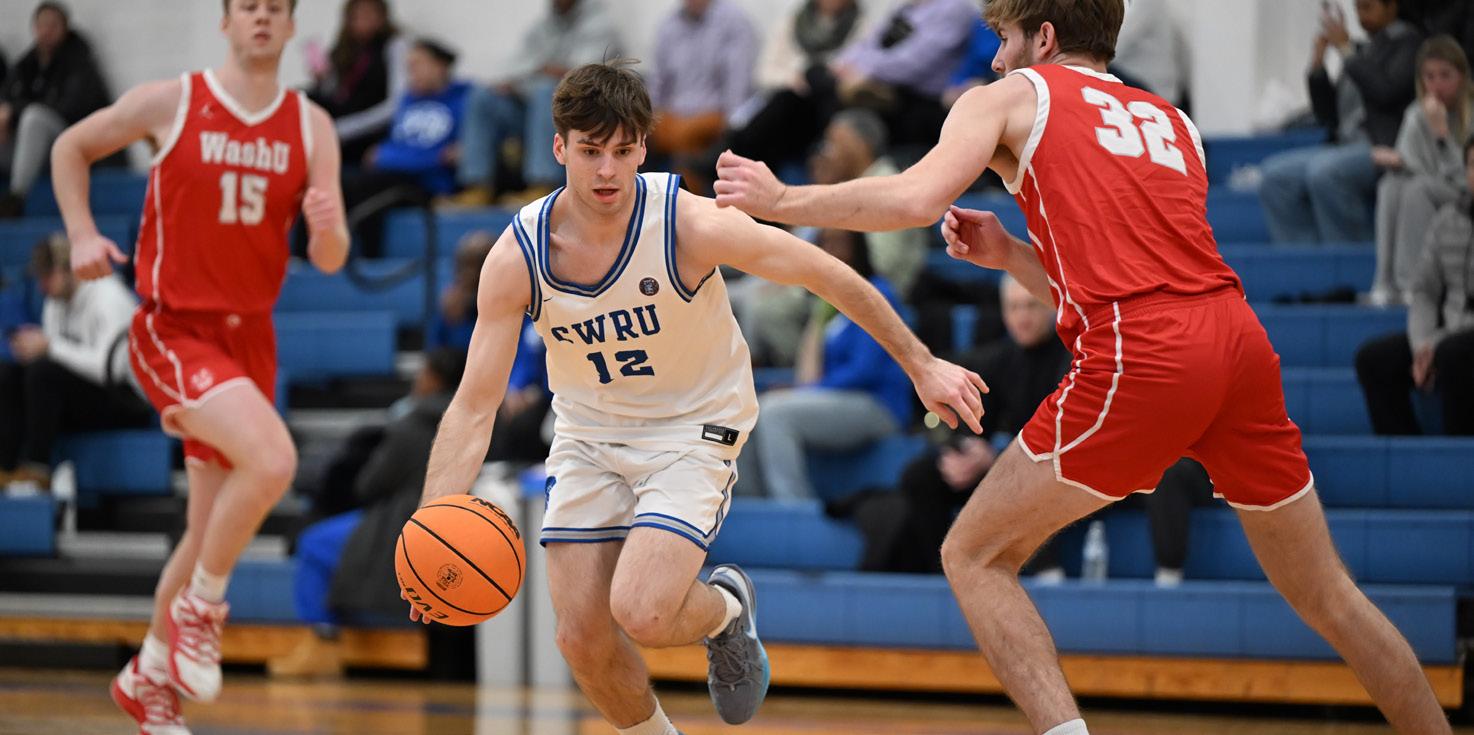
The men’s basketball team falls 0-3 in UAA play after their weekend against UChicago and WashU. Phillip Kornberg/The Observer
Claire Kozma led the way with victories in the 200-yard freestyle and 100-yard butterfly and also swam on the winning 400-yard freestyle relay alongside first-year Sohalya Rawlins, third-year Sheila Monera Cabarique and fourth-year Eliza Dixon. Secondyear Anna Brown added a win in the 200-yard backstroke.
For the men, fourth-year Mason Bencurik claimed wins in both the 100-yard and 200-yard freestyle, while fourth-year William Froass won the 100-yard backstroke and fourthyear Tyler Ahten captured the 200yard backstroke. Fourth-year John Drumm added a victory in the 200yard butterfly.
The Spartans will next travel to Gambier, Ohio, to face nationally ranked Kenyon College on Friday, Jan. 23.
Women’s basketball
The CWRU women’s basketball team dropped a pair of close contests
against nationally ranked opponents at Horsburgh Gymnasium last weekend.
On Friday, the Spartans led for much of the night before No. 18-ranked University of Chicago rallied late for a 52-44 victory. CWRU carried a 25-22 lead into halftime and remained in front entering the fourth quarter, but the Maroons used a late surge to pull away. Third-year guard Jordyn Call led the Spartans with 14 points, while third-year forward Maura Schorr added 13 points and seven rebounds and fourth-year guard/forward Emily Plachta pulled down nine rebounds.
On Sunday, CWRU again held a second-half lead, but a third-quarter run by No. 13-ranked Washington University in St. Louis lifted the Bears to a 66-52 win. The Spartans led 26-23 at halftime before WashU took control in the second half. Third-year guard Mya Hartjes recorded a double-double with 18 points and 11 rebounds, while Schorr and second-year guard Taylor
Angielski each added nine points. CWRU now stands at 8-6 overall and 1-2 in UAA play and will next travel to face No. 19-ranked Emory University in Atlanta before heading to Rochester, New York to take on the University of Rochester.
Men’s basketball
The CWRU men’s basketball team went toe-to-toe with No. 2-ranked University of Chicago for a half before the Maroons pulled away late in a 74-61 loss Friday night at Horsburgh Gymnasium. After an early Chicago run, the Spartans found their rhythm offensively and took several brief leads, heading into halftime tied at 38-38 following a late and-one by third-year Julian Scott. Chicago opened the second half with a strong surge and gradually built a double-digit advantage, holding off a late Spartan push. Graduate student Ethan Edwards led CWRU with 13 points, while first-year Alex Vincent added 12 off the bench.
On Sunday, the Spartans showed resilience by nearly erasing a 24-point deficit against No. 13-ranked Washington University, but ultimately fell 93-100. Edwards delivered a gamehigh 35 points and second-year Matthew Ellis added 21 off the bench as the duo combined for 46 second-half points to fuel the comeback. CWRU cut the deficit to as few as five points in the final minute, but the Bears closed out the game at the free-throw line. Third-year Logan Brown contributed seven points and 14 rebounds.
CWRU now sits at 8-6 overall and 0-3 in UAA play and, alongside the women, head to Atlanta to face No. 3-ranked Emory before heading to Rochester, New York to take on Rochester.
Track and field commences a promising season, breaks school records in opening weekend
Abhishek Nambiar Copy Editor
The 2026 season for the Case Western Reserve University track and field team is officially underway. Having begun their season this past December with the Spartan Alumni Holiday Classic, the team kicked off 2026 with the Spartan Icebreaker this past weekend at home inside the Veale Convocation, Recreation, and Athletic Center.
Defending indoor weight throw UAA Champion, fourth-year Michelle Lee, competed in the meet and expressed both excitement and nervousness about entering her final season.
“I think there’s something special about an athlete’s final season,” Lee said. “If I had to be completely honest, I’ve been more nervous about my final indoor track season than I was about my final semester of school.”
At the same time, Lee’s nervous energy is matched by gratitude for having the opportunity to defend a UAA title, an honor that has reframed how she approaches the season.
“Going into the spring, looking to defend a UAA title isn’t something I
had ever expected to have the privilege to do. Whatever the season holds in the next two months, I’m excited to have made it this far,” she said.
Lee is among several returning Spartans entering this season with UAA accolades to their name. Second-year sprinter Madhan Manikandaswamy returns after having earned three honors at last year’s championship. Fourth-year hurdler Bryce Hodge and third-year Toby Langsner achieved two podium finishes each in various events. Other returning All-UAA honorees include fourth-year Troy Olson and second-years Donovan Crowley, Charlie Stipanovich and Sarah Viveiros. Further decorated athletes making a return for 2026 include fourth-years Lauren Iagnemma, Ashley Novak and Ayla Grabenbauer. All three also received All-Great Lakes Region recognition for their performances.
As for the coaching side, head coach Eric Schmuhl returns for his 14th year at the helm. Working alongside him are the coaching staff of full-time assistant coach Rocco Mitolo, distance coach Kathy Nortz Yohann, horizontal jumps coach Drew Linebarger, sprints and relays coach Juan Perez and pole
vault coach Joshua Berman.
“The way we operate as a team is so different from all the other UAA schools. We don’t have massive budgets and a coaching staff of sixplus specialists,” Lee said. “That being said, we do an extraordinary job with the extraordinary people we have. We operate entire event groups as an entire team and do a damn good job … In terms of athletes, we see new talent every year, and this year is no different. Definitely keep an eye on our sprints group, we are only two meets down, and records are being broken left and right.”
Indeed, the Spartan sprinters have already been making their mark. First-year Gianna Phipps set a school record in the 60-meter dash with a time of 7.90 seconds to break a record last set in 2016. Iagnemma placed first in the onemile run (5:27.27), fellow fourthyear Grace Misiunas dominated in the 60-meter hurdles (9.35 seconds) and second-year Riley Friedman achieved victory in the 200-meter dash (27.44).
Further podium finishes were achieved by numerous other Spartans at the meet, ranging from longdistance runners, jumpers, throwers and everything in between. The
Spartan’s performance last weekend is evidence of the potential this team has, and it is encouraging as the team looks onto the rest of the season.
With all that being said, for Lee, success for herself this season is defined less by podium finishes and more by personal fulfillment.
“My only goal this year is to leave my collegiate athletic career happy, whatever the result may be,” she stated.
Whether her final collegiate throw comes at a dual meet or the UAA championship, her focus remains on making the most of her remaining time as a Spartan. On the team level, the goals are broader but just as meaningful.
“I’m hoping we can continue to compete with the other schools in our conference. Each year we get more and more talent, to see that trend continue and our program to grow into something that has sixplus specialized coaches or a roster that gets even more competitive would be amazing,” said Lee.
The Spartans will continue their season this weekend as they take part in the Snow Meet of Champions on Saturday, Jan. 24 at John Carroll University. Events will commence at 11:45 a.m.
Track and Field
at Spartan Icebreaker (1/17) No team scoring
at Tom Jarman Spartan Mat Classic (1/17) 3rd of 17 teams
Men’s Basketball vs UChicago (1/16) L 61-74 vs WashU (1/18) L 93-100
vs UChicago (1/16) L 44-52 vs WashU (1/18) L 52-66
Swim and Dive
at SUNY-Geneseo (1/17)
Men L 128-172
Women L 115-185
Why USWNT stars are heading to Europe and what it means for the NWSL
Ellie Palaian Sports Editor
This past September, United States Women’s National Team’s (USWNT) 21-year-old star Alyssa Thompson signed a contract to transfer from the National Women’s Soccer League’s (NWSL) Angel City FC to Chelsea FC in England’s Women’s Super League (WSL).
Thompson’s move comes amid a growing wave of USWNT players heading overseas. In recent years, starting center back Naomi Girma and defender Emily Fox have also made the jump to European clubs.
So what is driving this trend?
One major factor is money. The NWSL operates under a $3.5 million team salary cap, while the WSL does not currently enforce such a cap. When Girma transferred to Chelsea, she became the most expensive women’s soccer player in history, with the club paying $1.1 million to acquire her from the NWSL’s San Diego Wave. Previously, when soccer icons Megan Rapinoe and Alex Morgan played for Lyon in 2013 and 2017, respectively, they reportedly earned more in a single month than many NWSL players made in an entire season.
European leagues also offer prestige and increased competitive opportunities. The WSL provides multiple high-profile competitions including the Football Association Challenge Cup, the League Cup and the UEFA Women’s Champions League. For many American players, the Champions League remains the most coveted club trophy in the world. By comparison, the NWSL has only recently introduced additional competitions— and those tournaments have yet to gain widespread traction.
Track and Field
at Leo Miller/Hayden Snow Meet of Champions 1/24
International experience is another draw. The NWSL is largely composed of American players whereas European leagues feature rosters filled with international talent. Competing with and against players from different countries can help athletes develop their game and better prepare for major international tournaments such as the FIFA Women’s World Cup and the Olympics.
Why now?
While American players moving abroad is not new, the pace of these transfers has accelerated in recent years largely due to changes in the U.S. Soccer Federation’s relationship with the NWSL.
Before 2022, many USWNT players were signed as “federation players” under U.S. Soccer contracts, making them the highestpaid athletes in the league. This system encouraged national team players to remain in the NWSL, as all USWNT players during the 2015 and 2019 World Cup cycles were based domestically. In effect, playing in the NWSL was closely tied to national team opportunities.
Now, players are free to sign wherever they choose. Five starters from the most recent Olympic roster are currently playing abroad. USWNT head coach and former Chelsea Women’s head coach Emma Hayes has even faced criticism for the growing migration of players to Europe—though she has emphasized that the decisions ultimately rest with the athletes.
What does this mean for the NWSL?
The NWSL is still widely considered the top professional women’s league in the world, and viewership and popularity have continued to rise over the past year. However, the departure of elite players like Girma and Thompson raises concerns about whether the league’s overall quality and star power could decline over time.
There is a harsh reality to acknowledge: Women’s soccer is still not among the most widely followed sports in the United States. If you ask a random person to name a women’s soccer player, they will likely mention household names like Alex Morgan or Hope Solo who are now retired or no longer active at the top professional level. Among current players, the most recognizable names tend to come from recent U.S. national team and Olympic rosters such as Mallory Swanson, Trinity Rodman and Sophia Wilson. While all three currently play in the NWSL, they have also attracted strong interest from
top European clubs, reflecting the growing global demand for elite American talent.
In response, the NWSL has begun taking steps to retain top talent after European clubs pursued Rodman. To keep Rodman in the NWSL, the league introduced the High Impact Player Rule (HIP), now commonly referred to as the “Rodman Rule.” This policy allows teams to spend an additional $1 million beyond the salary cap to sign or retain elite players who meet specific criteria, such as national team minutes or high rankings on year-end lists like ESPN’s Top 50.
However, the NWSL Players Association has already challenged the rule, arguing that it violates the league’s collective bargaining agreement and federal labor law. The union has instead advocated for raising the overall salary cap.
What’s the bottom line?
The bottom line is that many of these top-performing athletes are not paid at a level that reflects their talent, workload or impact. Outside of a small group of high-profile stars, many NWSL players earn salaries that are barely a livable wage. To put the gap into perspective, the minimum salary for an NFL rookie is approximately $840,000, while Rodman earns roughly $275,000 annually from her NWSL contract. Even Morgan, widely considered one of the most recognizable women’s soccer players in the world, earned around $250,000 per year in league salary at her peak. For many of these top athletes, a significant portion of their income comes from off-field endorsement deals— an opportunity that is far less accessible for lesser-known players, further widening the financial gap within the sport.
Despite these challenges, the NWSL continues to look ahead. The league plans to expand by three teams by 2028, signaling confidence in long-term growth. With the rising popularity of women’s sports, the league may continue to thrive, but the loss of star players could have a greater impact than many expect.