Outdoor Recreation Inventory & Analysis
WINDHAM REGION, VERMONT
Prepared for the Windham Regional Commission
Winter 2025
Sarah Brazil, Ally Healy, and Stefan Poost
The Conway School
Acknowledgements
Thank you to all of the people who helped in the creation of this document. Many thanks to the Windham Regional Commission, especially to Chris Campany, Jeff Nugent, Susan Westa, and Alyssa Sabetto. The entire staff at the Windham Regional Commission provided helpful guidance and feedback throughout the process of creating this report. Thank you to all of the survey respondents who provided their thoughts and contributed their time, including those who engaged in one-on-one follow-up interviews. Special acknowledgements are due to the members of the Windham County community who were active participants in the development of this report: Lachlan Francis, Linda Hecker, Emily Wagner, and Carol Bois of the Wilmington Trail Committee.
We appreciate all of the organizations that distributed the survey, including Bull Creek Common Lands, West River Trail, Bonnyvale Environmental Education Center, the Town of Dover, Southern Vermont Trails Association, Green Mountain Conservancy, Dummerston Conservation Commission, the Town of Grafton, the Grafton Outdoor Alliance, Guilford Conservation Commission, Guilford Recreation Commission, the Town of Londonderry Trails, Mountain Towns Recreation, Hogback Mountain Conservation Association, Putney Conservation Commission, Putney Mountain Association, the Town of Rockingham, Windham Country Trails Alliance, the Town of Vernon, Windmill Hill Pinnacle Association, Wilmington Trails Committee, and the Town of Wilmington.
Acknowledgements and thanks to all of the VAST snowmobile clubs and VASA clubs who participated, including Black Mountain Snowmobile Club, Brookline Snowmobile Club, Deerfield Valley Stump Jumpers, EZ Riders of Jacksonville, Derry Sled Dogs, Grafton Outing Club, Guilford Pitstopper, Vernon Trail Riders, Wardsboro Pathfinders, West River Snow Goers, Southern Vermont Trail Riders, Jack Pines Pirates and the Vermont Off-Road Club.
Thank you to the Brattleboro Recreation Department, the Brattleboro Planning Department, the Retreat Farm, the Dover Economic Development Group, the Backcountry Hunters & Anglers of New England, the Connecticut River Conservancy, the staff at Trout Unlimited, and John Widness, the Chapter President for Trout Unlimited.
Thank you to Jackie Dagger from Vermont Outdoor Recreation Economic Collaborative (VOREC) for guidance around the release of the Move Forward Together Vermont SCORP. Thank you to the photographers who provided images of Vermont for this report, including Nathanael Asaro and David Weber.
Lastly, we want to thank the Conway professors and staff for the thorough feedback and guidance through this process, including Ken Byrne, Kate Cholakis, CJ Lammers, Bas Gutwein, Anne Capra, Ken Comia, Jesse Bellemare, and Kim Erslev. Thank you to Conway alum Eric Rose for support with the survey.
Executive Summary
The Windham Region of Vermont is made up of 27 towns in southeastern Vermont. The Windham Regional Commission (WRC) is the planning commission that serves as a resource for the area. The region is bounded by the Green Mountains to the west and the Connecticut River to the east. It is a primarily rural area with two population centers, Brattleboro and Rockingham (Bellows Falls). With access to Green Mountain National Forest, rivers and streams, and networks of trails, the region has a multitude of outdoor recreation opportunities.
The outdoor recreation sector contributes $2.1 billion annually to the state’s economy, ranking second nationally in terms of contributions to state GDP. As the sector has continued to grow, several challenges threaten the long-term sustainability of outdoor recreation opportunities for Vermont’s residents and visitors. Increased temperatures and extreme weather due to climate change as well as an increase in tourism and in-migration–especially during the Covid era–complicate physical, financial, and legal access to outdoor recreation sites.
In February 2025, Vermont released a new Statewide Comprehensive Outdoor Recreation Plan (SCORP) entitled Move Forward Together Vermont. This plan is the strategic vision for strengthening the outdoor recreation economy for the state into the future. The Windham Regional Commission is interested in putting together its own outdoor recreation economy plan, but before it can do that, it needs an inventory of recreation assets in the region.
In consultation with WRC, the Conway team identified 27 activities that were grouped into seven different categories based on the process used in the SCORP. These groups include trail and road-based, water-based, winter-based, wildlife-based, sports/parkbased, overnight activities, and others. For each activity, the data was collected through online research as well as publicly available geospatial data. The information was then compiled into a spreadsheet that lists 202 individual locations, the owner and property types, and which of the 27 outdoor recreation activities studied are present at each site. The spreadsheet also includes information on outdoor gear stores and libraries in the region for purchasing, renting, and borrowing equipment. Compiling this data from the outdoor recreation inventory, as well as the survey responses, will help WRC set priorities as it develops the outdoor recreation economy plan.
The Conway team also conducted a survey that was released to local groups and organizations. The survey yielded 125 responses. From that focus group, the student team conducted one-on-one follow-up interviews, which helped inform areas for further research when developing an outdoor recreation economy plan for the region.
The report includes thematic analyses on three topics that affect all recreation types: climate change, access and connectivity, and quality of life. These analyses provide conceptual frameworks for understanding these topics as the client team develops an outdoor recreation economy plan for the Windham Region.
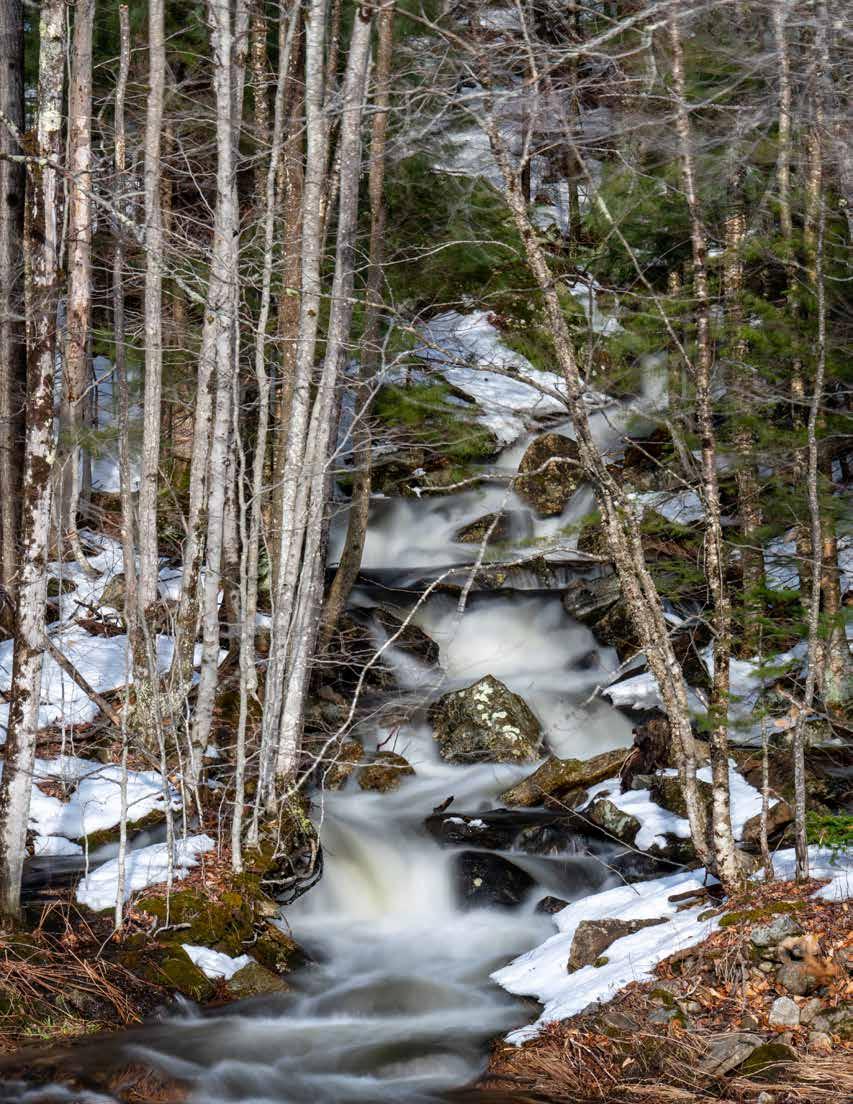
Spring melt on the West Branch Deerfield River, Readsboro
David Weber
Project Context
PROJECT SUMMARY
In the Winter of 2025, the Windham Regional Commission (WRC) advised a team of three graduate students on a project focused on outdoor recreation in the Windham Region of Vermont. This project aims to conduct an outdoor recreation inventory and analysis of all of the locations in the area managed by WRC to lay the foundation for the development of a regional outdoor recreation economy plan through the lens of ecological planning and using readily available data, data provided by the client team, and research conducted by the student team.
The student team began by performing a highlevel precedent/case study review, studying examples of other outdoor recreation inventory plans on a local and national level. Through this effort, the 2020 Berkshire County Outdoor Recreation Plan created by the Berkshire Regional Planning Commission (BRPC) served as a reference for how the inventory work was informed.
STUDENT OBJECTIVES
The student team created outdoor recreation inventories for over 20 recreation types, complete with maps and locations of all known landscape-based recreation assets, and analyzed the relationships of the maps with each other and with the larger regional infrastructure and landscape, being sure to include environmental and social conditions in the research.
The students also analyzed local transportation and access issues in this process to identify challenges and opportunities. Simultaneously, the students conducted two focused public engagement activities. First, the students created a survey that was released to local groups and organizations to get more
information from the local population. Second, the students conducted one-on-one follow-up interviews with four survey respondents.
Through the lens of ecological planning, the students applied climate change forecasts and explored scenarios for climate change impacts on the outdoor recreation resources and transportation corridors in the region. This plan discusses how outdoor recreation opportunities may evolve through shorter winters and more frequent rain events. The plan explores opportunities for access & connectivity within the region and an assessment of how outdoor recreation contributes to the region’s quality of life.
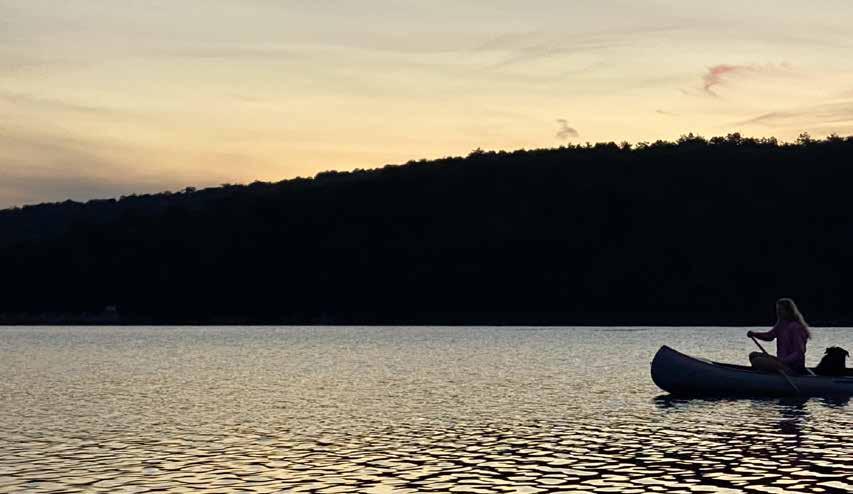
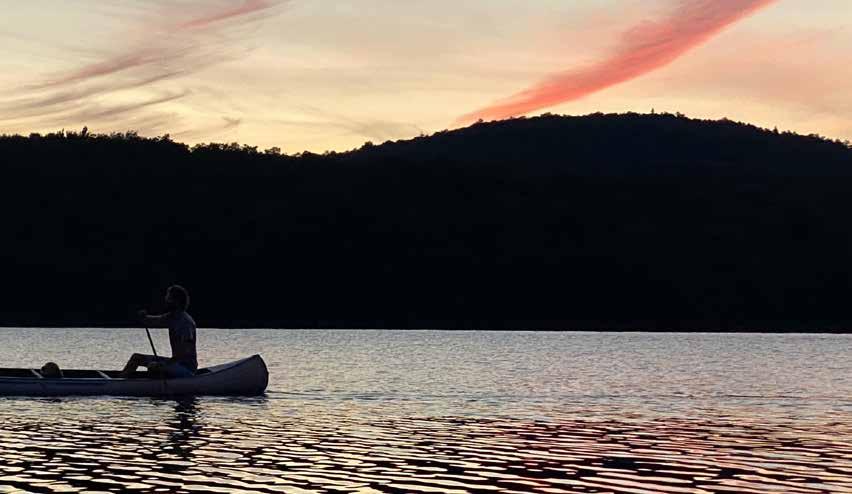
Canoers witness a sunset on a local reservoir in Windham Region David Weber
CLIENT - WINDHAM REGIONAL COMMISSION
The Windham Regional Commission (WRC) is one of eleven regional planning organizations in Vermont. WRC is a public entity whose mission is to assist towns in Southeastern Vermont to provide effective local governance and work corroboratively with them to address regional issues. Based in Brattleboro, the WRC was established in 1965, serves 27 towns, and works on various regional planning and development projects to enhance the quality of life for residents.
The Commission addresses regional issues such as land use planning, transportation, community development, and environmental conservation. It also works on hazard mitigation, climate change adaptation, and
emergency preparedness. By collaborating with local municipalities, state agencies, and nonprofit organizations, the WRC is important in guiding growth and coordinating regional challenges. In addition to its planning responsibilities, the WRC focuses on creating opportunities for community engagement, education, and collaboration. This includes organizing workshops, offering grants, supporting initiatives that benefit local economies, protecting natural resources, and improving infrastructure. The Commission’s work is driven by a commitment to enhancing the region’s sustainability, resilience, and well-being.
PLANNING PROCESS
Vermont Welcome Center in Guilford Stefan Poost
2.1
Outdoor Recreation: State and Regional Context
CONTRIBUTIONS OF OUTDOOR RECREATION TO STATE ECONOMY
Vermont–the “Green Mountain State”–stretches across rugged and sparsely populated terrain, ranking as one of the nation’s most rural states. The stewardship and enjoyment of Vermont’s diverse outdoor landscapes play key roles in supporting the state’s economy and way of life, as well as attracting new residents from across the nation.
According to the U.S Bureau of Economic Analysis (BEA), in 2023 the outdoor recreation industry in Vermont contributed $2.1 billion, or 4.6%, to the state’s $43.8 billion gross domestic product, the second highest percentage in the nation (U.S. Bureau of Economic Analysis). Among the recreation activities with the largest contributions to the sector in the state, snow-based activities led with $220 million in value added, up from $170 million in 2022, followed by RVing, game areas providing tennis and golf, and boating and fishing.
As a predominantly rural and aging state, Vermont relies on outdoor-based activities to attract visitors to support the economies of its
small towns. The BEA report found that the outdoor recreation sector provided 16,283 jobs across the state in 2023, representing a 4% increase from 2022. Other metrics in the report signal sustained and increasing growth of the outdoor sector in Vermont, including:
• Accommodation and food services grew 9% to $733.5 million;
• Retail sales increased 4.5% to $412.8 million;
• Outdoor goods manufacturing rose 15% to $135 million;
• Tour operations grew 8.1% to $41 million.
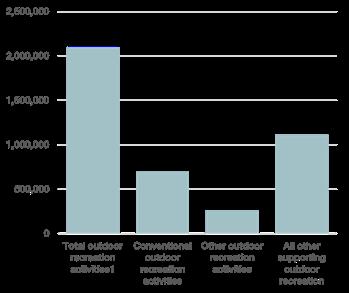
2-1 Value of Outdoor Recreation Activities in
Vermont, 2023 (in thousands of dollars) In 2023, the outdoor recreation industry contributed $2.1 billion to the state’s GDP. This included conventional activities such as boating, winter sports, and hiking ($693 million), other activities such as gardening and outdoor concerts ($255 million), and supporting activities such as construction, travel, and government expenditures ($1.1 billion). Data from the BEA.
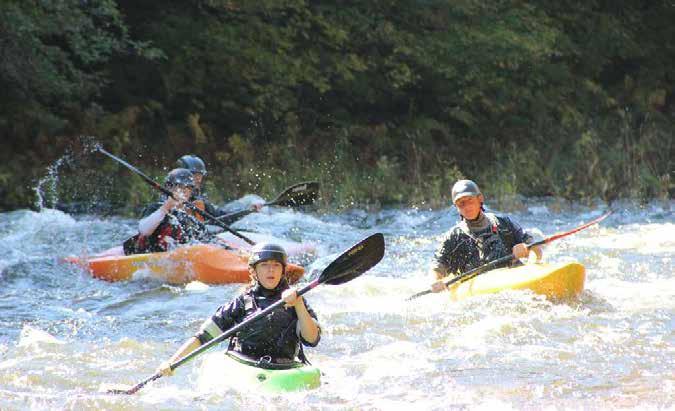
Whitewater rafting along the West River Defense Visual Information Distribution Service
OUTDOOR RECREATION CHALLENGES IN THE WINDHAM REGION
As the outdoor recreation sector in Vermont has continued to grow over the last decade (U.S. Bureau of Economic Analysis), ongoing and novel challenges put stress on public and private entities’ ability to provide sustainable and equitable access to outdoor amenities. The Windham Regional Commission, in consultation with the Conway project team, helped to identify some of the most important stressors shaping outdoor recreation in the state at large, but also in the Windham Region specifically.
CLIMATE CHANGE
Climate change’s impacts on outdoor recreation manifest in multiple ways that will be analyzed further in the thematic analysis section of this report. Two major areas of concern with respect to climate change’s impact on outdoor recreation in Vermont are increased temperatures (leading to shorter winters) and an increased frequency of extreme weather including floods and drought.
Winter-based activities are the single-largest contributor to Vermont’s outdoor recreation economy (U.S. Bureau of Economic Analysis).
As the climate warms, the number of days below freezing is projected to decline (“Impact Map”), hampering not only the formation of natural snow and ice, but also the retention of artificial snow, which has proven to be a critical resource in the economic viability of ski resorts already (Root). Furthermore, many Vermonters enjoy winter activities such as cross-country skiing on private lands, where no opportunity exists to create artificial snow. Adapting to changing conditions, for example by diversifying into warm-season activities at winter-based recreation facilities, could help the long-term economic viability of Vermont’s outdoor recreation providers.
Vermont experienced a 100-year flood in July 2023 (Banacos) and again in July 2024 (Goff), reinforcing the threat posed by climate-related extreme weather; the damage caused by Hurricane Irene in 2011, which hit the Windham Region especially hard, was still fresh in Vermonters’ minds. Vermont’s terrain of steep, narrow mountain valleys dissected by numerous streams is particularly prone to erosion and flooding, washing out roadways
and bridges and damaging homes (Weinstein). Preventing damage and maintaining access to outdoor recreation sites becomes more challenging under these conditions.
Finally, an unprecedented drought in the autumn of 2024 showed that, while flooding is the primary area of concern with respect to extreme weather, the climate is becoming less predictable (Thiem and Borisoff). Dry conditions led to inadequate water supplies at area ponds used for producing artificial snow (Maloney), and they raised concerns about the potential threats of brush fires and wildfires in a predominantly forested region.
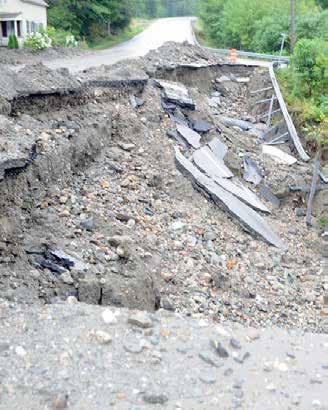
Damage from Hurricane Irene in Vermont Defense Visual Information Distribution Service
INCREASED MIGRATION AND TOURISM
During the Covid-19 pandemic, a large swath of the U.S. workforce pivoted to remote work (Wulff and Redmond). In the years following the pandemic lockdowns, many people, including residents of urban areas in the Northeastern U.S., took advantage of flexible work arrangements to move to rural areas outside of larger cities.
A 2021 analysis from the Vermont Center for Geographic Information based on data compiled by the Vermont Department of Taxes showed a 38% increase in home sales to outof-state buyers from 2019 to 2020 (PTT Analysis). The majority of these transactions were located in the southern half of the state.
A 2024 report from the State Treasurer’s Office analyzing 2023 state-to-state migration flows based on data compiled by the U.S. Census Bureau showed that, from 2022 to 2023, the number of incoming residents to Vermont doubled to 7,600 people, ranking it third in the nation for per capita net in-migration (Wallstin). In a statement, the Treasurer credited remote work and Vermont’s outdoor recreation opportunities as major drivers of the pattern. Not all new home-buyers reside year-round in the state; many home purchases by out-ofstate buyers in Vermont function as second homes.
Further, the Vermont Housing Finance Agency has reported increases in recent years in the number of short-term rentals across the state (Lantieri). From September 2022 to September 2023, the number of short-term rentals grew 16%. Much of this growth is concentrated in the state’s ski resort towns, including Dover in the Windham Region, which ranked fourth in the state in terms of number of short-term rentals per town.
According to data from the Vermont Department of Tourism and Marketing, visitor spending in the state dipped in the early years of the pandemic (2020-2021), but by 2022 it had exceeded pre-pandemic levels (Tourism Research).


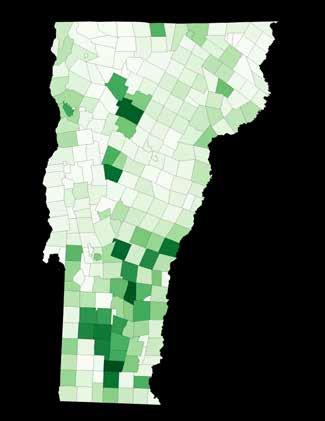


2-2 Home Sales to Out-of-State Buyers, 2020 Number of sales where buyers listed out-of state residence on taxes
The challenges posed by an increasing number of visitors and residents in recent years may include damage to natural resources from overuse or incorrect use, inadequate physical infrastructure such as parking or transportation networks at outdoor recreation sites, and the cost-of-living (housing, tickets/passes, gear etc.) increases outpricing many long-term residents.
ACCESS AND CONNECTIVITY
As climate change and a greater number of people put pressure on outdoor recreation amenities in the Windham Region, developing and preserving equitable access to these amenities becomes more of a challenge.
Barriers to physical access of outdoor recreation sites arise when roads wash out due to extreme flooding, for example, decreasing the connectivity of transportation networks in a predominantly rural region. An increased number of visitors, especially in peak seasons, may inhibit access to certain sites by filling parking lots to capacity. Financial barriers to access may include the increasing costs of tickets/passes and gear such as bicycles or skis.
Other issues associated with access and connectivity are not necessarily caused by recent trends, but may come into clearer focus in light of them. These include, for example, the connectivity of downtowns to outdoor recreation amenities nearby, such as trails and water access sites. Connecting population centers to such sites, especially by walkable or bikeable means, reduces reliance on road networks to access recreation sites in more remote areas.
Finally, the lack of access to reliable, up-todate, and easy-to-find information on outdoor recreation amenities can prevent some people from recreating. For example, if a user can’t ascertain in advance whether or not a trail is dog-friendly or ADA accessible, she may not be inclined to visit in the first place.
PLANNING FOR OUTDOOR RECREATION IN THE WINDHAM REGION
There is currently no Outdoor Recreation Plan for the Windham Region. In light of the challenges to the outdoor recreation landscape in the Windham Region, as well as the benefits arising from the contributions of outdoor recreation to Vermont’s economy and qualityof-life, the Windham Regional Commission has identified the need for an Outdoor Recreation Economy Plan to coordinate efforts to sustain and develop the 27-town region’s outdoor recreation assets. Integrating this effort with outdoor recreation planning efforts at the state level will help the WRC and other recreation managers in the region secure state funding for projects in accordance with the SCORP.
This report provides an initial inventory of the region’s assets, including outdoor recreation sites, providers, and associations, as a foundation to be used in the development of
the Outdoor Recreation Economy Plan. Also included are analyses of the inventoried recreation types, pointing to areas where further data collection or a clearer understanding of use patterns is necessary, as well as higher-level analyses of major themes relating to the outdoor recreation economy: climate change, access and connectivity, and quality-of-life.
This outdoor recreation inventory for the Windham Region provides a baseline for understanding what activities and amenities exist and/or are lacking in the region. As a description of the existing conditions, this study will help the WRC establish outdoor recreation goals and priorities for the region, in further consultation with stakeholders and in keeping with the priority action themes from the state.
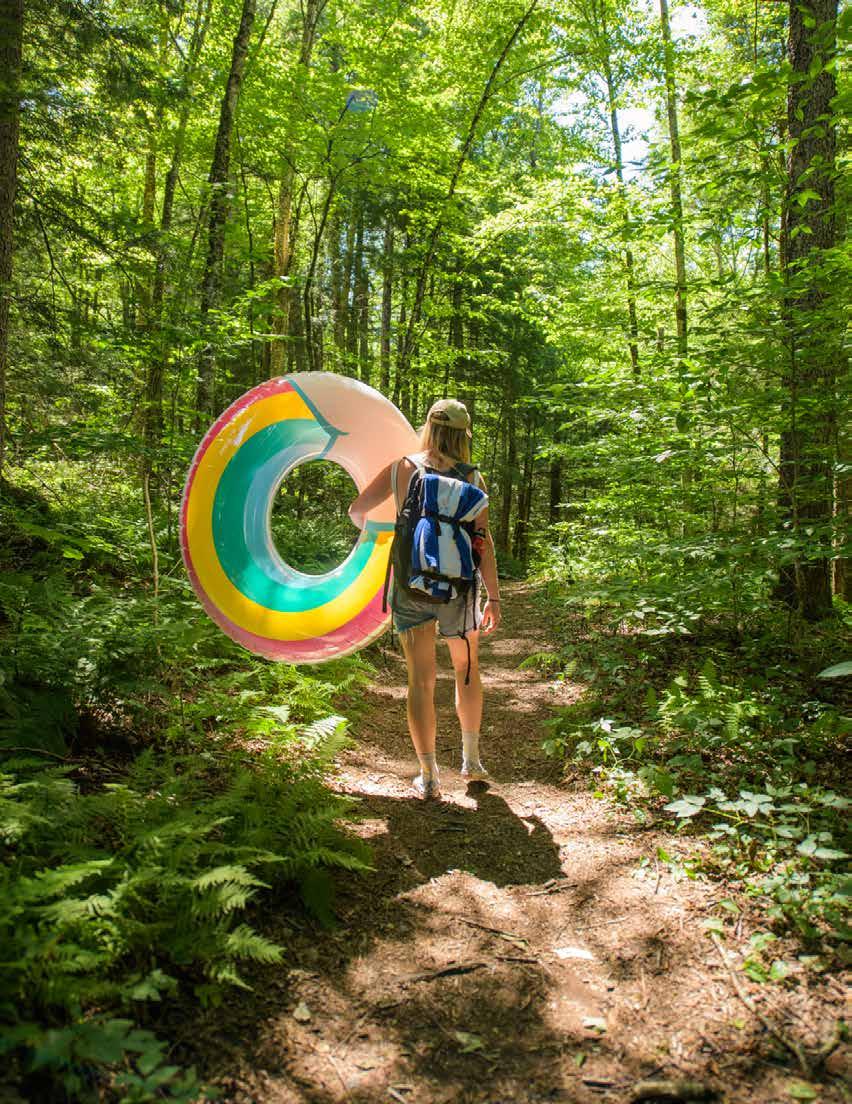
Hiking in, preparing to float Nathanael Asaro
State Planning Initiatives: Vermont SCORP
BACKGROUND AND PLANNING PROCESS
In 2017, Vermont Governor Phil Scott established the Vermont Outdoor Recreation Economic Collaborative (VOREC) to help coordinate statewide efforts to develop Vermont’s outdoor recreation economy (Vermont Outdoor Recreation Economic Collaborative). Since 2018, community grants have been awarded through VOREC to projects across the state with outdoor recreation at their center. Beginning in 2023, VOREC collaborated with the Vermont Department of Forests, Parks, and Recreation (FPR) in a multi-year community engagement and planning process to develop an update to Vermont’s five-year Statewide Comprehensive Outdoor Recreation Plan (SCORP), entitled “Move Forward Together Vermont”, published in February 2025.
A SCORP is a planning document that all states in the U.S. are required to develop in order to secure funding for outdoor recreation projects through the U.S. Department of the Interior’s National Park Service (How States Plan), under the provisions of the Land and
Water Conservation Fund Act of 1965 (Public Law 88-578, as amended), as well as the U.S. Federal Highways System’s Recreational Trails Program (Recreational Trails). Projects funded in the state through these two grant mechanisms must align with the priorities and goals outlined in the SCORP. Nearly every town
SCORP PRIORITY ACTIONS
from Move Forward Together Vermont
STEWARDSHIP
Stewardship priority actions emphasize the protection of open spaces and stewarding existing outdoor recreation infrastructure, as well as supporting the organizations and people who manage recreation. The six actions are:
1. Invest in stewarding and upgrading existing recreational infrastructure.
2. Strengthen guidance and education about climate resilient strategies that help communities interact with their rivers and water bodies.
3. Cultivate and promote a stewardship ethic among Vermonters and visitors.
4. Identify and support regional outdoor recreation planning and partnerships.
5. Create and promote a suite of technical assistance resources to strengthen the skills and expertise of non-profits, municipalities and businesses who manage recreation.
6. Reinforce and sustain public recreation on private lands.
in Vermont has an outdoor recreation asset funded through this structure (State of Vermont).
The SCORP not only provides a way of securing federal funding for outdoor recreation, but also an opportunity to hear from residents
WELLNESS
Wellness priority actions focus on supporting the people who recreate, lowering barriers of physical, financial, and informational access to recreation opportunities. These seven actions include:
1. Create and enhance in-community outdoor recreation opportunities that directly connect to where people live, learn, and work.
2. Develop recreational opportunities and conserve open spaces that strategically fill gaps in experiences and distribution across the state.
3. Create safe, welcoming, and environmentally sustainable entry spaces into the outdoors.
4. Centralize, improve, and make more accessible informational resources about outdoor recreation opportunities and events.
5. Support programs that reduce the costs of outdoor recreation.
6. Strengthen connections between people working in health and wellness, people working in education, and people working in outdoor recreation.
7. Strengthen community awareness about improved health and wellness outcomes through outdoor recreation.
and set statewide priorities moving forward. The nearly two-year process included multiple user and provider surveys, dozens of focus groups, and a statewide recreation asset inventory. Stakeholder input led to a set of nineteen priority actions grouped into three themes: stewardship, wellness, and economic development. Alignment with these priority actions will be used by VOREC to assess grant proposals from Vermont’s planning agencies, businesses, and non-profits for project funding.
ECONOMIC DEVELOPMENT
The economic development theme groups initiatives that build municipal and institutional capacity to offer recreational opportunities that support vibrant and sustainable communities. These six actions include:
1. Develop information and resources to demonstrate how outdoor recreation resources and vibrant local economies are connected.
2. Strengthen the capacity of municipalities to engage in Vermont’s outdoor recreation economy.
3. Strengthen workforce opportunities in Vermont’s outdoor sector.
4. Foster resilience and flexibility in outdoor recreation communities, organizations, and businesses to withstand major weather events and a variable climate.
5. Invest in organizations and businesses led by marginalized communities.
6. Support innovation in Vermont’s outdoor sector by supporting entrepreneurship, providing resources to businesses, and seeking solutions to challenges.
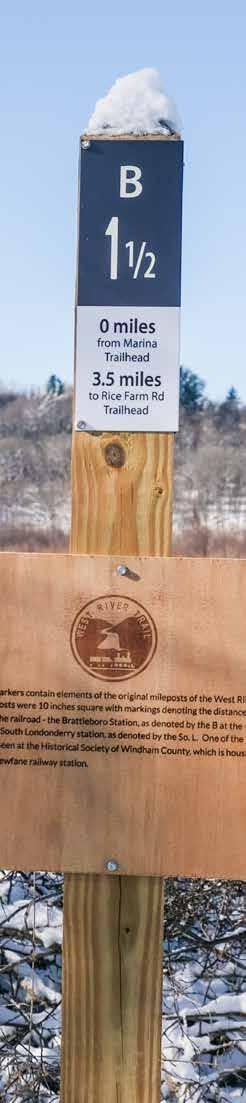
West River Trail, Brattleboro Stefan Poost
2.3 Planning Precedents
In addition to Vermont’s five-year Statewide Comprehensive Outdoor Recreation Plan, several other initiatives informed the methodology and considerations of this report as pertaining to outdoor recreation inventorying and the analysis of related economic, infrastructural, and social issues.
BERKSHIRE COUNTY OUTDOOR RECREATION PLAN
Berkshire County, MA | 2020
At the request of, and with support, from Mill Town Capital, the Berkshire Regional Planning Commission, based in Pittsfield, MA, published the Berkshire County Outdoor Recreation Plan in 2020. The plan was intended to guide investment in, and the development, of recreation amenities in Berkshire County. The plan included an initial asset inventory of recreation amenities in the region, with the intention of updating the inventory on a regular basis. Activities inventoried in the plan included biking, camping, hiking, hunting/fishing, outdoor athletics, skiing, water sports, motorized activity, and a miscellaneous category for “emerging and niche activities.” Three overarching themes were also analyzed: infrastructure, communications, and legislative/regulatory. These analyses, along with public engagement including online surveying, a public forum, and follow-up interviews, informed recommendations for the further development of the outdoor recreation economy. As of 2025, this plan is serving as a model for other Massachusetts regional planning agencies applying for state funding for similar initiatives.
FRANKLIN COUNTY OUTDOOR RECREATION PLAN
Franklin County, MA | 2022
The Franklin Regional Council of Governments published the Franklin County Outdoor Recreation Plan in 2022 with the stated goal to “support and improve access to outdoor recreation in [Franklin] county.” Analyzing outdoor recreation from a transportation and access lens, the plan included an inventory of existing amenities that was compiled into a map published online as well as an analysis of existing amenities with recommendations for further infrastructural improvements. Public engagement included an online survey for managers of outdoor recreation facilities as well as interviews with outdoor businesses and organizations.
Green Mountain National Forest
David Weber
DEERFIELD RIVER CORRIDOR OUTDOOR RECREATION STUDY
Franklin and Berkshire Counties, MA | 2022
With funding from the Commonwealth of Massachusetts, the Franklin Regional Council of Governments commissioned Cambridge Econometrics to conduct a study on outdoor recreation along the Deerfield River from the Vermont-Massachusetts border to the river’s mouth in Greenfield, MA. In the context of increasing recreation use of the river in the Covid-19 era, the study sought to examine existing conditions and recommend strategies to establish a sustainable river-based outdoor recreation industry, taking into consideration topics such as river access, parking, tourism infrastructure, signage, marketing, public safety, and new business development.
WARREN COUNTY OUTDOOR RECREATION ECONOMY STRATEGIC PLAN
Warren County, NY | 2025
The Warren County Planning Department hired SE Group to develop a plan providing a countywide perspective on outdoor recreation priorities. This plan was based on a research report including a county-wide inventory of recreation assets, stakeholder roundtables, and an online survey.
NEW HAMPSHIRE OUTDOOR INDUSTRY INVENTORY
State of New Hampshire | 2024
In 2019, New Hampshire became the 16th state to establish an outdoor recreation office. To provide a foundation for its work, the Office of Outdoor Recreation Industry Development hired the SE Group to define, quantify, and evaluate the state’s outdoor recreation industry, providing a statewide inventory and breaking down key strengths, weaknesses, opportunities, and threats.
MAINE’S 10-YEAR OUTDOOR RECREATION ECONOMY ROADMAP
State of Maine | 2024
The Maine Office of Outdoor Recreation, Maine Outdoor Brands, and the University of Maine collaborated to produce 10-year vision document to strengthen and diversify the Maine’s $3.3 billion outdoor recreation economy. This effort included extensive stakeholder feedback.
WABANAKI CULTURAL TOURISM PLAN
State of Maine | 2024
The Wabanaki Cultural Tourism Initiative brought together the Wabanaki Nations of Maine and other stakeholders to develop a strategic plan for building a robust cultural tourism economy in Maine, with special focus on promoting sustainable tourism benefitting residents and visitors alike.
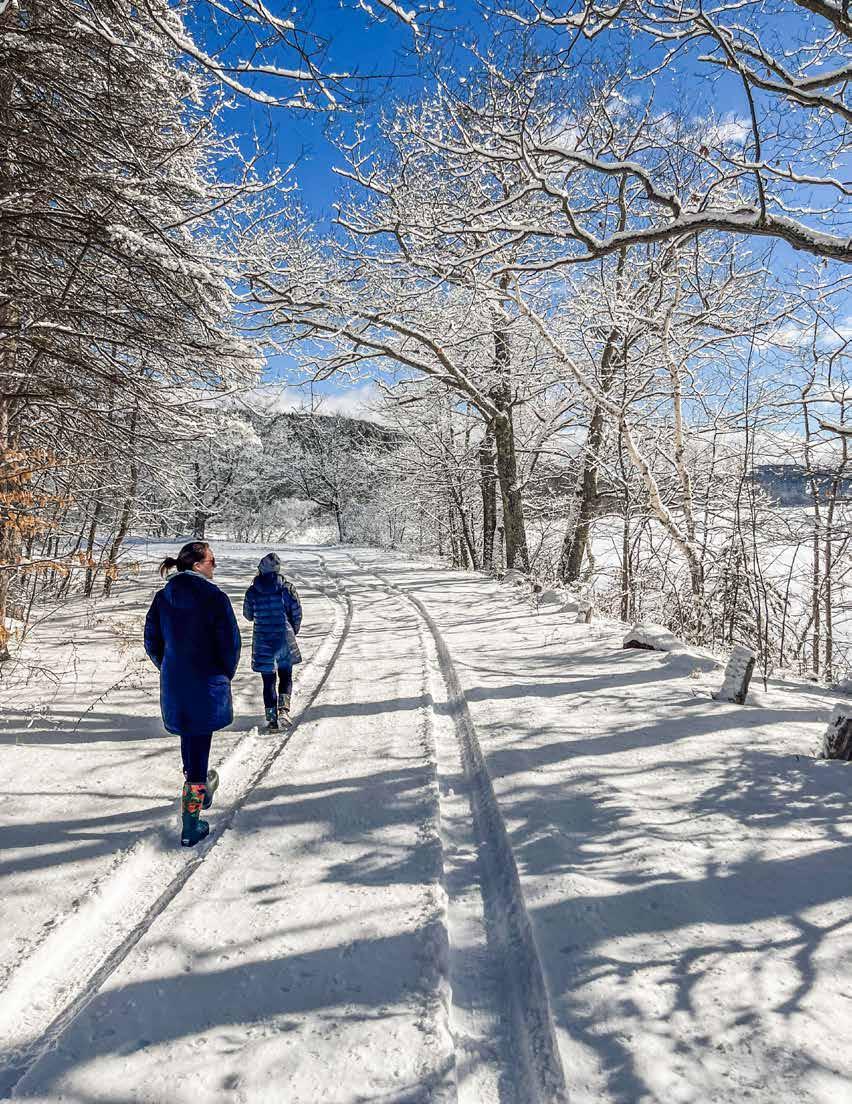
Walking at Harriman Reservoir in Wilmington Stefan Poost
2.4 Process Overview
INTRODUCTION
This report attempts to create a preliminary inventory of the outdoor recreation assets of the Windham Region, including recreation sites and providers, gear rentals and libraries, as well as public and private organizations working in the outdoor recreation space. An analysis of issues associated with each recreation activity (including gaps in the data and further areas of research) is included, as well as analyses of three thematic areas that relate to all recreation types: climate change, access and connectivity, and quality of life.
DEFINING OUTDOOR RECREATION
There is no universally-accepted definition of outdoor recreation. The following definitions informed which activities were included in this study.
• According to the United States Bureau of Economic Analysis (2017), which compiles and publishes national economic data, including on outdoor recreation, outdoor recreation includes “activities undertaken for pleasure that generally involve some level of intentional physical exertion and occur in nature-based environments outdoors.”
• According to the Vermont SCORP (State of Vermont), outdoor recreation includes “activities undertaken for pleasure and well-being that take place outside, and are often (though not always) in a natural setting.”
Importantly, these definitions are broad and do not specify a set list of activities. While some activities are commonly recognized as outdoor recreation (e.g., hiking or boating), others may be less commonly thought of as such (e.g., residential gardening).
INVENTORY LIST
For the purposes of this project, the team consulted with the Windham Regional Commission (WRC) to establish which activities were relevant to consider for this region. A complete list of activities inventoried in this project is as follows:
TRAIL / ROAD ACTIVITIES
Hiking
Mountain Biking
Gravel Biking & Bike Packing
ATV Riding
Horseback Riding
WATER-BASED ACTIVITIES
Swimming
Boating
WINTER ACTIVITIES
Downhill Skiing & Snowboarding
Sledding/Tubing
Cross-Country Skiing
Snowshoeing
Backcountry Skiing & Snowboarding
Ice Skating
Snowmobiling
Fat Biking
WILDLIFE-BASED ACTIVITIES
Hunting
Fishing
Wildlife Watching
SPORTS & PARK-BASED ACTIVITIES
Sports / Playgrounds / Parks
Golf
OVERNIGHT ACTIVITIES
Camping
OTHER
Sugaring
Leaf Peeping
Gear Stores & Libraries
NOTES
1. Activities were grouped according to categories used in the Vermont SCORP planning process, a list of which was provided by VOREC to the project team. Due to project constraints, some SCORP categories were modified and not all activities considered in the SCORP are considered here.
2. In consultation with WRC, the project team was encouraged to consider as many activities as possible to gain a more complete picture of the outdoor recreation landscape in the region. This included inventorying regional agro-tourism activities, such as sugaring, as well as leaf-peeping.
3. According to the methodology outlined below and due to project constraints, the team prioritized activities for which spatial data was pre-existing, or for which spatial data could be easily generated through web research. Certain activities for which data capture would have been timeprohibitive or methodologically complex were not included (e.g., jogging and residential gardening).
INVENTORY METHODOLOGY
For each recreation activity, project team members conducted an internet search of each of the twenty-seven towns in the Windham Region to locate sites that are publiclyaccessible, in physical and legal terms, where that activity is undertaken. The team relied on town websites in addition to search engines such as Google. Geospatial data provided by the Vermont Center for Geographic Information as well as data layers provided by WRC were referenced. Recreation type-specific sources of information were consulted, including fishing and snowmobiling magazines, trail databases such as AllTrails and TrailFinder, as well as maps and information provided by conservation organizations such as the Vermont Land Trust and American Whitewater. Further information on data sources is provided in the inventory section of this report.
This inventory is not intended to be comprehensive. Most research was done remotely, and the team was not able to groundtruth or consult in-depth with locals to verify the status of all the sites listed in the inventory. Team members used their discretion to judge the reliability of online data sources. Further consultation with town stakeholders may be necessary to verify what activities are available at each site and if sites are missing or misrepresented.
Recreation sites were recorded in a spreadsheet listing the town in which they are located (and if the site or area was located in multiple towns, e.g. the Green Mountain National Forest). All the recreation activities available at a given site were recorded in separate columns. The site owner/manager as well as owner type and property type were recorded.
For some recreation activities, there was difficulty in accurately delineating and categorizing certain sites. For example, fishing occurs along the length of many rivers, not only in specific designated sites. Or, some locations within the Green Mountain National Forest, such as Grout and Stratton Ponds, were recorded separately from the National Forest, because of the unique recreational opportunities at those sites. Further detail is provided in the inventory sections.
To analyze the inventory, sites were mapped in geospatial data layers to show their distribution and perform related spatial analyses. Research was conducted on issues associated with each recreation type as well as discussions with WRC.
The full inventory and analysis process was further informed by feedback from the Outdoor Recreation User Survey, conducted in February 2025.
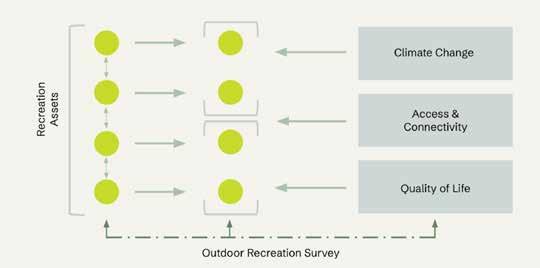
2-3 Inventory and Analysis Process
Diagram
Recreation assets were inventoried and grouped by activity type. Three thematic analyses applied to all recreation types. The outdoor recreation survey informed the inventory and analysis process.
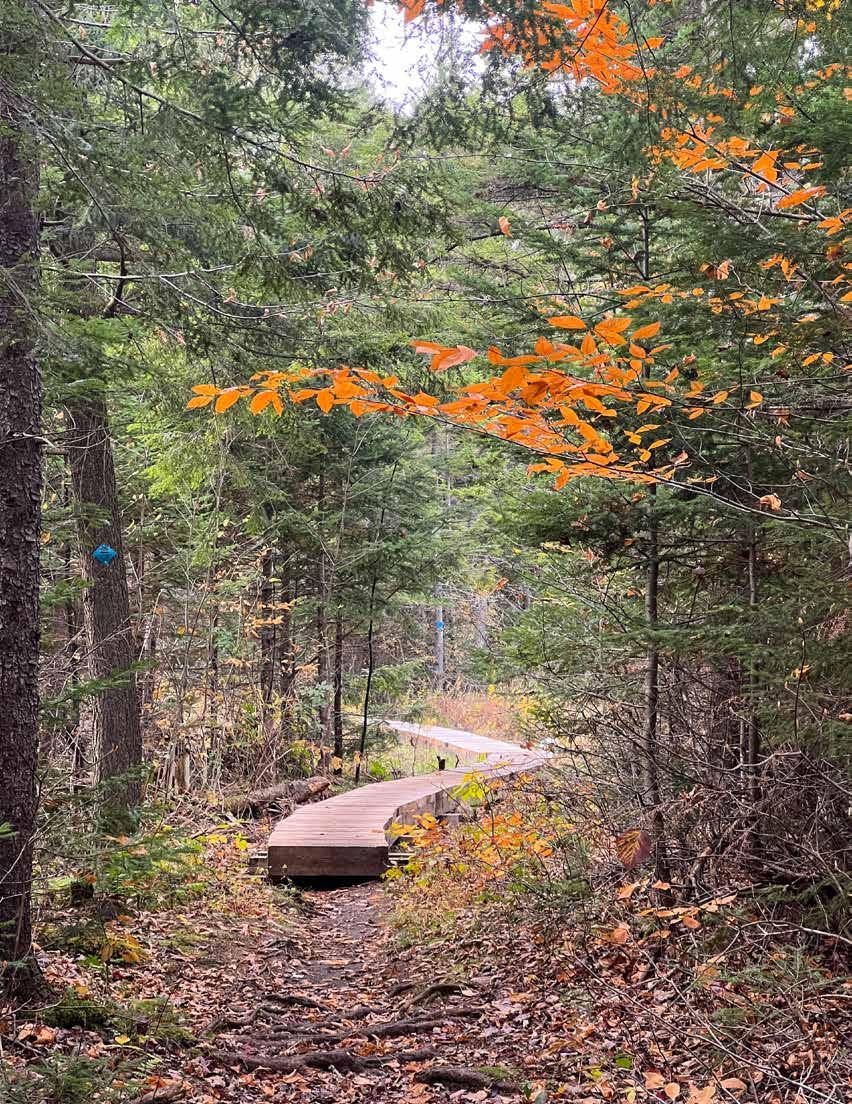
Boardwalk at Grout Pond
David Weber
2.5 Survey Results & Graphics
SUMMARY
The online community survey conducted as a part of this project was a recreation user assessment that intended to gather focused information on where, how, and how often users engage with the outdoor recreation assets in the Windham Region. The purpose is to better understand the types of outdoor recreation that people participate in within the region. The survey aimed to gather a mix of quantitative data (demographics, types of recreation usage, etc.) and qualitative open responses capturing suggestions for improvement for outdoor recreation experiences in the Windham Region. The survey aimed to identify barriers to access, use of public transportation, and concerns about future impacts like climate change.
SURVEY POPULATION STATISTICS
125 people responded to this survey in February 2025. It was distributed through WRC to groups including trail managers for local towns, land trusts, conservation organizations, snowmobile club chapters, local ATV groups, town conservation commissions, town economic development staff, and town recreation staff. The survey was open to people who live within and outside of the Windham Region.
42% of the survey respondents were 65 or older, capturing an aging population who have reached or are about to reach retirement age. 82% of respondents were full-time residents of Vermont and 14% were part-time residents.
4% of respondents did not live in Vermont. 42% of respondents said they recreate outdoors in the Windham Region almost every day, which suggests that this user group is highly active and takes advantage of the outdoor recreation opportunities in this focus area.
The survey was not required, and the people who voluntarily participated likely already value outdoor recreation. It was also distributed to groups with a recreation/conservation focus. The data may not reflect the need and interests of those who do not recreate outdoors regularly, which is valuable data for WRC to capture beyond the scope of this project.
Number of responses
42%
Recreate outdoors in Windham Region daily
42% of respondents are 65 years of age or older
Number of responses
Active Lifestyles
Age range
Local Population
2-4 Survey Statistics: The People
With over 40% of the survey respondents at retirement age, it is important to keep in mind that this survey addressed an aging population. Combining this finding with the low fertility rate of Vermont (Vermont Department of Health), it begs the question, who is the outdoor recreation in the Windham Region presently serving? And who will it serve in the future? 125
82%
Full-time residents of Vermont

Parking
There is limited or unsecure parking

Gear

The cost of gear, equipment and/or appropriate clothing are too high Time I do not have enough time due to work
2-5 Top 3 Barriers to Outdoor Recreation in the Windham Region
The top three barriers to outdoor recreation in the Windham Region are limited or unsecure parking, the cost of gear, equipment and/or appropriate clothing, and not having enough time due to work.
Winter Spring Summer Fall
Hiking/walking
2-6 Top 3 Outdoor Recreation Types Per Season
Hiking is the most popular outdoor recreation type for every season. Kayaking, canoeing or personal watercraft (PWC) activities was ranked in the top three activities for Spring, Summer and Fall.
Trail Erosion/Washout
22 respondents concerned
“Many outdoor rec assets are in the floodplain. Soil erosion and invasive Knotweed are changing the landscape. Floodplain rules prevent restoration of lost soil and these places are in jeopardy of being lost. Trails are suffering from erosion and remain wet longer.”
Species Extinction/Habitat Loss
32 respondents concerned
“I worry about species and habitat loss and its impacts. Will sugar maples be viable here in ten years if it keeps warming like this?”
Less Snow/Warming Climate
41 respondents concerned
“Spring in general is a difficult time to recreate outdoors. During mud season, it is important to stay off of trails to avoid compacting soils... ‘Mud Season’ is expanding in length as it can happen mid winter and not just during the traditional spring period.”
2-7 Impacts of Climate Change on the Windham Region
84.8% of survey respondents are concerned about the impacts of climate change on outdoor recreation in the Windham Region with flooding being the most common concern. Other primary areas of concern include extreme weather (18 respondents concerned), invasive species (16 respondents concerned), damage to infrastructure or waterways (14 respondents concerned), drought (12 respondents concerned), wildfires (8 respondents concerned), pollution (8 respondents concerned), ticks (5 respondents concerned) and climate refugees (3 respondents concerned).
Flooding 51 respondents concerned
“We
may find that the increase heat in the summer and the extreme cold in the winter might have to bring activities indoors.”
KEY TAKEAWAYS
The high-level themes that emerged from the survey are as follows:
Barriers to access
Parking was cited as the largest barrier to access for outdoor recreation users in the Windham Region. This could include not having enough room in a parking lot, that there are no signs telling people where to and where to not park, or it may feel unsafe to park in a certain location.
Climate change concerns
After catastrophic flooding in other parts of Vermont in July 2023 and again the following year in July 2024, it is not surprising that flooding was by far the largest climate change concern for survey respondents. Though there were no flooding impacts to the Windham Region in 2024 (which was experiencing drought conditions in July).
Top
Recreation types
Hiking is the most popular outdoor recreation activity in all four seasons. Respondents engage in a more diverse range of activities during summer than any in other season, with an increase in waterbased recreation activities.
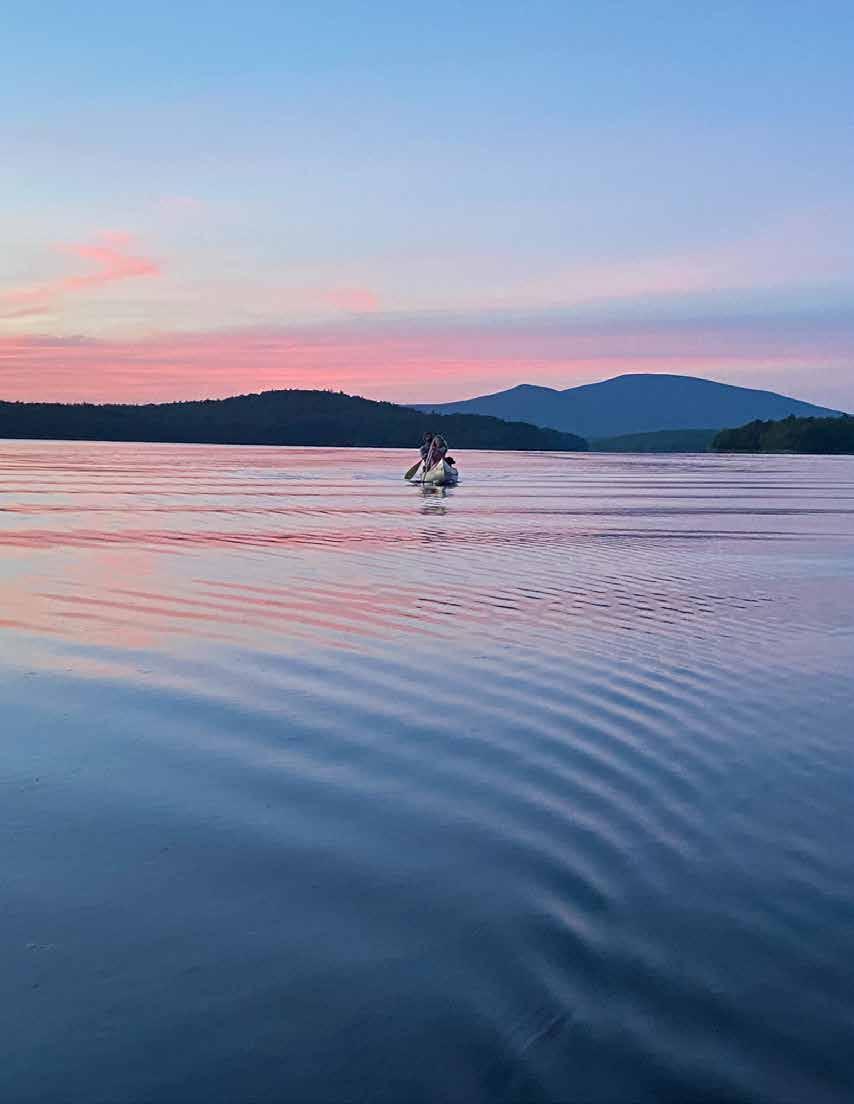
Canoeing at Somerset Reservoir with a view of Stratton Mountain David Weber
2.6 Public Engagement
INTRODUCTION
The Conway student team facilitated four follow-up interviews with survey respondents to increase understanding of how users are participating in outdoor recreation and what concerns they may have in the Windham Region. Follow-up interview candidates were selected to meet one or more of the following criteria: elderly outdoor recreation users, recreation users with kids, hunters/anglers, winter sports enthusiasts, users who engage in wildlife-watching or birding, long time residents of the Windham Region, and part-time residents of the Windham Region.
SPECIFIC CHALLENGES
Some of the key takeaways from the follow up interviews include finding diverse voices and under-represented community members to engage with. All four interviewees volunteer on a planning commission, conservation commission or trail committee for their town or have an immediate family member who volunteers their time for these organizations. Given that these voices are already active in the community, a takeaway question remains: Whose voice is still missing from this story?
FOLLOW UP INTERVIEW ONE FOLLOW UP INTERVIEW FOUR
DEMOGRAPHIC
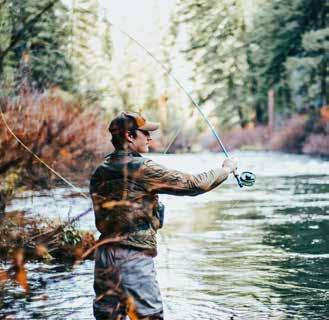
25-34 year old male
LIVES IN
Westminster, full time resident for 25-30 years
FAVORITE OUTDOOR RECREATION ACTIVITIES
Fishing, Hunting, Hiking, Camping, Downhill Skiing, Sugaring
CLIMATE CHANGE CONCERNS
Lack of snow (skiing), ice (ice fishing), and both combined (aka less cold water for trout).
OUTDOOR RECREATION CONCERNS
My single biggest concern is the increase in percentage of acres “Posted” no hunting. In my (short) lifetime, I’ve seen it go from <1/3 of my road to >2/3 of my road. And most of the land newly posted is owned by rich out of staters. On non-homestead lots, you should face a property tax penalty for posting!
DEMOGRAPHIC
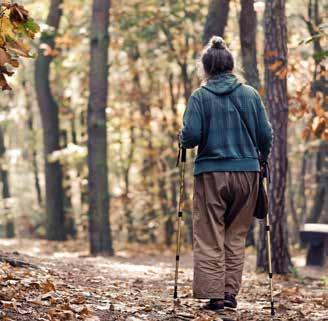
65-74 year old female
LIVES IN
Wilmington, part time resident for over 30 years. Also lives in MA (Greater Boston)
FAVORITE OUTDOOR RECREATION ACTIVITIES
Downhill Skiing, Cross-Country Skiing, Hiking/Walking, Biking, Swimming Rowing/Sailing, Boating
CLIMATE CHANGE CONCERNS
Increasingly poor weather; flooding; resiliency of trails and streams/rivers
OUTDOOR RECREATION CONCERNS
Trail improvements (in poor weather like mud)/volunteer assistance to local trail groups; signs; mapping; accessibility. More sailing lessons in small boats; would love more crosscountry skiing areas or trails.
Mircea Iancu
Greysen Johnson
FOLLOW UP INTERVIEW THREE
FOLLOW UP INTERVIEW TWO
DEMOGRAPHIC
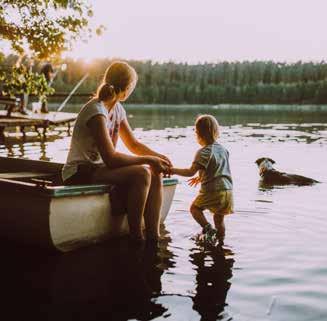
35-44 year old female with 2 children (ages 8 and 12)
LIVES IN
Dummerston, full time resident for 15-20 years
FAVORITE OUTDOOR RECREATION ACTIVITIES
Downhill Skiing, Cross-Country Skiing, Ice Skating, Sledding/Tubing, Boating, Swimming, Hiking, Camping, Disc Golf, Wildlife Watching, Birding, Foraging
CLIMATE CHANGE CONCERNS
Lack of snow and warming winters, floods from rain, extreme drought, tourists who are inconsiderate and don’t properly dispose of trash or animal waste.
OUTDOOR RECREATION CONCERNS
We need more clear and comprehensive maps and cultural expectations around outdoor etiquette as well as more accessible trails and things like disc golf or nature/adventure play areas for kids. More public transit options. Places to rent bikes or signage on where to access recreation opportunities.
DEMOGRAPHIC
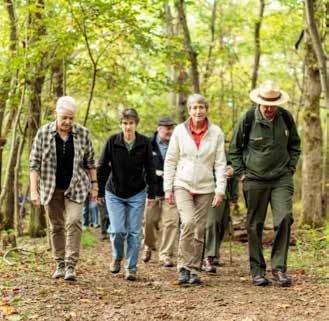
75+ year old female
LIVES IN
Guilford, full time resident for over 30 years
FAVORITE OUTDOOR RECREATION ACTIVITIES
Boating, Walking, Wildlife Watching, Leaf Peeping, Biking, Cross-Country Skiing
CLIMATE CHANGE CONCERNS
Affect of droughts and floods on water recreation areas
OUTDOOR RECREATION CONCERNS
Swimming areas need to be appropriate for grandchildren (no mucky bottoms, safe access, etc). We need more boat launch areas for paddling sports!
PickPik National Park Service
OVERVIEW OF THE WINDHAM REGION
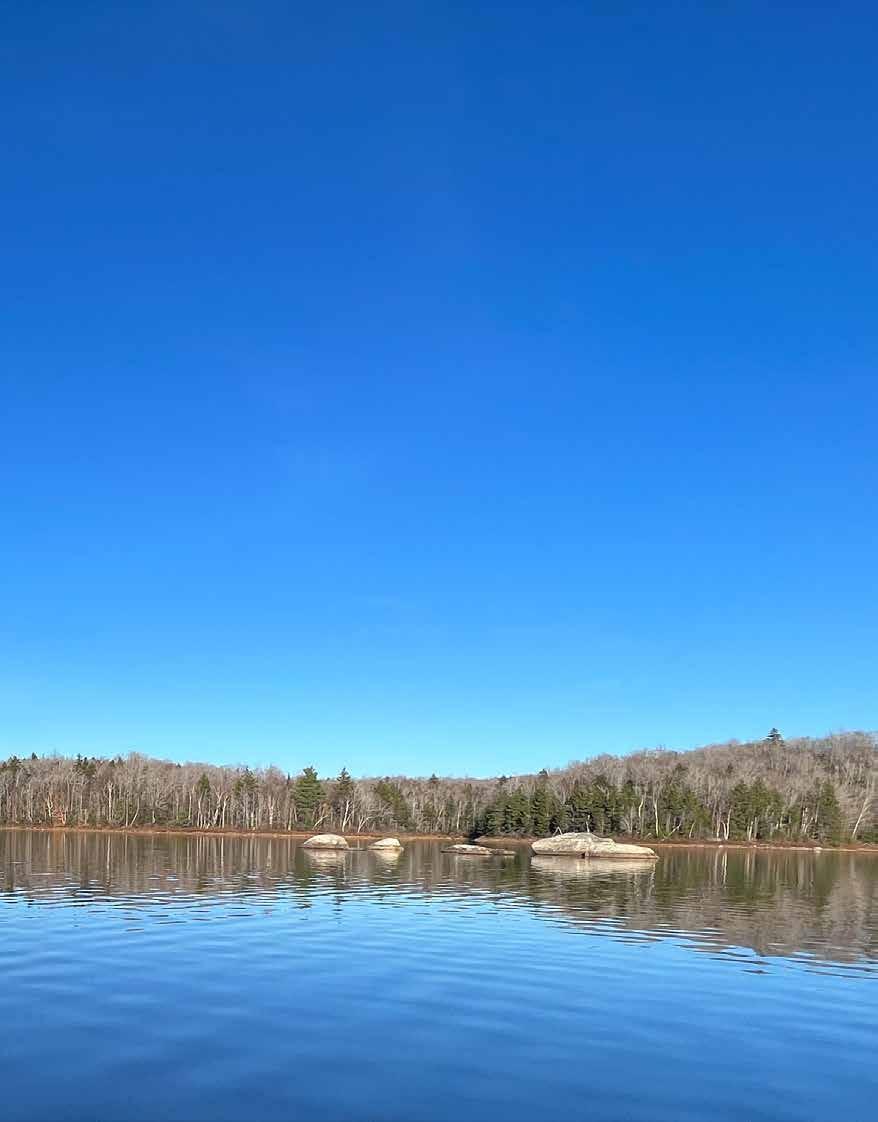
Somerset Reservoir
David Weber

3.1
Geography: Prominent Landscape
Features
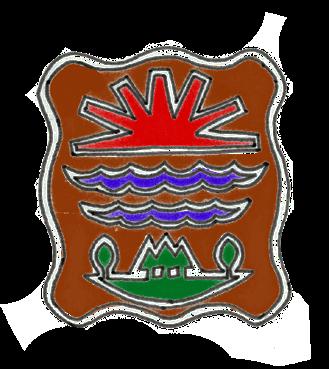
INDIGENOUS HISTORY & PRESENCE
Southern Vermont sits on the ancestral lands of the Western Abenaki, or “People of the Dawn.” They have stewarded the land with respect in order to maintain and utilize its gifts for their continued survival (Green Mountain & Finger Lakes National Forests - History & Culture). Both the Green Mountains and the Connecticut River Valley have served as valuable natural and spiritual resources to the Abenaki and other Native Americans for thousands of years. Present day Windham Region encompasses parts these mountains and rivers.
3-1 The Western Abenaki flag
LANDFORMS
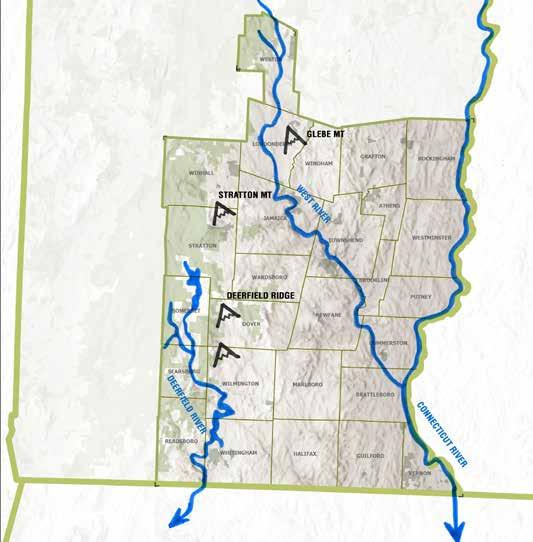
The Windham Region rests on the easternfacing slopes of the Green Mountains. The highest points, to the west, are Stratton Mountain and the Deerfield Ridge at 975 meters above sea level. There are three major rivers flowing through the region. The Deerfield River begins just northwest of Somerset Reservoir in Stratton and flows south into Massachusetts. It is one of the most heavily dammed rivers in the country, creating the many reservoirs that characterize the western portion of the Windham Region (Little, 2023). The West River flows southeast from the town of Weston across the region to Brattleboro where it meets the Connecticut River. The Connecticut, flowing south along the eastern edge of the region, divides Vermont and New Hampshire. There are several smaller basins in the Windham Region such as the Saxton, Green, and North Rivers.
Elev: 912m
3-2 Major Rivers in the Windham Region
INFRASTRUCTURE
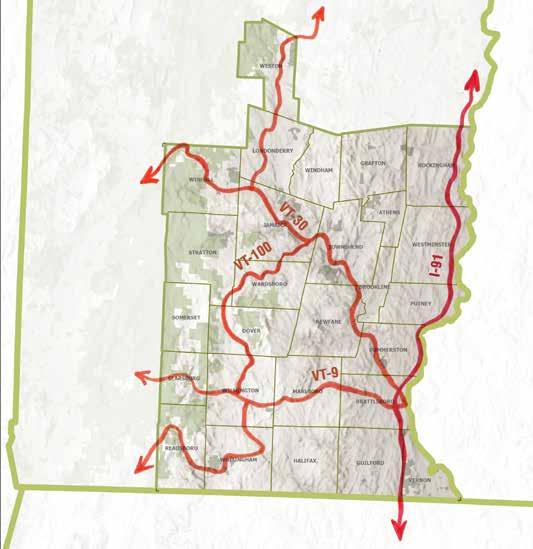
Running parallel to the Connecticut River is Interstate 91. Three of Vermont’s scenic byways run through the region. Route 9 cuts across the south from Brattleboro to Wilmington, where it meets Route 100, and continues to Bennington County. Route 100 runs north across the western portion of the region up through Weston. It meets Vermont Route 30 in Jamaica which follows the West River corridor southeast towards Brattleboro. These mountains, waterways, and scenic roads contribute to the recreation opportunities within Windham Region.
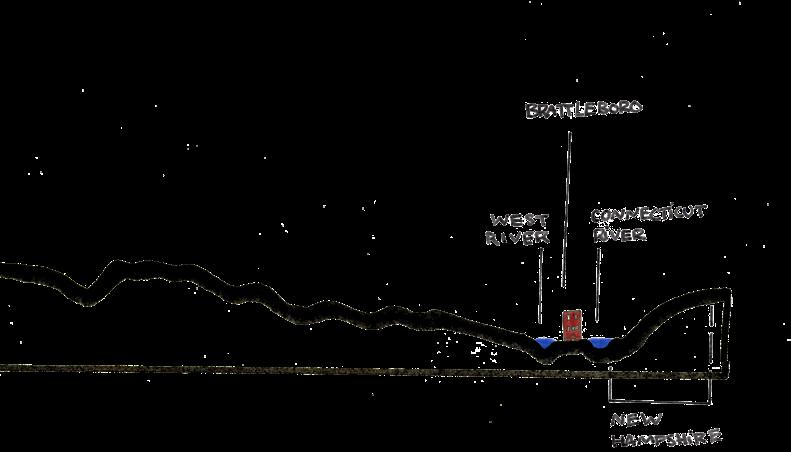
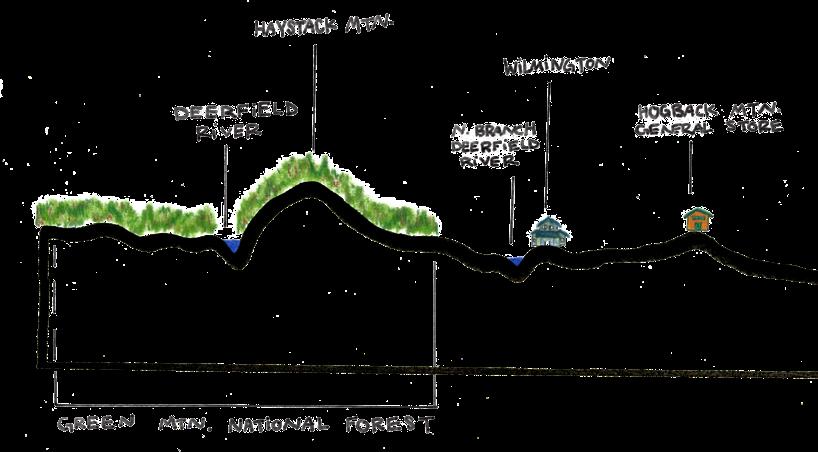
3-4 Section A-A’ (to scale)
Cut from west to east through Windham Region, the section reveals the terrain and overall slope from the Green Mountains to the Connecticut River
Elev: 4m
3-3 Major Roads in the Windham Region
Social Characteristics
INTRODUCTION
Windham Region consists of twenty-seven towns. It includes all of Windham County; the towns of Readsboro, Somerset, and Winhall in Bennington County; and Weston of Windsor County. It is a rural region with a population density of approximately 27.6 people per square mile, based on 2020 Census data. Brattleboro and Rockingham (Bellows Falls) are considered regional centers as they are the most populous and urban towns. The town of Somerset is the least populous in the region with a total of six residents as of 2020, and Brattleboro is the most populous with 12,284 residents. There are four resort centers in the region: Mount Snow and Hermitage Club in Wilmington, Stratton Mountain in the town of Stratton, and Magic Mountain in Londonderry.
POPULATION TRENDS
Between 2010 and 2019, Windham County’s (note this does not include the four towns in WRC’s jurisdiction not within Windham County) population declined by over 2,000 individuals from 44,506 to 42,227 (Windham County, VT Population by Year, Race, & More). The population grew significantly to 46,128 in 2021, and it has since been declining. Overall, the population has grown in the last ten years, but since 2021,it is in a period of slight decline after a post-Covid-19 peak. In addition, the
population is aging. Between 2010 and 2022, the population of individuals sixty-five and older grew from 7,216 individuals to 11,738, a rate of 62.7%. However, the number of individuals between the ages of zero and nineteen shrank from 9,940 to 8,647, a rate of -0.87%. This follows the trend of declining birth rates in Vermont as well as the United States more generally (Vermont 2022 Vital Statistics Report). These trends suggest that the planning efforts in Windham County should take into account an aging population when considering community development, the natural environment, quality of life, and distribution of resources. That being said, it is difficult to predict how the population will change in the future. Housing availability and affordability are major limiting factors. People may move to more temperate regions like Vermont as climate change impacts worsen, though there are physical and infrastructural development constraints.
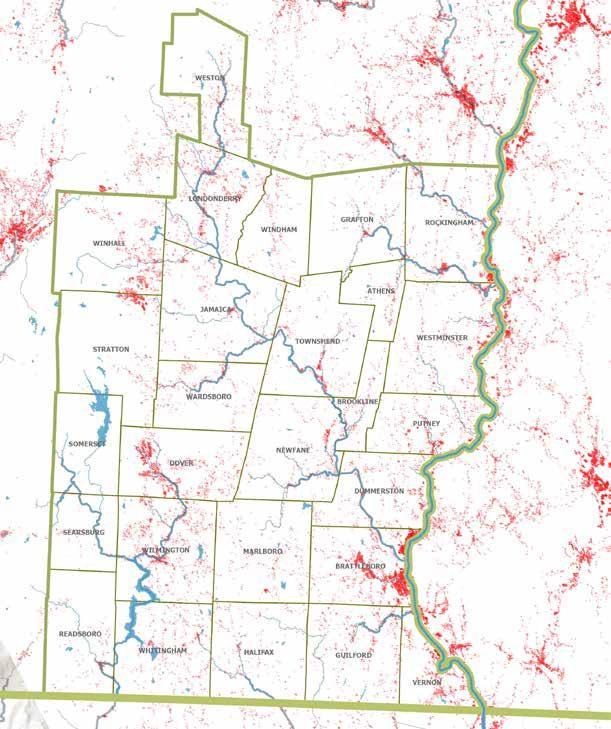
3-5 Human Settlement in the Windham Region
The spatial data shows the distribution of built-up surfaces revealing areas of human settlement. The data is expressed is number of square meters.
KEENE, NH
MANCHESTER
SPRINGFIELD
THEMATIC ANALYSIS
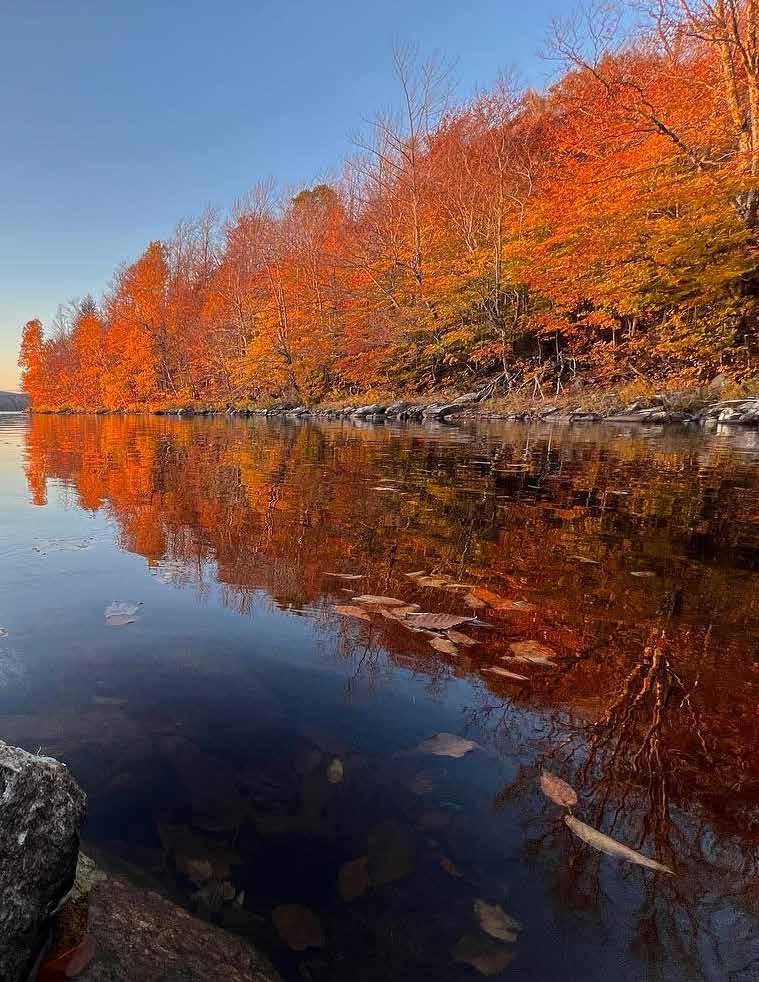
Fall folliage at Somerset Reservoir
David Weber
4.1 Climate Change
INTRODUCTION
Climate change is exacerbating natural disasters and making their occurrence less predictable. 84.4% of survey respondents are concerned about the impacts climate change will have on outdoor recreation in the Windham Region. Common concerns of these individuals include flooding, warming temperatures, less snow, species extinctions, and habitat fragmentation and loss. To help prepare for these disasters, Vermont published its most recent Hazard Mitigation Plan (HMP) in 2023. This plan outlines the primary concerns facing the state and its communities and identifies actions to help reduce risk to people and property. Increasingly frequent intense storms and rising temperatures are two climate change related hazards identified in the HMP that are likely to have significant impacts on outdoor recreation in Windham Region.
INTENSE STORM EVENTS
The increase in frequency of intense storm events threatens the safety of the natural and built environments in Vermont in all seasons. Whether it be winter ice storms or hurricanes and tropical storms in the summer, these events can be devastating. With Vermont’s steep mountains and narrow valleys, heavy precipitation events flood the valley bottoms and take with them much of what lays in its path. Localities and the state identified, in the HMP, fluvial erosion and inundation flooding to be their top hazards of concern, as they have had the most widespread and devastating effects on the state in recent years (2023 Vermont State Hazard Mitigation Plan). Both fluvial erosion and inundation flooding occur as a result of significant rainfall events, snowmelt runoff, and ice jams blocking river flow. These
events have happened in the past and human settlements were able to deal with them, but this may no longer be the case with the increase in frequency and severity of storms.
Erosion and flooding events washing out human-built infrastructure has detrimental effects on the natural environment. Pollution, degradation, and overall loss of aquatic and terrestrial environments follow in the wake. As these events increase in frequency, the outdoor recreation industry and infrastructure should adapt accordingly. Through land conservation efforts and strategic retreat out of floodplains and river corridors, these systems can be supported and made less damaging to the built environment, and in turn the natural environment.
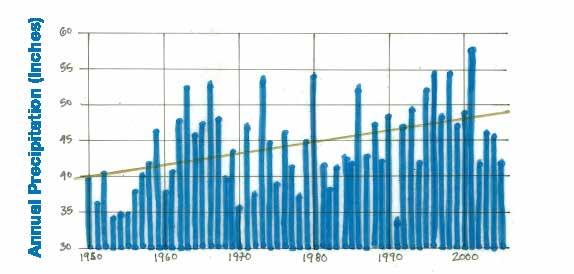
4-1 Vermont’s annual precipitation from 1960 to 2015 Data source: climatechange.vermont.gov
WARMING TEMPERATURES
Warming temperatures affect the natural and built environments in all seasons as well. As temperatures increase in Vermont, the length of winter is shorter, snow accumulation is limited, and summers are hotter (2023 Vermont State Hazard Mitigation Plan). The average annual temperature in Vermont has increased 3.6 degrees since 1895, and temperatures are projected to continue rising. A significant threat following increasing temperatures is the spread of invasive pests and infectious diseases. Species such as the emerald ash borer and hemlock wooly adelgid have made their way into the region in the hulls or ballast water of ships, in wood products, as introduced, ornamental plants, and with pet trade. Additionally, some plants and pests can spread to new environments by simply being stuck to a hiking boot or packed away in gear and moved from one place to another (2023 Vermont State Hazard Mitigation Plan). The rising temperatures are enabling these species to survive and reproduce in the Windham Region when they were previously held off by cold temperatures. Invasive species and diseases pose a significant threat to the natural communities in Vermont. The emerald ash borer and hemlock wooly adelgid leave stands
of ash and hemlock trees damaged or dead. This creates a cascading hazard leaving fuel available for wildlifes and debris to further damage infrastructure in a flooding event. Similarly, increasing temperatures, decreasing snowmelt, and decreased canopy cover along rivers and streams are contributing to the warming of Vermont’s freshwater systems, negatively affecting the aquatic communities within them and reducing recreational fishing (2023 Vermont State Hazard Mitigation Plan).
Increasing temperatures will have an effect on outdoor recreation. With shrinking winters, snow- and ice-based recreation may see a decline. In contrast, water-based recreation may see an increase in use as people are looking to cool off in the heat of the summer. These temperature trends could also prolong recreation activities in the fall and potentially increase the “mud season” barriers currently experienced on trails in the spring. As temperatures change and affect use, shifts in resources may be needed to conserve and maintain critical natural spaces such as river corridors, safe water access points, and hiking and biking trails.
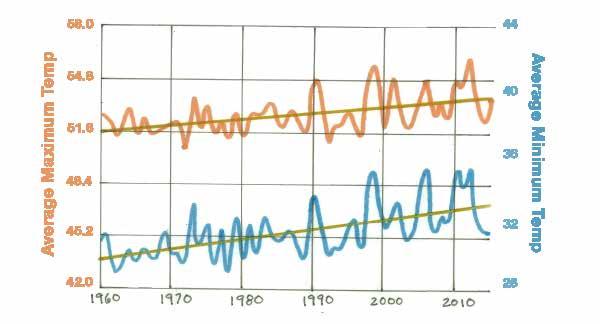
4-2 Vermont’s average maximum and minimum temperatures from 1960 to 2010
Data source: climatechange.vermont.gov
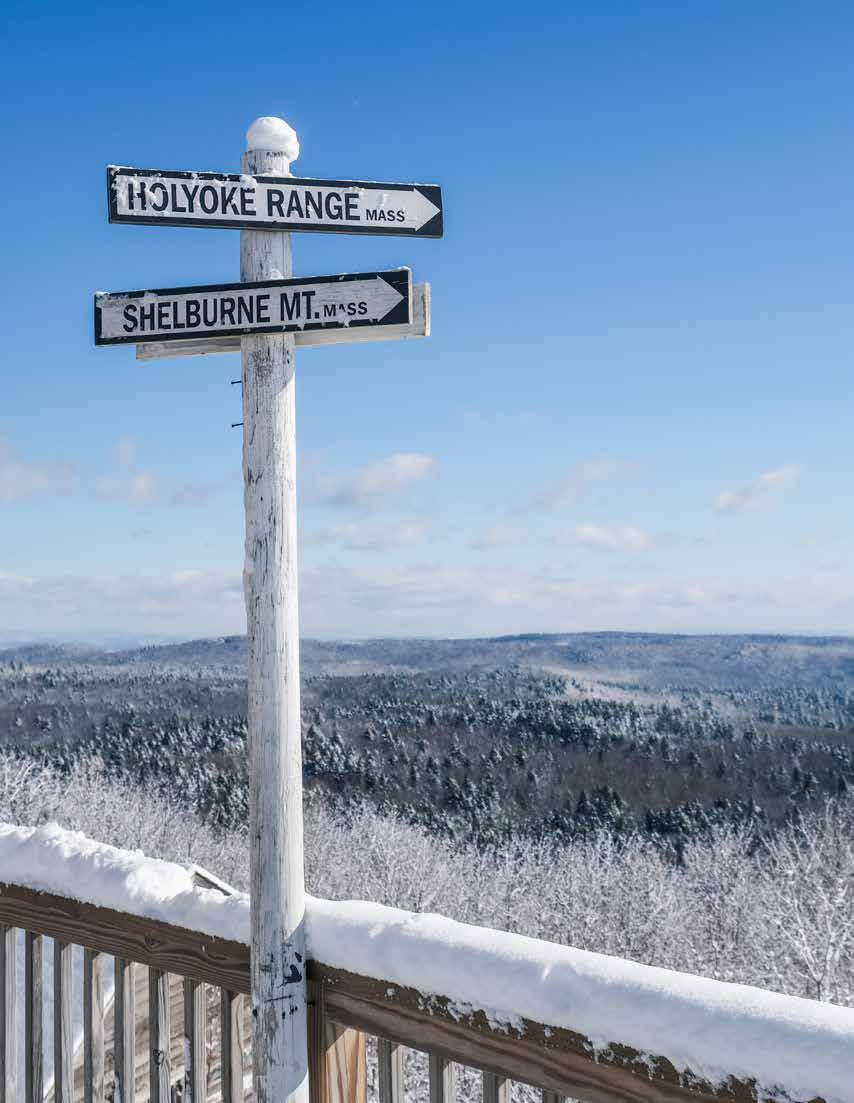
Signposts at Hogback Mountain Overlook, Marlboro Stefan Poost
4.2 Access and Connectivity
INTRODUCTION
Outdoor recreation access refers to the ability and rights of people to approach and use outdoor recreation amenities. Access includes physical access, including how and whether people are able to move to and through a place; legal access, referring to the legal rights that allow or prevent people from entering, and/ or using recreation spaces or resources; financial access, referring to whether money and wealth allow people to enter recreation spaces or acquire and use recreation resources; and informational access, referring to whether or not users can acquire the information about recreation resources that will enable them to visit and utilize those resources.
Move Forward Together Vermont lists two common objectives that arose repeatedly during the planning process among stakeholders as priorities for outdoor recreation: equity and climate resilience. According to the planning team, these two objectives should be applied to all priority actions undertaken through SCORP initiatives. In highlighting equity, the State draws attention to issues of outdoor recreation access, arguing that not all demographic groups have been represented or welcomed in the planning, development, and utilization of outdoor recreation amenities in Vermont. Moving forward, the plan states, priority actions will be assessed to “ensure they are grounded first in listening and responding to people and groups who have been and continue to be marginalized.” For example, the redesign of a trailhead should not only take into account effects on the physical environment but also how non-English speakers are able to find and understand information at the trailhead.
This section examines the four types of recreation access within the Windham Region in order to contextualize some of the key issues around the development of the Windham Region’s outdoor recreation economy.
PHYSICAL
ACCESS
Physical access to outdoor recreation amenities includes how people get to outdoor recreation sites (transportation infrastructure), how people enter and navigate the site when they arrive (on-site infrastructure), and how outdoor recreation sites allow for people of different physical abilities and sensory needs to move through and utilize them.
TRANSPORTATION INFRASTRUCTURE
In the Windham Region, outdoor recreation amenities can be reached by vehicle, by bicycle, on foot, and to some extent by boat. Vehicles, including personal cars as well as public transportation, make use of the public road network. Among survey respondents, 96% indicated that they used a car to travel to outdoor recreation sites in the Windham Region, highlighting the importance of the road network in accessing outdoor recreation sites.
Disruptions to the road network across the region may prevent residents and visitors from accessing outdoor recreation amenities. In the context of climate change-related extreme storm events, the vulnerability of roads to destruction may be more pronounced (Environmental Protection Agency). Roads passing over undersized culverts and bridges, along the outside of stream bends, and through floodplains may be prone to washout. Depending on the degree of connectivity of the local road network, access to recreation sites in these areas may require lengthy detours or be cut off completely. In these cases, the public may be forced to frequent recreation sites closer to where they live.
In the Windham Region, bicycles primarily make use of the same road network as vehicles; there is not a well-developed separate trail system for bikes. Some bicycle trails exist, catalogued here as recreation amenities unto themselves, for example the West River Trail and the Valley Trail. Due to the rural and mountainous character of the region, bicycles are not generally used to access sites that lie outside of population centers.
The survey for this project did not explicitly capture information on bicycle usage as a means of transportation to recreation sites. This may be an area for further study. However, several respondents did explain in short answer sections that they attempt to use the road network to access some outdoor recreation sites, noting the difficulty and danger of doing so, especially where road shoulders are narrow. Respondents conveyed an interest in biking at least short distances to recreation sites if a safer system were available. Some respondents expressed interest in increasing bike rental options to increase participation in cycling.
Outdoor recreation sites that can be travelled to on foot require walkable paths or sidewalks leading to points-of-entry (Bureau of Transportation Statistics). These sites would generally be closer to population centers. The town of Wilmington has several trails that lead from the village center to recreation sites like Lake Raponda, Harriman Reservoir, and Dover (via the Valley Trail). In order for these networks to be successful, paths and sidewalks with safe road crossings are necessary.
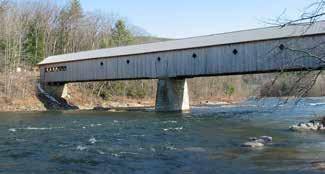
West Dummerston Covered Bridge Jared and Corin, Wikimedia Commons
PUBLIC TRANSPORTATION
The primary public transportation system in the Windham Region is Southeast Vermont Transit (SEVT) aka “the Moover,” a fare-free bus system serving Windham, southern Windsor, and parts of Bennington Counties. SEVT was formed in the 2014 merger of the Deerfield Valley Transit Authority, based in Wilmington, and Connecticut River Transit, serving the Connecticut River valley corridor (WeissTisman). The current SEVT routes reflect this history. Route maps show the Wilmington MOOver in the Deerfield Valley region, and the Rockingham MOOver serving Brattleboro and Bellows Falls. There are no routes serving the West River corridor.
Serving a rural area with public transportation can be difficult due to low population densities (Barriers to Transportation). In order for service frequency and distribution to be financially viable for operators, greater numbers and densities of people are necessary than are often found in rural regions. However, consulting with public transportation providers such as SEVT could lead to opportunities to provide new routes or schedules that would reach outdoor recreation sites in the region.
Among survey respondents, 98.4% said they do not use public transportation to access outdoor recreation sites in the Windham Region. Most respondents expressed that there were not enough routes, times, and stops for the bus to make sense for them. Several were skeptical that bus services could ever be available to them at their residences due to remote location. Suggestions for improvements from respondents included adding stops at popular recreation destinations such as trailheads and swimming holes along Route 30, adding routes to State Parks, developing schedules along routes that allow people to spend a whole day at a recreation site, and negotiating with ski resorts to help finance a larger portion of the costs.
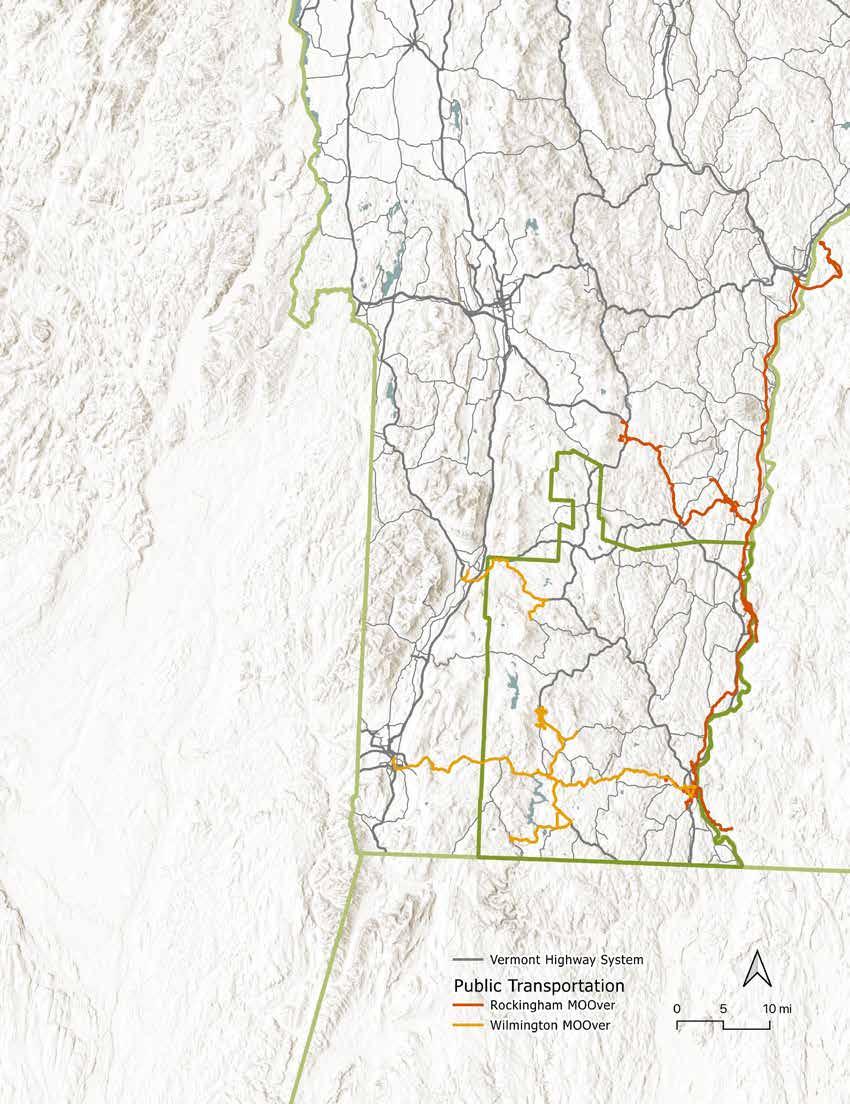
4-3 Public Transportation in the Windham Region Bus routes operated by SEVT
ON-SITE INFRASTRUCTURE
The presence and quality of physical infrastructure at points of entry is a critical factor in ensuring public access and utilization of recreational amenities. This infrastructure can include parking, signage, restroom facilities, elements that meet Forest Service Trail Accessibility Guidelines (FSTAG), Americans with Disabilities Act (ADA) or other standards for accessible design, as well as adaptive and neuroinclusive design elements.
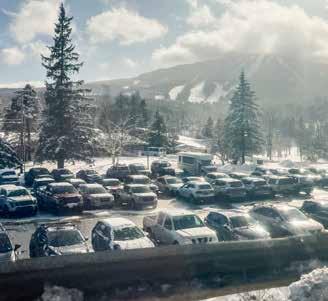
Parking at outdoor recreation sites often occurs in parking lots; however several popular destinations throughout the Windham Region, including some popular swimming holes, do not have designated parking areas. Furthermore, capacity at parking lots may be exceeded during peak seasons for various types of recreation. In these cases, many visitors resort to parking along the road, which may pose traffic hazards.
Many survey respondents expressed inadequate parking as an area for improvement to outdoor recreation in the Windham Region. Further study is needed to determine in what
locations and seasons parking is lacking. Additionally, a better qualitative understanding of how people perceive parking to be lacking would inform action as well. While in some cases, parking lots may in fact fill beyond capacity, in others a “mostly full” parking lot may be perceived as inadequate, but expanding a parking lot may not be the appropriate course of action.
The ecological impacts of parking lots should be taken into consideration when planning outdoor recreation development, including negative impacts such as runoff from impervious surfaces, urban heat island effect, and loss of natural habitat (Cusick). Moreover, expanding access for personal vehicles is not always the most sustainable way of promoting outdoor recreation, as other modes of transportation with lower carbon footprints, such as walking, biking, public transit, or carpooling may be appropriate.
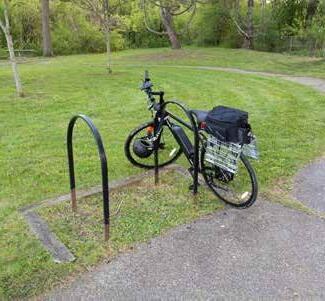
Infrastructure for parking bicycles on-site, such as bike racks or stations for bike share programs, could help encourage the use of bicycles to alleviate demand for and serve as an alternative to vehicle parking lots.
“More parking at swimming holes in the summertime!”
“Safer bike lanes [are missing in the Windham Region.]”
Parking lot in Stratton Stefan Poost
Bike rack in a Michigan park. Lengau, Wikimedia Commons
On-site signage serves an important role of marking entry points and leading visitors along the accurate paths to access outdoor recreation amenities (Proper Signage). Where signage is lacking or difficult to find, amenities often go unused. In addition to wayfinding, signage also serves the important role of informing visitors about usage guidelines, safety precautions, and temporary notices. Ensuring that information is accurate, up-todate, and in good physical condition (i.e., not faded, defaced, etc.) is important for public safety and environmental protection.
In order to achieve the common objective of equity as outlined in the SCORP, signage should be legible to various minority groups, including non-English speakers (State of Vermont). Including translations on signs into common languages other than English, such as Spanish, or including QR codes to access more information online in other languages may be appropriate.
Several survey respondents suggested better signage as an area for outdoor recreation improvement in the Windham region. More research is needed to understand where and
“...more kiosks at trailheadsmaps, but also information about... the ecosystem...”
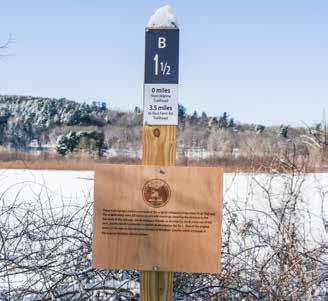
how signage may be lacking. Some respondents said better trail marking was needed, while others requested clear and comprehensive maps. Several respondents were concerned about proper trail etiquette, which is often outlined on kiosks at trailheads.
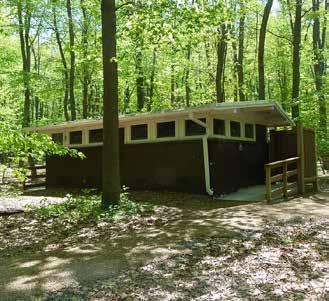
The presence or absence of restroom facilities is often a determining factor in whether or not certain people choose to recreate at a particular site (Restrooms in Parks). Sanitary concerns arise particularly at popular sites, such as swimming holes, that may be located farther from a population center and not served by a public restroom or business with a restroom.
Several survey respondents expressed that a lack of restrooms and/or a lack of wellmaintained restrooms was an area for outdoor recreation improvement in the Windham Region. Having adequate restrooms to prevent pollution of swimming water was an area of concern. Some proposed compost toilets. Several respondents were also concerned about the amount of litter found at popular recreation sites and noted a lack of trash receptacles.
“It’s getting depressing... litter, diapers left by people from out-of-state.”
Signage on the West River Trail Stefan Poost
Restrooms at a Maryland Picnic Area National Parks Gallery
ADAPTIVE / ACCESSIBLE / NEUROINCLUSIVE INFRASTRUCTURE
To promote equitable access to outdoor recreation amenities in the Windham Region, planners, businesses, and managers must take into account the variety of ability levels associated with the human body.
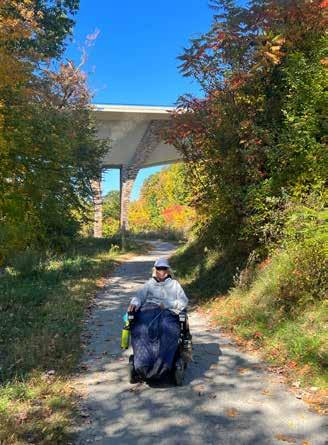
ADA accessibility guidelines lay out a set of standards to ensure that public buildings, facilities, and digital content are accessible to people with disabilities, for example those who use wheelchairs (ADA Standards). These guidelines pertain primarily to the built environment, which in the context of outdoor recreation would include facilities at points-ofentry such as restrooms, certain paths and ramps, and park facilities such as playgrounds and ball courts, among others. Clear dimensional design standards are defined by these guidelines.
ADA accessibility guidelines are the most common benchmark for ensuring physical access to persons with disabilities. However, many outdoor recreation amenities, such as hiking trails, are not subject to ADA accessibility guidelines. In these cases, the concept of “adaptive recreation” may be a more useful lens with which to understand accessibility for people with varying levels of physical ability.
“Adaptive recreation” refers to recreation infrastructure, equipment, and practices that are modified to provide access to people with varying levels of physical ability (Svoboda). Examples include modified skis that allow individuals unable to stand to sit while skiing, or hiking trails with broader, flatter surfaces and few obstacles. Adaptive recreation may serve people who would also be served by ADA accommodations, but expands the breadth of interventions to include modifications to equipment, usage and activity guidelines, and the environment to suit the needs of a particular group of people. For example, certain hiking and walking paths may not be ADAaccessible, but they may be made more adaptive to accommodate people who use canes to move.
A separate but related dimension of inclusive recreation is neuroinclusive or sensory-friendly recreation, which involves activities and environments designed to accommodate individuals with diverse neurodevelopmental strengths and challenges, such as autism, ADHD, and learning differences (Jiang). These opportunities could include sensory-friendly parks, or recreational sports programming for neurodiverse individuals.
Many survey respondents expressed concern about the accessibility of the region’s recreational assets to persons with disabilities, suggesting the addition of more walker and wheelchair accessible trails and wheelchairaccessible fishing access points. Collaboration with organizations, such as Vermont Adaptive Ski and Sports, that develop guidelines and programming for differently-abled persons could help identify more inclusive outdoor recreation opportunities in the Windham Region.
Enjoying the West River Trail
David Weber
LEGAL ACCESS
Legal access to recreational spaces is granted within political jurisdictions according to zoning, building, and property laws, referring to varying levels of access to public or private space on public or private lands. Most recreational spaces are considered public space, owned and managed either by public or private entities (U.N. Habitat). Certain public spaces on public land are understood to be accessible to the public at all times, for example sidewalks, roads, and some municipal parks, among others. Owners and managers of other public spaces, whether the owners are public entities such as municipalities, state or federal agencies, or private entities such as non-profits or businesses, may reserve the right to restrict legal access to public recreation spaces at certain times. For example, state parks often have open hours, outside of which the public is not admitted.
Access to recreational space on private land is somewhat different in Vermont than in other states. Vermont laws grant the public legal access to private lands for recreation purposes (Vermont Fish and Wildlife Department). Permission is not required for certain activities, including hunting, fishing, and walking (although asking for permission from the landowner is strongly encouraged), while permission is required for other activities, including ATV riding, snowmobiling, and trapping. This access is granted to private land, even if there is no conservation easement on the property. However, landowners can deny access by “posting” their lands, which involves hanging signs along property boundaries to denote that public recreation access has been revoked on that parcel. Public recreation access to private land is considered a privilege, not a right.
Since the vast majority of land in the state of Vermont is privately-owned (ANR Lands Conservation Plan), this opens up a tremendous amount of land to the public for recreation. Indeed, in interviews with survey respondents, interviewees related that much of the daily recreation in which they participate is on such private lands, including on hiking and cross-country trails organized into networks on
their neighbors’ properties. Hunting and fishing are two recreation types that especially take advantage of this public access. Hunters and anglers rely on unposted private lands to roam for locations in which to hunt and fish. Access to rivers and streams is also often found on private land, not only for fishing, but for swimming as well.
Accounting for and capturing the complete picture of how private lands are used by locals for recreation in the Windham Region is difficult due to the number of stakeholders and parcels involved. Furthermore, landowners and recreationists are not obligated to share information about this usage. Many Vermonters feel protective of what can be considered “special” spots, that is natural areas or features on private lands that are particularly beautiful or of interest. There is a culture of not oversharing information about access to such locations.
This may or may not complicate the task of the recreation planner. Such use of private lands for recreation tends to be undertaken by locals, rather than visitors, especially locals who live in the immediate area or adjacent to one another. In that sense, there may not be a significant impact of such use on the Windham Region’s recreation economy. Further research would be necessary to understand how private land access interacts with the regional recreation economy, as well as potential environmental issues.
That said, many survey respondents voiced concern that the number of posted parcels is increasing. There is a worry and frustration that the signature Vermont culture of open recreation access to private lands is diminishing. Some respondents felt that this was the result of the increasing number of properties being bought by out-of-state buyers, who move into the state and are either negligent or not in accord with Vermont’s culture of open access. Unfortunately, there is no public record of which lands in the state are posted and which are not, complicating the development of strategies or policies around the issue.
FINANCIAL ACCESS
Financial access to recreation refers to whether someone’s financial resources allow them to enter recreation spaces or acquire and use recreation resources. This would include someone’s ability to pay for (1) the cost of entry into a recreation space, for example tickets, day passes, and ski lift passes; (2) the cost of equipment and gear associated with a particular recreation type, for example mountain biking equipment, skis, and boats, whether purchased outright or rented; and (3) the cost of transportation to recreation spaces, for example owning and operating a car, paying for public transportation or taxi services, or paying for shuttle services for boating for example. Guided tours and classes are also associated with certain recreation types and generally charge fees for participation, for example whitewater tours on the West River.
While certain financial barriers are very real, others may be more a matter of perception. On one hand, access to a recreation center is either granted through the payment of a ticket or denied by not paying. On the other hand, whether or not someone feels like mountain biking is financially accessible to them may be informed by their perception of how nice of a mountain bike they need. Equipment and gear range widely in price. Many people feel they need to have all the proper gear in order to participate in a recreation activity. However, many types of recreation that may be made more enjoyable with expensive gear don’t necessarily require such gear.
Among survey respondents, the cost of gear was listed as the second-most significant barrier to recreation access on average. Further research is needed to understand what gear for what types of recreation are considered to be too expensive.
One way to improve affordable access to gear is through gear libraries (Sunkara). Several public libraries in the Windham region also function as gear libraries; however their equipment supply is limited. Developing a more robust system of gear libraries could help lower financial barriers for some recreation users.
A related consideration that concerns financial access to recreation is the view not from the user’s perspective, but from the perspective of recreation providers, planners, or government institutions with respect to the economic impact of recreation. Many of the activities with the lowest financial barriers (for example hiking or swimming in a river) may be those with the smallest direct economic impacts for the region. Conversely, some of the most expensive recreation activities, such as downhill skiing, generate the most revenue in the recreation sector in the state (U.S. Bureau of Economic Analysis). This is not necessarily true in all cases, however. An understanding of the economic effects of different recreation activities is beyond the scope of this project, but the interaction between the affordability of various activities for locals and the economic benefits for the region will be important to understand in the development of the Recreation Economy Plan.
Jelly Mill Falls, Dummerston
David Weber
INFORMATION ACCESS
Information access refers to whether or not users can acquire information about particular recreation resources which will enable them to utilize those resources. While some people are comfortable exploring unknown areas and stumbling on a pleasing location to recreate, many people prefer or need to be able to assess in advance the location and conditions of a recreation amenity. For example, people with physical disabilities will not be able to use recreation amenities that do not accommodate their needs. Dog owners are often required to keep their dogs on leash, or are prohibited from bringing dogs to a certain recreation site at all. Many people search for this information online (or to some extent in printed tourist brochures etc.)
Information about recreation sites is often dispersed across different websites, platforms and media, since there is often no single authority responsible for or capable of managing communications on behalf of all recreation providers in an area. This can lead to an uneven availability of information for those not in the know about where and how to recreate. The inability to find information on location, cost, parking, hours, and other parameters of access can lead certain users not to recreate in the first place.
Several survey respondents expressed a desire for a centralized location for information that would list, for example, all the trails in the region. Others shared that they wished recreation assets were more visible or that there was more awareness of them.
While some existing platforms, such as AllTrails, provide fairly comprehensive information for certain activity types, crowdsourced information can vary in accuracy. Ideally, information on outdoor recreation amenities should be comprehensive, easy to find, as well as accurate and up-to-date.
As mentioned in the previous section, a tension exists, especially in Vermont, between the sharing of information about access to recreation sites, and keeping that information secret. This primarily applies to informal locations that are known via word-of-mouth among locals, but may also be understood as applying to the region as a whole. Many Vermonters appreciate the secluded, rural character of the region, and some may harbor conflicting feelings about over-publicizing information about the recreation resources the region has to offer. Of course, this requires a balance be struck among competing goals, including equitable access to all, the economic benefits of a dynamic recreation economy, and preserving the quality-of-life for residents.
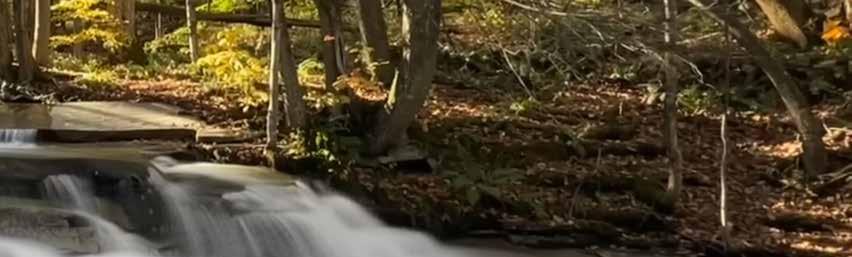
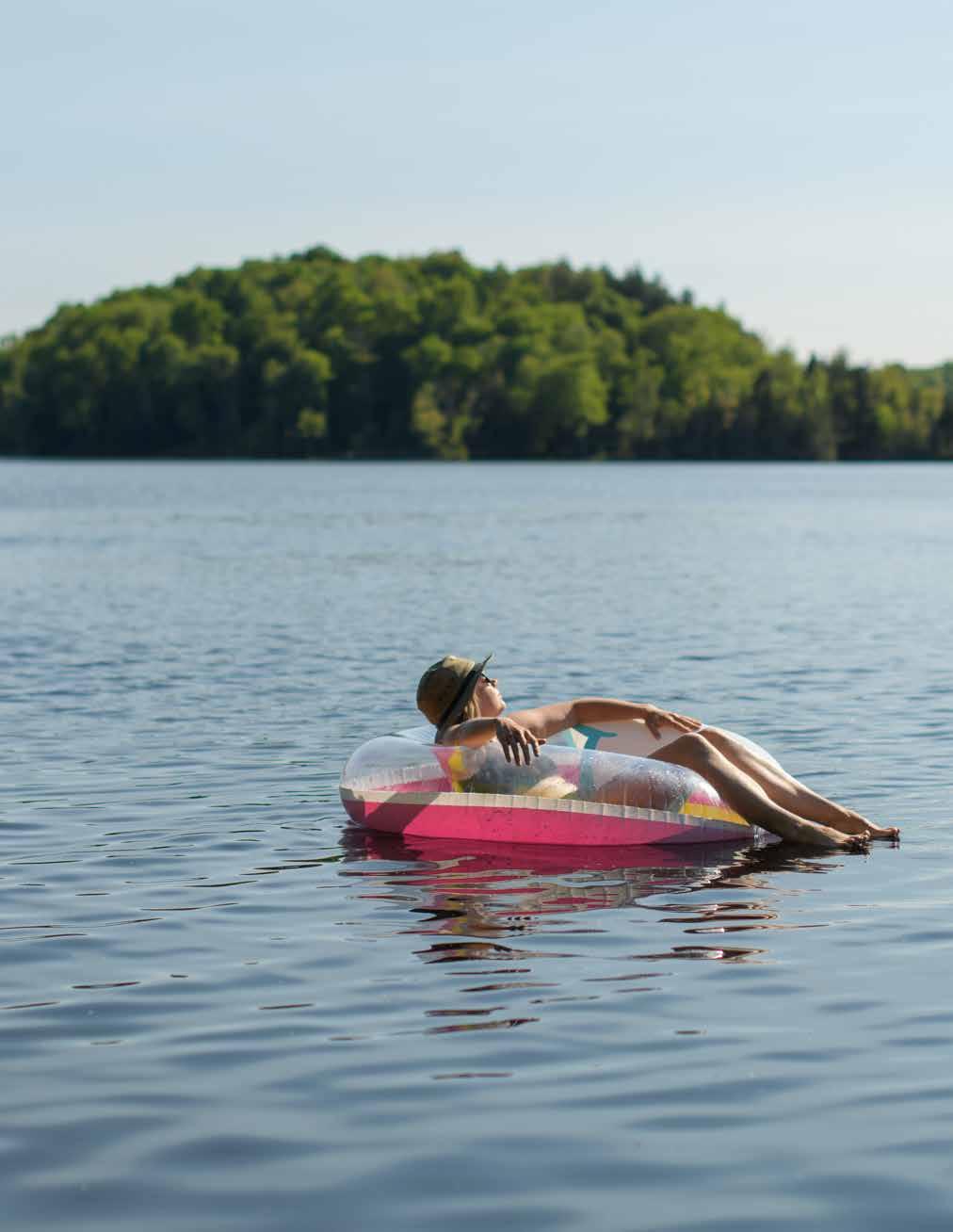
Summer on a Vermont lake
Nathanael Asaro
Quality of Life
INTRODUCTION
Outdoor recreation plays an important role in Vermont’s culture and way of life. Connection to the outdoors and an appreciation of nature inform the identity of Vermonters and Vermont is well-known on the national stage as an outdoor destination for activities such as skiing, hiking, and biking. Outdoor recreation is not only a critical component of Vermont’s economy, ranking it second among states in terms of contributions to state GDP, but it also contributes to the quality of life of its citizens.
There is no global standard definition of quality of life (QoL). One widely applied definition comes from the World Health Organization, referring to “an individual’s perception of their position in life in the context of the culture and value systems in which they live and in relation to their goals, expectations, standards and concerns” (Whorld Health Organization). This is a subjective measure, with no one standard quantitative parameter. Several common indicators used by various organizations to describe QoL include wealth, health, education, security, and leisure.
In the context of this project, it is understood that outdoor recreation contributes to the wellbeing of Vermont residents across several dimensions, including improving mental and physical health, building community, and providing a sense of identity. The economic effects of outdoor recreation may also influence quality-of-life; however, whether or not these effects are positive or negative for the local community is context-specific.
In establishing priorities for outdoor recreation planning, two different perspectives should be understood: the local’s and the tourist’s. Priorities for ensuring the development of the outdoor recreation economy must be informed and balanced by priorities for preserving residents’ quality of life, where these two axes potentially interact in negative ways.
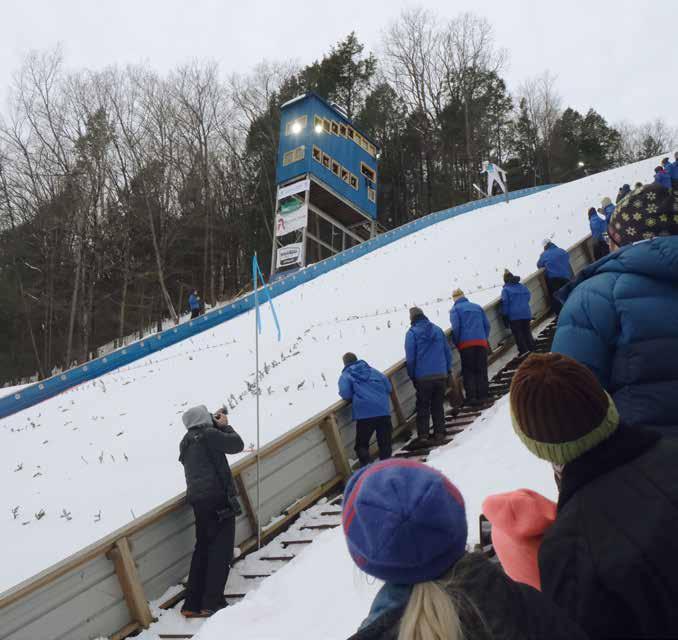
Harris Hill Ski Jump in Brattleboro
Stefan Poost
OUTDOOR RECREATION EFFECTS ON QOL
Outdoor recreation amenities can enrich the lives of both residents and visitors. However, especially for residents, having a wide range of recreation opportunities nearby provides interest to daily life in a community. While there are many reasons someone may choose to live in a particular area, having access to a diversity of leisure activities is often an important factor (Headwaters Economics). A large number of survey respondents expressed satisfaction with the number and quality of outdoor recreation amenities in the Windham Region, remarking that the outdoors was one of Windham’s strengths.
A standard indicator of QoL is health, both physical and mental. Outdoor recreation activities that involve moderate to strenuous bodily movement, such as hiking, sports, and swimming, are associated with many positive physical outcomes, such as decreased risk of disease, stronger bones, lower weight, and increased longevity (Twohig-Bennett and Jones). Additionally, time spent in natural settings, which includes other outdoor activities such as fishing, hunting, and leaf peeping, is shown to decrease stress levels and improve mental health and stability.
Strengthening opportunities for outdoor recreation in Vermont can lead to better health and in turn QoL for Vermonters. Move Forward Together Vermont lists wellness as a priority action theme, highlighting the importance of outdoor recreation initiatives that lead to improved health outcomes for all Vermonters.
High QoL can also result from a strong sense of community, which describes a sense of belonging and shared values leading to networks of mutual support, shared responsibility, and civic engagement. A strong sense of community can lead to greater resilience in the face of socio-economic and environmental challenges (Simonton). For example, a town damaged by extreme-flooding may be able to rely on mutual care networks to help recover from the emergency more quickly than communities where residents feel less
responsible to one another.
Outdoor recreation amenities and programming can help foster strong community by providing spaces for residents to come together, share experiences, and get to know one another (Eigenschenk et al.). In order for as many residents as possible to be involved, equitable access and inclusive programming should be prioritized. Recreation opportunities for families with children, the elderly, the physicallydisabled, non-English speakers, and other under-represented groups should be included in planning.
A related dimension of QoL is personal or community identity, arising from common values and activities that define a particular way of life. As mentioned above, “outdoorsiness” is often associated with Vermonters, in part because of the rural character of much of the state and the easy physical access to outdoor recreation amenities. Identifying with the outdoor culture of the state may be a reason the state retains and attracts new residents.
Finally, outdoor recreation can play an important role in a region’s economy, which in turn may or may not support QoL in a community. A thriving outdoor recreation economy can have both positive and negative effects for local communities, for example, where outdoor recreation supports a local business such as a restaurant or gear outfitter, the economic impact may be felt by the community through the provisioning of jobs, increased availability of goods and services, an expanded tax base, etc. However, the outdoor recreation economy may lead to negative effects, for example if demand at a popular ski resort leads to congestion on roadways. Whether or not the outdoor recreation economy contributes positively or negatively to local QoL is context-specific; however, additional positive economic effects may be indirect, for example where economic activity in a town makes life more interesting and dynamic, helping attract and retain residents.
LOCALS VS. TOURISTS: OUTDOOR RECREATION FOR WHOM?
The vision statement of Move Forward Together Vermont is to “foster healthy and vibrant communities through outdoor recreation.” This vision emphasizes that it is Vermont’s communities that must benefit from outdoor recreation planning. The question of how to set priorities in outdoor recreation planning can be informed by understanding the at-times competing perspectives of the local and the tourist.
Regardless of whether one is a local or a tourist, all recreation users are interested in having positive experiences, which includes enjoying easy access to recreation amenities, well-maintained facilities and trails. However, non-residents may have different needs in the provisioning of outdoor recreation amenities than residents. For example, greater availability of temporary accommodations, gear rentals, wayfinding and guided tours may be necessary to enable visitors to participate in certain activities. From the local’s perspective, investments in community recreation assets that are not necessarily big revenue generators, for example parks, playgrounds, and walking paths, may be a more important concern.
Providing opportunities to non-residents requires developing physical and social infrastructure to accommodate visitors’ needs. Increasing the numbers of tourists visiting an area will in turn increase the amount of development necessary. While this development may represent positive economic growth for a community, there is a concern that too much growth may lead to negative impacts for a community. For example, the popularity of Vermont ski resorts among out-of-state residents may lead to real estate speculation and gentrification that prices out long-time residents in the area.
In the field of tourism research, the concept of “touristification” describes how the influx of tourists and tourism businesses can negatively impact locals’ daily lives and is related to gentrification (Uysal et al.). The negative
impacts of tourism can be understood in light of the carrying capacity of a region, which in this context refers to the number of visitors and limits of acceptable use beyond which an area’s natural, social, and psychological resources suffer detrimental effects. Congestion of roadways, crowding in public spaces and businesses, cost-of-living increases are potential negative effects of overly-touristy areas. Loss of a particular rural charm and peacefulness may also result from increased demand for recreation amenities.
Several survey respondents were concerned that certain areas in the region were becoming overly-crowded, noisy, and too-heavily touristed. One respondent felt Vermont was turning into “a kind of gigantic gated community.” To be sure, real-estate development and population influx are spread unevenly throughout the region; some towns are experiencing stronger development pressures than others (Vermont Center for Geographic Information). Dover, Stratton, and Winhall, all towns located around ski resorts in the western half of the Windham Region, have seen increased population growth in recent years, while towns such as Rockingham and Westminster on the Connecticut River have seen population declines.
Another facet of this issue is that out-of-state tourists, as well as migrants to the state who are drawn in by the appeal of outdoor recreation opportunities, may have more disposable income than locals, driving up prices (Public Assets Institute). While an imperative for government institutions and businesses may be to attract capital into the state, the downstream effects of investments are not always clearly beneficial to local communities. At times, they may not necessarily accrue to local communities. For example, Mount Snow and Stratton Mountain Resort are both owned by corporations that are not based in Vermont. Many employees who work at these resorts are temporary, out-ofstate workers. While this is not necessarily a
bad thing and there are some benefits for the local economy, when considering how such operations contribute to the QoL of residents via economic development, care must be paid to ensure the economic benefits of such operations are in some measure retained within the region.
The goals of the local and the tourist need not be necessarily at odds with each other, but outdoor recreation planning must reckon with the tension between offering equitable physical, financial, and information access to tourists (and residents), driving economic activity to support the region, preserving local culture, and conserving natural resources. Planners should work with the community to identify and monitor appropriate QoL indicators as well as appropriate opportunities and locations for recreation infrastructure development. Management techniques that balance access, QoL, and environmental conservation–for example controlling the number of cars at a popular swimming hole–could be developed to ameliorate issues as they arise.
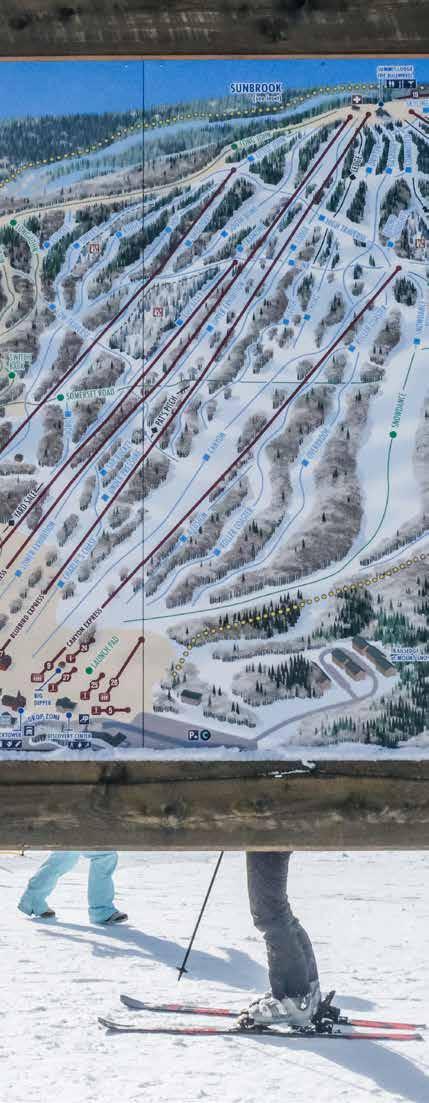
Ski Map at Mount Snow Stefan Poost
INVENTORY
A hiker going up a sturdy log staircase on a local trail Nathanael Asaro
Trail / Road Activities
INTRODUCTION
Trail/road activities include recreation activities that occur along trails, paths, and roads, whether on foot or wheels, in the absence of snow (winter trail-based activities such as cross-country skiing and snowmobiling can be found in Section 5.3 Winter Activies). Due to project constraints, activities included in the Vermont SCORP that were not explicitly inventoried in this report include walking, jogging/running, trail running, backpacking, road biking, e-biking, inline/roller skate and skateboarding, and rock climbing.
SPECIFIC CHALLENGES
Trail/road activities include some of the most popular outdoor recreation activities, such as hiking and biking. Given their popularity and the wide variety of locations in which they occur, from natural areas such as forests to roads and skate parks, there is a wide variety of issues facing this group of activities, many of which will be outlined in the following sections. Common issues emerging from survey feedback and research include availability of information about where these activities can occur and proper usage guidelines, as well as potential overuse and trail erosion during mud season and potential conflicts where multi-use trails accomodate motorized and nonmotorized uses.
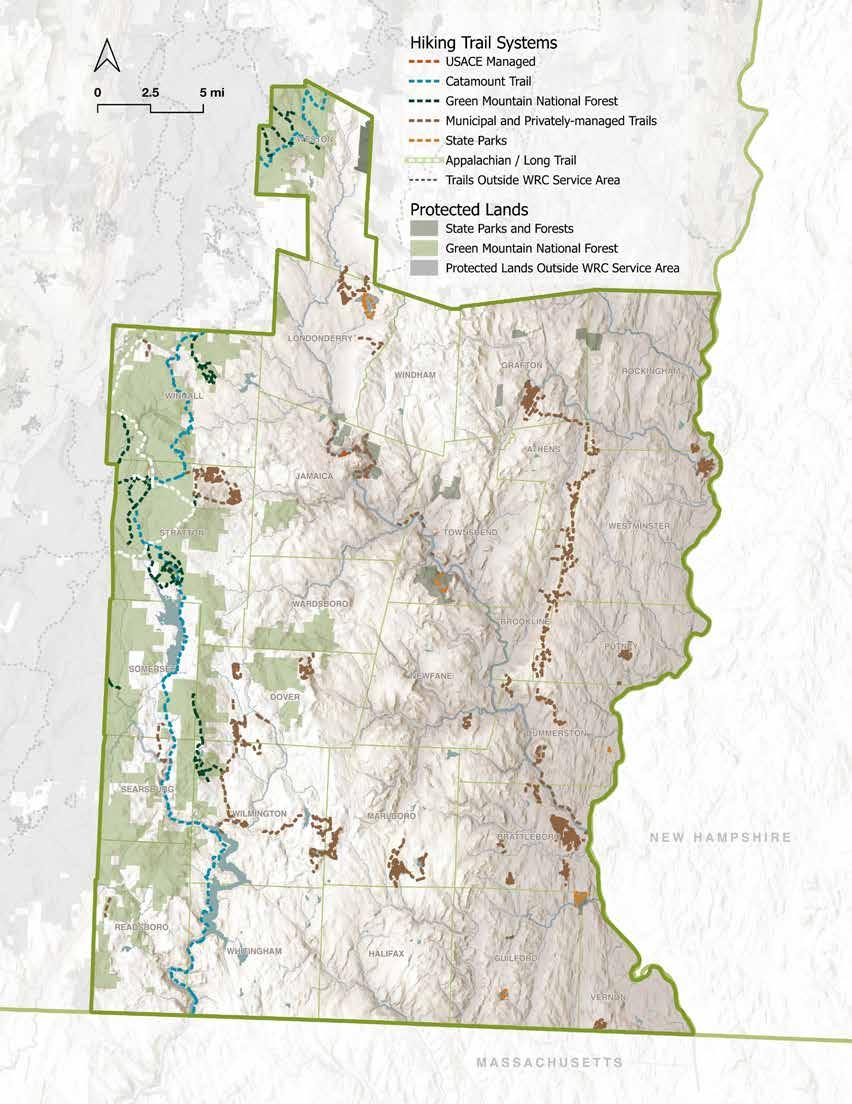
WINDMILL RIDGE - PINNACLE
SOUTH POND TRAILS
HOGBACK MOUNTAIN
VALLEY TRAIL
WINDMILL RIDGE - ATHENS DOME
GRAFTON TRAILS & OUTDOOR CENTER
Hiking
DATA COLLECTION
For this inventory, data compiled for the Vermont Enhanced 9-1-1 Board’s Trail Data layer in the Vermont Center for Geographic Information’s Geodata portal was used as a starting point. These trails were grouped by trail system and then cross-referenced with a number of other sources, including Trailfinder, an online platform administered by the Upper Valley Trails Alliance in collaboration with the Vermont Department of Forests, Parks, and Recreation (FPR) and the University of New Hampshire Extension; AllTrails, a proprietary online database of hiking trails accessed through a subscription-based application; the United States Forest Service (USFS) website, which lists trails within the Green Mountain National Forest; and a trail-listing initiative called “Windham on the Move,” a collaborative effort of the Windham Regional Commission and the Brattleboro District Office of the Vermont Department of Health.
INVENTORY
Hiking trails in the region are numerous, catering to a variety of physical ability levels, and most are free-of-charge, except state parks, which charge a small fee during the summer months.
Fifty-three separate sites or management areas were recorded in the Windham Region that provide public access to hiking trails. These include federally managed lands such as the USFS-managed Green Mountain National Forest and the United States Army Corps of Engineers (USACE)-managed Ball Mountain Lake and Townshend Lake; state-managed lands including State Parks and State Forests managed by the FPR; municipally owned and managed lands such as Town Forests, Conservation Areas, and Town Trail Systems; trail systems managed privately by both forprofit organizations such as resorts and recreation centers; and trail systems managed privately by non-profit organizations such as the Vermont Land trust, either on lands owned
outright by those organizations or by private owners with access provided by conservation easements. This inventory does not take into account trail systems on private land that are not formally open to the public.
A number of long-distance trail systems exist, primarily located in the western half of the region. These include the Appalachian Trail, which coincides with the Long Trail in this region, the Catamount Trail, and the trail systems of the Green Mountain National Forest. The Windmill Ridge Nature Reserve is an example of a regionally connected trail system in the eastern half of the region. Other trails throughout the central and eastern portions of the region exist in smaller, contained systems with limited connectivity across systems.
Several management areas explicitly allow for backcountry and off-trail hiking. These include the Green Mountain National Forest as well as State Forest areas managed by FPR.
Two separate systems of public rights-of-way that are not included in this inventory but may be functionally appropriate for hiking as suggested by the Windham Regional Commission are Vermont Class IV roads and Legal Trails. Class IV roads, as described in Title 19 of the Vermont Statutes Annotated, are town highways that are not maintained yearround and do not receive state aid. Legal trails are public rights-of-way that were formerly designated town highways but are no longer maintained and are frequently repurposed for recreation. These roads and trails may or may not be negotiable under standard conditions by a pleasure car, and are sometimes only passable by other motorized vehicles such as ATVs, or bicycles or on foot.
SURVEY
Survey respondents for this report listed hiking as the outdoor recreation activity in which they participated the most across all seasons. Some survey respondents expressed concern that
5.11
Trail/Road Activites:
Hiking
improper use of hiking trails by users on bikes or ATVs, for example riding during mud season, leads to erosion and trail damage and may intimidate some less mobile hikers from using those trails. Several respondents also felt more accessible trails are necessary. Fees for accessing hiking trails were not listed as a major concern among respondents of the survey.
5-2 Class 4 Highways and Legal Trails
Two systems of public rights-of-way in Vermont that may be suitable for recreational purposes such as hiking are Class 4 Highways, which include town highways that are not maintained year-round and do not receive state aid, and Legal Trails, which are former highways that are no longer maintained.
ISSUES
The mountainous terrain and many river valleys of the Windham Region provide a diverse range of hiking trail types and characteristics. Strenuous ridgeline hiking is available for example on the Haystack Ridge Trail in the Green Mountain National Forest, while the West River Trail is relatively flat and more easily maneuverable. Various trail classification systems capture this breadth of trail difficulty. The USFS uses a five-class system to describe the physical character of trails, with Class I having the least continuous tread and the most obstacles and Class V having wide and flat tread with few to no obstacles. Databases like AllTrails and TrailFinder use proprietary rating systems with three classes: easy, medium, and
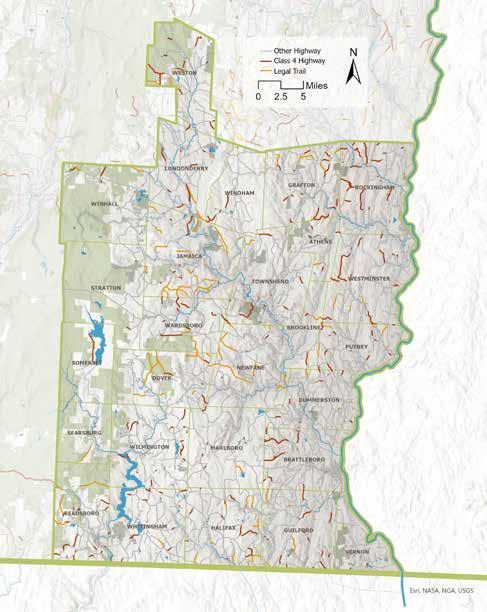
difficult. Importantly, these databases do not consistently show which trails are wheelchair accessible. As of 2025, Trailfinder is actively working to resolve this issue.
In order to provide hiking opportunities to users of all levels of physical ability, it is important to ensure not only the existence of wheelchair accessible trails but also “adaptive” trails, which include wheelchair accessible trails but also trails that can be navigated by people with other physical disabilities of varying levels, for example people using canes, crutches, adaptive mountain bikes, etc. Creating a system of describing and categorizing trails according to adaptive needs and providing that information on hiking apps and platforms would allow a greater number of users of varying ability levels to participate in trail recreation. Various statewide organizations are focused on expanding adaptive access, including Vermont Adaptive Ski and Sports and the Vermont Mountain Biking Association among others.
Some hiking trails in the Windham Region are multi-use trails used not only by hikers but also cyclists, cross-country skiers, and to some extent motorized vehicles like ATVs or
snowmobiles. For example, the Valley and Crosstown Trails in Dover, in addition to hiking, accommodate cross-country skiing and biking. Promoting proper trail etiquette and care of trail infrastructure is observed by all users may help minimize trail damage.
Additionally, some trail systems allow dogs, whether on or off leash. For those who wish to hike with their dogs, options of where to hike may be limited. Other users may seek to avoid using recreation spaces where dogs are off leash. Some trail databases (AllTrails, Trailfinder) have information on whether dogs are welcome on or off leash. Expanding this information to apply to all trails in the region would make it easier for dog owners and others to make decisions about where they feel comfortable hiking.
Finally, some trail systems in the region charge a fee, such as state parks and private recreation centers like the Grafton Trails and Outdoor Center; however most trails are freeof-charge. Indeed, hiking may be one of the most popular recreational activities due to its low cost of entry and required gear.
AREAS FOR FURTHER RESEARCH
• Develop a database documenting trail conditions relevant to physical accessibility (such as slope, length, width, trail surface material, loop vs. out-and-back configuration) to make it easier for users of all physical ability levels to find suitable hiking trails
• Work with trail system managers to enhance public information around issues of proper trail etiquette on multi-use trails to minimize trail infrastructure damage
• Document on- and off-leash dog permissions at all trail systems throughout the region and make this information available to the public
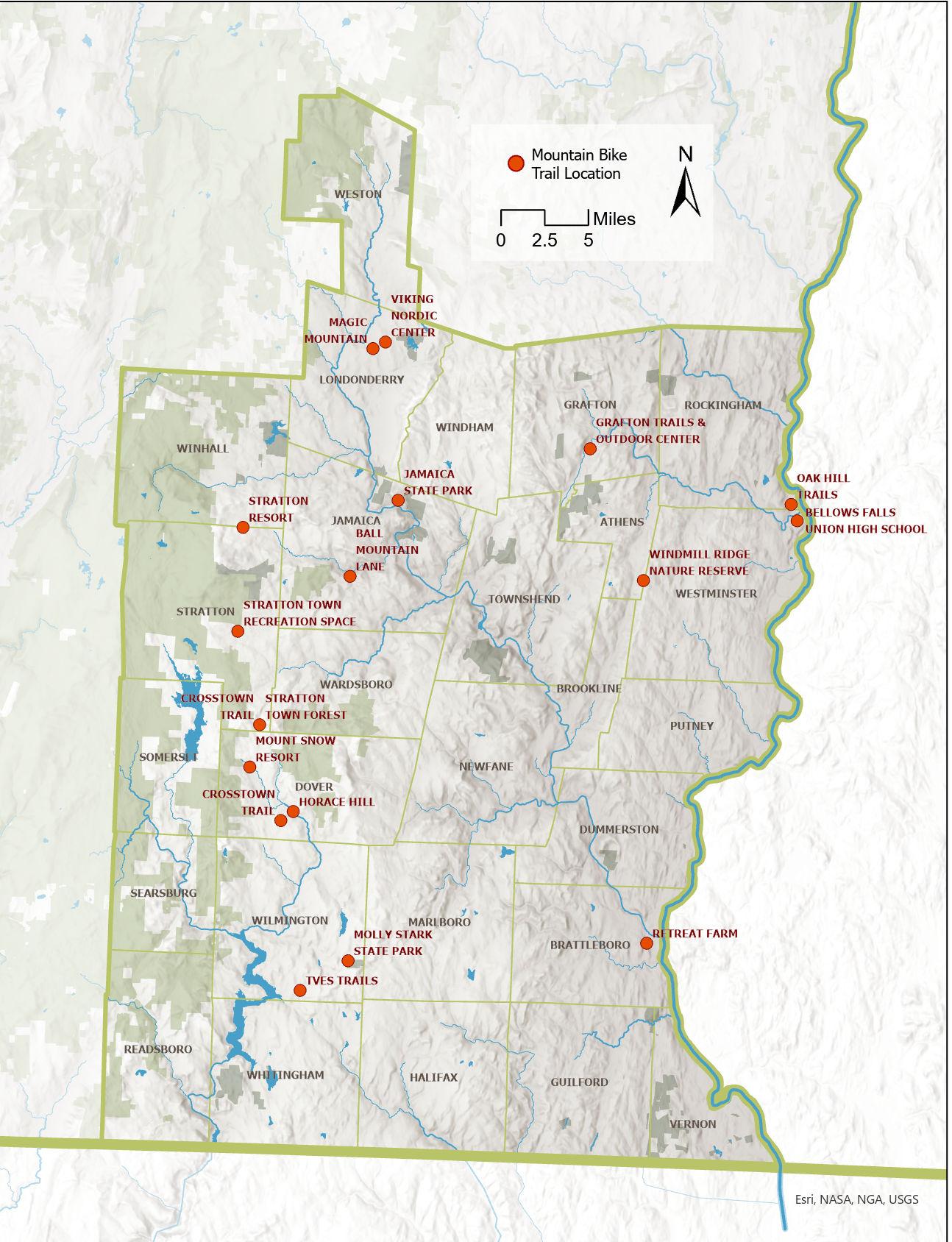
Mountain Biking
CONTEXT
The Windham Region is a premier destination for mountain biking enthusiasts, offering a combination of rugged terrain, challenging trails, and breathtaking views. Mountain biking in the Windham Region is prominent in areas like Mount Snow and Stratton Mountain, both of which offer downhill bike parks that attract casual riders and competitive bikers. These resorts, traditionally known for their winter skiing, have increasingly embraced mountain biking as a key summer attraction.
There are 7 known mountain biking locations in the Windham Region offering both technical and flow, from downhill and enduro racing to singletrack trails through forests. The region’s mountain biking infrastructure supports both professional athletes and casual riders.
INVENTORY
Mountain biking infrastructure in the Windham Region includes a combination of privately owned/managed bike parks and volunteermaintained trail networks through public lands and forests. The downhill bike parks at Mount Snow and Stratton Mountain are two examples of privately owned and managed locations for mountain biking in the region, drawing visitors from across the Northeast. Mount Snow, traditionally a ski resort, offers a wellestablished downhill bike park, complete with lift-serviced trails that cater to riders of all skill levels. With trails ranging from beginner to advanced, Mount Snow’s bike park features technical descents, flowy singletrack, and jump lines. The resort’s use of the same infrastructure for biking in the summer and skiing in the winter allows Mount Snow to remain open as a year-round destination.
Similarly, Stratton Mountain also provides a downhill bike park, where riders can explore much of the mountain’s terrain. Stratton’s bike park includes a range of trails, from steep and rocky paths to smoother, flowy sections. The resort is part of the Alterra resort network which
uses a season pass system to economically benefit from the growing trend of multi-sport tourism, encouraging visitors to come for both winter and summer activities. Stratton’s mountain biking infrastructure supports everything from equipment rentals to accommodations, as bikers travel to the area for a vacation-style riding experience.
The Windham Region also features mountain bike trails outside of the resort setting. Trails like the Grafton Trails and Wilmington Trail System provide cross-country mountain bikers with a variety of scenic routes that wind through forests, rivers, and historic farmland. The Putney Mountain Trails near the town of Putney offer technical, single-track runs. These trail systems are increasingly being managed and maintained with support from the Vermont Mountain Biking Association (VMBA) and local chapters like the Southern Vermont Trails Assocation (SoVTA), the Windham County Trails Alliance (WCOTA), the Hoot, Toot & Whistle All Terrain Cycling Club (HTW), and the Jamaica Area MTB Alliance (JAMBA).

ISSUES
Mountain biking faces challenges related to climate change. Rising temperatures and unpredictable weather patterns are likely to affect the trail conditions for mountain biking in the summer. Warmer and wetter summers may lead to trail erosion and less stable ground. Frequent closures due to muddy conditions could limit the number of days when mountain biking is feasible in the spring, however, drier autumns could lead to an increase in the number of days when mountain biking is feasible. Additionally, increased storm activity could cause more frequent trail damage, requiring more resources to maintain the infrastructure. More research is necessary to understand the implications of different land ownership models for mountain bike trails on private land versus public land. What is the benefit of having a paid labor force to maintain the mountain biking trails versus a group of volunteers?
Climate change also poses longer-term risks to the health of the forests and ecosystems around mountain biking trails. Forest fires, pests, and diseases affecting trees could alter the landscapes riders enjoy, forcing the modification or closure of certain trails. Adaptation strategies, such as developing more sustainable trail systems and improved stormwater management, may be helpful in mitigating the effects of climate change.
Mountain biking in the Windham Region offers a range of experiences from downhill bike parks at Mount Snow and Stratton Mountain to cross-country and technical trails in the surrounding forests. The sport leverages some of the same infrastructure used for skiing in the winter and could continue to support outdoor recreation on land that has dual-use for summer/winter recreation. As mountain biking continues to grow in popularity, it will be critical to address the challenges posed by climate change.
AREAS FOR FURTHER RESEARCH
• Connect with all of the VMBA chapters in the Windham Region and facilitate workshops to understand the needs and desires of these groups.
• Research the 2024 Velomont Vision Plan to understand how bike trails are being developed and maintained in Windham County and what level of economic investment/support is being provided from the state.
• Further study the parking lots within this inventory research to ensure that needs are being met for space, bathrooms, trash cans, trailhead signage, etc.
Gravel Biking & Bike Packing
CONTEXT
Gravel biking involves riding a bike on unpaved roads, dirt trails, and forest paths, often over long distances. In the Windham Region, gravel bikers can enjoy both leisurely rides and multiday bike-packing trips, taking advantage of the region’s vast network of backcountry roads and trails.
One of the defining features of gravel biking in the Windham Region is the presence of the Vermont Gravel XL (VTXL) route, a 200-mile bike-packing trail that traverses through the heart of the state, including a significant portion of Windham County. This route, alongside other regional trails, has helped establish the Windham Region as a destination for gravel biking.
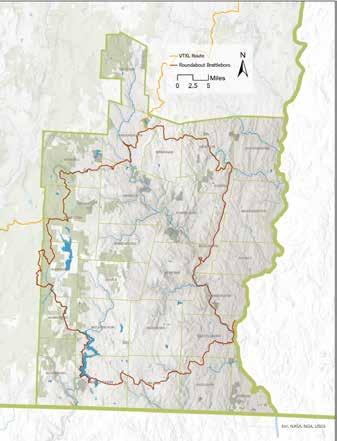
5-4 Suggested Bikepacking Routes
VTXL & Roundabout Brattleboro
Data source: Bikepacking.com
INVENTORY
Gravel biking in the Windham Region is defined by a network of unpaved roads, dirt paths, and trails that offer riders access to the county’s most scenic and remote locations. The spatial patterns of gravel biking in this instance are defined by existing data found on the internet. Bikepacking.com has two defined trails that go through the Windham Region including the VTXL trail and the Roundabout Brattleboro trail. These routes that pass through forests, mountains, and small rural towns and interconnect through the northwest part of the region.
These dirt roads are often less trafficked than paved highways, making these routes ideal terrain for cyclists seeking a quieter, more immersive experience in nature. While these routes are popular for extended bikepacking rides that often require camping and navigating Vermont’s remote landscapes, segments of these trails are also popular for day-use gravel biking as well.
The gravel bike routes facilitate bikepacking by connecting small towns and rural areas with outdoor amenities, such as campgrounds and general stores, which support long-distance cyclists. Moreover, this system of interconnected gravel roads helps to support the local economy by bringing cyclists and bike-packing tourists into towns where they contribute to local businesses like cafes, general stores, bike shops, and restaurants. These cyclists often stay overnight in local inns, campgrounds, or backcountry huts, which provides a boost to the hospitality industry in the area.
The growth of gravel biking in the Windham Region reflects broader trends in outdoor recreation and sustainable tourism. Local organizations and municipalities like VMBA are maintaining these routes and improving access to trails. This investment supports the Windham Region as a destination for gravel biking and bikepacking. As more bike
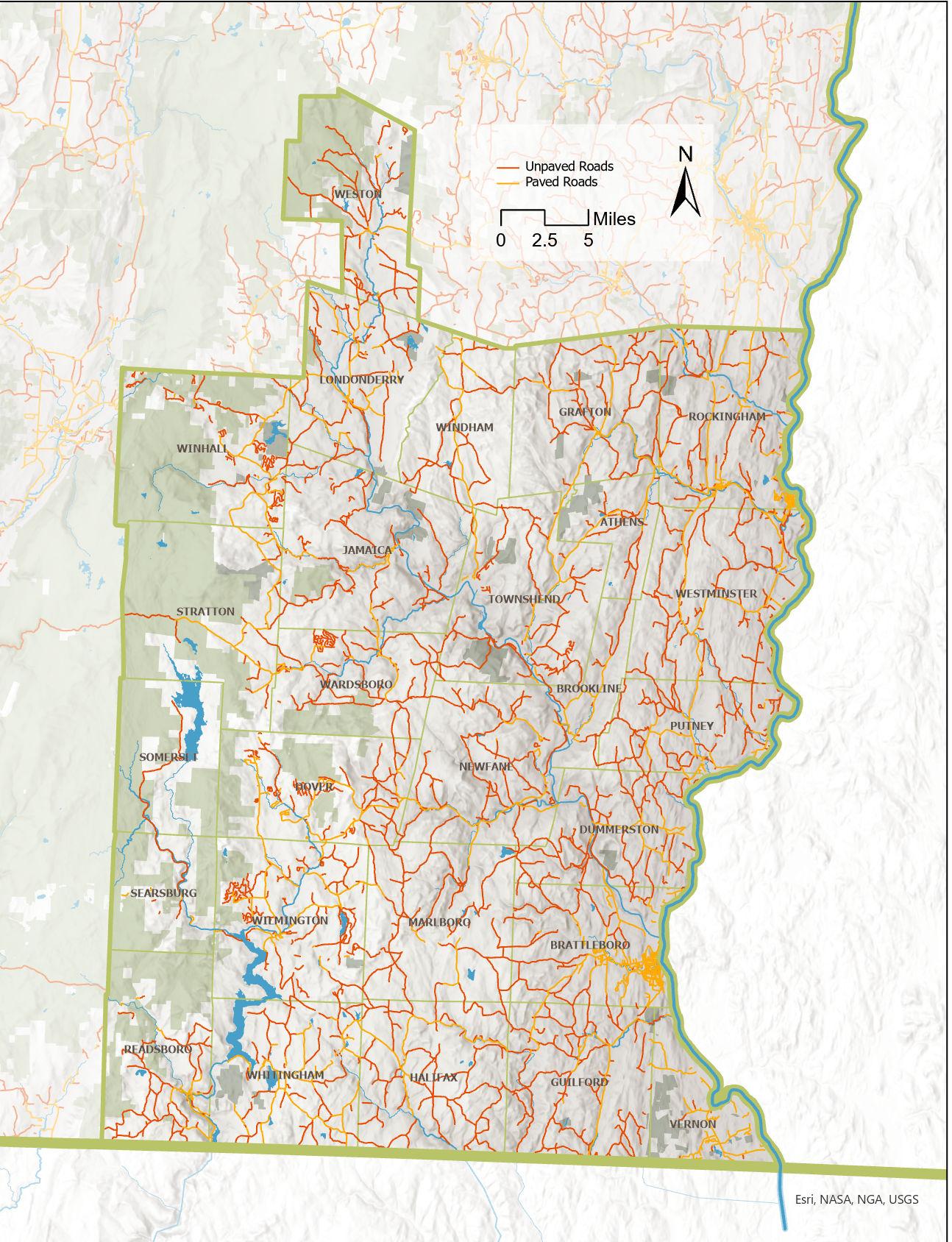
5-5 Dirt Roads in the Windham Region
Unpaved and paved road surfaces
enthusiasts seek to explore Vermont’s wilderness on two wheels, the region’s gravel biking infrastructure should continue to support the bike community.
ISSUES
Biking on gravel, dirt and especially paved roads means that cyclists are using the existing road infrastructure that is maintained at a town or regional level. This could create issues with how the roads are being maintained or cause safety concerns for cyclists. Cars may be speeding fast down the road, or disregarding the speed limit. Culverts may impair road quality, especially after a rain event or storm, making the road challenging or impossible to pass. Drainage ditches on the sides of the road may also be a challenge for cyclists, especially when a car is passing a cyclist and the cyclist must stay close to the side of the road. Considerations should be made for cyclists when managing regional road infrastructure.
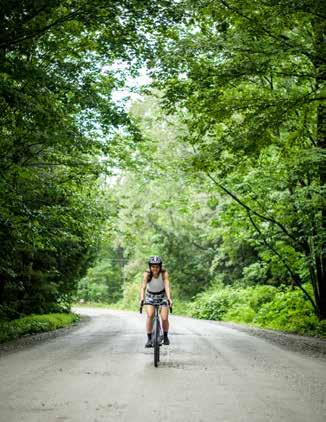
AREAS FOR FURTHER RESEARCH
• Connect with the contrubing editors from Bikepacking.com who designed the bikepacking routes to understand if there is a need for more bikepacking routes in the Windham Region.
• Speak with business and general store owners along the popular bikepacking routes to understand how outdoor recreation users like bikepackers could impact their sales.
• How does an activity that is supported fully on road and trail infrastructure impact the management on public works entities in the region?
A gravel biker in Vermont Nathanael Asaro
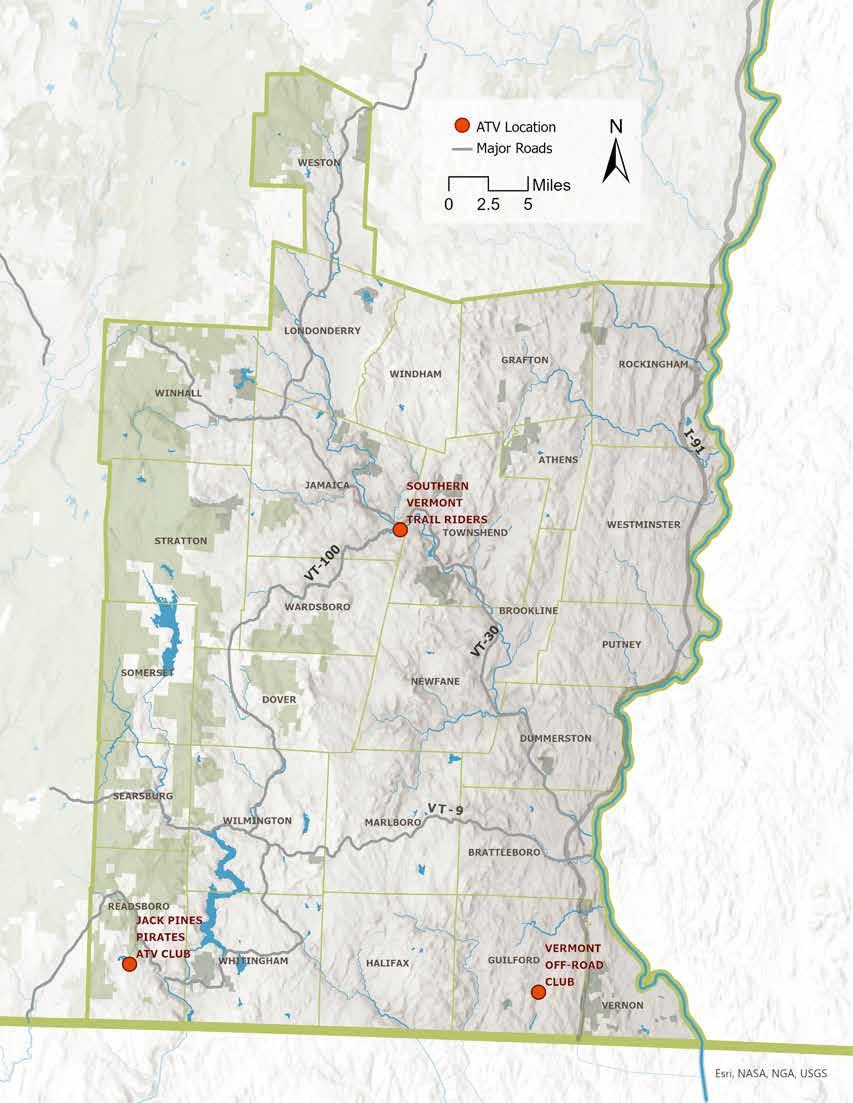
ATV & Off-Roading
CONTEXT
The Windham Region’s rolling hills, dense forests, and scenic backroads are attractive for ATV (All-Terrain Vehicle) riders, dirt-bikers, and four-wheelers. ATV riding involves navigating off-road trails and unpaved paths. With its variety of public and private lands, the Windham Region provides three opportunities for recreational ATV riders. The Vermont ATV Sportsman Association (VASA) maintains a network of ATV riding and four-wheeling trails in the Windham Region. The mix of wellestablished riding areas and more remote, lesser-known trails makes this area versatile for ATV riders of all skill levels.
INVENTORY
The ATV locations in Windham Region are each run and managed by a local club through VASA. There is the Vermont Off-Road Club in Guilford, Jack Pines Pirate ATV Club trails in Readsboro, and the Southern Vermont Trail Riders trails in Jamaica. The recreation areas are spatially located somewhat evenly across the region, with two in the south and one to the north. ATV riding in the Windham Region is concentrated through the VASA trails networks. These trails run through forests, farmland, and rural communities. They are a mix of privately owned land, like in Guilford, and a mix of private and public land, like in Readsboro, where the trails lead to a network in the Green Mountain National Forest. Some trails are designed for recreational riders looking for a fun ride, while others present more challenging obstacles, such as rocky climbs, steep inclines, and mud pits. Some ATV activity is still unknown as it can also be done on unofficial or illegal or unpermitted trail systems on private land.
ISSUES
ATV and four-wheeling activities require offroad recreation infrastructure. Local organizations, like the Southern Vermont Trail Riders work with private and public landowners
to create safe, sustainable, and well-maintained trails. While there are efforts to minimize environmental impact, such as designated trail corridors and seasonal trail closures to protect wildlife, more research is needed to understand the effects of ATVs on wildlife. It is possible that these outdoor recreation activities negatively impact the community with noise pollution. With proper management and cooperation between riders, landowners, and local organizations, the Windham Region can foster a greater sense of community and resilience among off-road enthusiasts.
AREAS FOR FURTHER RESEARCH
• How important are ATV trails to the overall outdoor recreation economy in the region and at the state level?
• What are the negative ecological consequences for ATV usage? Does it allow for pollution or increased sediment to enter streams?
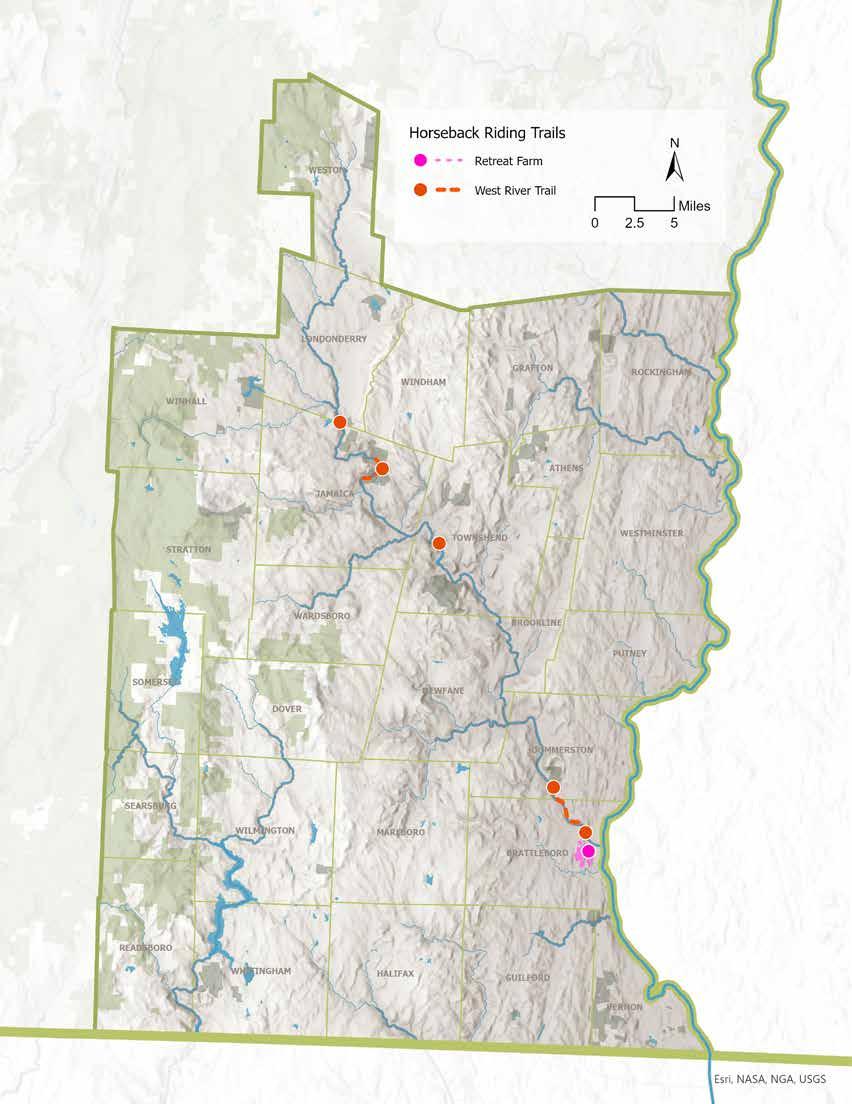
Horseback riding trails in the Windham Region
Horseback Riding
DATA COLLECTION
In this inventory, horseback riding locations are defined as trails and locations where horseback riding is permitted rather than businesses/ stables where visitors can pay for a horseback riding experience. The information was found on state-, town-, and individual site-websites.
INVENTORY
The inventory captured The Retreat Farm in Brattleboro and The West River Trail with portions in Brattleboro, Dummerston, Jamaica, Londonderry, and Townshend. Both of these trail systems are owned by land trusts or made accessible through conservation easements and partnerships with private landowners. Beyond recorded horseback riding trails, Vermont has miles of Class 4 highways which are unmaintained public rights-of-way (Discover Vermont’s Dirt Roads). These roads permit all kinds of outdoor recreation activities including horseback riding.
All of these locations are inventoried wildlife watching, snowshoeing, and cross-country skiing sites as well. This indicates the multi-use functionality and importance of these trail systems.
SURVEY
The survey revealed that 3.2% of respondents ride horseback in the Windham Region during the spring, 5.6% ride in the summer, and 4% in the fall. Survey respondents demonstrated interest in more trails that were limited to nonmotorized activities, and the West River Trail is an excellent example. There were also notes on wanting public riding stables and more affordable horseback riding options in general.
LIMITATIONS
There is very limited online information surrounding horseback riding. Horseback riding that occurs through private lands that permit public access is not included in this inventory.
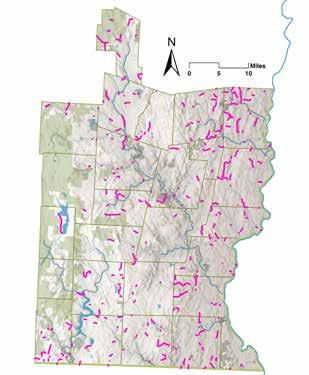
5-8 Vermont Class 4 Roads, 2020
Unmaintained public rights-of-way where many types of recreation take place.
ISSUES
Increased development could result in a decrease of Class 4 roads in Windham Region and decrease available horseback riding trails.
AREAS FOR FURTHER RESEARCH
• Where might additional nonmotorized, multi-use trails be established to better serve the public? What stakeholders should be involved in this process?
• What are the price barriers preventing horse-boarding in the region? Would public stables increase horseback riding accessibility?
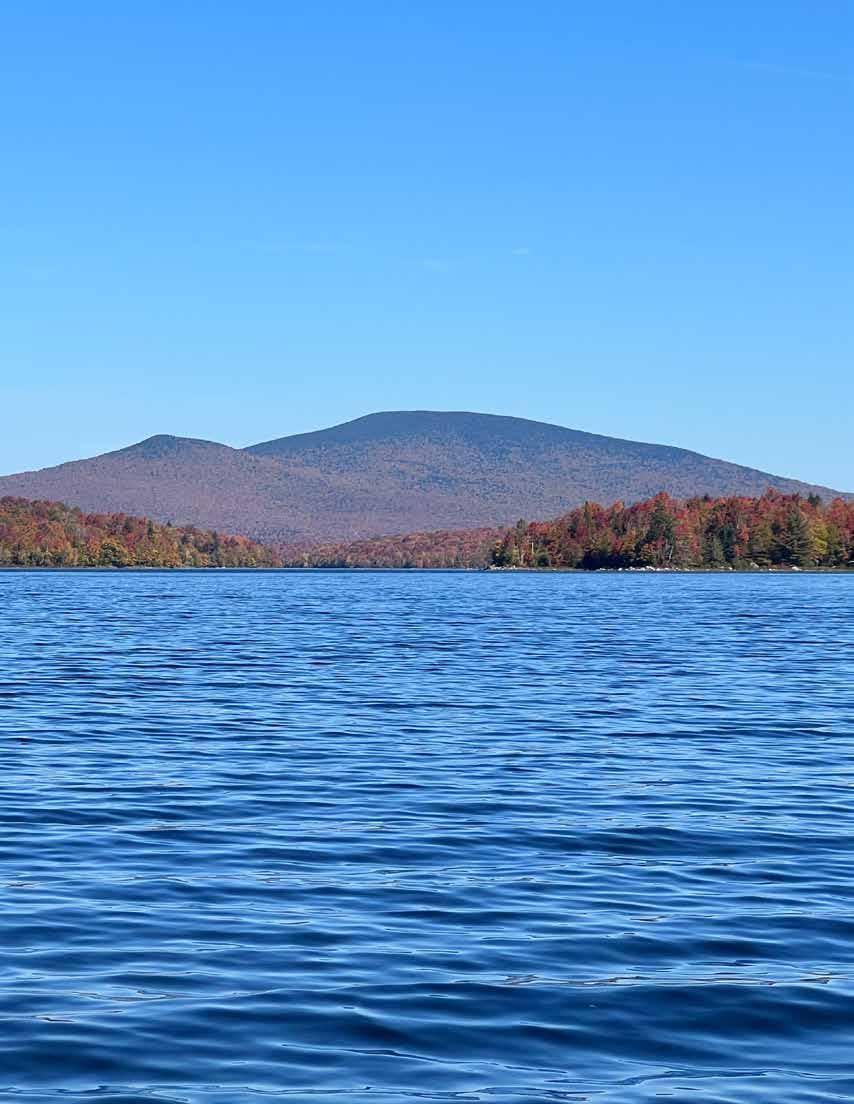
Somerset Reservoir and Stratton Mountain
David Weber
Water-Based Activities
SWIMMING BOATING
INTRODUCTION
Water-based activities include recreation activities that are performed on or in waterbodies, excluding activities such as fishing that involve wildlife (see section 5.4 Wildlife-based Activities). Due to project constraints, many water-based activities listed separately in the Vermont SCORP were combined into the two categories inventoried in this report. These include motor boating, water skiing/wakeboarding/wake surfing, canoeing/ kayaking/row boating, personal watercraft (PWC), sailing, stand up paddle boarding, and rafting. Two other categories, scuba diving/ snorkeling and wind surfing, were not investigated in this report.
SPECIFIC CHALLENGES
Climate challenges, including the increase in frequency and severity of flooding events, as well as physical and legal access to water emerged in the survey as two of the most prominent concerns surrounding water-based activities.
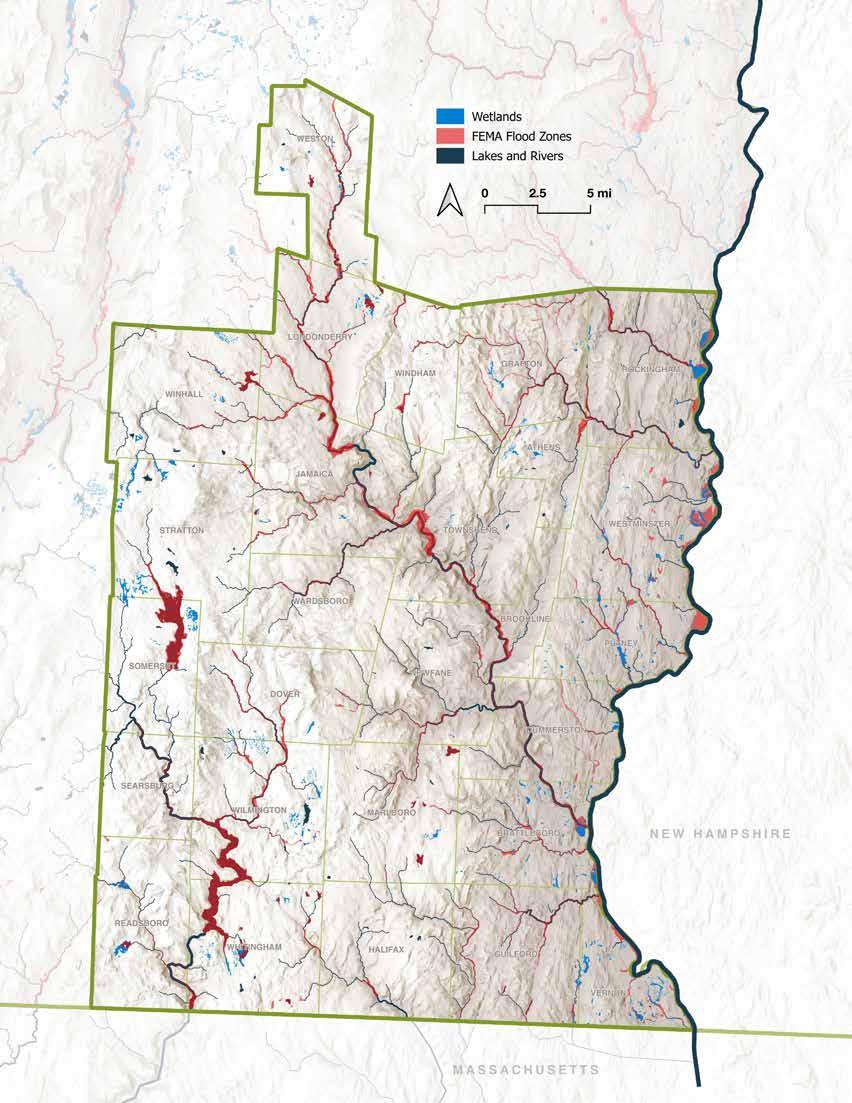
5-9 FEMA Flood Zones and Wetlands in the Windham Region
Climate Change and Water-Based Recreation
As climate change leads to more frequent extreme precipitation events, the risks to waterbased recreation amenities in the Windham Region may increase, given the fact that these activities occur in areas of the landscape that these collect water. Two geographic areas of interest, high flood-risk areas and wetlands, will be important to monitor to help mitigate effects on the availability and resilience of water-based recreation in the region.
HIGH FLOOD-RISK AREAS
FEMA 100-year flood maps identify areas that are vulnerable to flooding in 100-year storm events. Vermont is experiencing these flooding events much more frequently than every one hundred years (Emert, 2023). Additionally, these maps are out of date, and much more land is susceptible to flooding than is currently identified (River Corridor and Floodplain Maps). Regardless, they identify vulnerable places in the region. Flood Ready Vermont has conducted and compiled state-specific research and resources for citizens and municipalities to help focus future development in safe places, protect watersheds, adapt critical infrastructure, and prepare for emergencies (Welcome to Flood Ready Vermont). Flood Ready Vermont’s data on river corridors, erosion, flooding, and more helps to further identify vulnerable areas.
WETLANDS
Bogs, marshes, fens, swamps, and other locations where water impacts ecosystem composition are considered to be wetlands, and each type of wetland has associated characteristics and functions (Vermont Natural Resource Council). Generally speaking, all wetlands maintain water quality by filtering runoff, mitigate flooding by slowing down water flow and allowing infiltration, minimize erosion by stabilizing shorelines with deep root systems, and provide valuable habitat to unique flora and fauna (Vermont Natural Resource Council). Nearly half of Vermont’s historic wetlands have been lost to dredging, filling, draining, and excavating, around twentyacres a year since 1995 (Vermont Natural Resource Council). Protecting the Windham Region’s wetland resources is a necessary strategy for protecting communities, both human and non-human, from the impacts of climate change.
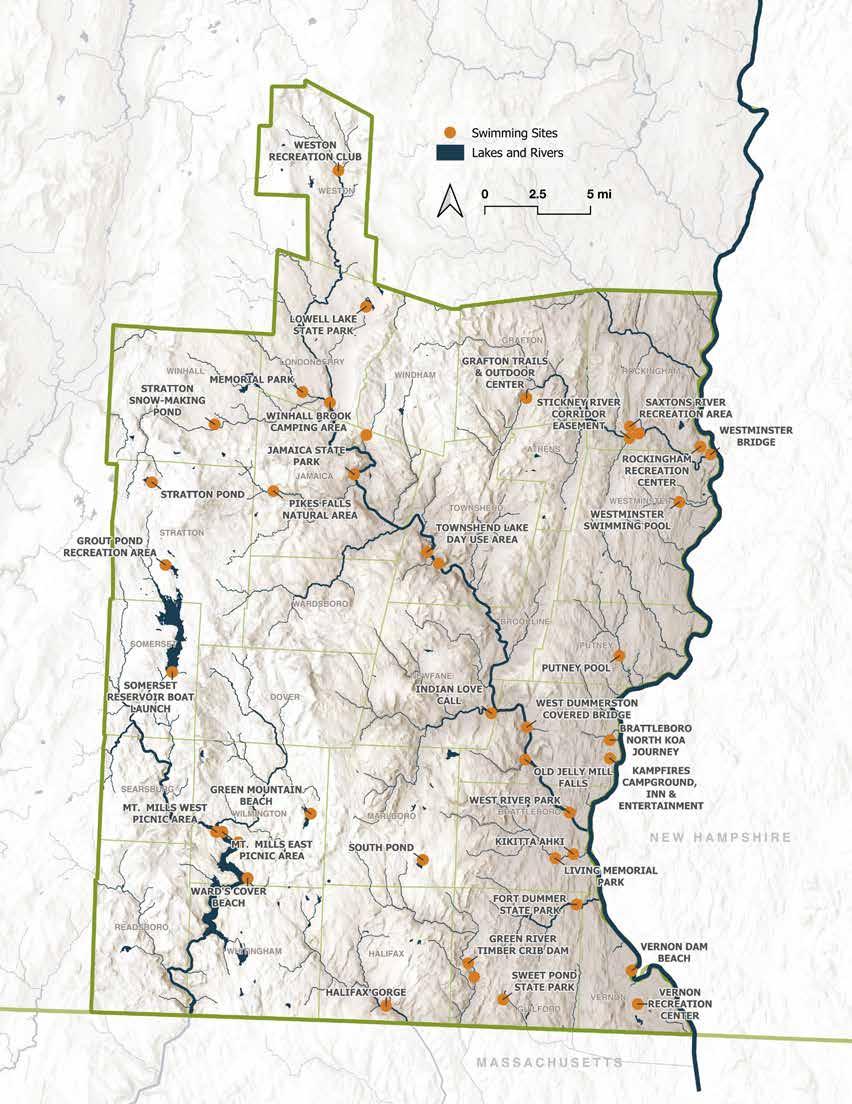
Swimming
CONTEXT
In the Windham Region, people swim in natural areas, including lakes, reservoirs, rivers and streams, as well as outdoor swimming pools. (This report does not include indoor swimming pools.) The majority of opportunities for swimming in the region are located in natural areas. Swimming areas along Vermont’s streams and rivers are often colloquially referred to as “swimming holes. Swimming hole sites can either be officially designated by site owners for swimming, or undesignated, with varying levels of infrastructure on-site to support public use, such as restrooms, railings, parking, etc.
INVENTORY
Along the Deerfield River, swimming areas managed by Great River Hydro LLC. exist around the Somerset and Harriman Reservoirs. Several publicly-managed swimming areas exist along the West River, including the Winhall Brook Camping Area, Jamaica State Park, and Townshend Lake Day Use Area. Several popular undesignated swimming holes exist along the West River, below the West Dummerston covered bridge and Scott covered bridge in Townshend. The land around one popular swimming hole, Indian Love Call in Newfane, is now managed by a non-profit. The Connecticut River provides fewer designated locations for swimming, with more opportunities for other water-based activities such as fishing and boating. However, a few swimming areas do exist, including the Vernon Dam Beach docks in Vernon.
Swimming areas exist at several smaller ponds and lakes throughout the region. Some of these are reserved for town resident use, including South Pond in Marlboro and Green Mountain Beach on Lake Raponda in Wilmington, while others are open to the public, including Lowell Lake State Park in Londonderry, the Stratton Snow-making Pond in Winhall, and the Grafton Trails and Outdoor Center in Grafton. Several ponds and lakes in the region provide
opportunities for other water-based recreation such as fishing and boating, but are not utilized for swimming due to public water supply restrictions or aesthetic reasons (prevalence of aquatic plants, shallow water etc.).
Finally, swimming also occurs in outdoor swimming pools including the municipal pools in Living Memorial Park in Brattleboro and the Rockingham Recreation Center in Rockingham, as well as privately-owned pools, including the Brattleboro North KOA and the Kampfires Campground, both in Dummerston.
SURVEY
Swimming ranked as the second-most popular recreation activity during the summer, with 68.8% of survey respondents reporting swimming in summer in the Windham region, while 24.8% and 29.6% of respondents reported swimming in spring and fall, respectively.
Several survey respondents reported that physical access to swimming areas remained a challenge. These challenges were reported to be inadequate parking access at swimming holes, poor water quality, insufficient access to deep-water swimming areas. More research is necessary to understand where physical access to swimming areas is perceived to be inadequate. Most swimming areas are free-ofcharge; however, day-use fees apply at some recreation centers and pools as well as some natural areas such as Jamaica State Park. Financial barriers were not mentioned among survey respondents with respect to swimming.
ISSUES
The region’s low population density and rural character provide a secluded backdrop for outdoor recreation. While residents and visitors can easily find many of the region’s pools and natural swimming areas, many locals recreate at “secret” swimming areas, for which very little or no public documentation is available.
5.21 Water-Based Activities: Swimming
In Vermont, surface waters are held in public trust, meaning they belong to the public and are administered by various state agencies and departments. However, physical and legal access to these waters may be limited. In many cases, physical access to rivers, streams, and lakes would require passing over privatelyowned land, and the public is reliant on access points that have been officially designated by site owners for swimming. In some cases, for example at FWD Access Areas, which were conceived for fishing and boating, many people swim even though swimming is a nondesignated use and discouraged.
This report does not attempt to identify the many swimming areas in the region that are utilized by locals but are kept “secret”. Some swimming holes along rivers, such as the area called Flat Rocks below the West Dummerston covered bridge are well-known and not considered secret.
Public use of Vermont’s surface waters for swimming poses public health risks in situations where water quality of rivers is unsuitable for bathing. Upstream pollution such as agricultural runoff, road salt, and other debris can contaminate water, especially in the time following a storm event. Several organizations across the state monitor water quality; the Connecticut River Conservancy has an extensive database and maps with up-todate data from monitoring sites along rivers and streams throughout the Windham Region. Public knowledge of when it is safe to swim is critical for mitigating public health risks.
Swimming holes that grow in popularity may face issues such as a lack of safe parking space for every site visitor leading to unsafe conditions associated with parking on roadways, erosion of streambanks, litter, and noise pollution, among others. Personal injury and death may also result at certain swimming holes, due to the challenging terrain of the streams. For example, the public is discouraged from swimming at Twin Falls in Rockingham due to the high death rate among recreational swimmers.
Further research is necessary to understand the demand for physical and legal access to swimming amenities among the Windham
Region’s residents as documented in the survey. A warming climate as well as an increasing number of recreation tourists in Vermont may increase demand at swimming areas, in some cases requiring investments in physical infrastructure to accommodate visitors, and/or organizations that will help manage physical and legal access to popular swimming holes. For example, Rock River Preservation Inc., a 501(c)3 non-profit organization which formed in 2005, manages and preserves public access to and the ecological integrity of a popular swimming area near the mouth of the Rock River in Newfane colloquially known as “Indian Love Call”. Such organizations provide critical local support and management of these sites.
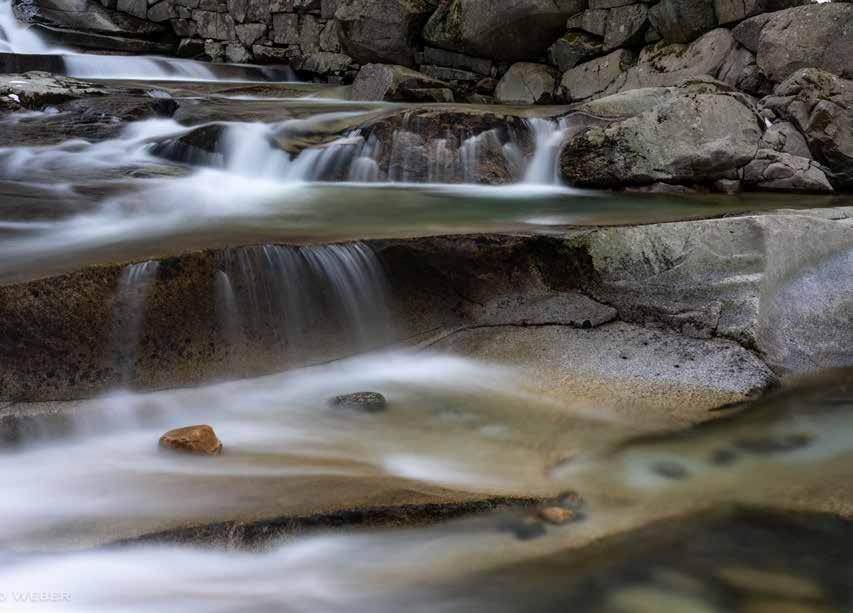
AREAS FOR FURTHER RESEARCH
• Consider how, if, and when swimming holes should be managed to balance outdoor recreation demand with public safety and conservation goals
• Study usage patterns of undesignated swimming areas to determine hotspots of activity
• Work with stakeholders to identify specific issues at swimming areas around the region to determine where development or conservation efforts are needed
• Consider opportunities to expand access to swimming across the region, especially in light of a warming climate
Old Jelly Mill Falls, Dummerston David Weber
E.DEERFIELD BRANCH
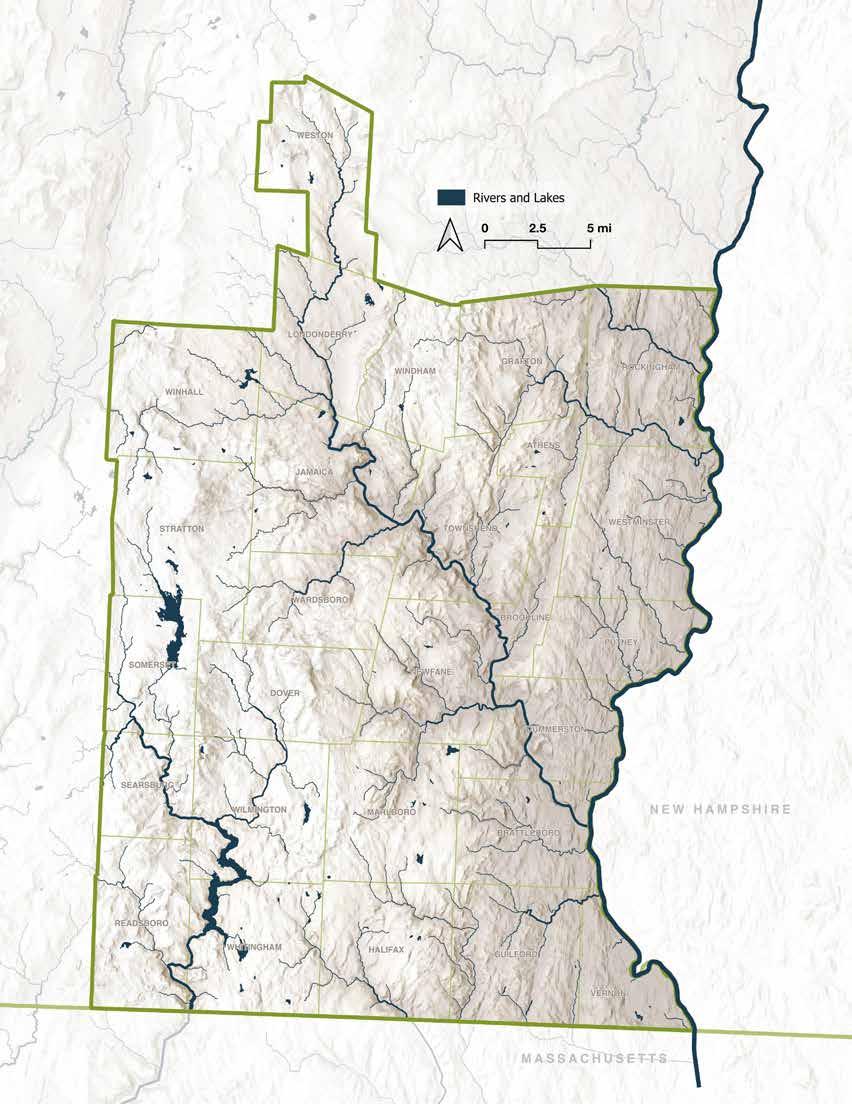
W.DEERFIELD BRANCH
DEERFIELD RIVER
WARDSBORO BROOK ROCK RIVER GREEN RIVER
WEST RIVER
SAXTONS RIVER
WINHALL RIVER
BALL MT BROOK
Boating
INVENTORY
The Windham Region’s many boating opportunities fall broadly into two categories: whitewater and flatwater boating.
Whitewater Boating
Whitewater boating involves navigating rivers with turbulent, fast-moving water where the river’s gradient and depth produces frothy, turbulent rapids. This type of boating often requires specialized equipment and training. Whitewater boating occurs often, but not always, in smaller, shallower waterways or waterways higher in a watershed where the irregular terrain of the stream bottom interacts more with the water surface. Classification of whitewater rivers follows an internationallyrecognized system of six classes, where Class I describes moving water with few riffles and small waves and few to no obstructions, while Class VI describes waterways that are nearly impossible and very dangerous to navigate and are generally not commercially raftable. The boundaries between classes are not considered hard distinctions, and some discrepancies in defining adjacent classes exist.
American Whitewater, a national non-profit organization focused on conserving whitewater rivers in the U.S., has maps and descriptions of classified whitewater river stretches on their website, including these in the Windham Region:
West River Watershed
Class I-II: West River - Salmon Hole to Route l00; Townshend Dam to Rock River; Rock River to Connecticut River
Class II-III: Winhall River - Grahamville School Road to Winhall Campgrounds; West RiverSalmon Hole; Rock River - Upper
Class III-IV: Ball Mountain Brook - Metcalf Road to Jamaica State Park; Wardsboro Brook - North Wardsboro to West River; Rock River -
Lower
Deerfield River Watershed
Class I-II: Deerfield River, East BranchSomerset Reservoir to Searsburg Reservoir
Class II-III: Deerfield River - Searsburg Dam to Harriman Reservoir
Class III-IV: Deerfield River - Harriman Reservoir to Sherman Reservoir (Upper Dryway)
Class IV-V: Deerfield River, West BranchHeartwellville to Readsboro Village
North River Watershed
Class II-III: North River - East Branch
Green River Watershed:
Class II-III: Green River (Deerfield River Tributary) - Green River covered bridge to West Leyden, MA
Saxtons River Watershed
Class II-III: Saxtons River - Grafton to Connecticut River
Williams River Watershed
Class I-II: Williams River - North Chester to Brockway Mills
Flatwater Boating
Flatwater boating encompasses activities like kayaking, canoeing, rowing, sailing, and paddle-boarding that occur on waters that are relatively calm and slow-moving or still.
Flatwater boating areas in the Windham Region include lakes, ponds, the reservoirs of the Deerfield River, and on the Connecticut River along the eastern edge of the region.
A number of land management organizations provide public access for boating. Several state parks offer boating with boat ramps, including Lowell Lake State Park in Londonderry and
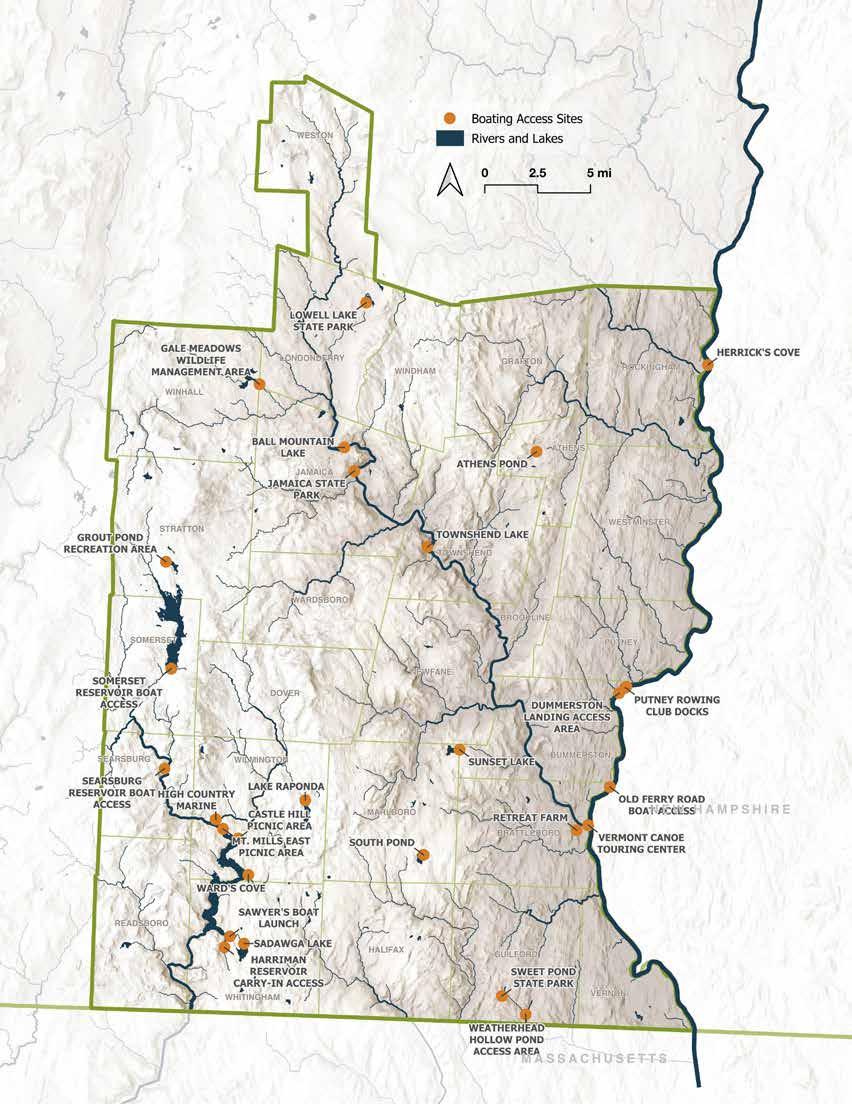
Sweet Pond State Park in Guilford. The Vermont Department of Fish and Wildlife maintains a number of Access Areas with boat ramps on the Connecticut River and some other waterbodies in the region, including South Pond in Marlboro, and Gale Meadows Wildlife Management Area in Winhall / Londonderry.
Boating access at the region’s reservoirs is provided by the United States Army Corps of Engineers (USACE) in the West River watershed, and by Great River Hydro in the Deerfield River watershed and at the Vernon Dam on the Connecticut River.
A number of private land management organizations offer boating access to the region’s waters, including the Retreat Farm and the Vermont Canoe Touring Center, both fronting on the West River in Brattleboro, the Putney Rowing Club, which offers access to the Connecticut River at its docks in Dummerston, and High Country Marine, offering access to the north end of Harriman Reservoir.
SURVEY
Several survey respondents commented that public access to water was inadequate in the Windham region. Most of these responses pertained to swimming and fishing access; however some respondents did not specify access to which water-based activity was lacking. In follow-up interviews with two respondents, both commented on what they felt was a lack of physical and legal access to the Connecticut River. One respondent felt there could be more physical infrastructure (e.g. boat ramps) in each town along the River. While FWD Access Area were established for fishing and funded through the sale of fishing licenses, they have been increasingly used by non-anglers for boating as well as nonsanctioned activities such as picnicking and swimming. Conducting further surveys, interviews, and focus groups could help understand better the ways in which public
access to water is lacking, or perceived to be lacking.
ISSUES
Because whitewater rivers tend to be shallower and located higher in the watershed than flatwaters, their availability as recreational resources is more subject to fluctuations in water levels. To counter this effect, the whitewater boating industry has often relied on the existence of dams to regulate and provide consistency in water flow along these rivers. Indeed, southern Vermont and Northwestern Massachusetts are well-known nationally as good whitewater regions due to the many dams located in watersheds in the area, including those managed by Great River Hydro and the USACE.
The USACE schedules two main water release weekends along the West River: one in late April/early May and the other in late September. Shuttles are provided at Jamaica State Park to bring rafts and kayaks from the park entrance area to the Ball Mountain Dam. Great River Hydro schedules releases at its dams on the Deerfield River as well, with more frequent releases occurring throughout the summer downstream in the Massachusetts section.
Small tributaries to these rivers, such as Ball Mountain Brook in the West River watershed and the Deerfield River West Branch in Readsboro, do not benefit from these dam releases. These are also more technically challenging whitewater rivers due to their small size and rocky forms. Both heavy flooding as well as low water levels during drought conditions can make these waterways more dangerous for whitewater recreation.
The frequency and timing of dam releases can be an issue of contention among various interest groups. Hydropower companies are interested in managing dam flow to respond to fluctuating electricity generation needs. Whitewater recreationists prefer consistent and adequate water flow rates to enjoy boating.
Those concerned with wildlife and ecological management of waters are attuned to how flow rates, water temperature, and siltation affect fish migration and water quality, for example. Consultation with these various stakeholders could help better understand the priorities and needs around dam release timing and frequency.
Whitewater rafting and kayaking requires specialized equipment and knowledge. Opportunities are often offered by whitewater outfitters, for example Zoar Outfitters, a Charlemont, MA-based company that offers guided excursions on the West River.
The use of motorized watercraft is regulated by the State according to the Vermont Use of Public Water Rules. Motorized watercraft are primarily operated on flatwater. The use of motorized watercraft on some water bodies in the region, such as Sweet Pond State Park, is not permitted, while on others, rules about speed and distance from shoreline apply. The use of jet skis (personal watercraft or “PWC”) is
prohibited on most water bodies except the Connecticut River and Harriman Reservoir. One survey respondent noted that, especially on summer weekends, motorboats and PWC are very common on the Connecticut River and affect the experience of non-motorized boaters.
The transfer of aquatic plant and animal species to or from Vermont surface waters is prohibited by the state in order to prevent the spread of nuisance species. While no specific cases of problematic species spreading in waters of the Windham Region arose in this study, public awareness of the issue may help prevent harm.
AREAS FOR FURTHER RESEARCH
• Consult with stakeholders in whitewater river management, including outfitters, dam managers, and natural resource managers to understand priorities and actions that would maximize recreational opportunities while preserving ecological resources
• Ensure adequate information is available online and at boating access sites to prevent the spread of nuisance aquatic species as well as to ensure proper use of motorized watercraft
• Conduct further community outreach to understand issues around how and where public access to water is lacking
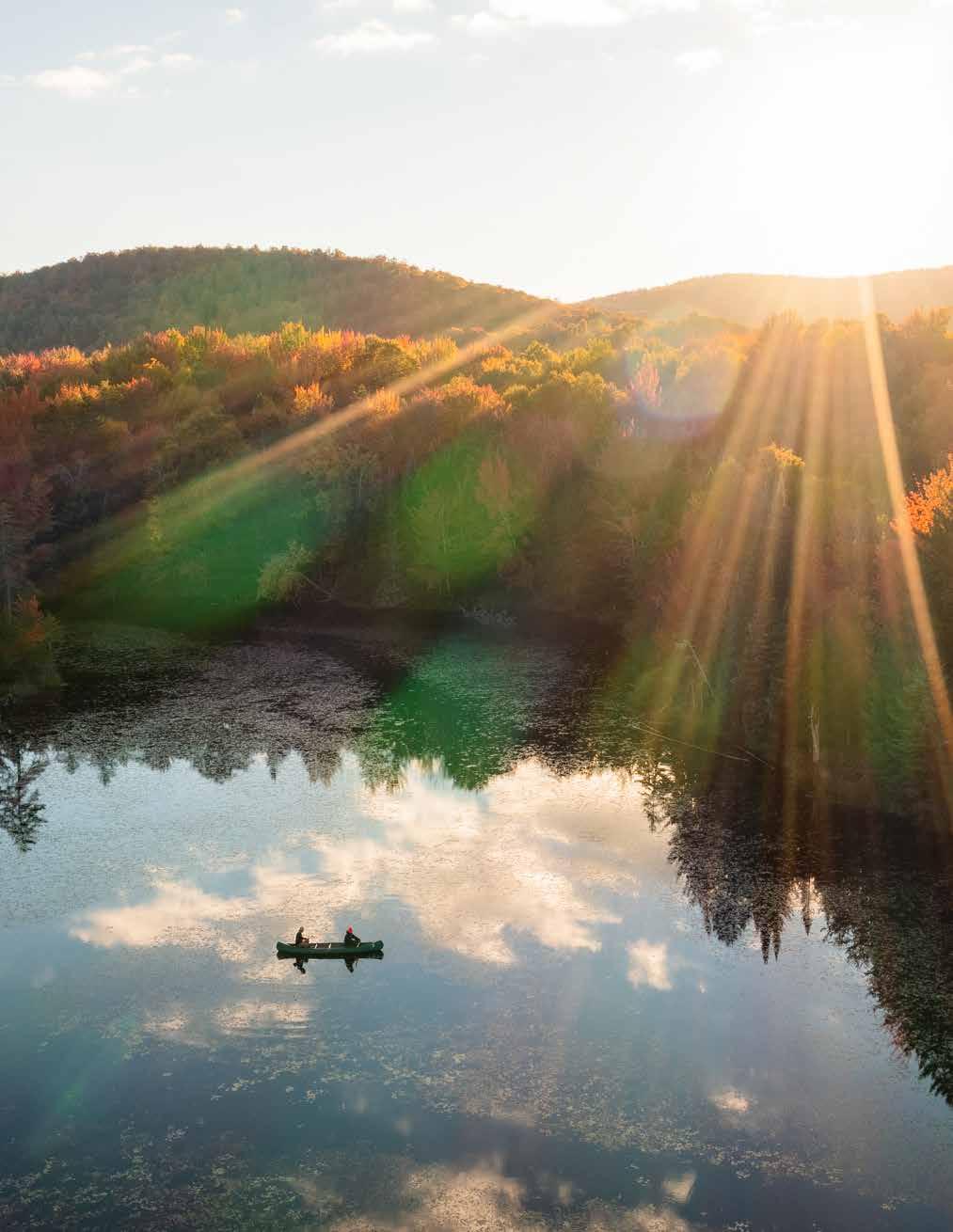
Canoeing on a Vermont lake Nathanael Asaro
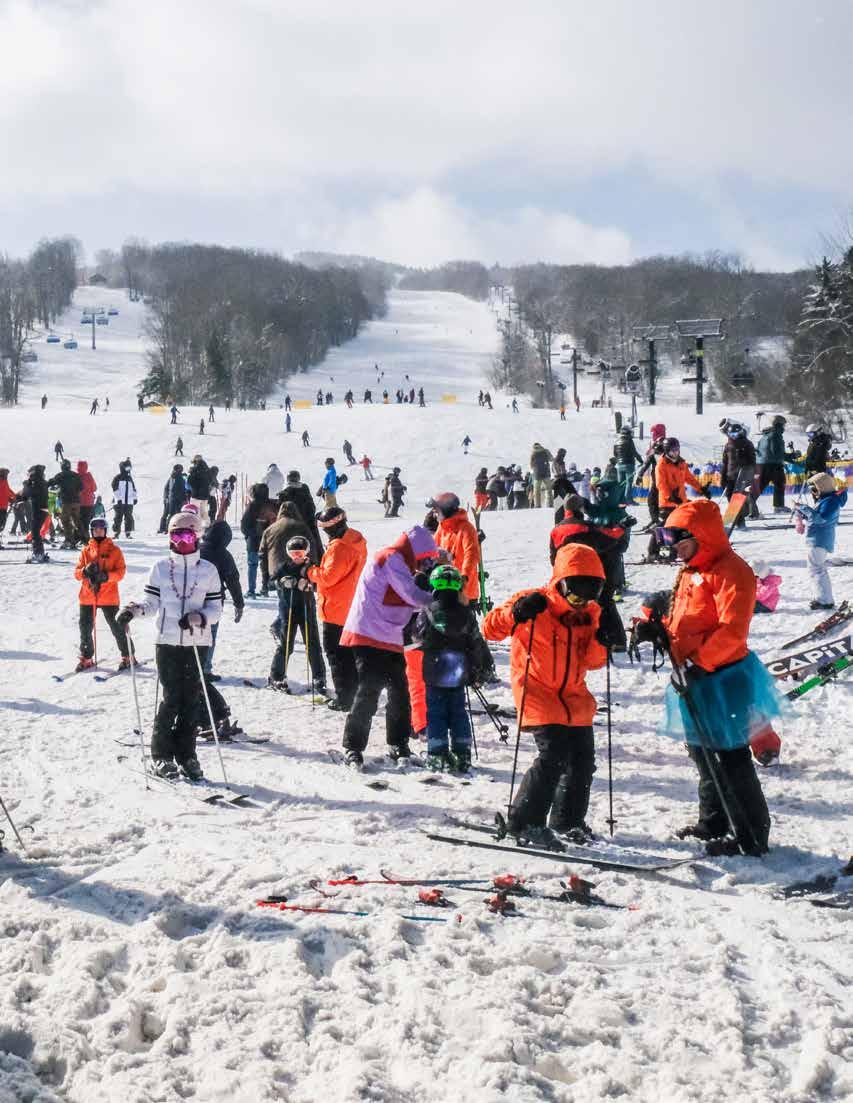
Skiing at Mount Snow in Dover
Stefan Poost
Winter Activities
DOWNHILL SKIING & SNOWBOARDING
SLEDDING/TUBING
CROSS-COUNTRY SKIING SNOWSHOEING
BACKCOUNTRY SKIING & SNOWBOARDING ICE SKATING
INTRODUCTION
Many winter outdoor recreation activities in Vermont require snow, ice, or cold temperatures. The winter climate in Vermont is not always stable, and freeze/thaw cycles constantly affect snowpack conditions. The inventory research for this project includes the following recreation types: downhill skiing and snowboarding, sledding/tubing, cross-country skiing, snowshoeing, backcountry skiing and snowboarding, ice skating, snowmobiling, and fat biking. Not included are other winter activity types classified from the Vermont SCORP including ice climbing, pond hockey, and doglsedding. Nordic skiing and alpine touring have been combined with backcountry skiing and snowboarding in this report.
SPECIFIC CHALLENGES
Climate change is affecting winter weather cycles and challenges the predictability of snow conditions year to year. Based on trend predictions, winter is most likely going to be one month shorter by the year 2050 (Move Forward Together Vermont, 2025). The challenges of a warming winter and increasing frequency of winter rain events have to be considered for any of these outdoor recreation opportunities to continue to be available in the Windham Region of Vermont.
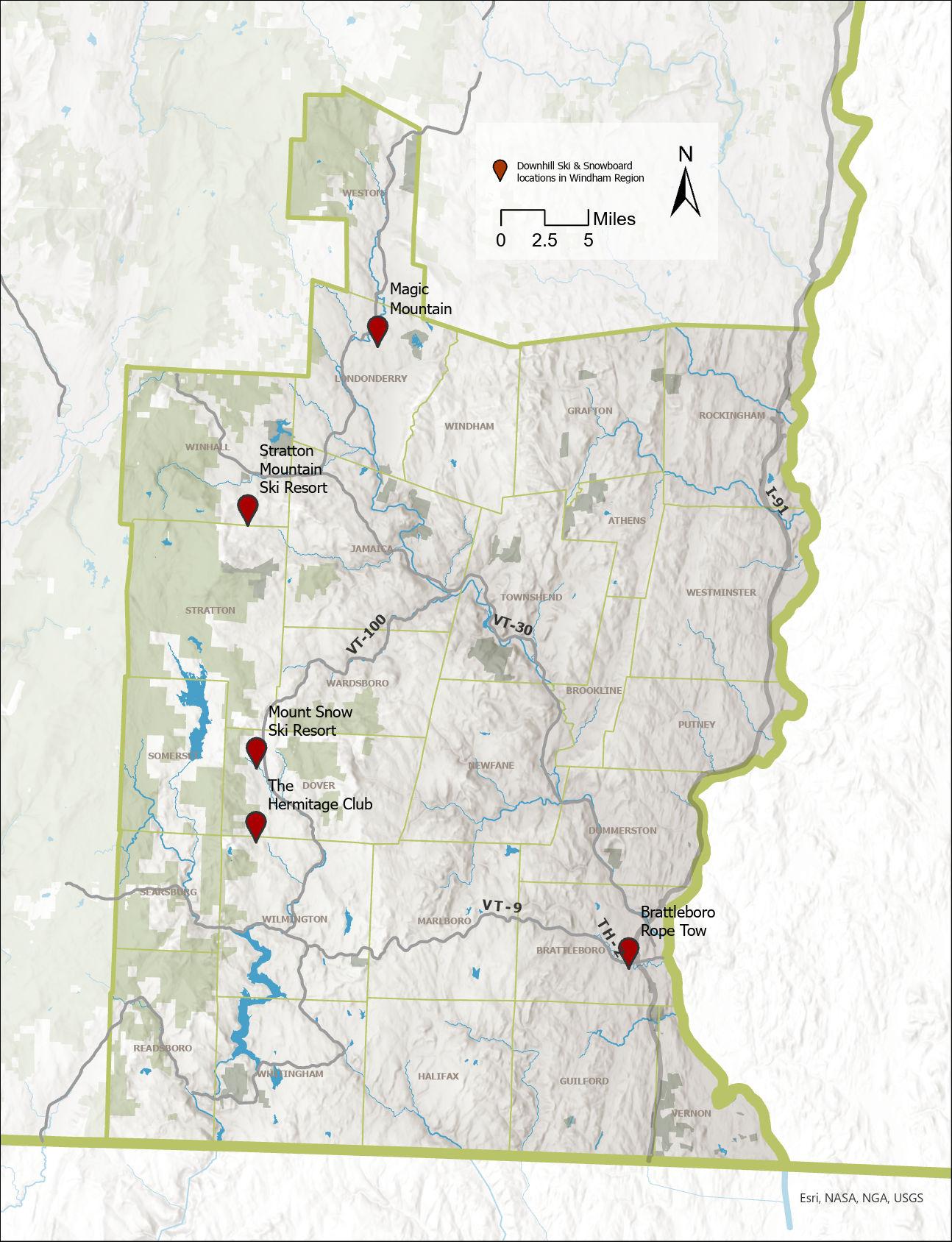
5-13 Downhill skiing locations in the Windham Region
Downhill Skiing & Snowboarding
SKI AREAS IN THE WINDHAM REGION
Windham County is home to several popular ski destinations. Mount Snow, located in the town of Dover, is one of the largest ski resorts in Vermont. Known for its extensive network of trails and modern snowmaking capabilities, Mount Snow attracts visitors from across the country. The resort offers a variety of runs, terrain parks, and a state-of-the-art lift system, accommodating both families and experienced skiers. Stratton Mountain, located just to the north of Mount Snow, is another prominent resort in the region. The resort’s terrain caters to skiers of all abilities, with options for both downhill and cross-country skiing.
Magic Mountain, located in Londonderry, provides a more intimate skiing experience compared to the larger resorts. Known for its challenging trails and laid-back atmosphere, Magic Mountain has attracts advanced skiers and snowboarders. For those seeking an exclusive, private skiing experience, The Hermitage Club, also located in Wilmington, is a private, members-only resort offering highend services with membership. The club focuses on a more personalized, upscale experience. The Brattleboro Ski Hill, a historic, community-operated ski hill, offers a low-cost, grassroots alternative to the large resorts. It’s a beloved spot for locals, particularly beginners and families looking for an affordable introduction to the sport. The rope tow provides a more nostalgic, simple skiing experience that harkens back to the sport’s early days.
PRIVATE VS. NON-PROFIT
Ski resorts in the Windham Region vary in their ownership structures, which impacts both the user’s experience and the broader economy. Private resorts like Mount Snow, Stratton Mountain, and The Hermitage Club operate as for-profit entities, often offering high-end amenities and services, such as luxury accommodations, fine dining, and exclusive experiences for members. These resorts cater
to a wealthier clientele and focus on maximizing profit while providing a premium skiing experience.
In contrast, not-for-profit resorts, such as the Brattleboro Ski Hill, are typically more community-oriented. These resorts tend to emphasize accessibility, affordability, and preservation of the local skiing culture. Not-forprofit resorts reinvest their earnings into improving the resort, maintaining trails, and supporting community events. While they may offer fewer high-end amenities, they provide a more budget-friendly skiing experience that attracts locals and visitors.
SURVEY
The survey ranks downhill skiing and snowboarding as 5th in popularity for winter sports. 26.4% of survey respondents say that they participate in downhill skiing & snowboarding in the winter.
Blackline trail on a powder day Magic Mountain LLC
ISSUES
While skiing remains a cornerstone of Vermont’s economy, climate change is increasingly threatening the future of downhill skiing and snowboarding in Vermont. Warming winters, reduced snowfall, and shorter ski seasons are already impacting resorts, particularly those reliant on natural snow. Resorts like Mount Snow and Stratton have invested heavily in snowmaking technologies to mitigate the effects of less reliable snowfall. However, snowmaking relies on cold temperatures, and with rising winter temperatures, even snowmaking has become more challenging.
The unpredictability of snow seasons poses a risk to the stability of the ski industry in Windham County and Vermont as a whole. Shorter ski seasons mean fewer opportunities for visitors and higher operational costs for
resorts. This is particularly concerning for smaller, community-oriented resorts like Magic Mountain and the Brattleboro Rope Tow, which may struggle more to adapt to these changes because of narrow profit margins. However, not-for-profit ski areas may have a stronger connection to the community and may prove more resilient in garnering support from the local population.
Many regional ski resorts are diversifying their offerings, incorporating summer activities like mountain biking, hiking, and golf to maintain year-round revenue. These efforts help resorts stay financially viable, even as the ski season shortens. Given the unpredictable and volatile conditions, it is unclear if skiing will continue to have the role it has now in the outdoor recreation economy.
AREAS FOR FURTHER RESEARCH
• How do shifts in revenue at ski resorts impact communities? Are there viable alternatives?
• Deeper investigation into climate models and anticipated predicted snowfall versus actual snowfall year-over-year.
• Connect with ski resorts to better understand their perspective on how climate change will impact ski operations and overhead costs over time.
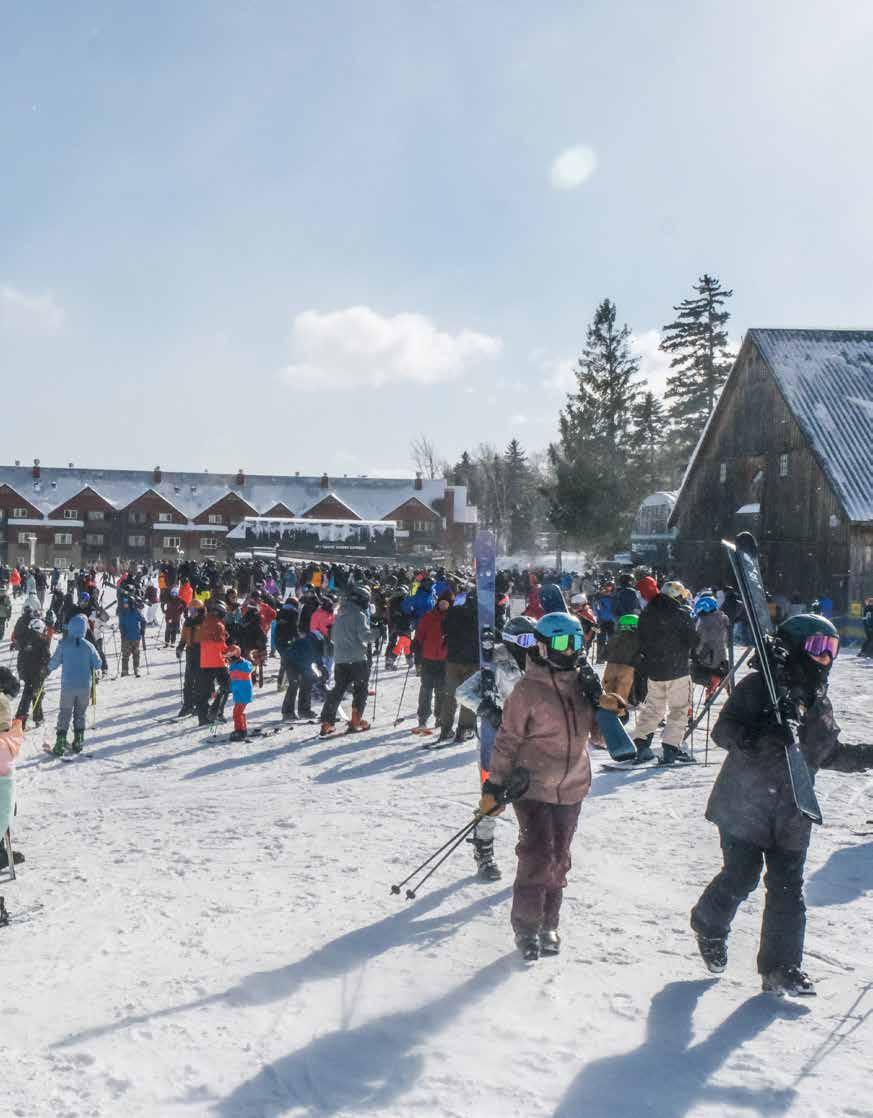
February 2025 at Mount Snow Ski Resort
Stefan Poost
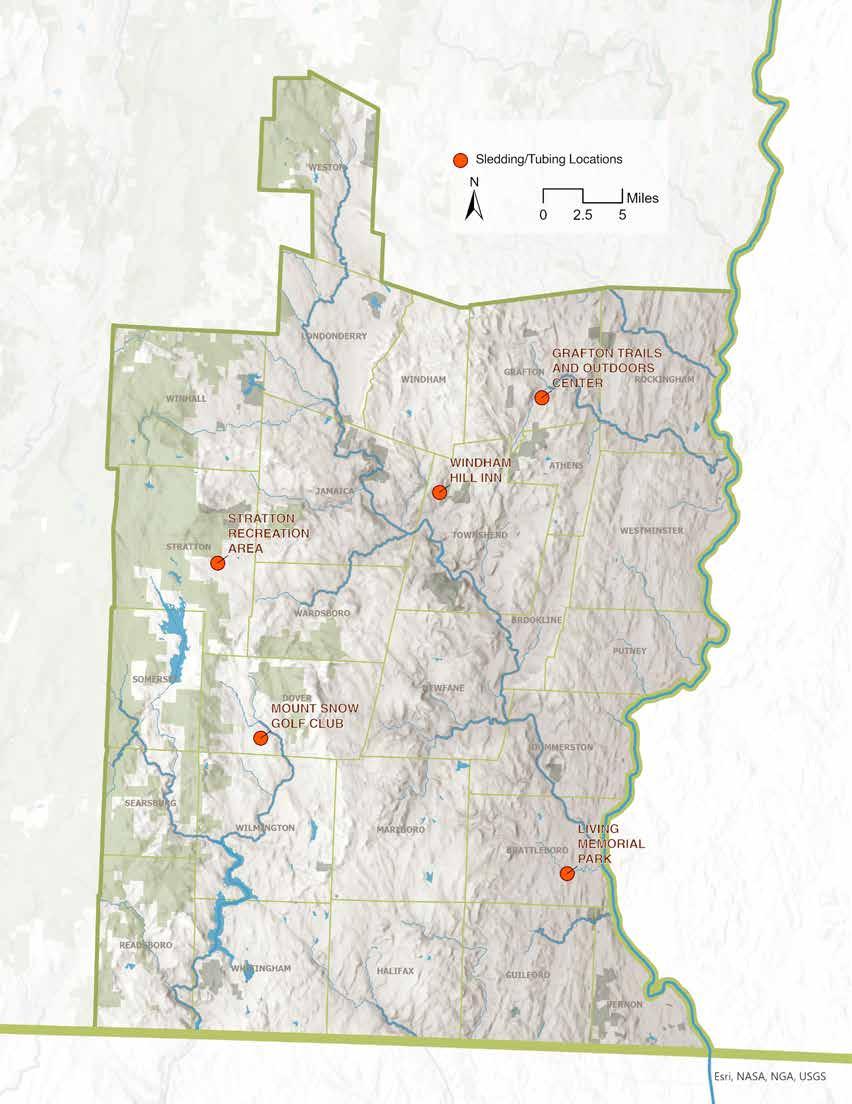
5-14 Sledding/tubing hills in the Windham Region
Sledding / Tubing
DATA COLLECTION
The sledding inventory includes locations advertised online for sledding either as a business or free for public use. The inventory identified five locations for sledding in the region. Grafton Trails and Outdoors Center, Mount Snow Golf Club, and Windham Hill Inn are all private businesses that advertise sledding and/or tubing. Grafton Trails and Outdoors Center and Mount Snow Golf Club charge for sledding, and Windham Hill Inn offers sledding as an on-site amenity as part of your stay. Living Memorial Park in Brattleboro has a designated sledding area on their ski-hill that is free of charge. They do not offer rentals or allow use of the ski lift for sledding. The Town of Stratton offers Stratton Recreation Area as a municipal recreation site with a popular sledding hill free of charge. Sledding is an inexpensive form of outdoor recreation that contributes to the quality of life of people in the Windham Region. It is fairly accessible, as it does not require expensive equipment and can essentially be done on any cleared hillside with adequate snow and safe access.
SURVEY
17.6% of survey respondents partake in sledding/tubing activities in the Windham Region during the winter. Two of the four follow-up interviewees mentioned sledding/ tubing as a valuable form of outdoor recreation done with their children and/or grandchildren. Living Memorial Park was mentioned by both as their most-frequented location due to ease of access.
LIMITATIONS
Informal sledding hills, while probably more popular among Windham Region’s residents, were not considered as there is little to no information about these places online.
AREAS FOR FURTHER RESEARCH
• Are there sledding/tubing hills in the region that are well-known and popular among residents that are not included in the inventory? How might they be included in the future?
• Do any of the gear libraries offer sleds or tubes?
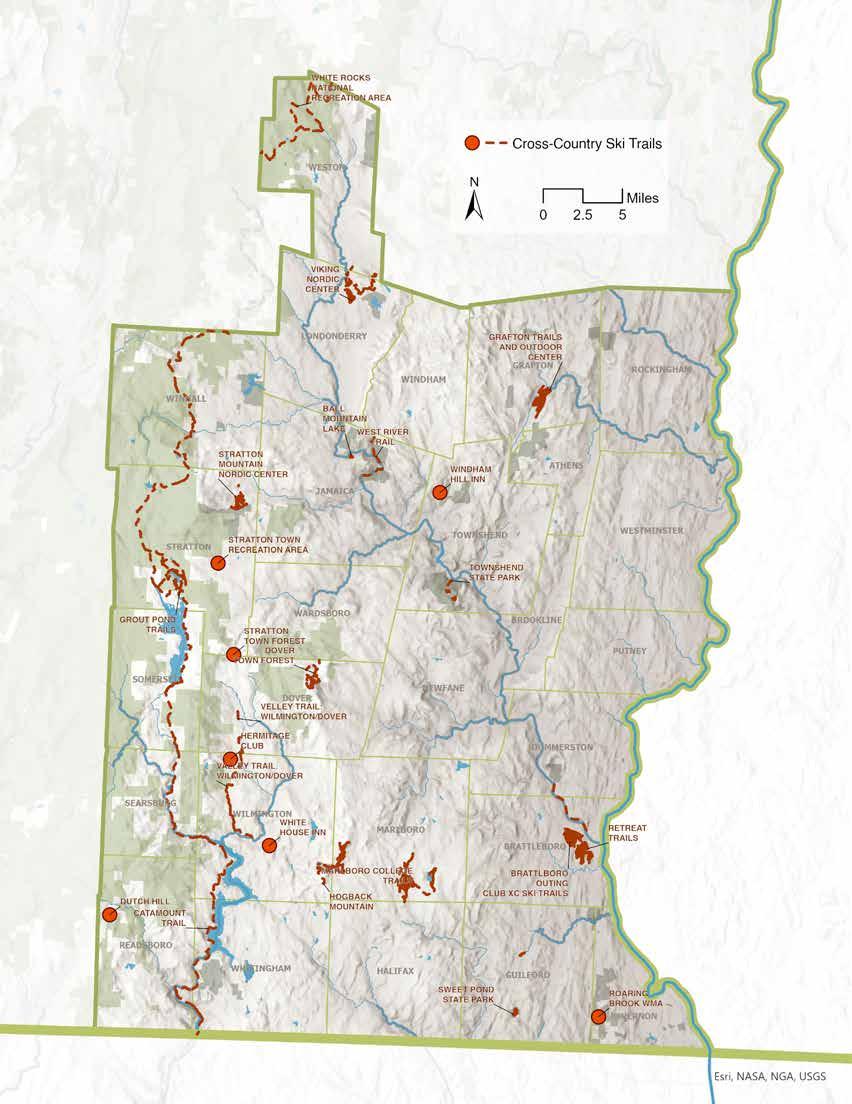
5-15 Cross country ski trails in the Windham Region
Cross-Country Skiing
DATA COLLECTION
Cross-country skiing locations were identified through online research. Site-specific websites, such as designated parks or other managed areas, larger trail network websites, town websites, and the websites of private businesses all provided information on locations for cross-country skiing. The inventory captured thirty-eight publicly accessible cross-country ski locations across the Windham Region. These places range from long networks like the Catamount Trail to small town sites like Townshend State Forest to places without established trails like Roaring Brook Wildlife Management Area in Vernon and Guilford. Of the thirty-five publicly accessible locations, thirteen are owned by land trusts or made accessible through conservation easements, such as the West River Trail. Nine of the locations are private businesses such as Grafton Trails and Outdoor Center or the Hermitage Club. Six locations are state-owned including Wildlife Management Areas and state parks, four sites are owned by towns/ municipalities, three sites are owned by the USFS in the Green Mountain National Forest, one is owned by the US Army Corps of Engineers, and lastly, the Valley Trail in Wilmington and Dover is available via town partnerships with landowners and land trusts.
SPATIAL PATTERNS
The western portion of the region has long, networks of corss-country ski trails with the Catamount and Valley Trails. The West River Trail in the central portion of the region offers longer segments of trails, but the segments are not connected. Most of the cross-country ski trails are smaller, isolated trail centers.
The locations tend to occur along lower-grade slopes, as is necessary for the sport, and at lower elevations. These trails are also largely used for hiking in the summer months. This overlap of low-grade slope and hiking/walking trails could indicate less strenuous trails in the
warmer months for people looking for a less strenuous activity. There is also a lot of overlap between cross-country skiing and snowshoeing trails. Thirty-two of the thirty-eight crosscountry ski locations are inventoried snowshoeing locations. Wilmington, Readsboro, and Grafton have cross-country ski trails within one mile of their village centers.
SURVEY
40.8% of survey respondents participate in cross-country skiing activities in the Windham Region during winter. Many of these respondents are concerned about decreased snowfall, and icy conditions with warming temperatures, decreasing opportunities in the region. One follow-up interviewee stated,
“We cross-country ski less down in Dummerston and Brattleboro because their is less snow. The conditions are usually better up in Marlboro, so we tend to go there.”
Survey respondants would like to see more trails and areas available for cross-country skiing, and more specifically, free, groomed trails.
LIMITATIONS
Some of the spatial data is represented with lines showing trail segments and others are represented with points, as no spatial data existed prior to this project. There are many cross-country ski locations that are not included in the inventory that occur on private lands or do not have information available on the internet.
AREAS FOR FURTHER RESEARCH
• Where might trail easements or other strategies formally protect existing trail networks on private property?
• In what ways can trails be linked to village centers to encourage use in all seasons while also increasing spending in the town’s businesses?
• What are the current trends in days open/closed at cross-country ski centers in the region?
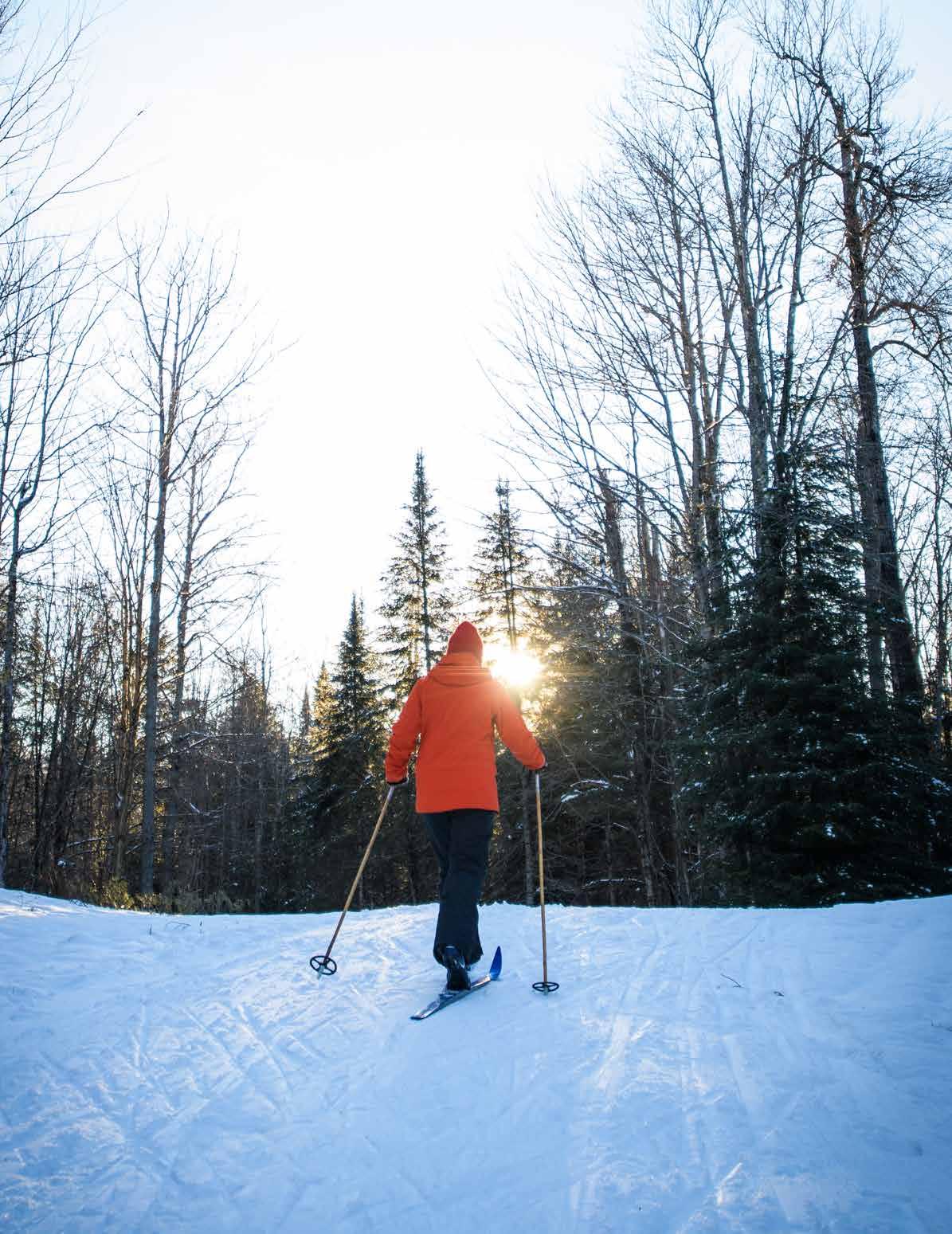
A cross-country skiier in Vermont enjoying the snow covered nordic terrain Nathanael Asaro
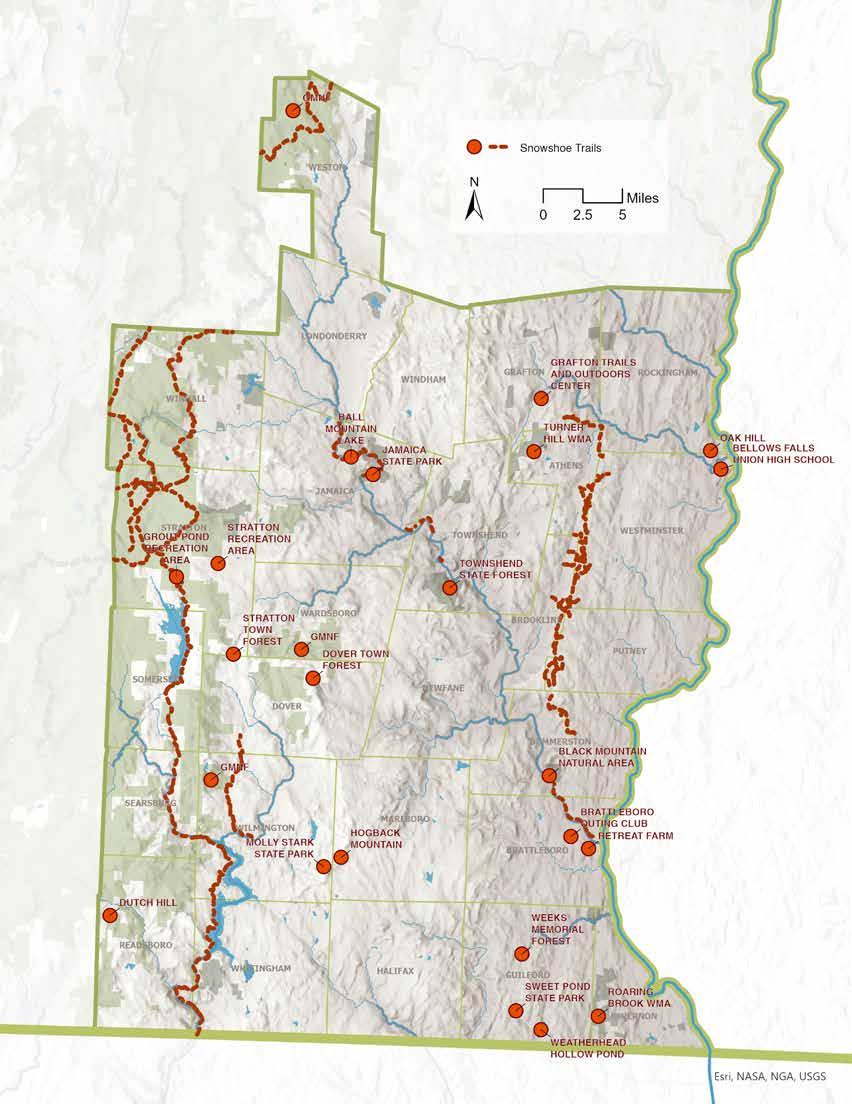
5-16 Snowshoeing locations in the Windham Region
Snowshoeing
DATA COLLECTION
The inventory captured fifty locations for snowshoeing in the Windham Region. Twentyone of the properties are owned by land trusts or are protected and made accessible through conservation easements. Nine of these locations are state-owned properties such as Wildlife Management Areas and State Parks. Eight of the identified snowshoeing locations are within the Green Mountain National Forest. Six of the sites are owned by the towns, four are private businesses such as resorts or recreation centers, and one is a United States Army Corps of Engineers recreation area.
SPATIAL PATTERNS
Thirty-two of the identified snowshoeing locations are also cross-country skiing locations. Newfane, Wardsboro, and Halifax do not have any inventoried snowshoeing locations. The inventory reveals areas where snowshoeing can occur on long networks of trails that span across multiple towns including the Catamount Trail in the western portion of the region, sections of the West River Trail, and the Putney Mountain/Windmill Hill Nature Preserve trail systems. The other snowshoeing locations in the region are smaller trail systems that occur across a single site. The towns of Readsboro, Wilmington, Brattleboro, Jamaica, Grafton, and Rockingham all have snowshoe opportunities within one mile of their respective village center. This reveals an opportunity to connect trails to town centers, if they aren’t already, to encourage activity as well as recreationists engaging with local businesses.
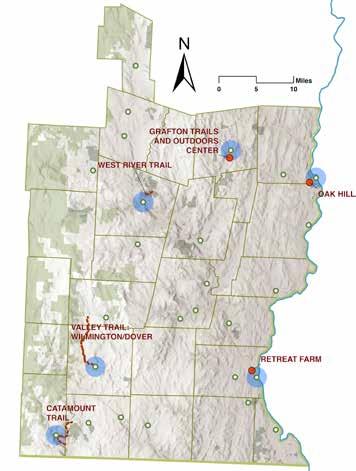
5-17 Snowshoe trails within 1-mile of village centers
SURVEY
56% of survey respondents snowshoe in the Windham Region during the winter. Many of whom are concerned about less snow impacting snowshoeing opportunities. Further, warming winters are making for icier trails which inhibit their ability to snowshoe on ungroomed trails.
LIMITATIONS
There are inconsistencies in the presentation of spatial data for snowshoeing locations. Some locations are represented with lines as trail networks, as that spatial data already existed. Other locations are represented as points because no spatial data existed prior to this project, and it is not in the scope of the project to create spatial data beyond points in the general area of these sites. Additionally, recreators may snowshoe all over the Windham Region as many sites are located on private property that allow public access through long standing tradition in Vermont. However, these assets are not included in the inventory as there is little to no data on these locations online, and they cannot be mapped.
AREAS FOR FURTHER RESEARCH
• Is there a way to map and inventory these informal snowshoeing locations that occur on private lands? Would the centralization of that information be beneficial?
• Are there certain towns that would like to connect trails to their village centers? What partnerships would mobilize that work?
Candy Apple Waxy Cap Mushrooms
Artwork by Sarah Brazil
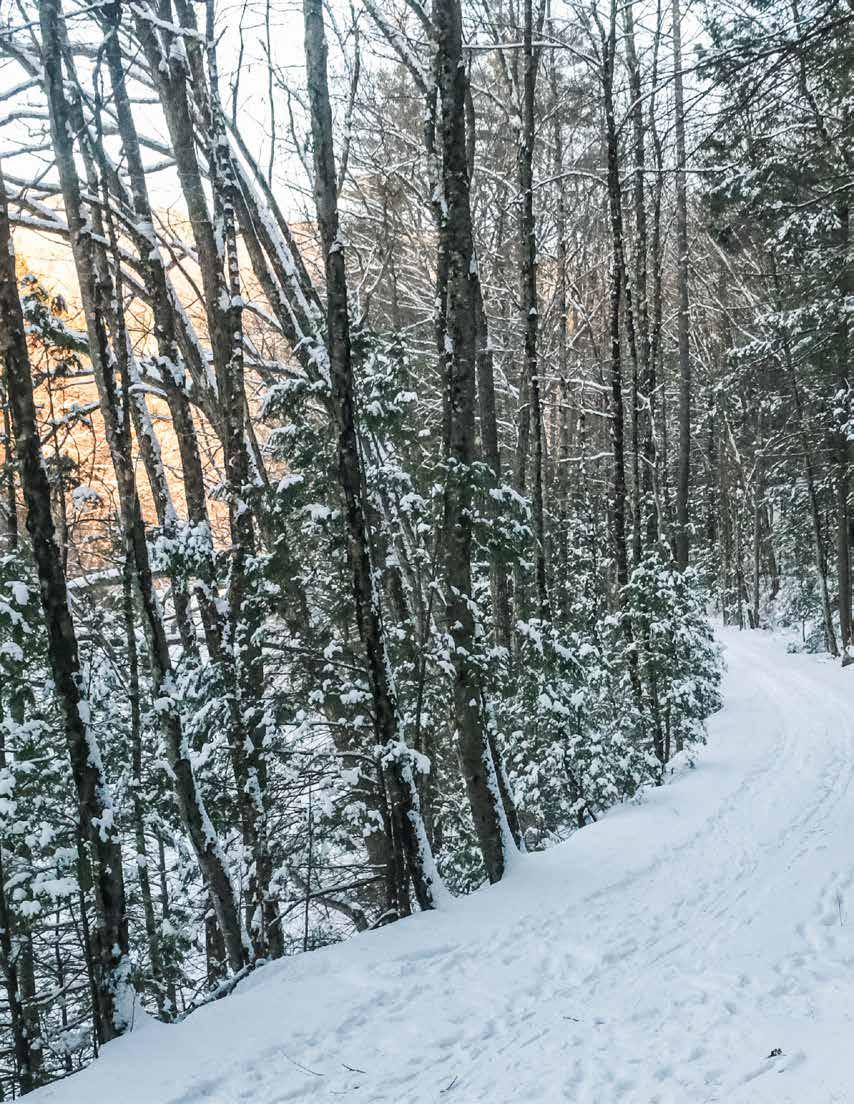
West River Trail in Jamaica
Stefan Poost
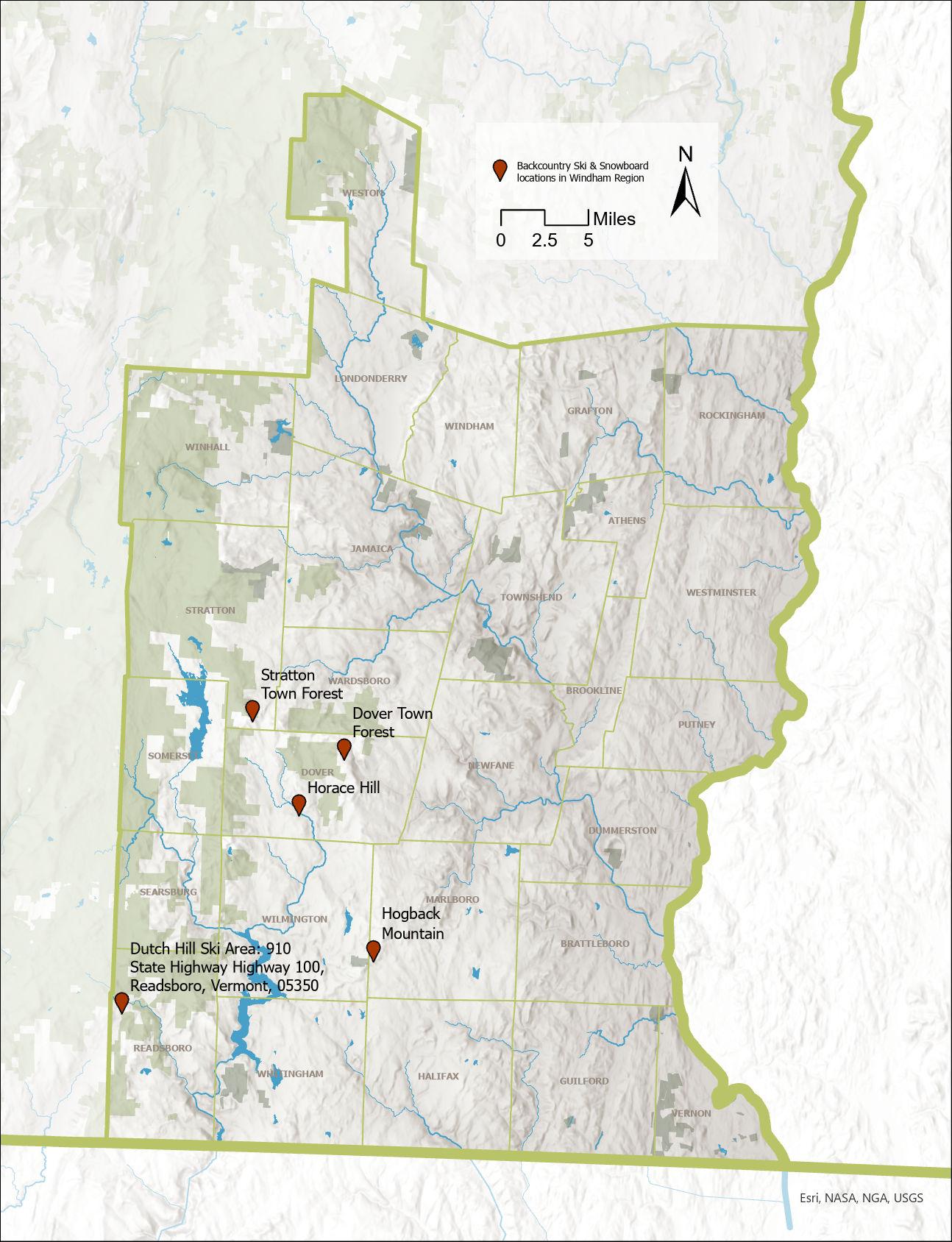
Backcountry Skiing & Snowboarding
DATA SOURCES
Both state and private land may be used for backcountry skiing and snowboarding in the winter, making a complete list of locations for these activities is impossible. The mapped locations are known and managed by local groups, but there is no publicly available information on private land that may be used for backcountry excursions.
SPATIAL PATTERNS
Backcountry skiing and snowboarding in the Windham Region occurs on remote, unpatrolled terrain that offers opportunities for exploration, adventure, and solitude. These areas are not served by ski lifts or other infrastructure, which means backcountry adventurers need to be well-prepared for selfguided excursions. Backcountry skiing and snowboarding is where riders navigate off-piste terrain rather than the groomed trails at the ski resorts.
These backcountry ski areas are centralized on the Windham Region’s western side in towns like Dover, Wilmington, and Stratton. These areas also host downhill ski resorts and are generally located near the western-facing slopes of the Green Mountain National Forest.
The Windham Region offers five well-known backcountry skiing and snowboarding locations, providing access to fresh powder, mountain views, and the serenity of the Vermont wilderness including Dover Town Forest, Horace Hill, and Dutch Hill.
The Dover Town Forest offers a range of terrain and provides access to both downhill and cross-country routes for backcountry skiers and snowboarders. It is located in the north of Dover on the eastern side of Route 100. Horace Hill is another ski location in West Dover. It provides backcountry ski access from a parking area off Route 100, and is close to cross-country ski trails and snowmobile trails as well.
Dutch Hill, an old, smaller ski area that once operated is another popular backcountry location. The area is known for its challenging runs on rugged, forested terrain and historic lift lines and attracts more experienced skiers and snowboarders who are looking for a lesstrafficked alternative to larger ski resorts.
In addition to these locations, the Windham Region backcountry terrain is connected by a network of trails and access points on the Catamount Trail that cater to skiers and snowboarders who enjoy the freedom to explore at a different kind of pace. The Catamount Trail is managed by the Catamount Trail Association (CTA) and is located throughout the Windham Region in Readsboro, Whitingham, Wilmington, Searsburg, Somerset, Winhall, and Weston.
SURVEY
The survey ranks backcountry skiing and snowboarding as 9th in popularity for winter outdoor recreation. There was one survey respondent who commented on how they wanted to use the bus to access a backcountry ski mission, but the bus schedule did not make this possible.
“We were going to use [public transportation] once this winter to get up to Hogback on Rt 9 and ski back to west Brattleboro, but it didn’t run on Sunday, when we needed it. ”
TRAIL GROUPS & ORGANIZATIONS
Many backcountry skiers in the Windham Region seek out local clubs to access the best routes, maintain a level of safety in the backcountry, and foster community connection. Local organizations in the Windham Region include the Dutch Hill Association of Skiers & Hikers (DHASH), the Southern Vermont Trails Association (SOVTA), and the Vermont Backcountry Alliance (VTBC).
ISSUES
Although the management of these backcountry ski zones is discussed by groups like CTA and SOVTA, it is unclear how much longer snow conditions will maintain the enjoyment of this sport. The local community, along with key organizations like the ones mentioned above, play a key role in advocating for the preservation and enhancement of backcountry ski access in the Windham Region beyond the lens of climate change. Land use types, trail etiquette and other factors impact how skiier and snowboarders are able to recreate on these lands.
AREAS FOR FURTHER RESEARCH
• Determine the long-term impacts of shorter winters on backcountry skiing through climate forecasting and analysis.
• Connect with local backcountry ski groups and organizations like DHASH and SOVTA to better understand the needs and desires of the backcountry ski and snowboard community.
• Explore if land ownership type limits the amount of possible terrain available for this activity.
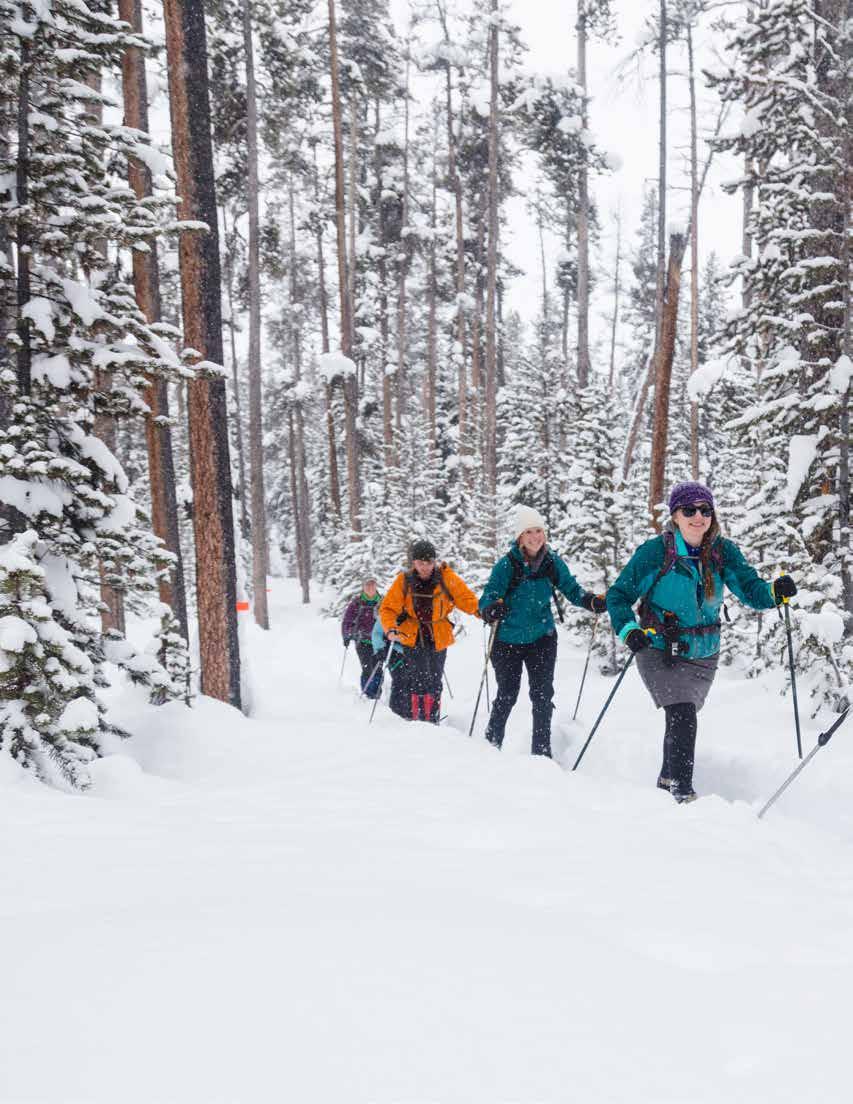
A ski touring group on the Catamount Trail
Jacob W. Frank
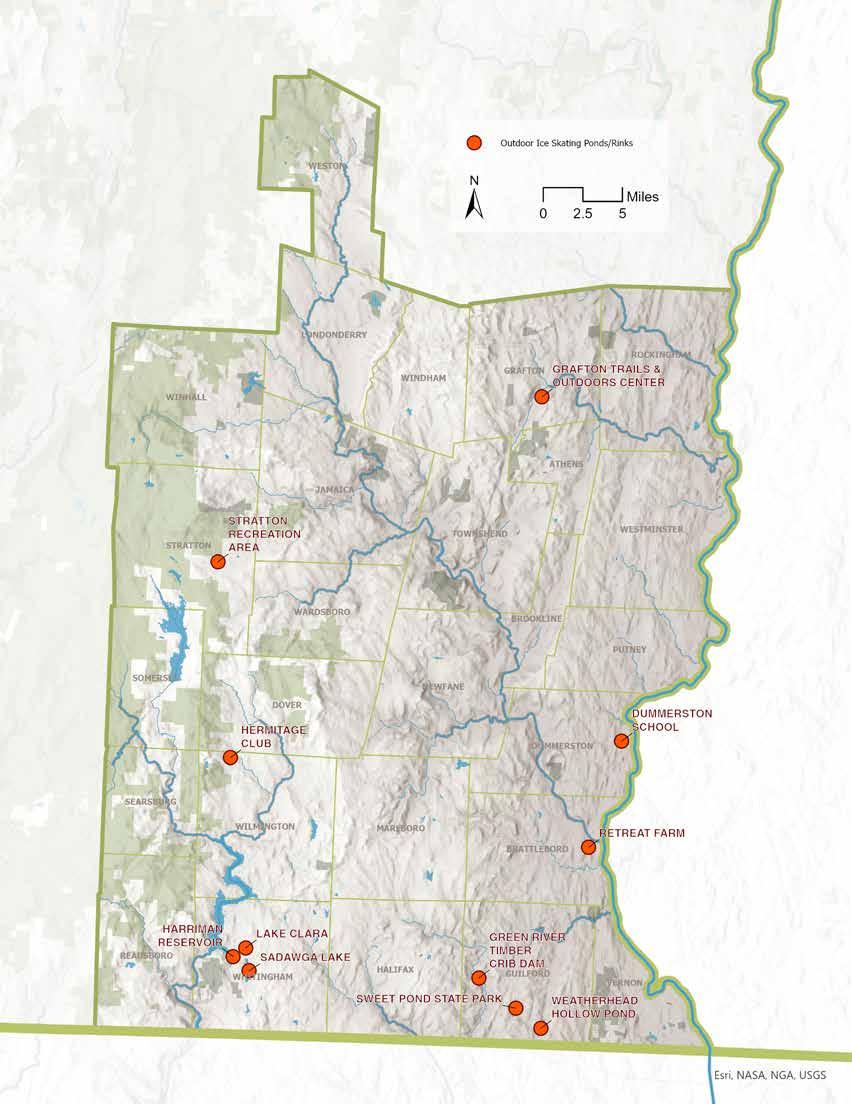
Ice Skating
DATA COLLECTION
Identifying ice skating locations in the Windham Region involved online research on town and business websites. Locations in the inventory include both man-made rinks that are outdoors as well as nature-based ice skating on ponds, lakes, rivers, etc.
INVENTORY
The inventory identified eleven locations for ice skating in the Windham Region. Four of these locations are owned by the state of Vermont including Sweet Pond State Park and several lake/pond access areas. Three sites are owned by land trust groups or made accessible through conservation easements such as the Retreat Farm in Brattleboro and Harriman Reservoir in Whitingham. Two sites are owned by private businesses including Grafton Trails and Outdoor Center and the Hermitage Club, and the final two locations are town-owned including Stratton Recreation Area and Dummerston Ice Rink. Ice skating is popular at Living Memorial Park in Brattleboro; however, it was not included in the inventory as it is an indoor rink. The majority of the documented ice skating locations are located in the southern portion of Windham Region, and seven of these sites overlap with inventoried fishing holes. These sites are nature-based ice-skating locations, and it is likely that they share the space with ice-fishers.
SURVEY
20% of survey respondents participate in ice skating in the Windham Region. Respondents
voiced concerns that with rising temperatures, ice and snow-based recreation will be less and less possible. They also voiced a desire for more centralized information around outdoor recreation locations. In a follow-up interview, one respondant said,
“We usually take our kids to the Retreat Farm because it is large and easy to get to, but I wish there was better organization among people to shovel snow for regular use.”
The respondant and their family frequent Dummerston School’s outdoor ice rink, South Pond, which was not captured in the inventory due to no online information, and Living Memorial Park’s indoor ice rink because it has consistent conditions and is easy to access.
LIMITATIONS
Ice skating commonly occurs on still or slowmoving bodies of water, and ice formation and thickness fluctuates within the winter and year to year. The variability in conditions makes ice skating difficult to inventory in a concrete way. Ice skating conditions are dependent on freezing temperatures and no snowfall, unless participants are willing to shovel it out of their way. A warming climate means that temperatures may not allow for the consistent freezing of waterbodies necessary to ice skate, however less snowfall could allow for more ease of access.
AREAS FOR FURTHER RESEARCH
• Are there bodies of water in the Windham Region that freeze more consistently and completely than others?
• Are there certain times of year where the ice is thick, but there is no snow cover?
• Is there a desire for greater centralization of ice skating location information?
• Which stakeholders have the capacity to organize snow shoveling efforts?
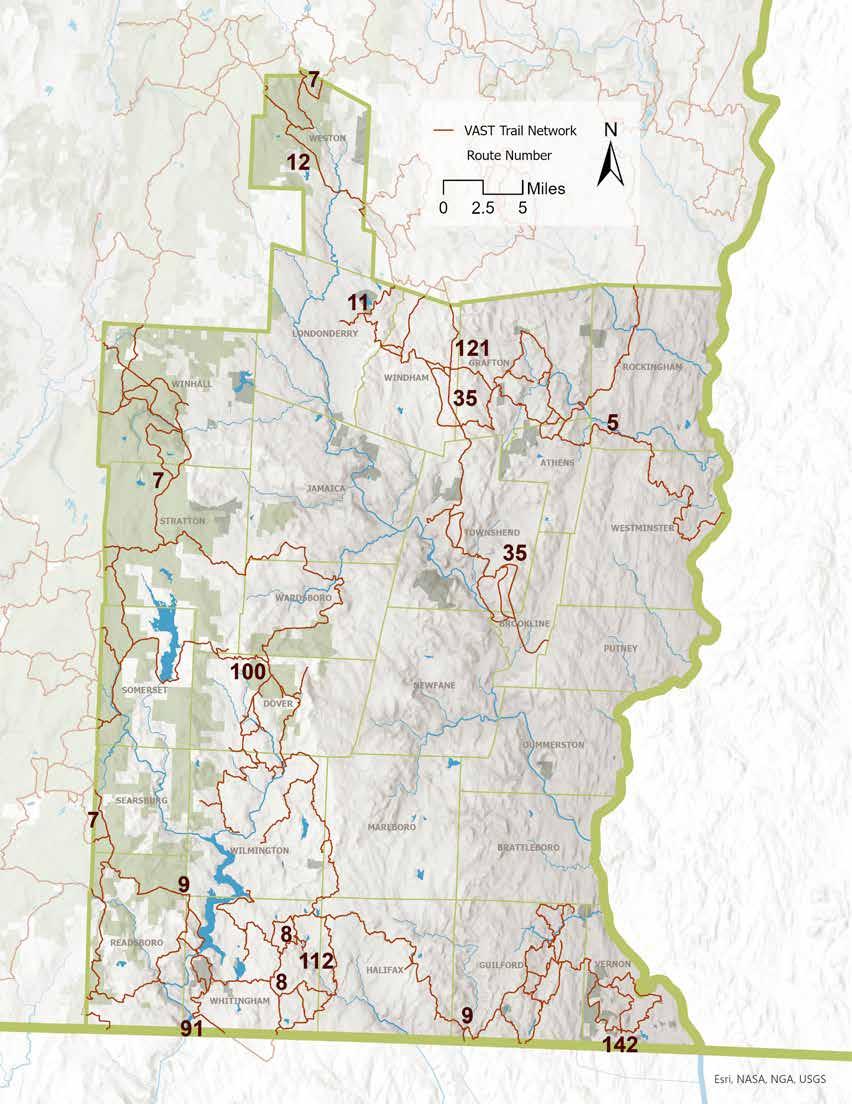

5-20 Snowmobile trails in the Windham Region
Snowmobiling
INVENTORY
The distribution of snowmobile trails in the Windham Region reflects the area’s geography of mountains and valleys. Vermont’s snowmobile trail system spans over 5,000 miles, with trails maintained by local clubs and the Vermont Association of Snow Travelers (VAST). The Windham region’s VAST trails provide a combination of trails and backcountry terrain, allowing snowmobilers to enjoy a wide range of snowmobiling experiences in the Windham Region. The VAST network includes both primary routes connecting towns and secondary trails that lead through more remote wilderness. Local snowmobiling clubs collaborate with VAST to maintain trails, with volunteer efforts ensuring that they remain clear and in good condition throughout the winter months. These groups include the West River Sno-Goers, Wardsboro Pathfinders, Vernon Trail Riders, Guilford Pitstoppers, Grafton Outing Club, EZ Riders of Jacksonville, Derry Sled Dogs, Deerfield Valley Stump Jumpers,
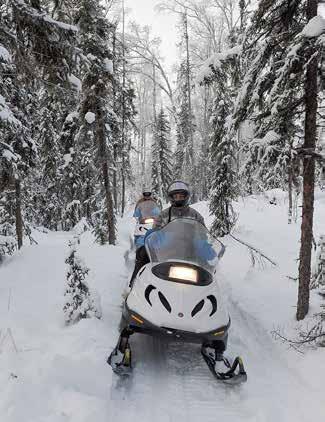
Brookline Snowmobile Club, and Black Mountain Snowmobile Club.
In the southeast portion of the region, Trail 142 goes through Vernon, and there is a trailhead in Guilford that connects snowmobile users to Trail 9. Trail 9 travels west to Halifax, where the ownership and management of the trail switches from the Guilford Pitstoppers to the Jacksonville EZ Riders. Traveling further west, there is an abundance of trails in Whitingham, including 9, 8, 112, and 100. Trail 9 continues further west into Readsboro, and Trail 7 begins further north in Searsburg and goes through Somerset, Stratton, and Winhall. Trail 100 travels north/south through Marlboro, Wilmington, and Dover and ends around the Stratton town line. Trail 710 picks up in the northwest of the region, including the towns of Stratton, Jamaica, and Wardsboro.
Trail 5 has a trailhead in the northeast region of Windham’s management area, starting in Westminster. Heading west, Trail 5 travels through Rockingham, Athens, and Grafton. Grafton has a lot of VAST trails, including 35 and 121, and also manages the trails through the Grafton Outing Club. In Windham, Vermont, the ownership of trail management has changed to the Chester Snowmobile Club. Trails in Windham include 11, 35, and 121. There are no VAST Trails that go into the village of Londonderry. Weston trails are connected through Andover, VT. The trails in Weston include 12 and 7 and are managed by a couple of different groups: the Derry Sled Dogs and the Andover Mountaineers.
ISSUES
The Windham Region’s snowmobiling trails are part of a broader system that connects local communities, regional attractions, and outdoor recreation areas. VAST Trails in this region are clustered in towns like Grafton in the north and Whitingham to the south. There are large gaps in the central and eastern parts of the region, in
Two snowmobilers in the woods U.S. Air Force
towns like Putney, Brattleboro, Dummerston, and Newfane, which are more populated areas. The lack of VAST trailheads in this area shows that the VAST trails are not to more densely populated areas.
The VAST trail network is organized into different types of routes, with main corridors serving as thoroughfares between towns like Westminster and Grafton or Whitingham and Dover. A notable feature of the Windham Region’s snowmobile trails is the access to nearby state parks, wildlife management areas, and other protected natural lands like the Green Mountain National Forest and Somerset Reservoir. This facilitates the snowmobile
user’s access to natural resources, which helps support the state’s SCORP goal of promoting wellness by recreating in nature.
The snowmobiling community in the Windham Region contributes to the local economy during the winter by stopping at shops for food and fuel while they are out using the VAST trail network. In addition to facilitating tourism and recreation, the snowmobiling infrastructure in the Windham Region could be expanded. The trails in this region have the potential to connect to larger towns like Brattleboro, Stratton, and Dover. Warming winters may limit the length of the snowmobiling season.
AREAS FOR FURTHER RESEARCH
• Determine if there is interest in expanding the existing VAST Trail Network.
• Can snowmobile trails be better utilized by mountain bikers or hikers in the summer?
• Connect with snowmobile clubs in the region to better understand the issues, needs, and desires of the snowmobile community.
Driving Route 9 West in Searsburg
Stefan Poost
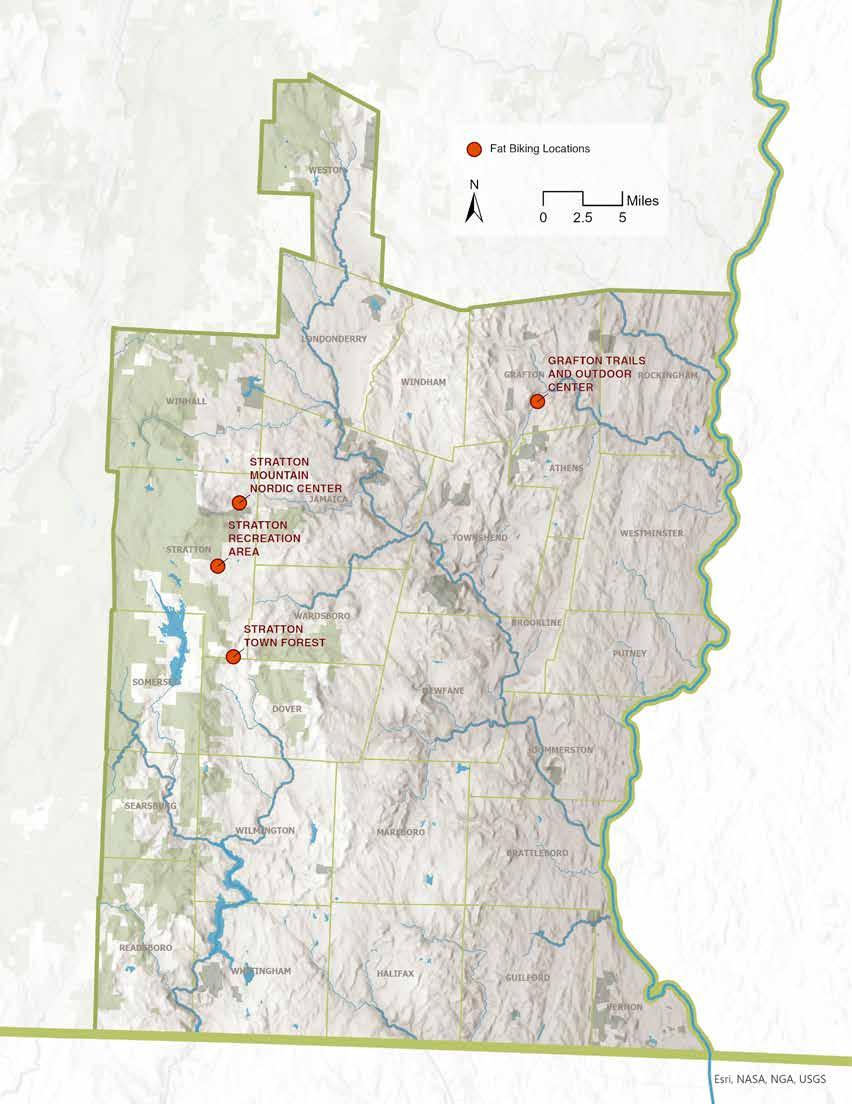
5-21 Fat biking areas in the Windham Region
Fat Biking
INVENTORY
Through online research on websites such as TrailForks and Vermont Mountain Bike Association, the inventory captured four recreation areas where fat biking is permitted within the Windham Region. Of these locations, two are private businesses, Grafton Trails and Outdoors Center and Stratton Mountain Nordic Center, and two are town-owned/municipal parks, Stratton Recreation Area and Stratton Town Forest. Fat biking is also permitted on any Vermont Association of Snow Travelers (VAST) trail, typically for snowmobiles, that occurs on state lands (Department of Forests, Parks and Recreation).
Most of the fat-biking trails, in addition to the VAST trails, are also open to snowshoeing and cross-country skiing. This reveals a multi-use function and sharing of the trails where fatbiking can occur. The VAST trails are large systems of trails that commonly overlap with private lands and creating and maintaining them involve partnerships and relationships with landowners who permit public use.
SURVEY
Fat biking had a much lower participation rate among the survey respondents at 3.2%. Users would like to have more designated biking trails, more trail connectivity and management, and better signage in the region. They are concerned about climate change causing an increase in storm events leading to trail washouts and loss of access to trails.
SPECIFIC ISSUES
Private landowners have the power to dictate which activities can or cannot occur on their lands, which can limit the length and connectivity of fat-biking trails. While climate change threatens the future of most winterbased recreation, fat biking can be done in varying conditions. With the decline of other activities, fat biking may increase in popularity. However, climate change is projected to lengthen “shoulder seasons” or “mud seasons” in which fat biking causes greater erosion and damage to trails (Monz et al. 2016).

AREAS FOR FURTHER RESEARCH
• Are there current prohibitions around fat biking during “mud season” in the Windham Region?
• As fat biking occurs on multiuse trails, are there any conflicts among the different user-groups utilizing the trails?
Common Loon
Artwork by Sarah Brazil
Wildlife-Based Activities
HUNTING
FISHING
WILDLIFE WATCHING
DEFINITION
Wildlife-based activities are types of outdoor recreation involving the watching, catching, studying, and/or harvesting of the native fauna, and sometimes flora, of a region.
VARIATIONS
There are many types of wildlife-based activities excluded from this inventory but known to occur in the region. A few of these activities include: trapping, target shooting, wildlife tracking, foraging/collecting edible native plants, wildilfe/nature art outside (photography, drawing, painting), and nature study.
The three inventoried activities each encompass other, more specific activities. Hunting could be further broken down into hunting big and small game as well as waterfowl hunting. Fishing could be separated into ice fishing, fly fishing, and bait/tackle fishing. Wildlife watching could be further separated into bird watching and wildlife/nature watching. The survey separated some of these specific activities, but for the inventory they are combined into the three broader categories.
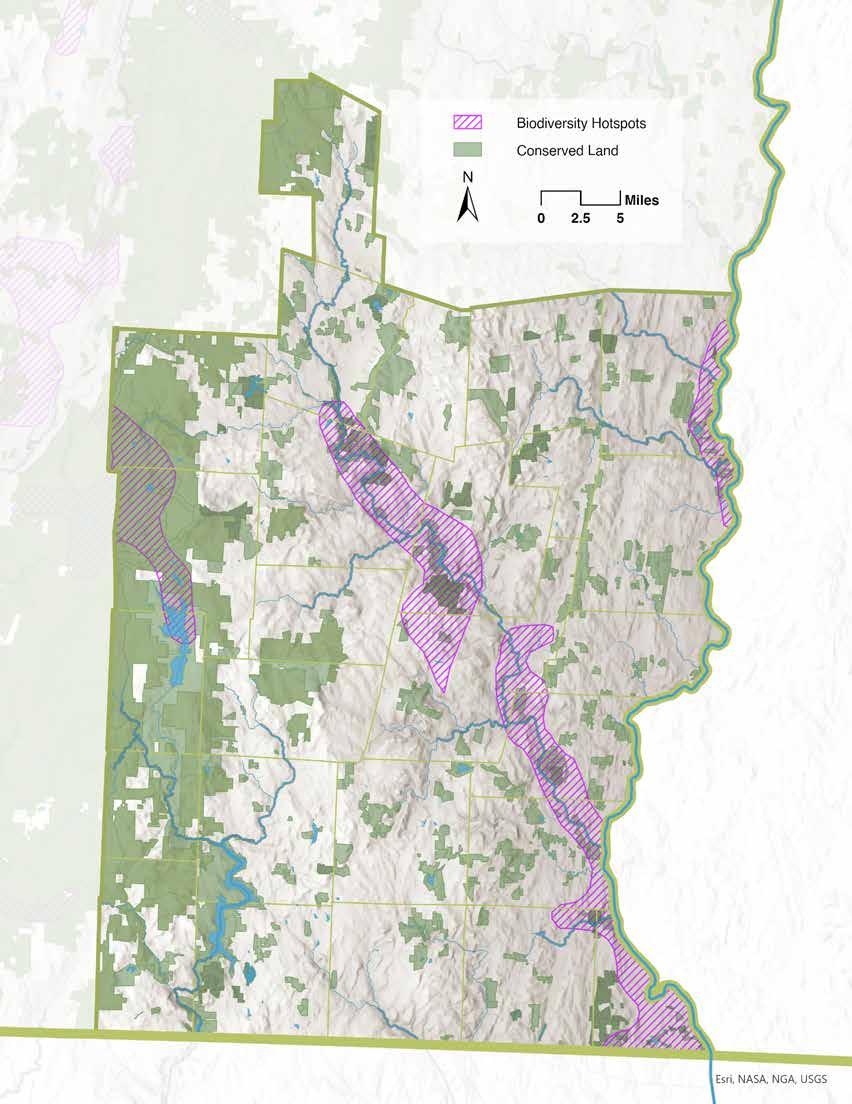
Climate Change and Wildlife-Based Recreation
HABITAT CONNECTIVITY
As the climate changes, the risk to wildlifebased recreation in the Windham Region is likely to increase as wildlife are likely to face stressors more frequently and more severely than previously experienced. Two areas of interest, areas of high biodiversity and protected lands, will be important to monitor in order to ensure the availability and resilience of wildlife-based recreation in the region.
BIODIVERSITY
Defined by the United Nations Climate Change Learning Partnership, “the term biodiversity encompasses: genetic diversity, the variability within species; species diversity, the variety of different species; and ecosystem diversity, the variety of different ecosystems. Ecosystems are areas where communities of living organisms interact with each other and their nonliving environment.” Ecosystems provide many services to humans such as providing food and resources, regulating climate and hydrology, and providing cultural, spiritual, and recreational opportunities (UNEP World Conservation Monitoring Centre, 2014). All ecosystems have thresholds in which they can sustain damage and degradation from stressors. Once those thresholds are surpassed, the ecosystem may be irreparable, and the service it provides diminish. The stress-threshold of an ecosystem is strongly correlated to its level of biodiversity. The more diverse the ecosystem, the more resilient it is to stressors. As climate change increases the frequency and severity of stressors, conserving biodiversity is a necessary tool to support the invaluable services that support human livelihood.
Connected networks of undeveloped land allow plant and wildlife species to move between patches of significant habitat (National Caucus of Environmental Legislators, 2025). This concept is referred to as habitat connectivity. The major threats to habitat connectivity in Vermont are habitat loss, the permanent conversion of a habitat to a developed state, and habitat fragmentation, the division of land into increasingly smaller areas as a result of roads, development, agriculture, “and other land uses that remove vegetation and create physical barriers to species’ movement and ecological processes between previously connected natural vegetation” (Sorenson, Osborne 2014). The state of Vermont is aware that most of its habitat loss occurs in sensitive or rare habitats and communities, and these spaces are receiving some conservation attention. In contrast, habitat fragmentation of Vermont’s forests continues with little attention or measures for prevention (Sorenson, Osborne 2014). Connecting patches of conserved land supports Vermont’s ecological biodiversity, and it is a necessary measure as climate change threatens biodiversity levels globally (National Caucus of Environmental Legislators, 2025). Additionally, increasing connectivity of conserved lands in river corridors ensures that development will not happen in spaces vulnerable to flooding and erosion.
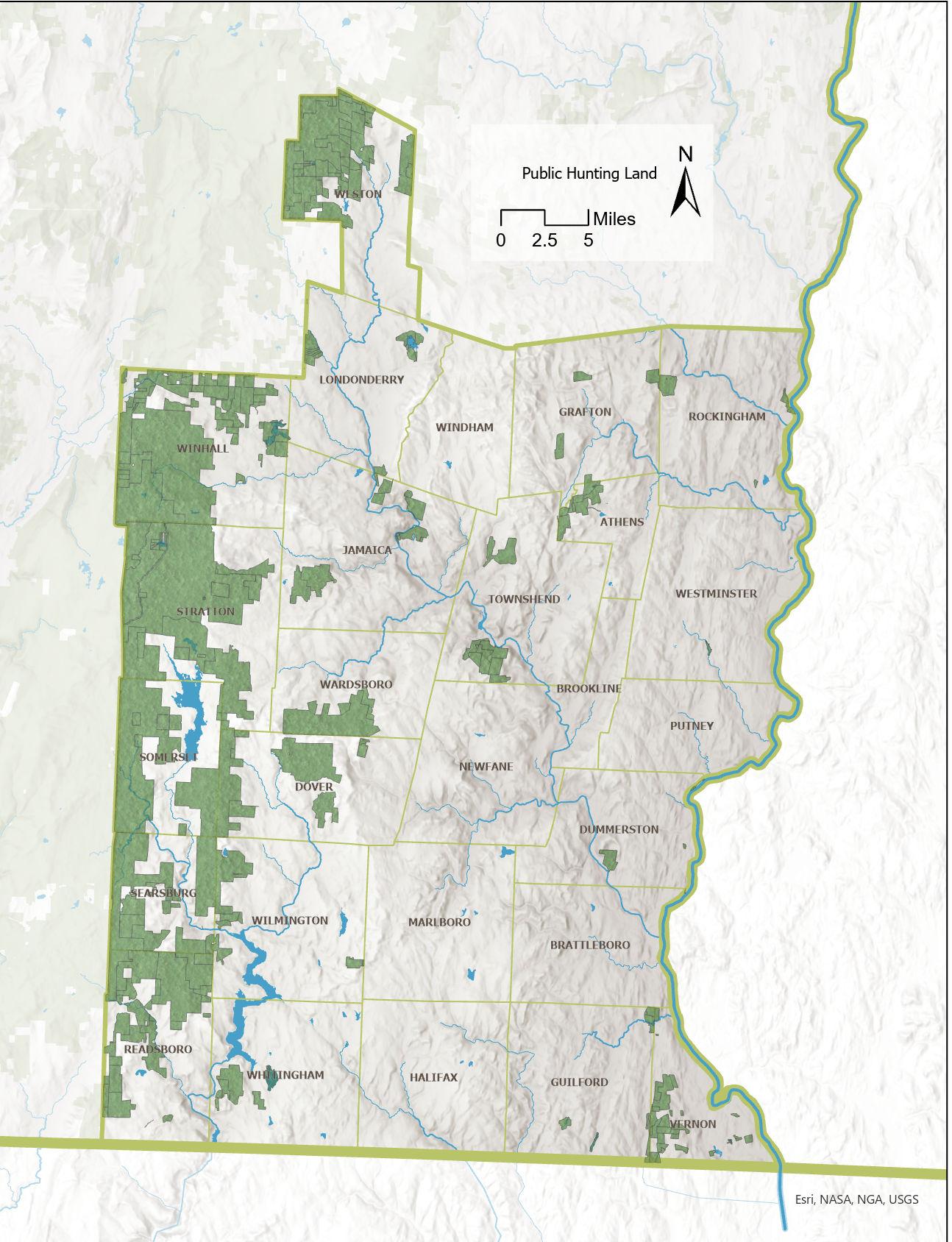
Hunting
CONTEXT
Vermont is known for its hunting traditions, which provides recreational opportunities and supports the state’s outdoor recreation economy through passage on public and private land. Whether in the vast wilderness of the Green Mountains or on private farm or wood lots, hunting remains a key element of Vermont’s lifestyle and local economy. Hunting in Vermont is deeply intertwined with the state’s identity, culture, and economy. The state practices management with an emphasis on sustainable wildlife management.
INVENTORY
The Green Mountain National Forest is a popular places for hunting, spanning over 400,000 acres of public land that is home to a variety of wildlife species. The state also has several wildlife management areas (WMAs), which in the Windham region include the Turner Hill Wildlife Management Area in Grafton and the Missing Link Wildlife Management Area in Rockingham, where hunting is permitted during designated seasons. Additionally, many hunters hunt on privately owned lands where permission to land access is allowed within the state’s constitution. Hunters also frequent Vermont’s vast network of state parks and the many smaller towns with agricultural lands. The state’s smaller, more rural areas tend to be where many hunters find success, as these regions are home to populations of deer, wild turkey, and other game animals.
Vermont offers a wide range of game species. The most popular game animal in the state is the white-tailed deer, which is abundant in Vermont’s forests. Deer hunting during the fall is an important aspect of the hunting season. Vermont’s long-standing deer hunting tradition, supported by state wildlife management programs, has made it a beloved activity among residents and visitors alike. Other species hunted in Vermont include wild turkey, moose, black bears, coyotes, and small game such as rabbits, squirrels, and waterfowl. Vermont also has a reputation for upland bird
hunting, with species like grouse and pheasant. Pheasants tend to nest in hedgerows on farmland. Due to the loss of habitat, the pheasant population in Vermont is declining, and pheasant hunting is becoming less reliable. Hunting in Vermont is not only a pastime; it also contributes significantly to the state’s outdoor recreation economy. The Vermont Fish and Wildlife Department estimates that more than 100,000 hunters participate in various seasons and includes the purchase of hunting licenses, equipment, gear, and supplies, as well as spending on accommodations, food, and transportation. Hunters from outside the state bolster the local economy by staying in local inns, hotels, and campgrounds while outfitting stores and sporting goods shops see a steady stream of customers in the months leading up to hunting seasons. This influx of visitors supports Vermont’s small businesses and contributes to rural economies, particularly in areas less reliant on traditional industries.
AREAS FOR FURTHER RESEARCH
• Study the patterns of land ownership and land management over time
• Record when land is posted for no hunting so trends for where hunting is allowed or not allowed can be tracked and shared
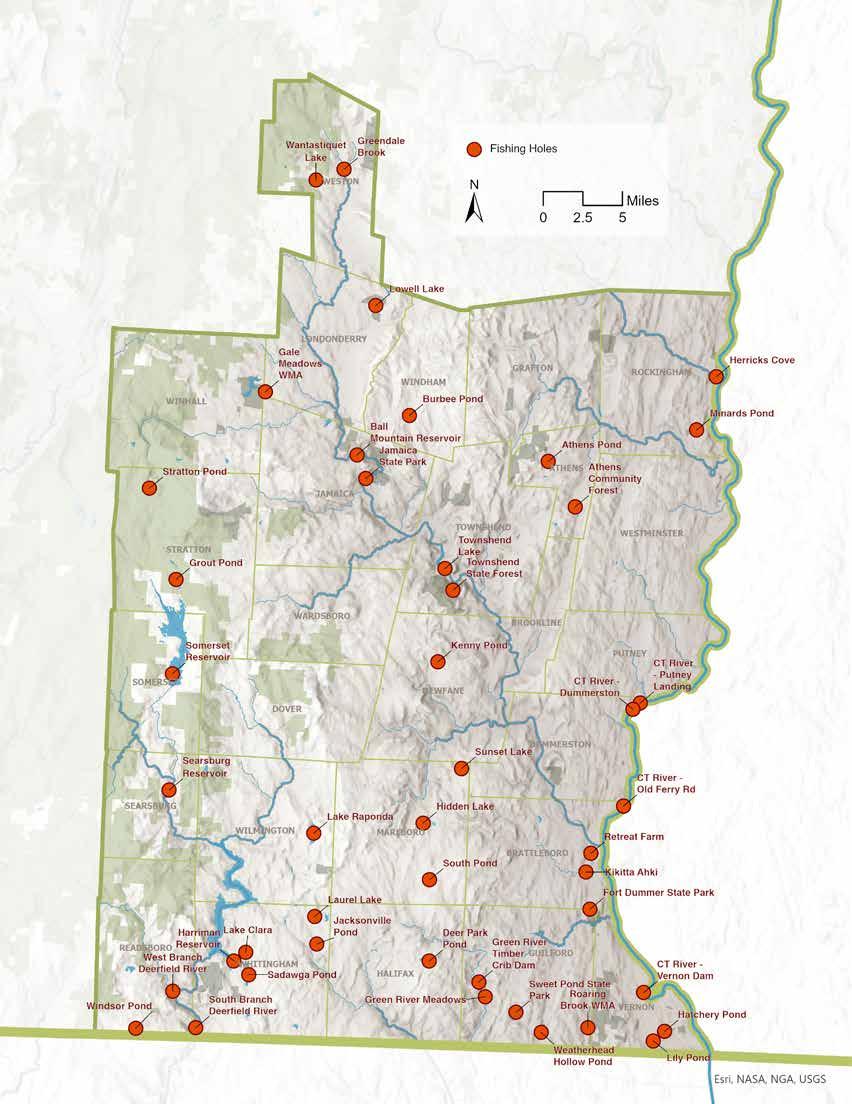
Fishing
DATA COLLECTION
The inventory identified forty-eight fishing sites in the Windham Region. The information was found online through town websites, sitespecific websites, or websites operated by the owner or manager of each site. Seventeen of the identified sites are owned by the state of Vermont, and eleven sites are owned by land trusts or made publicly available through conservation easements. Other owners include towns/municipalities, the United States Army Corp of Engineers, the United States Forest Service, and private businesses such as resorts and recreation centers.
SPATIAL PATTERNS
There are general trends in terms of spatial patterns of the fishing assets in the Windham Region. There is a concentration of fishing holes along the main rivers, the Connecticut, West, and Deerfield, and their many tributaries. Other locations include lakes, ponds, and reservoirs interspersed throughout the region.
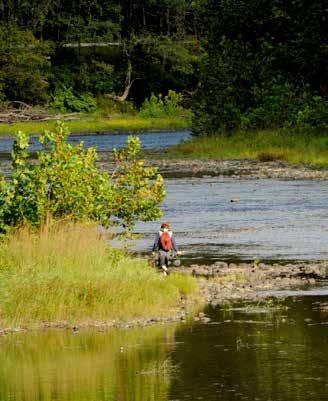
SURVEY
Based on the survey results, 20% of respondents participate in recreational fishing in the Windham Region during the fall, 25.6% of respondents participate in the summer, 24% in the spring, and 12% participate in the winter. Apart from the slight decline in winter, the survey reveals a consistent number of anglers using the Windham Region’s waterways year round. Of these respondents, anglers in the region voiced concerns about warming water temperatures, droughts impacts on fisheries, and public access to fishing. More specifically, there are not enough public access points that do not require a boat, such as fishing piers. There is not enough public access to the Connecticut River. One follow-up interviewee stated,
“All towns bordering the Connecticut River should have access to the water, and that access shouldn’t require a boat.”
There is a desire for more ADA accessible fishing access points. There are concerns about private property limiting water access and trout-stocking occurring in these “exclusive” areas.
LIMITATIONS
There were limitations in capturing informal sites, such as rivers accessed via pull-offs along the road, because there is no information online surrounding the owner, address, public accessibility, etc. There are some inconsistencies in the inventory data collected. Some entries are specific access points and others list the entire body of water. Similarly, some entries list parks that contain a fishable body of water and others list the body of water specifically. Finally, there are a multitude of rivers, streams, and other fishable bodies of water not included in this inventory. Vermont’s water laws allow public use, access, and recreation in all Class B bodies of water, Class
Angler exploring the West River Putney Pics
A refers to drinking water supplies (Vermont Institute for Government, 2020). As long as an angler enters the body of water at a publicly accessible point, they can wander and fish at any point along the waterway as long as they have one foot in the water. Information on these locations was not considered in the inventory even though they are of popular use.
ISSUES
There are several issues facing Vermont’s water resources and aquatic habitats, many of which are related and/or have cascading effects. These issues are being exacerbated by climate change. Severe flooding due to intense storm events increases the sediment load and carries debris and pollution into waterways impairing water quality and harming aquatic ecosystems (Watson et. al. 2016). Warming waters have a direct impact on Vermont’s cold water fisheries. Increased temperatures can be attributed to a multitude of sources, including decreased mature canopy cover along waterways, damming and fragmentation, and runoff (Pealer
et al. 2011). Conservation organizations, such as Trout Unlimited, are working to restore and protect priority habitat for trout and other stream species in the related ecosystem in the Windham Region (“Mission Statement and Strategic Plan”). Their work focuses on restoring wetlands, stabilizing riverbanks, removing dams, and replacing culverts in order to improve water quality for the region’s fisheries. This work also helps to mitigate the effects of climate change.
AREAS FOR FURTHER RESEARCH
• How can stocking efforts shift in order to adapt to warming water temperatures? Can trout stocking occur in more publicly accessible waters?
• Where might additional public fishing access points best benefit anglers in the Windham Region? Further, who has the capacity to install and maintain the infrastructure? Can infrastructure in floodprone areas be adaptable and sustainable in severe weather events?
• How might land and wetland conservation efforts support recreational fishing in the Windham Region?


Brook Trout
Artwork by Sarah Brazil
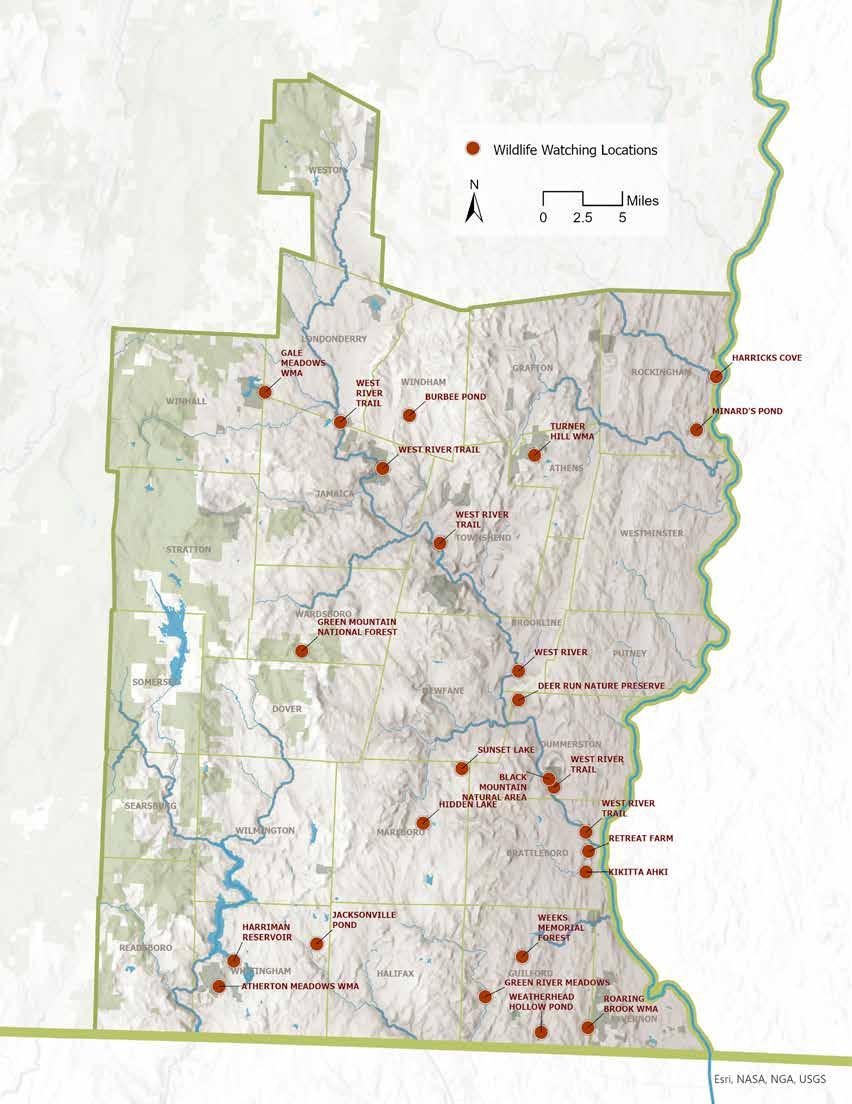
Wildlife Watching
DATA COLLECTION
To locate popular areas for wildlife watching, the data collection process considered locations such as Wildlife Management Areas and parks/preserves owned by land trust organizations that advertised wildlife watching or birding as a popular activity at the site online. For the purpose of this inventory, birding will be included with wildlife watching.
INVENTORY
The inventory identified thirty locations for wildlife watching. Fifteen locations are owned by land trust organizations or made accessible through conservation easements. Eight locations are state-owned, and seven of those are Wildlife Management Areas in the region. Two sites are town-owned or municipal parks. One location is owned by the U.S. Forest Service, one is on private lands with public access, and three locations have undesignated owners as they are listed as bodies of water.
Most of the identified locations are near or on lakes, ponds, and rivers in the Windham Region. Fifteen of the wildlife watching sites are also inventoried fishing locations. Additionally, you can snowshoe at fourteen and hike at thirteen of the sites.
SURVEY
Birding and wildlife watching were listed as separate activities in the survey, but for the purpose of the inventory and analysis, their information is combined. 64% of survey respondents participated in wildlife watching and/or birding activities in the Windham Region in the winter, 80% in the spring, 68.8% in the summer, and 65.6% in the fall. Many of these respondents voiced concerns about climate change, habitat loss and fragmentation, and invasive species affecting wildlife in the region. Educational signage regarding areas of sensitive habitat and invasive species was proposed by respondents, as well as a boardwalk for wildlife watching in wetland habitats.
LIMITATIONS
The data collected through this inventory is not completely representative of all of the locations for wildlife watching in the region. The region has many sites on private land that have not been accounted for. Additionally, wildlife watching can occur almost anywhere and in conjunction with other types of outdoor recreation. For example, one survey respondent mentioned she enjoys watching wildlife out the window of her home. Alternatively, a hiker could be birding simultaneously, and those hiking trails may not be included in this portion of the inventory.
ISSUES
The presence of wildlife in the Windham Region’s parks and preserves is a reflection of the high quality of available habitat. In order to preserve recreational wildlife watching, it is necessary to support the wildlife by protecting their habitats. Outdoor recreation and land conservation are often linked, but the impact of outdoor recreation on the natural environment can be significant. Human use of natural spaces, such as foot-traffic on trails, has a strong negative effect on wildlife in Vermont, especially during mating seasons (Naughton, 2021). To mitigate these effects, seasonal trail closures may be necessary. For example, Dummerston Quarry closes portions of their trails that lead to cliff tops or overlooks during Perigrine falcon nesting season (Vermont Fish & Wildlife Department). As wildlife face increasing stressors due to climate change, it is essential that humans share and respect the natural environment that houses these species. Further, preserving intact forests that serve as valuable wildlife corridors may also support wildlife migration as the climate warms.

AREAS FOR FURTHER RESEARCH
• Who has the capacity to undertake site-specific education and signage on sensitive areas in order to protect the region’s wildlife?
• How might land managers be encouraged to incorporate tools outlined in Naughton’s work, “Understanding and Managing the Effects of Trail Use on Wildlife,” in order to protect wildlife in recreation areas?
Champagne Amanita Artwork by Sarah Brazil
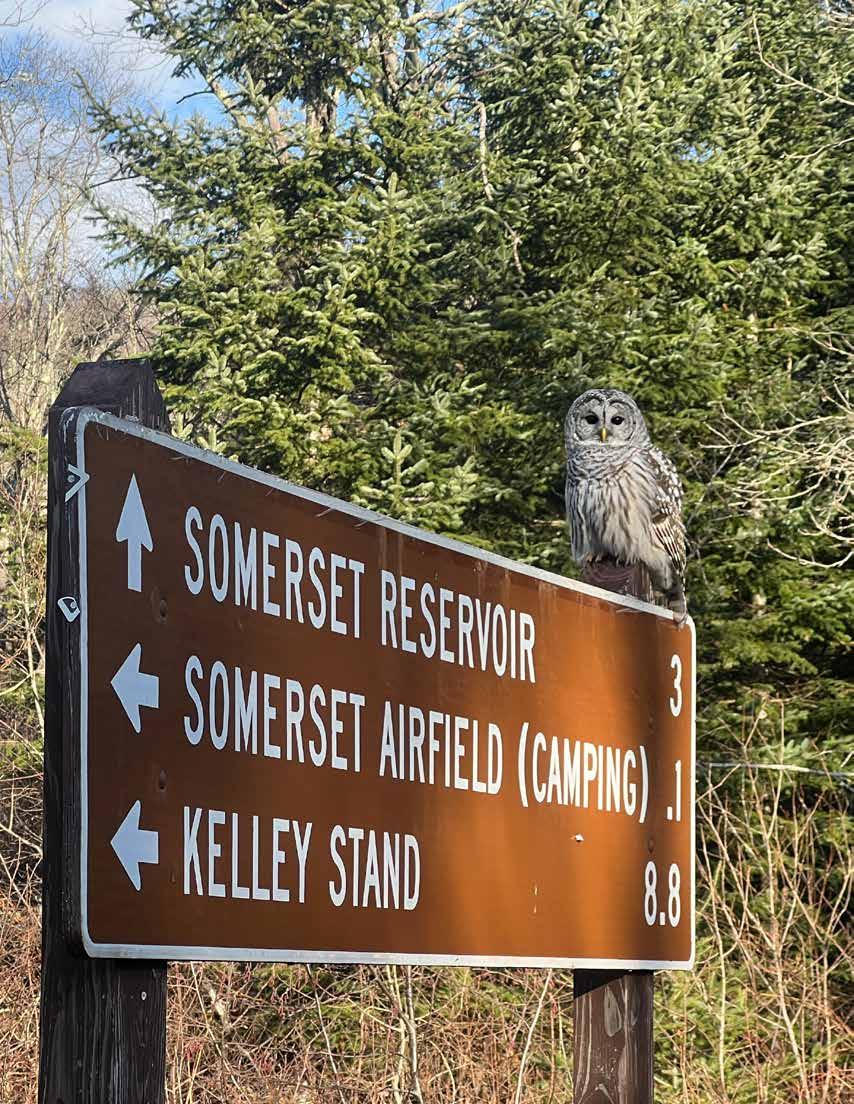
Barred Owl, Green Mountain National Forest
David Weber
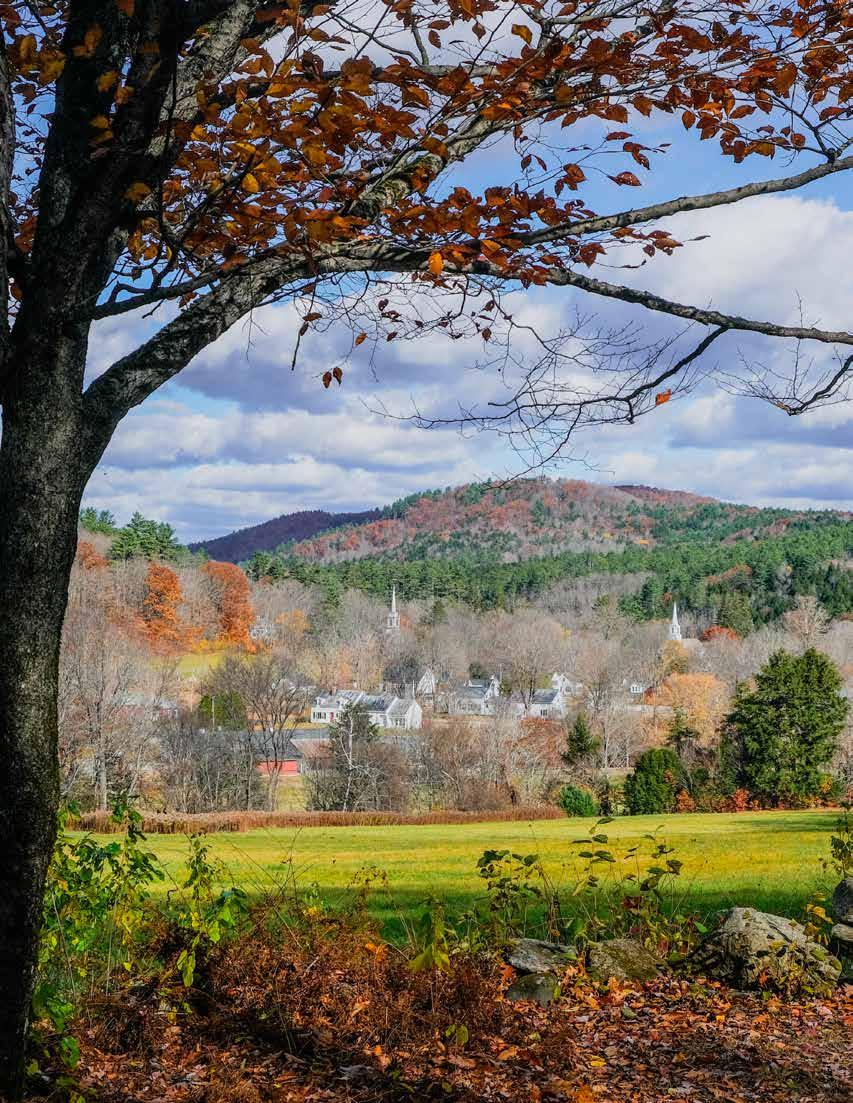
View of Grafton village Stefan Poost
Sports & Park-Based Activities
SPORTS/PLAYGROUNDS/PARKS
INTRODUCTION
Sports and park-based recreation activities include outdoor parks, courts, fields, courses, and playgrounds in the Windham Region that are open for public use. These activities could be further broken down to adaptive sports, shooting sports (target, skeet, etc.), golf, baseball/softball, basketball, lacrosse/soccer/ football, volleyball, curling, organized race or multi-sport race (obstacle course, run, biathalon, triathalon, etc.), and rugby. Due to the scope of this project, sports, playgrounds, parks, and disc golf are included in the same inventory, and golf is in a separate inventory.
While occurring outdoors, these activities are not always nature-based as most occur among human-built infrastructure. They are close to town centers and used more by locals than tourists, and they foster a communalatmosphere as they provide spaces to gather and play with other users.
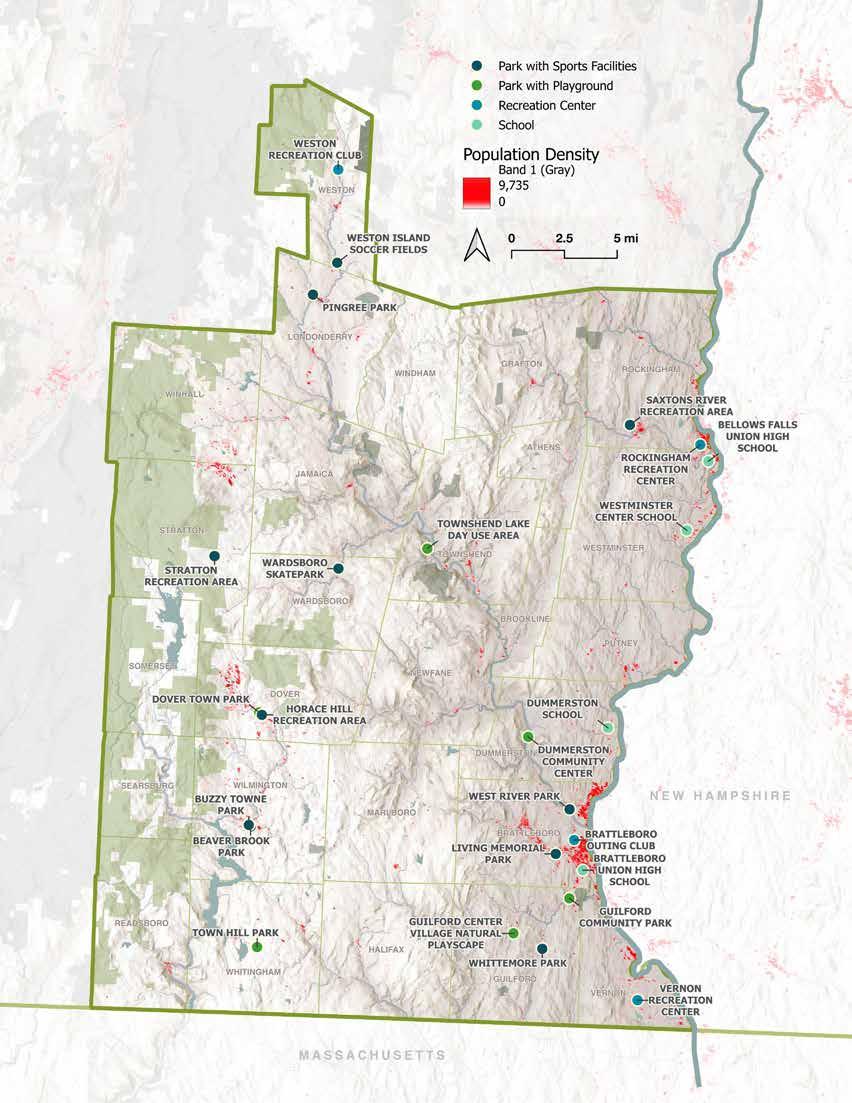
Sports / Playgrounds / Parks
DATA COLLECTION
This activity type catalogues a variety of sites in the Windham Region that are used for communal recreation activities that do not occur in natural areas. This includes sites that support various sports activities, such as tennis, soccer, basketball, and disc golf; playgrounds; as well as community parks that may support sports or may only consist of open space, a pavilion, or seating areas. Some of these sites also contain municipal swimming pools; however, these pools were included in the swimming inventory.
INVENTORY
Several towns in the region have recreation centers or municipal parks with sports infrastructure with a range in the size and number of amenities across towns. Living Memorial Park in Brattleboro and Rockingham Recreation Center in Bellows Falls are two welldeveloped centers, with Living Memorial Park
containing two baseball fields, two tennis courts, a basketball and volleyball court, hiking trails, a playground for children, and a picnic location that can accommodate up to 150 people (in addition to an Olympic-size swimming pool, a ski hill and an indoor skating rink). Other towns have municipal parks with less sports/playground infrastructure, such as the Saxtons River Recreation Area, which features a swimming pond as well as playground infrastructure and a ball field. A number of municipal parks exist in the region with minimal or no sports infrastructure, functioning more as casual community gathering spaces for events or outdoor time, such as Town Hill Park in Whitingham and Saxtons River Park in Saxtons Falls.
Most outdoor activities at these parks can be enjoyed free-of-charge; however, some charge for admission, for example the Rockingham Recreation Center, while others may charge for specific activities or the use of specific facilities, for example the swimming pool and ski lift at Living Memorial Park. Rentals of park facilities are available at certain parks for a fee. Organized sports activities, such as town soccer leagues, often charge fees for participation.
5-26 Parks and Recreation Facilities in the Windham Region
A variety of sites in the region provide facilities for team sports, playgrounds, and games. Parks with sports facilities include outdoor parks with facilities for sports such as tennis courts, disc golf ranges, and skate parks. Parks with playgrounds include outdoor parks with playgrounds and may include minimal or no sports infrastructure such as an open field for ball games. Recreation centers include sites with indoor and outdoor facilities for organized sports, but may not be used as a park for activities such as walking or picknicking. Schools include education sites with sports facilities open to the public at certain hours.
Schools in the region often allow public access to sports facilities during non-school hours, for example at Brattleboro Union High School and Westminster Center School. Insufficient information was available to catalogue the availability of all schools in the region.
Schools, municipal parks, and recreation facilities often have residency requirements for access. For example, you must be a Vermont resident to use the sports facilities at Brattleboro Union High School, and you must be a Weston resident or resident’s guest in order to use the Weston Recreation Club facilities. Where non-residents are allowed access to a facility and a fee is charged, nonresidents are often surcharged compared to residents.
SURVEY
Few survey respondents commented on the quantity and/or quality of sports, playgrounds, and park facilities in the region. One respondent commented on a need for more green spaces in town or accessible by foot from town. Another respondent commented on the need for more pickleball courts. Others commented on the need for more playgrounds and outdoor experience spaces for children. It should be noted that sports and playgrounds were not explicitly included as seasonal recreation options in the survey. In addition to these missing data points, the omission may have also directed respondents attention away from commenting on these areas in short answers.
ISSUES
Sports facilities and playgrounds are often enjoyed primarily by residents. Many tourists who visit the region seek out experiences in natural settings, rather than coming to enjoy recreation at municipal facilities. Supporting the needs and quality-of-life of locals by increasing access (in terms of cost, schedule, location etc.) to sports facilities may be a bigger concern than promoting these facilities to out-
of-state visitors. That said, guests of residents may benefit from access to these facilities. Additionally, the presence of well-maintained town parks can serve as a draw to out-of-state visitors as well, playing into the physical character and charm of the region’s townscapes.
These parks and recreation facilities are generally located within or very close to town and village centers. This provides better transportation access and walkability to residents of the towns, who are those primarily served by such facilities. Expansion and development of new facilities should occur with forethought to physical access requirements of the community, as well as potential ecological impacts.
Further study is needed to understand the demands of the community for sports, playgrounds, and parks facilities. This may include information on both quantity and distribution of facilities, as well as quality (number of different sports options available, size, schedules, fees, etc.).
AREAS FOR FURTHER RESEARCH
• Consult with schools across the region to obtain a more comprehensive understanding of public access to school recreation facilities
• Conduct community engagement activities across the region to better understand usage patterns and areas of need for sport, playground, and park facilities
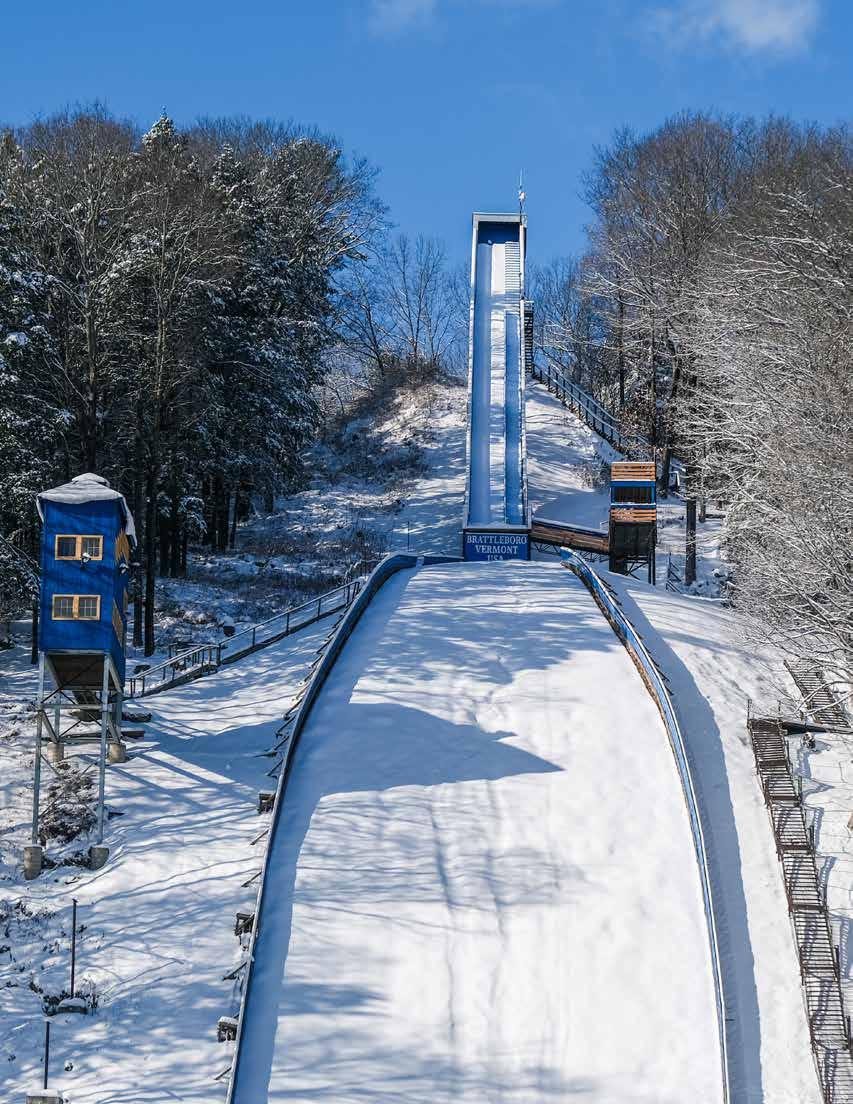
Harris Hill Ski Jump, Brattleboro
Stefan Poost
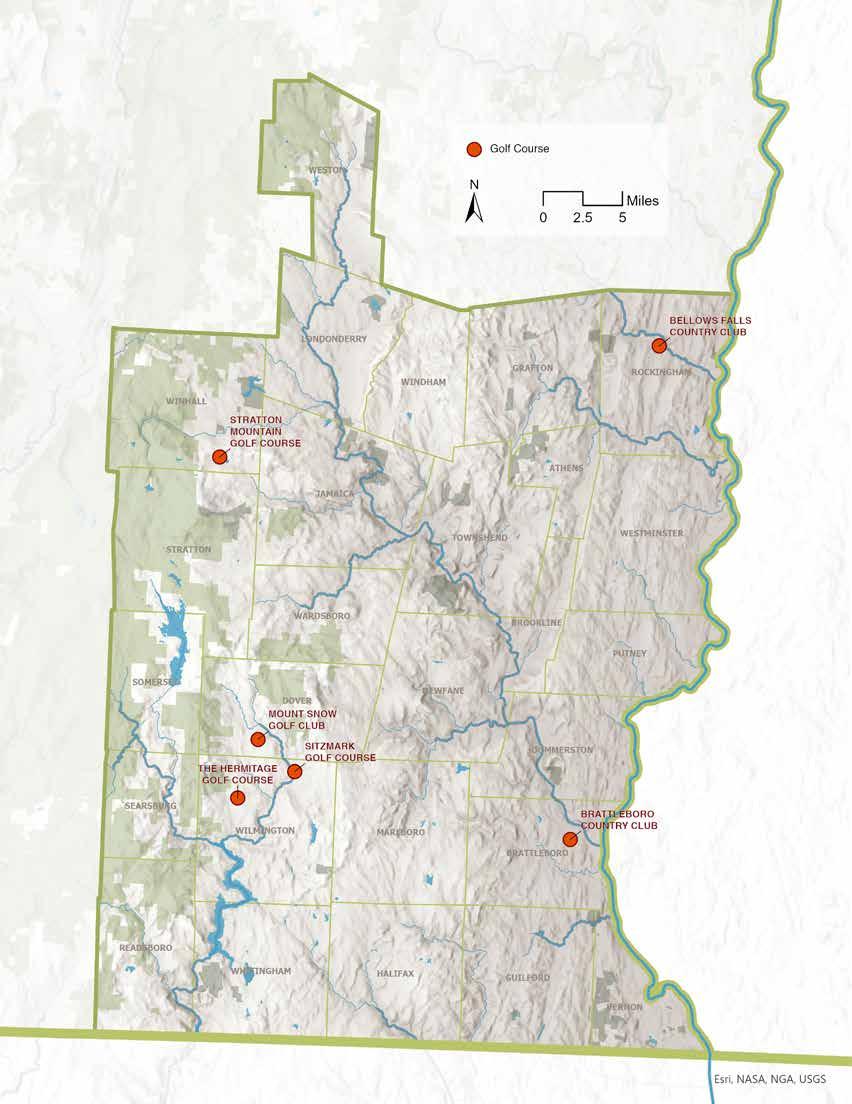
Golf
INVENTORY
The inventory captured six golf courses in the Windham Region. They are all privately-owned or member-owned businesses. Most of these courses are near either major resorts such as Hermitage Club or Stratton Mountain or near regional centers like Bellows Falls and Brattleboro.
SURVEY
Of survey respondents, 5.6% golf in the spring, 8.8% in the summer, and 5.6% in the fall. This is a relatively small percentage of users compared to other types of recreation in the survey.
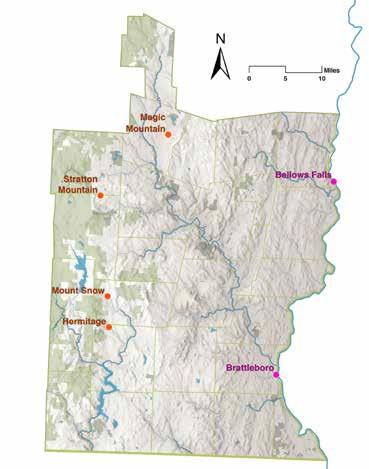
5-28 Regional and Resort Centers

LIMITATIONS
The survey was distributed to organizations mainly within the Windham Region, so the small percentage of users does not account for tourists coming to golf or other users who did not receive the survey.
ISSUES
Golf courses tend to use very large amounts of water, contribute to fertilizer and pesticide runoff into waterways and groundwater, require the operation of energy-demanding lawn mowers regularly, and their large land footprint contributes to habitat loss (Doytchev, 2019). In the face of climate change, there is an opportunity for golf courses to change their practices to be more sustainable. They could shift to limiting water usage and using greywater or stormwater for irrigation, install solar panels for their energy demands, use electric lawn-mowers, cease or limit fertilizer and pesticide use, and develop landscaping that serves the local flora and fauna communities. With a few changes, golf courses could, in fact, be a unique, grassland-like ecosystem among the heavily wooded areas in the Windham Region.
AREAS FOR FURTHER RESEARCH
• Who are the common user groups at the region’s golf courses?
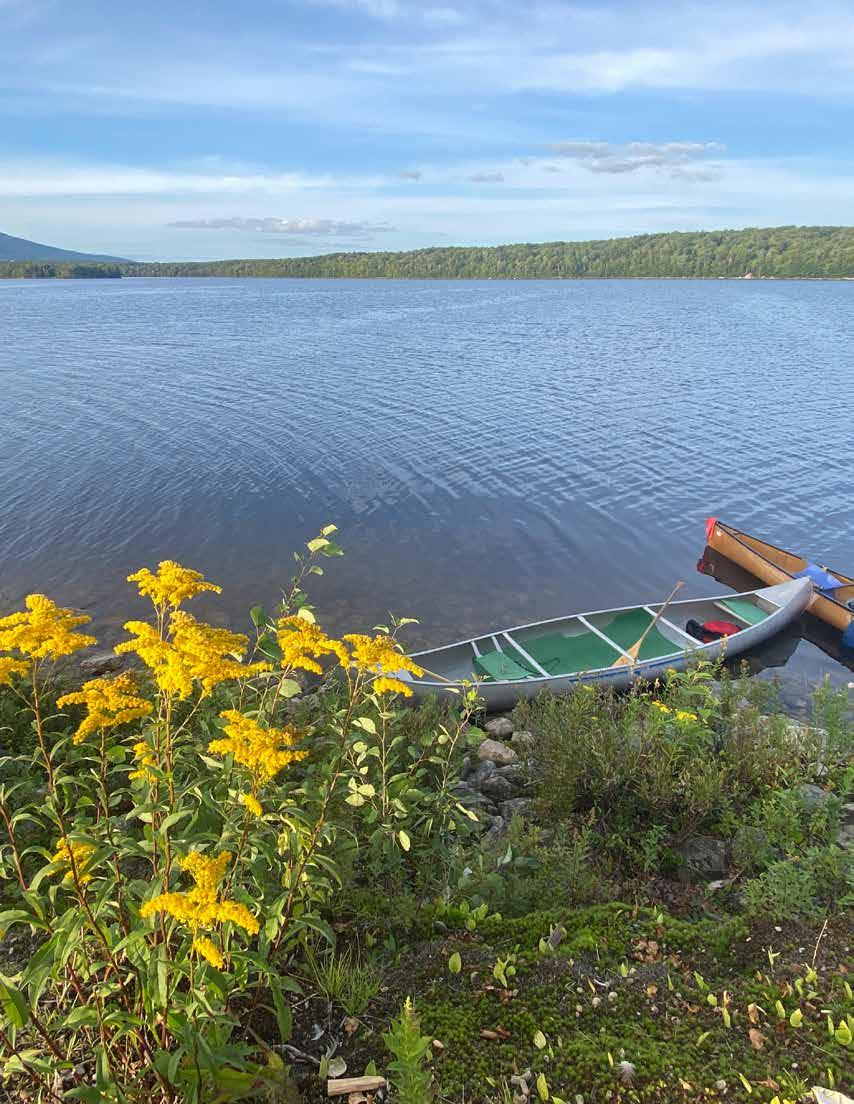
Canoeing at Somerset Reservoir
David Weber
Overnight Activities
CAMPING
INTRODUCTION
Overnight activities in the context of this report include recreation activities that occur outdoors over one or multiple nights. Activities listed separately in the Vermont SCORP that were combined in this report include tent camping, RV/vehicle camping, and hut/yurt camping. Night sky viewing was not inventoried in this report.
SPECIFIC CHALLENGES
Camping occurs more frequently during the warmer times of the year, becoming extremely popular in the summer. The Windham Region provides a variety of types of camping, and many campgrounds fill to capacity during the peak summer season. As the popularity of online platforms such as HipCamp grow in popularity, monitoring the demand and effects of public and private campgrounds on the economy and the environment may become a strong priority.
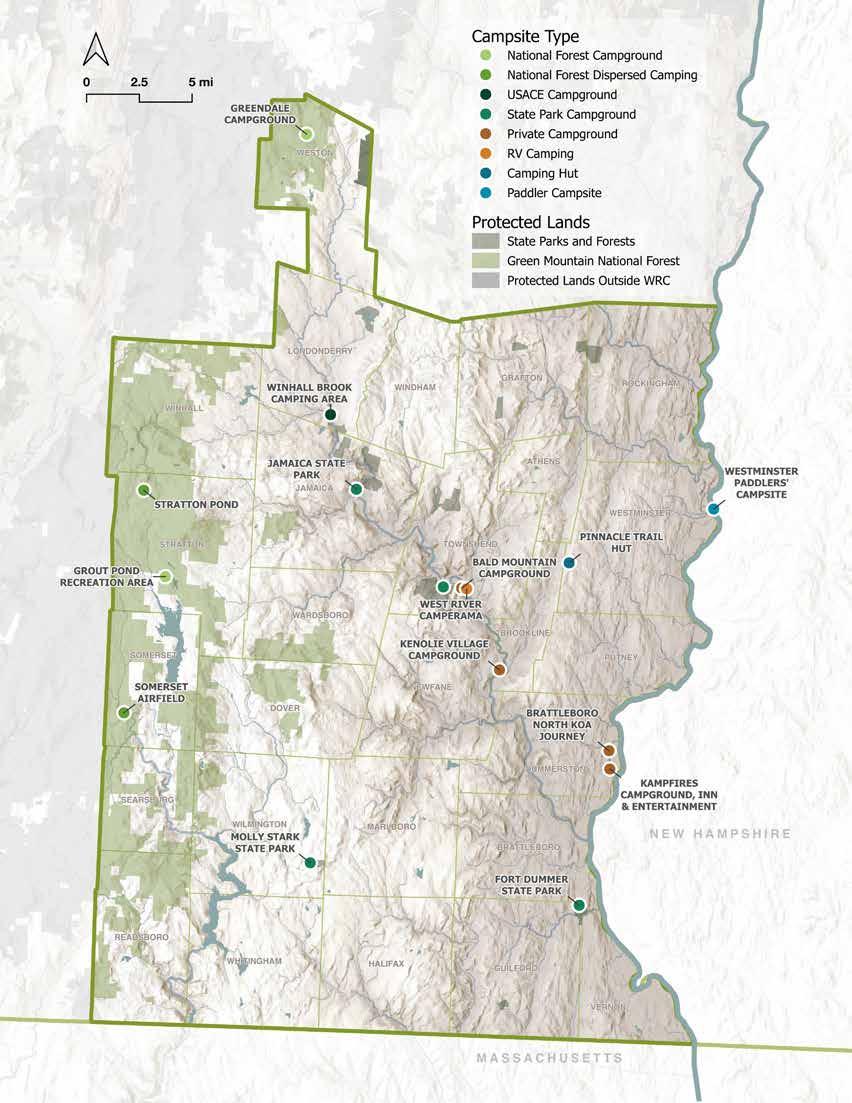
Non-Profit
MOLLIE BEATTIE STATE FOREST
DORAND STATE FOREST
OKEMO STATE FOREST
GREEN MOUNTAIN NATIONAL FOREST
Camping
CONTEXT
Tents are the most common type of shelter used for camping; other types of shelter include recreational vehicles (RV’s), primitive cabins and huts, simple tarps, or no shelter at all. “Glamping,” a portmanteau of “glamorous” and “camping,” is an increasingly popular form of camping offering more amenities, akin to a “resort” experience, than traditional simple tent camping.
INVENTORY
Camping can legally occur at designated sites on public and private lands, or, in National and State Forests, in the “backcountry,” i.e., anywhere that falls outside the perimeter of certain local geographic features (e.g., set back a distance from streams or trails). In National Forests, camping is allowed at designated camping areas, which generally include facilities with running water and toilets, at more remote “dispersed” campsites consisting of a simple cleared spot with a fire ring but no facilities, or in the backcountry.
In the Windham Region, there are at least twenty campgrounds or management areas that offer public camping. Federally managed lands with camping include the United States Forest Service (USFS) Green Mountain National Forest (GMNF) and the United States Army Corps of Engineers (USACE) Winhall Brook Camping Area. Backcountry camping is allowed anywhere on National Forest lands that
5-29 Map of Campgrounds in the Windham Region
Public campgrounds are spread throughout the Windham Region. Backcountry camping is available in National and State Forests. Private campgrounds exist in the eastern part of the region, including one RV campground. Two campsites managed by non-profits also exist. HipCamp campsites are not pictured.
fall outside of certain restricted perimeters. (Complete guidelines for backcountry camping can be found on the Forest Service website). A designated camping area with facilities in the GMNF is the Grout Pond Recreation Area. Other dispersed campsites without facilities include Stratton Pond, Greendale Brook and Somerset Airfield.
The Vermont Department of Forests, Parks, and Recreation (FPR) offers camping at designated sites in some state parks, as well as backcountry camping in state forests. Campsites exist at Fort Dummer, Jamaica, Molly Stark, and Townshend State Parks, and backcountry camping is available at J.J. Dorand, Mollie Beattie, and Okemo State Forests.
A number of private campgrounds in the region include Brattleboro North-KOA, Kampfires, Kenolie Village, and Bald Mountain Campground. West River Camperama is a campsite specifically offering RV sites, located near the West River in Townshend.
Two camping sites managed by conservation organizations were identified in the region: the Pinnacle Hut cabin in the Windmill Ridge Nature Reserve, and the Westminster Paddlers’ Campsite, a site accessed directly from the river that is managed by the Vermont River Conservancy for Connecticut River paddlers.
In recent years, an increasingly popular way for people to camp is to reserve campsites on online marketplace platforms such as HipCamp and HarvestHost. These platforms connect visitors to private landowners who offer outdoor locations on their properties for tent camping, RV’s, cabins, or glamping. Hosts can set their own rules, prices, and offer any level of amenities, while the platform charges a commission for administration and insurance. A search on HipCamp for sites in the Windham Region yielded around thirty to forty independent sites, depending on the time of year.
SURVEY
Thirty-seven percent of survey respondents reported that they camped during the summer months, ranking it fourth among outdoor recreation activities during summer. Fewer respondents reported camping during spring and fall (20% and 34.3%). Few respondents commented on camping; however, one respondent noted a lack of campsites accessible from waterways, and another felt there were not enough camping opportunities in the region.
ISSUES
Some campgrounds in popular areas, such as Grout Pond in the GMNF, are known to fill up during peak summer months, especially on weekends. Further data on occupancy rates of campgrounds in the region is needed, to understand if and where more capacity is needed to match supply with demand.
In light of erratic precipitation due to climate change, observing regulations while backcountry camping is becoming more important. For example, extended periods of drought can increase the risk of campfires becoming wildfires. Or, streams that provide drinking water to backcountry campers may run dry. Public education on best practices and regulations, as well as adequate information on current drought or flood conditions, is necessary to prevent harm to people and the environment.
HipCamp hosts are obligated to comply with host standards issued by the platform, as well as municipal, state, and federal land use regulations, which may include zoning regulations. Certain tax situations may also apply. Issues that may merit further study include the financial and ecological effects of HipCamp sites in the Windham Region as well as the distribution of people who frequent HipCamp sites as opposed to other publicly accessible campsites.
AREAS FOR FURTHER RESEARCH
• Study occupancy patterns of the region’s campgrounds to understand where and when demand for campsites is met or exceeded
• Work with campground and camping lands managers to promote public education of the effects of climate change on camping
• Study the effect of online marketplace camping platforms such as HipCamp on the Windham Region, considering economic, regulatory, and environmental effects
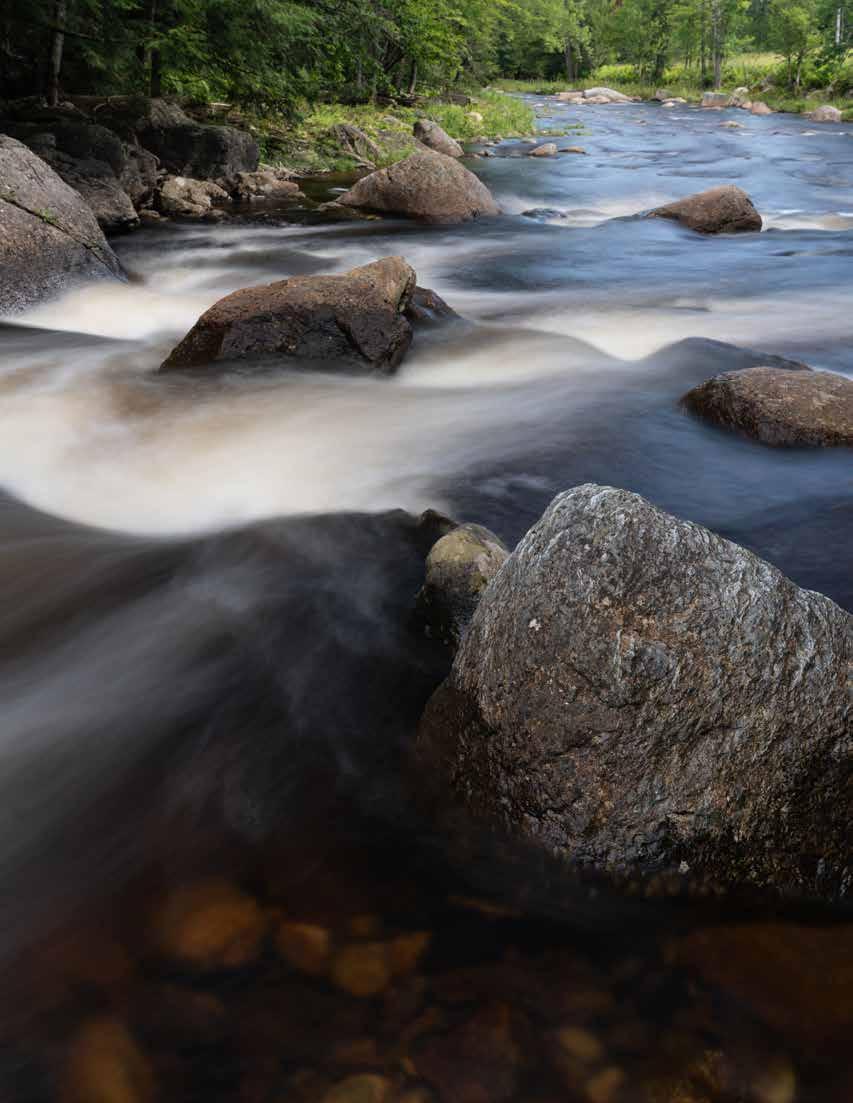
Old Jelly Mill Falls, Dummerston
David Weber
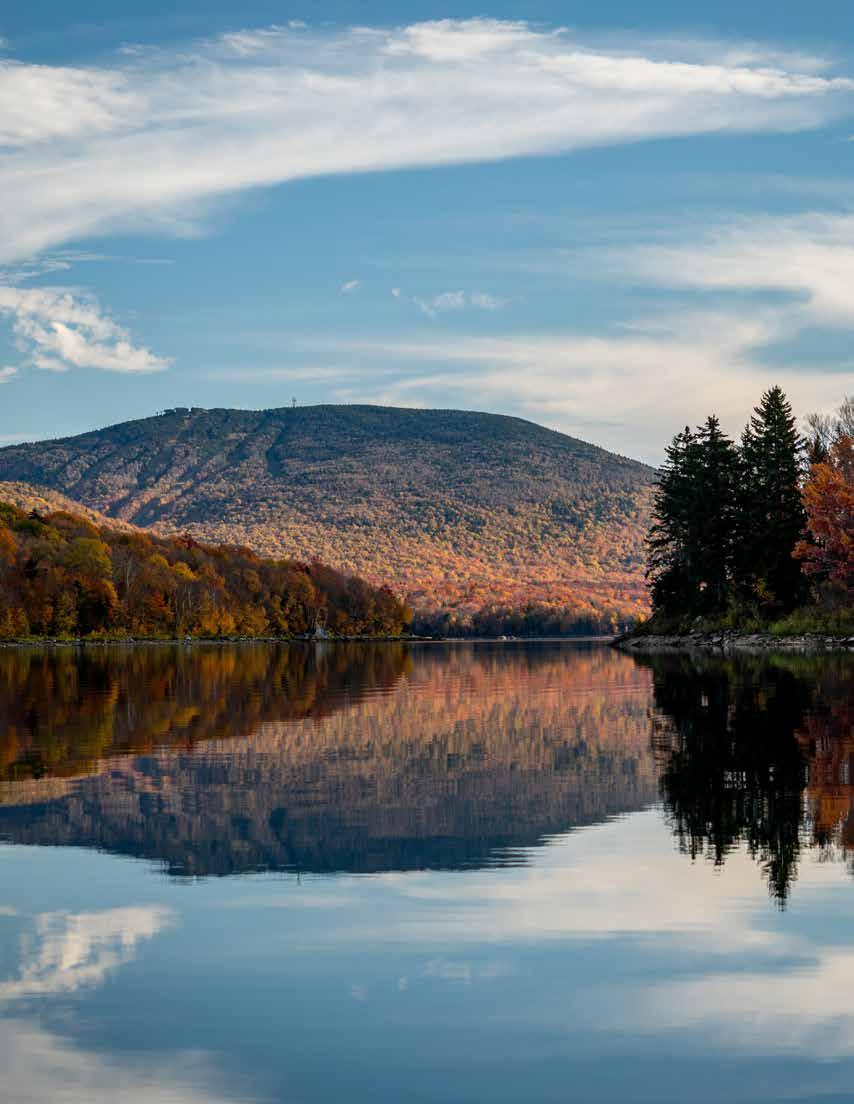
A view of Mount Snow over Somerset Reservoir
David Weber
5.7 Other
SUGARING
LEAF PEEPING
OUTDOOR GEAR STORES & RENTAL SHOPS
INTRODUCTION
The Bureau of Economic Analysis defines outdoor recreation activities within a broad category (all recreational activities undertaken for pleasure that occur outdoors) and a narrow category (recreational activities undertaken for pleasure that generally involve some level of intentional physical exertion and occur in nature-based environments outdoors). The Vermont SCORP defines outdoor recreation as “...activities undertaken for pleasure and wellbeing, that take place outside and are often (though not always) in a natural setting.” (Move Forward Together Vermont, 2025) Windham Regional Commission’s definition of outdoor recreation is similarly broad: “any activity that is done outside, including tourism and agrotourism activities.” With this in mind, the following categories were researched through the lens of outdoor recreation: sugaring maple syrup, leaf peeping, and locations of outdoor gear stores and retail shops. These activities are economic drivers for tourism in the state.
Not included in this research but accounted for in the Vermont SCORP are the following recreation categories: scenic overlooks, hang gliding, sky diving or paraglilding, caving/ spelunking, hot air balloon riding, and geocaching.
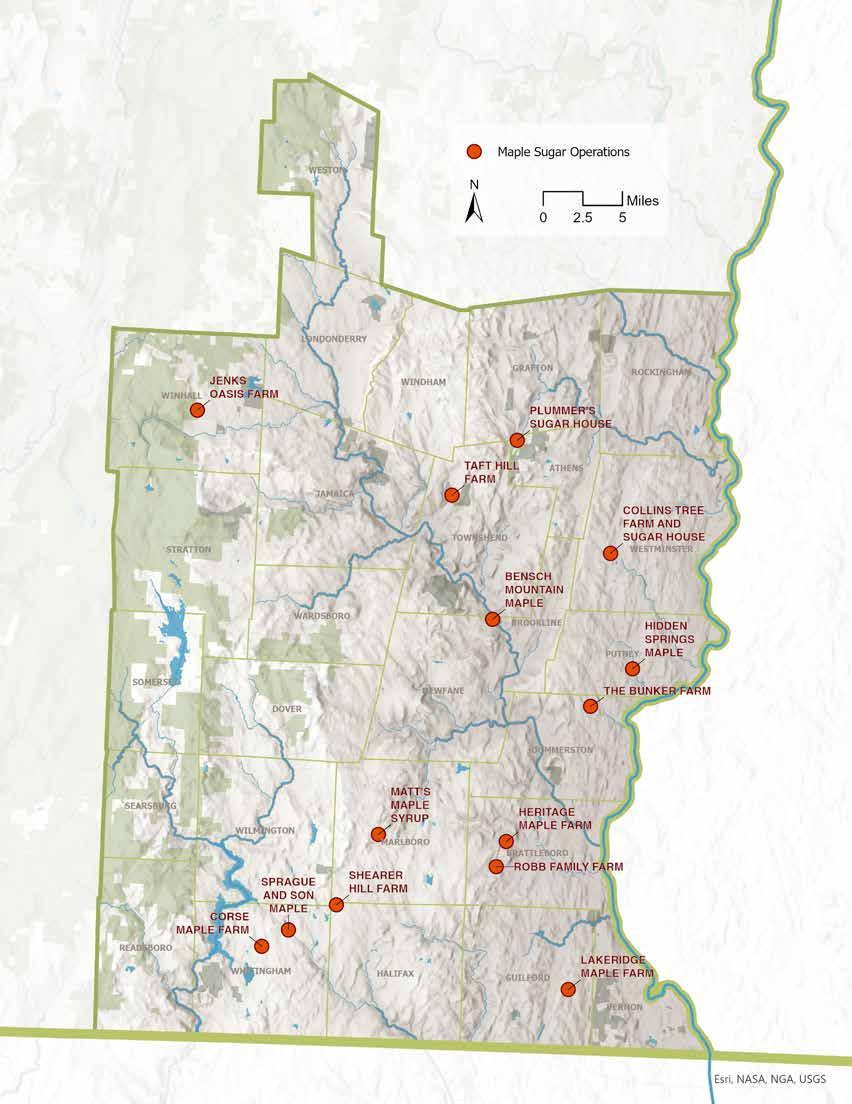
Sugaring
DATA COLLECTION
The inventory identified fourteen maple farms in the Windham Region. They are all private businesses, and most are family farms. Each location was identified via business websites.
SPATIAL PATTERNS
There are maple farms all across the Windham Region, but there is a slight concentration in the eastern and south-central portions of the region. This correlates with lower elevations where sugar maples are typically found.
According to classifications by The Nature Conservancy, more of the maple farms sit within Appalachian (Hemlock)-Northern Hardwood Forest which is characterized by sugar maple, American beech, yellow birch, northern red oak, white oak, and eastern
hemlock occurring at low to mid-elevations. The western half of the region, at higher elevations and with fewer maple farms, is classified as Laurentian-Acadian Northern Hardwood Forest. This habitat type is characterized by white pine, eastern hemlock, red oak, and red maple. Sugar maple, beech, and birch trees are also present but in fewer numbers.
SURVEY
13.6% of survey respondents participate in recreational sugaring during the winter. Of these survey respondents, they voiced concerns about shorter sugaring season and migration of sugar maples out of the region due to climate change.
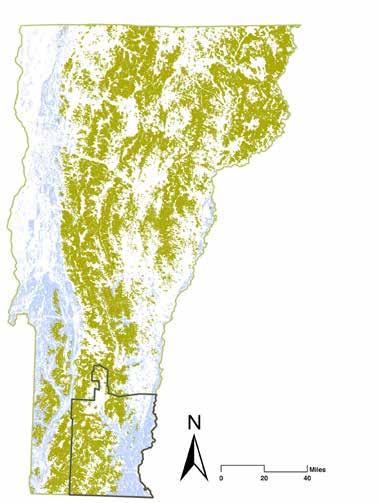
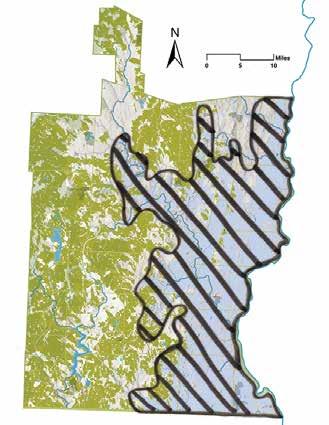
5-32 Dominant Sugar Maple Habitat
5-31 Two of Vermont’s habitat types
Appalachian Hemlock Northern Hardwood Forest habitat (blue with black hatching) correlates with the commercial sugaring locations in the Windham Region
LIMITATIONS
The inventory was limited to maple sugar producing farms advertised online through their respective websites. Additionally, the survey did not specify whether respondents actively tap sugar maples themselves or visit sugaring operations as a form of recreation.
ISSUES
The maple syrup industry plays an important role in Vermont’s identity as it has been the number one maple syrup producer in the country for nearly one hundred years (Vermont 2023 Maple Production). In addition to producing a valuable export, the spring sugaring season draws in visitors to tour facilities and enjoy a variety of maple products during the “mud season” which makes outdoor recreation difficult (Mud Season Day Hikes in Vermont).
Climate change presents a threat to sugar maples and the sugaring industry. As temperatures warm and freeze/thaw periods become less predictable, the sugaring industry in Vermont will likely shrink and shift north with the range of the sugar maples (US EPA). The Nature Conservancy predicts that the Appalachian (Hemlock)-Northern Hardwood Forest may change to resemble Southern Appalachian Oak Forests in the future, of which sugar maples are not present. That being said, the maple sugar farms located in the western portion of the region, in the Laurentian-Acadian Northern Hardwood Forest habitat type, may remain viable for longer, or perhaps the maple farms shift towards the west as the sugar maples’ range changes.
AREAS FOR FURTHER RESEARCH
• How much money does sugaring bring into the Windham Region annually?
• What other products these farms could shift to producing that would still draw in visitors?
Leaf Peeping
CONTEXT
Leaf peeping in Vermont is a cherished autumn tradition, drawing both locals and visitors who admire the vibrant colors of changing leaves across the state’s mountains, valleys, and rural landscapes. The Windham Region offers viewing opportunities from scenic drives through charming towns to hikes in the Green Mountains. The area’s varied topography, featuring dense forests and rolling hills, creates an unparalleled backdrop for the stunning display of fall foliage. This seasonal activity has become an important factor in Vermont’s tourism economy, attracting guests from across the country and beyond to experience the state’s natural beauty during this time of year. Visitors traveling to the Windham Region in the fall fill hotels, inns, and bed-and-breakfasts. Local restaurants, cafes, and shops benefit from the surge in tourist activity, as many visitors spend their days touring the county’s scenic routes and often choose to extend their stay overnight. The annual leaf-peeping season
contributes to Vermont’s tourism economy— not just in Windham County, but throughout the state. (Vermont 2023 Maple Production, 2023)
SPATIAL PATTERNS
During peak foliage, visitors to the Windham Region engage in leaf peeping in several ways, including driving along scenic byways, hiking on trails, or strolling through historic villages. Driving along Route 9, Route 30, and scenic Route 100 are all good options as they wind through landscapes of mountains and valleys.
The Windham Region has scenic hiking trails that offer a more immersive experience for leaf peepers including locations such as Haystack Mountain, Dover Town Forest, and the West River Trail. These hiking options range from easy walks to more challenging climbs. Historic villages that are often destinations for leaf peeping including Brattleboro, Wilmington, and Newfane.
Mapping all of the locations where people go for leaf peeping is impossible. It is also important to note that outdoor recreation users may be participating in leaf peeping activities while also doing another form of outdoor recreation, like hiking or canoeing.
SURVEY
In the survey, leaf peeping ranked third in popularity for fall, with 43.2% of all survey respondents citing that they participate in this annual tradition. Two survey respondents noted particular concern over the sugar maples’ decline within the forests of the Windham Region.
ISSUES
Leaf peeping faces challenges due to climate change. Warmer temperatures and erratic weather patterns are already affecting the timing and intensity of foliage changes. As the climate warms, fall foliage peaks have been
Sugar Maple trees in peak foliage
Nathanael Asaro
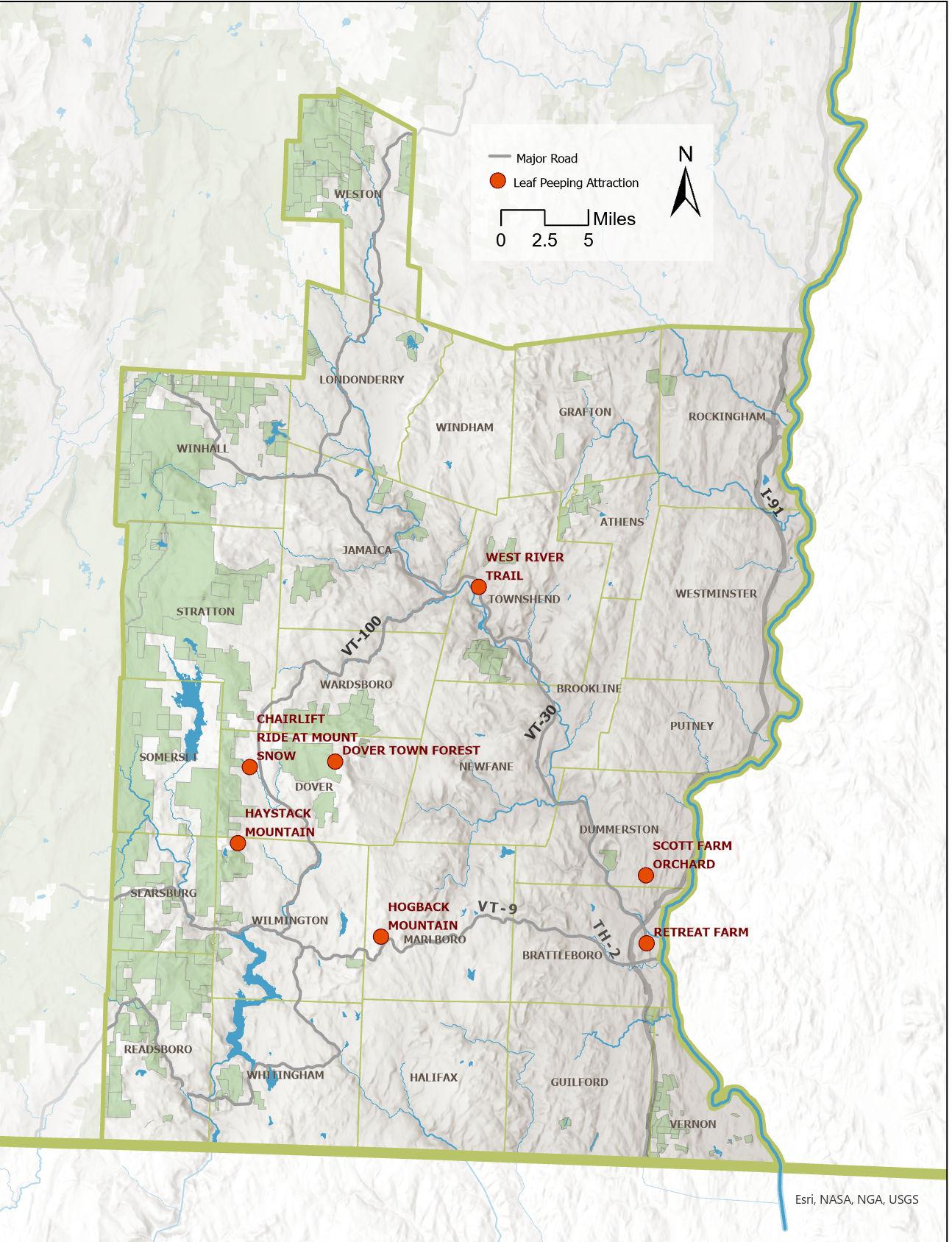
occurring later in the season, with some consideration that the vibrant colors may become less predictable and shorter in duration in the future. Additionally, warmer autumns might lead to a gradual change in leaf color rather than the concentrated burst of colors traditionally experienced, reducing the peak viewing window.
Another concern is the potential shift in tree species that dominate the landscape. As temperatures rise, some trees responsible for Vermont’s brilliant fall colors, like sugar maples, may struggle to survive in the changing climate. This could result in a decline in the intensity of the colors associated with the state’s foliage, diminishing the overall appeal of leaf peeping. Moreover, increased instances of severe storms, droughts, and pest infestations could harm tree health, further impacting the quality of the fall colors.
The economic implications of these changes could be significant. If the fall foliage season
AREAS FOR FURTHER RESEARCH
• Provide information to residents of the Windham Region on the decline of sugar maples.
• Research economic impacts of a shorter or less consistent leaf peeping season year over year.
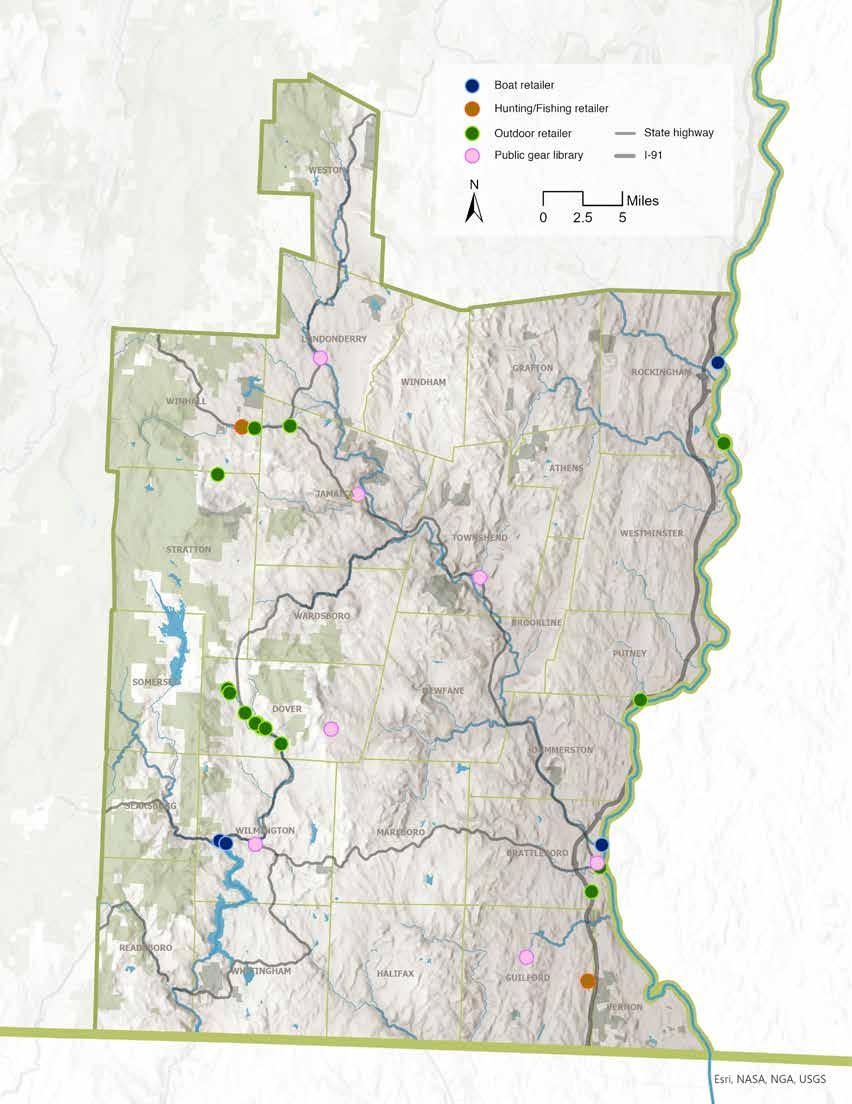
Gear Stores & Libraries
DATA COLLECTION
The inventory identified thirty locations for purchasing, renting, or borrowing outdoor recreation equipment. These locations were found through online information via business websites, public library websites, and resources provided through the Connecticut River Valley Chapter of Trout Unlimited.
INVENTORY
There are four boat retailers in the region. Most offer rentals, one offers boat sales, and one business offers boat tours. There are two businesses for hunting and fishing equipment: one gun store and one bait shop. There are eighteen stores classified as outdoor retailers, including bike shops, sporting good stores, and ski and snowboard shops. In addition to buying equipment, many of the outdoor retailers also offer rentals. Finally, there are seven public libraries in the Windham Region that offer “Libraries of Things,” that include outdoor recreation gear. They mostly offer snowshoes for borrowing, but some had hiking poles, backpacks, and other types of equipment available. There are no outdoor recreation gear stores or libraries lending outdoor equipment in Newfane, Westminster, Somerset, Searsburg, Wardsboro, Readsboro, Whitingham, Halifax, Marlboro, Vernon, Windham, Weston, Brookline, Grafton, or Athens.
SPATIAL PATTERNS
The boat retailers in Windham Region are located around Harriman Reservoir in Wilmington and the Connecticut River in Rockingham and Brattleboro. Peacock Outfitters in Jamaica offers boat rentals near the West River as well as retail recreation equipment. For hunting, the region’s only gun retailer is located in Winhall, and the only bait shop identified is in Guilford. The seventeen outdoor retailers are dispersed throughout the region, but most of them are in Dover situated along Route 100 between Wilmington and
Mount Snow. The seven public gear libraries are primarily located within village centers, as designated by data via the Windham Regional Commission. Conveniently, Wilmington, Brattleboro, Townshend, Jamaica, and Londonderry all have designated snowshoeing trails within one mile of the public library where one can borrow snowshoes.
SURVEY
In evaluating barriers to outdoor recreation in the Windham Region, the cost of gear, equipment, and/or appropriate clothing being too high was the second-greatest barrier with an average of 2.78/5, just behind limited/ insecure parking. That being said, responses were varied, and all proposed barriers averaged a score between 2.49/5 and 2.93/5.
Based on survey results, hiking and walking proved to be the most popular form of outdoor recreation in all four seasons, and it is also one of the most accessible forms, with low costs and ample opportunities. Snowshoe borrowing from public libraries extends this access during the winter months.
AREAS FOR FURTHER RESEARCH
• What are the usage rates from gear libraries? What would be needed to expand these efforts? Who could educate the public about gear libraries and promote their use?
• How much revenue do the Windham Region’s gear stores generate annually? How much of that revenue stays in the region? How many people do the shops employ?
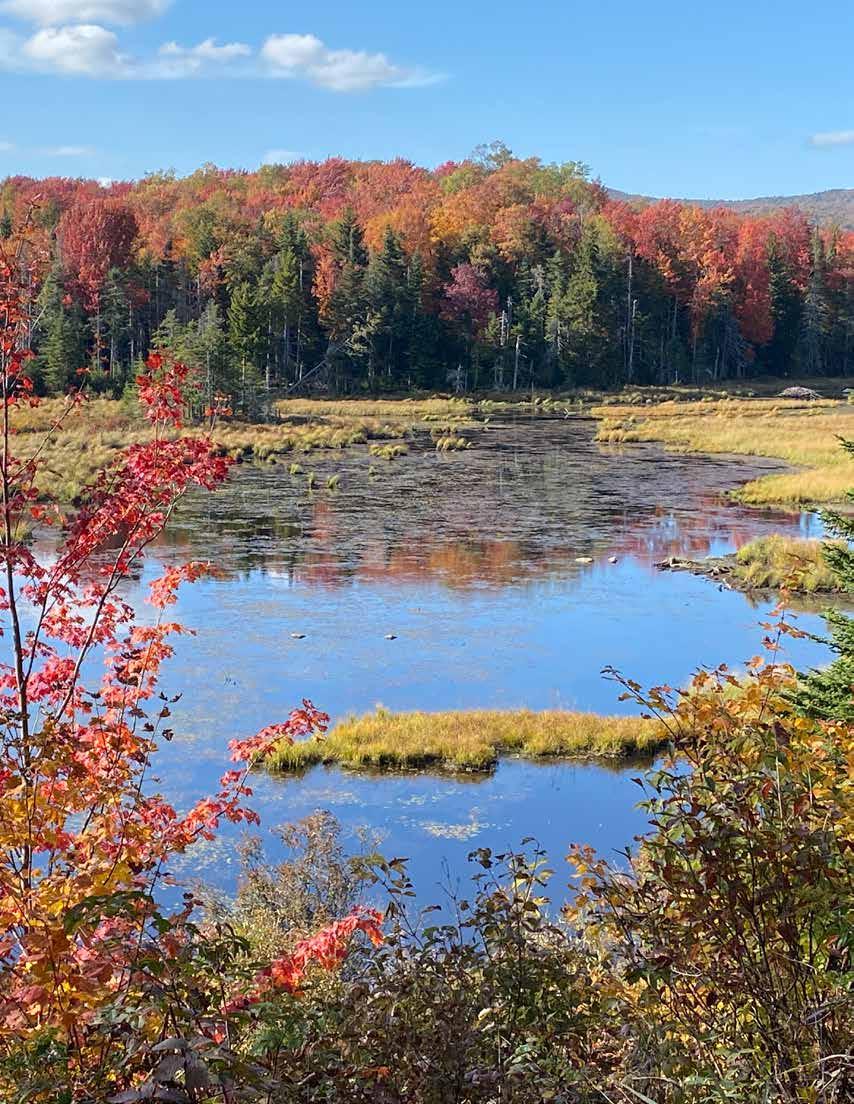
APPENDIX 06
Beaver meadow in Green Mountain National Forest
David Weber
6.1 Works Cited
A.D.A. Standards for Accessible Design | ADA.Gov. www.ada.gov/law-and-regs/design-standards/. Accessed 10 Apr. 2025.
A.N.R. Lands Conservation Plan | Department of Forests, Parks and Recreation. fpr.vermont.gov/ state_lands/acquisition/anr-lands-conservation-plan. Accessed 10 Apr. 2025.
Banacos, Peter. The Great Vermont Flood of 10-11 July 2023: Preliminary Meteorological Summary. NOAA’s National Weather Service, www.weather.gov/btv/The-Great-Vermont-Flood-of-10-11-July-2023-Preliminary-Meteorological-Summary. Accessed 10 Apr. 2025.
Barriers to Transportation Programs in Rural Areas – RHIhub Toolkit. www.ruralhealthinfo.org/toolkits/transportation/1/barriers. Accessed 10 Apr. 2025.
Doytchev, Boyan. “Golf Courses and Their Impact on the Environment.” ResearchGate, Oct. 2019, www.researchgate.net/publication/350070879_GOLF_COURSES_AND_THEIR_IMPACT_ON_ THE_ENVIRONMENT.
“Climate Change Connections: Vermont (Maple Syrup).” United State Environmental Protection Agency, Environmental Protection Agency, www.epa.gov/climateimpacts/climate-change-connections-vermont-maple-syrup. Accessed 15 Mar. 2025.
Cusick, Daniel. “Parking Lots Cause More Heat and Flooding--Here’s How 100 U.S. Cities Rank.” Scientific American, 22 January 2024, www.scientificamerican.com/article/parking-lots-cause-moreheat-and-flooding-heres-how-100-u-s-cities-rank/. Accessed 10 Apr. 2025.
Department of Environmental Conservation. “River Corridor and Floodplain Maps.” Agency of Natural Resources, dec.vermont.gov/watershed/rivers/river-corridor-and-floodplain-protection/rivercorridor-and-floodplain-maps. Accessed 20 Mar. 2025.
“Discover Vermont’s Dirt Roads.” Vermont Roads, vermontroads.net/. Accessed 13 Mar. 2025.
Eigenschenk, Barbara, et al. “Benefits of Outdoor Sports for Society. A Systematic Literature Review and Reflections on Evidence.” International Journal of Environmental Research and Public Health, vol. 16, no. 6, Mar. 2019, p. 937. PubMed Central, https://doi.org/10.3390/ijerph16060937.
Emert, Jarett. “Rethinking the ‘100 Year Flood’ in Vermont.” Environment Next, 2 Aug. 2023, environmentnext.org/rethinking-the-100-year-flood-in-vermont/.
“Fat Biking.” Department of Forests, Parks and Recreation, fpr.vermont.gov/recreation/activities/fatbiking. Accessed 15 Mar. 2025.
“Green Mountain & Finger Lakes National Forests - History & Culture.” Forest Service National Website, www.fs.usda.gov/detail/gmfl/learning/history-culture/?cid=stelprdb5316753. Accessed 18 Mar. 2025.
Goff, John, et al. The Significant Flooding and Severe Weather Event of 10-11 July 2024. NOAA’s National Weather Service, www.weather.gov/btv/The-Significant-Flooding-and-Severe-WeatherEvent-of-10-11-July-2024. Accessed 10 Apr. 2025.
Headwaters Economics. How Outdoor Recreation Supports Rural Economic Development - Headwaters Economics. headwaterseconomics.org/economic-development/trends-performance/outdoorrecreation. Accessed 10 Apr. 2025.
How States Plan and Select Projects - Land and Water Conservation Fund (U.S. National Park Service). www.nps.gov/subjects/lwcf/planningprojects.htm. Accessed 10 Apr. 2025.
“Impact Map.” Climate Impact Lab, impactlab.org/map. Accessed 10 Apr. 2025.
Jiang, Lucy. (Q & A) The Neurodiverse City Imagines Neuroinclusive Public Spaces — Design Trust for Public Space. Interview by Lucy Gagne. www.designtrust.org/news/q-neurodiverse-city-imagines-neuroinclusive-public-spaces. Accessed 10 Apr. 2025.
Lantieri, Nate. New Data Shows Continued Increase in Vermont Short-Term Rentals | VHFA.Org - Vermont Housing Finance Agency. 27 Oct. 2023, vhfa.org/news/blog/new-data-shows-continuedincrease-vermont-short-term-rentals.
Little, Richard D. “Deerfield River Valley Mysteries: How the Glacier Age and Other Geologic Events Shaped Historic Deerfield and Surroundings (Part 1).” Historic Deerfield, 21 Apr. 2023, www.historic-deerfield.org/2020-5-7-deerfield-river-valley-mysteries-how-the-glacier-age-and-other-geologicevents-shaped-historic-deerfield-and-surroundings-part-1.
Liptak, Andrew. “Collections Highlight: Snowshoe Evolution.” Vermont Historical Society, 19 Feb. 2025, www.vermonthistory.org/vermont-historical-society-snowshoe-evolution-abenaki-tubbs-collection-winter.
Maloney, James. Brattleboro Ski Hill Opens on New Year’s Eve after Facing Water Shortages. www. mynbc5.com/article/vt-brattleboro-ski-hill-opens-on-new-years-eve-after-facing-water-shortages/63314041. Accessed 10 Apr. 2025.
“Mission Statement and Strategic Plan.” Connecticut River Valley Chapter of Trout Unlimited #450, tu-connriver.square.site/strategic-plan. Accessed 9 Mar. 2025.
Monz, Christopher, and Andrew Kulmatiski. “The Emergence of ‘Fat Bikes’ in the USA: Trends, Po-
tential Consequences and Management Implications.” Journal of Outdoor Recreation and Tourism, Elsevier, 9 May 2016, www.sciencedirect.com/science/article/abs/pii/S2213078016300056.
Move Forward Together Vermont, Vermont Outdoor Recreation Economy Collaborative, Feb. 2025. fpr.vermont.gov/sites/fpr/files/documents/SCORP%20Report%20Full_FINAL.pdf. Accessed Mar. 2025.
“Mud Season Day Hikes in Vermont.” Green Mountain Club, 31 Mar. 2023, www.greenmountainclub.org/hiking/day-hikes-spring-mud-season.
National Caucus of Environmental Legislators. “Habitat Connectivity: A Win for Biodiversity.” National Caucus of Environmental Legislators, 27 Jan. 2025, www.ncelenviro.org/articles/habitat-connectivity-a-win-for-biodiversity.
Naughton, Meredith. “Wildlife and Recreation; Understanding and Managing the Effects of Trail Use on Wildlife.” Vermont Agency of Natural Resources, Nov. 2021, anr.vermont.gov/sites/anr/ files/2023-01/wildlife_and_recreation_%20M_naughton_2021.pdf.
Pealer, Sacha, and Gwen Dunnington. “Climate Change and Vermont’s Waters.” Vermont Agency of Natural Resources, Apr. 2011, anr.vermont.gov/sites/anr/files/specialtopics/climate/documents/ VTCCwhitepapers/VTCCAdaptWaterResources.pdf.
Looking North, Grout Pond Access Road
David Weber
Porter, Louis. “Hunting, Fishing, and Trapping License Sales 2015-2019.” Vermont Department of Fish and Wildlife. 28 Feb. 2020. legislature.vermont.gov/Documents/2020/WorkGroups/Senate%20 Natural%20Resources/Bills/S.321/Written%20Testimony/S.321~Louis%20Porter~5%20Year%20 License~2-28-2020.pdf
“Private Land and Public Access.” Vermont Fish & Wildlife Department, vtfishandwildlife.com/learnmore/landowner-resources/private-land-and-public-access. Accessed 9 Mar. 2025.
Proper Signage Makes a Trail Come Alive - American Trails. www.americantrails.org/resources/ proper-signage-makes-a-trail-come-alive. Accessed 10 Apr. 2025.
PTT Analysis. ptt.mapvt.com. Accessed 10 Apr. 2025.
Public Assets Institute. Migration: Millennials and the Wealthy Moved in. Most Vermonters Stay Put. publicassets.org/research-publications/migration-millennials-and-the-wealthy-moved-in-mostvermonters-stay-put. Accessed 10 Apr. 2025.
Recreational Trails - Environment - FHWA. www.fhwa.dot.gov/environment/recreational_trails. Accessed 10 Apr. 2025.
Restrooms in Parks, along Trails and in Public Space - American Restroom Association (ARA) americanrestroom.org/restrooms-in-parks-along-trails-and-in-public-space. Accessed 10 Apr. 2025.
Root, Tik. “Greener Snowmaking Is Helping Ski Resorts Weather Climate Change.” Vermont Public, 27 Feb. 2024, www.vermontpublic.org/local-news/2024-02-27/greener-snowmaking-is-helping-skiresorts-weather-climate-change.
Simonton, Anna. The People in Charge Won’t Save Us From Climate Catastrophe. We’ll Need to Do It Ourselves. 5 Feb. 2025. www.thenation.com, www.thenation.com/?post_type=article&p=540269.
Sorenson, Eric, and Jon Osborne. “Vermont Habitat Block and Habitat Connectivity.” Vermont Fish and Wildlife Department, Apr. 2014, fpr.vermont.gov/sites/fpr/files/Forest_and_Forestry/Vermont_ Forests/Library/VFWD%20Habitat%20Block%20Report-April%202014.pdf.
State of Vermont. “Welcome to Flood Ready Vermont.” Flood Ready, floodready.vermont.gov. Accessed 20 Mar. 2025.
State of Vermont, Vermont Department of Forests, Parks, and Recreation, Vermont Outdoor Recreation Economic Collaborative. Move Forward Together Vermont: Vermont’s Statewide Comprehensive Outdoor Recreation Plan. 2025, fpr.vermont.gov/sites/fpr/files/documents/SCORP%20Report%20Full_FINAL.pdf. Accessed 10 Apr 2025.
Sunkara, Lavanya. “The Rise of Gear-Lending Libraries.” Outside Business Magazine, 27 February 2021, www.outsideonline.com/business-journal/issues/great-gear-for-all. Accessed 10 Apr. 2025.
Svoboda, Josie. What Is Adaptive Recreation? - National Ability Center. discovernac.org/blog/whatis-adaptive-recreation. Accessed 10 Apr. 2025.
The Nature Conservancy. “Appalachian (Hemlock)-Northern Hardwood Forest.” Conservation Gateway, www.conservationgateway.org/ConservationByGeography/NorthAmerica/UnitedStates/edc/ Documents/HabitatGuides/12.pdf. Accessed 15 Mar. 2025.
Thiem, Haley, and Samatha Borisoff. Drought Expands in the East Following Exceptionally Dry October | NOAA Climate.Gov. 7 Nov. 2024, www.climate.gov/news-features/event-tracker/droughtexpands-east-following-exceptionally-dry-october.
Tourism Research | Agency of Commerce and Community Development. accd.vermont.gov/tourism/research#economic-impact-and-visitation-trends. Accessed 10 Apr. 2025.
Twohig-Bennett, Caoimhe, and Andy Jones. “The Health Benefits of the Great Outdoors: A Systematic Review and Meta-Analysis of Greenspace Exposure and Health Outcomes.” Environmental Research, vol. 166, Oct. 2018, pp. 628–37. PubMed Central, doi.org/10.1016/j.envres.2018.06.030.
U.N. Habitat. 11.7 Public Space | UN-Habitat. https://unhabitat.org/11-7-public-space. Accessed 10 Apr. 2025.
U.N.E.P. World Conservation Monitoring Centre. “Addressing Climate Change: Why Biodiversity Matters.” UNCCLearn, 2014, www.uncclearn.org/wp-content/uploads/library/unep248.pdf.
U.S. Bureau of Economic Analysis. Outdoor Recreation Satellite Account, U.S. and States, 2023 | U.S. Bureau of Economic Analysis (BEA), 10 November 2024, www.bea.gov/news/2024/outdoorrecreation-satellite-account-us-and-states-2023. Accessed 10 Apr. 2025.
U.S. Bureau of Economic Analysis. How Will Outdoor Recreation Be Defined? | U.S. Bureau of Economic Analysis (BEA), 2 November 2017, www.bea.gov/help/faq/1194. Accessed 10 Apr. 2025.
U.S. Bureau of Transportation Statistics. Sidewalks Promote Walking | Bureau of Transportation Statistics. www.bts.gov/archive/publications/special_reports_and_issue_briefs/issue_briefs/number_12/entire. Accessed 10 Apr. 2025.
U.S. Environmental Protection Agency. Climate Impacts on Transportation. 19january2017snapshot.epa.gov/climate-impacts/climate-impacts-transportation. Accessed 10 Apr. 2025.
Uysal, Muzaffer, et al. “Quality-of-Life: A Critical Examination of Research Progress.” Tourism Management, vol. 107, Apr. 2025, p. 105070. ScienceDirect, doi.org/10.1016/j.tourman.2024.105070.
“Vermont 2022 Vital Statistics Report.” Vermont Department of Health, 2022, www.healthvermont. gov/sites/default/files/document/hsi-vital-records-2022-annual-report%20(2).pdf.
“Vermont 2023 Maple Production.” USDA National Agricultural Statistics Service, 9 June 2023, www.nass.usda.gov/Statistics_by_State/New_England_includes/Publications/Current_News_Release/2023/Vermont-2023-Maple-Production.pdf.
Vermont Center for Geographic Information. 2020 Census Data | Vermont Center for Geographic Information. vcgi.vermont.gov/data-release/2020-census-data. Accessed 25 Mar. 2025.
Vermont Fish & Wildlife Department. “Some Cliff Tops and Overlooks Are Closed to Protect Nesting Peregrines.” Vermont Agency of Natural Resources, 25 Feb. 2025, vtfishandwildlife.com/pressreleases/some-cliff-tops-and-overlooks-are-closed-protect-nesting-peregrines.
Vermont Fish & Wildlife Department. Private Land and Public Access | Vermont Fish & Wildlife Department. vtfishandwildlife.com/learn-more/landowner-resources/private-land-and-public-access. Accessed 10 Apr. 2025.
Vermont Institute for Government. The Law of Water: An Introduction to Vermont Water Law, 2020,
www.uvm.edu/sites/default/files/Center-for-Rural-Studies/VIG%20Guides/VIG-lawofwater-2020.pdf.
Vermont Natural Resource Council. “Protecting Vermont’s Wetlands.” Wetlands, vnrc.org/cleanwater/wetlands. Accessed 20 Mar. 2025.
Vermont Outdoor Recreation Economic Collaborative | Department of Forests, Parks and Recreation. fpr.vermont.gov/VOREC. Accessed 10 Apr. 2025.
Vermont State Hazard Mitigation Plan 2023, Department of Public Safety, Vermont Emergency Management, Jan. 2024, vem.vermont.gov/sites/demhs/files/documents/2023%20SHMP_Adopted%20Draft%20Jan2024.pdf.
Watson, Keri, et al. “Quantifying Flood Mitigation Services: The Economic Value of Otter Creek Wetlands and Floodplains to Middlebury, VT.” Ecological Economics, Elsevier, 6 July 2016, www. sciencedirect.com/science/article/abs/pii/S092180091630595X.
Wallston, Brian. “Pandemic Fueled Record Gain in Vermont Population: Report.” ABC22 & FOX44, 11 Dec. 2024, www.mychamplainvalley.com/news/local-news/vermont/pandemic-fueled-record-gain-in-vermont-population-report-finds.
Weinstein, Ethan. “How Vermont’s Physical and Human Geography Help Explain Recent Flooding.” VTDigger, 31 July 2023, vtdigger.org/2023/07/31/how-vermonts-physical-and-human-geographyhelp-explain-recent-flooding.
Weiss-Tisman, Howard. CRT and DVTA Is Now Southeast Vermont Transit | Local News | Reformer.Com. www.reformer.com/local-news/crt-and-dvta-is-now-southeast-vermont-transit/article_ b4155bd7-a5ad-529b-806c-5aa9b7c7da29.html. Accessed 10 Apr. 2025.
“Windham County, VT Population by Year, Race, & More.” USAFacts, 19 Mar. 2025, usafacts.org/ data/topics/people-society/population-and-demographics/our-changing-population/state/vermont/ county/windham-county.
World Health Organization. WHOQOL - Measuring Quality of Life | The World Health Organization. www.who.int/tools/whoqol. Accessed 10 Apr. 2025.
Wulff Pabilonia, Sabrina, and Jill Janocha Redmond. “The Rise in Remote Work since the Pandemic and Its Impact on Productivity.” Bureau of Labor Statistics, www.bls.gov/opub/btn/volume-13/ remote-work-productivity.htm. Accessed 10 Apr. 2025.
6.2 GIS Map Sources
RECREATION
Title Source URL
Outdoor Recreation Sites Inventory
VCGI (VT ANR)
https://geodata.vermont.gov/datasets/VTANR::outdoorrecreation-sites-inventory/ explore?location=43.769001%2C-72.434889%2C8.00
regional_trails_all. zip WRC shared via email
fishin_access_area
Open_recreation_ sites_inventory
VCGI
VCGI
https://geodata.vermont.gov/datasets/00f554d0073f41c1a6 7cabe2b1ab343b_163/about
https://geodata.vermont.gov/maps/VTANR::outdoorrecreation-sites-inventory/about Vermont_ recreation_roads_ zip_WFL1
ArcGIS Online https://services1.arcgis.com/YiULsZbgRKmBtdZN/arcgis/ rest/services/Vermont_Recreation_Roads_Zip_WFL1/ FeatureServer
WATER FEATURES
Title Source URL
FS_VCGI_ OPENDATA_ Water_ VHDCARTO_line_ SP_v1
Lake/Pond WBIDs and WBID Segments
Wetlands Advisory Layer
VCGI https://www.arcgis.com/home/item.html?id=9698139b6c4c 413897e7be40494fe4d5
VCGI https://geodata.vermont.gov/datasets/VTANR::lake-pondwbids-and-wbid-segments/about
VCGI https://geodata.vermont.gov/datasets/438a0f1d39b14e159 30c1040c35dd0dc_194/ explore?location=42.895025%2C-72.601866%2C13.27
Lakes_Inventory VCGI (VT ANR)
https://geodata.vermont.gov/datasets/9b10dbb0fd8a4a8b8 1c1aae453aea20c_208/explore
CENSUS DATA
Title Source URL Notes
Vermont_recreation_ roads_zip_WFL1
ArcGIS Online
GHS_BUILT_S_E2020_ GLOBE_ R2023A_54009_100_ V1_0_R4_C13
https://services1.arcgis.com/ YiULsZbgRKmBtdZN/arcgis/ rest/services/Vermont_ Recreation_Roads_Zip_WFL1/ FeatureServer
EU Space Agency https://human-settlement. emergency.copernicus.eu/ ghs_buS2023.php
ECOLOGY/CONSERVATION
Title Source URL
has population by zip code but not sure when the data is from - layer published in 2018
raster tile of population point density from EU Space Agency - Copernicus
TNC Habitat Type The Nature Conservancy https://tnc.app.box.com/s/ujvjfelrfk0nqgslgli89lkgp7zxbwdy
Conserved Land Inventory VCGI https://geodata.vermont.gov/datasets/VCGI::vt-protectedlands-database/ explore?location=42.884006%2C-72.615241%2C10.37
VT Biodiversity Project VCGI https://geodata.vermont.gov/datasets/VCGI::vt-biodiversityproject-biological-hotspots/explore
ELEVATION
Title Source URL Notes
VT Lidar VCGI ArcPro Data
Southern_2023_35cn_ DEMHF
LAND USE/LAND COVER
VCGI https://geodata. vermont.gov/ pages/elevation
Title Source URL
Future Land Use
REGULATED AREAS
Accessed Preliminary 2023 LiDAR data for the Southern Section of VT through Vermont LiDAR Finder
WRC https://www.arcgis.com/apps/mapviewer/index. html?url=https://services2.arcgis.com/3xVssd0FD416APnB/ ArcGIS/rest/services/Future_Land_Use_2025/ FeatureServer&source=sd
Title Source URL
VT_Protected_ Lands_Database
ANR_Land_ Dataset_(Unit)
VCGI https://geodata.vermont.gov/datasets/072bb8ad3c454b0e9 cb0f517e9a296a3_10/explore
VCGI https://geodata.vermont.gov/datasets/391e5d445fc94dfba7 585569126438ad_38/explore
Title Source URL
Road Segments
VT Highway Functional Classes
Public Transit Routes
Vermont_ recreation_roads_ zip_WFL1
High Risk Dam Inundation
Public Transport - Stops
EV Charging Stations
VCGI
VCGI
VCGI
ArcGIS Online
VCGI
https://geodata.vermont.gov/datasets/164a3ae699d34b2f8 2677ca8cee4c054_171/ explore?location=43.853013%2C-72.455000%2C8.15
https://geodata.vermont.gov/datasets/ e7a008c9b42042e7b9353fe251853819_19/explore
https://geodata.vermont.gov/datasets/ cf4aadf316ed435fb7ab48437191bacd_0/ explore?location=43.801627%2C-72.826957%2C8.05
https://services1.arcgis.com/YiULsZbgRKmBtdZN/arcgis/ rest/services/Vermont_Recreation_Roads_Zip_WFL1/ FeatureServer
https://geodata.vermont.gov/datasets/ c25085fb2d15401e8d471e32e1d4764f_0/ explore?location=43.815004%2C-72.584916%2C8.12
VCGI (VTrans) https://geodata.vermont.gov/datasets/5c7491491576446eaf 1a797c3a0ae3ae_0/explore
VCGI (VT ACCD)
POLITICAL BOUNDARIES
https://geodata.vermont.gov/datasets/4a1269df312d43f7aa 17d16147bb24ae_22
Title Source URL
Town Boundaries VCGI
US State Boundaries
VT Regional Planning Commission Boundaries
WATERSHED
https://geodata.vermont.gov/datasets/3f464b0e1980450e9 026430a635bff0a_0/explore
ArcGIS Online https://hub.arcgis.com/datasets/1612d351695b467eba75fd f82c10884f_0/explore
VCGI
https://geodata.vermont.gov/datasets/ b311ad21d306477eb2bbefa95fe6460d_0/explore
Title Source URL
HUC8 Watershed VCGI
HUC10 Watershed VCGI
HUC12 Watershed VCGI
https://geodata.vermont.gov/datasets/vt-subbasinboundaries-huc8/explore
https://geodata.vermont.gov/datasets/8839d45eaac24417b ae361ef92acd018_5/explore?location=2.289228%2C0.3135 00%2C1.64
https://geodata.vermont.gov/datasets/VCGI::vtsubwatershed-boundaries-huc12/ explore?location=43.852858%2C-72.459750%2C8.26
Winter at Harriman Reservoir
Stefan Poost
6.3 Full Survey Results
1. Are you a resident of Vermont?
4. On average, how often did you recreate outdoors in the Windham Region during the previous 12 months?
9. What winter outdoor recreation activities do you participate in most?
Hiking/WalkingSnowshoeingCross-countryWildlifeDownhillBirdingIceskatingSleddingandBackcountrySugaringIcefishingHuntingSnowmobilingPhotography*FatbikingPlantIamnotinVTinRunning*DogWalking*AnimalShoveling*Curling*IceclimbingDogSledding
10. Of the winter activities you selected above, are the number/quality of opportunities more than adequate, adequate or less than adequate?
11. What spring outdoor recreation activities do you participate in most?
Hiking Wildlife watching Kayaking/canoeiBirding Plant ID/ForagingPicnickingSwimming RoadbikingCamping Gravel biking RodFishing Mountain biking LeafPeepingTrailRunningFlyFishing Road RunningHuntingGolfing Motor boating Rock climbing HorsebackridingDiscgolfBike-packingATVRidingWalking*Dogwalking*Gardening*Photography*GeocachingPickleball*4-Wheeling Hang gliding Caving/Spelunkin
12. Of the spring activities you selected above, are the number/quality of opportunities more than adequate, adequate or less than adequate?
13. What summer outdoor recreation activities do you participate in most?
14. Of the summer activities you selected above, are the number/quality of opportunities more than adequate, adequate or less than adequate?
15. What fall outdoor recreation activities do you participate in most?
Hiking Kayaking/canoeiLeafpeepingBirdingCampingSwimming Wildlife watching RoadbikingPicnickingPlant Gravel biking Mountain biking TrailrunningHuntingRodfishingFlyfishing Road runningGolfingATVridingBike-packingDiscgolfHorseback Rock climbing MotorboatingGeocachingPhotography*Walking*4-WheelingDogWalking*Caving/SpelunkiGardening* Apple picking* Backpacking*Pickleball* Hang gliding
16. Of the fall activities you selected above, are the number/quality of opportunities more than adequate, adequate or less than adequate?
17. The Windham Region has recreation opportunities on public and private lands. On which lands do you tend to recreate the most?
19. If you answered yes to recreation on/in waters, where do you go?
18. Do you recreate on/in waters in the Windham Region? I
20. What could be improved about the outdoor recreation assets in the Windham Region?
More creemee stands.
more public access points along rivers, streams, lakes and ponds
More camping areas, more consolidated visitor information - especially parking/access. Nothing they’re perfect!
I think that there are several opportunities to recreate in the Windham Region. In Grafton, we are working on trail connectivity which I think will encourage more people to participate in outdoor recreation within the town.
Adequate parking
Better water quality, more kayak launches what’s available in the area
I think that it is
Clear and comprehensive maps and cultural expectations around outdoor etiquette
More availability and visibility
access at the Lily Pond in Vernon has been greatly reduced. Fix That and move the boulders to a reasonable distance.
More places to put in kayak
Clean out debris from brooks and rivers
Pretty happy with it as is more and safer parking at the West River swimhole/Indian Lovecall - it’s highly trafficked with very limited safe parking
Winter is difficult to have consistent recreation opportunities available outside of ski areas that provide snowmaking. With warming winters, good snow for snowshoeing or cross country skiing is the limiting factor for getting out. Warmer winters are also icing over trails making it hard to walk without spikes
More places to put in kayak
Better fishing
a few trails need the signage improved, also more kiosks at trailheads - maps, but also information about plants and animals of the ecosystem people are walking and running through Filling the gaps. Providing spaces for underserved demographics swimming areas appropriate for kids, boat launch areas for paddling sports
More public parking with access to GMNF in general and especially over-night parking. And, enforcement of rule concerning use of ATVs and snowmobiles off trail in the GMNF. And, illegal motorized trail cutting in the GMNF.
Better monitoring of killing beavers and polluting water ways
Personally, I feel that the assests do not need improvement.
More public fishing access, especially from shore so that folks don’t have to buy a boat. Michigan does a great job of this (check out Michigan Trout Trails)
Not my expertise.
Make sure all the Rec. Dept. facilities such as the Pool, Skating Rink etc.
Mountain bike trails
More public funding to support development and maintenance of outdoor spaces and perhaps even programming.
Longer trails to run, walk bike on
Not sure nothing!
Na sanitation facilities especially at popular tourist swimming areas
?
biking trails
Less exclusive trout fishing areas, specifically, Lake Raponda is stocked with trophy trout and it is almost impossible to find shore fishing that isn’t private property. Trophy trout should be stocked in more inclusive and accessible water bodies.
better kayak and boat accesses at Somerset and at West River in Brattleboro
very adequate condition for my age
Water quality in Connecticut River and other major waterways
More places to swim in deep water
more trails maybe?
trash cans! (I know there are logistical hurdles to this, but I would LOVE to have somewhere to throw away dog poop)
More clearly labeled trail access
I can’t think of anything
Safer footing for , safer parking & clearing trails high enough for horseback riders. Stop motorized vehicles on trails.
More well-marked and maintained hiking trails; better canoe/kayak portages (eg in Bellows Falls); more rail trails
More hiking trails, a town run ice skating trail on the retreat meadows in Brattleboro (like lake Morey)
Swimming at lake and ponds in the area. South Pond, Weatherhead Hollow and Sweet pond. Weatherhead is full of lily pads and not good for kayaking. Sweet pond has a mucky bottom for swimming. We desperately need more pickleball courts in the ares to satisfy the demand.
No trapping near public trails or waterways
More water access for paddling.
Unsure
Can’t think of anything
Road bike trails & greenways or rail to trail paths
Signage & promotion, with parking. My husband finally found the Green Giant boulder.
Bike lanes and signage
Improved access to Sweet Pond.
Bike lanes
Outhouses at the trailheads
More invasive management :) not sure
Stop paying people to move here. Too many people. Litter. Ban drones please.
Better parking, better signage, better awareness of some locations.
Groomed, free cross country ski trails
More folks talking about it and more businesses adjacent to public land encouraging use of the land.
in some cases better access to water and better parking
More mountain biking trail systems
Build out and connect the West River Trail! More and better public transportation. More train service to NYC, Boston, Albany, and Montreal.
Centralized public mapping of all trails.
More accessible public and private land for hunting
More plowed parking areas in winter.
I hike/walk, and there are lots of wonderful places to go, so no improvements needed.
More trail linkages for traveling by foot or mountain bike
Nothing
More Permanent lean-to shelters for camping
More long-distance connected trails. Increased restrictions on motor vehicle traffic on unmaintained ancient roads. Better management for foot, bicycle and horse traffic on maintained roads.
Have Rangers available to help out of state visitors . Close trails in Spring to avoid trail damage. Limit parking at trail heads and popular visitor sites. Avoid over- crowding by humans in fragile areas.
Regulate areas where there are too many cars for the allotted parking (e.g. the West River swimming area between Dummerston and Newfane)
Paved trails
parking
More wheelchair accessible trails (not for me at this point) but for those who need them.
More spots for launching kayaks
We are always looking for new hiking opportunities
Water quality and access
More hiking and dedicated mountain biking trails and increased trail signage and parking.
More dog friendly hiking, more skating, more affordable skiing
I’d ride bicycle but roads narrow, no shoulder, dangerous
It would be nice to be able to go on longer walks from Brattleboro and wild camp
trail network connectivity, trail maintenance, swim access
More access to the CT River! Access is very limited. Even the Putney and Dummerston boat landings managed by VT Fish & Wildlife have restrictions. The signs say these landing areas are for fishing and boating only.
Compost toilets and trash/recycle so people aren’t peeing/pooping in our swimming water & litter is less prevalent or easier to get rid of. Resident only access to some swimming - it’s getting depressing loud music, litter, diapers left by groups from out of state. Maybe more affordable xc options than BOC?
More info on where trails, etc. are
more bike lanes
Maps and information -- especially web based.
Trails / routes connecting smaller disparate parcels where recreation is presently possible. Additional support for water access (e.g., boat rentals near waterways).
trail improvements (in poor weather like mud)/assistance to local trail groups; signs; mapping; accessibility
Parking areas
improve access to smaller lakes for kayaking
Visitor use management to minimize environmental impacts, such as erosion
1) More hiking trails on public land, 2) Discounted local rates for downhill skiing
More camping
Better signage and parking
Better access. More trout stocking. Kayakers pay fee for using VT F&W boat launches.
More parking at swimming holes in summertime!
sometimes better signage, sometimes better parking, public areas to launch boats, signs that people can donate to help with upkeep
Kayak launches/access, better information about swimming areas
parking
no great ideas
More “easy,” improved surface trails for casual walking, mobility impaired people, etc. Better wayfinding.
better public boat launch access to the CT River
Better communication of events and trails/trail heads
Connecticut river access,
No ideas
More trash receptacles to discourage littering. More parking where it makes sense. Nothing!
More trails and connectivity - more single-site camping spots/shelters on trails. More purpose built mountain bike trails.
More established mountain biking networks
more paved walking trails
21. Are there any outdoor recreation assets that are missing in the Windham Region?
More ADA accessible fishing access points. not that comes to mind
No
No
None that I can think of Gardening no
activities for retired aged individuals and handicapped individuals no
accessible trails and things like disc golf or adventure play areas for kids
More paddle-camping opportunities
LEGAL ATV/UTV trails.
Bodies of water for swimming
No
Pretty happy with it as is n/a
Indoor swimming for the Spring/Winter/Fall.
not that I can think of
stocked fishing and schedule of stocking
more trails that are accessible to someone using a walker or in a wheelchair
More so assets that reach demographics that are underserved. (i.e. skill levels, accessible recreation, etc)
public riding stables?
Access to landlocked (essentially) portions of the GMNF.
No
no.
I would argue that we receive less trout stocking and similar fishery support than most counties in Vermont, looking at F&W data. I understand we may have less cold water fisheries available than other counties, but those we do have receive less stocking + support than similar bodies up north.
Not to my knowledge.
Safer bike lanes
More mountain bike trails
Local skate park, public swimming pool
No
Not sure
I’ll have to think on that. As of now I would say no
Na
Good steward information: Invasive species I.D., sensitive area signage, Trail head QR Codes for information on the area.
Biking trails
Established mountain biking parks; more hiking/walking trails in smaller political subdivisions (e.g. town hiking ways that go through public and private lands; public lands backcountry camping east of the Greens; not that I feel like I need
no
Outdoor groomed ice skating
Paved Bike trail
not i my view
not that I feel I especially need
More hiking trails
I would love a public pool, or small sandy public beach on a lake. Someplace to swim that is warmer than the local rivers.
Waterfalls. Nocturnal activities such as owl watching, tracking. recumbent biking, Rail trails (except West River Trail). NH retained ownership of disused RR rights of way so they have many more.
bike paths
Pickleball I’d not keeping up with the demand.
An observatory would be nice but definitely a luxury!
Hiking trails in Guilford. And I’d love a cleared skating area like in Fairlee.
Camping sites along waterways
Can’t think of any
More hiking & greenways
I keep thinking I’ll just travel all the “Legal Trails” in my town, but need incentives, like a promo day or tracking the adventure.
Bike lanes
Not for my interests.
No
More affordable sledding/snowboarding opportunities. More hiking trails
no
n/a
Lake swimmng
I’m not sure... it just seems like out of all the locals I know it is not a huge part of our culture to share access information.
not sure
No
More flat areas for walking and running.
Create more opportunities for safe comfortable relaxed off-road bicycling.
N/A
NA
Camping is pretty limited.
I can’t think of any at this time. not that I know of
Not sure if this is within the scope of this survey, but we need more swim lessons for kids
No
More Permanent lean-to shelters for camping
An interconnected trail system for non motorized uses. n/a
no comment
None that I can think of playgrounds, picnic areas, year-round indoor rec for kids
Better and more designated bike trails
so many mountains, so few slides
As noted above.
No
Better trail maps
Dock access into downtown Brattleboro for boaters
Not sure
Not much, paved biking trails
don’t know
More busses that would make it easy to do a long one-way walk preserve access to lands; limit motorized access; stop the stupid Windham County lacks board walks! It would be wonderful to have a boardwalk that provides access to a freshwater marsh (and opportunities for wildlife watching). There’s very limited access to the CT River in general.
Everyone talks about the potential of developing the river access behind Brattleboro. In conjunction with the now-closed bridge it could be a great asset. Also, we don’t have a public garden and sculpture garden. I’d be interested in working on this as an economic driver and opportunity to promote sustainable recreation. Lastly, I’m scared to bike on our local Brattleboro roads. It would be neat to combine recreation and transportation.
ATV trails
not for me
Affordable horseback riding
more sailing lessons in small boats; would love more cross-country skiing areas or trails
Not that I can think of. not for me
Kayak and canoe rentals
Regional guide for hiking trails
No
I can’t think of any More educational opportunities, perhaps?
NO n/a no
Some towns don’t have many/any publicly accessible and marked trails for walking/hiking. not that i can think of
None that concern me not for me
unsure
Would be nice to have better access to the Connecticut River near Westminster
No
More & longer bike paths would be awesome!
Nope
Cross country ski trails with snowmaking other than Prospect Mountain. no
walking trails
22. On average, approximately how many roundtrip miles do you travel (by car) to participate in outdoor recreation activities within the Windham Region?
23. Have you used public transit to access outdoor recreation opportunities in the Windham Region?
24. What improvements could be made to the public transit system in the Windham Region to improve access to outdoor recreation opportunities?
Have the resorts pick up more of the bill. no opinion
Just having a lot more of it would be an improvement
We don’t have one...
Although I have not used public transit systems, where I live I don’t see them often. So, maybe disbursing to more rural communities.
Get a moover to somerser, fat chance na schedules and availability in small towns
I think that it is fine as it is.
More public transit options. Places to rent bikes or signage on where to access recreation opportunities
More access to smaller communities
Don’t know
Better environmental signage and Abenaki signage
None
Don’t know, never used more so better transit connections from outside regions to Windham region
Organized trips (that mostly just provide the transportation) to ski areas from population centers and picking up along the way.
more options for Moover. Found out kids can’t stay at Mt Snow until the end becuase Moover doesn’t have late pickup when kids are out of school or on weekends. don’t know a publicized set of routes that go to places like the retreat trails at least three times a day, not just beinning and end of day
N/A
n/a
pretty much everything I think Not sure you could have an impact here.
Not applicable.
I don’t think there needs to be any improvement to public transit system Aint no public transit coming up my dirt road, sorry.
Again, not my expertise.
Ride share also bus schedule that goes after 6pm on weeks days and weekends.
N/a
The Moover could make a regular stop at the Old School Community Center which is centrally located and near the Town’s parks and trails
Na
Not sure
I don’t use public transit so I don’t know
Na
regular stops at major trailheads on Rts 9 and 30
I don’t know as I don’t use public transportation. none for me
Route 9 Tram
Weekend hours
unsure short of train service, I’m not sure
Na
I do not use public transit because there is no stop close to me. If the moover came to Halifax/ farther down 112, I might use it..
There is no public transit system for recreation anywhere near me. anything would be an improvement.
Not sure
Bus lines to very popular swimming holes along route 30
I do not think public transit is feasible. Some activities requires baggage or oversized gear. Kayaks, paddle boards, etc
I think it would be difficult to improve this in our rural area
I don’t know. I never use public transit in Windham county.
unk
Dont know
Idk
Very few people use public transit. A charging station at Prospect Mtn for my ski habit would mean maybe I’d drive my EV when the roads are clear..
Don’t know
More encouragement of carpooling; small public transportation vehicles.
N/a
Is there even public transit to trails and lake/river recreation areas?
More routes and consistency not sure
No idea
Awareness that it exists, or marketing pub transit to populations as to where it goes.
Don’t know
More bike lanes/more pike paths through protected land away from traffic not sure
NA
Don’t know.
Much more frequency and service. It’s virtually nonexistent. It’s basically non existent for any of these activities
More robust network with more frequent stops.
I don’t use it, so don’t know.
More busses and trains
No opinion
I don’t know much about the public transit
Bus along highway 30.
n / a
no ideas
I don’t know of any public transit system in our area. Of course, we carpool when we can.
More frequent trips, routes to popular areas
Designated stops at various recreational areas
More regular public transit is needed for rural people to get to WORK, if we had that on a daily basis there would also be plenty of access for rec.
More frequent bus options. But I must admit, I don’t usually think of the bus. I need to get more familiar with the routes and the time. We were going to use it once this winter to get up to Hogback on Rt 9 and ski back to west Brattleboro, but it didn’t run on Sunday, when we needed it.
I don’t use public transportation
None
don’t know
Increase bus routes to State Parks with stops along the route to get to them. I haven’t used it
don’t know
Multiple stops per day near trails! location , activity and demand relevant
None
Ever thought about it. So car focused. didn’t know there was any public transit!
I don’t near public transit
n/a
n/a
advertising trail activities
N/A
IDK. I live out in the woods
Unsure
N/A
Stop locations
Where I live there is no dedicated public transit system
N/A
NONE
Regular, frequent service not sure
?
many improvements are needed to have accessible transit -- more stops in rural areas, requests for stop in rural areas, or bus stops at commuter parking areas so that people can drive partially and pick up transit the rest of the way
NA
not feasible I think more options/stops not sure
Don’t know
I don’t use public transport. Not practical!
No need- transportation to jobs and transportation hubs is much more important.
Massive increase in bus service - frequency is freedom. n/a
don’t use
25.
Are you concerned
about the impacts of climate change on recreation in Windham Region?
26. If yes, what are the climate change impacts or vulnerabilities on recreation you’re concerned about in Windham Region?
Damage/destruction of resources.
flooding, warming of riparian habitat affecting habitat
Flood damage, road conditions, extreme weather.
Washouts, economic impacts of flooding on tourism
Temp change in water warmer
Lack of snow and warming winters, floods from rain, extreme drought, tourists who are inconsiderate and don’t properly dispose of trash or animal waste
More frequent and intense storms
Trails get washed out and need more work.
Heat. Flooding. Ticks and insects. Trees dying extreme drought/flood cycles
See my answer above regarding winter recreation and the warming climate. Spring in general is a difficult time to recreate outdoors. During mud season, it is important to stay off of trails to avoid compacting soils and damaging the environment along trails. “Mud Season” is expanding in length as it can happen mid winter and not just during the traditional spring period. flooding comes to mind first, but also changes to our ecosystems because of changing temperatures and moisture regimes
affect of droughts and floods on water recreation areas
Tracking snow during the November deer season makes it more difficult to hunt using my preferred method of tracking.
Damage to waterways
Lack of snow (skiing), ice (ice fishing), and both combined (aka less cold water for trout).
Changing of the forests due to warming. Oaks, Maples, Beech Trees, Ash trees, etc. all under either disease or pest attacks and the shifting Maple and Oak realities due to Climate Change
We may find that the increase heat in the summer and the extreme cold in the winter might have to bring activities indoors.
Snow fall
Many outdoor rec assets are in the floodplain. Soil erosion and invasive Knotweed are changing the landscape. Floodplain rules prevent restoration of lost soil and these places are in jeopardy of being lost. Trails are suffering from erosion and remain wet longer.
Wind
Heavier rain events, warmer weather, Erosion, lack of nice days, more ticks earlier spring, shorter sugaring season
non native species taking up residence, flooding, fires / drought, fragmented lands unable to accommodate/ facilitate wildlife movement and deterioration of habitat
reduced snowfall
washouts from torrential rain, extended mud season, fishing impacts, low snow loads for nordic and snowshoeing
increased severe weather events
Drought, Wildfire, Species extinction, invasives
Flooding
Trail closures after flooding/storm damage; habitat loss for native/beneficial species
I’m also concerned about recreations impact on the environment! (The opposite of what you asked.) Also concerned we et many more days with precipitation so less conducive to outdoor activities. Also weather extremes Causing fluctuations in water levels & water temps.
Trail erosion caused by more intense rainfall events
Skiing and ice skating will be less and less possible
Growth of algae in lakes and ponds
Flooding, mud, severe storms
extreme weather
air quality
Flooding polluting waterways, new pests challenging, overtaking our flora and fauna
Less snow
I need natural snow for XC skiing. I’m not using my EV because it is low to the ground and mud season is a problem.
Flooding, erosion, invasive species in water and land
ticks, invasive plants, tree blight
It is getting hotter
Reduction in animal species, weird weather including flooding, ice making places impassable in winter now flooding
Too many people moving here from other areas experiencing climate disasters
Less skiing, less ice climbing, and impact on our flora/fauna.
Snow conditions are poor for x country skiing
Downed trees/widow makers. Flooding out roads. Inappropriate use of fill which spreads invasive plants.
climate change impacts everything. Can easely close trails
Lack of snow. Flooding trails.
Flooding, destruction of trails, damage to wildlife habitat, etc.
I look at our forests struggling with drought and expect we will soon be experiencing some massive fires in the Northeast. On the flipside, flooding is also a big concern. I worry about species and habitat loss and its impacts. Will sugar maples be viable here in ten years if it keeps warming like this? I wonder why we aren’t doing more to convert our homes and businesses to all-electric with solar, geothermal and other clean energy sources. Seems like closing the nuclear plant was a big error.
Our past summers and winters have seen record highs. This winter being an exception with good snow cover. The prior two years were barely winter.
Damage to access infrastructure from flooding (Roads, trails, water crossings, etc.). Lack of cold and snow in winter.
Skiing is really vulnerable, especially XC skiing. Hyper abundance of ticks. We’re contributing to it it with our excessive car use in this area
Flooding, fires
flooding of swimming/hiking areas, unsafe waters/contamination, washed out trails
Warmer temperatures mean more invasive pathogens that affect trees loss of wildlife
effect will be on entire environment, all aspects oflife will be affected. Can’t think of recreationspecific vulnerabilities.
Flooding is, obviously, a huge risk but I am also very concerned about forest fires. We need laws to prevent people from starting fires anywhere except designated fire pits. invasives, flooding
Flooding. Changes in flora and fauna. Probably the activities I like to do, I will still be able to do, but I am saddened by the effects of climate change.
Dangerous conditions for wildlife and native plants
The climate is getting warmer…
Flooding
Increased intensity of storms will erode trails and flood lowlands, rivers will damage property along their banks. Rail trails may be damaged from increased storm intensity. erosion, loss of wildlife, floods
Thrushes not nesting, tree species changing, flooding
short winters, long mud seasons, spread of invasives, flora& fauna disease
Increased rainfall and heavy downpours are already have an impact on trails. This can be expected to intensify. I’m more concerned about the impacts that climate change will have on Windham County’s wildlife.
Changes to precipitation patterns (more flooding with winter rains, less snow for mountain rec, heavy rains wreck local swimming, and too hot for much else. Also, agricultural/habitat changes.
Snowfall less; drying up ponds/rivers in summer
Less snow
Flooding
increasingly poor weather; flooding; resiliency of trails and streams/rivers
Clear-cutting trees
Impacts to waterways as a result of flood and drought
Flooding
Wildfire smoke
warming climate leading to less snow and freezing temps
Erosion, invasive plants on trails.
Ice fishing has been impacted in previous two winters.
Warming winters, changes to the ecosystem
water, health of trees & wildlife
Winter: lack of snow, and snow/rain events making XC skiing difficult (need trail improvements to help with his); summer: storms, need hardened trails.
flooding, water impacts on trails, extinction of certain tree species (going down on trails) and invasives
Loss of trail access due to damage from flooding
More frequent big rain events that will require response/repairs at the Rock River Swimming hole access trail - I’m on the Board of Rock River Preservation Inc. that owns significant parts of the swimming holes and access.
Water and air pollution. Loss of native species and natural habitats
Flooding
Flooding, loss of winter snow pack
Less snow. More flooding on rivers.
Lack of snow for consistent skiing. Continued danger of flooding. Potential for increase fire risk in drought conditions. Worsening of invasive plants, insects and forest pathogens. Increased demand for land and housing as climate refugees move to this area. Etc.
decreased snowpack, increased flooding, and extreme weather patterns
maple sugaring and snowmobiling
27. On a scale from 1 - 5 with 1 being strongly disagree and 5 being strongly agree, please rank what you perceive to be your greatest
There is limited or unsecure parking
The cost of gear, equipment and/or appropriate clothing are too high
28. What is your age?
I do not have enough time due to work
It is difficult to find available sites There are too many people/it is too crowded
With which gender do you most identify?
30. Which category best represents your total annual household income before taxes:
Please elaborate on any responses or share any remaining thoughts related to Windham Region’s outdoor recreation opportunities in the space below.
There are way too many so called citizen scientist. They have their own agendas and will whole heartedly push that agenda regardless of it’s true merit, just to make folks think they are better qualified to make some very erroneous statements.
It should be illegal to post lands in VT from recreational activity
Recreation in the area is incredible. Many of the trails are poorly maintained and it would be nice if there were more obvious and organized ways/groups to get involved with to build and maintain a strategy of upkeep. I have a sense that there would be plenty of volunteers and efforts i’ve seen are weak or irregular.
It is important for there to be green space and trails available near our bigger towns and villages. There should be access to outdoor spaces that are walkable from towns and villages.
I may be a bit of an anomaly for your purposes as far as outdoor recreation goes.
Recreation is good but it’s too bad that Vermont has become a recreation state for the wealthy. Good clean farms don’t really exist anymore or there are very few. No farms no food.
Question 27 - it is hard to understand why some of them are being asked.
My single biggest concern is the increase in percentage of acres “Posted” no hunting. In my (short) lifetime, I’ve seen it go from <1/3 of my road to >2/3 of my road. And most of the land newly posted is owned by rich out of staters. On non-homestead lots, you should face a property tax penalty for posting!!
Keep up the good work. Continue to protect our natural resources. Nothing should take priority over protection and preservation.
There is always a need for improvement but for now you are doing a great job.
Our area needs investment in more mtb trails
I prefer open and undeveloped lands; but there is a need for assessable trails for persons with physical differences.
I also conduct and participate in forest bathing, teach woodlands courses outdoors.
It would be interesting at some sites to have engaging info about the history of the area. For me, barriers to outdoor recreation are usually 1) not knowing about the options/places, 2) worry about weather or conditions, and 3) worry about whether there will be off-leash dogs or many dogs.
Overall I love VT’s recreation. But there are fewer & fewer places where motorized vehicles aren’t over running the peaceful, quiet outdoors. Keep VT peaceful. Also, most trails & public places are getting less & less safe for women & anyone alone. Also things aren’t maintained well for the disabled & elderly so it limits what we can do.
With hotter summers, I would like more public freshwater swimming spots with good water quality and parking.
We need more public pickleball courts to meet the continuing growing demand.
We love it here for recreation. We are concerned about trapping since most of our trail excursions include our dogs.
Good idea
Please keep wild spaces wild, free and numerous. And continue to allow well behaved dogs not needing leashes.
Thank you.
We live on a gravel road & have to load our bikes on our car to find paved roads with a safe shoulder & in good condition.
Safety going out solo is a problem for me. I could use more friends with a similar schedule and interests. Keeping active as I age is difficult with an older husband and most friends. It’s hard being on a border town, too, as there are tempting areas in MA, but again, it is hard to connect with people. GM Club triangulates badly for my town. If we had more senior groups, there would need to be indoor activities at various points in the year.
“Travel to recreation” question is limited - I can walk to trails near me but will also drive some distance (i.e. 20 miles) to go kayaking; it’s not all one thing.
A guide to trails and sites available would be helpful
I crave more social opportunities on public land. More educational signage on trails. More appreciation for the native plants and fauna of the public lands and more efforts to reduce spread of seeds/eggs of invasive plants and insects (this could be at recreational retailers in addition to public sites).
over all it’s very good
This is an amazing area. But I worry that the lack of growth and development is hurting people and turning Vermont into a kind of gigantic gated community. I think we collectively need to figure out better how to allow smart sustainable modern growth and development while preserving what’s great and unique and building on those qualities that we love.
NA
In the beginning, the questions were “how often do you...” and the closest answer was something like “maybe once daily”. However, for me it’s 2-3 times every day.
We are very lucky to live in this beautiful area. It is very important to conserve and protect it.
I find abundant opportunities for outdoor recreation here in Windham county. I feel so lucky to live here. I prefer to not drive far to recreate, but I certainly do at times drive 10-20 miles, or maybe even further to explore new places to hike, bike or canoe. Mostly, I like to take advantage of what’s out my back door or go to a place to recreate that close enough to bike to, or take a long bike ride from home.
Friendly neighbors let us walk on their land
You left out historically important agricultural recreation - going apple picking, berry picking, pumpkin choosing, hayrides, sleigh rides. I don’t recall if you had horseback trail rides on there. It’s a harmful omission, because reading the list of activities is also influencing survey participants. It’s a real shame and doesn’t help. You should fix that before this gets to more people! I also notice now you could add wildlife watching/tracking and add walking/hiking (lots of people walk but don’t call it “hiking”)
I”m on the Wilmington Trail Committee - funding is always a huge issue; we could also use help with trying to get volunteers involved in activities. Support from the County would be great. thanks
Thanks for offering this survey!
Better regional maps of hiking trails and dedicated site to learn about hiking trails on a VT website would be helpful
Access to waterways is severely limited and there are not as many opportunities in our part of the state compared to almost all other parts. Therefore there are often crowds at the access areas.
There are many opportunities for recreation in our region -- we are very fortunate! I think an additional part of the struggle can be maintaining these assets, but i commend our region’s organizations and volunteers for making a lot of different models work.
I’m a director of the non-profit Rock River Preservation Inc. that owns significant portions of the access and swimming holes on the first mile of the River. www.rockriverpreservation.org On a hot summer weekend day there could be over 100 persons at the swimming holes, but they never seem crowded to me. Parking is primarily on the north shoulder of Rt 30 south of Williamsville/Depot Rd. In the recent rebuilding of Rt 30, the shoulder was widened a couple of feet to make access safer. We have a conservation plan in effect for our properties.