THE DEFINITIVE GUIDE TO THE REGION'S CONSTRUCTION PROFESSIONALS
THE DEFINITIVE GUIDE TO THE REGION'S CONSTRUCTION PROFESSIONALS
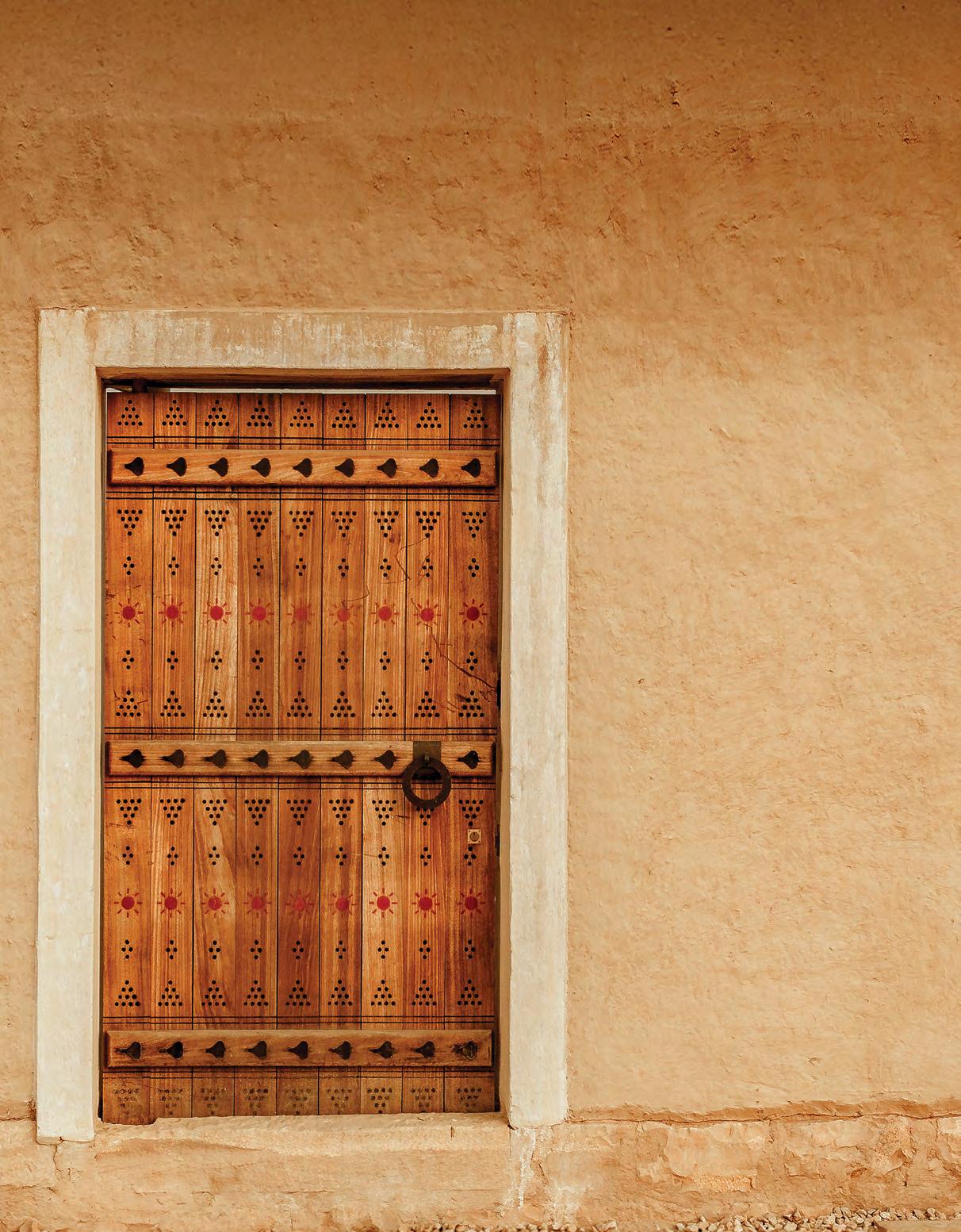
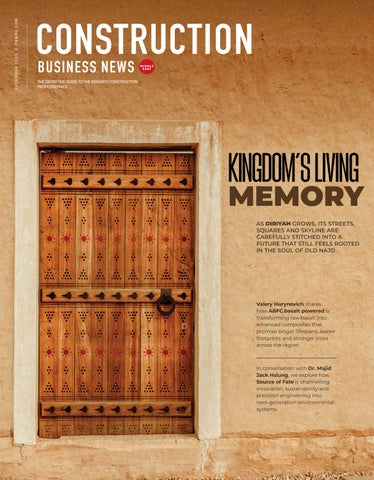
AS DIRIYAH GROWS, ITS STREETS, SQUARES AND SKYLINE ARE CAREFULLY STITCHED INTO A FUTURE THAT STILL FEELS ROOTED IN THE SOUL OF OLD NAJD
Valery Hurynovich shares how ABFC.basalt powered is transforming raw basalt into advanced composites that promise longer lifespans, leaner footprints and stronger cities across the region
In conversation with Dr. Majid Jack Hsiung, we explore how Source of Fate is channelling innovation, sustainability and precision engineering into next-generation environmental systems



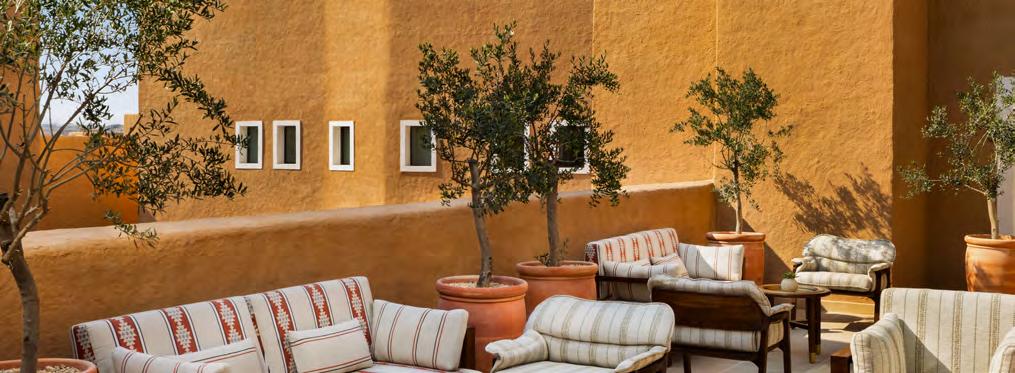
A conversation with Kiran Haslam reveals the emotion, heritage and quiet ambition shaping the rebirth of Diriyah
18 INSIGHT FOCUS DRIVING CONSTRUCTION EXCELLENCE IN EDUCATION
Suresh Kumar, CEO of Chicago Maintenance and Construction (CMC), has emerged as a transformative force in the UAE’s construction and education sectors — blending innovation, sustainability, and people-centric leadership to redefine how learning environments are built.
22 INTERVIEW BRIDGES TO BAYN
As the Chinese capital looks beyond Vancouver and London, a new coastal story is unfolding between Dubai and Abu Dhabi. Mohamed Tarek Khalil, Head of Sales at ORA UAE, explains why Bayn is fast becoming the address of choice for the Chinese diaspora
24 SUSTAINABILITY CORNER TRANSPARENCY IS THE NEW BENCHMARK OF SUSTAINABLE CONSTRUCTION
Mohamed Amer, Managing Director of ICC MENA, shares how greater transparency and accountability can drive sustainable construction across the GCC
26 SUPPLIER
BASALT COMPOSITES ARE RESHAPING THE GCC’S CONSTRUCTION FUTURE
36 REAL ESTATE WHERE COASTLINES SHAPE DREAMS
In a rare and insightful dialogue, Dr Majid Jack Hsiung, General Manager of Source of Fate, reveals the deeper forces influencing RAK’s evolving landscape and the philosophy behind one of its most expressive new developments
40 HOSPITALITY
CHEVAL COLLECTION ON A DISTINCT NEW CHAPTER IN SAUDI ARABIA
Nick Pilbeam, Chief Commercial Officer at Cheval Collection, offers an exclusive look into the brand’s accelerating footprint across the Middle East, revealing how its luxuryliving philosophy is shaping new markets and what the next chapter holds for the company’s ambitious regional journey
42 IN CONVERSATION ARCHITECTURE FOR A CHANGING WORLD
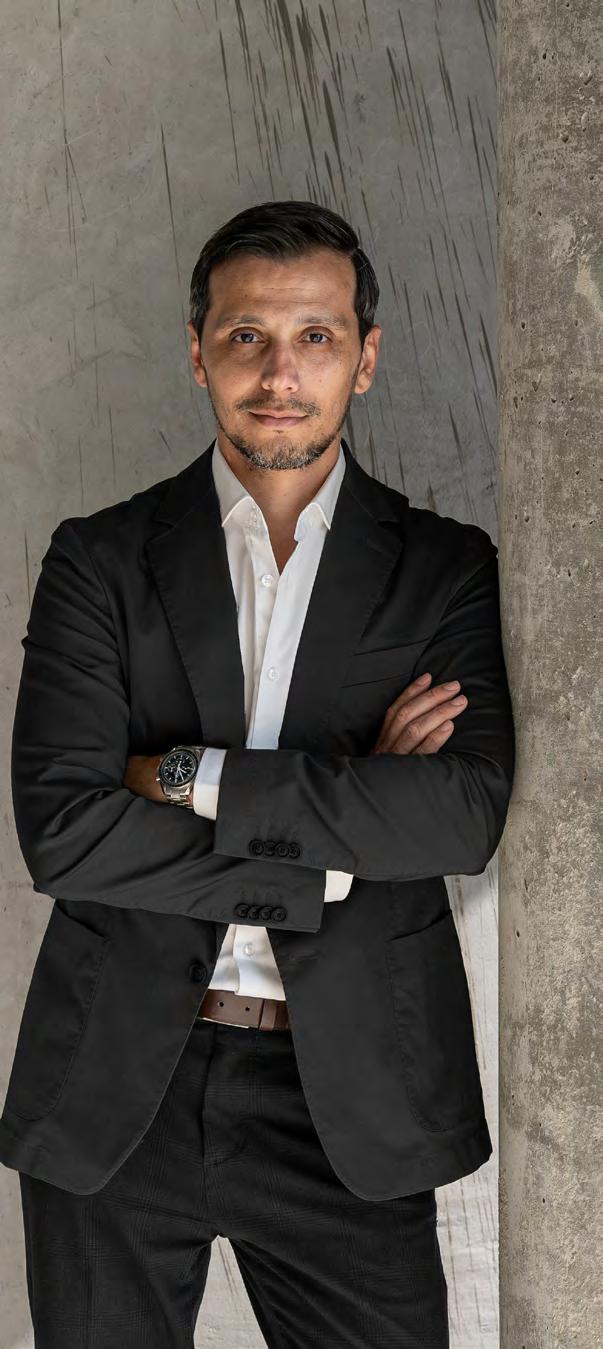
In Conversation with Mahmoud Shahin, Design Director at P&T Group, as he shares how his design philosophy balances culture, people, and the planet in a rapidly changing world.
46 SUSTAINABILITY
EARTHMINDED URBAN LIVING
Yousuf Fakhruddin, CEO of Fakhruddin Properties, opens the door to a portfolio where sustainability is not a slogan but
a design brief, with the 90:90 Waste Management initiative recasting everyday living as an exercise in quiet environmental discipline
50 KSA
BUILDING THE IMPOSSIBLE
How Giga Projects Are Redefining Saudi Arabia’s Construction DNA
54 ANALYSIS
DUBAI REAL ESTATE HITS NEW HIGHS IN 2025, REINFORCING INVESTOR CONFIDENCE
Reflecting on another record-breaking year for Dubai’s property market, Shahzad Saxena, Founder of Karma Developers, highlights 2025 as the sixth consecutive cycle of exceptional growth
56 OP-ED
SPEAKING THE LANGUAGE OF PLACE: CONTEXT-FIRST DESIGN IN A RAPIDLY CHANGING REGION
60 TALKING POINT
PREPARING FOR THE FUTURE WORKFORCE
Redefining Construction Careers in the Age of AI
62 ACQUISITION
STEEL CONVERGENCE
Easa Saleh Al Gurg Group has acquired BRC Arabia from The Kanoo Group, cementing its leadership in reinforced steel manufacturing and expanding its regional supply chain reach
66 EDITOR’S CHOICE
ONE TO WATCH
A flagship project that captures the very pulse of tomorrow, distilling the market’s direction and the quiet evolution of the built world into a single, resonant expression of vision and craft
CEO
Wissam Younane wissam@bncpublishing.net
Managing Director
Rabih Najm rabih@bncpublishing.net
Group Publishing Director
Joaquim D'Costa jo@bncpublishing.net
Editor-in-Chief
Vibha Mehta vibha@bncpublishing.net
Commercial Director
Andrea Mocay andrea@bncpublishing.net
Editorial Assistant
Aya Zhang aya@bncpublishing.net
Digital Reporter
Reeba Asghar reeba@bncpublishing.net
Creative Lead
Christian Harb chriss@bncpublishing.net
Junior Art Director
Rizaldi Febrian
Marketing Executive
Aaron Joshua Sinanbam aj@bncpublishing.net
Videographer
Eduardo Buenagua and Joel Amparo
Contributor
Martina Di Licosa
PO Box 502511 Dubai, United Arab Emirates P +971 4 4200 506 | F +971 4 4200 196
For all commercial enquiries, contact jo@bncpublishing.net T +971 50 440 2706
All rights reserved © 2025. The opinions expressed are solely those of the contributors. Construction Business News Middle East and its affiliated publications in the MENA region are exclusively licensed to BNC Publishing. No part of this magazine may be copied, reproduced, or transmitted in any form or by any means without prior written consent from the publisher.
Printed by United Printing and Publishing | upp.ae
Images used in Construction Business News Middle East are credited when necessary. Attributed use of copyrighted images with permission. All images not credited courtesy Shutterstock.
Keep up to date with all the latest news, features and much more on our website and social media platforms
BEGA pole-top luminaires with BugSaver® technology protect nocturnal fauna by reducing the color temperature from 3000 Kelvin to an amber color around 1800 Kelvin, which reduces the light attractive effect. The color temperature and output can be controlled dynamically. bega.com/bugsaver

Das gute Licht.


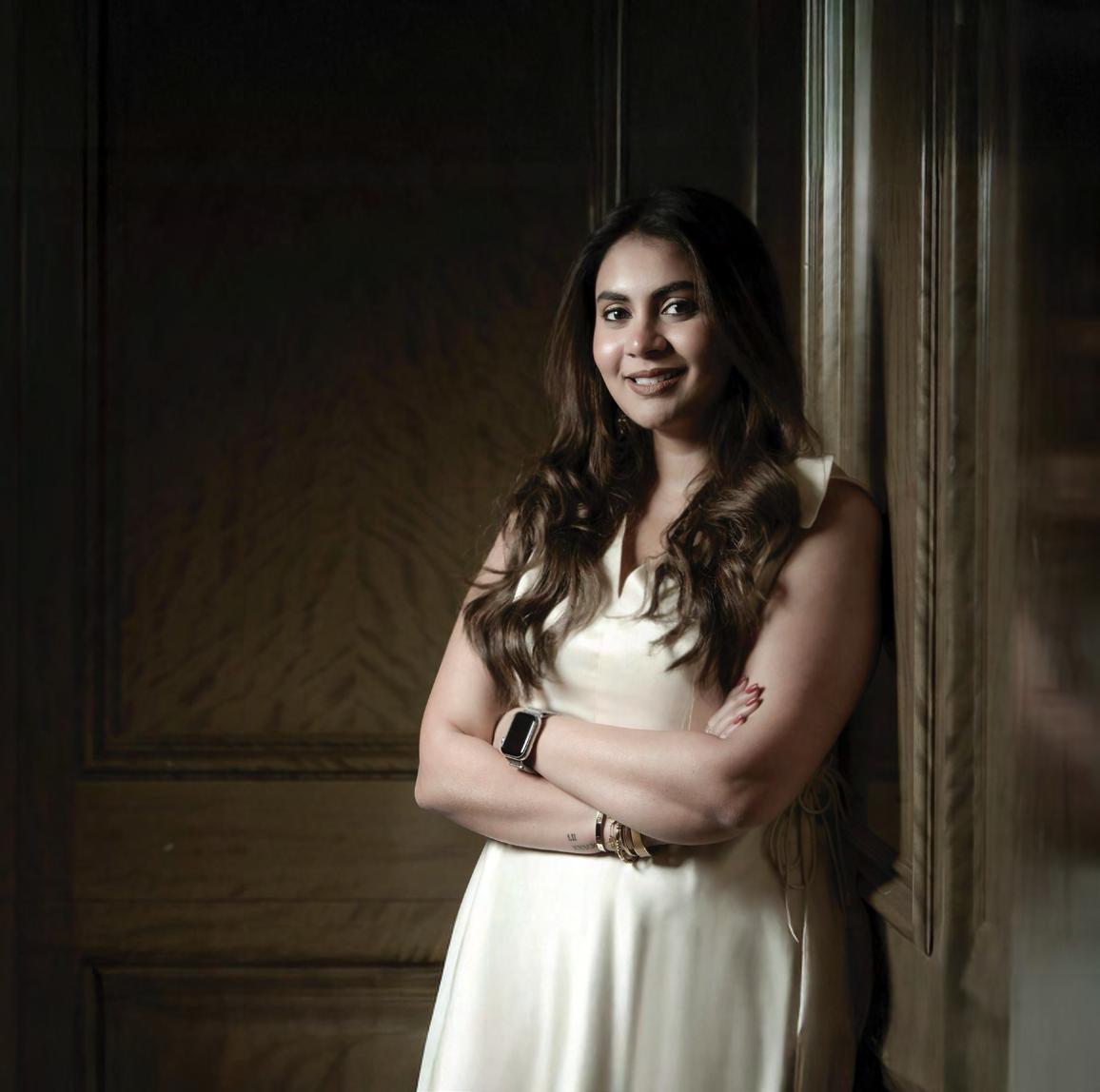
When I think of 2026, it does’nt come back to me as a neat timeline. It arrives instead as fragments. A crane catching the last light over a site in Dubai. A boardroom in Riyadh where a single signed page set an entire district in motion. A quiet conversation with a project director who admitted, half laughing and half exhausted, that he had forgotten what a slow week feels like. The Middle East construction story has always been ambitious, but this year it felt supercharged, as if the whole region had decided to build at the pace of its own imagination.
At Construction Business News ME, we haven't watched this from a distance. We have moved alongside it. Our covers have tried to hold the mood of the moment, whether it was the poise of a seasoned industry leader or the promise in the eyes of a new voice breaking through. Awards nights became our extended family gatherings, where familiar giants of the sector shared space with emerging names who grew up reading the very magazine they now appear in. Conferences turned into long, generous conversations, spilling beyond the agenda into corridors and coffee lines. Our longstanding partnerships with contractors, developers, consultants and suppliers deepened, not out of habit, but out of a shared understanding that this is a rare, golden phase for the region and we are documenting it together.
Personally, it has been a year of full calendars and full heart. There were flights taken at difficult hours, calls answered on a move, articles edited with a second coffee going cold beside the laptop. There was exhaustion, yes, but also that quiet,
almost private joy of knowing you are exactly where you are meant to be when an industry hits its stride. And somewhere between the print deadlines, the stage lights and the airport gates, the year slipped by.
So, in these last few weeks, I am planning a gentle rebellion. To let emails breathe for an hour before answering. To swap backto-back meetings for slow coffees. To spend at least a couple of evenings with a book that has nothing to do with contracts, pipelines or giga-projects. A small retreat, so that I can walk into the new year not just ticking boxes, but genuinely energised by what comes next.
The cranes will keep moving while I pause. And when I return, I hope to meet 2026 with the same thing this region has taught me all year: a bigger appetite for possibility, and a heart that is still very much in love with this industry.
Thank you for building this year with us. The next chapter is already calling.

Vibha Mehta Editor-in-Chief vibha@bncpublishing.net
Vibha Mehta vibhamehta01 @vibhamehta01
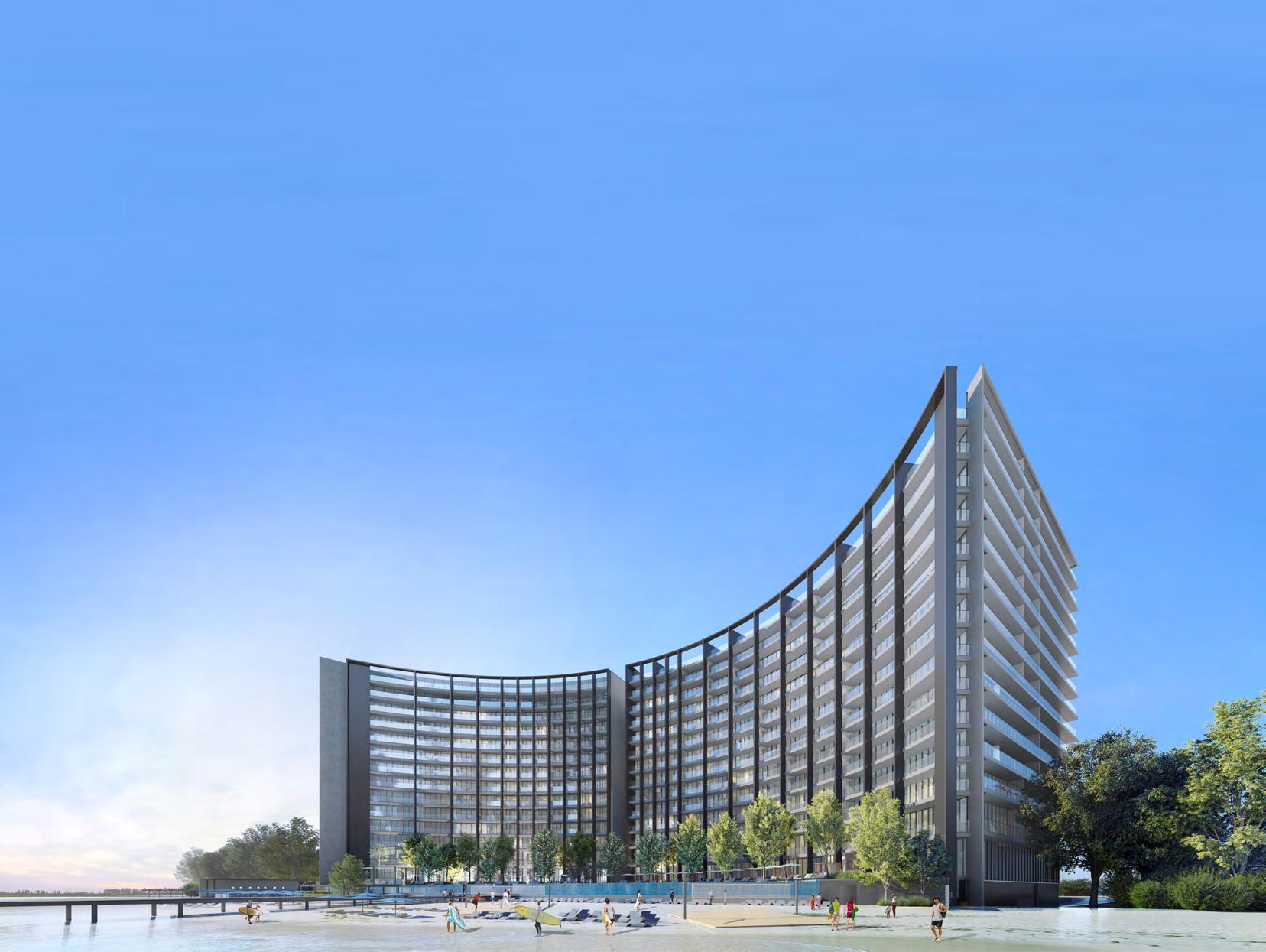
Bringing luxury seaside living to Sharjah for the first time, owners at the Anantara Sharjah Residences enjoy access to the Anantara Sharjah Resort’s world-class amenities, including an infinity pool, five distinctive restaurants, an Anantara Spa and a state-of-the-art gym.
As an investment, owners can enjoy the benefits of a rental management scheme operated by Anantara Hotels, Resorts & Spas, allowing them to maximize their returns when they are not resident in the property.
To register your interest, visit arada.com
LIFE IS A JOURNEY.
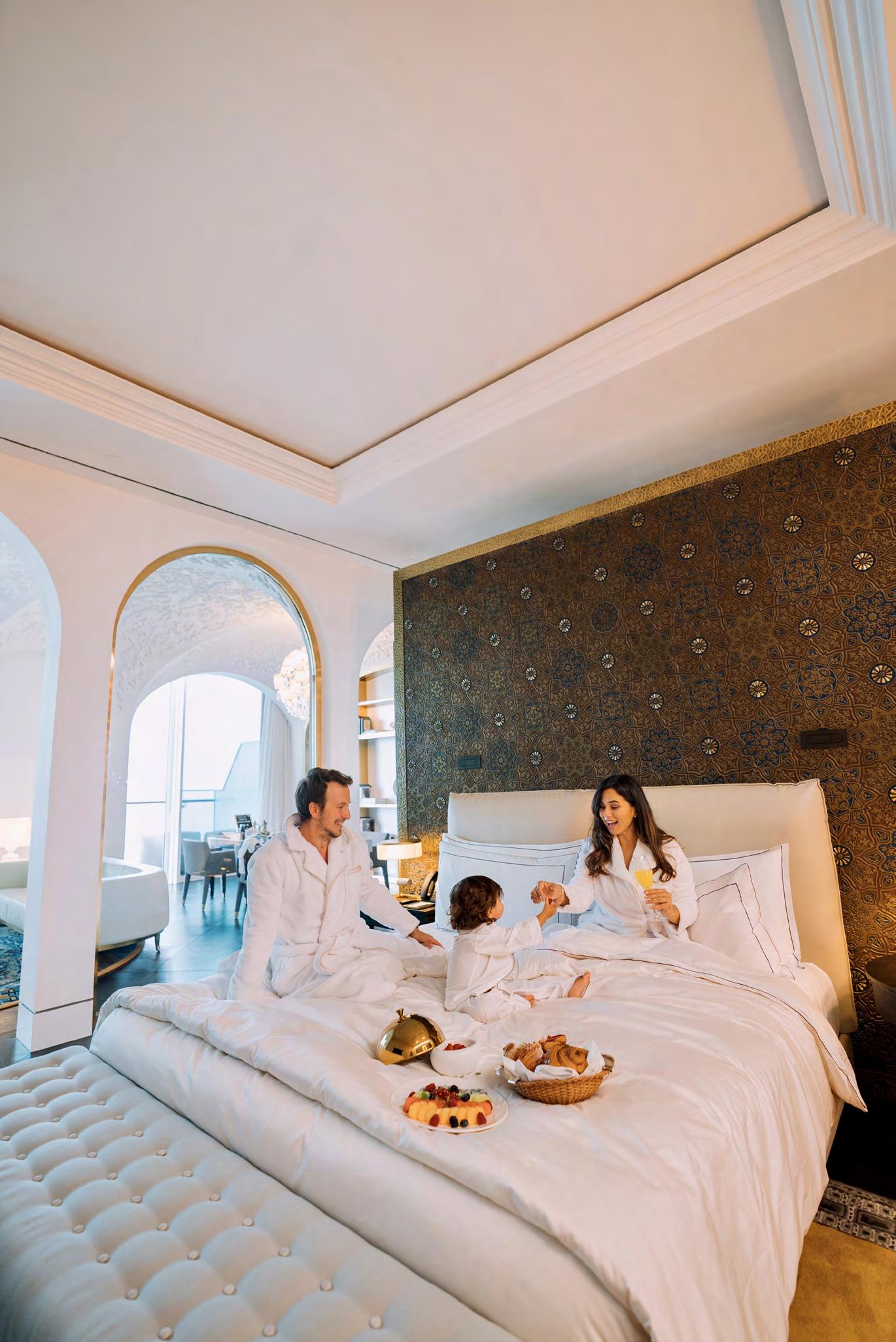
Step into a world of opulence when you book a Suite at Raffles Doha.
Experience the added luxury of QAR 750 credit to spend on dining in the hotel, and QAR 500 towards any Spa treatment.
Children aged 12 and below are welcome to indulge in the enchantment of complimentary dining.
Rates starting from QAR 3,500 per night
For reservations, please call +974 4030 7100 or email reservations.doha@raffles.com
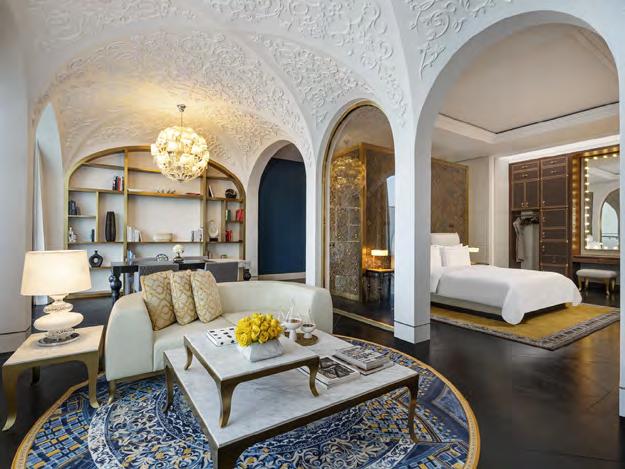
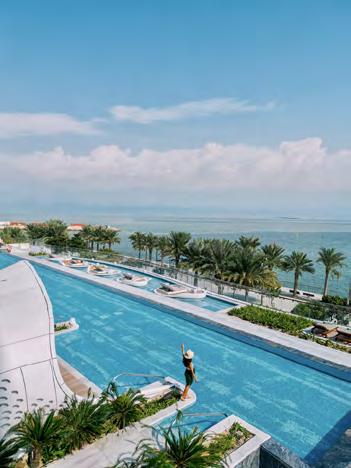
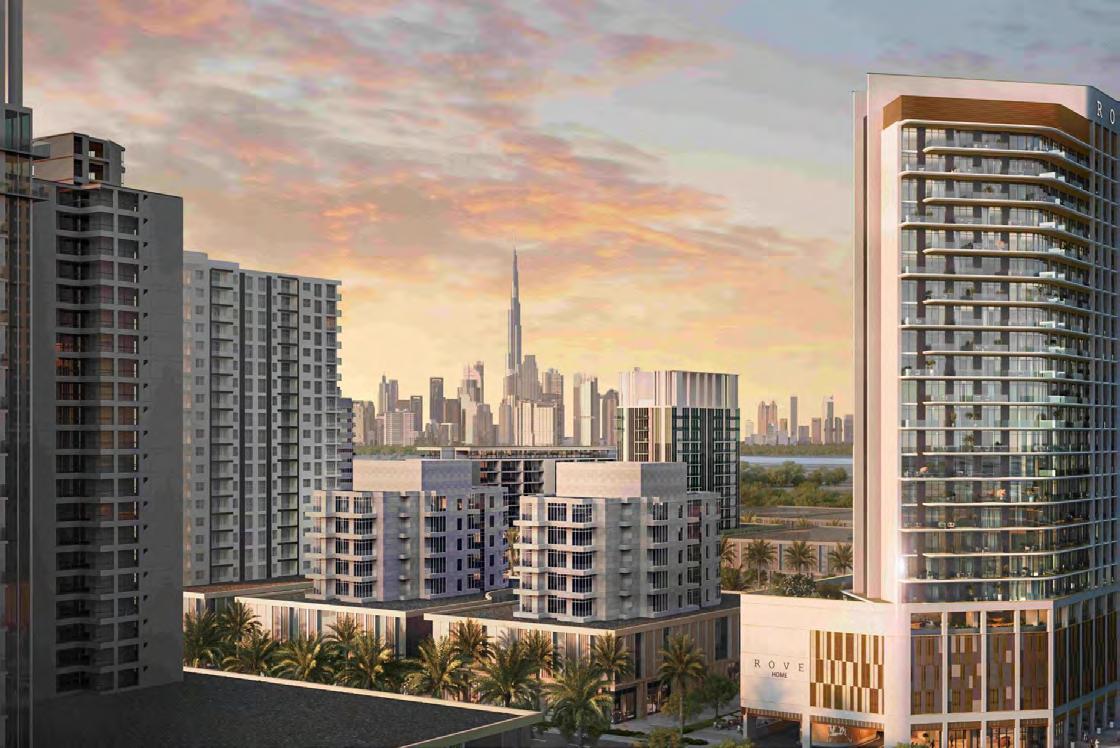
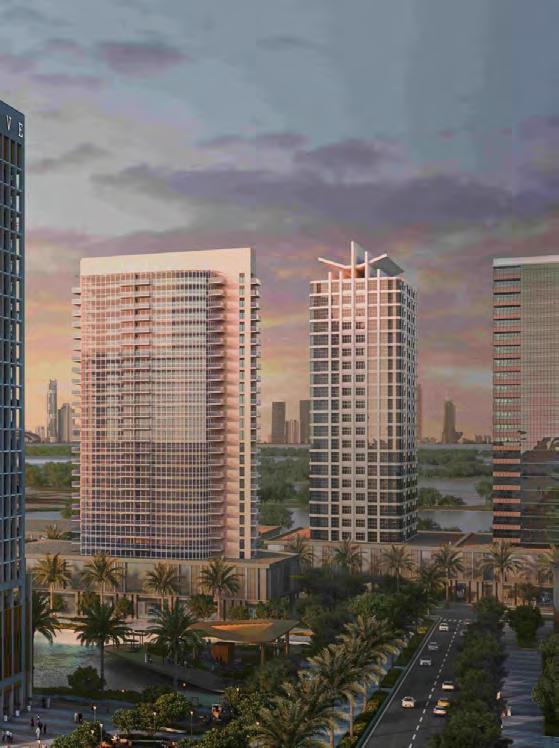
Rove Home Meydan Horizon is the first Rove-branded residential project within the Meydan Horizon master development
190-apartment residential development set in the heart of Meydan, minutes from Sheikh Zayed Road and Al Khail Road
Stylish, fully furnished one- and two-bedroom apartments go on sale this month
ALAIN, in partnership with Rove Hotels, today announces the launch of Rove Home Meydan Horizon, a bold new take on modern living in Dubai.
Positioned in the heart of the vibrant Meydan Horizon community, just minutes from Dubai’s key destinations, the development features 190 one- and two-bedroom fully furnished apartments. Each residence offers
state-of-the-art gym, outdoor exercise zones, jogging track, yoga studio, jacuzzi and outdoor cinema—all designed to foster balance, wellness and connection.
Building on nearly three decades of ALAIN’s innovation, quality, reliability and excellence in shaping communities across the UAE, Rove Home Meydan Horizon represents the group’s latest project in Dubai and its first Rovebranded development, following successful partnerships with Address Hotels + Resorts and Vida. The project combines Rove Hotels’ bold, youthful spirit with ALAIN’s commitment to creating lifestyle destinations that bring people together.
Khaled Alkhoori, Managing Director of ALAIN, said: “Rove Home Meydan Horizon is designed as a place that people aspire to live in. With an extensive range of amenities in one of Dubai’s most connected neighbourhoods, this is a development that gives buyers everything that matters. Our partnership with Rove reflects ALAIN’s commitment to a comprehensive lifestyle offering—delivering exceptional experiences across every tier of development. From thoughtfully designed midscale residences to refined luxury and ultra-luxury destinations, we focus on creating places that elevate living at every level.”
smart layouts, contemporary finishes, wellness amenities, personalised services and vibrant Roveinspired interiors designed to spark creativity and make city living feel effortless. Set within a masterplanned district anchored by a 2km lagoon, the development blends waterfront living with open green spaces, while efficient layouts cater to the young and young at heart who value flexibility, functionality and style.
Residents will enjoy access to an extensive range of thoughtfully designed amenities, including coworking lounges, a Rove Café, swimming pool,
Paul Bridger, Chief Operating Officer at Rove Hotels, added: “Rove Home is about creating spaces where connections, creativity and community thrive. Together with ALAIN, we’re excited to bring this vision to life at Rove Home Meydan Horizon. Every element—from smart layouts and wellness-focused amenities to Rove’s signature service—has been crafted to make everyday living effortless.”
Sales for Rove Home Meydan Horizon start this month with OCTA serving as the project’s master broker. Prospective buyers are invited to secure their place in this exciting new Dubai community.
Egis will bring international expertise to support Egypt’s efforts in building a highly skilled workforce
Egis, a global leader in consulting, construction engineering and operations and maintenance, today announced the signing of a Memorandum of Understanding (MOU) with The Egyptian Ministry of Transport (MOT) (represented by the Egyptian National Institute for Transport (ENIT) to jointly develop and deliver advanced training programs for young engineers in railway systems and urban transportation.
Under the terms of the agreement, the parties will collaborate over a two-year period to design and implement specialized education and hands-on training initiatives focused on modern railway project disciplines, including planning, design, construction, operations, safety, and maintenance. This initiative comes at a pivotal time, as, under the leadership of President Abdel Fattah El Sisi and the immense growth the country’s transportation sector has witnessed under the guidance of Lieutenant General Kamel El Wazir, Deputy Prime Minister for Industrial Development and Minister of Industry & Transport, Egypt continues to invest in modern rail networks, high-speed mobility, and advanced mass-transit solutions to support economic growth, improve connectivity, and enhance sustainability.
“Investing in our young engineering talent is investing in Egypt’s future,” said Eng. Nadia Hammad, National Program Director from Ministry of Transport’s (Egyptian National Institute for Transport). “This collaboration plays a vital role in equipping the next generation with the skills and capabilities needed to lead Egypt’s transportation transformation and support our strategic infrastructure vision.”
In collaboration with Egis Academy and through seminars, workshops, practical sessions, internships, and field visits to railway project sites, young engineers will gain real-world experience and exposure to cutting-edge global practices. Joint research efforts will further support innovation across training methodologies and the evolving needs of the transport sector.
Each party will contribute technical expertise, training resources, and access to facilities and industry networks. Programs will be delivered at no cost to participating engineers, reinforcing a shared commitment to national capacity building and workforce development.
Amr Elsadek, Country Director of Egis in Egypt, added: “We are honored to partner with the Egyptian Ministry of Transport to strengthen engineering excellence in the railway sector. Together, we aim to deliver worldclass training, foster innovation, and support Egypt’s leadership in modern mobility development.”
As global cities modernize transit systems and invest in rail-based solutions, demand for skilled railway engineers continues to rise. Egypt’s investment in developing specialized local talent supports long-term economic resilience, accelerates sustainable transport deployment, and positions the country as a regional hub for infrastructure expertise. This collaboration framework also enables the potential involvement of strategic third-party partners, maximizing the initiative’s economic and educational impact.
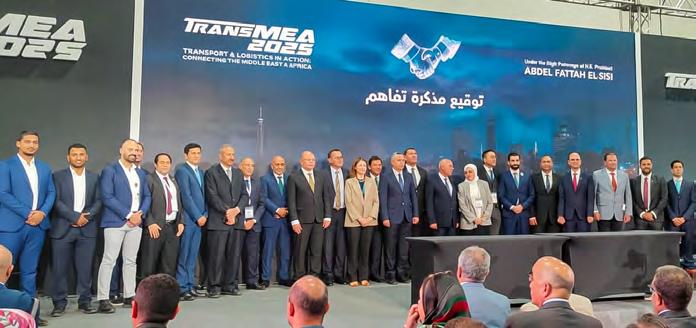
Each party will contribute technical expertise, training resources, and access to facilities and industry networks
Launched in February, Masaar 2 sold out within hours, generating AED 5.6 billion and underscoring demand for Sharjah’s nature-focused living
Arada has awarded a comprehensive package of contracts worth AED2.7 billion to deliver Masaar 2, the forested megaproject located in the Rowdat district of Sharjah, appointing leading contractors and top-tier consultancies to provide integrated construction, infrastructure and design.
The scope of work covers the full construction of 1,997 homes across four phases, alongside recently completed enabling works, site preparation, and infrastructure development, including roads, utilities, and public spaces, as well as complete design and supervision by specialist consultants. In total, three construction firms and four consultancy firms have been appointed for Masaar 2.
Well-established UAE-based contractors Intermass (phases 1, 3 and 4) and Pivot Engineering & General Contracting (phase 2) have been appointed as main contractors for the construction of homes across all four stages, with first handovers scheduled for 2027 and full completion expected by June 2028. Both firms have previously delivered projects within the first Masaar master plan.
Ahmed Alkhoshaibi, Group CEO of Arada, said: “From sales launch in early 2025 to full handover in mid2028, Masaar 2 will be one of the fastest community completions in the UAE, and delivered to the exceptional standard that our customers have come to appreciate. This milestone underscores our commitment to ontime delivery and world-class quality as we continue to shape some of the UAE’s most sought-after residential destinations.”
Darwish Engineering Emirates has already completed the enabling works across the 10.5 million-squarefoot site and will be responsible for developing the entire infrastructure, which will include world-class amenities such as a swimmable forest lagoon and wellness-focused facilities.
Dubai-based Dewan Architects + Engineers served as the design consultant for all four phases of the project, a scope which has now concluded. CRTKL, the global architecture firm, completed the master plan concept and design, while US-based Parsons Overseas Limited was responsible for infrastructure design and supervision. DAR has been appointed to provide full supervision consultancy services through to the scheduled completion of all four phases in summer 2028.
Launched in February this year, Masaar 2 sold out within hours, generating AED5.6 billion in transactions and highlighting the strong investor appetite in
Sharjah’s rapidly expanding property market. Designed as a premium, nature-focused residential destination, the community features natureinspired architecture and is anchored by a lush green spine with 40,000 trees. In September, Arada launched Masaar 3 – the third and most extensive forested master plan in the series – comprising 4,000 homes across eight phases.
Masaar has emerged as one of the most successful and in-demand community concepts across the region. The first Masaar masterplan includes 3,000 homes set within a 19 million-squarefoot forested landscape. Half of the community has already been handed over, along with a comprehensive range of facilities and world-class amenities. Full completion is scheduled by the end of 2026.
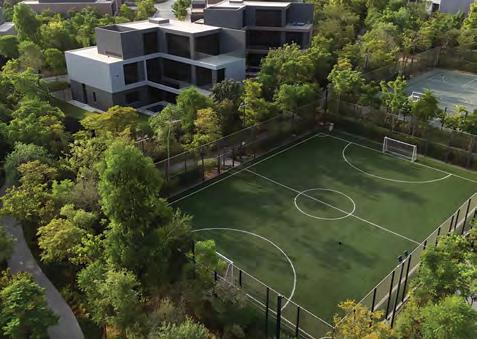
Masaar has emerged as one of the most successful and in-demand community concepts across the region
Savills will oversee full property operations at Expo City Dubai, managing facilities, tenants, finances, procurement, and sustainability across three integrated service lines
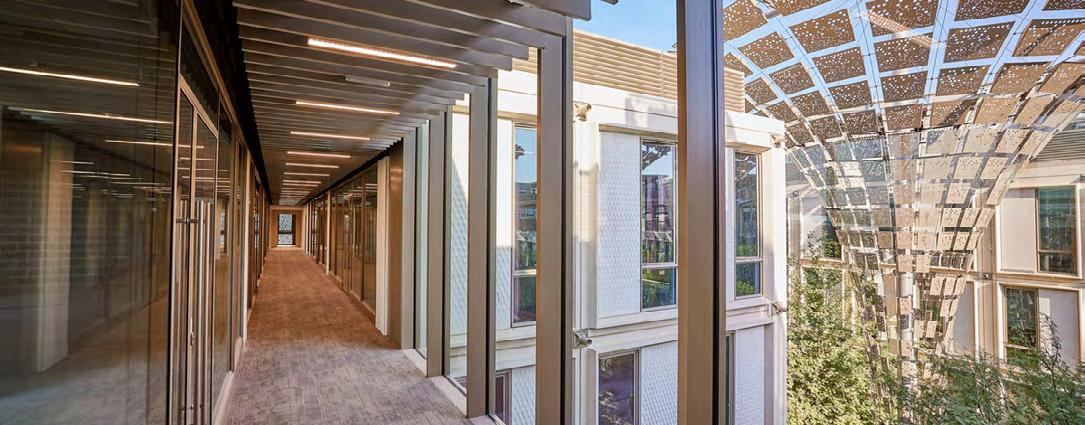
Expo City Dubai, the 3.5 sq km legacy city of Expo 2020 Dubai, has appointed Savills to handle leasing, property management and tenant fit-out for its growing commercial portfolio. The mixeduse free zone has evolved into a sustainable innovation hub, home to global names such as Siemens Industrial, Siemens Energy and DP World, alongside a growing mix of retail, F&B and upcoming residential communities.
As a world-class free zone offering 100% foreign ownership and streamlined regulations, Expo City provides Grade A, flexible office space supported by smartcity infrastructure and futureready connectivity. Its master plan is pre-certified LEED Cities and Communities Platinum, with all buildings required to achieve
at least LEED Gold, and is also pre-certified WELL Community Platinum, underlining its ESG and wellness-led approach.
Savills’ mandate spans three integrated service lines. The Property Management team will oversee day-to-day building operations, including facilities, tenants, finances, procurement and sustainability. The Commercial Leasing team will drive an integrated leasing strategy across office, retail, F&B and entertainment, curating a diverse ecosystem. The Tenant Fit-out Management team will coordinate design, approvals and execution of occupier fit-outs to align with Expo City’s standards and regulations.
Located between Dubai and Abu Dhabi, with direct metro access, major road links, proximity to
Al Maktoum International Airport and future Etihad Rail connectivity, Expo City is positioned as a leading destination for businesses seeking quality, community and long-term value. Once complete, it is expected to host around 35,000 residents and 40,000 professionals in a highly connected, sustainable urban environment.
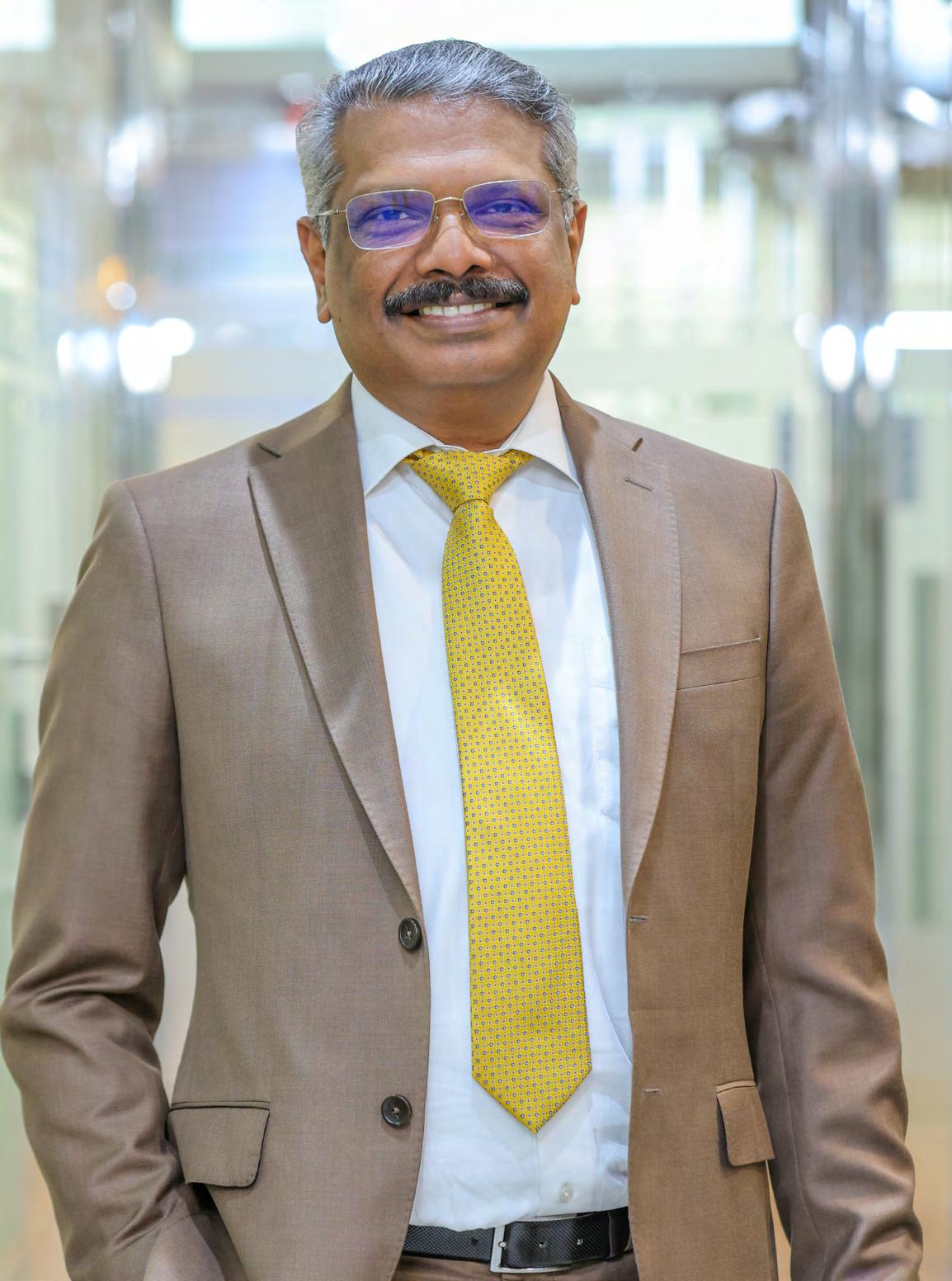
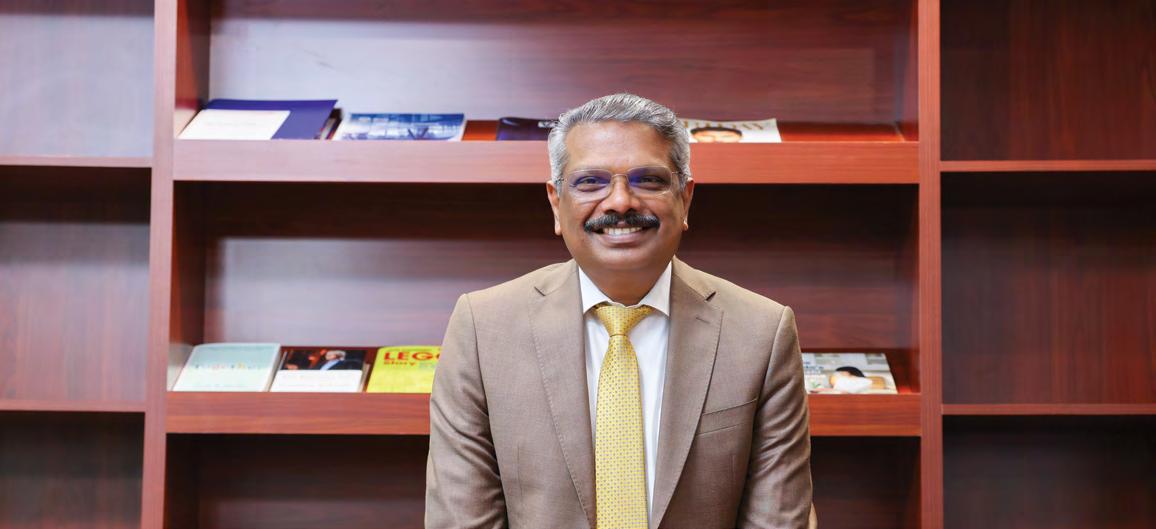
Suresh Kumar, CEO of Chicago Maintenance and Construction (CMC), has emerged as a transformative force in the UAE’s construction and education sectors — blending innovation, sustainability, and people-centric leadership to redefine how learning environments are built.
In the UAE’s dynamic construction and facilities management landscape, Suresh Kumar, CEO of Chicago Maintenance and Construction LLC (CMC), stands out as a visionary leader who blends strategic foresight, sustainability, and operational excellence. With more than two decades of experience shaping educational and commercial infrastructure, he has become synonymous with quality, innovation, and transformative leadership.
Early Career and Foundation in Educational Infrastructure
Suresh began his professional journey with GEMS Education, one of the world’s largest private education groups. Armed with a strong foundation in engineering and advanced studies in construction and management, he quickly rose through the ranks, earning recognition for his expertise in project planning, execution, and stakeholder alignment.
As Senior Vice President – Projects, he led the development of over 30 state-of-the-art schools across the UAE, Qatar, and India. Each project reflected his hallmark focus on quality, safety, and innovation, establishing a track record for delivering learning environments that are both functional and inspiring. This early experience laid the foundation
for a remarkable career spanning construction and facilities management.
Transforming Infracare FM: From Start-Up to Industry Leader (2019–2023)
In 2019, Suresh was appointed Managing Director / Senior Vice President of Infracare Facilities Management, a newly established GEMS entity. Under his leadership, Infracare transformed from a modest start-up into one of the UAE’s most recognised and award-winning FM providers. By 2023, it had grown into a 1,700-employee organisation with revenues exceeding AED 200 million, serving clients such as ICD-Brookfield, WASL, CUMMINS, and multiple prestigious educational institutions.
His tenure was particularly notable during the COVID19 pandemic, where he implemented stringent health, hygiene, and safety protocols across all GEMS schools, ensuring uninterrupted operations while protecting thousands of students and staff. Infracare’s industry accolades in 2023 underscored Suresh ability to balance growth, resilience, and innovation.
Leading CMC’s Transformation and Growth
In 2023, Suresh took the helm as CEO of CMC, guiding the company through one of the most
“TRUE SUCCESS LIES IN CREATING LEARNING SPACES THAT SPARK CURIOSITY TODAY AND STAND STRONG FOR GENERATIONS TO COME.”

remarkable turnarounds in the UAE construction sector. Under his leadership, CMC transformed from a traditional contractor into a modern, diversified EPC powerhouse, leveraging digital tools, sustainability frameworks, and operational discipline to build upon its 45-year legacy.
Within two years, CMC successfully completed seven major educational facilities, including the GEMS School of Research and Innovation— integrating energy efficiency and AI-driven technologies—and Al Muna Academy, the first school in Abu Dhabi to achieve Estidama 5 Pearl Rating. These projects demonstrate how construction excellence can harmonise with education, sustainability, and national development goals.
A passionate advocate for green construction, Suresh has made sustainability a core driver of CMC’s strategy. The delivery of Estidama 5–rated Al Muna Academy and LEED Gold–certified GEMS School of Research & Innovation represents national milestones in sustainable learning environments. His projects align closely with UAE Vision 2030, Net Zero 2050, and the Dubai Urban Master Plan 2040, ensuring that every new development contributes meaningfully to the nation’s environmental and social objectives.
Known for his fast-track project mastery, Suresh has delivered over 20 accelerated school projects in his career. At CMC, he has embedded a culture of zero-delay delivery, robust risk management, and disciplined cost control.
Under his guidance, CMC implemented AI-based progress dashboards, and paperless site management systems, transforming sites into data-driven, high-efficiency operations. These innovations have enhanced transparency, productivity, and real-time decision-making across all project stages.
Suresh attributes CMC’s success to its people. He has introduced KPI-based performance systems, training programs, and employee recognition platforms that boost morale, accountability, and retention. By fostering a culture of empowerment and continuous improvement, he
ensures every team member contributes to CMC’s vision of excellence.
Beyond operations, Suresh has restored profitability and resilience to CMC. Through structured business development, cost optimisation, and prudent financial governance, he has transitioned the company from a recovery phase to sustained growth, establishing it as one of the UAE’s most stable and future-ready construction firms.
For Suresh, education is not merely an industry — it is a lifelong mission. Under his leadership, Chicago Maintenance and Construction (CMC) has grown into a comprehensive partner for educational infrastructure, offering end-to-end, turnkey solutions that take every project seamlessly from concept to long-term operation.
At CMC, every journey starts by understanding the educator’s vision. From the first sketch to the final handover, each stage — design, approvals, construction, fit-out, and maintenance — is handled in-house with meticulous attention to detail. This integrated model ensures that schools are not only delivered on time but also crafted to serve the real needs of teachers, students, and the environment.
As Suresh often says, “True success lies in creating learning spaces that spark curiosity today and stand strong for generations to come.”
Through this holistic, turnkey approach, CMC is doing more than building schools — it is shaping the future of education in the UAE.
Reflecting on his construction philosophy, Suresh emphasises:
“At CMC, we believe construction is not merely about building structures—it’s about shaping environments that inspire learning, foster innovation, and endure over time. Every project we undertake reflects our commitment to sustainability, excellence, and a lasting positive impact on the community.”
Under his stewardship, CMC continues to set new benchmarks in technical precision, sustainability, and client trust. From leading school projects at GEMS to building an awardwinning FM company and now revitalising CMC, Suresh’s journey exemplifies visionary leadership grounded in experience, integrity, and impact. DRIVING
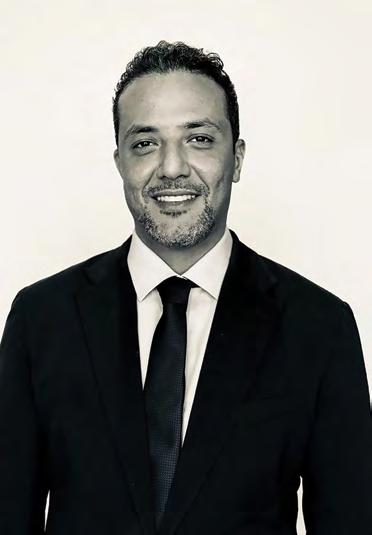
For ORA UAE, the Chinese community in the Gulf is not just another buyer segment; it is a catalyst.
How important is the Chinese diaspora for ORA and Bayn and who are you looking to target – end users or investors?
The Chinese diaspora is absolutely central to our strategy for ORA and Bayn. The number of Chinese nationals living and working in the
As the Chinese capital looks beyond Vancouver and London, a new coastal story is unfolding between Dubai and Abu Dhabi. Mohamed Tarek Khalil, Head of Sales at ORA UAE, explains why Bayn is fast becoming the address of choice for the Chinese diaspora
UAE has almost doubled since 2018 to more than 400,000 residents, and they come with significant purchasing power. China is home to over 1 million millionaires and around 70,000 ultrahigh-net-worth individuals, and in 2024 Chinese buyers were among the top 10 foreign investors in Dubai property. We look at them as both end users and investors, but also as influencers whose decisions ripple across family and business networks back in China, multiplying demand far beyond a single transaction.
What are Chinese looking for in the UAE real estate sector and what about Bayn makes it attractive to the Chinese community?
Chinese buyers are attracted by a blend of business opportunity and lifestyle. On the business side, the UAE is a true gateway economy, allowing Chinese goods and services to reach the Middle East and Africa efficiently, supported by a diversified economy, pro-investment policies such as the 10-year Golden Visa, and strong China–UAE relations. On the lifestyle side, they prioritise safety,
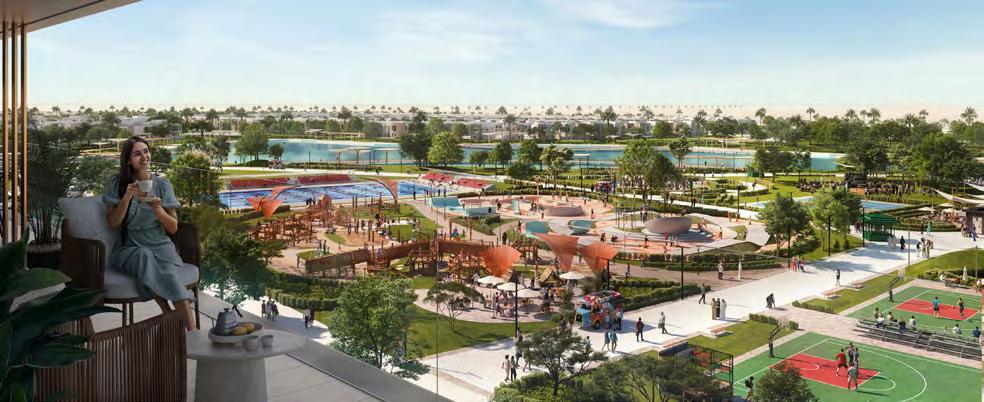
convenience, good schools, healthcare and easy access to familiar products and cuisine within a cosmopolitan setting. Bayn speaks directly to these priorities: it is a secure, beachfront community in Ghantoot, perfectly positioned between Dubai and Abu Dhabi, with luxury design, strong connectivity and resort-style amenities. For families, it offers a refined, nature-rich place to live; for investors, it offers beachfront scarcity, attractive rental yields and long-term appreciation, all underpinned by ORA’s global design and delivery standards.
How does the participation support UAE’s real estate sector?
In one word: access. Chinese investors already have liquidity and appetite, and many of their property platforms actively promote overseas opportunities, but they often lack direct access to the full story behind a project. Participation in events such as LPS Shanghai closes that gap by allowing them to meet the developers, understand the masterplan, and experience the quality of design and amenities. For the UAE real estate sector, this creates a direct bridge to a high-intent audience of luxury homeowners and business leaders,
opening new demographics and reinforcing the country’s position as a leading global destination for premium property investment.
What kind of pricing strategies will ORA apply to appeal to Chinese customers?
For Bayn, ORA offers a 60/40 payment plan, with 60% during construction and 40% on handover, which aligns well with Chinese buyers, around 70% of whom pay cash for overseas homes but still value structured flexibility. When you compare pricing, the value becomes very clear: in Shanghai, new luxury homes can reach about US$19,769 per square metre, while a luxury beachfront home at Bayn is closer to US$5,000 per square metre, with stronger yields, no property tax and solid capital growth potential. Beyond headline prices, our long-term approach to asset management and community upkeep helps
protect and enhance value, which is crucial for buyers treating these homes as both investments and legacies.
What are the benefits of investing in the UAE market for the Chinese investor?
For many Chinese high-networth individuals, luxury property has become a key tool for wealth preservation, and nearly 40% now cite it as their preferred real estate investment. The UAE stands out thanks to its tax-free environment, long-term residency options, political stability and the steady inflow of global capital seeking safe, businessfriendly jurisdictions. Dubai has seen a surge in ultraprime transactions, and in Abu Dhabi’s prime areas rental yields of around 7% compare favourably with most mature global cities. Ghantoot, where Bayn is located, adds another layer of appeal: it is a calm stretch of coastline between Dubai and Abu Dhabi, directly
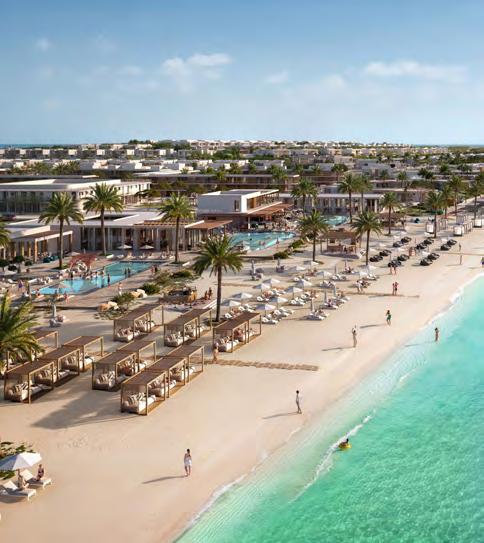
linked by major highways and backed by new infrastructure. For Chinese investors, this means early entry into a growing coastal corridor that combines lifestyle, connectivity and long-term upside.
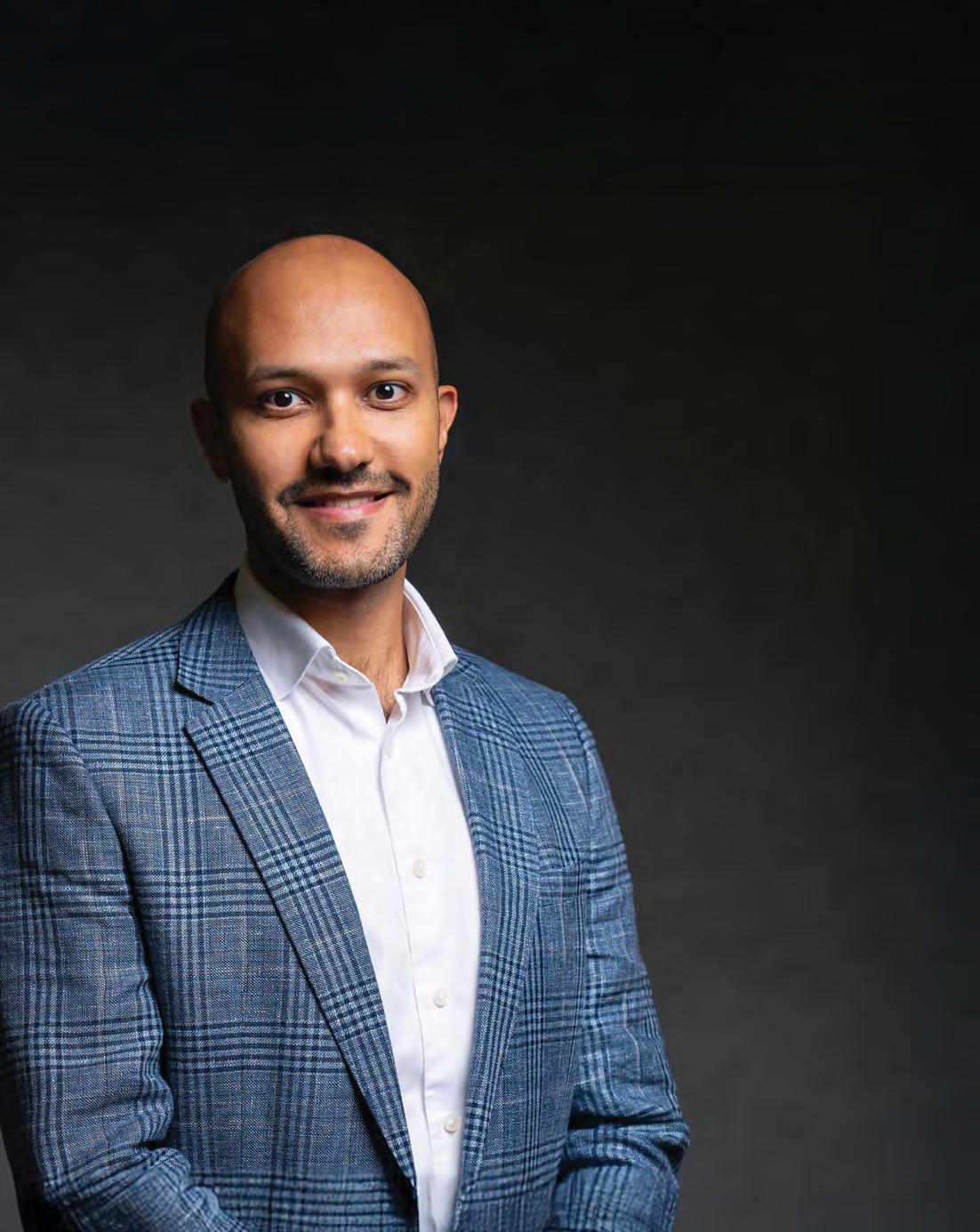
Mohamed Amer, Managing Director of ICC MENA, shares how greater transparency and accountability can drive sustainable construction across the GCC
From the skylines of Riyadh and Dubai to the netzero targets of the UAE and Saudi Arabia, the GCC is building at speed and scale while tightening its sustainability agenda. As governments, developers and manufacturers adopt more responsible building practices, one theme is becoming central: without transparency, sustainability claims lack credibility.
In a region where ambition and delivery run in parallel, this shift toward measurable, verifiable performance is both timely and necessary.
National frameworks such as Saudi Vision 2030 and the UAE Net Zero 2050 Strategy place environmental performance at the core of economic planning. These policies are backed by concrete requirements, not just broad statements.
For example, the UAE’s Federal Decree Law obliges companies emitting 500,000 tonnes or more of CO₂ per year to monitor and report their greenhouse gas emissions. This type of rule moves sustainability from intention to compliance, with progress tracked and subject to verification.
In practice, construction stakeholders are increasingly expected to support their sustainability targets with:
• Recognised certifications and codes
• Lifecycle assessments and emissions data
• Environmental product declarations (EPDs)
• Embodied carbon benchmarks
Authorities want evidence that assets are efficient, resilient and future-ready. Embedding transparency into each stage of the project lifecycle—from design and procurement to operation and end-of-life—creates accountability and enables meaningful performance improvements.
A PwC report suggests that sustainable technologies in the built environment could cut lifecycle emissions in MENA by more than 50 percent. Achieving this requires changes in how we design, specify, construct and operate buildings and infrastructure.
Material selection and supply-chain traceability are key. Lowcarbon concrete, recycled steel and bio-based materials are entering the market, but without reliable, independently verified data, it is impossible to know if these choices are delivering the intended reductions.
The International Code Council (ICC) supports jurisdictions in building compliance ecosystems based on science, transparency, verifiability and enforceability. The International
Codes (I-Codes) provide actionable frameworks for sustainability, backed by:
• Training and professional certification
• Product testing and evaluation
• Accreditation services
• Digital compliance tools
TOGETHER, THESE ELEMENTS HELP ENSURE THAT MATERIALS, SYSTEMS AND PROCESSES ARE NOT ONLY COMPLIANT, BUT ALSO SAFE, HIGH-PERFORMING AND DEMONSTRABLY SUSTAINABLE ACROSS THEIR LIFECYCLE.
Conformity assessment bodies such as ICC Evaluation Service (ICC-ES) play a critical role by independently verifying product performance and claims. Through evaluation reports (ESR), environmental product declarations (EPD) and verification of attributes reports (VAR), they provide the documentation needed to support transparent decision-making.
The GCC has an opportunity to demonstrate regional readiness on transparent sustainability. With rapid urbanisation, largescale infrastructure and growing global visibility, the choices made now will define the region’s environmental trajectory for decades.
Examples are already emerging:
• The UAE has introduced energy efficiency standards for buildings.
• Saudi Arabia is developing net-zero cities such as NEOM.
• Oman, working with ICC, is developing national building codes that adapt international best practice to local conditions.
The I-Codes offer a robust foundation for material performance, energy conservation, water efficiency and more, helping to create a coherent regulatory environment that supports safety, quality and innovation.
Ultimately, the buildings and infrastructure delivered today will remain in use for generations. Transparent sustainability must therefore be embedded across the regulatory ecosystem: building codes, product evaluation, inspection, training and ongoing professional development.
Only with clear rules, verified data and consistent enforcement can the GCC move from sustainability ambition to measurable, dependable outcomes.
Valery Hurynovich, CEO of ABFC.basalt powered
The GCC is in the middle of one of the most intense construction cycles in its history. From giga-projects in Saudi Arabia to coastal megastructures in the UAE and Qatar, every decision around materials now has to answer three questions at once: How long will it last? How efficiently will it perform? How light is its footprint? One family of materials is beginning to tick all three boxes: basalt composites.
Often described as a next-generation alternative to steel and glass fibre, basalt-based systems are emerging as a quiet game changer for durable, low-carbon, high-performance structures designed for the Gulf’s heat, salinity and aggressive operating conditions.
“Basalt composites are not just an alternative material; they are the foundation of a new industrial era in construction. By building regional expertise and production capacity, the Middle East can move from importing innovation
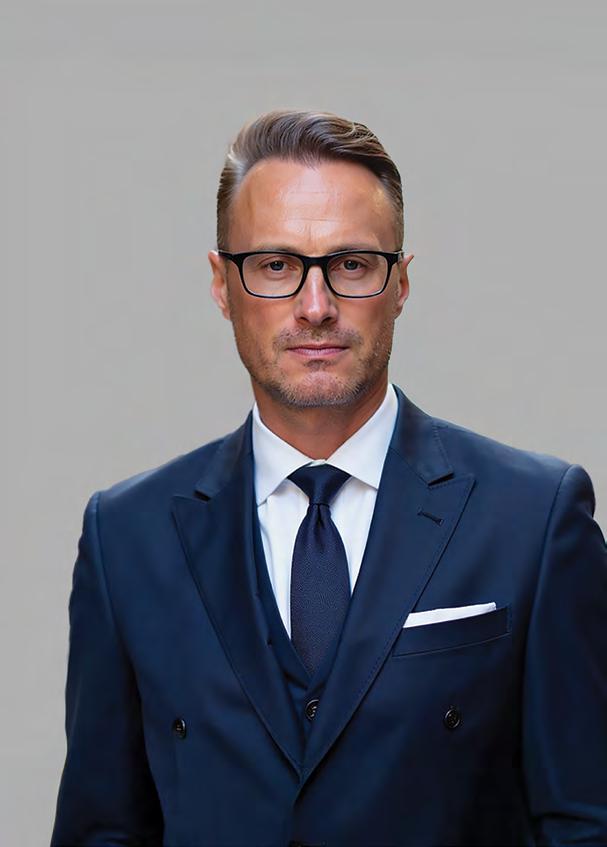
to exporting it,” says Valery Hurynovich, CEO of ABFC.basalt powered.
Understanding the Basalt Advantage
Basalt composites begin with a simple, abundant raw material: volcanic rock rich in silicate minerals. When melted and drawn into continuous fibre, that rock becomes a material with a rare balance of thermal stability, high tensile strength, chemical resistance and strong compatibility with modern resin systems.
From rock to reinforcement, the production process is tightly controlled. Basalt is crushed, cleaned and melted at more than 1,450°C, then pulled through platinum–rhodium bushings to form filaments.
These are coated with specialist sizing agents to bond cleanly with composite matrices.
The result is a reinforcement that offers:
• Strength comparable to steel at a fraction of the weight
• Complete resistance to corrosion
• Very low thermal expansion
• High durability in marine, desert and chemically aggressive environments
• Lower embodied energy than many competing materials
For GCC developers, that translates directly into longer asset life, fewer maintenance interventions and better alignment with national sustainability targets.
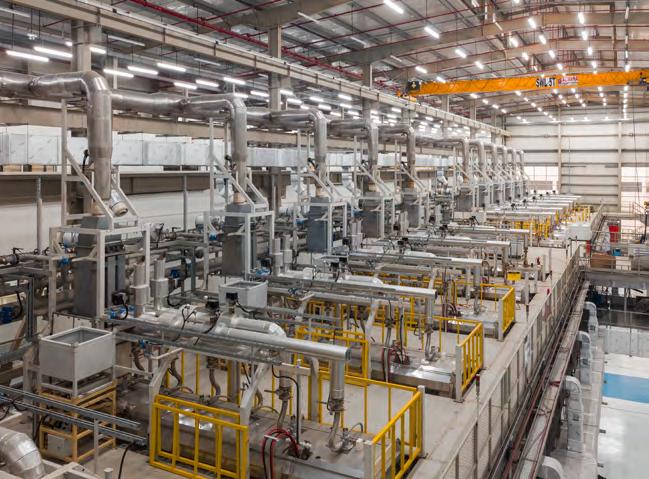
“IN A REGION WHERE HEAT, CORROSION AND TIME TEST EVERY STRUCTURE, BASALT COMPOSITES DELIVER STRENGTH WITHOUT COMPROMISE: LIGHTER THAN STEEL, IMMUNE TO RUST AND BUILT FOR GENERATIONS,” NOTES VALERY.
Composite Engineering For HighPerformance Projects
Once processed into fibre, basalt becomes a platform rather than a single product. Using pultrusion, filament winding, prepreg technology, vacuum infusion and compression moulding, engineers

can create a wide family of structural and non-structural elements.
To meet regional project specifications, basalt composites are tested for:
• Tensile, flexural and shear performance
• Resistance to alkalis and chemicals
• UV and thermal stability
• Fire behaviour
• Long-term creep and fatigue performance
For clients, these properties show up as tangible site benefits: extended service life, reduced risk of corrosion-
driven failures and improved behaviour in coastal, industrial and high-salinity environments.
ABFC.basalt powered: Building a Basalt Ecosystem
Many global basalt players focus on a single product or line. ABFC. basalt powered has set its sights wider, with a strategy to create an integrated basalt ecosystem that supports everything from fibre production to design support on live projects.
Its approach rests on three pillars:
Industrial production
High-efficiency basalt fibre and composite manufacturing
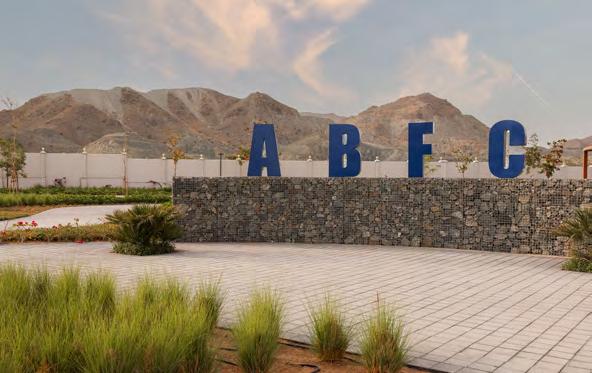
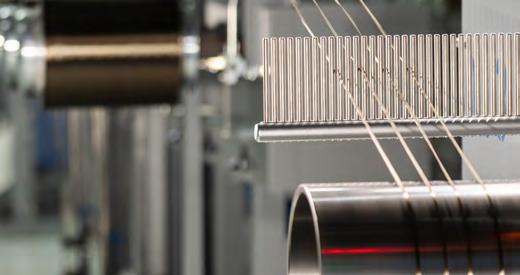
facilities sized for the GCC’s infrastructure pipeline, not just niche orders.
Material systems engineered specifically for hot climates, marine exposure and high-load conditions typical of Middle Eastern infrastructure.
Engineering collaboration
Partnerships with developers, authorities, consultants and contractors to embed basalt solutions from early design through to construction and operation.
“By investing in basalt innovation, we are turning the region’s natural strength into global advantage, creating an export industry that
reflects the Middle East’s vision, resilience and ingenuity,” Valery explains.
This model allows ABFC.basalt powered not only to supply materials, but to guide their effective use across construction, energy and industrial applications.
As CEO, Valery’s role is to set the trajectory not just for the company, but for the broader basalt sector in the region. His focus spans:
• Establishing global technology partnerships
• Steering R&D into new basalt applications
• Leading market expansion across the Middle East, Europe and North America
• Aligning quality systems with international standards
• Engaging policymakers and industry leaders on the long-term value of basalt
His vision is built on three strategic drivers:
1. Regional technological sovereignty
1 2 3
Building local expertise and production capacity so the GCC is less dependent on imported steel, glass fibre and specialist composites.
2. Sustainable construction at scale
Leveraging basalt’s lower carbon footprint, corrosion resistance and long lifespan to support national decarbonisation agendas while reducing lifecycle costs.
3. The Middle East as exporter, not just consumer
Positioning the GCC as a leading global producer of basalt composites, harnessing its strategic location, energy advantage and industrial policy momentum.
“Our vision is to make the Middle East not just a consumer of advanced composites, but a global leader in basalt innovation and export,” he says.
• Because basalt is a platform material, its influence reaches across several sectors central to the GCC’s growth.
• In construction and infrastructure , basalt is emerging as a durable alternative to steel. Its use in
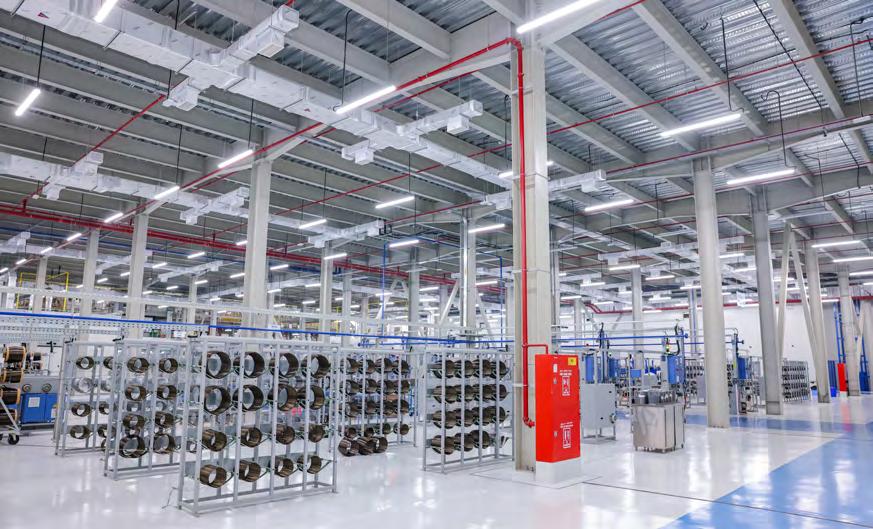
reinforcement, façade systems and structural profiles makes it especially valuable for bridges, marine works, tunnels, industrial facilities and water infrastructure where corrosion is a persistent challenge.
• In the energy and utilities space, basalt supports high-temperature insulation, composite piping and structural components for solar, hydrogen and wind projects.
• In mobility, aerospace and advanced manufacturing, its lightweight, fire resistant and vibration absorbing properties make it ideal for next-generation panels, interiors and specialised components.
• Basalt is also gaining ground in industrial, chemical and defence applications , offering corrosion resistance, pressure-ready composites and blast or fire resilient materials.
• Even in architecture and consumer design , basalt contributes to modern cladding, acoustic treatments and innovative 3D printed elements.
As Gulf cities diversify their economies, these solutions are becoming more relevant to both public-sector infrastructure and private industrial expansion.
The Road Ahead For The Gulf’s Construction Sector
For GCC developers, the move towards highperformance, low-carbon materials is no longer a nice-
to-have. Corrosion, climate stress and lifecycle costs sit on every risk register for major projects.
Basalt composites offer a direct response by delivering:
• Reduced maintenance and repair costs
• Longer structural lifespans
• Lower embodied and operational impact
• Improved safety and performance
• High resilience in coastal and desert conditions
In a region investing heavily in long-term infrastructure. From giga-projects and industrial corridors to mass transit and water networks — those advantages add up to strategic value.
With regional demand rising and local production scaling up, the Middle East has a real opportunity to become a global centre for basalt composite innovation, manufacturing and export.
At ABFC.basalt powered , the ambition is clear: advance the technology, expand capacity and stand alongside the construction industry as a partner in building structures that can genuinely withstand the next century of climate and performance demands. Basalt composites are not just another line item on a specification sheet. For the GCC, they represent a new standard where performance, sustainability and industrial opportunity converge.
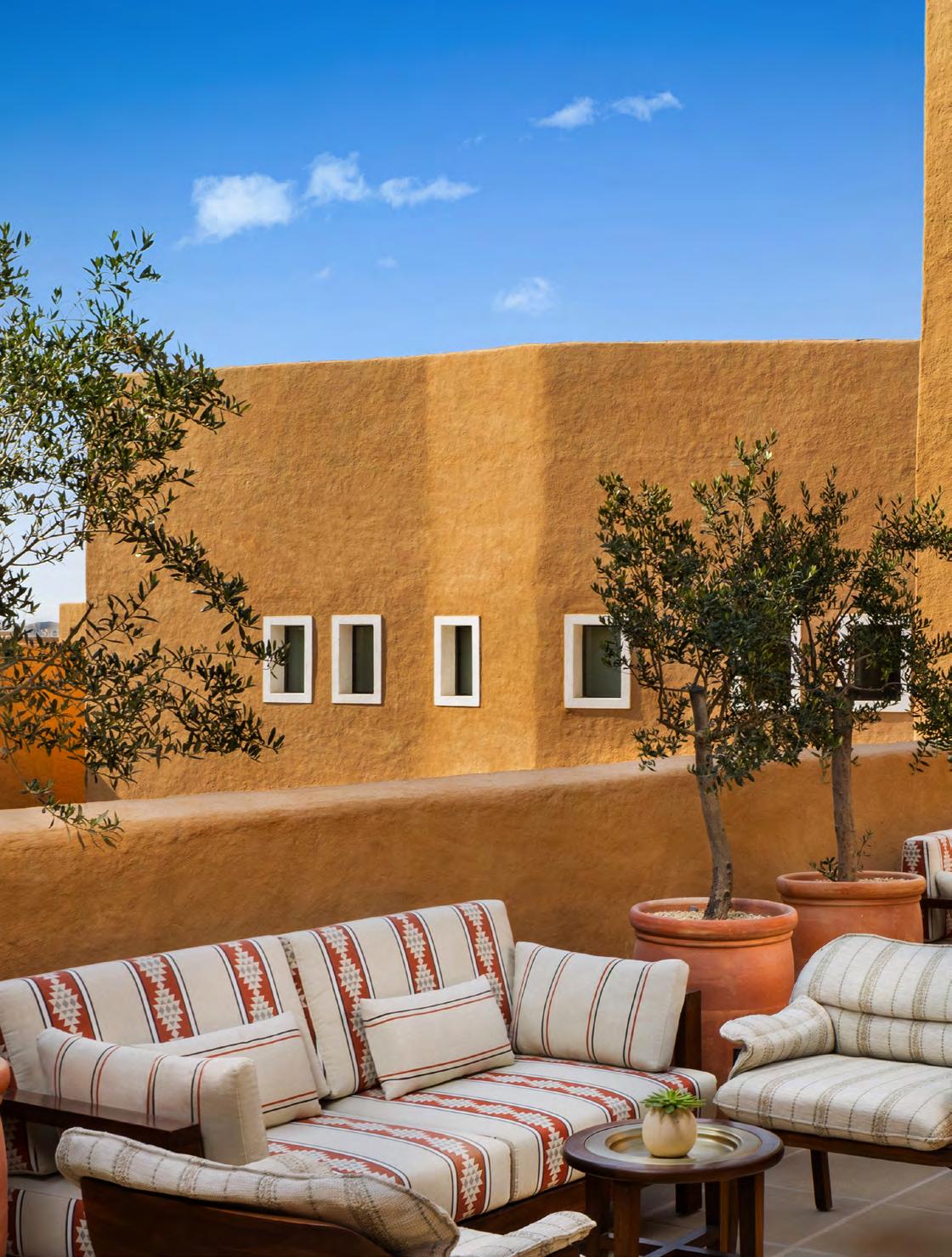
ECHOES OF DIRIYAH
A conversation with Kiran Haslam reveals the emotion, heritage and quiet ambition shaping the rebirth of Diriyah
TWords by: Vibha Mehta
here are interviews you remember for the information, and there are interviews you remember for how they made you feel. Speaking with Kiran Haslam, Chief Marketing Officer of Diriyah Company, belonged firmly to the second kind.
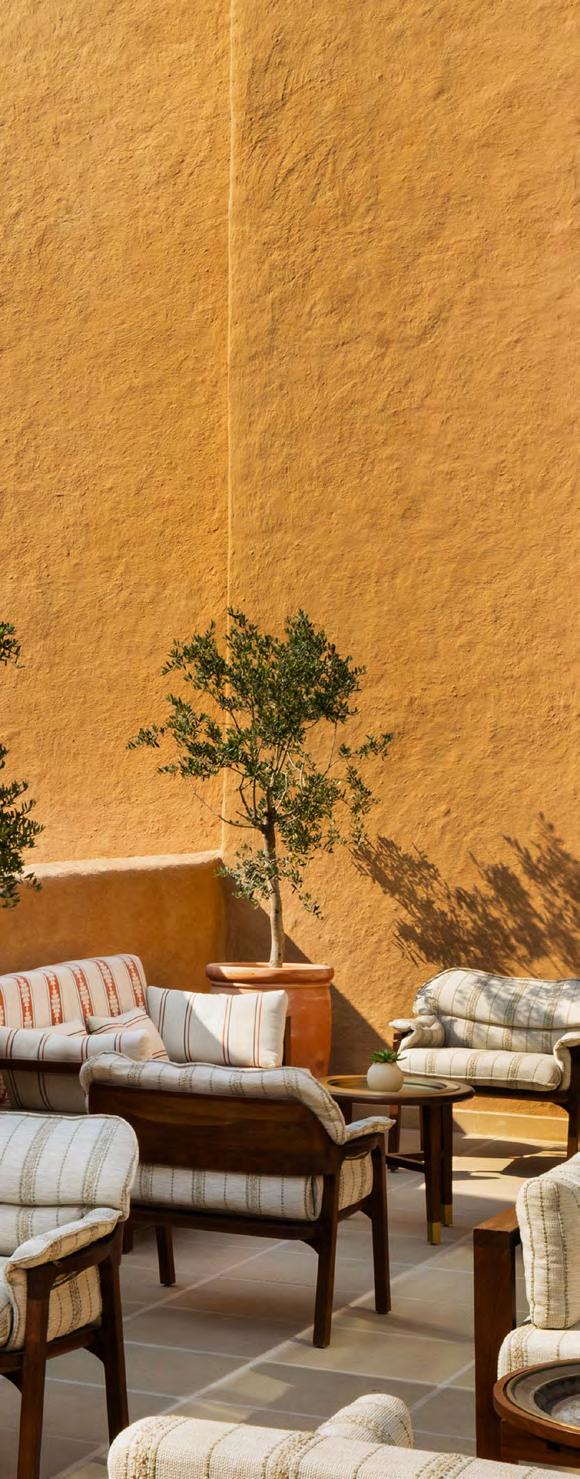
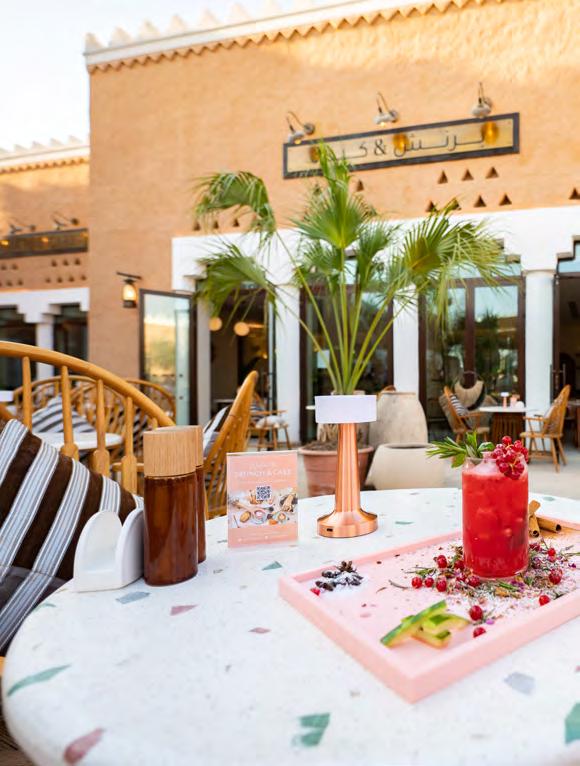
The Diriyah stand at Cityscape felt like a city in miniature. Towering screens played sweeping views of Wadi Hanifah and adobe façades washed in golden light. A vast masterplan model stretched out under glass, dotted with tiny palm trees, courtyards and streets; visitors leaned over it, tracing future boulevards with their fingertips, pointing out hotels, museums and neighbourhoods yet to open. The air buzzed with overlapping conversations – brokers negotiating, delegations being hosted, cameras flashing as teams posed in front of the model.
In the middle of this movement, Kiran felt like a steady centre of gravity. His smile was easy, his greeting warm
in a way that cut through the noise. He spoke in a calm, measured tone that did not compete with the background, yet somehow rose above it. There was a quiet attentiveness in the way he listened, a sense that, for those few minutes, the rush of Cityscape could wait.
Before we touched on square kilometres and contract values, he had already created a pocket of stillness between us. It became clear that this conversation would not simply catalogue milestones. It would explore memory, identity and the emotional architecture of a place that carries the origins of a nation.
Then came the sentence that held everything together. “To be Diriyah, this is the greatest project I can think of, that I have seen, read about, or heard of existing on planet Earth today.” He said it gently. No drama. No performance. Just a truth he carried with conviction. In that moment, Diriyah transformed from a visionary development into something intimate and deeply rooted. A place felt rather than described.
As Kiran spoke of Diriyah’s origins, his expressions changed
almost imperceptibly. His voice softened. His gaze warmed. His hands moved with the tenderness of someone uncovering a cherished story. He explained that storytelling in Diriyah is not a marketing exercise. It is an act of stewardship. “Storytelling just for the sake of it is boring,” he said quietly. “For us, authentic storytelling is who we are. It is the only way to explain what makes Diriyah, Diriyah.”
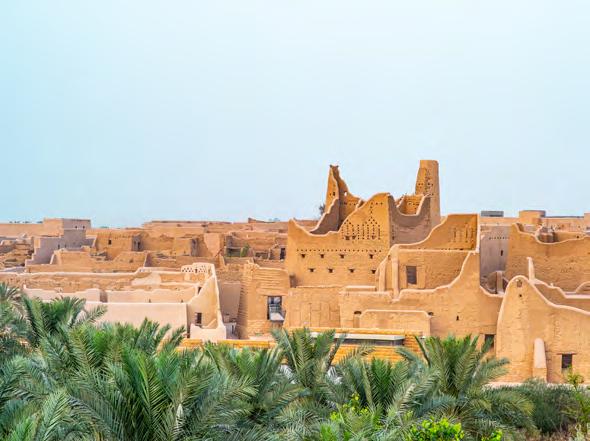
He unfolded the history with reverence. The Banu Hanifa tribe settled along Wadi Hanifa sixteen centuries ago. The First Saudi State emerged in 1727 under Imam Mohammad Bin Saud. The land became the ancestral home of the Al Saud family. These are not dates to him. They are living layers of identity. This truth, he shared, guides the entire architectural language. Adobe-inspired structures. Earth-toned facades. Courtyards that breathe. Walkways that invite pauses rather than rush.
“WE TOOK THAT
AUTHENTICITY AND
ARCHITECTURAL BLUEPRINT,”
UNLOCKED
AN
HE SAID. “A CITY THAT ALLOWS PEOPLE TO INTERACT NATURALLY. NOT RUSHING PAST EACH OTHER IN TRAFFIC, BUT PAUSING TO EXCHANGE VALUES AND IDEAS. THAT IS HOW SOCIETY FORMS. THAT IS HOW A CITY BREATHES.”

It became clear to me then. Diriyah is not being built; it is being remembered. It is a return to origins, shaped with modern hands but ancient memory.
When the discussion shifted to leadership, there was emotion in his tone. Genuine emotion. He spoke of his colleagues with admiration that felt personal, not professional.
“THIS PASSION IS WHAT UNIFIES US,” HE SAID. “YOU CAN SENSE IMMEDIATELY WHETHER SOMEONE UNDERSTANDS THE OPPORTUNITY HERE, WHETHER THEY FEEL MOVED BY SAUDI CULTURE’S WARMTH AND GENEROSITY.”
He described the immense gratitude he feels to be part of this moment in history. It was not the language of corporate pride. It was the language of someone who feels chosen by the work, not hired for it. Jerry Inzerillo, the visionary Group CEO of Diriyah Company, embodies this commitment. Decisions are not transactional. They are custodial. They ask not what can be built, but what should be honoured.
Sustainability, too, is approached with intention rather than obligation. A quarter of the land is protected as a public realm. Every plant is native. Nurseries were built from scratch to grow species that no commercial supplier carried. He smiled when he spoke of it. “You cannot buy indigenous shrubs in nurseries,” he said. “So we built our own.
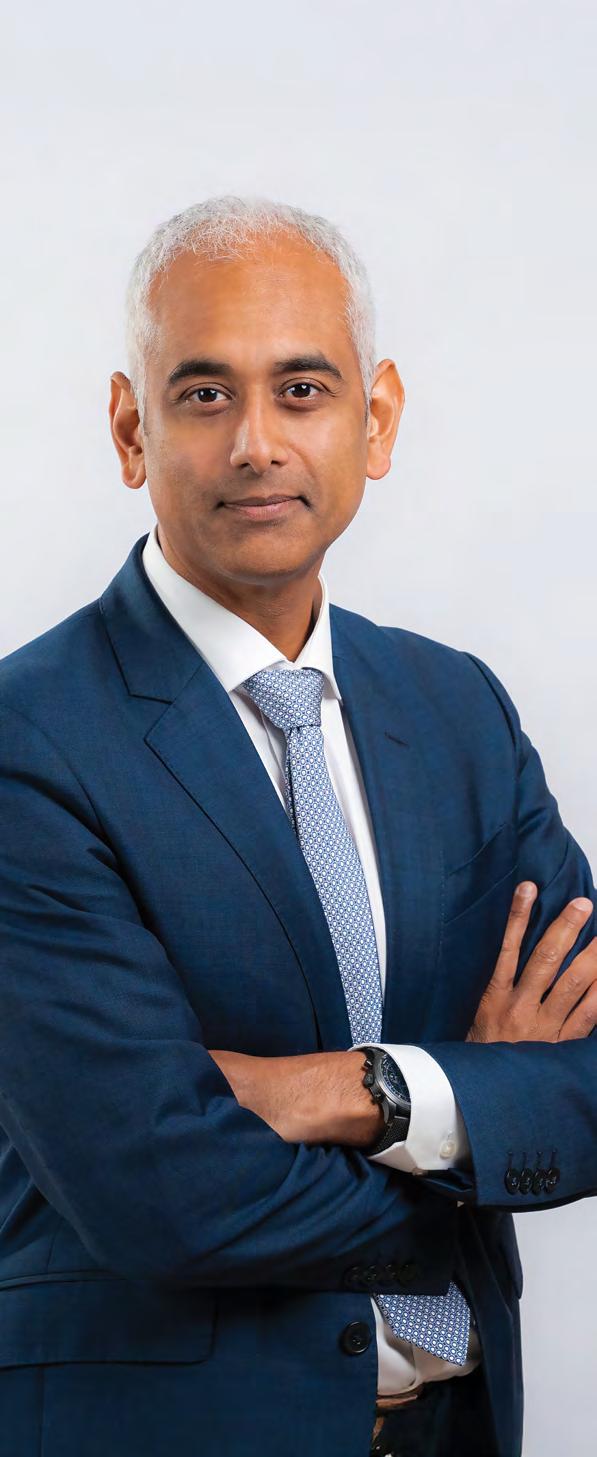
Kiran Haslam, Chief Marketing Officer of Diriyah Company
That level of detail requires passion, and we have it.”
There was a spark in his voice when he reflected on the past twelve months. “I will simplify it. What is not happening? It feels like everything is happening.” And Kiran meant it.
Diriyah opened its first luxury hotel, Bab Samhan, which reached full occupancy for nearly three weeks straight. Global hospitality icons have joined the landscape: Raffles, Aman, Oberoi, Armani and more. Manazel Al Hadawi, their first unbranded residential community, opened Diriyah to families who had only admired it from afar. He outlined the scale almost as if he was still absorbing it himself.
• Eighteen thousand five hundred homes.
• T hirty-four hotels.
• One point six million square metres of office space.
• Over half a million square metres of retail and dining.
Then there is the beauty. Zallal, the new dining district beside the Diriyah Art Futures Museum. The fully grassed Greg Norman golf course, sculpted with precision. The pedestrian network slowly stitches together heritage, lifestyle and community in a way that feels effortless and inevitable.
“YOU
CAN WALK FROM THE HOTEL TO THE MUSEUM TO BUJAIRI TERRACE TO THE UNESCO SITE,”
he said with quiet pride. “The pedestrian journey is now truly coming alive,” Making a point that Diriyah is not progressing. It is blooming, layer by layer.
When he spoke of the future, his tone held anticipation but not urgency. “Two thousand twenty-six is acceleration,” he said. “Head down, deliver as much as possible.” More
than $27 billion in contracts has been awarded so far. Five billion in the past six months alone. Yet he spoke of it without boasting, as though the numbers were merely shadows of a much greater momentum.
By the end of next year, the transformation will be remarkable.
• The Ritz-Carlton branded residences will welcome their first residents.
• The Oberoi-branded residences will rise.
• Capella Hotel will open.
• The Ritz-Carlton Hotel and Residences will welcome guests.
• The Royal Equestrian and Polo facilities will take shape.
He shared all of this with the same calm that carried us from the beginning. Then he smiled and invited us to visit one of the openings before it was unveiled to the world.
Diriyah is not shaped solely by ambition. It is shaped by memory. By
gratitude. By intention. It is a place where the past is not frozen but allowed to breathe into the present. It is a reminder that cities can be built with tenderness, not just efficiency. With reverence, not just capital.
As our conversation came to an end, Kiran paused. His voice lowered, as though offering a truth he did not want diluted. “We are not just developing land,” he said. “We are shaping a place that carries the memory of a nation.” There was a stillness after he spoke. A moment where the magnitude of that responsibility settled between us. Diriyah is not rising quickly or loudly. It is rising with respect. With calm confidence. With the quiet dignity of a place that knows exactly who it is.
And perhaps that is what makes Diriyah unforgettable. It is a future growing from the roots of a past that refuses to be forgotten. A city built not simply to impress but to endure. A place that breathes.
EGYPT’S INTERNATIONAL EXHIBITION CENTER, NEW CAIRO - EGYPT 14 - 16 MAY 2026 THE 11th INTERNATIONAL INTERIOR, EXTERIOR, FURNISHING & FIT-OUT EXHIBITION DESIGN, BUILD, FURNISH

In a rare and insightful dialogue, Dr Majid Jack Hsiung, General Manager of Source of Fate, reveals the deeper forces influencing RAK’s evolving landscape and the philosophy behind one of its most expressive new developments
Source of Fate crafts refined communities in coveted locations, where elevated everyday living seamlessly meets quiet, timeless luxury
How is Ras Al Khaimah redefining luxury and investment?
Ras Al Khaimah is entering a new era, one shaped not by speed but by intention. The emirate has quietly transformed into a sanctuary for investors seeking space, calm and long-term value. Dr Majid describes it as “a place where natural beauty meets economic logic,” an environment where golden coastlines sit comfortably beside investor-friendly regulations, zero income tax and full foreign ownership.
As he spoke, it became clear that RAK’s charm lies in its contrasts. It is close enough to Dubai to feel connected, yet far enough to breathe. It is ambitious, but never hurried. And as global eyes shift toward Al Marjan Island and the Wynn Resort, the emirate’s horizon is widening with every passing month.
What makes Miraggio more than a waterfront project?
Miraggio was not conceived as another beachfront development. It was imagined as a feeling. A rhythm. A coastal experience where architecture blends into the poetry of the sea.
Dr Majid describes its 810 sea-facing homes as “an invitation to live in fluidity,” shaped by curved lines, soft light and uninterrupted views. It is a community
built for equilibrium — where design, nature and technology sit in quiet harmony.
Walking through its master plan feels like stepping into a space that listens before it speaks.
How is the definition of luxury changing? Luxury, as Dr Majid explains, has shifted away from excess and toward meaning. Today’s buyers seek privacy, wellness, serenity and a sense of belonging. They want the air to move differently in their homes. They want natural light, quiet corners, intuitive design and the ability to disconnect without disappearing.
Miraggio reflects this evolution with restraint. It does not shout luxury. It breathes it. Every curve, window, corridor and terrace is designed to evoke calm. It is luxury measured in feeling rather than ornament.
What does smart sustainability look like in practice?
Dr Majid calls it “intelligent responsibility.”
Sustainability, for Source of Fate, is not a checkbox but a design philosophy. Miraggio integrates energy-efficient systems, sustainable materials, natural ventilation pathways and smart-home technology that learns, adapts and improves the resident experience.
Behind the scenes, LEED-accredited professionals ensure that every decision has long-term logic. Even construction methods are rethought, with prefabricated components used to reduce waste, noise and environmental disruption.
Sustainability here feels less like an obligation and more like an ethical instinct.
How does Miraggio integrate wellness and community?
Wellness is not placed at the centre of Miraggio. It is woven into every corner of it.
Yoga decks that catch the early light. Spa rooms scented with coastal air. Gyms with
ocean views. Courtyards that act as pauses between the day’s demands. Children’s spaces designed to feel safe and free. Family zones where neighbours become friends.
MIRAGGIO DOESN’T PERFORM LUXURY, IT INHALES AND EXHALES IT. EVERY CURVE, OPENING, CORRIDOR AND TERRACE IS CHOREOGRAPHED TO SOFTEN THE SENSES, WRAPPING YOU IN EASE. HERE, LUXURY IS NOT IN THE ORNAMENT, BUT IN THE FEELING THAT LINGERS LONG AFTER YOU’VE ARRIVED.
Why are international investors looking toward RAK?
RAK offers something increasingly rare in global real estate: space with soul. Investors are drawn to its coastline, stability, growing tourism sector and affordability compared with Dubai and Abu Dhabi.
With residential supply projected to double by 2030, the emirate is on the cusp of a new cycle of growth. Miraggio, positioned at the heart of Al Marjan Island with the Wynn Resort rising nearby, benefits from this momentum. Flexible payment plans and Savills partnerships make the proposition even more compelling.
Where is the emirate headed by 2026?
The next two years promise a shift in scale and ambition. Waterfront districts will mature. Mixed-use communities will expand. Wellness-driven living will become the new standard.
Source of Fate plans to sit at the forefront of this evolution, introducing projects that blend architecture, meaning and modernity. Miraggio, in many ways, is the precursor — the opening chapter of a larger story the emirate is preparing to tell.
How does Source of Fate balance innovation with longevity?
Dr Majid smiles when answering this one. Innovation, he says, “must earn its place.” Technology is used with purpose, not novelty. Prefabrication, robotics, smart systems and modular design are adopted only when they elevate durability, efficiency or the resident experience.
The company believes that true innovation is quiet. It should feel seamless, almost invisible, yet unmistakably present in the way a home functions, breathes and evolves.
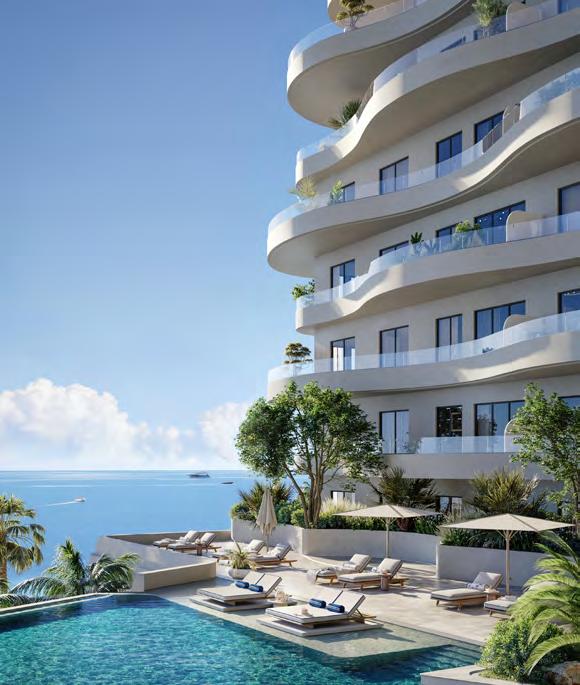
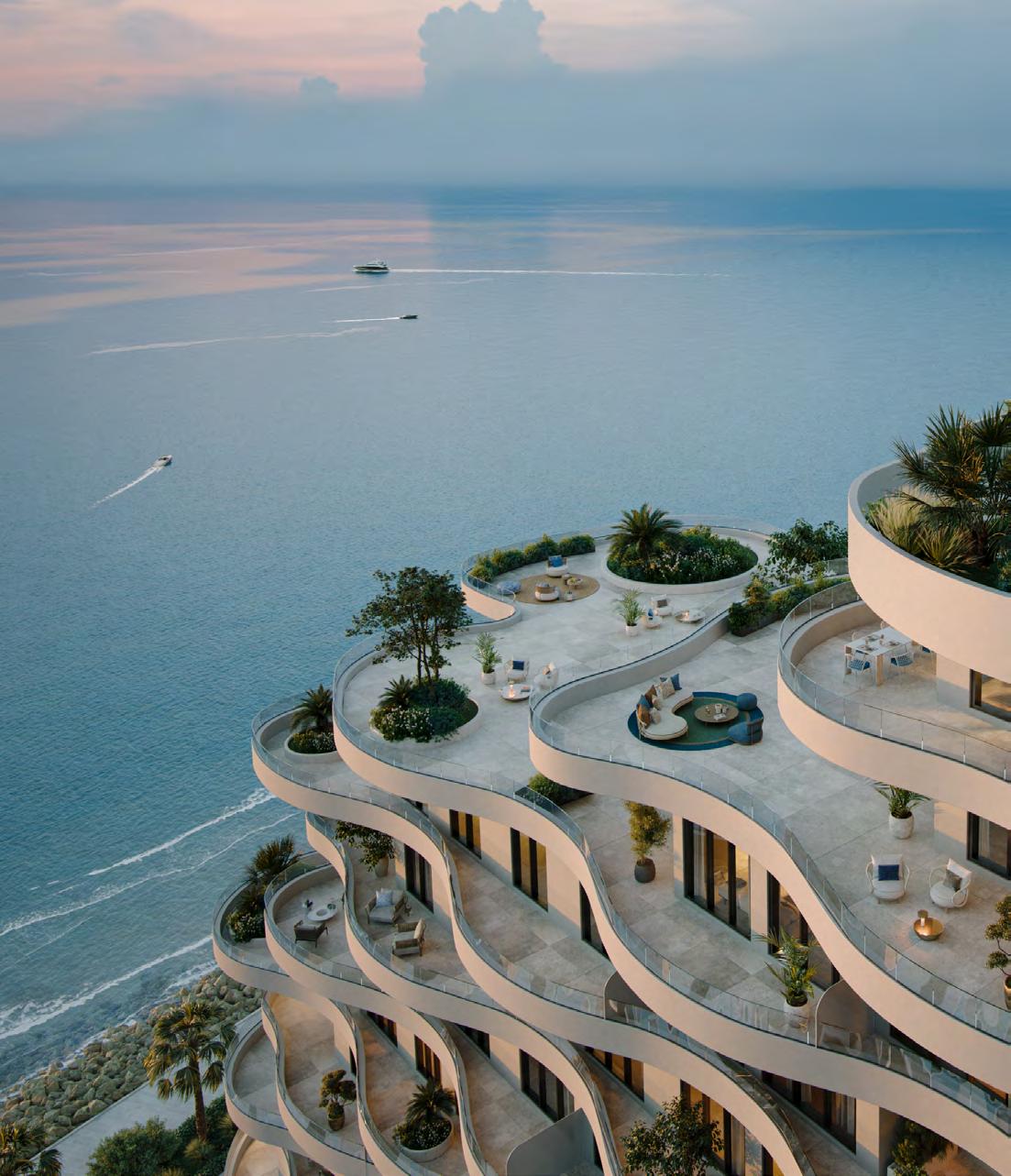
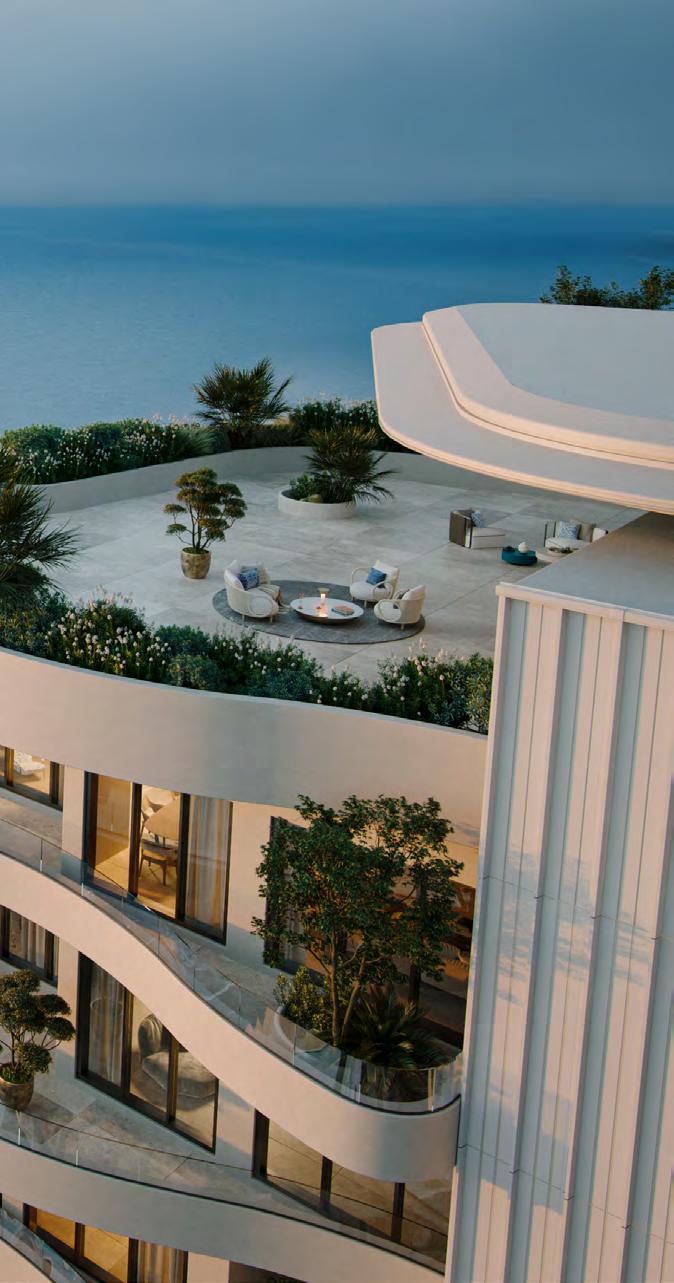
Miraggio is a sculpted seafront sanctuary, where flowing lines, terraced curves and lush private outdoor spaces blur the edge between architecture and ocean
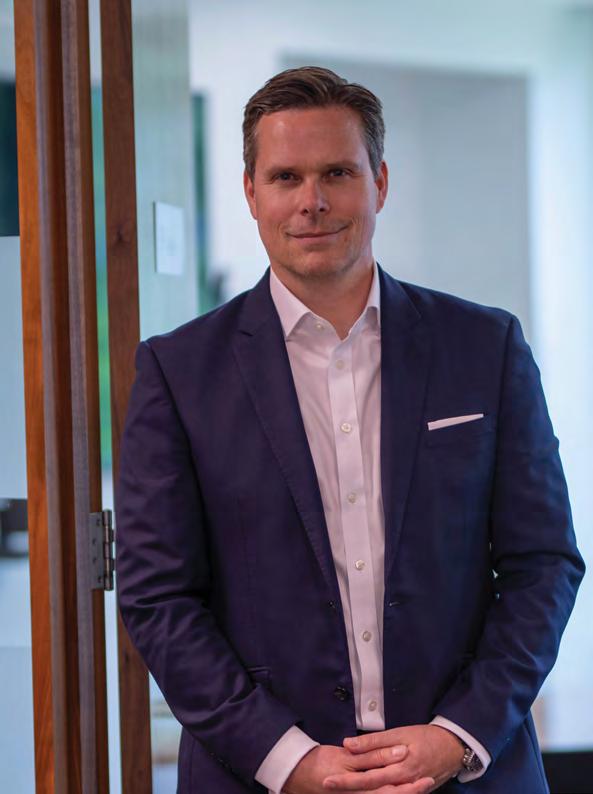
Nick Pilbeam, Chief Commercial Officer at Cheval Collection, offers an exclusive look into the brand’s accelerating footprint across the Middle East, revealing how its luxury-living philosophy is shaping new markets and what the next chapter holds for the company’s ambitious regional journey
Words by: Vibha Mehta
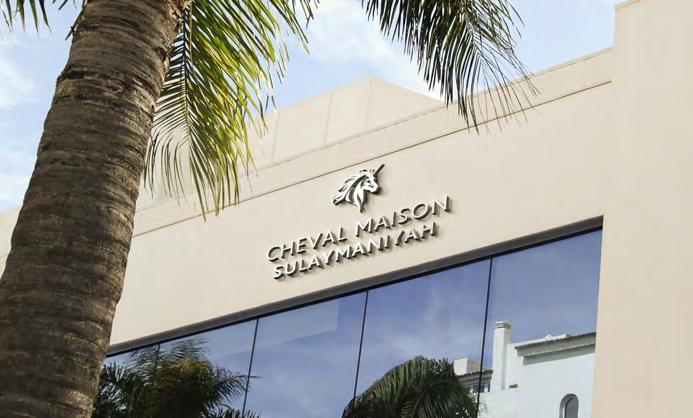
Riyadh’s development landscape is undergoing one of the most dynamic transformations in the world, fuelled by sweeping urban visions and a rising appetite for refined, contemporary living. As the capital expands its cultural and architectural vocabulary, global brands are seeking to anchor themselves within this new era. Among them is Cheval Collection, a name long associated with elevated serviced living and four decades of hospitality mastery. At this year’s Cityscape, the brand unveiled its newest milestone: Cheval Maison Sulaymaniyah, its second property in Riyadh and a key collaboration with Ladun Investment Company.
For Nick Pilbeam, Chief Commercial Officer of Cheval Collection, arriving in Saudi Arabia always carries a sense of momentum. “It is our fourth property in the region,” he shares, reflecting on the brand’s growing connection with Middle Eastern travellers. What began with Gulf guests frequenting Cheval’s quintessential London properties has evolved into a strong regional presence that continues to accelerate.
Cheval entered the Middle East with an intention. In Dubai, Cheval Maison The Palm and Cheval Maison Expo City have quickly become high-performing assets, each reflecting the region’s appetite for privacy, flexibility and premium hospitality. Buoyed by that success, Cheval is now developing its Riyadh flagship, Cheval Ladun Living, set to open in 2027. Nick visited the site on

his recent trip and describes it as “coming out of the ground beautifully,” destined to become one of the city’s most refined hospitality offerings.
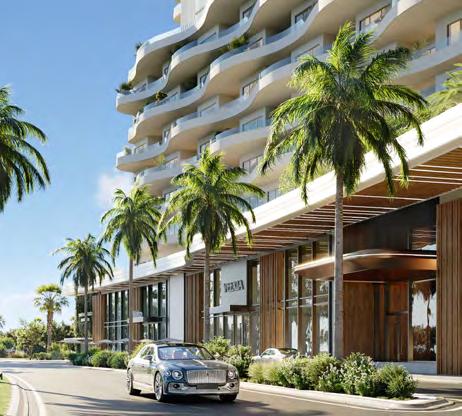
Yet Cheval Maison Sulaymaniyah offers a distinct expression of luxury. Where Cheval Ladun Living is shaped as a soaring contemporary structure, the Sulaymaniyah project adopts a calmer, more residential identity. Spread across a low-rise structure in one of Riyadh’s most established districts, the property will feature around 150 keys, creating an intimate but highly functional living environment. The design aims to merge contemporary aesthetics with subtle nods to Saudi sensibilities, particularly in textures, material choices and the spatial organisation of communal areas.
A dedicated gym with public membership anchors the wellness offering, complemented by quietly sophisticated F&B concepts designed for both guests and neighbourhood residents. The layout favours calm, shaded courtyards, generous terraces and soft landscaping. It reflects a future in which Riyadh embraces slower rhythms of community life alongside its fast-growing urban pace.
“We have always catered to long-stay guests, and that aligns with the shifts happening in Riyadh,” Nick explains.
“CORPORATE STAYS, MEDICAL TRAVEL, LIFESTYLE STAYS, EXTENDED LEISURE AND EVENTS ARE BECOMING A LARGER PART OF THE CITY’S HOSPITALITY
DEMAND. OUR PRODUCT FITS NATURALLY INTO THIS LANDSCAPE, AND VISION 2030 FURTHER STRENGTHENS THAT TRAJECTORY.”
The partnership with Ladun Investment Company is central to this confidence. The two organisations share a precise alignment in vision and development philosophy. Signing a second project before the first has opened highlights the mutual trust that has developed between the teams. Nick is particularly proud of the design direction for both properties, emphasising how each project has its own identity while remaining loyal to Cheval’s DNA of comfort, privacy and understated elegance.
Luxury, for Cheval, is not merely an added layer but the core of the brand itself. With more than 40 years of experience, Cheval stands as one of the few hospitality groups dedicated solely to luxury serviced apartments. “This is all we do and all we understand,” Nick says. The timing is ideal, as the luxury and extended-stay segments in the Middle East continue to rise, shaped by travellers seeking curated residential-style experiences that feel personal, refined and flexible. The Middle East, and Saudi Arabia in particular, is proving to be a natural fit for this model.
Looking ahead, Nick describes the future as full of possibilities. Developers across the GCC and beyond are approaching Cheval with increasing interest. While the brand is discerning in where it expands, the opportunities are abundant. Cheval is also exploring the fast-growing space of branded residences, a sector that aligns perfectly with its heritage and expertise. Nick hints that this category will play an influential role in the brand’s trajectory, saying, “It connects perfectly with our DNA. We are excited to share new developments very soon.”
As Riyadh continues to rewrite its urban identity, Cheval Collection finds itself woven into the city’s evolving story. With two projects rising in strategic districts, an established foothold in Dubai and a brand philosophy sculpted around residential luxury, Cheval is not simply expanding across the Middle East. It is shaping a new language of hospitality for a region in motion.
And as Nick looks to the years ahead, he remains confident that Cheval’s presence is only at the beginning of its journey. “There is so much potential here,” he says. “The region is evolving quickly, and we are evolving with it.”
In Conversation with Mahmoud Shahin, Design Director at P&T Group, as he shares how his design philosophy balances culture, people, and the planet in a rapidly changing world.
With over 20 years of experience, how has your design philosophy evolved?
My design philosophy has matured through experience and exposure to diverse contexts rather than taking a different direction. Early in my career, the focus was strongly on form and function, yet over time I have come to see architecture as something far more enduring. Working at P&T across the Middle East, Asia and Africa has deepened my appreciation of how architecture must balance human experience, cultural identity and environmental responsibility. With years of practice, I have grown more attuned to how buildings perform for people and for the planet, extending beyond the immediate act of creation to consider their long-term relevance
and impact. Today, my approach is aligned with the ethos of the practice, rooted in human experience, contextual sensitivity and sustainability. I view architecture as a discipline that must respond to the present while anticipating the future, particularly a post carbon future where resilience and environmental performance carry as much importance as beauty. This evolution is the result of personal growth, accumulated lessons from projects, and the wider transformation of the industry.
How do you ensure your projects stay connected to their cultural and environmental context? Every project begins with a thorough study of its
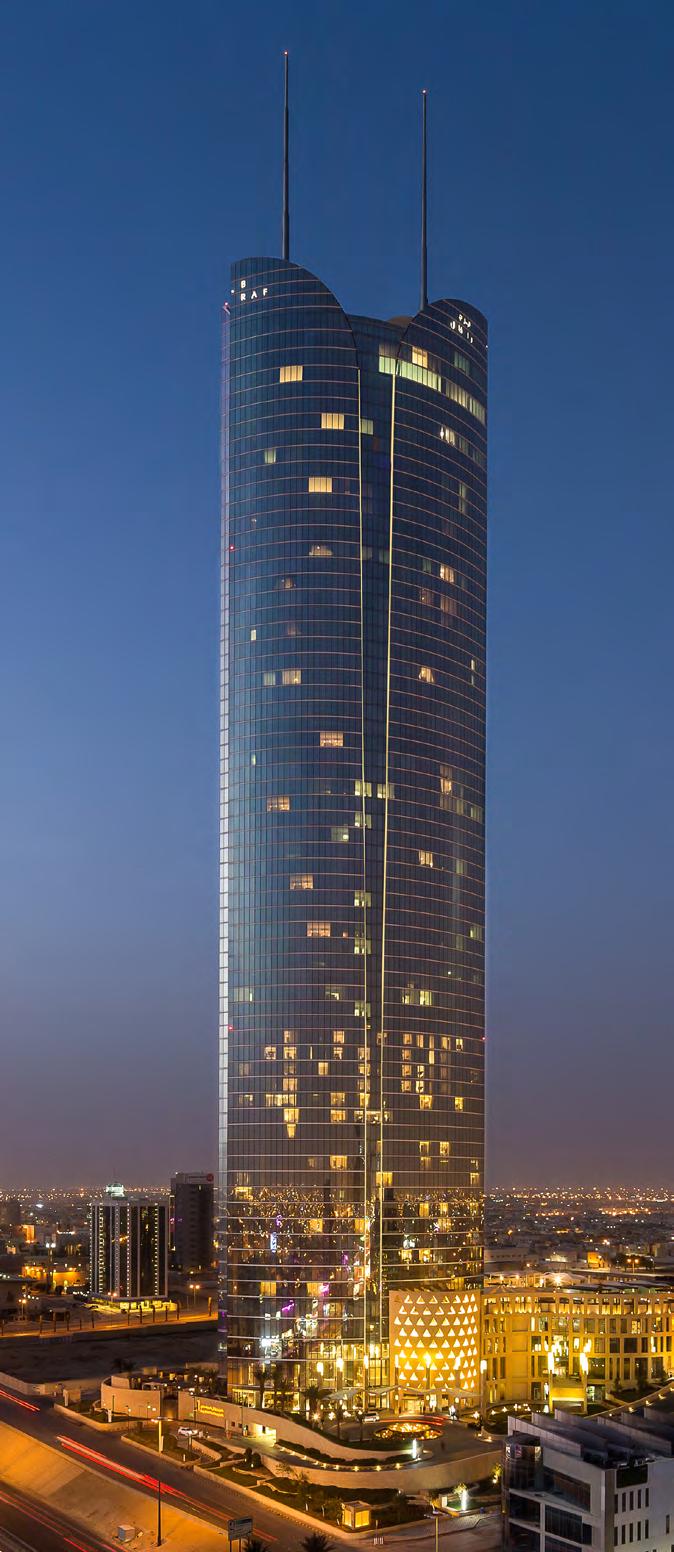
site, heritage, climate and community. I regard architecture as a dialogue between people, places and time. Designing in Riyadh, for example, is very different from working in Dubai or Lagos, and the architecture must respond authentically to these differences. Culturally, I draw inspiration from local traditions, materials and urban patterns, while reinterpreting them in contemporary ways so the project remains relevant and future ready. Environmentally, contextual design means working with the climate rather than against it, whether that is orienting buildings to limit solar gain, harnessing prevailing winds, or using shading to improve comfort. Ultimately, a building should feel as
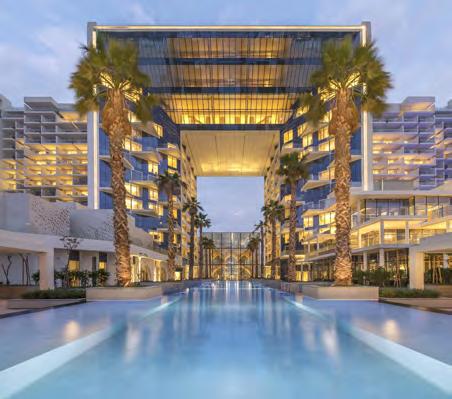
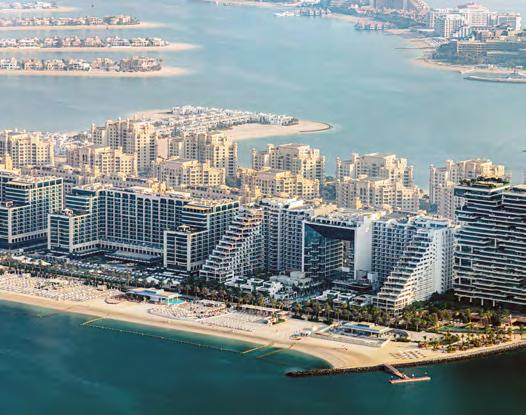
though it belongs to its setting, offering both a sense of identity and a sustainable response to its environment.
What strategies are key to reducing embodied and operational carbon in architecture?
Reducing carbon begins at the earliest stages of design. For embodied carbon, we work collaboratively with P&T teams to prioritise low impact materials, such as recycled or locally sourced options, and adopt efficient construction methods that limit waste. For operational carbon, strategies include passive design, natural ventilation and daylighting, combined with renewable energy integration and intelligent technologies. The most important step is holistic design, where structure, envelope and systems are optimised in concert rather than as separate elements. Through this integrated approach, we can significantly reduce a project’s carbon footprint across its full life cycle. Sustainability
is not an afterthought but a core principle embedded in our design process.
Can you share how projects like the Innovation Hub in Abu Dhabi push sustainable design forward?
The Innovation Hub represents a step towards the future of architecture in a low carbon world. Its design employs the mass of the building to provide shading rather than relying on applied devices, integrates natural ventilation and maximises daylight, which reduces dependence on mechanical systems. Renewable energy is also incorporated to offset operational carbon. Yet beyond the technical strategies, the project creates an environment that fosters collaboration and innovation. It demonstrates that sustainability can elevate creativity. The Hub is as much about the experience of its users as it is about energy efficiency, showing how architecture can set the tone for responsible and inspiring urban futures.
From luxury resorts to highrise towers, what shifts are you seeing in project types and client demands?
There has been a marked shift in how clients define luxury and MANY EXHIBITORS CHOSE FERIA VALENCIA AS THE EXCLUSIVE LAUNCH PLATFORM FOR THEIR LATEST COLLECTIONS—A PRIVILEGE TRADITIONALLY HELD BY OTHER TOP INTERNATIONAL FAIRS.
value. A decade ago, luxury was often associated with scale, opulence and highly polished finishes. Today, clients and users place equal or greater importance on wellness, sustainability and connectivity. In hospitality, travellers increasingly desire immersive, nature connected experiences rather than only traditional five-star service. In commercial projects, workplaces are now designed to support collaboration, flexibility, shared amenities and employee wellbeing, alongside meeting demanding sustainability targets. Residential projects are moving towards integrated branded communities where liveability and services matter as much as individual units. Clients are seeking architecture that provides enduring value for people as well as for the planet.
As one of the Top 30 Most Influential Architects in MENA, how can regional architects shape global discourse?
The Middle East and Africa are regions of rapid growth, cultural diversity and
challenging climates. These conditions create difficulties but also opportunities for innovation. By tackling issues such as water scarcity, extreme heat and limited resources, architects here are developing solutions that can enrich global practice. Strategies for passive cooling, integrated master planning and hybrid urban models are being tested in this region and can influence other parts of the world facing climate pressures. Regional architects also have a duty to demonstrate that progress does not mean abandoning cultural identity. We can shape cities that are modern yet remain connected to tradition. By sharing these insights internationally, architects from the region can help advance the wider dialogue on sustainability, resilience and authenticity.
How are you mentoring the next generation at P&T, and what skills do you see as essential for young architects?
Mentorship is one of the most rewarding aspects of my role. At P&T, we have
a collaborative studio culture where young architects feel empowered to contribute ideas, take responsibility and learn through real project engagement. We encourage them to participate in competitions, design reviews and client presentations, so they gain experience across all aspects of practice. The skills that matter most today extend beyond design talent. Adaptability is essential, given the speed of change in our profession. Environmental literacy is equally vital, since sustainability has become central to design. Strong communication is also critical, because architecture requires collaboration across multiple disciplines and stakeholders. Above all, I encourage young architects to think critically about the social and environmental impact of their work, so they can develop the mindset to become leaders in their own right.
How do you see Middle Eastern architecture adapting to climate change and rapid urban growth?
The region is undergoing significant transformation. Climate change and fast paced urbanisation are compelling us to rethink how we design both cities and buildings. Architecture is adapting by prioritising passive strategies, renewable energy and resilient planning. There is a growing emphasis on walkability, accessible public spaces and stronger community integration, moving away from car dependent planning towards human centred urbanism. Increasingly, projects are judged by their contribution to long term sustainability targets, including ambitions for net zero emissions. What is inspiring is that the Middle East is creating its own design frameworks, rooted in culture and climate, that have the potential to guide other regions as they face similar challenges.
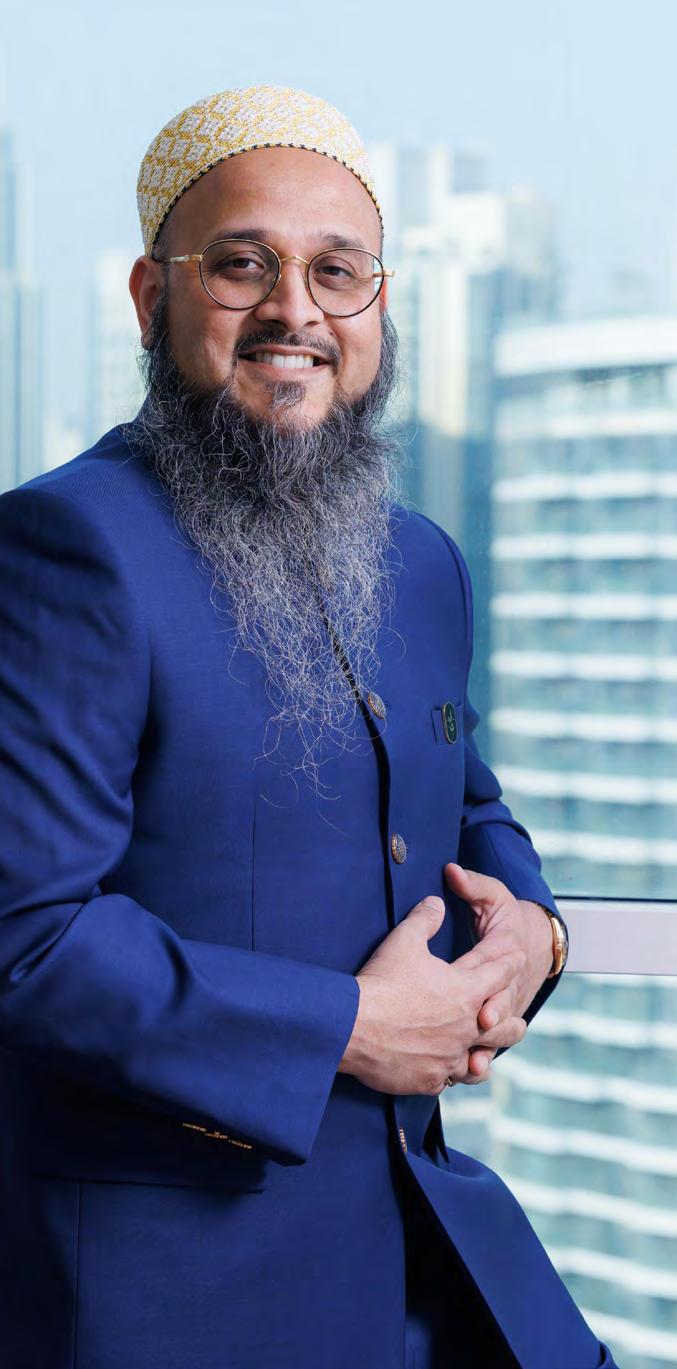
Yousuf Fakhruddin, CEO of Fakhruddin Properties, opens the door to a portfolio where sustainability is not a slogan but a design brief, with the 90:90 Waste Management initiative recasting everyday living as an exercise in quiet environmental discipline
The 90:90 Waste Management Initiative
When we talk about the 90:90 Waste Management initiative, we’re talking about a simple idea with complex consequences: divert 90% of buildinggenerated waste away from landfill within a 90-day cycle and to do so from inside a residential building, at no extra cost to residents.
The initiative was developed based on three clear insights:
• Firstly, the scale of the problem in urban centres is clear with a huge share of household and building waste still ending up in landfill despite available recycling technologies. By the time waste leaves a building it is contaminated, mixed, compressed and much harder to recycle or compost, so we flipped the model to bring segregation and processing into the building itself.
• The UAE’s Net Zero 2050 ambition and Dubai’s landfill-closure targets create both the imperative and the policy environment for developer-led
innovation. We designed 90:90 to be fully aligned with those public goals so it can be scaled and supported by regulators, utilities and the community.
• Finally, impact is contingent on participation. We invested heavily in resident engagement, gamified incentives, clear signage and zerocost implementation so there was no financial hurdle barring residents from joining.
As a sustainability-centric developer we can design and fund the infrastructure that makes volume diversion possible; and as a long-term owner/operator we reap the benefits, i.e., lower waste handling costs, happier residents, healthier buildings and a stronger ESG profile.
‘90:90’ is easy to understand, easy to measure, and it forces us to solve practical problems, from logistics to resident behaviour, rather than settling on vague sustainability claims.
By testing the approach in an existing residential tower and recording and sharing the outcomes, we wanted to create a replicable, zero-capex model that other developments can adopt. This will ultimately

help Dubai, and the sector, meet their landfill-closure and circular-economy goals.
Fakhruddin Properties’ development strategy is built around integrating practical sustainability, wellness, and technology at the systems level so that every new project functions as a high-performance, resource-efficient environment that is also highly experiential for each resident and the collective community.
Our current portfolio includes the recently launched Treppan Serenique Residences (Dubai Islands) with more projects set to be launched in key locations in Dubai.
Innovation across the portfolio is focused on practical infrastructure, from advanced air-handling and purification, and centralised Hydrogenated organically mineralised ionised Alkaline water systems that reduce plastic bottled consumption, to energy-efficient cooling, hydroponic food production, and building-level waste-management process.
Digital architecture is embedded from the outset, with IoT- and AI-enabled platforms managing energy, water, and indoor conditions, alongside biometric access and unified resident interfaces that simplify building operations.
Wellness is treated as a measurable outcome supported by indoor-air quality, water quality, biophilic design, and community engagement programmes.
Our approach to emerging trends in these areas is aligned with Fakhruddin Properties’ strategic vision, which focuses on integrating sustainability, digital systems and health-focused design directly into building infrastructure so
they become standard operations, not merely additional features.
With specific regards to sustainability, we treat buildings as resource systems. Alongside our 90:90 Waste Management Initiative, we have implemented measures that address energy, water, air and materials at the point of use.
All new Fakhruddin Properties projects will feature patented Smart Air Handling Units that improve air filtration while reducing the energy load associated with ventilation.
We have made significant investment into next generation technologies, and our buildings will incorporate IoT and AI enabled energy management that automates lighting, cooling and appliances to reduce unnecessary consumption.
For our residents, we will consolidate a full suite of digital services within the Treppan Living app.
Hydroponic greenhouses, improved air quality and reduced reliance on bottled water help create healthier indoor environments while reducing resource impacts. In a nutshell, our adaptation strategy is about embedding sustainability and digital capability at the systems level for energy, water, waste and air, which will enable our buildings to operate more efficiently and interface effectively with future smart city infrastructure.
It is essential, particularly in an emirate as forward-looking as Dubai. The scale of today’s environmental challenges - whether waste, carbon emissions, or resource efficiency - cannot be addressed by government action alone.
As real estate developers, we are central to how cities function, and that gives us both an opportunity and a responsibility to support national goals such as Net Zero 2050 and Dubai Municipality’s landfill-closure plans.
By embedding sustainable design, smart waste systems, energy-efficient technologies, and circular construction methods into our projects, we can accelerate national progress while
improving the long-term performance and resilience of the built environment.
At this point, integrating sustainability is no longer a question of compliance. Buyers, tenants, and investors are actively seeking developments with strong ESG foundations.
For Fakhruddin Properties, the drive to contribute meaningfully to these goals is not just a professional obligation - it is a personal conviction held by senior leadership and cascading down throughout the company.
At Fakhruddin Properties, we are fully aligned with Dubai Municipality’s ambition to achieve 100% wastewater recycling by 2030. The emirate already recycles around 90% of its domestic and commercial wastewater, a level made possible by a reclamation programme that has been in place since 1969, beginning with the first treatment plant in Al Khawaneej.
Our own wastewater strategy is designed to reinforce these national objectives by reducing reliance on energy-intensive desalinated water and lowering the overall energy footprint of water supply across our developments.
The goal is to maximise the reuse of treated wastewater through a decentralised model that supports irrigation and landscape maintenance, feeds into central cooling systems where feasible, and supplies cleaning and other operational needs within our communities.
In select buildings, we also plan to route treated water to internal non-potable uses such as toilet flushing, to further reduce freshwater demand.
Our Treppan Living ecosystem is based on the idea that the built environment should actively support physical, emotional and social health, so wellness is integrated across design, systems and everyday experience.
Treppan Serenique Residences on Dubai Islands is a clear example of this philosophy in practice, offering more than 50 specially designed amenities that include an oxygen-rich bamboo park, a biohacking lab with a hyperbaric oxygen
chamber, cryotherapy, redlight therapy and sensorydeprivation pods, alongside a rooftop infinity pool, indoor and outdoor gyms, a rockclimbing walk, state-of-theart meditation pods, a koi pond and close proximity access to the island’s whitesand beachfront.
The Treppan Living app extends this wellness framework into everyday behaviour through a pointsbased system that rewards sustainable participation, whether recycling, using refill stations, attending yoga classes, choosing hydroponics-grown produce or joining community events.
Begin by treating circularity as an operational framework rather than an add-on. The biggest gains come from designing buildings to manage resources (waste, water, energy) at the point of use, which is where separation/segregation, reuse, and efficiency are easiest to achieve. Build the infrastructure early, measure outcomes from day one, and align with municipal systems so your efforts reinforce wider sustainability goals.
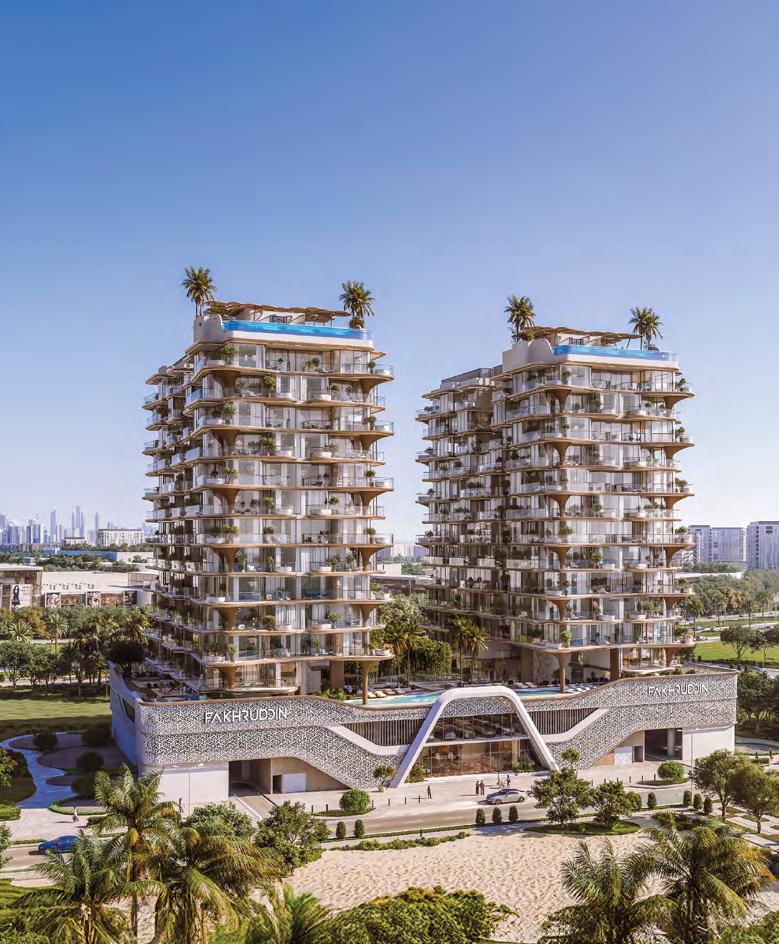
A TRIED AND TESTED MODEL THAT OFFERS A PLUG AND PLAY SUSTAINABILITY, TECHNOLOGY AND WELLNESS SOLUTION TO OTHER LIKE-MINDED DEVELOPERS, WE BELIEVE THAT BY WORKING TOGETHER WE WILL ULTIMATELY SUPPORT DUBAI AND THE UAE’S NET ZERO 2050 VISION AND HELP ADVANCE CIRCULAR ECONOMY GOALS.

Martina Di Licosa is a business journalist reporting on consumer startups at Forbes. She is based in New York City and holds a Master of Science degree in journalism from Columbia University.
Saudi Arabia has taken the idea of a “mega-project” (a development so large it can reshape an entire economy, workforce, or industry) and turned it into national policy. From the desert grids of NEOM to the island resorts along the Red Sea, the Kingdom’s so-called “giga-projects” are pushing the limits of scale, sustainability, and technology. In the process, they’re reinventing how both Saudi and international builders think about designing and delivering massive, complex projects. NEOM, the futuristic smart city taking shape in the country’s northwest, is perhaps the most talked-about of them all. Planned as a renewable-powered economic zone where technology and urban innovation
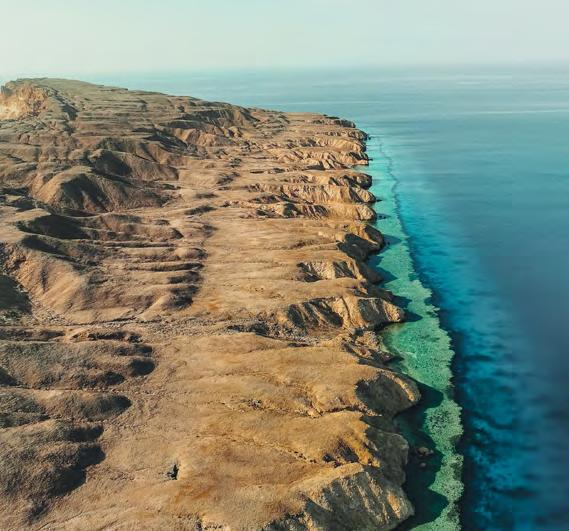
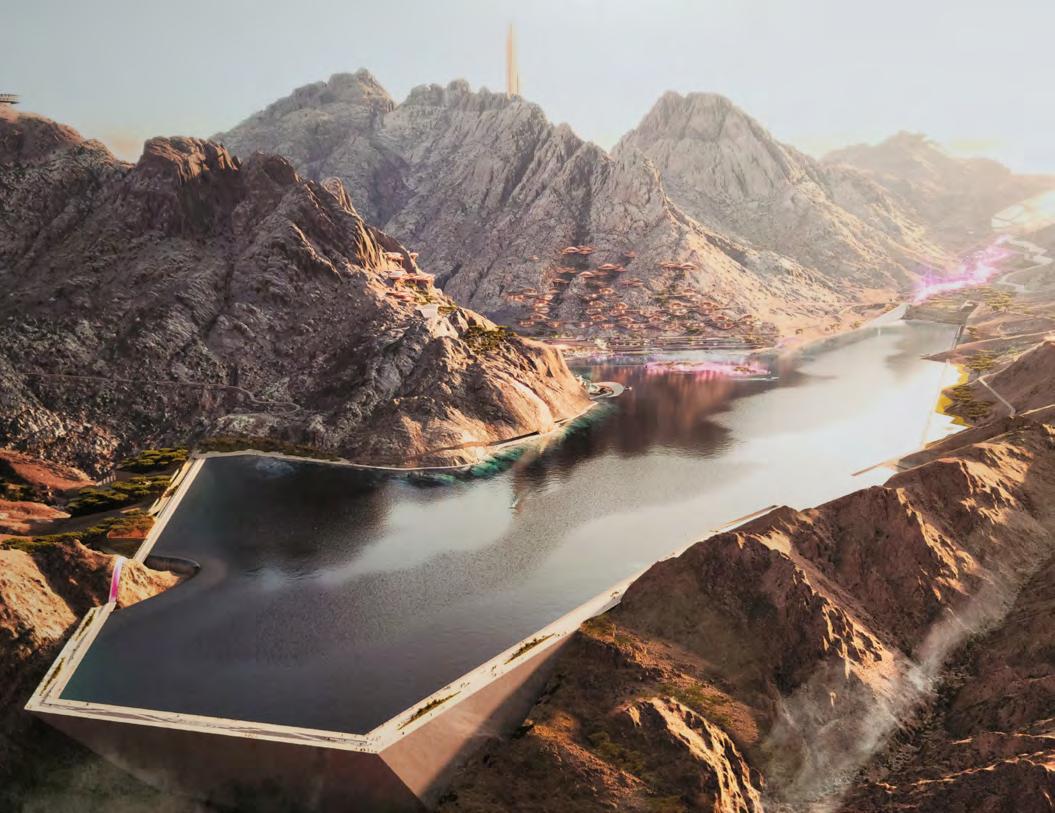

intersect, it has already secured about $3 billion in financing backed by export credit agencies and nine international banks, including Bank of China and J.P. Morgan Chase. Contract awards for NEOM have exceeded $24 billion, covering everything from roads and tunnels to its major component developments: The Line, a proposed 170-kilometre linear city with no cars or streets; Oxagon, an industrial and port city envisioned as a floating manufacturing hub on the Red Sea; and Trojena, a mountain-and-lake tourism destination built high in the Tabuk region
that includes ski slopes, lakes and luxury resorts.
Further south along the coast, the Red Sea Project is equally ambitious, but with a different focus.
This luxury tourism development stretches across roughly 28,000 square kilometers of pristine islands and coral reefs, yet only about 1% will ever be built upon.
The developer, Red Sea Global, says it’s aiming for a “regenerative” model, where tourism actively improves the surrounding environment. That vision includes a cap of around one million visitors per year, a 100% renewable
energy supply, and commitments to increase biodiversity over time.
If NEOM is a glimpse of the future and The Red Sea is about balance with nature, Diriyah looks back to Saudi Arabia’s past. The $63 billion redevelopment of the birthplace of the Al Saud dynasty, just outside Riyadh, is transforming a UNESCO World Heritage site into a cultural and hospitality hub. Not far away, Qiddiya is being billed as the Kingdom’s capital of entertainment and sports, home to theme parks, racetracks, and stadiums, an
“entertainment city” intended to keep Saudis spending at home rather than abroad.
These projects are transforming how construction actually works in Saudi Arabia. Massive budgets and overlapping timelines mean builders can’t afford inefficiencies. Instead of traditional on-site construction, companies are leaning heavily on modular techniques, where hotels, villas, and even utility systems are built in factories and then transported to the site. It’s faster, cleaner, and more predictable. Digital design systems like Building Information Modelling (BIM) are now standard, allowing teams to coordinate complex builds across vast geographies and multiple time zones.
SUSTAINABILITY HAS BECOME A CONTRACTUAL OBLIGATION, NOT AN AFTERTHOUGHT. THE RED SEA PROJECT’S STRICT ENVIRONMENTAL RULES, SUCH AS CORAL PRESERVATION, WASTE CAPS, AND RENEWABLE-POWER INTEGRATION, ARE NOW SHAPING HOW CONTRACTS ARE WRITTEN.
Contractors must factor environmental safeguards into every bid, influencing procurement strategies, risk allocation, and even daily operations. “When we say we are committed to setting new standards in responsible development, we truly mean it,” said Red Sea Global CEO John Pagano in a statement published in the company’s fourth annual sustainability report. “We are well on track to deliver a net conservation benefit of 30% by 2040 to the areas surrounding our destinations.”
The human side of the story is evolving too. The workforce powering these projects includes thousands of engineers, technicians, and migrant laborers, but also an increasing number of Saudi nationals. Around 70% of Red Sea Global’s employees are Saudis, and it’s investing in training programs for hospitality and sustainability roles, according to Chief Financial Officer Martin Greenslade. At the same time, international scrutiny has raised expectations for labor welfare and safety, forcing the industry to raise standards that will likely set precedents for the wider region.
But ambition comes with financial reality. The Public Investment Fund (PIF), which oversees the
giga-projects, reportedly recorded an $8 billion write-down in their value at the end of 2024 after reassessing costs and timelines. Rising global inflation, supply-chain disruptions, and shifting energy prices have made it clear that even projects of this scale aren’t immune to global pressures.
For construction professionals watching from abroad, the lesson is clear: the Saudi model represents a new kind of building economy, one where sustainability, technology, and scale operate in sync. To succeed in that environment, builders must design sustainability into contracts from day one, embrace digital workflows early, and treat logistics and supply chains as strategic assets rather than afterthoughts. Workforce development has also become a pillar of success. Local hiring and training aren’t just patriotic, they’re practical, ensuring continuity and know-how. Finally, risk management must scale with ambition. These are not small builds, and the financial, political, and environmental implications are enormous.
Saudi Arabia’s giga-projects are more than bold ideas drawn on a map. They are experiments in building at a national scale, testing whether ambition and sustainability can truly coexist. Whether NEOM’s futuristic skyline or The Red Sea’s coral-friendly resorts live up to their promises, one thing is certain: the Kingdom has already forced the global construction industry to think bigger and build smarter.
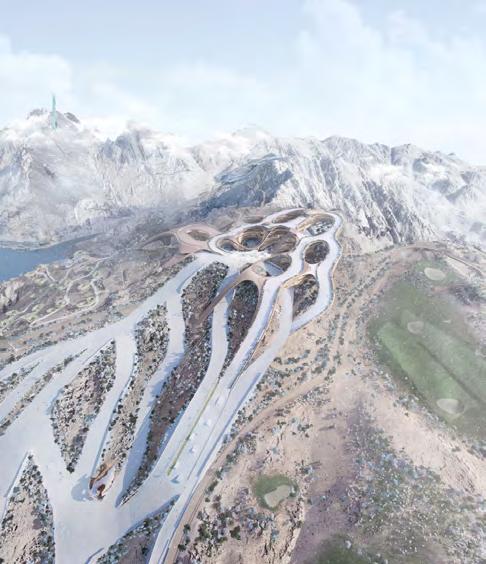

Reflecting on another record-breaking year for Dubai’s property market, Shahzad Saxena, Founder of Karma Developers, highlights 2025 as the sixth consecutive cycle of exceptional growth
As we look back on 2025, we see a year that marked the sixth consecutive cycle of record growth in Dubai’s real estate market. In Q2 alone, transactions reached an all-time high of AED 184.3 billion, while the first half of the year saw residential sales values surge by 36.4% to AED 262.1 billion.
These figures underscore not only Dubai’s magnetic appeal but also the trust investors continue to place in its longterm urban vision.
Yet what is most striking is not the scale of the numbers, but the
character of the market itself.
We’re no longer in a speculative phase; Dubai will enter 2026 as a mature, self-regulating ecosystem. The defining theme of the year ahead will be rational evolution, not volatility.
We have certainly watched buyers become far more sophisticated.
The era when marketing gimmicks like DLD waivers, “free” offers, or “guaranteed returns” could sway decisions is behind us. Today’s investors are analytical, weighing developer track records, warranty length against developer longevity, construction progress, delivery confidence, price benchmarking
within micro-locations, and rental comparables to measure absorption depth. This shift is healthy, and it signals a market where credibility matters more than noise.
Another transformation is the rise of international standards in buyer evaluation. LEED, WELL, and Fitwel certifications are increasingly referenced, not as badges of prestige but as practical indicators of efficiency, healthier living environments, and stronger tenant retention. Sustainability has moved from being a luxury label to a due diligence criterion, shaping decisions in ways that will define the next decade.
COMPETITION IS ALSO PLAYING ITS ROLE AS A NATURAL STABILISER . THE BREADTH OF CHOICE IN 2025 WAS UNPRECEDENTED, AND WITH MORE DEVELOPERS AND LAUNCHES EXPECTED IN 2026, WE WILL SEE HEALTHIER COMPETITION, NARROWER PRICE SPREADS WITHIN THE SAME AREA, AND MARKET DISCIPLINE ACHIEVED WITHOUT REGULATORY INTERVENTION.
Yields have softened mildly in certain areas, but this is not decline — it is stabilisation. Rent levels are finding balance, making it easier for investors to model income returns. Potential mortgage rate reductions may absorb any dips, leaving the net effect minimal and manageable.
I am particularly energised by the inflow of younger capital. These investors are not motivated by escaping rent; they are focused on building recurring income streams. Their appetite for mid-ticket units and their priority on rental reliability over lifestyle upgrades will reshape demand patterns in 2026.
Global wealth will continue to flow into Dubai, but the spending pattern is shifting. High-networth individuals are no longer chasing trophy properties; they are aligning with yield-driven residential and commercial assets that offer liquidity and resilience. Practical, yield-aligned luxury is the new narrative.
Perhaps the most significant structural shift will be in commercial real estate.
We see growing investment into suburban offices, business parks, and community-adjacent clusters, driven by avoidance of CBD congestion, SME growth, and hybrid work decentralisation. This could ignite the strongest commercial cycle since before 2014.
Taken together, 2026 will not be a correction, nor will it be irrational acceleration. It will be defined by logical pricing, predictable yields, disciplined development, expanding geographies, commercial resurgence, and sustainability standards guiding decisions.
Dubai’s market is not cooling, it is maturing – and that maturity will make 2026 a pivotal year in the city’s real estate evolution.

Shahzad Saxena, Founder of Karma Developers
At 45 degrees in a Dubai summer, architecture either works or it does not. Shade, wind, and material are as critical as form. Yet as our cities race skyward, too many designs speak an international language of glass and steel, not the language of place. In a region transforming faster than almost any other, the question is not how high we can build, but how deeply our architecture can connect to the geography, culture, and climate that define it.
Across the Middle East, governments are aligning national visions around sustainability, liveability, and identity. The UAE Vision 2031, Saudi Vision 2030, and the UAE’s Net Zero 2050 Strategy outline ambitions for humancentred cities that balance innovation with environmental responsibility. Yet as urbanisation accelerates, architects must move beyond aesthetics to address a fundamental challenge: how to create design that reflects this region’s realities rather than replicating global models.
My approach has always been guided by the belief that context-first design is essential to meeting that challenge. It is neither an aesthetic movement nor a nostalgic look back, but a strategic approach that begins with geography, climate, and community. It enables innovation that grows from local conditions rather than being imposed upon them. Context is not a constraint; for us at ZNera Space, it is the framework through which meaningful and resilient architecture emerges.
Designing for the Environment We Inhabit
Across the Gulf, urban temperatures average 5 to 7 degrees higher than those in surrounding rural areas, and cooling
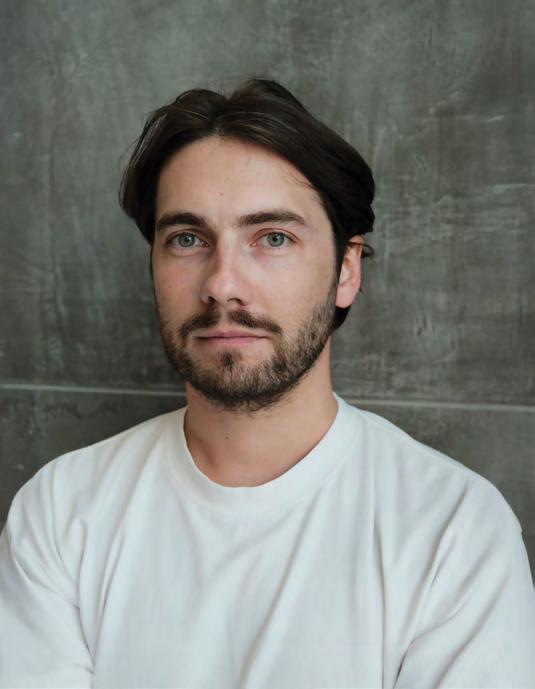
can account for up to 70% of peak electricity demand, according to the International Energy Agency. These figures make clear that environmental performance is a necessity, not an aspiration. Designing buildings that work with nature instead of against it must become the regional standard. When this thinking guides design, sustainability becomes instinctive rather than decorative.
Projects such as Downtown Circle explore this principle. The experimental design study reimagines Dubai’s urban future through a circular city within a city. Rather than a construction blueprint, it serves as design research into how future urban centres could operate as self-contained ecosystems that integrate air purification, vertical farming, and shaded microclimates to sustain liveability at scale. The idea is not to reject density but to rebalance it so that human comfort and environmental health coexist.
Similarly, The Smog Project in Delhi investigates how architecture can function
as civic infrastructure. Conceived as a network of airfiltering towers, it examines how the built environment might actively improve air quality in one of the world’s most polluted cities. Both concepts demonstrate how experimental design can provoke new thinking about the relationship between architecture and environment.
Context at the Human Scale For ZNera Space, context-first thinking is equally powerful in everyday life. The GDP project in Dubai illustrates how these ideas translate into practice. The mixed-use development links commercial, residential, and communal areas through shaded walkways and courtyards that respond to the local climate. By respecting movement patterns and social rhythms, it shows how design can enhance comfort and identity in fast-changing neighbourhoods.
OUR APPROACH ALIGNS CLOSELY WITH REGIONAL PLANNING PRIORITIES, SUCH AS THE DUBAI 2040 URBAN MASTER PLAN AND ABU DHABI’S URBAN PLANNING VISION, BOTH OF WHICH EMPHASISE WALKABLE, LIVEABLE, AND CLIMATERESPONSIVE CITIES.
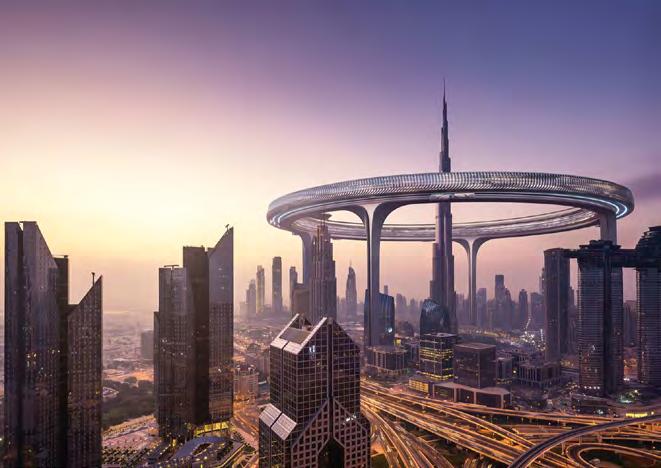
Achieving those ambitions requires more than technology; it depends on a renewed respect for the environment and culture that shape how people live.
Architecture as Cultural Continuity Design rooted in place also protects cultural identity. In an era of globalised skylines, the Middle East risks losing
visual and social distinctiveness. A design planned around maintaining integrity with innovation ensures that modernisation reinforces heritage rather than erasing it. National initiatives from Saudi Arabia’s Diriyah Gate Development Authority and AlUla masterplan to the UAE Ministry of Culture’s Architectural Identity Programme and Oman’s Sustainable Cities Initiative all recognise the importance of linking tradition with progress.
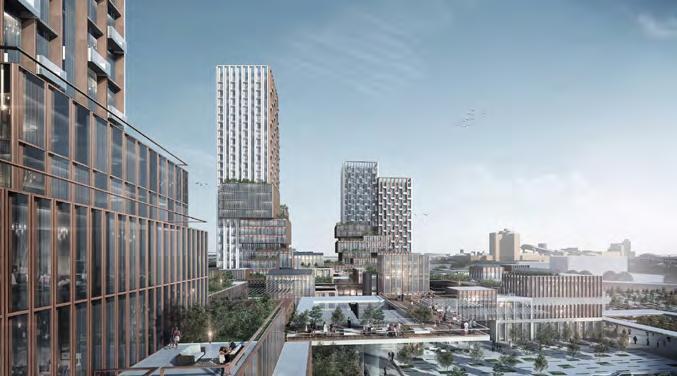
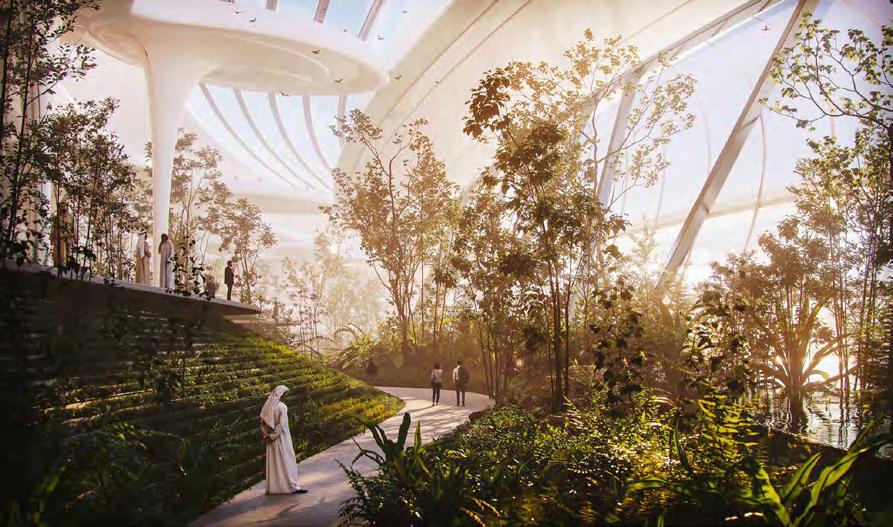
WHILE PRESERVATION OF HISTORY AND CULTURE IS VITAL, ARCHITECTURE SHOULD NOT MERELY PRESERVE HISTORY BUT REINTERPRET IT TO MEET CONTEMPORARY NEEDS. PASSIVE COOLING, MATERIAL EFFICIENCY, AND COMMUNITY-CENTRED PLANNING HAVE LONG BEEN PART OF LIFE IN THIS REGION; THE TASK NOW IS TO RE-ENGINEER THOSE PRINCIPLES USING NEW TOOLS AND TECHNOLOGIES.
From Vision to Implementation Policy frameworks are already steering the region toward measurable sustainability, including the UAE’s Green Building Regulations, the Estidama Pearl Rating System, and the Saudi Green Building Code. The next step is ensuring that these frameworks translate into solutions that work in practice. Imported sustainability systems often perform well on paper but struggle in the Gulf’s conditions of high heat, humidity, and dust. Solar panels, green façades, and cooling systems developed for temperate climates can lose efficiency or demand far greater maintenance here. The challenge is not adoption but adaptation — creating solutions
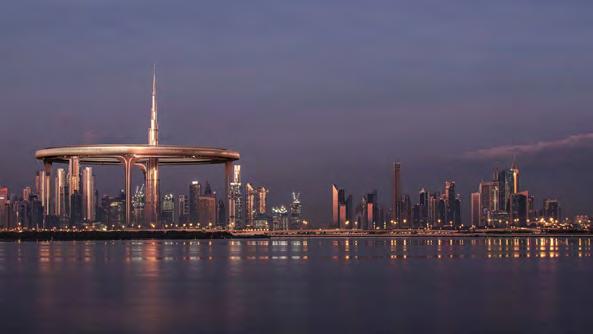
engineered for the region’s climate and materials, and tested through long-term performance rather than short-term innovation cycles.
Progress will depend on developing building typologies and technologies that are conceived, tested, and refined locally. That requires an integrated process where architects, engineers, and environmental scientists work together from the earliest design stages. It also means combining traditional passive design intelligence, such as deep shading, thermal massing, and natural ventilation, with contemporary digital modelling and environmental simulation. These tools can help predict how a building behaves across seasons, how materials age, and how users interact with space under different climatic pressures.
For architects, rethinking design starts with evidence rather than image. Instead of beginning with a global form and adapting it to the Middle East, we must design directly from the data of place: the path of the sun, the direction of prevailing winds, the capacity of locally sourced materials, and the social patterns that shape daily life. When these parameters define the
brief, buildings perform naturally and efficiently, reducing dependency on mechanical systems. That is what makes architecture not only sustainable but truly regional in its intelligence.
The Middle East has the resources and ambition to redefine what architectural progress means. But genuine progress will not be measured in vertical metres, striking silhouettes, or just creating media headlines. It will be defined by buildings that contribute tangibly to environmental resilience and human wellbeing. As Gulf cities advance their national visions, the region has the opportunity to pioneer a model of development that is technologically advanced yet ecologically grounded.
This is the future we should be working towards: design that generates, restores, and protects. Context-first architecture is not about looking back; it is about designing forward with intelligence drawn from place. The region’s next chapter will be written by those who create spaces that perform for people, for climate, and for culture alike.
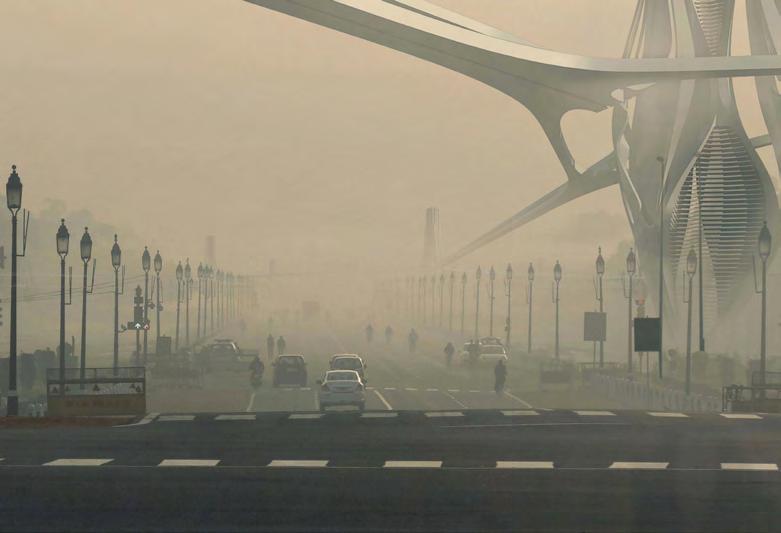
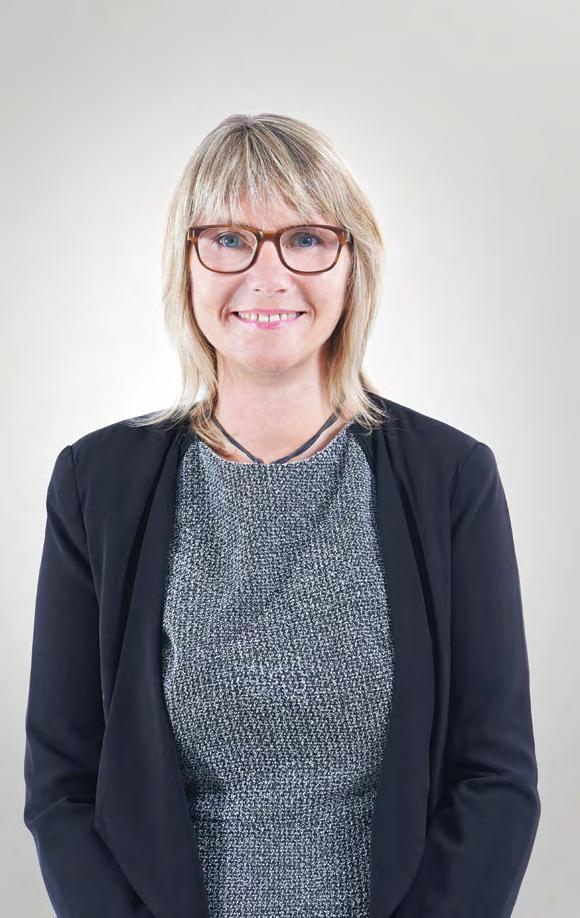
The construction industry is undergoing rapid transformation and innovation. According to a McKinsey report, global investments in architecture, engineering, and construction (AEC) grew to USD 50 billion between 2020 and 2022, which is 85 per cent higher than in the previous three years. Various factors, such as advances in digital technologies, the growing risk of climate change, and ageing infrastructure, are accelerating the industry’s growth. This is particularly true in the Middle East, where construction is one of the leading economic sectors. According to Mordor Intelligence, the MENA infrastructure construction market size is estimated at USD 204.02 billion in 2025, and is projected to reach USD 266.71 billion by 2030 with a CAGR of 5.51 per cent during the forecast period. Some of the key factors for growth in this region include government focus on economic diversification, largescale urban development projects, and global scrutiny of sustainable development.
According to property consultancy Knight Frank, Saudi Arabia’s mega
project Neom, for instance, saw construction contracts worth USD 24 billion being awarded, with other notable projects such as The Red Sea Global and Qiddiya Entertainment City also being developed. The United Arab Emirates (UAE) is spending USD 35 billion to turn the Al Maktoum International Airport into a 260-million-passenger, 13-milliontonne freight centre. Other key projects focus on Etihad Rail and Mohammed Bin Rashid Al Maktoum Solar Park, which will significantly enhance the quality of life for citizens in the country. These projects fall under the larger ambit of the government’s development programmes, such as the Dubai 2040 Urban Master Plan, underscoring the importance of an advanced construction industry in the Gulf.
The bold ambitions outlined in the region have been significantly aided by the rapid integration of Artificial Intelligence and Machine Learning, with AI-ready data centre capacity expanding at an annual rate of 36 per cent. Earlier this year, a landmark agreement was signed between NEOM and DataVolt to invest USD 5 billion in a net-zero AI factory. Over half of construction professionals in the region also identify AI as the most influential trend for 2025, with some key areas of AI deployment being:
Planning and Design
Generative tools can autonomously create and evaluate thousands of building designs and developments. It can also help employees automate documentation and administrative tasks, such as summarising RFPs, thereby improving overall efficiency.
Project Scheduling and Field Operations
Some platforms use machine learning to test innumerable scheduling permutations to determine the optimal resource allocation. In field operations, computer vision and drones are becoming increasingly common, offering accurate 360-degree site scans and identifying rework and delays that save valuable engineering hours.
Robotics and Autonomy
Robotic assembly has advanced rapidly, with brick-laying robots and 3D-printed concrete homes now part of our current reality. Heavy equipment and machinery are also being
retrofitted with AI autopilots to increase their longevity.
Sustainability and Green Building
There is a global push towards practising sustainable development that minimises environmental harm while providing economic growth for citizens. This has made green building practices essential, enabling companies to create environmentally sustainable structures using energy-efficient materials, renewable energy sources, and sustainable design principles. AI can play a pivotal role in these practices by providing accurate evaluations of a building’s performance that account for energy use, indoor environmental quality, and sustainability metrics, while also recommending modifications for a greener outcome.
All of these use cases point to one indisputable fact: careers in the construction industry are now defined by familiarity with and skill in using AI. Construction companies are actively seeking workers with the right technical expertise to navigate an evolving professional landscape. Students and prospective employees, therefore, need to carefully assess whether their training and education equip them with the skills employers demand, ranging from robotics and sustainable construction to automation.
Educational institutions play a pivotal role in bridging the skills gap by aligning their curricula with industry needs and equipping students with the knowledge and tools necessary to thrive in the job market. At the same time, organisations must prioritise employee wellbeing to stay competitive, offering a clear sense of purpose, fair compensation, and abundant opportunities for learning and upskilling.
While the construction industry continues to navigate uncertainties related to tariffs, regulations, and geopolitical shifts, it remains one of the fastest-growing and most influential sectors driving national economies. Building a career in this field can be deeply rewarding for those who consciously develop AI fluency and continuously advance their skills in line with industry evolution.
Easa Saleh Al Gurg Group has acquired BRC Arabia from The Kanoo Group, cementing its leadership in reinforced steel manufacturing and expanding its regional supply chain reach
The Easa Saleh Al Gurg Group, an Emiratiowned conglomerate, has acquired BRC Arabia from The Kanoo Group. This strategic acquisition strengthens the Easa Saleh Al Gurg Group’s industrial portfolio in cut-and-bend steel and wire-mesh fabrication, further enhancing its position in the UAE’s construction and steel manufacturing sectors.
Established in 1996 in Sharjah and relocated to Dubai Industrial Park in 2011, BRC Arabia is a leading steel fabrication company specialising in reinforced steel products for the construction sector. Over nearly three decades, the company has been part of some of the UAE’s most iconic projects, including the Sheikh Zayed Grand Mosque, The Dubai Mall and Yas Marina Formula 1 Circuit.
The Easa Saleh Al Gurg Group operates across multiple business verticals, including retail, manufacturing, construction, engineering, and real estate, enabling it to leverage synergies across its portfolio and drive sustainable growth. This acquisition will enhance the Group’s industrial value chain, integrating BRC Arabia’s expertise and production capabilities to support its broader growth objectives across the region.
“By bringing BRC Arabia into our portfolio, we are reinforcing our commitment to developing a
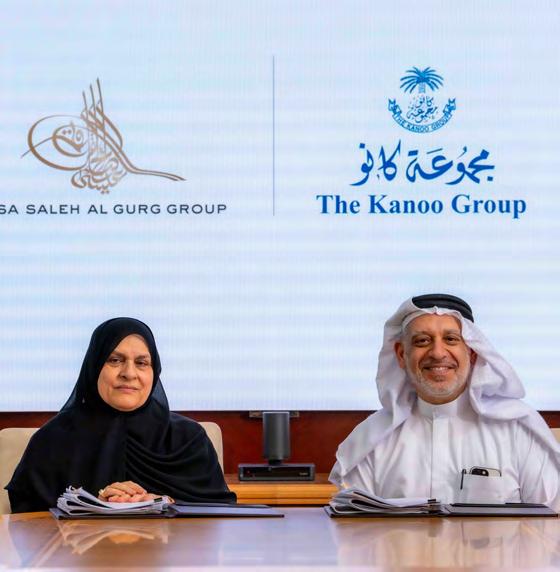
strong, sustainable industrial base in the UAE,” said Easa Al Gurg, Group CEO of the Easa Saleh Al Gurg Group. “BRC’s proven track record and technical expertise in reinforced steel will enable us to offer greater value to our clients and partners, while contributing to the UAE’s vision for industrial advancement,” he added.
As part of the acquisition, operational continuity remains a top priority. All customer contracts, contacts and supply chains will remain unchanged. The integration process will be gradual, ensuring complete alignment with the Easa Saleh Al Gurg Group’s operational processes, governance and quality standards.
Looking ahead, the Easa Saleh Al Gurg Group plans to invest in state-of-the-art equipment, delivery performance and customer service to further improve reliability, reduce project risks and enhance delivery timelines. This acquisition continues to strengthen its role as a leading Emirati conglomerate, driving industrial innovation, sustainable growth and operational excellence across key sectors.
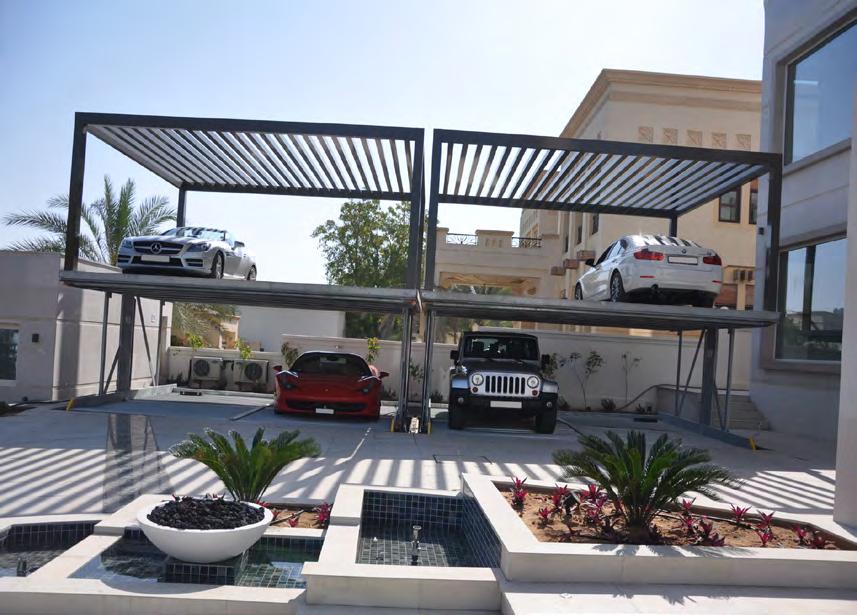

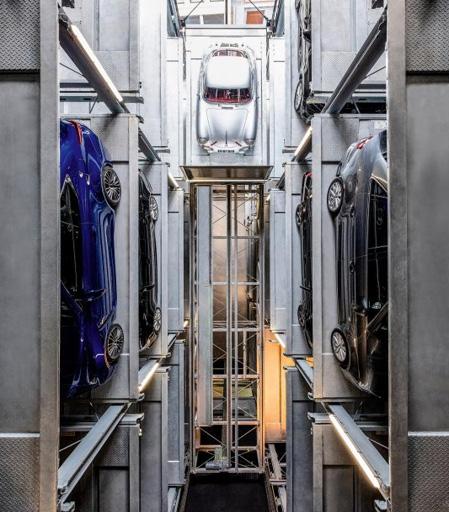

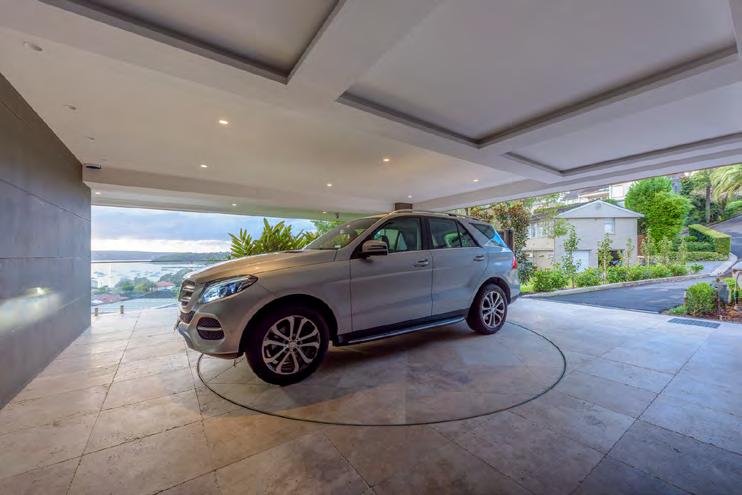
LFIGP powers up its campus operations with a new alliance with ENGIE Solutions, tapping into the Smart O&M platform for live performance insight, predictive upkeep, and razor-sharp energy control
The Lycée Français International Georges Pompidou (LFIGP), a leading UAE educational institution with campuses in Academic City and Oud Metha, has partnered with ENGIE Solutions Middle East to elevate its facilities management capabilities and reinforce its commitment to providing world-class learning environments for students.
The three-year partnership brings advanced hard facilities management services to both LFIGP campuses, supporting the school’s mission to deliver holistic education within safe, comfortable, and sustainable facilities.
“Our partnership with LFIGP reflects ENGIE’s continued focus on improving educational environments through innovation and sustainable FM solutions,” said Graham Easton, Managing Director of ENGIE Solutions IFM GCC
“BY
LEVERAGING OUR SMART O&M PLATFORM AND EXPERT TECHNICAL TEAMS, WE ARE ENSURING UNINTERRUPTED LEARNING EXPERIENCES WITHIN WORLDCLASS, ENERGY-EFFICIENT FACILITIES.”
LFIGP’s Academic City campus features state-of-the-art classrooms, laboratories, sports facilities, and cultural spaces across six main blocks, while the Oud Metha campus offers modern educational facilities across three blocks. Both campuses are designed to support academic excellence and student development.
Through the collaboration, ENGIE Solutions will manage critical infrastructure, including HVAC, electrical, and plumbing
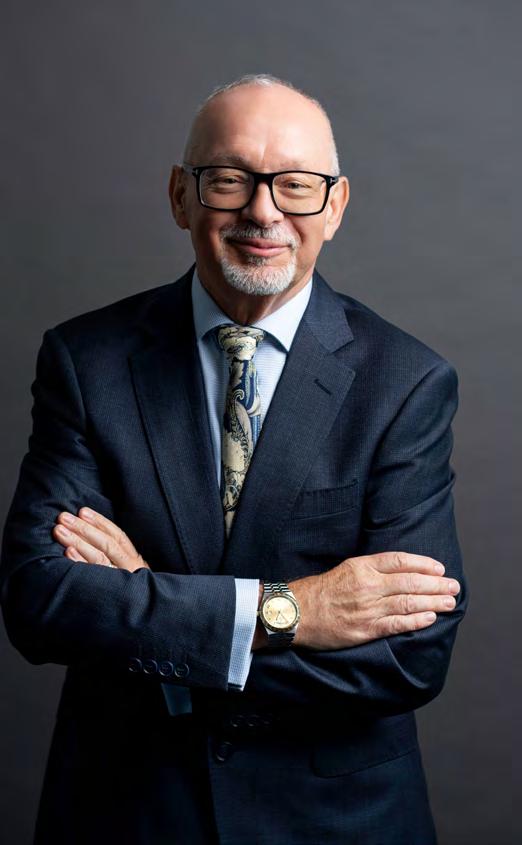
systems; building fabric maintenance; and specialised services such as water tank cleaning and AC duct maintenance. A dedicated team of seven professionals, together with head office support, will ensure seamless daily operations across both campuses.
LFIGP will benefit from ENGIE Solutions’ Smart O&M platform, which provides real-time monitoring, predictive maintenance, and energy management capabilities. The technology-driven approach will enhance operational efficiency and support the school’s environmental responsibility objectives.
Regular energy audits will identify opportunities for continuous improvement, ensuring LFIGP maintains its position as a forward-thinking educational institution that prioritises both academic excellence and environmental stewardship.
LFIGP believes exceptional education requires exceptional infrastructure. This partnership with ENGIE Solutions allows the organisation to maintain the highest standards across its campuses while advancing its sustainability goals. LFIGP’s focus remains on creating optimal learning environments where students can thrive.

A flagship project that captures the very pulse of tomorrow, distilling the market’s direction and the quiet evolution of the built world into a single, resonant expression of vision and craft
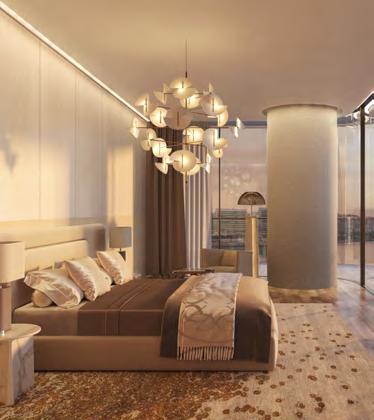
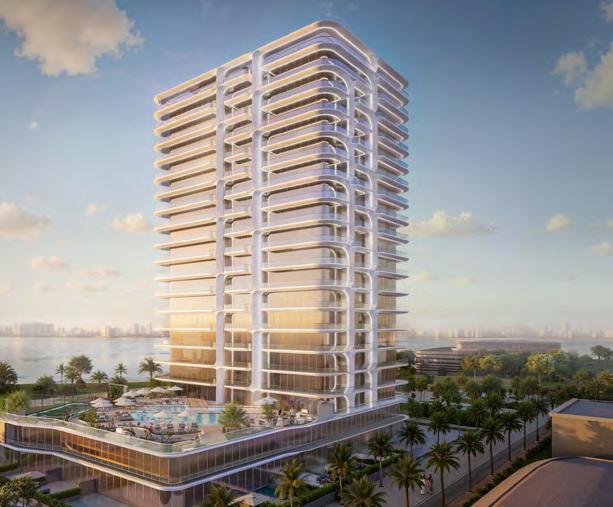
Emirates Developments, in partnership with the legendary ELIE SAAB, unveils STELLAR by ELIE SAAB — a luminous new chapter for Yas Island and its flourishing design story. This debut branded residence infuses the island with ELIE SAAB’s unmistakable artistry, where elegance becomes architecture and every line carries the whisper of couture.
Set at the island’s vibrant heart, STELLAR drifts effortlessly between sea, sky and city. Surrounded by serene waterfront views and Yas Island’s cultural and
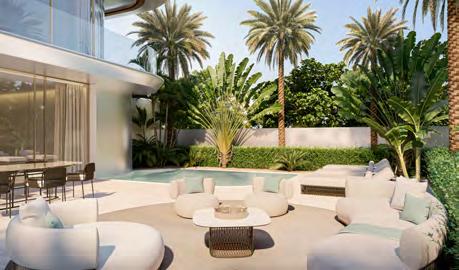
leisure icons, the development offers an elevated sense of privacy, wrapped in the gentle rhythm of coastal living.
Home to 144 handcrafted residences, including refined apartments, sculpted garden villas and a breathtaking five bedroom duplex penthouse, STELLAR is envisioned as a composition of balance and beauty. Each space reflects ELIE SAAB’s poetic precision, transforming everyday life into something quietly exquisite.