Greenwich Peninsula
3.28. The Greenwich Peninsula is one of London’s most significant regeneration areas, identified in the London Plan as an Opportunity Area and in the Royal Borough of Greenwich’s Characterisation Study as an area of major change. Historically a hub of industrial activity, including gasworks, wharves, and manufacturing, the Peninsula is undergoing a long-term transformation into a dense, mixeduse urban quarter with a new District Centre at its heart. The Greenwich Peninsula spatial area covers the Greenwich Peninsula ward, and in part East Greenwich.
3.29. The Peninsula is situated on a bend in the Thames, and is bordered by the Thames to the east, west and north, with the Thames Path running along this. To the south-west the area borders East Greenwich, and to the southeast it borders New Charlton/Charlton Riverside. A major road, the A102, cuts through the peninsula on roughly a north-south axis. At the
north end this road leads to two important road river crossings, the Blackwall Tunnel and the new Silvertown Tunnel.
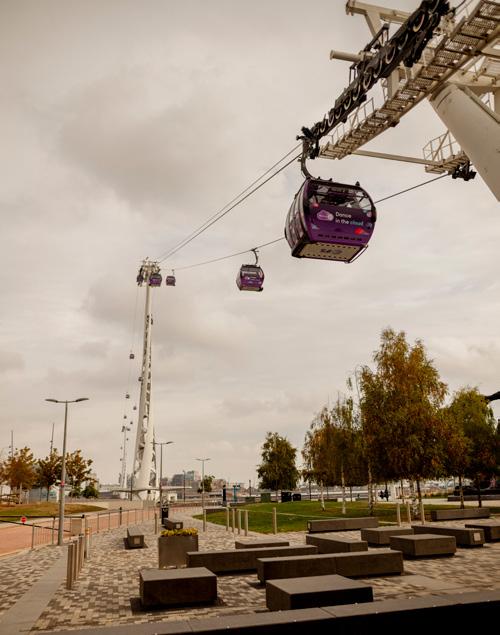
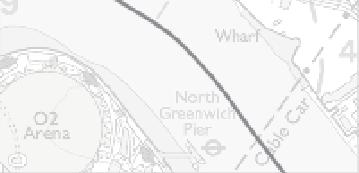
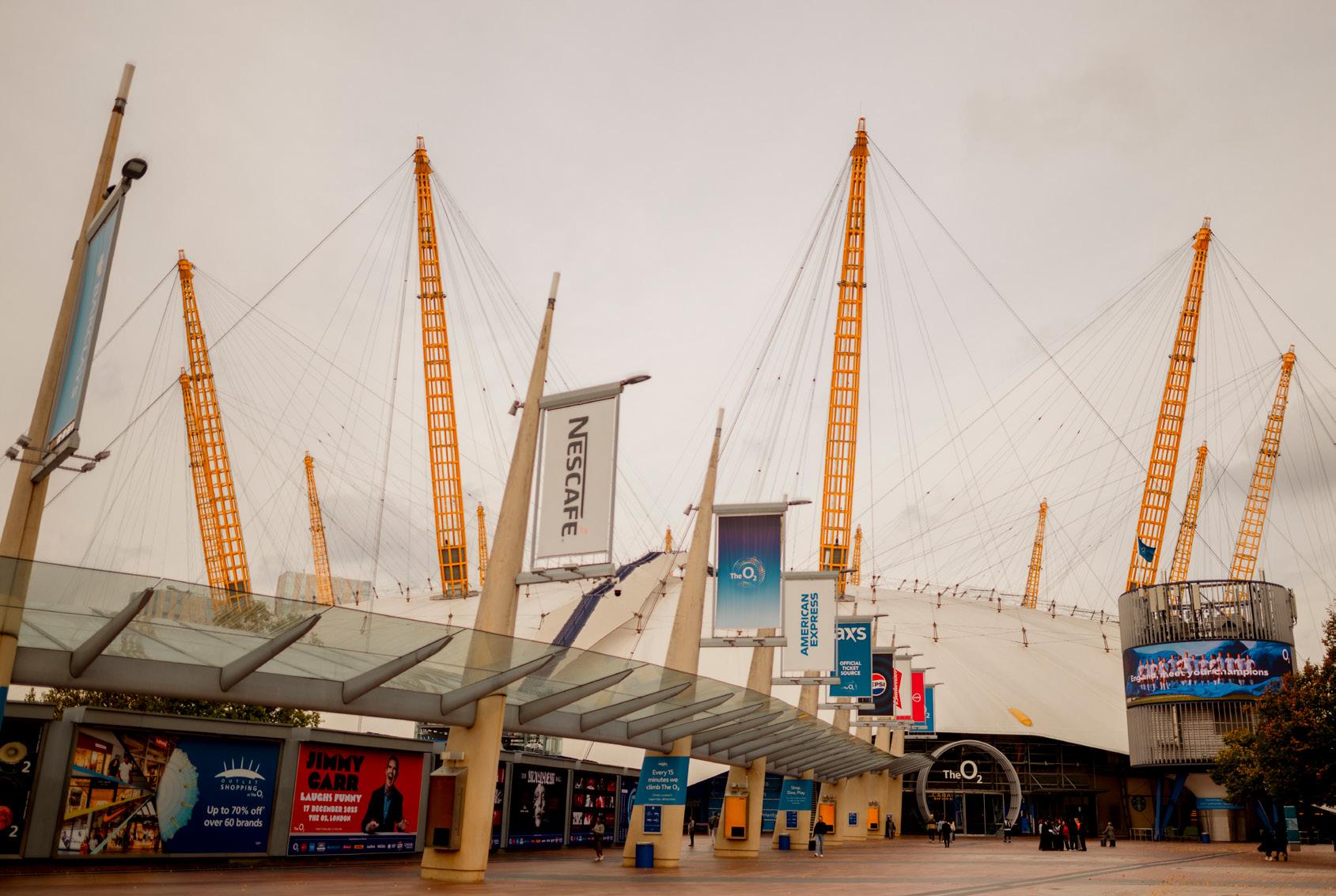
3.30. The area benefits from excellent public transport connectivity via North Greenwich Underground Station (Jubilee Line), riverboat services, the cable car, and a major bus interchange (all at the north end of the Peninsula). It is home to the O2 Arena and London’s first purpose-built design district. A large proportion of the Peninsula is covered by the Knight Dragon masterplan, which will deliver thousands of new homes and a wide range of commercial, cultural, and community uses.
3.31. The Peninsula’s strategic location on the River Thames, combined with its scale and availability of brownfield land, makes it uniquely positioned to accommodate high-density development while delivering a high-quality, liveable environment.
Opportunities:
Main streets and urban road corridors enhancement
Proposed open space
Public space enhancement
Improved connections
Proposed cycle routes
Proposed or improved quiet routes
Thames path improvement
Junctions improvement
Proposed and improved crossing/bridge/underpass
Potential improvement to river ser vices
Proposed education uses
Proposed healthcare facility
Proposed jetty
Station Hub
P2 - Greenwich Peninsula Spatial Diagram - KEY
Greenwich Peninsula Vision
The Greenwich Peninsula will be transformed into a dense, mixed-use urban quarter anchored by a new District Centre at North Greenwich. This regeneration will deliver over 17,000 new homes and significant employment floorspace, alongside cultural, creative, and community uses. The area will become a vibrant and inclusive destination, shaped by its riverside setting, industrial heritage, and strategic transport connections.
Development will be guided by a placemakingled approach, with high-quality design, sustainable transport, and a rich public realm. The Peninsula will support inclusive growth, climate resilience, and environmental sustainability, contributing to the borough’s wider spatial strategy and embedding its status as an important cultural and leisure destination. Earlier developments in the area delivered a rich variety of cultural, entertainment and leisure and future growth should strengthen and enrich this base.
Policy P2 Greenwich Peninsulaj
1. Development in the Greenwich Peninsula Opportunity Area will deliver the following priorities, in line with London Plan growth targets:
a. the delivery of at least 17,000 new homes in well-designed, sustainable and inclusive neighbourhoods.
b. the creation of 15,000 jobs by protecting and intensifying SIL and through delivering employment space for the cultural and creative industries including in the Design District the role of which will be maintained and enhanced.
c. a new District Centre focused around North Greenwich Station, with a vibrant mix of uses including the Design District and a high-quality public realm.
d. improved connectivity and permeability across the Peninsula, including enhanced pedestrian and cycle routes and better integration with the Thames Path, and an improved bus-station.
e. high-quality, sustainable development that responds to the Peninsula’s riverside setting and industrial heritage.
f. a coordinated approach to tall buildings, ensuring they contribute positively to placemaking and townscape.
g. the delivery of new and enhanced green infrastructure, including Central Park and a network of public open spaces.
Reasoned Justification
Growth and Development
3.32. The London Plan identifies capacity for at least 17,000 new homes and 15,000 new jobs across the Peninsula, with 14,915 new homes remaining to be delivered by the Knight Dragon masterplan alone. Development will be guided by a placemaking-led approach, with a focus on high-quality design, inclusive public realm, and sustainable transport.
3.33. The area will accommodate a wide range of uses, including residential, retail, leisure, education, and employment-generating activities. The emerging District Centre around North Greenwich Station will be a key focus for intensification, supported by a network of development sites across the Peninsula.
3.34. The transformation of the Peninsula will also support the borough’s wider spatial strategy, contributing to housing delivery, economic growth, and solidifying the Peninsula’s status as a cultural and leisure destination for London.
Connectivity and Public Realm
3.35. The Peninsula’s transformation will be underpinned by a comprehensive approach to movement and public space. Development must enhance pedestrian and cycle routes, particularly east–west connections and access to the Thames Path. The public realm will be designed to support active travel, create welcoming spaces, and integrate with the wider Peninsula Masterplan.
3.36. Key priorities include:
1. Millennium Way and West Parkside should be enhanced as pedestrian and cycling-friendly boulevards, faced by active frontages of residential lobbies and commercial activities concentrated at the most prominent points.
2. Dedicated bike lanes should be integrated into the existing carriageways. Existing bike lanes should be enhanced and strategically integrated with a comprehensive landscape strategy. Similarly, the emerging neighbourhood on the north-western side of the Peninsula should gravitate around a new, pedestrian- and cyclefriendly Western Boulevard.
3. Reduction in width of the main streets and number of vehicular carriageways should be explored where practical and desirable in terms of promoting active modes of travelling and pedestrian/cycle crossing.
4. All new streets should be designed to prioritise pedestrian and cycle movement.
5. The Thames Path should be enhanced, its activation and passive surveillance improved, particularly on the western bank.
6. A comprehensive network of green links across the Peninsula should be established. Riverway should be enhanced and extended beyond the Boord Street footbridge to Morden Wharf, as the main pedestrian/cycle link connecting the eastern and western banks of the Peninsula.
7. The pedestrian route including The Tide elevated walkway and Peninsula Square should be extended to the planned green link and linear park leading to the Thames pathway on the north-western side of the Peninsula.
8. In the south-north direction, a new green route should act as the central spine of the emerging neighbourhood and link the southern part of the Peninsula and neighbouring areas to Peninsula Central and the Underground/Bus station hub.
3.32. The area’s waterside setting and proximity to the Thames Path offers unique opportunities to create a distinctive and accessible public realm that supports active travel, recreation, biodiversity, and placemaking.
Placemaking
3.37. New development should be street-based and create a clear hierarchy of, and thresholds between, public and communal amenity spaces. It should incorporate a comprehensive strategy for different age-groups’ play areas and multigenerational amenity, fostering social interaction.
3.38. A mix of building typologies should be implemented to contribute to a strong sense of place and provide for the range of homes needed in Royal Greenwich. Tall buildings will be supported where they form part of a coherent placemaking strategy together with other typologies and respond positively to the Peninsula’s evolving character and skyline.
3.39. The Peninsula’s transformation will be shaped by its riverside location, and strategic transport connections, creating a new urban quarter that is inclusive, resilient, and future-facing.
Site allocations in Greenwich Peninsula sub-area
• Policy P2-GP1 Enderby Place
• Policy P2-GP2 Morden Wharf
• Policy P2-GP3 Greenwich Peninsula Central
• Policy P2-GP4 SGN Greenwich
• Policy P2-GP5 GMV Plot 500s
• Policy P2-GP6 Millenium Retail Park