LACC’s Associated Student Government invites you to “the strangest night of the year!”
On Oct. 29, the ASG will throw its annual Halloween party. This year’s theme: the Netflix hit, “Stranger Things.” This cult classic captivated viewers with its exploration of alternate dimensions, supernatural powers, and mysterious monsters.
Party time will be from 5 - 7 p.m., with thrills, hunts and free food on the third floor of the Student Union Building. There will also be a costume contest and a prize for the first-place winner. So come on through and enter the “upside down,” if you dare.
PEOPLE’S PARTY REIMAGINES DEMOCRACY
Have you ever wondered what democracy would look like as a lived cultural force?
If so, join the People’s Party for an interactive, two-day experience on Nov. 1 and 2, at the NAACP Hollywood Bureau. This multi-day fusion will be full of civic energy and artistic expression. The event will feature films as well as interactive media, art and music. There will be all-access passes available. Dive into the creative world of The People’s Party and share your love of community and cultural artistic expression with other like-minded folks. It promises to be a rewarding and thoughtprovoking experience. Early bird student tickets are available for $10 at: https:// peoplesparty.eventive.org/ passes/buy/student_all_ access.
'No Kings' Rally Draws Thousands to Downtown L.A.
BY JUAN MENDOZA
An estimated 100,000 people rallied in neighborhoods in L.A. County and marched last Saturday to say "enough" to the Trump administration.
Gloria Molina Grand Park in Downtown Los Angeles was the main gathering site for thousands of people who marched and protested at the “No Kings” rally on Saturday, Oct. 18, 2025.
Similar scenes unfolded in neighborhoods across Los Angeles, including Filipino Town, Santa Monica, Pasadena, Torrance, Glendale and East Los Angeles.
The hot, sunny day in downtown L.A., and the music of Los Jornaleros del Norte energized rallygoers to defend de-
mocracy at risk and to oppose what they consider the unlawful seizure of power by the president. They were fired up and chanted, “No kings, no kings in America.”
People danced and sang along as the music played, while others enjoyed the famous L.A. hot dog wrapped in bacon, served with cooked onions and peppers.
Demonstrators marched around Civic Center Square. They carried political signs and chanted “no kings, no kings.”
They walked west on 1st Street to Grand Avenue and headed toward East Cesar Chavez Avenue, then turned south on Spring Street to arrive in Grand Park.
It was a peaceful event where demonstrators had the opportunity to express their anger and frustration with current
politics in Washington D.C.
“I’m here peacefully protesting the abuse of power because we cannot normalize violence and the control of working people,” said Joshua, who only shared his first name and came dressed in a unicorn suit.
Some of the concerns included the recent immigration raids that target Latino communities and the use of federal troops against civilians. Protesters also worry about a president who seeks to prosecute and exact revenge on his political enemies.
SEIU Local 721, UTLA, the Invisible Los Angeles Chapter, 50501 SoCal and BLM are among the local groups that organized the rally.
BY KENIYAH KING
Record-breaking numbers of Los Angeles County residents boarded public transportation last year as 311 million people took buses and the train. That represents an 8 percent increase over ridership in 2023, and the last time there was ridership that high was pre-pandemic.
With such a large ridership and dependency on public transportation in Los Angeles County, the question arises as to why students of LACC were only given until Sept. 30, 2025, to get their free TAP cards. Where did all the TAP cards go? Zin is an LACC student and employee of the Cub Bookstore. She says employees were just told that there would be no more cards to give to LACC students for free activation. While activation would remain on for the remainder of fall semester, students that did not pick up a TAP card from the LACC Bookstore prior to Sept. 30, can no longer obtain one. “If you [didn't] get one before then, there is nothing we can help you with,” said Zin, who only wanted to share her first name. “Okay, so it’s not the school's doing, it's TAP. It’s Metro, it’s like the city?” Zin was not sure if it was the decision of Metro or the LACC administration to no longer supply students with TAP cards after Sept. 30.
Champion for Dreamers, Immigrants' Rights, Kent Wong Dies
BY JUAN MENDOZA
Professor Kent Wong, a fierce advocate for immigrants’ rights and a pioneer of Dream Resources Centers died Oct. 8, 2025. He was 69.
The Labor Studies Center at UCLA shared the news of Professor Wong's passing. He was valued by the community as a champion of social justice and equality and a giant who stood against
unjust immigration policies. Wong graduated from the People’s College of Law in 1994, was the first legal staff attorney for the Asian Pacific American Legal Center and later worked as an attorney for SEIU Local 660.
During his career, he held leadership positions, such as serving as vice president of the California Federation of Teachers.
During his tenure at the UCLA Labor Studies Center, which
spanned over three decades, he demonstrated innovation, leadership and creativity. He established the Dream Resources Center, benefiting thousands of unauthorized immigrant youth, as well as the Los Angeles Black Worker Center, among others. In 2022, the UCLA Labor Center established its permanent headquarters in MacArthur
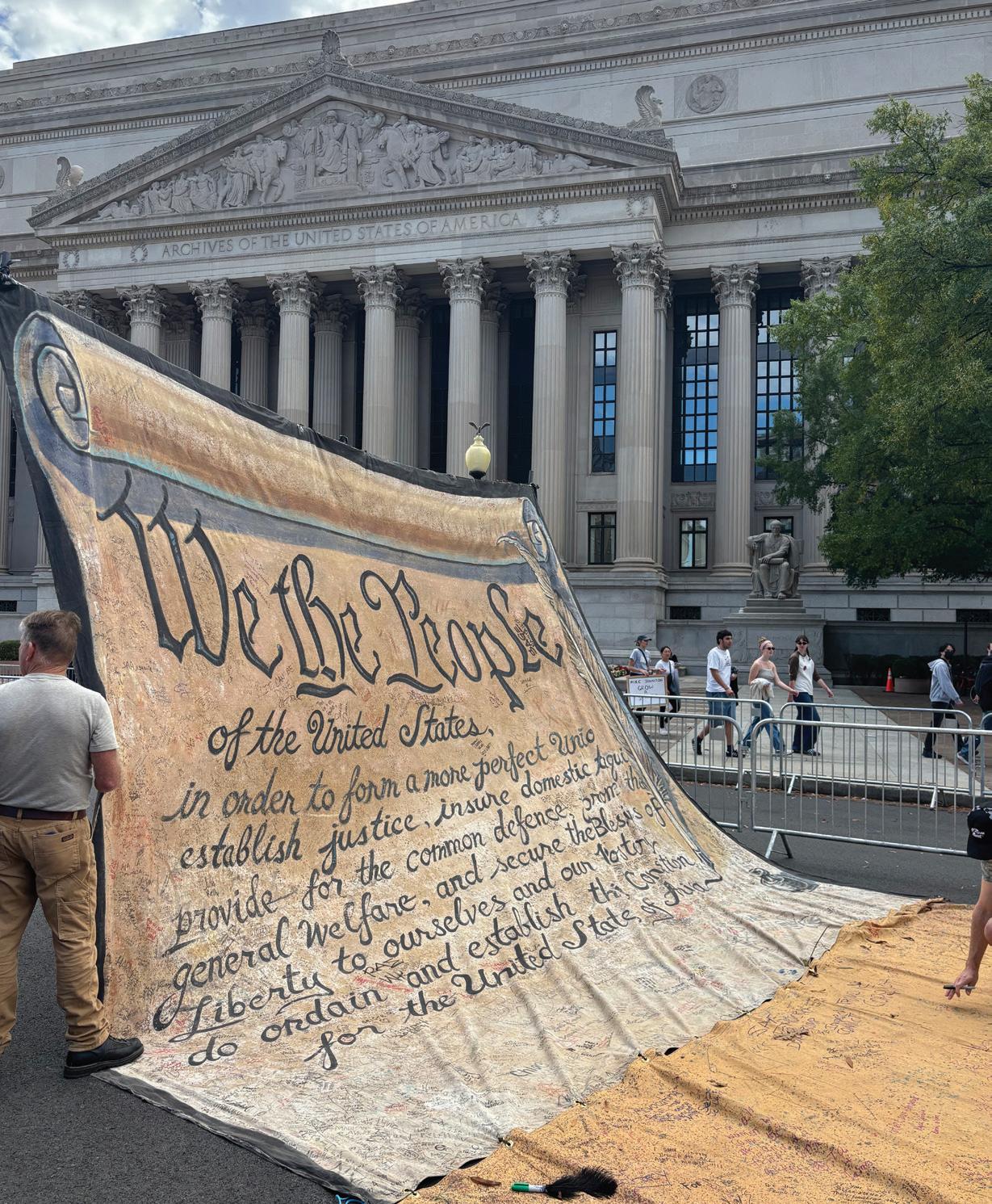
(Left) "No Kings" attendees sign a replica of the Constitution in front of the National Archives Museum in Washington D.C., home to the original, on Saturday, Oct. 18, 2025. (Right) Thousands of demonstrators gather at Gloria Molina Grand Park in downtown Los Angeles for the “No Kings” rally on Oct. 18, 2025.
PHOTOS (LEFT) BY AMY SHANK (RIGHT) BY JUAN MENDOZA
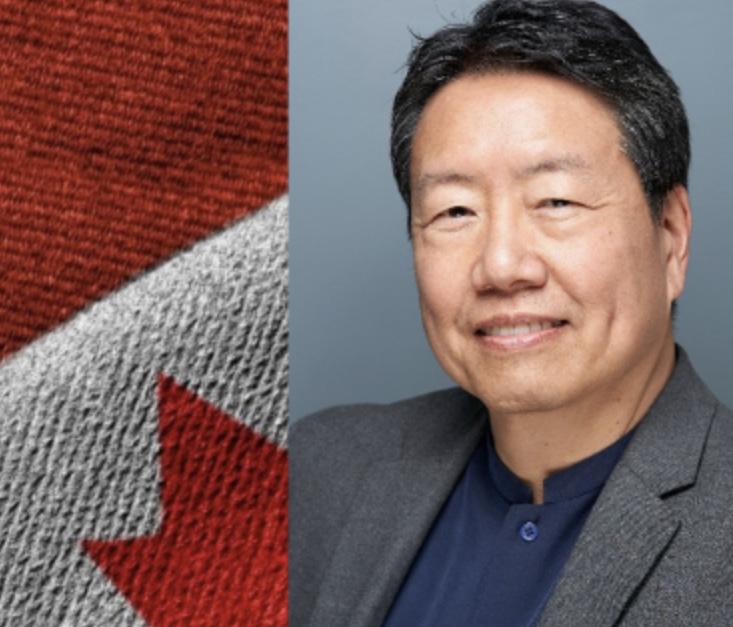
PHOTO COURTESY WIKIPEDIA
Kent Wong
BY RALUCA TOPOR
Aid Arrives Too Late for New Students
Returning students and freshmen face a critical window when rent, food and enrollment hang in the balance — but most aid programs kick in only after that window closes.
At 40-something, I walked onto the Los Angeles City College campus this fall with equal parts hope and anxiety. Acceptance into the Herb Alpert Music Program felt like winning a lottery I'd forgotten I'd entered — a chance to finally pursue music and storytelling after two decades of living life according to other people's schedules, other people's emergencies, other people's lives.
I left my job as a flight attendant. Found a studio apartment three miles away from campus. Enrolled in journalism classes alongside my music coursework. I was ready to work harder than I had in years to build the life of my dreams.
What I was not ready for was discovering that LACC's support infrastructure operates on a timeline that doesn't match student need.
The First-Semester Blind Spot Here's the brutal arithmetic of
returning to college: 16 units, five classes, daily instrument practice and reading loads that stretch past midnight leave approximately zero hours for a traditional job. Yet rent comes due every first of the month. Expenses do not wait until after your first semester GPA has posted.
I tried to get ahead of it. In August, I came to campus early to map out financial aid options, emergency grants, work-study programs — anything that might bridge the gap between student loans and actual survival costs.
Most offices were closed. Programs hadn't started yet. Come back in September, I was told. September brought construction detours, classroom confusion, and a tidal wave of syllabi. It also brought the realization that I was navigating a labyrinth without a map.
My FAFSA grant disbursement was denied due to an international bachelor's degree from two decades ago that apparently disqualifies me, a government policy that punishes exactly the kind of returning students that colleges claim to want. Fresh Success and City Cares programs exist, but with GPA requirements that exclude first-semester students, or operating hours that don't align with class schedules, or simply inadequate publicity that leaves most students unaware of the programs.
Information Asymmetry as a
Angelenos Who Show Resilience Every Day
BY BRETT BURCHARTZ
Hollywood is known worldwide for its glitz and glamour, the actors and studios, the movie premieres and the sign.
West Hollywood has a vibrant gay culture and the cleanest clubs and bars (if you ignore the drugs done inside), and even the street is mostly bereft of litter. There is a 7-Eleven with an unlocked cooler for beer.
But just a couple of miles away in East Hollywood, near Little Armenia and Thai Town, the bars get dirty. The street is covered in litter, and the 7-Eleven locks up the beer cooler and even little necessities like soap, toothpaste, and Tide pods.
In this neighborhood, Los Angeles’ homeless population becomes visible. They are the overlooked and downtrodden, the resilient unsheltered residents of Hollywood and LA. Sweeps targeting the homeless destroy their encampments and confiscate or dispose of their belongings, but they persevere despite it all. In the face of anti-loitering laws, they endure arrest and fines, merely for existing without access to a regular home.
Structural Barrier
The problem isn't a lack of resources — it's a lack of coordination and transparency about those resources.
I found the information on the LACC Foundation website about scholarship timelines and eligibility requirements to be insufficient. Staff members at different offices gave contradictory information about the same programs. No centralized database exists to show first-year students all of the types of aid they might qualify for and when each application opens.
This is not about individuals failing to help students. The counselors, professors, and administrators I've encountered work with genuine dedication and limited resources. Many go beyond their job descriptions to help students navigate the system.
But good intentions can't compensate for structural design flaws.
When the students who most need emergency aid — those in their first semester, before they've established GPAs or campus connections — are systematically excluded from accessing it, that is not just bureaucracy. That is a policy choice.
The Cost of Timing Failures
Financial precarity doesn't wait for spring semester. Students are making impossible calculations right now: Drop to
part-time status and lose fulltime aid eligibility? Skip meals to cover textbooks? Move farther from campus where rent is cheaper but transportation costs multiply?
Some don't make it to the moment when aid finally arrives. They drop out during or after that first brutal semester, before they can access the scholarships and programs that become available to continuing students. We lose their potential, their perspectives and their contributions to campus culture and classroom discussions. We lose exactly what colleges exist to cultivate.
What Structural Change Looks Like
The fixes are not complicated:
Create a centralized digital portal listing every scholarship, grant, emergency aid program, and work-study opportunity available to LACC students, with clear eligibility requirements and application timelines. Update it monthly. Make it the first link sent to admitted students.
Front-load emergency aid access. First-semester students may face the highest financial vulnerability and have the least institutional knowledge. Priority access to emergency grants should reflect that reality, instead of only rewarding students who've been attending long enough to build GPAs and connections.
Coordinate communication
across departments. Financial aid, student services, the Foundation office, and academic departments should operate from shared information about deadlines and eligibility. Students shouldn't receive different answers depending on which office they visit.
Extend pre-semester support. Open key offices and programs in August, before the semester begins, when returning students are trying to plan their finances and schedules.
Support That Arrives in Time
I'm still here. I’m still practicing scales at midnight, still submitting journalism assignments, still believing this was the right choice despite the financial stress that wakes me at 3 a.m. some nights.
But I'm lucky — I have a reliable vehicle I can use to deliver packages and give rides to passengers, a support network, and enough privilege to absorb mistakes and confusion. Many of my classmates don't have those buffers.
LACC has remarkable programs and people committed to student success. Those resources only fulfill their purpose if students can access them during the window when access matters most.
Right now, that window closes before most first-semester students even know they should be looking for it.
For the “crime” of being economically disadvantaged, they are denied entry to businesses, the right to use a restroom in privacy and even a peaceful rest on a bench because there is fear that they may sleep on it.
With Gov. Gavin Newsom leading the charge, California’s Democratic senators and assembly members find common cause with their Republican counterparts to sign bills that deny homeless populations their basic human rights. Enforcing the sweeping policies, which regularly deprive the homeless of their belongings and whatever shelter they’ve found, only pushes them further into states of destitution.
Despite all of this, the homeless population of Los Angeles persists. It is a city of dreams and dreamers, and the dream of many people is just a decent night of rest.
Some will oppose praising these people’s resilience, labeling the homeless “dirty,” “insane,” “unproductive,” “lazy,” or “addicts,” and a myriad of other insults meant to justify their current state and the actions taken against them. But at the end of the day, these are people. They are our neighbors, our friends, our family and most of all people who deserve comfort and shelter just as much as anyone else — regardless of whatever got them out on the streets to begin with.
For their resilience and persistence in the face of insurmountable odds, I must praise the homeless. I hope you can too.
The term “unhoused” has been used in recent years to describe the floating population of people living out on the streets. Another term is “unsheltered,” but these are merely used to soften the blow in describing the conditions in which these people live.
We are interested in what you have to say Email us at losangeles.collegian@gmail.com collegianwired facebook.com/collegianwired
Embracing the Truth of Indigenous Peoples Day
BY JORGE PONCE
Every October, I see “Columbus Day–Indigenous Peoples Day” marked on the calendar.
For a long time, it didn’t mean much to me. It was just another day off from school, a reason to sleep in or catch up on homework. But as I got older, something about it started to bother me. I started asking questions — and once I did, I could not stop thinking about what this day really stands for. When I was a kid, teachers said Christopher Columbus “discovered” America. That word always stuck with me, "discovered." Back then, it sounded exciting, like something brave. But the older I got, the more I realized how strange that word really is. You cannot discover a place where people already live, where fam-
ilies have homes and traditions. Columbus did not discover anything where communities have existed for thousands of years. He arrived. And what came after was not discovery; it was devastation. The more I learned about what happened to Indigenous peoples — the violence, the loss of land, the diseases and the forced assimilation — the more difficult it became to celebrate a man whose arrival caused so much pain. That pain did not just fade into the past. It still exists today. Native communities are still fighting to keep their languages alive, to protect their land and to be seen for who they are.
I relate personally to their situation. As someone who has autism, I tend to see the world a little differently and feel things deeply, especially injustice. Learning about what really happened after 1492 hit me hard. I realized that a story I was told my entire life omitted the most important part. It made me question how many other things in history are told from only one point of view.
That is why Indigenous Peoples Day feels so important to me. It is not just about changing a name. It is about honesty. It is about acknowledging that history is not always something to be proud of, but it is always something we should learn from.
Some people say the change takes away from tradition, but I don’t see it that way. To me, it is about growing up as a country, being brave enough to face the truth, and giving respect to the people who were here first.
For me, this day is not about celebration anymore. It is about awareness, reflection and empathy. It is about remembering that history is not just written in books. It lives in the people who are still here, still fighting to be heard.
So this year, I did not celebrate Columbus. I thought about the Indigenous peoples who have kept their culture alive through centuries of silence. Because honoring them feels more real. It feels more human. And honestly, it just feels right.
PHOTO BY VANESSA KOLB
Teresa Littlebird, Candido Cornejo and Lucy Garza perform at the Indigenous Peoples Day celebration at the Getty Museum on Oct. 11, 2025.
ARTS & ENTERTAINMENT
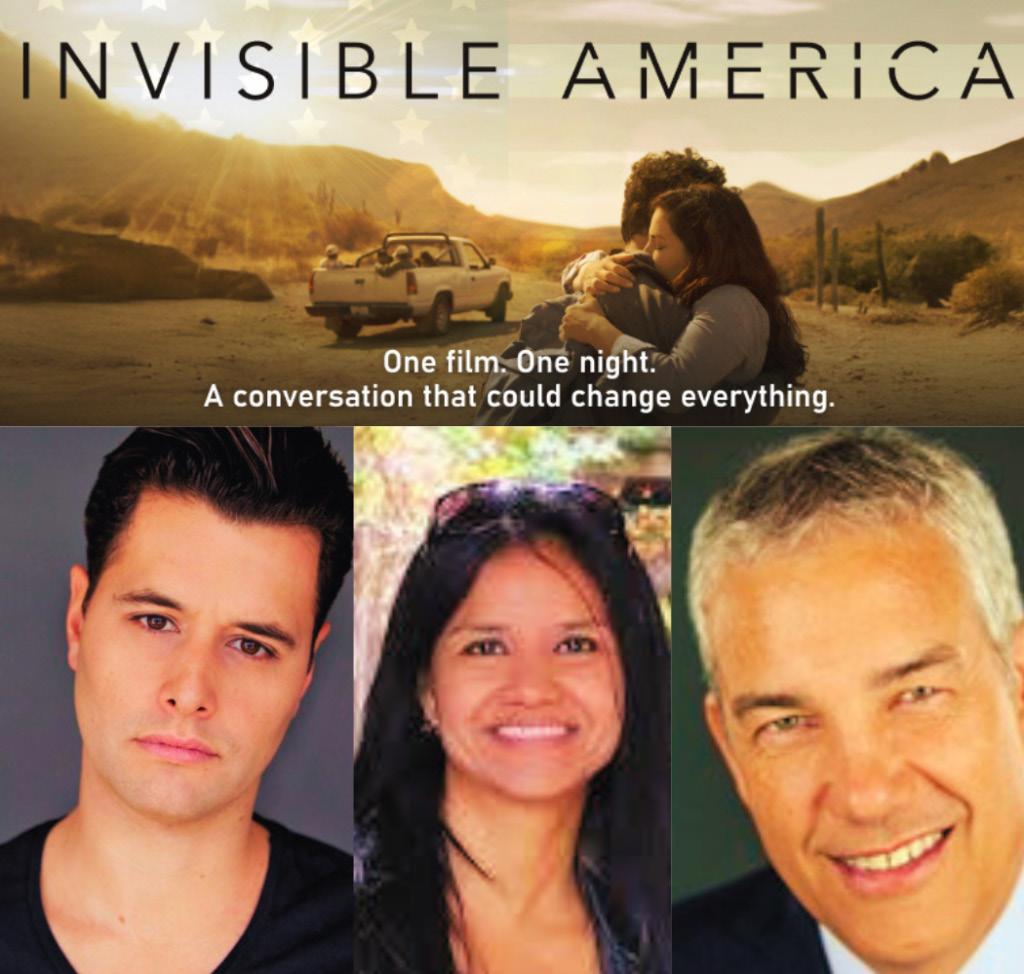
‘Invisible America’
BY LOU PRIMAVERA
Canadian filmmaker Christian de la Cortina brings a striking clarity to the screen, crafting a film that feels both urgent and compassionate. At a moment when anti-immigrant sentiment continues to breed suspicion and division, his work insists on empathy over fear.
The story follows Fernando, a man driven to seek refuge in the United States after threats to his life. Once there, he finds himself laboring on a dairy farm, surrounded by other undocumented workers. Their shared invisibility binds them— and exposes them—to the very injustices they had fled.
While many films stop at the border, Invisible America ventures further, asking a harder question: What happens next? What becomes of those who survive the crossing, only to disappear into the margins of everyday America?
Written by Vanessa Cáceres
Mesino and Christian de la Cortina, and brought to life by a compelling cast that includes Frank Baylis, Jorge Martinez Colorado, and De la Cortina himself, the film pulses with authenticity. Their performances ground the story in lived emotion—never showy, always sincere—turning what could have been a simple immigration drama into a portrait of endurance and quiet grace
Director / Actor / WriterChristian de la Cortina
Q: How did you create Fernando’s character?
Christian: I wanted to break clichés. Too often undocumented people are shown as uneducated.
Fernando is a journalist — educated, outspoken, and at risk because of it. His story reflects those who are silenced when they speak truth in dangerous places.
Q: The film alternates between light and darkness. Was that intentional?
Christian: Yes. The U.S., supposedly safe, is shown as cold and harsh. Mexico, though dangerous, is remembered as warm and full of light. Happiness and beauty can exist anywhere, Not just in rich countries.
Writer / Producer - Vanessa Cáceres
Q: What drew you to produce this project?
Vanessa: Cinema can reveal truths. Immigrants, even undocumented, carry dignity and value.For me, this film is an act of light that shines on stories often ignored.
Q: What were the biggest challenges in making Invisible America?
Vanessa: Filming during the pandemic was extremely difficult. We faced shutdowns, financialobstacles, and moments where it felt like we might not finish. But through perseverance and faith,we did — and that makes me even prouder of the film.
Executive Producer – Frank Baylis
Q: why did you support the creation of Invisible America?
Frank: When Christian and Vanessa came to me with the script, I believed in their vision andwanted to support a film that humanizes undocumented immigrants — showing they are
notnumbers, but human beings who deserve dignity and respect.
Q: what are your thoughts on the current climate in the United States, where immigration
Caminito Theater Presents 'The Intruder'
BY RALUCA TOPOR
For theatergoers who crave something haunting, beautiful, and disturbingly human—the first production of the Los Angeles City College Theatre Academy this semester could be the perfect way to enter the "season of shadows."
"The Intruder" at the Caminito Theater directed by Paul Coates, begins Oct. 22.
The production runs through Oct. 25, with evening performances at 7 p.m. and a 2 p.m. matinee on closing day. Admission is free.
Belgian playwright Maurice Maeterlinck wrote the play in 1891, and the original performers were marionettes. Director Paul Coates, an LACC alumnus, adapted the work for live actors, reshaping it for a modern audience. “The original play had puppets, masks, distance,” Coates said. “I wanted breath. I wanted the fear to live in the room.”
The story follows a family awaiting news about a mother who has just given birth. A blind grandmother senses that someone—or something—is approaching the home. Coates said he gave names and backstories to characters that were originally unnamed.
“It’s about the unseen,” he said.
“Something foreign is coming, and it’s not good. The play was written 130 years ago, but it still connects to the fears people have today.”
Film producer and teacher Christina Hart plays the grandmother. She says she joined the project because of her longstanding collaboration with Coates.
“She knows everything that’s going on,” Hart said of her character. “They ignore her, but she’s right. Each rehearsal, I discover more about what she knows.” Hart says she values the opportunity to work with LACC students.
“The technical team here is strong,” she said. “The lighting,
the set, the sound—they all contribute to the story.”
Sound design plays a central role in the production. Sound designer Lou Hartman says the audio landscape reflects the family’s tension and uncertainty.
“Sound is the family’s nervous system,” Hartman said. “When the baby is born, you don’t hear it cry until the end. Every creak and silence tells you something’s wrong.”
First-year acting student Lily Sutera plays both the midwife and the young grandmother. She says the play’s timing makes it a fit for October audiences.
“It’s mysterious and full of questions,” Sutera said. “It’s like peering into someone’s life through a window.”
Coates says the production explores how people react to uncertainty.
“We all wake up wondering what might happen next,” he said. “This play looks at that feeling—the unknown that hangs over us.”
policiesand penalties for undocumented people are becoming increasingly strict?
Frank: Policies that target the
most vulnerable in society are never a good thing. On top of that,the government is clearly breaking laws in the way it is pursuing anyone and everyone
it deemsUnsuitable. This is very harmful for society as a whole. The United States should stand as abeacon of hope, democracy, and the rule of law.
The Robey Theatre Company Presents
‘THE GREAT LOVER’
BY DAVE MARTIN
Love, sacrifice, bravery, and betrayal are the elements found in Alexandre Dumas’ play The Great Lover.
Set in 18th-century France, the play revolves around a bet that the Duke de Richelieu proposes that he can and will seduce the first beautiful woman who crosses his path.
Women have always found the silver-tongued rascal irresistible, and rarely has he failed in his conquests.
Soon, the game is afoot, and it doesn’t take long before things begin to unravel. Will the duke win the bet and seduce the first woman he sees, and win 1000 francs? Or will the clever Marquise de Prie put an end to the duke’s seductive escapades?
The Great Love is now playing at the Los Angeles Theater Center, Theater Four 514 S. Spring St, Los Angeles, CA 90013
Performances are: Thursday through Saturday 8 p.m., Sunday 3 p.m., Dark on Saturday, October 18. Added Saturday matinee at 2 p.m. on November 8. Closes Sunday, November 9.
ADMISSION: General tickets: $40. Students, seniors, veterans, and LAUSD teachers, $25. Thursdays (Oct. 16 - Nov 6) $25.
MORE INFORMATION: http://therobeytheatercompany.org
CONTACT INFORMATION: 213-489-7402
They were just told there would be no more cards to give out past that date.
The Vice President of Student Services Olga Diaz offered answers about the TAP program. Upon detailing why the TAP cards would no longer be supplied to students, Dr. Diaz offered to send files to give more context on the abrupt halt of TAP cards.
“The funding that had previously paid for the cost of transit passes was a federal earmark," she said. "The Federal money coming to us to be able to offer these transportation passes that ended, we knew it was going to expire so we spent a lot of time promoting this."
Diaz says the campus circulated flyers on social media and to students through emails. The goal was to inform as many students as possible, so they would
activate their cards by Sept. 30, before the cutoff. The federal government ended funding for TAP to all nine community colleges in the Los Angeles Community College District (LACCD).
“And we tried to get it restored, and it was not approved," Diaz told the Collegian. "That’s the reason why we are in the situation now. One thing we are trying to do because we realize how valuable it is for students that were depending on it, we are trying to figure out how to pay for it out of our own district money for the rest of the school year."
Diaz says all 9 district college administrators do not want to depend on the federal government for TAP in the future. The college must also renew their contract with Metro because it owns the transportation services contract for TAP.
Approximately 7 million people participated in 2,700 demonstrations across the country, for one of the largest single-day protests in U.S. history, according to MoveOn network.
A large group of demonstrators wore humorous inflatable animals — frogs, unicorns, pigs, and cows — to counter the narrative propagated by Republican leaders that antifa demonstrators were organizing “Hate America” rallies according to
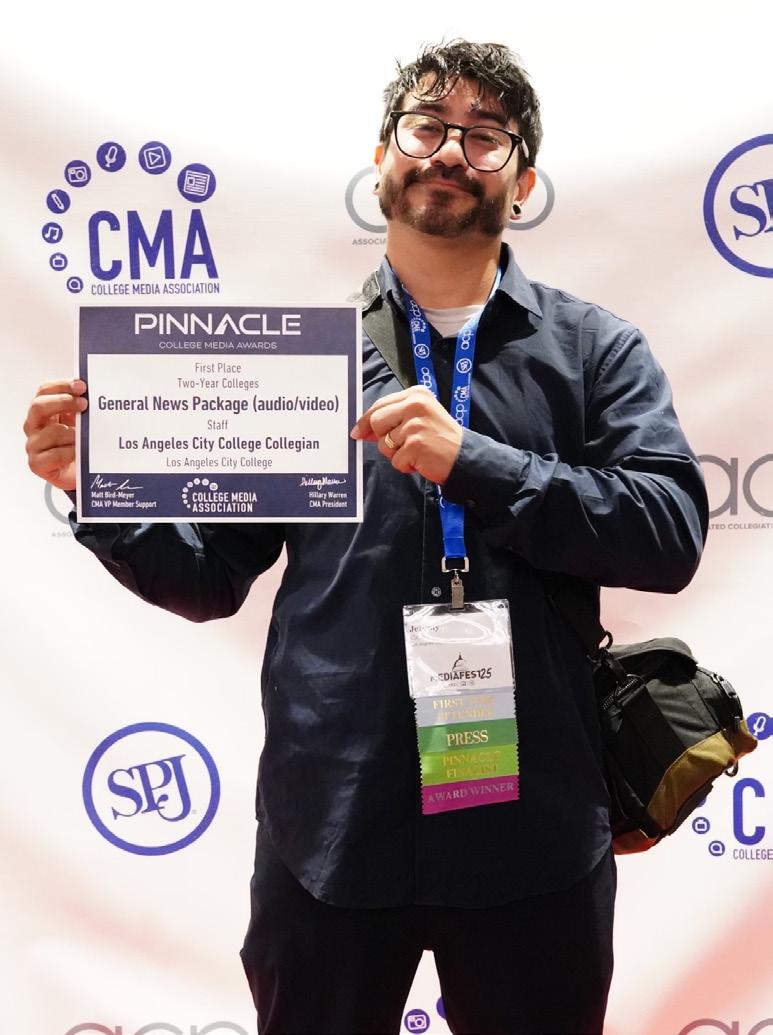
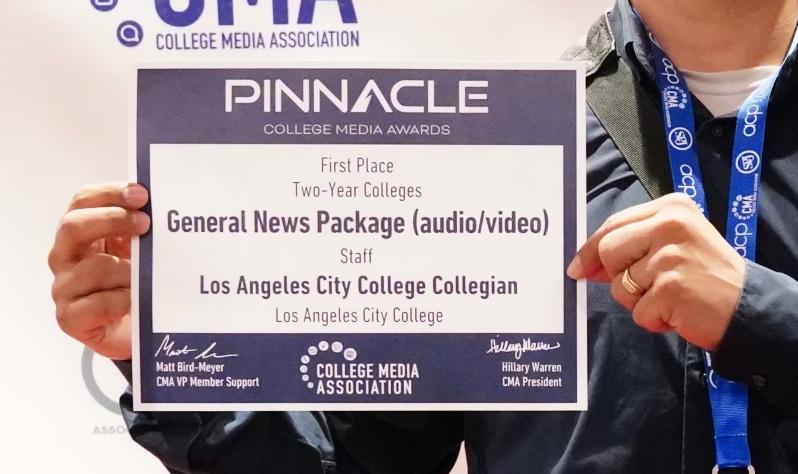
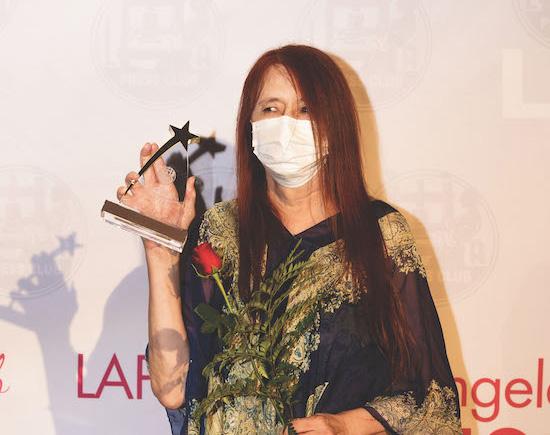
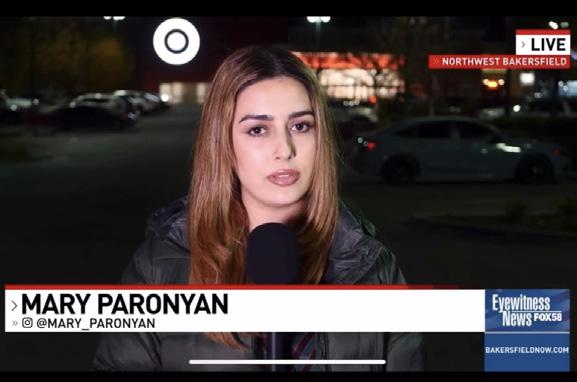
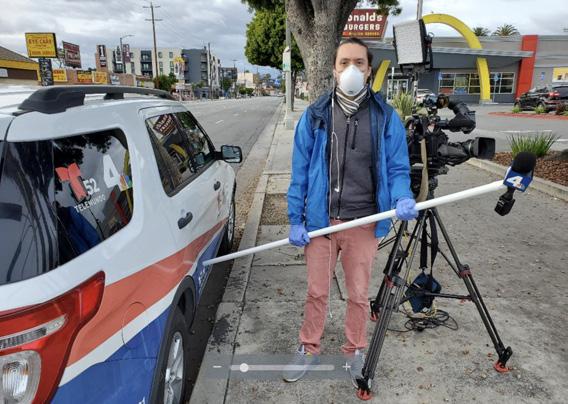
L.A. City College journalism students swept four categories to win first place Pinnacle Awards in Washington D.C., on Oct. 16, 2025.
Students won first place in Feature Writing, Newspaper Front Page Layout, General News Series and Broadcast Audio Video News Story. Pinnacle Awards are College Media Association's flagship national honors. The Pinnacle recognizes the best student work in collegiate journalism, media production, and organizational excellence.
Colleagues Credit Wong with first DRC in State
“As ridiculous as it is impressive, we do not endorse the violence he has inflicted on the people,” he said. “The only resource we have is to act as ridiculously as his policies and his abuse of power. We are peacefully protesting because we do not want more violence in our community,” Joshua said. “No Kings, no kings in America.”
According to the latest figures from the MoveOn network,
since April 3, 3 million protesters participated in 1300 Hands Off events. On June 5, 5 million protesters took part in 2,100 "No Kings" events. On Oct. 18, 7 million demonstrators took to the streets and attended 2,700 "No Kings" events across the country.
“There is a momentum, and the movement is booming and growing stronger every day,” according to a press release statement from the MoveOn network.
icon and Wong’s mentor. The site has become a center for nationwide research on labor and immigrant rights, according to Tia Koonse, policy director at the UCLA Labor Center.
Koonse says that the Asian Pacific American Labor Alliance (APALA) represents another notable contribution of Wong, functioning as a central organization for Asians, Asian Americans and the labor movement.
“Wong comes from a family with a rich history of resistance and civil rights efforts. He was born under a special star, destined to be a leader,” Koonse said. His father was a judge — the first Chinese American judge — who fought racial segregation within the Los Angeles Police Department. And his mother was active in Black and Asian American activism, according to Koonse. Both of his grandmothers were stripped of their citizenship because they married Chinese nationals.
“We are saddened to hear the passing of Kent Wong," said Sulma Ruiz, a program specialist at the Dream Resource Center (DRC) at LACC. Ruiz and Carolina Yernazian, a counselor-coordinator at the DRC did not know Wong personally, but both attended UCLA and enrolled in labor studies courses that would later inform their work at the DRC on campus.
“Wong was the first faculty member to teach a class to undocumented students,” Koonse said.
In 2010, when the Dream Act failed in Congress, students gathered with him, crying, upset, and mourning. This was the moment when the first Dream Resource Center was born, dedicated to creating access to higher education and good jobs for undocumented students. The DRC program began in the summer of 2011.
"Wong started the first Dream Resource Center in California," Ruiz said. "And so had it not been for his efforts and amazing work, our DRC would not be here, would not be in existence."
Master the Media...
visit the
https://www.lacc.edu/academics/aos/journalism
PHOTO BY UNSPLASH
Joshua.
Park. Wong's advocacy and vision helped secure $15 million to acquire the building, which is now named in honor of Rev. James Lawson Jr., a distinguished civil rights
District Looks For New TAP Funding Source
Marchers Make Message Clear: No Kings on Coast or in the Capitol
PHOTO BY AMY SHANK
RESOURCES 5
SCHOLARSHIPS
AFT1521 FOUNDATION SCHOLARSHIP - $1,000 AWARD FOR LACCD STUDENTS - APPLICATIONS DUE FRIDAY 4/17/26
The AFT 1521 Foundation Scholarship is an award of $1,000 given annually to current Los Angeles Community College District (LACCD) students who, in addition to their academic achievement, have demonstrated a serious commitment to advocating the cause of social and economic justice on their campuses and in their communities. This award must be used towards the pursuit of educational and/or career goals and the AFT 1521 Foundation reserves the right to request documentation that award money has been used in pursuit of these ends. Only applications that have been completed on or before Friday Apr. 17, 2026 will be considered.
If you have questions: Please direct all questions concerning the AFT 1521 Foundation Scholarship to aft1521foundation@ gmail.com
GOLDEN DOOR SCHOLARS APPLY NOW: FALL 2026 GOLDEN DOOR SCHOLARSHIP — DEADLINE OCT. 31. DETERMINATION AND HARD WORK SHOULD BE THE KEYS TO OPPORTUNITY.
Golden Door Scholars provides students with the support and financial aid necessary to invest in their education and shape their futures. More than scholarships, GDS is a vibrant and determined community that offers comprehensive support, including career readiness programs, mentorship, and intentional programming, going beyond financial assistance. Apply here: https://57w29. share.hsforms.com/2thMXxlxrTTyuxQpDMLP0hw
$5,000 NO-ESSAY DISCOVER® SCHOLARSHIP SWEEPSTAKES
Students and parents can enter for a chance to win a $5,000 scholarship from Discover®.
Discover will randomly select one winner every month between Sept. 2, 2025 and Aug. 31, 2026. NO PURCHASE NECESSARY. Sweepstakes open to residents of the 50 United States (DC) and the US Territories 18 years or older. See Official Rules for eligibility and entry requirements, entry deadlines and drawing dates, details including odds, list of eligible colleges and universities, prize descriptions, and an alternate method of entry. Deadline: Oct. 31, 2025 Award Amount: $5,000
AT BOLD.ORG, WE BELIEVE THAT THE WORLD WILL BE SHAPED BY THE BOLD—THE FIGHTERS, THE RISK-TAKERS, THE EARNEST OVERACHIEVERS WHO WON’T TAKE NO FOR AN ANSWER—THE ONES WHO KNOW THAT A MOUNTAIN IS CLIMBED ONE STEP AT A TIME.
Bold.org is built for students, like you, who are determined to make the climb.
As you join the Bold.org platform, you get the opportunity to showcase your goals, achievements, and drive to scholarship panels via your student profile. The $25,000 “Be Bold” Scholarship is a no-essay scholarship that will be awarded to the applicant with the boldest profile. To us, boldest does not mean “best”, or “most accomplished”. Being bold means being earnest, determined, and moving. The scholarship will be awarded to the student whose profile is most bold, according to these characteristics.
Furthermore, this scholarship will be similar to the many easy scholarships available on Bold. org in that it will favor students who apply earlier—who are bold and seize the day without procrastinating.
Students at any education level, state, field of study, and GPA will be considered.
Selection Criteria: Boldest Bold.org profile
Deadline: This scholarship has rolling monthly application deadlines. Students applying earlier will have a greater chance of winning. It will be awarded on December 1, 2025.
NICHE $50,000 NO ESSAY SCHOLARSHIP
DEADLINE: DECEMBER 31, 2025
Niche can help with every step of the college search including paying for it. We're giving one student $50,000 to help cover tuition, housing, books and other college expenses — no essay required!
High school seniors who apply can also be eligible to receive acceptance (and scholarship!) offers from our Niche Direct Admissions® partner colleges.
Apply for our $50,000 No Essay Scholarship below and focus on your education, not your finances. The winner will be selected by random drawing by January 15th. Good luck!
The NCAA awards up to 126 postgraduate scholarships annually. The scholarships are awarded to student-athletes who excel academically and athletically and who are at least in their final year of intercollegiate athletics competition. The onetime non-renewable scholarships of $10,000 are awarded three times a year corresponding to each sport season (fall, winter
and spring). Each sports season there are 21 scholarships available for men and 21 scholarships available for women for use in an accredited graduate program. All former student-athletes who earned an undergraduate degree from an NCAA member school are eligible to be nominated by that school for an NCAA graduate degree scholarship, regardless of when they received their undergraduate degree.
ASSOCIATION OF CALIFORNIA WATER AGENCIES SCHOLARSHIPS
Each year, ACWA awards two $3,500 scholarships to deserving students in a water-resources related field of study. Eligible students must be California residents attending a four-year, publicly funded college or university in California full-time as a junior or senior during the year the scholarship is awarded. Applications must be postmarked no later than APRIL 1 of each year, or the following business day if it falls on a weekend or holiday. Scholarship Eligibility Applicants must be: • A California resident • A full-time junior or senior in the year the scholarship will be applied • Attending an accredited, publicly funded college or university in California • Studying a water-resources related field or discipline • Planning to attend school for the complete academic year Selection Criteria Awards are based on a combination of scholastic achievement and a commitment on the part of the applicants to their chosen fields, best demonstrated by pursuing a degree related to or identified with engineering, agriculture or urban water supply, environmental studies and public administration associated with resources management. Financial need is also considered. https://www. acwa.com/about/scholarships/ acwa-scholarship/
CHICK-FIL-A REMARKABLE FUTURES SCHOLARSHIP
Each year, Chick-fil-A restaurant Team Members across the U.S., Canada and Puerto Rico are offered the opportunity to apply for college scholarships through the Chick-fil-A Remarkable Futures™ scholarship program. Since 1973, we’ve been able to donate more than $215 million to award more than 122,000 Team Member scholarships to help them pursue a higher education and achieve their remarkable future — whether it’s with Chick-fil-A or elsewhere.
Scholarship Details
Deadline: Oct. 28, 2025
True Inspiration Scholarship awards $25,000 to outstanding Team Members
Leadership Scholarship offers $1,000 or $2,500 for education-related expenses
Scholarships can be used at accredited colleges, universities, and technical or vocational schools
Funds can support both fulltime and part-time students
Eligibility Criteria
Must be a Chick-fil-A restaurant Team Member (franchised, company-owned, or affiliated)
Open to students in the U.S., Canada, and Puerto Rico
Must be enrolled or planning to enroll in an accredited post-secondary institution
Demonstrated leadership, service, and academic commitment required
Application Process
Visit the Chick-fil-A Remarkable Futures Scholarships website during the application window
Complete the online application with required personal and academic information
Submit supporting materials, which may include transcripts, recommendation letters, and essays Apply by the posted deadline to be considered for available awards
tures%E2%84%A2-scholarships THE COOLIDGE SCHOLARSHIP
Scholarship Details: $120,000 5 Awards Deadline: December 16, 2025
Winning a Coolidge Scholarship isn't just about winning money for college - it's about joining a community. The award, from the Calvin Coolidge Presidential Foundation, honors former president Calvin Coolidge, who was dedicated to academics and had a passion for public speaking. With a substantial prize of $120,000 that can be used to cover tuition, room, board, and other expenses, The Coolidge Foundation will select two or three new scholarship recipients each year. Applicants have the freedom to use the scholarship at any accredited U.S. college or university for any major of study. Finalists will be invited to attend an interview weekend in Vermont, with expenses covered for themselves and a guardian. All applicants are notified of outcomes by the summer.
Details
This full-tuition scholarship covers a full four years of undergraduate study at any accredited U.S. college or university. Orientation at the Coolidge Historic Site All finalists will be invited to interview in Plymouth Notch, VT with all expenses paid for themselves and one guest. Though not all applicants will be named Coolidge Scholars, 100 of the top applicants will be named "Coolidge Senators" and can take part in an all-expenses-paid trip to the Senators Summit in Washington, D.C. Eligibility Criteria
This award is for current high school juniors intending to enroll full-time in an accredited U.S. college or university in fall. High school seniors may not apply.
Applicants must be U.S. citizens or legal permanent residents.
Coolidge's core values. Though it's not restricted just to students planning to study government or public policy, applicants should appreciate values like respect and ambition.
SPORTS BIN
BY KENDRICK GUZMAN
It’s been a difficult season for the Cubs, who have faced one challenge after another since the season began in late August.
Lady Cubs Fight
Over the course of 15 games, the Cubs have managed just one win — a hard-fought victory against Compton College in late September. More often, they’ve struggled to break into double digits in their sets, which are played to 25 points.
“We couldn't get past double digits,” said Abigail Valencia Benitez, the team captain and setter, number 9 for the Lady Cubs volleyball team. More often, they have struggled to break into double digits in their sets, which are played to 25 points. Each match requires a team to win three out of five sets, and the Cubs have found themselves falling short repeatedly.
DODGERS
SAIL INTO SERIES ON SHOHEI'S SHOULDERS
BY JORGE PONCE
Despite the tough results on the scoreboard, the spirit within the team remains remarkably strong. Head Coach Rodriguez shared a message that has clearly resonated throughout the squad
“To my players … don’t give up," he said. "Show up every day and put your 110% in.”
That mindset echoes through the voices of team leaders like Benitez and other players, who refuse to let their record define them. In fact, the team sees value in how they’ve grown closer through adversity.
One emotional turning point came during a recent away match at San Diego Miramar. Though the Cubs lost, the performance was one of their best — full of energy, teamwork, and heart. The match served as a spark, a reminder of what they’re capable of.
With only a few games left in the season, the Cubs are calling on the LACC community to rally behind them.
Player number 17, Alina Miravete, emphasized the importance of school support.
“I feel more people from school should just, like, come watch, you know? Even if we lose, it builds energy,” Miravete said.
The men’s and women’s soccer teams have already shown their support by attending matches, and the volleyball team hopes to see more fans in the stands during the final stretch.
The Cubs may not have a winning record, but they have demonstrated something more powerful: persistence and school pride. As the season nears its close, let’s show up for them — just as they continue to show up for each other.
Dodgers were back where they belong in the World Series. It was about more than just Ohtani, even though he carried the spotlight. It
was a total team effort. Freddie Freeman came through with clutch hits. Mookie Betts made a sliding catch in right field that changed the momentum. The bullpen held strong, and the crowd never stopped believing. People keep comparing Ohtani to Babe Ruth, and honestly, it’s starting to feel real. The way Ohtani pitches and hits at the same elite level does not even seem possible. Yet, here he is, doing it in Dodger blue, rewriting baseball history one swing at a time.
For a franchise built on legacy from Jackie Robinson’s courage to Sandy Koufax’s dominance, from Kirk Gibson’s heroic home run in 1988 to the 2020 championship, this night felt like it belonged on that same list.
When the final out was made, blue confetti filled the air. Fans cried and hugged strangers, as they waved flags. Ohtani stood on the mound, tipping his cap as his teammates surrounded him. The scoreboard flashed: DODGERS TO THE WORLD SERIES. It wasn’t just a win. It was a moment that reminded fans why they love this game. For nights when history feels alive, and when every heartbeat matches the rhythm of the crowd, and when a player like Shohei Ohtani reminds the world what greatness truly looks like. This time, it was more than just one player. It was the whole team, fighting together, believing together. And now, they are back in the World Series
PHOTO BY KENDRICK GUZMAN
Lady Cubs head into the final stretch of their season. Team
Captain Alina Miravete invites the campus community to attend games and help build support on Oct. 17, 2025.