One family, four generations, and more than one way to thrive
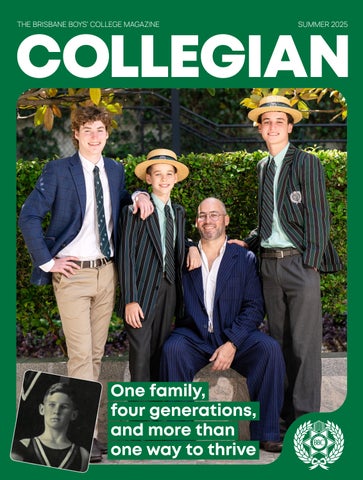
One family, four generations, and more than one way to thrive



“The best way to predict the future is to create it.” - Peter Drucker
During the latter half of 2017, I had the great opportunity to have a six-month sabbatical from my role as the Head of the Australian International School in Singapore. The focus of my time away from the day-to-day running of this large organisation was to enhance my strategic planning skills.
It was during this period that I was drawn to the significant writings of renowned management consultant, educator and author, Peter Drucker. Drucker devoted much of his impressive career to the importance of creating a clear, measurable strategic plan for an organisation to navigate the unknowns of an uncertain future. As his quote above suggests, the company is looking to “create” its own future through careful analysis and planning.
Of equal importance to Drucker were the vision, mission, and values, which lie at the heart of an institution that will ultimately shape the organisation’s culture. For as he so eloquently shares, “culture eats strategy for breakfast.” It is these two concepts that drew me to Drucker’s writings.
An appreciation that “if we fail to plan, we plan to fail”, but, as importantly, our plans must be rooted in the values that underpin our ambitions. It is these two “big ideas” that I would like to address as my introduction to this edition of the Collegian.
Our 2024 – 2028 Strategic Plan is a cocreation between all members of our community. Our consultation was broad
and extensive, reflecting our commitment to making this “our plan”. Our six pillars –Teaching & Learning, Wellbeing, Beyond the Classroom, Our People, Innovation, and Stewardship – provide the framework around which our specific intentions are built. Our values form the bedrock of our story, while our Vision and Mission call us to aspire to be greater than we thought possible.
However, notwithstanding the extensive
efforts that led to the development of this plan, it is ten words that are at the heart of our ambitions – “There is more than one way to THRIVE at BBC.” This is our purpose - and it perfectly encapsulates what we desire for each of the young men in our care.
Perhaps most significantly, it can be interpreted through the lens of an individual boy. This endeavour is significant, as despite our size and complexity, BBC must be seen as a place where each individual feels content and safe. We strive to be an educational institution that affords every student an opportunity to find their passion – no matter how diverse or unique. When that passion is found, the young man has the chance to soar higher than he thought possible – to succeed, to flourish, to THRIVE!
This must be what we aspire to achieve for every boy at the College, and our Strategic Plan translates this dream into reality. BBC seeks to “create the future” for every individual in our care.
But as Drucker clearly declared, it is not just the plan that is important, but the culture we create that will result in our ultimate success. We are fortunate to be a College built on 123 years of history. The bricks and mortar that comprise our campus tell the stories of Old Collegians past.
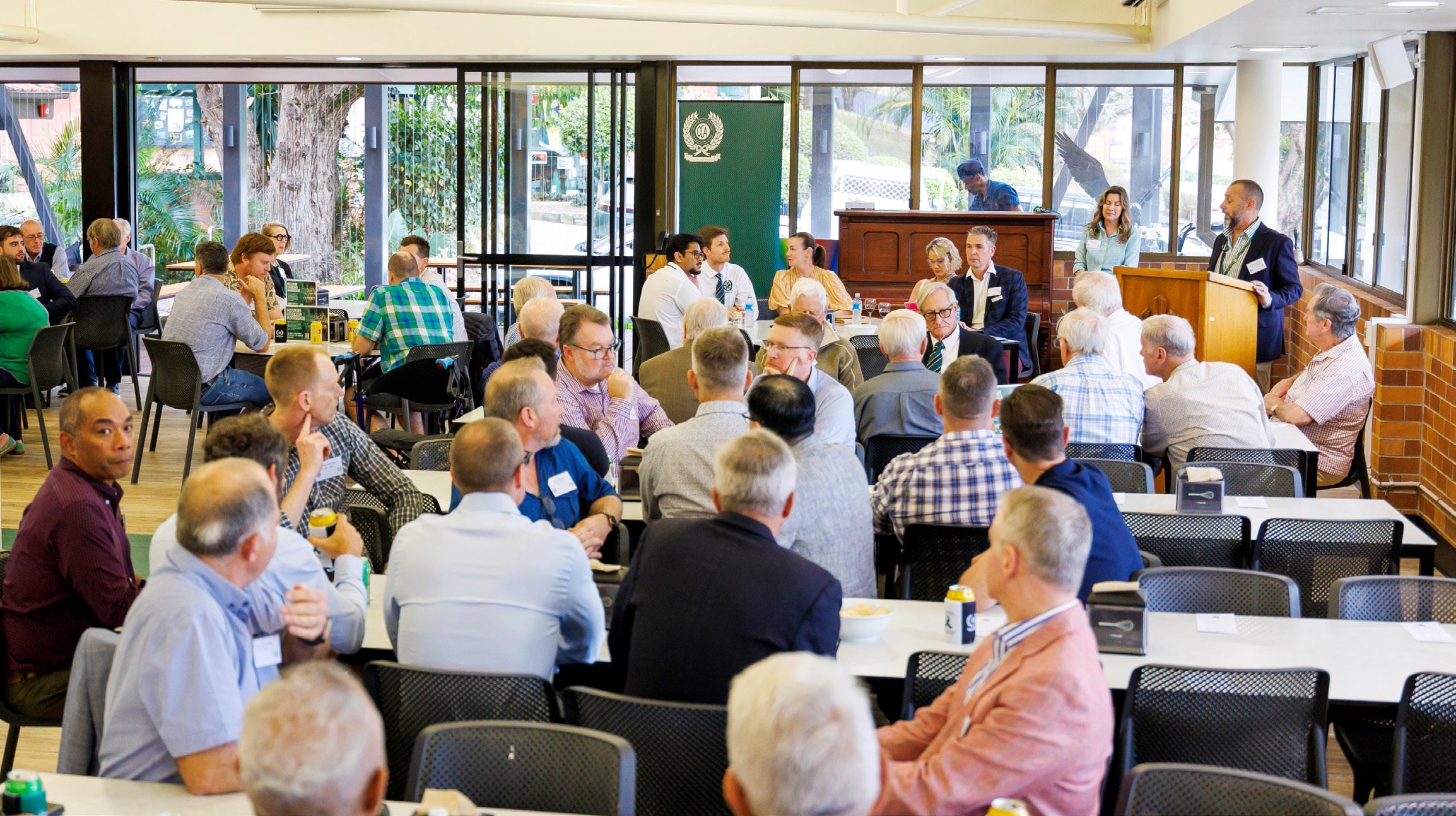
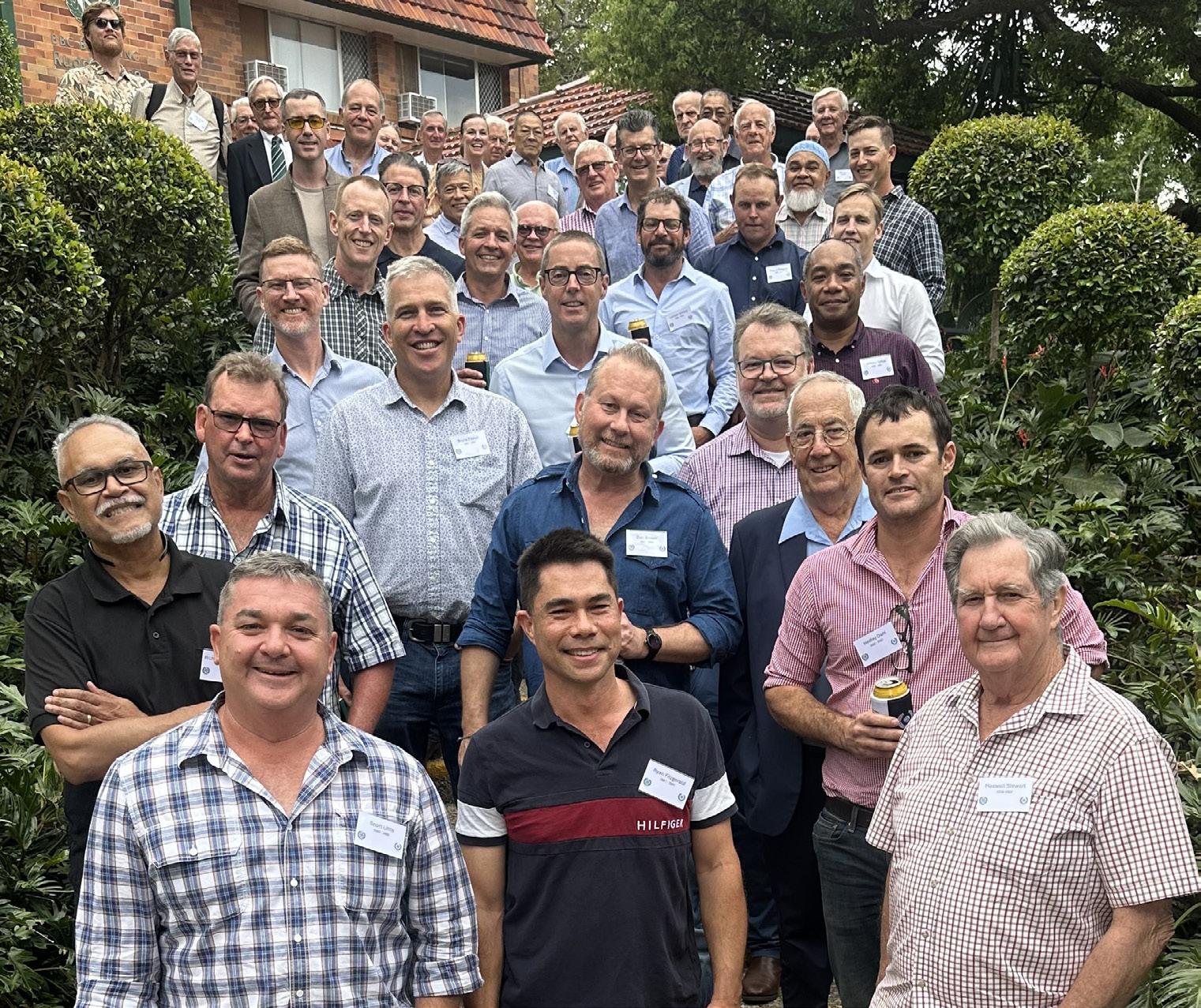
To reminisce with our Old Boys at the Return to Rudd Luncheon solidified that we are more than just a place of learning, sport, and the arts; we are a family built on shared values and ambitions. We, the current custodians, appreciate the gift that has been bestowed upon us from the brilliant Gentlemen of Honour who trod these halls in the past. We forge our own stories, are always cognizant of our brilliant past and have an eye toward an exciting future – a future that we will help create.
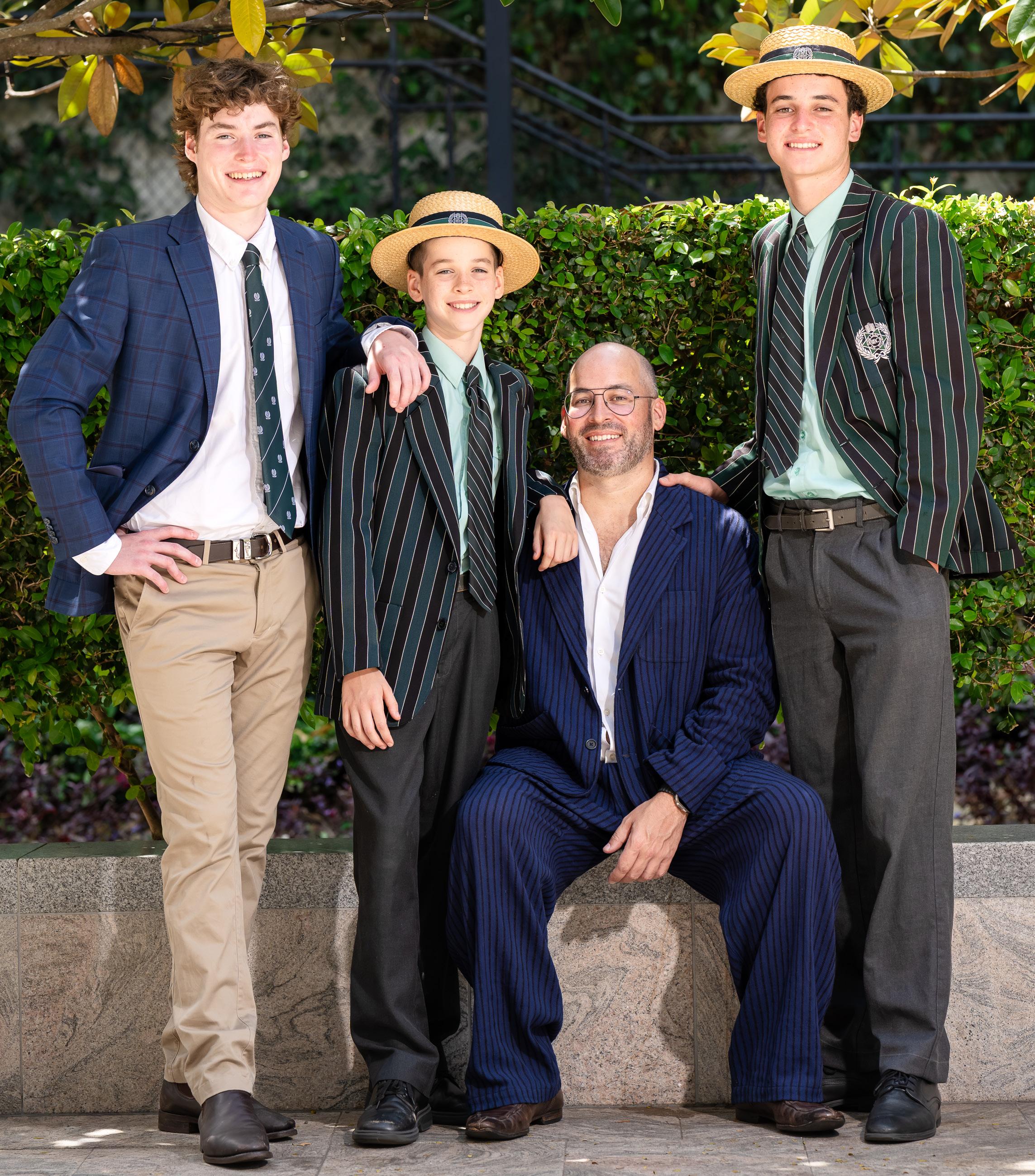
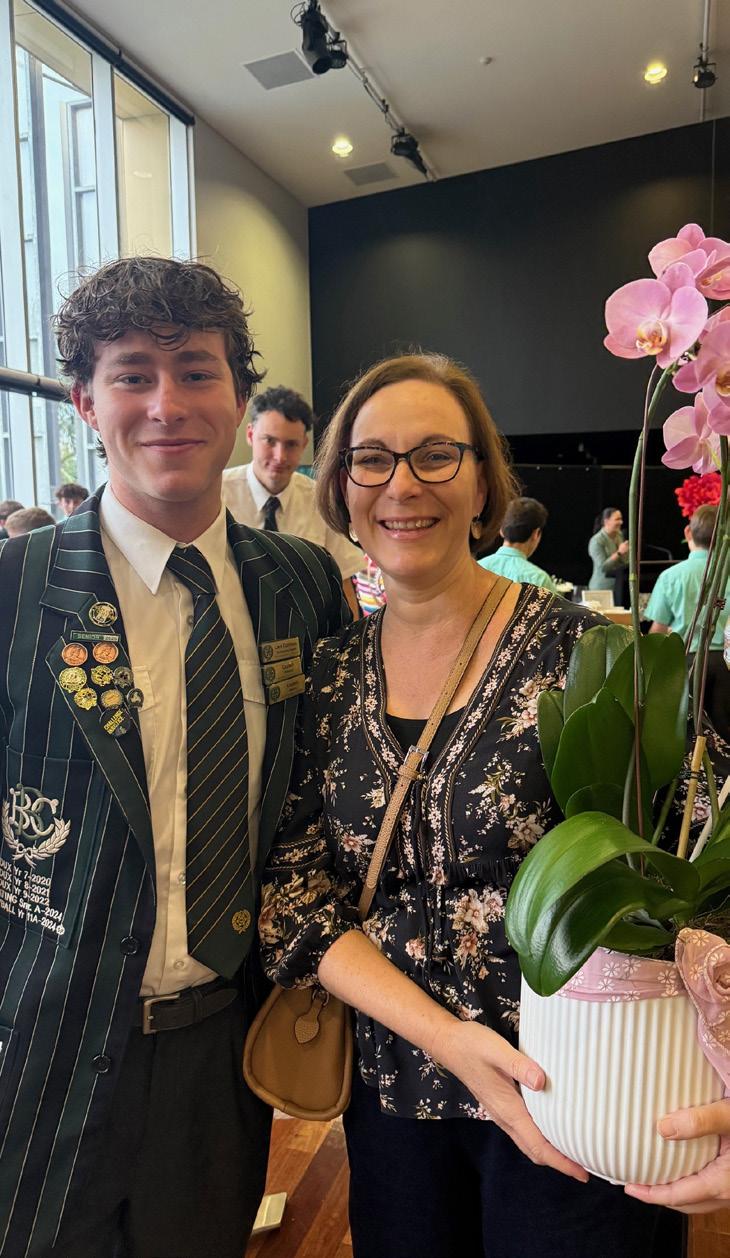
The number of Old Boys who bring their sons and grandsons to the College so that they may experience the magic that they enjoyed is gratifying to me. In this edition, we celebrate the Gray-Buchanan family’s journey with BBC – four generations of Old Boys at the College, with young Barney about to commence his tenure as the Wesley House Prefect. This is the
...it is not just the plan that is important but the culture that we create that will result in our ultimate success. ”
Mr Andre Casson
magnificent culture that makes BBC special and unique among other leading independent schools.
I look to our future with much anticipation and excitement. I know we have a clear, well-structured plan that will afford us the opportunity to be masters of our own destiny. We focus on each young man as a unique gift who will grow with the benefit of a BBC education. Above all, we benefit from a culture that is steeped in tradition, responsive to the needs of the present, and attentive to creating a positive future for all.
Please enjoy the stories within the pages of this publication. They serve as a snapshot of the magnificent school that we all call home. They paint a wondrous picture, yet one that is still taking shape.
I look forward to sharing this journey with you all.
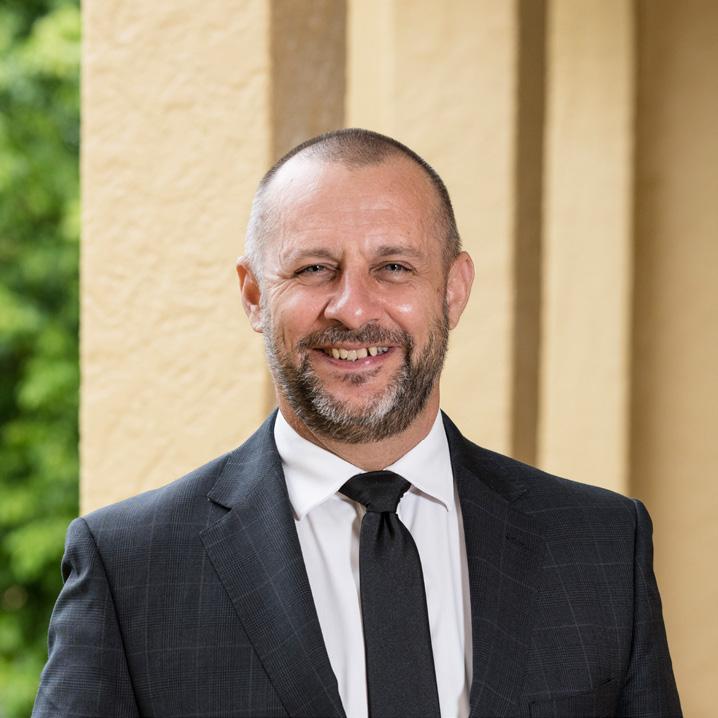
Mr Andre Casson Headmaster
Over the last few years, artificial intelligence has exploded into every aspect of our lives on a scale not seen since the advent of the internet. It’s inarguably the most far-reaching technological development in a generation, and its use will become a key part of the world our boys inherit.
While BBC has long taken a proactive approach to tackling the issue of AI, with innovative pilot projects in use in a number of areas, the state-wide educational environment provides few outlets for students to have their say.
“There’s nothing that gives them a voice in this space,” BBC’s Head of Secondary School, Ms Amelia Apogremiotis, told ABC Radio Brisbane. “There are lots of AI in education conferences for teachers, but there’s nothing for students. So, we decided to host one ourselves.”
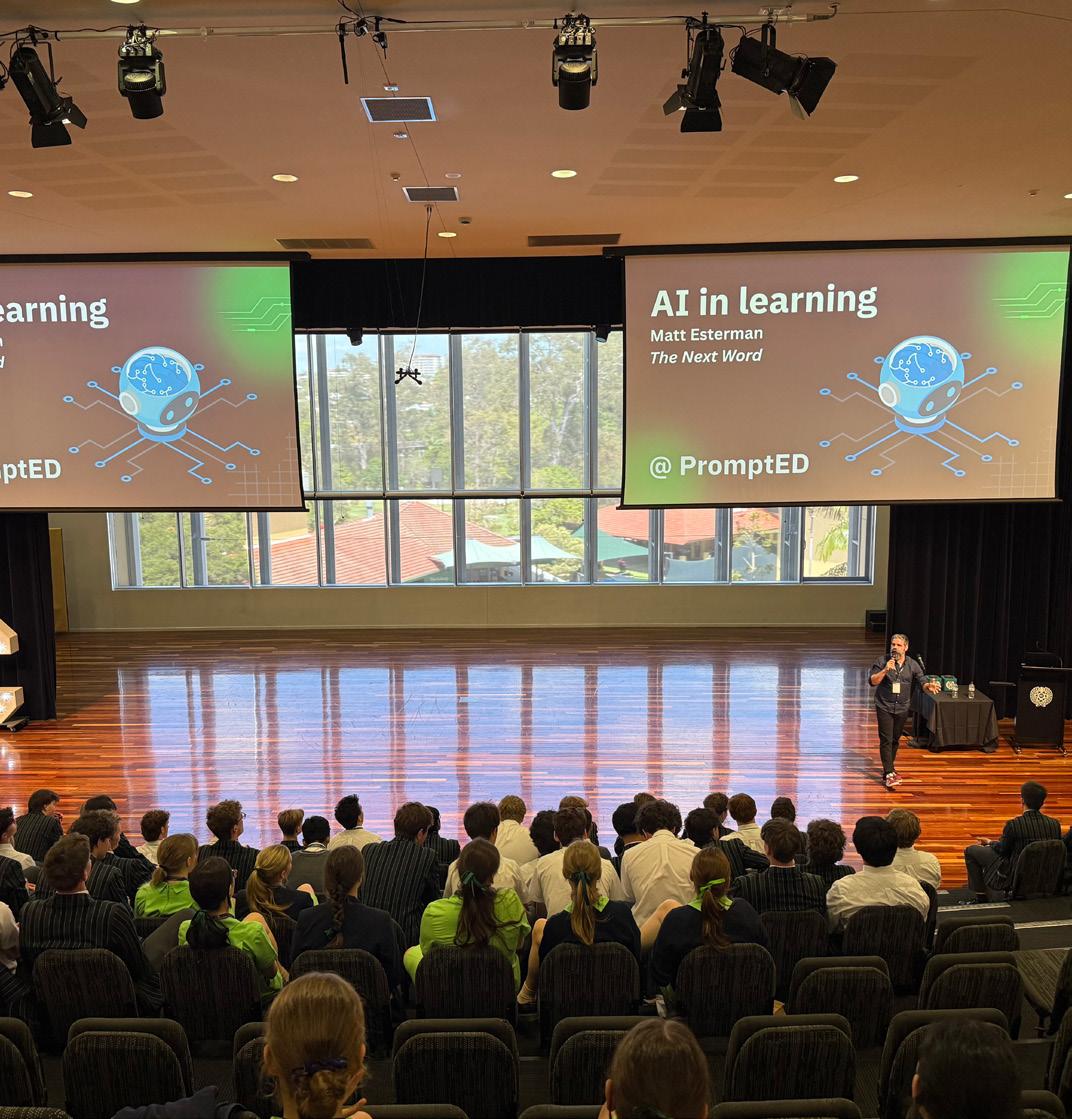
In the final week of Term 3, BBC was proud to host Prompted: The Youth AI Conference, which discussed the use of AI in education. At the conclusion of the conference, students tabled their own recommendations on the subject, which were then submitted to the Queensland Parliament.
The summit was also attended by students from Brisbane Girls Grammar School and Somerville House. It featured expert commentary from Walkley Award-winning journalist Ms Tracey Spicer AM, AI education consultant Mr Matthew Esterman, and Ms Rosie Atwell from the CSIRO, sparking conversations that will help shape how young people engage with AI in the years ahead.
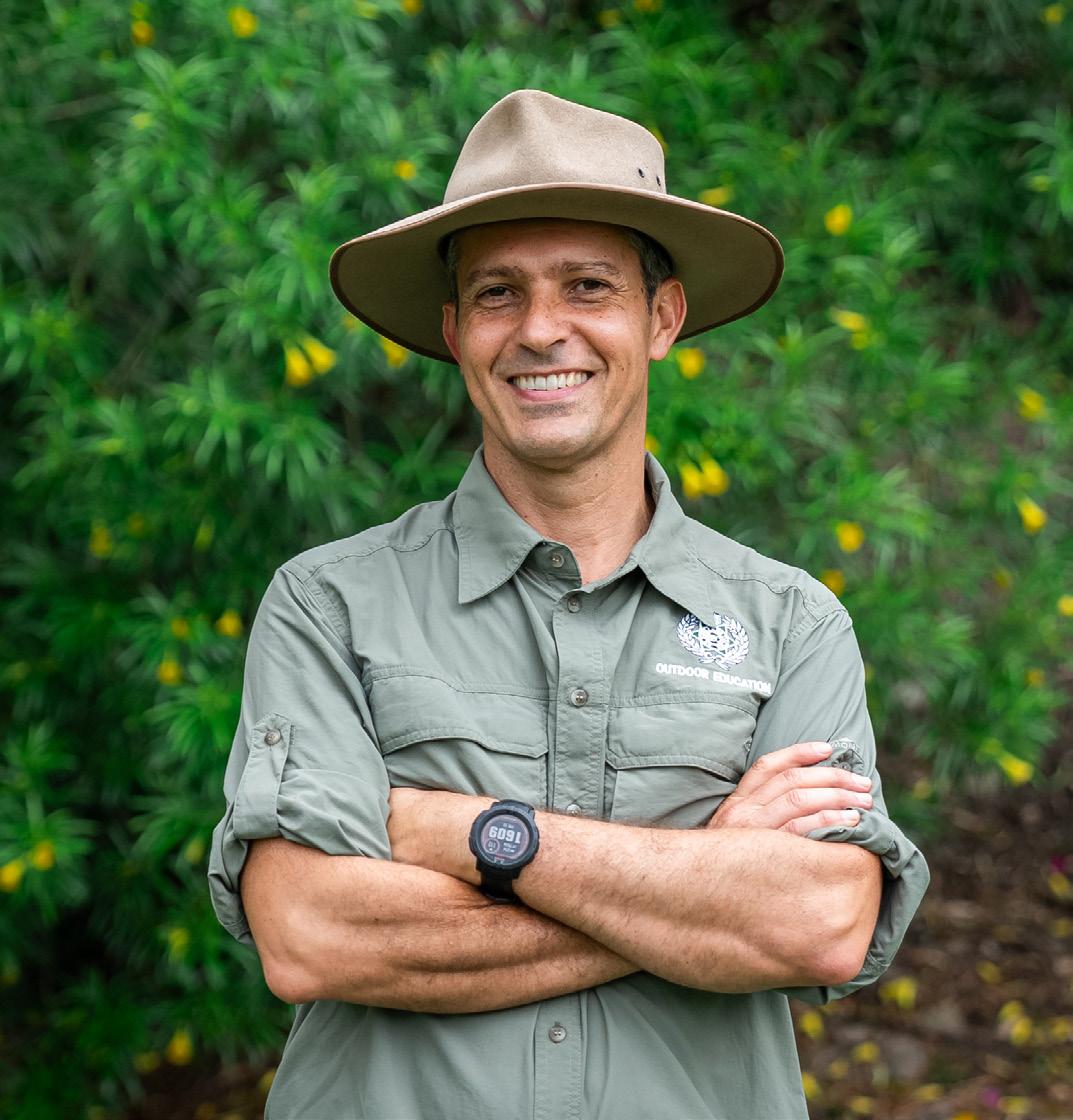
When he was earning his PhD, BBC’s Outdoor Education Coordinator Dr Marcelo Valente Ramos intensively studied the science behind children’s ‘perezhivanie’. This Russian psychological concept describes a child’s lived emotional and intellectual experiences and memorable moments.
“This theoretical and analytical framework is directly reflected in the design and implementation of my work in BBC’s Outdoor Education program,” Dr Valente Ramos, who also serves as an Executive Member of the Outdoor Education Association of Queensland, explains. “The integration of narrative, challenge, and reflection allows for experiences that shape boys’ sense of self and their relational understanding of the world.”
Dr Valente Ramos has taken his PhD research and used it to cultivate and perfect the Outdoor Education program at BBC. The program plays a vital role in boys’ development, offering learning experiences that extend far beyond the traditional classroom.
The program builds from foundational, structured activities in early years to more complex and independent challenges in later years. Each yearlevel program allows students to prepare and redefine their personal possibilities, gain confidence, demonstrate compassion, and develop a spirit of camaraderie with their peers. Parents consistently report improvements in confidence, independence, and emotional maturity.
“By spending time in nature, boys develop leadership, empathy, communication, and cooperation,” adds Dr Valente Ramos. “It teaches boys how to live and work together, while supporting emotional regulation and offering a valuable break from screens and the fast-paced digital world.”
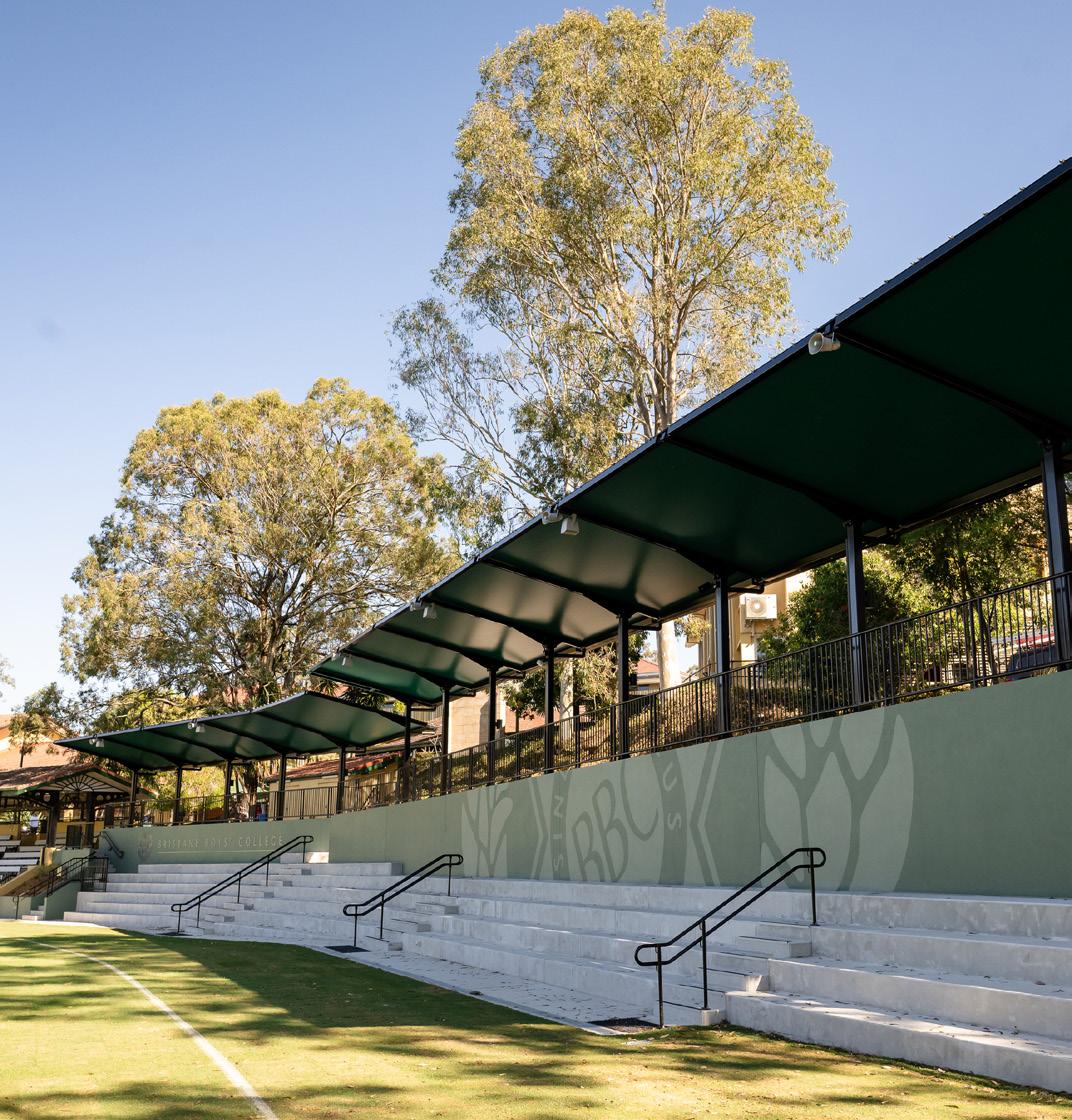
BBC proudly celebrated the official opening of the new spectator stand on Noblet Oval in Term 4, 2025.
Designed by the architectural firm Hayball and built under the management of Old Collegian Mr Steve Wintraaken (OC 1996), the new stand is situated to the north of the oval alongside the existing stand. Its modern design complements the existing facilities and enriches the historic vista of the College from Moggill Road, extending towards the Administration Building and Clock Tower.
Thanks to the generosity of the BBC community on the 2025 Annual Giving Day, funds were raised to install a canopy over the structure. The result is a shaded, weather-protected area that enhances spectator comfort, provides a flexible outdoor learning space, and promotes sun safety. On game days, the stand offers a welcoming place for families to cheer on the boys in Green, White, and Black.
Newly installed Wi-Fi further supports outdoor learning and allows staff to access resources and conduct activities seamlessly from the oval.
The College extends sincere thanks to every community member whose generous contributions helped bring the new stand to life – a provision sure to serve the BBC community for many years to come.
At BBC, wellbeing has always been a top priority. Students who are happy, healthy, safe, and engaged are students who are ready to thrive.
Global research highlights the importance of dedicated wellbeing spaces in supporting students’ mental health, leading to more engaged and successful learners. The opening of the new BBC Wellbeing Space provides boys with a purpose-built environment to support them as they progress through their learning journey at the College.
Following research and consultation with students, the Wellbeing Team designed a haven catering to diverse needs, with bespoke furniture, lighting, and acoustics that provide comfort and support, aiding emotional and sensory regulation. The BBC Wellbeing Space provides a sanctuary where students can decompress, reflect, and seek help when needed, thereby reducing stress and anxiety levels.
Best practice pedagogy and purpose-built spaces like this ensure that boys have everything they need to thrive while fostering a sense of community. Through investment in projects like the Wellbeing Space, BBC is creating a holistic environment that nurtures the wellbeing of our students.
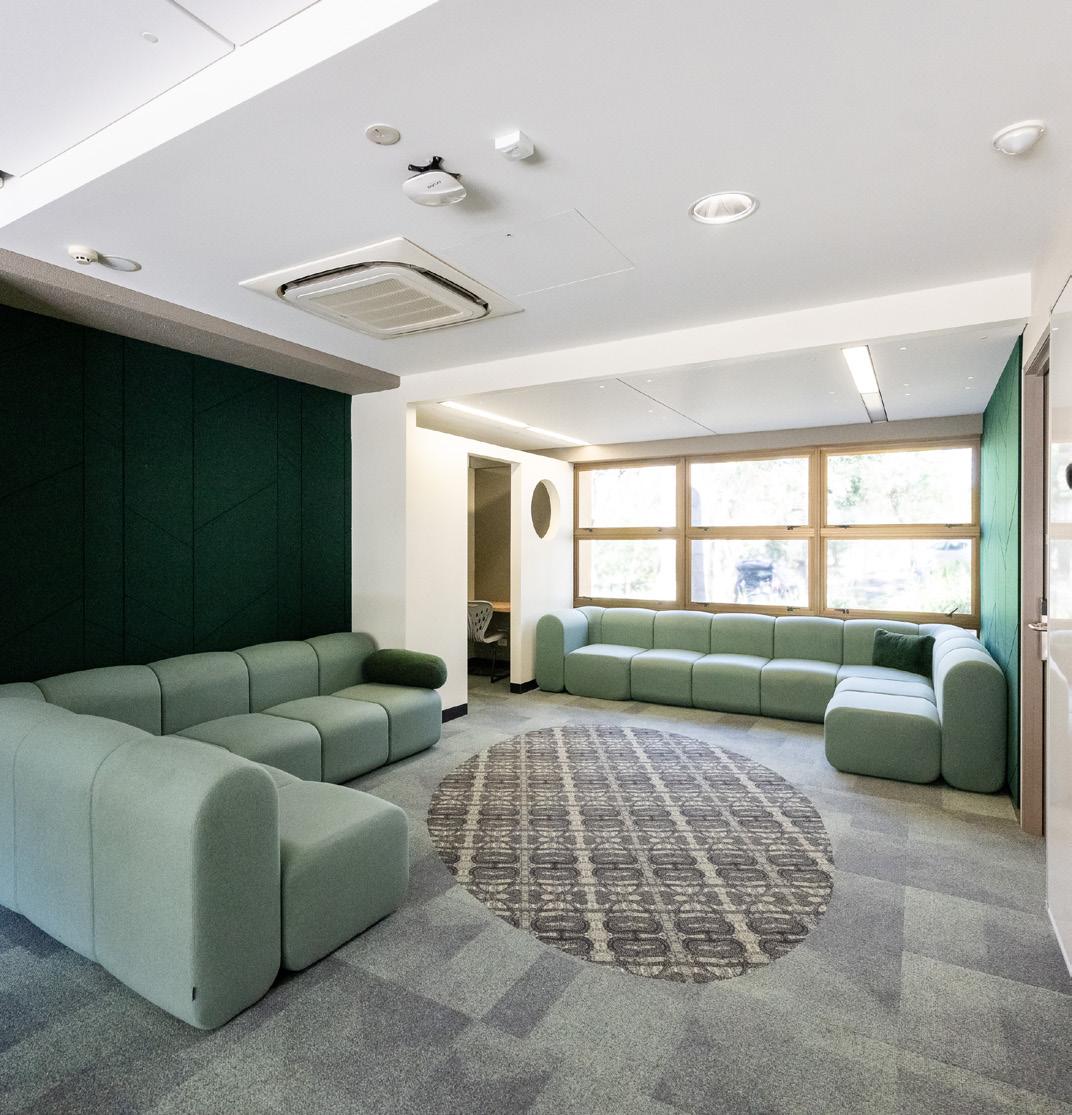
The Wellbeing Space would not have been possible without the generous support of Parent Connections. Their commitment to supporting every boy is inspiring, and the College offers its sincere thanks.
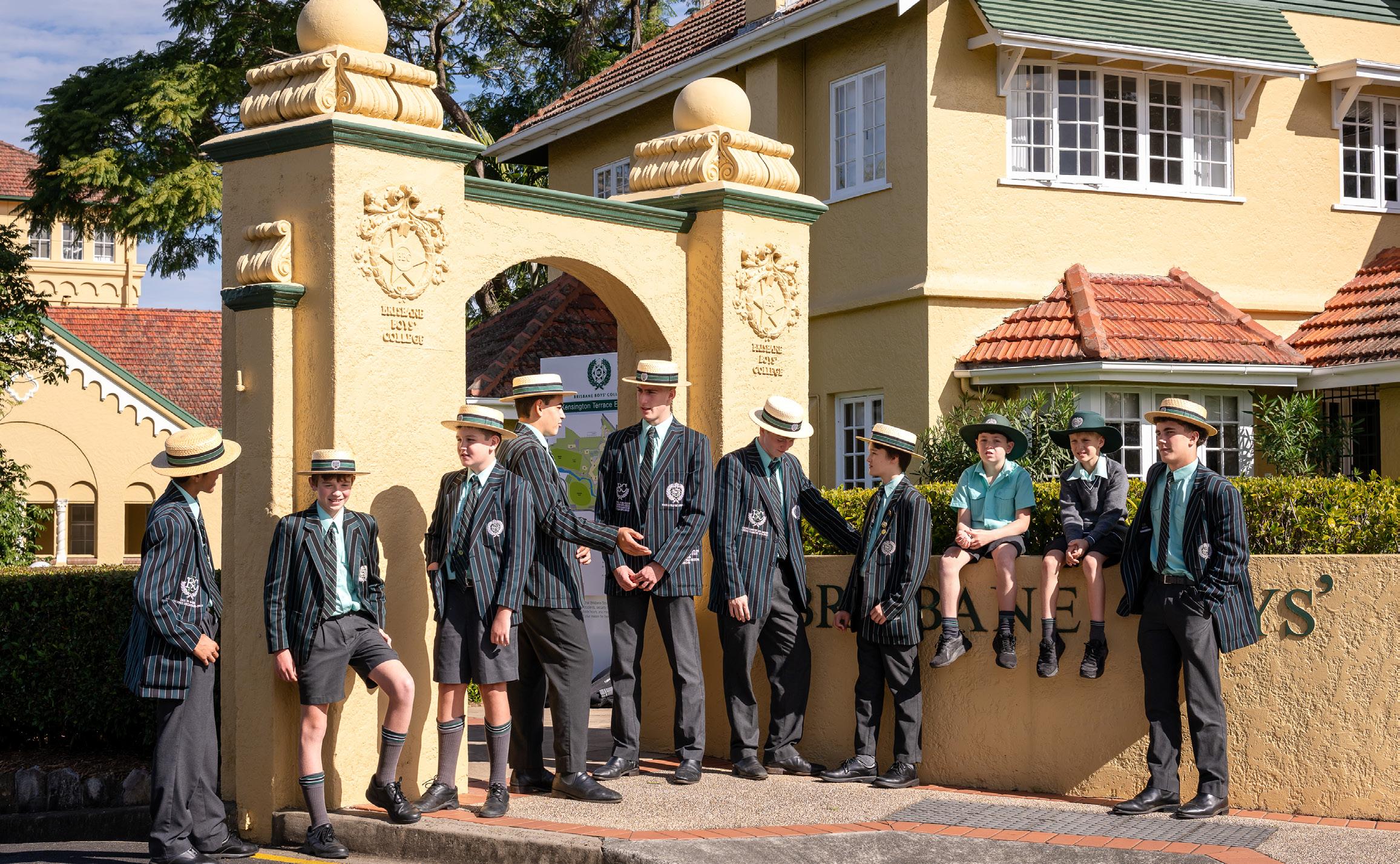
Step into Brisbane Boys’ College (BBC) and it’s immediately clear that respect, character, and community lead everyday life here. A Year 12 student kneels beside a Prep boy on the rugby field. A chorus of ‘Good morning, Miss’ fills the corridors. Since its earliest days, BBC has built a culture where boys aspire to live as true ‘Gentlemen of Honour.’
Deputy Headmaster Mr Scott Murphy has worked in Melbourne, London, Singapore, and now Brisbane. Yet, as he reflects, “I’ve never encountered a culture this strong. The camaraderie, the character, the community are second to none.”
The founding philosophy of Gentlemen of Honour at BBC is as deeply embedded in the school’s DNA today as it was in 1902.
“We started with just four pupils,” recalls College Archivist Ms Helen Jackson. “It was so small that no competitive teams were formed until 1914, more than a decade later.” With so few students, there was no need for endless rules. Instead, founder
Mr Arthur (Barney) Rudd declared a single one: think, act, and behave as gentlemen at all times.
Over a century later, this philosophy still serves as BBC’s moral compass. As Mr Murphy explains, “My goal has always been to create good men. Men who go on to achieve extraordinary things, who lead with empathy, kindness and compassion. Men who serve in whatever field they pursue, putting others before themselves and leaving a lasting impact.”
The Gentleman of Honour philosophy endures at BBC not only through the weight of tradition, but also through a modern, systematic approach to wellbeing that is embedded into every aspect of college life. At the heart of this systematic approach lies the innovative Tartan+ Wellbeing Model – a comprehensive dualstructure framework of mentorship and support.
The fact that it’s evidence-based, regularly updated, and embedded across all years makes it incredibly powerful.”
Ms Lindsey Herse
“Tartan+ is our wellbeing framework,” explains Mr Murphy. “The vertical strands are the Heads of House, who track boys longitudinally from Years 7 to 12. The horizontal strands are the Heads of Year, who specialise in the issues specific to each year group. Assistant Heads of Year travel up with the boys, providing continuity and understanding family context.”
The vertical house system brings year levels together, with older boys mentoring younger ones - Year 12s guiding Year 8s, and Year 11s supporting Year 7s. “It creates a natural mentorship where younger students don’t just see their future selves represented - they’re actively learning from the example set by older students,” he says.
The model’s strength lies in its comprehensiveness. “The ‘plus’ refers to all the other layers of support: co-curricular coaches, counsellors, nurses, and mentors. It’s every adult who connects with the boys,” Mr Murphy notes. “It’s multifaceted, and that’s what makes it so effective.”
School counsellor Ms Elena Yusim sees firsthand the impact this comprehensive support network has on students. “The Tartan+ model is unique because it works across academic, pastoral and co-curricular programs so it’s truly holistic,” she says. “Every staff member plays a role in student growth and resilience.”
With its comprehensive support network as a foundation, BBC champions evidencebased wellbeing education and is Queensland’s first school to implement the South Australian Keeping Safe: Child Protection Curriculum. Delivered from Prep to Year 12, the program covers respectful relationships, online safety, recognising abuse, and where to seek help.
“Outside South Australia, very few schools are running the Keeping Safe curriculum,” Assistant Head of Secondary - Wellbeing Ms Lindsey Herse says. “The fact that it’s evidence-based, regularly updated, and embedded across all years makes it incredibly powerful.”
Students are guided to understand important concepts like body autonomy, trust networks, and recognising unsafe situations, with lessons introduced early and tailored to each developmental stage from Prep through Year 12.
“The transformation is beautiful to watch,” Ms Yusim says. “You see boys turning into young men before they leave. Gentlemen of Honour is a powerful reference point, even in tough conversations, and seeing them embrace those values is very special.”
Through a blend of tradition and modern best practice, BBC remains true to its founding vision, nurturing young men of exceptional character who go on to serve others and leave a lasting, positive impact wherever life leads them.
Learning to read is one of childhood’s greatest milestones - and one of its most complex. English doesn’t make it easy: silent letters, shifting sounds, and countless exceptions can turn reading into a puzzle even for fluent adults. For young learners, especially boys, mastering that puzzle takes patience and practice - which is why at BBC, it’s a challenge we’ve embraced wholeheartedly.
“We have many layers to our literacy support and extension programs,” explains Head of Junior School, Mrs Summa Todd. “It really starts in Prep, laying the foundation for boys to soar into amazing opportunities as they get older. For those who need continued support, we have programs ranging from individually tailored sessions to small groups and whole-class approaches.”
She acknowledges that reading doesn’t always come easily for boys – but says BBC’s approach is about engagement as much as skill.
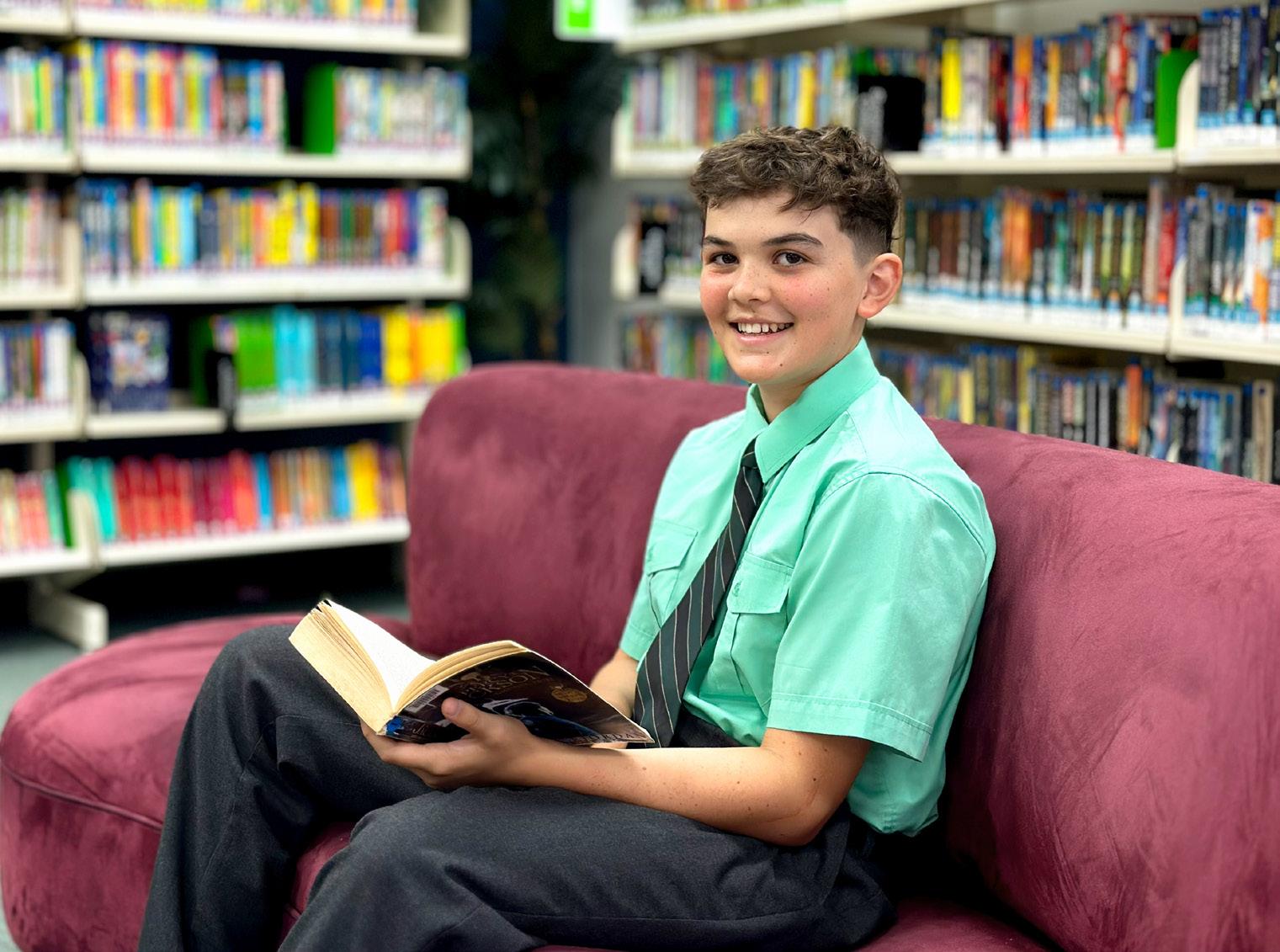
“A lot of boys are reluctant readers at first. English is often seen as their least favourite subject because it’s readingheavy. So, we make reading social, competitive, and fun. Readers Cup, for example, sees boys read multiple novels and then compete in a quiz, and our Year 6 Writer’s Workshop allows them to work with an author and publish their own stories. It’s about making reading something to enjoy and be proud of.”
“Our library technician is also exceptional at sparking that enthusiasm,” she adds. “She sources books the boys are talking
about, keeps popular titles well stocked, and tracks what they’re reading. It’s a team effort to create a culture where reading is part of everyday life.”
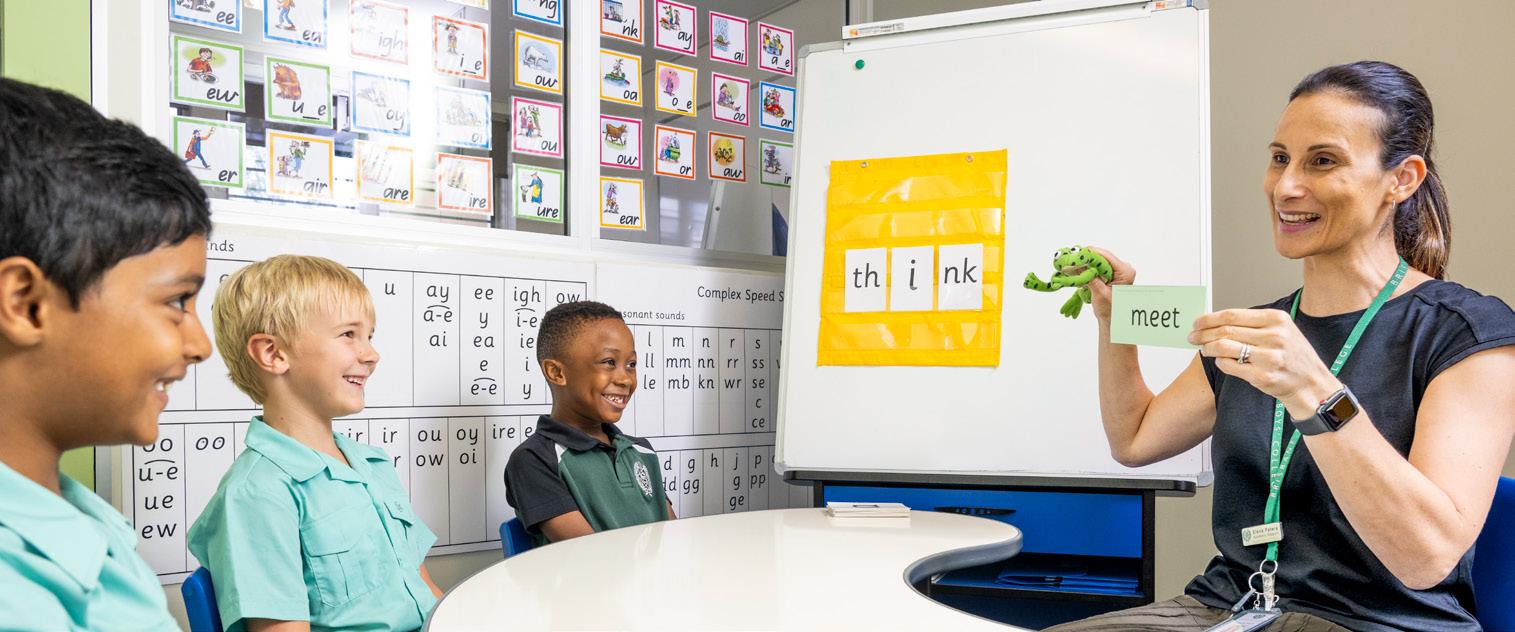
Since 2018, one of BBC’s most successful initiatives has been the Read Write Inc (RWI) program, an evidence-based approach to literacy instruction that lays the foundation for strong reading skills. Ms Lizzie Gresham, Year 2 Teacher and Reading Leader, said the synthetic phonics program teaches boys to decode words by learning sounds, blending them to read, and segmenting them to spell.”
“Read Write Inc gives our boys the tools they need and it’s more than phonics alone,” she said. “It pairs solid literacy foundations with great literature and rich experiences. I’m so glad we chose it; it’s setting our boys up to be confident, capable readers and writers.”
The program provides consistency from Prep to Year 2. Regular assessments and flexible grouping allows each student to work at a level suited to his development. From as early as Term 2 in Prep, boys are placed into small progress groups that encourage accelerated learners to move ahead while those needing additional support receive targeted teaching.
“Because the groups are small – often no more than 12 – we can really hone in on each boy’s needs,” Ms Gresham explains. “They’re reading books that match their ability, which means they feel successful, and that success builds confidence.”
Since its introduction, the results have been clear. “Our NAPLAN scores have improved, but more importantly, we see boys shift from learning to read to reading to learn,” Ms Gresham says. “When boys can read, the entire curriculum comes alive. They unders tand expectations, flourish under clear structures, and experience success every day. That fuels their motivation and confidence.”
One student who has felt that transformation is William McCabe. Now in Year 8, William credits Read Write Inc. with boosting not only his reading ability but his confidence across all areas of learning.
“RWI helped me understand what questions were actually asking, improve my comprehension, and build confidence in speaking and reading aloud,” he said. “By Year 8, I could understand my English assignments and essay questions so much better, and my grades improved significantly.”
William’s mother says the change has been profound. “His ability to comprehend both written and spoken text improved dramatically. William’s now an A-grade English student with a much deeper understanding of language,” she says. “RWI helped him move beyond simply doing reading, he now reads, writes and interprets with real confidence.”
What sets Read Write Inc apart from other literacy programs is its commitment to sustained quality. “We don’t just train teachers and walk away, we offer an ongoing model of support and mentorship,” explains Ms Haley Goldsworthy, a Read Write Inc trainer who has partnered with BBC since 2018.
“At BBC, we’ve built a really strong working relationship. I run regular development days to keep implementation strong and consistent. Many programs can dilute over time, but our ongoing partnership helps staff maintain fidelity and rigour.”
This comprehensive support model has proven its worth across thousands of schools. RWI now works with more than 200 schools across Australia and nearly 7,000 in the UK, where it leads the phonics education field.
“We see a clear link in national testing,” Ms Goldworthy says. “Students who progress successfully through Read Write Inc show measurable improvement in assessments like NAPLAN and schools often see
We see boys shift from learning to read to reading to learn”
Ms Lizzie Gresham
significant improvement within two to five years, once a full cohort has been through the program from Prep.”
The program’s success is built on decades of research. Synthetic phonics helps most children, including those with dyslexia or learning English as an additional language, and RWI translates this science into a program teachers can confidently deliver.
But Ms Goldsworthy emphasises that resources alone don’t create readers. “We often say programs don’t teach children; teachers do. The program is strong, but it’s the commitment of teachers – the real engines behind it – that ensures every child learns to read.”
From the first tentative steps in Prep to the confident readers emerging in Year 6 and beyond, RWI lays a foundation for literacy success that extends across every subject and opens doors to every future opportunity.
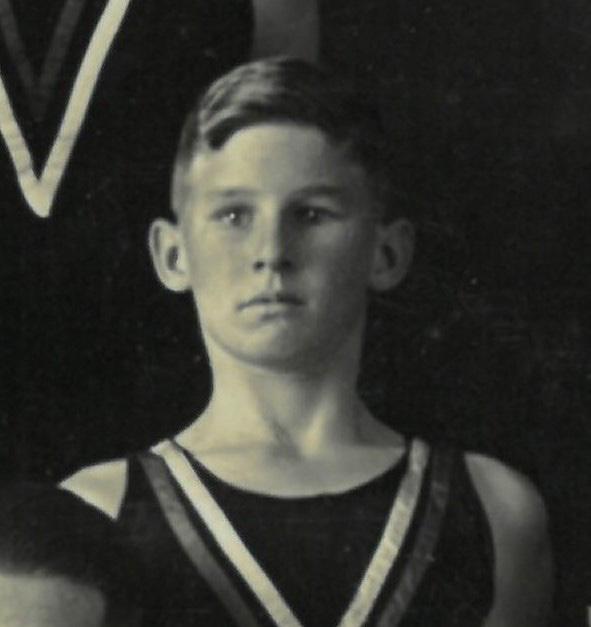
In the Chapel at Brisbane Boys’ College, names etched in honour tell a story of sacrifice and service. Among them sits Wallace Gray-Buchanan (OC 1935), a young bombardier who fell in Greece during World War II at just 23-years-old. For the Gray-Buchanan family , this memorial is part of a living legacy that now spans four generations of BBC boys.
“Growing up and seeing his name at the school was always a reminder of that legacy,” says Lachlan Gray-Buchanan (OC 1993), whose great-uncle Wallace and grandfather Sydney (OC 1931) both attended the College.
“Having that family connection gave me a sense of familiarity when I started at BBC. It’s also one of the reasons I wanted my boys to go there, to have that same grounding, that same sense of belonging and tradition.”
The Gray-Buchanan family legacy traces back to Sydney and Wallace – sons of Scottish-Australian pastoralist James Maurice Gray-Buchanan – who both graduated from BBC in the early 1930s. The brothers shared a close bond and a natural talent for sport, especially rugby and athletics. Sydney would go on to play fly-half for Queensland, representing his state with distinction.
When World War II broke out both GrayBuchanan brothers enlisted in the Australian Imperial Force. Wallace served as a bombardier with the 2/1st Anti-Tank Regiment Royal Australian Artillery, fighting in the Greek Campaign. On 12 April 1941, he was killed in action. His name is honoured in the Phaleron War Cemetery in Greece and commemorated on panel 19 in the Australian War Memorial.
Sydney was also recognised for his service. As a Flight Sergeant and rear gunner with No. 458 Squadron, he was known as a man who kept his cool under extraordinary pressure, earning him the Distinguished Flying Medal with Bar. King George VI presented Sydney with the honour at Buckingham Palace on 20 July 1943. A portrait of Sydney, painted as a typical Australian airman, hangs in the Imperial War Museum in London.
Bruce “Sam” Gray-Buchanan (OC 1965), Sydney’s son, reflects on his father’s legacy with pride.
“I think my father would be very proud of
his family today, as we are of him and what he did for us in our lifetime, including going to war for our freedom.”
Sam’s own BBC experience in the 1960s mirrored the well-rounded education that has long defined the College. “It was an enjoyable education combining academic, rugby, and rowing in equal portions, making lifelong friends in the process,” he recalls.
After graduating from The University of Queensland in 1969, Sam began his career in stockbroking before being mentored into commercial real estate by Alan White of Ray White, whose son Brian is also a BBC Old Collegian (OC 1959). Sam enjoyed a successful career with Ray White and CBRE before retiring in 2001.
The decision to send his son Lachlan to BBC was an easy one.
“I sent Lachlan to BBC because of the great experiences I had and the fact that
More than anything, I hope my boys leave with good values, respect, humility, and integrity, and a strong circle of friends”
it produced well-rounded students,” Sam says.
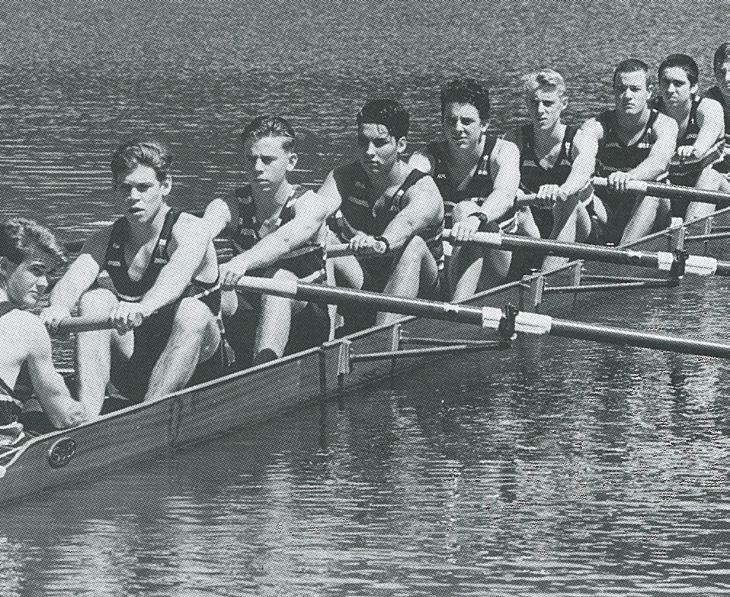
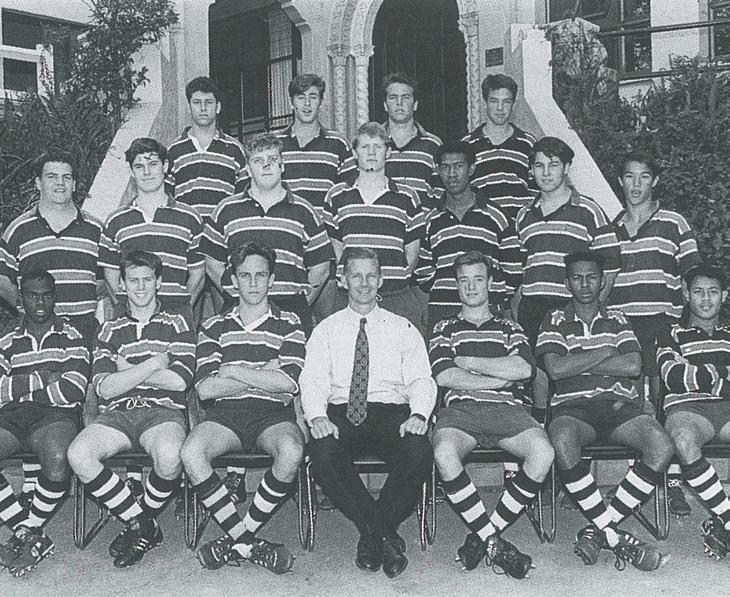
Lachlan began his BBC education in the early 1990s under the leadership of Headmaster Graham Thompson, whose influence left a lasting impression on him.
“We had an incredible headmaster, Graham Thompson, who was like the godfather of BBC to us,” Lachlan remembers.
“He remembered every boy’s name, even years later, and he really shaped the culture. One phrase he used to say was, ‘If it is to be, it’s up to me.’ That stuck with me. It’s a great mindset for life – to take ownership and responsibility for your path.”
Like his father and grandfather before him, Lachlan embraced the sporting culture.
“Mainly rowing and rugby, a bit of cricket too. None of us were stars, but sport was such a big part of life at BBC. It taught teamwork, discipline, and resilience, lessons that really stay with you,” Lachlan says.
After leaving BBC, Lachlan’s career took him far from Brisbane’s shores. He now serves as CEO of C2i, a subsidiary of Aldar
in Abu Dhabi, spending his time travelling the world and bringing innovative concepts to the Middle East. His children grew up in Dubai before Lachlan made the decision to return to Australia in 2018 to start his eldest son at BBC.
“When we moved back to Brisbane after so many years overseas, it was lovely to reconnect with that community and see parents I’d known from my own school days,” Lachlan says. “BBC has always felt like a bit of a family hub for us.”
Today, three more Gray-Buchanan boys walk the same grounds their great-great-
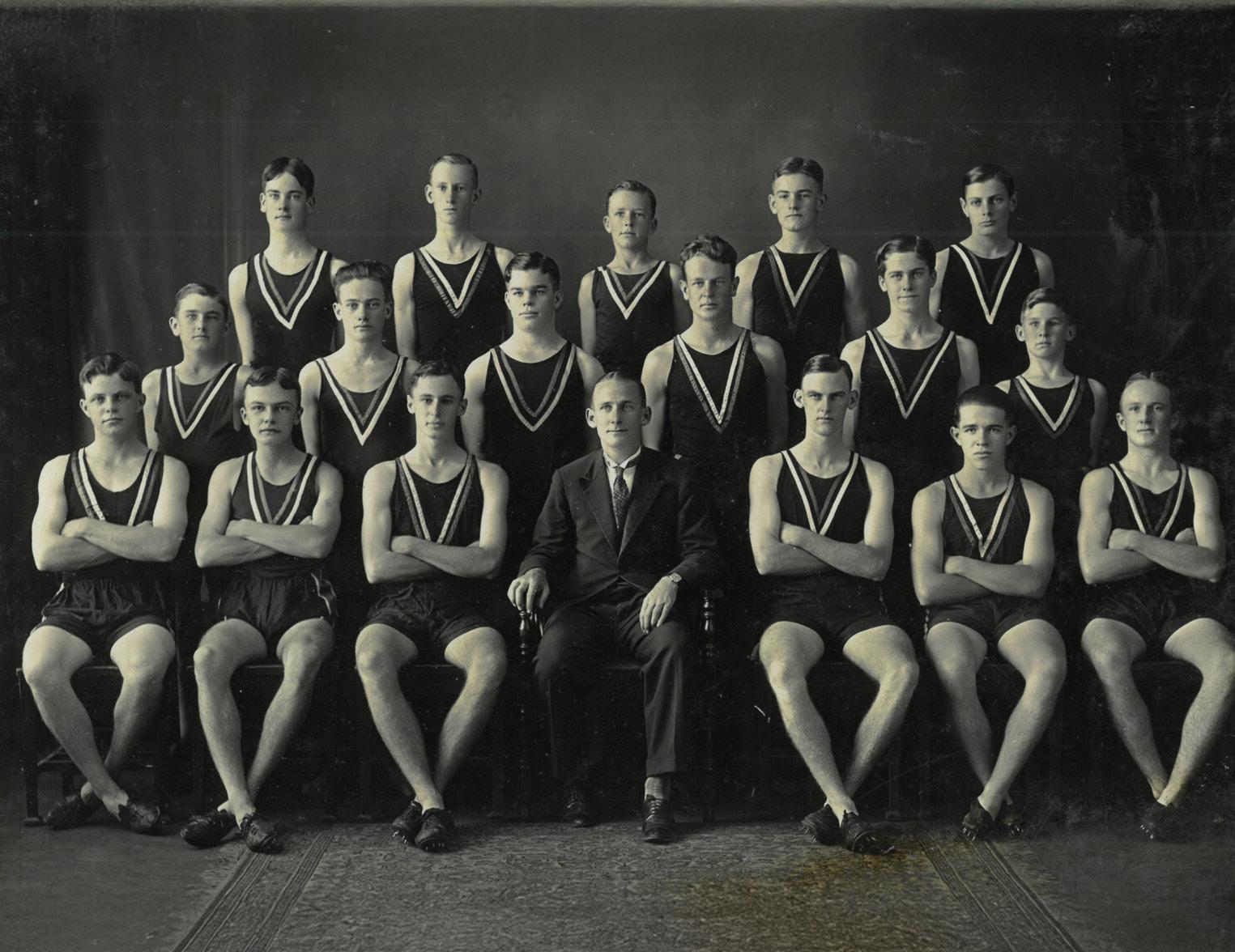
grandfather’s generation once knew.
“I love everything about it – the teachers, the sport, the community,” says Barney, who will soon enter Year 12 and serve as Wesley House Prefect.
“Having older brothers go before me helped a bit, but it’s really the connections you make yourself that make it special.”
His older brother Fredrik (OC 2024) agrees. Now studying Business Management at the University of Queensland, he often returns to the school to coach rugby.
“Coaching rugby at the College after I finished was a great way to give back,” he says. “It’s where I learned teamwork and leadership, the same things Dad talks about from his time there.”
Alfie, the youngest, is still in the early years of his BBC journey but already feels part of the tradition. “It’s fun and there’s always something going on,” he grins. “I’ve had the same friends since Grade 5, and we all play sport together. It feels like home.”
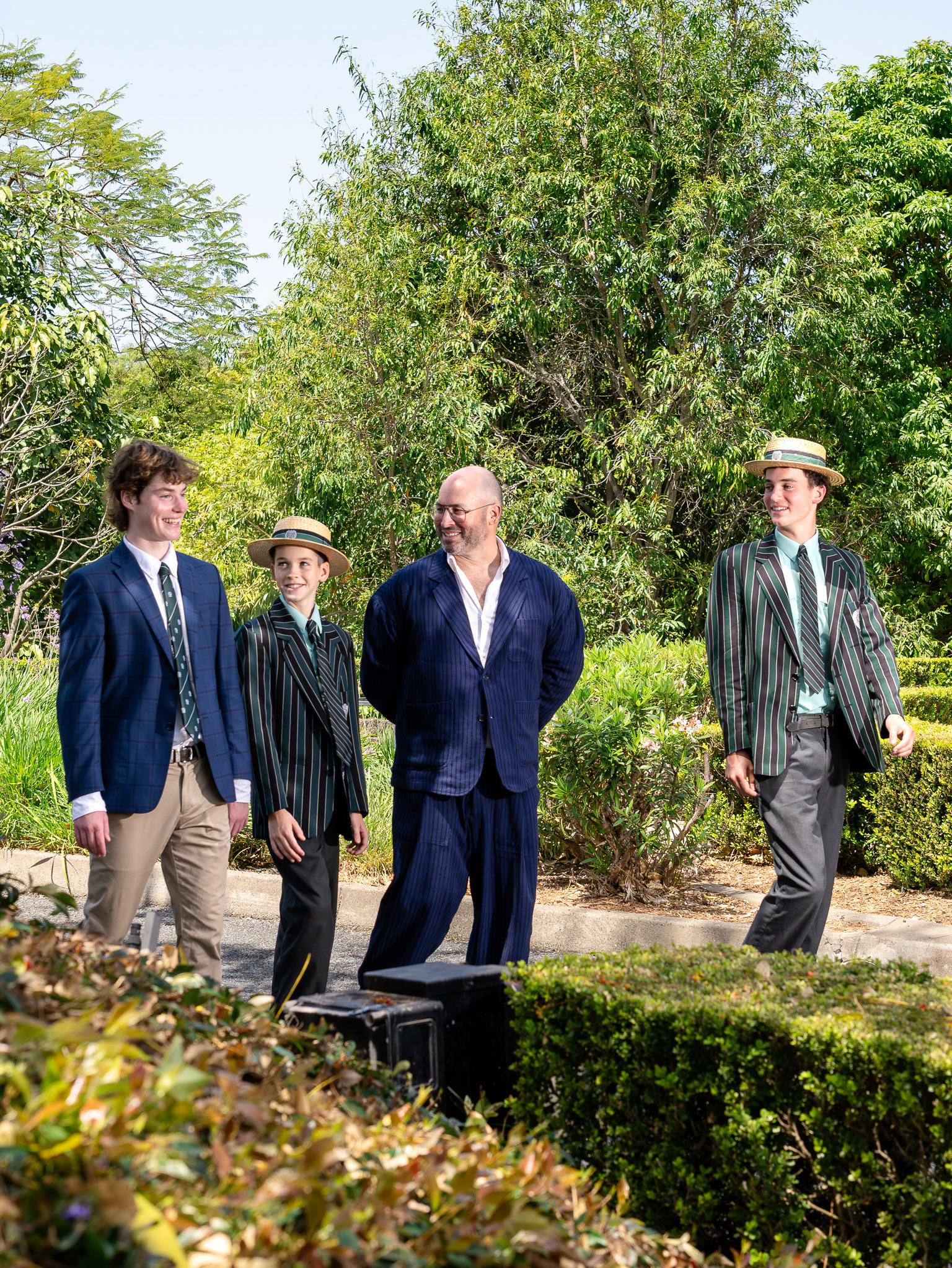
The BBC that welcomes Lachlan’s three boys differs markedly from previous generations. The old gym - once home to a makeshift boxing ring - has long since been repurposed, and the shooting range on P&F Oval is a memory from another time. As Lachlan notes “it’s changed a lot since our day, but the spirit of the college is still the same.”
Those core values have kept them coming back generation after generation and remain unchanged. “More than anything, I hope my boys leave with good values, respect, humility, and integrity, and a
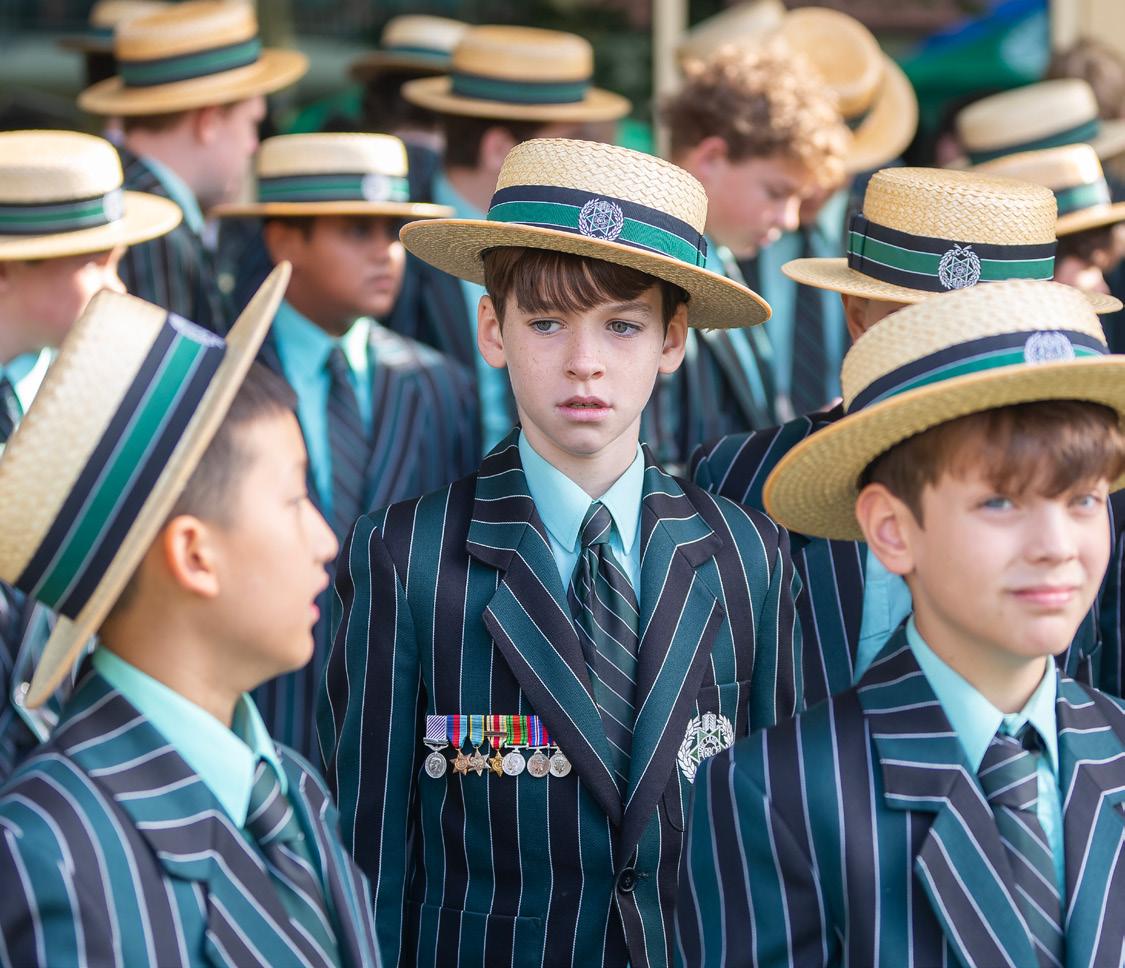
strong circle of friends,” Lachlan says. “The academics are important, of course, but it’s the character and community that last a lifetime.”
Across four generations, the GrayBuchanans have shown that there’s more than one way to thrive at BBC. From soldiers to businessmen and global entrepreneurs, each has found his own way to embody the College’s values of aspiration, honour, and community.

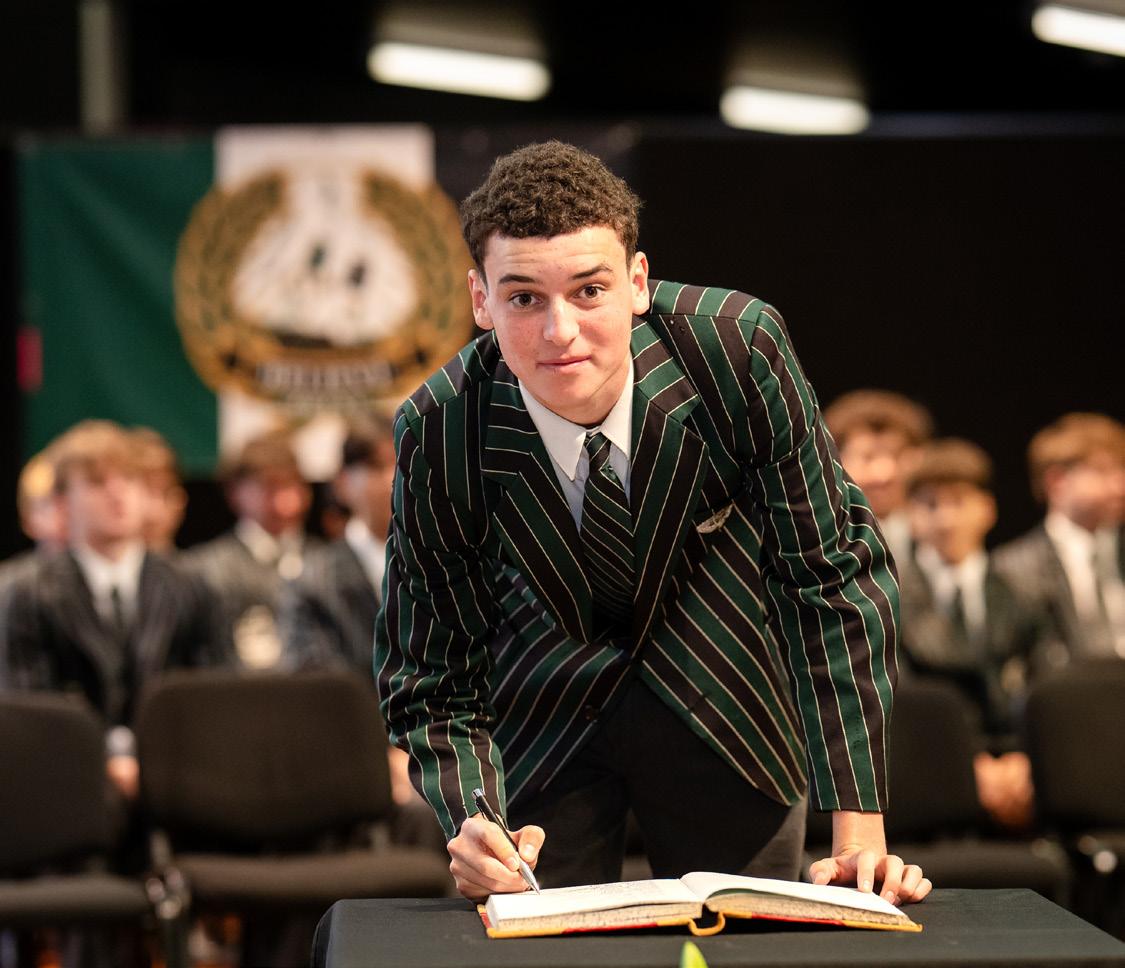
As Lachlan continues to split his time between Abu Dhabi and Brisbane, flying back every few weeks to be present for his sons’ important moments, he contemplates what the future might hold.
“I’d love that,” he says when asked whether a fifth generation of Gray-Buchanan boys might one day attend BBC. “That would be amazing. It gives me real pride knowing our family’s connection to the school has endured this long.
As we celebrate families like the GrayBuchanans, whose stories are woven through BBC’s history, we’re proud to continue honouring those legacies in new ways. In 2026, BBC will introduce generational pocket embroidery, called Legacy Lines, a special recognition of generations of Old Boys within the same family, celebrating the enduring bonds of our community.
Mornings at Brisbane Boys’ College come with their own soundtrack - old-school tunes, laughter, and the unmistakable grinding of the coffee machine. Around the Coffee for Cambodia station, boys gather in a scene that feels as much about community as it does about coffee.
For 14 years, Coffee for Cambodia has been a cornerstone of a community that connects BBC boys to each other, their teachers, and students half a world away. What began in 2011 as a modest fundraising initiative has evolved into one of the College’s most popular service activities, attracting interest from over 100 students in Years 9 to 12 who dedicate their time to serving coffee to staff and hot chocolates to students four mornings a week, with all proceeds supporting a partner school community in Cambodia.
In 2012, Maths teacher Mr David Biggs inherited a coffee machine, but it was his own journey to Cambodia that sparked Coffee for Cambodia.
In 2011, he was part of a group of four teachers who joined a Brisbane-based charity, Harvest Cambodia, sending teachers to Cambodia to assist local teachers at a new school.
“The land for Stepping Stones School in Kok Thnot village had been donated by a villager, and funds were raised in 2010 to build the first classroom,” Mr Biggs says.
“We were part of the second group to go, and everything just fell into place from there.”
The money raised through the BBC coffee cart – now $4,000 per term – funds everything from classroom supplies to house construction in the Kok Thnot Village. The effects throughout the entire
community have been profound.
“Education has completely changed the village. When the school started, no-one had been to university. Now over 50 have graduated from university,” Mr Biggs says.
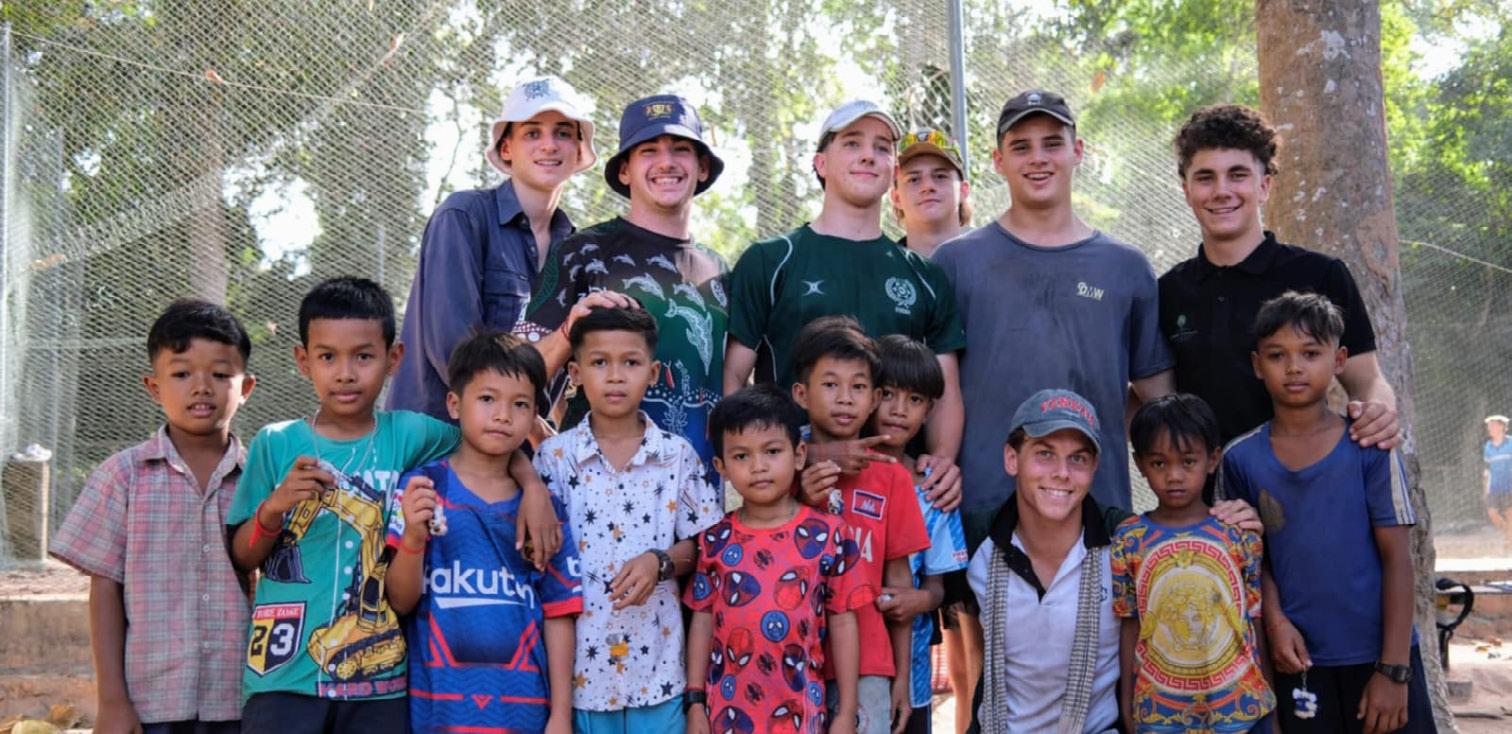
Every two years a group of BBC students travel to Cambodia to help build houses
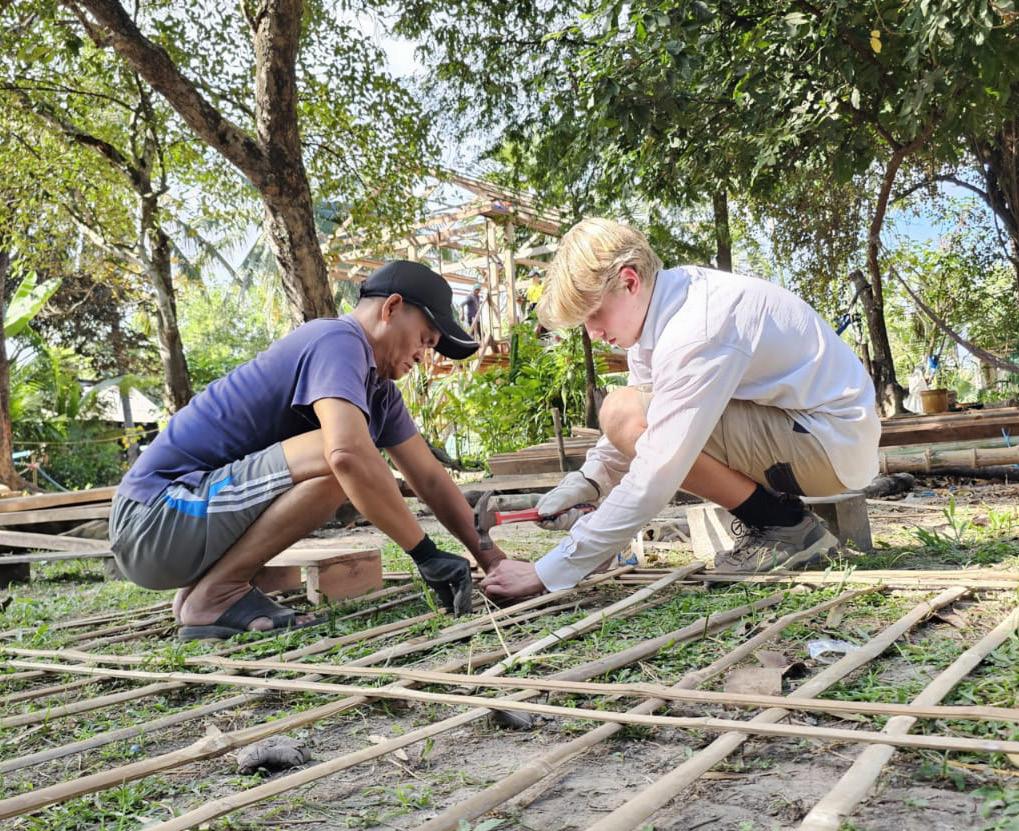
and connect directly with the community.
“Cambodia was an incredible experience,” Year 12 student Finn Clair, who visited in December 2024, says.
“Seeing the school and the community we helped support over the last five years was really special.”
Between helping build two homes and sitting in on a lively English lesson, Finn found himself on the soccer field with local students – a reminder of shared joy and experiences across cultures.
Mr Biggs has witnessed how these tours create lasting bonds between the two cultures.
“In 2014, we ran our first student tour with 12 boys and built houses for families chosen by the local community. We’ve run six tours since and we’ll do another next year,” he says.
“The best part about going to Cambodia is the relationships. It almost feels like a second home to me - we stay with the same families, we’re driven by the same drivers and we’re taught by staff who’ve been there since the start. It’s very special.”
When two Cambodian staff members visited BBC last year to celebrate ten years
since the first student tour, the College held a community night in their honour. 35 Old Collegians returned to say hello, a moment Mr Biggs describes as a powerful reminder that the bond between BBC and Cambodia truly goes both ways.
The mechanics of Coffee for Cambodia are straightforward, but the skills students develop go beyond the barista machine.
“My role, like all younger students, started at the hot chocolate station,” Finn says.
“Then in Year 10, with the help of a senior student I was taught how to make coffee, froth milk and take orders from customers. Now my current role as a senior student is to lead and help train other boys in the skills they need to keep the business going.”
For Year 11 student Dhugal Mills, the appeal lies in connection.
“It’s an hour a day where I get to be working alongside boys from other year levels, different teachers, and learn skills like working as a team to make and sell coffees and mentoring the younger students,” he says.
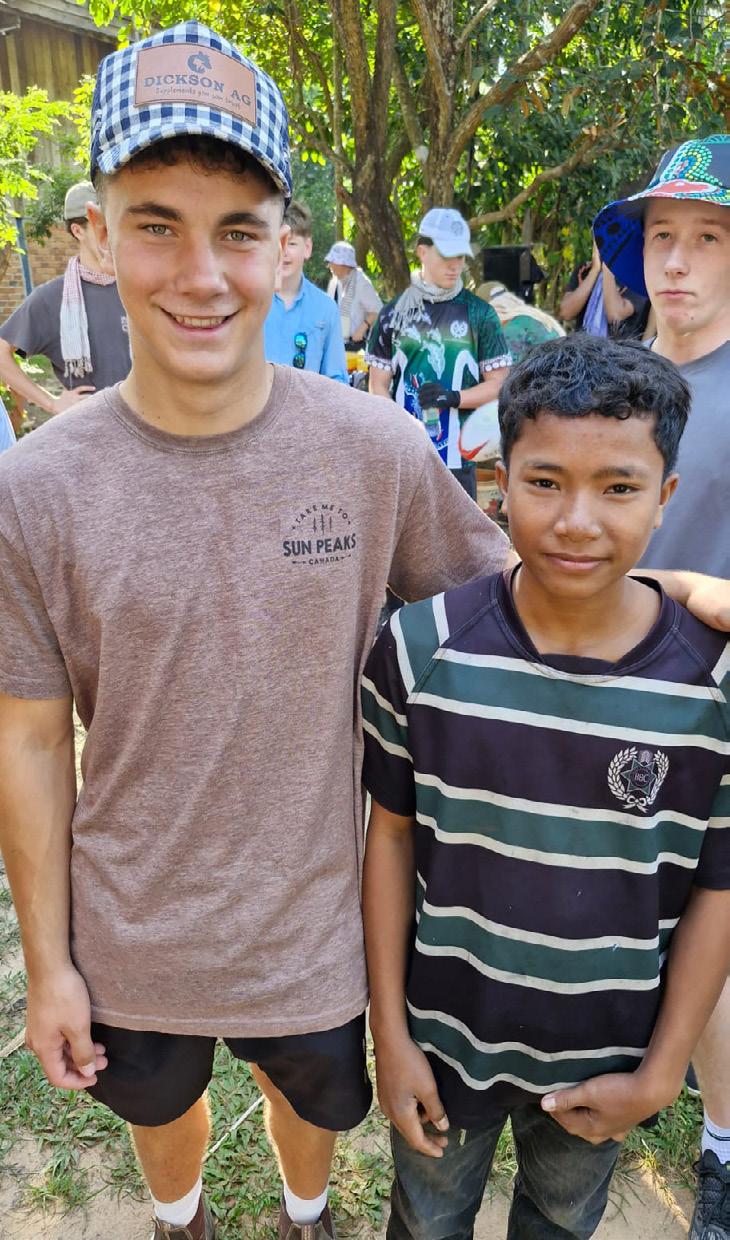
The program has grown so popular that it’s now a much-anticipated opportunity for boys in Years 9–12. When it became an official school activity, more than 100 students applied, and the strong demand continues each year. With so much enthusiasm, there’s even hope the program might expand in the future.
The program’s impact on the boys resonates with BBC staff as well. While Associate Chaplain Mr Tom McPherson enjoys his regular coffee, it’s the morning camaraderie he values most.
“I often get my coffee and then spend about half an hour chatting to different students and staff as they wait,” he says.
“I’m really proud of the way it provides hope for the students at Stepping Stones School and the way in which young men of the College develop their skills and abilities within this service activity.”
Reflecting on the future, Mr Biggs hopes the program will endure well beyond his time at the helm.
“There are enough boys and enough interest for it to carry on. We’ve built something that has made a lasting impact, and that’s what I’m most proud of.”
“Music gives a soul to the universe, wings to the mind, flight to the imagination and life to everything.” - Plato
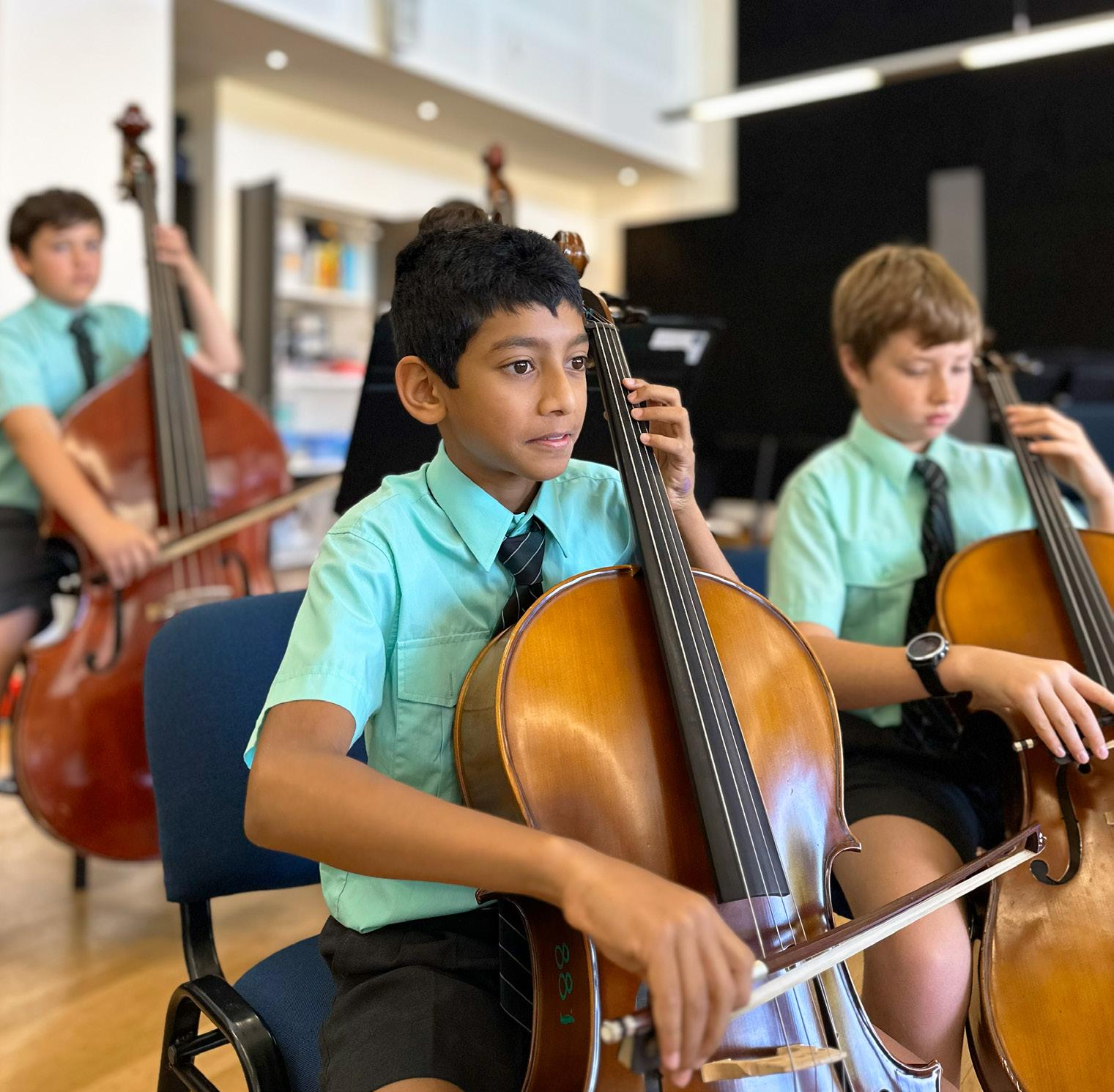
For more than 30 years, Brisbane Boys’ College has brought this philosophy to life in the Junior School, where music is woven into daily learning.
The Classroom Instrumental Music Program has given every student the chance to read, play, and understand music since 1995, making it as much a part of school life as Maths and English.
Mr Theo Kotzas, Head of Performance Music and Head of Strings, advocates for music education to be embedded within a boy’s education, just like any other core subject.
“Everyone has the right to be musically fit, not just physically fit,” Mr Kotzas says.
“Music is part of everything we do in life, and this program ensures every boy gets the opportunity to learn and appreciate it.”
What began in 1995 as a string program for Year 4 students quickly expanded into Years 5 and 6 under the leadership of Mr
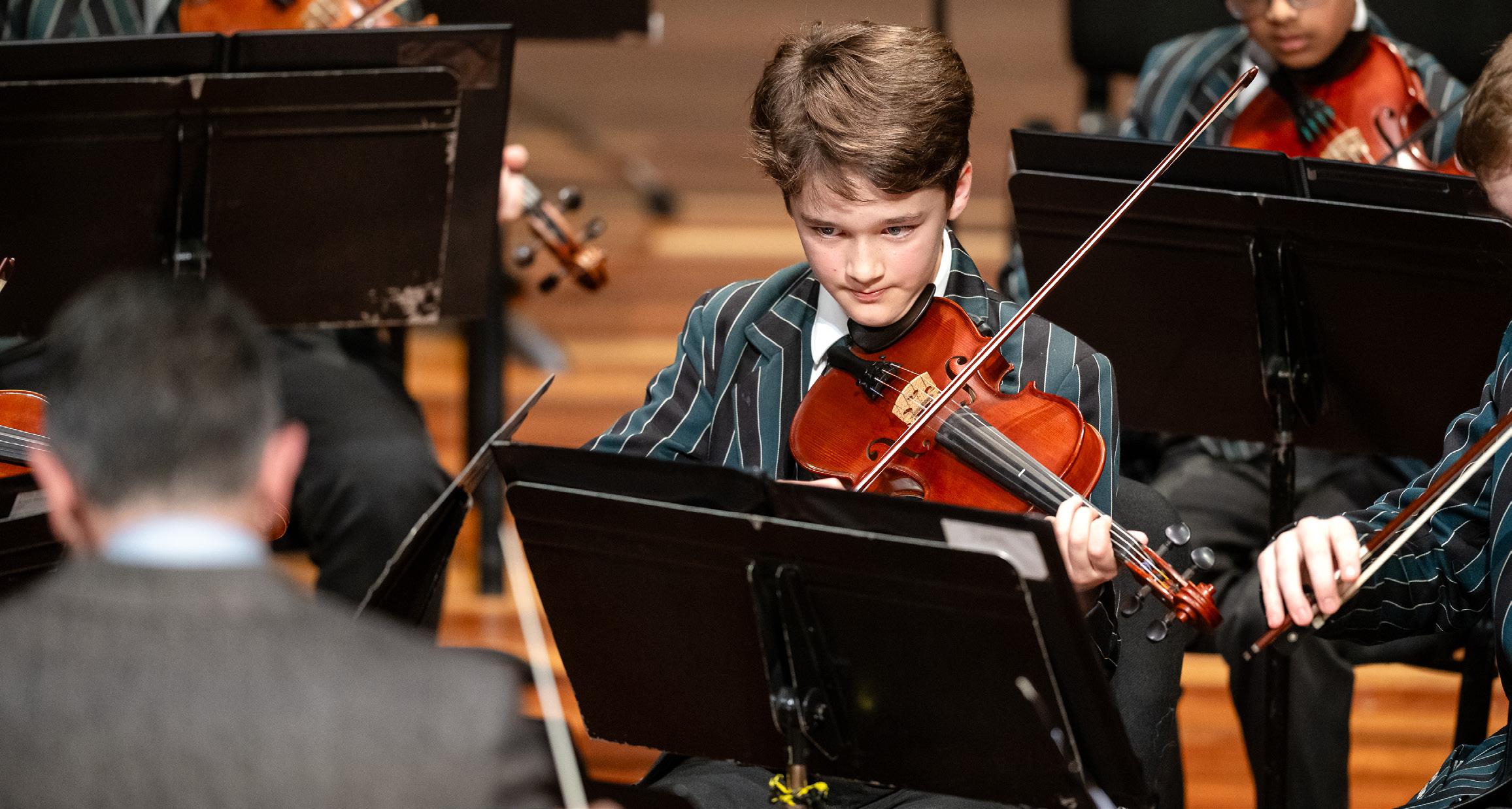
Kotzas. It’s now a cornerstone of the Junior School curriculum.
“Each boy in Year 4 is given an instrument – violin, viola, cello, or double bass – and learns by doing,” Mr Kotzas explains.
“Boys learn best through hands-on experience, and music is a powerful way to develop routine, motivation, and the habits that set them up for success in life.”
At BBC, every boy is provided with an instrument from Year 4 to Year 6. Lessons are built into the curriculum, reinforcing the school’s belief that music is essential to a young man’s education.
In Year 4, boys begin their musical journey with a fun quiz and listening test that helps uncover their natural strengths. With guidance from teachers – and their own input – each boy is matched to an instrument that is the best fit given the collated information.
The teaching methodology builds knowledge progressively and naturally. “You get taught this note is D, you add this finger, it then becomes E,” Mr Kotzas explains. “So you’re not replacing knowledge, you’re extending knowledge.”
For boys who are already learning an instrument at a high level, BBC offers
leadership opportunities as ‘assistant tutors.’ The students are encouraged to demonstrate new skills by helping as peer tutors, sharing their skills and knowledge.
While boys may explore other instruments later, their first instrument lays the foundation. Boys enjoy weekly instrumental lessons, starting in single class groups in Year 4 and expanding to full-cohort sessions by Years 5 and 6, while continuing classroom music to grow as singers and musicians.
Year 8 student Braxton Bendzala discovered his passion for the viola through the Junior School’s Classroom Instrumental Program.
“At first, I thought it was going to be really hard, but I was surprised at how quickly I picked it up. The teachers made it much easier and really helped me along,” he says.
“Being in the program has really changed how I think about music. I used to see it as something I’d never get or even want to learn. But the way the program teaches you makes it so much easier, and it’s even helped me in other subjects too by dealienating new concepts I may not have seen before.”
For Mr Kotzas, hearing feedback from students like Braxton shows the real goal of the program.
“It’s not about producing virtuosos,” he explains. “It’s about letting boys enjoy music by making it. Along the way, they build fine motor skills, understanding, discipline, and a sense of routine.”
Research supports this view. Dr Anita Collins, a leading expert in neuromusical science, highlights in her popular TEDx Talk that learning music is like a full-body workout for the brain, engaging multiple regions at once and boosting memory, language, executive function, and brain plasticity.
“Over the years, I’ve seen boys start out barely able to make a sound and go on to pursue music at a tertiary level,” Mr Kotzas explains. “Others might not continue, but they carry with them a lifelong appreciation of music. That’s the goal; to instil confidence, joy and pride in what they can achieve.”
BBC’s music program shapes boys who are musically literate, confident, and ready to embrace challenges with joy.
In 2024, Brisbane Boys’ College achieved its highest median ATAR in the five years since the current system was introduced. But it’s a milestone that extends far beyond academic ability alone.
From Year 9 onwards, boys step into an enriched network of support that blends personalised guidance with practical planning. At the heart of it are conversations that help each student explore how their talents and interests can shape their future ambitions.
BBC’s philosophy of academic excellence is founded on the belief that every boy should have the opportunity to extend himself. This includes accelerated subjects, Honours classes in English, Humanities, Science and Maths, and access to a range of extension programs and competitions.
“Gifted students learn differently and deserve an education that matches their abilities,” says Ms Sandra Lummis,
Head of Learning Diversity. “By providing tailored opportunities and a supportive environment, we can help them develop their talents and thrive both academically and personally.”
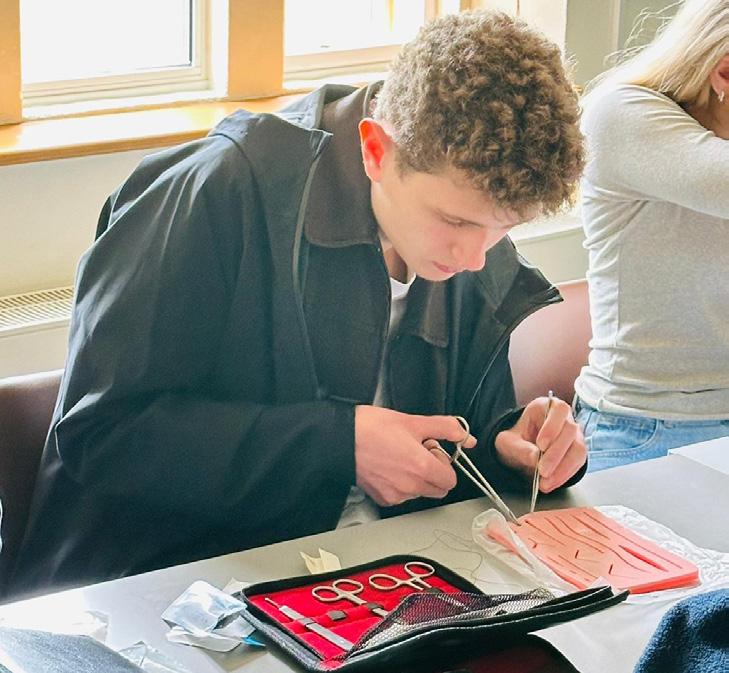
The College also participates in global initiatives, including the Oxbridge Academic Program, which offers intellectually curious students the chance to study university-level subjects overseas. “Programs like the Honours Society and the Oxbridge Academic Program give students the chance to
immerse themselves in subjects they are passionate about, work with like-minded peers, and engage in experiences they simply wouldn’t get anywhere else,” Ms Lummis explains.
One of those students was Year 11 student David Rentoul, who was selected through his participation in the Honours Program. As part of the opportunity, David spent three weeks in the UK studying Medical Science. “I got to meet people from all over the world, engage with really interesting coursework, and learn from actual university professors. It was a really great experience - I enjoyed it a lot,” David says.
These kinds of programs are supported by a detailed system of early identification and tailored extension.
Smaller focus groups in Maths in Years 8 and 9 build confidence and skill, while the Honours Program for Years 7 to 9 introduces higher-order learning and research skills early on.
Ms Amelia Apogremiotis is the Head of Secondary School and oversees BBC’s comprehensive approach to academic planning.
She’s proud of the school’s recent success, while still keeping the well-deserved spotlight on the students.
“Last year’s median ATAR of 91.4 was outstanding. Every cohort is unique, but our focus is always on helping each boy reach his potential and achieve his personal best,” Ms Apogremiotis says.
The path BBC takes to ATAR success isn’t through pressure or formulaic approaches, but through personalised care and planning that begins years before final exams.
She explains, “We focus on helping boys make informed choices about subjects and pathways. It’s not about pressure – it’s about ownership. Boys learn to articulate why they’re choosing a subject, whether it’s for prerequisites, passion, or aligning with their strengths.”
BBC also runs a subject selection event, similar to a careers fair, where boys and parents meet Heads of Subjects to explore pathways. This feeds into Senior Education and Training (SET) planning.
“While SET planning is mandatory in Queensland, our approach emphasises student responsibility and agency,” Ms Apogremiotis says.
These conversations are then quietly backed by detailed data analysis happening behind the scenes. With Year 12 in particular, BBC closely examines Queensland Curriculum and Assessment Authority (QCAA) data to identify strengths and weaknesses across cohorts, using the insights to plan improvements from semester to semester and year to year.
“Year 9 NAPLAN maths data is another predictor that gives us a fairly strong indication of which boys might go on to achieve very high ATARs,” Mr Brown says.
“That data helps guide conversations as
students choose subjects from Year 9 into 10, and then 10 into 11.”
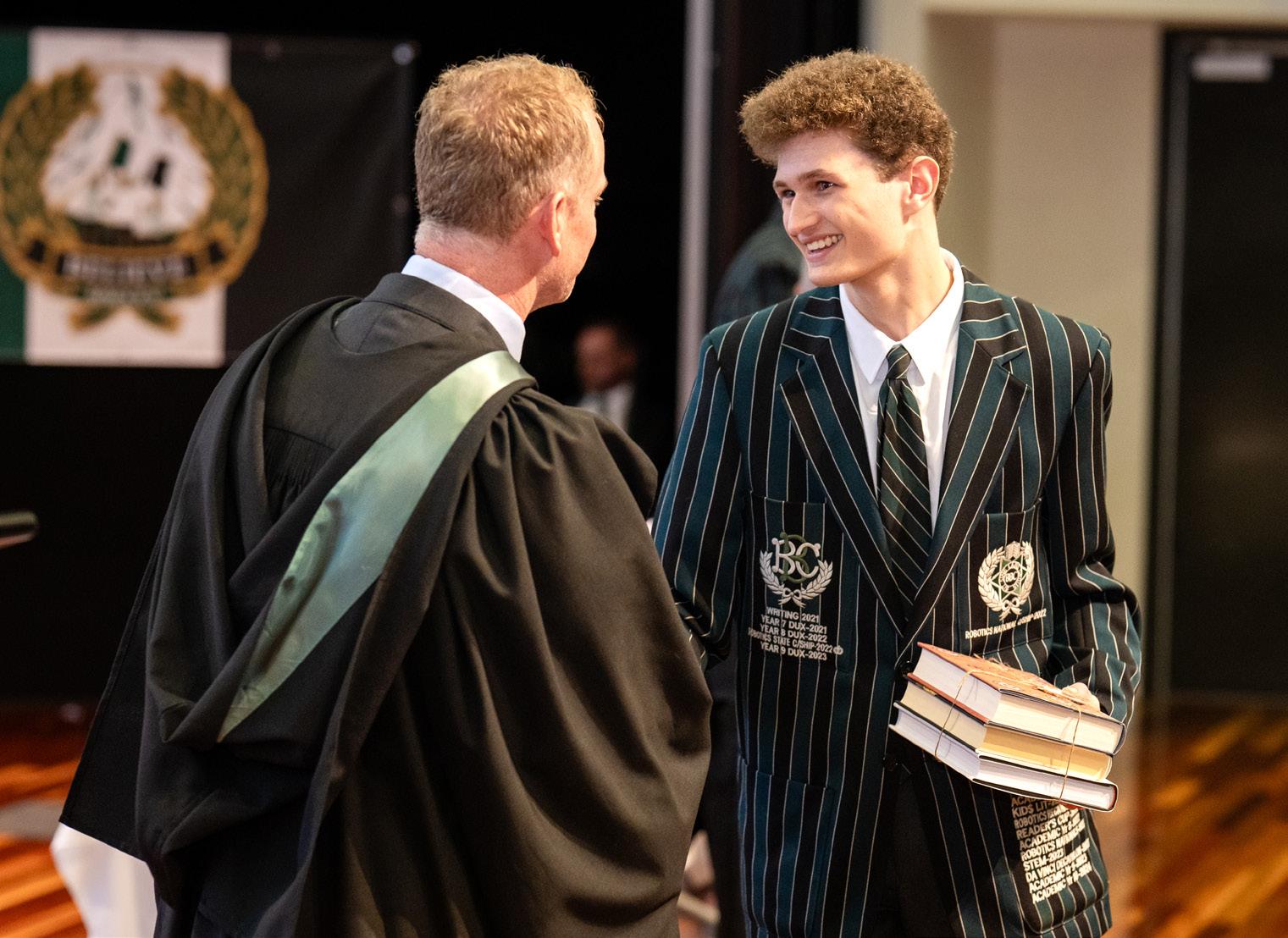
David, for example, has benefited from this personalised and data-informed approach. Through academic conversations and careful subject planning, he’s been able to align his studies with his long-term goals. Aspiring to study medicine, David needs a high ATAR, but rather than picking subjects solely for scaling, he chose the ones he enjoys and sees as most relevant to his future.
“I’d rather study what aligns with my path than chase an arbitrary number,” he says. “For example, I kept biology even though something like economics might scale better for the same mark.”
This individualised approach extends beyond subject choices into broader career and tertiary preparation. From the early years of Senior School, students are supported by BBC’s dedicated Careers Counsellor, Ms Roma Deo, whose guidance helps them connect their classroom learning with real-world aspirations.
Throughout his journey, David has also benefited from Ms Deo’s support. She encouraged him to take part in the International Young Researchers Conference in Tokyo, where he remotely presented a paper on the links between chronic insomnia, anxiety, and depression.
“We introduce students to a lot of opportunities well beyond the school system, both locally and globally,” Ms Deo explains. “Students like David often jump at those opportunities because they want more than just curriculum.”
“At BBC, careers counselling is highly valued. Our students benefit not only from a leadership team that supports my role, but also from the global networks I’ve built,” she says. “I’m internationally accredited and connected with university admissions officers around the world, which means I can bring that knowledge directly to our boys.”
The intricate web of support networks surrounding boys on their academic journey at BBC means continually ‘getting the best out of the boys we have’ is less about pressure and more about creating the right environment for them to thrive.
“One of the most rewarding parts of my job is hearing from graduates,” Ms Deo says.
“I’ll often get emails saying, ‘Thank you, without your advice or that opportunity you advertised, I wouldn’t be where I am today.’”
Through a blend of extension and personalised guidance, BBC nurtures boys who are not only high achievers, but passionate learners equipped to take ownership of their futures.
Year 11 student Cooper Lando left the sugarcane fields of the Burdekin for Brisbane Boys’ College, swapping familiar farm roads for dormitory hallways. What he didn’t expect was to find a second family waiting for him in Rudd House.
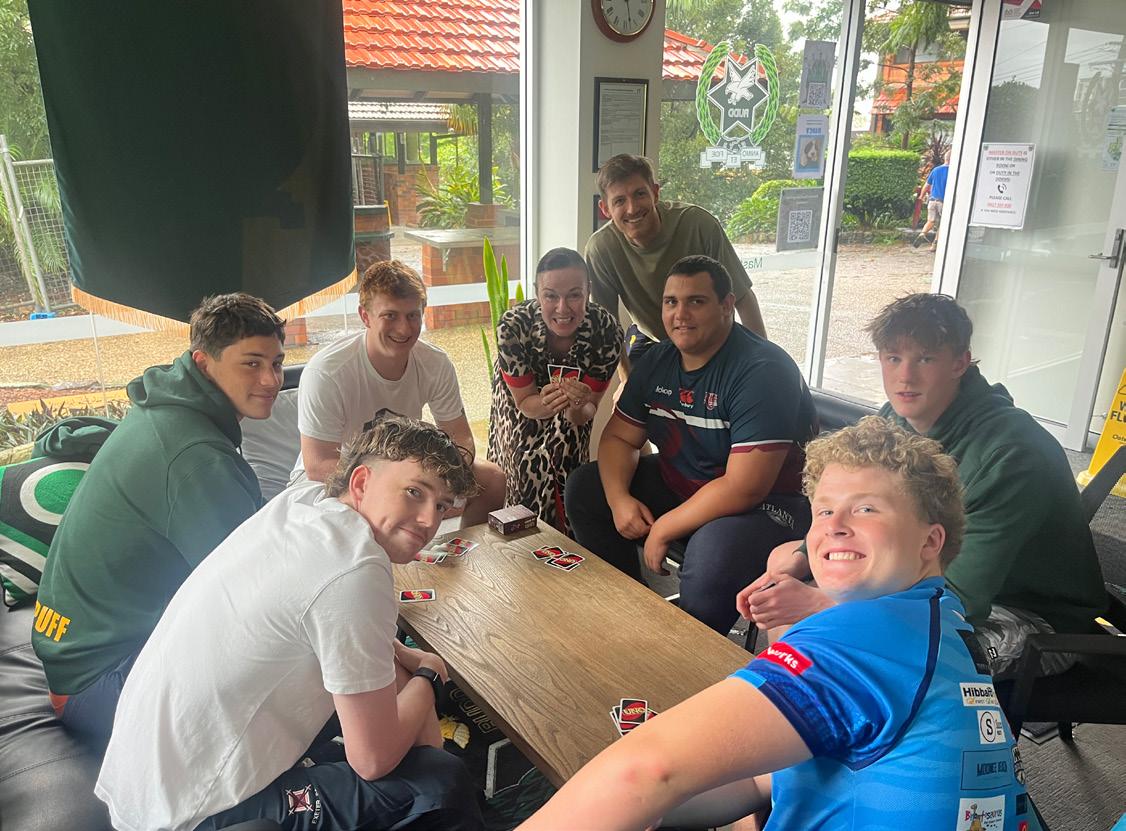
“Boarding has such a great atmosphere,” Cooper says. “Living with these boys all the time means you become close mates and are always up for a laugh.” It’s this sense of brotherhood that shapes the BBC boarding experience.
Boarding at BBC is more than just a place to sleep and study. Bringing together students from Years 7 to 12, the program fosters friendships from across Australia and the world, while helping boys grow in confidence and independence.
Director of Boarding, Mr Matt McEwen, has spent years perfecting what he calls a ‘village approach’ to caring for the 145 boys who call Rudd House home.
“Being Head of Boarding means I’m in charge of the wellbeing, academics, and spiritual wellbeing of 145 young men,” Mr McEwen says.
“We create a home with lifelong memories so they can look back and say boarding was one of the best things about their life.”
Unlike schools with multiple boarding houses, BBC’s single facility creates a
uniquely intimate environment where every face is familiar, every story is known, and no one falls through the cracks. Whether it’s from residential tutors, staff, or other boys, students will always be met with a strong support system.
“All of these people mean a lot because no matter what your day has been like or what you are going through, you always have someone to talk to for advice,” Cooper says.
BBC’s boarding ‘village’ brings together tutors, house mums, health staff, counsellors, and more to support the boys, while the prep program turns homework into collaborative study time where they can learn, and succeed, together.
Live-in tutors, many of them Old Collegians, guide the boys during prep while teachers also provide support. “Every boy does supervised prep, even our Year 12s,” Headmaster Mr Andre Casson says. “A teacher oversees each group, and specialist tutors – often, senior teaching staff, including myself - help
with subjects from Physics to English. It creates an environment where boys can ask questions, stay accountable, and build good study habits.”
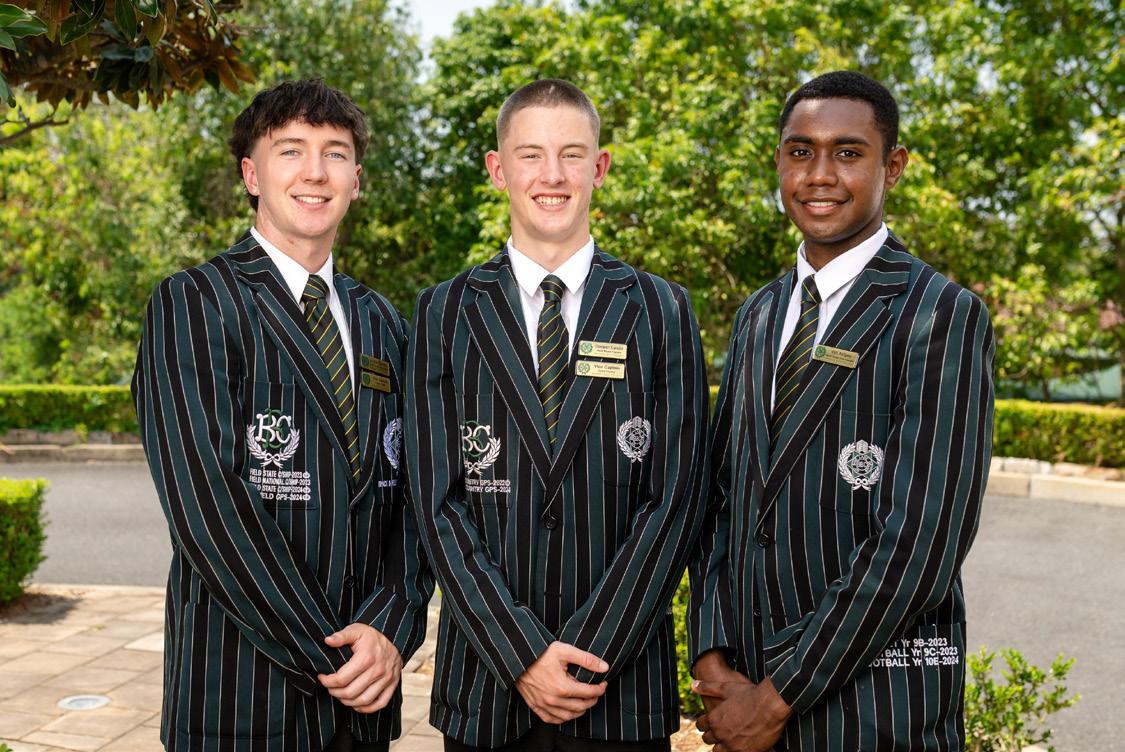
For Year 11 boarder Vali Asigau, who arrived from Papua New Guinea in 2023, this support made settling in and studying much easier from day one.
“Prep time is really useful because it gives us the chance to focus and get work done in a good space where lots of boys are studying together. The staff have also been a huge help, especially when it came to settling in and sorting out any problems,” Vali says.
Boarders also have access to the sports complex, weights room, ovals, pool, and resource centre to ensure they are benefiting from a well-rounded lifestyle. The weekend recreational program includes activities like ice skating, movies, rugby games, and outings such as all-youcan-eat chicken nights, providing a mix of fun, fitness, and community alongside their academic focus.
Even practical elements like nutrition receive careful attention, with meals planned to support growing teenagers.
“We have qualified nutritionists who plan balanced menus to ensure the boys’ meals meet their nutritional needs,” Mr McEwen says. “At the same time, it’s really important that the boys get a say in what they’re eating, so we have a student food committee and regular surveys for feedback. Breakfast includes eggs, bacon, hash browns, cereals, fruit, and smoothies. Lunch and dinner are balanced with protein, salad bars, and dessert,” Mr McEwen says.
Perhaps the most valuable aspect of Rudd House lies in how it unites boys from diverse backgrounds into a close-knit family. With students from every continent, First Nations communities, and rural Australia, friendships form that go beyond geography and culture.
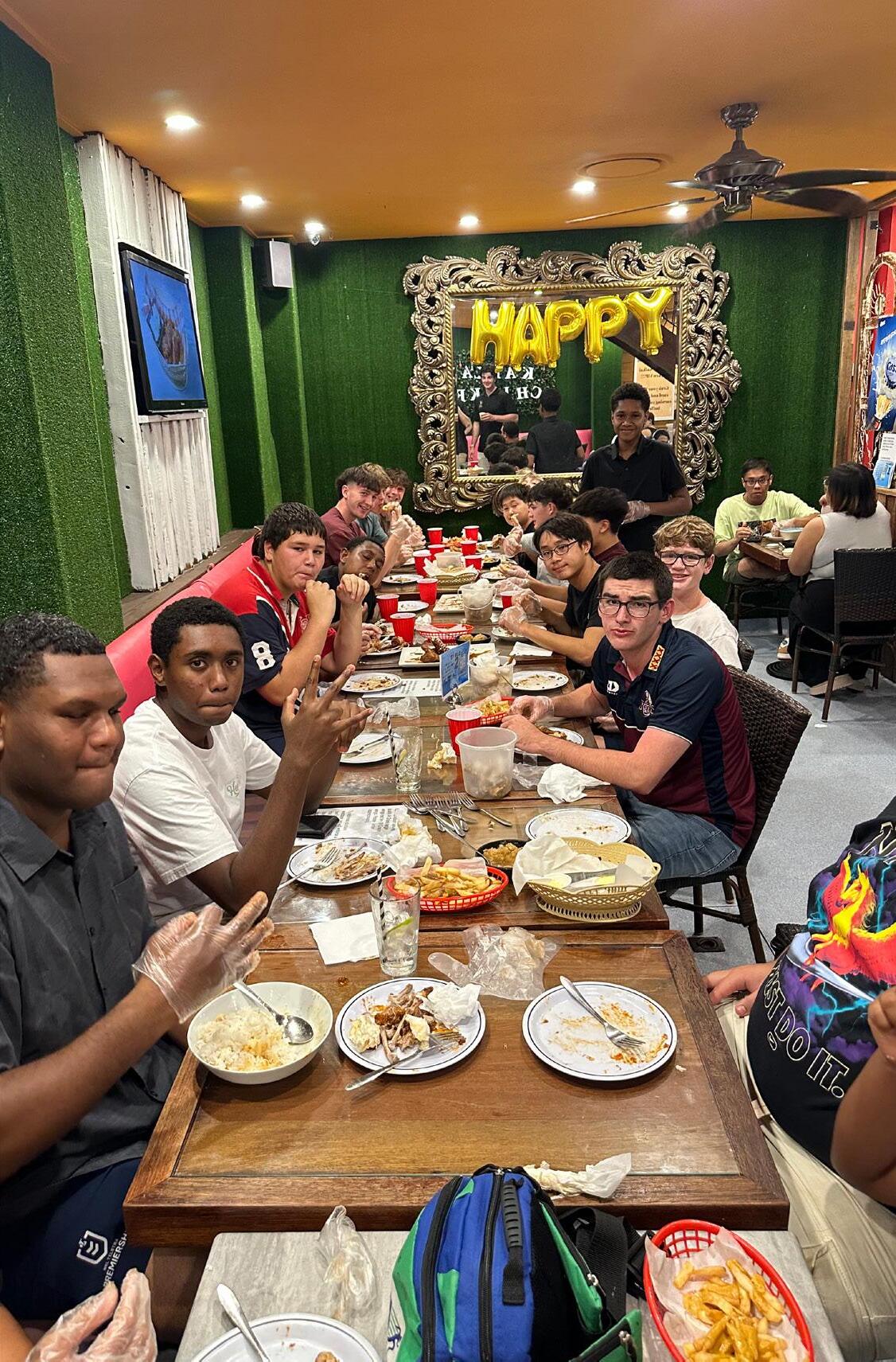
“For us, culture is about mateship,” Mr McEwen says. “If you ask any boy what’s the best thing about boarding, it’s being with your mates, looking after them, and creating that community. They’re just like brothers, they have ups and downs, but they’re always there for each other.”
Vali says the boarding house is full of energy, laughter, and support. While he admits living away from home can be challenging, it has given him friendships and a sense of community he wouldn’t find anywhere else.
Caring boarding staff help boys navigate the challenges of communal living, ensuring they feel supported, understood, and at home.
“This is their home,” Mr McEwen says. “So, sometimes they let their hair down and make mistakes, but you have to treat every boy as your own son. We get to know them personally; their favourite meals, their
interests, and when something’s off, we can easily talk to them,” he adds.
For Mr McEwen, the rewards are deeply personal. “I love building close relationships with the boys’ families, oftentimes being invited to their properties or sharing meals with them when they’re visiting. The hardest part is saying goodbye when their sons graduate. But then you get to welcome new families in, and you see the boys grow from Year 7 boys up to confident young men in Year 12. That’s what makes it so rewarding.”
At Rudd House, every boarder finds more than a place to live. They find a second family whose bonds last well beyond their school years.
The College is introducing weekly boarding in 2026. For further information, please contact Mrs Katrina Bracken on (07) 3309 3500
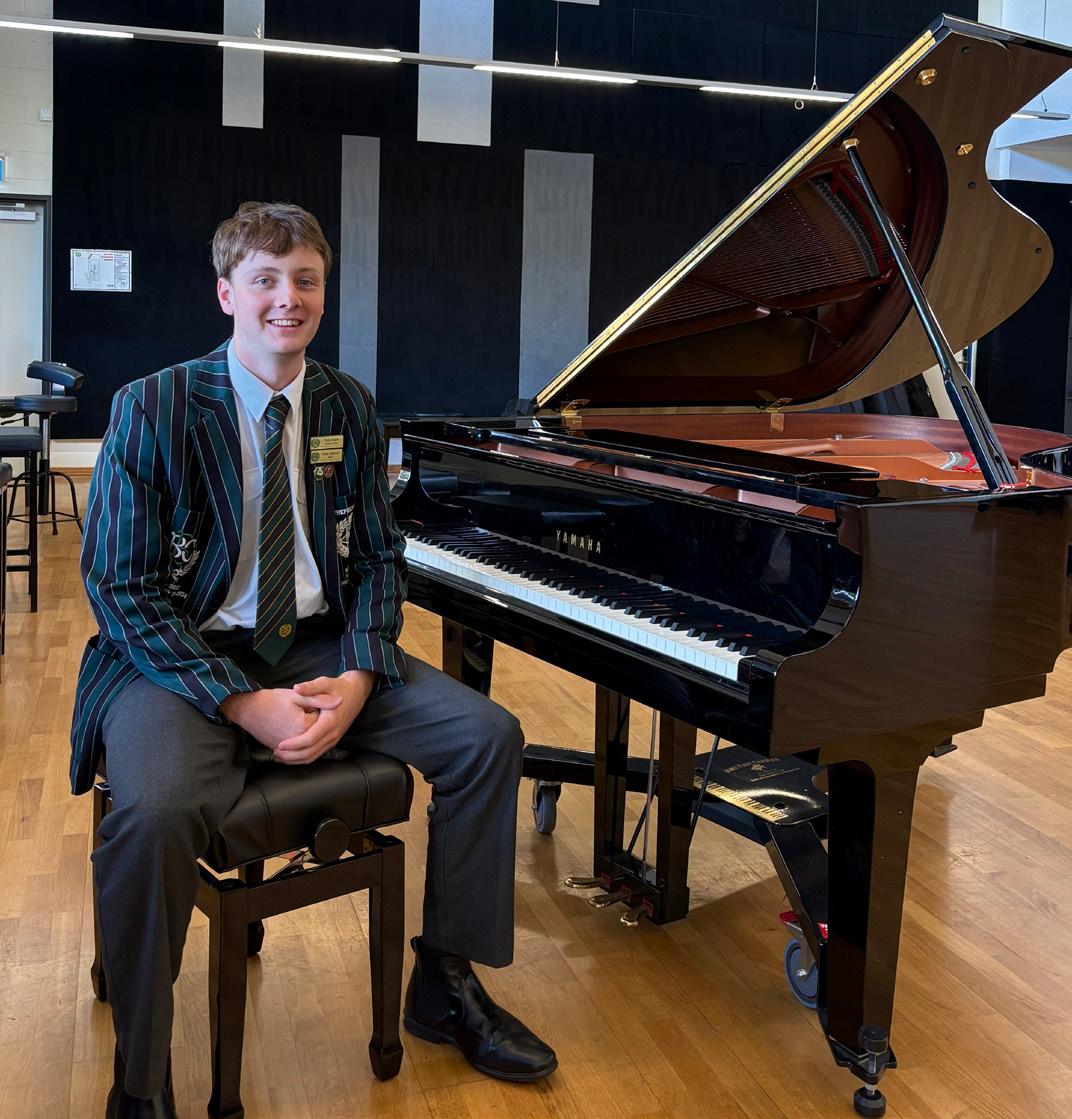
Tobi Clark (Year 12) has 15 years of experience on the piano, and since 2022, he’s been putting those skills to good use as a live musician at the Ballet International Gala.
The Gala sees expert dancers from around the world travel to Australia to perform excerpts from some of the industry’s most iconic ballets. As one of a select few live musicians, Tobi has accompanied the Gala to Canberra, Melbourne, Sydney, Cairns, and Auckland, as well as local performances at QPAC.
Tobi has taken advantage of every opportunity at BBC to nurture his skills. A sky-high achiever in Music Extension, he also serves as 2025 Co-Vice-Captain of Music and plays in the Collegians, Big Band, Camerata, and College Symphony. In 2024, he also joined BBC Music’s European Tour, singing to crowds in prestigious venues across Italy and Austria, including inside the Vatican.
Tobi’s experiences have given him memories to last a lifetime, and he’s grateful for the support he’s received from BBC. He fondly recalls the Headmaster and several staff members from the Music Department coming to see the Ballet International Gala when it was in Brisbane.
As he prepares to pursue a Bachelor of International Studies, Tobi looks forward to continuing with the Gala, as well as other performance opportunities. It’s that willingness to put himself out there that led him to be cast as Lawrence, the keyboardist, in the musical adaptation of School of Rock when it toured to South Korea in 2019.
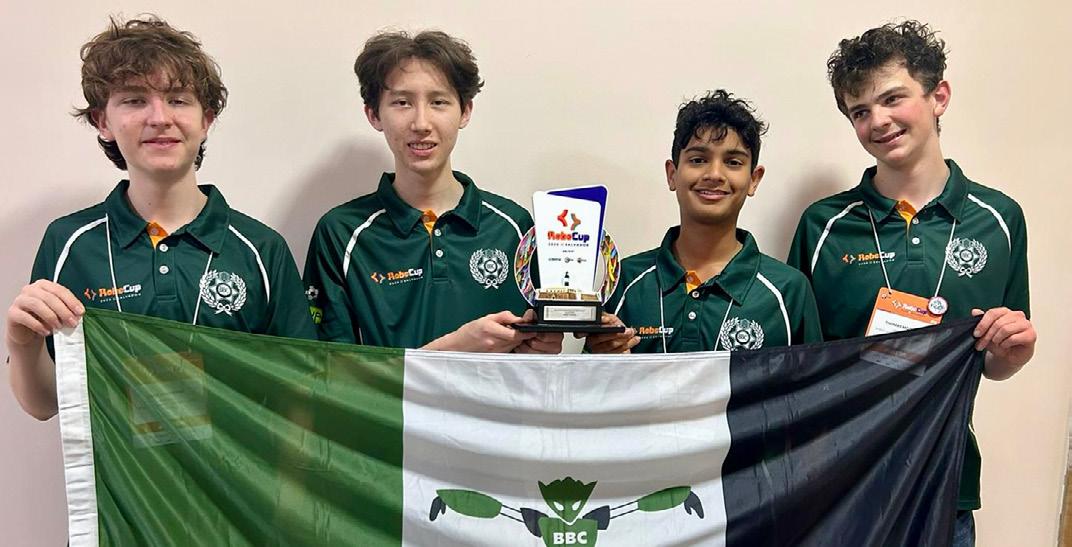
In July, two BBC Robotics teams, comprised of Year 10 and 11 students, travelled to Salvador, Brazil, to compete in the International RoboCup Competition after some hard-fought qualifying rounds. With a breathtaking win on the world stage and some extraordinary displays of robotics, Team Hyperion (Matthew Adams, Sam Garg, Thomas McCabe, and Luke Atherton) and Team Delta (James Cousins, Connor Duncan, and Ethan Seymour) did the College proud.
Getting to the Internationals is no easy task. Every competitor is working with their own highly specialised machinery. Put simply, this is not off-the-shelf material. It’s tailor-made by the boys themselves, often utilising knowledge equivalent to second- and third-year university courses to make fit-for-purpose robots.
Team Hyperion saw particular success, winning the Superteam Lightweight Challenge. This pairs three nations per team, each providing two robots. Hyperion partnered with Japan and the Netherlands, but an earlier bout had resulted in the destruction of one of Japan’s robots. Incredibly, the boys and their international teammates won the challenge with only five robots against their opponents’ six.
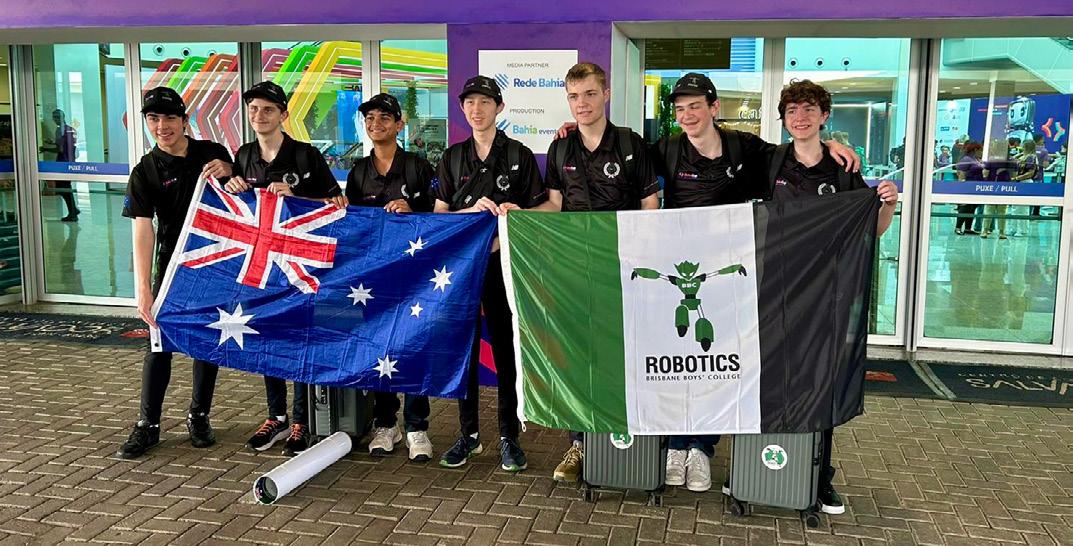
Every boy returned to Australia with great memories and a strengthened sense of team brotherhood. The trip was a huge success, with victories on the field and a picturesque tour of locations across Chile and Brazil, including Valparaíso, Viña del Mar, the Casablanca Valley, Santiago, and Salvador itself.
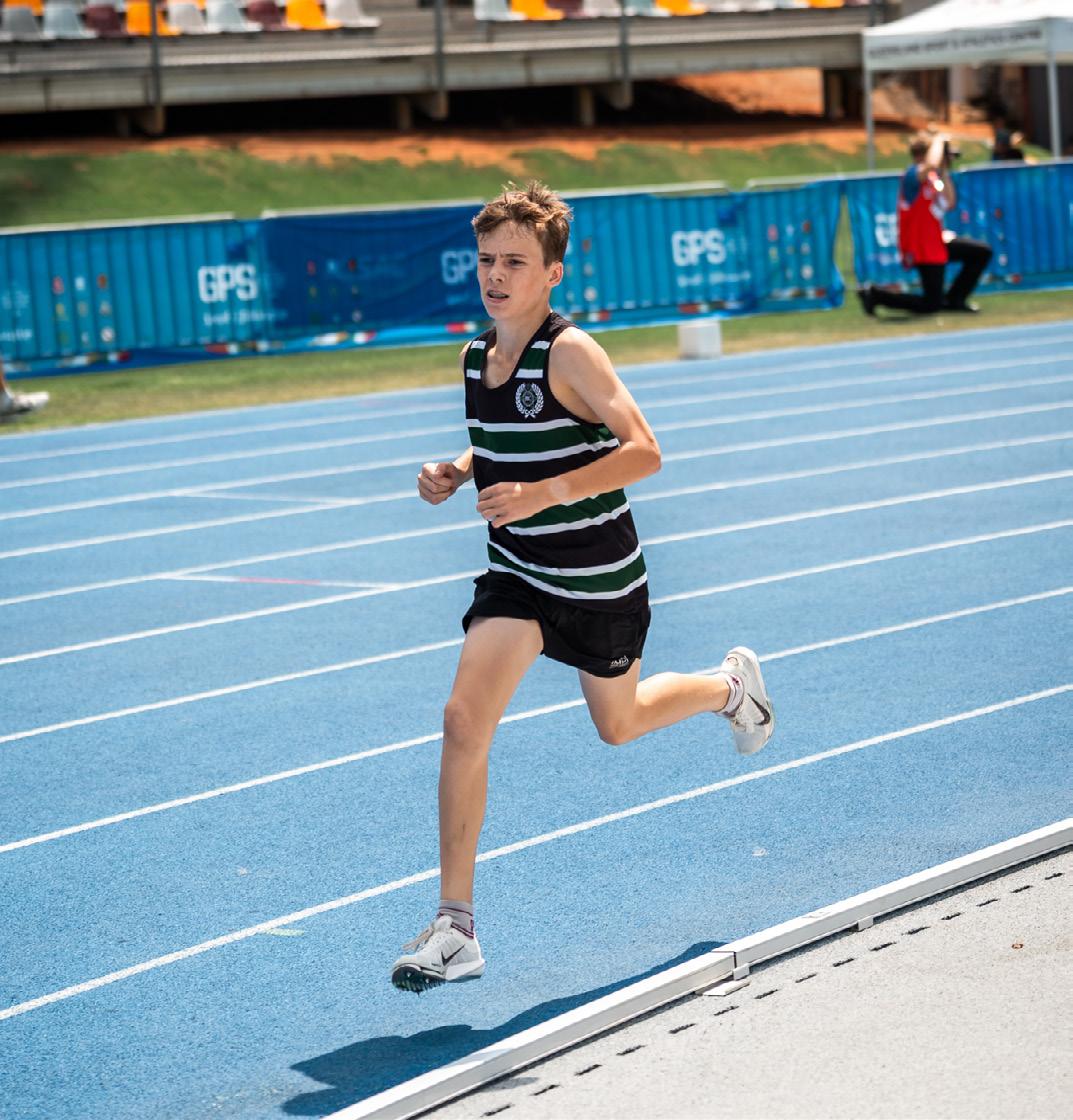
At just 14 years old, Ben Schinard (Year 8) has enjoyed a standout year across both cross country and track and field. His achievements are already among the best in his age group, and he continues to impress on every stage he competes.
“This year has been my best to date,” said Ben. “Training with Brisbane Athletics and BBC Cross Country / Track and Field through a consistent training program, I was able to significantly improve.”
“Last year, I was fortunate enough to win the cross country in GPS, but just fell short in the 1500m on the track. This served as strong motivation to win for my second year in a row at Limestone and go one better in the GPS championship for track and field with the backing of the College behind me.”
In cross country, he claimed the GPS 14 Years 4km title before going on to win both the Queensland and Queensland Schools Championships in the same event. He capped off the season with a superb third place at the Australian Championships in the Under 15 4km and won the 14yrs Australian Schools Championships, proving himself against the best in the country.
On the track, Ben also had great success. He secured gold in the 1500m and 3000m at the Queensland Track and Field Championships, then added two silver medals at the Australian Championships in the same events.
His hard work culminated in a terrific performance at the GPS Track and Field Championships, where he won gold in the 14yrs 1500m, beating his own personal best in the process.
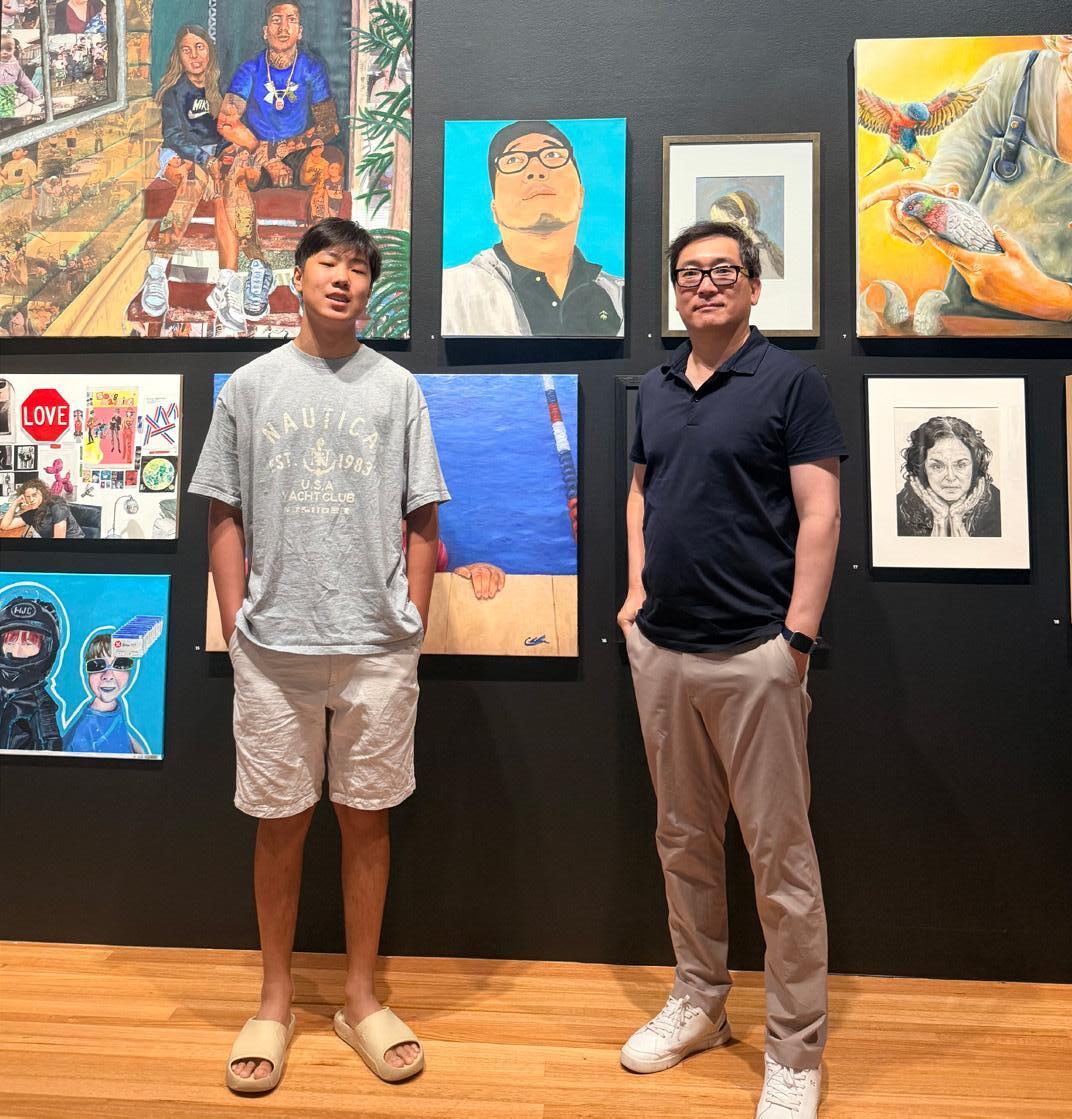
If you’ve been to the State Library of Queensland between September and November, you may well have seen the work of Louis Ko (Year 10). Louis was a finalist for the Next Generation category of the 2025 Brisbane Portrait Prize, and his journey to having his work selected for Queensland’s most prestigious portraiture competition began in one of BBC’s Visual Arts classrooms.
As an assessment in Visual Art, Louis was tasked with painting a portrait of someone he respects. For Louis, the choice was obvious: his father, Eunsung. Mr Ko works in South Korea, and Louis was struck by how much he has sacrificed for his family. What’s more, it was his dad’s birthday that month. The stars seemed to align.
Louis credits his Visual Art teacher, Ms Sarah Cattoni, for supporting him as he developed the painting. Still, he never expected to see it chosen for exhibition in the State Library.
It turned out to be a great birthday gift. Surprised and proud, Mr Ko has visited the portrait, aptly titled Dad, during some time off in Australia.
Louis remains appreciative of the BBC Art Department staff for nurturing his artistic talent.
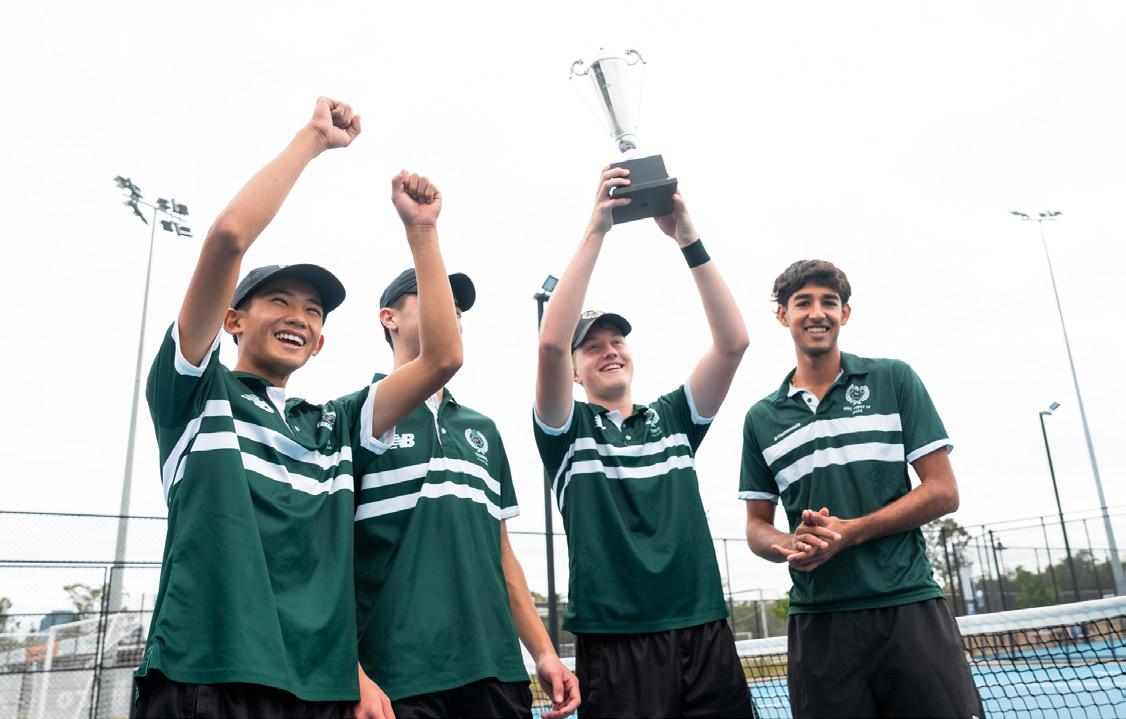
Back-to-back-to-back national champions, three-time Queensland champions, and winners of 15 of the last 19 GPS championships, Brisbane Boys’ College has cemented its reputation as a powerhouse in Australian school tennis.
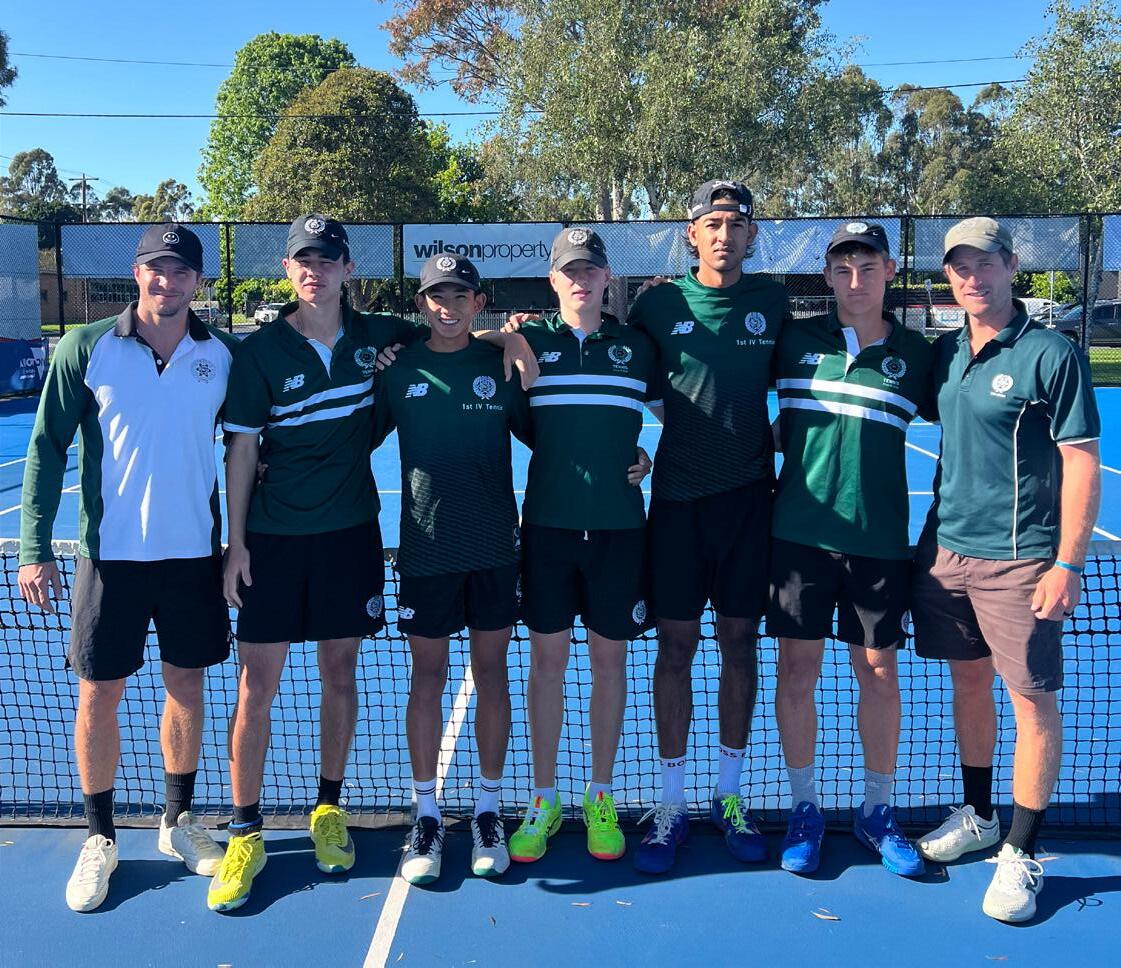
Over the past 19 years, BBC’s tennis program, currently comprising 33 elite tennis teams, has produced national champions and international players while staying true to its mission of developing well-rounded student-athletes.
Mr Ethan Wilkinson (OC 2008), Director of Tennis since 2019, has expanded the program to offer every boy, from red ball beginners to elite student-athletes, a pathway to progress.
“Since stepping into the role, I’ve built on the strong foundations set by previous director Chris Rolph. My focus has been on the elite side of the program, giving boys a taste of academy or American college-style tennis,” Mr Wilkinson says. “Our program includes over 300 boys each week and it’s not just about the First IV. Every team matters, from the D teams to the premiership squad, and we get support from coaches and old boys alike.”
BBC Tennis is built on the idea that students can excel both on the court and in the classroom.
“That’s why we run it as a true studentathlete program,” Mr Wilkinson says.
“The student always comes first. If boys have exams during a tour, we make sure assessments are shifted or managed so they don’t fall behind.”
This careful balance between training demands and academic workload has been key to building depth across the program.
“In the past we had a strong top end but now we have stepping stones at every level,” Mr Wilkinson says. This means boys are able to train at their highest potential without risk of burnout.’
Mr Wilkinson leads by example as a dedicated coach and teacher. Former pro John Millman also joined last term and played a key role as the team headed into nationals this year.
“We’re working on the one-percenters - the small improvements that make a big difference - from individualised gym programs and smoother transitions between class and training, to helping every boy excel in the classroom and on the court,” Mr Wilkinson says.
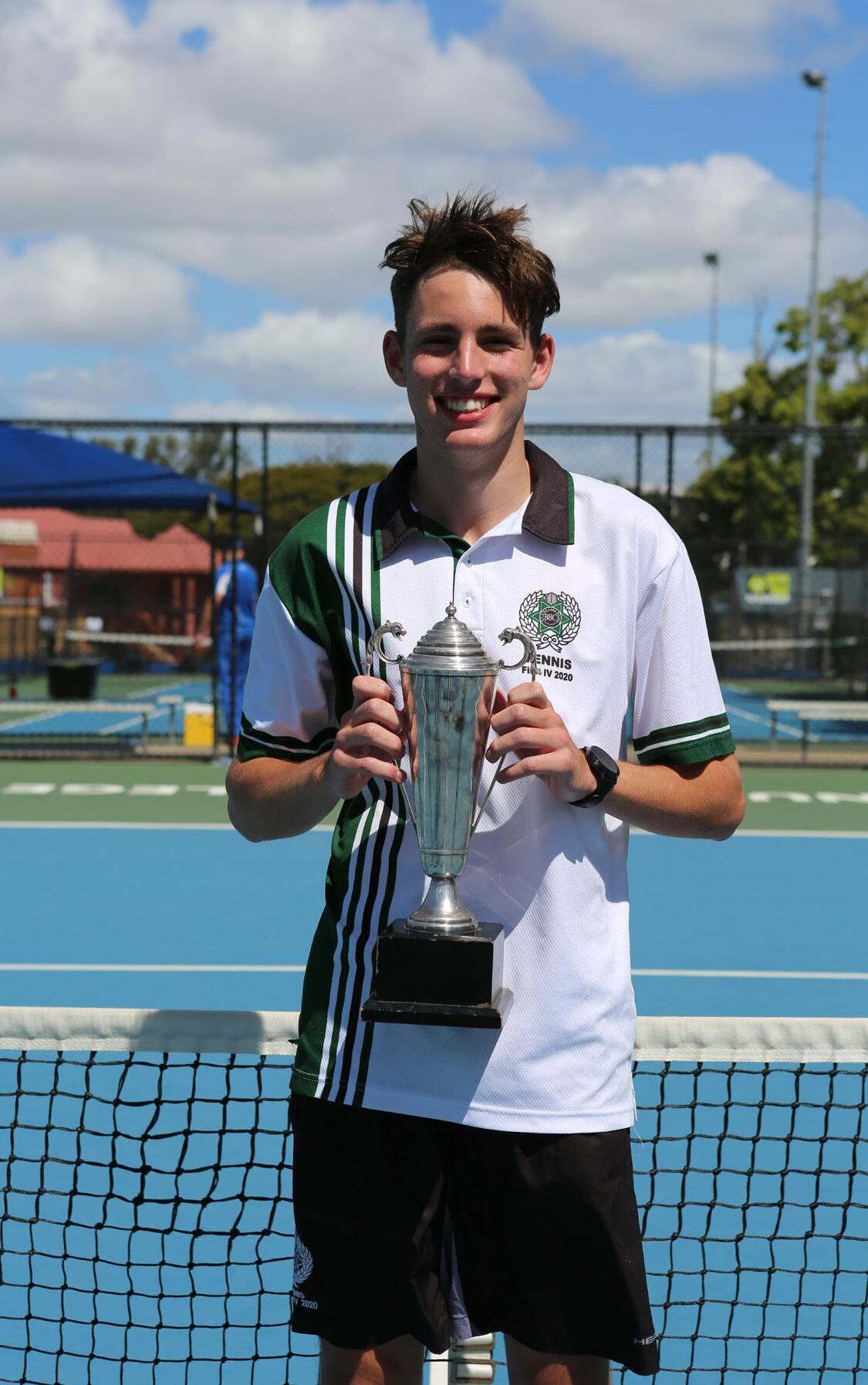
And it shows. BBC boys are competing on the international stage, with recent competitions in New Zealand, Malaysia, Adelaide, and Tamworth. The team also secured a historic milestone: three consecutive national championships - a feat no other Queensland school has ever achieved.
“It puts this cohort down as one of the best playing groups to come through the Australian school system,” Mr Wilkinson says.
The true measure of BBC’s tennis program isn’t just wins on the court, it’s the doors it opens for young men long after they’ve played their final match. Jack
Fanshawe (OC 2021), now at Columbia University, credits BBC Tennis with creating opportunities and building his character.
“BBC tennis forged lifelong relationships and instilled in me resilience and a competitive drive which are skills that help me in all aspects of life,” Jack says.
“What I really admired was how the coaches aim to be your friend while shaping your character beyond tennis. They genuinely care and want to see you grow, both on and off the court. Training sessions involved different coaches who offer varied perspectives. They balance structure with what I call ‘chaos’, freeflowing drills and games that help players adapt and think on their feet.”
Tennis provided Jack with a pathway to the United States, where he completed three years of physics at the University of Redlands before transferring to Columbia.
For Jack, the real value of the program lies in its ability to shape student-athletes who step outside of comfort zones and push through challenges.
“It’s not always easy, but when you achieve a great team win or a personal milestone, all those hard moments suddenly feel worth it,” Jack says.
“That’s where the true sense of fulfilment, happiness, and triumph comes from.”
With world-class coaching, top-tier facilities, and a focus on developing the whole student, BBC Tennis doesn’t just create champions on the court, it prepares young men for success in every part of life.
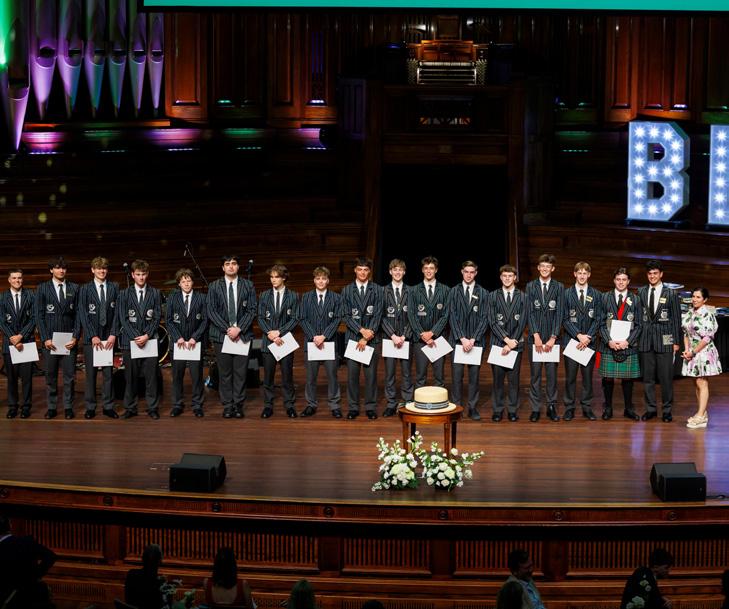
Brisbane Boys’ College has unveiled its 2026 senior student leadership team, with House and College Prefects stepping up to guide the school community. The rigorous selection process showcased the exceptional leadership skills the College nurtures from an early age.
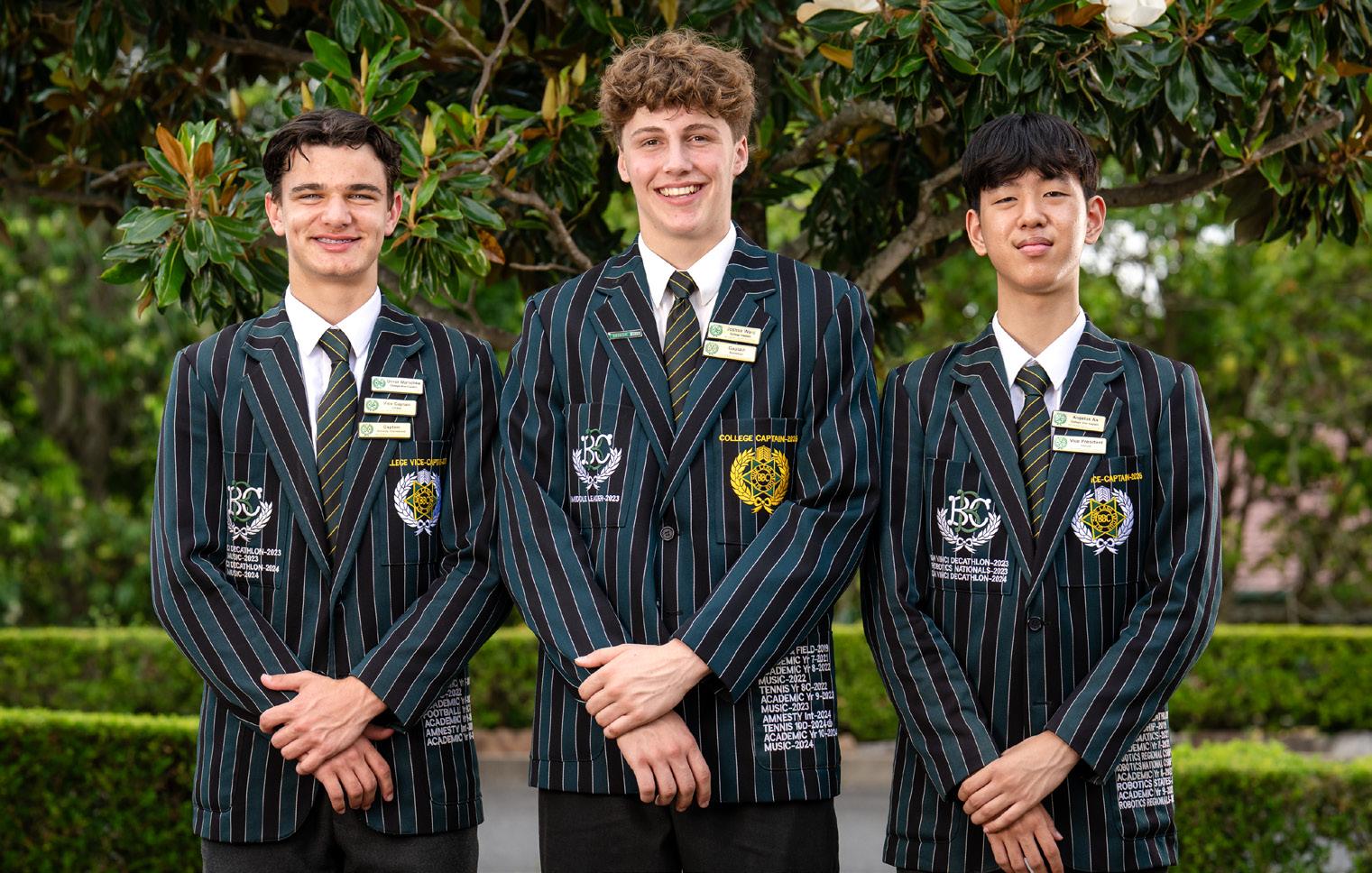
Heading the team is College Captain Joshua Ward, supported by Vice-Captains Angelus An and Oliver Marschke. They will be joined by the wider group of House and College Prefects, working together to model leadership, integrity, and service.
Around 80 boys nominated themselves this year, all already showing leadership in sports, academics, the arts, or community activities.
Head of Secondary School, Ms Amelia Apogremiotis, said BBC’s 2026 senior leadership team reflects a group of students who are not only talented but also deeply connected to the College community.
“Interestingly, the Captains all started in our Junior School, so they’ve grown up with that deep sense of connection to the College and spoke a lot about pride in wearing the uniform and the honour of representing the College,” she says. 2026 College Captain, Josh Ward, says his journey through BBC’s Junior School gave him a strong foundation for leadership and a deep connection to the College.
“Starting in the Junior School really helped me build a connection - not only with the boys, but with the culture and values of the College,” Josh said. “By the time I reached Year 7, I already had an understanding of how things worked and felt a real sense of belonging.”
He believes that early connection plays a big role in shaping how he and his fellow student leaders approach their new responsibilities. “Since we know what it’s like to be in the younger boys’ shoes, we can reach out and connect with themfrom Prep all the way to Year 12,” he said.
Leadership at BBC starts early, with Year 6 students stepping into mentoring and
House Captain roles. By Year 9, boys can take on middle leadership positions, running initiatives like Containers for Change, boater hat repairs, or Friday social sports with the Junior School. They discover that leadership is all about service, teamwork, and resilience.
Nathan Maina, who joined BBC in Year 7, is this semester’s Knox House Middle Leader. He embraced the school’s culture of service, taking on roles in Amnesty International and Inter-School Christian Fellowship, and becoming the first Middle School Captain of Amnesty International.
“This role continues to offer many exciting ways to make a real impact on our wider BBC community,” Nathan says. “This is incredibly important because it is all good to talk about an issue, but if no action is taken, there is no benefit.”
Nathan has already started collaborating with other student leaders to solve issues in the BBC community and create innovative solutions. So far, this has included initiatives like organising Friday Social Sport, the Badminton initiative, Leaders’ Lessons, and a Foodbank drive, which recently raised over $600 in one week to feed the less privileged.
At every year level, boys are given opportunities to step up, through middle leadership in Year 9, fundraising projects, or community initiatives, Ms Lindsey Herse, Assistant Head of Secondary SchoolWellbeing, says.
“They take ownership, write proposals, and bring their ideas to life. Leadership isn’t just about the title of prefect; there are countless ways to lead, drive initiatives, and leave the College better than they found it,” Ms Herse says.
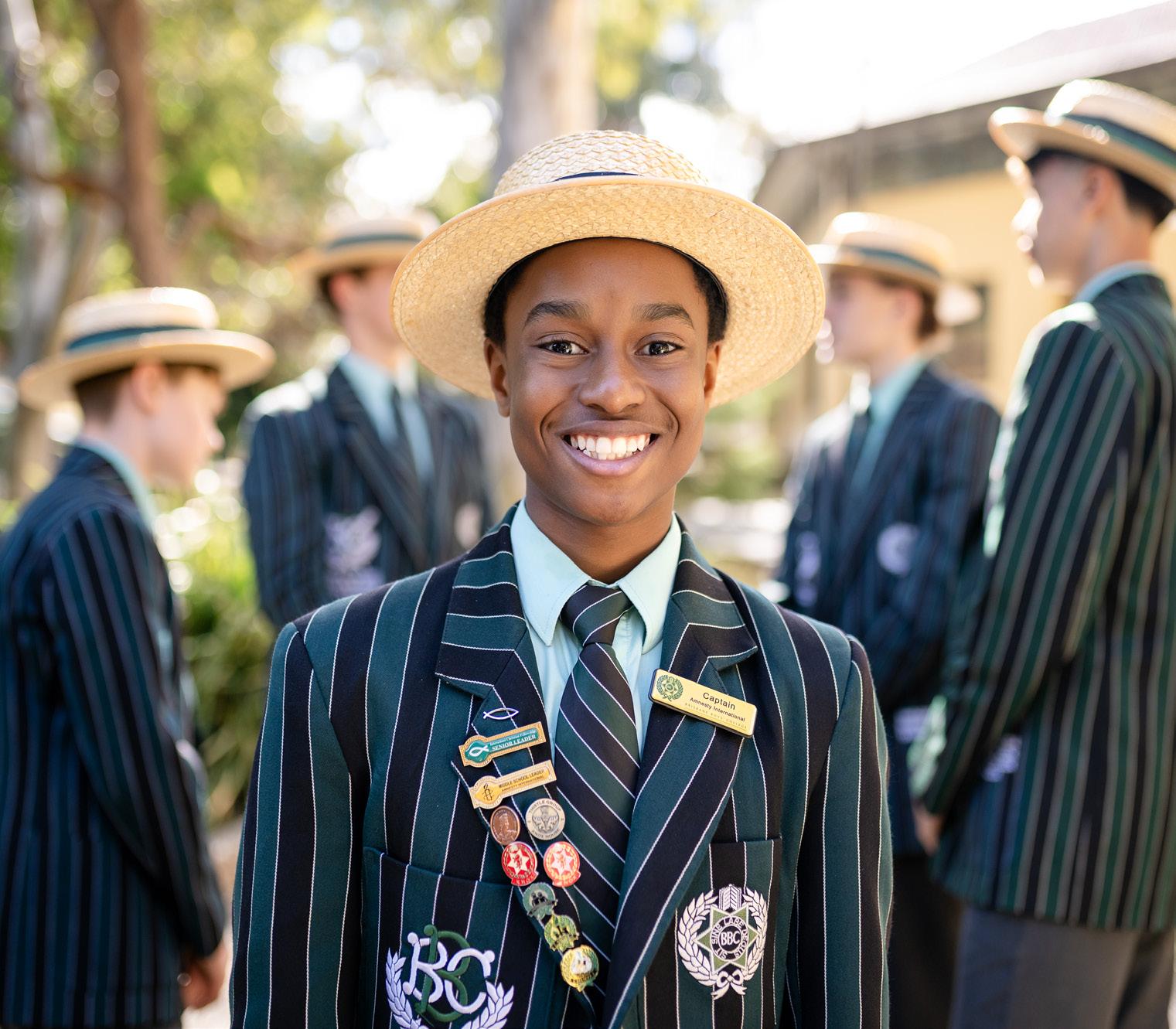
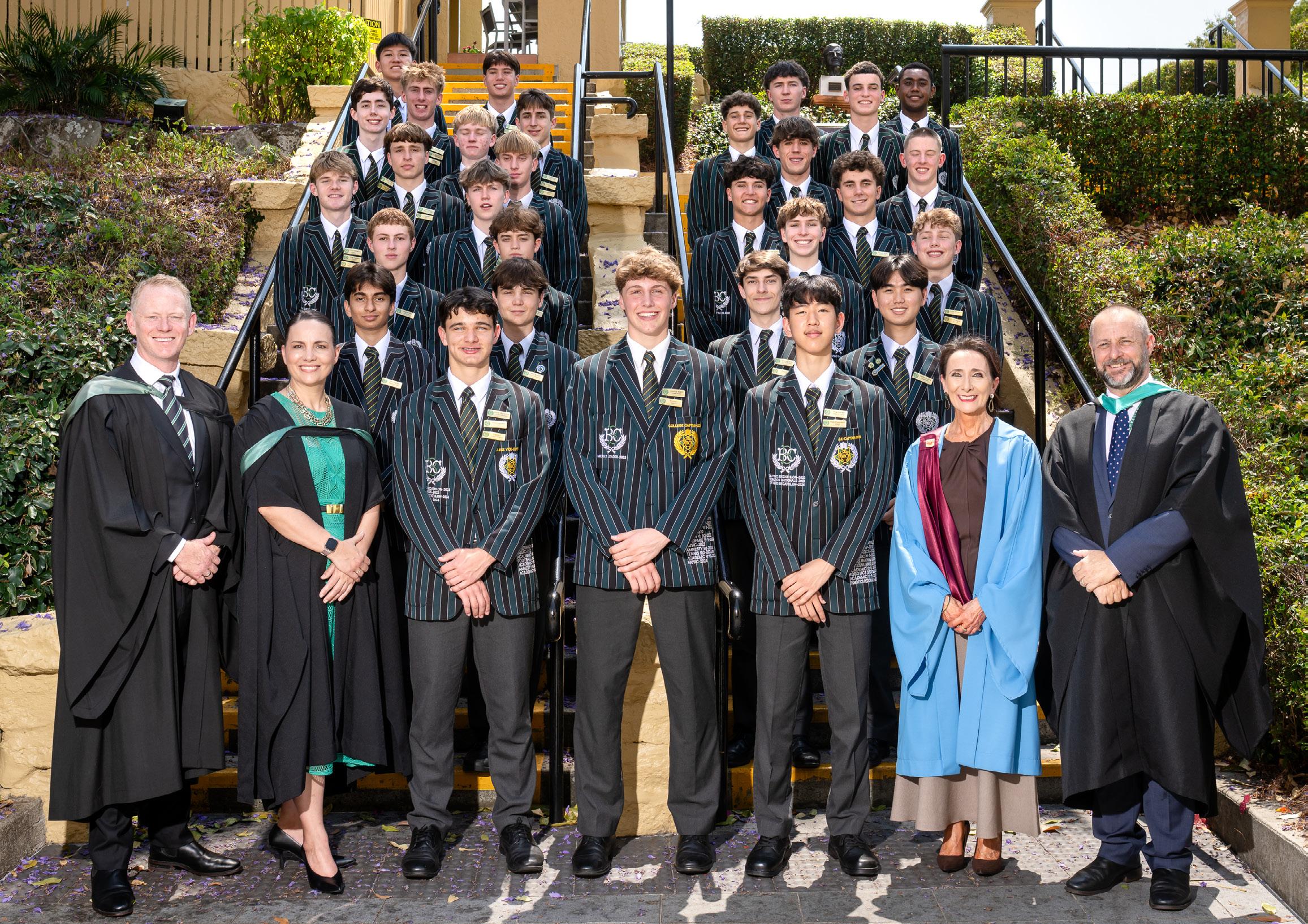
Beyond formal titles, boys can lead in sports, music, clubs, and tutoring, whether as a team captain, first violinist, drum major, or peer mentor. These experiences offer countless opportunities to embrace leadership, build confidence, and contribute to College life.
At BBC, leadership opportunities are designed to shape character and inspire a lifelong commitment to service. Head of Year 12, Ms Feraniki Karydis, has seen students grow and flourish in these roles throughout their senior year.
“You absolutely notice a change in confidence as they move through Year 12,” she says.
“Those skills, public speaking, collaboration and critical thinking - carry on well beyond BBC. We’ve had College Captains who’ve left with such a strong skillset and then gone on to leadership roles at university and in their careers. It becomes a part of who they are.
“Leadership isn’t just about the College either. Some boys are incredible at balancing their roles here with commitments in the wider community. They want to be active citizens, giving back beyond the gates of BBC, which is wonderful to see.”
Year 12 Vice-Captain and Valedictorian, Fred Bromell plans to study a Bachelor of Law and Arts at the University of Queensland in 2026 and credits his current leadership role with his future goals.
“Without a doubt my leadership position has been a catalyst in my university
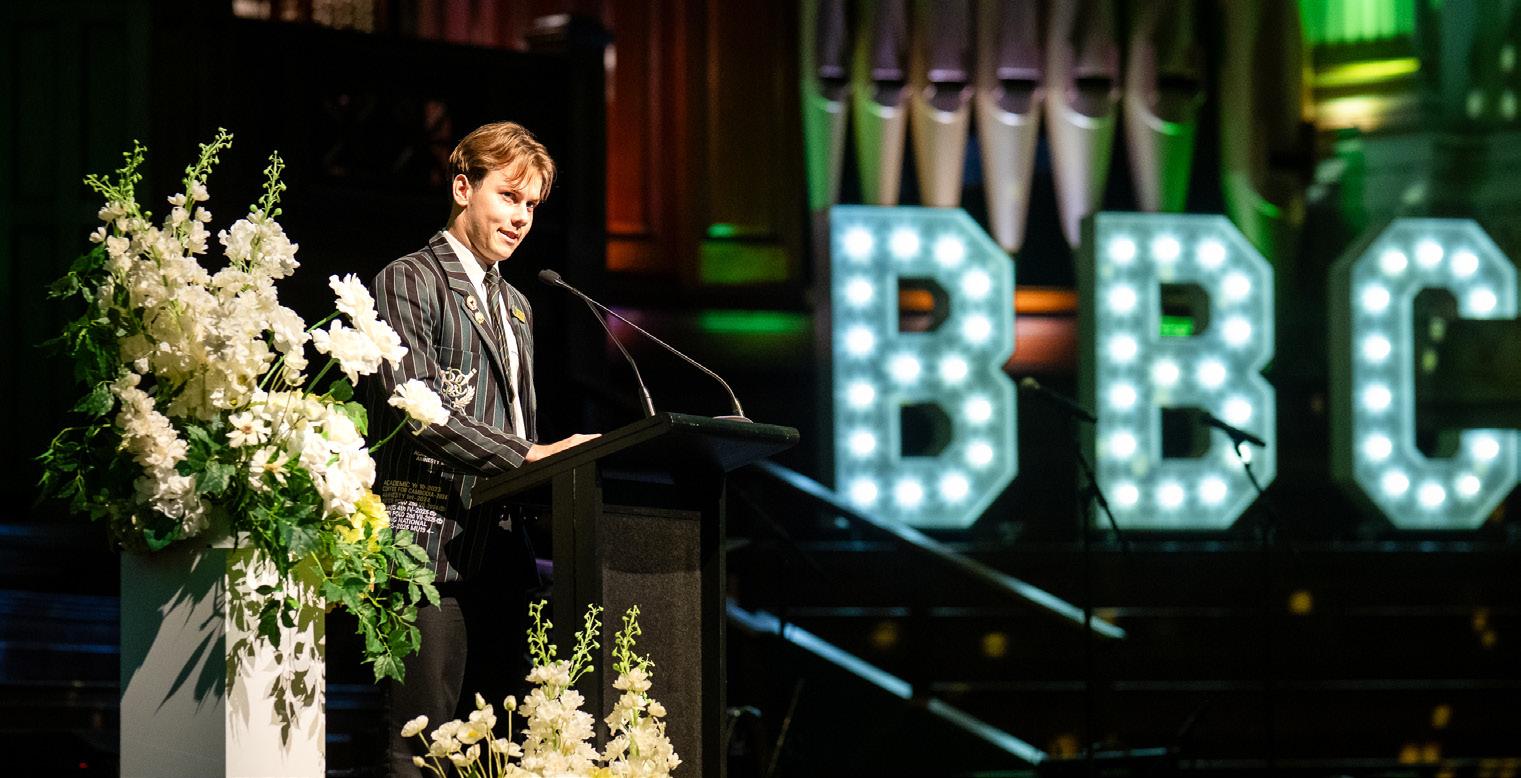
preferences,” Fred says.
“Like at BBC, law is an industry where I can have a seat at the table and get involved in making a difference in the world whether that be through policy reforms, diplomacy, or serving the justice system.”
While these leadership roles play out within the school, the skills students gain set them up for life.
As Ms Herse observes, “There’s plenty of evidence that doing things for others boosts wellbeing. The boys feel good about making a difference, and they also grow personally, building confidence, a sense of belonging, and stronger connections across the school community.”
Alexander Cameron
Alexander Middlemis
Angelus An
Archie Reid
Brayden Edwards
Cameron Strickland
Dhugal Mills
Edward Pill
Ethan So
George McNaught
Hamish Down
Joshua Ward
Jules Kleibacker
Matthew Jung
Nick Bayett
Oliver Marschke
Tom Nealon
Birtles : Benjamin Hurst
Campbell : Lachie Haber
Cole : Fred Solan
Flynn : Stirling Sloan
Hamilton : William Basten
Knox : Shiv Parikh
McKenzie : Max Williams
Rudd Captain : Cooper Lando
Rudd Vice-Captain : Archie Tennant
Rudd Vice-Captain : Vali Asigau
Wesley : Barney Gray-Buchanan
Wheller : Oliver Bryant
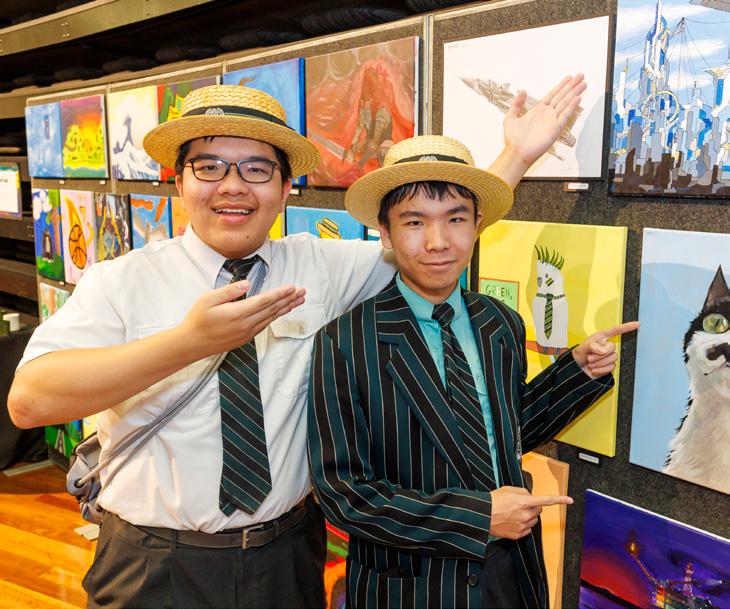
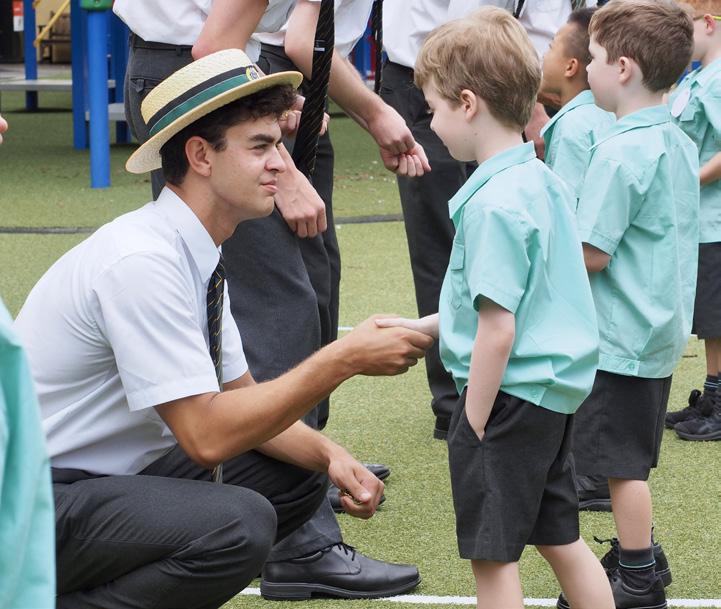
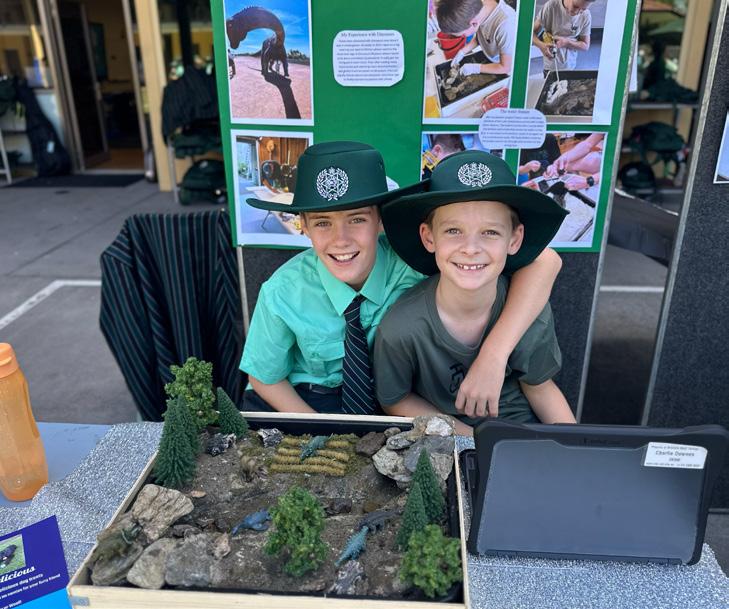
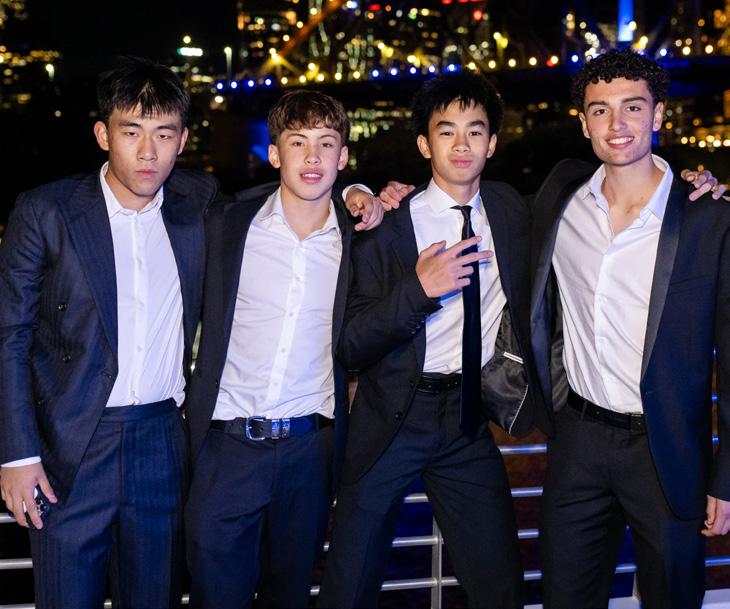
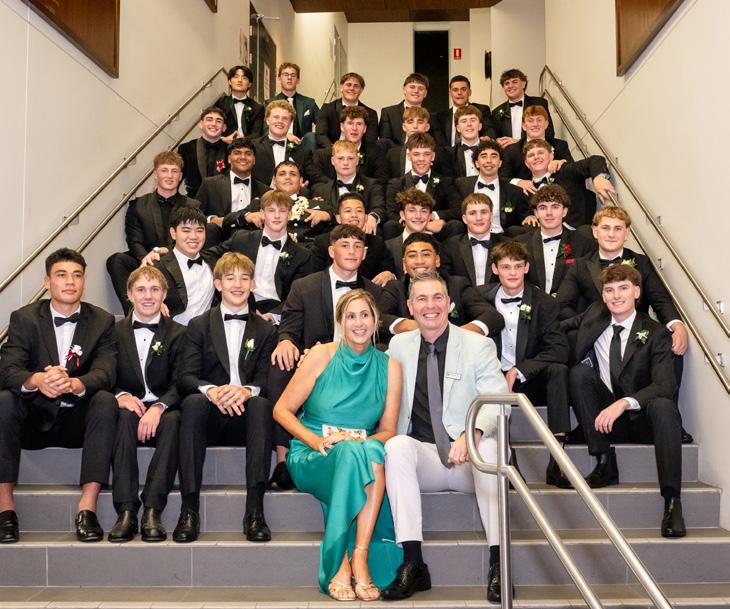
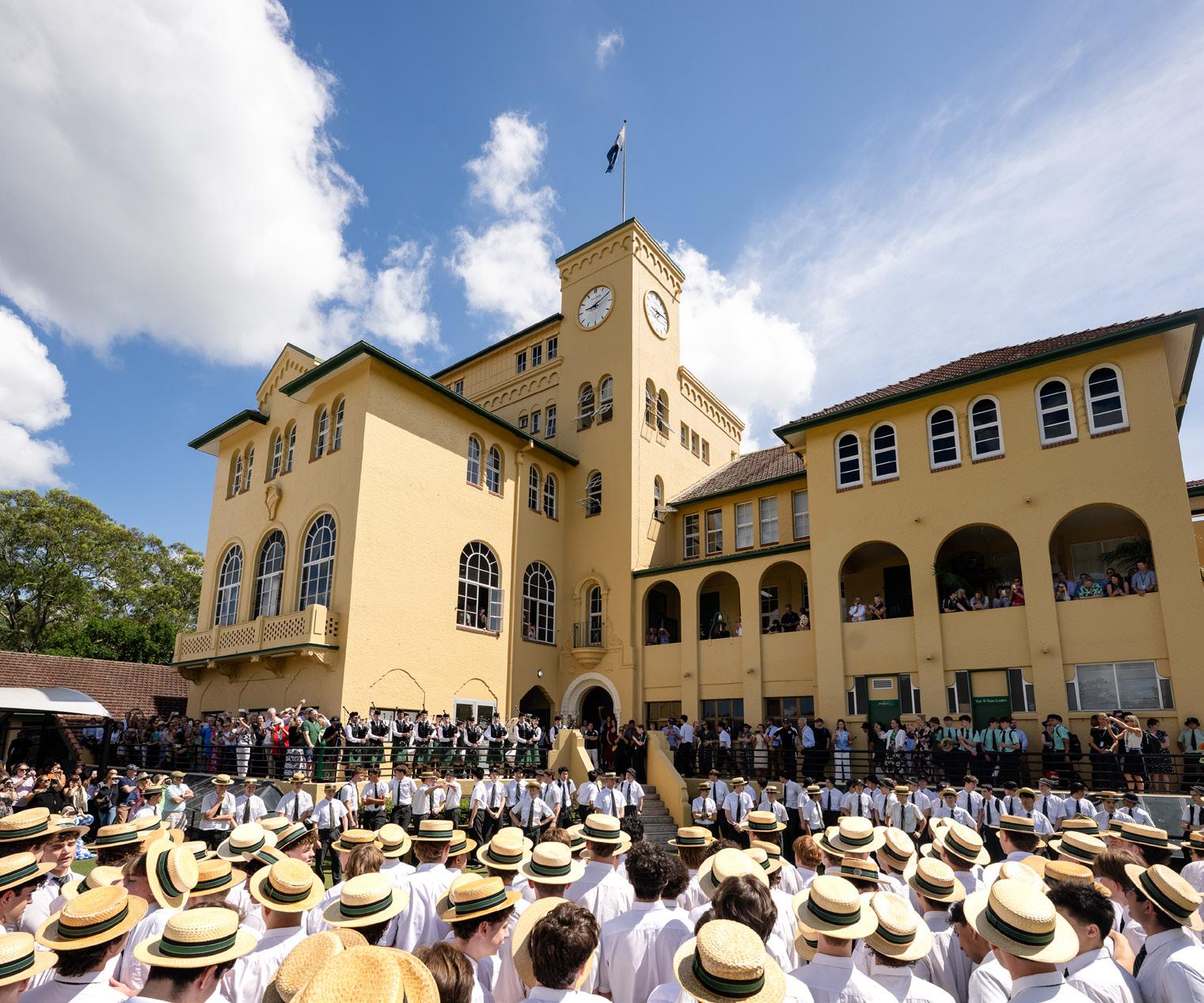
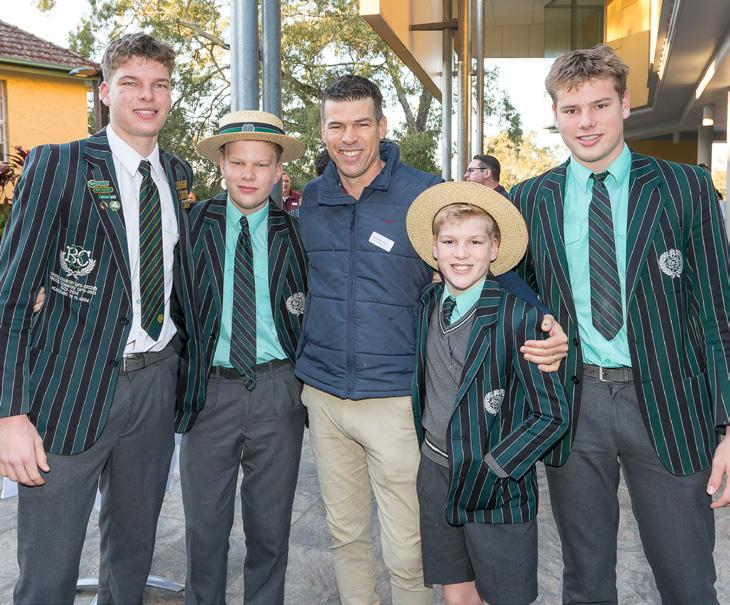

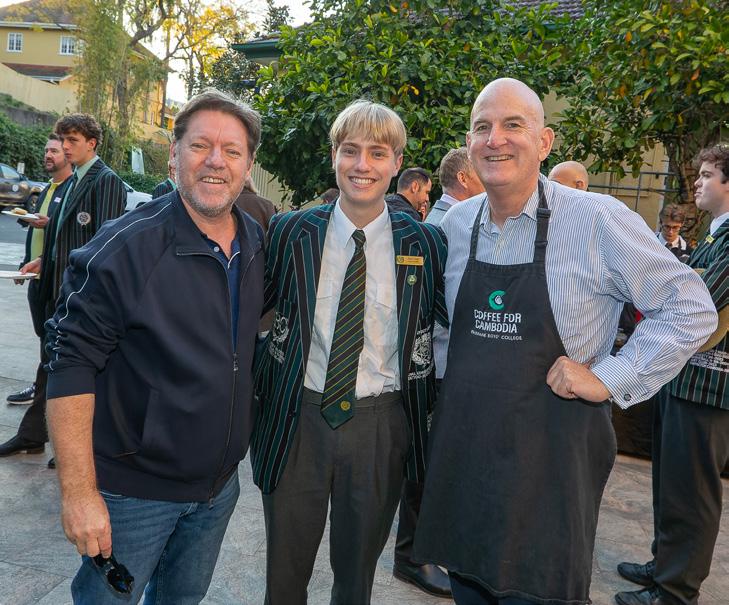
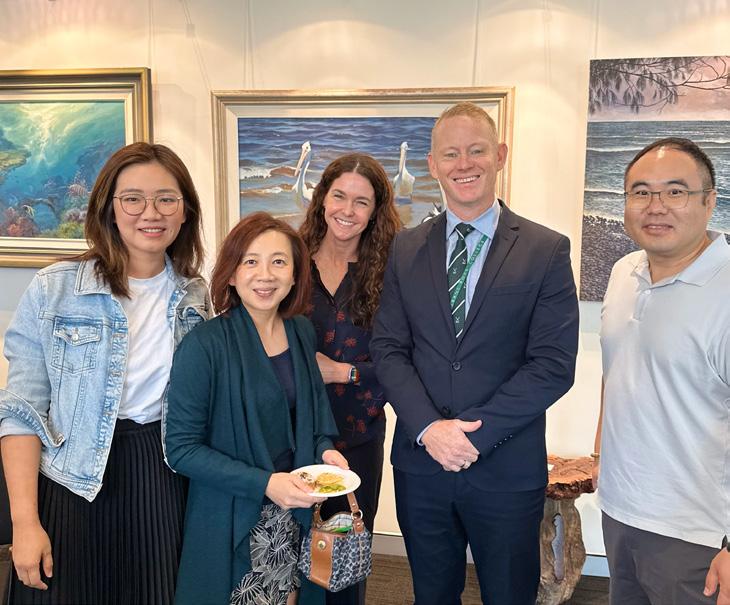

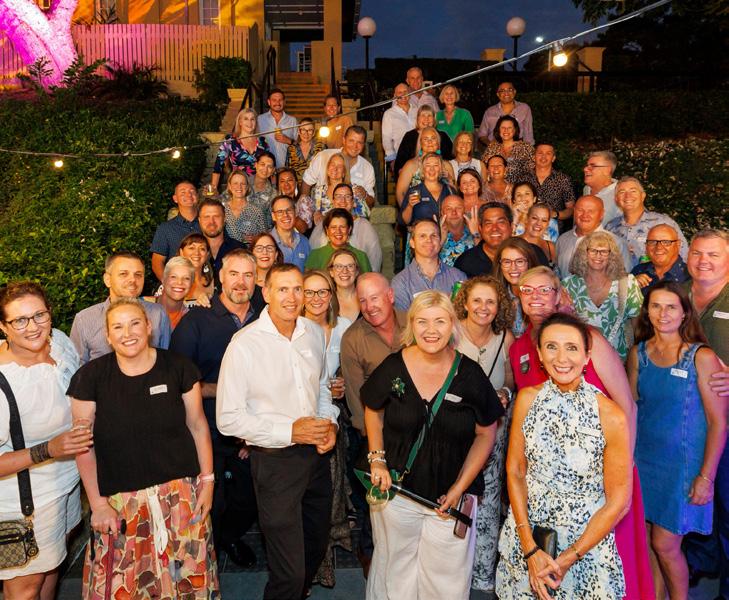
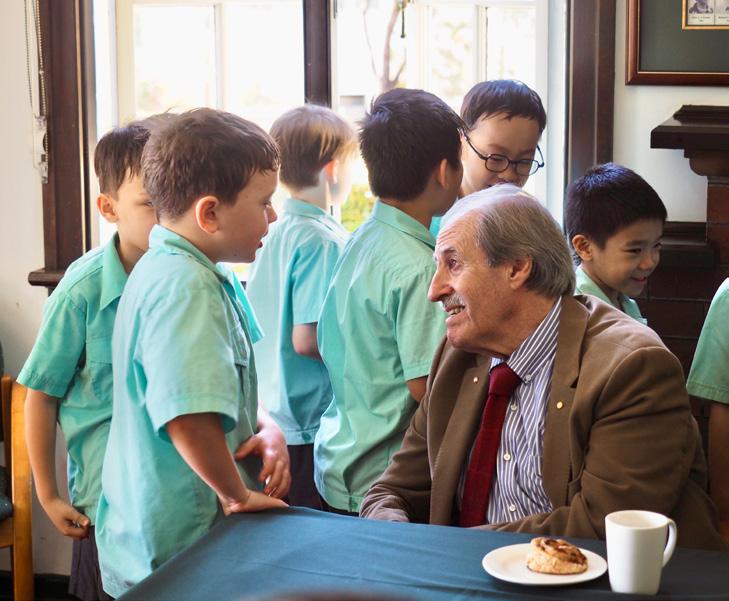
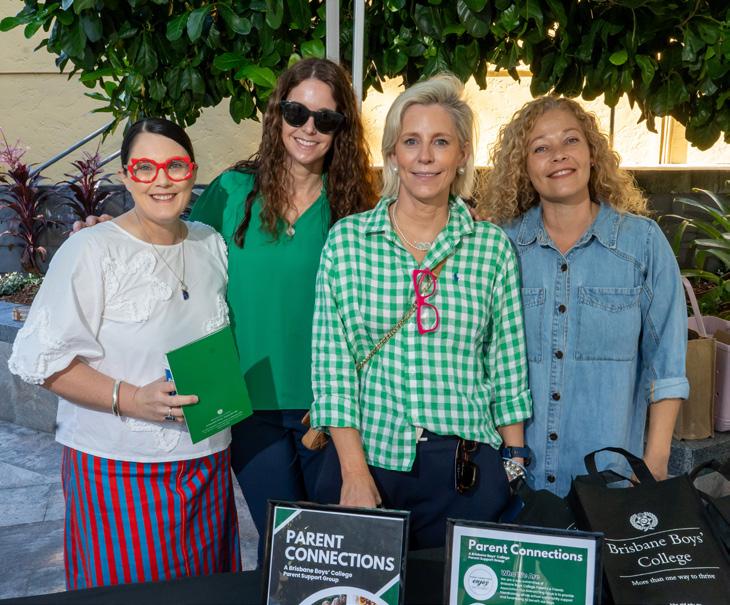
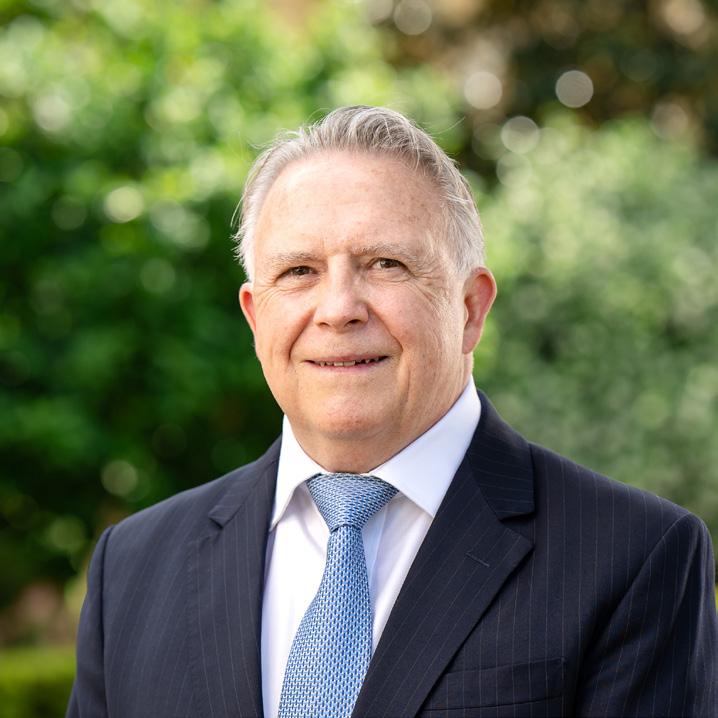
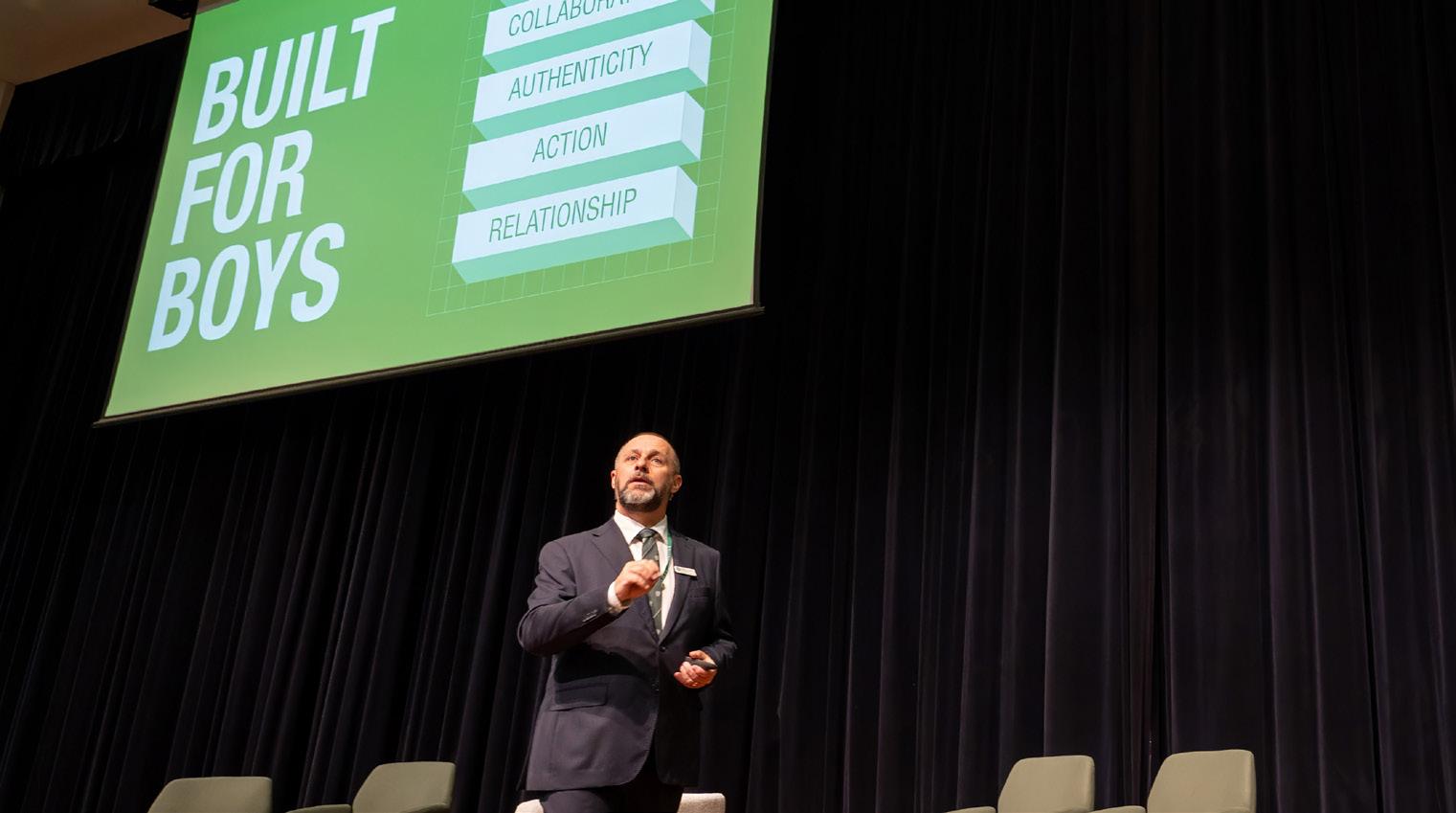
As Foundation Chair, I’m often asked what Built for Boys really means. To me, Built for Boys also means ‘building for boys’ - ensuring the college remains the best possible place for boys to learn and grow, long into the future.
We want our campus facilities and resources to not just keep up with the most current thinking about what boys need to thrive – we want to be at the forefront, leading the field.
Underpinned by a future-focused Master Plan, and designed in collaboration with renowned education architect Graham Legerton and the team at Hayball, our Built for Boys Campus Vision aligns with our Strategic Direction.
By putting our combined knowledge and experience to work, seeking input and insight from a diverse range of experts, and staying laser-focused on our students, we can look ahead to 2050 and beyond with confidence and excitement.
From a bricks and mortar perspective, we’ve already completed a significant number of projects. Ten projects are complete or underway, from the rooftop terraces and tennis courts to the boarding house and a prototype classroom. Major developments to come include world-class sporting and learning facilities on the newly rezoned Goldicott land, all part of a big vision stretching to 2050.
Individually, they may seem small and perhaps unimportant, but the cumulative effect is to bring us closer to realising our vision.
Our plans are ambitious, and we know you expect nothing less. Our Built for Boys Vision is a team effort, and it will take the support of our entire community to bring it to life.
Thankfully, at BBC, generosity runs deep. Donors like Charlie Robinson (OC 1962) remind us that giving takes many forms. His Bush Kids Endowment embodies the same enduring spirit that underpins every contribution to our Foundation and makes these projects possible.
Charlie’s vision was to establish an endowed fund - one that generates a bursary each year from the interest earned on the invested capital. The capital itself remains untouched, ensuring the bursary continues to support students from rural areas well into the future.
One of our most generous donors, Charlie has already built a significant fundenough to cover most of a bursary from
the interest - but he won’t rest until it reaches $1 million.
This is a wonderful opportunity to make a gift that truly keeps on giving, and at the same time, to honour a wonderful Old Collegian.
You can find out more about Charlie Robinson’s Bush Kids Endowment at bbcgiving.org.au/bursary.
As our plans progress, I invite every member of our community to play a part in shaping the next chapter of our College’s story. Together, we’re building for boystoday and for the century ahead.
Mr Ian Macpherson (OC 1979)
BBC Foundation President
At Brisbane Boys’ College, giving runs deep. A century-long tradition of generosity defines the institution, where past students honour their school days, and current families invest in the future.
Generosity takes many forms at BBC. Parents, Old Collegians, and friends of the College give their time and skills to enrich co-curricular activities and events, while others contribute financially through scholarships or by strengthening the College’s infrastructure for the future.
For BBC’s Advancement Manager, Ms Cathy Stacey, the unifying spirit of generosity is clear – real legacy is not about what we hold onto, but what we give in service of a greater good.
“At BBC, giving isn’t just about supporting the school, it’s about sustaining a culture where young men learn that their greatest achievements come from lifting others as they climb,” Ms Stacey says.
When the Built for Boys Campus Vision and Master Plan was launched in 2024, it became a symbol of what makes the BBC community unique. On the surface, it charts the future of classrooms, cocurricular spaces, refurbishments, and
expansions. But at its heart, it tells a bigger story. One of families, Old Collegians, and supporters who believe in giving back and building forward. With projects planned through to 2035 and a vision stretching to 2050, Built for Boys is less about buildings and more about opportunity, ensuring generations of boys can learn and grow.
Built for Boys is about building for boys, explains Mr Ian McPherson, BBC Foundation Chair. ‘Our commitment is to ensure the College remains the best possible place for boys to succeed, now and into the future. And we don’t just want to keep pace with what boys need to succeed, we aim to lead the way.’
Already, the Built for Boys vision is beginning to take shape - not just through new facilities, but through the shared belief of families and Old Collegians who continue to invest in the College’s future.
From the wide consultation that shaped the Master Plan to the generous financial support bringing it to life, BBC families and alumni have shown an unwavering
commitment to excellence in boys’ education.
Shaped through community consultation and funded by the generosity of families and Old Collegians, this plan belongs to the whole BBC community. As Headmaster Mr Andre Casson says, ‘This is not my vision or the staff’s vision. It is yours.’
At BBC, generosity isn’t just about buildings. It also fuels programs that give boys access to education they might not otherwise have, a tradition begun by Charlie Robinson (OC 1962).
A self-described “boy from the bush,” Charlie grew up on a sheep property in Aramac, one of the oldest towns in central west Queensland. When he became a boarder in 1955, the distance from home was keenly felt. The kindness, care and concern shown by the school community, though, had a profound impact, motivating
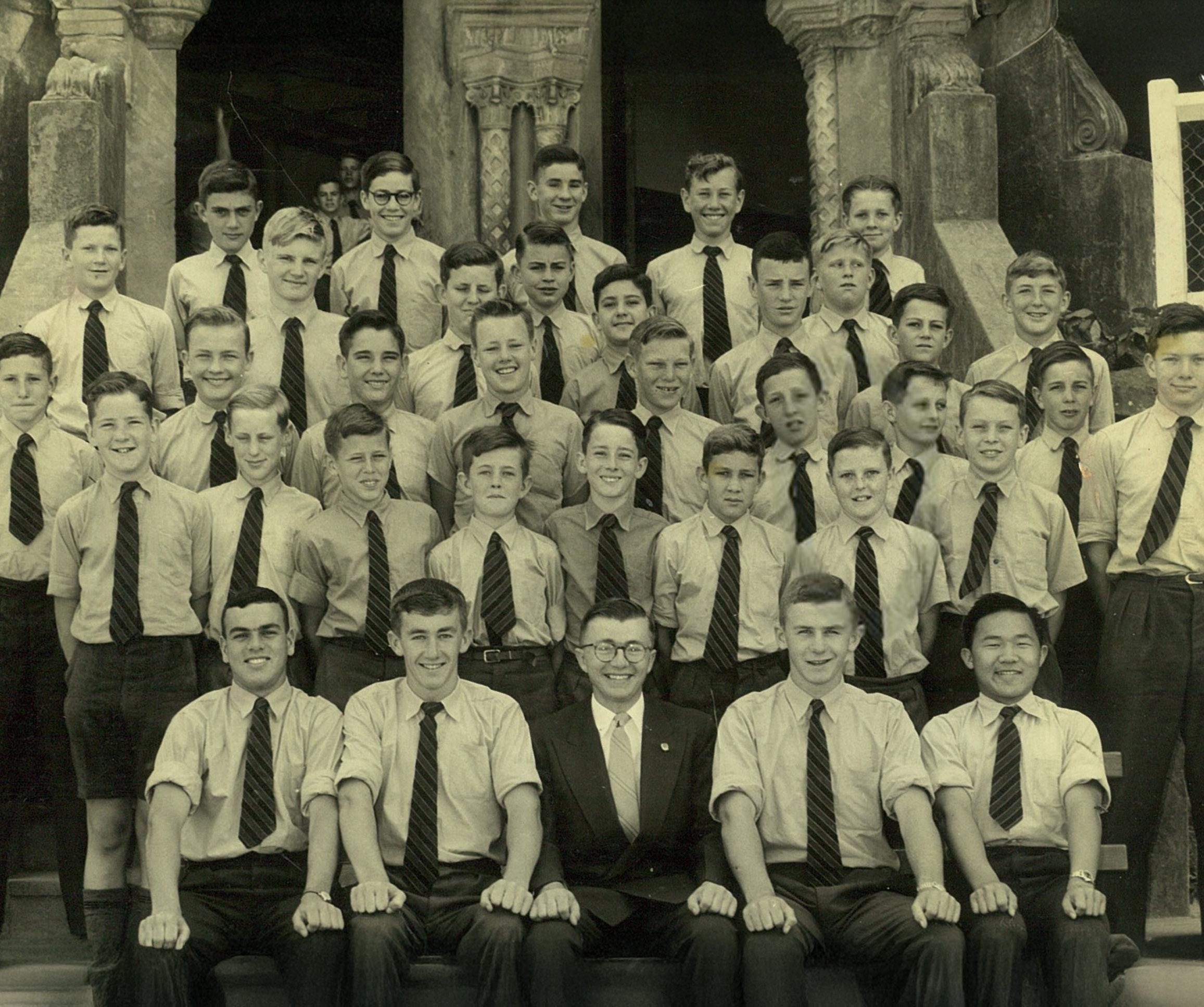
him to establish a bursary fund for other boys in similar situations.
But rather than a traditional annual scholarship, Charlie built an endowed fund designed to generate a bursary from investment interest while leaving the principal untouched. This structure guarantees the bursary will continue helping students from rural areas well into the future.
Through the Bush Kids Endowment, Charlie has given nearly $800,000, providing vital bursary support. One of BBC’s most generous donors, he’s determined to
reach $1 million and create a lasting legacy for rural students. “Charlie’s story demonstrates the profound impact BBC can have on a young person’s life,” Ms Stacey says. “His endowment creates a beautiful cycle, transforming his own positive experience into opportunities for future generations of bush kids to discover their potential at BBC.”
Generosity has been at the centre of BBC for 123 years. Boys who benefit from scholarships like Charlie’s endowment, learn in donor-funded facilities, and are mentored by volunteers, grow to understand that success is also a
responsibility to open doors for those who follow. This spirit has created a cycle of service and generosity that ensures the College’s mission continues across generations.
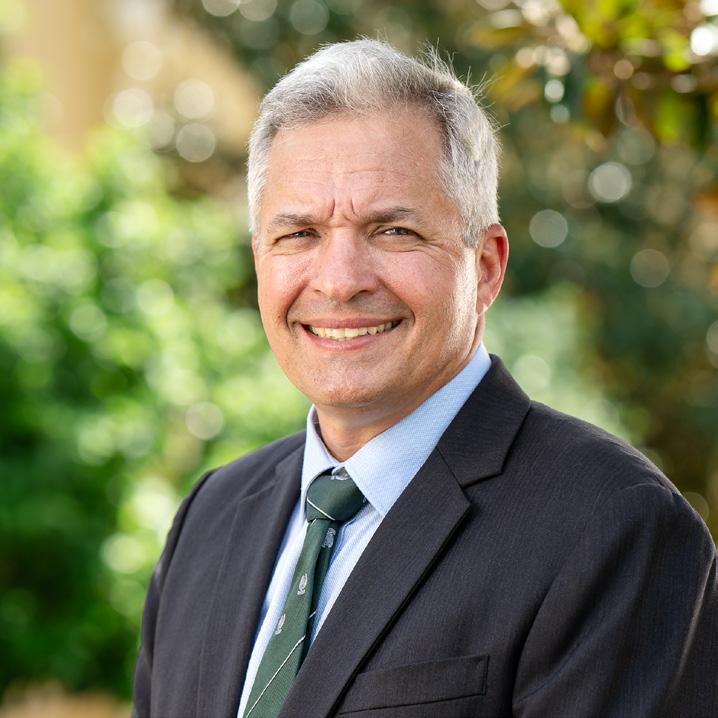
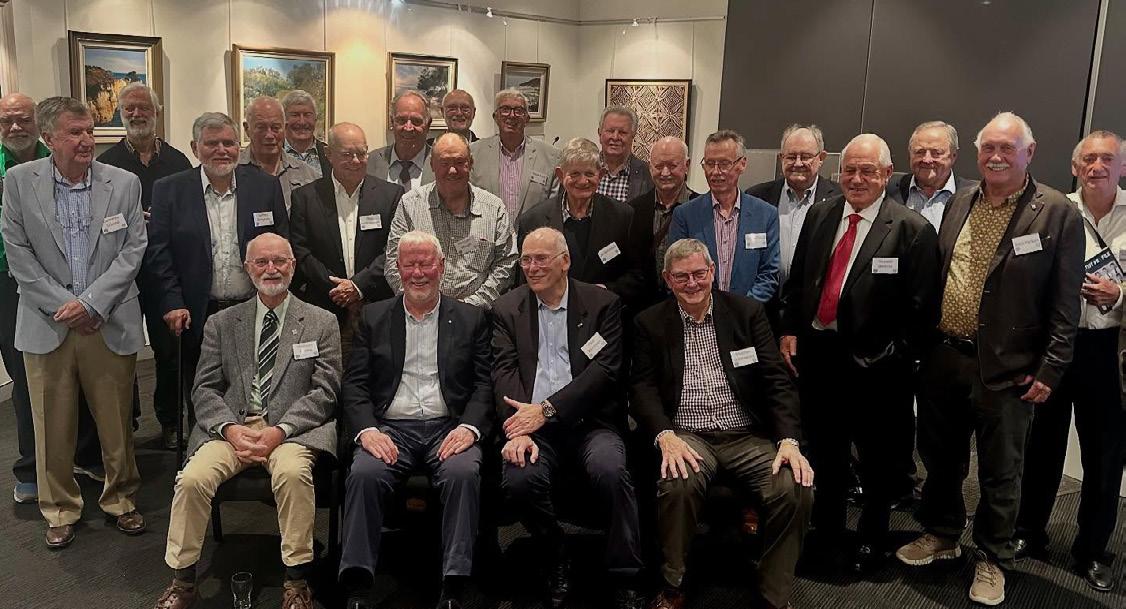
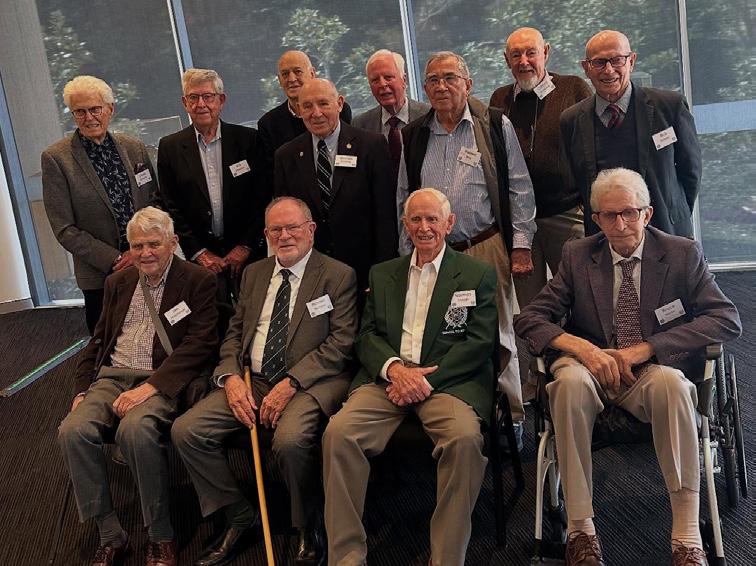
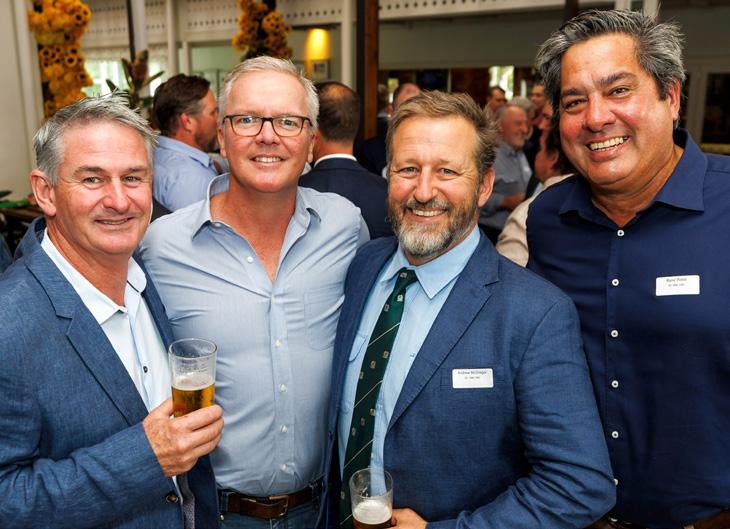
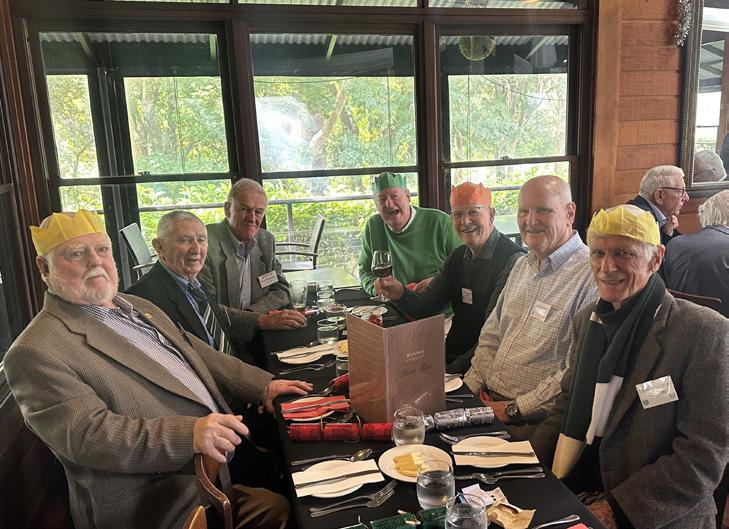
The OCA continues to play a foundational role in keeping our Old Boys connected to the College and to one another. It is always a privilege to witness the strength of the BBC spirit across generations, from our most recent graduates to our esteemed Vintage Collegians.
Each year, we are reminded of the lasting value our traditions and shared experiences add to the College community. The OCA is here to foster a sense of connection - whether it’s catching up at a reunion, cheering from the sidelines, sharing news at a social event, or mentoring the next generation.
I encourage all Old Boys to get involvedcome along to an event, reconnect with old mates, and play an active part in shaping our community. Just as importantly, we welcome your ideas and feedback. The OCA is your association, and your suggestions help us ensure our programs remain relevant and meaningful.
The OCA Portal is a powerful platform for Old Boys to connect with one another for career advancement, professional mentoring, or simply sharing opportunities and advice. More and more Old Boys are joining the Portal, making themselves available to answer industry-specific
questions, provide introductions, or meet for coffee.
I encourage you to take full advantage of this resource, whether you are seeking guidance at the start of your career, looking to make a change, or ready to offer your own expertise to others. Together, we can build a community where Old Boys support one another not only as mates, but as colleagues and mentors.
The year ahead promises even more opportunities for Old Boys to stay connected. Our Annual General Meeting will be held on Tuesday, 3 February 2026 at 6.00pm in the Bisset Gallery, and nominations for the OCA Executive Committee are now open via the Notice of AGM on the OCA website.
We are also looking forward to hosting an Old Boys’ reunion in Sydney next year, giving Old Boys residing in New South Wales a chance to reconnect and stay
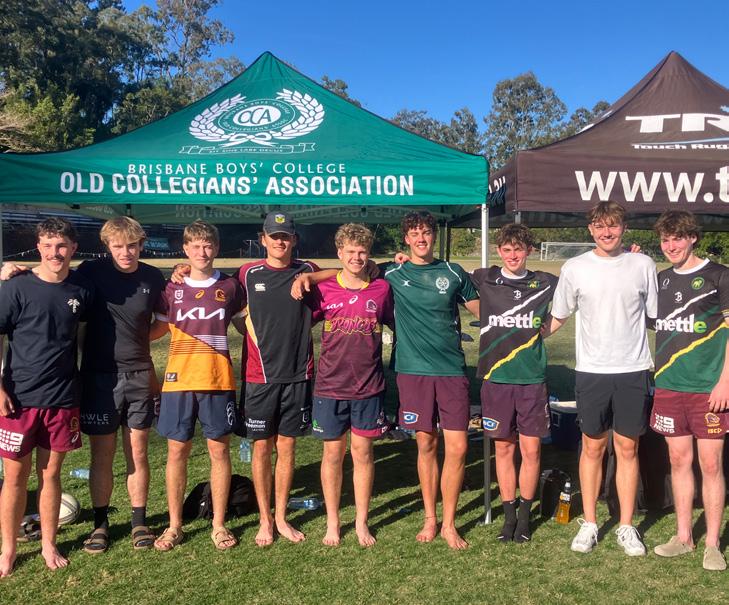
close to the College community. Our Vintage Collegians will again host lunches in Toowoomba, Caloundra, Mt Mee, and the Gold Coast, and our younger Old Boys are invited to join us for another Touch Rugby League Day.
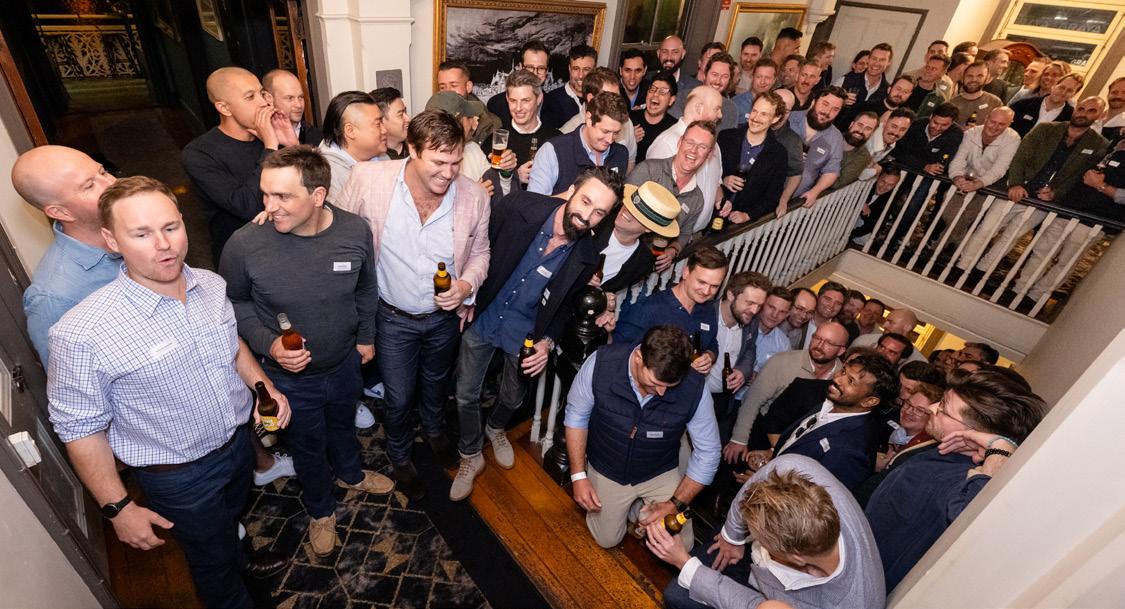
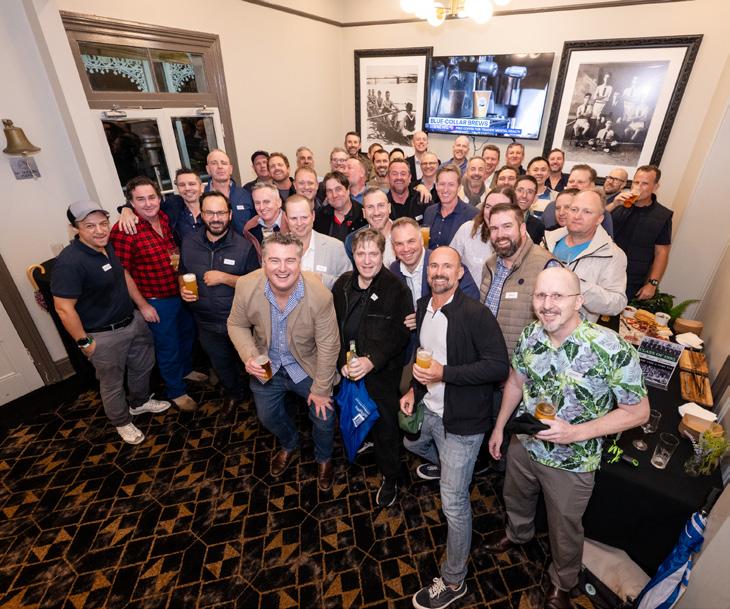
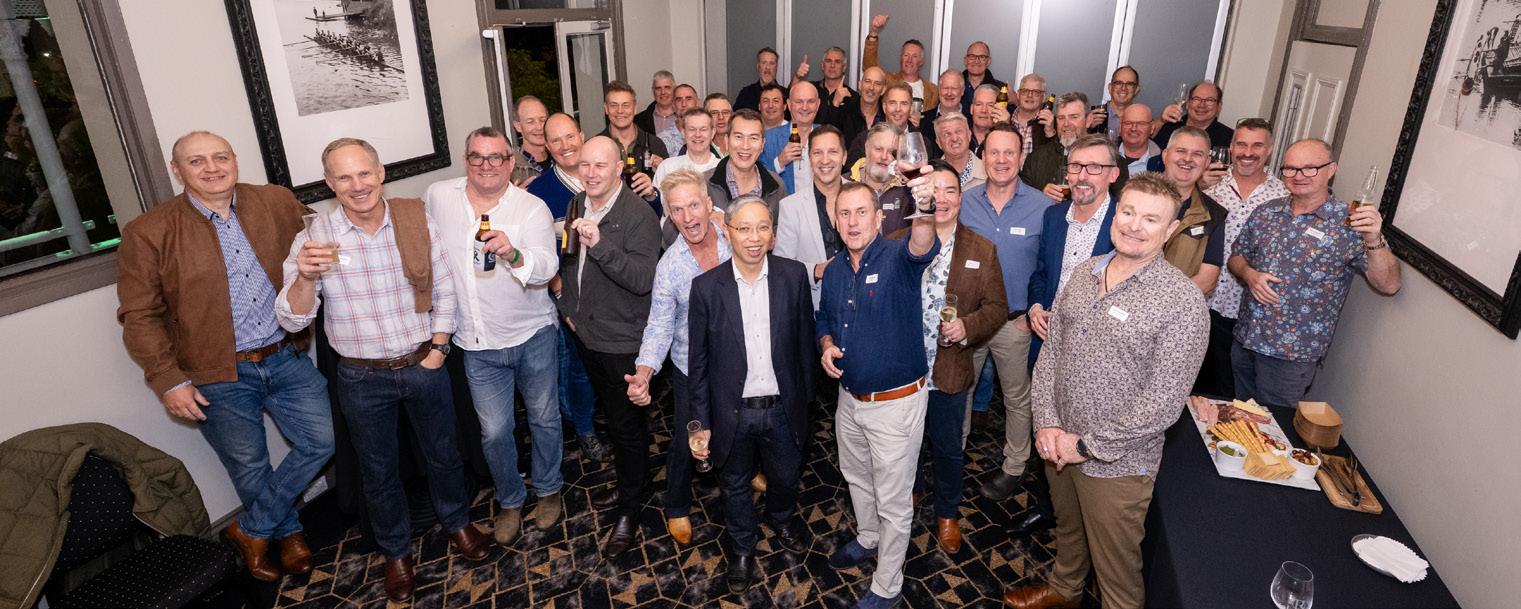
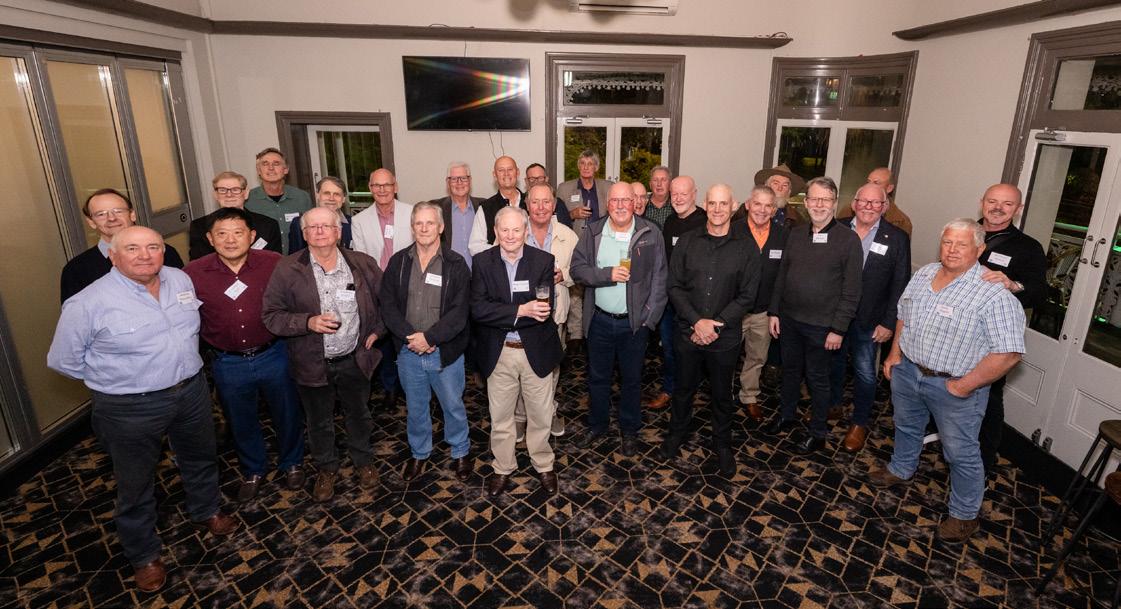
And of course, Old Boys’ weekend will return on 21–22 August 2026, with the Year of the Sixes celebrating their decade reunions and joining us for a full weekend of gatherings, College tours, cheering from the sidelines, and coming together as mates. Further information, including event details and reunion registrations, can be found on the OCA website.
I look forward to seeing many of you throughout the year and to continuing to strengthen the ties that unite us as BBC Old Collegians.
Mr Murray McNaught (OC 1992)
Old Collegians’ Association President
We acknowledge the passing of the following Old Collegians. On behalf of Brisbane Boys’ College and the Old Collegians’ Association, we extend our heartfelt condolences to their families and friends.
Robert Lindley (1942 - 1946)
Noel Kentish (1949 - 1952)
Alan Demack AO (1949 - 1952)
Anthony Felgate (1950 - 1955)
Arthur Edmund de Norbury Rogers AO (1954 - 1957)
Arnold Bourke (1953 - 1957)
John Jeffries (1948 - 1957)
Iain Corness (1956 - 1958)
Alister Cedric Rogers (1957 - 1960)
Clarence Jock Rayner (1957 - 1961)
Bruce Robert Brown (1959 - 1962)
David Phillips (1959 - 1962)
Robert Molony (1960 - 1964)
John Phillips (1962 - 1965)
David Secomb (1962 - 1965)
John Mac Willers (1962 - 1965)
John Davidson (1962 - 1965)
David Zampatti (1963 - 1967)
Geoffrey Jamieson (1963 - 1967)
Peter Glassey (1965 - 1970)
John Cloake (1969 - 1973)
Shane Crang (1974 - 1978)
Mark Aberdeen (1987 - 1991)
Lachlan Brown (1988 - 1993)
Michael Lawrence (1987 - 1993)
Jacob Andrew Setch (2007 - 2011)
Assan Heath Sam (2012 - 2013)
Matthew Canavan (2012-2016)
In appreciation of the legacy our Old Boys continue to build, we are delighted to offer a reduced alumni rate of only $124 when submitting an enrolment application in 2026, our school’s 124th year. This offer is valid for any Old Boy applying for their sons to be accepted as local or international students.
Offer valid until 31 December 2026. Please use the discount code BBCOCA2026
A networking platform exclusively for Brisbane Boys’ College Old Collegians.
Old Boy Directory: Discover and connect with fellow Old Boys, including former classmates.
Mentoring: Access mentoring opportunities from experienced Old Boys.

Jobs Board: Find roles posted by Old Boys to help you get a foot in the door.
Expand Your Network: Connect with others in your industry and grow your professional network.
Give Back: Support the next generation by introducing, employing, or mentoring graduates and young Old Boys.
Easy Registration: Sign in with LinkedIn, no new password to remember.
OCA Events: Stay up to date with upcoming events






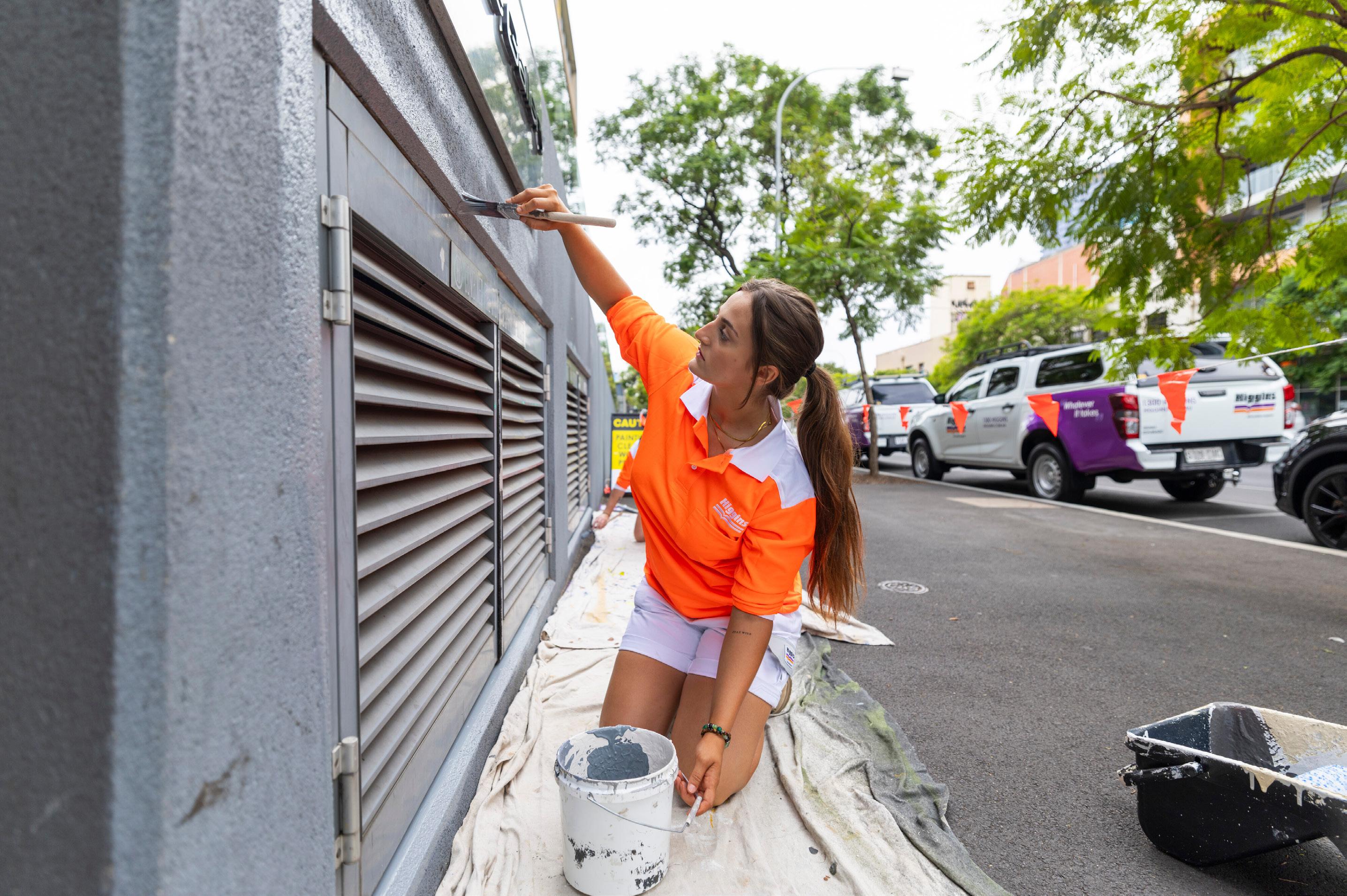
Higgins Coatings is Brisbane’s premier commercial painting provider We’ve been trusted by Australian schools since 1949 to deliver timely, cost-effective solutions that transform their learning environments.