














As the ACT prepares for a generational shift in how its clubs operate, the upcoming Clubs Industry Inquiry (commencing in July 2025 with a final report due by March 2026) marks a critical moment for stakeholders, policymakers, and the wider community. While the inquiry’s recommendations will be non-binding, its scope, timing, and intent align powerfully with the legislative focus of the current ACT Legislative Assembly (2024–2028). This presents a rare and essential opportunity to shape the future of an industry that blends economic power, community engagement, and regulatory complexity.
The inquiry’s objectives are clear: to craft a 20-year transition plan that supports the ACT Club industry to have a sustainable and viable future allowing it to continue to play a key role in the economic and social fabric of the ACT. It is about reimagining the role of Canberra’s licensed clubs at the intersection of community, economy, and regulation. Done well, the inquiry could set a precedent for how governments manage transitions in industries where social responsibility and financial sustainability are inextricably linked
Economic Contribution: More Than Just Numbers
When it comes to justifying the continued relevance of any sector, hard data often speaks loudest. The ACT’s club industry comes well-prepared in this regard. With more than 435,000 memberships (more than the entire adult population of the territory) the reach of the industry is staggering. With conservative estimates of a collective $600 million in assets, more than $85 million in annual supply chain contributions, and at least $31 million invested in core community purposes, added to the $26 million in tax revenue, the figures reflect our industry significance.
These figures are not just impressive, they are essential. As Treasury and Finance ministers scan balance sheets
and forecast budget implications, the measurable value of the club sector provides a compelling rationale for supporting a managed and sustainable future. But the figures alone don’t tell the whole story.
Beneath the economic metrics lies a deeper layer of public value. Clubs in the ACT are custodians of over 500 hectares of green space, a remarkable footprint that is the equivalent of 83 MCGs or 660 Bruce Stadiums. These spaces are not just passive assets; they are sites of daily recreation, community events, and environmental stewardship. From hosting ANZAC Day services to senior-focused programs like morning trivia, and knitting clubs, our clubs offer a diverse range of communityfacing services that aren’t easily replicated by private or government providers.
Function venues, dining facilities, sports sponsorships, and welfare initiatives form the fabric of communal life in suburbs across the Territory. These intangible assets may not be as easily quantified as asset sheets or tax revenue, but they are no less critical. The inquiry’s willingness to include public value as a core area of focus reflects a maturing understanding of how social infrastructure supports wellbeing, inclusion, and civic identity.
The ACT club sector operates within one of the most complex regulatory environments of any industry. Gambling regulations alone are enough to warrant dedicated scrutiny, but add liquor licensing, tobacco controls, planning approvals, workplace health and safety, and food safety requirements, and you begin to see the extent of the challenge. The sector must constantly balance compliance with a wide array of obligations that are sometimes complementary, sometimes conflicting.
A key function of the inquiry will be to assess the regulatory stance of ACT regulators. What principles guide enforcement? Is the approach predominantly punitive, risk-based, educative, or adaptive? Importantly, the inquiry can help distinguish between obvious risks (such as problem gambling) and hidden or cumulative risks (such as burnout in an ageing volunteer workforce or the long-term impact of declining community engagement). By doing so, the ACT has a chance to pioneer a more intelligent, harm-based regulatory model that addresses root causes, not just symptoms.
This is no ordinary inquiry. It comes with a mandate to deliver practical recommendations for managing the decline of club income while safeguarding the broader role clubs play in community life. To succeed, it must reconcile multiple, sometimes competing, objectives:
> Adapting to declines in revenue from poker machine and alcohol sales without dismantling the financial scaffolding on which many clubs still depend.
> Maintaining community services even as revenue streams become more constrained.
> Supporting workforce adaptation, recognising that thousands of jobs depend on the sustainability of the sector.
> Providing clarity and consistency across regulatory systems, ensuring clubs are partners in harm minimisation, not merely subjects of compliance.
The ACT Government has wisely committed to allowing stakeholders to comment on an interim report, ensuring the final recommendations reflect lived experience, not just theory. Clubs have been asked to provide not just financial data, but also stories. Stories of the lives touched by their programs. Of community milestones. Of personal dignity restored. These stories will matter just as much, if not more than spreadsheets in shaping the final vision.
It is worth emphasising that this inquiry is not about defending the status quo, nor is it about penalising a sector that has been slow to change. It is about managing a necessary transformation with care, foresight, and respect for all the roles clubs currently play. The stakes are high: a rushed or ideologically driven reform could weaken the economic and social infrastructure of the ACT’s suburbs for a generation. A measured, inclusive and evidence-based process could position clubs as exemplars of how to adapt in the public interest.
As we approach July 2025, it is vital that clubs, community groups, policymakers, and regulators engage deeply with the inquiry. This is a moment for vision and pragmatism, not partisanship or rhetoric. With the right leadership and broad participation, the inquiry could help the ACT model a new kind of post-gambling community institution—resilient, rooted, and ready for the next generation.
Let this inquiry not be the end of the story, but the beginning of a new one.

Craig Shannon CEO
ClubsACT






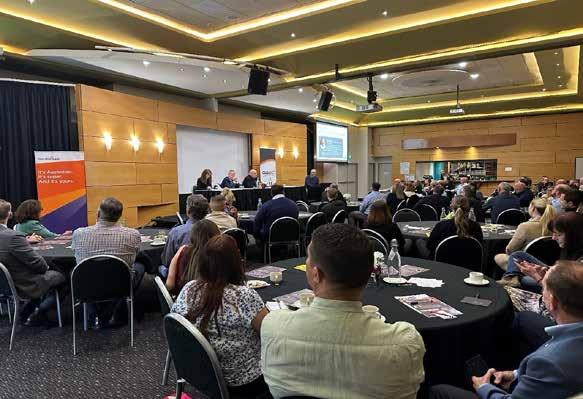
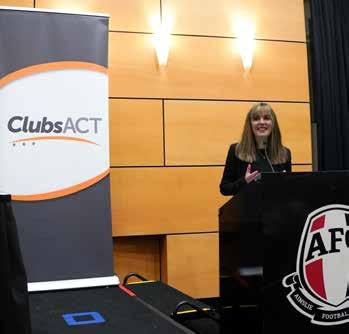
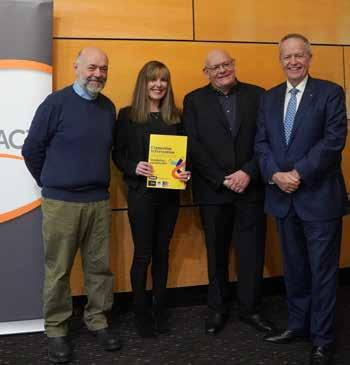
On Thursday, 1st May 2025, community leaders, industry professionals, and passionate locals gathered at Ainslie Football Club for Clubs and the Economy: Building Stronger Communities Together. This highly anticipated event brought attention to the vital role Canberra’s club industry plays in supporting local economies, fostering social connection, and strengthening community resilience.
The event featured a panel of informative speakers that sparked meaningful conversations about the future of community clubs in a changing economy giving inspiration for collaboration to building stronger, more connected communities.
Melanie Wilde, CEO and Founder of the Foundation for Social Health, delivered an inspiring keynote focused on addressing loneliness through scalable, communitydriven initiatives. She emphasized the need to view clubs not just as venues, but as essential hubs of social health and inclusion.
Craig Simmons, a seasoned Community Director, offered a deep dive into the economic realities facing community clubs. He highlighted key challenges, including shifting policies and economic pressures, and provided insights on strategic planning, risk management, and the broader impact of clubs on local governments and communities.
Bill Shorten, Vice Chancellor University Canberra shared his perspective on the Canberra community leadership and the evolving university landscape offered powerful
insight that enriched our discussions.
Attendees walked away with an understanding of how clubs act as economic engines and social anchors— reinvesting millions into local sports, charities, and
ClubsACT CEO, Craig Shannon, welcomed the recent release of the 2024 ACT Gambling Survey, noting its key finding that there has been a continued decline in traditional gambling participation across the Territory, while there has been a concerning growth in the risks associated with online and non-venue-based gambling platforms.
The survey, conducted by CQUniversity’s Experimental Gambling Research Laboratory in partnership with Ipsos Australia, tracks gambling trends and harms in the ACT and informs the Government’s harm minimisation strategies.
Mr Shannon noted “The number of ACT adults participating in gambling continues to fall in the ACT. In 2024, only 15% of ACT adults reported playing electronic gaming machines (EGMs), down from 20% in 2019. This reflects a consistent long-term trend away from venue-based gambling, including club-based gaming, and toward other forms of entertainment.
ACT clubs have played a crucial role in supporting this downward trend through the implementation of responsible gambling measures, such as voluntary self-exclusion programs, trained venue staff, and gambling harm awareness campaigns. These efforts, supported by a Australia’s most restrictive regulatory framework, have helped reduce exposure to gambling harm for many Canberrans.”
“Clubs continue to be part of the solution,” Mr Shannon said. “We provide safe, socially connected environments and our members are highly committed to harm minimisation. The data confirms we are on the right path, but it also shows there’s a new frontier emerging in online gambling that requires greater and more urgent attention.”
The club industry is acknowledged as playing a positive role in harm prevention in the 2024 ACT Gambling Survey. Key findings about clubs roles included:
The survey notes that declining rates of poker machine use and gambling harm in the ACT are in part attributable to harm-minimisation measures in venue-based settings like clubs, including machine number caps, limits on note acceptors, and enforced shutdown periods.
2. Low-Risk Gambling Patterns in Club Settings
Most EGM users in the ACT gamble infrequently and spend relatively short periods on machines— indicating that existing harm minimisation practices in clubs are helping to moderate gambling behaviour.
3. Support for Harm Reduction Tools Among Club Patrons
Many club-based EGM users are supportive of proposed additional harm-prevention tools, such as load-up limits and activity statements. Clubs provide a structured and accountable environment where these tools can be deployed and trialled.
4. Clubs as Sites for Responsible Gambling Infrastructure
The ACT Government and community groups have historically implemented various safer gambling initiatives in club venues, such as:
• Signage and brochures promoting help services.
• Staff training in responsible service of gambling.
• Pre-commitment tools and machine-based messaging systems.
• These venue-based supports make clubs a focal point for prevention efforts.
5. Increased Risk from Online Gambling Underscores Venue Importance
The report highlights that online gambling has grown significantly and is associated with
higher risks and fewer safeguards than venuebased forms. This trend reinforces the comparative public health value of club environments, where interventions and monitoring are more feasible.
While clubs operate EGMs, they also serve as the primary setting where harm minimisation is actively implemented and enforced. The controlled environment of licensed clubs, alongside declining usage rates and broad community support for club-based safety tools, supports the conclusion that clubs play a constructive role in reducing gambling harm in the ACT.
While venue-based gambling is in decline, the survey found that online gambling is on the rise. In 2024, 27% of ACT adults reported gambling online—up from 20% in 2019, and just 8% in 2014. This sharp increase brings with it new challenges for regulation, oversight, and support.
“This shift toward online modes highlights the need for targeted interventions addressing digital gambling environments,” the report noted. Unlike clubs, online platforms often lack the safeguards that come with inperson supervision and community engagement.
The survey also found that some emerging gambling products—such as esports betting and online casinos— have relatively high rates of risky or problem gambling, particularly among the smaller number of users who access them.
Below are some of the key positive findings related to electronic gaming machines (EGMs) from the 2024 ACT Gambling Survey:
In 2024, 15.7% of ACT adults reported playing EGMs at least once in the past year, down from 19.7% in 2019, continuing a longer-term downward trend in venue based gambling uptake d reduction suggests that past harm prevention measures (e.g., limits on machine numbers and public awareness campaigns) are having an impact on overall EGM use.
Among those who do play EGMs, 71.9% report playing less than once a month, indicating that most EGM users are infrequent players rather
than regular or high frequency gamblers s, fewer people are engaging in sustained, high intensity EGM sessions compared to previous surveys.
About 40% of EGM users report playing for under 30 minutes per typical session, and only one third of all users play for an hour or longer weekly (or more) players, fewer than half spend more than two hours per session, suggesting many players naturally limit their time on machines.
When asked about possible harm reduction features on EGMs, over 80% of participants felt positively about the idea of setting personal spending limits via a card, whilst pop-up messages and activity statements were more mixed, those already at risk (i.e., moderate risk or problem gamblers) were especially supportive of features like on screen activity statements—over 70% in that group said such statements would be useful and indicates that most EGM users are open to, and would likely make use of, built-in safer-gambling tools.
The rate of gambling problems in the ACT remains stable at 0.8% of the adult population, equating to around 3,000 people.
Multivariate analysis revealed that EGMs account for about one-third of the total burden of gambling harm, while sports and online wagering, and casino table games, also contribute significantly.
ClubsACT CEO Craig Shannon noted that there was increasingly a disproportionate focus on in-venue gaming machines while the more concerning online gambling activity continues to grow. “Our clubs provide in-venue pathways to intervention and assistance for patrons with gambling issues. In-venue gambling is the only form of gambling that has oversight and assistance frameworks, yet it’s the low hanging fruit obsessively focused on by anti-gambling advocates.”
“These findings highlight the importance of a dual approach. We must continue supporting safe gambling environments in clubs while developing new regulatory tools to address the growing threat of online gambling.” Mr Shannon said.


Veteran assistance dogs can support veterans with vision, hearing, mobility, and PTSD. Their work helps keep our veterans active in the community.
So, please make them welcome in ACT Clubs! You will recognise them by the ‘veteran assistance dog’ patch on their jackets Like guide dogs, they are legally allowed to accompany their handler into any public area, including:
> Shops
> Clubs
> Cafes and restaurants
> Public transport and rideshares
> Hospitals
> Taxis
> Accommodation
Find more information on veteran assistance dogs and their access rights on the Department of Veterans’ Affairs website.


6 June 2025
Andrew Barr Chief Minister
Rachel Stephen-Smith
Minister for Finance
Chris Steel


Treasurer and Minister for Planning and Sustainable Development
Michael Pettersson
Minister for Business, Arts and Creative Industries
Dear Minister/s
We jointly write to ask that you implement a review, or a Legislative Assembly Inquiry into General Rates assessments as they apply to commercial leases, the Calculation and application of Lease Variation charges and the Methodology for valuations underpinning rates reviews.
All our organisations are increasingly assisting our members with issues associated with the matters relating to rates, valuations and lease variation charges.
We are aware of significant increases in rates over time for most commercial properties, but we are particularly concerned about excessive and unjustified increases in rate assessments, particularly when there has been some change such as a subdivision, often coupled with significant lease variation charges. We are aware, for example, of subdivision activity leading to a 930 per cent increase in rates charges, and lease variation charges in the order of hundreds of thousands of dollars. We would be happy to discuss specific examples with you, but the impacts are significant.
These charges are being levied at a time when ACT businesses are facing a very difficult trading environment. A staggering 40 per cent of businesses have reported that they will generate a loss in the current financial year, and many others are struggling. In this environment, significant rates and
charges can be the difference between survival and business failureespecially if they are not known and understood in advance.
We are aware that some businesses are actively considering expansion in other jurisdictions because of the rating and charging environment, and that some are even considering a move out of the ACT entirely.
We do not mean to be alarmist, but this is not a time for complacency. At a time when capital is transient, we must do everything in our capacity to ensure that Canberra businesses are supported and have incentives to remain here. We believe this matter is now hitting a critical mass and potentially encouraging a flight of investment from the ACT, with significant impacts the social and economic life of the Canberra Community.
We are seeking your support for a detailed review of these matters and a consideration of reforms to better provide transparency to decision making, more effective appeal mechanisms and other reforms to the processes more broadly, designed to encourage investment and viable business operations.
As these matters span several portfolios we are writing to all the Ministers with shared interests on these matters and we are seeking an urgent meeting to discuss our concerns and hopefully jointly develop a process to address them.
We await your urgent response.
Yours sincerely
Greg Harford Ashlee Berry Chief Executive Executive Director
Canberra Business Chamber Property Council ACT
Peter Barclay Craig Shannon President Chief Executive
Australian Hotels Association ACT Clubs ACT


Eastlake is more than a club — it’s a hub of inclusivity, supporting important causes and organisations that enable meaningful change in our society. On May 9, *Inclusion & Cocktails*, hosted by ACT Down Syndrome and Intellectual Disability (ACTDSID) at Eastlake Gungahlin, proved that inclusivity and diversity are more than just buzzwords — they’re a way of life.

With influential guest speakers, a specially designed cocktail, and a big open space to foster even bigger conversations, the event was a heartfelt celebration of community spirit and the power of a shared commitment to change. At the heart of these efforts is the enduring relationship between Eastlake and ACTDSID, championed by one of Eastlake’s own, Charlotte Bailey, an Employment Ambassador for ACTDSID. Charlotte’s enthusiastic commitment resonates far beyond a single event. From morning coffee catch-ups with Bill Shorten and TV appearances on *The Project*, to her advocacy work with ACTDSID, Charlotte continues to open important conversations around the significance of World Down Syndrome
Day, the value of connecting with local communities, and the life-changing impact of paid employment. Her message also shone a light on the reality that many hardworking Australians with disabilities earn as little as \$3 an hour — a sobering fact that fuelled Eastlake Group’s motivation to support initiatives like *Inclusion & Cocktails* and various fundraisers over the years.
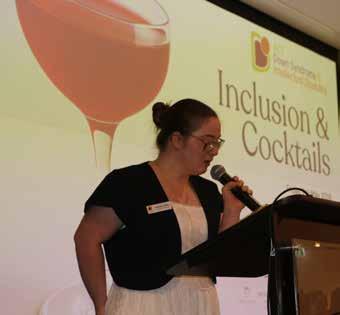
The event was a chance for the community to come together in a warm, positive, and inclusive environment. With approximately 150 attendees, the evening was filled with laughter, connection, and insightful discussion. Australian film figures John Jarratt and Gerard O’Dwyer shared reflections on inclusion in the
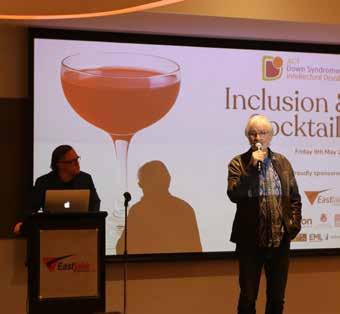
film industry, reinforcing the importance of diversity and recognition across all sectors. The space, beautifully styled by Show Pony Events, allowed guests to socialise
comfortably. Eastlake generously provided the venue hire and catering free of charge, while staff went above and beyond, volunteering their time to support the cause.
Thanks to the support of Underground Spirits, Capital Brewing, Treasury Wines, dedicated volunteers, generous sponsors, and wonderful guests, the event proved once again that community collaboration is the heartbeat of social change. This unforgettable evening stands as a testament to The Eastlake Group’s unwavering mission: to foster an environment where inclusivity and diversity are celebrated every day.
As the night drew to a close, one thing was clear — when a community comes together with passion and shared purpose, every barrier can be transcended, and every voice can be heard. Cheers to a future where inclusion isn’t just an ideal, but a reality that enriches us all.

IGT’s locally tailored global hit, Mystery of the Lamp®, is delivering peak performance, thanks to an innovative Hold ‘N’ Spin experience enhanced with a three-pot combination awarding di erent prize opportunities.
• Proven Hold ‘N’ Spin Bonus Feature available in both titles
• Three di erent Pot Features o er unique gameplay and prize opportunities
• Exciting mechanic allows for a combination of up to three pots for more chances to win
Available exclusively on IGT’s PeakCurve49™ cabinet, with two global hit titles - Treasure Oasis and Enchanted Palace.
Why not add a little magic to your gaming floor? Call IGT to find out more on (02) 9812 2300 or visit igt.com.au.


At the recent ClubsACT micro-conference, guest speaker Melanie Wilde delivered a compelling message about the role clubs can play in transforming Australia’s approach to mental health and social wellbeing.
Melanie Wilde is the CEO of the Foundation for Social Health, an organisation founded to address one of the most pressing public health challenges of our time: loneliness. She holds an MPA from New York University and degrees in social sciences and law from the Australian National University. Recognised by UN Women Australia as one of 100 Women Who Made a Significant Difference to Canberra, Melanie believes that real change happens when we avoid ideological traps and focus on trust, collaboration, and empowering communities with scalable solutions. A proud Canberran who grew up in Ainslie’s public housing flats, she enjoys spending time with her baby boy in the many wondrous local places and natural spaces that surround us.
With the recent inquest into the devastating Bondi Junction stabbing serves as a painful reminder of what happens when our systems fail. When support doesn’t come in time, lives are lost. And while we often speak about safety in terms of policing or clinical response, the root of the issue runs deeper: disconnection.
Australia is facing a mental health crisis. Our clinicians are exhausted. With just 30,000 psychologists and 5,000 psychiatrists serving a nation of 9 million people experiencing mental ill-health, we cannot expect them to carry this burden alone. And while there are certainly people in our communities who are seriously unwell—and we must be honest about that— the solution isn’t only about adding more clinics or hotlines.
The real answer lies in building a whole-of-community approach—one that fosters early connection, supports collective wellbeing, and frees up clinical services to focus on those in greatest need. It means recognising that our struggle is not just individual, but collective. We are not just unwell as people—we are unwell as a society.
At the Foundation for Social Health, that belief sits at the heart of our mission: to treat connection as infrastructure. Not as a side benefit. Not as a “soft” outcome. But as central to prevention, healing, and public health.
That’s why I want to speak directly to one of Australia’s most under-recognised yet powerful assets in the fight against
loneliness and mental ill-health: our clubs.
Recently, alongside the Royal Australian and New Zealand College of Psychiatrists (RANZCP) and youth mental health leader Milly Rose Bannister (founder of ALLKND), we launched Connection is Prevention, a national report that’s already generating significant momentum.
Despite launching over ANZAC weekend, within 48 hours we pulled together a roundtable of more than 20 national mental health leaders—from digital innovators like Spoony, to community champions like Glenys Reid of Chatty Cafés, and the founder of Australia’s first mental health pub, Stuart O’Neill, who has created safe spaces for men in regional Australia experiencing serious mental distress.
From grassroots to national organisations, the message was clear: people are ready to build something new. The appetite for change is real. So is the need.
Next, I’ll be boarding a plane to Mexico as part of a study tour in partnership with Murdoch Children’s Research Institute and Curtin University. We’ll be exploring Utopías—community infrastructure projects in some of the poorest urban areas of the country, where sport, art, peer support and healing are delivered side by side. It’s exactly the kind of integrated, preventative approach we need to reimagine here in Australia.
Since launching 16 weeks ago, the Foundation has been published across major media, partnered with national organisations, and had hundreds of people organically sign up to our work. I’ve been humbled to host my own ABC segment, Wilde About Connection, and to see private sector interest in playing a role in prevention.
But let’s be honest. We’re not lacking in ideas. We’re lacking in integration, coordination—and most of all, relational infrastructure.
Too often, we see people with complex needs bouncing between services. I remember a colleague once describing an Aboriginal woman who had housing, a caseworker, and every available service, yet continued cycling in and out of crisis. When I asked what was missing, she said: “I don’t think she has anyone who loves her. And I think she knows that.”
That’s the uncomfortable truth. Services matter—but services alone don’t save people. Relationships do. And when I reflect on funerals I’ve attended for people who died in distress— some with just a caseworker present, others surrounded by community—it’s painfully clear what made the difference: human connection.
Australia is rich in services. But we are poor in social bonds.
That’s why I believe Canberra’s clubs—and clubs across the country—are uniquely positioned to lead a new era of preventative mental health.
You’re already doing this work. Quietly. Without fanfare. At Clubs in Canberra you will already find, menopause support groups, regular knitting circles, and staff who know the names
and routines of regular members. If 90-year-old Mary doesn’t show up for her Tuesday schnitzel, someone calls. If she doesn’t answer, someone checks on her.
That’s not just customer service. That’s social health infrastructure.
I’ve represented nearly every mental health service in this city, and I can’t name one that operates with that level of personal outreach. As Dr. Gabor Maté says, “Trauma is not what happens to us. It’s what happens inside us when we are left alone with what happens to us.” Connection doesn’t just heal trauma. It prevents it.
We’re at a rare and powerful moment—of public concern, of cross-sector alignment, and of widespread appetite for change. We need to seize it.
Working with Dr Rebecca Huntley, one of Australia’s leading social researchers, we found that 73% of Australians believe being involved in community organisations improves their mental health. And 72% said sports and recreation clubs are the most vital and trusted community organisations in their lives.
Let’s be bold. Let’s reframe clubs not as venues, but as modern-day wells—places of ritual, gathering, and care. Places where connection is grown and mental health is protected. Because safety begins with connection. Prevention begins with belonging. And belonging begins in community—not in crisis services. The Road Ahead
We’re building the foundation for a social health revolution— not by creating more programs, but by activating existing community strengths.
To follow the learnings from our Mexico tour, scan the QR code and sign up to our mailing list. Together, we can ensure the national conversation shifts—from treating mental illness to building mental wellness.
Clubs can lead the way.
Connection is Prevention: How Clubs Can Lead Australia’s Social Health Revolution
By Melanie Wilde

https://www. foundationforsocialhealth.org. au/
For media requests please contact media@ foundationforsocialhealth.org.au

The end of the financial year isn’t far away, so now could be a good time to add to your super1 and potentially save on tax. It’s good to know that when you make extra payments, your super can benefit from compounding investment returns over the long term. You can grow your balance to help you reach your retirement goals.
This could also be a chance to add to your super by making catch-up contributions from previous years – a smart way to grow your balance faster if you’re able and eligible. Remember, the more you add, the better chance you have of achieving financial freedom in retirement. Here are some of the ways you could grow your super and save on tax.
Before tax contributions
Also known as concessional contributions or salary sacrifice, before-tax contributions are when you add to your super from your before-tax pay. These are in addition to the 11.5% superannuation guarantee (SG) your employer pays into your account, and any extra contributions they make. Keep in mind, the SG will increase to 12% on 1 July 2025. Making a before-tax contribution could reduce the amount of income tax you pay.
When you make a before-tax contribution, you’re adding to your super before income tax is deducted from your pay. You can save on tax by reducing the amount of income you have to pay tax on. Super is generally taxed at 15%, so if you pay a higher rate of tax on your income, this could help you save at tax time.
After-tax contributions are extra contributions to your super you make with money you’ve already paid tax on. Also known
as non-concessional contributions, these could be from your after-tax salary, savings, an inheritance or a tax refund. Making after-tax contributions can potentially reduce the tax you pay when they’re claimed as deductions.
Keep in mind, to be eligible to make after-tax contributions your total super balance must be less than $1.9 million on 30 June of the previous financial year.
These are contributions you make on behalf of your partner using your after-tax income. Depending on how much your partner earns, adding to their super before the end of financial year can help boost retirement savings for your partner and you could also save on tax. Also, keep in mind that you must be married or in a de facto relationship with your partner to make super contributions on their behalf. You must also both be Australian residents.
You can also split your before-tax contributions to your partner’s super by splitting up to 85% of your before-tax super contributions. This means some of your contributions go into your super and some goes into theirs.
Learn more at Grow your super | AustralianSuper
1 Before adding to your super, consider your financial circumstances, eligibility, contribution caps that may apply, tax issues and when your super can be accessed. We recommend you consider seeking financial advice. Sponsored by AustralianSuper Pty Ltd, ABN 94 006 457 987, AFSL 233788, Trustee of AustralianSuper ABN 65 714 394 898. Any general advice provided in this article is provided under the AFSL held by AustralianSuper, it does not take into account your personal objectives, financial situation or needs. Before making a decision, consider if the information is right for you and refer to the relevant Product Disclosure Statement, available at australiansuper.com/PDS or by calling 1300 300 273. A Target Market Determination (TMD) is a document that outlines the target market a product has been designed for. Find the TMDs at australiansuper. com/TMD.




DATE: THURSDAY JUNE 26 2025
3:30PM FOLLOWED BY NETWORKING DRINKS & NIBBLES
VENUE: THE CANBERRA SOUTHERN CROSS CLUB
26/06 2025

GUEST SPEAKER:
DR MARGOT MCNEILL | CEO CANBERRA INSTITUTE OF TECHNOLOGY
The recent ClubsACT Micro Conference, Digital Advantage: Leveraging AI & Technology for a Smarter Industry, brought together industry leaders and forward-thinking speakers to explore the innovations shaping the future of our sector.
Opening the conference, John van Waard, Senior Director of Systems Product & Sales Asia Pacific at IGT, shared valuable insights into emerging technology trends and the current state of play in the European Electronic Gaming Machine (EGM) industry. His presentation provided a global perspective on how technological advancements are transforming gaming operations and guest
Dr Margot McNeill is the new Chief Executive O cer of the Canberra Institute of Technology, joining from TAFE NSW where she was Chief Product and Quality O cer. She brings extensive experience in the vocational education sector, with a background spanning teaching and leadership roles across TAFE and dual-sector institutions. Margot holds a PhD in technology and tertiary assessment, along with two Master’s degrees. A strong advocate for accessible, high-quality training, she is committed to innovation and student success.
and consent have become very complex and rigorous, impacting on the use of facial recognition systems across then community and elevating the requirements for informed consent.

Dr Margot McNeill, a prominent figure in vocational education and training, followed with a compelling session on the role of technology in preparing the workforce for the future. She highlighted the importance of integrating digital tools into venue operations and training programs, offering practical strategies for maintaining industry relevance and ensuring workforce readiness.
SPEAKER: JOHN VAN WAARD | SENIOR DIRECTOR SYSTEMS PRODUCT & SALES ASIA PACIFIC IGT
Steve Sammartino shared a thought-provoking video on visionary thinking, offering practical takeaways on how to harness the power of AI more effectively. He explored strategies for making AI work smarter— not harder—by combining human creativity with technological capability, and encouraged a forwardthinking mindset to stay ahead in a rapidly evolving digital world.
John van Waard is a gaming industry veteran with over 20 years of experience, specialising in gaming systems and regulatory compliance. As Senior Director of Systems Product & Sales for Asia Pacific at IGT, he leads initiatives that align technological innovation with regulatory standards.
Tom Lindenmeyer spoke about the recent Bunnings court decision on facial recognition and biometric data collection. Tom outlined how the federal jurisdiction requirements on data collection
The conference served as a powerful reminder of the importance of embracing innovation to remain competitive. Attendees left with fresh ideas, actionable strategies, and valuable connections to help future-proof their clubs in an increasingly digital world.
With hands-on experience across the Asia Pacific region, John brings a unique perspective on evolving gaming regulations. He is a regular speaker at events like the ASEAN Gaming Summit and Australasian Gaming Expo, where he shares insights on responsible gaming, AML, and emerging technologies.

CLUBSACT MICRO CONFERENCE: DIGITAL ADVANTAGE: LEVERAGING AI & TECHNOLOGY FOR A SMARTER INDUSTRY
DATE: THURSDAY JUNE 26 2025
3:30PM FOLLOWED BY NETWORKING DRINKS & NIBBLES
VENUE: THE CANBERRA SOUTHERN CROSS CLUB

GUEST SPEAKER:
DR MARGOT MCNEILL | CEO CANBERRA INSTITUTE OF TECHNOLOGY
Dr Margot McNeill is the new Chief Executive O cer of the Canberra Institute of Technology, joining from TAFE NSW where she was Chief Product and Quality O cer. She brings extensive experience in the vocational education sector, with a background spanning teaching and leadership roles across TAFE and dual-sector institutions. Margot holds a PhD in technology and tertiary assessment, along with two Master’s degrees. A strong advocate for accessible, high-quality training, she is committed to innovation and student success.

GUEST SPEAKER:
JOHN VAN WAARD | SENIOR DIRECTOR SYSTEMS PRODUCT & SALES ASIA PACIFIC IGT
John van Waard is a gaming industry veteran with over 20 years of experience, specialising in gaming systems and regulatory compliance. As Senior Director of Systems Product & Sales for Asia Pacific at IGT, he leads initiatives that align technological innovation with regulatory standards.
With hands-on experience across the Asia Pacific region, John brings a unique perspective on evolving gaming regulations. He is a regular speaker at events like the ASEAN Gaming Summit and Australasian Gaming Expo, where he shares insights on responsible gaming, AML, and emerging technologies.
In his session, John will explore European gaming regulations and their relevance to the Australian market, o ering practical strategies for local operators to navigate global regulatory shifts.

DATE: THURSDAY JUNE 26 2025
3:30PM FOLLOWED BY NETWORKING DRINKS & NIBBLES
VENUE: THE CANBERRA SOUTHERN CROSS CLUB

GUEST SPEAKER: TOM LINDENMAYER – SENIOR ASSOCIATE SNEDDEN HALL & GALLOP
Tom is a Senior Associate at Snedden Hall & Gallop, specialising in commercial and property law. He has extensive experience in both commercial and residential property transactions across the ACT and NSW, as well as in business sales, corporate restructuring, loan agreements, and intellectual property.
A born and raised Canberran, Tom holds a Bachelor of Laws (Honours) and a Bachelor of Commerce from the Australian National University, and was admitted as a solicitor in 2019. He has worked in the legal industry since 2017 across local and national firms.
Tom currently serves on the ACT Young Property Professionals Committee of the Australian Property Institute and is committed to supporting the community through volunteer and pro bono work.

GUEST SPEAKER: STEVE SAMMARTINO FUTURIST, TV HOST CHANNEL 9
Futurist Steve Sammartino is a global authority on technology and Artificial Intelligence, known for his insightful, humor-filled keynotes. Immersed in computational systems since age 12, Steve brings deep expertise and a track record of innovation. He co-founded Macro3D, a pioneering AI and robotics company, and has authored three best-selling books. A TED speaker and host of Channel 9’s The Rebound, now in its fourth season, Steve is also behind viral tech videos like the Lego car. His ability to simplify complex topics has earned him over 100 million views and made him a respected voice in the future of tech.
Steve’s presentations blend visionary thinking with practical takeaways, making him an unmissable speaker for those navigating the rapidly evolving digital and AI landscape.

Ready to turn your passion for Canberra into a career? Kickstart Your Career in Tourism, refresh your skills or are you a retiree wanting to share your experience and knowledge.
JOIN US AND BOOK YOUR PLACE with Tour Guiding Fundamentals Microcredential Course
Australia’s tourism industry is growing rapidly, and so is the demand for skilled tour guides. Reflecting this critical need, tour guides have been added to the National Occupation Shortage List, highlighting the growing opportunities in this field. To address this demand, Tour Guides Australia is delivering the Tour Guiding Fundamentals Course, a streamlined program designed to equip participants with essential skills and knowledge Whether you’re looking to refresh your guiding skills, explore a career change, decide your next move as a graduate, or share your regional knowledge as a volunteer or retiree, this course is your gateway to success.
All participants receive FREE membership to the end of the membership year. This allows participants to continue their learning journey by having access to professional development opportunities, discounted training, attending networking events and a range of other benefits. Join us in Canberra for a one-time-only Tour Guiding Fundamentals Course this June – and take the first step toward the best job in the world!
Location: Mercure Belconnen, Canberra Dates: 16, 17 & 18 June 2025
Whether you’re new to the industry or looking to grow your guiding skills, this is your chance to stand out in Canberra’s booming tourism scene. Limited spots available – book early!
Email: training@tga.org.au https://www.banktech.com.au/quickpay-cash-redemption-terminals/


Off the back of last year’s smash-hit Best Burger Competition, we’re turning up the heat with something even bigger — ClubsACT Cook for a Cause!
This year, it’s all about your club’s signature dish. Whether it’s a crowd favourite already flying out the kitchen or a brand-new creation dreamed up for this event, we want to see what your chefs can bring to the table!
> Each dish will be judged on taste, presentation, and funds raised. (Criteria available)
> Mystery diners will visit venues for the first round.
> Finalists will go head-to-head in front of a judging panel.
> And here’s the best part — $2 from every dish sold goes directly to the Canberra Hospital Foundation, supporting local patients, families, and frontline healthcare heroes.
The winning dish will be revealed in style at the ClubsACT Annual Awards Night — with bragging rights and a great cause behind it! We want you in!
Let us know if your club is keen to join the competition, and send through the best contact person from your team to coordinate the fun to info@clubsact.com.au Let’s showcase your kitchen talent, raise vital funds for the Canberra community — and see who can dish up the ultimate plate.










The Excelium Cyber Security Coordination Centre (CSCC) acts as a central nerve centre, optimising communication and resource allocation with unmatched efficiency
By understanding your unique I T environment, the CSCC efficiently deploys the most qualified personnel for each situation This translates to faster response times, more impactful security solutions, and minimised downtime for your business
With the CSCC, Excelium offers a unified and efficient approach to cybersecurity, safeguarding your organisation with unparalleled expertise Contact Excelium today to learn more about how the CSCC can empower your organisation's cybersecurity posture.
The CSCC acts as a central nerve centre, coordinating all cybersecurity inquiries and requests through a single point of contact Unified Command and Control
Expert Resource Mobilisation
We leverage real-time threat intelligence to deploy the right cybersecurity specialists for your unique situation
Enhanced Efficiency and Faster Resolution
Streamlined service allocation minimises downtime and reduces risk, ensuring continued business operations with minimal disruption

Cyber strategy development
Cyber worthiness assessment
Cyber uplift
Governance, Risk and Compliance
Security architecture
Privacy Impact Assessment Cyber Security Consulting
Critical Infrastructure
Compliance assessment against SOCI Act obligations
Operational Reviews
Remediation Activities
Reporting
Regulatory Analysis
Offensive Security
Penetration Testing
Cloud controls review
Vulnerability assessment
Red Teaming
Blue Teaming
Secure Code Review
ISO 27001, 27701, 27018, 3100
SOC 2
Resourcing
Cyber and National Security Roles
Cyber Security Architecture
Cyber Security Analysis
GRC Specialists
Incident Responders





Pepperjack’s new campaign – Made For Food – dives back into a nostalgic world of food and wine pairings, showing that despite the changing in food trends, Pepperjack has been the wine for all dishes – whether that is elevating mid-week dinners or turning every meal into a gourmet feast – since it first hit the dinner table in 1996.
No matter the dish or the decade, Pepperjack has always made the perfect pair. From 90s classics to 2010 creations; casual Wednesday’s to fancy Friday’s; Taco Tuesday’s or takeout Thursday’s; long lunches into unforgettable feasts – Pepperjack truly makes every meal a memorable moment with its great taste.
As makers of Australia’s leading Shiraz – and in a very first for the winery – Pepperjack Wines recently combined forces with new foodie program, “Memory Bites with Matt Moran”. At its core, Memory Bites is a culinary storytelling series, where celebrated Australian chef Matt Moran recreates dishes tied to his celebrity guests’ most cherished memories. The six-part series has the celebrated chef use a ‘memory box’ to reveal surprising relics that speak to the special memories of guests, including actress and TV personality Pia Miranda, comedian Ross Noble, singer and songwriter Christine
Anu, actor Richard Roxburgh, entertainer Courtney Act, and actress Danielle Cormack. Throughout the series, select varietals from Pepperjack’s diverse portfolio are paired with the featured dishes and enjoyed over the meal by Matt and his guest. This new collaboration has been the perfect alignment to the winery’s recently launched campaign.
Pepperjack is a tribute to the Barossa’s rich heritage. The winemaking team has respect for traditional winemaking techniques and is also dynamic and imaginative. The Pepperjack winemakers are conscious of modern wine styles and are creating wines that reflect their passion for this special region. Pepperjack wines are rich and honest - showcasing the Barossa’s outstanding qualities.
At ILR, we see every drinks offering as a strategic opportunity — not just to serve, but to sell. Our goal is to help clubs, pubs and restaurants maximise profitability, stay ahead of trends and deliver memorable experiences that keep patrons coming back.
From footy finals and live gigs to trivia nights and community celebrations, big events deserve a curated on-premise range, event-ready range helps venues stand out, drive sales growth and improve margins.
To ensure our members can meet demand and maximise ROI, we work closely with suppliers to source emerging trends at the most competitive prices. We’re seeing strong demand for seasonal and exclusive products, these on-premise-only offerings create a point of difference while protecting price perception and profit:
> Cocktails remain crowd favourites — especially bold, visually striking serves that resonate with younger patrons and are designed for sharing, both in venue and on social media.
> At the same time, demand for health-conscious options is rising, with mid-strength, low- and noalcohol drinks offering lighter alternatives that support longer stays and safer journeys home.
> When it comes to flavour, bold is back. Lemon leads across categories, but pineapple is gaining ground as the next big hit.
> Meanwhile, RTDs and ginger beer in on-tap formats are rising in popularity for their freshness, efficiency and minimal waste.
> maller serves, like 200mL sparkling, are also trending thanks to guaranteed freshness and portion control.
Backed by market insights and tailored ranging, we support venues in boosting profitability with expert guidance and industry know-how. From idea to pour, we’re here to help you serve up something special. To learn more visit ilr.net.au or contact info@ilr.net.au.


Men’s Tables are forming in communities throughout Australia. Come and join men just like you at a local Table.
Our vision is Healthy Men, Healthy Masculinities, Healthy Communities. It’s healthy to show emotion and share feelings. Yet for many men in their relationships with other blokes, the talk is mostly about ‘footy and sh*t’. Many men look for a greater sense of belonging and connection.
The Men’s Table is a safe place to share and be heard in a confidential and non-judgemental environment. Men learn to listen, talk, share openly and how to serve other men, modelling healthy versions of masculinity.
There’s never been a better time to belong in a community - the Men’s Table enables adult men to meet on a monthly basis with the same group of men to share a meal and talk openly about their feelings, and the highs and lows that are impacting their lives and well-being.
It’s a local grass roots activity and membership is free. Your commitment is to attend a minimum of 9 monthly meetings per year and your outlay is just the cost of a meal and a drink.
This is a safe space to speak openly without judgement with a like-minded group of good men.”
We share our own stories, confident that no one will try to fix or advise us, knowing that our open listening is valuable and welcomed.”
This level of connection goes beyond the superficial level common in most male banter, and intentionally dives deeper.”
I don’t get this quality of space in other places in my life so I am grateful for the men in our Table. I feel incredibly well supported.”

Our anonymous annual Table survey invites men from Tables to answer a brief survey on their reasons for joining a Table, why they continue to come along and how it has helped them. Here’s what they said.
felt a stronger sense of community
felt it was a
reported a benefit to their mental health and wellbeing
felt better social connection
felt it was a place to share feelings, vulnerability
reported an improvement to their communication skills
Come to an ‘entree’ to find out how The Men’s Table works and see if it’s for you.






The Chef’s Signature Dinner has evolved into one of the most prestigious events on the Club’s calendar, a hallmark evening of exceptional food, fine wine, and elevated entertainment. What began as a desire to refresh the Club’s event offerings has grown into a flagship experience that exemplifies our values of excellence, recognition, and community.
This annual celebration was introduced as a new kind of gathering, one that moved beyond traditional formats to deliver something truly special. It was designed to honour the craft of the culinary teams while bringing together members, partners, staff, and suppliers in a setting that highlights the very best of Club hospitality.
Since its inception, the event has consistently sold out within weeks of release, quickly earning a reputation for quality, attention to detail, and memorable storytelling. Each dinner is curated to showcase the incredible talents of our chefs, many of whom have risen through the Club industry, and to celebrate their journeys and achievements.


More than just a night of indulgence, the Chefs Signature Dinner stands as one of the Club’s most effective key person retention initiatives. It reflects a deep commitment to staff recognition, the consistency of experience, and the high standards the CSCC teams are proud to uphold.
This exceptional event is a credit to the General Manager of Food & Beverage, Anurag, the CSCC team, and the broader Club network, who collaborate each year to create something that is both personally meaningful and professionally inspiring.

ACT Rugby Union Club Turner
Ainslie Football and Social Club
Austrian Australian Club
Australian-Croatia Club
Belconnen Bowling Club
Belconnen Soccer Club
Burns Golf Club Belconnen
Canberra Burns Club
Canberra Deakin Football Club
Canberra Irish Club
Canberra Labor Club Belconnen
Canberra Labor Club Central Social
Canberra Labor Club Ginninderra
Canberra Labor Club Weston
Canberra Racing Club
Canberra Services Club
Eastlake Calwell
Eastlake Football Club Griffith
Eastlake Gungahlin
Federal Golf Club
Gungahlin Lakes Golf Club
Harmonie German Club
Hellenic Club in the City
Hellenic Club Woden
Mawson Club
Murrumbidgee Country Club
National Press Club of Australia
Raiders Belconnen
Raiders Gungahlin
Raiders Weston
Royal Military Golf Club
Southern Cross Club Jamison
Southern Cross Club Tuggeranong
Southern Cross Club Woden
Southern Cross Yacht Club
Spanish Australian Club of Canberra
The Tradies Club
Vikings Chisholm
Vikings Erindale
Vikings Lanyon
Vikings Town Centre
Yowani Country Club


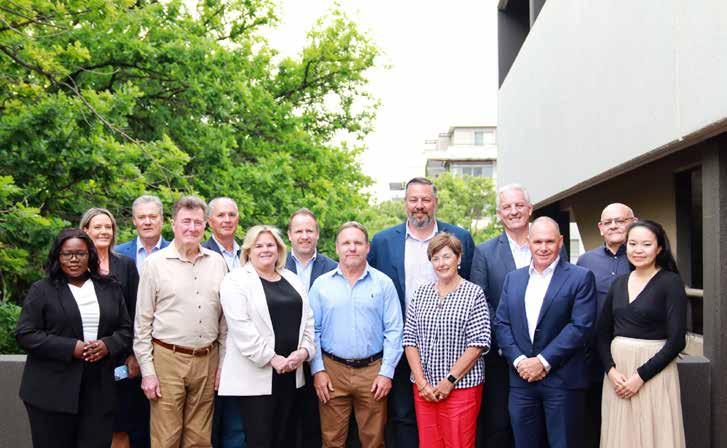
The ACT Legislative Assembly recently conducted an Inquiry into insurance costs in the ACT. ClubsACT lodged a submission to the Inquiry outlining our industry concerns about this issue.
Employers in the Australian Capital Territory (ACT) face a unique set of challenges related to insurance costs. These costs have become a pressing concern due to a variety of economic, regulatory, demographic, and industry-specific factors. Insurance ranging from workers' compensation to public liability and professional indemnity constitutes a significant component of overheads for businesses operating in the region. Rising premiums, evolving risk profiles, legal obligations, and the broader economic landscape all contribute to the financial burden and complexity employers must manage.
Although Licensed clubs in the ACT are not-for-profit entities, they exist within the commercial environment applicable to most ACT businesses.
Unfortunately, the not-for profit sector has often limited opportunities to defray costs of operations or pass them through to patrons and so are often faced with absorbing cost increases for insurances.
1. Workers’ Compensation Insurance


In the ACT, employers are legally required to hold workers’ compensation insurance to cover employees in the event of a workplace injury or illness. This is administered under the Workers Compensation Act 1951 (ACT).
Amongst members of ClubsACT, workers compensation remains perhaps the most significant area of concern. Premium costs and often reduced numbers of potential insurers have seen escalating costs for our members. In this submission we will seek to provide primary focus on this Insurance area given the magnitude of concern that has been raised with us.
Over recent years, premiums in this space have been subject to fluctuations due to several key drivers:
• Increased claims costs: A general rise in medical treatment costs and extended periods of incapacity have contributed to higher overall claims costs. Mental health claims often more complex and longer in duration have increased, driven by greater awareness, reduced stigma, and legislative changes enabling more workers to claim for psychological injuries.
• Return-to-work challenges: Employers face higher premiums when workers are unable to return to work quickly. In the ACT, the return-to-work rate has shown periodic declines, increasing the cost burden on insurers and, in turn, employers.
• Small business disadvantage: Smaller businesses often lack the internal capacity to effectively manage return-to-work programs, safety compliance, and claims management. As a result, they are more likely to incur higher premiums due to poorer claims performance, even though their absolute number of claims may be lower than larger employers. The range of small clubs with only small workforce sizes and often limited Human Resource functions is not unsubstantial.
Another significant insurance cost issue arises with public liability insurance. Businesses are required to cover potential injury or property damage to third parties caused by their operations. This type of insurance has become particularly problematic in certain sectors:
• Rising litigation and settlement costs: Increased willingness by the public to pursue legal claims, alongside a broader trend of higher court-awarded damages, has led insurers to raise premiums significantly.
• High-risk industries: Hospitality, and entertainment venues are considered high-risk sectors. Employers in these fields often face disproportionately higher premiums, particularly in the ACT where public and event spaces are tightly regulated.
• Policy limitations and exclusions: Employers are also contending with increasingly restrictive policy terms. Insurers may exclude coverage for specific high-risk activities or events, forcing businesses to seek specialist policies at a higher cost or forego certain services altogether.
The ACT insurance market is relatively small compared to larger states, which limits competition among insurers. A smaller pool of providers often results in higher premiums, less flexible products, and reduced bargaining power for local employers. Additionally, insurers often underwrite ACT businesses based on national or state-level data that may not reflect local conditions, leading to perceived overpricing.
Market consolidation among major insurers and brokers has also decreased competition. With fewer players offering policies, especially in niche or high-risk categories, premiums have escalated due to lack of competitive pressure.
While the ACT has historically been less affected by natural disasters compared to other states, recent years have seen increasing exposure to bushfire smoke, hailstorms, and other extreme weather events. As insurers model future climate risks into their pricing, employers are starting to see these factors reflected in higher property insurance and business interruption premiums.
The increased frequency and severity of such events contribute to higher reinsurance costs, which are then passed down to employers in the form of premium hikes. Even businesses not directly impacted by events can face increased premiums due to their location within a designated risk area.
Another growing area of concern is cyber insurance, which is becoming essential for businesses handling sensitive customer data or operating online platforms. Cybersecurity threats have escalated dramatically, and the ACT home to many government contractors and tech-focused firms is particularly exposed.
Many employers in the ACT are seeing:
• Premium surges: Cyber policies have become much more expensive in the past few years, especially after several high-profile breaches in Australia. Two ACT Clubs were directly impacted by data breaches in the past 18 months.
• Policy limitations: Many cyber policies now have tighter exclusions or limits on payout, meaning businesses must pay more for effective coverage.
Employers must also navigate the administrative burden of ensuring all insurance obligations are met. Non-compliance with workers' compensation laws can result in substantial fines. Keeping up with changing regulatory requirements such as updates to coverage limits, obligations for contractors, or safety standards adds indirect costs in the form of legal advice, audits, and policy reviews.
Clubs have often limited options managing rising costs, but many are exploring a variety of strategies to contain or mitigate these rising insurance costs:
• Workplace health and safety investment: Clubs are placing greater emphasis on safety culture, risk prevention, and employee wellbeing to reduce claims frequency and improve return-to-work outcomes.
• Broker negotiation and bundling: Some businesses are leveraging brokers more effectively to negotiate discounts, bundle multiple policies, or access group insurance schemes that offer better rates. This is an increasing difficult area to manage outcomes in with many clubs having already maximised their possible outcomes through this process.
ClubsACT recommends a specific review of the Workers Compensation legislation with particular attention to whole body impairment threshold & unlimited common law. ClubsACT is also seeking greater harmonisation between the ACT and NSW jurisdictions in this area as a way of containing costs.
Whole Person Impairment (WPI), or Whole-Body Impairment (WBI), ratings are used in workers compensation schemes in Australia to assess the degree of permanent impairment after a workplace injury. While the Nationally Consistent Framework exists, each jurisdiction has its own legislation, thresholds, and compensation models, including New South Wales (NSW) and the Australian Capital Territory (ACT).
A COMPARISON BETWEEN
WPI Guidelines
AMA5 + NSW Guidelines (SIRA)
Lump Sum Threshold 10% WPI (some exceptions)
Serious Injury Threshold 30% WPI
Weekly Benefits Beyond 5 yrs 21% WPI minimum
Medical Benefits Duration
Assessment Authority
Limited unless 30%+ WPI
assessors
AMA5 only
No strict threshold
More flexible, starts around 30%
No such fixed threshold
Potentially longer access
assessors
<10% No lump sum (except hearing loss if ≥6%) May receive lump sum compensation (no strict threshold)
1014%
1520%
2129%
Eligible for lump sum compensation
Eligible for commutation (settlement)
Lump sum increases with WPI percentage
Higher lump sum: other benefits may apply
Access to weekly payments beyond 5 years Potential for extended benefits based on impairment
30% Classified as seriously injured: lifelong weekly & medical benefits
May qualify as seriously injured: enhanced rights & long-term support
The Table of Maims is a schedule used in workers' compensation schemes to determine compensation for specific permanent injuries. In the Australian Capital Territory (ACT), this table outlines compensation amounts for various injuries based on their severity and impact on an individual's ability to work.
The Table of Maims exists to provide a clear, consistent, and administratively efficient way to assess and compensate for permanent physical impairments resulting from workplace injuries.
There are real benefits if an effective Table of Maims for all parties such as:
A maims list ensures that similar injuries are compensated in a consistent and predictable manner. Without it, different workers might receive wildly different compensation for the same type of injury, depending on who assessed the claim or how persuasive their legal representation was.
2.
It simplifies and speeds up the claims process. Rather than going through lengthy medical and legal debates for each injury, the Table provides predefined compensation values for specific injuries (e.g., loss of an eye, amputation of a limb).
3.
It gives both employers and employees a clear framework for expectations. Employers can better assess potential liabilities, and workers know upfront what compensation they may receive for certain injuries.
4. Lump Sum Compensation
The maims list supports lump sum payments for permanent injuries. These payments are typically non-economic, meaning they’re not tied to lost wages but to the loss of bodily function or quality of life
5. Simplifies Disputes
By codifying injury values, the Table reduces the likelihood of disputes over how much an injury is “worth.” While disagreements still happen especially around causation or severity the list provides a useful benchmark.
6. Historical and Legislative Precedent
The concept of a maims list has been part of workers’ compensation schemes for decades across Australia. It’s built into legislation, such as the ACT’s Workers Compensation Act 1951, and reflects long-standing policy decisions about how injury compensation should be handled.
However, whilst desirable, there are several issues have been identified with the current Table of Maims in the ACT:
1. Limited Scope of Injuries Covered:
The existing Table of Maims lists only specific body parts and types of injuries, which can exclude certain conditions from compensation. For example, injuries leading to chronic pain or psychological conditions may not be adequately addressed, leaving affected workers without appropriate compensation.
2. Outdated Terminology and Classifications:
Some terms used in the table, such as "loss of mental powers," have been considered outdated and were replaced by terms like "brain damage" under amendments. However, these changes may not fully capture the range of cognitive impairments that can result from workplace injuries, potentially leading to inadequate assessments and compensation.
3. Lack of Provisions for Pain and Suffering:
The table primarily focuses on physical impairments and does not consistently account for pain and suffering associated with injuries. This omission can result in compensation that does not fully reflect the injured worker's experience and challenges during recovery.
4. Inflexibility in Assessing Combined Injuries:
Workers who sustain multiple injuries may find that the Table of Maims does not adequately address the cumulative impact of these injuries. The table's structure may lead to assessments that consider each injury in isolation, potentially underestimating the overall impairment and its effect on the worker's life and employment.
ClubsACT believes that there is a need for a comprehensive review and update of the Table of Maims in the ACT to ensure it accurately reflects modern medical understandings and provides fair compensation for all types of workplace injuries.
The advice we have received is that the compensatory values of the Table of Maims do not currently provide a significant enough incentive for employees not to seek civil damages claim which is putting upward pressure on premiums.
Many ACT Cubs, especially smaller ones, are having difficulty with the increasing costs of premiums often driven by the Insurers settling on claims against the protestation of the employer. There is a view amongst many in the industry that an unfortunate incentive has occurred for insurer settlements at substantial costs flowing through to premium costs, when the employer disputes the claim or strongly view the claims as having no merit. The current operation of insurance in this area is not risk based and often leaves employers who have strong safety records subject to costs driven by poor performing employers. We recommend that this matter be considered as a priority.
The no win no fee promotions and costs of legal fees to plaintiff solicitors needs to be reviewed with a view to capping costs in a similar manner to the NSW jurisdiction.
We understand that Licensing costs being charged by the ACT government to insurers to participate in the scheme are an issue of concern. We have been advised that insurers pay a fee on the Gross Written Premiums (GWP) that they collect & is a flat percentage based on market share. ACT’s total GWP is lower than bigger states due to its small population and workforce. However, on a peremployee or per-$100 of wages basis, premium rates in the ACT can be comparable to or higher than other states. Premium variability is also affected by industry risk, claims experience, and whether the system is privately underwritten (like ACT and NSW) or state-run (like QLD and VIC).
Journey claims Should be reviewed. These claims need to be handled by the CTP insurers, not under the workers compensation scheme for the following reasons:
Workers Compensation is designed to cover injuries that arise "out of or in the course of employment." Commuting is often not directly controlled by the employer e.g., route taken, mode of transport, timing so it’s argued the injury isn't sufficiently connected to the employment duties. This scenario also makes it difficult for an employer to manage and limit exposure to risk due to this casual connection.
CTP insurance, on the other hand, is specifically designed to cover motor vehicle accidents, regardless of purpose, so it’s a better fit when a car crash is involved.
If someone is injured in a car accident on their way to work, they may be able to claim under:
• Workers’ compensation
• CTP insurance (if another driver was at fault)
• Private income protection
Covering journey claims under workers comp creates overlap, making the system more expensive and inefficient.
3. Moral Hazard and Cost Blowout
Jurisdictions like the ACT and Tasmania (which allow unrestricted journey claims) have higher premiums because of increased claims frequency. In contrast, NSW and QLD have restricted or abolished journey claim coverage under workers comp to control costs and reduce moral hazard (i.e., the risk people make claims for events only tangentially connected to work).
4. CTP is Already Set Up for Road Injuries
CTP insurers already manage claims involving:
• Injury causation
• Fault (in fault-based systems)
• Medical and rehab costs
They're experienced and structured to handle transport-related injury cases, including crash dynamics and liability which are not the core focus of workers compensation.
5. National Consistency & Simplicity
Most Australians are covered under CTP for road accidents. Moving journey claims into the CTP scheme could standardize compensation for road injuries across all situations, regardless of whether the trip was for work, school, or leisure.
Prior to the last ACT election, the ACT Legislative Assembly unfortunately passed the Property Developers Bill without considering our representations seeking exemptions for the Directors of notfor-profit clubs from the Directors Liability provisions of the Bill. ClubsACT is now gravely concerned about the impact of this Bill and the upward pressure it is now placing on Directors Liability Insurance for our members and the disincentive it has now created for clubs to be more broadly involved in housing developments.
Under the provisions outlined in the Legislation, the Registrar can hold directors of the developer (i.e. Club Director) personally liable to rectify defects and Non-compliance would result in a personal fine up to $320,000.
Directors can be made personally liable for rectification if the Registrar intends to issue a Rectification Order to a corporate property developer; the developer is deregistered; subject to a winding-up order; in administration; receivership or liquidation; or the Registrar has considered whether a latent defects insurance policy covers the defect.
It is therefore not unreasonable to anticipate that third parties will look to sue developers as early, and for as much value, as possible. This is a foreseeable consequence since either the company will be exposed, or its directors will if these lawsuits force it into administration or winding up for
example. Some serious risks arise for clubs and other not-for-profit entities from the possibility of personal liability being attached to formal and de facto directors (someone who controls the entity).
The scheme then creates a perfect storm of severe risk to our members and other associated not-forprofit entities through provisions that provide:
1. That a director could be held liable for work that was completed up to 10 years ago;
2. That a director could be held liable for work that was completed before they became a director of the developer; and
3. That developers and their directors are especially vulnerable to third-party lawsuits
The provisions of section 55 of the legislation entitle the Territory to ‘pierce the corporate veil’ in circumstances where the ‘developer’ and its directors have not engaged in any form of misconduct. The current legislation provides that the mere existence of the circumstances of a serious defect and the insolvency of the developer is sufficient to entitle the Territory to make an order against the directors.
The ability to make directors personally liable for company actions ‘piercing the corporate veil’ is rarely used by courts or included in legislation and, it is a key principle in Australian corporations’ law that a corporation is a separate legal entity from its directors and shareholders.
To deny a director the protection of the corporate limitation of liability where they have engaged appropriately qualified consultants and a licensed builder under arm’s length contracts is unprecedented and lacks justification. The only justification appears to be the presumption that the developer, and by extension, the director has profited financially from the project and that therefore must be held responsible for defects and deficiencies of the licensed builder and consultants retained by the developer.
This scant justification does not exist where the developer is a Not-for-profit Licensed Club, or other not-for-profit entity that has engaged in residential development activity. The boards and management committees of these entities do not get any financial benefit from providing their time and, where the entity is a charity, cannot by law benefit from the proceeds of a development that the charity has engaged in.
The potential for incurring substantial liability for defects in buildings that are the responsibility of others, places a chilling effect on current and future directors of a Club, or other not-for-profit entity that has engaged in development activity. The retrospective nature of the liability is a substantial concern.
provisions are of real and significant concern to our members and other not-for-profit entities. The scheme creates a framework where resigned directors, receivers and administrators can fall under the broad ‘de facto director’ banner and be liable.
Given that resigning will likely still not protect directors from liability, we are concerned these provisions have a real risk of creating an environment where volunteer Directors and Board members may see bankruptcy become a strategic reality.
Should these provisions remain unchanged we see a very real threat that directors will rethink their positions, and it will either see a resistance by our members to expose themselves to residential developments or it may in a very real way deter people from volunteering to become directors of our members and other exposed not-for-profit entities.
Most significantly with all the new risk exposures created by this scheme ClubsACT has a very real concern that the legislation will either significantly slow or completely stonewall the active participation of our members in seeking to meet the objectives of the Diversification policy of Government or the objectives of the ACT Government’s Housing Strategy at a time when the Government has committed to building 100,000 new dwellings by 2050.
The Government saw fit to amend the Bill before passing to exempt registered Social Housing providers from the Directors liability provisions. Despite our protests this exemption was not extended to not-for-profit Clubs. We are now advised that member clubs are facing significant potential increases in Directors Liability Insurance Premiums where their clubs are involved in housing developments. We understand there are no existing insurance products that contemplate this situation and there are very real risks this issue will now inhibit clubs from being involved in future housing development options.
Whereas previously there were several joint venture projects being contemplated by clubs with Social Housing providers, we understand that now that club directors potentially face 100% of the personal liability risk for rectification issues that clubs are reassessing their appetitive for this risk and the increased insurance costs associated with it.
ClubsACT is seeking the following:
1.Modernise and Expand the Table of Maims
The current table is outdated and doesn't cover many common or emerging injuries, especially psychological injuries. The Table should provide fairer compensation for a broader range of injuries, including mental health conditions. This would then provide more clarity and less legal wrangling due to ambiguous or uncategorized injuries, which would then reduce disputes and legal costs. We recommend Government conduct a clinical and legal review of the maims list every 5 years, including a thorough actuarial revision as outlines above and including consultation with allied health experts and employer and worker advocates.
2.Introduce Risk-Based Premium Incentives
Not all employers face the same risk profile, and good performers should be rewarded. Those with strong safety records or successful return-to-work programs could access lower premiums and this would encourage safer workplaces and better post-injury support. We recommend the implementation of a transparent, tiered premium model that rewards proactive employers while maintaining fair base coverage for small businesses.
3.Streamline Return-to-Work (RTW) Processes with Shared Resources
Many employers, especially small ones, struggle to manage complex return-to-work plans. The recommendation would provide quicker, more coordinated return to work. Access to shared RTW
coordinators or pooled resources can lower administrative costs and improve outcomes. We recommend the Government fund a centralised RTW support unit or portal through Access Canberra or WorkSafe ACT that SMEs can use to design and manage RTW plans.
4.Digitise Claims and Injury Management
Paperwork-heavy claims processes slow everything down and increase administrative costs. Digitisation would provide faster processing and better transparency around claim status. This should also produce lower overheads, fewer delays, and better data to monitor injury trends. We recommend Government build a secure digital claims platform that integrates insurers, employers, workers, and health providers, with real-time status updates and documentation sharing.
5.Invest in Prevention Through Tailored Industry Support
Prevention is far cheaper than compensation, but generic safety campaigns don’t always reach the right people or address specific risks. We believe that fewer injuries and safer workplaces would be encouraged through better tailored industry support. We are confident that it would lower injury rates, lower premiums and achieve less downtime.
Target government funding toward industry-specific prevention initiatives (e.g., mental health training in education and healthcare, manual handling in retail and logistics), possibly in partnership with industry associations.
6.Real-Time Data
Create a real-time injury dashboard for the ACT, showing trends by industry and injury type. This would help everyone see what's working and where the risks are growing.
7.CTP Should cover Journey Claims
ClubsACT recommends removing travel claims from the Scope of Workers Compensation coverage and moving it to CTP insurance.
8. Developers Legislation
Amend the Developers legislation to exempt Club Directors from personal liability for rectification costs in a similar manner to the exemption provided to Social Housing Providers.
Insurance costs are a growing concern for employers in the ACT, affecting businesses across sectors and sizes. From rising workers’ compensation premiums to the emerging threat of cyber risk, employers must navigate a complex and often volatile insurance landscape. Strategic planning, proactive risk management, and policy advocacy are essential to ensure that businesses in the ACT can remain financially sustainable and competitive in the face of these challenges. Addressing these issues may also require coordinated action between insurers, employers, and government bodies to ensure fair pricing, adequate coverage, and regulatory clarity.
Kind Regards,

Craig Shannon Chief Executive Officer | ClubsACT