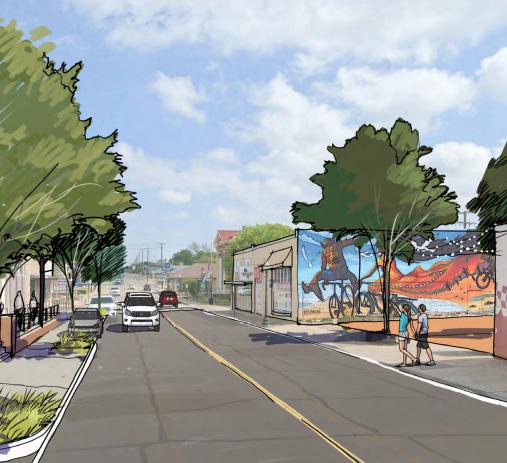
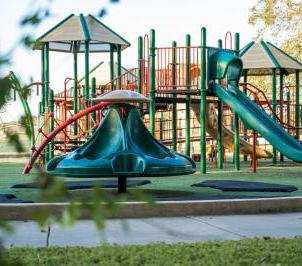
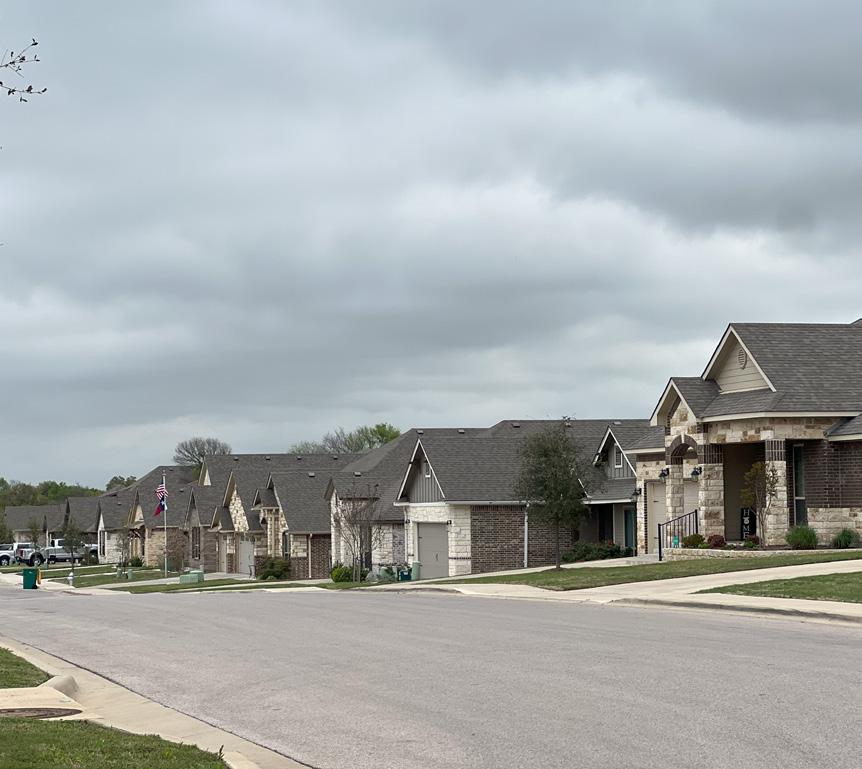
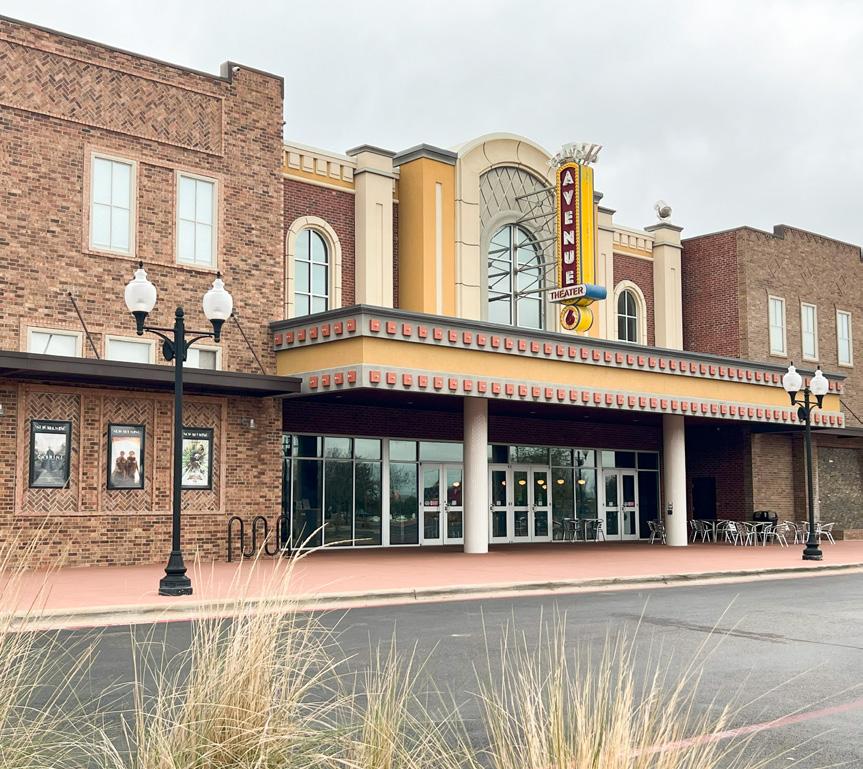
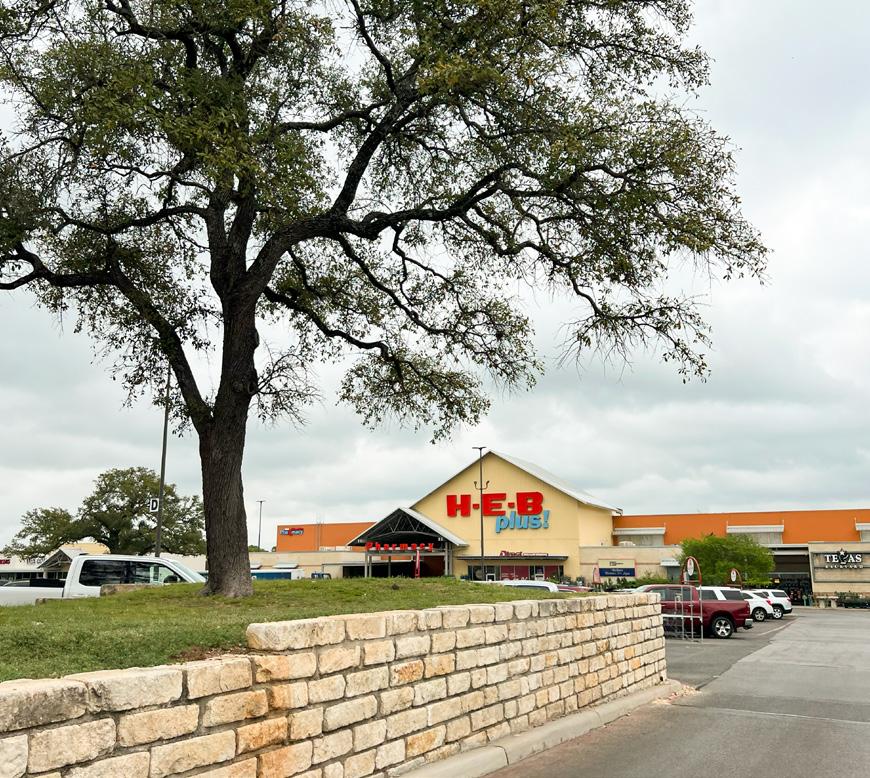
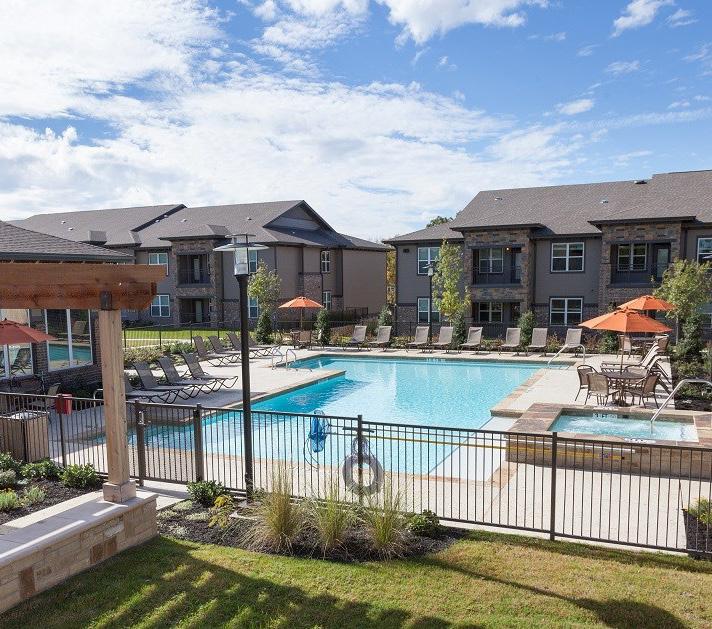
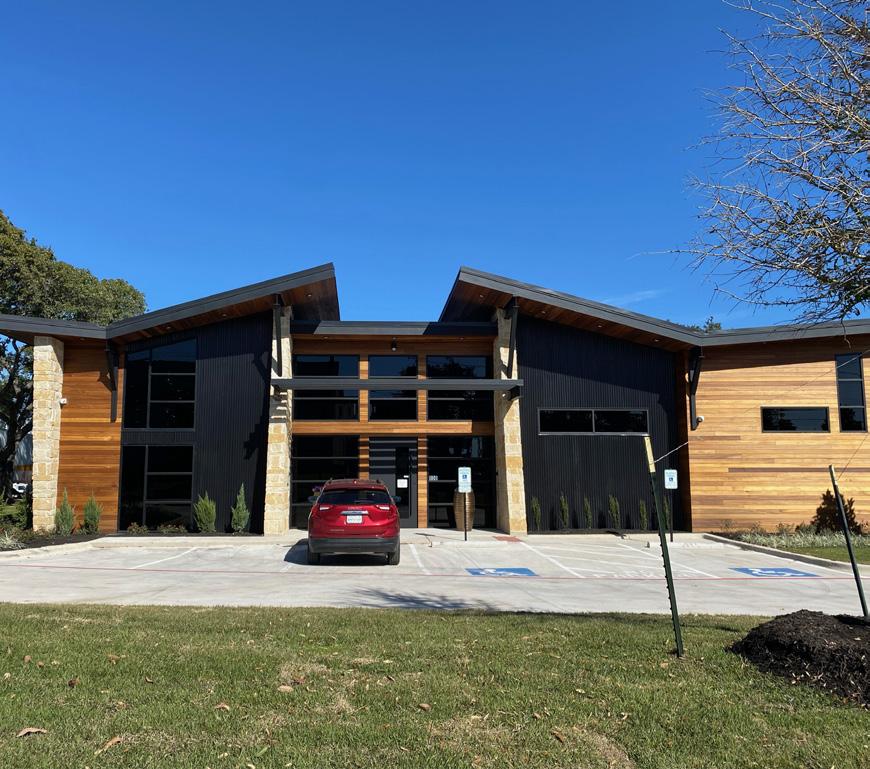
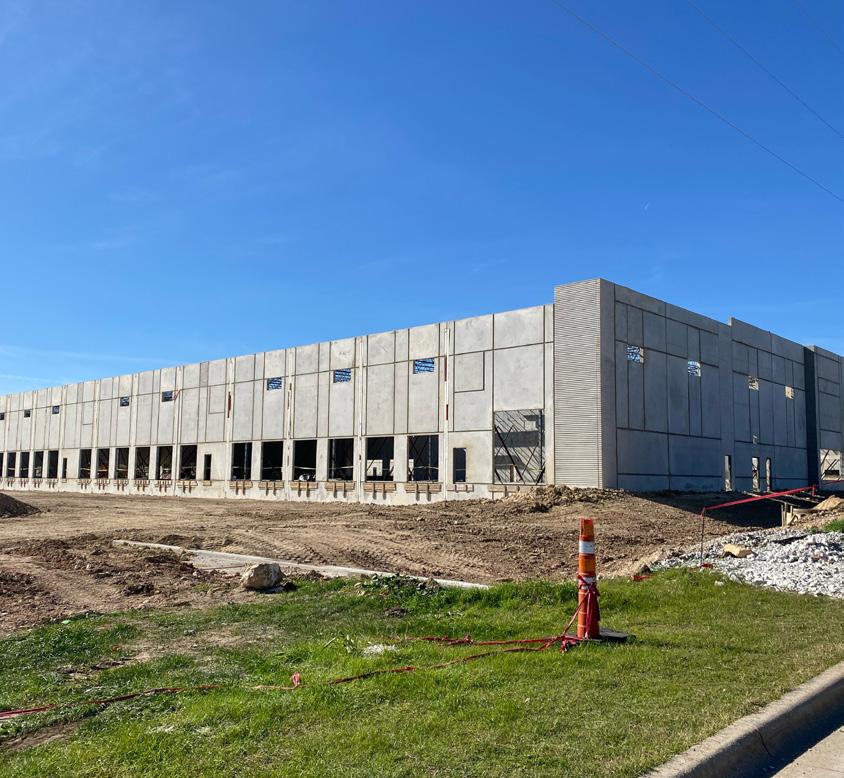
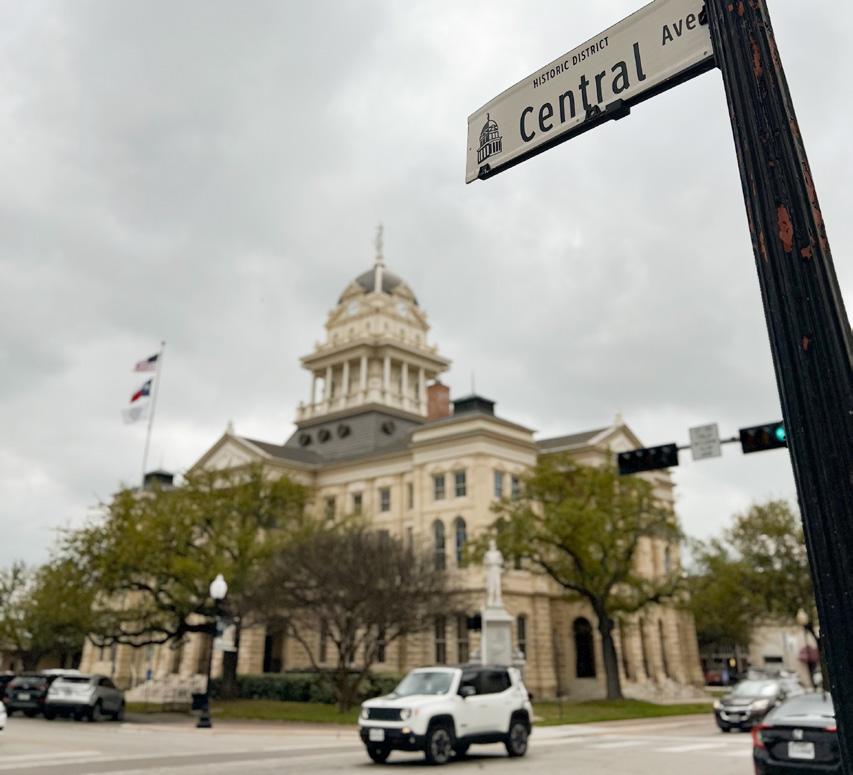
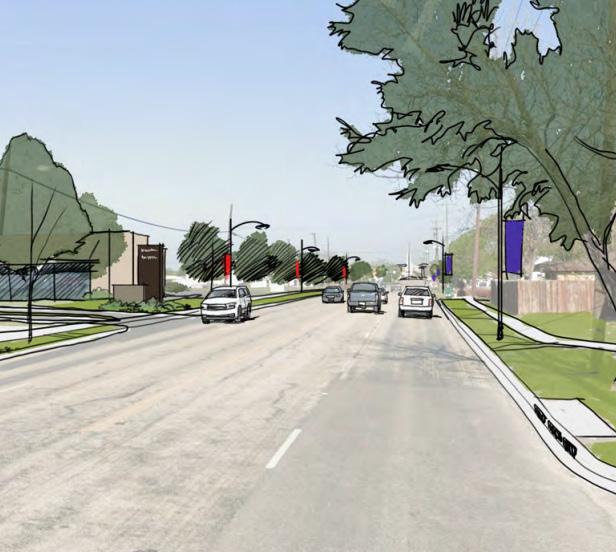
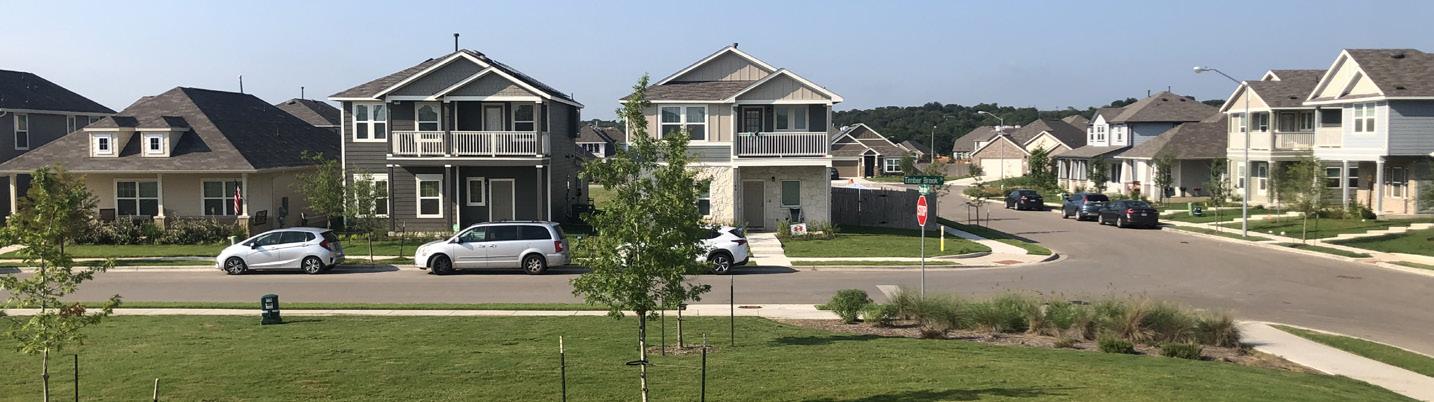
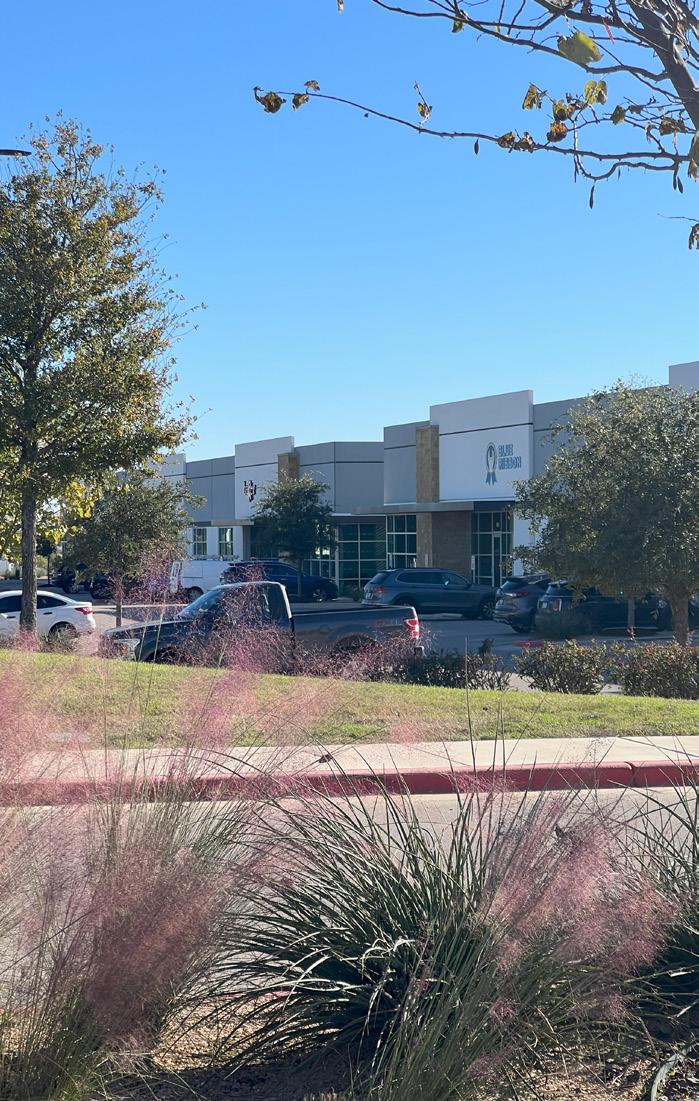
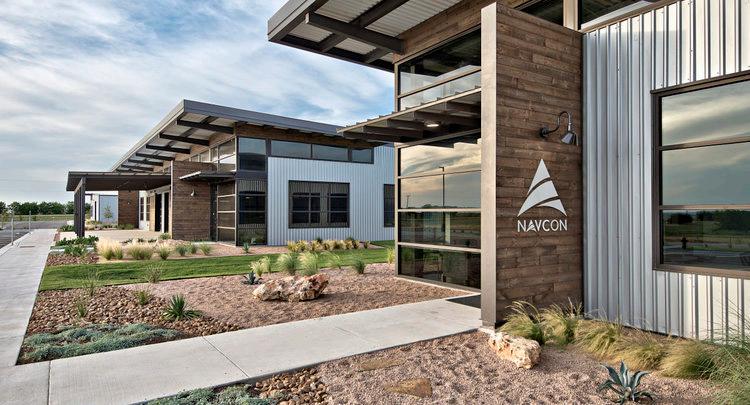
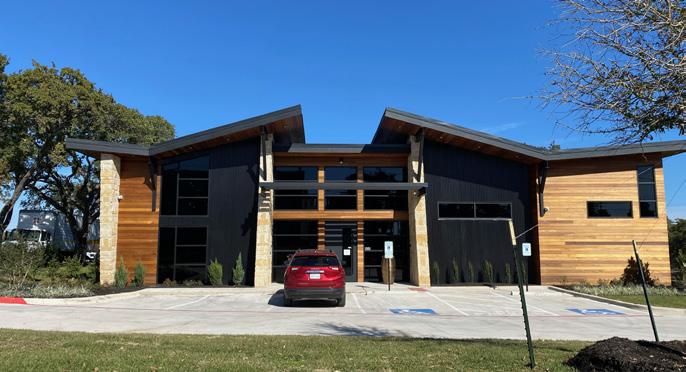
The City of Belton is a rapidly growing community. In order to account for future development, the Future Land Use Map (FLUM) provides the information and tools that are necessary to guide decision makers and developers towards a unified goal in city expansion and growth. It also provides the community with a framework for a unified vision. A similar example would be the recently adopted Imagine Belton community vision.
The update of the Future Land Use Map will provide a tool that will advance the visions and goals of development and policy making within the City.
PURPOSE
The updated Future Land Use Map will include elements such as:
» A user-friendly interface available for city staff and the development community.
» Increased flexibility and guidance for City Council decisions regarding policy and other development related objectives.
» Prevention of land use decisions being made in isolation.
» Provide implementation of Belton’s strategic plan.
» Provide the versatility and framework to allow for updates as growth and development occur.
» Address a variety of community needs from housing to retail to industry.
The updated Future Land Use Map will take guidance from the 2017 Map as well as input from community engagement sessions that have taken place with City Council, Planning & Zoning Commission, City staff, and community stakeholders.
KEY TAKEAWAYS: LAND USE
The City of Belton is located on an essential portion of the Interstate 35 corridor, at the intersection of Interstate 14, and has the opportunity to grow into a key epicenter for community development. This will attract travelers and residents from surrounding communities to visit, shop, or live.
Implementing the goals and objectives for future growth and development from the Comprehensive Plan, the City’s Strategic Plan, and the Imagine Belton Plan, intends to make land use decisions and opportunities more flexible for decision makers and developers. Community growth will urge key commercial and mixed-use developments to expand development diversity throughout the City and encourage people to come to Belton to partake in a variety of opportunities to work, play, and live.
COMMUNITY ENGAGEMENT
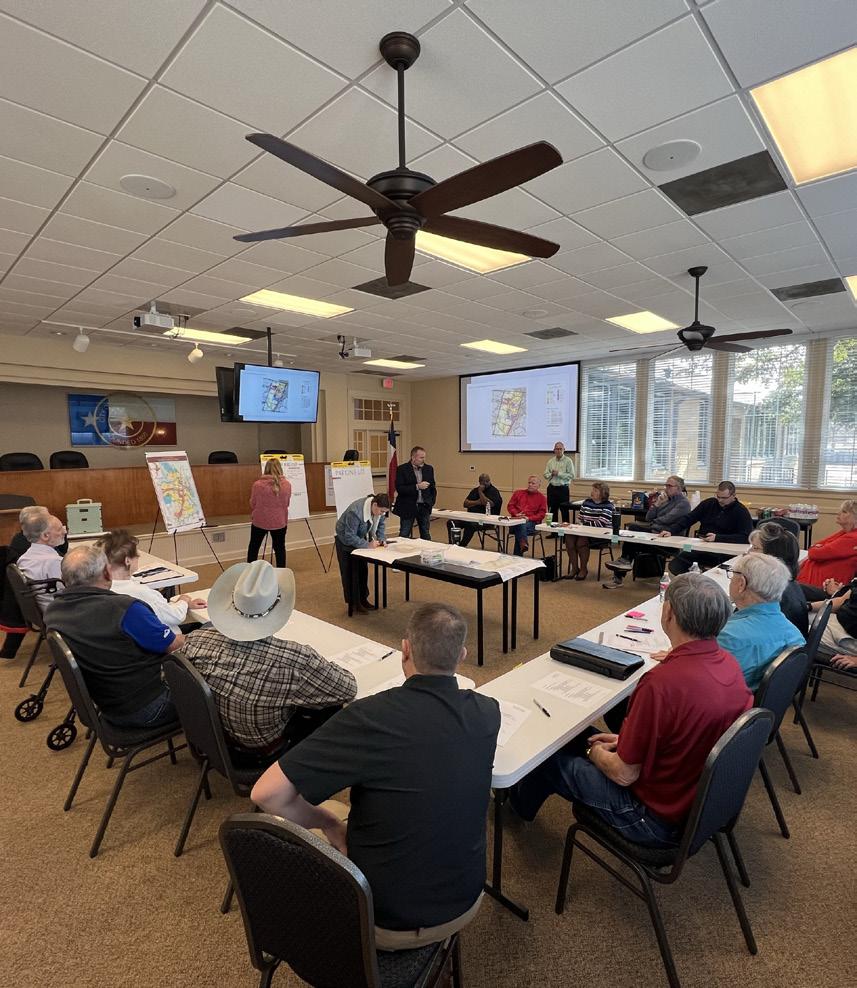
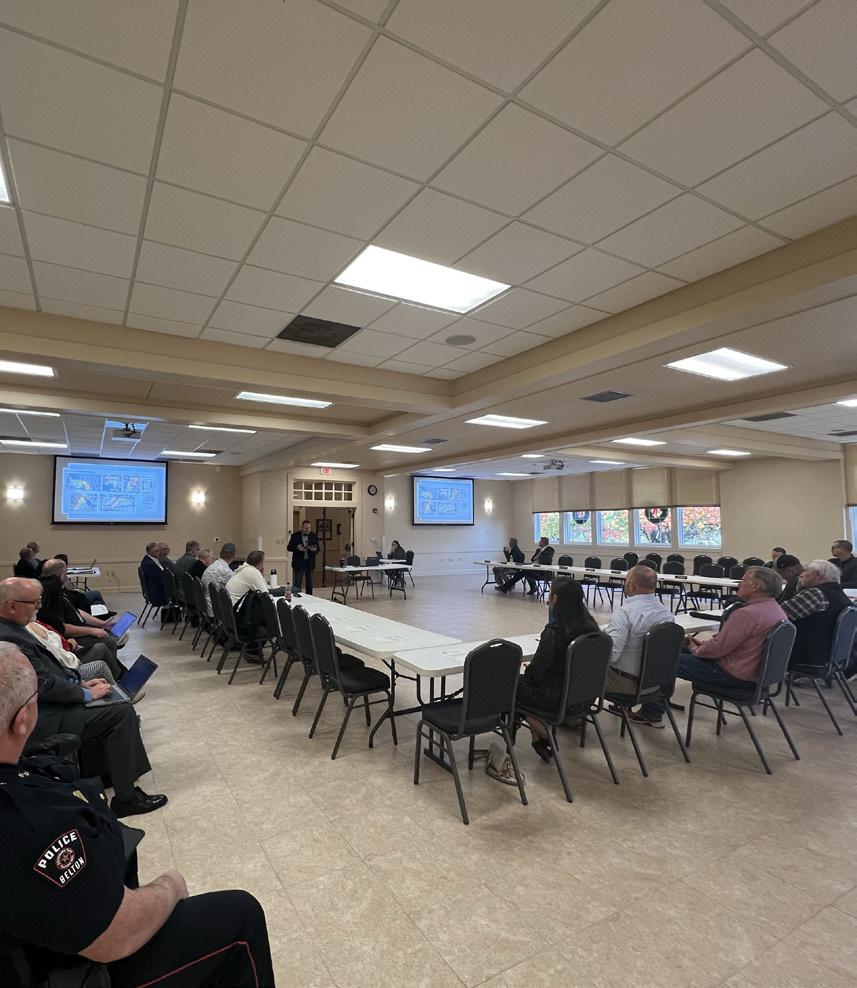
During the research and development of the updated Future Land Use Map, a series of community meetings, presentations, and workshops were conducted to allow decision makers and community stakeholders to provide input on the vision and direction of the updated map. These conversations included:
» Evaluating the strength, weaknesses, opportunities, and threats within each of the updated FLUM’s planning areas.
» Current challenges with the existing FLUM (2017), and goals to be achieved with the update.
» In depth discussions regarding policy statement implementation and how the updated FLUM will offer flexibility to decision makers when determining rezoning and development policy.
» Inclusion of diverse land use categories such as mixed-use that allow for intentional planning of commercial corridors and higher-density residential areas.
FUTURE LAND USE MAP
EXISTING FUTURE LAND USE MAP (2017)
EXISTING CONDITIONS
CHALLENGES
The Existing Future Land Use Map (2017) contains limitations that urge the cause for its redevelopment. These challenges include:
» Information is too general in land use assignments.
» Does not depict the variety of residential options available throughout the City, including affordable housing.
» Not helpful in identifying infrastructure needed for future development (utilities and roadways).
» Does not provide for location and spatial analysis of industrial use.
» No policy statements to guide implementation of land use requirements and guidelines.
» Not compatible with current GIS tools that allow for an accessible, user-friendly interface.
TYPE AREAS
In the previous Comprehensive plan, the City of Belton was organized by “type areas” to help organize growth. The type areas were based on the likely character of future development and intended to guide land use. A parcel’s type area designation was used alongside land use tables for each type area, and showed permitted/ not permitted uses as well as uses requiring a specific use permit.
Figure 1. Existing Future Land Use Map (Adopted 2017)
UPDATED FUTURE LAND USE MAP
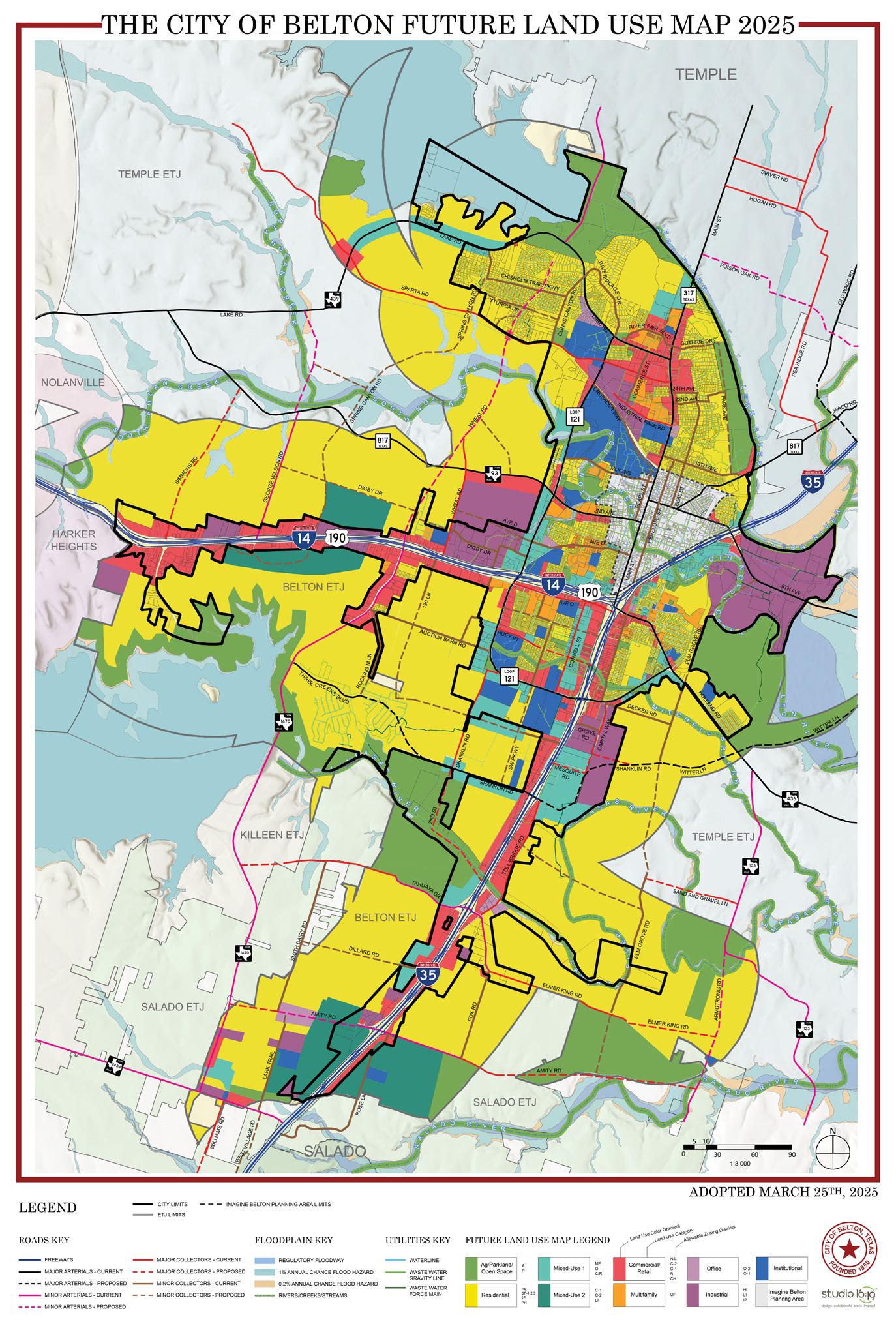
Figure 2. Updated Future Land Use Map (Adopted March 25th, 2025)
FLUM UPDATES
The Future Land Use Map (FLUM) is essential to guide future development in the City. The FLUM is not a zoning map; it is a tool to guide rezoning decisions. The Future Land Use Map reflects:
» Planning: The FLUM serves as a visual guide for development planning, illustrating general locations of land use categories and opportunities within City limits and extraterritorial jurisdiction (ETJ).
» Flexible Land Uses : The updated FLUM includes a more flexible representation of the future land uses for Belton. Compared to the 2017 version of the FLUM, it is more parcel-specific.
» Transportation and Infrastructure : The FLUM reflects availability and future extensions of other planning elements, such as: transportation infrastructure, utilities, CCNs, and ETJs.
PLANNING AREAS
In lieu of the ‘Type Areas’ that were utilized in the 2017 FLUM, the updated FLUM utilized Planning Areas during the planning process. These areas expand upon the idea of Type Areas, but with more usable information that will guide decision makers and developers with ease and flexibility.
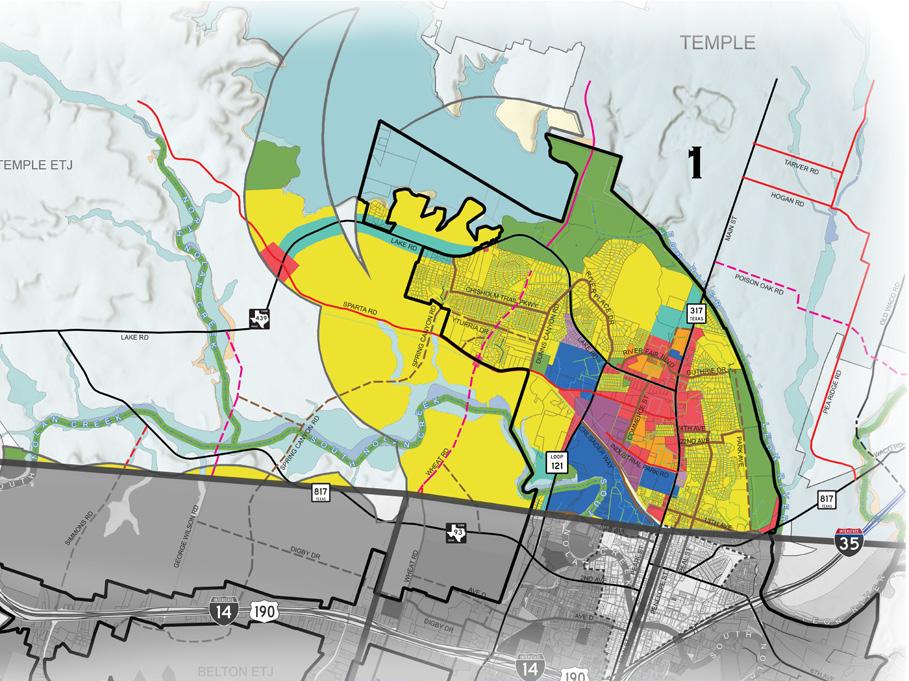
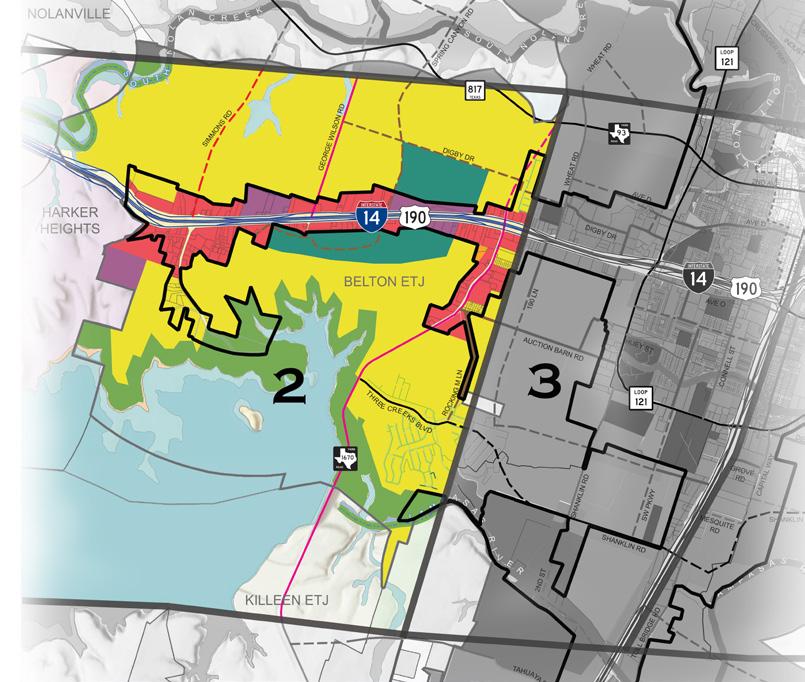
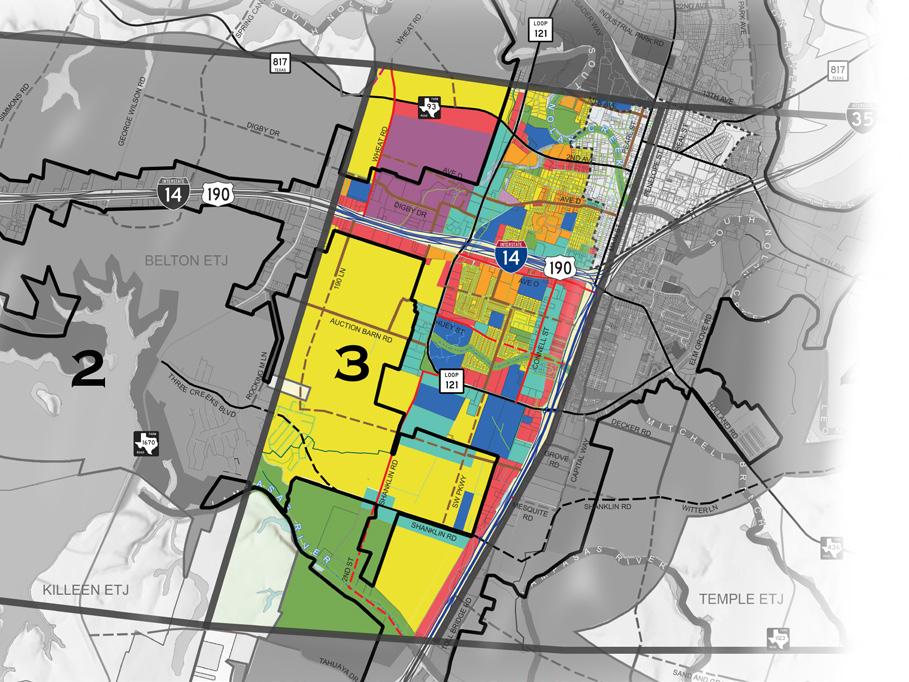
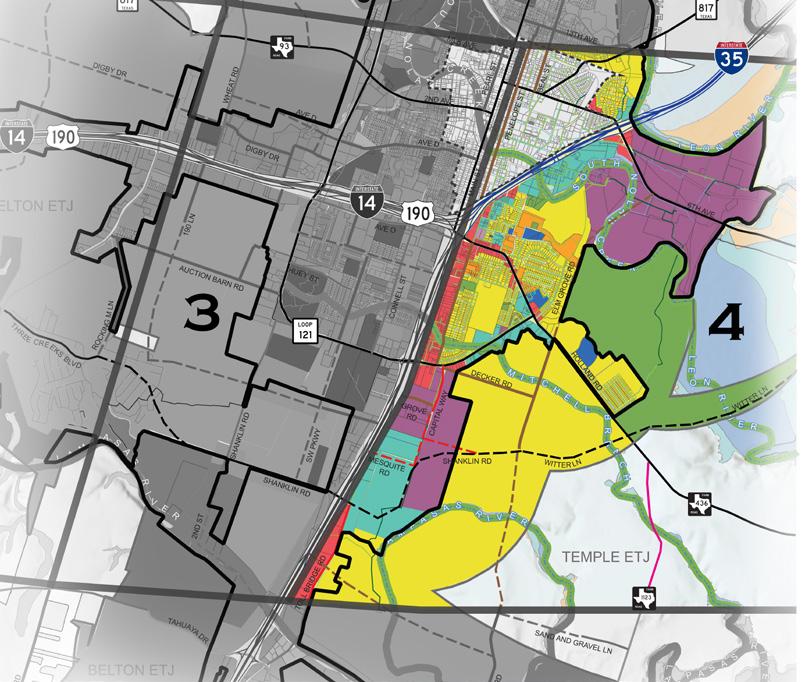
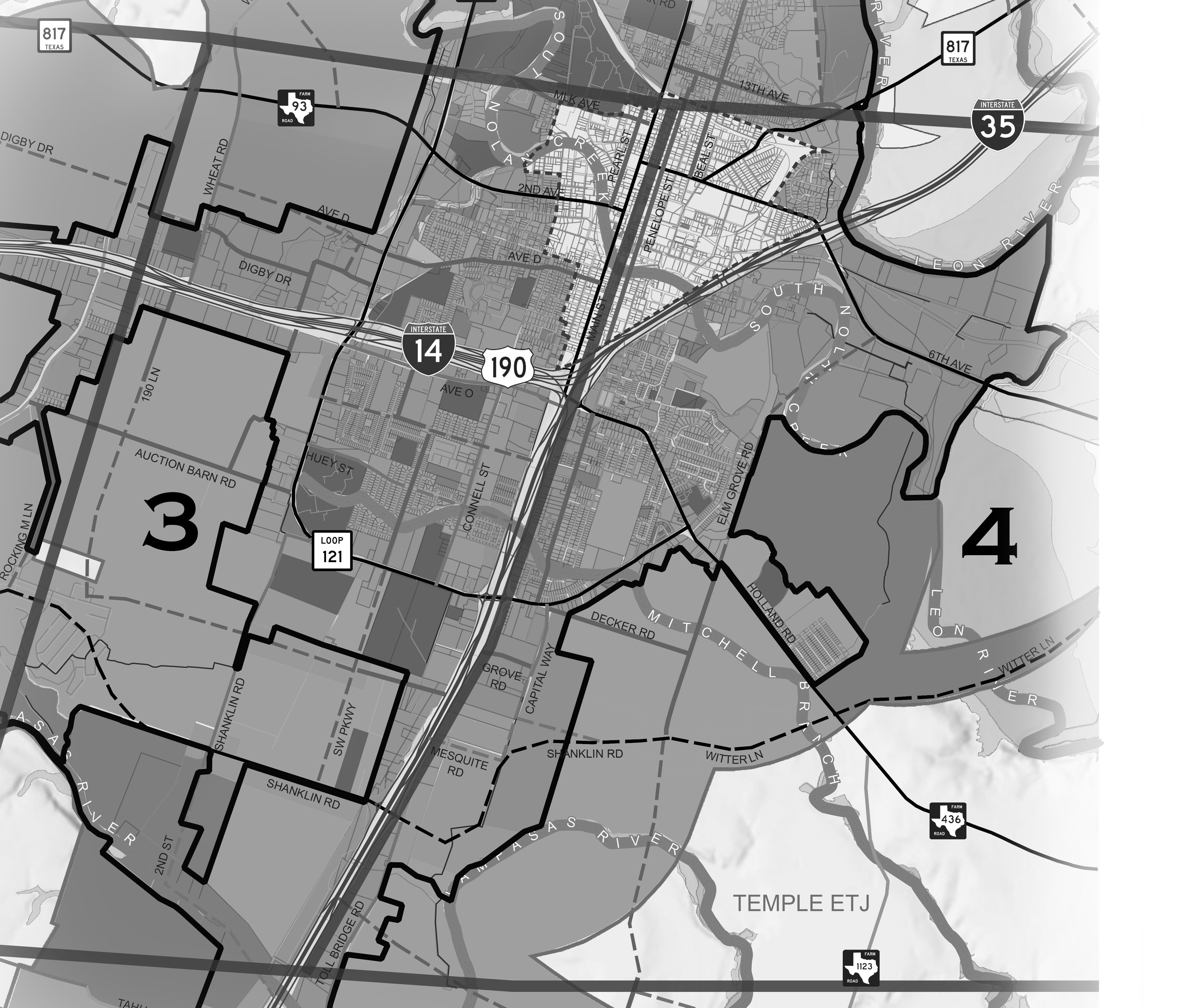
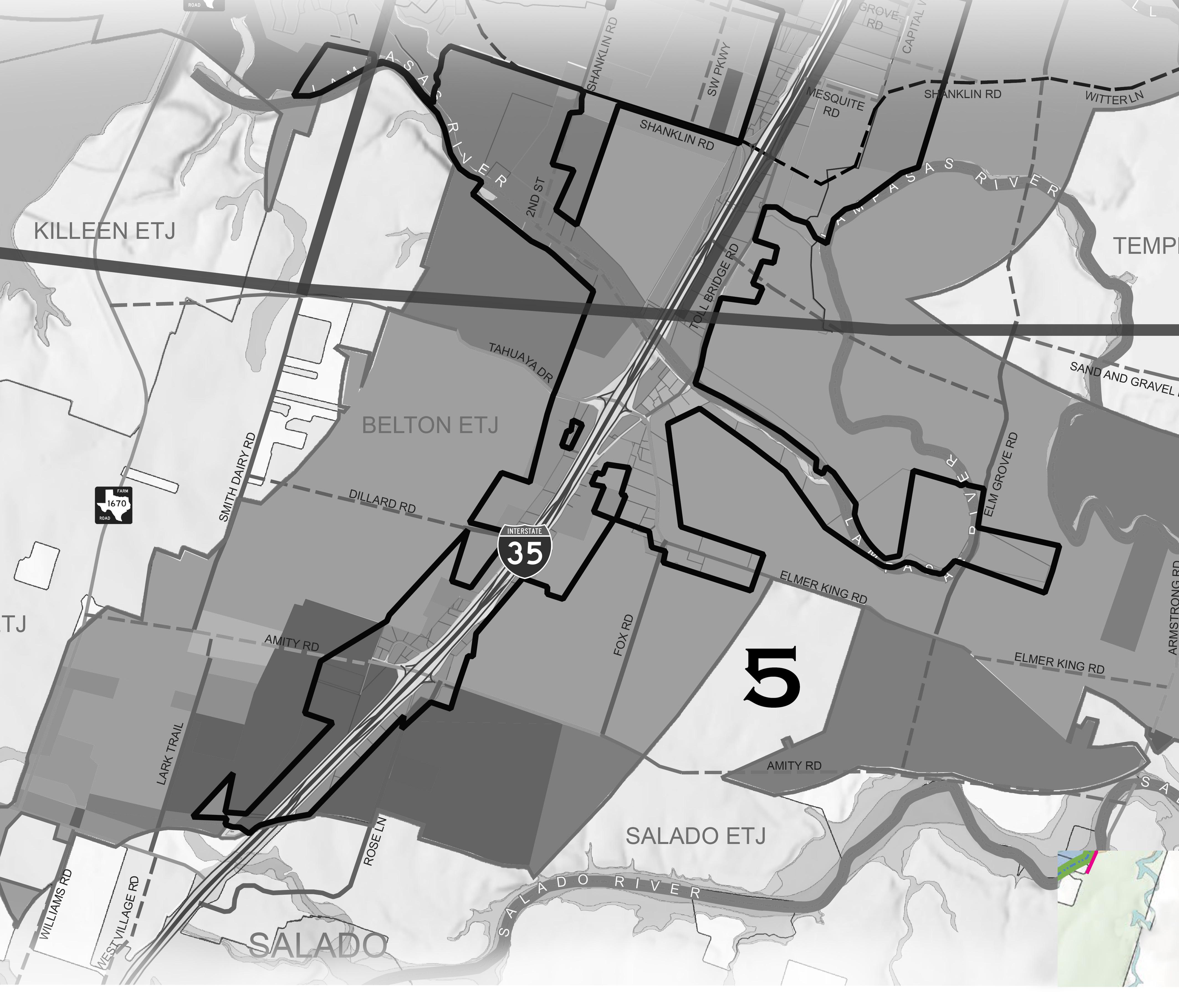
Planning Areas are enlarged to depict more detail within the major sections of the City. There are five (5) Planning Areas within the FLUM. Each area shows more intricate land use details as well as existing/proposed roadways, and existing utility infrastructure.
READING THE MAP
LEGEND
EXISTING & FUTURE ROADWAYS & UTILITIES
» The updated thoroughfare plan roadways are included on the updated FLUM.
» Future/planned roadways are shown to determine capacity for land uses that may be developed or redeveloped in certain areas.
» Solid lines indicate existing roadways.
» Dashed lines indicate future/planned roadways.
» Utilities are indicated on the planning area enlargements.
LAND USE CATEGORIES
Agricultural/Parkland/Open Space:
» Undeveloped or vacant land.
Residential:
» Existing and future development of low density dwelling units (single family, duplex).
Mixed-Use 1:
» Existing and future development of low/ medium density dwelling units (townhomes apartments), office space, and commercial/ retail within a shared area.
Mixed-Use 2:
» Existing and future development of medium/ high density commercial/retail and light industrial within a shared area.
MAJOR ARTERIALS - CURRENT
MAJOR ARTERIALS - PROPOSED
MINOR ARTERIALS - CURRENT
MINOR ARTERIALS - PROPOSED
MAJOR COLLECTORS - CURRENT
MAJOR COLLECTORS - PROPOSED
MINOR COLLECTORS - CURRENT
MINOR COLLECTORS - PROPOSED ROADS KEY LEGEND
Commercial/Retail:
» Low density (neighborhood services) to high density (regional commercial development).
Multi-Family:
» Existing and future development of high density developments with three (3) or more dwelling units (apartments, townhomes, condominiums).
Office:
» Medium to high density development typically located within commercial centers or at edges of residential neighborhoods.
Industrial:
» Located near major highways; developed to minimize impacts to surrounding land uses. Typically divided into high density and low density industrial uses.
Institutional:
» Existing and future schools and university, civic uses, churches, and other public uses.
PLANNING AREAS
PROPOSED UPDATES
PLANNING PROCESS
During the planning and review process, the City of Belton city limits and extra-territorial jurisdictions (ETJ) were divided into five (5) planning areas to expand map details for future land use categorization. The planning areas are for the planning process only. They do not have forbearance in policy related decision making. The planning areas divide the City into the following distinctions:
1. North Belton
2. West Belton
3. Central Business District (West)
4. Central Business District (East)
5. South Belton
S.W.O.T. ANALYSIS
Following the creation of the five (5) planning areas, each area was evaluated and analyzed based on community feedback. The feedback received led to the development of a S.W.O.T. analysis:
» S - Strength
» W - Weakness
» O - Opportunities
» T - Threats
The results of the S.W.O.T. analysis provide a framework for land use determination throughout each planning area.
1 - NORTH BELTON
4 - CENTRAL BUSINESS DISTRICT - EAST
5 - SOUTH BELTON
2 - WEST BELTON
3 - CENTRAL BUSINESS DISTRICT - WEST
PLANNING AREAS
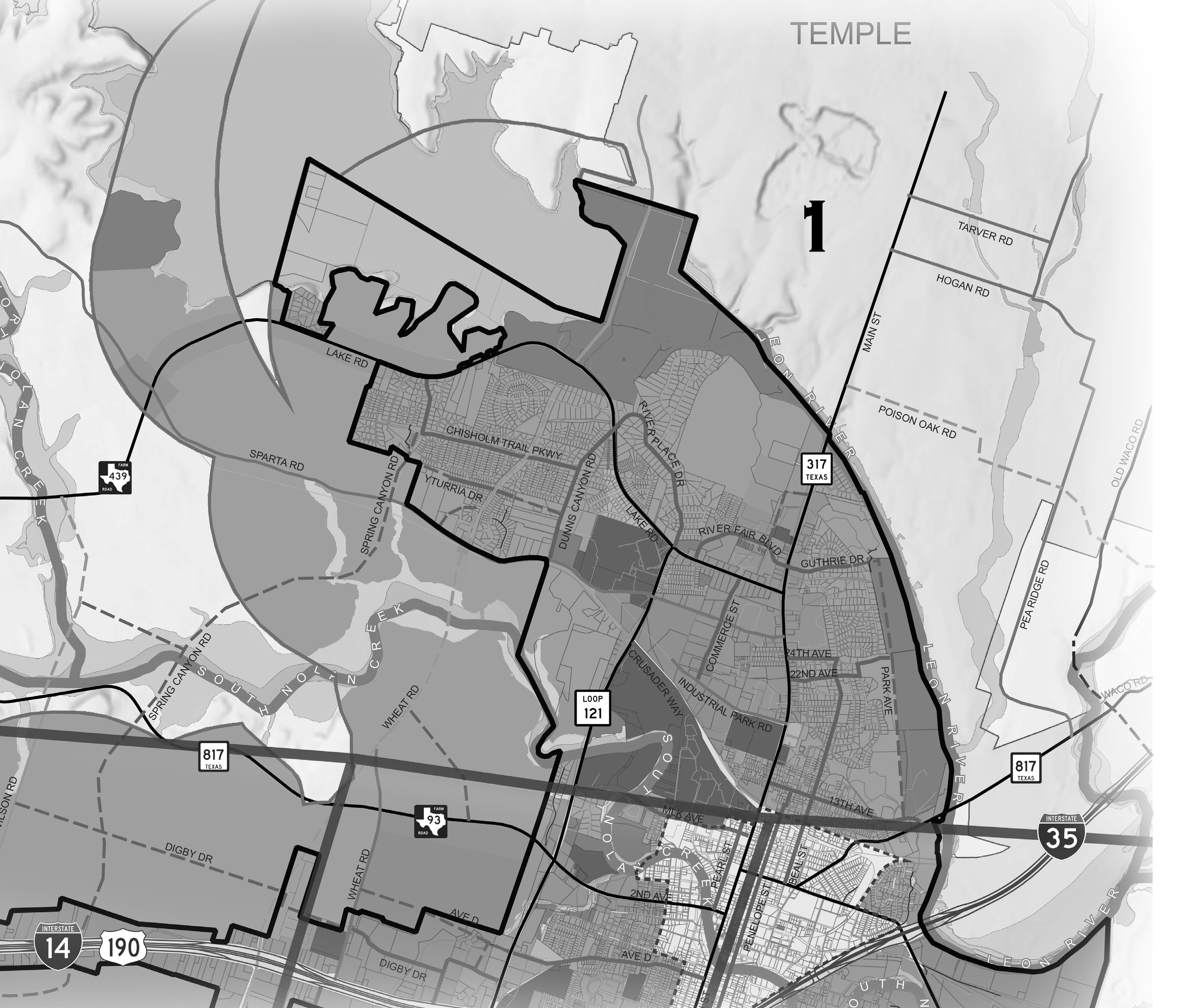
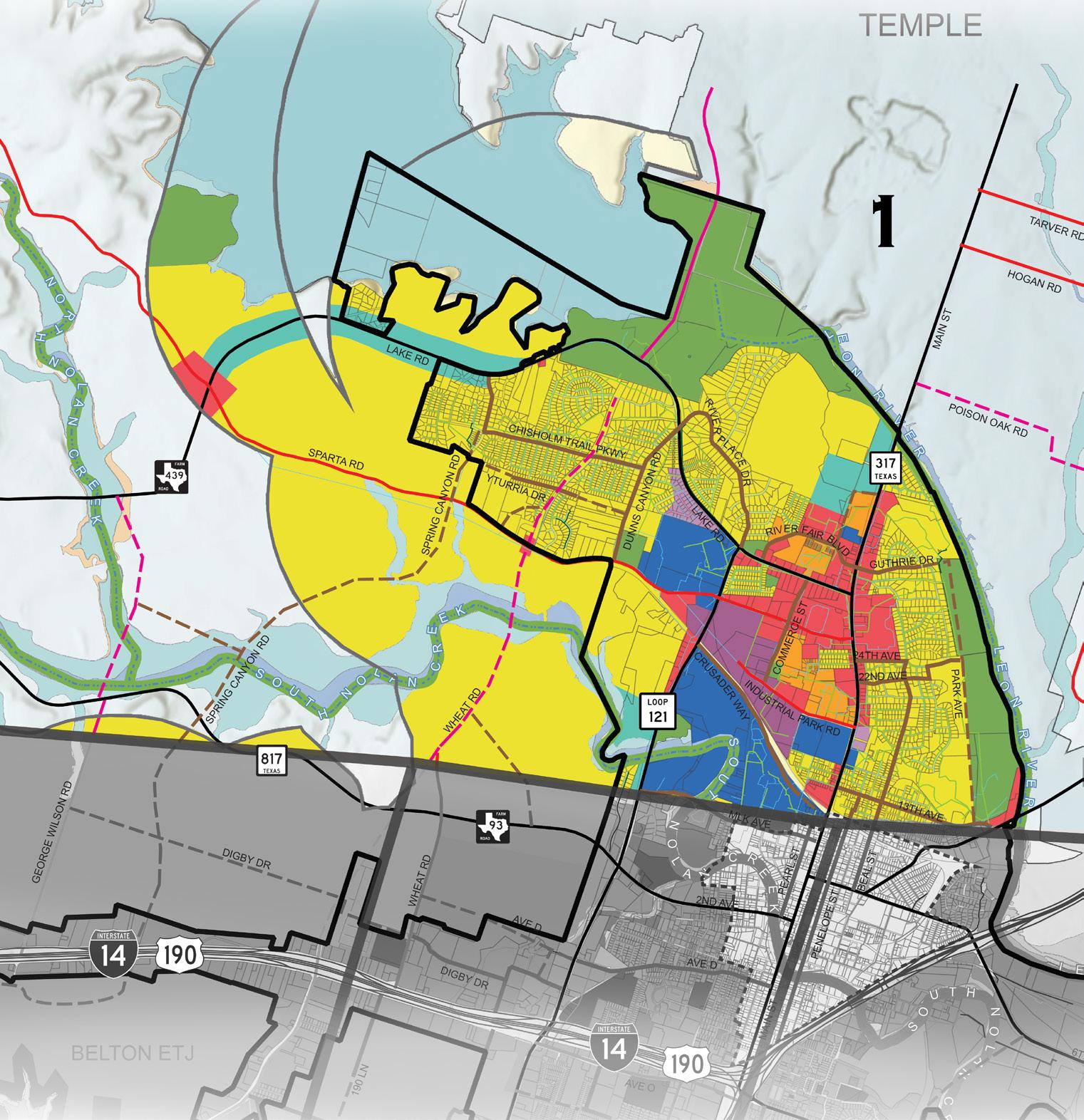
PLANNING AREA 1 - NORTH BELTON
Figure 3. Planning Area 1
STRENGTHS
» High density retail
» Mature residential development
» Heritage Park (recreation)
» Barge Ranch multifamily development
» Available utility infrastructure for extension
INTERNAL
WEAKNESSES
» Heavy traffic flow along Hwy 317
» Lack of awareness of trail and recreation connectivity
» Lack of neighborhood services
» Lack of north/south neighborhood collector for circulation
» Developed roadways
» First Baptist Church and UMHB land exchange
» Mixed land use
» Multi-family developments allow for future commercial development
» Introduction of affordable housing
» Increase density near future commercial centers
» Growth in adjacent cities allows for future development for commercial centers along IH 35 and Hwy 317
OPPORTUNITIES
» Cost of building (single family development stifled)
» Access to nearby cities along interstates- Waco, Georgetown, Copperas Cove, etc.
» Available land
» Centrally located within the City
» High traffic thoroughfare
» Planned residential developments allow for future commercial development
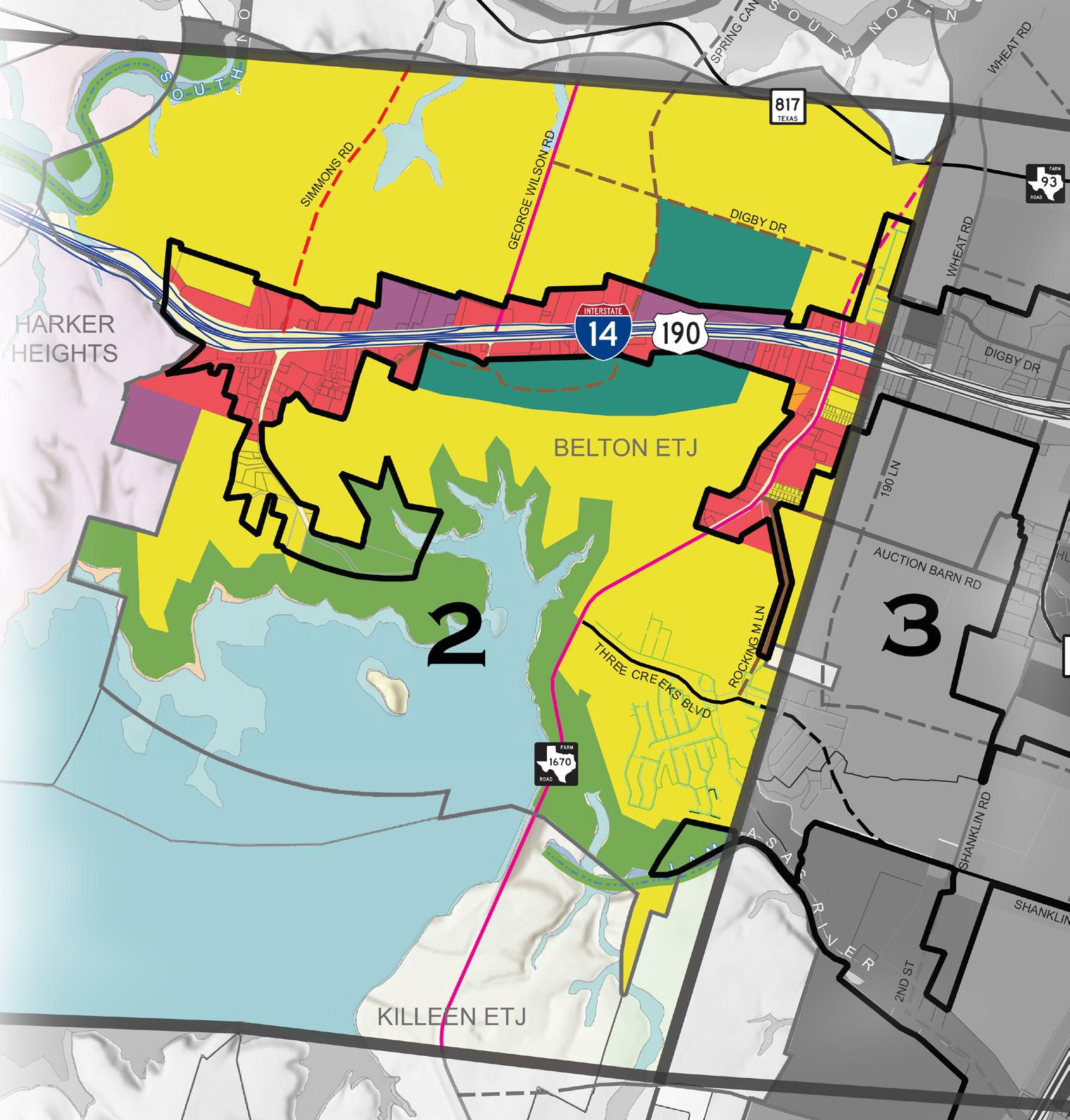
WEAKNESSES
» Limitations of utility infrastructure
» Limited corridor city limits on IH 14 and FM 1670
» Rural water CCN. Substandard water infrastructure creates development and code challenges
» Lack of north/south roadway connection
» Drainage challenges
» Potential to expand city limits into the ETJ
» Lack of existing development north of IH 14, west along IH 14, and south of IH 14 allows for land use flexibility
» Roadway expansions
» School district expansions
» BEDC planned infrastructure expansion within DRWSC CCN along IH 14 and FM 1670
OPPORTUNITIES
» ETJ release
» Fire protection
» Lack of connectivity to Belton Core from Three Creeks development
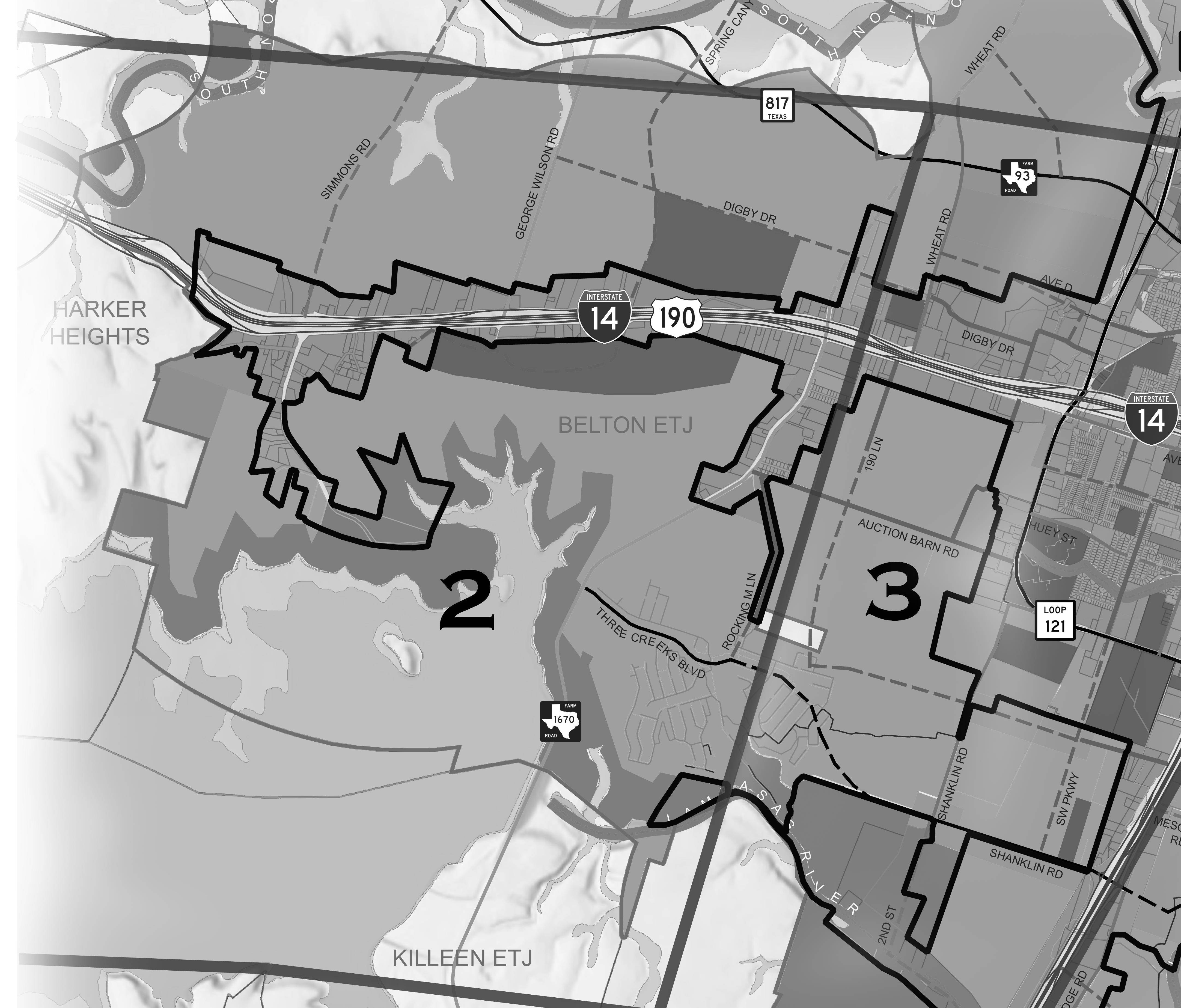
PLANNING AREA 2 - WEST BELTON
Figure 4. Planning Area 2
THREATS
EXTERNAL
PLANNING AREAS
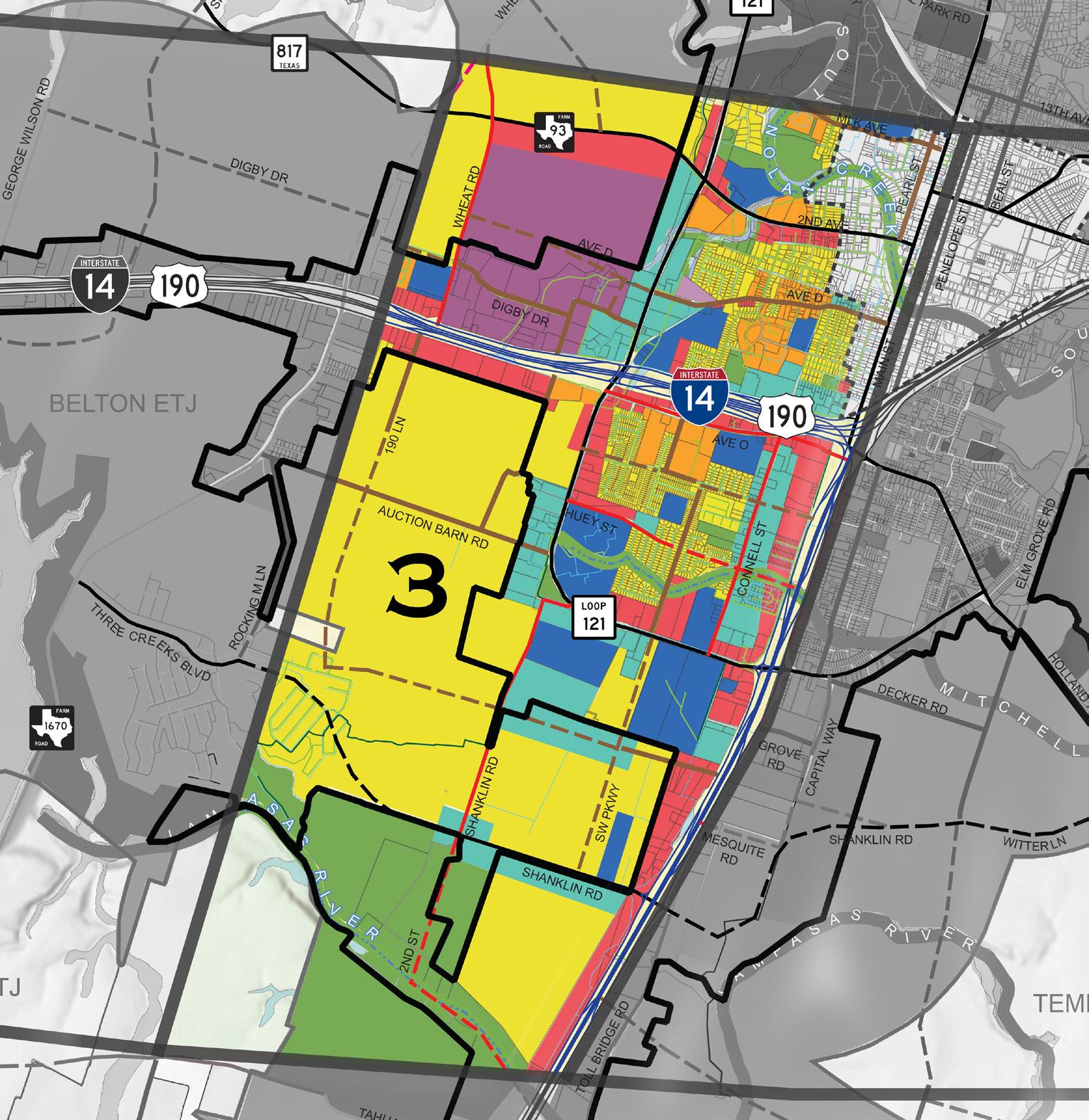
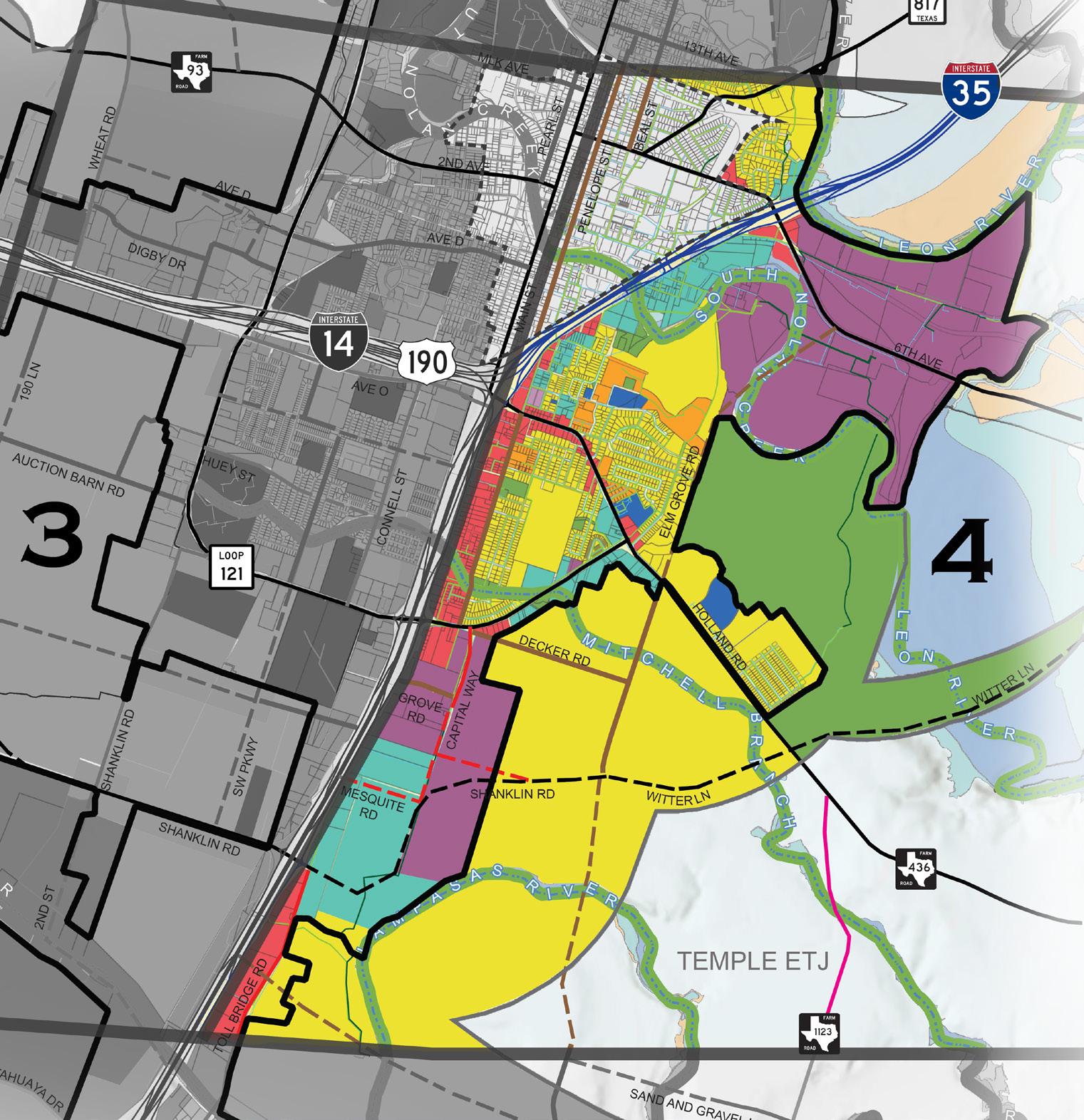
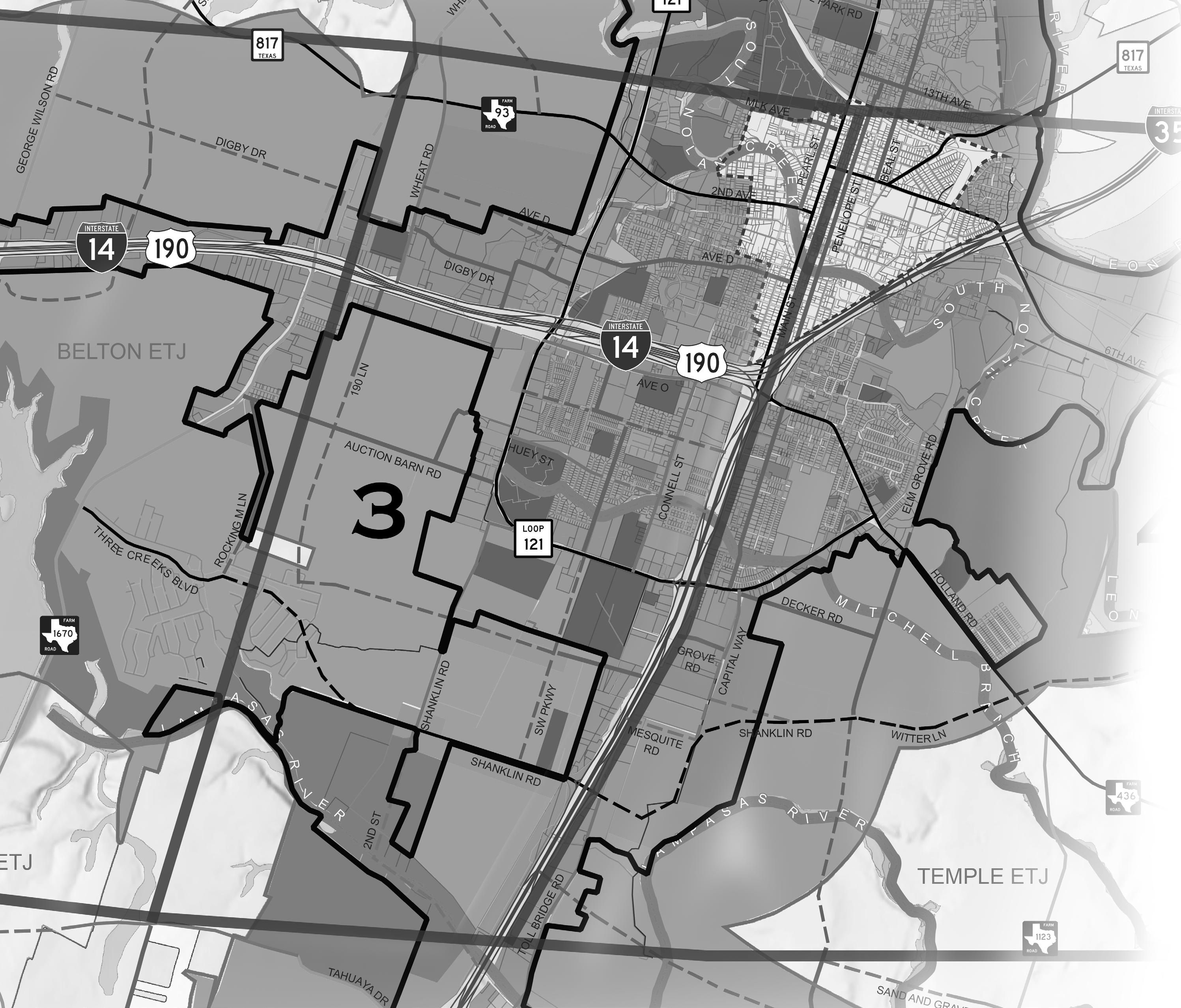
PLANNING AREA 3 - CENTRAL BUSINESS DISTRICT (WEST)
Figure 5. Planning Area 3
STRENGTHS WEAKNESSES
» Large high density developments (Cadence Bank Center) - regional draw
» Developed business park
» Available land within city limits
» Entrance gateway improvements
» Roadway improvements
» High-density commercial/mixed-use development
» Commercial corridor along IH 35
» Business park allows for mixed-use development
» ETJ expansion
» Imagine Belton Plan
» Three Creeks/Shanklin Rd. connection to IH 35
OPPORTUNITIES
INTERNAL EXTERNAL
» Lack of enticing gateway entrances and interstate corridor development
» Limited lodging
» Non-taxable county property
» Main local roadways need improvement
» Trail connectivity
» Limited utilities
» Drainage challenges
» ETJ release in southern portion
» Challenges to expand existing roadways
» Potential expansion of IH 35 and IH 14
THREATS
INTERNAL
STRENGTHS WEAKNESSES
» Historic downtown and courthouse
» Nolan Creek
» High walkability
» Town events and holidays
» Diverse development
» New Hubbard Branch Elementary School
» Congestion of existing development
» Topography challenges
» Main local thoroughfares need improvement
» Parking challenges
PLANNING AREA 4 - CENTRAL BUSINESS DISTRICT (EAST)
Figure 6. Planning Area 4
» High-density commercial development
» Trail connectivity
» Lodging development and short-term rentals
» Enhance historic downtown and small town charm identity
» Imagine Belton Plan
» Infill opportunities
» Close proximity to heavy industrial development
» Floodplain presents development Challenges
» Closing of Miller Heights Elementary School
» Potential expansion of IH 35 and IH 14
OPPORTUNITIES THREATS
EXTERNAL
PLANNING AREAS
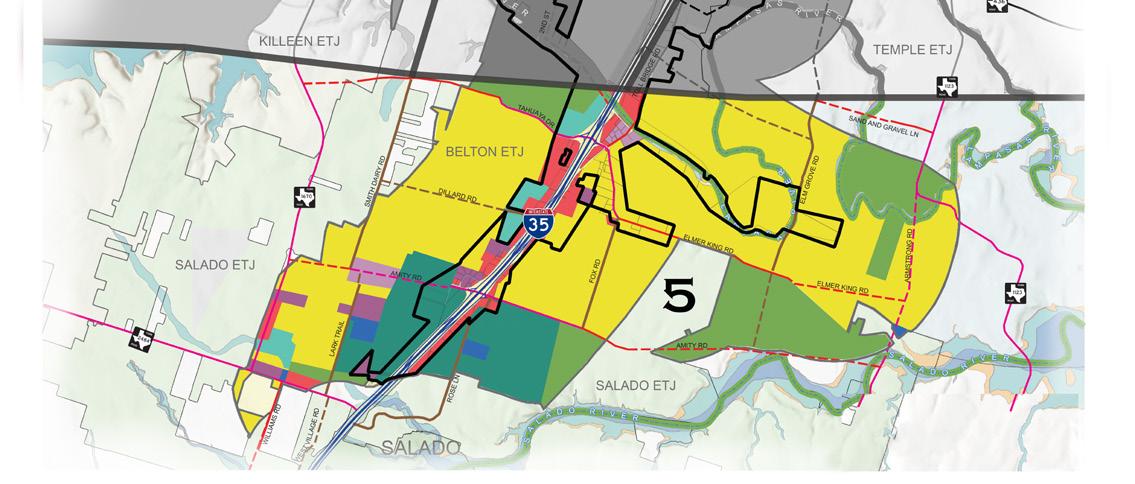
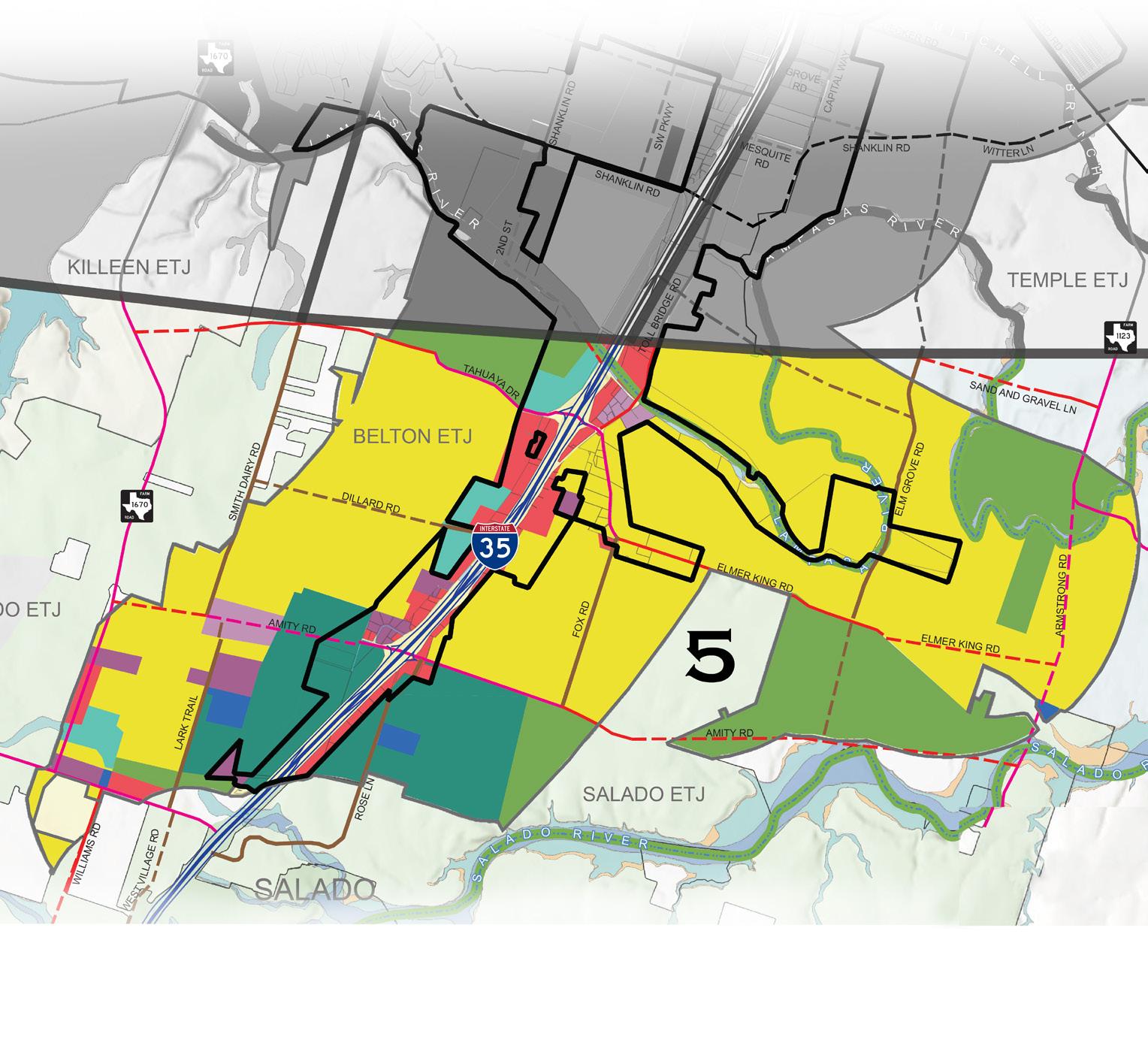
PLANNING AREA 5 - SOUTH BELTON
Figure 7. Planning Area 5
STRENGTHS WEAKNESSES
» New residential developments
» Available land
» Limited existing development
» High traffic count
» Major thoroughfare
» Positively situated for distribution to the City of Austin and surrounding cities
» Lack of existing development allows for land use flexibility
» Commercial corridor along IH 35
» Light industrial development potential
INTERNAL EXTERNAL
» Limited utility infrastructure
» Tight city limits
» Lack of water infrastructure creates development & code challenges
» Drainage challenges
» Competition for commercial developers/ retailers from surrounding cities
» Limited city limits and ETJ release
» Potential expansion of IH 35 and IH 14
OPPORTUNITIES THREATS
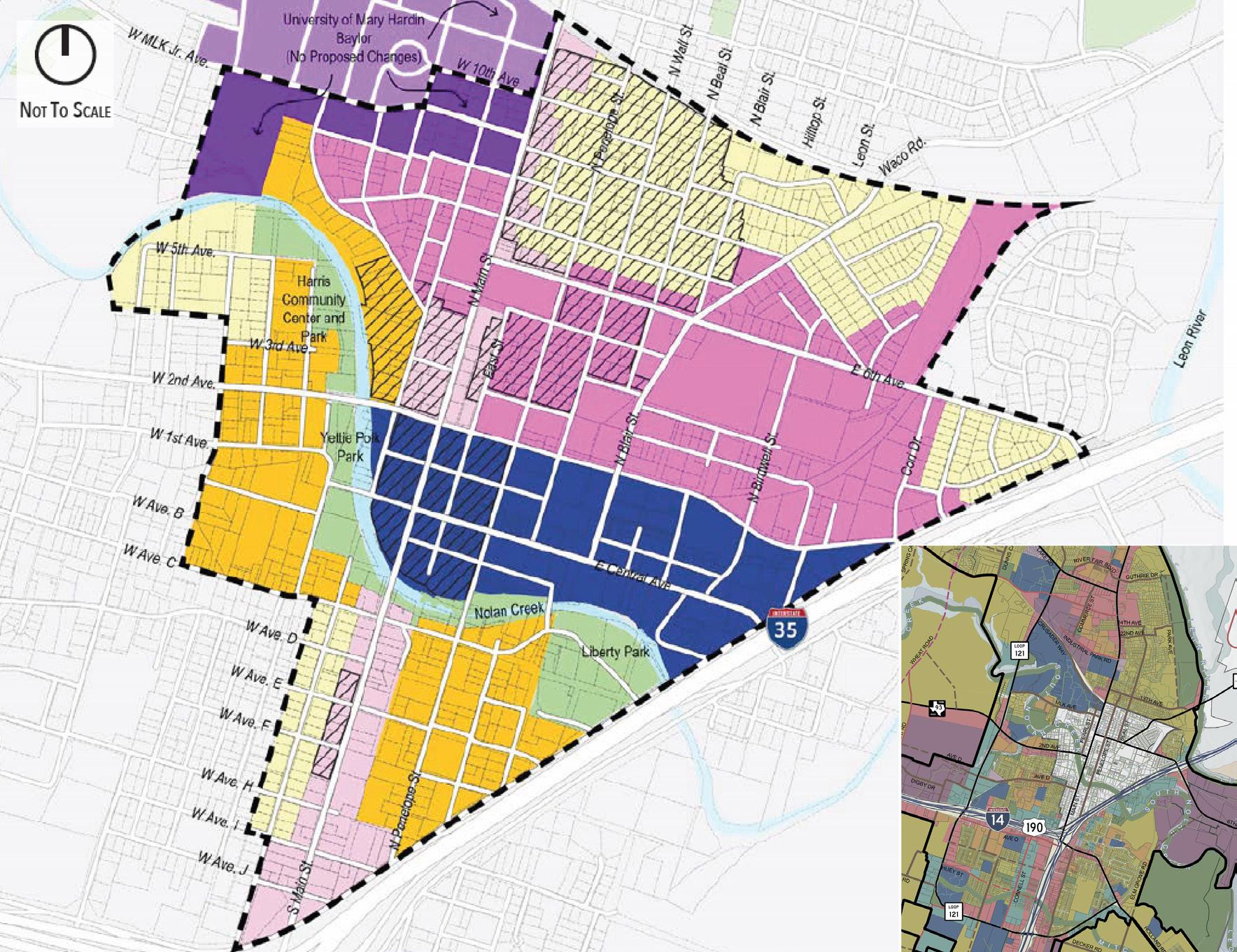
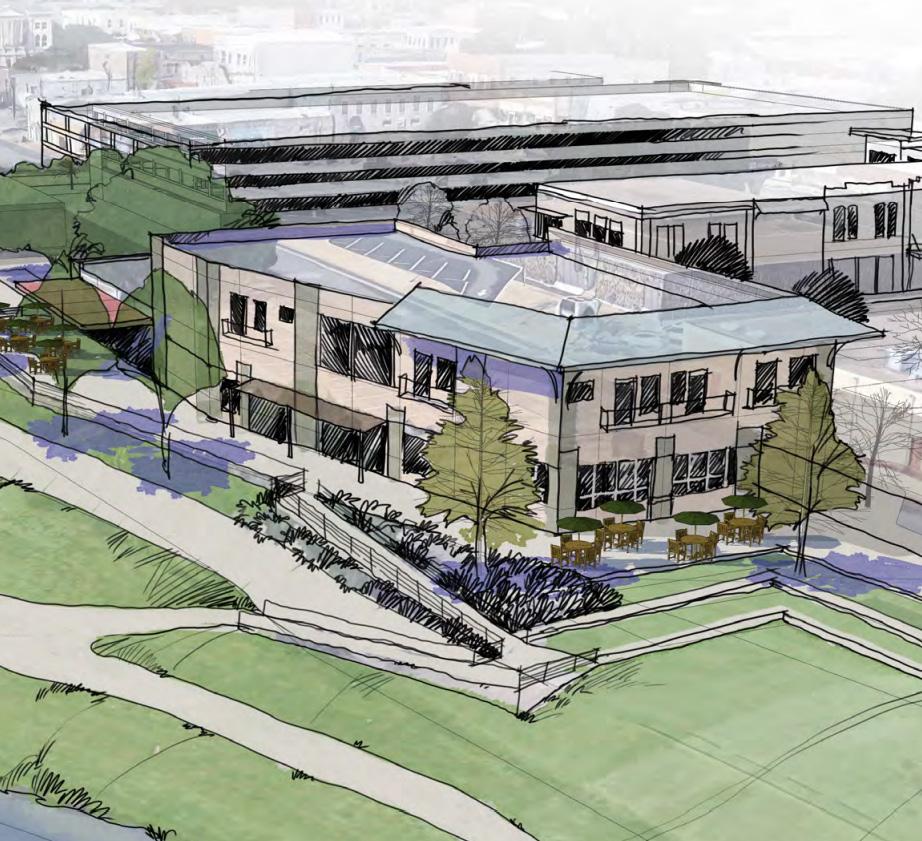
The City of Belton developed the Imagine Belton Plan as a planning strategy to guide the future growth of Downtown Belton. The goal of the Imagine Belton Plan is to combine land uses like residential, commercial, and mixed-use with respect to aesthetic and operational qualities. The plan includes expanding housing opportunities through innovative, sustainable designs that address the increasing demand for residential spaces, and fostering mixeduse developments that extend beyond the current downtown core to alleviate shortages in commercial storefronts. Enhanced pedestrian and vehicular infrastructure will be implemented to ensure safety, accessibility, and smooth traffic flow, further strengthening the area’s appeal for both residents and visitors.
During the planning process for the Future Land Use Map, intentional decisions were made to establish distinctions between the goals for the Future Land Use Map and the Imagine Belton Planning Area. All future developments planned/ proposed within the limits of the Imagine Belton Planning Area will fall under the guidelines of the Imagine Belton Plan.
PLANNING AREA - IMAGINE
BELTON
IMAGINE BELTON ZONES
Figure 8. Planning Area - Imagine Belton, Reference Imagine Belton Plan
Reference Imagine Belton Plan for images below.
LAND USE DESIGNATIONS FUTURE LAND USE MAP
AGRICULTURAL/ PARKLAND/ OPEN SPACE
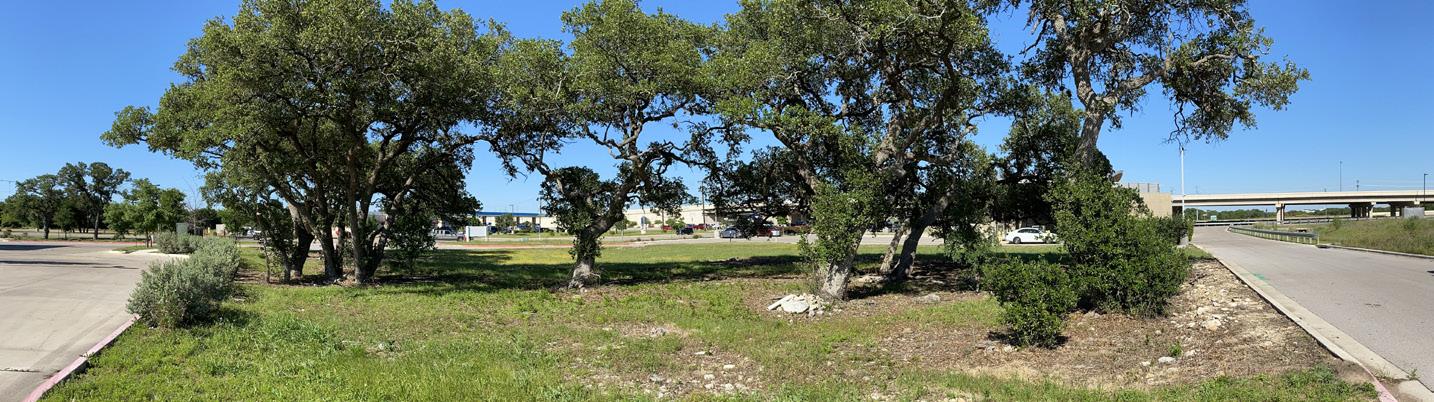
This land use encompasses natural land that is either developed for purposes such as public or private parkland, or naturally preserved open space and agricultural land with no plans for development. This land use is essential to provide natural spaces within developed and undeveloped areas. It serves as a natural buffer between land uses, and provides benefits such as visual aesthetics, reduction of noise pollution, and improved air and water quality. It also provides flexibility to decision makers regarding infill development and transition zones between different land uses.
Residential land use consists of planned neighborhoods with single-family dwelling units and accessory dwelling units. This use typically includes small to medium acreage lots with shorter roadway setbacks than the Rural Residential land use. Public utility infrastructure is readily available to these uses. Development standards for this land use should reflect adequate transition zones and buffering towards adjacent land uses.
Mixed-use 1 consists of low-/medium-density developments that include a mix of light commercial, office, accessory dwelling units, and multi-family development. Mixed-use 2 consists of medium-/high-density developments such as heavy commercial and light industrial. This land use is often located in high-traffic areas and along main thoroughfares. Mixed-use 1 is typically more pedestrian oriented with a secondary focus on community gathering and events. Meanwhile, mixed-use 2 is typically more auto-oriented.
COMMERCIAL/RETAIL
Commercial/ Retail land uses range from low density neighborhood services to high density uses like regional commercial developments. This land use is typically auto-oriented and often located along collector and arterial roadways with varying density depending on surrounding developments. This use also relies on interaction with surrounding residential and multi-family uses, and will promote interactions through quality of architecture, landscape, and connectivity.
Primary Use: Retail, Dining, Entertainment, High Density Commercial, Etc.
Secondary Use: Mixed Use-1, Institutional
MULTI-FAMILY
This land use consists of high density dwelling units on a single lot. These developments can be made up of apartments, condos, town homes, accessory dwelling units, and garden homes. Secondarily, single-family units for rent can also be considered multi-family. This land use often serves as a transition between higher density commercial development or roadways and lower density residential land uses.
Primary Use: Apartments, Townhomes, Condos, Garden Homes
Secondary Use: Mixed Use-1, Institutional
OFFICE
This land use includes low density and high density office developments. These are often located within commercial land uses and adjacent to main thoroughfares. The goal for this land use is to have connectivity to commercial and residential areas.
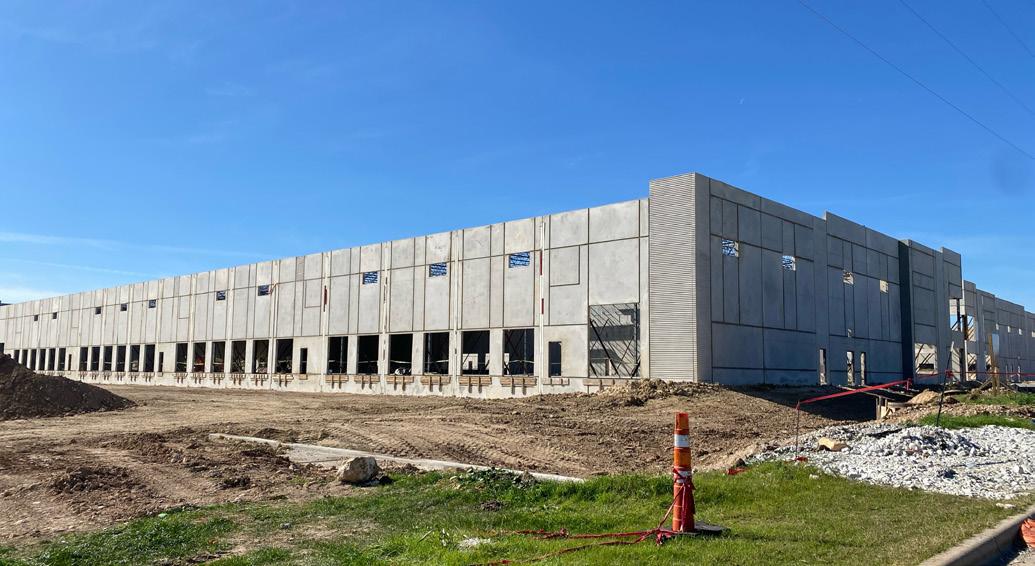
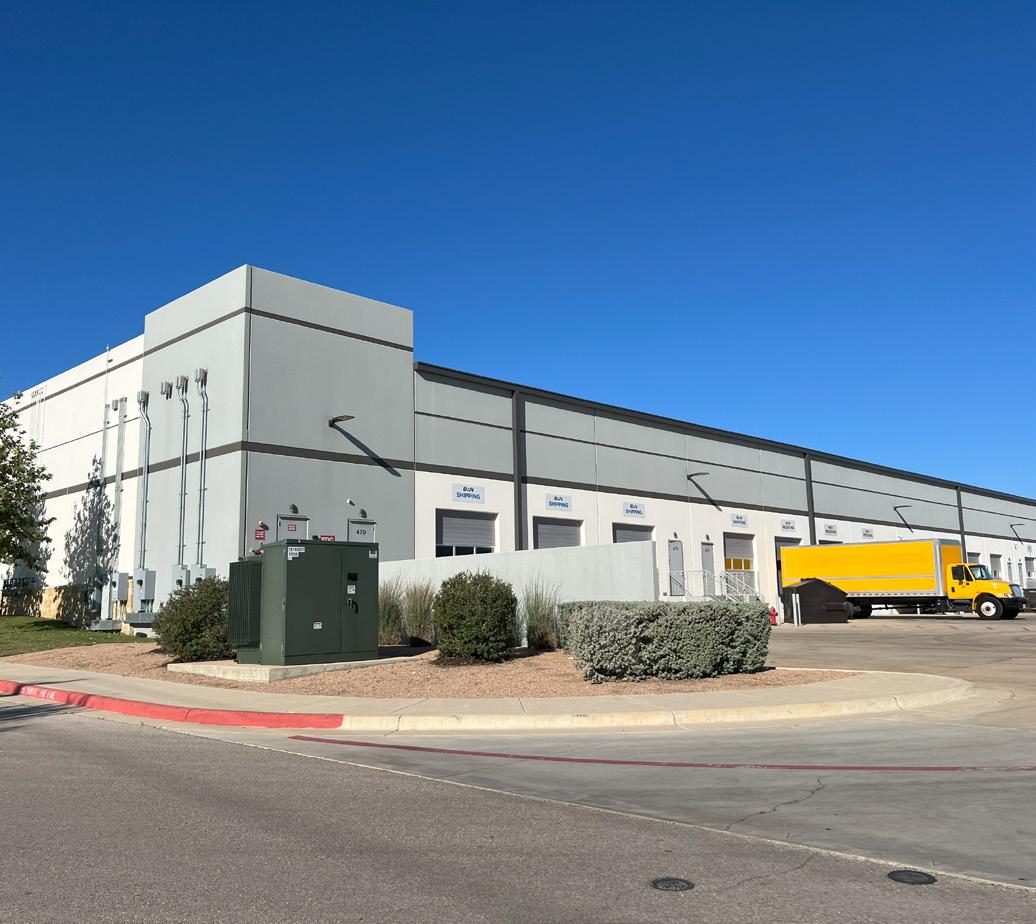
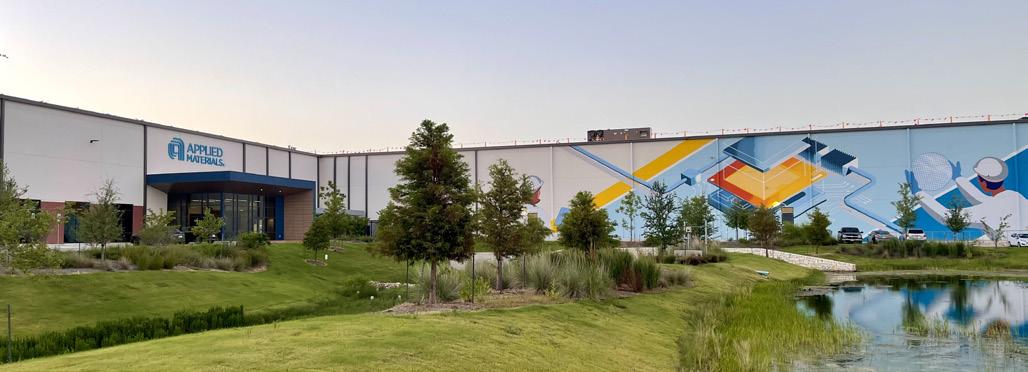
Industrial land use encompasses light industrial and heavy industrial developments. These are typically located in lower density areas with development standards that ensure adequate buffering from adjacent land uses. Light industrial consists of light manufacturing and distribution uses with secondary office/ commercial functions. Heavy industrial includes heavy manufacturing, distribution, refining, etc.
Institutional land use consists of large and small scale developments for both public and private uses. This land use often includes schools and school facilities, emergency services, civic institutions, religious buildings and secondarily for cemeteries. It is also used for private higher education developments like the University of Mary Hardin-Baylor and its associated facilities.
The Imagine Belton Plan is a forwardthinking development strategy designed to guide the future growth and transformation of Downtown Belton. The plan envisions a dynamic mix of residential, commercial, and mixed-use developments that respect the aesthetic and operational qualities of the existing downtown, particularly its vibrant streets and blocks. All parcels within this area are under the jurisdiction of the Imagine Belton Plan, which should be referenced for all land use designations.
Primary Use: City, County, State, Federal, Public/ Private Schools, University Buildings, Emergency Services, Civic Institutions, Churches
Secondary Use: Cemeteries, Office, Mixed Use-1
Primary Use: Reference Imagine Belton Plan
Primary Use: Manufacturing/ Production, Shipping, Heavy Industrial Services, Etc.
Secondary Use: Office Space, Light Commercial
POLICY STATEMENTS
INFILL DEVELOPMENT
LIGHT
POLICY STATEMENTS
OVERVIEW
The policy statements provide a guide to decision makers to demonstrate the flexibility of the Future Land Use Map for policy updates and decisions. The policy statements provided in this package are as follows:
Infill Development Compatibility:
» Provides potential solutions to requested land uses that are not compatible with the surrounding uses.
Light Industrial Development:
» Provides potential solutions to differentiate between commercial, light industrial, and heavy industrial uses.
Transition Zones:
» Provides potential solutions for the transition of land uses across high and low density areas.
Residential Parking Area Challenges:
» Provides potential solutions for single family residential developments to allow the City ease of access for emergency and utility vehicles.
PRIMARY & SECONDARY USES
Land uses can be broken down into tiered use designations. Primary uses are the intended development designation for a particular land use, such as “Office.” However, case by case considerations may allow for secondary uses to be utilized as a compatible option. For example, an office land use can also have secondary uses for mixed-use, commercial, and institutional development instead of the primary use of office space. This allows decision makers to determine development solutions regarding policy, zoning, land use, etc.
LAND USE POLICY STATEMENTS
INFILL DEVELOPMENT COMPATIBILITY
POLICY STATEMENT
The Issue:
Certain land uses being requested are not compatible with the Future Land Use Map (FLUM) or surrounding uses.
Barriers:
» Neighborhood opposition.
» Infrastructure deficiencies.
» Intensity of use.
» Interface of development codes between land uses.
Potential Solutions:
» Require pre-application conferences.
» Utilize an Alternative Compatibility Use Application for non-compatible development request. (Ref. infographic, bottom right)
» Request to be evaluated by the Development Review Committee and the City Planning Director to establish the development standards for compliance.
» Following the committee deliberations, the application is presented to the Planning & Zoning Commission and the City Council.
» Integrate updated development information into the Future Land Use Map (FLUM).
» Ensure adequate transitions utilizing fencing, landscaping, and separations.
Figure 9. Infill Development ExampleThe example to the top right demonstrate the existing and proposed conditions of infill development. The example shows a land parcel layout that highlights potential infill development opportunities, and how those spaces might be filled with a compatible use to the surrounding area.
ALTERNATIVE COMPATIBILITY USE APPLICATION PROCESS
The developer submits a development request to the City’s Planning Department for review If the development request is not compatib e with the FLUM, the developer must submit an Alternative Compat bi ity Use Application
The applicat on wi l be evaluated by the Development Review Committee and the City Planning Director to establish the development standards for compl ance.
Fo lowing the committee deliberations and approval, the appl cation is presented to the Planning & Zon ng Comm ssion and the City Council
LIGHT INDUSTRIAL DEVELOPMENT
The Issue:
POLICY STATEMENT
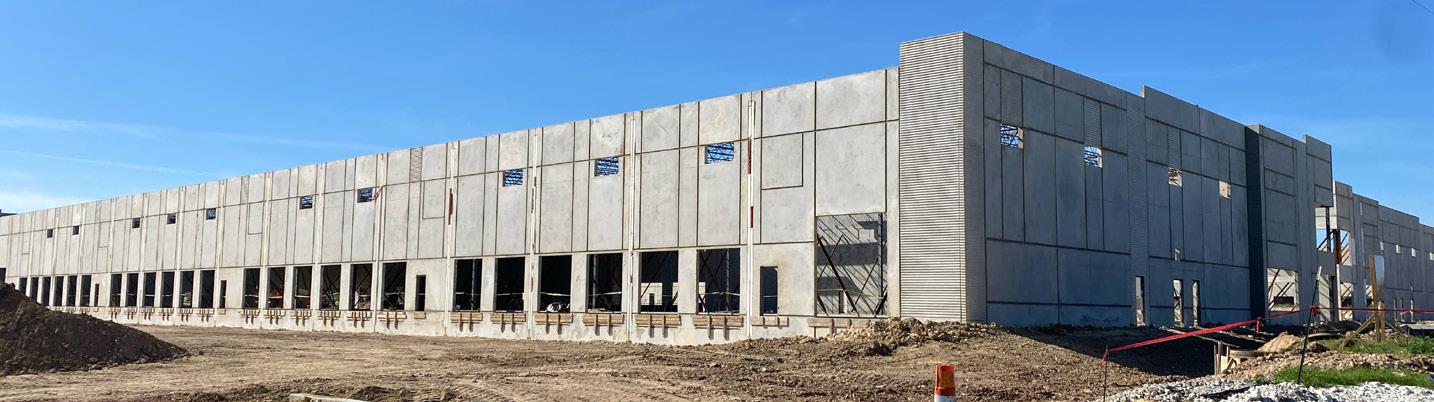
Light Industrial development presents an opportunity to be accommodated within the City’s commercial, retail, and mixed-use zoning fabric.
Potential Solutions:
» Zoning and design standards should be determined by the surrounding context of the proposed site location and its proximity to neighboring lower density uses.
» Refine design standards that distinguish light industrial from heavy industrial and its compatibility potential within commercial zoning.
» Building heights.
» Provide elevations (window placement, relief, setbacks, articulation, etc.) as part of the development review process.
» Screening and buffering from proposed parking, lighting, and noise generation between incompatible land uses such as residential and multi-family.
» Transition in scale and intensity of use on the site to ensure the light industrial compatibility to adjacent lower density zoning.
LAND USE POLICY STATEMENTS
TRANSITION ZONES
POLICY STATEMENT
The Issue:
Proposed residential uses are directly adjacent to heavy commercial uses.
Potential Solutions:
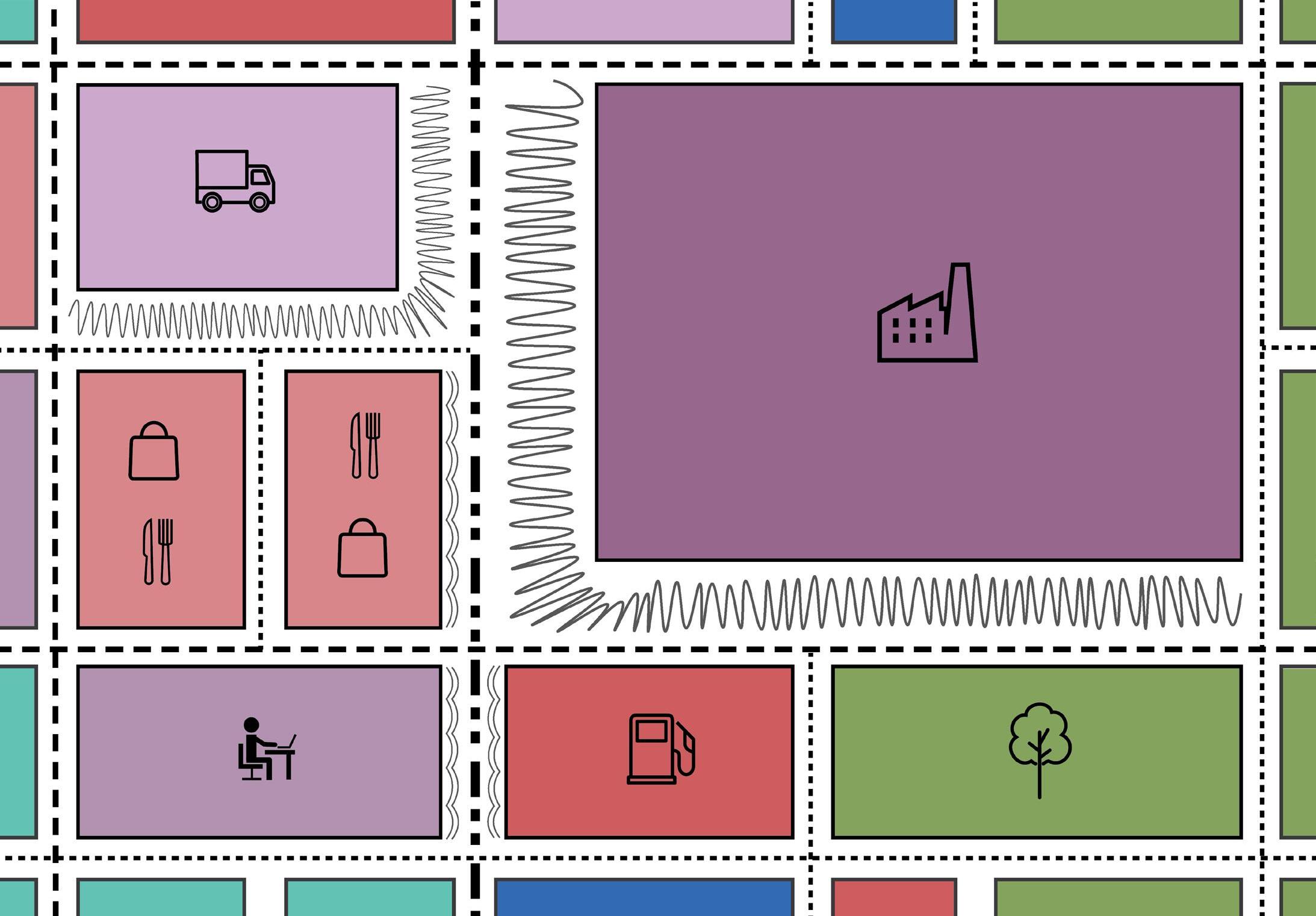
» New development - land use transitions should follow the density of use. Heavy commercial land uses should be buffered from single-family residential uses. This can be accomplished through the strategic placement of medium density uses such as mixed use developments, offices, or multifamily/townhome style residential.
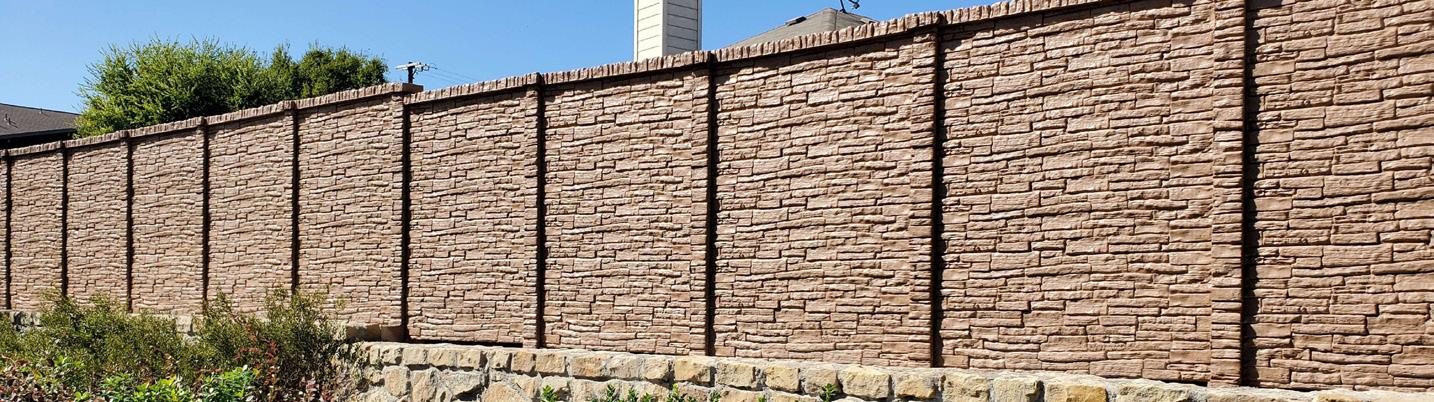
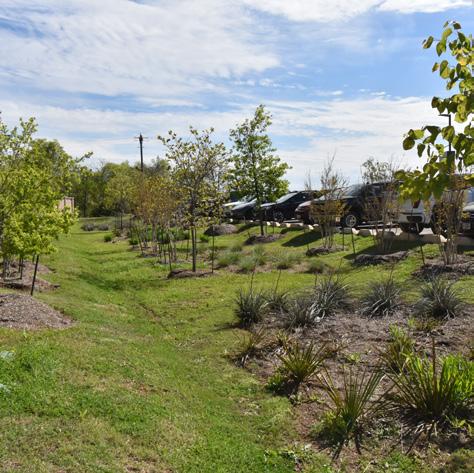
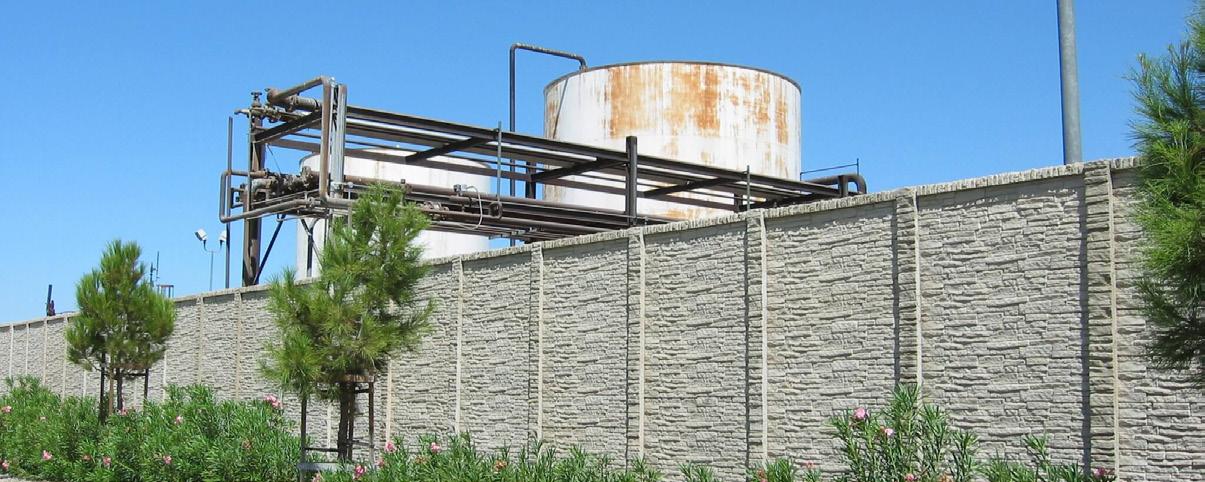
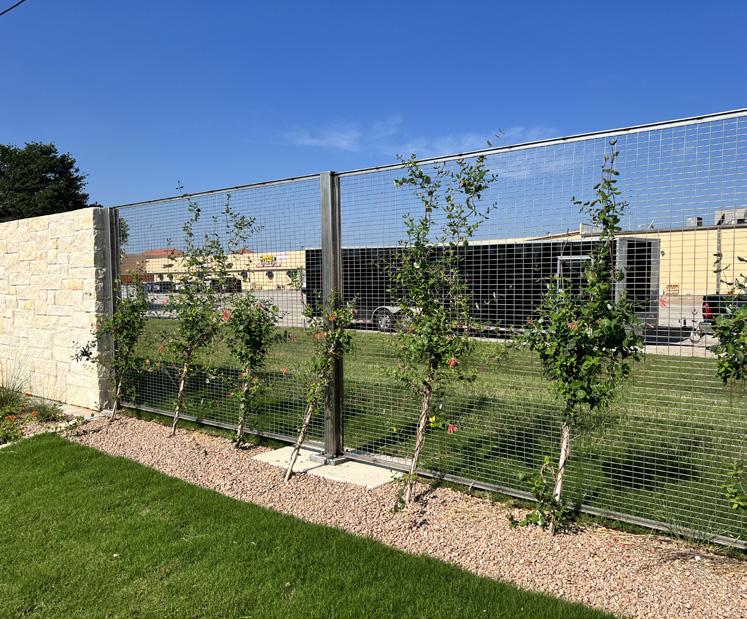
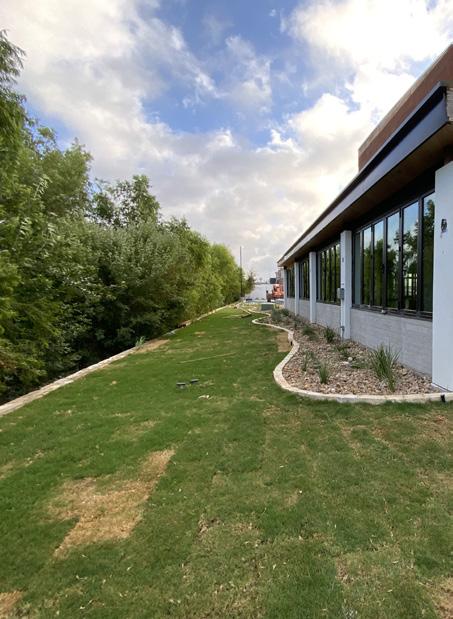
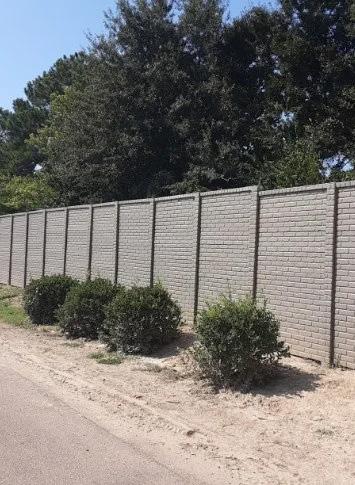
» Buffering - higher density land uses to be buffered from lower use via compatibility buffers or enhanced edges (i.e. landscape or masonry screening).
» Additional design considerations to attenuate noise and light pollution via screening/ buffering.
Reference Figures 10-12 on Pg. 29-31.
TRANSITION ZONES: RESIDENTIAL/COMMERCIAL
Transition Zone Example 1
Transition Zone Example 1
KEY LEGEND:
KEY LEGEND:
Belton, TX I Belton FLUM I December 2023
Belton, TX I Belton FLUM I December 2023
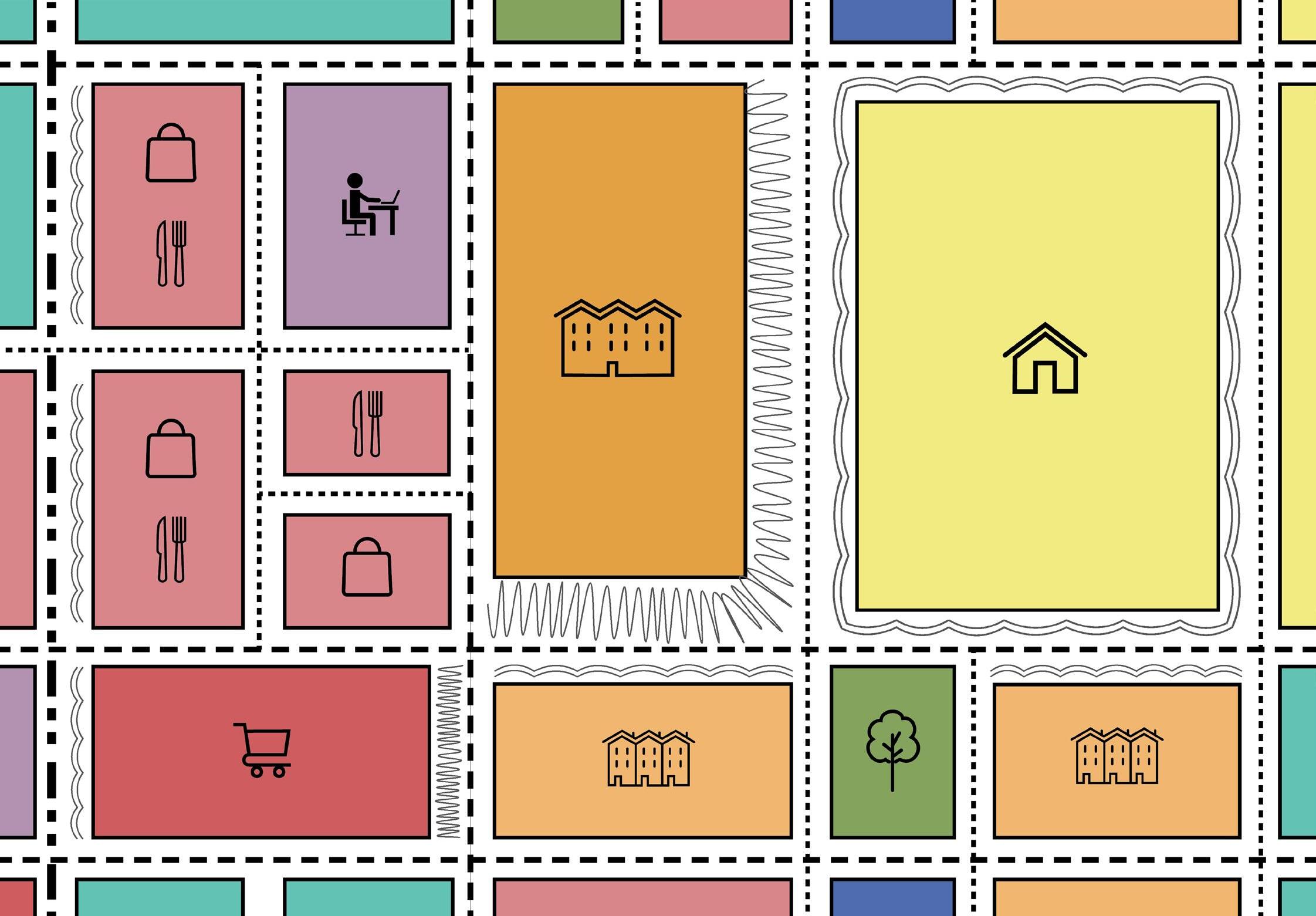
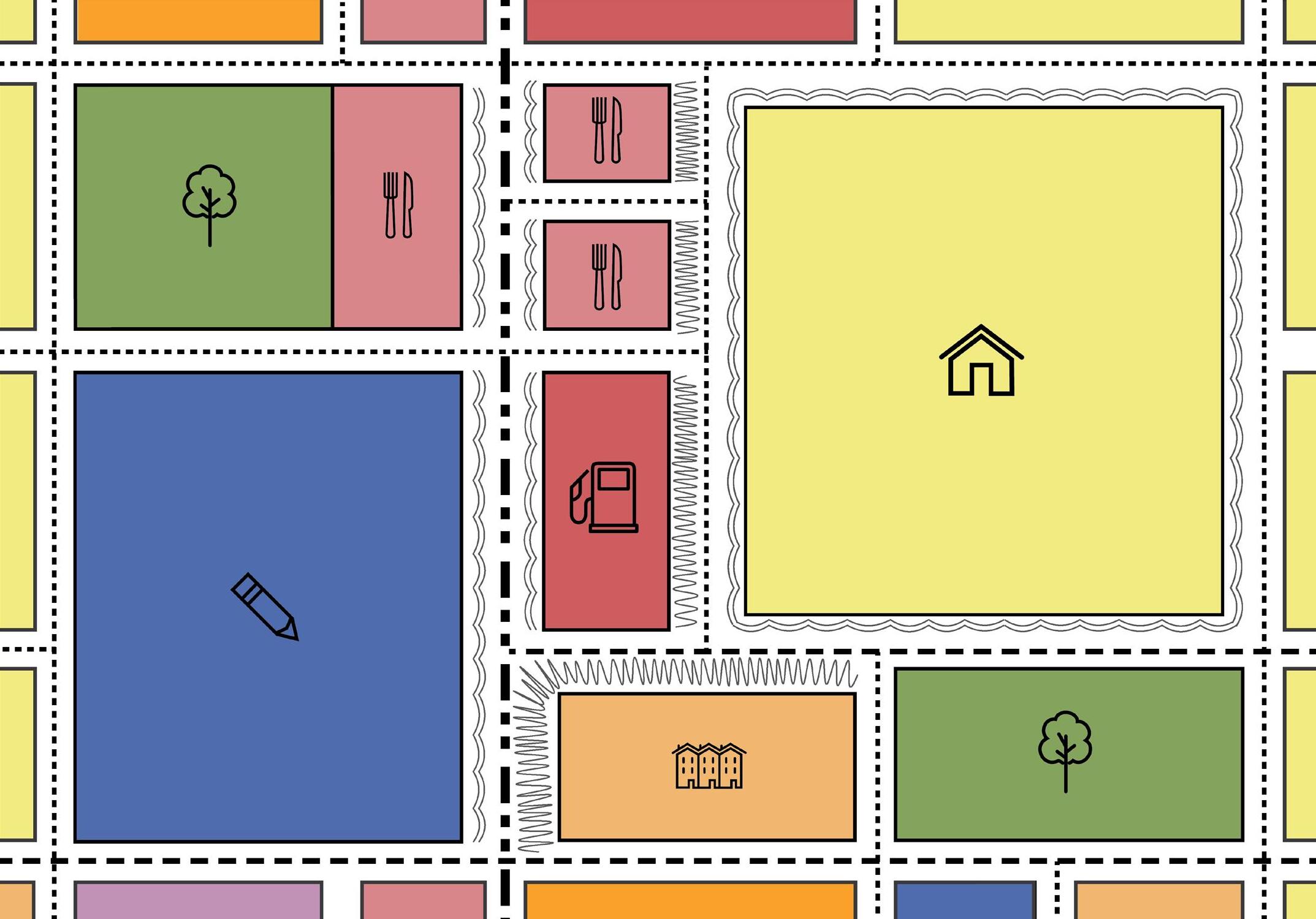
Transition Zone Examples - These graphics demonstrate the land use transitions and compatibility within a graphic street layout. The colors and symbols reflect the various land uses and the transition of land use density from higher traffic areas (i.e. arterial roadways) to lower traffic areas (i.e. minor collector). This graphic incorporates land use buffers such as compatibility buffers and enhanced edges. Compatibility buffers are utilized to screen higher density land uses from lower density land uses such as Multifamily and Single Family. These can take the form of denser landscape buffers or masonry screen walls/ fences. Enhanced edges are primarily landscape buffers between high density land uses and adjacent roadways.
Figure 10. Transition Zone Example 1
LAND USE POLICY STATEMENTS
TRANSITION ZONES: LIGHT INDUSTRIAL/COMMERCIAL
KEY LEGEND:
Belton, TX I Belton FLUM I December 2023
Figure
LAND USE POLICY STATEMENTS
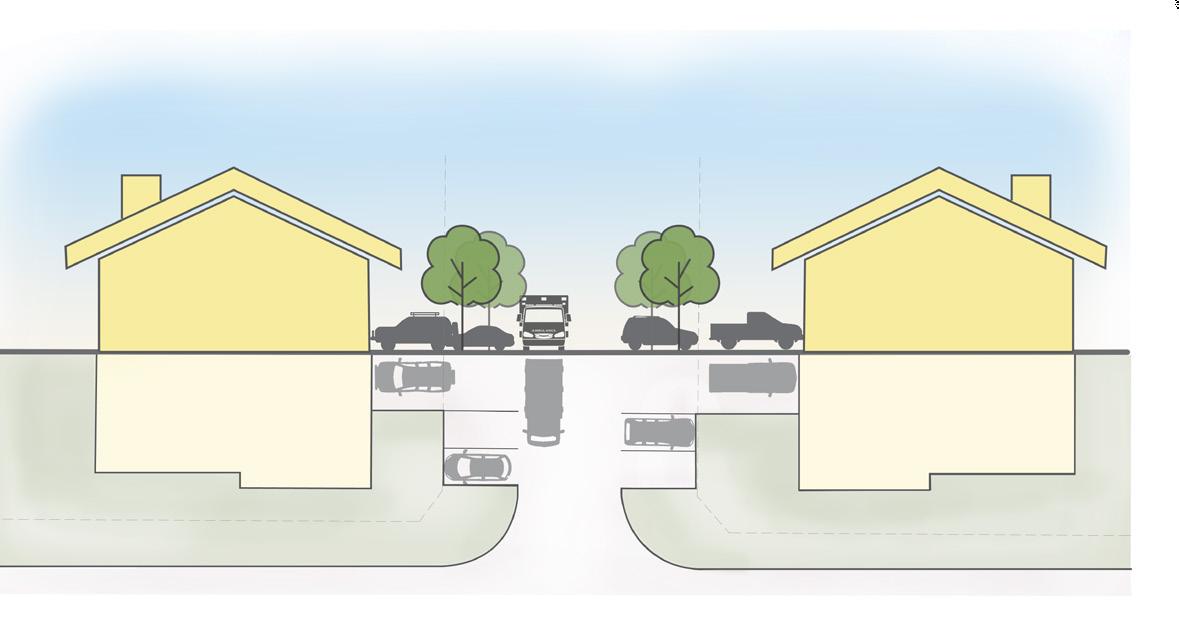
RESIDENTIAL AREA PARKING CHALLENGES
POLICY STATEMENT EXISTING CONDITION EXAMPLE
Purpose Statement:
Some residential areas pose serious parking challenges, making it difficult for City and emergency services to maneuver.
Duplex Condition:
» Narrow, one-garage/car-width driveways cause residents to park secondary and visitor vehicles on the street.
Potential Solutions:
» Update City ordinances to clarify parking requirements across all residential developments.
» Treat duplex developments like multifamily rather than single family - adjust parking count per unit/block.
» Increase landscape and street tree requirements.
» Increase ROW width and implement license agreements to accommodate on-street parking.
» Decrease ROW width and require “off-street” parking throughout the development code.
13-16.
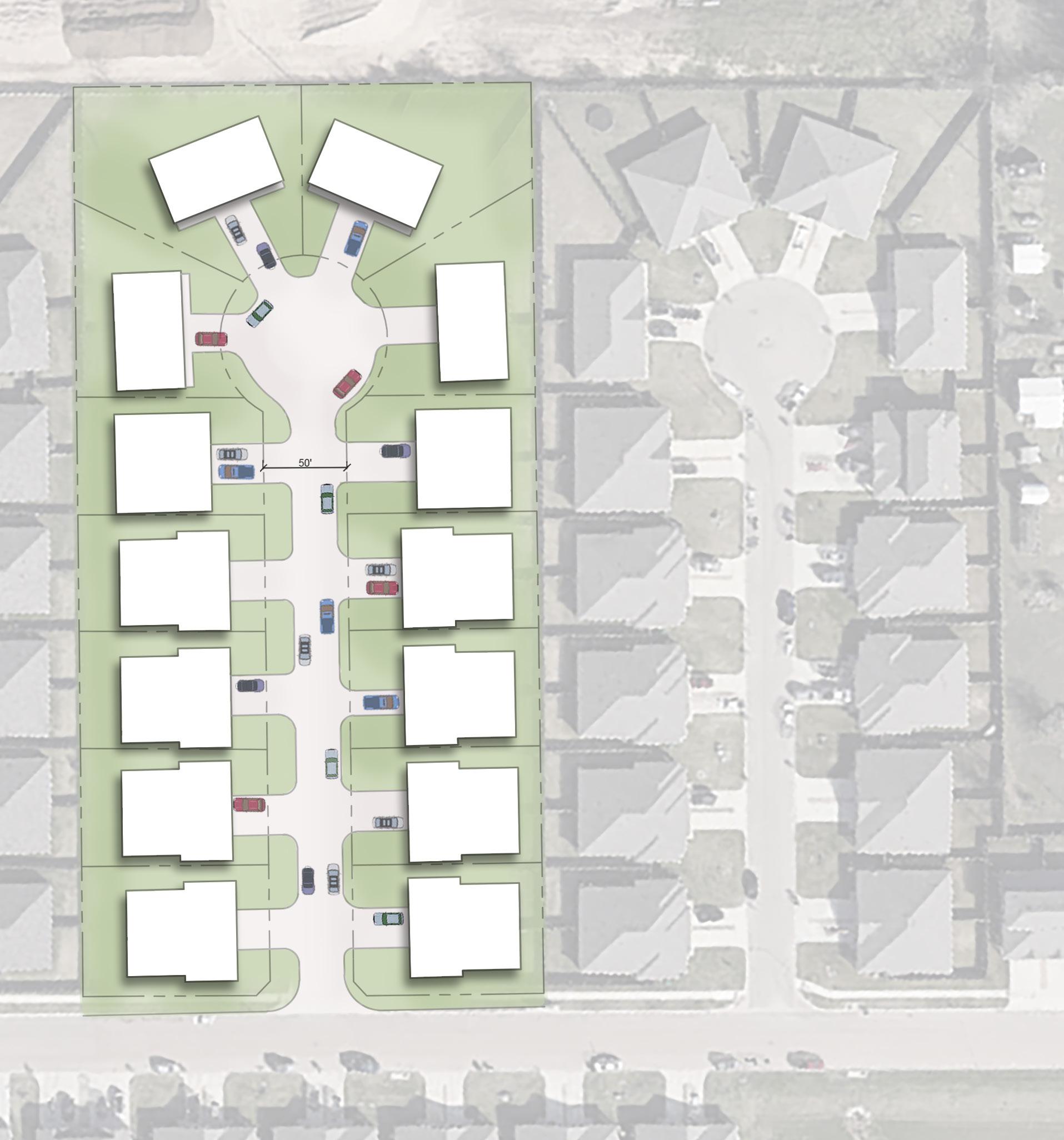
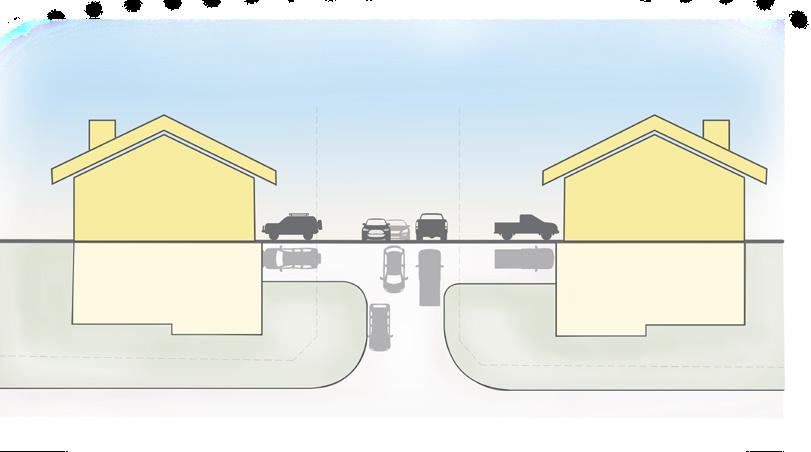
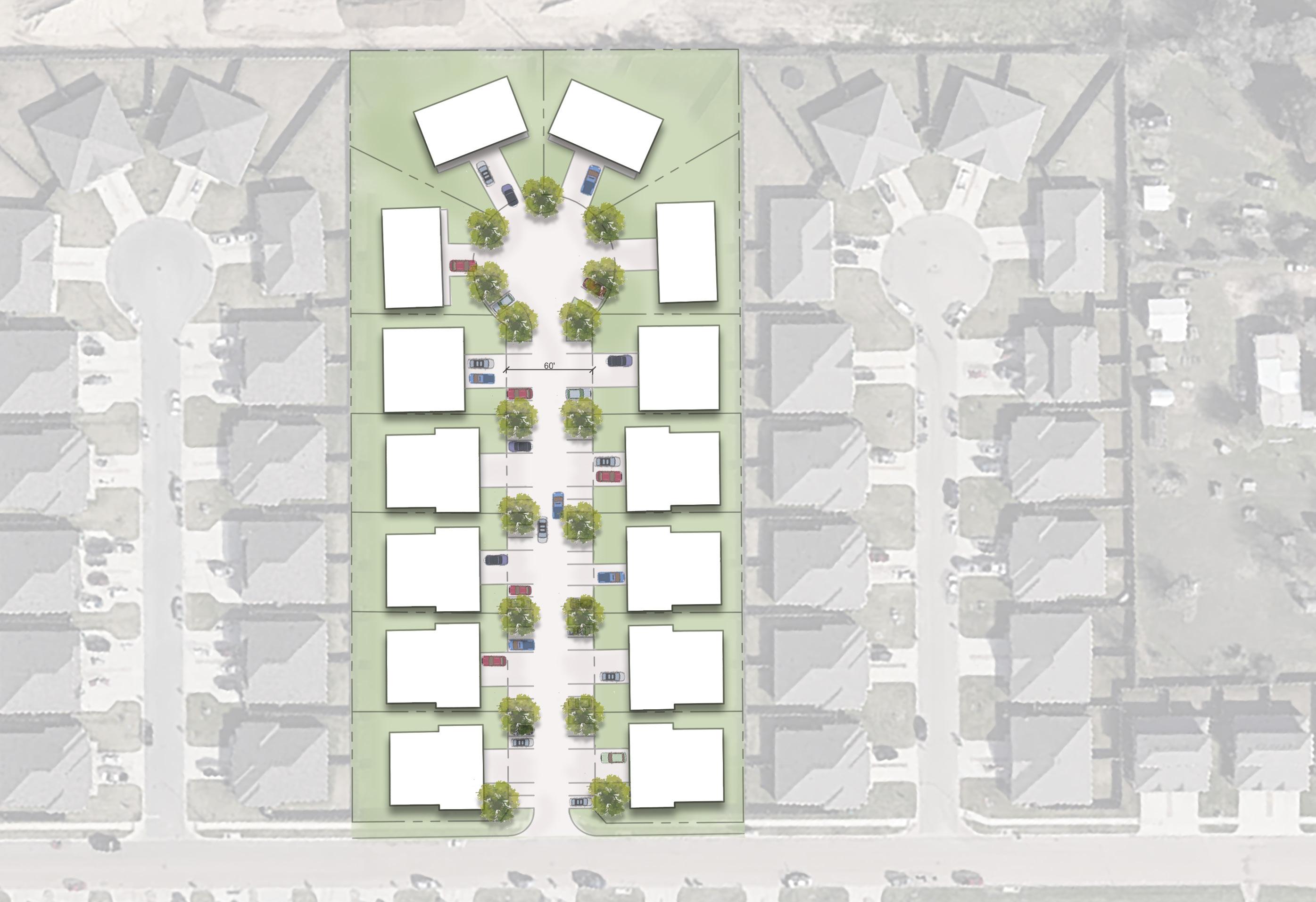
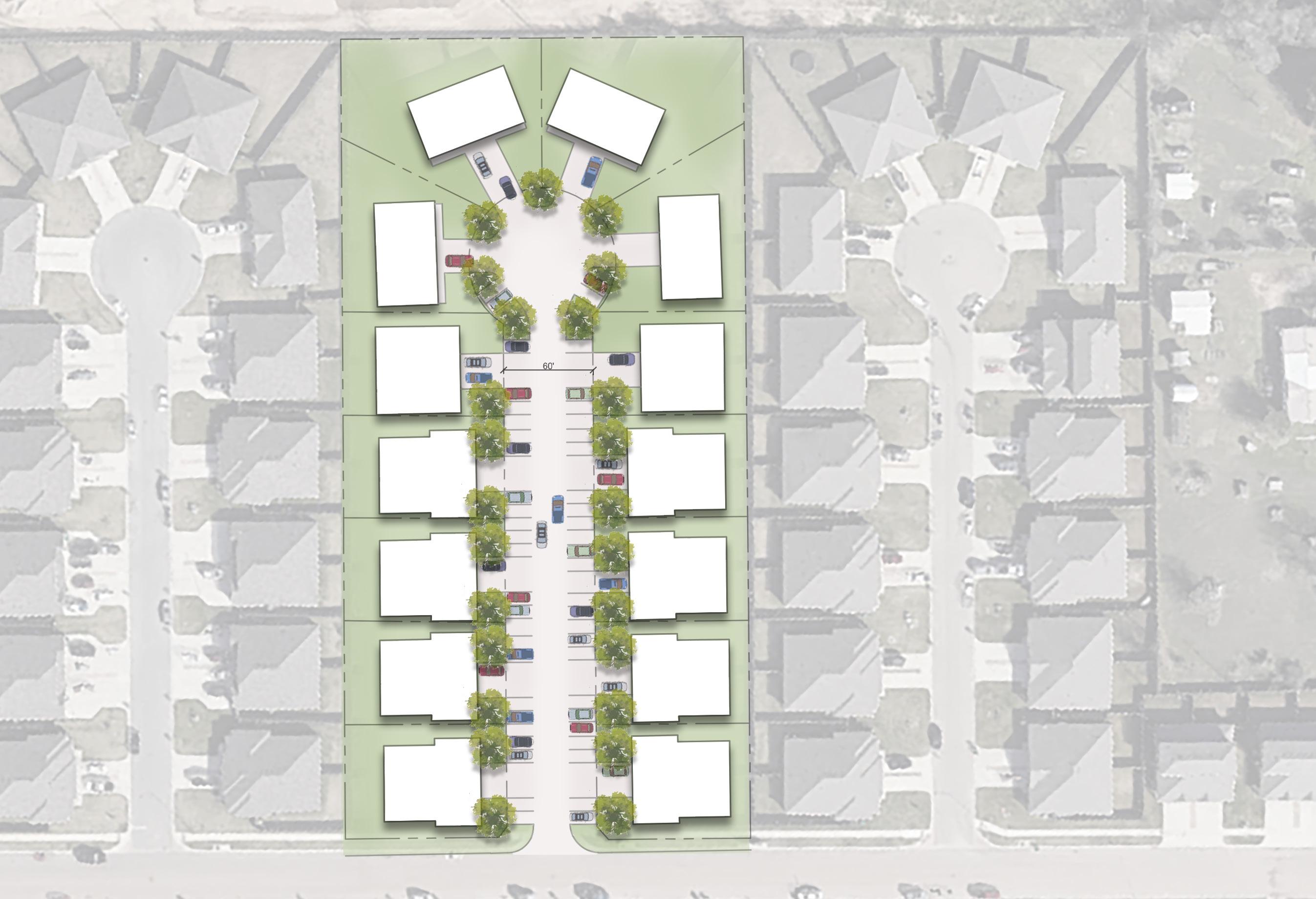
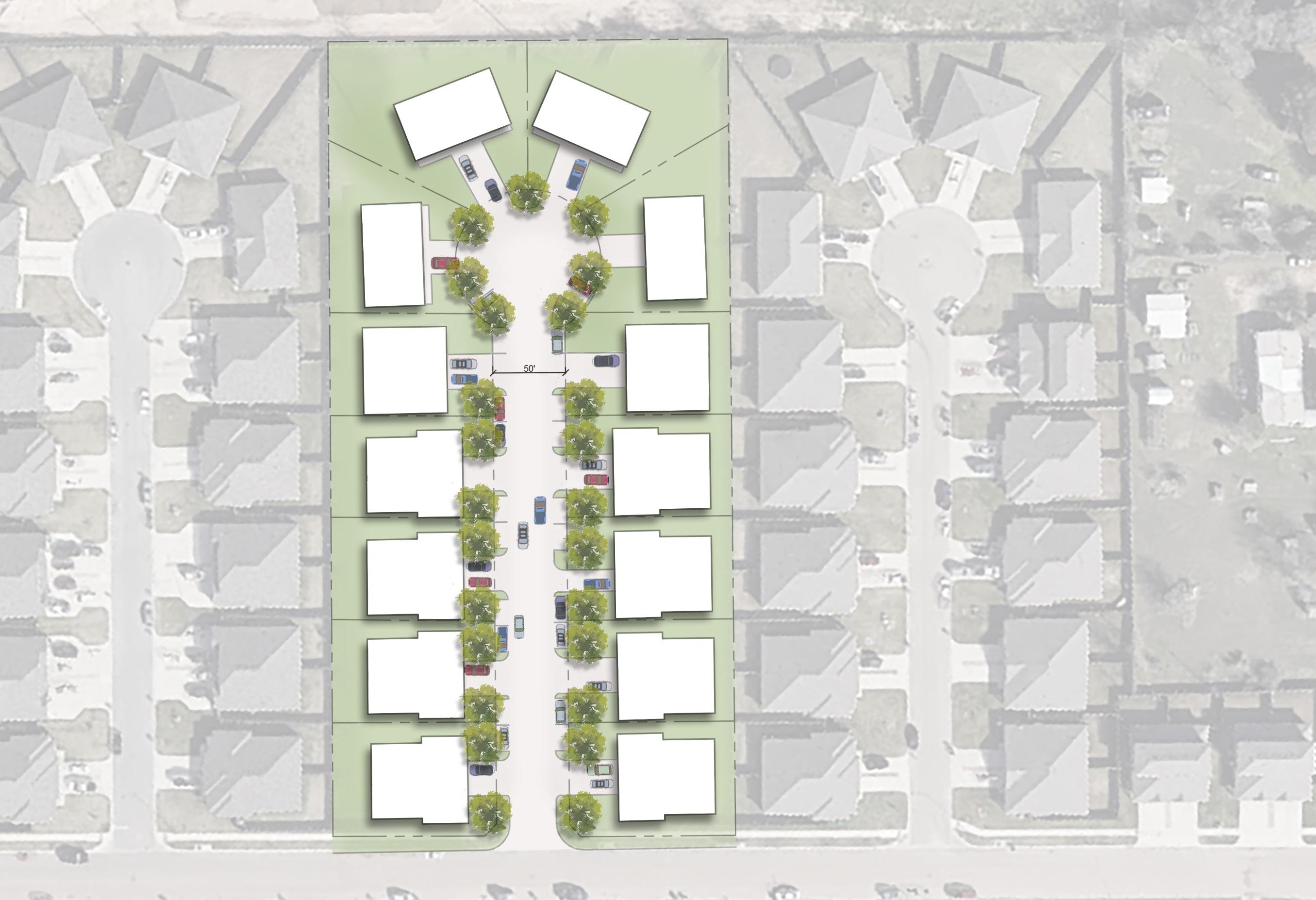
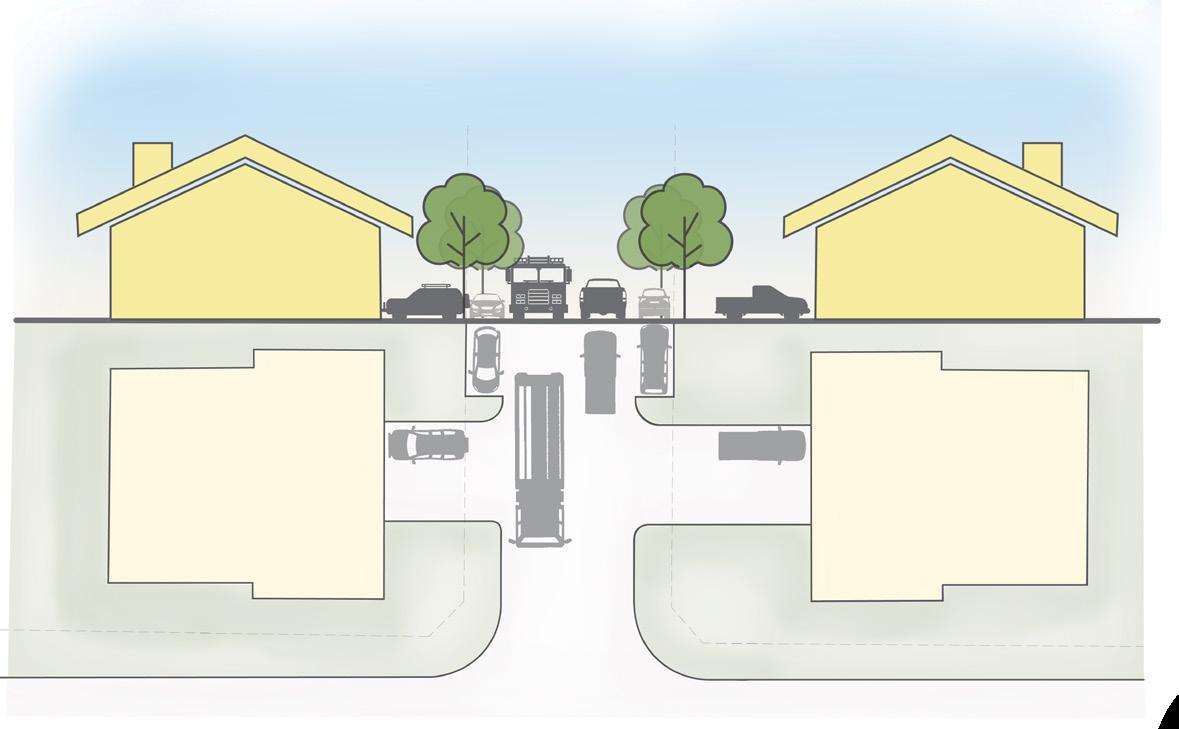
The following example (pg. 32-35) explores potential solutions that address the parking challenges faced within the rightof-way of residential streets. The graphics show the existing condition of Laila Lane and three (3) proposed conditions that address street congestion and parking limitations.
LAILA LANE
Figure
Laila Lane Parking Example
Figure 13. Laila Lane Parking Example - Existing Condition
SOLUTION OPTION 1 EXAMPLE: HEAD IN PARKING (GARAGES) W/ TREE ISLANDS
LAILA LANE
Figure 14. Laila Lane Parking Example - Solution Option 1
LAND USE POLICY STATEMENTS
RESIDENTIAL AREA PARKING CHALLENGES: CONT...
SOLUTION OPTION 2 EXAMPLE: HEAD IN PARKING (NO GARAGES) W/ STREET TREES
LAILA LANE
SOLUTION OPTION 3 EXAMPLE: PARALLEL PARKING W/ STREET TREES
LAILA LANE
Figure 16. Laila Lane Parking Example - Solution Option 3
CONCLUSION
FUTURE LAND USE MAP
SUMMARY OF OBJECTIVES
Within the current state of development and growth for the City of Belton, the existing Future Land Use Map (2017) contains limitations that urge the cause for its redevelopment. The purpose for the redevelopment of the Future Land Use Map was to adapt it to the current development needs and provide the framework for future development planning within the City of Belton.
SUMMARY OF OUTCOMES/GOALS
The Future Land Use Map (FLUM) update aims to provide the necessary information and tools to guide decision makers and developers towards a unified vision for the City’s expansion and growth. In conjunction with the goals established in the City’s Strategic Plan, Comprehensive Plan, and Imagine Belton Plan, the FLUM will make land use decisions and opportunities more flexible for decision makers and developers.
The updated Future Land Use Map provides services that were previously unavailable in earlier versions, such as:
» Compatibility with the City’s user-friendly GIS interface currently available for city staff and developers.
» Increased flexibility and guidance for City Council decisions regarding policy and other development related objectives.
» Establish avenues for deliberation and the prevention of land use decisions being made in isolation.
» Provide implementation of Belton’s Strategic Plan, Comprehensive Plan, and Imagine Belton Plan.
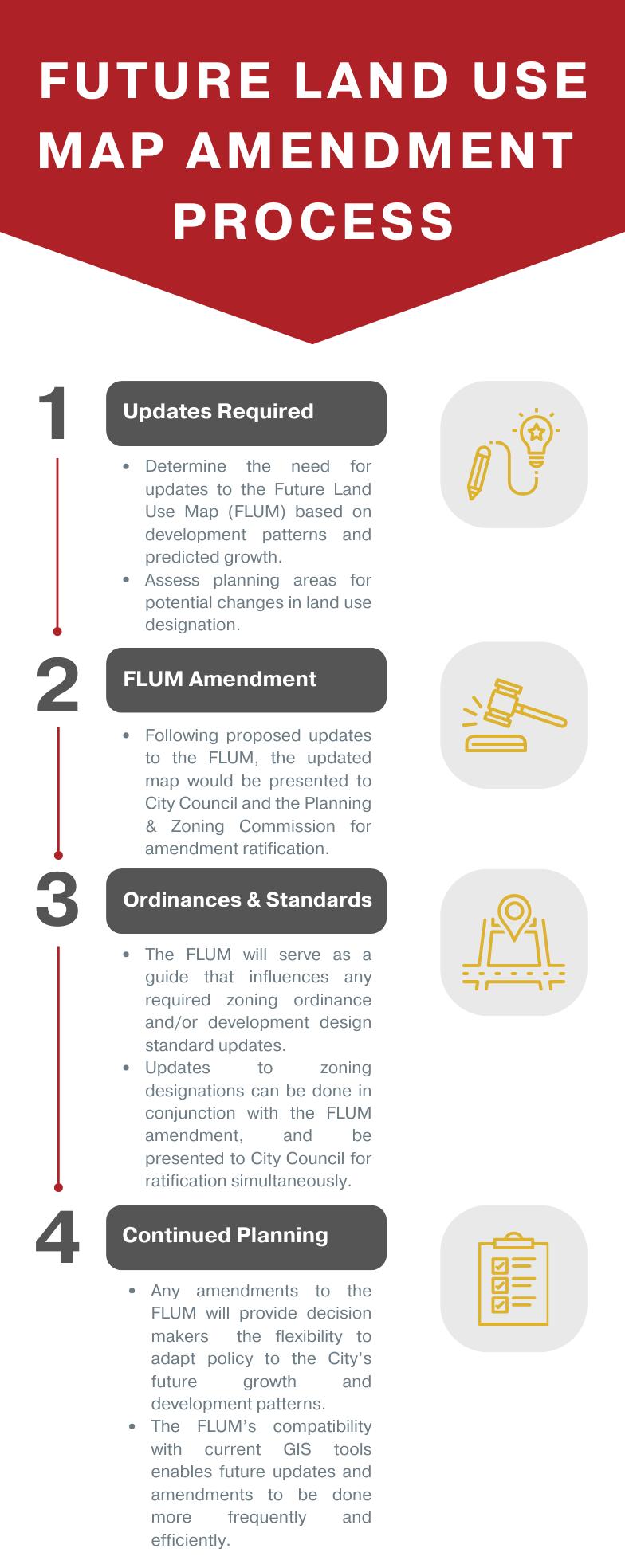
» Provide the versatility and framework that allows for updates as growth and development occur, as indicated in the graphic to the right.
» Address the various needs across land uses like housing, retail, and heavy industrial.
The Future Land Use Map will be a tool used to advance the visions and goals of development and policy making within the City.