FISCAL YEAR 2025/2026
ANNUAL BUDGET

TOWN OF CHINO VALLEY, ARIZONA
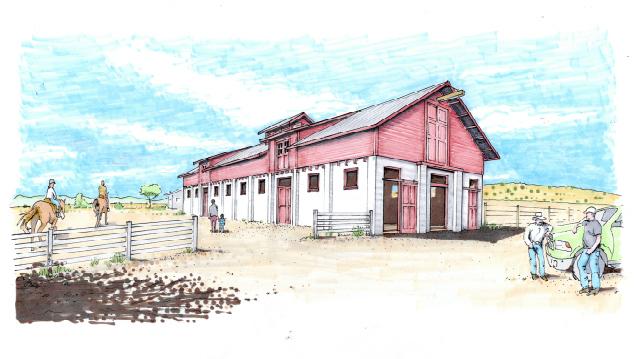
Cover art of Fred Harvey Farm by
T. Barnabas Kane, Landscape Architect
EXTERNAL BUDGET RESOURCE LINKS
Town Council Budget Study Session – April 30, 2025 - https://chinovalleyaz.portal.civicclerk.com/event/6490/media
Town Council Budget Study Session – May 12, 2025 - https://chinovalleyaz.portal.civicclerk.com/event/6540/media
Town Council Budget Meeting – May 27, 2025 - https://chinovalleyaz.portal.civicclerk.com/event/1693/media
Town Council Budget Meeting – June 24, 2025 - https://chinovalleyaz.portal.civicclerk.com/event/1694/media
Town General Plan - https://www.chinoaz.net/263/General-Plan
June 26, 2025

Dear Residents of Chino Valley,
We are pleased to share the Town of Chino Valley’s budget for Fiscal Year 2025–2026. This budget is more than numbers on a page, it is our plan for how we will use your tax dollars and community resources to keep Chino Valley a safe, welcoming, and well-maintained place to live.
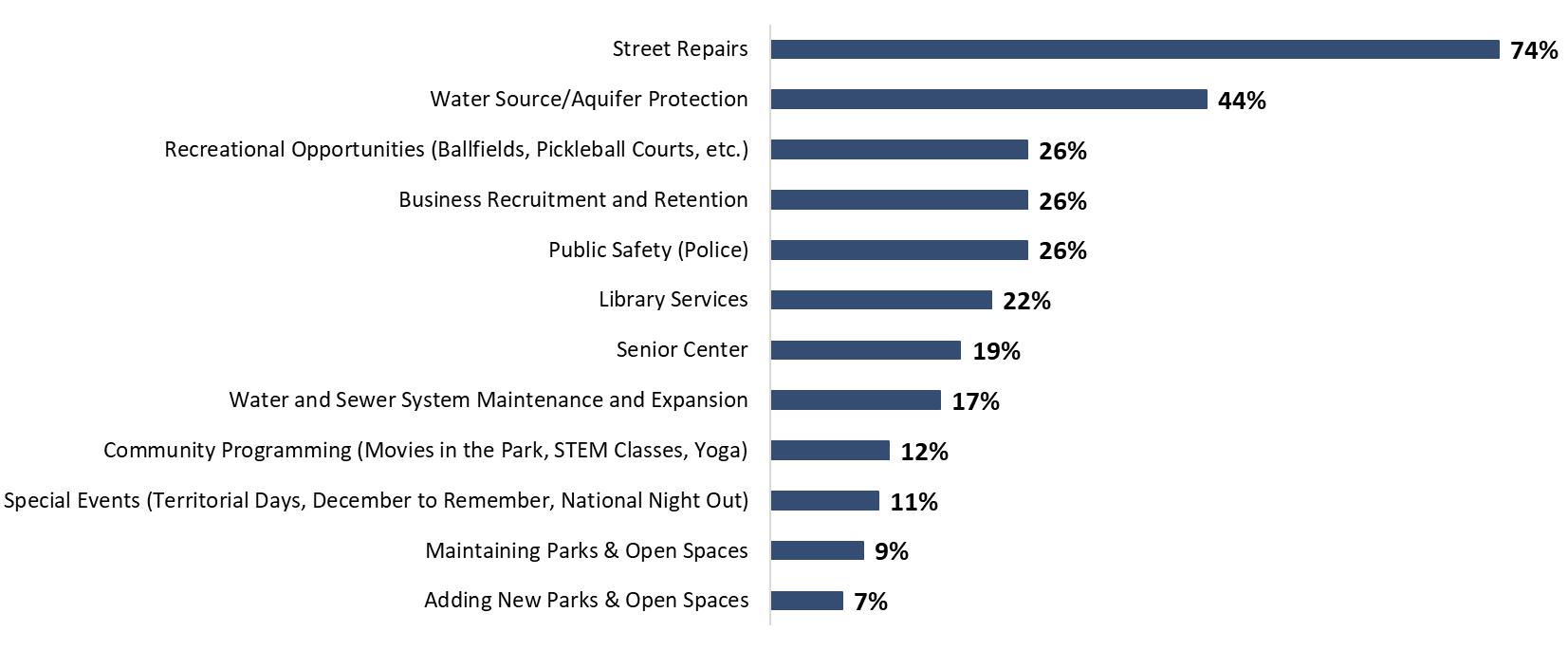
This year’s budget process began with the community survey, where you, our residents, shared what matters most to you. Your feedback helped guide our priorities, from street repairs to expanding parks and open space. When asked to select the top three Town services that should be prioritized in the budget, the responses were clear. The graph below highlights the services residents said were most important:
What we heard from you:
• Street Repairs are by far the top community priority (74% of respondents).
• Water Source & Aquifer Protection ranked second, reflecting strong support for long-term sustainability and understanding that water truly is life (44%).
• Recreational Opportunities, Business Recruitment, and Public Safety were tied as important midlevel priorities (26% each).
• Services such as Library Programs, Senior Center activities, and Water System Maintenance also received meaningful support.
Town Managers Office www.chinoaz.net
These survey results provided the foundation for the FY 25–26 budget and guided Council’s conversations to ensure the final plan reflects community priorities and makes the most of our limited financial resources. In addition to your valuable feedback, the Town Council held more discussions throughout the budget process than in years past. These conversations allowed us to weigh options carefully, explore trade-offs, and ultimately find consensus on a fiscal plan that reflects community input, fiscal responsibility, and community priorities Here are a few highlights of the FY 25–26 budget:
Effective Government
•Addition of 1.75 FTEs
1 Technical Services Librarian (offset by a reduction of 1.25 Library Assistants)
1 GIS Specialist
1 Police Officer - PANT
•2% COLA
•0-2% merit
Quality of Life
Water & Land Stewardship


•$250,000 - Community Center Park Improvements Phase I (includes site prep for pickleball courts)
•$250,000 - investment in rewriting the zoning code (part of the General Plan action items)
•$250,000 - resurfacing the pool decking
•$17,000 addition for Yavapai Regional Transit contribution
•$15,000 increase for food purchase for meals on wheels


•$9,705,441 - wastewater treatment plant improvements
•$2,000,000 - new well/pump/tank design to facilitate continued PFAS remediation and efforts to supply redundancy in our water system
•$175,000 - fill station improvements
•$168,798 - stabilization of Del Rio Springs property
Quality Infrastructure
•$3,000,000 for chip seal projects
•Equipment to facilitate more street repairs:
$150,000 for a skid steer with milling/profiler head
$140,000 for a dump truck
$110,000 for an asphalt recycler


Financial Stability
•All funds are expected to maintain a postive fund balance in excess of required reserve policies
•Continued efforts to explore untapped revenue sources
$32,400 for annual TPT auditor contract to enhance business compliance and provide TPT education
Continued economic development outreach to solicit new businesses




Overall: Greater focus on street repairs and water and wastewater system improvements for FY 2025-26, and cautious investments in staffing needs, new programs, and equipment replacements
The Town has seen a small decrease in transaction privilege tax (TPT) in recent years due to State changes in certain categories/industries, such as the elimination of residential rental tax Chino Valley does not assess property tax. As such, TPT growth is essential for funding services. The Town is continuing efforts to draw new businesses to our community to offset these decreases. During this budget cycle, the State legislature was considering new legislation to remove or reduce the Food Tax, which would have had a significant negative impact on our budget capacity. Out of concern for the possibility, for FY 2025-26 we adopted a guarded, highly-conservative approach to spending. In total, the proposed expenditures for the upcoming fiscal year in the amount of $46,716,189, represent a decrease of $5,741,119 when compared to the prior year’s adopted budget of $52,457,308. This reduction underscores the Town’s continued commitment to fiscal responsibility, cost containment, and prioritization of projects.
The budget presented is balanced and does not rely on one-time money to pay for everyday services. That means we can continue to meet today’s needs while planning responsibly for tomorrow, whether that’s replacing aging infrastructure, preparing for growth, or keeping reserves strong for unexpected events. The budget reflects a strategic use of fund balance in several key areas, including the General Fund, General Capital Improvement Fund, Highway User Revenue Fund (HURF), Streets Capital Improvement Fund, and Water Capital Improvement Fund. These planned draws on reserves are intentional and support targeted investments in infrastructure, capital projects, and service enhancements that align with longterm organizational priorities. Most importantly, even with these draws, all estimated ending cash balances remain positive, demonstrating reserve levels that exceed our financial policy standards, assuring capacity to weather unexpected economic downturns or unanticipated needs.
Budgets are a team effort. I want to thank you, our residents, for sharing your valuable input, our volunteer Citizen Advisory Committees for offering the community’s perspective, our Town Council for their thoughtful and collaborative discussions, and our staff for their expertise and frugality of requests. Citizen participation is essential to effective local government. Your voices and guidance helped shape a budget that reflects the entire community’s priorities and tips a hat to the Chino Valley way of life –hardworking, collaborative, and enduring.
We invite you to explore this budget document to see how your tax dollars are put to work. Thank you for trusting us to serve you.
Warm regards,

Terri Denemy Town Manager
Council Profiles


Councilmember Armstrong has lived in Chino Valley for about 16 years and is now retired. Prior to being elected to Council in 2020, Tom served on the Chino Valley Planning and Zoning Commission for which he served as the vice chairman.
Tom stated his goals for the town include assisting in the proper management of the town by listening and acting upon the voices of the community. His highest priority is to maintain a dedicated and adequate water system for the people of Chino Valley and to increase the possibilities of new businesses locating to Chino Valley.
of 2026
I’m Eric Granillo — a lifelong Arizonan, small business owner, and proud council member serving the community of Chino Valley. This town has been home since childhood, and it’s where my wife Adriana and I have raised our three amazing kids: Alexia, Andrew, and Elijah.
My life is rooted in faith, family, business, and service. I strive for excellence in all I do, whether it's running a business or giving back to the community I love. I'm passionate about helping Chino Valley grow responsibly — preserving our small-town values while building a stronger, more connected future.
From local leadership to hands-on experience, I believe in putting people first and working together to create a place we’re all proud to call home.
- Eric Granillo
Vice-Mayor Granillo's Term Expires DECEMBER of 2028
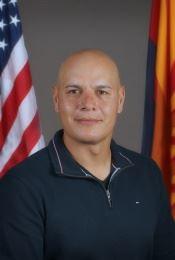

Mayor Tom Armstrong
Mayor Armstrong's Term Expires DECEMBER
Vice-Mayor Eric Granillo
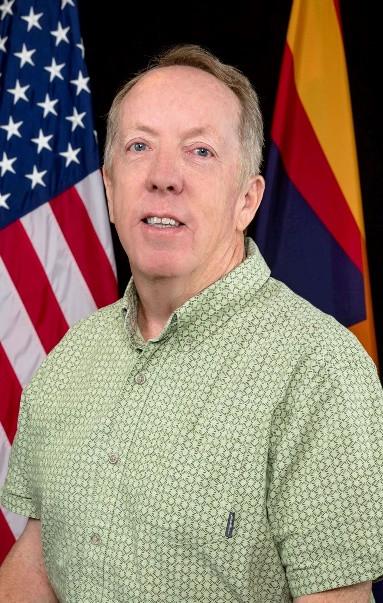
Councilmember Larry Holt
Councilmember Holt moved to Chino Valley in April of 2018 after a 34 plus year career in law enforcement. He has always believed in giving back to the community and embraces a belief in community service.
Shortly after arriving in Chino Valley, he obtained approval from the town council to renovate the town’s 9-11 Memorial. After receiving approval, founded the Chino Valley Memorial Foundation, a non-profit that not only maintains the 9-11 Memorial, but also assists survivors of first responders and active-duty military from Yavapai County who are killed in the line of duty. Larry was appointed to the Parks and Recreation Advisory Board serving two terms, his second as vice chairman. He was also appointed to the Make it Chino, general steering committee and as an ambassador for the general plan.
Larry and his wife Joann love the community and both enjoy the outdoors. Larry’s priorities include maintaining Chino Valleys identity as a small rural community, public safety and volunteerism.
Councilmember Holt’s term Expires DECEMBER of 2028


Councilmember John McCafferty

Councilmember McCafferty was appointed to Council in August of 2021 to fill a vacant seat. He ran and was elected to an open seat in 2022. Before retiring, John worked as an administrator for the Federal Bureau of Prisons. When running for office, John stated he hoped to update the General Plan, continue to improve infrastructure, and create conditions for economic development. He said updating the general plan is critically important as the current general plan is outdated. Until a new General Plan is in place council will follow the current general plan, which was approved by voters.
“I mean what I say and I say what I mean. I am predicable,” John said. “I follow the rules because when you try to take short cuts is when you run into problems. I have no hidden agenda. I’m here because I love the community where I live." John served on the town Planning and Zoning Commission and other boards. He also works with youth soccer, and he ran for council because of his commitment to public service. He moved to Chino Valley in 2016. He majored in political science at ASU.
Councilmember McCafferty's Term Expires DECEMBER of 2026
Councilmember Sherri Phillips
Councilmember Phillips was elected to her first term on Town Council in 2022. She was born Sherri L. Clingman at Camp Pendleton Marine Base in San Diego, California. In 1968, after her father retired from the Marine Corp, Sherri’s family moved back to Arizona, their home state. (Her dad graduated from Ash Fork High School and her mom graduated from a high school in Mesa.) Sherri attended Chino Valley schools from second to ninth grade after which she attended Prescott High School.
Sherri and her husband Scott Phillips have two daughters and four grandchildren. Even though she was born at Camp Pendleton and lived in Barstow before moving to Chino Valley, she considers Chino Valley her family’s home as two daughters and four grandchildren live here. Phillips worked in retail before taking her current job as office manager at a chiropractic office in Chino Valley.
Councilmember Phillip's Term Expires DECEMBER of 2026


Councilmember Bob Schacherer
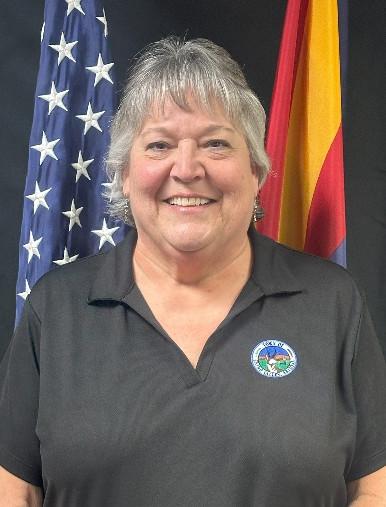

Councilmember Schacherer was elected to his first term on Town Council in 2022. Bob said he loves Chino Valley because of the open spaces, people, roosters and cows. He said the people are friendly as they always look forward. He attended a gathering at Memory Park where he noticed all the parents stayed close to their kids. “That’s the small-town feel,” he said.
Bob, who drove a truck for 46 years, said he has no political background as he likes to get all the information in and process it before making a decision. Bob said because he’s retired he can give 100% of his time to serving on the Town Council. “I’m not a developer, Realtor or in construction,” he said. Born and raised in Dayton, Kentucky, he started truck driving right after high school. He volunteers for Meals on Wheels and Hospice.
Councilmember Schacherer's Term Expires DECEMBER of 2026
Councilmember Switzer was elected to his first term in 2024 after serving on the Planning and Zoning commission for 6 years. Robert and his wife have been living in Chino Valley for 8 years and are members of Grace Church, the American Legion Post 40 and the Prescott Elks.
Robert is currently employed with the Yavapai County Sheriff’s Office in the Law Enforcement Support Services Division as the Property Control manager and a firearms instructor and also volunteers for the Sheriff’s VIP program.
My priorities are God, family, Country. I love Arizona and Chino Valley. I will be focusing my term on securing a reliable sustainable water supply for Chino Valley, limiting growth to maintain our rural character while increasing our revenue through responsible retail and commercial growth. Please feel free to contact me with questions, comments and concerns. I want to be the citizens voice during my term.
“Let your change of heart be seen in your works” Mathew 3:8
- Robert Switzer
Councilmember Switzer’s term Expires DECEMBER of 2028


Councilmember Robert Switzer
Budget Award


Government Finance Officers Association of the United States and Canada (GFOA) presented a Distinguished Budget Presentation Award to the Town of Chino Valley for its Annual Budget for the fiscal year beginning July 1, 2024. In order to receive this award, a governmental unit must publish a budget document that meets program criteria as a policy document, as a financial plan, as an operations guide, and as a communications device.
This award is valid for a period of one year only. We believe our current budget continues to conform to program requirements, and we are submitting it to GFOA to determine its eligibility for another award.



Annual Community Clean-Up Event
Boards & Commissions
Organization Chart
Cizens of Chino Valley
Council
Mayor Tom Armstrong
Vice-Mayor Eric Granillo
Councilmember Larry Holt
Councilmember John McCafferty
Councilmember Sherri Phillips
Councilmember Bob Schacherer
Councilmember Robert Switzer
(7.00 Elected Officials)
Town Manager Terri Denemy (4.00 FTE)
Community Services Cyndi Thomas
(16.25 FTE)
Development Services Laurie Lineberry
(11.00 FTE)
Finance Kae Pehl
(4.00 FTE)
Human Resources Laura Kyriakakis
(3.00 FTE)
Direct
Town Aorney (Contract)
Municipal Court Judge Angela BradshawNapper (5.00 FTE)
I.T. Services Spencer Guest (3.00 FTE)
Police Chief Joshua McInre (45.50 FTE)
Public Works Frank Marbury
(37.00 FTE)
Town Clerk Erin Deskins (4.00 FTE)
Staff Leadership
Staff Leadership Team
Town Manager ................................................................................. Terri Denemy
Community Services Director........................................................... Cyndi Thomas
Development Services Director ................................................... Laurie Lineberry
Economic Development/Intergov. Manager............................. Maggie Holmberg
Finance Director ..................................................................................... Katie Pehl
Human Resources Director .......................................................... Laura Kyriakakis
Information Technology Manager .................................................. Spencer Guest
Magistrate ..................................................................... Angela Bradshaw-Napper
Police Chief.................................................................................... Joshua McIntire
Public Works Director .................................................................... Frank Marbury
Town Clerk .......................................................................................... Erin Deskins
Assistant Leadership Team
Assistant Development Services Director ............................................ Will Dingee
Assistant Town Engineer ................................................................ Steven Sullivan
Deputy Town Clerk ............................................................................. Sara Burchill
Police Lieutenant.......................................................................... Randy Chapman
Police Lieutenant........................................................................Amy Chamberlain
Community Profile
Governmental Structure

Chino Valley operates under a council-manager form of government. Six council members are elected at large on a nonpartisan ballot for four-year terms, while the mayor is elected at large for a two-year term, also on a nonpartisan ballot.
The Council is responsible for setting public policies, approving board and commission appointments, making planning and development decisions, and adopting new local laws. The Council appoints the Town Manager to implement these policies and oversee daily operations.
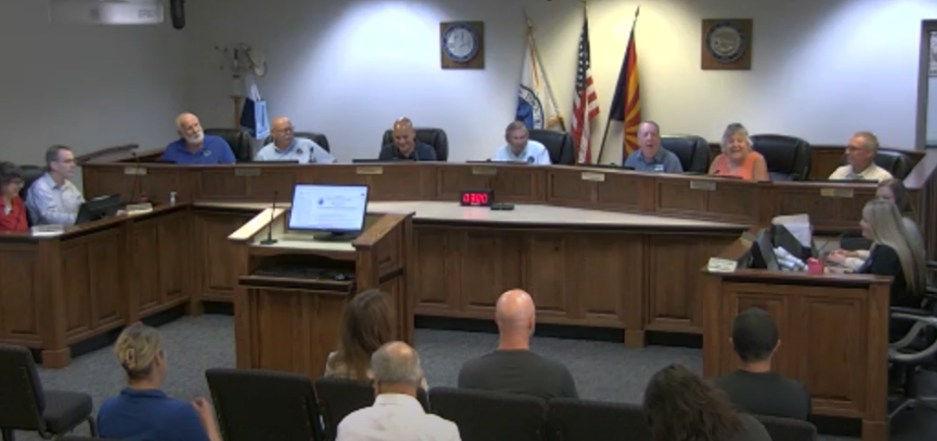
Council meetings are held at 6:00 p.m. on the second and fourth Tuesday of each month at Chino Valley Town Hall, located at 202 N. State Route 89. All meetings are open to the public, with agendas and minutes available on the Town’s website at www.chinoaz.net
Location and Land Area
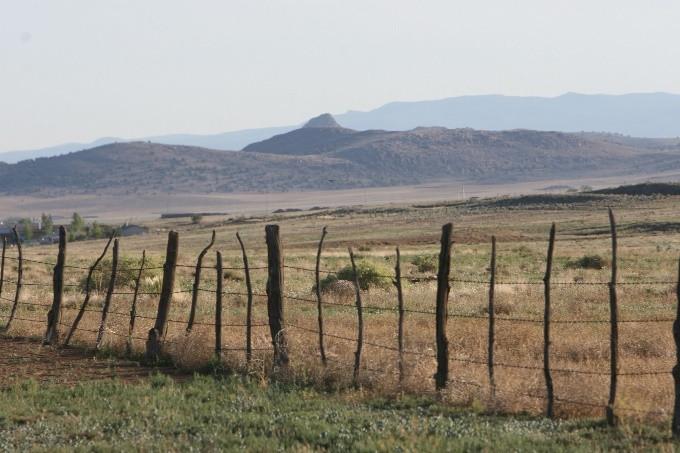
Located just northwest of Prescott and surrounded by sandy-hued Gama grasses and gentle rolling hills, Chino Valley, encompassing approximately 63 square miles, is a peaceful retreat where residents and visitors can escape the big-city lifestyle and embrace outdoor adventures. Known for its vibrant restaurant scene, local microbrewery, and vineyard, Chino Valley offers unique experiences that celebrate the local flavor.








On clear nights, brilliant constellations and bright stars light up the sky, a natural spectacle visible from anywhere in town. With abundant open spaces, it’s common to see locals riding horseback or off-roading along Perkinsville Road, exploring the vast beauty of the high desert. At an elevation of 5,300 feet, Chino Valley enjoys cooler summers and mild winters with occasional snowfall. The community takes pride in its rural character, valuing relaxation and a quiet lifestyle.
Antelope Grazing in the Hills
Council Meeting in Action
Horses Roam a Desert Trail

History
Chino Valley’s history began when Arizona was declared a U.S. Territory on February 24, 1863. Shortly after, on December 23, 1863, Fort Whipple was established near Del Rio Springs in Chino Valley, serving as the site of Arizona's first Territorial government. In May 1864, Fort Whipple moved closer to Prescott, but settlers soon began homesteading the area, marking the start of Chino Valley’s long tradition of farming and ranching.
In 1909, the Atchison, Topeka & Santa Fe Railroad and the Fred Harvey organization furthered this agricultural legacy by purchasing a local farm to supply milk, eggs, meat, and produce to Fred Harvey Houses along the Santa Fe Railroad. The arrival of the railroad signaled a new era for Chino Valley, particularly with the creation of Jerome Junction, a major transfer point where the narrow gauge from Jerome, AZ connected with the Santa Fe Railroad running from Prescott to the main line at Ash Fork. Jerome Junction quickly became a bustling hub with stockyards, a Wells Fargo office, a post office, a school, and a hotel.
In May 1920, the railroad line from Jerome was relocated further north, leading to the gradual decline of Jerome Junction. Although it remained a stop on the Santa Fe line, most activities shifted westward along Highway 89, with many buildings relocated there as well. From the 1920s through the late 1940s, most families in Chino Valley were involved in farming and ranching. Dairy farming saw a resurgence from the mid-1950s through 1965, but rising costs for electricity and irrigation soon made farming increasingly unprofitable. As farm revenue declined, land values rose, prompting many landowners to sell their properties for new homes and businesses.
Education
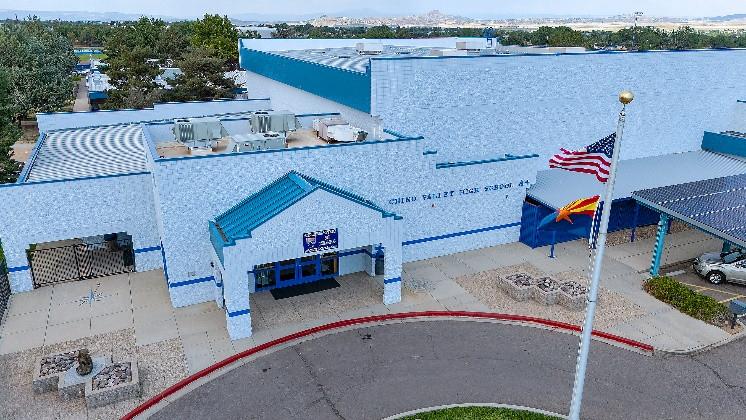

The local school system in Chino Valley includes two elementary schools, a middle school, and a high school, all of which maintain strong community ties and take pride in their sports programs.
Chino Valley is also home to Yavapai College’s Chino Valley Agribusiness & Science Technology Center, which offers courses in agriculture technology, horticulture, animal care, canine care, service dog training, equine care, linework, and construction. The campus also features a Commercial Driving Program and an ADOTauthorized CDL testing site.
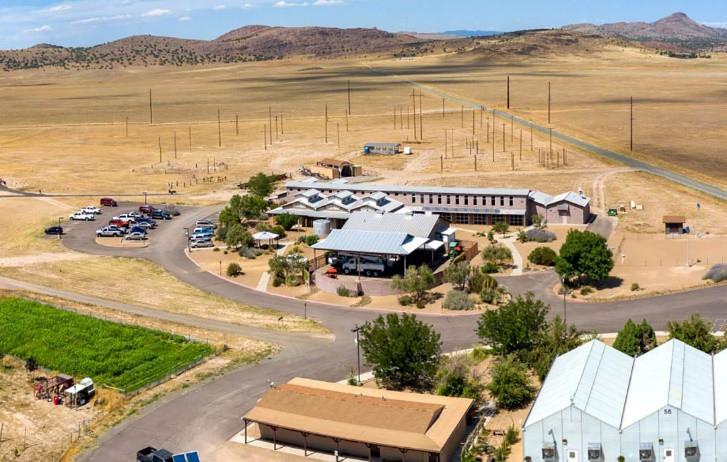

Aerial of Chino Valley High School
Aerial of Yavapai College Chino Valley Center
Chino Valley Landscape
Public Safety
The Chino Valley Police Department of 45.5 FTEs (Full-Time Equivalents) is committed to proactive public safety through state-of-the-art policing methods and efficient budget management. By fostering innovative ideas among staff, the department maximizes resources to deliver high-quality law enforcement services and ensure the safety of the community. Fire service is made available through the Chino Valley Fire District.


Animal Control plays a vital role by enforcing animal-related codes, managing the Animal Shelter, issuing dog licenses, and responding to public complaints, ensuring the well-being of both residents and pets in the community.



Utilities
The Town provides water and sewer services to a portion of its residents, with 1,194 metered water accounts and 2,601 active sewer accounts.
It maintains the water supply and distribution system, operating two wells and managing 22.8 miles of water mains and 38 miles of wastewater collection lines. The treatment plant can process over 500,000 gallons of wastewater daily for recharge.
The Town is not the sole water provider in the area, as another municipality and seven other water companies serve some sections of the community.

Officers Receiving Lifesaving Awards
Animal Shelter Van and Staff
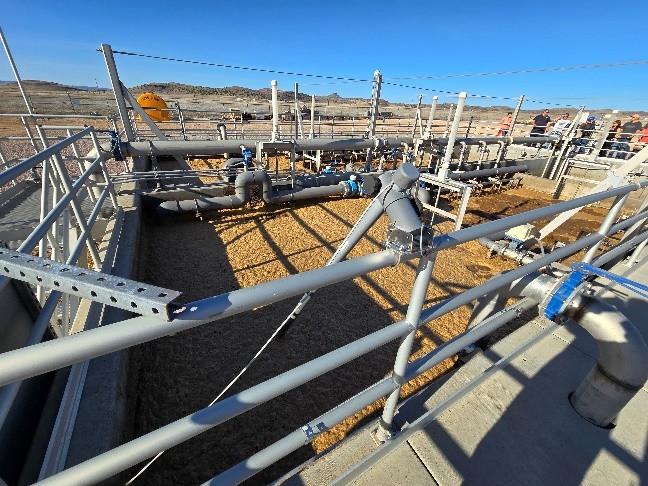
Wastewater Treatment Plant
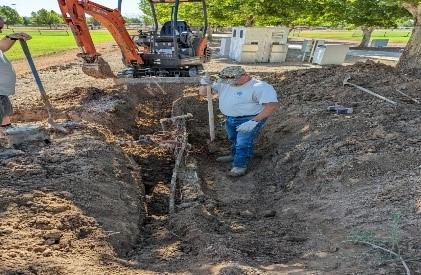
Utility Line Repair

Culture and Recreation
Residents relish nearby hiking trails and other areas that provide endless outdoor adventures.
Chino Valley’s lesser-known treasures include a heartfelt 9/11 Memorial, the Chino Valley Equestrian Center, the scenic Peavine Trail, a shooting range, and an RC Flying Field. Each of these unique spots adds to the charm and character of this close-knit community, making it a haven for outdoor enthusiasts and those seeking a peaceful, rural lifestyle.
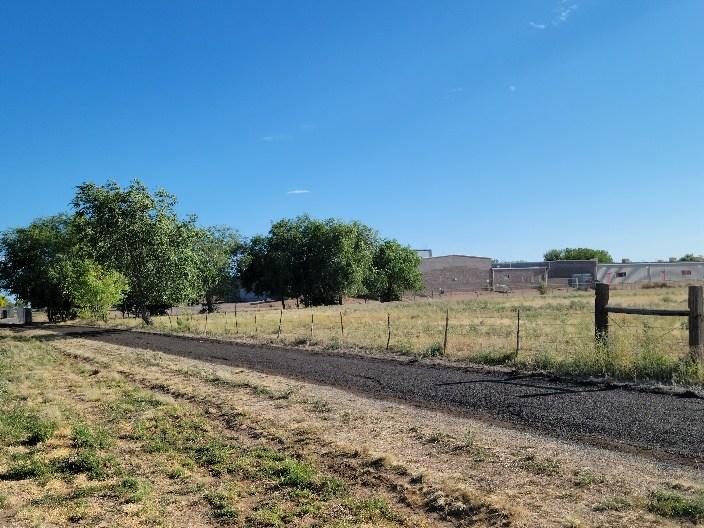

In early 2025, the Town in partnership with the Trust for Public Land, acquired the Fred Harvey Farm located at the Historic Del Rio Springs, the original Territorial Capital of Arizona. The land is 23 acres in size and is within the boundaries of a future state park. Town officials plan to stabilize the historical buildings on the site, preserve the land and create a unique tourism attraction for the region. Learn more about this historical effort by watching the video at the following link: Fred Harvey Farm Commercial
Economic Development
The Economic Development Division aims to strengthen the Town's financial stability by expanding the local business base and increasing Transaction Privilege Tax (TPT) revenues from commercial and retail sectors. Learn more at: https://discoverchinovalley.org
The Town strives to attract new businesses, support the growth of existing businesses, and foster a vibrant commercial environment that appeals to both residents and visitors.



New Business Serene Yoga and Fitness
Trail to Memory Park
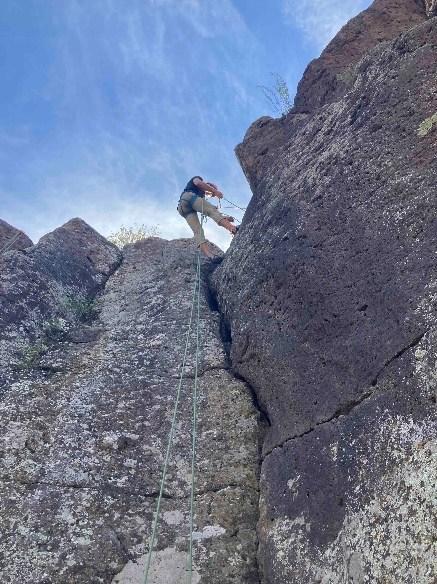
Sullivan Canyon Rescue Training
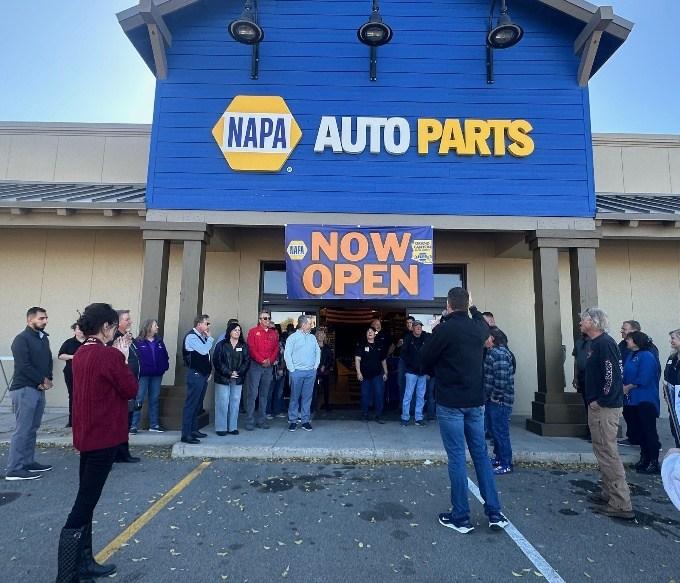
New Business Napa Auto Parts



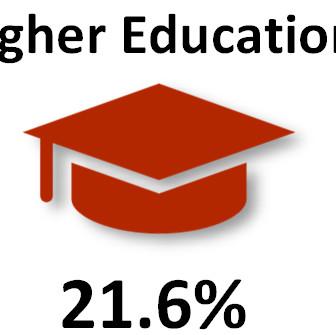










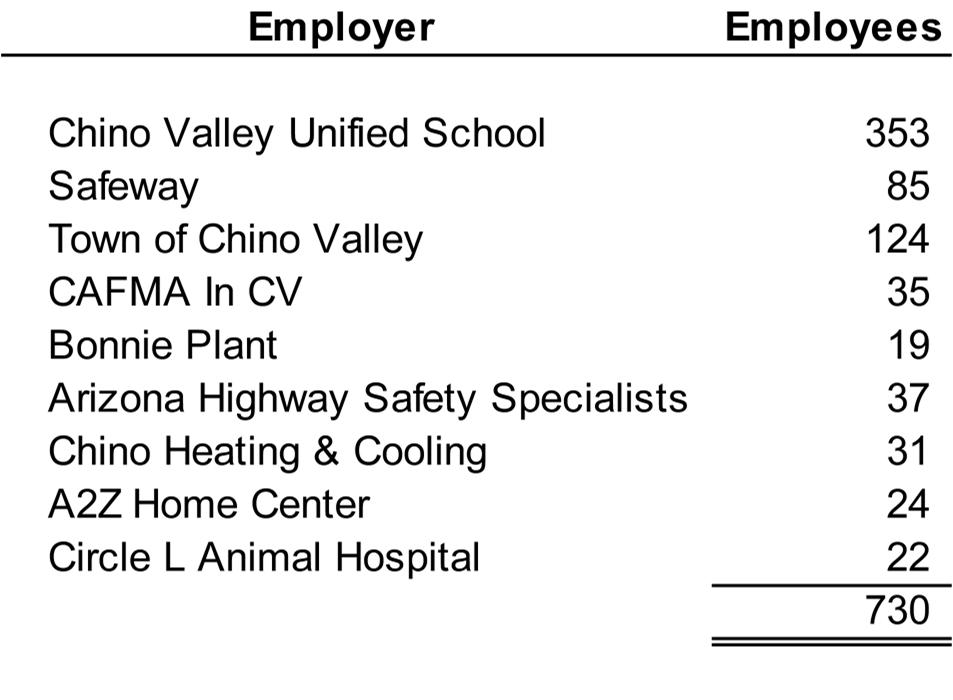
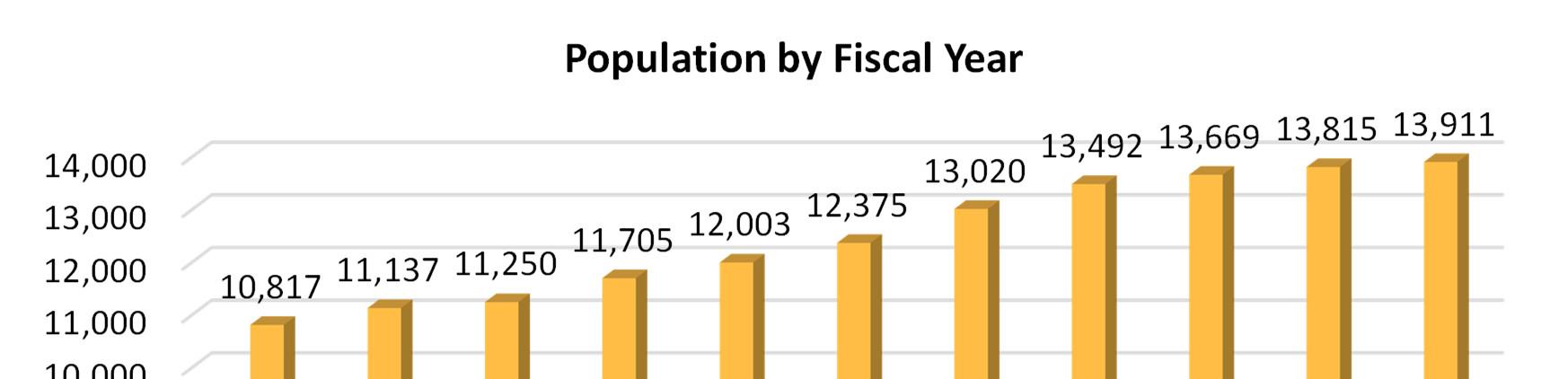
Sources: U.S. Census Bureau and Arizona Department of Economic Security.
Transaction Privilege Tax by Category
Mission, Vision, and Values
Town of Chino Valley
WHO WE ARE

Chino Valley is a peaceful, rural community that supports recreation and regional tourism. We are committed to preserving our community’s expansive vistas, endless grasslands, and starry night skies while supporting limited and sustainable growth. We honor our proud agricultural and equestrian tradition.

OUR VISION

Make Chino Valley a desirable place to build a future.
OUR MISSION


To provide services and opportunities that keep Chino Valley a safe, desirable place to live, grow, and thrive. Safety
OUR VALUES


Council Strategic Priorities and Goals










Strategic Priorities and Goal Setting Process
The Council conducts annual reviews of strategic priorities to ensure that our planning and resources align with the evolving needs of our community. During the most recent strategic review meeting in February 2024, councilmembers had the opportunity to assess current initiatives, integrate new priorities, and define goals. This meeting served as a crucial platform for dialogue and decision-making, allowing the Council to dynamically adjust Chino Valley’s strategies to better serve the community. These annual reviews further ensure that efforts are comprehensive and reflective of the community's immediate and long-term needs.


Strategic Outcomes, Goals, and Performance Metrics
Overview
In this budget book, new goals and performance measures for each department are being introduced, specifically designed to align with the Council’s Strategic Plan. This effort ensures that each department’s activities and objectives are directly connected to broader strategic outcomes, providing clear direction and measurable impact.
On the next page, a table that highlights each department and the strategic priority and goals it supports is presented. Following this table, each department has a dedicated section where performance metrics are listed in detail. For each metric, the following information is available:
Target or Baseline: The starting point or intended goal for each metric.
Actual Results: Performance data from Fiscal Years 2022-23, 2023-24, and 2024-25, giving a historical view of progress. Note: As the majority of performance measures were new for FY 2024-25, historical progress may not be available which is indicated by N/A.
FY 2025-26 Forecast: An outlook for the current fiscal year.
The results and forecast are accompanied by a colored arrow indicating the anticipated trajectory of the metric:


Green Arrow: Strong positive trend toward goal.
Yellow Arrow: Neutral trend, measured performance, maintaining performance, or on watch.
Red Arrow: Negative trend, signaling a need for intervention or adjustment.
After this, there is a detailed breakdown of each metric, covering its description, importance, and connection to the strategic outcome and specific goals. This approach provides a transparent, data-driven framework to assess departmental effectiveness and support ongoing alignment with the Council’s strategic priorities.





Goals
Services Department Performance Metrics
% of Library operations and staff structure reorganized to improve customer experiences and streamline services for onsite and off-site patrons.
% of Senior Center kitchen renovation project completed.
# of alternative funding sources researched and pursued for the Community Center Park ballfield lighting project.
% of scoping and design completed for recreation amenities in Phase III of Community Center Park and other area parks, including Appaloosa Meadows and Center Street Park.
% of progress made toward connecting the Peavine Trail to Prescott's northern portion.
1 % of Library operations and staff structure reorganized to improve customer experiences and streamline services for onsite and off-site patrons. This metric tracks the progress of restructuring efforts to improve the Library's service offerings.
Importance of Metric
To ensure the successful reorganization of Library operations to support the Library's goal of meeting evolving customer needs and increasing access to its resources.




2 % of Senior Center kitchen renovation project completed. This metric tracks the percentage of the Senior Center kitchen renovation project that has been completed, measuring progress toward the full completion of the renovation work.
To ensure the timely and successful completion of the renovation, improving the facility's functionality, safety, and service delivery for the community.


3 # of alternative funding sources researched and pursued for the Community Center Park ballfield lighting project.
Community Services Department Performance Metrics
Importance of Metric
This metric tracks the number of alternative funding sources researched and actively pursued for the Community Center Park ballfield lighting project, measuring efforts to secure external financial support.
4 % of scoping and design completed for recreation amenities in Phase III of Community Center Park and other area parks, including Appaloosa Meadows and Center Street Park.
This metric tracks the percentage of scoping and design work completed for new recreation amenities in Phase III of Community Center Park, Appaloosa Meadows, and Center Street Park, measuring progress toward finalizing designs for these projects.
To identify and obtain alternative funding for the ballfield lighting project, reducing the financial burden on the Town while enhancing the park's facilities. Ensuring the project can be completed efficiently and sustainably. Quality
To ensure timely and thorough planning and design of recreational amenities, supporting the goal of providing residents with improved recreational spaces and fostering community engagement.
5 % of progress made toward connecting the Peavine Trail to Prescott's northern portion.
This metric tracks the percentage of progress made toward connecting the Peavine Trail to Prescott's northern portion, measuring advancements in planning, coordination, and construction efforts.
To ensure timely progress in achieving the connectivity of the Peavine Trail with Prescott’s northern portion, enhancing regional trail access for residents and visitors, while promoting outdoor activity.
Goals
% of completion of the "Non-Domestic Animals" text amendment adoption process. % of completion of the "Metal Storage Container" text amendment adoption process.


Development Services Department Performance Metrics
1 % of progress made toward updating the noise ordinance.
Description
This metric tracks the progress of updating the noise ordinance, including stages such as drafting, reviewing, public consultation, and final approval by the appropriate governing bodies.
Importance of Metric
To ensure the noise ordinance is updated to reflect current community needs and standards, improving quality of life for residents by addressing noise concerns and promoting a peaceful environment.
Strategic Outcome Goal
Quality of Life Respect
2 % of completion of the Landscape Code rewrite.
This metric tracks the progress of the Landscape Code rewrite, covering all phases from drafting and review to public consultation and final approval by the appropriate governing bodies.
To ensure the Landscape Code addresses the current environmental, aesthetic, and community needs, and improving the overall appearance and functionality of public and private spaces.
3 % of completion of the "NonDomestic Animals" text amendment adoption process.
This metric tracks the progress of adopting the "NonDomestic Animals" text amendment, from the drafting phase through public consultation, review, and final adoption by the appropriate authorities.
To ensure the timely adoption of the "NonDomestic Animals" text amendment, updating regulations to promoting safety, clarity, and compliance with local standards.
Character and Culture
Quality of Life Respect
Character and Culture
Quality of Life Respect
4 % of completion of the "Metal Storage Container" text amendment adoption process.
This metric tracks the progress of adopting the "Metal Storage Container" text amendment, covering all stages from drafting and public feedback to final approval and implementation.
To ensure the timely adoption of the "Metal Storage Container" text amendment, providing clear guidelines for the use and placement of metal storage containers in the community, promoting safety and aesthetics.
Character and Culture
Quality of Life Respect
Character and Culture
Development Services Department Performance Metrics
5 % of completion of the review and adoption process for the 2024 Building Codes.
This metric tracks the progress of reviewing and adopting the 2024 Building Codes, encompassing all phases from initial review, public and stakeholder consultation, to the final adoption and implementation.
Importance of Metric
To ensure the timely review and adoption of the 2024 Building Codes, promoting updated building standards that enhance safety, sustainability, and compliance with modern construction practices.
6 % of progress in securing a consultant to assist with the Zoning Code rewrite, with guidance from the Zoning Code Update Committee.
7 % of General Plan implementation actions completed.
This metric tracks the progress of securing a qualified consultant to assist with the Zoning Code rewrite, ensuring the process is conducted with expert guidance and in coordination with the Zoning Code Update Committee.
To ensure the timely engagement of an expert consultant for the Zoning Code rewrite, to facilitate a thorough update process that aligns with community needs and improves land use management and planning for the Town.

This metric tracks the progress of implementing the actions outlined in the General Plan, monitoring the completion of specific goals, initiatives, and projects within the plan.
To ensure continued progress on the implementation of the General Plan, to align community development with longterm strategic goals and ensure sustainable and well-coordinated planning efforts.
8 % of completion of the largescale solar field ordinance development, including the dissolution of the Solar Energy Advisory Committee.
This metric tracks the progress of developing a large-scale solar field ordinance, with input from the Solar Energy Advisory Committee, and the subsequent dissolution of the committee once the ordinance is finalized.
To ensure the timely creation of a comprehensive solar field ordinance that regulates and guides the development of largescale solar energy projects, fostering sustainable energy solutions. Water and Land Stewardship

Goals
Line
No. Metric
1 % of completion of research and evaluation of eprocurement systems.
Finance Department Performance Metrics
Metric Description
This metric tracks the progress of researching and evaluating e-procurement systems to identify solutions that streamline the purchasing process, improve efficiency, and increase transparency in procurement operations.
Importance of Metric
To enhance the purchasing process by researching and potentially implementing an eprocurement system, allowing for more streamlined, accountable, and userfriendly procurement practices.
Effective Government Innovative and High-Performing Organization Strategic Outcome Goal
2 % of staff who complete regular training on best practices in procurement and contract management.
This metric tracks the percentage of staff who have participated in regular training sessions focused on procurement and contract management best practices, ensuring that employees stay updated on policies and procedures.
To improve efficiency and compliance of procurement processes by ensuring all staff are consistently trained on best practices, fostering accountability and reducing the risk of errors or delays.
Effective Government Innovative and High-Performing Organization
3 % of quarterly financial reports published on time (by the end of the month following the close of a quarter) for public access.
This metric tracks the timeliness and consistency of publishing quarterly financial reports, ensuring they are made accessible to the public on a regular basis.
To ensure the public has access to timely and accurate financial information on the Town’s budget, spending, and financial health, fostering trust and informed decisionmaking.
Effective Government Transparent Government
4 % of completion of the annual independent audit and public sharing of findings.
This metric tracks the progress of conducting annual independent financial audit and the timely dissemination of audit findings to the public, ensuring accountability and transparency in financial management.
To ensure the financial practices are independently verified for accuracy and compliance, and to promote transparency, fostering public trust in the Town’s fiscal responsibility.
Effective Government Transparent Government
5 # of state and federal grants identified and applied for.
Finance Department Performance Metrics
This metric tracks the number of state and federal grant opportunities identified and pursued, measuring the effort to secure additional funding to support Town projects and initiatives.
Importance of Metric
To increase financial resources by actively seeking and applying for state and federal grants, reducing the financial burden on local budgets and expanding funding for critical projects and services in the community.

6 # of public-private partnership opportunities explored for community projects.
This metric tracks the number of public-private partnership (PPP) opportunities researched and pursued for community projects, focusing on collaboration between the Town and private entities to fund or execute projects.
To leverage publicprivate partnerships as a strategy for funding and implementing community projects, reducing the financial burden on the Town to enhance public services and infrastructure.
Financial Stability Prosperous Community
7 # of transaction privilege tax audits or desk reviews completed.
This metric tracks the progress of establishing and executing an audit program designed to ensure that the correct amount of taxes are being collected and received by the Town.
To ensure that all tax payments are being properly collected and allocated, ultimately protecting the Town's financial health and compliance. Financial
8 % of completion of the longterm financial plan, including strategies for revenue diversification and expenditure control.
This metric tracks the development and completion of a long-term financial plan that outlines strategies for diversifying the Town's revenue streams and controlling expenditures to ensure financial sustainability.
To create a comprehensive financial roadmap that secures the Town's future financial stability, allowing for better longterm financial planning and resource allocation.
Financial Stability Prosperous Community
Goals and Performance Metrics
Human Resources Department Performance Metrics
% of Employee Handbook policies updated, approved, and communicated to staff, specifically including education reimbursement.
% of departments with clearly defined expectations, a detailed support plan, and achievable goals created and implemented within the established timelines.
% of employees actively participating in Hello Teams® sessions throughout the year for performance management.
Line No. Metric Metric Description
1 % of Employee Handbook policies updated, approved, and communicated to staff, specifically including education reimbursement.
This metric tracks the timely completion, communication, and implementation of new Employee Handbook policies for education reimbursement.
Importance of Metric
To ensure policies are updated and communicated efficiently, and that employees are aware of and utilizing the new benefits, supporting retention and development.
2 % of departments with clearly defined expectations, a detailed support plan, and achievable goals created and implemented within the established timelines.
This metric measure tracks progress in aligning departmental objectives with organizational goals while ensuring appropriate support is provided.
3 % of employees actively participating in Hello Teams® sessions throughout the year for performance management.
This metric tracks the engagement levels in ongoing performance management discussions designed to foster communication, development, and alignment with organizational goals.
To ensure each department operates with clear direction, adequate support, and defined goals, promoting accountability and efficient performance.
To ensure consistent employee engagement in performance management, promoting continuous feedback, a culture of accountability, and alignment with organizational goals.
Effective Government Collaborate and Engage
Effective Government Innovative and High-Performing Organization
Information Technology Services Department Performance Metrics
% of data center wiring project completed at the Streets building, Public Works, and Senior Center.
No. Metric Metric Description
1 % of domain migration to chinoaz.gov completed.
2 % of door access control project completed at the Senior Center and Town Hall.
This metric tracks the percentage of the domain migration to chinoaz.gov that has been completed, measuring progress in transitioning systems and services to the new domain.
This metric tracks the percentage of the door access control project completed at the Senior Center and Town Hall, measuring progress toward full implementation of the security system.
Importance of Metric
To ensure the timely and efficient migration to the chinoaz.gov domain, enhancing consistency, security, and accessibility across the Town's digital infrastructure.
To ensure the timely installation of the door access control system, improving security and access management at the Senior Center and Town Hall for enhanced safety and operational efficiency.

3 % of data center wiring project completed at the Streets building, Public Works, and Senior Center.
This metric tracks the percentage of the data center wiring project completed at the Streets building, Public Works, and Senior Center, measuring the progress of the infrastructure upgrade.
To ensure the timely completion of the data center wiring project, enhancing the network infrastructure and improving connectivity, efficiency, and reliability at key Town facilities.
Goals and Performance Metrics
Municipal Court Performance Metrics
1 # of monthly staff meetings with a 10 minute staff presentation on a topic of their choice.
This metric tracks the number of monthly staff meetings that include a 10-minute presentation by a staff member on a topic of their choice, promoting knowledge sharing and professional development.
Importance of Metric
To foster a collaborative learning environment within the municipal court by encouraging staff to share expertise, ideas, and insights, contributing to team development and continuous improvement.
Effective Government Collaborate and Engage
2 % of program implemented for firearms prohibition/surrender of weapons.
This metric tracks the percentage of the firearms prohibition and weapon surrender program that has been implemented, measuring progress in establishing compliance with court-ordered restrictions.
To ensure the effective implementation of the firearms prohibition and weapon surrender program, promoting public safety and compliance with legal requirements in cases involving court-ordered restrictions on firearms possession.
Police Department Performance Metrics
% of completion of the restructuring of duties and assignments for all Police Department supervisors to ensure an equal share of tasks and improve effectiveness and efficiency.
% of appropriate staff trained in Public Information Officer (PIO) related functions.
% increase in social media footprint and frequency of information shared.
% of community needs addressed through the establishment of targeted enforcement actions.
Metric Metric Description
1 % of completion of the restructuring of duties and assignments for all Police Department supervisors to ensure an equal share of tasks and improve effectiveness and efficiency.
This metric tracks the progress of redistributing duties and assignments among Police Department supervisors to create a more balanced workload, improving the department's overall effectiveness and operational efficiency.
Importance of Metric
To enhance the department's effectiveness and efficiency, leading to improved task management, better resource allocation, and enhanced departmental performance.
2 % of appropriate staff trained in Public Information Officer (PIO) related functions.
This metric tracks the percentage of staff members who have completed training in PIO-related functions, ensuring they are equipped with the skills necessary to manage public communications and media relations effectively.
To ensure that staff members are properly trained in PIO functions, improving the organization’s ability to communicate effectively with the public and media, especially in times of crisis or significant public interest.
3 % increase in social media footprint and frequency of information shared.
Police Department Performance Metrics
This metric tracks the growth in social media reach and the frequency of information shared, measuring the Town’s effectiveness in expanding its online presence and engagement with the community.
4 % of community needs addressed through the establishment of targeted enforcement actions.
This metric tracks the identification of community needs and the implementation of specific enforcement strategies aimed at addressing those needs, ensuring that enforcement efforts are aligned with community priorities.
Importance of Metric Strategic Outcome Goal
To enhance the Town’s communication efforts by increasing its social media presence, thereby improving information dissemination, public awareness, and engagement with residents on important community matters.
To improve public safety and quality of life by working with staff to identify key community needs and establishing targeted enforcement efforts that address those priorities effectively and efficiently.
Quality of Life Safe and Secure Community Effective Government Transparent Government
Goals and Performance Metrics
Public Works Department Performance Metrics
Line
1 % of implementation completed for GIS solution and SeeClickFix platform.
Description
This metric tracks the progress of implementing a Geographic Information Systems (GIS) solution and SeeClickFix platform, including setup, integration, and staff training, to improve service delivery and public engagement.
Importance of Metric
To enhance operational efficiency by utilizing GIS for spatial data management and SeeClickFix to allow residents to report and track non-emergency issues.
Strategic Outcome Goal
Effective Government Collaborate and Engage
2 % increase in productivity based on tracked work output and efficiency improvements in Public Works.
This metric tracks work output, task completion rates, and overall efficiency improvements in Public Works operations, measuring progress toward enhanced productivity.
To improve operational efficiency by tracking and analyzing productivity, identifying areas for improvement, and implementing strategies to optimize performance and resource allocation.
Effective Government Innovative and High-Performing Organization
3 % of Public Works staff who complete additional training and certification programs.
This metric tracks the percentage of Public Works employees who have successfully completed training and certification programs, measuring the department's commitment to staff development.
To enhance the skills, knowledge, and qualifications of staff by increasing participation in training and certification programs, leading to improved job performance, safety, and service delivery.
Effective Government
4 % of funding secured for the Old Home Manor (OHM) water production project.
This metric tracks the progress in identifying and securing funding sources for the water production project at Old Home Manor, including grants, loans, or partnerships.
To ensure the successful funding of the water production project, facilitating the development of essential water infrastructure that supports local growth, economic development, and sustainability goals.
Innovative and High-Performing Organization
Quality Infrastructure Expand Water and Sewer System
5 % of completion of the 21 Public Works Capital Improvement Projects (CIP).
Public Works Department Performance Metrics
This metric tracks the progress toward completing the 21 Capital Improvement Projects (CIP) managed by Public Works, measuring milestones and final project delivery.
Importance of Metric Strategic Outcome Goal
To ensure timely and efficient completion of the Public Works CIP projects, enhancing infrastructure, public services, and community development while meeting budgetary and project timelines.
6 % of progress made in regional water planning initiatives.
This metric tracks the progress of regional water planning efforts, including collaboration with other agencies, development of water management strategies, and completion of planning documents.
To ensure the development of regional water management plans that address future water needs, promote sustainability, and support regional growth, safeguarding water resources for the regional area. Water and Land Stewardship Sustainable Water Supply
7 % of completion of the EQ (Equalization) Basin Project.
8 % of completion of the PFAS remediation Project.
This metric tracks the progress of the EQ Basin Project, measuring key milestones from planning and design through construction and final implementation.
To ensure the successful completion of the project, improving water management system by balancing water flow, enhancing treatment, and ensuring sustainable infrastructure for future development. Water and Land Stewardship
This metric tracks the progress of the PFAS Project, from initial assessment and planning through mitigation efforts and final resolution of water contamination issues.
To ensure the effective mitigation and management of PFAS, safeguarding public health and compliance with environmental regulations, while improving the overall quality of the water system.
Water and Land Stewardship Sustainable Water Supply
Line
No. Metric
9 % of completion of the Integrated Water Master Plan (IWMP).
Public Works Department Performance Metrics
Metric Description
This metric tracks the progress of developing and finalizing the Integrated Water Master Plan (IWMP), including planning, stakeholder engagement, and final approval.
Importance of Metric Strategic Outcome Goal
To ensure the IWMP completion, which serves as a comprehensive guide for managing Town water resources, addressing current and future water needs, and supporting long-term growth and development.
Water and Land Stewardship Sustainable Water Supply
% of postings on digital signage that utilize QR codes to integrate with the Town website for more detail. % of departments trained and utilizing the records management program.
1 # of social media posts to highlight upcoming agenda items. This metric tracks the consistency and frequency of communication efforts to keep the community informed and engaged with Town meetings and decisions. % of elections administered successfully # of mailings for Home Rule information outreach. % of election candidates biographies added to the website.
Importance of Metric
enhance public awareness and engagement by regularly highlighting upcoming agenda items through social media, ensuring transparency and promoting informed participation in local government.
Line No. Metric
2 # of digital signage boards actively in operation.
Town Clerk Department Performance Metrics
Metric Description
This metric tracks the total number of digital signage boards that are fully functional and actively displaying information. It measures the Town's capacity to communicate with the public through visual displays in key locations.
Importance of Metric
To ensure important information, announcements, and updates are disseminated to the community in a timely and accessible manner.
Strategic Outcome Goal
Effective Government Connected Community
3 % of postings on digital signage that utilize QR codes to integrate with the Town website for more detail.
This metric measures the percentage of digital signage postings that incorporate QR codes to link viewers directly to the Town website utilizing digital tools to enhance public access to information.
4 % of departments trained and utilizing the records management program.
This metric tracks the percentage of departments that have been trained and are actively using the records management program.
To increase public engagement and streamline access to detailed information by using QR codes on digital signage. This enhances the effectiveness of communication, making it easier for residents to interact with Town resources and stay
To ensure all departments are effectively trained and utilizing the records management program to improve document organization, compliance, and accessibility.
Effective Government Connected Community
5 % of elections administered successfully
This metric measures the percentage of elections administered successfully, evaluating the effectiveness of planning, execution, and compliance with regulations.
To ensure the successful administration of elections, promoting accuracy, transparency, and voter confidence by adhering to legal standards and best practices throughout the election process.
Effective Government Innovative and High-Performing Organization
Collaborate and Engage
Effective Government Transparent Government
6 # of mailings for Home Rule information outreach.
Town Clerk Department Performance Metrics
This metric tracks the number of residents reached through community outreach efforts related to Home Rule, measuring the extent of public engagement and awareness.
Importance of Metric Strategic Outcome Goal
To ensure that a broad and informed segment of the community is engaged and educated on Home Rule, promoting understanding and encouraging informed participation in local governance decisions.
Effective Government Transparent Government
7 % of election candidates biographies added to the website.
This metric tracks the percentage of election candidates whose biographies have been successfully added to the Town's website.
To ensure transparency and provide voters with easy access to information about election candidates, enhancing informed decision-making and public engagement in the electoral process.
Effective Government Transparent Government
Goals
% increase in engagement activities (such as meetings, public forums, communications, and collaborative projects) between the Town Manager’s office, citizens, council, and staff.
of the Attorney workflow platform/process
% of staff participating in development activities.
% of staff reporting a positive working atmosphere, as measured through regular employee satisfaction surveys.
of social media posts, press releases, and other promotional activities conducted to publicize the Town's work.
% of progress made in exploring and developing employee intranet options in partnership with ITS.
% of progress made in partnering with departments and ITS to explore and implement Customer Relationship Management (CRM) and engagement technologies.
% of completion of the website refresh/update project. N/A
% of completion of the acquisition of cemetery land and the implementation of operational procedures.
% of established and active participation of the Chino Valley Youth Advisory Commission. N/A
# of outreach efforts in attracting a grocery store and retail businesses.
Town Manager Department Performance Metrics
the Economic
of
# of external funding sources identified and pursued for the construction of an off-highway vehicle (OHV) staging area.
% of completion of planning, scoping, and construction initiation (if possible) for the Peavine Trail extension from 4 North to State Park and up to Sullivan Lake.
of collaborative initiatives or meetings with State Park officials
1 % increase in engagement activities (such as meetings, public forums, communications, and collaborative projects) between the Town Manager’s office, citizens, council, and staff.
This metric tracks the frequency and quality of interactions between the Town Manager’s office, citizens, the council, and staff, measuring efforts to enhance communication and collaboration.
Importance of Metric
To strengthen relationships and improve transparency between citizens, council, and staff, fostering a more informed community and ensuring that decisions reflect collective input and collaboration.
Goals and Performance Metrics
Town Manager Department Performance Metrics Line
2 % of completion of the Attorney workflow platform/process implementation.
This metric tracks the progress of developing and implementing a workflow platform/process for the Attorney’s office to improve task management, case tracking, and overall workflow efficiency.
Importance of Metric
To enhance the timeliness and efficiency of legal operations, enabling better task organization, reducing delays, and improving overall productivity.
Strategic Outcome Goal
Effective Government
Innovative and High-Performing Organization
3 % of staff participating in development activities.
This metric tracks the percentage of staff members participating in professional development activities, such as training, workshops, and seminars, to measure the organization’s commitment to continuous staff growth.
To promote continuous learning and professional growth by encouraging and providing opportunities for staff development, leading to enhanced skills, job satisfaction, and overall organizational effectiveness.
Effective Government Innovative and High-Performing Organization
4 % of staff reporting a positive working atmosphere, as measured through regular employee satisfaction surveys.
This metric tracks the percentage of employees who report a positive working atmosphere, as measured by employee satisfaction surveys, team feedback, and workplace assessments.
To foster a healthy, productive, and supportive work environment, enhancing employee morale, retention, and overall performance by actively promoting and maintaining a positive workplace culture.
Effective Government Innovative and High-Performing Organization
5 # of social media posts, press releases, and other promotional activities conducted to publicize the Town's work.
This metric tracks the frequency of social media posts, press releases, and other outreach methods used to promote and publicize the Town's efforts and achievements to the public.
To increase public awareness by promoting information through various channels, ensuring transparency, community involvement, and recognition of the services provided.
Effective Government Connected Community
6 % of progress made in exploring and developing employee intranet options in partnership with ITS.
Town Manager Department Performance Metrics
This metric tracks the progress of collaborating with the ITS department to explore, evaluate, and recommend potential intranet solutions for internal communication and resource sharing.
Importance of Metric
To improve internal communication through implementation of an efficient employee intranet platform, facilitating better collaboration and information sharing across the organization.
Strategic Outcome Goal
Effective Government Collaborate and Engage
7 % of progress made in partnering with departments and ITS to explore and implement Customer Relationship Management (CRM) and engagement technologies.
This metric tracks the collaboration between departments and ITS in researching, selecting, and implementing CRM and engagement technologies to improve customer interaction and engagement.
To leverage CRM and other technologies to improve efficiency in managing interactions with residents and stakeholders, while promoting better engagement and satisfaction across the organization.
Effective Government Innovative and High-Performing Organization
8 % of completion of the website refresh/update project.
This metric tracks the progress of refreshing and updating the organization's website, including improvements to design, functionality, and content.
To enhance the overall functionality of the website, ensuring that it effectively meets the needs of residents, stakeholders, and visitors, while reflecting the organization's goals and services.
Collaborate and Engage
Effective Government Transparent Government
9 % of completion of the acquisition of cemetery land and the implementation of operational procedures.
This metric tracks the progress of acquiring land for a new cemetery and the subsequent implementation of operational procedures to manage and maintain the facility.
To ensure timely acquisition of cemetery land and the establishment of efficient operations to meet community needs, providing a wellmanaged and accessible facility for burial services.
Collaborate and Engage
Quality Infrastructure Infrastructure and Asset Management
Goals and Performance Metrics
Town Manager Department Performance Metrics
Importance of Metric Strategic Outcome Goal
10 % of established and active participation of the Chino Valley Youth Advisory Commission.
11 # of outreach efforts in attracting a grocery store and retail businesses.
This metric tracks the progress of establishing the Chino Valley Youth Advisory Commission, including member appointments, meetings, and active engagement in community initiatives.
To engage local youth in civic activities and decision-making processes, promoting leadership development, and fostering stronger community involvement among younger residents.
Effective Government Connected Community
This metric tracks the number of outreach initiatives, meetings, or negotiations conducted to attract grocery stores and retail businesses to the area, measuring progress toward business attraction goals.
To enhance the local economy by actively seeking grocery stores and retail businesses, improving access to goods and services while boosting the local economy and creating job opportunities.
Financial Stability Local Shopping Opportunities
12 % of completion of the Economic Development magazine update.
13 # of tourism campaign initiatives coordinated with surrounding communities.
This metric tracks the progress of updating the Economic Development magazine, including revisions to content, design, and information to reflect current economic initiatives and opportunities.
To provide up-to-date information on the Town's economic development efforts, attracting potential investors, businesses, and stakeholders while showcasing the community’s growth and opportunities for development.
Financial Stability Prosperous Community
This metric tracks the number of tourism-related campaigns and activities executed in collaboration with surrounding communities, measuring the effectiveness of joint efforts to promote regional tourism.
To boost local and regional tourism by collaborating with neighboring communities, creating a unified approach to attract visitors, enhance tourism offerings, and stimulate the local economy.
Financial Stability Recreation and Tourism Opportunities
14 # of external funding sources identified and pursued for the construction of an off-highway vehicle (OHV) staging area.
Town Manager Department Performance Metrics
Importance of Metric
This metric tracks the identification and pursuit of external funding sources to support the construction of an off-highway vehicle (OHV) staging area, measuring efforts to secure financial resources beyond the Town’s budget.
To obtain outside funding for the construction of an OHV staging area, enhancing recreational opportunities and supporting tourism and community engagement.
Strategic Outcome Goal
Financial Stability Recreation and Tourism Opportunities
15 % of completion of planning, scoping, and construction initiation (if possible) for the Peavine Trail extension from 4 North to State Park and up to Sullivan Lake.
This metric tracks the progress of planning, scoping, and the potential start of construction for extending the Peavine Trail, measuring key milestones toward project initiation.
To expand the Peavine Trail, improving connectivity and recreational opportunities for residents and visitors, while supporting the community's goals for outdoor recreation and enhancing access to natural landmarks.
Financial Stability Recreation and Tourism Opportunities
16 # of collaborative initiatives or meetings with State Park officials to enhance partnerships and projects.
This metric tracks the number of collaborative efforts and engagements between the Town and State Park officials to foster partnerships, coordinate projects, and leverage resources for mutual benefit.
To strengthen collaboration with State Parks, promoting joint projects that enhance recreational opportunities, conserve natural resources, and support tourism and community engagement.
Water and Land Stewardship Natural Resources and Open Spaces
Budget Process
Overview
The Town’s budget development process is a continuous collaborative effort led by the Town Manager, Finance Director, and department directors. It is designed to ensure compliance with state requirements and alignment with community priorities, and it follows a detailed calendar with mandated deadlines that serve as a roadmap for each phase of the budget cycle.
The process begins with a community budget survey, where residents can identify what is most important to them and provide comments and direction on where they believe funds would be best utilized. Next, the department directors collaborate to establish initial priorities. A subsequent Council Budget Workshop provides an opportunity for the Town Council to define strategic goals and assess the financial outlook. Once those overarching priorities are in place, departments develop budget requests that align with Council direction and projected resources. Ongoing budget meetings between the Town Manager, Finance Director, and department directors allow for review and refinement of proposals, capital requests, and personnel needs, ensuring coordination across departments.
Public engagement plays an increasingly important role in the process. An early community survey helped shape priorities, and extended Council budget discussions allowed for deeper exploration of key issues. The Capital Improvement Plan Citizens Advisory Committee (CIPCAC) and the Parks and Recreation Advisory Board (PRAB) provided meaningful input on infrastructure and recreational needs. CIPCAC also serves as a public education tool, strengthening trust and transparency by helping residents understand the capital planning process and by offering recommendations aligned with community goals.
This process results in a well-rounded, transparent, and community-informed budget grounded in strategic planning and operational accountability. A Preliminary Budget is prepared and reviewed with the Town Council during budget hearings, then published as a draft on the Town’s website for public accessibility. Following any revisions, the Tentative Budget is presented to Council for adoption. Once adopted, the total appropriation may not be increased. The Tentative Budget is published twice in local media along with notice of the public hearing for final adoption and is also posted on the Town’s website.
The final step is Final Budget Adoption. Following the public hearing, the Council formally adopts the Final Budget. Key components of the budget development process include:
Communication: Detailed information, forms, and deadlines are shared with each department, which submits mission statements, program descriptions, accomplishments, future goals, performance measures, and financial requests.
Coordination: Department directors collaborate to align budget requests with Town objectives, recognizing the need for cross-departmental coordination in decision-making.
Forecasting: Departments use short- and long-term forecasts to assess their ability to meet objectives.
Council Direction: Council policies and strategic goals guide the development of priorities and funding decisions.
Public Input: Input is gathered through the public survey, public hearings, and advisory groups such as CIPCAC and PRAB, ensuring that the budget reflects community values and needs.
Occasionally, the Town may need to reallocate budget funds during the fiscal year after the budget has been adopted. This is managed through budget amendments. While there is department-level control within each fund, any transfers between departments or across funds require Council approval to ensure compliance with state requirements. This process allows departments the flexibility to manage their budget allocations, with Council able to approve adjustments between departments or authorize the use of contingency funds to cover any overages.
Important Dates
Basis of Budgeting Versus Basis of Accounting
The Town’s budget is not prepared using exactly the same accounting rules as its audited financial statements. The audited statements follow generally accepted accounting principles (GAAP), which provide a complete financial picture. The budget, however, is adjusted to better serve planning and cash-flow management purposes. This difference means that numbers shown in the budget may not always match those in the audited financial statements. View the Town’s FY 2023-24 Annual Comprehensive Financial Report here: https://www.chinoaz.net/198/Financial-Reports
Key differences include:
• Encumbrances: In the budget, amounts committed for purchases (encumbrances) are counted as expenditures when the order is placed, to show funds set aside for that purpose. In the audited statements, they are not reported as expenditures until goods or services are actually received.
• Employee Leave: The budget does not record liabilities for vacation and sick leave earned but unused by employees. GAAP requires these obligations to be recognized as liabilities.
• Interest Costs: In the budget, interest is shown when payments are due. Under GAAP, interest that has accrued but not yet been paid must also be reported.
• Depreciation: The budget does not include depreciation (the accounting measure of how assets lose value over time) because it does not affect cash flow. GAAP includes depreciation expense in the financial statements.
• Capital Spending: The budget shows the full cost of capital projects (such as vehicles, equipment, and infrastructure) as expenditures when purchased or built. GAAP records these costs as assets and spreads the expense over future years through depreciation.
After adjusting for these items, the Town’s GAAP-based financial results provide a more complete long-term view of financial position, while the budgetary results focus on near-term cash flow and current resource needs.
The Town uses different accounting methods depending on the type of fund:
• Governmental Funds (General Fund, Special Revenue Funds, etc.): For audited financial statements, these funds follow the “modified accrual” method, which means revenues are recorded when they are expected soon after year-end and are available to pay current obligations. Expenditures are recorded when the Town is legally obligated to pay them. For budget purposes, revenues are usually recorded when received in cash, and expenditures when paid.
• Enterprise Funds (Water, Sewer, etc.): These funds use “full accrual” accounting, similar to private businesses. Revenues are recorded when earned, and expenses are recorded when incurred, whether or not cash has changed hands.
Basis of Accounting and Budgeting by Fund Type
GOVERNMENTAL FUNDS
General Fund
Special Revenue Funds
Accrual
Accrual
Debt Service Funds Modified Accrual
Capital Project Funds Modified Accrual
ENTERPRISE FUNDS
Wastewater Fund
Accrual Basis
Wastewater CIP Fund Accrual Basis
Water Fund
Water CIP Fund
Accrual Basis
Accrual Basis
Accrual
Accrual
Accrual
Accrual
Basis
Basis
Basis
Basis




Town of Chino Valley
Includes expenditure/expense adjustments approved in the current yea r from Schedule E. The city/town does not levy property taxes and does not have special assessment districts for which property taxes are levied. Therefore, Schedule B has been omitted.
Includes actual amounts as of the date the proposed budget was prepared, adjusted for estimated activity for the remainder of the fiscal year. Amounts on this line represent beginning fund balance/(deficit) or net position/(deficit) amounts except for nonspendable amounts (e.g., prepaids and inventories) or amounts legally or contractually required to be maintained intact (e.g., principal of a permanent fund). See the Instructions tab, cell C17 for more information about the amounts that should and should not be included on this line.
Town of Chino Valley Tax levy and tax rate information Fiscal year 2026
Maximumallowableprimarypropertytaxlevy.
A.R.S.§42-17051(A)
Amountreceivedfromprimarypropertytaxationin the current year inexcessofthesumofthatyear's maximumallowableprimarypropertytaxlevy.
A.R.S.§42-17102(A)(18)
3.Propertytaxlevyamounts
A.Primarypropertytaxes$$
Propertytaxjudgment
B.Secondarypropertytaxes
Propertytaxjudgment
C.Totalpropertytaxlevyamounts$$
4.Propertytaxescollected*
A.Primarypropertytaxes
(1) Current year'slevy$
(2)Prioryears’levies
(3)Totalprimarypropertytaxes$
B.Secondarypropertytaxes
(1) Current year'slevy$
(2)Prioryears’levies
(3)Totalsecondarypropertytaxes$
C.Totalpropertytaxescollected$
5.Propertytaxrates
A.City/Towntaxrate
(1)Primarypropertytaxrate
Propertytaxjudgment
(2)Secondarypropertytaxrate
Propertytaxjudgment
(3)Totalcity/towntaxrate
B.Specialassessmentdistricttaxrates
SecondarypropertytaxratesAsofthedatetheproposedbudgetwasprepared,the 4specialassessmentdistrictsforwhichsecondary propertytaxesarelevied.Forinformationpertainingtothesespecialassessmentdistricts andtheirtaxrates,pleasecontactthecity/town.
* city/townwasoperating
Includesactualpropertytaxescollectedasofthedatetheproposedbudgetwasprepared,plus estimatedpropertytaxcollectionsfortheremainderofthefiscalyear.
General Fund
Intergovernmental
Source of revenues
Special revenue funds
HighwayUserRevenue$1,397,894$1,397,894$1,464,860 Interest15,00018,00015,000 Miscellaneous3,50013,0003,500 $1,416,394$1,428,894$1,483,360
MiscellaneousGrants$3,500,000$305,000$3,500,000 CDBGGrant403,816391,316
$3,903,816$696,316$3,500,000
SpecialRevenueFund-Court$28,000$28,000$28,000 SpecialRevenueFund-PD5,0003,5005,000 SpecialRevenueFund-CemeteryMaintenance14,25014,250 LightingImprovementDistricts#1,#2,#34,4504,3504,650 DelSolImprovementDistrict2,7004652,750 $54,400$36,315$54,650
Total special revenue funds $5,374,610$2,161,525$5,038,010
Capital projects funds
CapitalImprovementsFund-GeneralFund$5,765,300$3,035,000$4,590,071 AssetReplacementFund40,00013,0005,000 $5,805,300$3,048,000$4,595,071 Total capital projects funds $5,805,300$3,048,000$4,595,071
Enterprise funds
WaterEnterpriseFund$1,063,000$1,063,000$1,091,580 CapitalImprovementFund-Water2,000,000
WastewaterEnterpriseFund2,869,8402,299,8402,996,655 CapitalImprovementFund-Wastewater3,100,000 $9,032,840$3,362,840$4,088,235 Total enterprise funds $9,032,840$3,362,840$4,088,235 Total all funds $37,317,467$25,464,893$30,362,896
*Includesactualrevenuesrecognizedonthemodifiedaccrualoraccrualbasisasofthedatetheproposedbudgetwas prepared,plusestimatedrevenuesfortheremainderofthefiscalyear.
Town of Chino Valley
Expenditures/expenses by fund
Fiscal year 2026
General Fund
CommunityServices$1,978,320$$1,682,320$1,504,417 DevelopmentServices1,577,1761,244,1761,706,924 Finance614,071594,071668,130 HumanResources687,320611,320678,539 InformationTechnologyServices707,837607,837680,593 MayorandCouncil81,80074,30081,237 MunicipalCourt457,747407,747438,489 Non-Departmental754,522754,522819,224 Police6,522,2056,297,2055,983,855 PublicWorks3,953,5803,574,5803,666,947 TownClerk469,006449,506483,541 TownManager866,895784,895707,239 Contingency650,000(60,298)934,000
Total General Fund $19,320,479$(60,298)$17,082,479$18,353,135
Special revenue funds
HighwayUserRevenueFund$2,108,791$$1,620,291$1,588,215 MiscellaneousGrantsFund3,500,000305,0003,636,025 CDGBGrant403,816403,816 SpecialRevenueFund-Court17,20017,20017,200 SpecialRevenueFund-Police5,0005,000 SpecialRevFund-Cemetery9,3004,1009,300 LightingImprovementDistricts4,3504,3504,650 DelSolImprovementDistrict2,6004652,750 SLFRF500,000119,831
Total special revenue funds $6,551,057$$2,475,053$5,263,140
Debt service funds
DebtServiceFund$1,281,479$$1,281,479$1,293,732
Total debt service funds $1,281,479$$1,281,479$1,293,732
Capital projects funds
GeneralFundCIP$5,194,455$60,298$1,719,455$3,308,441 AssetReplacementFund634,976406,212 StreetsCIP3,099,2062,009,9713,000,000
Total capital projects funds $8,928,637$60,298$4,135,638$6,308,441 Enterprise funds
WaterEnterpriseFund$995,044$$840,044$824,736 WaterCIP2,400,0002,175,000 WastewaterEnterpriseFund2,885,3671,987,6402,792,564 WastewaterCIP10,095,245425,2459,705,441
Total enterprise funds $16,375,656$$3,252,929$15,497,741
Total all funds $52,457,308$$28,227,578$46,716,189
*
Includesactualexpenditures/expensesrecognizedonthemodifiedaccrualoraccrualbasisasofthedatetheproposedbudget wasprepared,plusestimatedexpenditures/expensesfortheremainderofthefiscalyear.
Town of Chino Valley
Expenditures/expenses by department Fiscal year 2026
Department/Fund
CommunityServices:
DevelopmentServices:
Finance:
InformationTechnologyServices:
MayorandCouncil:
MunicipalCourt: GeneralFund$457,747$$407,747$438,489 SpecialRevFund-Court17,20017,20017,200 Department total $474,947$$424,947$455,689
Non-Departmental:
GeneralFund$1,404,522$$754,522$1,753,224 MiscellaneousGrantsFund3,500,000305,0003,636,025 CDGBGrant403,816403,816 SLFRF500,000119,831 DebtServiceFund1,281,4791,281,4791,293,732 GeneralFundCIP5,194,4551,719,4553,308,441 AssetReplacementFund634,976406,212 Department total $12,919,248$$4,990,315$9,991,422
Police:
GeneralFund$6,522,205$$6,297,205$5,983,855 SpecialRevFund-Police5,0005,000 Department total $6,527,205$$6,297,205$5,988,855
Department/Fund
Town of Chino Valley
Expenditures/expenses by department Fiscal year 2026
Adopted budgeted expenditures/ expenses
Expenditure/ expense adjustments approved Actual expenditures/ expenses* Budgeted expenditures/ expenses 2025202520252026
PublicWorks: GeneralFund$3,953,580$$3,574,580$3,666,947 HighwayUserRevenueFund2,108,7911,620,2911,588,215 StreetsCIP3,099,2062,009,9713,000,000 SpecialRevFund-Cemetery9,3004,1009,300 Department total $9,170,877$$7,208,942$8,264,462
TownClerk: GeneralFund$469,006$$449,506$483,541 Department total $469,006$$449,506$483,541
TownManager: GeneralFund$866,895$$784,895$707,239 Department total $866,895$$784,895$707,239
Water: WaterEnterpriseFund$995,044$$840,044$824,736 WaterCIP2,400,0002,175,000 Department total $3,395,044$$840,044$2,999,736
Wastewater: WastewaterEnterpriseFund$2,885,367$$1,987,640$2,792,564 WastewaterCIP10,095,245425,2459,705,441 Department total $12,980,612$$2,412,885$12,498,005
ImprovementDistricts: LightingImprovementDistricts$4,350$$4,350$4,650 DelSolImprovementDistrict2,6004652,750 Department total $6,950$$4,815$7,400
Total all funds $52,457,308$$28,227,578$46,716,189
*Includesactualexpenditures/expensesrecognizedonthemodifiedaccrualoraccrualbasisasofthedatethe proposedbudgetwasprepared,plusestimatedexpenditures/expensesfortheremainderofthefiscalyear.
Fund Structure
Legal Compliance and Financial Management
A fund is a group of related accounts that is used to maintain control over resources that have been segregated for specific activities or objectives. To ensure legal compliance and financial management for the various restricted revenues and program expenditures, the Town’s accounting and budget structure is segregated into various funds. This approach is unique to the government sector; fund accounting segregates functions and activities into separate self-balancing funds that are created and maintained for specific purposes.
Major Funds
Major funds represent the significant activities of the Town and include any fund which revenues or expenditures, excluding other financing sources and uses, constitutes more than 10% of the revenues or expenditures of the appropriated budget. The breakdown of the Town’s fund structure is as follows:
Major Governmental Funds
General Fund – primary operating fund of the Town that exists to account for the resources devoted to finance the services associated with local government
Major Special Revenue Funds
These funds are used to account for the proceeds of specific revenue sources that are legally restricted to expenditures for specific purposes or resources dedicated for specific purposes.
o Grant Fund – account for various grants received from federal or state agencies and funds that are donated to the Town for a variety of purposes
o Highway User Revenue Fund (HURF) – accounts for the Town’s share of Arizona’s highway user tax revenues and expenditures
Major Capital Project Funds
This fund is used to account for financial resources to be used for the acquisition or construction of major capital projects.
o General Capital Improvement Fund – used to account for the additional 1.00% in the Town’s TPT to be used for capital improvements
Major Enterprise Funds
These funds are used to account for operations, including debt service, which are financed and operated similarly to private businesses, where the intent is financial self-sufficiency with all costs supported predominantly by user charges.
Wastewater Funds
o Wastewater Fund – operating wastewater utility fund supported by user fees to pay the costs of operation
o Wastewater Capital Improvement Fund – large-scale capital improvements for the wastewater system, it is reported in the financial statements consolidated with the Wastewater Fund
Water Funds
o Water Fund – operating water utility fund supported by user fees to pay the costs of operation
o Water Capital Improvement Fund – large-scale capital improvements for the water system, it is reported in the financial statements consolidated with the Water Fund
Nonmajor Governmental Funds
Nonmajor Special Revenue Funds
Nonmajor Funds
These funds are used to account for the proceeds of specific revenue sources that are legally restricted to expenditures for specific purposes or resources dedicated for specific purposes.
o Court Fund – accumulates funds specifically for the purpose of the municipal Court improvements and court collection program, it is reported in the financial statements consolidated with the General Fund
o Cemetery Fund – accumulates funds from the burial fees of the Town cemetery and the maintenance of the facility, it is reported in the financial statements consolidated with the General Fund
o Police Impoundment Fee Fund – accounts for funds collected from vehicle impoundment per ARS § 28-3511, it is reported in the financial statements consolidated with the General Fund
o Chino Valley Street Lighting Improvement District (CVSLID) Fund – accumulates funds for the electricity costs of the three lighting districts
o Del Sol Maintenance Improvement District (MID) Fund – accumulates funds for the landscape and drainage maintenance costs of the Del Sol district
Nonmajor Debt Service Funds
These funds are used to account for the accumulation of resources for, and the payment of general long-term debt principal and interest that are not serviced by the Enterprise Funds.
o Revenue Bonds Fund – account for the refunding of debt associated with the construction of various Town improvements, refinancing the prior bonds and financing the new Police Building
Non-major Capital Project Funds
This fund is used to account for financial resources to be used for the acquisition or construction of capital equipment.
o Capital Asset Replacement Fund – accumulates funds to be used for future replacement of vehicles or other major capital assets, it is reported in the financial statements consolidated with the General Fund
o Streets Capital Improvement Fund – accounts for large scale street improvement projects, it is reported in the financial statements consolidated with HURF





Differences between budget funds and financial reporting funds:

*Denotes major fund.
This table identifies the relationship between each operating department and each fund.
Financial Policies
Overview
The policies in this section were adopted by Council Resolution No. 13-1010 on May 28, 2013. They are summarized here for ease of reference, providing a clear overview of the guidelines that shape the Town's financial management and decision-making processes. These policies include essential standards for budgeting, debt management, capital planning, investment practices, and financial reporting, ensuring responsible stewardship of public resources and promoting long-term fiscal sustainability.
Summary of Policy Measures
Operating Management/Budget Policies
This section summarizes the policies governing the Town's budget process and financial management practices, ensuring fiscal responsibility, compliance, and efficient resource allocation. Key areas include:
Budget Process and Compliance
o Annual Budget Calendar: The budget process follows a calendar aligned with Arizona State statutes, ensuring timely completion of tasks required to adopt the annual budget.
o Balanced Budget Requirement: Each fund must have a balanced budget, with expenditures matched by anticipated revenues and beginning unreserved fund balances above the required reserve.
o Revenue and Expenditure Recognition: Revenues are recognized when measurable and available; expenditures are encumbered once a liability is incurred and are charged to the fiscal year they arise in.
o Lapse of Budgeted Expenditures: Expenditures unencumbered by a purchase order lapse at fiscal year-end, while encumbered items must be received, invoiced by June 30, and paid within 60 days to remain within the budget year.
Budgetary Controls
o Fund-Level Adoption and Reallocation: Budgets are adopted at the fund level. Expenditure reallocations within funds require Town Manager approval, while capital reallocations need Council approval.
o User Fees and Charges: Enterprise user fees are reviewed biannually, while non-enterprise fees are reviewed annually.
o Grant Management: Grant funds are used to leverage Town resources but are not relied upon for ongoing programs. Programs funded by grants are adjusted according to funding levels, and Town resources are only substituted after priority review in the budget process.
Budget Development and Forecasting
o Strategic, Multi-Year Planning: The Town uses strategic fiscal planning with conservative revenue projections and modified zero-base expenditure analysis, requiring annual justification of all programs.
o Balanced Revenue/Expenditure Forecasts: Annual three-year forecasts (with a five-year outlook) are developed to assess the Town's ability to support operational costs amid economic changes and service demands.
Capital and One-Time Revenue Use
o Capital Expenditures and Operating Impact: All capital projects are evaluated for long-term operational impacts and aligned with sustainable resources for both initial investment and maintenance.
o One-Time Revenues: Revenues from non-recurring sources are used for capital or non-recurring expenses, not for operational expenses with long-term impacts.
Personnel and Service Management
o Personnel Requests: New staffing is only requested when essential to meet service needs, following a thorough assessment of cost-benefit and potential revenue gains or efficiency improvements.
o Outside Agency Funding: Funding for outside agencies is provided based on the agency's alignment with Town needs and goals and completion of the Town’s application process.
Alternative Service Delivery
o Evaluation of Service Alternatives: Departments collaborate annually with the Finance Department to explore alternative service delivery methods, assessing options to provide quality services at competitive costs.
Investment Management
o Cash and Investment Policies: Cash and investments are managed by the Town Code, prioritizing principal safety, liquidity, and return on investment.
Capital Management Policy
This section outlines the Town's approach to managing capital improvements through careful planning, prioritization, and funding strategies. The policy ensure that capital projects align with the Town's goals, maintain infrastructure, and support long-term financial sustainability. Key components include:
Capital Improvement Plan (CIP)
o Five-Year Plan: A rolling five-year Capital Improvement Plan (CIP) is developed and updated annually, detailing anticipated funding sources for planned projects.
o Project Definition: Capital projects are defined as infrastructure or equipment purchases or construction that create a capital asset valued at over $50,000 with a useful life of five years or more.
Funding for Repair and Replacement
o The CIP allocates resources for ongoing maintenance, repairs, and infrastructure replacement to prevent significant unfunded liabilities and maintain the Town’s assets in good condition.
Project Prioritization and Evaluation
o Review Process: A cross-departmental team reviews and prioritizes proposed capital projects, assessing accurate costs (design, capital, and operating) and alignment with the Town’s goals and objectives.
o Priority Criteria: Projects receive priority based on criteria such as mandatory or regulatory need, economic development potential, efficiency improvements, service necessity, high usage, cost reduction, grant funding availability, prior commitments, and enhancement of health, safety, and welfare.
Coordination with Operating Budget
o The CIP is integrated with the Operating Budget to account for future operating, maintenance, and replacement costs of new capital improvements. Forecasted costs are matched to available resources, and each project contract award includes a fiscal impact statement detailing expected future operating impacts and timelines.
Funding Mechanisms
o Pay-As-You-Go Financing: To minimize debt reliance, the Town prioritizes pay-as-you-go financing methods for capital projects. This approach uses available revenue sources such as fund balances, developer contributions, grants, and other non-debt resources wherever feasible.
Debt Management Policy
This section outlines the policy guiding the Town’s debt management approach to ensure fiscal responsibility, minimize borrowing costs, and maintain flexibility in financial planning. Key policy areas include:
Bond Rating Maintenance
o The Town will strive to maintain or improve its bond rating, minimizing borrowing costs and securing access to credit.
Debt Impact Analysis and Interjurisdictional Communication
o Each new bond issue proposal will be accompanied by an analysis showing how it affects the Town’s debt capacity and compliance with debt policies.
o The Town will coordinate with other jurisdictions sharing the tax base to align collective debt planning and minimize overlapping tax burdens.
Types of Debt
o General Obligation Debt: Supported by property tax revenues, General Obligation debt is issued as approved by voters and will be managed to align with the Town’s assessed valuation and property tax capacity.
o Revenue-Based Debt: Voter-approved debt, such as water, sewer, and Highway User Revenue Fund (HURF) debt, will be supported by dedicated revenue sources (e.g., fees and user charges).
Debt Service Limitations
o Total debt service costs across all debt types should not exceed 25% of the Town’s operating revenue, ensuring flexibility and manageable fixed costs.
Debt Issuance Management
o General Obligation debt will be issued annually in alignment with Capital Improvement Plan cash flow needs, keeping the property tax burden below $150 per $100 of assessed value.
Non-Voter Approved Debt
o Municipal Property Corporation and Contractual Debt: Non-voter-approved debt will only be used if supported by a dedicated revenue source, such as an additional sales tax, to cover debt service expenses.
Debt Duration and Repayment
o Debt financing terms will not exceed the useful life of the associated infrastructure, ensuring repayment aligns with the asset's benefit period.
Liquidity Ratio
o The Town will maintain a current asset-to-liability ratio of at least 2:1 for Governmental Funds, ensuring adequate resources to cover short-term obligations.
Reserve Policy
This policy supports fiscal stability, emergency preparedness, and efficient asset management.
Annual Evaluation: All fund designations and reserves will be reviewed each year for adequacy as part of the Town’s five-year financial planning.
Stabilization Reserve: A reserve equal to 25% of operating expenditures for General Government and Enterprise funds will be maintained for emergencies. Excess reserves beyond 25% may be invested in economic opportunities, pending Council review.
No Negative Fund Balances: All funds must maintain positive balances.
Equipment Reserve Fund: An equipment reserve will be funded as General Fund revenues allow, supporting timely equipment and vehicle replacements. Operating departments will be charged for replacements over the assets' useful lives.
Contingency Policy
The Town will maintain a contingency account equal to 5% of the combined expenditure budget for the General, HURF, and Enterprise funds. This contingency is reserved to address unanticipated revenue shortfalls, unexpected cost increases, or urgent events affecting public health or safety. Contingency funds will only be used after exploring all other budget sources and require Town Council approval.
Financial Reporting Policy
The Town's financial reporting policy ensures transparency, compliance, and fiscal accountability in all financial operations. Key areas include:
Compliance and Standards: Financial systems and reporting adhere to state and federal laws, GAAP, GASB, and GFOA standards.
Monthly Reporting: The Finance Department issues monthly financial reports to Town leadership by the second Council meeting each month, with reports available on the Town’s website.
Revenue and Expenditure Alerts: The Town Manager and Finance Director must notify the Council if General, HURF, or Enterprise fund revenues decrease by more than 10% or if any major fund risks going over budget.
Annual Financial Report: Due to the State Auditor’s Office by December 31, the report is available to the Council, bonding agencies, and the public, with an oral presentation to the Council, typically early December.
Annual Audit: An independent audit, covering all funds and compliance with laws, is budgeted and performed annually. Grant funding also undergoes financial and compliance audits.
Five-Year Banking and Audit Services Review: Every five years, the Town issues RFPs for banking and auditing services, with contracts awarded based on proposals and approved by the Town Council.
Internal Controls: Robust controls are maintained for revenue, expenditure, and program monitoring to safeguard assets, prevent losses, and uphold legal compliance, including prosecuting illegal acts like theft.
Budget Overview
Total estimated revenues and transfers in for FY 2025-26 (excluding cash reserves) are $45,056,628, a 3.9% decrease from the FY 202425 adopted budget. An additional $4,353,293 from reserves will be used to balance the budget, bringing the total FY 2025-26 budget to $49,409,921, an 11.7% decrease over the prior year. This budget covers all appropriations for the Town, divided into seven major components across Governmental and Enterprise funds.
Personnel Services budget is $13,662,031 and consists of salaries and fringe benefits for all Town employees.
Operating Expenditures budget is $5,928,023 and finances the day-to-day provisions of Town services and operational costs.
One-Time Operating Expenditures budget is $2,661,298 and finances purchases or services that occur infrequently.
Other Expenditures budget is $1,063,000 which consists of contingency.
Capital Outlay budget is $21,188,441 and funds equipment and improvements of Town facilities and infrastructure.
Debt Service budget is $2,213,396 and is used to repay money borrowed by the Town, primarily for capital improvements.
Transfers Out budget is $2,693,732 and represents the amount of funds transferred from one fund to another.
Consolidated Expenditure Matrix
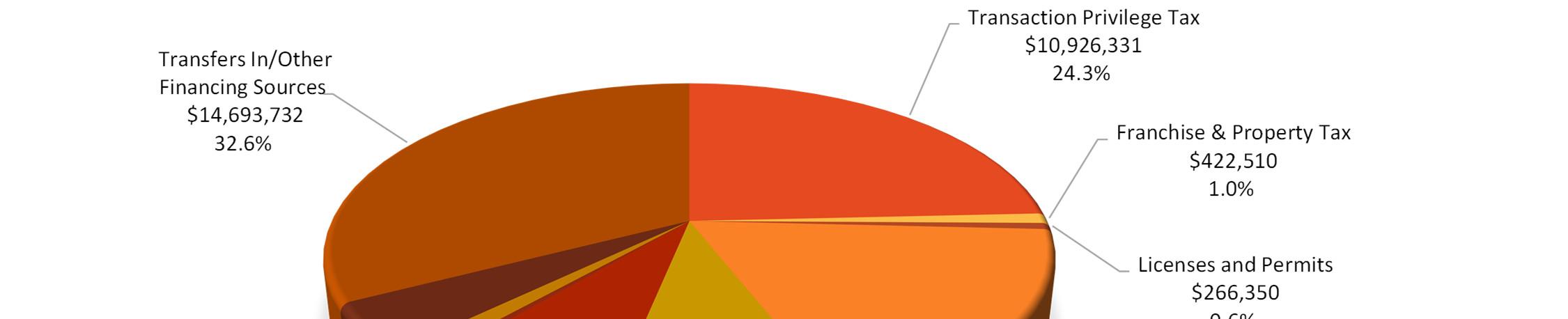
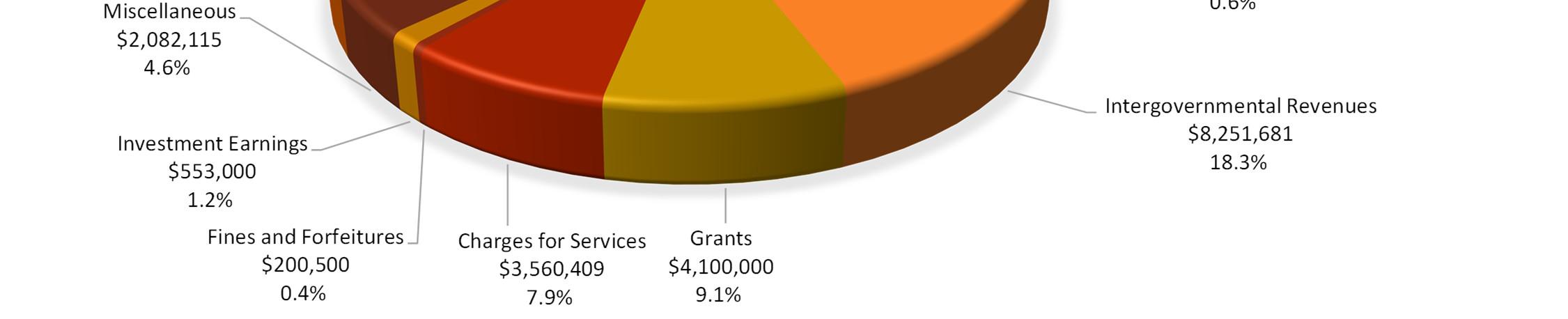
Consolidated Revenue Matrix (in thousands)






Councilmember McCafferty and Councilmember Schacherer serving up sustenance at our National Night Out Event
Fund Balance
The table below illustrates the estimated beginning and ending budgetary fund balances for all governmental and enterprise funds. When necessary, fund reserves are used to finance expenditures/expenses, specifically capital outlay. Budgetary fund balances do not include non-spendable amounts such as prepaids, inventories, capital assets net of accumulated depreciation and related debt, or other amounts that are legally or contractually required to be maintained intact and never spent.
Budgetary Fund Balances (Including Transfers)
Major Funds
All major funds are addressed.
Change in Fund Balance
General Fund: (20.1%) – Fund balance is expected to decrease by $1,711,555 due to significant investments in capital and one-time projects including $541,042 in one-time operating requests, $308,000 in capital requests, $250,000 towards unfunded PSPRS liability, and contingency of $934,000.
Grant Fund: (34.2%) – Fund balance is expected to decrease by $136,025 due to utilization of Smart and Safe funds and other accumulated special purpose funds that will be utilized.
Highway User Revenue Fund: (23.7%) – A decrease of $354,855 in the HURF fund balance is due to investments in capital and one-time projects including $400,000 in new capital.
General Capital Improvement Fund: (90.8%) – An overall fund balance decrease of $1,162,102 is expected. This decrease is mainly due to due to significant investments in capital and one-time projects including $358,441 in one-time operating requests and $2,950,000 in capital projects.
Enterprise Funds:
o Wastewater Fund: 65.4% – An overall fund balance increase of $204,091 is expected. This is mainly due to less onetime budgeted expenses and greater revenues being generated through buy-in fees and rate increases.
o Wastewater Capital Improvement Fund: 197.5% – An overall fund balance increase of $384,559 is expected. This increase is mainly due to WIFA loan funds being received for the large-scale improvement project at the treatment plant even though some aspects of design work were expensed in Fiscal Year 2024-25.
o Water Fund: 119.7% – An overall fund balance increase of $266,844 is expected. This increase is mainly due to less one-time budgeted expenses and greater revenues being generated through fill station and rate increases.
o Water Capital Improvement Fund: (23.4%) – An overall fund balance decrease of $115,000 is expected. This decrease is mainly due to the investment in the fill station repairs project.
Nonmajor Funds
Nonmajor funds that are projected to increase or decrease in fund balance by 10.0% or more are listed below with an explanation for the change.
Streets Capital Improvement Fund: (81.0%) – Fund balance is projected to decrease by $1,750,000 due to large-scale efforts to chip seal more streets.
Financial Schedules and Forecast
Overview
This section presents consolidated and fund-level financial schedules for the Town’s major and nonmajor funds over the past three years, FY 2023-24 actuals, FY 2024-25 budget and projections, and FY 2025-26 budget, along with projections for the next three fiscal years, FY 2026-27, FY 2027-28, and FY 2028-29. The future year projections are based on several key assumptions:
Minimal Growth in the Transaction Privilege Tax (TPT) Base: Minimal growth in TPT (local sales tax) is expected. While a stable economic base of local businesses and retail is established, the Town has seen a small decrease in recent years due to State changes in certain industries, such as residential rental. TPT growth is essential for funding services, and the Town is continuing efforts to draw new businesses to our community. This approach enables effective budgeting while meeting service expectations.
Capital Expenditures Aligned with the Five-Year Capital Improvement Plan (CIP): Aligning capital expenditures with a structured, five-year CIP ensures that resources are directed toward priority projects. This plan helps manage larger projects— such as infrastructure repairs or facility upgrades—without overwhelming the budget. Careful scheduling of capital projects stabilizes finances over time.
Annual Increases of 3-5% in Personnel Costs: Annual personnel cost increases of 3-5% account for cost-of-living (COLA) and minor merit increases, as well as rising benefit costs. These adjustments help attract and retain qualified staff, essential for maintaining consistent, high-quality services. Importantly, this increase does not account for adding new positions, enabling controlled growth in personnel costs while meeting operational needs.
Minimal Operating Cost Increases of Approximately 1%: Operating cost increases are kept at about 1% to maintain essential services without overextending the budget. This conservative approach ensures that minor fluctuations in costs for supplies, utilities, or maintenance are accounted for, preventing a heavy burden on finances. Managing operating costs with small, incremental increases is key to maintaining budget balance.
Debt Service Obligations as Outlined in Current Schedules: Adhering to debt service obligations as scheduled is crucial for maintaining good credit and financial stability. Debt is typically planned around large projects that cannot be funded out of the operating budget, such as new infrastructure or major facility renovations. Sticking to the debt service schedule ensures that repayment obligations are met, financial penalties are avoided, and the capacity to borrow for future needs is preserved.
Long-range operating financial plans are essential for helping the Town achieve its strategic goals. By forecasting future revenue streams, expenditures, and funding needs, the Town can make proactive decisions to support ongoing projects, essential services, and capital improvements while maintaining financial stability. Thoughtful long-term planning enables the Town to prioritize projects effectively, manage resources sustainably, and adapt to changing economic conditions. Ultimately, these financial plans serve as a roadmap, ensuring that the Town can achieve its objectives and continue to provide high-quality services to residents without compromising its fiscal health.
Revenues
* Fiscal year 2025-26 beginning fund balance is estimated.
General Fund
Grant Fund
Revenues
* Fiscal year 2025-26 beginning fund balance is estimated.
Town of Chino Valley Budget FY
Highway User Revenue Fund
Balances - Ending1,886,6491,221,4921,495,2521,140,3971,146,070$
* Fiscal year 2025-26 beginning fund balance is estimated.
General Capital Improvement Fund
Revenues
Fiscal year 2025-26 beginning fund balance is estimated.
Town of Chino Valley Budget FY
Revenues
Wastewater Fund
* Fiscal year 2025-26 beginning fund balance is estimated. FY 2023-24 Actual and FY 2024-25 Budget fund balances are based upon total fund balance where FY 2024-25 Projected and all fiscal years going forward are based upon budgetary fund balance.
Wastewater Capital Improvement Fund
Revenues
* Fiscal year 2025-26 beginning fund balance is estimated. FY 2023-24 Actual and FY 2024-25 Budget fund balances are based upon total fund balance where FY 2024-25 Projected and all fiscal years going forward are based upon budgetary fund balance.
Town of Chino Valley Budget FY 2025-26
Revenues
Water Fund
* Fiscal year 2025-26 beginning fund balance is estimated. FY 2023-24 Actual and FY 2024-25 Budget fund balances are based upon total fund balance where FY 2024-25 Projected and all fiscal years going forward are based upon budgetary fund balance.
Water Capital Improvement Fund
* Fiscal year 2025-26 beginning fund balance is estimated. FY 2023-24 Actual and FY 2024-25 Budget fund balances are based upon total fund balance where FY 2024-25 Projected and all fiscal years going forward are based upon budgetary fund balance.
Town of Chino Valley Budget FY 2025-26
Revenues
Nonmajor Governmental Funds
* Fiscal year 2025-26 beginning fund balance is estimated.
Revenues
Expenditures
Personnel11,644,19114,169,55413,135,52313,662,03114,077,99814,500,33815,093,590 Operating4,600,8005,752,2475,023,8535,928,0235,928,6566,004,6126,074,433 One-time1,789,6773,329,0901,585,5402,661,2981,620,0001,620,0001,620,000 Other329,794825,000- 1,063,000131,000131,000131,000
Capital 9,395,66726,177,5666,782,31921,188,44119,780,0008,530,0006,530,000 Debt Service2,183,2422,203,8512,203,8512,213,3962,152,6722,059,0882,125,432 Transfers Out5,827,3693,526,4792,697,9722,693,7323,232,1702,741,7882,857,235
Total Expenditures and Other Financing Uses35,770,74055,983,78731,429,05849,409,92146,922,49735,586,82734,431,690
Net Change in Fund Balances (3,663,743)(9,089,841)(3,266,193)(4,353,293)(128,838)286,109(316,580) Fund Balances - Beginning* 36,617,30832,022,87819,435,42216,169,22911,815,93611,687,09811,973,207
Fund Balances - Ending32,953,565$
* Fiscal year 2025-26 beginning fund balance is estimated. FY 2023-24 Actual and FY 2024-25 Budget fund balances are based upon total fund balance where FY 2024-25 Projected and all fiscal years going forward are based upon budgetary fund balance.
Town of Chino Valley Budget FY



Mayor Armstrong and Mrs. Armstrong enjoying the annual FFA Corn Dinner at the Territorial Days celebration
Revenues
Overview
This section outlines the Town's primary revenue sources, detailing the structure, usage, and underlying assumptions for each. A historical analysis is included to illustrate trends and provide a deeper understanding of revenue patterns. These revenues comprise 83.2% of the Town’s total budgeted revenue (excluding other financing sources) of $30,362,896.
Taxes – Local Transaction Privilege Taxes
These revenues stem from the Transaction Privilege Tax (TPT) imposed by the Town on specific business activities within its limits. The Town has an agreement with the Arizona Department of Revenue, which serves as the collection agent for TPT and subsequently reimburses the Town. Tax details received from the state are confidential and cannot be disclosed to the public.
Rate Structure – The current tax rate of 4.0% is charged on all taxable categories, except for manufactured buildings that have a 2.0% tax rate, use tax and the rental of commercial property which has a 3.0% tax rate. Approximately 54.5% of the total TPT revenue comes from retail sales, with the remainder collected primarily from construction, communications/utilities, and restaurants & bars.
Permitted Use – TPT revenues are one of the single largest revenue sources, representing about 37.5% of total revenues. Of the TPT collected, 1.00% is used to fund capital improvement projects and pay for debt service.
Assumptions – The Town’s revenue forecast incorporates historical collection trends, recent business activity, and current global events. Over the past five years, the Town experienced strong revenue growth driven by population increases and inflation. However, growth has recently moderated, and the elimination of the state rental tax effective December 31, 2024, has impacted revenues. Given these economic changes, the Town has budgeted $10,926,331 in revenue for fiscal year 2025-26, reflecting a 4.1% decrease from projected revenues for fiscal year 2024-25.
Intergovernmental Revenues
Intergovernmental revenues represent one of the major revenue sources for the Town at 25.7% of total revenues and are estimated at $7,801,681 for fiscal year 2025-26. The following table and graphs depict various intergovernmental revenues categories.
State Income Tax (Urban Revenue Sharing) – In 1972 the voters of Arizona approved the Urban Revenue Sharing program which requires the State to share income tax revenue with incorporated cities and towns.
Rate Structure – For fiscal year 2025-26, the Town shares in the 18.0% portion of state income tax (not the 15.0% as in years prior to FY 2022-23) collected based on population numbers of the official U.S. Census Bureau estimates from June of the prior year. The percentage increase from 15.0% to 18.0% is to mitigate the effect of the State’s adoption of the 2.5% flat income tax rate that will result in reduced income tax collections in the future.
Permitted Use – These funds may be utilized for any municipal purpose and are deposited in the General Fund.
Assumptions – This revenue source depends on economic conditions during the tax year, with fluctuations influenced by employment levels, corporate profits, tax credits, and exemptions. It is also impacted by legislative changes at the state level. For fiscal year 2025-26, the Town is projected to receive $2,711,488 in state-shared income tax, a decrease of 7.7% from the previous year’s projected revenue. This anticipated reduction results from the State’s transition to a flat tax structure, as estimated by the League of Arizona Cities and Towns.
State Income Tax
Revenue
STATE INCOME TAX
20243,622,1691,062,71641.5% 2025*2,938,836(683,333)-18.9% 2026*2,711,488(227,348)-7.7%
State Transaction Privilege Tax – This revenue source is derived from TPT that the State imposes on the sale of goods. The State establishes a distribution base to share with all incorporated cities and towns.
Rate Structure – The Town receives a portion of the State's total Transaction Privilege Tax (TPT) collections. Each tax classification contributes a specific percentage to the distribution base, of which cities and towns collectively receive 25.0%. The State TPT rate is 5.6%.
Permitted Use –State-shared TPT revenue can be used for any municipal public purpose, with no restrictions on its usage. These funds are deposited into the General Fund.
Assumptions – A 1.4% increase in the fiscal year 2025-26 distribution is anticipated compared to the previous year’s projected revenue. This growth is primarily based on projections from the League of Arizona Cities and Towns. Estimated state-shared TPT distributions to the Town are expected to total $2,100,417 for fiscal year 2025-26.
*Fiscal year 2024-25 is projected amount and fiscal year 2025-26 is proposed budget amount.
State Transaction Privilege Tax
Fiscal IncreasePercent Year(Decrease)Change
20171,020,252(2,295)-0.2%
20181,084,42564,1736.3%
20191,179,85495,4298.8% 20201,291,713111,8609.5% 20211,467,611175,89813.6% 20221,834,785367,17425.0% 20231,994,400159,6158.7% 20242,066,47072,0703.6% 2025*2,071,3304,8600.2% 2026*2,100,41729,0871.4%
Vehicle License Tax – This tax is imposed by the Arizona Constitution as an “in-lieu” tax for all ad valorem property taxes on motor vehicles. This revenue is distributed to the State, counties, and cities.
Rate Structure – Approximately 20.0% of revenues collected by the Arizona Department of Transportation for the licensing of motor vehicles are distributed to cities and towns. Chino Valley receives a share of the vehicle license tax collections based on its population in relation to the total incorporated population of the county.
Permitted Use – The revenue source can be used for any municipal purpose; therefore, revenues are deposited in the General Fund.
Assumptions – The estimated Vehicle License Tax budget for fiscal year 2025-26 is $1,179,021, an increase of 0.8% over the previous fiscal year projected amount. This anticipated reduction was estimated by the League of Arizona Cities and Towns.
2017712,35231,9644.7% 2018766,48554,1337.6% 2019826,89460,4097.9% 2020852,40425,5103.1% 20211,049,654197,25023.1% 20221,016,479(33,175)-3.2% 20231,098,78382,3048.1% 20241,104,6945,9110.5% 2025*1,169,54464,8505.9% 2026*1,179,0219,4770.8%
*Fiscal year 2024-25 is projected amount and fiscal year 2025-26 is proposed budget amount.
TAX Actual Projected Proposed
Highway User Tax – Highway User Revenue Fund (HURF) tax estimates are provided by the Arizona Department of Transportation and come primarily from the fuel tax, with the remainder from motor carrier fees, vehicle registration fees, and other transportationrelated fees. HURF revenues are subject to state policy changes, fuel sales, and population growth; consequently, any estimate of future HURF revenues is subject to changes. HURF revenues are reported in the Special Revenue Fund.
Rate Structure – Cities and towns receive 27.5% of highway user revenues based on two factors: population estimates acquired through the most recent census survey and gasoline sales within the county.
Permitted Use – Pursuant to State statute, HURF monies can be used only for street and highway purposes, including right-of-way and payment of debt service on highway and street bonds.
Assumptions – HURF annual distributions are subject to various factors every year such as increases in gasoline prices and energy efficient vehicles. The estimated HURF tax budget for fiscal year 2025-26 is $1,451,940, an increase of 2.2% over the previous fiscal year projected amount.
GRANTS
These revenues are received from various state or federal agencies. Grant funding supports Town’s government operations and capital improvement projects that would otherwise be impossible for the Town to accomplish due to financial restrictions. Several grants have been awarded to the Town on a regular basis such as Community Development Block Grant (CDBG) and Governor’s Office of Highway Safety (GOHS) grants.
Rate Structure – Grant revenue is not considered a stable and recurring funding source and varies from year to year. If the Town does not receive the potential grant, the expenditure does not move forward.
Permitted Use – Grant revenues may be used only for the stated purpose in the approved grant agreement and are subject to grantor expenditure guidelines. Grant revenues are deposited in separate Grant funds for tracking and reporting purposes.
Assumptions – The Town’s grant funding is largely determined by successful applications to various granting agencies and the availability of funds from federal, state, and county sources. To accommodate potential grant opportunities, the Town has set aside $3,500,000 in the budget for projects that may arise during the year.
*Fiscal year 2024-25 is projected amount and fiscal year 2025-26 is proposed budget amount.
UTILITY FEES AND CHARGES
These revenues are derived from user fees and buy-in charges. These revenues are recorded in Enterprise Funds. Major revenue sources in this category are described in detail below.
Wastewater User Fees – The Town charges a fee to each sewage system user having a sewer connection or otherwise discharging sewage, industrial waste, or other liquids into the Town’s sewage system.
Rate Structure – Both residential and commercial customers are charged a flat rate depending on the size of their water meter. Muti-family housing (including hotels, schools, churches, and apartments are charged an amount per fixture unit and RV/Mobile home parks are charged a flat rate per space. The most recent rate study was approved by the Council in December 2023 through Resolution No. 2023-1235. The structure incorporated a 3% increase in rates each January, beginning January 2024, for a three-year period. The Town then adopted a consolidated fee schedule in May 2025 through Resolution No. 2025-1282 setting a rate per RV/Mobile home park space to eliminate ambiguity.
Permitted Use – This revenue is principal revenue for operating and managing the Wastewater system.
Assumptions – The fiscal year 2025-26 budget for user fees is $2,045,655, reflecting a 9.2% increase over the prior year’s projected amount. This rise is attributed to rate increases and additional development, which is expected to generate a larger customer base.
USER FEES
Actual Projected Proposed
Water User Fees – The Town charges a fee for providing a potable water system to the residences, commercial units, and other facilities within Town boundaries as well as transportable water at the two Town fill stations.
Rate Structure – Monthly water bills consist of a base charge and a usage charge for water consumed using an inverted rate structure based on tiered levels to encourage water conservation practices. The most recent rate study was approved by the Council in December 2023 through Resolution No. 2023-1235. The structure incorporated a 3% increase in rates each January, beginning January 2024, for a three-year period. The Town then adopted a consolidated fee schedule in May 2025 through Resolution No. 2025-1282 setting an increased rate for fill station water.
Permitted Use – This revenue is the principal revenue for operating and managing the Water system, including replacement of existing capital assets.
Assumptions – The fiscal year 2025-26 budget for user fees is $891,580, reflecting a 0.1% increase over the prior year’s projected amount. This rise is attributed primarily to rate increases.
*Fiscal year 2024-25 is projected amount and fiscal year 2025-26 is proposed budget amount.
WASTEWATER
Water User Fees
Fiscal IncreasePercent Year(Decrease)Change
Revenue
2017441,975(21,842)-4.7%
2018527,11585,14019.3%
2019470,482(56,633)-10.7%
2020543,10272,62015.4%
2021718,796175,69432.4%
2022818,951100,15513.9%
2023718,775 (100,176)-12.2%
2024747,176 28,4014.0%
2025*890,329143,15319.2% 2026*891,5801,2510.1%
Buy-In Fees – Customers pay a one-time system connection charge (i.e. wastewater and water) for connecting to the Town’s water/wastewater system. The primary purpose of connection charges is to recover the Town’s growth related construction and system development costs attributable to the water and wastewater services provided to the customer.
Rate Structure – Water buy-in charges are calculated on a per-unit or per-meter basis, while wastewater buy-in charges are assessed as a flat rate for residential properties and based on fixture units for commercial and multi-family residential properties. These fees are collected with each new building permit. Connection charges are periodically reviewed by Town staff and presented to the Council for adjustment as needed.
Permitted Use – This revenue is utilized to fund Town’s capital water and wastewater system improvements related to growth. The fees are used either to fund various capital projects or to repay debt on bonds.
Assumptions – Projections for next year’s connection charge revenues are based on prior years’ trends, which are volatile as development fluctuates. Total connection charge revenue for fiscal year 2025-26 is projected at $500,000, a decrease of 12.2% compared to the prior year’s projections.
2017570,089412,151261.0%
20181,209,443639,354112.1%
2019675,262(534,181)-44.2%
2020734,70059,4388.8%
2021824,60589,90512.2%
2022649,847(174,758)-21.2%
2023201,124 (448,723)-69.1%
2024287,126 86,00242.8%
2025*569,754282,62898.4% 2026*500,000(69,754)-12.2%
*Fiscal year 2024-25 is projected amount and fiscal year 2025-26 is proposed budget amount.
Projected Proposed



Recreation Library Senior Center
Community Services Department
Mission
The Community Services Department, inclusive of Senior Services, Recreation, and Library, is dedicated to fostering an enriched quality of life for all residents by offering diverse opportunities for social engagement, lifelong learning, recreational activities, and access to essential resources. Through innovative programming and a commitment to wellness, education, and community involvement, we strive to cultivate an environment that promotes overall well-being and strengthens the fabric of our community.
Program Descriptions
Recreation: The Recreation Division is responsible for creating recreational programs and events for the citizens of the Town of Chino Valley, managing the reservation of recreation facilities, and the special events permitting process. The Recreation Division also operates the Aquatics Center from May through August each year. During the season the Center offers lap swim, toddler swim, swim lessons, water aerobics, dollar swim, and open swim hours, as well as facility rental for special events.
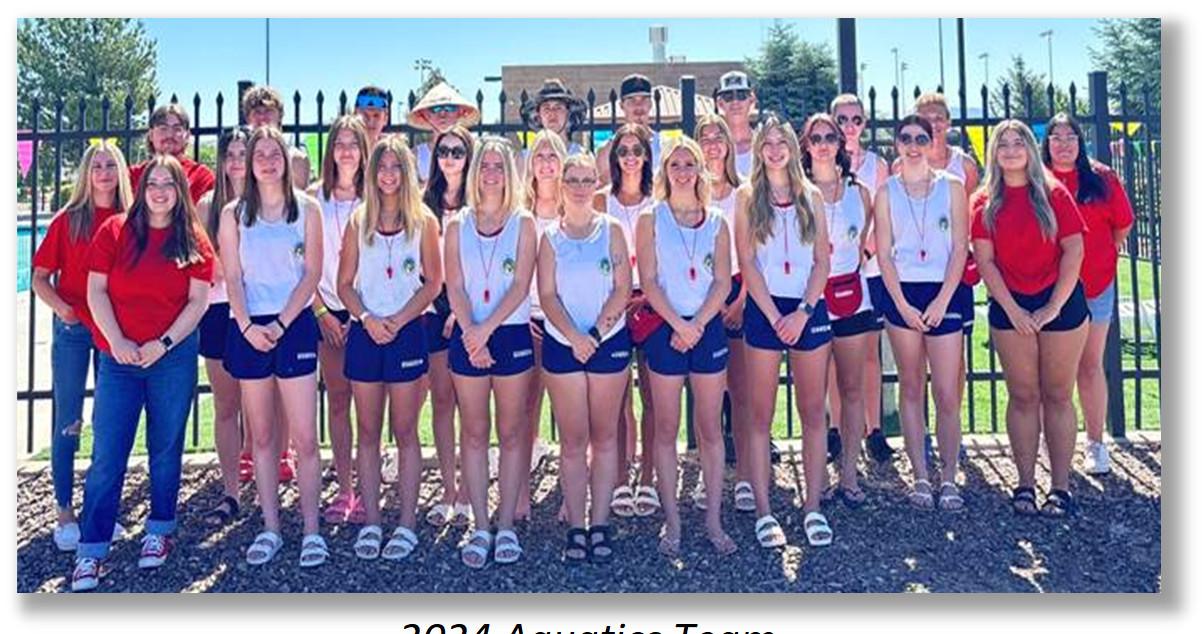
Library: The Chino Valley Public Library offers a vast variety of free educational materials and services to the public including over 40,000 books, 4,000 videos, 1,000 audios, 100 magazines, eight local and national newspapers, puzzles and CDs for the whole family, 16 computers with internet access that feature word-processing and spreadsheets, WIFI, a children’s computer room with seven educational computers offering a vast array of learning programs. Over 200 educational and children’s programs are available throughout the year including our very popular Summer Reading Program. As a member of the Yavapai Library Network, our citizens have access to all 40 libraries in the County, including over a million items! Chino Valley patrons can access our website from the comforts of their home, or wherever they may be in the world, and place holds, renew their books, search our database, or download e-books.
Senior Center: The Chino Valley Senior Center administers and operates the Meals on Wheels program and provides a setting for daily congregate meals, artistic performances and exhibits, social gatherings, dances, enrichment programming, health programming, social services, referral services and educational life skill training for our older adult population. The Senior Center operates a Thrift Store and relies heavily on an engaged volunteer base for our service delivery.
2024 Aquatics Team
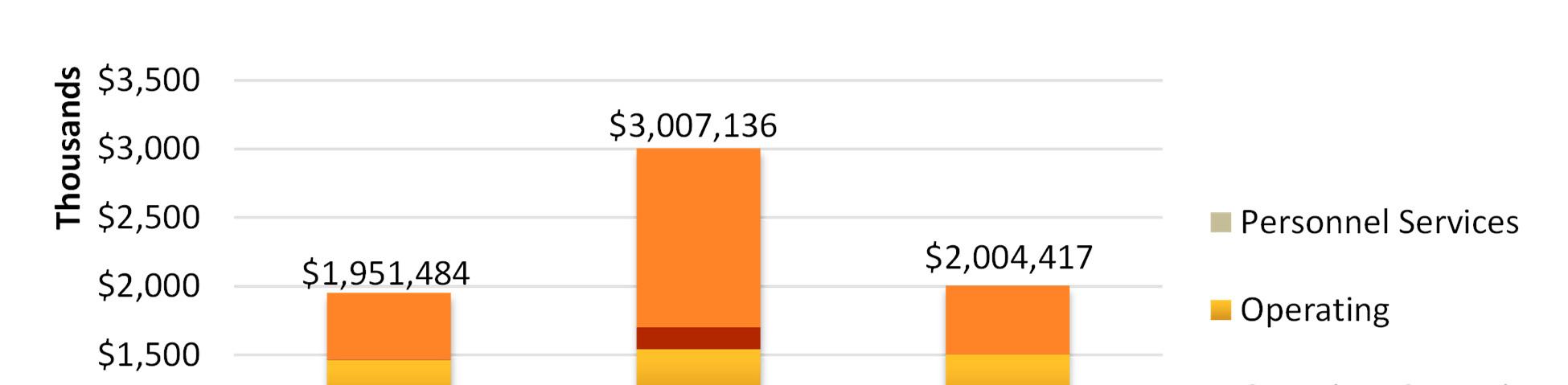
FY 2025-26 Change Summary
Personnel reflects a decrease of 4.7% due to:
o Reduction of Library Assistant positions (1.25 FTEs)
o Removal of excess personnel services budget from prior Library and Special Projects Director position
Offset by:
o New Technical Services Librarian (1.0 FTE)
o 2% COLA
o 0-2% Merit
o Slight increase in health insurance premiums
On-Going Operating reflects an increase of 3.1% due to:
o Food purchases for meals on wheels program – $15,000
One-Time Operating:
o None
Capital:
o Community Center Park Improvements (Phase I) – $250,000
o Pool Deck Resurfacing – $250,000
Community Services Department Summary
Services Funding Summary


Amazing staff at the Senior Center Easter Lunch
Community Services Authorized FTEs



Planning Building Safety Code Enforcement
Development Services Department
The Development Services Department is comprised of three key areas:
The mission of Planning is to enrich the quality of life for residents of Chino Valley through responsible, responsive, and creative planning and development, by encouraging appropriate land uses and intensities, while planning for future generations.
The mission of Building Safety is to provide services needed to ensure life-safety in the built environment.
The mission for Code Enforcement is to promote public health, safety, and welfare through code compliance.
Program Descriptions
Planning: The Planning team provides detailed land use, zoning, and subdivision information for all properties within the Town of Chino Valley. The department meets with customers in the early stages of property development through PreApplication Meetings, to provide guidance related to codes and process. The planning staff handles requests for rezoning, conditional use permits, and subdivisions. Staff also recommends changes to the Unified Development Ordinance (UDO), zoning or subdivision codes, to address current situations within the community, staying ahead of forecasted trends and keeping up with changing legislation.
Building Safety: The Building Safety team reviews all submitted building plans for compliance with adopted codes, and issues building permits for all development projects in the town. The team also inspects all aspects of construction of those structures to ensure life-safety of occupants. Currently the Town has adopted the following construction codes: the 2018 International Building, Residential, Mechanical, Plumbing, Fuel Gas, and Energy Codes, as well as the 2017 National Electrical Code. The Code Compliance team ensures the health and well-being of citizens and the upkeep of properties. All code complaints, both called in and resulting from pro-active inspections, are enforced to the standards set forth in the Unified Development Ordinance (UDO), the 2018 IBC’s and the Town Code.
Code Enforcement: The Code Enforcement team ensures the health and well-being of citizens and the upkeep of properties. All code complaints, both called in and resulting from pro-active inspections, are enforced to the standards set forth in the Unified Development Ordinance (UDO), the 2018 IBC’s, and the Town Code.
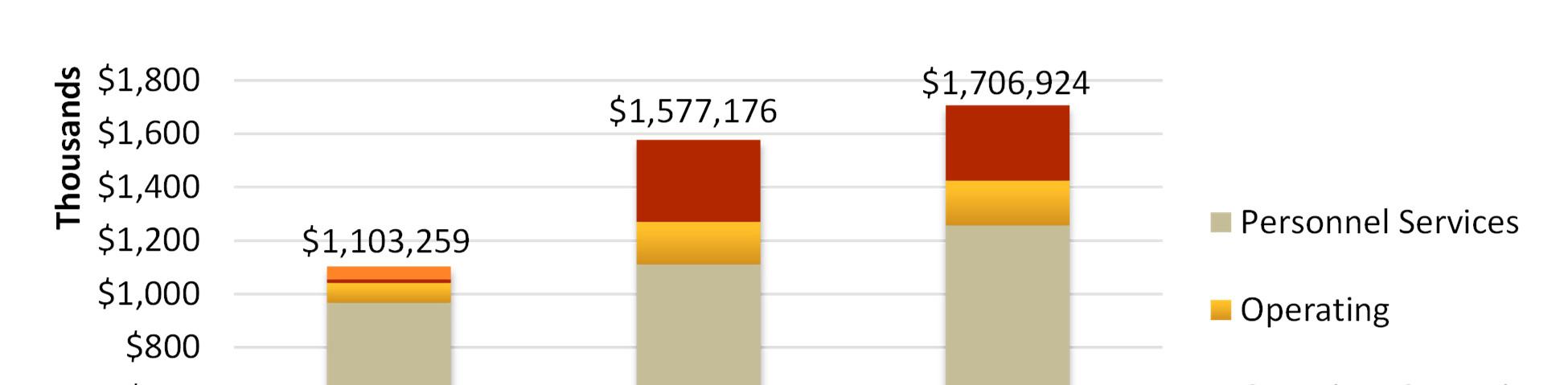
FY 2025-26 Change Summary
Personnel reflects an increase of 13.2% due to:
o New GIS Specialist position (1.0 FTE)
o 2% COLA
o 0-2% Merit
o Slight increase in health insurance premiums
On-Going Operating reflects a 5.6% change due to:
o Operating costs for the new GIS Specialist position – $8,885
Travel/Training/Seminars - $4,360
Subscriptions and Memberships - $3,975
Computer Software - $550
One-Time Operating:
o General Plan - Zoning Code Rewrite (Rollover from FY 24-25) – $250,000
o Sketch Landscape - Planning (Rollover from FY 24-25) – $21,812
o One-Time costs for the new GIS Specialist position – $10,150
Computer Equipment - $4,825
Workspace Furniture - $3,125
Computer Software - $2,200
Capital:
o None
Development Services Department Summary
Development Services Authorized FTEs


Development Services Deputy Director Will Dingee with Director Laurie Lineberry and Mayor Miller celebrating the Arizona Chapter of the American Planning Association’s award for the best General Plan with under 50,0000 population

Financials


Budgeting Utility Billing
Finance Department
Mission
The mission of the Finance Department is to responsibly manage and safeguard the Town’s financial resources, providing transparent and accurate financial reporting, supporting sustainable budgeting practices, and ensuring compliance with all local, state, and federal regulations. Through sound financial planning and stewardship, the department is dedicated to supporting the fiscal health of the Town, enabling the delivery of essential services, and enhancing the quality of life for all residents.
Program Descriptions
The Finance Department is responsible for managing the Town’s financial operations to ensure fiscal accountability, transparency, and compliance. Key program areas include:
Payroll: In conjunction with Human Resources, administers accurate and timely compensation for all Town employees, handling payroll processing and benefits deductions.
Utility Billing: Oversees the billing and collection processes for Town-provided utilities, maintaining customer accounts and ensuring efficient revenue collection.
Accounts Payable & Receivable: Manages payments to vendors and suppliers, processes incoming revenues, and ensures proper recording of financial transactions.
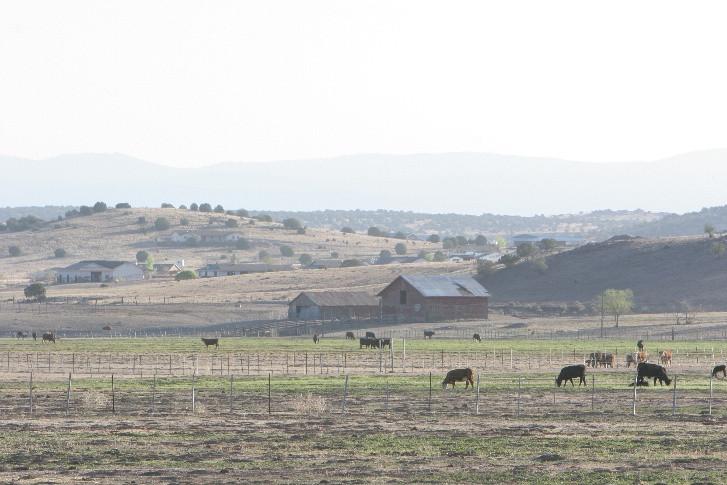
Debt Management: Administers the Town’s debt obligations, ensuring timely payments and maintaining compliance with legal and contractual requirements, while supporting sustainable borrowing practices.

Budgeting: Coordinates the annual budget process, providing fiscal planning and analysis to allocate resources effectively and align with the Town’s strategic priorities.
Financial Reporting: Prepares comprehensive financial statements and reports, providing transparency for elected officials, staff, and the public, and ensuring adherence to regulatory and auditing standards.
Through these functions, the Finance Department supports the Town’s financial health and its capacity to deliver essential services efficiently and responsibly.
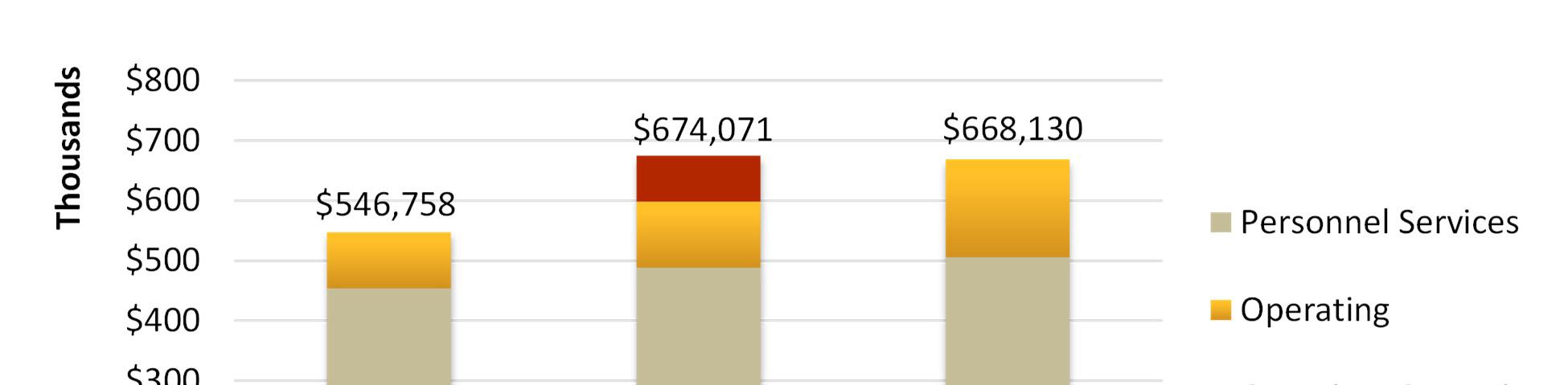
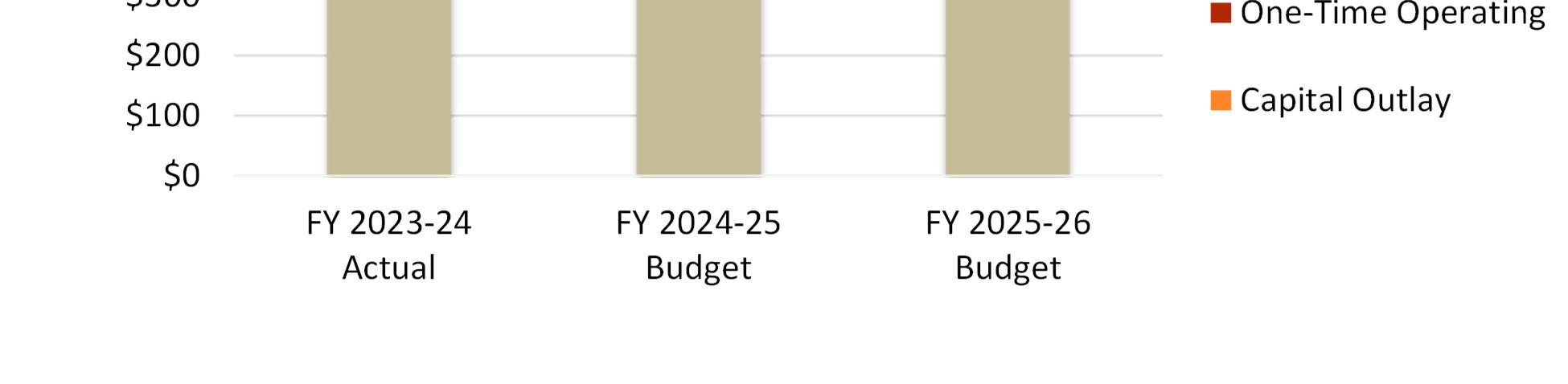
FY 2025-26 Change Summary
Personnel reflects an increase of 3.6% due to:
o 2% COLA
o 0-2% Merit
o Slight increase in health insurance premiums
On-Going Operating reflects an increase of 47.7% due to:
o Contract TPT Auditor – $32,400
o External Audit – $20,000
One-Time Operating:
o None
Capital:
o None
Finance Department Summary
Finance Funding Summary
Finance Authorized FTEs



Recruitment Risk Management Prosecutor
Human Resources Department
Mission
Our mission is to develop, implement, and support programs and processes that empower the Town of Chino Valley and its employees, fostering growth, well-being, and retention while ensuring compliance with employment laws and business strategies. Additionally, we are committed to upholding justice by prosecuting criminal behavior on behalf of the people, ensuring fairness through a balanced approach to punishment, deterrence, restitution, and rehabilitation. Together, we work to protect and support the Town’s workforce and community with integrity, accountability, and a focus on long-term safety and success.
Program Descriptions


Recruitment: Human Resources is responsible for the functions and administration in the areas of recruitment and selection, job classification and compensation planning, employee development, employee relations, the total rewards program, and compliance with employment regulations and guidelines as dictated by federal, state and local laws.
Prosecutor: The prosecutor’s office processes all misdemeanor cases within the jurisdiction of the Chino Valley Magistrate Court. This includes all misdemeanor offenses in violation of the Arizona Revised Statues (primarily Criminal and Motor Vehicle offenses) and the Chino Valley Town Code. Some of the main activities include pre-trial conferences, hearings, trials, and other matters set by the Court; filing complaints on matters referred by the police department; and extensive contact and correspondence with victims and witnesses, including interviews and further investigation of pending cases. Note: The prosecutor is contracted and under the supervision of the Town Attorney, the budget for the paralegal, prosecutor contract, and other administrative expenses are currently under the oversight of the Human Resources department.
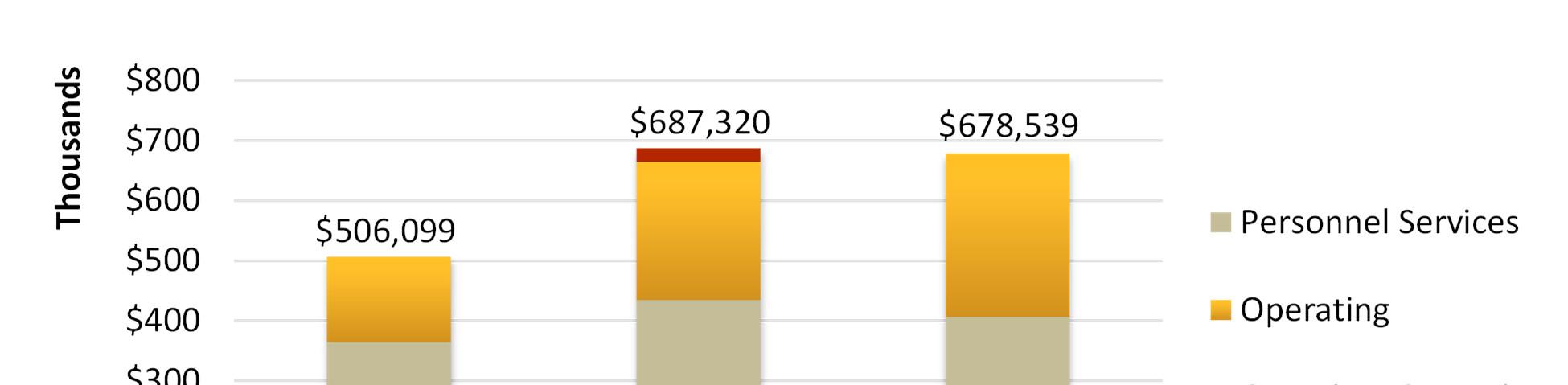
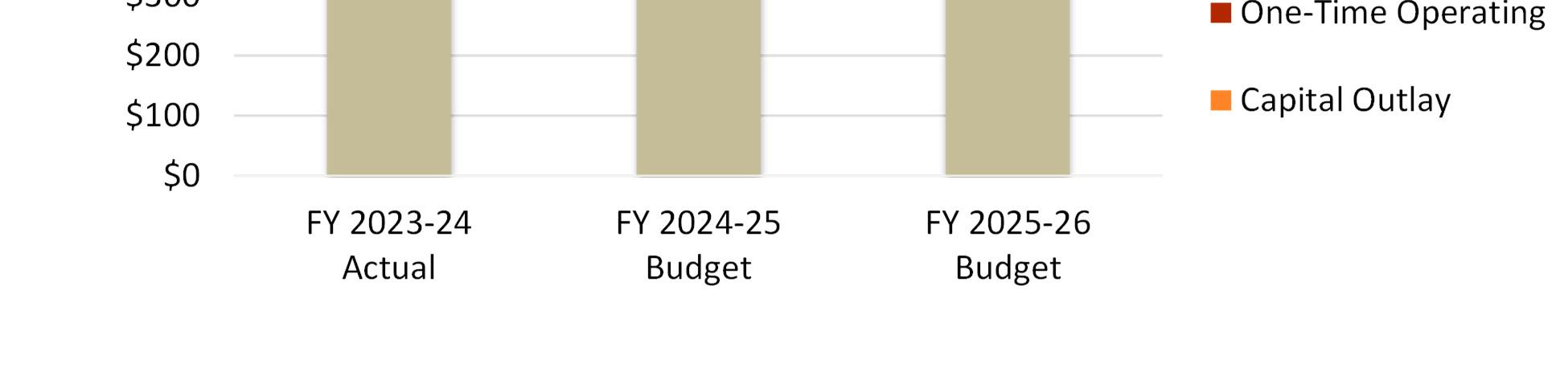
FY 2025-26 Change Summary
Personnel reflects a decrease of 6.4% due to:
o 2% COLA
o 0-2% Merit
o Slight increase in health insurance premiums
Offset by:
o Reduction of potential sick time policy payouts of $50,000, if significant payouts occur in various departments, they will be covered by salary savings from vacancies, or in cases of larger payouts, contingency funds may be required
On-Going Operating reflects an increase of 18.2% due to:
o Prosecutor Contract increase – $30,000
o Professional services increase is attributed to the reallocation of costs associated with police preemployment testing – $12,000
One-Time Operating:
o None
Capital:
o None
Human Resources Department Summary
Human Resources Funding Summary


Mayor Armstrong with HR Director Laura Kyriakakis at the Employee Appreciation Event

Cybersecurity


Technology Infrastructure Technical Support
Information Technology Services Department
Mission
The mission of Information Technology Services (ITS) is to support, design, develop and enhance the Town’s information technology (IT), Telecommunications, Web and audio-visual systems.
Program Descriptions

ITS provides various services to the Town to support the entire IT infrastructure. Foremost, ITS supports resources such as computer systems, networks and servers that allow the Town staff to effectively carry out their normal duties. ITS is additionally responsible for management and preservation of electronic information created during normal Town operations. ITS maintains vital communications avenues such as e-mail, telecommunications, mobile devices and internet access and implements new software, systems and applications to keep Town services running efficiently and maximize the Town’s IT investments.
ITS continuously works to keep the Town web page updated with the latest content about services, programs and events and manages the audio-visual equipment, filming and production of information and programming that is vital to ensure the public is informed about Town and community business. ITS manages IT-related budget and expenditures throughout the fiscal year to ensure proper spending of Town funds. With the continuous growth of the Town and community, ITS manages expansion of the IT infrastructure, Door Access control, Surveillance Systems and accommodating additional IT wiring for expanded space and staff requirements. ITS helps to establish and maintain IT related policies and procedures by protecting the Town from liabilities inherent in the usage of technology. Lastly, ITS maintains documentation and licensing for the Town to ensure compliance with IT-related legal regulations.
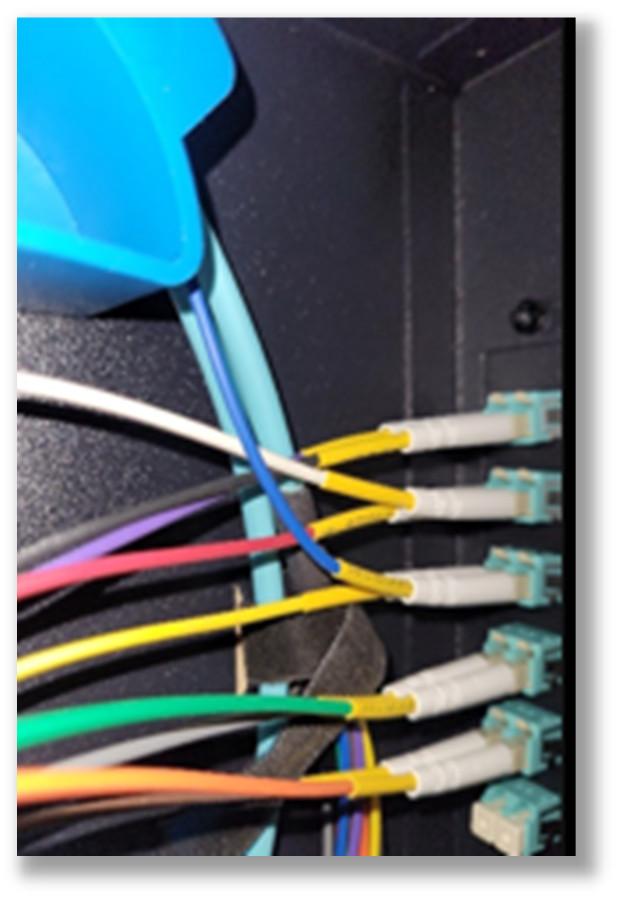
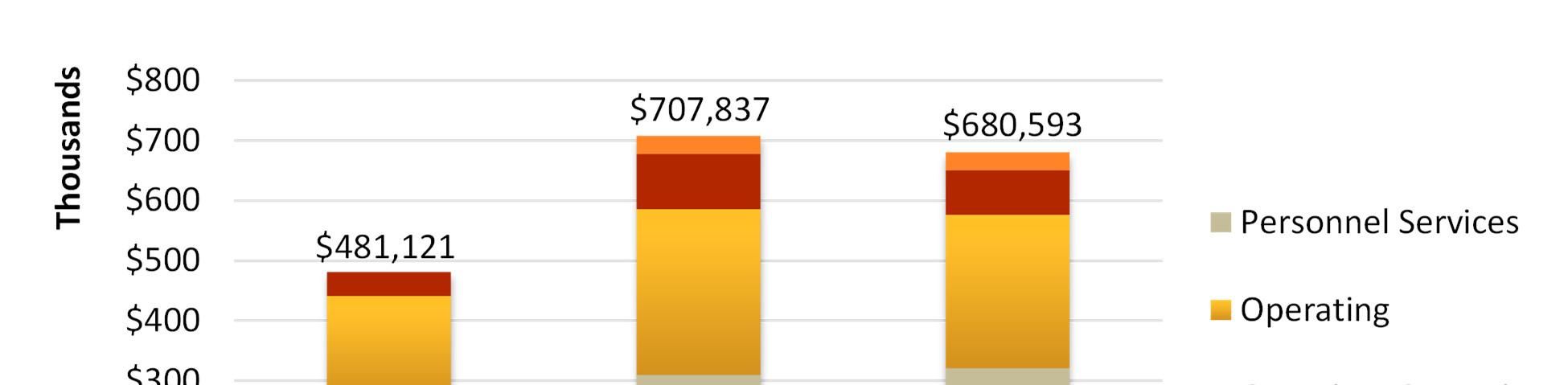
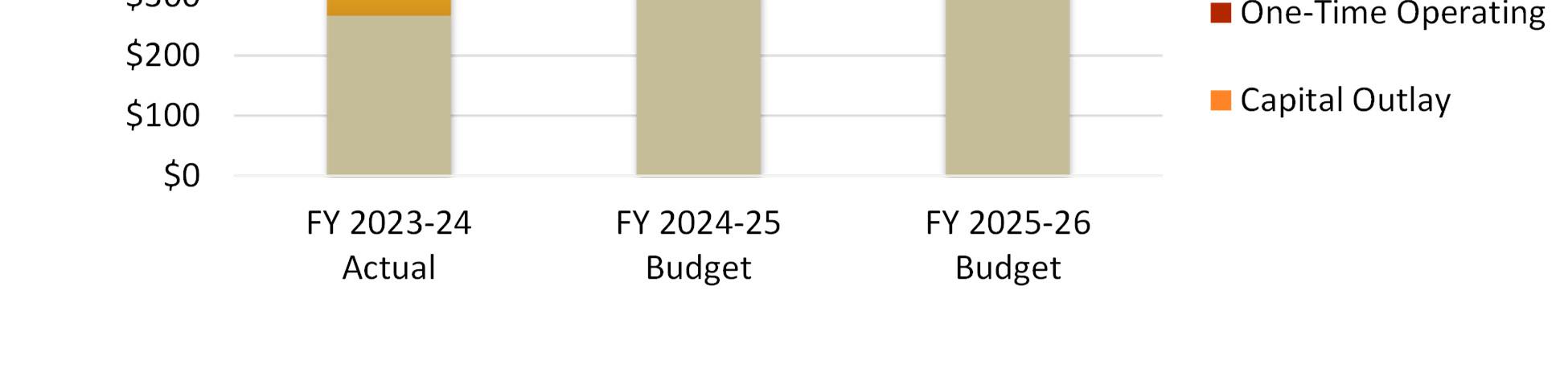
FY 2025-26 Change Summary
Personnel reflects an increase of 3.6% due to:
o 2% COLA
o 0-2% Merit
o Slight increase in health insurance premiums
On-Going Operating reflects a decrease of 7.3% due to:
o Removal of Yavapai County GIS IGA – $20,000
One-Time Operating:
o Building Access Control – $40,000
o Police Mobile Data Computers (MDCS) – $19,080
o Server Replacement – $15,000
Capital:
o Virtual Host Server – $30,000
Information Technology Services Department Summary
Information Technology Services Funding Summary
Technology Services Authorized FTEs
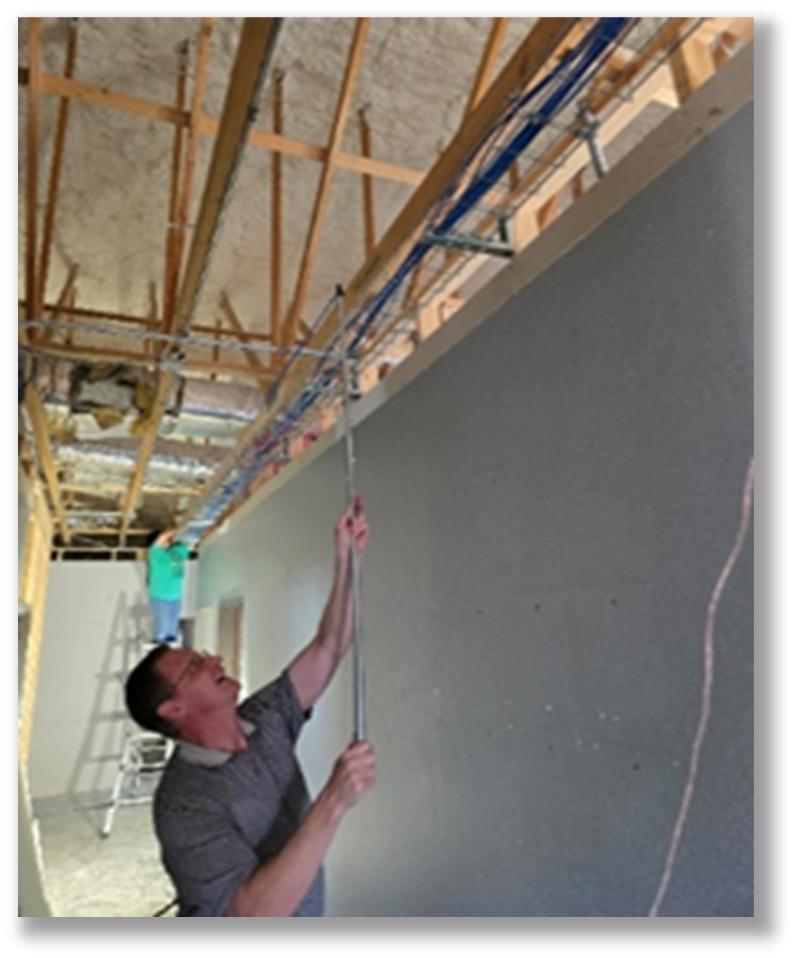
IT Manager Spencer Guest installing network cabling for the Public Works building remodel



Local Legislation Policy Development Budget Adoption
Mayor and Council
Mission
The mission of the Town of Chino Valley Council is to enhance the quality of life for its citizens while supporting the values of the community.
Program Descriptions
The Mayor and Council is the legislative branch of the Chino Valley Council-Manager form of Government. The Town Council enacts local legislation, develops policies for the Town Manager to implement and adopts the annual budget. The Council appoints the Town Manager, Town Attorney, Court Magistrate, and members of various boards, commissions, and committees.
Town of Chino Valley Budget FY 2025-26 Mayor and Council
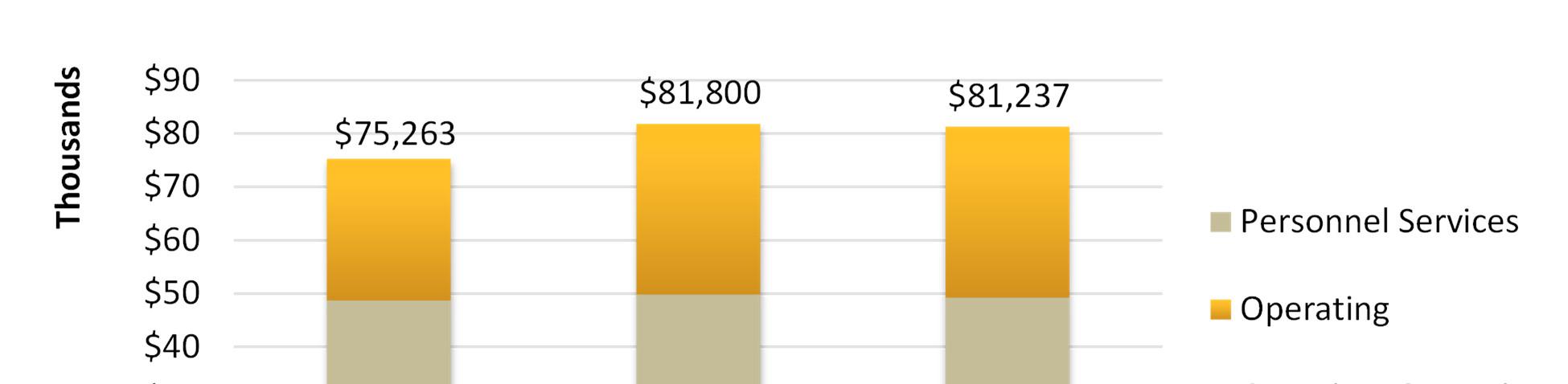
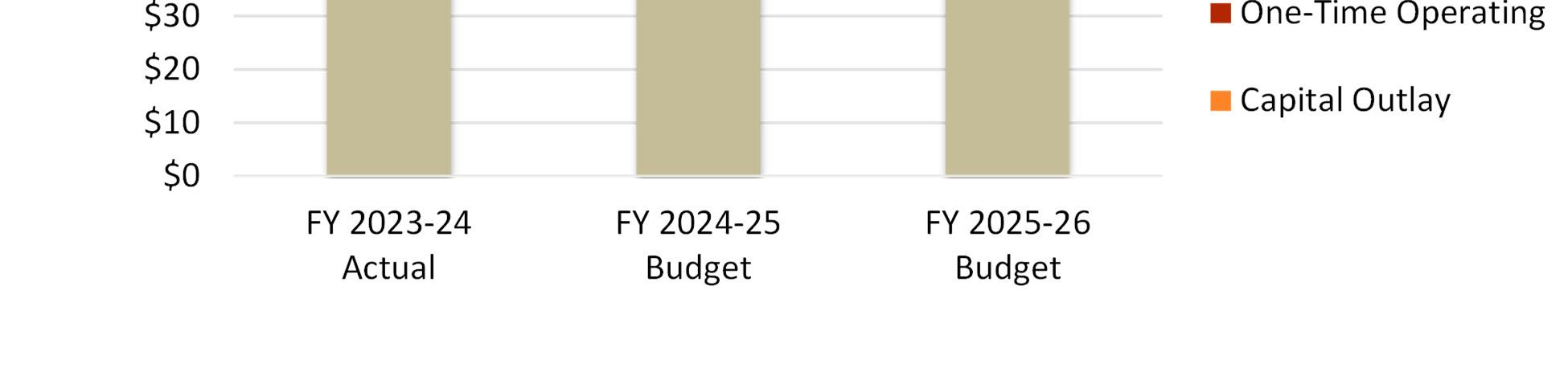
FY 2025-26 Change Summary
Personnel reflects a decrease of 1.1% due to:
o Alignment of benefits more closely to actual cost
On-Going Operating reflects a 0% change
Mayor and Council Summary
Mayor and Council Authorized Elected Officials
Mayor and Council Funding Summary



Process Cases Conduct Hearings Provide Justice
Municipal Court Department
Mission
As the judicial branch of government, the mission of the Chino Valley Municipal Court is to provide an independent, accessible, fair, and effective system of justice on behalf of and for the citizens of Chino Valley and persons cited for violations occurring within the Town limits.
Program Descriptions
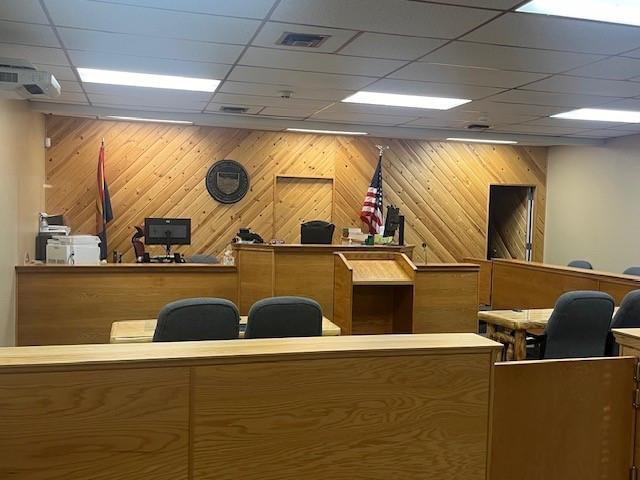


The Court has jurisdiction to process and adjudicate cases which arise within the Town limits of Chino Valley, including misdemeanor criminal complaints alleging a violation of Arizona law or Town ordinance, civil and criminal traffic matters, and petitions for an Order of Protection or an Injunction Against Harassment.
The Magistrate presides over a variety of court proceedings which include initial appearances, arraignments, pretrial disposition conferences, change of plea hearings, sentencing, petitions to revoke probation, order to show cause hearings, motion hearings, civil traffic hearings, jury and nonjury trials, restitution hearings, payment review hearings, and all other hearings as may be required.
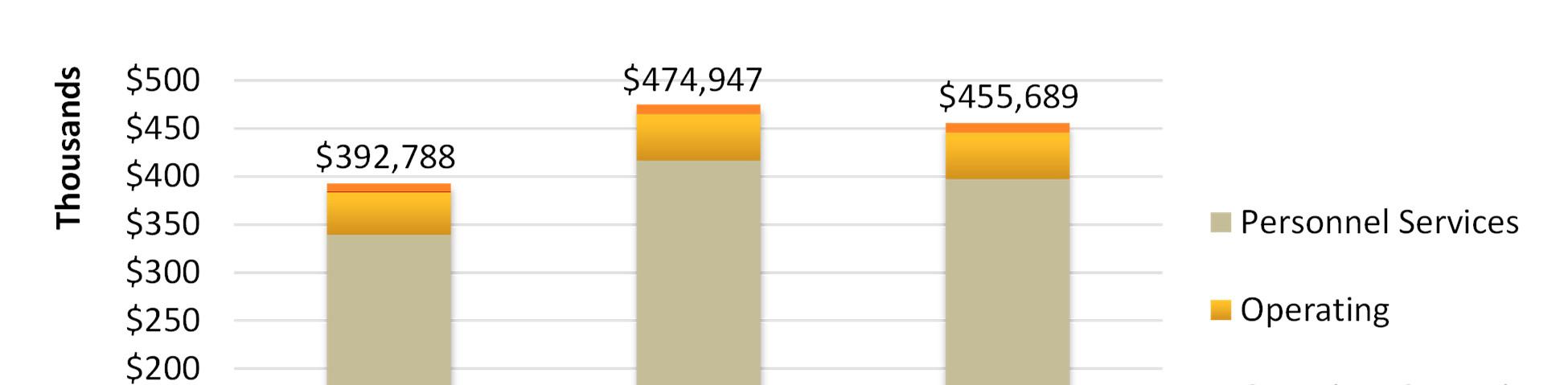
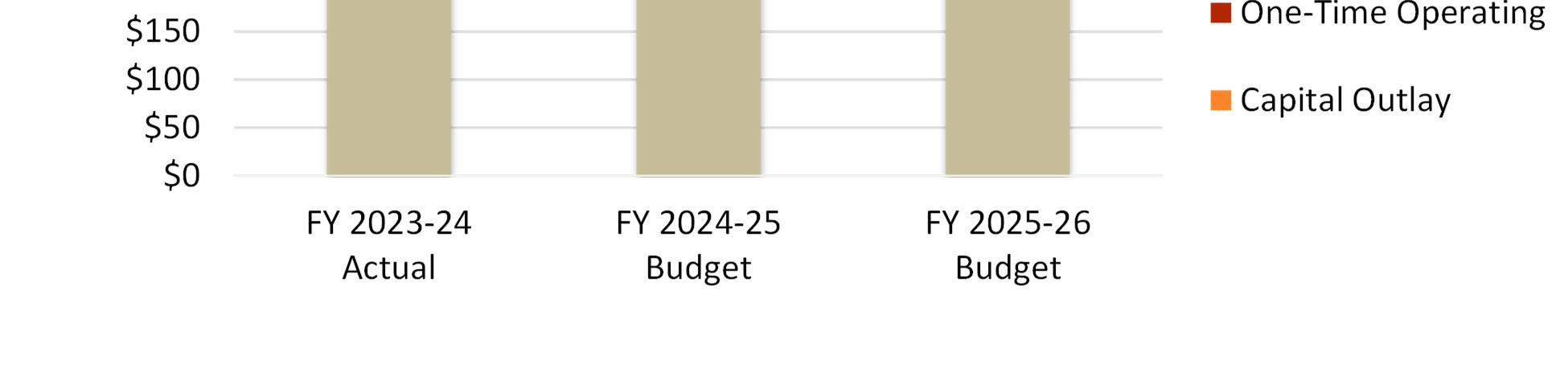
FY 2025-26 Change Summary
Personnel reflects a decrease of 4.6% due to:
o Reduction in pro-tem budget to reflect more accurate utilization
Offset by:
o 2% COLA
o 0-2% Merit
o Slight increase in health insurance premiums
On-Going Operating reflects a 0% change
One-Time Operating:
o None
Capital:
o Court Computers and Printers - $6,000
o Maintenance - $4,000
Municipal Court
Municipal Court Department Summary
Municipal Court Funding Summary
Municipal Court Authorized FTEs





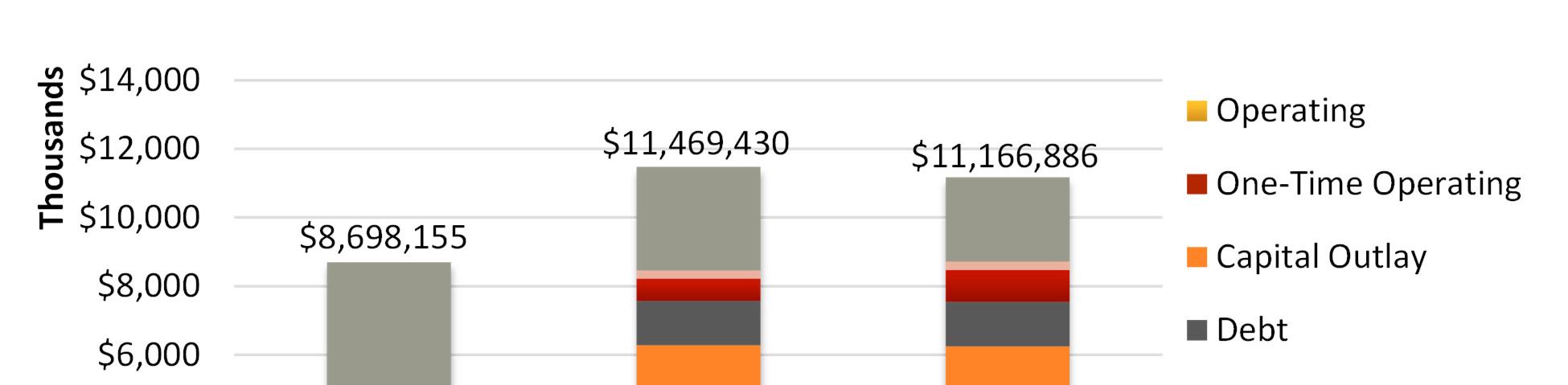
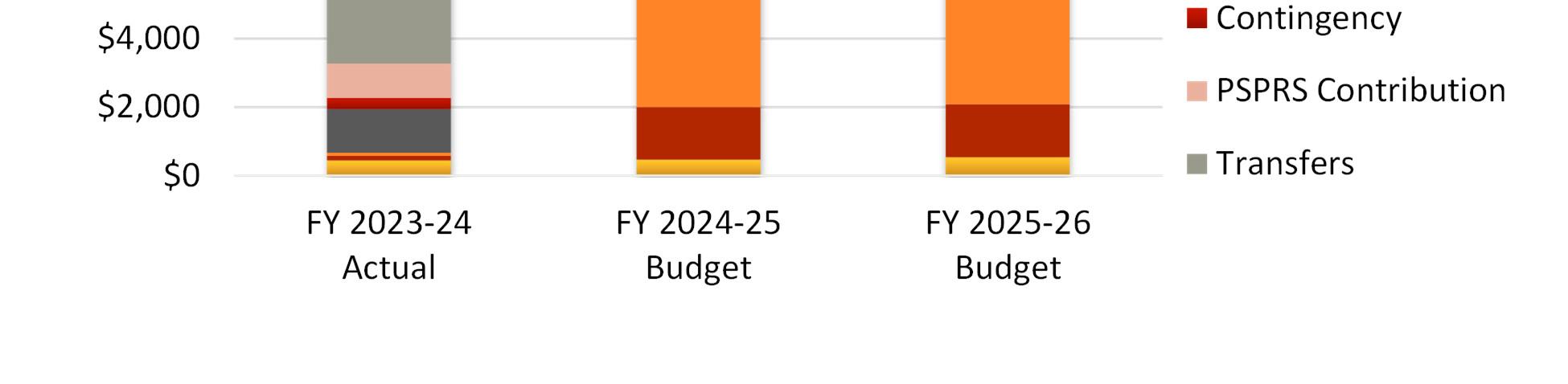
On-Going Operating reflects an increase of 13.8% due to:
o Insurance premium increase – $45,000
o Yavapai Regional Transit addition – $17,000
o Yavapai Family Advocacy Center increase – $3,424
o Street Lighting and Maintenance Improvement District increases – $450
One-Time Operating:
o Miscellaneous Grants – $1,500,000
o Old Home Manor Strategic Plan – $35,000 This item will be held until Council collectively decides to move forward
Capital:
o Miscellaneous Grants – $2,000,000
o Misc Projects at Old Home Manor – $2,000,000
o Stabilization of Del Rio Springs Property – $168,798
o Old Home Manor Strategic Plan – $35,000
Contingency reflects an increase of $284,000
PSPRS Unfunded Liability Payment reflects a 0% change
Transfers reflect a decrease of $557,747 with transfers for FY 2025-26 including:
o Transfer To Debt Service Fund – $1,293,732
o Transfer To Streets Capital Improvement Fund – $1,000,000
o Transfer To Water Capital Improvement Fund – $60,000
o Transfer To Sewer Capital Improvement Fund – $90,000
Non-Departmental Summary
Non-Departmental Funding Summary


Councilmember Perkins, Councilmember Schacherer, Mayor Armstrong, and Councilmember McCafferty getting ready for the Light Parade



Public Safety Traffic Enforcement Animal Control
Police Department
Mission
The mission of the Chino Valley Police Department is to protect the lives, property and constitutional rights of the citizens of Chino Valley through fair and impartial enforcement of the laws of the state. We are committed to establishing close working relationships with our citizens, businesses and visitors to resolve problems and issues. Serving the citizens of Chino Valley is a privilege, not a right. The citizen is the most important person in our department; not an interruption of work, but the purpose of it. The department's successes are attributed to the high ethics, professionalism, integrity, courage, and efficiency displayed by our personnel.
Program Descriptions
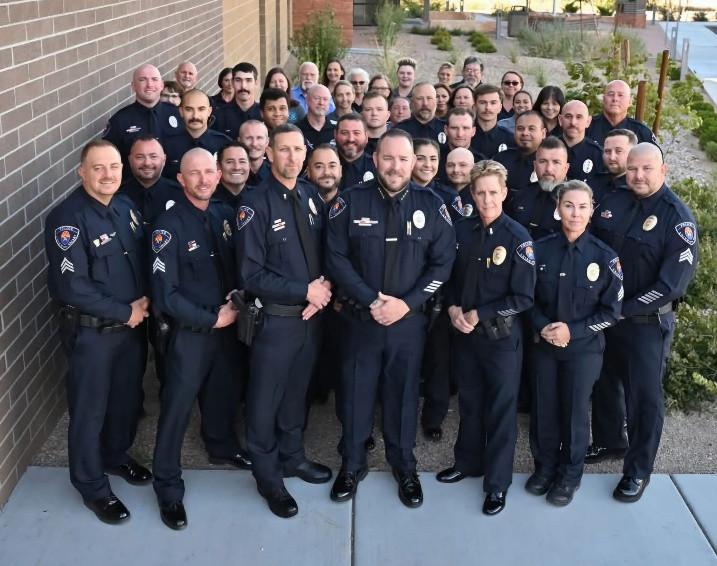

Police: Utilizing state of the art policing methods the police department is able to proactively patrol and enforce criminal, traffic and town laws and ordinances. The department has utilized staff to provide ideas, methods and solutions by “thinking outside the box”. This approach has allowed the department to stretch the limited operating budget and provide the highest level of policing service to the public. The production, dedication and enthusiasm provided by the department allows us to maximize resources to ensure success of the department’s mission. Police Department staff have donated time and expertise to assure outside funding and resources, such as the Federal 1033 program, RICO funds and collaboration with private organizations, are obtained and utilized to increase training capabilities of the department and town. We have a facility and location to train our staff, as well as those around us, which enables our staff to obtain the latest and greatest training in the profession. The ability of the department to tap internal resources to ensure the training facility is operational, functional and capable of providing the training needed is like none seen anywhere else in this profession.
Animal Control: Animal Control is responsible for enforcing town code and state statute relating to animal issues (primarily dogs) within the town limits. Animal Control also operates the Animal Shelter and is responsible for selling dog licenses and ensuring dogs have been properly vaccinated for rabies. Animal Control responds to calls from the public as well as visual observation of dogs running at large, cruelty and neglect cases and nuisance barking complaints.
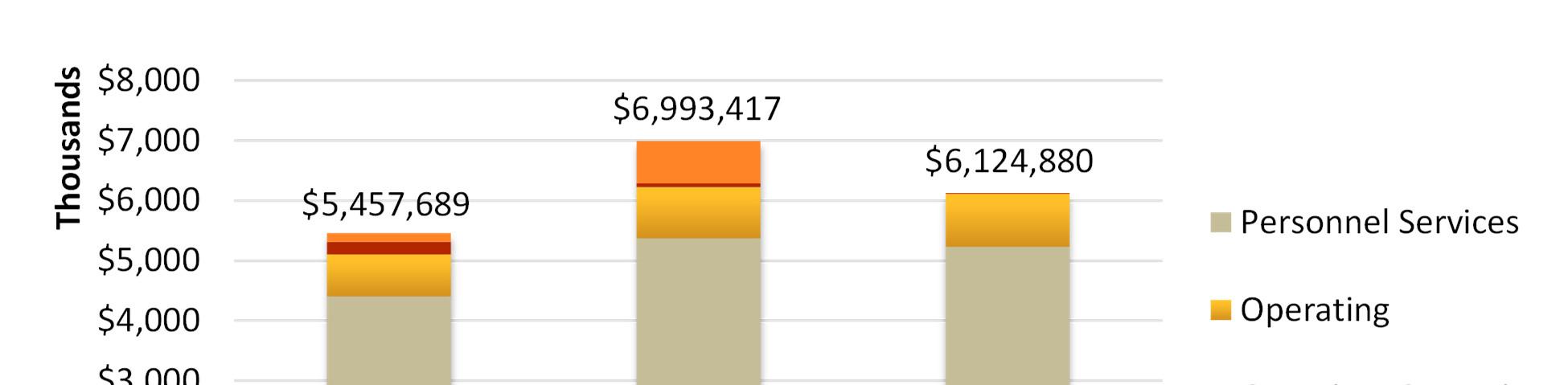
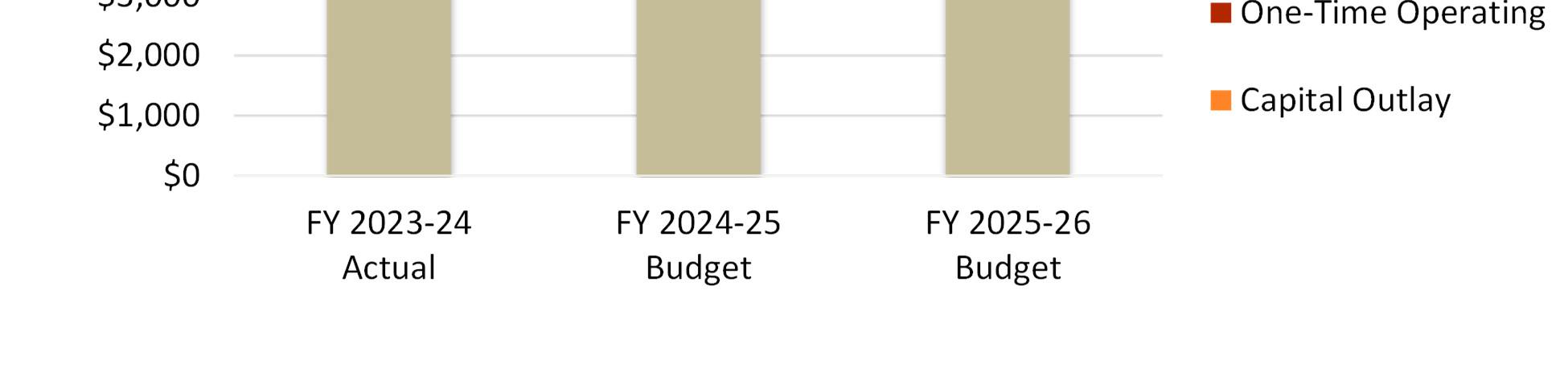
FY 2025-26 Change Summary
Personnel reflects a decrease of 2.6% due to:
o 8% decrease in PSPRS rates
o Reduced overtime budget to match actual utilization
Offset by:
o 2% COLA
o 0-2% Merit
o Slight increase in health insurance premiums
o New PANT Officer Position (1.0 FTE – Grant funded)
On-Going Operating reflects an increase of 3.1% due to:
o Axon Body Cameras/Tasers and redaction software increase – $53,140
o Axon Fleet 3 increase – $33,403
o Radios increase – $15,000
o Evidence Management System – $12,000
o PANT Officer Equipment – $3,420 (Grant funded)
(Including: Uniform: $2,000; Training: $1,000; Taser Cartridges, Ammo, OC Spray: $420)
Offset by:
o Reallocation of facilities maintenance costs to Public Works – $77,920
o Reallocation of pre-employment testing costs to Human Resources – $12,000
One-Time Operating:
o PANT Officer Equipment – $11,815 (Grant funded)
(Including: Radio & accessories: $3,700; Taser & holder: $1,880; Rifle & mags: $1,410; Handgun & mags: $1,120; Ballistic vest: $1,100; Rifle plate vest: $800; Body cam mount: $700; Medical supplies: $400; Badges: $380; Keys, traffic vest, ID card, fingerprint pad, citation/warning book, flashlight: $325)
Capital:
o None
Police Department Summary
Police Funding Summary
Police Authorized FTEs





Mission
Our mission is to enhance the quality of life in the Town of Chino Valley by providing efficient, reliable, and responsive services that support a safe, welcoming, and thriving community. We are dedicated to maintaining parks and facilities that encourage healthy lifestyles and community engagement, ensuring the safety and functionality of Town facilities, and delivering high-quality fleet services to all departments. Through collaboration with citizens and developers, we aim to preserve the Town’s natural beauty, history, and western culture, while delivering essential services that prioritize public health, safety, and fiscal responsibility.
Program Descriptions

The Parks Maintenance Division is responsible for creating and maintaining parks for the citizens of the Town of Chino Valley. Each facility requires the maintenance of turf, foliage, shrubs, trees, aggregate, playground equipment, irrigation systems, and other park amenities, to provide a safe and convenient recreation experience for both adults and children participating in organized sports or just a casual location for the family seeking to experience the beauty of Chino Valley.
The Facilities Maintenance Division is responsible for maintenance services including scheduled and preventive maintenance, in-house remodeling projects and divisional moves. The Facilities Department is responsible for all janitorial services, which include 30 public restrooms, cleaning and vacuuming all floors, trash removal, lighting, alarm systems, HVAC repair, roofing, painting, carpentry, plumbing, pest control, monthly and annual fire extinguisher inspection and monthly filter changes in all HVAC units. The Facilities Department is on call 24 hours a day.
The Fleet Maintenance Division provides maintenance and repair services to the Town of Chino Valley Fleet assets. Fleet Maintenance provides services to Police Department, Senior Center, Recreation Aquatics, Roads Department, Facilities Group, Public Works and Engineering, Library, MIS, Development Services, and Town Hall. Assets range from small engines and UTV’s to motor graders and heavy trucks.
The Engineering Division provides administrative oversight and support to the Streets, Fleet Maintenance, Parks Maintenance, Facilities Maintenance, and Utilities Divisions. The Engineering Division provides professional engineering services for all public improvements within the Town of Chino Valley and provides engineering advice to the Town Council. They are responsible for the delivery of the capital improvement program, review, and oversight of private and public
development / construction projects. In addition, this department represents the Town of Chino Valley on various regional technical committees such as the Central Yavapai Metropolitan Planning Organization (CYMPO), and the Regional Utility Coordinating Committee (RUCC).
The Streets Division takes a proactive stance to citizens needs by maintaining 158 miles of paved, chip sealed or dirt streets including, pothole repair, culvert and drainage maintenance, road grading, mowing, trash pickup. The Streets Division also performs tree trimming along the Town right of way, repair and replacement of Town signage, and light construction of new streets.
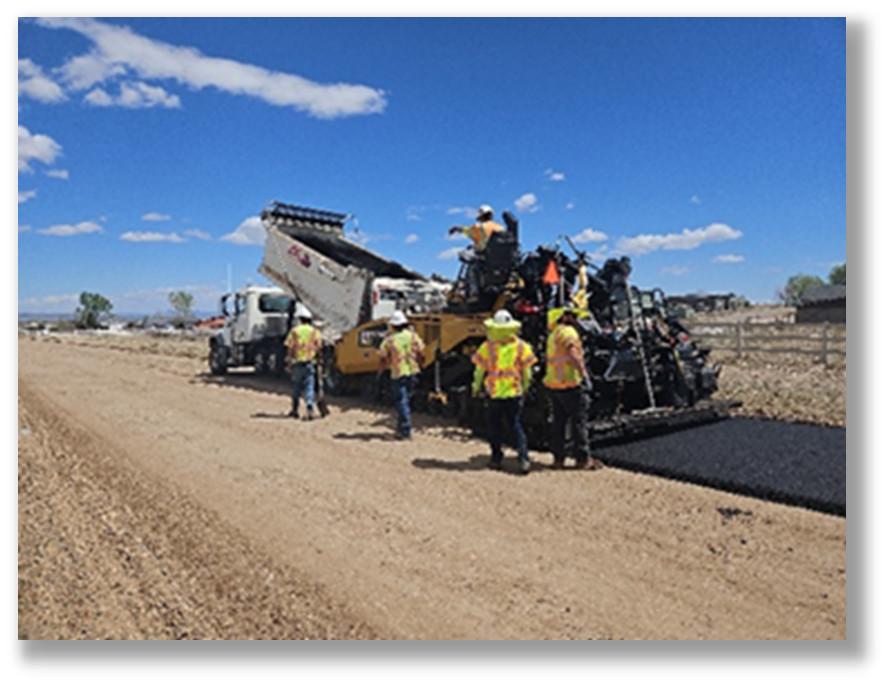
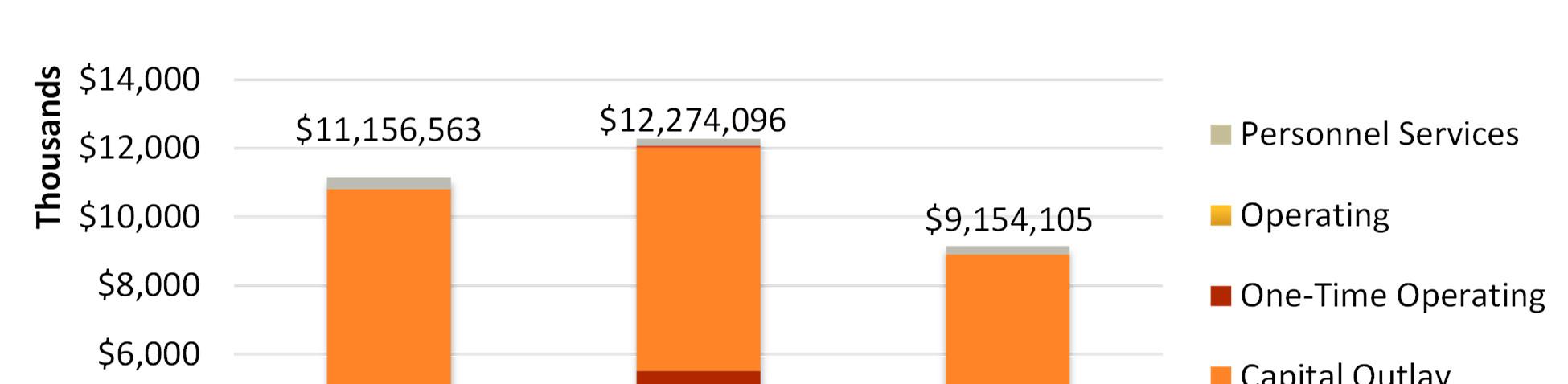
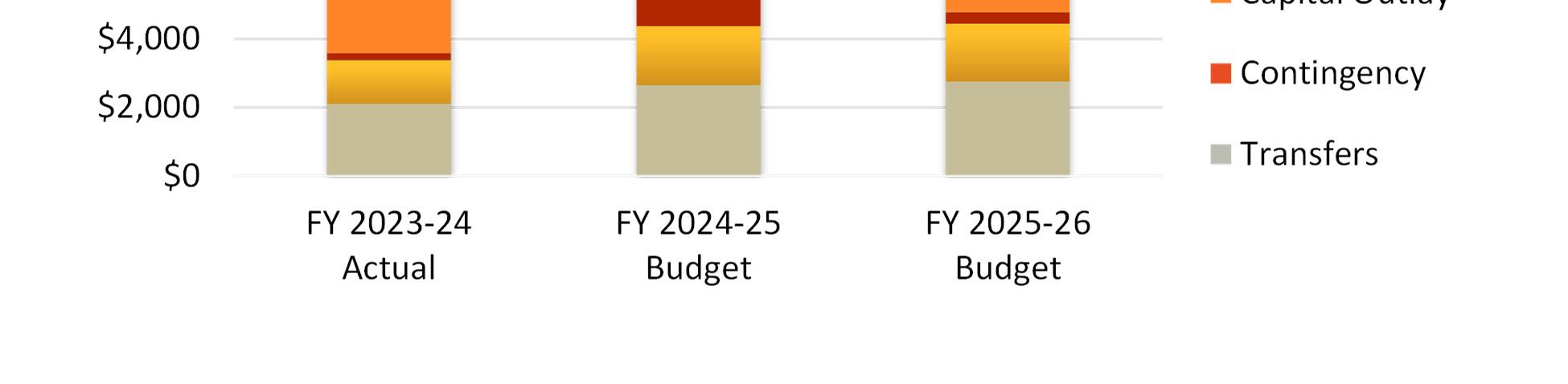
FY 2025-26 Change Summary
Personnel reflects an increase of 4.0% due to:
o 2% COLA
o 0-2% Merit
o Slight increase in health insurance premiums
On-Going Operating reflects a decrease of 2.0% due to:
o Reduction of engineering and surveying services to better match actual utilization - $116,000
Offset by:
o Reallocation of facilities maintenance costs from Police – $77,920
One-Time Operating:
o Integrated Utility Master Plan – $189,643 (Rollover from FY 2024-25)
o Engineering Code Changes – $150,000
Capital:
o Chip Seal Projects – $3,000,000
o Yavapai Drainage Projects – $450,000
o Parking Lot Maintenance – $175,000 (Partial rollover from FY 2024-25 of $75,000)
o Skid Steer with Milling/Profiler Head – $150,000
o Dump Truck – $140,000
o Asphalt Recycler – $110,000
o Annual Roofing Program – $30,000
o Annual HVAC Replacements – $30,000
o Fleet Building Remodel – $18,000
o Surge Protection Program – $15,000
o Library Tile/Blinds – $10,000
Transfers:
o Transfer from HURF to Streets Capital Improvement – $250,000 North Road 1 East Street Improvements
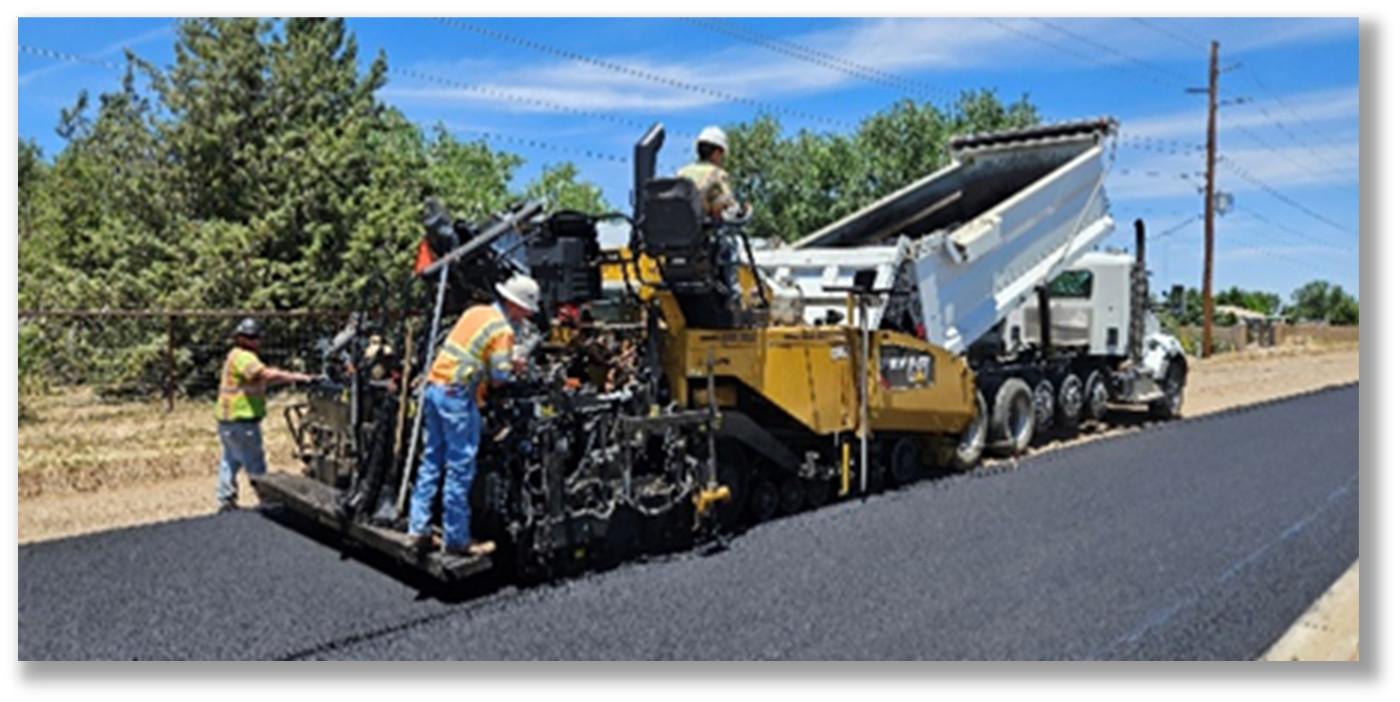
Public Works Department Summary
Public Works Funding Summary
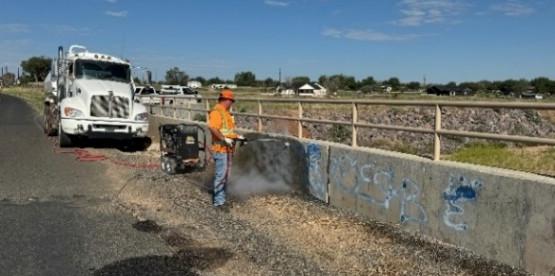

Graffiti Removal
Authorized FTEs



Public Works Department - Utilities
Mission
The Water Division and its employees are committed to delivering the highest quality water that meets or exceeds all federal and state requirements to every customer at fair and reasonable rates. We remain vigilant in meeting the challenges of protecting our sole water source that is the heart of our community, our way of life and our children’s future. And securing the water resources necessary to serve the community into the future.
The Town of Chino Valley Wastewater Collection and Treatment facility (WWTP) is dedicated to collecting and treating wastewater within the Town of Chino Valley in a manner that meets or exceeds federal and state regulations while placing the highest priority on courteously serving the public and protecting the environment.
Program Descriptions
The Water Division is responsible for the day-to-day operations of public water in Chino Valley which includes customer service, administration, operations and maintenance, project planning and implementation, and policy development, while ensuring the Town of Chino Valley is compliant with State and Federal regulations. The Town has two water tanks and has the capacity to store over one million gallons of water for fire protection. The predominate area for water service (demand) is the Road 2 North corridor along with the Bright Star and Highlands Ranch subdivisions. The Town has 1,194 metered accounts for water service. The Town is responsible for maintaining the water supply and distribution system for its water customers. The Town operates 2 active wells and has 22.8 miles of water mains. The Town is not the only provider of water in the community. Currently, 6 other water companies provide services to the citizens of Chino Valley.
The Wastewater Division conducts utility location services, system flushing, and inspections and maintenance for the wastewater collection system and wastewater treatment plant. The Town took over the operation of the one half million gallon per day wastewater treatment plant on April 1, 2015.
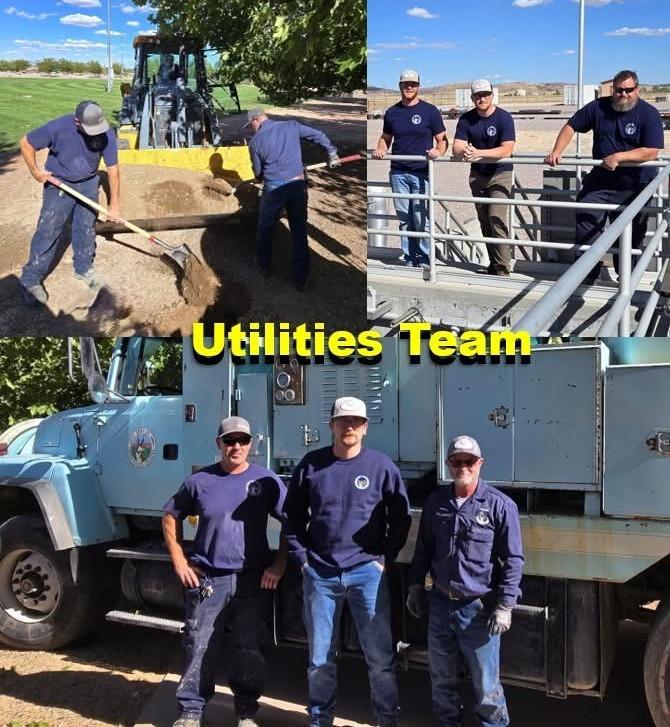


The Town has 2,601 active wastewater accounts and maintains approximately 38 miles of wastewater collection lines to service those accounts. The current plant has the capacity to treat over 500,000 gallons of wastewater per day for recharge. The predominant area for sewer service is the Road 2 North corridor along with the Chino Meadows, Bright Star, and Highlands Ranch subdivisions.
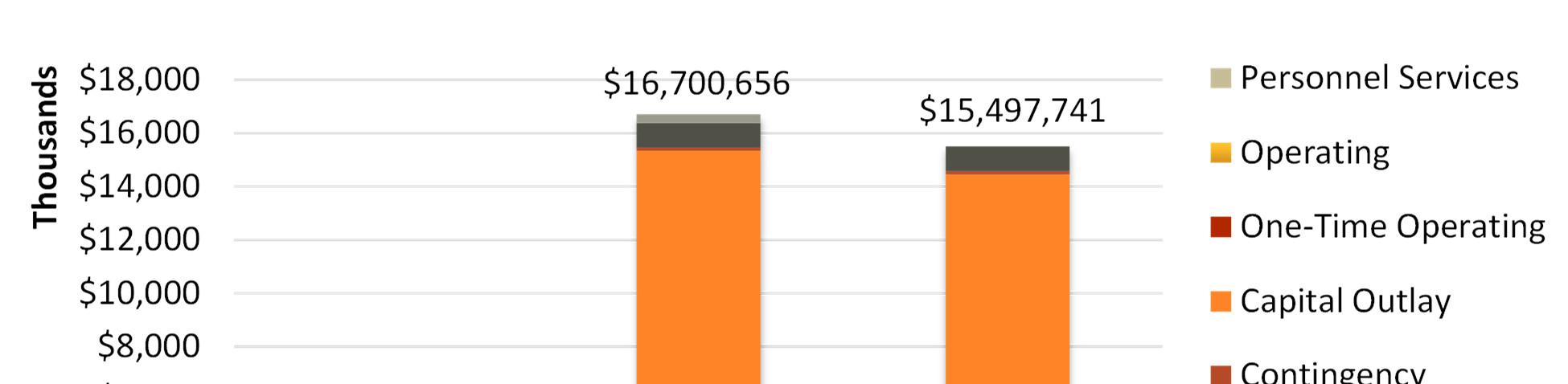
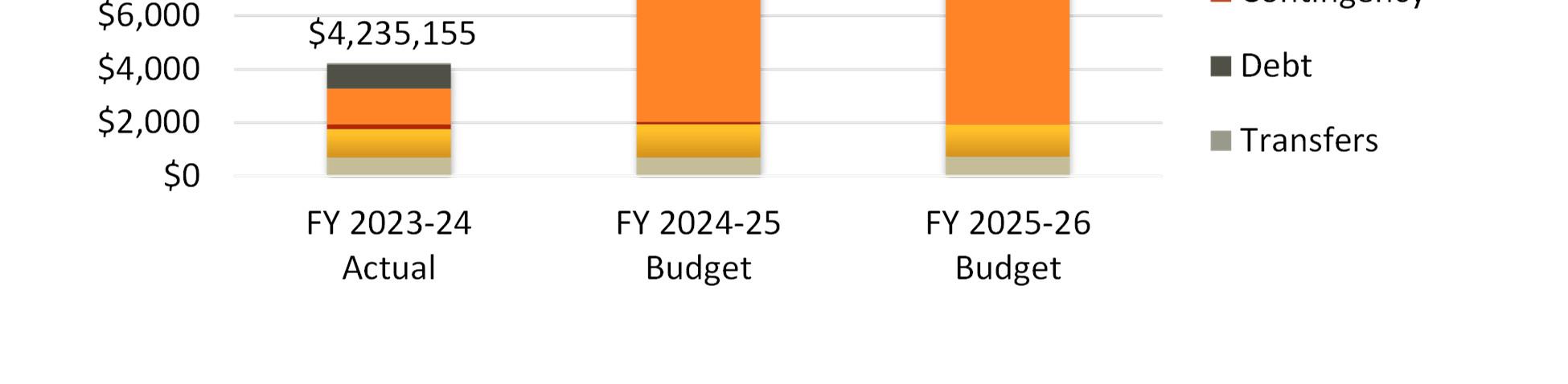
FY 2025-26 Change Summary
Personnel reflects an increase of 4.7% due to:
o 2% COLA
o 0-2% Merit
o Slight increase in health insurance premiums
On-Going Operating reflects a decrease of 4.0% due to:
o Reduction of contract and support services for the removal of external GIS services – $50,000
One-Time Operating:
o None
Capital:
o Plant Expansion – $9,174,755
o New Well and Pump - Design – $2,000,000
o Vactor Truck – $600,000
o Plant Expansion Engineering – $530,686 (Rollover from FY 2024-25)
o Fill Station Improvements – $175,000
o Lift Station Crane/Pump Guide Rails – $40,000
Transfers:
o None
Public Works - Utilities Department Summary
Public Works - Utilities Funding Summary
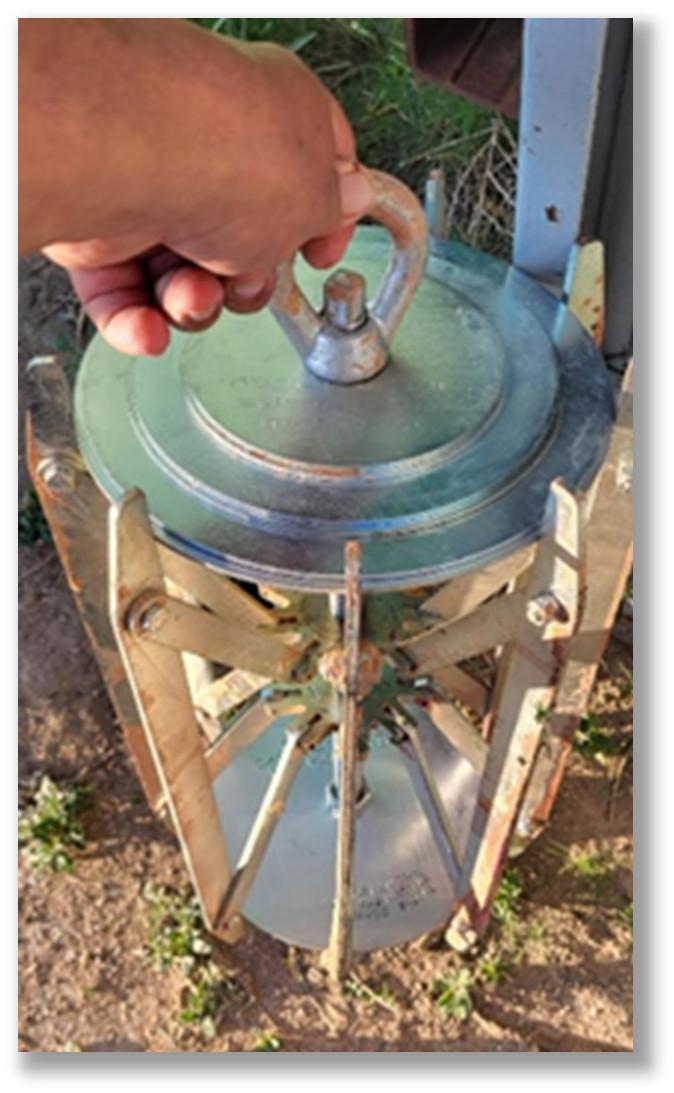
Public Works - Utilities Authorized FTEs
Town Clerk Department


Town Clerk Department
Mission

The Town Clerk’s Office looks forward to the future and treasures the past of the Town of Chino Valley by accurately recording the actions and proceedings of the Town Council, maintaining and preserving the Town’s official records, conducting fair and impartial Town elections, and serving internal and external customers with big-town efficiency and small-town friendliness.
Program Descriptions


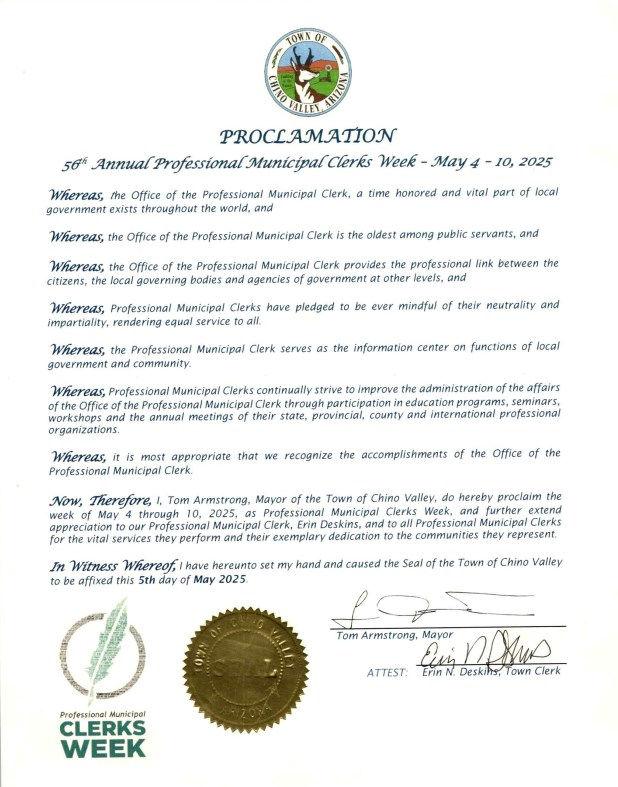

The Town Clerk's Office provides the following services for the Town:
• Keeps a true and correct record of all business transacted by the Town Council and Council-appointed commissions, boards, committees, and subcommittees.
• Prepares meetings, agenda packets, and minutes, and administers the Town’s compliance under the Open Meeting Laws.
• Administers all election-related services in accordance with state and federal law.
• Administers public records and the Town’s records management program.
• Provides support services for Town staff and the public related to public information, Town Codes, liquor licenses, business licenses, public records requests, citizen complaints, local legislation, web pages, and notary services.
Town Clerk’s Office receives proclamation from Mayor Armstrong for Professional Municipal Clerks Week
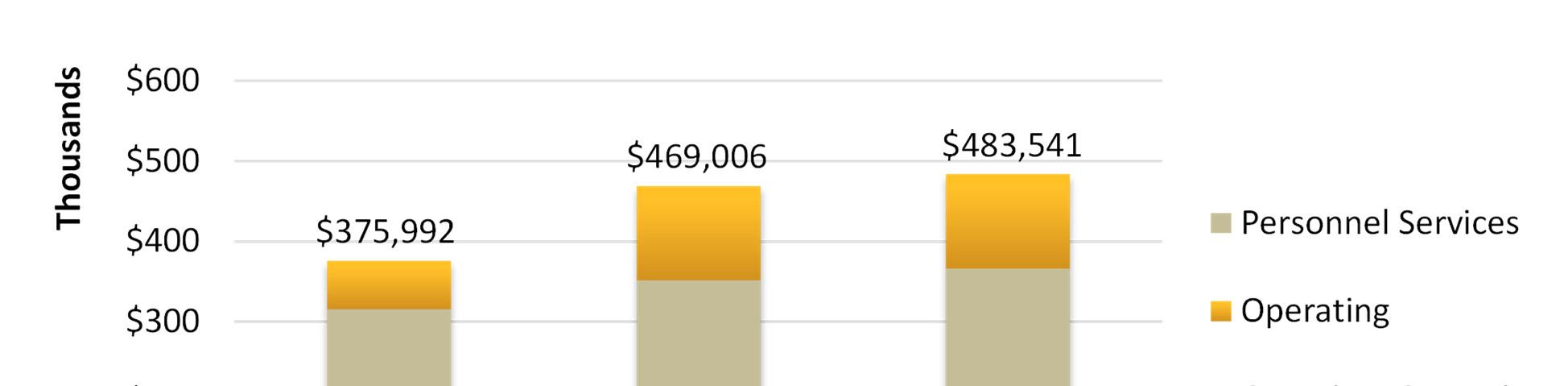
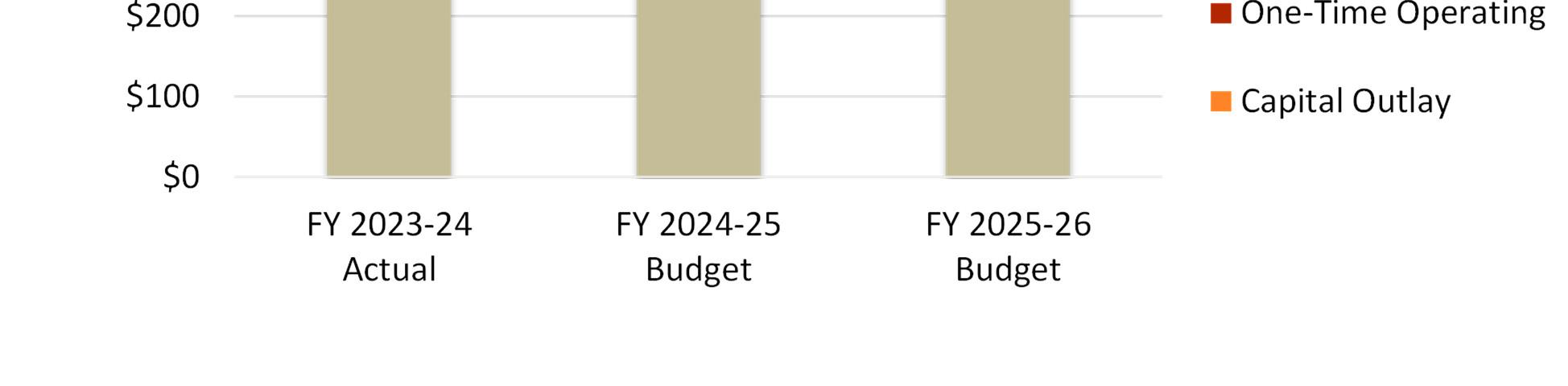
FY 2025-26 Change Summary
Personnel reflects an increase of 4.1% due to:
o 2% COLA
o 0-2% Merit
o Slight increase in health insurance premiums
On-Going Operating reflects a 0% change
One-Time Operating:
o None
Capital:
o None
Town
Clerk Department
Town Clerk Department Summary
Town Clerk Funding Summary
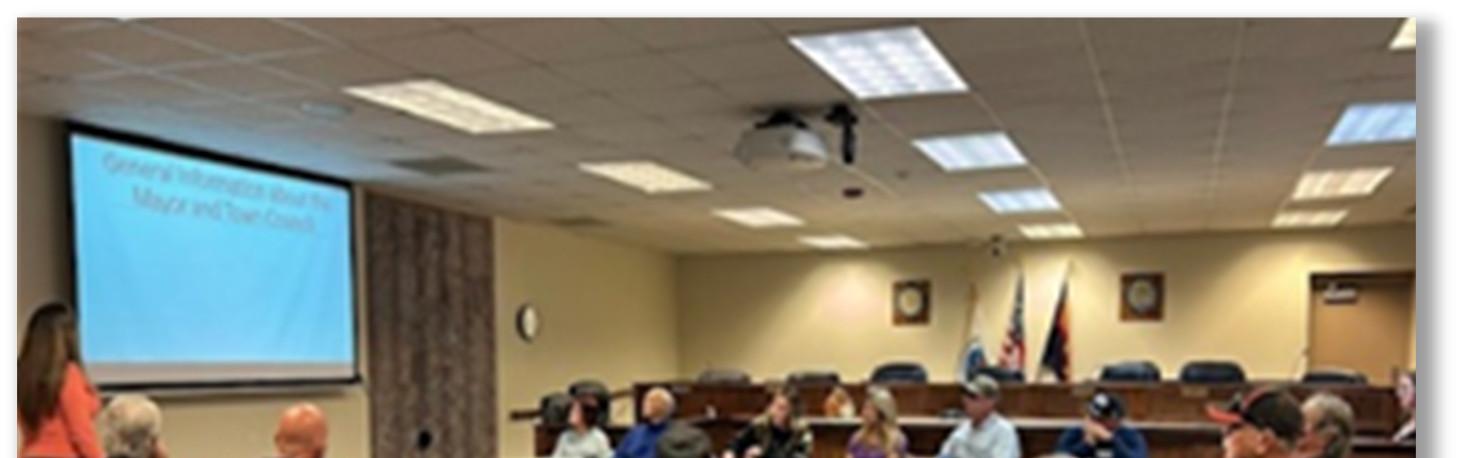

Town Clerk Department
Town Clerk Authorized FTEs
Town Clerk Erin Deskins leading the first annual potential Council candidate open house
Town Manager Department


Town Manager Department
Mission

The Mission of the Town Manager’s Department is to administer the goals, policies and objectives established by the Town Council in order to provide exceptional public service to the citizens of Chino Valley, in the most cost effective, efficient means possible that cherishes and preserves its historic rural lifestyle and supporting Economic Development for the betterment of our community.
Program Descriptions
The Town Manager is the head of the administrative branch of the Town government and as the Chief Operating and Administrative Officer of the Town, has overall responsibility for the proper conduct of all procedures, policies and operations of all Town departments, as well as the effective and efficient operation and provision of services and products to the community.
The Town Manager’s office:
• Assures that all laws, regulations, codes and guidelines are adhered to relating to Town government and services, budget and expenditure control.
• Performs liaison duties between Town Council and the operating and administrative departments.
• Coordinates with the Town Council to develop and implement short- and long-range goals for the Town.
• Coordinates with the Town Council, Finance Director and Departments to develop and administer the Budget.
• Is responsible for economic and community development.
• Represents the Town in dealing with other governmental jurisdictions, agencies, private firms, professional groups, community stakeholders, the media and general public.


Town Administration Public Information Economic Development
Town Manager Terri Denemy
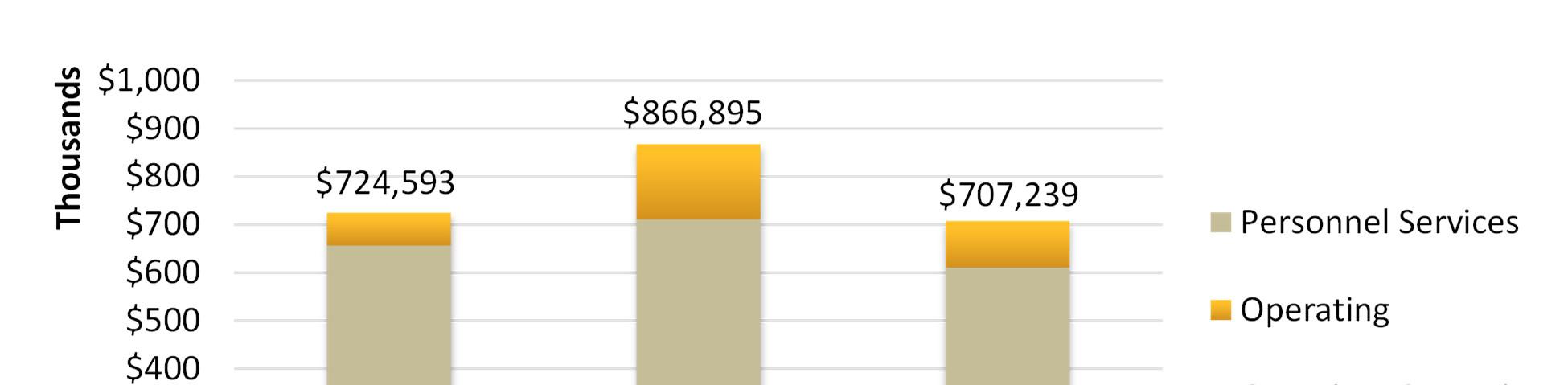
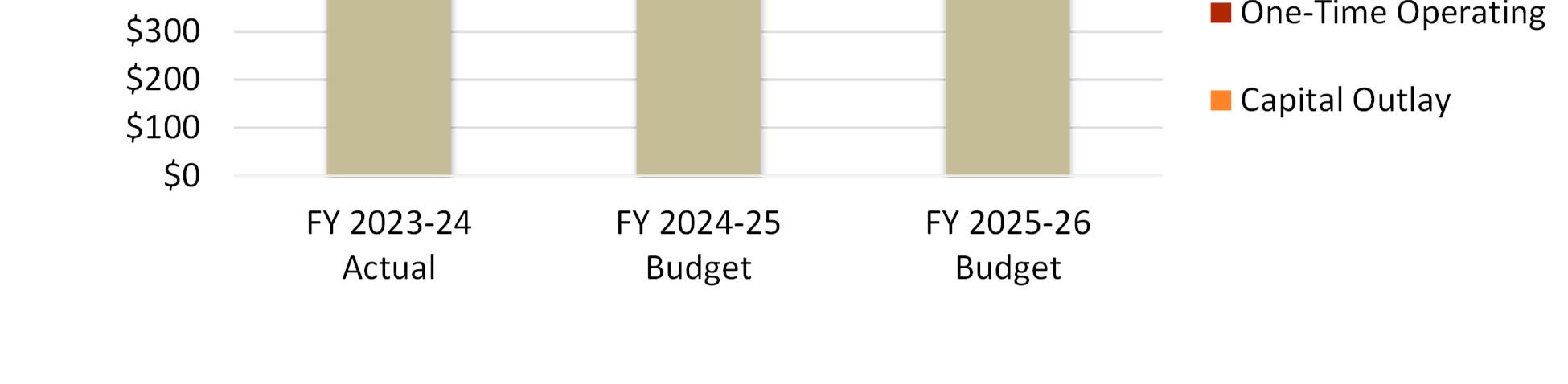
FY 2025-26 Change Summary
Personnel reflects a 14.2% decrease due to:
o Removal of budget for Assistant Town Manager
o Change of the Assistant to the Town Manager to the Executive Analyst
o Change of the Senior Administrative Technician to the Executive Assistant
Offset by:
o 2% COLA
o 0-2% Merit
o Slight increase in health insurance premiums
On-Going Operating reflects 37.8% decrease due to:
o Contract Public Information Officer decrease – $52,000
o Economic Development travel and training decrease – $7,000
One-Time Operating:
o None
Capital:
o None
Town Manager Department
Town Manager Department Summary
Town Manager Funding Summary
Town Manager Authorized FTEs
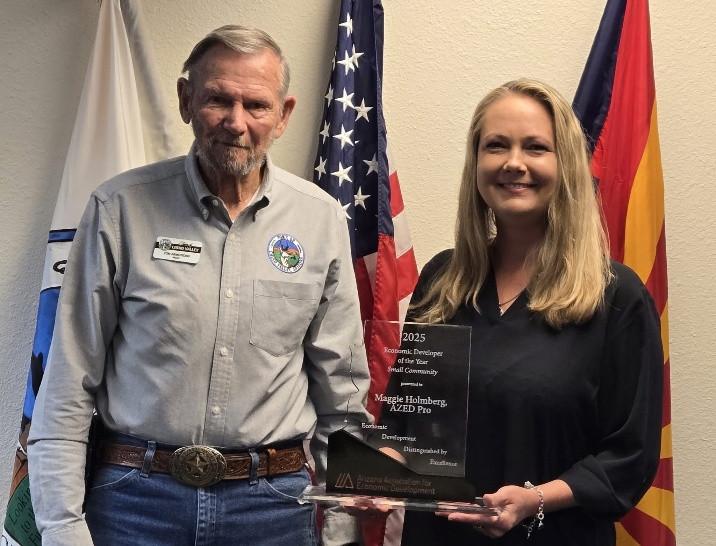


Armstrong and Economic Development and
Manager Maggie
celebrating the 2025 Economic Developer of the Year Award for Small Communities
Mayor
Intergov
Holmberg
Debt Obligations
Issuing Debt
The issuance of short-term debt is restricted to projects or assets that cannot be initially financed through long-term debt. Long-term debt is reserved for capital projects and assets that the Town cannot fund through current revenues or available resources. The repayment period of each debt issuance will be aligned, whenever possible, with the estimated useful life of the associated capital project or asset.
Long-term debt financing will be considered when non-recurring capital improvements are needed, especially when future residents will benefit from the improvement. In utilizing long-term debt, the Town is committed to sound financial management by conservatively projecting the revenue sources for debt repayment, setting the financing term to not exceed the asset's useful life, and ensuring a positive cost-benefit for the project, inclusive of all interest expenses.
Amount of Debt Issuances
The Town will adhere to debt limitations established by Arizona State statutes and bond ordinances. Under the Arizona Constitution, a municipality may issue general obligation bonds up to 6% of assessed property valuation for general municipal purposes. Additional general obligation bonds, up to 20% of assessed valuation, are permitted for specific purposes, including water and sewer infrastructure, recreational facilities, and open space initiatives.
For statutory purposes, the Town’s outstanding bonds are not classified as general obligation bonds subject to these limits, as they are secured by excise taxes rather than property taxes. This distinction allows the Town to meet its funding needs while remaining in compliance with statutory debt limitations.
Legal Debt Calculation
Note: Currently, the Town cannot issue general obligation debt as it does not have a property tax which would require approval of the Town voters to implement.



Current Bond Obligations
Governmental Funds Debt Schedules
Purpose: This revenue bond was to refund the Series 2010, Series 2010 Refunding, and Series 2016 bonds.
Refunding Obligations 2021
DatePrincipalInterestTotal
Jul-25653,944127,156781,100
Jan-26110,807110,807
Jul-26629,724110,807740,531
Jan-2795,06495,064
Jul-27678,16495,064773,228
Jan-2878,11078,110 Jul-28726,60578,110804,715
Jan-2959,94559,945
Jul-29750,82559,945810,770
Jan-3041,17441,174
Jul-30799,26541,174840,439 Jan-3121,19321,193
Jul-31847,70621,193868,899 Total 5,086,233939,7426,025,975
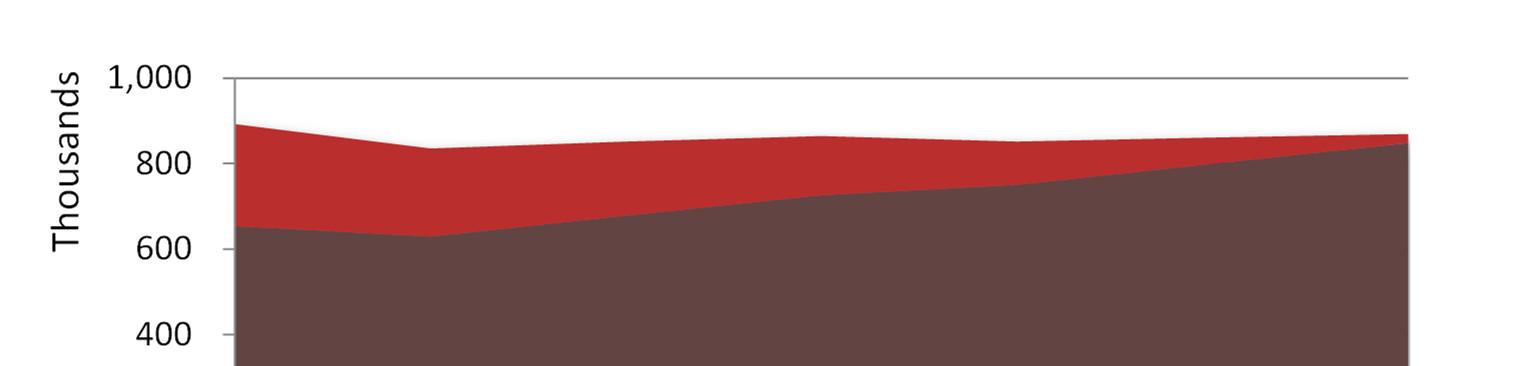
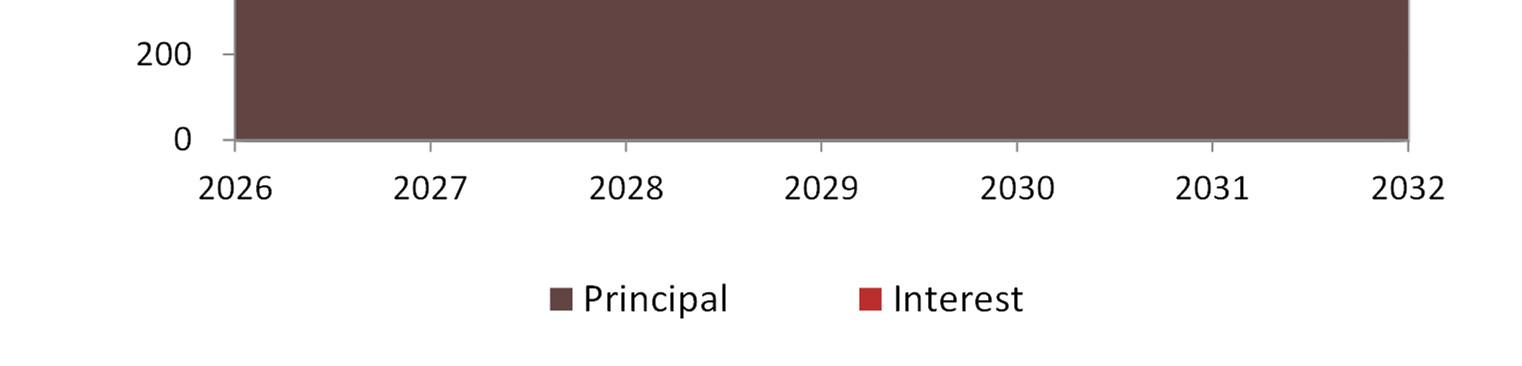
Purpose: This revenue bond was to finance the new police building.
Police Building 2021
DatePrincipalInterestTotal
Jul-25175,000114,725289,725
Jan-26112,100112,100
Jul-26175,000112,100287,100
Jan-27109,475109,475
Jul-27175,000109,475284,475
Jan-28105,975105,975
Jul-28175,000105,975280,975
Jan-29101,600101,600
Jul-29200,000101,600301,600
Jan-3097,60097,600
Jul-30200,00097,600297,600
Jan-3193,60093,600
Jul-31200,00093,600293,600
Jan-3288,60088,600
Jul-32220,00088,600308,600
Jan-3384,20084,200
Jul-33230,00084,200314,200
Jan-3479,60079,600
Jul-34240,00079,600319,600
Jan-3574,80074,800
Jul-35250,00074,800324,800
Jan-3669,80069,800
Jul-36260,00069,800329,800
Jan-3764,60064,600
Jul-37270,00064,600334,600 Jan-3859,20059,200
Jul-38280,00059,200339,200 Jan-3953,60053,600
Jul-39290,00053,600343,600 Jan-4047,80047,800 Jul-40300,00047,800347,800 Jan-4141,80041,800 Jul-41315,00041,800356,800 Jan-4235,50035,500 Jul-42325,00035,500360,500 Jan-4329,00029,000 Jul-43340,00029,000369,000 Jan-4422,20022,200 Jul-44355,00022,200377,200 Jan-4515,10015,100 Jul-45370,00015,100385,100 Jan-467,7007,700 Jul-46385,0007,700392,700
Total 5,730,0002,902,4258,632,425
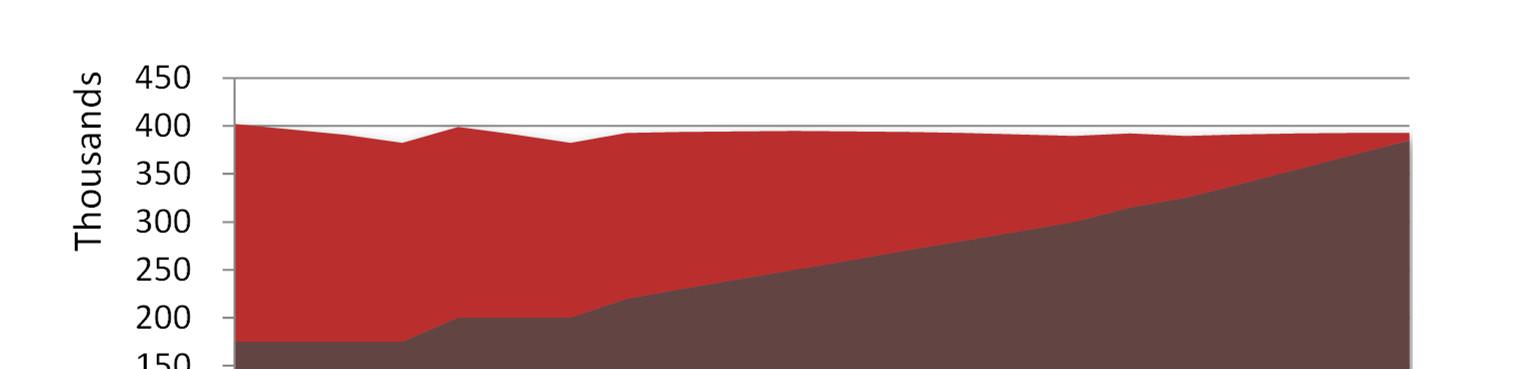
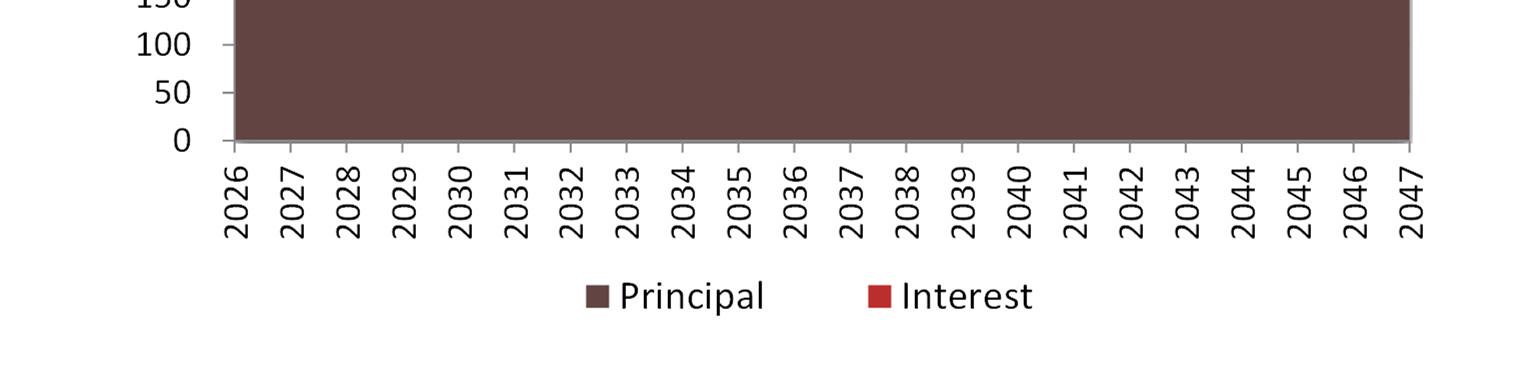
Enterprise Funds Debt Schedules
Purpose:Thisrevenuebondwastorefinancepriorbondsrelatedtothewatersystem.
Refunding Obligations 2021
DatePrincipalInterestTotal
Jul-2521,0564,09425,150
Jan-263,5683,568
Jul-2620,2763,56823,844
Jan-273,0613,061
Jul-2721,8363,06124,897
Jan-282,5152,515
Jul-2823,3952,51525,910
Jan-291,9301,930
Jul-2924,1751,93026,105
Jan-301,3261,326
Jul-3025,7351,32627,061
Jan-31682682
Jul-3127,29468227,976
Total 163,76730,258194,025


Purpose:ThisloanfromtheWaterInfrastructureFinanceAuthorityofArizona(WIFA)wasforimprovementstothesewersystem.
DatePrincipalInterestTotal
Jul-25102,2392,858105,097 Jan-261,4491,449
Jul-26105,0591,449106,508
Total 207,2985,756213,054


WIFA Loan 2007
Purpose:ThisloanfromWIFAwasforimprovementstothesewersystem.
WIFA Loan 2008
DatePrincipalInterestTotal
Jul-25319,58413,873333,457
Jan-269,3769,376
Jul-26328,5779,376337,953
Jan-274,7534,753
Jul-27337,8244,754342,578
Total 985,98542,1321,028,117


Purpose:ThisloanfromWIFAwasforimprovementstothesewersystem.
DatePrincipalInterestTotal
Jul-25148,68416,369165,053
Jan-2614,87514,875
Jul-26151,67314,875166,548
Jan-2713,35113,351
Jul-27154,72213,351168,073
Jan-2811,79611,796
Jul-28157,83211,796169,628
Jan-2910,21010,210
Jul-29161,00410,210171,214
Jan-308,5928,592
Jul-30164,2408,592172,832
Jan-316,9416,941
Jul-31167,5416,941174,482
Jan-325,2575,257
Jul-32170,9095,257176,166
Jan-333,5403,540
Jul-33174,3443,540177,884
Jan-341,7871,787
Jul-34177,8491,787179,636
Total 1,628,798169,0671,797,865 WIFA Loan 2014


Purpose: This loan from WIFA was for a sewer line extension and refinancing of the USDA loan.
WIFA Loan 2015
DatePrincipalInterestTotal
Jul-25177,02734,497211,524
Jan-2632,42232,422
Jul-26184,10832,422216,530
Jan-2730,26430,264
Jul-27191,47230,264221,736
Jan-2828,02028,020
Jul-28199,13128,020227,151
Jan-2925,68625,686
Jul-29207,09625,686232,782
Jan-3023,25923,259
Jul-30215,38023,259238,639
Jan-3120,73520,735
Jul-31223,99520,735244,730
Jan-3218,10918,109
Jul-32232,95518,109251,064
Jan-3315,37915,379
Jul-33242,27315,379257,652
Jan-3412,54012,540
Jul-34251,96412,540264,504
Jan-359,5879,587
Jul-35262,0439,587271,630
Jan-366,5166,516
Jul-36272,5246,516279,040
Jan-373,3223,322
Jul-37283,4253,322286,747
Total 2,943,393486,1753,429,568
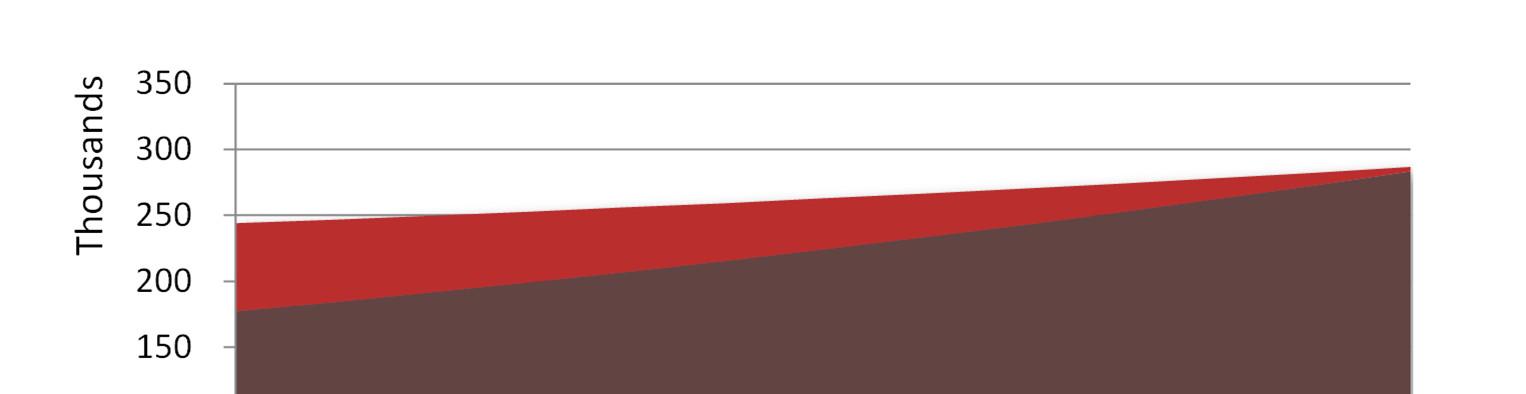
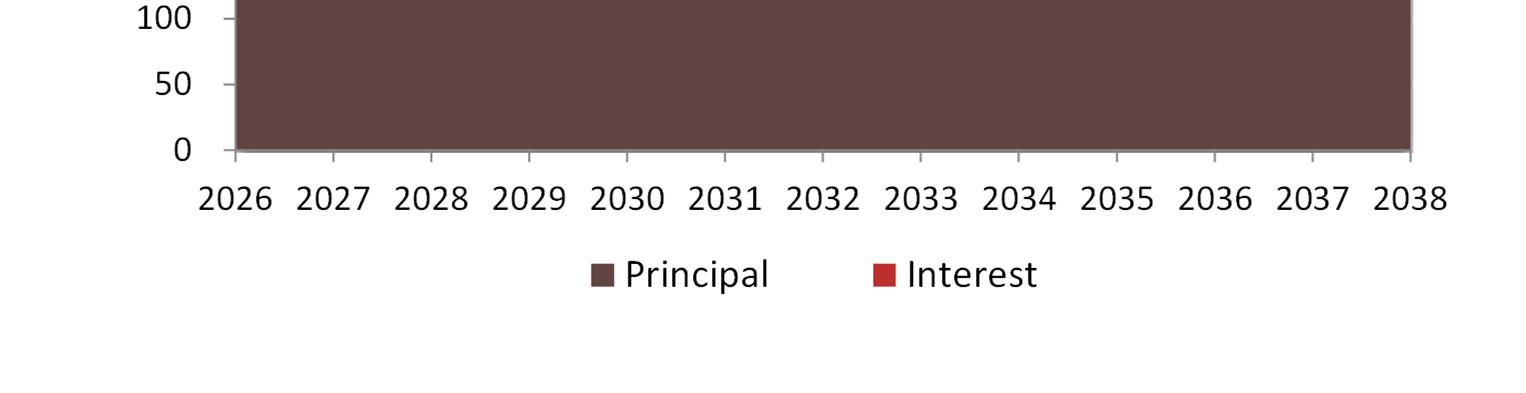
Purpose: This loan from WIFA was for a sewer line extension.
WIFA Loan 2017
DatePrincipalInterestTotal
Jul-2513,0972,37715,474
Jan-262,2192,219
Jul-2613,4142,21915,633
Jan-272,0562,056
Jul-2713,7382,05615,794
Jan-281,8911,891
Jul-2814,0701,89115,961
Jan-291,7211,721
Jul-2914,4101,72116,131
Jan-301,5471,547
Jul-3014,7581,54716,305
Jan-311,3681,368
Jul-3115,1141,36816,482
Jan-321,1861,186
Jul-3215,4791,18616,665
Jan-33999999
Jul-3315,85399916,852
Jan-34807807
Jul-3416,23680717,043
Jan-35611611
Jul-3516,62961117,240
Jan-36410410
Jul-3617,03141017,441
Jan-37204204
Jul-3716,93220517,137 Total 196,76132,416229,177
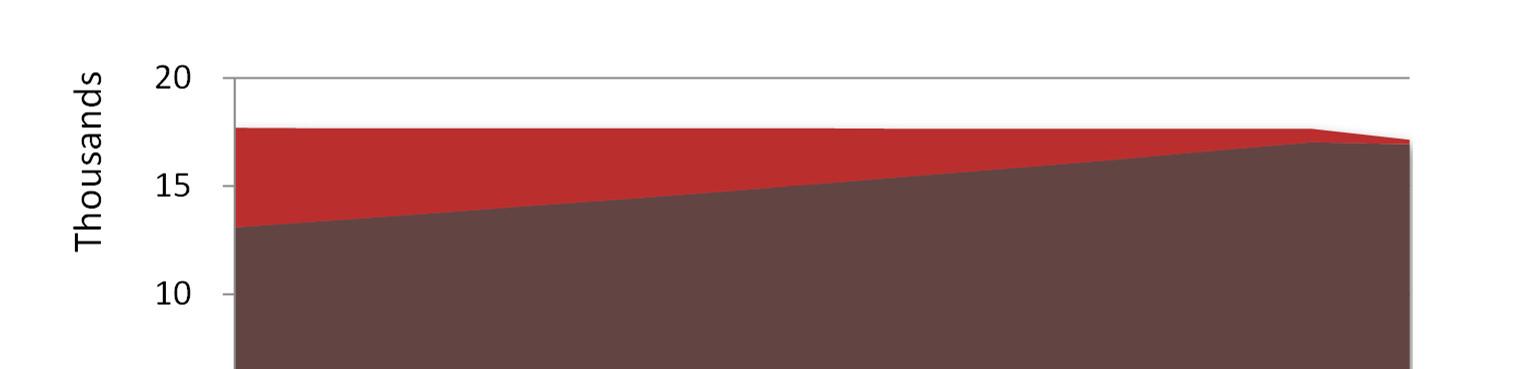
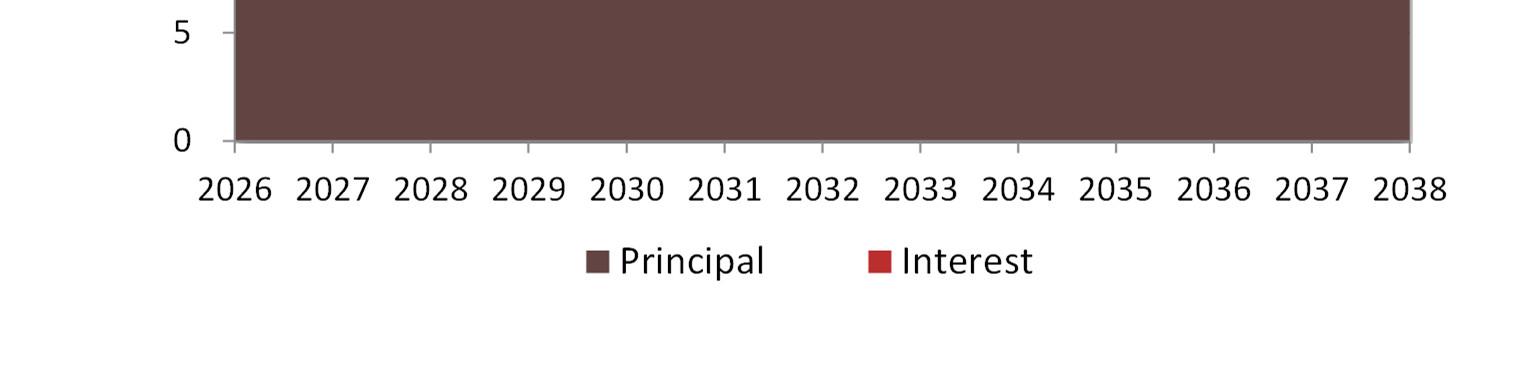
Capital Improvement Plan
Capital Improvement Plan
Overview
The Capital Improvement Plan (CIP) outlines the Town’s long-term capital investments over a five-year planning period. This process identifies essential facilities and infrastructure upgrades required to support the Town’s operations and deliver expected public services. Capital improvements generally include structures, buildings, site enhancements, equipment, or other significant assets with a useful life of at least five (5) years that serve public purposes.
The Town defines capital expenditures as projects valued at $50,000 or more, focused on creating new infrastructure or enhancing the capacity, efficiency, or lifespan of existing assets. While the expenditures planned for the first year are incorporated into the annual budget as the capital budget, the CIP process itself is ongoing. It plays a critical role in the Town’s overall management strategy, ensuring that capital planning aligns with community needs and long-term goals.
This section begins with an overview of the project selection, followed by the following:
Capital Program:
o Minor projects, vehicles, equipment: A summarized list by fund, detailing minor projects totaling $3,358,000 for FY 2025-26.
o Major projects 5-year schedule: A schedule outlining major projects, listed by fund and project, with projected costs for a five-year period, totaling $65,245,441.
Operating Impact: A summary by project, presenting the five-year operating impact of major projects.
Project Details: Detailed information on each major project included in the five-year schedule, including narrative descriptions, cost estimates, and anticipated operating costs or savings.
Process of Project Selection
Project Identification and Funding Process:


The Town’s Capital Improvement Plan (CIP) is developed through a collaborative process to identify, prioritize, and fund key capital projects that align with community needs and strategic objectives. Projects are identified by Town departments based on infrastructure needs, anticipated growth, and long-term service goals. Each department assesses potential projects according to factors such as public safety, operational efficiency, environmental impact, and regulatory requirements.
Citizen Involvement and Prioritization:
The Citizens’ Capital Improvement Program Advisory Committee (CIPCAC) plays an integral role in the CIP process. Comprising local residents, the CIPCAC reviews proposed projects and assists in prioritizing them based on criteria such as community benefit, urgency, and alignment with the Town’s goals. This committee offers a critical community perspective, ensuring that the Town’s capital priorities reflect resident values and needs.
Funding Sources and Allocation:
Once projects are identified and prioritized, funding sources are evaluated. Potential funding options include the Town’s general fund, bonds, grants, and other sources such as state and federal programs. The selection of funding sources depends on project scale, urgency, and feasibility, with larger initiatives often requiring a combination of funding streams. By aligning funding strategies with project timelines and goals, the Town ensures fiscal responsibility and sustainability in its capital investments.
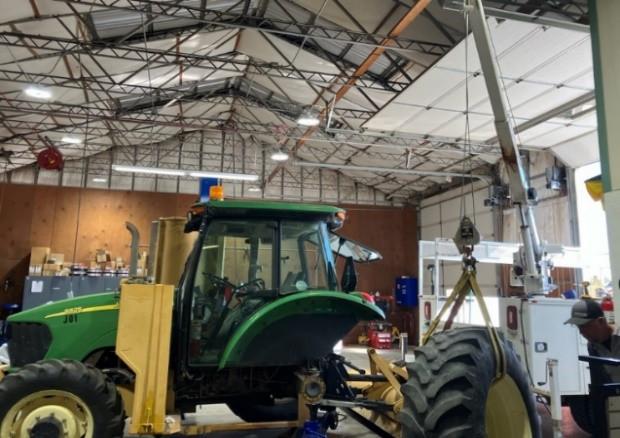

Repairs
Capital Program - Major Projects 5 Year Schedule
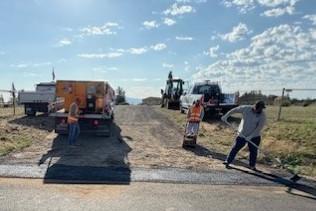

Paving Work on Reed Road
Operating Impact
All capital improvements have impact on the Town’s operating budget, either positively or negatively. Many CIP projects will incur ongoing costs, influencing available resources for future budgets. Typical annual costs include personnel, utilities, and maintenance. Conversely, some capital projects may positively affect the budget by generating new revenue, reducing utility consumption, or streamlining Town services through automation. Operating impacts for each project are estimated using historical data from similar assets and any project-specific details. The table below presents the major CIP projects with anticipated effects on future operating budgets. On each major project’s detail page in the following section, the expenses or savings are listed by type.
Capital Program - Major Projects Operating Impact
Capital Improvement Plan – Project Details
Division
Title
Miscellaneous Projects at Old Home Manor
ThisisabudgetplaceholderformiscellaneouscapitalprojectsatOldHomeManorthatmayariseduringthe fiscalyear.Thisallocationisintendedtoprovideflexibilityinaddressingunforeseenneedsoropportunities incapitalimprovementthatarenotcurrentlyanticipated.Itisimportanttonotethatwhilethisplaceholder allowsustoberesponsiveandagile,anyprojectsinitiatedunderthisallocationwillneedtodemonstratea potentialforrevenuegenerationorcostrecovery.WeanticipatetheseprojectswillbecenteredaroundOld HomeManorwheretheremaybelandsalesordevelopmentthatprovidesrevenueforexpansionofutilities or other improvements.
Thisapproachensuresthatwhilewearepreparedtoinvestinnecessarycapitalprojectsthatenhanceour infrastructureorservices,wealsomaintainafocusonfinancialsustainability.Byrequiringthatthese projectshavearevenue-generatingcomponent,weensurethatourinvestmentsareeconomicallyviableand contributetothelong-termfinancialhealthofourorganization.Thisstrategicallocationwillbemonitored closely to ensure that it aligns with our broader fiscal policies and community goals.

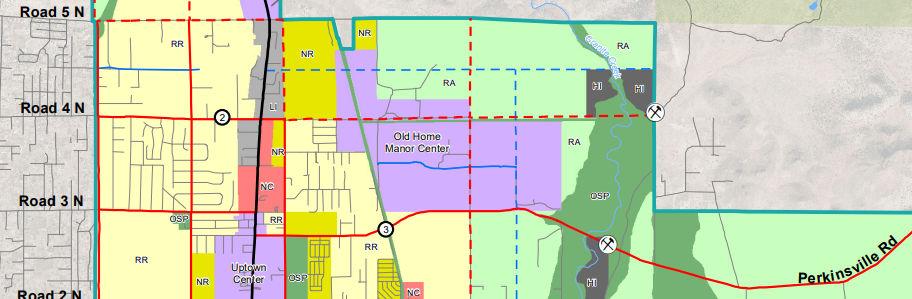
Estimated Expenses
Miscellaneous projects
Other Estimated Costs (Savings): To be determined if projects identified
Division Engineering/Streets
Title Type
Justification
Thisitemisforgeneraldrainageimprovementprojectswithinourjurisdiction.Theseprojectsarecrucialfor managingstormwatereffectively,preventingflooding,andensuringthesafetyandlongevityofour infrastructure.FundingfortheseinitiativeswillbesourcedfromanallocationprovidedtotheTownby Yavapai County, collected through property taxes from the residents in our jurisdiction.
Oneidentifiedprojectthatwouldpotentiallyoccurwith$100,000ofthesefundsisaROWacquisition.The CountyhassponsoredanNRCSgrantforfloodprotectionandpreventionintheGraniteCreekWaterShed. ThetwomajorprojectsitesareabridgecrossingofGraniteCreekonPerkinsvilleRoadandadiversion channelofCemeteryDrawalongJuniperDr.ROWacquisitionmustbecarriedoutandpaidforbythe sponsoringagencies.Whiledonationsareexpected,theremaystillbesomelegalexpensesassociatedwith the acquisition. These include Title Searches, Environmental Assessments, and legal fees.

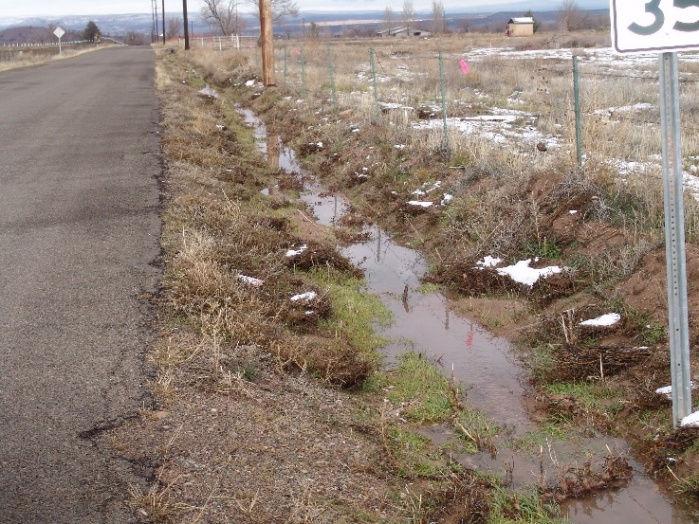
Capital Improvement Plan – Project Details
Thepooldeck,constructedin2005,hasexperiencedsignificantwearandtearovertheyearsduetoregular useandexposuretoharshenvironmentalconditions.Thecurrentstateofthedeckposesseveralsafety hazardstopoolpatronsandstaff.Inlightofthesefindings,resurfacingthedeckiscriticaltoensuringthe continuedsafetyofallindividualswhoutilizethepoolfacility.Thedeckhasdevelopedvisiblecracksand chipsinmultipleareas.Theseimperfectionscreatetriphazards,particularlyforindividualswhomaybe distractedorunawareoftheunevensurface.Thecurrentdecksurfacehasbecomeincreasinglysmoothand wornovertime,leadingtoalackoftraction,especiallywhenwet.Thehighmoisturelevelsaroundthepool makethedeckpronetobecomingslippery,increasingthelikelihoodofslipsandfalls.Thisposesasignificant risktopatrons,particularlychildren,theelderly,andthosewithmobilitychallenges.Thiswasoriginally requested for FY 2024-25 but was moved to FY 2025-26.

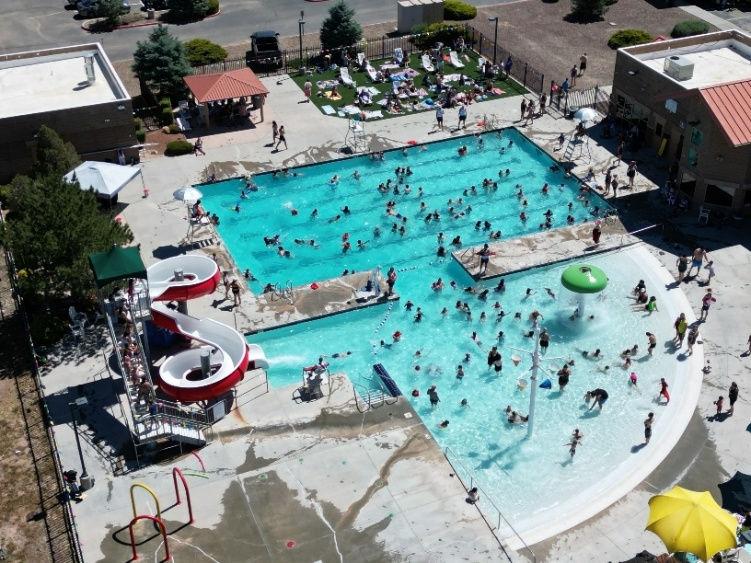
-
In2018,theRecreationDepartmentconvertedthetown'sonlyfull-sizebasketballcourtsintofourdualpurposepickleballcourts.Whilethesecourtswereintendedforbothbasketballandpickleball,the overwhelmingusebythepickleballcommunityhasmadeitchallengingforthegeneralpublictousethem forbasketball.Giventhehighdemandandsustainedinterestfromthepickleballcommunity,whichhaslong advocatedforadditionalfacilities,thereisaclearneedformorededicatedcourts.TheChinoValley PickleballAssociationiscommittedtopartneringwiththetowntobuild,maintain,andfacilitatethe expansion of pickleball facilities.
InFY2024-25thisitemwasputinthebudget,butwascontingentongrantfundingandcontributionswhich didn’tmaterialize.Thisyear,dedicatedfundsarebeingallocatedtohelpinitiatetheprocess.Futureyear funding is still to be determined.

Park Improvements - Phase I
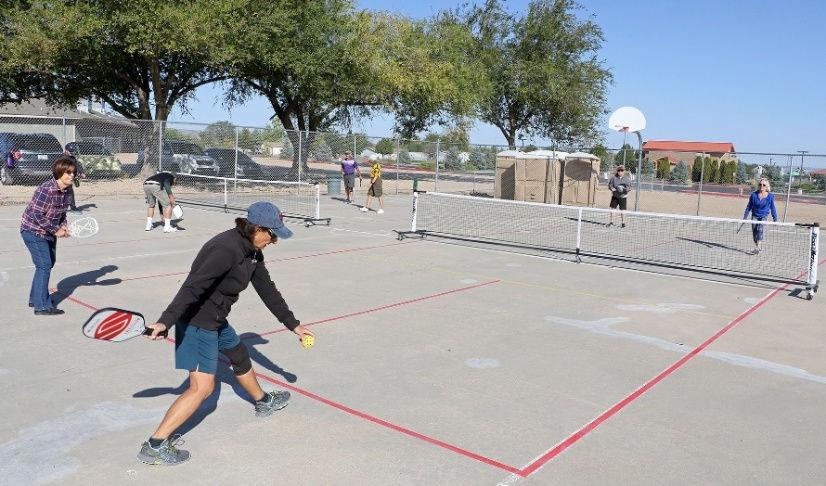
Capital Improvement Plan – Project Details
Title Type
Justification
Field Lighting (Field 4/Playround)
Funding source to be determined
Ouryouthsportsareincreasinginparticipantsyearly.Theneedformorelightedfieldspaceisamust. Currently our playground has zero lighting and is a safety hazard for children at night.

Estimated Expenses
Field 4/Playground Lighting
Other Estimated Costs (Savings):
Department
Parks Maintenance PriorityN/A
Parks Maintenance Building Funding source to be determined
CurrentlyParksandFacilitieshavenohome.Theyusetheannouncer’sboothattheCommunityCenter Park,CommunityCenter,AquaticsBuilding,andvariousshedsaroundTownasoffices,storage,or workspaces.Thepark’syarddoesnothaveelectricityorwatertoconductbusiness.WiththeParks, Facilities,andAquaticsMaintenancemerge,abuildingisrequiredtomakeahomeforall.Withthe continuing addition of employees, parks and facilities do not have enough room for employees.

Parks Maintenance Building - Design Building - Construction
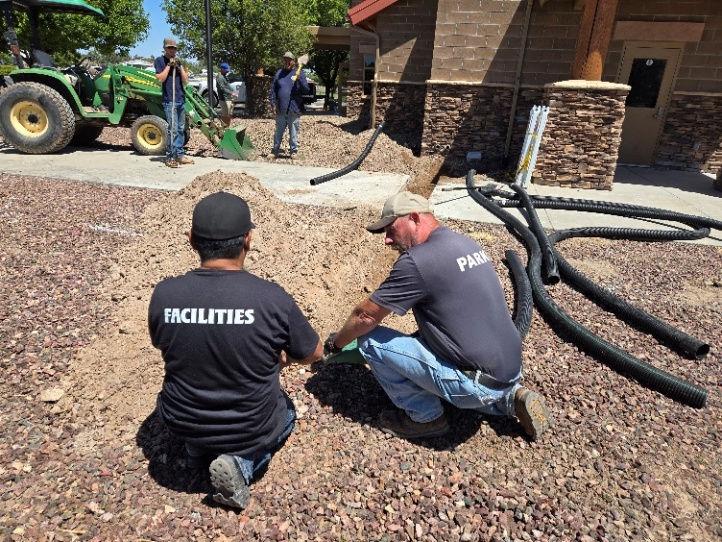
Estimated Expenses
Capital Improvement Plan – Project Details
Title
Northern Peavine Trail Alignment Funded through existing fund balance
TheproposedNorthernextensionoftheexistingPeavinetrailrepresentsasignificantopportunityto enhanceregionalconnectivityandincreaserecreationalopportunitiesforthecommunity.Thisconnection wouldcreateaseamlessnetworkoftrails,benefitingbothpedestriansandcyclistswhilecontributingtothe overallhealthandwellbeingofresidents.Thetrailextensionwillneedtogothroughapproximately1mileof State Trust land; there is potential the state land portion will most likely need to be fenced.

Northern Peavine Trail Alignment
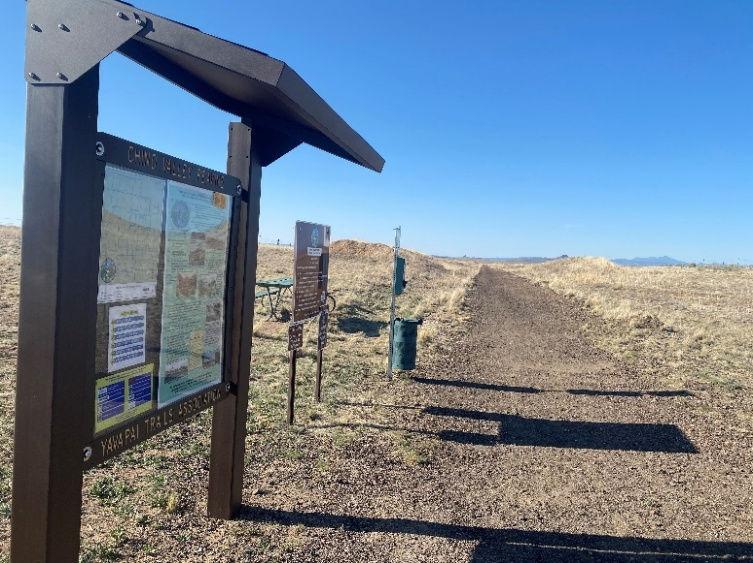
ThisproposalistoconstructanewTownHallatOldHomeManor,consolidatingthemultiplecurrent municipalbuildingsintoonecentralizedlocation.Thisinitiativeaimstoenhanceoperationalefficiency, improvepublicaccesstomunicipalservices,andfosterbetterinter-departmentalcollaboration.Thenew TownHallwillserveasamodernhubforalltownfunctions,eliminatingtheinefficienciesassociatedwith managingseveraldispersedfacilities.Bycentralizingouroperations,wecanofferasingle,accessiblepointof serviceforourcommunity,streamlineadministrativeprocesses,andreduceoverheadcosts.Additionally, theproposedlocationatOldHomeManorprovidesamplespaceforfutureexpansionandthepotentialto developaciviccomplexthatcouldincludeparks,meetingspaces,andothercommunity-focusedamenities. Thisprojectrepresentsastrategicinvestmentinthefutureofourtown,ensuringwecanmeetthegrowing needsofourresidentswhilemaintainingeffectivegovernance.Webelievethattheconsolidationintoanew, modernfacilitywillsignificantlyenhancethequalityofserviceprovidedtothepublicandcreateamore engaged and connected community.

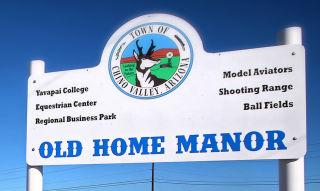
New Town Hall
New Town Hall
Capital Improvement Plan – Project Details
Justification
Shooting Range Bathroom
Funding source to be determined Estimated Expenses
Shooting Range Bathroom
Ourpoliceshootingrangeisoneofthemostusedfacilitiesintowneachyear.Wearecurrentlyusingone port-a-pottyforthoseusingtherange.Thisbecomestrickyduringtimesoftrainingsastherearefrequently 10+peopleusingthem,andseveraltimesayearwehostclasseswithupto40+peopleinattendance.We wouldliketoputinabrickandmortarbathroomwithbothawomen'sandmen'sspace.Thebuildingwould lastalongeramountoftimethanalternativerestroomsandwouldbeeasiertomaintain.Wehavelooked for grants and other alternative funding methods, but so far none have been identified. Other Estimated Costs (Savings):


Title Justification
Aspartoftheongoingpavementmanagementprogram,theFY2025-26Improvementsinclude approximately5to10%forCrackFillingandSealCoatingvarioustownstreets.Theremaindershallbe spentontheprogramtopulverize,prepare,andapplyadoublechipsealcoatingtoaprioritizedlistof streets.

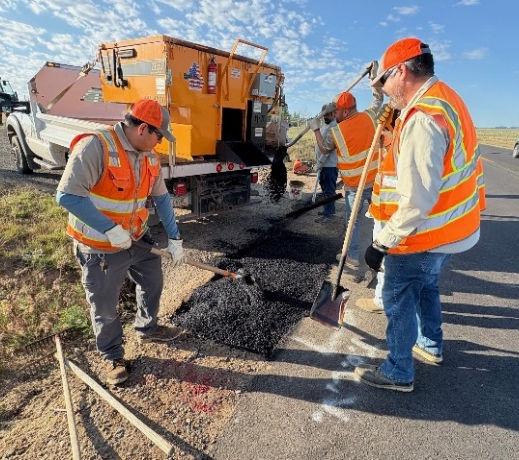
Justification
TheFillStationnearWalgreensneedsimprovement.Nowthatthesecondstationisopen,thisonecanbe temporarilyclosedtomaketherepairs.ThepavementneedstoberemovedandreplacedwithConcrete paving.Asphaltcannotstanduptotheconstantsoakingfromthespillageofthestation.Inaddition,the adjacent property owners have brought up well-founded complaints about the runoff.
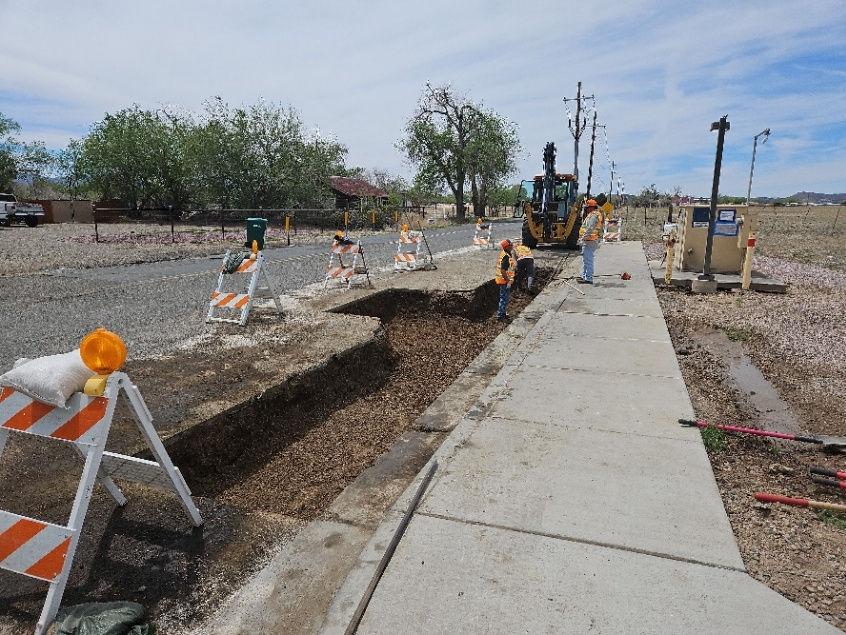

Other Estimated Costs (Savings):
New Well/Pump/Tank
Bond/loan/grant funded project - only moves forward if matching revenues are identified
TheTownneedsasecondmajorproductionfacility.Thisdesignwouldprovideplansandcostestimatesto seekfundingforanapproximate$10,000,000constructionofanewwellandtankatOldHomeManor. ThiswouldprovideafullcapacitybackupfacilitytoBrightStarandallowfortheabilitytoprovidewaterto other systems in Town if needed.
The$2,000,000fordesignisbeingprovidedbyWIFAforagrant/loansplit.Thenextphaseoftheproject for actual construction would not move forward until a future year when funding can be identified.

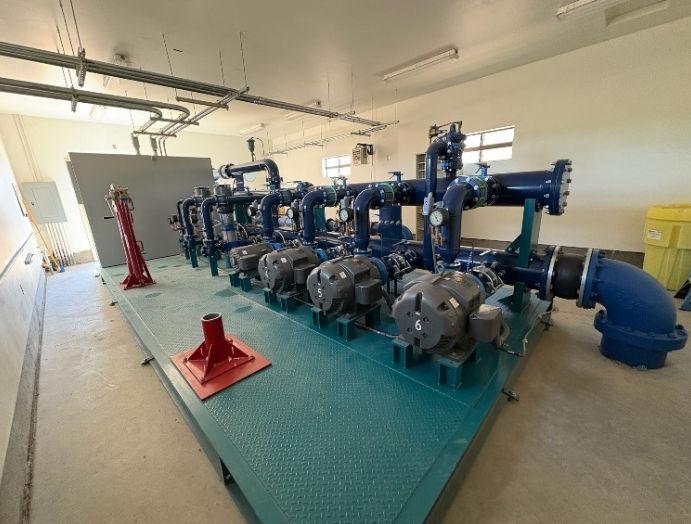
Estimated Expenses
New Well/Pump/Tank - Engineering
New Well/Pump/Tank - Construction
Capital Improvement Plan – Project Details
service
Title
Justification
Plant Expansion
Bond/loan/grant funded project - only moves forward if matching revenues are identified
TheWRFneedsupgrades.Theprimarypurposeistoinstallequalizationbasinstohelprestorethe treatmentcapacityoftheplant.Otherupgradesincludedryingbedsforthevactortruck,odorcontrolfor portionsoftheplant,replacementofagingelectricalandUVequipment,siteimprovements,andapilot treatment program for PFAS control.
TheengineeringassociatedwiththisprojectisalreadyundercontractwithPACEandthatportion (approximately $530,686) is continuing as a rollover in the FY 2025-26 budget.

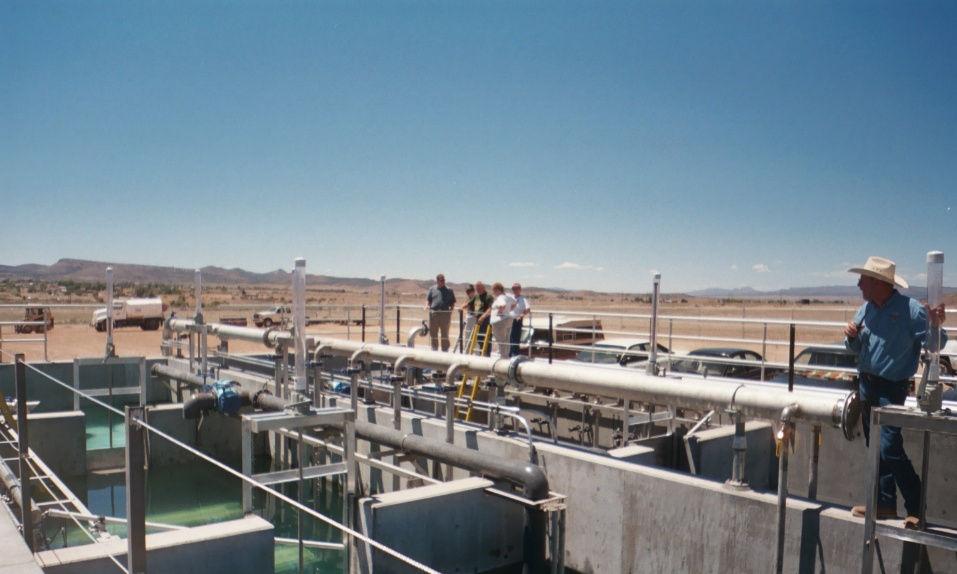
Estimated Expenses
Plant
Other Estimated Costs (Savings): Minor Repairs
ThisisaplaceholderfortheextensionofwaterandsewerlinesalongRoad1EasttotheRoadrunner TrailerPark,contingentuponthedevelopmentoftheCraftsmanCourtSubdivision.Thisutilityline extensioniscrucialasitwillenabletheconnectionofapproximately45spacesattheRoadrunnerTrailer ParktotheTown’swaterandsewerutilities.Theproposedextensioncoversaquarter-mileandisessential forprovidingreliablemunicipalwaterandsewerservicestotheresidentsofthetrailerpark.This infrastructureupgradewillenhanceboththequalityofwaterserviceandtheefficiencyofwastewater managementwithinthiscommunity,aligningwithhealth,safety,andenvironmentalstandards. Furthermore,thisprojectsupportsbroadercommunitygrowthanddevelopmentinitiatives.Fundingfor thisdualutilityextensionwillbesoughtthroughmunicipalbondsorotherfinancingoptionsavailableto theTown,ensuringthatthefinancialimpactoncurrentresourcesisminimizedwhilefacilitatingessential infrastructuregrowth.Establishingthisbudgetplaceholderisastrategicstepinpreparingforthepotential expansionandensuresthatwearereadytoproceedwiththewaterandsewerlineextensionifthe subdivision development is confirmed.

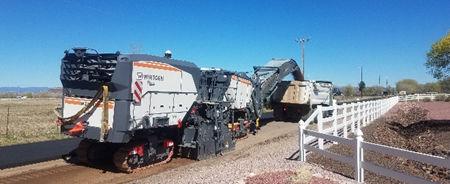
Personnel Schedules
Overview
This section provides a detailed overview of the Town’s personnel resources, including new positions and departmental staffing plans. First, additional staff that have been added for the fiscal year are highlighted to support critical services and address emerging needs across departments. This information is followed by several schedules and tables, including:
Personnel Schedule and Ranges: Comprehensive personnel schedule, outlining position counts and salary ranges by department and position for Fiscal Years 2023-24 (actual), 2024-25 (budgeted), and 2025-26 (budgeted), offering a clear view of staffing changes and salary adjustments over time.
General Employee Salary Schedule: Table listing positions by pay grade, including both active and inactive positions. Inactive positions are retained in this table to illustrate potential career advancement opportunities within the Town.
Police Employee Salary Schedule: A dedicated table presenting sworn positions within the Police Department, categorized by grade, to provide further details regarding the department’s staffing structure.
This section supports a complete view of the Town’s personnel investments and workforce planning strategies.
FY 2025-26 Staffing Changes
Department/Position
Personnel Schedule and Ranges
General Employee Salary Schedule
Planning
Property
General Employee Salary Schedule
Project
Police Employee Salary Schedule
Glossary
Accrual Basis – An accounting method where revenues and expenses are recorded when they are earned or incurred, regardless of cash flow, providing a complete view of financial activities.
Actuals – Revenues or expenditures that have been realized during a specific period, as opposed to budgeted or projected amounts.
Adoption – A formal action taken by Council that sets the spending limits for the fiscal year.
Appropriation – A legal authorization granted by Council to make expenditures and incur obligations for specific purposes. An appropriation is usually limited in amount and duration as to when it may be expended.
Appropriated Budget – The expenditure authority created by an appropriation resolution or ordinance, including estimated revenues, reserves, transfers, and other authorized adjustments.
Asset – Resources owned or held by a government, which have monetary value.
Audit – An independent examination of financial records to ensure accuracy, compliance, and transparency in reporting.
Balanced Budget – Each fund in the budget must be in balance; total anticipated revenues plus beginning undesignated fund balance (all resources) must equal total expenditure appropriations for the upcoming fiscal year.
Bonds – A financial instrument through which the Town commits to repay borrowed funds with interest by specified maturity dates. Common types include general obligation and revenue bonds, often used for large projects like buildings, streets, and water systems. Bonds typically have longer terms and greater formality than notes.
Budget – A plan of financial operation representing an estimate of proposed expenditures and the proposed means of financing them for a given period. This official public document reflects decisions, measures service needs, establishes the allocation of resources and is the pecuniary plan for achieving the Town’s goals and objectives.
Budgetary Basis – The accounting method used for budget purposes, typically aligned with GAAP, though with certain exclusions like depreciation for Enterprise Funds and encumbrances counted as expenditures.
Budget Calendar – The schedule of key dates or events which the Town follows in the preparation, adoption, and administration of the budget.
Budgetary Control – The control or management of a governmental unit or enterprise in accordance with an approved budget for the purpose of keeping expenditures within the limitations of authorized appropriations and available revenues.
Budget Message – A written general dialogue of the budget, presented by the budget-making authority. It provides Council and the public with a general summary of the most important budget issues, changes from recent fiscal years and recommendations regarding the financial policy for the coming fiscal year.
Capital – Tangible assets having a long life (generally over one year) obtained or controlled as a result of past transactions, events or circumstances. Capital assets include buildings, equipment, improvements other than buildings, and land that are greater than $50,000.
Capital Projects Fund – Fund type used to account for financial resources that are restricted, committed or assigned to expenditure for capital outlays, including the acquisition or construction of capital facilities and other capital assets.
Capital Improvement Plan (CIP) – This is a comprehensive plan of capital investment projects which identifies priorities as to need, method of financing, cost and revenues that will result during a five-year period. The program is a guide for identifying current and future fiscal year requirements and becomes the basis for determining the annual capital budget.
Debt – An obligation resulting from borrowing money or from the purchase of goods and services. Types of governmental debt include bonds, loans, and notes.
Debt Service – The long-term payment of principal and interest on borrowed funds.
Debt Service Fund – Governmental fund type used to account for accumulations of resources that are restricted, committed or assigned to expenditure for principal and interest.
Department – A major administrative division of the Town, which indicates overall management responsibility for an operation or a group of related operations within a functional area.
Depreciation – Consumption of the service life of capital assets, due to normal wear, deterioration, environmental elements, passage of time, and obsolescence. The portion of the cost of a capital asset charged as an expense during a specified period based on service life of the asset and ultimately expending the entire cost of the asset.
Division – A group of homogeneous cost centers within a department with specific responsibilities and functions, i.e., Aquatics division within Community Services department is responsible for the operation of the swimming pool and all pool-related activities.
Enterprise Funds – A government accounting fund in which the services provided are financed and operated similarly to those of a private business. The governing body’s intention is to finance or recover operational costs through user fees.
Expenditures – Decreases in net financial resources in accordance with budgeted appropriations.
Expenditure Limitation – An amendment to the Arizona State Constitution, which limits annual expenditures for all municipalities. The Economic Estimates Commission sets this limit based upon population growth and inflation. All municipalities have the option of Home Rule that requires voters to approve a four-year expenditure limit based on revenues received.
Expenses – Decreases in net financial resources in accordance with budgeted appropriations, terminology used only in the enterprise funds.
Fiscal Year – A time period designated by the Town signifying the beginning and ending period for recording financial transactions. The Town fiscal period begins July 1 and ends June 30.
Franchise Fee – A fee paid by public service businesses for the special privilege to use Town streets, alleys and property in providing their services to the citizens of the community. Services requiring franchise fees include electricity, telephone, natural or propane gas, and cable television.
Full-Time Equivalent (FTE) – A part-time position converted to the decimal equivalent of a full-time position based on 2,080 hours per year, or a full value of one for a full-time position.
Glossary
Fund – An accounting entity having a set of self-balancing accounts and records all financial transactions for specific activities or government functions in attaining certain objectives governed by special regulations, restrictions or limitations.
Fund Balance – Fund balance is the excess of assets over liabilities of governmental and trust funds.
General Fund – One of five governmental fund types, this fund typically serves as the chief operating fund of a government. The general fund is used to account for all financial resources not accounted for in some other fund.
General Obligation Bonds – Bonds that finance a variety of public projects and require voter approval. The full faith and credit of the Town back these bonds. Limitations for bonding are set by State Statute.
Governmental Funds – Funds generally used to account for tax-supported activities. There are five different types of governmental funds: general funds, special revenue funds, debt service funds, capital projects funds, and permanent funds.
Grant – Contributions or gifts of cash or other assets from another government to be used for a specific purpose, activity or facility.
Intergovernmental Revenue – Revenues from other governments in the form of grants, entitlements, shared revenues or payments in lieu of taxes.
Levy – To impose taxes for the support of government activities.
Long-Term Debt – Debt with a maturity of more than one year after the date of issuance.
Major Fund – Governmental fund or enterprise fund which revenues or expenditures, excluding other financing sources and uses, constitutes more than 10% of the revenues or expenditures of the appropriated budget.
Modified Accrual Basis – A government accounting method where revenues are recorded when measurable and available, and expenses are recognized when incurred, excluding long-term assets and liabilities.
Nonmajor Fund – Governmental fund or enterprise fund that does not meet major fund criteria.
One-Time Operating Expenditure – Operating expenditures infrequent in occurrence and not expected to occur again within the next five years.
Operating Budget – Plan of current expenditures and the prepared means to finance them. The budget associated with providing ongoing services to citizens. It includes general expenditures such as personal services, contractual services, operating supplies and operating capital items. The budget is the primary measure of controlling financing, acquisition, spending and delivering of services of the entity.
Performance Measures – Measurable means of evaluating the effectiveness of a cost center in accomplishing its defined objectives.
Permanent Fund – A government fund where the principal amount is kept intact and only the investment earnings are used to support public programs.
Personnel Services – Costs related to compensating employees, including wages, insurance, payroll taxes, retirement contributions, and other benefits.
Program – A group of related activities performed by one or more organizational units for the purpose of accomplishing a function for which the government is responsible.
Projected Revenue – The amount of estimated revenue to be collected during the fiscal year.
Proprietary Fund – A type of government fund used for activities that operate like a business, where services are paid for by user fees (e.g., water or sewer services).
Reserve/Contingency – A budgetary reserve set aside for emergencies or unforeseen expenditures not otherwise budgeted.
Resolution – A special or temporary order of a legislative body requiring less legal formality than an ordinance or statute.
Resources – Total amounts available for appropriation including estimated revenues, fund transfers, and beginning balances.
Revenue – Receipts from taxes, intergovernmental sources and user fees, or resources from voter authorized bonds, system development fees, and grants.
Revenue Bonds – Legal debt instruments that finance public projects for such services as water or wastewater. They can also be issued for major public facilities supported by taxes. Revenue from these public projects is pledged to pay principal and interest of the bonds.
Revenue Neutral – A policy or action that does not result in an increase or decrease in total revenues.
Short-Term Debt – Debt with a maturity of one year or less after the date of issuance.
Sources of Revenue – Revenues are classified according to their source or point of origin.
Special Revenue Fund – Governmental fund type used to account for the proceeds of specific revenue sources that are restricted or committed to expenditure for specified purposes other than debt service or capital projects and exclusive of resources held in trust for individuals, private organizations or other governments.
State-Shared Revenue – Includes the Town’s portion of the State sales tax revenues, state income tax receipts, and Vehicle In-Lieu taxes.
Taxes – Compulsory charges levied by a government for the purpose of financing services performed for the common benefit of the people.
Transfers In/Out – Authorized transfers of funds from one budget area to another, ensuring resources are available for planned expenditures.
Unreserved Fund Balance – Undesignated monies available for appropriations.
User Charges – The payment of a fee for direct receipt of a public service by the party who benefits from the service.
Zero-Based Budgeting – A budgeting method where all expenses must be justified and approved for each new period, starting from a "zero base."
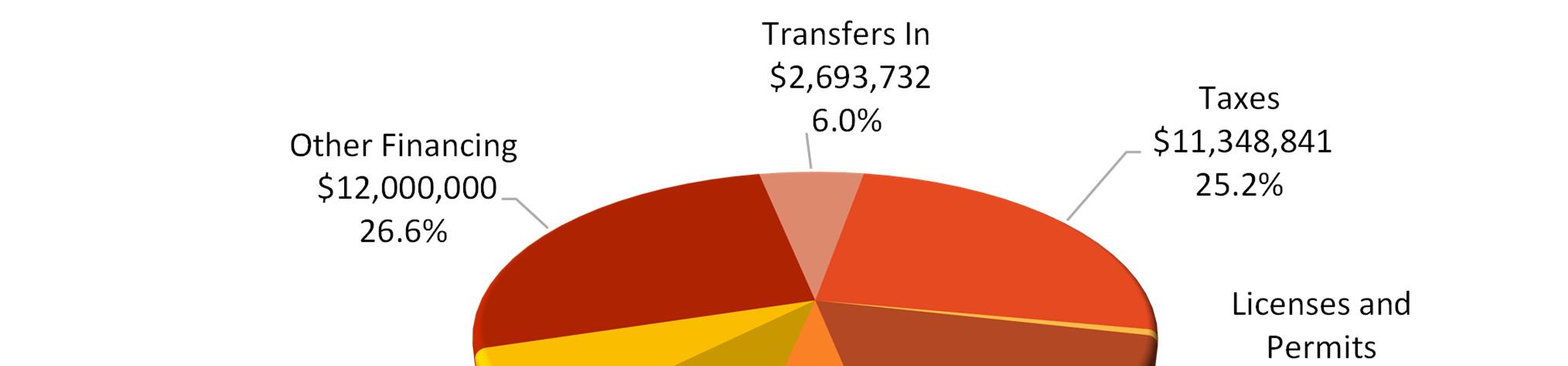
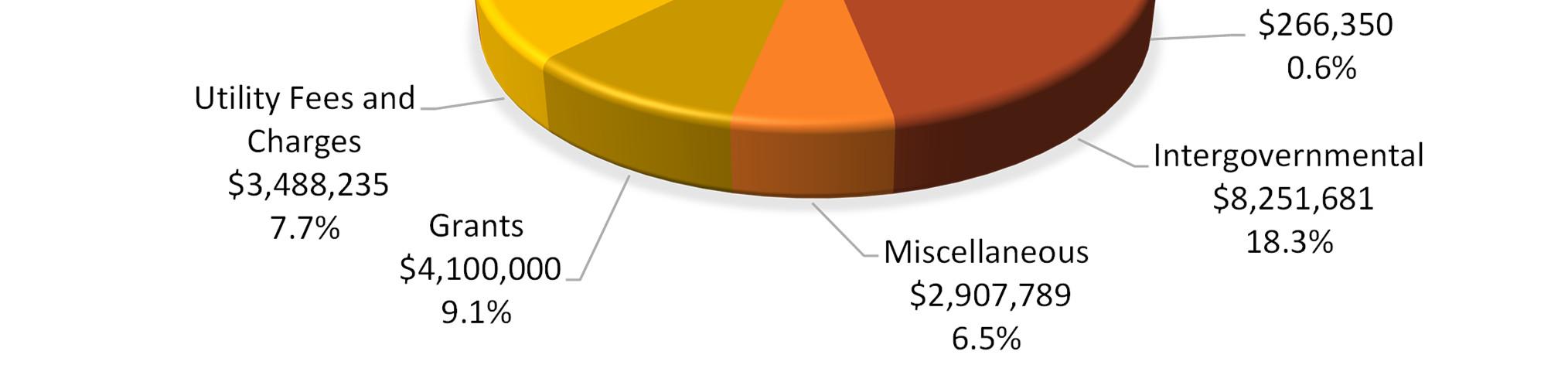
EXPENDITURES: $49,409,921
The Town manages several funds to provide essential services to residents, including public safety, parks and recreation, library services, streets, planning and zoning, and general administrative support. Additional funds are allocated for capital projects, debt service, and transfers.
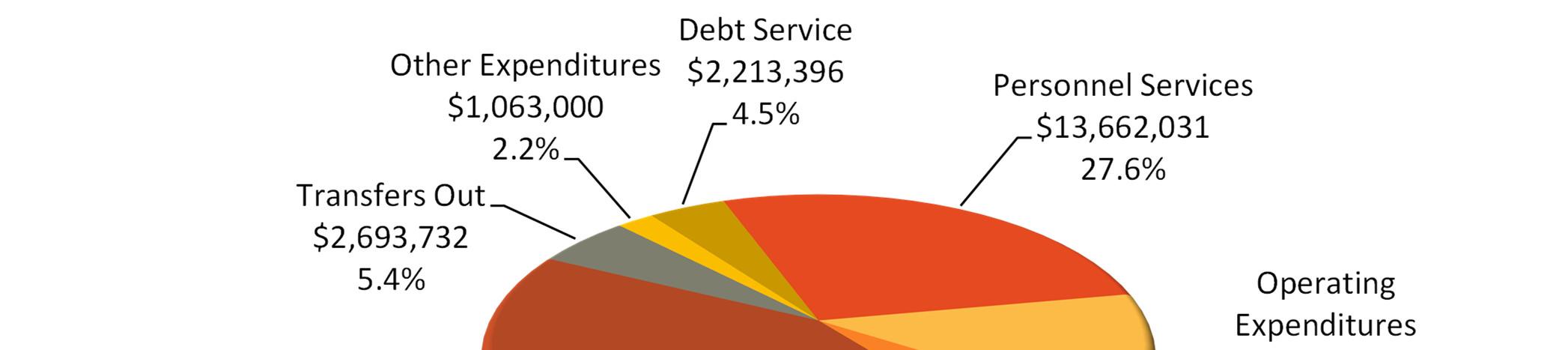
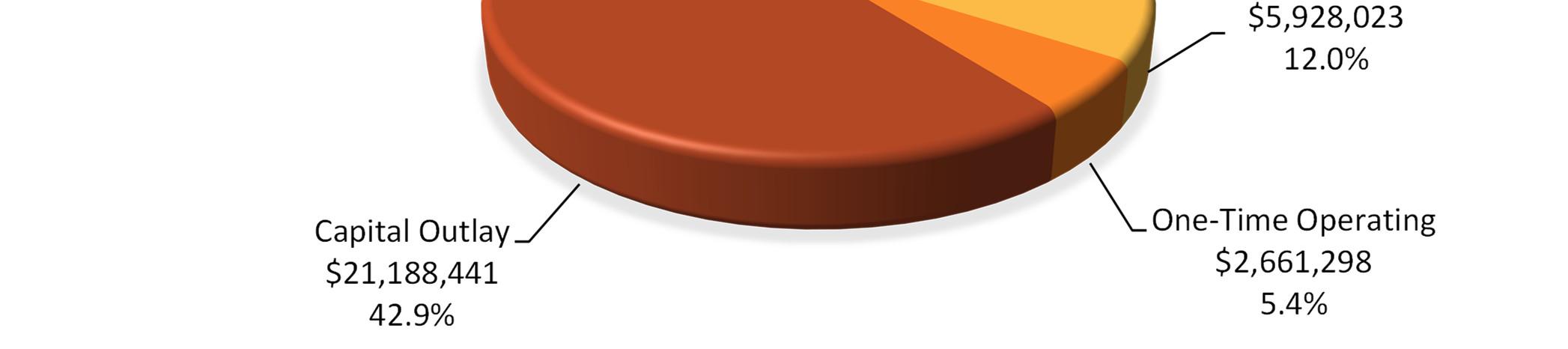
Major Capital Projects for FY 2025-26 Pool Deck Resurfacing