For the Fiscal Year Ended June 30, 2025



TOWN OF CHINO VALLEY, ARIZONA

For the Fiscal Year Ended June 30, 2025
Comprehensive
For Fiscal Year Ended June 30, 2025
Prepared by the Finance Department
Katie Pehl Finance Director

December 1, 2025
Honorable Mayor, Town Council, and Citizens of the Town of Chino Valley:
(928) 636-2646 (928) 636-2144 www.chinoaz.net
The Annual Comprehensive Financial Report (ACFR) of the Town of Chino Valley, Arizona, for the fiscal year ended June 30, 2025, is hereby submitted. This report has been prepared by the Town’s Finance Department in accordance with accounting principles generally accepted in the United States of America (GAAP), as promulgated by the Governmental Accounting Standards Board (GASB).
The report reflects management’s representations regarding the financial position and operations of the Town. As such, management assumes full responsibility for the accuracy, completeness, and fairness of all information presented. To support these assertions, the Town has implemented a comprehensive internal control framework. This system is designed to safeguard the Town’s assets against loss, theft, or misuse and to provide reliable data for the preparation of the financial statements in accordance with GAAP. However, due to the inherent limitations of internal controls, the system is designed to provide reasonable, not absolute, assurance that the financial statements are free from material misstatement.
The financial statements of the Town of Chino Valley have been audited by Heinfeld, Meech, & Co., P.C., a firm of licensed certified public accountants. The objective of the independent audit is to provide reasonable assurance that the Town’s financial statements for the fiscal year ended June 30, 2025, are free from material misstatement. The audit process includes examining, on a test basis, evidence supporting the amounts and disclosures in the financial statements, evaluating the accounting principles used, assessing significant estimates made by management, and reviewing the overall financial statement presentation. Based on their audit, the independent auditors rendered an unmodified opinion, concluding that the Town’s financial statements are fairly presented in all material respects in conformity with GAAP. The independent auditors’ report is the first item in the financial section of this ACFR.
GAAP also requires that management provide a narrative introduction, overview, and analysis to accompany the financial statements, known as the Management’s Discussion and Analysis (MD&A). This letter of transmittal is intended to supplement the MD&A and should be read in conjunction with it. The MD&A follows the independent auditors' report in this document.
For the purposes of this financial report, the Town of Chino Valley is classified as a primary government. The Town's governing body, consisting of a Mayor and Town Council, is elected by the citizens in a general election. This report encompasses all organizations and activities over which the elected officials exercise financial oversight and control. The Town does not have any component units. While the Town interacts with and contracts services from various other governmental entities, it is not financially accountable for those entities.
The Town operates under the Council-Manager form of government. In this structure, the Mayor and Town Council are elected by the residents and are responsible for setting policy. A Town Manager, appointed by the
Mayor and Council, serves as the chief operating officer, tasked with implementing the policies and ordinances established by the Town Council and managing the Town’s day-to-day operations.
Chino Valley is centrally located in Yavapai County along State Route 89, at an elevation of 4,700 feet, approximately 90 miles northwest of Phoenix and 15 miles north of Prescott. The Town offers a full range of municipal services, including police protection, street and infrastructure construction and maintenance, as well as recreational and cultural programs. Additionally, the Town operates two enterprise funds that provide water and wastewater services. Other key facilities include a Library, Senior Center, and Aquatic Center.
Incorporated in 1970, Chino Valley traces its name back to 1854, when U.S. Army Cavalry Lt. Amiel W. Whipple observed the abundant grama grass in the area, known in Spanish as "chino." From January to May 1864, the site of the first Territorial Capital of Arizona was located at Del Rio Springs in Chino Valley before being moved to Prescott later that year.
The arrival of the railroad spurred economic activity in Chino Valley, with the establishment of Jerome Junction in 1895. This area became a hub of activity from 1900 until 1925, when it was relocated farther north. Following this, from the 1920s to the late 1940s, many families in Chino Valley turned to farming and ranching. Dairy farming then emerged as a key economic driver during the 1950s and 1960s.
Chino Valley has experienced substantial growth since its early days. Its appeal lies in affordable housing, large tracts of land, and the availability of essential services, which continue to attract residents to the area.
The Town is responsible for establishing and maintaining a system of internal budgetary controls to ensure compliance with the legal requirements of the annual budget adopted by the Town Council.
These internal accounting controls are designed to provide reasonable, but not absolute, assurance regarding two key objectives: (1) safeguarding assets against loss from unauthorized use or disposition, and (2) ensuring the reliability of financial records for the preparation of financial statements and the maintenance of accountability for assets. The concept of reasonable assurance acknowledges that: (1) the cost of a control should not exceed the expected benefits, and (2) the assessment of these costs and benefits involves estimates and judgments by management.
The system of internal controls is regularly evaluated by management and is also reviewed by independent auditors as part of the annual audit of the Town’s financial statements. All internal control evaluations are conducted within this framework. The Town’s internal accounting controls are deemed sufficient to safeguard assets and provide reasonable assurance regarding the accurate recording of financial transactions.
Like many municipalities in Arizona, the Town of Chino Valley is subject to numerous budgetary and financial restrictions. Article IX, Section 20(1) of the Arizona Constitution imposes limits on the Town’s legal budget capacity.
The Town operates under the Home Rule Option, which must be approved by local voters every four years. Home Rule grants the Mayor and Town Council the authority, as part of the annual budget process, to adopt an Alternative Expenditure Limitation. The Local Alternative Expenditure Limitation was adopted in August 2020 and was in effect through June 2025. A new Alternative Expenditure Limitation was adopted in July 2024 and will be in effect through June 2029. This limitation permits total budgeted expenditures and expenses, as outlined in the annual budget, to be approved following a public hearing where citizens of the Town can provide feedback.
For fiscal year 2024-2025, under the Local Alternative Expenditure Limitation, the Town was authorized to adjust the estimated state-imposed expenditure base from $5,391,769 to $52,457,308.
The Town legally adopts an operating budget by resolution each fiscal year, covering the general fund, debt service, enterprise funds, and several special revenue funds. In accordance with Arizona Revised Statutes, the Town Manager submits a proposed budget to the Town Council for the fiscal year beginning July 1. After final adoption, the Town Council may approve transfers between budget appropriations for non-exempt funds.
The Town is also subject to the State of Arizona’s Spending Limitations Law for Cities and Towns. This law mandates that the Town cannot spend more than the total of its budgeted revenues plus the carry-over of unrestricted cash balances from the prior fiscal year. This limitation applies to the Town’s combined funds, and the Town complied with this law during the fiscal year.
The economy of Chino Valley is supported by a diverse combination of agriculture, manufacturing, commercial, government, and service industries. Local economic indicators point to stability following several challenging years during the economic downturn. In recent fiscal years, the Town has experienced growth in key revenue sources, including local excise taxes, state-shared revenue, state income tax, and highway user revenue. It is important to note that the Town does not levy or collect a property tax.
Chino Valley’s population has seen significant growth over the past two decades. In 2000, the population was 7,901, and by 2020, the census recorded 13,020 residents. As of 2025, the estimated population stands at 13,911.
The Town’s primary revenue source is the Local Transaction Privilege Tax (TPT), which accounts for 52% of governmental fund revenues. In fiscal year 2014, the Town increased the TPT rate from 3% to 4%, with 3% allocated to the General Fund and 1% directed to the Capital Improvement Fund to support large-scale improvement projects.
The TPT base includes various sectors, such as retail, construction, manufacturing, restaurants/bars, hotels/motels, and the rental of commercial properties, among other taxable activities. Since 2016, the Town’s overall TPT collections have shown steady growth.
The slight increase in fiscal year 2024-2025 can be attributed to continued growth in the retail sector, offset by a slight decline in construction-related revenues. The following graph displays total TPT revenues over the last 10 years.



The Town adopts a conservative approach when budgeting for construction-related Transaction Privilege Tax (TPT) each year, recognizing the inherent volatility and the one-time nature of many construction revenues. The graph below illustrates the fluctuations in construction TPT collections from fiscal year 2015-2016 to fiscal year 2024-2025.



The Town’s proactive approach to emerging economic challenges, coupled with its commitment to careful long-range planning, has been instrumental in maintaining Chino Valley’s strong fiscal health. By anticipating potential economic fluctuations and responding with strategic adjustments, the Town has effectively managed its resources to ensure financial stability. This forward-thinking approach not only allows the Town to navigate uncertainties but also positions it to seize opportunities for growth and development, further strengthening its financial foundation.
The Town of Chino Valley is committed to enhancing the quality of life for its residents by delivering municipal services in the most effective and efficient manner, all while maintaining a strong focus on fiscal responsibility.
During the past year, the Town successfully completed several key capital projects aimed at improving infrastructure and public facilities. These projects include:
Perkinsville Phase I – comprehensive water, sewer, and road improvements.
N Road 1 East (Juniper to Perkinsville) – water, sewer, and road upgrades.
Senior Center Kitchen Remodel – partially funded with federal CDBG funds.
Del Rio Springs – land purchase of historical Fred Harvey buildings adjoining the State park.
North Reed Road and Outer Loop Road – road improvements.
The Town has made several necessary improvements to its facilities to enhance service delivery and operational efficiency. These improvements include installing new roofs and HVAC systems on a few Town buildings, completing the installation of the streets modular building, remodeling the old police and detective buildings for Public Works and Human Resources, and continuing the design and engineering process for critical repairs and upgrades at the wastewater treatment plant. While some road repairs were completed this year, the Town recognizes that more extensive roadwork is needed across the community, but available funding remains limited.
These efforts reflect the Town’s commitment to making the most of its limited resources, ensuring that key municipal facilities and infrastructure receive attention, even as we continue to seek solutions to address the growing demand for road repairs and other critical infrastructure improvements.
The accounting firm of Heinfeld, Meech, & Co., P.C. was selected by the Town to perform the annual independent audit. The audit was conducted in accordance with generally accepted auditing standards (GAAS) to ensure the accuracy and reliability of the Town’s financial statements.
The Town did not meet the threshold for a Single Audit under the prior Uniform Guidance which requires a Single Audit for federal expenditures of $750,000 or more for fiscal years beginning before October 1, 2024.
Government Finance Officers Association of the United States and Canada (GFOA) awarded a Certificate of Achievement for Excellence in Financial Reporting to the Town of Chino Valley for its annual comprehensive financial report for the fiscal year ended June 30, 2024. In order to be awarded a Certificate of Achievement, a government must publish an easily readable and efficiently organized annual comprehensive financial report. This report must satisfy both generally accepted accounting principles and applicable legal requirements.
A Certificate of Achievement is valid for a period of one year only. We believe that our current annual comprehensive financial report continues to meet the Certificate of Achievement Program's requirements and we are submitting it to GFOA to determine its eligibility for another certificate.
The preparation of this Annual Comprehensive Financial Report was made possible through the hard work and dedication of the Finance Department staff, with valuable contributions from all Town departments. I would like to express my sincere appreciation to Town Manager Terri Denemy, Mayor Armstrong, Vice Mayor Granillo, and all members of the Town Council for their leadership and commitment to maintaining the Town’s strong financial position and continued fiscal integrity.
Respectfully submitted,
Katie Pehl Finance Director

Town Council
Tom Armstrong, Mayor
Eric Granillo, Vice Mayor
Larry Holt, Council Member
John McCafferty, Council Member
Sherri Phillips, Council Member
Bob Schacherer, Council Member
Robert Switzer, Council Member
Town Manager
Terri Denemy
Finance Director
Katie Pehl
Boards & Commissions
For Fiscal Year Ended June 30, 2025
Council
Mayor Tom Armstrong
Vice Mayor Eric Granillo
Councilmember Larry Holt
Councilmember John McCafferty
Councilmember Sherri Phillips
Councilmember Bob Schacherer
Councilmember Robert Switzer
(7.00 Elected Officials)
anager Town M enemy Terri D FTE) (4.00
Community Services Cyndi Thomas
(16.50 FTE)
Development Services Laurie Lineberry
(10.00 FTE)
Finance Kae Pehl
(4.00 FTE)
Human Resources Laura Kyriakakis
(3.00 FTE)
Town Aorney (Contract)
Municipal Court Judge Angela BradshawNapper (5.00 FTE)
I.T. Services Spencer Guest (3.00 FTE)
Police Chief Joshua McInre (44.50 FTE)
Public Works Frank Marbury (37.00 FTE)
Town Clerk Erin Deskins (4.00 FTE)
Direct
Honorable Mayor and Members of the Town Council
Town of Chino Valley, Arizona
Opinions
We have audited the accompanying financial statements of the governmental activities, the business‐type activities, each major fund, and the aggregate remaining fund information of Town of Chino Valley, Arizona (Town), as of and for the year ended June 30, 2025, and the related notes to the financial statements, which collectively comprise the Town’s basic financial statements as listed in the table of contents.
In our opinion, the financial statements referred to above present fairly, in all material respects, the respective financial position of the governmental activities, the business‐type activities, each major fund, and the aggregate remaining fund information of the Town of Chino Valley, Arizona, as of June 30, 2025, and the respective changes in financial position and, where applicable, cash flows thereof for the year then ended in accordance with accounting principles generally accepted in the United States of America.
We conducted our audit in accordance with auditing standards generally accepted in the United States of America and the standards applicable to financial audits contained in Government Auditing Standards, issued by the Comptroller General of the United States. Our responsibilities under those standards are further described in the Auditor's Responsibilities for the Audit of the Financial Statements section of our report. We are required to be independent of Town of Chino Valley, Arizona, and to meet our other ethical responsibilities in accordance with the relevant ethical requirements relating to our audit. We believe that the audit evidence we have obtained is sufficient and appropriate to provide a basis for our audit opinions.
As described in Note 1 to the financial statements, the Town implemented the provisions of GASB Statement No. 101, Compensated Absences, for the year ended June 30, 2025. Our opinion is not modified with respect to this matter.
Management is responsible for the preparation and fair presentation of the financial statements in accordance with accounting principles generally accepted in the United States of America, and for the design, implementation, and maintenance of internal control relevant to the preparation and fair presentation of financial statements that are free from material misstatement, whether due to fraud or error.
In preparing the financial statements, management is required to evaluate whether there are conditions or events, considered in the aggregate, that raise substantial doubt about the Town’s ability to continue as a going concern for one year beyond the financial statement date, including any currently known information that may raise substantial doubt shortly thereafter.
Our objectives are to obtain reasonable assurance about whether the financial statements as a whole are free from material misstatement, whether due to fraud or error, and to issue an auditor's report that includes our opinions. Reasonable assurance is a high level of assurance but is not absolute assurance and therefore is not a guarantee that an audit conducted in accordance with generally accepted auditing standards and Government Auditing Standards will always detect a material misstatement when it exists. The risk of not detecting a material misstatement resulting from fraud is higher than for one resulting from error, as fraud may involve collusion, forgery, intentional omissions, misrepresentations, or the override of internal control. Misstatements are considered material if there is a substantial likelihood that, individually or in the aggregate, they would influence the judgment made by a reasonable user based on the financial statements. In performing an audit in accordance with generally accepted auditing standards and Government Auditing Standards, we:
Exercise professional judgment and maintain professional skepticism throughout the audit.
Identify and assess the risks of material misstatement of the financial statements, whether due to fraud or error, and design and perform audit procedures responsive to those risks. Such procedures include examining, on a test basis, evidence regarding the amounts and disclosures in the financial statements.
Obtain an understanding of internal control relevant to the audit in order to design audit procedures that are appropriate in the circumstances, but not for the purpose of expressing an opinion on the effectiveness of the Town’s internal control. Accordingly, no such opinion is expressed.
Evaluate the appropriateness of accounting policies used and the reasonableness of significant accounting estimates made by management, as well as evaluate the overall presentation of the financial statements.
Conclude whether, in our judgment, there are conditions or events, considered in the aggregate, that raise substantial doubt about the Town’s ability to continue as a going concern for a reasonable period of time.
We are required to communicate with those charged with governance regarding, among other matters, the planned scope and timing of the audit, significant audit findings, and certain internal control related matters that we identified during the audit.
Required Supplementary Information
Accounting principles generally accepted in the United States of America require that the Management’s Discussion and Analysis, budgetary comparison information, and net pension liability information, as listed in the table of contents, be presented to supplement the basic financial statements. Such information is the responsibility of management and, although not a part of the basic financial statements, is required by the Governmental Accounting Standards Board, who considers it to be an essential part of financial reporting for placing the basic financial statements in an appropriate operational, economic, or historical context. We have applied certain limited procedures to the required supplementary information in accordance with auditing standards generally accepted in the United States of America, which consisted of inquiries of management about the methods of preparing the information and comparing the information for consistency with management’s responses to our inquiries, the basic financial statements, and other knowledge we obtained during our audit of the basic financial statements. We do not express an opinion or provide any assurance on the information because the limited procedures do not provide us with sufficient evidence to express an opinion or provide any assurance.
Our audit was conducted for the purpose of forming opinions on the financial statements that collectively comprise the Town’s basic financial statements. The Combining and Individual Fund Financial Statements and Schedules are presented for purposes of additional analysis and are not a required part of the basic financial statements. Such information is the responsibility of management and was derived from and relates directly to the underlying accounting and other records used to prepare the basic financial statements. Such information has been subjected to the auditing procedures applied in the audit of the basic financial statements and certain additional procedures, including comparing and reconciling such information directly to the underlying accounting and other records used to prepare the basic financial statements or to the basic financial statements themselves, and other additional procedures in accordance with auditing standards generally accepted in the United States of America. In our opinion, the Combining and Individual Fund Financial Statements and Schedules information is fairly stated in all material respects in relation to the basic financial statements as a whole.
Management is responsible for the other information included in the annual report. The other information comprises the Introductory Section and Statistical Section but does not include the basic financial statements and our auditor’s report thereon. Our opinions on the basic financial statements do not cover the other information and we do not express an opinion or any form of assurance thereon.
In connection with our audit of the basic financial statements, our responsibility is to read the other information and consider whether a material inconsistency exists between the other information and the basic financial statements, or the other information otherwise appears to be materially misstated. If, based on other work performed, we conclude that an uncorrected material misstatement of the other information exists, we are required to describe it in our report.
In accordance with Government Auditing Standards, we have also issued our report dated December 1, 2025, on our consideration of Town of Chino Valley, Arizona’s internal control over financial reporting and on our tests of its compliance with certain provisions of laws, regulations, contracts, and grant agreements and other matters. The purpose of that report is solely to describe the scope of our testing of internal control over financial reporting and compliance and the results of that testing, and not to provide an opinion on the effectiveness of the Town of Chino Valley, Arizona’s internal control over financial reporting or on compliance. That report is an integral part of an audit performed in accordance with Government Auditing Standards in considering Town of Chino Valley, Arizona’s internal control over financial reporting and compliance.
Heinfeld, Meech & Co., P.C. Flagstaff, Arizona
December 1, 2025
Town of Chino Valley, Arizona
Management’s Discussion and Analysis
June 30, 2025
As management of the Town of Chino Valley, Arizona (the Town) we offer readers of the Town's financial statements this narrative overview and analysis of the financial activities of the Town for the fiscal year ended June 30, 2025. We encourage readers to consider the information presented here in conjunction with additional information that we have furnished in our Letter of Transmittal, which can be found on page 3 of this report.
Total assets and deferred outflows of resources exceeded total liabilities and deferred inflows of resources (net position) by $51,927,336 at the close of the fiscal year.
Governmental taxes and other governmental revenues exceeded expenses, including transfers by $1,233,973.
Business-type revenues exceeded total business-type expenses, including transfers by $1,733,782.
Total revenues from all sources were $26.2 million.
The total cost of all Town programs was $23.2 million.
The General Fund reported a surplus of revenue over expenditures and transfers of $144,575.
At the end of the current fiscal year, the fund balance for the General Fund was $10.1 million or 60% of total General Fund expenditures, excluding transfers.
The discussion and analysis provided here are intended to serve as an introduction to the Town's basic financial statements. The Town's basic financial statements consist of three components: (1) government-wide financial statements, (2) fund financial statements and (3) the notes to financial statements. This report also includes supplementary information intended to furnish additional detail to support the basic financial statements themselves.
The government-wide financial statements are designed to provide readers with a broad overview of the Town's finances, in a manner similar to a private-sector business. The statement of net position presents financial information on all of the Town's assets, liabilities and deferred inflows/outflows of resources, with the difference reported as net position. Over time, increases or decreases in net position may serve as a useful indicator of whether the financial position of the Town is improving or deteriorating.
The statement of activities presents information showing how the Town's net position changed during the most recent fiscal year. All changes in net position are reported as soon as the underlying event giving rise to the change occurs, regardless of the timing of related cash flows. Thus, revenues and expenses are reported for some items that will only result in cash flows in future fiscal periods (e.g., uncollected taxes and earned but unused vacation leave).
Both of the government-wide financial statements distinguish functions of the Town that are principally supported by taxes and intergovernmental revenues (governmental activities) from other functions that are intended to recover all or a significant portion of their costs through user
Town of Chino Valley, Arizona
Management’s Discussion and Analysis
June 30, 2025
fees and charges (business-type activities). The governmental activities of the Town include general government, public safety, streets, culture and recreation and health and welfare. The business-type activities of the Town include water and sewer.
The government-wide financial statements can be found on pages 31-33 of this report.
A fund is a grouping of related accounts that is used to maintain control over resources that have been segregated for specific activities or objectives. The Town, like other state and local governments, uses fund accounting to ensure and demonstrate compliance with finance-related legal requirements. All of the funds of the Town can be divided into two categories: governmental funds and proprietary funds.
Governmental Funds - Governmental funds are used to account for essentially the same functions reported as governmental activities in the government-wide financial statements. However, unlike the government-wide financial statements, governmental fund financial statements focus on near-term inflows and outflows of spendable resources, as well as on balances of spendable resources available at the end of the fiscal year. Such information may be useful in assessing a government's near-term financing requirements.
Because the focus of governmental funds is narrower than that of the government-wide financial statements, it is useful to compare the information presented for governmental funds with similar information presented for governmental activities in the government-wide financial statements. By doing so, readers may better understand the long-term impact of the government's near-term financing decisions. Both the governmental fund balance sheet and the governmental fund statement of revenues, expenditures and changes in fund balances provide a reconciliation to facilitate this comparison between governmental funds and governmental activities.
The Town maintains seven individual governmental funds. Information is presented separately in the governmental fund balance sheet and in the governmental fund statement of revenues, expenditures and changes in fund balances for the General fund, Highway user revenue fund, Grant fund, Debt service fund, and Capital improvement fund, which are considered to be major funds. Data from the other two governmental funds are combined into a single aggregated presentation. Individual fund data for each of these nonmajor governmental funds is provided in the form of combining statements in the combining and individual fund statements and schedules section of this report.
The Town adopts an annual appropriated budget for its general fund. A budgetary comparison statement has been provided for the general fund to demonstrate compliance with this budget. The basic governmental fund financial statements can be found on pages 36-42 of this report.
Proprietary Funds - The Town maintains two different types of proprietary funds. Enterprise funds are used to report the same functions presented as business-type activities in the governmentwide financial statements. The Town uses enterprise funds to account for water and sewer operations.
Proprietary funds provide the same type of information as the government-wide financial statements, only in more detail. The proprietary fund financial statements provide separate information for the water fund and sewer fund, both of which are considered to be major funds of the Town. The basic proprietary fund financial statements can be found on pages 45-48.
Town of Chino Valley, Arizona
Management’s Discussion and Analysis
June 30, 2025
Fiduciary Funds - Fiduciary funds are used to account for resources held for the benefit of parties outside of the government. The Town did not have any fiduciary funds to report at year end.
The notes provide additional information that is necessary to acquire a full understanding of the data provided in the government-wide and fund financial statements. The notes to the financial statements can be found on pages 51-82 of this report.
In addition to the basic financial statements and accompanying notes, this report also presents required supplementary information concerning the Town's progress in funding its obligation to provide pension benefits to its employees. Required supplementary information can be found on pages 90-97 of this report.
The combining statements referred to earlier in connection with nonmajor governmental funds and nonmajor governmental fund budgetary schedules are presented immediately following the required supplementary information on pensions. Combining and individual fund statements and schedules can be found on pages 101-102 of this report.
Net position may serve over time as a useful indicator of the Town's financial position. Total assets and deferred outflows of resources exceeded total liabilities and deferred inflows of resources by $51.9 million at the close of June 30, 2025 as shown in the following condensed statement of net position. The Town has chosen to account for its water and sewer operations in an enterprise fund which is shown as Business Activities.
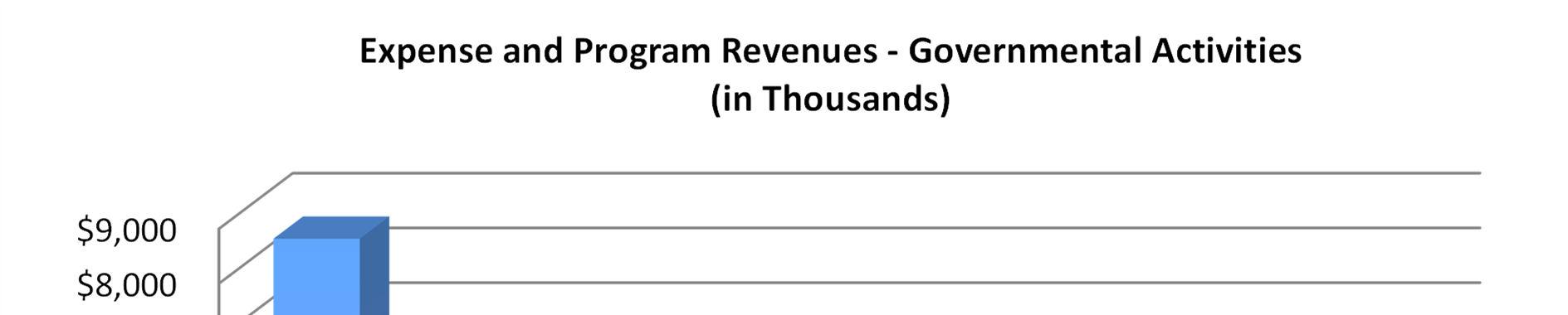
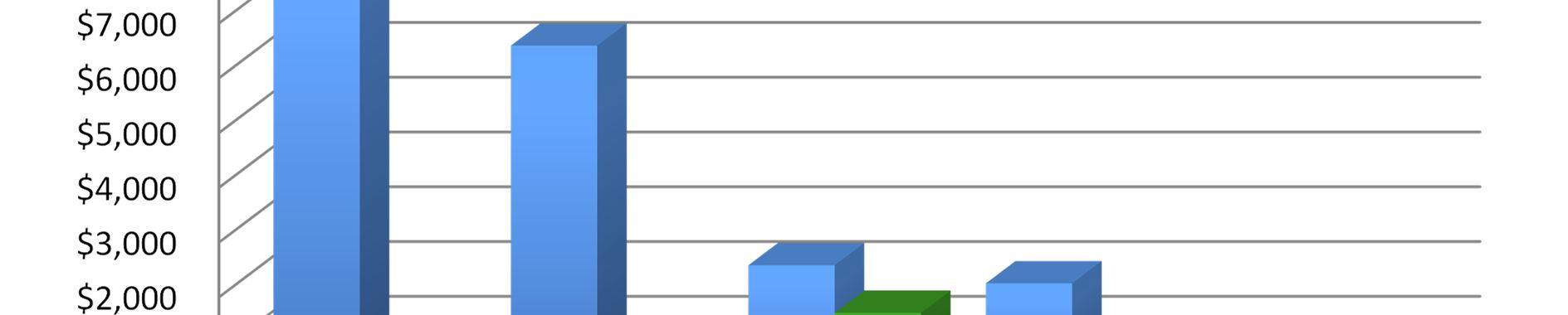
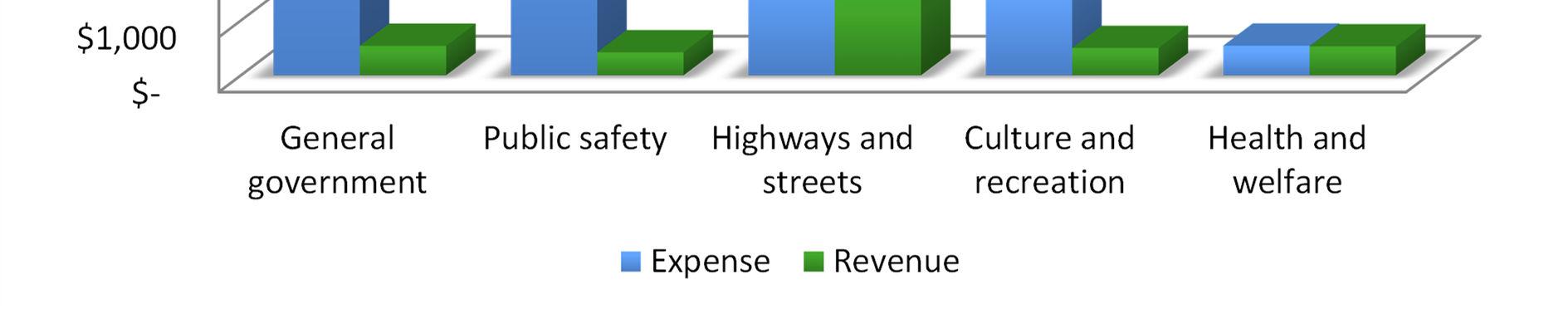
The cost of all Governmental activities, excluding transfers, this year was $19,737,355, which is 9% higher than last fiscal year. As shown on the Statement of Changes in Net Position below, $2,061,703 was paid for by those who directly benefited from the programs; $1,326,067
Town of Chino Valley, Arizona
Management’s Discussion and Analysis
June 30, 2025
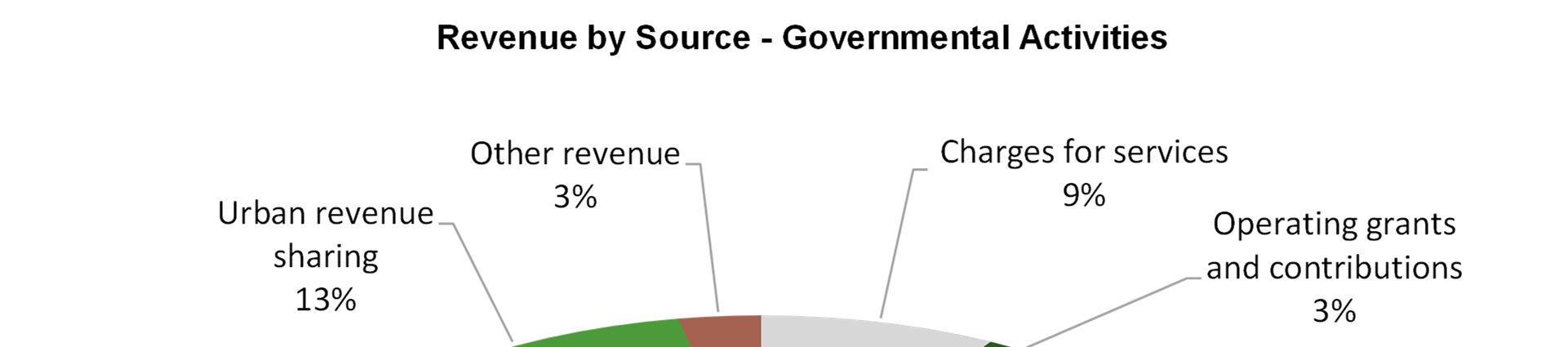
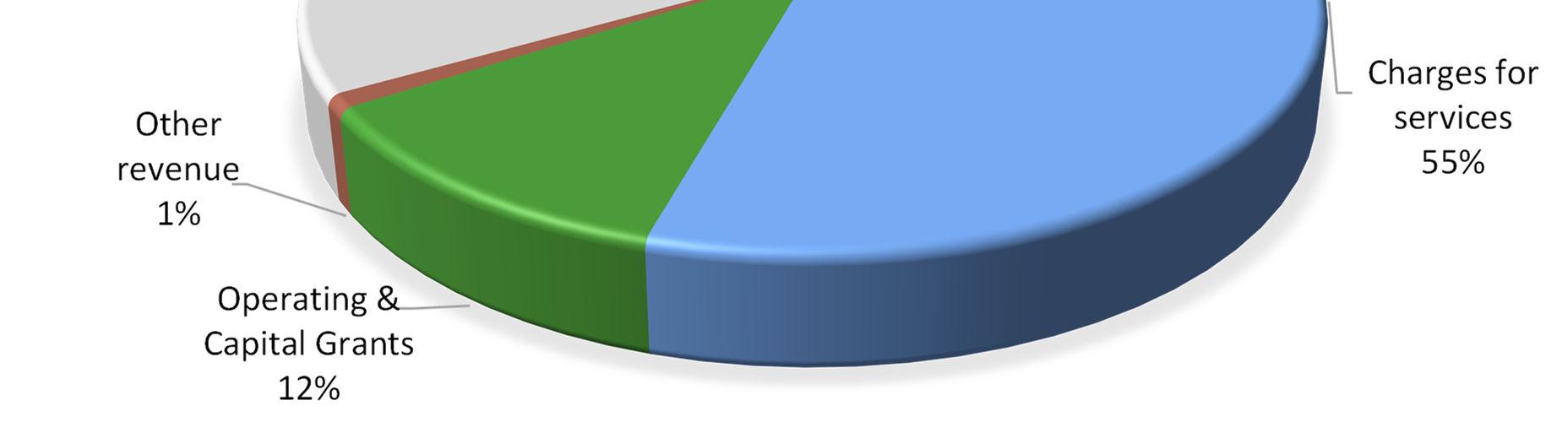
and contributions received from other governmental organizations and individuals for both capital and operating activities. Overall governmental program revenues, including intergovernmental aid, donations and fees for services were $3,387,770. General taxes and investment earnings totaled $19,316,692.
The Town's programs include General Government, Public Safety, Highways and Streets, Culture and Recreation, Health and Welfare, Water and Sewer Services. Each program’s net cost (total cost less revenues generated by the activities) is presented below. The net cost shows the extent to which the Town's general taxes support each of the Town's programs.
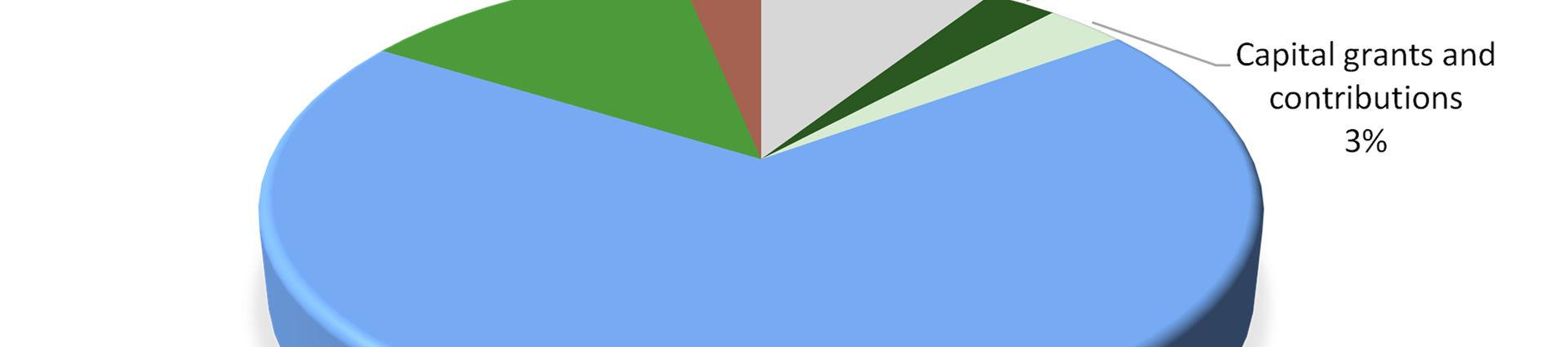
Total resources available during the year to finance governmental operations were $58.0 million, consisting of restated net position at July 1, 2024 of $35.3 million, program revenues of $3.4 million and General Revenues of $19.3 million. Total Governmental Activities during the year were $21.5 million; thus, Governmental Net Position increased by $1.2 million to $36.5 million. Operating and capital grants and contributions increased 31% during the year while tax revenues only increased 2%.
Town of Chino Valley, Arizona
Management’s Discussion and Analysis
June 30, 2025
The following graphs compare program expenses to program revenues and provide a breakdown of revenues by source for all governmental activities.

Town of Chino Valley, Arizona
Management’s Discussion and Analysis
June 30, 2025
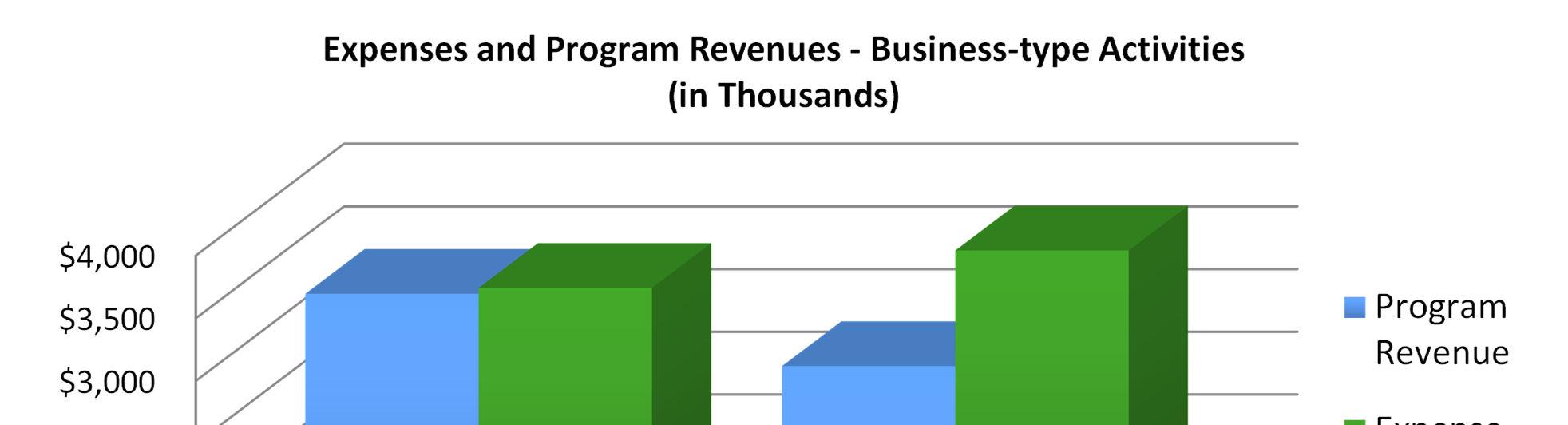
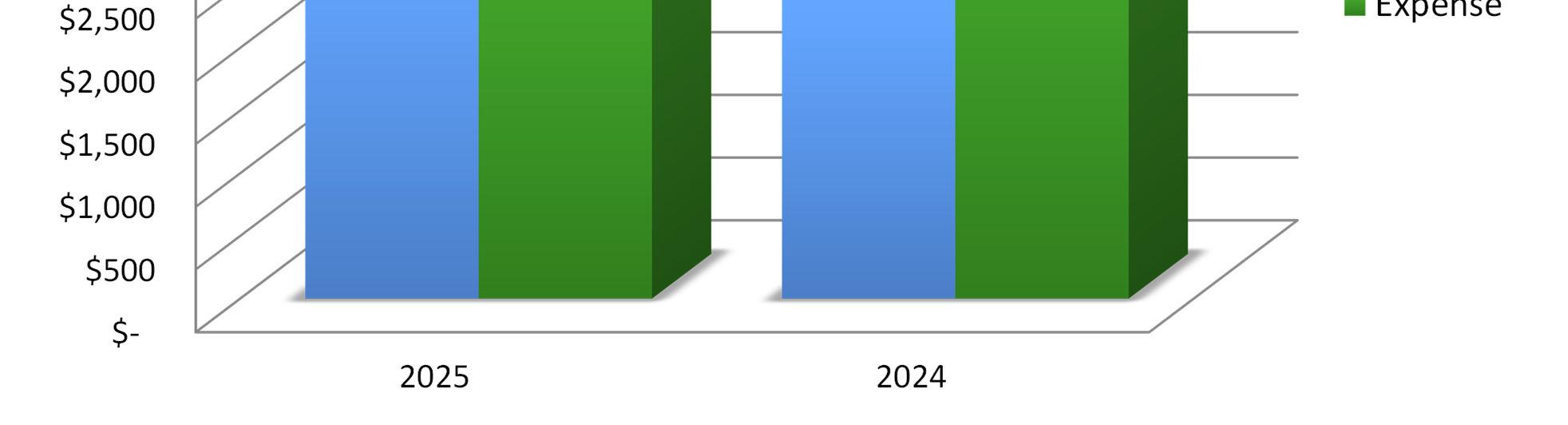
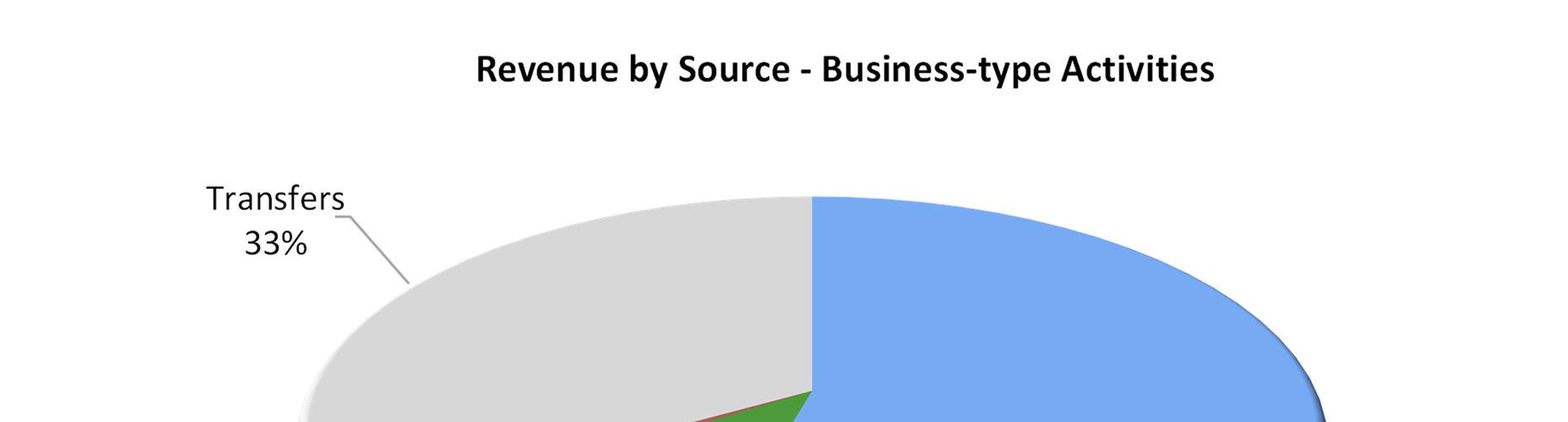
Net position of the Business-Type activities at June 30, 2025, as reflected in the Statement of Net Position was $15.4 million. The cost of providing all Proprietary (Business-Type) activities this year was $3.5 million. As shown in the statement of Changes in Net Position, the amounts paid by users of the system were $2.8 million and there was $595,138 subsidized by grants received from other governmental organizations for both capital and operating activities. User service fees for both funds remained consistent with water fees and sewer fees increasing slightly due to the rate adjustments that were approved in December 2023. Interest earnings and other revenues were $47,601. The Net Position increased by $1,733,782.
Town of Chino Valley, Arizona
Management’s Discussion and Analysis
June 30, 2025
As noted earlier, the Town uses fund accounting to ensure and demonstrate compliance with finance-related legal requirements.
Governmental Funds - The focus of the Town's governmental funds is to provide information on near-term inflows, outflows and balances of spend-able resources. Such information is useful in assessing the Town's financing requirements. In particular, unassigned fund balance may serve as a useful measure of a government's net resources available for spending at the end of the fiscal year.
As of the end of the current fiscal year, the Town's governmental funds reported combined ending fund balances of $16,674,289 a decrease of $1,930,671 in comparison with the prior year. Approximately 56% of this total amount, $9,290,147 constitutes unassigned fund balance, which is available for new spending at the government's discretion. The remainder of the fund balance is restricted or assigned (1) to pay debt service, (2) to pay for capital improvements or (3) for a variety of other restricted purposes.
The general fund is the chief operating fund of the Town. At the end of the current fiscal year, the unassigned fund balance in the general fund was $9,290,147 while total fund balance is $10,130,067. As a measure of liquidity, it may be useful to compare both unassigned fund balance and total fund balance to total fund expenditures. Unassigned fund balance represents 55% of total general fund expenditures, while total fund balance represents 60% of the same amount.
During the year, the Town's General Fund balance increased by $144,575. This increase was primarily driven by decreased transfers to the Highway User Revenue Fund offset by reduced intergovernmental revenues.
The Grant fund balance increased by $157,236. The key factor in this increase was the increased receipt of unrestricted funds such as Smart and Safe funds and donations.
The Highway User Revenue fund decreased $783,592, due to greater investment in one-time road improvement projects.
The Debt Service fund decreased $485,501, due to slight differences between transfers in, interest income, and debt service payments.
The Capital Improvements Fund decreased by $963,587, primarily due to the completion of several larger capital projects.
The nonmajor funds of the Town consist of the Street Lighting Improvement District fund which is restricted for the specific purpose of providing lighting in three districts and the Maintenance Improvement District fund which is restricted for the specific purpose of landscaping maintenance of drainage areas in the Del Sol subdivision.
Proprietary Funds - The proprietary fund financial statements are prepared on the same accounting basis and measurement focus as the government-wide financial statements but provide additional detail since each major enterprise fund is shown directly on the fund statements. Net position of the proprietary funds was $15.4 million as of June 30, 2025. Operating revenues in fiscal year 2025
Town of Chino Valley, Arizona
Management’s Discussion and Analysis
June 30, 2025
were $942,094 for water and $1,890,250 for sewer while operating expenses were $993,986 for water and $2,336,703 for sewer, resulting in operating loss of $51,892 for water and an operating loss of $446,453 for sewer. The water and sewer operating expenses increased from the prior year mainly due to increased maintenance and repair costs. The sewer net operating loss was partially offset by buy-in and connection fees.
Actual expenditures, excluding transfers, for the General Fund at year-end were $3,493,808 less than final appropriations. The budget to actual variance in appropriations was principally due to continued reductions in general government expenses including capital asset replacement and nondepartmental expenses that were less than anticipated and the preservation of the remaining contingencies and reserves budgets.
The capital assets of the Town are those assets that are used in performance of Town functions including infrastructure assets. Capital Assets include equipment, buildings, land, park facilities and roads. At the end of fiscal year 2025, net capital assets of the government activities totaled $37.7 million and the net capital assets of the business-type activities totaled $24.2 million. Depreciation on capital assets is recognized in the Government-Wide financial statements. (See Note 4 to the financial statements).
At year-end, the Town had $20.7 million in governmental type debt and $7.2 million in proprietary debt. The debt is a liability of the government and amounts to $2,010 per capita. There is more detailed information on long-term debt activity of the Town in the notes to the financial statements. (See Note 6 to the financial statements).
In building the Town Budget for fiscal year 2025-2026, the Town Council and management considered the slight increase in state shared revenues and the adopted utility rate increases and established expenditure budgets accordingly.
Chino Valley's continues to see interest in the areas of housing and commercial development, suggesting the local economy continues to grow, but at a slower pace than previously experienced. The Town anticipates minimal revenue increases in most areas and continues to proactively review expenses for potential savings.
This financial report is designed to provide our citizens, taxpayers, customers, investors and creditors with a general overview of the Town's finances and to show the Town's accountability for the money it receives. If you have questions about this report or need additional financial information, contact the Town of Chino Valley, Arizona, Finance Department, 202 N. State Route 89, Chino Valley, Arizona 86323. You can also call 928-636-2646 or visit our website at www.chinoaz.net
Government-Wide Financial Statements - Include the Statement of Net Position and Statement of Activities and use the accrual basis of accounting for financial reporting.
Governmental Funds Financial Statements - Include the Balance Sheet and Statement of Revenues, Expenditures and Changes in Fund Balance for the major governmental funds that use the modified accrual basis of reporting. Also includes the reconciliations to the governmentwide financial statements and the Budget and Actual statements for the General Fund and all major Special Revenue Funds.
Proprietary Funds Financial Statements - Include the Statement of Net Position, Statement of Revenues, Expenses and Changes in Fund Net Position and Statement of Cash Flows for the business-type activities that use the accrual basis of accounting for financial reporting.
Notes to the Financial Statements
Statement of Net Position
June 30, 2025
NET POSITION
Town of Chino Valley, Arizona
Statement of Activities
For the Year Ended June 30, 2025
General revenues:
Taxes:
Transaction privilege taxes
Franchise taxes
Property taxes
Auto-in-lieu (unrestricted)
State-shared transaction privilege taxes (unrestricted)
Urban revenue sharing (unrestricted)
Unrestricted investment earnings
Gain on disposal of capital assets
Miscellaneous Transfers in (out)
Total general revenues
Change in net position
Total net position - as previously reported
GASB 101 implementation adjustment
Net position - beginning, as restated
Net position - ending
The notes to the financial statements are an integral part of this statement.
General Fund - This fund is the general operating fund of the Town. It accounts for all financial resources of the Town, except those required to be accounted for in other funds.
Highway User Revenue Fund (HURF) - This fund accounts for the Town's share of Arizona's highway user tax revenues and associated expenditures legally restricted for road construction and maintenance.
Grants Fund - This fund accounts for miscellaneous federal and state grants and other contributions that are restricted for specific use.
Debt Service Fund - This fund accounts for the accumulation of resources for, and the payment of current and future debt service requirements for governmental debt principal and interest.
Capital Improvement Fund - This fund accounts for transaction privilege tax revenues and bond proceeds used for the acquisition and construction of major capital facilities and other internally designated purposes.
Nonmajor Funds - Other governmental funds are the nonmajor funds and are special revenue, debt service and capital project funds.
Town of Chino Valley, Arizona Balance Sheet
June 30,
Reconciliation of the Governmental Funds Balance Sheet to the Statement of Net Position Governmental Activities
June 30, 2025
Amounts reported for governmental activities in the statement of net position are different because:
Capitalassetsusedingovernmentalactivitiesarenotfinancialresourcesandtherefore are not reported in the governmental funds.
Long-term liabilities, such as net pension liabilities, bonds payable, finance purchase payable,SBITApayable,leasepayable,andcompensatedabsencesarenotdueand payableinthecurrentperiodandthereforearenotreportedinthegovernmental funds.
Deferredoutflowsandinflowsofresourcesrelatedtopensionsanddeferredchargesor creditsondebtrefundingareapplicabletofuturereportingperiodsandthereforeare not reported in the funds.
The notes to the financial statements are an integral part of this statement.
Statement of Revenues, Expenditures and Changes in Fund Balances Governmental Funds
For the Year Ended June 30, 2025
EXPENDITURES
FINANCING SOURCES (USES)
2,976,363 $ - $ 12,339,116 $ - 4,836 4,836 8,528,959
301,526
152,655 227,824
594,293
190,469
2,976,363 4,836 22,339,678
5,878,777
484,762 1,541,969 - 5,828,329 1,541,969 4,638 23,695,133 1,434,394 198 (1,355,455) - - 1,777,981 (2,397,981) - (2,397,981) - - 44,784 (2,397,981) - (575,216) (963,587) 198 (1,930,671) 2,865,701 526 18,604,960 1,902,114 $ 724 $ 16,674,289 $
Reconciliation of the Statement of Revenues, Expenditures and Changes in Fund Balance of Governmental Funds to the Statement of Activities For the Year Ended June 30, 2025
Net change in fund balances - total governmental funds(1,930,671)$
Amounts reported for governmental activities in the statements of activities are different because: Expenditures for capital assets5,828,329 Less amount not capitalized(909,412) Less disposals of assets(2,251)
Governmentfundsreportcapitaloutlaysasexpenditures.However,inthestatement ofactivities,thecostofthoseassetsisallocatedovertheirestimatedusefullivesas depreciation or amortization expense.
Theissuanceoflong-termdebtprovidescurrentfinancialresourcestogovernmental funds,whiletherepaymentoftheprincipaloflong-termdebtconsumesthecurrent financialresourcesofgovernmentalfunds.Neithertransaction,however,hasany effect on net position. In the current period, these amounts are:
Townpensioncontributionsarereportedasexpendituresinthegovernmentalfunds whenmade.However,theyarereportedasdeferredoutflowsofresourcesinthe StatementofNetPositionbecausethereportednetpensionliabilityismeasureda yearbeforetheTown'sreportdate.Pensionexpense,whichisthechangeinthenet pensionliabilityadjustedforchangesindeferredoutflowsandinflowsofresources related to pensions, is reported in the Statement of Activities.
Donationsofcapitalassetsarenotreflectedonthegovernmentalfundstatements but are shown in the statement of activities.
Compensatedabsencesreportedinthestatementofactivitiesdonotrequiretheuse ofcurrentfinancialresourcesandthereforearenotreportedasexpendituresin governmental funds.
Change in net position of governmental activities - statement of activities1,233,973$
Water Fund - This fund is used to account for the activities of the Town's water utility operations.
Sewer Fund - This fund is used to account for the activities of the Town's sewer utility operations.
Statement of Fund Net Position
Proprietary Funds
June 30, 2025
DEFERRED OUTFLOWS
Statement of Revenues, Expenses and Changes in Fund Net Position
Proprietary Funds
For the Year Ended June 30, 2025
The notes to the
Statement of Cash Flows
Proprietary Funds
For the Year Ended June 30, 2025
Statement of Cash Flows
Proprietary Funds
For the Year Ended June 30, 2025
at end of
Reconciliation of operating income (loss) to net cash provided (used) by operating activities:
Adjustments to reconcile operating income (loss) to net cash provided (used) by operating activities:
investing, capital and financing activities: Additions (deletions) to property, plant and equipment
Town of Chino Valley, Arizona
Notes to the Financial Statements
June 30, 2025
The accompanying financial statements of the Town of Chino Valley, Arizona (Town) have been prepared in conformity with accounting principles generally accepted in the United States of America applicable to governmental units adopted by the Governmental Accounting Standards Board (GASB). A summary of the Town's more significant accounting policies follows.
The Town of Chino Valley, Arizona is a municipal government that is governed by an elected mayor, vice mayor, and five-member governing council (council). The accompanying financial statements present the Town and its component units, entities for which the Town is considered to be financially accountable. Blended component units are, in substance, part of the primary government's operations, even though they are legally separate entities. Thus, blended component units are appropriately presented as funds of the primary government. Each discretely presented component unit is reported in a separate column in the government-wide financial statements to emphasize that it is legally separate from the Town.
The following is a brief review of the component units included in defining the Town's reporting entity. There are no discretely presented component units and one blended component unit.
The government-wide financial statements (i.e., the statement of net position and the statement of activities) report information on all the activities of the primary government and its component units. Governmental activities, which normally are supported by taxes, intergovernmental revenues, and other nonexchange transactions, are reported separately from business-type activities, which rely to a significant extent on fees and charges to external customers for support. Likewise, when applicable, the primary government is reported separately from certain legally separate component units for which the primary government is financially accountable.
While separate government-wide and fund financial statements are presented, they are interrelated. The governmental activities column incorporates data from governmental funds, while business-type activities incorporate data from the Town's enterprise funds. Separate financial statements are provided for governmental funds and proprietary funds.
Interfund services provided and used are not eliminated in the process of consolidation for the government-wide financial statements.
The fund financial statements provide information about the Town's funds. Separate statements for each fund category - governmental and proprietary - are presented. The emphasis of fund financial statements is on major governmental and enterprise funds, each displayed in a separate column. All remaining governmental and enterprise funds are aggregated and reported as nonmajor funds. Major individual governmental and enterprise funds are reported as separate columns in the fund financial statements.
Town of Chino Valley, Arizona
Notes to the Financial Statements
June 30, 2025
The Town reports the following major governmental funds:
The General Fund is the Town's primary operating fund. It accounts for all financial resources of the general government, except for those required to be accounted for in another fund.
Highway User Revenue Fund (HURF) This fund accounts for the Town's share of Arizona's highway user tax revenues and associated expenditures legally restricted for road construction and maintenance.
The Grants Special Revenue Fund accounts for miscellaneous federal and state grants and other contributions that are restricted for specific use.
The Debt Service Fund accounts for the accumulation of resources for, and the payment of current and future debt service requirements for governmental debt principal and interest.
The Capital Improvement Capital Projects Fund accounts for transaction privilege tax revenues and bond proceeds used for capital projects and other internally designated purposes.
The Town reports the following major proprietary funds:
The Water Fund accounts for the activities of pumping, treating and distribution of water. The Sewer Fund accounts for the activities of wastewater collection and treatment. During the course of operations, the Town has activity between funds for various purposes. Any residual balances outstanding at year end are reported as due from/to other funds and advances to/from other funds. While these balances are reported in fund financial statements, certain eliminations are made in the preparation of the government-wide financial statements. Balances between the funds included in governmental activities (i.e., the governmental funds) are eliminated so that only the net amount is included as internal balances in the governmental activities column.
Similarly, balances between the funds included in business-type activities (i.e., the enterprise funds) are eliminated so that only the net amount is included as internal balances in the businesstype activities column. Further, certain activity occurs during the year involving transfers of resources between funds. In fund financial statements these amounts are reported at gross amounts as transfers in/out. While reported in fund financial statements, certain eliminations are made in the preparation of the government-wide financial statements. Transfers between the funds included in governmental activities are eliminated so that only the net amount is included as transfers in the governmental activities column. Similarly, balances between the funds included in business-type activities are eliminated so that only the net amount is included as internal balances in the business-type activities column.
The accounting and financial reporting treatment is determined by the applicable measurement focus and basis of accounting. Measurement focus indicates the type of resources being measured such as current financial resources or economic resources. The basis of accounting indicates the timing of transactions or events for recognition in the financial statements.
The government-wide financial statements are reported using the economic resources measurement focus and the accrual basis of accounting. Revenues are recorded when earned and expenses are recorded when a liability is incurred, regardless of the timing of related cash flows. Property taxes are
Town of Chino Valley, Arizona
Notes to the Financial Statements
June 30, 2025
recognized as revenues in the year for which they are levied. Grants and similar items are recognized as revenue as soon as all eligibility requirements imposed by the provider have been met.
The governmental fund financial statements are reported using the current financial resources measurement focus and the modified accrual basis of accounting. Revenues are recognized as soon as they are both measurable and available. Revenues are considered to be available when they are collectible within the current period or soon enough thereafter to pay liabilities of the current period. For this purpose, the Town considers revenues to be available if they are collected within 60 days of the end of the current fiscal period. Expenditures generally are recorded when a liability is incurred, as under accrual accounting. However, debt service expenditures, as well as expenditures related to compensated absences, and claims and judgments, are recorded only when payment is due. General capital asset acquisitions are reported as expenditures in governmental funds. Issuance of long-term debt and acquisitions under lease contracts are reported as other financing sources.
Transaction privilege taxes, franchise taxes, intergovernmental grants and aid, and interest associated with the current fiscal period are all considered to be susceptible to accrual and so have been recognized as revenues of the current fiscal period. Entitlements are recorded as revenues when all eligibility requirements are met, including any time requirements, and the amount is received during the period or within the availability period for this revenue source (within 60 days of yearend). Expenditure-driven grants are recognized as revenue when the qualifying expenditures have been incurred and all other eligibility requirements have been met, and the amount is received during the period or within the availability period for this revenue source (within 60 days of year-end). All other revenue items are considered to be measurable and available only when cash is received by the Town.
The proprietary funds are reported using the economic resources measurement focus and the accrual basis of accounting.
Cash includes cash on hand, demand deposits with banks and other financial institutions, and deposits in other types of accounts or cash management pools that have the general characteristics of demand deposit accounts. Cash equivalents consist of short-term, highly liquid investments that are both readily convertible to known amounts of cash and so near their maturity that they present an insignificant risk of changes in value because of changes in interest rates. Generally, only investments with original maturities of three months or less from the date of acquisition qualify as cash equivalents.
Cash and investments are pooled except for funds required to be held by fiscal agents or restricted under provisions of bond indentures. Interest earned from investments purchased with such pooled monies is allocated to each of the funds based on the average daily cash balances. State statutes authorize the Town to invest in obligations of the U.S. Treasury and U.S. agencies, certificates of the deposit in eligible depositories, repurchase agreements, obligations of the State of Arizona or any of its counties or incorporated cities, towns, or duly organized school districts, improvement districts in this state and the State Treasurer's Local Government Investment Pool. All investments are stated at fair value.
Town of Chino Valley, Arizona
Notes to the Financial Statements
June 30, 2025
Activity between funds that are representative of lending/borrowing arrangements outstanding at the end of the fiscal year are referred to as "Internal balances" in the Statement of Net Position and as "Due to" or "Due from" other funds in the fund financial statements. All trade accounts receivable in the proprietary funds are shown net of an allowance for doubtful accounts.
Purchases of inventory items are recorded at the time of purchase (purchases method) as expenditures in the funds from which the purchases were made; and because the amounts on hand at June 30, 2025, were immaterial, they are not included in the balance sheet.
Certain payments to vendors reflect costs applicable to future accounting periods and are recorded as prepaid items in both the government-wide and fund financial statements. The cost of prepaid items is recorded as expenditures/expenses when consumed (consumption method) rather than when purchased.
Certain proceeds of the Town's bonds and loans are classified as restricted assets on the statement of net position because their use is limited by applicable bond or loan covenants.
Capital assets, which include property, plant, equipment, and infrastructure assets (e.g., roads, bridges, sidewalks, and similar items), including those that are subscription assets or leased assets by the Town, are reported in the applicable governmental or business-type activity columns in the government-wide financial statements and in the proprietary fund financial statements. Capital assets are defined by the Town as assets with an individual cost of more than $5,000 and an estimated useful life in excess of one year. Capitalized assets are recorded at historical cost or estimated historical cost if purchased or constructed. Donated capital assets are recorded at acquisition value. The costs of normal maintenance and repairs that do not add to the value of the asset or materially extend assets lives are not capitalized. Land, construction in progress, and water rights are not depreciated/amortized. The other property, plant, and equipment are depreciated/amortized using the straight-line method over the following estimated useful lives:
Land improvements 10-25 years
Buildings and improvements 10-25 years
Water and Wastewater systems 25-50 years
Furniture, equipment and vehicles 5-15 years
Infrastructure 10-25 years
Intangible right-to-use lease assets are amortized over the shorter of the lease term or the useful life of the underlying asset.
Intangible right-to-use subscription assets are amortized over the shorter of the subscription term or the useful life of the underlying IT asset.
Town of Chino Valley, Arizona
Notes to the Financial Statements
June 30, 2025
In addition to assets, the statement of financial position will sometimes report a separate section for deferred outflows of resources. This separate financial statement element, deferred outflows of resources, represents a consumption of net assets that applies to a future period(s) and so will not be recognized as an outflow of resources (expense/expenditure) until then.
In addition to liabilities, the statement of financial position will sometimes report a separate section for deferred inflows of resources. This separate financial statement element, deferred inflows of resources, represents an acquisition of net assets that applies to a future period(s) and so will not be recognized as an inflow of resources (revenue) until that time.
For purposes of measuring the net pension liability, deferred outflows of resources and deferred inflows of resources related to pensions, and pension expense, information about the pension plan's fiduciary net position and additions to/deductions from the plan's fiduciary net position have been determined on the same basis as they are reported by the plan. For this purpose, benefit payments (including refunds of employee contributions) are recognized when due and payable in accordance with the benefit terms. Investments are reported at fair value.
As lessee, the Town recognizes lease liabilities with an initial, individual value of $100,000 or more. The Town uses its estimated incremental borrowing rate to measure lease liabilities unless it can readily determine the interest rate implicit in the lease. The Town's estimated incremental borrowing rate is based on the average interest rate of other financing instruments with similar terms and risks as those currently entered into by the Town.
As lessor, the Town recognizes lease receivables with an individual value of $100,000 or more. If there is no stated rate in the lease contract (or if the stated rate is not the rate the Town charges the lessee) and the implicit cannot be determined, the Town uses its own estimated incremental borrowing rate as the discount rate to measure lease receivables. The Town's estimated incremental borrowing rate is calculated as described above.
The Town recognizes subscription liabilities with an initial, individual value of $100,000 or more. The Town uses its estimated incremental borrowing rate to measure subscription liabilities unless it can readily determine the interest rate implicit in the arrangement. The Town's estimated incremental borrowing rate is calculated as described above for leases.
Sometimes the Town will fund outlays for a particular purpose from both restricted (e.g., restricted bond or grant proceeds) and unrestricted resources. In order to calculate the amounts to report as restricted - net position and unrestricted - net position in the government-wide and proprietary fund financial statements, a flow assumption must be made about the order in which the resources are considered to be applied. It is the Town's policy to consider restricted - net position to have been depleted before unrestricted - net position is applied.
Town of Chino Valley, Arizona
Notes to the Financial Statements
June 30, 2025
Sometimes the Town will fund outlays for a particular purpose from both restricted and unrestricted resources (the total of committed, assigned, and unassigned fund balance). In order to calculate the amounts to report as restricted, committed, assigned, and unassigned fund balance in the governmental fund financial statements a flow assumption must be made about the order in which the resources are considered to be applied. It is the Town's policy to consider restricted fund balance to have been depleted before using any of the components of unrestricted fund balance. Further, when the components of unrestricted fund balance can be used for the same purpose, committed fund balance is depleted first, followed by assigned fund balance. Unassigned fund balance is applied last.
Fund balance of governmental funds is reported in various categories based on the nature of any limitations requiring the use of resources for specific purposes. The Town itself can establish limitations on the use of resources through either a commitment (committed fund balance) or an assignment (assigned fund balance).
The committed fund balance classification includes amounts that can be used only for the specific purposes determined by a formal action of the Town's highest level of decision-making authority. The governing council is the highest level of decision-making authority for the Town that can, by adoption of an ordinance prior to the end of the fiscal year, commit fund balance. Once adopted, the limitation imposed by the ordinance remains in place until a similar action is taken (the adoption of another ordinance) to remove or revise the limitation.
Amounts in the assigned fund balance classification are intended to be used by the Town for specific purposes but do not meet the criteria to be classified as committed. The Town Manager is authorized to assign amounts to a specific purpose in accordance with the Town's budget policy. The council may also assign fund balance as it does when appropriating fund balance to cover a gap between estimated revenue and appropriations in the subsequent year's appropriated budget. Unlike commitments, assignments generally only exist temporarily. In other words, an additional action does not normally have to be taken for the removal of an assignment. Conversely, as discussed above, an additional action is essential to either remove or revise a commitment.
Amounts reported as program revenues include (1) charges to customers or applicants who purchase, use or directly benefit from goods, services, or privileges provided by a given function or segment and (2) grants and contributions (including special assessments) that are restricted to meeting the operational or capital requirements of a particular function or segment. All taxes, including those dedicated for specific purposes, and other internally dedicated resources are reported as general revenues rather than as program revenues
Town employees earn vacation, sick leave, and other compensated absences in accordance with Town policy and applicable employment agreements. In prior years, the Town accounted for compensated absences under GASB Statement No. 16. Beginning with the fiscal year ended June 30, 2025, the Town adopted GASB Statement No. 101, Compensated Absences.
Town of Chino Valley, Arizona
Notes to the Financial Statements
June 30, 2025
Under GASB 101, the Town recognizes a liability for compensated absences when the leave is attributable to services already rendered and is vested or more likely than not to be used for time off or otherwise paid to employees upon separation from service. Liability is measured at the amounts expected to be paid, considering payout rates in effect at year-end and historical usage patterns.
For governmental funds, only the portion of the liability expected to be liquidated with expendable available financial resources is reported. The full liability is reported in the government-wide financial statements, and in the proprietary fund financial statements.
Proprietary funds distinguish operating revenues and expenses from nonoperating items. Operating revenues and expenses generally result from providing services and producing and delivering goods in connection with a proprietary fund's principal ongoing operations. The principal operating revenues of proprietary funds are charges to customers for sales and services. Operating expenses for enterprise funds and internal service funds include the cost of sales and services, administrative expenses, and depreciation on capital assets. All revenues and expenses not meeting this definition are reported as nonoperating revenues and expenses.
The preparation of financial statements in conformity with accounting principles generally accepted in the United States of America requires management to make estimates and assumptions that affect the reported amounts of assets and liabilities and disclosure of contingent assets and liabilities at the date of the financial statements and the reported amounts of revenues and expenditures/expenses during the reporting period. Actual results could differ from those estimates.
Annual budgets are adopted on a basis consistent with generally accepted accounting principles for all governmental funds. All annual appropriations lapse at year end. The Town Council follows these procedures in establishing the budgetary data reflected in the financial statements:
1. In accordance with Arizona Revised Statutes, the Town Manager submits a proposed budget for the fiscal year commencing the following July 1 to the Town Council. The operating budget includes proposed expenditures and the means of financing them for the upcoming year.
2. Public hearings are conducted to obtain taxpayer comment.
3. Prior to the third Monday in August, the expenditure limitation for the Town is legally enacted through passage of an ordinance. To ensure compliance with the expenditure limitation, a uniform expenditure report must be filed with the State each year. This report, issued under a separate cover, reconciles total Town expenditures from the audited financial statements to total expenditures for reporting in accordance with the State's uniform expenditure reporting system (A.R.S. §41-1279.07).
4. The Town follows a voter-approved alternative expenditure limitation that was extended on July 30, 2024.
Town of Chino Valley, Arizona
Notes to the Financial Statements
June 30, 2025
5. Expenditures may not legally exceed the expenditure limitation of all fund types as a whole. For management purposes, the Town adopts a budget by department for the General Fund and in total by fund for other funds. The Town Manager, subject to Town Council approval, may at any time transfer any unencumbered appropriation balance or portion thereof between a department or activity. The total adopted budget cannot be amended in any way without Town Council approval.
6. The Town has adopted budgets in accordance with A.R.S. requirements and utilizes the budgets as a management control device during the year for the General, Special Revenue, Debt Service and Capital Projects Funds. The budgets are prepared on essentially the same modified accrual basis of accounting used to record actual revenues and expenditures.
The Town is subject to the State of Arizona's Spending Limitation Law for Towns and Cities. This law does not permit the Town to spend more than budgeted revenues plus the carry-over unrestricted cash balance from the prior fiscal year. The limitation is applied to the total of the combined funds. The Town complied with this law during the year.
Encumbrance accounting, under which purchase orders, contracts, and other commitments for the expenditure of monies are recorded in order to reserve that portion of the applicable appropriation, is not employed by the Town.
Expenditures may not legally exceed budgeted appropriations at the department level. There were no occurrences of expenditures over appropriations in any department for the year ended June 30, 2025.
The Governmental Accounting Standards Board (GASB) has issued several statements that have been adopted but are in effect for the fiscal year ending June 30, 2025. The Town has implemented these standards as required. Those standards include:
GASB Statement No. 101, Compensated Absences – Effective for fiscal years beginning after December 15, 2023 (fiscal year ending June 30, 2025, for the Town). This Statement requires governments to recognize a liability for compensated absences that are attributable to services already rendered and are either vested or more likely than not to be used for time off or otherwise paid. Liabilities are measured at the amounts expected to be paid, considering payout rates and historical usage patterns.
In connection with the implementation of GASB 101, the Town recalculated its compensated absences liability as of June 30, 2024. As a result, the beginning net position of the governmental activities and business-type activities at July 1, 2024 were adjusted by to reflect the difference between the liability previously reported under GASB 16 and the liability required under GASB 101, as described in Note 11.
GASB Statement No. 102, Certain Risk Disclosures – Effective for fiscal years beginning after June 15, 2024 (fiscal year ending June 30, 2025, for the Town). This Statement requires disclosure of certain concentrations and constraints that could make a government vulnerable to the risk of a substantial impact. The Town has evaluated its operations and has determined that it is
Town of Chino Valley, Arizona
Notes to the Financial Statements
June 30, 2025
subject to constitutional expenditure limitations imposed by the State of Arizona, as described in Note 12.
The Governmental Accounting Standards Board (GASB) has issued several statements that have been adopted but are not yet effective for the fiscal year ending June 30, 2025. The Town will implement these standards in future reporting periods as required. Those standards include:
GASB Statement No. 103, Financial Reporting Model Improvements – Effective for fiscal years beginning after June 15, 2025 (fiscal year ending June 30, 2026, for the Town). This Statement establishes changes to the financial reporting model, including management’s discussion and analysis, presentation of governmental fund financial statements, and proprietary fund cash flows. The Town is currently evaluating the impact of this Statement.
GASB Statement No. 104, Disclosure of Certain Capital Assets – Effective for fiscal years beginning after June 15, 2025 (fiscal year ending June 30, 2026, for the Town). This Statement establishes disclosure requirements for certain capital assets, including intangible assets and assets held for sale. The Town is currently evaluating the impact of this Statement.
The Town continues to monitor and evaluate the impact of any future accounting standards issued by GASB, to ensure compliance and accurate financial reporting on its future financial statements. The adoption of these standards is expected to enhance the transparency and comparability of the Town's financial reporting. The Town will provide additional disclosures in the financial statements for the periods in which these standards become effective.
The following table summarizes the Town's cash and investments at June 30, 2025:
cash and cash equivalents 574,576 1,053,187 1,627,763 Total $ 14,955,355 $ 2,117,562 $ 17,072,917
For purposes of financial reporting and the statement of cash flows, the Town considers all highly liquid investments (including amounts held in the State Treasurer’s Local Government Investment Pool) with an original maturity of three months or less from the date of acquisition to be cash equivalents. Cash includes cash on hand, demand deposits with banks and other financial institutions, and deposits in other types of accounts or cash management pools that have the general characteristics of demand deposit accounts.
At June 30, 2025, the Town had $3,727 of petty cash on hand. The carrying amount of the Town's cash in bank totaled $3,125,130 and the bank balance was $3,190,684. The difference of $65,554 is attributed to outstanding checks offset by deposits in transit.
Town of Chino Valley, Arizona
Notes to the Financial Statements
June 30, 2025
Of the bank balance, $270,919 was covered by federal depository insurance, and $2,919,765 was covered by collateral held in the pledging bank's trust department not in the Town's name.
Restricted cash and cash equivalents - At June 30, 2025, the Town had restricted cash and cash equivalents of $1,627,763, which was restricted for debt payments, police impoundment activities, and court improvements in accordance with applicable legal or contractual requirements.
The Town invests in the Local Government Investment Pool 5 and Pool 7 (LGIP), investment pools managed by the State Treasurer's Office that allows governments within the State to pool their funds for investment purposes. The LGIP is not registered with the Securities Exchange Commission under the 1940 Investment Advisors Act. The State Board of Investment and the Investment Risk Management Committee have oversight responsibilities of the investment pool in accordance with ARS 35-311. The pool's policy is to invest in fixed-rate securities with a final maturity less than 36 months from the settlement date of the purchase and variable-rate securities with final maturity less than five years.
At June 30, 2025, the dollar-weighted average portfolio maturity was approximately 33 days for Pool 5 and 26 days for Pool 7. These pools are maintained at a stable net asset value of $1.00 per share. The Arizona State Treasurer issues a publicly available financial report that includes financial statements and required supplementary information. Copies may be obtained by contacting the Arizona State Treasurer, 1700 West Washington, Phoenix, Arizona 85007.
Funds held in the State Treasurer's Local Government Investment Pool represent a proportionate interest in the pool's portfolio; however, the Town's portion is not identified with specific investments and is not subject to custodial credit risk. At June 30, 2025, the Town's funds invested with the State Treasurer totaled $13,702,179. Of that amount, the Town has $1,053,187 invested with the State Treasurer as Debt Service Reserve Funds, which is included in restricted cash and cash equivalents. Additionally, the Town has $241,881 on deposit with the Trustee as Debt Service Reserve Funds also, which is included in restricted cash and cash equivalents.
Investments in the State Treasurer's investment pools are valued at the pool's share price multiplied by the number of shares the Town held. The fair value of a participant's position in the pools approximates the value of that participant's pool shares. The State Board of Investment provides oversight for the State Treasurer's investment pools.
Interest rate risk is the risk that changes in market interest rates will adversely affect the fair value of an investment. Generally, the longer the maturity of an investment, the greater the sensitivity of its fair value to changes in market interest rates.
Information about the sensitivity of the fair values of the Town's investments to market interest rate fluctuations is provided by the following table that shows the distribution of Town's investments by maturity:
Town of Chino Valley, Arizona
Notes to the Financial Statements
June 30, 2025
Remaining Maturity 12 Months or Less
Credit risk is the risk that an issuer of an investment will not fulfill its obligation to the holder of the investment. This is measured by the assignment of a rating by a nationally recognized statistical rating organization. The Town does not have a formal investment policy regarding credit risk. However, the Town is prohibited by State law from investing in investments other than obligations of the U.S. Treasury and U.S. agencies, certificates of deposit in eligible depositories, repurchase agreements, obligations of the State of Arizona or any of its counties or incorporated cities, towns or duly organized school districts, improvement districts in this state and the State Treasurer's Local Investment Pool. Presented below is the actual rating as of year-end for each investment type.
Receivables as of yearend for the government’s individual major and non-major funds in the aggregate, as shown in the Balance Sheet, including the applicable allowances for uncollectible accounts, are as follows:
Intergovernmental receivables consist of amounts due from the State of Arizona for various taxes, shared revenues, and highway user revenues.
Receivables in the proprietary funds are service billings receivable and are shown in the financial statements net of an allowance for doubtful accounts which is itemized in the table above.
Town of Chino Valley, Arizona
Notes to the Financial Statements
June 30, 2025
Capital asset activity for the year ended June 30, 2025, was as follows:
Town of Chino Valley, Arizona
Notes to the Financial Statements
June 30, 2025
During the fiscal year, certain capital projects were funded and paid for from governmental funds but are related to business-type activities. Upon completion, these assets were transferred to the appropriate proprietary funds, where they are capitalized. These noncash transfers are reported as capital contributions in the proprietary fund financial statements and as transfers between governmental and business-type activities in the government-wide financial statements.
Depreciation expense was charged to the functions/programs of the Town as follows:
Governmental activities:
General government410,854$
Public safety487,510
Highways and streets764,909
Culture and recreation438,997
Health and welfare5,093
Total depreciation expense - governmental activities2,107,363$
Business-type activities:
Total depreciation expense - business-type activities1,558,055$
Construction in progress activity for the year ended June 30, 2025, was as follows:
Town of Chino Valley, Arizona
Notes to the Financial Statements
June 30, 2025
As of June 30, 2025, the Town is reporting Leases Receivables of $455,841 and Deferred Inflows Related to Leases of $419,352. For the fiscal year 2025, the Town reported lease revenue of $10,538 and interest revenue of $18,317, related to lease payments received. From time to time the Town's lease contracts include variable lease payments, including residual value guarantees, that are not included in the lease receivable because they are not fixed in substance. The Town recognized an insignificant amount of revenue related to these variable lease payments and they have not been further disclosed or included in the measurement of the Town's lease receivables. These leases are summarized as follows:
The descriptions for each lease are listed below:
Sunstate Tower 1 - In May, 2015, Town of Chino Valley entered into a 25-year lease as Lessor for the use of land for communications towers. The lessee has five extension option(s), each for five years. The Town is reasonably certain the lessee will renew the lease. The lessee is required to make monthly fixed payments of $700 for the first 25 years, and then at a 10% increase for each of the five extension periods. The lease has an interest rate of 4%. Based on this agreement, the Town is receiving payments through 2065. An initial lease receivable was recorded in the amount of $190,937. As of June 30, 2025, the value of the lease receivable is $187,699. The value of the deferred inflow of resources as of June 30, 2025 was $173,581, and Town of Chino Valley, Arizona recognized lease revenue of $4,339 during the fiscal year.
Sunstate Tower 2 - In May, 2015, Town of Chino Valley entered into a 25-year lease as Lessor for the use of land for communications towers. The lessee has five extension option(s), each for five years. The Town is reasonably certain the lessee will renew the lease. The lessee is required to make monthly fixed payments of $1,000 for the first 25 years, and then at a 10% increase for each of the five extension periods. The lease has an interest rate of 4%. Based on this agreement, the Town is receiving payments through 2065. An initial lease receivable was recorded in the amount of $272,768. As of June 30, 2025, the value of the lease receivable is $268,142. The value of the deferred inflow of resources as of June 30, 2025 was $245,771, and Town of Chino Valley, Arizona recognized lease revenue of $6,199 during the fiscal year.
Town of Chino Valley, Arizona
Notes to the Financial Statements
June 30, 2025
The following is a summary of changes in long-term obligations for the year ended June 30, 2025:
Town of Chino Valley, Arizona
Notes to the Financial Statements
June 30, 2025
Generally, for governmental activities, compensated absences, pension liabilities are liquidated by the General Fund.
Debt service requirements to maturity for bonds and loans payable are as follows:
The following is a listing of bonds payable outstanding as of June 30, 2025:
Bonds payable: Governmental activities:
Pledged Revenue Bonds, Series 2021, due in annual principal and semiannual interest installments ranging from $280,412 to $404,450 bearing interest at 3.00% to 5.00%, maturing August 2046. $ 5,730,000 $ 175,000
Pledged Revenue Bonds, Series 2021, due in annual principal and semiannual interest installments ranging from $879,000 to $953,000 bearing interest at 4.00% to 5.00%, maturing August 2031. 5,086,233 653,944
Business-type activities:
Pledged Revenue Bonds, Series 2021, due in annual principal and semiannual interest installments ranging from $36,000 to $43,000 bearing interest at 4.00% to 5.00%, maturing August 2031. 163,767 21,056
Total bonds payable $ 10,980,000 $ 850,000
Town of Chino Valley, Arizona
Notes to the Financial Statements
June 30, 2025
The following is a listing of loans payable outstanding as of June 30, 2025:
Balance June 30, 2025 Due Within One Year
Loans payable:
Business-type activities:
Water Infrastructure Finance Authority of Arizona (WIFA) loan, due in semiannual variable principal and interest installments, bearing interest at 2.758%, maturing July 1, 2026. $ 207,298 $
Water Infrastructure Finance Authority of Arizona (WIFA) loan, due in semiannual variable principal and interest installments, bearing interest at 2.814%, maturing July 1, 2027.
Water Infrastructure Finance Authority of Arizona (WIFA) loan, due in semiannual variable principal and interest installments, bearing interest at 2.010%, maturing July 1, 2034. 1,628,798
Water Infrastructure Finance Authority of Arizona (WIFA) loan, due in semiannual variable principal and interest installments, bearing interest at 2.344%, maturing July 1, 2037.
Water Infrastructure Finance Authority of Arizona (WIFA) loan, due in semiannual variable principal and interest installments, bearing interest at 3.200%, maturing July 1, 2037.
Total loans payable, business-type activities $ 5,962,236 $ 760,632
Developer agreements payable outstanding as of June 30, 2025:
Developer agreement payable: Business-type activities:
Developer agreement payable with no minimum required payments and no interest. Payments are contingent on The number of water hook-ups received during the year. $ 420,733
Town of Chino Valley, Arizona
Notes to the Financial Statements
June 30, 2025
The Town has pledged a portion of the future excise taxes and state shared revenues to repay $3.3 million in MPC Revenue Bonds issued in 2016 and to repay $7.28 million in MPC Revenue Bonds issued in 2010. The 2016 MPC bonds were used to refinance the remaining portion of a 2007 GADA loan. The 2010 MPC bonds were used to refund the remaining portion of the MPC 2004 Revenue Bonds. The bonds were payable from excise taxes and state shared revenues of the Town. Annual principal and interest payments on the bonds were estimated to require 10% of excise tax and state shared revenues. These amounts were refunded during the year ended June 30, 2022 with the 2021 Pledged Revenue Refunding Obligation Bonds.
Town of Chino Valley issued Pledged Revenue Obligation Bonds Series 2021 and Pledged Revenue Refunding Obligation Bonds Series 2021 to finance the costs of construction of public safety facilities in and for the Town, to refinance the costs of certain capital projects for the Town, and to pay costs relating to the execution and delivery of the Bonds. These Bonds have been issued for governmental activities. These Bonds are direct and pledge the full faith and credit of the Town of Chino Valley. The Bonds are secured by a first lien on and pledge of Excise Tax Revenues and State Shared Revenues on a parity with the Parity Loan Agreements with the Water Infrastructure Authority. These Bonds mature in 10-25 years and accrue interest at an annual rate of 25 years and accrue interest at annual rate of 3% - 5%.
The Pledged Refunding Obligation Bonds have an average interest rate of 4.99% replacing issues with an average interest rate of 4.56% over the entire life of those bonds and a remaining weighted average maturity of 5.47. The Town realized net proceeds of $8,563,409 on the Pledged Revenue Refunding Obligations after payment of $94,250 in underwriting fees, insurance, and other issuance costs. The refunded 2010 and 2016 Series Revenue Bonds are considered fully defeased, and related liabilities are not included in the Town's financial statements. The reacquisition price exceeded the net carrying amount of the old debt by $329,919. This amount is reported as a deferred outflow of resources and amortized over the remaining life of the refunded debt, which had a shorter remaining life than the refunding debt. The refunding reduces the Town's total debt service payments causing an economic gain (difference between the present values of the debt service payments on the old and new debt) of $1,299,043.
The Town has pledged a portion of future sewer system customer revenues, net of specified operating expenses, and future excise taxes and state shared revenues to repay $9.7 million in WIFA loans issued in 2007, 2008, 2014, 2016 and 2017. Proceeds from the loans provided financing for development of the Town's sewer system. The loans are payable from sewer system customer net revenues and excise taxes and state shared revenues. The WIFA loans are payable through July 2026, 2027, 2034 and 2037. Annual principal and interest payments on the loans are estimated to require 5% of total net sewer system, excise taxes and state shared revenues. The total principal and interest remaining to be paid on the WIFA loans is $6,627,805. For the current year, principal and interest paid was $888,402, sewer system customer net revenues were $737,348, and excise taxes and state shared revenues were $18,587,653.
The 2021 Series Revenue Bonds that are contained in the Long-term Debt Summary Table have continuing disclosure requirements that are to be uploaded to the Electronic Municipal Market Access (EMMA) by February 1st of each year.
Town of Chino Valley, Arizona
Notes to the Financial Statements
June 30, 2025
Short-term borrowings between funds are reported as due to/due from other funds and long-term borrowings between funds are reported as advances to and advances from other funds.
As of June 30, 2025, the Town reported the following due to/from other funds:
The $1,348,122 due from the Sewer Fund to the General Fund is a short-term borrowing to cover deficit cash to be paid in less than one year.
Reported Transfers in Governmental Fund Financial Statements
Interfund transfers reported in the governmental fund statements for the fiscal year ended June 30, 2025 are as follows:
These transfers represent the allocation of resources to finance debt service, capital improvements, and enterprise activities.
Eliminated Budgeted Transfers (Not Reported in Governmental Fund Financial Statements)
Although these transfers were legally budgeted and recorded at the individual fund level, they are eliminated in the governmental fund financial statements because the General Fund and the Capital Asset Replacement Fund are combined for reporting purposes, and the Highway User Revenue Fund and the Streets Capital Improvement Fund are likewise presented together. These transfers are disclosed here for consistency with the adopted budget and to provide transparency regarding the Town’s internal funding of capital programs.
Town of Chino Valley, Arizona
Notes to the Financial Statements
June 30, 2025
The Town contributes to the plans described below. The plans are component units of the State of Arizona.
At June 30, 2025, the Town reported the following aggregate amounts related to pensions for all plans to which it contributes:
Net pension liabilities7,384,529$ 583,471$ 7,968,000$
Deferred outflows of resources3,283,556 101,591 3,385,147
Deferred inflows of resources(562,905) (39,915) (602,820)
Pension expense(1,686,755) (70,469) (1,757,224)
The Town reported $1,846,130 of pension contributions as expenditures in the governmental funds related to all pension plans to which it contributes.
Net OPEB assets/liabilities have not been recorded, or further disclosed, at June 30, 2025 in accordance with GASB Statement 75, due to the relative insignificance to the Town's financial statements.
Description
Town employees not covered by the other pension plan described below participate in the Arizona State Retirement System (ASRS). The ASRS administers a cost-sharing multiple-employer defined benefit pension plan, a cost-sharing multiple-employer defined benefit health insurance premium benefit (OPEB) plan, and a cost-sharing multiple-employer defined benefit long-term disability (OPEB) plan. The Arizona State Retirement System Board governs the ASRS according to the provisions of A.R.S. Title 38, Chapter 5, Articles 2 and 2.1. The ASRS issues a publicly available financial report that includes its financial statements and required supplementary information. The report is available on its website at www.azasrs.gov.
The ASRS provides retirement, health insurance premium supplement, long-term disability, and survivor benefits. State statute establishes benefits terms. Retirement benefits for members who joined the ASRS prior to September 13, 2013, are subject to automatic cost-of-living adjustments based on excess investment earning. Members with a membership date on or after September 13, 2013, are not eligible for cost-of-living adjustments. Survivor benefits are payable upon a member's death. For retired members, the retirement benefit option chosen determines the survivor benefit. For all other members, the beneficiary is entitled to the member's account balance that includes the member's contributions and employer's contributions, plus interest earned.
Town of Chino Valley, Arizona
Notes to the Financial Statements
June 30, 2025
Retirement benefits are calculated on the basis of age, average monthly compensation, and service credit as follows:
Years of service and age required to receive benefit
Retirement Initial Membership Date:
Before July 1, 2011
Sum of years and age equals 80
10 years, age 62 5 years, age 50* any years, age 65
Final average salary is based onHighest 36 consecutive months of last 120 months
On or after July 1, 2011
30 years, age 55
25 years, age 60
10 years, age 62
5 years, age 50* any years, age 65
Highest 60 consecutive months of last 120 months
Benefit percent per year of service 2.1% to 2.3% 2.1% to 2.3%
*With actuarially reduced benefits.
In accordance with state statutes, annual actuarial valuations determine active member and employer contribution requirements. The combined active member and employer contribution rates are expected to finance the costs of benefits employees earn during the year, with an additional amount to finance any unfunded accrued liability. For the year ended June 30, 2025, statute required active ASRS members to contribute at the actuarially determined rate of 12.27% (12.12% for retirement and 0.15% for long-term disability) of the members' annual covered payroll, and statute required the Town to contribute at the actuarially determined rate of 12.27% (12.05% for retirement, 0.07% for health insurance premium benefit, and 0.15% for long-term disability) of the active members' annual covered payroll. In addition, the Town was required by statute to contribute at the actuarially determined rate of 10.19% (10.14% for retirement, 0.05% for long-term disability) of annual covered payroll of retired members who worked for the Town in positions that an employee who contributes to the ASRS would typically fill.
The Town's contributions to the pension, health insurance premium benefit, and long-term disability plans for the year ended June 30, 2025 were $644,288, $3,743, and $8,020, respectively.
During fiscal year 2025, the Town paid for ASRS pension contributions as follows: 91% from the General Fund, 4% from the water fund, and 5% from the sewer fund.
At June 30, 2025, the Town reported a liability of $5,877,353 for its proportionate share of the ASRS' net pension liability. The net pension liability was measured as of June 30, 2024. The total liability used to calculate the net asset or net liability was determined using update procedures to roll forward the total liability from an actuarial valuation as of June 30, 2023, to the measurement date of June 30, 2024. The Town's proportion of the net pension liability was based on the Town's actual contributions to the plan relative to the total of all participating employers' contributions for the year ended June 30, 2024. The Town's proportion measured as of June 30, 2024, was 0.03673%, which was an increase of 0.00071% from its proportion measured as of June 30, 2023.
Town of Chino Valley, Arizona
Notes to the Financial Statements
June 30, 2025
For the year ended June 30, 2025, the Town recognized pension expense for ASRS of $788,243. At June 30, 2025, the Town reported deferred outflows of resources and deferred inflows of resources related to pensions from the following sources:
Differences between expected and actual experience $ 328,068 $ -
Changes of assumptions or other inputs - -
Net difference between projected and actual earnings on pension plan investments - 375,333
Changes in proportion and differences between contributions and proportionate share of contributions 158,211Contributions subsequent to the measurement date $ 644,288 $ -
The $644,288 reported as deferred outflows of resources related to ASRS pensions resulting from Town contributions subsequent to the measurement date will be recognized as a reduction of the net liability in the year ending June 30, 2026. Other amounts reported as deferred outflows of resources and deferred inflows of resources related to ASRS pensions will be recognized as expense as follows:
Years ending June 30:
2026 (48,510) $ 2027 323,343
2028 (95,009) 2029 (68,878) 2030Thereafter110,946 $
Town of Chino Valley, Arizona
Notes to the Financial Statements
June 30, 2025
The significant actuarial assumptions used to measure the total pension liability are as follows:
ASRS:
Actuarial valuation date
Actuarial roll forward date
Actuarial cost method
Investment rate of return
Projected salary increases
Inflation
Permanent benefit increase
Mortality rates
Recovery rate
Healthcare cost trend rate
June 30, 2023
June 30, 2024
Entry age normal
7.0%
2.9 - 8.4% for pensions/not applicable for OPEB
2.3%
Included for pensions/not applicable for OPEB
2017 SRA Scale U-MP for pensions and health
insurance premium benefit
2012 GLDT for long-term disability
Not applicable
Actuarial assumptions used in the June 30, 2023 valuation were based on the results of an actuarial experience study for the five-year period ended June 30, 2020.
The long-term expected rate of return on ASRS pension plan investments was determined to be 7.0% using a building-block method in which best-estimate ranges of expected future real rates of return (expected returns, net of plan investment expense and inflation) are developed for each major asset class. These ranges are combined to produce the long-term expected rate of return by weighting the expected future real rates of return by the target asset allocation percentage and by adding expected inflation. The target allocation and best estimates of geometric real rates of return for each major asset class are summarized in the following table:
At June 30, 2024, the discount rate used to measure the ASRS total pension liability was 7.0%. The projection of cash flows used to determine the discount rate assumed that contributions from participating employers will be made based on the actuarially determined rates based on the ASRS Board's funding policy, which establishes the contractually required rate under Arizona statute. Based on those assumptions, the plans' fiduciary net position was projected to be available to make all projected future benefit payments of current plan members. Therefore, the long-term expected rate of return on plan investments was applied to all periods of projected benefit payments to determine the total pension liability.
Town of Chino Valley, Arizona
Notes to the Financial Statements
June 30, 2025
Sensitivity of Town's Proportionate Share of the ASRS Net Pension Liability to Changes in the Discount Rate
The following table presents the Town's proportionate share of the net pension liability calculated using the discount rate of 7.0%, as well as what the Town's proportionate share of the net pension liability would be if it were calculated using a discount rate that is one percentage point lower (6.0%) or one percentage point higher (8.0%) than the current rate:
proportionate share of the net pension liability $ 8,999,429 $ 5,877,353 $ 3,275,375
Detailed information about the plan's fiduciary net position is available in the separately issued ASRS financial report.
Description
Town police department employees who are regularly assigned hazardous duty, participate in the Public Safety Personnel Retirement System (PSPRS). Employees who were PSPRS members before July 1, 2017, participate in the agent multiple-employer defined benefit pension and health insurance premium benefit (OPEB) plans (PSPRS Tier 1 and 2 Risk Pool), and those who became PSPRS members on or after July 1, 2017, may elect to participate in the cost-sharing multiple employer Public Safety Personnel Defined Contribution Retirement Plan (PSPDCRP Tier 3 Risk Pool). The agent multiple-employer health insurance premium benefit OPEB plan and the costsharing multiple employer Public Safety Personnel Defined Contribution Retirement Plan are not further disclosed because of their relative insignificance to the Town's financial statements.
The PSPRS administers the agent multiple-employer defined benefit pension plan. A 9-member board known as the Board of Trustees and the participating local boards govern the PSPRS according to the provisions of A.R.S. Title 38, Chapter 5, Article 4.
The PSPRS issues a publicly available financial report that include their financial statements and required supplementary information. The report is available on the PSPRS website at www.psprs.com.
The PSPRS provide retirement, health insurance premium supplement, disability, and survivor benefits. State statute establishes benefits terms. Retirement, disability, and survivor benefits are calculated on the basis of age, average monthly compensation and service credit as follows:
Town of Chino Valley, Arizona
Notes to the Financial Statements
June 30, 2025
Years of service and age required to receive benefit
Final average salary is based on
Normal retirement:
Less than 20 years of service
20-25 years of service
25 or more years of service
Accidental disability retirement
Catastrophic disability retirement
Ordinary disability retirement
Survivor benefit - Retired members
Survivor benefit - Active members
Retirement Initial Membership Date:
Tier 1 - Before January 1, 2012
Highest 36 months of last 20 years
(Not to exceed 80%)
Tier 2 - On or after January 1, 2012 and before July 1, 2017
Highest 60 months of last 20 years
(Not to exceed 80%)
50% less 4.0% for each year under 20 1.5% to 2.0% per year of service
50% plus 2.0% for each year over 20 2.0% to 2.25% per year of service
50% plus 2.5% for each year over 20 2.5% per year of service
50% or normal retirement, whichever is greater
90% for the first 60 months, then reduced to 62.5% or normal retirement, whichever is greater
Normal retirement with actual service or 20 years of service, whichever is greater, multiplied by years of service (not to exceed 20) divided by 20
80% to 100% of retired member’s pension benefit
80% to 100% of accidental disability retirement benefit or 100% of average monthly compensation if death was the result of injuries received on the job
Retirement and survivor benefits are subject to automatic cost-of-living adjustments based on inflation. PSPRS also provides temporary disability benefits of 50% of the member's compensation for up to 12 months.
Health insurance premium benefits are available to retired or disabled members with five years of credited service. The benefits are payable only with respect to allowable health insurance premiums for which the member is responsible. Benefits range from $100 per month to $260 per month depending on the age of the member and dependents.
At June 30, 2025, the following employees were covered by the agent plans' benefit terms:
State statutes establish the pension contribution requirements for active PSPRS employees. In accordance with state statutes, annual actuarial valuations determine employer contribution requirements for PSPRS pension and health insurance premium benefits. The combined active member and employer contribution rates are expected to finance the costs of benefits employees earn during the year, with an additional amount to finance any unfunded accrued liability.
Town of Chino Valley, Arizona
Notes to the Financial Statements
June 30, 2025
Contribution rates for the year ended June 30, 2025, are indicated below. Rates are a percentage of active members' annual covered payroll.
PSPRS - Police
In addition, the Town was required by statute to contribute at the actuarially determined rate of 17.92% for Police of annual covered payroll of retired members who worked for the Town in positions that would typically fill and employees participating in the PSPRS Tier 3 Risk Pool and PSPDCRP members in addition to the Town's required contributions to the PSPRS Tier 3 Risk Pool and PSPDCRP.
The Town's contributions to the plans for the year ended June 30, 2025, were:
PSPRS Police
Pension contributions made1,261,350$
During fiscal year 2025, the Town paid 100% of the PSPRS pension contributions from the General Fund.
At June 30, 2025, the Town reported a PSPRS net pension liability of $2,090,647.
The net assets and net liabilities were measured as of June 30, 2025, and the total liability used to calculate the net asset or liability was determined by an actuarial valuation as of that date.
The significant actuarial assumptions used to measure the total pension liability are as follows:
PSPRS:
Actuarial valuation date
June 30, 2024
Actuarial cost method Entry age normal
Investment rate of return 7.20%
Projected salary increases 2.75%-15.00% for pensions/not applicable for OPEB
Inflation 2.5% for pensions/not applicable for OPEB
Permanent benefit increase Included for pensions/not applicable for OPEB
Cost-of-Living Adjustment 1.85% for pensions/not applicable for OPEB
Mortality rates
PubS-2010 tables using MP-2021 improvement scale
Healthcare cost trend rate Not applicable
Actuarial assumptions used in the June 30, 2024, valuation were based on the results of an actuarial experience study for the five-year period ended June 30, 2021.
Town of Chino Valley, Arizona
Notes to the Financial Statements
June 30, 2025
The long-term expected rate of return on PSPRS pension plan investments was determined to be 7.2% using a building-block method in which best-estimate ranges of expected future real rates of return (expected returns, net of plan investment expenses and inflation) are developed for each major asset class. The target allocation and best estimates of geometric real rates of return for each major asset class are summarized in the following table:
At June 30, 2025, the discount rate used to measure the PSPRS total pension liability was 7.2%. The projection of cash flows used to determine the PSPRS discount rates assumed that plan members contributions will be made at the current contribution rate and that employer contributions will be made at rates equal to the difference between the actuarially determined contribution rate and the member rate. Based on those assumptions, the plans' fiduciary net position was projected to be available to make all projected future benefit payments of current plan members. Therefore, the long-term expected rate of return on plan investments was applied to all periods of projected benefit payments to determine the total pension liability.
Town of Chino Valley, Arizona
Notes to the Financial Statements June 30, 2025
Changes in the Net Pension Liability
PSPRS Police
Balances at June 30, 2024
Adjustment to Beginning of Year
Changes for the year:
Service cost
Interest on the total liability
Differences between expected and actual experience
Changes of assumptions or other inputs
Contributions – employer
Contributions – employee
Net investment income
Benefit payments, including refunds of employee contributions
Administrative expense
Net changes
30, 2025
Pension Increase/(Decrease)
(88,565)
(1,065,785)
(1,186,205)
Sensitivity of the Town's Net Pension Liability to Changes in the Discount Rate
The following table presents the Town's net pension liability calculated using the discount rate of 7.2%, as well as what the Town's net pension liability would be if it were calculated using a discount rate that is one percentage point lower (6.2%) or one percentage point higher (8.2%) than the current rate:
Pension Plan Fiduciary Net Position
Detailed information about the plans' fiduciary net position is available in the separately issued PSPRS financial reports.
Pension Expense
For the year ended June 30, 2025, the Town recognized $968,981 of PSPRS pension expense.
Town of Chino Valley, Arizona
Notes to the Financial Statements June 30, 2025
At June 30, 2025, the Town reported deferred outflows of resources and deferred inflows of resources related to pensions from the following sources:
Differences between expected and actual experience $ 956,732 $ 72,631
Changes of assumptions or other inputs 36,498Net difference between projected and actual earnings on pension plan investments - 154,856
Contributions subsequent to the measurement date $ 1,261,350 $Total $ 2,254,580 $ 227,487
The amounts reported as deferred outflows of resources related to pensions resulting from Town contributions subsequent to the measurement date will be recognized as a reduction of the net liability in the year ended June 30, 2026. Other amounts reported as deferred outflows of resources and deferred inflows of resources related to pensions will be recognized as expenses as follows:
PSPRS Police
Years ending June 30:
2026 305,398 $
2027 599,334
2028 (72,175)
2029 (66,814)
2030Thereafter765,743 $
The Town is exposed to various risks of loss related to torts; theft of damage to and destruction of assets; errors and omissions; and natural disasters. The Town's insurance protection is provided by the Arizona Municipal Risk Retention Pool (AMRRP), of which the Town is a participating member. The limit for basic coverage is for $2,000,000 per occurrence on a claims made basis. Excess coverage is for an additional $8,000,000 per occurrence on a follow form, claims made basis. No significant reduction in insurance coverage occurred during the year and no settlements exceeded insurance coverage during any of the past three fiscal years. The AMRRP is structured such that members’ premiums are based on an actuarial review that will provide adequate reserves to allow the pool to meet its expected financial obligations. The pool has the authority to assess its member's additional premiums should reserves and annual premiums be insufficient to meet the pool's obligations. PSPRS Police
Town of Chino Valley, Arizona
Notes to the Financial Statements June 30, 2025
The Town also provides workers’ compensation insurance coverage for its employees through AMRRP. Coverage is provided in accordance with the provisions of the Arizona Workers’ Compensation Act. The Town pays an annual premium based on actual payroll, and the policy is retrospectively rated; additional premiums or refunds may be due depending on actual loss experience. The Town has not experienced any significant claims or losses in excess of insurance coverage during the past three fiscal years, and there have been no reductions in insurance coverage from the prior year.
The Town records a liability for compensated absences in accordance with GASB Statement No. 101, Compensated Absences, which became effective for the fiscal year ending June 30, 2025. The liability represents leave that has been earned but not yet used and is expected to be paid through future employee service or upon termination. The liability is measured based on leave balances at year-end, current pay rates, and applicable benefit loadings.
As a result of implementing GASB 101, the beginning net position of the governmental activities at July 1, 2024 was decreased by $159,316 to reflect the difference between the liability previously reported under GASB 16 and the liability required under GASB 101. Business-type activities were decreased by $10,401 for the same reason.
Sick-leave benefits provide for ordinary sick pay and are cumulative; hours in excess of 192 per employee are vested at 25 percent. The adjustment calculation considered the percentage of sick leave earned and used over the prior three fiscal years.
For the fiscal year ended June 30, 2025, governmental compensated absences increased by $525,114 and decreased by $464,609, resulting in an ending balance of $848,425. The current portion, representing amounts expected to be used or paid within the next fiscal year, is estimated at $527,000, based on the average percentage of compensated absences used over the prior three fiscal years.
For the fiscal year ended June 30, 2025, business-type compensated absences increased by $55,895 and decreased by $38,583, resulting in an ending balance of $77,267. The current portion, representing amounts expected to be used or paid within the next fiscal year, is estimated at $53,000, based on the average percentage of compensated absences used over the prior three fiscal years.
The Governmental Accounting Standards Board (GASB) issued Statement No. 102, Certain Risk Disclosures, which requires governments to disclose concentrations and constraints that could make them vulnerable to the risk of a substantial impact. This Statement is effective for fiscal years beginning after June 15, 2024.
Notes to the Financial Statements June 30, 2025
The Town has evaluated its financial operations and determined that it does not have concentrations of revenue or expense sources that meet the criteria for disclosure under GASB Statement No. 102.
The Town is, however, subject to constraints imposed by the State of Arizona that may limit its ability to raise or access resources:
Expenditure Limitation – The Arizona Constitution establishes an annual expenditure limitation for local governments. The limitation is based on actual expenditures reported in fiscal year 1980–81, adjusted annually for population and inflation factors. Each year, the Town must comply with this limitation unless voters approve a permanent base adjustment or adopt the alternative expenditure limitation, commonly referred to as the home rule option, which provides an override of the constitutional limitation for a four-year period. This constitutional constraint restricts the Town’s capacity to expand services or spending, even if revenues are available.
This constraint is ongoing in nature and could substantially impact the Town’s financial flexibility in future periods if expenditure growth or service demands exceed the statutory limits and the voters do not approve the limitation override.
The Town is contingently liable with respect to lawsuits and other claims incidental to the ordinary course of its operations. In the opinion of Town management, based on the advice of the Town Attorney with respect to such litigation, such matters will not have a material adverse effect on the Town's financial position at June 30, 2025.
At year end, the Town had the following major construction projects and related commitments and estimated completion costs. The table below presents total contractual commitments, amounts expended to date, remaining commitments under contract, and estimated additional costs to complete certain projects currently reported as construction in progress.
The estimated additional costs represent anticipated future expenditures that have not yet been
Town of Chino Valley, Arizona
Notes to the Financial Statements June 30, 2025
contractually committed but are expected to be required to complete the projects should the Town proceed with them as currently planned. For two of the largest projects, the estimated additional costs are shown as “TBD” (to be determined) because project design, scope, and funding sources are still being evaluated, and reliable cost estimates are not yet available.
As described in Note 11, the Town implemented the provisions of GASB Statement No. 101, which resulted in a change in net position of the governmental and proprietary activities.
The effect of the matters noted above resulted in adjustments to and restatements of beginning net position and fund net position, as follows:
June 30, 2024, Change in As Previously Accounting June 30, 2024, Reported Principle As Restated
General Fund
Highway User Revenue Fund (HURF)
Grants Fund
Pension Schedules
The
General Fund
Statement of Revenues, Expenditures and Changes in Fund Balances - Budget and Actual - GAAP Basis Governmental Funds
For the Year Ended June 30, 2025
REVENUES
and permits:
notes
General Fund
Statement of Revenues, Expenditures and Changes in Fund Balances - Budget and Actual - GAAP Basis Governmental Funds
For the Year Ended June 30, 2025
Town of Chino Valley, Arizona
Highway User Revenue Fund - Special Revenue Fund
Statement of Revenues, Expenditures and Changes in Fund Balances - Budget and Actual - GAAP Basis Governmental Funds For the Year Ended June 30, 2025
Budgeted Amounts
REVENUES
OTHER FINANCING SOURCES (USES)
change in fund balances(2,791,603)
Town of Chino Valley, Arizona
Grant Fund - Special Revenue Fund
Statement of Revenues, Expenditures and Changes in Fund Balances - Budget and Actual - GAAP Basis Governmental Funds
For the Year Ended June 30, 2025
REVENUES
FINANCING SOURCES (USES)
Town of Chino Valley, Arizona
Required Supplementary Information
Notes to the Budgetary Schedules
Year Ended June 30, 2025
A.R.S. requires the Town to prepared and adopt a balanced budget annually for each governmental fund. The Town Council must approve such operating budgets on or before the third Monday in July to allow sufficient time for the legal announcements and hearings required for the adoption of the property tax levy on the third Monday in August. A.R.S. prohibits expenditures or liabilities in excess of the amounts budgeted. Expenditures may not legally exceed appropriations at the department level for the General Fund and the fund level for all other funds. In certain instances, transfers of appropriations between departments or the contingency amount to a department may be made on the Town Councils’ approval.
The Town's budget is prepared on a basis consistent with generally accepted accounting principles.
See accompanying notes to the schedule.
Ended June 30,
See accompanying notes to the schedule.
Required Supplementary Information
Schedule of Contributions
Arizona State Retirement System
Schedule of Contributions Public
See accompanying notes to the schedule.
Ended June 30,
Ended June 30,
See accompanying notes to the schedule.
Schedule of Changes in the Net Pension Liability and Related Ratios Schedule of PSPRS Contributions
* Including refunds of employee contributions
See accompanying notes to the schedule.
Reporting Fiscal Year (Measurement Year)
Ended June 30,
See accompanying notes to the schedule.
Town of Chino Valley, Arizona
Required Supplementary Information
Notes to the Pension Schedules
Year Ended June 30, 2025
Actuarial determined contribution rates for PSPRS are calculated as of June 30 two years prior to the end of the fiscal year in which contributions are made. The actuarial methods and assumptions used to establish the contribution requirements are as follows:
Actuarial cost method Entry age normal
Amortization method
Remaining amortization period as of the 2022 actuarial valuation
Asset valuation method
Actuarial assumptions:
Level percent of pay, closed
18 years for under funded 19 years for over funded
Seven-year smoothed fair value; 80%/120% market corridor
Investment rate of return
Projected salary increases
Wage growth
Retirement age
Mortality
PSPRS members with initial membership date before July 1, 2017: In the 2022 actuarial valuation, the investment rate of return was decreased from 7.3% to 7.2%. In the 2019 actuarial valuation, the investment rate of return was decreased from 7.4% to 7.3%. In the 2017 actuarial valuation, the investment rate of return was decreased from 7.5% to 7.4%. In the 2016 actuarial valuation, the investment rate of return was decreased from 7.85% to 7.5%. In the 2013 actuarial valuation, the investment rate of return was decreased from 8.0% to 7.85%.
In the 2017 actuarial valuation, projected salary increase were decreased from 4.0%-8.0% to 3.5%-7.5% for PSPRS. In the 2014 actuarial valuation, projected salary increases were decreased from 4.5%-8.5% to 4.0% - 8.0% for PSPRS. In the 2013 actuarial valuation, projected salary increases were decreased from 5.0%-9.0% to 4.5%-8.5% for PSPRS.
In the 2022 actuarial valuation, wage growth was changed from 3.5% to a range of 3.0 - 6.25% for PSPRS. In the 2017 actuarial valuation, wage growth was decreased from 4% to 3.5% for PSPRS. In the 2014 actuarial valuation, wage growth was decreased from 4.5% to 4.0% for PSPR. In the 2013 actuarial valuation, wage growth was decreased from 5.0% to 4.5% for PSPRS and CORP
Experience-based table of rates that is specific to the type of eligibility condition. Last updated for the 2012 valuation pursuant to an experience study of the period July 1, 2006-June 30, 2011
In the 2019 actuarial valuation, changed to PubS-2010 tables, with 75% of MP-2016 fully generational projection scales. RP-2000 mortality table (adjusted by 105% for both males and females)
Town of Chino Valley, Arizona
Required Supplementary Information
Notes to the Pension Schedules
Year Ended June 30, 2025
Arizona courts have ruled that provisions of a 2011 law that changed the mechanism for funding permanent pension benefit increases and increased employee pension contribution rates were unconstitutional or a breach of contract because those provisions apply to individuals who were members as of the law's effective date. As a result, the PSPRS changed benefit terms to reflect the prior mechanism for funding permanent benefit increases for those members and revised actuarial assumptions to explicitly value future permanent benefit increases. PSPRS also reduced those members' employee contribution rates.
These changes are reflected in the plans' pension liabilities for fiscal year 2015 (measurement date 2014) for members who were retired as of the law's effective date and fiscal year 2018 (measurement date 2017) for members who retired or will retire after the law's effective date. These changes also increased the PSPRS-required pension contributions beginning in fiscal year 2016 for members who were retired as of the law's effective date. These changes will increase the PSPRS-required contributions beginning in fiscal year 2019 for members who retired or will retire after the law's effective date. Also, the Town refunded excess employee contributions to PSPRS members. PSPRS allowed the Town to reduce its actual employer contributions for the refund amounts.
Street Lighting Improvement District Fund - This fund accounts for property taxes charged in an amount sufficient to cover expenditures associated with three street lighting districts within the Town.
Maintenance Improvement District Fund - This fund accounts for property taxes charged in an amount sufficient to cover landscape maintenance of drainage areas associated with the Del Sol development within the Town.
Combining Balance Sheet
June 30, 2025
INFLOWS OF RESOURCES AND FUND BALANCES
Town of Chino Valley, Arizona
Combining Statement of Revenues, Expenditures and Changes in Fund Balances Non-major Governmental Funds
For the Year Ended June 30, 2025
FINANCING SOURCES (USES)
Town of Chino Valley, Arizona
Debt Service Fund
Schedule of Revenues, Expenditures and Changes in Fund Balances - Budget and Actual - GAAP Basis
Governmental Funds
For the Year Ended June 30, 2025
REVENUES
EXPENDITURES
OTHER FINANCING SOURCES (USES)
Town of Chino Valley, Arizona
Capital Improvements Fund
Schedule of Revenues, Expenditures and Changes in Fund Balances - Budget and Actual - GAAP Basis
Governmental Funds
For the Year Ended June 30, 2025
REVENUES
EXPENDITURES
Net change in fund balances(2,330,634)
Town of Chino Valley, Arizona
Street Lighting Improvement District Fund
Schedule of Revenues, Expenditures and Changes in Fund Balances - Budget and Actual - GAAP Basis
Governmental Funds
For the Year Ended June 30, 2025
REVENUES
Town of Chino Valley, Arizona
Maintenance Improvement District Fund
Schedule of Revenues, Expenditures and Changes in Fund Balances - Budget and Actual - GAAP Basis
Governmental Funds
For the Year Ended June 30, 2025
These schedules contain trend information to help the reader understand how the Town's financial performance and well-being have changed over time.
Revenue Capacity
These schedules contain information to help the reader assess the Town's most significant local revenue sources, property tax and transaction privilege and use taxes.
Debt Capacity
These schedules present information to help the reader assess the affordability of the Town's current levels of outstanding debt and the Town's ability to issue additional debt in the future.
Demographic and
These schedules offer economic and demographic indicators to help the reader understand the environment within which the Town's financial activities take place.
Operating Information
These schedules contain service and infrastructure data to help the reader understand how the information in the Town's financial report relates to the services the Town provides and the activities it performs.
Sources: Unless otherwise noted, the information in these schedules is derived from the annual comprehensive financial reports for the relevant year.
Town of Chino Valley, Arizona
Net Position by Component Last Ten Fiscal Years
Governmental Activities
Net investment in capital assets: Restricted Unrestricted net position
Business-Type Activities
Total governmental activities Total business-type activities
Primary Government
Net investment in capital assets: Restricted Unrestricted
Town of Chino Valley, Arizona
Changes in Net Position
Last Ten Fiscal Years Business-type
General Revenues and Other Changes
Unrestricted investment earnings
Total governmental activities
activities:
Unrestricted Investment Earnings
Contributions
Total business-type activities
Total primary government
Change in Net Position
Governmental activities
Business-type activities
Total primary government
Town of Chino Valley, Arizona
Fund Balances of Governmental Funds Last Ten Fiscal Years
Unassigned
General Fund Total general fund
All Other Governmental Funds
Restricted:
Highways and streets
Capital improvements
Development impact fees
Culture and recreation
Health and welfare
Assigned for: Capital improvements
Unassigned
Total all other
Other purposes governmental funds
Town of Chino Valley, Arizona
Changes in Fund Balance of Governmental Funds
Last Ten Fiscal Years
Revenues
Taxes
Licenses and permits
Intergovernmental
Charges for services
Fines and forfeitures
Impact fees
Interest
Other revenues
Total revenues
Expenditures
Current: General government
Public safety
Highways and streets
Culture and recreation
Health and welfare
Capital outlay
Debt service: Principal
Interest
Debt issuance cost
Total expenditures
Revenues over (under) expenditures
Other Finance Sources (Uses)
Refunding bonds issued
Lease agreements
Sale of Assets
Pledged revenue bonds issued
Premium on bonds
Payment to refunded debt escrow agent
Transfers in Transfers out
Total other finance sources (uses)
Net change in fund balances
Debt Service as a Percentage of Noncapital Expenditures
Town of Chino Valley, Arizona
Assessed, Limited and Full Cash Value of Taxable Property
Limited Property Value -PrimaryFull Cash Value-Secondary Last Ten Fiscal Years
Fiscal Year
2016-2017 2017-2018
Source: Yavapai County Assessor
Town of Chino Valley, Arizona
Property Tax Rates - Direct and Overlapping Governments
(Primary Tax Rates)
Per $100 of Assessed Value
Last Ten Fiscal Years
of Chino Valley
Source: Yavapai County Treasurer
Town of Chino Valley, Arizona
Secondary Tax Rates - Direct and Overlapping Governments
(Secondary Tax Rates)
Per $100 of Assessed Value
Last Ten Fiscal Years
of Chino Valley
Source: Yavapai County Treasurer
Town of Chino Valley, Arizona
Transaction Privilege Tax Revenues by Industry
Last Ten Fiscal Years
Transportation, Communication, Utilities
2024-2025
Source: Arizona Department of Revenue
Note: The categories presented are intended to provide alternative information regarding the source of the Town's revenue.
Town of Chino Valley, Arizona
Direct and Overlapping Transaction Privilege Tax Rates
June 30, 2025
Sources: Town of Chino Valley Finance Department and Arizona Department of Revenue
Town of Chino Valley, Arizona
Actual Excise Tax Collections
Last Ten Fiscal Years
Source: Town of Chino Valley Finance Department and Arizona Department of Revenue
Town of Chino Valley, Arizona
Ratios of Outstanding Debt by Type Last Ten Fiscal Years
Governmental Activities
(a) Personal income represents Yavapai County personal income reported by the U.S. Bureau of Economic Analysis. Town-level personal income is not available; county data are used as a proxy.
(b) See page 138 for population data.
*Not available
Town of Chino Valley, Arizona
Computation of Direct and Overlapping Debt
June 30, 2025
Note:
2024-2025Amount Secondary GO BondApplicable AssessedDebtto the Town of JurisdictionValuationOutstandingChino Valley
the Town of Chino Valley Percentage Applicable to
Overlappinggovernmentsarethosethatcoincide,atleastinpart,withthegeographicboundariesoftheTown.This schedule estimates the portion of the outstanding general obligation debt of those overlapping governments that is borne bytheresidentsandbusinessesofChinoValley.WhenevaluatingtheTown’sabilitytoissueandrepaylong-termdebt, thecombinedburdenonthesametaxbaseshouldbeconsidered.However,thisdoesnotimplythateverytaxpayerisa resident of each overlapping government or that all debt obligations are payable from property taxes.
ApplicablepercentageswereestimatedusingtaxableassessedpropertyvaluesprovidedbytheYavapaiCountyAssessor’s Office.Thepercentagesrepresenttheratioofeachoverlappinggovernment’sassessedvaluationwithintheTown’s boundaries to the County’s total assessed valuation.
(a)TheTownofChinoValleydebtrepresentslong-termobligationsforgovernmentalactivities,whicharesecuredby specificrevenuesourcesratherthanadvalorempropertytaxes.TheTowncurrentlyhasnogeneralobligationbonded debt outstanding.
Town of Chino Valley, Arizona
Legal Debt Margin Information
Last Ten Fiscal Years
20% Limitation (a)
6% Limitation (b)
Source: Yavapai County Assessor's Office
(a) 20% Debt Limitation can be used for Water, Sewer, Light, Parks, and Open Space Purposes.
(b) 6% Debt Limitation can be used for all other General Obligation Bonds.
Town of Chino Valley, Arizona
Town of Chino Valley, Arizona
Pledged Revenue Coverage
Last Ten Fiscal Years Fiscal
Town of Chino Valley, Arizona
Demographic and Economic Statistics
Last Ten Fiscal Years
(a)Beginninginfiscalyear2024–25,theYavapaiCountyPersonalIncomeandPerCapitaPersonalIncomedata wereupdatedtoreflectcurrentpublishedfiguresfromtheU.S.BureauofEconomicAnalysis(BEA).Prior-yeardata werebasedonestimatesavailableatthetimeofpublicationandmaynotalignpreciselywithrevisedBEAdatadue to timing and subsequent adjustments.
Sources: Population, County Per Capita Income and City Unemployment Rate - Arizona Department of Commerce, Arizona Department of Economic Security, and U.S. Census Bureau.
School Enrollment - Chino Valley Unified School District.
* Not available
Town of Chino Valley, Arizona
Authorized Full-Time Equivalent (FTE) Government Employees by Function/Program
Last Ten Fiscal Years
Function/Program Streets Public Works/ WaterSewer
Source: Town of Chino Valley Budget (a) Starting in FY 2024-2025, authorized staffing levels are presented in full-time equivalent (FTE) positions, consistent with the adopted annual budget.
Note: Information is based on authorized positions approved by Council in the Budget. Elected officials (Mayor and Council) are included under General Government.
Town of Chino Valley, Arizona Operating Indicators by Function/Program
General government:
Registered voters - Primary Election Function/Program
Ballots cast last election - Primary Election
Police:
Number of police personnel and officers
Arrests
Citations
Traffic stops
Security checks Officer reports
Patrol units (marked)
Animal control:
Animal related calls
Impounded dogs Calls for service
Impounded cats
Adopted dogs
Adopted cats
Dog licenses sold
Highways and streets:
Miles of paved roads maintained
Street resurfacing (miles)
Street sweeping (miles)
Potholes repaired (cold mix tons)
Water:
Number of wells
Total well production (acre feet)
Number of metered accounts
New residential connections
Number of water tanks
Storage capacity (mg)
Miles of water mains
Line breaks
Average daily consumption (thousand of gallons) Fire Hydrants
Wastewater:
Number of active accounts
Average daily sewage treatment gallons
Plant Capacity per day gallons
Gallons Recharged in Aquifer (acre feet)
Miles of Collection System
Town of Chino Valley, Arizona
Operating Indicators by Function/Program
Last Ten Fiscal Years
Facilities maintenance:
Number of buildings maintained
Square footage of buildings maintained
Number of HVAC units, mini splits, condensing units, heaters, air handling units, and exhaust fans
Parks and recreation:
Park areas
Total miles of trails
Parkland acreage
Total open space acres
Total acres of turf
Gallons of water user per acre of turf
Ball fields
Playgrounds
Aquatic center admissions
Economic development:
Building permits, commercial
Building permits, residential
Code enforcement cases
Planning cases
Culture, library:
Items in collections
Total items circulated
Reference transactions
Computer uses
Inter library loan
Total library attendance
Culture, senior center:
Total meals served in house (a)
Total meals on wheels
Sources: Various Town Departments
* Not available
(a) Decrease in fiscal year 2024-25 due to kitchen remodel project and related inoperable periods during the year.
N/A COVID-
N/A COVID14,269
of Chino Valley, Arizona
Highways and streets: Streets (miles)
Water: Water mains (miles)
Fire hydrants
Sewer: Sanitary sewer (miles)
Maximum daily treatment capacity
(thousands of gallons)
Recreation and aquatics: Parks acreage
Number of parks
Swimming pools Ball fields
Sources: Various Town Departments
Honorable Mayor and Members of the Town of Chino Valley, Arizona Council Town of Chino Valley, Arizona
We have audited, in accordance with the auditing standards generally accepted in the United States of America and the standards applicable to financial audits contained in Government Auditing Standards issued by the Comptroller General of the United States, the financial statements of the governmental activities, the business‐type activities, each major fund and the aggregate remaining fund information of the Town of Chino Valley, Arizona as of and for the year ended June 30, 2025, and the related notes to the financial statements, which collectively comprise the Town of Chino Valley, Arizona’s basic financial statements, and have issued our report thereon dated December 1, 2025. Our rep ort included an emphasis of matter paragraph as to comparability because of the implementation of Governmental Accounting Standards Board Statement No. 101, Compensated Absences.
In planning and performing our audit of the financial statements, we considered the Town of Chino Valley, Arizona’s internal control over financial rep orting (internal control) as a basis for designing audit procedures that are appropriate in the circumstances for the purpose of expressing our opinions on the financial statements, but not for the purpose of expressing an opinion on the effectiveness of the Town of Chino Valley, Arizona’s internal control. Accordingly, we do not express an opinion on the effectiveness of the Town of Chino Valley, Arizona’s internal control.
A deficiency in internal control exists when the design or operation of a control does not allow management or employees, in the normal course of performing their assigned functions, to prevent, or detect and correct, misstatements on a timely basis. A material weakness is a deficiency, or combination of deficiencies, in internal control such that there is a reasonable possibility that a material misstatement of the entity’s financial statements will not be prevented or detected and corrected on a timely basis. A significant deficiency is a deficiency, or a combination of deficiencies, in internal control that is less severe than a material weakness, yet important enough to merit attention by those charged with governance.
Our consideration of internal control was for the limited purpose described in the first paragraph of this section and was not designed to identify all deficiencies in internal control that might be material weaknesses or significant deficiencies. Given these limitations, during our audit we did not identify any deficiencies in internal control that we consider to be material weaknesses. However, material weaknesses or significant deficiencies may exist that have not been identified.
As part of obtaining reasonable assurance about whether The Town of Chino Valley, Arizona’s financial statements are free from material misstatement, we performed tests of its compliance with certain provisions of laws, regulations, contracts, and grant agreements, noncompliance with which could have a direct and material effect on the financial statements. However, providing an opinion on compliance with those provisions was not an objective of our audit, and accordingly, we do not express such an opinion. The results of our tests disclosed no instances of noncompliance or other matters that are required to be reported under Government Auditing Standards
The purpose of this report is solely to describe the scope of our testing of internal control and compliance and the results of that testing, and not to provide an opinion on the effectiveness of the entity’s internal control or on compliance. This report is an integral part of an audit performed in accordance with Government Auditing Standards in considering the entity’s internal control and compliance. Accordingly, this communication is not suitable for any other purpose.
Heinfeld, Meech & Co., P.C.
Flagstaff, Arizona
December 1, 2025