AUTHOR
Maj Rocco P. Santurri III Assigned to the U.S. Army Civil Affairs and Psychological Operations Command and currently based in Wachernheim, Germany


AUTHOR
Maj Rocco P. Santurri III Assigned to the U.S. Army Civil Affairs and Psychological Operations Command and currently based in Wachernheim, Germany
The Centre for Historical Analysis and Conflict Research is the British Army’s think tank and tasked with enhancing the conceptual component of its fighting power. The views expressed in this In Depth Briefing are those of the author, and not of the CHACR, Royal Military Academy Sandhurst, Ministry of Defence or the British Army. The aim of the briefing is to provide a neutral platform for external researchers and experts to offer their views on critical issues. This document cannot be reproduced or used in part or whole without the permission of the CHACR. www.chacr.org.uk
THE North Atlantic Treaty Organization (NATO) stands at a pivotal time in its 74-year history. After 30 years of relative peace and internal complacency, Russia’s invasion of Ukraine has catapulted the initial purpose of the Alliance back into focus. During this period, many NATO members floundered in their commitment to military preparedness. The military budgets of several fell below the two per cent gross domestic product threshold that each pledge to spend annually on defence. However, since the onset of the Russian invasion, the value proposition of NATO has been thoroughly reinvigorated, with historically neutral countries such as Sweden and Finland changing course and seeking expedited membership status. Other prominent members, including Germany, have pledged to
significantly and rapidly increase their defence budgets to improve their long-atrophied militaries. These developments have been greeted with longawaited relief from several NATO members, particularly Latvia, Lithuania, Estonia, and Poland, who remain ever wary of the Russian threat on their borders and consistently keep their defence spending above the two per cent threshold.
“It was the best of times, it was the worst of times.” – A Tale of Two Cities, Charles Dickens
However, while Russian aggression has been a boon for rearming, unity, and enlargement (or “expansion”, if one asks Mr Putin), a poison continues to grow in the vitals of the NATO body. As all eyes look east, this persistent internal threat to NATO is largely ignored. Whether openly acknowledged or not, the Alliance
has seen a disturbing trend in recent years of authoritarianism within its ranks (Grady, 2019), despite its commitment to democratic governance and free markets. There is some historical precedence to this phenomenon among NATO members, most notably the military junta in Greece (Pedaliu, 2011). However, the current incarnations hint at a more severe threat. One such case is that of Turkey, now known as Türkiye. President Tayyip Erdogan, its authoritarian leader, presents a persistent and complex problem for NATO (Katz & Taussig, 2018). Over the past two decades, Erdogan has cultivated an authoritarian regime that has co-opted the levers of democracy in Turkish society. Freedom of the press has been replaced with Staterun media, while judges have been appointed (or purged) based on political loyalty. The manipulation of election laws, financial regulations, and school curricula
helps keep Erdogan in power and indoctrinates future voters into allegiance. Once seen as a rising star by the West, Türkiye has democratically backslid to oneparty rule; weakened opposition parties have been unable to carve out a strategy to unseat Erdogan or his party.
Widespread support for these actions has been won and maintained by Erdogan, who directs a state-sponsored information campaign to push narratives and mould the collective memory of the populace. Drawing upon past transgressions and glories, Erdogan often manipulates the past to perpetuate his power. Prevailing narratives often begin with the glories of the Ottoman Empire. Seeking a revival of ancient prominence, the secularism of Ataturk’s Turkey has been under attack by Erdogan’s “New Turkiye”, which seeks to rebrand the nation and promote revanchist politics that support Islamist and nationalist policies (Rios, 2017). The narratives contain frequent criticisms of NATO and alarming rhetoric about national survival to unite Turks in support of Erdogan. Erdogan continues to object to NATO membership for Sweden and Finland, which aligns with Putin’s objections to what he views as NATO expansion (Associated Press, 2022). This should be unsurprising, as Erdogan enjoys strong relations with Putin which have not weakened since the onset of hostilities in Ukraine (Adelman, 2022). It is said that imitation is the sincerest form of flattery; many observers accuse Erdogan of modelling his regime after Putin’s Russia (Marques, 2020) to consolidate power and curry favour to court Russian finance.
Despite these ominous developments, Türkiye has been an integral part of NATO since its inception and provides critical assistance to Ukraine in its fight with Russia. Türkiye has
equipped Ukrainian military personnel with drones and anti-aircraft weapons (Mittal, 2022). Both weapon systems have been highly effective against Russian armour and aviation assets and are integral to the ability of the Ukrainian military to hold its own against Russia for more than a year. Erdogan also (initially) offered to broker peace negotiations between Kyiv and Moscow to end the war. Although this effort lost momentum (Lepeska, 2022), these actions demonstrate a disconnect between Ankara’s anti-NATO sentiments and pro-Ukrainian deeds during the current conflict.
This summation raises critical questions. To what extent does (and can) Ankara’s anti-NATO sentiments translate into actions that significantly degrade their commitment to NATO collective security? Does Ankara’s commitment to collective security override NATO concerns about democratic backsliding? Does it make sense to recalibrate the cost/benefit analysis of Türkiye as a NATO member? Should NATO codify a removal mechanism to serve as a strategically communicated deterrent or to respond to a
member’s conduct that is too egregious to ignore? With stalemate looming in Ukraine, and a potentially more desperate Putin pushing NATO and Russia on a course toward direct action in Europe, it is illogical to ignore these questions any longer.
“Haven’t you heard/it’s a battle of words/the poster bearer cried.”
– Us and Them, Pink FloydAn examination of Ankara’s anti-NATO sentiment, focused on national sovereignty and the threat of outside influences, begs the question: Is there a threat posed to NATO collective security? NATO capitals throughout the Alliance have long observed anti-NATO words and actions from Ankara. Some experts and scholars speculate that Türkiye (Rubly, 2020) is Russia’s Trojan Horse within NATO, while others claim that Ankara is acting in the interests of China (Brattberg et al., 2021). Nevertheless, accusations of collusion with Russia strike a more susceptible nerve in Brussels; while Russia wages war in Ukraine, it continues to threaten and meddle in the affairs of bordering NATO members, with several also being targeted by Russian cyberattacks.
While the war in Ukraine brings NATO’s internal issues into a sharper focus, more importantly it causes the debate to grow in consequence. Are Ankara’s anti-NATO sentiments a vital but unpleasant necessity for an authoritarian leader who must satisfy domestic audiences to remain in power? Or should Brussels consider Ankara’s criticism of NATO as a threat to the Alliance’s defensive posture, underpinned by Article 5?
Historical and recent events make categorising present concern as unwarranted alarmism a poor counterargument. The war in Ukraine has raised concerns throughout NATO capitals, most notably Brussels, Kyiv, and Washington. Given Erdogan’s friendly relations with Putin and the economic relations between the two countries, Türkiye was initially thrust into a negative spotlight when Russia invaded Ukraine. Türkiye’s geographic position and legal agreements in the Black Sea, specifically the Montreux Treaty (Dermoyan, 2022), were also concerning; this agreement keeps Türkiye in a crucial geopolitical position in the eyes of NATO and its efforts to support Ukraine. At the beginning of the conflict,
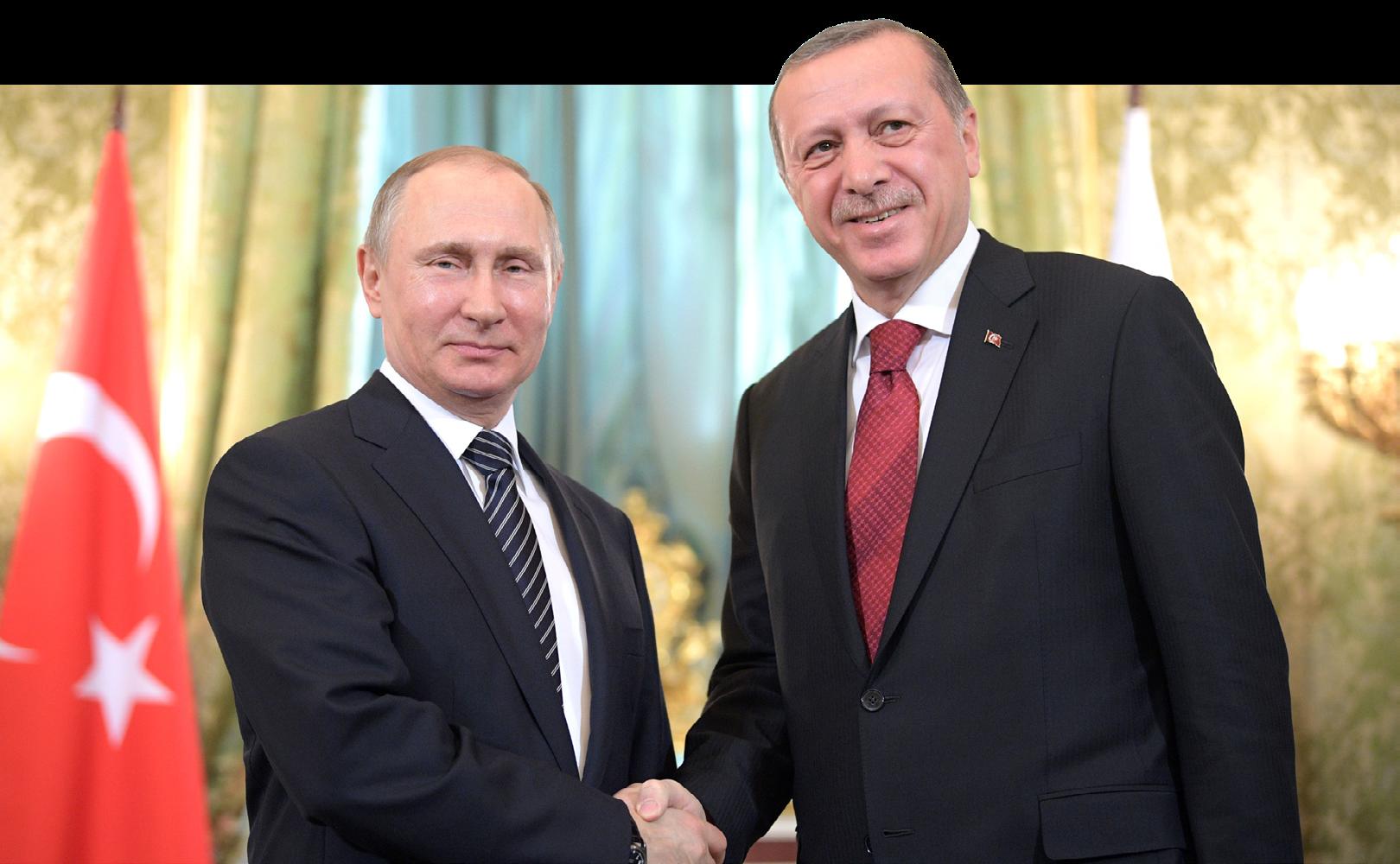
“IT IS SAID THAT IMITATION IS THE SINCEREST FORM OF FLATTERY; MANY OBSERVERS ACCUSE ERDOGAN OF MODELLING HIS REGIME AFTER PUTIN’S RUSSIA (MARQUES, 2020) TO CONSOLIDATE POWER AND CURRY FAVOUR TO COURT RUSSIAN FINANCE.”Picture: The Presidential Press and Information Office, CC BY
Ankara’s actions were NATOfriendly. Erdogan offered to broker a peace deal between Ukraine and Russia while supplying the Ukrainian military with arms; the most effective being the Bayraktar TB2, a lowcost and easy-to-operate drone that has proven lethal against Russian tanks and armoured vehicles (Witt, 2022).
However, concerns about Ankara’s allegiance to NATO increased when Finland and Sweden, traditionally neutral nations throughout the Cold War, formally requested NATO membership. While support is near-unanimous throughout the Alliance to admit both countries, Ankara continues to protest the proposed enlargement (Associated Press, 2022). Erdogan has vehemently criticised Finland and Sweden for harbouring Kurdish fugitives Ankara wants
to prosecute. Fears throughout NATO spiralled in reaction; blocking Finland and Sweden from joining NATO supports Russia’s objection to NATO “expansion”. The U.S. attempted to persuade Ankara to change course by offering U.S. F-16 jets for purchase (Pamuk & Shalal, 2022). Kicked out of the F-35 programme by the U.S. because of Ankara’s purchase of Russian anti-aircraft weapons (Mehta, 2019), support of the sale was seen as an enticement to Ankara from Washington to support NATO membership for Finland and Sweden. Domestically, this development provided a boost to Erdogan, particularly with the nationalist segment, who saw Türkiye standing firm against NATO and the United States while winning key concessions for its support (Turak, 2022). However, the goodwill has proven to be short-lived. Erdogan’s
opposition to NATO expansion has been increasingly acidic, while Sweden and Finland remain on the outside looking in.
Conversely, domestic politics in organisations such as NATO have to be considered. Erdogan must constantly walk a precarious line between NATO, the United States, Russia, and his domestic audience, all the more critical with elections looming in 2023. NATO’s empathy for the complexities of Erdogan’s geopolitical realities rightfully provide time and space for Ankara’s criticisms of Brussels. However, it does not detract from the value Türkiye has brought to the Alliance throughout its tenure, and especially now in support of Ukraine. While leaders from France, Italy, and Germany initially visited Ukraine to persuade Zelensky to cede territory and sue for peace, Erdogan supplied highly effective
weapons to Ukraine while brokering a deal between Ukraine and Russia to resume grain shipments worldwide (Bloomberg News, 2022). These facts are difficult for even the staunchest critics of Erdogan to minimise.
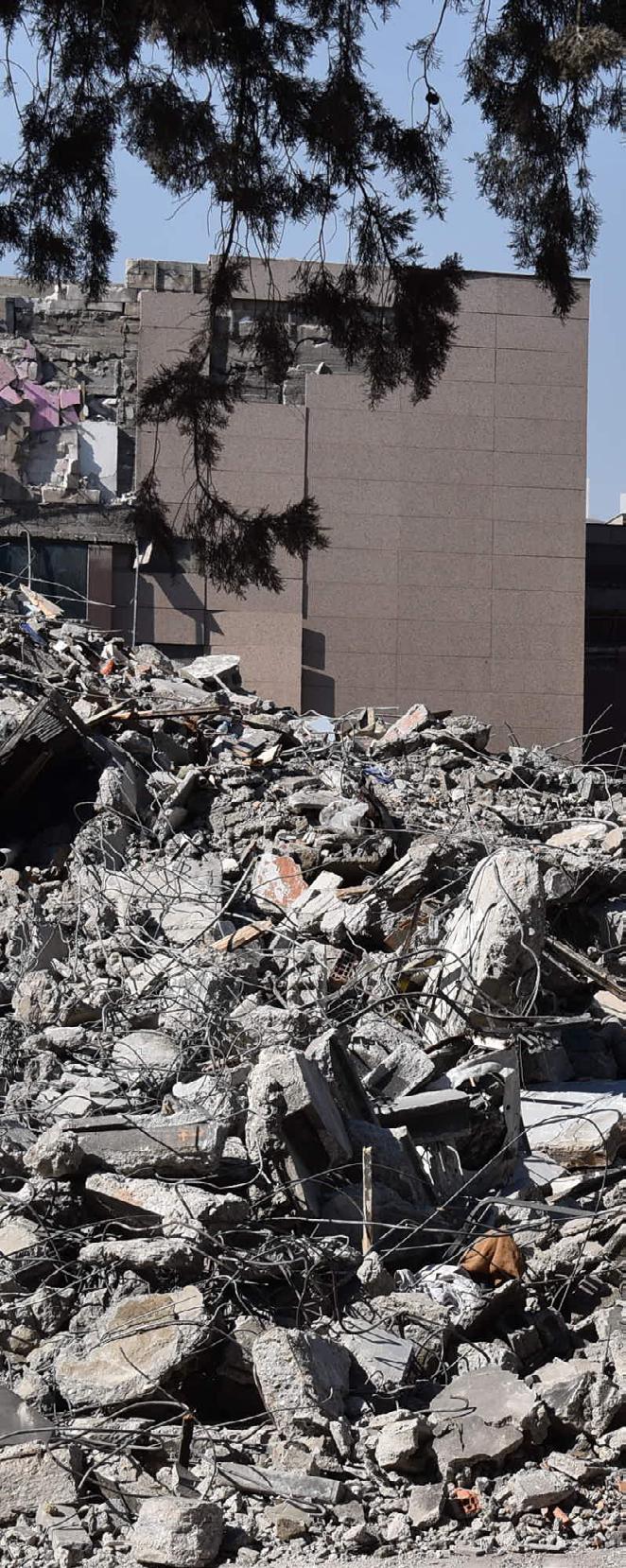
Managing the tensions between domestic pressures and Ankara’s commitment to NATO has become a necessary balancing act for Erdogan. It creates an easily misconstrued image of intransigence that stands to increase given current economic considerations. COVID-related economic woes, additional economic aftershocks from the conflict in Ukraine, and a devastating earthquake have hit Türkiye hard, with growth rates slashed, inflation soaring past 70 per cent (Financial Times, 2022), and a populace outraged over post-earthquake rescue efforts. With an election looming in June,
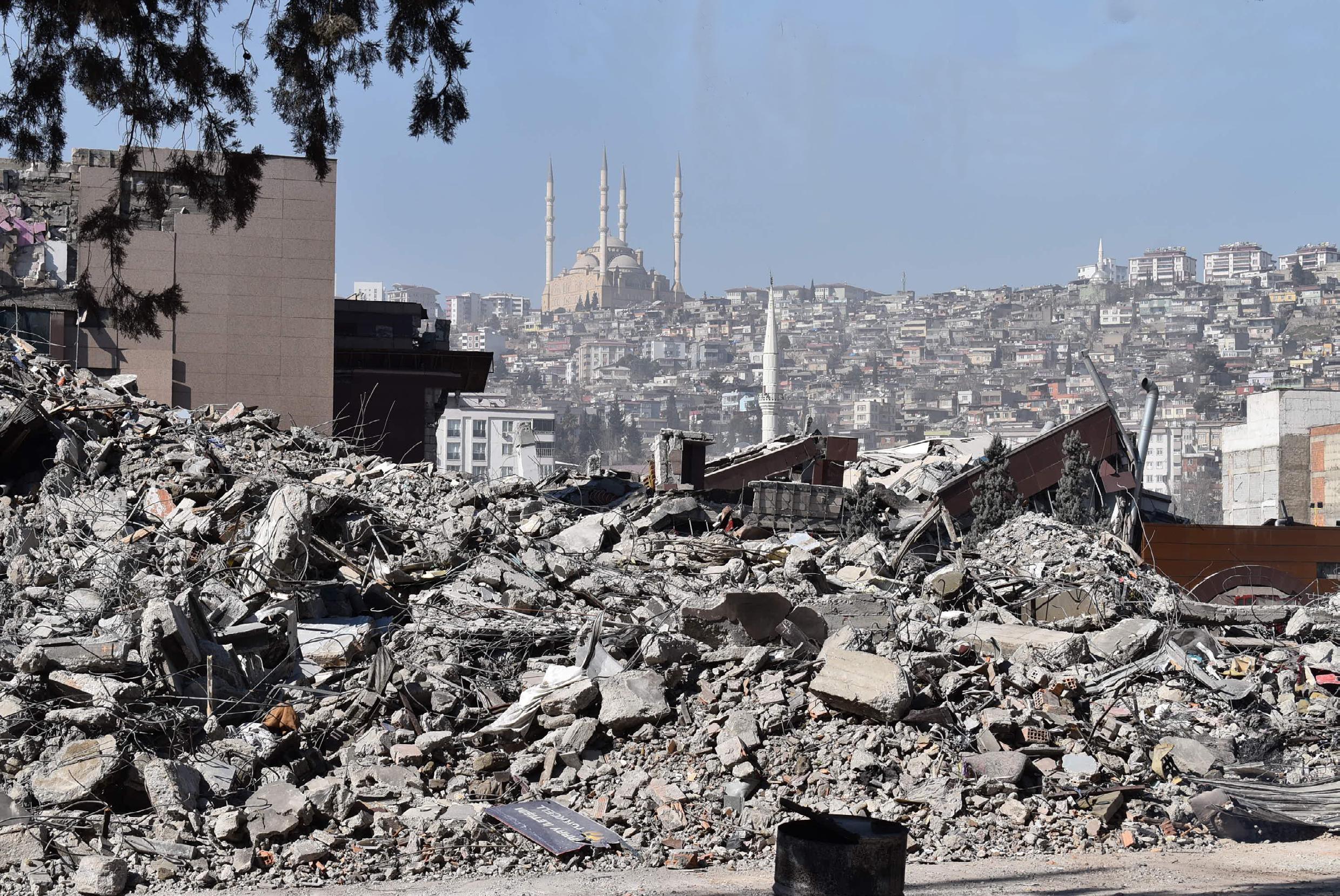
“COVID-RELATED ECONOMIC WOES, ADDITIONAL ECONOMIC AFTERSHOCKS FROM THE CONFLICT IN UKRAINE, AND A DEVASTATING EARTHQUAKE HAVE HIT TÜRKIYE HARD, WITH INFLATION SOARING.”
these developments are especially concerning for Erdogan. Deflecting from these and other domestic issues, he stokes nationalist support by publicly criticising NATO interference in Türkiye while maintaining assistance with the war effort. These efforts win political capital domestically, while Ankara’s support of Ukraine serves to renew its vows to NATO. Popular support for Erdogan strengthens his domestic image as the protector of an independent Türkiye. Simultaneously, Erdogan keeps NATO fears in check by actions taken versus words spoken. In response, the tacit message of NATO is facta non verba, at least now.
Further complicating this issue for Brussels is its limited options to deal with Ankara’s combativeness. While NATO may find Ankara’s lack of faith in Brussels disturbing, no formal mechanism allows for a member’s removal. Recent comments by Secretary General Jens Stoltenberg suggest no codification will happen (A.P. News Wire, 2022). Since then, he has emphatically reiterated his position, eliminating even a conceptual discussion or the message of deterrence such a conversation might communicate to NATO members. What this does communicate is that NATO will continue to tolerate the antics of Erdogan. Former NATO Secretary General Lord Robertson echoed this sentiment at a King’s College London event in April 2022. He stated that, unlike the E.U., a supranational entity, NATO is a security alliance. Members do not need to be in a lock-step agreement on all matters as long as they comply with invocations of Article 5, or in the case of Ukraine, non-obligatory collective assistance. Drawing a historical parallel, Lord Robertson pointed out that because the Greek junta supported NATO, Greece remained in the Alliance from 1967-1974 (Pedaliu, 2011). Lord Robertson could have also
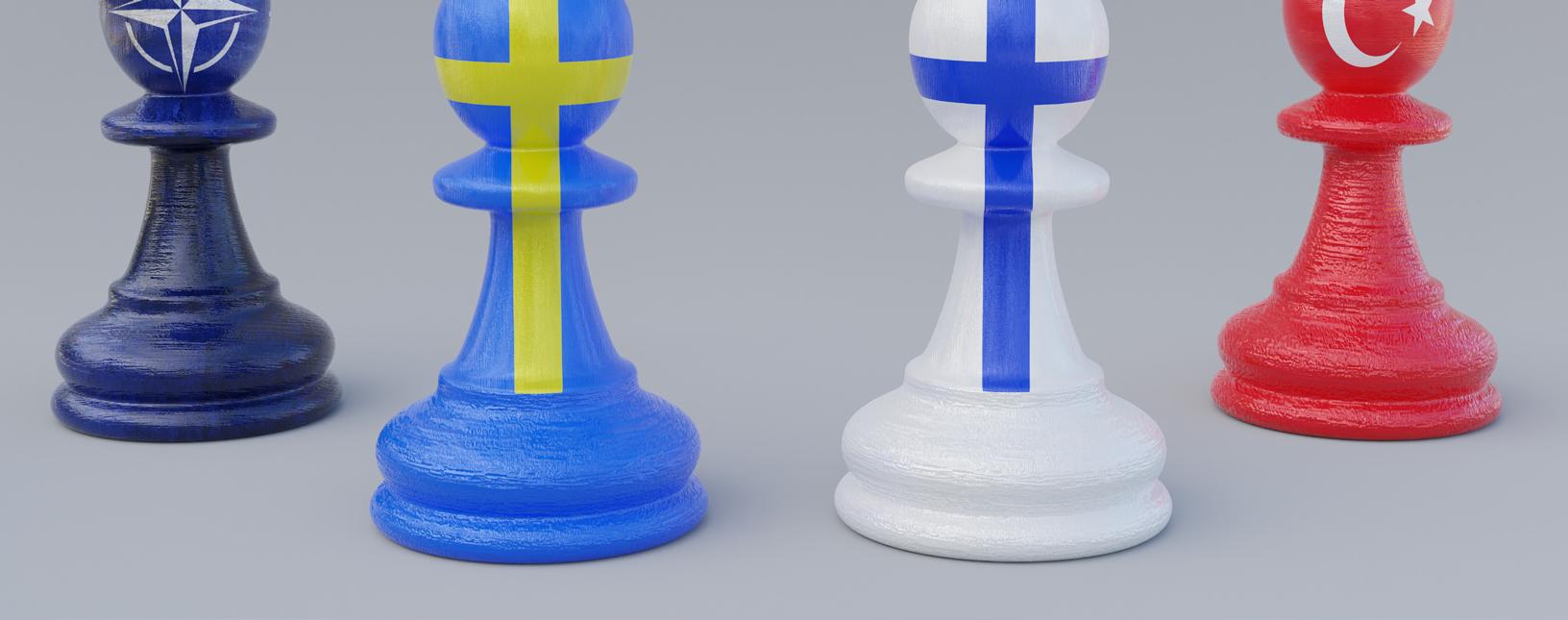
referenced Türkiye to prove his point; NATO overlooked military coups in 1960, 1970, and 1981 while prioritising Türkiye’s geopolitical position and value to the Alliance. Undeniably, Türkiye has contributed in the past and the present to the Alliance. In addition to the war in Ukraine, Türkiye participated in Operation Enduring Freedom, providing ground forces and logistical support in Afghanistan (U.S. Department of State, 2009). Given this body of actions in support of the Alliance, Brussels remains committed to Türkiye in NATO.
This leads to the current state of affairs. Erdogan has learned to gauge his operating parameters within his relationship with the Alliance. Familiarised with the inner workings and geopolitical realities of NATO after two decades, it was inevitable that a shrewd leader such as Erdogan would realise that a considerable amount of leverage was in his hands. In his estimation, NATO will tolerate inflammatory statements from Ankara that wins domestic capital as long as Erdogan only tests boundaries and does not break them. NATO reinforces this behaviour by often downplaying Türkiye’s close ties with Russia because of the fear of the counterfactual. The thought of Türkiye being a non-NATO member while enjoying close relations with Russia should
alarm Brussels, especially given the current events in Ukraine. A NATO without Türkiye would drastically alter the geopolitical situation in Europe, with or without conflict in Ukraine. Such a reality has led some to declare that a NATO without Türkiye is impossible (Gurbuz, 2019). Erdogan and his advisers are well aware of NATO’s decisionmaking calculus. He knows the limitations and the benefits of NATO membership; he also knows his inherent tension with NATO is necessary for the complex domestic and regional environments around him. Accordingly, he has periodically stated that Turkiye’s future lies in NATO, a sort of official reaffirmance to quell concerns in Brussels. With regime survival always in mind, it is unsurprising that his awareness of Türkiye’s value to NATO and his precarious domestic existence fuels the erratic pattern of words and actions emanating from Ankara toward Brussels.
Geopolitics can make an unattractive arrangement a critical one. Such is the curious case of Türkiye and NATO. Although not an aesthetically pleasing union, the realities of the current operating environment make it the most favourable of a less-than-ideal menu of options. With Russian revanchism back and a large-scale continental
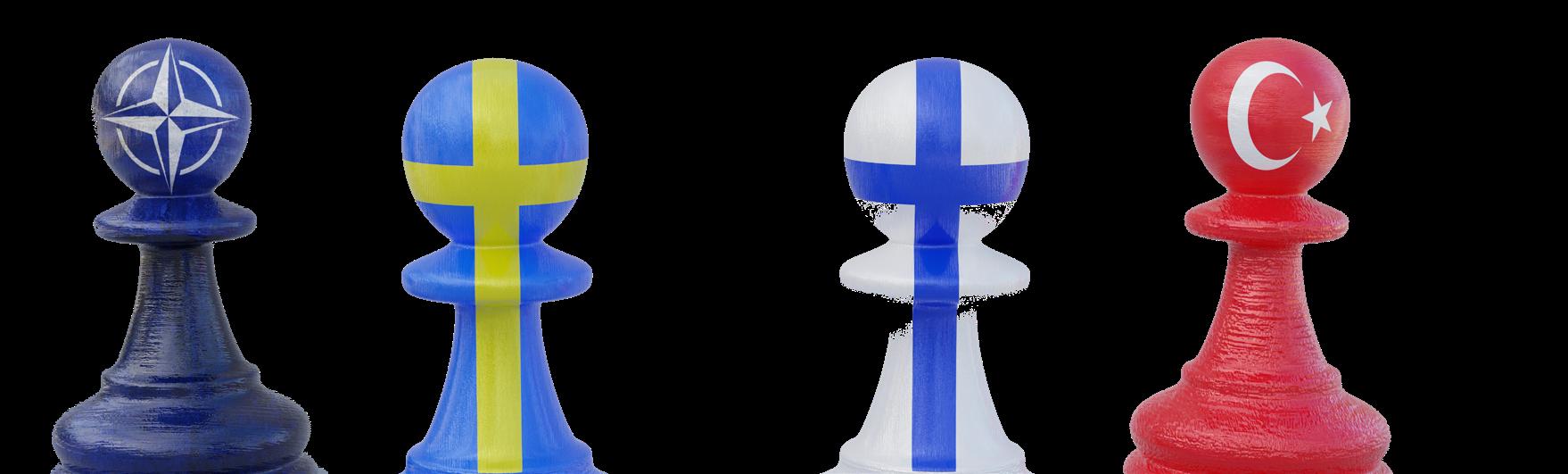
war raging in Europe for the first time since World War II, NATO and its erstwhile member know that they might not be the partners each want, but they are the partners they need, whether either side would comfortably admit it or not. Nevertheless, while NATO’s options are limited, the mere conversation about the formation of a legal apparatus to revoke membership, while probably perceived as lacking teeth, may still provide some level of deterrence to leaders such as Erdogan (and Orbán in Hungary). It is this initial and measured first step that Brussels should implement.
“The dog barks, but the caravan moves on.” – Arab proverb
Since its inception, NATO has had to manage relations between disparate member nations with historical animosities. Great Britain and France, France and Germany, Germany and Poland, are but a few examples of former enemies now allies under the umbrella of NATO collective security. Türkiye is no different; it has fought against current NATO allies in prior centuries, most notably Hungary, while tensions with Greece periodically spike and continue to remain worrisome today. While internal NATO animosities may cause occasional friction, such as diplomatic spats over a
“THE ADDITION OF FINLAND AND SWEDEN CERTAINLY INCREASES THE POTENTIAL FOR FURTHER INTER-NATO DISAGREEMENTS, MOST CERTAINLY IN THE EYES OF ANKARA.”
nationalistic statement or statue, or the celebration of a contentious holiday, the divergence on current security issues draws Brussels’s concerned attention. It is through this prism the case of Türkiye continues to be problematic.
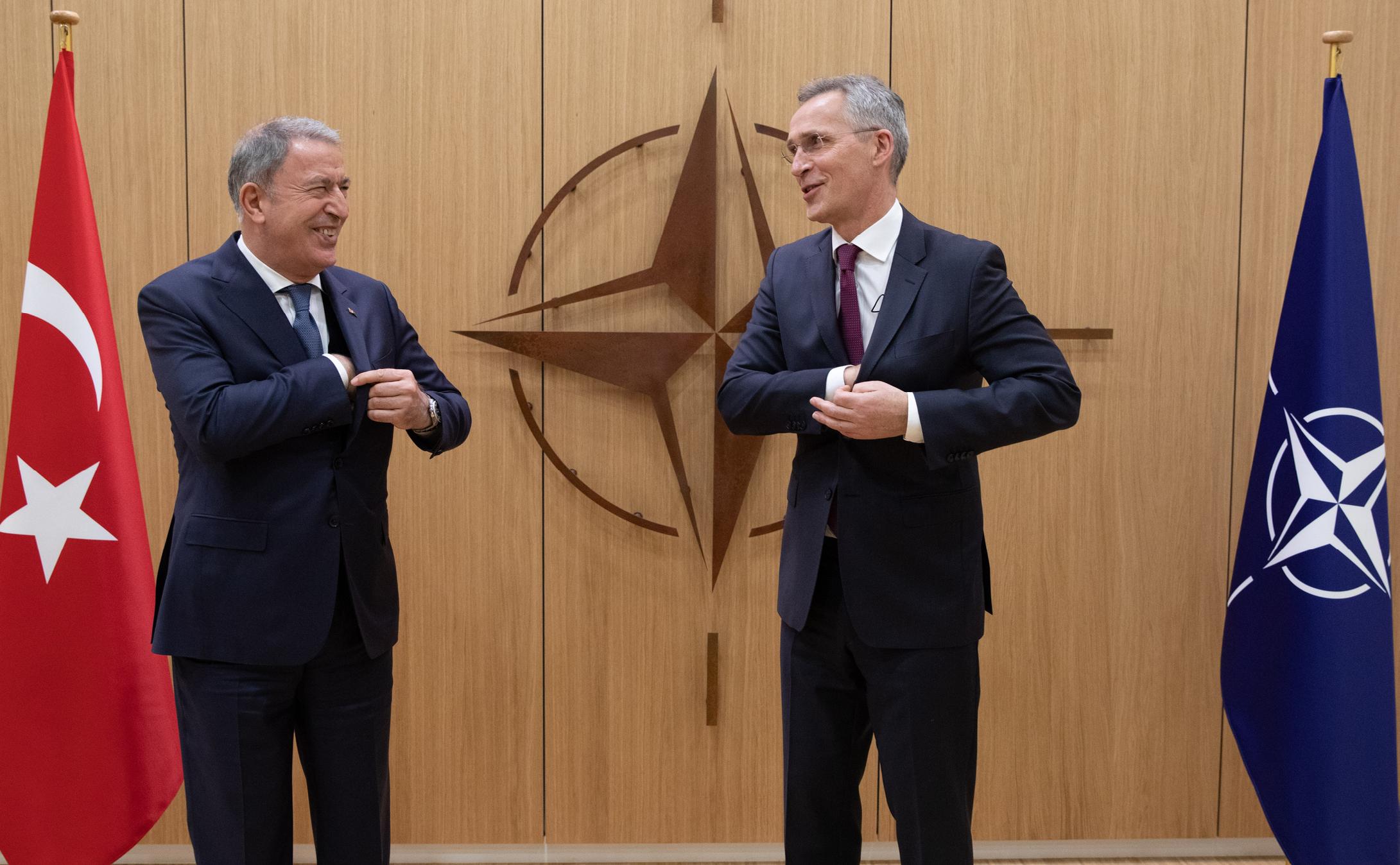
The war in Ukraine has shed a long-dormant light on the various relationships Brussels must manage to maintain unity. The addition of Finland and Sweden certainly increases the potential for further interNATO disagreements, most certainly in the eyes of Ankara. Additionally, all member nations must manage their relations with Brussels, with their old sparring partners within the Alliance, and perhaps most crucial, with their domestic audiences. The intrinsic complexity of NATO cohesion experiences the most significant tension in the domestic sphere. Political leaders prioritise their survival; to lead politically, one must have the votes, the strength, or a combination of both to gain or maintain
power. Domestic audiences are crucial to this pursuit of power and often harbour local-level political, economic, or social views that do not nest within NATO’s strategic interests. As U.S. Speaker of the House Tip O’Neil was fond of stating, “all politics is local” (Pierce, 2015). National leaders must balance maintaining power with satiating the organisational demands and strategic interests of NATO. Against this backdrop, Erdogan puts forth words and actions that balance both of his masters. Brussels is well aware of the perils he faces if his domestic audience is not satiated; the mob is fickle, even more so in the calamitous economic times of 2022 and after the recent earthquake. With this perspective in mind, Brussels tolerates anti-NATO sentiment from Ankara in exchange for its support of Article 5 in the past and collective assistance to Ukraine in the present. Increased nationalistic messaging that promotes sovereignty and decries outside influences is not
unexpected on the eve of national elections in Türkiye. Brussels has come to expect this while likely using back channels with Ankara to ensure that primary interests remain aligned. The actions and non-actions of Brussels towards Ankara have shown it values “alliance a la carte allies” (Santurri, 2022) over not having allies at all. This flexibility allows Türkiye some degree of choice in which aspects of NATO interests and policies it will support, rather than having to submit to carte blanche allegiance to NATO. Such is the problematic but unavoidable realpolitik outlook Brussels must accept as it struggles to keep united a historically unaligned collection of nations possessing disparate domestic and international aspirations, considerations, and limitations.
Therefore, Ankara’s anti-NATO sentiment, built on conditioned collective memory and crafted narratives honed by a shrewd authoritarian leader, does not threaten NATO if Türkiye
remains committed to collective security. Erdogan, aware of Türkiye’s indispensability to NATO, knows he cannot escape the tension created by his domestic audience. He may leverage his political weight for specific ends but remains cognisant of the limitations of his power, both internally and externally. Brussels is aware of these tensions and warily presides over a less-than-ideal union, knowing its tensions are also inescapable. Türkiye and NATO, for different reasons, need each other and know they would be the lesser apart. NATO’s prioritisation of its southern flank gives Erdogan an outsized voice on the international stage. Conversely, NATO has no choice but to fight with the army it has, not the one it wants; few deny that Türkiye plays a critical role in the current formation. Thus, the Alliance lives on in its present composition, hopeful there is never a need to invoke Article 5 again and experience the painful choices that would present.