


In Conversation with Nikunj Desai, Head – Procurement, Nayara Energy


Fashion’s Power Players Decode the Shift from Speed to Strength





In Conversation with Nikunj Desai, Head – Procurement, Nayara Energy
Fashion’s Power Players Decode the Shift from Speed to Strength

Dear Readers,
The Union Budget 2026, announced just days ago, sets the tone for a year of cautious optimism. With its continued emphasis on infrastructure creation, manufacturing competitiveness, energy transition, and fiscal discipline, the Budget reinforces a clear message for industry leaders: resilience, efficiency, and long-term value creation will define the next phase of growth. For supply chains, this signals both opportunity and responsibility—to adapt faster, operate smarter, and stay aligned with evolving policy and market realities.
In this context, our must-read feature on rare earths could not be more timely. Ravi Sinha offers a compelling perspective on why mineral availability alone will not decide the winners of the future. Instead, it is the strength, agility, and strategic orchestration of supply chains which will be defining the divide between organizations that build resilience, steer technology transitions, and those that remain vulnerable in an increasingly fractured global order.
Our Cover Story delves into the dynamic world of the fashion supply chain, an ecosystem evolving rapidly in response to heightened consumer centricity. From speed and transparency to sustainability and responsiveness, what will define fashion’s future is no longer the storefront, but the supply chain—quietly orchestrating irreversible change.
As Supply Chain Tribe completes nine years of publishing firsthand, high-quality industry insights, we remain proud of the timeless relevance of our content. This has inspired a new section, “From the Archives.” In this issue, we revisit perspectives from industry leaders that underscore how supply chains are shaping business direction— and why orchestration remains central to success.
And as always, there is much more inside. Read on and enjoy.
Published by: Charulata Bansal on behalf of Celerity India Marketing Services
Edited by: Prerna Lodaya e-mail: prerna.lodaya@celerityin.com
Designed by: Lakshminarayanan G e-mail: lakshdesign@gmail.com
Logistics Partner: Blue Dart Express Limited
Charulata Bansal Publisher Charulata.bansal@celerityin.com
www.supplychaintribe.com
Fashion has always celebrated speed. But as we progress, Speed Alone No Longer Wins. As trend cycles compress and volatility become permanent, the industry is confronting a hard truth: CREATIVITY WITHOUT CONTROL IS FRAGILE.
In this new reality, fashion is no longer constrained by design ambition—it is constrained by the strength of its supply chain. What separates leaders from laggards today is not how fast they produce, but how intelligently they decide. AI-first operating models, responsive sourcing networks, and transparent supplier ecosystems are turning supply chains into the industry’s most defensible competitive moat. From runways to resilience, this Cover Story explores how fashion’s future is being built—quietly, decisively, and irreversibly—in the supply chain.
Interviews with –
Sheshadri PV, Executive Vice President, Reliance Retail
Nitin Joshi, Chief – Supply Chain Management, Fabindia
Prashant Bopardikar, Seasoned Fashion Supply Chain Professional

In this article, Ravi Sinha, Consultant Geologist, examines why supply chains—not mineral availability—will determine who builds resilience, who controls technology transitions, and who remains exposed in an increasingly fragmented global order.
This conversation with Nikunj Desai, Head –Procurement, Nayara Energy, examines how the function is moving beyond transactional efficiency to orchestrating value—balancing cost, continuity, risk, and sustainability; strengthening multi-tier visibility; embedding digital intelligence into everyday decisions; and building teams equipped to lead through uncertainty. The emerging mandate is clear: procurement must deliver resilience, responsibility, and enterprise-wide impact.
This archive story brings together two parallel shifts that shaped this transformation: the rise of supply chains as strategic engines of enterprise value, and India’s emergence as a consequential force in next-generation global value chains. Viewed together, these perspectives capture a defining moment—when supply chains moved beyond supporting the business to actively shaping its direction, and when execution gave way to orchestration.
The 56th World Economic Forum Annual Meeting, held under “A Spirit of Dialogue”, marked a shift from diagnosing global problems to orchestrating systemic responses. Across the alpine halls of Davos, connected conversations on supply chains, digital transformation, geopolitical dynamics and leadership revealed that dialogue must now evolve into delivery — coordinated, coherent action that closes the gap between intent and implementation in a fractured global order.
As nations rethink energy security, defence readiness, and industrial competitiveness, critical minerals have moved from technical obscurity to the centre of strategic debate. Yet much of the conversation still stops at reserves and resource ownership. In this article, Ravi Sinha, Consultant Geologist, Advisor to Krishna Mines, JSW and Essel Mining & Industries Ltd, and former Director, Geological Survey of India, argues that the real vulnerability lies elsewhere. Drawing on decades of geological and industry experience, he examines why supply chains—not mineral availability—will determine who builds resilience, who controls technology transitions, and who remains exposed in an increasingly fragmented global order.
FOR much of the past decade, Rare Earth Elements (REEs) have dominated global conversations on mineral security. From clean energy technologies and electric mobility to defence systems, advanced electronics, and next-generation manufacturing, rare earths have come to symbolise the material foundations of modern economic and strategic power. They have featured prominently in geopolitical disputes, export control regimes, and industrial policy debates across major economies, including India. Their strategic salience has grown not because rare earths are exceptionally scarce in a geological sense, but because access to them has become increasingly politicized, concentrated, and embedded within fragile global supply chains.
The rare earth episode represented the first major global wake-up call on mineral supply chains. When China restricted rare earth exports during its diplomatic dispute with Japan, the consequences reverberated far beyond the immediate bilateral relationship. Prices spiked, downstream manufacturers faced uncertainty, and governments realised that decades of outsourcing environmentally intensive separation and refining had created a structural
vulnerability. The episode revealed a critical truth: control over processing and transformation mattered far more than ownership of mineral reserves.
This insight fundamentally reshaped global thinking. Rare earths were not an isolated case of market distortion; they were an early warning signal. They exposed how modern industrial systems depend on materials that are geologically widespread yet economically inaccessible without specialised processing, advanced chemistry, and tightly coordinated logistics. The lesson was clear—material security is shaped less by what exists in the ground and more by who controls the supply chain.
There is no universally accepted definition of critical minerals. Lists vary by country and evolve over time, shaped by consumption trajectories, industrial priorities, technological transitions, and national security requirements. Broadly, minerals are considered critical when they are essential to economic and technological development but face high supply risks due to scarcity, supply concentration, dependence on specialised extraction or processing technologies, or geopolitical exposure. India currently identifies 30–31 critical minerals, the European Union lists 34, and the United

Ravi Sinha possesses over four decades of expertise in diverse domains of Earth Science encompassing extensive experience across government sectors including Coal India & various corporate bodies like EMIL (Aditya Birla Group), JSW, Krishna Mines. From his tenure at Coal India to his consultancy services for local mining companies, Sinha’s work spans diverse areas, including reconnaissance mapping for mineral potential, conducting mineral feasibility studies in India and Myanmar, flood control projects, and comprehensive river management.

States recognises more than 50. Despite differences in composition, these lists converge on a shared concern: supply chain fragility.
A defining feature of critical minerals globally is that they are confined to a limited number of geographies and processed through highly concentrated supply chains. China dominates upstream, midstream, and downstream segments for a wide range of critical minerals, making it the most influential global actor in this domain. This dominance has reinforced a crucial lesson for policymakers worldwide: mineral vulnerability is not determined by geological presence alone, but by control over supply chains, particularly at the stages of processing, separation,
and refining.
As India accelerates its transition toward renewable energy deployment, electric mobility, defence indigenization, optoelectronics, and semiconductor manufacturing, it is becoming increasingly evident that supply chains— not mineral reserves—will determine strategic outcomes. Minerals such as Gallium, Scandium, and Rubidium rarely dominate trade statistics by volume, yet their absence can stall entire industrial ecosystems. These materials are embedded deep within high-value manufacturing systems, and disruptions propagate rapidly downstream, magnifying economic and strategic impact.
Critical minerals differ fundamentally from bulk commodities such as iron ore, coal, or bauxite. Their strategic importance does not arise from sheer volume, but from functional indispensability. A few grams of Gallium can determine the efficiency of a power electronics system; trace amounts of Scandium can transform the structural performance of aluminium alloys; minute quantities of Rubidium can enable high-precision optical and electronic applications. In each case, the economic value of the end product vastly exceeds the material volume involved.
This disproportionate value-tovolume relationship creates unique
The most fragile points in critical mineral supply chains are rarely where mining happens. They sit quietly in processing plants, chemical separation units, logistics contracts, and long-term offtake agreements. When these nodes fail, the shock travels instantly downstream. That is why countries with modest mineral reserves but strong processing ecosystems wield more influence than resource-rich nations without them.
supply chain dynamics. Production of many critical minerals is governed not by demand for the mineral itself, but by the economics of the host commodity from which it is recovered as a by-product. Gallium production, for example, is tied to alumina refining from bauxite and zinc processing from sphalerite. Scandium availability depends on the processing of laterites and mafic rocks. Rubidium recovery is linked to feldspar and potash systems. As a result, supply is structurally decoupled from downstream demand signals.
From a supply chain perspective, this decoupling is highly destabilising. Even sharp increases in demand for advanced semiconductors, electric vehicles, or defence electronics do not automatically incentivise additional production. The host commodity may already be optimised, or its market may be stagnant. This creates chronic tightness, price volatility, and strategic exposure.
The midstream segment of the supply chain—separation, beneficiation, refining, and purification—emerges as the decisive choke point. Entry barriers are high, capital requirements significant, and technological know-how tightly held. Processing facilities benefit from scale economies and learning curves that discourage new entrants. Once capacity becomes concentrated in a few geographies, downstream industries become structurally dependent.
This explains why supply chain resilience for critical minerals cannot be achieved through mining alone. Exploration success without processing capability merely shifts dependency from raw material imports to refined material imports. True resilience requires integrated control across upstream identification, midstream processing, and downstream material conversion.
A common assumption in today’s critical minerals debate is that if a country has a resource in the ground, it can secure supply. Recent global events have exposed how flawed that assumption is. From rare earth export controls to sudden curbs on gallium and germanium trade, the real vulnerability has not been geology—but access.
Minerals such as Gallium, Scandium, and Rubidium are not rare in nature. They exist across many geographies, including India. What makes them critical is not scarcity, but the difficulty of extracting them in usable form. They occur in trace quantities, embedded within other minerals or industrial materials, and can only be recovered through specialised processing. This is why supply disruptions occur even when resources appear widely distributed.
China’s experience illustrates this clearly. Its dominance did not come from owning all the world’s reserves, but from decades of investment in processing and refining capabilities that others abandoned. When trade restrictions are imposed, it is these midstream capabilities—not mines—that become leverage points.
For India, this distinction matters. Geological presence alone does not guarantee security. Without the ability to separate, purify, and refine critical minerals to industrial standards, countries remain dependent—often on the very supply chains they are trying to de-risk.
As traditional supply chains become more fragile, attention is turning to non-conventional sources such as clay and laterite. Once dismissed as low-value
materials, these deposits are now being re-examined globally for their potential to host critical minerals in recoverable concentrations.
Several countries, including Australia, China, and Japan, are investing in technologies to extract critical minerals from such sources. The motivation is not short-term cost advantage, but strategic optionality—the ability to activate alternative supply routes when conventional chains are disrupted.
India is well placed in this regard. Clay and laterite deposits are widely distributed across the country, offering a domestic buffer against external shocks. While extraction from these sources may not yet be commercially competitive, their strategic value lies in resilience. Over time, as technologies mature and processes improve, today’s marginal sources could become tomorrow’s strategic assets.
The lesson is clear: supply chain security will not be built on a single source or geography. It will depend on diversification, redundancy, and the willingness to invest early in options that may seem uneconomic today but become indispensable tomorrow.
In the architecture of critical mineral supply chains, the midstream segment— processing, separation, refining, and purification—represents the most decisive and least understood choke point. While upstream exploration and mining attract attention due to their visible physical footprint, it is the midstream where strategic leverage is actually exercised. Control over this segment determines which materials can be transformed into usable inputs for industry and which remain geologically
Critical mineral supply chains do not bottleneck at the mine gate—they bottleneck in the midstream. Processing and refining require specialised chemistry, patient capital, and regulatory tolerance. Few countries invested early. Those that did now control who gets access, at what cost, and on what terms. This is why midstream capacity has become a strategic asset, not an industrial footnote.
stranded.
For high-value, low-volume minerals such as Gallium, Scandium, and Rubidium, midstream processing is not merely a technical step; it is the supply chain itself. These minerals require complex chemical separation, stringent purity control, and specialised metallurgical expertise. Unlike bulk mineral processing, where scale can compensate for inefficiency, critical mineral processing demands precision, consistency, and deep process knowledge. Small deviations in chemistry or temperature can render entire batches unusable for downstream applications such as semiconductors or advanced alloys.
Globally, this has resulted in extreme concentration. Countries that invested early in processing infrastructure— often absorbing environmental and financial costs that others avoided—now command disproportionate influence over supply chains. China’s dominance in critical minerals did not emerge from superior geology, but from sustained investment in refining, separation, and materials science over multiple decades. Once established, these capabilities benefit from cumulative learning effects, making late entry both expensive and risky.
For India, this creates a structural dilemma. Even where upstream resources exist or overseas assets are secured, the absence of domestic midstream capability perpetuates dependence. Exporting raw or semi-processed material only to re-import refined products embeds vulnerability deeper into the value chain. Moreover, midstream facilities are capital-intensive, require long gestation periods, and often struggle to attract private investment due to uncertain pricing and opaque demand signals.
This is why market forces alone cannot resolve midstream gaps. Strategic intervention—through public funding, shared infrastructure, long-term offtake commitments, and risk-sharing mechanisms—is essential. Treating midstream processing as national infrastructure rather than a standalone commercial activity is a prerequisite for supply chain resilience.
Critical mineral supply chains do not

fail gradually; they fail abruptly and asymmetrically. Unlike conventional commodity chains, where substitution and inventory buffers provide resilience, critical mineral systems are tightly coupled and highly sensitive to disruption. Failure rarely occurs at the mine site. Instead, it manifests at nodes where processing capacity, logistics coordination, regulatory oversight, and contractual governance intersect.
One of the most common failure modes is excessive concentration at a single stage or geography. When separation or refining capacity is clustered in a limited number of facilities, disruptions—whether environmental shutdowns, energy shortages, export controls, or geopolitical tensions— cascade rapidly across downstream industries. For by-product minerals, this risk is amplified because production decisions are subordinate to the
economics of host commodities.
Another critical weakness lies in information asymmetry. Downstream manufacturers often lack visibility into upstream processing constraints, while processors operate without long-term demand certainty. This misalignment discourages investment and results in chronic under-capacity. Supply shortages, in such cases, are not caused by lack of resources, but by lack of coordination.
Logistics adds another layer of fragility. Many critical minerals require specialised handling, storage, and transport. Disruptions at ports, shifts in trade regimes, or changes in shipping routes can have disproportionate impact relative to physical volume. Currency volatility and trade policy uncertainty further compound risk for importdependent economies.
Perhaps the most underappreciated failure mode is institutional
fragmentation. Critical mineral supply chains span mining, industry, energy, environment, and trade domains, yet governance is often siloed. Without a unified supply chain lens, policy interventions remain reactive and piecemeal. Designing resilient supply chains therefore requires institutional coordination, long-term planning, and systemic thinking—not just project-level execution.
India has begun to acknowledge that critical minerals are no longer a peripheral mining concern but a strategic input into national growth, energy security, and technological sovereignty. This recognition is reflected in recent policy initiatives, including amendments to the Mines and Minerals (Development and Regulation) Act in 2023 and 2025, the introduction of Exploration Licences, and the launch of the National Critical Mineral Mission (NCMM) with an outlay of ₹34,300 crore over seven years.
These reforms mark an important shift in intent. The Exploration Licence framework, in particular, is designed to encourage private participation in early-stage exploration of deep-seated and unconventional deposits, including those hosting critical minerals as byproducts or disseminated occurrences. In principle, this opens the door for identifying non-traditional sources such as clay, laterite, and industrial mineral systems that were previously overlooked under auction-centric regimes.
However, a significant gap persists between policy design and ground-level execution. Small and mid-sized players, including local and artisan miners who often operate in clay, laterite, and minor mineral belts, remain constrained by limited access to exploration finance, technology, and institutional support. The National Mineral Exploration Trust, while well-intentioned, remains largely inaccessible to such actors due to eligibility and procedural constraints. As a result, the exploration ecosystem continues to be dominated by a narrow set of participants, limiting diversity of discovery models.
At the international level, India has sought to mitigate supply risk
through overseas asset acquisition and partnerships, notably via KABIL. While such efforts are valuable for diversification, they do not address the most critical vulnerability: the absence of domestic processing and refining capability. Without strengthening the midstream at home, overseas sourcing risks recreating dependency in a different geography rather than eliminating it.
A coherent institutional architecture for critical minerals remains an unfinished task. Responsibilities are fragmented across mining, industry, energy, environment, and trade ministries, often resulting in siloed decision-making. A unified supply-chain-driven governance framework—one that integrates geology, processing, manufacturing, and trade— is essential if policy intent is to translate into resilience.
India’s future demand for critical minerals will be shaped less by linear growth trends and more by technological inflection points. Between 2025 and 2047, the country is expected to witness rapid expansion in renewable energy capacity, electric mobility, grid-scale power electronics, defence electronics, and semiconductor usage. Each of these transitions embeds new material dependencies deep within industrial systems.
Gallium demand is likely to rise sharply with the adoption of Gallium Nitride–based power electronics in fast chargers, data centres, telecom infrastructure, and defence applications. Scandium demand will be driven by lightweighting imperatives in electric vehicles, aerospace platforms, and wind turbines, where performance gains cannot be achieved through design optimisation alone. Rubidium, while smaller in absolute volume, will see steady growth through its role in fibre optics, specialty glass, and precision instrumentation.
What complicates this outlook is the non-linear nature of technology adoption. Once cost, performance, or regulatory thresholds are crossed, demand can rise rapidly, overwhelming supply chains that were designed for niche applications. This creates a narrow window for capacity-
building, particularly in processing and refining.
Recycling is often cited as a solution to critical mineral dependence, but its role must be viewed realistically. For minerals such as Gallium and Scandium, current recycling rates are negligible due to their use in small quantities dispersed across complex products. While recycling can provide a valuable secondary stream over time, it cannot substitute for secure primary and secondary supply in the foreseeable future.
Financing remains a structural bottleneck. Long gestation periods, high technological risk, uncertain pricing, and opaque markets deter private capital, especially for low-volume minerals. Public risk capital, pilot-scale processing facilities, and state-supported demonstration projects are therefore essential to bridge the gap between laboratory success and commercial viability.
Rare earths may have forced mineral security into the spotlight, but the real reckoning lies ahead. As technologies scale and geopolitics hardens, the question confronting India is not whether it has access to critical minerals today, but whether it is prepared for the moments when access becomes contested. Those moments rarely announce themselves in advance.
What will increasingly matter is the quiet architecture of supply—where processing knowledge resides, how quickly alternatives can be activated, and whether institutions are designed to think beyond the mine and beyond the market. Clay, laterite, and other nonconventional sources matter less for what they yield immediately, and more for the options they create when conventional pathways narrow.
In an era where resilience carries a premium, supply chains are no longer operational backdrops. They are strategic terrain. And it is on this terrain—not beneath the ground— that India’s next phase of industrial and technological confidence will be tested.
As supply chains face continuous disruption, rising ESG scrutiny, and accelerating digital change, procurement is being redesigned at a structural level. This conversation with Nikunj Desai, Head – Procurement, Nayara Energy, examines how the function is moving beyond transactional efficiency to orchestrating value—balancing cost, continuity, risk, and sustainability; strengthening multi-tier visibility; embedding digital intelligence into everyday decisions; and building teams equipped to lead through uncertainty. The emerging mandate is clear: procurement must deliver resilience, responsibility, and enterprise-wide impact.

Across your 25+ years in diverse industries, what fundamental procurement principles have stayed constant for you?
Across my 25+ years in procurement, certain fundamentals have remained constant. The core principles of integrity, transparency, total cost thinking, vendor partnership and proactive risk management have never changed. What has evolved is how we apply them, with deeper analytics, broader stakeholder
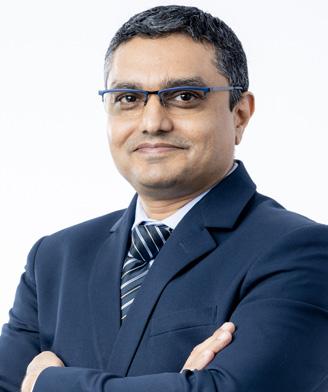
A global supply chain professional with 25+ years of experience across Oil & Gas, heavy engineering, automotive, and pharma ecosystems, Nikunj Desai is known for building resilient, digital transformation, value-driven procurement systems and building high-performing teams. His academic foundation combines a BE in Production Engineering with an MBA in Finance from NMIMS and Supply Chain Management from IIM Calcutta, reflecting a strong blend of engineering rigor, financial acumen, and supply chain strategy.
expectations, and stronger sustainability lenses. But the foundational belief remains that procurement must not merely reduce cost but create value responsibly.
How do you define a procurement function that goes beyond cost savings to drive enterprise-wide value?
A procurement function that goes beyond cost savings acts as a strategic partner to the business, shaping outcomes rather than simply controlling costs. It enhances customer-facing capabilities by enabling the right suppliers, builds agile and resilient supply chains, and creates strong, integrated partnerships between the organization and its supplier ecosystem. Such a function plays a pivotal role in influencing design choices, investment decisions, operating models, and ESG commitments, areas that have a far greater impact than price alone. By actively enabling supplier-led innovation while stewarding risk, procurement helps future-proof the organization. When procurement operates at this level, the value it delivers is not just financial, it is strategic, measurable, and sustained over the long term.
What frameworks do you rely on to balance cost, quality, risk, and service continuity in category management? In category management, I rely on structured yet flexible frameworks that balance cost, quality, risk, and business continuity. The combination of TCO modelling, Kraljic segmentation, should cost analysis, and continuous supplier performance management helps ensure that decisions are not one dimensional. I have learned that in volatile markets, risk
management and business continuity matters more than absolute lowest cost.
How has multi-sector exposure shaped your philosophy on responsible and sustainable procurement?
My multi-sector experience across heavy engineering, automotive sourcing and supplier development, engineering sourcing and warehousing at tyre manufacturing, managing a global end to end supply chain at pharma focussed organization has shaped a responsible and sustainable procurement philosophy that is both strategic and grounded in real world execution.
Responsibility must be both local and global: My cross-sector and crossgeography experience revealed varying realities like MSME capability challenges in India, rigorous compliance environments in the US and Europe, advanced expectations around logistics and carbon efficiency in developed markets and across all regions, the shared need to manage materials responsibly to reduce waste, risk, and lifecycle impact. A responsible procurement leader must bring these together into one coherent strategy that remains adaptable to local contexts.
Heavy Engineering taught me engineering discipline and long cycle responsibility: I learned that sustainable procurement begins with technical rigor, engineering reliability, and lifecycle thinking. Large projects reinforced the importance of quality assurance, strong vendor governance, and evaluating choices through long term safety, reliability, and environmental impact — not just cost.
Automotive taught me that sustainability is inseparable from supplier capability: It showed me that responsible procurement depends on strengthening the supplier ecosystem. MSMEs often need capability building, process improvement, and technology support. Responsible sourcing here meant raising standards, not just enforcing them.
Tyre Industry taught me operational sustainability: My role in engineering sourcing and warehousing made sustainability tangible at the execution level. I realized that responsible procurement also means: choosing durable, reliable consumables to minimize breakdowns and waste, ensuring to uphold strong EHS practices, and running efficient, disciplined warehouses to avoid losses, excess, safety, and environmental burden. Sustainability is as much about lean, reliable operations as it is about upstream sourcing.
Global Supply Chain taught me consistency with adaptability: Managing Global supply chain across 15 plants worldwide brought responsibility to a global scale — uniform compliance, ethical sourcing across diverse markets, multi-tier traceability, carbon efficient logistics, and a balanced global–local sourcing model. It reinforced that responsible procurement must be globally consistent yet locally sensitive. In essence, my multi-sector exposure shaped a philosophy where responsible procurement is not a standalone initiative — it is embedded in engineering discipline, supplier development, operational excellence, global compliance, and
Responsible procurement requires sustained investment in multi‑tier traceability, independent audits, and supplier capability building, extending well beyond direct suppliers. There have been instances where suppliers passed internal process audits yet remained non‑compliant with local environmental regulations, leading to plant shutdowns and serious supply disruptions. These situations highlight that compliance today must go beyond process adherence to ensure overall regulatory conformity and business continuity.
The next generation of procurement talent will require new skills and mindsets. Beyond core functional expertise, future leaders will be defined by digital fluency, sustainability literacy, systems thinking, scenario analysis, and strong influencing capabilities. Procurement professionals must evolve into analysts, risk managers, sustainability advocates, and business strategists—not just buyers.
long term value creation. It must be practiced and executed every day across the entire supply chain.
What, in your view, differentiates a mature procurement organization from a transactional one?
At its core, a mature procurement organization is defined by how it influences business outcomes rather than how it executes transactions. It differs from a transactional model in three keyways:
It operates as a strategic partner to business, not a back office service
It uses intelligence – data, insights, and analytics to drive decisions
It measures success through value, risk reduction, innovation, and sustainability, not just cost savings
The mindset shifts from “What did we buy?” to “How did we shape the business outcome?”
When establishing centralised sourcing, what early decisions determine whether the model will be efficient, scalable, and sustainabilityaligned?
When setting up centralized sourcing, early decisions make or break scalability. The most critical include:
Defining clear governance structures, interfaces, RACI matrices, and decision rights
Establishing a unified data and category taxonomy
Aligning stakeholders on what should be centralized versus decentralized
Equally important, building collaboration and credibility around
the model, giving stakeholders confidence that agility and flexibility will be retained while efficiency is improved.
Without this clarity, the process risks becoming bureaucratic; with it, centralized sourcing becomes a catalyst for efficiency, innovation, and sustainability.
In your experience integrating global supply chains, what are the most underestimated ESG and compliance challenges?
In global supply chains, ESG and compliance risks are most often underestimated at sub-tier levels. Visibility typically drops beyond Tier 1 suppliers, making Tier 2 and Tier 3 labor practices, environmental compliance, and data reliability the most significant blind spots. Many organizations assume compliance because Tier 1 suppliers confirm it, however, material risk often resides deeper in the ecosystem.
Responsible procurement therefore requires sustained investment in multi-tier traceability, independent audits, and supplier capability building, extending well beyond direct suppliers. There have been instances where suppliers passed internal process audits yet remained non-compliant with local environmental regulations, leading to plant shutdowns and serious supply disruptions. These situations highlight that compliance today must go beyond process adherence to ensure overall regulatory conformity and business continuity.
Similarly, global disruptions have demonstrated how opaque sub-tier dependencies can expose supply chains to sudden shocks. Cases where Tier 2 suppliers were concentrated in regions affected by natural or geopolitical events caused unexpected downstream disruptions when dependencies were
not fully disclosed. Greater transparency and sub-tier visibility could have enabled earlier risk mitigation and alternate sourcing strategies.
With commodity volatility, geopolitical disruptions, and climatelinked risks rising, how do you build resilience into procurement systems?
Resilience today is structural, not reactive. Building it against commodity volatility, geopolitical disruption, and climate-related risks requires diversified sourcing through geographic de-risking; scenario-based planning that tests “what-if” situations; flexible contracting; a shift toward just-in-case rather than just-in-time inventory; digital tools that enable end-to-end visibility; and, most importantly, close supplier partnerships that provide early warning signals.
How can procurement ensure that digital transformation translates into measurable business and sustainability outcomes?
Procurement can ensure digital transformation delivers measurable business and sustainability outcomes by focusing on four essentials:
Start with clear outcomes, not tools:
Most important in digitalization is “Are your people ready” for adoption. People and Organizational readiness are very important to start with. Adoption and success of the tools depend on this. Define the business problem first— e.g. cost visibility, cycle time reduction, supplier risk, carbon tracking—and deploy digital solutions only where they can move these metrics. Formulate a digital roadmap which will weigh the cost-benefit analysis with respect to the highest pain point, maturity of tool, and implementation timelines of tool. This will help lay down a 2-3 year roadmap in terms of priority. Most important is to

start with – Define the parameters to call a successful implementation of the tool.
Build a strong data and process foundation: Clean data, harmonized taxonomy, and disciplined Input/Output parameters are what make analytics, AI, and automation actually work. Without this, digital tools cannot generate reliable insights.
Embed digital into daily decision making: Digital must power core workflows— e.g. sourcing, contracting, supplier performance, risk, ESG reporting—so that decisions become faster, more transparent, and evidence based.
Hard wire KPIs and drive adoption: Link every digital initiative to measurable KPIs: cost savings, risk reduction, service levels, carbon footprint. Then invest in capability building so teams and suppliers use the tools consistently.
Once digital tool is implemented, we need to run a reality check – Are all elements in the chain connected. Are we entering any data again in terms of duplication, is the information shown real-time and correct (One Truth).
Your supply chain strategy has been showcased for resilience—what lessons from that experience are applicable to future disruptions?
Regarding supply chain resilience, the most transferable lessons are:
Geographic de-risking. Diversification beats over optimization
What-if scenario based readiness
Supply reliability takes precedence
Supplier relationships outperform contract driven interactions during crises
Multi-tier visibility
Digital tools – What is happening (descriptive analytics), what could happen (Predictive Analytics) and what should happen (Prescriptive Analytics).
These principles remain timeless as disruptions become more frequent and interconnected.
What skills and mindsets define the next generation of procurement and supply chain professionals in a sustainability-first era?
The next generation of procurement talent will require new skills and mindsets. Beyond core functional expertise, future leaders will be defined by digital fluency, sustainability literacy, systems thinking, scenario analysis, and strong influencing capabilities. Procurement professionals must evolve into analysts, risk managers, sustainability advocates, and business strategists—not just buyers.
What leadership practices have proven most effective for building empowered, high-performing, multilocation procurement teams?
Building empowered, high performing multi-location teams requires:
A clear shared purpose and expectations on outcomes
Empowerment to take decisions within the organizational process boundaries. Standing by with team on decisions made and building
guard rails for future decision making in case of errors
Transparent communication with everyone being on the same page
Regular reviews on goals and debottlenecking
Capability development
A culture that values initiative, curiosity, and accountability. Geography shouldn’t be a barrier when purpose is strong.
Looking ahead to 2030, what major shifts do you anticipate shaping the future of procurement and supply chain management?
By 2030, procurement will be reshaped by five major shifts:
Net zero Goals in supply chains
Disruptions become a norm:
Supplier diversification to overcome disruptions linked to –Geopolitical and Climate changes
Just in case inventory will take precedence over ‘Just in time’
Supplier relationships will become a key differentiator to get supply reliability
Audits to assess supplier business continuity will take precedence over normal Supplier Audits
Autonomous and AI driven procurement (AI agents executing certain jobs with humans to monitor/ channelize the decisions)
Mandatory multi-tier traceability and ESG compliance
Regionalization and near-shoring of supply chains
Ultimately, procurement will evolve from managing supply to orchestrating value, balancing resilience, sustainability, and business outcomes across the enterprise.


Fashion has always celebrated speed. But as we progress, Speed Alone No Longer Wins. As trend cycles compress and volatility becomes permanent, the industry is confronting a hard truth: CREATIVITY WITHOUT CONTROL IS FRAGILE. Tariffs shift overnight, supply routes fracture, sustainability rules tighten, and consumer demand pivots faster than seasonal plans can follow. In this new reality, fashion is no longer constrained by design ambition—it is constrained by the strength of its supply chain. What separates leaders from laggards today is not how fast they produce, but how intelligently they decide. AI-first operating models, responsive sourcing networks, and transparent supplier ecosystems are turning supply chains into the industry’s most defensible competitive moat. No longer a backend function, the supply chain has become fashion’s decision engine—shaping margins, managing risk, and enabling growth under pressure. From runways to resilience, this cover story explores how fashion’s future is being built—quietly, decisively, and irreversibly—in the supply chain.
FASHION’S next competitive advantage will not be designed on the runway or amplified through marketing spend. It will be engineered deep inside the supply chain—where sourcing choices are made, suppliers are governed, data is interpreted, and logistics decisions determine whether growth is possible at all.
For years, the industry optimized relentlessly for speed and scale, treating the supply chain as an execution engine rather than a strategic system. Cost efficiency was pursued without visibility, growth without resilience, and responsiveness without accountability. The result was impressive volume—and deeply embedded fragility.
In 2026, that fragility is no longer hidden. Geopolitical disruption, tariff volatility, climate pressure, and digitally accelerated demand have collapsed the margin for error. What once enabled growth now actively constrains it. Fashion companies are confronting a new reality: the supply chain is no longer a support function. It is the business. It can amplify ambition—or quietly undermine it.
A new equation is taking shape. Speed must coexist with control. Intelligence must replace intuition. Transparency must be engineered, not narrated. This is the story of how fashion’s supply chains are being rebuilt—not incrementally, but as the industry’s most critical competitive moat.
For nearly two decades, speed defined success in fashion. Faster design cycles, faster offshore production, faster store refreshes. Yet that definition of speed was built on a fragile foundation: stable geopolitics, cheap energy, predictable trade routes, and limited accountability. That world no longer exists. Between 2023 and 2025, fashion brands faced overlapping shocks—Red Sea shipping disruptions, escalating US–China trade friction, renewed tariff uncertainty under the Trump trade rhetoric revival, climatedriven production disruptions in South Asia, and tightening ESG disclosure rules in Europe. What these events exposed was not a lack of creativity or demand—
but a structural weakness in how supply chains were designed.
Speed, when dependent on long and opaque networks, has become brittle. Brands that once prided themselves on ultra-fast turnaround discovered that extended sourcing models magnify risk. A delayed shipment no longer means a late season—it means lost relevance, excess inventory, and margin write-offs. In fashion, where demand curves are steep and unforgiving, even a two-week delay can kill a product’s commercial viability.
As a result, the industry is redefining what “fast” truly means. Speed is no longer about how quickly factories can produce at scale. It is about how quickly organizations can change their mind— reallocate capacity, switch suppliers, reroute logistics, or stop production entirely when signals shift.
This is where supply chain becomes the moat. Leading brands are consciously trading marginal unit cost advantages for network flexibility. Nearshoring initiatives in Turkey, Eastern Europe, Mexico, and North Africa are gaining traction not because they are cheapest, but because they reduce decision latency. Smaller batch production, flexible contracts, and modular manufacturing are replacing rigid volume commitments.
Inditex, H&M Group, and select premium brands have quietly reduced dependency on singlecountry sourcing models, even when it impacts short-term gross margins. Their calculus is simple: predictability beats theoretical efficiency.
In 2026, the fastest brand is not the one that produces the most—it is the one that commits the least before certainty emerges. Supply chains that enable this restraint have become strategic assets, not operational backbones.
Zara’s supply chain is often referenced, but rarely understood in its full strategic context. Its true advantage is not speed— it is controlled exposure. Unlike forecastheavy models that lock production months in advance, Zara deliberately
UNIQLO proves that speed alone is not the only winning model— control is.
Fast Retailing operates a highly disciplined, vertically coordinated supply chain focused on fewer SKUs, longer product lifecycles, and deep supplier partnerships. Rather than chasing trends, it invests heavily in fabric innovation, manufacturing precision, and long-term capacity commitments. This model delivers resilience where hypedriven brands struggle. Demand shocks matter less when products are evergreen, quality-led, and supported by predictable supply.
The moat: End-to-end supply chain control that converts stability into margin consistency.
limits upfront commitments. Initial production runs are intentionally small, designed to test demand rather than satisfy it. Real-time sales data from stores and digital channels then drives replenishment decisions.
This is not just agility—it is capital discipline embedded into the supply chain. In 2024–25, as demand volatility increased globally, this model proved structurally superior. While peers struggled with excess inventory and markdown pressure, Zara maintained healthier inventory turns and pricing power. The difference was not consumer preference—it was supply chain design.
Zara’s proximity sourcing strategy plays a critical role. By retaining a significant share of production capacity in Spain, Portugal, and nearby regions, the company compresses lead times and enhances feedback velocity. Design, manufacturing, and merchandising operate within the same temporal window.
More importantly, governance is aligned with responsiveness. Decision rights sit close to data. Store managers feed qualitative insights upstream. Designers are accountable not just for creativity, but for sell-through performance. For the broader industry, Zara’s relevance lies in one lesson: forecast accuracy matters less than
correction speed.
Traditional fashion planning assumes demand can be predicted with sufficient precision. Today’s reality is different. Social media accelerates trend cycles, climate affects buying behavior, and consumer sentiment shifts abruptly. In such an environment, supply chains designed for optimisation fail; those designed for adaptation win.
Responsiveness is not a tactical capability—it is a strategic moat that protects margins, working capital, and brand relevance simultaneously.
Today the conversation around AI in fashion has decisively moved on. The question is no longer whether to adopt AI, or even where to pilot it. The real divide is now between companies that are AI-enabled and those that are AIfirst—and the difference is structural. AI-enabled supply chains use algorithms to improve parts of the process: demand forecasting, replenishment planning, assortment optimisation. AI-first supply chains, by contrast, are designed around intelligence as the organising principle. Data flows, decision rights, and execution logic are re-architected so that the system
H&M is one of the clearest examples of sustainability moving from narrative to operating model. Till 2025, H&M has embedded supplier transparency, decarbonisation targets, and traceability into sourcing decisions and long-term contracts. Suppliers that invest in cleaner energy and compliance gain volume stability and preferred status. This approach has reduced regulatory risk while improving supplier reliability— demonstrating that sustainability can strengthen, not slow, supply chains.
The moat: Governance-driven supply chain resilience at global scale.
continuously senses, learns, and adapts.
This distinction matters because volatility has become permanent. Today fashion brands are operating in an environment where consumer demand shifts faster than planning cycles, geopolitical risks materialise without warning, and sustainability constraints reshape sourcing decisions mid-season. In such conditions, optimization-based models break down. What matters is anticipation and optionality—and that is where AI-first supply chains create an unassailable moat.
Leading fashion companies are using AI not to predict the future perfectly, but to see deviation earlier. Demand sensing models now ingest real-time signals from social platforms, e-commerce behaviour, weather patterns, and storelevel performance. These signals are fed directly into supply chain decision layers, triggering adjustments in production, allocation, and logistics before lagging indicators appear.
More importantly, AI is transforming how trade-offs are made. In an AI-first environment, supply chain leaders no longer debate decisions in isolation. Scenario engines model the consequences of accelerating production versus delaying commitment, switching suppliers versus absorbing risk, or choosing lower-carbon routes versus faster delivery. These are not static dashboards; they are live decision environments. This fundamentally shifts power inside the organisation.
Planning is no longer a calendardriven negotiation between functions. Procurement is no longer forced to choose between cost and resilience blindly. Inventory is no longer pushed downstream and defended with markdowns. Instead, the supply chain becomes a continuous decision system, aligning speed, cost, risk, and sustainability dynamically.
Brands like WE Fashion and several global apparel groups that migrated to unified cloud platforms by 2024–25 are already seeing this advantage. With a single data backbone, they can coordinate omnichannel growth, supplier performance, and inventory exposure in near real time. During logistics disruptions, AI-enabled control towers have allowed these companies to reroute shipments, rebalance inventory
across regions, and protect availability without inflating costs.
The moat here is not technology— it is learning velocity. AI-first supply chains get smarter with every cycle. They institutionalise experience. They reduce dependence on heroic firefighting and individual intuition. Over time, this compounds into a competitive advantage that rivals struggle to replicate, even with similar tools. In fashion, where timing defines value and mistakes are brutally expensive, intelligence embedded into the supply chain has become the hardest advantage to dislodge.
Sustainability in fashion has crossed a decisive threshold. It is no longer a branding exercise, nor a CSR appendix. It has become a core operating constraint—one that sits squarely inside the supply chain. What changed is not intent, but enforcement. The European Union’s CSRD, expanding duediligence requirements, and productlevel traceability expectations are forcing fashion brands to demonstrate—not declare—how materials are sourced, how suppliers operate, and how emissions are managed across tiers. This has shifted sustainability from a communications problem to an execution problem. And execution lives in the supply chain.
Today brands without deep supplier visibility are discovering that compliance gaps delay product launches, restrict market access, and introduce unquantifiable risk. Sustainability failures now show up not as reputational noise, but as commercial friction— missed seasons, blocked shipments, or lost wholesale partnerships.
Forward-looking fashion companies have responded by embedding sustainability directly into supply chain design. H&M Group’s 2025 sustainability framework illustrates this shift clearly. Rather than treating emissions and labor standards as downstream reporting metrics, the group has integrated them into supplier onboarding, capacity allocation, and long-term sourcing commitments. Suppliers that invest in cleaner energy and verified labor practices gain preferred status, better volume stability, and longer contracts.
Myntra’s competitive edge is no longer assortment depth or discount intensity—it is its ability to anticipate demand at a micro-market level and place inventory accordingly. Myntra has steadily evolved into an AI-first fashion platform where demand sensing, inventory positioning, and fulfilment decisions are tightly orchestrated. Rather than relying on seasonal forecasts, AI models ingest real-time signals across browsing behaviour, purchase velocity, returns data, weather patterns, and regional preferences to determine where SKUs should physically sit before demand materializes. This intelligence layer is reinforced by a growing network of fulfilment centres and micro-nodes, enabling rapid dispatch once intent is detected. The result is not just faster delivery, but lower inventory friction, better sellthrough, and tighter control over returns—a critical margin lever in fashion. Myntra’s rapid-delivery proposition is therefore less about speed for its own sake, and more about precision at scale, where AI converts complexity into a defensible supply chain advantage.
This is a subtle but powerful shift: sustainability is being used as a supplier differentiation mechanism, not just a compliance checkbox.
The same logic is playing out in materials sourcing. Brands are increasingly locking in long-term agreements for low-impact fibers, recycled textiles, and traceable raw materials. While these inputs may carry a premium, they reduce exposure to regulatory volatility and future carbon pricing mechanisms. In effect, brands are using sustainable sourcing to hedge future risk.
Importantly, sustainability is also changing logistics decisions. In 2025, several fashion players have re-optimized distribution networks to reduce
emissions intensity—using regional fulfilment, consolidated shipments, and alternative transport modes where feasible. These moves are not about optics; they are about building supply chains that regulators will tolerate and investors will underwrite.
The critical insight emerging in 2026 is this: Sustainability does not slow supply chains—it stabilizes them. By improving energy efficiency, reducing waste, and strengthening supplier relationships, sustainable supply chains are proving more resilient to shocks. They are less exposed to energy price spikes, labor disruptions, and regulatory surprises.
In a world where access to markets increasingly depends on demonstrable responsibility, sustainability has become the price of admission. And the supply chain is where that price is paid—or avoided.
In 2026, waste is no longer an afterthought in fashion supply chains. It is being reclassified as a strategic input. Rising raw material volatility, regulatory pressure on landfill usage, and growing scrutiny of overproduction have forced brands to confront an uncomfortable reality: linear supply chains are structurally inefficient. Every unsold garment represents locked capital, wasted resources, and embedded emissions.
The response has been a renewed push toward circularity—but not as a marketing narrative. As a supply chain redesign exercise. Leading brands are investing in fiber-to-fiber recycling, resale integration, and take-back logistics. What distinguishes 2025 from earlier efforts is scale and intent. Circular initiatives are no longer pilots; they are being built into sourcing strategies and production planning.
This shift fundamentally alters supply chain complexity. Circular models introduce reverse flows, variable material quality, and longer planning horizons. Managing them requires tighter coordination between design, procurement, and manufacturing. Materials must be specified with endof-life recovery in mind. Suppliers must meet new standards. Logistics networks
must accommodate both forward and reverse movement.
Yet the payoff is significant. Brands that successfully integrate circular inputs reduce dependence on virgin raw materials, insulate themselves from commodity price swings, and lower exposure to regulatory penalties. Circularity also enables tighter control over material provenance—an increasingly valuable asset in complianceheavy markets.
Several European fashion players have begun treating recycled material capacity as a strategic reserve, securing supply years in advance. This mirrors how energy-intensive industries hedge fuel risk. Fashion is, quietly, learning the same lesson.
From a supply chain perspective, circularity is not about perfection. It is about optionality—creating alternative material pathways when traditional sourcing becomes constrained. As resource pressure intensifies, the ability to convert waste into input will separate resilient supply chains from fragile ones.
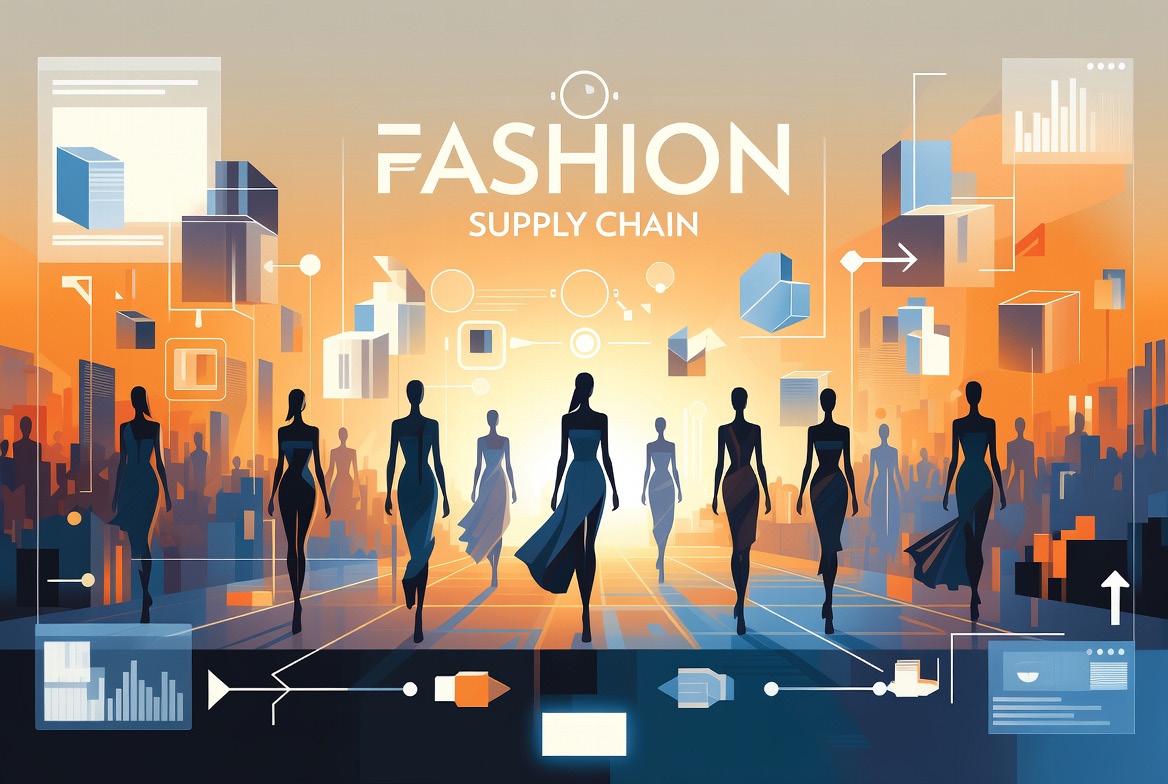
Transparency has evolved from a reputational concern into a source of operational power. Fashion brands are expected to know—not guess—who makes their products, under what conditions, and with what environmental impact. Tier-1 visibility is no longer sufficient. Regulators, investors, and major retail partners increasingly expect insight into Tier-2 and Tier-3 suppliers. This has forced supply chains to mature rapidly.
Brands are deploying digital traceability platforms to map supplier networks, track materials, and monitor compliance continuously. What was once an annual audit exercise is becoming a live operational capability. The implications are far-reaching.
With real-time visibility, brands can identify bottlenecks earlier, detect non-compliance before it escalates, and make faster sourcing decisions when disruptions occur. Transparency reduces response time—and in fashion, response time equals margin.
More importantly, transparency
reshapes supplier relationships. Datadriven visibility replaces anecdotal trust. Performance becomes measurable. Accountability becomes enforceable. Transparency is also influencing capital access. Investors increasingly differentiate between brands with demonstrable supply chain visibility and those relying on assurances. Trust premiums are emerging—not based on promises, but on data. Opacity, by contrast, has become a liability. Brands unable to trace their supply chains face higher compliance costs, slower market access, and increased reputational exposure. Transparency is no longer about storytelling. It is about control.
As supply chains become the primary business moat, leadership expectations are shifting decisively. Supply chain leaders in fashion are no longer judged on cost efficiency alone. They are evaluated on resilience, foresight, and strategic alignment. Their decisions
influence not just margins, but brand credibility, regulatory compliance, and growth optionality. This has elevated the role dramatically.
Supply chain leaders now sit at the intersection of geopolitics, sustainability, technology, and consumer demand. They assess trade-offs that cut across the enterprise: nearshore versus offshore, automation versus labor, speed versus sustainability.
They are also expected to speak the language of the boardroom. Scenario modelling, risk exposure, capital implications, and long-term operating resilience are now part of the supply chain mandate. In many fashion organizations, the supply chain function has become the only place where the future is modelled holistically. This shift demands new capabilities. Data literacy, ecosystem management, and strategic communication are as critical as operational expertise. The most effective leaders are those who can translate supply chain complexity into business clarity. In short, the supply chain leader is no longer a functional head. They are a strategic architect.
The next phase of fashion’s evolution will not be defined by a single disruption, technology, or regulation. It will be defined by how organizations respond when multiple constraints collide simultaneously. Tariff uncertainty, climate volatility, stricter sustainability regulation, labour instability, and accelerated trend cycles are no longer episodic risks—they are structural conditions. In this environment, the traditional notion of “planning” loses relevance. What replaces it is continuous adaptation.
The most advanced fashion companies are beginning to treat their supply chains not as execution engines, but as self-adapting systems. These systems are characterized by three defining attributes.
They are signal-driven rather than forecast-driven. Instead of anchoring decisions to seasonal plans, they respond to real-time demand shifts, supplier performance signals, and
AJIO Rush: Turning Network Density into a Fashion Moat AJIO Rush reflects Reliance Retail’s fundamentally different— but equally powerful—supply chain thesis: physical proximity creates optionality. Unlike pure-play digital models, AJIO Rush is built on Reliance’s dense store, warehouse, and darkstore network, allowing fashion inventory to be positioned extremely close to demand clusters. What makes this model compelling is not the headline promise of rapid delivery, but what sits behind it—storebacked fulfilment, real-time inventory visibility, and datadriven replenishment across online and offline channels. By fulfilling fashion orders from the nearest viable node, AJIO reduces delivery time, improves intent matching, and limits return leakage—one of fashion retail’s biggest margin drains. As AI is layered across this network, AJIO Rush becomes more than a convenience play; it becomes a network-orchestrated supply chain, where speed, availability, and cost efficiency reinforce each other. In this model, scale is not just reach—it is execution leverage.
external risk indicators. Forecasts still exist, but they are hypotheses— constantly tested and revised.
They are modular by design. Capacity, sourcing, logistics, and inventory are structured to be reconfigured quickly. This modularity allows brands to pivot without destabilising the entire network. Optionality becomes a design goal, not an afterthought.
They are governed, not improvised. Decision rights are clearly defined. AI recommends, humans decide, and accountability is explicit. This balance ensures speed without abdication, automation without loss of judgment.
What this means strategically is profound. In the coming years, competitive advantage in fashion will no longer come from having the best design, the lowest cost, or the fastest factory. It will come from having the most adaptive supply chain—one that can absorb shocks without losing momentum.
Brands that invest now in AIfirst, transparent, and resilient supply chains will find themselves with disproportionate freedom. Freedom to launch later and still win. Freedom to say no to bad volume. Freedom to meet regulatory demands without scrambling.
Freedom to align sustainability with profitability.
Those that do not will find themselves constrained—not by lack of demand, but by the limits of their own operating models. In that sense, supply chains are no longer the infrastructure of fashion. They are its strategy in motion.
From runways to resilience, the conclusion is clear: Fashion’s future will be decided not by who predicts trends best, but by who adapts to reality fastest—and that race will be won in the supply chain.
But beyond frameworks and forecasts, the real story lies in execution. Here, we examine firsthand perspectives from leaders driving change across fashion supply chains.
Disclaimer: This cover story has been developed using secondary sources and publicly available information. Subsequent interviews present first-hand perspectives from industry leaders.

As fashion cycles shrink and consumer expectations around speed, choice, and availability intensify, fashion supply chains are undergoing a fundamental reset. The shift is moving away from forecast-heavy, linear models toward agile, demand-led ecosystems powered by realtime data, AI-driven planning, automation, and omnichannel orchestration. This interview with Sheshadri PV, Executive Vice President, Reliance Retail, explores how large-scale fashion retailers are rearchitecting supply chains to deliver continuous freshness, operational agility, and sustainable growth in an increasingly complex market environment.
Fashion cycles are shrinking, and consumer expectations are rising. How are you restructuring your supply chain to deliver speed, flexibility, and constant freshness without compromising efficiency?
As fashion cycles compress and expectations around speed and freshness rise, we are shifting from a forecastdriven push model to a demandresponsive, agile supply chain, with a strong focus on re-architecting our distribution network and execution capabilities. We are adopting dynamic, data led planning, using real-time sellthrough, regional demand signals, and AI-driven replenishment. Inventory is now deployed in smaller, faster cycles, enabling in-season to refresh while maintaining efficiency.
Operationally, we are building an agile, responsive supply chain. Direct Store Delivery (DSD) accelerates fast fashion replenishment, while crossdocking and flow-through models reduce dwell time for trend-sensitive categories. RFID-enabled visibility, combined with targeted automation which includes automated shuttles, sortation, pick-tolight systems, and conveyors enhances efficiency. AI-driven slotting and inventory optimization further allow us to handle higher SKU complexity and frequent drops with speed, accuracy, and cost discipline. Our focus remains on building a digitally enabled, automated distribution backbone that delivers freshness, responsiveness, and sustainable profitability in a volatile fashion landscape.
From AI-driven forecasting to RFID-enabled visibility and digital twins in production—what digital interventions are creating the most meaningful transformation in your end-to-end supply chain?
We are moving beyond historical forecasting to AI models that ingest real-time sales, promotions, regional trends, and social signals. Digital twins of Automated warehouses help simulate capacity, lead times, and bottlenecks before orders are placed. Item level RFID across DCs, and stores delivers near-real-time inventory accuracy. This unlocks faster stock turns, improved replenishment, reduced shrinkage, and omnichannel capabilities like shipfrom-store and endless aisle. Warehouse automation, combined with AI-based slotting and labor optimization—
improves throughput, reduces fulfilment time, and supports scalable peak operations with lower operating cost per unit.
With sustainability becoming non-negotiable, how are you embedding circularity, responsible sourcing, and low-impact materials into your supply chain design and execution?
Sustainability is deeply embedded into our design-to-delivery workflow. At the upstream level, we are increasing adoption of certified, recycled, and lowimpact materials, supported by digital traceability platforms that track origin, compliance, and environmental impact. Downstream, we are enabling circularity through better demand planning, reduced waste, recyclable packaging,
Fashion supply chains will no longer be built around
long seasonal forecasts and large upfront commitments. They will be designed to sense consumer demand in near real time, respond at speed, and extend value across the entire product lifecycle. The single biggest transformation will be the shift from a forecast-driven, linear supply chain to a real-time, demand-led and circular ecosystem.
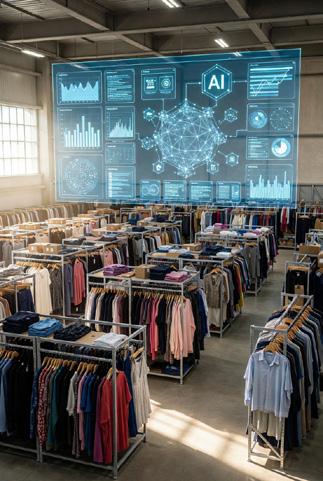
and recycling using data to measure and continuously improve our environmental footprint.
With online, D2C, and physical retail converging, how are you reengineering inventory planning, fulfilment, and last-mile operations to deliver seamless customer experiences?
Being focussed omnichannel retailer, D2C, and physical retail converge, we are reengineering our supply chain around an omnichannel first operating model rather than separate channel silos.
On inventory planning, we operate a single, unified inventory pool across stores, DCs, and dark stores, enabled by real-time visibility. Allocation and replenishment are driven by micromarket demand signals, online browsing behaviour, and store-level sell-through, allowing inventory to flow dynamically to the channel where demand is strongest.
For fulfilment, we are adopting a
hybrid fulfilment network leveraging central DCs for scale, stores for proximity, and select dark stores for speed. Capabilities like ship-from-store, click-and-collect, endless aisle, and store-to-store transfers help us reduce delivery times while improving inventory productivity.
In last-mile operations, we are partnering with multiple logistics players and using intelligent order orchestration to choose the optimal fulfilment node based on promise date, cost, and capacity. This enables faster deliveries, flexible customer options, and controlled costs especially critical in India’s diverse urban and tier-2/3 markets.
Overall, the focus is on building a responsive, tech-enabled supply chain that delivers speed, availability, and convenience to customers without locking excess inventory into any single channel.
If you had to envision the fashion supply chain of 2030, what is the single biggest transformation you believe will define the industry— and how are you preparing for it today?
By 2030, In India, nearly 65% of the population will be under the age of 35, with a significant share below 30. This young, aspirational demographic is highly trend-conscious and values frequent newness, affordability, and speed making India one of the most attractive markets for fast fashion globally. Fashion supply chains will no longer be built around long seasonal forecasts and large upfront commitments. They will be designed to sense consumer demand in near real time, respond at speed, and extend value across the entire product lifecycle. The single biggest transformation will be
the shift from a forecast-driven, linear supply chain to a real-time, demand-led and circular ecosystem.
How we are preparing today:
Moving from push to pull through AI-enabled demand sensing, realtime sell-through data, and rapid replenishment models
Re-engineering our sourcing and distribution network to shorten lead times and enable faster test-andscale cycles
Building end-to-end digital visibility using RFID and control-tower capabilities for dynamic inventory orchestration.
Embracing new technology and automation to ensure 100% of the throughput is catered through Automation.
Embedding circularity into supply chain design—responsible sourcing, low-impact materials, and reverse logistics for resale and recycling
Strengthening resilience through multi-sourcing, regional diversification, and scenario-based planning
The fashion supply chain of 2030 will be defined by intelligence, agility, and sustainability, and we are deliberately investing in these capabilities today to stay ahead of the curve.
As fashion cycles compress and trend relevance becomes increasingly short-lived, the supply chain has emerged as the industry’s most decisive competitive lever. Today, success is no longer defined solely by design strength or pricing power, but by how quickly brands can sense demand, activate inventory, and place the right product within immediate reach of the customer. In this conversation, Prashant Bopardikar, Seasoned Fashion Supply Chain Professional, explains how fashion supply chains are being fundamentally re-engineered— from RFID-led execution and AI-powered demand sensing to omnichannel fulfilment models designed for near-instant delivery.
Fashion cycles are shrinking and consumer expectations are rising. How are companies restructuring supply chains to deliver speed, flexibility, and constant relevance—without compromising efficiency?
The defining question for fashion supply chains today is straightforward: how fast can merchandise move from availability to commercial access? Speed has become the primary measure of competitiveness. Once inventory reaches the warehouse, every subsequent step—processing, sorting, allocation, and dispatch— determines how quickly that product becomes sellable across channels.
Efficiency is no longer only about cost optimization or scale; it is about reducing elapsed time across the entire fulfilment chain. Companies are therefore redesigning warehouse operations, simplifying internal handoffs, and positioning inventory closer to demand centres. In an environment defined by the need for continuous trend alignment and rapid assortment refresh, velocity has overtaken volume as the true differentiator.
From AI-driven forecasting to RFID-enabled visibility and digital interventions in production, which technologies are creating the most meaningful transformation across the end-to-end supply chain?
Technology is increasingly acting as the connective tissue of the fashion supply chain, linking demand sensing with execution. At the operational level, RFID has emerged as one of the

most transformative enablers. From the moment merchandise enters the distribution network, RFID provides real-time visibility—allowing inventory to be identified, tracked, and made commercially active almost immediately. This significantly reduces manual handling, improves inventory accuracy, and accelerates replenishment cycles across stores and fulfilment points.
AI operates at a more strategic layer. It enables demand sensing by analyzing historical sales data, consumer behaviour, emerging trend signals, and
regional preferences. AI can predict which styles are likely to gain traction, which assortments require faster turnaround, and where inventory should be positioned to capture demand while it is still peaking. Importantly, AI also helps fashion companies prioritize—deciding not just what to produce, but what to process and release faster.
When AI-driven forecasting is tightly integrated with RFID-enabled execution, the supply chain moves from being reactive to predictive. Decisions around production planning,
inventory allocation, and fulfilment are no longer made in silos, but as part of a continuously learning system. This integration is what allows fashion supply chains to operate with speed while still maintaining control and efficiency.
With sustainability becoming non-negotiable, how are companies embedding responsible practices into supply chain design and execution?
Sustainability in fashion supply chains goes far beyond transportation choices; it is increasingly influencing how networks are designed and operated endto-end. Logistics is one visible lever, and many companies are already deploying electric vehicles for urban and intra-city distribution, where delivery density and charging infrastructure make adoption practical. These deployments help reduce emissions while maintaining delivery speed.
Beyond EVs, companies are also focusing on network optimization— reducing unnecessary movement of goods by improving inventory placement and demand forecasting. Shorter supply routes, decentralised fulfilment, and better alignment between supply and demand all contribute to lower carbon intensity.
At the operational level, sustainability is also being driven through better inventory discipline. Faster cycles and improved demand accuracy reduce overproduction and markdown-heavy clearance, which are among the largest hidden sources of waste in fashion.
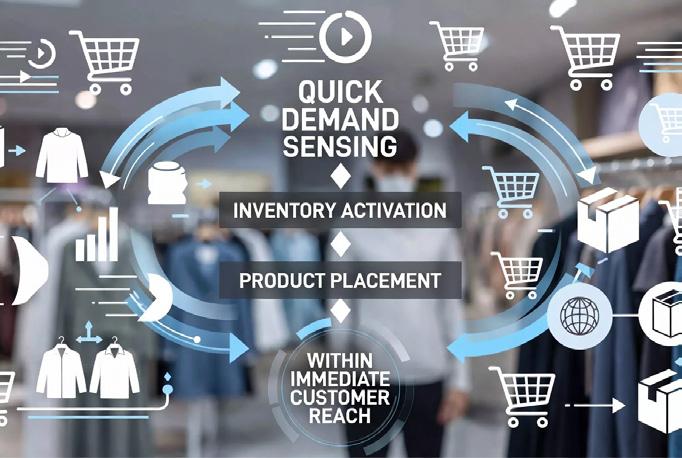
In this sense, speed itself becomes a sustainability lever. Finally, there is a growing emphasis on responsible vendor practices and compliance across sourcing and manufacturing. Sustainability is no longer treated as a parallel initiative; it is being embedded into everyday supply-chain decisions—how goods are produced, moved, and made available— through gradual but structural change.
As global sourcing shifts due to geopolitical pressures, tariffs, and near-shoring trends, how are vendor partnerships and manufacturing geographies evolving?
Geopolitical volatility and tariff uncertainty have made sourcing concentration a significant strategic
risk. Fashion companies are reassessing over-dependence on a limited set of manufacturing regions and actively working to diversify their supplier base. India represents a strong opportunity in this context. The country has already demonstrated its ability to meet stringent global manufacturing standards across multiple industries. If Indian apparel manufacturers can consistently deliver quality comparable to established hubs such as Vietnam and China, they can become credible alternatives—reducing geopolitical exposure while strengthening domestic manufacturing capability. The focus is shifting from transactional sourcing to long-term vendor partnerships, where capability building, quality consistency, and compliance are prioritised over short-term cost advantages.
Fashion supply chains are being redefined by the need for rapid trend alignment and constant assortment renewal. Technologies like AI and RFID are enabling real-time visibility, smarter demand sensing, and faster activation of inventory across channels. Sustainability is increasingly embedded through network optimization, reduced waste, and cleaner logistics. As omnichannel models mature, proximity to demand is shaping fulfilment strategy. Looking ahead to 2030, near-instant delivery is likely to emerge as a key benchmark—reshaping how fashion brands design their supply chains.
What new risk-management frameworks are emerging to ensure continuity and agility in fashion supply chains?
Agility has become the defining capability of modern fashion supply chains. Globally, leading brands have demonstrated that end-to-end cycles—from purchase order release to merchandise availability— can be compressed to nearly 100 days. In contrast, many fashion companies in India continue to operate on timelines closer to 300 days. This gap has a direct impact on trend relevance, markdown exposure, and workingcapital efficiency. Reducing the total cycle time is therefore not merely an operational improvement; it is a strategic necessity. Risk management today is less about holding excess buffers and more about building structurally faster, more flexible supply chains—supported by better planning, shorter lead times, and improved coordination across sourcing, production, and distribution.
With online, D2C, and physical retail converging, how are companies re-engineering inventory planning, fulfilment, and last-mile operations?
Consumer expectations in India— particularly in urban markets—are evolving rapidly. Delivery timelines measured in hours rather than days are increasingly becoming the norm. Meeting these expectations requires a fundamental rethink of inventory architecture. Centralized distribution models alone cannot support this level of responsiveness. Decentralized inventory, enabled through omnichannel integration, is proving far more effective. Retail stores are increasingly being repositioned as micro-fulfilment nodes, capable of dispatching orders based on proximity and availability. When orders are fulfilled from the nearest viable location, delivery times shorten significantly and service reliability improves. The success of this model depends on real-time inventory visibility,
As fashion cycles accelerate and consumer expectations shift from seasonal drops to instant availability, the supply chain has quietly become fashion’s most strategic lever. At FabIndia—where heritage craft meets modern retail—this transformation is unfolding at scale. In this conversation, Nitin Joshi, Chief –Supply Chain Management, Fabindia, explains how the brand is moving from static inventory to fluid fulfilment, embedding digital intelligence across its network, and building a resilient, Indiafirst ecosystem capable of delivering both thousands of products to stores and a single piece to a customer’s doorstep— seamlessly, sustainably, and in real time.
intelligent order routing, and seamless coordination across physical and digital channels.
If you had to envision the fashion supply chain of 2030, what is the single biggest transformation that will define the industry—and how should companies prepare today? By 2030, the defining benchmark for fashion supply chains will be the ability to deliver within one hour of order placement. Achieving this level of responsiveness will require fully integrated omnichannel ecosystems— where warehouses, stores, technology platforms, and logistics partners operate as a single, synchronized network. Preparing for this future demands action today. Supply chains must be redesigned as agile, decentralized systems built around proximity to demand and execution speed. In the coming decade, speed will not simply differentiate fashion brands—it will determine which ones remain relevant.

Fashion cycles are shrinking, and consumer expectations are rising. How are you restructuring your supply chain to deliver speed, flexibility, and constant freshness without compromising efficiency?
Speed and flexibility today are no longer operational advantages—they are basic expectations. At FabIndia, we have fundamentally reimagined our supply chain by moving away from a static “store goods” mindset to a dynamic “moving goods” ecosystem, where inventory is continuously flowing, intelligently positioned, and demand-responsive. This transformation is anchored in an omnichannel-first philosophy, supported by three critical pillars.
First, unified inventory across every channel. Inventory is no longer owned by a single channel but is simultaneously visible and available across physical retail, B2C e-commerce, and quick-commerce platforms. Our stores have evolved into intelligent fulfilment nodes, enabling ship-fromstore and same-day delivery by fulfilling orders from the closest possible location. This proximity-driven model dramatically improves speed while optimising lastmile costs.
Second, store-ready merchandise (SRM). We work in close partnership with our vendor ecosystem to ensure merchandise reaches our warehouses fully pre-packed, pre-tagged, and pre-sorted. By eliminating internal processing steps,
we significantly reduce handling time and improve throughput. During peak festive periods, we further accelerate speed-to-market through direct-to-store (D2S) shipments, allowing high-demand stores to receive merchandise directly from vendor locations.
Third, large-scale cross-docking. Enabled by advanced sortation technologies, a substantial portion of our assortment—across fashion, home, personal care, and organic food—moves directly from inbound to outbound docks without ever entering long-term storage. This approach keeps inventory fresh, reduces dwell time, and allows us to respond rapidly to shifting demand signals.
From AI-driven forecasting to RFID-enabled visibility, which digital interventions are creating the most meaningful transformation across your endto-end supply chain?
Digital intelligence has become the connective tissue of our supply chain, enabling faster decisions, tighter execution, and greater precision.
Smart identification and autoreplenishment allow us to track product performance in near real time. When a particular style or category shows strong momentum, the system automatically triggers replenishment—ensuring availability before shelves empty.
Close-to-trend production is
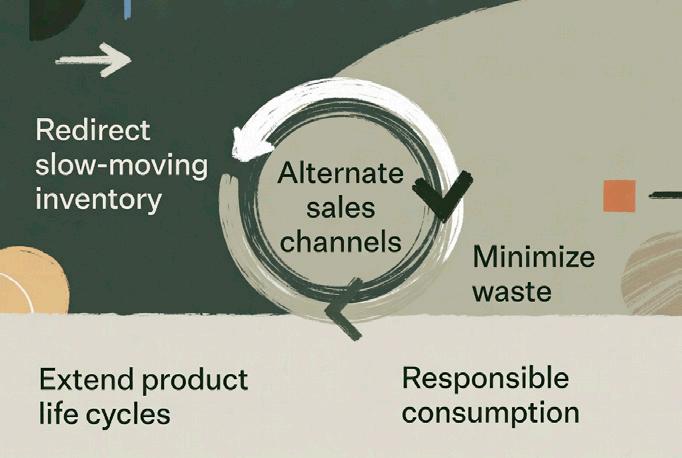
another major shift. Instead of locking plans months in advance, we now leverage live sales data to recalibrate production priorities weekly. This allows us to stay closer to evolving consumer preferences while reducing the risk of overproduction.
Dynamic stock balancing and markdown optimisation help us maintain freshness across the network. The system identifies slow-moving inventory and recommends inter-store transfers or calibrated markdowns, ensuring space is continuously freed for new collections.
Never missing a sale has been a significant customer-centric gain. If a desired product is unavailable, our systems intelligently suggest alternatives—similar styles, colours, or fits—preserving both customer satisfaction and revenue.
Underlying all of this is end-toend visibility. Integrated PLM systems, SKU-level warehouse management, and GPS-enabled transport management provide a real-time view of inventory and movement—from a vendor’s gate to the customer’s doorstep.
With sustainability becoming non-negotiable, how are you embedding circularity, responsible sourcing, and low-impact materials into your supply chain?
Sustainability is not an overlay for us—it is intrinsic to how FabIndia operates. We predominantly work with natural fibres and traditional, low-impact production techniques that inherently carry a lower environmental footprint.
Operationally, we are steadily integrating renewable energy, with select warehouse activities powered by solar energy. Transportation is also transitioning toward lower-emission alternatives, with increased adoption of electric and CNG vehicles across our logistics network.
Circularity is addressed through practical execution. Slow-moving inventory is redirected through alternate sales channels, extending product life cycles, minimising waste, and ensuring responsible consumption without compromising commercial discipline.
As global sourcing shifts due to
FabIndia is reengineering its supply chain from the ground up— shifting from stored inventory to constantly moving stock. Today, the same network can dispatch thousands of pieces to high-volume stores while delivering a single garment to a customer’s home in real time. With trend-responsive production, predictive analytics, and seamless omni-channel fulfilment, the brand has erased the divide between physical and digital retail. Anchored in India’s craft ecosystem, FabIndia is scaling heritage with speed, precision, and resilience.
geopolitical and cost pressures, how are your vendor partnerships and manufacturing geographies evolving?
Our sourcing strategy remains deliberately and deeply local. One hundred percent of our products are sourced within India, spanning some of the remotest craft clusters in the country. These clusters are supported through regional sourcing hubs and onground field offices, ensuring consistent engagement and quality oversight. New clusters continue to be added as part of our long-term ecosystem-building approach. Strong inbound visibility, combined with a robust and responsive logistics network, enables us to move goods quickly across vast geographies. This allows us to mitigate delays, manage costs effectively, and maintain reliability despite regional complexity.
What risk-management frameworks are you adopting to ensure continuity, resilience, and agility?
We have consciously evolved toward a supply chain model that balances flexibility with resilience.
Multi-sourcing is central to this strategy. Our vendor ecosystem spans three generations of partners, built on long-standing trust and collaboration. These relationships often prove most valuable during periods of uncertainty.
Flexible capacity is enabled through regional Market Region Warehouses (MRWs), which allow us to absorb sharp volume surges during peak seasons such as Diwali and end-of-season sales.
Predictive analytics further strengthens resilience. By using data to anticipate disruptions before they occur, we can proactively prioritise production, reroute inventory, and maintain momentum even under pressure.
With online, D2C, and physical retail converging, how are you reengineering inventory planning, fulfilment, and last-mile operations to deliver seamless customer experiences?
We are steadily progressing toward what we call autonomous supply chains. Today, our systems already predict and execute inter-store stock balancing, trigger dynamic markdowns based on rate of sale, and pull back ageing inventory to warehouses—significantly improving freshness at the store level.
What truly defines the transformation is integration. Production, warehousing, logistics, and stores now operate as a single, synchronised network. Our warehouses and stores have evolved into unified fulfilment engines—capable of dispatching thousands of pieces to a showroom while simultaneously shipping a single item to a customer’s home.
This convergence reflects modern consumer behaviour: a customer may discover a product in-store and complete the purchase online days later. The experience feels seamless because inventory is merged, visible, and traceable in real time across the country—ensuring fulfilment happens effortlessly, regardless of where the buying journey begins.
If you had to envision the fashion supply chain of 2030, what is the single biggest transformation that will define the industry—and how are you preparing for it today? By 2030, the defining shift will be the rise of self-thinking supply chains. Systems will autonomously sense demand, reorder inventory, rebalance stock across networks, and execute fulfilment with minimal human intervention. Advancements in RFID will enable near-instant inventory counting across massive warehouses, while high-speed, multi-SKU sortation systems will handle complex assortments with ease. Emerging technologies—potentially including drones—may further redefine last-mile delivery.
Our preparation has already begun. We are investing heavily in strong data foundations, integrated digital platforms, and continuous capability-building— ensuring our teams are equipped to work alongside intelligent systems and lead the next phase of supply chain evolution.
The last decade has quietly redefined the role of the supply was once assessed largely through the narrow lens of cost operational efficiency is now central to how organizations drive build resilience, and sustain competitive advantage. This archive story together two parallel shifts that shaped this transformation: the rise chains as strategic engines of enterprise value, and India’s emergence consequential force in next-generation global value chains. Viewed together, these perspectives capture a defining moment—when supply chains beyond supporting the business to actively shaping its direction, and execution gave way to orchestration.
supply chain. What cost control and drive growth, story brings rise of supply emergence as a together, moved when
FOR much of modern business history, supply chains operated quietly in the background—measured by cost efficiency, judged by service levels, and noticed only when disruption struck. Their mandate was clear and narrow: move goods efficiently, minimize inventory, and keep operations running. Today, that definition no longer holds. Across industries and geographies, supply chains have undergone a fundamental revaluation. They are no longer viewed as cost centers or back-end enablers, but as strategic growth engines that directly influence revenue, customer loyalty, resilience, and competitive advantage. In India, this transformation has coincided with a larger national shift—one that is redefining the country’s role in next-generation global value chains.
What was once noticed only during disruption is now scrutinized for its ability to deliver growth, loyalty, and speed.
In today’s competitive environment, supply chains sit at the heart of business performance. Decisions around inventory placement, network design, demand planning, and fulfillment now determine whether growth ambitions can be realized— or quietly lost. The shift is most visible in customer-facing sectors. With the rapid rise of quick commerce and omnichannel retail, availability has become synonymous with revenue. If a product is not present at the precise moment of consumer intent, demand does not wait—it migrates. The implication is stark: marketing investments, brand equity, and consumer preference can evaporate instantly if the supply chain fails to deliver. Dharmesh Srivastava, Vice President – Supply Chain, Sundrop Brands Ltd., captures this reality succinctly, “Just as companies invest in media and factory capacity, supply chain investment is crucial in establishing a robust supply chain for sustaining high growth. In the early stages of rapid expansion, efficiency cannot be the sole focus. First, we must establish the business, acquire consumers, and fulfill demand—and then optimize supply chain processes.” This sequencing marks a decisive break from traditional thinking. In high-growth environments, supply chains are no longer optimized first and scaled later. They are built for speed, responsiveness, and service—then refined as demand patterns stabilize.

End-to-end visibility has turned supply chains into the only function that truly sees—and shapes—the business.
What differentiates modern supply chains is not efficiency alone, but visibility and alignment. Among all business functions, supply chain uniquely spans the entire value journey—from sourcing and manufacturing to distribution and the end consumer. Sudip Gupta, Senior Director – Manufacturing and Supply Chain, South Asia, Cargill, highlights this advantage, “Supply chain is the only function with complete end-to-end visibility, spanning from farm to fork. This includes inventory at customer warehouses, distributor stock, plants, and transit, as well as procurement insights on cost, quantity, and timing.”
This visibility enables better trade-off decisions—between cost and service, scale and freshness, compliance and flexibility. Integrated Business Planning (IBP) and Sales & Operations Planning (S&OP) have therefore become central to revenue realization, not merely operational coordination. By aligning demand signals with supply constraints and margin outcomes, organizations can define their unconstrained revenue potential—and then engineer supply responses to capture it. The objective is not perfect forecasting, but disciplined decision-making under uncertainty.

Growth does not come from perfect forecasts, but from disciplined decisions under uncertainty.
As markets grow more volatile and customer expectations tighten, the value of Sales & Operations Planning has shifted decisively from coordination to command. S&OP is no longer a monthly ritual to reconcile numbers; it is the mechanism through which organizations translate ambition into executable reality.
Nitin Saini, Director – Supply Chain, Kohler Co. India, emphasizes that S&OP excellence is ultimately a leadership discipline, “Organizations that consistently follow the basic S&OP process tend to be more successful, stable, and profitable. They avoid chaos and burnout. Companies that neglect S&OP eventually find themselves scrambling to catch up.”
At its core, S&OP balances two enduring truths. First, demand will always be imperfectly known—shaped by shifting consumer behavior, competitive moves, and external shocks. Second, supply must be designed with enough agility to absorb that uncertainty without eroding service or margins. The role of leadership is not to eliminate uncertainty, but to create decision frameworks that can operate effectively within it.
This requires deliberate structural choices: rationalizing portfolios to reduce complexity, localizing production to shorten response cycles, delaying differentiation to preserve flexibility, and continuously optimizing networks as demand patterns evolve. When executed well, these decisions reduce working capital pressure, improve service levels, and free leadership bandwidth from constant firefighting. The outcome is a supply chain that does more than respond to demand—it actively shapes it, enabling growth that is both scalable and sustainable.

The pandemic exposed fragile networks—and elevated resilient supply chains into strategic assets.
The COVID-19 pandemic served as a global stress test for supply chains, exposing the vulnerabilities of hyper-optimized, single-source, cost-driven models. What failed during the crisis was not execution capability alone, but over-reliance on efficiency without resilience. In the aftermath, resilience and responsiveness moved from theoretical ideals to strategic imperatives. Organizations began reassessing what they valued most in their supply chains—not just lower costs, but continuity, visibility, and speed of recovery.
Chetan Kumria, Founder & MD, Xcell Supply Chain Solutions, observes, “Post-COVID, there has been a significant shift in the role of supply chains, moving beyond a purely cost-centric approach to becoming a key value driver. With increased representation at board-level discussions, supply chain management is transforming into a strategic growth enabler.”
In practice, this shift has manifested in tangible changes: redesigned distribution models, diversified sourcing strategies, investments in real-time visibility, and deeper use of data to uncover insights previously buried in fragmented systems. In several cases, these redesigns delivered not just cost savings, but measurable revenue uplift— by improving availability, reducing lost sales, and accelerating time-to-market.
The pandemic did not simply disrupt supply chains; it permanently altered how their value is perceived.

As enterprises reimagined supply chains, India redefined its role in global value creation.
This enterprise-level transformation mirrors a broader national shift. As global value chains recalibrate amid geopolitical uncertainty, sustainability pressures, and concentration risks, India has emerged not merely as an alternative manufacturing location, but increasingly as a strategic partner. Initiatives such as Make in India, Digital India, and Production Linked Incentives have accelerated manufacturing capability, infrastructure development, and technology adoption. What began as policy intent has matured into ecosystem strength—denser supplier networks, improving logistics infrastructure, and growing digital readiness across tiers.
Pratibha Nath, Director of Supply Chain – APAC, Alstom, explains, “From a supply chain perspective, having a localized ecosystem is highly beneficial. Suppliers in close proximity allow businesses to respond quickly to demand fluctuations. Make in India facilitates this by fostering strong local partnerships and enabling direct supplier evaluations.”
India’s proposition today extends well beyond cost competitiveness. Engineering depth, digital ambition, and governance stability have become equally important differentiators. As global companies reassess risk concentration, India’s ability to combine scale with responsiveness is strengthening its position within next-generation value chains.

Competing on cost opens doors. Competing on consistency and trust keeps them open.
Cost leadership remains a powerful entry point in global manufacturing, but it is no longer sufficient for sustained competitiveness. Long-term positioning depends on the ability to deliver consistent quality at scale—without compromise. Nilanjan Das, VP & Head – Supply Chain Management, Tata Hitachi Construction Machinery Co. Pvt. Ltd., underscores this balance:
“While cost advantage may naturally come to Indian manufacturers, they have to scale up in terms of reliable and consistent quality compared to global best standards. This requires cutting-edge automation and advanced manufacturing systems.”
Automation, robotics, Industry 4.0 tools, and failsafe manufacturing methods are shortening learning curves and reducing variability. At the same time, India’s large, young, and skilled workforce offers a demographic advantage that many developed economies increasingly lack. In a “China Plus One” world, trust has emerged as a decisive differentiator. Beyond price and capacity, global customers are prioritizing transparency, reliability, and governance. India’s growing reputation as a stable and dependable partner is therefore becoming a strategic asset in sourcing decisions—one that compounds over time.

Technology accelerates advantage only when data, discipline, and people are ready.
Technology is central to modern supply chain transformation—but its impact depends entirely on foundations. Legacy systems, fragmented data, and uneven digital maturity continue to limit outcomes across many organizations. Pratibha Nath cautions, “One of the biggest challenges is data inconsistency. If data is not cleansed and organized, digital initiatives fail. It becomes a case of ‘Garbage In, Garbage Out.’”
Too often, organizations invest in front-end tools without addressing backend integrity. True digital transformation demands disciplined data governance, standardized processes, and a clear understanding of decision ownership. Equally critical is ecosystem alignment. Vishal Pandey, Product Lead (Business Application) – Alphabet Supply Chain, Google, notes, “If partners—suppliers, manufacturers, 3PLs—aren’t onboarded, end-to-end tech deployment fails. Transformation must be co-developed across the ecosystem.” Digital advantage emerges not from isolated implementations, but from shared platforms, common standards, and collective capability building.

The future belongs not to the most automated supply chains, but to the most intelligently applied ones.
AI and automation are reshaping demand sensing, predictive maintenance, quality control, and network optimization. Yet their value depends on context. Blind adoption risks misalignment; selective application creates advantage. Nitin Saini highlights this nuance, “In project-driven businesses, traditional AI forecasting is difficult. Where AI can deliver tremendous value is in service parts prediction and post-sales support.”
Venu Vashista, Head Supply Chain, Altius Telecom Infrastructure, reinforces the strategic lens, “AI should not be seen just as a cost-saving tool. More accurate forecasting reduces waste, improves service, and directly improves revenue performance.”
The lesson is clear: technology creates value when aligned with business realities and decision-making needs—not when deployed indiscriminately in pursuit of automation alone.

No supply chain is stronger than its weakest tier—and resilience is built collectively.
Resilience does not stop at tier-one suppliers. It extends across multi-tier networks that are often opaque, underdigitized, and unevenly resourced. “The supply chain is only as strong as its weakest link,” notes Pratibha Nath. “Supporting SMEs to improve infrastructure is critical
to ecosystem resilience.”
Technologies such as blockchain, digital twins, and collaborative data platforms are enabling greater transparency and faster response across tiers. These tools allow organizations to simulate disruptions, assess risk
proactively, and maintain continuity under stress. Ultimately, resilience is not a solo capability—it is a shared one. The most robust supply chains are those that grow stronger together, not those optimized in isolation.
When supply chain performance is discussed alongside revenue, capital, and risk, its strategic value becomes undeniable.
One of the clearest indicators of how decisively the supply chain function has evolved is its growing prominence in boardroom conversations. What was once reviewed through the narrow lens of cost efficiency and service metrics is now examined as a determinant of revenue realization, capital productivity, and enterprise risk. Venu Vashista, Head Supply Chain, Altius Telecom Infrastructure, captures this shift succinctly, “Retail out-of-stock is not just an operational failure—it is a direct revenue loss. Companies invest heavily in marketing to create demand, but if the product is unavailable at the moment of purchase, that investment is wasted.”
This reality cuts across sectors. In FMCG and quick commerce, where consumer impatience is high and switching costs are low, a single stock-
out can permanently divert demand to a competing brand or platform. In premium and infrequent-purchase categories—such as appliances, industrial equipment, or telecom infrastructure— the consequences are even more severe.
As Vashista explains, “In businesses where purchases happen once in five or ten years, absence at the buying moment leads to long-term revenue forfeiture. Customers rarely return for the same purchase.”
From a board-level perspective, this reframes supply chain performance as a growth safeguard rather than an operational hygiene factor. Service levels, lead-time reliability, and inventory positioning are no longer tactical indicators—they are predictors of revenue continuity and cash-flow stability.
In B2B infrastructure environments, the stakes are equally high. Delays in equipment delivery cascade into postponed commissioning, deferred billing, and strained customer relationships. With long lead times and capital-intensive assets, supply chain decisions directly influence working capital cycles and return on invested capital. It is therefore unsurprising that boards are increasingly demanding deeper visibility into supply chain risks, resilience strategies, and technology readiness.
What has changed is not just attention—but accountability. Supply chains are now expected to justify tradeoffs between cost and service at an enterprise level, with a clear line of sight to financial outcomes.
As supply chains assume greater strategic responsibility, the demands on leadership have intensified. Technical excellence alone is no longer sufficient. Today’s supply chain leaders must combine analytical rigor with commercial judgment, operational discipline with ecosystem thinking. They are required to
arbitrate difficult trade-offs—between efficiency and resilience, scale and flexibility, compliance and speed—often with imperfect information. In doing so, judgment becomes as critical as data.
This shift also places renewed emphasis on people. While automation, AI, and advanced analytics are
transforming planning and execution, their impact depends entirely on the capability of the workforce to interpret insights, challenge assumptions, and act decisively. Upskilling is therefore not a parallel initiative—it is foundational. As organizations adopt AI-driven forecasting, control towers, and predictive
maintenance, they require talent that understands both the technology and the business context in which it operates. Without this alignment, digital transformation remains superficial.
Equally important is the ability to lead change. Resistance to new planning rhythms, legacy mindsets, and functional silos continues to slow progress. Successful leaders address this
not through mandates, but through clarity—explicitly linking supply chain decisions to revenue outcomes, customer experience, and long-term competitiveness.
The real advantage lies not in moving faster—but in synchronizing better.
What ultimately distinguishes leading supply chains today is not speed alone, but orchestration. Modern supply chains connect strategy to execution, demand to delivery, and partners to outcomes across increasingly complex networks.
This orchestration mindset recognizes that competitive advantage does not come from optimizing individual nodes, but from synchronizing the system as a whole. Suppliers, manufacturers, logistics providers, distributors, and customers
must operate as an integrated ecosystem rather than disconnected entities.
Dharmesh Srivastava offers a pragmatic reminder, “For some businesses, speed of supply is the winning criterion. For others, freshness or customization matters more. Supply chain managers must understand the business winning criteria and work with manufacturing, sales, marketing, and procurement to build the right model.”
There is no universal blueprint. The
most effective supply chains are those designed around how value is actually created in a given market—whether through responsiveness, availability, quality, or cost leadership. This is where supply chains move beyond execution into orchestration: aligning cross-functional priorities, managing variability, and enabling growth without disproportionate increases in risk or cost.
At a national level, this evolution mirrors India’s broader repositioning within global value chains. As manufacturing capabilities deepen, digital adoption accelerates, and sustainability becomes embedded in business models, India is transitioning from being a participant in global supply networks to a co-architect of them. Cost competitiveness remains
important, but it is no longer sufficient on its own. Reliability, quality consistency, digital readiness, and governance stability are increasingly decisive factors in global sourcing decisions. In a world actively seeking to diversify risk, India’s “trust factor” has become a strategic asset.
This trust is reinforced by investments
in infrastructure, policy continuity, and ecosystem development—particularly in supplier clusters and SME enablement. As multi-tier supply chains digitize and integrate, India’s ability to offer both scale and resilience strengthens its global relevance.
As enterprises and economies look ahead, one reality is already clear: the next phase of growth will not be won through scale alone. It will be won through orchestration—the ability to sense demand early, align ecosystems intelligently, and deliver consistently under uncertainty. Supply chains sit at the center of this mandate.
Over the coming decade, their role will expand further—from enabling growth to shaping it, from managing efficiency to governing risk, and from executing plans to informing strategy. Artificial intelligence will sharpen
foresight, but judgment will remain decisive. Automation will increase speed, but resilience will define success. Sustainability will move beyond reporting frameworks into operating models that determine access to capital and markets.
For enterprises, the challenge is no longer whether to elevate the supply chain—but how quickly. Leadership, talent, data integrity, and crossfunctional alignment will separate those who adapt from those who fall behind.
For India, the opportunity is equally profound. As global value chains rebalance, the country stands at the
intersection of cost competitiveness, engineering depth, digital ambition, and trust. Its ability to orchestrate—not just participate in—next-generation value chains will define its economic influence in the years ahead.
The lesson from this archive moment is unmistakable: Supply chains are no longer the arteries of business. ThWWey are its nervous system. Those who recognize this will not merely respond to the future. They will design it.
Across the narratives in this archive, a clear pattern emerges. Supply chains are no longer judged by how efficiently they execute plans, but by how effectively they shape outcomes. They determine which markets can be served, how quickly growth can be scaled, and how resilient organizations remain under pressure. In India’s case, this evolution is unfolding alongside a broader repositioning within global value chains. As manufacturing capabilities deepen, digital adoption accelerates, and sustainability becomes embedded, the country is moving from being a participant in global supply networks to a co-architect of them. Trust—earned through consistency, transparency, and governance—has emerged as a differentiator as powerful as cost or capacity. In a world actively unwinding concentration risk, this trust premium matters.
This transformation places new demands on leadership. Technical expertise alone is no longer enough. Today’s supply chain leaders must combine analytical rigor with commercial judgment, ecosystem thinking with operational discipline. Equally critical is investment in people. Upskilling across AI, analytics, automation, and digital tools is no longer optional—it is foundational. Without talent that can interpret data, manage advanced systems, and collaborate across organizational boundaries, technology investments fail to deliver their promise. Leading change now requires clarity of purpose, not mandates—explicitly linking supply chain decisions to growth, customer outcomes, and long-term value.
The defining insight from this period of transformation is both simple and consequential: growth does not merely pass through supply chains—it is created by them. Organizations that recognize this are redesigning operating models, elevating supply chain leadership, and investing ahead of demand rather than reacting to disruption. For India, the implications are equally significant. As supply chains become more intelligent, sustainable, and resilient, the country’s role in next-generation value chains is being redefined—not just as a manufacturing base, but as a trusted orchestrator of global production and distribution networks. What was once invisible has become indispensable. And those who master supply chain orchestration are no longer supporting growth— they are commanding it.
At Davos 2026, global leaders confronted a world no longer defined by temporary disruption but by structural volatility — where geopolitics, trade, technology and climate are interlinked, recurring forces shaping economic reality. The 56th World Economic Forum Annual Meeting, held under “A Spirit of Dialogue”, marked a shift from diagnosing global problems to orchestrating systemic responses. Across the alpine halls of Davos, connected conversations on supply chains, digital transformation, geopolitical dynamics and leadership revealed that dialogue must now evolve into delivery — coordinated, coherent action that closes the gap between intent and implementation in a fractured global order.
unfolded in a world beset by overlapping challenges: geopolitical tension, shifting trade frameworks, climate imperatives and the accelerating force of artificial intelligence. The mood was neither triumphalist nor alarmist, but starkly realistic. Leaders acknowledged that volatility — once viewed as temporary — is now the baseline condition of global economic life. Underlying the forum’s theme was an unspoken consensus: the era of negotiated stability has given way to an era of managed flux. This perspective aligns with the “Structural Volatility” framing emerging from the Forum’s research and expert commentary, which argues that disruption is no longer episodic but enduring, reshaping how companies and countries organise trade and production.
Across sessions and closed-door dialogues at Davos 2026, the reconfiguration of global supply networks emerged as one of the most urgent narratives. Leaders and executives were broadly aligned that supply chains can no longer be optimised primarily for cost efficiency and speed. Instead, they must now be architected for endurance, flexibility and continuous recalibration. The decades-long focus on ‘Just-In-Time’ logistics — once a source of lean operations and competitive advantage — has increasingly given way to models that value diversification, redundancy and responsiveness as strategic strengths.
Discussions highlighted a growing shift towards multi-country sourcing, regional manufacturing clusters and near-shoring strategies that reduce overdependence on any single geography. At the same time, digital transformation is becoming the backbone of modern supply chains. Advanced analytics, realtime visibility platforms, predictive risk modelling and AI-enabled demand forecasting are enabling companies to anticipate disruptions and respond dynamically. Supply chains are evolving from linear flows of goods into intelligent ecosystems capable of sensing vulnerabilities and rerouting operations in real time.
Experts at the Forum underscored that climate volatility, resource scarcity and regulatory shifts are now frequent disruptors rather than rare events. Floods, droughts, energy shortages and transport bottlenecks have repeatedly demonstrated how quickly production and distribution systems can stall. As a result, supply chain design is increasingly viewed as a core pillar of business resilience and economic stability.
What became clear at Davos is that supply chains are no longer passive conduits between suppliers and consumers. They have transformed into strategic assets that influence competitiveness, investor confidence and long-term growth. The recurring message across panels and reports was that future-ready supply chains must balance efficiency with structural robustness — capable of absorbing shocks while continuing to deliver at scale.
Trade discussions at Davos 2026 reflected the same emphasis on adaptability over rigidity. While political rhetoric from some quarters pointed towards fragmentation through tariffs and unilateral measures,
the economic dialogue was far more pragmatic. Rather than forecasting the collapse of global trade, leaders focused on how trade systems are transforming in response to rising complexity.
A dedicated World Economic Forum analysis highlighted that trade is changing shape rather than shrinking, driven by technological innovation, evolving regulations and new forms of cross-border cooperation. Digital trade platforms, automated customs processes, blockchain-enabled documentation and integrated logistics networks are reducing friction and allowing commerce to continue even as regulatory environments grow more complex.
World leaders and corporate executives acknowledged that traditional multilateral frameworks are under strain, often struggling to keep pace with rapid economic shifts. However, rather than signalling retreat, discussions emphasised the resilience of trade flows through bilateral agreements, regional partnerships and sector-specific arrangements that are filling gaps left by slower global consensus.
Private-sector collaboration was also highlighted as a critical stabiliser of global commerce. Strategic logistics alliances, shared infrastructure investments and technology-enabled transparency are helping businesses navigate regulatory divergence and supply disruptions. Increasingly, standards around sustainability, compliance and traceability are shaping market access, making operational excellence as important as diplomatic alignment.
At Davos 2026, India’s presence was both substantive and strategic, reflecting a clear evolution in how the country is positioned within global economic conversations. No longer viewed

primarily through the lens of growth potential or demographic advantage, India was increasingly discussed as a reliable partner in reconfigured global supply chains and trade ecosystems. Indian policymakers and corporate leaders were deeply engaged in central debates on resilience, industrial transformation and the future of global value chains, signalling India’s growing role in shaping — not just participating in — global economic restructuring.
A defining supply-chain message came from Union Minister Ashwini Vaishnaw, who articulated India’s shifting role in global production networks in direct terms: “Global industry sees Bharat as an increasingly reliable supply-chain partner.” He elaborated that this confidence stems from India’s rapid progress in building complete industrial ecosystems rather than isolated manufacturing capacity, particularly across electronics and semiconductors — from design and fabrication to packaging, materials
Davos 2026 marked a shift from diagnosing global disruption to redesigning economic systems for an era of structural volatility. Leaders acknowledged that resilience is no longer reactive but must be engineered into supply chains, trade frameworks and institutions. The focus moved firmly towards execution — turning policy alignment, technology investments and sustainability commitments into operational outcomes that can withstand continuous uncertainty.
Global supply chains are being reimagined beyond cost efficiency, with diversification, regional hubs and digital visibility becoming strategic priorities. Trade discussions echoed this pragmatism, highlighting evolving frameworks, technology-enabled platforms and private-sector collaboration that keep commerce moving despite fragmentation. The consensus at Davos was clear: future competitiveness will be defined by adaptive supply networks and integrated, resilient trade strategies.
and equipment — enabling deeper integration into global value chains.
Beyond advanced technology sectors,
the broader narrative emphasised India’s transition from being a participant in global supply chains to becoming a
value-chain partner. Indian leadership underscored that the ambition is not merely to host manufacturing activity, but to co-create, co-design and innovate alongside global firms. This framing resonated strongly with multinational companies seeking diversified, stable and scalable production bases in an era of constant disruption.
Global corporate leaders echoed this evolving perception. Speaking on India’s growing role in electronics manufacturing and supply networks, Qualcomm CEO Cristiano Amon highlighted how companies are increasingly expanding both production and innovation footprints in India as part of broader diversification strategies away from concentrated legacy hubs. His remarks reflected a wider corporate movement toward embedding India within critical technology and manufacturing value chains.
Industry leaders further underlined India’s adaptability amid global disruptions. Rajiv Memani, Chairman & CEO, EY India and President of the Confederation of Indian Industry (CII), captured the sentiment emerging at Davos when he observed, “Relative to what’s happening in the rest of the world, the India story is becoming more and more resounding.” While framed around macroeconomic strength, the comment reflected India’s growing credibility across manufacturing, logistics and trade — qualities increasingly valued in supply-chain strategy.
Post-Davos commentary reinforced that India was discussed not as a future possibility but as an active component of global economic restructuring, particularly across manufacturing, clean energy, logistics and digital services. The emphasis consistently returned to execution — India’s ability to translate
reforms, infrastructure investments and digital platforms into tangible industrial capability.
Overall, India’s presence at Davos 2026 reflected a maturing global perception. The country is no longer simply a destination for investment or outsourcing, but a strategic player in the redesign of global economic systems — increasingly valued for resilience, scale, ecosystem depth and delivery capacity.
Technology — and artificial intelligence in particular — emerged as a defining force shaping the Davos 2026 agenda. Unlike previous years, where AI was often framed in experimental or futuristic terms, the tone this year was distinctly operational. Leaders acknowledged that AI has moved beyond pilot projects into a core driver of productivity, competitiveness and economic restructuring. Across sessions, CEOs and policymakers emphasised that the next wave of value creation will come not from adopting AI tools alone, but from deeply integrating intelligence into business processes, supply chains and decision-making frameworks. Predictive logistics, real-time inventory orchestration, automated manufacturing systems and data-driven compliance were frequently cited as areas where AI is already reshaping global commerce. At the same time, conversations reflected heightened awareness of AI’s social impact. International institutions warned of significant workforce disruption if reskilling efforts do not keep pace with automation. The prevailing view was that the AI revolution will be defined as much by governance, ethics and talent transformation as by technological breakthroughs. Overall, Davos underscored that technology will increasingly act as the connective layer linking supply chains, trade systems and sustainability goals — making digital maturity a foundational capability for future competitiveness.
Sustainability at Davos 2026 underwent a notable reframing. Rather than being treated primarily as an environmental or reputational obligation, it was increasingly discussed as a core driver of economic resilience and competitiveness.
For India Inc, Davos 2026 was a moment of validation and opportunity. The Forum reaffirmed India’s arrival on the global stage as a credible partner — not just in growth metrics but in strategic resilience. Indian business leaders and policymakers highlighted that the country’s strength lies in its demographic scale, digital infrastructure and expanding role in global technology and supply networks. Engagements with global logistics firms, technology conglomerates and investors underscored confidence in India’s long-term potential across logistics, infrastructure and digital ecosystems. The emphasis on structural volatility at Davos means that Indian companies must now prioritize adaptive supply chains, resilient manufacturing footprints, and integrated technology platforms. For Indian executives, success in 2026 and beyond will be measured by how effectively firms convert strategic intent into operational capability — across skills, industrial ecosystems and global partnerships. In a world where disruption is the default, the ability to deliver, not just declare, will define leadership.
Climate volatility, water scarcity, energy security and resource constraints were consistently linked to supply-chain stability, investment flows and long-term growth.
Leaders across industries acknowledged that environmental disruptions are now among the most frequent causes of operational shocks. From floods halting logistics corridors to energy shortages affecting manufacturing hubs, climate risks have become immediate business realities. As a result, sustainability has moved firmly into strategic planning rather than remaining a compliance exercise.
Discussions focused on embedding sustainability directly into operations — through renewable energy integration, circular supply chains, resourceefficient manufacturing and transparent emissions tracking. These measures were framed as essential to securing continuity, managing risk and meeting evolving regulatory and investor expectations.
At a broader level, Davos reinforced that sustainability performance will increasingly influence access to markets and capital. Trade frameworks, investment decisions and supply-chain partnerships are progressively factoring in carbon intensity, resource efficiency and traceability metrics. Companies that integrate environmental resilience into
core strategy will be better positioned to compete in a constrained and volatile global economy.
Perhaps the most consistent theme of Davos 2026 was the shift from dialogue to delivery. Unlike previous years — when summits often showcased ambition and vision — conversations this year were grounded in the operational realities of execution. How do leaders translate approvals into production? Commitments into infrastructure? Data into real economic value? Davos repeatedly surfaced the view that coordination across policy, investment, technology and infrastructure is where global solutions will be found — not in isolated pledges. This focus on execution was reflected not just in speeches and panels but also in analyses emerging from the Forum. Observers noted that the challenge for global leaders now is to convert alignment into action, catalysing cross-sector partnerships that rewire supply chains, optimize trade frameworks and embed sustainability into core economic strategy.
The article has been crafted from secondary sources.

Email: tech@celerityin.com | Mobile:
Website: www.supplychaintribe.com www.supplychaintribe.events