
Srivastava,
Srivastava,

Dear Readers,
Supply chains today sit at the crossroads of geopolitical tensions, environmental volatility, and human-led disruptions. Every external shock, whether a conflict, climate event, or labour challenge, reflects immediately in supply chain flows, compelling organisations to rethink preparedness and resilience at their core.
Our Cover Story— “Global Reinvention of Logistics: Moving from Fragility to Foresight and Resilience” —captures a pivotal global transition. As trade ecosystems realign, sustainability mandates intensify, and digitisation accelerates, logistics is undergoing a profound reinvention: shifting from reactive, siloed operations to predictive, networked, and intelligence-led systems.
In this issue, we are privileged to feature exclusive conversations with leaders shaping this transformation.
Avinash Gupta, Solar Industries , spoke powerfully about responsiveness and resilience, the role of leadership and values, and the legacy we build for future generations. His perspective underscores that resilience is not just a systems capability—it is a cultural one.
Akhil Srivastava, AB InBev , shared his insights on technology as an enabler, sustainability as a responsibility, and values as the anchor of long-term transformation.
A common thread runs through every conversation this month: Technology stands at the centre of supply chain reinvention. To equip our readers for this shift, our Special Report brings the ultimate guidelines for sourcing, evaluating, and implementing new technology stacks—a practical and strategic playbook for leaders navigating the complexity of digital transformation.
As 2025 comes to an end, one thing is clear: the supply chains that will thrive tomorrow are those designed with foresight today. Warm wishes for a reflective December and an inspiring start to 2026.
Happy reading,
Charulata Bansal Publisher Charulata.bansal@celerityin.com
www.supplychaintribe.com
Published by: Charulata Bansal on behalf of Celerity India Marketing Services
Edited by: Prerna Lodaya e-mail: prerna.lodaya@celerityin.com
Designed by: Lakshminarayanan G e-mail: lakshdesign@gmail.com
Logistics Partner: Blue Dart Express Limited


Celerity Supply Chain Tribe is India’s leading pla�orm for knowledge exchange, leadership insights, and industry transforma�on. Thro gh o r maga ine, conferences, ro ndtables, and digital pla�orms, e bring together the brightest minds in logis�cs and s ppl chain to disc ss trends, strategies, inno a�on, and the f t re of the ecos stem. In , e ele ate the dialog e—bigger pla�orms, sharper themes, deeper insights.
Three Ci�es. �ne �ission. Transforming India’s Supply Chains. Bengal r – Febr ar Ne Delhi – April M mbai – A g st
The boldest con ersa�ons, the sharpest insights, and a high-impact gathering of CXOs, s ppl chain leaders, inno ators, polic makers, and sol �on pro iders—all in one place. Foc ssed on transforma�on, digitalisa�on, s stainabilit , risk and resilience, m l�modal e pansion, ne b siness models and c stomer e pecta�ons
Zero excuses to miss out. Influence the conversa�on. �ead the shi�. Shape the future.
Register here- h ps://bit.l /Celerit SCTE ents
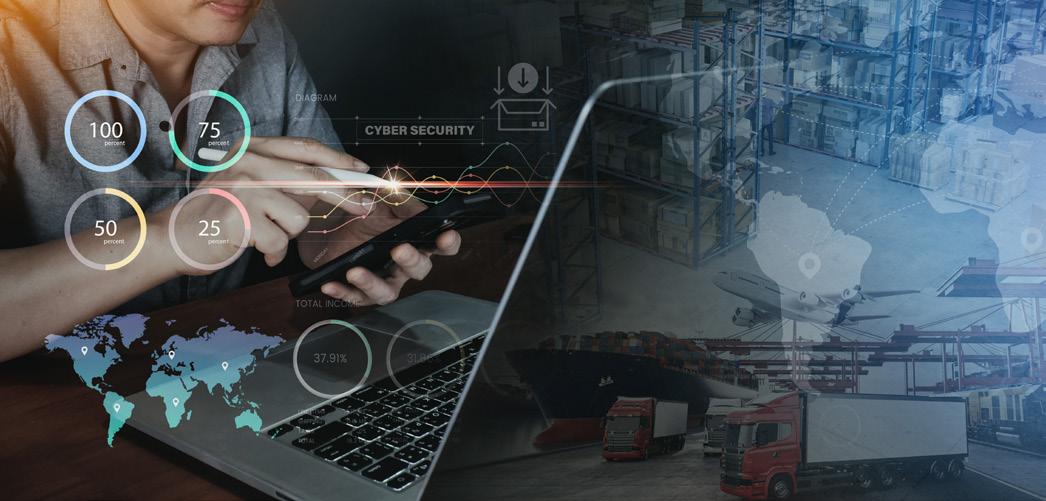
In this free-wheeling leadership dialogue, Avinash Gupta, Global Supply Chain Head, Solar Industries India Ltd., reveals why resilience is more about responsiveness than redundancy, how technology must serve humanity, and why leadership today is measured not just by metrics or milestones, but by the belief you cultivate, the values you uphold, and the impact you create — within your teams, across ecosystems, and for the generations that follow.
In this conversation, Akhil Srivastava, Senior Director – International Supply Chain, New Business Development & Innovation, ABInBev, unpacks how collaboration can become a true engine of value creation, why India is rapidly emerging as the world’s talent and capability hub for supply chains, and what kind of leadership mindset is required in an era where technology, sustainability, and values converge to redefine the very architecture of business.
Resilience isn’t built on redundancy—it’s built on relationships, real-time data, and shared intelligence. After years of disruption, enterprises are rediscovering logistics as the strategic core of competitiveness. The focus has shifted from efficiency to intelligence and adaptability—where data, design, and collaboration define success. As enterprises navigate global volatility, logistics is becoming their new strategic intelligence system, linking insight with action. This Cover Story brings together voices from leading user industries to explore how logistics resilience is being redefined— from Fragile to Foresighted.
This Special Report examines the critical first steps organizations should take before committing to new systems, the blind spots that derail early decision-making, and the deeper ROI levers that often go unmeasured.
In high-stakes environments, leadership is often reduced to speed and scale. Yet the most enduring leaders understand that true transformation demands something deeper — Trust, Transparency, and an Unwavering Commitment to Listen — To People, To Markets, and To the Early Signals of Change. Avinash Gupta, Global Supply Chain Head, Solar Industries India Ltd., embodies this philosophy. His leadership approach is anchored in dialogue, reflection, and purpose, guiding strategic decisions from integrating global standards with local realities to embedding ESG into the fabric of the enterprise. In this free-wheeling leadership dialogue, he reveals why resilience is more about responsiveness than redundancy, how technology must serve humanity, and why leadership today is measured not just by metrics or milestones, but by the belief you cultivate, the values you uphold, and the impact you create — within your teams, across ecosystems, and for the generations that follow. Excerpts…

Having navigated transformation across both the automotive and industrial sectors, what leadership insights have you gained about driving growth amid disruption? The first catalyst for any transformation is strong conviction from the CEO and leadership team — the belief in the need to act and the willingness to take a leap of faith. Doubts may arise: are we taking the right steps, will the returns justify the effort? Most CEOs seek a clear business case before embarking on major transformation. Yet, when all factors are considered, the courageous decision to begin is essential, even though the road ahead is often filled with obstacles. Technology frequently plays a significant role in transformation. However, true transformation is not driven by technology alone — it is powered by mindset. Across automotive and industrial sectors, I have seen growth accelerate when leaders make people part of the journey. Clarity of vision matters, but empathy in execution is equally critical. Disruption rewards those who reimagine value, not those who resist change. The best outcomes emerge when strategy meets belief — when teams understand why change matters and feel trusted to make it real. Consistent, visible communication from the CEO reinforces
conviction and sustains momentum throughout the transformation journey.
Operational metrics often dominate decision-making, yet you’ve consistently driven transformation through customer experience. How do you balance process discipline with emotional intelligence in leadership?
Operational excellence and emotional intelligence are often framed as competing priorities — but in reality, they amplify each other. Processes provide structure, reliability, and measurable outcomes. Yet transformation is ultimately driven by people — mature, experienced teams whose participation and belief determine the difference between incremental change and meaningful breakthrough.
Metrics like efficiency and effectiveness matter, but unless they improve customer experience — which is arguably the most critical performance indicator — their impact remains confined within the organization. I’ve learned that real excellence emerges at the intersection of disciplined systems and empathetic leadership. A leader must listen deeply to understand unspoken concerns, act decisively to drive clarity, and always connect data-driven insights with human impact. It's not a choice between process and empathy — it’s their deliberate integration that creates a culture of ownership, trust, and transformation.
Having worked across geographies, how do you align global standards with local execution in complex and diverse markets? Additionally, what are the cornerstones of creating global alignment while maintaining local agility?
Global alignment doesn't mean uniformity — it means unity of purpose anchored in non-negotiable principles. Whether in safety, ethics, or quality, these standards must be sacred across geographies. But execution must respect local realities. Cultural nuances shape decision-making, influence collaboration, and determine operational speed. Recognizing and respecting these nuances is not an operational concession
Tomorrow’s leaders will need curiosity, crossfunctional agility, and the courage to challenge convention. Technical expertise will matter, but systems thinking — connecting dots across customers, operations, and sustainability — will matter more. Emotional intelligence and digital fluency will separate leaders from managers. The future belongs to those who can blend intelligence with integrity and drive with empathy.
— it’s a strategic advantage.
A global strategy that flows topdown is effective only when insights travel bottom-up. Local teams must be empowered to innovate within clear boundaries. The cornerstones of alignment, therefore, are clarity of intent, shared values, and distributed decision-making — where the “what” is centralized, but the “how” is owned locally. That’s how global organizations become both consistent and contextually responsive.
Market dynamics are shifting faster than ever — from digital disruption to supply chain volatility. What leadership mindset is needed to stay ahead of such change?
In a world defined by continuous disruption, the urge for control is natural — yet often counterproductive. Today’s most effective leaders don’t seek certainty; they cultivate curiosity. The hierarchy-driven decision models of the past are giving way to agility as the new competitive advantage. Proximity to customers and teams is critical — that’s where you hear the earliest signals of change. The real test of leadership lies in how quickly you interpret those signals, learn from them, and pivot. Resilience today is not about restoring old systems; it’s about continuously adapting and advancing. Leaders must reframe uncertainty as a source of energy and innovation, not risk. It demands a shift from managing stability to leading through ambiguity — with foresight, flexibility, and courage.
The next decade could redefine
how India builds, moves, and delivers. What role do you see integrated, intelligent supply chains playing in powering India’s industrial transformation?
India’s next wave of industrial growth will be defined by the intelligence of its supply chains. It's no longer just about moving goods — it's about orchestrating information, decisions, and action across interconnected networks. Integrated, intelligent supply chains transform efficiency into a strategic advantage — enabling responsive planning, real-time visibility, proactive risk management, and superior customer experience.
Technologies like digital twins, AI-driven simulations, and agentic systems are no longer emerging — they're becoming operational realities. As more Indian industries embed these capabilities into their planning and execution layers, we’ll see unprecedented transparency and speed. This shift will enable sectors like EVs, aerospace, and advanced manufacturing to move beyond cost competitiveness — positioning India as a capability-led partner delivering consistent, world-class standards. The future isn’t just about supply chains being efficient; it’s about them being predictive, regenerative, and a core engine of sustainable industrial innovation.
Resilience is the new growth currency. What makes a supply chain truly resilient in today’s uncertain environment?
The new mandate for customercentric supply chains is agility—and in that context, resilience is less about redundancy and more about
responsiveness. A resilient supply chain can sense disruptions early, adapt quickly, and recover stronger. This requires agile systems—and increasingly, pull-based processes, lean methodologies, and frequent adaptation at the execution level. But resilience demands more than operational flexibility. It requires digital transparency across nodes, diversified sourcing strategies, and deeply collaborative partnerships throughout the ecosystem. Above all, it's a reflection of leadership mindset — a shift from rigid control to rapid learning. In times of disruption, survival isn’t about size. It’s about speed — the speed to sense, decide, and act.
Technology is reshaping how organizations operate. Which emerging tools — from AI to digital twins — do you believe will drive the next wave of industrial transformation?
The next decade will be led by organizations that combine digital intelligence with human intuition. Technologies like AI, digital twins, and smart analytics are already driving precision in manufacturing and proactive risk management in supply chains. But the real transformation will come from integration. When agentic AI and interconnected digital twins orchestrate touchless, self-optimizing supply chains — with human oversight ensuring direction and purpose — we move from automation to orchestration. In that future, technology doesn't just replace manual processes — it augments human judgment and unlocks new levers of competitive advantage. The winners will be those who understand that exponential transformation comes not from isolated tools, but from connected intelligence.
Beyond efficiency, digitalization is now about intelligence. How can leaders ensure technology adoption creates both business and human impact?
Technology without purpose is noise. The real challenge for leaders is ensuring that digital adoption enables people, not replaces them. I believe human impact must sit at the core of every tech investment — empowering employees
What does success mean to you today — and how has that definition evolved over the years?
Earlier, success meant milestones — Roles, Results, and Recognition. Today, it means Impact. I measure success by how many people and organizations I’ve helped grow. Creating lasting value — not just financial, but cultural and human — has become more meaningful. Success now is less about being the best in the room and more about making others believe they can be. Success, for me, has moved from Achievement to Impact. Earlier in my career, it was about Milestones — Titles, Targets, Transformations Delivered. Today, it’s about Significance — how many people and organizations I’ve helped grow. True success is when your influence outlasts your involvement.
When faced with difficult decisions, what personal compass or philosophy guides you?
My compass has always been Clarity of Purpose and Consistency of Values. I try to pause and ask: What creates long-term trust? In moments of ambiguity, integrity becomes the anchor. You can recover from a wrong call, but not from a compromised one. Doing the right thing — even when it’s the harder thing — has never failed me.
Is there a book, idea, or mentor that profoundly influenced your leadership journey?
I want to mention about the philosophy behind the book ‘Leading from the back to achieve impossible’ by Mr. Ravi Kant, former MD of Tata Motos and Harry Paul and Ross Reck. My leadership philosophy is strongly influenced by this thinking and Mr. Ravi Kant’s influence on mine and a generation of leaders at Tata Motors has been deep and profound. I find it very relevant for budding managers of today.
Outside of work, what passions or pursuits keep you grounded and inspired?
Nature and travel keep me grounded. I enjoy exploring new cultures — they remind me how perspective changes everything. I also find energy in mentoring young professionals; it’s rewarding to share learnings and see them create their own path. Simple moments with family, or a quiet walk, often bring more insight than any boardroom discussion.
How do you disconnect and find balance when work demands are high?
Balance isn’t about switching off — it’s about recharging meaningfully. I disconnect by spending time in nature or with family, away from noise and structure. Reflection and silence help me process, reset, and return sharper. Leadership can be consuming, but perspective is what keeps it human.
What’s a misconception people often have about leadership that you’d like to correct?
That leadership is about having all the answers. It’s not. It’s about asking better questions, listening deeply, and creating space for others to contribute. The strongest leaders I’ve met aren’t the loudest in the room — they’re the most grounded. Leadership, at its core, is less about authority and more about authenticity.
to make smarter decisions, improving customer experiences, and creating sustainable value. So, I see future workplaces having a combination of human beings and AI agents working together to create value for the customers and enterprises and keeping the human part of organization intact, providing them with many more levers to eliminate nonvalue adding and repetitive jobs at faster speed. In this way technology becomes subservient to humanity and not the other way around.
Sustainability and ESG are becoming central to boardroom discussions. How can Indian manufacturers and supply chains balance growth with responsibility?
Sustainability is no longer a choice — it’s a strategic imperative. The real question isn’t whether Indian industry can afford the shift, but how quickly it can adapt. Historically, sustainability has been perceived as a cost burden, but that mindset is giving way to a new reality: that responsible growth can drive longterm competitiveness.
The opportunity lies in rethinking fundamentals — from adopting recyclable
or biodegradable packaging materials to designing reverse logistics that enable circular use of resources. Companies must move beyond compliance to embed sustainability into the heart of their strategy, integrating cleaner production, smarter logistics, and regenerative business models.
This shift demands visibility. Tracking carbon footprints, digitizing material flows, and investing in transparent platforms are no longer optional — they are prerequisites for credibility and resilience. Equally important is the “S” in ESG. When CSR is treated not as statutory obligation but as an opportunity to build capability at the grassroots — through upskilling local talent, enabling small suppliers, or sharing infrastructure — it creates shared value that endures.
Sustainable growth isn’t about sacrificing profit for purpose. It’s about designing systems where business performance and positive impact reinforce each other — driving outcomes that are better for people, the planet, and long-term enterprise value.
India Inc. is entering a defining decade. What excites you most about its evolution and global
potential? What do you see as the biggest challenge and opportunity for Indian manufacturers in the next phase of globalization?
India stands at a unique inflection point. The combination of digital strength, a thriving startup ecosystem, and a worldclass technology and talent base has given rise to a distinctive competitive advantage. With over 180,000 startups and more than 100 unicorns, India is no longer just a manufacturing base — it’s becoming a capability hub where engineering intelligence meets entrepreneurial agility.
What excites me most is this shift in identity. “Made in India” is evolving into “Designed, Engineered, and Delivered from India.” Yet with opportunity comes responsibility. While our Tier I suppliers are achieving global quality standards, Tier II and Tier III partners still need support in capability development, technology access, and compliance maturity. Scaling globally means elevating the entire value chain.
The new mandate for customer-centric supply chains is agility—and in that context, resilience is less about redundancy and more about responsiveness. A resilient supply chain can sense disruptions early, adapt quickly, and recover stronger. This requires agile systems— and increasingly, pull-based processes, lean methodologies, and frequent adaptation at the execution level. But resilience demands more than operational flexibility. It requires digital transparency across nodes, diversified sourcing strategies, and deeply collaborative partnerships throughout the ecosystem. Above all, it’s a reflection of leadership mindset — a shift from rigid control to rapid learning. In times of disruption, survival isn’t about size. It’s about speed — the Speed to Sense, Decide, and Act.
The next era of globalization will favor those who can balance costcompetitive advantage with consistency in execution, governance, and innovation. If Indian manufacturers can marry discipline with ambition — leveraging digital infrastructure, fostering vendor development, and embracing sustainability — we have the potential not just to participate in the global industrial story, but to lead it.
As India aspires to become a $5 trillion economy, which sectors or capabilities will determine whether we reach that goal sustainably?
India’s path to $5 trillion will depend on how we scale manufacturing, energy, and logistics with digital intelligence. Sectors like automobiles, electric mobility, clean energy, electronics, and advanced materials will be at the forefront of growth. Integrated logistics systems will be needed to catapult Indian manufacturing to world level. Multimodal logistics parks, inland waterways, coastal waterways – all of them will have to be developed to a level so as to provide very cost-efficient logistics, providing competitive edge to exports. Domestic consumption will continue to be the driver of GDP growth,
Technology without purpose is noise. The real challenge for leaders is ensuring that digital adoption enables people, not replaces them. I believe human impact must sit at the core of every tech investment — empowering employees to make smarter decisions, improving customer experiences, and creating sustainable value. So, I see future workplaces having a combination of human beings and AI agents working together to create value for the customers and enterprises and keeping the human part of organization intact, providing them with many more levers to eliminate nonvalue adding and repetitive jobs at faster speed. In this way technology becomes subservient to humanity and not the other way around.
driven by improving incomes and more people joining the workforce. India will have the youngest workforce, giving it distinct edge over other nations where workforce will be aging. To unlock true potential, agriculture must also undergo a technology-first transformation — improving yield, reducing waste, and integrating farmers into value chains. Manufacturing 4.0 will need to be supported well by supply chain digitization, workforce upskilling, and governance maturity! The goal isn’t just scale — it’s smart, inclusive, and resilient growth.
Governance and transparency are under sharper focus than ever. From your experience, what must change in the culture of Indian boards to strengthen long-term value creation?
Boards must evolve from oversight to foresight. Governance today isn’t just about statutory compliance — it’s about enabling innovation, protecting stakeholder interests, and steering longterm resilience. For Indian boards, the shift must begin with mindset: creating space for open dialogue, dissenting perspectives, and future-focused decision-making. Strengthening board culture means embedding transparency and accountability deep into the organization’s operating fabric. Leaders must champion purpose alongside performance. The strongest boards aren’t just watchdogs of risk — they’re architects of trust, resilience, and sustained value creation.
You’ve led transformations across
legacy organizations. What are the most effective ways to build alignment and momentum for change?
Legacy organizations come with deeply embedded strengths — and deeply ingrained habits. Transformation begins with belief, not plans. Alignment grows when people understand the ‘why’ before the ‘how.’ Creating forums for open dialogue, inviting feedback, and showing how change benefits the individual as much as the enterprise accelerates buyin. Momentum depends on small wins that build confidence. Transparency in communication, recognition of progress, and leadership that listens with empathy help build a shared sense of ownership. Ultimately, change that’s co-created, rather than imposed, sustains longer and runs deeper.
For young professionals entering the manufacturing and supply chain space, what capabilities will separate future leaders from followers?
Tomorrow’s leaders will need curiosity, cross-functional agility, and the courage to challenge convention. Technical expertise will matter, but systems thinking — connecting dots across customers, operations, and sustainability — will matter more. Emotional intelligence and digital fluency will separate leaders from managers. The future belongs to those who can blend intelligence with integrity and drive with empathy.
As you transition toward board and advisory roles, what kind of enterprises or governance
challenges do you hope to contribute to most?
I’m drawn to enterprises at pivotal inflection points — where growth must be balanced with governance, and legacy reimagined through reinvention. As I step into board and advisory roles, my focus is on strengthening governance frameworks, enabling digital transformation, and fostering human-centric cultures. The work I find most fulfilling is helping leadership teams scale responsibly — ensuring that transformation is not only ambitious, but also strategic, sustainable, and values-led.

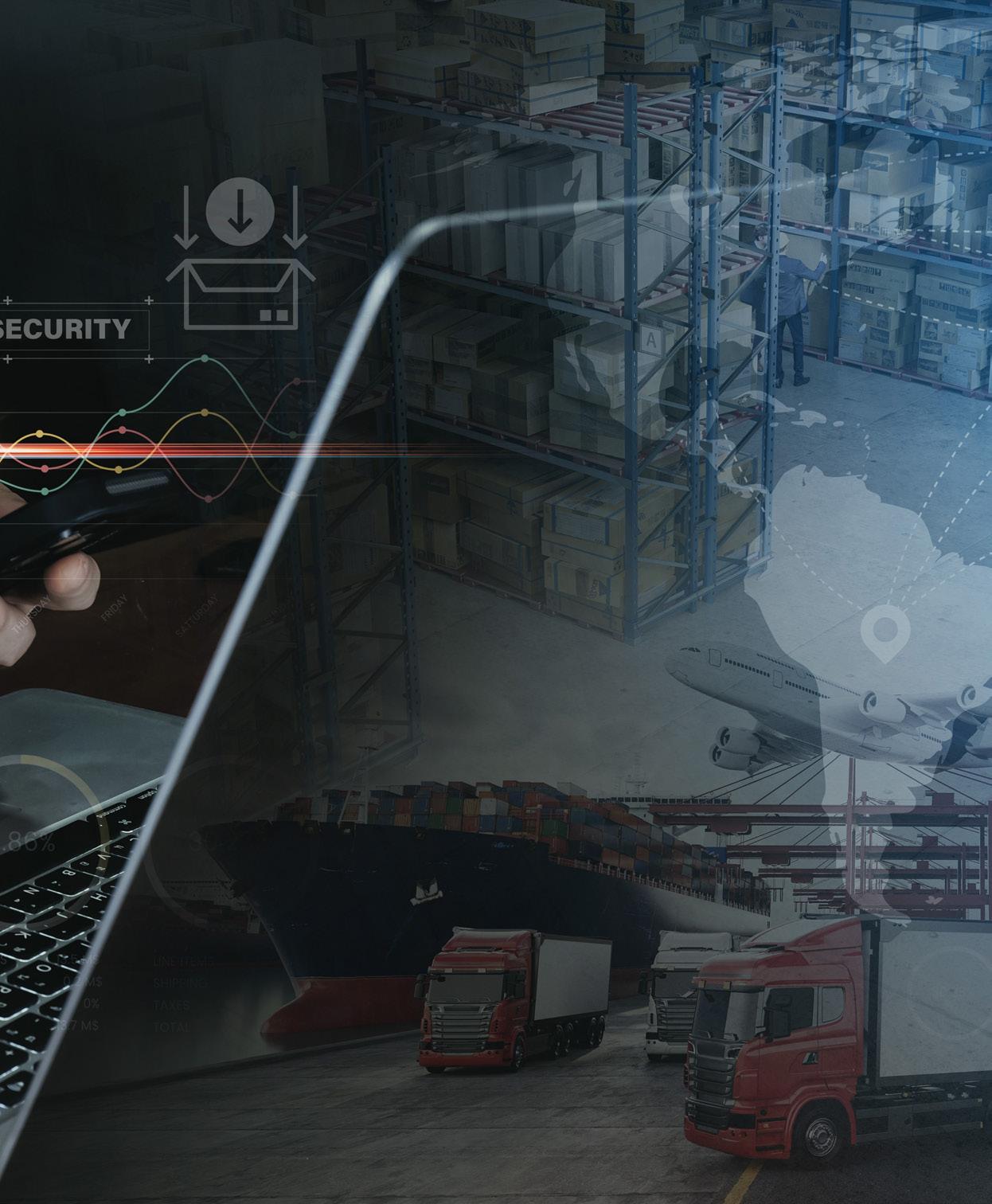
Resilience isn’t built on redundancy, it’s built on relationships, real-time data, and shared intelligence. After years of disruption, enterprises are rediscovering logistics as the strategic core of competitiveness. The focus has shifted from efficiency to intelligence and adaptability—where data, design, and collaboration define success. Across industries, leading manufacturers, retailers, and e-commerce players are building predictive, demand-driven networks that integrate planning, production, and delivery. Logistics has evolved from a back-end enabler to a frontline differentiator shaping agility, visibility, and customer trust.
User industries are taking the lead—embedding foresight into every decision, investing in digital control towers, scenario planning, and sustainability metrics that turn uncertainty into advantage. The emerging logistics model is not a chain but a living ecosystem—connected, transparent, and continuous learning. As enterprises navigate global volatility, logistics is becoming their new strategic intelligence system, linking insight with action. This Cover Section brings together voices from leading user industries to explore how logistics resilience is being redefined—from fragile to foresighted.
VOLATILITY has become the new baseline of global commerce—driven by geopolitical realignments, infrastructure gaps, labour shortages, and unpredictable demand cycles. These disruptions have exposed a fundamental truth: supply chains designed for cost efficiency and scale are ill-equipped for today’s complexity.
As a result, logistics is undergoing a structural reset—from linear, reactive models to intelligent, demanddriven networks that are dynamic, collaborative, and resilient by design.
At the centre of this transformation lies a shift in mindset. Risk is no longer an event to be managed—it is a continuous variable to be anticipated. The conversation has evolved from disruption prevention to resilience engineering, powered by real-time visibility, integrated planning, and a data-first approach.
In this new landscape, 3PLs and logistics technology providers are moving beyond transactional roles to become strategic coarchitects of resilience. Through network orchestration, automation, sustainability integration, and AIled forecasting, they are creating the infrastructure of agility and trust. Digital twins, connected warehousing, and green logistics frameworks are
redefining the foundation for business continuity and competitive advantage.
Simultaneously, user industries are rewriting the rules. Manufacturers, retailers, and e-commerce leaders are investing in intelligent demand-sensing, inventory agility, and collaborative distribution frameworks— strengthening the connective tissue of global logistics. Their expectations are changing: flexibility over capacity, insights over transactions, resilience over redundancy.
India stands at a pivotal inflection point. Structural enablers such as PM Gati Shakti, logistics cost rationalisation, multimodal integration, and digital compliance ecosystems are driving transformation at unprecedented scale. The next phase will demand deeper partnerships— where users and service providers cocreate networks that turn disruption into advantage.
This Cover Story brings together leadinguserenterprisesandtechnology innovators to decode this evolution— exploring how industries are reframing resilience, how 3PLs are transforming theirmodels,andwhereIndia’slogistics ecosystemstandsonitsjourneytoward intelligence and agility. Because the future of logistics will not be defined by how fast we move goods—but by howintelligentlywemovewithchange.
Supply chains weren’t broken by the pandemic—they were exposed. What appeared efficient under normal conditions revealed deep fragility under stress. The organizations that weathered the storm weren’t the fastest to react—they were the ones already building resilience into their systems, long before disruption arrived. This is a story of strategic foresight, not improvisation: how Tata Play restructured its supply chain in 90 days by localizing operations, accelerating digital transformation, and empowering its people—shares Anil Dalvi, Vice President –Supply Chain, Tata Play.
LEADERSHIP is measured not by reaction speed alone, but by the foresight embedded in systems, people, and decisions well before a crisis hits. The COVID-19 pandemic was a global stress test—one that exposed brittle dependencies, challenged operational norms, and demanded rapid reinvention. For organizations with complex supply chains, the stakes were existential.
The direct-to-home (DTH) broadcasting industry, reliant on hardware distribution and pan-India logistics, faced a unique paradox. While demand surged—driven by millions confined to their homes—supply chains buckled under lockdowns, border closures, and global shipping paralysis. The challenge was not just to deliver—it was to deliver everywhere, without delay, and without compromise.
At Tata Play, we didn’t wait to react. We had already laid the groundwork for resilience. When the moment came, we activated it. Three pillars made the difference: Localization, Digital Transformation, and Workforce Capability.
Global supply chains, while cost-efficient, are inherently fragile. Long lead times, geopolitical dependencies, and limited visibility across tiers make them vulnerable to disruption. In our sector, the set-top box is the core product—its chipset alone can have a lead time of up to 12 months. Prior to the pandemic, we sourced these boxes from contract manufacturers in Thailand and Vietnam, with components flowing through a multi-layered import pipeline.
Recognizing the strategic risk of
such dependencies, we had already initiated a localization program. We began onboarding OEM partners to manufacture domestically—not just to reduce costs, but to shorten lead times and build resilience.
When the pandemic hit, this foresight became a lifeline. Within three months, we transitioned our entire set-top box supply to domestic production facilities in Chennai. There was no time for pilots or phased rollouts—production was activated immediately. By July 2020, global sourcing had been replaced with local supply, ensuring uninterrupted service across India.
Technology is often treated as a postcrisis enabler. But in our case, digital transformation was already underway— across procurement, operations, and logistics. The pandemic didn’t initiate it; it accelerated it.
We deployed artificial intelligence to optimize distribution networks, reverse logistics, and warehouse-to-partner movements. Static planning models were replaced with real-time consumption data, enabling dynamic inventory allocation across geographies.
This shift was critical. With demand surging and physical movement restricted, traditional forecasting methods were inadequate. We moved from four-week planning cycles to realtime responsiveness, ensuring that every region—from Leh-Ladakh to Kanyakumari—had the inventory it needed.
The result was not just continuity—it was agility. While competitors struggled with bottlenecks, our supply chain

adapted in real time, absorbing demand spikes and logistical constraints without compromising customer experience.
Technology and localization are powerful, but they require skilled execution. The third pillar of our resilience was our workforce—distributed, trained, and empowered long before the crisis emerged.
Our supply chain teams across India were already operating with autonomy and digital fluency. Their ability to coordinate remotely, troubleshoot locally, and respond quickly wasn’t built during the pandemic—it was embedded in our culture.
This readiness enabled us to maintain pan-India operations without pause. While vehicles were grounded and borders shut, our teams ensured that no
customer request went unfulfilled due to lack of material. Their performance wasn’t reactive—it was anticipatory.
Leadership, in this context, wasn’t about issuing directives. It was about having built the systems, skills, and trust that allowed decentralized teams to act decisively.
The transformation wasn’t temporary. It redefined the organization’s operating model:
w Localization increased from 70% to 99%. Nearly all products are now sourced domestically, with only a few exceptions for quality-specific imports.
w New supplier ecosystems were developed, reducing exposure to geopolitical and logistical risks.
w Digital tools became central to planning, execution, and decisionmaking—enhancing visibility and responsiveness.
w Workforce capability was elevated, with skill upgrades continuing postpandemic to deepen resilience.
These outcomes weren’t just operational wins—they were strategic differentiators. They enabled the organization to serve customers better, faster, and more reliably than competitors during a period of extreme volatility.
A third-party logistics partnership reaches its full potential when the provider operates with true ownership—
treating your business objectives as their own. Logistics outsourcing isn’t merely transactional; it’s a strategic alliance. You’re not just hiring executors— you’re engaging domain experts who should bring cross-industry intelligence, operational benchmarks, and forwardlooking innovations that strengthen your supply chain.
The most effective partners don’t wait for instructions. They anticipate needs, challenge assumptions, and proactively recommend ways to enhance cost efficiency, agility, and customer experience. What sets them apart isn’t just capability—it’s intent. The real differentiator is their commitment to creating value, not just generating revenue.
The ideal logistics partner grows in lockstep with your business, aligning their success metrics with yours. When that happens, logistics becomes more than a support function—it becomes a competitive advantage.
From my experience spanning over two decades and multiple 3PL engagements, I’ve rarely found myself relying on a logistics partner’s proprietary technology. There are two key reasons for this.
First, our technology needs are highly specific to our business model. The tools and platforms we deploy are carefully selected to align with our operational nuances. A 3PL’s off-theshelf solutions often don’t meet these tailored requirements.
Second, our technology landscape is constantly evolving. We frequently update our systems to stay ahead, and it’s unrealistic to expect every 3PL to
match that pace or pivot their tech stack accordingly. Instead, we prioritize partners who bring operational excellence, process efficiency, and a commitment to continuous improvement.
In our model, technology is a client-driven asset. The 3PL’s role is to integrate with our systems and enhance execution—not to dictate the digital framework.
For us, the implementation of artificial intelligence has been a true game-changer in operational efficiency. Over the past four years, AI-driven optimization has reduced freight costs from ₹40 crore to ₹25 crore — a substantial saving of ₹15 crore. This achievement goes far beyond the numbers; it reflects the transformative impact of AI on core logistics processes. By enabling smarter routing, predictive load planning, and real-time decision-making based on vast datasets, AI has helped optimize fleet utilization, reduce idle time, and improve overall network efficiency.
Beyond cost savings, AI has strengthened service reliability by anticipating demand fluctuations and adjusting operations proactively. It allows us to identify bottlenecks before they escalate, optimize transport networks dynamically, and make databacked operational decisions that were previously impossible at scale.
What excites me most is the continued evolution of AI in the logistics space. As it becomes more embedded into day-to-day workflows, we’re not merely automating routine tasks — we’re unlocking predictive intelligence that enables smarter planning, faster responses, and more agile supply chains. This ongoing
Resilience isn’t built in the moment—it’s embedded in your design. At Tata Play, we didn’t wait for disruption to force change. We had already invested
in localization,
digital transformation, and team capability. When the crisis hit, we didn’t scramble—we executed. That’s the difference between reacting and being ready. Strategic foresight isn’t optional
anymore—it’s the foundation for operational agility in a world where uncertainty is constant.
evolution promises to transform logistics from a reactive function into a highly strategic capability, creating measurable value across both operational efficiency and customer satisfaction.
The pandemic exposed a fundamental truth: resilience is not built in crisis— it is revealed by it. Organizations that had invested in localization, digital infrastructure, and workforce capability didn’t just survive—they thrived.
For leaders, the implications are clear:
w Resilience is a strategic investment, not a reactive fix. It must be embedded in supply chain design, technology architecture, and talent development.
w Localization is more than a cost lever—it’s a control lever. Shorter lead times, domestic partnerships, and reduced dependency on imports create agility and reduce systemic risk.
w Digital transformation must be operational, not ornamental. Realtime data, AI-driven planning, and integrated platforms are essential for responsiveness and scale.
w People are the ultimate differentiator. Skilled, distributed teams with decision-making autonomy can sustain operations even when central systems are disrupted.
w Leadership is about readiness, not rhetoric. The best leaders prepare their organizations to act before the crisis arrives—not after.
As supply chains face new disruptions— from climate events to geopolitical shifts—the lessons of 2020 remain urgent. Organizations must continue to invest in resilience, not as a defensive posture, but as a strategic advantage.
The future belongs to those who build systems that flex, teams that adapt, and strategies that anticipate. Because when the next disruption arrives—and it will—success won’t be defined by who reacts fastest. It will be defined by who was ready all along.
As Vice President – Supply Chain, CEAT Ltd., Vinod Kumar, has seen firsthand how visibility, flexibility, and strong controls are a must-have for resilience in operations. “Resilience, in my view, is not a single trait—it’s a dynamic capability built on three foundational traits: Readiness, Response, and Recovery. The pandemic was an unexpected testing ground for us on all the three. We got the benefits of being ready and prepared — through systems & processes for enhanced visibility, flexibility and adequate controls — which gave us the agility needed to respond swiftly and recover efficiently.”
CEAT operates with a centralized control tower that gives us end-to-end visibility across our logistics network. The logistics team can see where every vehicle is, how many stops it has made, what route it took, and what route would have been more optimal. This isn’t just about tracking— it’s about intelligence. We’ve extended this digitalization beyond logistics into other processes within the operations as well.
Visibility has become a strategic enabler, not just an operational tool. It empowers decision-making, reduces uncertainty, and enhances our ability to
respond in real time. In today’s volatile environment, that’s not a luxury—it’s a necessity.
Visibility alon e isn’t enough. Flexibility is its essential counterpart. Having robust vendor partnerships and thought through practical business continuity plans are key to navigating challenges with flexibility and dexterity. The key is to retain a mindset of “when disruption happens” rather than “if disruption happens”.

Resilience isn’t built in the moment of crisis—it’s built in the moments before. At CEAT, we’ve learned that readiness enables agility in response; visibility and flexibility with the appropriate controls in-place ensure faster recovery. These aren’t just operational principles—they’re leadership imperatives for a volatile world.
The third pillar of our resilience strategy is control—not in the sense of rigidity, but in the sense of disciplined execution. Policy decisions, especially those related to compliance, risk management, and operational standards, are implemented in spirit, not just in letter. This means creating alignment across teams, embedding accountability into processes, and ensuring that our systems support consistent execution.
The idea of value addition in logistics demands strategic collaboration. Cost reduction in the Indian logistics sector is often viewed from an efficiency lens, which is just one lever. Strategic collaboration and operational innovation offer more sustainable paths to lowering costs without compromising service quality.
Logistics players have the potential to evolve into dynamic marketplaces, where multiple non-competing corporates could collaborate along with vendor partners to create value. That, in essence, is the future we should be shaping—one built on trust, efficiency, and shared prosperity.
Most companies today already have robust ERP or supply chain planning & execution platforms in place. What we need from our logistics partners is not a new tech stack, but the ability to integrate seamlessly with ours and scale in sync with our growth. Technology brought in isolation—without alignment to our systems—can become a burden rather than a benefit.
At CEAT, we prefer to have our partners to integrate into our digital

platforms. This ensures a unified reporting structure, streamlined governance, and a more cohesive operational rhythm. Technology should add value—not friction. The best 3PLs understand this and prioritize this alignment.
Machine learning is already reshaping how we make decisions across our supply chain. By analyzing historical data and real-time operational inputs, it helps us identify patterns, anticipate demand fluctuations, and finetune our response. It allows us to act proactively rather than reactively, enhancing both efficiency and service reliability.
The convergence of AI, machine learning, and autonomous systems points to a future where logistics is faster,
safer, and exponentially smarter. For us, this isn’t just exciting; it represents a transformative opportunity to rethink traditional supply chain models and create a new standard of operational excellence.
Resilience is what allows organizations to navigate uncertainty, seize opportunities, and lead through change. At CEAT, we’ve built resilience through visibility, flexibility, and control. And we’ve worked on evolving on this key attribute through empowered teams who are informed, aligned, and committed. Meanwhile the reality is that disruptions will continue— whether from technology, geopolitics, climate, or market dynamics. What matters is how we prepare for them, how we respond when they hit, and how quickly we recover.
In today’s volatile global environment, supply chain leadership is no longer about efficiency alone—it’s about Resilience, Responsiveness, and Foresight. Pavan Maloo, Head – Supply Chain Management and Digital, VoltasBeko, has led the company through some of the toughest years—pandemic disruptions, crises, and fast-changing rules. His leadership has turned a young organization into an agile, locally rooted, and digitally enabled operation. His approach combines cross-functional understanding, quick decision-making, and a strong belief in agility.
AGILITY isn’t just a buzzword—it is essential for leadership. For me, leading supply chain and digital transformation at VoltasBeko means moving fast and staying clear-headed. Before I ever stepped into a supply chain role, I was closest to the customer. My career began in sales, where I spent four years understanding demand not through dashboards, but through direct conversations. That shaped my belief: demand is not a forecast—it is a signal. And the closer you stay to it, the better you can respond.
Sales taught me to respond quickly. Strategy taught me how to scale that speed. After my time in sales, I moved into strategic roles where I led SAP deployments, procurement, and P&L. This wide exposure shapes the way I lead today. I don’t see supply chain as a separate function—rather, it is a key driver of business continuity and growth. Every supply chain decision affects other functions – finance, customer experience, product, and operations. My job is to connect these areas, not optimize them in isolation. That is why I focus on alignment, team empowerment, and building agility into the way we work.
When we launched our factory in January 2020, the timing couldn’t have been more challenging. Within two months, the pandemic struck. For a company incorporated in 2017 and operational since 2018, this was a defining moment.
We didn’t stall—we accelerated. We had already planned to localize our supply chain, but COVID-19 pushed us to execute rapidly. Earlier, 40–50% of raw materials were imported. Today it is down to 20–25%. Finished goods imports dropped from 95% to less than 5%.
This change wasn’t just operational— it was cultural. We empowered teams, made quick decisions, and worked with urgency. Being a young organization helped. With fewer layers of bureaucracy, we could pivot fast. We rebuilt supplier partnerships, redesigned warehousing and distribution, and used digital tools for better visibility.
The pandemic was just the beginning. The Red Sea crisis caused by Houthi rebel attacks blocked nearly 200 containers, with no clarity on delivery timelines. While we waited, energy efficiency rules changed in the destination country, making our products non-compliant. It was a double disruption—geopolitical and regulatory.
We did not simply react—we anticipated. My leadership approach includes scenario planning, contingency building, and cross-border coordination. These skills helped again during the floods near Hyderabad, which disrupted key transport routes. This time, we were ready. Past crises had trained us. Rerouting protocols were activated, and operations continued with minimal impact.

Resilience is built during a crisis, not calm periods. It depends on people as much as systems. Planners who reroute shipments overnight, procurement teams who find new suppliers in days, warehouse staff who adapt instantly— they create agility. Technology helps, but only when teams know how to use it. We use predictive analytics, traceability tools, and real-time visibility platforms. I always remind my team: digital thinking must be integrated with operational execution; tools matter only when they lead to better decisions.
My journey across sales, strategy, and supply chain showed me how decisions in one area affect the entire organization. I lead by connecting functions so that supply chain supports customer
VoltasBeko’s agility is our strength. We reduced finished goods import dependency from 95% to under 5% in record time because we were prepared. Supply chain leadership is not about reacting to disruption—it is about anticipating it, building flexibility, and enabling teams to act fast. My cross-functional experience taught me that resilience comes from Insight, Speed, and Intent.

satisfaction and overall business resilience. I believe in systems, not silos. Leadership means enabling systems to work together—quickly, intelligently, and with purpose.
Logistics today is about momentum. A strong logistics partner understands that speed, scale, and flexibility aren’t just operational luxuries, but drivers that shape business outcomes. Consumer appliances require fast movement and quick adjustments, which can only be accomplished with the aid of our logistics partners. The best logistics partners are those who handle volume spikes, market changes, and evolving service expectations while maintaining reliability and cost control. Agility here means anticipating changes in a proactive manner instead of being reactive.
In our industry, technology offers an
edge but is not always an absolute requirement. Given the nature of our products—large, easily identifiable, and straightforward to handle, many operations can run smoothly with a standard ERP system and experienced staff. But when workforce stability is a challenge, technology becomes important. WMS and TMS improve visibility, reduce errors, and make processes more consistent. Our logistics partners perform well even without advanced systems, but digital tools do improve transparency and scale— especially when the business is growing quickly.
We recently implemented a Transport Management System (TMS) to streamline delivery operations and improve coordination across our network. But rising land and warehouse costs are pushing us toward vertical warehousing. Automated Storage and Retrieval Systems (ASRS) make better use of space
and improve throughput have proven to be key in vertical warehousing. ASRS is a future-ready investment that will help us scale efficiently by enabling a resilient, future-ready warehousing model that can scale with demand and optimize space utilization.
VoltasBeko is still evolving. Disruptions will continue, but so will our progress. My focus is on strengthening digital capabilities, supplier networks, and building a supply chain that is efficient and intelligent—one that senses, adapts, and leads.
As we scale, my role is shifting from driving agility to shaping long-term impact. Leadership means aligning every action with purpose and turning disruptions into opportunities. I aim to stay close to demand, stay connected across functions, and build a supply chain that drives the business forward.
In an era defined by disruption, from pandemics to geopolitical shocks, logistics leaders are being asked to do more than deliver. They must Anticipate, Adapt, and Accelerate. Badrinath Setlur, CEO – Pando.ai, TMS Business, shares a candid, customer-centric view of how intelligent, connected systems are reshaping logistics resilience. With decades of experience and a sharp eye on business outcomes, he offers a grounded, yet visionary take on what it means to lead through volatility.
RESILIENCE in logistics is no longer a reactive capability, it’s a strategic imperative. The volatility we’ve seen in recent years isn’t an anomaly; it’s the new operating environment. As leaders, we must shift from asking “what went wrong?” to “how fast can we respond?” Intelligent logistics infrastructure is no longer a support function, it’s the backbone of agility and value creation. At Pando, we’ve made it our mission to turn disruption into datadriven opportunity. We don’t just digitize logistics, we make it intelligent, adaptive, and measurable.
I’ve spent over three decades in logistics, wearing many hats, from operations to consulting to technology. But today, I speak through the lens of my customers. At Pando, we’re a logistics tech provider focused on making logistics happen — not just digitizing it, but transforming it into a responsive, intelligent system. Our platform is built to learn. It’s iterative, adaptive, and industryagnostic. Whether we’re working with an FMCG giant managing volatile demand, an automotive leader navigating supplier complexity, or a chemical company optimizing compliance and cost — we don’t offer a one-size-fits-all solution. We offer a product that evolves with each engagement. The brilliance isn’t in me as a consultant, it’s in the product. Powered by AI and machine learning, it absorbs operational nuance and converts it into scalable intelligence. When we optimize for Johnson & Johnson, we learn. When we solve for Castrol, we learn again. That’s how resilience is built, not by guessing
the next disruption but by preparing to respond to any.
In logistics, what you can’t see can hurt you. Visibility isn’t just about tracking, it’s about control, accountability, and speed. Our platform acts as a control tower, offering real-time insights into shipments, dock operations, transit delays, and vendor performance. This isn’t just operational hygiene, it’s strategic leverage. With Pando, customers can identify inefficiencies, benchmark performance, and act in real time. Visibility reduces friction, accelerates decisions, and builds trust across the value chain. In today’s environment, that’s not optional, it’s essential.
While no software can predict the next pandemic or geopolitical shift, we can help customers anticipate risk within their own operations. Predictability, in our view, is about surfacing patterns and anomalies that would otherwise go unnoticed. For example, when a customer’s vendor costs rise despite increased volumes, that’s a signal. Our platform flags it, contextualizes it, and enables action. These insights aren’t just helpful, they’re transformative. They allow supply chain leaders to move from reactive firefighting to proactive strategy. Predictability also means scenario planning. What happens if a key lane is disrupted? What if demand spikes in a region with limited capacity? With Pando, customers can simulate outcomes, test responses, and build contingency plans. That’s not just resilience, it’s readiness.

Every technology investment must prove its worth. At Pando, we start by establishing a baseline using one to three years of shipment data to understand where the business stands. Postimplementation, we measure impact in hard numbers. Whether it’s 8–10% savings in freight spend or procurement optimization across 800 lanes, we make the value visible. One client expanded from managing 10 transporters to 8,000. With our simulation tools, they processed RFP data in hours, not weeks. That’s not just efficiency. That’s strategic acceleration.
We don’t just say “trust us.” We say “test us.” Our platform delivers quantifiable ROI: on cost, speed, compliance, and customer satisfaction. And we make those metrics transparent, so our customers can track progress and share success.

Resilience isn’t built in isolation. The most forward-thinking enterprises learn from others across sectors, geographies, and technologies. We encourage our customers to engage with podcasts, float RFPs, and explore emerging AI solutions. This cross-pollination of ideas fuels innovation. It helps companies avoid blind spots and discover new efficiencies. At Pando, we see ourselves not just as a vendor, but as a learning partner helping customers evolve by connecting them to broader ecosystems of insight.
We’ve seen customers gain breakthrough ideas by studying industries outside their own. An automotive company learning from FMCG’s demand agility. A pharma leader adopting procurement strategy from chemicals. That’s the kind of learning that builds resilience, not just for today but for what’s next.
As technology providers, we’ve seen
firsthand how innovations like digital twins, IoT, and blockchain are reshaping logistics ecosystems. These tools allow our clients to simulate supply chain scenarios, monitor operations in real time, and secure transactional integrity across complex networks. They’re not just digital enhancements, they’re foundational enablers of smarter, more resilient logistics. Among these, machine learning has delivered the most immediate impact. By continuously analyzing operational data, our platforms help clients uncover patterns, optimize workflows, and apply insights at scale. It’s a shift from static systems to adaptive intelligence where every transaction becomes a learning opportunity.
Looking ahead, artificial intelligence is the most transformative force. We view it as the electricity of modern enterprise: pervasive, invisible, and essential. From smart routing to predictive insights, AI is already embedded in daily logistics workflows. But the next leap is agentic AI: systems that not only learn but act autonomously, with contextual awareness and decision-making capabilities. That’s the frontier we’re building toward where logistics platforms don’t just support
We don’t just say ‘Trust Us.’ We say ‘Test Us.’ Pando delivers quantifiable ROI on cost, speed, compliance, and customer satisfaction. We’re not just supporting logistics anymore, we’re teaching it to think, adapt, and orchestrate.
operations, they intelligently orchestrate them. It’s an exciting time to be building what powers the next generation of supply chains.
Technology is only as powerful as the mindset behind it. At Pando, we don’t claim to predict the future, we build for it. Our platform learns, adapts, and evolves. And as leaders, we must do the same. Resilience isn’t a feature, it’s a philosophy. It’s about listening to data, learning from disruption, and leading with clarity. Logistics isn’t just about moving goods. It’s about moving forward, with intelligence and purpose. In a world where volatility is constant, resilience is no longer optional. It’s the new competitive advantage. And intelligence-led orchestration platforms are how we build it, together.
In a world where disruption is the new normal, Mohandas Menon, a veteran Contract Logistics Strategist, argues it’s time to retire the term ‘Supply Chain’. With over 30 years of experience, he champions a shift toward ‘Demand Chains’ — dynamic systems driven by consumer expectations. In this article, he explores India’s logistics evolution, the strategic edge of resilience over agility, and why collaboration is true currency of progress.
The Chain Has Always Moved — But Never Like This… I’ve always believed that supply chains are, by nature, in motion. They’ve never been static. But what’s changed in recent years is the magnitude of that motion. The pace of change, the intensity of uncertainty, and the unpredictability of disruption have all accelerated. We’re no longer dealing with occasional shocks — we’re operating in a state of continuous volatility.
That’s why I believe it’s time to rethink the very language we use. “Supply chain” suggests a linear, upstream-to-downstream flow. But in today’s world, there’s no such thing as a supply push. Every action — from sourcing to production to delivery — is triggered by demand. The consumer is the starting point. What we’re really managing are demand chains: dynamic, responsive systems built around evolving expectations of speed, personalization, and convenience.
Before 2020, logistics was often seen as a back-office function — critical, yes, but rarely discussed at the highest levels. Then came the pandemic. Suddenly, supply chains were front-page news. Boardrooms were talking about port congestion, container shortages, and last-mile delivery challenges.
I often say that just as we humans received vaccines, global supply chains got their first “resilience vaccine.” We learned to expect disruption and build buffers. But the world didn’t stop throwing curveballs. From geopolitical
tensions to climate shocks, the need for resilience has only grown. We now need booster doses — not just to survive, but to thrive.
The real test of a strong economy isn’t whether disruptions occur — they always will. It’s how quickly and intelligently we recover from them.
India’s logistics landscape has transformed dramatically in the past decade. The introduction of GST was a turning point. It removed the distortions of tax-based warehousing and allowed companies to design networks based on speed-to-market and cost-to-market — not compliance.
Then came the PM Gati Shakti master plan, which brought a new level of structural integration. By focusing on multimodal connectivity — road, rail, coastal, and inland — we’re building a logistics backbone that’s not just faster, but smarter.
We’re no longer just trying to move goods quickly. We’re designing systems that are intelligent, adaptive, and efficient. India is finally moving from being fast to being smart — and that’s a game-changer.
According to the World Bank’s 2023 Logistics Performance Index, India ranks 38th out of 139 countries, with a score of 3.4. A score of 3.6 would place us in the “logistics-friendly” category. That may

seem like a small gap, but in reality, it represents a massive opportunity.
Imagine the transformation when a country of 1.4 billion educated, ambitious people become not just the fastest-growing economy, but one of the most logistics-efficient. That’s not just a national milestone — it’s a global shift. I believe that transformation is already underway, and it’s giving a few global competitors sleepless nights.
There’s a lot of talk about agility in our industry — and rightly so. Agility helps us respond quickly to change. But agility is tactical. Resilience is strategic.
Resilience is about long-term readiness. It’s the structural immunity
Resilience isn’t engineered in spreadsheets — it’s cultivated in boardrooms and on factory floors. It demands a mindset that accepts uncertainty as a constant and agility as a habit. Leaders who recognize this don’t react to change — they anticipate it, design for it, and empower teams to thrive through it. In today’s interconnected world, supply chain excellence cannot be achieved in isolation — it thrives on shared visibility, data transparency, and collective accountability.
of a system. It’s what allows us to absorb shocks, adapt, and emerge stronger. Even globalization, once celebrated for its efficiency, is being reimagined. Nearshoring and onshoring are back in the conversation. We’re not abandoning global networks — we’re redesigning them to be more regional, more adaptive, and more resilient.
Resilience isn’t something you engineer in a spreadsheet. It’s something you cultivate — in boardrooms, on factory floors, and across ecosystems. It’s a mindset that accepts uncertainty as a constant and treats agility as a habit.
As someone who’s worked across industries and continents, I’ve seen one truth play out again and again: no company can achieve logistics excellence alone. Collaboration isn’t a strategy — it’s a lifeline.
Shared visibility, data transparency, and collective accountability are the new pillars of performance. That means breaking down silos — not just within organizations, but across entire value chains. It means treating partners not as vendors, but as extensions of your own operation. In logistics, isolation is inefficiency. Excellence thrives in networks. And in an age of disruption, our collective resilience will determine how far and how fast we progress.
If we accept that disruption is here to stay, then we must design for it. That
means building systems that are not just efficient, but elastic. It means investing in predictive analytics, digital twins, and scenario planning. It means empowering teams to make decisions at the edge — not just at headquarters.
It also means rethinking how we measure success. Are we rewarding speed at the expense of sustainability? Are we optimizing for cost while ignoring risk? Are we designing for the next disruption — or still reacting to the last one?
These are the questions I believe every logistics leader must ask — and answer — today.
While we’ve made great strides in digitization, I believe the most exciting technological breakthroughs are still ahead of us.
Artificial intelligence will evolve from forecasting tools to autonomous decision-makers. Blockchain will bring tamper-proof traceability to global networks. Robotics and automation will redefine warehouse operations, while drones and autonomous vehicles will revolutionize last-mile delivery.
The Internet of Things will create hyper-connected ecosystems, enabling real-time visibility and proactive intervention. Advanced analytics will allow us to simulate disruptions before they happen — and design smarter responses.
These technologies aren’t just tools. They’re enablers of a new logistics paradigm — one that’s intelligent, adaptive, and resilient by design.
Looking ahead, I’m optimistic. By 2030, I believe India won’t just be a logistics hub — it will be a resilience benchmark. A nation that turned complexity into capability, and agility into advantage. This transformation won’t be driven by infrastructure alone. It will be powered by leadership — by those who embrace uncertainty, foster collaboration, and design systems that thrive in disruption. Ultimately, resilience begins with leadership. It’s not just about strategy or systems — it’s about mindset. Leaders must be willing to challenge legacy thinking, empower cross-functional teams, and embed adaptability into every layer of the organization. In logistics, where the unexpected is routine, leadership must be anticipatory, not reactive.
We need leaders who see volatility as a design principle, not a threat. Who prioritize shared accountability over isolated excellence. Who understand that resilience isn’t a destination — it’s a discipline. As we move into an era defined by demand chains, digital ecosystems, and global interdependence, leadership will be the true differentiator. And I believe India is cultivating exactly that kind of leadership — bold, collaborative, and ready for whatever comes next.
In the end, resilience isn’t just a corporate goal. It’s a shared mindset — one that unites boardrooms and shop floors alike, and one that will define the next era of global logistics.
In a business landscape defined by speed, scarcity, and continuous reinvention, the old playbooks no longer hold. Startups offer velocity, experimentation, and a bias for action; large enterprises bring scale, governance, and the ability to turn ideas into real impact. The future will belong to those who can bridge these two worlds with clarity of purpose and disciplined innovation. In this conversation, Akhil Srivastava, Senior Director – International Supply Chain, New Business Development & Innovation, ABInBev, unpacks how collaboration can become a true engine of value creation, why India is rapidly emerging as the world’s talent and capability hub for supply chains, and what kind of leadership mindset is required in an era where technology, sustainability, and values converge to redefine the very architecture of business.
Where Agility Meets Scale: The New Architecture of Innovation
In a business landscape defined by speed, scarcity, and continuous reinvention, the old playbooks no longer hold. Startups offer velocity, experimentation, and a bias for action; large enterprises bring scale, governance, and the ability to turn ideas into real impact. The future will belong to those who can bridge these two worlds with clarity of purpose and disciplined innovation. In this conversation, Akhil Srivastava, Senior Director – International Supply Chain, New Business Development & Innovation, ABInBev, unpacks how collaboration can become a true engine of value creation, why India is rapidly emerging as the world’s talent and capability hub for supply chains, and what kind of leadership mindset is required in an era where technology, sustainability, and values converge to redefine the very architecture of business.
As global supply chains undergo structural change, what shifts do you believe will redefine competitiveness over the next decade?
The most transformative shift will centre on people and leadership. As AI, ML, and even quantum technologies move from experimental to foundational, supply chain leaders will have to fundamentally rewire how they think. The traditional approach of driving performance through KPIs and backward-looking metrics will give way to a scenario-based, anticipatory mindset—one that evaluates capability, risk, and service through a dynamic, systems-wide lens. The vocabulary itself will change: from Available-to-Promise to
Capable-to-Serve, where organisations balance customer expectations with constraints, opportunities, and real-time trade-offs.
As global supply chains undergo structural change, what shifts do you believe will redefine competitiveness over the next decade?
The most transformative shift will centre on people and leadership. As AI, ML, and even quantum technologies move from experimental to foundational, supply chain leaders will have to fundamentally rewire how they think. The traditional approach of driving performance through KPIs and backward-looking metrics will give way to a scenario-based, anticipatory mindset—one that evaluates capability, risk, and service through a dynamic, systems-wide lens. The vocabulary itself will change: from Available-to-Promise to Capable-to-Serve, where organisations balance customer expectations with constraints, opportunities, and real-time trade-offs.
This evolution extends to the C-suite as well. Leadership models will shift from revenue-led decision-making to optimization-led governance—where cost, service, sustainability, resilience, and speed are orchestrated together rather than managed in silos. In the decade ahead, supply chains will transition from linear, functional structures to interconnected, intelligent ecosystems powered by real-time data, predictive analytics, and adaptive networks. Competitiveness will no longer be defined by who moves goods fastest, but by who can sense, decide, and respond with the greatest precision, agility, and sustainability.


This evolution extends to the C-suite as well. Leadership models will shift from revenue-led decision-making to optimization-led governance— where cost, service, sustainability, resilience, and speed are orchestrated together rather than managed in silos. In the decade ahead, supply chains will transition from linear, functional structures to interconnected, intelligent ecosystems powered by real-time data, predictive analytics, and adaptive networks. Competitiveness will no



of working and collaborating across end-to-end business domains, in conjugation with innovative technology and systems automation by utilizing skills of change management and design thinking, has been of help in building successful and scalable businesses globally. He has been Entrepreneurial Advisor for Tufts School, Jury with Celerity, a


(more digital, interconnected and customer/consumer
Among the technologies you’ve worked with, which have truly moved the needle for end-to-end visibility, collaboration, or cost optimization?
This leads to pilots that look promising in isolation but fail to integrate into the operating core.
Several technologies show strong promise today, but AI—and soon, quantum-enabled tools—are decisively reshaping the landscape. What makes AI uniquely transformative is not just better algorithms, but the extraordinary surge in computational power behind them. Over the past decade, the compute required to train leading AI models has grown exponentially, increasing by several orders of magnitude. This has allowed models to process far larger datasets, learn with exceptional accuracy, and generate insights at speeds that were unthinkable a few years ago.
In an environment where disruption is the new normal, how do you balance short-term adaptability with long-term strategic resilience?
longer be defined by who moves goods fastest, but by who can sense, decide, and respond with the greatest precision, agility, and sustainability.
The traditional SCOR model—Plan, Source, Make, Deliver, and Return—is itself undergoing a reinvention. New technology providers and consulting players are accelerating a shift from inside-out supply chain thinking (driven by internal efficiencies) to outside-in thinking (driven by customer behaviour, market signals, and ecosystem dynamics). In this new context, adaptability is no longer a differentiator; it becomes the baseline expectation.
In an environment where disruption is the new normal, how do you balance short-term adaptability with long-term strategic resilience?
The traditional SCOR model—Plan, Source, Make, Deliver, and Return—is itself undergoing a reinvention. New technology providers and consulting players are accelerating a shift from inside-out supply chain thinking (driven by internal efficiencies) to outside-in thinking (driven by customer behaviour, market signals, and ecosystem dynamics). In this new context, adaptability is no longer a differentiator; it becomes the baseline expectation.
empowering talent to make informed, strategic decisions. Over time, resilient supply chains will be built on integrated technology stacks that place agility, automation, transparency, advanced analytics, and centralized orchestration at the core of organizational strategy. The future belongs to enterprises that can pivot rapidly in the short term while simultaneously building the structural intelligence required to thrive in a permanently volatile world.
How do you ensure that innovation moves beyond pilots and becomes embedded in core business operations?
Balancing immediate agility with long-term resilience requires reimagining organizational structures. Companies must blend technology with human capability—using digital tools to sense disruption quickly while

This computational leap is the fundamental reason AI systems improve so rapidly. Training cycles that once took years now take months; refinement cycles that took months now take weeks. As a result, AI-powered planning platforms, visibility layers, and decision-intelligence engines can now sense disruptions earlier, run richer scenario simulations, and optimize trade-offs across cost, service, and risk in real time.
For supply chains, this means a structural shift—from reactive, KPI-based execution to predictive, scenario-based orchestration. As quantum capabilities mature, they will further accelerate optimization at scale, solving complex network problems in seconds rather than hours. Together, AI and quantum technologies are moving the needle more than any other innovation, enabling organizations to improve visibility, enhance cross-
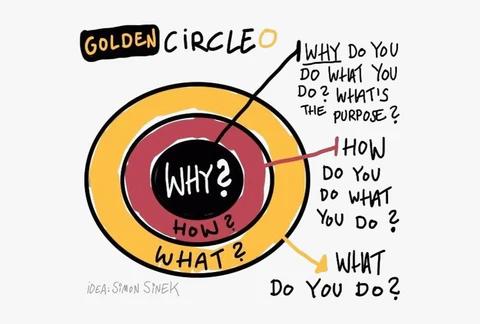
The real pivot point is the why— Why is this innovation necessary? What customer friction, strategic gap or future opportunity does it address? When the organisation aligns around a clear, compelling “why,” the “what” and “how” naturally follow as execution outcomes, not decision starting points.
Balancing immediate agility with long-term resilience requires reimagining organizational structures. Companies must blend technology with human capability— using digital tools to sense disruption quickly while empowering talent to make informed, strategic decisions. Over time, resilient supply chains will be built on integrated technology stacks that place agility, automation, transparency, advanced analytics, and centralized orchestration at the core of organizational strategy. The future belongs to enterprises that can pivot rapidly in the short term while simultaneously building the structural intelligence required to thrive in a permanently volatile world.
For innovation to truly scale, organisations must begin with deep understanding—of customer needs (both expressed and latent), of the organisation’s purpose, and of the product’s full life cycle, including competitive dynamics. Too often, companies focus prematurely on the what and the how: What should we innovate? How do we scale it profitably?

Embedding innovation into the business requires treating it not as an experiment but as a strategic capability— anchored in purpose, validated by customer insight, measured through full life cycle impact, and reinforced by leadership commitment. When these elements converge, innovation transitions from pilot to practice, and from isolated success to profitable, sustainable scale.
Among the technologies you’ve worked with, which have truly moved the needle for end-to-end visibility, collaboration, or cost optimization?
Several technologies show strong promise today, but AI—and soon, quantum-enabled tools—are decisively reshaping the landscape. What makes



Balancing immediate agility with long-term resilience requires reimagining organizational structures. Companies must blend technology with human capability—using digital tools to sense disruption quickly while empowering talent to make informed, strategic decisions. Over time, resilient supply chains will be built on integrated technology stacks that place agility, automation, transparency, advanced analytics, and centralized orchestration at the core of organizational strategy.
AI uniquely transformative is not just better algorithms, but the extraordinary surge in computational power behind them. Over the past decade, the compute required to train leading AI models has grown exponentially, increasing by several orders of magnitude. This has allowed models to process far larger datasets, learn with exceptional accuracy, and generate insights at speeds that were unthinkable a few years ago.
This computational leap is the fundamental reason AI systems improve so rapidly. Training cycles that once took years now take months; refinement cycles that took months now take weeks. As a result, AI-powered planning platforms, visibility layers, and decision-intelligence engines can now sense disruptions earlier, run richer scenario simulations, and optimize trade-offs across cost, service, and risk in real time.
For supply chains, this means a structural shift—from reactive, KPIbased execution to predictive, scenariobased orchestration. As quantum capabilities mature, they will further accelerate optimization at scale, solving complex network problems in seconds rather than hours. Together, AI and quantum technologies are moving the needle more than any other innovation, enabling organizations to improve visibility, enhance cross-functional collaboration, and unlock meaningful cost efficiencies across the end-to-end value chain.
How do you translate design-thinking principles into tangible operational improvements at scale?
The heart of design thinking lies in its bias for action: move fast, test early, and iterate relentlessly. Applying this in operations means starting with a Minimum Viable Product, validating assumptions quickly,
and refining solutions based on real user behaviour. The ‘Fail Fast’ mindset isn’t about failure—it’s about accelerating learning cycles and reducing the cost of experimentation.
The real engine of impact, however, is EMPATHY. Deeply understanding user stories, frontline constraints, and operational pain points becomes the most critical control point. When teams continuously iterate and test with real users—from planners to plant operators to logistics partners—they co-create solutions that are intuitive, scalable, and genuinely transformative. This approach bridges the gap between innovation and execution, ensuring that new ideas don’t stay conceptual but translate into operational improvements at scale.
What are the most critical levers today for optimizing manufacturing and distribution networks in highgrowth, high-volatility markets?
In today’s environment, optimizing manufacturing and distribution networks requires a single, strategic foundation: a strong digital core that enables an interconnected supply chain. The more real-time intelligence an organisation has, the more responsive, productive, and profitable the network becomes.
The essential capabilities include:
Network visibility across plants, warehouses, logistics, and last mile
Extended connectivity into suppliers and customers for shared decisionmaking
Continuous learning, allowing the system to recommend optimal actions
Intelligent resource deployment, whether human or machine
Proactive operations, driven by predictive signals rather than reactive workflows
Leading organizations are weaving these capabilities into holistic networks built around:
Sensing: Detecting market, demand, and operational shifts early.
Forward Views: Generating predictive insights and managing risks proactively.
Intelligent Collaboration: Using virtual command centres for real-time decisions.
Synchronized Planning: Automating plan adjustments based on live signals.
Immersive Visualization: Turning enterprise data into interactive, actionable environments.
Cognitive Optimization: Enhancing network decisions using AI and advanced analytics.
Intelligent Pricing: Leveraging cost-toserve visibility to optimise margins.
Dynamic Fulfilment: Reallocating inventory and shipments based on demand and risk.
Robotics & Automation: Improving speed and accuracy across planning, logistics, and warehouse operations.
Collaborative Ecosystems: Integrating
the change matters and how it advances the organisation’s purpose. As Gandhi said, “Be the change you want to see”—and in the digital era, this means fostering a culture where people are empowered, informed, and aligned to drive transformation from within. The future supply chain will be built not only on AI, data, and automation, but on leaders who can orchestrate change with empathy, foresight, and behavioural intelligence.
60% CHANGE MANAGEMENT
30% PROCESS DEFINITION
10% TECHNOLOGY IMPLEMENTATION
What practices help build cross-functional teams that are both agile and innovation-driven?
suppliers, partners, and technology providers into a seamless digital network.
In high-growth and high-volatility markets, these capabilities turn supply chains from linear functions into intelligent, synchronized ecosystems— able to sense, respond, and optimize at the speed of change.
What new roles and skills are emerging as supply chains become increasingly digital and data-led?
As supply chains become more digital, it’s becoming clear that technology alone delivers only a small portion of the transformation value—perhaps 10%. Around 30% depends on process definition and standardization. But the remaining 60%—the true determinant of success—rests on change management.
This is why the most critical emerging role is that of a Change Leader: someone who can steer organisations through technological, cultural, and operational shifts with clarity and conviction. These leaders require a 360-degree understanding of the value chain, the ability to interpret real-time data, and the judgement to make cross-functional decisions at speed.
Beyond technical fluency, the next generation of supply chain professionals must excel in narrative economics— crafting compelling stories that help teams understand why the change matters and how it advances the organisation’s purpose. As Gandhi said, “Be the change you want to see”—and in the digital era, this means fostering a culture where people are empowered, informed, and aligned to drive transformation from within. The future supply chain will be built not only on AI, data, and automation, but on leaders who can orchestrate change with empathy, foresight, and behavioural intelligence.
What practices help build crossfunctional teams that are both agile and innovation-driven?
Agile, innovation-driven teams emerge when organisations shift their focus from what to build and how to deliver, to a deeper understanding of why the innovation matters. Purpose becomes the unifying force that aligns diverse functions around a shared outcome.
A critical enabler is a strong PMO or transformation lead who brings robust change-management capability. This role helps dismantle silos, eliminates “overthe-wall” development, and replaces it with 360-degree design thinking. By grounding the work in user stories and
real operational contexts, teams can co-develop solutions through iterative experimentation rather than linear handoffs.
The result is an organization that doesn’t just deliver projects—it builds products, experiences, and capabilities that endure. When cross-functional teams operate with clarity of purpose, a shared understanding of the user, and continuous iteration, they create innovations that stand the test of time.
How do you approach identifying and scaling new business models or adjacencies that align with long-term organizational goals?
Scaling new business models starts with a simple principle: a thousand-mile journey begins with a single step, but momentum must never slow. Organisations need to maintain consistent action, guided not only by the end vision but by alignment with their purpose—the why of their existence. A product or service is just the entry point. What truly matters is the ability to retain, grow, and evolve with the consumer over time. That is why identifying adjacencies must start with deeply understanding customer behaviour, emerging needs, and lifetime value—not just market gaps.
Every member across the extended
The
speed of change now tests a leader’s ability to recycle learning quickly, challenge the status quo, and build resilient ecosystems that can absorb disruption while continuing to innovate. In this new era, leaders succeed not by knowing all the answers but by cultivating curiosity, empowering diverse teams, and steering organizations with conviction, humility, and future-focused purpose.
As global companies rethink operating models, India is increasingly becoming the hub for global capability centers, digital command centers, and AI-led supply chain operations. The Indian approach to design thinking—grounded in resourcefulness and customer-centricity—enables organisations to co-create innovative, cost-effective, and scalable solutions. Both government and industry have a significant opportunity to double down on Indian talent and infrastructure, positioning the country as the engine of the next phase of supply chain resilience and transformation across Asia and the world.
value chain must embrace this journey with a customer-centric mindset and a commitment to continuous improvement. When the organisation is aligned around purpose, disciplined in execution, and focused on long-term value creation, new business models naturally scale in a profitable and sustainable way.
As someone who’s also engaged with startups and venture ecosystems, what qualities do you look for in founders and early-stage ventures?
The two non-negotiable traits are hunger to create value and passion anchored in purpose. If either of these fades— overshadowed by short-term priorities like chasing valuations, shareholder expectations, or the allure of a perfect hockey-stick curve—the venture is at risk of entering the “Death Valley” of startups. Founders must maintain an unwavering focus on the customer and the value they are trying to create. But they must also build a team of capable, empowered professionals who can run daily operations, allowing the founder to focus on vision, customer insight, and strategic growth. When founders lose hunger or clarity of purpose, the organization loses its customer. But when they stay committed, curious, and value-driven, they can build ventures that not only survive but scale with resilience and integrity.
How can large organizations and startups better collaborate to accelerate innovation across the value chain?
Large enterprises and startups bring complementary strengths to the table.
Startups operate with speed, minimal bureaucracy, and high adaptability, enabling them to experiment rapidly and iterate without structural constraints. Large organizations, on the other hand, offer scale, resources, deep domain expertise, and a strong network effect across the value chain.
When a proof of concept succeeds, it creates a bridge where the startup’s agility meets the enterprise’s capacity to scale. This partnership can unlock rapid, enterprise-grade innovation and create powerful success narratives. However, one caution is critical: alignment of purpose and values. If a startup’s mission, ethics, or priorities diverge from those of the enterprise, the collaboration may result in a successful POC but a failed deployment. Sustainable partnerships require cultural compatibility, shared intent, and a long-term view of what success looks like for both sides.
What role do you see India playing in shaping the next wave of supply chain transformation across Asia and beyond?
India is uniquely positioned to shape the future of global supply chains. At a time when many large economies are facing demographic decline, India offers one of the world’s largest pools of young, skilled, English-speaking, and digitally fluent talent. This workforce brings a rare combination of grit, frugality, and creative problem-solving—qualities that are essential for modern supply chain transformation.
As global companies rethink operating models, India is increasingly becoming the hub for global capability centers, digital command centers, and AI-
led supply chain operations. The Indian approach to design thinking—grounded in resourcefulness and customercentricity—enables organisations to co-create innovative, cost-effective, and scalable solutions. Both government and industry have a significant opportunity to double down on Indian talent and infrastructure, positioning the country as the engine of the next phase of supply chain resilience and transformation across Asia and the world.
How is the definition of leadership itself changing in an era where technology, sustainability, and purpose intersect?
Leadership today is being redefined around purpose, adaptability, and continual reinvention. Technology is evolving at a pace that demands leaders who can unlearn and relearn constantly, navigate uncertainty with clarity, and align teams around a shared mission. Sustainability and purpose are no longer peripheral—they are central to decision-making and long-term value creation. Modern leaders must balance performance with responsibility, ensuring that business growth is both ethically grounded and environmentally conscious.
The speed of change now tests a leader’s ability to recycle learning quickly, challenge the status quo, and build resilient ecosystems that can absorb disruption while continuing to innovate. In this new era, leaders succeed not by knowing all the answers but by cultivating curiosity, empowering diverse teams, and steering organizations with conviction, humility, and future-focused purpose.
As digital tools proliferate at unprecedented speed—from advanced planning platforms and AI/ML engines to automation suites and digital twins—leaders face a fundamental question: Which technologies will genuinely move the needle? The modern supply chain is no longer about adopting the latest system but about orchestrating a cohesive tech stack that enhances visibility, resilience, and financial performance. This Special Report examines the critical first steps organizations should take before committing to new systems, the blind spots that derail early decision-making, and the deeper ROI levers that often go unmeasured. It also unpacks the evolving realities of AI/ML adoption and the shifting relationship between digitization and automation—setting the stage for expert perspectives on What Truly Delivers Value Today.

Over the past few years, digitization and automation have dominated boardroom discussions. But how exactly have they evolved? Have they progressed hand in hand, or have they developed in isolation? Can we realistically view them as parallel streams, or must they be treated differently?
Rajat Sharma, Vice President –SCM & CX, Hamilton Housewares (Milton): I’d build on that by saying digitization is more than just an enabler—it’s a prerequisite. Unless you first translate a process into a digital model, automation cannot be meaningfully applied. Otherwise, what you’re left with is not automation but mechanization—machines that amplify human effort but remain dependent on it. Think of the difference between a worker operating a molding machine and a fully integrated CNC system. In the former, efficiency is scaled up, but the process remains human-driven. In the latter, the entire operation is digitally governed. That’s the leap digitization makes possible. So whether we’re talking about warehouses, shop floors, or production units, the sequence matters. Digitize first, then automate. Without that digital foundation, automation cannot deliver the intelligence, consistency, or scalability that businesses today demand.
Digitization and automation are not isolated journeys but interdependent stages of transformation. Digitization lays the groundwork—it converts processes, assets, and flows into structured data. Automation then builds on that foundation, adding intelligence, efficiency, and scalability. The degree to which organizations pursue each depends on their maturity, their business priorities, and above all, the ROI they seek. The sequencing may vary, the adoption curve may be uneven, but the direction is clear: digitization and automation are not parallel roads—they are two steps of the same staircase. One establishes the structure; the other helps you climb higher.
Shreyas Dhore, GM – Supply
Management Shared Services,
John Deere: I would nuance the discussion by pointing out that while digitization and automation often appear to move in parallel, in reality, there is always a
lag. Automation cannot function in a vacuum—it is entirely dependent on digitized data. Unless information is first captured, structured, and made accessible in digital form, automation cannot deliver its promise.
On the shop floor, this dependency is not always visible. When we see AMRs or ASRS systems operating, they look like they are running in perfect synchrony with the larger system. Yet behind that smooth operation lies a sequencing logic: the information has already been digitized before the automation layer can act on it.
In more complex environments such as supply chain process automation, the lag becomes far more evident. Robotic Process Automation in its earlier avatar, and even the intelligent process automation we see today, all share the same principle: automation is only as good as the digital foundation beneath it. If the data pipeline is fragmented, automation slows, stalls, or produces limited value. So while the technologies may feel concurrent, in practice digitization always sets the stage. Automation follows, adding efficiency and intelligence only once the groundwork of digitization is firmly in place.
Tannistha Ganguly, Associate Director – Supply Chain WMS (IT), Kimberly-Clark: I see automation as a subset of digitization. Digitization is the overarching framework that makes everything else possible—it enables automation, artificial intelligence, RPA, and advanced analytics. The two aren’t competing priorities; they move together, but at a pace dictated by an organization’s maturity. In our warehouses, for instance, we run ASRS systems that feed data into our ERP and WMS. Alongside this, AMRs and AGVs operate autonomously while exchanging real-time, bidirectional data with our central systems. None of this exists in isolation—digitization provides the backbone, while automation extends its value.
But the real question is: how much of each do you actually need? Sometimes a simple ASRS solution delivers enough efficiency without requiring fleets of AGVs. Similarly, not every business benefits from advanced AI-powered analytics; in many cases, basic reporting is sufficient. It always comes back to ROI. Your level of digitization and automation
should align with business needs and the value you intend to unlock, rather than chasing technology for its own sake.
When it comes to technology stacks, the choices can feel overwhelming. How should organizations think about this landscape and decide what’s right for them?
Rajat Sharma: The starting point is to recognize that no technology is inherently good or bad—each has its place. What really matters is 'HOW you choose' and the journey that decision takes. The tech stack today spans a wide spectrum: on one end you have Excel, and on the other, complex ERPs, SaaS platforms, mechanization, and even robotics. To make sense of this expanse, we classify it into four layers. The first is transaction systems—your operational backbone where activities are created, tracked, and recorded, such as ERPs or aggregation tools. On top of that sits the analytics layer, which transforms raw transaction data into insights you can actually use. Then come the decision systems, which deliver the most business value by moving from insights to action through optimizers, aggregators, or digital twins. Finally, there are action triggers, where technology meets the real world through IoT, robotics, and man–machine interactions. Now, the critical question is not just which layer to invest in, but how to sequence your choices. A common mistake is rushing to advanced decision systems without first stabilizing your transaction and analytics layers. Another is chasing “shiny” technologies that don’t align with your business needs. The smarter approach is to map your problems, place them against this four-layer framework, and then decide where the greatest value lies. In other words, don’t just ask, “What’s the best tech?”—ask instead, “What’s the right tech for where we are in our journey?”
When organizations look at technology, should they focus only on solving the immediate problem with the right tool—or is there a bigger picture to consider before investing?
Neha Singh, VP Global E2E Supply Planning Transformation, Diageo: That’s the real crux of the digital
transformation challenge. Too often, the instinct is to say: Here’s a problem, let’s find the best tool to fix it. I’ve seen this across industries and roles in operations, manufacturing, procurement, and planning. The pattern is the same: firefighting with technology. But that mindset rarely creates sustainable impact.
The smarter approach is to start with your digital architecture, not the tool. And you don’t need an expensive consultant to begin; your own team can do it if you bring the right people together. The first step is to map your taxonomy—your processes from Level 1 down to Level 5 or 6. Once that’s clear, create a capability map against it: where do we just need to be functional, where do we aim to improve, and where should we benchmark against the best in the world?
Now, once you have that map, ask the harder question: Do we really need a digital intervention here, or will process redesign suffice? Only if the answer is digital do you start looking at tools. And when you do, the choice becomes strategic: if service levels in planning are the issue, for instance, then you evaluate platforms like OMP, O9, Kinaxis, Aera, Blue Yonder etc.—but always in the context of your taxonomy and long-term digital ecosystem.
This sequencing is critical. By doing the groundwork in-house—taxonomy, capabilities, and priorities—you make sure you’re not just solving for today’s fire. You’re future-proofing. You’re asking: will this tool work with my ERP, support my digital agenda, and integrate with what’s coming next? That’s how you avoid fragmented systems and build a coherent, scalable digital foundation.
So my advice is simple: don’t start

with the tool, start with your architecture. Do the taxonomy and capability mapping first, and then go to market with clarity. That’s when technology becomes a strategic accelerator, not just a patch.
Today, supply chains operate across multiple platforms—ERPs, specialized software, and in-house tools—and most of them aren’t integrated. Before investing in new technology, should companies focus on bringing it all together? How should they approach this challenge?
Tannistha Ganguly: Absolutely. This question reflects a broader shift in mindset. It’s no longer “Do we need technology?” The question now is “How do we manage it effectively and make it truly valuable?” Companies have adopted various digital solutions over the years— from large ERP systems forming the backbone of operations, to smaller, niche software addressing specific functional needs, to highly customized in-house applications built for critical business functions. Each system has value, but if they aren’t integrated, they become silos. And silos, no matter how sophisticated, create inefficiencies, duplicate efforts, and reduce the agility of the supply chain.
The first step, from an IT perspective, is to design an integration architecture before implementing new tools. Think of it as building the digital backbone of your organization. This backbone ensures that every system— from ERP to specialized third-party software to in-house applications—can communicate seamlessly. You choose the integration methodology that suits your organization—whether MuleSoft, SAP CPI, Node.js, or another technology—
but the principle is the same: create a scalable, robust, and flexible framework before layering on more tools.
Why is this so critical? Let’s take an example: managing third-party logistics providers (3PLs). A company may work with dozens—or even hundreds—of 3PLs across geographies. Without a strong integration layer, you’d need to build hundreds of point-to-point connections to exchange operational data. Not only is this expensive and resource-intensive, it’s also extremely hard to maintain. With a well-designed integration backbone, you integrate once and scale infinitely. The same principle applies to warehouse systems, vendor platforms, and specialized analytics tools—once the backbone is in place, additional tools can plug in smoothly without creating chaos.
Integration also sets the stage for advanced digital initiatives, from predictive analytics to AI-driven decisionmaking. When systems are connected, data flows consistently, governance is easier, and insights can be trusted. Without integration, even the most advanced technologies fail to deliver impact because they are feeding off fragmented or inconsistent information.
In short, prioritize building your integration stack before investing in additional technology. It’s the foundation that enables flexibility, reduces operational complexity, and ensures that every technology investment is both strategic and scalable. Once this backbone is established, adding new capabilities— from analytics to automation—becomes far simpler, more reliable, and ultimately, more valuable for the business.
When organizations start exploring technology for their supply chains,
Every system in a supply chain has value, but without integration they become isolated islands that slow the business down. That’s why my advice is always the same: build your integration backbone first. It saves enormous time and cost by avoiding hundreds of point-to-point connections, especially when working with multiple 3PLs or warehouse systems. Once the backbone is in place, new tools connect effortlessly, data becomes reliable, and advanced capabilities—from analytics to AI—actually deliver impact. Integration is the hidden enabler that turns a tech stack into a scalable, future-ready ecosystem.

The biggest challenge isn’t choosing the right technology—it’s navigating the conflict between legacy processes, organizational habits, and the hype around AI. Leaders often feel pressured into rapid adoption, but clarity always comes from returning to the core business problem. Once that is clear, we evaluate whether the organization is truly ready in terms of process maturity, change appetite, and data quality. These readiness checks act as a strategic filter, preventing misguided investments. When they are in place, technology shifts from being a buzzword-driven purchase to a high-value enabler with measurable ROI.
what should be the initial steps?
And where do they often go wrong?
Shreyas Dhore: That’s a crucial question because it goes to the heart of how technology adoption in supply chains succeeds—or fails. Let me begin with a quick backdrop. I’ve spent over two decades in supply chain leadership roles, including 14 years at John Deere and earlier stints with General Motors and Siemens. Over this period, I’ve witnessed the tech stack evolve from basic transactional systems and spreadsheets to ERP platforms, advanced analytics, IoT, robotics, and now AI-driven decision systems. The landscape has changed dramatically, but one common mistake persists: organizations often start with the technology rather than the problem.
Too often, teams get excited about a new tool and rush to implement it, hoping it will be a silver bullet. But what I’ve consistently seen is that when you target technology first, you risk misalignment—you may end up with a solution in search of a problem. The far more sustainable approach is to begin with a problem-first mindset. Ask: What is the pain point? What challenge are we trying to solve? How does this link to the broader supply chain strategy? Only then does the choice of technology start to make sense.
To make this more practical, I rely on what I call the Four A’s Framework for Technology in Supply Chains. It’s a simple but robust way to evaluate whether a solution truly adds value.
Applicability – This is the starting gate. Is the problem worth solving, and is technology the right lever to solve it? Not every challenge requires a digital solution; some
may need process re-engineering or capability-building instead. Asking “Is it applicable?” keeps us grounded.
Affordability – Once you know the problem is real and relevant, the next question is about value. What benefits are we trying to unlock, and does the return justify the cost? Affordability isn’t only about budget—it’s about ensuring the solution delivers measurable business outcomes.
Accessibility – This is often overlooked but absolutely critical. Even the best-designed systems can fail if they aren’t usable by the people on the ground—planners, buyers, warehouse operators, inventory analysts. Technology has to be intuitive, easy to adopt, and integrated into daily workflows. Otherwise, it stays in pilot mode or becomes shelfware.
Availability – Finally, a solution must scale and sustain itself. Can it be reliably deployed across the organization? Will it continue to deliver value once the initial excitement fades? True availability means the technology is embedded into the fabric of operations and becomes self-sustaining over time.
When organizations ignore these steps, they often stumble. I’ve seen proofs of concept that looked brilliant on paper but collapsed in execution because they weren’t accessible or scalable. I’ve also seen expensive tools underutilized because the problem they were meant to solve wasn’t clearly defined in the first place.
So, the initial step is not about
scanning the market for the most advanced tool or the most hyped technology. The first step is diagnosis— defining the problem clearly, validating it with data, and aligning it to business priorities. From there, the Four A’s help you stress-test whether a technology is the right fit.
In short, solving a pain point with clarity, letting data guide the choice, and validating against applicability, affordability, accessibility, and availability—that’s how you avoid the common pitfalls and build a tech stack that genuinely advances supply chain performance.
In your consulting experience, do you often see clients grappling with dilemmas where legacy systems, organizational culture, and the buzz around new technologies like AI come into conflict? How do you help them navigate that?
Neha Sorathia, Sr Principal, Accenture Strategy & Consulting: We encounter this often and it’s become even more pronounced with the current wave of AI .Many organizations feel compelled to jump on the bandwagon, either out of peer pressure—“our competitors are doing it, so we must too”—or simply to appear progressive. But the truth is, your competitor’s challenges are rarely identical to yours. That’s why we always steer the conversation back to first principles: What is the real business problem we are trying to solve? Once that anchor is established, technology becomes a means to an end rather than an end in itself.
The hard reality is that digital transformation—especially in supply chains—isn’t just a technology project;
it’s a cultural and organizational shift. It can be disruptive and deeply demanding for the teams involved. That’s why we urge clients to step back and run a few critical “readiness checks” before committing to any technology investment:
Process readiness – Are the core processes mature enough to absorb and benefit from technology? If the processes are not standard technology only exasperates the challenges
Change readiness – Is the organization genuinely prepared to do things differently? Far too many programs fail not because the tools are flawed, but because people resist change. Adoption is the ultimate litmus test of success.
Data readiness – This is often the silent deal-breaker. Ambitious plans for demand sensing, predictive analytics, or AI collapse when the organization discovers it lacks clean, structured, and reliable data. Without a strong data foundation, even the most advanced tools are powerless.
These checks are deliberately toolagnostic. They cut through the noise of buzzwords, forcing organizations to look inward before leaping outward. They don’t take much time, but they can save years of effort, cost, and frustration. So, my advice is simple: don’t let the buzz dictate your digital strategy. Let your business problems, your process maturity, your people’s readiness, and your data foundations set the agenda. When those align, technology truly becomes a game-changer—rather than an expensive experiment.
How should organizations evaluate ROI for supply chain technology investments? Beyond the basic metrics, what should we measure, and how should ROI influence technology selection?
Rajat Sharma: A final point to underscore is that clarity of objectives is paramount. Establishing a welldefined ROI framework—encompassing financial savings, operational efficiency, compliance, risk mitigation, and capability building—ensures alignment across functions and positions technology investments to deliver measurable, meaningful, and sustainable impact. Without such clarity, even the most sophisticated technology risks failing to achieve its intended outcomes. In essence, ROI in supply chain technology is inherently multi-dimensional. It goes beyond immediate cost reductions or time savings to include adoption, process transformation, regulatory compliance, risk management, and the cultivation of a digitally proficient workforce. Organizations that define, measure, and monitor these dimensions from the outset are far better equipped to capture long-term, sustainable value from their technology initiatives.
Neha Singh: In the early days of technology adoption, the prevailing belief was that tools were “plug and play”. The assumption was that the moment you implement a system, results would appear immediately. From experience, we’ve learned that this is rarely the case. One of the most important steps is to establish a structured ramp-up period with robust feedback loops. ROI should not be measured purely on instant KPIs;
Technology succeeds in supply chains only when it starts with a clearly defined problem. Too often, companies get excited about a tool and rush to deploy it, only to discover it doesn’t fit the workflow or address the real pain point. That’s why I rely on the Four A’s—applicability, affordability, accessibility, and availability. They force us to ask: Is this problem worth solving? Will the solution deliver value? Can the people on the ground actually use it? And can it scale? I’ve seen brilliant pilots fail simply because accessibility or scalability was ignored. When teams diagnose first and evaluate through the Four A’s, adoption becomes smoother and the tech stack becomes truly impactful.
it should account for capability building, user adoption, and integration into daily workflows.
A critical factor often overlooked is adoption metrics. Simply logging into a tool does not mean it’s being used effectively. Real adoption is reflected in the impact on the KPIs the tool was designed to improve. For example, if purchase orders were previously 80–90% manual and now 100% are generated through the system, that is true adoption. These metrics must be embedded in the tool itself, not tracked externally by analytics teams. Without this, your ROI calculations are misleading.
Tannistha Ganguly: I’d like to add a perspective that’s often overlooked when we talk about ROI: post-implementation enhancements and continuous learning. In my experience, after any software implementation, end users almost always come back requesting additional features or modifications. Some organizations see this as scope creep or a cost overrun—but that’s a narrow view. These requests are actually a sign that the tool is being used, understood, and valued. For example, in a recent WMS rollout in Brazil across two warehouse sites, the first site went live and, after a few months, the second site requested several enhancements based on learnings from the first. These weren’t arbitrary requests— they reflected a deeper understanding of the tool’s capabilities and how it could be applied more effectively to daily operations. While implementing enhancements incurs additional effort and cost, it also demonstrates adoption, engagement, and real-world utility—all key contributors to ROI.
Another important aspect is that


The strongest tech strategies aren’t built on hype—they’re built on sequencing. Every supply chain operates across four layers: transactions, analytics, decisions, and actions. Value comes only when these layers mature in order. Many organizations jump straight to automation or digital twins without the data stability to support them. With a clear ROI framework that measures efficiency, compliance, risk, and digital capability, the right choices become obvious. Digitization must come first; automation only succeeds when the process is digitally defined. When leaders align problems, maturity, and ROI, the tech stack stops being a maze and becomes a roadmap for scalable, sustainable impact.
these enhancements drive process improvements and operational efficiency. Users identify gaps, inefficiencies, or new opportunities that were not apparent at the initial implementation. By incorporating these enhancements, the organization captures additional value from the tool that wasn’t initially quantified in the original ROI calculation.
Additionally, there’s a capabilitybuilding dimension here. Each enhancement request reflects learning: users are becoming more digitally literate, discovering new functionalities, and expanding the tool’s usage beyond the original scope. Over time, this contributes to creating digital citizens— employees who can effectively leverage technology, experiment, and optimize processes independently.
So, when evaluating ROI, it’s essential to look beyond the first deployment. Adoption, enhancement requests, learning, and digital capability growth are all part of the return. Organizations that recognize and measure these elements can unlock far greater long-term value from their technology investments than those who focus solely on immediate financial metrics.
Shreyas Dhore: Traditional ROI metrics—cost savings, efficiency gains, and reduction in man-hours—are still important, but in supply chain, ROI is far more multidimensional. It’s not just about immediate financial gains; it also encompasses compliance, risk mitigation, operational resilience, and workforce transformation. Supply chains manage significant capital, interact with multiple external stakeholders, and operate under strict regulatory oversight. Even if a tool doesn’t reduce costs right away, if it ensures compliance, enforces
procurement controls, or prevents operational errors, that is a meaningful ROI—avoiding fines, reputational damage, or downstream disruptions is a tangible return.
Equally critical is the concept of building “digital citizens” within the supply chain. Technology ROI should be evaluated not only on current outputs but also on its ability to upskill teams and embed digital capabilities across the organization. Are employees moving from manual, spreadsheet-heavy processes to using advanced planning tools, analytics dashboards, or AI-driven modules? Are they becoming proficient in leveraging data for decision-making rather than intuition alone? A tool that increases workforce digital literacy, empowers teams to act on insights, and encourages data-driven collaboration delivers strategic ROI that extends well beyond immediate cost savings.
In today’s context—where AI and automation are reshaping roles— investing in tools that enable digital citizens is especially critical. These employees become the backbone of a future-ready supply chain, capable of driving innovation, efficiency, and agility. ROI, therefore, is not only measured in dollars or hours saved, but also in the creation of a digitally capable, adaptable workforce that can sustain and scale organizational value in a rapidly evolving environment.
Neha Sorathia: Our approach to ROI begins by anchoring it to clearly defined, measurable KPIs. Before implementing any technology, we first identify the specific business outcomes we aim to influence—whether that’s service levels, inventory balance, supply plan accuracy, lead times, or overall operational
throughput. These KPIs are not just metrics; they form the foundation of the entire technology journey, guiding design decisions, adoption strategies, and continuous improvement efforts.
A recurring challenge we observe is that organizations often focus on tool deployment rather than tangible outcomes. Users may log into the system, but if they continue relying on spreadsheets or manual workarounds, the tool has not truly been adopted. Logging in alone does not equate to effective usage. Without process integration, even the most sophisticated systems fail to deliver meaningful ROI. By linking ROI directly to KPIs, we create a concrete benchmark for success, allowing teams to measure real impact. For example, if the target for supply plan accuracy is 85% but current performance is 80%, the technology should be enabling teams to close that gap. If users revert to Excel or other manual processes, it signals obstacles—be it inadequate training, process misalignment, or system usability issues—that must be addressed immediately.
Another critical dimension is sustenance . Technology ROI is not just about initial performance; it’s about ensuring that the solution continues to generate value over time. Many implementations span 12–18 months, anchoring ROI to measurable outcomes ensures that sustainable usage is embedded from the outset, keeping teams accountable and aligned with longterm business goals.
What’s your perspective on adoption and utility of AI and ML? We know that not all organizations have implemented these technologies exactly as envisioned.
Organizations often fall into the trap of solving today’s problem with today’s tool, only to create tomorrow’s complexity. The real discipline lies in stepping back and building the architecture first: taxonomy, capability mapping, and clarity on where digital truly adds value. Tool selection should come last, not first. ROI must reflect adoption, behaviour change, and integration—not just early KPIs. And when it comes to AI, success depends on two fundamentals: high-quality data and teams capable of translating business logic into algorithms. With this foundation, technology becomes scalable and strategic. Without it, even the best tools underperform.
How is adoption starting to take shape, and what should leaders keep in mind?
Neha Singh: When we look at the current market for AI tools, most solutions are very process-specific—for example, AI for demand planning, inventory optimization, or production scheduling. While these tools are powerful, there are two critical challenges that often get overlooked.
First is data readiness. AI, at its core, is advanced statistics at massive scale. It thrives on high-quality, structured data. Very few organizations—even industry leaders—can claim to have perfectly clean, comprehensive data for every process. Yet, most AI solutions assume that the data pipeline is flawless. In practice, significant manual effort is often required to clean, structure, and prepare data before it can be fed into AI models. This foundational step is crucial, but it is rarely built into the AI tool itself.
Second is algorithmic fine-tuning. AI tools are not plug-and-play. Even when you have a functioning solution, the underlying algorithms often need customization and calibration to match your unique business processes. This requires capable teams—people who understand both the process deeply and the statistical logic behind AI—to work closely with the solution providers. They translate business rules into algorithmic logic, tweak models, and ensure the AI tool aligns with real-world operations.
So, in summary, if an organization is planning to adopt AI in supply chain, it must invest in two foundational pillars: (1) clean, high-quality data, and (2) skilled teams who can bridge business processes and AI logic. Without these, even the most advanced AI tools will struggle to deliver meaningful results.
Shreyas Dhore: That’s a great question. Even before diving into AI and ML—the buzzwords dominating supply chain discussions—it’s helpful to reflect on how technology has shaped this field over the years. When I started my internship at Siemens in 2004, purchase orders were physically sent via courier. Over time, we moved to fax, then email, and eventually EDI. This evolution—from courier to fax, email, and EDI—is the silent backbone of today’s supply chains, enabling logistics, procurement, and warehouse operations.
An important point to note is that supply chain professionals have always been data analytics practitioners, even if informally. From day one, we’ve used spreadsheets, VLOOKUPs, HLOOKUPs, and basic statistical methods to make sense of operational data. This foundational skill set is what allows us to leverage AI and ML effectively today.
AI and ML alone are not enough. Adoption and utility depend on:
Solving the right business problem first, not chasing technology for its own sake
Ensuring accessibility and availability for end users
Designing tools that complement existing skills and workflows
Applying a structured framework like the four A’s to guide implementation
When these elements are aligned, adoption becomes natural, and the transformative potential of AI and ML can be fully realized across the organization. Ultimately, technology must be a means to solve a core problem, not an end in itself.

Neha Sorathia: AI and ML have been part of supply chain conversations for some time, with demand forecasting being one of the earliest and most mature use cases. Over the years, organizations have refined these applications, improving both accuracy and usability.
Today, the focus is shifting toward agentic AI, where multiple specialized agents address individual supply chain challenges, coordinated by a master agent that integrates their outputs. This architecture is evolving quickly and moving from conceptual discussions to practical, real-world deployment.
There’s also a growing ambition to achieve autonomous, touchless supply chain planning. While fully autonomous planning is not yet a reality, organizations are experimenting with ways to make planning processes more self-directed and intelligent. The objective is to design AI agents that are highly aligned to specific business problems.
This marks a fundamental shift in AI application within supply chains. The technology is transitioning from isolated proof-of-concepts to integrated, scalable, problem-focused solutions. Given supply chain’s structured data, operational complexity, and high impact on business outcomes, it is proving to be a highly fertile ground for AI and ML innovation, enabling organizations to improve efficiency, enhance decision-making, and unlock measurable value across the enterprise.
Disclaimer: The views and opinions expressed in this article are solely experts’ own and do not represent the official policy, position, or views of their employers or any organization with which they are affiliated. The content is based on their independent analysis, experience and expertise.

Email: tech@celerityin.com |
Website: www.supplychaintribe.com www.supplychaintribe.events