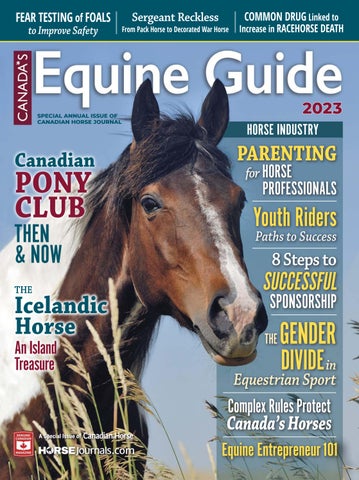

FEAR TESTING of FOALS to Improve Safety Sergeant Reckless From Pack Horse to Decorated War Horse COMMON DRUG Linked to Increase in RACEHORSE DEATH SPECIAL ANNUAL ISSUE OF CANADIAN HORSE JOURNAL 2023 A Special Issue of HORSE INDUSTRY PARENTING for HORSE PROFESSIONALS Youth Riders Paths to Success 8 Steps to SUCCESSFUL SPONSORSHIP Canadian PONY CLUB THE Icelandic Horse An Island Treasure Complex Rules Protect Canada’s HorseS THE GENDER DIVIDE in Equestrian Sport Equine Entrepreneur 101 THEN & NOW
IT’S LIKE MAGIC

Secure Guard
Gold
The Ultimate Digestive Aid ®
THE REAL MAGIC IS IN THE RESULTS
Most performance horses suffer with some level of digestive disturbance, from gastric ulcers through to colitis and even colic. You don’t know how much of your horse’s performance potential has been lost to digestive health issues until you’ve addressed the problem. Resolving digestive issues helps your horse stay calm and at the top of their game.
Patented and veterinary approved Secure Guard Gold provides a powerful digestive support solution for dependable relief and enhanced performance. Our proprietary psyllium process and special enteric coated pellets ensure delivery of beneficial microbes and ingredients to the hindgut, addressing common ailments caused by gastrointestinal inflammation. It is the number one recommended digestive aid of equine veterinarians.
Consult with your equine veterinarian or call Arenus to see how Secure Guard Gold can help your horse’s digestive challenges.

Arenus Animal Health | 866-791-3344 | www.arenus.ca SO INNOVATIVE...




If horses are your passion, is your magazine. Subscribe Today. (Your horse will thank you.) www.HORSEJournals.com • 1-800-299-3799 subscriptions@horsejournals.com Canada's National Horse Magazine PHOTO: ISTOCK/DEBOVE SOPHIEW
New Family of Canadian-Made Products from Ironstock Leather Care
In 1893, Capo Industries was founded with a mission to outfit Canadians with specialized leather polishes, along with a range of contemporary household products. Now into its fourth generation of family ownership, Capo has grown exponentially over the years, but the legacy of Canadian-made leather care products remains strong within the historical fabric of the firm.
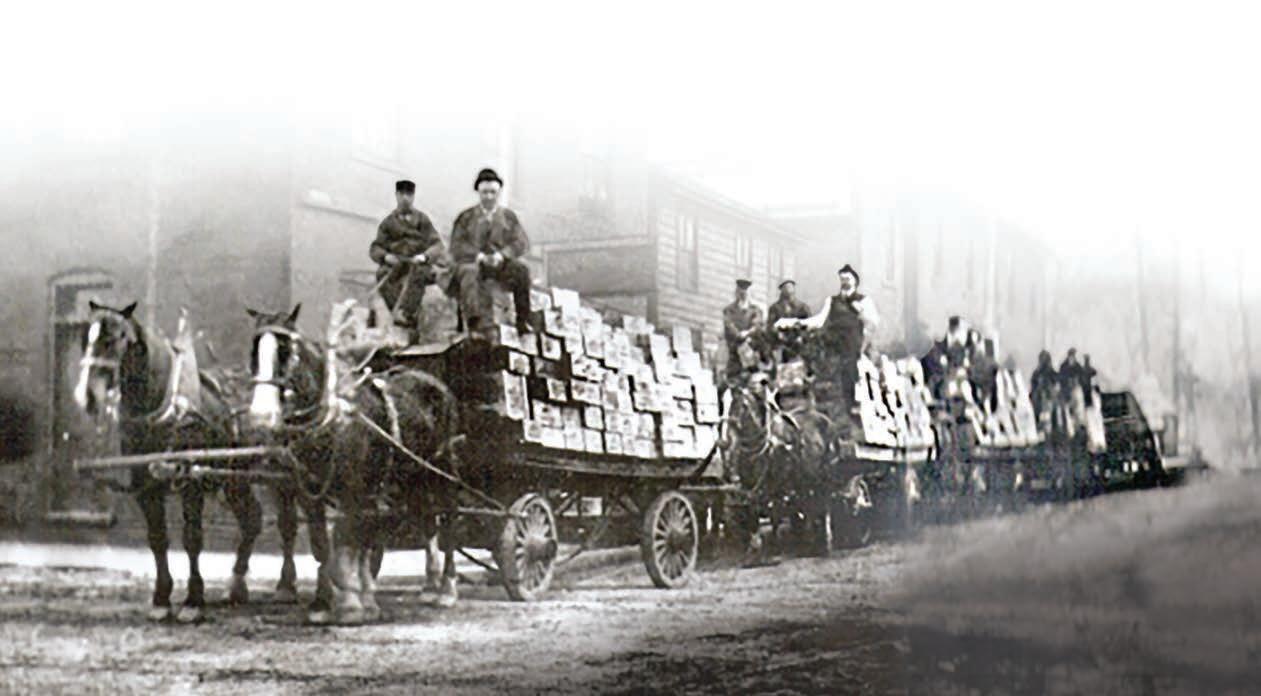
Ironstock Leather Care takes its inspiration from the twin legacies of Capo Industries and the Canadian horse breed, known affectionately as the “Little Iron Horse.” In fact, Ironstock Leather Care is the first product line of Canadian-made equine leather care products to enter the market in decades.

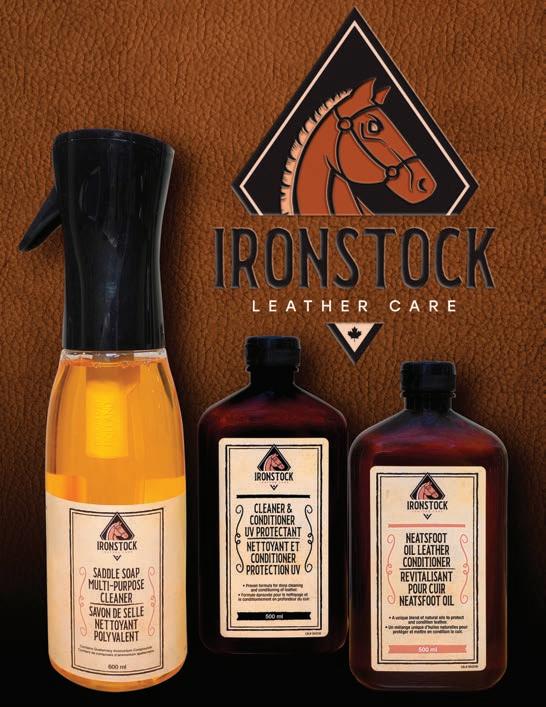
“In a segment overwhelmed by foreign made products, the time seemed right to rejuvenate our professional formulas, and respond to the need for local product in the industry,” says Nick Ridpath, Director of Marketing at Capo. Further to this point, Capo develops and controls the makeup of each proprietary formula through their in-house laboratory and testing facilities. These formulas have been modernized to account for environmental impacts, but the professional quality standards remain the same.
The new Ironstock family of products includes the following:
• Saddle Soap & Multi-Purpose Leather Cleaner The first Canadian-made saddle wash designed to destroy the cell integrity of bacteria and viruses. Packaged in a prolonged mist diffuser for complete tack coverage.
• Cleaner & Conditioner with UV Protectant
A modern formula designed to combine the steps needed for both deep cleaning and conditioning of leather. This professional restorative formula includes robust protection against the harsh effects of the sun.
• Neatsfoot Oil Leather Conditioner The classic workhorse of any leather care program. This formula is a proprietary blend of Neatsfoot oil and other natural ingredients designed to rejuvenate leather and repel moisture.
The Ironstock brand is relentless in pursuing new features that are unique to the leather care market, such as the new Saddle Soap with an ability to destroy the cell integrity of viruses.
Ironstock Leather Care is produced entirely in Burlington, Ontario. In keeping with their


dedication to preeminent service, Capo has partnered with another Canadian-owned firm, Cavalier Equestrian Inc., for professional North American distribution.
The love of horses has always been a part of the Ridpath family and intertwined with the Capo name. “My father loved spending time in the barns at the racetrack; he was keenly involved in the harness racing at Woodbine in the warmer months, and down south during the winter,” says current Capo president Doug Ridpath. “We hope the Ironstock brand reflects not only Capo’s legacy in the industry, but also the future of Canadian equine leather care for years to come.”
The same qualities found in Canada’s “Little Iron Horse” — strength, reliability, and quality — are displayed to this day at Capo Industries Ltd. and featured in the Ironstock products.
For further details and information, please visit
> www.IronstockLeatherCare.com
Made in Canada since 1893.
3
b
SPONSORED
EARLY 1900s
Capo Polishes
Equine Guide
CANADA’S
HORSE
A SPECIAL ISSUE OF

SPECIAL FEATURES
24 Parenting for Horse Professionals
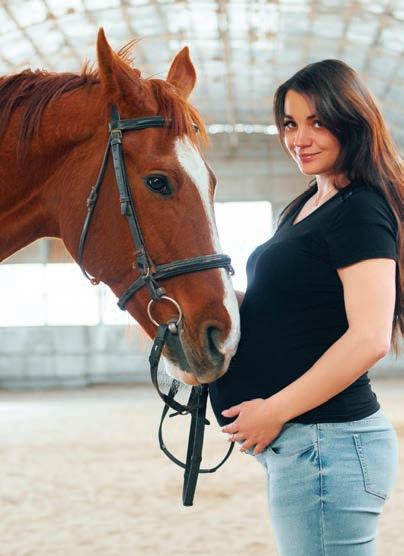
Insight and tips from horse industry professionals on how to parent while balancing a demanding career.
34 Finding Paths to Youth Success
A summary of the programs available for Canada’s youth with highperformance aspirations.
44 8 Steps to Successful Sponsorship
How to attract and keep top-notch sponsors for your equine events.
50 The Gender Divide
Are male and female equestrian athletes equally empowered to succeed?
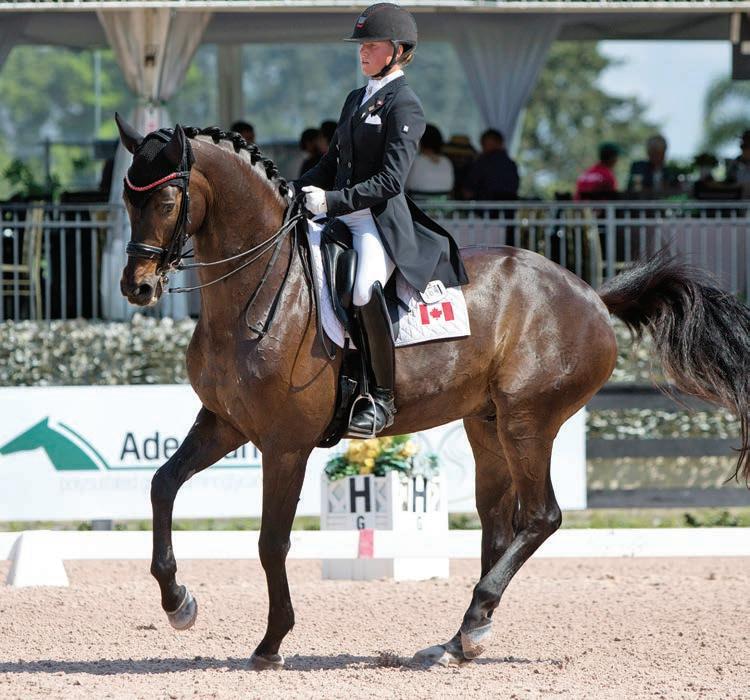
54 Equine Entrepreneur 101
8 keys to making your dream horse business a profitable reality.
60 Complex Rules Protect Canada’s Horses
Even with all of Canada’s legislative acts and regulations, codes, and position statements, are horses adequately protected?
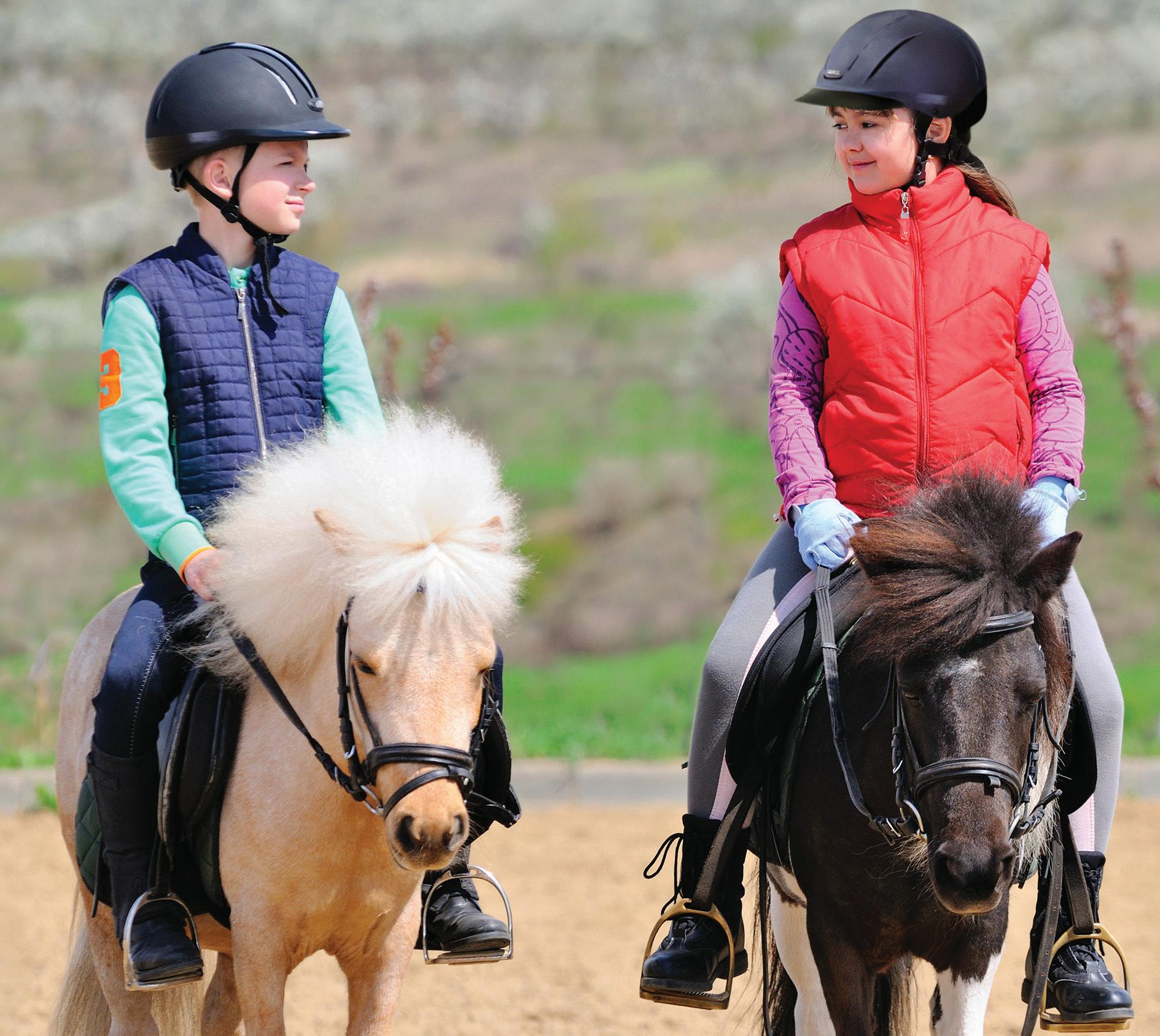
64 Canadian Pony Club: Then & Now
With a long history of producing highly educated horsemen and women, Pony Club continues to attract members with a passion for learning about horses.
74 The Icelandic Horse: An Island Treasure
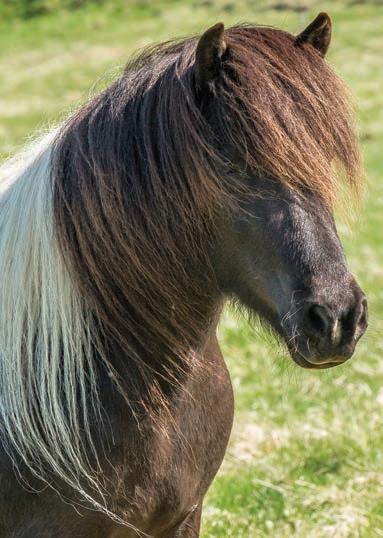
The richness of Iceland’s culture and heritage dating back more than a thousand years is symbolized in the Icelandic horse.
96 Sergeant Reckless
The incredible story of the small Mongolian pack horse who became a highly decorated US Marine Corps artillery horse in the Korean War.
ON THE COVER
This is Bailey Girl, a Thoroughbred/Paint cross mare with a mind of her own. Recently passed but always remem–bered, a strong mare who looked after her herd!
OWNED & LOVED BY SHAWN HAMILTON
4 Canada’s Equine Guide 2023 CANADA’S HORSE INDUSTRY AT YOUR FINGERTIPS
INDUSTRY AT YOUR FINGERTIPS CONTENTS
CANADA S b 2023
PHOTO: CLIX PHOTOGRAPHY 24 74 34 24 24 PHOTO: SHUTTERSTOCK/STANDRED • 34 PHOTO: CEALY TETLEY • 64 PHOTO: PHOTO: PAULA DA SILVA

USE DISCOUNT COUPON CODE 23ANNHJ and SAVE 15% at checkout on orders over $100.00 until March 30, 2023
HEALTH & RESEARCH

10 Study: Steaming Damages the Proteins in Hay
Recent research has shown that the diets of horses eating steamed hay should be balanced to prevent protein deficiency.
12 Cloned Przewalski Colt was “Born to be Wild” “Kurt,” a rare Przewalski’s horse produced by cloning, is learning the language of wild horses from a Przewalski filly named “Holly.”
14 Fear Testing of Foals May Help Improve Safety
Study examines fear reactions in horses from foal to adult to help reduce accidents and improve horse welfare.
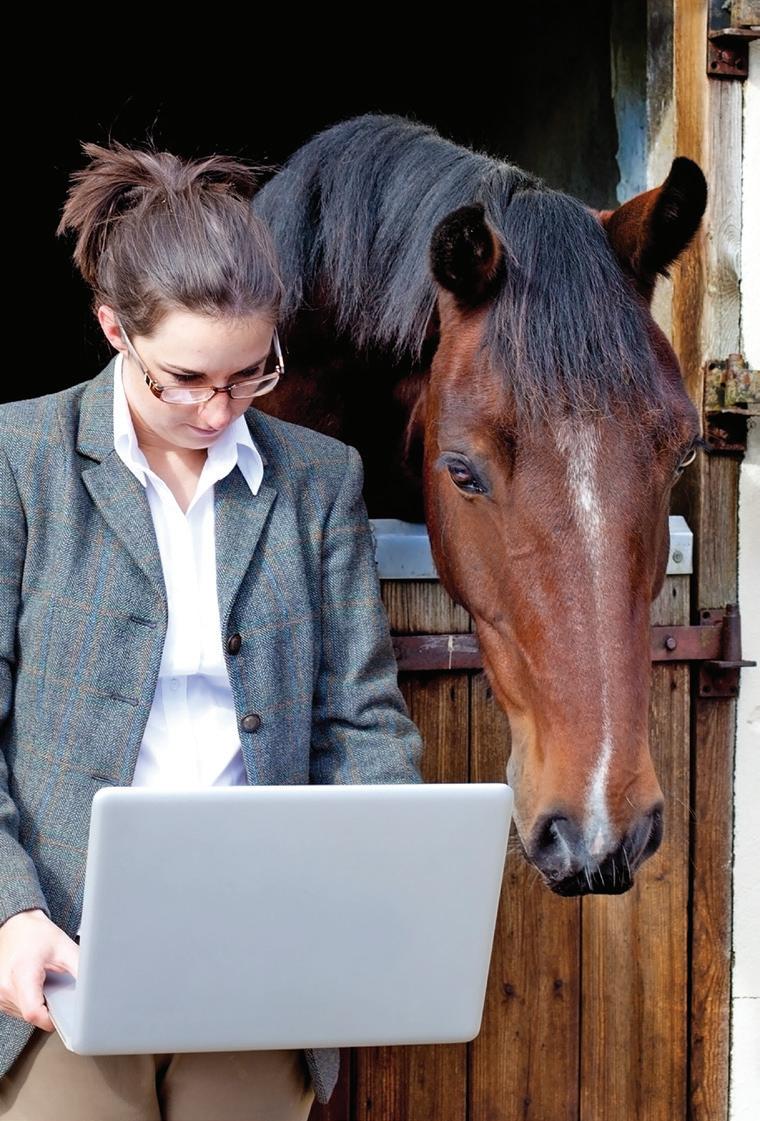
18 Do Younger Parents Breed Faster Racehorses?
Research shows a correlation between increasing parental age at conception and reduced racing speed.
20 Common Drug May Increase Risk of Sudden Death in Racehorses
A new study shows that a drug widely used in Thoroughbred racehorses could increase the risk of sudden death.
22 Minimize Dust in your Barn and Arena
Management tips to help you reduce dust and provide a healthier environment for horses and people.
6 Canada’s Equine Guide 2023 CANADA’S HORSE INDUSTRY AT YOUR FINGERTIPS A SPECIAL ISSUE OF CANADA’S HORSE INDUSTRY AT YOUR FINGERTIPS CONTENTS Equine Guide CANADA S b 2023
INSIDE 8 Editor’s Desk 84 In Memoriam: Remembering Those We Lost in 2022 88 Horse Council BC News 90 Canadian Quarter Horse Association News 92 Canadian Therapeutic Riding Association News 94 Meet Our Contributors 95 Index to Advertisers 50 PHOTO: SHUTTERSTOCK/PIRITA • 54 PHOTO: ISTOCK/SASHA FOX WALTERS • 64 PHOTO: CLIX PHOTOGRAPHY 50 64 54






Parenthood in the Horse Industry
Being a parent in a demanding horse industry career is challenging and incredibly rewarding at the same time. Many horse industry parents are making it work, but no one really knows what it takes and how they’ll balance the concurrent demands of parenting with the obligations of their career until they’re actually doing it.
We launched our family business, which started as Pacific Horse Journal in 1991 and grew into a national multi-media company. Working together during that time, my husband Steve and I raised three children: two sons and a daughter, the youngest of whom was eight years old in 1991. Growing up on a family farm in Ontario, I came equipped for life and business through the example of an incredibly strong, hard-working, resilient, resourceful, brave, and loving mother who raised four children and steered our family farm through good times and bad. Growing up on that farm, I learned life lessons that I still use every day. Although I am by no means an expert in parenting while operating a horse business, I do feel somewhat qualified to share my thoughts on the subject.
You’ve started a family now. As a new parent coping and adapting, learning about diaper rashes, 2am feedings, and the importance of burps, you’re experiencing feelings of complete exhaustion mixed with the overwhelming joy of welcoming this new little person into your world — and the realization that life as you knew it has changed forever.
Everyone is different, and no one is perfect. Your children will be young for a very short time. The routine chaos of diapers, piles of laundry and toys, unceasing demands on your time, and overarching sleep deprivation will settle into other routines and schedules as family life adapts and the years fly by. Starting today, find and do what is best for you and your family.
Babies and young children create incessant demands that at times can feel overwhelming. Learning to do less of what you don’t need to do, and becoming more efficient at necessary tasks, will free up time and energy for what you want to do. Decide your priorities, multi-task or combine tasks when possible, and recognize where your time is being wasted. Learn to be more efficient.
Children grow up fast, and the years pass quickly. The kids will become more independent, and you’ll have more time. In the meantime, surround yourself with supportive people and be open to advice and help. If you’re having a bad day and feel overwhelmed, this too shall pass. As someone told me years ago: If you need a hug, go and get one. And then get back on your horse.
Find or create a support system. This might include other parents who understand what it takes to navigate the unique challenges of being a parent in the horse industry. You may need to pay someone to help with barn work or around the house. Or you may only need a backup support person to step in during busiest times
when you can’t do everything.
Horses teach us huge lessons about kids and parenting. They can help us to be better parents. Just like when working with horses, parents are in a leadership role. When the horse is scared or excited, remaining patient and calm tells the horse there’s nothing to be excited about. Set a good example — when kids are yelling and being too loud, yelling at them to stop yelling won’t create a calm, peaceful environment.
Be emotionally honest. If something is bothering you or your child, it’s important to pause and get in touch with your own feelings and those of your child. Their feelings and emotions are as valid as yours. Help them understand what they’re feeling and why. I talked with my own kids about many of life’s difficult times; even when little they understood better than I ever expected, and often gave me helpful insight and advice. Out of the mouths of babes!
Look for opportunities for family time by involving your children in your work and planning. This might include taking them to horse shows or allowing them to help out with the care of the horses. Give them specific tasks that they alone are responsible for. As your children grow, by giving them appropriate responsibilities you’ll help them understand the bigger picture and what you’re accomplishing together. Giving your children an understanding of what their parents do at work and what pays the bills is invaluable regardless of career. The exposure to horses can provide opportunities your children might not otherwise have. One of your kids might even turn out to be horse crazy — a blessing or a curse?
If you have a partner, make sure both of you communicate about work schedules and family responsibilities. Keep each other aware of mutual workloads and be supportive. Both the horse industry and family life can be demanding and unpredictable, and everyone needs flexibility and support to accommodate unexpected events.
Taking care of yourself is essential to being able to take care of your children and career responsibilities. Make sure that you’re getting enough rest and time to recharge. Find a balance between your work and family time. There is no one-size-fits-all solution. Finding your own personal work/life balance will help you to be more productive at work, and more present and engaged with your children when you are at home.
Overall, being a parent with a horse industry career can be a challenging and rewarding experience. With the right mindset and approach, and decisions that work for you and your situation, you can balance your responsibilities and navigate the challenges and complexities of operating a horse business while raising a family. It’s a life-changing experience, and one that can teach life lessons and help your children grow up to become responsible, resourceful, and resilient adults. Enjoy the ride.
— Kathy Smith
Volume 23 • Issue 3 • 2023
Canada’s Equine Guide is a Special Jan/Feb Issue of EDITOR / PUBLISHER Kathy Smith
ACCOUNTS Geri Pronovost
ADVERTISING Terry Andrucko • Janna Reimer
SOCIAL MEDIA April D. Ray
SUBSCRIPTIONS Steve Smith
MARKETING & DISTRIBUTION Janna Reimer
ART DIRECTION, PRODUCTION Elisa Crees
CONTRIBUTORS Tania Millen • Shawn Hamilton Paula Da Silva • Equine Guelph • Equestrian Canada • ISES
CanTRA • Horse Council BC • Manitoba Horse Council Canadian Quarter Horse Association
ADVERTISING, SUBSCRIPTIONS & GENERAL INQUIRIES 1-800-299-3799 • 250-655-8883 or email: sales@horsejournals.com
ADVERTISING DEADLINE
4 weeks prior to issue date, e.g., Oct. 1 for Winter (Nov/Dec) issue
ONLINE EDITION
WEBSITE www.horsejournals.com
MAIN OFFICE EMAIL editor@horsejournals.com

PRODUCTION DEPARTMENT EMAIL design@horsejournals.com
Publishing 6 issues per year
SUBSCRIPTION RATES
1 year/6 issues: $27 + tax
2 years/12 issues: $42 + tax
3 years/18 issues: $59 + tax
US $75
ORDERS FOR SUBSCRIPTIONS, CHANGE OF ADDRESS NOTICES, & UNDELIVERABLE COPIES ARE TO BE SENT TO: THE CANADIAN HORSE JOURNAL Suite 202, 2400 Bevan Ave., Sidney, BC V8L 1W1 (250) 655-8883 • fax: (250) 655-8913 • 1-800-299-3799
PUBLICATIONS MAIL REG. NO. 40009439
GST REG. NO. 829298140 • ISSN. NO. 1496-1733
We acknowledge the financial support of the Government of Canada.
REPRODUCTION IN WHOLE OR IN PART OF ANY MATERIAL CONTAINED IN THIS PUBLICATION WITHOUT THE WRITTEN PERMISSION OF THE PUBLISHER IS STRICTLY PROHIBITED. The information and services listed herein are intended to facilitate accessibility to the professionals, products and services that play a part in the horse industry. While readers are encouraged to use the products and services of the merchants listed in this Guide, Horse Community Journals Inc. does not recommend or guarantee the products and services of advertisers or associates listed. Manuscripts and photographs will be returned only if SASE is provided. The return of unsolicited material is not guaranteed. Contributors and advertisers warrant all materials supplied are free of copyright and they have the legal right to use the same. All material accepted for publication is subject to such revisions as are deemed appropriate by Canadian Horse Journal (CHJ). The opinions expressed in CHJ are not necessarily those of the publisher. CHJ reserves the right to refuse any advertising or submission. Contributors consent to have their submissions published in CHJ and on www.HorseJournals.com and elsewhere as determined by the publisher. Printed in Canada. Please recycle.
8 Canada’s Equine Guide 2023 CANADA’S HORSE INDUSTRY AT YOUR FINGERTIPS
FROM THE EDITOR
CANADAbS Equine
NATIONAL ANNUAL
Guide










































*Cannot be combined with any other offer. Rebates and/or financing based on the purchase of eligible equipment defined in promotional program. Additional fees including, but not limited to, taxes, freight, setup and delivery charges may apply. Customers must take delivery prior to the end of the program period. Some customers will not qualify. Some restrictions apply. Unlimited Hour Warranty available only on non-commercial use. Offer available on new equipment only. Pricing and rebates in Canadian dollars. Prior purchases are not eligible. Offer valid only at participating Dealers. Offer subject to change without notice. See your dealer for details. © 2023 DAEDONG CANADA, INC. KIOTI CANADA. Sales and Service Ltd. 780-674-2888 Barrhead, AB Northern Acreage Supply Ltd. 250-596-2273 Prince George, BC Parkland Farm Equipment 780-963-7411 Stony Plain, AB Andrews Parts & Power Inc. 204-953-0030 St Andrews, MB Timberstar Tractor 250-545-5441 Vernon, BC Unlimited Hour Warranty Financing
Study Shows Steaming Hay Can Lead to Protein Deficiency
By Mark Andrews
Hay can be treated with steam to reduce the horse’s exposure to inhaled allergens that cause respiratory disease.
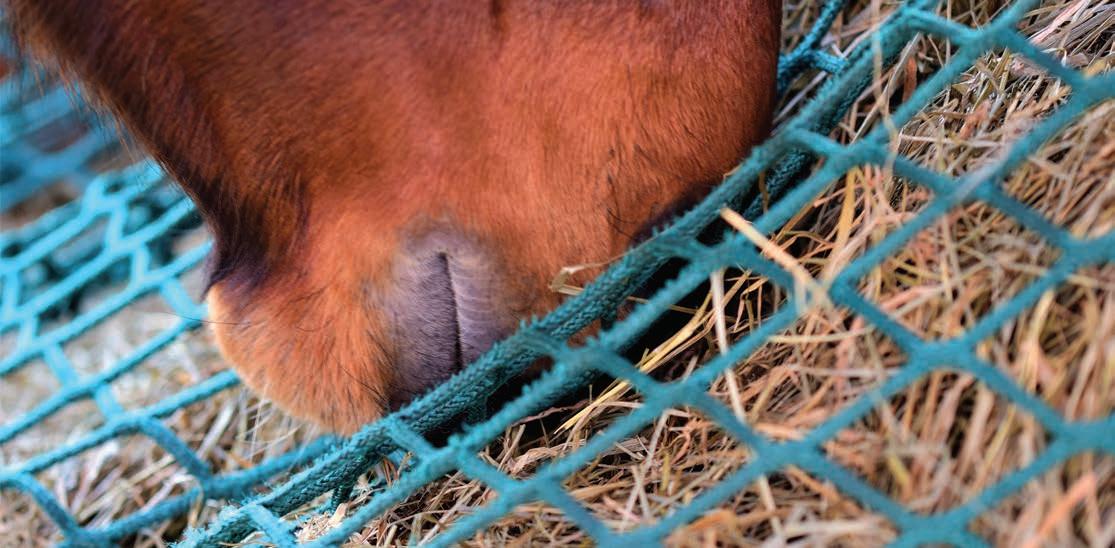
Steaming kills potentially harmful microorganisms and binds fungal spores and dust particles to the hay, making them less likely to be inhaled.
However, new research shows that steam treatment can have an adverse effect on the digestibility of protein in the hay.
A team of scientists from Martin Luther University Halle-Wittenberg (MLU) has discovered that steam treatment causes a chemical reaction that damages the proteins in the hay and makes them more difficult for horses to digest. This can lead to signs of nutrient deficiency in the animals and, for example, impair growth or muscle development. A report of the work is published in the journal Animals.
Professor Annette Zeyner from the Institute of Agricultural and Nutritional Sciences at MLU explains: “Many horses suffer from lung problems such as equine asthma. The steaming process virtually eliminates all of the living microorganisms and particles in the hay that could be inhaled during feeding and damage the lungs. In theory, the end result is a very good forage.”
However, her team discovered that the treatment also has its disadvantages as the steam damages the proteins in the hay.
“A high proportion of the proteins, and the crucial amino acids contained in them, can no longer be digested by the small intestine — in other words, the horse lacks these proteins as a result of the steam treatment. However, some of these protein components are essential for horses and they cannot be absorbed in the large intestine,” Zeyner continues.
The researchers demonstrated this by examining various hay samples collected from central Germany. In the steamed hay, they found an increased number of products that are generated by the Maillard reaction, an indication that the proteins in the hay have been damaged. (The Maillard reaction is a chemical reaction between amino acids and reducing sugars that also takes place when food is cooked, baked, or fried, and is responsible for browning or the development of flavours.)
“Proteins are composed of amino acids. The steaming damages them and they form new complexes with sugars in the hay,” explains the first author of the study, Caroline Pisch, from MLU. This makes them difficult for horses to digest.
According to the researchers’ analyses, the treatment reduced the amount of protein that can be absorbed by the small intestine by almost half. The pre-caecal digestibility of the essential amino acid lysine was over 50 percent lower after steam treatment.
According to Zeyner, this can lead to an undersupply of essential amino acids from the feed, which can be a problem for growing horses or lactating mares; young horses need proteins to grow, and mares need them to produce milk. To make matters worse, protein deficiency causes very unspecific symptoms in the affected animals. These include impaired muscle development and a dull or shaggy coat with so-called “hunger hair” — long isolated hairs in the horse’s coat.
She suggests that horse owners can counteract this risk by enriching the animals’ diet with protein-rich single feedstuffs such as yeast and soybean meal or high-quality protein-rich compound feeds.
The report concludes: “Steamed hay is still a proper and sometimes the only possible roughage for horses suffering from respiratory diseases such as equine asthma. Essentially, horse diets based on steamed hay should be balanced accordingly.”
For more details, see Effect of Hay Steaming on the Estimated Precaecal Digestibility of Crude Protein and Selected Amino Acids in Horses, published in the journal Animals. b
10 Canada’s Equine Guide 2023 CANADA’S HORSE INDUSTRY AT YOUR FINGERTIPS
with the kind permission of Mark Andrews, Equine Science Update
Published
RESEARCH
PHOTO: SHUTTERSTOCK/LUISE123



11 CONNECT TO THE HORSE INDUSTRY www.HORSEJournals.com Your one stop shop for everything equestrian www.summersidetack.ca 250-890-9158 • 1081 Knight Road, Comox, BC • summersidetack@shaw.ca HORSEWARE IRELAND • BACK ON TRACK WEAVER LEATHER • SHIRES EQUESTRIAN PROFESSIONAL’S CHOICE • AND MORE! FREE SHIPPING CANADA WIDE ON ORDERS OVER $75
Cloned Przewalski’s Horse Learning the Language of Wild Horses
 By Mark Andrews
A rare Przewalski’s horse named Kurt, produced by cloning in 2020, is thriving at his home at the San Diego Zoo Safari Park and learning the language of being a wild horse from Holly, a young female of his own species.
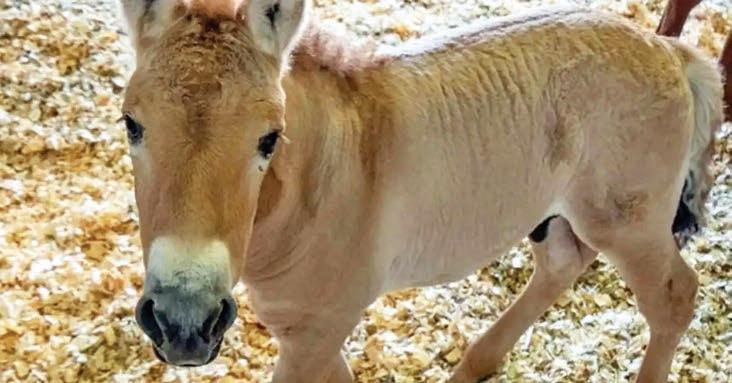
Kurt was cloned from the DNA of a Przewalski’s horse that was frozen 42 years ago. It is hoped that once he reaches maturity in a couple of years, he will be able to breed and return lost genetic diversity to his species.
By the end of the 1960s, Przewalski’s horse, considered to be the last truly wild horse, was extinct in the wild. Some individuals survived in zoos and an intensive breeding program managed to revive the species, allowing horses to be reintroduced to their natural habitat in the 1990s.
Although there are now over 700 animals roaming the Mongolian steppes, almost all are related to just 12 individuals. This loss of genetic diversity is a cause for
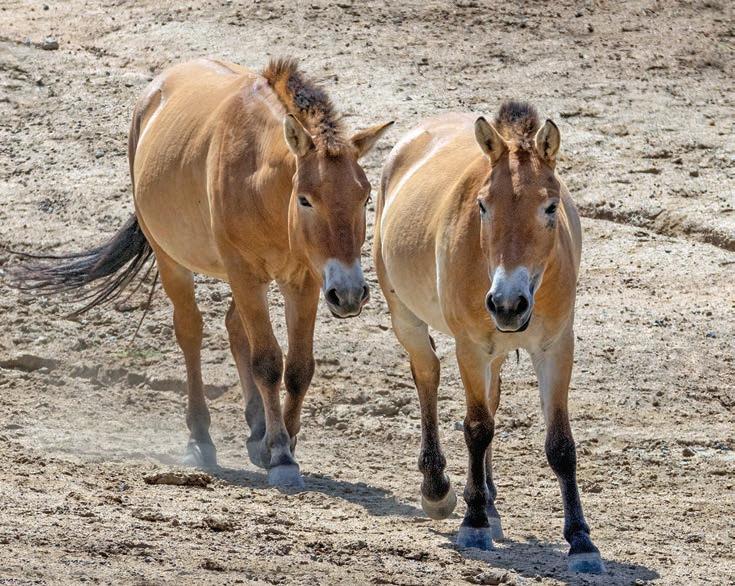
Kurt (left), the world’s first cloned Przewalski’s horse, and Holly, in a field habitat at the San Diego Zoo Safari Park.
concern, and maintaining genetic variation is likely to be an important part of ensuring the species’ survival in the future.
Kurt was born to a surrogate mother, a domestic Quarter Horse, which means he had no experience of other Przewalski’s horses. San Diego Zoo Safari Park wildlife care experts embarked on an effort to ensure the young male gained the behavioural language he will need to interact and thrive among his own species.
“Przewalski’s horses normally live in groups where a youngster secures their place in the herd from their mother,” said Kristi Burtis, DM, director of wildlife care, San Diego Zoo Safari Park. “Because Kurt was not born into a herd, he didn’t know the behavioural language that is unique to Przewalski’s horses. Our first step to socialize him was introducing him to Holly.”
Holly arrived at the San Diego Zoo Safari Park in May 2021. Just a few months older than Kurt, Holly was raised in a Przewalski’s horse herd and had the full repertoire of wild horse language to share. Wildlife care specialists at the Safari Park introduced the two, hoping that Holly could serve as a mentor and teacher to Kurt.
After some behavioural sparring, the two have settled into an affectionate pairing. Kurt and Holly have been in a secluded, private habitat since their arrival at the Safari Park. They were recently introduced to the Safari Park’s Central Asia field habitat, where they are now viewable by guests. This move will further prepare them to soon join the larger herd of Przewalski’s horses, and the plan is for Kurt to be the breeding stallion when he reaches maturity at three to four years of age.
“Kurt is significant to his species because he offers the hope of bringing back lost genetic diversity to the population,” said Dr. Nadine Lamberski, chief conservation and wildlife health officer, San Diego Zoo Wildlife Alliance. “It is imperative to do everything we can to save this genetic diversity before it disappears.”
By reviving genetic diversity that was stored in San Diego Zoo Wildlife Alliance’s Biodiversity Bank, conservationists hope to expand the strength of the species’ population. b
Kurt, born August 6, 2020 offers hope for reviving the lost genetic diversity of this rare and endangered horse population.
12 Canada’s Equine Guide 2023 CANADA’S HORSE INDUSTRY AT YOUR
FINGERTIPS
PHOTO: KEN BOHN, SAN DIEGO ZOO WILDLIFE ALLIANCE
PHOTO: SCOTT STINE
Published with the kind permission of Mark Andrews, Equine Science Update. RESEARCH



CERTIFIEDFACILIT Y
Fear Testing of Foals May Help Increase Safety
International Society for Equitation Science

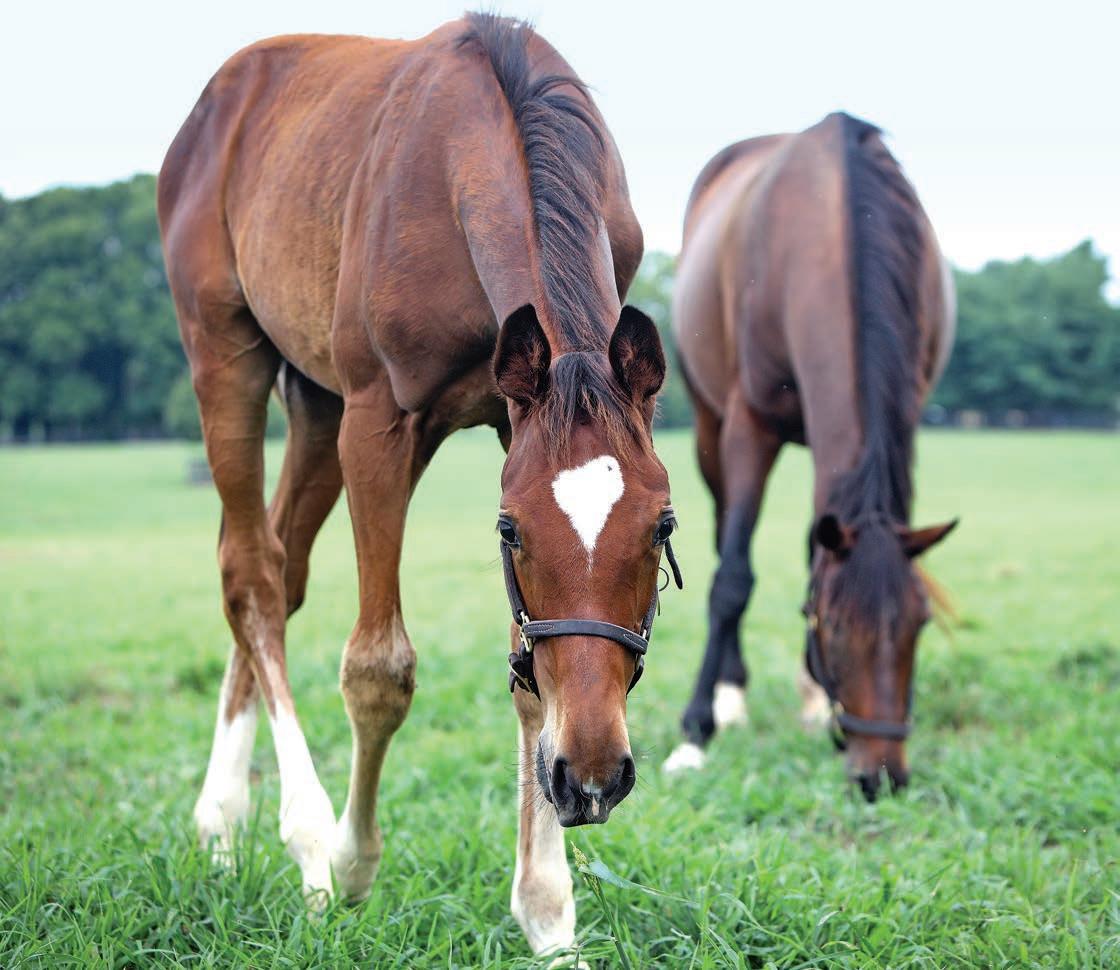
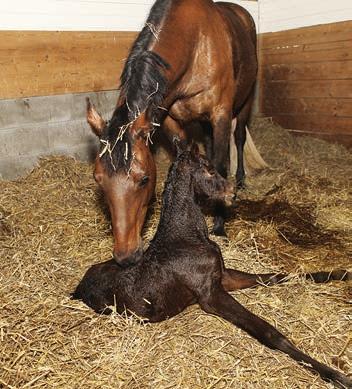
A recently published study reports that it is possible to identify fearful horses at an early age — prior to weaning from the dam — by means of an objective fear test. This offers a better opportunity to ensure that the most fearful horses are trained by experienced people from the beginning, which may help reduce riding accidents and improve horse welfare.
Fearfulness is an important aspect of horse temperament that is relevant to the horse’s usability for various purposes, and of particular significance to the welfare and safety of both rider and horse. Fearful animals are often difficult and dangerous to handle. One of the most frequent causes of riding accidents is the horse being frightened. According to statistics from the Danish Accident Analysis Group at Odense University Hospital, riding is the most dangerous leisure activity when looking at the severity of personal injuries, and victims are often children and teenagers. Some riding accidents are purely accidental, such as when the horse stumbles and falls. This kind of accident can be difficult to foresee. However, we can actually do something about the large number of accidents that happen when
14 Canada’s Equine Guide 2023 CANADA’S HORSE INDUSTRY AT YOUR
FINGERTIPS
RESEARCH
PHOTO: SHUTTERSTOCK/ERIN DAUGHERTY
horses get frightened. If we can identify the horses that are most likely to show fear reactions early in life, we can place them in capable hands to give them the correct training from the beginning. In that way, it will likely be possible to avoid many serious accidents.
In principle, all horses can be trained not to take flight when frightened, but it takes a lot of training, time, and knowledge about learning theory and appropriate habituation methods. Therefore, it often ends badly if the very fearful horse finds itself in unexperienced hands and thus is not met with the correct understanding and training.
A Rare Long-Term Study
The study was conducted over three years during which a group of stallions was studied from foal to adult. The aim was to study whether the behavioural and physiological fear reactions that foals show during fear tests when they are around five months old are similar to their reactions in fear tests during their adult life.
The study included 25 Danish Warmblood stallions from a private stud. The foals were kept with their dams on large pastures until weaning and remained relatively unhandled until training for the first test at five months of age. All foals were weaned together at the age of seven to nine months and were kept in groups in a loose housing system with stallions and mares together. At one-and-ahalf years of age, the stallions were moved to another stable and were housed in littered boxes with five stallions in each box. The horses were still handled only for veterinary or farrier treatment.
The study is the first of its kind to examine fearfulness in horses over such a long period of time, and from such an early age. The researchers were fortunate to be able to study this relatively large group of horses housed together from foal to adult. When these kinds of studies are done, it is crucial that the horses are kept under the same rearing conditions throughout. Otherwise, changes in housing, management, and training could affect the horses’ reactions and thus, the results.
Test Design
In the study, all stallions were introduced to a fear test — a “novel object test” (NOT1) — three times at different ages: five months, one year, and three years.
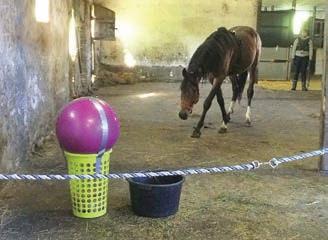
Before the first test, each foal was trained to enter a test arena on their own and walk to their dam who was placed at the other end of the arena. In the NOT1 test, a white plastic cover with boxes of different colours was
15 CONNECT TO THE HORSE INDUSTRY www.HORSEJournals.com
In the NOT3 test, young horses frequently alternated between alertness (a) and investigation (b), and the duration of these behaviours correlated positively. In the foal test, these behaviours did not correlate as foals showing alertness quickly ran to their mothers and typically did not show investigative behaviour towards the objects.

the horse will be an appropriate match for them before buying the horse.
Rearing Environment and Education are Important Factors
The environment in which the foal is raised also plays an important role in the animal’s level of fearfulness. Previous studies have shown that foals learn readily from their dams. If the mare is trained to react calmly towards a variety of objects, she will influence her foal to also react more calmly towards novelty. It has also been shown that young horses display less fearfulness towards novel objects if they are grouped with a calm and experienced horse. General stimulation of the foal and habituation to a variety of objects early in life are important factors when training a safe riding horse.
The education of the rider is yet another key area. An understanding of the horse’s behaviour and fear reactions is essential to reduce the number of accidents. With greater rider knowledge of how horses learn and better training of the horse, a higher degree of safety can be obtained.
To read the full scientific article, see: Development and consistency of fearfulness in horses from foal to adult; published in ScienceDirect vol. 232, Nov 2020. b

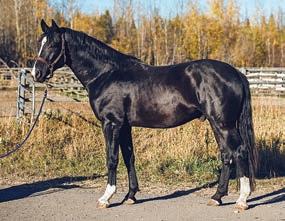
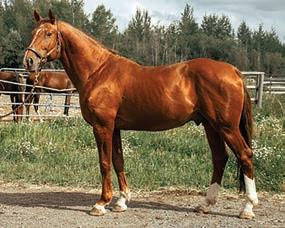
LEETO Z - Leeto Z is an exceptional stallion in many ways. Beautiful, correct conformation, powerful and elegant movement, combined with incredible scope make him an all-around exceptional athlete. Perhaps his best feature is his intelligent and engaging personality that not only makes him a brave and willing partner, but also a quick learner and a simple straight forward ride. At his Canadian Warmblood Stallion Performance Test, he was the highest scoring stallion for temperament and rideablity. From what we can tell, his foals all seem to have his temperament as well. With these world class bloodlines, elegant, modern type, tremendous work ethic and even temperament, Leeto Z is proving to be a sire that passes all of these attributes on to his progeny.
STUD FEE: $1500 (includes $250 booking fee) LFG

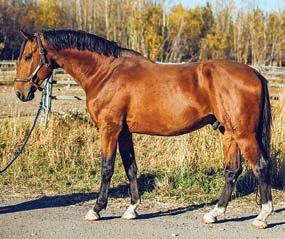
DARCONIDO Z - Darconido Z is a big, fancy, young stallion with incredible suspension and tremendous power. He is brave and scopey through the chute, with an incredible working attitude. His pedigree boasts Darco, the stallion who has the most offspring in the world to have competed to Grand Prix level, and Contender who has dominated German breeding values for many years now and continues to produce exciting young jumpers. Darconido Z was headed to the jumper ring but suffered a career ending injury. He has produced some exceptional foals and we hope to have many more.
STUD FEE: $1250 (includes $250 booking fee) LFG
NIGHT’S WATCH - Night’s Watch is an exciting new stallion prospect. With his power and presence, he is sure to excel in any discipline. His pedigree is filled with top level show jumpers! He carries blood from all the important jumping breeds of Europe like Voltaire, Furioso, Nimmerdor, Gotthard, Farn, and Le Mexico, who are all great progenitors of modern jumper breeding. His sire Kannan is a tall rangey stallion and is clearly a product of his genes, bringing power, movement and scope. He is also noted for his style, balance, temperament and good mouth. On his dam’s side we have Cantos, a reknowned Contender son and Indorado, well-known for producing big, long lined horses with an unlimited amount of scope. Night’s Watch will be bred to select mares in 2023.
STUD FEE: $1250 (includes $250 booking fee) LFG
17 CONNECT TO THE HORSE INDUSTRY www.HORSEJournals.com
Lucino Z Cracka Z Darcon Z Chelonida Z Landlord Z Tiziana xx Crack Z Ragna Z Darco Contendra Chopin Leonida Z Voltaire Cemeta Cantos Apolaris Landgraf I xx Laba Firebird xx Cork xx Corrado Biserta Ramiro Z Golden Gate Z Lugano Von La Roche Ocoucha Contender Fleetless Capitol I Wiletta Leroy Rascal Z Furioso II Gogo Moeve H Nimmerdor Wozieta Contender Gabanta Indorado Polaris Kannan Gwenhwyvar ALWAYS A VARIETY OF YOUNG PROSPECTS FOR SALE lana-smith@live.ca • 250-301-1281 www.RosenolPerformanceHorses.ca
PHOTOS COURTESY OF ISES
A B
Do Younger Parents Breed Faster Racehorses?
Recent research shows that increasing parental age at conception has a detrimental effect on race speed.
By Mark Andrews
When a split-second can separate the horses at the end of the race, the slightest advantage can give the winner the edge. Research from the University of Exeter found that the speed of Thoroughbred horses declines as the age of their parents when they were conceived increases.

Dr. Patrick Sharman and colleagues at the Centre for Ecology and Conservation, University of Exeter, UK, analysed 906,027 racing performances of 101,257 horses — the offspring of 41,107 dams and 2,887 sires. The study included data from almost 25 years of racing results from 1996-2019, involving meetings across Great Britain. The work is published in Royal Society Open Science
Dr. Patrick Sharman says, “The fact that parental age affects racehorse speed should be of interest to the horseracing industry. More generally, it adds to an increasing body of evidence which points towards parental ‘state’ at the time of
conception having an influence on offspring phenotype. This would have implications well beyond racehorses and the horseracing industry.”
They found a “significant effect” of maternal age on speed, with each additional year of age at conception decreasing the offspring speed by 0.017 yards per second. This may not seem to be very much, but they suggest it could produce a one second difference in a mile-long race between a horse born to a five-year-old mare and one born to a 15-year-old mare.
Also, they found that the paternal age showed a decrease of 0.011 yards per second for every increasing year in stallion age.
Sharman adds: “It is perhaps not surprising that offspring speed declines with increasing maternal age. It is the dams, after all, who care for the foal, first in utero, and then through to around six months of age.
“What I find fascinating, though, is that increasing paternal age also causes a significant decline in racehorse speed. Thoroughbred stallions play no part whatsoever is raising a foal, so what is behind this decline in speed?”
The authors conclude: “Our analysis identified significant negative within-
parent effects of advancing maternal and paternal age on offspring speed. While we had expected to find some evidence of parental age effects, their magnitude is notable, particularly that of the previously undocumented influence of paternal age on offspring speed.”
They hope that their findings will prompt research into the mechanisms by which these parental age influences are transmitted to the offspring.
For more details, see: Evidence of maternal and paternal age effects on speed in thoroughbred racehorses; published in Royal Society Open Science Vol 9, no 10 (2022). b
18 Canada’s Equine Guide 2023 CANADA’S HORSE INDUSTRY AT YOUR FINGERTIPS
Researchers found that as parental age at conception increases, the speed of Thoroughbred racehorse offspring declines.
PHOTO: DREAMSTIME/CHERYL QUIGLEY
PHOTO: SHUTTERSTOCK/PFLUEGLER-PHOTO
Published with the kind permission of
Science Update. HEALTH
Mark Andrews, Equine
GAME-CHANGING COMFORT
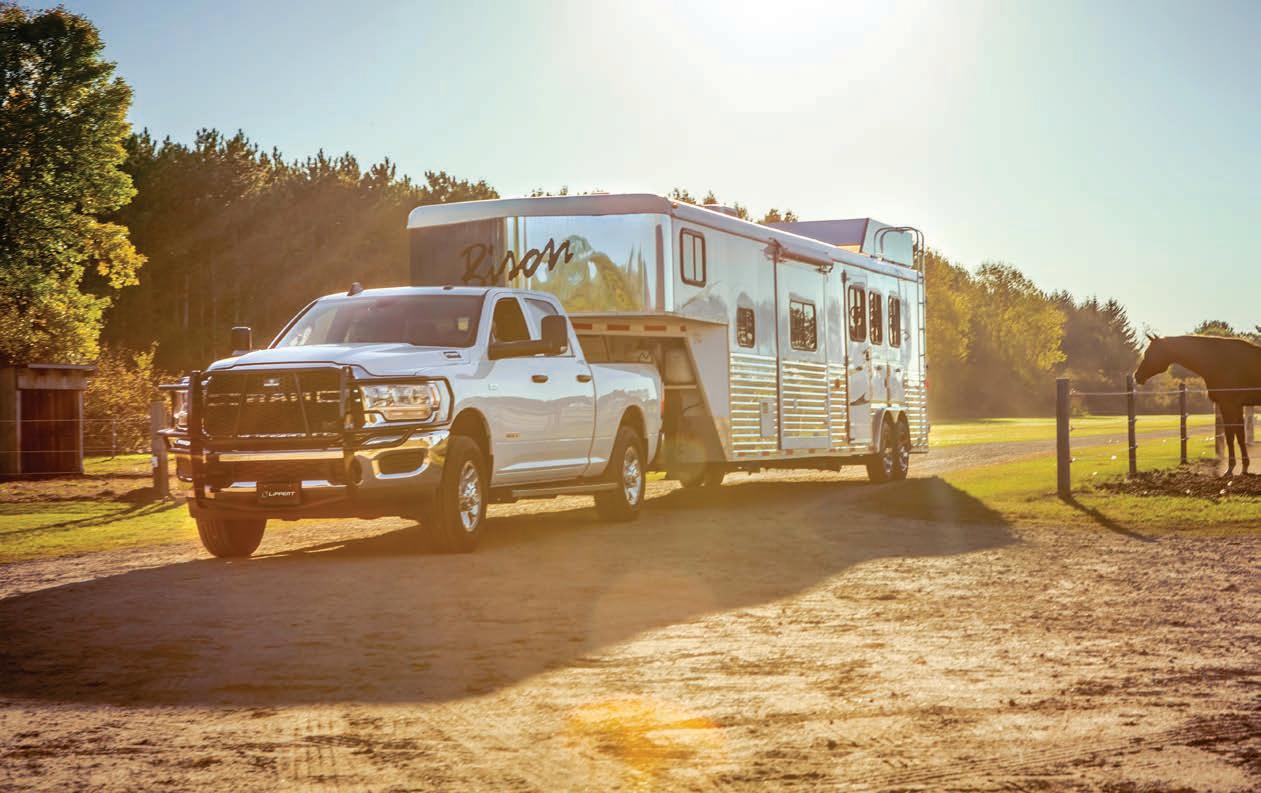
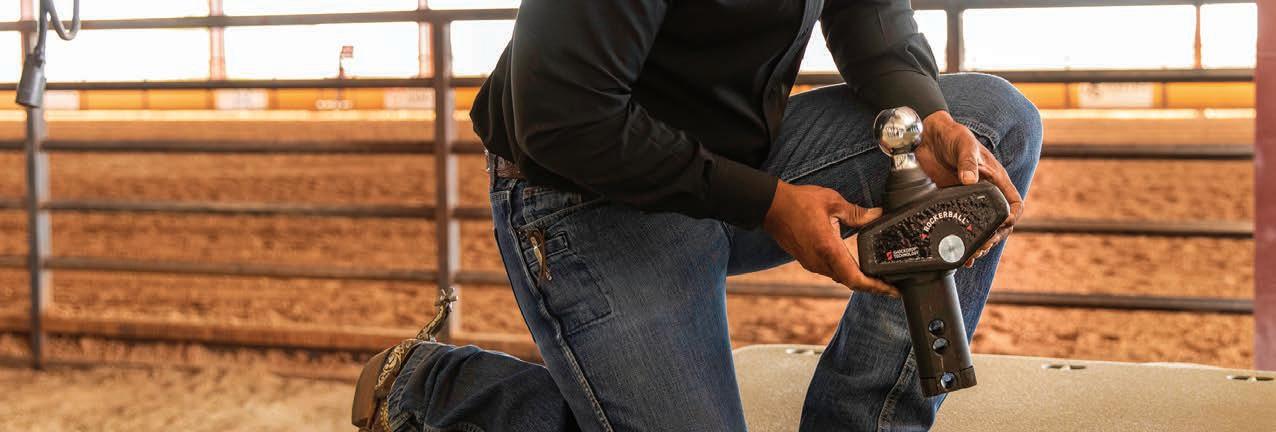
ROCKERBALL™ CUSHION HITCH GOOSENECK BALL
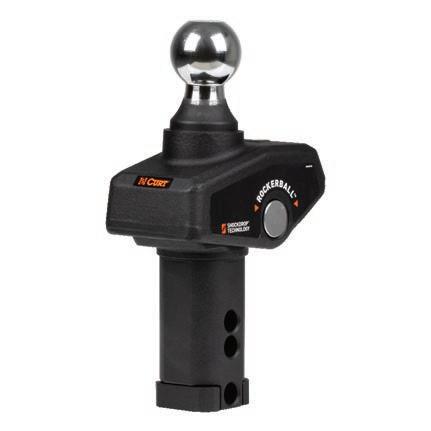
• Cushioned isolator improves ride comfort for animals and passengers
• Offset pin dampens vertical chucking and fore-aft motion during starts and stops
• Compatible with CURT and B&W® gooseneck hitches with round or square holes
• Simple, drop-in installation to easily replace traditional gooseneck ball
• Virtually maintenance-free with no airbag or bearings to service

TRUST THE TOWING EXPERTS | curtmfg.com
Scan to learn more!
Common Drug Could Increase Risk of Sudden Death in Racehorses
By Mark Andrews
A drug that has been widely used in Thoroughbred racehorses in North America could increase the risk of sudden death, according to a new study. The research also identified other risk factors associated with sudden death relating to the circumstances of the race and individual histories of the horses.
The research, conducted by Dr. Euan Bennett of the University of Glasgow’s School of Biodiversity, One Health & Veterinary Medicine, and Professor Tim Parkin of the University of Bristol Vet School, is the first large-scale study of sudden death in Thoroughbred racehorses.
The work was funded by the Grayson Jockey Club Foundation. A report is published in the Journal of the American Veterinary Medical Association
The study analysed over four million starts in horse racing over a 12-year period, using data recorded in the Equine Injury Database (EID), which contains details of nearly all official race starts made in the United States and Canada. About one in 10,000 race starts resulted in a racingrelated sudden death for a horse.
For this study, “sudden death” was taken to include any fatality occurring within three days of racing where the cause of death recorded in the EID was sudden death, pulmonary haemorrhage, exercise-induced pulmonary haemorrhage (EIPH), post-exertional distress/heatstroke (PED), or cardiac arrhythmia. Fatalities due to catastrophic musculoskeletal injury were not included.
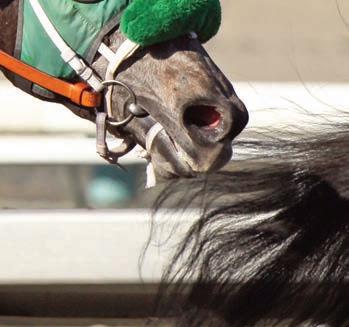
The researchers identified a notable risk factor related to race day medication. Horses that were recorded as being administered furosemide were 62 percent more likely to experience sudden death compared to horses that weren’t on furosemide.
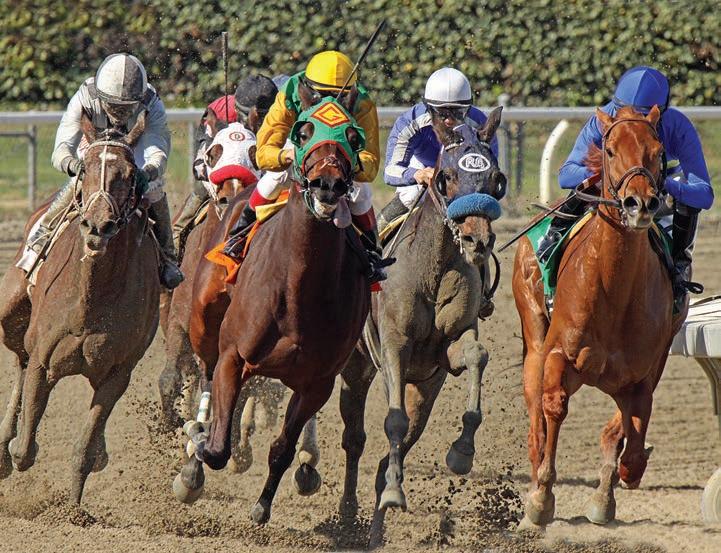
Furosemide (also known as frusemide and by the trade name Lasix®) has been

used to prevent exercise-induced pulmonary haemorrhage (bleeding in the airways). It is also associated with enhanced racing performance. As a result, 94 percent of horse starts in the study were on furosemide.
The ethics of race day medication are controversial. Furosemide is already restricted or prohibited on the day of racing in certain circumstances, depending on jurisdiction.
The results also suggest that it might be possible to identify horses at risk of sudden death before they experience it — for example, due to previous injury and interruption to training or racing.
Amongst other findings were that the risk of sudden death was greater for stallions compared with mares, and for horses five years or older compared with horses three years old or younger. Other risk factors identified include season and value of race, and race distance.
“Over the last 12 years, the overall risk of fatality within three days of racing has decreased by over 30 percent, but the incidence rate of sudden deaths has not changed significantly,” says Dr. Bennett. “This suggests that while interventions have been made which have contributed to a reduction in catastrophic injury, there are different sources of risk for sudden death which have not yet been identified.
“This study suggests that a risk profile, identifying which horses are at the greatest risk of sudden death, may be possible. Given how rare the outcome is, further work is required to establish any potential interventions which might contribute to a reduction in sudden deaths.
“On the association between furosemide use and sudden death, the fact that furosemide use is so common makes this result particularly remarkable given the statistical power of this largescale study. Discussions around the ethics of race day administration of drugs should factor in potential risks such as those identified here, and further work is required to understand exactly why we identified this association.”
For more details, see: Fifteen risk factors associated with sudden death in Thoroughbred racehorses in North America (2009–2021); published in Journal of the American Veterinary Medical Association (2022). b
20 Canada’s Equine Guide 2023 CANADA’S HORSE INDUSTRY AT YOUR FINGERTIPS
Published with the kind permission of
Mark Andrews, Equine Science Update.
HEALTH
PHOTO: DREAMSTIME/CHERYL QUIGLEY












Ready-To-Use Citronella Scented Aqueous Equine Insecticide Spray • Won’t Attract Dust • Quick & Efficient Knockdown Formula
Wipe or Spray On Application 800.231.2966 WWW.PYRANHALIFE.COM FAMILY OWNED & OPERATED MADE IN THE USA WHEN THE BEST IS YOUR ONLY OPTION. OPTION.™ KILLS & REPELS Stable Flies, House Flies, Horse Flies, Deer Flies, Face Flies, Gnats, Ticks & Mosquitos IT WORKS!
•
•
Barn Management Tips to Defend Against Dust
By Equine Guelph
Equine Asthma or “heaves” can cause exercise intolerance, difficulty expelling air, inflammation of lung epithelium and narrowing of bronchus, persistent cough, and nasal secretions from mucous production. All of the above can turn a riding horse into a pasture ornament and or in worst case scenarios, bring about important quality of life de-
cisions. Don’t wait for these signs or a tell-tale heave line to appear before taking steps to reduce dust, mould, and particulates in your horse’s environment. Two of the top sources of these are hay and bedding. These management tips will help you minimize dust and provide a healthier environment for horses and people.
Hay:
• Purchase hay that has been tested for quality. It will also help stretch your feed dollar!
• Store hay on pallets (to reduce moisture from ground) and in a separate building away from the barn, but not in the indoor riding arena. Doing so provides the benefits of a fire prevention measure as well as dust reduction in the horse’s environment.
• Hay should be sufficiently dried before storing, and then monitored for moisture content. Storing damp hay provides an environment of moisture and heat for mould to thrive and multiply, and also creates a fire hazard.
• Visual evaluation of hay is important, but not all mould and particulate can be detected with the naked eye. A hay test for mould contamination can be done.
• Feed from the ground when possible. If you use a hay net, wet it down just before hanging it.
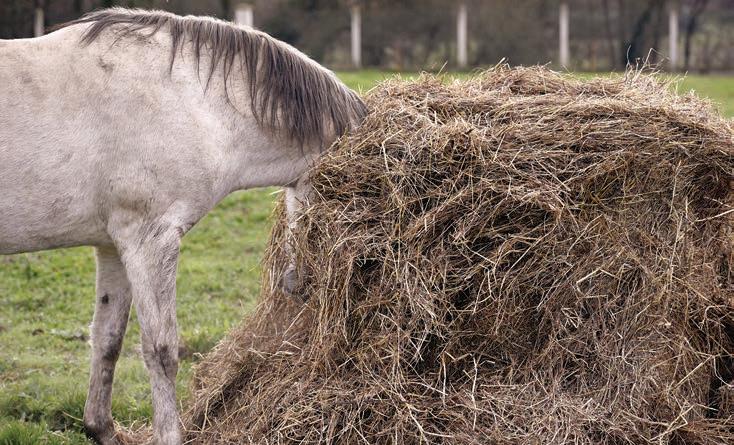
• Round bales are not recommended. Horses that spend their day buried neck-deep in a round bale are inhaling a copious amount of mould, mycotoxins, and dust. This can double the risk of developing equine asthma.
• Consider wetting or steaming hay, or feeding hay alternatives such as hay pellets, cubes, or haylage if the horse’s breathing is negatively affected by the hay.
22 Canada’s Equine Guide 2023 CANADA’S HORSE INDUSTRY AT YOUR
FINGERTIPS
HEALTH
Horses that spend hours a day with their faces buried in a round bale have an increased risk of developing equine asthma.
PHOTO: SHUTTERSTOCK/ARTZUM
PHOTO: SHUTTERSTOCK/TAMARA L SANCHEZ
In the Barn:
• Consider wood shavings over straw, and always choose low dust, absorbent bedding.
• Turn horses out before mucking stalls.
• Keep ammonia smells at bay with daily stall cleaning and control products as needed. If you smell it, the ammonia is at a level which can put your horse’s airways at risk.
• Proper drainage and the use of a nonporous flooring reduces odour retention.
• Keep windows and doors open to improve air flow and ventilation.
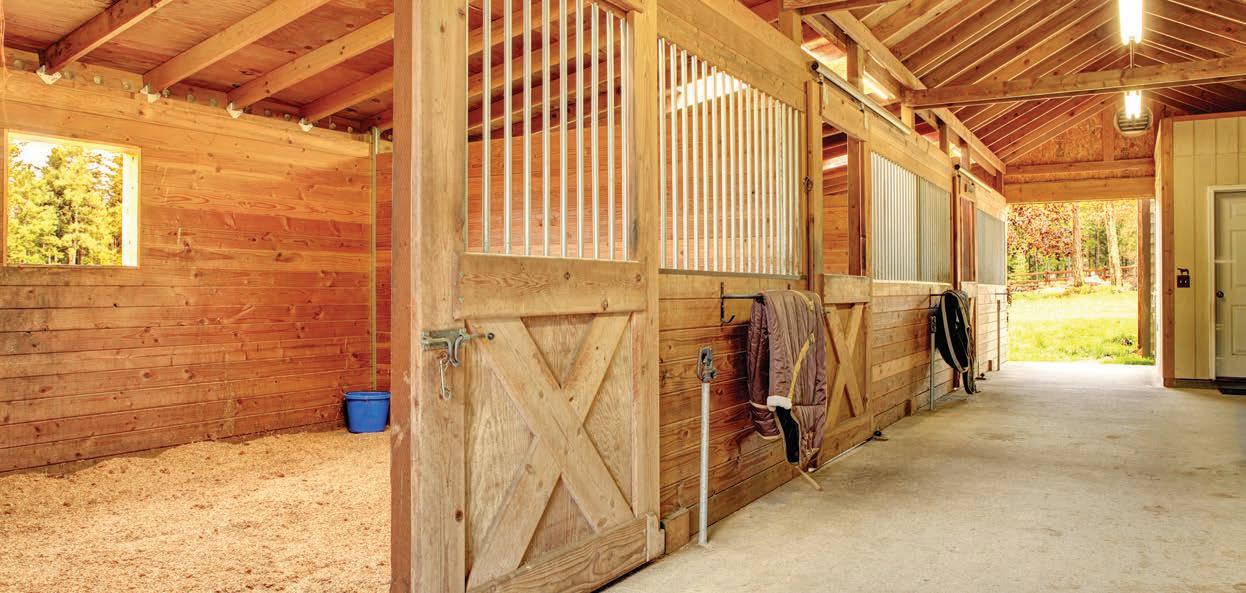
• Ventilation is a primary concern when building a barn, but many stables lack adequate circulation of fresh air. A combination of inlets (e.g., vents) and outlets (e.g., cupolas) help provide ventilation, especially once barn windows and doors are closed up to provide warmth in the winter.
• Mechanical ventilation is another popular option (e.g., ceiling fans, exhaust fans).
• During stable design consider bars on the stall fronts, instead of solid boards, to improve the flow of air.
• Proper insulation helps avoid condensation problems and damp conditions.
• Do not sweep dust and debris from the barn aisle into your horse’s stall; in fact, don’t sweep at all when horses are in the barn. Wet down the floor before you begin and wear a mask for your own respiratory health.
In the Arena:
• Choose footing wisely and replace as needed. Fine smooth particles are more prone to suspension than heavier angular particles.
• Footing in the arena must be regularly maintained to remain moist and prevent dust from rising into the air.
• Additives and environmentally friendly oils help bind particles and slow evaporation.

Always:
Keep horses outside as much as possible unless medical conditions require stalling or the horse has an equine asthma issue associated with the pasture. If your horse begins to cough, call the vet right away to investigate the cause. When dealing with respiratory ailments, early diagnostics, aggressive treatment, and environmental management are of paramount importance. b Published
23 CONNECT TO THE HORSE INDUSTRY www.HORSEJournals.com Canada’s OFFERING CERTIFICATION COURSES IN: • Equine First Aid • Craniosacral Therapy • Equine Massage • Kinesiology Taping • Reiki • Cold Laser Therapy • Holistic Nutrition and more! www.HolisticAnimalStudies.org Use the coupon code THANKS for 20% OFF any course, bundle, or payment plan enrollment. Enroll in an Equine Bodywork Course and complete at your own pace PAYMENT PLANS AVAILABLE! holistic-animal-studies-byangels-animals-llc.thinkific.com
with the kind permission of Equine Guelph.
24 Canada’s Equine Guide 2023 CANADA’S HORSE INDUSTRY AT YOUR FINGERTIPS
Parenting is a difficult job. Parenting while working is even tougher. But parenting while working as an equine professional has unique challenges.
“Horses are as demanding as kids,” says Carmie Flaherty, an upper-level dressage rider and high-performance coach based in Langley, British Columbia. “So, it’s a lot to juggle. You’re at the beck and call of both, all the time.”
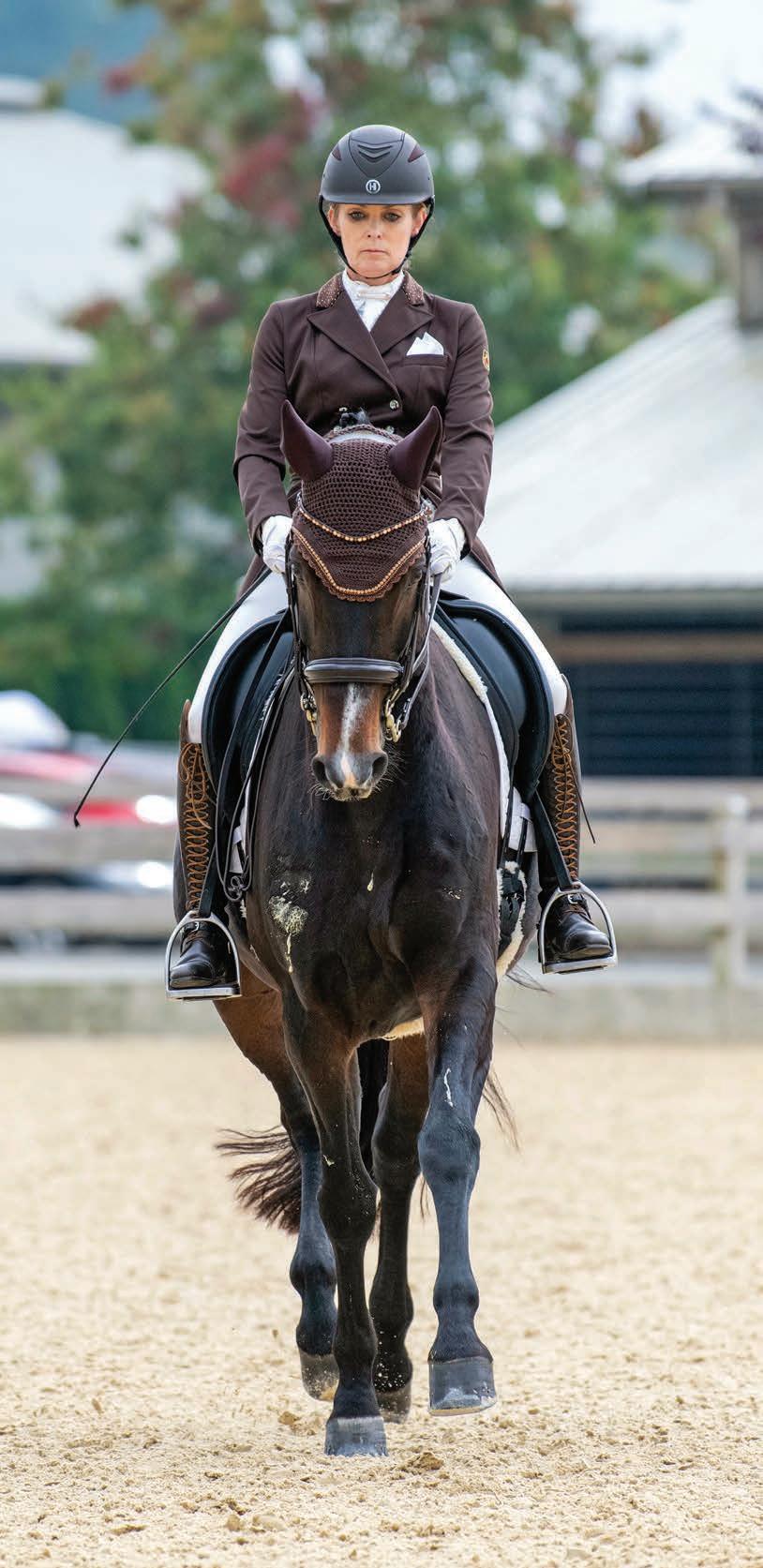
Flaherty’s two children are now in their twenties but when they were young, the family moved around the United States following Dad’s hockey career. She developed a riding and coaching business while parenting full-time, as her husband was away eight months of the year. When the kids weren’t in school, they joined Flaherty at the barn.
When her children were young, and with her husband away eight months of the year, dressage rider and high-performance coach Carmie Flaherty developed a riding and coaching business. She made the decision not to pursue top level competition rather than sacrifice time with her children.
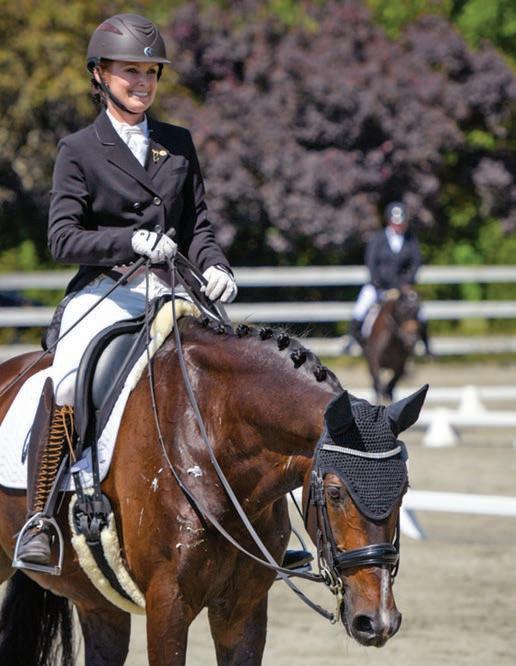 PHOTO: CARA GRIMSHAW PHOTOGRAPHY
PHOTO: DIVINEEQUINE.CA
PHOTO: CARA GRIMSHAW PHOTOGRAPHY
PHOTO: DIVINEEQUINE.CA
25 CONNECT TO THE HORSE INDUSTRY www.HORSEJournals.com
Being Creative
“I could teach,” says Flaherty. “I just brought snacks and entertainment and they stayed in the lounge.
“A lot of stables had a TV, microwave and bathroom,” she adds. “The kids could go jump on the trampoline or play in a tree house. One place had a tennis court. If they needed something, people around the barn helped out. There were dogs around. We got a pony that my daughter would ride.”


“You have to be resourceful,” Flaherty says. “I’ve had a kid in a snugly [while] lunging a horse because that’s the best I could do.”

Difficult Choices
But Flaherty made a conscious decision not to pursue top level competition even though she had a horse listed for the Canadian team when her daughter was young.
“You have to be willing to sacrifice time with your kids to compete internationally,” she says. “I think it depends [on] how committed you are to your kids and your riding. It would have been too big of a distraction for me to go to California, Florida or Europe with my kids in tow. So, it’s something I chose not to do.”
For professionals in the horse industry, these are difficult choices. Some riders choose not to interrupt their competitive careers by having children. Other men
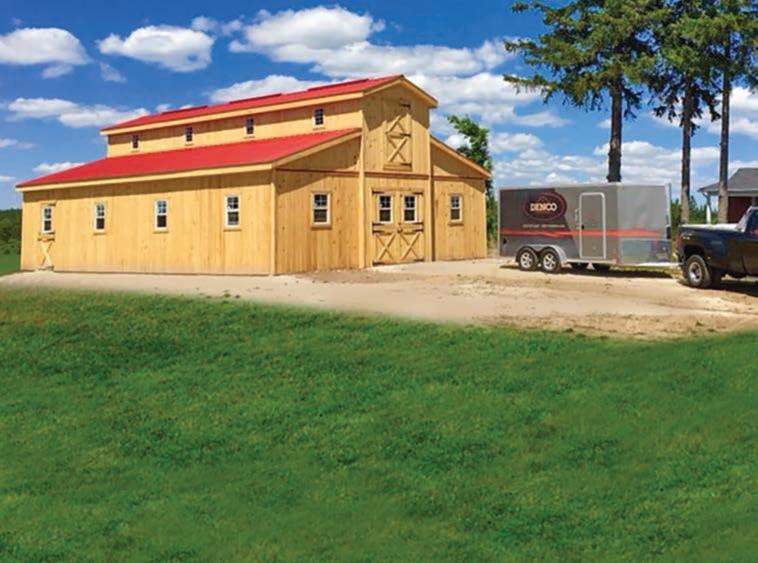
26 Canada’s Equine Guide 2023 CANADA’S HORSE INDUSTRY AT YOUR FINGERTIPS Quality Modular Barns, Row Barns, and Run-in Sheds DENCO STORAGE SHEDS INC. www.DencoSheds.ca 8309 Wellington Road, Moorefield, ON • 519-638-5550 We will custom build your dream barn to suit you and your horses’ needs. Our team will work with you to design a barn to your specifications. For over 20 years • Check out our website for floor plans and ideas! Serving all of Ontario
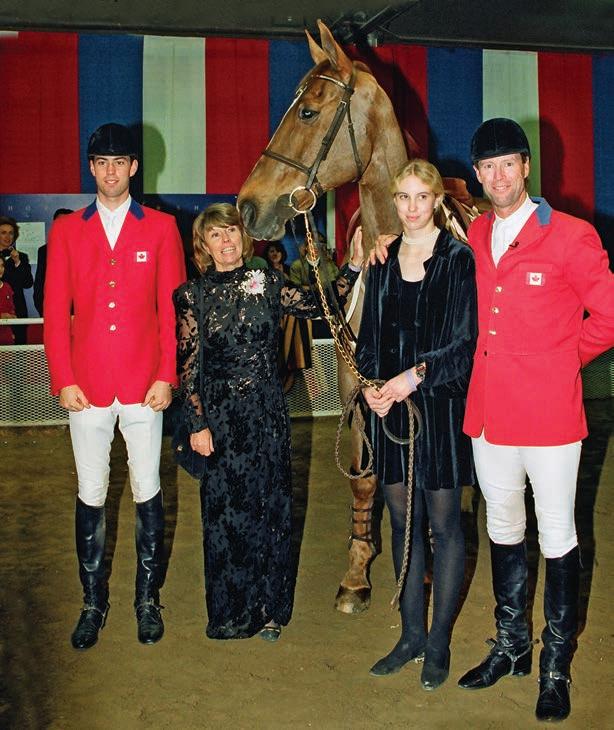
The Millar family (L-R) Jonathon, Lynn, Amy, and Ian at the retirement celebration for Big Ben at the Royal Winter Fair in 1994.
PHOTO: CLIX PHOTOGRAPHY
and women choose to put aside their riding or competitive aspirations to parent their kids. Some, like Flaherty, decide to do both.
“I don’t know that there’s a good time for a rider to be pregnant,” says Flaherty. “That was my initial concern. I didn’t want to be sidelined from riding while I was pregnant.
“I think having kids is scary for anybody,” she says. “It’s such a big undertaking, such a commitment and a big part of your life. You have to be a selfless person to parent and ride because both are so demanding.”
Support from a partner, extended family, or a paid nanny certainly help horse industry professionals pursue their chosen career while parenting. It may even be imperative.

“I know [women] who had kids and then decided they wanted to pursue an international riding career,” says Flaherty. “They’ve sacrificed time with their kids to go abroad and left their kids with the father.”
For some children, their exposure to horses as part of the parenting they received has determined their life trajectory. Being immersed in horse sport has resulted in several top Canadian riders’ children developing their own high profile careers in the horse industry. Dressage rider Eva Maria Pracht and her daughter Martina both represented Canada internationally. Ian Millar’s son Jonathon and daughter Amy have both show jumped for Canada and Amy is now balancing parenting with her equestrian career. Waylon Roberts, son of Canadian three-day eventers Ian Roberts and Kelly Plitz, grew up eventing with his parents and has now represented Canada. Canadian show jumpers Mario Deslaurier and Jay Hayes both have daughters who have followed their fathers’ successes and now excel at show jumping.
Making it Work
But developing parenting skills while balancing a demanding, unorthodox career, is tricky.
“It’s not what you know about parenting that matters, but how you manage to parent while being a horse professional,” says Alicia Harper, an English and Western competition coach in Prince George, BC who owns and operates Hylee Training, a coaching, training, and boarding facility. She and her husband have two boys, ages seven and 11, neither of whom are interested in riding.
“The biggest challenge about having kids when working as a professional in the horse industry is getting through the younger years,” says Harper. “When they were babies, I had to arrange showing around when we had child care. I certainly wasn’t traveling out of town. I had a nanny who would cook their meals and take care of them throughout the day. Now I can go to whatever show I want. I just take them with me.”
“The kids show with me all summer in a living-quarters trailer,” says Harper,
explaining that her husband is often out of town for work. “They make friends at horse shows with other trainers’ children. My younger son is really good at getting a little gang together. The other kids flock to him and soon there are ten kids running around the showground.”
“We bring everything from TVs and video games to bikes and scooters,” says Harper. “So they’ll bike around and come back to the trailer to play a video game or something. They’re pretty self-sufficient.
“The kids know where to find me and
27 CONNECT TO THE HORSE INDUSTRY www.HORSEJournals.com Insurance for
(and their people). Insuring the equine community for over 25 years, we’re Canada’s most trusted insurance broker for horse owners. Learn more about our equine insurance products and risk management services at capricmw.ca/equine, or call 1-888-394-3330. CapriCMW is now Acera Insurance. Same great people, stronger than ever.
horses
Practical education.
HANDS-ON LEARNING.
Lakeland College was founded on the belief that students learn best through action. Hands-on learning has always been our focus. Whether you come to Lakeland to learn about commercial horse production, range management, equine husbandry and more, come prepared to learn by doing.
lakelandcollege.ca/equine
28 Canada’s Equine Guide 2023 CANADA’S HORSE INDUSTRY AT YOUR FINGERTIPS
PHOTO: ALAMY STOCK
Canadian Olympians

people get to know who your children are,” Harper explains. “The lady at the show office will send me a picture of my kids down there, chatting away.
You just have to give them activities that they want to do. If they want to take their hockey nets and sticks to the horse show, then guess what we do? Or if we’re at a horse show and they want to go swimming, then I take time out to go swimming.”

When not showing, Harper works Monday to Friday from 8am to 5pm in her facility at home. However, she admits the kids miss out on things because of her horse business.


“We don’t get much homework done,” she says. “I don’t go to parent-teacher things or volunteer at school. Plus, sometimes they miss school for my competition schedule.
“We try to balance that out by taking them to hockey all winter,” says Harper. “They both play, so we travel a lot for hockey. I’m the manager for one of the teams and my husband coaches.”
Like every parent, Harper is learning on the fly how to work while parenting her kids. But the demands of operating a boarding facility while coaching students and advancing her own riding provide additional challenges. Meeting those challenges every day requires developing effective management and parenting strategies. Here are four tips for those wondering how to do it:

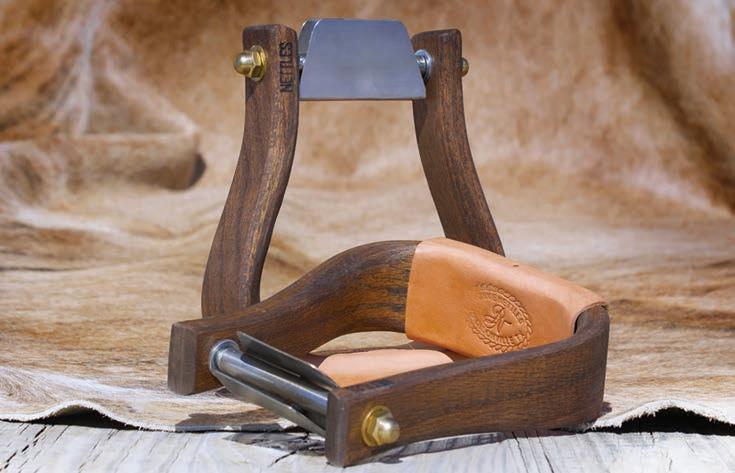
29 CONNECT TO THE HORSE INDUSTRY www.HORSEJournals.com The Leveler FOR A BETTER RIDE Do your feet hurt or fall asleep while riding? Do your ankles, knees, or hips ache when you’re in the saddle? You need the NETTLES LEVELER for a level ride that helps alleviate the pain. www.Nettles-Stirrups.com 1-800-729-2234 orders@nettlescountry.com Nettles Stirrups are available at your better Canadian Western stores. The Leveler
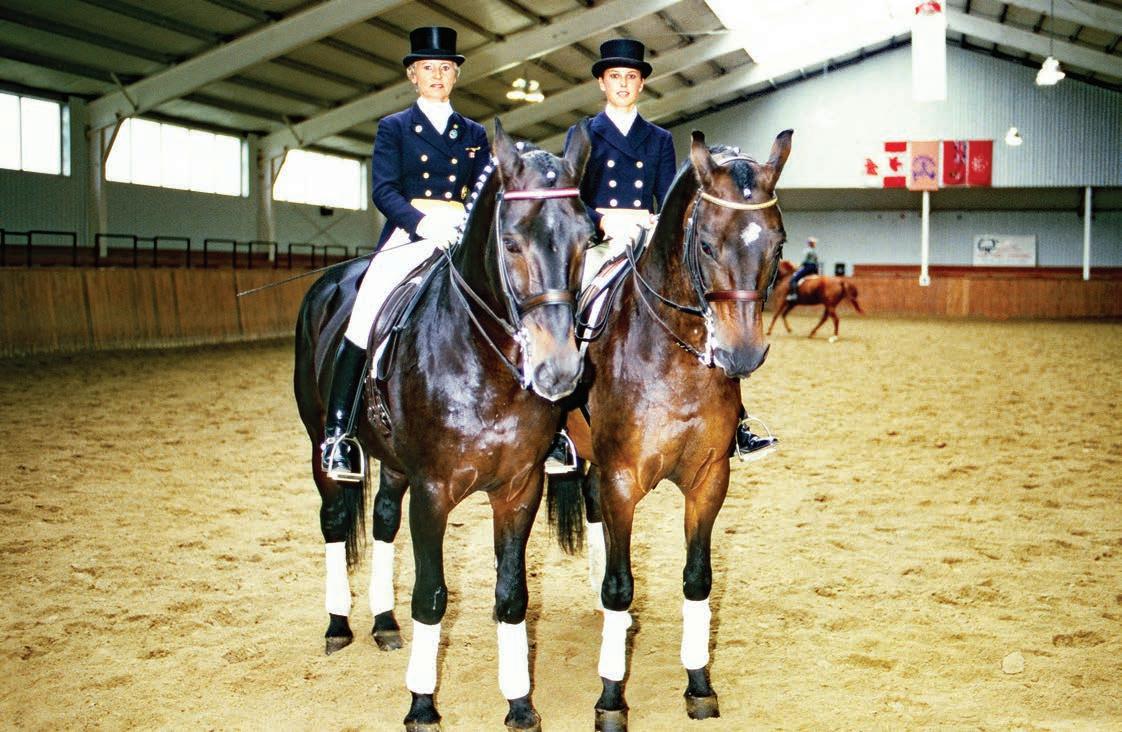
Eva Marie Pracht and her daughter Martina Pracht in 1991. During her career Eva Marie coached many equestrian athletes including Martina. Eva Marie’s granddaughter, Sabrina von Buttlar, continues the family tradition by competing in the hunter/jumper ring.
<
Martina Pracht with Eva Marie, who passed away on February 15, 2021, at the age of 83.
PHOTO: CEALY TETLEY
<
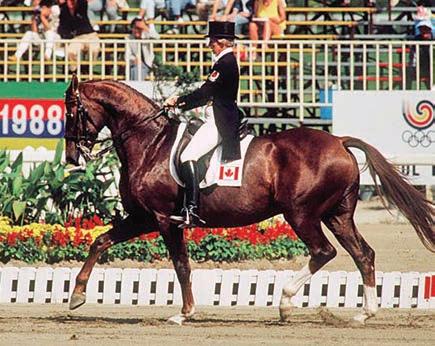
Eva Maria Pracht riding Emirage at the 1988 Seoul Olympics.
As a coach, trainer, father, and grandfather, Ian Millar wears many “hats.”
In the article The Magic of Ian Millar in the Summer 2019 issue of Canadian Horse Journal, Ian Millar describes competing with son Jonathon and daughter Amy:
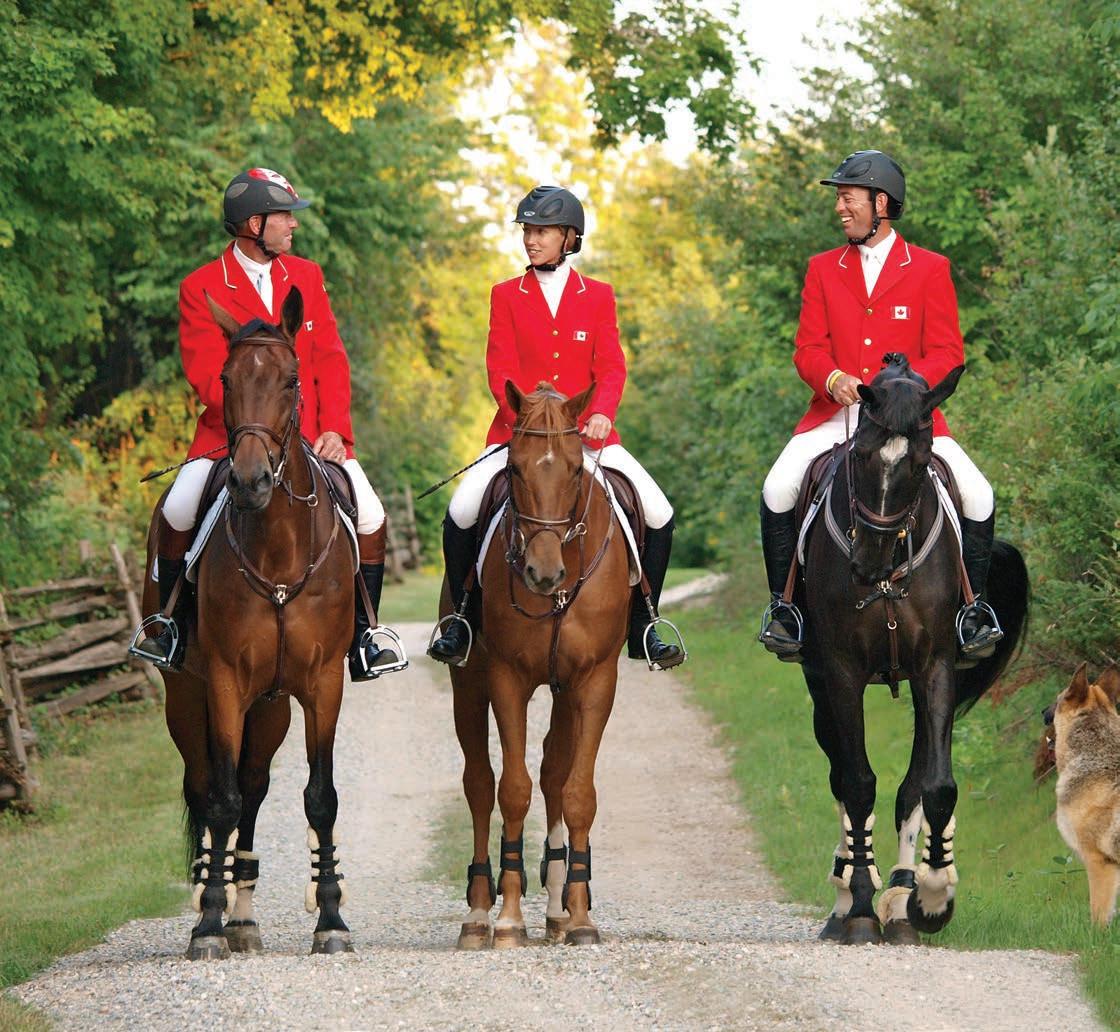
“Some years ago [in 2000] Jonathon, Amy and I were three parts of the Canadian Nations Cup team [at the BMO Financial Spruce Meadows Masters tournament],” says Millar. “Jill Henselwood, a student of mine, was the fourth rider. As if I didn’t have enough stress myself doing it, that was a long day’s work for my late wife Lynn and I, but it was a fantastic thing
to have the whole family doing the Nations Cup for Canada.”
Millar also described “switching hats” in order to coach Amy for the 2016 Rio Olympics after his own mount, Dixson, developed sinus haematoma issues and Amy stepped up to take his place on Team Canada.
“This was Amy’s first Olympics. I was so happy and proud for her to have that. But it was the toughest job of training I’ve ever had because of the pressure and the importance of it all. To take my father’s hat off when I walked down to that warm-up area and just be 100 percent trainer was very difficult. I could
not think of Amy as my daughter at that point, but as the rider I was training. This was an athlete we were getting ready for an Olympic competition and sometimes it can go wrong. So, to get out there with that attitude with my daughter, mother of my granddaughter Lily, it’s not an easy thing to do. When she came out of the ring we’d talk afterwards. I’d talk as a trainer and analyze the whole subject in a very clinical way. Then at another time, I became her father. Switching those roles back and forth throughout Rio was an exhausting, rewarding, magical experience to have with my daughter.”
30
PHOTO: PAM MACKENZIE
“I think you have to be more of a freerange parent to be in the horse industry,” says Harper. She allows her kids to make choices, entertain themselves, and make new friends, sometimes with minimal supervision.
Flaherty had a similar strategy. Her kids went everywhere with her and learned to become good at finding things to do when she was busy with horses. It’s taught them life skills of resilience, independence, and confidence.
2 Make Time for the Kids

“I give them 30 minutes of my day, where I pay attention to them and I’m not on the phone or the computer,” says Harper. “That keeps them happy.” Although it doesn’t seem like much, Harper says regular short bursts of oneon-one time helps her understand what the kids are feeling and thinking. It prevents surprise outbursts and encourages them to share anything that’s upsetting them. It also shows that their concerns matter and that she’s there to help them with their everyday problems dividends which will hopefully pay off when they become teens.
3 Balance Trade-offs






















Flaherty says life was a continual balancing act, ensuring the kids got to school and their activities, plus ensuring that she could ride, care for her horses and teach lessons.
“I would get home from the barn tired and the kids were hungry,” says Flaherty. “So, I learned to plan ahead and have entertainment ready for the kids. Plus, maybe they wouldn’t do chores because they’ve got homework and it’s taken so much time just to get everything done.”
“Sometimes horse professionals don’t think they can keep riding or teaching and have kids,” says Harper. “But it’s definitely doable.”
4 Get Organized
Both Flaherty and Harper say they’ve had to schedule everything. That means sitting down before the show season and planning which shows they will attend, which major activities their children will go to, and who will be parenting at each stage. They also plan each week, thinking about and discussing with the kids how it will roll out, and negotiating schedules to ensure everyone is somewhat happy with the compromises.

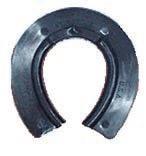
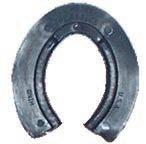
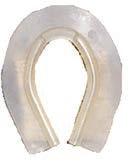
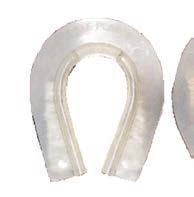
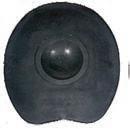
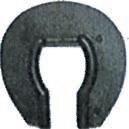
31 CONNECT TO THE HORSE INDUSTRY www.HORSEJournals.com CASTLE PLASTICS Square Toed Rim Sno Small - 5 5/8" x 5 1/2" x 1/8" Large - 6 5/8" x 5 3/4" x 1/8" Castle Plastics Sno Pad • Regular Snoball Pad • Large Snoball Pad • 2° Snoball Pad • 2° Large Snoball Pad • Draft Snoball Pad • Orange Snoball Pad Orange Rim Sno Small Front - 61/4" x 55/8" x 1/8" Large Front - 7 3/8” x 6 7/8" x 1/8" Hind - 67/8” x 6” x 1/8” Draft - 8½” x 7 7/8” x 1/8” Rim Sno Pad • Front & Hind in Black • Front & Hind in Clear • Large Front in Clear • 2° Front & Hind in Black 11 Francis Street, Leominster, MA, USA 01453 • castle@net1plus.com 1-800-9-CASTLE • castleplastics.com SAFE WINTER RIDING MANUFACTURED IN POLYURETHANE MATERIAL Every Style & Size You Need for 1 Be Resourceful

PHOTOS: GKPHOTOS
Ultimately, parenting while being an equine professional is challenging. But many women and men are managing to balance both. Some top international riders have had children and carried on, their careers seemingly unaffected. Others have chosen to reduce or alter their competition plans at different stages of their children’s lives, depending whether their horses or kids are the main priority. Those personal


choices are difficult but not insurmountable, and they’re choices that parents have been making for decades. There are lots of parents in the horse industry making it work.

“You can still be an athlete and do what you like to do,” says Flaherty. “Kids don’t take that away from you.” b

33 CONNECT TO THE HORSE INDUSTRY www.HORSEJournals.com We’re gearing up for spring with great specials on select trailers. Check out the Sales & Clearance section on our website today! VANTAGETRAILERS.CA LETHBRIDGE: 1.403.320.9889 LACOMBE: 1.403.782.5500 WESTERN CANADA’S PREMIUM HORSE TRAILER DEALER Providing Quality Service for the Long Haul
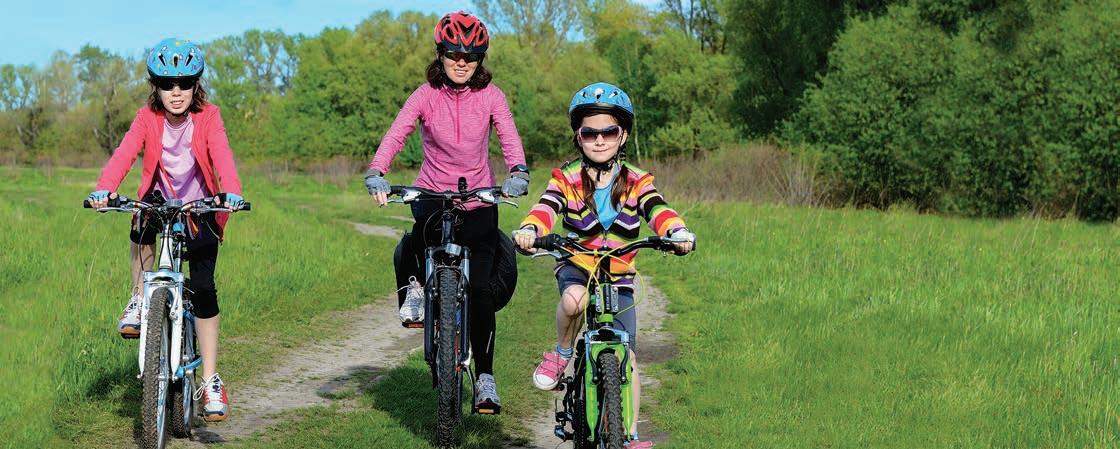
No matter how busy your schedule, always make time for one-on-one activities with your children and the things they want to do.
> Tania Millen is a regular contributor to this magazine — read her bio on page 94.
PHOTO: SHUTTERSTOCK/JAYSI PHOTO
:SHUTTERSTOCK/SANDRET
FINDING PATHS TO Youth Success
 By Tania Millen
34 Canada’s Equine Guide 2023 CANADA’S HORSE INDUSTRY AT YOUR FINGERTIPS
INDUSTRY
Youth riders are the future of Canada’s equestrian teams, but not every horse sport has dedicated programs to bring along competitive riders aged 12 to 30. Equestrian Canada’s (EC) Long-Term Equestrian Development document provides a road map for athlete development — from those new to horseback riding to riders competing on Canada’s senior teams. Yet there’s no one-stop-shop that describes pathways and programs for youth in unique horse sports. Every sport has different divisions and opportunities to advance, but some lack systematic activities that encourage advancement. Regardless, many riders who have represented Canada internationally have honed their skills through the youth programs and competitions that are available. Here’s a brief summary of programs available for Canadian youth riders, along with insight from those involved.
Show Jumping
For youths keen to develop a show jumping career or ride on Canada’s senior teams, working their way up through the youth divisions is paramount.
Youth show jumping classes are organized by the International Equestrian Federation (FEI) and divided by age and
height. Divisions include children (ages 12 to 14) jumping 1.25 metres, pre-junior (14 to 16) jumping 1.3 metres, junior (14 to 18) jumping 1.4 metres, young riders (age 16 to 21) jumping 1.5 metres, and under 25 (U25) jumping up to 1.45 metres.

Dayton Gorsline is EC’s Show Jumping Youth Development Program coordinator and helps select riders for Canada’s youth show jumping teams.
“There’s a big difference between being on a team and riding as an individual,” Gorsline says. “We don’t have much depth at the senior level, so the young rider experience is invaluable. It allows the younger riders to step up.”
Many young show jumpers aim for the annual FEI North American Youth Championships (NAYC) which attracts junior and young riders aged 14 to 21 years from Canada, the USA, Mexico, and Central American countries such as Panama, Guatemala, Honduras, and Costa Rica. Competitors vie for team and individual medals in the FEI disciplines of dressage, eventing, and show jumping. It’s the first international team event that many youth riders experience and has launched the careers of Olympic medalists.
In 2022 in show jumping, Canada’s

35 CONNECT TO THE HORSE INDUSTRY www.HORSEJournals.com
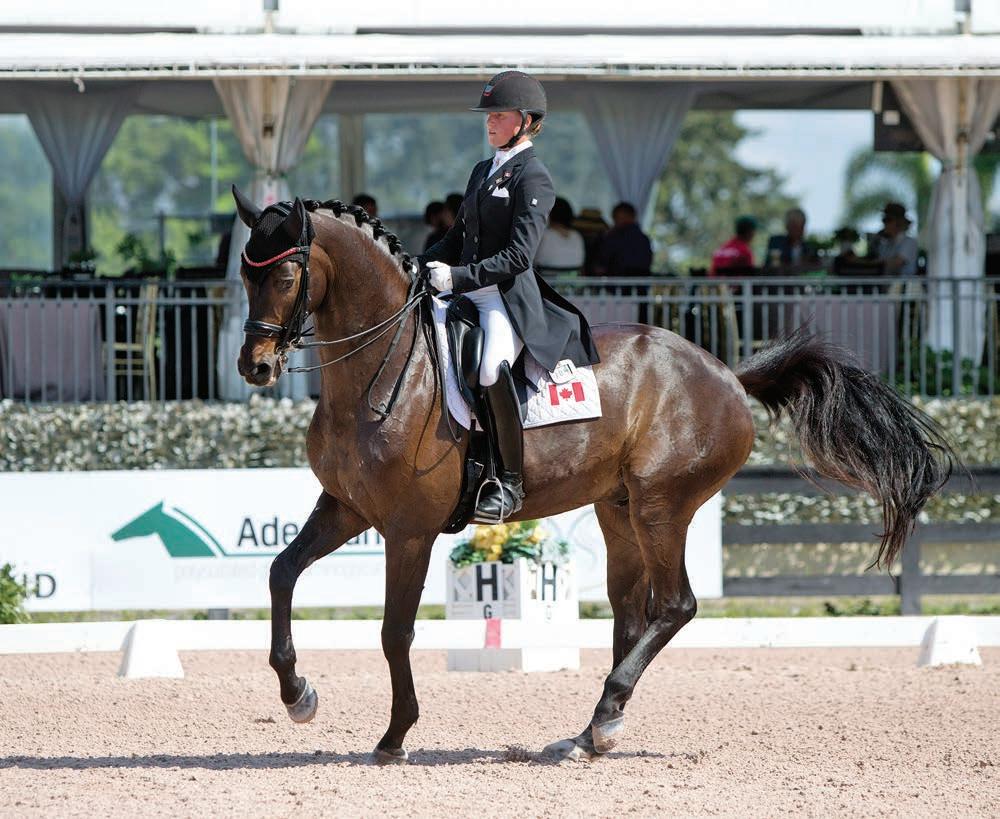
Sara Tindale riding Elco van hof ter Naillen at the Morocco Royal Tour in October, 2022.
Canadian grand prix dressage rider Camille Carier Bergeron started riding in the FEI pony division when she was 12 years of age, and now competes in the Under 25 classes.
PHOTO: STEFANO GRASSO FOR RMT
PHOTO: CEALY TETLEY
children’s division team won gold at NAYC and Canada’s William Martin won junior individual gold. Canada’s young rider team of Sam Walker, Lauren Esdale, Eric Krawitt, and Sara Tindale won the bronze medal.
“It’s rare in show jumping to gain a lot of team experience as a young rider,” says 20-year-old Sara Tindale. “The NAYC are unique because they give young riders the opportunity to experience a championship format that’s like the senior championships. Championships require a certain level of fitness of both horse and rider, strong mental focus, and the ability to stay calm and ride well under pressure. That’s definitely something I had to learn.”
Following NAYC 2022, Gorsline and the young rider team flew to the Netherlands for the FEI Nations Cup Youth Finals — a first for Canada. There, the team won the Challenge Cup.
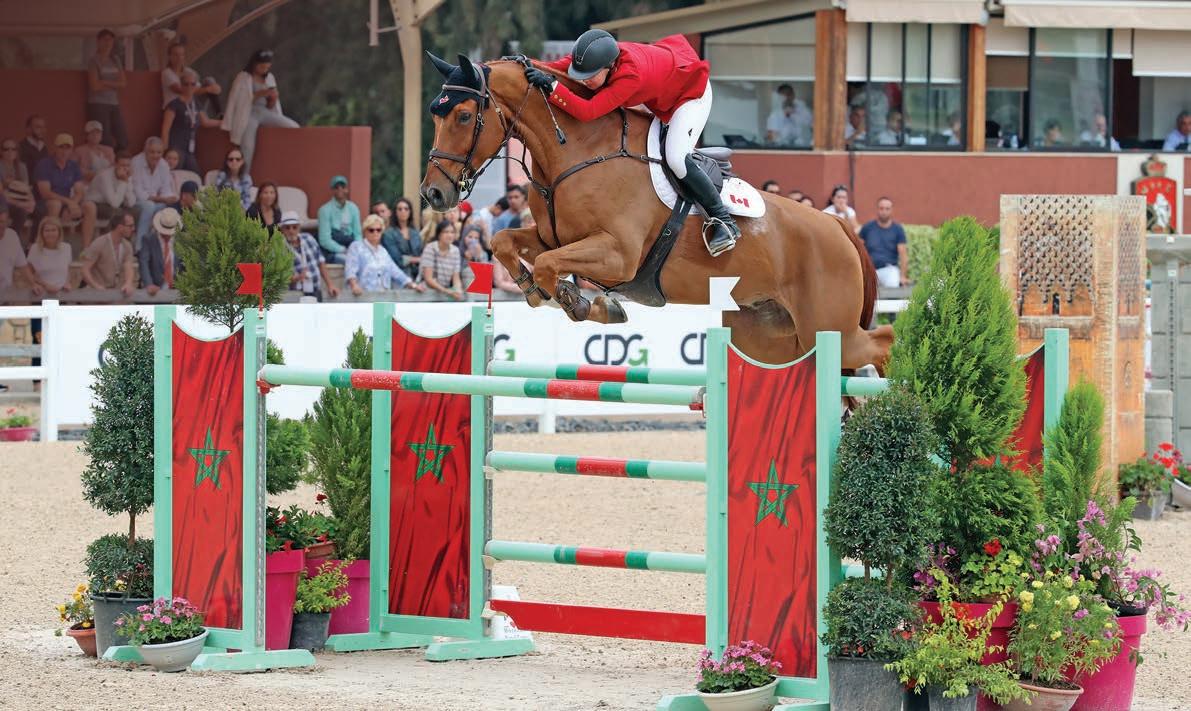
In October 2022, Tindale debuted on Canada’s Senior Nations’ Cup team at the CSIO4*-W in Rabat, Morocco. She was Canada’s only rider with double clear rounds and one of only two riders in the whole competition with double clears.


“Jumping on Canada’s youth teams was a very important stepping stone,” says Tindale. “I felt ready to deliver when I made my senior team debut.”
“I don’t think they could have put Tindale straight onto a senior team without [her NAYC team] experiences,” says Gorsline.
It’s clear that Canada’s youth show jumping program is delivering results, but other horse sports don’t appear to have such well-organized programs.
Dressage
There isn’t a nation-wide program for competitive youth dressage riders in Canada. However, EC, Rising Stars Youth Dressage (RSD), Canadian Dressage Owners and Riders

36 Canada’s Equine Guide 2023 CANADA’S HORSE INDUSTRY AT YOUR FINGERTIPS
In 2022, Canada’s children’s division show jumping team won gold at NAYC and Canada’s William Martin won junior individual gold. Canada’s young rider team of Lauren Esdale (above, left), Sam Walker (above, right), Eric Krawitt, and Sara Tindale won the bronze medal.
PHOTOS: CEALY TETLEY
Association (CADORA Inc.), plus other regional organizations support Canadian youth dressage riders in different ways. Also, like show jumping, the FEI sanctions dressage divisions for ponies (ages 12 to 16), children (12 to 14), juniors (14 to 18), and young riders (16 to 21) which are offered at some Canadian shows. The NAYC for dressage usually run concurrently with the show jumping championships.
Camille Carier Bergeron is a 22-year-old Canadian Grand Prix rider who developed her skills through the FEI youth divisions.
“I started in the FEI pony division when I was 12 years old,” Bergeron says. At age 14 she competed in junior classes, then upgraded to the young rider division at age 16 while continuing to compete in the pony division. Now competing in Under 25 (U25) classes, Bergeron says, “The FEI program is really well organized. Every level prepares you for the next level.”
“FEI classes are international and your results are put on the FEI database,” she says. “Every month they provide a world ranking so even if you’re only competing in Canada or the USA you can compare yourself to riders around the world.”
Competing in FEI young rider classes qualified Bergeron for the NAYC but she’s since moved up to the U25 division. Meanwhile, Canada’s youth continue to pursue excellence at NAYC, which can be a stepping stone to Canada’s senior dressage teams. In 2022, Canada’s junior dressage team won the silver medal at NAYC.
The RSD equitation program helps youth dressage riders develop their skills regardless of whether they aspire to international competition.
“Kids at every level want to be improving,” says Sue Holtby, co-chair of RSD. “Not everybody is going to make it to the pointy end of the pyramid, but that doesn’t mean they don’t have value in the industry.”
The RSD program provides a separate dressage test sheet to judge equitation while the youths ride a standard dressage test. The program is now available nationwide and is endorsed by EC.
Eventing
Canada doesn’t have a nation-wide three-day eventing youth program. However, provincial programs for riders under age 25 are offered by Canadian Horse Trials Association — Quebec, Ontario Eventing Association, Alberta Horse Trials Association, and British
37 CONNECT TO THE HORSE INDUSTRY www.HORSEJournals.com
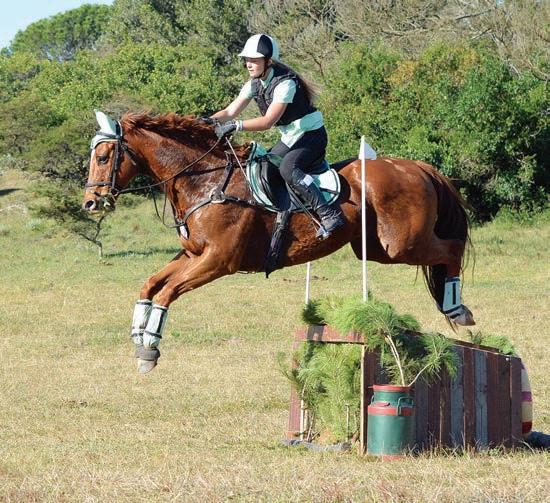
A youth funding program provides funds and coaching assistance to three-day eventing riders competing at specific events in Canada and the USA.
PHOTO: DREAMSTIME/ANKE VAN WYK
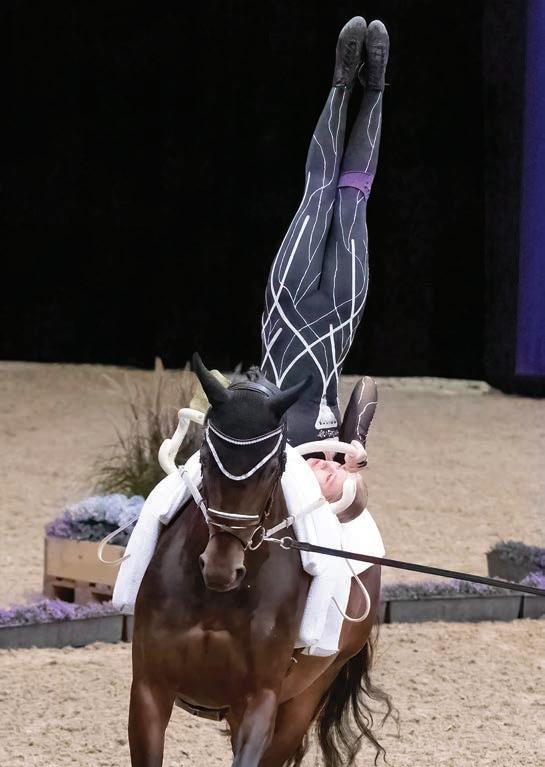
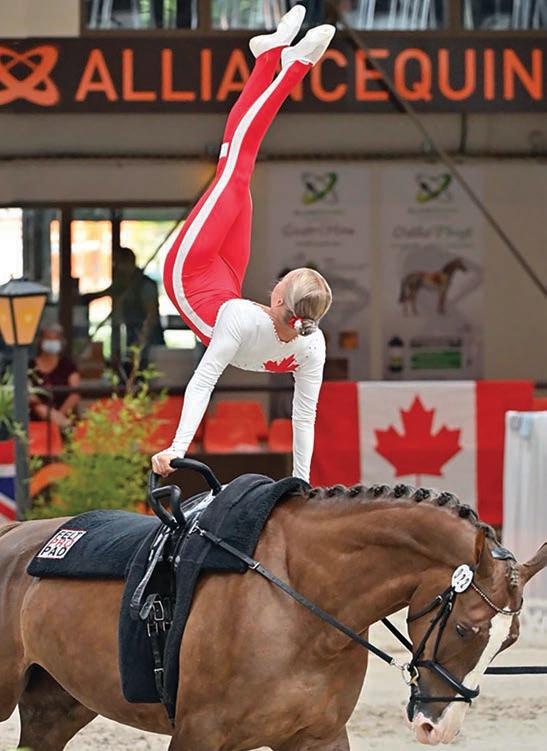
Averill Saunders of Sundre, Alberta performing at the FEI Vaulting World Championships for Juniors in 2021 (above), and for Seniors in 2022 (shown here). Although not available nationwide, there are 17 levels for vaulters in Canada, and athletes can start at any age.
Columbia (BC) Eventing Association. They focus on rider education, training, sportsmanship, and safety and are considered pathways to high-performance, including the NAYC.
Like the show jumpers and dressage riders, youth eventers who have Canadian team aspirations focus on competing at the North American championships. In 2022, Canada’s CCIYR2*L team of young riders won the silver medal at the USEF Young Rider Eventing Championships (which stood in for the NAYC) while Quebec’s Cassandre Leblanc won individual bronze.
Select youth riders are also assisted by the MARS Rising U25 grant program, which offers funding and coaching assistance to those competing at specific Canadian and American events.
Ontario Equestrian GRIT Program
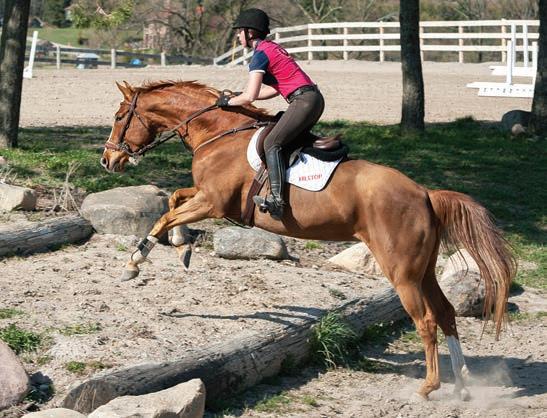
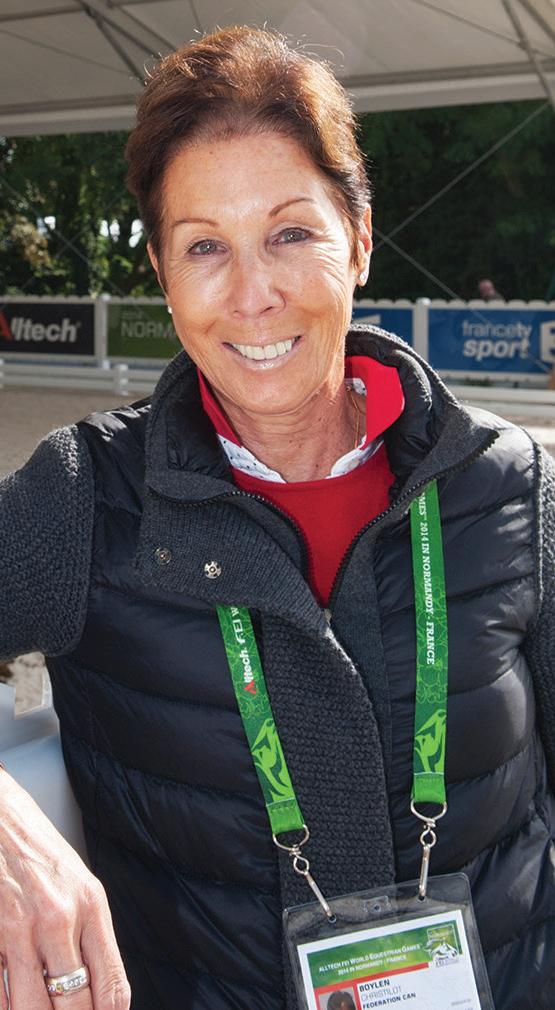
Ontario Equestrian offers a high-performance program called GRIT (Great Rider Intensive Training) to select Ontario riders aged 13 to 30 who compete in dressage, show jumping, and eventing. The purpose of the program is to support podiumbound athletes. GRIT is led by Christilot Boylen, who competed for Canada in six Olympic Games, and includes training camps and sport-specific training with the Canadian Sport Institute of Ontario. In 2022, the program supported 14 riders across three disciplines.
Vaulting
Vault Canada organizes the FEI sport of vaulting in Canada along with regionals clubs in BC, Alberta, Saskatchewan, and Ontario. Due to the demands of the sport, vaulting programs are tailored towards children and youth so it’s more common for those under age 18 to organically proceed through the competition levels and available programs.
“You can start vaulting at any age,” says 18-year-old Averill Saunders, who has been vaulting for 10 years and competed at the 2022 World Championships for seniors. “But you won’t compete at FEI recognized shows until you’ve been vaulting for three or four years.”
There are 17 levels for vaulters in Canada. Those include divisions for children (ages 12 to 14), juniors (14 to 18), youths (16 to 21), and seniors (18 and over).
As vaulting develops worldwide, the first FEI World Junior and Young Vaulters Championships will be held in 2023.
“Canada has 20 athletes trying out for the championship in both youth and junior categories,” says Saunders. “We’ve never
38 Canada’s Equine Guide 2023 CANADA’S HORSE INDUSTRY AT YOUR FINGERTIPS
Three-day eventing has no nation-wide youth program in Canada, but some provinces have programs available for riders under the age of 25.
PHOTO: LES GARENNES
PHOTO: CLIX PHOTOGRAPHY
PHOTO: CEALY TETLEY
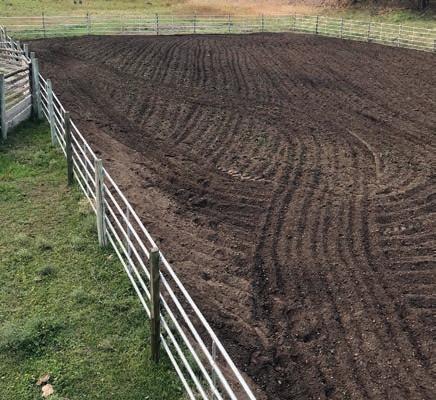
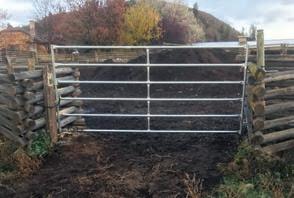
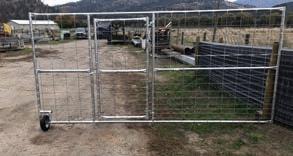







39 CONNECT TO THE HORSE INDUSTRY www.HORSEJournals.com A nutritional supplement developed for the NON-SWEATING HORSE One AC By any name this condition hurts your horse’s ability to perform. Our product may help your horse as it has so many others. Dry Coat? Non-Sweater? Anhydrosis? One AC by Magic Powder Company is available here: www.NonSweater.com 602-866-7701 • mpco@nonsweater.com 250-490-5662 3200 WILLOWBROOK RD, OLIVER, BC V0H 1T5 alc@cffence.com Practical • Durable • User-friendly • Reasonable Prices Continuous Farm & Ranch Fence Arena Fencing • Pastures • Pens • 3, 4, 5, or 6 Rails Suitable for 7 Rail Stud Pens • Several Spacings Available Non Climb Mesh Gate With Wheel Deer Fence Gate With Built In Man Gate Custom Gate for Bull Pen Sprinklers Premium Farm & Ranch Fence Solution • Economical • No Maintenance Very Horse Friendly, Completely Weather & Livestock Resistant www.cffence.com Installation available in BC & Alberta
Six-time Olympian Christilot Boylen leads the Ontario Equestrian GRIT high-performance program to select podium-bound ON riders aged 13 – 30 in the disciplines of dressage,
jumping, and eventing.
PHOTO: CEALY TETLEY PHOTO: CLIX PHOTOGRAPHY
show
CLIX
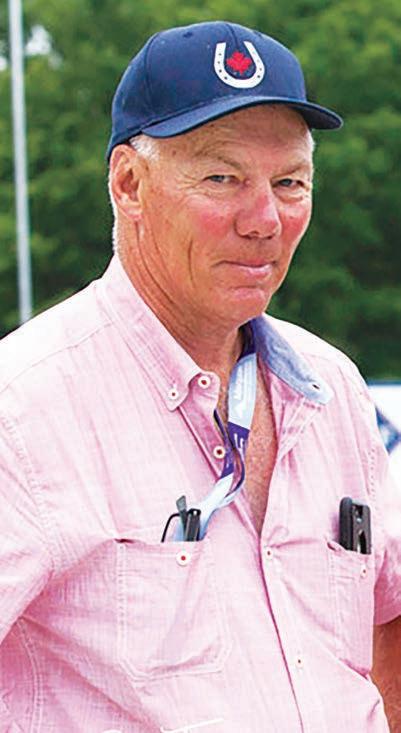
Dayton Gorsline of Okotoks, AB, the Equestrian Canada Jumping Youth Development Program Advisor,
experience is essential to
up.
PHOTO:
PHOTOGRAPHY
believes the young rider
move
Endurance is another discipline without a nationwide youth programming, but several associations across Canada help riders become involved in the discipline. A challenge of involving youth arises because the sport involves riding long distances alone, and accordingly, riders under age 18 must be accompanied by an adult during competition.
had that many athletes trying out before. It shows a lot of development and growth in the sport.”
A new development program is supporting those vaulters by providing them with world class coaching and sports psychologists. Therefore, although vaulting isn’t available countrywide, pockets of programming and support can provide paths to senior success.
Endurance

Endurance is another sport without nationwide youth programming. However, riders can get involved in the sport through the Endurance Riders Association of BC, Endurance Riders of Alberta, Saskatchewan Long Riders, Distance Riders Manitoba, Ontario Competitive Trail Riding Association, Endurance Cheval Quebec, and Atlantic Canada Trail Riding Association.
“We’ve been working with Equestrian Canada to create a coaching program to help get youth and adults involved in the sport,” says Dessia Miller, chair of the EC Endurance Committee and an FEI endurance rider herself.
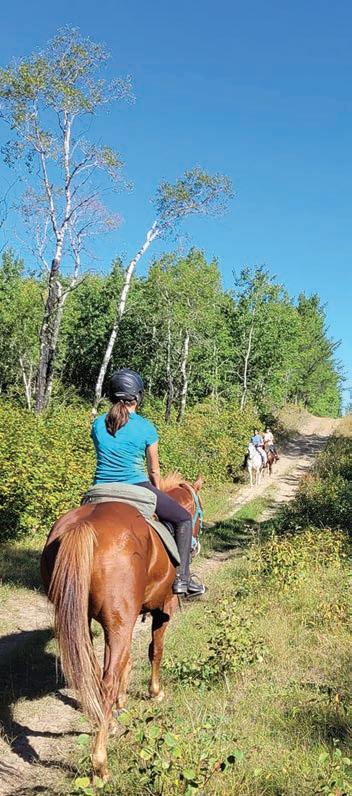
One of the challenges of involving youth is that the sport involves riding long distances alone. As a result, riders under age 18 must be sponsored by an
adult during competition. The adult “sponsor” competes alongside the youth rider while supporting the youth along the trail. Therefore, youth generally become involved in endurance by riding at a stable where others are already involved in the sport.
FEI competitions have a junior/young rider division which includes juniors (age 14 to 16) and young riders (16 to 21). Depending on the year, there are FEI North American, Pan-American, European, and/ or World Championships for juniors and young riders. In 2023, Chile is hosting the Pan American Endurance Championship for seniors and juniors/young riders.
Rodeo
EC and the FEI are not involved with rodeo. Instead, many of Canada’s successful senior rodeo athletes have honed their skills on the high school and college rodeo circuits in Canada and the USA. Canada’s high school rodeos are affiliated with the American-based National High School Rodeo Association (NHSRA) and organized by provincial groups in BC, Alberta, Saskatchewan, Manitoba, and Ontario. Additionally, the Canadian College Rodeo Association hosts rodeos in Western Canada for teams of college and university students.
As a member of Canada’s Senior Nations’ Cup team at the CSIO4*-W in Rabat, Morocco, Sara Tindale riding Elco van hof ter Naillen was Canada’s only rider with double clear rounds and one of only two riders in the whole competition with double clears.
40 Canada’s Equine Guide 2023 CANADA’S HORSE INDUSTRY AT YOUR FINGERTIPS
PHOTO: STEFANO GRASSO FOR RMT
PHOTO: SASKATCHEWAN LONG RIDERS FACEBOOK
• Stackaletti risers and blocks

• Dressage kits and letters




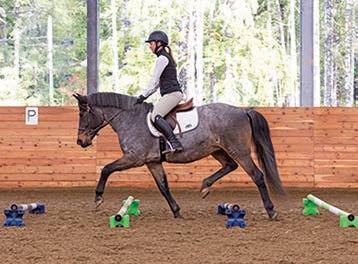
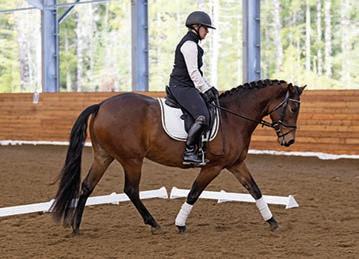

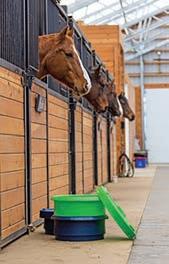
• Standards, fillers and liverpools
• Jump cups and hardware
• Zero maintenance poles
• Wood jump / ground poles
• Stackable feed bowls and lids
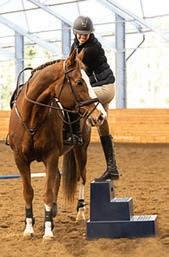
• Mounting blocks
• Custom jumps and more!
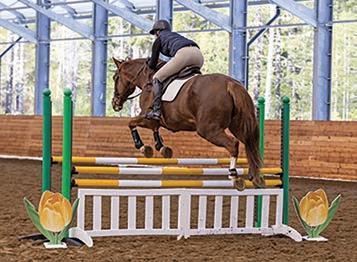
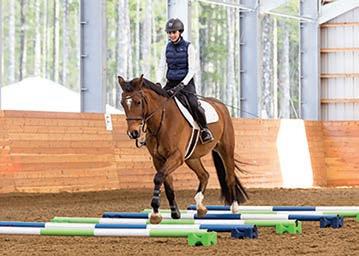
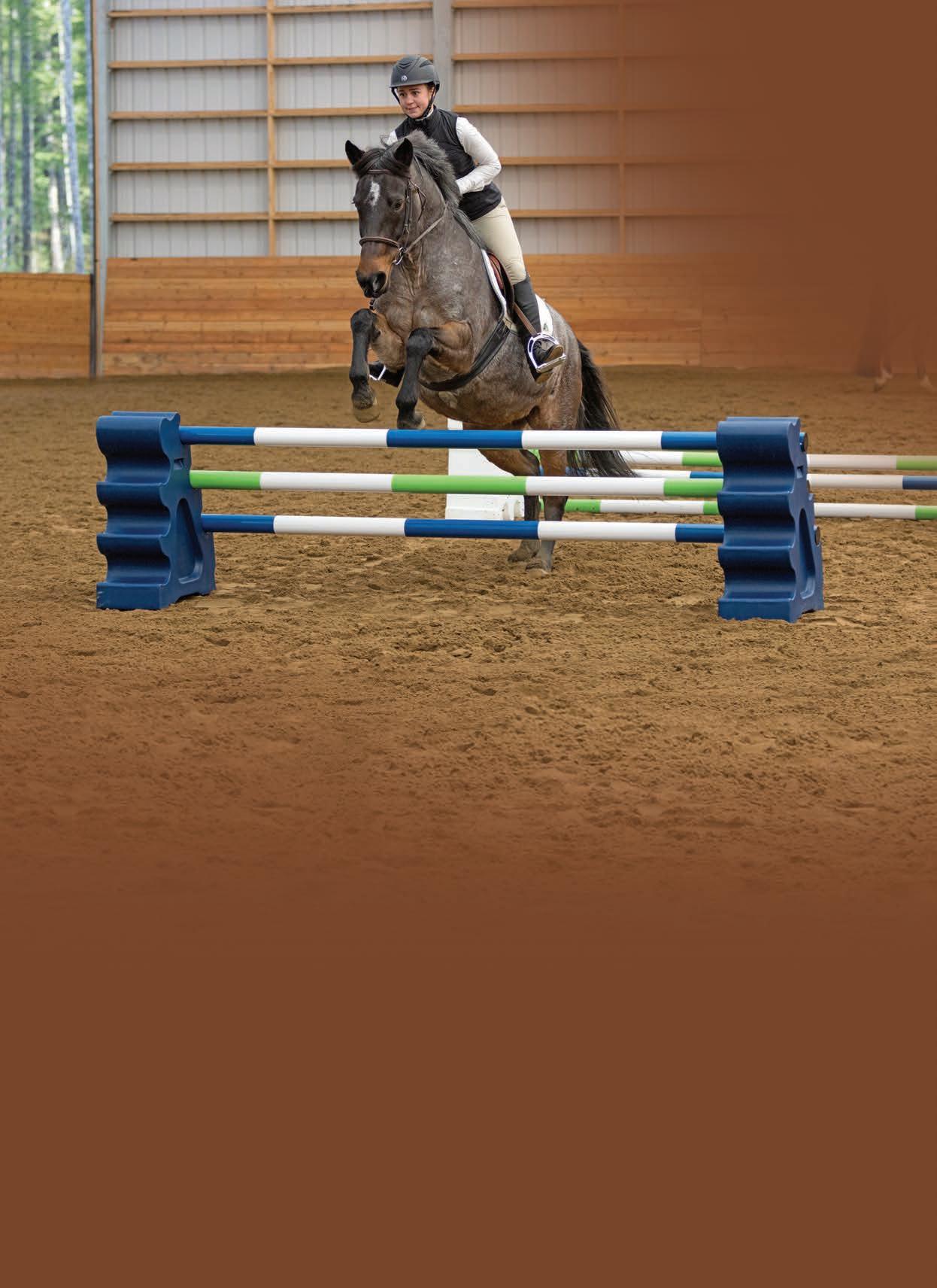
“Sourcing modern arena equipment can be difficult for Canadian equestrians. I founded Copper Pony with one goal in mind: to make great products more accessible! Every item we make, or choose to carry, has been thoughtfully designed for versatility, durability, safety and — not the least — a winning appearance.”



 DANIELLE FARRANT, OWNER
Shop our selection at copperpony.ca
COPPER PONY POLES WWW.COPPERPONY.CA • INFO@COPPERPONY.CA • (236) 655-7676 @COPPERPONYPOLES @COPPERPONYPOLES AND EQUESTRIAN SPORTING EQUIPMENT
Photos: @cliorosephotography
“If someone wants to pursue a professional rodeo career, high school rodeo is a great way to start,” says Halle Gaudry, the 16-year-old 2022 Rodeo Queen for Saskatchewan High School Rodeo Association.
High school rodeo has two divisions. The junior division is for students in grades five through eight, while students in grades nine through twelve compete as seniors. Events include bareback riding, saddle bronc, steer riding, bull riding, chute dogging, barrel racing, pole bending, tie
down roping, breakaway roping, goat tying, team roping, reined cow horse, cutting, and the Queen contest. Boys and girls compete together in some events while other events are only for girls or boys.
Depending on the province, the high school rodeo season runs from August to October, then again from March through June. The Canadian championships are held in August while the NHSRA championships are held in July.
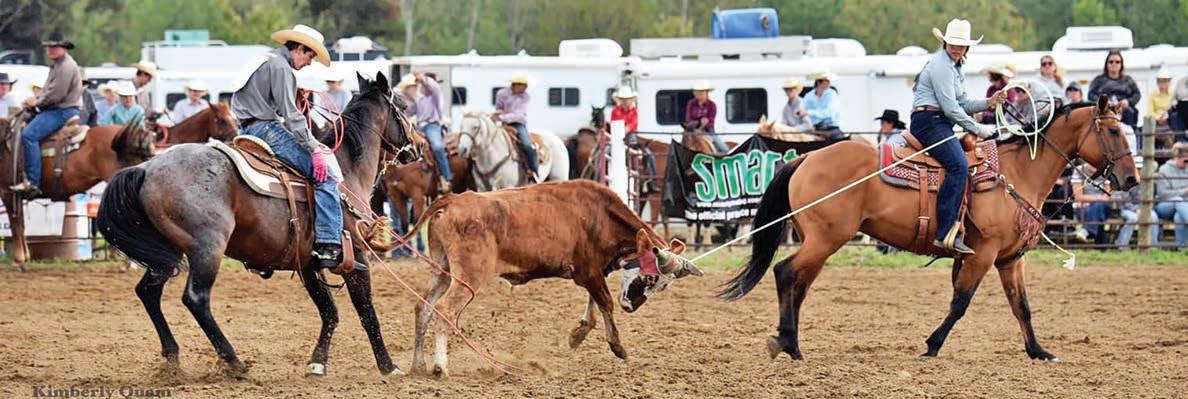
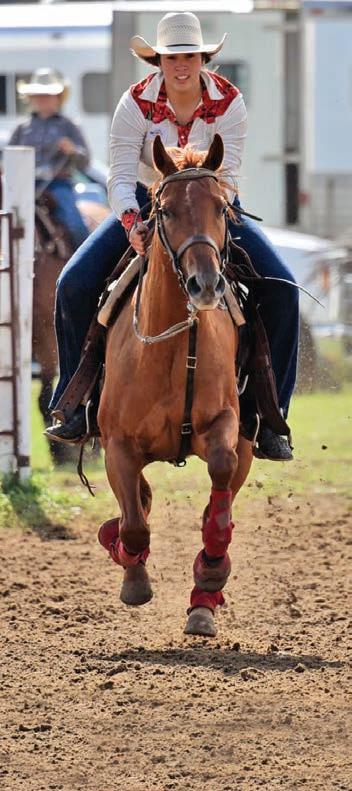
“After moving up through the high school ranks, it’s easier to go on [to college or professional rodeos], because you’re so experienced,” says Gaudry.
High school rodeo participants in Canada and the USA are eligible for significant post-secondary education scholarships, too.
“Quite a few kids from Saskatchewan are currently on full scholarships at college or university in the United States, including my sister,” says Gaudry. “So, I think there are lots of opportunities for youths that compete in high school rodeo.”
Program Shortage?
Show jumping, dressage, eventing, vaulting, endurance, and rodeo are the most visible horse sports that Canadian youth compete in. For better or worse, they all offer some sort of support for youth athletes, albeit most lack specific pathways to senior level success. However, youth also compete in paradressage, reining, Western events, driving, competitive trail, working equitation, and more. Unfortunately, none of these sports appear to have programs that systematically assist youth in advancing up the levels.
For youth with high-performance aspirations, finding paths to international success can be tough. Across the country there are pockets of experts in different sports, but finding the right people and support systems at the right time can be challenging.
CADORA Inc. > www.cadora.ca
Canadian College Rodeo Association > www.canadiancollegerodeo.com
Endurance in Canada > Facebook group
Equestrian Canada > www.equestrian.ca
International Equestrian Federation > www.fei.org
National High School Rodeo Association > www.nhsra.com
North American Youth Championships – dressage, show jumping, eventing > www.usef.org
Ontario Equestrian Great Rider Intensive Training > www.ontarioequestrian.ca
Rising Stars Youth Dressage > https://risingstarsdressage.com
VaultCanada > www.vaultcanada.org
42 Canada’s Equine Guide 2023 CANADA’S HORSE INDUSTRY AT YOUR FINGERTIPS
b
> Tania Millen is a regular contributor to this magazine — read her bio on page 94.
For more information about equestrian programs for youth, contact sport-specific organizations or those below.
Halle Gaudry, the 2022 Rodeo Queen for Saskatchewan High School Rodeo Association (shown here and below), believes high school rodeo provides a solid foundation for those aspiring to a career in professional rodeo.
PHOTOS: KIMBERLY QUAM PHOTOGRAPHY

8 STEPS TO Successful Sponsorship
By Tania Millen
Horse events are expensive to host, so event managers love to have sponsors help fund their events. Top events put on shows with good prize money that competitors, spectators, and sponsors flock to. However, attracting and retaining sponsors can be challenging. We asked the sponsorship managers for The Royal Winter Fair Horse Show and Angelstone Events to share how they do it. Plus, we asked a smaller company which has provided sponsorship to share their perspective. Here are the eight steps they recommend to help garner top-notch sponsors for your next horse event.
1 Start Early
“Start seeking sponsorship six to 10 months in advance,” says Danielle Kendal,
the director of sponsorship for Angelstone Events, which hosts hunter/ jumper and dressage shows at Caledon Equestrian Park and Angelstone Tournaments near Toronto, Ontario. “Then companies can think about their budgets and what they’re willing to allocate. Plus, it gives you a chance to come up with ideas about how you’re going to give them exposure.”
2 Decide What to Offer
“Essentially, we provide return on investment and communication opportunities,” says Christine Reupke, Director of Equestrian & Breed Sport for The Royal Agricultural Winter Fair in Toronto, Ontario. “For example, if a company is announcing a new product or
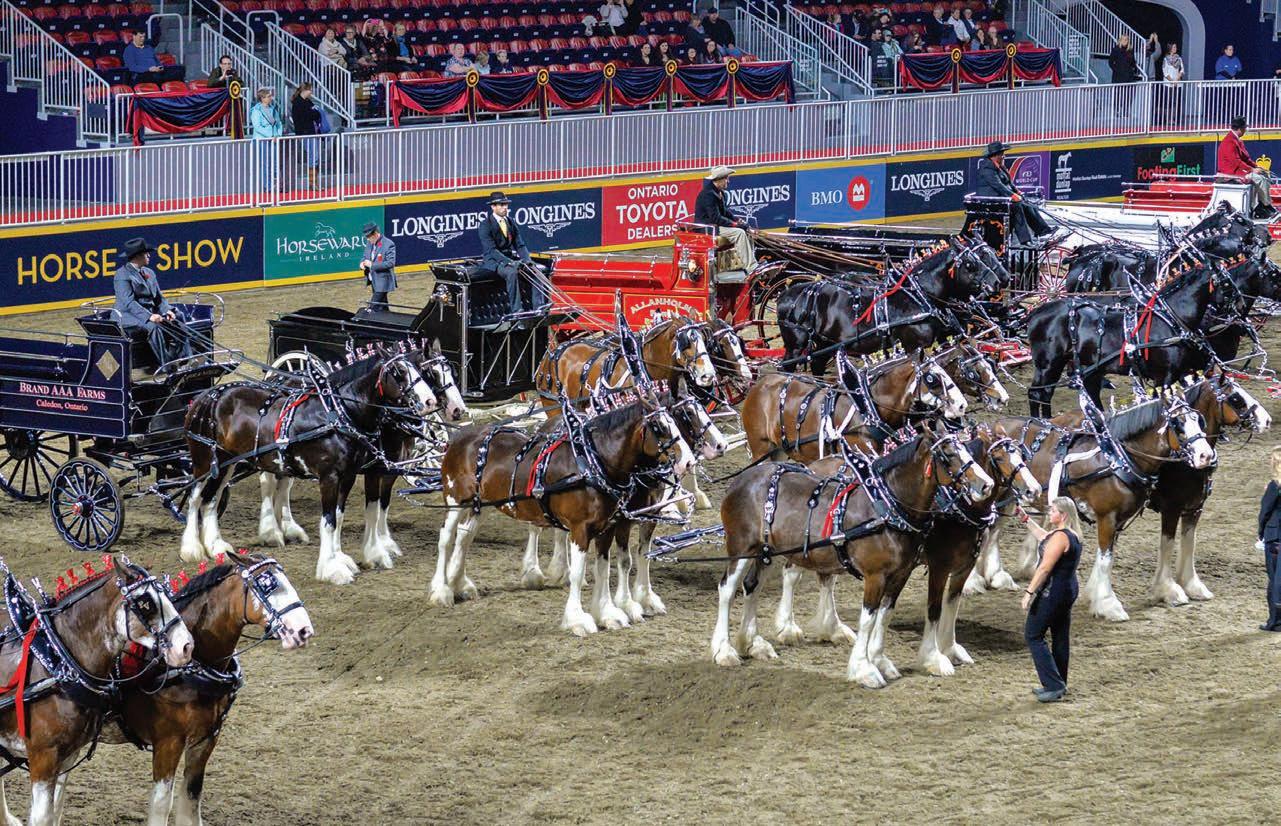
initiative, we can act as a conduit for companies to talk to the general public.”
“We also provide ways for sponsors to give back to the community,” says Reupke. “We try to come up with unique ideas to help them do that.”
Every event has different benefits, but sponsors have some basic expectations.
“Signage is really important,” says Kendal. “So is social media exposure.”
Horse events with larger budgets may host breakfasts, dinners, and meet-andgreets with sponsors. Alternatively, they might provide logoed t-shirts or swag bags for riders, or product samples to share sponsors’ services or products with competitors and spectators.
“The opportunities are endless,” says Kendal.
44 Canada’s Equine Guide 2023 CANADA’S HORSE INDUSTRY AT YOUR FINGERTIPS
INDUSTRY
Sponsorship is a powerful marketing tool for businesses, and makes it possible for venues like Spruce Meadows in Calgary to attract world class competitors and provide premier events that benefit the entire horse community.
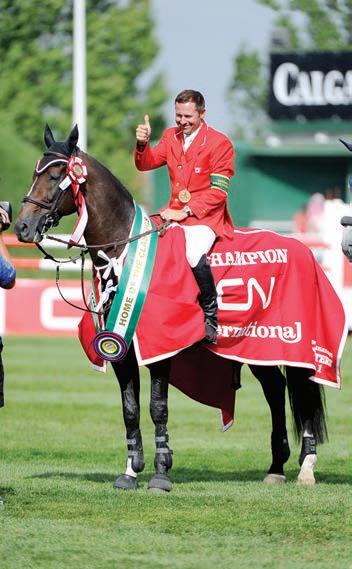
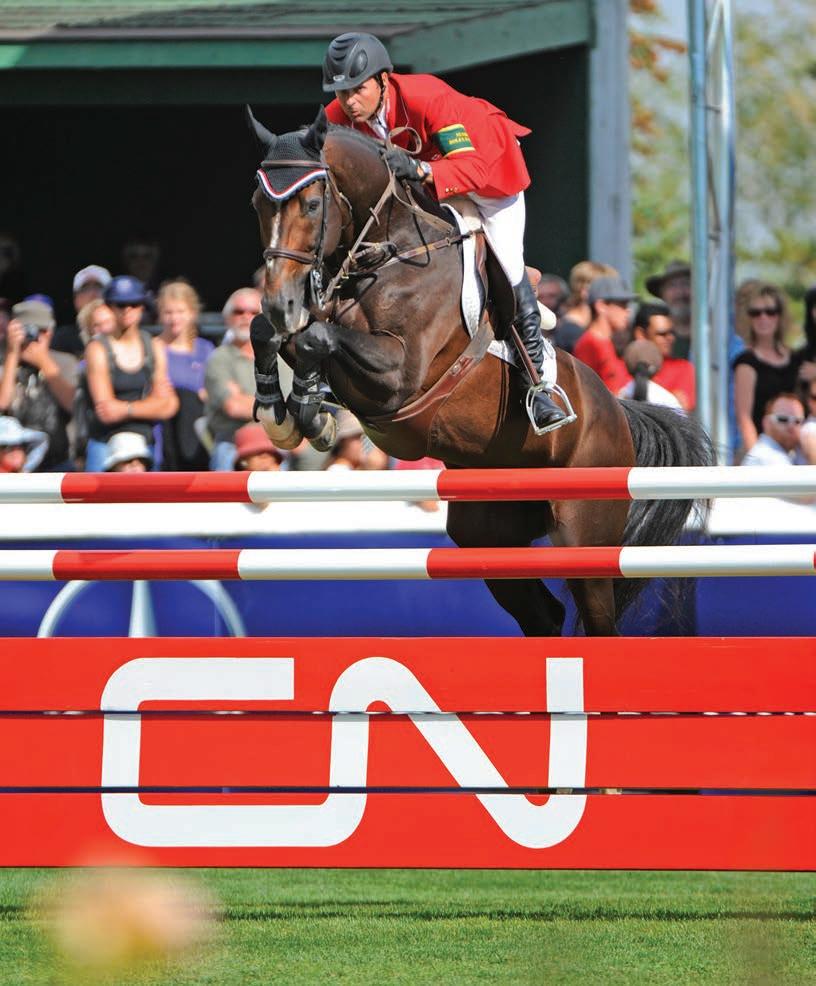
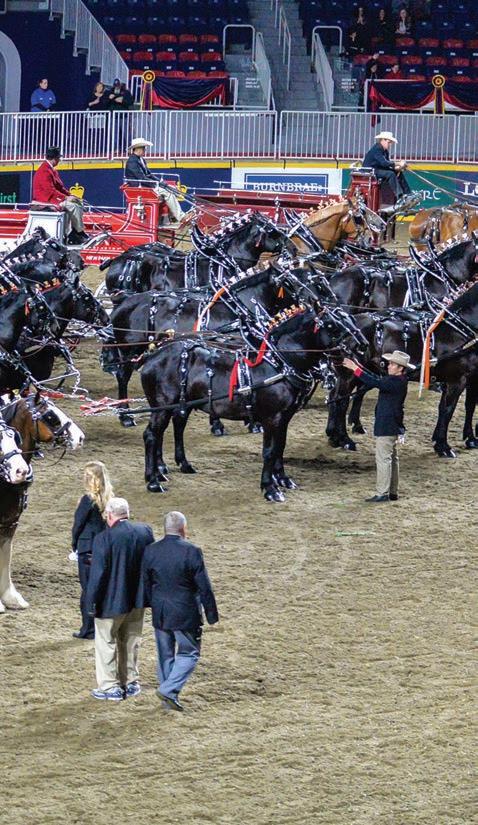
3 Use a Targeted Approach
“We utilize two methods to attract and secure sponsors,” says Reupke. “The one that’s most successful for us is to have event champions. It’s like a referral system — leveraging contacts and relationships.”
In this case, volunteers, parents, board members, and committee members approach people they know at companies they think would be a good fit with the horse event.
“We also make cold calls to companies that we think may fit with the horse show to see if they’re interested,” says Reupke.
Kim Gaudry is an equine photographer based in Calgary and says she has only sponsored events when she’s been asked. When the sponsorship manager of Rocky Mountain Show Jumping (RMSJ), who she knew personally, approached her in 2021, she decided to sponsor the one-metre jumpers.
“I ended up sponsoring the class all summer, mainly as a way to give back to the horse show that I had grown up going
to,” says Gaudry. “It was a good way to get my name out there as a photographer and give back to a group of riders who I don’t think get enough money.”
“It’s really important to understand how an industry fits with your horse event,” says Kendal. “I create a whiteboard full of dream companies to work with and then do some research to see if there’s a good fit for the event.”
After making a specific list of potential sponsors, Kendal says, “I’ll reach out to the marketing person, someone in human resources, or whoever runs events at those companies and tell them a bit about our horse show and why sponsorship would benefit them.”
Both managers suggested starting local, by asking a bakery to provide croissants for judges, for example. If the

45 CONNECT TO THE HORSE INDUSTRY www.HORSEJournals.com
The Royal Horse Show at the Ricoh Coliseum in Toronto in November, 2017.
PHOTOS: ROBIN
DUNCAN PHOTOGRAPHY
>
Eric Lamaze and Hickstead clear the CN signature fence on their way to winning the CN International Grand Prix at Spruce Meadows ‘Masters’ tournament in 2011.
Hickstead wears the champion’s cooler branded with the sponsor’s name.
PHOTO: DREAMSTIME/PHOTOKVU
event has a liquor license, an alcoholic beverage or wine company might be interested in sponsorship. Riders are athletes so a sports drink company might sponsor. Maybe a local technology shop would sponsor because event competitors and spectators have phones and other devices. Veterinary clinics, breeding farms, local boarding facilities, transport companies, and tack shops are all highly connected with the horse industry and may support regional events. Insurance, accounting, legal, and real estate companies are often needed by equestrians and their supporters, so they also may be interested in sponsorship.
4 Look for the Best Fit
“Events should reach out to smaller businesses like myself,” says Gaudry. “Sponsors don’t have to be big companies. Smaller companies have marketing budgets and can provide money, too. I think events need to expand their sponsorship horizons.”
“Look for companies that like to sponsor youth and junior events,” says Reupke. “The horse show world has a certain demographic with a high household income. So, for example, maybe a local jeweller would be interested in sponsoring the adult amateur hunters.”
Match the company’s mission statement or their social and community commitments with the horse event’s values. Think about how the horse event can help the company achieve its larger aims. Equestrians require all sorts of services and products for their horse and

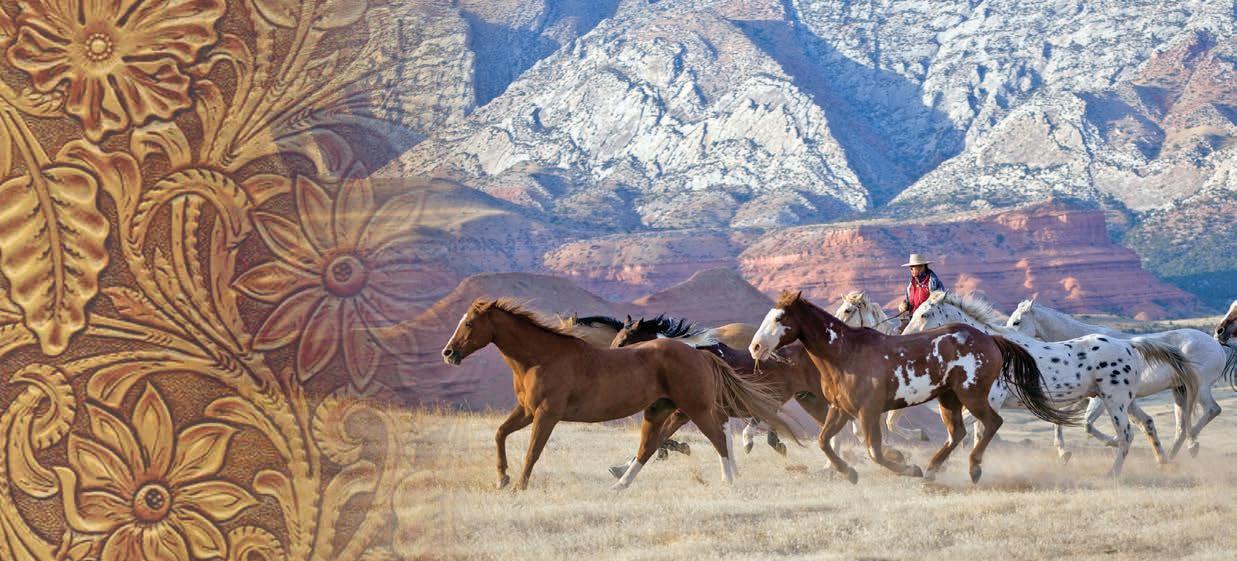

themselves. Matching those needs with what a company offers is key.
5 Listen to What Sponsors Want
“The first meeting with companies is a friendly exploration to determine whether our values and objectives are aligned, and how we can help each other,” says Reupke. “We spend a lot of time talking to the companies to figure out what they’re looking for; what we can do to provide exposure for their product or brand.”
“Sponsorship can be structured in different ways,” says Kendal. Cash helps horse shows put on great events and helps pay for signage and advertising. Sponsored prizes — from a logo embossed saddle pad to a year-long vehicle lease — can provide long-term exposure to a sponsor’s product or brand.
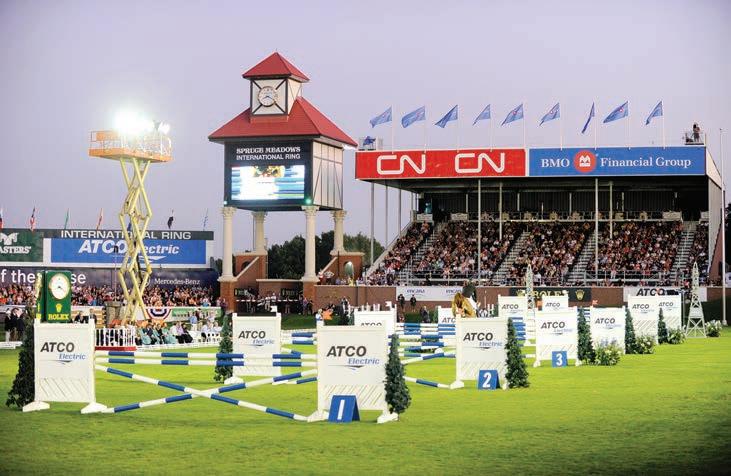
“Be very transparent and really listen to what the company wants and is looking for,” says Kendal.
For $500 per week, Gaudry received signage at the outdoor show, a sponsorship listing in the prize list, and the class winner received a cooler with her company name embroidered on it. Additionally, sponsors were mentioned regularly by the show announcer and Gaudry presented ribbons to the winners.
“I heard my name frequently and felt like I was getting quite a bit of recognition,” says Gaudry. “I got a lot of inquiries because of the sponsorship.”
Gaudry says other things events can do are provide sponsors with welcome packages when they arrive at the show and thank you packages afterwards.
“More involvement in the show itself is fun,” she says.
“It would be nice to receive a couple of tickets to watch the Grand Prix — something I could bring clients to,” says Gaudry. “Maybe a charcuterie board and glass of wine. I feel like that would make me want to spend more money or sponsor a higher class.”
6 Be Innovative
At the Caledon Major League Show Jumping week, Angelstone provided a breakfast for grooms and riders where sponsoring company representatives served breakfast and conducted product demonstrations. Kendal says the grooms and riders appreciated the free breakfast, plus the sponsoring companies could connect directly with their target markets — a win-win for all.
At three-day events, upper-level riders often lead sponsored cross-country course walks for spectators to explain the jumps and how riders will probably navigate the course. These walks elevate the sponsor’s brand and help spectators appreciate the difficulty of the cross-country course.
The Royal Horse Show provided sponsors with a private tour of the stables where some of the top horses in the world were housed.
“The Royal has a black-tie dress code so the ladies were dragging their dresses through the barn,” laughs Reupke. “But unique opportunities like that are what sponsors are most excited about.”
7 Create Bespoke Packages
“There is no one-size-fits-all approach to sponsorship,” says Kendal. “What one company or business needs might be totally different from another. Although we have sponsorship packages, we tailor them to what each business needs. About 90 percent of our sponsorship deals are custom packages.”
“We have sponsors who receive tax receipts in return for their cash,” says Reupke. “Other sponsors want to present ribbons to their class.”
“Sponsors want to be involved,” says Reupke. “They want to see where their money is going and how it benefits others. So if they’re providing $1,000 in cash, don’t be afraid to spend $300 or $400 on a little wine and cheese party in the afternoon during your main classes, for example.”
Some sponsors provide product in kind; others provide cash.
“I never underestimate the value of product because if we’re getting champion and reserve prizes sponsored,

46 Canada’s Equine Guide 2023 CANADA’S HORSE INDUSTRY AT YOUR FINGERTIPS
The course is set for the Friday evening ATCO Electric Six-Bar at Spruce Meadows in 2011. Signage for ATCO and several other tournament sponsors is clearly displayed.
PHOTO: ROBIN DUNCAN PHOTOGRAPHY
Upscale, Inclusive!





All about Riding, Horses,


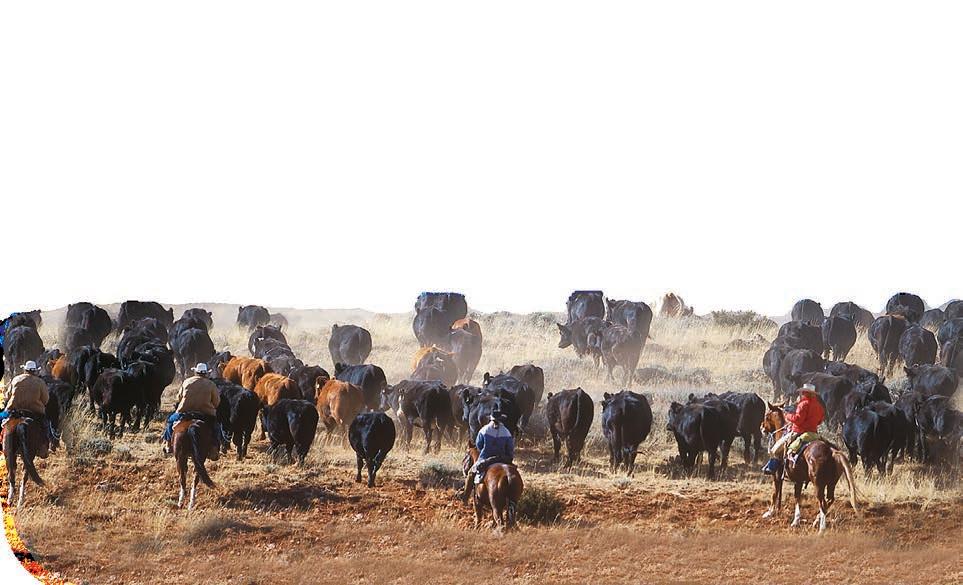
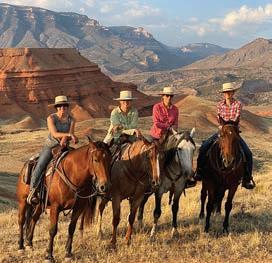

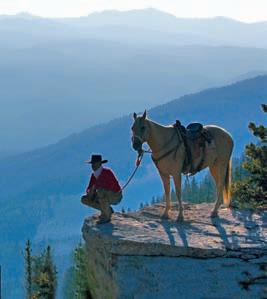
and Horsemanship

The Hideout Lodge is an all-inclusive, upscale riding and horsemanship guest ranch limited to approximately 22 guests weekly. We are all about horses, riding, and horsemanship. There are Quarter Horses and a growing number of Mustangs to ride. Our horses are part of our team! Stay with us in Shell, Wyoming, east of Cody and Yellowstone National Park at the foot of the Big Horn Mountains. Our 650,000-acre backyard is in an area with a tremendous diversity of scenery and altitudes ranging from 4,200 to 13,100 feet. The owners embrace diversity as an asset and are very involved in the operation, deeply caring about your hospitality and riding experience!

that’s money we’re not spending,” says Reupke. “Every little bit adds up.”
8 Develop Long-Term Relationships
Gaudry says events should ask sponsors to re-sponsor the following year or to sponsor additional events.
“Developing partnerships that become long-term, mutually beneficial relationships is everything,” says Kendal. “As a horse show grows and develops over the years, that partnership and sponsorship relationship can grow with it.”
Reupke agrees. “The key to sponsorship is developing relationships,
not just with one person at the company, but with the company in general,” she says. “Then they feel good about it and have a memento they can hang in their office or show clients how they’re supporting the community.”
It’s important to start small and focus on helping promote a company and their brand. Make sure the sponsor feels recognized and that they’re getting the exposure they want so that both parties benefit.
“Loyalty is a two-way street and that definitely applies to sponsorship,” says Kendal. “It’s important to develop trust over time, so that both parties feel a connection and that the relationship is mutually beneficial. We’ve worked with some of our sponsors for ten years.”
“I’m very non-transactional,” says Reupke. “I want sponsors to feel good about the money they’ve spent. It’s better to under-promise and over-deliver.”
Many horse shows wouldn’t be able to operate without sponsors but horse shows also provide a unique platform for

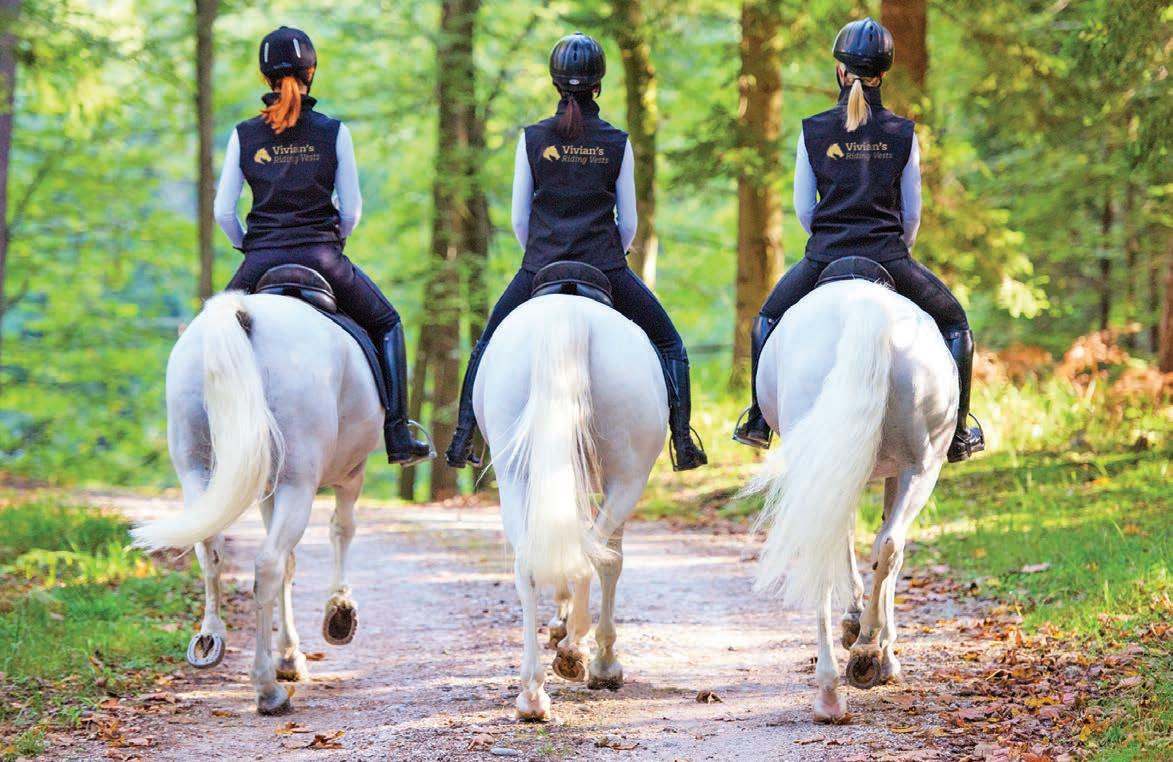
Sponsorship can be structured in many different ways. There is no “one-size-fits-all” approach, and the key is to listen to what the sponsors want.
companies — potential sponsors — to access their customers. Both sponsors and horse events can benefit from successful sponsorship deals.
> Tania Millen is a regular contributor to this magazine — read her bio on page 94.
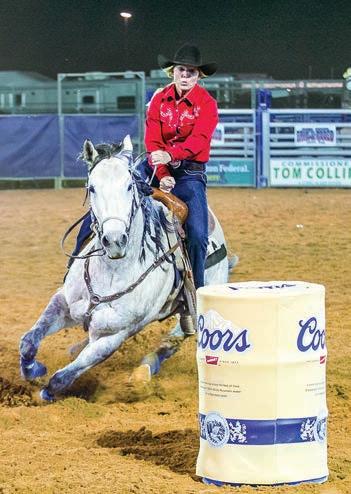
48 Canada’s Equine Guide 2023 CANADA’S HORSE INDUSTRY AT YOUR FINGERTIPS
b
Donations of product such as logoed clothing for horse and rider are popular with sponsors and provide long-term brand exposure. Competitors love receiving practical prizes, too.
PHOTO: SHUTTERSTOCK/KOBBY DAGAN
PHOTO: ISTOCK/SIMONKR
The health and happiness of our animals depend on our care. As owners, trainers and veterinarians, we naturally want the best for them. When they’re suffering, we desperately seek the best solutions. But the best solutions are more than just a quick fix. The best solutions resolve the issue AND prevent future problems. These are the solutions we look for when our animals are suffering.
This is why I founded Arenus Animal Health. To offer long term solutions for the everyday health challenges that horses face.
As a practicing veterinarian, I’ve spent many sleepless nights tending to colicking horses and decided there had to be a better way to support these recurrent colic cases long term. After much research and careful attention to the formulas, the Assure product family was introduced. Since that time over a decade ago, veterinarians across the United States have come to trust the Assure products to solve their toughest digestive cases.





Most supplement companies are created without research or simply built on the grounds of others’ ingredient research. Arenus Animal Health offers an exclusive line of unique products, extensively researched and clinically proven in their final form to offer lasting solutions to common health concerns.
Every product, as with every effort of Arenus Animal Health, serves the singular purpose of supporting better, more complete health and wellness through nutritional science. Our philosophy is grounded in the thought that more is not always better. If you’re feeding a large cocktail of daily supplements to your horse, then something is wrong with the program or the supplements themselves. Many horses, particularly performance horses, will benefit from supplementation.
However, you need to be critical about the supplements you’re giving your horse.
At Arenus, we don’t bring on new supplements to fill a catalog or sell more products. Our line of supplements is limited to those that provide optimum health and serve a purpose in solving a problem. Our products contain the highest formulation technology, the best ingredients and proven researched results. For that reason, you will find simple, straightforward ingredients and a product line up designed to work with your overall care program to promote long term health and wellness.
I personally guarantee that our products will help with the major challenges they are formulated to address. Whether it’s for digestive, reproductive, respiratory, structural or overall health, our products simply work. Try them for yourself. If your horse isn’t healthier or you are not satisfied for any reason, just call me or anyone on our team. We will not only be happy to personally help you to figure out a better solution for your horse, but we will also take the product back and give you a full refund.


Caring for our animals is a great responsibility. It’s one that myself and the Arenus team take seriously. That’s why we’ve dedicated ourselves to developing products that actually prevent and resolve the most challenging health issues that horses face. We look forward to working with you to enhance your animal’s wellness and longevity.
Sincerely,
Jay Altman, DVM CEO, Arenus Animal Health
1
866-791-3344 · ARENUS.CA Available through your veterinarian or Arenus Arenus nutraceuticals are available through participating veterinarians and veterinary clinics or direct through Arenus. Should your veterinary clinic not stock the products please let us know and we will work to see if they will begin as a stocking location for Arenus solutions.
THE ARENUS STORY
ARENUS ANIMAL HEALTH SOLUTIONS
SUPPLEMENTS
TOP LINE HORSE HEALTH SNM AND SUPPLEMENTS
NOT JUST
DIGESTIVE HEALTH
THE DIGESTIVE HEALTH CHALLENGES OF TODAY’S EQUINE ATHLETES
SECURE OR ASSURE - WHY THE DIFFERENT NAMES
In working to bring the Assure line of products to Canada, it was discovered that the Assure name had been registered to another company. So, Canada gets the whole Assure line of digestive aids but under the new name Secure. The Secure products will bring the same great results with the same great guarantees as Assure.
STRESS AND DIGESTIVE ISSUES
Colic remains the number one killer for horses. Modern veterinary medicine has reduced and nearly eliminated colic caused by parasite infestations. Advancements in diagnostics, treatment and surgical methods have greatly improved the lives of horses suffering from colic episodes. However, with all these advancements, little has been done to address the management of stress that today’s horses suffer. Stress comes in many forms for our horses. Feed schedules, show schedules, training and exercise, separation from friends and everyday life in stalls and confinement all contribute to stress. For many horses this leads to varying degrees of digestive disturbance, leaky gut or even inflammatory bowel disease or colitis. These conditions are at epidemic levels among horses today. The worst part is that many riders are unaware their horses are even suffering. Digestive disturbance symptoms are too often dismissed because they’ve sadly become the norm. Bad attitudes, cinchy horses, difficult training and frequent bad performance days are all indicators of poor digestive health. Even overt symptoms like poor body condition and diarrhea get overlooked. It’s time that we started looking out for our horses and offered them the relief they deserve.
THE SECURE SYSTEM SOLUTION
The Secure System has become a staple for veterinarians across the country in the fight against tough digestive and gastric issues. The stressful challenges that horses face has made it necessary to not only resolve digestive health problems, but to prevent issues and maintain long term health. Today more than ever our horses need digestive maintenance and support throughout their lives. They need the help of a great digestive support program. The Secure System addresses these modern day challenges for optimal health, comfort and enhanced performance.
SECURE PRODUCTS - A DIFFERENT APPROACH
The Assure/Secure products were developed with a different approach than other digestive supplements. The goal was to provide the best support to all portions of the digestive tract by adjusting the physiologic disturbances that are the root cause. There is no pharmaceutical product that can achieve this goal, nor a single supplement ingredient that comes close. By combining all of the right ingredients in just the right amount and then utilizing our proprietary Gastrointestinal Stabilizing Technology (GST) to produce an enteric coated delivery system we are able to effectively reverse the causes of GI disturbance. Reducing acidity, improving enzyme digestive function, stabilizing the hind-gut microflora, reducing inflammation and accelerating colonocyte repair and regeneration are all part of the functions of each and every Secure product. Not only have the products been extensively researched, but they have been awarded patents for reducing recurrent colic, reducing ulcers, resolving diarrhea and improving GI motility. Secure provides the most complete and effective method to resolve digestive disturbance and provide a digestive maintenance program that will keep your horses healthy and “happy”
“I am amazed at the difference that I have seen in my horses on Assure Guard Gold, they are feeling better and performing better. I recommend Assure Guard Gold to anyone and everyone, even if their horses do not have diagnosed ulcer issues the GI improvements make a remarkable difference. GI health is so important to the overall health of the horse that the long-term benefits are tremendous!”
 Laura Chapot Professional Grand Prix Show Jumper, Arenus Ambassador
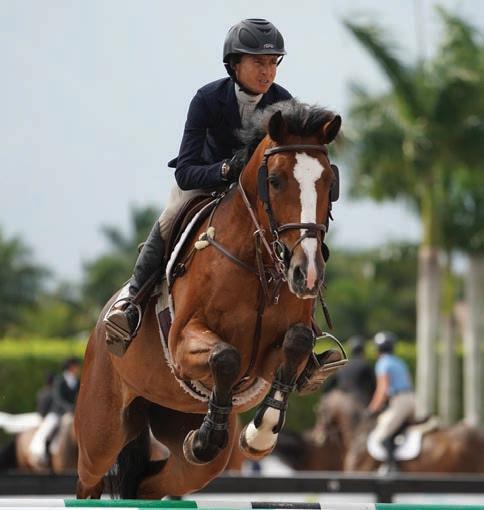
SECURE
=
ASSURE
SECURE GUARD GOLD
THE ULTIMATE DIGESTIVE AID
Fast-acting and effective, Secure Guard Gold combines our proven pairing of Secure Guard and Secure Plus into a complete, daily pelleted formula.
FAST DIGESTIVE AILMENT CONDITIONING: Secure Guard Gold packs a powerful punch and delivers fast digestive conditioning. Many owners see results in less than one week!
ENHANCED PERFORMANCE AND WELLNESS: You don’t know how much of your horse you’ve lost to digestive health issues until you’ve addressed the problem. Having a calm and happy digestive system keeps your horse at the top of their game.
TOTAL DIGESTIVE SUPPORT: Secure Guard Gold works to support the entire digestive tract from the stomach through the hindgut. You can trust that your horse’s total digestive health is being supported for optimal function.

ALL-IN-ONE DIGESTIVE AID : A single ingredient won’t fix a horse’s digestive system. It takes the right combination to ensure proper digestive health. Secure Guard Gold combines our proven pairing of Secure Guard and Secure Plus into an all-in-one digestive aid. It’s the only product on the market that blends the quality ingredients necessary for a complete, daily solution.
This patented and veterinary approved supplement provides a powerful digestive support solution for enhanced performance and conditioning. Our proprietary psyllium process and special enteric coated pellets ensures delivery of beneficial microbes and ingredients. It addresses common ailments like colic, ulcers and more.
3
References: [1] Mélo S, Santiago T, Duarte T, Abreu J, Manso H, Filho H. A Proton-Pump Inhibitor Modifies the Concentration of Digestion Biomarkers in Healthy Horses. J Eq Vet Sci 2014; 34, 11-12: 1318-1323. [2] Moreaux S, Nichols J, Bowman J, Hatfield P. Psyllium Lowers Blood Glucose and Insulin Concentrations in Horses. J Eq Vet Sci 2011; 31, 4: 160-165. [3] Fecal Sand Clearance Is Enhanced with a Product Combining Probiotics, prebiotics, and Psyllium in Clinically Normal Horses.
ELIGIBLE PRODUCT Starter/Dispensing Pack Available for Veterinarians
DIGESTIVE HEALTH
SECURE
EFFICIENT AND RELIABLE
Efficient and reliable, Secure is our original and proven foundation to address common digestive health problems in a daily, granular supplement. This patented and vet approved formula provides a solid foundation for your horse’s total digestive health needs. Pair with Secure Plus as part of the Secure System for a powerful combination to help fight digestive disturbance at the lowest possible cost.
LONG-LASTING DIGESTIVE SUPPORT: Secure was designed by a vet to be used as a safe, long-term solution to your horse’s digestive health maintenance.
IMPROVED HEALTH AND OVERALL WELLNESS: Retired, pleasure and performance horses alike benefit from daily digestive support and sand clearance to keep them happy and healthy.
WIDE RANGE PROTECTION: Secure is designed to tackle a variety of digestive challenges including diarrhea, loose stool, recurrent colic, and more.
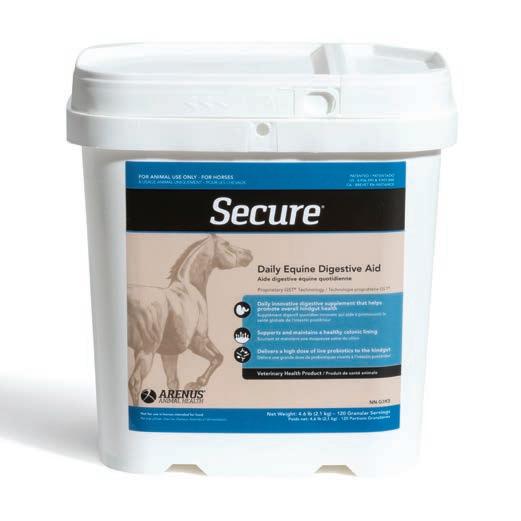
WHOLE DIGESTIVE SYSTEM SUPPORT: Secure works to support the entire digestive tract from the stomach through the hindgut.
FLEXIBLE, ECONOMIC COVERAGE: Use Secure daily for cost-effective maintenance. Add Secure Plus during times of stress for maximum support when your horse needs it most. Pair with Secure Plus during the loading period and one week out of every 4-6 weeks for a tailored program yielding the best results.
SECURE GUARD SOOTHING AND POWERFUL
SOOTHING ULCER RELIEF: Ulcer treatments can wreak havoc on any horse by throwing off the normal balance of the digestive system. Secure Guard soothes the system and is patented to ameliorate ulcers to keep your horse feeling healthy and comfortable.
IMPROVED HEALTH AND OVERALL WELLNESS: Any digestive issue can disrupt your horse’s performance and comfort. Cinchy and irritable horses often have underlying digestive health problems. Ulcers are painful and make travel, training and riding a nightmare for your horse. Having a calm and happy digestive system keeps your horse relaxed and focused.
WHOLE DIGESTIVE SUPPORT: Secure Guard works to support the entire digestive tract from the stomach through the hindgut where additional gastric conditioning is required.
FLEXIBLE, TARGETED COVERAGE: Use Secure Guard daily for cost-effective maintenance of difficult gastric problems. Add Secure Plus during times of stress for additional support when your horse needs it most. Pair with Secure Plus during the loading period and one week out of each month for maximum benefits.
This patented and vet recommended supplement is proven to combat serious digestive issues and can be paired with traditional ulcer treatments for maximum results. Combine with Secure Plus for optimal digestive health support and maintenance.
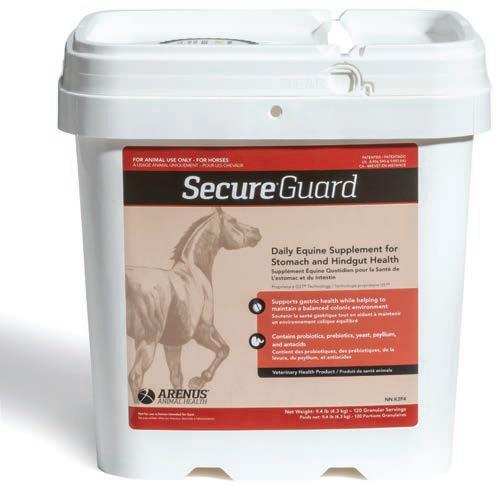
5
References: [1] Brendemuehl JP, Altman J, Kopp K, Blikslager A. A multi-center clinical trial utilizing a combined probiotic, prebiotic and psyllium product for the management of chronic gastrointestinal disorders (diarrhea and colic) in clinically affected horses. 2010; Novus Nutritional Brands, LLC. [2] Sykes BW, Sykes KM, Hallowell GD. Efficacy of a Combination of Apolectol, Live Yeast (Saccharomyces cerevisiae [CNCM I-1077]), and Magnesium Hydroxide in the Management of Equine Gastric Ulcer Syndrome in Thoroughbred Racehorses: A Blinded, Randomized, Placebo-Controlled Clinical Trial. J Eq Vet Sci 2014; 34, 11-12: 1274-1278 ELIGIBLE PRODUCT
Soothing and powerful, Secure Guard offers a solution to the most challenging digestive health problems in an effective, daily granular formula.
DIGESTIVE HEALTH
SECURE PLUS CONCENTRATED AND DYNAMIC
Concentrated and dynamic, Secure Plus offers a custom solution to digestive health problems in an effective, pelleted psyllium supplement.
POWERFUL DIGESTIVE SUPPORT: Secure Plus boosts the effectiveness of routine digestive health programs. It delivers additional psyllium during times of heavy stress, exercise or digestive upset.
OPTIMAL PSYLLIUM: Secure Plus was developed with the largest inclusion of high grade specially processed psyllium of any Secure product. These enteric coated pellets deliver the most psyllium to the digestive tract to provide a rapid and cost effective customized solution to GI disturbance. After an initial loading period, these pellets were designed to be fed on an interval basis for maintenance. By feeding for one week out of every 4-8 weeks you can not only tailor your horses digestive health program, but control your costs. By combining with one of our daily granular products you can get the best of both worlds, a great digestive health program and the most reasonable cost.
EASY TO FEED: One of the only equine psyllium digestive aids available in a pellet form. This allows for easy feeding and enhanced palatability.
WHOLE DIGESTIVE SUPPORT: Secure Plus works with the Secure System to support the entire digestive tract from the stomach through the hindgut.
CUSTOMIZED FOR YOUR HORSE: Secure Plus can be paired with Secure or Secure Guard to create the right solution for your horse’s digestive health needs.
This patented and vet recommended supplement is a powerful addition to the Secure Systems routine maintenance programs. Proprietary psyllium process and special enteric coated pellets ensure delivery of beneficial microbes and ingredients. It conditions and cleans the entire digestive tract for optimal support and GI function.

6
Reference: [1] Moreaux S, Nichols J, Bowman J, Hatfield P. Psyllium Lowers Blood Glucose and Insulin Concentrations in Horses. J Eq Vet Sci 2011; 31, 4: 160-165. ELIGIBLE PRODUCT
THE SECURE SYSTEM RESEARCH PROVEN
64 equine veterinarians and owners throughout the United States volunteered 144 horses with challenging gastrointestinal disorders to be enrolled in a research trial using the commercially available and patented Secure System. The cases were chronic or recurrent and trial periods were variable and limited for each particular digestive disorder. The trial established expectations for resolution within these limited feeding periods.
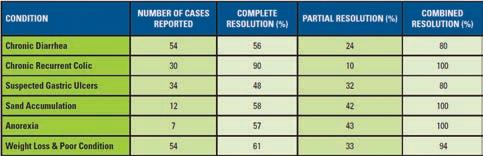
The System®
RESULTS
100% of horses with recurrent colic had shown a decrease in frequency of episodes.
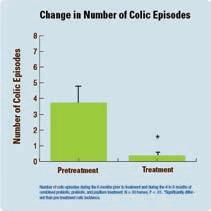
Horses saw an average of 90% fewer colics within the initial treatment period.
80% of horses with chronic diarrhea were fully resolved or improved in 30 days.
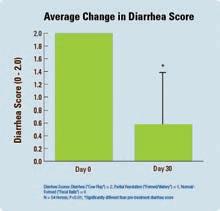
81% of horses suspected with gastric ulcers were resolved or improved in 60 days.
100% of horses with sand accumulation were resolved or improved in 45 days.
94% of horses with poor body condition or weight loss were resolved or improved based on desired weight in 60 days.
TAKE HOME
Treatment during a relatively short term research trial has shown The Secure System of digestive aids to be excellent support products for both challenging digestive cases as well as regular daily support with proper dosing and duration. Improvement and resolution has been seen in all forms of digestive health issues including horses with chronic gastrointestinal disorders, particularly recurrent colic, chronic diarrhea, weight loss, and motility disturbances.
COLIC ASSURANCE PROGRAM OUR COLIC COVERAGE PRODUCT GUARANTEE
Up to $10,000 in coverage
Coverage for horses with PRIOR HISTORY OF COLIC*
Coverage for horses with one abdominal surgery
Coverage for multiple colic incidents
MEDICAL and SURGICAL colic coverage
Coverage while horses are TRAVELING INTERNATIONALLY*
PURCHASING directly through Arenus, veterinarians or veterinary clinics for program eligible products
NO AGE RESTRICTIONS once horses are weaned
NO LIMIT on the number of horses an owner can enroll
Coverage for LEASED HORSES
*Some restrictions and requirements may apply.
7
Reference: [1] Brendemuehl JP, Altman J, Kopp K, Blikslager A. A multi-center clinical trial utilizing a combined probiotic, prebiotic and psyllium product for the management of chronic gastrointestinal disorders (diarrhea and colic) in clinically affected horses. 2010; Novus Nutritional Brands, LLC.
ENROLLING IS EASY! 1 Head to arenus.ca or arenus.com and complete the CAP enrollment form. Note: If you plan on enrolling in our Colic Assurance Program extensive coverage and you have already made an initial purchase, the label feeding instructions are for general digestive health. Feeding and loading dose requirements of the Colic Assurance Program may be different from label instructions and are specifically designed to help eliminate any risk of colic. Inquire or enroll soon to access your custom feeding program. 2 Choose your product(s): Secure Guard & Secure Plus OR Secure Guard Gold. 3 Wait for your final approval letter & make your initial purchase.
feeding based on your horse’s tailored Wellness Program.
4 Begin
RESPIRATORY AND IMMUNE SYSTEM HEALTH
RESPIRATORY AND IMMUNE SUPPORT
DHA —THE RIGHT OMEGA-3 FATTY ACID
When it comes to Omega-3 products, not all are created equal. This is because not all Omega-3s contain DHA, one of the most beneficial, natural Long Chain Omega-3 Fatty Acids. DHA provides advanced cellular support for reproductive, respiratory and immune health.
Omega-3 supplements commonly source their Omega-3 Fatty Acids from low-DHA fish oil or non-DHA flaxseed. These sources do little to support your horse’s respiratory and immune health. Fish oil also exposes horses to the risk of heavy metal toxicity. Flaxseeds, although vegetarian, don’t provide the right type of Omega-3 Fatty Acids to optimally support respiratory and immune functions, yet can be of benefit to other body systems.
Our Omega-3 products are made from the same, safe algae-derived DHA used in human infant formula. As herbivores, horses are able to naturally absorb this bioavailable, algal-DHA for maximum health benefits. This is why we use it as the base of our respiratory and reproductive health supplements. Aleira is a unique blend of algal-DHA, antioxidant-rich mushrooms, vitamin C and MSM. This effective combo addresses inflammation and immune responses for horses with a range of respiratory issues.
THE STRUGGLE TO BREATHE
Stall confinement. Tighter living quarters. Travel and trailering. Indoor exercise and dusty arenas.
All of these factors have led to a significant increase in allergic reactions and low level respiratory disease. More horses than ever before show symptoms of low level cough, drippy noses and low level breathing difficulties due to the early effects of airway inflammation. These horses need daily support instead of a medical treatment alone.
Even when it comes to severe respiratory disease issues such as Heaves or Inflammatory Airway Disease (IAD), anti-inflammatories and steroids are not always the best answer. Like a band-aid they offer a quick fix and at times are very necessary, but often don’t get to the root of the problem. Cellular support addresses the underlying issue and offers consistent, daily maintenance.
“Aleira’s use as a therapy in both acute and chronic cases has impressed me to the degree that it has become a go to product in my practice and one that I highly recommend. In EIPH, IAD and severe dermatitis cases, Aleira has been a great success as an adjunctive therapy. A grand prix jumper I worked with who suffered from severe, chronic EIPH on a daily basis, showed marked clinical improvement after 45 days on Aleira. Other therapies and treatments had been unsuccessful in this horse. This is one of the many cases where I have witnessed significant improvement while using Aleira.”
Years of research by our veterinarians and nutritionists have resulted in an algal-DHA based formula that makes a dramatic difference in horses with breathing and allergy challenges. Our formula can also be safely used in conjunction with traditional treatments. In many cases, horses are able to be supported on Aleira alone. If your horse is a bleeder or struggles with other respiratory or immune problems, then Aleira is the answer you’ve been waiting for.
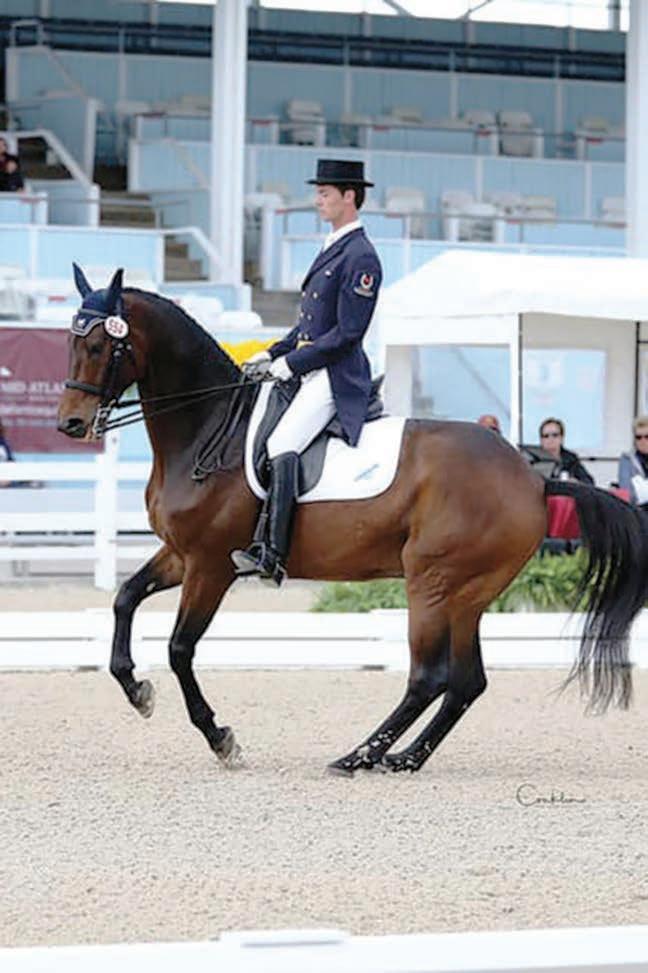
8
Meg Miller-Turpin DVM, DACVIM
David Ziegler Arenus Ambassador
ALEIRA RESEARCHED RESPIRATORY AND IMMUNE SUPPORT
IMPROVED PERFORMANCE: Addressing airway challenges keeps your horse comfortable and at the top of their game. Aleira offers effective support for bleeders and horses with respiratory or immune responses. Aleira combats performance limiting conditions like Recurrent Airway Obstruction (RAO), Inflammatory Airway Disease (IAD), allergies, hives and dermatitis.
NON-MEDICINAL ALTERNATIVE: Powerful respiratory support without the negative side effects of traditional treatments like steroids. Safe for horses that are sensitive to traditional medications. In many cases, horses using Aleira are able to be supported on Aleira alone!
SAFE TO USE: Can be safely combined with conventional treatments for additional respiratory health support. Safe for long-term maintenance.
Our research-proven formula combines algal-DHA, an immune-modulating and anti-inflammatory proprietary Mushroom Blend, Vitamin C and MSM into a powerful supplement. It addresses inflammation and immune responses for horses with a range of respiratory issues.
“Managing equine asthma (RAO and IAD) cases has been easier thanks to Aleira. After research in my lab as well as recommending it for use in the field, I have found Aleira to be a valuable tool in managing difficult respiratory cases. My goal is to reduce equine asthma burden and find a cure that would reduce the reliance on prescription drugs, especially steroids, in managing these cases. It is helpful to horse owners and veterinarians to have at their disposal a non-drug therapy that has proven efficacy and is easy to administer. I have many cases that are now well controlled by proper management of environmental conditions and replacing or reducing drugs with Aleira.”
Laurent Couetil DVM, DACVIM, PhD
9
Reference: [Nogradi N, Couetil LL, Messick J, Stochelski MA, Burgess JA. Evaluation of an Omega-3 Fatty Acid Containing Feed Supplement in the Management of Horses with Chronic Lower Airway Inflammatory Diseases. J Vet Intern Med 2015; 29: 299-306.
Essential respiratory support, Aleira helps maintain optimal respiratory function in a daily, non-medicated supplement.
RESPIRATORY AND IMMUNE SYSTEM HEALTH
ALEIRA RESEARCH PROVEN
STUDY OVERVIEW
This study was designed to examine the effects of ALEIRA® on coughing, respiratory effort and performance. Aleira is a patented formulation of ingredients including a specific and purified omega-3 fatty acid, DHA (docosahexaenoic acid). Through the research conducted at the Purdue University College of Veterinary Medicine, Aleira was fed in conjunction with a low dust diet to 35 client-owned horses with chronic inflammatory diseases both recurrent airway obstruction (RAO) and inflammatory airway disease (IAD). Evaluation of laboratory and clinical parameters were made as well as assessment of daily on farm performance and results.
RESULTS
Overall, both clinician assigned VAS scores and owner assigned VAS scores improved 8 weeks in to the trial however, the clinician assigned VAS receiving Aleira supplementation reached statistical significance. Placebo clinician assigned VAS score increase was not significant.
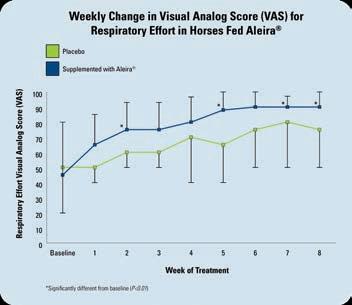
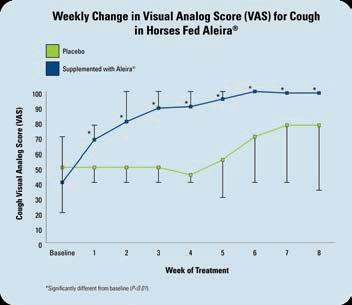
VAS cough scores improved significantly in all 3 treatment groups but horses with 1 times per day dose of DHA exhibited a significantly higher VAS score 2 months later than placebo.
The effect of Aleira supplementation and pelleted feed on VAS scores was noticeable first at 2 weeks.
The effects of Aleira supplementation and pelleted feed reached maximum benefit for coughing between weeks 2 and 5. The effects of Aleira supplementation and pelleted feed reached maximum effect for respiratory effort between weeks 5 and 6. The effects of Aleira supplementation and pelleted feed reached maximum effect for poor performance between weeks 3 and 5. Aleira Supplementation for 2 months resulted in a significant reduction in neutrophils in BALF which was not observed in placebo fed horses.
Aleira Supplementation for 2 months saw a significant improvement in lung function in horses supplemented with DHA. Aleira Supplementation for 2 months resulted in a 10-fold increase in plasma DHA levels. No other fatty acid was affected.
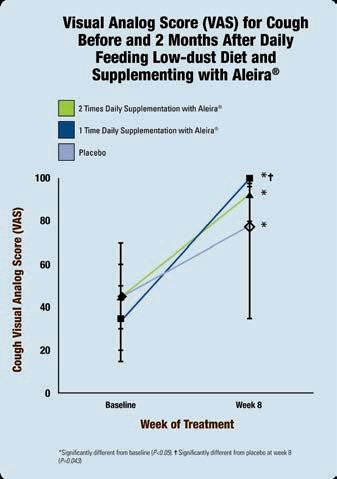
TAKE HOME
Supplementation of ALEIRA to horses with RAO or IAD, in combination with a complete pelleted feed, showed significant improvement in clinical signs, including cough, respiratory effort and performance as well as lung function and BALF compared to the placebo group.
10
Reference: Nogradi N, Couetil LL, Messick J, Stochelski MA, Burgess JR. Omega-3 fatty acid supplementation provides an additional benefit to a low-dust diet in the management of horses with chronic lower airway inflammatory disease. J Vet Intern Med. 2015; 29(1): 299-306.
REPRODUCTIVE HEALTH
REPRODUCTIVE HEALTH FOR ALL DHA—THE RIGHT OMEGA-3 FATTY ACID SOURCE
ADDRESSING TODAY’S REPRODUCTIVE CHALLENGES
Low conception rates. Mares taking multiple cycles to become pregnant or not conceiving for the year at all. Stallions with low sperm counts, poor quality and motility. Late-born, smaller foals at a disadvantage in yearling sales and competition.
These are some of the most pressing challenges in today’s breeding industry. These common reproductive issues are reduced with the help of a good DHA and cellular support supplement.
We developed Releira because there were no supplements available to help mares with fertility issues. There were only a few designed for stallions, but the reproductive health of mares was being ignored. Our research-proven formula offers a unique solution for a wide range of reproductive health issues, including problems with difficult mares. Supplementing with Releira helps mares that have difficulty conceiving become pregnant in fewer cycles. It reduces post-breeding uterine inflammation and fluids for higher pregnancy rates and it safely supports the mare and foal throughout gestation.
The same supplement can be fed to stallions to improve fertility. Pure algal-DHA works to not only increase sperm production, but to improve the quality of the cellular structure and progressive motility of the sperm for successful AI and live cover breedings. Even stallions with normal sperm counts often have numbers dip mid-season. Releira keeps numbers high throughout the entire season and improves numbers in stallions with low counts.
DHA improves molecular development of foals, creating a better cell membrane and more foals carried to term. Studies have proven that foals of mares supplemented with Releira have increased cognitive function and trainability. This is because quality DHA transfers to the foal during gestation and nursing.
If you’re ready for a more productive breeding season, try Releira. Our algal-DHA, research-proven formula is the solution for today’s most common fertility challenges in mares and stallions.
“I conducted a controlled trial utilizing a very robust frozen semen challenge that demonstrated a significant influence of supplementation with Releira on reducing the post breeding inflammatory response in all classes of mares.
A subsequent clinical trial involving thoroughbred mares and stallions in a commercial breeding environment further demonstrated the benefits of Releira in reducing breeding induced inflammation and improving per cycle pregnancy rates.”
Jim Brendemuehl DVM, PhD, DACT
11
REPRODUCTIVE HEALTH
RELEIRA ESSENTIAL REPRODUCTIVE SUPPORT
Essential reproductive support, Releira helps mares and stallions reach their full breeding potential in a daily, DHA supplement. This research-backed Omega-3 formula provides reproductive health benefits for mares, stallions, and foals. It addresses common fertility issues with a readily-absorbed, vegetarian algae source.
KEY BENEFITS FOR MARES:
Success in fewer cycles: Releira significantly improves conception rates in broodmares with a history of complications. Our DHA helps difficult mares that are typically bred in three to seven cycles to become pregnant in one cycle.
Reduced costs: Mares that don’t become pregnant still need care and resources. Quicker, successful pregnancies reduce the expenses for unbred mares and eliminates the missed opportunity of not having a foal to sell or compete with for another year.
Improved conception rates: Releira reduces post-breeding uterine inflammation and fluids for higher pregnancy rates.
Support throughout pregnancy: Safely provides constant reproductive support throughout the entire gestation period.
KEY BENEFITS FOR STALLIONS:
Boosts fertility: Improves pregnancy rates from stallions with a history of common fertility issues.
RESEARCH PROVEN
The goal of this study was to determine if a significant difference existed in the uterine inflammatory response to frozen semen in response to supplementation with a blended algal and flaxseed source (RELEIRA) of the omega-3 fatty acid DHA. 15 mixed breed horses were used in the study. 10 mares were classified as resistant based upon uterine biopsy scores of I-A or I-B and ability to clear all mating induced endometritis at 24 hours post insemination. 5 mares were classified as susceptible with uterine biopsy scores of II-B or III and the presence of uterine hyperechoic fluid at 24 hours post insemination.
RESULTS
Increased sperm count: Stallions with normal sperm counts often have numbers dip mid-season. Releira keeps numbers high throughout the entire season and improves numbers in stallions with low counts.
Improved sperm quality and motility: Pure DHA works to not only increase sperm production, but to improve the quality and motility of the sperm for successful AI and live cover breedings.
KEY BENEFITS FOR FOALS:
More live foals: DHA improves molecular development. This creates a better cell membrane and more foals carried to term.
Less late season foals: Mares bred in fewer cycles result in foals born on time. Late-born, smaller foals are at a disadvantage against older foals in yearling sales and competition.
Improved cognitive health: Studies have proven that foals of mares supplemented with Releira have increased cognitive function and trainability. Quality DHA transfers to the foal during gestation and nursing.
A very significant reduction in uterine fluid accumulation and neutrophil infiltration was noted in the five mares classified as susceptible. Plasma DHA levels were significantly higher at day 28 and day 60 as compared to day 0. The inflammatory response, as indicated by uterine fluid presence and neutrophil infiltration, was significantly reduced at 12 and 24 hours in both resistant and susceptible mares fed RELEIRA for 63+ days.
TAKE HOME
Oral supplementation of RELEIRA given to susceptible and resistant mares significantly reduced the post breeding inflammatory response to frozen semen.
12
References: [1] Brendemuehl JP, Altman J, Kopp K. Influence of dietary algal N-3 fatty acids on breeding induced inflammation and endometrial cytokine expression in mares bred with frozen semen. J Equine Vet Sci. 2014; 34(1):123-124. [2] J Equine Vet Sci. 2014; 34(1):123-124.
364.
® ®
Adkin AM, Warren LK, McCall CA. Effect of maternal docosahexaenoic acid supplementation on behavior and cognitive development in nursing foals. J Equine Vet Sci. 2013; 33(5):363. Hansen TL, Adkin AM, Warren LK. Effect of early exposure to maternal docosahexaenoic acid on memory and cognition in weaned foals. J Equine Vet Sci. 2013; 33:
Adkin AM, Muniz AV, Mortensen CJ, Warren LK. Maternal fatty acid supplementation influences memory and learning ability in yearling and 2-year-old horses. J Equine Vet Sci. 2015; 35: 419.
STRUCTURAL HEALTH ORTHOPEDIC SUPPORT SOFT TISSUE SUPPORT YOU CAN TRUST
THE DAILY RISK OF ORTHOPEDIC INJURY
The daily physical demands on performance horses and changes in modern footing have resulted in new challenges for our equine athletes. Soft surfaces and deeper footing puts horses at increased risk of soft tissue injuries. Orthopedic diseases like osteoarthritis only add to the problem.
But it takes more than traditional joint support to protect our horses. Today’s athletes need broader protection from tendon, ligament, joint capsule, muscular and soft tissue damages.
Equestrians today must find and use the best tools available to avoid major soft tissue injuries and control small, undetected strains and sprains before they become a major problem. This is the reason it’s crucial for riders to use great nutritional support and topicals to protect their horses.
Our Steadfast line goes beyond the abilities of traditional joint supplements. Most supplements ignore bone and soft tissue health, leaving your horse exposed to a variety of painful or career-ending injuries. Our clinically proven Steadfast formulas offer total structural support for the most comprehensive protection available today.
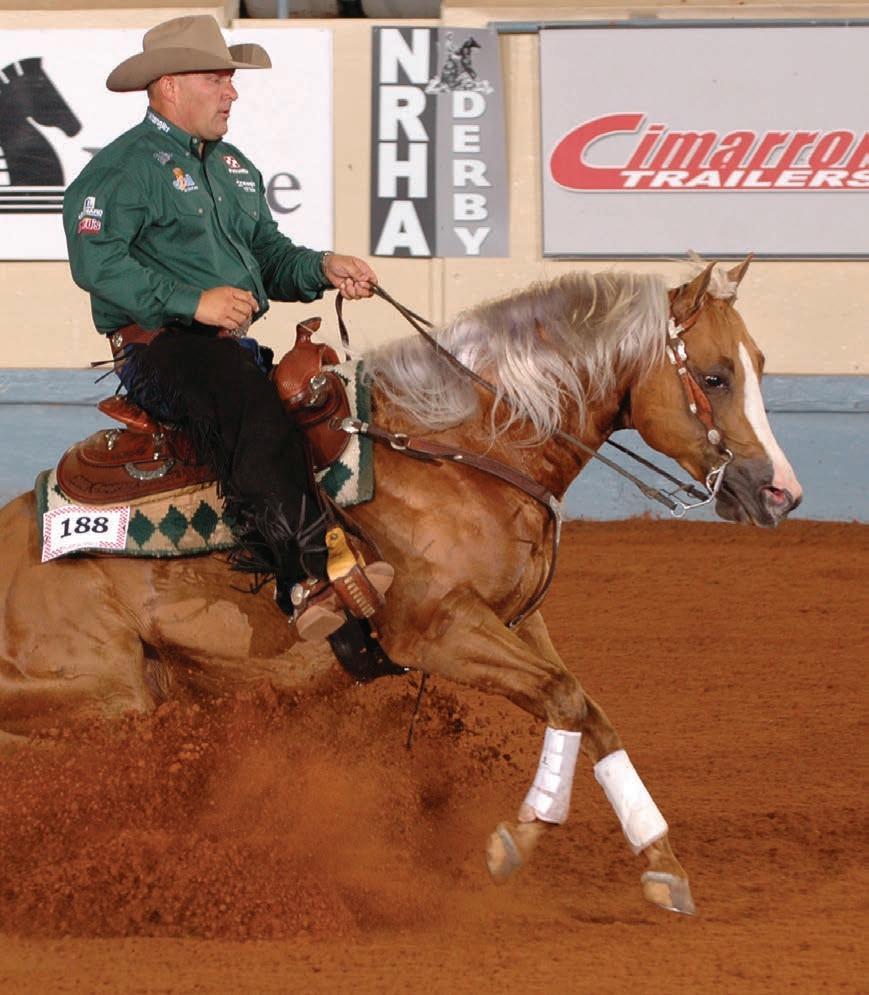
“RC Fancy Step has been great his entire career and he seems to be getting better with age. We attribute some of his success to using a great product like Steadfast Equine. I also use Steadfast Equine on some of my derby horses and all of my futurity horses.”
Flarida
13
Shawn
NRHA Champion and Arenus Ambassador
STRUCTURAL HEALTH STEADFAST EQUINE PERFORMANCE COMPLETE ORTHOPEDIC SUPPORT
Steadfast Equine Performance protects and preserves your horse’s joint health to extend their career and keep them comfortable in training and competition.
No other equine joint supplement offers the unique formulation and scientific backing of Steadfast Equine Performance.

2X NATURAL PROTEIN NEM: Each packet of Steadfast Equine Performance contains a double dose of NEM compared to our original formula. Natural Eggshell Membrane provides a naturally occurring matrix of joint and structural support components that are synthetically manufactured in other supplements. NEM is a natural protein source that’s easily absorbed by horses for maximum structural support benefits. NEM results are proven more effective and faster acting than using traditional chondroitin and glucosamine. In a human study, NEM provided significant improvement to knee and hip osteoarthritis pain and stiffness within 10 days [1].
HIGH LEVEL PERFORMANCE PROTECTION: The lifestyle of equine athletes is stressful on joints, soft tissue and bone. Heavy training schedules, regular competition, frequent travel and uneven footing can lead to career-altering soft tissue injuries and chronic pain. Steadfast Equine Performance protects and preserves your horse’s joint health to extend their career and keep them comfortable in training and competition.
IMPROVED MOTION AND FLEXIBILITY: Performance horses with stiff, painful movement need total structural support for relief and comfort. Steadfast Equine Performance works fast with a powerful dose of Natural Eggshell Membrane to make your horse feel better for a longer stride length and more fluid motion.
RAPID REPAIR AND PREVENTION: Horses on Steadfast Equine Performance have the structural support to avoid time consuming and costly soft tissue injuries. Increased bone density, tendon strength, ligament strength and healthier soft tissues help prevent injury. Horses in training and competition need maximum support to keep them feeling and performing at their best.
TOTAL STRUCTURAL AID: Complete structural support for healthy joints, soft tissue and bones. Made with the highest level of naturally occurring glucosamine, chondroitin, collagen and hyaluronic acid available. No other equine joint supplement offers the unique formulation and scientific backing of Steadfast Equine Performance.
PRE-MEASURED SINGLE DAILY PACKETS: Convenient, daily dose pouches come pre-measured for easy feeding and storage. No need to use two packets for a loading dose or during times of added stress. Your horse receives the maximum level of joint support in a single packet. Easy to travel with or store.
14
References: [1] Danesch U, Seybold M, Rittinghausen R, Treibel W, Bitterlich N. NEM® Brand Eggshell Membrane Effective in the Treatment of Pain Associated with Knee and Hip Osteoarthritis: Results from a Six Center, Open Label German Clinical Study. J Arthritis. 2014; 3: 136. [2] Dibner JJ, Quiroz MLM, Richards JD. Benefit of MINTREX P blend or organic trace minerals on the tibial dyschondroplasia, synovitis and pododermatitis in heavy weight tom turkeys. Abstract presented at: Poultry Science; July 16-19; 2006; Edmonton, Alberta. [3] Zhao J, Harrell R, Greiner L, Allee G, Knight C.. Chelated trace minerals support sow reproduction. Feedstuffs. 2012; 84: 86-28. [4] Wedekind KJ, Coverdale JA, Hampton, TR, Atwell CA, Sorbet RH, Lunnemann J, Harrell RJ, Greiner L, Keith NK, Evans JL, Zhao J, Knight CD. Efficacy of an equine joint supplement, and the synergistic effect of its active ingredients (chelated trace minerals and natural eggshell membrane), as demonstrated in equine, swine and an osteoarthritis rat model. Animal Physiology. 2015; 7: 13NEM is a registered mark of ESM Technologies, LLC
STEADFAST EQUINE COMPLETE ORTHOPEDIC SUPPORT
®
More than a joint supplement, Steadfast Equine offers complete structural support for all horses. The patented formula contains Natural Eggshell Membrane (NEM ) and TêlaFIRM.
These proprietary ingredients combine to provide your horse with a bioavailable source of glucosamine, chondroitin, collagen, hyaluronic acid and chelated minerals for maximum joint and soft tissue support and performance recovery.
IMPROVED MOTION AND FLEXIBILITY: Horses with stiff, painful movement need total structural support for relief and comfort. Steadfast Equine works fast to make your horse feel better for a longer stride length and more fluid motion.
REPAIR AND PREVENTION: Horses on Steadfast Equine have the structural support to avoid time consuming and costly soft tissue injuries. Increased bone density, tendon strength, ligament strength and healthier soft tissues help prevent injury.
ACTIVE HORSE SUPPORT: The lifestyle of a performance horse is stressful on joints, soft tissue and bone. Preserve your horse’s joint health to extend their career and keep them comfortable in training and competition.
SENIOR SUPPORT: Horses of all ages benefit from structural support maintenance. Arthritic and aging horses have additional stress on their joints that require support for optimal health. Steadfast Equine helps senior horses feel younger and more agile.
PRE-MEASURED POUCHES: Convenient, daily dose pouches come pre-measured for easy feeding and storage.
TOTAL STRUCTURAL AID: Complete structural support. No other equine joint supplement available offers the unique formulation and scientific backing of Steadfast Equine.
RESEARCH PROVEN
16 mature horses with OA were fed STEADFAST® Equine or a placebo for 42 days. Blood was collected every two weeks and levels of the biomarkers CTXII, PIIANP, and osteocalcin were measured. CTXII collagen is a byproduct of cartilage breakdown, PIIANP is a protein found in cartilage and blood increases indicate cartilage regeneration while the protein osteocalcin is important in bone mineralization and increases suggest chondromodulation.
TAKE HOME
The decrease in serum CTXII and increase in serum PIIANP and osteocalcin suggest slowing of cartilage loss and rebuilding of cartilage and bone tissue in horses fed STEADFAST® Equine.
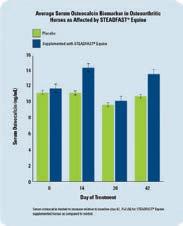
15
References: [1] Wedekind KJ, Coverdale JA, Hampton, TR, Atwell CA, Sorbet RH, Lunnemann J, Harrell RJ, Greiner L, Keith NK, Evans [2] JL, Zhao J, Knight CD. Efficacy of an equine joint supplement, and the synergistic effect of its active ingredients (chelated trace minerals and natural eggshell membrane), as demonstrated in equine, swine and an osteoarthritis rat model. Animal Physiology. 2015; 7: 13-27.
SNM TRUSTED BY COMPETITORS EVERYWHERE
In a University controlled study of 16 horses, SNM Performance Ultra was shown to significantly reduce Back Pain within 30 days of application.
Horses were randomly assigned to either a SNM Performance Ultra treatment group or a control group. Back pain scores were evaluated regularly with a pressure force gage for both horses treated daily with SNM and untreated horses. In summary, horses treated with the SNM Performance Ultra had significantly decreased pain scores over a 30-day period.

As published in the Journal of Animal Science
“My 8 year-old gelding slipped real bad at a barrel race about a month ago and his lumbar area in his back got real sore to touch and the points of his shoulders got big knots in them. I had my chiropractor adjust him and I started using the SNM Performance Ultra Gelotion daily after workouts and within 3 days those muscles began to soften. I’ve since just made it a part of my daily regimen.”
PERFORMANCE
Daily use formulation
Soothing anti-inflammatory
Use before and after rides for injury prevention
FEI compliant
PERFORMANCE ULTRA
Clinical strength version of SNM
Most powerful & fastest-acting SNM product
Soothing long lasting antiinflammatory
Both FEI and USEF compliant
Meets both USEF and FEI regulations
USING THE PRODUCTS
LINIMENT
Great for sensitive skin
“I like to use the SNM Gelotion on all of my horses after a long day in the arena. SNM is my go-to favorite because it helps to relax and relieve sore muscles and fatigue. The Gelotion with its thicker consistency helps to keep the back muscles nice and soft. Using SNM keeps my horses feeling good!”
“Every horse I own, or train uses SNM products daily, simply because there’s no question they work and are the best liniment product on the market. We all want our horses nice and supple in their muscles and SNM helps me get that. A horse that feels good will give you his all and SNM makes sure they feel their best.”


Can be sprayed on or rubbed in
Safe to use on entire body
Can be diluted for a body brace
GELOTION
Slightly thicker consistency to make it easy to apply to hard-to-reach areas
· Safe to use on entire body
POULTICE
Ideal for use on lower limbs
· Pair with or without wraps, paper or plastic
Effective at pulling out heat and swelling
16 PROVEN PAIN RELIEF SORE NO-MORE
-Lynnzie Lindstrom, World Champion Barrel Racer
-Shawn Flarida, NRHA Reiner
-David Ziegler, Professional Dressage Rider
Average Pain Score for Area Treated with Sore No-More® Performance Ultra on Right Side Day of Treatment Average Pain Score (0 to 13 Scale) 0.0 0.5 1.0 1.5 2.0 2.5 3.0 3.5 4.0 Sore No-More® Performance Ultra Control 291623 3037 44 Average Pain Score for Area Treated with Sore No-More® Performance Ultra on Left Side Day of Treatment Average Pain Score (0 to 13 Scale) 0.0 0.5 1.0 1.5 2.0 2.5 3.0 3.5 4.0 Sore No-More® Performance Ultra Control 291623 3037 44 #
Arenus Animal Health 866-791-3344 · ARENUS.CA
SNM is available at your local retail store such as Greenhawk and for additional store locations check online at www.cavalier.on.ca/find-a-dealer or www.westernrawhide.com/find-a-dealer.









Subscribe Today. (Your horse will thank you.) www.HORSEJournals.com • 1-800-299-3799 subscriptions@horsejournals.com Canada's National Horse Magazine PHOTO: ISTOCK/AMR IMAGE If horses are your passion, is your magazine.
The Gender Divide Equity matters in equestrian sport.
By Tania Millen
Dressage, show jumping, and three-day eventing are the only Olympic sports where men and women compete against each other. They’ve been doing so for over 50 years, but it’s an aspect of equestrian sport that receives little public recognition.
Most sports are divided by gender — men in one class and women in another — to prevent one sex from having a physical advantage over the other. But the gender of horseback riders and drivers is not considered an advantage or disadvantage. Hence in equestrian events there’s no need to level the playing field by segregating men and women.
Opportunities to equally access riding lessons and compete at the highest echelons of equestrian sports can be empowering, but they don’t necessarily translate into gender equity.
“Equality means everyone is treated
the same way, regardless of individual differences,” writes Rise to Win, an American organization. “Equity means everyone is provided with what they need to succeed,” — there are no social or cultural barriers preventing one gender from having greater opportunities than another.
The lack of women winning top level equestrian competitions suggests there are gender barriers to reaching the pinnacles of horse sport. Meanwhile, there’s a dearth of boys entering English horse sports and men competing in dressage. Perhaps the equestrian playing field isn’t as equal as we think.
50 Canada’s Equine Guide 2023 CANADA’S HORSE INDUSTRY AT YOUR FINGERTIPS
INDUSTRY
PHOTO: SHUTTERSTOCK/PIRITA
Women Dominate Lower Levels, English Sports
English lesson barns in Canada report that the vast majority of their junior clients are girls; few boys are involved. It’s the same in Canadian Pony Club. Most members are girls.
Only about one-quarter of adult provincial sport organization members in British Columbia, Alberta, Ontario and Quebec, identify as male (see chart below). There are even fewer boys who are members.
A 2012 article by Birgitta Plymoth found that in Sweden, women are “active in a full spectrum of roles from grooming to mucking out, to training and competing at elite level. However, boys and men are considerably less engaged in caring for horses in riding schools and elsewhere.”
At international level, the prevalence of men and women depends on the sport. At the 2018 World Equestrian Games in Tryon, USA, 60 percent of the dressage competitors were women while 78 percent of the show jumping riders were men.
In the last 18 years, Canada’s Olympic dressage teams have typified the dressage-for-women divide. Since 2004, 19 riders have competed or been reserve riders on Canada’s Olympic dressage team. Only two of them (11 percent) were men. By comparison, since 2004, 18 riders have competed or been reserve riders on Canada’s Olympic show jumping team. Ten of them (55 percent) were men and eight (45 percent) were women.
The percentage of women competing at International Equestrian Federation (FEI) levels now outstrips men. In 2019, approximately 83 percent of FEI dressage riders, 73 percent of eventing riders, and 61 percent of jumping riders were women, which is comparable to the malefemale divide in Canada’s provincial sport organizations.
Rodeos Prioritize Men
Western horse sports have greater percentages of male participants than English horse sports. But most Western sports are connected to the rodeo community where many professional events are solely open to men. Events where women are allowed to compete, such as team roping, cow work, and cutting, remain male-dominated. In 2021, 98 percent of the top 50 National Cutting Horse Association open horses were ridden by men.
Barrel racing and breakaway roping are
At Canada’s English lesson barns the majority of riding students are girls, with few boys entering English horse sports. But at the top levels of show jumping the men greatly outnumber the women.
primarily designated for women although men are permitted to compete in these events at some venues. At the 2022 Canadian Finals Rodeo, the barrel racing and breakaway classes were solely for “ladies.”
“Barrel racers are the most visible women competitors in western Canadian mainstream rodeos,” write Desirea Weninger and Christine Dallaire in their 2017 article The gendered barrel racer-horse relationship in Western Canadian rodeo “Although free to register for other rodeo events, women are funnelled into barrel racing as a societal norm in Western rural culture. The sharp line between feminine
and masculine gender norms could explain why women are excluded, for all practical purposes, from other rodeo events.”
Are Women Winning?
A predominance of FEI-level female competitors doesn’t mean women share the podium equally with men. At the Tokyo 2020 Olympics, women won only one-third (32 percent) of the medals in dressage, show jumping, and eventing combined. A woman finally won the individual Olympic gold medal in eventing, 57 years after women were first permitted to compete. Also in 2021, a woman won the Grand
51 CONNECT TO THE HORSE INDUSTRY www.HORSEJournals.com
Provincial sport organization 2019 male members 2019 female members Horse Council British Columbia Adult and junior – 22% Adult and junior – 78% Alberta Equestrian Federation Adult and junior – 28% Adult and junior – 72% Ontario Equestrian Adult – 11% Adult – 89% Junior – 5% Junior – 95% Cheval Quebec Adult and junior – 22% Adult and junior – 78%
PHOTO: SHUTTERSTOCK/VASYL SYNIUK
National steeplechase for the first time, 46 years after female jockeys were allowed to compete in the 182-year-old race.
In 2022, Canada sent an all-women show jumping team to the World Championships — a first. But men dominated the overall championship results. There were only two women out of 24 riders in the six top-placed show jumping teams.
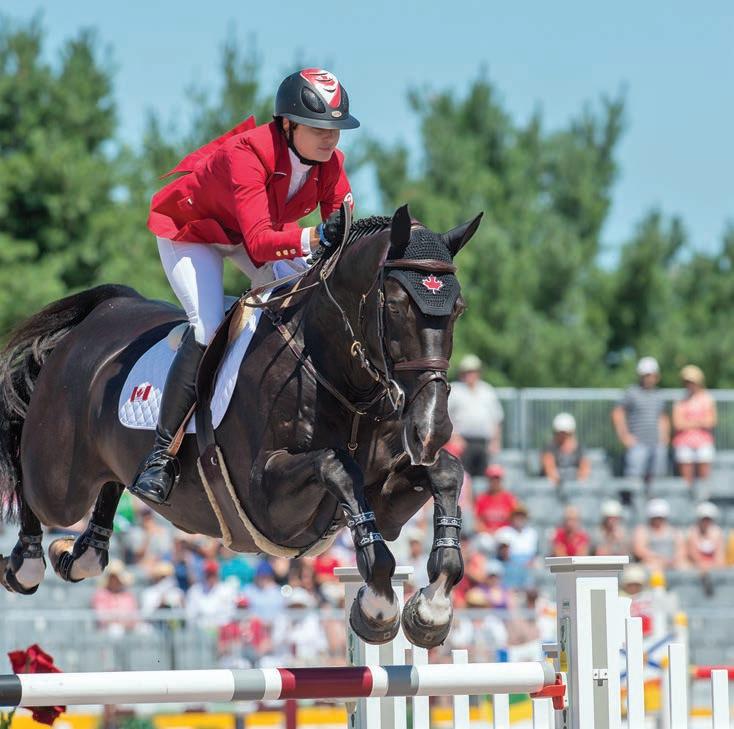
Reining is a non-rodeo Western event which is popular with women. But
Girls and women dominate many barn jobs. Do males feel unwelcome, or are these jobs not masculine enough?
similar to English performance sports, there’s a gender split depending on the level of competition. In 2020, 70 percent of the top 20 non-professional National Reining Horse Association (NRHA) riders were women. All of the top 20 professional NRHA riders were men.
Equity Linked to Social Norms
Clearly, participation in horse sports is not gender equal and the current FEI

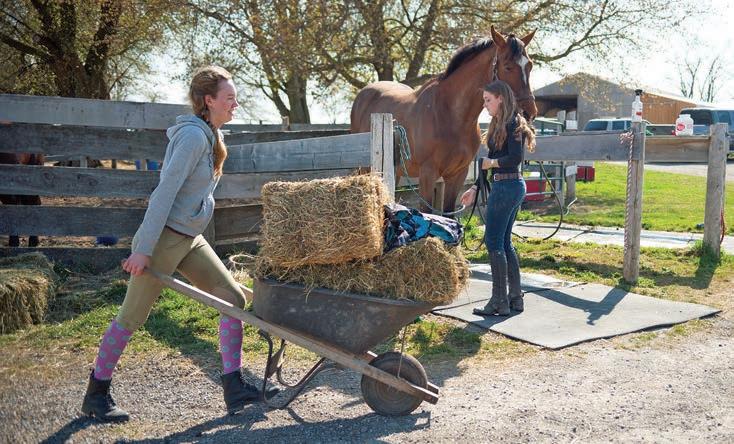
Women are scarce at the highest levels of show jumping. In September 2022, Tiffany Foster was the top-ranked female show jumper in the world at 29th in the Longines world show jumping ranking, one of only three women in the top 50. Foster is shown with Tripple X III competing at the 2015 Pan Am Games in Toronto.
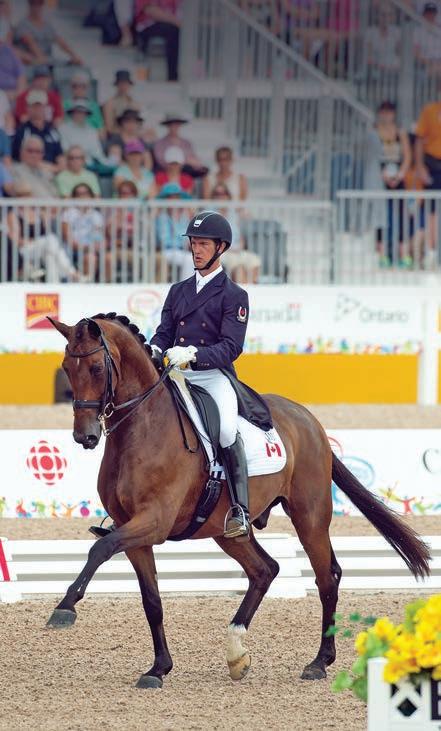
president has admitted that sexism and gender discrimination remain a problem in horse sport.
“Equal access and opportunity is a fundamental right and it is our duty to promote and encourage best practice at all levels of our sport,” said Ingmar De Vos in a speech at the 2021 IOC-IF Gender Equality in Leadership Forum “While equestrian sports have a unique gender balance, we see the necessity to increase female participation and define policies to ensure women carry on leading our sport.
“[Gender equality] is not just a sports issue; it’s society in general,” said De Vos. “We need to look at our practices, electoral processes, biases, weaknesses, and the way we portray our athletes and sport.”
And there’s the crux. Sport imitates cultural and societal gender norms. Those norms shape our lives, behaviour, expectations, perceptions, and interpretations.
Sports worldwide are associated with men and masculinity. Historically, wealthy young men were the sole participants in English equestrian sport. Working cowboys created rodeos for their own entertainment. The words “horseman” and “horsemanship” are ubiquitous in the industry. Gender equality in equestrian sports today is still limited by long-ago history.
52 Canada’s Equine Guide 2023 CANADA’S HORSE INDUSTRY AT YOUR FINGERTIPS
Chris von Martels, shown competing with Zilverstar at the 2015 Pan Am Games in Toronto, was a member of Canada’s Olympic dressage team at Tokyo 2020. He was one of only two male riders on Canada’s Olympic Dressage teams since 2004, the other being David Marcus who competed at London in 2012.
PHOTOS: CLIX PHOTOGRAPHY
PHOTO: CLIX PHOTOGRAPHY
In September 2022, Canadian show jumper Tiffany Foster was ranked 29th in the Longines world show jumping ranking and she was the top-ranked woman. There were only two other women in the top 50.
“As much as our sport is equal,” Foster said during an interview with World of Showjumping, “it is not.”
She explained that although there are more women than men show jumping up to a certain level, the numbers of women dramatically decline at the very top. She thinks a big reason is that women peak as show jumping athletes between ages 30 and 40, right when their window for having children is closing. So, they often have to choose between horse sport and having a family — a choice that men don’t have to make.
Gender norms of women staying home to raise children “act as a real restraint on female riders’ ability and desire to compete in elite equestrian sport,” writes Katherine Dashpar in her article Together, yet still not equal? Women and sex integration in equestrian sport. “High-level sport continues to be seen as incompatible with female gender norms and athletes struggle for recognition and resources,” says Dashpar.
“Equestrian sports mirror society and its gender order,” says Plymoth. Therefore, she thinks the image of women in the horse industry needs to shift to achieve greater gender equality. Women need to be shown as the independent, strong, courageous, decision-making competitors they are, and not just horse lovers.
Barriers to Overcome
On a more practical level, national equestrian federation management, sport stewards, and other officials are primarily male. This gender imbalance may subconsciously affect national team selection. Men may be considered better competitors under pressure than women, something that is more difficult to judge from competition results. Many riders are limited by sponsorship. Thus, if sponsors prefer to support riders who may be more likely to be selected for national teams, considered more competitive, and will not have their careers interrupted due to potential pregnancy, perhaps they choose to sponsor male riders over women.
However, there are barriers to boys and men, too. Dressage, low level English horse sports, and many barn jobs are dominated by girls and women. Perhaps
boys and men now judge these areas not masculine enough or are concerned society will judge them as not masculine if they become involved. Perhaps males feel unwelcome. Perhaps tight breeches are off-putting.
Just as the barriers to women must be identified and addressed for horse sport to become equitable, so must the barriers to boys and men. Dashpar advises: “Without wider changes in gender norms
and expectations, sex-integration alone will not be enough to achieve greater gender equality in equestrian sport.” Only by making changes will equestrian activities and sports live up to their billing as gender equal. Eventually, they may become equitable, too. But for now, there’s work to do. b
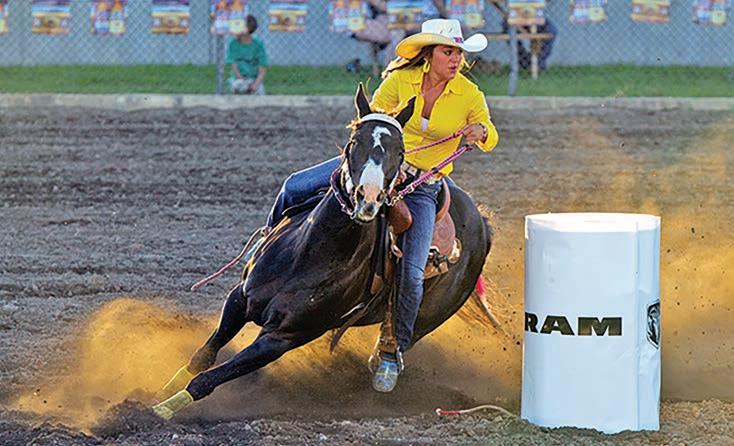
53 CONNECT TO THE HORSE INDUSTRY www.HORSEJournals.com
> Tania Millen is a regular contributor to this magazine — read her bio on page 94.
A higher percentage of male participants are found in Western horse sports, and many events where women can compete are dominated by men. Women are most visible in barrel racing.
PHOTO: CLIX PHOTOGRAPHY
Equine Entrepreneur 101
INDUSTRY
54
PHOTO: I STOCK/SASHA FOX WALTERS
8 Keys to Making Your Dream Business Profitable
By Tania Millen
One of the biggest challenges for equine entrepreneurs is viewing their business as a business. Many riders and horse lovers get into business as an extension of their love of horses, but a horse trainer, coach, or rider who is paid for their services is a self-employed professional. They’re operating a business just like anyone else selling goods or services.
Additionally, horse businesses often require specialty skills and knowledge. Selling, training, or boarding horses involves caring for animals. Coaching involves teaching, educating, and developing riders. Equine businesses that use horses have much higher financial outlay than businesses that don’t require horses. Also, equine businesses often provide a luxury service — not a necessity — so they may be affected by societal economics beyond their control. However regardless of the goods or services that a horse-related business provides, it’s still a business.
Here are eight keys to making that business profitable.
1 Know Your Market
The horse industry is affected by trends, styles, and consumer whims like any other industry. Riding attire, horse blankets, and even horse breeds go in and out of fashion. Equine entrepreneurs need to figure out who will buy their products or services in the current economic climate.
“The biggest pitfalls for equine businesses are timing, location, and demographics,” says Julie Fischer, who teaches Equine Business Finance & Risk Management at Equine Guelph and lives in Allenspark, Colorado.
Timing relates to when the business starts. For example, starting a horseback riding lesson business that caters to lower income families may not be successful during periods of high unemployment.
“Assess family income and whether luxury horse-related activities are within financial reach,” says Fischer. “Find out what other facilities [there] are nearby and whether the needed resources (vet, farrier, feeds) are available. Being isolated can hurt your business. More populated areas tend to have more customers, can operate year-round, and can charge higher prices.”
You also need to know who the competition is and how your product or service will stand out. That means offering a slightly different product that satisfies the unmet needs of customers.
For example, a riding coach may specialise in teaching dressage to beginner adults, but after researching the potential customer base, could find there’s a higher demand for children’s lessons in Western tack.
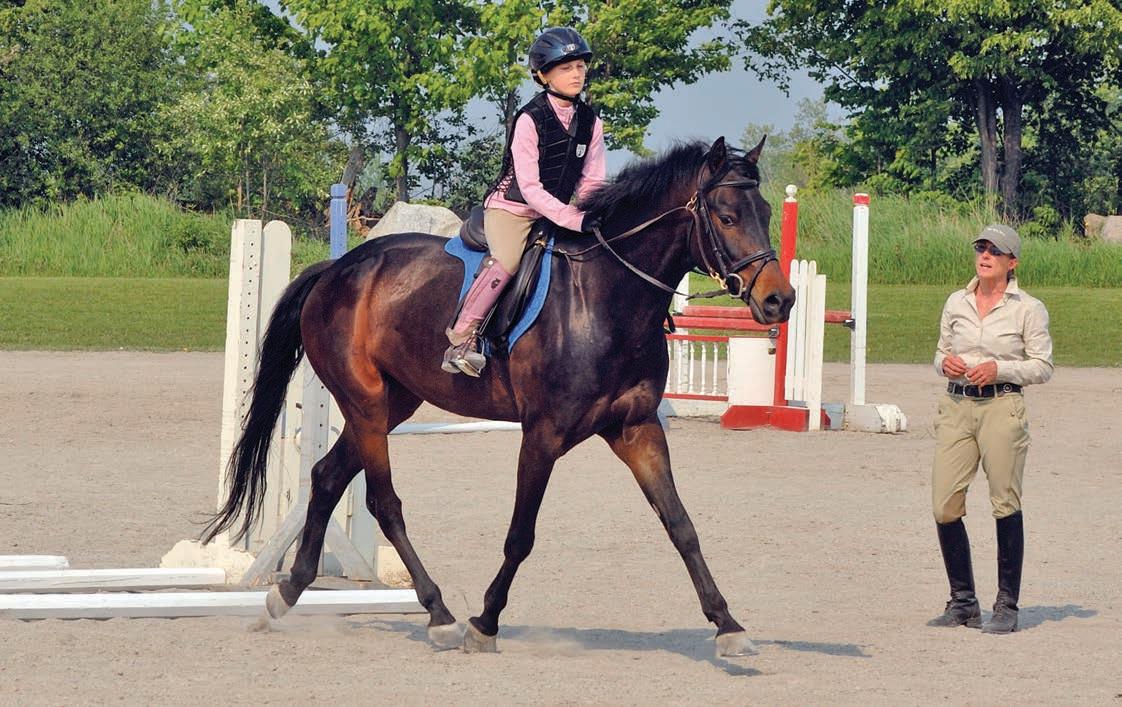
55 CONNECT TO THE HORSE INDUSTRY www.HORSEJournals.com
PHOTO: CLIX PHOTOGRAPHY
“I think there’s a big difference between businesses that cater to the Western and English worlds,” says Fischer. “English schooling stables in the big cities seem to be doing okay. Some rural Western tourism-based services are struggling.”
“Equine-related businesses that seem to thrive are those that sell novelty goods such as home décor and clothing — things that are trendy, but that people will wear or use in their house,” says Fischer.
Research the market, find a niche, and figure out how your business can fill it.

2 Make a Profit
It sounds obvious that a business must earn more than the costs of operating. Yet it’s easy to get caught up in “doing” without figuring out how to actually make money. If there’s no profit, then your operation is simply an expensive hobby.
“The most common businesses that I see start up and then fail are instructors teaching lessons,” says Fischer. “A lot of lesson programs go out of business due to the cost of maintaining horses.”
“If you’re researching a potential lesson program or just starting out, then start small, partner with a facility, and grow your customer base and name brand,” Fischer says. “Don’t buy five or ten horses and think that people are going to come to you quickly.”
It’s also important to determine whether you want to provide a service or sell products year-round, seasonally, part-time, fulltime, or just on weekends.
“Performance horses are ridden year-round (unlike most trail and outfitter horses) so those riders have ongoing needs for farriers, feed and supplements, veterinarians, tack stores, etc.,” says Fischer.


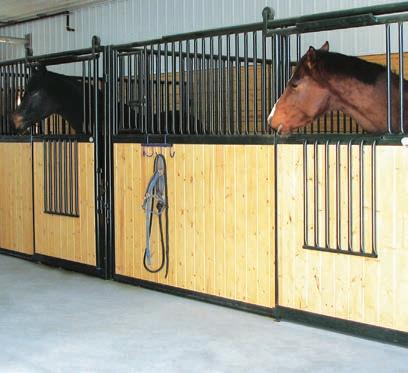
Your standard of living, personal expenses, desired savings, and retirement plans will also affect how much profit you need to make from the business. Once you know what you need to make, then determine the volume of products or services you have to sell to be profitable. Overhead costs and sales prices will determine whether the business is viable.

3 Choose a Structure
Before registering a business, you’ll need to decide what type of business structure is best. There are four types in Canada: sole proprietorship, partnership, corporation, and cooperative. They each have advantages and disadvantages, and address liability, taxation, and record-keeping differently. Researching and understanding each structure, then speaking with a lawyer and accountant, can help with this decision.

56 Canada’s Equine Guide 2023 CANADA’S HORSE INDUSTRY AT YOUR FINGERTIPS www.hi-hog.com 1-800-661-7002 Box Stalls Portable Stalls Round Pens Lunge Pens Folding Corrals Bale feeders Footing Tiles Gates & Panels Solid Welded Construction, Manufactured In Canada Since 1974. Outstanding Equine Equipment
PHOTO: SHUTTERSTOCK/NAMTIPSTUDIO
PHOTO: SHUTTERSTOCK/ANNA ASPID
4 Plan to Succeed
Creating a written business plan is another key to success. If you don’t need financing, the business plan can be a simple spreadsheet that summarizes costs, potential earnings, and likely profits. Planning two to five years into the future will help direct the business, attain milestones, and produce profits. If you need financing, lenders will request a more substantial business plan.
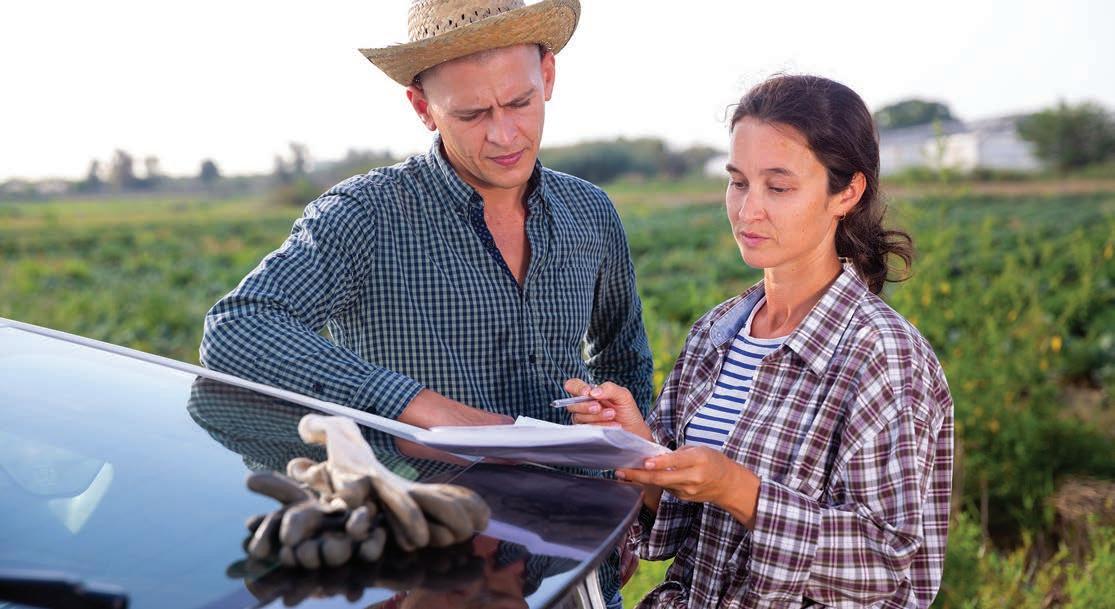
5 Names and Branding

“What’s in a name…?” William Shakespeare famously wrote in his play Romeo and Juliet.
Your business name tells potential customers what the business does, what products or services are for sale, and reflects the brand, too.

57 CONNECT TO THE HORSE INDUSTRY www.HORSEJournals.com
PHOTO: SHUTTERSTOCK/BEARFOTOS
The brand on a horse’s hip visually indicates whose herd the horse belongs to. Business branding is similar. It’s a visual statement about the business, illustrating who you are and what you stand for. It’s the colours and logo on your website, social media, clothing, and barn. It’s your values, policies, and how you interact every day with horses and clients. It’s the consistent representation of your products or services so that customers know what they’ll be getting when they purchase from you. Ultimately, it sets you apart from the competition.
6 Market and Diversify
Once you’ve created a unique brand that stands out from others, it’s time to market that specialness. Marketing can range from hosting welcome events to signage, advertising, special offers, and partnering on deals with complementary businesses. Marketing is communication. It’s the only way your business will become known to customers who can then purchase your products or services. Ensuring your business is viable in the long term can involve diversifying, too. Diversification means offering a variety of products or services so that if one doesn’t sell well, maybe another will. Essentially it spreads your sales across different items. For example, if the business provides services perhaps it can sell products as well (a lesson barn might sell branded hoodies or swag), a Western tack store may partner with a craft beer company for evenings of tasting and shopping whenever a new brew launches.
“Innovation is definitely creeping into the horse industry and people are thinking outside the box,” says Fischer.
7 Get Insurance
Insurance can protect you and your business from financial losses when things don’t go as planned. One way to determine your insurance needs is to make a list of “what ifs?”. For example, if you’re a coach, what if your student’s horse kicks a spectator at a show while you are coaching? Do you require insurance? Does your student? The facility? The show organizer? Speak with an insurance agency that is familiar with your type of business to find out. Not all agencies are familiar with horses and equine businesses, plus every agency offers different products. Call around to find the insurance you need so that you’re protected against possible “what ifs?”.
Resources
Many free resources are available for start-ups and small businesses in Canada. Here are some contacts.
Business Development Bank of Canada > bdc.ca
Canada’s Regional Development Agencies > Canada.ca
Chamber of Commerce > chamber.ca
Community Futures Canada > communityfuturescanada.ca
Co-op Creator > coopcreator.ca
Equine Guelph > equineguelph.ca
Futurpreneur Canada > futurpreneur.ca
58 Canada’s Equine Guide 2023 CANADA’S HORSE INDUSTRY AT YOUR FINGERTIPS
PHOTO: SHUTTERSTOCK/DAISY DAISY
8 Embrace Change
Global changes are impacting the horse industry and business owners must consider how best to embrace them. For instance, because horsey customers are prevalent online, ensure your business has a website and is active on social media. Wearable and video technology has advanced, allowing many instructors to teach from afar. Meanwhile, boarding facilities and transportation operators can send electronic videos of client horses, to assure owners of their horse’s well-being. As sport rules relax, riders are enthusiastically embracing more interesting and elegant attire, increasing sales of fashionable tack and clothing. Finally, in the face of climate change and environmental issues equestrian businesses need to consider their environmental footprint.
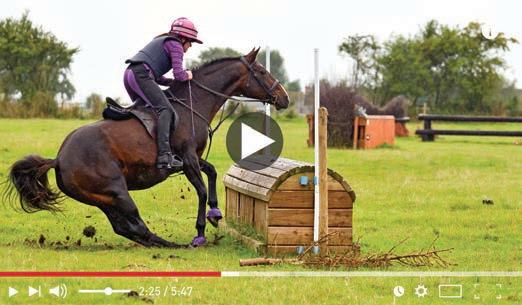
Ultimately, small businesses drive Canada’s economy and that
includes equine entrepreneurs. Over 55 percent of Canadian businesses have fewer than four employees and over 70 percent have fewer than 10 employees. Those businesses last, too.
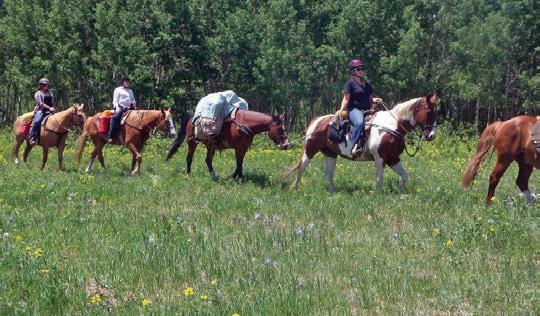
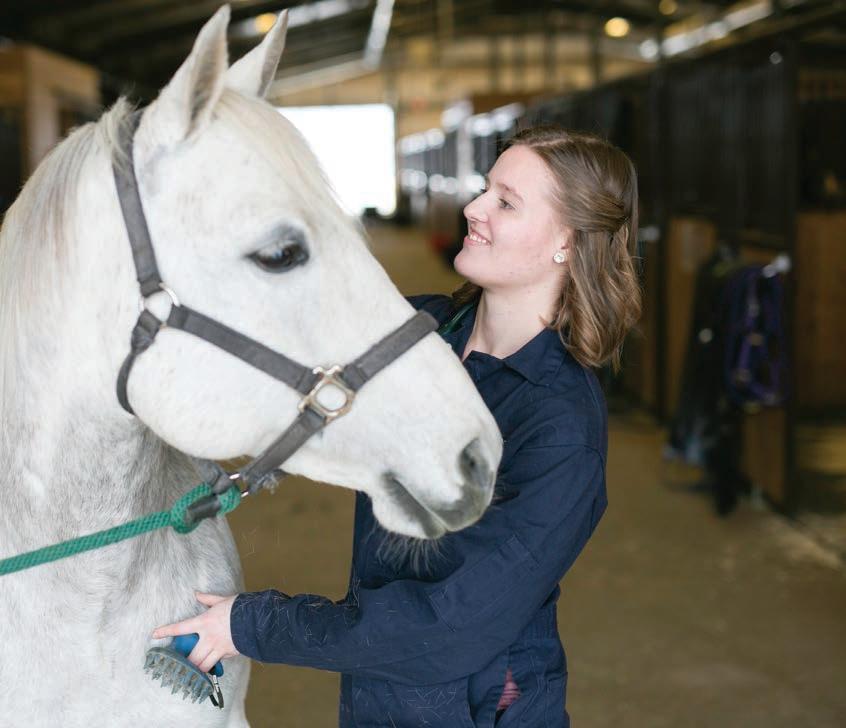
“Over 67 percent of new businesses in Canada survive five years,” says the Business Development Bank of Canada’s website. “Ten years after opening, about 49 percent of goods-producing businesses and 44 percent of services-producing businesses are still operating.”
For new businesses, finding an unfilled niche is key, along with understanding the market and ensuring the business can actually be profitable. Fortunately, there’s lots of help available. Equine breed, coaching, and sport organizations are well-connected, so reach out to the horse community for help, then work hard to fulfill your entrepreneurial dreams. b
59 CONNECT TO THE HORSE INDUSTRY www.HORSEJournals.com Learn more at oldscollege.ca New Equine Care & Management Certificate Turn your passion for horses into an exciting and rewarding career in the equine industry.
> Tania Millen is a regular contributor to this magazine — read her bio on page 94.
Dr. Julie Cooney Fischer teaches equine business management virtual courses at University of Guelph. She also operates Meadow Mountain Ranch in Allenspark, Colorado, which offers horse camping and pack trip opportunities to Girl Guides.
IMAGE: SHUTTERSTOCK/BOXERX & ISTOCK/GROOMEE
Complex Rules Protect Canada’s Horses
Horse welfare is complex, partly due to the myriad uses, values, and husbandry arrangements for horses. They’re backyard pets, ridden and driven in competition, raced, raised for meat, and used for therapy, recreation, and rodeo. Horses are regularly transported, kept in rural and urban areas, stalls, pens, fields, and pastures, plus managed according to their use. Many horses live on individual properties and their welfare relies on individual owners, making poor welfare difficult to identify.
“We can have all the regulations in the world but if nobody is turning in the neighbour that’s starving their horse or if nobody sees the abused horse in somebody’s backyard, then our regulations aren’t any good,” says Jennifer Woods, a certified animal welfare auditor. She inspects Canadian equine operations and competition venues to ensure they meet acceptable welfare standards, including the Calgary Stampede, as well as rodeo and chuckwagon locations.
“I don’t think the system has failed horses,” says Woods. “I think we have areas of welfare that need to be addressed on individual farms where nobody sees what’s happening. There’s over-breeding. There are people who aren’t feeding their animals properly or providing health care.”
It’s in the best interests for high profile equine professionals such as show jumpers, as well as rodeo and racing connections, to ensure their horses’ well-being. It is what happens where nobody is looking that concerns Woods.
“People who are a problem don’t read horse magazines,” says
By Tania Millen
Woods. “They don’t go to educational symposiums. They aren’t members of an association. They don’t engage and I don’t know if we can reach them. We don’t have a map that tells us who owns a horse. We don’t even know who they are.”
She explains that some horses sent to auction are in horrific condition and may be bought by the “meat man” for slaughter. But the buyers didn’t neglect those horses.
“That neglect is occurring on farms with people who don’t understand how to care for their horses, who have no intention of caring for their horses, and who just leave them out in the field to fend for themselves,” says Woods.
Fortunately, Canada has laws with enforceable rules.
Are Horses, Cattle?
Legislation is laws that determine acceptable horse management and care. They’re enforced by the Royal Canadian Mounted Police, Canadian Food Inspection Agency (CFIA), or the Society for the Protection and Care of Animals, following applicable regulations.
The Criminal Code (the Act) is the overarching legislation that addresses animal welfare in Canada. Part XI: Wilful and Forbidden Acts in Respect of Certain Property describes offences towards animals and applicable punishments (five years in prison or $10,000). It also describes “cruelty to animals” — causing unnecessary suffering — and the punishment for that, plus states that “failure to exercise reasonable care” can be used as evidence.
Equines (horses, donkeys, and mules) are considered livestock
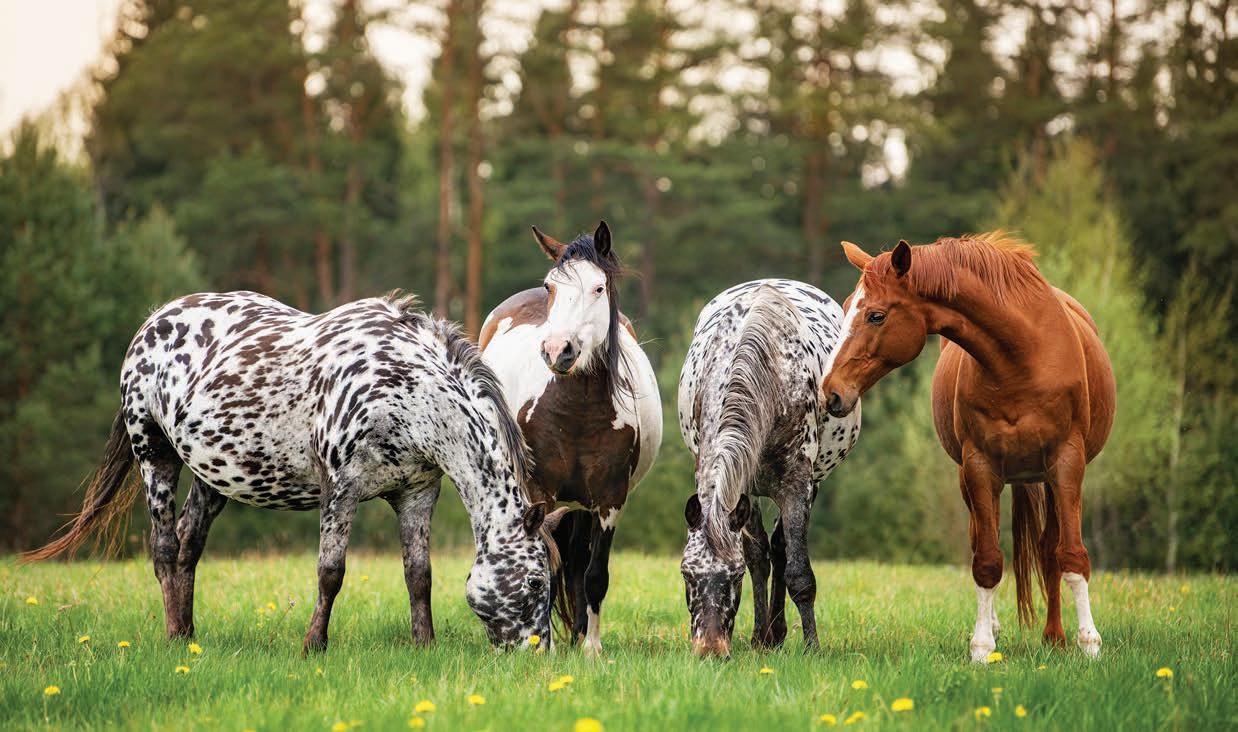
60 Canada’s Equine Guide 2023 CANADA’S HORSE INDUSTRY AT YOUR FINGERTIPS
INDUSTRY
PHOTO: SHUTTERSTOCK/RITA KOCHMARJOVA
under current Canadian legislation. But the Horse Welfare Alliance of Canada website states, “The designation of equine as livestock within provincial and federal legislation, regulations, policies, bylaws, and rules is inconsistent. This causes confusion.”
There’s also work afoot to define school horses at lesson barns as “working equines.” Others feel that therapy horses should be classified as pets or companion animals, equal to dogs, but this re-designation would prevent livestock laws from applying to those horses and leave a gap in their protection.
However, the Criminal Code defines cattle as “cattle or an animal of the bovine species and includes any horse, mule, ass, pig, sheep or goat.” (According to Encyclopedia Britannica there are two species of wild ass and one domesticated species: the donkey).
So, according to the Act, horses are cattle.
Enforcing the Rules
“Canada has very strong regulations, including one of the most comprehensive transport regulations in the world,” says Woods. Federal regulations pertaining to equines are upheld by Agriculture and Agri-Food Canada (AAFC) and the CFIA. The AAFC is tasked with developing Canada’s agricultural industry. That includes tracking equine infectious anemia, which is identified by a Coggins test.
The CFIA enforces the Health of Animals Act, which regulates the transport of animals and summarizes the feed, water, and rest requirements for animals being transported. Performance riders hauling horses across the Canada-USA border will be familiar with the CFIA’s health paper requirements. The CFIA also regulates humane slaughter and the transportation of live horses from Canada to Japan.
Ethical Dilemmas
“I think our regulations are effective in maintaining horse welfare,” says Woods. “But there are people who believe horses should not be used for entertainment purposes [jumping, dressage, rodeo, etcetera] at all. So those people may not think our regulations are strong enough.”
“There’s a difference between animal welfare and the ethical use of animals,” says Woods.
Neglect occurs where people don’t understand how to care for their horses or have no intention of caring for them. This severely underweight mare with a nursing foal has badly overgrown hooves and must not be left to fend for herself.
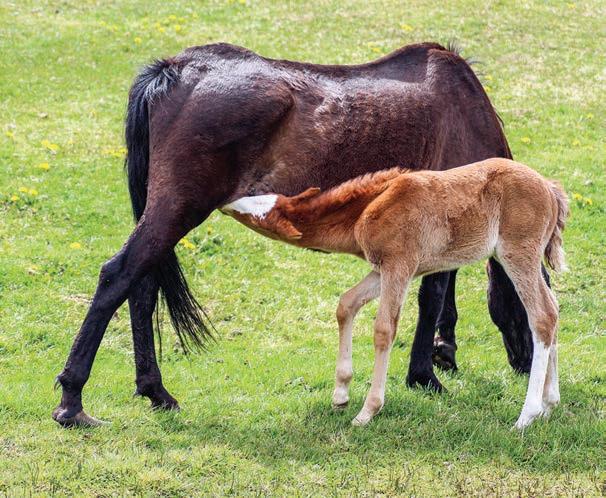
Ethics are moral principles that guide our personal actions. They address whether horses should be used by humans and under which circumstances. For example, some people are ethically opposed to racing horses or slaughter.
Welfare refers to basic physical and social well-being. The five internationally recognized freedoms of horse welfare are:
• Freedom from hunger and thirst
• Freedom from discomfort
• Freedom from pain, injury, and disease
• Freedom to express normal behaviour
• Freedom from fear and distress
In the horse industry, welfare and ethics have started overlapping as scientific evidence continues to challenge norms regarding horse use and behaviours. For example, from a welfare standpoint horses require social interaction because they are herd animals. As a result, questions have arisen about the acceptability of keeping horses in individual stalls or pens with minimal opportunities to socialise, something that’s common in horse sport to prevent an injury that sidelines competition.
How-To of Horse Welfare
In addition to federal legislation and regulations, several organizations provide standards and guidance for the day-to-day management, care, and handling of horses.
The National Farm Animal Care Council (NFACC) Code of Practice for the Care and Handling of Equines is the overarching code of practice for horse welfare in Canada. It has ten sections which summarize duty of care, facilities and housing, feed and water needs, health and reproductive management, handling, transportation, and euthanasia of horses. Each section lists requirements, such as “horses must have some form of exercise or turnout” and recommended practices, such as “turn horses out with companions.” The code also has 13 appendices which cover everything from body condition scores to diagrams of how to euthanize by firearm.
Animal welfare audits are written using codes of practice, which provide requirements and recommendations, plus other established animal welfare standards.
The Code of Practice for the Care and Handling of Equines requires that in muddy conditions horses must, at a minimum, have access to a mud-free, well-drained area in the pasture/yard on which to stand and lie down.
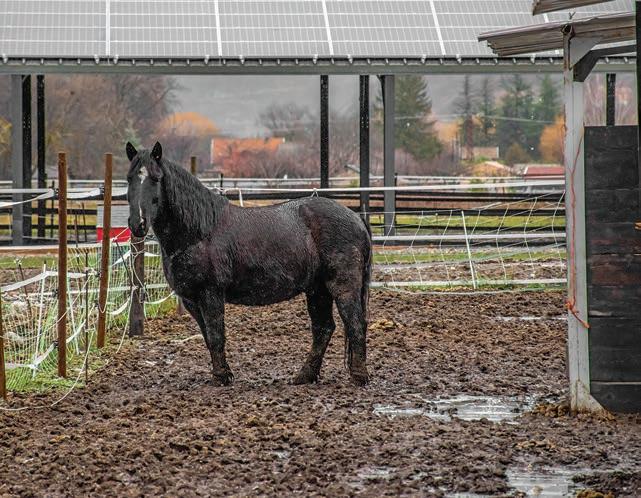
61 CONNECT TO THE HORSE INDUSTRY www.HORSEJournals.com
PHOTO: SHUTTERSTOCK/KATERYNA DEINEKEA
PHOTO: SHUTTERSTOCK/WIRESTOCK CREATORS
“At the Calgary Stampede we’ve really ramped up the rules to mitigate risks and ensure the horses are well taken care of,” says Woods. “A lot of the rodeos have done that, along with show jumping and racing. There are a lot of rules in place now.”
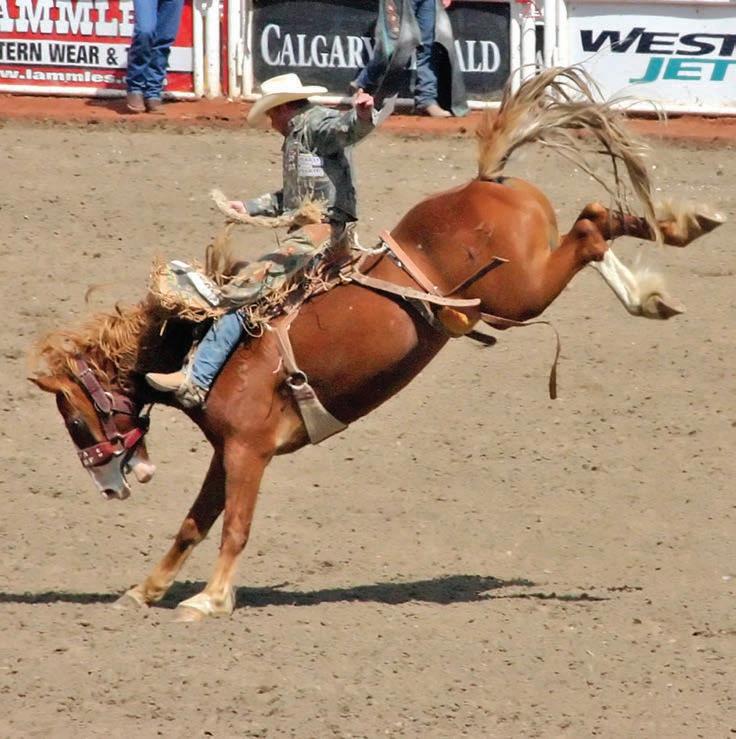
Equestrian Canada’s (EC) Horse Welfare Code of Conduct applies to horses participating at EC events and on Canada’s equestrian teams. It also applies to “any horse under the care or training of any individual whether at an EC sanctioned event or not” where the individual is somehow related to EC as a rider, trainer, coach, or employee. The code states that horses must be cared for in accordance with the NFACC code and lists fines and suspensions from EC events.
There’s also a Code of Practice for the Care and Handling of Horses on PMU Ranches which summarizes best horse welfare practices for the 18 ranches in Saskatchewan and Manitoba which are currently part of the PMU (pregnant mare urine) industry.
Other organizations publicise position statements. For example, the Canadian Veterinary Medical Association (CVMA) considers equine castration without anesthesia to be animal cruelty and has a position statement regarding the responsibility of veterinary professionals to address animal abuse and neglect.
Resources:
Agriculture and Agri-Food Canada
> agriculture.canada.ca
Canadian Food Inspection Agency
> inspection.canada.ca
Canadian Veterinary Medical Association
> canadianveterinarians.net
Criminal Code
> laws-lois.justice.gc.ca
Equestrian Canada
> equestrian.ca
Horse Welfare Alliance of Canada
> horsewelfare.ca
Humane Canada
> humanecanada.ca
National Farm Animal Care Council
> nfacc.ca
North American Equine
Ranching Information Council
> naeric.org
University of British Columbia
Animal Welfare program
> awp.landfood.ubc.ca
University of Guelph, Campbell Centre for the Study of Animal Welfare
> uoguelph.ca/ccsaw
University of Prince Edward Island, Sir James Dunn Animal Welfare Centre
> awc.upei.ca
Rodeos, including the Calgary Stampede, have stepped up to make sure horses are well cared for, says certified animal welfare auditor Jennifer Woods.
Canada’s Equine Guide 2023 CANADA’S HORSE INDUSTRY AT YOUR FINGERTIPS 62
Horse housing affects welfare. Horses are herd animals, and when kept in stalls and individual paddocks they have minimal opportunities to socialize.
PHOTO: DREAMSTIME/STEVE ESTVANIK
PHOTOS: CLIX PHOTOGRAPHY
Is It Enough?
Additionally, all of Canada’s provinces and territories have their own animal protection legislation and regulations which vary in terms of the welfare issues they cover, the protection and enforcement they provide, and who’s responsible (see sidebar). Overlap between provincial acts and regulations and the federal Criminal Code means animal welfare offenses can be charged under both provincial and federal laws.
For example, in 2005, an individual in British Columbia was charged with three counts of abusing horses and dogs. They included: willfully permitting unnecessary pain, suffering and injury under the Criminal Code; failing to provide food, water, shelter, and care under the Criminal Code; and permitting animals to be in distress under BC’s Prevention of Cruelty to Animals Act. The judge found all three counts proven “beyond any doubt.”
Municipalities, regional districts, and municipal districts may also have bylaws about animal welfare, enforcement, and responsibilities.
With all these legislative acts and regulations, codes, and position statements, are horses adequately protected in Canada?
“It’s hard to monitor the welfare of horses on individual farms that have no connection to the horse industry,” says Woods. “The responsible horse owners and associations need to find a way to address that.
“As a community, we need to provide more education, outreach and reporting,” she says. “If you see something, you need to report it.”
> Tania Millen is a regular contributor to this magazine — read her bio on page 94.
These Provincial Acts and Regulations Support Horse Welfare:

British Columbia: Prevention of Cruelty to Animals Act, Animal Care Codes of Practice Regulation
Alberta: Animal Protection Act, Animal Protection Regulation
Saskatchewan: Animal Protection Act, 2018; Animal Protection Regulation, 2018; Animal Health Act; Animal Health Regulations; Stray Animals Act (for livestock) and Stray Animals Regulation, 1999
Manitoba: Animal Care Act, Animal Care Regulation
Ontario: Ontario Society for the Prevention of Cruelty to Animals Act; Provincial Welfare Services Act (PAWS Act), 2019; Disposal of Deadstock Regulation; Livestock Community Sales Act; Livestock Community Sales Regulation; Racing Commission Act; Rules of Racing
Quebec: Animal Welfare and Safety Act, 2021; Animal Health Protection Act
New Brunswick: Society for the Prevention of Cruelty Act
Nova Scotia: Animal Protection Act, Animal Health and Protection Act
Prince Edward Island: Animal Welfare Act, Animal Welfare Regulations
Newfoundland and Labrador: Animal Health and Protection Act, Animal Protection Regulations, Animal Protection Standards Regulations
Yukon: Animal Protection Act
Northwest Territories and Nunavut: Herd and Fencing Act
63 CONNECT TO THE HORSE INDUSTRY www.HORSEJournals.com
b
Canadian Pony Club
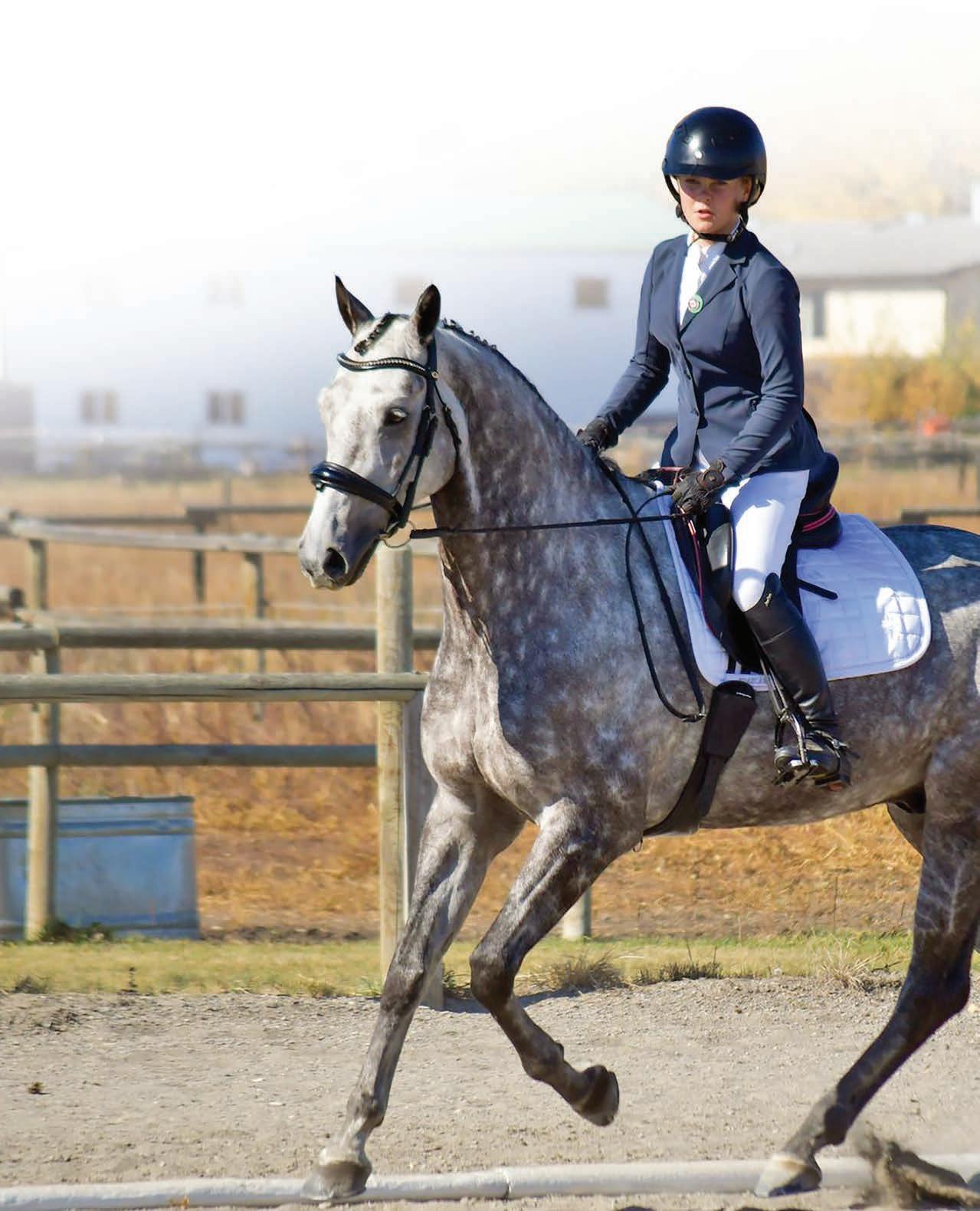
64 Canada’s Equine Guide 2023 CANADA’S HORSE INDUSTRY AT YOUR
FINGERTIPS
Then & Now
By Tania Millen
It’s common for riders to compete at high levels today without advanced horsemanship knowledge. A rider’s success in the show ring seems to have greater value than their horse management skills, but that wasn’t always the case. Many of Canada’s former top riders credit Canadian Pony Club (CPC) for their horsemanship knowledge and acknowledge its importance to their success. The horse industry has since changed and now, riders rely on coaches to know what’s best for their horses.
“The need for riders to have horsemanship skills has decreased as coaches have taken a more active role,” Michelle Gilbert writes in her chapter titled ‘Sociocultural Changes in Canadian Equestrian Sport’ in Equestrian Cultures in Global and Local Contexts

That changing focus — from individuals learning horsemanship skills to care for their own horses to a reliance on coaches — is just one of the challenges CPC is facing today. But Pony Club is still considered one of the most affordable ways for kids to get involved in horse sport — an increasingly expensive hobby.
For almost 90 years, CPC has educated children and youth about horses, riding, and stable management while promoting lifelong friendships and teamwork. It’s a volunteer-driven organization, with parents, alumni, grandparents, and youth members teaching lessons, managing shows, conducting testing, administrating clubs, and fundraising. It’s one of the few places where children, youth, and now adults can advance their horsemanship and stable management knowledge through a standardized system.
“By the time you get through your A [the highest level], you’re an expert,” says Kelly Brouwer, CPC’s Alberta South Region Rally Chair. “You’re a veterinarian and a farrier and everything else. You’re a lot more informed, and a lot sooner than if you’re trying to glean the information yourself.”
That’s consistent with the organization’s origins. Pony Club began
continues on page 68
65 CONNECT TO THE HORSE INDUSTRY www.HORSEJournals.com
PHOTO COURTESY OF TINA WATKINS, DEWINTON PONY CLUB
The Founders Canadian Pony Club
Inspired By a Vision of Better Horsemanship














Lieutenant Colonel R.S. Timmis and his horse Bucephalus at the Canadian National Exhibition stables in Toronto, Ontario in 1932. Bucephalus (named after Alexander the Great’s horse), was an extroop horse and 15 years old at the time. At only 15.3 hands high “he had cost the government only 175 dollars when bought in 1920 — he had spring in his heels and fire in his belly,” wrote Brereton Greenhous in his book Dragoon.
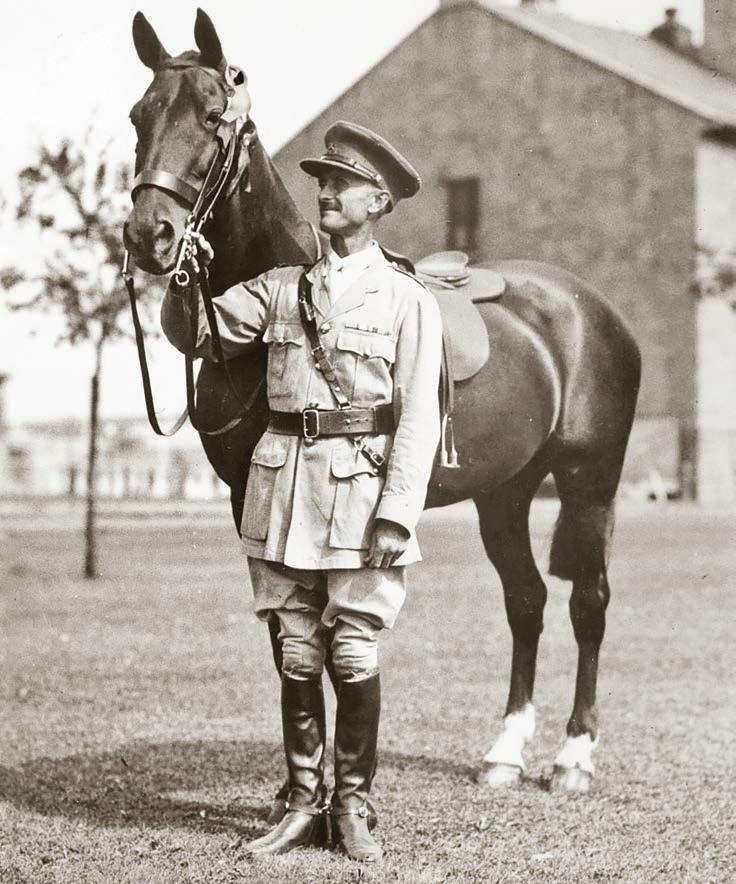
Lieutenant Colonel R.S. Timmis saw active service in World Wars I and II. In WWI as a member of Canada’s calvary force, his service involved, among other things, riding his horse, armed with a sabre, against German machine gun nests. Between the wars he earned his Doctor of Veterinary Medicine degree. In addition to being a veterinarian, he authored several books on the subjects of horsemanship, horse health, and training. He was the first District Canadian Pony Club.
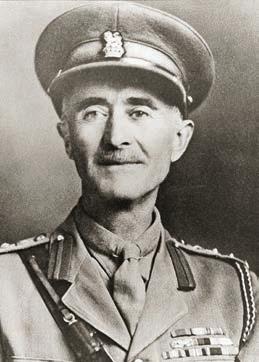

Clarence Sparks McKee in 1941. He was instrumental in bringing Pony Club to Canada in 1934. Among his many achievements, he was a decorated veteran of World Wars I and II. He was a lawyer and a stockbroker, and became general manager of Toronto’s Royal Winter Fair in 1945. He rewrote the Rules of Racing for the Ontario Racing Commission. He was a lecturer at Humber College in Toronto on Horsemanship and Thoroughbred racing, and donated a good part of the horse library to Humber College.
66 Canada’s Equine Guide 2023 CANADA’S HORSE INDUSTRY AT YOUR FINGERTIPS
PHOTOS COURTESY OF ROYAL CANADIAN DRAGOONS ARCHIVES
PHOTOS COURTESY OF FRASER MCKEE
Lieutenant Colonel R.S. Timmis and Bucephalus in 1927. Lt Col Timmis holds the George III Gold Challenge Cup, which he won at the world army horse jumping championships held in New York, where they competed against contenders from Britain, France, and the United States.
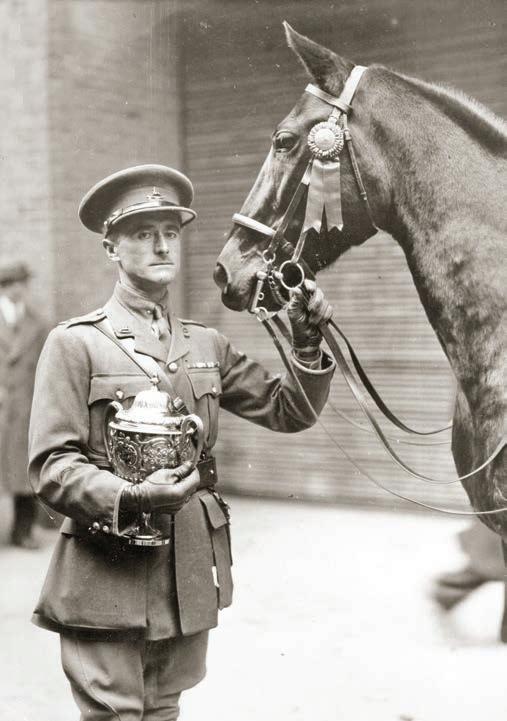
Quality Sport New Forest Ponies
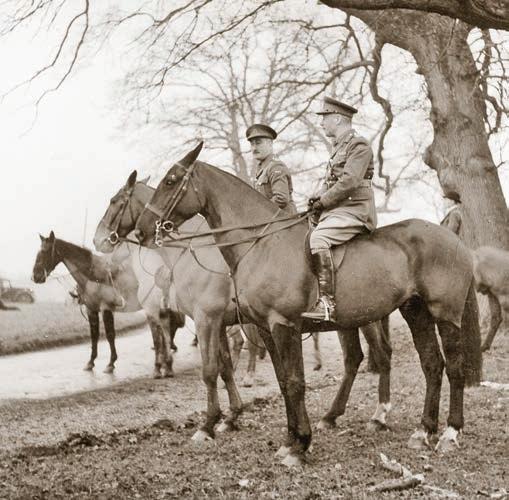




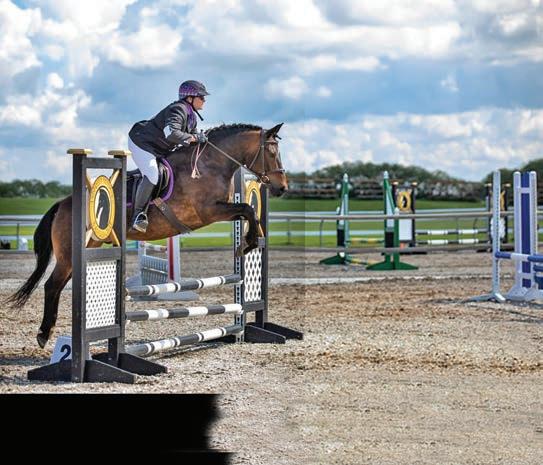

67 CONNECT TO THE HORSE INDUSTRY www.HORSEJournals.com
Breton, AB • Dallas Grubenmann • 780-898-9706 dallas@ptfponypower.com • www.ptfponypower.com Pferde Traum Farms
COMPETITIVE PONIES for Adults & Kids! New Forest Ponies are intelligent, friendly and very easy to train. They have horse-like gaits and are sturdy enough to carry adults, even in competition, but narrow enough for children to learn to ride properly.
Standing
Imported Stallion Halestorm Branston Pickle
PHOTO COURTESY OF ROYAL CANADIAN DRAGOONS ARCHIVES PHOTO COURTESY OF FRASER MCKEE
Brigadier General Clarence Sparks McKee (behind) hunting in 1941 at the Crawley and Horsham Hunt in England with Major General George Pearkes (front), the future Lieutenant Governor of BC.
continued from page 65
in Great Britain in 1929 by those connected to upper class fox hunting clubs and the military. It was established to teach horsemanship and riding skills, and immediately attracted 10,000 members. Pony Club now has 100,000 members in over 20 countries and offers competitions in show jumping, dressage, tetrathlon, rallies (eventing), Prince
Philip Games, and non-riding quiz.

Pony Club came to Canada in 1934 thanks to Brigadier General (BG) Clarence Sparks McKee and Colonel (Col) Reginald Symonds Timmis. Inspired by their vision of better horsemanship, the two founded CPC through the Eglinton Hunt Club in Toronto, Ontario, which youth could join for $0.75 per year.
BG McKee was born in Chicago in 1893 and joined the Canadian Army in 1913.
After a decorated military career and lifealtering riding accident, he became the general manager of Toronto’s Royal Winter Fair in 1945.
“Dad continued to hack and fox hunt at home and abroad until 1945, then hacked once or twice a week until he died,” said his son, Fraser McKee, for an article in Canadian Horse Journal in 2009.
Col Timmis was born in England in 1884 and joined Canada’s first cavalry force in 1914. In 1921, Col Timmis became the governor of the Arab Horse Society of Great Britain and was instrumental in bringing Arabian horses to Canada. In 1927, he was the first Canadian to win show jumping’s George III Gold Cup Challenge in New York.
Col Timmis subsequently became a veterinarian and wrote books about horsemanship, horse health, and training. In his book Riding and Schooling, Timmis wrote, “In offering these notes to the public, I hope they will be accepted in the spirit in which they are offered — to help our friend the horse, who for so many years has been the victim of ignorance and who, even now, is still the victim of much useless and senseless cruelty; and to help the rider who is anxious to learn more about horsemanship.”
BG McKee had similar interests. His son recalls that while watching the horse shows at local fairs, his dad would comment on the poor riding. Hence, after reading about the UK Institute of the Horse’s new Pony Club in a Horse and Hound magazine article, BG McKee wrote to the institute and asked about opening a Canadian branch. They said no, stating there was nobody in Canada worthy of hosting a Pony Club, but BG McKee and Col Timmis persuaded them otherwise. In 1934, Canadian Pony Club began.
“Dad always felt that getting [Pony Club] started, was one of his most useful contributions to riding in Canada,” said Fraser McKee about his father.
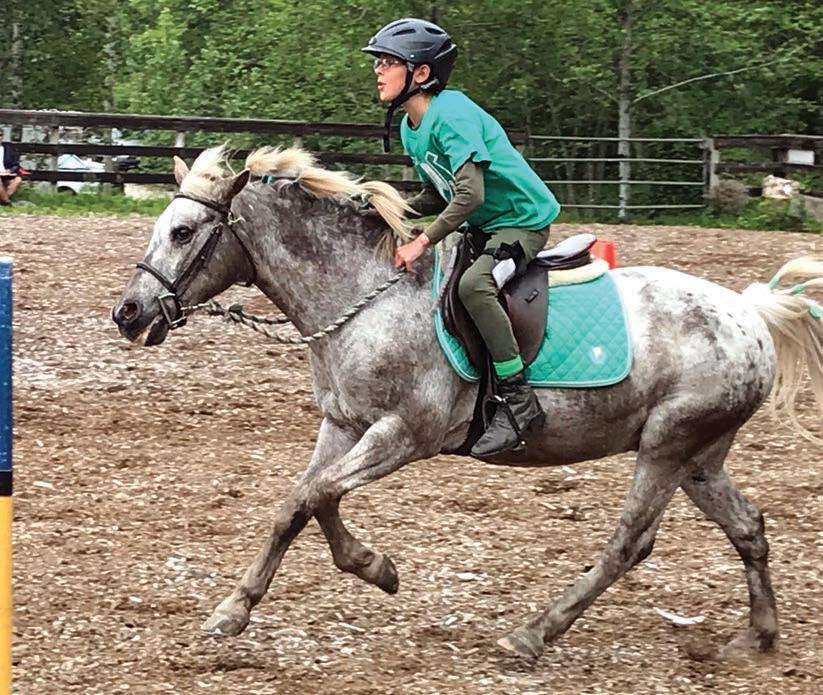
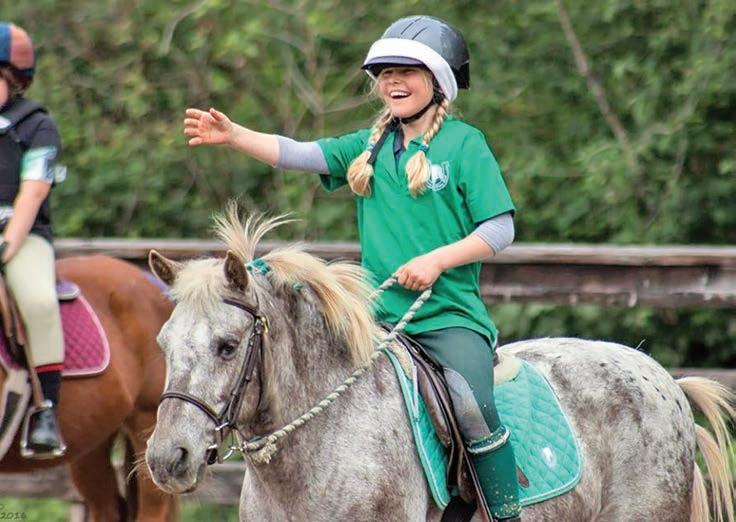
Col Timmis was CPC’s first District Commissioner.
“Col Timmis wanted to make horsemen, not just riders,” said Jim Elder, who was a CPC member, rode on Canada’s show jumping and three-day eventing team at six Olympics, and won Olympic gold in show jumping in 1968. “I remember after a two- or three-hour hack, Col Timmis would have the riders loosen their girths, get off their horses and walk the last mile home to make sure the horses were properly cooled off.”
Elder said Pony Club appealed to Col
68 Canada’s Equine Guide 2023 CANADA’S HORSE INDUSTRY AT YOUR FINGERTIPS
Pony Club is one of the most affordable ways for kids to get involved in horse sports. Pictured are Nathan (here) and Claire McWhir (above) at a Prince Philip Games Playday at Panorama Ridge Riding Club in Surrey, BC in 2019.
PHOTOS: CHRIS RICHARDSON
Timmis because it was similar to a military system of learning — standardized knowledge taught step-by-step.




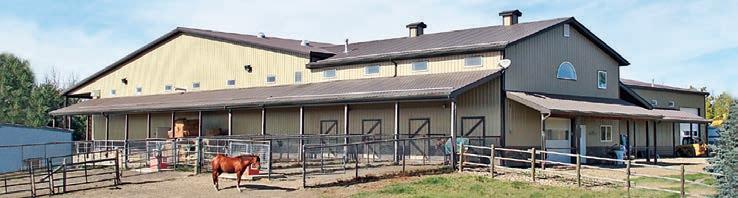

“Before Pony Club, riders learned by riding — there was no system of teaching,” he said. Plus, Elder explained that many stables didn’t teach horsemanship. Instead, riders learned about competition but not stable management or horsemanship.


As society and Canada’s horse industry changed, so did the perceived value of Pony Club. Pony Clubbers were respected and valued for their strong riding skills and well-developed horsemanship knowledge. Pony Club was a place where youths formed friendships and tried different equestrian disciplines while developing values of sportsmanship, teamwork, and volunteerism. It was one of the most popular horse activities for Canadian youth.
Gilbert writes that as volunteerism began declining and private equestrian facilities developed, competitive junior riders with non-Pony Club coaches often dropped out to pursue higher level sportspecific competitions. More youth started specializing in hunter-jumper, eventing, or dressage.



“Although many Pony Club alumni state that Pony Club was the most supportive and encouraging equestrian community they were part of, not all considered the calibre of riding to be as high as the level of riding found elsewhere,” writes Gilbert.

Those who weren’t in Pony Club only learned the riding discipline that was taught at the facility they attended. Plus, their nonriding stable management and horsemanship skills developed slowly or not at all — something that is common, today.
“There’s a night and day difference in knowledge between kids who are in Pony Club and those who aren’t,” says Jonathan McWhir, an executive of the British Columbia Lower Mainland Region.

In the 1990s, Pony Club membership began declining. Regional shows offering English, Western, and gymkhana classes shrunk as riders pursued specific sports: dressage, hunters, show jumping, and three-day events. In 2010, there were approximately 5,800 CPC members. That decreased to about 2,000 in 2022.
“I think part of the membership decline is because Pony Club is a volunteer-based organization and it requires a lot of time from members’ parents,” says Brouwer.
69 CONNECT TO THE HORSE INDUSTRY www.HORSEJournals.com www.afabindustries.ca Call Us Toll Free 888-816-AFAB (2322) • PO Box 55, Rocanville, Saskatchewan, S0A 3L0 • Riding Arena • Barns • Cattle • Grain • Hay/Straw Storage • Machinery Storage • Garages • Insulated Shops SERVING ALL OF WESTERN CANADA EST. 1993 • Family Owned & Operated! continues on page 72 for Horses www.ultrakelp.ca • TOLL FREE 1-888-848-9988 • TEXT 604-768-9558 Includes Iodine / Selenium / Biotin / Vitamin E / Methionine / Lysine / And Much More FEED ONLY 35 GRAMS DAILY Essential Macro & Micro Nutrients Rich, Balanced, Bioavailable 100% NATURAL ORGANIC 60 MINERALS • 12 VITAMINS 21 AMINO ACIDS CHECK FOR ULTRA-KELP AT YOUR LOCAL RETAILER!
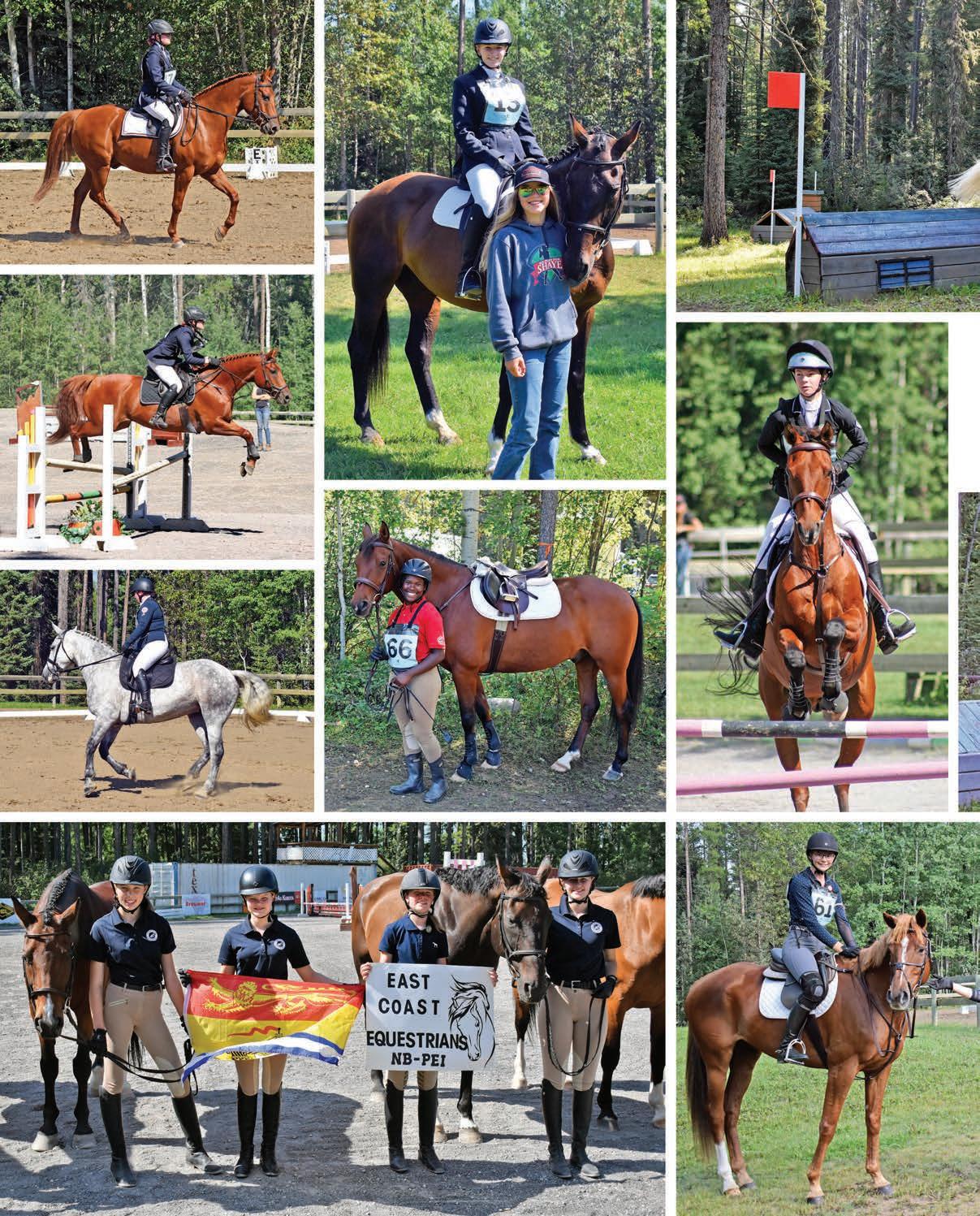
70 Canada’s Equine Guide 2023 CANADA’S HORSE INDUSTRY AT YOUR FINGERTIPS
Rallies consist of a three-phase event (dressage, cross-country, and show jumping). Competitors are also scored on stable management, which involves many aspects of horse care. These photos show some of the action and friendly competition from the 2022 Pony Club National Rally held at Prentice Creek Equestrian Centre in Clearwater County, Alberta with riders from coast to coast participating.
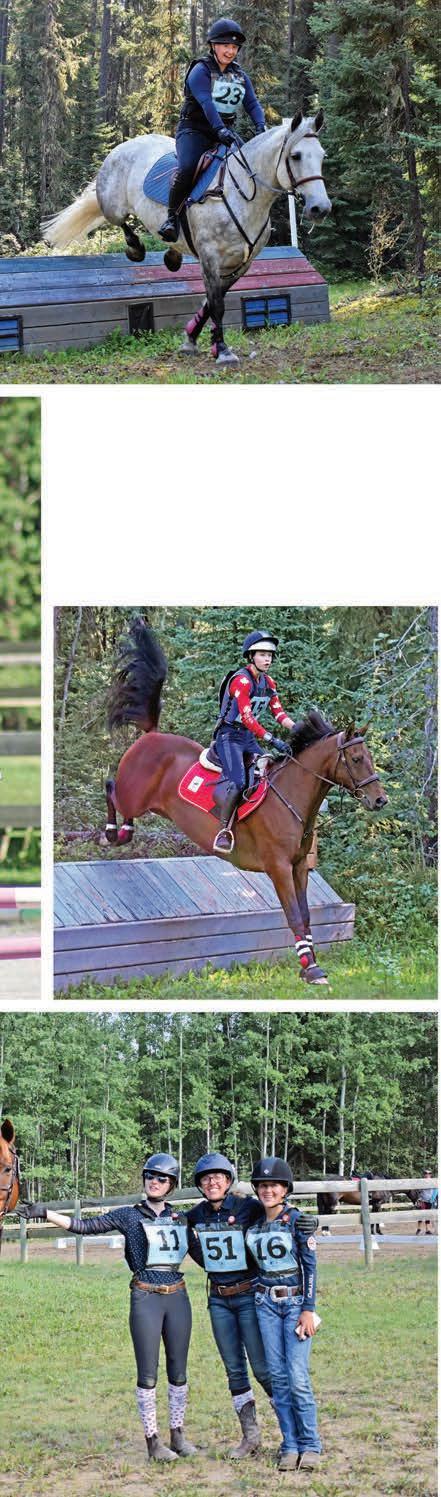





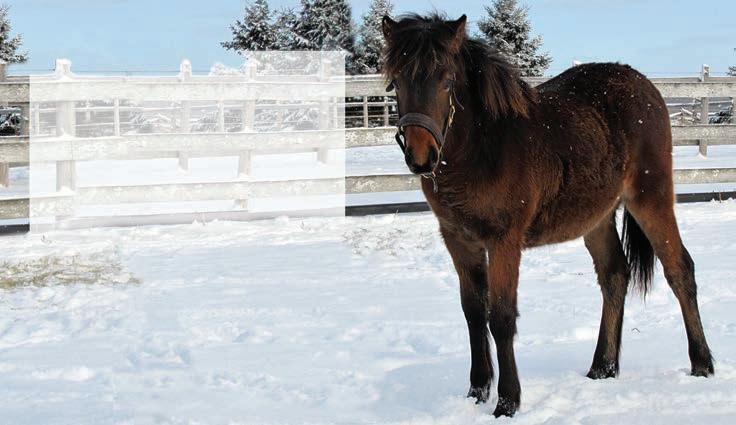

71 CONNECT TO THE HORSE INDUSTRY www.HORSEJournals.com View our Herdbook with Pony Locations at NewfoundlandPony.com PRESERVING, PROTECTING & PROMOTING THIS UNIQUE HERITAGE BREED Official Registry for the Newfoundland Pony NEW LIKE US ON FOLLOW US ON www.EquineEssentials.ca Greystone Stables, 6087 64th St, Delta, BC • 604-992-5676 For Every Season. For Every Reason.
PHOTOS COURTESY OF KELLY BROUWER
continued from page 69
“Also, more youth are pursuing post-secondary education and they simply don’t have the time, energy, or finances for Pony Club while going to college or university.”
In an attempt to boost membership and respond to current needs, Pony Club members can now be tested in specific horse sports, stable management alone, or a combination of both. Those choices have increased membership in the Alberta South region and encouraged members to pursue the more difficult upper levels.
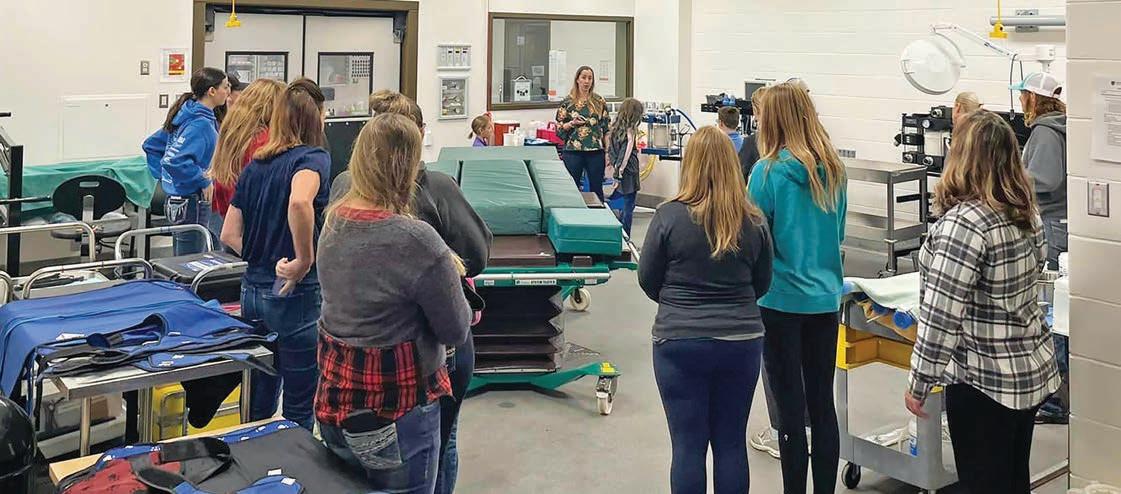
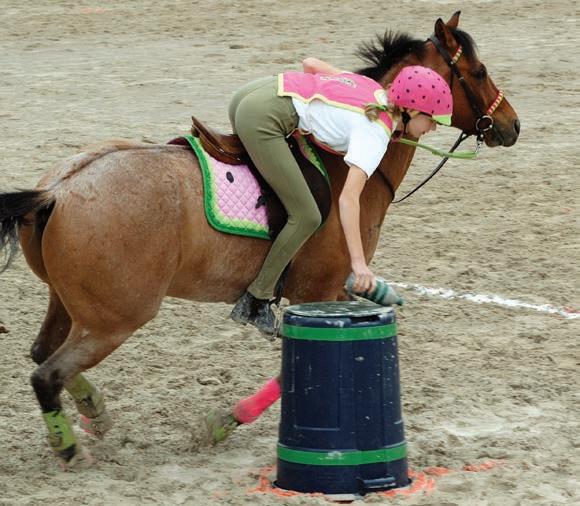
“Pony Club used to be focused on producing all-around horsemen,” says Brouwer. “So, kids had to complete dressage, show jumping, cross country, and stable management requirements at every level. There wasn’t any streaming [specialization]. If you didn’t have the right horse, you couldn’t move up the levels.”
“But now, lots of kids want to do just their stable management
or show jumping or dressage,” explains Brouwer.
CPC also introduced the Horsemasters program in 2015 to attract members over age 21.
“A lot of Horsemasters are moms that have always wanted to be in Pony Club but never had the opportunity,” says Brouwer. “Now they’ve bought their daughter a horse and a trailer and they want to ride, too. They’re not just watching their kids ride but are getting out and riding themselves.”
The program is available across Canada, depending on whether the branch has the interest and capacity to support the program.
McWhir signed up as a Horsemaster with the Boundary Bay Pony Club in BC in 2016 at age 49. As a novice horseperson who was riding his wife’s 17-hand high off-the-track Thoroughbred mare, McWhir decided he needed help learning how to manage the mare better. He also wanted to share an activity with his son, then aged eight, who was already a Pony Club member.
“Understanding how horses react and how to handle them —
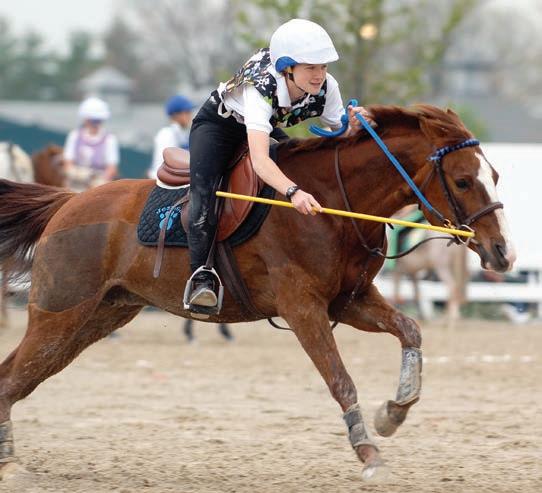
72 Canada’s Equine Guide 2023 CANADA’S HORSE INDUSTRY AT YOUR FINGERTIPS
A team competition played by Pony Clubs around the world, Prince Philip Games help promote the Pony Club motto: Character, Loyalty, Sportsmanship In the games, children use their riding skills and rapport with horse and human to gain confidence while participating in fun competitions.
DeWinton Pony Club members learning at the University of Calgary.
PHOTO: TINA WATKINS DEWINTON PONY CLUB
PHOTOS: CLIX PHOTOGRAPHY
Horsemasters provided information that I’d never even thought about before,” says McWhir.
McWhir’s daughter, then aged six, joined Pony Club the same year he did.
“I think Pony Club has made a huge difference with the kids,” says McWhir. “They’re a lot more confident around the horses and they know what they’re talking about.”
McWhir and his kids have gone to show jumping championships and quiz, together. Plus, he’s completing the same Pony Club levels as his son.
“We do the exact same exams, so there’s a little rivalry between us,” he laughs. “It’s all the same information but I’m in the Horsemasters category.”
Six years later, McWhir and his son have passed their C level together, his daughter has her D2 level and his wife is the regional chair.
“I encourage parents that have their kids in riding lessons to sign up [for Horsemasters],” McWhir says. “They say, ‘I know nothing about horses’ and I say, ‘That’s why you should do it.’ You’ll learn so much.”

That enthusiasm for learning about horses is what continues to enthrall horsemen and women the world over. It’s also what Canadian Pony Club continues to instill in members, along with teamwork, volunteerism, and a passion for horses. With a long history of producing highly educated horsemen and women, hopefully Pony Club continues for many years to come, developing more of Canada’s top equestrians.
"As a professional horse trainer, Dynamint Equine Leg & Muscle Rub is an important aspect of my program. Dynamint is a natural product that has a cooling effect, it calms tired, sore muscles and rejuvenates horses keeping them feeling their best.
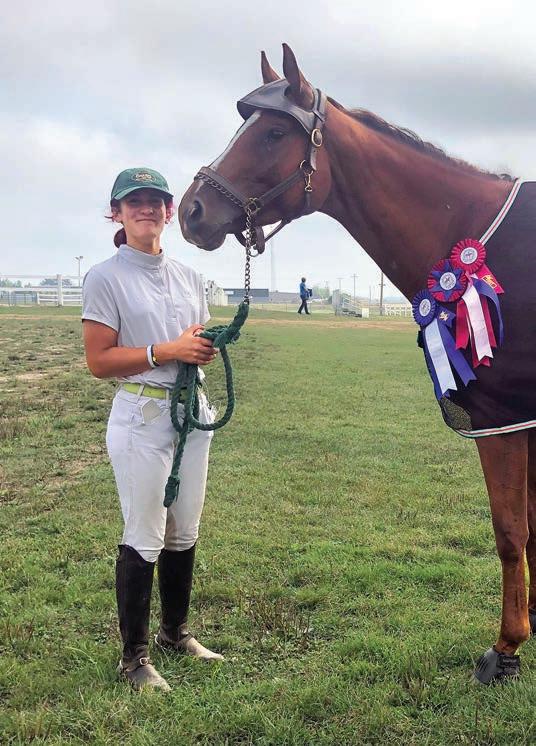

I use Dynamint on my horses and myself. The results I have experienced have not been matched by any other product in the market. For long hauls and after hard workouts
Dynamint is the only product I use on horse's legs. If you are looking for a product that is safe on skin and delivers results, trust Dynamint Equine Leg & Muscle Rub. Your horse will thank you!"
Jill Barron
easy
73 CONNECT TO THE HORSE INDUSTRY www.HORSEJournals.com Dynamint Equine
natural
lotion for
or
muscles and joints.
in 1L spray bottle for
to larger
or a 500ml rub bottle. A soothing combination of natural essential oils in a gentle cream base. Specially formulated with natural ingredients to assist in the relief of leg, muscle and joint strain.
All
soothing
sore
strained
Available
and quick application
areas,
www.integratedbiosys.com National Distributor: Canadian Centurion 1-800-361-3860 Local: Janian Imports • (604) 462-9238 MANUFACTURED FOR: Integrated Bio Systems Inc., 8558 Chilliwack Mountain Rd, Chilliwack, BC V2R 3W8 Phone: 1-877-501-5003 • Fax: 604-391-0029 • E-Mail: intbiosys@shaw.ca CALGARY STAMPEDE RIDERS and DYNAMINT The Original Dr. Cook® Bitless Bridle Prices Start at $69.95 USD www.bitlessbridle.com Or Call 719-576-4786 Canadian Flat Rate Shipping — $2000 USD English & Western Styles US Patent No. 6591589
Emma White, a C level rider from the Dufferin County Pony Club, ON, and her horse Ruby, after winning the title of Overall Champion in Regional Dressage.
b
> Tania Millen is a regular contributor to this magazine — read her bio on page 94.
PHOTO: CAROLINA WHITE
The Icelandic
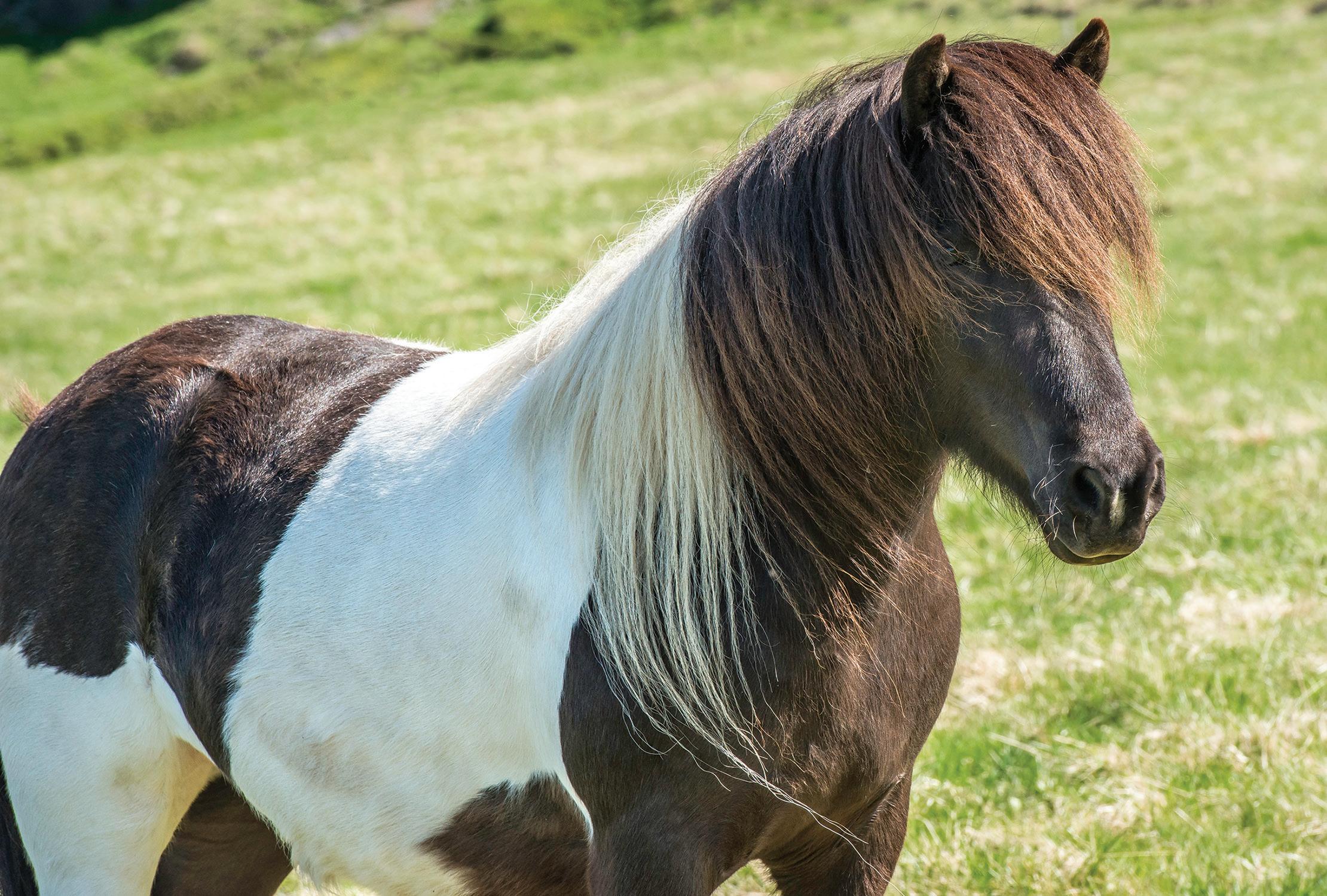
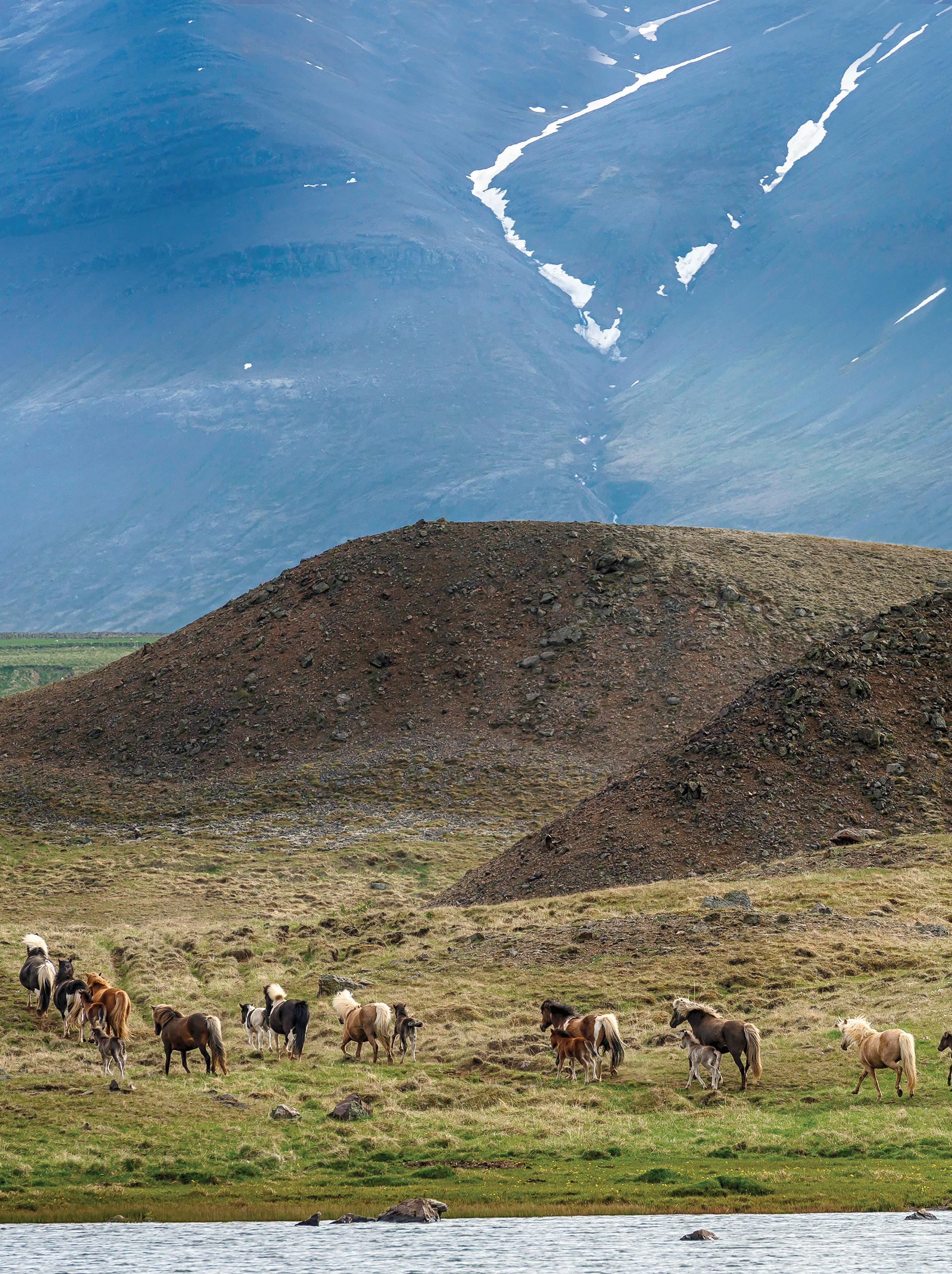
74 Canada’s Equine Guide 2023 CANADA’S HORSE INDUSTRY AT YOUR FINGERTIPS
PHOTOS: PAULA DA SILVA
Iceland is a small island nation located at the juncture of the North Atlantic and Arctic Oceans, between Greenland and Norway. It has a population of around 364,000 people, many of whom live in the capital city of Reykjavik in southwest Iceland. The country has a unique geography, characterized by volcanic mountains, glaciers, plains, waterfalls, geysers, hot springs, black sand beaches, and is also
home to a diverse array of wildlife. Yet one of the most notable features of Iceland is its horses.
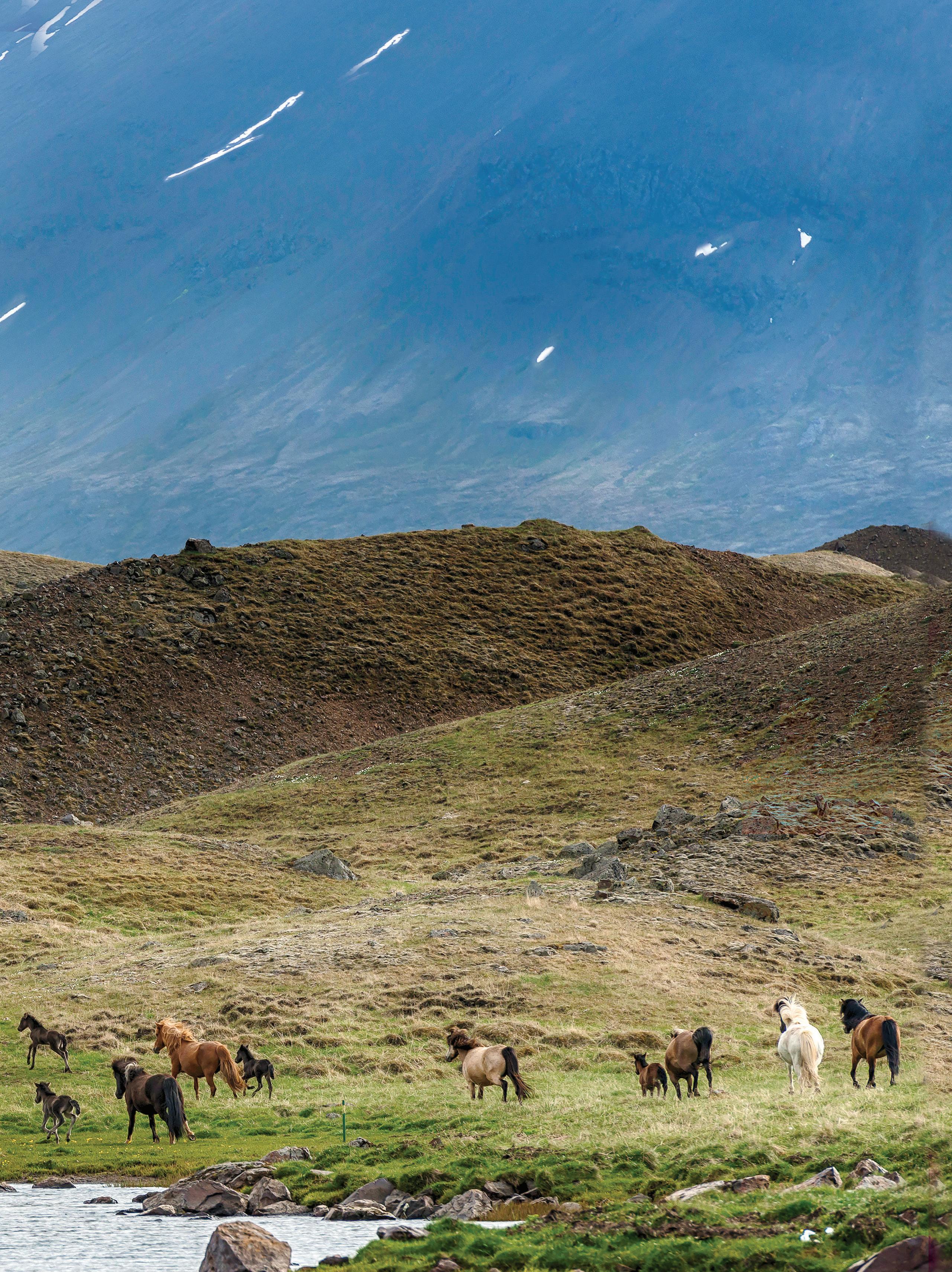
The Icelandic horse has a rich history and culture dating back over a thousand years. The first horses arrived in Iceland with the settlers in the 9th and 10th centuries, and have been bred in isolation on the island ever since. This isolation has led to the development of a unique breed that is
well adapted to the rugged terrain and harsh, subarctic climate.

In the past, Icelandic horses were essential for transportation and farming, as they were the only means of transportation in the country for centuries. They were also used for herding sheep and cattle, and were an important source of food and clothing. The breed’s unique natural gait, the tölt, allowed them to cover large distances
HorseAn Island Treasure
By Kathy Smith
75 CONNECT TO THE HORSE INDUSTRY www.HORSEJournals.com
Icelandic horses are hardy easy-keepers, well-adapted to the extreme weather conditions found in their home country.
Strict laws prohibiting the importation of other horse breeds into Iceland ensure the purity and preservation of the breed, but as a result, native horses have no acquired immunity to disease. Once horses leave the country they are not allowed to return.

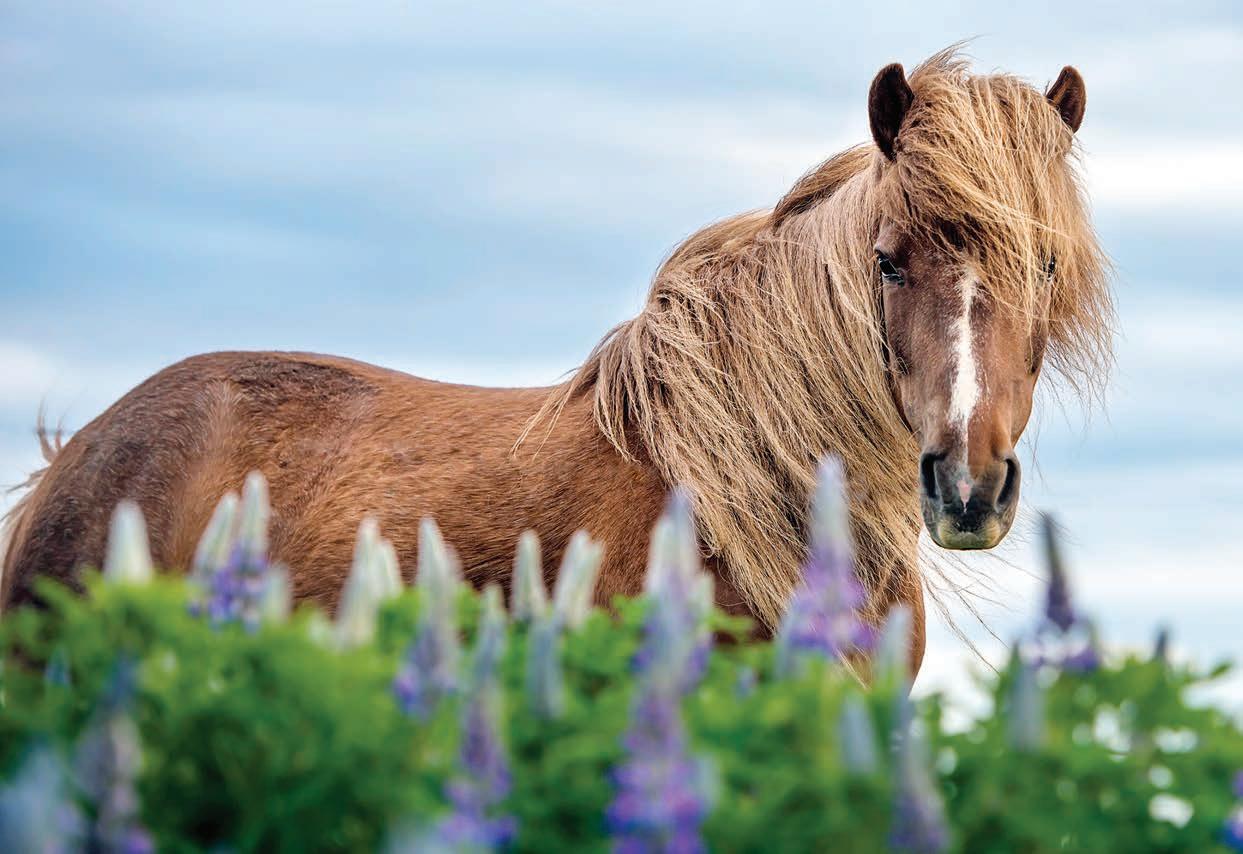
Icelandic horses are known for their surefootedness and ability to cross rough terrain.
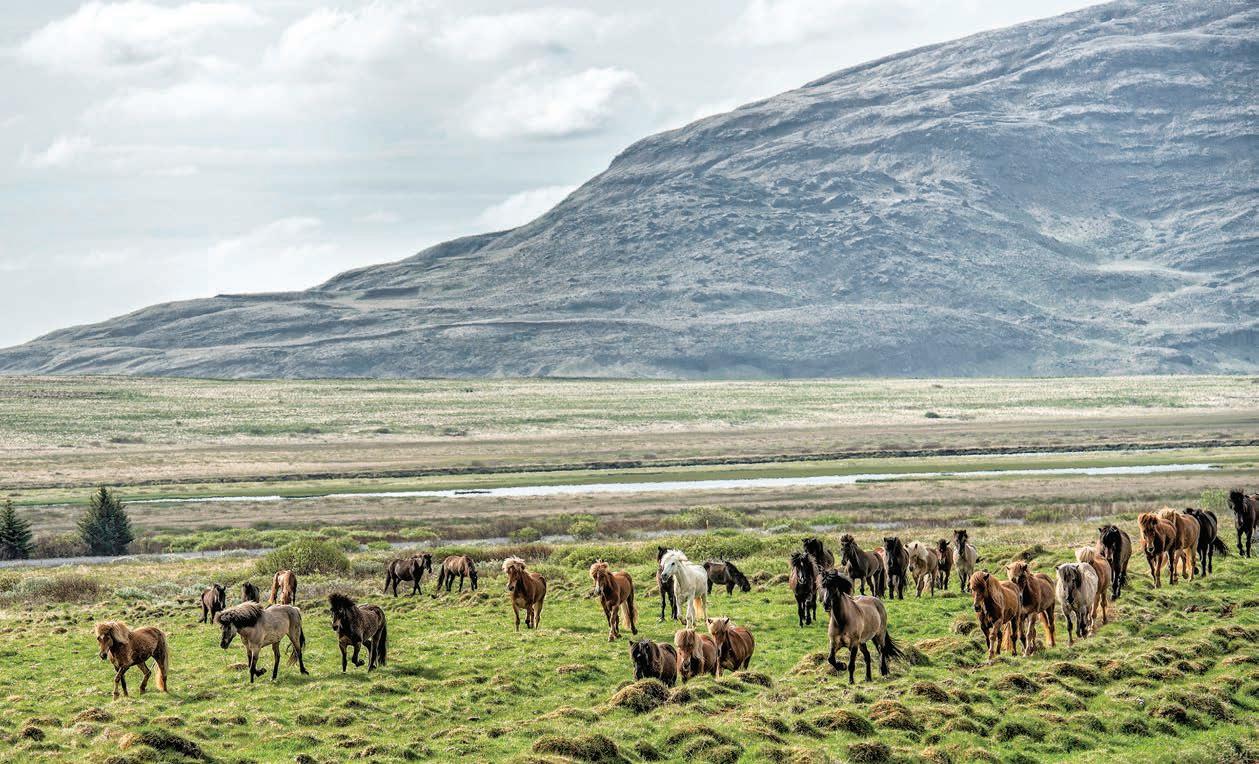
76 Canada’s Equine Guide 2023 CANADA’S HORSE INDUSTRY AT YOUR FINGERTIPS
quickly and comfortably, making them ideal for travel and work on the island’s rugged terrain.

In modern times, the Icelandic horse continues to play an important role in Iceland’s culture, economy, and tourism. Horseback riding, racing, breeding, and training are all popular and significant industry contributors, and the country exports the breed — highly valued for its beauty and unique characteristics — around the globe.
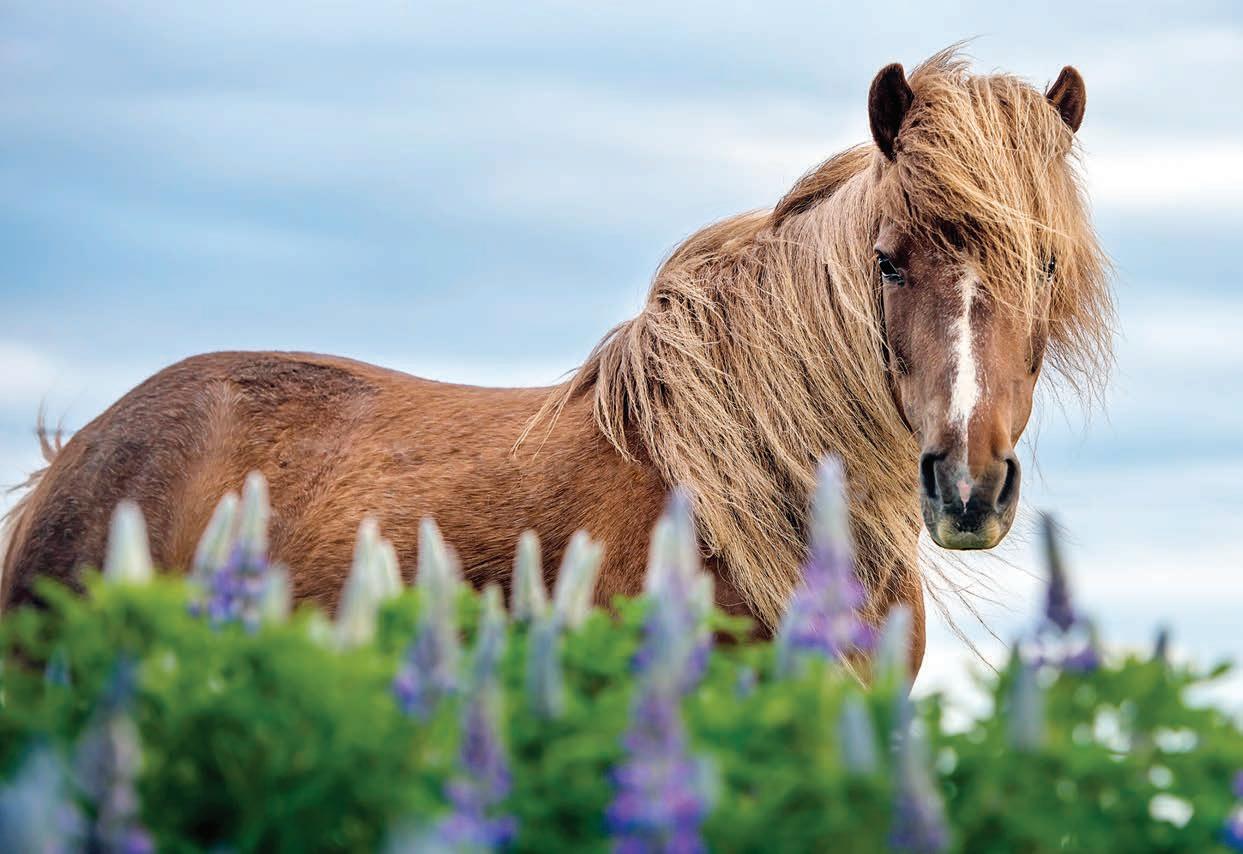
The Icelandic horse is long-lived with most not ridden until four years of age, and structural development not considered complete until seven years of age.

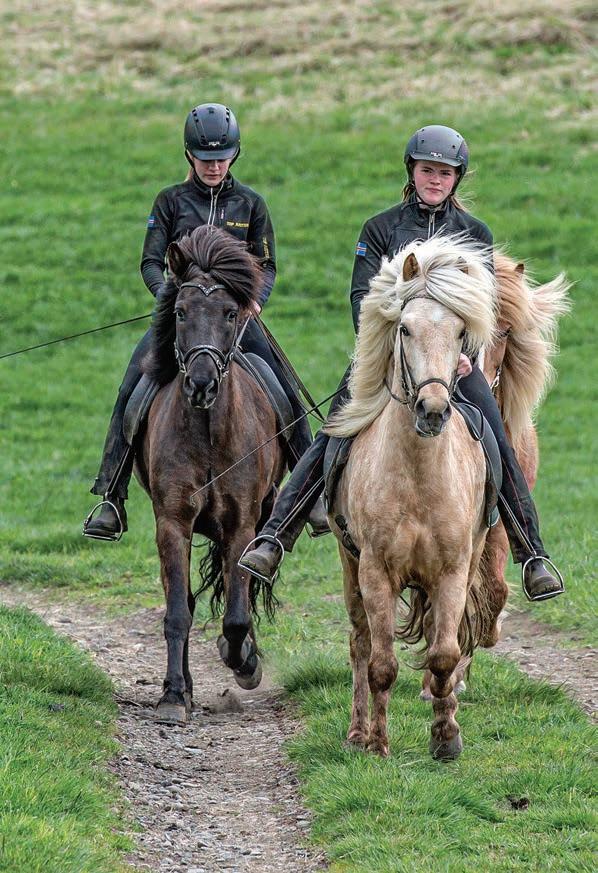
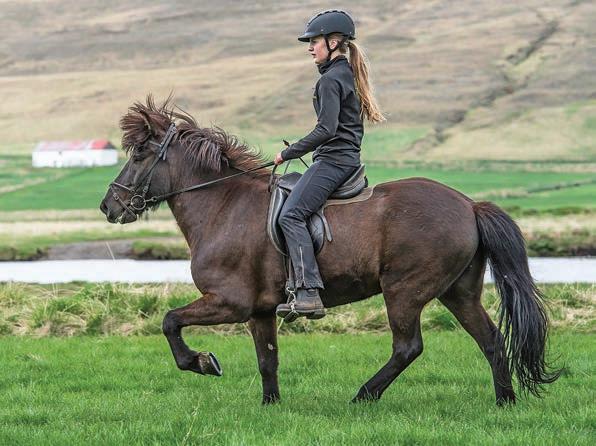
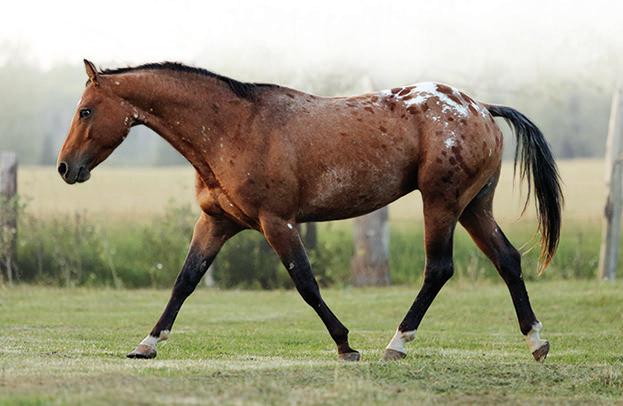
77 CONNECT TO THE HORSE INDUSTRY www.HORSEJournals.com www.AppaloosaCentre.com BC APPALOOSA CENTRE Prince George, BC appaloosacentre@telus.net Confident, family-friendly TRAIL HORSES PREMIUM FOUNDATION APPALOOSAS SAFE, FAMILY FRIENDLY, RIDING, RECREATION & SHOW HORSES 250-596-2273 • sales@northernacreage.ca 4870 Continental Way, Prince George, B.C. www.NorthernAcreage.ca Proudly Serving Northern British Columbia n KIOTI Tractors & Implements n Complete Electric Fence Systems n Specialty Animal & Acreage Fencing n Posts, Rails & Wire Fencing n Wildlife & Predator Control n Feed & Supplements n Tubs, Waterers, Feeders & Tools n Beekeeping Supplies
PHOTOS: PAULA DA SILVA
Although considered pony size, Icelandics are a breed of horse. They are well-known for their versatility, calmness, and intelligence.
Although considered pony size, Icelandics are a breed of horse. They are well-known for their versatility, calmness, and intelligence.
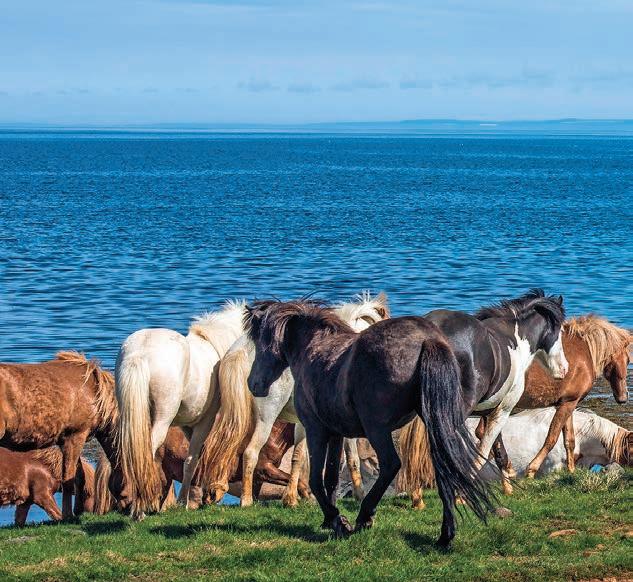
1.866.345.3414
QUIET RURAL LIVING
Huge price drop on 160 Acres!! • NOW $567,000 ID#1102263 • HANNA, AB
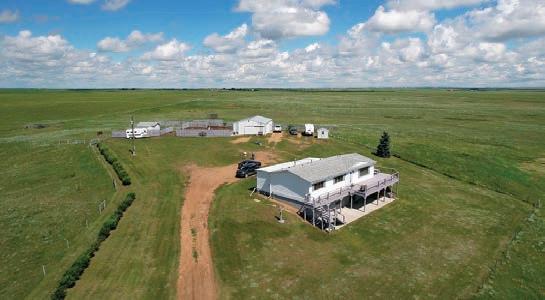
These special horses also play an important role in the country’s tourism industry.
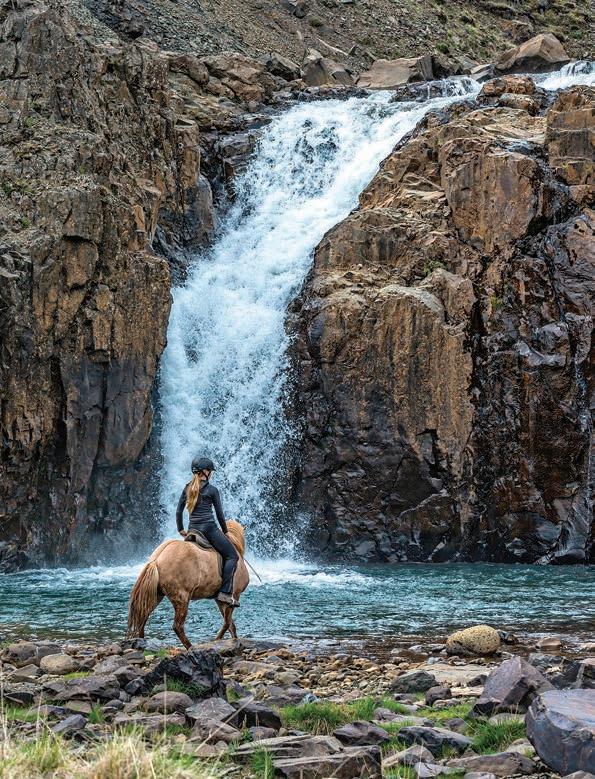
The Icelandic horse is a small to medium-sized animal, typically standing between 13 and 14 hands, with a sturdy build and strong legs, which allow them to navigate Iceland’s rugged terrain with ease.
Icelandic horses are a five-gaited breed renowned for
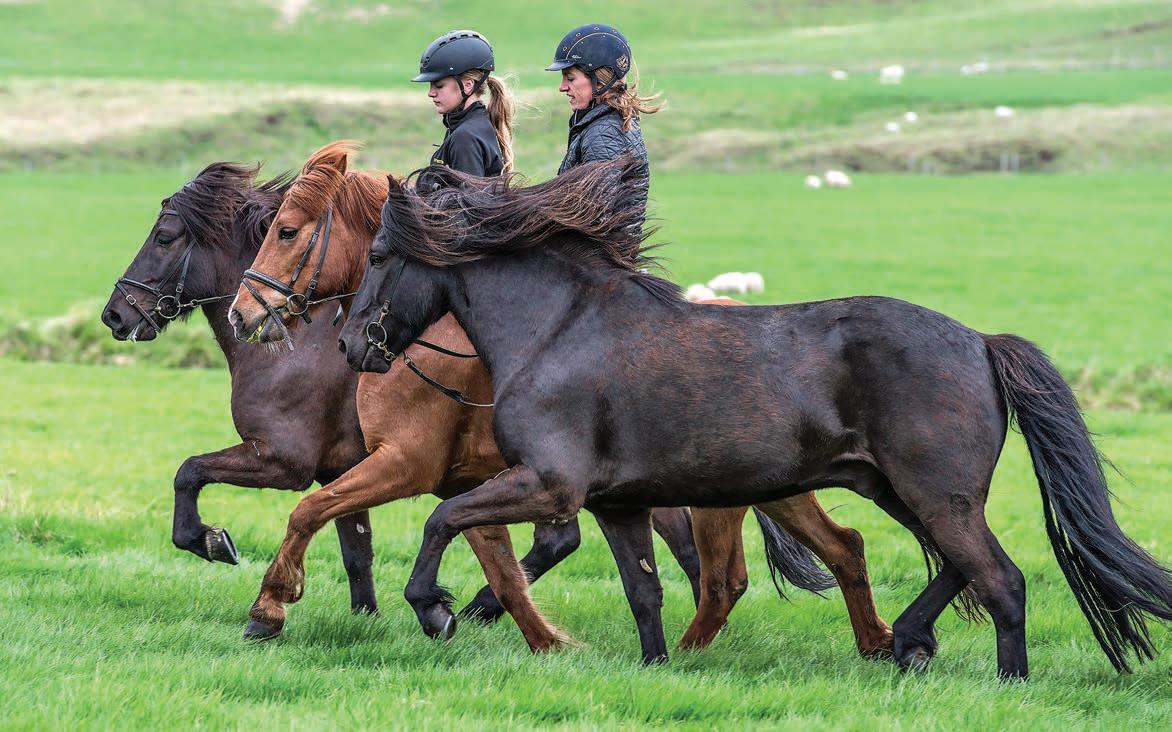
The Icelandic horse is a small to medium-sized animal, typically standing between 13 and 14 hands, with a sturdy build and strong legs, which allow them to navigate Iceland’s rugged terrain with ease.
Icelandic horses are a unique breed that has been bred in isolation for more than a thousand years.
Icelandic horses are a unique breed that has been bred in isolation for more than a thousand years.
JAMIE CALVERT REALTOR®

403.635.1152
If you are looking for the peace and quiet of rural living — look no further! 160 acres with a home only 10 minutes from the town of Hanna. School bus, if needed, will come right to your private driveway. 4 bedroom, 2 bath on a walkout basement. Almost a full wrap-around deck to enjoy all the views, especially the covered deck area perfect for those family gatherings and BBQs! Main level has had many updates and shows pride of ownership. 3 patio doors give natural light and ease of access to the partial wrap-around deck. Fully fenced grass quarter with 2 dugouts, and a 1/2 gallon /minute flowing well in SE corner of the property. For the hobby farm enthusiasts, a 32x48 barn with 4-10x10 removable box stalls as well as a 16x32 tack room/workshop with in-floor heat that’s insulated. Multiple corrals, pens, and also a small horse pasture, which gives so many options for all your equine, small/large animal needs! Additional outbuildings included. Enjoy the wide open spaces for the kids to roam while you relax on the deck. This property provides the rural lifestyle as well as close proximity to town!
FARMREALESTATE.COM
78 Canada’s Equine Guide 2023 CANADA’S HORSE INDUSTRY AT YOUR FINGERTIPS
78 Canada’s Equine Guide 2023 CANADA’S HORSE INDUSTRY AT YOUR FINGERTIPS
JAMIE @ REALESTATECENRE.CA
Iceland’s varied geographical features include a plateau of land with mountain peaks and volcanoes covered with glaciers and lava fields, as well as lakes, rivers, hot springs, geysers, and waterfalls. Some estimates put the number of waterfalls in Iceland at more than 10,000.
10,000.
their smooth, four-beat gait known as the tölt, and a fifth gait called the “flying pace,” a fast, smooth two-beat lateral gait. The breed is also recognized for its strong character, intelligence, and friendly temperament, making them a popular choice for


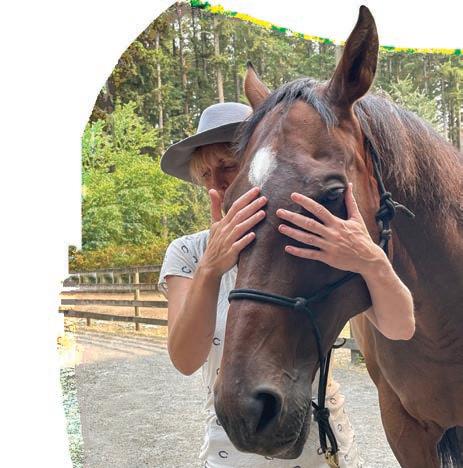

Icelandic horses are a five-gaited breed renowned for their smooth, four-beat gait known as the tölt, which allows them to cover large distances quickly and comfortably, and a fifth gait called the “flying pace” a fast, smooth two-beat lateral gait. The breed is also recognized for its strong character, intelligence, and friendly temperament, making them a popular choice for
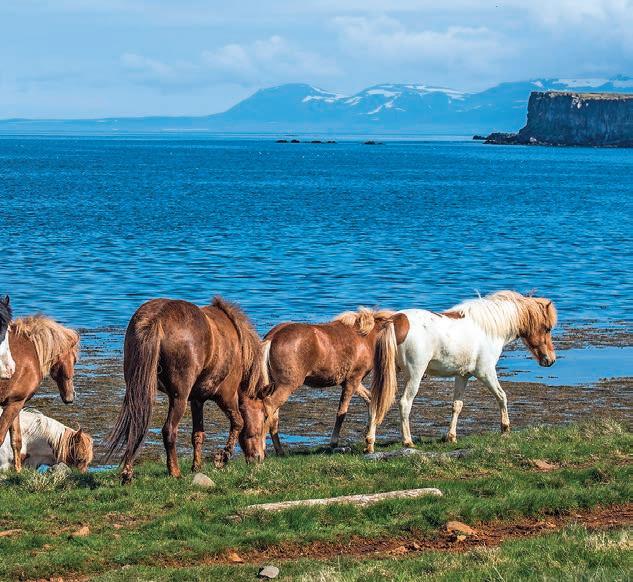
79 CONNECT TO THE HORSE INDUSTRY www.HORSEJournals.com
PHOTOS: PAULA DA SILVA 79 CONNECT TO THE HORSE INDUSTRY www.HORSEJournals.com EquilibriaTherapeutics.com/equine-craniosacral Equine Cranial Therapy Certification / CE Program (ONLINE & LIVE) WITH ELISSE MIKI & ALEXA LINTON A BC-based Training with an Osteopathic Approach for Manual Therapists 2023 Live Practicum Dates Now Posted
www.revitavet.com • (602)-513-1223
PHOTOS: PAULA DA SILVA
Iceland’s varied geographical features include a plateau of land with mountain peaks and volcanoes covered with glaciers and lava fields, as well as lakes, rivers, hot springs, geysers, and waterfalls. Some estimates put the number of waterfalls in Iceland at more than
horseback riding and other activities. Icelandic horses come in a wide variety of colours including black, brown, bay, chestnut, dun, gray, roan, palomino and pinto. Long, thick manes and tails, as well as its distinctive “feathered” legs, are also distinguishing features.
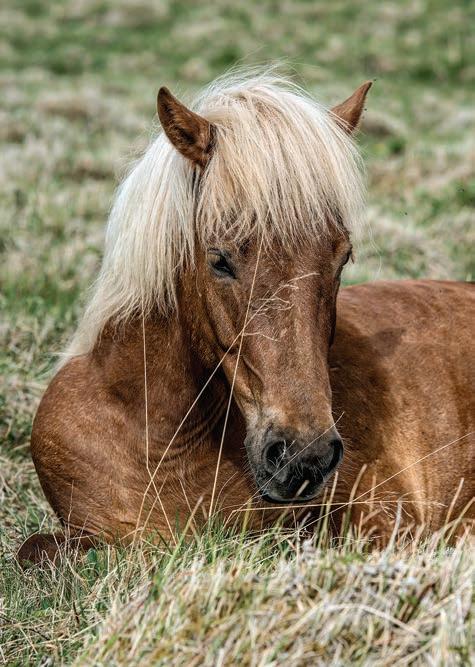
The estimated number of Icelandic horses in Iceland 80,000, and approximately

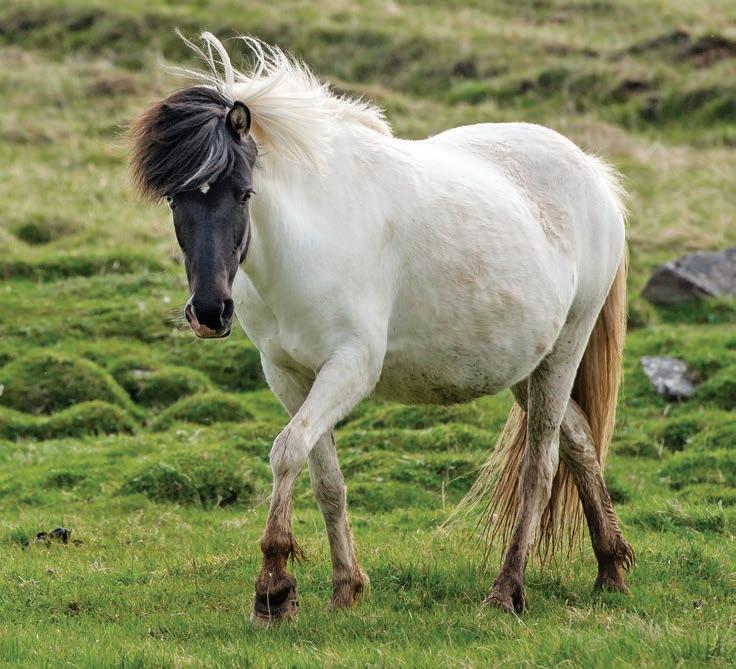
Members of the breed are very fertile with their most productive years between ages eight and eighteen.
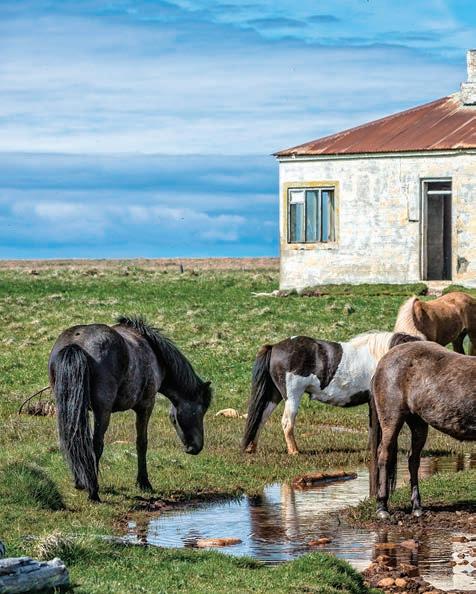
80 Canada’s Equine Guide 2023 CANADA’S HORSE INDUSTRY AT YOUR FINGERTIPS
100,000liveabroadinEuropeandNorth America,particularlyincountriessuchas Germany,Denmark,andtheUnitedStates.


The Icelandic horse is protected by strict laws that prohibit the importation of other horse breeds into Iceland to ensure the purity and preservation of the breed. Today the breed is represented by associations in 22 countries, governed by
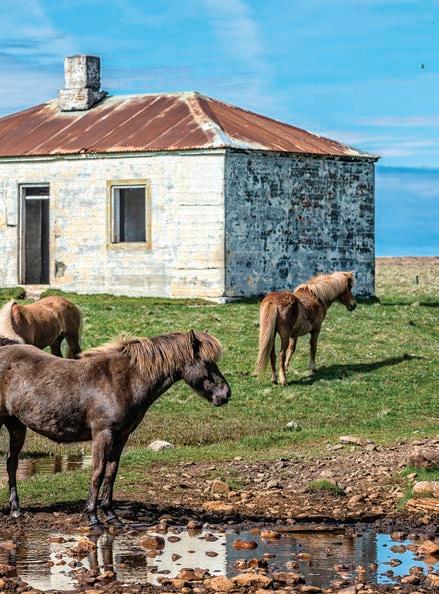
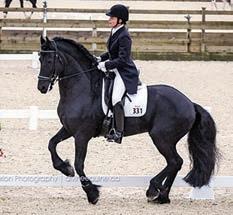



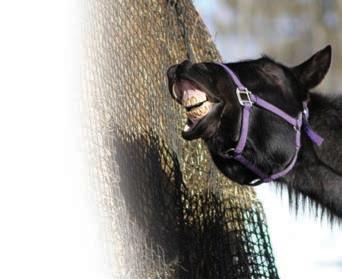
81 CONNECT TO THE HORSE INDUSTRY www.HORSEJournals.com • Small Mesh Slow Feed Hay Nets • Full line from one flake to large rounds & custom sizing!! • Pet Accessories • Full Line of Equine Blankets, Livestock & Canine Winter Blankets Home of the Happy Healthy Horse and Hound www.knaughtynetsandpets.com knaughtynetsandpets@hotmail.com Embracing Spi rit, Beauty & Strength www.CanadianFriesianHorse.ca REGISTRY FOR THE PROMOTION, EDUCATION, AND ENJOYMENT OF Friesian, Arabo Friesian, AND Friesian Sport Horses Myles Herman LANGLEY, BC 604-309-4616 mylesherman29@gmail.com EQUINE BODYWORK Animal Structural Kinesiology
PHOTOS: P AULA DA SILVA
the International Federation of Icelandic Horse Associations (FEIF), the parent association (www.feif.org).
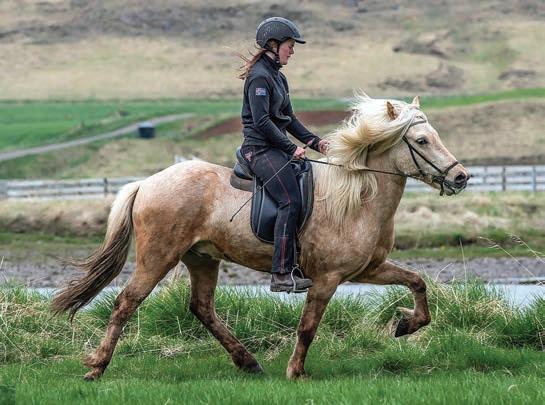
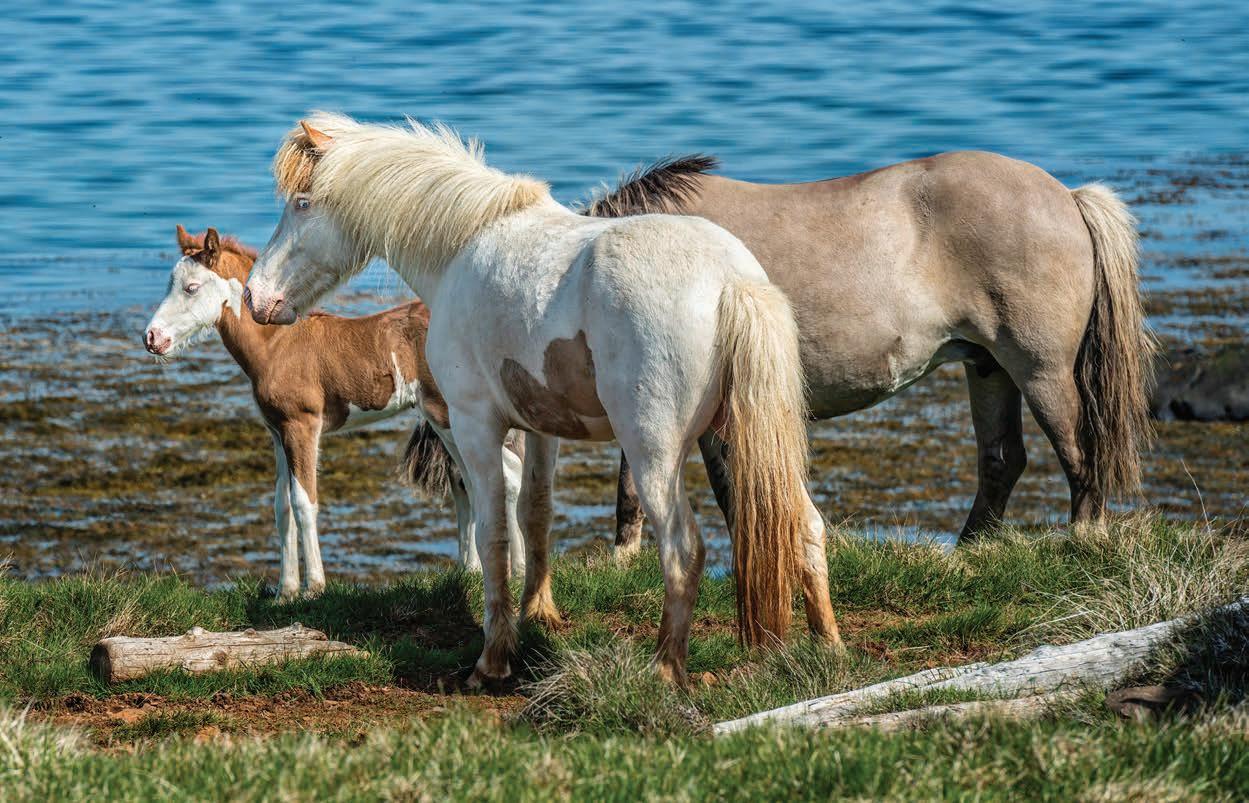
In addition to horses, Iceland also has a variety of other animals such as Arctic fox, sheep, reindeer and several species of seabirds, including puffins and guillemots. Puffins are one of Iceland’s most iconic birds, and are found in large numbers along the country’s coastline. They are a popular tourist attraction, and can be seen nesting in large colonies on the
The smooth, four-beat lateral gait known as the tölt is a natural gait for Icelandic horses. The footfall pattern is the same as the walk (left hind, left front, right hind, right front), but differs from the walk in that it can be performed at a range of speeds, from the speed of a typical fast walk up to 32 km/hour.
cliffs during the summer months.
Yet, Iceland’s beauty is made extraordinary by its horse. The breed is a national treasure, both past and present, symbolizing the strength, versatility, and hardiness of the country’s people, and the richness of its culture and heritage. The Icelandic horse’s unique characteristics and preservation laws ensure it will remain a part of Iceland’s national identity for generations to come. b
The flying pace, a two-beat lateral gait, is fast and smooth with a moment of suspension between footfalls; the horse moves the front and back legs on the same side simultaneously (left hind and left front — suspension — right hind and right front). The horse can perform the flying pace up to 48 km/hour for short distances.
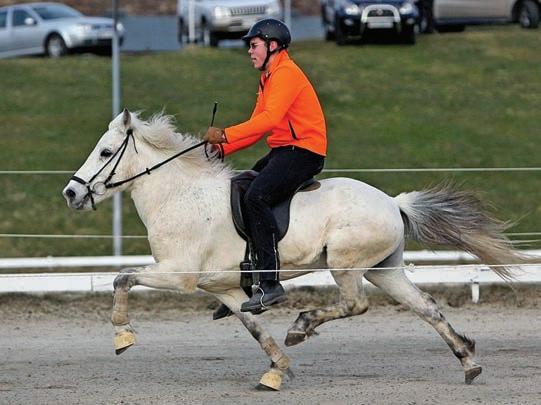
82 Canada’s Equine Guide 2023 CANADA’S HORSE INDUSTRY AT YOUR FINGERTIPS
PHOTO: PAULA DA SILVA
PHOTO: WIKIMEDIA/DAGUR BRYNJÓLFSSON
PHOTO: PAULA DA SILVA
Serving Manitoba’s Equine Community
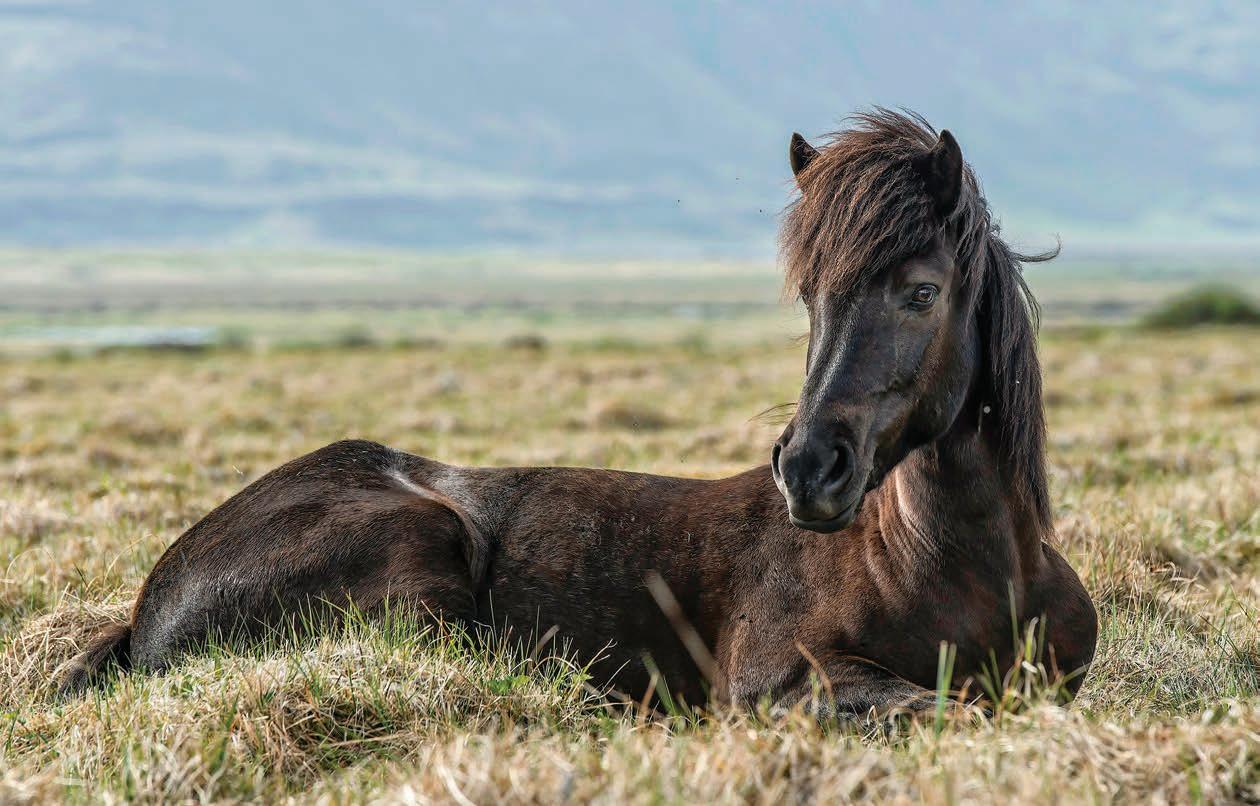
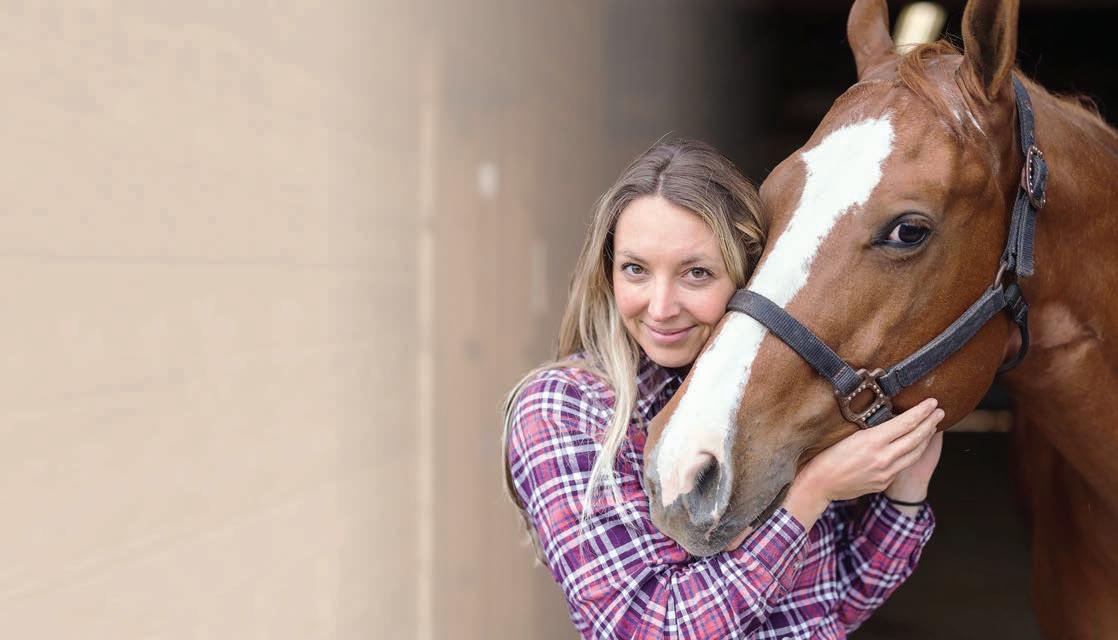
Join Manitoba Horse Council Today

Manitoba Horse Council (MHC) is a not-for-profit organization representing individual members and clubs involved in equine activity in Manitoba. As the recognized governing body for equestrian sport in the province, MHC provides support, leadership, and resources to develop athletes and protect the interests of Manitoba's equestrian enthusiasts.
By bringing together the province’s horse people and giving them a much-needed voice, MHC helps to ensure that activities with horses continue to be accessible to horse people and remain part of Canadian society. Join MHC and show your support for their programs and services, which provide many benefits to members including educational opportunities, programs for equestrians of all ages, funding options, insurance, and a wealth of other resources.
83 CONNECT TO THE HORSE INDUSTRY www.HORSEJournals.com www.ManitobaHorseCouncil.ca • (204) 925-5719 • mhc.exec@sportmanitoba.ca Manitoba Horse Council, 145 Pacific Avenue, Winnipeg, Manitoba, R3B 2Z6
PHOTO: PAULA DA SILVA
In Memoriam Remembering those we lost in 2022
Equestrian Canada
We would like to take the opportunity to remember and honour these horse community members, and well-loved horses, who passed away in 2022, and to extend our heartfelt condolences to their families and friends.
Mike Gallagher, of Codys, NB, was a dedicated leader in equestrian sport in Canada and on the international stage. He served as a competitor, coach, horse show organizer, judge, and technical delegate. Gallagher proudly and enthusiastically held roles with the Canadian Equestrian Team (CET) at international competitions including Team Leader and Chef d’équipe for 2004 (Athens) and 2008 (Beijing) Olympic Games, Chef de Mission at the 2006 World Equestrian Games (Aachen), and Team Leader Equestrian at the 2007 Pan American Games (Rio de Janeiro). In 2009, Gallagher was named president of EC.
Greg Greenough, Edmonton, AB, will be remembered for his incredible support and leadership in equestrian sport both in Canada and internationally. While many will remember him for his career in business, the equestrian community fondly remembers Greenough as a supportive father to his daughter, Gail Greenough, and the sport overall. He supported show jumping and Gail’s riding career, owning Mr. T, the horse that made history with Gail when she became the first woman and only North American to win the World Championships in Aachen, Germany in 1986.
Greeenough served as Equine Canada (EC) President from 1984 to 1992 (at that time known as the Canadian Equestrian Federation), and through his life had a long history with the Canadian Olympic Committee and the International Equestrian Federation (FEI). “Greg was a Canadian equestrian pioneer,” says EC CEO Meg Krueger. “Through his generosity of time and expertise, he gave so much to our nation through his volunteerism, vision, and passion for change. He provided mentorship, opportunity, and support for athletes, owners, horses, and our sport organizations. His vision enabled equestrian sport to thrive and grow, and his legacy will be with us for years to come.”
“Mike was a passionate leader and an advocate for equestrian sport in Canada,” says Krueger. “He represented our nation globally with professionalism and earned great respect and trust from Canadians and worldwide leaders,” she adds. “He always had time to spend coaching his students and supporting athletes, fostering activity and
Barbara Mitchell of Mono, ON, will be remembered for her passion and dedication to equestrianism in both Canada and internationally. She truly was an allaround horsewoman that gave freely of
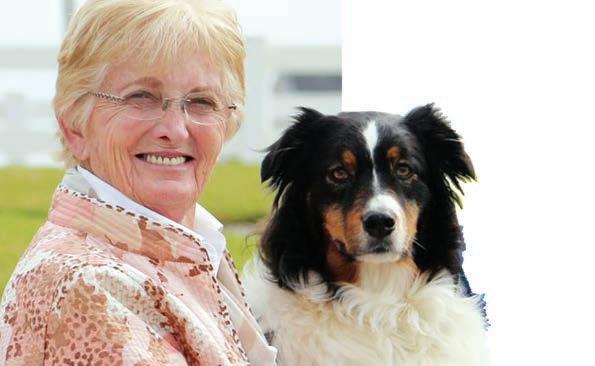
opportunity in the grassroots as equally as in high-performance pursuits. He was a great driver of our sport and is dearly missed.”
her expertise throughout her life. In 2018, Mitchell was honoured with the EC Lifetime Achievement Award for the impact she made in improving the quality, accessibility, and professionalism of the sport.
“Barbara was influential, impactful, iconic, inspirational, confident, strong, classy, and resilient,” says EC’s Sponsorship & Fund Development Officer, Helen Dillon. “She not only taught equestrian skills to generations of equestrians across different disciplines, but she also helped us all be better people. The equestrian community and beyond experienced a profound loss in her passing and she will be greatly missed by many.”
84 Canada’s
CANADA’S
Equine Guide 2023
HORSE INDUSTRY AT YOUR FINGERTIPS
PHOTO: MICHELLE DUNN
Jack Pemberton, of Toronto, ON, will be remembered for his leadership in equestrian sport, and for being involved in over 20 equestrian associations throughout his lifetime. He attended the first ever meeting with the Carriage Association of America in 1960 and held various roles in the organization. In 1968, he represented Canada for driving and was heavily involved as a driving judge and chairman for the FEI Driving committee. Pemberton was awarded the EC Lifetime Achievement Award in 2007.
Pemberton, of Toronto, his leadership in sport, and for being 20 equestrian associations his attended the with the ciation of America in 1960 and held various roles the organization. In he Canada for driving heavily involved a driving and the FEI Driving committee. awarded the Lifetime Award in
Jack ON, will be remembered for his equestrian sport, being part of over 20 equestrian associations throughout his lifetime. He attended the first ever meeting with the Carriage Association of America in 1960 and held various roles in the organization. In 1968, he represented Canada for driving and was heavily involved as a driving judge and chairman for the FEI Driving committee. Pemberton was awarded EC Lifetime Achievement 2007.
Don Barnes, of Hamilton, ON, a leader dressage community as an EC Dressage judge for over four decades and a steward for to 20 years. A competitor himself, he numerous competitions and chaired both the Championships and Dressage was well as president of the Dressage Owners Riders

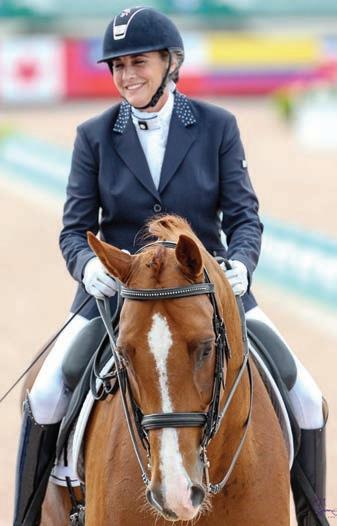
RA Inc.) CADORA Ontario, roles held between the years of and 2020. Barnes was long-standing member the Dressage Rules Committee National Rules






Don Barnes, of Hamilton, ON, was a leader in the dressage community as an EC Dressage judge for over four decades and a steward for close to 20 years. A competitor himself, he helped organize numerous competitions and chaired both the Canadian National Dressage Championships and the Ontario Dressage Championships. He was well known as president of the Canadian Dressage Owners and Riders Association (CADORA Inc.) and CADORA Ontario, roles he held between the years of 1992 and 2020. Barnes was a long-standing member of the Dressage Rules Committee and EC National Rules Committee.
Don will be remembered for his tireless efforts at the grassroots level of the sport, and for his quick wit and sense of humour. His dedication, mentorship, and the impact he made in Dressage in Canada will forever be remembered and celebrated.
Don will remembered for his efforts at grassroots of sport, and for his quick and sense humour. His mentorship, the impact he made in Dressage in Canada forever be remembered and celebrated.
Barnes, of was leader in dressage as judge over four and steward close 20 years. he helped competitions and chaired Canadian National Dressage Championships the Ontario DresChampionships. He was well known president of Canadian Dressage Owners and Association (CADORA Inc.) and Ontario, roles he held between 1992 was a of Dressage Rules Committee and Rules Committee. Don will be remembered his at the level the quick wit of humour. mentorship, the made in Dressage in will remembered and celebrated.
Dr. Lee Garrod, an Ontario native who called New Hampshire home, was a veterinarian, an expert in critical animal care and cardiothoracic medicine, a Canadian Para Dressage athlete, and a Paralympic horse owner (Sandrino). Garrod graduated from the University of Guelph in 1989 and completed her residency at Tufts University in Massachusetts in 1993. She ran many successful veterinary clinics in New England for over three decades.
Dr. an Ontario native who called New home, was a veterinarian, critical care medicine, nadian Dressage Paralympic owner Garrod graduated University of Guelph in and completed her residency at Tufts Massachusetts 1993. She veterinary clinics over three decades.
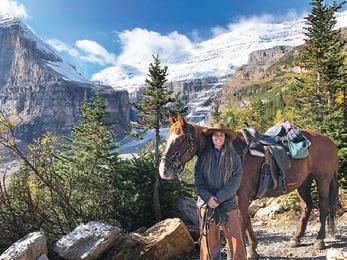
Dr. Lee Garrod, an native who New Hampshire vetan expert in critical animal care and cardiothoracic medicine, a Canadian Para athlete, and Paralympic horse owner (Sandrino). Garrod graduated from the University of 1989 and completed dency Tufts University in setts in 1993. ran many in New England over
“Lee was always awesome to work with, a great team player wanting to support everything that we are trying to develop as a team,” says EC’s ParaDressage Technical Advisor Clive Milkins. “Her partnership with Question [her horse] was lovely to see as Lee was the ultimate horsewoman. She was fun to be around and easy to coach. Rest well my friend, you will be sorely missed.”
“Lee was always awesome to with, a team player wanting to support everything to develop as a team,” says ParaDressage Technical Advisor Milkins. “Her with Question (her the She was fun to be around and easy coach. Rest well my friend, sorely
was to work great always wanting to support everything that we are trying to develop as a team,” says EC’s ParaClive Milkins. partnership with Jonny (Question) was lovely to see Lee was ultimate horsewoman. was fun around and easy to coach. Rest friend, you will sorely
85 CONNECT TO THE HORSE INDUSTRY www.HORSEJournals.com
TO THE HORSE www.HORSEJournals.com
PHOTO: SUSAN STICKLE
CONNECT HORSE INDUSTRY WESTERN & ENGLISH Tack • Supplies • Clothing DailyHorseSupply.com 780-332-1080 4921 54th Ave., Grimshaw, Alberta Full line of Hoffman’s Feed available FULL BOARDING FACILITY • Indoor Arena • Large Outdoor Sand Ring • Large Grass Jumping Ring • Catering to the recreational rider Raising, Training, and Showing Arabians since 1975 ASMARA STABLES 5026 Pringle Road, Armstrong, BC 250-546-6004 • www.AsmaraArabians.com TimberlineTours.ca From 10 minutes to 10 days Paul & Sue Peyto • 1-888-858-3388 LAKE LOUISE, AB Customer Parking Reserve YOUR Seat! d
PHOTO: SUSAN STICKLE
PHOTO: SUSAN STICKLE
Jane Casselman of Campbellville, ON, made a significant impact in the industry and to equestrian sport over several decades. As the owner and operator of Touch and Go Farms, Casselman mentored and trained many athletes throughout her career. She also had major influence as a show organizer and was known for organizing the Lollipop Shows, a schooling series in the Greater Toronto Area.



“Jane was an inspiring horsewoman. I will always remember her by her positivity and [she was] always happy to lend a helping hand to those who reached out,” said EC’s Coordinator, Online Education, Sophie Balogh. “She influenced and positively impacted the lives of so many young equestrians. To me, she was a mentor and a friend and is deeply missed.”



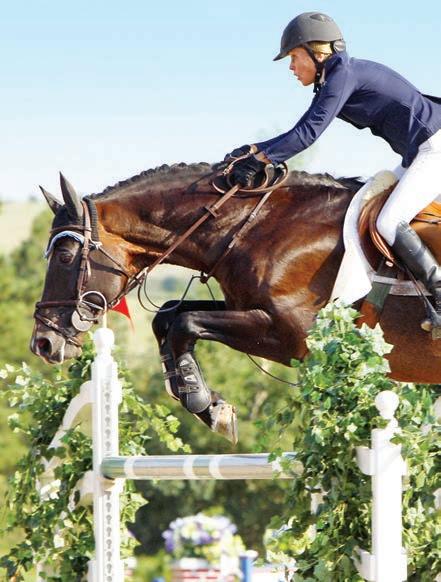
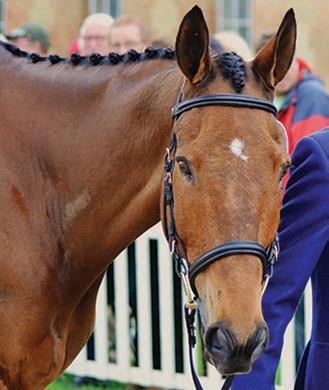



Kilrodan Abbott was an Irish Sport Horse gelding (Clover x Leabeg), owned by Peter and Susan Barry of Dunham, QC. “Eddie” and Peter represented Canada in the team competition at the 2012 London Olympic Games and the 2014 World Equestrian Games in Normandy, FRA. The pair also completed the prestigious Kentucky Three-Day Event in Lexington, Kentucky four times and the CCI 5*-L in Pau, France in 2013.
Southern Pride, the Holsteiner stallion (South Pacific x Carentio), owned by Karen and Blair Cudmore at Heartland Farms in Bennington, NE. The pair of Southern Pride and Cudmore represented the maple leaf on numerous occasions, including the 2010 FEI World Cup Finals in Geneva, CH and was an alternate at the 2007 Pan American Games.
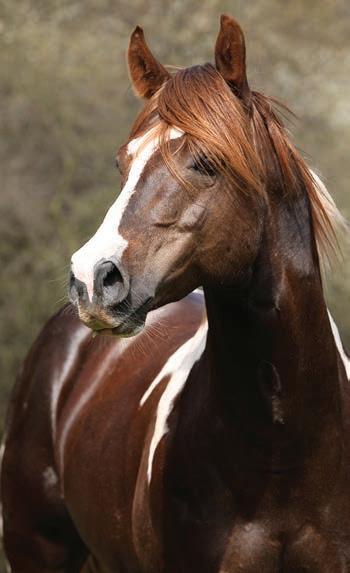
86 Canada’s Equine Guide 2023 CANADA’S HORSE INDUSTRY AT YOUR FINGERTIPS Equine Guide CANADA’S HORSE YOUR FINGERTIPS Wisdom of the Herd www.WisdomOfTheHerd.com P.Ann Turner • Chilliwack, BC Certified CHA Level 2 English Coach Certified Equine Massage Therapist 35 years experience annpturner@shaw.ca 604-302-8229 Specializing in custom portraits, ornaments and stall signs Mayberry Farm FINE ART www.SarahMurch.com mayberryfarmfineart@gmail.com New Brunswick, Canada
Your Horse b Your Passion Your Magazine PHOTO: ISTOCK / ZUZULE
Pop Art, a Dutch Warmblood gelding (Amsterdam x Cabochon) was owned by Moreen Nicoll and Rusty Holzer and was a dear member of the Holzer family.
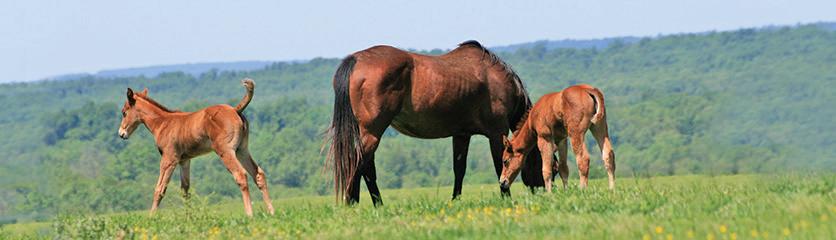
“Poppy” retired in November of 2012 after partnering with four-time Olympian Ashley Holzer in major competitions including the 2008 Beijing Olympics, 2009 FEI World Cup Final in Las Vegas, and 2010 FEI World Equestrian Games in Lexington.
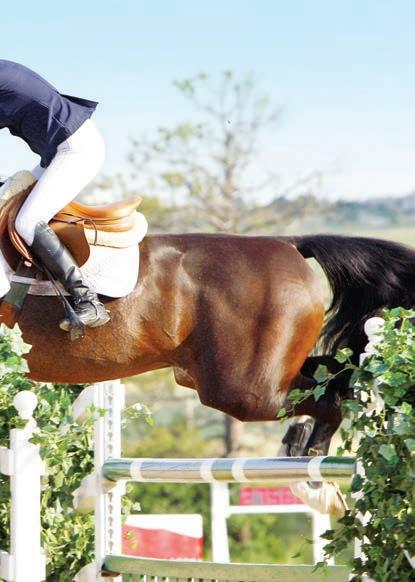
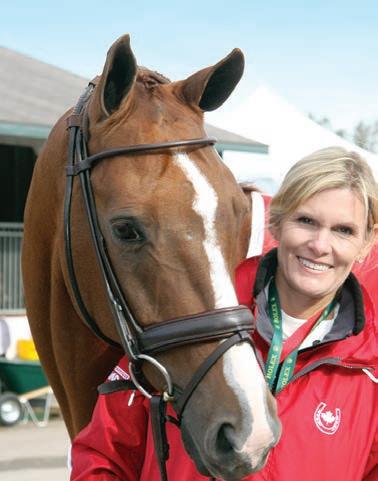

87 CONNECT TO THE HORSE INDUSTRY www.HORSEJournals.com
NOTES FROM THE OFFICE
BY JOCELYN ADAMS PLASMAN
Are you a 2023 Horse Council BC Member?

If not, renew or join today!
Your 2022 membership and insurance has expired.
There are several ways to renew:
• Contact the office at 1-800-345-8055 or 604-856-4304 and renew over the phone with a credit card.
• Online: www.hcbc.online
• Come into the office. We would love to see you!
55+ Games
It seems like we just celebrated the 55+ BC Games in 2022, and now the Abbotsford 55+ BC Games Host Society has officially announced the sport package for 2023. The Abbotsford 2023 55+ BC Games will be held August 22-26 and will see 29 sports and activities offered for the more than 3500 participants. The 55+ BC Games are an important part of the BC sport system and the largest annual multi-sport gathering event in the province. The Games offer the opportunity to celebrate sport and active living with other participants from across the province and experience the hospitality of the Host City.

Each year the Games attract approximately 3500 participants and require approximately 1,200 volunteers to stage and deliver the event in the host community.
Participant registration for the 2023 Abbotsford 55+ BC Games will open March 1.
Horseplay is Here!

We are excited to announce our NEW recreational program that allows members to record their horse activity hours and to be entered into draws to win prizes! We are excited to partner with amazing BC-based online equine businesses for monthly, quarterly, and yearly gift card draws!
Go to our website to learn more about this exciting new program: www.hcbc.ca/ programseducation/programs/horse-playprogram.
Get started today by downloading the app by searching “Horseplay Wisebox” on the App Store or Google Play to get started. Also available online at horseplay.app if you don’t have access to a mobile device.
There are tons of great prizes to be won, including:
HORSE PLAY PROGRAM PRIZES
Monthly — Adult
• 5 x $20 GC to online BC-based equine business partner
• 10 x 10% off coupon codes to HCBC store
• 5 x 25% off coupon codes to HCBC store
Monthly — Youth
• 5 x $20 GC to online BC-based equine business partner
• 10 x 10% off coupon codes to HCBC store
• 5 x 25% off coupon codes to HCBC store
Quarterly — Adult
• Learn 4 x $100 to HCBC Bookstore
• Horsemanship 4 x $100 GC to online BCbased equine business partner
• Play 4 x $79.99 USD Equus Film Channel membership
Quarterly — Youth
• Learn 4 x $100 to HCBC Bookstore
• Horsemanship 4 x $100 GC to online BC-based equine business partner
• Play 4 x $79.99 USD Equus Film Channel membership
Yearly — Adult
• $500 GC to online BC-based equine business partner
Yearly — Youth
• PIVO smartphone mount standard pack
• $250 GC to online BC-based equine business partner
NOTE: HCBC Bookstore coupon codes will expire 3 months from the date emailed to you.
For more information, visit www.55plusbcgames.org.
HCBC has started planning and organizing for the 2023 55+ Games. The host community will be Abbotsford, BC but due to lack of a suitable venue, the Equestrian Competition will take place at Maple Ridge Equi Sport Centre August 22–26.
Watch for important announcements coming soon regarding which disciplines will be included, as well as the naming and introduction of the Sport Chair and Discipline Chairs for the Equestrian Competition.
HOW TO REACH US
OFFICE HOURS:
Monday to Friday, 8:30 am to 4:30 Pm
OFFICE ADDRESS:
27336 Fraser Highway, Aldergrove, BC, V4W 3N5
PHONE: 604-856-4304
FAX: 604-856-4302
TOLL-FREE: 1-800-345-8055
WEBSITE: www.hcbc.ca
EXECUTIVE DIRECTOR: administration@hcbc.ca
AGRICULTURE & INDUSTRY: industry@hcbc.ca
MEMBERSHIP: membership@hcbc.ca
COACHING & EDUCATION: coaching@hcbc.ca
MARKETING & COMMUNICATIONS: communication@hcbc.ca
RECREATION & TRAILS: recreation@hcbc.ca
COMPETITION: competition@hcbc.ca
COMMUNITY DEVELOPMENT: development@hcbc.ca
HCBC BOOKSTORE: bookstore@hcbc.ca
FINANCE & GRANT FUNDING: finance@hcbc.ca
88 Canada’s
Guide 2023 CANADA’S HORSE INDUSTRY AT YOUR
Equine
FINGERTIPS
 BY LAURIE HAUGHTON, CHAIR, CQHA MEDIA, MARKETING & COMMUNICATIONS COMMITTEE
CQHA Launches Its New Reproductive Best Practices Virtual Seminars
Presented by Rafael E. Martinez PhD, of Sam Houston State University in Huntsville, Texas, and made possible through funding from American Quarter Horse Association’s (AQHA) International Educational Marketplace grant program, the CQHA is proud to present a seminar designed by the members of our Breeder’s Committee.
The topics of the seminar were chosen to inform both the novice and established breeder, and look at all aspects from the perspective of both mare and stallion owner. The syllabus covers areas such as selection of breeding stallions and mares; reproductive evaluations; genetic testing; and breeding methods such as live cover and embryo transfer.
This course is offered for FREE to all AQHA members.

The course is self-paced and will be available from now to September 30, 2023.
Five Courses Extended

Additionally, CQHA is pleased to announce that the five courses offered in 2022 have been extended!
• Conformation, Western Horsemanship, and Trail — Karen Graham, AQHA Judge, Pro Horseman
• Farrier Science — Travis Burns, MSc, CJF, TE, EE, FWCFer
• Equine Welfare and Behaviour — Eugene Spagnola, AQHA Pro Horseman
• Equine Genetic Diseases — Dr. Carrie Hammer
• The Business of Horses in Canada — Tara Gamble, AQHA Pro Horseman
Sign up for one, a few, or all with your current AQHA membership number – visit cqha.ca/news/ for more information.
Canadians Win Several World Champion and Reserve World Champion Titles at the 2022 AQHA World Championships
The CQHA is proud to acknowledge the success of the following Canadian-owned and/or bred horses at the 2022 AQHA World Champion Shows hosted in Oklahoma City, Oklahoma, held October 27November 19.
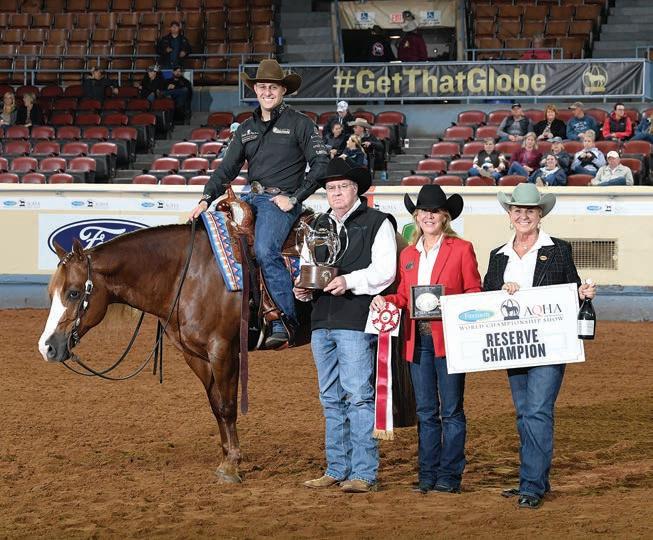
To view all the Canadian results please head over to cqha.ca
• World Champion, L2 Non-Pro Three-Year-Old Western Pleasure DEJA WHOO , shown by Linda Berwick, Clarence Creek, ON, owned and bred by Scott and Linda Berwick, Clarence Creek, ON.
90 Canada’s Equine Guide 2023 CANADA’S HORSE INDUSTRY AT YOUR FINGERTIPS
L3 Junior Reining: Marvellous Sixtysix, bred by Janna Imrie, owned by Courtney Battison, shown by Trevor Elliott Dare.
Equitation: Eat Pray
Lope, bred by Cory Seebach/Candice
Hall, owned and shown by Maggie M McCrady.
• World Champion, L2 Two-Year-Old Western Pleasure
J LOWW , bred by Cory Seebach/Candice Hall, Black Creek, BC, owned by Gil and/or Becky Galyean, shown by Becky Galyean.
• World Champion, L2 Senior Western Pleasure
CHASING BATTERFLIES , bred by Scott and Linda Berwick, owned by Pamela M Jones, shown by Terry L Cross.
• World Champion, L3 Two-Year-Old Western Pleasure
QUEEN OV HEARTS , owned by Cory Seebach/Candice Hall, shown by Gil Galyean, bred by Mariann Harrington/Joe Prause.
• World Champion, L1 Amt Select Western Pleasure
CHASING BATTERFLIES , bred by Scott and Linda Berwick, owned and shown by Pamela M Jones.
• Reserve World Champion, L3 Amt Select Western Pleasure
THE WHOO , bred by Scott and Linda Berwick, owned and shown by Linda Ball Sargen.
• Reserve World Champion, L2 Non-Pro Three-Year-Old Hunter Under Saddle
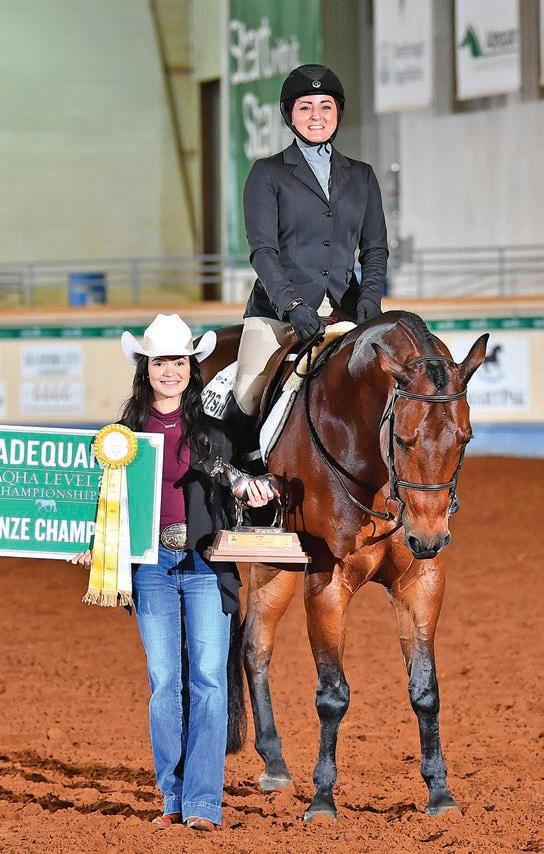
JUS THE BEST , owned by Art Order, Arkona, ON, shown by Mavis Goertz.
• Reserve World Champion, L3 Junior Reining
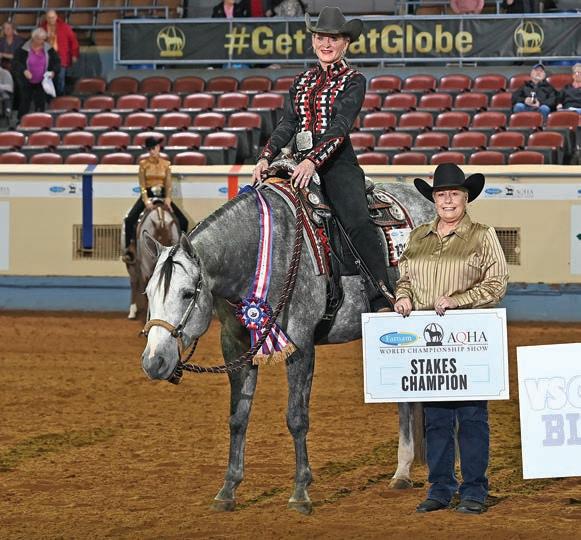
MARVELOUS SIXTYSIX , bred by Janna Imrie, Orangeville, ON, owned by Courtney Battison, shown by Trevor Elliott Dare.
• Reserve World Champion, L3 Senior Western Pleasure
AIR RYDE , bred by Brent and Kate Bamford, Calgary, AB, owned by Anita Wiescamp, shown by Sara B Simons.
• Bronze, L2 Performance Halter Mares
SHE WILL BE SOMEBODY, bred by Rod Jeffries, Shannonville, ON, owned by Tracy L Hritz, shown by Alexandria Bryne.
• Bronze, L2 Amt Hunt Seat Equitation
EAT PRAY LOPE , bred by Cory Seebach/Candice Hall, owned and shown by Maggie M McCrady.
The Shannon Burwash Memorial Fund Announces 2022 Scholarship Recipients
The Calgary Foundation is very pleased to announce the following scholarships awarded in 2022 from the Shannon Burwash Memorial Fund. There are two different categories of scholarships: first- or second-year students (two $1,000 awards), and students advancing past their second year of studies (one $2,000 award). Qualified students from across Canada applied for the three available scholarships this past June.
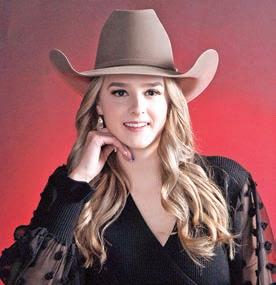
Congratulations to these award winners:
$1,000 to Jalen Thurgood, BC
$1,000 to Aliera Chernoff, AB
$2,000 to Ashley Nixon, ON
“Once again we were extremely impressed with the scholarship applicants this year,” says CQHA Past President and Scholarship Committee co-chair Dr. Wayne Burwash. “This is the eighth year that The Calgary Foundation has awarded the scholarships in memory of Shannon, and they have awarded continued on page 93

91 CONNECT TO THE HORSE INDUSTRY www.HORSEJournals.com
Aleira Chernoff
3-Year-Old Non-Pro Stakes Level 2 Champion: Deja Whoo owned and bred by Scott and Linda Berwick, and shown by Linda Berwick.
L2 Amt Hunt Seat
Jalen Thurgood
Ashley Nixon
PHOTO: SHANE RUX
PHOTOS: SHANE RUX
CANADIAN THERAPEUTIC RIDING ASSOCIATION
Celebrating the 2022 CanTRA Awards
By Christine Ross – CanTRA Vice President
Operating a therapeutic riding program involves many different skills which, when blended, create excellent programs. Each CanTRA Centre around the country has the opportunity to submit their candidates for the Annual CanTRA Awards at the beginning of each year. The goal of this program is to recognize the people and horses who work together to provide riding for those with special needs.
The 2022 awards are detailed here and the written information about each candidate was submitted from the CanTRA centre with the application for the awards. We salute these individuals for their wonderful service.
Marian Chartley Award
Outstanding Administrator
Sponsor: JoAnn Thompson Franklin
Mel Gallant
The Joyriders Therapeutic Riding Association of PEI
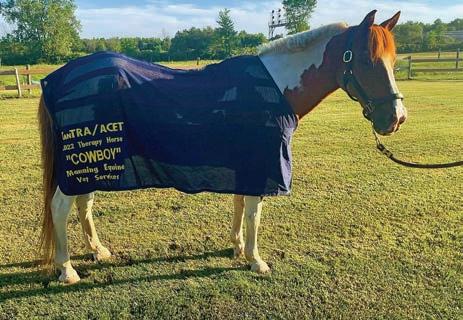
Rhonda Davies Award Outstanding Volunteer
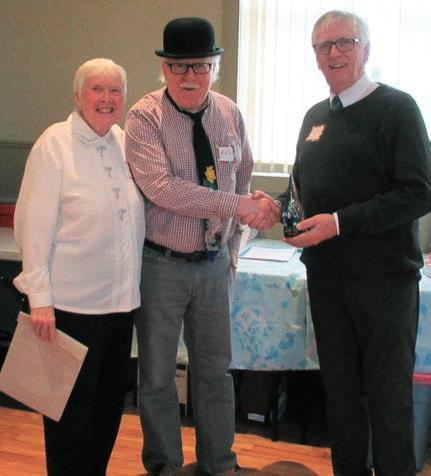
SPONSOR: John and Donna Davies
ED STACY — Mount View Special Riding Association, Olds, AB.
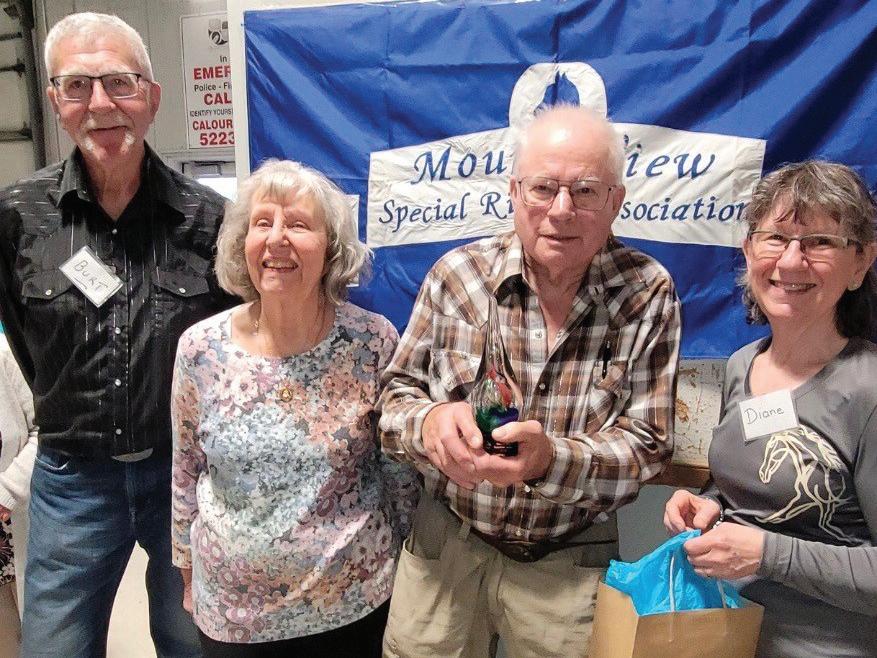
“Ed Stacy has been volunteering with Mount View Special Riding (MVSRA) of Olds, Alberta for some 15 years. Every Tuesday through spring and fall sessions, Ed has dutifully brought his gentle Fjord ponies Sensible, Sven, Lucky Surprise, and Skoki Lodge, the 50-plus kilometers from just outside Bergen to Olds for use by the club’s saddled riders.
“A year or two into his stint with MVSRA and sensing a need and opportunity, Ed custom-built a cart to accommodate riders who use wheelchairs. They gleefully take the loose ends of his reins, playing games and ‘driving’ through the pylons along with him. Ed, a modest and compassionate man, says that little in his life brings the satisfaction he gains from helping our riders. Ed truly has been a rare gift to all he impacted.”
For more information or to find a centre near you please contact our Head Office at ctra@golden.net. Follow us on Facebook @ Cantra.ACET and visit > www.Cantra.ca or donate at > www.CanadaHelps.org.
“Mel Gallant is so deserving of recognition for his many contributions to the Joyriders. He has been a true friend, volunteer, and administrator for 15 years, serving on the board of directors, especially as treasurer and fundraiser. He made important contacts for us, including with an international artist whom he persuaded to design and donate our logo and donate artwork for fundraising. To our benefit, he also shared his own award-winning talent as a photographer. His administration skills and organizing abilities were above reproach, and his caring, compassionate, and outgoing personality — imparted with a great sense of humour — have placed us very much in his debt.”
Ed Stacy receiving the Rhonda Davies Award for Outstanding Volunteer. L-R: Burt Hunt, Kathleen and Ed Stacy, Diane Luxen.
Mel Gallant receiving the Marian Chartley Award for Outstanding Administrator. L-R: Daphne Davey, Mel Gallant, Jim McQuaid.
Cowboy, the CanTRA Therapy Horse of the Year.
PHOTO: SHELENE WILLIAMS
PHOTO: THE JOYRIDERS
PHOTO: ANGIE RUIGROK
92 Canada’s Equine Guide 2023 CANADA’S HORSE INDUSTRY AT YOUR FINGERTIPS
Outstanding Instructor
Sponsor: Gay Wood
Erin O’Rielly
Rainbow Riders Therapeutic Riding Centre, St John’s, NL.
“Erin O’Rielly first got involved with Rainbow Riders as a young equestrian volunteering her time with our lesson program and, many years later, has become Program Director and Head Instructor. Her tireless enthusiasm carries our team through busy program semesters, recruitment, training, and certification of new instructors, and the day-to-day chaotic wonderfulness of a busy therapeutic riding barn.
“This passionate young woman grew Rainbow’s lesson program through the struggles of a global pandemic, kick-started a long-defunct Competition Team, and even learned American Sign Language to facilitate weekly lessons for a school group of hearing-impaired children. They say it takes a team, it takes a village, but it also takes a spark — and that’s what Erin is to her team at Rainbow Riders.”
CanTRA Therapy Horse of the Year for 2022
Sponsor: Manning Equine Vet Services
Cowboy
EquineAbility Therapeutic Riding Centre, Niagara, ON
“Cowboy would like to be known as a horse in a pony’s body. Standing a mighty 13 hands, Cowboy has been an integral part of EquineAbility since its inception in 2010. He is the horse the new volunteers first work with, the quiet mount for a variety of riders, and the first horse for individuals to transition off the lead-line. As Cowboy approaches retirement in his mid-30s, we will struggle to find a single horse to fill his shoes.”
a total of $31,000. The scholarships are open to students from across Canada and are awarded to deserving students who are focused on getting a post-secondary education and being involved in the horse industry in their future. This year the recipients are from British Columbia, Alberta, and Ontario.
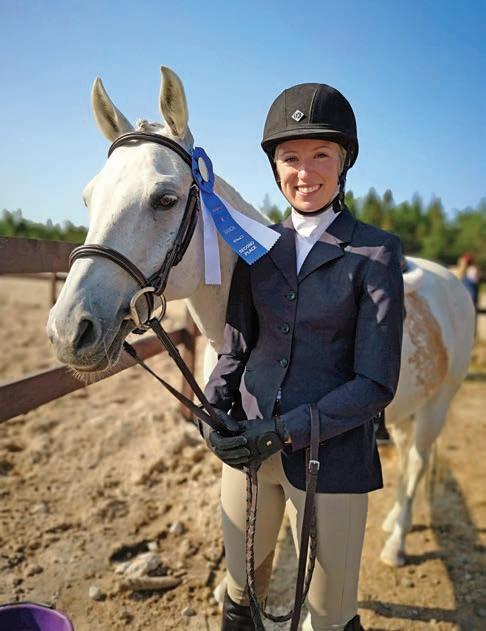
“Besides her family, the two most important things in Shannon’s life were horses and education. She loved horses and had a very, very strong feeling that all young people should get some sort of post-secondary education. Therefore, we think these awards are not only a very fitting tribute to her, but hopefully would serve as an incentive for young people to get a horsey/agricultural type education, which would lay the foundation for them to become leaders in the horse industry.”
CQHA is proud to be a supporter and promoter of this program in memory of our late friend and board member, Shannon Burwash. The program accepts applications until June 1st annually. To learn more about applying or donating to the scholarship fund please visit www.cqha.ca/programs/for-youth/
Team Canada Heads to Texas This Summer!
The American Quarter Horse Youth World Cup (AQHYWC) is an educational, leadership-based event showcasing youth riders from up to 18 countries. The year 2023 will mark the 22nd AQHYWC to be held. This prestigious event began 45 years ago in 1978, in Amarillo, Texas and was a monumental success. Since that time, the event has traveled to Canada, Australia, Germany, Arizona, Texas, and Italy. This year the event will be held in Bryan/ College Station, Texas from June 29 to July 8.
Part of the experience is the challenge and opportunity to work with horses which the youth are unfamiliar with, as the host country provides approximately 200 Quarter Horses for this event. The youth have the chance to work with their equine team in the week leading up to the competition in a series of clinics hosted by AQHA Professional Horsemen.
The culmination of the event is a showcasing of skills learned in an atmosphere of friendly competition. As the first show day approaches, the team is allowed to choose three riders to show in each of the eight classes: Showmanship at Halter, Ranch Riding, Western Horsemanship, Hunter Under Saddle, Hunt Seat Equitation, Trail, Cutting, and Reining. Then an opportunity to compete on a second show day allows for more growth and development of these young riders. The combined scores from both competition days will determine the teams’ final standings.
It is a unique opportunity for youth to learn in a “hands-on” setting with other international youth. Friendships, skills, and life lessons are all part of the experience that will last a lifetime!
YWC Team Canada 2023 will be comprised of five competitive riders, two alternate riders, three leaders, a team coach, and a team manager.
To watch the Team Canada activities unfold be sure to follow us at @cndquarterhorseassoc on Facebook, Instagram, and TikTok.
The CQHA Breeder’s Committee Proudly Presents… Clinician Al Dunning – Summer 2023
Al and his clients have earned over 50 World and Reserve World Championships in AQHA, NCHA, NRCHA, and NRHA. Al serves on multiple committees for the AQHA and NCHA and holds an NRCHA judge’s card. Al has conducted clinics around the globe, including the Equine Affaire, Midwest Horse Fair, The All American Quarter Horse Congress, EQUITANA Germany, and EQUITANA Australia.
Details and registration information coming soon. Keep watching the CQHA website and social media channels.
For more information about the Canadian Quarter Horse Association please visit www.CQHA.ca or email info@cqha.ca. Follow us on Facebook and Instagram @cndquarterhorseassoc, and on Twitter @ CndQuarterHorse
93 CONNECT TO THE HORSE INDUSTRY www.HORSEJournals.com
Andrea Gillies Award
continued from page 91
Erin O’Rielly, recipient of the Andrea Gillies Award for Outstanding Instructor.
PHOTO: MEGAN LUTHER
Tania Millen
Tania Millen is a freelance writer and author with a Masters in Journalism and a BSc in Environmental Science. She’s written four books, including Go Horse Camping and Pack’em Up, Ride’em Out: Classic Horse Pack Trips in BC and Alberta. A former 3-day event rider, she now enjoys mountain pack trips. www.TaniaMillen.com
Shawn Hamilton
Shawn Hamilton is a freelance equine photojournalist based in Ontario. She has operated Clix Photography since 1984, offering a full range of photography services for editorial and commercial use from health to Olympic sports. Her photography can be found on the covers and inside numerous magazines in Canada and the US, including Canadian Horse Journal. Shawn has co-authored four non-fiction children’s books published by Scholastic Canada. Her written articles specialize in equestrian travel. www.ClixPhoto.com
SUBSCRIBER SERVICES
Do you need to —
• Renew your subscription?
• Give a gift subscription?
• Change your address?
• Report a delivery problem?
• Ask a question? subscriptions@horsejournals.com www.horsejournals.com
1-800-299-3799 • (250) 655-8883
From time to time, Canadian Horse Journal makes its names and addresses available to carefully screened organizations who want to let you know about a product or service that might interest you. If you do not want your name, address, or email address made available, please let us know.


How to Reach Us
ADVERTISING: sales@horsejournals.com

EDITORIAL, GENERAL INQUIRIES: editor@horsejournals.com
SUBSCRIPTIONS: subscriptions@horsejournals.com OR www.horsejournals.com
NEWS, SHOW REPORTS: news@horsejournals.com
PHONE (ALL DEPTS):

1-800-299-3799 • (250) 655-8883
MAIL: Suite 202, 2400 Bevan Avenue, Sidney, BC, V8L 1W1

Kathy Smith
Kathy Smith is an equine journalist, and the publisher and editor of this magazine since its inception in 1991. A lifetime horse person, she has an unceasing passion for horses and is dedicated to serving and supporting the horse community.
Paula Da Silva
Paula da Silva is an Italy-based photographer with a deep love for all animals. She has traveled the world with her lenses, creating a unique style of photography which is poetry, fairy tale, statement, and testimony all at once. She has portrayed the beauty and majesty of many of the world’s greatest horses, and through the same lens even the humblest workman’s pony becomes a prince’s steed. Her work has been published in equestrian magazines all over the world and shown in several exhibitions.
Happy Photo Contest Winners Ghost Pony
CATEGORY: WINTER SCENES
Sleigh Rides, Winter Wonderland, Dashing Through the Snow
Thank you very much! I was very surprised when I went to my mailbox last week and there was my pony on the cover of the magazine! It really made my day and was a real thrill for me to see our little backyard pony Tater as the cover star. The gift card will be much appreciated as well. Thanks again.
Darlene Shantz (and Tater)
Celebrate Good Times!
CATEGORY: AT LIBERTY Horses in Action
Thank you so much! I was SO EXCITED to see, in the magazine, that I had won. I had just taken the photo and then saw the email about the contest. I love Thinline so I thought, why not?
I feel honoured and very lucky.

 Jane Hyndman


Celebration of Horses 2022 Photo Contest Correction
Barrel Racer
CATEGORY: HORSES ON THE JOB Performance, Working, Heritage
The correct name of the barrel racer shown in this winning photo is Amanda Schwitzer, not Bailer Switzer as published in the Winter 2022 issue of this magazine. We apologize for any inconvenience this error may have caused.
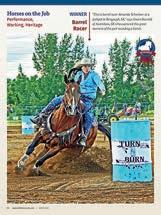
94 MEET OUR CONTRIBUTORS
94
Canada’s Equine Guide 2023 CANADA’S HORSE INDUSTRY AT YOUR FINGERTIPS
INDEX TO ADVERTISERS
LA BELLE FLEUR
16hh • 2017
Belle is sweet, very people friendly, clever, learns quickly, a good mover and loves to have a job. Sensitive & needs someone who has prior experience with young OTTBs.
ADOPT • VOLUNTEER • DONATE

Dedicated to finding adoptive homes and new careers for former Thoroughbred racehorses.
778-985-5673 • www.newstride.com
THOROUGHBRED RETIREMENT SOCIETY
Finding
Permanent, Loving Homes for Retired Racehorses. Do you have room in your heart and home for a new friend?
See our web page for horses available for adoption. Volunteers are always welcome!
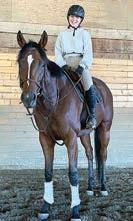

Donate Today – Help a Retired Racehorse! Gunningforfranks, LongRun Graduate

Follow us on Facebook: LongRunTB www.longrunretirement.com


95 CONNECT TO THE HORSE INDUSTRY www.HORSEJournals.com
The only impossible journey is the one you never begin.
Tony Robbins
PHOTO: SHUTTERSTOCK/CUSTOMPHOTOGRAPHYDESIGNS
Acera Insurance (formerly CapriCMW) 27 AFAB Industries 69 Angel’s Animals 23 Anvil Brand 23 Arenus Animal Health Insert, 1, Outside B/Cover Asmara Stables 85 Bale Buddy 67 BC Appaloosa Centre 77 Bear Valley Rescue 95 Canadian Friesian Horse Association 81 Canadian Horse Journal 2, 49 Castle Plastics 31 CF Fence 39 Circle F Horse Rescue 95 Copper Pony Poles 41 Country Homes & Acreages 78 CURT Manufacturing 19 Daily Horse Supply 85 Denco Storage Sheds Inc 26 Dr Cook Bitless Bridle 73 Dynamint Equine 73 Eaglewood Equestrian Supplies . . . .85 Equestrian Nova Scotia 87 Equine Essentials Tack & Laundry Services 71 Equine Foundation of Canada, The 95 Equine Guelph 63 Equinerehab ca (School of Equine Massage and Rehabilitation Therapies) 37 Equiwinner 32 Fit To Ride 36 FoalWatch 15 Hi-Hog Farm & Ranch Equipment Ltd 56 Hideout Lodge & Guest Ranch, The 47 Horse Council of British Columbia . . . .89 Horse Habit, The 81 Hyperion Stud LLC 43 Ironstock Leather Care 3 Irvine’s Western Store 53 KIOTI 9 Knaughty Nets & Pets 81 Lakeland College 28 Linton, Alexa 79 LongRun Thoroughbred Retirement Society 95 Manitoba Horse Council 83 Maple Lane Equestrian Trailers 69 Mayberry Farm Fine Art 86 Myles Herman - Equine Bodywork 81 Natural Insect Control 63 Nettles Stirrups 29 New Stride Thoroughbred Adoption Society 95 Newfoundland Pony Society, The 71 Northern Acreage Supply Ltd 77 Olds College of Agriculture & Technology 59 OneAC 39 Otter Co-op Inside F/Cover Peruvian Horse Club of Canada 87 Pferde Traum Farm 67 Ponderosa Ridge Ranch 15 Professional Farrier Supply 37 Purina 13 Pyrahna 21 Real Estate Centre 78 RevitaVet 79 Rosenol Performance Horses 17 Sciencepure Nutraceuticals 5 SSG Equestrian Gloves Inside B/Cover Summerside Tack & Equestrian Wear 11 Tack Collector, The 87 Thin Line Canada 11 Timberline Tours 85 Ultra-Kelp for Horses 69 University of Edinburgh 57 Vantage Trailer Sales 33 We Cover Structures 7 Wisdom of the Herd 86
Sergeant Reckless
By Kathy Smith
Sergeant Reckless was a small Mongolian mare who held official rank in the United States military. She was estimated to be three or four years old when purchased by the United States Marine Corps for $250 in October 1952. She was trained to be a pack horse and used to carry ammunition and supplies for the Recoilless Rifle Platoon of the 5th Marine Regiment.
But it wasn’t long before Sergeant Reckless proved herself to be much more than just a pack animal. She quickly learned to navigate the treacherous terrain of the Korean War, carrying supplies and evacuating wounded soldiers to safety without hesitation. She often travelled to deliver supplies on her own, without a handler. In fact, she became so vital to the unit that they renamed themselves the “Reckless Rifle Platoon.”
On one particularly harrowing day, Sergeant Reckless made 51 trips to the front lines, carrying over 9,000 pounds of supplies and ammunition. She was hit by shrapnel twice, but she refused to stop working. She even made the trip up and down the steep and rocky hills with a wounded soldier on her back.
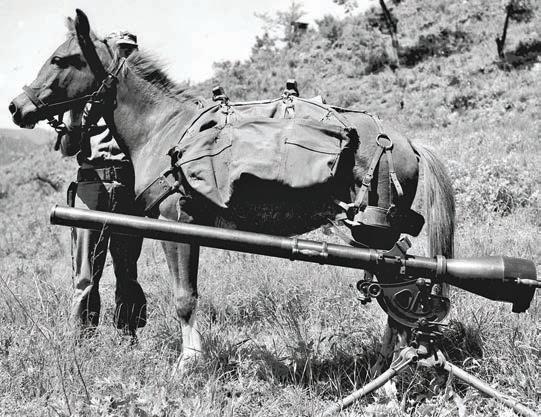
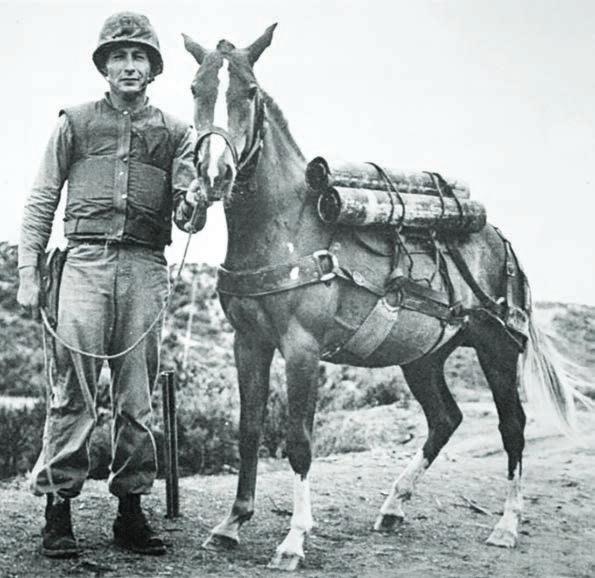
Sergeant Reckless was also known for her incredible ability to sense danger. On several occasions, she would refuse to move forward when she sensed an incoming enemy attack. Her instincts saved countless lives.
Sergeant Reckless was more than just a loyal and brave animal. She was also a beloved member of the unit. The Marines were very fond of her, feeding her treats like beer, Coca-Cola, and scrambled eggs. They even built her a special tent to sleep in, and she was allowed to roam freely through the camp.
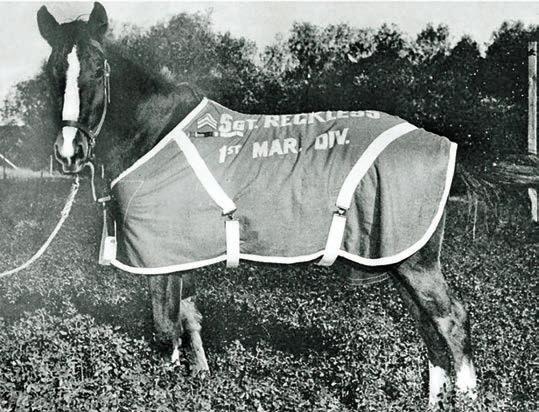
After the Korean War, Sergeant Reckless retired to Camp Pendleton, California, where she lived out the rest of her days. She passed away in 1968, but her legacy lived on. She was the first animal to be officially promoted to the rank of Sergeant in the United States Marine Corps, and she received many awards
Sgt Reckless, a highly decorated US Marine Corps artillery horse in the Korean War, with a 75mm recoilless rifle. During one battle she was loaded with six recoilless rifle shells and the first time one was fired she went straight up in the air with all four feet off the ground. When she landed she was shaking, but her handler calmed her down. The second time the gun fired she merely snorted. By the end of the day she was calm and even took an interest in the operation of the weapon.
including two Purple Hearts. She was recognized by LIFE Magazine as one of America’s 100 all-time heroes.
In 2013, a bronze statue of Sergeant Reckless was unveiled at the National Museum of the Marine Corps. The statue, which was donated by the Semper Fidelis Society, depicts Sergeant Reckless carrying a wounded soldier to safety. It serves as a testament to the incredible bond between humans and animals, and the sacrifices that both are willing to make for each other.
Today, Sergeant Reckless is remembered as a true hero and an inspiration to all those who knew her. She will always be remembered as a symbol of the bond between humans and animals, and the incredible things that can be achieved when we work together. b
96 Canada’s Equine Guide 2023 CANADA’S HORSE INDUSTRY AT YOUR FINGERTIPS
Sgt Reckless with her primary trainer, US Marine Sergeant Joseph Latham, who taught her battlefield survival skills such as how not to become entangled in barbed wire and to lie down when under fire. She learned to run for a bunker upon hearing the cry of “Incoming!”
Sgt Reckless at pasture in retirement at Camp Pendleton, California.











1-800-561-8017 • www.ssgridinggloves.com No matter what the weather, we have your hands covered. ALL WEATHER RIDE N’ RANCH WINTER RANCHER COOL TECH DIGITAL WINTER DIGITAL SOFT TOUCH SILK LINED SOFT TOUCH PRO SHOW WINTER

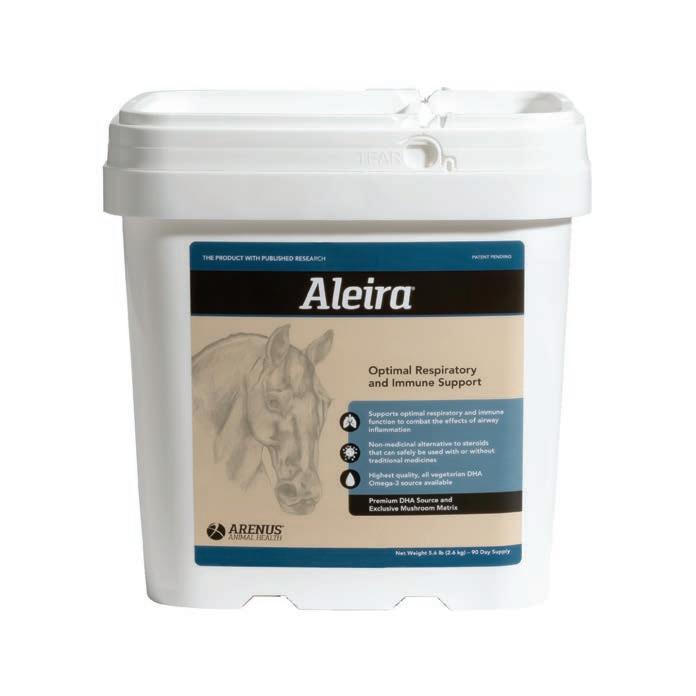
Arenus Animal Health | 866-791-3344 | www.arenus.ca IN
WORLD OF ITS OWN Researched Respiratory Support
Researched and Proven as an aid in controlling Inflammatory Airway Disease (IAD) and Recurrent Airway Obstruction (RAO)1 . Recommended in the American College of Internal Veterinary Medicine Consensus Statement on Respiratory Disease2 . References: [1] Nogradi N, Couetil LL, Messick J, Stochelski MA, Burgess JA. Evaluation of an Omega-3 Fatty Acid Containing Feed Supplement in the Management of Horses with Chronic Lower Airway Inflammatory Diseases. J Vet Intern Med 2015; 29:299-306. [2] Couetil LL, Cardwell J.M, Gerber V, Lavoie J.-P, Leguillette R, Richard E.A. Inflammatory Airway Disease of Horses. ACVIM Consensus Statement J of Vet Intern Med 2016; 30:503-515 p. 508-510. Check with your veterinarian or Arenus on how Aleira can help your horse effectively cope with respiratory and immune challenges. See how Aleira can help you to reduce or eliminate pharmaceutical interventions. Not all Omega 3’s are the same; use the only Researched and Recommended 1500mg Purified DHA formulation. Talk to your veterinarian today to see how Aleira can help your horse effectively cope with respiratory and immune challenges. Experience the improved performance and recovery that Aleira brings to your horse.
A
– Using the Best Matters