Component 2_Cheng Yun Chang - for the collaboration project 小組
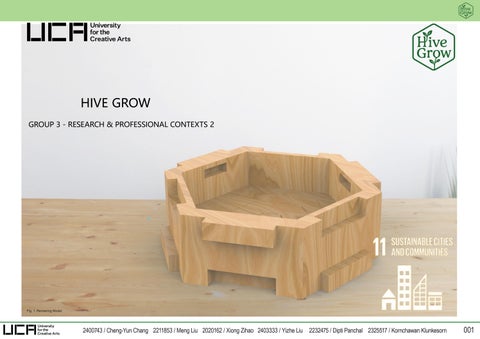
HIVE GROW
GROUP 3 - RESEARCH & PROFESSIONAL CONTEXTS 2
/ Kornchawan Klunkesorn
/ Yizhe Liu
/ Dipti Panchal
/ Meng Liu
/ Xiong Zihao
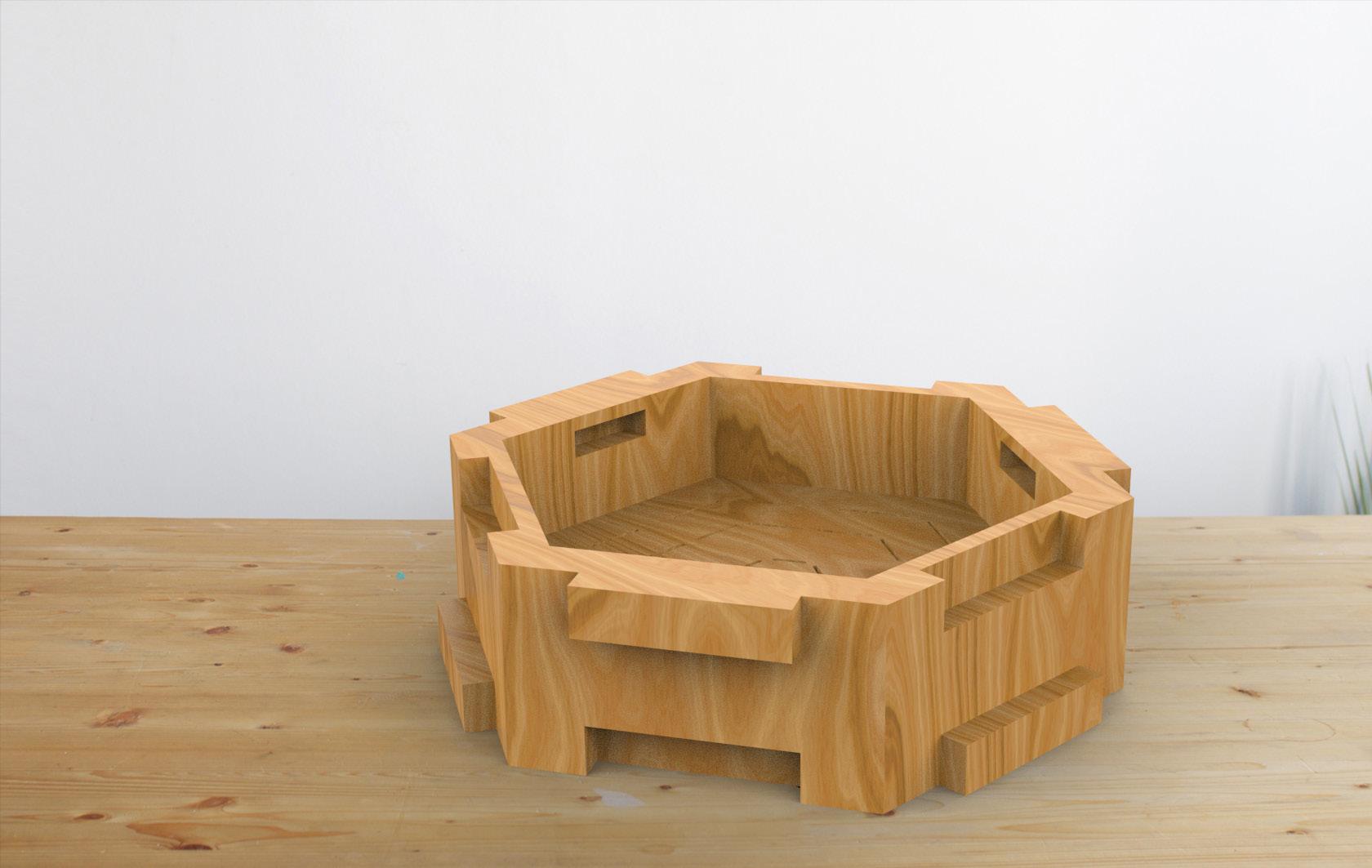
Fig. 1. Rendering Model.
MA Architecture (CARD7004: Research & Professional Contexts 2 24/25)
-Thesis: Chinese Architectural Feng Shui Theory from the Perspective of Ecological Architectural Design and Environmental Psychology.
Role in this Group: Leader / Coordinator
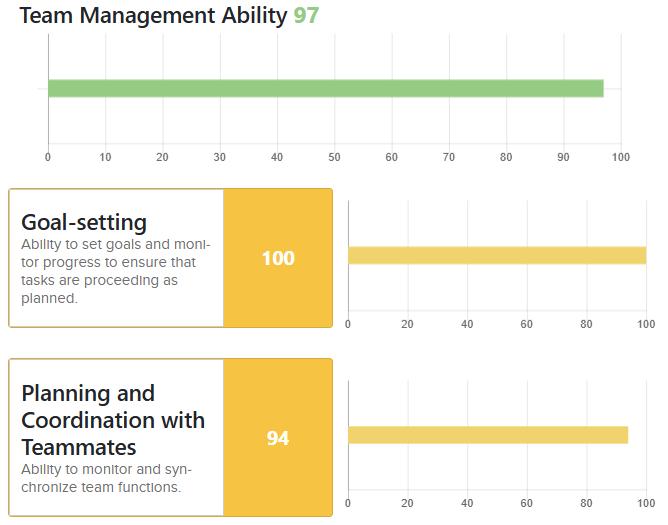
Duty: Setting realistic goals and ensuring the team meets deadlines.
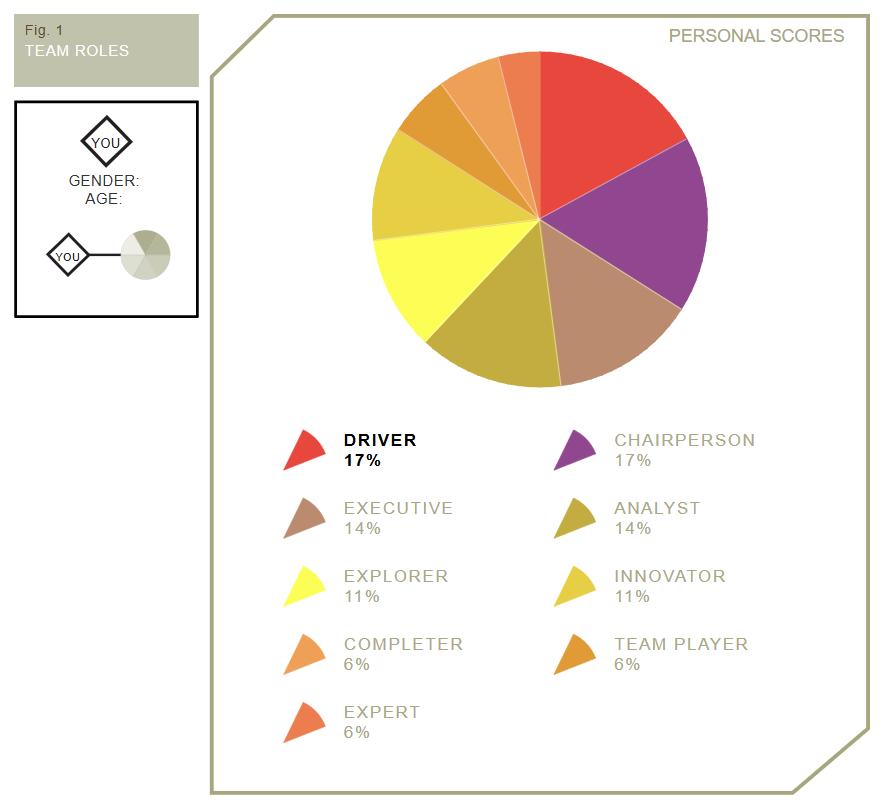
GROUP ROLES
MA Interior Design (CARD7004: Research & Professional Contexts 2 24/25)
-Thesis: How Alzheimer’s Nursing Home Design Can Reduce Patients’ Social Isolation/Isolation While Meeting Nursing Functions.
MA Interior Design (CARD7004: Research & Professional Contexts 2 24/25)
Role
Duty: Support with informations and research. 3D Model making. Poster making.
“Successful teamwork is not just about distributing tasks but about synchronizing efforts to achieve impactful and sustainable results. Through strategic coordination and proactive decision-making, I aim to guide our team toward a professional and well-structured final output.”
Ma Product Desugn (CARD7004: Research & Professional Contexts 2 24/25)
-Thesis: Research on efficient preliminary research methods for product design
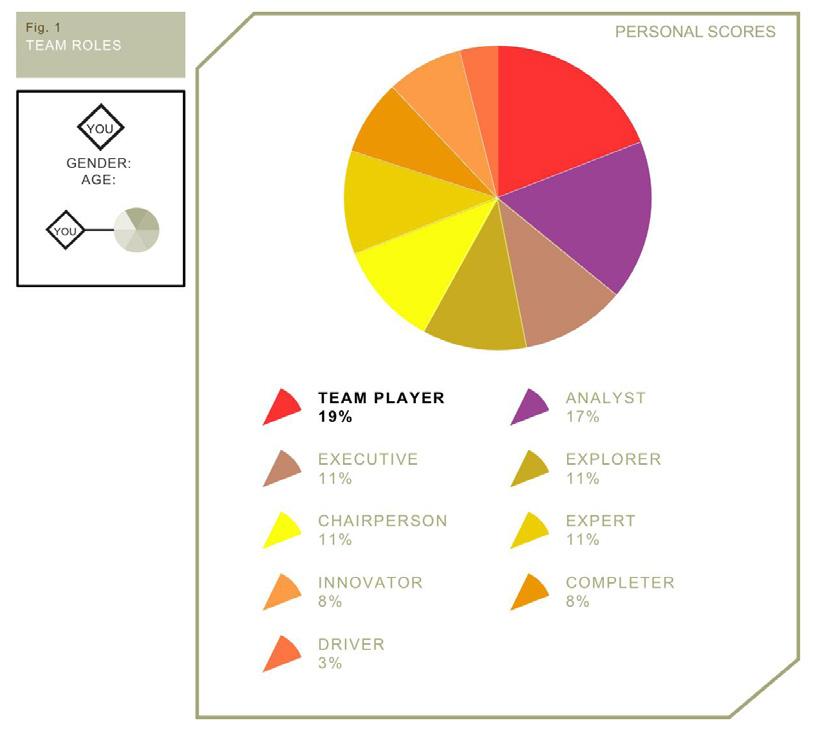
Role in this Group: Teamworker
Duty: Research-Sketch. 3D Model making. Poster making.
Personal Quotations or Expectations in the Context of this Project: Personal Quotations or Expectations in the Context of this Project:
“Adhere to user needs as the core, combining art and design”
Role in this Group: Teamworker
Duty: Support with informations and research. 3D Model making.Poster making.
MA Interior Design (CARD7004: Research & Professional Contexts 2 24/25)
-Thesis: Movable container house for tourists
Role in this Group: Team member
Duty: Support with informations and research
“A
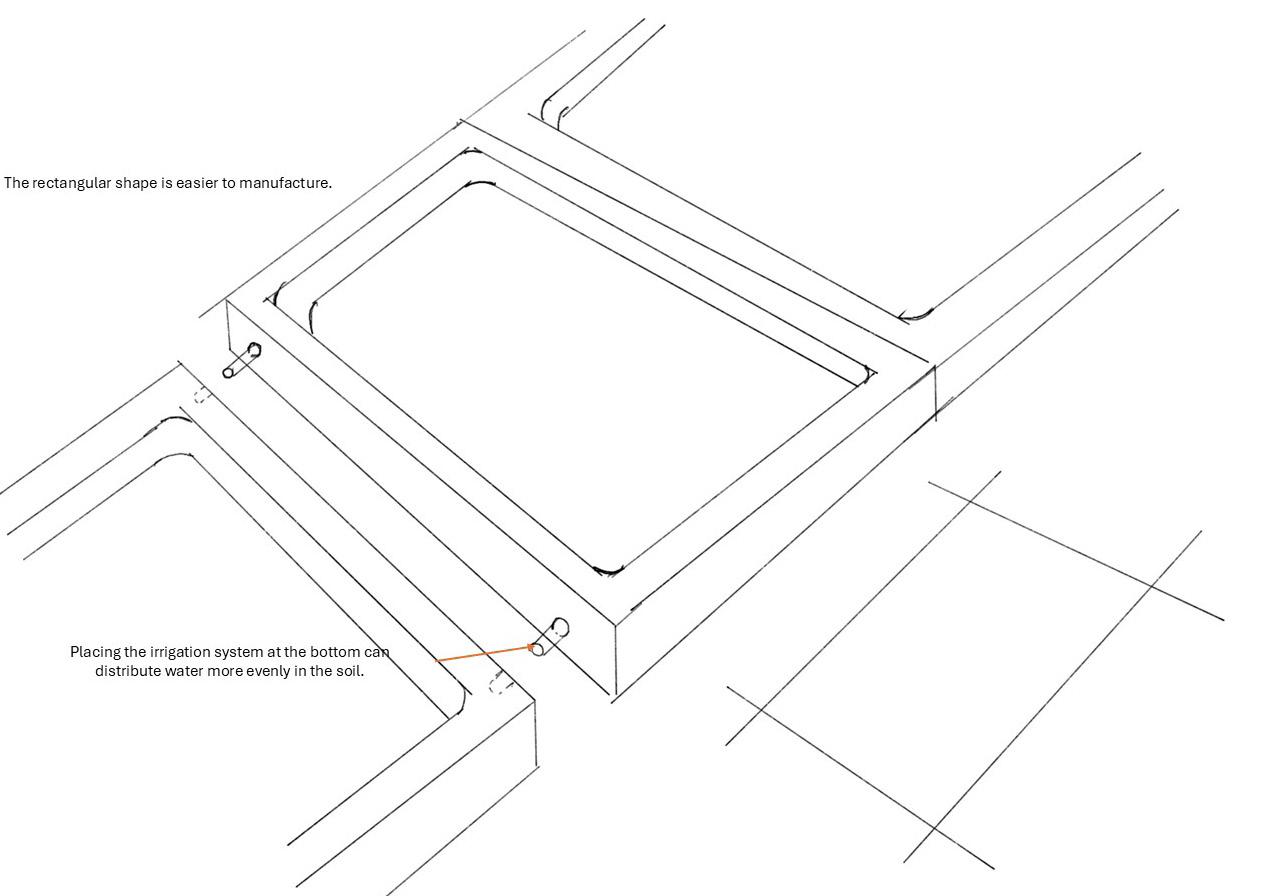
Personal Quotations or Expectations in the Context of this Project:
and sustainable.”
-Thesis: Creating safe, comfortable, and beautiful spaces that foster belonging and happiness. Prioritizing human-centred, sustainable, and innovative design, while embracing age-friendly and child-friendly principles to enhance wellbeing for all.
MA Interior Design (CARD7004: Research & Professional Contexts 2 24/25)
-Thesis: Growing tress on abandoned building.
Role in this Group: Team member
Duty: Help support team with information and research, help find case study.
Cheng-Yun Chang (2400743)
Yizhe Liu (2403333)
Meng Liu (2211853)
Dipti Panchal (2232475)
Kornchawan Klunkesorn (2325517)
Xiong Zihao (2020162)
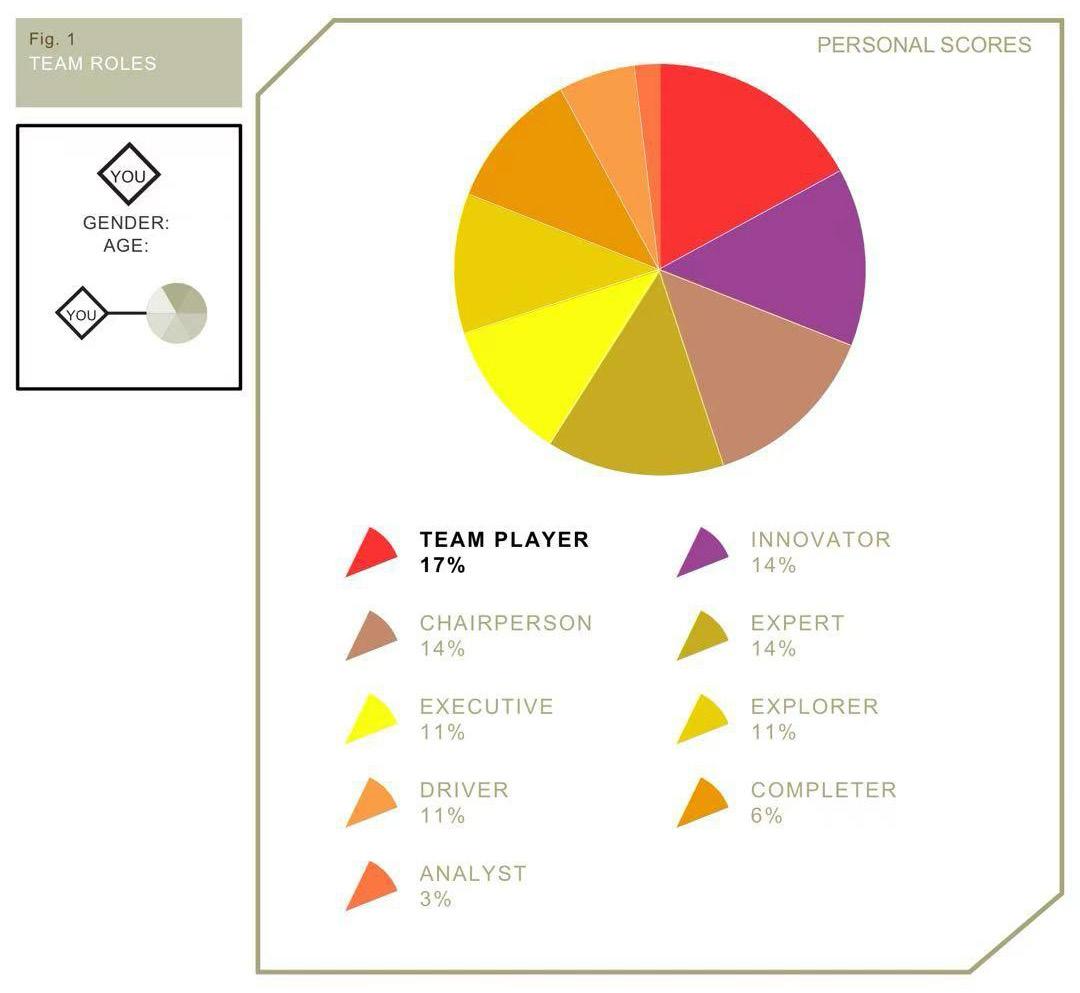
in this Group: Team Player
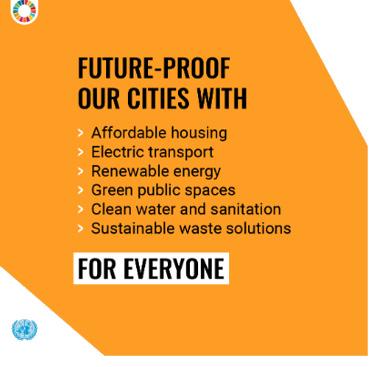
/MAKE CITIES INCLUSIVE, SAFE, RESILIENT AND SUSTAINABLE
More than 50% of the world’s population lives in cities. Although the area of all cities worldwide only accounts for 3% of the Earth’s land, there are now over 3.5 billion people living in cities, and the number is constantly increasing (Sustainable Development Goals).
Sustainable Development Goal 11 (SDG 11) aims to make our cities inclusive, safe, resilient and sustainable. This goal is crucial for improving the quality of life in urban areas, promoting social inclusion, and enhancing environmental sustainability. It will create a future where our cities and human settlements provide opportunities and access to basic services, energy, housing, and transportation for all people (Wiley).
BACKGROUND
WHAT CAN WE DO TO HELP ACHIEVE THIS GOAL?
“Develop a vision for your building, street, and neighbourhood, and act on that vision. Are there enough jobs?
Can your children walk to school safely? Can you walk with your family at night?
How far is the nearest public transport?
What’s the air quality like?
What are your shared public spaces like?”
“The better the conditions you create in your community, the greater the effect on quality of life.”
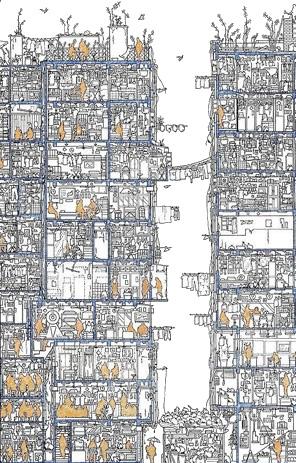
Fig. 2. Slum city (2024).
Fig. 3. WHAT IS GOAL 11 - SUSTAINABLE CITIES? (2019).
In the UK
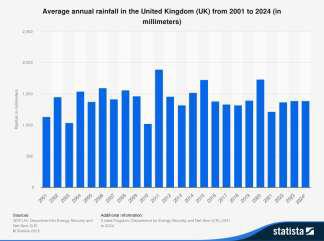
Between 2001 and 2024, the average rainfall in the UK varied greatly.
GOV.UK. (2025). Average annual rainfall in the United Kingdom (UK) from 2001 to 2024 (in millimetres) Statista. Statista Inc.. Accessed: May 06, 2025. https://www.statista.com/statistics/322810/average-rainfallin-the-united-kingdom-uk/,(Erick Burgueño Salas, Mar 27, 2025)
“During the period in consideration, rainfall rarely rose above 1,500 millimeters. In 2024, the annual average rainfall in the UK surpassed 1,386 millimeters.” (GOV.UK.,March 27, 2025).
In the UK, the average annual rainfall of about 1,154mm. This rainfall helps reduces air pollution by – washing out air borne pollutants (such as dust, nitrogen dioxide), improving air quality and cooling the atmosphere.
RESEARCH
Global insight, typical annual rainfall ranges from 800mm to 1400mm, though mountainous regions get higher compared to the southeast, reflecting geographic and climate valuation.
Global
In highly polluted urban areas globally, annual rainfall of around 1,000mm or more can significantly help reduce air pollution levels.
Frequent rainfall helps remove airborne pollutants like PM2.5, nitrogen dioxide, and dust through a process called wet deposition.
In general, 1,000mm or more of annual rainfall can be enough to noticeably reduce air pollution in many highly polluted cities — but only as one part of a larger solution.
For the long-lasting solutions that we considered are
Reducing vehicle and industrial emissions. Promoting public transport and clean energy.
Fig. 4. Between 2001 and 2024, the average rainfall in the UK varied greatly. (2025)
RESEARCH
/ Cheng-Yun Chang
/ Kornchawan Klunkesorn
/ Yizhe Liu
/ Dipti Panchal 2211853 / Meng Liu
/ Xiong Zihao
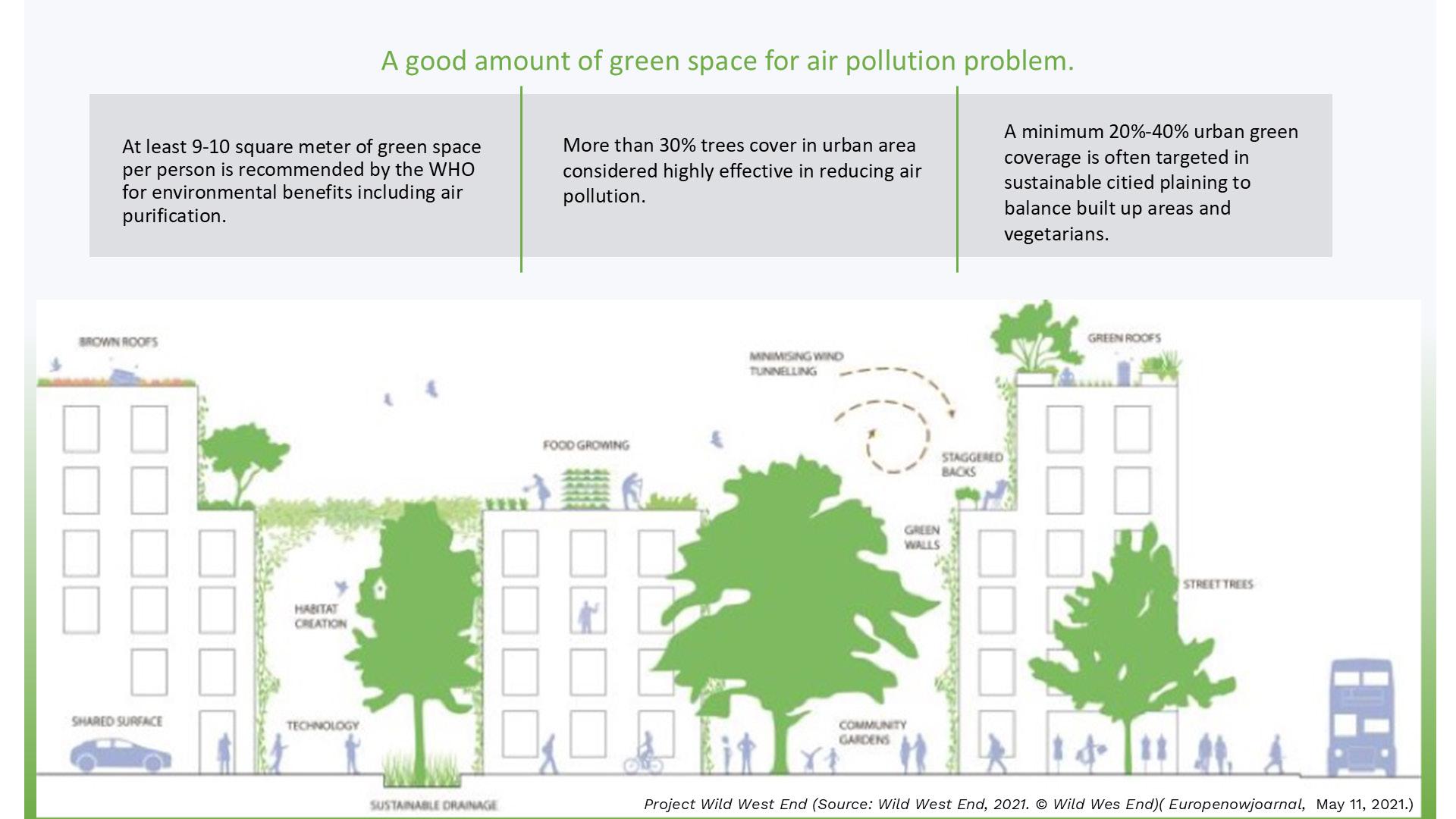
Fig. 5. Project Wild West End .
PROJECT PROPOSAL
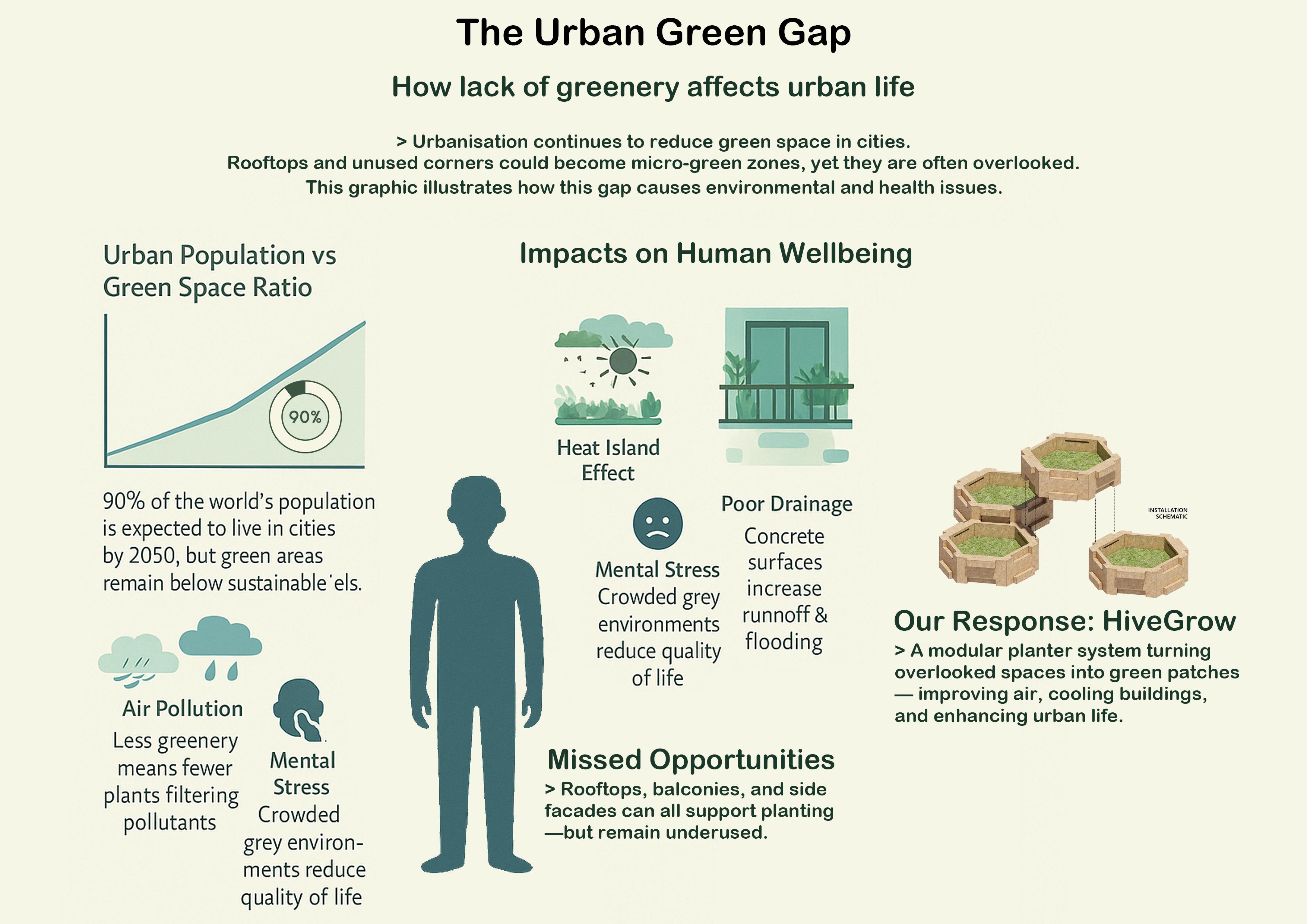
Urbanisation is rapidly changing the face of cities, with rapid urban development leading to a reduction in green space, increased pollution, and urban heat islandization. At the same time, very often people neglect the places around them that can be used as green spaces, such as rooftops, green spaces, etc., all of which lead to a shortage of green spaces.
Based on these situations, this proposal introduces a modular LEGO planter, which is an innovative and flexible gardening solution in line with Sustainable Development Goal 11 (SDG 11): Sustainable Cities and Communities.The design aims to achieve the goal of promoting urban greening and improving air quality by providing a scalable, user-friendly, and sustainable planting system that increases planting interest and reduces planting difficulty. Native and droughtresistant plants will be prioritised to minimise water consumption and maintenance. The Modular Lego Style Planter is an interlocking, customisable planting system that allows users to arrange the planter into their preferred shape according to available space and needs.
Key features:Interlocking System: Planters can be stacked, horizontally connected, or reassembled at will.
Sustainable Materials: Made from recycled plastic, bamboo composite, or biodegradable polymer.
Versatile design: suitable for indoor, outdoor, rooftop, and balcony gardening.Expected Impacts and Benefits: Increased integration of plants into urban spaces and improved urban biodiversity. Reduce air pollution by utilising the ability of plants to absorb pollutants.
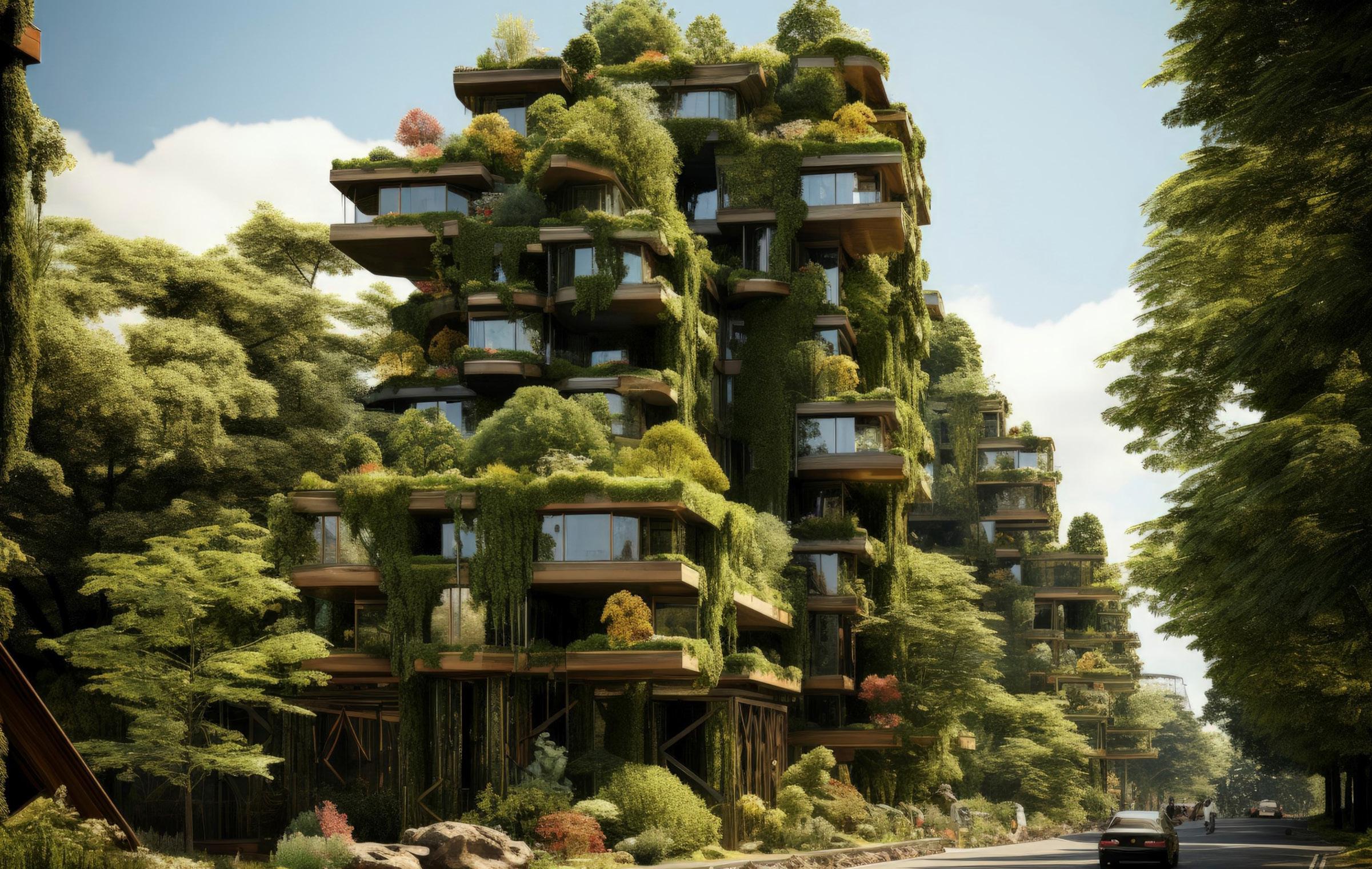
Fig. 6. AI-generated picture. (2025)
PROJECT PROPOSAL
· Air pollution is raising
· Why > Many reasons and one of those reason is we don’t have enough green space and sometime people just lose sight of some area can be designed to a green space with roof garden.
· Research question> How can we attract people to change their rooftop to be a roof garden? , Are there any alternatives for people to start planting easily?
· Why we do this> Plants help make the quality of the air better. So, we want more people or more building to use their roof or balcony as their own green space, and a lot of building just waste their spaces.
· What we can do/ solution> design a planter which can be use in various way to increase the interest of planting and easy to use.
Fig. 7. AI-generated picture. (2025)
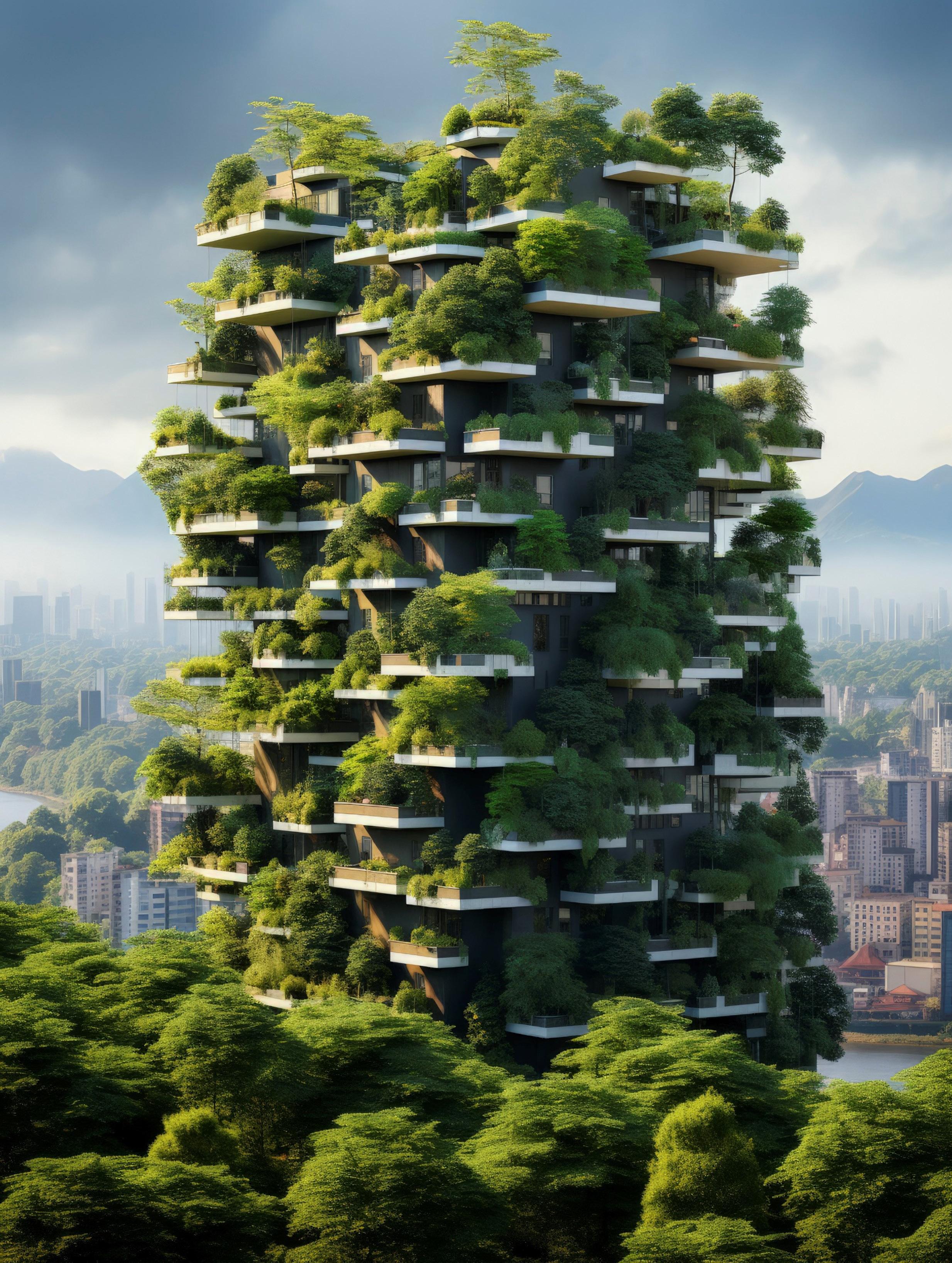
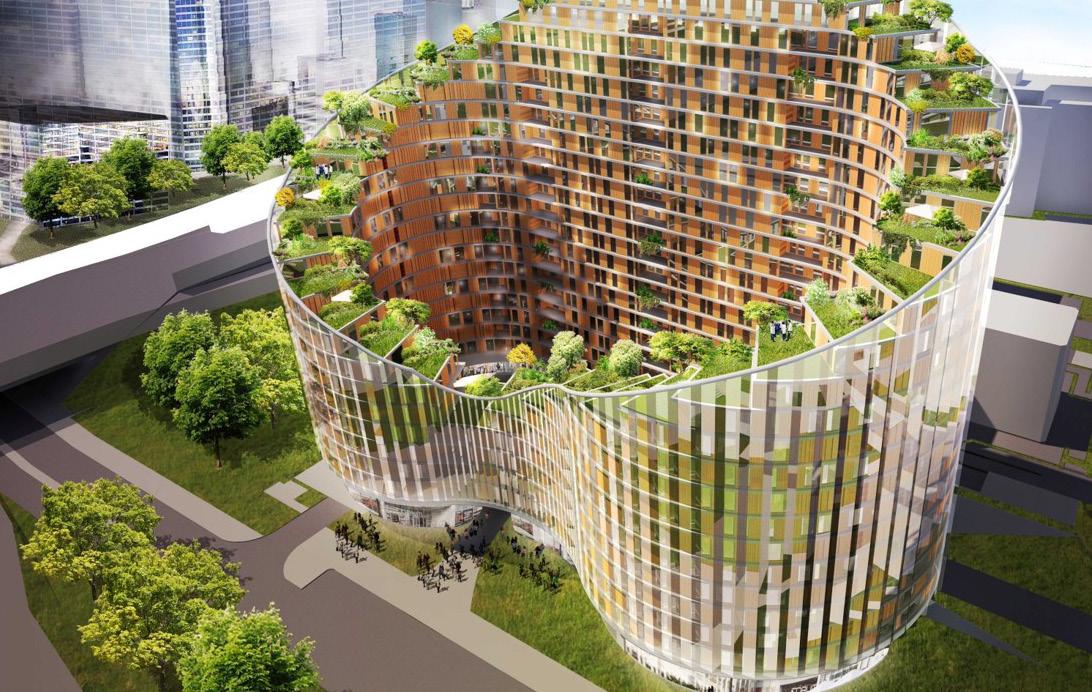
Fig. 8. AHH - Design for innovative green apartment building. (2017)
/ Cheng-Yun Chang
2325517 / Kornchawan Klunkesorn
2403333 / Yizhe Liu 2232475 / Dipti Panchal
2211853 / Meng Liu 2020162 / Xiong Zihao
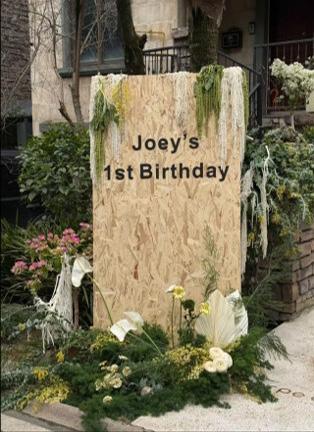
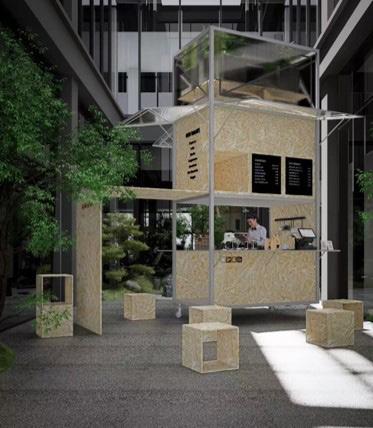
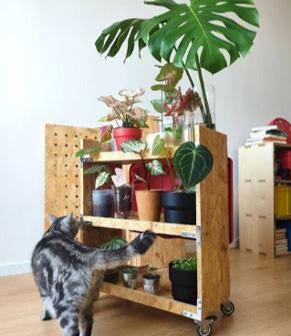
MATERIALS RESEARCH - OSB
/CHARACTERISTICS OF ORIENTED STRAND BOARD
- High Strength and Structural Properties: OSB is made from long wood fibres and glues pressed at high temperatures and pressures to give it high strength and structural stability. Its solid structure can effectively support the weight of soil and plants.
- Moisture Resistance and Anti-corrosion: OSB has a professional waterproof coating and a special moisture-proof board treatment surface, which provides a certain degree of moisture resistance.
- Lightweight: OSB is relatively light compared to other timber panels, making it easy to install and move.
- Convenient processing: OSB has good processing performance, can be cut into various shapes according to the need to create different sizes and forms of modules to meet individual needs.
- Environmentally friendly: OSB production utilises wood by-products, reduces wood waste and is recyclable. Compared with the traditional wood panels, the europine board is more environmentally friendly.
- Aesthetics: OSB’s natural wood texture can bring a sense of natural beauty of the original wood, suitable for a variety of gardening styles. And the complex texture can be more resistant to dirt.
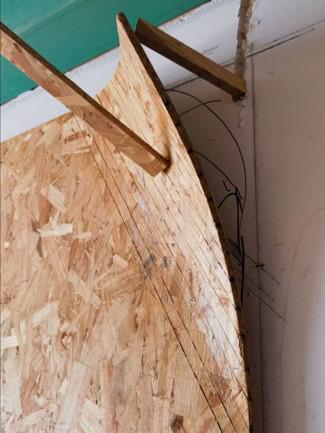
/CURVED WALL
/MOBILE MODULAR COFFEE SHOP /PLANT DISPLAY BOARD
Fig. 9. Fig. 10.
Fig. 11.
Fig. 12.
Fig. 13.
MATERIALS RESEARCH - RECLAIMED WOOD
/CHARACTERISTICS OF O RIENTED STRAND BOARD
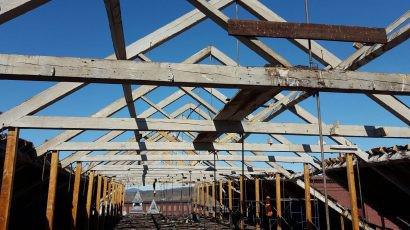
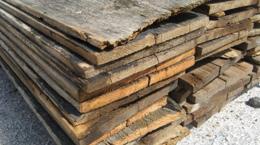
Reclaimed wood is already aged and dried, which makes it stable and strong—perfect for building or making things like planters, furniture, or walls.
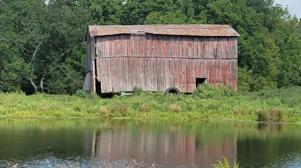
- Reclaimed wood refers to wood that has been recovered from its original application and repurposed for a new use. It’s often sourced from old buildings, structures like barns and warehouses, or even from boxcars and barrels. This wood can be used in furniture, flooring, cabinetry, and other projects
How Does Reclaimed Wood Reduce Waste?
- Recycling or upcycling in any way reduces waste. Reducing landfill waste is a major benefit of recycling wood. According to the EPA, wood makes up 8.3% of all landfill waste, which totaled 12.2 million tons in 2018. Reclaimed wood in building construction and design continues to rise as the architectural community acknowledges its many benefits. Sustainable designs incorporating reclaimed wood curbs the use of hazardous and/or dangerous equipment needed to cut new lumber.
Is Reclaimed Wood Energy-Efficient?
- Reclaimed wood is significantly more energy-efficient because the growth, harvest, and processing (kiln drying) life cycle phases are not as long as newly harvested wood. In some cases the transport stage is eliminated because most reclaimed wood is sourced locally. Most importantly, keep in mind that reclaimed wood has no national industry standards. Although it has many benefits, purchasing from a reputable manufacturer can put you at ease knowing you’re receiving a high-quality finished product.
Fig. 14. Reclaimed Wood Names: What do they mean?
Fig. 15. Raw and unfinished authentic reclaimed barn wood planks. Photo courtesy of Woodstock Architectural
Fig. 16. Reclaimed Wood Names: What do they mean?
CASE STUDY
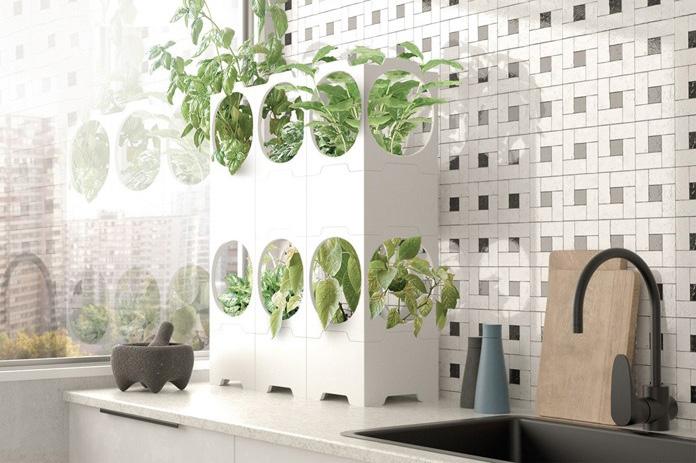
LORENZO VEGA - /LEGO-INSPIRED MODULAR PLANTER
Desing Overview
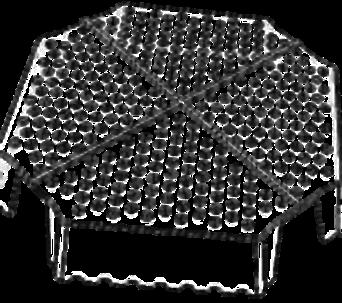
Yanko Design’s article highlights a LEGO-inspired modular planter that brings an innovative approach to vertical gardening, especially for small living spaces. The planter system is designed to be stackable and interlocking, allowing users to build custom garden layouts based on available space.
Key Features
- Modular and stackable: similar to Lego blocks, the planter can be rearranged and expanded as needed.
- Space-saving vertical design.
Potential Risks
- Structural stability.
- Drainage issues: too much water may cause root rot if not designed properly.
- Limited plant choice: some deep-rooted plants may not be suitable for modular structures.
What We Can Learn
- Modularity increases flexibility.
- Selection of materials.
- Shape design.
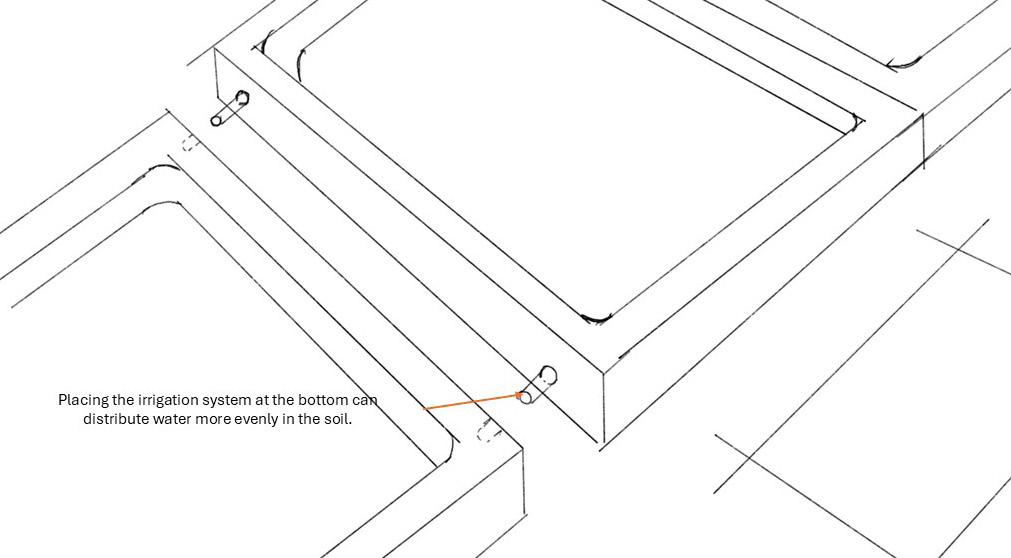
SUPER SIMPLE IRRIGATION SYSTEM
- /HOW TO SET UP A SUPER SIMPLE IRRIGATION SYSTEM
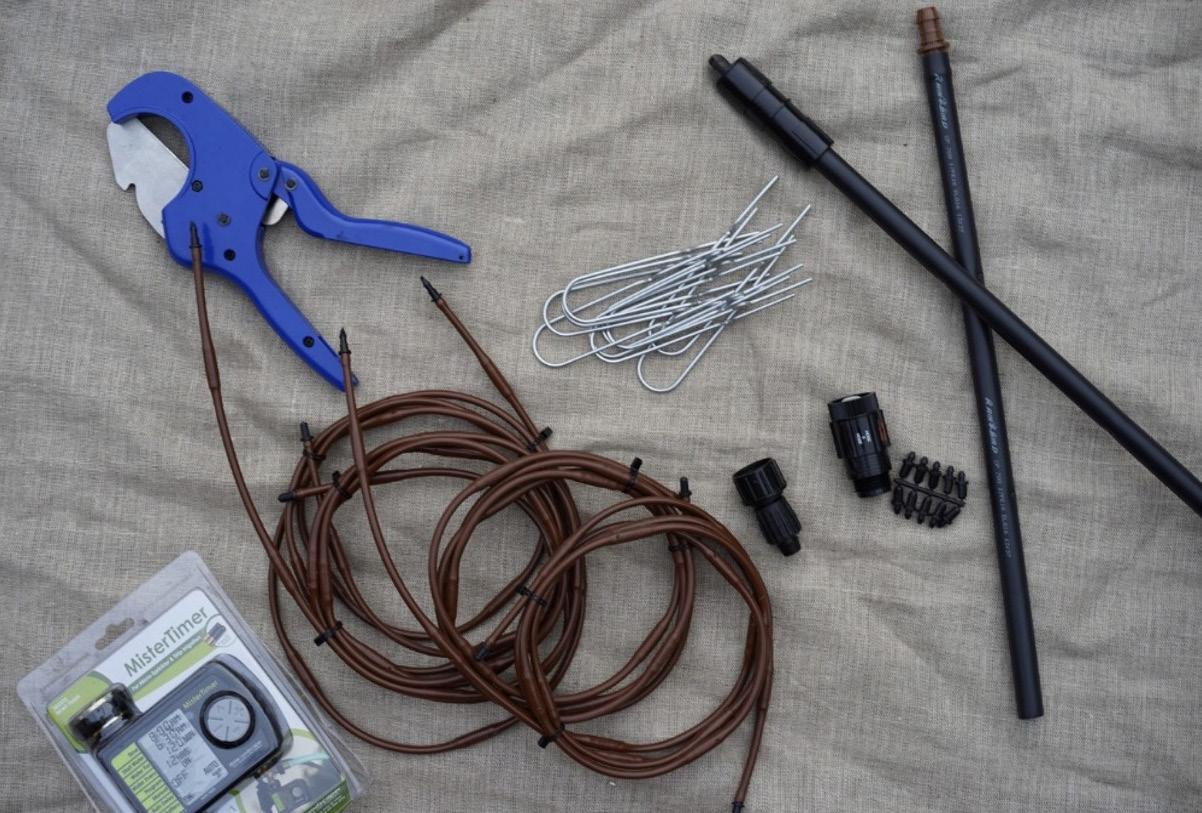
Tools
Steps
1. Attach T Connector to Spigot.
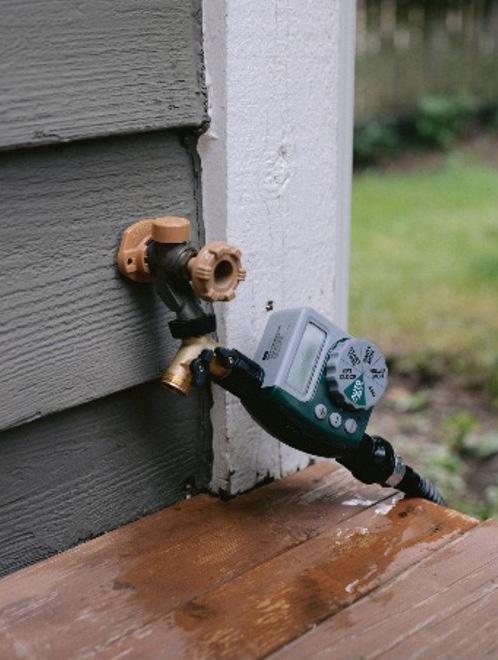
2. Connect Automatic Timer.
3. Attach Pressure Regulator.
- Plumber’s Tape
- T connector
- Automatic timer
- Pressure Regulator
- Drip Irrigation Kit
- Hose, PVC, or Poly Tubing (without holes)
- Elbow Brackets (1 for each raised bed)
- Landscaping Pins
4. Connect Hose, PVC, or Tubing.
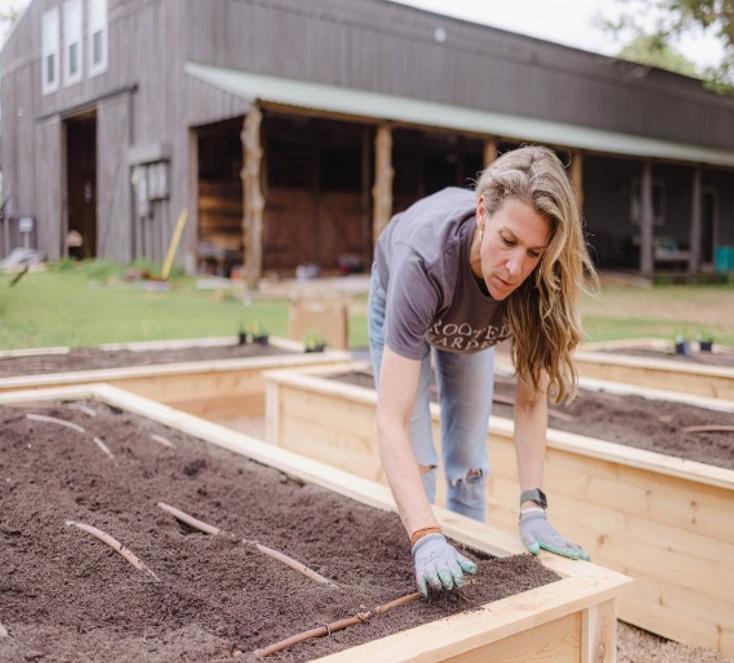
5. Bring Tubing into Raised Bed.
6. Arrange Drip Lines on Soil Surface.
Again, most plants need about 1 inch of water per week, depending on the evaporation rate. Ideally, this water should be in constant supply. In fact, the key to watering is consistency. Since drip irrigation systems discharge much less water than lawn sprinklers and garden hoses, you may need to run the system for several hours a week to water deeply. It depends on the flow rate of the drip irrigation system, so the time it takes to deliver 1 inch of water to the soil could be 5 hours. A drip irrigation system on a timer is basically set and left alone. However, they need to be adjusted from time to time based on rainfall and seasonal changes. If there is a lot of rainfall, you will obviously want to turn the system off for the week to conserve water.
Fig. 17. Lorenzo Vega’s product.
Fig. 18.Two parts of the product.
Fig. 19.How the product is used.
Fig. 20.Tools used for self-irrigation.
Fig. 21. T Connector
Fig. 22. Automatic Timer. Fig. 23. Use of self-irrigation.
/GREEN ROOF MODULE HT-508
CASE STUDY
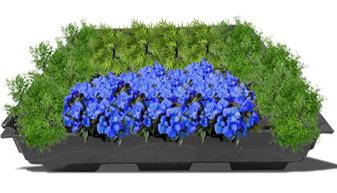
Modular Green Roof Tray with Adjustable Water Retention and Drainage
- Adjustable water retention and drainage for enhanced plant health and hydration.
- Seamless modular design for an uninterrupted green roof appearance.
- Sustainable, durable materials ensuring a lifespan of up to 10 years.
The HT-508 green roofing system offers sustainable, cost-effective solutions with easy installation, adjustable water retention, and efficient stormwater management. Made from recycled materials, it reduces shipping costs and long-term expenses, making it ideal for both distributors and project owners.
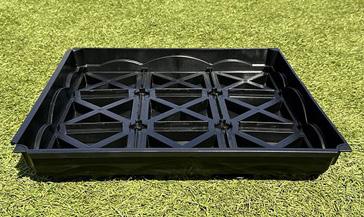
- Main Module: Modular Green Roofing System, Adjustable Water Retention, Sedum Trays
- Dimensions: 50cm x 50cm x 8cm
- Weight: 1.05kg per module
- Material: Recycled high-quality PP
- Water Retention Capacity: 2 liters per module
- Container Load: 13,020 units per 40’HC container
- Space Efficiency: Stackable design, reduces shipping costs for large scale projects
- Water Collection Basket: Stormwater Management, Adjustable Water Retention, Rainwater Collection
- Item No.: HT-508-P
- Dimensions: 11cm x 11cm x 2.5cm
- Weight: 28g
- Material: Recycled high-quality PP
- Water Storage: Adjustable 3D storage space
- Design: 9 compartments, subdivided into 4 right-angled triangles for efficient water distribution
Fig. 24. Planting trays. Fig. 25. Use of planting trays.
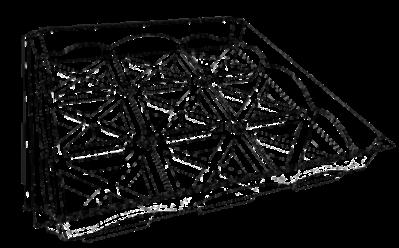
Fig. 26. Sketch of planting trays.
Fig. 27. Sketch of water collection basket.
Fig. 28. The catchment basket works.
Fig. 29. Water collection basket.
PLANT RESEARCH
/PLANTS FOR GREEN ROOFS AND BALCONIES IN THE UK
General Plant Types:
1.Succulents (e.g., Sedum, Sempervivum) - Drought-tolerant, perfect for dry conditions, and low-maintenance.
2.Herbs (e.g., Thyme, Lavender, Mint) - Easy to grow, fragrant, and useful for cooking.
3.Perennials (e.g., Echinacea, Agapanthus) - Hardy, return year after year, suitable for both sun and partial shade.
4.Climbers (e.g., Clematis, Ivy) - Great for vertical spaces and wind-resistant.
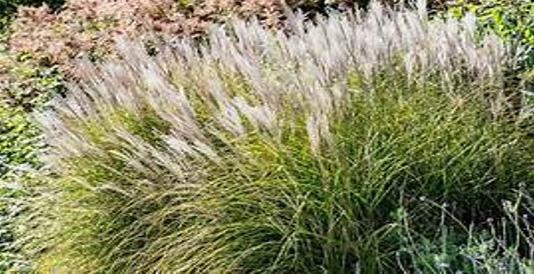
5.Grasses (e.g., Festuca, Miscanthus) - Tolerant to dry conditions and wind, ideal for green roofs.
Specific Considerations for the UK:
1.Temperature: UK temperatures range from 1°C (34°F) in winter to 25°C (77°F) in summer. Choose plants tolerant to both cold and wet conditions.
2.Water: Moderate rainfall, but dry spells can occur. Drought-resistant plants like Sedum and Lavender work well.
3.Sunlight: Limited sunlight; sun-loving plants (e.g., Sedum) for sunny spots and shade-tolerant plants (e.g., ferns) for shaded areas.
Recommended Plants for UK Climate:
- Sedum: Excellent for green roofs due to drought resistance and low maintenance.
- Lavender & Rosemary: Ideal for sunny, well-drained areas.
- Mint & Thyme: Hardy herbs suitable for UK rooftops and balconies.
- Ferns (e.g., Polystichum): Thrive in shaded, moist conditions.
Conclusion:
Choose drought-tolerant, wind-resistant plants for UK green roofs and balconies. Succulents, herbs, and hardy perennials are ideal for the temperate UK climate. Consider exposure to sunlight and wind when selecting plants.
- Spinach: Cooler temperatures, partial shade, small pots
- Radishes: Small spaces, quick growth, shallow containers
- Tomatoes (Cherry/Patio): Full sunlight, compact varieties, small pots
General Care
- Sunlight: 4-6 hours daily
- Watering: Regular but avoid overwatering
- Soil: Lightweight, well-draining potting mix
- Containers: Good drainage, prevent root rot
Fig. 30. Sedum and Sempervivum.
Fig. 31. Silvergrass,Miscanthus sinensis.
Fig. 32. Sapphire indigo.
THE FIRST CONCEPTUAL SKETCH
/MODULAR PLANTER
First Option
Third Option
Second Option
Fig. 33. Sketches for design idea iterations.
Gravity Fed Irrigation
FURTHER RESEARCH
/RAINWATER COLLECTION
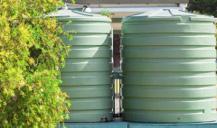
Gravity has some great advantages - no moving parts, no electricity, and reliability. However, the main limitation is slope. If your garden is slightly uphill from your rain barrels, water won’t flow. Elevating your rainwater storage tanks can help, but there is also a limitation to how high you can go. If your point of use lies lower than your storage system, hydrostatic pressure will be enough to feed a low-flow drip irrigation system or supply low pressure to a garden hose.
Equipment
storage container / barrel
– A large water butt, food-grade barrel, or even a sturdy plastic bin with a lid.– Size: 50L to 200L depending on how much space and rain expected. stand or platform
– Raise your barrel off the ground using a wooden pallet, bricks, or a metal frame.
– This helps with gravity-based flow when using a tap.
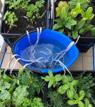
Planter self-rainwater collection
1.Rain Barrel + Wicking Bed Combo
A small rain barrel next to the planter collects roof water. A hose or small pipe feeds the planter’s reservoir slowly.
Planter has a wicking layer (gravel or cloth) and overflow outlet. Perfect for: Rooftop beds or larger raised planters.
Tip: Use gravity. Elevate the barrel so water can trickle down.
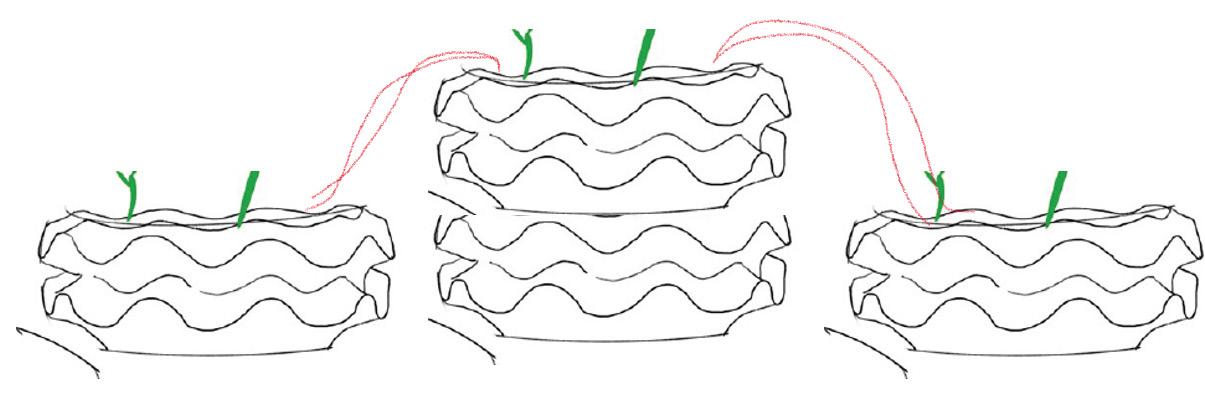
2. Stacked Rainwater Planter Tower
How it works:
Top container collects rain.
Overflow or drainage holes lead water into lower planters. Each level stores a bit of water or wicks it up from the one below. Perfect for: Strawberries, lettuce, herbs, or cascading flowers.
1.Rain Barrel + Wicking Bed Combo
Because we want to have moveable planter so the system should moveable too, that’s why we cannot have big water collection system.
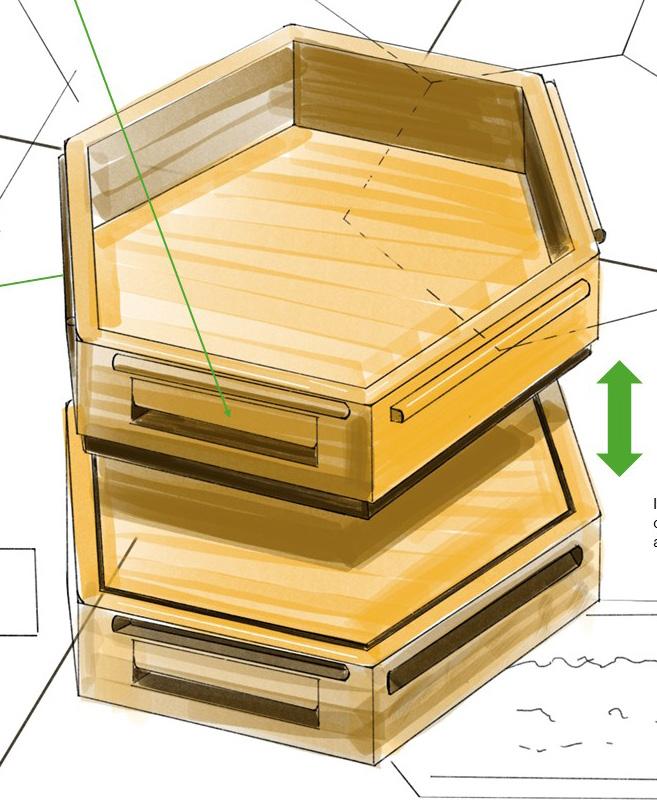
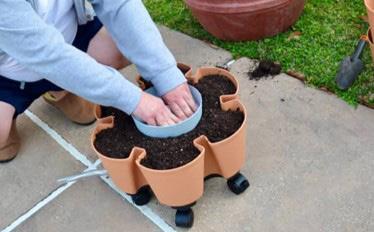
The top one with holes for water to go down. The bottom one has no hole to collect water. Some of the holes has rope connect between the stack. The rope will absorb the water up. This way help save water.
middle part collect water
Stacked Rainwater Planter Tower
The
Water collector taller then planter but same shape
Water Collector
Planter Planter
Reclaimed wood
Recycle plastic Rope
Fig. 34. Large Volume Rainwater Collection Tanks. (2024)
Fig. 35. DIY Wick Watering System. (2020)
Fig. 36. DIY self-watering planter.
Fig. 37. GreenStalk Vertical Garden Planter.
CONCEPTUAL SKETCH - MODIFICATION
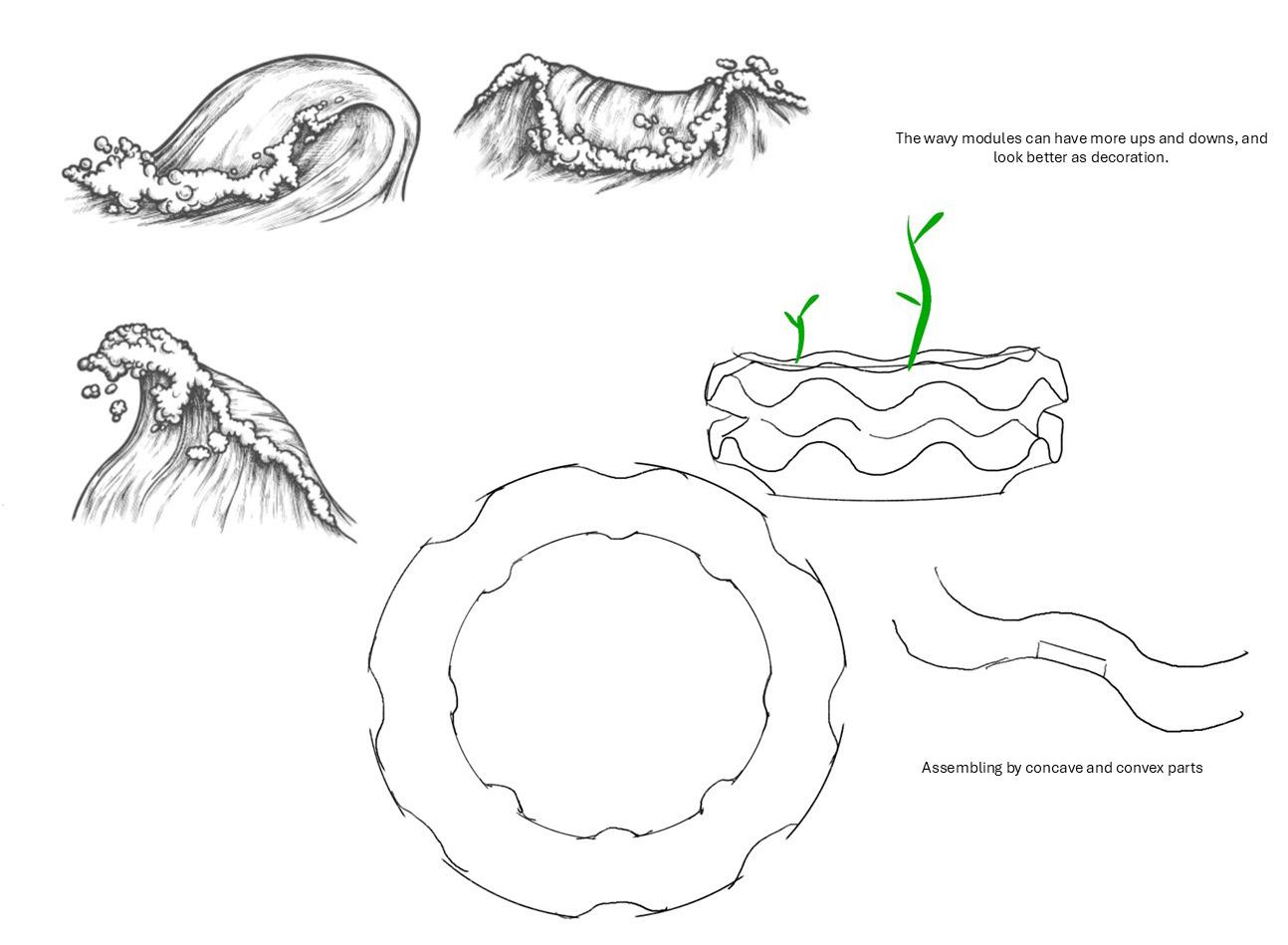
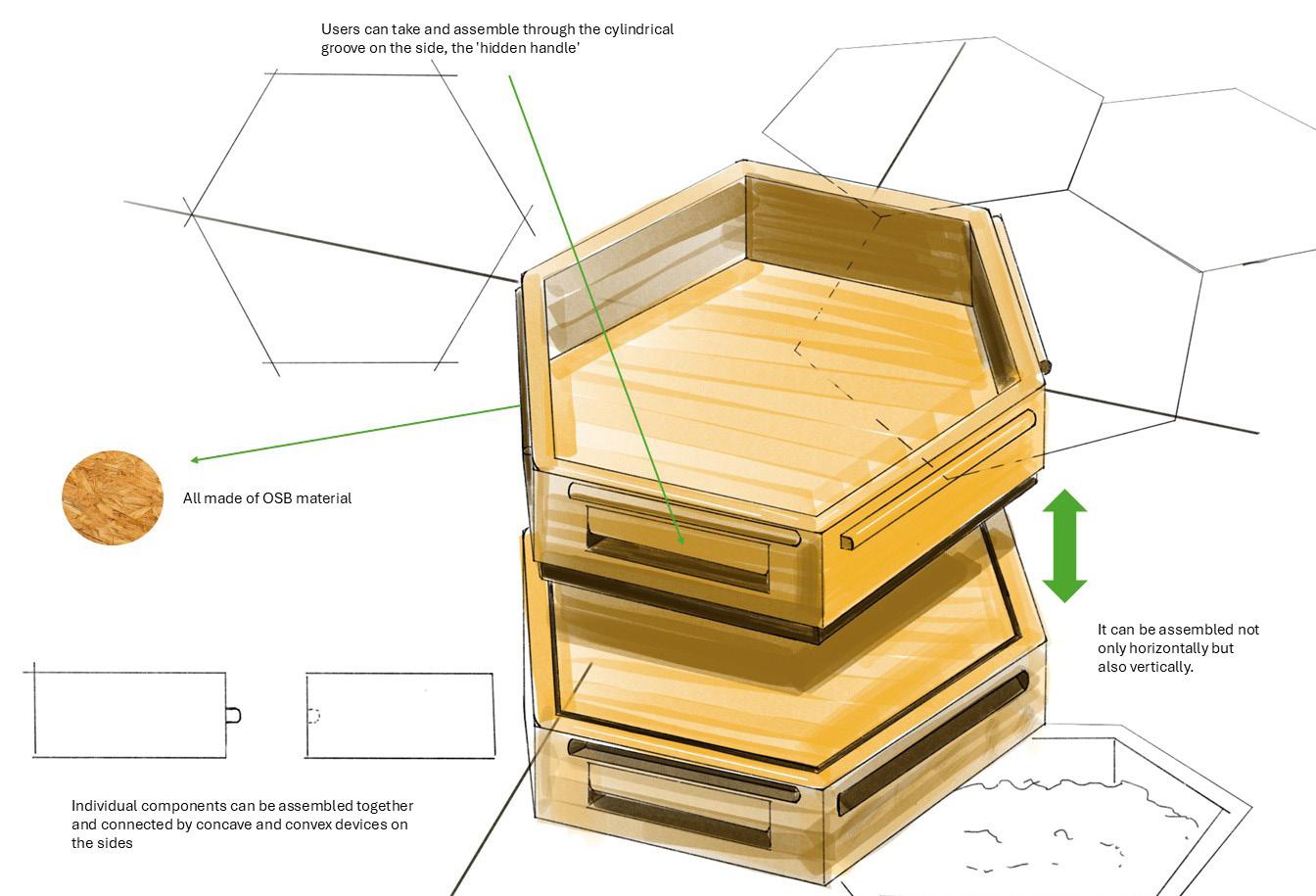
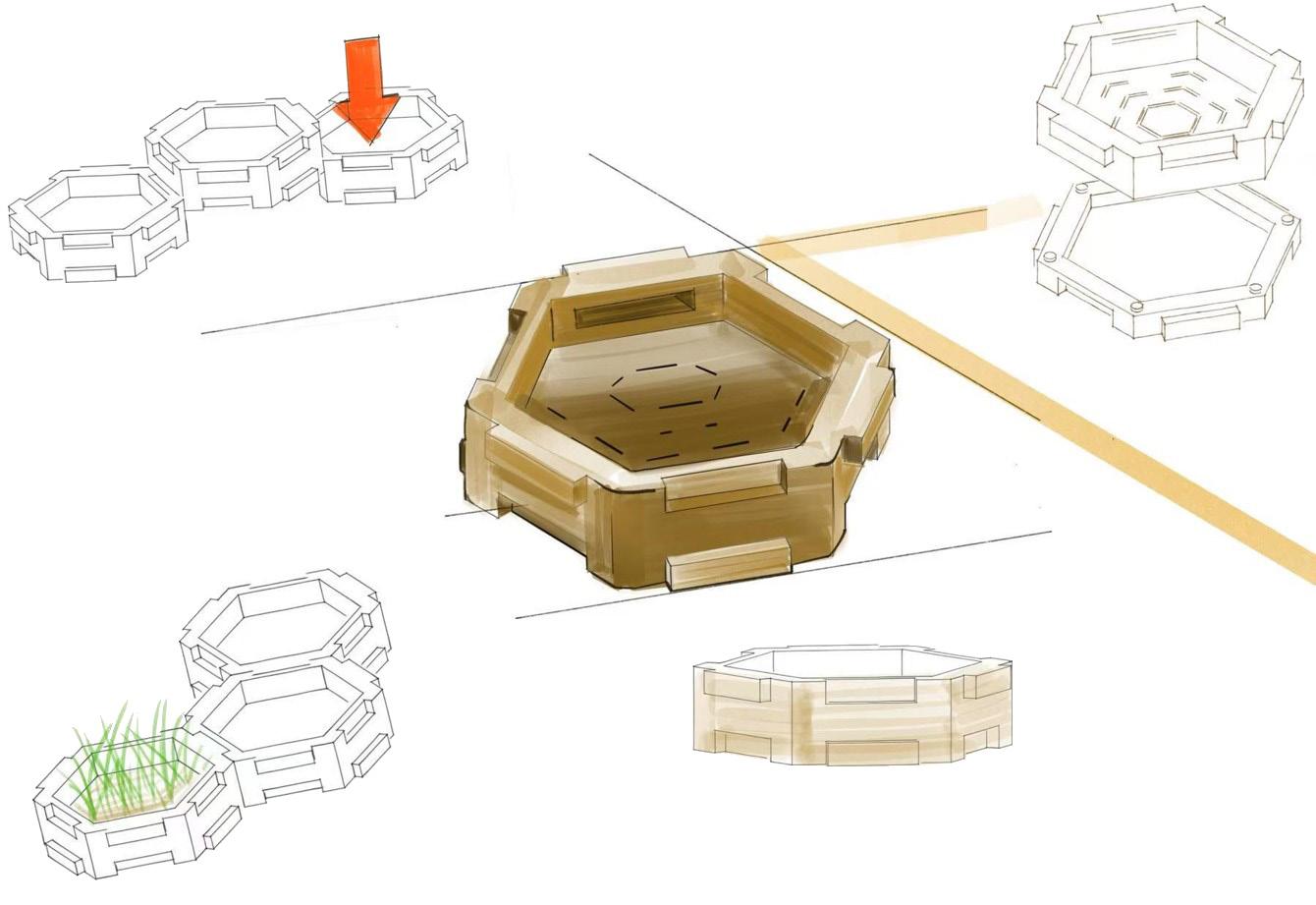
Refer to the modular design structure of Lego, which can be freely assembled into different shapes.
/MODULAR PLANTER
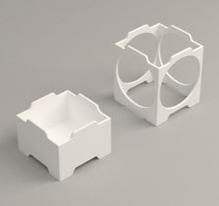
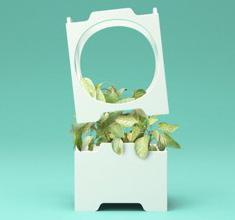
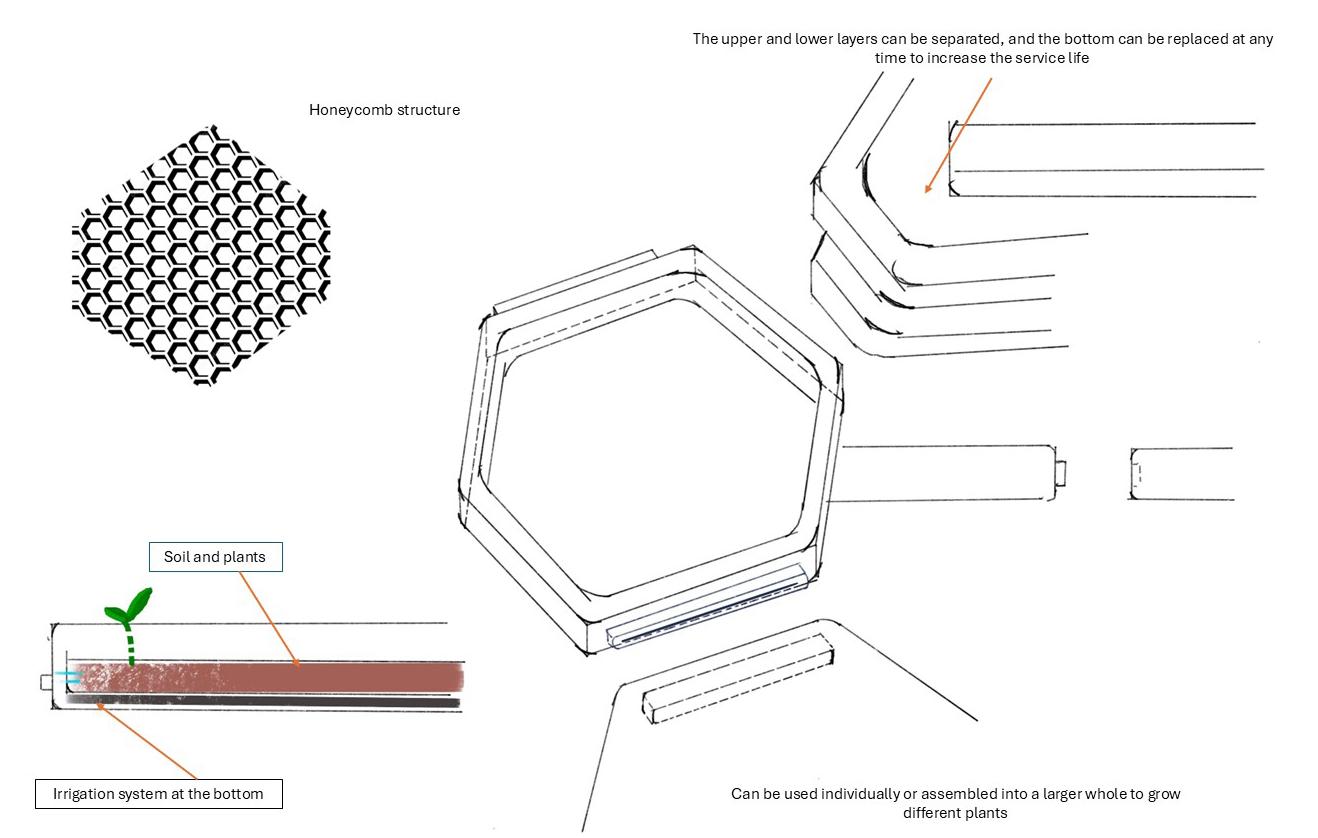
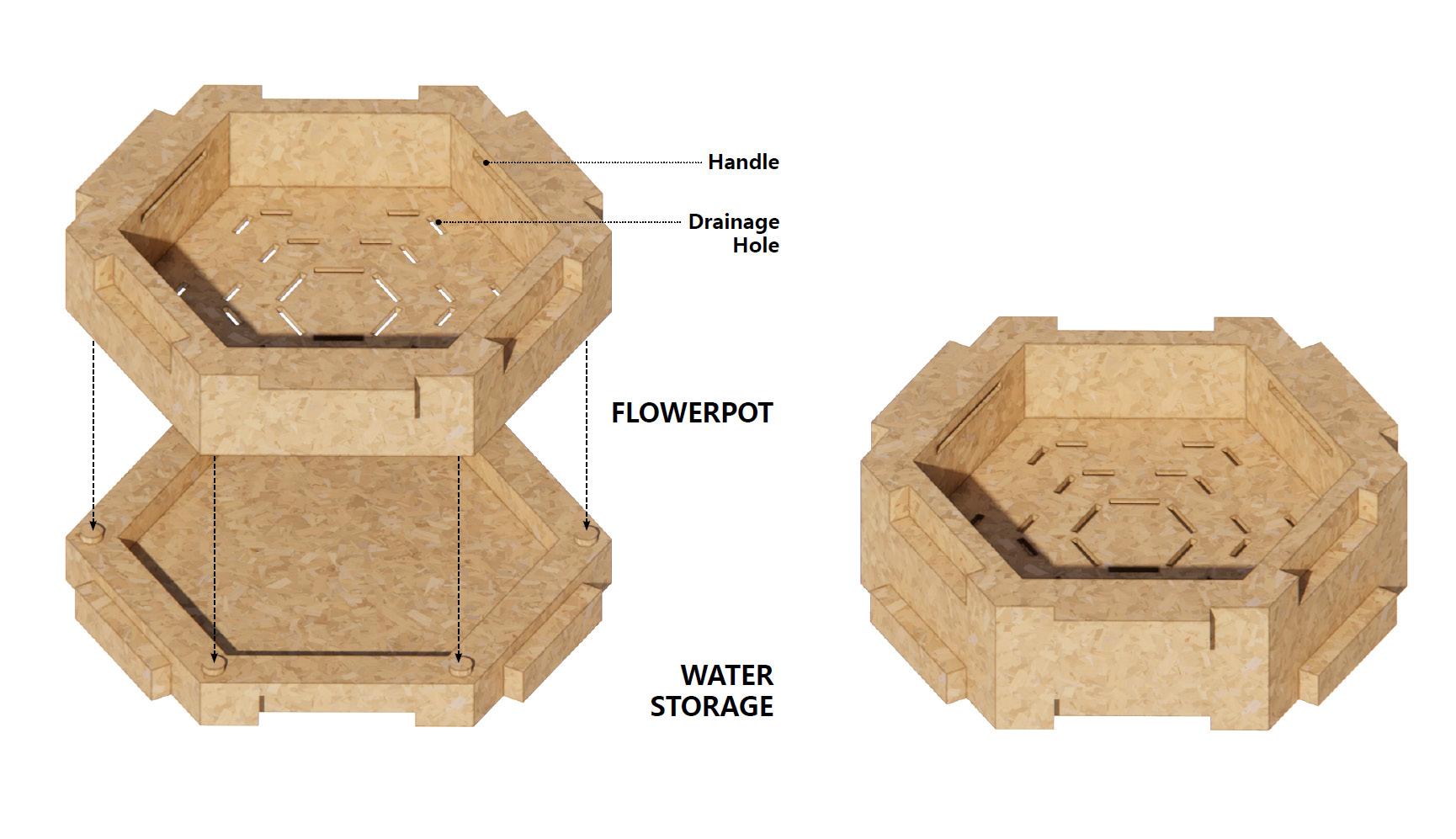
The flower pot is divided into a main body and a base, which can be easily disassembled.
The main body holds soil and plants.
Internal grooves on both sides allow users to easily lift the pot.
Base holds excess water.
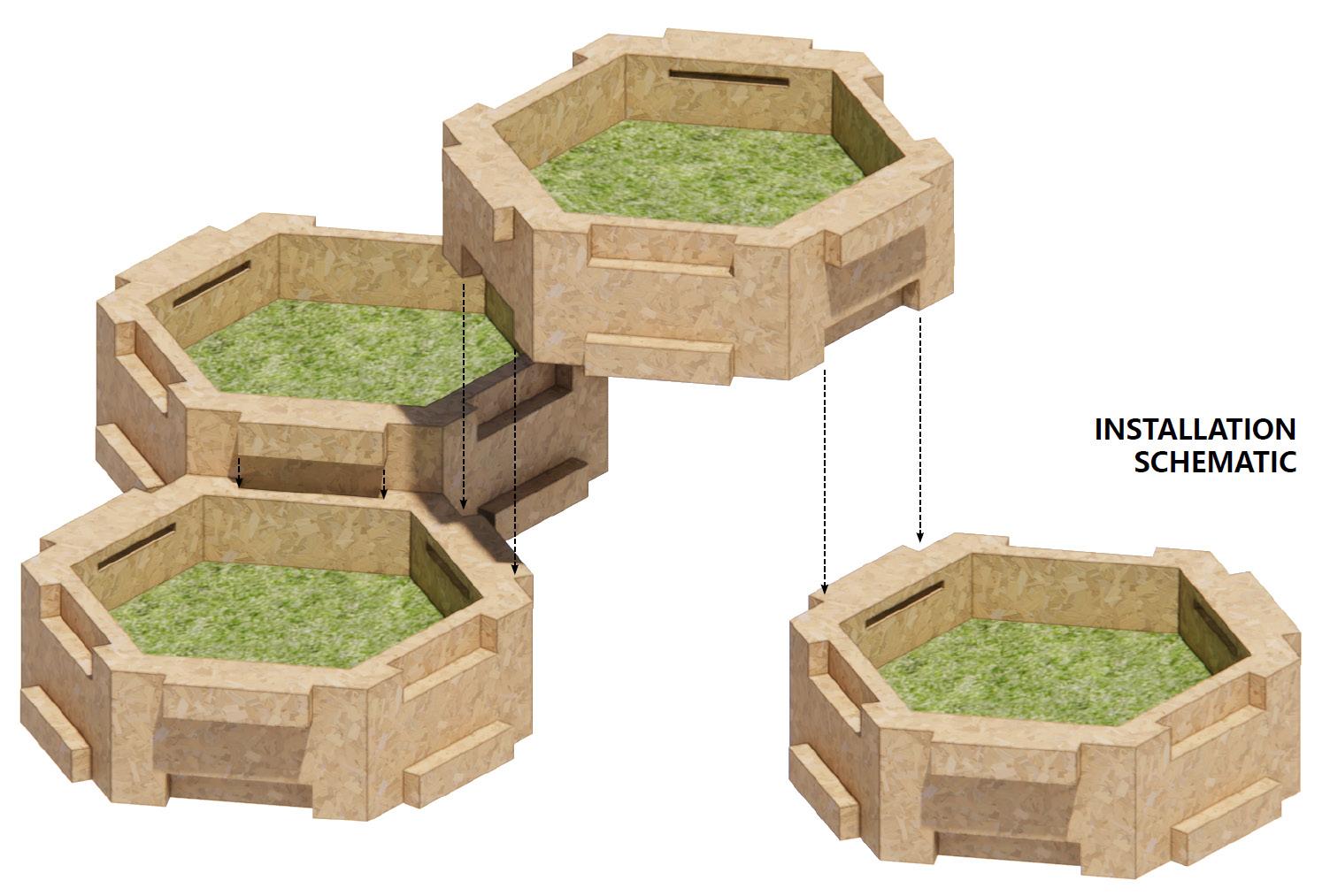
Through the grooves and protrusions, the individual flower pots can be assembled or disassembled.
This concave-convex structure can be easily assembled horizontally or vertically to meet the needs of user customization and gardening.
Fig. 38. Sketch of the final product design.
MODEL
/MODULAR PLANTER “HIVE GROW”
Fig. 39. 3D model of the final product.
Fig. 40. 3D model of how the product is spliced.
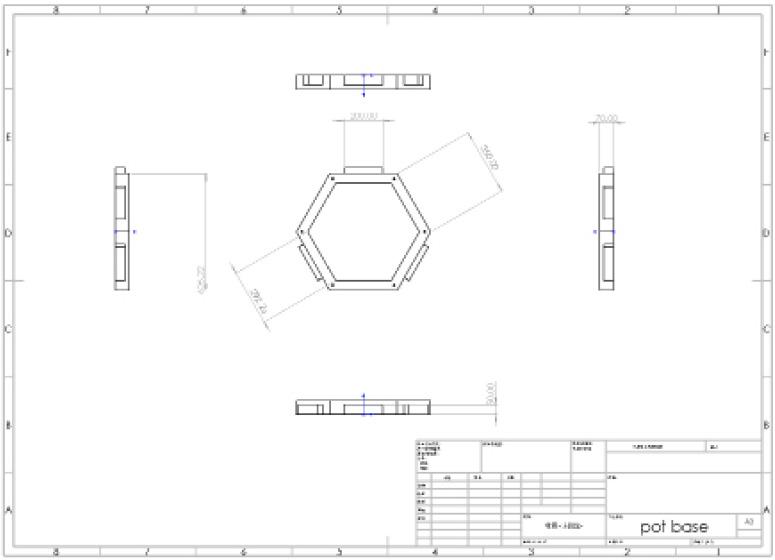
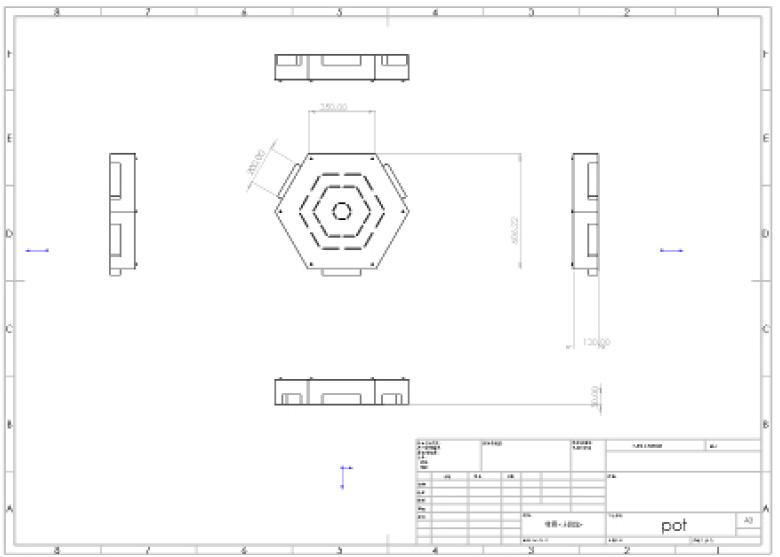
Fig. 41. Product data.
Fig. 42. Product data.
Renders
/MODULAR PLANTER “HIVE GROW“
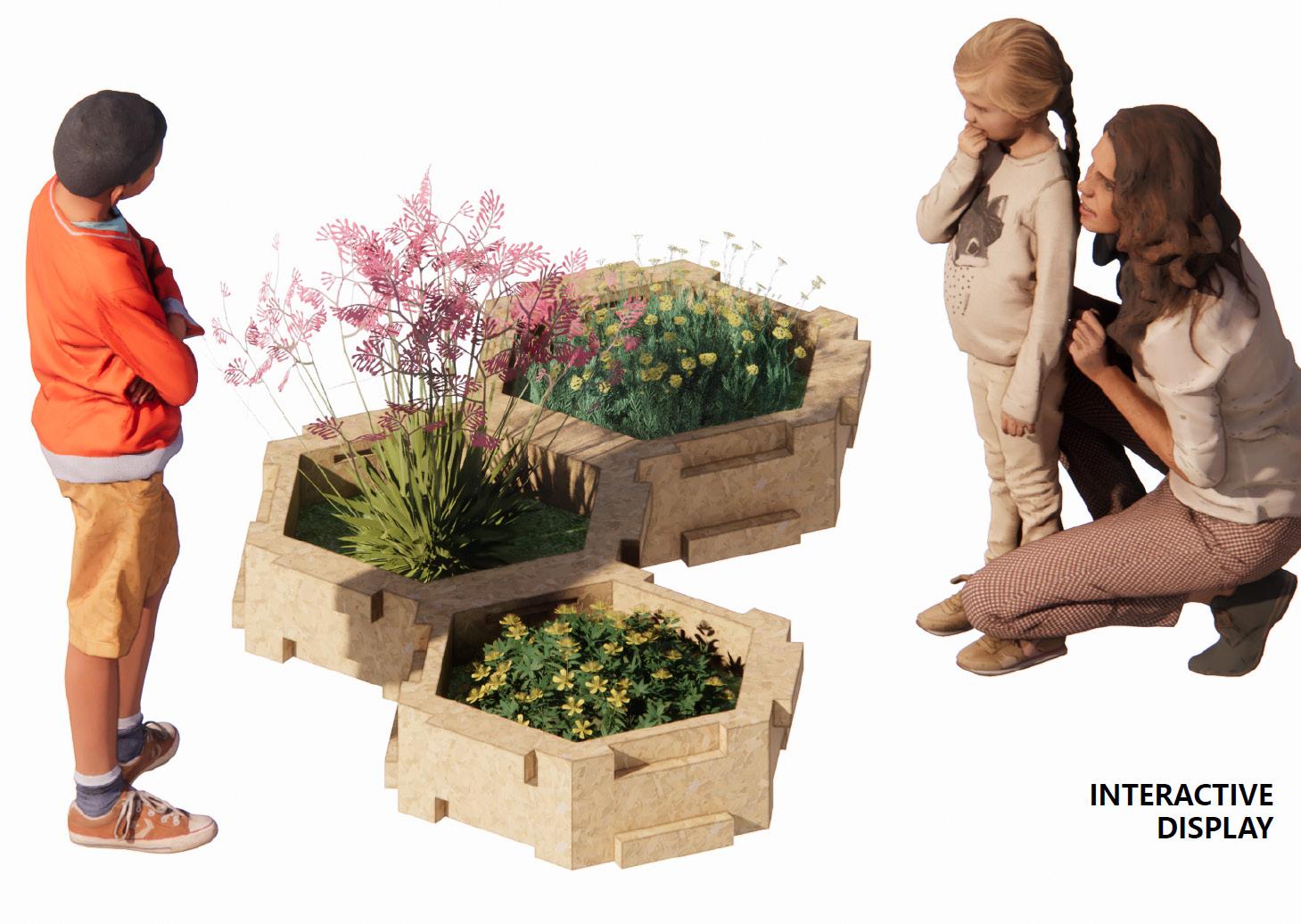
Fig. 43. Product Rendering
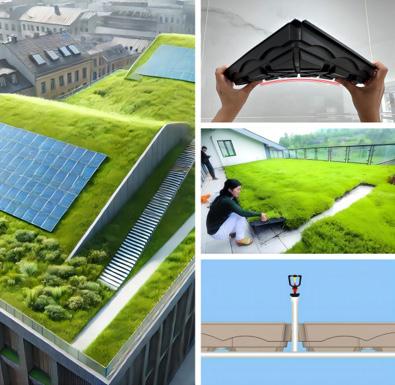
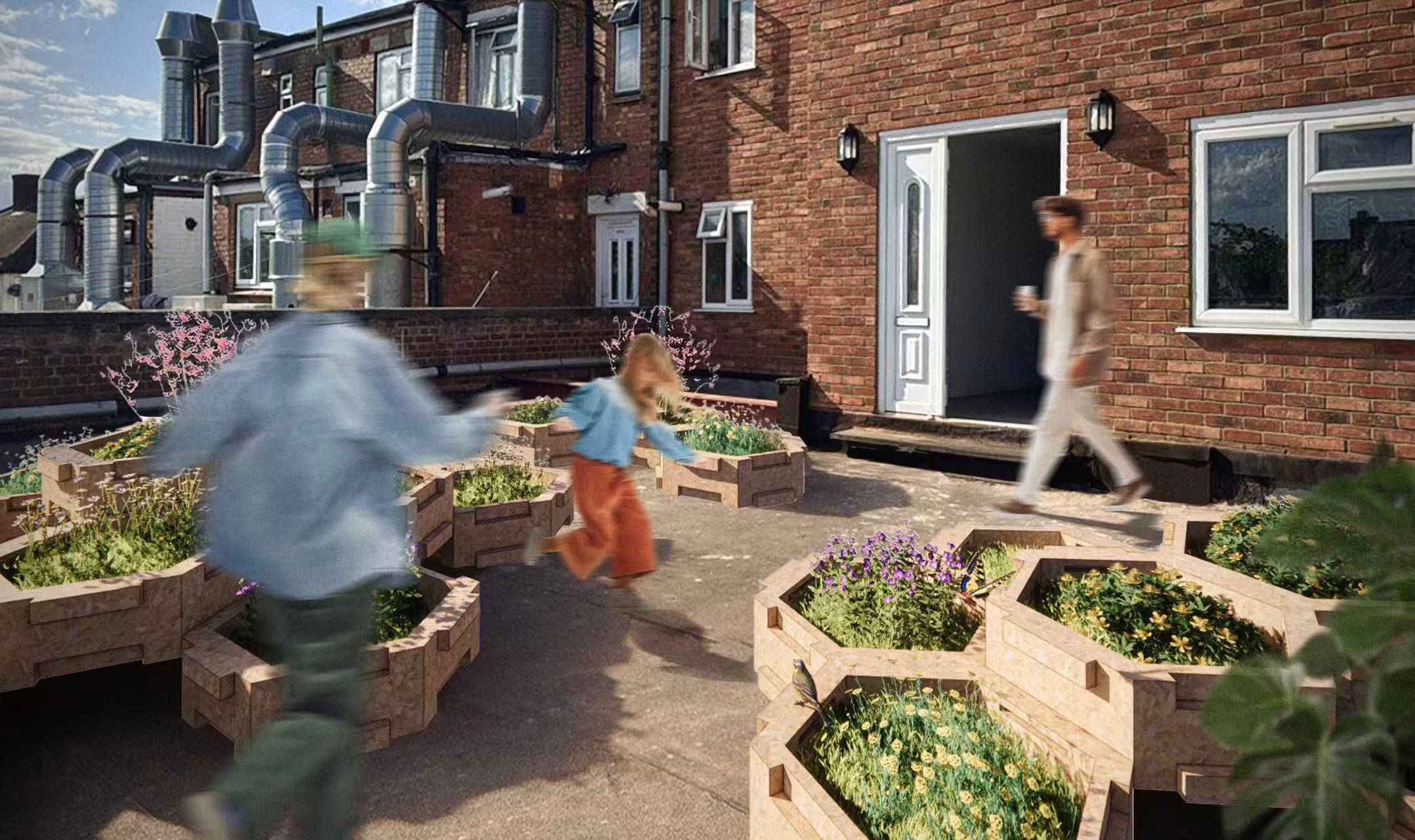
Fig. 44. A collage of products used in real life.
ADVERTISING BOARD
/ Dipti Panchal
/ Meng Liu
/ Xiong Zihao
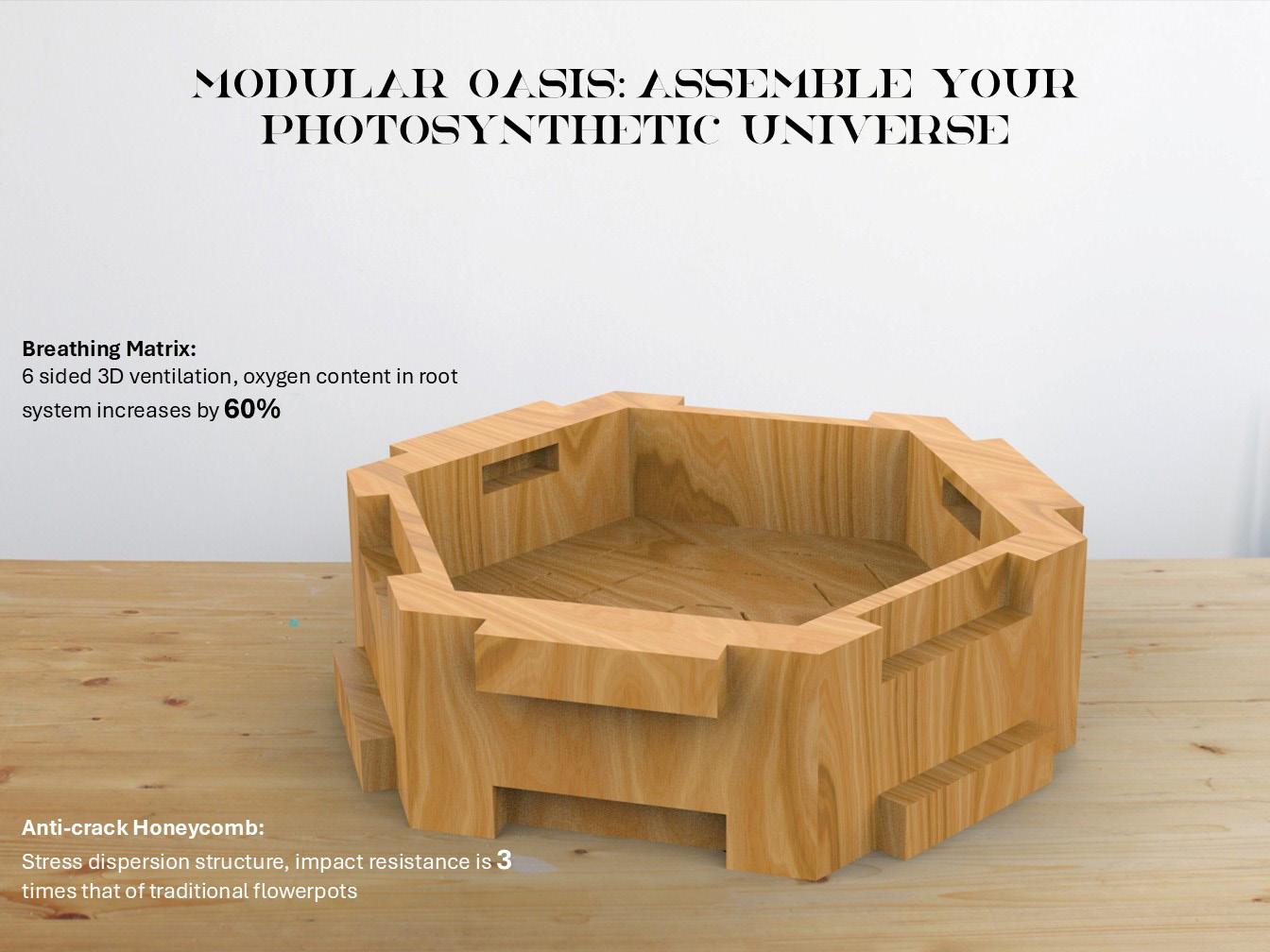
Fig. 45. Product Advertising Edition.
ILLUSTRATION
Fig. 1. Liu Yizhe. (2025) 3D model rendering. [Photograph] In possession of: the author: Canterbury.
Fig. 14. Longleaflumber. (Unknow) Reclaimed Wood Names: What do they mean? [Photograph] At: https://www.longleaflumber.com/reclaimed-wood-names-what-do-they-mean/.
Fig. 15. gb&dPRO. (Unknow) Why Reclaimed Wood is a Green Building Must-Have? [Photograph] At: https://gbdmagazine.com/reclaimed-wood-green-building/.
Fig. 16. gb&dPRO. (Unknow) Why Reclaimed Wood is a Green Building Must-Have? [Photograph] At: https://gbdmagazine.com/reclaimed-wood-green-building/.
Fig. 20. Nicole Burke. (2023) How to Set Up a Super Simple Irrigation System for Raised Garden Beds. [Photograph] At: https://www.gardenary.com/blog/how-to-set-up-a-super-simple-irrigation-system-for-raised-garden-beds.
Fig. 21. Nicole Burke. (2023) How to Set Up a Super Simple Irrigation System for Raised Garden Beds. [Photograph] At: https://www.gardenary.com/blog/how-to-set-up-a-super-simple-irrigation-system-for-raised-garden-beds.
Fig. 22. Nicole Burke. (2023) How to Set Up a Super Simple Irrigation System for Raised Garden Beds. [Photograph] At: https://www.gardenary.com/blog/how-to-set-up-a-super-simple-irrigation-system-for-raised-garden-beds.
Fig. 23. Nicole Burke. (2023) How to Set Up a Super Simple Irrigation System for Raised Garden Beds. [Photograph] At: https://www.gardenary.com/blog/how-to-set-up-a-super-simple-irrigation-system-for-raised-garden-beds.
Fig. 36. Unknow. (Unknow) How to make a self-watering planter. [Photograph] At: https://www.sense.org.uk/activities/how-to-make-a-self-watering-planter/.
Fig. 38. Liu Yizhe. (2025) Sketch of the final product design. [Sketch] In possession of: the author: Canterbury.
Fig. 39. Xiong Zihao,Liu Meng. (2025) 3D model of the final product. [Model] In possession of: the author: Canterbury.
Fig. 40. Xiong Zihao,Liu Meng. (2025) 3D model of how the product is spliced. [Model] In possession of: the author: Canterbury.
Fig. 41. Liu Yizhe (2025) Product data. [Plan] In possession of: the author: Canterbury.
Fig. 42. Liu Yizhe (2025) Product data. [Plan] In possession of: the author: Canterbury.
Fig. 43. Xiong Zihao, Liu Meng (2025) Product Rendering. [Rendering] In possession of: the author: Canterbury.
Fig. 44. Xiong Zihao (2025) A collage of products used in real life. [Collage] In possession of: the author: Canterbury.
Fig. 45. Liu Yizhe (2025) Product Advertising Edition. [Photograph] In possession of: the author: Canterbury.
/ Meng Liu
/ Xiong Zihao
BIBLIOGRAPHY
Ahh, 2017. Design for innovative green apartment building. [Online] Available at: https://www.ahh.nl/index.php/en/news2/148-design-for-innovative-green-apartment-building [Accessed 24 April 2025].
Anon., 2020. DIY Wick Watering System. [Online] Available at: https://www.gardening4joy.com/diy-wick-watering system/ [Accessed 24 April 2025].
Crystal, n.d. Surviving a Teacher’s Salary. [Online] Available at: https://www.survivingateacherssalary.com/greenstalk-vertical-garden-planter-review/ [Accessed 24 April 2025].
Dreamers, E. a. A. o. H., 2024. Building Your Own Rainwater Collection System. [Online] Available at: https://www.bootstrapfarmer.com/blogs/homesteading/building-your-own-rainwater-collection-system?srsltid=AfmBOorf1YvFopB b6HbkMXltzY3meY0qq6eVA062-mW0bedd4VtpuEDj [Accessed 24 April 2025].
EuropeNow, 2021. Urban Green Spaces: Combining Goals for Sustainability and Placemaking. [Online] Available at: https://www.europenowjournal.org/2021/05/10/urban-green-spaces-combining-goals-for-sustainability-andplacemaking/ [Accessed April 2025].
Gbdmagazine.com, 2021. Why Reclaimed Wood is a Green Building Must-Have. [Online] Available at: https://gbdmagazine.com/reclaimed-wood-green-building/ [Accessed 24 April 2025].
GOV.UK Average annual rainfall in the United Kingdom (UK) from 2001 to 2024 (in millimeters). [Online] Available at: https://www.statista.com/statistics/322810/average-rainfall-in-the-united-kingdom-uk/, [Accessed 06 May 2025].
Longleaf Lumber, n.d. Reclaimed Wood Names: What do they mean?. [Online] Available at: https://www.longleaflumber.com/reclaimed-wood-names-what-do-they-mean/ [Accessed 24 April 2025].
sense, n.d. How to make a self-watering planter. [Online] Available at: https://www.sense.org.uk/activities/how-to-make-a-self-watering-planter/ [Accessed 24 April 2025].
United Nations, 2023. Sustainable development goals. [Online] Available at: https://www.un.org/sustainabledevelopment/wp-content/uploads/2023/09/Goal-11_Fast-Facts.pdf [Accessed 15 March 2025].
500 words critical reflection on the collaboration project
Critical Reflection on Collaboration project report (HiveGrow)
Participating in the HiveGrow collaboration project for Research & Professional Contexts 2 has been a valuable and challenging experience. Our team worked under Sustainable Development Goal 11 — “Sustainable Cities and Communities”, focusing on innovative strategies to expand urban green spaces. Throughout the process, I was actively involved in project coordination, research organization, and portfolio compilation, as well as supporting design decision-making and group communication.
Initially, our project idea evolved from broad concepts of green roofs into a more focused product design: a “modular planter system” inspired by LEGO structures, allowing flexibility, easy assembly, and promoting urban greening in limited spaces. Throughout multiple group discussions and tutor feedback sessions, we continuously refined our approach — learning to adapt quickly when feedback suggested significant design changes, such as improving water management systems and reducing material waste through more efficient structural design.
One of the challenges we encountered was coordinating work across six members from different design backgrounds. Clear communication and responsibility division were crucial. To support the team’s progress, I helped organize task distribution, set internal deadlines, and maintained overall document consistency. Although sometimes our workflow was delayed due to task dependencies (such as needing research data before sketch updates), these experiences taught me the importance of flexibility, patience, and proactive problem-solving in collaborative projects.
Moreover, working with real-world sustainability goals made me more conscious of environmental considerations in design practice. Researching sustainable materials, irrigation solutions, and plant selections deepened my understanding of how to balance aesthetic, technical, and ecological needs.
Overall, the HiveGrow project not only enhanced my teamwork and project management skills but also strengthened my ability to integrate environmental thinking into practical design solutions. If I were to improve anything further, I would aim for even tighter initial planning to better synchronize overlapping tasks. Nonetheless, this collaboration was a meaningful and rewarding experience that I believe will strongly support my future practice in sustainable architectural design.