
BOP SWINGS TO DEFICIT ON TRADE JITTERS—BSP
By Reine Juvierre S. Alberto
THE country’s balance of payments (BOP) swung to a deficit in January to September, weighed down by a widening trade gap even as exports, remittances and business process outsourcing (BPO) services helped cushion the external position.
The Bangko Sentral ng Pilipinas (BSP) said Friday the country’s overall BOP registered a $5.3-billion deficit during the period “amid tighter global financial conditions and lingering trade uncertainties.”
The 9-month deficit was a reversal of the $5.1-billion surplus recorded in the same period in 2024. This was mainly due to the shortfall in the current account, which was partly offset by net inflows in the financial account.
The BOP consists of the current account, financial account, and capital account. The current account covers trade in goods and services, as well as primary and secondary income, while the financial account records investments and loans. The capital account includes grants and other one-time transfers.
The current account posted a deficit of $12.5 billion during the

“Prioritization of anti-corruption/good governance measures and reforms, if taken seriously, would lead to improved investor confidence, both local and foreign.”— Michael L. Ricafort, chief economist at Rizal Commercial Banking Corp. nine-month period, due largely to the trade in goods gap, as imports exceeded exports. The deficit, however, was narrower than the $13.3 billion recorded last year.

DOLE: Rise in jobless rate due to natural disasters
By Justine Xyrah Garcia
THE
Department
of Labor and Employment (DOLE)
has pinned the rise in October’s unemployment figures on the recent natural calamities that hit the country.
In a text message, DOLE Secretary Bienvenido E. Laguesma said the storms and earthquakes that struck several regions have resulted in the increase in unemployment rate to 5 percent in October, from last year’s 3.9 percent.
The jobless rate in October is one of the highest this year, just below July’s 5.3 percent.
“The increase was attributed to reported natural calamities such as southwest monsoon and tropical cyclones plus the effects of the earthquake that hit Cebu and Davao Oriental,” Laguesma said.
The labor chief added that he was not “surprised” by the rise in unemployment, noting that the combined impact of these natural disasters had inevitably disrupted work in several sectors.
“Hopefully, the [statistics] for [November] and [December] will reflect a rebound in our economy due to the Christmas season,” he said.
Data from the Philippine Statistics Authority (PSA) showed that other service activities suffered the biggest employment losses from July to October, dropping by 638,000.
This was followed by professional, scientific and technical activities (-96,000); water supply, sewerage and waste management (-32,000); transportation and storage (-27,000); and administrative and support service activities (-21,000).
Year-on-year, other service activities still led job losses with 520,000, followed by wholesale and retail trade (-66,000) and professional, scientific and technical activities (-47,000).
Several economists earlier told this newspaper that the higher
unemployment rate aligns more closely with the broader economic slowdown (See: https://businessmirror.com.ph/2025/12/11/amid-slowing-growth-jobless-ranks-expand/).
Real gross domestic product (GDP) growth slipped to 4 percent in the third quarter of 2025, the country’s weakest performance since the first quarter of 2021, when output contracted by 3.8 percent.
They also noted that the continued decline in investment activity has likely contributed to the labor market’s fragility, citing corruption scandals hounding the government as a factor weighing on investor confidence.
Ateneo de Manila University labor economist Leonardo A. Lanzona said weather-related disruptions typically emerge toward the end of the year, but seasonal hiring

“Despite these disruptions, the employment has grown during the holiday months. In effect, the data this year in some way creates some experimental measure on how corruption affects the labor market. This seems to be the only factor that differentiates the employment picture this year from the rest of the other years.”—
Ateneo de Manila University labor economist Leonardo A. Lanzona
usually offsets these losses. What sets this year apart, he said, is the added impact of the corruption scandal on an already vulnerable labor market.
“Despite these disruptions, the employment has grown during the holiday months. In effect, the data this year in some way creates some experimental measure on how corruption affects the labor market. This seems to be the only factor that differentiates the employment picture this year from the rest of the other years,” Lanzona said.
“In effect, the vulnerability of the labor market can be attributed to structural factors affecting corruption.”
‘A structural issue’ SENTRO ng mga Nagkakaisa at




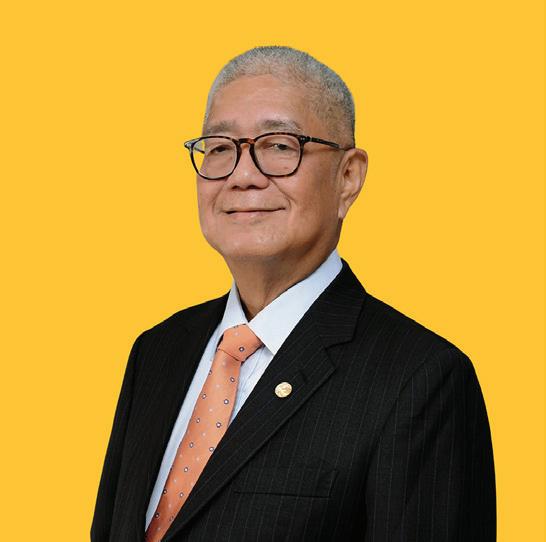
THE Bangko Sentral ng Pilipinas (BSP) could still deliver one more 25-basis-point rate cut next year, rejecting the need for an aggressive or off-cycle monetary easing, amid slower economic growth.
BSP Governor and Chairman of the Monetary Board Eli M. Remolona Jr. told reporters on Friday that the Central Bank will not consider an off-cycle move or a larger 50-basis-point cut, as it could undermine confidence.
Remolona said the pace of economic growth in the fourth quarter may be slower at 3.8 percent, based on BSP’s estimates. This is way below the government’s target of 5.5 to 6.5 percent.
“Mahina ang economy, humina ang demand, so we can help from the demand side [The economy is weak, and demand has softened; we can provide support from the demand side],” Remolona said.
Pero pag nag -50 kami o off-cycle, it will worsen the loss of confidence. Sasabihin ‘desperado ang BSP’ [But if we cut by 50 basis points or make an off-cycle move, it will worsen the loss of confidence; people will say, ‘The BSP is desperate’],” the governor added.
Asked if the Central Bank may reduce the key policy rate
in its next rate-setting meeting in February 2026, Remolona said any cut could happen during a regular meeting and not off-cycle.
In an interview with Bloomberg Television’s Stephen Engle and Annabelle Droulers on Friday, Remolona said the BSP is “pretty much on the fence” about the need to cut rates even further.
“I think we may cut one more time or we may not. That’s where we are,” Remolona said.
The impact of the corruption scandal will continue into the early part of 2026, with the BSP projecting a 5.4-percent growth in 2026 and 6 percent in 2027.

By Andrea E. San Juan
Chamber of Automo
Ttive Manufacturers of the Philippines Inc. (Campi) has joined the list of over 100 partners of the country’s intellectual property rights watchdog that will go after counterfeit products particularly fake auto parts sold online.
Campi and the Intellectual Property Office of the Philippines (IPOPHL) signed last Friday a memorandum of understanding (MOU) which grants the auto industry group the power to take down fake products across various e-commerce platforms.
Campi President Rommel Gutierrez said this partnership will help the local auto industry provide consumers only with genuine car parts.
“This will help us fight the sale of counterfeit parts. I think not only parts, even sale of the whole unit. We noticed that there are dubious sale of motor vehicles but mostly parts,” Gutierrez said during the signing of the MOU on Friday held in Makati City.
Under this MOU, Gutierrez said there is a “mechanism” which will enable the local auto industry group to request for notice and takedown procedures.
“We will test that in partnership with the e-commerce platform. So yeah, we will identify,
we’ll try as much as possible to identify who are legitimate and who are not with the objective of really protecting consumers,” added the Campi chief.
As for the penalties that may be imposed on sellers of counterfeit goods online, IPOPHL said the purpose of the MOU is only to get rid of fake online market products.
“When you are seeking penalties, then the brand owners have that decision option to pursue the case and they have to file it in court,” IPOPHL Acting Director General Nathaniel S. Arevalo said. Arevalo further noted that this partnership requires the participation of brand owners, adding that this is a private right.
From 12 initial signatories in March 2021, the acting chief of IPOPHL said Campi is the 112th entity to sign the MOU on E-commerce.
“Campi’s entry as MOU signatory further strengthens our shared commitment to ensuring that consumers have access to safe, high-quality, and genuine automotive products online,” said Arevalo.
Further, Arevalo noted that with Campi as IPOPHL’s partner, safety on roads will be reinforced.
“We are optimistic that this will result in the significant reduction, if not total removal, of all fake automotive products available in online marketplaces,” he said.
Mahina ang economy, humina ang demand, so we can help from the demand side. Pero pag nag -50 kami o off-cycle, it will worsen the loss of confidence. Sasabihin ‘desperado ang BSP.’”— BSP Governor and Chairman of the Monetary Board
Eli M. Remolona Jr.
US seizure of oil tanker off Venezuela signals new crackdown on shadow fleet
By Jishua Goodman & Michael Biesecker | The Associated Press
THE oil tanker was navigating near the coast of Guyana recently when its location transponder showed it starting to zigzag. It was a seemingly improbable maneuver and the latest digital clue that the ship, the Skipper, was trying to obscure its whereabouts and the valuable cargo stored inside its hull: tens of millions of dollars’ worth of illicit crude oil.
On Wednesday, US commandos fast-roping from helicopters seized the 332-meter ship — not where it appeared to be navigating on ship tracking platforms but some 360 nautical miles to the northwest, near the coast of Venezuela.
The seizure marked a dramatic escalation in President Donald Trump’s campaign to pressure strongman Nicolás Maduro by cutting off access to oil revenues that have long been the lifeblood of Venezuela’s economy. It could also signal a broader US campaign to clamp down on ships like the Skipper, which experts and US officials say is part of a shadowy fleet of rusting oil tankers that smuggle oil for countries facing stiff sanctions, such as Venezuela, Russia and Iran.
“There are hundreds of flagless, stateless tankers that have been a lifeline for revenues, sanctioned oil revenues, for regimes like Maduro’s, Iran and for the Kremlin,” said Michelle Weise Bockmann, a senior analyst at Windward, a maritime intelligence firm that tracks such vessels. “They can no longer operate unchallenged.”
Since the first Trump administration imposed punishing oil sanctions on Venezuela in 2017, Madu-
ro’s government has relied on scores of such oil tankers to smuggle their crude into global supply chains.
Oil ships operate in shadows THE ships cloak their locations by altering their automated identification system — a mandatory safety feature intended to help avoid collisions — to either go entirely dark or to “spoof” their location to appear to be navigating sometimes oceans away, under a false flag or with the fake registration information of another vessel.
The dark fleet expanded following US sanctions on Russia over its 2022 invasion of Ukraine. Experts say many of the ships are barely seaworthy, operate without insurance and are registered to shell companies that help conceal their ownership.
The vessels often transfer their cargoes to other ships while at sea, further obscuring their origins, experts said.
For the most part, Maduro’s government has succeeded in using such tactics to get its oil to market. The country’s oil production has increased about 25 percent over the last two years, according to Opec data. Still, Wednesday’s seizure could mark a turning point,
experts said, foreshadowing a possible oil blockade that could deter smuggling from even some of the shipping industry’s worst actors.
“The cost of doing business with Venezuela just went way up,” said Claire Jungman, director of maritime risk and intelligence at Vortexa, an oil analytics firm. “These are very risk-tolerant operators, but even they don’t want to lose a hull. A physical seizure is an entirely different category of risk than falsifying paperwork and bank fines.”
The Skipper’s last few weeks THE Skipper ’s final weeks hiding in the Caribbean were reconstructed by Windward, which uses satellite imagery relied on by US officials mapping the movements of the dark fleet.
The US sanctioned the Skipper in November 2022, when it was known as the M/T Adisa, for its alleged role in a network of dark vessels smuggling crude on behalf of Iran’s Revolutionary Guard and Lebanon’s Hezbollah militant group. The network was reportedly run by a Switzerland-based Ukrainian oil trader who was also sanctioned, the US Treasury Department said at the time.
In recent months, the ship has sailed to China with a cargo of Iranian oil, and it has also been linked to illicit cargoes from Russia, according to Windward. At the time of its seizure, Windward reported, the tanker was digitally manipulating its tracking signals to falsely indicate it was sailing off the coast of Guyana, which shares a border with Venezuela, and adjacent to a massive offshore oil field being developed by Exxon with strong US support.

It has also been falsely flying the Guyana flag, according to international ship registries, a major violation of maritime rules.
Windward reported that the Skipper is one of about 30 sanctioned tankers operating near Venezuela, many of them vulnerable to US interception because they are falsely flagged, making them stateless under international maritime law.
“It’s quite audacious,” said Bockmann, the Windward analyst. “Here’s this falsely flagged Guyana ship purporting to be in a Guyana oil field. It’s quite bizarre.”
2-M barrels of crude aboard THE Skipper departed Venezuelan waters early this month with about 2 million barrels of heavy crude, roughly half of it belonging to a Cuban state-run oil importer, according to documents from the state-owned company PDVSA that were provided to The Associated Press on the condition of anonymity because the person did not have permission to share them.
The high risk generates huge opportunities for profits — blackmarket Venezuelan oil costs about $15 less per barrel than its legitimate crude, according to Francisco Monaldi, a Venezuelan oil expert at Rice University in Houston.
Monaldi said he expects the price of illicit Venezuelan crude to drop because fewer buyers will be willing to risk having the cargo seized. However, he cautioned that it’s too early to know if the US will impose a full blockade on Venezuelan oil, such as the one the US led against Iraq following its 1990 invasion of Kuwait.
“It depends if this is just a oneoff event or something more systematic,” he said.
Crackdown risks raising oil prices MONALDI said one possible brake on Trump carrying out additional US seizures is the impact it could have on gas prices at a time when Americans are concerned about high living costs. Although Venezuela’s oil production has dwindled as a result of underinvestment to
less than 1 percent of global output, commodity prices are notoriously volatile and traders may be worried that the aggressive tactics in Venezuela could be attempted elsewhere, he said.
For Maduro, who called the seizure an “act of international piracy,” the stakes couldn’t be higher. Oil has long been the lifeblood of Venezuela’s economy, generating enormous wealth but also creating a deep reliance on natural resources. Reflecting that double-edged dependence, the founder of Opec, a Venezuelan by the name of Juan Pablo Pérez Alfonzo, in 1975 referred to the country’s vast oil deposits as the “Devil’s Excrement.” Oil prices were down 2 percent Thursday.
BOP SWINGS TO DEFICIT ON TRADE JITTERS—BSP
Continued from A1
Imports were supported by demand for telecommunications equipment, electrical machinery and passenger vehicles, while exports remained resilient on strong global demand for manufactured goods, minerals and electronics.
Inflows from income accounts, particularly remittances from overseas Filipinos and services receipts from the BPO sector and travel services, continued to provide a buffer to the external position, the BSP said.
Meanwhile, the capital account showed a wider surplus of $77 million in the nine-month period, higher than last year’s $54 million.
The financial account also recorded net inflows of $12.2 billion, supported by continued investor interest and steady capital inflows. This was narrower than the $21.6 billion in net inflows in January to September 2024.
“This was driven by sustained foreign direct and portfolio investment inflows, alongside foreign borrowings by the National Government,” the BSP said in a statement.
According to Michael L. Ricafort, chief economist at Rizal Commercial Banking Corporation, the continued trade deficits, market volatility due to the United States’ higher tariffs, combined with political noise, weighed on both foreign direct investments and hot money.
“Prioritization of anti-corruption/good governance measures and reforms, if taken seriously, would lead to improved investor confidence, both local and foreign,” Ricafort said.
“This could fundamentally help improve BOP data, going forward, as a source of hope on priority good governance legislation and other reforms, especially those related to anti-corruption initiatives,” he added. In the third quarter alone, the overall BOP position showed a narrower surplus of $273 million, from $3.7 billion a year earlier. The current account deficit narrowed to $3.2 billion, from $5.3 billion, while the capital account surplus rose to $26 million, from $20 million. The financial account recorded $3.9 billion in net inflows, compared with $11 billion previously.
BSP data also showed that the country’s gross international reserves (GIR) amounted to $109.1 billion as of end-September 2025, higher than the $112.7 billion registered a year ago. Meanwhile, the peso averaged P57.11 to the US dollar from January to September 2025, depreciating by 0.2 percent relative to an average of P57.01 to the greenback in the same period last year. In the third quarter, the peso appreciated by 0.2 percent from an average of P57.21 to the greenback to P57.11 per US dollar a year ago.
DOLE: Rise in jobless rate due to natural disasters
Continued from A1
Progresibong Manggagawa (SENTRO) Secretary General Josua Mata echoed these concerns, saying historical labor force data show that even strong year-end typhoons have not caused unemployment spikes of this scale.
Mata said the deeper problem is “structural,” highlighting the longstanding vulnerabilities of the sectors that suffered the most losses.
“The bigger issue is structural. The sectors that lost the most jobs this period—particularly agriculture and services—are those with deep vulnerabilities: seasonal
‘Bigger
work, informality, and lack of stable, long-term employment. These weaknesses become more visible whenever there is any shock, whether weather-related or not,” he told the BusinessMirror
He added that if bad weather were the main driver of unemployment, “quick rebounds” should be visible as soon as conditions improve.
“What we are seeing is repeated volatility, which signals deeper problems in job quality, productivity, and the absence of secure employment opportunities. So, while bad weather may have contributed to short-term disruptions,
it cannot fully explain the overall increase in unemployment,” Mata said.
The PSA reported on Wednesday that the country’s labor force grew to 51.16 million in October, up by 1.04 million from last year and by 2.52 million since July. Employment also rose to 48.62 million, increasing by 463,000 year-on-year and 2.57 million quarter-on-quarter. Despite these gains, 576,000 new jobseekers remained unemployed, pulling the employment rate down to 95 percent from 96.1 percent a year ago, though slightly better than July’s 94.7 percent.
rate cut will undermine confidence’
Continued from A1
“In the meantime, prosecutions are going on, restitution of the money, that’s going on. And then we also are beginning to reform the tax system and the way these projects are budgeted,” Remolona added. “The government is using this opportunity to improve governance.”
Outlook
IN a commentary, BMI, a Fitch Solutions company, said it maintains its forecast of 50 basis points of rate cuts in 2026—sooner rather than later—given its “more pessimistic” growth outlook.
“Slow economic growth will continue to be the primary consideration at BSP’s next meeting in February, given well-anchored inflation expectations,” BMI said.
The rate cuts are expected to be delivered via two 25 basis points in the first two policy meetings of 2026, bringing the benchmark rates down to 4 percent.
BMI expects the Philippine
economy to grow by 5.2 percent in 2026, below the government’s 6 to 7 percent target for the year.
It has also revised its average inflation projection for 2026 downwards to 3.1 percent from 3.5 percent, broadly in line with BSP’s latest projections of 3.2 percent. For the first half of 2026, inflation is expected to average around 2.6 percent and within the BSP’s target range of 2 to 4 percent.
“This provides a ripe environment for BSP to frontload their easing to compensate for government underspending due to the corruption scandal,” BMI said.
Interventions REMOLONA also said the BSP is intervening “a little bit,” by either selling or buying dollars, just to dampen the volatility of the peso and not to hit a certain target.
“We’re seeing remittances remain strong and actually exports have been better than before. So, on the balance of payment side, it’s not a drag on the peso,” Remolona said.
“The market seems to have in-
terpreted our forward guidance as a hawkish forward guidance. That’s why the peso strengthened yesterday,” he added. The Philippine peso rebounded on Thursday, back at P58 levels—at P58.99—after opening at P59.12, data from the Bankers’ Association of the Philippines showed. However, on Friday, the local currency weakened again and closed at P59.06 after opening at P58.98.
BMI said the peso is likely to remain weak over the next year, averaging around P58.5 per US dollar, on slowing foreign direct investment inflows.
“Any further depreciation beyond PHP60/USD remains unlikely with the Fed’s rate cut on 10 December bringing the policy rate differential to 75bps,” BMI said.
“In fact, BSP may even welcome a weaker peso now since it can prop up net exports to support growth, while subdued global oil prices offset the weaker peso,” it added. Reine Juvierre S. Alberto
www.businessmirror.com.ph
Spare MSMEs from harassment,
Bam Aquino pleads with taxmen
THE government must take decisive action to protect micro, small, and medium enterprises (MSMEs) from harassment and corruption that threaten their operations, disrupt livelihoods, and create an environment of fear among business owners, according to Senator Bam Aquino. Aquino, author and principal sponsor of Republic Act 10644, or the Go Negosyo Act, said the government should serve as an ally and refuge for MSMEs, which comprise 99 percent of businesses in the country.
“The small businessmen are the ones most apprehensive whenever they are summoned by the taxmen. Our micro and small enterprises. Their feeling is, they have no one to turn to, no one to seek help from, Aquino said during the Senate Blue Ribbon Committee probe into the alleged misuse of Letters of Authority (LOAs) and Mission Orders (MOs) by Bureau of Internal Revenue (BIR) personnel.
“They’re the ones most in fear whenever someone tries to extort from them,” he stressed.
Aquino said he received numerous complaints from MSMEs and even from various chambers of commerce across the country about abusive BIR personnel using LOAs to extort money from them.
“In the previous campaign this year, everywhere I go—be it a local chamber, Philippine chamber, Chinese chamber, whether in the cities or provinces, there are so many complaints from business people when it comes to the BIR and the LOA. That issue keeps surfacing—the LOA, the assessments without any sound basis,” he said, speaking partly in Filipino.
Aquino said many MSMEs are afraid to speak out for fear of retaliation from erring BIR personnel, making them even more vulnerable to harassment, exploitation, and abusive audits.
He also raised the possibility
that some businesses received LOAs that do not appear in official records, suggesting that they could be fake and potentially issued by rogue BIR officials. “If a LOA has been issued but it’s not on the list, then that’s fake. You’ve been scammed. And these fake LOAs might actually come from officials of BIR,” Aquino pointed out.
To protect MSMEs, Aquino proposed stronger transparency measures, including the public release of all LOAs so businesses can verify whether an audit order is legitimate and prevent fraudulent issuance.
“If we have this level of transparency, I think more people will be encouraged to revealt their own experiences of being harassed or extorted from,” he said.
Aquino also urged the BIR to analyze multiple years’ worth of audit data to determine whether certain taxpayers are being repeatedly targeted, flagged, or favored.
He also proposed removing the power of Regional District Offices (RDOs) to independently select audit targets and suggested instituting a truly random audit system to ensure fairness and prevent selective targeting.
The senator commended BIR Commissioner Charlie Mendoza for issuing a directive that all LOAs must now be approved by the Commissioner, strengthening oversight, ensuring accountability, and reducing potential abuse.
Aquino pushed for the passage of the Go Negosyo Act during his tenure as chairperson of the Senate Committee on Trade, Commerce, and Entrepreneurship.
The law provides MSMEs greater access to markets and financing, offers training and capacity-building programs, and simplifies the business registration process for entrepreneurs starting or expanding their businesses. Butch Fernandez
100 Pinoy caregivers to be deployed to Denmark in ‘27
By Malou Talosig-Bartolome
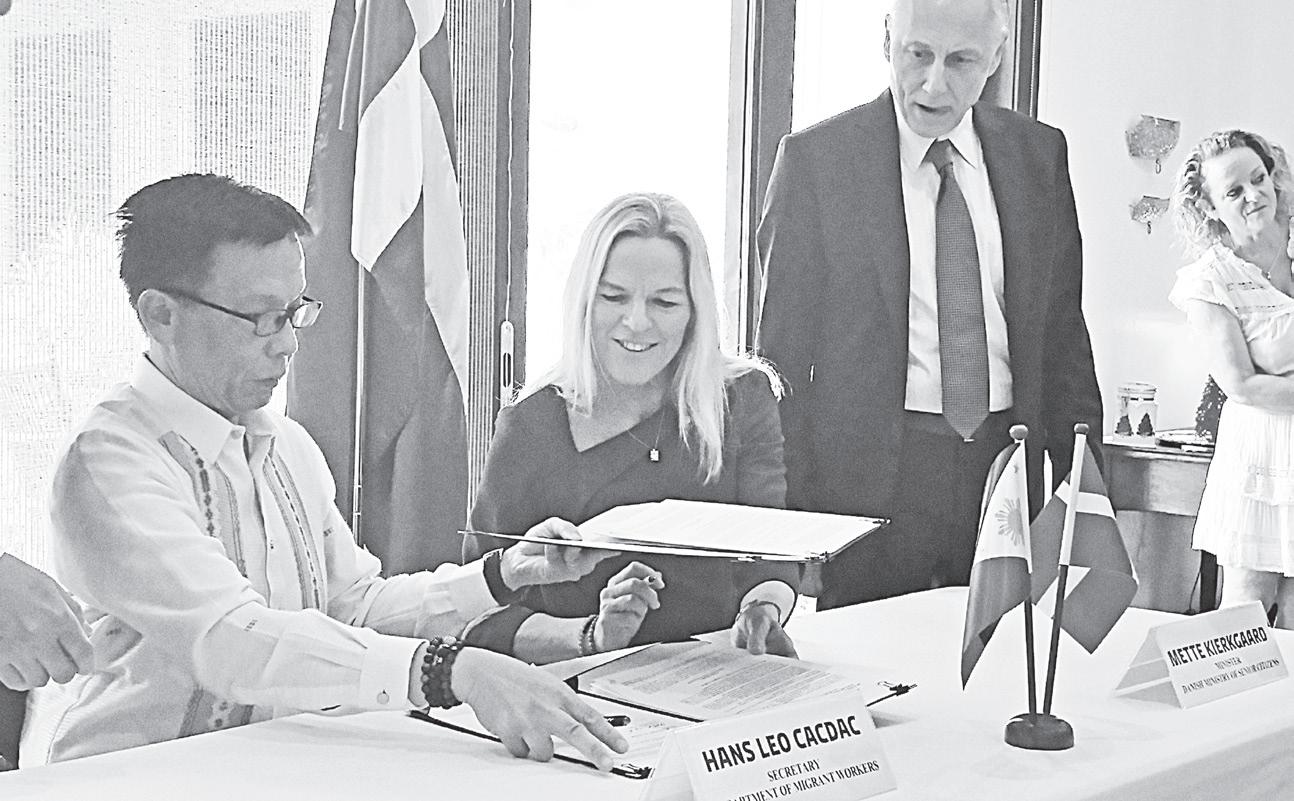
AT least 100 Filipino caregivers will be deployed to Denmark in the last quarter of 2027, earning a monthly salary of about $6,000 (P354,000), Danish Senior Affairs Minister Mette Kierkgaard announced during her visit to Manila.
The deployment follows the signing of a bilateral agreement between Kierkgaard and Migrant Workers Secretary Hans Cacdac on Thursday, covering education, training, and recruitment of Filipino health and care professionals.
Government-to-Government deal
THE pact, concluded after only a year of negotiations, establishes a government-to-government arrangement to ensure ethical recruitment of Filipino caregivers.
No more arbitrary, repetitive, overlapping LOAs, BIR vows
By Reine Juvierre S. Alberto
ALL letters of authority (LOAs) will now need clearance from the commissioner of the Bureau of Internal Revenue (BIR) before their issuance, in the agency’s bid to restore public trust and tighten oversight of the audit system.
Fielding questions at the Senate Blue Ribbon Committee hearing on alleged abuses in the issuance of LOAs on Thursday, Internal Revenue Commissioner Charlito Martin R. Mendoza said his office will directly vet all LOAs to prevent arbitrary, repetitive or
overlapping audit orders.
“These improvements, many of which can be enabled with the help of an integrated digital system, will reinforce the checks and balances between enforcement and oversight,” Mendoza said in his opening statement in
the hearing.
“Rebuilding trust requires reform on both fronts: correcting how enforcement is carried out, and ensuring that rules and oversight mechanisms are clear, consistent, and transparent,” he added.
The BIR temporarily suspended all field audits and other related operations, including the issuance of LOAs and Mission Orders (MOs), last month.
The suspension covers all BIR offices involved in audit and field operations, such as the Large Taxpayers Service, Revenue Regions and District Offices, Assessment Divisions, VAT Audit Units and Intelligence and Special Audit Units.
A technical working group (TWG) on LOA and MO Integrity and Audit Reforms has been
formed to review existing procedures, identify operational and systemic vulnerabilities, recommend revised LOA protocols and integrate digital safeguards and uniform audit standards. Only urgent or legally required cases—such as active criminal probes, one-time transactions, audits nearing prescription within six months, refund claims requiring verification or matters supported by verified intelligence—will be exempt from the suspension. Mendoza also instructed the TWG reviewing LOAs, as well as other concerned BIR units, to prepare all relevant data, audit histories and investigation reports in advance of succeeding Senate hearings.
See “LOAs,” A5
DepEd hopeful for sustained allocations for basic education
EDUCATION Secretary Juan Edgardo “Sonny” Angara said he remains hopeful that Congress will sustain the increases allocated for basic education, including school infrastructure projects.
“I hope it can be sustained in the bicam [bicameral committee conference]. Kahit gusto nilang itaas ulit, tatanggapin po natin,” Angara said.
In the Senate version of the 2026 General Appropriations Bill (GAB), DepEd has received an allocation of P85.44 billion for Basic Education Facilities, aimed at accelerating the construction and repair of classrooms and providing safer, more modern learning spaces.
On Thursday, Angara welcomed the inauguration of the first fully air-conditioned public school building in San Pedro City, calling it a strong indication that sustained investment in basic education of President Ferdinand R. Marcos Jr.’s administration is moving in the right direction.
The Pacita 2 Elementary School’s new four-storey, 12-classroom building—the first of its kind in the Schools Division of San Pedro— was formally opened to learners and teachers, marking what officials described as a milestone in efforts to modernize public school facilities.
Angara said studies consistently show that learners perform better when classrooms are conducive and comfortable, underscoring why the well-designed facility matters for teachers and students alike.
Denmark’s aging population underscores the urgency: about 20 percent of Danes are aged 67 and above, the mandatory retirement age. By 2035, seniors are projected to comprise 25 percent of the population, with average lifespans reaching 81–82 years.
Kierkgaard said Denmark needs around 24,000 workers, particularly in the health sector.
“We are very happy at the fast pace of negotiations,” she said, noting that the deal builds on a letter of intent signed in December 2024 with Foreign Minister Lars Løkke Rasmussen and Secretary Cacdac.
Ethical recruitment standards THE agreement aligns with World Health Organization guidelines on ethical recruitment, mindful of the impact on developing countries’ own health workforce.
See “Caregiver,” A5
“There’s a scientific study showing that the more comfortable the learning environment, the higher the scores of learners. That’s why we’re grateful for the modernized schools here,” he said, speaking in Filipino.
“This signals that we are doing the right thing, we are on the right track,” he added, noting that the development reflects the direction DepEd intends to pursue nationwide.
Rep. Ann Matibag of the 1st District of Laguna lauded Angara’s leadership in DepEd, noting that coordination with the department has become more streamlined and productive in recent months.
Meanwhile, Angara also cited the broader campaign to address the nationwide classroom backlog and resource delivery, noting that DepEd continues to adopt faster modes of construction, including leasing arrangements and partnerships with LGUs and the pri -
vate sector, to augment existing government efforts.
The inauguration concluded with the ceremonial ribbon-cut -
ting, unveiling of the building marker, and the blessing of the new structure, with local officials and DepEd representatives expressing

optimism that the new facility will inspire better learning outcomes for San Pedro’s children.
Claudeth Mocon-Ciriaco
Priests, lawyers file plunder, graft case vs Surigao solon
By Jovee Marie N. Dela Cruz
THE Office of the Ombudsman on Friday received plunder and graft complaints against Surigao del Sur 1st District Rep. Romeo Momo Sr., chairperson of the House Committee on Public Works, over allegations of conflict of interest involving government contracts in his district.
The complaints were filed by a group of Catholic priests and lawyers from Tandag City, accusing Surigao La Suerte Corp. (SLSC)—a company linked to Momo’s family—of securing around P1.4 billion worth of government fuel and infrastructure projects across Surigao del Sur, while Momo allegedly served both as company director and sitting district representative. Momo, however, strongly denied the accusations, calling them “baseless,” “politically motivated,” and part of a broader smear campaign against him.
“I would like to make it clear that there is no conflict of interest in my work as the first district representative of Surigao del Sur. Such imputation of using public office for personal gain is not true. Wala po itong katotohanan [This is not true],” Momo said, stressing that he had long divested from Surigao La Suerte Corp. (SLSC), the construction company linked to the controversy.
“I’m no longer part of this company,” he added.
“I strongly urge the public—especially my constituents in the First District of Surigao del Sur—to see that these baseless complaints are purely politically motivated. These are nothing more than schemes orchestrated by my political opponents,” Momo said. “The so-called conflict of interest is nothing more than a desperate attempt to link me to a supposed corruption scandal. This is clearly a political vendetta to tarnish my name, and I will not let it pass unchallenged.”
Momo said he and his family would respond to the allegations “in the proper forum and at the right time.”
“In my more than 40 years of untarnished public service.... I have always been guided by the highest standards of integrity. Public office is a public trust. I will never betray the people of Surigao del Sur,” he added.
The complainants noted that SEC records list Momo as a company director at times when SLSC was securing government projects, adding that the firm’s paid-up capital “surged from P10 million in 2019 to P200 million in 2023—an increase far from ordinary circumstances.”
They pointed out that several contract documents and Notices of Award contain the signatures of Momo’s family members acting as SLSC’s corporate representatives, saying these are official government-issued papers “that speak for themselves.”
Speaker Dy assures support for reforms in party-list system
SPEAKER Faustino G. Dy III on Friday reiterated his support for long-overdue reforms to the country’s party-list system, stressing that the mechanism must return to its original purpose of giving marginalized sectors— especially Filipino workers—a genuine voice in Congress.
Speaking at the 50th anniversary celebration of the Trade Union Congress of the Philippines (TUCP), Dy said strengthening workers’ voices requires ensuring that democratic institutions cre -
ated to represent them operate as they were originally intended.
“And if we truly want the voice of the worker to be heard, then we must also ensure that the mechanisms designed for you are functioning properly,” Dy told TUCP leaders and members.
“This is where an important reform being pushed by our president comes in—fixing our partylist system,” he added. He noted that party-list reform is being advanced alongside other priority measures identified by
the President, including the Anti-Political Dynasty Bill, the Independent People’s Commission Act, and the CADENA Act aimed at strengthening transparency and accountability in public finance.
According to Dy, calls for reform have intensified as experts increasingly warn that the partylist system has strayed from its constitutional intent and no longer guarantees a platform for truly marginalized sectors.
The Speaker emphasized that the goal is to restore a system
aligned with the law’s original spirit—one grounded in genuine, sector-based representation.
“That is why we aim to restore a system that is faithful to the spirit of the law: representation that is real, authentic, and truly sectorbased,” Dy said.
“The voice of workers must come from real workers—not from powerful interests, not from political clans, not from wealthy groups seeking to occupy a space that was never meant for them,” he added.
Jovee Marie N. Dela Cruz
Marcos urged to certify bill creating IPC, 3 other bills
SEN. Francis “Kiko” Pangilinan is urging President Ferdinand “Bongbong” Marcos Jr. to certify four progressive bills to advance his administration’s anticorruption, transparency, and good governance drive.
In a radio interview on Thursday, the senator welcomed the inclusion of his sponsored measure—Senate
Bill No. 1512 or the Independent People’s Commission (IPC) Act—in the Marcos administration’s legislative agenda.
“It’s a welcome move on the part of the President, but I think it will draw more support from our people if he certifies the four bills as urgent,” he said, speaking partly in Filipino.

The senator is referring to the IPC Act and three other measures also included in the President’s legislative agenda—the Anti-Political Dynasty Bill, the Party-list System Reform Act, and the Citizens Access and Disclosure of Expenditures for National Accountability (CADENA) Act.
Asked why the certification is necessary, he explained that with 48 priority measures, unless these four bills are certified, then their chances of becoming law at the soonest possible time is greatly diminished.
The senator himself was invited
to attend the Ledac meeting earlier this week to present the IPC Act, a bill principally authored by Senate President Vicente “Tito” Sotto III but sponsored by Pangilinan as chairman of the Senate Committee on Justice and Human Rights.
Certifying the bill as urgent expedites the legislative process as it waives the requirement of three separate readings on separate days, allowing the second and third readings to happen on the same day.
However, the bill still requires enough support in both the lower and upper chambers to pass.
Butch Fernandez

WRITING AGAINST STIGMA ‘Mga Batang Poz 2’ continues conversation on teen HIV
By Bless Aubrey Ogerio
EVEN in today’s relatively open-minded society, some topics remain difficult to discuss.
One of them is Human Immunodeficiency Virus (HIV), an issue that continues to affect thousands of young Filipinos and whose cases have been rising sharply, according to the Department of Health. The World Health Organization (WHO) even identifies the Philippines as having the fastest-growing number of HIV infections in the Asia-Pacific region.
Amid this backdrop, author Segundo Matias Jr. returns with the sequel to his acclaimed young adult novel. The new installment, Stigma: Mga Batang Poz 2, seeks to deepen the conversation on HIV awareness and the stigma faced by adolescents living with the virus.
Continuing the storytelling THE story centers on Melody, a 15-year-old girl who is pregnant and living with HIV, grappling with fears that her child may also be infected. For Matias, her character highlights a largely underrepresented perspective.
“Meron akong na -encounter na babae na 15 years…15 years old na magpapa test ng baby niya kasi may HIV siya [I met a girl who’s just 15 years old—a 15-year-old who needed to have her baby tested because she has HIV]. So that inspired me to write about her,” he said during the book launching on November 28 in Quezon City.
Stigma 2 continues the narratives of Luis, Enzo, Kenneth and Chuchay from the first book, exploring how these young people confront life with HIV.
While the first book focused on the initial fear and diagnosis, Matias said that the sequel examines coping mechanisms, resilience, and everyday challenges faced by teenagers living with the virus.
And the shift toward female perspectives is intentional. “Because we have 90 percent of the minority now are women with HIV. It’s also nice to tackle that angle. But also women do get HIV. And even with the risk of giving it to their child,” Matias added.
On the other hand, Matias also acknowledges the evolving literary landscape. Digital platforms have changed how stories are consumed, but he remains confident that readers can still engage with the novel.
HIV in the Philippines
DATA from the WHO highlights the urgency of the issue. This year, at least 57 Filipinos are diagnosed with HIV daily. From 2010 to 2024, new cases surged by 550 percent, from 4,400 to 29,600. The total number of Filipinos living with HIV in 2025 is estimated at 252,800.
Moreover, young people are disproportionately affected: a third of new diagnoses in the first quarter of 2025 were among those aged 15 to 24, who will require lifelong treatment.
President Marcos has even urged public hospitals to streamline procedures for people living with HIV (PLHIV).
During the same event, Dr. Rossana Ditangco, Head of Clinical Research at RITM’s HIV Research Program, stressed the importance of early testing and treatment.
“Men who have sex with men also have sex with women. So if they have HIV, they transmit that to the women...even if they get pregnant, they are not tested for HIV...this medicine will not only be a treatment for the woman, but it will prevent the baby from getting infected,” she said.
See “HIV,” A5
www.businessmirror.com.ph
BARMM writes off ₧36-M agrarian debt, including so-called ‘generational debt’
By Manuel T. Cayon
DAVAO CITY—The Bangsamoro government condoned P36 million in agrarian debt, including the so-called generational debt, that shackled many landless tillers as the Bangsamoro Ministry of Agriculture, Fisheries, and Agrarian Reform (MAFAR) also distributed land titles across many areas of the autonomous region, including a vast tract of land in Lanao del Sur that was used by the army for its camp.
The Bangsamoro Information Office said the MAFAR distributed on December 9 some 1,036 land titles covering 9,687 hectares in Basilan, Lanao del Sur, Maguindanao, Sulu, and Cotabato City as it announced that the Bangsamoro government agreed to write off P36 million worth of outstanding debts of agrarian reform beneficiaries.
The twin move will benefit 3,744 agrarian reform beneficiaries (ARBs).
Bangsamoro Chief Minister Abdulraof Macacua said this was the first distribution of Certificates of Condonation and Release of Mortgage (COCROM) in the region since its transition in 2019 from the Autonomous Region in Muslim Mindanao (ARMM) to the Bangsamoro Autonomous Region in Muslim Mindanao (BARMM).
“Today is a meaningful day for the Bangsamoro. For the first time, we distribute the COCROM. This is not just an accomplishment; it is a turning point for families who, for years, carried debts they never chose—burdens that affected their future,” Macacua said.
The BARMM said the initiative was anchored on Republic Act No. 11953, or the New Agrarian Emancipation Act (Condonation Law of 2024), which frees ARBs from longstanding debts and secures their
ownership of farmland. Beneficiaries came from.
“To our farmers, the land is our life. But you give it purpose. The paper that you received today opens opportunities, but it also carries responsibilities. Take care of the title, use it to strengthen your families at ensure the future of your children,” he said.
MAFAR Minister Abunawas Maslamama emphasized that the certificates symbolized both ownership and dignity.
“You are the soul of this program. Your farms feed our region, your labor strengthens our communities, and your determination inspires our efforts in government. The certificates you receive today symbolize not just ownership, but dignity earned through hard work and protected by policies grounded in fairness, compassion, and law,” he said.
Kazel Celeste, undersecretary for field operations of the Department of Agrarian Reform (DAR), told the ARBs that the country “cannot afford to lose you because the Filipino nation needs you three times a day, seven or eight times a week,” she said.
Bangsamoro Transition Authority (BTA) Speaker Mohammad Yacob said the land titles possessed broader significance for Filipino Muslim families and communities.
“Land is more than a physical resource. It is security, dignity, and opportunity. It is the foundation upon which families build their futures and the asset that allows communities to thrive with pride and self-reliance,” he said.
The event was also the second distribution of Certificates of Land Ownership Award (CLOAs) from the coverage of Camp Keithley, a former military base in Lanao del Sur, with 425 CLOAs given to 1,020 ARBs. In the first distribution of lands from the camp, 352 ARBs received their CLOAs.
Civil society groups file cases vs VP Sara over ₧612-M funds
By Joel R. San Juan
CIVIL society groups on Friday filed plunder, bribery, graft and malversation complaints against Vice President Sara Duterte for the alleged misuse of P612-million worth of confidential funds.
Aside from Duterte, the complainants also named 15 other officials of the Office of the Vice President and the Department of Education (DepEd) as respondents.
They are Zuleika T. Lopez, Undersecretary and Chief of Staff (Office of the Vice President); Lemuel G. Ortonio Assistant, Secretary and Assistant Chief of Staff, (OVP); Rosalynne L. Sanchez, Director for Administrative and Financial Services, (OVP); Julieta L. Villadelrey, Chief Accountant (OVP); Gina F. Acosta, Special Disbursing Officer (OVP); Col. Raymund Dante P. Lachica, Commander, Vice Presidential Security and Protection Group; Michael Wesley T. Poa, former Undersecretary, Chief of Staff of the Office of the Secretary, and Head of Procuring Entity (DepEd); Sunshine Charry A. Fajarda, Director for Strategic Management Office and Former
Assistant Secretary (DepEd); Undersecretary Annalyn M. Sevilla Undersecretary for Finance Service, Project Management Service, Education Program Management Service, Government Assistance and Subsidies Office (DepEd); Gloria Mercado, former Head of Procurement Entity and Undersecretary for Human Resources and Regional Development (DepEd); Ma. Rhunna L. Catalan, Chief Accountant (DepEd); Edward D. Fajarda, former Special Disbursing Officer (DepEd); Ret. Maj. Gen. Nolasco A. Mempin, former Undersecretary for Administration (DepEd); and Lt. Col. Dennis Nolasco, member of the Vice Presidential Security and Protection Group.
Among the complainants are Ramon Magsaysay Awardee Fr. Flaviano Villanueva, Running Priest Fr. Roberto Reyes, former Presidential Adviser on the Peace Process Teresita Quintos-Deles, former DOF undersecretary and economist Dr. Maria Cielo Magno, youth leaders Matthew Christian Silverio, John Lloyd Crisostomo and anti-corruption advocate Christopher Cabahug. They brought a truckload of documents which they claimed are evidence that could prove their allegations.
The complainants accused the respondents of employing a “systematic scheme” to divert and misuse confidential funds amounting to P612.5 million for the OVP and DepEd, which Duterte headed from 2022 until her resignation.
They alleged that disbursement vouchers were unsupported and certifications were signed without review.
The complainants further claimed that the entire cash advances were turned over to unauthorized AFP officers designated by Duterte, despite their lack of legal authority to receive government funds.
“This repeated transfer of funds outside accountable custody is alleged to be a serious misuse of state resources,” the complainant stated.
The liquidation, meanwhile, was completed using fake acknowledgement receipts bearing fabricated names such as “Mary Grace Piattos,” “Nova,” and “Oishi.”
“The complaint asserts that respondents’ actions—concealment of public spending, suppression of oversight, and misuse of confidential funds—constitute culpable violation of the Constitution and betrayal of public trust,” the com -
150th birthday of Katipunan ‘brains’
Emilio Jacinto to be marked Dec 15
THE National Historical Commission of the Philippines (NHCP) will celebrate the 150th birth anniversary of revolutionary leader Emilio Jacinto on Monday, December 15, at 8 am, at various sites in the country.
plainants said. The complainants also noted that many receipts bore identical handwriting or dates when the agencies had no confidential funds.
Meanwhile, the Partido Demokratiko Pilipino (PDP) expressed “alarm and amusement” over the latest attempt of the socalled anti- Duterte groups to remove the Vice President from offie.
“Amusement because the allegations are the same rehashed and recycled fabrications since several years back, prevarications that have been debunked time and again, the latest rebuff of which is the recent Commission of Audit report giving the Office of the Vice-President the highest audit rating and giving the VicePresident a clean bill of health as far as accountability is concerned,” the PDP said in a statement.
“If these characters really want to call out those who have plundered the country’s Treasury, they should prioritize the thievery committed by the members of the House, whose acts were enabled by the President by indispensable participation in the enactment of the budget and his instructions to make insertions,” it added.
2nd round of SOVFA talks between France, PHL successful
By Rex Anthony Naval
TContinued from A3
For his part, Finance Secretary Frederick D. Go committed the Department of Finance’s (DOF) full cooperation in the Senate’s investigation to protect taxpayers’ rights.
“The DOF extends its full support and cooperation in addressing the longstanding concerns of our taxpayers regarding red tape, audits and alleged
weaponization of letters of authority and mission orders,” Go said during the hearing on Thursday.
Among the BIR’s major reforms is the creation of a digital system that will identify which taxpayers will be audited, minimizing discretion in the selection process. Audits issued outside of this system will be deemed void and those involved will be held accountable.
The BIR is also working on a portal to closely monitor the status of all pending LOAs. HIV.
On the aspect of relationship, Danvic Rosadino, Head of Innovation at Love Yourself, Inc., described how when PLHIV gets diagnosed, automatic it’s a new chapter in their life.
“We guide them towards accessing treatment...And there are many stories of people still having relationships, finding that significant other...It builds trust and confidence because they disclose properly,”
Caregiver. . .
Continued from A3 LOAs.
“We agreed to build a bridge for Filipinos to be educated and trained as care workers so they can qualify for professional jobs in Denmark. That entails education, language, and cultural learning,” Kierkgaard told B usiness M irror in an interview.
Training and Deployment
n A Danish partner institution will begin training Filipino caregivers in the Philippines next year.
n The program includes two years of training—one in the Philippines and another in Denmark.
Rosadino explained.
Heavy weight FOR the author, the responsibility of writing about HIV is emotionally weighty.
Despite this, he continues to explore new formats to reach wider audiences, including screenplays and audiobooks, to ensure the story and advocacy resonate beyond traditional readers.
With the Stigma: Mga Batang Poz 2, there is a call for awareness that humanizes statistics, as well as highlight the lived experiences of Filipino navigating the virus.
n Trainees will receive a stipend, though the amount has yet to be determined.
Salary and family benefits
FILIPINO caregivers will earn the same salary as their Danish counterparts, set by labor unions and municipalities. Current averages stand at $6,000 per month (P354,000). Workers will also be allowed to bring their families to Denmark once employed.
Filipino presence in Denmark
THERE are already 14,000 Filipinos living in Denmark, alongside 37,000 Filipino seafarers employed by Danish shipowners. The new program is expected to further strengthen the Filipino community in the Nordic country.
Wreaths will be offered at his tomb in Himlayang Pilipino, Quezon City from the NHCP, Senator Loren Legarda, National Youth Commission Chairperson Joseph Francisco Ortega, Quezon City Mayor Joy Belmonte, Himlayang Pilipino, Inc., and Jacinto descendant Maria Melissa Galauran Lacerna-Dona. The program will also include a reading of Jacinto’s Kartilya ng Katipunan by a student and an excerpt from the hit Tanghalang Pilipino musical, “Pingkian: Isang Musikal.”
Similar commemorative activities will also be conducted in Jacinto’s monuments at the Bonifacio Shrine (Kartilya ng Katipunan Park) in Manila, Pinaglabanan Memorial Shrine in San Juan City, the Battle of Maimpis Site and the town plaza in Magdalena, Laguna, and his first burial place in Santa Cruz, Laguna.
Emilio Jacinto (15 December 1875 - 16 April 1899) was a leading intellectual and military leader during the Philippine Revolution. He was one of the highestranking leaders of the Kataas-taasang, Kagalang-galang na Katipunan ng mga Anak ng Bayan or Katipunan and authored the organization’s famous Kartilya. He has been popularly recognized as the “Brains of the Katipunan” in recognition to his

significant contributions to its intellectual and political foundations. He also served in various battles and campaigns in the Philippine Revolution from 1896 to 1899.
The 150th Birth Anniversary of Emilio Jacinto is part of the 2025 Year of the Youth in Philippine History that is anchored on the sesquicentennials of Jacinto, Gregoria De Jesus, Gregorio Del Pilar, and other
young revolutionaries who fought for our country’s independence from Spanish colonial rule.
The NHCP is the national government agency mandated to promote Philippine history through its museums, research, and publications, and to preserve historical heritage through conservation and the marking of historic sites and structures.
PLDT, Smart align with climate strategies
AS the Philippines continues to be among the most at-risk countries to impacts of climate change, PLDT Inc. and its wireless unit Smart Communications, Inc. have expressed their commitment to align with national strategies and contribute to climate solutions in the conduct of their business operations.
During the 18th Global Warming and Climate Change Consciousness Week Solidarity Night, themed “Makabagong Kilusan Para sa Klima at Kinabukasan”, Climate Change Commission Vice Chairperson and Executive Director Robert E.A. Borje highlighted how cooperation strengthens the country’s strategy to mitigating climate change impacts which
disrupt economic growth and sustainable development. He further underscored, “True resilience is not about how fast we can rebuild, but about how less we are broken.”
In support of these, PLDT and Smart Chief Sustainability Officer Melissa Vergel de Dios presented during the event how the telcos implement climate solutions, particularly in line with the country’s focus on resilience, adaptive capacity, and just transition.
Among these is the fortification of their fixed and wireless network infrastructure to withstand the increasing frequency and severity of climate events, ensuring continuity of critical telecommunications services during disasters and reinforcing community resilience and emergency response capabilities.
“Cell sites in the path of typhoons are
being built to withstand over 300 kilometers per hour winds. In areas exposed to flood risk, we elevate gensets to higher floors. Our cable landing station in La Union is shaped like a bullet to deflect water from possible storm surges and tsunamis,” explained Vergel de Dios. In parallel, PLDT and Smart are also targeting to cut down on their operational greenhouse gas (GHG) emissions by transitioning to the use of renewable energy (RE) sources. The telcos have been leveraging partnerships with RE suppliers and prioritizing switch for high-energy consuming network sites and facilities, including their main offices in Makati City and the VITRO data centers of PLDT’s ICT subsidiary, ePLDT.
HE two-day second round of talks between the Philippines and France regarding the proposed Status of Visiting Forces Agreement (SOVFA) was successfully concluded on Thursday. The Department of National Defense (DND), in a statement, said this marks another important step in strengthening bilateral defense cooperation between the two nations.
“Both sides described the discussions as productive and constructive, expressing optimism about the outcome of the ongoing negotiations,” it added.
For the second round of talks for the proposed SOVFA with France, the Philippine delegation was led by Defense Undersecretary for Strategic Assessment and Planning Ignacio Madriaga, who also serves as chairperson of the negotiation committee. Meanwhile, the French delegation was led by Rear Admiral Jérôme Theillier, head of International Security Affairs of the Directorate General for International Relations and Strategy, Ministry of the Armed Forces of France.
The proposed SOVFA seeks to establish a clear legal framework governing the presence and activities of visiting forces, thereby facilitating more effective military engagements, trainings, and cooperative activities between the two nations.
“These talks underscore the shared commitment of the Philippines and France to deepening defense relations, enhancing interoperability, and strengthening cooperation in support of regional peace and stability,” the DND stressed. The SOVFA is seen as a key pillar in sustaining momentum in bilateral engagements and expanding avenues for practical cooperation.
“Both delegations reaffirmed the importance of upholding a rules-based international order, safeguarding maritime security, and fostering a stable, peaceful, and resilient Indo-Pacific region. In gearing towards becoming long-standing partners, the Philippines and France recognize that closer defense cooperation contributes significantly to collective efforts to address evolving security challenges,” the DND noted.

BusinessMirror
Digital bank GoTyme

By Rizal Raoul Reyes
THE cybersecurity landscape is undergoing a seismic shift, with artificial intelligence (AI) and autonomous agents fundamentally redefining both offensive and defensive strategies.
In a study by Palo Alto Networks, Erik Papir, senior director for ASEAN Technical Solution at Palo Alto Networks stressed in a recent online briefing that AI is accelerating cyber attacks, dramatically reducing the time for compromise from days to mere minutes. He said the speed and sophistication render traditional, human-centered Security Operations Centers (SOCs) inadequate, necessitating a move toward autonomous, AI-first security architectures.
He said this has led to an unprecedented speed gap that renders traditional, human-centered Security Operations Centers (SOCs) inadequate. Papir also pointed out that the industry must pivot toward autonomous, AI-first security architectures to fight machine speed with machine speed. He said Palo Alto Networks is assessing this threat landscape with a pragmatic eye, recognizing that AI is a double-edged sword. While it offers
By Patrick Villanueva
CLASSICS may be the path forward for Capcom, as the gaming company unveils plans to revive popular IPs (intellectual properties) with new releases, remakes, and ports of titles. In its latest annual integrated report (2025), Capcom listed Resident Evil, Monster Hunter, and Street Fighter as their main core of IPs, saying they always make sure to release two to three new major titles for these franchises.
However, they recognized that their company maintains an array of globally popular IPs, naming Mega Man, Devil May Cry, and Ace Attorney, which they need to grow. This realization led Capcom to bring back these classics, with expectations for major

DIGITAL bank GoTyme Bank, a collaboration between the Gokongwei group of companies and the multi-country digital banking group Tyme, is looking at “roughly between 11 and 12 million users” by the end of 2026. The bank is also eyeing 2027 as the year it will start to become profitable.
GoTyme Bank has reached 8 million customers and P40 billion in deposits since it launched in the Philippines in 2022. Through its mobile app, kiosk, and debit card, GoTyme Bank offers banking products and services. Currently, GoTyme is touted to be the top digital and physical bank in the country in terms of InstaPay transaction volume and the No. 2 debit Visa card in terms of payment volume.
As a digital bank, GoTyme has certain advantages over traditional players. For example, the cost of onboarding and serving customers is lower than that of incumbent banks. Thus, digital banks like GoTyme can provide better value to its customers because of the lower operations costs.
“We are ending up with more than 3 million customers this year and deposits of more than P40 billion now. Next year, hopefully [growth will be] even faster, so more than 3 million next year,” said Nathaniel “Nate” Clarke, co-founder
high interoperability and infinite workflow scalability for defenders, Papir said it also introduces massive security and privacy exposure. According to Palo Alto, improper integration of generative AI can produce “nasty outcomes,” and poor expertise can result in “incorrect or, worst case, even dangerous actions.” He said the challenge is to combine the structured reliability of traditional automation with the dynamic, autonomous power of AI—with enterprise-grade guardrails firmly in place.
In response to the huge challenge, Palo Alto has launched Cortex AgentiX, the next generation of Cortex XSOAR, which is designed to build, deploy and govern the AI agent workforce of the future.
Papir said Cortex AgentiX is not just an automation tool butan autonomous platform that leverages agentic AI to revolutionize SecOps. It moves beyond rigid playbooks, enabling AI agents to dynamically plan, reason and execute solutions just as a human expert would—but at machine speed. These AI agents—acting as real, non-human personas like a Threat Intelligence Agent or Endpoint Investigation Agent—are trained on the battle-tested expertise of 1.2 billion real-world playbook executions.
According to Palo Alto, the approach transforms
releases, remakes, and ports of titles.
Capcom company president and COO Haruhiro Tsujimoto said the company will “expand our user base and improve our performance through new releases, remakes, and ports of titles in these series to new hardware. By enhancing brand power and cultivating loyal fan bases, we will grow these into core IPs.”
In doing so, fans should expect the aforementioned titles and more classics to have their own time with Capcom moving forward. This plan is part of the company’s 10% or better annual KPI growth.
Still, no specific plans were confirmed in the report.
Meanwhile, in the same statement, he also revealed the expansion of their office. He said that
and CEO of GoTyme Bank. One of GoTyme Bank’s strengths is its wide retail presence.
Clarke noted that they are currently in over 80 malls.
“Every SM Department Store now has a GoTyme kiosk, and there are extra kiosks in huge SM branches like Mall of Asia,” he said. GoTyme has announced partnerships with Robinsons Retail, SM Retail, foodpanda, PayMongo, and TikTok Shop. To date, GoTyme Bank has nearly 600 kiosks and ATMs, supported by more than 1,000 banking ambassadors and 1,450 retail partner locations nationwide. Customers enjoy 20 free InstaPay transfers monthly and 24/7 live customer support.
Most recently, GoTyme Bank has launched crypto trading services via its mobile app, in partnership with global brokerage infrastructure provider Alpaca. With this development, GoTyme users can now buy 11 crypto assets through automatic peso-to-USD conversion. The cryptocurrencies include Bitcoin (BTC), Ethereum (ETH), and Solana (SOL).
All these support the brand’s positioning as simple, seamless and personal banking.
GoTyme Bank expects to become profitable by 2027.
“We want to grab market share, and we need to make sure that those customers are profitable. Onboarding 300,000 customers a month, we are spending a lot to onboard depositors but I would say the 2027 timeline would be where we turn more to a focus on profitability,” said Clarke. For 2026 and beyond, GoTyme Banks aims to introduce new digital tools and financial solutions to further improve its services and help more Filipinos save, spend and grow their money.
security operations by:
CLOSING THE SPEED GAP: AgentiX helps organizations achieve up to a 98% reduction in Mean Time to Respond (MTTR) with 75% less manual work, finally giving security analysts a decisive advantage against adversaries who attack 100 times faster.
DELIVERING GOVERNED AUTONOMY: The platform provides the full power of agentic AI with the control, traceability, and permission management every enterprise demands. Granular access controls and the ability to require human-in-the-loop approval for sensitive actions ensure that autonomous workflows are safe and reliable.
ENABLING END-TO-END WORKFLOWS: Unlike siloed tools that automate single tasks, AgentiX delivers end-to-end workflow autonomy, orchestrating complex, enterprise-wide actions across over 1,000 prebuilt integrations.
By unleashing a fully governed AI agent workforce, Papir said Palo Alto Networks is freeing security experts from manual toil, allowing them to focus on high-value, strategic initiatives. Cortex AgentiX is the foundation for a new era— one where autonomous defense prevails against AI-powered threats.
they will be moving to a new development facility by roughly 2027 to develop their in-house talent.
To this end, they made sure to invest in human capital to strengthen their talent, thereby improving their position in the industry. He also boasted about their in-house RE ENGINE that bettered their work.
In conclusion, Haruhito emphasized that the game business would likely change, highlighting the advancement of new technologies being integrated in gaming like artificial intelligence (AI).
However, he ensured that their top priority is “refining our world-class content. If our salespeople are properly communicating this, then consumers will always choose our products, even if the platforms or services change.”

GLOBE is decisively elevating the home internet experience with the launch of the GFiber Postpaid Plan powered by the ultimate trifecta of connectivity technology: Fiber-To-The-Room (FTTR), WiFi 7, and XGSPON. This breakthrough combination is a Philippine first, engineered to deliver the full, blazing-fast speed of your fiber plan, up to 2.5Gbps, directly and reliably to every single room in the house.
This groundbreaking solution directly addresses the most common frustration among broadband users: paying for high-speed internet but suffering from weak signals, buffering, and frustrating “dead spots” in areas far from the main router.
While competitors may offer one or two of these technologies, Globe AT HOME is the first to merge all three for a truly seamless, next-generation home connectivity:
XGS-PON (10-GIGABIT SYMMETRICAL PASSIVE OPTICAL NETWORK): This is the network backbone, providing the essential 10Gbps capacity that makes multi-gigabit speeds like 2.5Gbps possible for the home. It is the core upgrade that future-proofs the entire network.
FIBER-TO-THE-ROOM (FTTR): Unlike traditional mesh systems that lose speed with every wireless hop, FTTR uses dedicated, discreet fiber links to extend connectivity deeper into the home. It turns every fiber node into a high-speed zone, guaranteeing low-latency, 2.5Gbps performance whether you’re on the ground floor, the attic, or the basement.
WIFI 7 (802.11BE - EXTREMELY HIGH THROUGHPUT): This is the final layer of speed and efficiency within the room. WiFi 7 enables unprecedented throughput, lower latency, and superior reliability for all your latest devices, handling multiple 4K/8K streams and complex AI applications simultaneously.
The GFiber Plans powered by this advanced trifecta support the most demanding digital lifestyles the modern Filipino home requires.
“Globe is committed to setting the standard for home connectivity in the Philippines,” said Carl Cruz, president and CEO at Globe. “Fast and reliable connectivity is no longer optional—it’s essential to how Filipinos live, learn and earn. While competitors are on different parts of the connectivity curve, Globe AT HOME is the only one in the Philippines combining the XGS-PON backbone, FTTR distribution, and WiFi 7 delivery to offer a truly end-to-end multi-gigabit experience.”
Available through the GFiber Plan 4999, this premium setup includes a blazing 2.5Gbps speed, 1 modem + 2 FTTR fiber routers, and unrivaled VIP Servicing, featuring a 24-hour or as fast as same-day service guarantee, a dedicated hotline, and free repairs and preventive maintenance. Subscribers also enjoy exclusive perks like a free annual Disney+ Premium subscription and access to BlastTV.
More information can be found at https://shop. globe.com.ph/broadband/.
A6 Saturday, December 13, 2025 • Editor: Gerard S. Ramos
www.businessmirror.com.ph
POCO F8 Pro review: New pace, new playbook

Ididn’t make it to Bali for the POCO F8 Series launch—good thing the phone eventually made its way to me.
POCO kicked off 2025 with a surprise, launching its first-ever Ultra variant—and just when everyone assumed the brand was done for the year, it shocked everyone as it rolled out another F-series contender barely eight months later.
But this isn’t a routine refresh. It reads more like a declaration.
This follow-up shifts the brand’s tempo and, more importantly, its ambition. For years, POCO wore the “flagship killer” badge proudly; but the F8 Series feels like the brand finally stepping into the flagship arena with credentials to match.
Its tone is different too—less scrappy challenger, more composed confidence. It’s not trying to one-up last year; it’s trying to reset expectations of what its users should aspire to.
So instead of asking POCO about the timing, the more interesting question becomes what this launch is trying to prove. Is POCO using the F8 Series to signal that a true flagship experience can be made attainable without the intimidating price tag?
After showing it around, hearing people guess its price, and actually living with it as my daily driver (yes, the iPhone 17 Pro Max got sidelined for a while), the message becomes clear: POCO isn’t simply flexing new hardware—it’s delivering its interpretation of premium.
While the POCO F8 Ultra grabs headlines for its bigger battery and ambitious new camera system, the POCO F8 Pro is positioned as “the all-round flagship benchmark” and built to fulfill the role of a premium performance all-rounder. Instead of chasing novelty for novelty’s sake, it prioritizes the essentials power users encounter daily: endurance, display, performance, audio refinement, and reliability.
It aligns with POCO’s audience maturing; early adopters and budget hunters are now young professionals, creators, freelancers, commuters, and independent buyers who want something aspirational that doesn’t require installment anxiety.
DESIGN AND FEEL: FAMILIAR, BUT FINALLY CONFIDENT
THE POCO F8 Pro resembles the older F6 more
How
than the F7 Pro it technically replaces, and whether intentional or pragmatic, that return gives it a more grounded design identity.
The camera housing shifts back to a rectangular layout with cleaner lines, paired with a glass front, glass back, and metal frame that give it a sturdier feel. Titanium Silver, Black, and Blue finishes avoid flashiness and, depending on coating, resist fingerprints reasonably well.
At 6.59 inches, the phone is slightly smaller than recent F-series releases, making it easier to grip and lighter in-hand at around 199 grams. It sits flat on a table—no wobble when typing—and its button placement is intuitive, with the power key and volume rocker naturally aligned under the thumb.
The top and bottom stereo speaker arrangement reflects POCO’s Bose-tuned audio setup, while the IR blaster remains a trademark inclusion. The IP68 rating is the confidence feature that matters most— splash-resistant, dust-proof, and designed for everyday mishaps rather than underwater adventures.
DISPLAY: BETTER FOR EVERYDAY
THE 6.59-inch AMOLED HyperRGB panel sets the tone for how the POCO F8 Pro is meant to be used.
It hits 3,500 nits of peak brightness, which proved useful in actual outdoor work—shooting photos in parks, checking email in transit, or lining up video thumbnails under direct sun. The decision not to chase 2K or 4K resolutions works in its favor because the phone remains sharp without unnecessary power consumption.
The 120 Hz refresh rate keeps interface transitions smooth, and the 2,560 Hz touch sampling rate boosts responsiveness in swipe-heavy apps and gaming titles. It is less about animation flair and more about giving the user precise control.
Where the POCO F8 Pro distinguishes itself is in audio. Rather than tuning internally, POCO worked with Bose engineers—and this shows most clearly in clarity rather than volume. Voices on video calls sound crisp; streamed content carries better separation; and the top-bottom speaker layout creates a more balanced soundstage.
Authentication is handled by a very responsive ultrasonic fingerprint sensor. It works through slight moisture, which matters in our climate. I did notice that the placement sits higher than instinct suggests, but you’ll eventually get used to it after a few days of use.
CAMERAS: THAT 5X ZOOM
POCO devices have historically given users okay main shooters but rarely offered meaningful range. The F8 Pro corrects that through a setup built for flexibility with a 50 MP Light Fusion 800 main sensor with OIS; a 50 MP telephoto lens capable of 2.5x optical zoom and 5x lossless crop, and an 8 MP ultrawide. Up front
is a 20 MP selfie camera.
Since a lot of my work involves covering events, the telephoto lens ended up being the feature I used most. I brought the F8 Pro to the JBL Soundfest concert, and from mid-crowd distance I was able to frame performers cleanly without fighting digital noise or cropping distortions. The same advantage applies outdoors—signage, façades, and subjects across the street become easier to reach without compromising detail.
If there’s a camera capability that feels poised to matter more in 2026, it’s usable zoom. And placing that reach in a price bracket where it hasn’t traditionally existed is one of the ways POCO meaningfully shifted its camera story.
Daytime images show good detail and warmer skin tones. The main sensor handles most conditions confidently, while the ultrawide remains competent for landscapes. At night, the main sensor still leads the pack; the other lenses introduce noise sooner, which reflects their tier positioning.
Selfies land on the natural side—not filtered, not overly sharpened—which works for users who want realism over stylization.
Video can shoot at 8K, though 4K 60 fps consistently delivered the best combination of stabilization and clarity. For events, vlogging, or quick documentation, this is the setting you’ll likely stay on.
ELITE PERFORMANCE AND GAMING
The Snapdragon 8 Elite paired with LPDDR5X RAM and UFS 4.0 storage is what truly moves this device into true flagship territory. The 2.6M+ Antutu score reads well on paper, but its bigger impact comes from sustained speed.
Apps stay in memory longer; UI animation doesn’t stutter; high-resolution editing, navigation, cloud syncing, and messaging all ran simultaneously without pushback. Heavy titles remained smooth, aided by IceLoop cooling and WildBoost frame balancing, which prevented abrupt frame drops.
Yes, heat surfaces during max-load gaming, but not to levels that forced throttle or discomfort. After extended use, the device continued to behave predictably, which is more meaningful than any benchmark figure.
SOFTWARE AND AI EXPERIENCE
Running on Android 16 with HyperOS 3, the UI is markedly lighter and more intentional than older POCO builds. Transitions are snappier, and multitasking behavior aligns more closely with the hardware underneath. As a longtime Xiaomi user, I am actually a fan of HyperOS for its look and customization.
The tiny interactive bubble around the front camera, HyperIsland, proved useful during timers, screen recording, ongoing calls, and playback.
Viber chatbots are making business a pleasure
TO Filipinos who live on the convenience and sheer variety of take-out meals, foodpanda is the app of choice. The online and mobile food delivery platform has been growing its footprint in more than 400 cities across 11 markets in Asia. But when the brand was first introduced in Bulgaria, it needed to build awareness among new audiences.
The brand aimed to establish itself as a modern, dynamic and innovative digital platform that enhanced customer experience. These efforts were supported by a campaign using Viber chatbot, launched before foodpanda Bulgaria was acquired by Spanish-based delivery app Glovo from Germany-founded Delivery Hero SE. Through a Viber chatbot, foodpanda Bulgaria provided customer care, handled customers’ food orders, and engaged them with personalized brand-to-consumer text messages. It launched two fun sticker packs and ad promotions on Viber to drive audiences and increase engagement with its brand-new chatbot. By the end of the campaign, more than 556 thousand sticker packs were downloaded and over 3.1 million users were exposed either through stickers or ads. Impressively, the chatbot recorded at least 700,000 interactions a week. While some people balk at the prospect of interacting with a chatbot, the latest numbers on the software designed to simulate a natural voice or text conversation with a human reveal otherwise. According to a survey conducted by customer communication and support platform Tidio, 82 percent of respondents


POCO promises four major Android (OS) upgrades and 6 years of security patches for the POCO F8 Pro. LONG LASTING BATTERY WITH 100W CHARGING THE 6,210 mAh battery has become one of the most persuasive arguments for this device. It consistently lasted full working days—photoshoots, navigation, streaming, browsing, email, social media checks— with headroom left at night. Charging through 100W wired power restored the device in roughly 37 minutes. Reverse wired charging at 22.5W also came in handy when topping-up accessories. Wireless charging remains reserved for the Ultra model, but endurance here largely removes the need for it.
If you’ve lived with constant battery anxiety, the POCO F8 Pro might be the first phone that makes you forget what that feels like. For connectivity it supports Wi-Fi 7, 5G, Bluetooth 5.4, and eSIM support.
FINAL WORD: POCO DROPS AN F-BOMB—A ‘FLAGSHIP’ FOR EVERYONE’
I guess the best way to describe the POCO F8 Pro is mature—not in the bland sense of restraint, but in the way it prioritizes the things that matter long after the unboxing excitement fades. It shifts from POCO’s earlier performance-first identity into something more rounded, thanks largely to its noticeably improved cameras and overall refinement.
That direction suits the modern smartphone user: commuters who stream during long rides, creators checking footage onscreen, event-goers relying on optical zoom reach, multitaskers juggling apps, and upgraders coming from midrange devices who finally want something that can keep up—without having to break the bank.
What people are really buying here isn’t just speed—it is longevity. The construction feels durable, the display remains comfortable across long sessions, the battery confidently stretches through demanding days, processing stays responsive, and the camera system now feels capable instead of merely acceptable.
The POCO F8 Pro comes in two trims: 12GB + 256GB at ₱29,999 and a 12GB + 512GB priced at ₱31,999.
business owners and their clientele.
Integrated with application programming interface (API), the chatbot functions in seamless and intuitive fashion, making it an easy-to-navigate tool for users who expect quick reverts, round-the-clock service, and a personalized experience all in a secure space. For retailers and those in the e-commerce industry, it can showcase products using rich media and a catalog, treat customers to timely promotions like birthday discounts, handle tedious returns and refunds, and redirect more specific cases to a human agent.
Those in banking and finance can rely on chatbots to assist clients in opening a bank account, receiving real-time transaction notifications, and renewing and delivering a card, among others.
Keeping clients informed of delivery details, pivoting to sudden address changes, and getting feedback after a package has been received are some of the many tasks a Viber chatbot can do for companies in the business of delivery and logistics.
How you choose to customize your chatbot with predetermined actions, a unique keyboard design, carousels, and other personalized features is up to you—just make sure to project your brand well. With a strong presence in over 190 countries and 44 languages, Rakuten Viber literally thrusts you into a world of potential clients and collaborators, each one looking for fresh and exciting products, services, and ways to do business.
13,
R. Calso
₧42-M social pension released to 7,000 Basilan senior citizens
By Teofilo Garcia Jr.
ZAMBOANGA
CITY—The
Ministry of Social Welfare and Development in the Bangsamoro Autonomous Region in Muslim Mindanao (MSSD-BARMM) released on Friday some P42 million in social pension to 7,000 senior citizens in Lamitan City, Basilan.
The social pension payout is in partnership with the Basilan Provincial Social Welfare and Development Office (PSWDO) and the Lamitan City Social Welfare and Development Office.

Novo not ready to quit Alzheimer’s research after Ozempic pill setback
By Naomi Kresge
NOVO Nordisk A/S left open the door for additional work on its pill version of Ozempic for Alzheimer’s disease after a pair of failed trials, saying that patients showed a biological response in a handful of areas despite getting no cognitive improvement.
Johannsen, Novo’s international medical vice president of clinical drug development. The company is still digging into the data, and it’s too early to say what its next steps will be, he said.
Alzheimer’s is a field littered with would-be drugs that were studied extensively despite trial failures. Semaglutide’s biomarker results are roughly on par with what was seen with Roche Holding AG’s unsuccessful candidate gantenerumab, Johannsen said. Approved medicines had an impact more in the 30 percent range, he said.
Councilor Kennybel PlantaFlores, chairperson of Lamitan City Council’s Committee on Social Services, extended her heartfelt gratitude to MSSD-BARMM for their resolved commitment to the elderly.
“The social pension program is more than just financial help. It is
PSWDO chief Anwary Akalun said each beneficiary received P6,000, covering the social pension for the third and fourth quarters. Social pension is a governmentprovided stipend to assist senior citizens with their daily living and medical needs.
a symbol of our appreciation and gratitude for the senior citizens who have been the backbone of our communities,” Flores said in a statement. She also assured that the Lamitan City Council will continue the poli-
cies and programs that support the welfare and dignity of senior citizens. The payout, part of a broader effort to support 17,100 senior citizens across Basilan, will continue until December 18. PNA
DOTr distributes discount Beep cards to PWDs
By Raymond Carl Dela Cruz
ANILA—The Depart -
Mment of Transportation (DOTr) has distributed white Beep cards with personalized discounts during the Philippine Disability Expo (PDE) 2025 to help ensure persons with disability (PWD) will be able to enjoy discounts at the three metro rail lines in Metro Manila.
In a statement on Thursday, DOTr Acting Secretary Giovanni Lopez said the white Beep card caravan is part of the government’s effort to ensure more commuters can enjoy a 50 percent discount at the Metro Rail Transit Line 3 (MRT-3), the Light Rail Transit Line 1 (LRT1), and the LRT-2.
“Sobrang convenient nung issuance ng beep cards at saka with the rising cost of expenses and com -

modities, malaking tulong ang 50 percent discount. [The issuance of these Beep cards is very convenient, and with the rising cost of expenses and commodities, the 50 percent discount is a big help],” Lopez said.
The caravan is in line with President Ferdinand R. Marcos Jr.’s order to the DOTr to bring the issuance of white Beep cards closer to the public, particularly to PWDs, senior citizens, and students.
The caravan was held at the Megatrade Hall 2 of SM Megamall during the PDE 2025 on Wednesday.
Aside from PWDs, AF Payments Inc. (AFPI)—a financial services company that offers the Beep, a stored value contactless payment card—allotted 50 white Beep cards each to senior citizens and students who took part in the caravan. PNA
Doctors found reductions of 10 percent or less in a handful of markers of neurodegeneration, inflammation and tau, an abnormal protein deposit linked to Alzheimer’s disease, based on measurements of patients’ cerebrospinal fluid, Novo said in a presentation at the Clinical Trials on Alzheimer’s Disease conference on Wednesday in San Diego. There was no change seen in a majority of 30 biomarkers that were analyzed, however.
Novo disclosed last month that the medicine, sold under the brand name Rybelsus, failed to slow the progression of Alzheimer’s disease. The two trials, which studied more than 3,500 patients, were a longshot effort to open up a new market for Novo’s semaglutide, the main ingredient in the blockbuster drugs Ozempic and Wegovy. It’s currently used to treat obesity, diabetes and related illnesses.
“Semaglutide actually does something to biomarkers,” said Peter
Novo decided to run the studies in late 2020 after two years of scrutinizing research in the field, Johannsen said during an address to the conference earlier in the week.
“We still think it was the right decision,” he said. “This was a scientific question that needed an answer, although we didn’t get the answer that we had hoped for.”
There might be biases in realworld evidence, he said. Patients who start taking a powerful new GLP-1 drug might have more wealth and resources or more up-to-date doctors. And patients starting to develop Alzheimer’s disease may be less inclined to pursue aggressive diabetes treatment compared to healthier individuals, he said. Bloomberg

A journey back to our spiritual Bethlehem in a time of greed and corruption

IT is only now, with the ongoing investigations on flood control scams, that we are seeing just how deep and extensive corruption has seeped into our body politic. The total sum of public money squirreled by a number of government officials in connivance with private contractors is staggering, running to trillion pesos!
Those video clips showing bundles and bundles of cash displayed on a table were scenes straight out of a bank heist or drug syndicate movie. In real life, most of us have never seen and held so much money before! Seeing it is to finally believe what corruption is. Yet even as we continue to uncover the enormity of the greed and corruption in high places and shout angrily in rally after rally “arrest the scammers,” “we demand restitution,” there is a dark self in us that
looks longingly at those heaps of money on the table. Admit it, who among us, even for a moment, didn’t say: “Sana ako rin”; oh, what I would do to have so much money! In our kanto boy lingo, “nakakatulo-laway. Every condemnation is a confession, as they say. Ashleigh Ellwood Brilliant, American epigrammatist and author, astutely expressed what is in our wickedly human hearts: “I either want less corruption, or more chance to participate in it.”
Why is the Filipino, outwardly a practicing Catholic, yet so sinfully greedy? What happened to the Christian values that were supposed to have been instilled in him in school and in the houses of worship? The fact is many of the DPWH engineers and legislators under investigation studied in Catholic schools and grew up in Catholic homes.
Could the explanation be found in the essay of the late Fr. Jaime Bulatao on the phenomenon of “split-level Christianity,” which he borrowed from the eminent scholar Calvin Shenk and adapted to the Filipino condition? Split-level is described “as the coexistence within the same person of two or more thought-and-behavior systems which are inconsistent with each other.”
This is how I also see it based on the testimony of one district engineer, who has seemingly two separate personalities that control his behavior at different times. One personality meticulously computes

the amount of kickbacks to give to his higher ups and legislators without compunction, and then later donates some of his stolen share to
his parish church.
To speak plainly, it’s moral hypocrisy. Dr. Pura Santillan-Castrence, Filipino writer and diplomat, hit the spot when she wrote: “Many Filipinos are what I call Sunday-religious, that is they go to church every Sunday, take in confession and communion, but the rest of the week they bribe and do corrupt deeds...”
I was recently chatting with a friend, a Baptist convert from Catholicism. We were scoffing at all the flurry of Christmas activities in the city. Then casually he said out of the blue: “Pasko tayo nang pasko, pero wala sa atin ang diwa ng isang tunay na Christian. Kailangan siguro bumalik tayo sa unang Bethlehem.”
It took me a few moments to absorb it. Then I realized maybe that’s the partial answer to our spit-level faith practice. Yes, we all know the nativity story by heart since childhood. The thing is we know the story by heart but we stopped and stayed on the surface as we grew up, Christmas after Christmas.
Even now we are shallow Christians in our hearts, because the message of selfless love, being a suffering servant for others, has not seeped deep into our souls. We just go on being dishonest, unfair, unjust, selfish, cruel in the belief that we can always repent at the last moment and be forgiven, just like that thief crucified beside Jesus. In
the blunt words of a few of my cynically inclined friends: “Catholicism is the reason why corruption is in our DNA. We don’t feel guilty anymore. Puro pakitang tao lang.” It only means that even if we put to jail all the guilty parties in

the great corruption scandal that is being uncovered, even if we pass all the new legislation to prevent corruption, if there is no deeper change in how we live our faith nothing will change, “only a resounding gong or a clanging cymbal,” in the words of St. Paul.
Even Apolinario Mabini, who I believe was a Mason and not known to be religious, knew astutely what a nation needs: Upang maitindig natin ang bantayog ng ating lipunan, kailangang radikal nating baguhin hindi
lamang ang ating mga institusyon kundi maging ang ating pag-iisip at pamumuhay. Kailangan ang rebolusyon, hindi lamang sa panlabas, kundi lalo na sa panloob!” (La Revolucion Filipina 1898).
This is why we perhaps need to journey back to our soul’s Bethlehem and the nativity story. Using the narratives of Luke and Matthew, let’s have a new reading of the authentic message of Bethlehem to experience the rebirth of a deeper, meaningful Christian faith, one heart at a time, amidst a world plagued by wickedness and corruption.
Meister Johannes Eckhart, Catholic priest and mystic who lived in the 1300s, says: “God is always waiting to be born.” Envision ourselves being inside the birthing place itself with Joseph and Mary. There, God calls us to play our part in the “great pregnancy” to serve as the spiritually renewed midwives of the painful birth of a new Christian nation.
As food for thought in this season of the Nativity, let us rise above our sense of hopelessness and cynicism and take joy in the words of the German poet Rainer Maria Rilke who in his “Letters to a Young Poet,” asks us to take a deeper look at life: “Don’t you see that everything that happens becomes a beginning again and again?” Amen to that.
A reflective and meaningful Christmas wish to one and all!
THE Novo Nordisk A/S headquarters in Bagsvaerd, Denmark. PHOTOGRAPHER: NICHLAS POLLIER/BLOOMBERG
Editor: Mike Policarpio
DepEd & TikTok arm teachers in fostering digital literacy, combating misinformation
TIKTOK has partnered with the Department of Education (DepEd) to empower Filipino teachers by upskilling them in digital safety and online responsibility.
TikTok Galing —the first digitalliteracy training program for teachers from the world’s leading shortform video platform—is designed to help integrate digital literacy and cyber safety into DepEd’s existing media and information literacy curriculum. It provides teachers with practical strategies to guide students in navigating the digital world responsibly. The program also addresses critical topics such as misinformation, spotting fake news, and ethical content creation, building on the department’s existing policies and initiatives in safeguarding young students from online risks.
“Our partnership with DepEd reflects TikTok’s commitment to fostering a safer, more responsible online environment,” said Public Policy Manager for the Philippines at TikTok Peachy Paderna. “TikTok Galing bridges [the knowledge and resources for teachers] to guide students in exploring digital platforms safely, creatively, and confidently. Together, we can help build a digital space where Filipino youth thrive and express themselves responsibly.”

The program complements DepEd’s broader push to modernize learning environments and cultivate a culture of responsible digital citizenship among students, parents, and educators. By arming educators with practical knowledge and skills to integrate digital literacy into their teaching, TikTok Galing aims to help students critically evaluate information, spot misinformation, and develop healthy digital habits, while strengthening their role in
FOR incoming freshmen, currently employed individuals, and members of the hearingimpaired community who wish to complete their tertiary degrees, the De La Salle-College of Saint Benilde (DLS-CSB) has announced that it is currently offering scholarships and financial grants for Academic Year 2026 to 2027.
Incoming Grade 11 students who have had consistent outstanding academic performance and strong leadership qualities throughout their junior high-school years are eligible for the Benilde Senior High School (SHS) Academic Scholarship. BSHS-FA, a financial assistance, is likewise available for achievers who need support.
These opportunities are applicable for all strands offered under Benilde SHS, and cover all tuition fees for Grades 11 and 12.
Full scholarships are open for incoming first-year college students with exceptional marks throughout their Junior and SHS years. The Br. Benildo Feliciano FSC Scholarship is for those who studied Grades 7 to 12 in De La Salle Philippines schools. Meanwhile, the Honors Scholarship is dedicated for those who come from public and parochial schools. Both grants include monthly allowances.
The Benildean Excellence in Scholastics and Talent is an invitation-only opportunity and is complete with a stipend per term.
For degree programs under the School of Arts, Culture and Performance, School of Environment and Design, and School of New Media Arts, the St. Mutieni Marie Wiaux Scholarship may be an option. It considers both academic performances and talents in the field of the arts and design, and includes the entire tuition for the program’s duration.
The Pierre Romançon Grant in -
cludes degree programs under the School of Diplomacy and Governance; the School of Hotel, Restaurant, and Institution Management; School of Management and Information Technology; and School of Deaf Education and Applied Studies. This provides full or partial scholarships.
Through the Blessed Arnould Study Assistance Program, currently employed individuals who wish to pursue their formal college education are given a chance to complete their degrees in Bachelor of Science in Business Administration with a major in Business Management or Marketing Management through night classes. This is for both incoming first-year as well as transferee students, and covers full tuition and fees.
The School of Deaf Education and Applied Studies Grant, on the other hand, provides financial grants to both incoming first-year and transferee students who are hard of hearing who plan to take up Bachelor of Applied Deaf Studies. It covers 100 percent of tuition and fees, or partial scholarship with tuition.
Other undergraduate merit scholarships are also available: The Br. Raphael Donato Grant is for students who are artistically gifted in the field of performing arts, production and stage management, and advertising. Meanwhile, the Athletic Recruit Grant is for those fit to represent DLSCSB in official sports competitions.
Aspiring scholars are required to undergo the online Benilde Entrance Exam. The college processes applications through its Center for Admissions, Scholarships, and Grants. Application period runs until Thursday, January 15, 2026. Scholarship results will be released on Thursday, April 30, 2026. For more information, visit benilde.edu.ph/ admissions/scholarships-and-grants/.
molding responsible and informed digital citizens.
Digital literacy and cybersafety
THE first session was held at Biñan Science and Technology High School in Laguna. It featured Dr. Rachel Khan, Janvic Mateo, and
Kara David from the University of the Philippines’ (UP) College of Media and Communication, who shared insights on navigating online information, fostering critical thinking, and promoting ethical storytelling.
Teachers also participated in ex-
pert-led sessions covering TikTok's Community Guidelines, privacy and safety features, and practical strategies for guiding students in responsible digital expression.
“As the Philippine education system continues to navigate digitalization, ensuring that students
can safely and responsibly engage online is a national priority,” said the Education Department’s Assistant Secretary for Public Affairs and External Partnerships Cilette Liboro Co. “Through TikTok Galing, we are empowering our teachers to integrate digital literacy and cybersafety into their classrooms, helping students navigate online information, recognize misinformation, and make responsible online decisions. This partnership reinforces DepEd’s commitment to preparing learners who are safe, informed, and confident in the digital world.”
“In the classroom, teachers act as students’ second guardians, helping young Filipinos interact with the digital world safely,” said Dr. Khan who is a journalism professor at UP-Diliman’s College of Media and Communication.
“Our goal is to equip educators with the critical skills needed to navigate today’s complex media landscape, so that they can help students critically evaluate information, spot misinformation, and develop healthy digital habits. This initiative strengthens teachers' role in fostering responsible and informed digital citizens.”
Blockchain-enabled microlearning platform to address developer gap
FOR the first time in the country, Filipino-led EduTech firm Bitskwela launched a blockchain-enabled developer microlearning (DML) platform called “BitDev,” which streamlines the complex process of creating, testing, and deploying Web3 applications for aspiring or learning software developers.
The release of BitDev addresses the gap identified by the 2023 report on Worldwide Blockchain and Web3 Developer Statistics, which shows that only 203 of 190,000 software developers in the Philippines focus on blockchain development. With its mission to provide insightful education on Web3, BitDev aims to resolve this shortage of blockchain developers in the country by transforming existing Filipino Web2 developers into ready Web3 builders.
“At Bitskwela, we believe in bridging the gap by tapping into the potential of our already talented Filipino Web2 developers. Our vision is to transform the Philippines into a hub of world-class blockchain
THE Far Eastern University (FEU) Group of Schools and LinkedIn have formally entered into a partnership to integrate LinkedIn Learning into the university’s academic and professional development programs.
The partnership, which is the first large-scale collaboration between LinkedIn and a Philippine university, will provide students, faculty, and staff access to LinkedIn Learning’s vast library of expert-led courses, covering business, technology, and creative skills. The initiative is part of FEU’s continuing effort to prepare its community for the demands of a rapidly evolving workforce.
Under the collaboration, select General Education courses at FEU have already incorporated LinkedIn Learning modules. Among these are Language Enhancement and Proficiency; Purposive Communication; Philippine Popular Culture; and Science, Technology, and Society. Students who complete recommended course modules may also qualify for LinkedIn Learning certification.
builders, and the BitDev platform is a step closer [toward that goal],” Bitskwela’s CEO Jiro Reyes said.
Using a blockchain-enabled, specialized software called an Integrated Development Environment already implemented by global developers, BitDev intends to address real-life challenges that prevent Filipino web developers from engaging with Web3 technology. This includes bridging the high learning curve of core concepts, aiding developers to understand language constructs during syntax building and compiling, and teaching users to manage “gas fees” when using blockchain.
“BitDev is designed by developers for developers. Our goal is to make the platform as easy as possible to navigate the world of Web3. This achievement marks Bitskwela’s role in making the Philippines keep up with the rising blockchain technology throughout the globe,” Bitskwela’s Chief Product and Technology Officer Camille Puentespina explained.
Local universities engaged THROUGH BitDev, new developers can learn to create their own real-life Web3 projects, such as web or mobile applications, smart contracts, blockchains, cryptocurrency wallets, decentralized exchanges, and decentralized apps. This is made possible through a Live Editor tool, which enables developers a hands-on coding experience, as well as the usage of various programming and scripting languages, including Javascript, CSS, HTML, Python, Solidity, and Move.
These languages are also used in Web2 development courses offered as well in BitDev, further bridging the gap between Web2 developers and Web3 developers.
Moreover, Bitskwela has partnered with leading local universities such as Dr. Yanga's Colleges Inc. and the Philippine Women’s University in bringing BitDev closer to information technology students.
“The partnership of Dr. Yanga’s Colleges, Inc. with the visionary Bitskwela is a breakthrough in advancing blockchain technology. It excellently and effectively addresses critical social concerns of transparency, accountability, and integrity through an advanced and modern approach. Teaching this to the youth will make them the vanguards of truth and integrity at present and in the future,” DYCI president Michael Yanga said. Bitskwela aims to integrate its platform into these universities' curricula by equipping students with self-paced technical modules, blockchain-issued certifications, and the opportunity to develop their own Web3 applications. Each course on the BitDev platform is offered at a student-friendly price, perfect for learning developers. This can be accessed through https://developer.bitskwela.com/.

Faculty members and staff will also benefit from the platform, as they can access personalized learning paths that complement curricula and support professional growth.
FEU’s president Juan Miguel Montinola welcomed the collaboration as a strategic step in enhancing the university’s academic and workforce readiness.
“At FEU, we believe that learning is holistic, pace-driven on-site, and on-demand off-site,” Montinola said.
“By enhancing digital literacy among future web developers, BitDev increases [Filipino IT students’ employability—while encouraging their participation in the country’s blockchain development expansion],” said Bitskwela’s CEO Vince Edralin.
“Skills are changing faster than ever, especially with the impact of artificial intelligence (AI), and it’s never been more important for professionals to keep pace. LinkedIn’s Economic Graph estimates that job skills in the Philippines will change by 67 percent by 2030, compared to 70 percent globally,” shared LinkedIn Talent Solutions (Asia Pacific) Senior Director Lisa Skowron Mota.
“Having a growth mindset and a commitment to continuous learning will be key—not just for young people starting their careers, but also for educators who are shaping the next generation in an industry that itself is transforming. That’s why this partnership with FEU matters: by upskilling the Tamaraw community in emerging areas such as AI literacy, data analysis, and digital marketing—alongside building students’ professional brand and career readiness—we
“LinkedIn Learning complements both with curriculum appropriate and complementary material to prepare our students, faculty, and staff for the future of work.” He continued: “Our partnership with LinkedIn ensures that the Tamaraw community has access to relevant and current content to strengthen skills, broaden perspectives, be comfortable outside comfort zones and empower to pursue meaningful careers, and hopefully live in an increasingly competitive global environment.”
COFFEE, LANTERNS AND HISTORY
The lasting, old town spell of Hoi An, Vietnam
Story & Images by Marky Ramone Go
ORDINARILY, I’m not the kind of traveler who circles back to a place. Like many, I’d rather put the cost of airfare flying abroad toward discovering a new city or country. But something about Hoi An’s Old Town lingered with me, an appeal that made the idea of returning feel less like repetition and more like certainty.
I first spent five days there, ringing in the New Year of 2018 during a two-week journey across Vietnam that took me from Ho Chi Minh City to Da Lat, Hoi An and Da Nang. A month ago, I finally returned, urged on to accompany a friend from Europe who had never been to Vietnam, and guided, in my own mind, by the lingering pull of the old town.
Oi, Oi, Oi Hoi An NO Doubt’s cover of the Vandals’ original song “Oi to the World” looped in my head, not only because it conveniently rhymes with Hoi An, but because it captured that holiday-bright feeling of returning to a place in Southeast Asia that, after all these years, still ranks among my favorites.
When my friend and I arrived at our hotel, we slipped easily into a spacious room with a bathtub and a balcony overlooking the Thu Bồn River. River Suites Hoi An Hotel sat just 200 meters from the Old Town, close enough to view the lantern-lit boats cruising over it every night. At 1,200,000 VND, or about 2,600 pesos, the deal felt almost too good to be true (when compared to hotel prices in the Philippines). With free breakfast buffet on a riverside corner, an indoor pool, and that view stretching out toward Hoi An’s historic center, by all measures, it was a steal. We wasted no time, even with four full days in Hoi An, quickly unpacking, changing into comfortable clothes, and setting out for a walk through the Old Town.
Coffee Culture and the Art of Slowing Down BEYOND the familiar iced milk coffee or a


black brew, Hoi An offers a world of coffee to sip. There’s coconut coffee, egg coffee, even salt coffee, each made from beans ranging from Arabica and Robusta to the elusive civet variety.
Paired with local delicacies: white rose dumplings, fresh spring rolls, Bánh mì, or sweet treats like tapioca pudding and assorted cakes, the ritual becomes a slow pleasure. Sitting on to a low chair, cup in hand, and just people watching, especially observing the rhythm of cyclos passing by, those three-wheeled rickshaws with a passenger seat upfront and the driver pedaling behind, feels like the perfect way to spend an hour or two, letting your feet rest from all the walking around.
A Culinary Maze: Noodles, Bánh Mì, and Hidden Gems HOI AN’S Old Town is a treasure trove of cafés, restaurants, galleries, and boutique shops with about hundreds of them, wind -
WALKING THE PORTUGUESE CAMINO
From Porto
Kelly Austria
THE Camino de Santiago requires time, stamina, and sacrifice, but ask any pilgrim who’s finished: most of us would return to that road without hesitation.
The Camino de Santiago, or Way of Saint James, is a network of pilgrimage routes across Europe. All converge in Santiago de Compostela, Spain, where the remains of St. James, one of Jesus’ apostles, are said to be interred.
While rooted in Catholic tradition, the Camino welcomes travelers of all faiths who walk for many reasons, such as personal growth, self-discovery, or the challenge of the journey itself. For me, it was fourteen days of walking with gratitude and quiet reflection, set against breathtaking scenery, filled with lessons in history and culture, and encounters with incredible people.
My friends and I walked the Portuguese Camino, the second-most-popular route.
Setting Out: Porto and the Portuguese Camino OUR journey began at Sé do Porto, the Romanesque cathedral, and a traditional starting point.
From the cathedral, we followed trail markers, such as floor shells embedded in sidewalks and yellow arrows painted on walls and posts, while also consulting online apps like Google Maps and Camino Ninja.
We passed landmarks such as the Clérigos Church and Praça Gomes Teixeira before leaving the city to join the Coastal Route. Walking along the boardwalk of Matosinhos Beach gave us our first taste of the Atlantic breeze. It was a long first stage, and I was already beginning to feel the aches and tiredness, yet every warm “Buen Camino” from locals and fellow pilgrims lifted my spirits and


ing along narrow streets and alleys. For foodies, it’s less of a question of “what to eat” but of “how many days will it take” to sample the best, discover the hidden gems, and stumble upon the random surprises that appear around every corner.
Cao Lau Ba Le, tucked deep in a narrow alley, rewards the determined with its signature noodles and tender barbecued pork. Madam Khanh, known as the Bánh Mì Queen, has been serving the Old Town since 1975, and under the guidance of the founding couple’s daughter, offers six variations from pork and sausage to egg and chicken. Across the town, from street-side stalls to small eateries, Bánh Mì appears at every turn, each one as good as the next.
For lighter fare, Hoi An boasts White Rose Restaurant for its delicate dumplings, and a string of cafés: U Café, Mót Hoi An, Poison Café, Hoi An Roastery, The Espresso Station, Rosie’s Café, and Reaching Out Tea House, just to name a very few, invite leisurely pauses.
to Santiago de Compostela
kept me moving forward.
That night, we stayed in a homestay in Labruge, a quiet coastal village perfect for resting before the journey inland.
Along the Coastal and Central Routes
THE next day, we walked past cornfields to the boardwalk, then headed inland through Vila do Conde, a riverside town known for the 17th-century Aqueduto de Santa Clara. Here, we officially shifted to the Central Route, and the scenery gradually changed from ocean views to farmland and peaceful villages.
The Portuguese Camino offers several options, including the Coastal Route along the coast, where we started; the Litoral Route hugging the shoreline; the Central Route through farmland and medieval villages; and the Spiritual Variant retracing the legendary journey of St. James’ body.
From Vila do Conde, we continued through industrial stretches before reaching São Pedro de Rates, where we spent our second night.
From there, the path meandered through fields, vineyards, and quaint villages.
After hours on the trail, we arrived in Barcelos, a historic town famed for its colorful

Galo de Barcelos and recognized by UNESCO as part of its Creative Cities Network for Crafts and Folk Art.
The following day, we walked along long stretches of highway through endless farmland. We relied mostly on online apps rather than Camino markings. As a result, we missed some of the trail’s surprises and encountered stretches that felt long and uneventful.
Yet despite the monotony, the day held a reward: Casa Fernanda. We met Fernanda, a true legend of the Camino, who opens her home to pilgrims, prepares hearty meals, and fosters fellowship among travelers. She filled our night with stories, singing, and local wine.
From Vitorino dos Piães, where Casa Fernanda is located, the trail passed through rolling hills, vineyards, and cornfields. The walk was relatively easy, though I suffered cramps along the way. It was a welcome sound to hear the gushing Lima River, from which our next stop, Ponte de Lima, takes its name.
Ponte de Lima is Portugal’s oldest town, known for its iconic medieval bridge, cobbled streets, arcaded squares, and charming cafés.
After Ponte de Lima, the Camino truly tested our endurance.


And whether it’s a cold Bia Hơi and Saigon Beer, or a hot cup of coffee, getting a seat with a riverside view, the Old Town unfolds like cinema in real life.
I found myself constantly converting Vietnamese Dong to Philippine Pesos, tempted by souvenirs from T-shirts and fridge magnets to small artworks, but each time, I decided to spend most of our money on food and coffee instead.
In Hoi An’s Old Town, the appeal extends far beyond cafés and cuisine; history is woven into every street and building. Found among dozens of century-old heritage structures: mostly two- and threestory houses, many inherited from Chinese merchants, are a number of museums and cultural sites. These include the Hoi An Museum of History and Culture, the Cao Dai Temple and Museum, the Hoi An Museum of Trade Ceramics, and Precious Heritage by Réhahn, as well as several historic homes open to the public.
We climbed the Serra da Labruja, considered one of the most challenging sections. The ascent is among the steepest on the Portuguese Way. It is both strenuous and beautiful, with forest paths and rocky trails winding through the mountains.
We spent our sixth night on the Camino in Rubiães, our final stop in Portugal, and made sure to celebrate the occasion.
The next morning, our walk started on a quiet forest trail leading to Valença, the last town on the Portuguese side. It is known for its impressive historic fortress, the Fortaleza de Valença, a beautifully preserved stronghold that once protected Portugal from Spanish invasions.
Following our exploration of the lively fortress, we crossed the bridge over the Minho River, leaving Portugal behind and entering Tui in Spain.
From Tui to Santiago de Compostela
TUI is another historic town with a beautiful medieval old quarter, narrow cobblestone streets, and the Cathedral of Santa María de Tui, a magnificent blend of Romanesque and Gothic architecture that dominates the skyline.
Continuing from Tui, we walked to O Porriño, starting on cobblestone streets, winding through forest paths, and passing through an industrial area.
O Porriño is a more modern and lively Galician town compared to the earlier historic stops.


One such residence, the Tan Ky House, bears a stark reminder of the town’s relationship with the nearby Thu Bồn River: a series of markers on its wall indicate the highest floodwaters, some exceeding seven feet. Lanterns, Light, and the Architecture from History WHAT makes strolling through Hoi An’s Old Town after sunset particularly captivating is the explosion of colors from countless lanterns, their varied shapes and designs casting a warm, romantic glow across every street and alley. Lanterns hang from shop façades, while lantern-lit boats drift slowly along the Thu Bồn River, reflecting in its waters. The back-and-forth glow yellow and neon lights highlights the patterns of the Old Town’s heritage architecture, making every building and detail come alive. In such a setting, it is almost impossible to leave, and one that will make you extend your exploration on foot well into the evening.
The following day, we made our way to Redondela, walking over gentle hills and through the charming village of Mos. Redondela is known for its 19th-century railway viaducts.
From Redondela, we proceeded to Arcade. This stage may have been short, but it offered plenty to see. We passed through scenic woodlands and peaceful rural hamlets, with stunning views of the Ría de Vigo opening up as we descended toward the coast.
From Arcade, we began our day at the ancient Ponte Sampaio, a historic stone bridge. The path then climbed through forested trails and quiet hamlets before descending into the lively city of Pontevedra.
Pontevedra is a beautifully preserved city, where narrow cobblestone streets wind between charming plazas lined with cafés and shops. Its historic heart is anchored by the Church of the Pilgrim Virgin (Iglesia de la Virgen Peregrina), uniquely shaped like a scallop shell, a symbol of the Camino. Our next destination was Caldas de Reis. We walked through forests of pine and eucalyptus, vineyards, and quiet rural villages.
Along the way, we met Brother Carlos, who welcomes pilgrims at his convent beside the Church of Saint Mary of Alba. He offers coffee, first aid, Camino stamps, and gives each pilgrim a blessing before they continue their journey.
From Caldas de Reis, we walked to Padrón. It was another challenging day for me as body pains returned, even though the route was

Once a bustling port in its pre-colonial heyday, Hoi An welcomed traders from across China and Asia, later absorbing influences from Japanese settlers and, eventually, French colonizers. The result is an intriguing patchwork of architectural charm: yellow-washed facades, narrow winding alleys, short bridges, French embellishments, Chinese-style merchant houses, and Indochina aesthetic, all layered with nods to wider Asian design. The effect is both timeless and modern: for Gen Z travelers armed with cameras, it’s a dreamlike Instagram backdrop; for the culturally curious, it becomes a living classroom. Walking through the Old Town, every carved door, tiled roof, and lantern-lit corner offers lessons in history, trade, and design. It’s a tangible narrative of a city that has absorbed centuries of commerce, culture, and creativity while retaining its signature appeal. One that still appeals to me. And yes, a third visit is not too far in the future.
mostly gentle, winding through forest paths, country lanes, and small Galician villages. Padrón is closely linked to Saint James the Greater and is considered the cradle of the Camino. Legend says his body was brought here by boat after his martyrdom, and a stone altar called the Pedrón marks the spot.
The Final Stretch:
Santiago de Compostela
THE final stretch from Padrón to Santiago de Compostela was both emotional and demanding. It was our longest day.
The route passes through villages, eucalyptus groves, and farmland before reaching Santiago’s outskirts. About seven kilometers before the city, we finally glimpsed the cathedral spires.
As we neared the Cathedral of Santiago de Compostela, strangers clapped and cheered, lifting my spirits for the final steps. Then finally, after 14 days, 276.8 kilometers, and more than 400,000 steps, we arrived at Praza do Obradoiro. I paused, letting the scene sink in: the grandeur of the cathedral, the bustle of pilgrims around me, and the weight of every step that had brought me here. After years of imagining this, seeing it in photos, and quietly hoping I’d make it, standing before the cathedral felt almost dreamlike.
I capped the entire experience by attending the Pilgrims’ Mass, which was the perfect culmination of years of dreaming, months of preparation, and days of walking.

Story & photos by
BEAUTIFUL Barcelos
FINALLY arriving at Santiago de Compostela PONTE de Lima and its historic bridge
WALKING the Camino
HOI-AN platter
BEAUTIFUL facade everywhere
SIT, sip and people watch
SHOPS light up with colors
SHOPPING haven
LANTERN store RIVER cruising boats
Editor: Angel R. Calso
Thai PM dissolves parliament, calls snap election after coalition threat
By Patpicha Tanakasempipat
HAI Prime Minister Anu -
Ttin Charnvirakul dissolved parliament, setting the stage for an early election after a key political party backing his minority government threatened to withdraw its support.
Anutin said in a Facebook post late on Thursday that he would “return power to the people.” Hours later, King Maha Vajiralongkorn endorsed the premier’s recommendation to dissolve the 500-member House of Representatives — a formality under Thai constitution.
Under Thai rules, an election must be held between 45 and 60 days after the house dissolution, meaning voters in the Southeast Asian nation will be headed to polling stations as early as the end of January.
The move to disband parliament came after speculation that the People’s Party, which had extended conditional support to Anutin’s government, would file a motion of no-confidence against him after its bid to ensure greater say for elected lawmakers in a planned constitution overhaul was thwarted. Such a move would have toppled Anutin’s coalition government.
The baht extended gains to a near three-month high on news of the planned parliament dissolution, while the iShares MSCI Thailand ETF fell 0.9% in New York. The prospects of a policy paralysis in the run-up to the election are likely to further weigh on foreign investors, who have pulled more than $3 billion from Thai stocks this year.
The hasty call for a new election comes amid a raging border conflict with Cambodia that’s seen almost a dozen Thai soldiers
killed and an estimated 400,000 civilians displaced from the border areas. Anutin, who became the country’s third leader in two years in September, has taken a hard line in the clashes with Cambodia to tap into the nationalist sentiment that’s expected to benefit his conservative party in the next poll.
He has strongly backed his military in the Cambodia conflict after facing criticism for a slow and uneven response in dealing with some of the worst flooding in the south in decades.
And his gamble to bring forward a vote may pay off given the strong nationalist sentiment stoked by the renewed fighting with Cambodia, according to Titipol Phakdeewanich, a political science lecturer at Ubon Ratchathani University.
“Anutin has used nationalistic sentiment to mobilize support and his popularity has been on the rise,” Titipol said. “He risks it souring if he leaves it for longer.”
Trump pressure BUT Anutin will have to deal with mounting international pressure to end the clashes with Cambodia.
US President Donald Trump has said he plans to call the leaders of Thailand and Cambodia to end the conflict like he did a few months ago by leveraging trade deals.
The elections are expected to be a showdown between Anutin’s Bhumjaithai Party and the progressive People’s Party led by Natthaphong Ruengpanyawut, the largest bloc in parliament. At stake is whether either side can win a majority and end a sequence of short-lived administrations in a country where growth lags that of neighbors across Southeast Asia.
A former business tycoon and champion of cannabis liberalization, Anutin came to power

under a deal with the People’s Party that demanded his government back constitutional amendment efforts and set the stage for a referendum to replace the current 2017 constitution imposed by the thenruling junta, as well as dissolve parliament within four months.
The People’s Party, which had led popularity surveys for five consecutive quarters, took a major hit in polls after it backed Anutin. It’s the successor to a previous political grouping that won the 2023 general election only to be blocked from power and later dissolved over its campaign to amend Thailand’s controversial royal defamation law.
Chaos erupted in the legislative chamber late on Thursday after Bhumjaithai’s lawmakers and conservative Senators voted against a clause that sought to grant elected lawmakers a greater
say over charter amendments. The backtracking meant Anutin and his party didn’t uphold their end of the deal, People’s Party leader Natthaphong said.
Anutin came to power after former prime minister Paetongtarn Shinawatra of the Pheu Thai party was dismissed by the Constitutional Court for her handling of a border conflict with neighboring Cambodia. Her billionaire family has dominated Thai politics for most of this century: her father and aunt are also former premiers who were removed from power by a coup and court ruling respectively.
As prime minister, Anutin has rolled out cash payments and other stimulus measures for an economy that shrank 0.6% in the third quarter from the previous three months, on weak factory output and tourist arrivals.
Bloomberg News


Indonesia’s bond market bleeds foreign capital, holdings hit near 20-year low
By Prima Wirayani
AFOREIGN investor exodus from Indonesia’s bond market has driven holdings to the lowest in nearly two decades, underscoring shaken confidence in the once-coveted asset after months of political turbulence.
For the first time in three years, the nation’s debt market is at risk of recording outflows after overseas funds reversed purchases of $4.6 billion. They now hold just 13% of outstanding government bonds, the lowest level since January 2007, Ministry of Finance data shows.
The reversal marks a deeper shift in the nation’s capital markets, as a growing dependence on local investors threatens Indonesia’s status as an emerging market benchmark and its access to stable, global funding. Outflows may weigh heavier on the rupiah, one of the few Asian currencies to decline this year.
“Indonesia is undergoing a credibility repricing” from investor concerns over governance and fiscal sustainability, said Ze Yi Ang, a portfolio manager at Allianz Global Investor. “We don’t know how they will react when the growth really slows down or when things get tough. We have to be a bit more
cautious because the range of outcome is a bit more uncertain.”
The broad selling pressure has hit the rupiah, which has slid more than 3% this year, making it Asia’s second-worst performing currency. Its weakness has capped returns on local-currency bonds to about 8% for dollar investors— behind Malaysia and Thailand, where stronger exchange rates boosted gains. Even stocks, up 22% and hitting record highs, are still set for their biggest outflows since the Covid pandemic. By all accounts, Indonesia has had a bruising year. Global headwinds, including US tariffs and slowing growth, rattled markets early on. Pressure soon mounted at home as investors fretted over an ambitious school lunch program that threatened to strain public finances. Later in the year, civil unrest and the sudden departure of finance minister Sri Mulyani Indrawati further eroded sentiment. The concerns were compounded by worries on whether Indonesia would be able to balance spending with its ambition to drive growth to the highest levels in decades. As foreigners left, local investors stepped in, pushing benchmark yields to the lowest in almost four years on interest-rate cut hopes. With assistance from Matthew Burgess, Ruth Carson and Bernadette Toh/Bloomberg




By Jun Lomibao
BANGKOK—The men’s baseball team didn’t disappoint and so did John Cabang Tolentino in athletics, John Ivan Cruz in gymnastics and Tachiana Mangin in taekwondo on Friday in the 33rd Southeast Asian Games.
Veteran pitcher Romeo Jasmin struck out 10 batters he faced as the Philippines beat host Thailand, 5-3, to regain the gold medal at the Queen Sirikit Baseball Stadium in Pathum Thani.
Baseball wasn’t played in Vietnam and Cambodia and it was in 2019 Manila when the Philippines reigned as kings of the diamond in the region.
Tolentino was as amazing as he shattered the games record in the men’s 110 meters opf hurdles for the country’s first gold medal in athletics at the Supachalasai National Stadium.
Tolentino clocked 13.66 seconds, surpassing the previous mark of 13.69 set by Thailand’s Jamras Rittidet in 2015 in Singapore. Cruz, meanwhile, bagged gold in vault at the Thammasat University Rangsit Campus Gymnasium—but not without a scare.
Initially adjudged as a silver medalist, the Philippines protested and sought for a review—the result had Cruz sharing the gold medal with Malaysian Muhammad Sharul Aimy on identical 13.833 points.
BBy Josef Ramos
ANGKOK—Patrick Coo
salvaged a bronze medal in men’s time trial of BMX racing that got going on Friday night at the state-of-the-art BMX Stadium inside the Kamol Sports Park. Coo, 23, clocked 36.618 seconds as Thailand finished 1-2 with the region’s foremost BMX rider to date, Komet Sukprasert, winning the gold medal in 34.526 and his teammate Putthaphum Nakpaen clinching silver in 35.507.
“It’s my fist SEA Games and I won the Asian Games bronze so I came up with a higher expectation,” said Coo, who made the podium in Hangzhou in 2023. “I am disappointed, but I will take the bronze medal.”
“I am proud of adding a bronze in the Philippine’s medal tally,” he added. “I am very thankful to the Philippine
mirror_sports@yahoo.com.ph
BANGKOK—Sisi Rondina and Bernadeth Pons kicked off Alas Pilipinas’ campaign in women’s beach volleyball at the 33rd Southeast Asian Games with a breakthrough 2-1 victory over Indonesia on Jomtien Beach in Chonburi on Friday. The tandem booked a comefrom-behind 15-21, 21-16, 18-16 victory over Desi Ratnasari and Nur Sari for a rousing start in the round-robin preliminary round that features six nations.
Tolentino, Cruz, Mangin, baseballers deliver golds
secured the bronze in 13.85.
World junior champion Mangin dominated the 49-kg class in womens kyorugu after beating home bet Kamonchanok Seeken, 2-0, at the Fashion Island Shopping Mall. Mangin, who won in the junior worlds in South Korea last year, made it 2-4-4 (goldsilver-bronze) for Team Philippine in taekwondo.
The Philippines— with seven gold medals and 15 silvers and 33 bronzes—occupied the No. 5 spot on the medal tally board dominated by Thailand with 60-36-25, followed by Vietnam with 21-14-39, Indonesia with 18-25-21and Singapore 13-15-15.
Lefty reliever Amiel de Guzman slammed the door shut on the hosts by
getting the final three outs for the Philippines which won for the third straight time and four of the five times baseball was

delegation and to PhilCycling.”
Veteran Daniel Caluag—still a medal contender 11 years after he won the Philippines’ one and only gold medal at the Incheon 2014 Asian Games—checked in fifth at 39.106 in the race where the seven cyclists were flagged off one at a time in two heats.
Caluag vowed to get back stronger in Saturday’s racing event.
“I’m happy with the result since time trial is not my event, but I will do my best to come back stronger tomorrow [Saturday],” Caluag said.

played in the SEA Games. Tolentino powered past Singapore’s
Chen Xiang Ang, who took the silver medal in 13.75, and Malaysia’s Abdul Lattif Mohamad Armin Zahryl, who
“For me, it’s a big honor to raise the flag on the top of the podium for the Philippines,” Tolentino said. “I had some wrong steps but I’m strong so it didn’t matter.”
Thailand’s Tikumporn Surintorta finished with 13.717 points for the bronze medal behind Cruz in the vault.
“My target was to defend my gold in the floor exercise but God didn’t give that to me,” Cruz said. “So I focused on the vault, and it’s God-given.”
Paris Olympian Aleah Finnegan, winner of the women’s vault on Thursday, settled for the bronze medal in balance beam with 12.467 points.

“We’re very grateful we got to win our first match here,” Rondina said. “Indonesia’s no easy opponent— they’re always a fighting team.” It was the pair’s first victory over Indonesians in two SEA Games. Rondina and Pons got bronze finishes at the 2019 Philippines and 2021 Vietnam games, but missed the podium in 2023 in Cambodia. In Chonburi, Rondina and Pons flashed their potent form once more. They won the opening match of the best-of-three affair with a 21-18, 18-21, 15-10 win over Ratnasari and Sari, although Indonesia dragged the Philippines to a decider after Bernadetta Shella Herdanti and Josephine Selvina nailed a 12-21, 2119, 15-13 victory over Dij Rodriguez and Sunnie Villapando. Bucking a first-set setback, Rondina and Pons beat Ratnasari and Sari again following a nervy finish that saw the two Filipinos make the right plays when it mattered most. Indonesia, which won three consecutive silver medals in the event, surprisingly kept pace even as Ratnasari suffered an apparent left foot injury early in the third set, even moving within match point at 15-14. But Rondina regained the upper hand for the Philippines at 17-16 and then Indonesia failed to return a Pons attack.
“We prayed hard for this, especially in the third set—we want tp get back on the podium after missing out in Cambodia,” a teary-eyed Pons said. Up next for the Filipinas is Singapore on Saturday. Jun Lomibao
SISI RONDINA and Bernadeth Pons celebrate their victory with teammates and Brazilian coach Joao Luciano Kiodai. POC MEDIA POOL

Alas Women even record, score straight-sets win over Singapore
BANGKOK—The Alas Pilipinas Women were quick to rediscover a day after taking a beating from the hosts by beating Singapore, 25-13, 25-8, 25-18, to secure a semifinals seat in the 33rd Southeast Asian Games women’s indoor volleyball competition on Friday at the Indoor Stadium Huamark.
The Filipinas were a class act this time around against the Singaporeans to bounce back from an openingday loss to the defending champion Thais and wind
games veteran Shaira Rivera lost to Lanlana Tararudee, 2-6, 2-6; and Steffi Aludo and Madis managed a fight before ultimately falling against Patcharin Cheapchandej and Peangtarin Plipuech.
Both the men’s and women’s squad finish the SEA Games team event with bronze.
The singles are set Saturday.
VANIE GANDLER receives as head coach Jorge Souza de Brito looks on from the bench. POC MEDIA POOL
MEMBERS of the men’s baseball team celebrate their gold medal with Philippine Olympic Committee president Abraham “Bambol” Tolentino and directors Donaldo Caringal and Alvin Aguilar. POC MEDIA POOL
FORMER world junior champion Tachiana Mangin rules the 49-kg class of women’s kyorugu at the expense of Thai Kamonchanok Seeken. POC MEDIA POOL