




By Justine Xyrah Garcia
hiring barely offered a seasonal nudge as October’s jobs data showed the labor market straining to absorb new entrants amid a cooling economy.
On Wednesday, the Philippine Statistics Authority (PSA) reported that the labor force expanded by 1.04 million year-onyear, reaching 51.16 million, as more individuals either entered or returned to the job market. (See:https://businessmirror. com.ph/2025/12/10/jobless-

By Andrea E. San Juan
@andreasanjuan

THE Asian Development
Bank (ADB) said it is planning a comprehensive package of support to help the Philippines deliver regional outcomes for the country’s chairship of the Association of Southeast Asian Nations (Asean) in 2026. In a statement on Wednesday, ADB President Masato Kanda said: “ADB is committed to support the Philippines in elevating Asean’s ambition to become more competitive, resilient, and
filipinos-rise-to-2-54-m-in-october-psa/).
However, employment increased by only 463,000 over the same period—leaving an estimated 576,000 new entrants without work. This mismatch pushed unemployment higher at a time when
sustainable.”
The multilateral development bank said Kanda met with President Ferdinand R. Marcos Jr. at Malacañang Palace on Wednesday where they discussed the importance of strong cooperation and the bank’s support for the country’s chairship of ASEAN in 2026.
“I was pleased that our proposals were welcomed by President Marcos and we look forward to working together on the success of Asean 2026,” Kanda said. According to ADB, the comprehensive package of support
“ASEAN,” A7


By Reine Juvierre S. Alberto @reine_alberto
FOREIGN direct investment (FDI) into the Philippines fell to $320 million in September 2025, according to the Bangko Sentral ng Pilipinas (BSP), due to low investor confidence and lingering global uncertainty.
This was the country’s weakest monthly FDI inflow since April 2020, when lockdowns at the height of the Covid-19 pandemic dragged investments down to $314 million.
Preliminary BSP data showed that FDI inflows contracted by 25.8 percent year-on-year to $320 million in September 2025 from $432 million.
From January to September 2025, FDI inflows also dropped by 22.21 percent to $5.537 billion from $7.118 billion in the same period last year.
“FDI seeks opportunities with the best expected rate of return. At the moment, the Philippines pales in comparison to other countries in Asean,” Former Socioeconomic and Planning Secretary Dante B. Canlas told BusinessMirror
This is evident as local manufacturing is declining, the property sector is overinvested and special investment incentives are not that attractive, Canlas said.
Senior research fellow John Paolo R. Rivera at state-run Philippine Institute for Development Studies said the sharp pullback in
FDIs reflects “glocal” pressures, but noted that domestic developments weighed heavier.
These problems at home are the corruption scandal that stalled government spending, weakerthan-expected GDP growth, and the resulting dip in investor confidence, Rivera said.
“These created hesitation among foreign firms, especially those assessing long-term projects in manufacturing, infrastructure, and services,” Rivera said.
The volatility of the Philippine peso, as well as delays in project approvals also added to the cautious sentiment.
“The decline signals that investors are waiting for clearer governance signals, more stable policy
execution, and stronger economic momentum before committing fresh capital,” he added. Still, most investments during the first nine months came from Japan, the United States, and Singapore, with manufacturing, wholesale and retail trade, and real estate attracting the bulk of equity capital placements. The modest improvement in FDIs in September came mainly from a 378.2-percent surge in nonresidents’ net equity placements other than reinvestment of earnings. Nonresidents’ net investments in debt instruments, meanwhile, sank by 40.53 percent year-on-year
By Ada Pelonia @adapelonia
THEcountry’s farm imports continued to outstrip exports in October but the trade gap was narrower year on year, based on data from the Philippine Statistics Authority (PSA).
Figures from the PSA showed that the country’s agricultural trade deficit slid by 15.1 percent to $932.97 million in October, from $1.1 billion a year ago. While farm goods purchased abroad continued to outpace ship -
Continued from A12
months.
n Diversified, safe, and nutritious complementary feeding for infants and young children from 6 months up to 2 years, with continued breastfeeding.
ments of agricultural products in the reference month, PSA data indicated that exports inched up by 0.6 percent to $755.58 million from last year’s $750.84 million. Imports continued to dominate the country’s farm trade, despite declin-
ing by 8.7 percent to $1.69 billion in October from $1.85 billion in the previous year.
Overall, the country’s total agricultural trade fell by 6 percent to $2.44 billion, a slump from the 7.4-percent increase posted in September and the 25.6-percent surge recorded in October 2024.
Edible fruit and nuts were the country’s top agricultural export, earning $237.97 million or 31.5 percent of total farm export receipts.
This was followed by animal, vegetable, or microbial fats and oils; preparations of vegetables, fruit, nuts, or other parts of plants; and tobacco and manufactured tobacco substitutes.
Within the Asean region, Malaysia led as the Philippines’s top buyer of farm goods, purchasing $31.52 million worth of exports, or 40.5 percent of total agricultural shipments to Asean member countries. Meanwhile, the Netherlands remained
food and waterborne diseases.
the country’s major trading partner in the European Union (EU), accounting for $82.42 million or 51.3 percent of shipments to the bloc.
Cereals maintained its position as the country’s top farm imports in October worth $290.92 million, or 17.2 percent of total agricultural shipments. The top 10 import groups reached a combined $1.39 billion, a decline of 11.3 percent from the same month of last year.
Among its Asean partners, Indonesia was the country’s leading source of farm imports, supplying $164.65 million worth of goods or 29.6 percent of the Philippines’s total agricultural imports from the region.
Continued from A1
the broader economy is already losing steam, with the number of jobless Filipinos rising to 2.54 million, equivalent to 5 percent.
This marks one of the highest unemployment rates this year, coming in just below July’s 5.3 percent.
For former socioeconomic planning secretary Dante B. Canlas, the higher jobless rate is simply a consequence of the economy losing momentum.
Canlas said the rise in the unemployment rate is aligned with the continued slowdown in real gross domestic product (GDP) growth, which slipped to 4 percent in the third quarter of 2025—the country’s weakest performance since the first quarter of 2021, when output shrank by 3.8 percent.
“The rise in the unemployment rate correlates with the slowing down of real GDP growth beginning Q3 of 2025,” he told the BusinessMirror
Canlas explained that as growth slows down, the economy’s ability to generate jobs also weakens, making it harder for new entrants to find work even with seasonal hiring in the final quarter.
absorbed by restaurants and mobile food services.
Overall, the services sector continued to account for the largest share of total employment at 60.6 percent.
Despite these gains, economists warned that seasonal hiring may not offset deeper structural weaknesses in the labor market.
Lanzona said the Philippines typically sees weather-related disruptions—such as typhoons—affect jobs toward the end of the year, but seasonal hiring usually compensates for these losses.
This year, however, he noted that the data offers a test case showing how corruption can interrupt normal labor market patterns.
“This seems to be the only factor that differentiates the employment picture this year from the rest of the other years. In effect, the vulnerability of the labor market can be attributed to structural factors affecting corruption,” he explained.
Lanzona added that unless the government restores credibility, employers may continue delaying hiring decisions even after seasonal jobs fade.
Oplas, for her part, stressed that the government now faces a bigger challenge: ensuring that holidaydriven employment does not end with the season.
n Mandatory food fortification.
n Prevention and management of common childhood illnesses such as diarrhea and acute respiratory infections.
n Early identification and treatment of severe and moderate acute malnutrition among children under five.
n Availability of potable water and safely managed sanitation to reduce
n Micronutrient supplementation during pregnancy and for children up to 5 years.
n Social protection through the 4Ps to support pregnant women and children 0–2 years in accessing health and nutrition services.
n Nutrition interventions during emergencies.
Unicef also urged the government to review milk feeding programs to ensure they support child nutrition, health, and wellbeing, and do not undermine

the Milk Code (Executive Order No. 51) by filling supply gaps with commercial milk formula.
Currently, the government implements two major milk feeding initiatives. The School-Based Milk Feeding Program (SBFP) of the Department of Education, in partnership with the Department of Agriculture–National Dairy Authority, provides locally produced milk to undernourished public school children, typically for 55 feeding days. Meanwhile, the Department of Social Welfare and Development (DSWD) runs a Milk Feeding Program under its Supplementary Feeding Program (SFP), which supplies fresh milk and milk-based products— often carabao’s milk—to undernourished children aged 2–5 in day care and child development centers for 120 days. Both programs aim to improve child nutrition while supporting local dairy farmers.
Unicef emphasized that reviewing these programs is critical to ensure they “complement” breastfeeding promotion and early childhood nutrition strategies mandated under the Kalusugan at Nutrisyon ng Mag-Nanay Act.
The agency also called for stronger inter-agency coordination and accountability “to ensure coherent implementation of comprehensive health and nutrition interventions across national and local levels.” It said the Department of Health, National Nutrition Council, Department of Agriculture, and Department of Social Welfare and Development must ensure families can access support more easily by linking social protection programs with health and nutrition services, and by sustaining assistance from health facilities to child development centers.
Unicef reiterated that breaking the cycle of malnutrition and poor learning outcomes requires urgent, sustained investment in the earliest years of life—giving Filipino children the best chance to thrive and contribute to the country’s future.
He noted that if the downtrend in GDP persists, the government should expect even softer job creation in the coming months.
“This makes the December policy meeting of the [Bangko Sentral ng Pilipinas] critical. An interest-rate cut to support job growth is in the table,” Canlas added.
Similar concerns were raised by De La Salle University labor economist Ma. Ella Calaor-Oplas, who warned that the current political uncertainty is weighing on investor sentiment and, in turn, on the economy’s capacity to generate jobs.
Political turmoil blamed “Q3 should have shown stronger GDP growth. Major to blame is the political turmoil that we are in. It scared investors that want to come and plan to expand,” Oplas told this newspaper. “Who would like to invest with this environment?”
Ateneo de Manila University labor economist Leonardo A. Lanzona agreed that political instability is weighing heavily on both investment activity and the labor market. He noted that the ongoing flood control corruption scandal has only deepened the slowdown.
“Obviously this can be attributed to the brewing flood control scandal and reflected in the economic slowdown. The decline in both public and private investments due to the corruption scandal has to layoffs,” he said in a text message.
Seasonal hiring not enough
WHILE employment did increase in October, much of the lift came from sectors that typically expand only during the last quarter.
PSA data showed that agriculture and forestry increased by 1.84 million from July to October, largely driven by the peak-season surge in growing of paddy rice.
This was followed by wholesale and retail trade, which grew by 880,000 quarter-on-quarter; 774,000 of these came from retail sale in non-specialized stores with food, beverages, and tobacco.
Accommodation and food service activities contributed another 195,000, of which 171,000 were

“That’s why the government should double time in bringing in investment that comes with employment opportunities. For me, there is a need to promote rural development. Disperse development to the regions so that we would no longer need to converge in Metro Manila,” she explained. The DLSU economist added that boosting entrepreneurship is equally essential.
“I would like [the] government to promote entrepreneurship as a solution to unemployment problem in the Philippines. [They] need to ensure that [Technical Education and Skills Development Authority] is providing programs that have market demand and improve opportunities for entrepreneurship,” Oplas also said.
Canlas, meanwhile, said the persistence of short-term hiring underscores gaps in workforce preparation. For him, new entrants must invest in upskilling to access emerging higher-value jobs.
“The so-called mismatch has been around for a long time. Entrants to the labor force must raise their skill level commensurate to the skills such as [artificial intelligence] called for by emerging jobs in various sectors,” he said.
‘Corruption steals jobs’ FOR SENTRO Secretary General Josua Mata, the October jobs data also highlight how governance issues have strained the labor market.
“This downturn is clearly linked to the economic slowdown triggered by the flood control corruption scandal, which stalled public infrastructure and dampened domestic consumption. Corruption doesn’t just steal funds—it steals jobs,” Mata said in a statement. He noted that the underemployment rate, now at 12 percent, pushed the broader labor underutilization rate to 17 percent—a measure that includes the unemployed, underemployed, and those available for work but not in the labor force.
“We are now on track to surpass last year’s under-utilization rate, a clear sign that the economy is slipping, not recovering,” he added.
Mata urged the government to act swiftly by pursuing wage-led growth supported by wage subsidies, expanding public employment programs, and creating climate-resilient jobs
Government take BUT even as SENTRO and economists flagged risks in the months ahead, the government argued that parts of the labor market continue to show gradual improvement.
The Department of Economy, Planning, and Development (DEPDev) maintained that job quality continues to improve, citing the drop in the share of employed Filipinos seeking additional job or work hours—from 12.6 percent in
By Ashley J. Manabat
ARAYAT,
Pampanga—The
Department of Public Works and Highways (DPWH) has warned that the damage on Arnedo Dike in barangay Cupang here poses a “high risk” of structural failure that could swamp at least three towns and a city in Pampanga if rehabilitation is not carried out immediately.
The threatened localities include Arayat, Sta. Ana and Mexico, and the capital city of San Fernando.
The DPWH First District Engineering Office, said the setback levee in Arayat section of Arnedo Dike has developed a 110-meter cracks, a sign of severe stress on the flood-control structure.
District Engineer Alfie Lejarde said the deterioration of the main dike appears to stem from aging components and gradual weakening over time. He added that the damaged portion has long been used as a lay-by area for trucks and heavy equipment which contributed to the structural fatigue.
Lejarde said natural factors also worsened the damage such as strong river currents and floodwater that create a whirlpool effect
against the slope protection. The constant impact has caused scouring, over saturation, and instability of the soil foundation.
“It is evident that the main road dike and concrete slope protection has been severely compromised. Immediate action is necessary to prevent further damage, especially with seasonal weather variations and fluctuating river levels,” Lejarde said.
He said the extent of visible damage such as the major cracks, soil settlement, and slope protection failure indicate a real possibility of collapse.
The setback levee was initially damaged on December 4, prompting the DPWH to deploy a maintenance team and install barricades along the affected stretch to prevent accidents. The recorded cracks measure 110 linear meters up to 0.70 meters wide, and 0.60-meter settlement from the original elevation.
DPWH said it is expediting restoration plans and preparing construction works to safeguard communities at risk. The setback levee was completed in 2014 under a P124-million DPWH project, and has prevented major flooding in the area over the past 11 years.
EJK mobile museum
By Jovee Marie N. dela Cruz @joveemarie

THE House of Representatives recently opened the Lakbay Museo ng Paghilom, the first mobile museum honoring victims of extrajudicial killings (EJKs), as lawmakers, advocates, and families of victims renewed calls to confront past abuses and strengthen human rights protections through newly filed measures—the proposed EJK Victims Recognition and Reparation Act and the proposed Human Rights Defenders Protection Act.
The traveling exhibit is an initiative of Program Paghilom, founded by Fr. Flaviano Villanueva, a 2025 Ramon Magsaysay Awardee. It forms part of the National Human Rights Consciousness Week observance and is supported by Party-list Reps. Jude Acidre of Tingog and Chel Diokno of Akbayan.
Central to the installation is a life-sized reproduction of the oil painting Paghilom, alongside curated artifacts, photographs, and personal items of EJK victims. Among these is the shirt of 3-year-old Myca Ulpina, who was killed during a police operation in Rizal—one of the exhibit’s most heartbreaking reminders of the human cost of violence.
Structured as a three-part immersive experience, the mobile museum guides visitors through the themes of loss, lived realities, and collective resistance through memory.
Villanueva stressed the importance of remembrance in the country’s ongoing struggle for justice. “To remember the victims by name, by story, by the fullness of their humanity—is to declare that the victims were not statistics, not collateral damage, not disposable,” he said. “Memory protects truth when lies become louder… Memory keeps us from building a future on erasure.”
Acidre emphasized that the installation carries no partisan
Tintent but a moral imperative rooted in human dignity.
“This museum is not about politics. It is about people. People whose stories deserve to be told. People whose pain deserves to be acknowledged. People whose lives—and deaths—must teach us to never again allow fear to be weaponized against the poor,” Acidre said.
The museum forms part of Project Paghilom, a healing and truth-telling initiative that accompanies families of EJK victims through community-based support, memorialization, and sustained dialogue. It aims to foster empathy, counter disinformation, and strengthen national reflection through storytelling rather than statistics.
The Lakbay Museo ng Paghilom is open from December 9 to 11, 2025, at the South Wing Annex Lobby, House of Representatives.
Legacies of rights abuses ON International Human Rights Day, Akbayan Party-list group announced the filing of two key measures: the EJK Victims Recognition and Reparation Act, or HB 6677, and the Human Rights Defenders Protection Act, or HB 6678. The group stressed the urgency of these bills, noting that the country’s top two elected positions are currently held by descendants of individuals associated with grave human rights violations.
For Akbayan Rep. Perci Cendaña: “It would be an understatement to say we have an impunity problem in this country. We are worried that willful violations of human rights, especially by those at the top, not only go unpunished but also become the norm in government. These two measures are a strong rebuke to that culture of abuse and impunity that has crept into our country.”
Cendaña explained that the EJK Victims Recognition and
By Joel R. San Juan @jrsanjuan1573
HE Department of Justice (DOJ) has dropped all criminal charges against Julie Aguilar Patidongan, the whistleblower in the case of “missing sabungeros” and his brother, Ellakim, after they were admitted as state witnesses under the government’s Witness Protection Program (WPP).
In a 120-page resolution issued on Tuesday, the DOJ indicted businessman Charlie “Atong” Ang and 21 others for kidnapping with homicide and/or kidnapping with serious illegal detention in connection with the disappearance of 34 cockfighting enthusiasts or “sabungeros” four years ago.
The DOJ said based on the sworn confessions of the Patidongan brothers, Ang acted as the mastermind in the kidnapping and killing of the missing sabungeros.
“The record shows that all orders to apprehend ‘cheating’ sabungeros emanated from Ang,”
the DOJ said. “His acts reveal not mere acquiescence but direct supervision of the scheme, using his farm and organization as the staging ground,” it added. Ang was indicted for kidnapping with homicide in connection with the January 6, 2022 and January 13, 2022 incidents involving the victims identified as Nomer de Pano, Jeffrey de Pano, Jonalyn Lubugin, Ricardo Sacdalan Jr., Edgar Tamanu Malaca, and Alexander Gatchalian Quijano; and the group of Melbert John Alcantara Santos, Mark Paul Fernandine,
Ferdinand Dizon and Manny Magbanua, respectively.
In addition, Ang was indicted for kidnapping with serious illegal detention in connection with incidents on December 29, 2021 and April 28, 2021 at AA Cobra Cockpit Arena in Sta. Cruz, Laguna; and August 30, 2021 in San Pablo City, Laguna.
Involved in these incidents were 16 missing sabungeros.
“Other than the said act of taking, there was no direct account as to whether they were killed, turned over to the authorities, or whatever happened to them,” the DOJ explained.
The DOJ said the cases have been filed in three different courts—the Regional Trial Courts (RTC) of Lipa City, Sta. Cruz, Laguna, and San Pablo City, also in Laguna.
However, the DOJ is likely to move for the transfer of the cases to the RTC in Manila “to avoid miscarriage of justice.”
Patindongan and five other security guards are undergoing trial before the Branch 40 of the RTC in Manila kidnapping and serious illegal detention also in connection with the missing sabungeros.
Aside from Ang, also indicted for 10 counts of kidnapping with
homicide were a group of policeman and several private individuals identified as Police Lt. Col. Ryan Jay Orapa, Reogelio Borican Jr., Rodelo Anig-ig, Mark Carlo Zabala, Ronquillo Anding, Police Senior Master Sergeant (PSMS) Joey Natanauan Encarnacion, Police Executive Master Sergeant (PEMS) Aaron Ezrah Lagahit Cabillan, Police Master Sergeant (PMSG) Jaictin Claveria, PSMS Mark Anthony Aquilo Manrique, PSMS Anderson Abary, Police Staff Sergeant (PSSG) Edmon Hernandez Muñoz, Police Maj. Phillip Almedilla, Plt. Henry Sasaluya, Police Chief Master Sergeant (PCMS) Arturo dela Cruz, PSMS Farvy Opalla dela Cruz, PSSG Aldreo Uy Andes, Police Cpl. Angel Joseph Martin, Jezrel Lazarte Mahilum, Emman Cayunda Falle, Julious Tagalog Gumuhon and PMSG Renan Lagrosa Fulgencio. Likewise, the panel of prosecutors also found prima facie evidence with reasonable certainty of conviction against Orapa, Claveria, Anig-ig, Borican, Andes, Almedilla, Encarnacion, Cabillan, and several unidentified policemen belonging to Orapa’s group.
By Bless Aubrey Ogerio
THE number of Filipinos who regard the arrest of the alleged perpetrators in the government’s drug war as unimportant rose in November, according to a national survey by opinion research firm WR Numero.
Results of the Philippine Public Opinion Monitor show that 25 percent of respondents in November viewed the arrest of other alleged drug war perpetrators as unimportant, up 4 percentage points from April. Those who were undecided also grew to 23 percent, 5 percentage points higher than earlier this year.
THE Armed Forces (AFP) on Wednesday reaffirmed its commitment to enhance the capabilities of all its reserve units.
In a statement, the AFP noted that these reserve units are crucial in beefing up the force readiness and whole-of-nation defense of the military.
The AFP said the reservist’s role as a “vital pillar of national defense” was highlighted during the 2025 Reservist National Convention and Second Association of Reservists and Reservist Administrators of the Philippines
At the same time, 51 percent of Filipinos said it remains important to bring former President Rodrigo Duterte’s co-perpetrators to trial before the International Criminal Court (ICC) for alleged crimes against humanity linked to the anti-drug campaign.
This figure, however, is down by 10 percentage points from April, indicating a decline in support over the period.
Views on Duterte himself were more evenly split. About 44 percent of respondents said the former President should remain in The Hague to face the charges filed against him at the ICC, while 33 percent disagreed. Another 23
Incorporated (Arrapi) General Assembly held in Makati City on Monday.
Anchored on the theme “Adapting to an Evolving Security Environment: Reservists at the Forefront of Cooperative Defense,” the event underscored that strengthening the reserve force also strengthens the entire AFP.
The activity was graced by National Defense Undersecretary Pablo Lorenzo and Lt. Gen. Jimmy Larida, AFP vice chief of staff, who emphasized the value of reservist units in readiness, reliability, and strategic value.
percent said they were unsure.
Meanwhile, opinions varied by region. Support for the former President’s continued detention in The Hague was higher in Metro Manila, at 56 percent, and in the rest of Luzon, at 49 percent.
In contrast, disagreement was more pronounced in Mindanao, at 44 percent, and in the Visayas, at 42 percent.
The survey also asked about the possible arrest of Sen. Ronald dela Rosa in connection with the ICC process.
Two in five Filipinos, or 41 percent, said the Marcos administration should prioritize enforcing a potential ICC arrest warrant against the senator. About 36 percent said it should not be prioritized, while 24 percent were undecided. Regional patterns again showed clear divides. Disagreement for prioritizing enforcement was higher in the Visayas, at 38 percent, and most pronounced in Mindanao, where 61 percent opposed it. Support was highest in Metro Manila, at 57 percent, followed by the rest of Luzon at 51 percent. WR Numero conducted the non-commissioned survey from November 21 to 28 through faceto-face interviews with a nationally representative sample of 1,412 Filipinos.
“Together, let us show the Filipino people that in every challenge, every crisis, and every threat— the AFP stands ready because the Filipino reservists stand ready,” Larida said in his message.
The event was jointly hosted by the Arrapi and the AFP’s Office of the Deputy Chief of Staff for Reserve Force Development (OJ9), and led by the Arrapi chairman, Col. Michael Romero, and the AFP J9, Maj. Gen. Gerold G. Gagan.
“There are moments in our nation’s history when ordinary Filipinos rise to do extraordinary things—when disasters strike and

communities need help,” Romero said. “In those moments, help arrives not with fanfare, but with boots on the ground and hearts ready to serve. From Batanes to Sulu, our reservists stand ready to protect, respond, and help our people recover.” Gagan described the convention as historic and record-breaking. He noted that the strong physical and virtual turnout reflects the growing professionalism and readiness of the reserve force. He emphasized that the scale of the participation reaffirms the reservists’ role as a critical pillar of national defense, disaster response, and community resilience. The convention also had international participation from the United States National Guard, led by The Adjutant General of Hawaii, Maj. Gen. Philip Mallory, and The Adjutant General of Guam, Col. Karin Watson, accompanied by 30 US National Guard members, underscoring strong defense cooperation and interoperability. The event concluded with a renewed call for unity, readiness, and active citizen participation, reaffirming the unwavering commitment of Filipino reservists to serve the nation whenever and wherever they
TBy Lenie Lectura @llectura
HE average price of power on the Wholesale Electric -
ity Spot Market (WESM) decreased by 12.4 percent to P3.98 per kilowatt hour (kWh) in November from P4.54 per kWh the previous month, the Independent Electricity Market Operator of the Philippines (Iemop) said on Thursday.
Based on data provided by the
panel okays imposition of national minimum wage
By Jovee Marie N. dela Cruz @joveemarie
THE House Committee on Labor and Employment has approved the consolidated proposal creating a National Minimum Wage System—advancing a long-sought reform aimed at ending wage inequalities across regions.
Party-list Rep. Ramon B. Revilla III of Agimat, Committee on Labor and Employment chairman, described the approval as a “major breakthrough” in the decades-long effort to “dismantle the fragmented wage-setting structure.”
“With the Committee’s approval, we are one step closer to ending decades of unfair wage disparities among Filipino workers,” Revilla said. “This National Minimum Wage bill reflects
See “Wage,” A8
WESM operator, supply for the billing period October 26 to November 25 slightly increased to 19,998 megawatts (MW) from19,889MW. Demand went down to 13,507MW from 13,881MW.
“This combination resulted in a wider supply margin of 4,572 MW, up from 4,002 MW, contributing to lower market prices of P3.98 per kWh, down from P4.54 per kWh in the previous month,” Iemop said. Across the grid, regional price
movement followed similar trends.
In Luzon, prices declined significantly to P3.52 per kWh owing to higher supply at 14,050MW and lower demand at 9,598MW.
In the Visayas, and Mindanao, prices also decreased, driven by a larger margin and drop in demand for the former, and supported by higher import volumes coming from the Visayas for the latter.
WESM rates in the Visayas also registered an decrease from P5.85 per kWh to P5.29 per kWh.
In Mindanao, average WESM prices dropped to P4.99 per kWh from P5.87 per kWh.
In terms of energy mix, coal continued its downward trend, declining from 56.5 percent to 53.6 percent, while natural gas increased its share from 16 percent to 19 percent, largely absorbing the reduction from coal. Oil-based generation also decreased from 0.8 percent to 0.5 percent.
Within the renewables portfolio, which has remained at around
By Samuel P. Medenilla @sam_medenilla
MALACAÑANG said Bangko Sentral (BSP) officials and economic managers will meet during the week to discuss how to address the weakened value of peso, which dropped to P59.22 to the US dollar on Tuesday, and its possible economic impact.
It said the Department of Labor and Employment (Dole) will also be looking into to the spike in the number of jobless Filipinos last October, which reached 2.54 million.
In a press briefing on Wednesday, Palace Press Officer Claire Castro said the concerned government agencies are closely
monitoring the situation.
“We are working with the BSP and the economic team [on the weakened peso]. They will have a meeting tomorrow [December 11],” Castro said in Filipino.
She said among the matters to be discussed in the meeting will be the impact of the weakened peso to inflation.
Inflation slowed down to 1.5 percent in November from 1.7 percent in the previous month, according to the Philippine Statistics Authority (PSA).
The inflation rate usually rises during December owing to increased spending for the Christmas holidays.
On Friday, state statisticians also reported that unemployment rate accelerated to 5 percent last

26 percent in recent months, wind generation posted a notable increase from 0.8 percent to 1.7 percent, supported by the onset of the Amihan season. In contrast, solar and hydro generation slightly declined from 4.0 percent to 3.9 percent and from 12.7 percent to 11.1 percent, respectively. Geothermal generation, meanwhile, rose from 7.6 percent to 8.2 percent.
The Energy Regulatory Commission (ERC) issued last month a market suspension in the Visayas
grid following multiple outages and limited export capability, which led to overgeneration. Also, the system operator (SO) initiated market intervention in Luzon due to a sharp decline in regional demand after the passage of Typhoon Uwan. Iemop also reported subsequent market interventions in the Visayas last November 11 and 12 to stabilize grid conditions through manual load dropping and to prevent the overloading of the Cebu-Mandaue Line 2.
Senate minority bloc to push rural devt in ’26 budget bicam
October from 3.9 percent year on year.
“For now, we will ask for the opinion of Dole. We have not been given any update on that yet,” Castro said.
PSA attributed the higher unemployment rate to an increase in the number of workers, who joined the labor force.
Economic analysts attributed the diminished value of peso to a strong US dollar and low business confidence as the Marcos administration exposed billions worth of anomalies in flood control projects.
They noted that the low value of peso will benefit overseas Filipinos workers and their families in terms of remittances, but it will be detrimental to importers.
Women’s labor force gains not resulting in higher-value
By Justine Xyrah Garcia
THE rise in women’s labor force participation over the past decade has yet to move them into higher-value work, with a new report showing that most remain concentrated in low-paying retail and service jobs despite modest gains in headline employment indicators.
The House of Representatives’ Congressional Policy and Budget Research Department (CPBRD) noted that women’s LPFR rose to 52.3 percent in 2023, up from 50 percent in 2013.
Unemployment among women also eased back to 4.5 percent, roughly its prepandemic level, while underemployment improved from 15.5 percent to 11.2 percent over the decade.
However, these gains did not change the sectors where women typically work, with most still found in retail, agriculture and manufacturing.
Wholesale and retail trade employed 32.4 percent or 6.26 million of working women, making it the single largest employer for females in 2023.
Agriculture followed at 14.1 percent (2.71 million), while manufacturing made up 7.7 percent (1.49 million).
These sectors, CPBRD noted, typically offer lower earnings and restricted career progression compared with higher-value industries.
“Sectors such as construction, mining, information and communication, real estate, and arts and entertainment have very low female representation, indicating the limited presence of women in higherpaying technical and industrial fields,” CPBRD said.
This sectoral pattern also reflected in the occupations women commonly hold. Service and sales roles accounted for 35.9 percent of employed women, while 24.7 percent were in elementary occupations involving simple and routine tasks.
TBy Butch Fernandez @butchfBM
HE Senate minority bloc, led by its leader, Alan Peter Cayetano, is set to push rural development and stronger support for local governments (LGUs) as key “game-changer” amendments when the 2026 national budget bill enters the bicameral conference committee phase this weekend.
Cayetano said the final version of the budget must correct long-standing imbalances that favor Metro Manila at the expense of regions that have waited years for major infrastructure and development programs.
“This is a much better budget than last year… but it’s still not a game-changer budget,” he said during the Senate’s plenary deliberation on the 2026 General Appropriations bill (GAB) on December 4.
The Senate had passed its version of the GAB on second reading, but Cayetano and Deputy Minority Leader Sen. Joel Villanueva voted “no” to the measure.
Cayetano cited the lack of funding for rural development, mass transportation, and climate adaptability, among others, as reasons for his negative vote.
“Nag-a-agree tayo na dapat mag-decentralize, dapat hindi panay sa Metro Manila ang mga programa, dapat train over cars, but the budget is not reflecting that,” he stressed.
Railways
AT the center of these priorities is the push to revive longdelayed railway projects outside Metro Manila, which Cayetano described as crucial to unlocking economic activity in the provinces.
He renewed his call to fund the Mindanao Railway, saying the region has waited far too long.
“Hanggang kailan maghihintay ang ating mga kababayan sa Mindanao bago ma -implement ang Mindanao Railway?” he said. Cayetano noted that even initial construction could prompt private investors to begin development around future stations.
“If we start building the railway, I’m 100 percent sure ang ating mga mall owners... mga land developers will start their development kung saan ang mga istasyon ng tren ,” he said. He also urged budget negotiators to consider the Subic–Clark Railway, which he said could finally maximize the longenvisioned synergy between Clark Airport and Subic Port.
“You have a beautiful international airport in Clark. You have a deep port in Subic…even iyong synergy na ini -magine ng mga Amerikano when they built it in the late 1800s can be fully utilized if we have that,” he said.
Cayetano argued that Central Luzon-Pampanga, Bulacan, Clark, Nueva Ecija—has enormous potential, but “ang problema lang infrastructure.” He added that both railways
“are as important as others like the [Metro Manila] Subway.”
CAYETANO also pushed for reforms in the Local Government Support Fund (LGSF), which the Senate increased from P16 billion in the National Expenditure Program to P38 billion.
He said LGUs hit by calamities often face slow and uneven releases because funds must first go through an application, review, and approval process at the national level.
“Ang sistema sa LGSF, you apply, they send you a form, you put the program of work, then Malacañang decides, then they send the money,” he said. “We’re not only adding red tape here, we’re also injecting politics.”
Cayetano noted that in previous years, some LGUs received funds within a week while others waited months. He urged Congress to consider directly releasing assistance to localities already affected by disasters.
“They would rather na ideretso na lang sa kanila ,” he said. “Why don’t we give it straight to them para less bureaucracy?”
“The shortest distance between two points is a straight line. So shouldn’t we consider giving it straight to the areas na in the last two years ay grabe ang tama?” he added.
The minority bloc also flagged the need to boost allocations for primary healthcare, anti-stunting programs, and tourism, and to meet PhilHealth’s funding requirements.
The bicameral conference committee, to be composed of representatives from both the Senate and the House of Representatives, are expected to meet from December 12 to 14 to reconcile disagreeing provisions of the two Houses’ 2026 GAB versions.
By Rex Anthony Naval
THE Philippine Air Force (PAF)’s capabilities to train its prospective helicopter pilots got a boost after it formally inaugurated its first 2-in-1 “Full Motion Flight Simulator” (FMFS) and its training facility at the Benito Ebuen Air Base, Lapu-Lapu City, Cebu on Wednesday.
PAF spokesperson Col. Ma. Christina Basco, in a statement, said this new training platform is a “significant advancement” for the Air Force’s flight training capabilities.
“The FMFS provides PAF pilots with immersive, realistic, and safe flight training, enabling them to practice complex procedures and emergency scenarios while reducing the use of actual aircraft. This capability enhances pilot proficiency, minimizes operational risks, optimizes training during aircraft downtime, and contrib -
utes to long-term cost savings on fuel and maintenance,” she added.
Acquired under Horizon 1 of the AFP Modernization Program (RA 10349), the simulator, delivered by SIMULTEC SRL of Romania, features two interchangeable cockpits for the S-70i Black Hawk and Bell 412EP helicopters.
The system was installed last Aug. 18 and successfully passed the Final Technical Inspection and Acceptance this Nov. 30.
“Lt. Gen. Arthur Cordura, Commanding General of the PAF, led the ceremony, joined by Major General Ramil Oloroso, Commander of the Air Mobility Command, and Brig. Gen. Moises Micor, Wing Commander of the 205th Tactical Helicopter Wing,” Basco added.
In the same statement, Cordura said the new simulator strengthens the PAF’s mission readiness and supports the growing training demands for its expanding helicopter fleet. PAF gets first ever helicopter simulator
By Claudeth Mocon-Ciriaco @claudethmc3
OFFICIALS of the Metropolitan Manila Development Authority (MMDA) and concerned local government units (LGUs) conducted an ocular inspection on Wednesday along Marcos Highway following a massive traffic jam in the area over the weekend due to the large volume of vehicles and counterflowing vehicles.
MMDA General Manager Procopio Lipana, Traffic Discipline Office Director for Enforcement Atty. Victor Nuñez, Swift Traffic Action Group (STAG) Head Edison Bong Nebrija, Peace and Order Department Head Rodrigo De Dios of Pasig City, Constancio Jr. -Rizal local police, Traffic Management and Enforcement Unit (TMEU) Chief of Operations Edwin Tan, Marikina Public Safety Head Frankie C. Ayuson ,and City Planning and Development Coordinator-City Architect Rowena D. Zapanta of Antipolo monitored the area to further assess the situation and check what other adjustments and engineering interventions can be made.
MMDA said that they will come out with a synchronized traffic management plan after the inspection noting that Christmas is also fast approaching.
On Tuesday, MMDA Lipana met also met with traffic officials from Cainta, Antipolo, Marikina, and Pasig to discuss possible measures to prevent a repeat of the traffic gridlock along Marcos Highway. Lipana was joined by Nuñez MMDA Assistant General Manager for Operations Asec. David Angelo Vargas, during the coordination meeting held at the MMDA Head Office in Pasig City. According to Lipana, the MMDA has laid out plans to help ease congestion along Marcos Highway following President Ferdinand Marcos Jr.’s directive for coordinated traffic management strategies.
Nuñez emphasized the need to harmonize traffic rules among all LGUs along the highway, particularly the uniform enforcement of truck ban.
“Traffic management plans of neighboring LGUs along Marcos Highway must be well-coordinated. We are eyeing the harmonization of a uniform truck ban along the entire stretch of Marcos Highway,” Nuñez said.
Nuñez added that the agency plans to open the intersection at Marcos Highway and Gil Fernando Avenue by replacing concrete barriers with movable orange barriers, allowing easier adjustments during heavy traffic.
“What is in place at the area are concrete barriers; they will be replaced with movable orange barriers. In case there is a repeat of Saturday’s traffic situation, it can be adjusted manually,” said Nuñez. He also mentioned that the four concerned LGUs have agreed to sign a memorandum of agreement with the MMDA to strictly enforce the anti-illegal terminal and anti-illegal vendor in the area.
Christmas Holidays THE ban on overweight trucks and mall-
FBy Samuel P. Medenilla @sam_medenilla
OLLOWING the major changes in his Cabinet last month, President Ferdinand Marcos will maintain its current members since he is satisfied with their performances, according to Malacañang.
Palace Press Officer Claire Castro has denied an online report published during the weekend that Education Secretary Juan “Sonny” M. Angara and Information and Communication Secretary Henry R. Aguda
will soon be removed from their posts.
In fact, she said, both Cabinet secretaries joined the LegislativeExecutive Development Advisory Council (LEDAC) meeting with the President last Tuesday.
“That [report] is denied. Just yesterday they were with us at the LEDAC Meeting and they also presented their projects in a private meeting with the President,” Castro said in Filipino in a press briefing last Wednesday.
According to the said report, Aguda is at risk of losing his post
due to supposed questionable procurement practices of the Department of Information and Communications Technology (DICT) official under him.
It also claimed that Angara is also on the chopping block for his supposed involvement in controversial budget insertions, while he was still a senator.
As of Wednesday morning, Castro said she has no information if the President has decided to remove any members of his Cabinet secretaries.
“The President is satisfied with all his Cabinet Secretaries and as
long as they remain there, our President’s trust in them is still there,” she explained. Earlier this year, Marcos initiated an ongoing performance assessment of his Cabinet, which resulted in several of its members to be replaced.
The latest significant departure from the Cabinet were Executive Secretary Lucas P. Bersamin and Department of Budget and Management (DBM) Secretary Amenah F. Pangandaman due to their alleged involvement in the P100-billion insertions in the 2025 national budget.
RESIDENT Ferdinand Mar -
Pwide sales for the upcoming Christmas Holidays have contributed to heavy traffic at the Marcos Highway during the weekend, according to the MMDA.
Last Saturday, the Marcos Highway suffered a traffic gridlock, which lasted for hours despite MMDA’s attempts to mitigate it such as promoting mass transit, particularly trains, and clearing of streets included in the Mabuhay Lanes.
MMDA Chairman Romando S. Artes said he already asked the Department of Public Works and Highways (DPWH) to postpone its ban on overweight vehicles.
He noted the lack of coordination among the affected LGU in the implementation of the said measure caused traffic congestion at the Marcos Highway.
“What has happened is that those [trucks] which unable to enter LGUs parked on the roads, which resulted heavy traffic,” Artes said in a press briefing in Malacañang last Wednesday.
The MMDA chief also said he talked with LGUs for the implementation of the mall-wide sale particularly in the areas near the Marcos Highway outside its jurisdiction.
“If you remember, we prohibited mall [wide] sales here in Metro Manila. So, that’s the reason [for the heavy traffic] were the mall [wide] sales here in the Rizal area. When the people from the said mall left, they choked [the Marcos Highway],” Artes said.
He clarified that the ban is not expected to have any negative impact to stores it the said malls since they can still individually hold sales.
“We only prohibit mall-wide sales where the all the stores in the entire mall have a sale,” Artes explained. He noted that mall-wide sale ban actually benefit the malls and their stores since it prevent heavy vehicular traffic, which can reduce their foot traffic.
“So, this [mall-wide sale ban] doesn’t restrain trade, and they [mall owners] agree with that because when there is too much traffic, foot traffic disappears from their malls, which also discourages shoppers from going and reduces their sales,” Artes said.
In a related development, the MMDA chief also said that a meeting with concerned government agencies will be held on 17 December 2025 to finalize the plan for the start of the rehabilitation of the Epifanio de los Santos Avenue (EDSA) next month.
The renovation of the the major circumferential road in Metro Manila was supposed to start last June, but it was deferred by President Ferdinand Marcos due to its expected negative impact to motorists and commuters.
He said the new schedule for the start of the renovation of EDSA is expected to prevent disruptions for the thousands of motorists, which regularly pass through the main thoroughfare.
MMDA said it expects during the first half of December about 450,000 vehicles will pass through EDSA, which is almost twice its carrying capacity of just 250,000 vehicles. With Samuel Medenilla
cos has announced the cancellation of the Philippine passport of former Ako Bicol Party list representative Elizaldy “Zaldy” Co, who is now facing charges for his alleged involvement in flood control project anomalies.
The development is expected to limit the movement of the former lawmaker, who has yet to return to the country after going to the United States to undergo medical treatment earlier this year.
Citing a report of the Department of Foreign Affairs (DFA), the Chief Executive said Co, who is now a fugitive, will no longer be able to use his Philippine passport to travel to other countries.
“I have instructed the Department of Foreign Affairs, includ -
ing the PNP [Philippine National Police], to coordinate with our embassies to ensure that the person we are pursuing cannot hide in other countries,” Marcos said in Filipino in a video statement posted in his social media account last Wednesday.
Co is currently facing malversation and graft charges for his alleged involvement in the P289.5million road dike project anomaly in Oriental Mindoro.
The Department of the Interior and Local Government (DILG) earlier said Co still has a Portuguese passport.
DILG coordinated with the International Criminal Police Organization (Interpol) to get information on the whereabouts of Co abroad. The agency noted Co was last spotted in Portugal as of
1 December 2025.
Co’s legal counsel, Ruy Rondain, said while the Ombudsman already has a pending motion before the courts to have his client’s Philippine passport cancelled, it is unlikely to be approved anytime soon.
“I just received the OMB’s Motion to Cancel his [Co’s] passport filed with the 5th Division. I have 5 days from today to oppose. I seriously doubt that the 5th has been cancelled while I still have time to oppose it,” Rondain said.
He said there are no similar motion in the two other Divisions where Co have been also accused.
In a related development, Marcos also reported that the contractor Cezarah Rowena “Sarah” Discaya, who is also facing charges for her supposed involvement in non-existent flood control
projects in La Union and Davao Occidental, has also surrendered to authorities.
“She surrendered to the NBI [National Bureau of Investigation] yesterday and is now in the custody of the NBI, awaiting the formal issuance of his arrest warrant,” he said. The President said his administration will continue its campaign to go after government officials and private individuals, who were involved in public works irregularities.
“The people can expect that our investigation and filing of charges will continue to ensure that those guilty of this type of scandal will face the law and, in addition, that the stolen money will be returned to the people,” Marcos said.
Samuel P. Medenilla
SENATOR Erwin Tulfo on Wednesday moved to cite Chinese national and alleged agricultural smuggler, Chaoquin Shi, in contempt for repeatedly lying under oath about having no Philippine contacts during a hearing of the Senate Committee on Agriculture, Food, and Agrarian Reform.
The motion came after Tulfo, along with Committee Chairman Sen. Francis “Kiko” Pangilinan and Sen. Raffy Tulfo, pressed Shi on who facilitated his business dealings in the Philippines.
“I move to cite this person in contempt for continuously lying before this committee. He’s been at it for quite a time. He’s fooling us. He has no means, but he’s doing business here as a Chinese, and yet
has no contacts?” an exasperated Tulfo wondered aloud, speaking partly in Filipino.
Prior to this, Tulfo warned the resource persons in the hearing not to lie so they will not suffer the same fate as Bureau Of Customs-Port of Subic Acting Chief of Assessment Juan San Andres who is currently detained in the Senate detention facility.
“Answer us correctly—you swore to tell the truth. It looks like you might want to visit downstairs, in our detention facility, that’s not a problem. That goes for all of you,” warned the lawmaker.
Shi, identified as one of the lessees in Vigour Freezer and previously apprehended by the Bureau of Immigration (BI) for alleged
involvement in smuggling, repeatedly claimed that since his arrival in the Philippines in 2017, he did not have any local contacts.
“Who did you talk to for your passport, or to move around the Philippines?” Sen. Raffy Tulfo asked.
“When I came here, I have no one to help me, no one to rely on,” Shi responded through his interpreter. When asked by Chairman Pangilinan to explain why he should not be cited for contempt, Shi offered a similar unsatisfactory response: “I really don’t know anyone when I came here so I cannot really say anything to say to you that what I am saying is the truth. I just came here. with my knowledge that I would just want to do this kind of business, but I
really don’t know anyone. Even if I want to do this business, I don’t have anyone to help me.” This was deemed insufficient by the Committee, officially leading to Shi being cited for contempt. Sen. Erwin Tulfo then urged the Bureau of Immigration (BI) to coordinate with the Senate Office of the Sergeant-at-Arms (OSAA), so Shi will stay at the Senate detention facility instead of the BI Warden’s Facility. Shi, a Chinese national and payor of Freezer No. 8 in Vigour Global Freezer, was apprehended by the BI at the airport while attempting to leave the country. He was arrested for violating his 9(g) or long-term work visa prior to his appearance in the Senate hearing. Butch Fernandez
BACOLOD City—Amid ongoing flood control issues, a senior lawmaker on Wednesday said that addressing flooding is no longer optional but a national necessity.
During the 2nd Bacolod Flood Mitigation Summit, Bacolod Rep. Albee Benitez emphasized that flooding has long disrupted homes, businesses, roads, and public health, warning that without comprehensive planning, the country will continue to face annual crises.
“Flooding may be our problem today. There may have been a crisis yesterday. But it will not be the story of our future,” he said.
The summit builds on the initiative started last October, gathering local officials, barangay leaders, engineers, civic groups, and national agencies, including the Department of Public
Works and Highways (DPWH), Department of Environment and Natural Resources (DENR), Department of Science and Technology (DOST), and the Department of the Interior and Local Government (DILG).
A technical matrix compiled by the Bacolod City and national agencies highlighted multiple contributing factors: obstructed waterways, aging and incomplete drainage systems, informal settlements along riverbanks, poor waste management, and increasingly intense rainfall due to climate change.
Benitez also stressed that no single project or agency can solve the problem.
“It takes engineering. It takes science. It takes planning. It takes enforcement. It takes citizen discipline. It takes leadership. It takes everyone,” he said.
The summit also aimed to align local initiatives with
national programs such as the DPWH’s Oplan Kontra Baha, which involves river clearing, desilting, and early flood mitigation measures.
Benitez noted that while these efforts are a start, long-term consistency is essential.
The planned Flood Mitigation Masterplan will outline short-, medium-, and long-term measures, including systematic dredging, relocation of at-risk households, catch basin construction, widened river channels, modern drainage systems, mangrove rehabilitation, and rainwater harvesting initiatives. Private sector compliance, zoning enforcement, and community discipline will also play a critical role.
Benitez urged that Bacolod’s approach could serve as a model for other Philippine cities facing similar challenges. “If we succeed here, I hope this becomes a blueprint not just
for Bacolod, but for every city and community in our country facing the same challenges. Flooding can be solved. We must show that it can be done.”
A technical working group will now translate the summit’s recommendations into a white paper, forming the foundation of the city’s long-awaited flood mitigation plan.
The lawmaker pointed out that “there is no single project, no single agency, and no single individual who can solve flooding. It takes engineering. It takes science. It takes planning. It takes enforcement. It takes citizen discipline. It takes leadership. It takes everyone.” Meanwhile, Benitez said President Marcos is set to visit Bacolod on Friday to lead the launch of Oplan Kontra Baha, a national flood-control initiative that local officials say will bolster the city’s push for longterm mitigation solutions. Jovee Marie N. Dela Cruz
A6 Thursday, December 11, 2025
TBy Tammy Webber
The Associated Press
HE most comprehensive global environment assessment ever undertaken calls for a new approach to jointly tackle the most pressing environmental issues including climate change and biodiversity loss that threaten over 1 million plant and animal species with extinction.
The U.N. Environment Assembly— which the US government didn’t attend— produced the new report this week by almost 300 scientists from 83 countries. The issues, which also include land degradation and pollution, are inextricably linked and require solutions that include increased spending and financial incentives to transition away from fossil fuels, encourage sustainable agricultural practices, curb pollution and limit waste, the authors of the U.N. Environment Program’s Global Environment Outlook said.
“You can’t think of climate change without thinking of biodiversity, land degradation and pollution,” said Bob
Watson, one of the lead authors and a former top NASA and British climate scientist. “You can’t think of biodiversity loss without thinking about the implications of climate change and pollution.”
They’re “all undermining our economy,” worsening health and poverty and threatening food and water security and even national security, Watson said.
Experts have warned that the world is nearing a tipping point on climate change, species and land loss and other harms. But efforts to address those problems largely have been pursued through individual agreements that haven’t made nearly enough progress, they said.
Instead, they advocate an approach that involves every area of government, the financial sector, industry and citizens and a circular economy that recognizes that natural resources are limited.
“What we’re saying is we can become much more sustainable, but it will take unprecedented change to transform these systems,” Watson said. “It has to be done rapidly now because we’re running out of time.”



Global tipping point
THE report lays out a dire future if the world continues on its current path.
Emissions of heat-trapping greenhouse gases—primarily from burning fossil fuels such as coal, gas and oil—reached a new high in 2024, despite decades of negotiations between countries to curb emissions.
Ten years ago, almost 200 nations signed the Paris Agreement with the goal of limiting future warming to no more than 1.5 degrees Celsius (2.7 degrees Fahrenheit) since preindustrial times to avoid or lessen the most catastrophic effects of climate change. But on the current trajectory, the climate could warm by 2.4 degrees Celsius (4 degrees Fahrenheit) by 2100, Watson said.
Scientists say climate change is contributing to wilder weather extremes, including more intense storms, drought, heat and wildfires.
What’s more, climate change is a threat multiplier, meaning that it makes things like land degradation, deforestation and biodiversity loss worse, said Katharine Hayhoe, a climate scientist at Texas Tech
University and chief scientist at the Nature Conservancy, who wasn’t involved in the report.
“If we don’t fix climate change, we’re not going to be able to fix these other issues too,” Hayhoe said.
Among other challenges: Up to 40% of land area globally is degraded, and pollution contributes to an estimated 9 million deaths a year.
Adopting a comprehensive approach would be expensive, scientists acknowledge, but cost far less than the harms that otherwise could result.
The report says that to achieve a goal of net-zero emissions by 2050 and restore biodiversity, about $8 trillion in global investment is needed every year. But starting in 2050, economic benefits will surpass spending, growing to $20 trillion a year by 2070 and $100 trillion a year thereafter.
Nations also must look beyond gross domestic product as a barometer for economic health, because it doesn’t



Editor: Angel R. Calso • www.businessmirror.com.ph
Hamas calls for more international pressure on Israel to meet ceasefire terms before moving to next phase
By Megan Janetsky & Julia Frankel The Associated Press
JERUSALEM—Hamas on Tuesday called for more international pressure on Israel before the militant group moves forward with the next phase of the ceasefire in Gaza, with a Hamas leader saying it wants Israel to open a key border crossing, cease deadly strikes and allow more aid into the strip devastated by the two-year war.
The demand came as Israel’s government says it is ready to move into the next and more complicated phase of US President Donald Trump’s 20-point ceasefire agreement, while calling on Hamas to return the remains of the last Israeli hostage held in Gaza as envisioned in the deal.
Husam Badran, a member of Hamas’ political wing, called for the “full implementation of all the terms of the first phase” before moving forward, including an end to what he called the continuing demolition of Palestinian homes in the majority of the territory still controlled by Israel.
Israeli airstrikes and shootings in Gaza have killed at least 376 Palestinians since the ceasefire took hold on Oct. 10, according to Palestinian health officials.
A difficult, second phase
BADRAN said it was not possible to enter the second phase of the ceasefire unless the steps he demanded were taken—remarks that reflect a hardening of tone from Hamas.
However, the group has little leverage in ceasefire negotiations and could come under heavy pressure from regional powers like Qatar and Turkey to not hit the brakes on the fragile truce.
Israel has also accused Hamas of violating the ceasefire and says its recent strikes in Gaza are in retaliation for militant attacks against its soldiers, and that its troops have fired on Palestinians who approached the “Yellow Line”—a vague line between Israeli-controlled territory and the rest of Gaza.
It says those killed were suspected
militants who posed a threat to troops, but it appears at least some were civilians who ventured too close to the line, and those killed have included women and children.
The lack of aid
AS a humanitarian crisis continues in Gaza, the United Nations and other aid organizations said that not nearly enough aid is entering the territory, parts of which have faced famine. Under the ceasefire deal, the number of trucks of supplies was supposed to ramp up to at least 600 a day. For the past month, the U.N. has recorded an average of around 120 trucks of aid entering Gaza. The figure does not include commercial trucks, whose precise numbers are not known. COGAT, the Israeli military body in charge of coordinating aid entry, has said 600-800 trucks are entering daily.
But the U.N. humanitarian agency OCHA said in its latest weekly report that many of the commercial goods in the market remain unaffordable to many Palestinians, and “dietary diversity remains poor, with essential protein sources still largely unavailable.”
The agency also said the entry of medical supplies has “not increased in any meaningful way” and some hospitals still face severe shortages of essential drugs and supplies.
Israel said on Wednesday it would begin to allow aid destined for Gaza through a crossing on the Jordan-Israel border.
A key border crossing THE ceasefire deal also calls for the Rafah crossing between Gaza and Egypt to be opened for traffic in both directions. Israel has said it is prepared to open the crossing for Palestinians to leave the territory, but not yet to enter.
The US-led plan outlining the future for the devastated territory has gained momentum in recent weeks. The two sides and mediators are to enter negotiations soon over the terms of the next phases, which call for Hamas to be disarmed. Israeli Prime Minister Benjamin


POSTS about storm alerts, rescues, and human stories is the most talked about on Facebook in November, according to report based on a scan of the top keywords conducted by research firm Capstone-Intel Corporation.
Out of the top 10 topics, typhoon got the most reactions with 12.5 million engagements.
People showed empathy with “Like, Love, and Sad” reactions, proving Facebook is a lifeline during disasters.
Net investments in debt instruments consist mainly of intercompany borrowing and lending between foreign direct investors and their subsidiaries or affiliates in the Philippines.
The remaining portion of net investments in debt instruments comprises investments made by nonresident subsidiaries/associates in their resident direct investors, such as reverse investment.
BSP data also showed that reinvestment of earnings dipped by 2.32 percent year-onyear to $84 million in September 2025 from $86 million.
For 2025, the BSP is targeting $7.5 billion in FDI inflows.
Jonathan Ravelas, senior adviser at professional services firm Reyes Tacandong &
October 2024 to 12.0 percent this year.
“October’s labor market reflects continued progress in improving the quality of work available to Filipinos,” DEPDev
Secretary Arsenio M. Balisacan said.
Balisacan added that the government plans to leverage innovation and digital technologies to strengthen employment services, integrate labor market information systems for better industry-skills matching,
will include helping Asean with artificial intelligence readiness and deployment, regional connectivity and integration, and other priorities shared by Marcos.
Headquartered in Manila, ADB has served as Asean’s “long-standing” development finance partner, delivering $8 billion–$10 billion in support annually.
Capstone-Intel Corporation used Facebook social listening tools, analyzed data from publicly available pages collected between December 1 and 3. The top 10 topics reveal a mix of concern, pride, and humor.
Stories form Cebu followed with 9 million engagements. Topic on Cebu include community news, mental health reminders, and rescued animals, drew attention and emotional responses nationwide. Love posts remain a favorite among
Co., said it is possible to achieve the BSP’s goal, but it could be “tough” without fresh reforms.
“Hitting [the] BSP’s $7.5-billion target will need a strong fourth quarter rebound,” Ravelas said.
“For businesses, now’s the time to push clarity and competitiveness to attract capital,” he added.
Although September’s FDI slumped due to global uncertainty, high borrowing costs and lingering policy gaps, Ravelas said modest inflows in manufacturing and real estate can be observed if confidence improves.
FDIs include investment by a nonresident direct investor in a resident enterprise, whose equity capital in the latter is at least 10 percent.
It also includes investments made by a nonresident subsidiary or associate in its resident direct investor. FDI can be in the form of equity capital, reinvestment of earnings and borrowings.
and expand training programs to support workers’ reskilling and upskilling.
“Guided by these plans, the government will boost workforce competitiveness by accelerating learning pathways and expanding lifelong learning opportunities, equipping workers with in-demand skills such as digital literacy, green technology capabilities, and expertise in higher-value services,” he added.
As of press time, the Department of Labor and Employment (DOLE) has yet to issue its statement regarding the labor force survey results.
ADB is a leading multilateral development bank supporting “inclusive, resilient, and sustainable growth” across Asia and the Pacific.
The Philippines is gearing up to host the 2026 Asean Summit with a focus on advancing regional cooperation, strengthening economic ties, and reinforcing security partnerships amid an increasingly complex geopolitical environment. (See: https://businessmirror. com.ph/2025/12/08/phl-readies-hostingof-2026-asean-summit/)
automobile fuel-efficiency standards.
Filipinos as it secured the top three spot.
“With feel-good posts, celebrity jokes, family stories, and “kilig” moments as it got the most ‘Love’ reactions,” the report said.
Political posts, satire, and debates about the Duterte family were popular as it gained 4.6 million engagements.
According to the report, most people reacted with “Ha ha,” showing they enjoy humor in politics.
Posts about President Ferdinand“Bongbong” Marcos Jr., occupied the 5th spot. It earned
4.3.million engagements especially on floodcontrol issues.
Post about Bongbong’ got a mix of jokes, criticism, and debate.
“Haha reactions were dominant.”
The pageant sparked national pride as Miss Universe got 4.1 million engagements.
“Posts supporting the Philippine contestant and backstage content kept people engaged,” the report added.
The recent flood control mess earned—4.06 million engagements as
posts about floods and infrastructure issues drew attention.
Controversial politician Zaldy Co was at number 8 as he earned 4.03 million engagements.
Discussions on the congressman’s alleged role in flood issues got strong traction, mostly through humorous reactions.
Martin Romualdez had 1 million engagements, as crime reports and governance news involving the House Speaker were widely shared, often with ironic or funny reactions. At number 10 talked about topic on Facebook is the Noche Buena after posts about whether P500
THE Department of Agriculture (DA) will raise the maximum suggested retail price (MSRP) for red onions to P150 per kilo starting December 11 amid import price pressures.
Agriculture Secretary Francisco Tiu Laurel Jr. said the revised price ceiling was based on international and domestic market realities. The price cap was initially set at P120 per kilo.
“The adjustment reflects market dynamics. I have received information from international sources and local importers about increases in the prices of red onion from their origin,” Tiu Laurel was quoted in
the statement as saying.
He noted that China, Holland and India have all reported higher export prices. As such, the currency weakness has further placed pressure on import costs.
“The weakness of the peso against the US dollar is also part of the equation,” he said.
Meanwhile, Tiu Laurel urged market players to comply with the updated price ceiling, especially with demand expected to rise during the holiday season.
“We are hoping everyone will cooperate to ensure stable prices and supply given the demand during the Christmas season,” he said.
Meanwhile, the DA chief also stressed the need to diversify the country’s onion sources, pointing out that China currently dominates the country’s import supply.
“We do not want to be dependent on just one source,” he said, adding that the government is scouring alternative suppliers to build a “more resilient and competitive” supply chain.
The MSRP for yellow onions will remain at P120 per kilo, with the DA citing stable supply and earlier computations showing that the current cap still provides sufficient margins for industry stakeholders.
TO help close the gap between classroom learning and real workplace skills, Education Secretary Juan Edgardo “Sonny” Angara on Wednesday called on members of the American Chamber of Commerce of the Philippines (AmCham) to deepen their collaboration with the Department of Education (DepEd).
Addressing AmCham’s General Membership Meeting, Angara said DepEd is accelerating reforms aligned with President Ferdinand R. Marcos Jr.’s directive to build a future-ready, competitive workforce through stronger industry partnerships and more responsive education pathways.
“We want every graduate to have a fighting chance when they finally test the waters of the real world,” Angara said, urging companies to take part in curriculum refinement, expand work immersion opportunities, and co-create programs that reflect actual industry needs.
“If we want a stronger education system, DepEd must work hand in hand with the
private sector,” he added. Angara noted that while reforms are underway—including the rollout of the Strengthened Senior High School Program, increased school operations funding, expanded work immersion hours, the integration of tech-voc elements, and efforts to modernize textbooks and foundational learning—these initiatives can only reach full impact with industry participation.
He pointed to ongoing partnerships with Technical Education and Skills Development Authority (TESDA), United Nations Children’s Fund (UNICEF), and private companies as proof that multisectoral engagement can raise the quality of education and better align it with labor market demands. But he underscored that more companies are needed to scale these efforts nationwide.
“My notebook—and my team—are ready to list down every company and organization interested in partnering
creates a more dynamic and resilient economy.
TUCP Vice President Luis Corral said the endorsement by business groups and the TUCP to exempt electricity sales from VAT
Despite the entry of foreign shipments, Tiu Laurel stressed that all onion importation will halt by January, ahead of the domestic harvest beginning in February to shield local onion producers. He said this schedule would prevent imported stocks from suppressing farmgate prices and to support local farmers during the harvest period.
Latest price monitoring report showed that prices of local red onions in Metro Manila markets range from P240 to P320 per kilo, while imported red onions stand between P140 and P280 per kilo. Imported white onions range from P100 to P160 per kilo. Ada Pelonia
Angara urges AmCham: Partner with DepEd to build future-ready workforce
with us,” Angara told AmCham members, adding that an agency that actively seeks partnerships is not “showing weakness; it is standing in a position of strength.”
He also cited DepEd’s active involvement with the Private Sector Advisory Council (PSAC) Jobs Committee through the through the Private Sector Jobs and Skills Corporation (PCORP), which supports work immersion, teacher training, curriculum alignment, and nationwide job matching to smoothen school-to-work transitions.
DepEd highlighted areas where AmCham companies can directly contribute: co-developing STEM and digital skills programs, supporting teacher training, offering industry-grade learning tools, embracing Adopt-a-School Program, and significantly increasing available work immersion slots for senior high school students.
Angara also reaffirmed DepEd’s commitment to preparing learners for an economy shaped by rapid technological
is “heartening.”
“Finally, employers and labor have unanimously agreed that this is the measure that will free up workers and consumers from the burden of VAT and, at the same time,
change, automation, and evolving global trade. He listened and engaged with AmCham members, encouraging them to serve as conduits for DepEd’s partnerships with the private sector.
“As partners in the industry, you understand better than anyone how we can anticipate the future of the workforce... Let us open more doors—more pathways where students can pursue what they truly aspire for in life,” he appealed.
The meeting, themed “The Philippine Labor Market Outlook 2026: Policies and Partnerships for a Competitive Workforce,” brought together business leaders, multinational corporations, and industry groups seeking to build stronger links between education and employment.
Angara said it will continue strengthening ties with companies and chambers to ensure reforms lead to smoother, shorter, and more certain pathways from classrooms to careers. Claudeth Mocon-Ciriaco
trigger the creation of more and quality jobs for Filipino workers with prospects for better livelihoods. This is the better approach than the age-old palliatives and ayuda,” Corral pointed out.
Hamas. . .
Continued from A6 measure whether growth is sustainable or recognize its potential harms, Watson said.
Environmental issues aren’t the only things interlinked, Watson said. He also said governments, nonprofits, industry and the financial sector also must ensure that there are incentives and funding for renewable energy and sustainable agricultural practices, for example.
University of Pennsylvania climate scientist Michael Mann, who wasn’t involved in the report, welcomed its emphasis on tackling issues across governments and society.
“We must do what is right, rather than what seems politically expedient,” Mann said. “The stakes are simply too great.”
International cooperation falters DESPITE the report’s urgent call for action, international cooperation is anything but guaranteed, scientists say—especially as US President Donald Trump has refused to participate in many of the discussions.
Trump, who withdrew the United States from the Paris Agreement, has called climate change a hoax. He’s promoted fossil fuel use, canceled permits for renewable energy and is abandoning
“International action and agreements are becoming harder and harder,” Watson said, noting that this year’s U.N. climate conference in Brazil failed to “move in the direction we needed it to move” with stronger commitments to reduce greenhouse gas emissions and other issues.
Talks this summer on a treaty to address plastic pollution in Geneva ended without an agreement, though a U.N. conference earlier in the year garnered commitments for funding to protect global biodiversity.
Watson said that the US didn’t attend the intergovernmental meeting in Nairobi, but joined discussions on the last day and “said they didn’t agree with anything in the report.”
“Some countries might say if the US is not willing to act, why should we act?”
Watson said.
Still, he believes that some countries will move forward, while others, including the US, could fall behind.
Hayhoe, the Texas Tech scientist, said that she’s confident changes will happen, because the stakes are becoming too great.
“It is not about saving the planet. The planet will be orbiting the sun long after we’re gone,” Hayhoe said. “The question is, will there be a healthy, thriving human society on that planet? And the answer to that question is very much up for grabs at this point.”
Netanyahu said Sunday that Israel and Hamas are “very shortly expected to move into the second phase of the ceasefire,” after Hamas returns the remains of the last
hostage. Hamas has said the destruction by Israeli strikes in Gaza has been an obstacle in their search for the remains.
Meanwhile, officials have said that an international body tasked with governing Gaza is expected to be announced by the end of the year.
Israel’s 2-year-long campaign in Gaza

has killed more than 70,300 Palestinians, roughly half of them women and children, according to the territory’s Health Ministry, which does not distinguish between militants and civilians in its count. The ministry, which operates under the Hamasrun government, is staffed by medical professionals and maintains detailed
records viewed as generally reliable by the international community. The campaign was triggered by the Hamas-led attack on southern Israel on Oct. 7, 2023, when militants killed around 1,200 people and took 251 hostages. Almost all of the hostages or their remains have been returned in ceasefires or other deals.
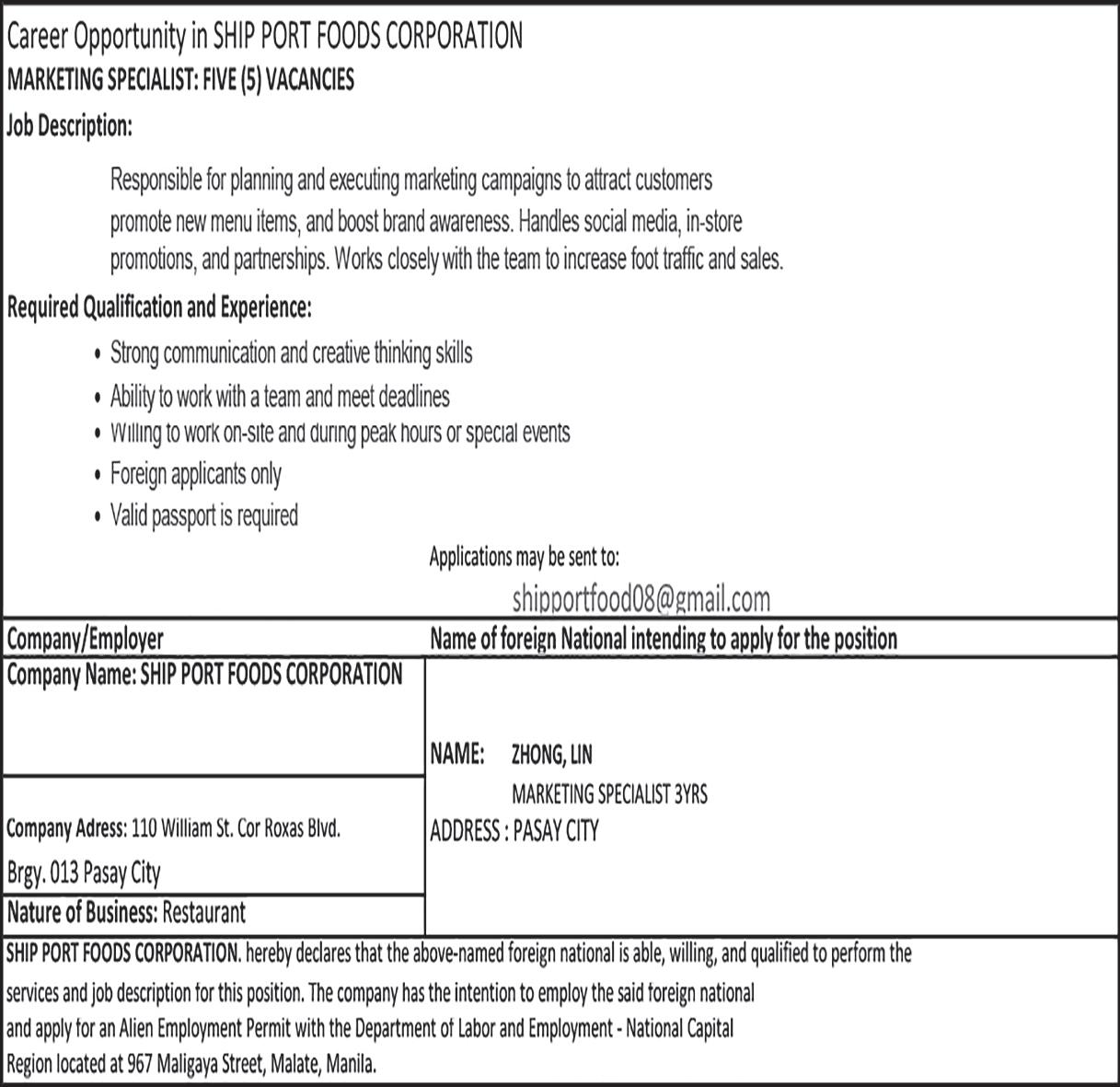
2025
By Jovee Marie N. dela Cruz @joveemarie
AMAJOR government contractor implicated in allegedly anomalous flood control projects has fled the country, a lawmaker revealed on Wednesday.
In a statement, Las Piñas Rep. Mark Anthony Santos said politician-contractor Carlo Aguilar left the Philippines for Tokyo, Japan, on November 19, just five days after former Public Works and Highways (DPWH) Undersecretary Roberto Bernardo testified before the Senate last month.
He has not returned since.
BERNARDO claimed that project commissions were split among several officials and the contractor, who oversaw multiple government flood control projects.
“Fleeing is an admission of guilt. Escaping the country only strengthens the suspicion that Mr. Aguilar
Fhas much to answer for,” Santos said. Last week, the Independent Commission for Infrastructure (ICI) submitted a referral to the Office of the Ombudsman recommending further investigation of former senator Ramon Revilla Jr. and several others over anomalous flood control projects. The ICI referral likewise sought
By Joel R. San Juan @jrsanjuan1573
ORMER Senator Ramon Revilla Jr. on Wednesday appeared before the Department of Justice (DOJ) to personally file his counter-affidavit over a complaint accusing him of receiving kickbacks from a ghost flood control project in Bulacan. Revilla was accompanied by his lawyer, Francesca Lourdes Señga, in filing his answer to the complaint for violation of the AntiGraft and Corrupt Practices Act. Señga said Revilla also submitted other evidence aside from his counter-affidavit to prove his innocence.
“Aside from his counter-affidavit, Mr. Revilla submitted evidence that would prove that all
the contents of the allegations, accusations, and complaints against him are lies and nothing but lies,” the lawyer said.
“Mr. Revilla is hoping that the DOJ will be fair and will look at the evidence and will no longer allow this complaint to reach the court,” he added.
The DOJ earlier said Revilla and former cpmgressman Elizaldy Co were included as respondents in two of the five flood control-related cases that are being handled by the DOJ.
“Senator Bong Revilla and Zaldy Co were admitted as additional respondents in the cases involving SYMS Construction and Trading—these cases are pending preliminary investigation,” DOJ spokesperson Polo Martinez said.
Revilla and Co are also respondents in complaints filed by the National Bureau of Investigation involving ghost flood control projects of Wawao Builders and Topnotch Catalyst Builders.
The DOJ, however, noted that the cases pertaining to Wawao and Topnotch are still currently undergoing initial evaluation to determine if there is basis to proceed with the conduct of a preliminary investigation.
Meanwhile, the Independent Commission for Infrastructure (ICI) chairman, retired Supreme Court Justice Andres Reyes, merely shrugged off the statement of Ombudsman Jesus Crispin Remulla that the commission may only have two months left.
“We will work very hard until whatever is the date of our
existence,” Reyes said. Reyes said the ICI has been given two years to fulfill its mandate.
The ICI was formed by President Marcos to investigate the multi-billion corruption scandal involving flood control projects of the government.
Key government officials from the Palace as well as several legislators from the Senate and the House of Representatives and government engineers were among those investigated by the ICI for allegedly receiving kickbacks from these anomalous flood control projects.
It has also submitted several referral reports to the Ombudsman recommending the prosecution of several government officials, lawmakers and private contractors over their alleged involvement in the flood control mess.
By Bless Aubrey Ogerio
THE country is exploring mandatory food fortification as part of a broader effort to strengthen child nutrition programs under the Kalusugan at Nutrisyon ng Mag-Nanay Act, in response to persistently high malnutrition rates among young children.
In a set of policy recommendations, the United Nations Children’s Fund (Unicef) outlined a range of nutrition and health measures that could strengthen the law’s implementation, which covers the period from pregnancy until a child turns two.
Among these was mandatory food fortification, alongside programs on maternal nutrition, breastfeeding, sanitation and social protection.
The recommendations come as government data show that nearly 24 percent of Filipino children under five are chronically
malnourished, based on the latest Expanded National Nutrition Survey of the Food and Nutrition Research Institute.
Health experts note that poor nutrition during the first 1,000 days of life can affect physical growth, brain development, and later learning outcomes.
Unicef said food fortification can complement other nutrition interventions, especially for households with limited access to diverse and nutrient-rich food.
The agency, however, placed equal emphasis on early identification of nutritionally at-risk pregnant women, including adolescents, and support through balanced protein and energy supplementation.
Further, the policy brief also highlighted the role of exclusive breastfeeding for the first six months of life, followed by appropriate complementary feeding for infants and young children up to 2 years old, with continued
Clerical support positions accounted for another 10.7 percent.
Wage data follow the same trend. CPBRD found gender pay gaps of 26.2 percent in

breastfeeding.
Micronutrient supplementation during pregnancy and early childhood, as well as the prevention and management of common childhood illnesses such as diarrhea and acute respiratory infections, were likewise identified as priorities.
Beyond direct nutrition measures, Unicef pointed to structural factors that influence child health, including access to clean water and safely managed sanitation, which reduce the risk of food- and waterborne diseases that can worsen malnutrition.
Social protection programs were also cited as playing a role, particularly the First 1,000 Days Cash Grant under the Pantawid Pamilyang Pilipino Program (4Ps), which supports pregnant women and children aged zero to two from vulnerable families.
To improve implementation, the agency called for stronger coordination among key government
service and sales work and 29.4 percent in elementary occupations.
The largest gap—31 percent—was recorded in craft and related trades, though women comprise only 3.2 percent of that workforce.
Changes in class of worker also show mixed progress. The share of women employed in private establishments increased from 33.8 percent to 38 percent between 2013 and 2023, and the proportion of unpaid family workers declined from 14.9 percent to 10.4 percent.
Still, CPBRD noted that women employers and women working for pay in family-owned businesses remain a very small segment, “indicating limited progress in women’s entrepreneurial and highervalue employment roles.”
Work intensity adds another layer
bodies, including the Department of Health, National Nutrition Council, Department of Agriculture, and Department of Social Welfare and Development.
Better alignment among these agencies, Unicef said, would help ensure nutrition and health interventions reach families consistently across national and local levels.
The agency also flagged the need to review existing milk feeding programs to ensure they are aligned with Republic Act 11148 and Executive Order 51, or the Milk Code, which regulates the marketing of breastmilk substitutes.
“Foundational learning in reading and math is built not only on teaching and curriculum, but also on nutrition and good health,” said UNICEF Philippines representative Kyungsun Kim, noting that children who are adequately nourished are better able to engage and learn.
to these patterns. CPBRD reported that “married women work fewer hours than both single women and the average woman worker in most occupations,” with the widest differences observed in technician, craft, and armed forces roles.
Married men, by contrast, typically work longer hours across occupations.
The report said flexible and online work arrangements may have encouraged more women to enter the labor force—one in four women reported platform-based work in the 2021 Labor Force Survey—but these emerging opportunities have not altered the broader structure of women’s employment.
“These patterns highlight the enduring gender-based division of labor and its impact on women’s work intensity and earning potential,” CPBRD said.
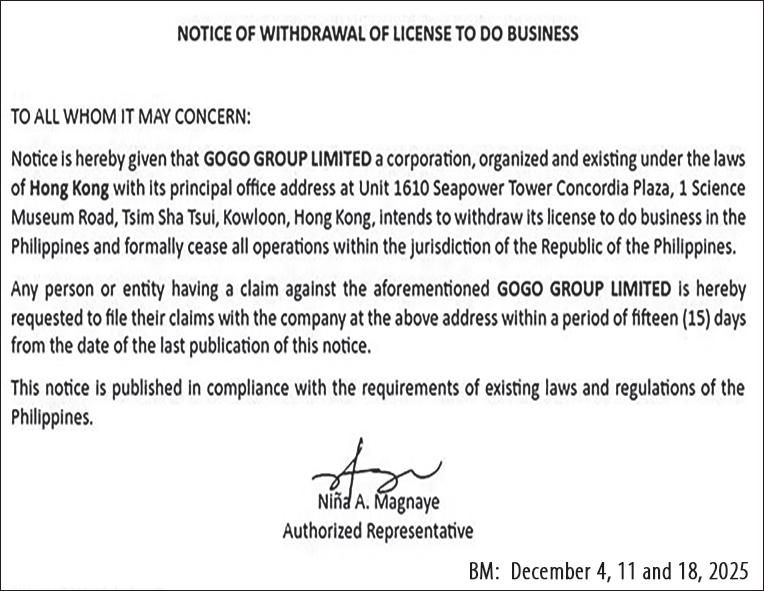
deeper investigation into Sens. Francis Escudero and Mark Villar, former senators Grace Poe and Nancy Binay, and Aguilar, based on the affidavits and testimonies of Bernardo. ICI chairman Andres Reyes Jr. said the potential charges may include direct or indirect bribery, corruption of public officials, plunder, and various administrative sanctions.
Based on the affidavit executed by Julie, he worked for Ang in 1999 as one of the feeders of fighting cocks until he resigned in 2003.
Ten years later, Patidongan said he returned to work for Ang as close-in security guard for jueteng and was later appointed as farm manager of AA Cobra Gamefarm in Barangay Tangob, Lipa City, Batangas.
Part of his duty, according to Patidongan, was to manage the farm, supervise the breeding of fighting cocks, and followe Ang’s instructions on farm and online sabong operations.
Patidongan claimed that there were repeated incidents of cheating inside the cockpits at the Manila Arena in Manila; Sta. Cruz, Laguna; Lipa, City, Batangas; and San Pablo City, Laguna.
These cheating activities were reported to Ang, also known as “Boss AA,” who operates Pitmaster’s online sabong operations.
Patindongan said upon learning of the sabungeros cheating activities, ordered their kidnapping and summary execution.
He added that a network of private organizers and police officers led by Police Lt. Col. Ryan Jay Orapa were the ones who carried out the kidnapping and subsequent execution of the cheating sabungeros from 2021 to 2022.
Patidongan narrated that the victims were first brought to AA Cobra Farm in Lipa City before they were turned over to Orapa’s group.
The police officers then brought the sabungeros to sites in Batangas, including a fishpond owned by “Enca,” where they were killed and disposed of in Taal Lake.
He added that reward payments were given to Orapa’s group ranging from P500,000
Reparation Act seeks to begin the long process of healing for victims of the war on drugs, particularly those affected by “Oplan Tokhang.” It would also guarantee safeguards to prevent such abuses from happening again.
He added that the proposed Human Rights Defenders Protection Act is equally vital, as HR defenders are often the first targets of intimidation and violence.
HB 6677 proposes state recognition of violations committed during the war on drugs, government reparations for victims, and the establishment of a Truth and Reconciliation Commission to investigate the full extent of the violence. Meanwhile, HB 6678 guarantees the rights and freedoms of human rights defenders and imposes penalties on anyone who violates those rights.
For her part, House Deputy Minority Leader Leila M. de Lima of the Mamamayang
our commitment to ‘equal pay for equal work’, no matter where a worker lives or is employed.”
The substitute bill—consolidating House Bills 55, 94, 3266, 4102, and 5924—proposes to replace the current regional wage system with a single National Minimum Wage (NMW). The initial NMW will be pegged to the highest prevailing regional rate upon effectivity and may not fall below the NCR minimum wage, ensuring no worker is left behind in the transition.
To ease the shift, the measure mandates a three-year transition period during which regional wages will gradually converge with the national rate. Regions must close at least 30 percent of the wage gap in the first year, 35 percent in the second, and the remaining balance in the third year, after which full alignment becomes mandatory.
With this, Santos called on the Office of the Ombudsman, the Commission on Audit (COA), and Congress to investigate potential conflicts of interest, preferential treatment, and possible violations of procurement laws.
to P2 million.
Patidongan also cited the existence of CCTV footage, seized phones and a tablet, a USB containing video confession and vouchers as evidence.
Ellakim, on the other hand, claimed that he personally witnessed the kidnapping, transport and killing of missing sabungeros, attended meetings with police officers involved in the crime at the AA Cobra Farm, and was instructed to withdraw money from one of the victim’s ATM account at BDO Lipa City on January 14, 2022.
“The fact that no human remains were recovered and presented in evidence, is of no moment. Concededly, the culprits were crafty and cunning to keep their crime with impunity and not to leave any traces of their evil acts that could give them away,” the DOJ said.
“Nonetheless, it is sufficient that the circumstances surrounding the disappearance of the sabungeros into oblivion was personally witnessed by, with their deaths or the manner as to how they were brutally and mercilessly killed can be testified upon and elaborated by Ellakim Patidongan in court,” the DOJ said. The DOJ also did not give credence to the respondent’s defense that it was physically impossible for them to be at the crime sites.
“Besides, it is noteworthy that the places where some of the respondents claimed to be and the crime sites are not distant from each other and are easily traversable within a short span of time,” the resolution read.
“This gains credence from the fact that these respondents-police officers have their own service vehicles, as established on record. Accordingly, respondents’ defense of alibis is too flimsy to warrant exoneration as it fails to prove absolute physical improbability for them to be at the crime sites,” it added.
Liberal (ML) renewed her call for Congress to immediately pass critical human rights legislation, as the country marked the 77th anniversary of the Universal Declaration of Human Rights.
De Lima warned that the human rights climate in the Philippines “continues to be challenging,” citing persistent cases of harassment, red-tagging, intimidation, and unresolved extrajudicial killings. She stressed that the situation has become even more alarming for human rights defenders, who she said have increasingly become targets of vilification.
De Lima urged House leaders and fellow lawmakers to fast-track several priority measures, including the Human Rights Defenders Protection Act, the AntiExtrajudicial Killing Act, the Anti-Red Tagging Act, the Commission on Human Rights Act, and the Truth Commission on EJKs Act. She said these proposed laws are essential to “shattering the climate of impunity” and preventing abuses from recurring.
A key reform in the bill is the abolition of the RegionalTripartiteWages and Productivity Boards (RTWPBs). Once the NMW is fully implemented, wage-setting powers will be centralized under a reorganized and strengthened National Wages and Productivity Commission (NWPC), which will set the annual NMW, issue temporary wage adjustments during economic disruptions, and convene a national tripartite wage conference. RTWPB personnel will be absorbed, reassigned, or provided proper separation or retirement benefits under civil service rules. The bill also seeks to balance worker protection with business viability. Microenterprises with valid BMBE certification will be exempted from the NMW.
Enforcement
CATTLE prices won’t rise as much as previously expected in 2026, as the closure of a Tyson Foods Inc. plant is seen loosening competition for scarce US supplies.
The US Department of Agriculture (USDA) on Tuesday lowered its estimates for cattle prices through 2026, citing reduced slaughter plant capacity early next year and recent pricing data. Tyson, the largest US meatpacker, said in late November that it would end operations at a Nebraska beef plant and reduce operations at a Texas facility to a single shift.
Prices for the animals have surged amid a severe US cattle shortage, which has left meat processors bidding up prices to secure limited supplies. The situation has been exacerbated by an ongoing halt to Mexican cattle shipments to prevent the spread of a deadly pest, and by tariffs on Brazilian beef that were only recently lifted.
That has sent consumer beef costs soaring to record highs, creating the latest prominent inflationary signal that the Trump administration has tried to tamp down.
Steers are now forecast to cost $235 per hundredweight in 2026, down 4.5 percent from the USDA’s November estimate. Still, that would mark a 5-percent increase from the projected 2025 price, which the USDA trimmed only slightly. Live cattle futures traded in Chicago were little changed following the report.
Tyson’s plant in Lexington, Nebraska, was one of the company’s largest, with the ability to slaughter nearly 5,000 head of cattle per day. Cattle futures had reached a six-month low following the announcement, as the drop in capacity is expected to lower competition among meatpackers for limited supplies.
Meanwhile, the USDA raised its 2026 outlook for beef imports to 5.45 million pounds, up 10 percent from last month’s estimate as the removal of tariffs on beef products is expected to boost shipments. That would also mark a year-over-year increase in beef imports, reversing prior expectations of a drop.
The US has become more reliant on foreign supplies to meet resilient demand. Trump late last month lifted tariffs on Brazilian beef, a move that is expected to eventually cool record prices for ground beef.
Deere assistance
Deere & Co. said it is helping US farmers “substantially” cut costs, after President Donald Trump pressured farmequipment manufacturers to drop prices for tractors.
The world’s biggest farm machinery maker said in a statement to Bloomberg that it “has kept focus on supporting our customers and helping them build for the long haul.”
The comment comes after Trump said on Monday that Deere and other tractor manufactures are “going to have to reduce their prices because farming equipment has gotten too expensive.”
“A lot of the reason is because they put these environmental excesses on the equipment, which don’t do a damn thing except make it complicated,” Trump said.
He delivered the comments at the White House amid an unveiling of the administration’s $12 billion aid package for farmers hurt by his tariff regime and low crop prices. At the same time, Deere was wrapping up its annual investor day in New York.
“We are doing all we can to help US farmers reduce input costs,” Deere said. The company’s latest machines are packed with automation, which help reduce expenses for labor and weed-killing chemicals.
Farm machinery costs started surging around the Covid 19 supply-chain disruptions, while increasingly high-tech options such as satellite connectivity have also raised prices. Import tariffs on steel and aluminum have pushed up costs for US manufactures.
Deere shares fluctuated between gains and losses on Tuesday, after dropping 1.8 percent in the previous session. Bloomberg News

By Ada Pelonia @adapelonia
VIETNAM will end the year with lower rice exports due to the import ban on the staple gain imposed by the Philippines, its largest market.
In its latest report, the United States Department of Agriculture (USDA) has projected that Vietnam’s outbound rice shipments will fall by 2.4 percent to 8 million metric tons (MMT) by yearend.
The new forecast is 200,000 metric tons (MT) lower than the international agency’s initial projection of 8.2 MMT.
The USDA said the “decline in sales to the Philippines with temporary rice import ban” was the reason behind adjusting downward its rice export forecast for Vietnam.
Meanwhile, the international agency expects the Philippines’s rice imports to slide by 5.4 percent to 3.5 MMT.
The USDA adjusted downward the country’s rice shipments by 200,000 MT from its previous projection of 3.7 MMT, owing to “significantly reduced buying due to the temporary import ban.”
While the agency’s projection of the country’s rice shipments was lowered, the Philippines will likely maintain its status as the world’s largest importer of the staple grain.
President Ferdinand Marcos Jr.
approved the extension of the validity of the rice import ban until the end of the year in a bid to arrest the slide in farmgate prices of palay.
Initially, Marcos suspended the foreign shipments of rice for 60 days from September 1 until October 31 to counter the sharp drop in palay prices ahead of the wet harvest season.
While the measure briefly lifted prices, the Department of Agriculture (DA) said whatever gains the rice sector attained had tapered off as the suspension neared its expiry.
The import freeze only covers regular and well-milled rice. Specialty rice varieties, such as Japonica, glutinous, and basmati rice, are exempt from the ban.
The country’s rice arrivals stood at 3.34 MMT as of December 4, based on the latest government data.
Of this, only an average of 100,528 MT of rice entered the country since the import ban started, the highest recorded at 331,606 MT in September, from the average 367,218 MT in the preceding months.
Furthermore, Vietnam held the lion’s share of the Philippines’s rice purchases in the reference
period, accounting for 2.7 MMT. This was followed by Myanmar at 343,910.33 MT.
The Philippines also bought rice stocks from other countries, such as Thailand (176,270.26 MT), Pakistan (76,448.02 MT), and India (20,507.78 MT).
Last month, the Department of Agriculture (DA) said it expects the country’s palay harvest to reach a record 20.2 MMT this year.
Agriculture Assistant Secretary Arnel de Mesa said the projection is based on the Philippine Statistics Authority’s (PSA) report of 9.08 MMT production in the first semester and an additional 3.8 million MMT in the third quarter.
“With another 7.5 MMT expected in the fourth quarter, total output could range between 20.2 and 20.5 MMT depending on the impact of typhoons,” de Mesa said.

CANADA has secured a regionalization agreement with the Philippines to sustain the trade of pork products amid the outbreaks of African swine fever(ASF).
Agriculture Secretary Francisco Tiu Laurel Jr. signed Memorandum Order (MO) 77, which granted bilateral recognition for ASF to Canada.
Under the order, the Philippines can import live hogs, swine products, and byproducts, including meat from bilaterally recognized free zones from the North American nation.
This, after the Philippines
sought several documentary requirements from the veterinary authorities of Canada to assess the public health control measures applied and implemented against ASF.
The Bureau of Animal Industry (BAI) conducted a review and evaluation of the application for bilateral recognition of regionalization for ASF of the said country.
With this, the BAI concluded that Canada “maintains sufficient veterinary oversight and has established necessary control and mitigating measures against ASF.”
“This (ensures) that there is low
risk of importing live swine and/ or their products, and by-products, including meat from identified proposed zones for recognition.”
Meanwhile, the MO noted that the chief veterinary officers of Canada and the Philippines agreed on the import terms and conditions for the bilateral regionalization for ASF on October 20.
The DA said all swine import transactions of the mentioned commodities should be in accordance with the bilaterally agreed import terms and conditions on regionalization and its current rules.
The DA recently updated its
guidelines on implementing bilateral regionalization, allowing trade partners to maintain exports of hogs and pork products to the Philippines despite cases of ASF. Under this agreement, the Philippines will restrict shipments of hogs and their products only from certain areas with confirmed ASF cases, rather than imposing a country-wide ban to cushion its impact on the country’s trade and food security, while protecting the domestic swine industry. Canada becomes the first DAaccredited country that have secured bilateral regionalization for ASF-free areas. Ada Pelonia
THE British Chamber of Commerce Philippines (BCCP) is urging the Philippine government to increase the minimum access volume (MAV) allocation for pork to meet the country’s strong demand for the meat product.
BCCP Executive Vice Chairman Chris Nelson made the pronouncement after the Department of Agriculture (DA) recently announced that it is revising the rules on MAV for pork, the allocation of which stood at 54,210 metric tons (MT).
With tight local supply due to African swine fever (ASF) crimping hog output and the increase in Philippine population, Nelson called on the government to increase the MAV quota to 80,000 MT.
“Your local pork supply is
significantly down because of ASF,” Nelson told reporters on Wednesday. “The chances of those pig herds being rebuilt, certainly in the near term, will be very challenging. Therefore, you need imports, and we will be one of the countries supplying it.”
Under the revised MAV guidelines, 50 percent of the quota would be allocated to meat processors, 30 percent to state-owned enterprises, and 20 percent to others. This would veer from when volumes were allocated based on existing market shares.
For Nelson, the change in MAV allocation should be studied further.
“We should be doing as much as possible to make supplies freely available so the Philippine consumer has access to quality pork,
whether it’s from the United Kingdom, other countries, or local, and that your prices remain stable,” Nelson said.
Meat Importers and Traders Association (Mita) recently urged the DA to retain the current MAV rules for pork, as the proposed interventions will not address the tight supply of the favorite protein source of Filipinos. (See: https://businessmirror.com.ph/2025/12/08/ tweaks-in-pork-mav-rules-create-uncertainty/)
Mita also called on the DA to invoke a MAV plus for pork instead, the volume of which “may be prioritized for processors and other sectors, with a portion designated for first-come-firstserved imports.”
Agriculture Secretary Francisco Tiu Laurel Jr. recently said the agency will not increase the cur -
rent MAV volume for pork, citing the current slide in farmgate prices of hogs. (See: https://businessmirror.com.ph/2025/11/27/darevises-rules-on-mav-on-porkto-spur-competition/)
Despite this, he said the DA has requested the Office of the President to have a MAV plus for pork of 150,000 MT on standby, which the agency would activate if deemed necessary. The Philippines previously implemented the MAV Plus of 200,000 MT in 2021 to address supply shortage and pull down retail prices of the commodity as ASF took a toll on domestic output. Pork imported via the MAV scheme enjoys a lower tariff of 15 percent for shipments falling under the in-quota allocation while the out-quota allocation is slapped a tariff of 25 percent. Ada Pelonia
THERE is a sobering reality facing the Philippine economy, one that can no longer be obscured by optimistic projections or selective data. The recent acknowledgment by the Department of Trade and Industry-Export Marketing Bureau (DTI-EMB) that the Philippines sits at the bottom of the Asean-6 in merchandise exports highlights an urgent need for a comprehensive restructuring of our trade strategy. (Read the BusinessMirror story: “PHL trails Asean-6 in merchandise exports,” December 5, 2025).
The figures clearly illustrate our position in the region. With $73 billion in merchandise exports last year, the Philippines is not merely trailing its neighbors; it is being eclipsed by them. We are generating less than a third of the export revenue of Indonesia ($264.7 billion), our closest competitor in the rankings. When compared to the regional powerhouse of Singapore ($504.9 billion) or the manufacturing juggernaut of Vietnam ($403.2 billion), the gap becomes a vast ocean. As DTI-EMB Director Bianca Pearl R. Sykimte candidly noted, even tripling our exports would not be enough to catch up to the nation immediately ahead of us.
Even more concerning than the revenue gap is the decline in the number of our exporters. We are witnessing a “vanishing exporter” phenomenon. A decade ago, the country boasted nearly 8,000 exporters; today, that number has plunged to roughly 4,000. When Sergio R. Ortiz-Luis Jr., President of the Philippine Exporters Confederation, Inc., states plainly that exporting is “not a profitable business” anymore, we must listen. This mass exodus of businesses from the export sector indicates a toxic ecosystem—plagued by high power costs, logistical nightmares, and supply chain inefficiencies—that makes competing on the global stage financially unviable for our Micro, Small, and Medium Enterprises (MSMEs).
In response to these grim realities, the government has chosen to “recalibrate” its targets. The Philippine Export Development Plan goals for 2025 to 2028 have been slashed significantly to be “more realistic.” While honesty in governance is commendable, and external factors like US tariffs and global supply chain disruptions are indeed valid hurdles, lowering the bar is not a solution. It is merely an adjustment to mediocrity.
The government’s proposed interventions, such as the launch of the digital platform “PHX Source” to connect local sellers with global buyers, are necessary steps toward modernization. However, a digital directory cannot fix the fundamental uncompetitiveness of Philippine manufacturing. A website cannot lower electricity rates, nor can it unclog the ports. Strategic government intervention can help overcome market access barriers and build trust in Philippine capabilities.
There is a silver lining in the resilience of our services sector, which continues to drive growth while goods exports stagnate. Yet, a robust economy cannot fly on one wing. We cannot rely solely on BPOs while our manufacturing base erodes. To be a truly resilient economy, we must make things that the world wants to buy.
Being ranked 49th globally and last in the Asean-6 is a position the Philippines cannot afford to accept as its destiny. The “recalibration” of targets must be accompanied by a recalibration of effort. We need a whole-of-government approach that goes beyond marketing and addresses the root causes of why 4,000 exporters closed shop. Until we make exporting profitable again, we will remain at the bottom of the pack, looking up at neighbors who figured out the formula years ago.
L. Cabangon Chua Founder
T. Anthony C. Cabangon
Lourdes M. Fernandez
Jennifer A. Ng Vittorio V. Vitug
Lorenzo M. Lomibao Jr., Gerard S. Ramos Lyn B. Resurreccion, Dennis D. Estopace Angel R. Calso, Dionisio L. Pelayo Ruben M. Cruz Jr.
Eduardo A. Davad Nonilon G. Reyes
D. Edgard A. Cabangon Benjamin V. Ramos Aldwin Maralit Tolosa
Rolando M. Manangan
BusinessMirror is published daily by the Philippine Business Daily Mirror Publishing, Inc., with offices on the 3rd floor of Dominga Building III 2113 Chino Roces Avenue corner De La Rosa Street, Makati City, Philippines. Tel. Nos. (Editorial) 817-9467; 813-0725. Fax line: 813-7025. (Advertising Sales) 893-2019; 817-1351, 817-2807. (Circulation) 893-1662; 814-0134 to 36. E-mail: news.businessmirror@gmail.com www.businessmirror.com.ph



HE global oil market is gearing up for a familiar yet striking surplus that even veteran traders find hard to ignore. Energy agencies predict supply will surge through 2026, adding over 2 million barrels per day just as demand growth slows. The world is poised for a crude glut of a scale that recalls earlier market overconfidence, yet the reaction feels almost routine.
Opec+ has quietly abandoned its disciplined cuts, ramping up output after years of voluntary restraint. Outside the cartel, producers in the US, Brazil, Canada, and Guyana are aggressively boosting production, shrugging off low prices as someone else’s problem. The result? A looming surplus shaping the market’s 2026 entry with a familiar narrative of excess supply.
For the Philippines, this global development carries outsized significance. As a country dependent on imported fuel for nearly all its energy needs, fluctuations in crude prices ripple directly through electricity costs, transportation, and consumer goods—the lifeblood of everyday budgets. The peso too stands to gain from reduced pressure on the trade balance.
The link between oil prices and Philippine inflation is not hypothetical but observed repeatedly. When Brent crude spiked in 2017-2018, inflation nudged toward 7 percent. The pandemic price crash in 2020 was followed by easing inflation. The surge in oil prices from late 2021
through mid-2022 preceded the Philippines’ inflation peak in 2022-2023, and subsequent oil price declines brought relief. That sequence has become a pattern that only the blind can dispute.
Price changes, however, do not hit consumers immediately—they can take months, passing through importers, shipping, power providers, and retailers before registering in the official inflation numbers. When oil costs rise, inflation almost always follows; when oil eases, inflation’s grip loosens.
This anticipated 2026 glut promises a welcome breather. It offers the Bangko Sentral ng Pilipinas (BSP) room to maneuver on policy rates without the constant energy-inflation threat. Businesses might enjoy slightly healthier margins, and remittances from overseas Filipino workers gain more spending power. Yet, the relief is temporary—it will not shield the economy from the next price upswing or resolve the country’s systemic reliance on imported fuel.
Adding complexity, the global en-
For the Philippines, cheaper oil would ease the import bill— critical given the current account deficit widened sharply in early 2025—and help stabilize the peso, which faced record lows recently. It would also temper transport and electricity costs, feeding through to consumer goods prices almost everywhere.
ergy transition is reshaping demand growth. Efficiency gains, electric vehicle adoption, and slower oil demand expansion signal a changing era. For the Philippines, this is less a caution and more an opportunity—to reduce exposure and build resilience by spending fewer pesos on imported oil.
Investment banks like Goldman Sachs predict oil prices slipping further in 2026—with West Texas Intermediate averaging US$52 and Brent around $56—driven by delayed pandemic-era projects finally coming online and Opec+ losing its commitment to supply restraint. The International Energy Agency warns the surplus could reach 4 million barrels per day, outpacing even the pandemic glut.
Such forecasts offer relief, but with a warning. The BSP has emphasized oil price stability as key to maintaining inflation targets and continued monetary easing. The central bank recently cut rates by 25 basis points to 5.25 percent but flagged that a 10 percent oil price rise could widen the current account deficit by 0.25 percent of GDP.
For the Philippines, cheaper oil would ease the import bill—critical
given the current account deficit widened sharply in early 2025—and help stabilize the peso, which faced record lows recently. It would also temper transport and electricity costs, feeding through to consumer goods prices almost everywhere.
Yet caution remains warranted. Goldman Sachs forecasts market rebalancing by 2027, with oil prices rising again as low prices force non-Opec producers to cut output and underinvestment limits future projects. Political will inside Opec+ to maintain discipline is uncertain. More than exact prices, what matters is whether low prices endure long enough to provide structural breathing room for our economy, heavily reliant on energy imports. The oil glut story makes sense on paper, but commodity markets rarely follow the script. The Philippines has learned to plan for forecasts while bracing for surprises. Lower oil prices would ease inflationary pressures and provide a modest boost to growth, yet the nation’s true safeguard lies in resilience—through smarter energy use, strategic fiscal planning, and practical adoption of cleaner alternatives.
The brief calm of 2026 offers a rare opening: act to improve efficiency, reinforce financial buffers, and expand renewable energy where feasible—and the country strengthens its footing; fail to act, and the next price shock will land with far greater impact.
E-mail me at mangun@gmail.com. Follow me on Twitter @mangunonmarkets. PSE stock-market information and technical analysis provided by AAA Southeast Equities Inc.
By Newley Purnell and Nasteho Said
AUSTRALIA’S social media ban for youths took effect Wednesday, a landmark move that’s drawn global attention at a time governments are increasingly enacting rules to shield minors from toxic content and cyberbullying.
The law, passed last year, mandates services such as ByteDance Ltd.’s TikTok and Meta Platforms Inc.’s Instagram keep under-16s off their platforms or face fines of up to A$49.5 million ($33 million). Australia becomes the world’s first democracy to undertake such a crackdown in response to growing concerns about social media’s harms.

It’s likely to be the first of many. Policymakers in Indonesia, Denmark, Brazil and other nations are also moving to rein in Big Tech, which counts young users as a key demographic since they are likely to fuel future growth. Additional platforms affected in Australia include
Snap Inc.’s Snapchat, Alphabet Inc.’s YouTube, Reddit Inc. and more.
All have said they will comply, though many have voiced opposition to rules they say were rushed through and risk pushing children into more dangerous corners of the internet. Still, Reddit said this week it’s launching new safety features globally for all under-18s.
“It is a profound reform which will continue to reverberate around the world in coming months,” Australian Prime Minister Anthony Albanese told reporters in Sydney on Wednesday. “This reform will change lives for Australian kids, allowing them to just have their childhood.”
The law, passed last year, mandates services such as ByteDance Ltd.’s TikTok and Meta Platforms Inc.’s Instagram keep under-16s off their platforms or face fines of up to A$49.5 million ($33 million). Australia becomes the world’s first democracy to undertake such a crackdown in response to growing concerns about social media’s harms.
There are early signs that young users in Australia are adopting rival services that haven’t been affected by the ban. On Wednesday morning, alternative social media platforms like ByteDance’s Lemon8, and Yepo, surged in popularity in Apple’s App Store. Chinese-owned Rednote, an Instagram-like service also known as Xiaohongshu, also saw weekly active users of its mobile app jump 37 per -
cent over the week of December 1 compared to a year earlier, according to market intelligence firm SensorTower. Coverstar, a service that bills itself as a safe social platform for Generation Alpha, saw usage in Australia skyrocket 488 percent over the same period, SensorTower said. Virtual private networks, which can disguise a user’s location and offer a potential workaround for accessing banned platforms, are gaining in popularity. Demand for VPNs rose 103 percent on Sunday compared to the daily average for the previous 28 days, according to global monitoring platform Top10VPN. Some young people took to TikTok Tuesday, using the hashtag #socialmediaban to express their opinions on the issue. One influencer who said she was 14 complained about the new law, though many commentators disagreed with her. Several TikTok users said they supported the ban, See “World,” A11
By Richard Henderson
FOR income investors, the days of easy returns are vanishing. In recent years, investors were paid handsomely to play it safe. Short-term US Treasuries offered yields above 5 percent— a rare chance to earn solid returns without locking up capital or chasing risk. For pensions, insurers and endowments, it marked a decisive break from the post-crisis decade of near-zero interest rates. Even if high inflation tempered real returns, institutions that once had to reach for yield suddenly had room to sit still.
That window is closing anew.
The Federal Reserve is expected to cut rates again this week, part of an easing cycle that has already dragged yields well down from their postpandemic highs. For income-focused portfolios, the easy gains from safe assets are fading. At the same time, conventional alternatives, from corporate bonds to global equities, look richly priced, leaving less cushion and fewer obvious paths forward.
The pressure has been building for months. A broad cross-asset rally, powered by AI exuberance and resilient US growth, has driven returns lower across public markets. For investors managing long-term liabilities, the trade-offs are sharpening: to keep pace, portfolios must stretch duration, give up liquidity, or take on more risk.
Public markets offer little relief.
Dividend yields on global equities, as tracked by the MSCI All Country World Index, remain near their lowest levels since 2002. Investmentgrade credit spreads are just above multi-decade lows, leaving scant margin for error should the economic outlook worsen.
The Fed’s expected cut is a reminder that “today’s yields may not always be available,” said James Turner, co-head of global fixed income for EMEA at BlackRock in London. Pension and insurer clients are looking toward high yield, emerging-market debt, AAA rated collateralized loan obligations and securitization investments, to “enhance income and diversify,” he said.
Private credit, long pitched as a diversification trade, has already absorbed hundreds of billions of dollars from institutions searching for returns beyond listed debt. While that appetite has cooled this year due to concern about deal quality and saturation, lower Treasury yields will help private-asset advocates make their sales pitch, as allocators reassess their income mix.
JPMorgan Asset Management anticipates more movement toward the private markets for income. Despite recent concerns, investors will be “rewarded for the extra risk you’re taking in private credit,” said Kerry Craig, global market strategist at the money manager in Melbourne. Other investors agree.
“As rates have fallen and spreads have compressed, it’s more of a challenge to get a reasonable rate of interest,” said Nick Ferres, chief investment officer at Vantage Point Asset Management in Singapore. The firm launched an Australian income fund last year and has recently added private credit on a selective basis to help generate yield, he said.
The broader scramble for return never really stopped. The “hunt for yield” became shorthand in the zerointerest-rate policy—ZIRP—era, but the dynamic has persisted, even as
continued from A10
saying they think it will help protect younger generations.
For now, Australia’s measures have spurred an increasing number of governments to seek to hold social media firms accountable for content they display.
Interviews with policymakers from Jakarta to Copenhagen and Brasilia show they’re watching the rollout in Australia closely and plan-
CHINA’S top leaders are signaling they are on alert for a potential flareup of tensions in global commerce as they draw up economic plans for next year, after amassing a record trade surplus despite the tariff war with the US.
The pressure has been building for months. A broad cross-asset rally, powered by AI exuberance and resilient US growth, has driven returns lower across public markets. For investors managing long-term liabilities, the trade-offs are sharpening: to keep pace, portfolios must stretch duration, give up liquidity, or take on more risk.
the higher-for-longer interest rate outlook took hold, supporting Treasury yields. Bets on growth assets, AI hype and resurgent risk appetite have kept flows tilted toward highervolatility exposure. As safe returns decline, the incentive to move out the risk curve is building afresh.
Capital is also flowing into more esoteric corners of financial markets.
Catastrophe bonds and insurance-linked securities—instruments that monetize rare-event risk —are drawing renewed institutional demand for their uncorrelated payouts. The Victory Pioneer CAT Bond Fund, launched in early 2023, now has $1.6 billion of assets. The fund continues to attract investors “facing that yield challenge,” portfolio manager Chin Liu said.
Equities are offering less ballast for income-seeking portfolios. Global stock dividend yields have slumped as soaring equity prices, especially in tech, compress yields, while companies increasingly favor buybacks over dividends for flexibility.
“Finding yield is getting tougher” in global stocks, said Duncan Burns, head of investments for Asia Pacific at Vanguard in Melbourne. “We’re seeing a trend of buybacks picking up and it looks like some of that’s coming from the dividend side of things.”
Still, yields don’t move in a straight line. Even as the Fed prepares another rate cut, longer-maturity Treasury yields have climbed to multi-month highs as traders scale back expectations for 2026 easing. While short-term rates remain tightly linked to policy, longer-dated debt reflects growth, inflation and fiscal risk. For income investors, that means returns depend as much on timing and conviction as on central bank cues.
A few tactical bright spots remain. Sticky inflation in Australia has fueled expectations of further rate hikes. In the UK, longer-maturity gilt yields have risen on the back of government borrowing. But these are exceptions to the rule: across global markets, the income backdrop is tightening.
“Lower US rates are shaping a tougher landscape for income investors,” said Hebe Chen, an analyst at Vantage Markets in Melbourne. “Falling Treasury yields and near record-tight credit spreads are pushing investors further out on the risk curve for slimmer rewards.” Bloomberg
ning moves of their own to shield young users. Indonesia, for one, has announced that those under 18 will need parental approval. A representative for a major social media company told the government that such a move would be a “disaster,” said Fifi Aleyda Yahya, a director-general at the country’s Ministry of Communication and Digital Affairs.
“So our response was ‘well the disaster is happening already. Look at our children,’” the official told the Sydney forum. Bloomberg
Hours after China announced that its excess of exports to imports has surpassed $1 trillion in just 11 months, a readout of the Politburo’s meeting on Monday made a veiled reference to the uncertainty overseas, calling for “better coordination between domestic economic work and an international economic and trade battle.” It vowed to “act without delay” to develop new growth engines.
For analysts parsing the language used by the Communist Party’s decision-making body led by President Xi Jinping, the takeaway is that vigilance will be important for policymakers, even as they’ve withheld bolder stimulus measures this year from an economy in the grip of a slowdown.
More than a year on from Donald Trump’s reelection, the threats looming abroad are more likely to come from countries other than the US—so long as a fragile trade truce holds between the world’s two biggest economies.
Economic countermeasures are on the table as tensions escalate with Japan over the self-governing island of Taiwan, while Mexico’s Congress is set to vote this week on President Claudia Sheinbaum’s proposed tariffs on China. And just days ago, French President Emmanuel Macron said the European Union may be forced to take “strong measures” against China, including potential tariffs, if Beijing fails to address its widening trade imbalance with the bloc.
“Even though the China-US trade relations have eased markedly, some countries in Europe and Asia, such as the Netherlands and Japan, are still taking proactive moves in economic and trade areas,” Huaxi Securities Co. economists including Liu Yu wrote in a Monday note. “The anti-globalization trend is hard to reverse.”
During a meeting with chiefs of international institutions in -
cluding the World Bank on Tuesday, Chinese Premier Li Qiang warned that increasing trade curbs and rising fragmentation risks across global supply chains have been “a big drag” on world economic growth in recent years.
“We will remain committed to the strategic priority of expanding domestic demand,” Li said, pledging to ensure economic growth stays within a “reasonable range.” The government will strive to enhance the “reliability” of the domestic market, while strengthening dialogue and communications to address trade frictions, he added.
The risk of greater protectionism is scrambling the economic calculus for China after the country exported its way out of the trade war with the US by selling far more to the rest of the world. Looking ahead, however, a lot more will ride on the strength of domestic demand.
China faces a worsening economic picture at home. Growth has cooled following months of slowdown in consumption and rapidly falling investment.
As the new year approaches, China’s government appears mindful of the challenges by signaling an urgent push to strengthen cutting-edge manufacturing. At the same time, analysts expect it to take only incremental steps in pivoting the nation’s growth model toward consumption.
The Politburo made boosting domestic demand its top economic priority in the new year, according to the readout. It also urged officials to develop “new productive forces”—a catchphrase for emerging industries like humanoid robotics—based on what local conditions allow.
The strategy implies “China’s intention to further grow its manufacturing—especially high-tech manufacturing—sector and maintain export resilience,” said Goldman Sachs Group Inc.’s economists led by Lisheng Wang. The overall tone of the readout “appears some -
The risk of greater protectionism is scrambling the economic calculus for China after the country exported its way out of the trade war with the US by selling far more to the rest of the world. Looking ahead, however, a lot more will ride on the strength of domestic demand.
what disappointing, as evidenced by lowered growth concerns and no direct mention of consumption and the property sector,” they said in a note.
Further details are likely to emerge this week. The guidelines laid out by the 24-member Politburo during its December huddle typically set the tone for the Central Economic Work Conference, which in turn provides more specifics about policy priorities for the following year. That meeting is expected to take place in the coming days.
With infrastructure construction at a saturation point in China, the collapsing property market is adding urgency to the pursuit of new industries to propel the economy in the future. Rebalancing the growth model toward consumption, on the other hand, requires longterm reforms such as expanding the social safety net and a tax overhaul.
Guolian Minsheng Securities Co.’s analysts including Tao Chuan noted that the Politburo’s appeal for swift action to develop new growth drivers contrasts with its less intense call in July for “accelerating the cultivation of new pillar industries.”
“The change in that phrase underscores the urgency for fostering new growth engines is increasing,” they wrote in a note.
More policies to bolster investment are expected in sectors such as digital infrastructure, according to Shenwan Hongyuan economists including Zhao Wei. Services will be targeted as part of an effort to boost consumption, they said in a note, adding that per capita spending in the sector remains 1,923 yuan ($272) below its pre-pandemic trend.
“The high-level guidance from the Politburo is clear on the
Pakistan set for up to 16 IPOs as 3-year stock rally tops 300%
By Alex Gabriel Simon and Faseeh Mangi
PAKISTAN’S blistering stock rally and surging retail participation are drawing companies back to the equity market, setting up what bankers say could be a banner year for initial public offerings in 2026.
Two of the country’s prominent investment banks—Arif Habib Ltd. and Ktrade Securities Ltd.—have a combined pipeline of as many as 16 IPOs over the next seven months. That compares with 11 listings in the past three years.
The benchmark KSE-100 Index has gained over 47 percent this year, one of the best performers in the world, helped by an uptick of interest by domestic investors, extending a bull market into a third year. With valuations now reaching longterm averages, offerings are set for a comeback.
“Current market valuations are attractive for raising equity,” said Shahid Ali Habib, chief executive officer at Arif Habib, which expects to bring as many as eight offerings through June. Stability in the Pakistani rupee and a favorable interestrate environment provide strong tailwinds for capital markets, he said.
Some companies are tapping the market to help fund plans to increase production capacity. They’re antici-
pating a pickup in economic growth, according to Habib, who said the upcoming offerings include firms from consumer, pharmaceuticals and auto sectors, among others.
Ktrade Securities expects to manage public offerings of at least six companies in the next six months.
JS Global Capital Ltd. plans to list as many as six companies next year, said Chief Executive Officer Khalil Usmani.
Companies in the pipeline include Service Long March Tyres Ltd., a joint venture between Servis Group and China’s Chaoyang Long March, which is set to raise as much as 6.5 billion Pakistani rupees ($23.2 million) by April, potentially making its the country’s biggest IPO in years, according to Habib. Saraaf, a commodity sourcing startup that raised 1.5 billion Pakistani rupee ($5.4 million) in Shark Tank in 2024 is also planning to come to market and Matco Foods Ltd. plans to spin off its Falak Foods unit, according to Omar Salah Ahmed, a managing
policy direction for next year: continued stimulus. The readout from Monday’s meeting indicates policymakers will aim to support domestic demand and increase coordination to deal with an ‘international economic and trade battle.’ The guidance suggests support will at least match this year’s level. Fiscal policy is likely to play a dominant role, accompanied by incremental monetary easing,” said Bloomberg economists Chang Shu and David Qu. Some economists saw another sign of a possible shift in policy priorities as the Politburo lowered its goal of preventing and resolving risks in key areas— usually a reference to dangers in local government debt, property and financial sectors—to the bottom of a list of major tasks for 2026.
This reflects Beijing’s possible assessment that systemic risks have declined to some extent after an effort to reduce “hidden debt,” analysts at China International Capital Corp. including Fan Yangyang wrote in a note.
“Accordingly, next year’s economic work may focus more on development even as a firm commitment to risk prevention is maintained,” they said.
A total of 1.37 trillion yuan of new local government special bonds has been issued so far this year for provincial authorities to refinance their off-balancesheet debt and repay arrears owed to companies, according to Bloomberg-compiled data. That’s 71 percent more than planned in the annual budget and means waning fiscal support for growth.
Nomura Holdings Inc. economists including Lu Ting said the readout suggests Beijing’s concern is rising about the recent growth slump, urging bolder measures to address the property woes, bolster consumption and business confidence, and improve trade ties.
“Beijing has already exhausted its easily available policy tools,” they said. “Markets will likely have to be patient when expecting a genuine trough in growth and a real end to deflation.” John Liu, Fran Wang, Jing Zhao, and Yujing Liu/Bloomberg
The benchmark KSE-100 Index has gained over 47 percent this year, one of the best performers in the world, helped by an uptick of interest by domestic investors, extending a bull market into a third year. With valuations now reaching long-term averages, offerings are set for a comeback.
director at Ktrade.
Despite a fourfold increase in equity prices over the past three years, primary markets stayed dormant. Growing confidence among retail investors is now reversing that, creating the liquidity companies need to test the IPO market again.
Nearly 36,000 new trading accounts in the South Asian country were opened in the September quarter, compared with 23,600 new registrations three months back, according to Topline Securities. Trading activity has also increased, with daily turnover on the Pakistan Stock Exchange topping $200 million in October, the highest since 2017, data compiled by Bloomberg show.
“I think it’s very likely 2026 to be a record year for IPOs,” Ktrade’s Ahmed said by phone. “Valuations are finally becoming attractive for sponsors to actually consider listing their entities.” Still, participation in equity markets among households in Pakistan remains well below levels in countries in the region like Sri Lanka and especially India, where IPOs hit a record 1.77 trillion rupees ($19.6 billion) this year. And with the KSE-100 up more than 300 percent over three years, the market is showing signs of overheating: The index is trading at nearly 8 times forward earnings, compared with its long-term average of about 6.4 times. Foreign investors have also been far less enthusiastic than locals. They have been net sellers in nine of the past 11 years and pulled $321 million from Pakistan this year, the most since 2021. Pakistan’s economy is regaining ground after it came close to defaulting on its debt in 2023. S&P Global Ratings and Fitch Ratings upgraded the country’s ratings this year, citing improved fiscal management and reform momentum under Prime Minister Shehbaz Sharif’s International Monetary Fund-backed programs. In addition, efforts by Field Marshal Asim Munir, who is widely seen as the nation’s most powerful leader, to improve US ties have supported equities. Munir’s elevation to a new role until 2030 is also seen as prolonging stability. Bloomberg
Thursday, December 11, 2025
By Samuel P. Medenilla
@sam_medenilla
ALACAÑANG said
MPresident Ferdinand Marcos will not certify as urgent the P6.793-trillion 2026 General Appropriations Bill (GAB) since he is confident the bicameral conference committee of Congress will finalize such legislation before Christmas. Palace Press Officer Claire Castro made the statement after the Senate passed on third and final reading its version of the bill on Tuesday.
The House of Representatives passed their version of the bill in October.
The provisions of both versions of the bill will now be harmonized by the bicameral conference committee.
“Since they are finishing [with crafting the 2026 GAB], it will not be certified as urgent. And as far as I know, they will submit the enrolled copy of the GAB before Christmas,” Castro said in Filipino in a press briefing in Malacañang Wednesday.
Last year, Marcos certified as urgent the 2025 GAB to fast -track its passage in Congress.
The President certifies a bill as urgent to allow Congress to approve it on second and third

reading on the same day instead of being forced to comply with the required three-day gap between both readings.
During his meeting with members of the Legislative-Executive Development Advisory Council (Ledac) in Malacañang on Tuesday, the chief executive got the commitment from lawmakers that the 2026 GAB will be passed on time.
The Marcos administration earlier said it wants the 2026 GAB to be passed into law before the end of the month to prevent a reenacted budget next year.
A reenacted 2025 budget will take effect if Congress fails to pass the 2026 General Appropriations Act before the end of the current fiscal year on 31 December 2025.
By Andrea E. San Juan @andreasanjuan
BUSINESSgroups are pushing for the passage of a bill which seeks to exempt electricity sales from Value-Added Tax (VAT), saying this will help increase business confidence, attract investors and grow the country’s industrial base.
The Philippine Chamber of Commerce and Industry (PCCI), the Employers Confederation of the Philippines (ECOP), the Philippine Exporters Confederation (Philexport) issued on Wednesday a joint call with the Trade Union Congress of the Philippines (TUCP) to endorse House Bill No. 6740.
In a statement on Wednesday, the organizations emphasized that electricity is a “basic and indispensable” input affecting households, small and large enterprises, and key industries.
House Deputy Speaker and the bill’s author, TUCP Party-list Rep.
Raymond Mendoza pointed out that a VAT exemption on electricity will provide direct and immediate relief to the Filipino people.
Mendoza emphasized that, “Removing this burden shows our faith that Filipinos can achieve their highest potential if we stop weighing them down with excessive taxation on our already expensive power.”
“This is not only an economic measure; it is a social protection that safeguards workers and families. The benefits of cheaper power for both small entrepreneurs and major industries to grow, attract

more investments, and generate decent employment for our people do not merely offset but far outweigh the cost to the Government,” added Mendoza.
The business groups pointed out that high power costs remain one of the country’s “biggest barriers” to competitiveness, particularly in manufacturing.
Removing VAT on electricity would reduce operating costs, helping factories expand production, attract new investments, and increase the sector’s contribution to the gross domestic product (GDP) and job creation.
From the standpoint of business groups, PCCI President Enunina Mangio underscored the importance of removing VAT on electricity, adding that addressing the issue on power costs head-on will help in attracting more investors and growing the country’s industrial base.
“Removing VAT on electricity is a concrete step toward making the Philippines more competitive,” added Mangio.
The groups also noted that the measure would not only safeguard jobs but also support the creation of new ones.
“With more affordable power,
industries can scale up operations, while micro, small, and medium enterprises can better manage rising expenses and sustain employment,” PCCI Chairman and Director of the Energy Committee, George Barcelon pointed out. The business groups emphasized that the Philippines is competing for a new wave of investments— especially energy-intensive investments such as data centers, advanced manufacturing, and digital infrastructure.
PCCI Chairman for Energy and Power David Chua noted: “We are in a global race for high-value, energyintensive investments. Lowering electricity costs through a VAT exemption signals that our country is serious about attracting industries that create quality jobs.”
The business groups stressed that the proposed VAT exemption should be viewed “not as a loss in revenue, but as a strategic investment—one that will yield returns through stronger economic activity, increased business confidence and broader tax bases in the long run.” By reducing the cost of electricity, the government empowers industry to grow, enhances productivity, and
By Malou Talosig-Bartolome
NEARLY one in four Filipino children under five suffers from stunting or chronic malnutrition, a crisis that Unicef warns is causing irreversible harm to learning, productivity, and human capital development.
The agency is urging the Philippines to “prioritize funding” for health and nutrition interventions in the first 1,000 days of life—beginning with mothers during pregnancy and continuing until a child’s second birthday—when growth and brain development are fastest and investments yield the highest returns.
According to the Expanded National Nutrition Survey 2023 by the Department of Science and Technology-Food and Nutrition Research Institute (DOST-FNRI), the prevalence of stunting among children under five was 23.6 percent, considered a “high” public health problem.
Rates increased with age, peaking at 30.2 percent among one-year-olds, before declining slightly to 22.1 percent among four-year-olds.
Stunting prevalence was similar between boys (24.5 percent) and girls (22.6 percent), but more pronounced among preschoolers in rural areas (25.8 percent).
Alarmingly, almost four in every 10 children (37.2 percent) in the poorest quintile were stunted, underscoring the link between poverty and chronic malnutrition.
ability to learn, concentrate, and thrive later in life.
Unicef also highlighted the need to support nutritionally at-risk pregnant women, including adolescents, those with low body mass index, micronutrient deficiencies, or closely spaced pregnancies.
These women face higher risks of complications and are more likely to deliver low-birth-weight or stunted infants, perpetuating cycles of malnutrition. Providing them with balanced protein-energy dietary supplementation and essential micronutrients is critical to breaking this cycle.
“Foundational learning in reading and math is built not only on teaching and curriculum, but also on nutrition and good health. A child who is nourished and healthy is a child who can concentrate, engage, and succeed,” Unicef said in a statement.
“By ensuring that the youngest children are supported, we give them the best chance to reach their full potential and contribute to the Philippines’ human capital development. Hence, investing in the first 1,000 days is not only the right thing to do but a smart thing to do.”
By Lorenz S. Marasigan
THE
Department of Informa-
and
Communications
(DICT) reported on Wednesday that internet prices in the Philippines have decreased by 17 percent in 2025 compared to 2024, with mobile data costs declining by approximately P10 per 10 gigabytes.
In a statement, DICT attributed the price reduction to the continued efforts of mobile operators in-
cluding Globe Telecom Inc., Smart Communications Inc., and Dito Telecommunity Corp. in offering more affordable data packages.
The agency said the lower costs allow consumers to browse longer, stream more content, and make clearer video calls. The price reduction, according to the agency, reflects collaboration between consumers providing signal feedback, telcos improving services, and the government implementing appropriate policies.
More than the price cut this year, Globe said its mobile data rates have declined by nearly 60 percent from 2019 to 2025.
“We’ve always believed that access to reliable internet should be within reach of every Filipino,” said Globe President and CEO Carl Cruz. “Our role is to remove barriers, whether they’re cost, location, or complexity. That’s the only way we move forward together.”
He cited third-party analysis based on the GSMA 2024 Afford-
ability Index showing the Philippines ranks competitively with other Southeast Asian countries in cost and performance.
Among countries with comparable GDP levels, mobile data in the Philippines ranks closely with Vietnam and Cambodia in affordability and is the second fastest in mobile download speeds.
Smart and Dito have yet to respond to queries from BusinessMirror regarding their data pricing trends.
Unicef warned that chronic malnutrition leads to “irreversible harm to learning and productivity.” It stressed that the Philippine government should not only focus on improving functional literacy but also complement it with the right nutrition.
What is chronic malnutrition?
CHRONIC malnutrition occurs when children do not receive adequate nutrients over a long period, resulting in stunted growth and impaired brain development.
Unlike acute malnutrition, which shows up as wasting or rapid weight loss, chronic malnutrition is less visible but more damaging—limiting a child’s
Unicef cited the government’s efforts under Republic Act No. 11148, or the Kalusugan at Nutrisyon ng MagNanay Act, which mandates integrated strategies to support child development from conception to age two. The agency also welcomed the First 1,000 Days Cash Grant under the Pantawid Pamilyang Pilipino Program (4Ps), which helps vulnerable families access essential health and nutrition services. However, Unicef urged the government to step up efforts to immediately address the crisis. At the top of its recommendations is to “prioritize funding for cost-effective, high-impact early life nutrition interventions in national and local budgets.” Suggested measures include:
Early identification and management of nutritionally at-risk pregnant women (including adolescents) with balanced protein-energy dietary supplementation.
n Promotion and support for exclusive breastfeeding for infants 0–6
Editor: Jennifer A. Ng

By VG Cabuag @villygc
THE Securities and Exchange Commission (SEC) has submitted for public comment its draft ruling for increasing the audit threshold to above P3 million, a move meant to further reduce compliance costs for micro, small and medium enterprises (MSMEs).
At the moment, the Revised Corporation Code (RCC) requires corporations to submit annual financial statements with total assets of P600,000. Under the ruling, those that will fall the threshold may instead submit financial statements certified under oath by the treasurer or president and treasurer for One Person Corporations.


thorized by the board of directors, who shall assume full responsibility for the accuracy and completeness of the submitted financial statements,” the draft read.
“Micro enterprises face disproportionate compliance costs resulting from mandatory audit requirements despite their limited scale of operations.
SBy Lenie Lectura @llectura

UNWEST Water and Electric Co. Inc. (Suweco) and Suweco Tablas Energy Corp. (STEC) are asking energy agencies for advice in relation to a court decision that froze their financial accounts, as this could result in power outages in the islands of Catanduanes and Tablas.

According to the draft ruling, the said P3-million threshold will apply to stock corporations and non-stock entities.
“Corporations with total assets or total liabilities at or below the prescribed threshold shall not be required to submit audited financial statements. Such corporations shall instead submit financial statements certified under oath both by the president and treasurer or chief financial officer as duly au -
“The existing audit threshold of less than P600,000 in total assets or total liabilities, set under the Revised SRC Rule 68 pursuant to the RCC, no longer reflects current economic conditions nor the present-day definition of micro enterprises under Philippine law,” the SEC said.
“Any financial statements that are incomplete, inaccurate, false, or misleading shall be subject to penalties under the provisions of the SRC (Securities Regulation Code) and RCC, without prejudice to the commission’s authority to require audited financial statements when necessary for investor protection, regulatory enforcement or matters of public interest.”
The amended threshold will apply to financial statements covering fiscal years ending on or after December 31, 2025, the draft said.
The public may submit their comments on the proposal through December 24.
ACEN Corp. has purchased more shares in Greencore Power Solutions 3 Inc. worth P859.7 million.
Greencore 3 is a joint venture between ACEN and Citicore Solar Energy Corp. operating the 115.67-megawatt (MW) Arayat-Mexico solar project.
In a disclosure to the stock exchange Thursday, ACEN said it signed a subscription agreement covering 2,413,862 additional Common A shares at P1 per share, amounting to P2.41 million, and 41.97 million Redeemable Preferred Shares at P20.41 per share, for P856.7 million.
SEC Chairman Francis E. Lim earlier said despite the removal of the audit requirement, the agency will maintain regulatory oversight over the covered corporations through its visitorial powers under the RCC, which grants the commission the power to require audits if warranted by public interest, among others.
“We assure the public that the proposal will not dilute oversight over corporations, including entities engaged in public infrastructure projects or other regulated sectors, as they generally exceed the P3 million threshold,” Lim said.
They said almost 70,000 and 55,000 households in the Island of Catanduanes and Tablas Island, respectively, are threatened with loss of power supply due to a freeze order on their operating accounts issued by the Court of Appeals in relation to the ongoing investigation on the flood control controversy.
Suweco and STEC said they sought clarification with the Department of Energy (DOE), Energy Regulatory Commission (ERC) and the National Electrification Administration (NEA). They are seeking guidance and policy direction on the matter taking into consideration that the government intervention on its
operations restricts its capacity to comply with its existing obligations to the electric cooperatives (ECs) it services. The energy supply agreement between First Catanduanes Electric Cooperative Inc. (Ficelco) and Suweco is good for 30 years, which commenced in November 2010. This leaves 15 years remaining, extending until 2040. Meanwhile, Tablas Island Electric Cooperative Inc. (TIELCO) and STEC’s power supply agreement has a total term of 15 years, which commenced in August 2019. It has nine years remaining, running until 2034. Suweco and STEC are seeking assistance from the same agencies to ensure that the power supply in their respective service areas will not be cut.
ACEN is aiming to deliver 20 gigawatts (GW) of renewable energy by 2030 and is committed to achieve a net zero emissions by 2050. For now, its renewables portfolio is at seven GW, spanning across the Philippines, Australia, Vietnam, India, Indonesia, Laos, and the United States.
Last March, the company reported that its net income jumped by 27 percent year-on-year to P9.36 billion mainly due to the strong performance of its renewable energy (RE) power plants.
ACEN’s 2024 income included P2.8 billion in gains from value realization throughout 2024.
“ACEN’s full year financial per-
Proceeds from the transaction will allow Greencore 3 to partly pay off its outstanding loan obligations meant to finance the development and construction of the solar power project.
D&L Premium Food Corp.
(DLPF), a unit of listed D&L Industries Inc., has been recognized by the Department of Trade and IndustryExport Marketing Bureau (DTIEMB) with the Market Diversification Award. The award was presented during the Exporters’ Night of the 2025 National Export Week. The Market Diversification Award is given to companies that have successfully entered new international markets and strengthened the global presence of Philippine exports.
This recognition highlights the expanding global footprint of DNL’s food ingredients business, with its products now reaching customers across a growing number of international markets. The award underscores companies that have effectively reduced market concentration risk while achieving sustained growth across multiple export destinations, D&L said.
“We are honored to receive this recognition from the DTI. Expanding the global reach of

Philippine-made, high-value food products has long been a strategic priority for us,” Vincent Lao, president and CEO of DLPF, said.
“As we continue to grow our footprint across new markets, D&L group’s goal is to reach at least 50 percent of our total group sales from exports in the coming years. This award reinforces our commitment to help broaden the country’s export base and promote Philippine innovation on the world stage.”
The company is the operating firm of D&L’s new manufacturing plant in the Batangas Special Economic Zone in Tanauan City. The facility was established to support the growing demand for specialty oils, fats and customized food ingredients for both domestic and international markets.
As part of the Oleo-Fats group, DLPF builds on the group’s decades-long expertise in producing high-quality, value-added food
formance was underpinned by fresh generation from new renewable energy plants operationalized within 2024,” the company said.
Attributable renewables output of 5,596 gigawatt hours (GWh) was 25 percent higher than in 2023, buoyed by generation from plants energized throughout the year. In the Philippines, this new capacity also supported the expansion of the company’s net seller position to 1,131 GWh, a 57 percent increase year-on-year.
Across ACEN’s international portfolio, 3,770 GWh of renewable energy was generated, a 13-percent year-onyear increase. This was supported by output from newly operationalized plants in Australia, India, and Vietnam. Lenie Lectura
ingredients. It supplies a broad range of segments--including food manufacturers, restaurants, bakeries, confectioneries and other institutional customers.
D&L said it is optimistic that 2026 will be a better year for its business even as it has targeted a 10-percent profit growth for 2025.
“From what we see, interest rates are coming down, not just in the Philippines, but even in the US, and in other markets as well. That usually has a big impact on the economy. So, from that perspective, 2026 should be better,” company president and CEO Alvin D. Lao said. “You can see that our exports are continuing to do well. We have a lot more (overseas) customers lined up and we have a lot more plans to continue to grow exports.
“Just looking at exports alone, revenue grew by 20 percent (in the first nine months of 2025), gross profits are higher by 22 percent, and then the blended gross profit margin for exports is 17.2, which is higher than the domestic blended gross profit market which is 11.4 percent.” VG Cabuag

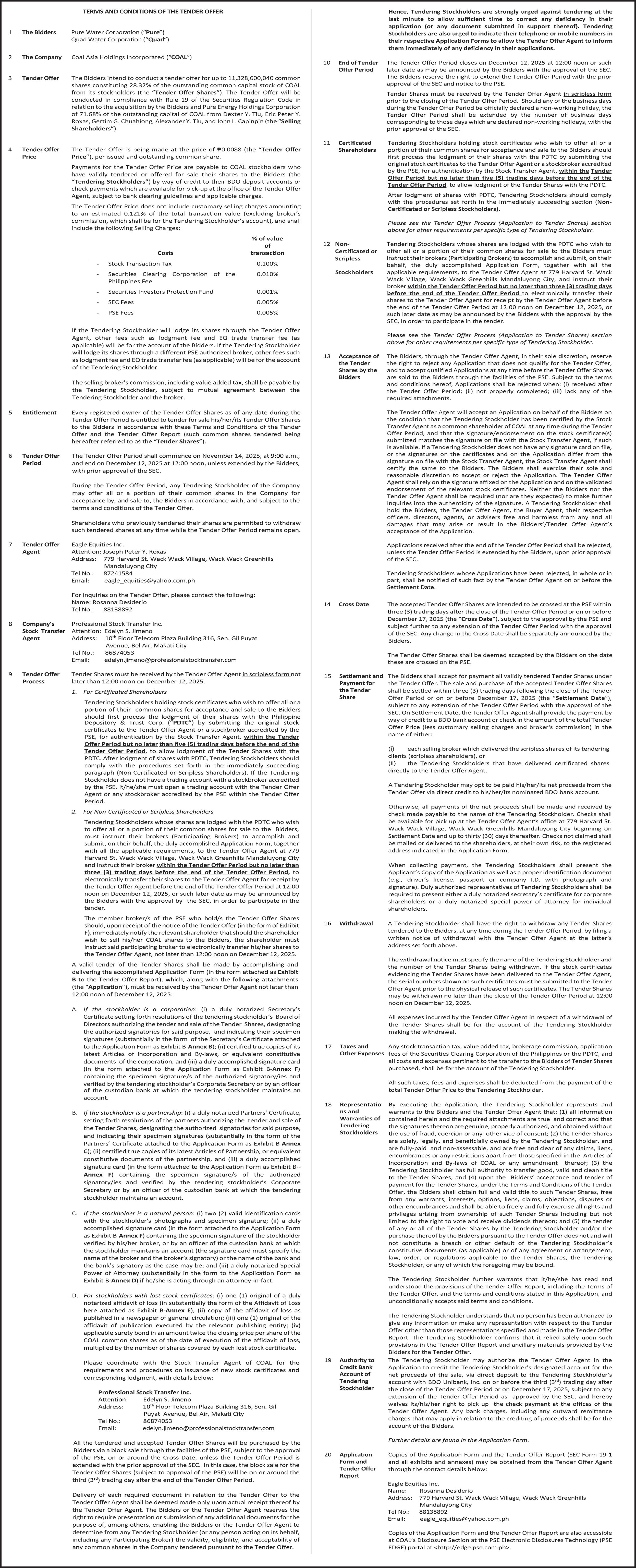
By Lenie Lectura @llectura
SM Prime Holdings, Inc. is ending the year with100 megawatt-peak (MWp) of installed rooftop solar photovoltaic (PV) capacity across its properties, according to the Department of Energy (DOE).
On Wednesday, the DOE said SM Prime has installed rooftop solar PV systems in 59 properties, deploying 200,000 solar modules across 65 hectares of rooftop area. This growing footprint underscores the company’s commitment to scaling renewable energy (RE) within its operations.
The milestone was celebrated during the “Switch On to 100 MW” event at SM City North EDSA led by SM Supermalls President Steven Tan and attended by DOE Secretary Sharon Garin, together with officials from SM Prime and other government partners.
“Clean energy becomes truly powerful when people feel its benefits where they live, work, and gather,” Garin said in a statement.
“SM Prime’s achievement sends a clear message: sustainability can be
accessible, visible, and part of daily life. We in the DOE are proud to work with companies that take the initiative to build a healthier and more energysecure future for all Filipinos.”
The company’s rooftop solar installations are helping reduce emissions and grid consumption while improving comfort, strengthening energy resilience, and uplifting the communities that depend on its malls as daily centers of activity.
“Every megawatt of clean energy that comes online helps reduce our reliance on imported fuel, shields consumers from volatile energy prices, and strengthens our long-term climate commitments,” Garin added.
“‘Switch On to 100 MW’ is more than a celebration of installed capacity. It reflects how private companies like SM Prime are continuously upgrading their facilities to meet stakeholder needs and respond to the realities of a changing climate. We encourage more companies to follow this example and invest in renewable energy and energy efficiency solutions.”
The DOE also reaffirmed its commitment to work closely with the private sector in scaling up RE deployment.
By Butch Fernandez @butchfBM

THE call to extend the estate tax amnesty has gotten more support, a day after the Department of Finance itself backed the proposal.
Last Wednesday, Sen. Jose Pimentel Ejercito Jr., aka “Jinggoy” Estrada, said he filed a bill seeking to extend the estate tax amnesty, which ended last June 14, for another three years, or until June 14, 2028, to give Filipino families more time to settle long-standing inheritance issues without fear of penalties or overwhelming financial obligations.
The DOF stand, made known last Tuesday when it endorsed a similar House measure, is to extend the amnesty till December 2028, expanding the coverage to the estate of individuals who died on or before December 31, 2024.
“Many Filipino families have been struggling for decades to settle the paperwork of their inherited land or property. Not because they don’t want to, but because of lack of funding, poverty, missing documents, family feuds, and lack of access to legal assistance,” Estrada said in filing Senate Bill 1488. The proposed bill seeks to amend the Tax Amnesty Act, or Republic Act (RA) 11213, as previously updated by RA 11569 and RA 11956, to extend the estate tax amnesty until June 14, 2028. to give heirs and beneficiaries additional time to formalize transfer of ownership of inherited properties.
Estrada noted that despite the enactment of RA 11213, which waived penalties and reduced the compliance burden for heirs who had long been unable to settle inherited estates, a large segment of Filipino families have been not availed of the amnesty.
“Many do not have the means to hire counsel, while others lack information and experience difficulty navigating legal procedures,” he said.
By extending the availment period to 2028, Estrada hopes to give families a real chance to formalize property ownership, unlock the economic value of idle lands, and finally resolve long-standing estate issues.
“This measure continues the true spirit of the estate tax amnesty— helping families who have been unable to settle their obligations not out of defiance, but out of incapacity. Through this extension, we empower them to move forward, use their inherited property productively, and contribute to national development,” the seasoned lawmaker said.
Under SB 1488, heirs may either manually or electronically file their Estate Tax Amnesty Return at any authorized agent bank, Revenue District Office, Revenue Collection Officer, or authorized tax software provider.
Estrada expressed confidence that extending the amnesty will not only promote social justice and intergenerational equity, but also boost local economies by turning dormant estate assets into productive properties.
GLOBAL bond yields have risen to highs last seen in 2009 ahead of a key Federal Reserve policy meeting, signaling concerns that interest-rate cutting cycles from the US to Australia may be ending soon.
Yields on a Bloomberg gauge of long-dated government bonds have returned to 16-year highs, with money market bets underscoring that sentiment. Traders are now pricing virtually no more rate cuts from the European Central Bank, while betting on an all-but-certain hike this month in Japan and two quarter-point increases next year in Australia.
Even in the US, where the Fed is expected to cut rates on Wednesday, the outlook is rapidly evolving. Yields on 30-year Treasuries have climbed back to multi-month highs as investors eye a less benign outlook for monetary policy, inflation and fiscal discipline. The Fed’s preferred gauge of prices edged up to 2.8 percent in September, almost a full percentage point above the central bank’s target. Concerns around the independence of the next Fed Chairman is spurring some investors to build a risk premium into the Treasuries curve, and borrowings to help plug a $1.8 trillion budget deficit are also weighing on bonds.
“A ‘disappointment trade’ is unfolding across several developed markets” as investors come to grips with central bank ratecutting cycles that may be ending soon, wrote Robert Tipp, chief investment strategist and head of global bonds at PGIM Fixed Income. Long-term US rates also face challenging conditions with an end to the Fed’s easing cycle possibly in sight, he added.
The market shift reflects growing conviction that the rate-cutting cycle—introduced last year to spur growth and has, in the process, propelled global stocks to record highs and boosted bond prices—is ending soon. Bond investors are now mulling the outlook for global growth, examining inflation risks amid President Donald Trump’s trade war and surging government debt from
Tokyo to London.
Bond yields in Japan to Germany have also climbed to multi-year highs, with longer-dated debt under most pressure as investors seek higher compensation for holding riskier securities.
Constrained
TREASURIES are in focus just hours ahead of the Fed meeting, where policymakers are expected to deliver a third consecutive cut. Yields on 10-year Treasuries are hovering around the highest levels since September, an unusual phenomenon that suggests concerns around the US’ debt pile and who may replace Chairman Jerome Powell when his term ends in May.
White House National Economic Council Director Kevin Hassett has emerged as the front-runner, and is widely considered a supporter of Trump’s preference for lower rates.
“We’ve seen the Hassett-trade price in easing monetary policy in recent days with a weaker dollar, steeper yield curve and rallying risk assets,” wrote Gordon Shannon, a portfolio manager of TwentyFour Asset Management. “However, markets are hesitant about how far to push this—even a Hassett-led Fed may be constrained by persistence in inflation.”
For now, global bond markets are signaling that borrowing cost pressures will persist.
German lawmakers are set to approve a record €52 billion ($61 billion) of defense orders next week, while investors are still digesting Japan’s biggest burst of spending since pandemic restrictions eased.
In Sydney, central bank Governor Michele Bullock has virtually ruled out rate cuts, with the rapid shift in expectations driving Aussie bond yields to the highest among developed markets.
“This yield move is about anticipating stronger growth because the world will likely be fiscally more expansionary next year,” said Amy Xie Patrick, head of income strategies at money manager Pendal Group Ltd. Bloomberg
TBy Andrea San Juan
HE Asian Development Bank (ADB) has approved a $400 million policy-based loan to support government reforms to improve ease of doing business and help position the Philippines as a top investment destination in Asia and the Pacific.
A statement issued by the multilateral lender last Wednesday read that the “Business Environment Strengthening with Technology (Best) program-subprogram 1” supports private sector development reforms to streamline and improve transparency of regulatory requirements and processes for businesses.
“It also seeks to facilitate investment in priority sectors with strong development impact and strengthen digital delivery of government ser-
vices to businesses and investors,” the ADB also noted.
Andrew Jeffries, ADB Country Director for the Philippines, emphasized that the multilateral development bank is committed to assisting the Philippines in finding “innovative ways” to create an enabling environment that would spur a more dynamic business sector—one that will help drive faster economic growth.
“The private sector is an important engine of growth and job creation. Their role in the country’s
overall economic development cannot be overstated,” added Jeffries.
The ADB noted that the Philippines ranked last year 52nd out of 67 economies in the International Institute for Management Development’s “World Competitiveness Ranking.” The country placed 36th out of 50 economies in the operational efficiency pillar of the World Bank’s “Business Ready framework.”
“The rankings point to regulatory and bureaucratic frictions that hinder new businesses and slow productivity and innovation, particularly for micro, small, and medium-sized enterprises,” the multilateral development bank said.
The government has prioritized addressing existing barriers in doing business to boost the country’s competitiveness and drive increased investments and job creation.
As such, the program seeks to establish “better legal, regulatory, and institutional frameworks to facilitate starting and operating a business, including faster permit and licensing procedures and government approval of new ventures.”
According to the project data sheet
published on the website of ADB, the Best program builds on earlier ADB support to “enhance” the business environment. The support includes the “Increasing Competitiveness for Inclusive Growth” program, which sought to generate employment by increasing competitiveness in the economy. There were also a series of financial sector development programs designed to increase the flow of credit to the private sector. The Best program also builds on the “Post-COVID-19 Business and Employment Recovery” program, which sought create sustainable employment opportunities through support to existing and emerging businesses.
Likewise, ADB support also came in the form of the “Domestic Resource Mobilization” program, which the lender said was designed to create fiscal space to increase productive investments and promote more inclusive and sustainable growth.
“The [Best] program will also enable downstream investments in the renewable energy and information and communication technology sectors by rationalizing the investment approval process,” the ADB noted.
By Reine Juvierre Alberto @reine_alberto
THE chairman of the Philippine Amusement and Gaming Corp. (Pagcor) announced that the regulator has intensified responsible gaming measures as the country’s digital gaming market continues to grow.
Speaking at the “G2E Asia @ the Philippines 2025” in Pasay City, Pagcor Chairman and CEO Alejandro H. Tengco said the new financial safeguards include the delinking of e-wallets and certain payment channels to strengthen integrity and player protection across the fast-growing online sector.
Tengco said the transition to tighter payment controls has prompted operators and players to recalibrate, resulting in softer revenues in the latter part of the third quarter of this year.
He added that the measure is essential to improve traceability, reinforce anti-money laundering protections, and curb illicit financial activity.
UNPROGRAMMED appropriations under the Special Purpose Fund in the national budget are constitutional and even necessary, so long as they strictly follow the safeguards or three special provisions under the General Appropriations Act (GAA).
Senate President Pro Tempore Panfilo “Ping” M. Lacson stressed this last Tuesday after Supreme Court Justice Ramon Paul L. Hernando said the practice of integrating unprogrammed appropriations in the GAA is unconstitutional and even “repugnant.”
APRIO LLP, the 24th largest business advisory and accounting firm in the US, announced that it has expanded its presence in the Philippines with the opening of its second office in Makati City.
A statement issued by Aprio Philippines Inc. read that the new office is designed to support the expanding workforce and enhanced service delivery the firm’s local business,
“In recent months, most of you are aware that our industry has confronted severe headwinds,” Tengco said last Wednesday. “These reforms inevitably have short-term impacts that are necessary because we cannot build a modern digital gaming ecosystem on foundations that do not fully meet global integrity and compliance standards.”
The Pagcor chief added that the payment reforms are part of a broader responsible gaming framework that Pagcor has been strengthening throughout the year.
“This commitment extends to responsible gaming and player protection,” Tengco said.
Licensed operators are also now required to integrate responsible gaming tools such as self-exclusion and betting limits to help players manage their gambling habits more sustainably.
Pagcor has likewise prohibited the use of credit cards and cryptocurrencies for betting, a measure that Tengco said was based on recognizing “the risks of over-borrowing and impulsive behavior.”
“With all due respect to Justice Hernando, ‘unprogrammed Appropriations’ under the Special Purpose Fund is necessary to augment certain items under the Regular Budget as long as the same strictly complies with the three Special Provisions under the GAA, namely: (a) there is an excess non-tax revenue collection; (b) there is an accompanying or new revenue measure and; (c) approved loans,” Lacson said.
“Further, only the President may approve such augmentation due to some justifiable reasons in order to fully implement specific programs,
ensuring scalable capacity for future growth while providing a more accessible workspace for its over-100 employees in Metro Manila.
Since opening its flagship office in Clark Global City in April 2022, Aprio has rapidly grown its workforce from 75 to 400 by year-end, recording an impressive 525-percent increase, read the firm’s statement.
Aprio Philippines’s teams support services across tax, advisory,

Gaming Ambassadors, and accredit rehabilitation centers to ensure that those in need of professional care have immediate access to support.
Advertising practices have also undergone major reforms through Pagcor’s partnership with the Ad Standards Council last July.
The partnership led to the removal of gambling ads from public spaces and established stricter rules to ensure marketing materials remain truthful and socially responsible.
“These efforts reflect Pagcor’s long-term goal of cultivating a more secure, transparent, and internationally aligned gaming environment,” Tengco said. “The future of gaming will demand regulatory agility, industry cooperation, and a shared commitment to integrity, and players should always feel that their safety and well-being remain at the core of our policies.”
Support systems are likewise expanded through partnerships with foundations such as the Seagulls Flock Organization to establish a 24/7 helpline, train Responsible
activities and projects (PAPs) clearly identified therein,” he added.
Lacson, who has devoted his energy to being the unofficial watchdog of the national budget, noted that what made the unprogrammed appropriations “controversial and legally infirm” under the 2024 GAA were two additional special provisions inserted in during the bicameral conference committee proceedings.
These additional special provisions included government-owned and controlled corporations such as the Philippine Health Insurance
assurance, wealth management, and business operations, focusing on analytics, technology adoption, compliance modernization, and workflow optimization.
“Aprio Philippines’ rapid expansion, showcased with our new, strategically located office in Makati City, underscores our commitment to both our global clients and our Philippine team. This growth reflects the increasing demand for
G2E Asia @ the Philippines brought together regulators, operators, and technology leaders from across the region to examine emerging trends and the changing expectations of Asia’s gaming market.
Corp. (PhilHealth) and foreign-assisted projects, he pointed out. Both items have been addressed in the Senate version of the 2026 budget bill, with the provision on GOCCs excluded.
Lacson has repeatedly pushed for a stop to the abuse of the unprogrammed appropriations in the budget after noting that from 2023 to 2025, P151.426 billion was spent for flood control projects under the unprogrammed appropriations, aside from the P1.006 trillion taken from the programmed appropriations. Butch Fernandez
international talent and for scalable, end-to-end service delivery across Aprio’s global network. By investing in our local office, we are not just expanding capacity, but we are strengthening collaboration and positioning Aprio to lead the next era of global transformation for our clients,” Dave Kothari, Global Solutions Delivery Leader and Partner at Aprio, was quoted in the statement as saying.
By Rizal Raoul S. Reyes Contributor
DESPITE possessing huge reserve funds, the Philippine Health Insurance Corporation (PhilHealth) has failed to update its hospital reimbursement rates. These obsolete rates, which date back to over a decade, result in significant under compensation for hospitals, which has consequently resulted in a huge financial burden placed on patients even with the organization’s promise of universal health coverage.
In a new study by the Philippine Institute for Development Studies (PIDS), the national insurer’s “All Case Rates” (ACR) system, introduced in 2013 to standardize hospital reimbursements, has been lagging with the true cost of health care.
Instead of merely increasing rates, the study titled “Kabayarang Sapat, Serbisyong Tapat, DRG Dapat: Transitioning from PhilHealth All Case Rates to a Fairer, Responsive, and Transparent Provider Payment System (A Retrospective Policy Analysis of the All Case Rates from 2018 to 2023)” calls for PhilHealth to transition to the Diagnosis-Related Groups (DRG) payment model. The proposed reform is designed to ensure that hospitals receive fair compensation, and patients are protected from excessive out-of-pocket expenses.
Case rates stuck in time UNDER the ACR system, PhilHealth pays hospitals a fixed amount per illness or procedure, regardless of the severity of a patient’s condition. Yet, of the 8,869 existing case rates, a huge 99.9 percent have never been updated since 2013.
Between 2014 and 2023, the study reported that the cost of hospital in -
YBy Candy P. Dalizon Contributor
OUR chest X-ray shows a nodule. What immediate steps should you take?
Lung nodules, also called pulmonary nodules, are small spots or lumps that sometimes show up on a chest X-ray or CT scan. Most of the time, they do not cause any symptoms and are not harmful. However, in some cases, they can be an early sign of lung cancer.
Dr. Michael Agustin, head of the Lung Nodule Clinic of Healthway Cancer Care Hospital (HCCH) said a lung nodule is the most tangible and visible diagnostic sign, making it the ideal focus for easy, standardized care. By leveraging AI screening on X-rays and imaging, doctors can quickly identify incidental nodules and send patients directly to the Lung Nodule Clinic, ensuring prompt, consolidated management.
Dr. Agustin said what the Lung Nodule Clinic aims to achieve is this—when a
ST. Luke’s Medical Center Global City has established its Inhaler Clinic Service to optimize the care of patients managing pulmonary disorders such as asthma and Chronic Obstructive Pulmonary Disease (COPD).
While inhaler therapy is the cornerstone of treatment, a critical gap exists. Studies show that up to 94 percent of patients do not use their inhalers correctly, a major error that directly results in poor symptom control, frequent exacerbations, and a reduced quality of life. Recognizing this, St. Luke’s has launched this first-of-its-kind clinic to ensure patients receive not only the proper medication but also the correct technique and support. The ultimate patient benefit is maximized treatment effectiveness, leading to better disease control, fewer flare-ups, and an enhanced quality of life.
patient services rose by an average of 3.4 percent each year. Because PhilHealth’s case rates have not kept pace with these increases, their real value has dropped by about 40 percent over the past decade.
“While PhilHealth’s nominal reimbursement has remained the same, its real peso value has declined, and hospital charges have continued to rise,” the authors wrote.
For example, the case rate for a normal childbirth has remained at P6,500 for years. However, due to inflation, this amount was worth only P3,900 in 2023, much less than what hospitals actually spend to provide care.
Consequently, hospitals are in a dilemma struggling to cover rising costs while trying to maintain service quality, particularly in public and provincial facilities where most low-income Filipinos seek care.
Hospitals lose, patients pay BETWEEN 2018 and 2023, average hospital charges increased by 51 percent, from P23,852 to P36,130, while PhilHealth reimbursements remained at around P11,000. According to the study, 98.8 percent of hospital claims have now surpassed the case rate. Hospitals often operate at a loss for covered services, and patients are left to shoulder the remaining balance. Out-of-pocket payments continue to comprise about 44 percent of total health spending, highlighting how Filipinos remain financially vulnerable even with insurance coverage.
The authors noted that the ACR’s flat, one-rate design does not account for differences in case severity or comorbidities. They pointed out that PhilHealth’s bundled payment system under the ACR policy fails to adequately reflect the wide range of patient conditions and costs.
patient has a lung nodule, a core team of pulmonologists, radiologists, and pathologists immediately steps in to decide the next course of action.
“They will now determine what will be the next step. Will it be a repeat scan? Will it be a biopsy? Will it be PET scan?” said Dr. Agustin.
This coordinated approach is particularly beneficial in a resource-limited setting because it reduces patient costs by stopping the cycle of redundant referrals.
“Essentially, the Lung Nodule Clinic is all about easy access and streamlined collaboration,” added Dr. Agustin.
Medical oncologist Dr. Kenneth Samala shared that during his fellowship abroad, a suspicious lung nodule was automatically flagged to the dedicated lung nodule team.
Dr. Samala is also the ASPIRE lead researcher. ASPIRE (Asia Pacific Policy Review and Engagement) for Lung Cancer is a multilateral collaborative initiative dedicated to improving lung cancer outcomes across
“Bundling must be fair and appropriate so that it accounts for the costs of a wide range of complexities in healthcare. Patients with more severe presentations or comorbidities may require more resources, even with the same disease,” the authors explained.
“When case rates do not consider clinical complexity, healthcare providers may face financial risk and incur losses while delivering the full range of services needed to treat complicated patient cases,” the authors added.
Under the current setup, PhilHealth pays for only up to two case rates per patient, with the second diagnosis or procedure reimbursed at just 50 percent of the case rate.
The structure, the authors warned, penalizes hospitals that care for more complex or multiple-condition patients, effectively passing the financial burden onto those already struggling with illness.
Payment delays add pressure ASIDE from insufficient payments, hospitals also contend with slow reimbursement processes.
In 2023, even the best-performing claims, those processed smoothly without requiring corrections, took a median of 87 days to process, while those returned for corrections averaged 221 days, or more than seven months.
On average, hospitals spend about 49 days preparing and filing claims after a patient’s discharge. Once submitted, it takes PhilHealth another 31 days to process and pay the hospital.
As a result, these delays affect hospital cash flow and threaten the financial stability of smaller facilities.
A timely response TO address these issues, the research -
the Asia-Pacific region.
“So that really streamlines, that makes everything faster. I hope that we can operationalize something similar to that because that is a very common finding that we see.
And it’s always a question, what do we do with this lung module? If you have medical experts looking into it, then definitely that would be easier for patients. And we’d be able to detect and monitor these modules,” added Dr. Samala.
Lung Nodule Clinic
LAUNCHED in September 2025, HCCH’s Lung Nodule Clinic is designed to address the challenges of managing lung nodules. The clinic provides a quick and efficient way for patients to have these nodules evaluated.
“As the country’s first dedicated cancer care hospital, we are committed to addressing the leading cause of death among cancer patients. Our response is to create a sustainable and efficient program that enables the early diagnosis of cancer,” said Dr. Agustin.
ers recommend that PhilHealth adopt a DRG payment model, an evidencebased system that classifies patients by diagnosis, severity, and resource use, ensuring that reimbursements match the actual complexity of care.
“Payments based on DRGs are more realistic, offering better financial coverage for both providers and patients,” the authors emphasized.
Under the proposed shift, the authors said hospitals would receive prospective payments based on expected service volume and performance through a Global Budget arrangement, as mandated by the Universal Health Care (UHC) Law. Instead of waiting months for reimbursements, hospitals would receive frontloaded funds, their share of the total health budget, at the start of the fiscal period.
“Rather than being paid after every individual claim is submitted, hospitals can use the prospective payment to budget for the period and smooth the purchase of inputs,” the authors explained.
If properly implemented, the authors said the DRG and Global Budget setup could better align incentives, reward efficiency, and promote transparency, especially when supported by routine cost reviews and stronger data reporting.
Rebuilding public trust
“RESOLVING the underlying design issues of the payment system requires reform to the entire provider payment mechanism as mandated by the UHC Law,” the authors stressed.
They cautioned that one-off rate increases will not solve deeper design flaws. Even with a P600 billion reserve fund in 2024 and recent announcements of a 30 percent across-the-board hike, the study said PhilHealth has yet to undertake systematic updates of its payment structure.
A significant feature of the clinic is its Multidisciplinary Team Conference (MDTC), where specialists collaboratively review complex cases and utilize proven medical guidelines to determine optimal next steps. This team approach, involving pulmonologists, radiologists, oncologists, and other specialists, is crucial for creating a personalized and efficient care plan for every patient.
The cornerstone of the clinic’s early detection strategy is its Low-Dose CT (LDCT) Lung Cancer Screening Program. This quick scan uses minimal radiation to detect small nodules, which can be early signs of cancer, before symptoms develop, addressing the critical issue of late-stage lung cancer diagnosis.
The Lung Nodule Clinic is located at the Multi-specialty Clinic on the 2nd Floor of Healthway Cancer Care Hospital, South Union Drive, Arca South, Western Bicutan, Taguig City. For inquiries or to schedule an appointment, please call (632) 7777 4673 loc. 4722 or mobile number (63) 917 125 7676.
By Rory Visco | Contributor
IN the Philippines, lung cancer remains one of the deadliest cancers and is often detected and treated too late. But experts say this no longer has to be the case. With rapid advances in medicine, diagnostics, and artificial intelligence (AI), early detection is becoming more possible, and treatment outcomes are improving faster than ever before.
For Dr. Tony Ramos, a lung cancer specialist and thoracic oncology expert, the progress is unmistakable.
“The treatment for lung cancer today is a lot, lot better than just five years ago,” he said. “The technology is moving so fast—development of molecules, precision therapies—that we can always offer something better. There is a lot to be hopeful about,” he explained when asked by BusinessMirror.
This growing sense of optimism is shared by AstraZeneca Philippines, which has ramped up its investment in health innovation to help Filipinos access earlier diagnosis and more effective treatment. At the core of this push is a simple but powerful ambition: a future where no one dies of lung cancer.
Lung cancer made manageable
DR . Cyril Tolosa, AstraZeneca Philippines’ medical affairs director, noted that breakthroughs in research and development have significantly extended the lives of patients, even those diagnosed at late stages.
“Our ambition is that lung cancer becomes easier to cure because medicines are getting better,” he said. “There’s data now showing that with a particular medication, life extension can reach up to four years. Before, latestage patients had maybe one year, sometimes just months.”
The game changer is precision medicine. Unlike traditional chemotherapy that hits both healthy and cancerous cells, precision therapies target specific gene mutations in the tumor. But to determine which medication works best, patients need to undergo biomarker or gene testing, a form of advanced diagnostics that can be costly.
This is where AstraZeneca has stepped in. Over the past five years, the company has funded free testing for thousands of Filipino patients, working with key laboratories nationwide. “If you have lung cancer, get tested,” Tolosa urged. “Your gene may match a specific treatment that can give you a better chance at survival.”
Building a system that leads patients to care
INNOVATION isn’t just about medicines or machines. It’s also about building systems that allow ordinary Filipinos to navigate their health journey without financial obstacles.
Tolosa explains that a strong health system must begin with accessible screening: “A simple X-ray, AI-supported tools, and PhilHealth coverage for low-dose CT scans and biopsies can help patients enter the system without paying out of pocket.” Once inside, biomarker testing and preci -

sion treatment complete the pathway to better outcomes.
The promise is clear: earlier detection, earlier decisions, and ultimately, longer lives.
AI-powered screening, local innovation AI is emerging as one of the most promising tools in early detection. Dr. Ramos has seen its potential firsthand in Singapore. “Artificial Intelligence can help determine the right medicine, right dose, right timing based on individualized factors—weight, height, other conditions,” he explained. “My dream is to bring this level of precision medicine to the Philippines. We still have a long way to go, but we will get there.”
AstraZeneca has already begun laying the groundwork through the AstraZeneca Multi-Stakeholder Health Innovation Hub, established with the Philippine Economic Zone Authority. Part of the company’s global A.Catalyst Network, the hub serves as a space where startups, health experts, and government agencies can collaborate to develop new health technologies. One early product of this collaboration is an AI-driven chest X-ray tool from India, which helps identify abnormalities faster and more accurately. AstraZeneca is also exploring AI-assisted CT scans and digital pathology, technologies that can detect minute abnormalities that the human eye may miss. And beyond diagnostics, the innovation hub aims to consolidate health data across regions. “We have so much information scattered everywhere,” Tolosa said. “If we organize and analyze it through AI, we can identify disease patterns by city or province. Then the government can design targeted health programs based on real needs.”
Hope, a call to action FOR Filipinos living with lung cancer and the families who support them, these advances represent more than scientific progress; they offer renewed hope.
A long-time cancer survivor and advocate, Engr. Emer Rojas, president of the Lung Health Alliance of the Philippines, put it plainly: “Let’s not lose hope. Early detection saves lives. We must push for it so people know how to prevent and address lung cancer properly.”
As innovation accelerates and partnerships deepen, the Philippines stands at a turning point. By combining science, technology, and a commitment to accessible care, experts believe lung cancer can become not a death sentence, but a treatable, manageable disease, one Filipino patient at a time.
Clinic ensures correct technique for better breathing, fewer attacks
The clinic provides comprehensive support, including essential coaching on the use and care of nebulizers, empowering patients to manage their respiratory conditions confidently.
Correct inhaler technique
THE Inhaler Clinic employs a multidisciplinary core team of pulmonologists and respiratory therapists to optimize respiratory management. The clinic’s specialized approach centers on four goals: assessing and teaching correct inhaler technique for proper medication delivery; monitoring adherence and treatment outcomes through regular follow-ups to adjust therapy based on progress; identifying and solving devicerelated problems such as device mismatch for patients with physical limitations; and empowering patients and caregivers through structured education for effective

home management. By focusing on these areas, the Inhaler Clinic delivers tangible patient improvements, including fewer asthma and COPD attacks, better medication absorption, reduced emergency room visits and hospitalizations, and an improved overall quality of life.
Referral to the Inhaler Clinic is recommended for any patient who could benefit from focused education and monitoring to ensure optimal respiratory management. This specifically includes newly diagnosed patients immediately after an inhaler is prescribed, as well as patients recently discharged with new inhaler



NITED STATES President
UDonald Trump’s 2025 National Security Strategy (NSS) devotes sharp attention to the Republic of China, or Taiwan.
The language is explicit: “There is, rightly, much focus on Taiwan, partly because of [its dominance in semiconductor production, but mostly because it] provides direct access to the Second Island Chain, and splits Northeast and Southeast Asia into two distinct theaters. Given that one-third of global shipping passes annually through the South China Sea [SCS], this has major implications for the US economy.”
The framing is clear: Taiwan is the pivot. The SCS/West Philippine Sea (WPS) is acknowledged as vital. Yet, the Philippines—frontline state, treaty ally, and host of US forces under the Enhanced Defense Cooperation Agreement (EDCA)—was absent in the rhetoric. So too are most Southeast Asian partners.
This silence is not reassuring. It signals a narrowing of Washington’s Indo-Pacific lens. Trump pledges to deter Chinese aggression in the Taiwan Strait to harden US presence in the Western Pacific, while pressing Japan and South Korea to spend more on defense.
But Manila was not named. The omission raises questions about whether America’s declaratory commitments extend beyond Taiwan and the northern arc.
The irony is stark: Trump warns that control of the WPS/SCS could allow a hostile power to impose “tolls,” or close it at will. One-third of global trade passes through these waters. If freedom of navigation is worth defending in the Taiwan Strait, it is equally worth defending the Philippines’ western waters. But it seems the latter is left in the margins of the text.
For Manila, the lesson is sobering. We cannot assume US deterrence over Taiwan automatically covers our own disputes. The burden of defense modernization, maritime patrols, and diplomatic assertion falls increasingly on our shoulders.
If Washington’s gaze is fixed on Taiwan, then the Philippines must fight to ensure it is not the forgotten ally—useful in geography, expendable in strategy.
This brings us to the question of America’s “iron-clad” commitment. US officials have repeatedly described the Mutual Defense Treaty as such. Trump’s mantra, however, has always been transactional diplomacy. Access to Philippine bases under EDCA is as much about projecting power into the Taiwan Strait as defending Philippine sovereignty. The danger is that this commitment
may be temporary—tied to one president’s priorities—and vulnerable to reversal. In this age described as “VUCA”— volatile, uncertain, complex, and ambiguous—the Philippines cannot afford to hinge its security on the promises of one ally. There may be another “Trump,” or another leader, who not only reneges on commitments, but makes a 180 -degree turn against us. That possibility alone behooves us to rethink our defense and maritime strategy outside the US sphere of influence.
Casting a wider net
DIVERSIFYING security cooperation is the first step. Japan, Australia, South Korea, New Zealand and India are natural partners in maritime patrols, technology sharing, and training. Even if Manila is not a formal member of the “Quad,” it can position itself within that wider deterrence framework, ensuring Southeast Asia is not left out of the Indo -Pacific equation.
Equally important is Asean leadership. The Philippines must assert a stronger role in shaping the region’s collective maritime security agenda. Coordinated patrols, intelligence sharing, and a unified stance on freedom of navigation can prevent Southeast Asia from being sidelined in strategies that increasingly focus on Taiwan and the northern arc. Defense self-reliance is another pillar. Modernization of the Philippine Navy and Air Force must be accelerated, with emphasis on surveillance, coastal defense, and cyber capabilities. EDCA sites should not function merely as staging grounds for American forces, but as hubs for Philippine capacity - building, strengthening our own deterrence posture.
Economic leverage also matters. Our nickel and cobalt reserves are strategic assets in global supply chains, particularly for clean energy technologies. Manila should negotiate deals not only with Washington but also with India, Japan, and the European Union, ensuring that our minerals are tied to diversified partnerships that enhance resilience and reduce dependence on any single power.
Finally, diplomatic balance must be pursued. Engaging Europe, South Korea, and Middle Eastern partners in maritime cooperation and investment broadens our options and cushions us against shifts in US priorities. A wider net of allies makes the Philippines less vulnerable to the transactional swings of American diplomacy, and more capable of shaping its own destiny in the Indo -Pacific.

THE head of the Ukrainian mission to the Philippines described the ongoing foreign aggression in her country as “an asymmetric war of the 21st century.”
Ambassador Yuliia Fediv—the first resident ambassador of the Eastern European nation to the Philippines—recently recounted the tragic state of her countrymen and the effect of the bloody hostilities on their daily lives amid its protracted struggle against Russia, displayed through an apparent power imbalance between vastly unequal forces.
“While we are speaking today at this moment, my country and people are experiencing the sirens, bombings, and shellings from Russian drones and missiles,” the envoy narrated during her talk “The Path Towards Peace” spearheaded by the School of Diplomacy and Governance (SDG) of the De La Salle-College of Saint Benilde (DLS-CSB) as part of its Ambassador’s Lecture Series.
“Each day, we have new victims of the Russian-Ukrainian war, and it’s [hundreds and thousands] of people—not only the military people who are fighting on the battlefield, but also the civilians, the women and children who are dying from Russian bombs each day,” Fediv shared before the college’s diplomat-aspirants. She likewise discussed its long-term implications to the future of democracy.
Amid the devastation, Fediv recounted the way Ukrainians used their creativity to improve their structures and rebuild what had been destroyed by their invaders. Some of the innovations they have developed included bombproof bus stops, new schools, and in-built bomb shelters for children.
To provide the academic audience a proper perspective, the ambassador discussed her country’s historical background and political system. She
reiterated how the Russian-Ukrainian war began, its repercussions on her nation and the world, and prospects that it could end in peace.
From the Crimean Peninsula’s occupation in 2014 until the launch of a full-scale invasion in 2022, Fediv described how her fellow Ukrainians have shown resistance against the Russian forces to defend their independence.
“We are doing everything possible to take back our territories and to preserve our people’s lives,” she claimed. “Russian troops are moving but at the same time, Ukrainian troops are fighting back.”
Fighting falsehoods
ACCORDING to the diplomat, “a strategic ploy of the Russian propaganda machine and disinformation campaign is promoting the narrative that labels their enemies as ‘Nazis’ in order to justify Russia’s attack on Ukraine.”
Aside from the allegations, Fediv addressed how Russia uses culture and sports as a political tool which can project power and reinforce its positive image in the world.
“They are asking what Ukraine actually is if they do not have their own language, their own culture— it’s a part of Russia, [or] a small Russia,” she added. “That’s why it was crucial for us to maintain fighting against Russia in all fields: on the battlefield, in Ukraine, and in the minds of the people.”
With the war’s impact going beyond injuries sustained on the front line—which also causes mental health issues and infrastructure losses—the Ukrainian envoy recog-

nized the importance of recovering from the strife and reconsidering democracy, international law, and organizations such as the United Nations.
She remains optimistic that the strife would soon end: “It’s just [the] people’s will. Because it’s a war between different values: democracies and authoritarianism, between big guys in the room who can [decide] to invade, without any punishment.”
“Because when we talk about the end of this war, it’s not just a signature of peace; it’s a bigger picture. It’s about the International Tribunal or International Criminal Court, where all war criminals will be punished and will be accountable,” Fediv went further. “At the same time, it’s also a security guarantee for Ukraine, that we will never be invaded, hopefully in the next 100 years.”
She noted they are left with no other choice but to retaliate, as it would be like picking between striking back and losing their lives on the battlefield, or stopping resistance and dying in concentration camps instead.
“As for now, [the only solution we have] as Ukrainians is to fight back. It’s about who will be standing longer: we or Russians,” she said. “Because if we fight back, we still have hope for the future. If we stop, Russia will take us, and we know what will happen.”
“It will be many concentration camps in the territory of Ukraine where many…will be taken hostage, killed, raped, et cetera,” she continued. “Occupation is a different kind of war. It’s a silent war.”
SDG Dean Gary Ador Dionisio DPA explained that “at its core, this conflict is not simply [about] territorial boundaries. It’s about whether the principles of sovereignty, human dignity, and self-determination that underpin democratic governance can withstand pressures exerted by authoritarianism and the politics of brute force.”
Dionisio, likewise, highlighted the crucial role of solidarity among nations in forming a united front against the invasion, as well as the people’s shared responsibility and interdisciplinary dialogue to find principled solutions.
“Ukraine’s struggle is not theirs alone. It is a struggle that resonates with all societies that aspire for freedom, dignity, and self-determination,” Dionisio further stated. “To defend democracy in Ukraine, to defend democracy in the Philippines, is ultimately to defend democracy itself.”
Former Philippine envoy to Egypt and Benilde SDG guest lecturer Sulpicio Confiado also presented his insights on the lecture, as he related the aggression against Ukraine to the current conflict experienced by the country.
“You have shown us a template on how it is and what it means to stand up to the greater powers than us,” the Filipino diplomat opined. “As you said, Ukraine [has 33.3 million citizens; Russia has 143.5 million. The same is true with] the Philippines. We’re trying to stand up to our biggest neighbor, which has a population of 1.4 billion people.”
“And you showed us how it can be done in spite of the fact that the other side has more military hardware,” he added. “You have shown us that a people united, protecting its values, its identity, its culture, and its very way of life, is more than a house of missiles and bombs.”
The talk was followed by an open forum, and also served as the launch of the “What is Ukraine?” exhibition mounted at Benilde The Atrium.
THE British Chamber of Commerce Philippines (BCCP) vice chairman Chris Nelson is confident that—with a competitive edge in Southeast Asia—the country’s Asean chairship in 2026 will enable it to become an entryway for firms from the United Kingdom looking to expand in the region.
“The Philippines is a good place to set up an entrance to Southeast Asia, and we have been advocating British companies to come here and do that, then obviously, they can look at a wider area,” Nelson stated.
Despite an ongoing corruption probe in the government, the BCCP executive said the Philippines can leverage its position as Asean chairman
to promote stability and predictability. He upholds that the chamber will work closely to support the country in Asean, while advocating for British companies to enter the local market.
“I would say that the Philippines’ competitive edge is, of course, in its own right, [being a very important market, with] close to 120 million people,” Nelson pointed out.
He noted the importance of the Philippines maintaining a presence in key trading areas, such as the Regional Comprehensive Economic Partnership or RCEP, and the country’s application to the Comprehensive and Progressive Agreement for Trans-Pacific Partnership or CPTPP, of which the Philippines has applied
for membership in August this year. These measures reduce trade barriers, promote increased trade in and out of the country, and attract foreign investment.
“What we see as a landscape, though, is how we can further develop trade and investment [with] the UK,” remarked Nelson, as he said such will work jointly with the chamber’s efforts to promote the Philippines as a vital investment destination for British companies, such as their active collaboration with the Philippine Economic Zone Authority or PEZA, having co-hosted the Philippine-British Investment Forum 2025.
Improved economic ties have highlighted relevant sectors such as
renewable energy, electronics and semiconductors for British investment. They complement the Department of Trade and Industry’s fivepoint economic agenda, particularly strengthening investment and trade connections, as well as advancing digitalization. These reflect the BCCP’s ongoing efforts to promote bilateral trade, alongside their support for legislation regarding Cybersecurity and Digital Payments

In an urgent call to compassion and community, Golden Icons, in close partnership with the Armed Forces of the Philippines 3rd Infantry Division, will mobilize a comprehensive humanitarian outreach to uplift families devastated by Typhoon Tino in Compostela, Cebu.
The relief operation, taking place on Friday, December 12, 2025, will extend immediate care and holistic assistance to 150 affected families, many of whom are still grappling with the long-term impact of the typhoon. The activity will deliver essential services that respond not only to physical needs but also to mental wellbeing and dignity, an initiative that truly reflects a whole-of-community approach.
Through the program families will receive free medical check-ups, mental health awareness seminar, diagnostic laboratory services, distribution of relief goods, wellness massage and haircutting services.
“This initiative goes beyond relief; it is a restoration of dignity, a spark of hope and a commitment to stand beside communities who are still recovering from hardship,” Golden Icons stated.
In recognition of the meaningful support from participating organizations, Golden Icons shared that media coverage will be provided through established news outlets including SunStar Cebu, News Watch Philippines, PTV4, NET25, The Freeman, The Manila Times, BusinessMIrror, Pilipino Mirror and Bilyonaryo News. Participating companies and organizations will be acknowledged for their humanitarian contribution.
Golden Icons, together with its partners, remain steadfast in the mission to bring healing, compassion and tangible assistance to families affected by Typhoon Tino.
To ensure that each family is served
with care, Golden Icons is inviting continued support in the form of hygiene kits, packed food, clothing and volunteer medical professionals. The organization emphasized that collaboration and unity will always be the most powerful forces in rebuilding lives.
A growing coalition of respected parters has already signed up for the mission including One top Medical Systems Resources, InLife Foundation, Rotary Club Makati Uptown, Chunnel and Channel Realty Marketing and Development, Technical Education and Skills Development Authority, iCare HMO and Rotary International District 3780.
“Every contribution, every volunteer and every helping hand strengthens the message that no community stands alone,” Golden Icons emphasized.
Golden Icons, together with these partners organizations, continue its dedication to bringing healing, compassion and tangible support to communities whose voices need to be heard and whose strength deserves to be restored.
T
HE Tourism Infrastructure and Enterprise Zone Authority
(TIEZA) proudly underscored its commitment to cultural preservation, sports tourism, and sustainable tourism development through its continued stewardship of the Club Intramuros Golf Course (CIGC), one of the Philippines’ most historically significant recreational sites and a distinctive gem in the country’s golf tourism landscape.
Strategically located within the storied walls of Intramuros, the Club Intramuros Golf Course offers a rare combination of athletic pursuit and heritage immersion.
Established in 1906 during the early American colonial period, the course is not simply a leisure amenity but a living mark of Manila’s layered history. Its manicured greens and fairways sit against the backdrop of Spanish-era fortifications, old watchtowers and historic artillery, making it one of the few golf courses in the world built entirely within a preserved heritage district.
More than a destination for golf enthusiasts, the Club Intramuros Golf Course plays a vital role in sustaining cultural identity and community vibrance. It serves as a green lung within the capital’s historic center, a venue for sports tourism activities, and an iconic tourist spot that connects modern recreation with the Philippines’ colonial heritage.
As one of TIEZA’s managed properties, the Club Intramuros Golf Course exemplifies two of the agency’s four core mandates: (1) to develop and maintain quality tourism infrastructure, and (2) to preserve cultural and historical assets for future generations.
TIEZA’s dedication to the preservation of CIGC ensures that its historic significance is honored while continuing to meet standards for sports tourism facilities. Current efforts include heritage-sensitive landscaping, structural conservation, facility upgrades, drainage and irrigation improvements, and sustainability-focused maintenance work—each guided by the agency’s responsibility to balance

preservation with modern tourism needs.
“TIEZA is committed to protecting tourism assets that reflect our cultural roots and elevate the Philippines as a global destination,” said TIEZA COO Mark T. Lapid. “The Club Intramuros Golf Course is a symbolic reminder of our past and a vibrant platform for sports tourism. Its continued preservation is made possible through the support of every Filipino traveler.”
TIEZA emphasizes the collective power of Filipino travelers in shaping the country’s tourism landscape. A portion of travel tax collections directly supports the operations, upkeep, and preservation of tourism assets under TIEZA’s portfolio, including the Club Intramuros Golf Course, ensuring the continued protection of its historical structures and the improvement of its tourism facilities. This includes maintenance of the course’s fairways, greens, and heritagesensitive landscaping, and upgrading of facilities such as lighting, safety features, and visitor amenities for year-round playability.
Every contribution made by travelers helps TIEZA sustain the CIGC as a safe, enjoyable, and historically significant site, allowing both local and foreign visitors to appreciate the unique experience of golfing within the centuries-old Walled City.
As golf tourism continues to grow globally, the Club Intramuros Golf Course stands as one of the Philippines’ most strategic assets. Its central location, night golf offerings, rich heritage value, and picturesque setting make it a key attraction for international golfers and tour operators seeking distinctive, memorable experiences.
BAGYONG Tino recently brought strong winds and prolonged rainfall, resulting in high-tide flooding across the municipality of Mandaue, Cebu. This led to the destruction of property, deterioration of agriculture, collapsed infrastructure, and widespread casualties. Overall, the aftermath posed long-term social and economic challenges for the residents.
Communities are gradually rebuilding and recovering with the aid of the local government unit (LGU). As reported, the Mandaue City administration has taken appropriate measures to ease the situation and restore the city. Additional preparations for the locals, such as necessary evacuations and close monitoring of coastal residences, are also included in their protocol as a precautionary measure.
The country’s leading home improvement and construction supply retailer, Wilcon Depot, gave a heartfelt contribution to the LGU of Mandaue, Cebu, in support of recovery efforts following Bagyong Tino.
Wilcon Depot representatives, AVP for Sales and Operations Ruben Flores and Operations Manager Arnel Cordez, handed over a P200,000 donation to Madaue Mayor Thadeo Jovito “Jonkie” M. Ouano at the Mandaue Local Government Unit Office.
Wilcon Depot supports the LGU of Mandaue’s proactive strategies to mitigate the impact of Bagyong Tino and safeguard the community against future disasters.

Wilcon Depot continues to extend donations to help alleviate the impact of recent challenges. Over the years, the company has charitably supported various foundations and made direct contributions to the affected communities. Through these efforts, Wilcon reinforces its commitment to strengthening community bonds. A reminder of the importance of being an active participant in shaping a better future for the nation. For more information about Wilcon, visit www. wilcon.com.ph or follow their social media accounts on Facebook, Instagram, and TikTok, or subscribe and connect with them on Viber Community, LinkedIn, and YouTube. Or you may contact Wilcon Depot Hotline at 88-WILCON (88-945266) for inquiries.

PETS make life better and so does caring for their health. That’s why Boehringer Ingelheim, a leader in animal health, continues to champion meaningful connections between pets and their owners. This commitment comes to life through Pets Date Night, now in its 5th year, a signature event that celebrates the next-level bond between pets and people, strengthened by complete parasite protection from our trusted portfolio.
This year’s celebration takes things up a notch. Expect an unforgettable experience packed with activities for fur parents and their beloved pets. From live performances by Justin Vasquez and featured bands to carnival games, prizes, and interactive activities, every
moment is designed to bring pets and owners closer together.
One of the most anticipated highlights returns: “Holitails Pawchella”—a Coachellainspired pet costume show with a festive holiday twist. Picture this: pet owners strutting the runway with their dressed-up pets while music fills the air. It’s creativity, fun, and warmth all in one. Health is also going to be a priority. Guests can enjoy free veterinary check-ups and learn practical tips for responsible pet care, including how to keep pets protected from parasites year-round.
But Pets Date Night is more than just fun. It’s about promoting responsible pet ownership, supporting animal welfare groups, and encouraging adoption—because every pet deserves a loving home.
Join the grandest Pets Date Night yet on December 13, 2025 at the Garden Ring, Ayala Malls Manila Bay. Registration starts at 1 PM.
Let’s celebrate the bond that makes life better—for pets, for people, for all of us. Stay updated on the event page: https://www.facebook.com/ share/1GZsCgH3TS/
CIGC complements the country’s broader network of world-class golf courses, further positioning the Philippines as an emerging golf tourism hub in Asia. As part of TIEZA’s long-term tourism development roadmap, enhancements to the course are expected to support increased visitor arrivals, economic activity for Intramuros and nearby communities, and wider recognition of Manila as a historic yet dynamic destination.
With its blend of history, heritage, and sport, the Club Intramuros Golf Course represents a triumph of cultural preservation and tourism development. Its continued protection is a shared responsibility made possible through TIEZA’s stewardship, the support of the Department of Tourism, the involvement of the Intramuros Administration, and the contributions of Filipino travelers through the travel tax.
Recently, President Ferdinand Marcos Jr. emphasized his vision for the revitalization and sustainability of Manila City landmarks and centers. TIEZA supports this direction and recently launched the “Sundays at Club Intramuros” initiative to give the community an opportunity to enjoy non-golf activities such as walking, jogging, light exercises, and small group picnics within the historic Intramuros walls.
As TIEZA advances its mission of Building Tourism Together, CIGC remains a powerful reminder that preserving the country’s past plays an essential role in shaping a stronger, more vibrant tourism future.
For more information, visit https://tieza. gov.ph and follow @TIEZAOfficial on Facebook, and @tiezagovph on Instagram and X.
HOLIDAY Inn & Suites Makati welcomes the holiday season with “Eco Merry & Bright,” a meaningful Christmas celebration centered on family, togetherness, and the beauty of repurposeful creations.
The theme reflects the hotel’s belief that the true spirit of Christmas is found in simple joys, thoughtful giving, and shared moments that bring families closer.
This year’s festive concept transforms purposeful


FAMILIES today are navigating a more complicated world than ever before. Children are growing up surrounded by screens, faster schedules, and rising levels of anxiety reported globally. Many parents tell me they feel overwhelmed—wanting to protect their children’s mental health while still giving them opportunities to learn, play and connect. This is why even gift-giving becomes a community responsibility. Every toy we give either contributes to a child’s development, or pulls them further into passive entertainment. This holiday season, let’s give more than toys. Let’s give moments—moments that spark learning, laughter and love. This year, may we choose Gifts That Teach.
In my talk at SM Baby Company’s bootcamp held in SM Makati last October, titled “Start Them Younger with Smart Play,” I introduced my concept of Shared Play. For me, Shared Play strengthens family bonds and relieves stress. Playing with the child is not just the mom’s role. Play is the perfect opportunity for dads, lolos and lolas, and siblings to be part of children’s milestone developments. It gives a common goal to the family to do its best to nurture your children’s progress.
Shared Play goes beyond simply handing a toy to a child. It is the joyful act of playing with them—parents and siblings joining in the fun, grandparents showing familiar games, titos [uncles] and titas [aunts] cheering them on. Research shows that children thrive when adults take part in their play. Shared Play creates a sense of security, deepens parent-child bonds, and models cooperation. When families play together, children learn that they are valued, heard and loved.
Last weekend, it was an enriching moment when a dad in a toy store told me he was choosing a Minecraft Claw Machine for his son because it invited handson play. He shared that he wanted his son to play more, and not stay on gadgets. He said he and his wife even requests relatives to give educational toys to support their efforts in reducing screen time. Did you know that 80% of your child’s brain develops by age three? Or that the American Academy of Pediatrics recommends zero screen time for children under 18 months (except video chats)? Studies also show that children with access to a variety of toys reach higher intellectual achievement, regardless of background. So the toys we choose matter.
MAKATI Medical Center (MakatiMed) formally launched the expansion and revitalization of its subspecialty services under the MakatiMed Institute of Neurological, Neurosurgical, and Behavioral Sciences (M.I.N.D.S.) through a lobby exhibit and program held on November 17, 2025, at the hospital’s Tower 1 Lobby and the Dr. Romeo H. Gustilo NeuroSciences Center.
Edgardo Juan L. Tolentino Jr., MD, Director of M.I.N.D.S., welcomed the guests, and Noel L. Rosas, MD, Director for Professional Services, officially opened the event. MakatiMed Medical Director Saturnino P. Javier, MD, underscored the institution’s commitment to advancing patient-centered neurological and psychological care. A ribbon-cutting ceremony of the M.I.N.D.S exhibit marked the official launch of the expanded services.
In addition to the existing clinics under the Department of Neurology, Department of Neurosurgery, and Department of Psychiatry, M.I.N.D.S. introduces new subspecialty clinics for Headache, Epilepsy, and Gait and Balance, along with the re-launch of the Memory Center and the Neuropsychology and Clinical Psychology Unit (NCPU). These enhancements strengthen MakatiMed’s capacity to provide specialized, multidisciplinary care for individuals with complex neurological and cognitive conditions. “Together, these programs form a powerful ecosystem that allows us to diagnose earlier, rehabilitate more effectively, and support patients holistically. They signal who we are becoming—an institute that is nimble, responsive, and committed to delivering world-class neuroscience care,” stated Dr. Tolentino.

Below are my Mommy No Limits’ gift suggestions:
AGES 0 - 2 CHOOSE toys that build sensory and motor foundations. The Melissa & Doug Blockables series introduces stacking, nesting, and early problemsolving with beautifully crafted wooden pieces. The Sassy S.T.E.M. Box Set encourages curiosity through textures and cause-and-effect play. The Learning Resources Farmer’s Market Color Sorting Set teaches colors, sorting, and early math readiness. These toys invite parents to sit on the floor, talk, sort and celebrate tiny victories with their little ones.
AGES 3 - 5
THESE years shape school readiness. Numberblocks remains my top recommendation—children begin to love math through characters and storytelling, something incredible to witness. Pretend play also teaches emotional expression. The new Melissa &
Doug Water Wow Color-Changing Stove Top as well as Grill Playset transform pretend meals with colorchanging effects. For language and communication skills, The Learning Journey Match-It series helps children build vocabulary while puzzle-solving together with adults; add the ABC Melody Maker, where music, letters, and games support multisensory learning.
AGES 6 - 8
THIS is the perfect stage for developing our child’s love for learning like science and social studies. The National Geographic Cool Reactions Chemistry Set turns your kitchen into a mini-lab while teaching scientific thinking. The Plus Plus Learn to Build Dinosaurs from Denmark is great for children who also like Lego. For geography and global awareness, the Playshifu Orboot Earth blends physical and digital play through an interactive globe filled with over 1000 facts. For girls, I recommend toys that build emotional strength. Nebulous Stars arts and crafts, diaries
and toys direct our girls to positivity and how to handle their emotions.
A FAMILY GIFT
ONE of my favorite recommendations this year is giving a Family Gift—a toy meant for everyone. The Merchant Ambassador Electronic Arcade Game Series (Basketball, Air Hockey, Hover Shot, Pinball, Duck Gallery, and the beloved Claw Crane Game) brings out laughter, competition, and teamwork. Imagine your family gatherings: instead of cousins disappearing behind tablets, everyone is cheering, scoring, and playing together. These are the memories that last.
In the end, choosing Gifts That Teach is choosing gifts with intention. It is recognizing that what we place in a child’s hands shapes what grows in their heart and mind. It strengthens families, supports parents, and builds closer families. This Christmas, may the gifts we give teach our children something lasting—about who they are, what they can do, and how deeply they are loved.
The many ways that baking is winter therapy. With a delicious ending
By Katie Workman The Associated Press
WHEN people talk about baking, they often focus on the final product. The tender cookies, the domed muffins, the rich brownies. But the real draw of baking starts long before you roll out the pie crust.
Baking can be many things: an act of creation, connection, control. There’s something comforting about the structure of it: the measuring, the stirring, the transformation of a handful of ingredients into something delicious.
Even if life doesn’t always feel orderly, follow the recipe and things should turn out as planned. It’s like therapy, with a present at the end.
“Baking is how I best connect with the world around me— making something wonderful and sharing it with others and seeing how much joy they receive from something I made with my own hands,” says chef Joanne Chang, co-owner of Flour Bakery in Boston and an author of baking cookbooks.
“It’s a way to make the world a bit sweeter one cookie, cake, pie at a time.”
AN OUTLET FOR ALL KINDS OF EMOTIONS
WHEN it’s cold outside, there’s something cozy about a warm kitchen and the aroma of something sweet.
But baking can also be catharsis for more volatile feelings: The term “rage baking” was popularized by writer Tangerine Jones, who turned to flour and sugar to channel her anger at the world’s injustices.
Baking can be about maintaining traditions, or possibly curiosity (what is julekake, anyway?).
ENGAGING THE HEAD, AS WELL AS THE HEART
HANNAH SKOBE , a doctoral student in astrophysics in Pittsburgh, loves the chemistry aspect of baking—how butter behaves differently at different temperatures, for instance, or why the proteins in egg whites break down when they are over-beaten. She also finds the process therapeutic, a much-needed break from work.
Ron Ben-Israel, who focuses on elaborate wedding cakes as chef and owner of Ron Ben-Israel Cakes, in New York City, was drawn as a child to “watching as ingredients change through technique” in his mother’s kitchen. Especially the process of whipping egg whites into meringue fascinated me,” he said.

TAPPING INTO ONE’S PAST FOR him and others, there’s an element of nostalgia. A parent’s rugalach recipe, the pie their favorite aunt made every Thanksgiving, the cookies they helped decorate as kids.
Or, it’s a way to mark the calendar: a crunchy, buttery crisp in the fall after an apple picking expedition, Irish soda bread on St. Patrick’s Day, a favorite birthday cake that must be made every year.
THE BEAUTY OF GETTING YOUR HANDS MESSY
ALEX GEORGE of the blog Lily P Crumbs finds something satisfyingly tactile and tangible about baking. Cracking eggs, creaming butter—there’s a lot of sensory pleasure to be had, especially in a screen-centric world. Kneading dough for bread, spreading the icing on cinnamon rolls. Her readers, she says, “love the process as much as the payoff.”
THE THRILL OF DISCOVERY
GEORGE loves inventing new kinds of baked goods, seeking inspiration whenever she tries a new food: “Savory food is my favorite kind of muse. One incredible French onion soup I had recently inspired my caramelized onion biscuits with French onion soup compound butter.”
Bernard Wong, an avid home baker in New York City, also enjoys delving into new techniques. He has experimented with laminated doughs (think croissants and puff pastry), and has recently played with the East Asian technique—known as tangzhong in China and yudane in Japan—of pouring boiling water over flour to partially cook it, resulting
in softer, fluffier breads. Wong takes pleasure in satisfying a craving for something by making it himself. For instance, he couldn’t find anadama bread, a traditional New England yeast bread, “but I know how to make it.
“It’s economical, I get to control what’s inside of it, and it passes the time when I’m in my apartment and keeps my hands busy,” he said. He often chooses high-quality ingredients and still saves money compared to buying the finished product. He splurges on expensive chocolate like Callebaut and Valrhona, for instance, and jams as many chips as possible into his cookies.
SPEAKING THE LANGUAGE OF SWEETS
EVEN better, confections like these are shareable and can be a way of expressing a sentiment. It might be as simple as “I missed you,” or “I thought you might need something sweet to get through this moment.”
Skobe recently made a banana cake with cream cheese frosting for her co-workers: “I loved seeing all of my friends come to my desk to grab a slice.” As Chang puts it: “I’m grateful I get to do something that I love so much and that others love so much too.” At its heart, baking feels hopeful. It might be about feeding others, or celebrating, or creating a moment of calm in an otherwise chaotic world, but it’s also about the belief that if you measure the ingredients and follow the steps, something good should come out of it. Oh, and julekake? It’s a Norwegian Christmas cake.
B8 Thursday, December 11, 2025 | Editor: Jun
Lomibao
By Jun Lomibao
BANGKOK—Justin Kobe Macario gave the Philippines its first gold medal in the 33rd Southeast Asian Games on a hectic and eventful Wednesday when 40 events were disputed in various fronts in the sporting arena and Cambodia pulled out its entire delegation because of escalated battle in its border with the host nation.
Macario topped the men’s individual freestyle of poomsae in taekwondo for Team Philippines which also clinched another poomsae silver and three bronze medals—John Derick Farr in men’s mountain bike downhill of cycling and the men’s and women’s hoops team of sepak takraw—with Thailand immediately making its intentions felt of dominating the games with a day’s best nine-gold medal before sundown.
The trio of Rodolfo Reyes, King Nash Alcairo and Ian Corton captured the men’s recognized poomsae silver medal at the Fashion Island Shopping Mall to compliment Macario’s top podium finish for the 1,600-strong contingent sent here by the Philippine Olympic Committee and Philippine Sports Commission.
Farr, on the other hand, got the bronze medal—his
third in the SEA Games after the gold in Tagaytay City in 2019 and the same finish in Hanoi in 2022—in the downhill competitions at the .35-km track inside the Khao Kheow Open Zoo in Chonburi.
“I did improve from yesterday’s [Tuesday] seeding run, but the very short period that the host allowed us to practice on this track wasn’t really enough,” said Farr as his teammate in the women’s squad, Naomi Gardoce, crashed after a 15-foot drop exiting an artificial bridge only 50 meters to the finish and had to be hospitalized for a fractured right collar bone.
Farr clocked two minutes and 43.676 seconds— five seconds better than his seeding run time— behind Thailand’s Methasit Boonsane, who defended his crown with a 2:37.856 and Indonesia’s Rendy Varera Sanjaya (2:38.714). The women’s downhill race saw Philippines 2019 champion Lea Denise Belgira finishing outside the podium.
“I’m surprised to have delivered our country’s first gold,” said Macario, 23, as he credited his success to coaches Rani Ortega and Jeordan Dominguez. “I’m really, really happy with my contribution to Team Philippines.
Macario scored 8.200 points to top the event against five other entries with Thailand’s
Sedurifa shines as Gilas squeaks past Malaysia to gain 3x3 semis
JOSEPH SEDURIFA nailed the game-winning deuce as the Gilas Pilipinas 3x3 nipped Malaysia, 2119, Wednesday to reach the semifinals of the 3x3 basketball competition of the 33rd Southeast Asian Games at the Nimbutir Stadium in Bangkok.
Sedurifa’s two-pointer with 1:19 left saved the wards of coach Patrick Fran from the jaws of defeat. Thet are unbeaten in Pool B, with a chance to top their group when they square off with Laos on Thursday.
Naturalized big man Ange Kouame had eight points while Joseph Eriobu and John Rey Pasaol added five markers each. Sedurifa also had three points for the Gilas 3x3.
“2-0 does not mean anything. We have to continue playing and with the same kind of defense especially I think
Vietnam made three two-pointers. In this game, I think Malaysia made four. We can’t afford that,” Fran said. “We have to defend the two, ganyan naman talaga ang 3x3 basketball. “We have to defend the two. The faster na maka-adjust si Ange and the rest of the guys, the better for the team,” he added.
A Kouame layup gave the Philippines a 16-12 lead with under three minutes remaining but the Malaysians refused to fold and forged a 19-all count on a two-pointer by Ting Chung Hong before Sedurifa rose to the occasion. The Gilas 3x3 men squad is eyeing the gold after taking home the silver at the expense of Cambodia in Phnom Penh two years ago.
Citing security and safety reasons, the Cambodians withdrew their participation in the Games Wednesday.

WHEELCHAIR basketball players Chester Rabanal and Christian Pepito are ready for another challenge as they make their international debut in para powerlifting in the 2025 Asian Youth Para Games in Dubai, United Arab Emirates. Rabanal and Pepito have represented the country abroad in wheelchair basketball.
“Excited and nervous,” said Rabanal, who was part of the PH wheelchair basketball team that competed in the 2024 Asia Oceania Zone Under-23 Qualifying tournament for the World Championships in Bangkok, Thailand.
“It’s a different feeling coming from a team sport, in terms of adjustment, there wasn’t much because I’ve always enjoyed strength conditioning,” Rabani, who will compete in the 65kg, said. Pepito, a standout from Malaybalay,
Koedkaew Atchariya settling for the silver medal with 8.100 points and Malaysia’s Ken Haw Chin capturing the bronze with 7.740 points.
The men’s squad of John Deryck Diego, Emmanuel Escote, Vince Alyson Torno, Jason Huerte, Ronsited Gabayeron and Marc Kian Jake Fuentes got 710 points to bag bronze in the men’s team event of hoops of sepak takraw behind Thailand (880) and Myanmar (790). Also at the Nakhon Pathom Stadium, the women’s squad of Jean Marie Sucalit, Rachelle Palomar, Rhea Mae Dela Cruz, Mary Ann Lopez, Abegail Sinogbuhan and Kristine Lapsit registered 600 points for the other podium finish in sepak takraw with the Thailand (970) again dominating and Burma (750) finishing with the silver medal.


BANGKOK—Alas Pilipinas has a tough opening match against home team and regional power Thailand in the 33rd Southeast Asian Games women’s volleyball competition on Thursday at the Huamark Indoor Stadium.
The match starts at 6:30 p.m. Manila time.
The Thais have not dropped a match against the Philippines since the championship game of the 1993 Singapore edition.
Alas will battle Singapore on Friday.
Playing in Pool B are 2023 runner-up Vietnam, Indonesia, Malaysia and Myanmar.
“Thailand is always good, it’s always strong, they play at home, and also I think it’s always a pleasure to play against them and measure how we are, at what stage we are as a team,” Jorge Souza De Brito, Alas Pilipinas’ Brazilian coach, said.
past two years will play a huge factor in Alas’ campaign to end a 20-year medal drought.
“We’ve gone up against some of the teams that we’re going to play against this SEA Games. So, we have confidence in that. We also have familiarity with each other since we’ve been playing as a team since last year. So, the system is there,” said de Guzman, who is making her fourth appearance in the SEA Games.
“This time around, we’ve had two seasons of being Alas Pilipinas. But yes, we do wish that we had more time to prepare for this. But nevertheless, the communication, the familiarity, we have that.” Mars Alba and Julia Coronel are the other setters on the squad, while Dawn Catindig and Justine Jazareno are the liberos.
De Brito is also pinning his hopes on veteran wingers Eya Laure and Vanie Gandler along with young hitters Angel Canino, Bella Belen, Shaina Nitura and Bukidnon, echoed the sentiment.
“I just focus on training,” Pepito, who will compete in the 80kg class, said.
Full 5x5 wheelchair basketball has been replaced with 3x3, and Team Philippines sent almost the same lineup from the 5x5 squad that finished sixth in the previous edition of the meet in Manama, Bahrain in 2021.
“With this being my second time to compete here, I’m not going to waste this opportunity. Our goal is to win the gold medal,” Edgardo Ochaves said.
The 48-athlete delegation supported by the Philippine Sports Commission and the Philippine Paralympic Committee seeks to surpass its one gold, six silver and two bronze medal haul in the previous edition.
Team captain Jia De Guzman is confident that the chemistry the team has built playing together in the

Japan-based Alyssa Solomon. The Alas middle blockers are Maddie Madayag, Dell Palomata and Amie Provido. De Brito didn’t have the luxury of training a full Alas Women squad because teams in the Premier Volleyball League only released their players to the national team once they were eliminated from the Reinforced Conference which wrapped up last November 30. Josef Ramos

By Josef T. Ramos