PAUL WRIGHT
"The tipping point is that magic moment when an idea, trend, or social behavior crosses a threshold, tips, and spreads like wildfire.”
Malcolm Gladwell, The Tipping Point
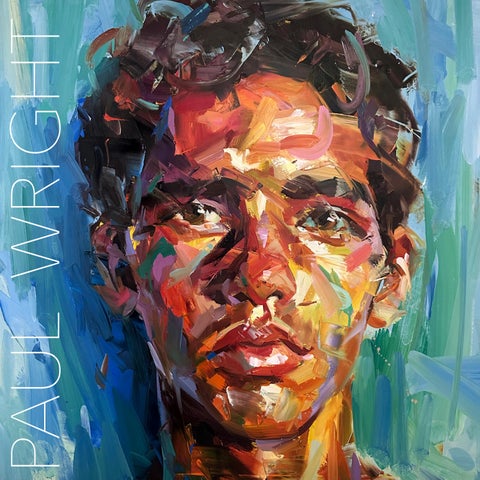
"The tipping point is that magic moment when an idea, trend, or social behavior crosses a threshold, tips, and spreads like wildfire.”
Malcolm Gladwell, The Tipping Point
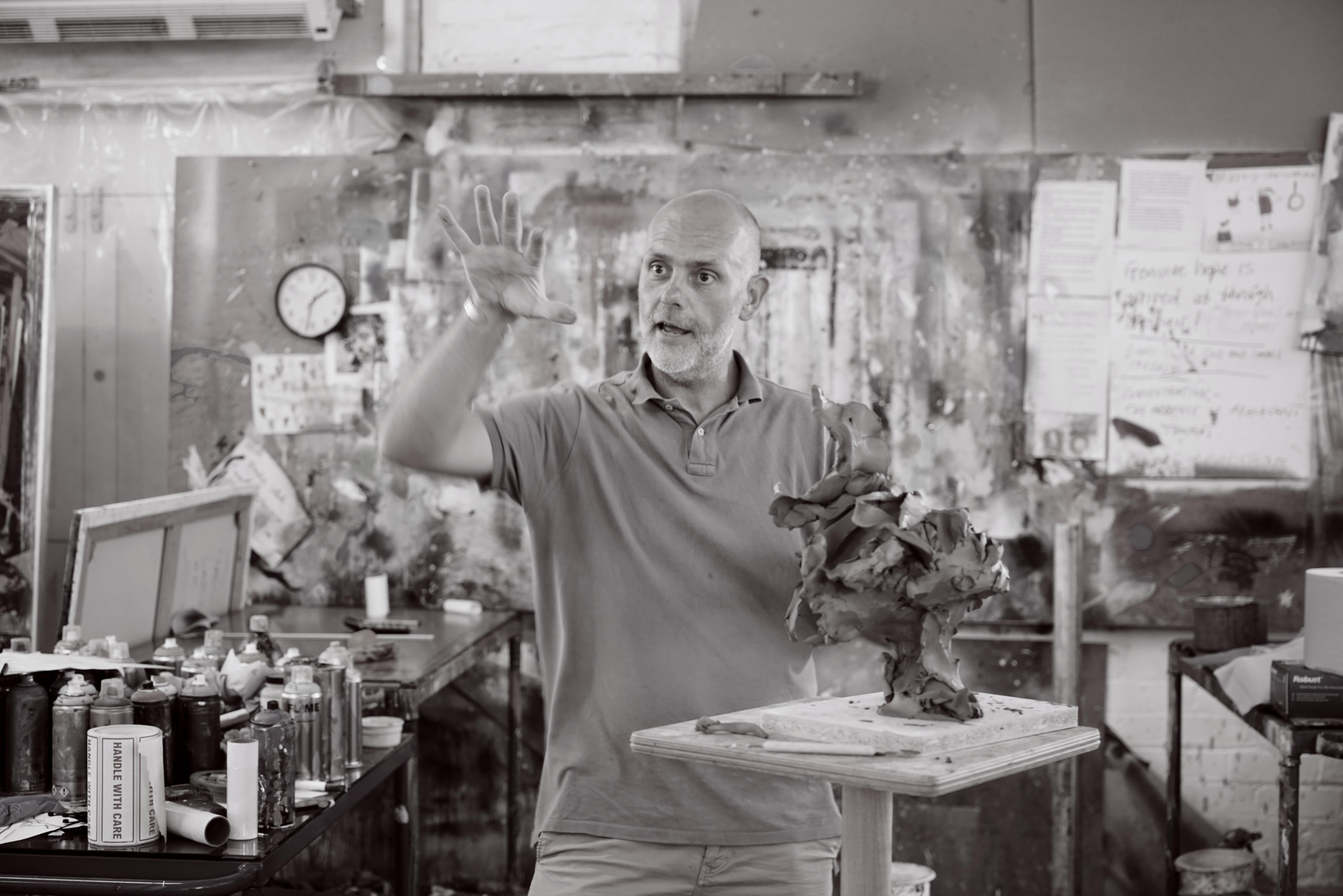
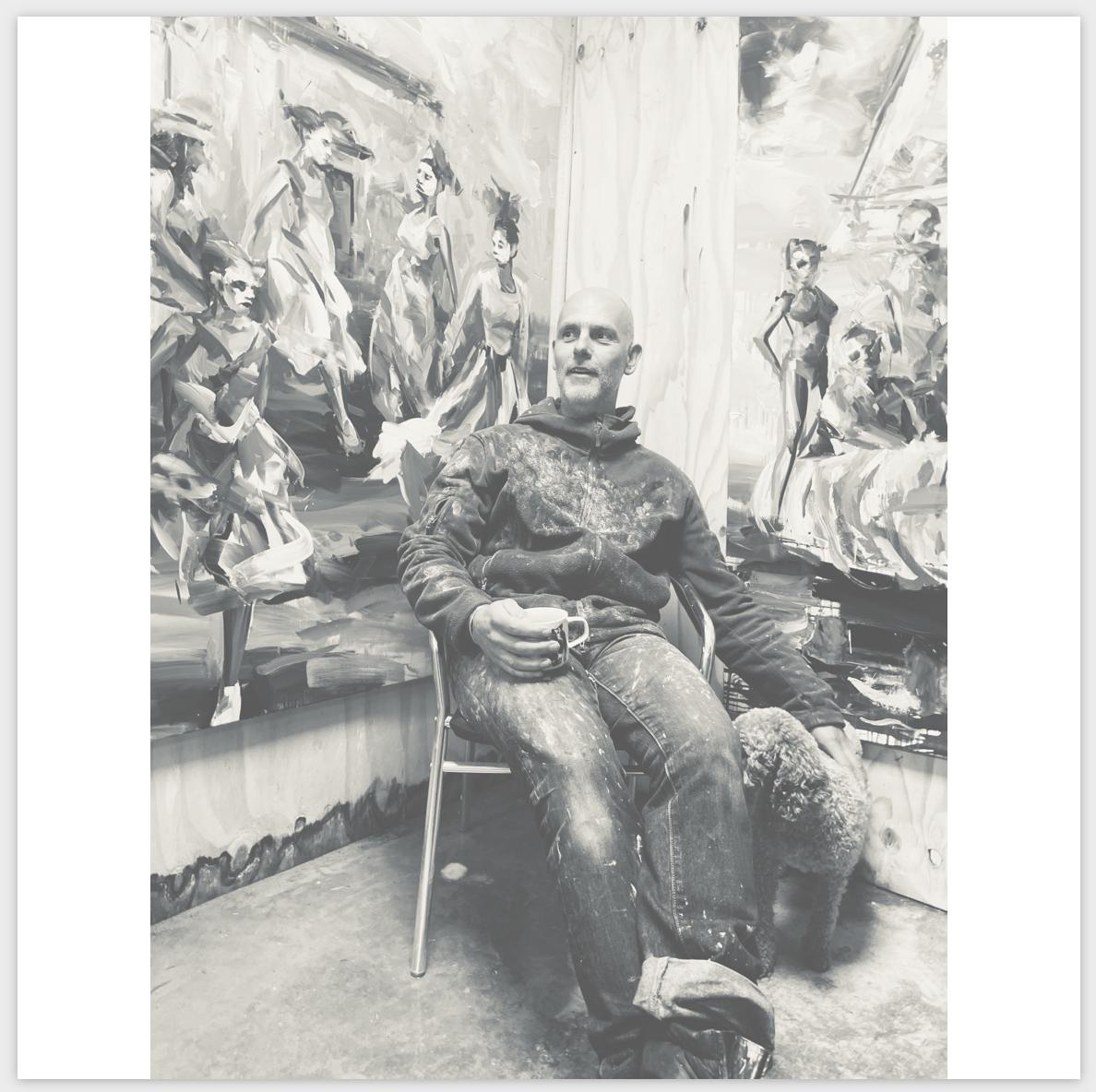
Studio conversations between Paul Wright and Jeni Weinberger
Photography by Jonathan Worth
With special thanks to Johnny Gorman, Tara Williams and Amelia Durie
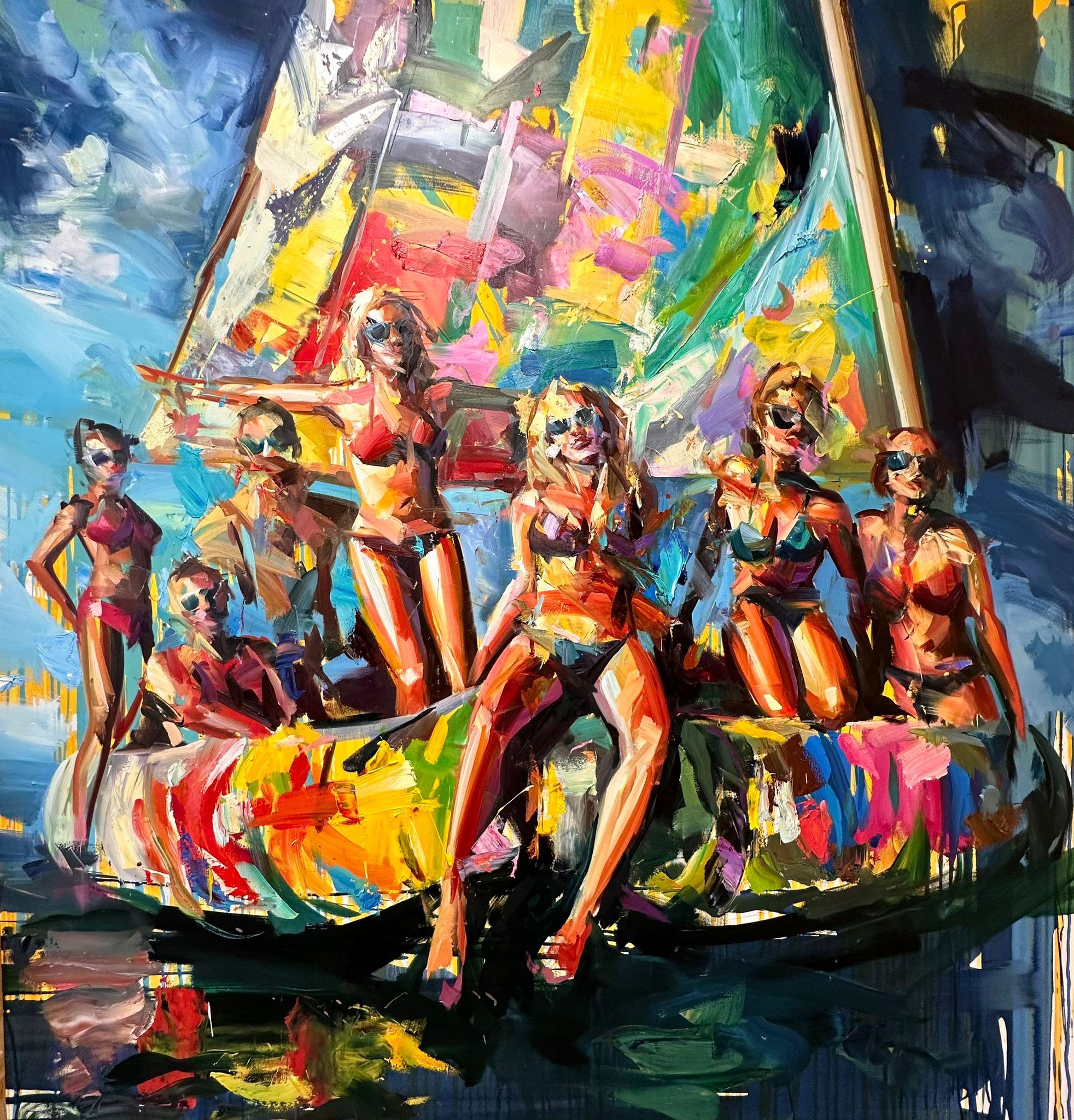
Jeni: Before this painting reached the canvas you talked about Théodore Géricault’s, "The Raft of the Medusa" (1818-1819). I can certainly see the influence in composition and storytelling but not in the palette and subject matter. It has a vibrant and energetic delivery with a contemporary, contrasting image of leisure and luxury. It is heavy with a whole range of social nuances. Talk me through the idea.
Paul: That picture (Raft of Medusa) has always been there for me since art school. Its a key painting in the pantheon of art history. It is a great vessel to build on and was my starting point here. Clearly this is very different in it’s storytelling but, it reflects aspects of our own time. Here, you can just make out the two males. They are very loosely painted, almost not there. By contrast the women at the front are assertive and defiant. Who are they? Why are they there?
Jeni: If this had been painted even 30 years ago, the gender imbalance would have seemed outrageous. Now it feels they own their space.
Paul: Definitely. It should be more disruptive than just a bunch of rich kids. This is about self empowerment coming directly at you, very different to Géricault. It has it’s good and bad. It is the way the world is now. Here, it is all about them. You can’t avoid it, loud, bright and directly at you. There is something of the Mad Max dystopian future, only it is now the future. The line has been stepped over, and the rules are different.
Oil on Linen
67 x 63 in | 170 x 160 cm
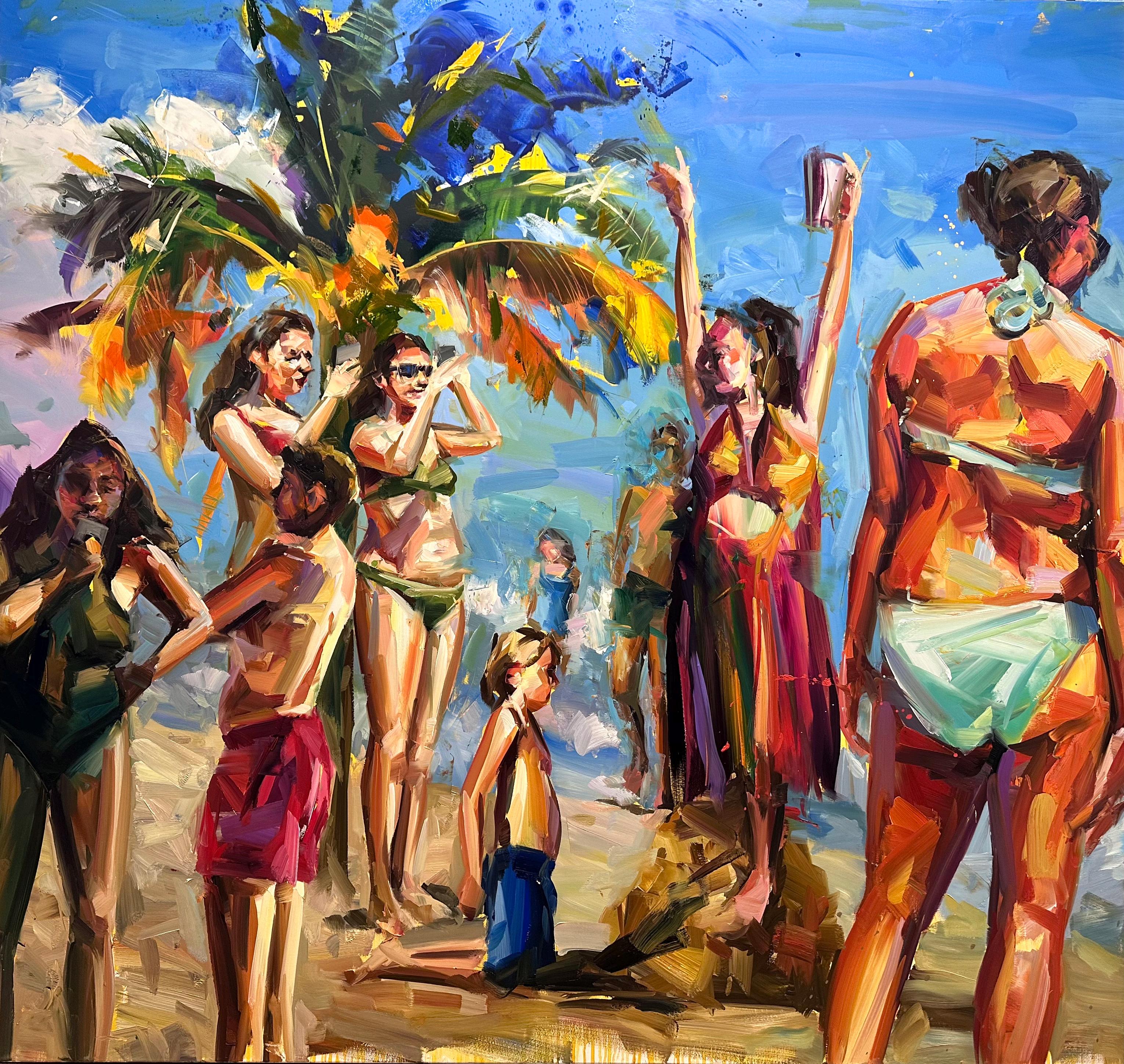
J: Hera’s Dance develops this theme of social commentary. The lady stands on the boy’s sandcastle, posing for the camera. Nobody acknowledges what has happened to the boy. It is an example of an increasingly familiar scene at beautiful spots around the world. The Age of Social Media.
P: I can tell you a story. On holiday last year; two women, kids feral, running wild and the women were oblivious. I went down to the sea and as I was coming back. One of the kids walked over and drank out of my water bottle. What was interesting was both women, both on their phones, neither interested in, or even aware of, what was going on around them. So I walked over with that bottle and gave it the child and said, ‘If you are thirsty, all you have to do is ask.’ I’ve seen it so many times where people have almost stopped functioning while on their phones. They’ve got this kind of thing wrapped around their consciousness. It’s a strange thing but it’s everywhere. It’s like everyone is in a bubble.
J: It is pervasive. But it’s one thing observing and another to paint it.
P: I don’t see anyone tackling it. Socially, I think we have stopped thinking about other people. It is a dangerous sinkhole to get sucked into. I also liked that it’s another dynamic to the traditional beach scene.
J: Yes to get the sea, you have to navigate your way around those people in hilarious poses at the shore line while their friend takes the photo. However here you have deliberately chosen an adult destroying a child’s fun, rather than adult vs. adult.
P: As trivial as this might seem, how far does it go before it becomes very dangerous and very troubling. We are bombarded by it. The danger is, when this physical disconnect from those around us, becomes the norm for our children. Hopefully this is a reflection of real life and at the same time a message of hope that it’s not too late to fix it.
on Linen 63 x 67 in | 160 x 170 cm
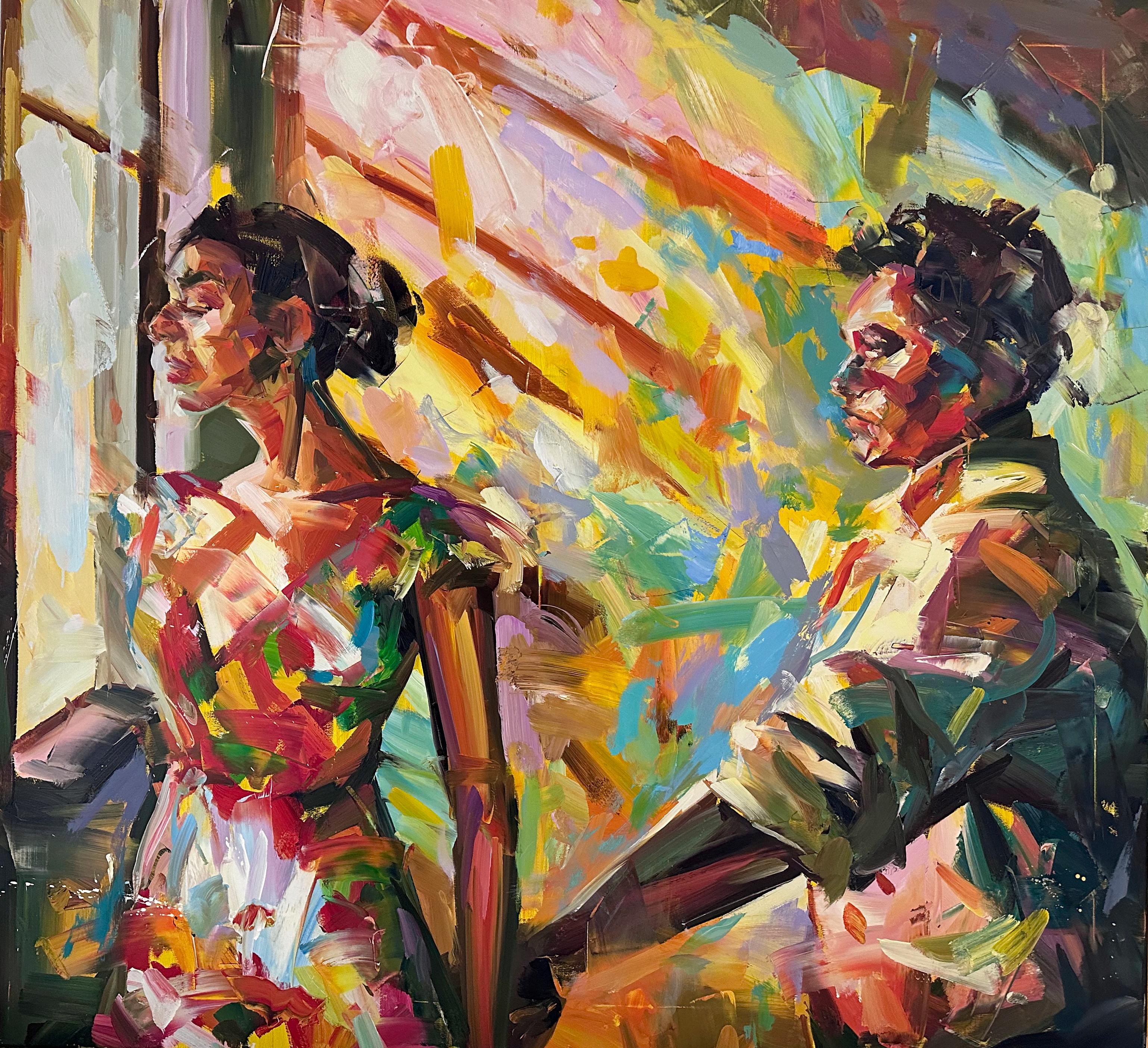
J: Unlike the previous two paintings. This one has an intimacy and a complexity of deep emotions. The palette is not dissimilar to the beach scenes but now we are in a private space, watching a fleeting moment in this connection.
P: The one thing I did want is a beauty in the palette, whatever it says about the relationship. Something warm and fresh, I didn’t want it to be a palette that suggested tension. If there is tension I want it to be seen through the drawing. The mood is slightly ambiguous. Are they about to reach resolution, is it a beginning of a happier moment? She is looking out of the window but she is still present. It’s a representation of the relationship that exists behind closed doors. The things that are said to each other which are not said in front of other people. At times those words can be quite brutal, emotional or matter of fact. Often they are words reserved only for those closest to us. It’s a moment others don’t ever see, even from other family members and children. I guess they are the moments common to all romantic relationships, and they are very different in that respect.
J: I can see how you explore emotional nuance and intimacy through the palette. How does this develop when your subjects are set in an interior like here?
P: In the larger paintings (in this collection) there are relationships, but they are not always immediately obvious. Whereas here, this is just two people, and it’s about that. I am definitely drawn to this contained setting because it is more complex on a micro level. Oddly enough with landscapes, it just doesn’t stop, a landscape can continue indefinitely. I feel it is harder to deal with, to bring an intensity to. I feel much happier when it is framed, almost like a stage.
47 x 51 in | 100 x 100 cm
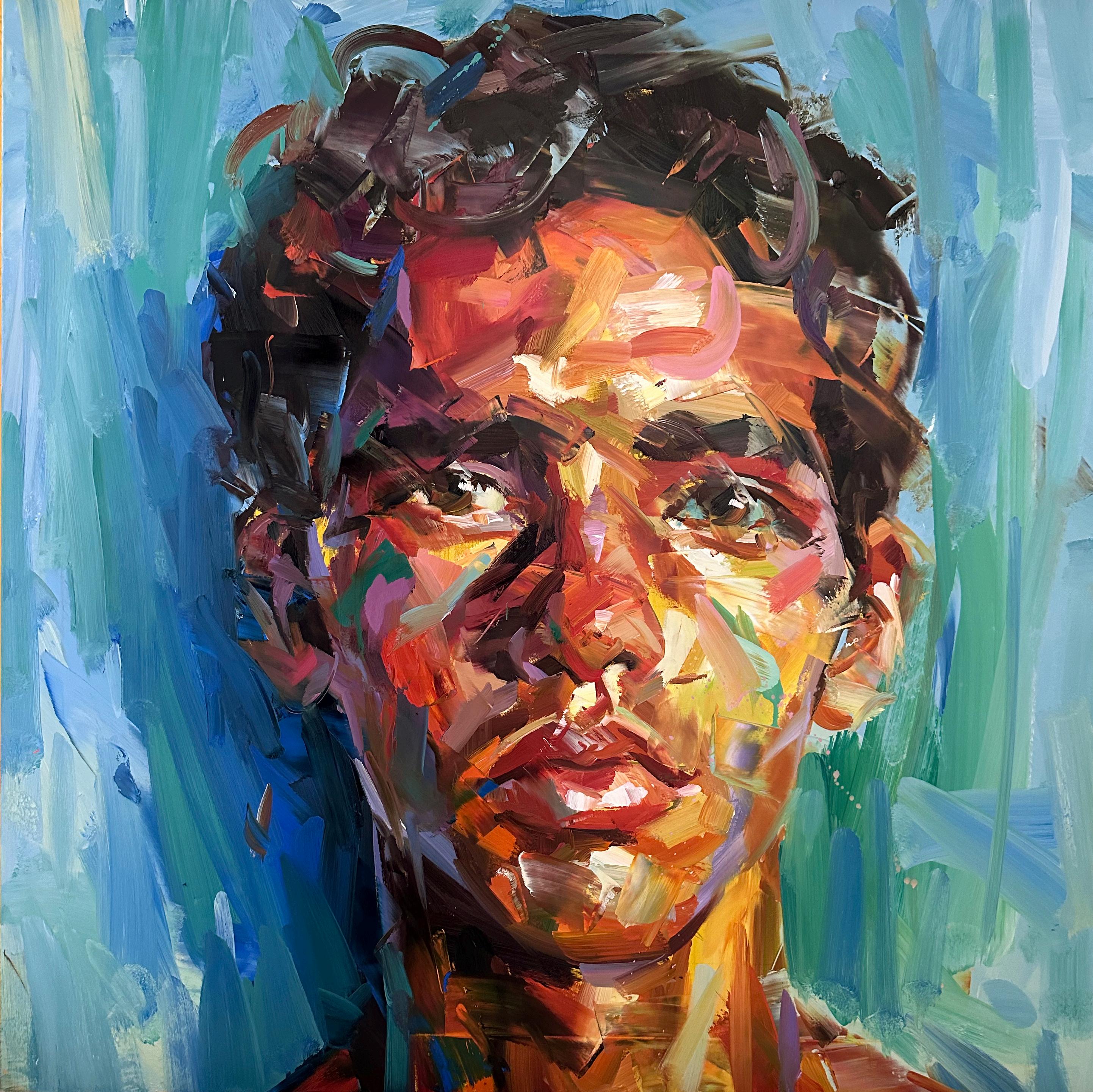
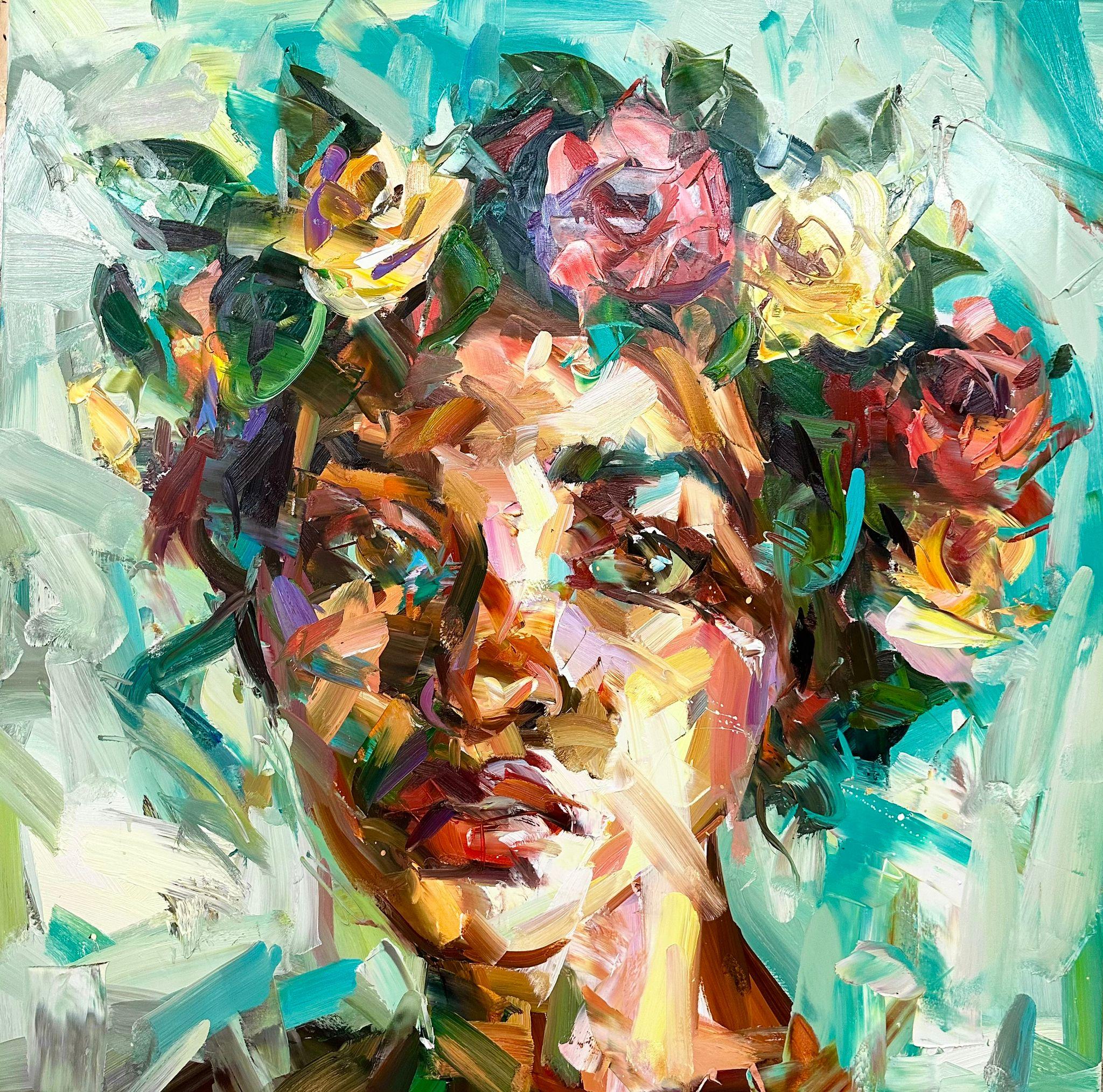
J: The first of your portraits in this collection, Muse. Again the palette is largely drawn from the earlier work but now we move in even closer. She is very beautiful but her thoughts are hidden. Her ethnicity and age is unclear as is the period it is set.
P: This one was difficult ,because the other one (Reverie), has closed eyes. This one, she is almost looking through you. She is obviously beautiful in a classical sense but actually that masks the thoughts. It brings to mind the great anecdote about Frank Auerbach’s wife describing what it was like to sit for him. She says ‘it’s like doing the washing up’. It was brilliant.
J: Honest! Through, ‘masking her thoughts’, is that an intentional sense of awakening or awareness?
P: It comes about when you do the eyes, particularly when they are looking directly at the viewer. Here I wanted to introduce a suggestion of a stereotype. Perhaps one that she is trying to break from. Being seen as that and nothing more. This must often be the case.
Actor Emma Watson was a good example of this, and people don’t know what to do with it. I have deliberately given it a slightly timeless quality, she could be a woman from any timeline.
The light is complex on this one which also makes it very different, and as it moves across the face it may give the impression of an awakening or realisation.
J: This was the first painting that made me think that perhaps this was not an exploration of the female but rather the male in relation to the female. This man is ambiguous in all ways. He appears to sit, metaphorically, on the cusp of a decision or direction.
P: It refers to all men. I’m talking about how some men feel, especially young men. The idea of being brought to a standstill (socially). Feeling unsure about their place in the world. There is an element of that no doubt. The super inflated men in the gym for example. Proving yourself as a man, but what does that mean? Yeah, there is a lot going on there.
J: Do you think we, as a society, are redefining the male role?
P: The Tipping Point explores this vacuum that has been formed. For instance, the threat of being instantly cancelled, social concern is so high for some men. Conversely, there is a kick back from some, who have become more Ultra Alpha. Some of our young men start listening to the Andrew Tate kind of guy. It is very worrying, I have got a little boy and he is going to have to go through all this. You can’t drop the ball. It’s a huge worry.
J: I don’t think that was ever the intention of feminism. Many women want to be empowered but also positively respond to some of the the male protector roles, to varying degrees. They want something equal to what they offer with consideration to our own personal gender predispositions. How do we realise an equitable life?
P: We can also argue this about race, gender and sexual identification. It’s always the lurch. Positive discrimination is necessary until it is no longer positive. It is biographical in as far as I am a male and I am father of a boy. I need to understand how to guide him through this. Now I see a strong confident kid but how do I keep him like that. I have to work this out for my son, and my daughter, to even hope of leading an equitable life.
Oil on Linen
39 ½ x 39 ½ in | 100 x 100 cm

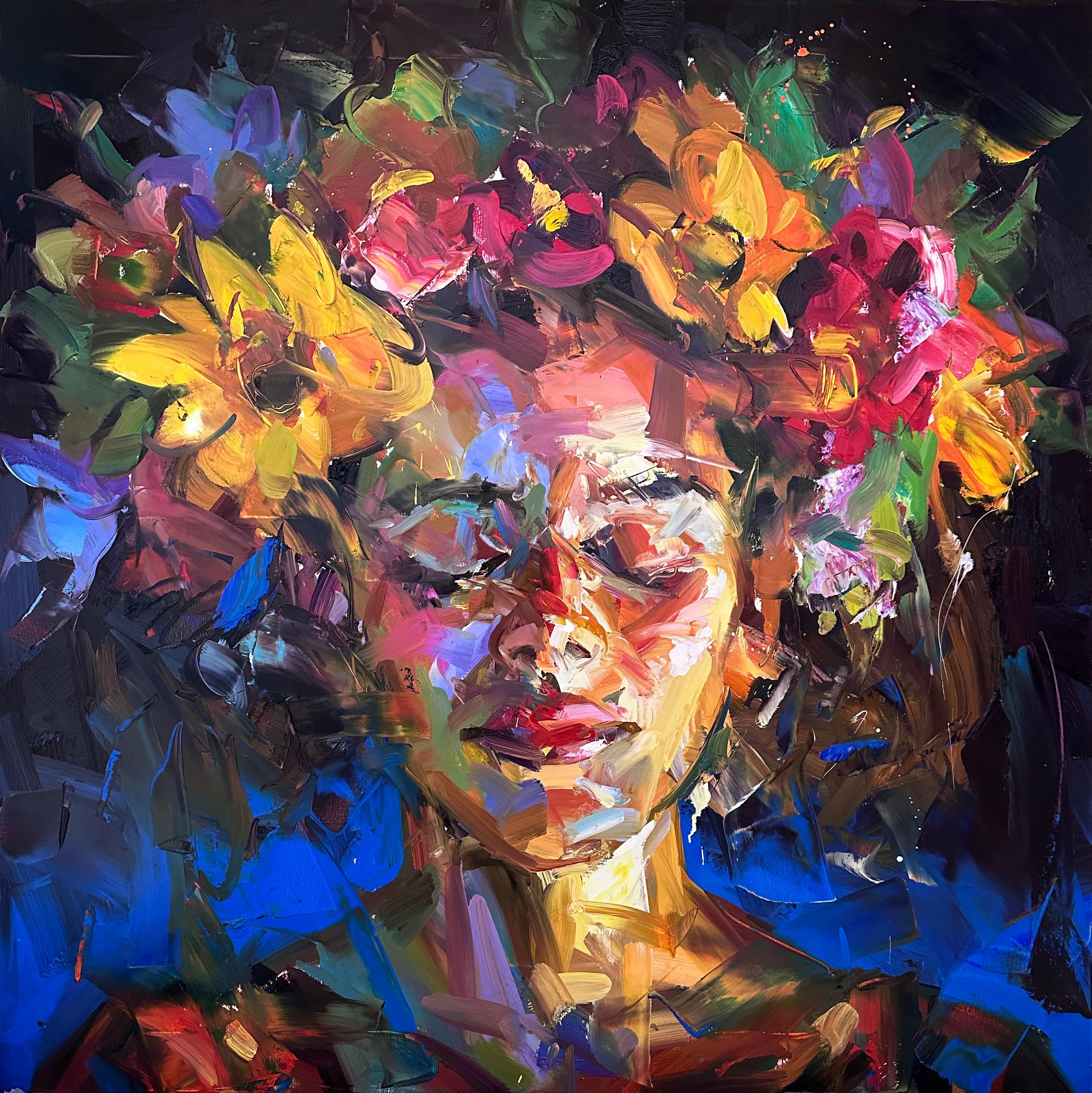
J: The palette has shifted to wonderful, deep jewel like colours. Reminiscent of work by Frida Kahlo. There is an intense energy and yet calm. Her eyes closed, lost comfortably in her own head. It is a long way from Hera’s Dance and Siren’s Call.
P: Yes it is about being at peace with yourself.
J: Are you working through the idea that if more women came to this point, and viewed as such, then there would be less men as we saw in Tipping Point?
P: Yes, we have almost stopped using our own instinct and judgement. To close yourself off is a necessity. It always strikes me as odd when I’m at the kid’s school or a party and people say, ‘you must be really lonely working on your own’. Well, I’m not lonely in the way you think. I can do what I want and say what I want. So yes, the painting is about that. It’s about being in your own thoughts. One of the things about being an artist is you get to step back into the physical space of your studio and have the time to organise your thoughts, without overthinking. There is a contentment and peace, which I quite like. Here, in Reverie, I hope you want to know what she is thinking. Something good is happening in that head of hers. It is a positive thing. There is a contained happiness and contentment.
J: You have deepened the colour and the light source is much more obvious.
P: The tonal contrast is turned up but the colour is coming in through the mid tones, the oranges, the blues, the greens. It is intentional. The tonal range has helped transform the colour quite significantly. I like the way it works with the concept behind the painting.
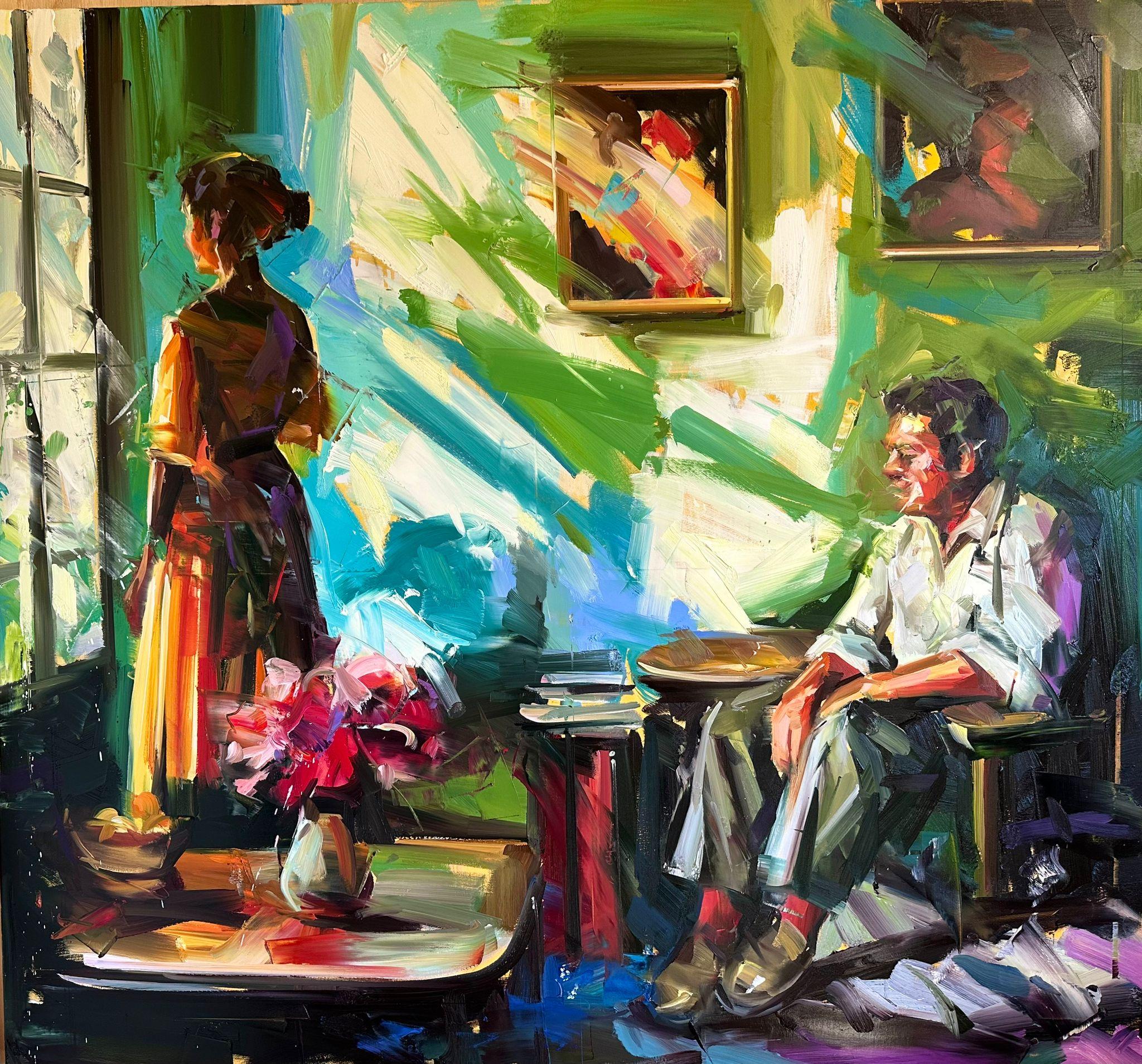
J: This was actually the first couple you painted in this collection. Like ‘New Day’, the vibrant colours swirling around them create an emotionally charged atmosphere, underscoring the intensity of the moment. Here, the light flooding the room through the window bathes the woman in brightness, while the man is partially in shadow, which may suggest different emotional states. However the sun does rest on his face so perhaps despite initial impressions, they are united as they grow together.
P: Yes, it is was the first of the two and is about that long term connection, particularly relevant to the long term romantic relationship. In those types of relationships it’s likely that you will grow and change at different rates over your life. Keeping those communication lines open, and awareness of each other remains high on the list. Here I hope there is an ambiguity. He is in the shade and seated, either comfortably or resigned. She stands in the window looking outward, turned away from him and obscuring any facial expression. She partially blocks the light on him, but his face does still remain in the light. They both still remain. The flowers are blooming and not wilting, the paintings are obscured and without distraction. What is important is the connection between the two figures, for the present and the future.
I think this painting and New Day are good examples of the complexity of long term romantic relationships. They feel even more figurative, as a portrait would.
Oil on Linen
47 x 51 in | 120 x 130 cm
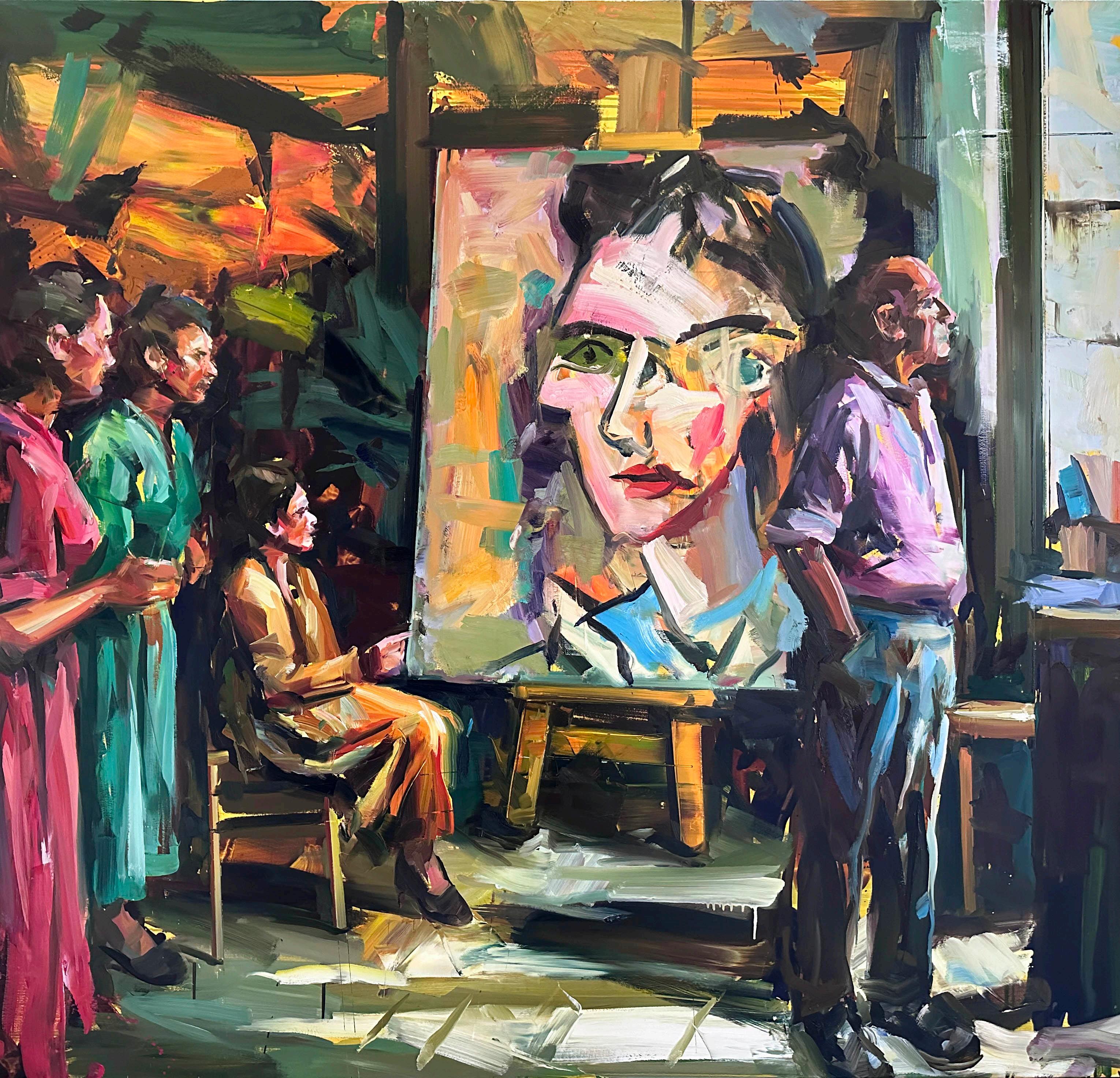
J: We appear to have shifted direction here? Pablo Picasso in his studio with the ladies critiquing. Even the painting on the easel seems to have an opinion! The palette has dropped right down and it is now the turn of the male to look out of the window. Tell me about it.
P: So again, this is dealing with relationships. The women represent the generations of girlfriends, partners and wives. Picasso was a great example given what we know about his relationships with women. The tables are turned here and it is they who are casting judgment on him. Meanwhile Picasso stands uncomfortably, he has to listen to what he would never have had to actually encounter in his lifetime. Recently, the legacy of the man, versus the artist, has been widely discussed. So, here I have given agency to these women and they are free to criticise the ‘great man’.
Interestingly, he was also known to keep the females in his life separate, I think so they were kept in the dark about each other and couldn’t gang up. They could not compare notes and put him on the back foot. It was something Freud did a lot. So the idea they are all in his sacred place discussing his work, or him, really appealed to me. Are they criticising the painting, his life, his status or the man. As I say, it is a grey area some art historians and social historians debate now, with the benefit of hindsight of course. The theme seemed apt for Picasso. It is wrought with the suggestions of vulnerability and intimacy, so the idea was to give it a WWII Paris studio feel rather than the later opulence of his chateau in South of France.
This was the last to be painted and was one of the hardest of this collection. It went through some changes during it’s painting but I was determined to resolve technical challenges and emotional resonance. I am really pleased with how it has turned out.
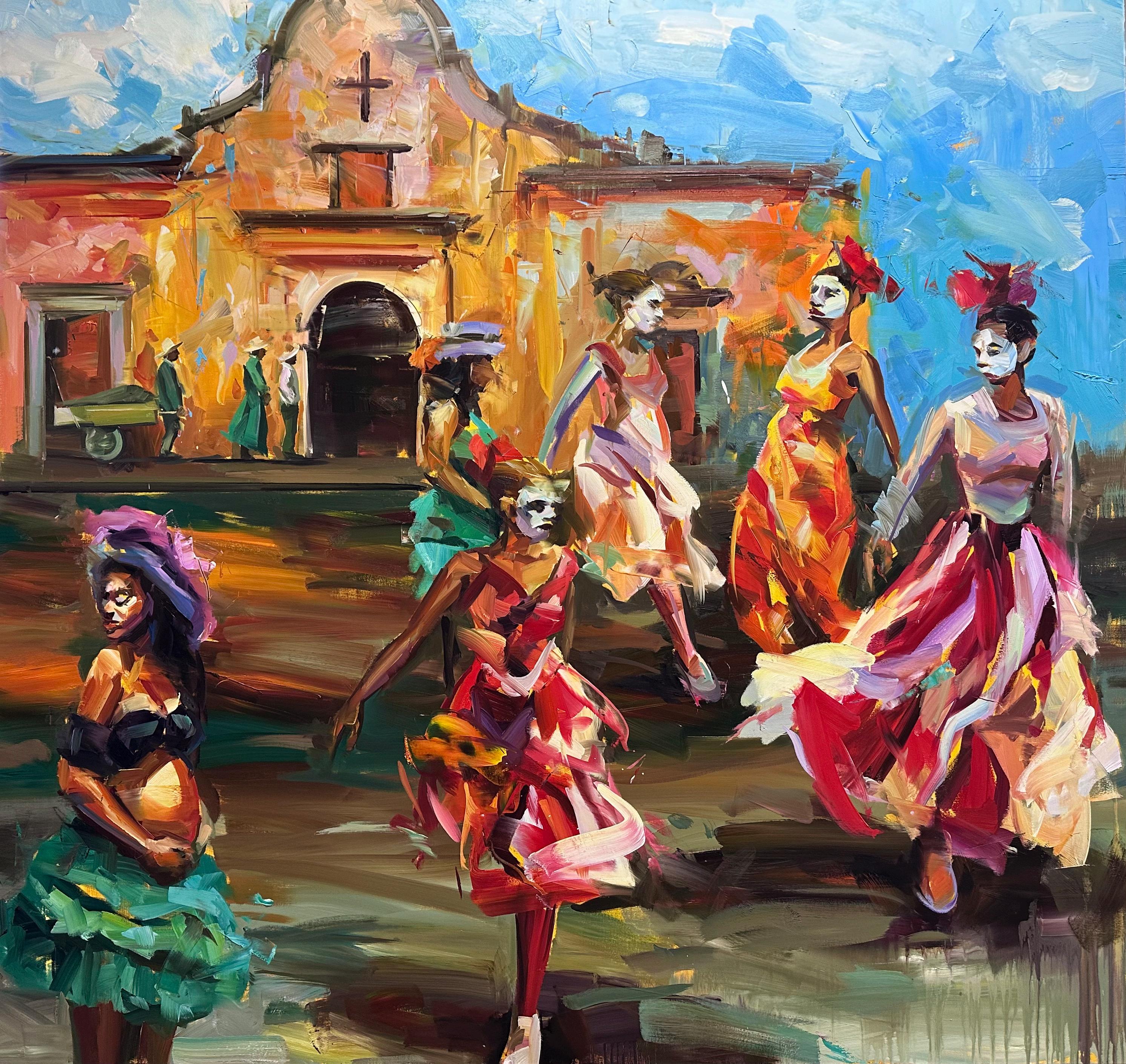
J: This painting is built on a recurring theme for you: Lives within Lives. Tell me about that and how it is applied here.
P: This is dealing with the life cycle. In the background we see the ending. In the foreground the beginning is almost there in terms of the figure on the left. She is also turned away from the girls processing dancing down the street. Within that group of dancing girls, there is a reflection, or a previous self, or life after. The majority of the women are wearing masks. In part this is a nod to the festival days in some cultures. In part to take away their absolute identity. It also represents the fact that we do wear masks as people, and they are different through life. Ultimately we mostly wear our masks for emotional protection.
J: Why do you return to the lives within the lives periodically?
P: It often reflects what is happening to me, another stage in my life, now I have young children. From time to time, it just pulls you back. We probably live five or six lives within our own lives, I have probably had 3 or 4. We leave a history, a trace of that life from where we lived and the people we spent time with.
I also wanted to introduce an element of dance. The idea we perform a life dance, and often without thinking, without really analysing why we do what we do. Then life slips away and you realise you are in another stage. I think, if you are lucky, you realise the time is now.
What are you waiting for? In a world where so much is seemingly decided for us, we forget we can shape our own life, and the direction we take it in.
This is one of my most personal explorations.
"What is it that the tree is thinking when it lets go of it’s leaves? Is it that it wants to be bare in winter, or is it that it wants to be clothed in the spring?”
The Book of Questions (El libro de las preguntas), 1974, Pablo Neruda
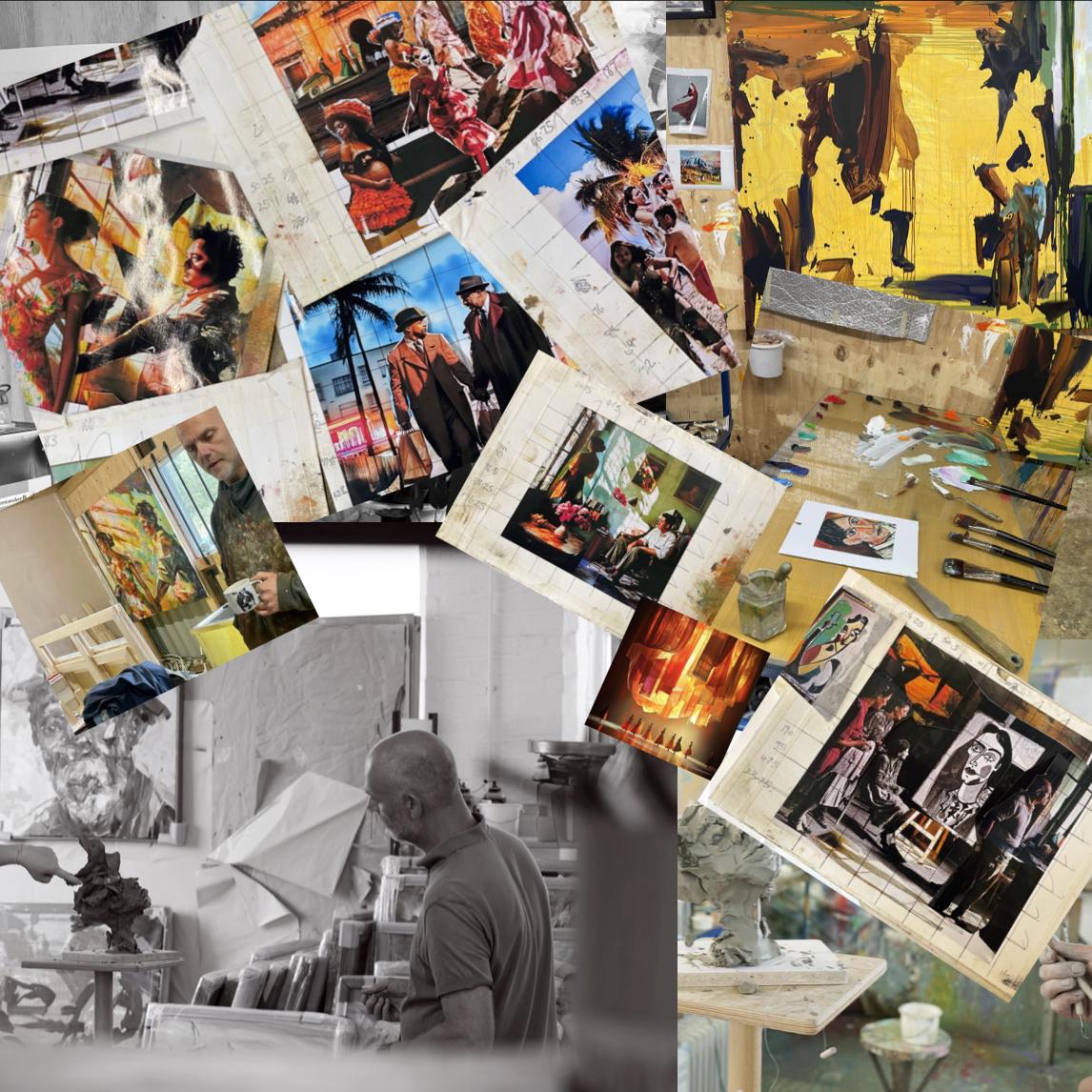
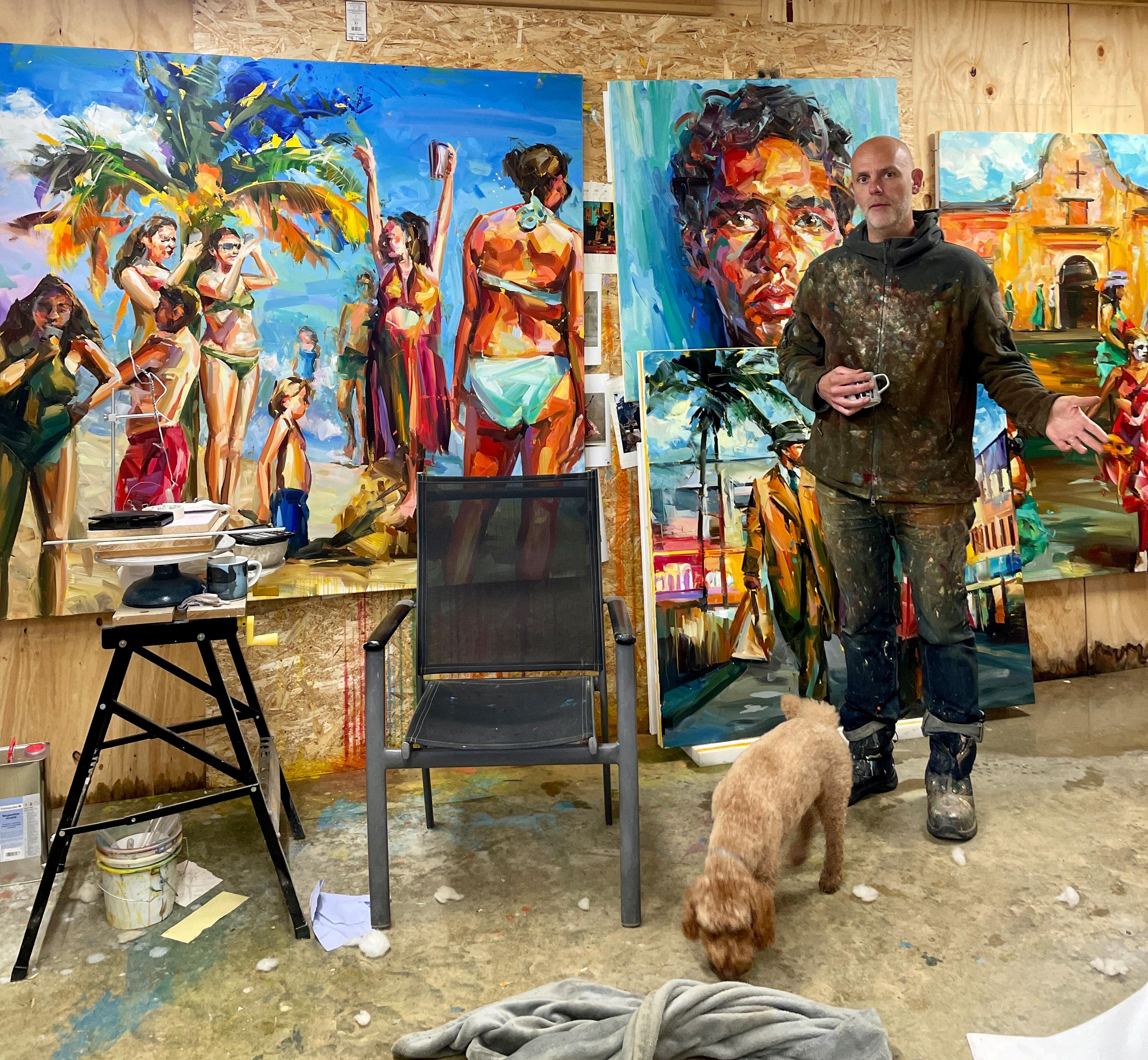
It is worth noting here that all of the presented paintings in this collection are originals using oil on linen, created by the hand of Paul Wright, not AI.

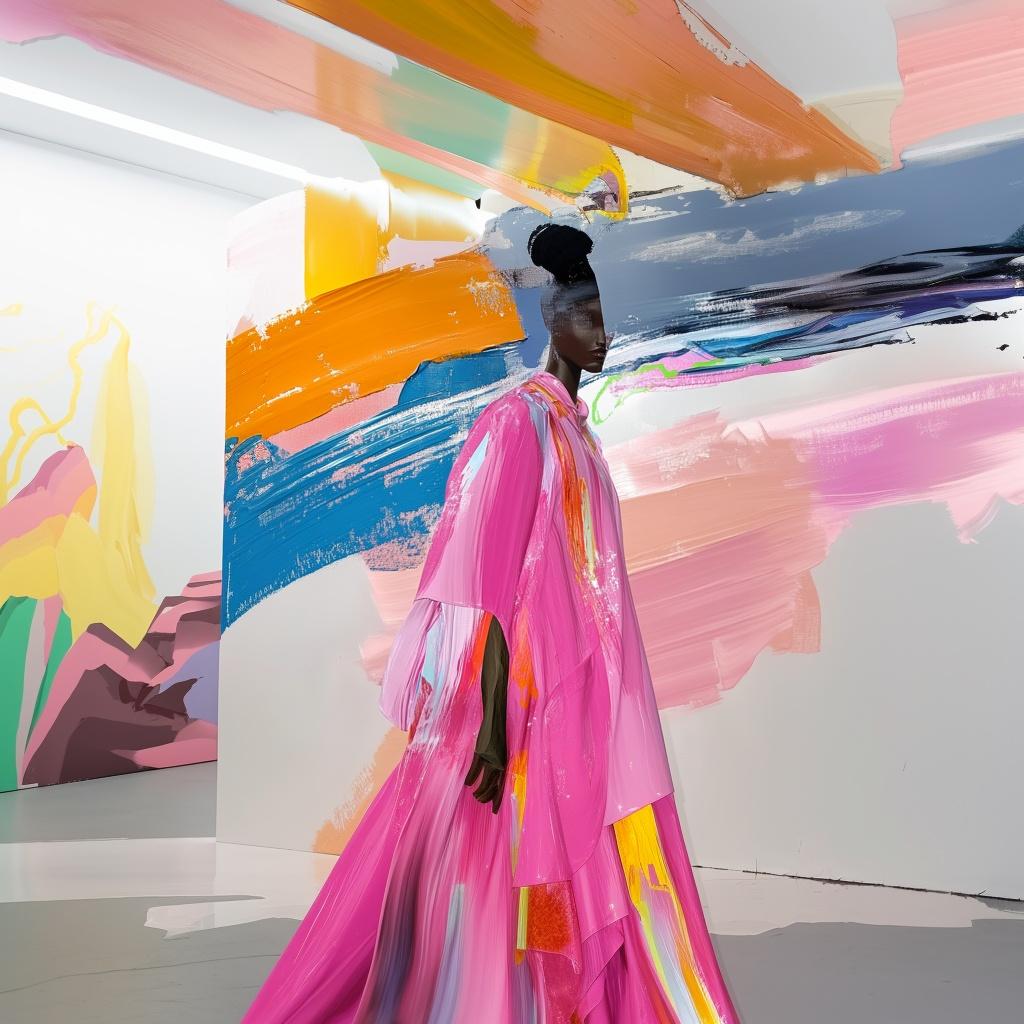
Jeni: When this commission came into the studio we were already absorbed in AI: it’s impact and potential for social good. This had led to us disappearing into the ‘what is it to be human?’ question. Here, your brush has danced across a broad church of social commentary. Dipping back towards the ‘Golden Era’ and reaching forward to the rapidly evolving societal norms.
Are you exploring what it is to be human?
Paul: I think so. I am asking myself this more and more. Society is asking this question, and probably without realising it, for the most part. We have reached a point of asking where do we go? The rapid development of AI has opened this up and brought it to the fore. What do we want as humans? What do we want from life because AI will take us away from the grind which has shaped most people’s existence. What do we do if we are given the freedom to explore our own ideas and own our thinking and our own passions.
J: Do the Arts then become more important? It is through them that we contextualise our own lives or see outwardly to other’s lives.
P: Without doubt. It will be through the Arts that we make sense, as we always have done. I can’t remember a time when the arts were more central to people’s lives. Just take digital media, first we were observers and increasingly we act as creators.
J: Do you feel AI could replace the artist’s voice?
P: Interesting question and difficult.In theory, yes it could, but how far away is a machine from truly understanding a life lived, with all the nuances of the human experience. Can a life be programmed onto a canvas. Would it be authentic? In the same way a human with all their vagaries and beautiful imperfections could.
J: I would argue that it could, in time. It certainly suggests certain art forms will be more susceptible. Storytelling is certainly a much heard word right now. Those that can, will resonate more deeply.

P: I think that is probably right. The story you tell or the message you want to get across is now more important than ever. I think it has been going that way already. I certainly think it’s naive if artists don’t think AI is going to have a massive affect on what artists do, how they exist. There is no doubt it is going to effect every walk of life.
J: Artists object to being replaced by AI. Is this a bad thing?
P: It depends. Would you still make work anyway? I think I would always find a way to make work. Take the economics out of it, I would paint regardless. In theory we are going to be on some sort of universal wage and then people will have the time and freedom to explore what they want to. Which is quite exciting in it’s own way.
J: So is human created art relevant then?
P: Yes, the machine wont have the personality to do it, will it?
J: I’m not so sure. We are past the Turing test stage. A personality can be learnt. Now you’ll have to be more human than human.
P: Yes, and that’s where emotion will come into it, hugely.
J: So, it becomes increasingly important to know where the concept, idea or storytelling originated? Will the creator, as it were, become more important?
P: I wonder, if you take for example Tracey Emin, her work is loaded with her own personal experience. You put Gerhard Richter next to that, and oddly enough, although I love his work and think he is a great artist you could see a machine making that. As it stands at the moment the content of Tracey Emin’s work seems further away from that.
J: How much is the impact of Emin’s work linked to the knowledge we have of her struggles with the events in her life. Likewise is it Banksy or his work? How does that fall?
P: I think for Emin, her work is more elusive than that, it is pinned down to her soul. Other artists, like with Richter it doesn’t feel like that, but I don’t think one will outlive the other in terms of recognition. There is something more substantial when you talk about her over someone else when you step into machine learning.
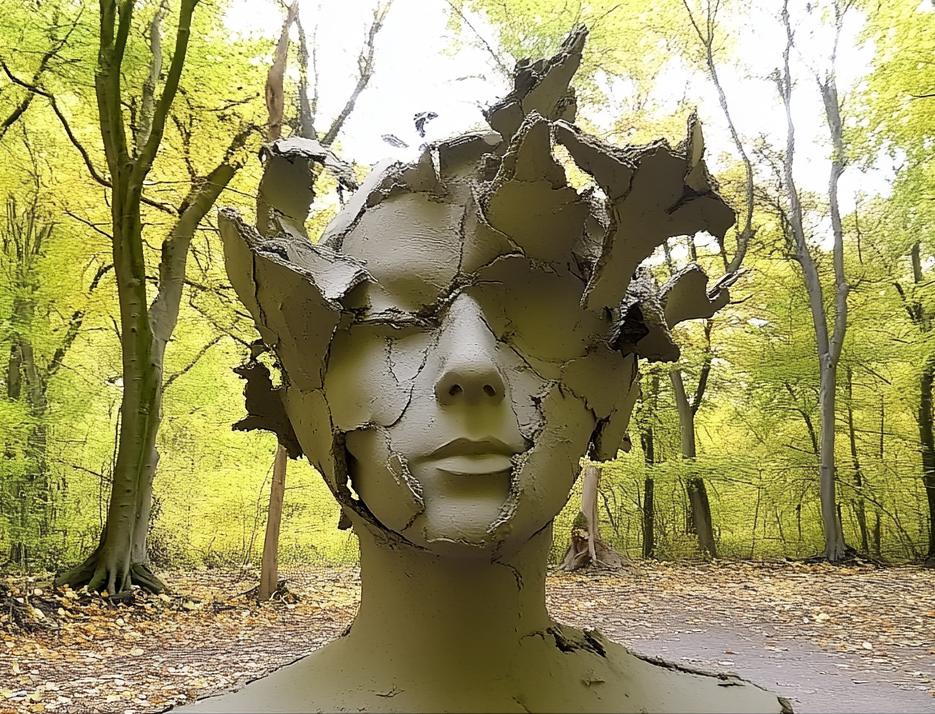
“AI is an incredibly useful tool, but it has to be controlled and it has to be understood. It’s not a substitute for human creativity, but a kind of complement to it.”
Brian Eno, Musician, Songwriter, Producer and Visual Artist
J: Maybe people will need to know it is a human reflecting their feelings. Artists, of all mediums, are our mirror. Take The Tipping Point from this collection for example. In many ways I see that as more autobiographical than some of your self portraits. Arguably that could be taught with the right prompts but maybe we will value that it is not ‘Prompt Art’.
P: Absolutely. I hope that is how it will unfold. I think once you start to take poetry, plays and all art forms, without evidence of the human vagaries and imperfection, then what does it look like? And can it remain relevant? I started to paint because I needed to do it.
J: When you started there were not the same number of ‘artists’ as there are today. Particularly those more driven by money. Maybe some of those might be replaced by machine.
P: Yes, without doubt, the more manufactured art. I think the thing is, is that everything will be known. Take Mozart and Shakespeare, how will that type of natural talent shine?
J: Finally, For us a leading attraction around AI was this opportunity to reduce bias through cleaner data. This seemed acutely relevant in a society less defined by traditional norms and an opportunity to raise the marginalised voice.
P: Yes, this is the really interesting aspect of AI and I am excited about the possibilities by the project we are currently working on. Again, if it is within our remit to reflect all of society then we need to listen across all communities.
What is your favourite album? Stone Roses, Stone Roses
What is your favourite takeaway? Indian. I don’t like silly spice but I like some heat. We are spoilt for choice in Leicester, it’s great.
What did you want to be as a child? I wanted to be a footballer. I wanted to be Brian Robson then I wanted to be cricketer, David Gower was a hero. Now, I only play dads and boys, its pretty full on but I quite enjoy that stuff.
What is your latest guilty pleasure? Listening to the Pet Shop Boys in the car. It’s one of those you put on and can’t help but sing along to. Oh, and The Antiques Road show.
What is your favourite simple pleasure? Eating, particularly family meals. The social aspect of sharing food.
What’s your favourite film / Pick a film that made you rethink? Untouchable (French version) About a black immigrant who strikes up a complex relationship with a tetraplegic millionaire.
Man on the Moon, Andrew Kaufman. Jim Carrey plays him and is absolutely brilliant and in the end no-one knows what is real or not real. Pushed comedy into a different world.
Texting or Talking? Talking
What do people say about you when you are not around? I don’t know. You’ll know better than me.
And for the purists:
Did you undertake formal training? Yes, Foundation at Loughborough and then Illustration at Falmouth. Very old school and vocational. Tutors in the study 9-5, clocking in and clocking out. It was invaluable.
Why is colour the right vehicle of expression for you? I don’t think about it emotionally. I think about it in terms of tones. It is difficult to manage which I like. It is complex and triggers different emotions. It can harmonise and provide disquiet. If you are handling it in the right way, it is elusive.
Pick 1 artist and 1 question, alive or dead. Who and What? Velazquez. Which means more to you, the paintings of Philip of Spain or the Court paintings?
Why? Because someone of his facility, how constrained must he have felt by needing to do that and how much did he derive from it. I wonder what he would have made if he hadn’t had to attend to the vanity of the court.
How long have you been painting professionally? 21 years.
What’s next? Exploring different media and ideas with different platforms. We are developing an idea of how data can inform art without the traditional bias. To be able to offer balance and lift unheard voices equitably.