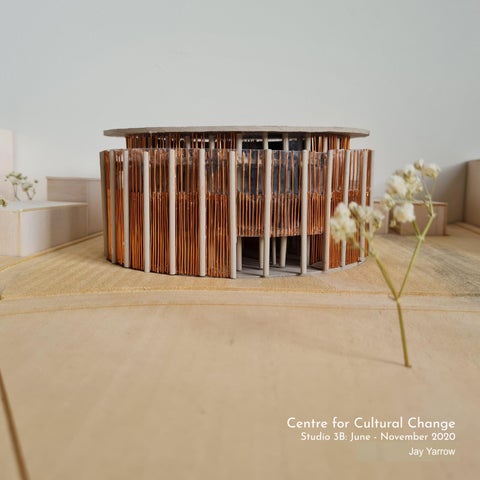
Centre for Cultural Change
Studio 3B: June - November 2020
Introduction
As the culminating design studio for the undergraduate architecture degree, students are presented with the opportunity to develop an architectural position within their projects. Architecture Studio 3B continues themes from Architecture Studio 3A, extending design understanding with respect to programmatic ambition and situating a symbolic public building proposal within a specific urban site. Particular attention is paid to the conventions of architectural representation as communications to conceptually clarify as well as generate design opportunities. Computational modes of modelling are a particular focus. Structural, technical and material thinking is encouraged in coherent relation to students’ strategic design intent and through studied historical and cultural awareness. The studio consolidates students’ abilities in communicating and translating architecture using advanced modes of graphic visualisation through 3D modelling software and associated fabrication potentials. Hybrid techniques for moving between computational and actual realms are promoted in parallel with clarifying attitudes toward contemporary imagined and constructed environments. Depth of design development is promoted via a dual emphasis: early analysis of exemplary architectural thinking is coupled with intensive speculative and projective exploration. Students aim to produce conceptually ambitious, integrated and compelling pre-professional architectural design projects confronting a variety of spatial contexts.
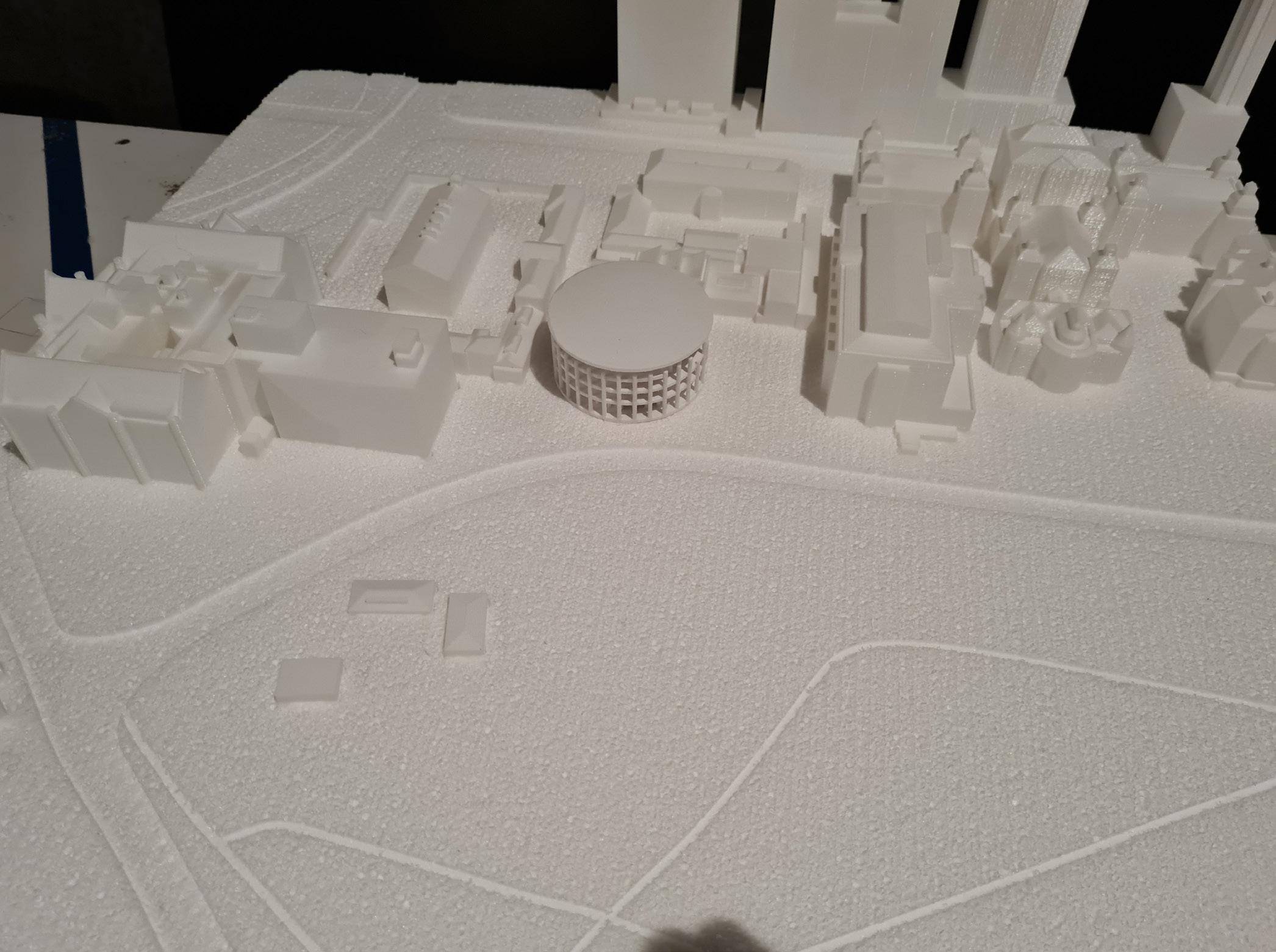
The project for Architecture Studio 3B is a space on the western edge of the Sydney Domain, for discussion, display and performances with capacity for (external or internal) lectures, events and architectural exhibitions. The speculative exercise will imagine explicit links between that symbolic public landscape and the dense urban context of Macquarie Street. As an environment conceived in relation to the city and its history, the proposed building might suggest/represent its use. Structural and material aspects of the design should further contribute to the legibility of the building’s program. (3)
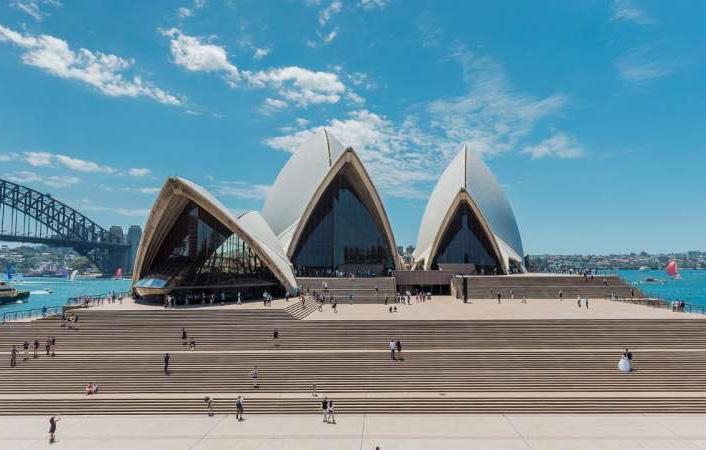
Utzon Study: Sydney Opera House
Site Mapping Diagram
To begin the design studio, we were tasked with choosing one of Jorn Utzon’s architectural projects which calls to our design senses. We were then to complete a series of diagrammatic studies, focusing on Utzon’s design methods. The purpose of these studies was to explore the relationship between the part and the whole in the project, specifically choosing elements of the design that we want to further explore and understand.
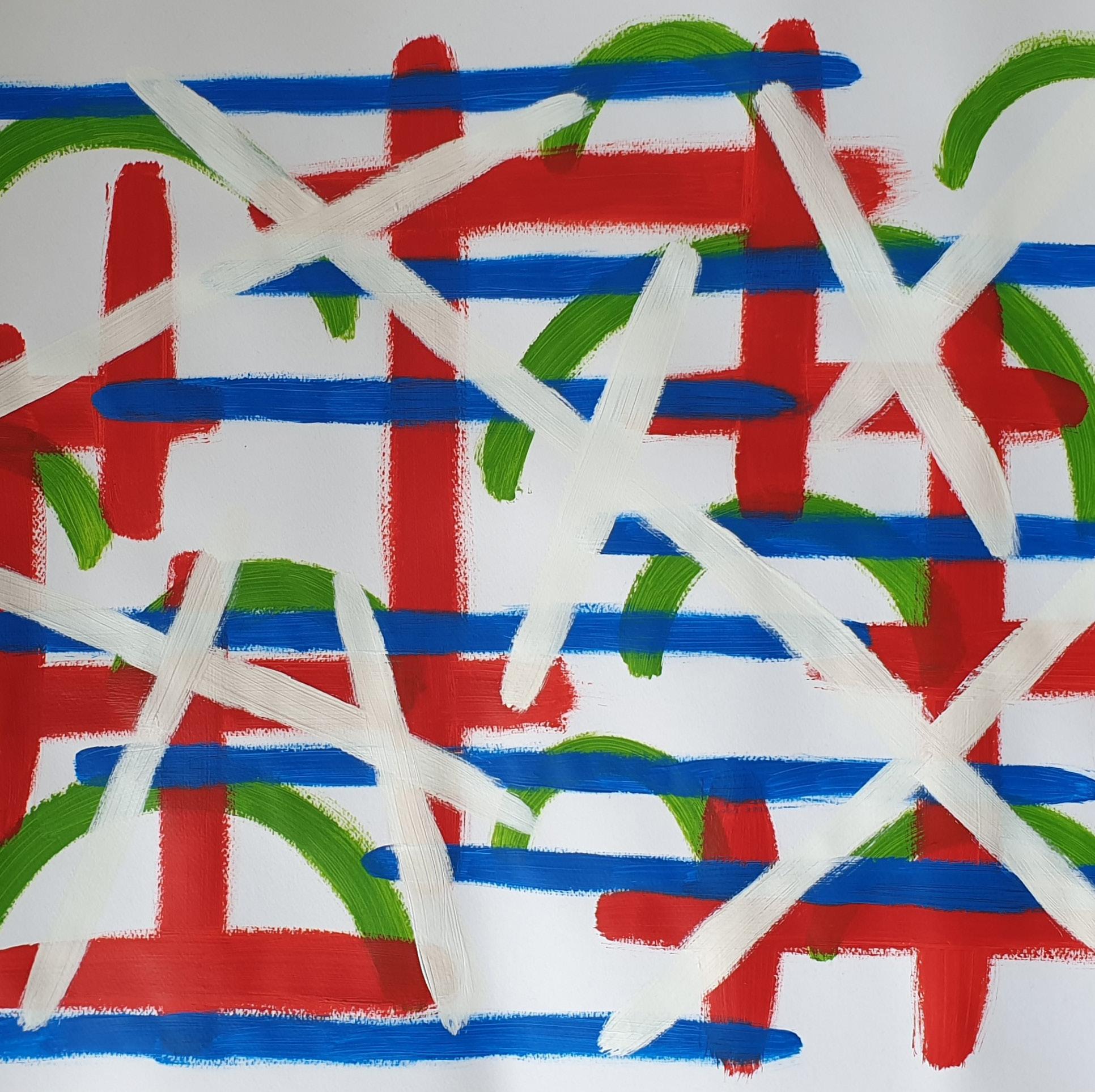
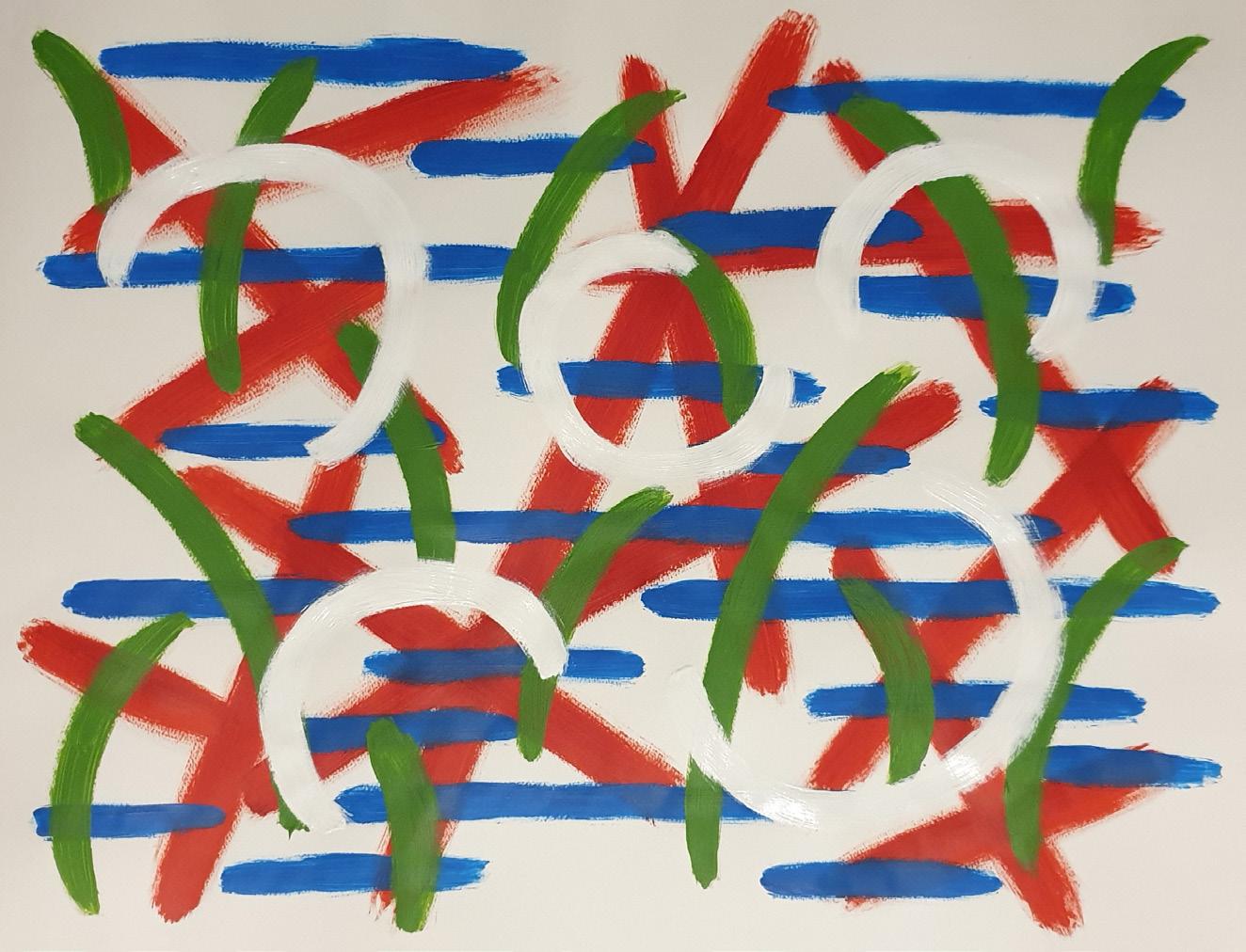
The Site Mapping Diagram is a representation of the major site elements in a tapestry which pays homage to the mural in the Utzon room of the Opera House. The thick red lines represent the diagonal movement across the pedestal; the thin blue lines represent the movement of the water in the harbour; the green curved lines represent the park behind and the inlet across from the site; and the white lines represent the arches of the Opera House itself.
Circulation Diagram
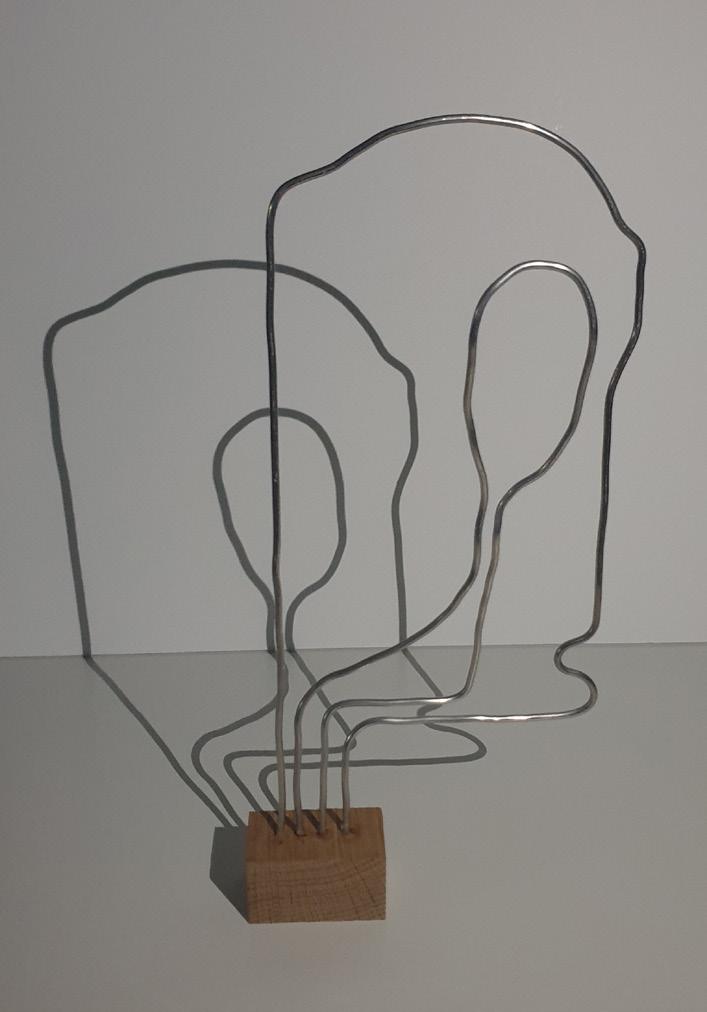
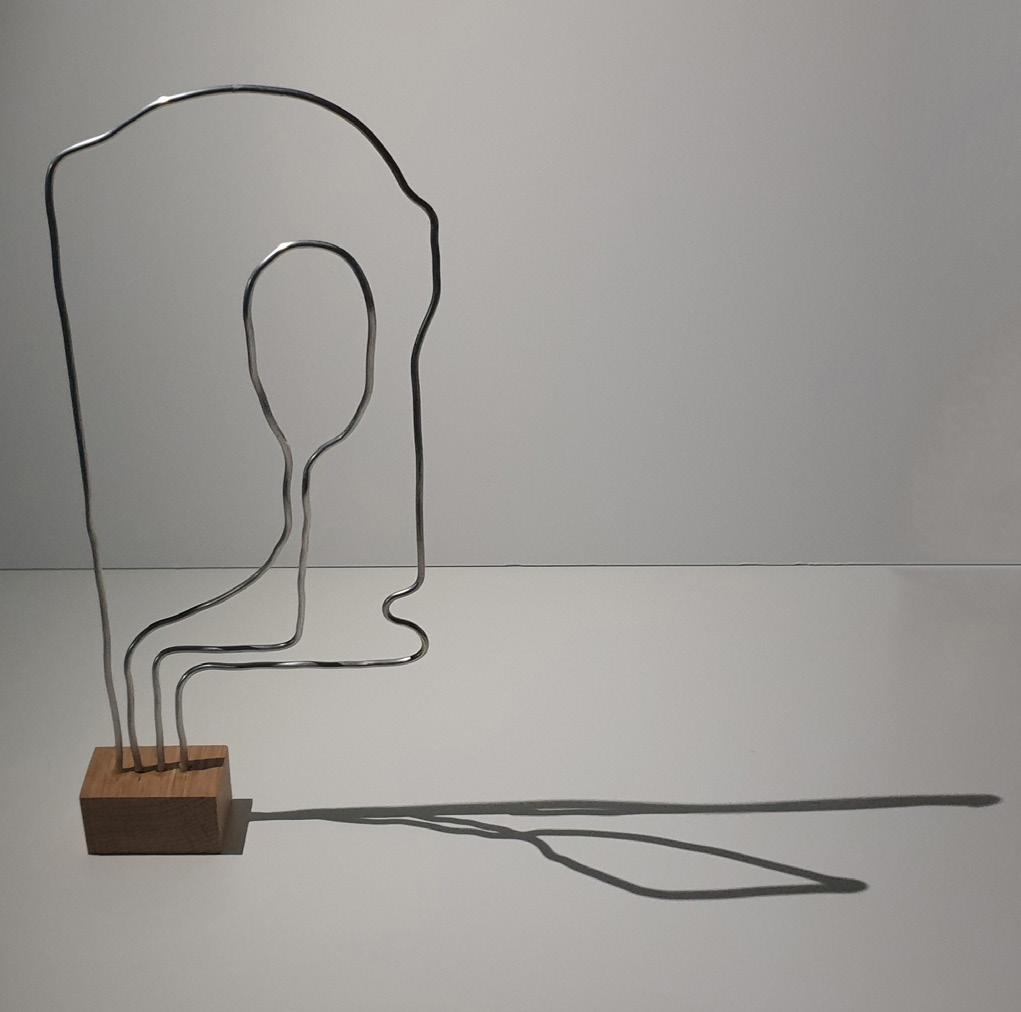
The Circulation Diagram is a 3D representation of the two main circulation paths of the Opera House; the private and the public. The result is a sculptural representation of the thought that Utzon put into ensuring that the Opera House would be accessible around the perimeter of the building, and that the theatre spaces would be ensconced within.
Site Mappings
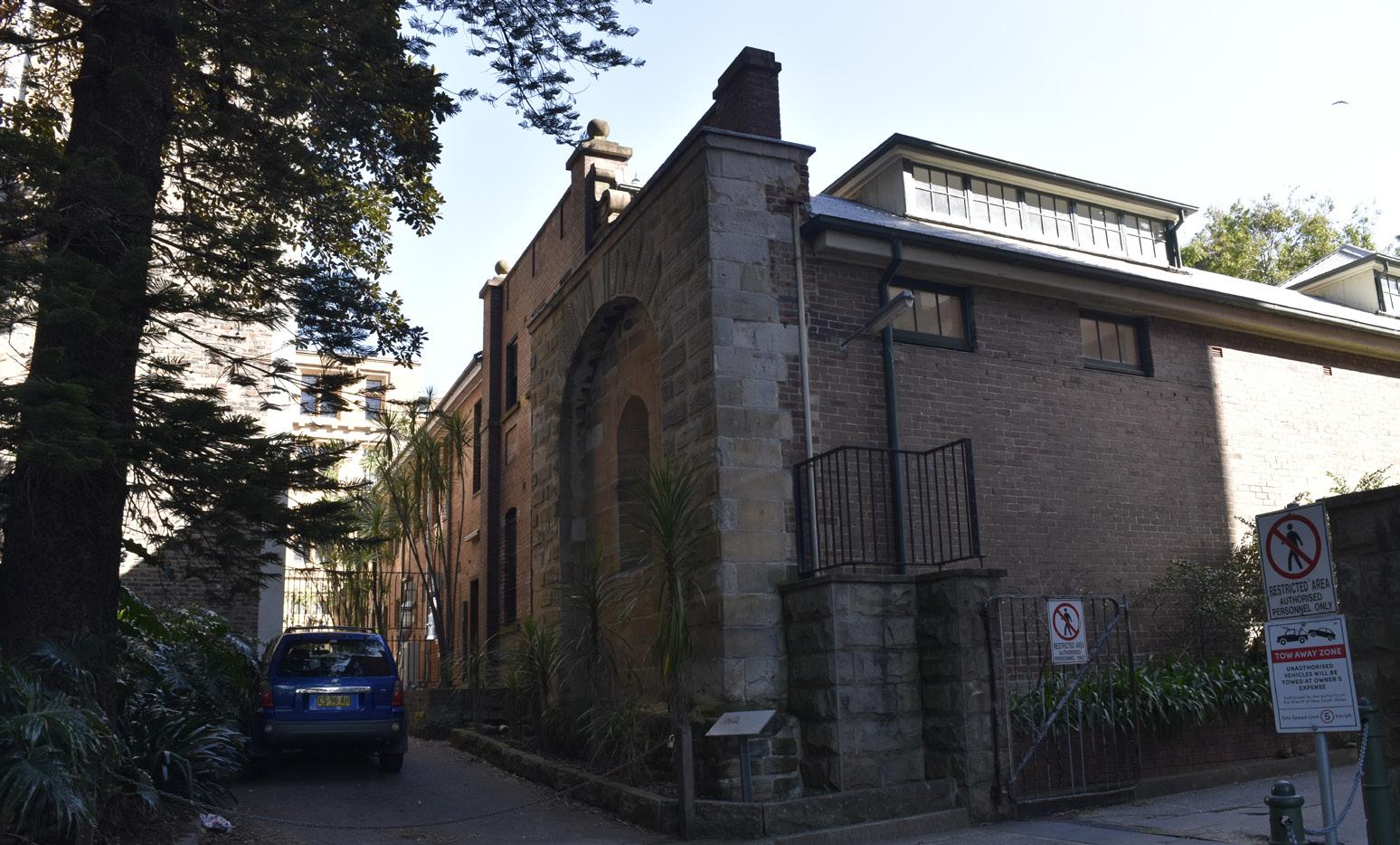
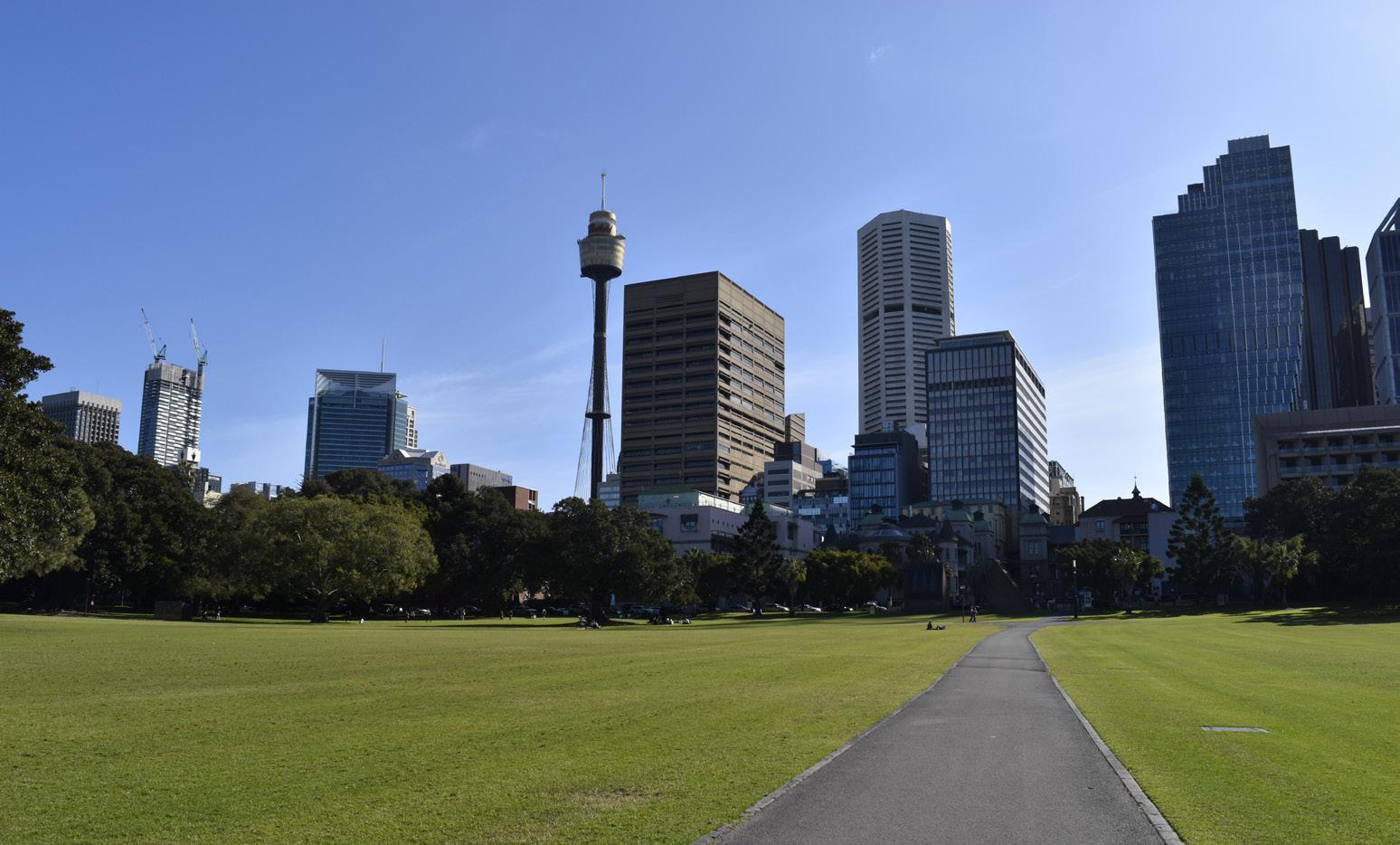
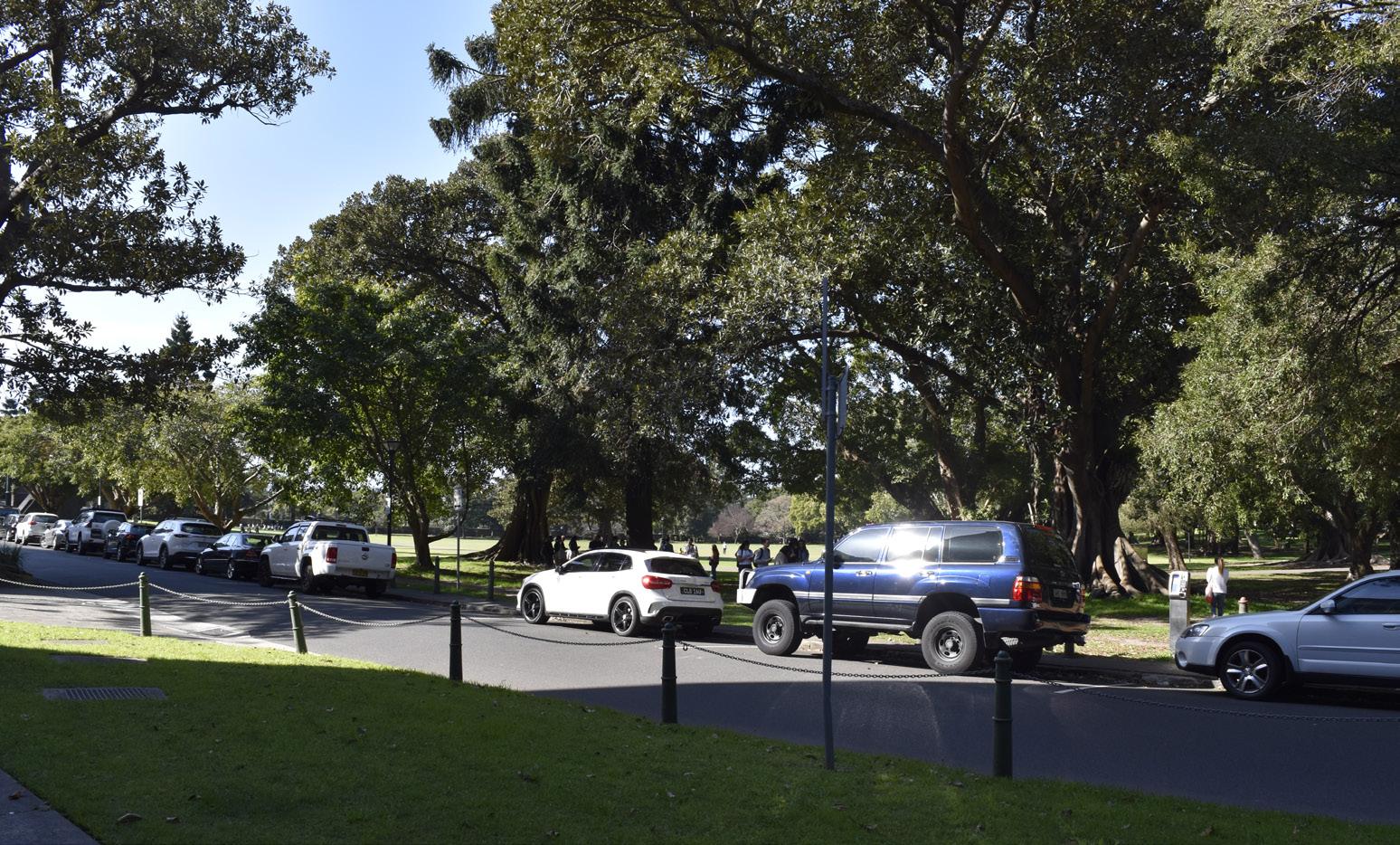
The second task to begin thinking about the design was a series of site mappings. These mappings were designed to capture and diagram elements of the site which were meaningful or impactful.
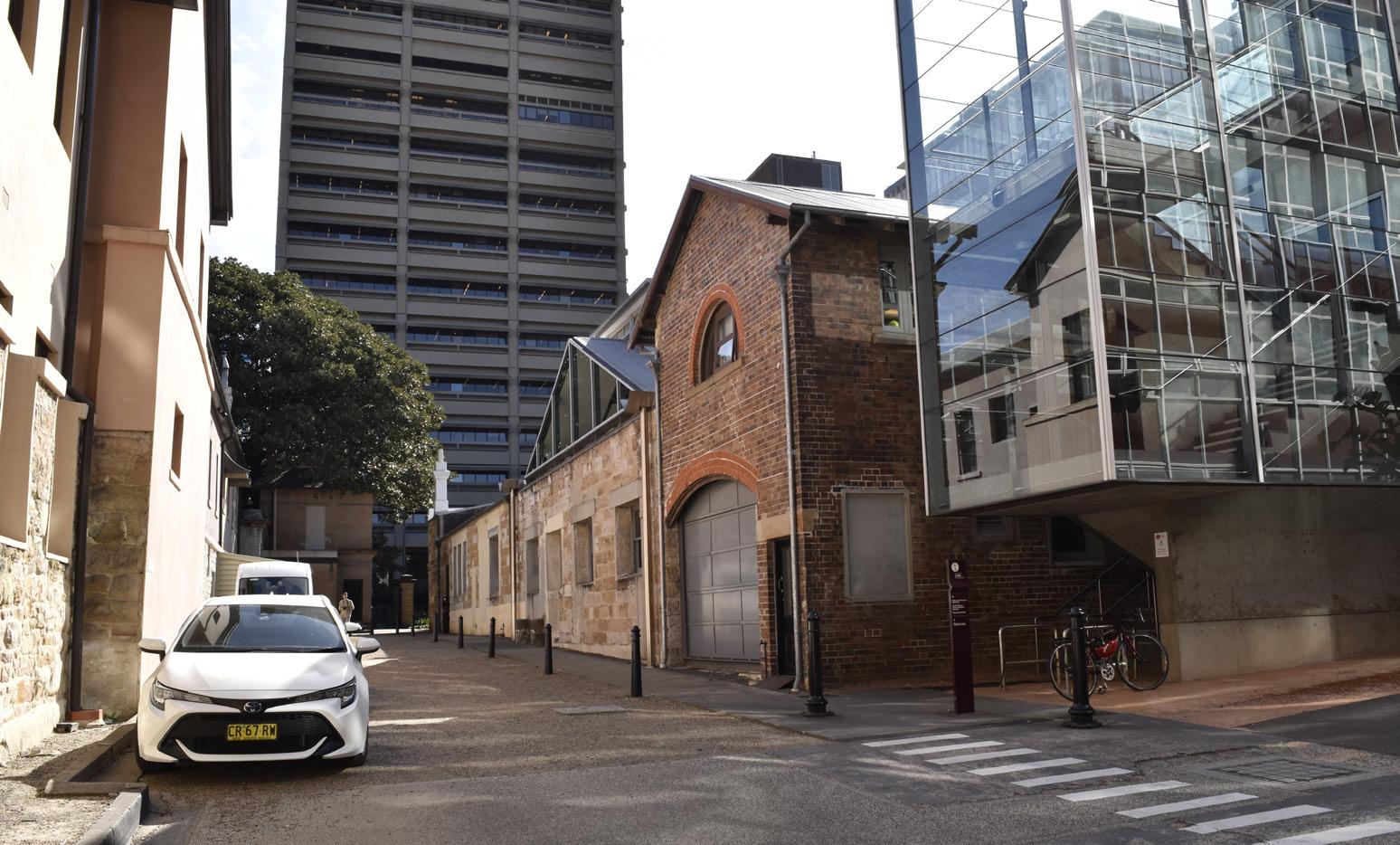
The first of these diagrams is the Elevation Diagram, which shows how the site is surrounded by prominent features and impressive buildings.
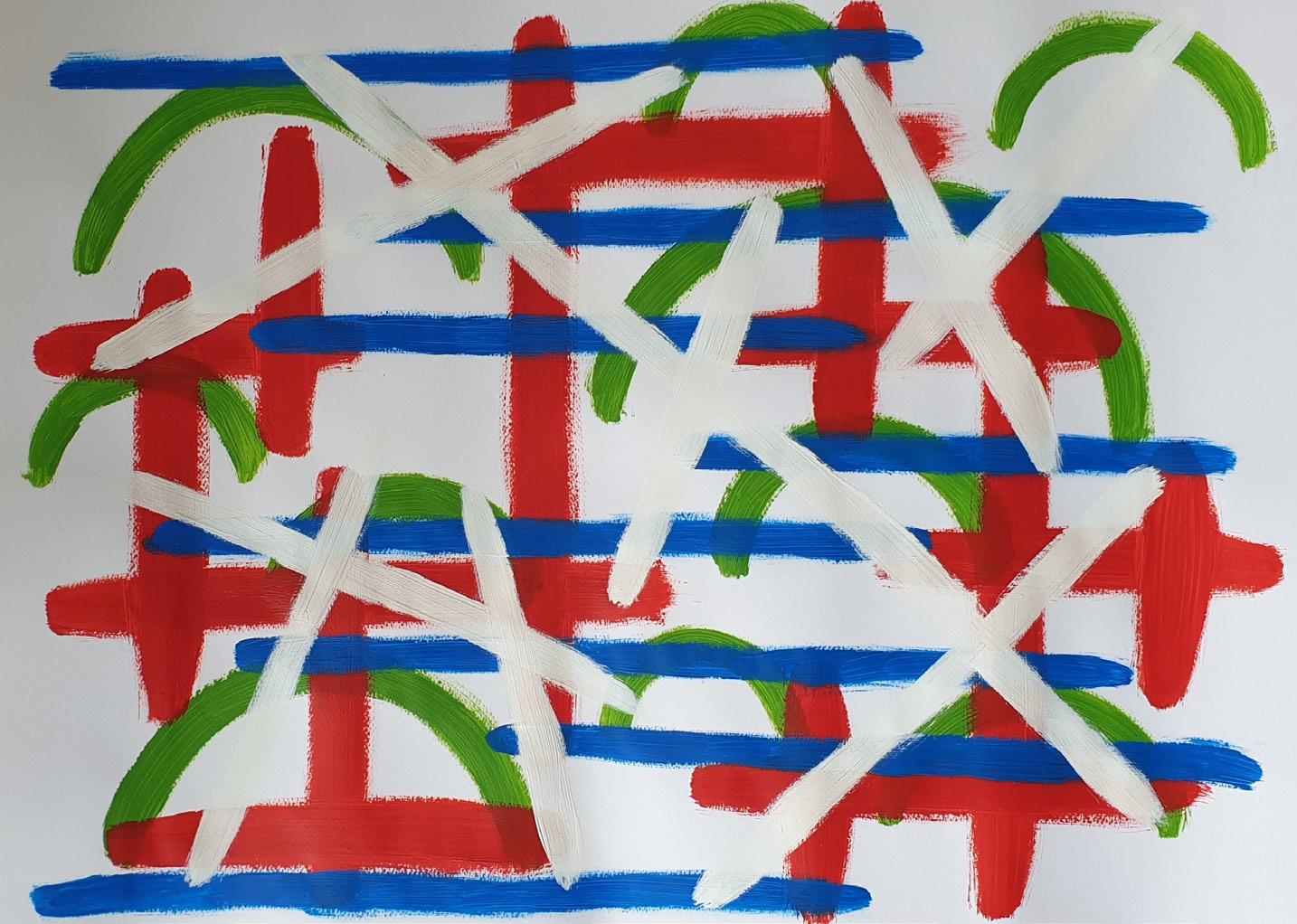
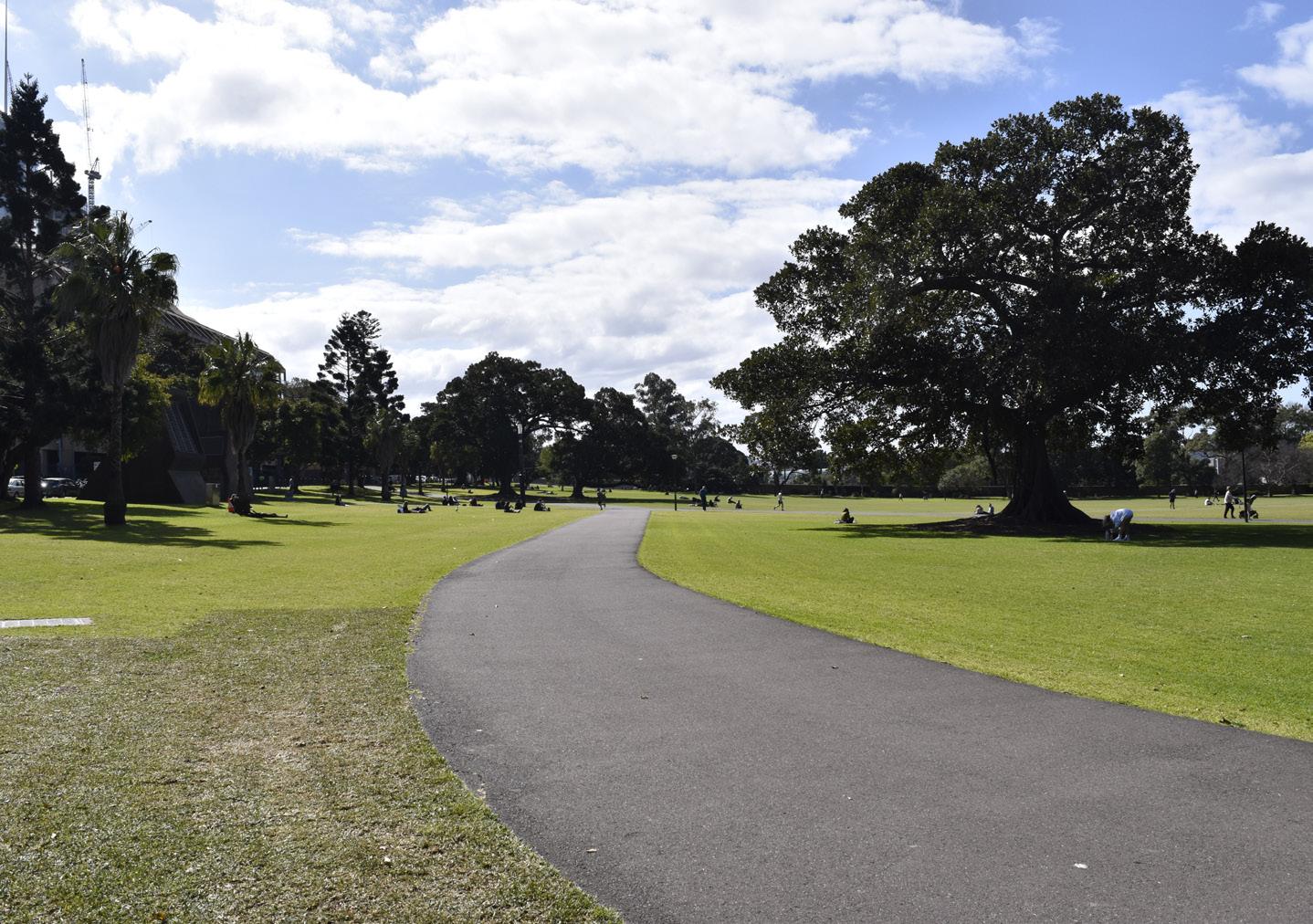
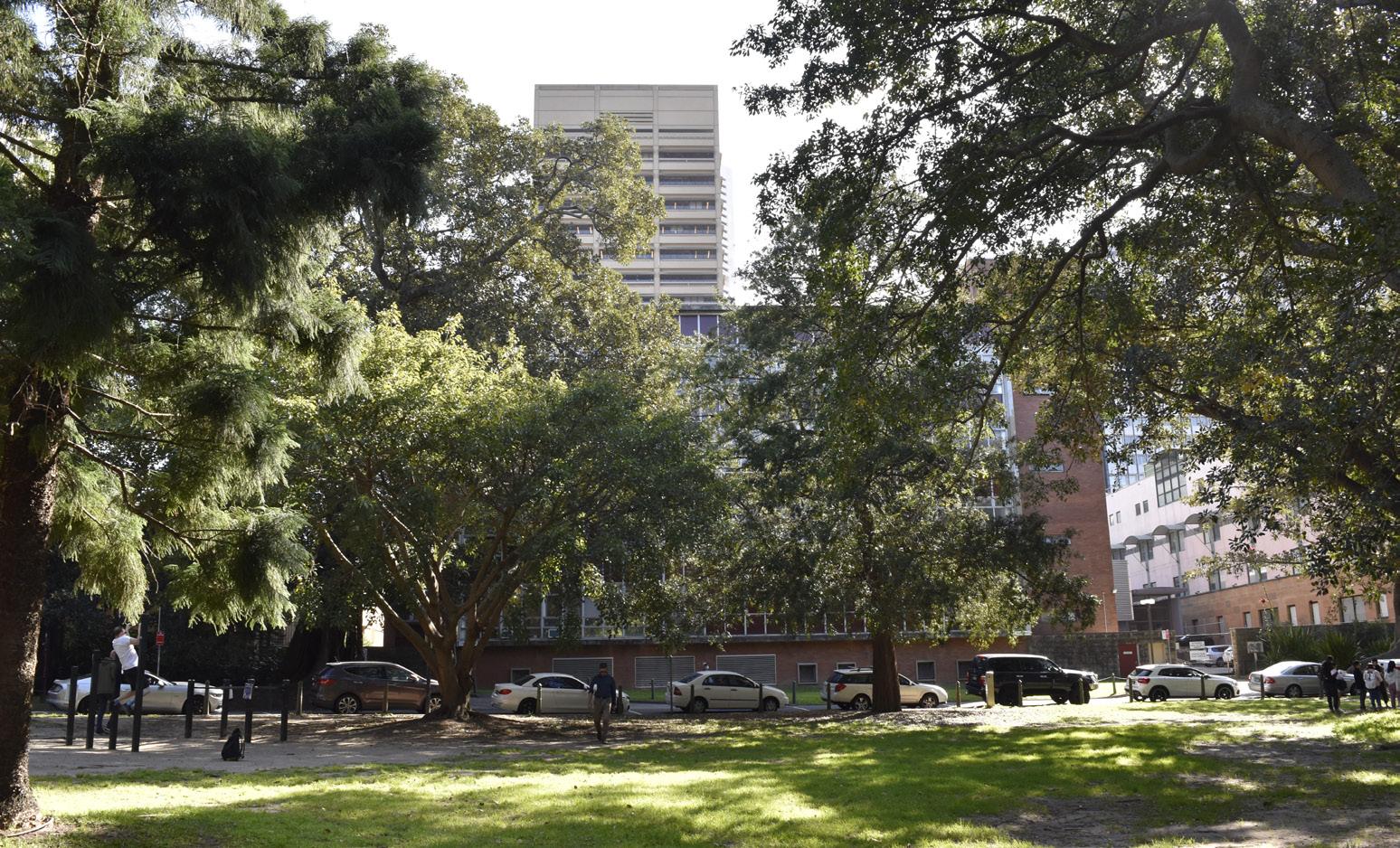
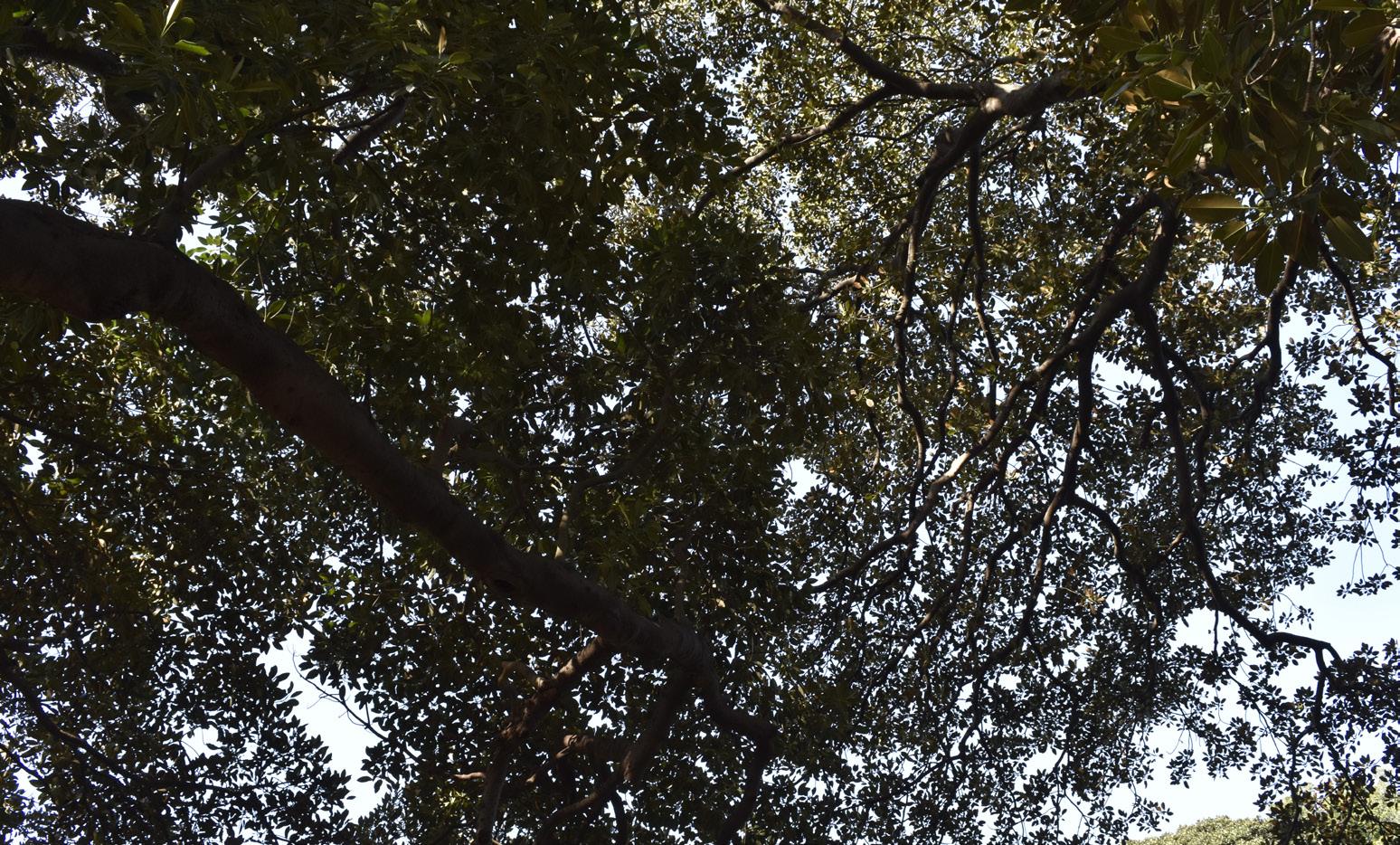
The Site Mapping Diagram was created using the same logic framework as the Utzon study, but analyzing the site at the Domain. The thick red lines represent the network of surrounding buildings, which steal space from each other; the green lines represent the canopy of fig trees which shelter the site; the blue lines represent the wind blowing across the open field; and the white lines represent the movement of people across the field and the interconnecting paths.
Site Elevation Diagram
Site Mapping Diagram

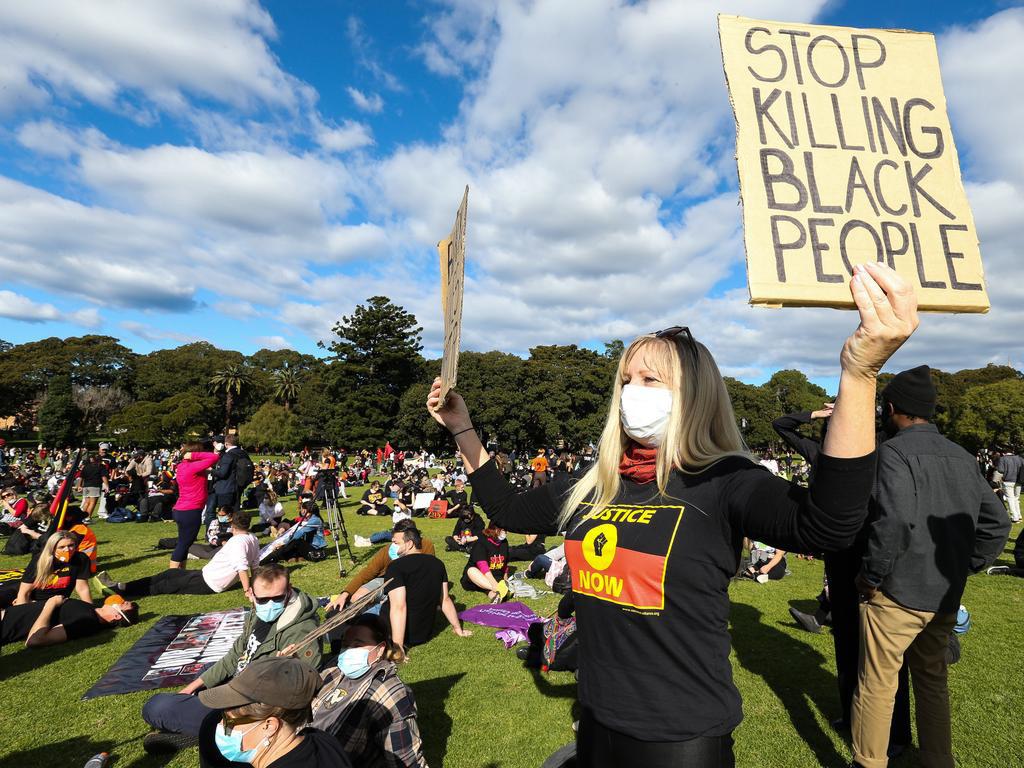
Lives Matter Protests at the Domain (2)
History of Place
In recent years the Domain has been the site of some major protests within Sydney. The most recent, and most prominent, of which was the Black Lives Matter (BLM) Protest on June 27th, 2020. This history of protest and gathering at the site sparks a sense of change.
For the cultural centre project, I wanted to draw on this history to create a Centre for Cultural Change. As well as a gallery and performance space, I wanted to design a space for gatherings and a space for learning. In this way, the building will be able to facilitate exhibitions of protest art, cultural demonstrations, lectures on the history of our culture and the need for change, even to house the organisers of the next protest. These spaces will provide a platform for movements such as BLM, #metoo, or climate change groups to educate people about their causes. The building can adapt to these uses and many more, and will continue to change throughout its lifetime.
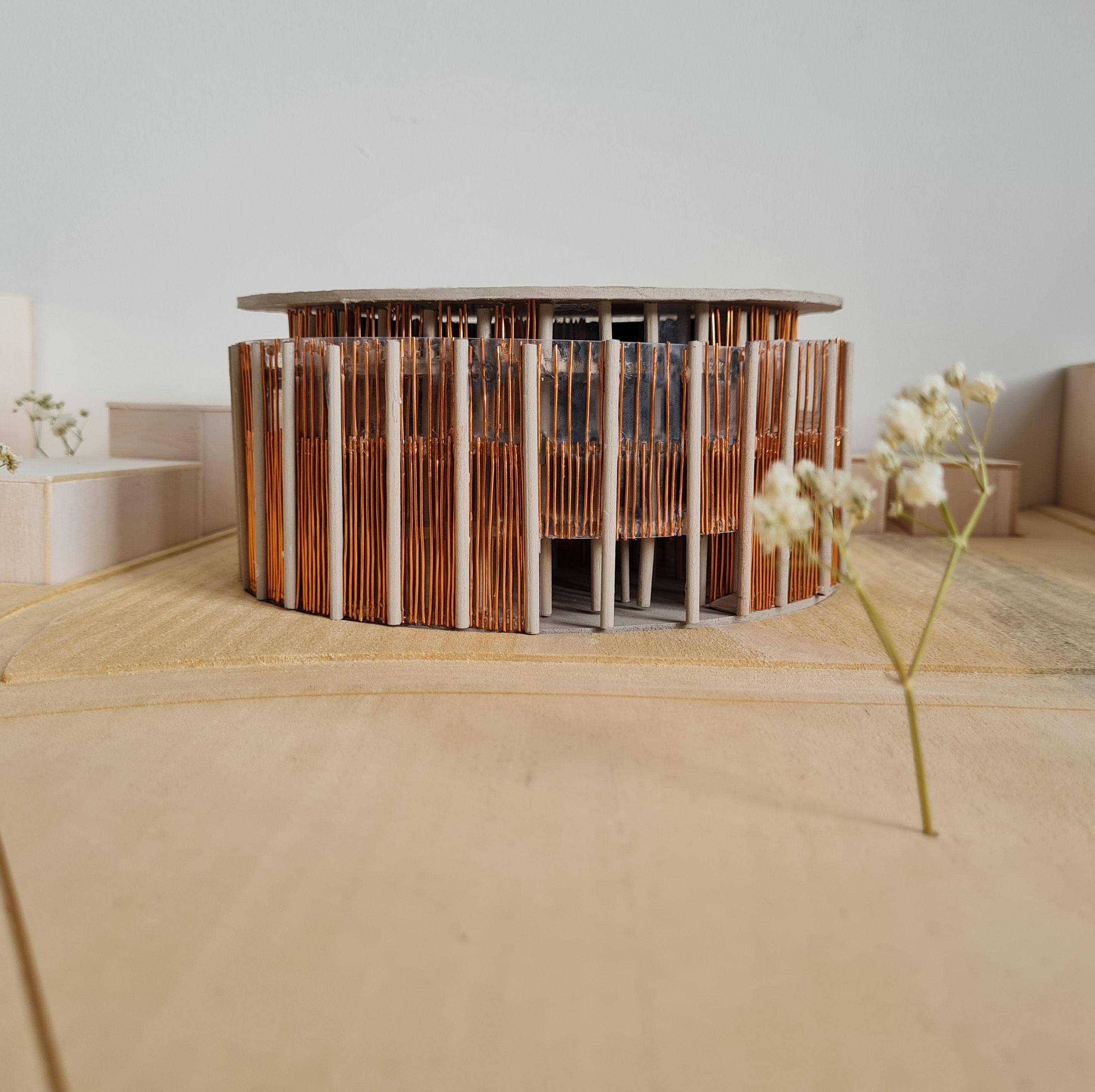
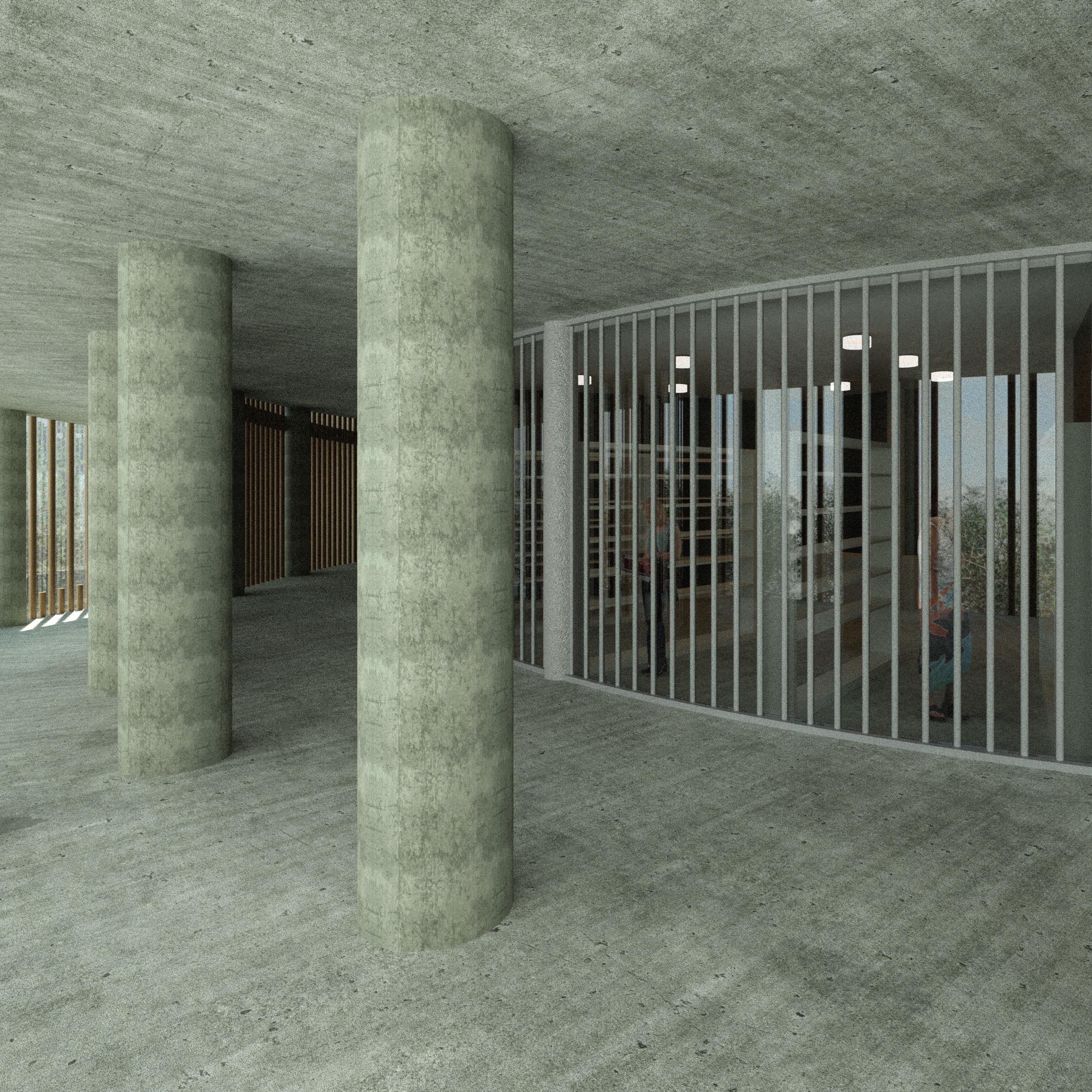
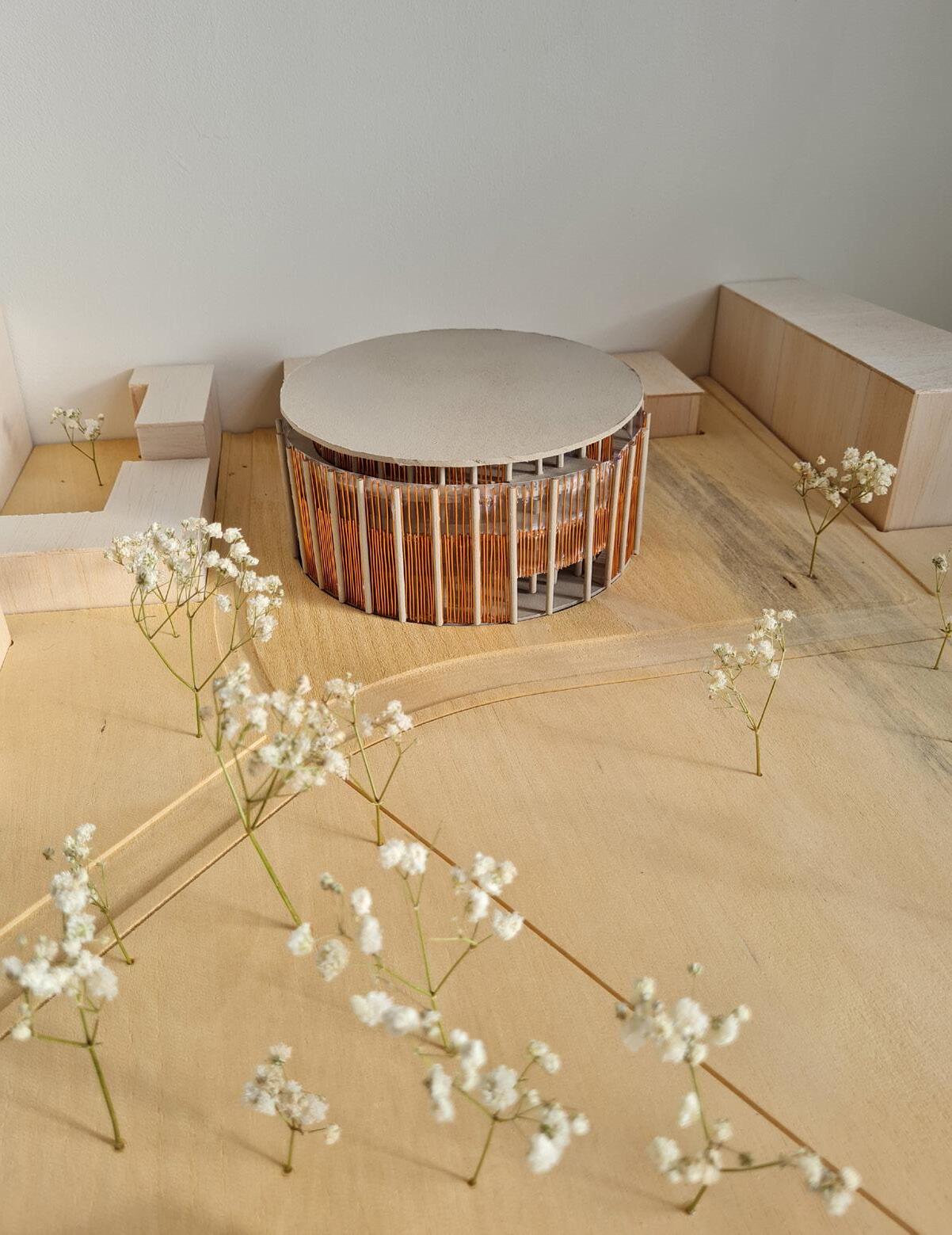
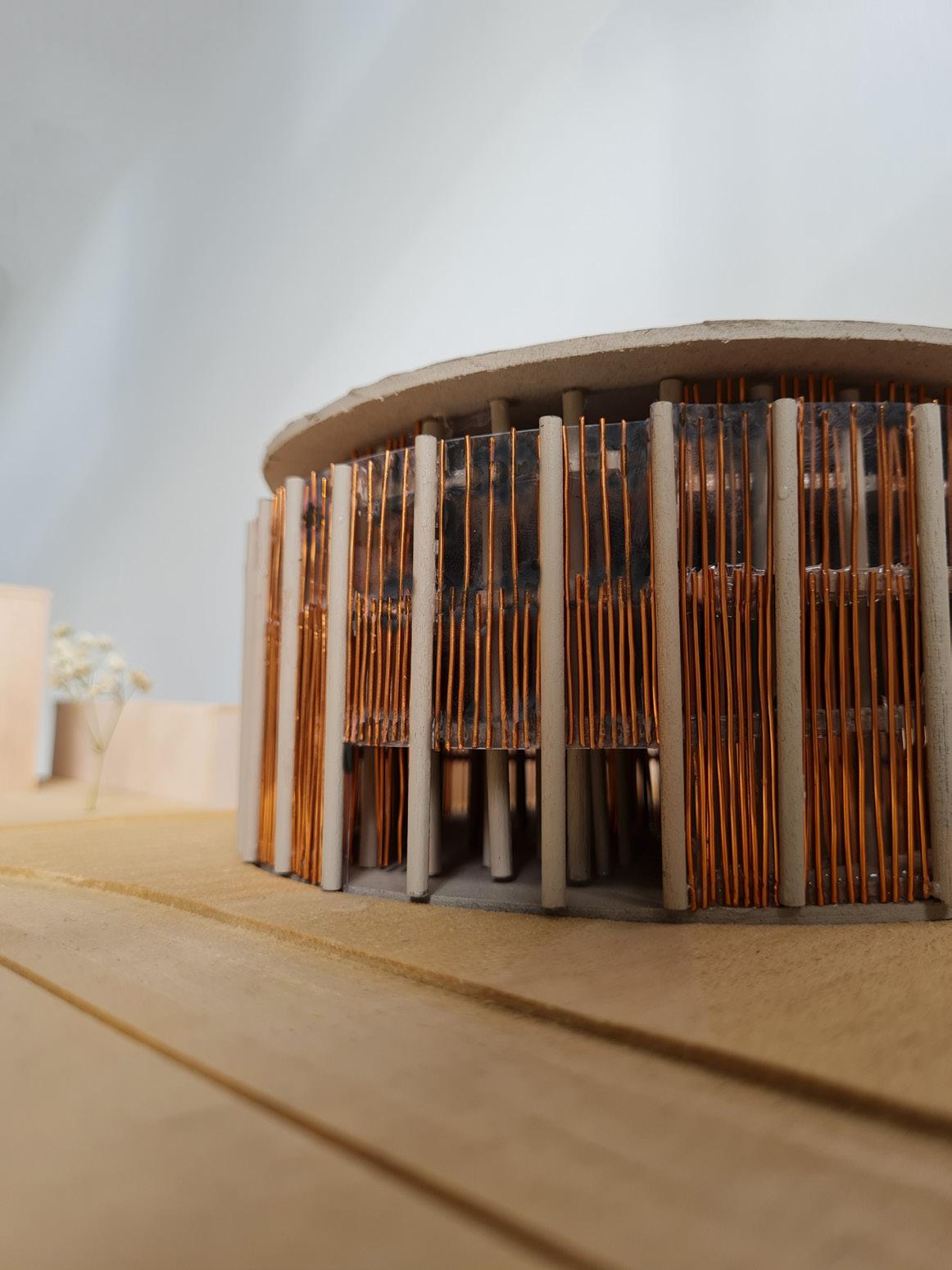
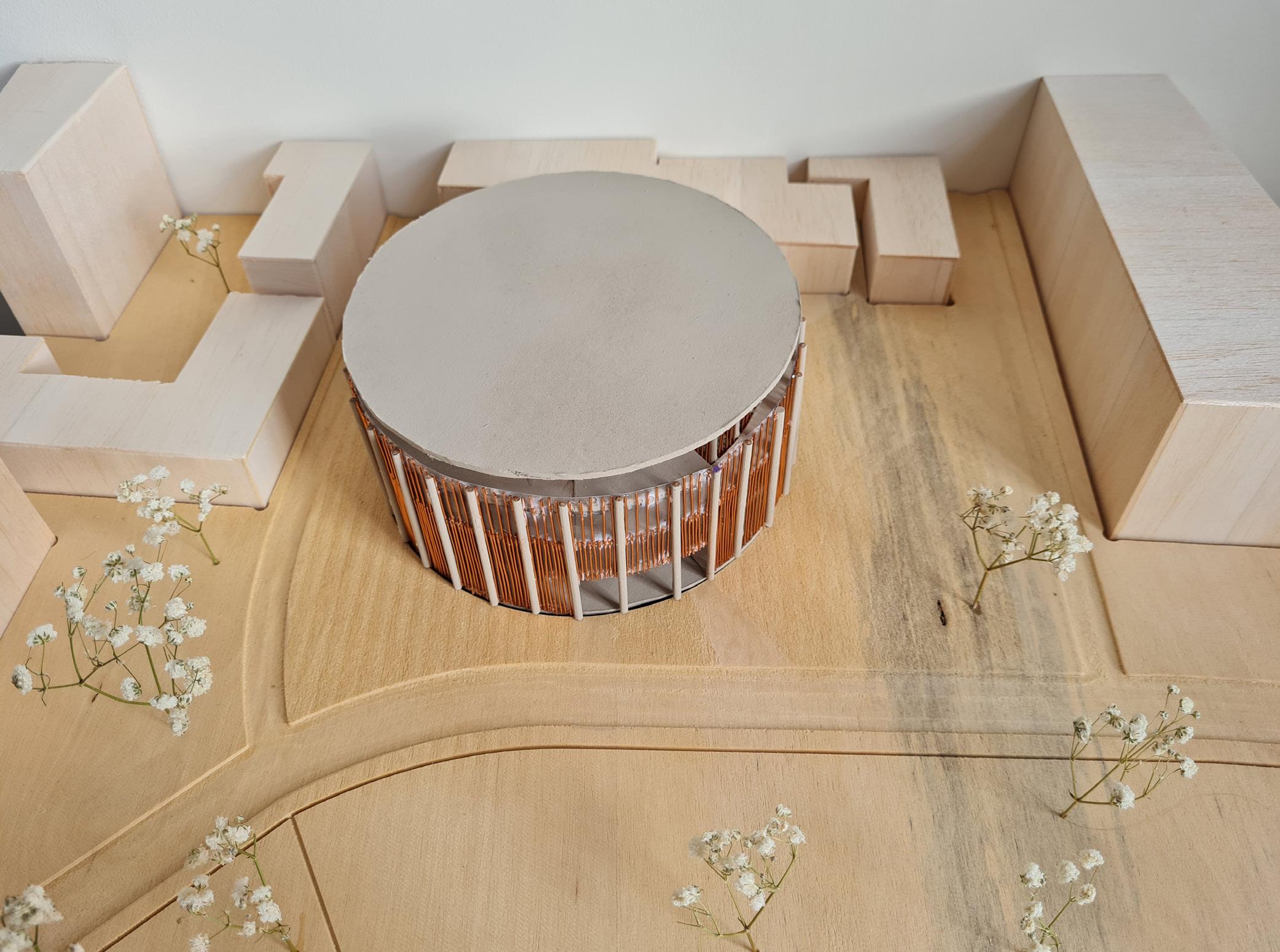
The grid of columns provides a framework within which walls can be removed or built as needed to facilitate gallery exhibitions or performances. The ground floor is left completely open so as to provide a public space for gathering. Even the facade is designed to change over time, as the copper will oxidise and turn green, only to be cleaned back to its original state.
Design Diagram
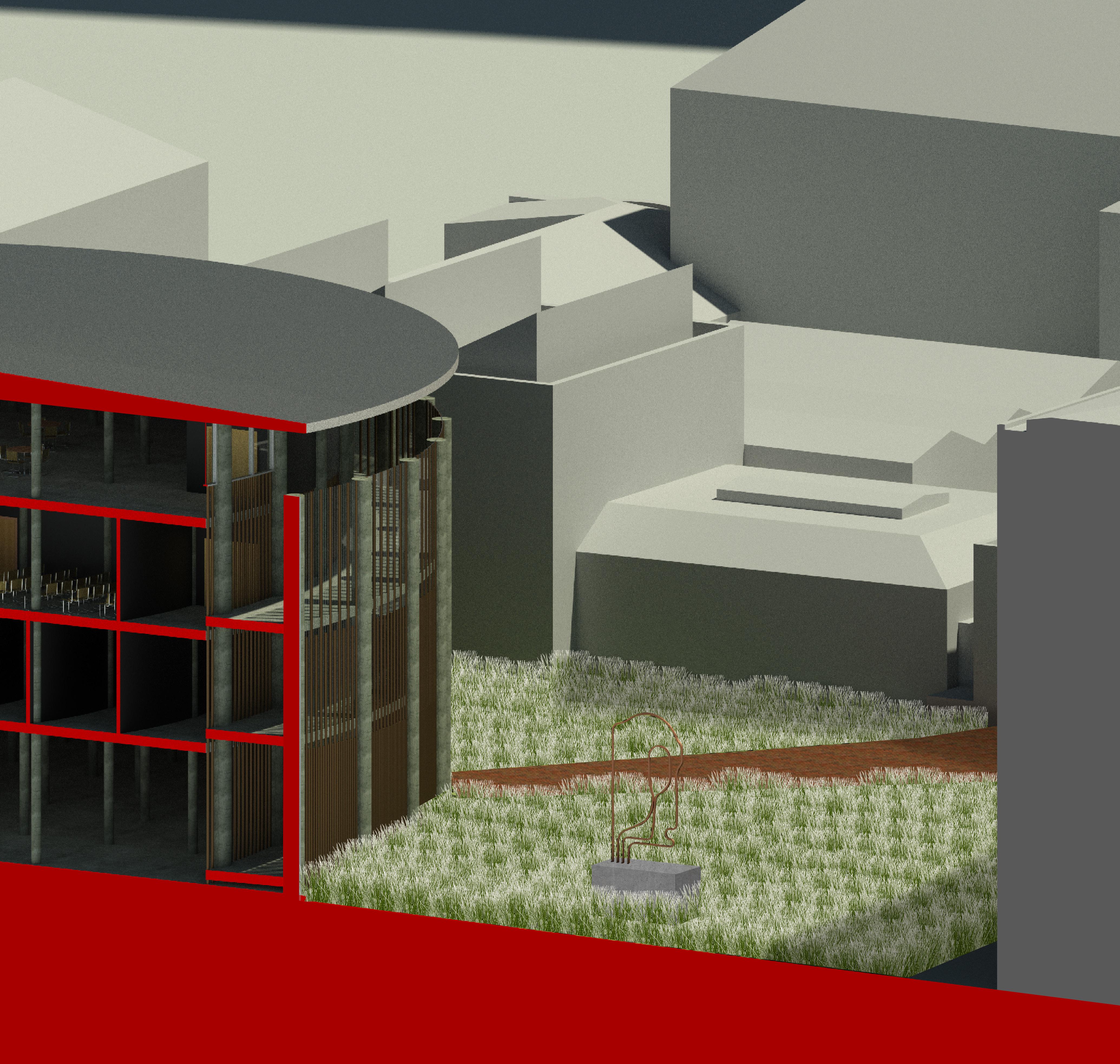
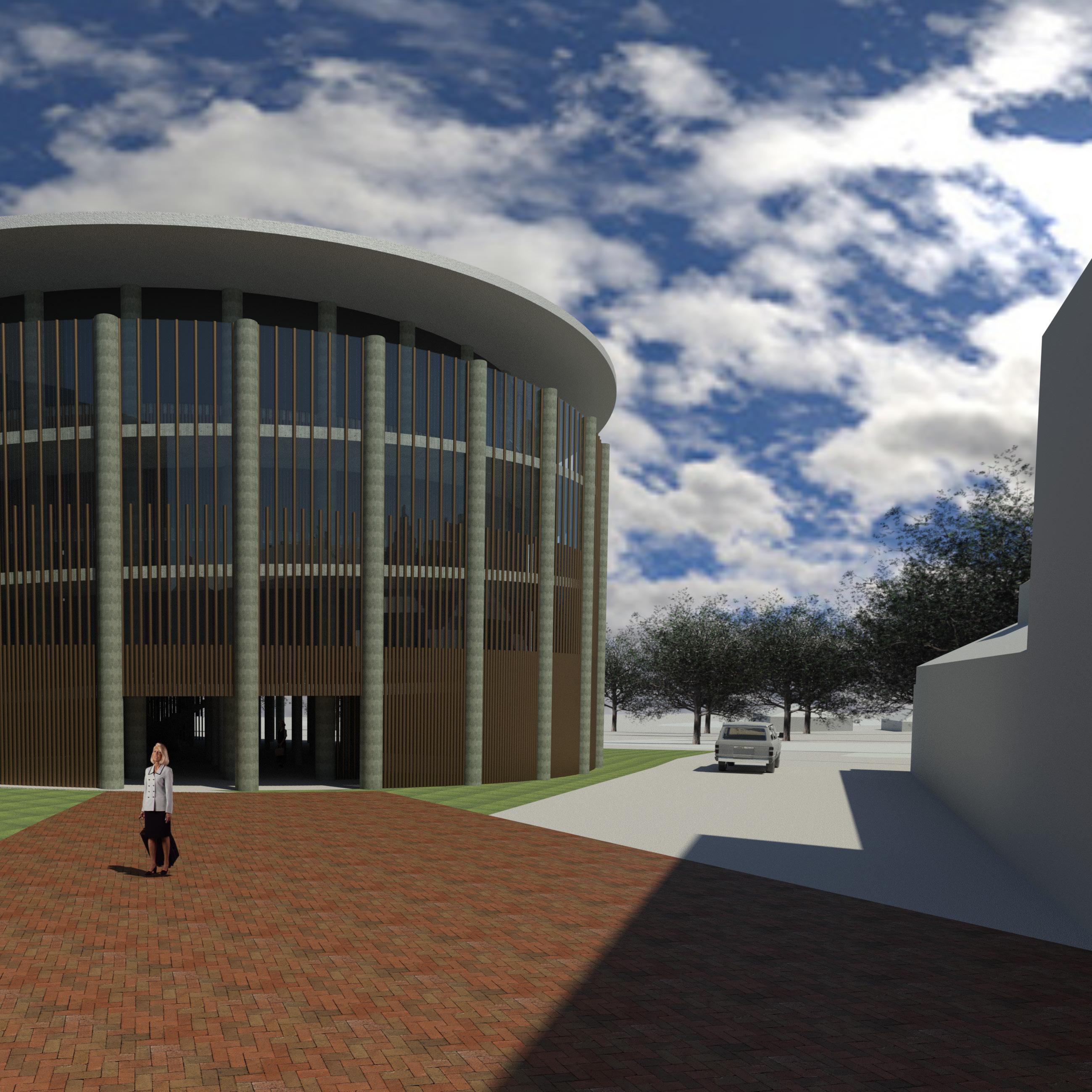
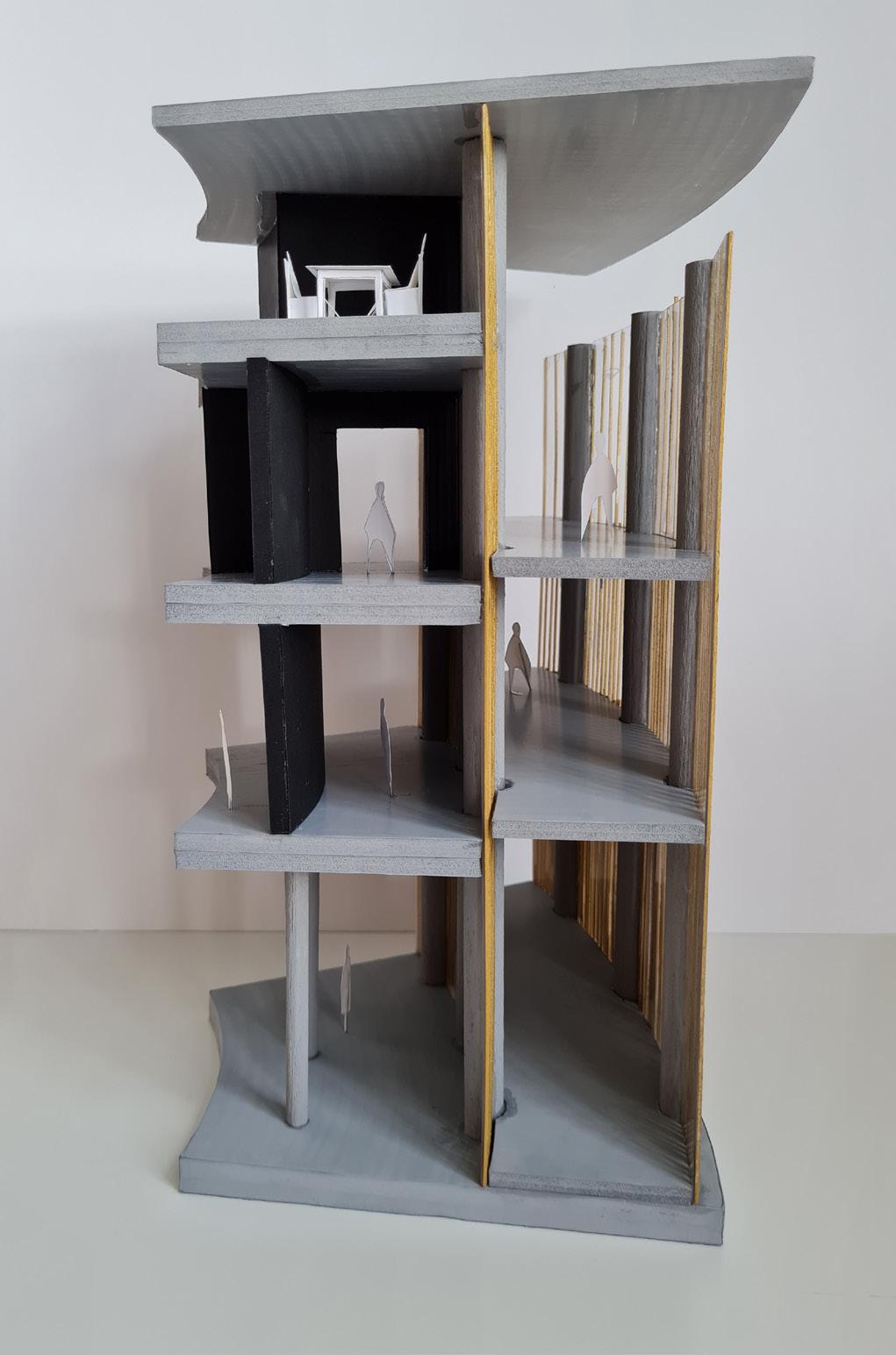
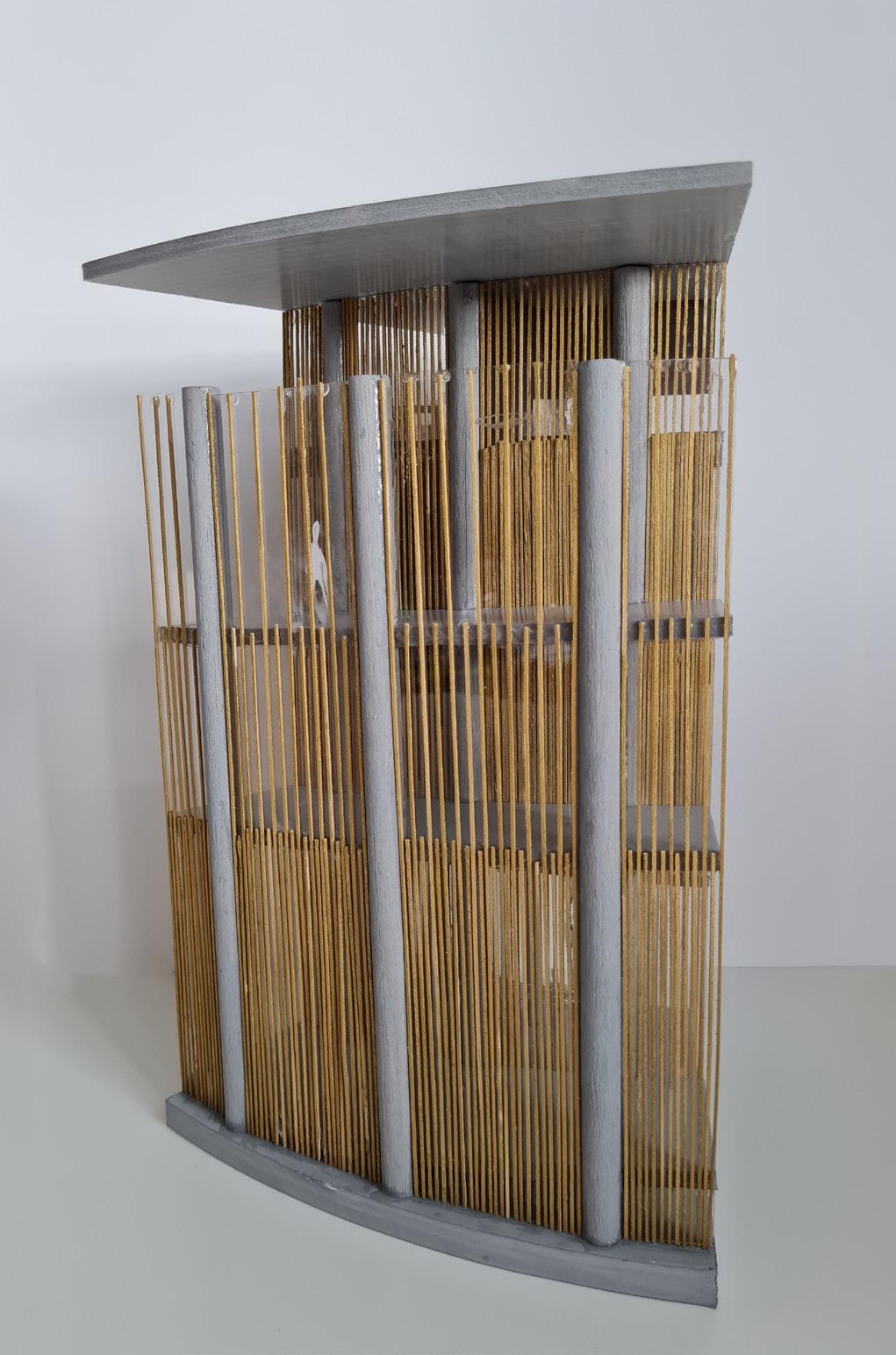
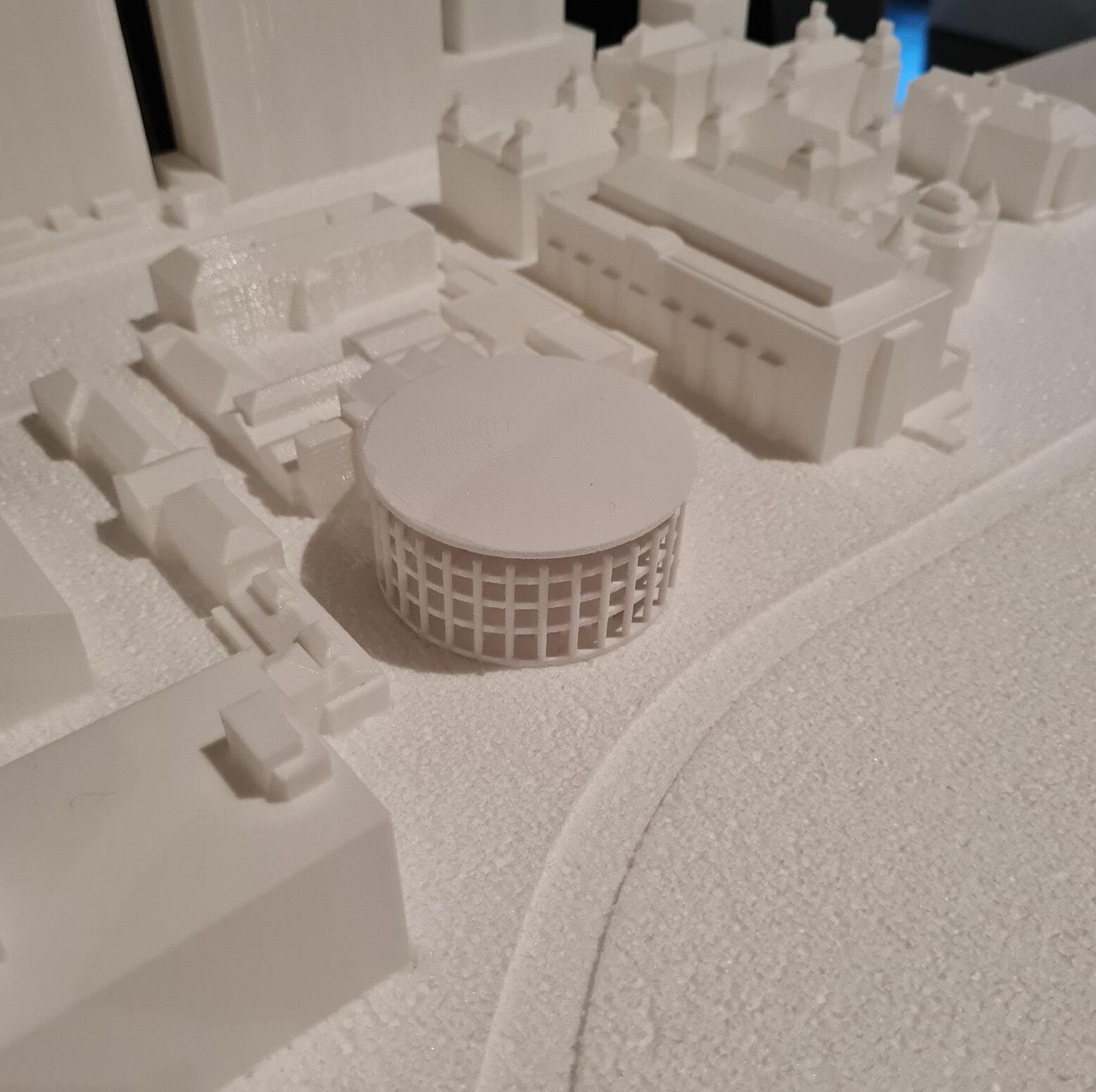
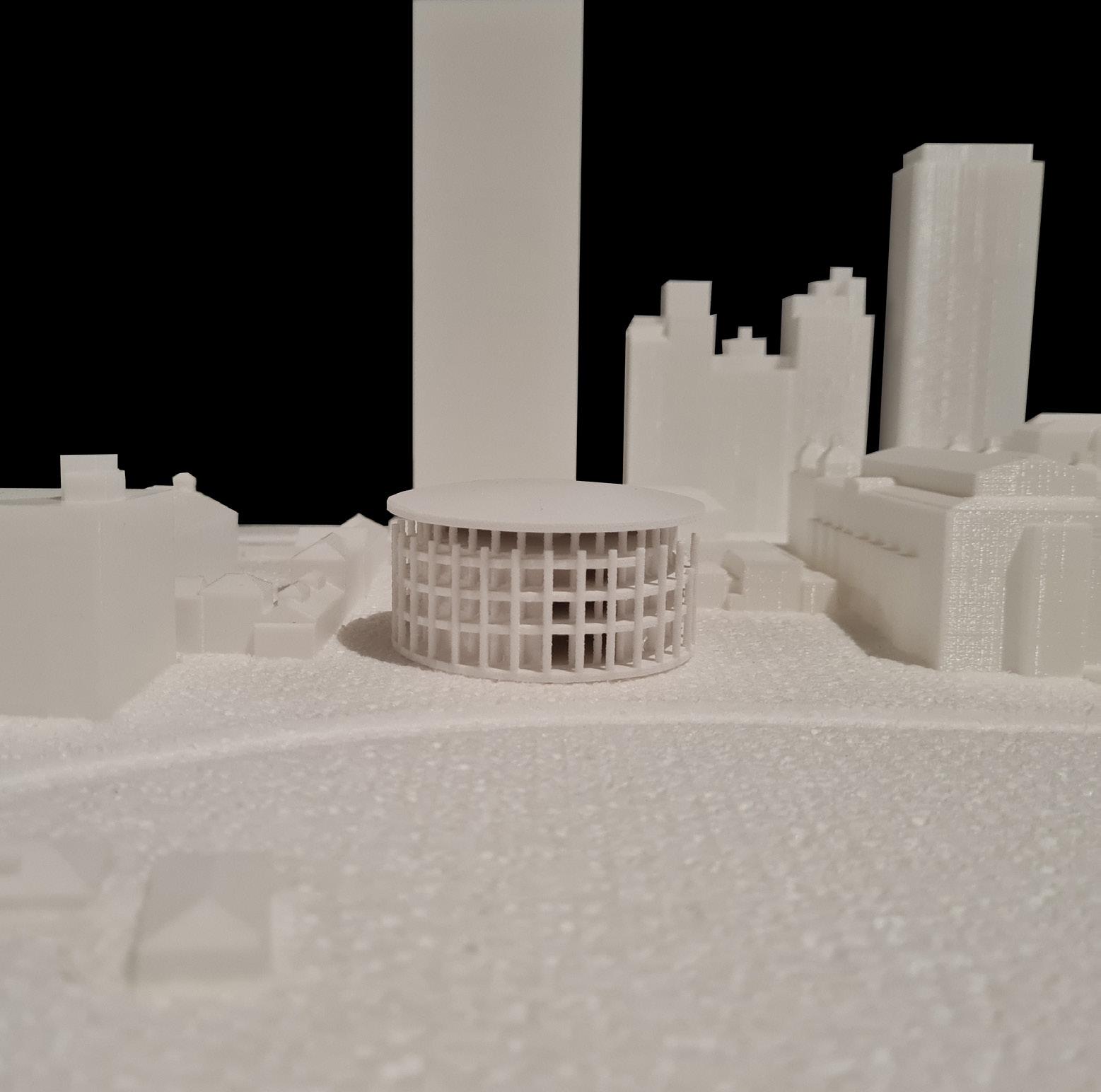
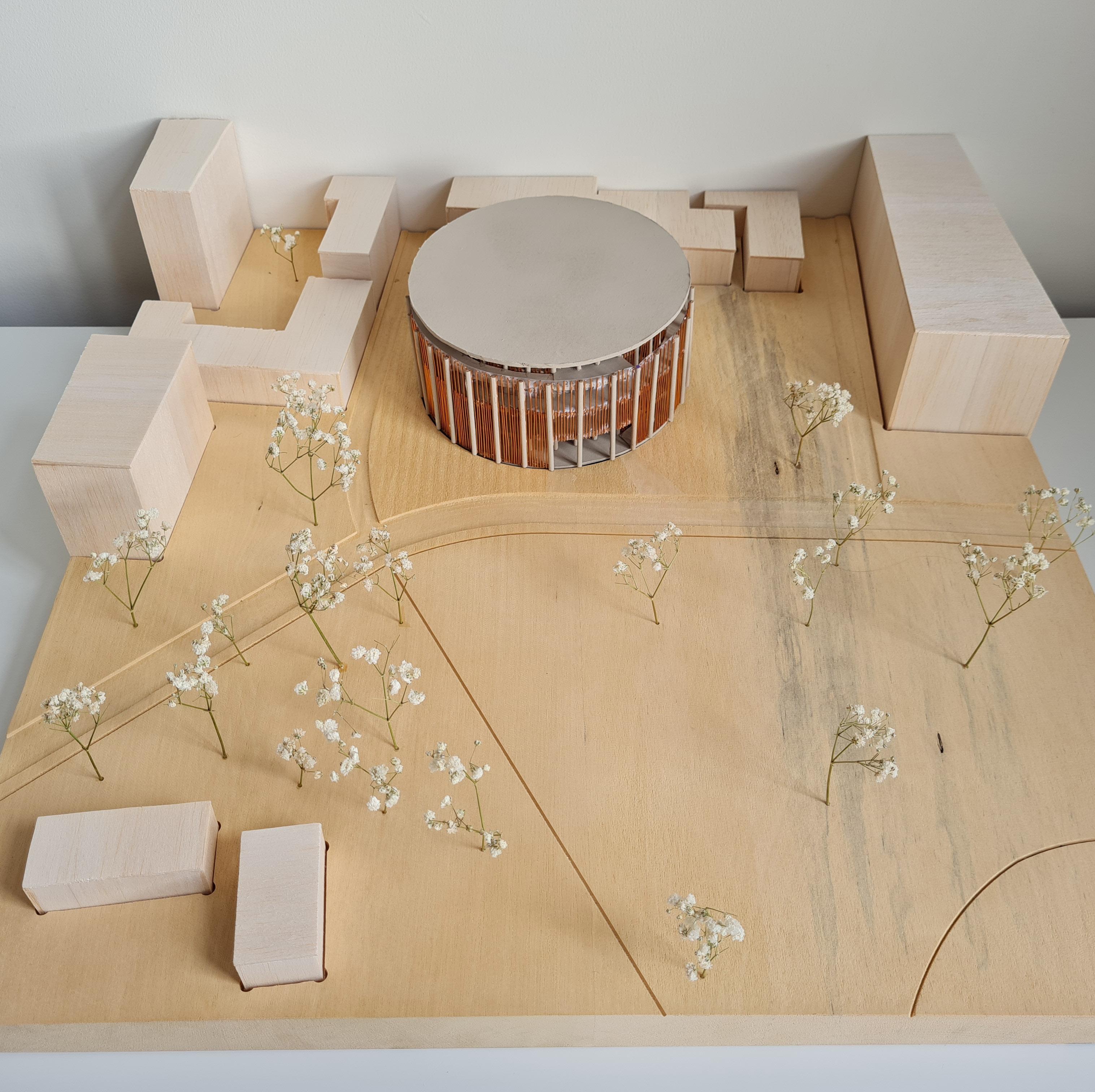
The original idea for this design came from the idea of a labyrinth within an amphitheatre, housing both the performance space and the gallery at the same time. As the project pushed forwards, the labyrinth was extended to four storeys and a cut was made through the centre. This cut allowed for direct access to and from the southern laneway, and allowed visitors to glimpse the cross section of the labyrinth. Eventually the walls of the labyrinth became the columns, in order to better provide a framework for the spaces and circulation within the building. The final design sits like a jar in a field, surrounded by tall grasses. The roof appears to float above the exterior facade, an effect which is heightened by the copper pipes on the facade getting thinner for each level above.
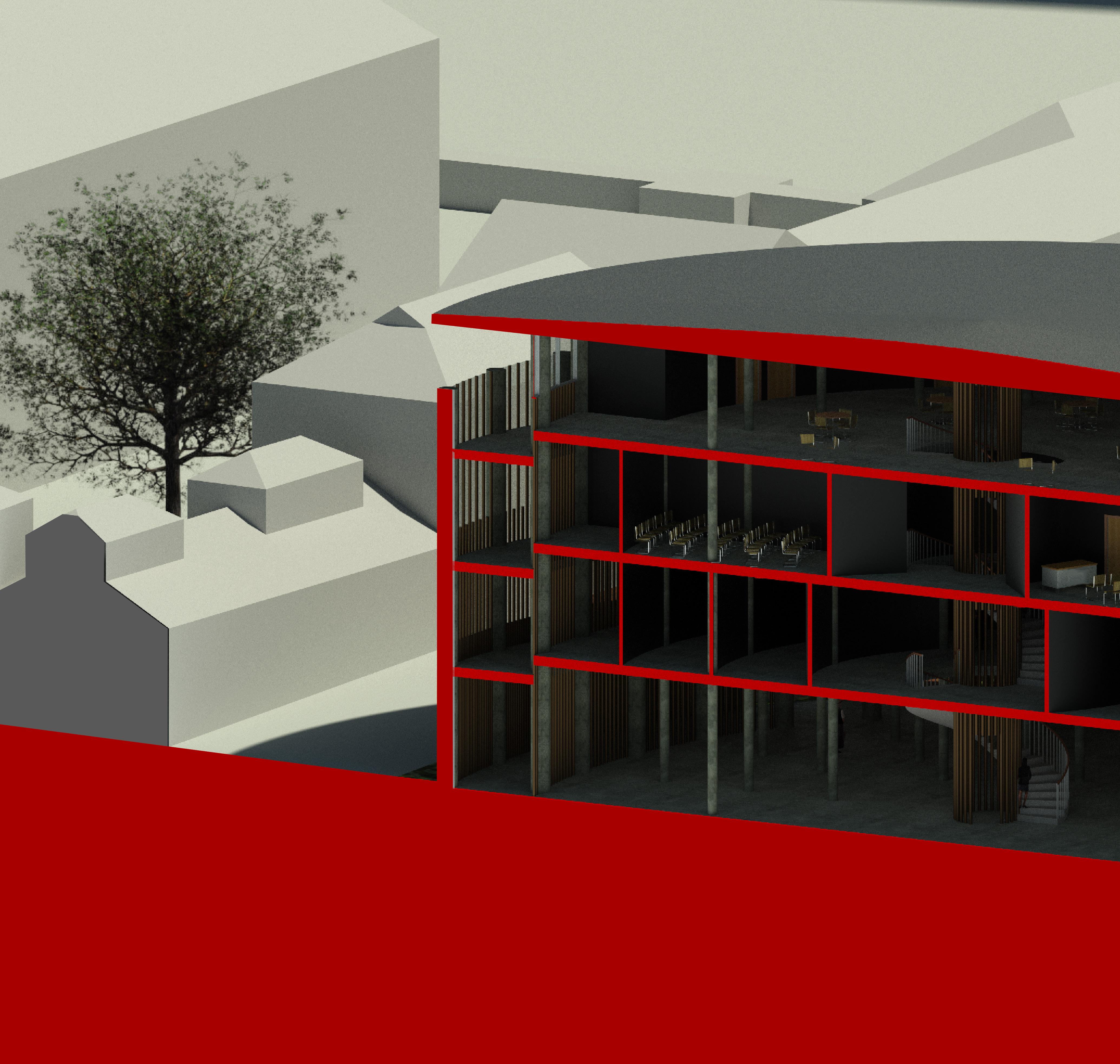
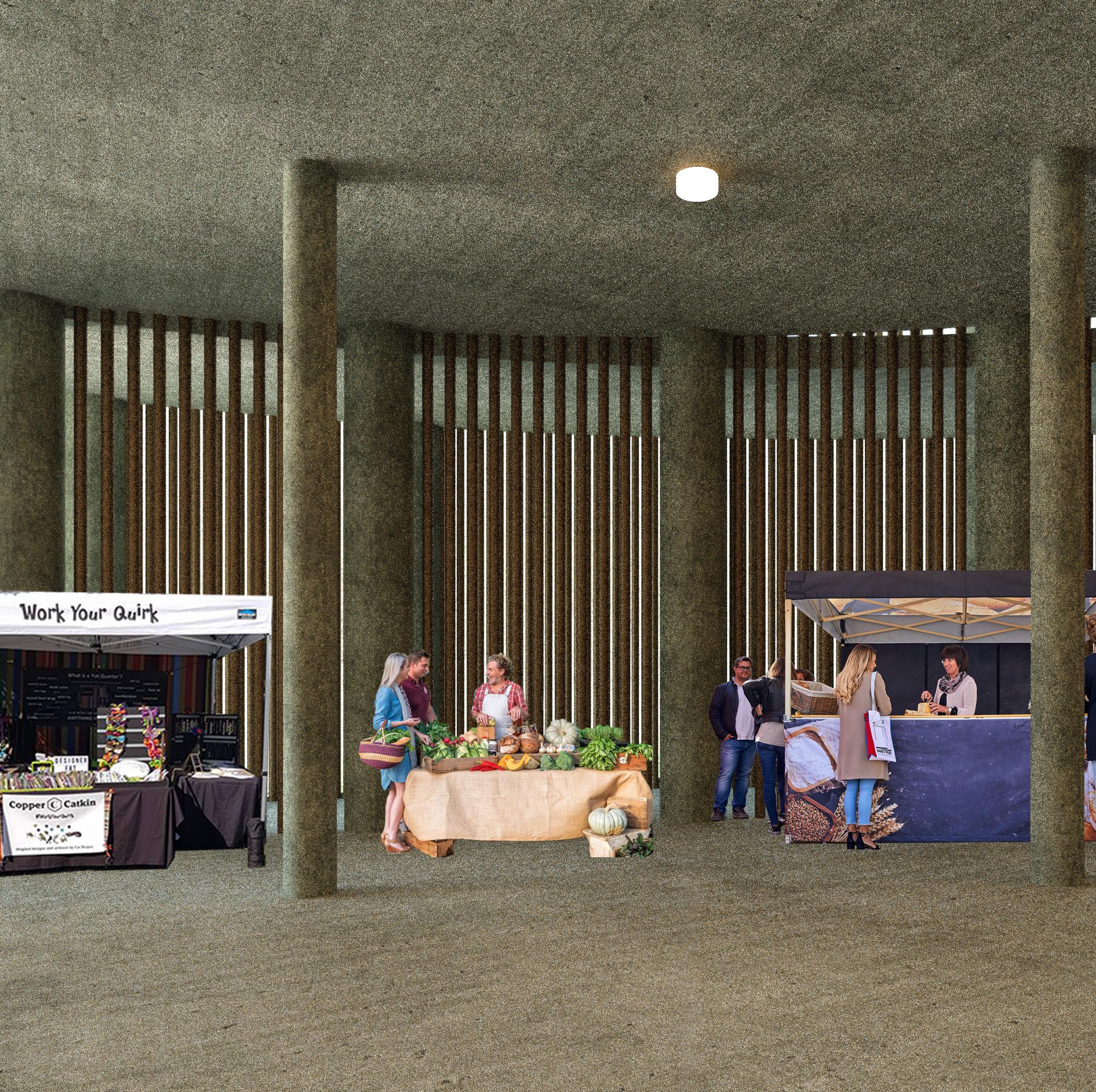
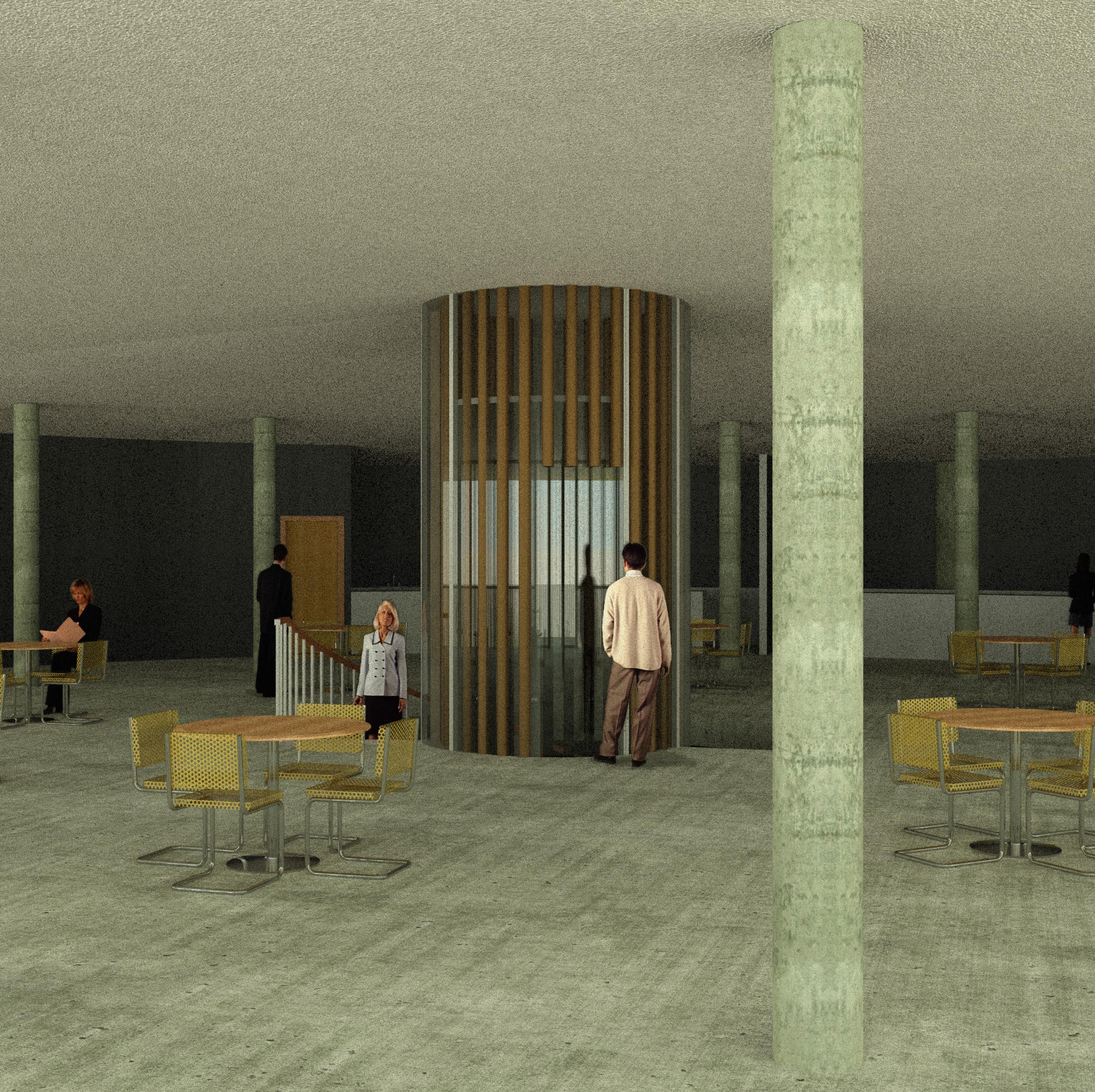
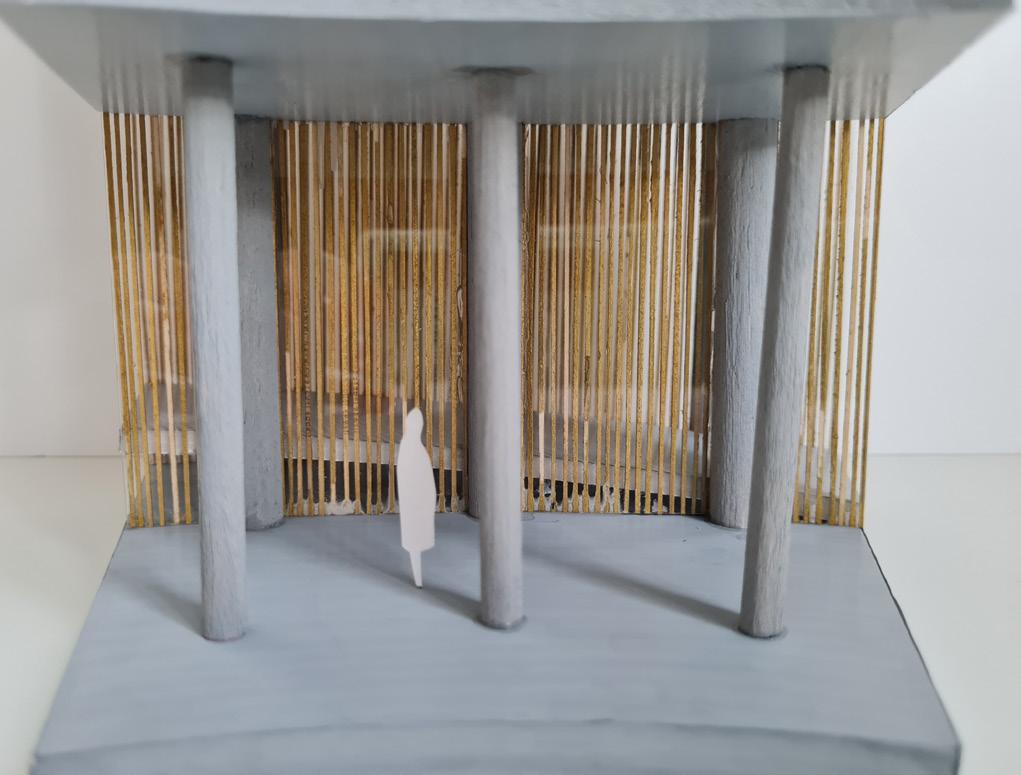
The ground floor is completely open to the public, providing a space for gathering. This space, which is only broken by the columns, is a multi-purpose public space. A space for performances, markets, picnics and cultural gatherings, as well as a stage for the park.
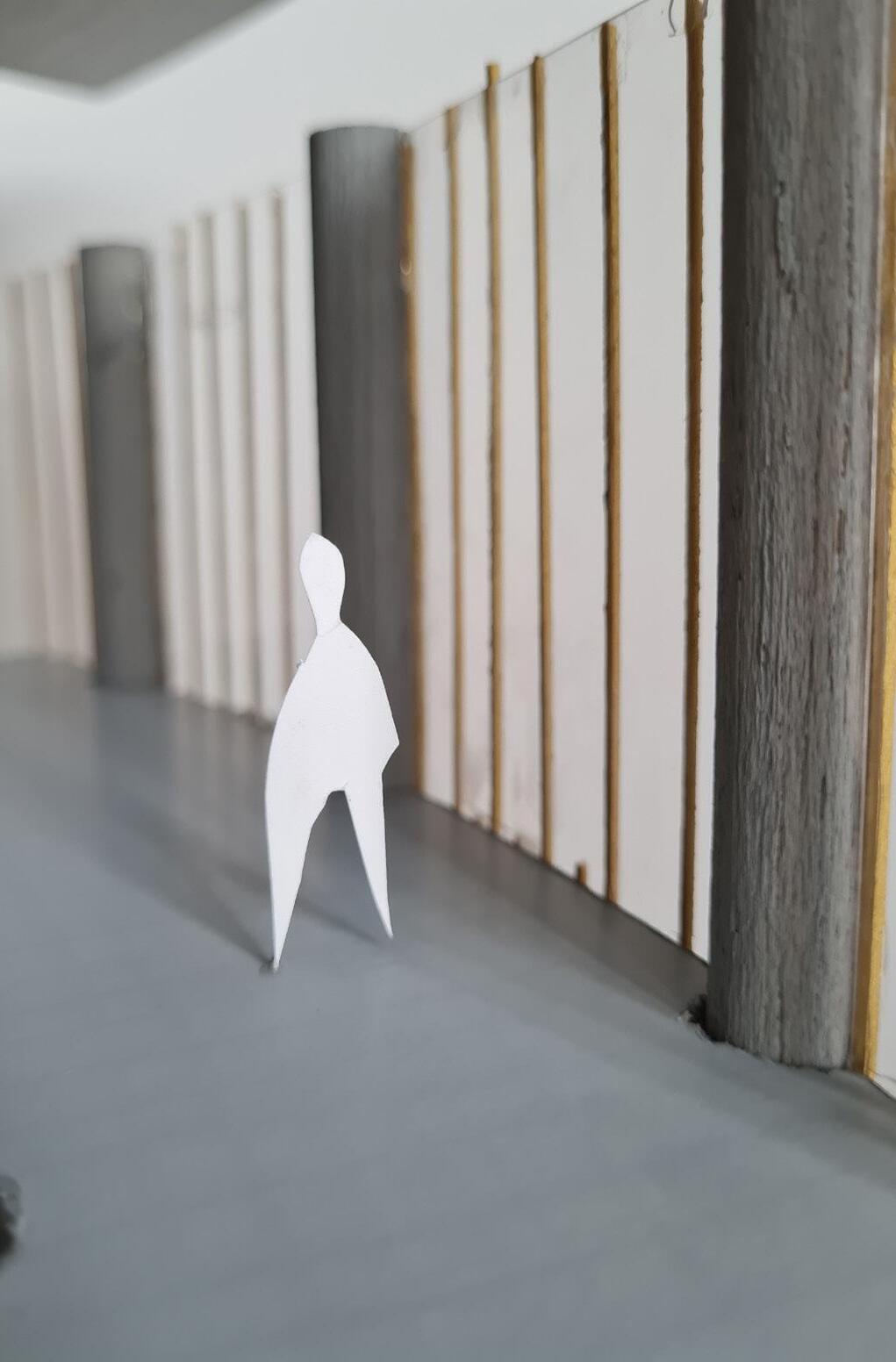
When the visitor first approaches the site from the laneway, they encounter a massive round object in a field of grasses. Within this object, there is a forest of columns. The height of the space and the barrenness of the room give the coloumns an imposing feeling. This is similar to how a person feels when encountering change for the first time; apprehension and fear.

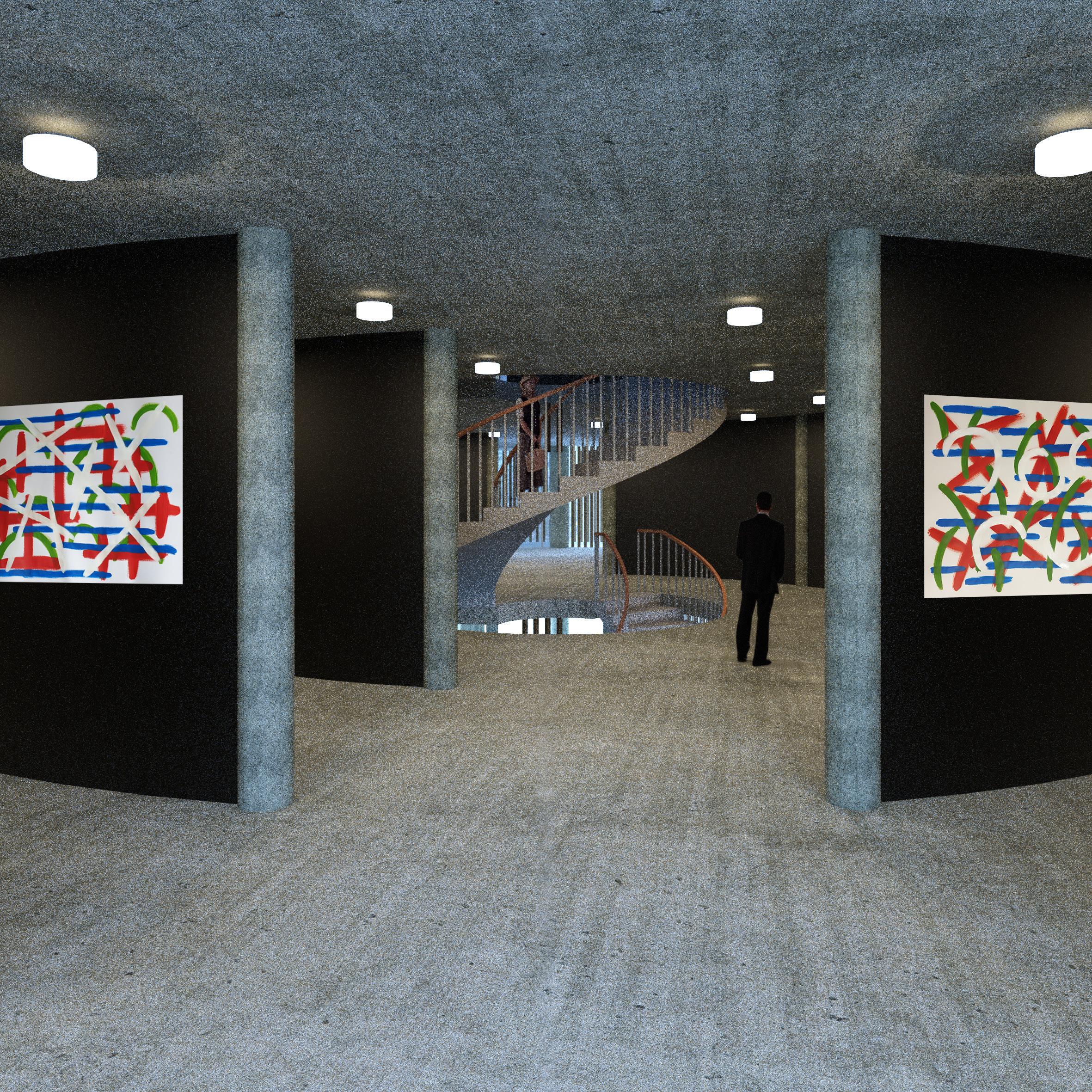
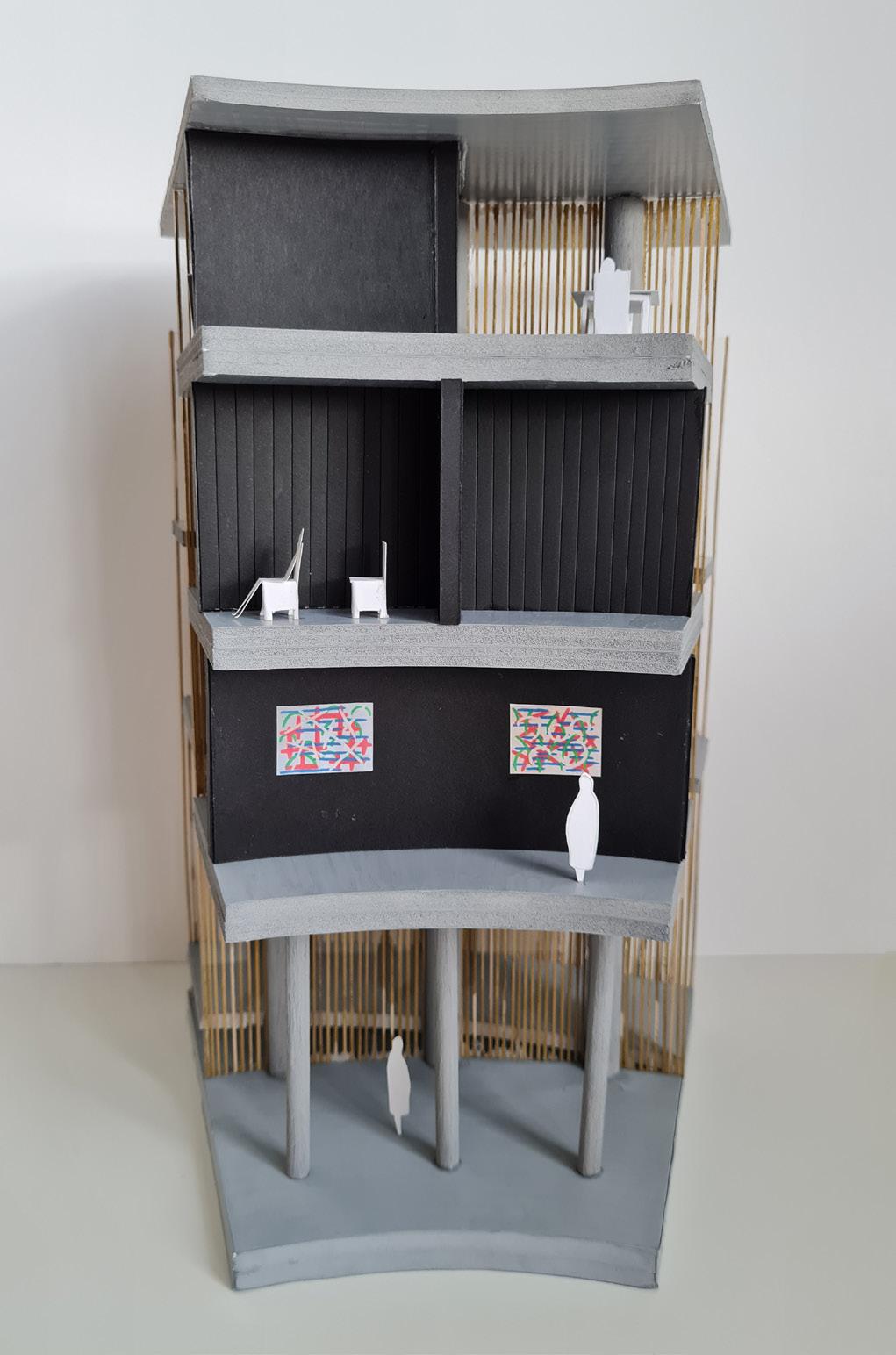
The gallery space follows the design of the labyrinth. The curved shells allow visitors to choose their path of travel, whether they will go directly through the centre and merely glimpse down the alleys, or if they will take the winding circuitous route.
The black gallery walls soften the concrete columns, allowing the visitor to experience the columns in a different way. This changes the perception of the columns, from an imposing forest to a supporting role. As you learn in the gallery, your perception of change becomes more accepting.
The second floor is a dual-purpose space. The public half of this floor is the learning space. Here, visitors can sit in on lectures and workshops which will accompany the exhibitions in the gallery below. There is also a bookshop which will house further materials for people to educate themselves, once they leave the gallery. The private half of the floor is the offices for the gallery workers, storage for the galleries and other staff amenities.
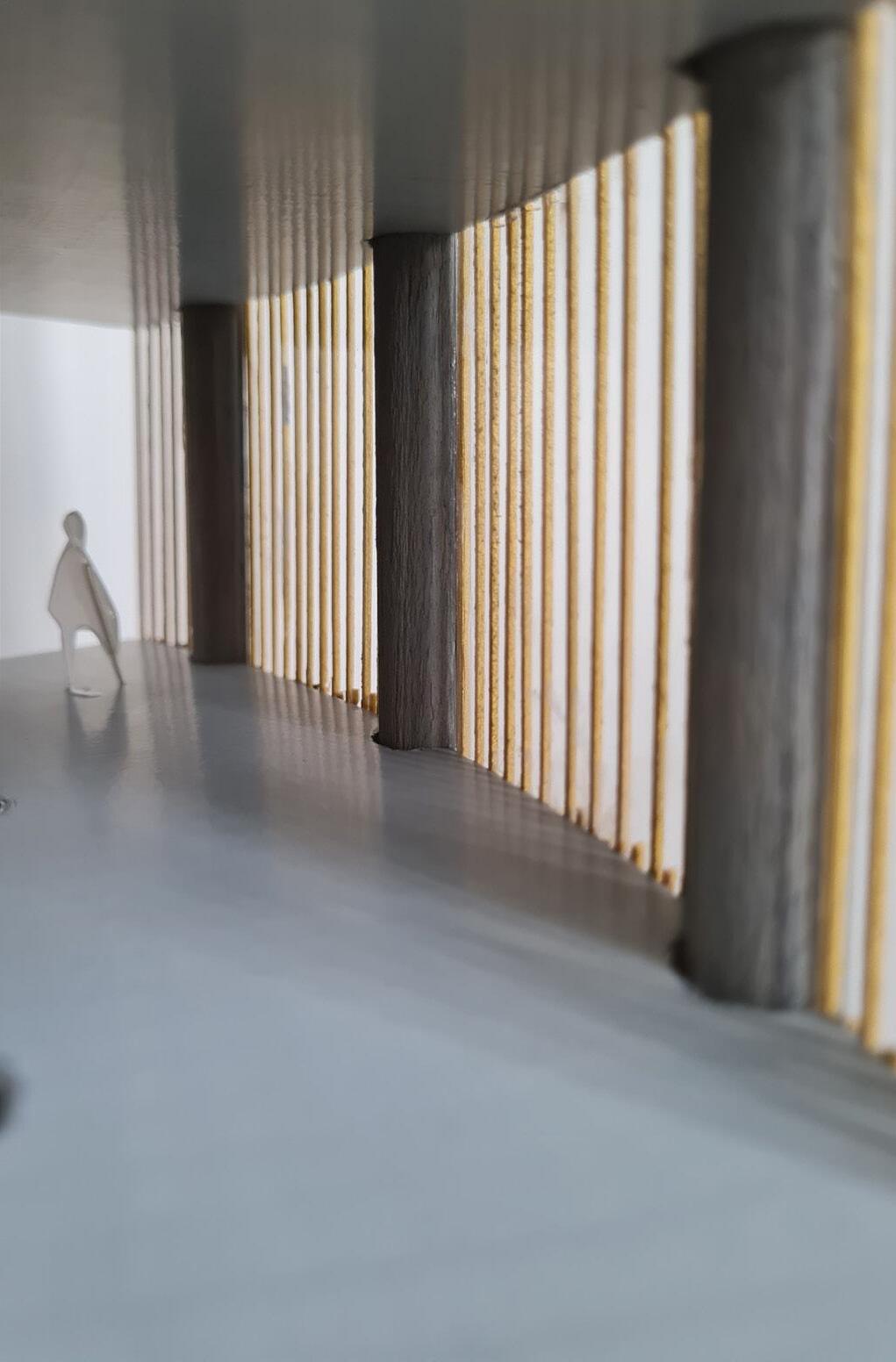
The columns on this floor are shown in a mixed form. They are not all enclosed within walls, some float freely within the spaces. This allows visitors to become reintroduced with the structure, still housed within the program. They become more used to change, and begin to accept it within themselves.
LectureTheatre
The third floor is the space for resting and socialising after the hard work of learning undertaken on the previous floors. There is space for a restaurant and bar, and plenty of seating. During events this space can be used for performances, since it is more open than the other floors. This is also the only floor with an uninterrupted view of the park.
Finally, visitors come to the third floor. On this floor the columns once again free themselves from the walls, but now they are less intimidating and more welcoming. The visitors have accepted the columns as they have learned to accepted change. When they leave down the centre stair, they will see how the columns reach through the floors and back down to the ground floor. Only now, the columns are not imposing but sheltering.
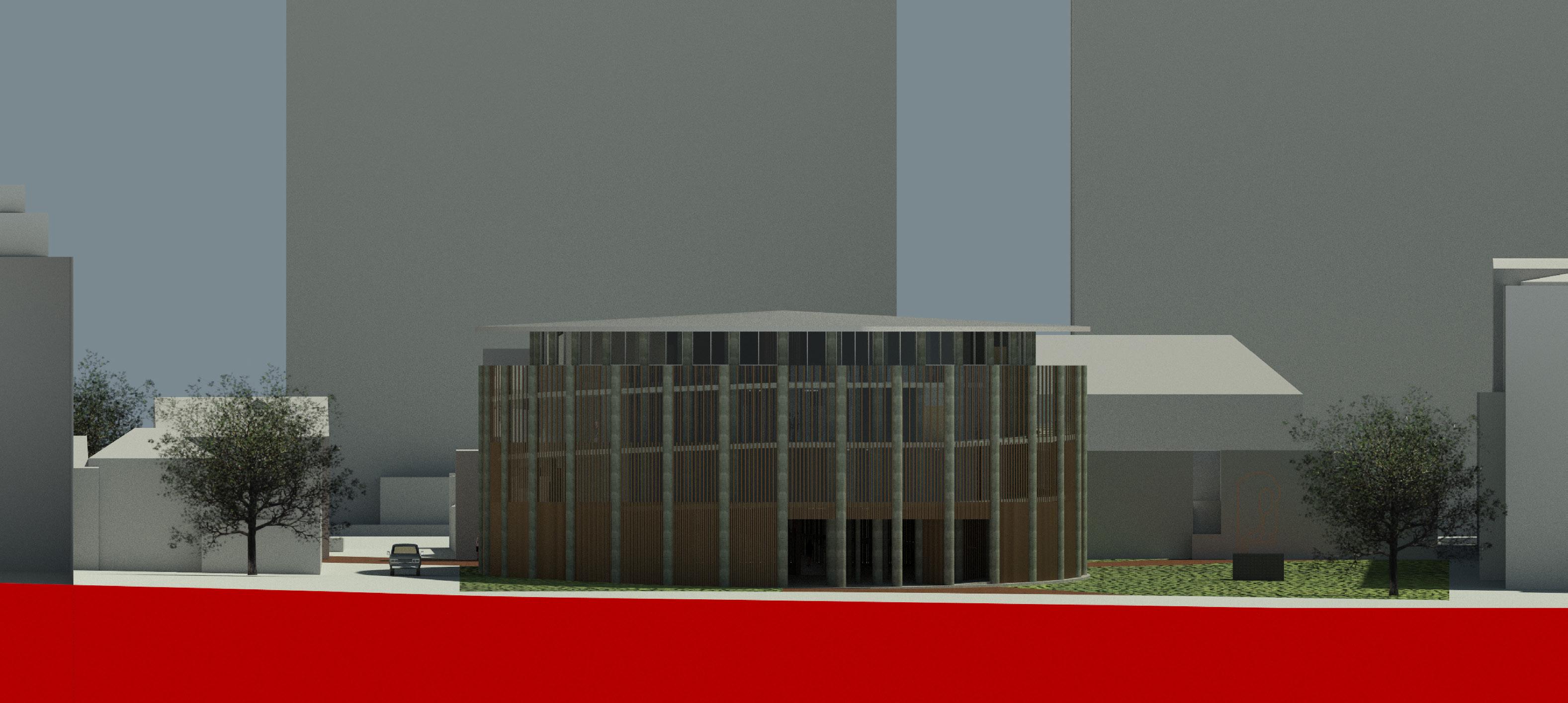
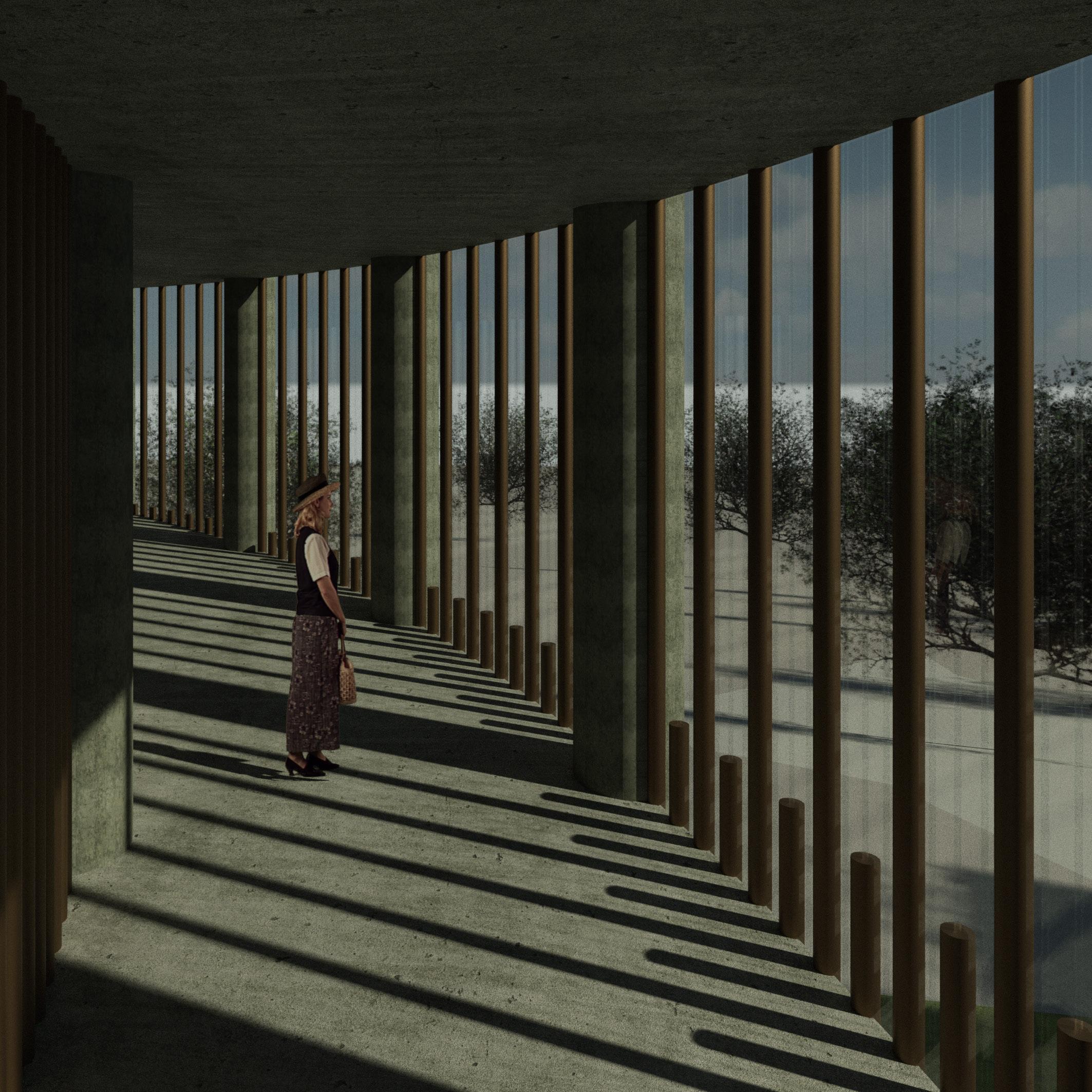
The facade is designed to mimic the journey of visitors within the gallery. As they ascend the floors and learn more about the cultural change exhibited in the space, the columns on the facade fade away. This allows glimpses into the park, until finally at the top of the building the park is in full view.
The copper columns are also designed to weather over the life of the building, demonstrating the change housed within.
References
(1) Sydney Opera House Photo: Sydney Opera House: Visit Us. https://www.sydneyoperahouse. com/visit-us.html
(2) BLM Protest Photos: The Daily Telegraph, “Black Lives Matter rallies across Australia”, SYDNEY, AUSTRALIA NewsWire Photos - JULY 05 2020. https://www.dailytelegraph.com.au/ news/photos/black-lives-matter-rallies-across-australia/image-gallery/88845cc3732fb48b1c80995fc 8187947?page=1
(3) BDES3027 Unit of Study Outline