This design book will document the work conducted as part of the University of Sydney Bachelor of Design in Architecture Studio 2A. This Studio focused on the theme of communication, exploring the different methods of communicating architectural ideas through drawings, models and words. The project itself also explores the communication between two different programs, and the interaction between the programs and the urban context. We were encouraged to explore the relationship between our two programs, whether they were in conflict, accord, or a mixture of both. Phase 1 of the project was to be completed in pairs, after which point we each chose an aspect of the design to focus on and further develop for Phase 2. My partner for the first half of the semester was Mingyue Hu, and all completed work was a collaboration between us.
The two programs represented in this project are a Theatre and Karaoke Bar. These programs have an interesting relationship, because at first glance they appear to be in conflict with one another. A theatre is a historic institution, where a single performance is viewed by many in an audience. Karaoke bars are a comparatively modern concept, which require more privacy and often don’t have any audience other than the singers. However, both programs contain an aspect of performance, and both are an art form that deals with sound. The two programs also require similar supporting spaces, although their primary spaces are very different. Overall, there is a dynamic accord between the programs which I have strived to demonstrate in the architecture.
Site
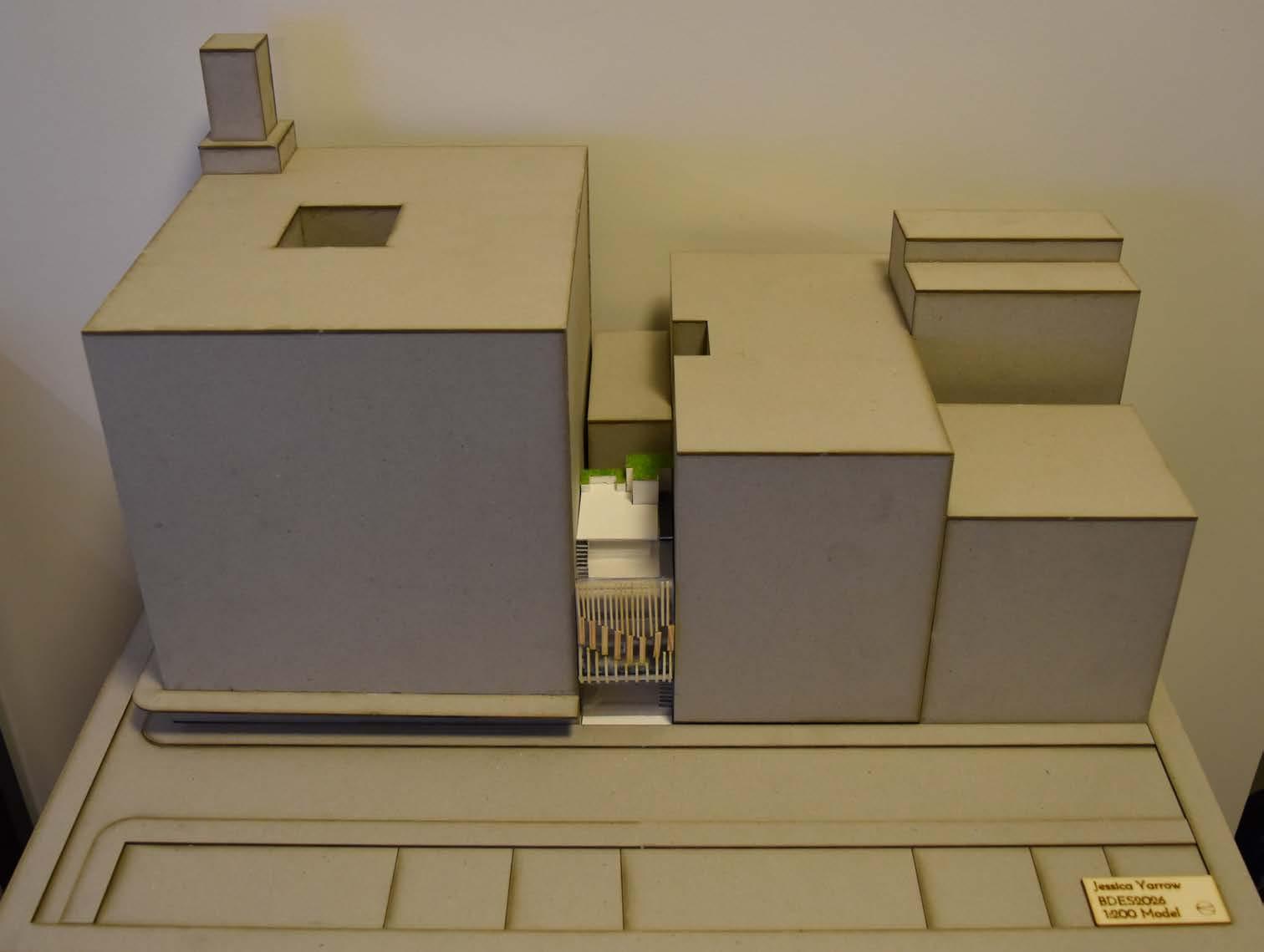
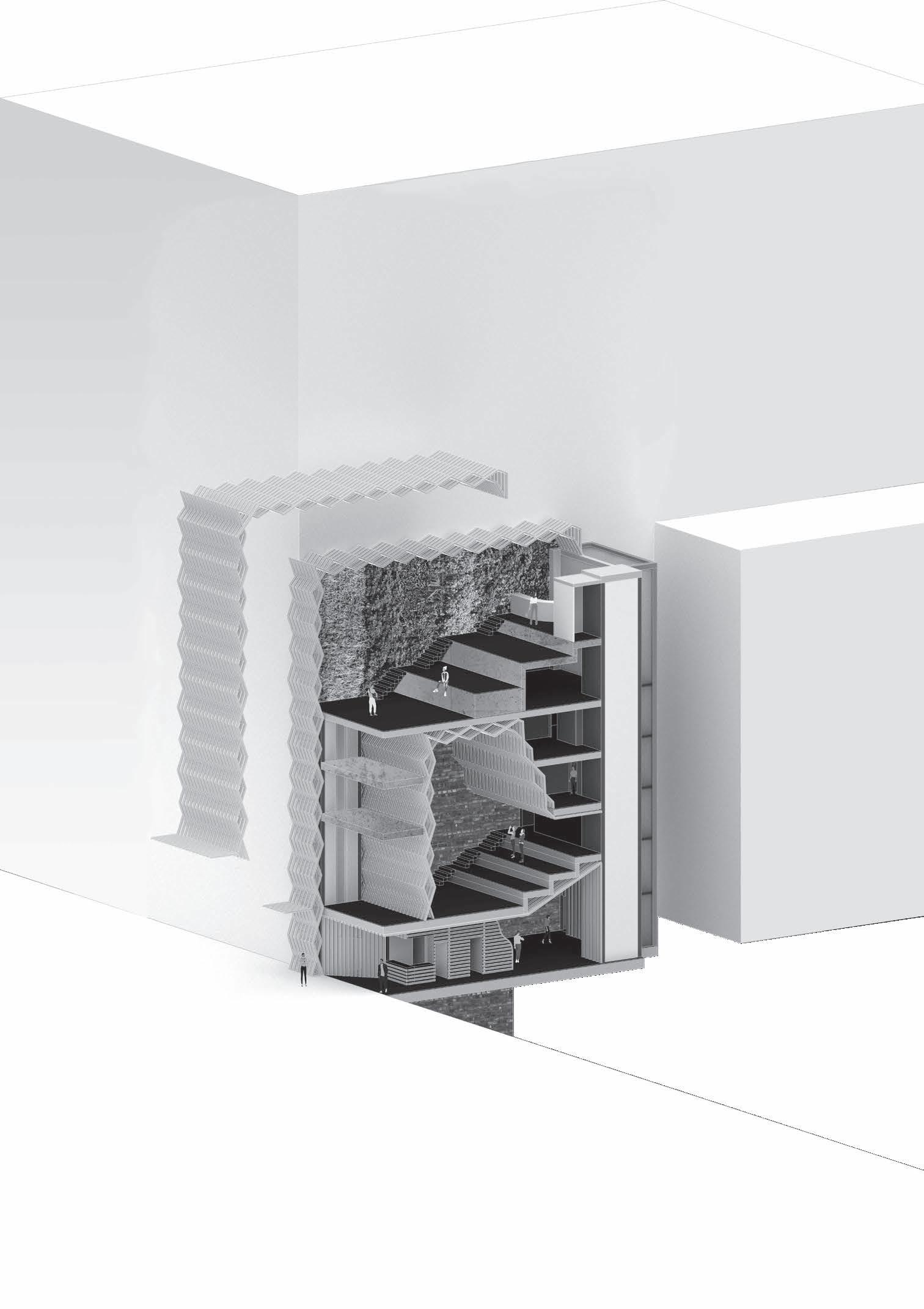
The site for this project is in the heart of the city, a skinny plot between two imposing buildings, the Grace Hotel and a mixed-use office building on Clarence Street. The parameters for our design were to work within 20m x 20m x 10m volumetric constraints, which starts at the sidewalk and ends in a light well at the rear of the site. The height was restricted by existing windows on the adjacent buildings, so that our project would be only half the height of the hotel and office. The street façade could take its cues from the adjacent buildings, aligning details with the windows and continuing an awning over the pathway for pedestrians, or attempt to stand out in the small space. The lightwell at the rear of the site would allow the sun to penetrate partially into the building, however the tall surrounding buildings of the city provide shade from almost every direction. The site is located in a busy urban context, halfway between the Town Hall and Central shopping districts. This provided the ideal location for a theatre/karaoke bar, close to public transport, restaurants, bars and hotels. Throughout the design, my aim was to create a street front which was at once inviting and distinctive, which would draw attention and perform on the city stage. I chose to continue an awning to give back to the pedestrian traffic, and to further draw visitors into the space.
Brief
The architectural brief and the weekly assignments provided ample opportunity for experimentation and exploration. A fine balance was maintained between functional design challenges, such as space planning and circulation, and more conceptual challenges such as collage and relationships between programs. A summary and critical analysis of the weekly assignments can be found in the Appendix. For the purposes of this design book in telling the narrative of my design process, I have chosen seven “Decisive Moments” which informed an important aspect of the final design. The inspiration for this method of storytelling comes from Cecil Balmond’s article on the design process of the Bordeaux Villa.
Design Narrative
Decisive Moment 1: Conceptual Models
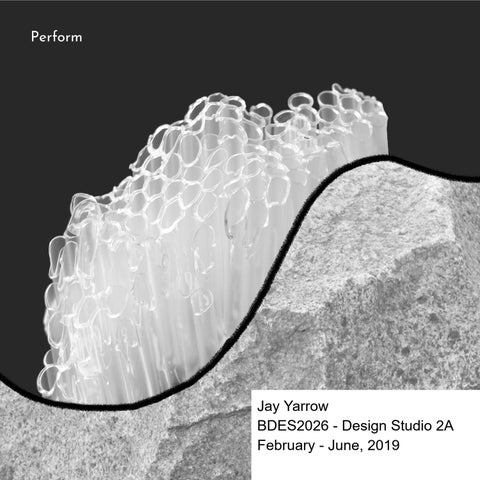
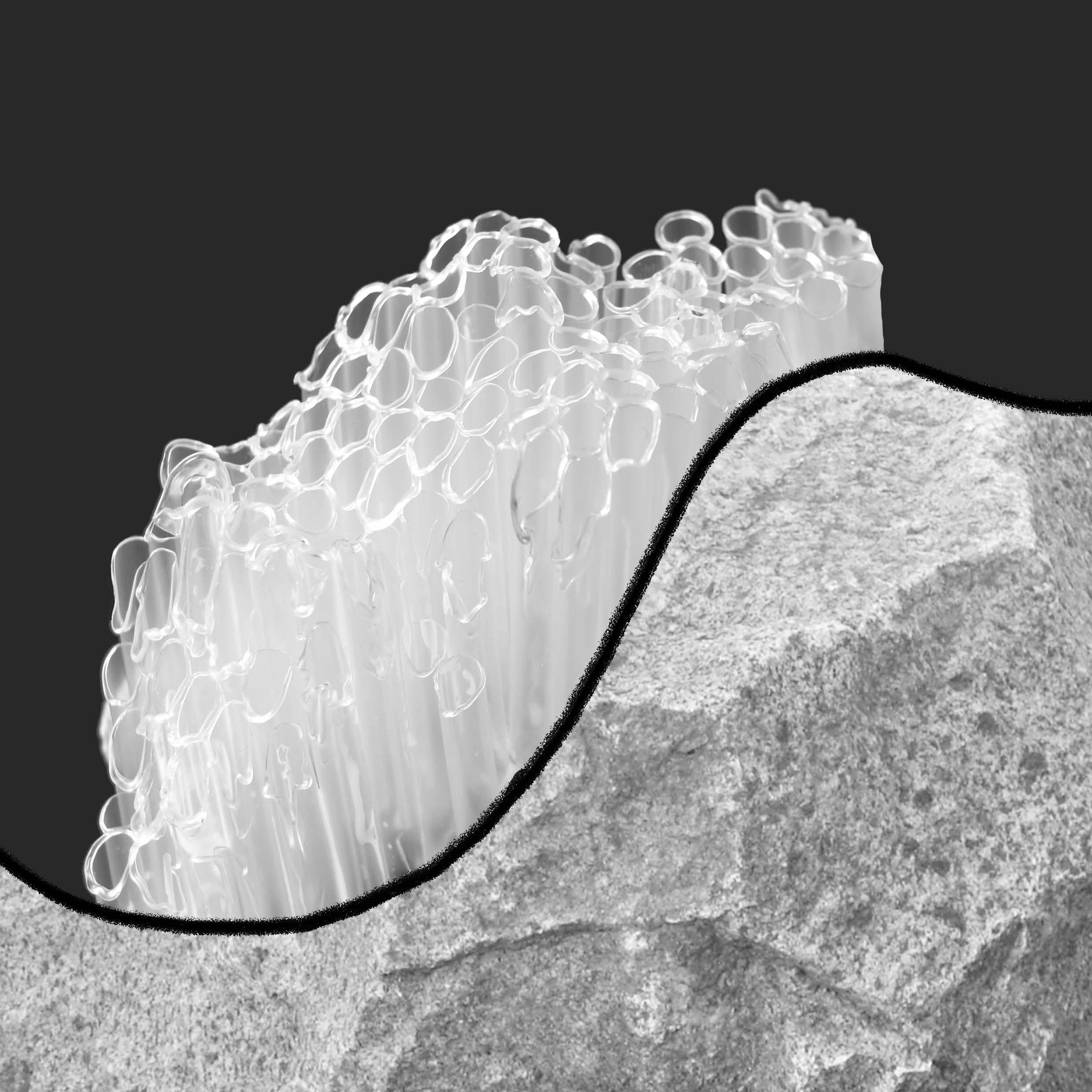
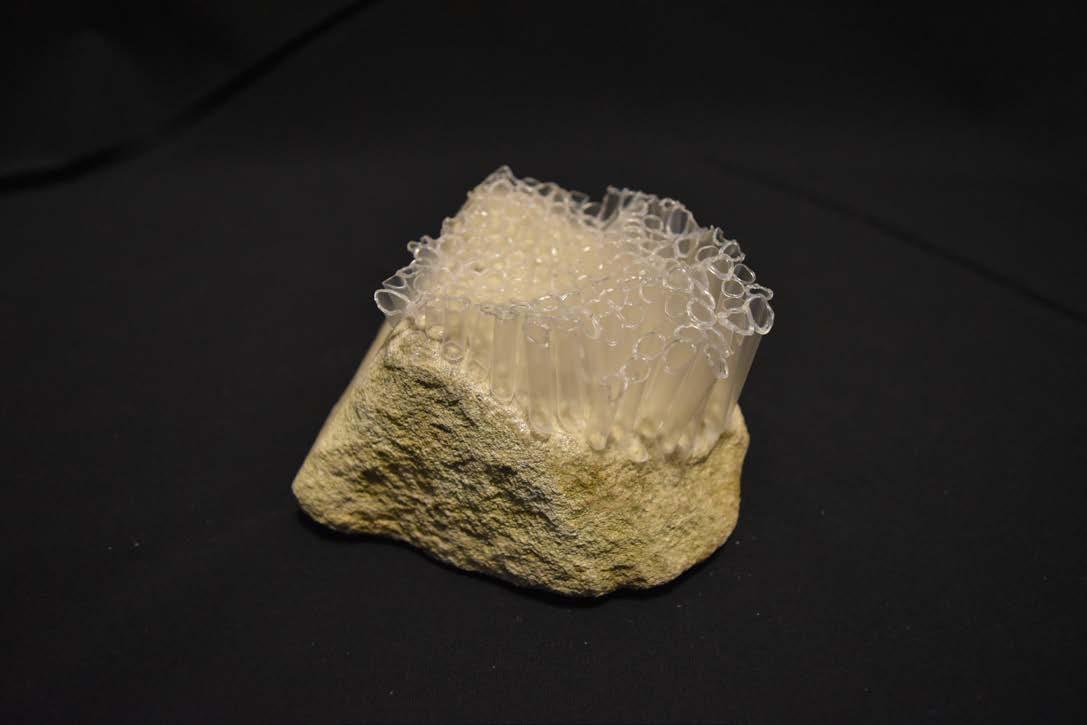
In the first week of the project we began to explore the relationship between our two programs. We were asked to produce a conceptual model comprising two materials which represent the two programs, and to explore the interactions and connections possible between the materials. We wanted to contrast the history and rigidity of theatre with the more modern and flexible karaoke, so for our materials we chose a rock and plastic straws respectively. To further represent karaoke and the cell-like structure of karaoke rooms, we partially melted the straws together to form a smooth surface.
Our conceptual model proved to be one of the most successful aspects of the project. The way the straws are situated surrounding, enveloping, and almost dripping from the ‘theatre’ rock inspired later architectural forms and the relationship between the theatre and karaoke bar.
Shown are the two most successful models we experimented with during project. The first uses a large, imposing monolithic rock, with a slightly sloped top plane, which perfectly represents the imposing weight of the history of theatre. The shape of the rock is also reminiscent of audience seating. The straws on top form a gently undulating surface, broken up into cells reminiscent of Japanese capsule hotels and karaoke bars.
The second model uses a more elongated rock, and the straws continue off the rock’s surface. This model held more questions than answers; what did it say about the relationship between the two programs that the karaoke material seems to be escaping or walking away from the theatre material? And how could that translate into the architecture?
Decisive Moment 2: Time and Space
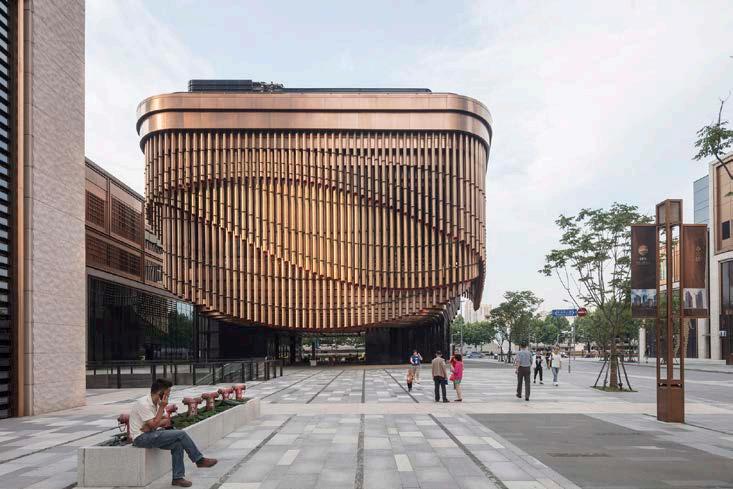
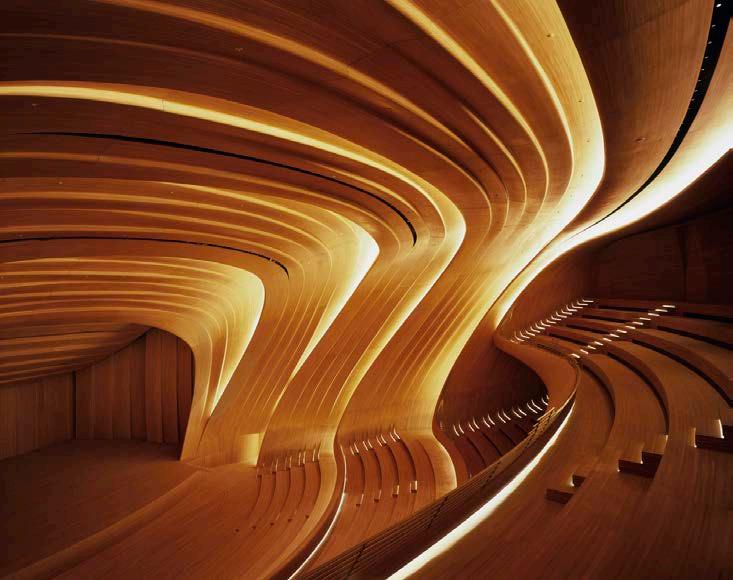
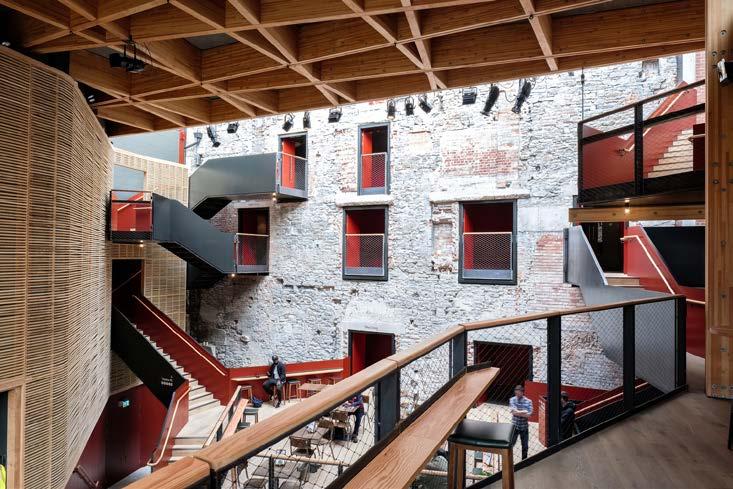
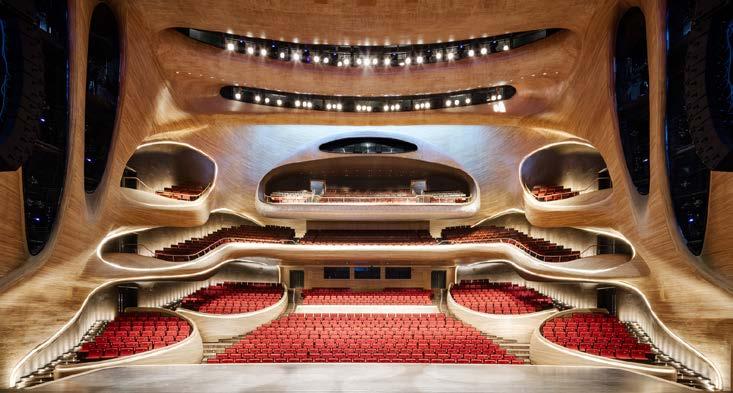
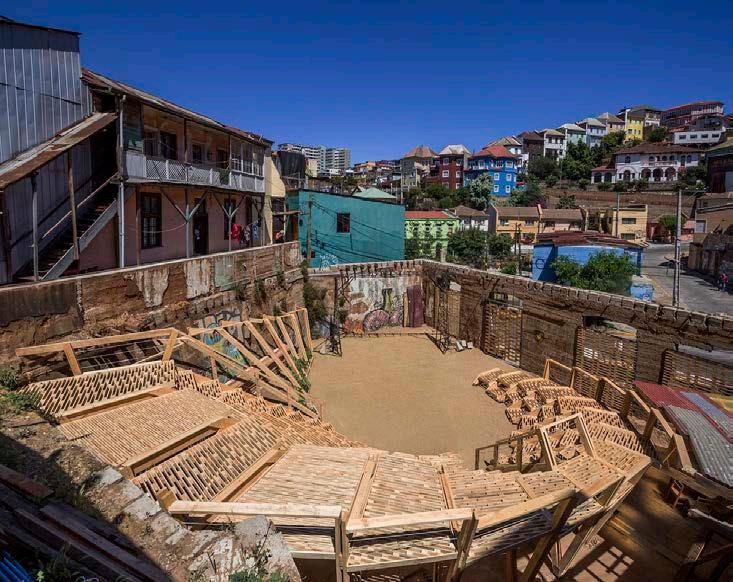
Throughout the design process we referred to a number of precedents in our design. Initially, we looked at a variety of small theatres to see what kinds of spaces were necessary, and what arrangement made for a successful building. The Bristol Old Vic theatre has a very dynamic entrance and manages to tie into the surrounding buildings while keeping its own character. The Wave is a project we looked at in relation to flexible theatre spaces, which can house a wide variety of performances.
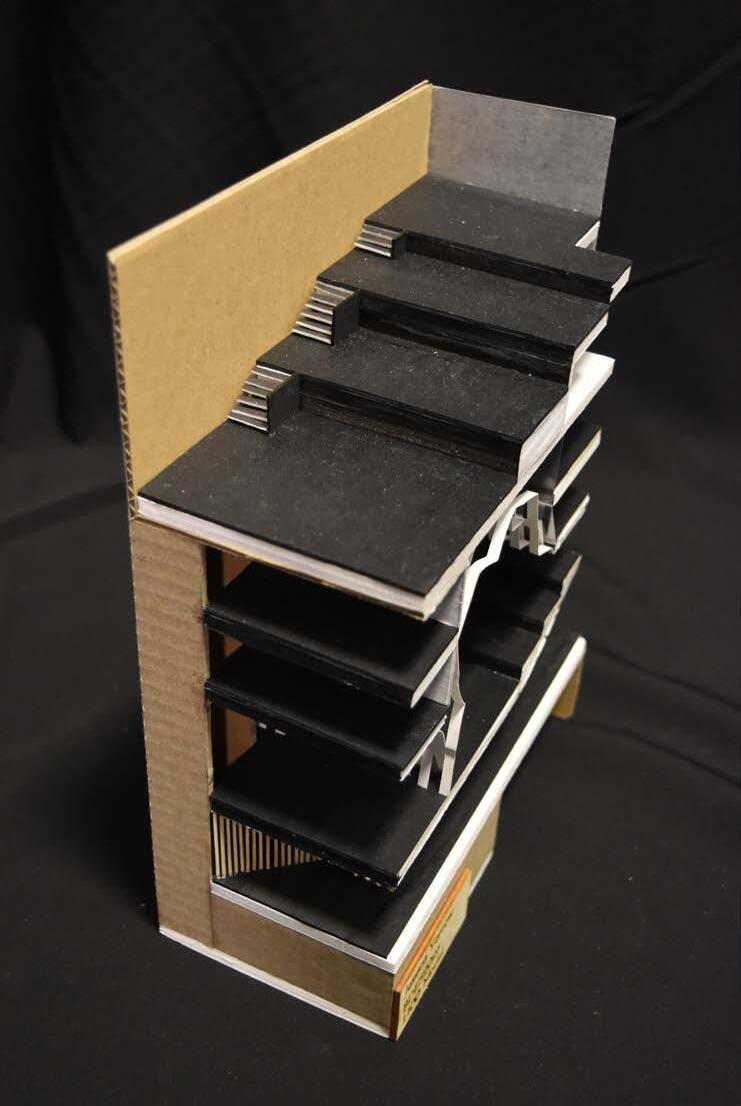
There are a number of archetypes used in theatre design, both for the stage and the whole auditorium. We chose to use an End Stage and stepped audience seating, to create a flexible performance space. This space could be used for small-scale performances, and throughout the design process we reduced the amount of seating in order to give more preference to the stage, reducing quantity of guests in favour of quality of the theatre. Our initial design had seating for roughly 100 people, and 9 karaoke rooms.
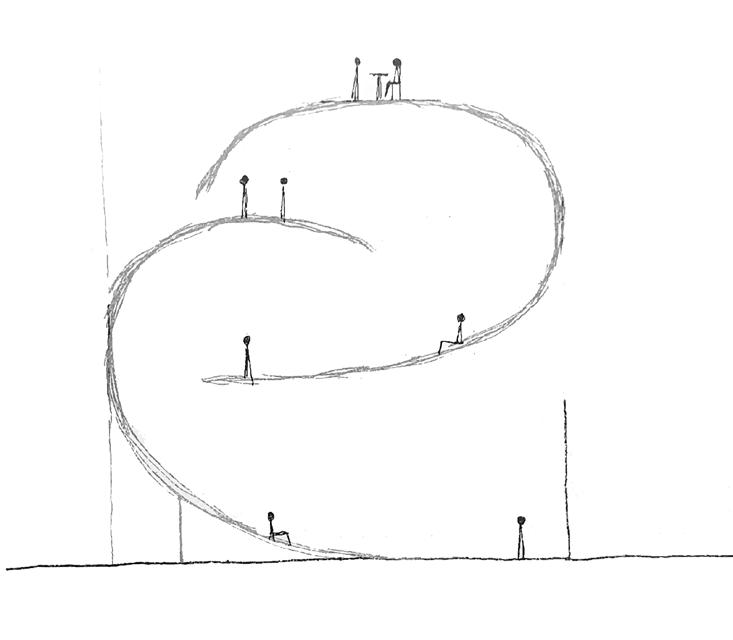
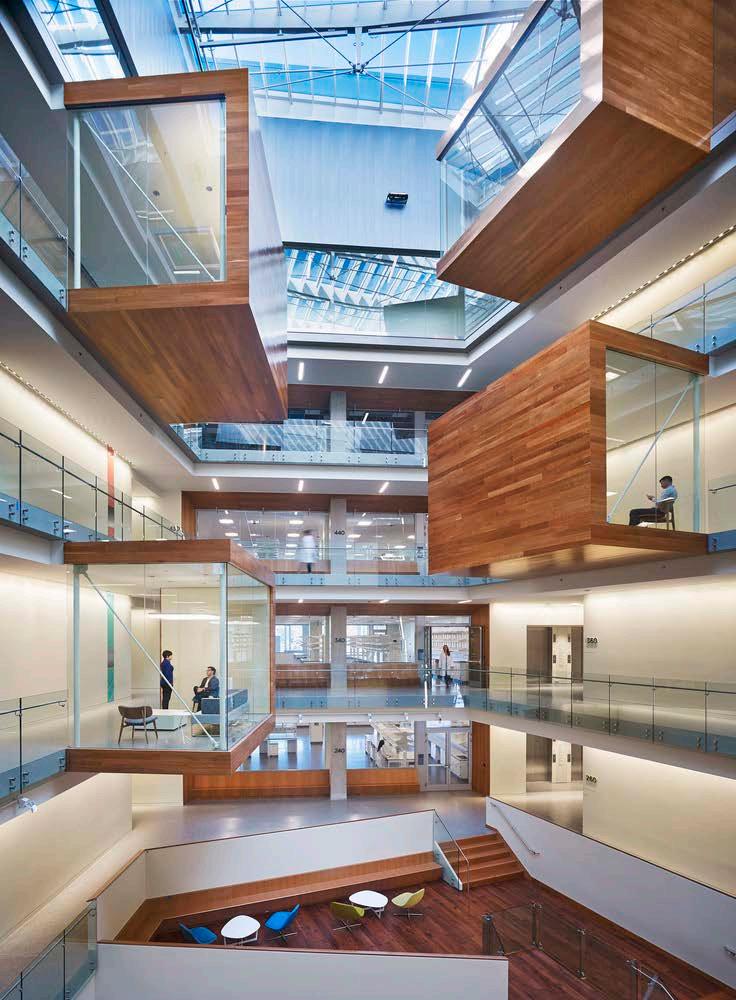
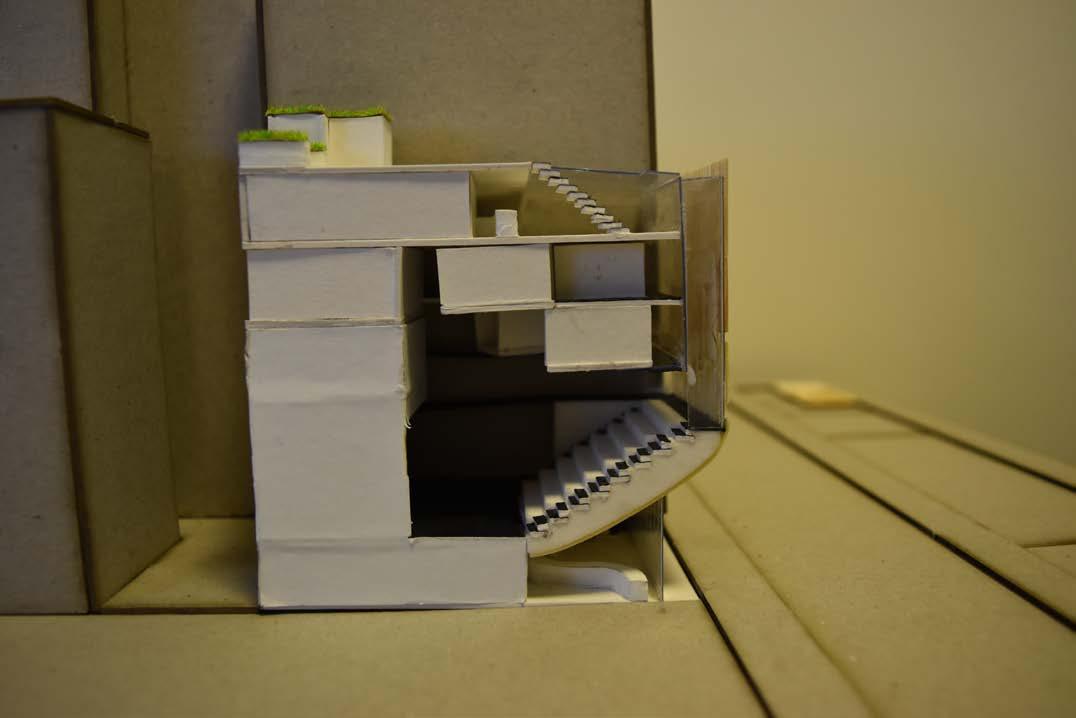
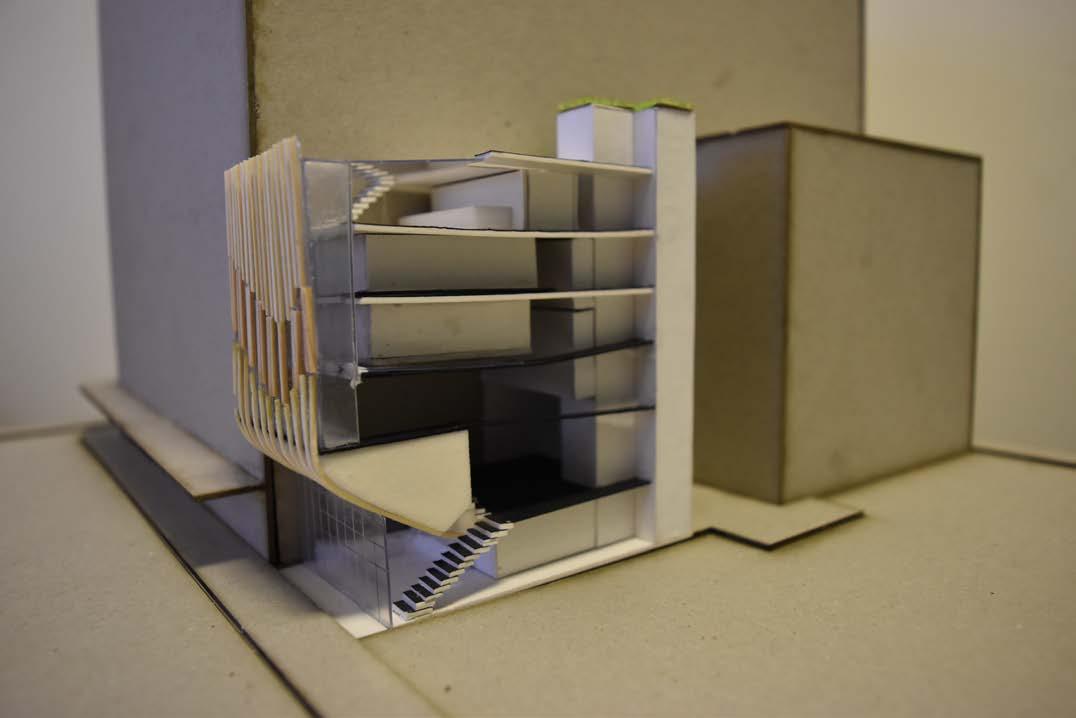
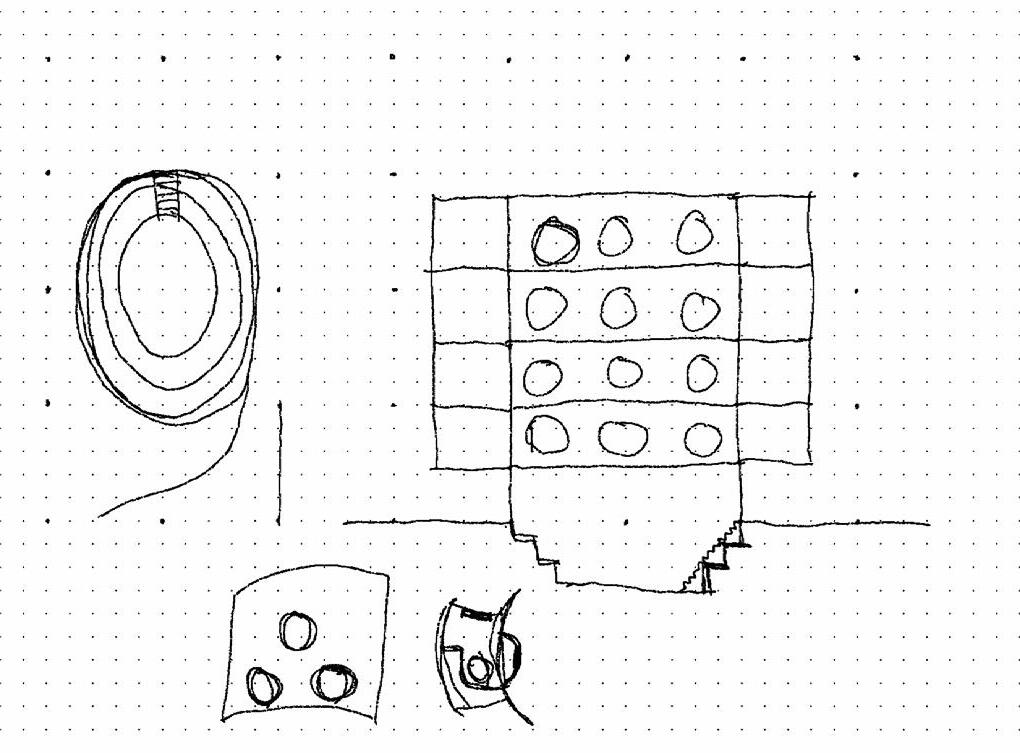
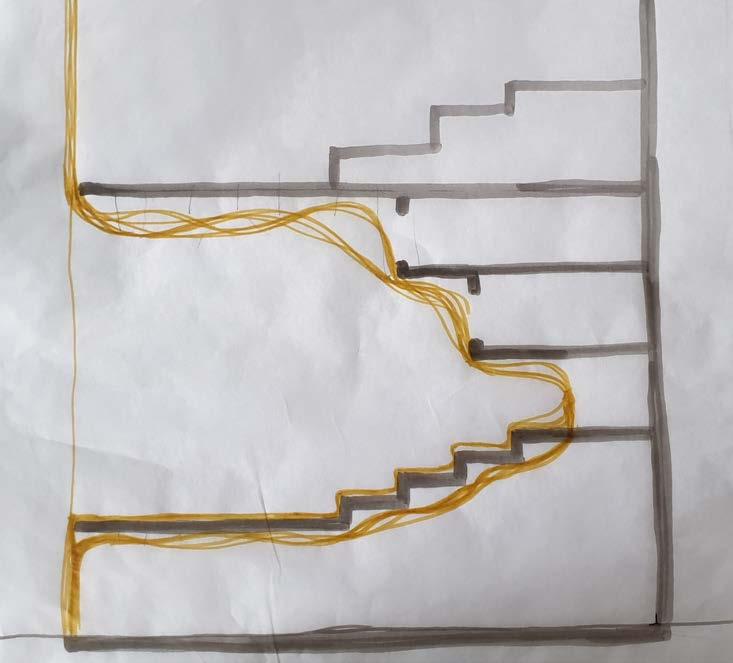
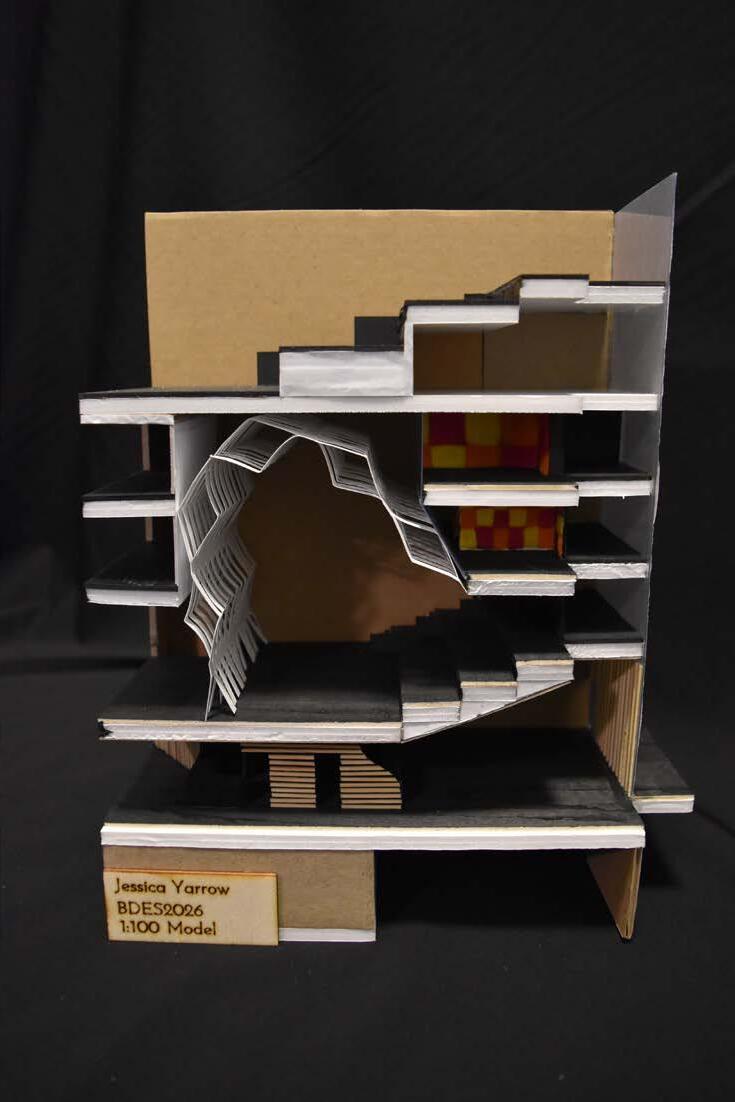
The arrangement of the spaces was influenced by our desire for the theatre and karaoke rooms to have a visual connection. We considered having the karaoke rooms make up the steps for the audience seating, but there were too many complications with access and functionality. Instead, the karaoke rooms hang over the theatre, looking over the audience and onto the stage. This creates a direct connection between the performers in both programs, allowing the one to observe the other. The Allen Institute was the inspiration for having the karaoke rooms bubble and hang over the theatre space.
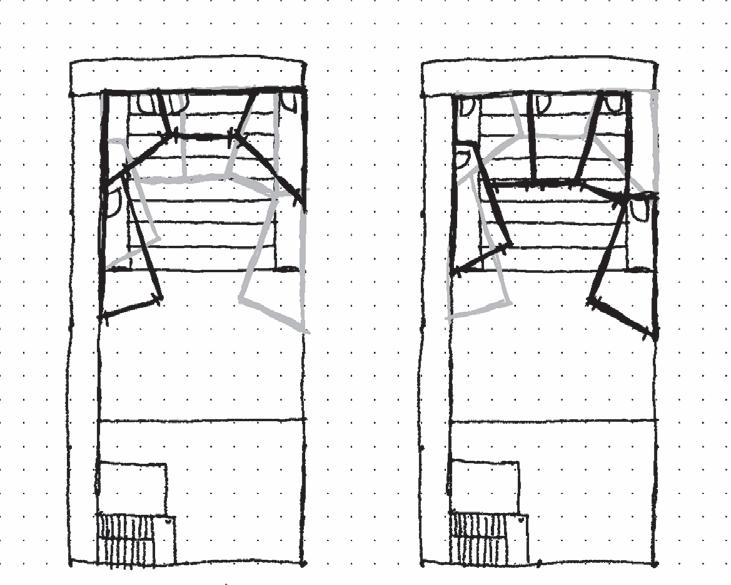
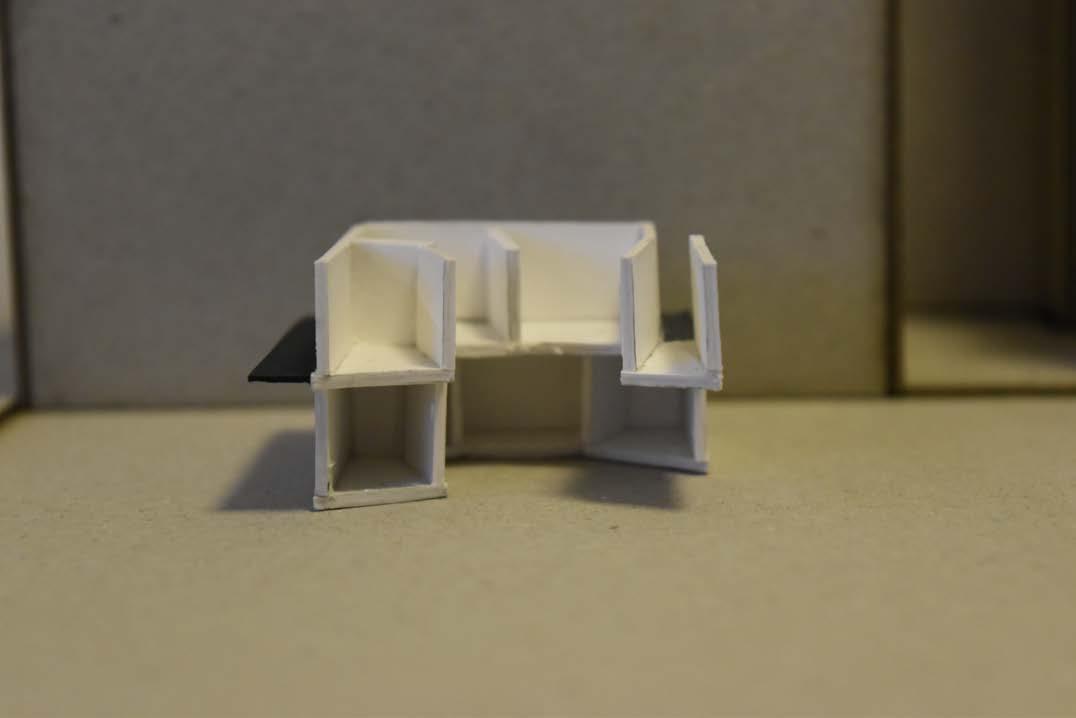
Karaoke Rooms Layout
Sketch Section
From above, clockwise:
Bund Finance Centre, Heatherwick Studio
Bristol Old Vic, Haworth Tompkins
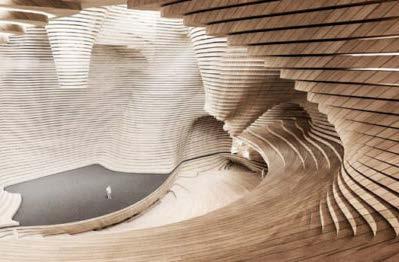
Evolutional Theatre, Fei Tang
Allen Institute, Perkins+Will
The Wave, The Scarcity and Creativity Studio
Heydar Aliyev Center, Zaha Hadid Architects
Ibid.
The feedback we received from the Phase 1 final presentation highlighted a number of areas where our design could be improved. An overview of the presentation can be found in the Appendix under Week 7.
The main critique of our design related to the operational needs of the theatre space. It was recommended that we reduce the amount of seating in the theatre and try to develop a more intimate connection between the stage and the audience. For the second phase of design, this was achieved by removing the circulation buffer from between the stage and the audience, allowing for a larger stage and more generous seating space. I have also avoided including furniture in drawings or models of the theatre, in order to reinforce the flexible nature of the space.
Additionally, there were some concerns about the circulation and access in the building, especially in regards to the “bump-in bump-out” needs of the theatre performers. These issues have been addressed in the next decisive moment.
It was also recommended that we continue to work with process models during the second phase of design, to further develop the façade and spatial design.
Decisive Moment 4: A Change in Perspective
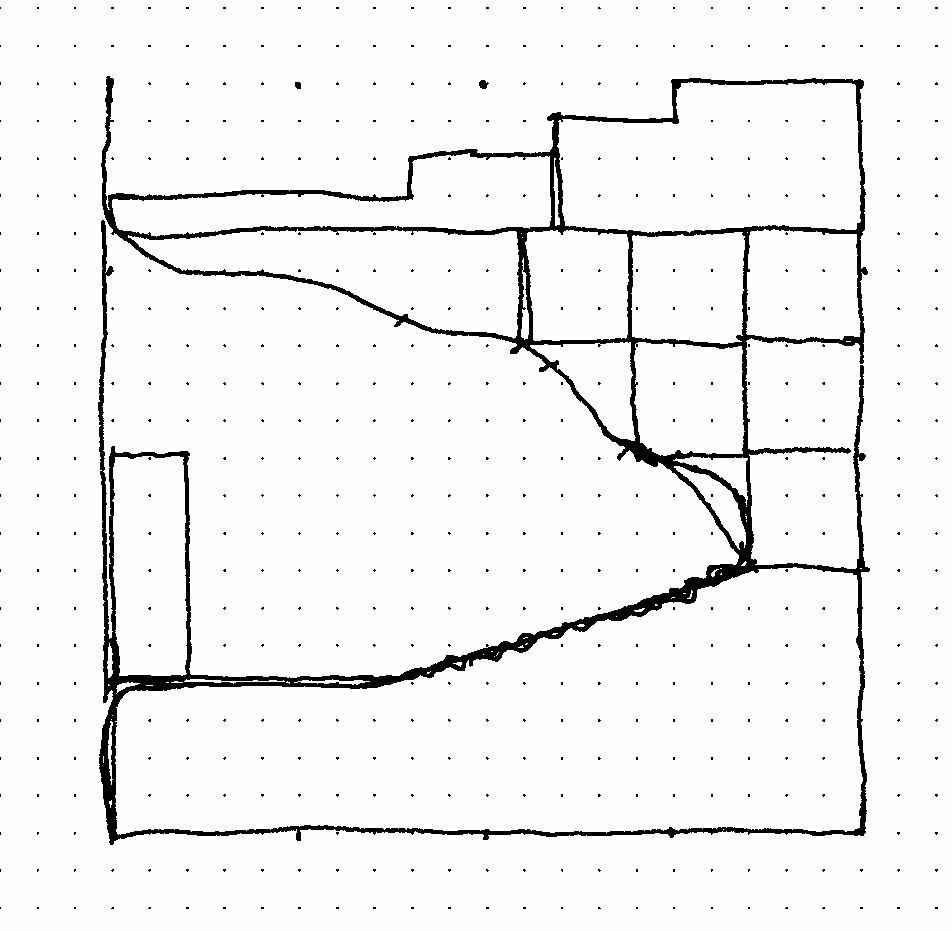
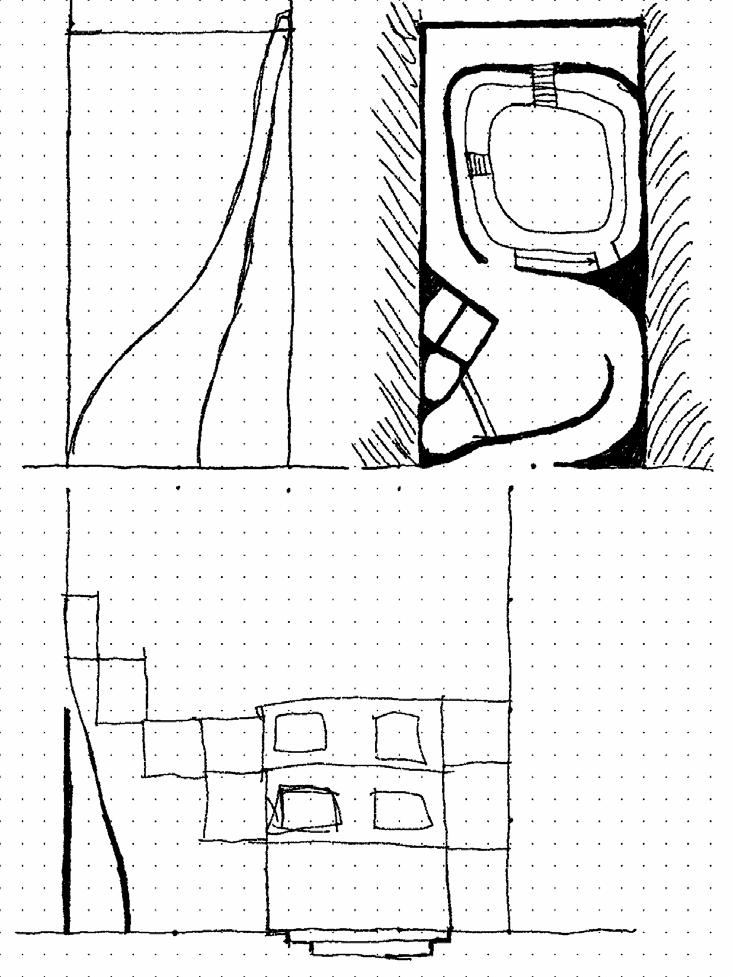
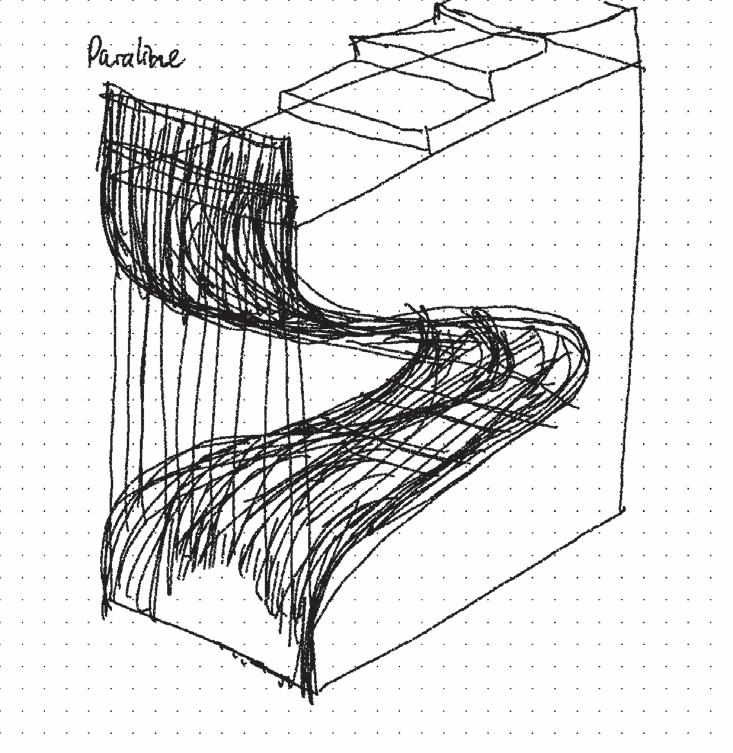
Following the completion of Phase 1, and the feedback from the presentation, I felt as though the design had reached a crossroads, and everywhere I looked I saw possibilities. There were so many directions I could focus on for the second phase of the project, it was overwhelming. I switched between concept sketches and maquettes to test out some of the options, focusing on ways to bring the façade further into the building and finding ways to have it interact with the stage and karaoke rooms. Then I decided to flip the layout, so that the stage backed onto the street, and everything clicked into place.
This layout solved many of the access issues brought up in the Phase 1 presentations, allowing for easier bump-in bump-out and more clear circulation through the building. It also made it far easier to draw the façade into the stage area and exposed the possibility of going further to screen the karaoke rooms. This seemingly simple move greatly improved the architecture while retaining the existing relationships between the programs, and is fitting as a mid-way point in the design.
Decisive Moment 5: Hybrid Space
The architectural brief for this project challenged us to create a hybrid building. The simplest examples of a hybrid building would be a mixed-use office building, with a café or shops at the ground floor level, consultation rooms on the lower levels, office space in the middle, and residential apartments on the upper floors. Such hybrid buildings are common in Sydney or any other dense urban center, where space is at a premium.
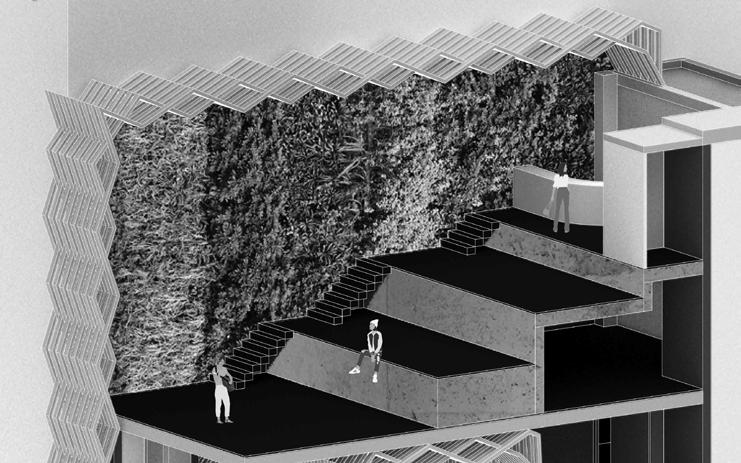
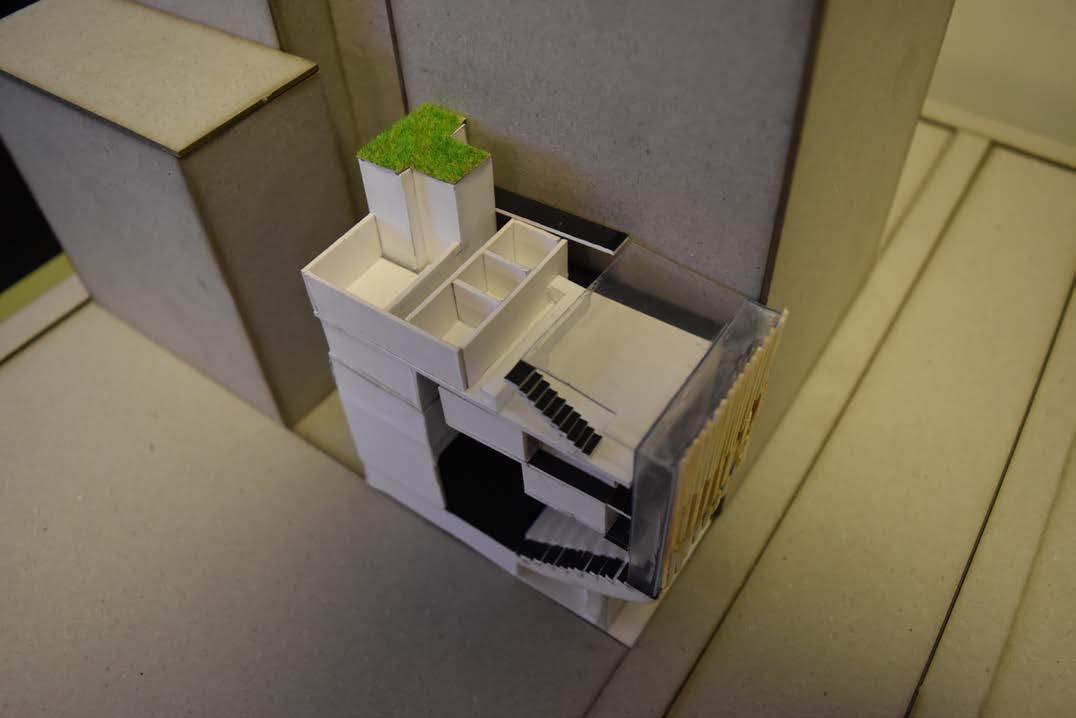
For this project I wanted to take the idea of hybrid buildings one step further, and create a truly hybrid space which creates a stage for both theatre and karaoke. The rooftop bar is a space of hybrid performance, which can host live performances, open mic nights, parties or simply function as a bar. The steps are a scaled-up version of the theatre auditorium, which can be set with tables and chairs, beanbags, or left empty to suit whatever event is taking place.
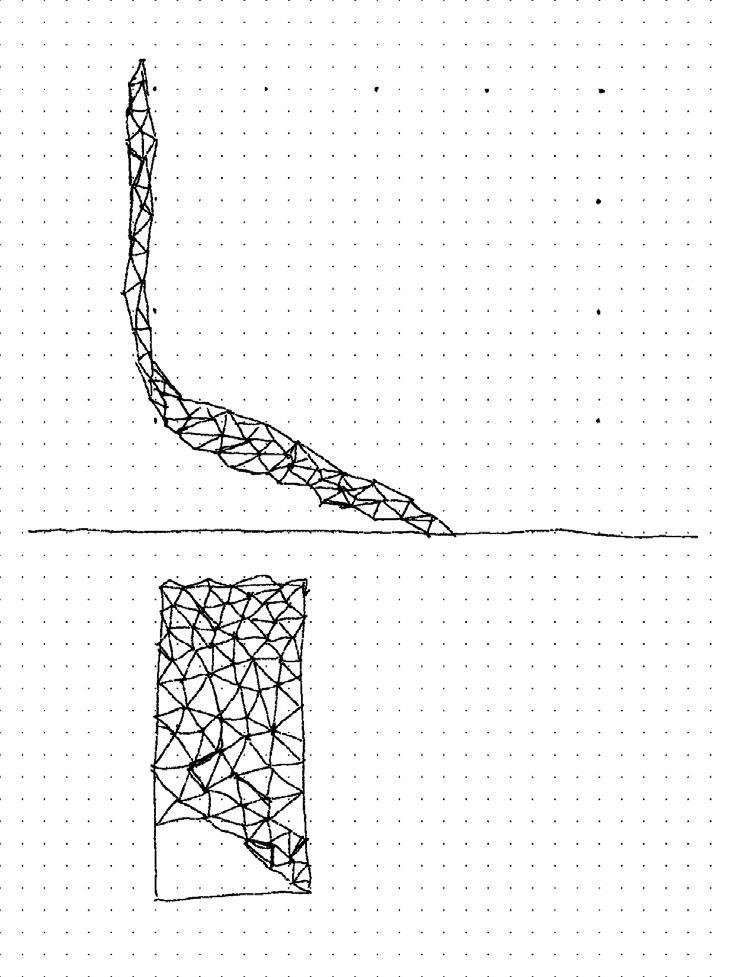
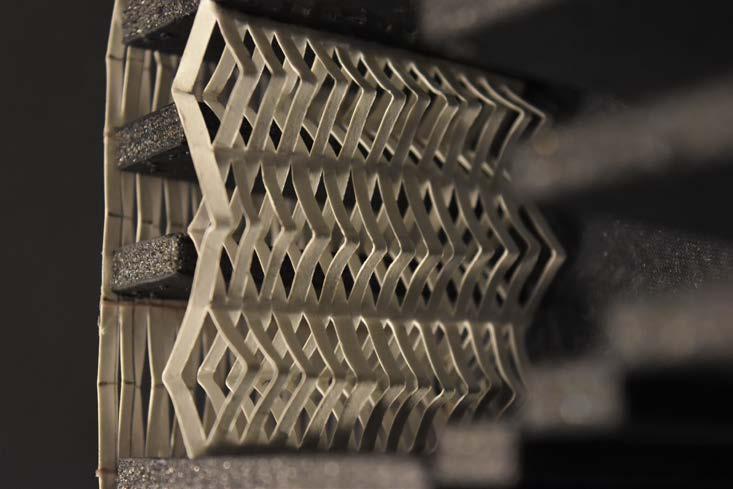
The façade creates a backdrop and canopy to shelter the bar from the elements, while remaining open enough to allow interaction between the stage and the city.
Decisive Moment 6: Interstitial Space
The Phase 2 interim presentations were a timely interruption in the design process, forcing me to gather my thoughts and begin producing drawings and models to properly communicate my ideas. The feedback again mentioned the operational access needs of the theatre space, which required further development, and encouraged me to utilize the light well to the rear of the building.
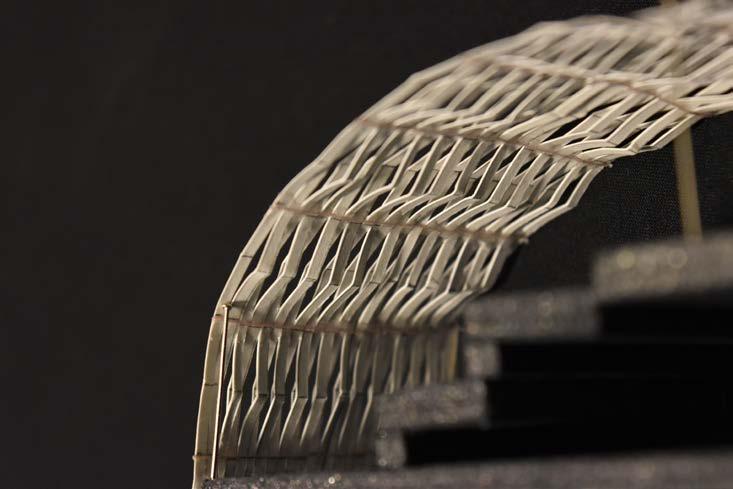
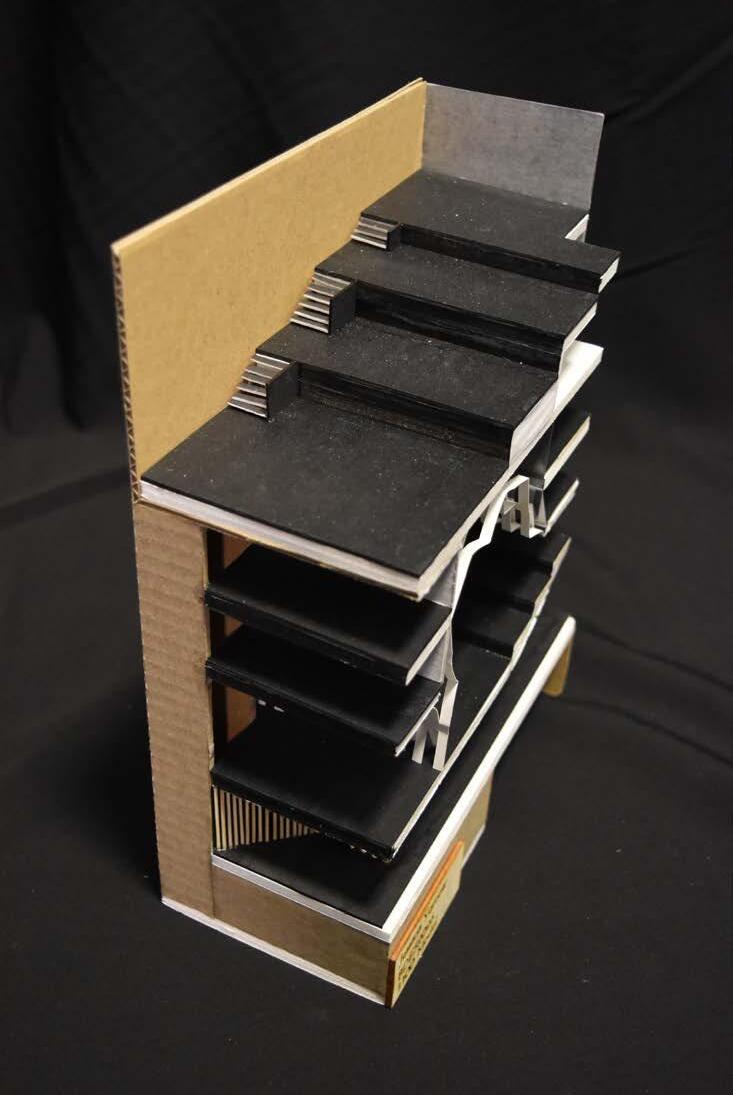
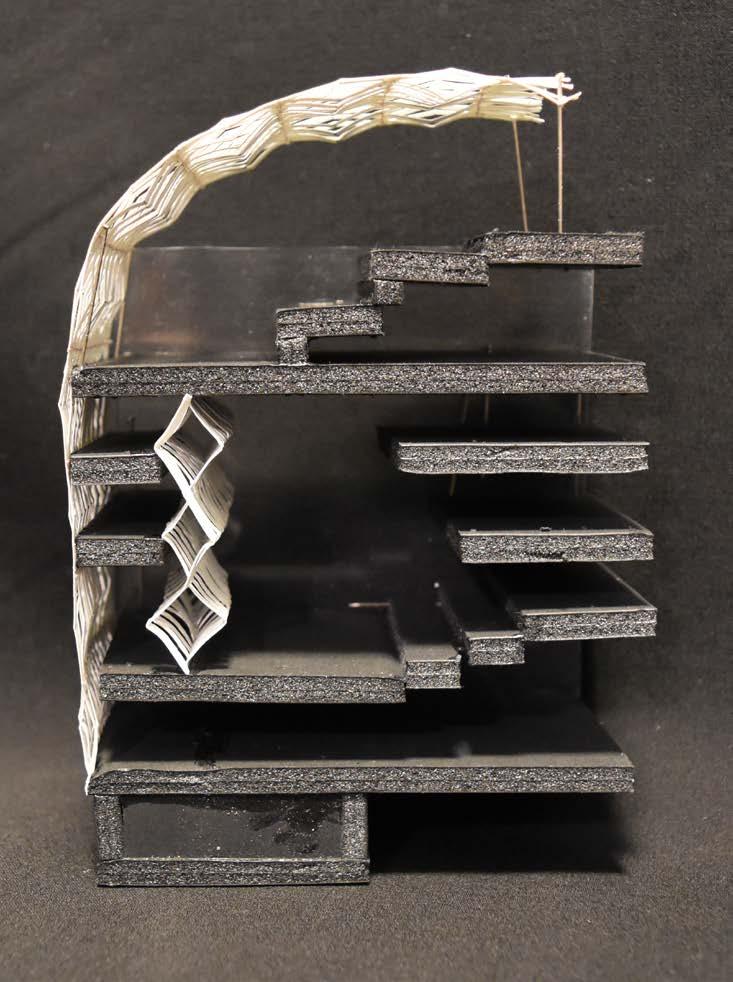
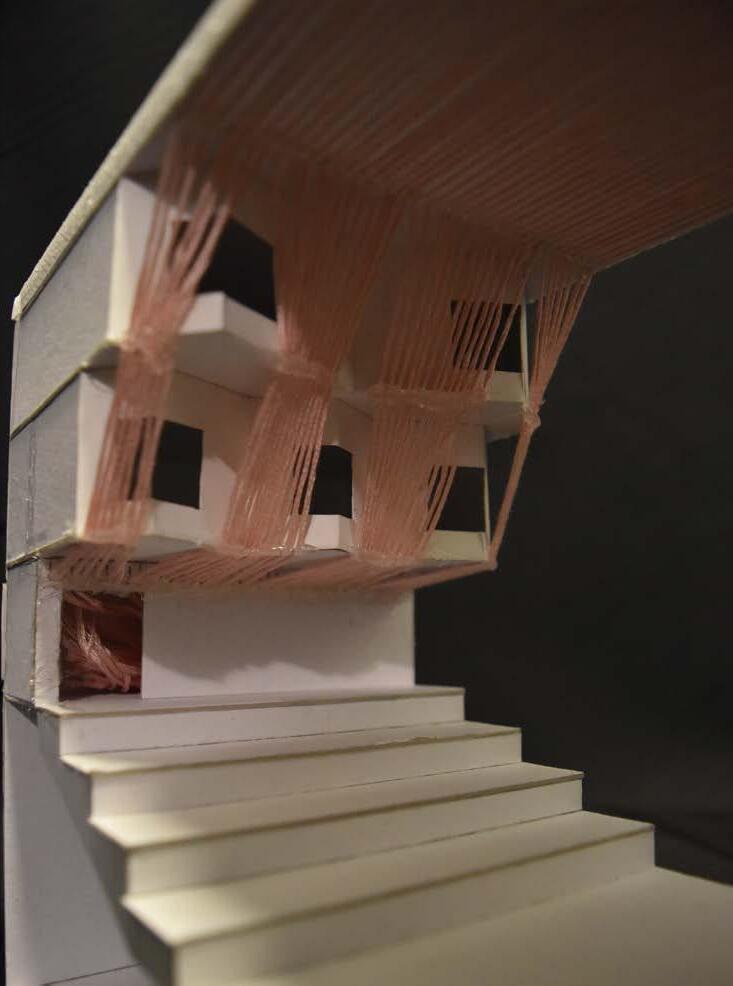
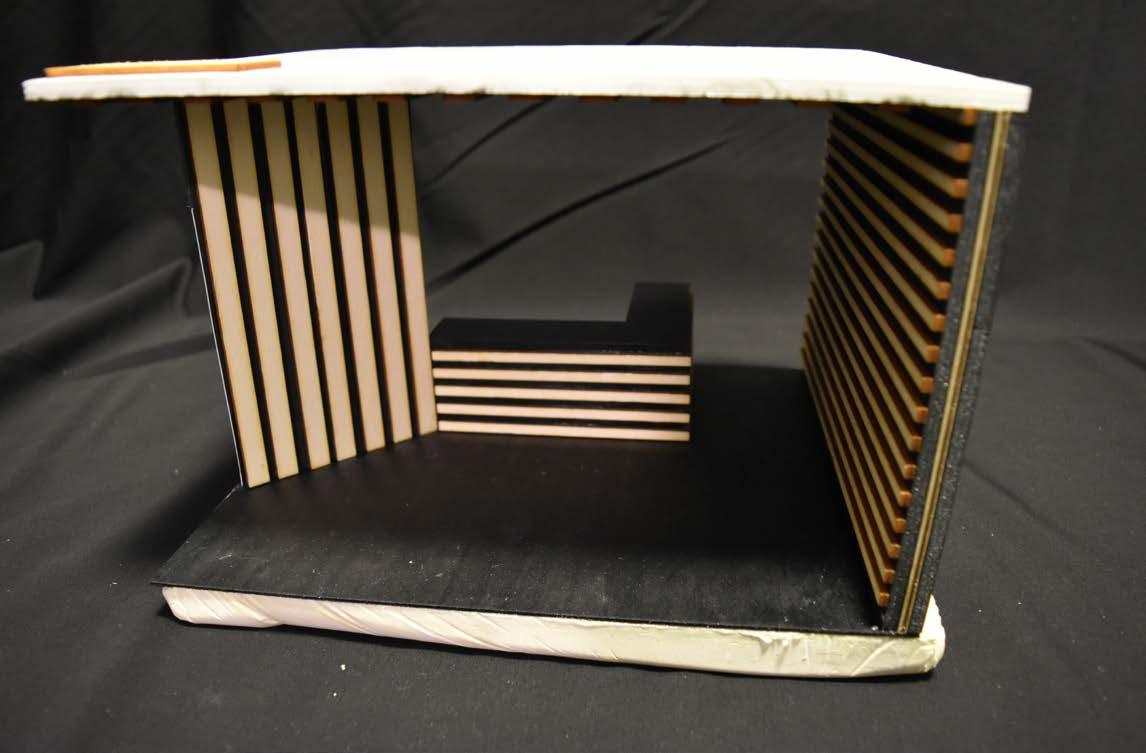
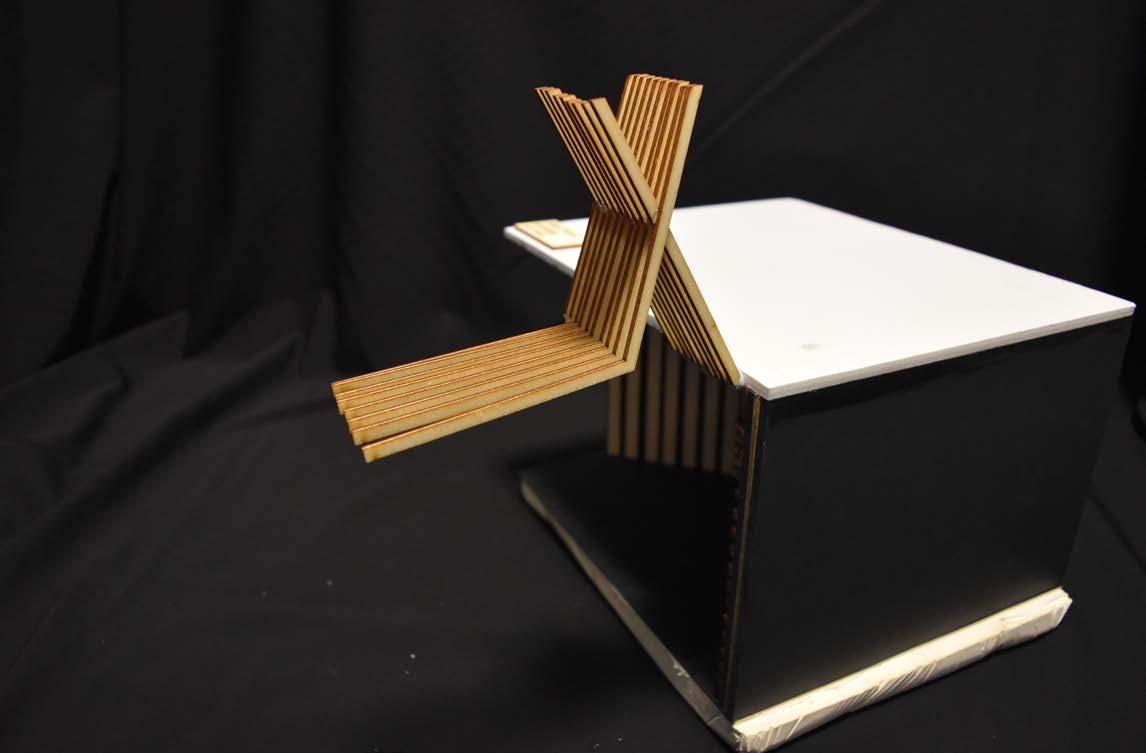
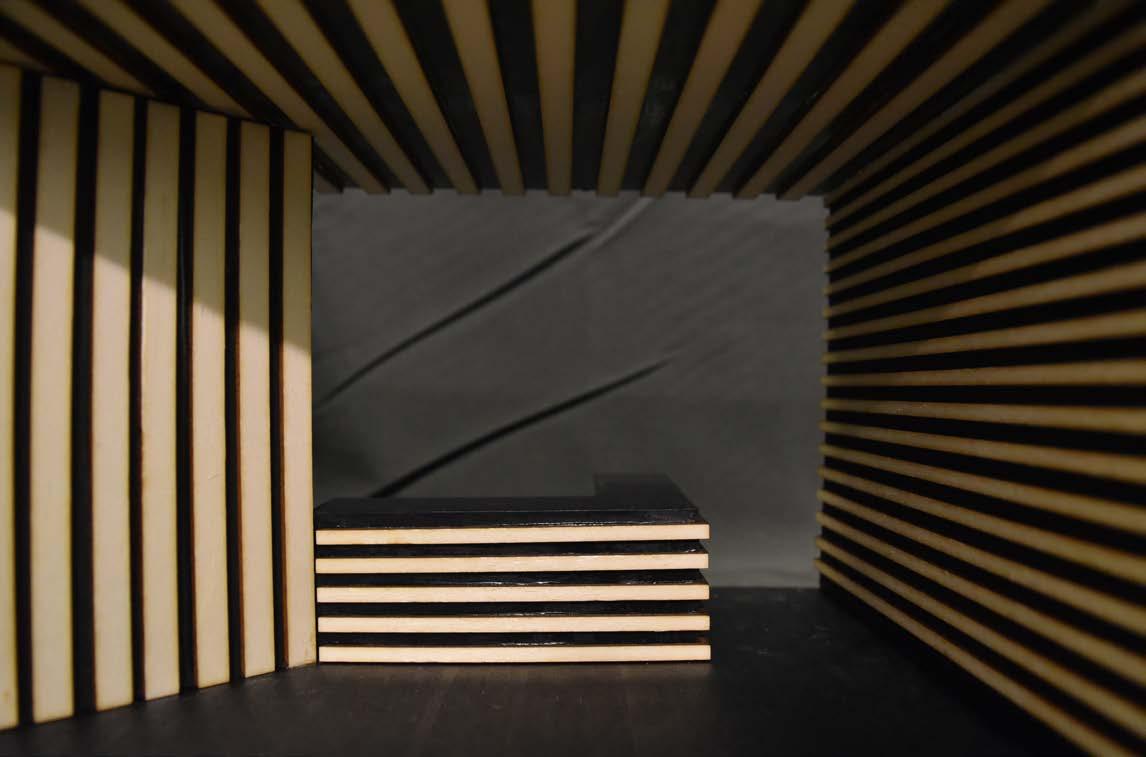
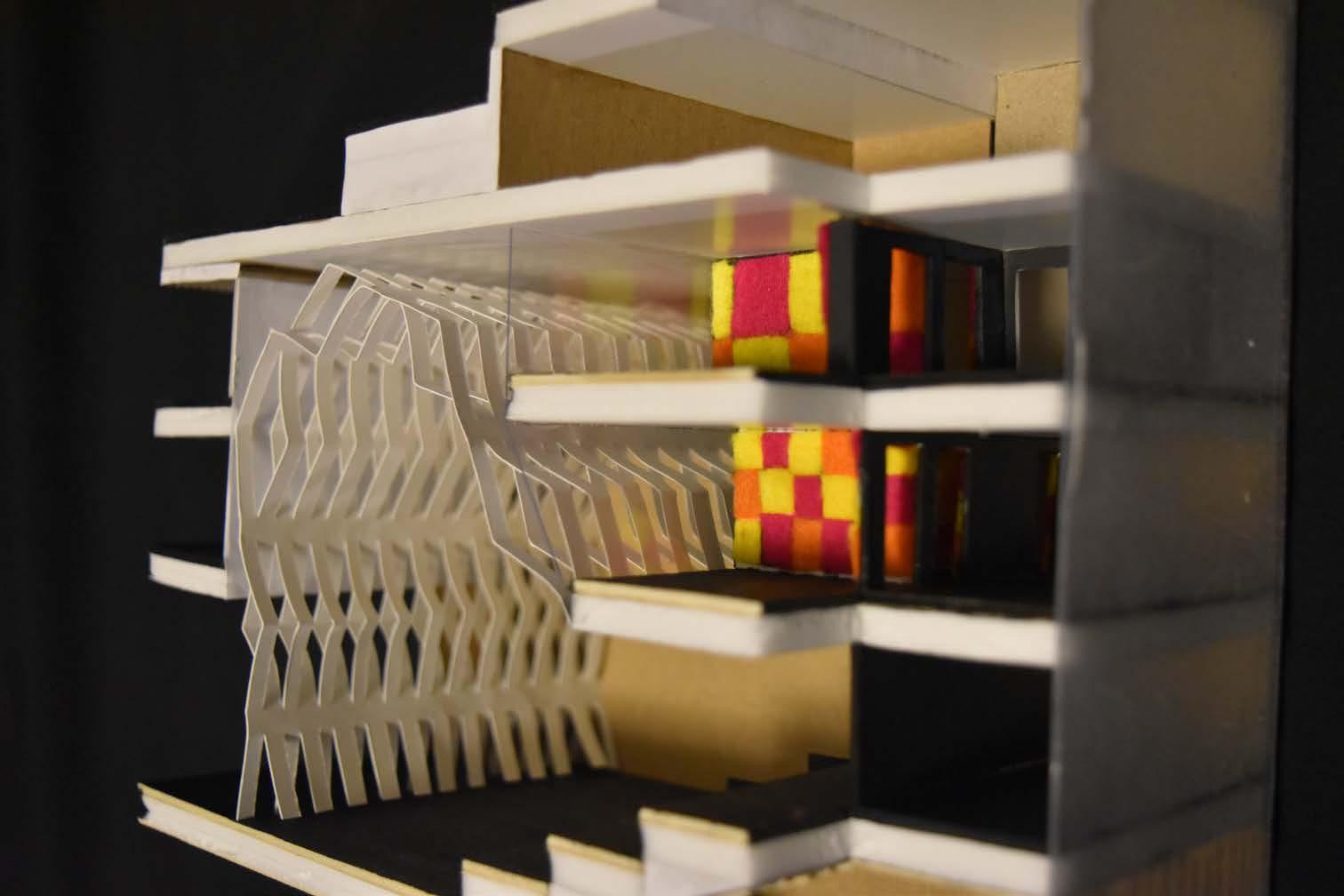
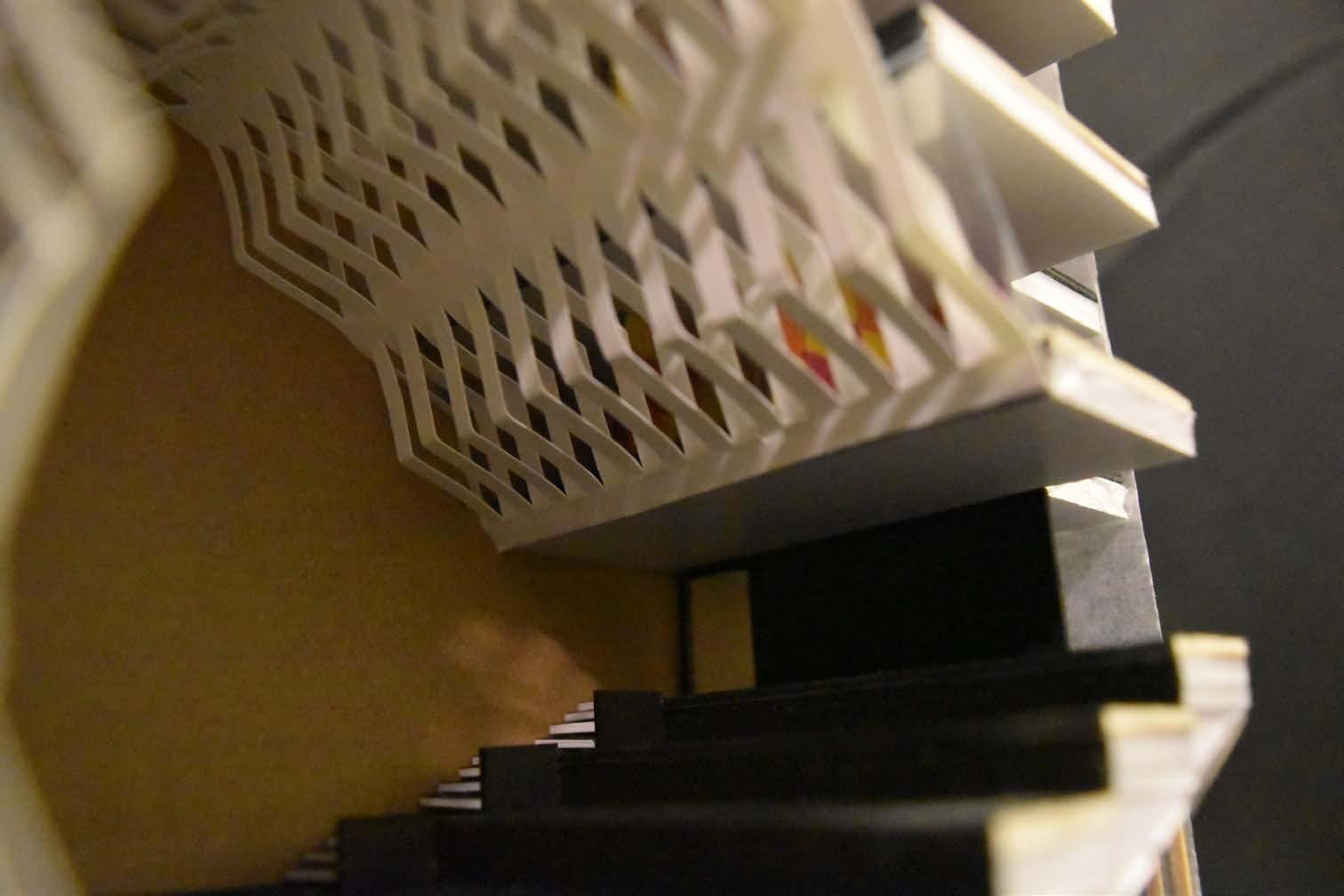
For the interim I produced a model of the theatre auditorium and karaoke rooms, to explore the ways the façade could penetrate into the building and create an internal screening between the two programs. This prompted a discussion of how to further improve the façade, and a suggestion was made to thicken the screening to allow people to inhabit the space. To go into, as well as through.
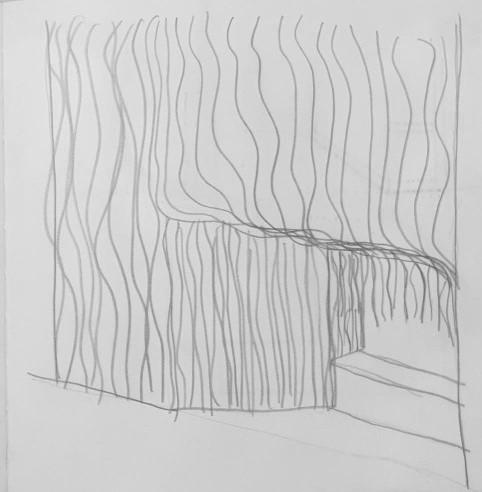
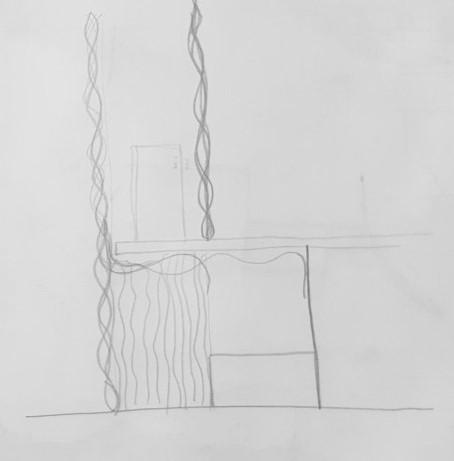
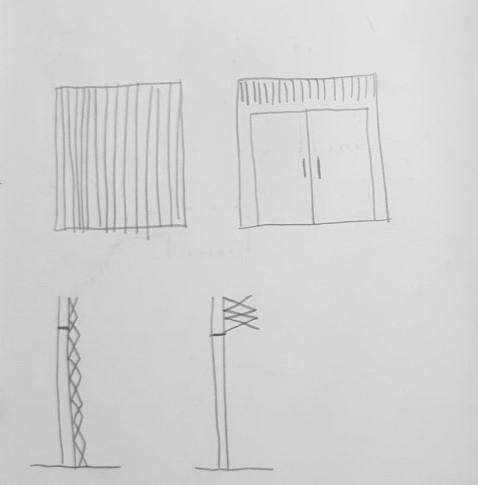
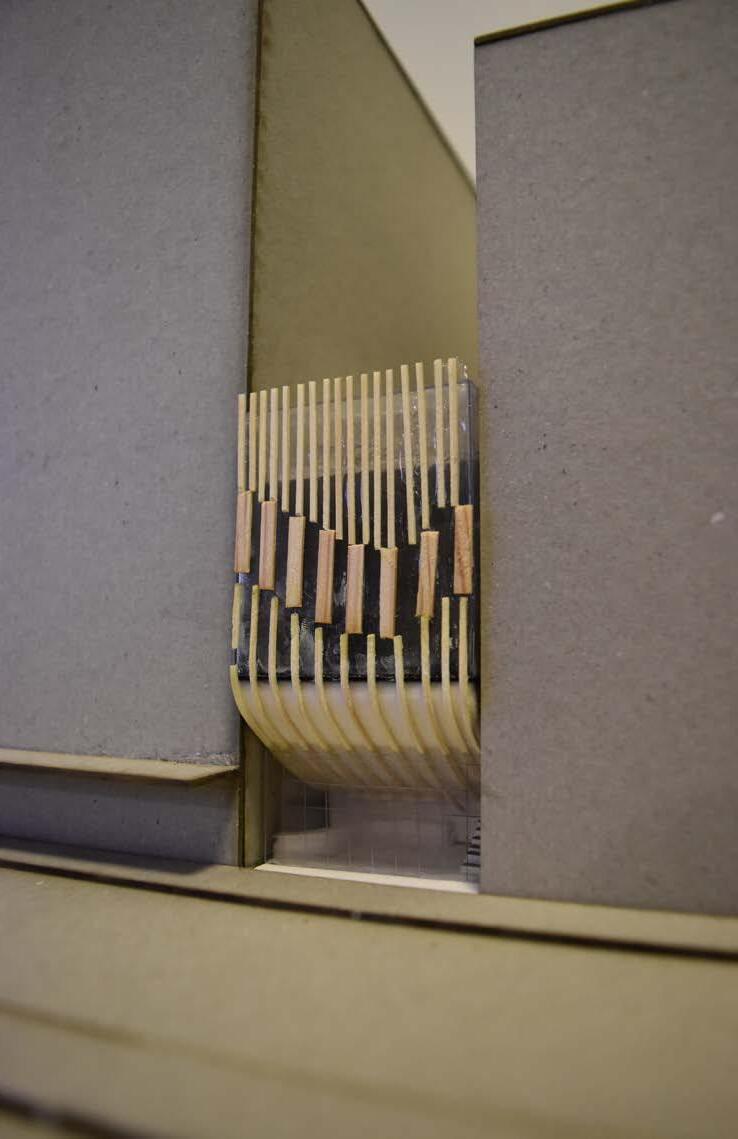
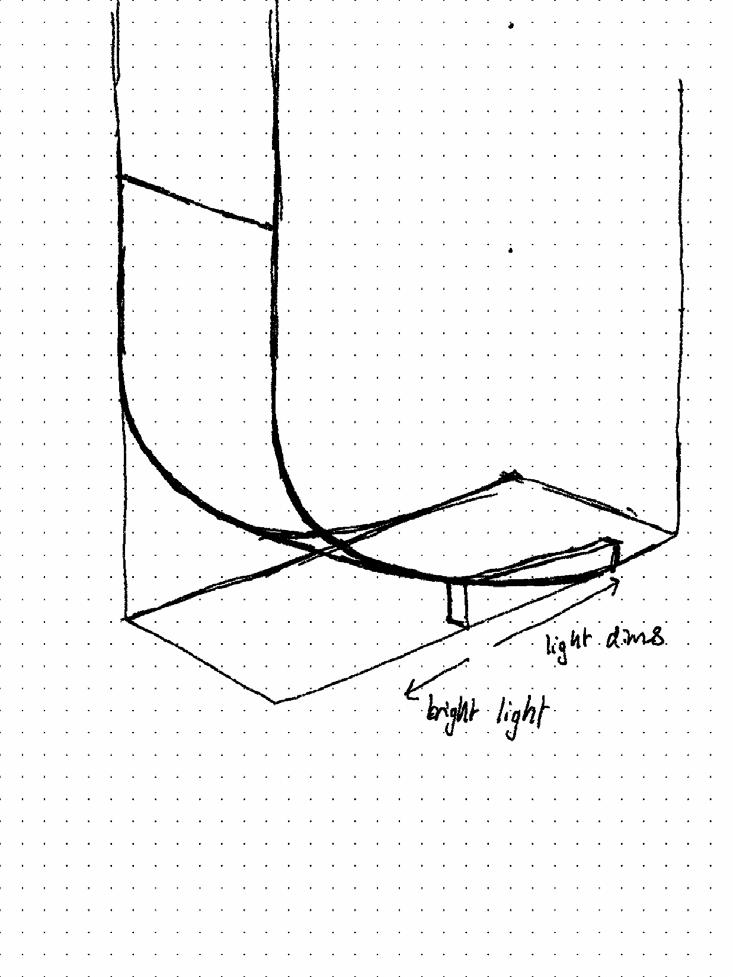
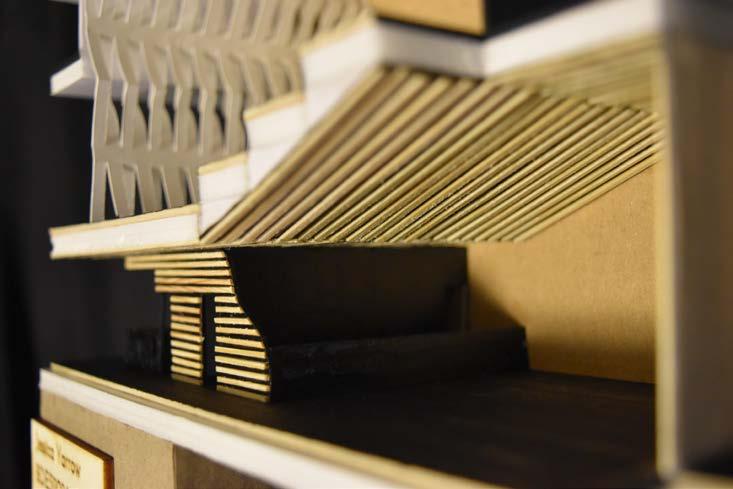
As I explored this idea, it evolved into a second, internal screen which encompassed the backstage services. This screening mirrored the external façade to bring unity to the building, and provided a window from the karaoke rooms to the stage. Additional screening in the entryway and foyer brought the façade all the way into the building, and functioned as a wayfinding device for circulation through the building.
Decisive
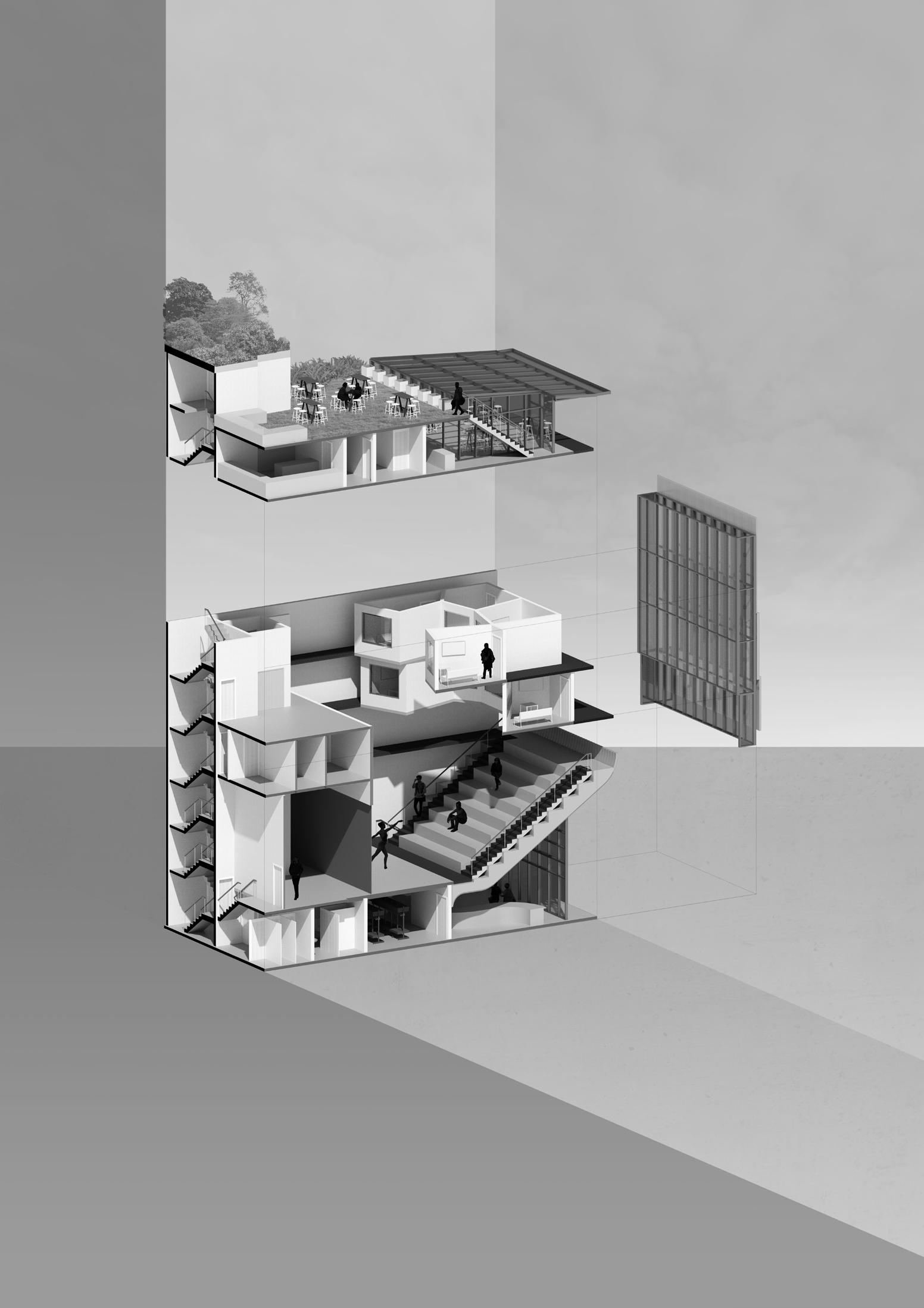
A great deal of consideration was given to the operational needs of all the spaces in the building for the final presentation. The theatre had the most complicated requirements: service access to the storage and stage areas for props and equipment to be set-up and taken down; performer access to dressing rooms and backstage before, during and after the performance; operational access to lights and sound equipment; and audience access to the foyer, auditorium, and rooftop bar.
A service entrance was concealed within the façade screening in the entry, to allow discrete access for bump-in bump-out. This entry leads to the service elevator and from there to the underground storage area, the backstage, and the mechanical rooms. On the ground floor there is also a staff room which can be used as a dressing room during performances, a reception and coat check, public bathrooms, and the concierge bar. Audience members enter the building past the reception, and are led through a passage into the grand foyer space. This room has bar tables for people to gather around before the performance and during intermission. After the performance visitors can choose to stay in the foyer or move up to the rooftop bar.
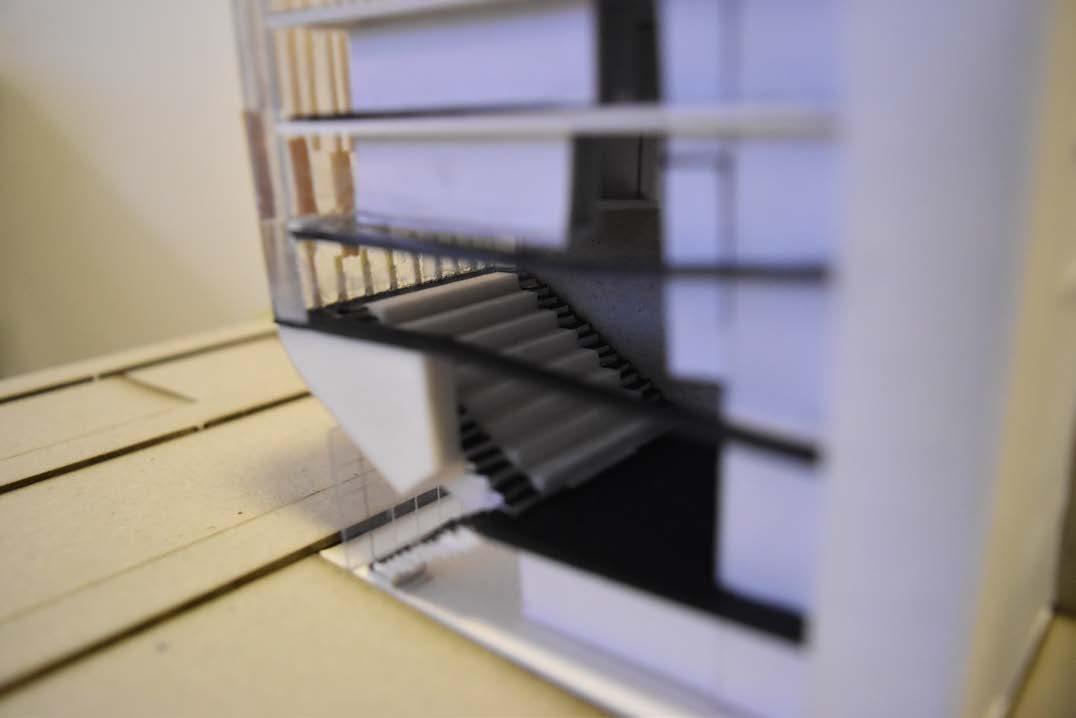
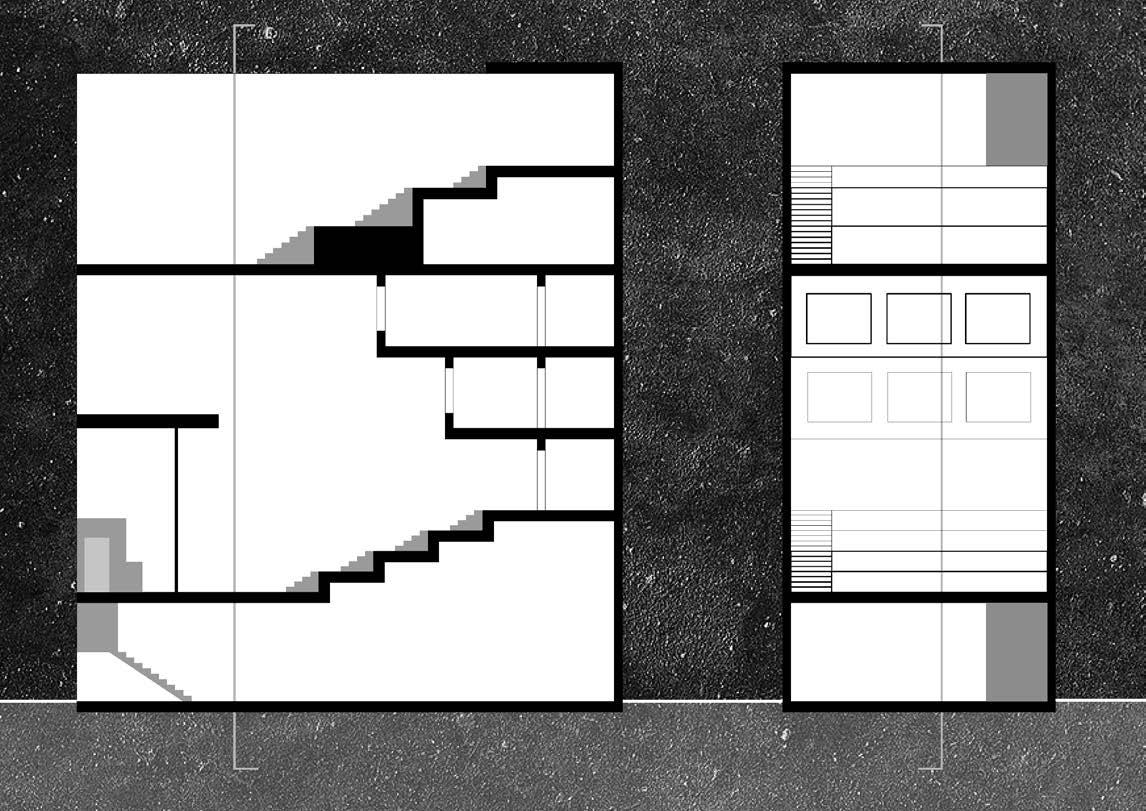
The stairs at the back of the building allow natural light to penetrate into the lower levels of the building during the day, and provide access to the auditorium, karaoke rooms and rooftop bar. Next to the stairs is an elevator for goods delivery and universal access.
There are two levels of karaoke rooms, with different sized rooms for larger or smaller groups. All the rooms have a large window looking over the stage, on which a screen is projected to show song choices and lyrics. The second level of karaoke rooms are designed for wheelchair access, and has a single accessible bathroom for karaoke use only.
A third, mini elevator connects the kitchen to the rooftop bar, allowing food to be ordered and served from the drinks bar. This configuration of an access spine at the rear of the building and separate service elevator allows for greater privacy of spaces and operational efficiency.
Decisive Moment 8: What Could Have Been, What Could
The final design presentations gave me an opportunity to walk through my design with someone who had not been involved with the project up until that point. Doing so presented an interesting point of perspective, to see the project through fresh eyes, and provided interesting feedback.
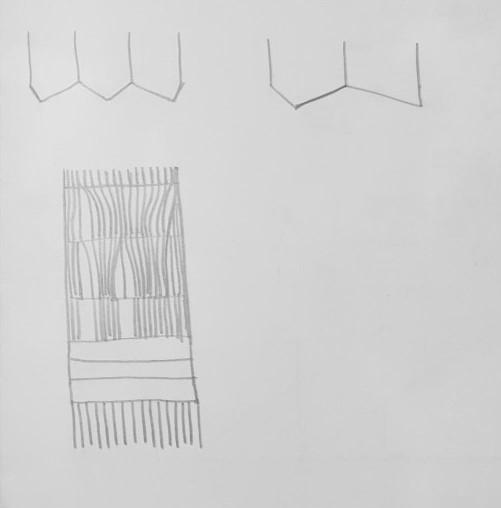
If I were to continue the project, I would continue to develop the façade, looking at how to incorporate lighting and making the street face more dynamic in shape. I would also consider changing the interior screening to fabric strips, playing into the idea of a stage curtain and creating a contrast between the hard exterior and soft interior. I would look into construction systems which would allow the audience platforms to be completely flexible, like building blocks, and make the rooftop bar more landscaped and fluid. The shape of the karaoke rooms could also be explored, and the shape and size of the windows onto the stage area. Finally, I would include an entrance to the light well at the rear of the building, and create a small courtyard between the buildings.
Appendix of Works
Week 1: Beginnings
Objective: Begin to explore the relationship between the two programs.
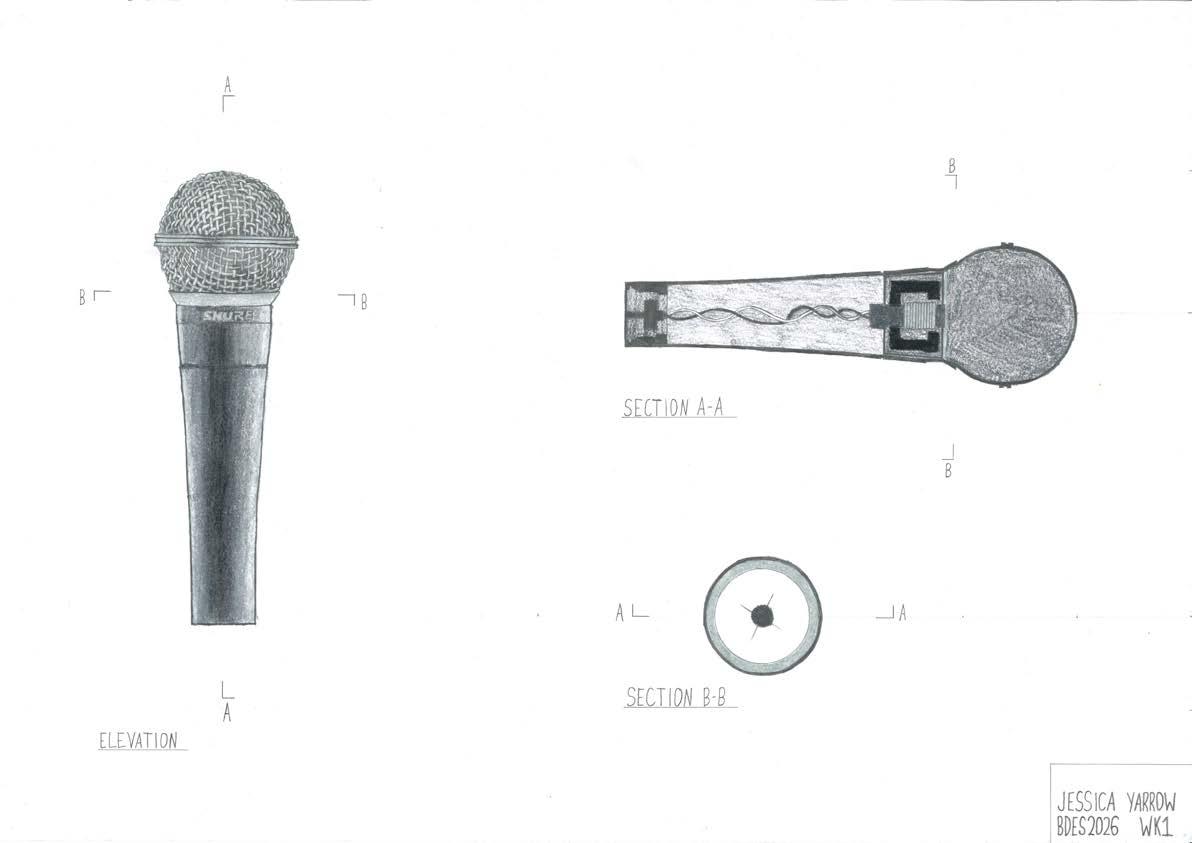
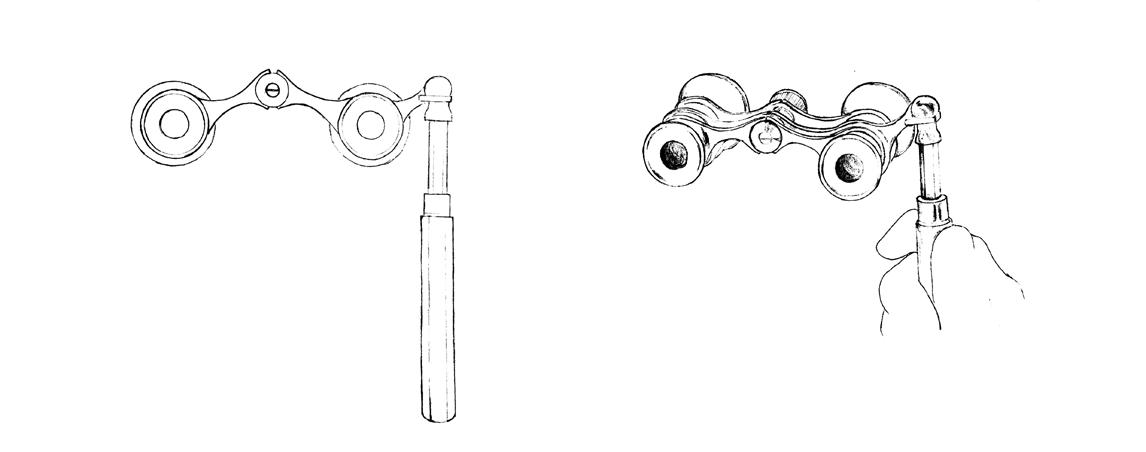
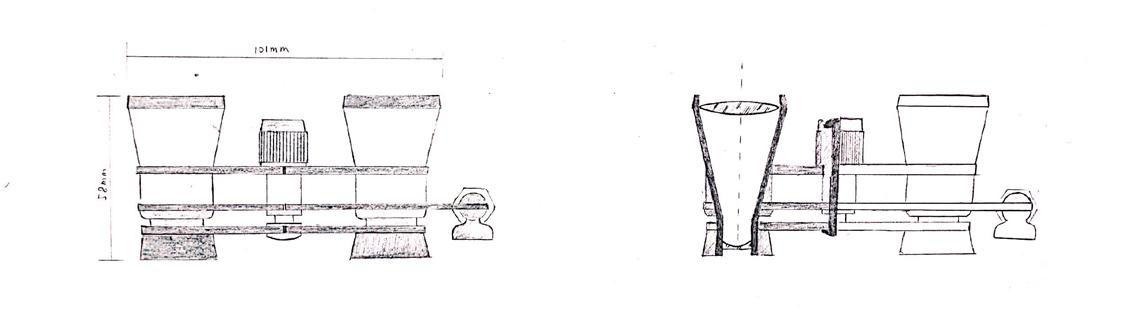
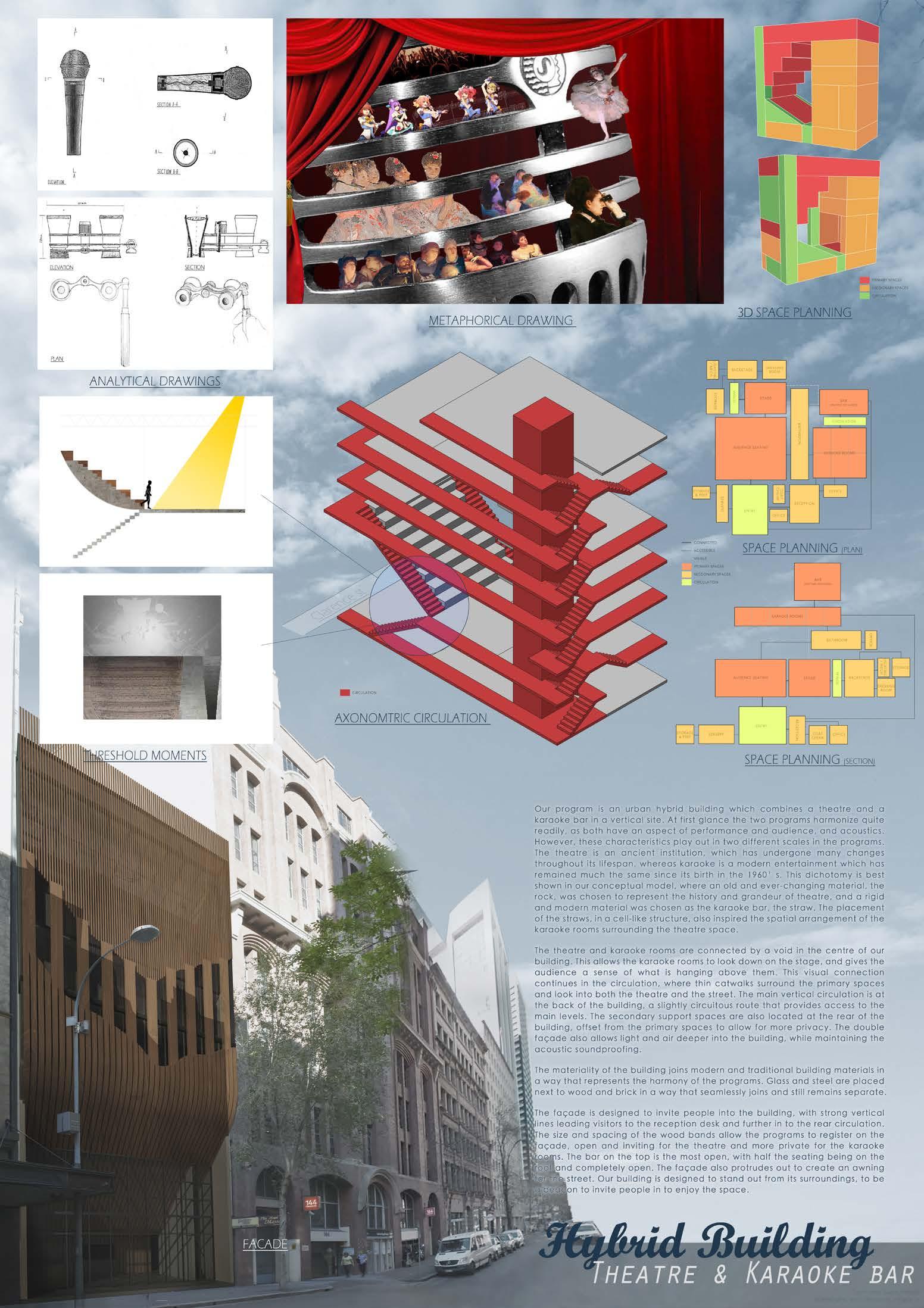
We were to choose an object which is representative of our two programs and produce a set of orthographic drawings for each. For the Karaoke Bar we chose a microphone, an emblem of performance and individuality. The theatre was more difficult to choose an object for, and we eventually decided on opera glasses. They represent the audience of the theatre, and the idea of performance and voyeurism which differentiates theatre from karaoke.
Week 2: Conflict and Accord
Objective: Consider the conflict and accord between the programs.
Deliverables: Collage, Site Massing Model
The second week introduced the notion of conflict and accord between the programs. We considered the karaoke bar and theatre to be mostly in accord, as both are a means of performance, and both work with acoustics and music. However, there are clear distinctions between the two which may cause conflict.
Karaoke is a more private act, and usually requires little to no audience. Whereas theatre is a shared experience between a group of people, and requires a much larger space, more time and thought for the performance, and additional setup.
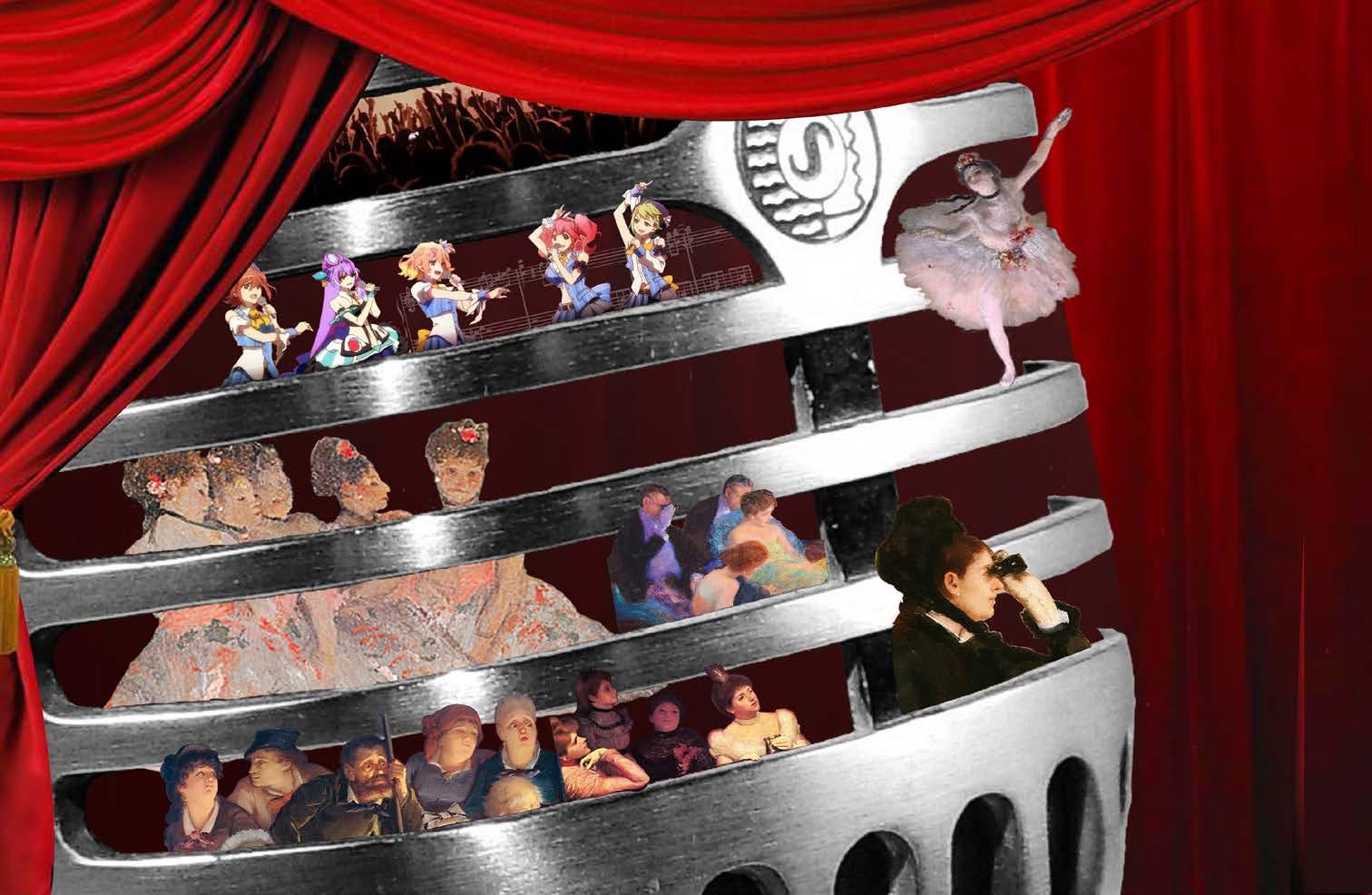
Our task for the week was to create a collage which metaphorically represents the conflict and accord between the two programs. Our collage started with an object shared between the two programs, the microphone, and began to explore how the programs might take place in the spaces between the microphone.
Week 3: Space Planning - 2D
Objective: Begin to consider space planning and connections.
Deliverables: 2D Space Plan and Section
In order to begin planning the organization and interaction between the two programs on our site, we first had to undertake a study of the programs and their requirements. From precedent studies and looking at Neuferts Architects Data, we came up with a list of spaces required for the combined programs:
- Entry
- Reception
- Coat Check/Concessions
- Karaoke Rooms
- Bathrooms (Public)
- Bathrooms (Staff)
- Bar and seating
- Stage and seating
- Backstage
- Dressing Rooms
- Storage
- Staff Room
- Mechanical/Light Booth
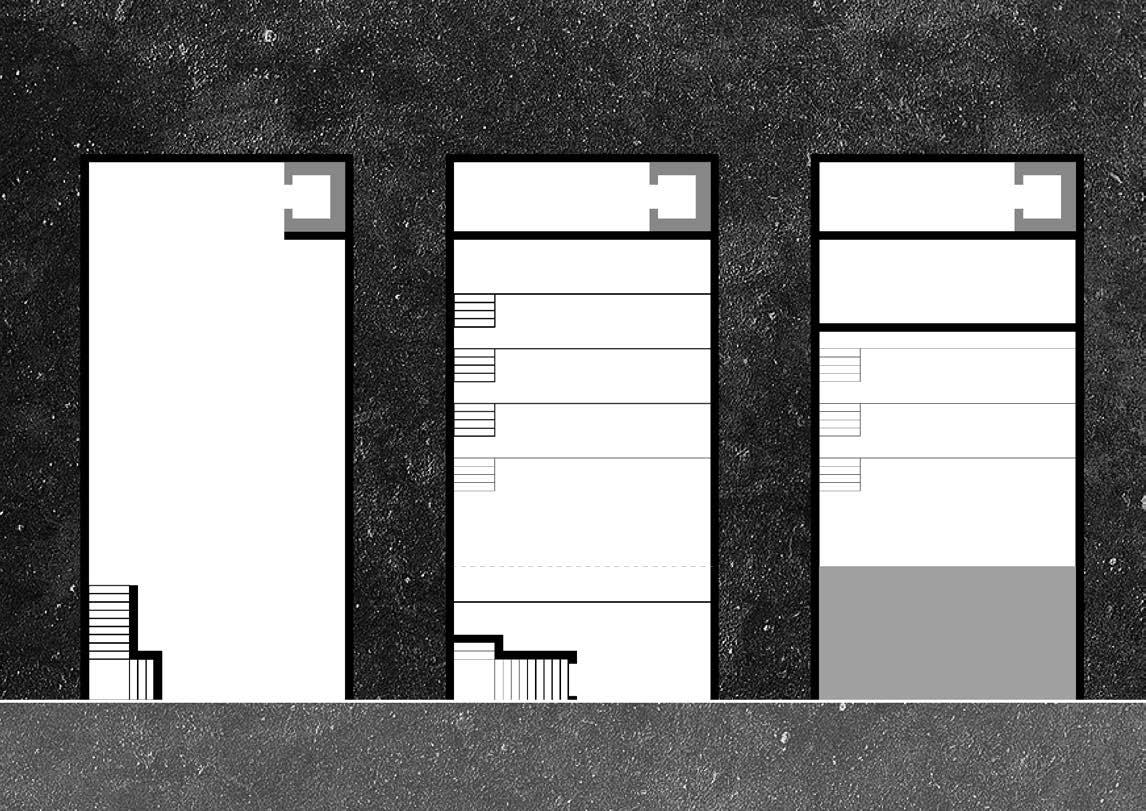
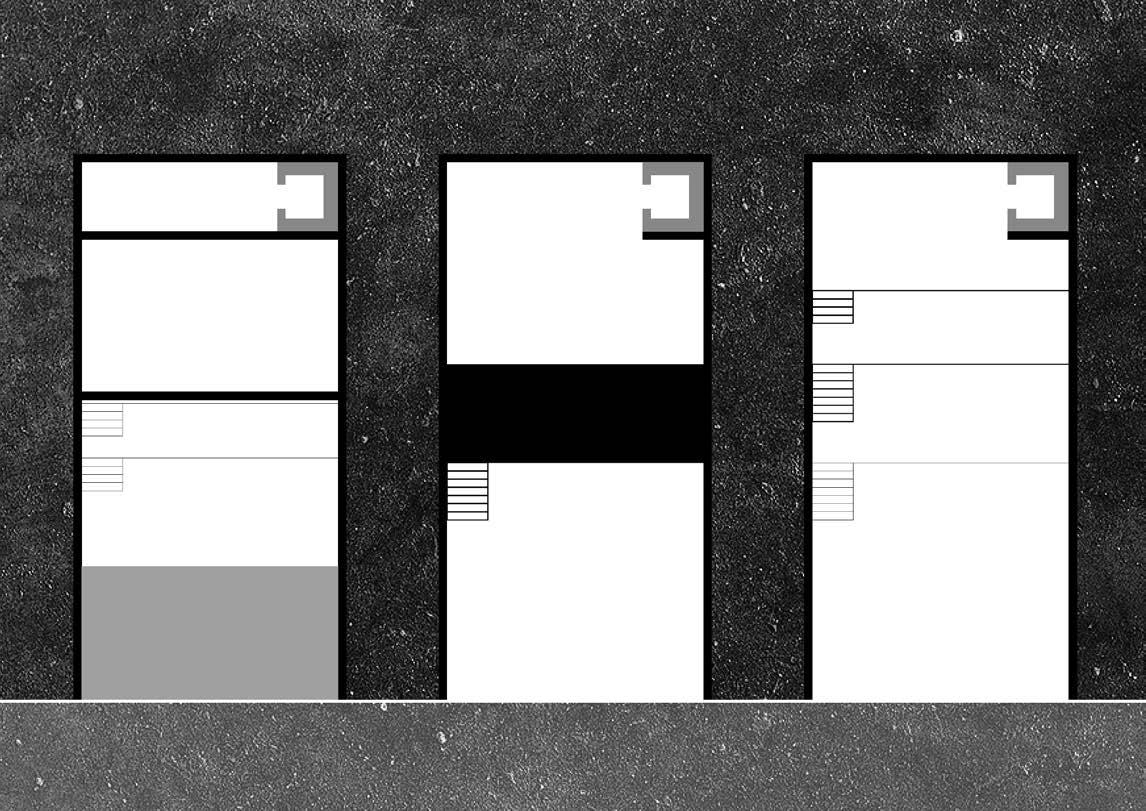
Some of these spaces, such as the bar and bathrooms, could be used by both programs with no issues. Others, like the entry, could be tailored to better suit one program or the other. These hybrid spaces make up the majority of the services, however some services are specific to theatre operations. We wanted the primary spaces of stage, audience seating, and karaoke rooms to have a visual connections, if not a physical one.
Ground Floor
Stage & Seating
Karaoke Rooms 1
Karaoke Rooms 2
Karaoke Rooms 3
Week 4: Space Planning 3D
Objective: Refine space planning.
Deliverables: Volumetric model
The karaoke rooms overlooking the stage link back to the conceptual model from Week 1. We decided not to have a physical connection between the karaoke rooms and the theatre due to noise concerns, but we felt it was important to retain a visual connection between the spaces. This allows people in the karaoke rooms to watch the theatre performances while they perform, and vice versa. The performers can watch each other, becoming an audience in turn.
The main circulation for the public runs up the street facade, allowing people on the street to become spectators to the audience members parading up the building. There is further circulation in the middle of the building, a service elevator providing staff access to the supporting spaces.
The rear of the building is a services spine, housing dressing rooms, backstage, lighting booths and staff rooms, as well as services for the bar.
The ground floor entry is the main hybrid space in the building. To pay tribute to classic theatres, it is a grand space where people can gather before and after a performance. The services around the entrance include bathrooms, reception, coat check and concierge.
The rooftop bar acts as a second hybrid space, which can be used by patrons of both programs. This is a place for performers and audience of all types to mingle.
Primary Spaces
Secondary Spaces
Circulation
Week 5: Thresholds and Passages
Objective: Consider movement through building and thresholds.
Deliverables: Axonometric of Circulation, Plan and Section of Threshold Moment
We decided to have a single elevator to service the public and private spaces, which would cause some issues when people want to access the rooftop bar after a performance. We did manage to give private spaces their own private entrances, to prevent public access.
We designed catwalks from the circulation core out to the Karaoke rooms, which created a viewing gallery to the street on the facade and allowed natural light to enter the passages without intruding into the primary spaces.
Objective: Consider the Street Facade
Deliverables: Photorealistic Render
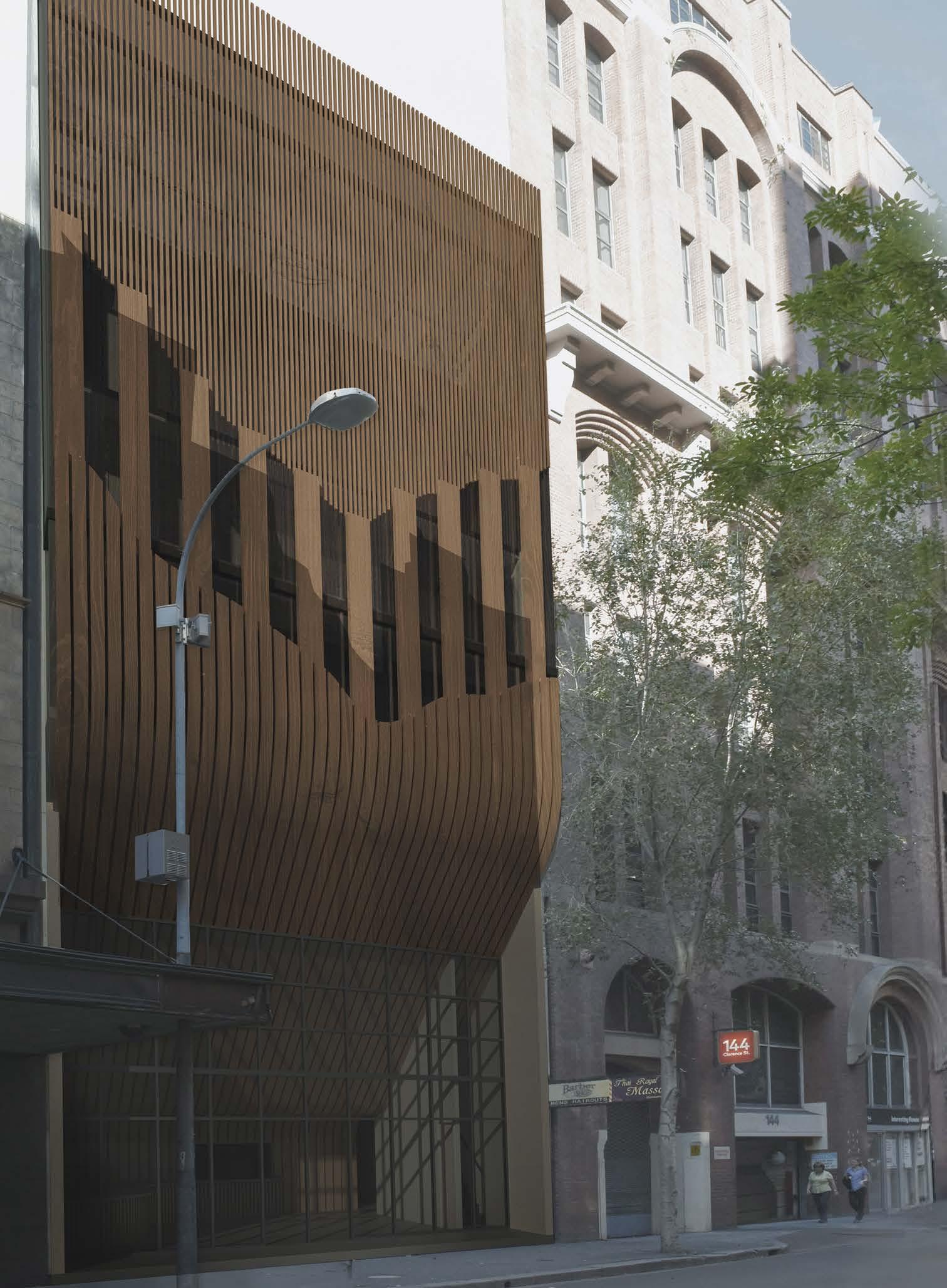
For this project, we were challenged to show the interplay of our two programs on the street facade. We designed a screen which would create moments of privacy for the theatre, moments of exposure at the catwalks, and something in between for the hybrid bar space. The screening continues into the entry of the building, drawing and inviting people in to the space. The reception, concierge and coat check share a conter which also helps to direct people towards the circulation.
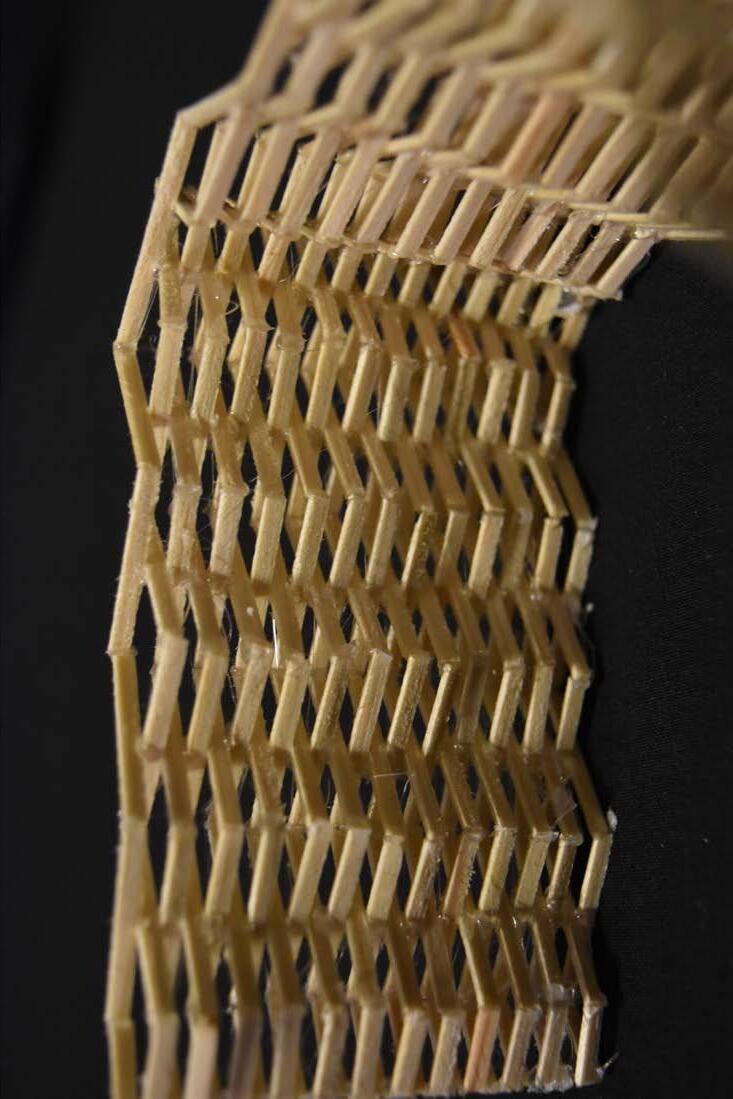
This facade stands out from the surrounding buildings, literally and materially. The wood screening is a dramatic facade designed to draw the eye of passers-by, to perform on the city stage.
Week 7: Phase 1 Final Design Presentation
Objective: Present the work to date.
Deliverables: 1:100 greyscale axonometric, 1:200 model, written statement
Week 7: 1:100 Axonometric
Paraline Drawing (1:100 at A1)
Week 8: Forking Paths
Objective: Decide which aspects of the design to further develop.
Deliverables: 1:100 Plans and Sections
See Decisive Moment 4 for more info.
Week 9: Skin and Bones
Objective: Consider the structure of the building.
Deliverables: Markup plans and sections to layout the structure.
The primary structure of the building lies in the reinforced double brick walls. The gap between the two layers of bricks and steel structure are filled with an acoustic and thermal insulation. I wanted to use a neutral material for the walls where possible, to best contrast the facade. The floor system uses reinforced concrete, anchored to the walls on both sides. The facade would be anchored to the floors and walls, and the stairway at the back would be a steel structure.
Week 10: Phase 2 Interim Design Presentation
Objective: Gain feedback on the design up to this point.
Deliverables: 1:100 Paraline, Conceptual Diagrams, 1:200 working model.
See Decisive Moment 6 for more info.
Objective: Further refine the design, and consider a threshold moment to detail.
Deliverables: 1:20 Detail Model
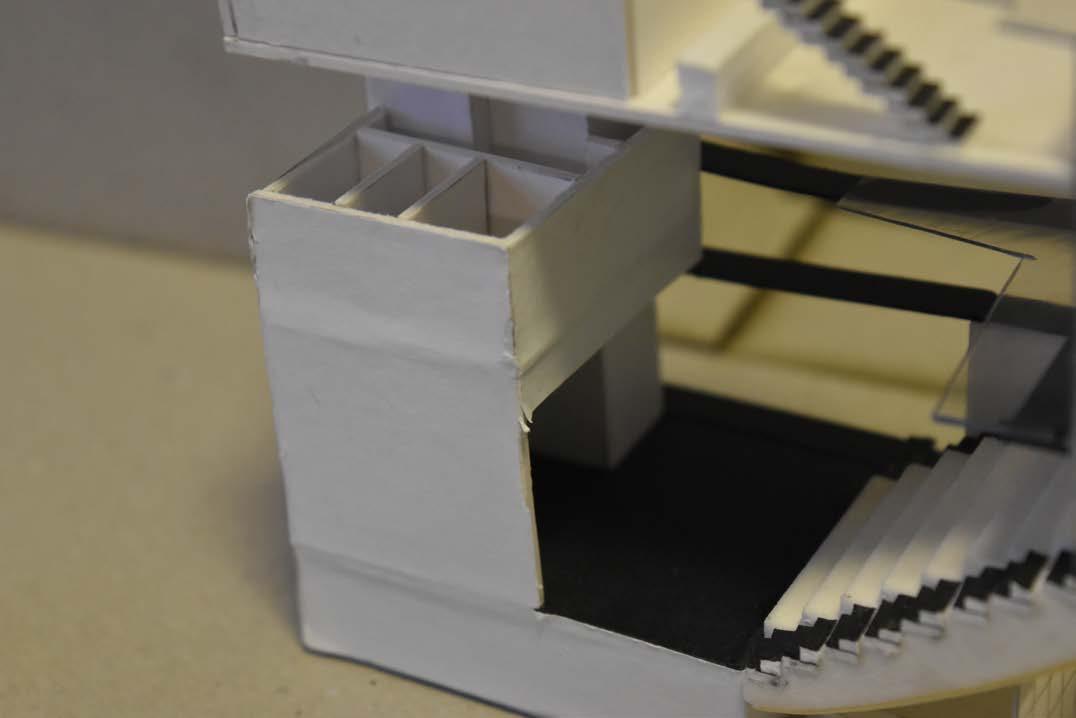
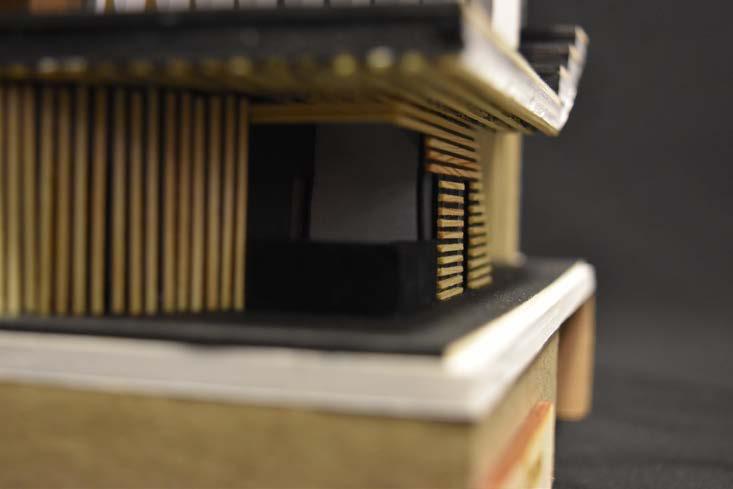
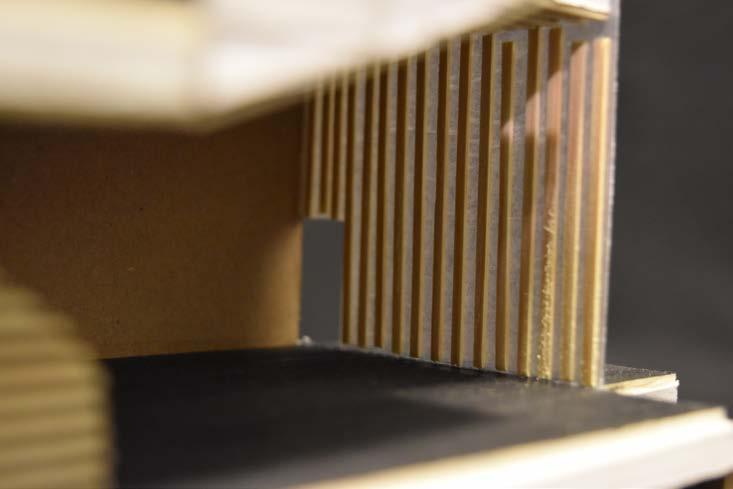
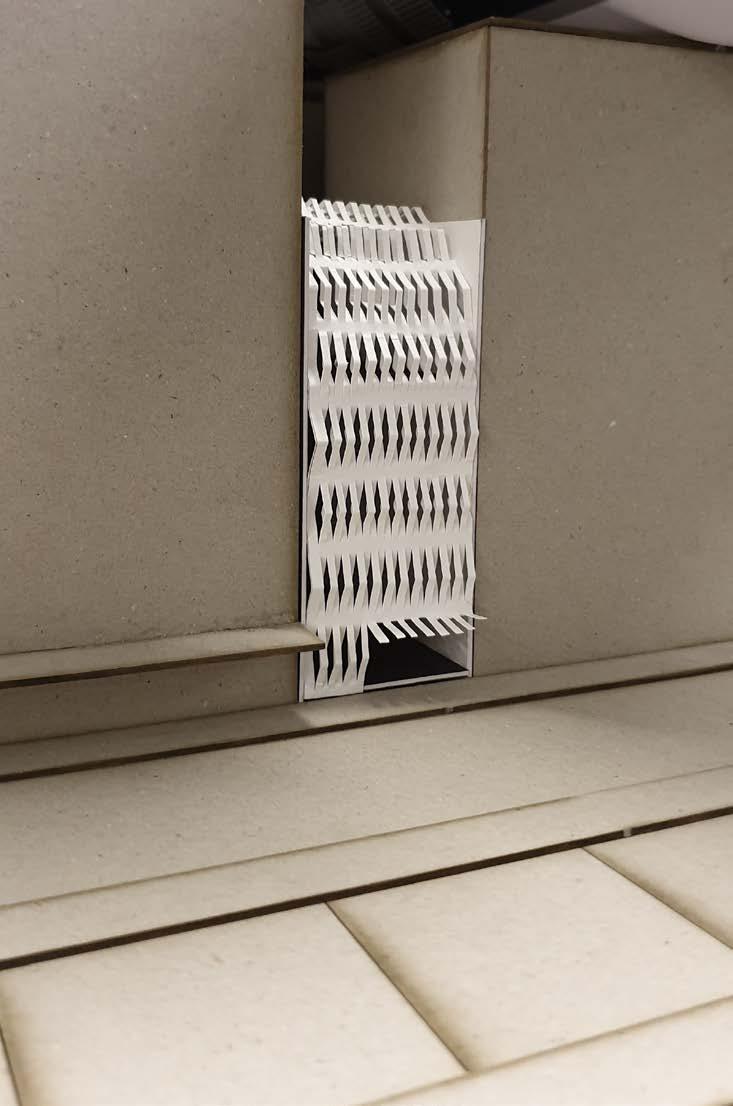
I chose to model the entry as my threshold moment, to show the detail of the hidden service entrance and the wayfinding wooden screen. This is the threshold between the streetscape and my building, and leads to the further threshold between the entry and the foyer.
Objective: Finalize the design and continue producing work for the final presentation.
Ching, Francis D. K. Architecture: Form, Space, and Order. New Jersey: Wiley Et Sons, 2015.
“Different Types Of Theatre Productions.” NYCastings. August 16, 2018. Accessed June 10, 2019. https://www.nycastings. com/different-types-of-theatre-productions/.
Silver, Pete, Will McLean, and Peter Evans. Structural Engineering for Architects a Handbook. London: Laurence King Publ., 2014.
“SIX Maps.” SIX Maps. Accessed June 10, 2019. https://maps.six.nsw.gov.au/.
“What Are the Types of Theatre Stages and Auditoria?” Theatres Trust. Accessed June 10, 2019. http://www. theatrestrust.org.uk/discover-theatres/theatre-faqs/170-what-are-the-types-of-theatre-stages-and-auditoria.
Buildings:
Fei Tang, Evolutional Theatre, Vienna (not built)
Foster + Partners and Heatherwick Studio, Bund Finance Centre, Shanghai, China, 2017
Haworth Tompkins, Bristol Old Vic, Bristol, United Kingdom, 2018
Heatherwick Studio, Zeitz Museum of Contemporary Art Africa, Cape Town, South Africa, 2017
MAD Architects, Harbin Opera House, Harbin, China, 2015
Perkins+Will, Allen Institute, Seattle, USA, 2015
Takato Tamagami and Tsutomu Hasegawa, Sunwell Muse Kitasando, Tokyo, Japan, 2008
The Scarcity and Creativity Studio, The Wave: Performance Space, Valparaiso, Chile, 2015
Zaha Hadid Architects, Heydar Aliyev Center, Baku, Azerbaijan, 2013