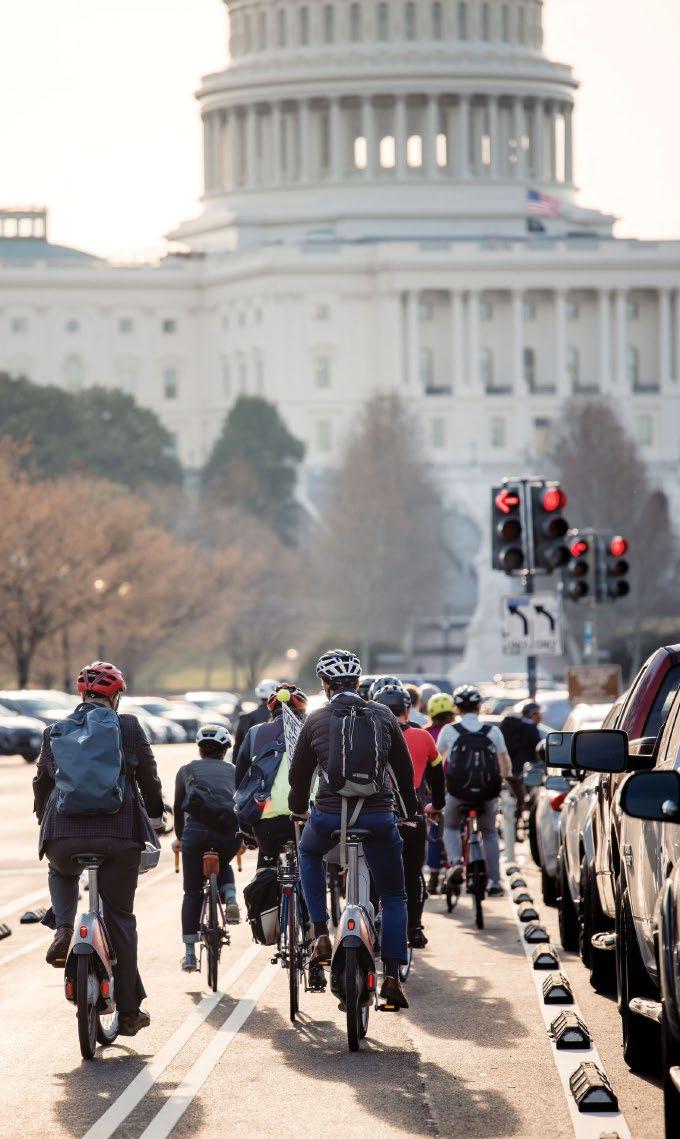
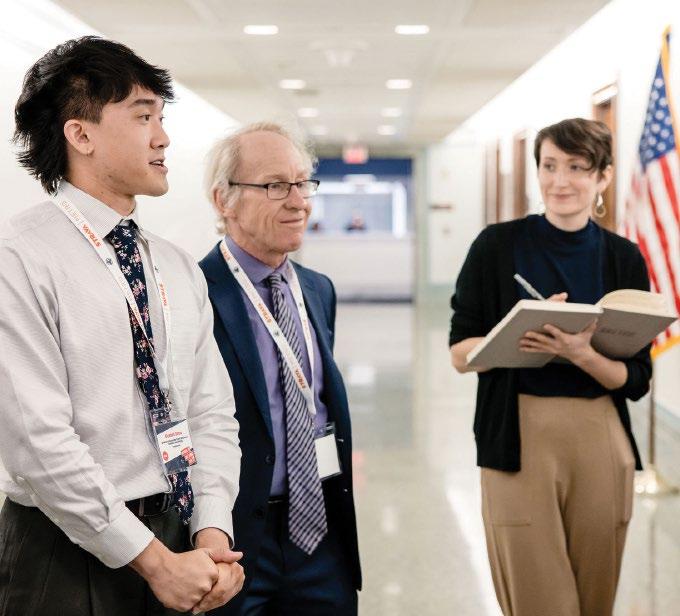
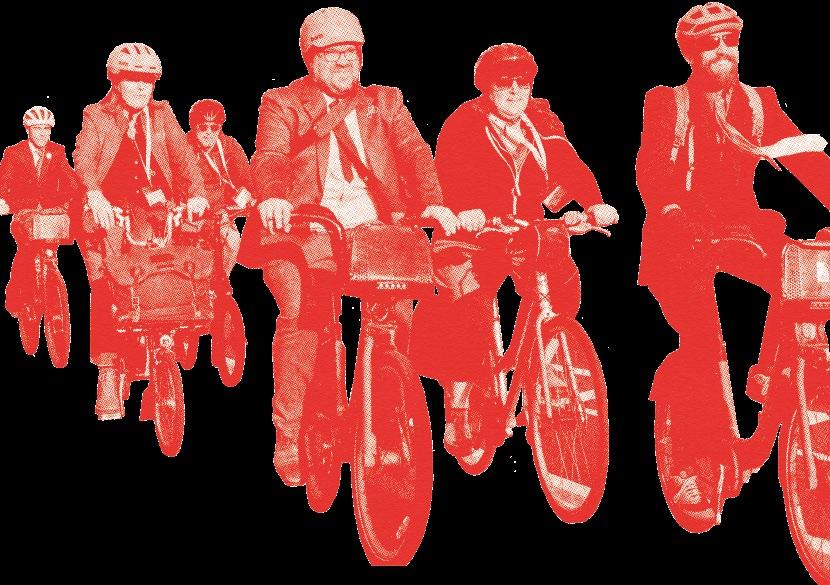
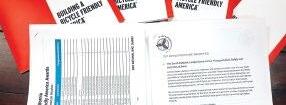
The transportation authorization bill in 2026 will set spending through 2031. We'll have to be louder than ever for bicycling.
10 2025: A YEAR IN DATA
Ken McLeod
Data is critical to understand trends and make decisions. Here's what we look at.
22 READY TO RIDE: BUILDING THE CASE FOR IN-SCHOOL CYCLING EDUCATION
Marlee Townsend
One year in, we're closer to ensuring an on-bike, in-school education for every child.
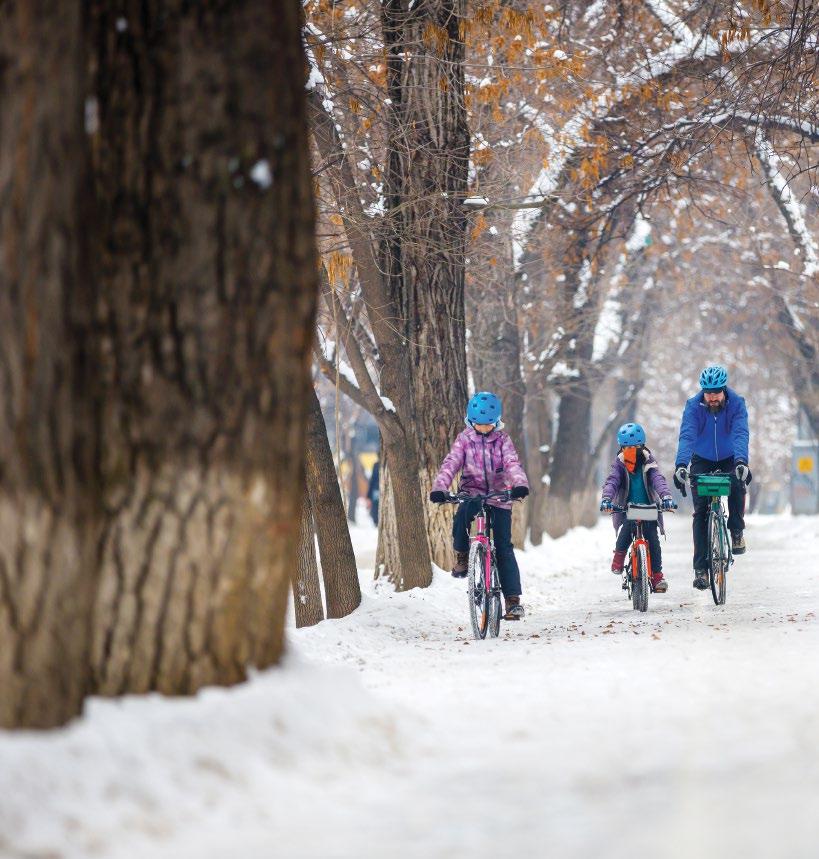
2 Viewpoint: A Winter Respite; Finding Quiet Joy and Common Ground on Two Wheels
Bill Nesper
4 First "Show Congress" Microgrant Celebrates South Carolina's First Protected Bike Lane
Marlee Townsend
1 4 In the Biking World, Cheyenne, Wyoming, is a Bit of a Hidden Gem
Chris Vaughn
1 8 LCI Spotlight: Marco Speeks
Marlee Townsend
34 League SAG Wagon
24 2025 IMPACT REPORT
From Smart Cycling to bicycling clubs, advocacy workshops to award application reviews, here's how together we made an impact in 2025.
EDITORS
Lauren Jenkins, Communications Director
Marlee Townsend, Communications Specialist
CREATIVE DIRECTION & DESIGN
Ally Mabry, Graphic Designer
A WINTER RESPITE: FINDING QUIET JOY AND COMMON GROUND ON TWO WHEELS
BY BILL NESPER
Firepits and s’mores. Hot cider and family gatherings. Bar mitts and balaclavas. Wintertime bike riding is a salve on the stressors of the season. It’s often some of the most peaceful, quiet time in my day—and in the bike lanes and on the trails.
This has been a tumultuous year. From federal funding freezes on grants for bike infrastructure projects to threats to stop all transportation funding based on policy positions unrelated to transportation, our work on Capitol Hill and in Washington has been critically urgent. Thanks to the powerful work of League members and organizations across the country, we are able to show allies and skeptics in Congress alike the demand at the local level for federal funding.
Because when communities have the resources—and the bike advocates encouraging them along—they can build great bike networks and even better Bicycle Friendly Communities (BFCs). And when we build BFCs, we build an America where more people can experience the joy and freedom of bicycling. BFCs have twice the ridership of the average U.S. city and those earning a Silver or higher award have three times the ridership. But only 30% of Americans live in BFCs, and just over 10% live in Silver or better communities.
We believe everyone deserves safe bicycling in their lives and we believe it’s possible to make that a reality. Just flip through the pages of this magazine to see the people and places already hard at work, from Cheyenne, Wyoming to Detroit, Michigan to Columbia, South Carolina.
Through this work, we’ve learned that lasting change comes not just from our love of bicycling, but from our love for our communities, our people, and our shared values. At a time of deep division and disconnection in our country, we need that more than ever. Americans across backgrounds and political beliefs want stronger, healthier communities. Bicycling delivers.
As you read through the Winter edition of American Bicyclist, you’ll see the neighbors, advocates, leaders and
Bicycle
Friendly Communities have twice the ridership of the average U.S. city and those earning a Silver or higher award have three times the ridership. But only 30% of Americans live in BFCs, and just over 10% live in Silver or better communities.
communities creating a future where biking is safe, accessible, and joyful for all. Thank you for being part of it as a member of the League and our movement to build a Bicycle Friendly America for everyone.
FIRST “SHOW CONGRESS” MICROGRANT CELEBRATES SOUTH CAROLINA’S FIRST PROTECTED BIKE LANE
BY MARLEE TOWNSEND
Earlierthis year, we were thrilled to recognize a milestone achievement in our push for safer, more connected streets across the nation: the unveiling of South Carolina’s very first sidewalk-level protected bike lane in Columbia, the state’s capital. The grand opening celebration was supported through our Show Congress microgrant, which helps local advocates shine a spotlight on the benefits of biking to their members of Congress.
While Representative James Clyburn had planned to attend, his staff—along with staff from Senator Tim Scott’s office—joined the event to underscore the importance of investing in safe biking access. Rep. Clyburn also shared his support, saying:
“With the continued growth of the city, it is vital that we make downtown safer and ensure its accessibility for all. Through this critical investment, a major step has been taken towards fulfilling that mission… It makes me proud to see our Capitol City becoming an example for pedestrian safety.” –Rep. James E. Clyburn
His words echo the core of the League’s Show Congress initiative: connecting local advocates with their elected leaders to demonstrate how better biking infrastructure benefits everyone. Show Congress microgrants of up to $1,000 are designed to support meaningful, visible community events—like ribbon cuttings, bike rides, or audits—that make the case for safe biking directly to policymakers.
Feeling inspired? Learn how to host a “Show Congress” event
As the statewide advocacy organization that helped bring this celebration to life alongside Columbia bicycle shop Cola
Town Bike Collective, Palmetto Walk Bike shared how meaningful the event was for their work:
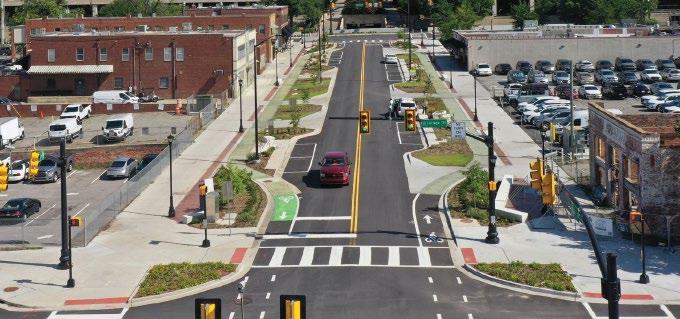
“This project transformed a critical stretch of South Main Street that…now stands as one of the most visible examples of a complete street in South Carolina. The design includes a sidewalk-level protected bike lane, upgraded lighting, improved crosswalks, and new landscaping. It is already being looked to as a model for future street redesigns across the state.
More than 70 people joined us for the 4-mile celebration ride, including multiple state legislators, Columbia City Council members, and Richland County Council members. Despite the heat advisory, the ride was full of energy and optimism. Several elected officials have already reached out to follow up on how to support additional bike/ped projects and future events that spotlight safe infrastructure.”
Congratulations to Cola Town Bike Collective and Palmetto Walk Bike for kicking off the very first Show Congress event of 2025! We can’t wait to see the creative and inspiring ways our other grantees will use their events to elevate the voices of people who bike, connect with decision-makers, and show why biking matters in communities nationwide.
THE ROAD AHEAD: FUNDING THE NEXT FIVE YEARS
BY LAUREN JENKINS
Let’s get the clichés out of the way first: a rollercoaster, a bumpy road, unprecedented. Summing up the goings-on in Washington in 2025 could invoke any number of metaphors. But as I set out to write about our federal advocacy for better biking, I find myself preferring to look at the road ahead rather than what’s behind us.
2026 is going to be a critical year for biking in Washington. And we have the power to do something about it.
Let me back up a little bit. Federal spending on our nation’s transportation system is decided in five-year chunks rather than voted on every year. This five-year spending authorization bill has been the most common source of federal funds for bicycling and walking projects since 1991, when the first version of the Transportation Alternatives (TA) program was created.
The Infrastructure Investment and Jobs Act of 2021 (IIJA) is the most recent transportation authorization bill on the books. It created discretionary grant programs like the Reconnecting Communities pilot program and the Safe Streets and Roads for All program. The IIJA also saw funding for TA rise to $1.3 billion per year for biking and walking projects, an increase in funding of nearly 60% over the previous five-year authorization period.
Next year, Congress will debate and decide on a new authorization bill, one that will be in effect through 2031.
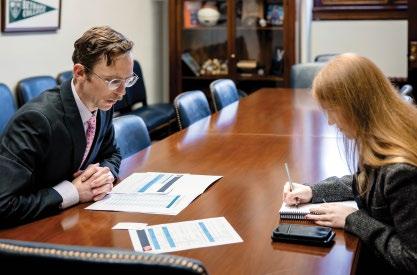
This year, the League has been laying the groundwork for what we want to see in the next bill, chiefly by working with members of Congress and their staffs to build consensus around our policy priorities. In Washington-speak, we do this through “marker bills” which are introduced as stand-alone bills with the goal of ultimately being included in a larger package like authorization.
There is a place for optimism when we look at how some of our priority bills have advanced this year. The Sarah Debbink Langenkamp Active Transportation Safety Act has garnered bipartisan support, with nine Republicans and eight Democrats co-sponsoring the bill in the House and two members of each party co-sponsoring in the Senate. Both the Safe Streets and Roads for All Reauthorization and Improvement Act and the BIKE Act, a youth education initiative, count members of both parties as co-sponsors, as well.
Will the language of these bills end up in the authorization bill? And how will Transportation Alternatives funding fare in an era of cost-cutting? Those are the big questions as we head into 2026.
Will the language of these bills end up in the authorization bill? And how will Transportation Alternatives funding fare in an era of cost-cutting?
Those are the big questions as we head into 2026.
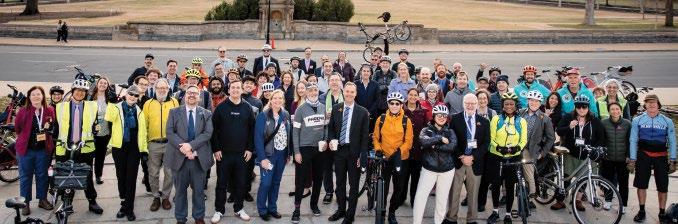
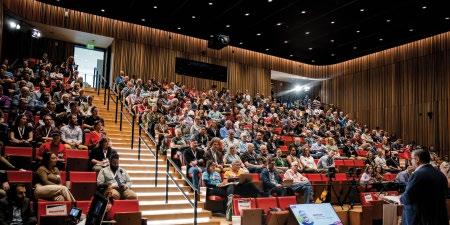
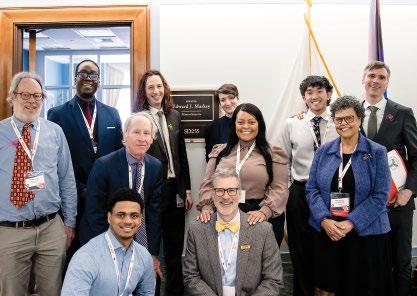
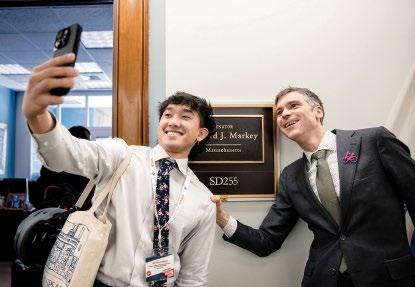
Next year’s National Bike Summit will be a pivotal moment. Every Summit brings hundreds of advocates for better biking to Capitol Hill and 2026 will be no different—in fact, we want it to be bigger than ever. For the first time, we’re offering one-day, Lobby Day only tickets so more people can attend and advocate for better bicycling (League members get a discount!)
Thousands of voices for bicycling have shown up this year, time and again. First in March, not only at the Summit but also in signing our petition to stop freezes on federal grants for bike lanes. Then,
Thousands of voices for bicycling have shown up this year, time and again.
over the summer, when Secretary of Transportation Sean Duffy sought public comments on the next authorization bill, thousands more spoke up for our shared priority: safer roads for people biking, walking, and rolling.
We need thousands of voices because we can’t let Congress only hear voices like Duffy, who has said, “I do think it’s a problem when we’re making massive investments in bike lanes at the expense of vehicles.”
2026 is our moment to be louder than ever. A thousand bike bells ringing in unison. When we show up, whether at the National Bike Summit, sending emails, and signing petitions, we are making a direct investment in the future of our transportation system.
E-Bikes Are Here. Are Campus Policies Keeping Up?
With e-bikes now seen on nearly 2 in 5 Bicycle Friendly UniversitiesSM (BFU), colleges have a valuable opportunity to support a new era of student mobility. See what the new study by UL Standards & Engagement and the League of American Bicyclists revealed about BFU campuses:
Scan the QR code to read the full report on e-bike use and policies at BFU campuses.
2025: A YEAR IN DATA
BY KEN MCLEOD
The League loves data. This year, we celebrated the 18th anniversary of the Benchmarking Report on Bicycling and Walking in the United States, a go-to source for a data-driven understanding of how Americans travel on foot and by bicycle. Collecting and analyzing data is critical to helping people understand trends, make informed choices, and work toward creating more Bicycle Friendly Communities.
In 2025, there were a number of data points that highlight the state of bicycling in America.
18 Years of the Benchmarking Report
For nearly two decades, the Benchmarking Report on Bicycling and Walking in the United States has been a go-to source for a data-driven understanding of how Americans travel on foot and by bicycle. What started in the early 2000s as a printed report has grown into today’s online resource at data.bikeleague.org, making it easier to explore both national trends and local progress.
1,166
the number of bicyclists killed in 2023, the most recent year of data available from the National Highway Traffic Safety Administration (NHTSA). This is the most bicyclist deaths ever reported by NHTSA and is the second straight year of record bicyclist deaths.
NUMBER OF ANNUAL BICYCLIST FATALITIES
NUMBER OF BICYCLE COMMUTERS IN CITIES WITH THE MOST BICYCLE COMMUTERS
70,035
the number of people who are estimated to primarily use a bicycle to get to work in New York City in 2024. This is a massive 325% increase since the American Community Survey first started to provide estimates on bicycle commuting in 2005. Chicago and Boston also saw a record number of estimated bicycle commuters in 2024.
the number of states that have never adopted a statewide bicycle plan. Only Mississippi, Missouri, Nebraska, North Dakota, and Texas have never adopted a statewide bicycle plan, yet there are signs of progress in some of those states, including Texas. We are closer than ever to our Bicycle Friendly States goal of every state planning for people who bike.
the number of states that have changed their laws “to give local governments more flexibility and authority to lower speed limits within their jurisdictions” since 2013, according to the Insurance Institute for Highway Safety. This type of legal reform is a key part of the League’s Slow Roads Save Lives initiative, and it is exciting to see these reforms.
the cost of unfunded applications to the Transportation Alternatives Program in 2022 and 2023. Transportation Alternatives is the most common source of federal funding for bicycling and pedestrian infrastructure and provided over $1 billion to projects in both 2022 and 2023 thanks to a 60% increase to the program in the Infrastructure Investment and Jobs Act. Despite the increase in funding, demand was dramatically greater than supply and more than $9 billion in applications were left unfunded. As we look forward to a new transportation bill, these unfunded needs show the importance of continued federal funding for bicycling and walking.
4%
PERCENT OF CRASHES INVOLVING A CYCLIST FROM NHTSA DATA SOURCES
the percent of crashes reported by Automated Driving Systems that are crashes with bicyclists, according to NHTSA data collection. The League continues to advocate for stronger best practices and regulations as Automated Vehicles are deployed.
$2.35 billion
the amount of funding eliminated for the Neighborhood Access and Equity Program by the “One Big Beautiful Bill” in July 2025. Neighborhood Access and Equity grants had been awarded to communities throughout the country to improve connectivity between neighborhoods where transportation infrastructure like highways had previously reduced the ability of residents to easily travel throughout their community
Highway System
121% the percentage increase in bicyclists killed on the National Highway System between 2014 and 2023. This more than doubling of bicyclist deaths far outpaced increased bicyclist deaths on other roads. The National Highway System is a Congressionally-defined system of roads that represent about 4 percent of all roads in the United States, but account for more than one-third of bicyclist deaths.
IN THE BIKING WORLD,
CHEYENNE, WYOMING, IS A BIT OF A HIDDEN GEM
BY CHRIS VAUGHAN
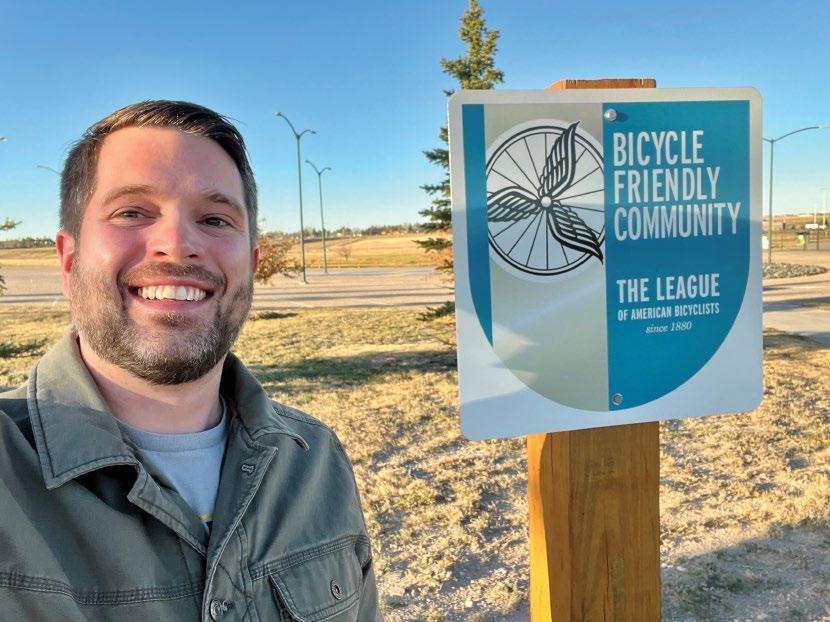
“There’s been a big interest in the community in bicycling for decades,” says Public Information Officer Matt Murphy (pictured below). Indeed, the state capital’s first citywide bikeway plan dates to 1975 and contained this simple but compelling pledge: “Through the continuous efforts of all of us, the potential of ‘twowheeling’ will be realized.”
The wheels of time spin on, and the standards for American biking have gone up quite a bit in the last half-century. So the League was especially excited to read the City of Cheyenne’s 2024 Bicycle Friendly Community (BFC) submission, assembled by Murphy and a colleague in the city’s Planning Department.
With their first-time application, Cheyenne earned a Bronze award thanks to much potential realized and a vision for more to come. The city exemplifies the power of inspired leadership, departmental collaboration, and productive partnership with the League that sets an example for communities, public officials, and bike champions across the country.
Making Strides
With Murphy’s leadership and the help of the BFC program, the City of Cheyenne is making major strides to become more welcoming to people on bikes.
Murphy brought to Cheyenne a wealth of bike-centric knowledge from previous work in other Bicycle Friendly Communities, including Fort Collins, CO, and Laramie, WY. In 2023, he teamed up with Planning colleague Lonnie Olsen to apply for the city’s first BFC award—earning Bronze—and also secured a Bronze Bicycle Friendly Business award for the City of Cheyenne as an employer.
“One of the big benefits [to partnering with the League] was going through the application process, both from a BFB perspective and from the [perspective of the] BFC program,” says Murphy. “Getting all of that data and information together in one space was really helpful. “
Murphy adds, “We had a lot of that stuff already—crash data, length of bike network, or the bike map—but it wasn’t all coalesced in one space. It’s nice to be able to have that improved data collection and analysis
aspect of it. Where we have gaps, where we can improve, having all that information in one spot.”
Murphy points to the Greater Cheyenne Greenway—a 47-mile municipal multi-use path system—as the backbone of the city’s bike network and a highlight for local riders. It offers a mix of urban and natural scenery and connects people to parks, public art, and community spaces.
The Power of Collaboration
Murphy may be an enthusiastic proponent of all things biking, but the lesson of Cheyenne’s accomplishments isn’t that success depends on one or two motivated individuals. Rather, it’s a collaborative approach with others inside and outside of city government that stands out—and can be replicated by communities anywhere.
“I think there’s a pretty good … collaborative environment between all different departments,” Murphy says, ticking through the many city departments engaged with bike-related work in Cheyenne, from Planning to Community Recreation & Events to the City Engineer to Public Works.
It’s not just that Mayor Patrick Collins has owned and operated the bike shop, Bicycle Station, since 1991, though that is cool. That bike network data that Murphy pulled together? It got the League’s attention.
As one of our judges said, “The community of Cheyenne has committed to transportation planners and it shows. Excellent work to put together a transportation plan and commitment by the city to budget for implementation.”
As Cheyenne builds out its bike network— the city is planning a 2.6-mile Greenway extension to an elementary school at the Air Force base and a 2.4-mile extension to connect the Sun Valley neighborhood with a new community park—it keeps accessibility at the forefront. As noted in the BFC application, “As part of its work, the Mayor’s Council for People with Disabilities advises the City on accessibility issues for
It’s a partnership that’s bearing fruit. The League connected Murphy with partners at the American Heart Association who are helping elected leaders show their support for activityfriendly communities.
infrastructure around the community, including conducting audits of infrastructure to identify accessibility issues.”
Cheyenne’s collective approach to biking extends well beyond collaborations among city departments.
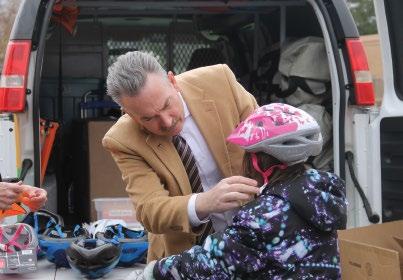
The Cheyenne Regional Medical Center “provides between 350 and 400 helmets to youth annually,” according to the BFC application. The Downtown Development Authority helped launch a community bikeshare program in 2016 and supports bike events downtown. The local Rotary and Kiwanis clubs fundraise for “community bicycle amenities” from Greenway infrastructure to “new park and open space land that will increase opportunities for bicycling in the city.” And a nascent Active Transportation Advisory Committee (see more below!) promises to bring even more citizen voices into the city’s bike-related efforts.
Room to Grow
Murphy readily acknowledges that, as with any community, Cheyenne has improvements to make from “improving our onstreet bike network” to putting a greater “emphasis on bike education.”
That aligns with the customized, city-specific feedback the League offered in its BFC Report Card. Recommended steps for Cheyenne to take include encourag -
ing local businesses to promote biking in their workplace and seek recognition through the League’s Bicycle Friendly Business program. The report card also suggests increasing high-quality bike parking, conducting an analysis of local street connectivity, and partnering with local biking groups, schools, and parents to promote on-bike education and outreach to encourage residents of all ages to ride bikes.
The good news for Cheyenne is that they’ve continued to work together with the League, meeting with our Bicycle Friendly America team once a month this spring and summer for technical assistance and problem-solving, thanks to a partnership through the Centers for Disease Control and Prevention’s Active People, Healthy NationSM initiative.
It’s a partnership that’s bearing fruit. The League connected Murphy with partners at the American Heart Association who are helping elected leaders show their support for activity-friendly communities. As a result, the city plans to adopt an Active People, Healthy NationSM Proclamation.
Also with the League’s encouragement, Murphy is getting an Active Transportation Advisory Committee (ATAC) rolling. Advisory committees of this sort are a sure sign that a community is putting the systems in place to welcome those on bikes. “[Cheyenne’s ATAC] will help us significantly improve our bicycle- and pedestrian-friendliness…. We’d been wanting to do that for a while,” Murphy notes, citing how helpful the League’s support was. “It was in a few different plans, but it hadn’t got off the ground.”
Check out our recent blog and interactive map featuring great examples of active transportation advisory committees from BFC across the nation!
The people of Cheyenne were clearly eager for an ATAC, as well, judging by the number of people who applied to sit on the committee. “There are some military connections, some young professionals, people with families, we have that whole gamut.” Murphy plans to round out the committee with a broad set of representatives, including from a local hospital and the school district.
Once the advisory committee is fully launched, they’ll help with conducting a bike parking audit in downtown Cheyenne— setting the stage for tangible improvements to the city’s bike-friendliness.
As Cheyenne continues its work to become more welcoming to people who bike, its ability to activate and engage residents’ voices will remain a key ingredient to success. A recently passed “Critical Traffic Control Area” ordinance enables neighborhoods to “request a traffic control study of streets,” an evaluation tool the city can act on to identify and implement safety improvements, said Cheyenne’s BFC application.
With all this positive momentum, Murphy was happy to report that Cheyenne’s “Bike Week” in late June was the perfect showcase of the city’s longstanding and growing bike culture.
Murphy helped the city revive Bike to Work Day—which had a long history in Cheyenne but had been paused during COVID—featuring activities and pop-ups to engage riders across the city, including seven breakfast stations and an after-work party at a local brewery.
The League’s Bicycle Friendly Community program requires places to reapply for designation every four years. Places that make progress are rewarded with increases in their award level—and a stronger biking community. We look forward to seeing how much more bikeable Cheyenne has become in 2028!
LCI SPOTLIGHT: MARCO SPEEKS
BY MARLEE TOWNSEND
The League certifies hundreds of League Cycling Instructors every year, and there are thousands of LCIs across the country leading bike education efforts in their communities. In our LCI spotlight series, we share the stories of League Cycling Instructors doing what they do daily: educating, mentoring, and empowering.
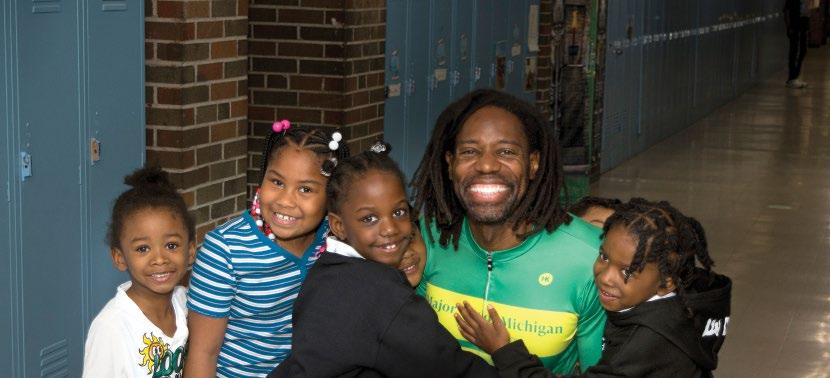
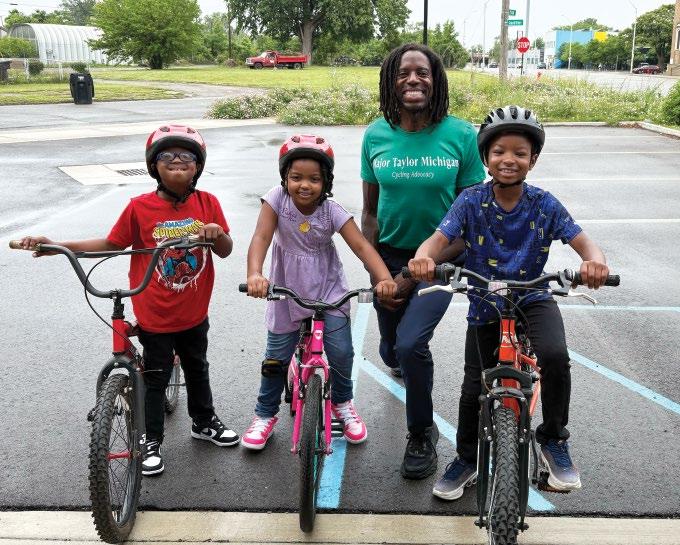
Beyond the numbers, there are individuals—like Marco Speeks, an LCI and advocate based in Detroit, Michigan. Marco is the founder and executive director of Major Taylor Michigan Cycling Advocacy (MTM) and serves as a thought leader and liaison for Bikes 4 Employees. His work is rooted in breaking down systemic barriers in cycling and ensuring that the freedom of bicycling is accessible to all Michiganders. From programs that give transportationinsecure residents access to bikes, to serving on the board of the League of Michigan Bicyclists, Marco’s advocacy reflects his vision for an inclusive and equitable cycling community. As an LCI, he uses bike education as a tool for empowerment and transformation.
Tell us a little about yourself and what got you involved in the world of bikes.
As a kid growing up in West Africa, we’d always ride to school and back. It was a great time to bond, gossip, and provide therapy for each other. All of those relationships still benefit me today. It’s come full circle: the kids I once biked with are now adults who donate to help children growing up in the same regions, so those kids don’t face the transportation challenges we did. That’s what I want to bring to the bike movement. That’s why cycling is so important to me— it’s part of my upbringing, a respected value, and I want to pass that on.
What first motivated you to become an LCI?
I wanted to be able to share my knowledge and experience with those who wanted to adopt a cycling lifestyle. I also wanted to have access to the library of educational content for League Cycling Instructors.
Tell us about the work you do in the Detroit area.
There’s this program called Bikes 4 Employees that’s really doing something special for folks in Detroit, Hamtramck, and Highland Park who are struggling to get around. B4E for short. You know how it is when you don’t have reliable transportation—it’s hard to keep a job or stay in school.
We partner with big employers like the City of Detroit, Henry Ford Health, and Wayne State University, plus social service agencies. They help us find employees, students, or clients who could really use reliable transportation. If you live more than half a mile from work or school and transportation is a real challenge for you, you might qualify for a highly discounted bike—we’re talking regular bikes or even e-bikes.
But it’s not just the bike. You get everything you need: helmet, lights for the front and back, fenders, a pannier bag, locks, pump,
bike rack, reflective vest, tools—the whole setup. Plus, you get safety training and 80% off repairs at pretty much every local bike shop. When you add it all up, we’re talking about an $1,800 value. We make it work through small weekly payroll deductions, donations, and grants.
As the liaison for the program, I stay connected with everyone. I do monthly check-ins with everyone, send out helpful newsletters, run bike workshops over Zoom, organize and lead group commute rides to workplaces and build community.
The results have been incredible. Last year, 95% of people said their physical health improved, 82% can get to work or school way more reliably now, and 86% are saving money by biking instead of using other transportation. It’s really rewarding to see how something as simple as a bike can change someone’s whole situation.
A lot of people think Major Taylor Michigan is just another cycling club, but we’re doing something completely different. We’re a non-profit that’s all about helping people who really need cycling in their lives— whether that’s folks trying to get to work every day or people who are dealing with health challenges. That’s where we come in with what we call wraparound services—we don’t just hand you a bike and walk away. We’re there for the whole journey, making sure you have what you need to make cycling work for your life.
When I started Major Taylor Michigan, I really wanted to get kids excited about using bikes to get around. That’s what inspired me to launch Detroit’s first Joe Louis Greenway Bike Bus for public school kids. We organize groups of students and teach them how to safely bike to school using the Greenway.
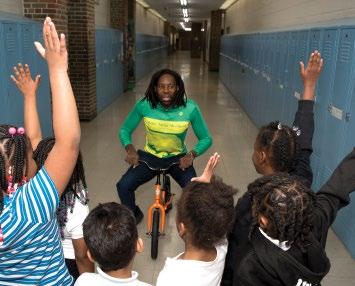
We start young with our “Stride and Glide: Learn How to Ride” program for
kindergarteners through third graders. We created this classroom program that connects bike mechanics to real science— like how gears work with physics or how cycling impacts the environment. When kids learn to ride early, it actually helps their brain development and makes them better at math and problem-solving later on.
We do a lot more than just teaching kids to ride. We hold bike safety clinics, maintenance workshops, and these “Fireside” chats at schools where we talk about making cycling part of your everyday life.
My favorite program might be our Youth Earn a Bike initiative. Kids must show up every single day for training, learning everything about how bikes work and how to fix them. If they stick with it and really commit, they get to keep the bike at the end. It’s amazing watching them earn bikes through dedication.
What do you find to be the biggest barriers to cycling? The biggest barriers that come to mind are the equipment, the attire, and access to education. The vocabulary of bicycles is complicated—what’s a pannier? What’s a drivetrain? Can you afford a $12,000 bike, and can you afford the time to ride it 45 miles? Where do you go to learn to ride, and to learn to maintain your bike?
There’s also a stigma associated with a cycling lifestyle. Those who have the means to ride for recreation and fitness look different than the people who depend on a bicycle for transportation. The cycling ecosystem is not reflective of communities that need and depend on cycling—commuting to work and picking up children, traveling from outside of food deserts, dealing with food insecurity, etc. We all benefit from better biking, but some of us need it for economic reasons, to make money or to survive on the income you have.
Do you have any favorite memories from teaching cycling education?
So, there was this one student who drove out to meet my class in the park, but she didn’t even have a bike to ride with us. We weren’t about to let her just sit there and watch, so we scrambled to find her one of those MoGo rideshare bikes and hunted around until we found a helmet that fit. Once we got her set up, I made sure to give her extra attention during the ride. Since she was just starting out and didn’t have much cardio built up yet, we kept it slow and steady—low speed but good distance. She hung in there with us the whole time, though by the end she was definitely breathing hard.
Right after we finished, she looked at me and said, “I’m going out to buy a bike today.” That just made my whole day. That’s the kind of moment that reminds me why I do this work.
Tell us about any current advocacy campaigns you’re working towards, or any wins you’re celebrating.
After months of advocating, we finally got something incredible done. Governor Gretchen Whitmer just officially proclaimed September 15, 2025 as “Major Taylor Day.”
To help make this happen, I pulled together a coalition of key organizations and supporters for critical support. Frank W. Ervin III, Bobby Lawrence, Robert Kosowski
Support a Congressional Gold Medal for Major Taylor!
Representatives Jonathan L. Jackson and Jim Baird have introduced a bill to award Marshall “Major” Taylor with the Congressional Gold Medal, the highest honor Congress can bestow. Please join us in this much-deserved and belated recognition of a trailblazing athlete and cyclist by contacting your member of Congress.
along with the League of American Bicyclists, League of Michigan Bicyclists, Bike Friendly Kalamazoo, and Ann Arbor Bicycle Touring Society all stepped up to support our campaign. Michigan is the first state in the entire country to honor this cycling legend with a gubernatorial proclamation.
Major Taylor has gotten local recognition and state awards before, but we’re talking about the first official state proclamation for “Major Taylor Day.” Marshall Walter “Major” Taylor lived from 1878 to 1932, and he was absolutely revolutionary. Back in 1899, he became the first Black American world champion in cycling—they called him the “fastest man on a bike.”
This guy was breaking barriers and setting records, achieving international fame decades before other Black athletes. But this proclamation isn’t just about looking back and honoring history. It’s about building a future where Michigan’s cycling community actually reflects the diversity and excellence that Major Taylor stood for. Every time you get on your bike, you’re carrying on his legacy.
Visit mtmca.org to learn more and support Marco’s work.
READY
BUILDING THE CASE FOR INSCHOOL CYCLING EDUCATION
BY MARLEE TOWNSEND
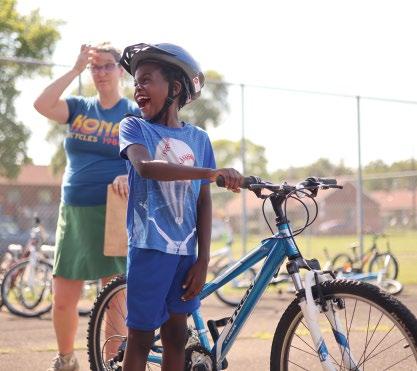
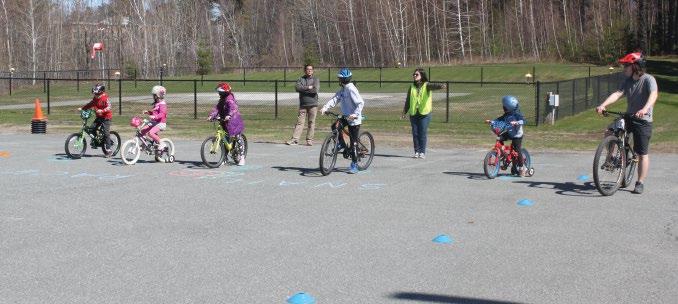
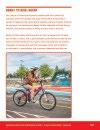
When we launched Ready to Ride at the 2025 National Bike Summit, our goal was simple, but audacious: make sure every student has the chance to learn to ride a bike. The League believes that onbike instruction should be a standard part of every student’s education, and continues advocating for the policies and resources that will enable every school to offer comprehensive on-bike education for every child. In the year since Ready to Ride’s launch, that idea has gained real traction in classrooms and communities nationwide.
Through Ready to Ride, the League has been amplifying the gold-standard cycling education already happening in schools: hosting quarterly peer-learning calls for educators, creating new resources for school-based programs, and publishing research and stories that show how biking supports students’ health, confidence, and academic focus.
Our latest report, “Ready to Ride: The Impact of Cycling Education Programs on Students,” highlights the physical, social, and classroom benefits of on-bike learning. The research shows that children who participate in structured, school-based cycling education programs gain confidence, improve road safety skills, and are more likely to continue cycling outside of school while also experiencing better focus, reduced stress, and stronger connections with their peers. To complement that research, we’ve released several case studies of successful school programs and built an interactive map that spotlights even more examples across the country.
A recent Ready to Ride webinar brought together voices from across the movement—like Lori Dunn, who leads Seattle Public Schools’ pre-K bike and pedestrian safety program (the only one of its kind in the country); Dave Cowan of the Safe Routes Partnership, who supports national efforts to make walking and
biking to school safer while helping local communities put programs in motion; and researcher Lauren Schuck from Outride, whose organization connects research, middle school programs, and community grants to help more kids experience the mental and physical benefits of biking.
Citing Outride’s research, Lauren shared, “For a lot of the students, when we ask what do they like most about cycling, they report: ‘It calms my mind, I can come back to class and feel more focused and attentive.’ And then from a teacher's perspective, we get anecdotes [about] students who often struggle in the classroom. They come to bike class, and they're the leaders, so they're taking the charge. The confidence those students get doesn't end in bike class; it really carries throughout the academic day.”
Participants in the webinar rated the likelihood that most local schools will offer in-school on-bike learning within 20 years as 6.23 out of 10—a hopeful sign of progress. The most requested supporting resources were case studies, curriculum materials, and funding information. As we continue towards a future where every child gets an on-bike, in-school education, we’re listening and acting on these grassroots insights that continue to guide our next steps as we refine adaptable, classroom-friendly resources for educators.
HELP GET ALL KIDS READY TO RIDE!
Every kid deserves the chance to learn to ride safely. The Biking Instruction, Knowledge, and Education (BIKE) Act of 2025 would open up existing roadway safety funds to support on-bike education programs in elementary and middle schools. By making these programs eligible for existing Section 405 Highway Safety funding (which is already intended to fund education to reduce the number of fatalities and injuries as a result of traffic crashes), the BIKE Act helps teach kids essential bike safety skills and builds safer communities for everyone.
Ask your representative to co-sponsor the BIKE Act today!
Thank you!
FEDERAL ADVOCACY
Secured an additional $180 million for transportation per year for the next three years by working with the House Transportation and Infrastructure Committee.
Introduced bipartisan bills in Congress–our priorities for reauthorization included the Sarah Debbink Langenkamp Active Transportation Safety Act, the Safe Streets and Roads for All Reauthorization Act, and the Biking Instruction, Knowledge, and Education Act of 2025 (or BIKE Act).
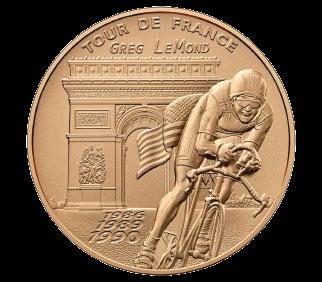
Celebrated Greg LeMond’s Congressional Gold Medal–the first ever for a bicycling icon–and rallied support for a much-overdue Congressional Gold Medal for Marshall “Major” Taylor.
Funded ten state and local organizations to host ‘Show Congress’ events in their district, including a ribbon cutting for the first protected bike lane in South Carolina, a ride in Arizona, and a walk audit in Tennessee.
Uplifted the voices of 1,992 individuals who provided comments to the United States Department of Transportation (USDOT) for their Request for Information that will inform the next transportation authorization bill. League voices represented more than 70% of the 2,782 comments to USDOT to say that bicycle infrastructure is among “America’s Most Fundamental Infrastructure Needs.”
Representative Mike Thompson, Co-Chair of the Congressional Bike Caucus
Register for the 2026 Summit: bikeleague.org/summit
attendees from nearly all 50 states and DC
Attendees and the League were first to inform congressional committees and offices of a federal freeze on discretionary grants for bicycling projects; attendees were able to speak to their members of Congress about specific grant awards and projects that were affected.
To make content accessible to a wider virtual audience after the Summit concluded, we hosted 16 webinars covering everything from Bike Commuting 101 to planning ‘Show Congress’ events.
congressional offices met with at the 2025 National Bike Summit, covering 44 states
BICYCLE FRIENDLY AMERICA
Received 150 Community Spark Grant applications and awarded 10 Spark Grants to innovative bike advocacy projects throughout the country.
Partnered with CDC’s Active People, Healthy Nation Initiative SM to provide capacity building support to five communities: Ridgeland, MS; Cheyenne, WY; Bismarck, ND; East Lansing, MI; and Nashville, TN.
Hosted League Cycling Advocate (LCA) Workshops in Santa Monica, CA and Detroit, MI as well as four Bicycle Friendly Community Workshops in Dallas, TX; Winchester, VA; East Lansing, MI; and Bismarck, ND.
Continued helping 14 communities conduct Bike Audits in our second year of partnering with AARP’s Community Challenge Capacity Building Microgrant program.
COLLECTED PUBLIC SURVEY RESPONSES from over
17,675
LOCAL BICYCLISTS
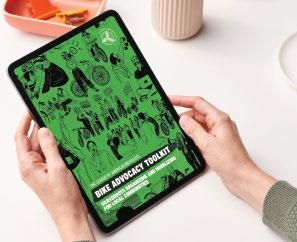
Bike Advocacy Toolkit, now available for purchase in the League store as a digital download (free for volunteer advocates, at a sliding scale cost for advocacy orgs and professionals). ‘E-Bikes on College & University Campuses’ Report, developed in partnership with UL Standards & Engagement (ULSE). A Rural & Small Town Bicycle Friendly Communities Map: bikeleague.org/ RuralSmallBFCs
New and updated blogs on topics such as Bike Parking, Bike Counts, and Bicycle Advisory Committees. Stay up-to-date on our latest releases at bikeleague.org/blog
SMART CYCLING
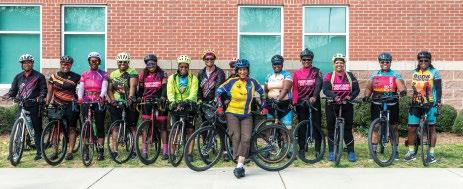
Held 30 League Cycling Instructor seminars, including a first-ever LCI seminar just for Black Girls Do Bike Sheros.
Created three new educational videos for truck drivers, “Big Trucks and Bikes,” available in both English and Spanish at learn.bikeleague.org
Released a second Ready to Ride report and accompanying case studies. Read the “Ready to Ride” campaign update earlier in this magazine to learn more!
POLICY + TECH + RESEARCH
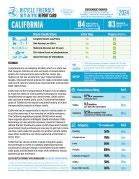
Published our Bicycle Friendly State ranking, report cards, and bi-annual report.
Welcomed four new organizational coaches: Angela Olson (BikeMN), Elizabeth Adamcyzk (Ride Illinois), Jake Newborn (Wisconsin Bike Fed), and Michael Anderson (Wisconsin Bike Fed)
Continued our work on the Ready to Ride campaign by developing a comprehensive curriculum for grades K-5 to learn safe, confident riding and an online teacher training that accompanies the curriculum.
Provided technical assistance to federal grant applicants on federal funding programs, including Safe Streets and Roads for All (SS4A) and Transportation Alternatives (TA).
Strengthened partnerships with our coalition of like-minded organizations on Capitol Hill, including: the American Association of State Highway and Transportation Officials (AASHTO), the National Association of City Transportation Officials (NACTO), the Road to Zero Steering Group, the National Highway Traffic Safety Administration’s National Helmet Coalition, the Insurance Institute for Highway Safety, and the Lifesavers Conference.
SAG WAGON
BY MARLEE TOWNSEND
IN THIS ROUND OF THE SAG WAGON, LEAGUE STAFF LOOKS BACK ON THE 2025 NATIONAL BIKE SUMMIT AND SHARES WHAT GETS US EXCITED ABOUT THE 2026 PREMIER EVENT FOR GRASSROOTS BIKE ADVOCATES.
LEAGUE SAG WAGON
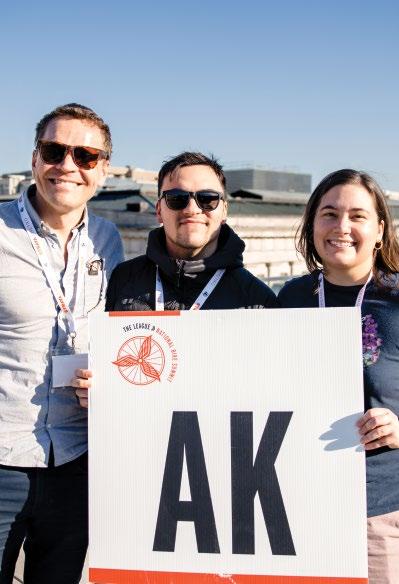
CARON
My favorite part is always the Capitol Hill reception. Everyone has finished their Lobby Day meetings at that point, and it’s exciting to have advocates come up and tell me about the good discussions they had with their elected officials.
CHRIS
As a remote staff member, I always look forward to being together with League staff in person. I’ll never forget transporting the 50-gallon container of coffee up the elevator with Ally—a bonding moment for sure.
ALISON
It’s the awards reception for me. I love listening to the awardee’s acceptance speech and hearing who they thank— the stories are always incredible.
MARLEE
Other than the delectable hors d’oeuvres (still dreaming of bacon lollipops!), I always look forward to hearing folks take off on the final ride. Hearing the tinkling bike bells echo through the streets as riders depart en masse feels like an auditory symbol of the bike movement itself. It fills my heart with bike joy!
AMELIA
Seeing repeat attendees year after year is the best—reunions that remind us we’re all in this together, and we’re not alone in facing these challenges. It’s wonderful to have these in-person experiences where we can celebrate, share ideas, and show off the impressive bike infrastructure of DC.
LAUREN
I love seeing how people rally together and make things happen. Everyone’s rolling up their sleeves and getting into it. There’s something special about seeing the mix of people in bike advocacy: from neon lycra roadies (like me!) to policy wonks in suits, we’re all passionate about biking in our own way.
ANNA
I always enjoy Lobby Day because walking through the halls, seeing the architecture, and riding around the Capitol grounds is very inspiring for me.
KELLY
For me, the enthusiasm and energy of Summit attendees is something I look forward to. Despite the early mornings, the excitement of all the attendees is amazing and keeps me feeling energized throughout the day!
RILEY
I appreciate the opportunity to be faceto-face, to hear what people have done and what they’re excited about. It’s not just about being in the glow, but truly catching up to find out what’s going on in specific states and communities.
ALLY
The Lobby Day bike ride is super fun and unique because everyone’s wearing their fancy Capitol Hill clothes, but we’re all doing the thing we love the most together—riding bikes. It gets me jazzed to talk to my reps afterwards about how we can improve biking conditions in my state.
BILL
It's so uplifting to be surrounded by our counterparts from around the country who are doing similar work, fighting the good fight, and sharing how they've approached challenges and made the most of opportunities. I'm humbled by the love, creativity, and perseverance of the people of our movement. We need this in 2026 more than ever.
MONIQUE
I am looking forward to seeing some of our new ideas in action, and of course, it is always great to see and meet League members in person!
OUR MISSION
is to lead the movement to create a Bicycle Friendly America for everyone.
OUR VISION
is a nation where everyone, whether they bike or not, recognizes and enjoys the many benefits and opportunities of bicycling and where everyone can experience the joy of bicycling.