WINTER 2024 ISSUE THE MAGAZINE OF THE LEAGUE OF AMERICAN BICYCLISTS

The Infrastructure Investment and Jobs Act helped states and communities make big strides for biking and walking. We take stock of our wins and look ahead to what's next.
Each year, the League's impact grows thanks to the support of our members and the power of our movement. See how our programs have contributed to building a Bicycle Friendly America for Everyone in 2024.
16 08
Hawai'i is more than a vacation destination, it's home to more than a million people. Recently, the children of Hawai'i settled an important lawsuit to secure a greener future for everyone on the islands.
It's individuals in communities across the country speaking up at public meetings and organizing who are making biking better at the curb level. Our new LCA workshops empower more people in the movement for safer roads.
12 Bipartisan Infrastructure Law Gives States a Boost 22 The Impact of Education: More Confident Riders 34 League SAG Wagon

AS WE CLOSE OUT 2024, I’M REMINDED OF A TRUTH THAT RESONATES DEEPLY WITHIN OUR BIKING MOVEMENT: WHEN WE RIDE TOGETHER, WE THRIVE TOGETHER. Riding a century always feels easier with friends to ride with and motivate you along the way. This special time of year invites us to pause and reflect on our gratitude - acknowledging those who support us and considering how we can elevate our collective efforts, on the bike and off. In this issue of American Bicyclist, we do just that, much like a group ride taking a break at a rest stop to recharge. Here, we take a moment to look
BY BILL NESPER
around and truly see each other—the growing number of passionate riders committed to making our shared vision of a bicycle friendly America for everyone a reality.
I am fortunate to get to stop and meet people along the ride throughout the year. Recently, I traveled to the Bike Walk Kentucky Summit in Lexington, Kentucky where I saw the strength and creativity of people working hard to transform lives and communities through bicycling. It was an opportunity to see the League’s programs, like Kentucky’s Bicycle Friendly State report card, being put into action. At the street
level, advocates are using our work as tools for transformation, and meeting them is an opportunity to learn how we can add to their toolbox for the future.
As a movement, we are united in our vision of a country where biking is part of everyday life and where the benefits are enjoyed by all. We share Bike-Partisan values that stretch across political divisions with outcomes like improved mental and physical health, bringing people together, and a sustainable future. The bicycle is our vehicle for coming together and creating positive change. It's more important now than ever that we come together to protect and to leverage the wins we have made on Capitol Hill towards local action to improve lives and strengthen communities through better bicycling.
It’s essential that we advocate for a transportation system and mobility culture that
prioritizes people. Our most recent national survey once again reveals a powerful consensus across the political spectrum: a majority of Americans—regardless of race, class, or region—believe their communities would be greatly improved if biking were safer and more comfortable. They recognize the need for greater investment in bicycling.
In this issue, we’re excited to share inspiring stories of individuals and groups making a difference—teaching classes, organizing rides, representing their communities, and advocating at every level to ensure cycling is safe and accessible. It’s a privilege to showcase the strides we’re making across the nation and I am filled with appreciation for the remarkable movement we’re part of. Thank you again for pedaling with the League and powering this work towards a truly bicycle Friendly America for everyone.
BY CARON WHITAKER
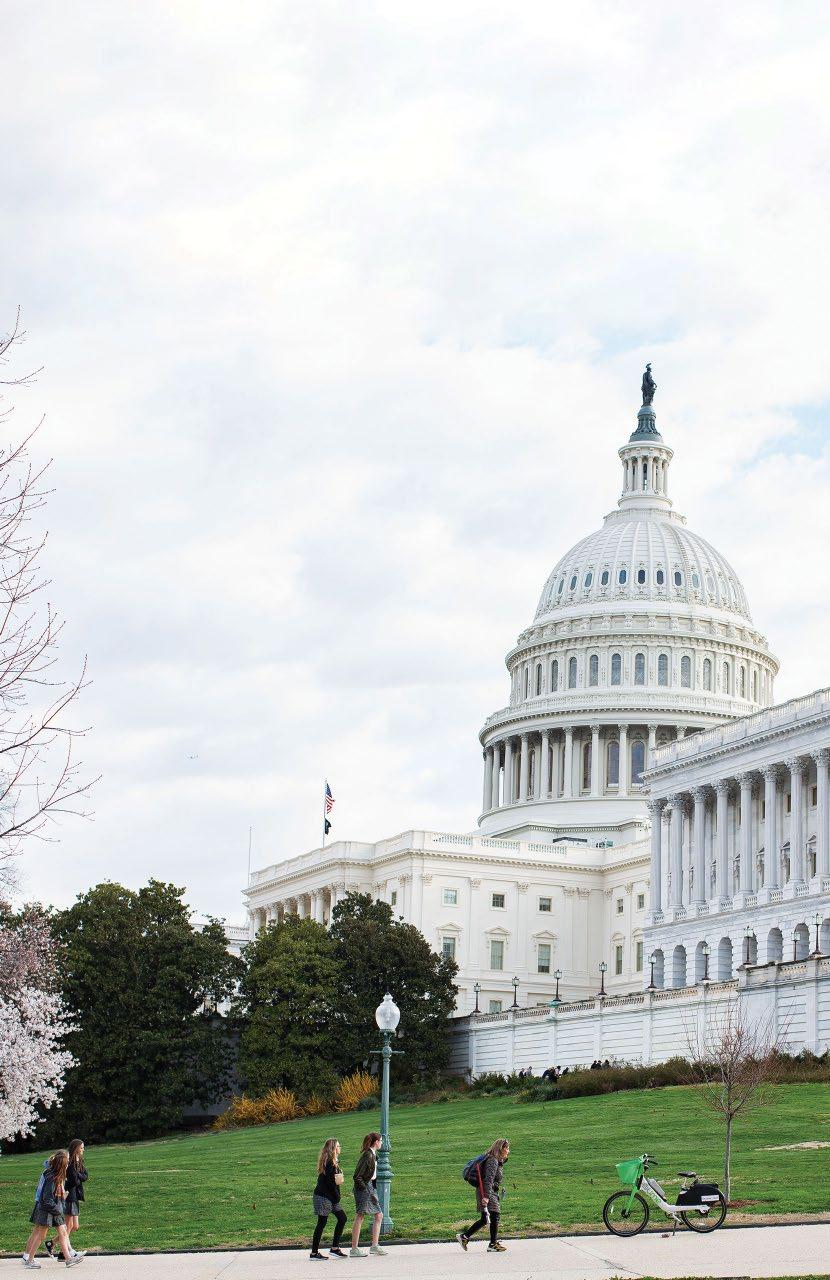
WE’RE THREE YEARS INTO THE INFRASTRUCTURE INVESTMENT AND JOBS ACT (IIJA, ALSO KNOWN AS THE BIPARTISAN INFRASTRUCTURE LAW) AND THE U.S. DEPARTMENT OF TRANSPORTATION (DOT) HAS JUST RELEASED DATA FROM ITS FIRST TWO YEARS OF IMPLEMENTATION. How well did the IIJA meet the goals the League has been advocating for? Let’s dive in and see how it has measured up — or hasn’t — and lay out some of our focuses for the next bill.
Transportation Alternatives Program (TAP)
This program is the number one source of federal funding for bicycling and walking infrastructure. Previous to IIJA, roughly 50 percent of all bicycling and walking funding came from this program and the legacy programs that built TAP (Transportation Enhancements, Safe Routes to School, and Recreational Trails).
In the IIJA discussion, the League advocated for and won the following changes:
Increase in funding
Allow states to use up to five percent for technical assistance to help communities apply and implement projects
Require states to prioritize “high-need” communities
Make it harder for states to transfer money out of TAP
Reduce local match requirements for communities by allowing states to meet the 20 percent local match at the programmatic vs. project level
Win: 60%+ increase in funding
Win
Win
Win
Win
One thing we were concerned with was whether local governments would be able to take advantage of the increased funding — given there was so much new funding. We didn’t need to worry!
The Federal Highway Administration released the first two years of data on the TAP program and it shows the program is still highly in demand by local governments. For every dollar awarded to a project, four dollars were requested in proposals. Despite various types of projects being eligible, 98 percent of the projects and funding were bicycle and pedestrian projects (including safe routes to school and recreational trails projects.)
Our ask for the next reauthorization bill:
• Include the Sarah Debbink Langenkamp Active Transportation Safety Act
Approved TAP projects aren’t fully funded by federal TAP funds, they require local sources to provide matching funds to complete the project. The language from the Langenkamp act would make it possible for states to use Highway Safety Improvement Program funds as a local match for TAP projects focused on improving safety. We believe this will help more communities build some of the most urgently needed safety fixes in their communities. It will also help state DOTs meet their safety goals.
This program is aimed at funding safety projects on existing roads. Despite 20 percent of roadway fatalities being bicyclists and pedestrians, states have been spending on average five percent of their funding on bicycling and walking safety.
In the IIJA discussion, the League advocated for the following changes:
Require states to invest in bicyclists’ safety
Require states to include bike/ped in their safety plans
Increase ability of local governments to address local safety needs
Increase local input to Highway Safety Improvement Program
Win: States where 15 percent or more of their fatalities are vulnerable road users (VRU) must spend 15 percent of funding on their safety
Win: Every state is required to do a VRU safety assessment.
Win: The Safe Streets for All grant program was created
Loss: State DOTs pushed back
The VRU safety provisions kicked in last year and as a result states spent four times as much of their Highway Safety funds on bicycling and walking safety in 2023 than in 2022. The Safe Streets for All program, which was created by the IIJA, has resulted in hundreds of local governments writing new safety plans.
We were really happy to see these gains so quickly but there is still more to do. Right now, a state DOT can only fund a safety project if the state has identified it through a datadriven process. That means projects identified by local government plans such as Safe Streets for All or Vision Zero Plans, are not eligible. Even though the states have all made important strides in their VRU Safety Assessments, most states did not actually identify specific projects.
ask for the next reauthorization bill:
• All states must identify specific bicycling and walking safety projects in their VRU Safety Assessments
• Allow states to fund projects identified in local safety plans
• Identify other options for giving local governments more input into state safety plans and more access to those funds. Oftentimes local governments are more likely to know where the dangerous areas are- particularly those where there have been near misses.
Transportation Alternatives and the Highway Safety program are often reactive and used to fix bad road design. The League has always advocated for proactive practices that get roads right the first time.
The IIJA contained many positive steps showing the Congress wants more proactive investments in safer roads. Here are a few wins that the League worked on advocating for in the IIJA:
Complete streets: a set aside of five percent of infrastructure funding and five percent of planning funding to go to projects that make streets safe for all users
Urban arterial safety research
MUTCD update to make safety and accessibility of all modes a goal
A study to determine the utility of incorporating the use of bicycles into the disaster preparedness and disaster response plans of local communities
Travel demand data and modeling. This would be a pilot project to help states and metropolitan areas get data on how accessible it is to travel across modes in their community
Partial Win: The bill requires states and metropolitan planning organizations to set aside 2.5 percent of planning funds to write policies, standards, and plans to promote complete streets
Win: FHWA has produced a bike design guide for urban arterials
Win: We won the requirement to change the purpose to be inclusive of all modes and we won regular updates
Win: FHWA is currently working on this
Win: Still waiting for results
Many of these provisions were steps towards building safer roads and need more follow up.
Our ask for the next reauthorization bill:
• The full five percent from the Complete Streets bill
• A pilot project for urban arterial projects using the Federal Highway Administration's research and guidelines
• Potentially expanding the pilot project for travel demand data to all states
• Potential pilot project for local governments to plan and train for using bicycles in natural disaster preparedness and response
As always, we know communities continue to struggle with the permitting process for small projects. Both the time and cost can discourage local governments and states from investing in these small projects. The League is committed to finding solutions and supporting efforts to streamline the process for permitting safety features, including bicycling and walking facilities.
As the IIJA continues to be implemented, the League remains steadfast in our commitment to advocating for safer, more accessible transportation infrastructure for all. While significant progress has been made, there's still work to be done to ensure that bicycling and walking are fully integrated into our transportation systems. By addressing the remaining challenges and advocating for further improvements in the next reauthorization bill, we can create a future where everyone can safely and easily travel by bike or on foot.
BY SHELBY OTTENGHEIME
PHOTOS: OUR CHILDREN’S TRUST AND ROBIN LOZNAK
IS MORE THAN JUST A STRING OF PRISTINE ISLANDS IN THE PACIFIC; IT IS A PLACE RICH WITH NATURAL BIODIVERSITY, HISTORY AND CULTURE, AND IMMEASURABLE STRENGTH AND RESILIENCE.
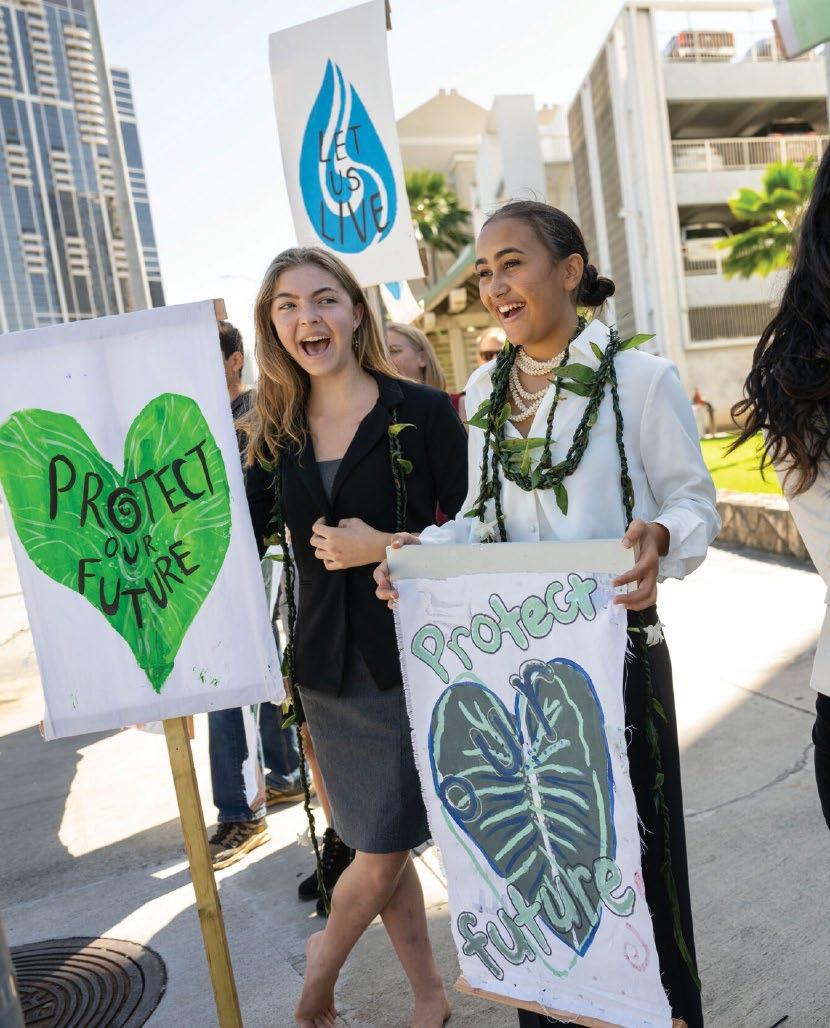
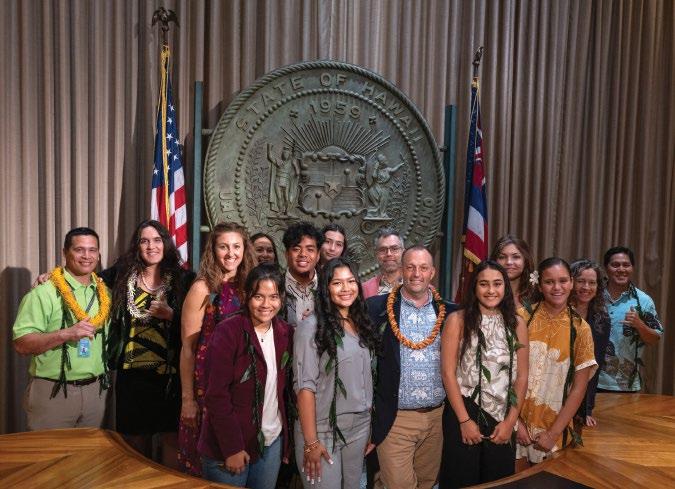
After a two-year battle, a group of 13 keiki (children) made history by reaching a settlement in their climate lawsuit against the Hawai’i Department of Transportation (Hawai’i DOT). Due to the rising output of greenhouse gas emissions, the youth of Hawai’i were frustrated with the empty promises and “aspirational goals [the Hawai’i DOT] c[ould] disregard at their discretion” and decided to hold the transportation system accountable. The youthled case sued the Hawai’i DOT, arguing that it was in direct violation of Hawai’i’s public trust doctrine that promised them a constitutional right to “live healthful lives in Hawai’i now and into the future.”
The climate crisis is an ever-pressing issue. The generation born in 2020 is likely to see a concerning increase in extreme climate disasters, with some experts predicting a two- to seven-fold increase more over their lifetime than that of those born in 1960. As an island nation, Hawai’i and its people are already suffering from the climate crisis through sea level rise, wildfires, ocean acidification, coral bleaching, and biodiversity loss. Further, Hawai’i is a place where ‘āina (land) is considered more than just the space you walk on, but an extension of yourself, your history, and your community. Thereby the loss of homes, ancestral lands, and the cultural practices that rely on the environment is unimaginable.
Many of the youth plaintiffs are Kanaka Maoli (Indigenous Hawaiians) who have expressed the personal impact of losing ancestral burial grounds and witnessing the endangerment of cultural subsistence practices like loko I’a (traditional fishpond aquaculture) and farming
lo’i kalo (taro wetland fields). The impacts of climate change not only affect the environment, but the communities and cultural practices that call it home, further straining the access to indigenous place-based knowledge that often holds the wisdom necessary for addressing climate change.
Hence, the Navahine + Hawai’i DOT suit was born. The keiki (children) of Hawai’i were concerned not only about their future but also that of the coming generations. They needed to act immediately in order to preserve their constitutional right to a multigenerational “life-sustaining environment and climate.” Youth plaintiff Rylee Brooke expressed such concern for her descendants by stating:
“I firmly believe in the Seven Generations principle, a concept deeply rooted in the traditions of indigenous peoples. This principle emphasizes that the decisions we make today should benefit and sustain the well-being of seven generations into the
future. It calls for us to consider the longterm impacts of our actions, ensuring that we leave a healthy, thriving, environment for our descendants”
Luckily, the historic and first-of-its-kind settlement promises such generational preservation. Navahine + Hawai’i DOT states that by 2045, Hawai’i will take any and all actions necessary to achieve zero emissions for ground, sea, and inter-island air transportation. This agreement would put Hawai’i at the forefront of addressing the climate crisis. It has created a framework to help the state shift away from imported fossil fuels toward a more sustainably minded transportation system. This includes not only switching to greener alternatives for motorized vehicles but expanding accessible public transit, as well as increasing infrastructure for bike lanes and walkways! By giving people access to alternative forms of transportation, especially biking, communities are not only safer, but healthier, happier, and greener. In addition

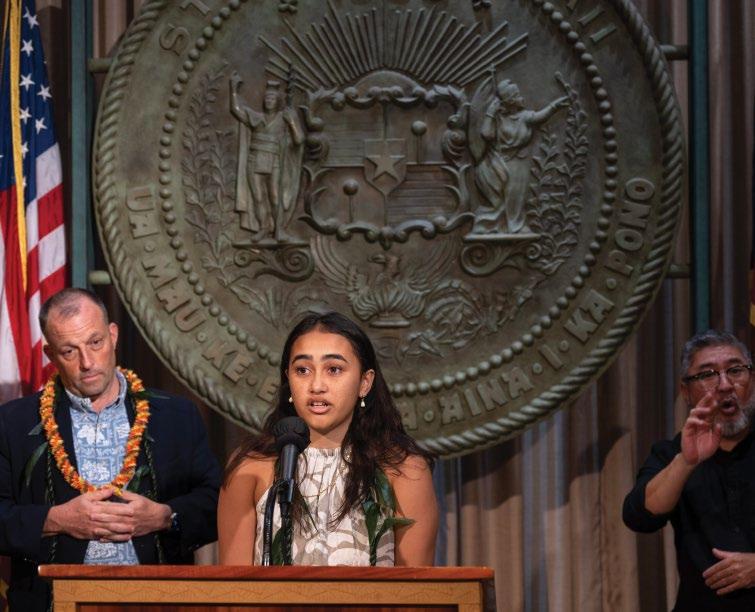
to the environmental benefits cycling provides, it enables people to foster a deeper connection with their natural surroundings and community, a value that is integral to the principle Aloha ‘Āina (love of the land), which is a central idea to Native Hawaiian culture and thought.
As Hawai’i begins to implement greener transportation programs, it will now serve as an exemplary model for all other states on how to put our environment and children’s future first by decarbonizing our transportation systems. Navahine + Hawai’i DOT forced the government to recognize their role in the climate crisis as well as our collective responsibility in making it right. The strength and resilience of the youth plaintiffs is inspiring, and their groundbreaking victory will echo and ensure that Hawai’i’s natural beauty as well as public trust resources are protected for generations to come.
[THE SEVEN GENERATIONS PRINCIPLE] EMPHASIZES THAT THE DECISIONS WE MAKE TODAY SHOULD BENEFIT AND SUSTAIN THE WELL-BEING OF SEVEN GENERATIONS INTO THE FUTURE.” “
BY KEN MCLEOD
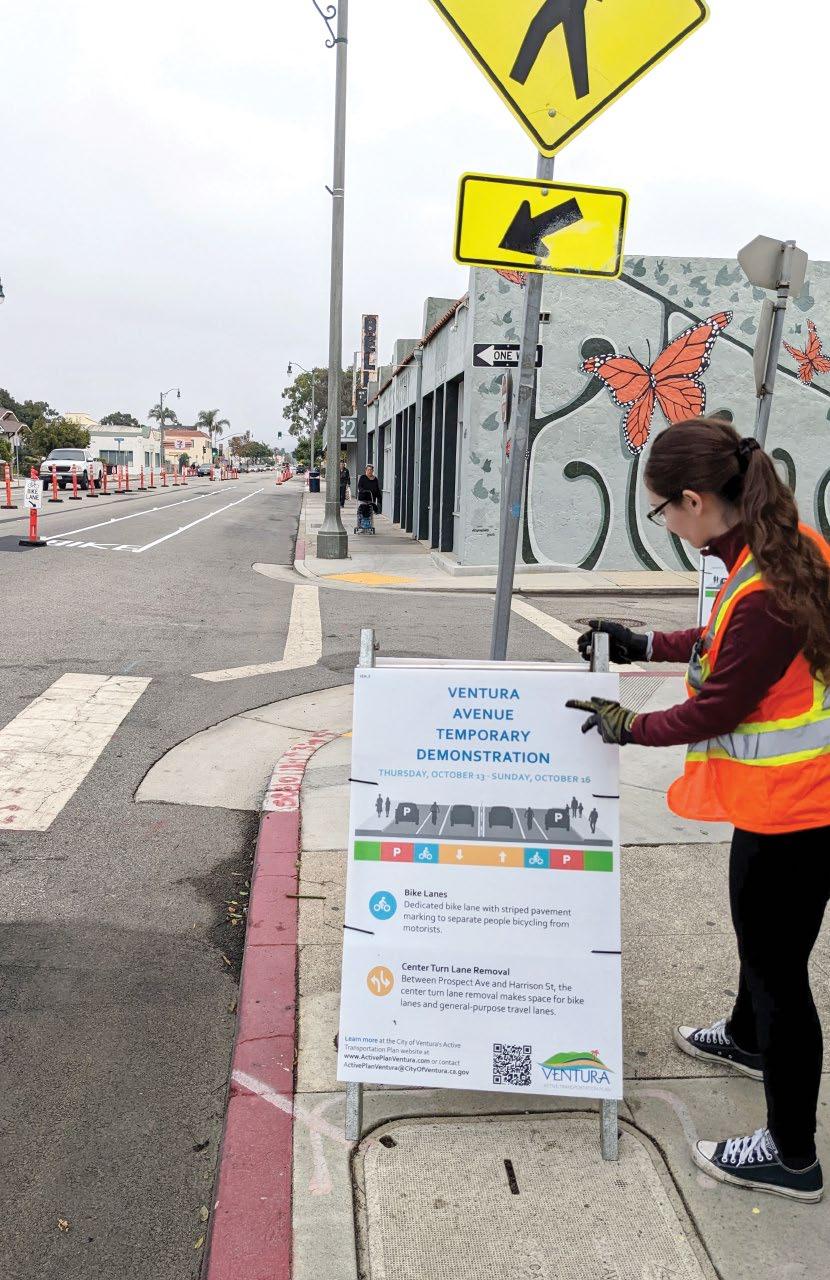
Demonstration Project in Ventura, California.
The last ranking saw Massachusetts come out on top at #1, displacing Washington state which had been ranked first in every previous ranking. Both states continue to impress with nation-leading work around safer street designs for people biking, policies that prioritize safety through a Safe System Approach, and innovative support for local communities interested in improving bicycling.
Nationwide, states are benefiting from the record federal funding for bicycling and walking secured in the Infrastructure Investment and Jobs Act. This has resulted in big investments in fiscal years 2022 and 2023, with both years seeing more than $1.2 Billion going towards bicycling and walking projects throughout the country. This boost of funding comes from changes to numerous federal programs, including the Transportation Alternatives Program which grew by roughly $500 million per year, the Highway Safety Improvement Program which now requires certain states to address bicyclist and pedestrian safety, and the new Carbon Reduction Program which saw more than $67 million spent on bicycling and walking projects in 2023. Despite these boosts in funding, fewer states spent at least two percent of their federal transportation funds on bicycling and walking projects, one of our five key Bicycle Friendly Actions. This shows a continued need to get states to prioritize planning for and investing in safe bicycling infrastructure.
Despite the mixed data on funding, we are glad to see more states than ever before taking the key Bicycle Friendly Actions that we believe will build a Bicycle Friendly America for Everyone. Most notably, since our 2022 ranking, three states — Maine, Oklahoma, and South Carolina — have adopted or are in the process of adopting their first-ever statewide bicycle plan. This means that only five states — Mississippi, Missouri, Nebraska, South Dakota, and Texas — have never adopted a statewide plan for biking. Texas significantly addressed bicycling in its most recent Long-Range Transportation Plan (LRTP) and has done regional plans in the past, so we hope that a bike plan elaborating on the ideas in its LRTP will get done. We
also saw two states adopt safe passing laws that define a safe distance when overtaking a bicyclist and one state adopt a Complete Streets policy. There are now only ten states without a safe passing law that meets our Bicycle Friendly Action criteria, making safe passing laws the most common action taken.
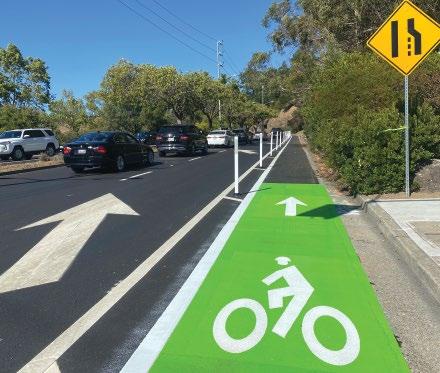
This year sees a number of changes to the Bicycle Friendly State program. We are retiring one of our key Bicycle Friendly Actions due to changes in the Infrastructure Investment and Jobs Act. Now that every state is required to address the safety of people who bike there, we no longer need to encourage states to make bicycling safety an emphasis in their Strategic Highway Safety Plans. In place of that priority action, we are asking every state to enact laws that clearly allow 20 mile per hour (mph) speed limits in urban and residential areas. Most bicyclists ride at less than 20 mph and 20 mph speed limits, with appropriate street design, help ensure that more than 90 percent of crashes are survivable. State legislatures can make 20 mph the default speed limit in urban and residential areas or provide clear authority so that communities can implement those speed limits in order to take this Bicycle Friendly Action.
We have also reorganized categories to hopefully provide greater clarity. Instead of five categories that combine multiple concepts, like “Infrastructure & Funding,” we now have seven categories that mostly focus on one concept only. The new categories are:
1. Funding: mostly federal funding, but asks for and includes reported state funding.
2. Infrastructure: state efforts related to design guidance, training, and the existence of various types of infrastructure.
3. Laws: laws and automated enforcement programs where they exist but state laws are silent about their existence.
4. Planning: bicycle plans, Complete Streets policies, and tracking of transportation-related emissions.
5. Capacity & Support: state Department of Transportation staffing, public engagement efforts, and the existence of statewide bicycle advocacy groups.
6. Safety: federal safety data and efforts to provide bicycle safety education.
7. Every Ride Counts: federal bike to work data, efforts to count people on bikes, and goals to increase bicycling.
Through their departments of transportation, governors, and legislatures, states continue to be a key actor in building a Bicycle Friendly America for Everyone. Our full ranking and national report digs into each state and the trends that our data show overall. Every state has room for improvement and bright spots to celebrate. Learn more at bikeleague.org/states


BY LEAGUE STAFF
WHAT A YEAR! 2024 SAW MAJOR ACCOMPLISHMENTS FOR LEAGUE PROGRAMMING, SETTING THE STAGE FOR GREATER EXPANSION IN YOUTH PROGRAMMING, PROFESSIONAL DEVELOPMENT FOR BIKE ADVOCATES, AND OF COURSE THE INCREDIBLY IMPORTANT FORTHCOMING TRANSPORTATION BILL IN 2025. LET’S TAKE A MOMENT TO REVIEW SOME OF OUR FAVORITE HIGHLIGHTS.
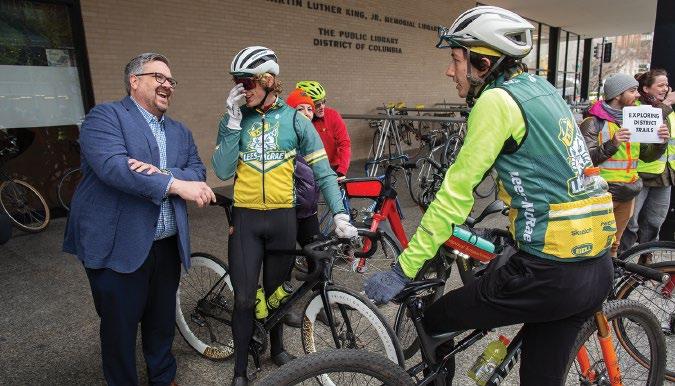
Nearly 500 advocates joined us for our first Summit at the wonderful MLK Jr. Memorial Library in downtown Washington, DC and online. We can’t wait for Summit ‘25 to return to this exciting venue. See you there!
ADVOCACY + EDUCATION WEBINARS
16 2K+
ADVOCATES ATTENDEED
with plans to expand in 2025!
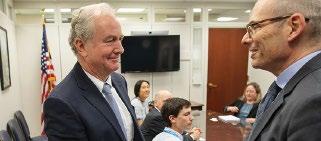
We worked with Rep Jamie Raskin and advocacy partners to act as watchdog over US DOT’s implementation of the IIJA, including securing a Government Accountability Office study on the effects of vehicle height and weight on bicyclist and pedestrian safety.
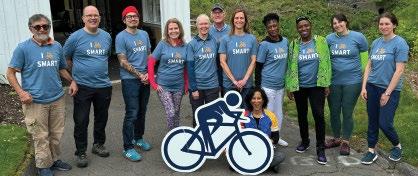
adding 500 new members and engaging new members with our ‘I Bike, I Vote’ t-shirts in time for the 2024 election.
This year has been spent working with national, state and local partners to build consensus around priorities for the next transportation reauthorization bill. That debate will kick off in January of 2025, and will include support for improved policy. This has included working with congressional allies to introduce a bill to fund bicycle education in schools, and identifying a champion to introduce a bill to create a car safety standard for cyclist automatic emergency braking.
On Capitol Hill, we focused on building support for the Sarah Debbink Langenkamp Active Transportation Safety Act which would make it easier for state Departments of Transportation and local governments to build safety infrastructure. The House bill now has over 70 co-sponsors, and, in part thanks to the National Bike Summit, the Senate bill is now bipartisan.
Through our leadership of the Amtrak Bike Task Force, we secured an agreement from Amtrak to both increase and improve bike access on trains in the replacement train cars funded in the Infrastructure Investment and Jobs Act.
We had a nearly 20 percent increase in the number of LCI Seminars held this year, hosting 31 seminars in 22 different states. We will be adding approximately 300 new LCIs to our growing community of instructors!
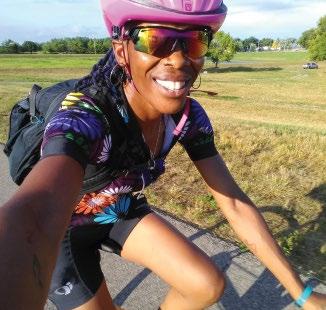
Diana Hildebrand lives in Cleveland, OH and works for Bike Cleveland and was our Educator of the Year in 2024. She often teaches cycling education through her own company called DevahD Cycling.
30 LCI Seminar Scholarships distributed to people from BIPOC communities: With the help of Ford Philanthropy, the League distributed 30 League Cycling Instructor (LCI) Seminar scholarships — a value of $550 to each scholarship recipient! We had over 70 applications. We look forward to continuing the scholarship program in 2025!
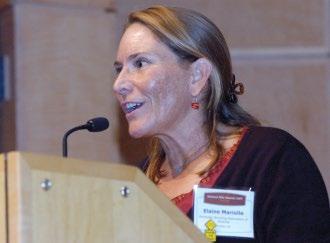
Elaine Mariolle hails from Tucson, AZ and is the bicycle and pedestrian coordinator for the Arizona Department of Transportation. Elaine has worked extensively with the Pascua Yaqui and the Tohono O'odham tribes in the region, empowering more people to ride and to teach cycling education.
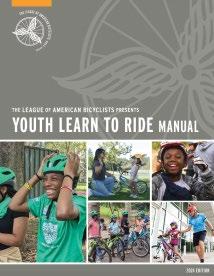
The League is dedicated to making bike education as easy as possible for our 2500 LCIs who are actively teaching in their communities. This year, we created a new Youth Learn to Ride Manual with a parent/caregiver one-pager, and a how-to teachLearn to Ride video for adults. LCIs also have a new more user-friendly member portal to access their tools and resources, along with new laminated and ringed field cards to keep their classes organized, consistent and running smoothly.
Our campaign for sensible, safer speed limits and roadway designs has expanded to new audiences, including the American Association of State Highway and Transportation Officials (AASHTO). We’re tracking and championing speed limit reform from New York City to several California cities and beyond, including the new Safe Streets and Roads for All grant program.
The League continues to lead the movement for safer motor vehicle design and technology and while the consumer and commercial interests are seemingly insurmountable, we’re starting to see progress in the form of a National Highway Traffic Safety Administration rule that will make automakers account for the safety of people biking and walking. Stay tuned to this developing guidance.
The USDOT and the League have been very active with rulemakings following the passage of the Infrastructure Investment and Jobs Act in 2021. Administrative proposals that will impact major funding programs and rulemakings required by Congress will set the stage for investments and improvements over the next decade. We are proud to be the voice of cyclists, working with many partners to inform and coordinate comments so that our safety is prioritized.
We officially launched our Ready to Ride campaign, working with people and organizations providing and attempting to provide in-school on-bike education throughout the country. It is exciting to see the passion for educating a new generation of cyclists and impressive to see how people and organizations have made programming possible.
The League continued our work with the Centers for Disease Control and Prevention, supporting their Active People Healthy NationSM initiative's goal to get 27 million people more physically active by 2027. It has been an honor to work with dozens of communities and organizations making changes to community design to promote physical activity and build healthier neighborhoods.
CYCLING ADVOCATE (LCA) WORKSHOP SERIES + CERTIFICATION PROGRAM
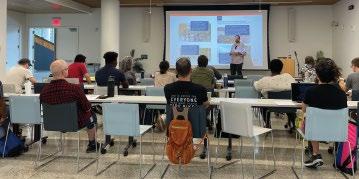
We hosted the first two LCA Workshops in Washington, DC, and Philadelphia, PA in 2024, and look forward to bringing the LCA workshop to the West Coast and Midwest in 2025!
15,000 RECEIVED BFA PUBLIC SURVEY RESPONSES from over BICYCLISTS (and counting!)


295 BICYCLE FRIENDLY AMERICA
Evaluated Bicycle Friendly America applications from 99 Communities, 151 Businesses, and 45 Colleges and Universities. Visit bikeleague.org/bfa to see the results! APPLICATIONS
We awarded 15 COMMUNITY SPARK GRANTS (out of 140 grant applications!)
Hosted
3 BICYCLE FRIENDLY COMMUNITY WORKSHOPS in Memphis, TN, Roswell, GA, and Wentzville, MO.
Helped
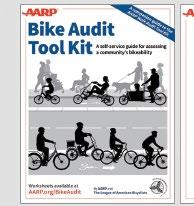
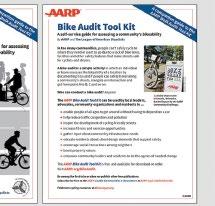
18 COMMUNITIES conduct BIKE AUDITS in partnership with AARP’s Community Challenge Grant program.



UL Standards & Engagement is proud to support the League of American Bicyclists
As the use of e-mobility devices increases, we’re working to ensure it happens safely. Since 1903, UL Standards & Engagement has translated safety science into action, developing nearly 1,700 standards and guidance documents, including three focused on e-mobility safety.
Scan the QR code or visit the link below to learn more about e-mobility safety ebikesafety.ulse.org


THE IMPACT OF EDUCATION:
BY ALISON DEWEY
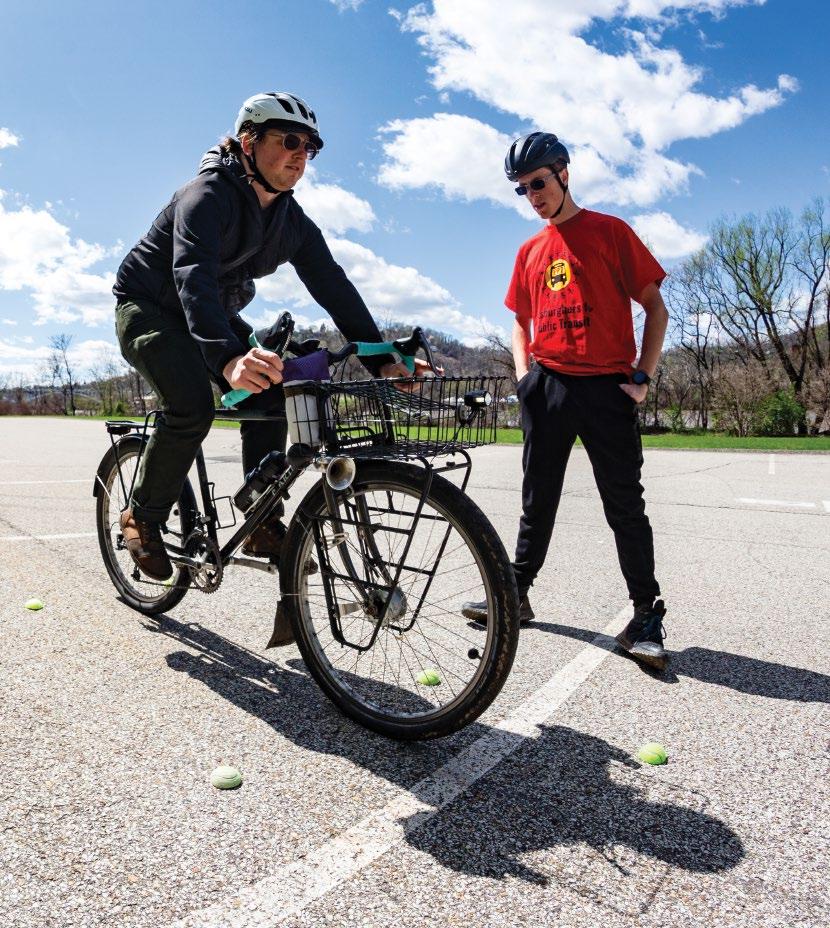
THE SMART CYCLING PROGRAM HAD AN IMPRESSIVE YEAR THANKS TO THE SUPPORT FROM MEMBERS, DONORS, GRANTEES, AND OUR PARTNERS. A huge shout out to our network of League Cycling Instructors (LCIs) who are working hard to offer cycling education classes across the country. They are doing amazing work reaching new students and growing confident, more aware, safer cyclists and drivers.
We are seeing a growing interest in League Cycling Instructor seminars, increasing the number of seminars this year by 11 percent. This means we hosted 30 seminars in 22 states and the District of Columbia and added an impressive 270 new LCIs to our nearly 8000 existing community of educators. And we’re not stopping.
The Smart Cycling program continues to grow and reach more people. With generous support from Ford Philanthropy and the Be Good Foundation we were able to offer 34 LCI seminar scholarships to Black, Indigenous, and people of color attendees. We granted scholarships to people representing organizations such as Black Girls Do Bike-Southern New Jersey, Major Taylor Detroit, Major Taylor Cycling Club North Carolina, Wisconsin Bike Fed, Bike Durham, Washington Area Bicyclists Association, Black Spoke Society, East Side Bike Club and Slow Roll and more!
We are pleased to announce that LCI seminar scholarship opportunities will continue into 2025 with renewed support from Ford Philanthropy. The League looks forward to continuing to diversify and grow our community of instructors so that people from all backgrounds continue to be represented in cycling education.
It is because of this growing community of League Cycling Instructors that there are more cycling education opportunities available to more communities. LCIs are equipped to offer classes to learn to ride, improve bike handling skills, gain confidence to ride on roadways, and improve the group riding
“As a retired educator and lifelong learner I want to become a safer and smarter cyclist, acquire new knowledge and skills, earn the credentials and credibility to share my knowledge, and join the LCI community for networking and camaraderie.”
Here is just a sample of what
scholarship recipients said they plan to do with their LCI certification
“I want to teach safe cycling to children in minority communities to make sure they are engaging in safe cycling in our city of Buffalo.”
“I want to promote safety for my team and others. Houston drivers are aggressive and impatient, but I believe with proper training, cyclists can appear more human to motorists, encouraging [them] to share the road with us.”
“I'd like to empower adults and youth in my community with the knowledge and skills to safely enjoy cycling as transport and sport/recreation. I benefited from a Smart Cycling course many years ago as a young adult.”
experience. Instructors also have resources to provide classes to more focused groups of people such as older adults. Through the generous support of AARP, we have a curriculum focused on older adults who maybe haven’t been on a bike for a
long time and want to get back to riding. LCIs are also equipped to offer classes to motorists on how to share the road with people on bikes. Whatever the topic, people are finding value in taking a cycling class with a certified League instructor.
“[The class] was well run and informative, with good back and forth between attendees and instructors on tips and questions.”
“This class built my confidence and also helped me to realize the areas in which I need more practice. I have ridden a bike for over fifty years but I still learned a lot from this class and also had fun.”
“Thank you for offering these lessons to adults without judgment or shame. I have already recommended them to other adults who want to learn to ride a bike.”
Here are a few statements from recent Smart Cycling students
“I would recommend this class for anyone who is thinking about starting to ride to the person who "thinks" they already know what safe cycling is.”
“I was nervous before the class, but by the end of the session, we ended up going on a six mile ride along one of the local trails. It was so much fun! I would absolutely recommend [it] to anyone who is interested in learning or re-learning to ride.”
We also know from our pre- and post-class surveys that people are truly gaining confidence and as a result are planning to ride more often after attending a Smart Cycling class. Of our hundreds of respondents surveyed, 46 percent expressed increased confidence on a bike after the class, while 45 percent said their confidence level stayed the same. We are also delighted to know that our classes are getting people to ride more often! Fifty-seven percent responded
that they plan on riding more than they did before the class.
To all of you who are LCIs, thank you for making stories like these possible. For those of you who support our education program through membership, thank you for enabling us to foster safer riding for everyone. And if you’re curious about becoming an instructor or learning more about the curricula we offer, visit our website: bikeleague.org


BY ANNA TANG
IN OUR FIRST YEAR OF HOSTING WORKSHOPS TO CERTIFY LEAGUE CYCLING ADVOCATES (LCAS) IN WASHINGTON, D.C., AND PHILADELPHIA, WE'VE SEEN INCREDIBLE ENGAGEMENT AND ENTHUSIASM FROM EMERGING AND SEASONED BIKE ADVOCATES FROM ACROSS THE COUNTRY.
At the workshops, participants from diverse backgrounds came together to learn about many aspects of what it takes to become effective bike advocates, from understanding safety and policy to grassroots organizing and fostering a stronger biking culture in their communities. The workshops have not only empowered individuals to take action but also sparked collaborations with local organizations and government officials, laying the groundwork for lasting change. As we look ahead to the coming year, we're excited to expand our reach, offering more workshops, building on our successes, and continuing to advocate for safer, more bikeable, liveable cities.
We connected with five of the 50 LCAs around the country who are working to make bicycling a normalized transportation and recreation option. We asked them a series of questions and we are highlighting a variety of their answers below to capture the work that advocates, like yourselves, are working on at the grassroots level.
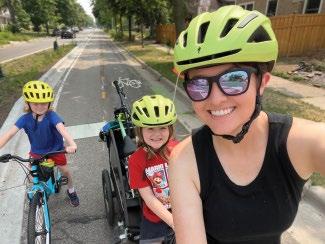
LAURA GROENJES MITCHELL
Board President at Our Streets (Minneapolis,
MN)
Is there a moment or experience that solidified your commitment to bike advocacy?
In April 2014, I challenged myself to commute by bike every single day of the month. Bike commuting helped me realize how much the built environment impacts safety for all road users, especially people walking, biking and rolling. When I became a parent a few years later, with the most precious cargo in tow behind me in a bike
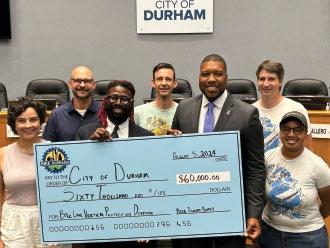
GREGORY WILLIAMS
Advocacy Campaign Organizer at Bike Durham (Durham, NC)
Is there a moment or experience that solidified your commitment to bike advocacy?
The moment I think that truly solidified my commitment to bike advocacy occurred
trailer, the way I viewed the transportation infrastructure in my city changed. Rather than brushing things off and assuming nothing could be done, I knew I wanted better for my kids and committed to figuring out how I could help advocate for safer streets for everyone.
What’s one takeaway from the LCA Workshop that you are incorporating into your bike advocacy?
I found the policy, political engagement and data portions of the LCA workshop particularly helpful. Learning more about strategies and tools (like power mapping) to hone in on key people and institutions will help ensure I’m spending my time, effort and energy as effectively as possible which is important for everyone, but especially those of us trying to fit in advocacy on top of fulltime jobs, families, friends, and hobbies. I also appreciated the opportunity to connect with and learn from so many skilled and experienced advocates doing this work across the country.
during the 2024 Ride of Silence here in Durham. As I manned the Bike Durham table to chat with attendees, I felt an atmosphere so different than the previous rides I’d been on. I listened as survivors and family members shared their experiences and the full scope of my work hit all at once. The ways that I can advocate for changes can tangibly change and save lives.
What’s one takeaway from the LCA Workshop that you are incorporating into your bike advocacy?
One takeaway I find myself incorporating constantly is the section on talking to my elected officials. Being able to leverage my strong relationship with the city staff and representatives goes a long way toward demonstrating my group’s legitimacy and inspiring those who work with us.
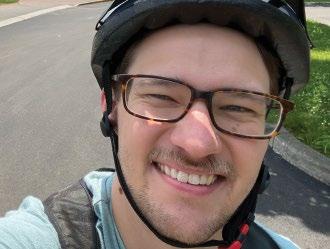
BEN SHEPLER
citizen advocate in Orlando,
FL
What project or campaign are you involved with right now?
I’m so new to advocacy work that I don’t have a singular project or campaign, though I have been participating in lots of small-scale projects. I was accepted into Orlando’s “Mayor’s City Academy” where I attend weekly sessions at different departments of the local government with
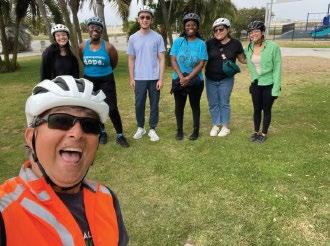
ROB KADOTA
Chair
of the
City of Los Angeles
Bicycle
Advisory Committee (Los Angeles, CA)
What’s one takeaway from the LCA Workshop that you are incorporating into your bike advocacy?
Changing our car-centric way of life to more sustainable, healthier forms of transportation is huge and complex. For
other residents. This has been a great learning and networking experience both with city staff and other eager community members. I’ve also started volunteering with Bike/Walk Central Florida, assisting at a bike rodeo, and tabling at a pro soccer game. Additionally, I recently celebrated a tiny victory of successfully getting a bike rack repaired.
What’s one takeaway from the LCA Workshop that you are incorporating into your bike advocacy?
To me, the biggest throughline of the workshop was the need to build relationships. It seemed that every presenter touched on how important connections with other people are in our advocacy work. Whether that’s with politicians, government staff, design firms, or other members of the community, you can’t create change without the help of others.
me, the importance of networking and learning from others has proven to be one of the most critical lessons reinforced. Besides the bicycle advisory committee I currently chair, I’ve prioritized getting to know and supporting the work of other safe streets and bicycle/pedestrian/ transit-oriented organizations as much as possible. We each bring a slightly different set of people, priorities, opportunities and perspectives that create powerful networks of change agents.
What project or campaign are you involved with right now?
As the Paris Olympics and Paralympics closed, the world’s attention shifted to Los Angeles. We’ve got a LOT of work to do if we want to demonstrate to the world that LA is a world-class city that is accessible to all and a shining example for others to emulate, especially as it relates
to mass transit and LA’s dependence on cars. Can we transform our city enough that we generate broad support for a more bike friendly, walkable, sustainable LA? One specific issue our bicycle advisory
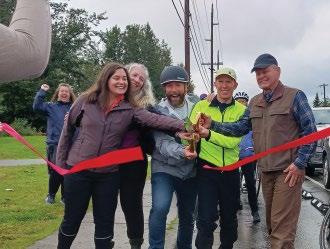
ALEXA DOBSON
Executive Director at Bike Anchorage (Anchorage,
AK)
What’s one takeaway from the LCA Workshop that you are incorporating into your bike advocacy?
The LCA workshop was the first formal advocacy training I'd ever received, and I realized that if that's my experience as the Executive Director of an advocacy nonprofit, then people in our broader community probably aren't getting the tools they need to be effective advocates, too. Our organization is now working on a series of advocacy trainings that are open to the community, because things like testifying
As our first year of hosting bike advocacy workshops has come to a close, we are filled with optimism and determination. The progress we've made, from empowering individuals to sparking collaborations, is just the beginning. The passion and commitment we've witnessed from participants has reinforced the importance of this work, and we are eager to build on this momentum. Looking ahead, we plan to expand our
committee is working on is to get a City Council file passed (20-1469-S-1) to better notify and enforce safe alternative walk/bike routes around construction projects that close sidewalks or bike lanes.
at community council meetings or writing a good op-ed are skills that can be learned. They're also fantastic opportunities to meet your fellow advocates, deepen relationships and generate new ideas!
Where do you see the future of bike advocacy heading?
Bike advocacy is part of a much larger movement toward safer streets and livable cities and intersects with some other really important advocacy areas like disability justice, affordable housing and climate change. It's so much bigger than bikes. The design changes that make a road safer for bikes also make it safer for drivers, pedestrians, people taking transit — everyone benefits. It's a slow process, but institutional change is happening: federal guidelines and funding now prioritize safer bike-friendly infrastructure, more engineers, agencies, and political leaders are recognizing the value of these designs, and there's a growing willingness at all levels of government to champion road safety. It's gradual (and painfully slow sometimes!), but the momentum is building, and the changes are starting to take hold.
efforts, bringing even more communities into the fold and continuing to push for safer, more inclusive biking environments and empowering more local advocates. Learn more about the LCA workshops and certification program at bikeleague.org/ LCA, and stay tuned to our newsletter and social media for the announcement of where next year’s workshops will take place. Hope to see you there!
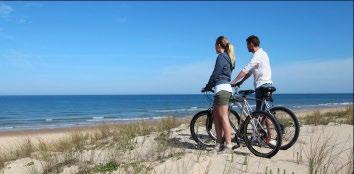

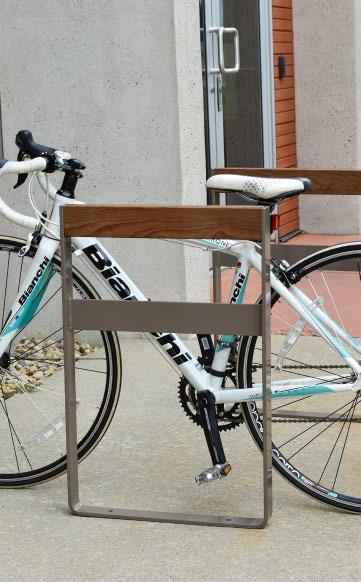


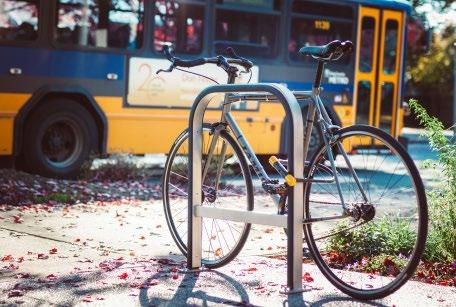
As we looked back at 2024, we couldn't help but to look ahead to 2025. We asked some of the League staff what they were most looking forward to in and outside of the office.
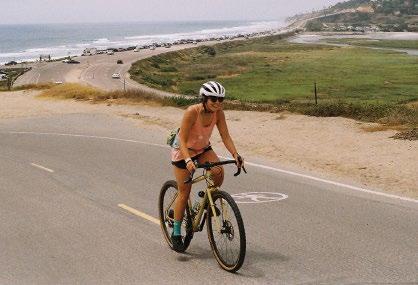
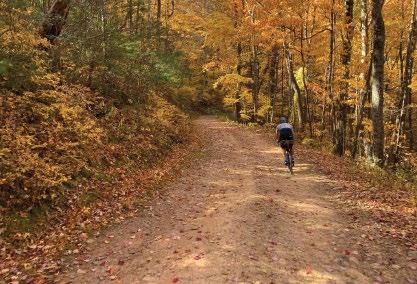
Hopefully making it three straight years with a multi-day bikepacking trip! After the Rockstar Gravel route between Harrisonburg and my home in Roanoke, Virginia; and the classic Greater Allegheny Passage and C&O Canal Trail between Pittsburgh and Washington, DC; I’m looking west toward a potential trip in Utah, Idaho, or Montana.
Having just moved to the League’s Headquarters in Washington, DC this past summer, I am looking forward to the blossoming Sakura (cherry blossom) trees in the Spring! Hopefully it will coincide with our National Bike Summit and we will have a colorful, beautiful, and impactful Lobby Day on the Hill!
I love seeing the range of creative projects proposed to the League’s Community Spark Grant program, and in 2025 I’m thrilled that we’ll be able to award ten new projects, and increase the dollar amount for each mini grant, up from $1,500 per project to $2,000! Check out bikeleague.org/spark if you have an idea to propose!
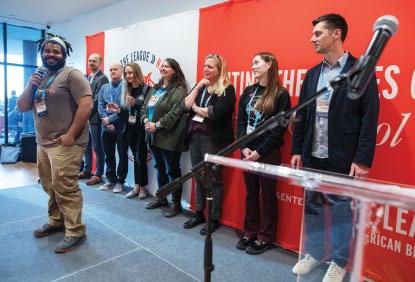
After joining the League earlier this year, it was wonderful to meet so many League members at the Summit, and at the NYC Five Borough Tour. I am looking forward to meeting even more members in 2025, whether it’s in person, over the phone or online.

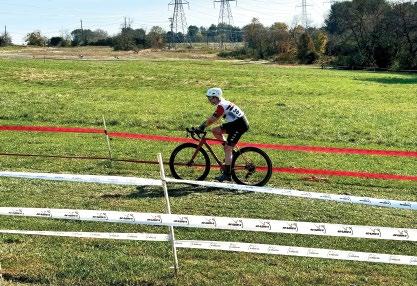
I want to put a big gravel race on my calendar for 2025.
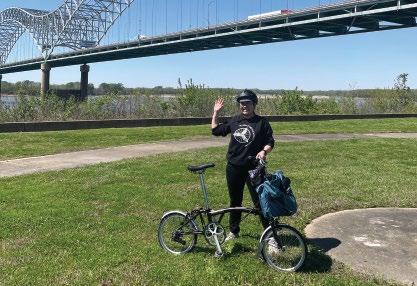
I’ve been dreaming up a Southeast Alaska ferry trip for years and it’s finally happening in 2025! We’ll fly with bikes to Anchorage and then slowly make our way to Bellingham on the ferry taking day trip bike rides along the way.
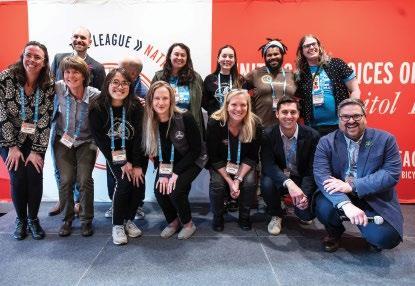
I can’t wait for the 2025 National Bike Summit and engaging more members and sponsors in our work. We’re returning to the fabulous MLK Jr Memorial Library for the 2nd year. I hope to see you there!
We’re continuing our League Cycling Advocate Workshops (bike advocacy workshops) in 2025! I can’t wait to take this program into its second year and to new cities!
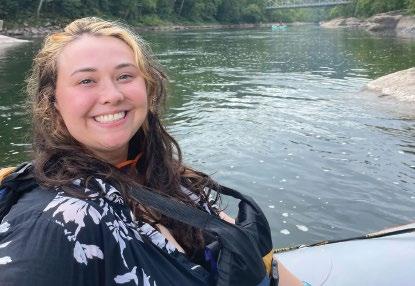
I went whitewater rafting for the first time this year, and loved it so much that I’m hankering for more. Gauley season 2025, here I come!
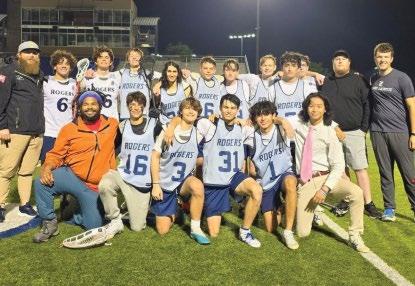
I am looking forward to all things outdoors in 2025. Outside of my usual riding, fishing, and archery, I most look forward to my second season coaching high school lacrosse in North West Arkansas.
Getting out to more of our members and partners events to reconnect, ride, and advocate together!
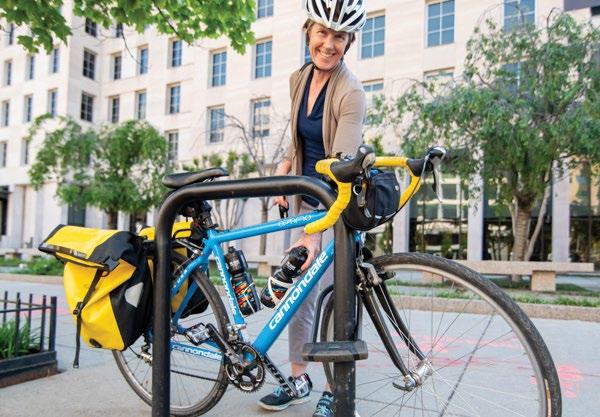
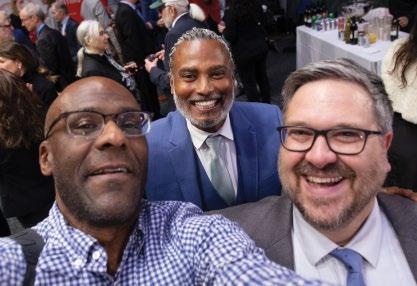
I think I’m in the market for a new bike in 2025. It’s time for a refresh. I am looking forward to getting a bike with disc brakes, interior routed cables, and maybe, maybe even electronic shifting. We’ll see.








































OUR MISSION
is to lead the movement to create a Bicycle Friendly America for everyone.
OUR VISION
is a nation where everyone, whether they bike or not, recognizes and enjoys the many benefits and opportunities of bicycling and where everyone can experience the joy of bicycling.
Danielle Arigoni Chair
Jim Baross
Ed Fendley
Katherine Garcia
Jimmy Hallyburton
Kecia McCullough
Vivian Ortiz
Michael Payne
Lori Richman
Mike Sewell
Torrance Strong
Triny Willerton
Anna Zivarts
American Bicyclist magazine (ISSN 0747-0371) is published by the League of American Bicyclists, Inc. to help the organization achieve its mission to educate the public and promote awareness of bicycling issues. ©2024 League of American Bicyclists. Reproduction in whole or in part without permission is prohibited. Article queries should be addressed to communications@bikeleague.org. Your submission of manuscripts, photographs, or artwork is your warranty that the material in no way infringes on the rights of others and that the material may be published without additional approval. Opinions expressed by writers are their own and do not necessarily reflect the policies of the League.
Kevin Dekkinga Director of Membership & Development
Alison Dewey Education Director
Monique Hyatte Operations Specialist
Lauren Jenkins Communications Director
Ally Mabry Graphic Designer
Shelby Ottengheime Federal Policy Fellow
Ken McLeod Policy Director
Jamil Modaffari Policy Specialist
Amelia Neptune Bicycle Friendly America Program Director
Bill Nesper Executive Director
Kelly Gray Membership Coordinator
Anna Tang
Bicycle Friendly America Program Specialist
Riley P. Titlebaum Education & Summit Coordinator
Marlee Townsend Communications Coordinator
Chris Vaughn BFA Program Coordinator
Caron Whitaker Deputy Executive Director