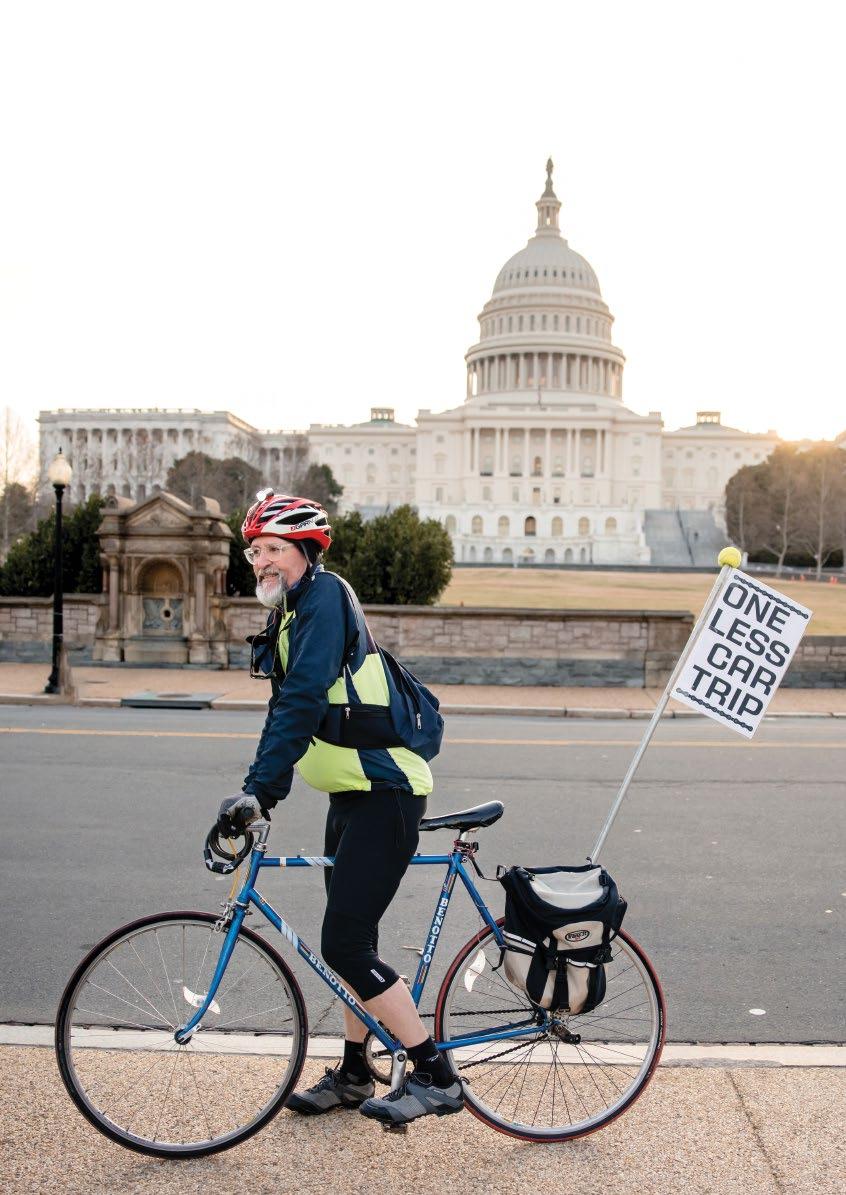
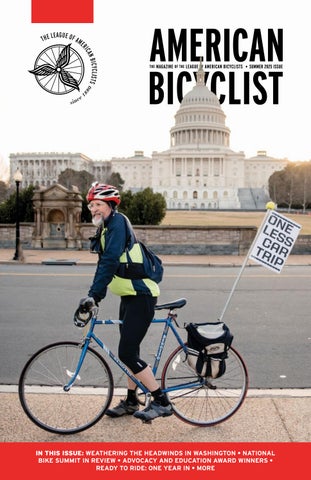
A flurry of threats to federal funding for bicycling have emerged in the first half of the year. Learn how the League is fighting for you and everyone who bikes during a tumultuous year in Washington.
One year ago, we launched Ready to Ride. Discover how our ambitious plan to get every kid an on-bike, in-school education is developing.
The gathering every March is a rejuvenating event, especially in years with tough headwinds. More than ever, this Summit was marked by resolve and recharging.
Drivers of large trucks have an important responsibility to share the road safely. Our new videos for truck drivers detail tips on just how to do that, in memory of Sarah Debbink Langenkamp.
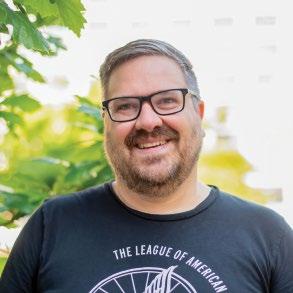
SUMMER IS THE SEASON OF BICYCLES. Kids tooling around in the middle of the day. Families trekking on trails to the park. Friends biking to late night ice cream stops. Neighbors borrowing your bike pump. These are the days when lifelong memories are made. This is where the bike joy builds community.
It’s too easy these days to see the division in our communities. On bikes, we come together. In this summer issue of the magazine, you’ll learn about the challenges facing us in Washington, but you’ll also learn about the local efforts making bicycling better at the street level in cities and towns across America.
At a time when the League is taking the simple message that bike lanes save lives to Capitol Hill, elementary school teachers are advocating for bicycling education in their schools. While the administration threatens federal funding for safer streets, businesses are building more bike parking and commuter facilities. People the nation over are seeing the benefits when bicycling is easier for everyone.
In a national poll last year with IPSOS, we asked Americans if they agreed with the statement: “My community would be a better place to live if bicycling were safer and more comfortable.” Any way you
BY BILL NESPER
slice the numbers, it’s clear: 76 percent of respondents agreed with the statement, including 73 percent of Republicans, 82 percent of Democrats, and 74 percent of Independents. Americans recognize that their communities would be stronger, safer, and better places to live if they can take a bike ride with their kids.
We know how to make communities better through biking: creating Bicycle Friendly Communities, Businesses, and Universities, educating community members as League Cycling Instructors, showing up to city council meetings, organizing Bike to Work Day rides, and so much of what you and other League members are doing day to day. Thank you for being an integral part of this movement so that bike joy is year-round.
Want to embrace Bike Joy?
Our soft waffle-knit Bike Joy beanie is ready to keep your ears warm and cozy—whether you live where summers stay chilly or you just like to get ahead of the coolweather game. Find it now in the League’s online store!

A study by UL Standards & Engagement and the League of American Bicyclists revealed that 39% of Bicycle Friendly UniversitiesSM report daily e-bike use. However, only 41% have policies in place to support e-bike riders, leaving gaps in safety and infrastructure.

BY CARON WHITAKER
IN1892, WHEN THE NASCENT LEAGUE OF AMERICAN BICYCLISTS (THEN THE WHEELMEN) WAS AT THE BEGINNING OF OUR FIGHT FOR BICYCLISTS’ RIGHTS, IT WAS CONGRESS TO WHOM WE PRESENTED A PETITION WITH 150,000 SIGNATURES DEMANDING THEY CREATE A “ROAD DEPARTMENT” THAT WOULD WORK TO ENSURE PEOPLE BIKING HAD SAFE, GOOD ROADS FOR TRANSPORTATION OR RECREATION.
In 1991, it was Congress that established the first major sources of federal funding for bicycling and walking projects. In the 18 years previous, all 50 states combined had only spent a total of $40 million approximately $2 million per year on bicycling and walking.
And in 2021, it was Congress that continued to strengthen and increase the emphasis on federal support of active transportation modes like bicycling, with funding available to states at levels as high as $1.4 billion per year.
Now, in 2025, it is the executive branch via the U.S. Department of Transportation (USDOT) that is trying to undo the bipartisan laws passed by Congress — threatening decades of work to build better roads for people who bike and threatening the safety of our very lives.
Needless to say, the politics and power plays in Washington over the first half of 2025 have presented existential challenges and demonstrated the urgency of the League’s consistent federal advocacy.
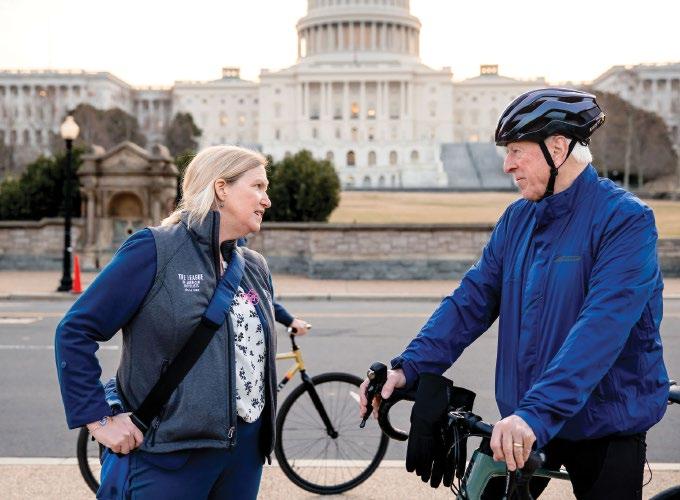
The first attack on safer bicycling came during the National Bike Summit in March, at the outset of our Lobby Day on Capitol Hill. With hundreds of bike advocates set to meet with their representatives in Congress, we learned that a memo was circulating within USDOT requiring a
pause and review of all grant awards that included funding for bicycle infrastructure.
Immediately, we launched into action, empowering our lobbyists to use the tools and resources we’d prepared for Lobby Day to speak up for the federal grants that meant investments in bike safety in their communities and issuing a statement to the media, alerting the wider public about how street improvements could be stalled in their neighborhoods. At the same time, we published a petition for people to sign in support of this local funding for better biking, garnering nearly 10,000 signatures calling on Secretary of Transportation Sean Duffy and the U.S. Department of Transportation to enable states and communities to do the work to make their roads and streets safer and better for everyone.
Up until May, the most significant threats to federal funding for bicycling had come from the administration. Then, on April 30, the House Transportation and Infrastructure Committee voted along party lines to rescind all unobligated funding in the Neighborhood Access and Equity Program, including grants that had already been awarded, as part of the budget reconciliation process. As the budget reconciliation bill works its way through Congress, we’re putting pressure on allies to stand up for the program’s local projects that reconnect communities through safe bicycling and walking and address environmental justice issues like urban heat islands.
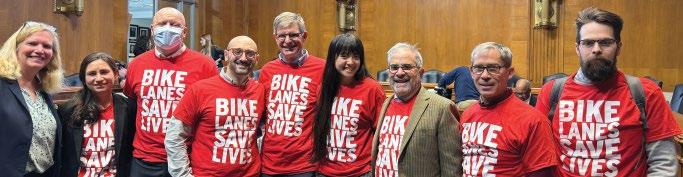
When the Senate Committees on the Environment and Public Works scheduled an early April hearing with Secretary Duffy, the League leapt at the opportunity to partner with our friends at the Washington Area Bicyclist Association to mobilize activists
who could attend the hearing and help us make a statement: bike lanes save lives.
Donning our bright red shirts with “BIKE LANES SAVE LIVES”, we took our seats in the audience and carefully listened
for lawmakers to ask Duffy about the impositions on bike-related funding.
We were pleased to hear senators on both sides of the aisle express concerns about funding delays on various types of projects, from bridges to ports to multimodal riverfront renewals, but dismayed by Duffy’s reticence to commit to obligating the funding passed by Congress and approved by the previous administration’s USDOT. Senators Mark Kelly (D-Ariz.), Jeff Merkley (D-Ore.), and Lisa Blunt Rochester (D-Del.) asked specific questions about bicycling infrastructure and both Merkley and Blunt Rochester referenced our advocates in the room as evidence that this funding is in demand by the people.
The fight didn’t end there. Later in April, a letter from Secretary Duffy to all USDOT grant recipients introduced a potentially catastrophic blow to bicycling and walking projects. The letter said the department would withdraw funding to recipients that do not “comply fully with all applicable Federal laws and regulations” specifically around immigration enforcement and social justice policies. Such action would hold congressionally-directed federal funding hostage in an effort to compel compliance from those state and local governments on unrelated legal policies.
Two lawsuits have already been filed in response to the letter, one by state attorneys general and another by city and county attorneys general. The letter, whether legally binding or not (and likely not), still has a chilling effect by causing uncertainty. When states and localities can’t trust that federal funding will backstop their budgets, that will stall their ability to build better, safer roads for everyone.
In May, we got our first look at the president’s first budget request and while USDOT’s budget was spared from any
cuts, other departments whose work supports healthier communities were not so fortunate. Among the over $3 billion in proposed cuts to the Centers for Disease Control and Prevention were millions of dollars for designing healthier communities as part of the National Center for Chronic Disease Prevention and Health Promotion. While it remains to be confirmed whether these programs will continue under another umbrella of Make America Healthy Again programs, it’s concerning that programs intended to get more Americans active were ever under threat.
The good news is that while we’ve kept the pressure on USDOT to ensure funding flows to projects and grants that include bicycling infrastructure, we have yet to see feared widespread cancellations or revisions. Unfortunately, we have learned about projects that have to be delayed because of missed construction windows and we remain concerned about how these threats will impact grant applications and future awards.
The League has been fighting for bicyclists’ rights in Washington since 1880 and we aren’t stopping now. Through direct action, meetings on the Hill, petitions, action alerts, and building coalitions with like-minded organizations, we’re keeping the pressure on the administration and Congress to follow the will of the people: when more people can safely bike, life is better for everyone.
As a member, you support our work through your annual membership. You can further your support with a donation to our giving campaign this summer at bikeleague.org/give
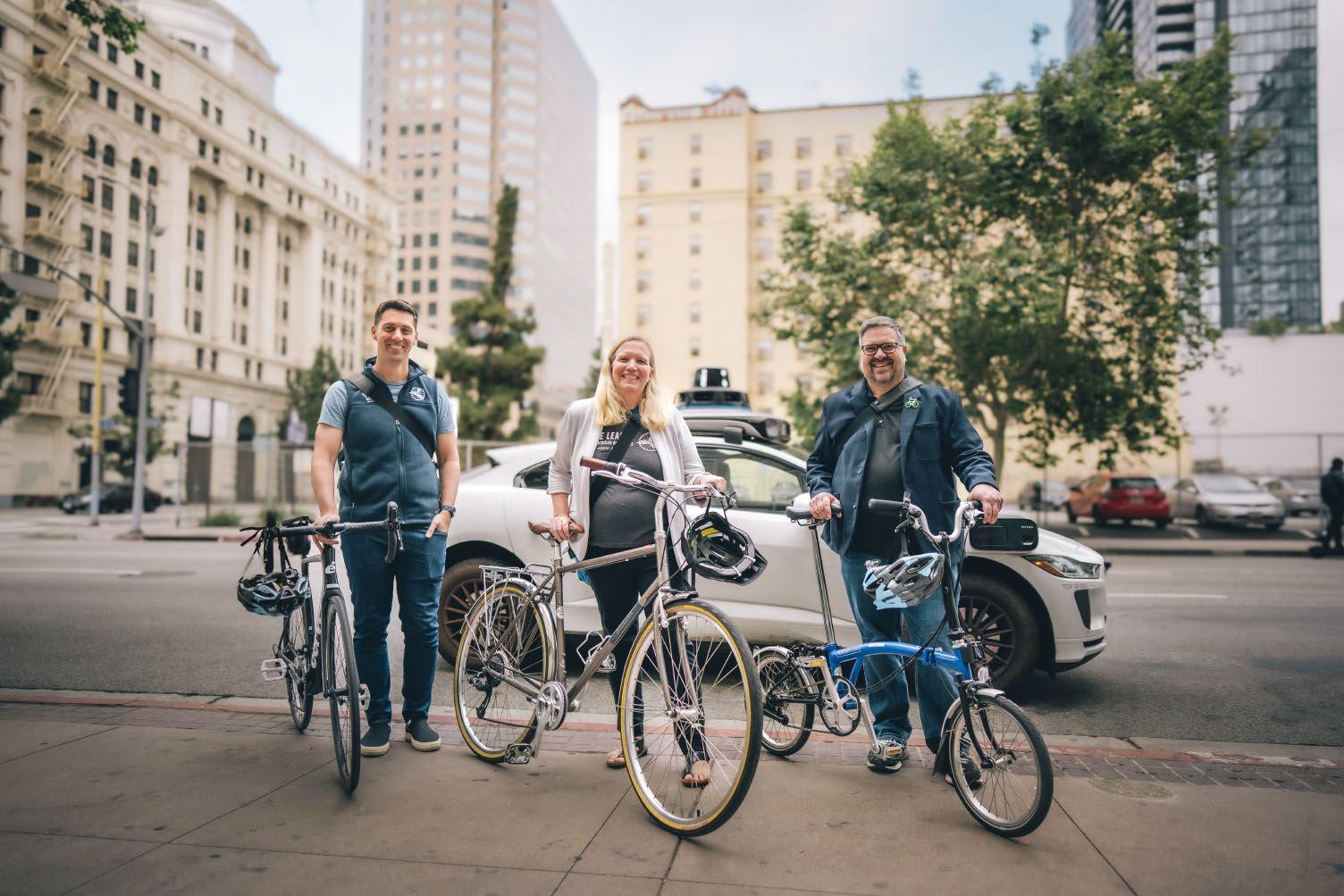

Waymo’s autonomous driving technology is designed to safely share the road and protect vulnerable road users
BY MARLEE TOWNSEND
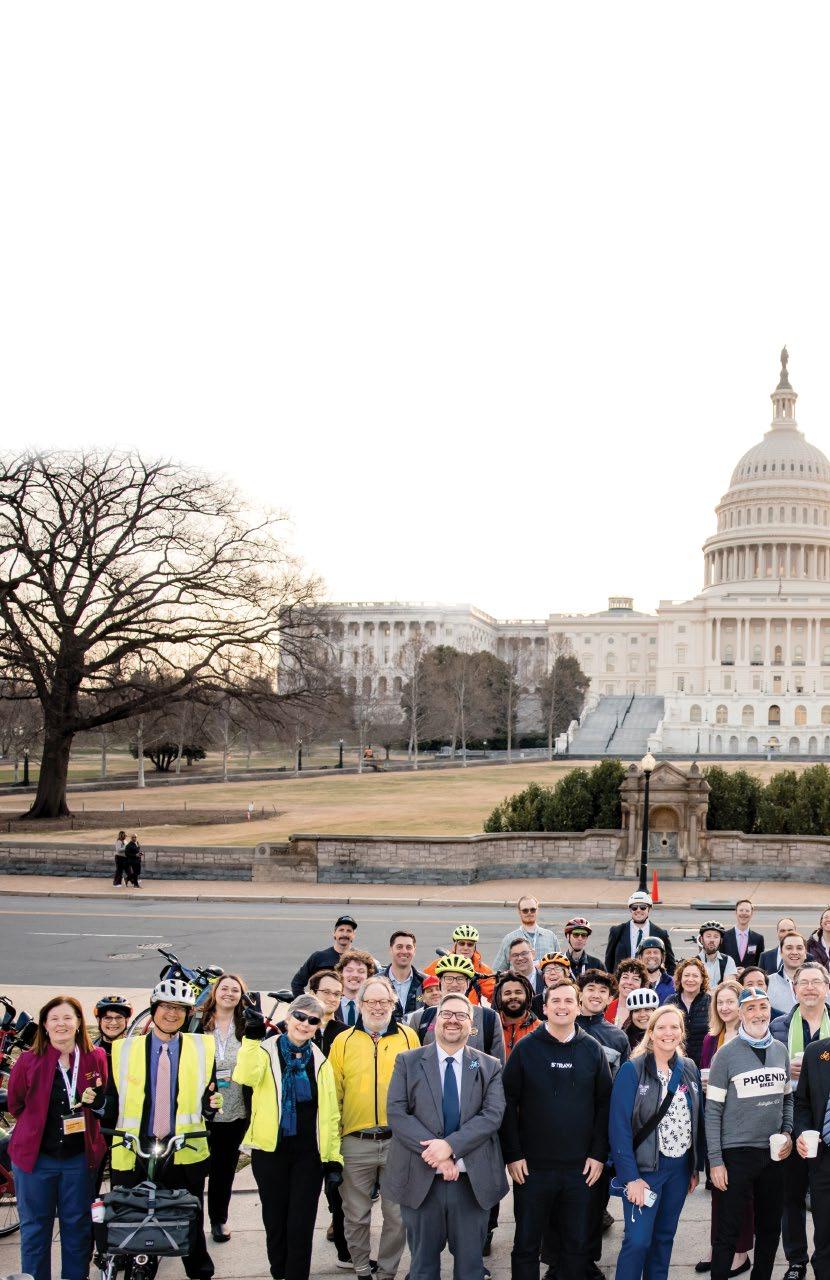
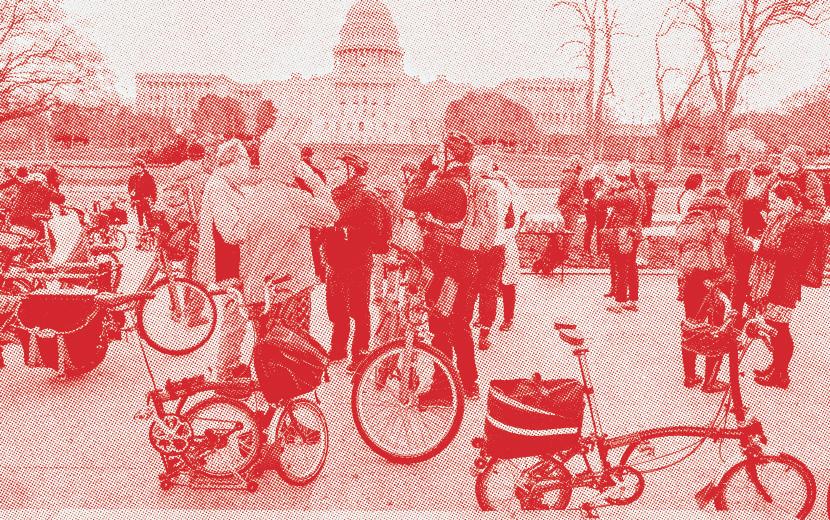
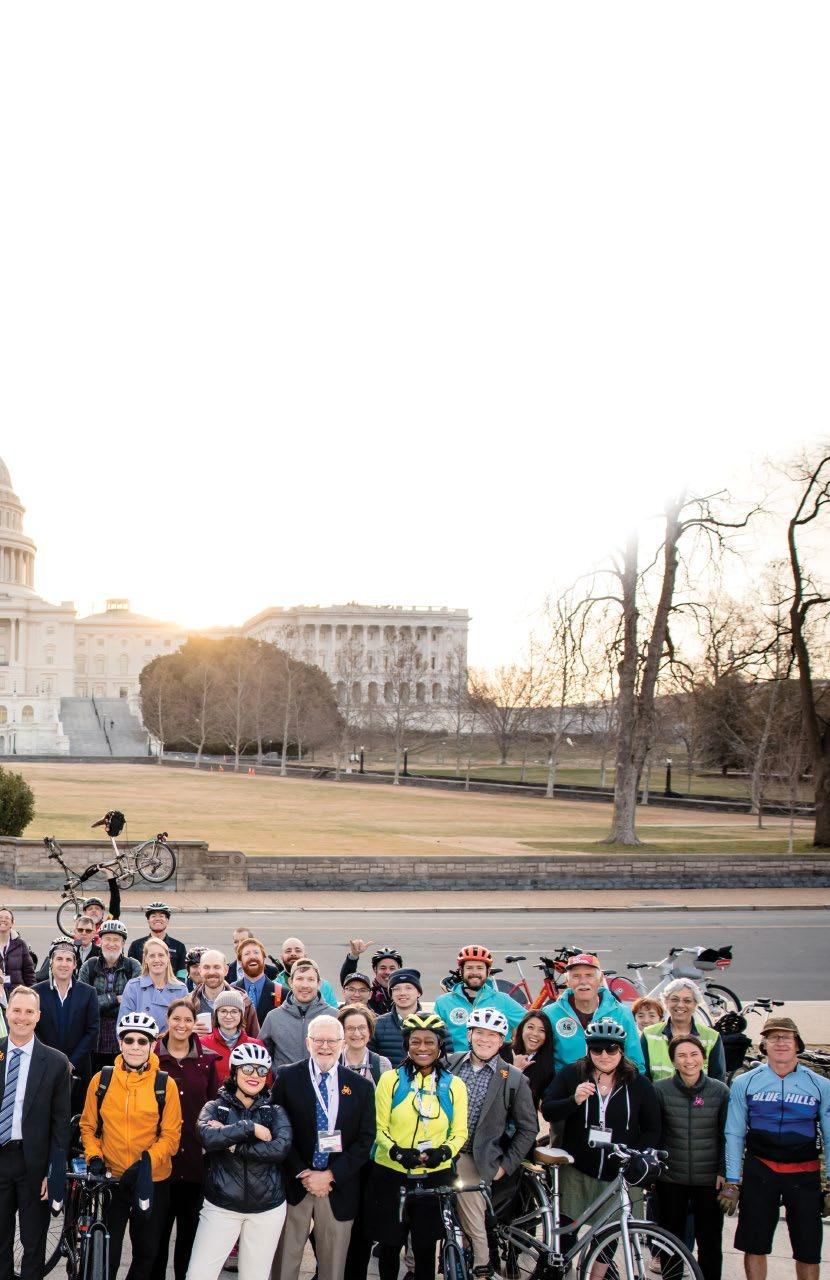
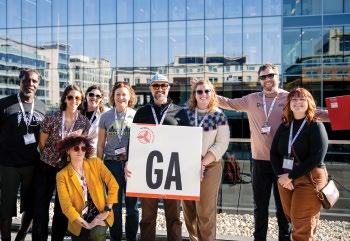
Attendees of the 2025 National Bike Summit gather for a group photo before rolling out on the Congressional Bike Ride.
Long-time Summit attendees might remember years at the Renaissance Washington and the Old Naval Hospital, but I’d only ever known the tall gleaming windows, winding staircases, and sweeping stadium seating in the wood-paneled auditorium at the MLK Jr. Memorial Library. Venue notwithstanding, the 2025 National Bike Summit marked the 25thanniversary Summit, a cherry atop two dozen years of grassroots bike advocates gathering in Washington each spring.
As attendees began to arrive on Tuesday, the energy this year felt palpably different — somewhat somber, given the challenges many of us face in our communities, but also an air of deep gratitude for the solidarity found between people who believe in forging a better future by bicycle. One longtime bike advocate with double-digit Summit attendance shared: “I have lost some of my anxiety and fear of the potential future for our country by being surrounded by so many incredible, smart, passionate, caring, supportive, and positive people who also happen to love cycling. I really needed this re-charge.”
And re-charge we did. Tuesday programming kicked off in a flurry of activity, with mobile workshop attendees departing by the dozen — exploring different aspects of D.C. bike infrastructure, learning about local history and culture, and stopping at plenty of iconic federal buildings and monuments along the way. Back at the library, attendees listened to an energetic opening plenary from “Killed By A Traffic Engineer” author Wes Marshall, followed by a rousing call-to-action from political scientist Dr. Hahrie Han. This energy carried us into the “Preparing for Capitol Hill Day” session, where our in-house lobbying pro Caron Whitaker walked us through the basics (and the not-so-basics) to help attendees prepare to meet with their members of Congress the following day.
As daylight began to dwindle on Tuesday, the energy only ramped up. The weather that day was glorious, so plenty of state groups were enjoying the setting sun on the rooftop patio atop the MLK Jr. Library as we celebrated the winners of the 2025 Advocacy and Education Awards more on that later! Following the reception and awards, attendees had the opportunity to enjoy a special screening of “Cycling Without Age” or a “Best Sights at Night Tour” led by DC Cycling Concierge.
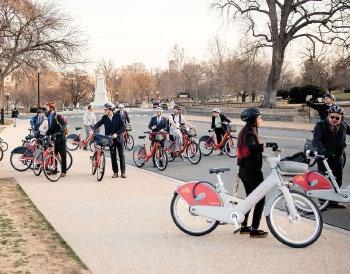
Bright and early Wednesday morning, my colleagues and I hopped on Capital Bikeshare bikes and raced to Grant Memorial — the meeting place for a crowd of cyclists and congresspeople alike, gathering for the Congressional Bike Ride & Rally preceding the League’s annual Lobby Day.
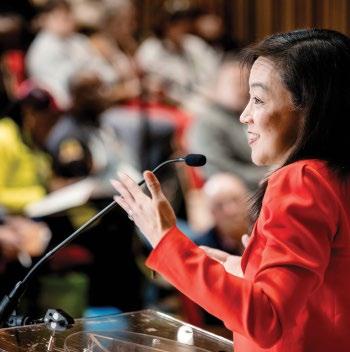
Opposite page, from above: Dr. Hahrie Han;
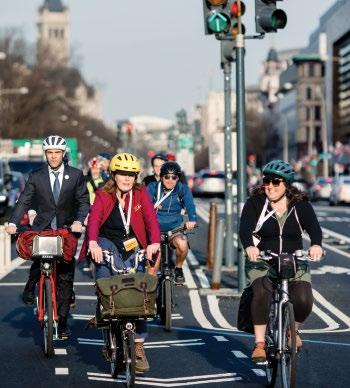
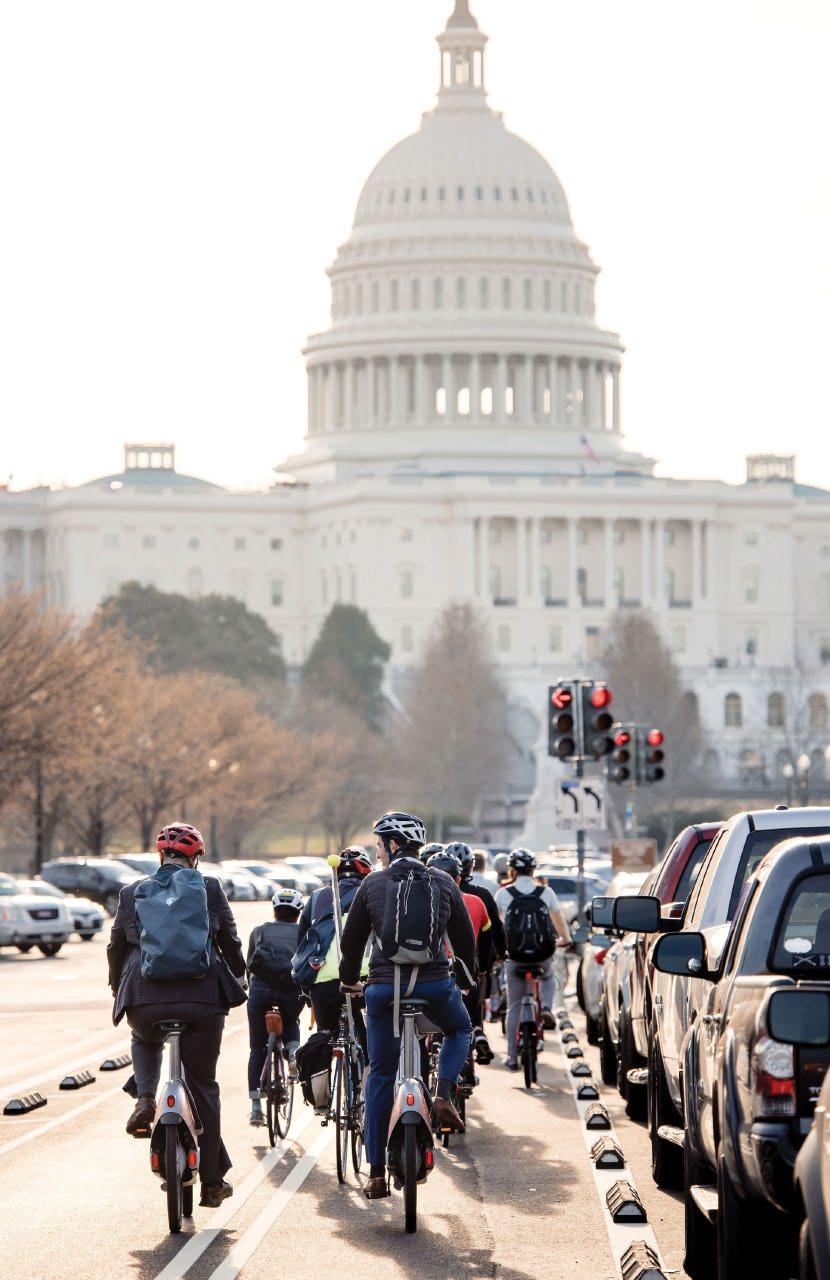
The Congressional Bike Ride in the Pennsylvania Avenue bike lane;
Georgia's state meeting;
Riders gather for the Congressional Bike Ride.
This page:
The Congressional Bike Ride rolls toward Capitol Hill, where advocates will spend the day lobbying for vital bike funding to keep local projects rolling.
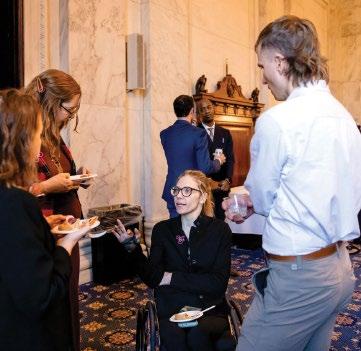
Opposite page, from above: Bike advocates from across the U.S. connect and celebrate at the Congressional Reception;
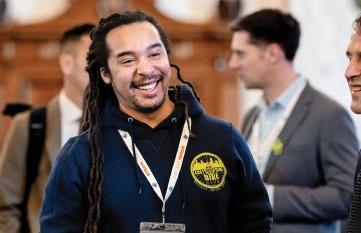
Summit attendees share smiles and stories before heading out to join the DC Bike Party group ride;
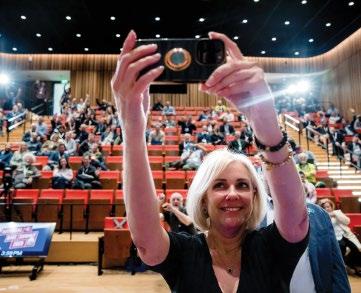
NTSB Chair Jennifer Homendy captures the post-keynote energy with a crowd selfie;
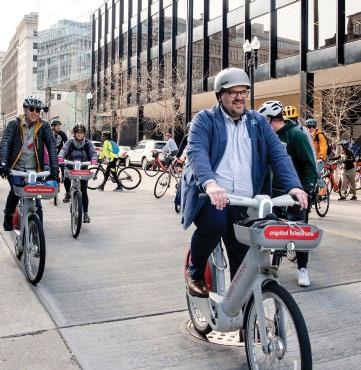
Bill Nesper joins the closing ride in style via Capital Bikeshare.
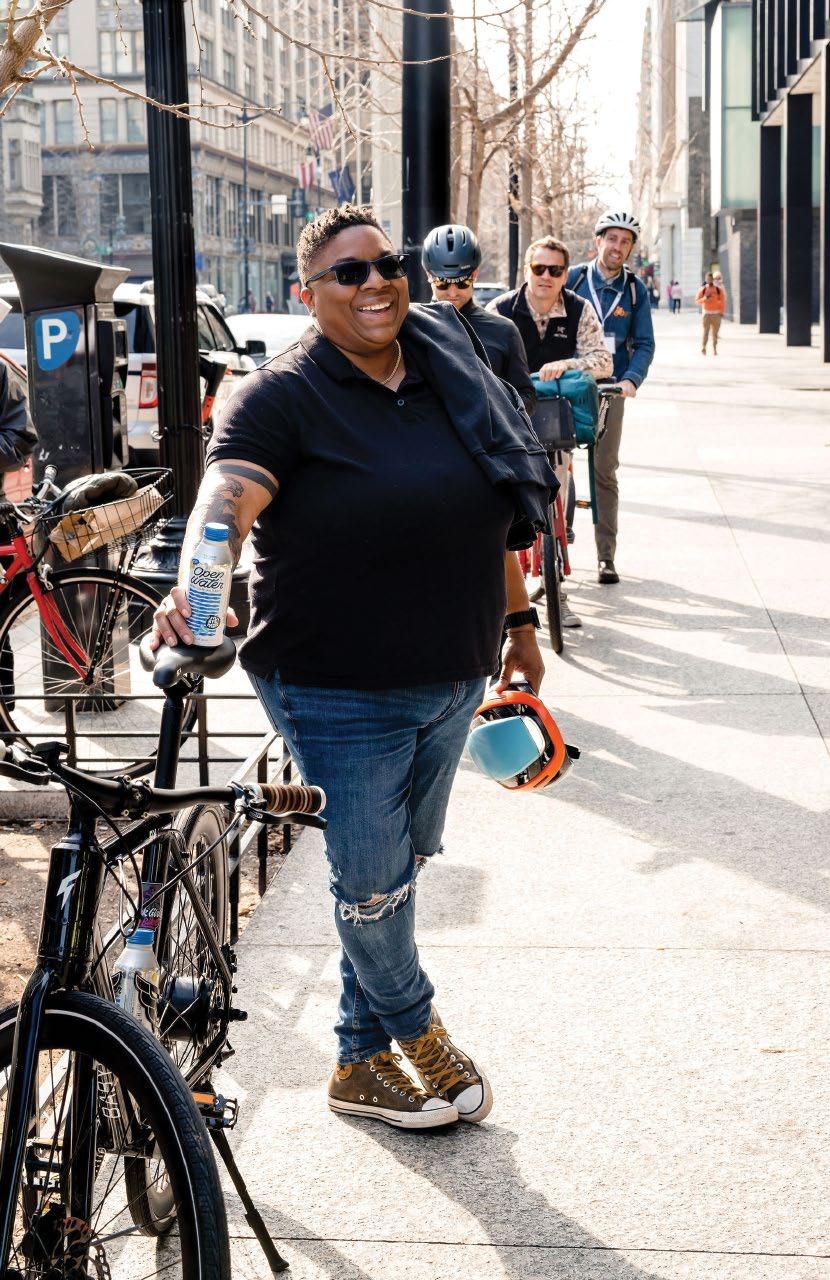
This page: Monica Garrison greets a crowd of attendees eager to follow her lead on the final ride of the 2025 National Bike Summit.
As advocates gathered on Capitol Hill that day, we were startled by breaking news: the administration’s budget-razing had finally fallen on bikes. Federal funding for bike-related projects was being reviewed and potentially frozen. It gave our work on Lobby Day a new level of urgency, raising the stakes for each constituent who sought to keep local projects (like bike lanes, recreational trails, or road safety planning) moving forward in their communities.
The news didn’t make the Congressional Reception feel any less joyful that night; it felt more like a celebration that bike advocates had seized this chance to mobilize at the federal level and make our voices heard on Capitol Hill that day. Naturally, not every congressperson showed up for their meeting, but quite a few were willing to hear us out. As I mingled with attendees from across the country — Hawaii, New York, California, Alaska, Rhode Island, and Georgia, to name a few — the mood was bike joy, and it was contagious. Folks either departed in time to join the DC Bike Party or lingered, sharing heartfelt stories until staff shooed us out of the meeting room.
Thursday morning brought overcast, cloudy skies, and heaps of Summit programming — starting with an opening plenary honoring Senator Ben Cardin, leading into an afternoon of breakout sessions on topics ranging from technical road design to fostering inclusion in the bike movement. At the closing plenary, Chair of the National Transportation Safety Board Jennifer Homendy shared a compelling keynote address to a room of raucous applause.
The 2025 National Bike Summit closed with a ride to remember, joined by the incredible founder of Black Girls Do Bike, Monica Garrison.
Next year, the stakes look even higher, and we hope to rally even more folks to show up and speak up for people on bikes. Mark your calendars for March 24th–26th, 2026 — the next National Bike Summit — and get ready to join the fight on Capitol Hill.
BICYCLE FRIENDLY AMERICA
BY MARLEE TOWNSEND
I N THE PAST YEAR OF BICYCLE FRIENDLY AMERICA
AWARDS, COMMUNITIES, CAMPUSES, AND EMPLOYERS HAVE SHOWN THAT LOCAL ACTION MATTERS MORE THAN EVER. WHILE FEDERAL THREATS OF DISINVESTMENT STALL SAFETY IMPROVEMENTS FOR ACTIVE TRANSPORTATION, LOCAL LEADERS ARE STEPPING UP AND PROVING THAT PROGRESS IS STILL POSSIBLE — AND URGENTLY NEEDED.
From small towns to major metros, the League’s Bicycle Friendly America awards continue to spotlight the places, people, and organizations that are committed to investing in better biking. We believe that when more people ride bikes, life gets better for everyone — a cycle of investment that keeps going and growing, ultimately improving outcomes for entire communities and our country at large.
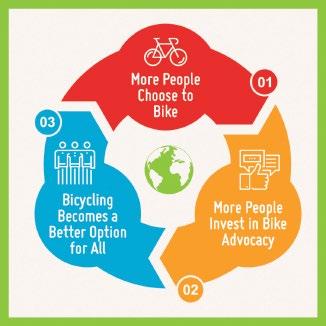
For example, in Ridgeland, Miss.: “Local residents are able to take more trips by bicycle now more than ever. With more connectivity, cycling is becoming available to more residents. As well, we see many visitors to our city come to enjoy the bicycle routes across the city. Some travel overnight and some come from neighboring communities. Our designation as a Bicycle Friendly Community has helped attract both visitors and residents. When people know that a city is a good place to ride a bike, they know it's also a good place to live.”
The latest BFA awardees demonstrate a steadily growing movement of people who believe that biking should be a safe, comfortable, and accessible choice for everyone.
This year’s Bicycle Friendly Community (BFC) awards recognized 91 places for their commitment to welcoming people on bikes and improving local bikeability. This is a meaningful step in a year that once again marks record levels of bicyclist deaths across the U.S. With eight new first-time Bronze awardees, eight honorable mentions, and 16 communities moving up in award levels, it’s clear that plenty of places are doing the hard work of building better systems to support cyclists — even without national leadership to match their ambition.
That ambition is critical. As federal funding for active transportation hangs in the balance, these communities are making it known that safe biking isn’t a side issue, it’s a foundation for healthier people and more resilient places.
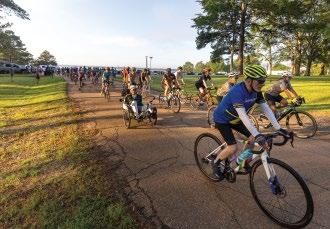
Above: Riders embark on the annual Natchez Trace Century Ride in Ridgeland, Mississippi.
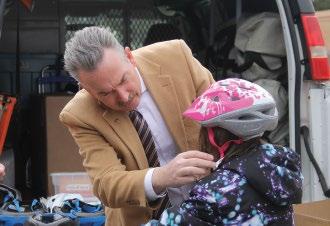
Below: Cheyenne, Wyoming's Mayor Patrick Collins (a bicycle shop owner himself) adjusts a helmet during a helmet giveaway event in 2022.
State capitals across the country are setting examples for their citizens: Nashville, Tenn.; Topeka, Kan.; Honolulu, Hawaii; and Cheyenne, Wyo., all earned or renewed BFC recognition this year. Honolulu in particular made a significant move, earning Silver-level status after holding Bronze since 2014. These achievements are encouraging, especially when cities use their BFC report cards to track progress over time and make strategic choices about what improvements to prioritize next.
Today, 460 places are recognized as Bicycle Friendly Communities, representing more than 76 million people. These cities and towns are pushing forward, not because it’s easy, but because their residents deserve streets where everyone can make it home safely.
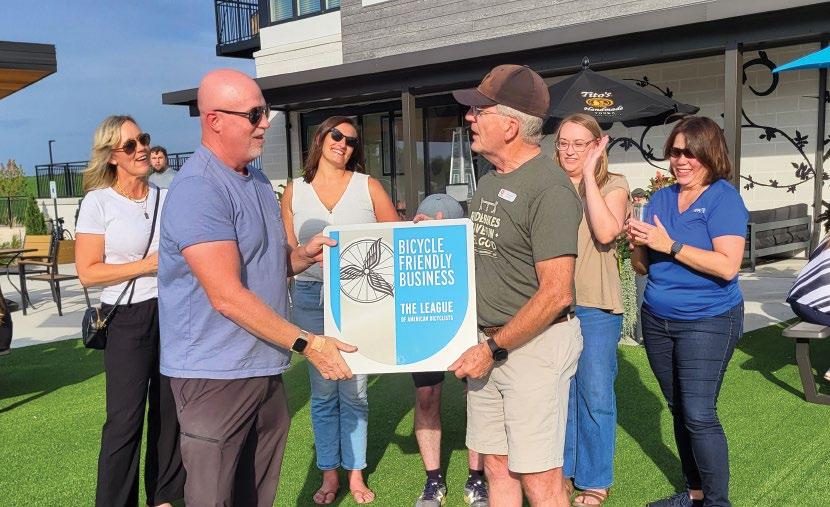
Even in tough economic times, a growing number of employers are choosing to invest in better biking for their staff, customers, and neighbors. In two recent rounds of Bicycle Friendly Business (BFB) awards, 107 employers were recognized for creating spaces where biking is welcomed, encouraged, and supported.
One standout: Bentonville, Ark., added 13 new BFBs this spring alone, moving the city into the top 10 for most Bicycle Friendly Businesses in the country. The diversity of awardees — from local coffee shops to tech companies — shows how wide the impact of policies that welcome bicyclists can be. As Bentonville evolves into a city-sized magnet for people who love bikes, local businesses of all varieties are modeling how pro-bike workplace culture and infrastructure can be a smart economic investment.
Other communities are seeing clusters of BFBs drive collective impact. In Fitchburg, Wis., five businesses were recognized in the latest round of awards and they’re pooling resources to advocate for a new bikeshare station. In Willmar, Minn., the local Visitors Bureau earned a Silver award after leading years of work to position the region as a bike tourism hub. Their efforts have brought new trails, better signage, and more local pride in biking.
These examples remind us: businesses can be powerful allies in building a Bicycle Friendly America and many already are.
Below: Airship Coffee in Bentonville, Arkansas
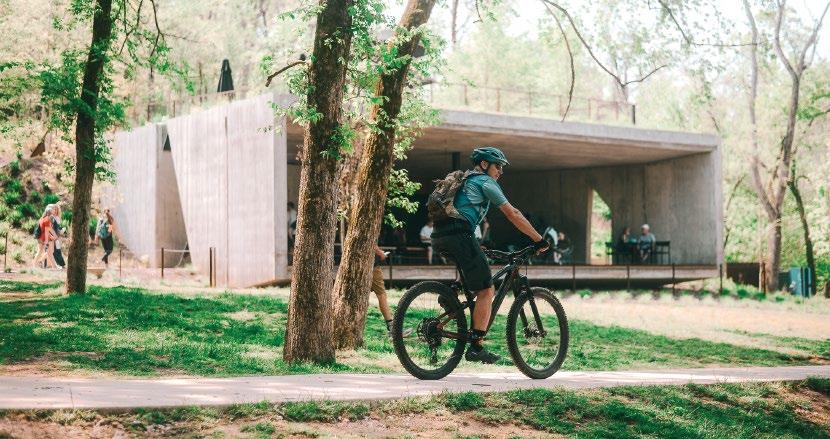
Investing in the Next Generation During Campus Sustainability Month last fall, the League recognized 42 new and renewing Bicycle Friendly Universities (BFU), with an additional three campuses earning Honorable Mentions. Despite federal climate goals wavering, many colleges and universities are still making good on their values by prioritizing safe, low-carbon transportation on their campuses.
The University of Minnesota Twin Cities renewed its Platinum-level status, while Luther College in Decorah, Iowa, earned a Silver on its first-ever application. Other schools returned to the BFU list after lapses, and some moved down in award level — a reminder that being bicycle-friendly takes continued work and accountability. Overall, the number of Bicycle Friendly Universities now stands at 209.
From student-led bike advisory committees to long-standing bike share programs, campuses are showing how sustainability and mobility go hand in hand and how investing in biking can help prepare students to lead in a world shaped by climate change, social inequity, and ongoing transportation challenges.
In a year when federal programs for biking and walking are at risk, the League is fighting on Capitol Hill to protect and expand the funding and policies that make these local wins possible. But we’re also celebrating the local champions who aren’t waiting for Washington to act. From mayors to professors to CEOs, these leaders are taking matters into their own hands: building protected bike lanes, launching cycling education programs, and forming cross-sector coalitions that put safety first.
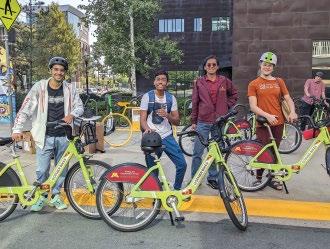
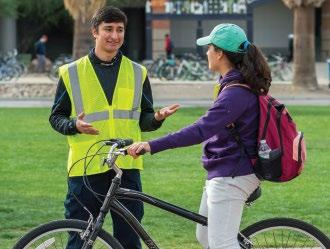
University of Arizona (Gold-level BFU) staff providing cyclists on campus with safety tips;
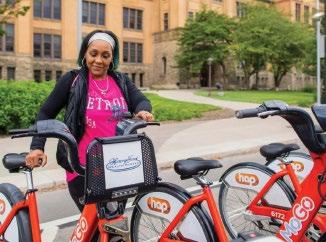
Bike share station at Wayne State University (Bronze-level BFU).
That’s what the Bicycle Friendly America program is about — creating a roadmap for change, and recognizing the people and places willing to do the work. These awards don’t reflect perfection; they reflect commitment. And in the fight for safer streets, commitment and consistency are what move us forward.
BY LEAGUE STAFF
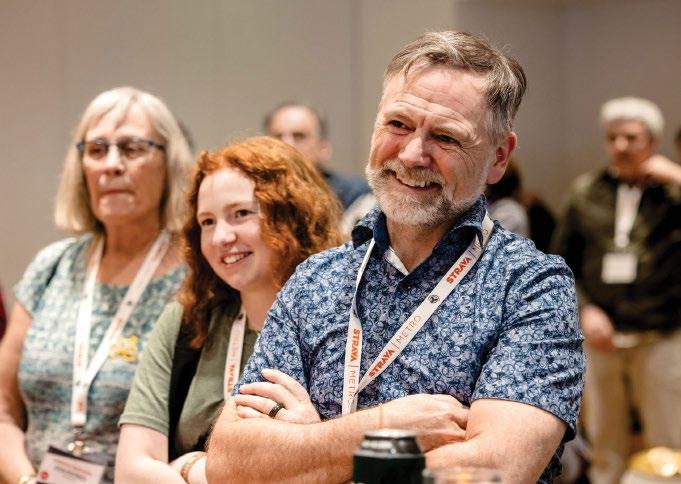
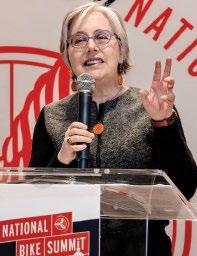
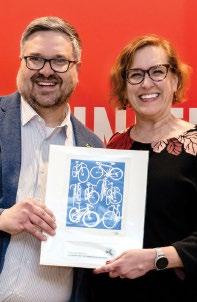
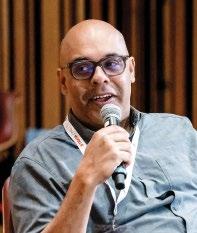
THERE’S NOTHING QUITE LIKE THE ENERGY OF THE NATIONAL BIKE SUMMIT, AND ONE OF THE MOST POWERFUL MOMENTS EACH YEAR IS CELEBRATING THE PEOPLE AND ORGANIZATIONS MAKING BIKING BETTER FOR EVERYONE. At the 2025 Advocacy and Education Awards, we had the honor of recognizing individuals whose passion, perseverance, and community-driven work are shaping a more inclusive and impactful bike movement.
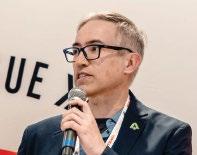
“My hope for the future is that bicycling increases as a routine method of transportation, supported by complete streets that provide many types of people with a variety of ways to travel, and that use resources fairly because they are safe and welcoming for everyone. You might call such streets diverse, equitable, and inclusive.”
“If the winds are not at our back at the federal level, advocates should seize this moment by focusing on community focused local advocacy. We need to change hearts and minds by improving bike and walk culture in places where people are most engaged — like neighborhoods and schools. In a time when the divide between opposing viewpoints is deeper than ever, maybe it’s through shared experience — like going on a bike ride — that we can find common ground.”
“I hope for a future where using a bike as a means of transportation is practical, safe and accepted as a common means to get people where they want to go by the general public and policy makers. That we build transportation systems that center the people who want, need or have to travel by bike.”
“Be the future you wish to see: show that joy and cycling go hand-in-hand, and that this joy is attainable to all, even in times of chaos and duress.”
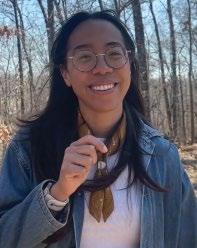
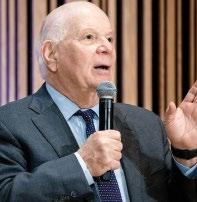
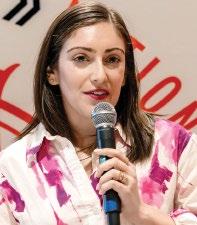
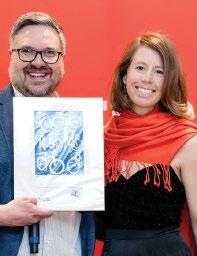
“Ultimately, the future I envision is one where every person feels a sense of belonging in the cycling world, and the benefits of biking – economic, environmental, and personal –are equitably shared. Advocates must seize this moment by prioritizing equity in every facet of their work. Now is not the time to back down. The moment calls for persisting in the face of fear. Keep it up and remember the joy is in the work!”
“Dr. Paul Dudley White is a legend, so to get an award named after him is truly an honor. He pioneered keeping people healthy through exercise, which included biking and walking. He was known to have biked to work till 86 years of age. He's my kind of guy.”
“Life is challenging, and being a girl in today’s world is even tougher. While we’re shaping the next generation of pedal-pushers [at Girls in Gear], we’re also infusing their lives with joy, optimism, and the courage to face any challenge that comes their way in a world that too often questions who they are, why they matter, and what they stand for.”
“Leaders need to champion childhood joy and independence through active transportation and funnel the money and vision to the engineers so they center children in the design of our streets. The indicator of success is when it’s normal to see our streets full of free-range kids or moms riding side-by-side with their little ones.”
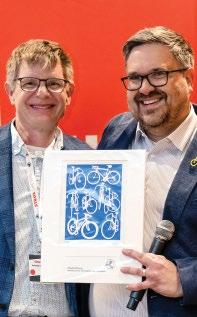
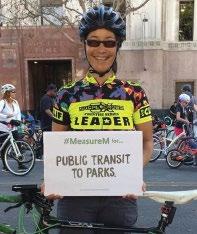
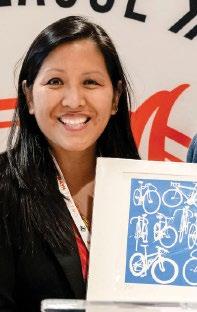
“I’m going to use three words: perseverance, joy, and fun. Perseverance, because we’ve got to keep going. It’s as important as ever right now to keep things moving forward, not backwards. Joy, which many of us have talked about — getting out and riding a bike is joyful! Recently, I was out on a trail and I saw a dad teaching a daughter to ride a bike. Seeing that girl take her first independent pedal strokes was the best thing I’ve seen in a long time. And fun: We need to be out there, on the streets, people seeing us ride our bikes with smiles on our faces, having fun — this is where we should be.”
“Be brave, bold, and build coalitions — more people riding bikes makes us stronger! Bring your passion and be the change! Build community, organize rides, advocate with schools and families, and advocate for safe routes to schools and parks. Prioritize safe, inclusive streets!”
“As a result of the incredible work of the youth plaintiffs, Hawaii will achieve a zero-emissions transportation system by 2045.” — Liz Lee, Our Children’s Trust representative
“It is important that we continue to advocate for cleaner transportation. The bike movement across the US and Hawaii will ensure there are safe, bicycle-friendly options for transportation.” — Taliya N., youth plaintiff in Navahine v. Hawai’i
From grassroots advocates to national leaders, this year’s winners are building a Bicycle Friendly America in big and small ways: through education, engagement, organizing, policy change, and programs that uplift their communities. If you couldn’t join us in person, a recording of the awards celebration is available online and we hope this feature gives you a window into the stories and spirit behind the awards.
youtube.com/live/
BY JAMIL
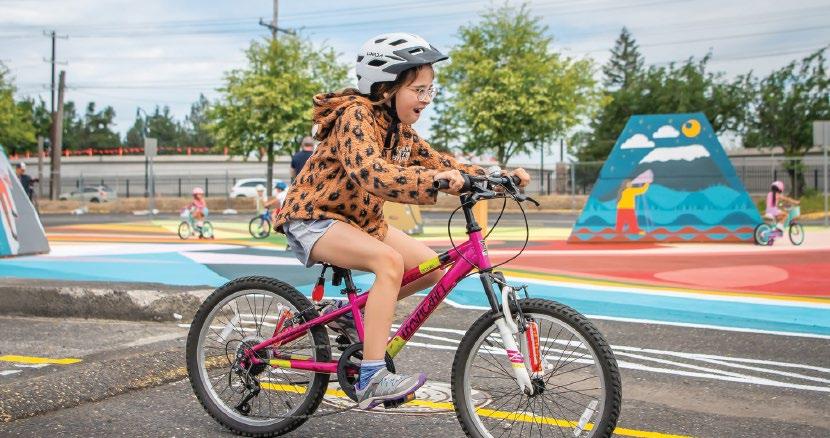
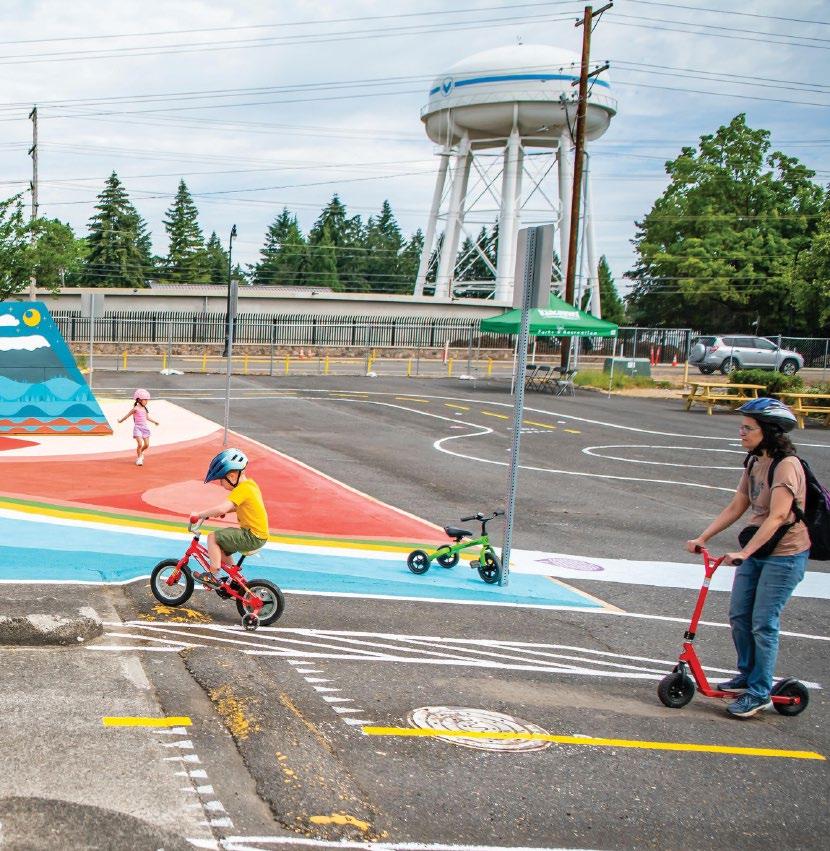

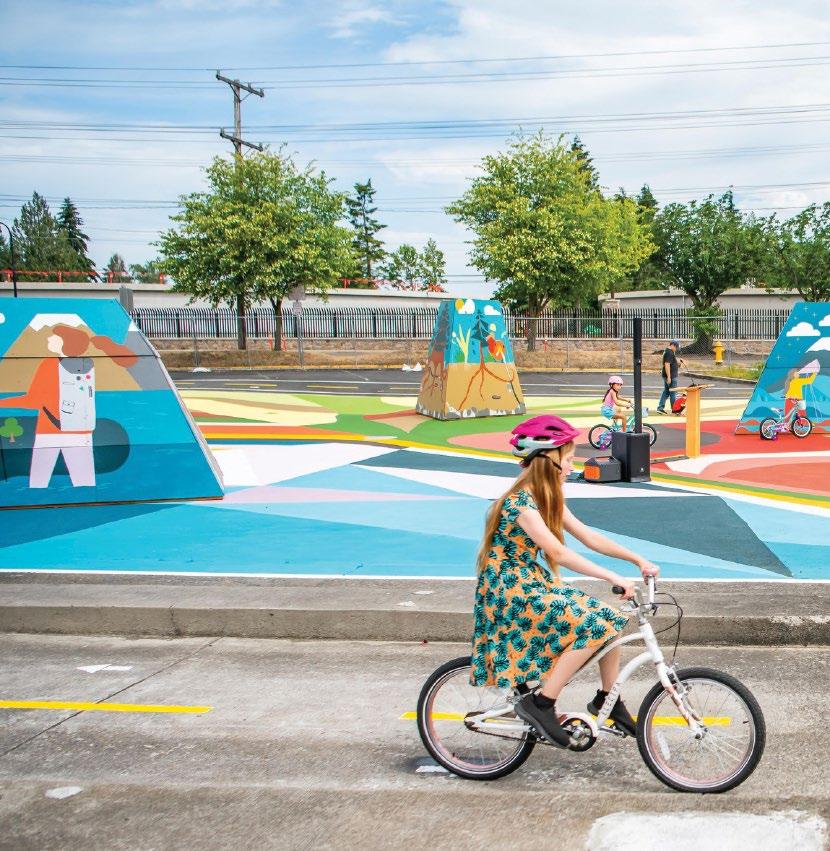
Last summer, we introduced Ready to Ride, the League’s bold new campaign to ensure every child in America has access to high-quality, on-bike education in school. One year later, the wheels are spinning faster than ever and the momentum continues to build.
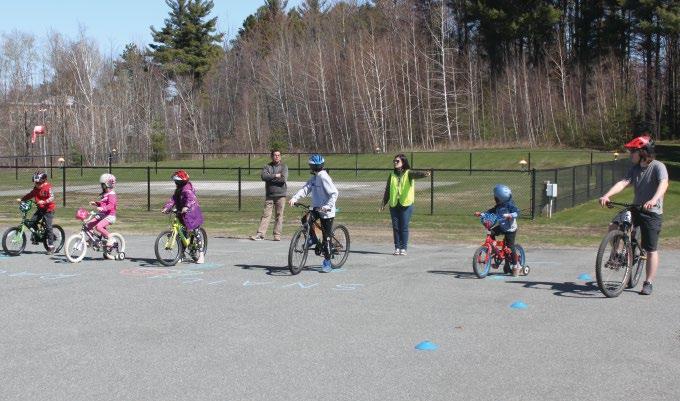
In the months since our initial announcement, Ready to Ride has grown from a vision to an active national campaign. At this year’s National Bike Summit, we officially launched Ready to Ride with a packed breakout session highlighting the school-based work already being done in Washington State, Rhode Island, and North Dakota (All Kids Bike). It was great bringing together cycling educators, transportation officials, school leaders, and advocates from across the country to dive deeper into the issue of getting
kids on bikes in school throughout the Summit. These conversations and stories made clear that the need for school-based onbike education is both urgent and universal.
To support this work, we released the first Ready to Ride report. The report lays out our vision for universal, in-school, on-bike education and makes the case for why this must be built into the school day and not left to chance after the bell rings. It highlights the stark disparities in access to safe cycling education, especially in under-resourced schools and communities of color.
The report also spotlights the people and programs already leading the way, including Safe Routes Partnership, All Kids Bike, Discover Traffic Gardens, and Trips for Kids. The report showcases state-level models in places like Washington, Rhode Island, and Minnesota and outlines our advocacy efforts at the federal level with the Biking Instruction, Knowledge, and Education Act of 2024 (BIKE Act) — legislation that would make in-school on-bike education explicitly eligible for Section 405 of the State Highway Safety Grant program and catalyze new investment in youth cycling education across the country.
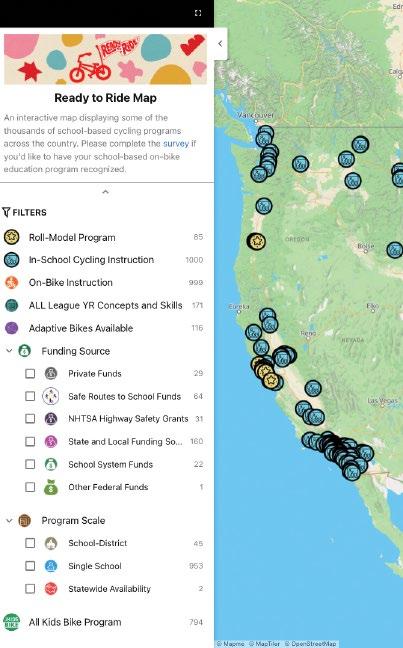
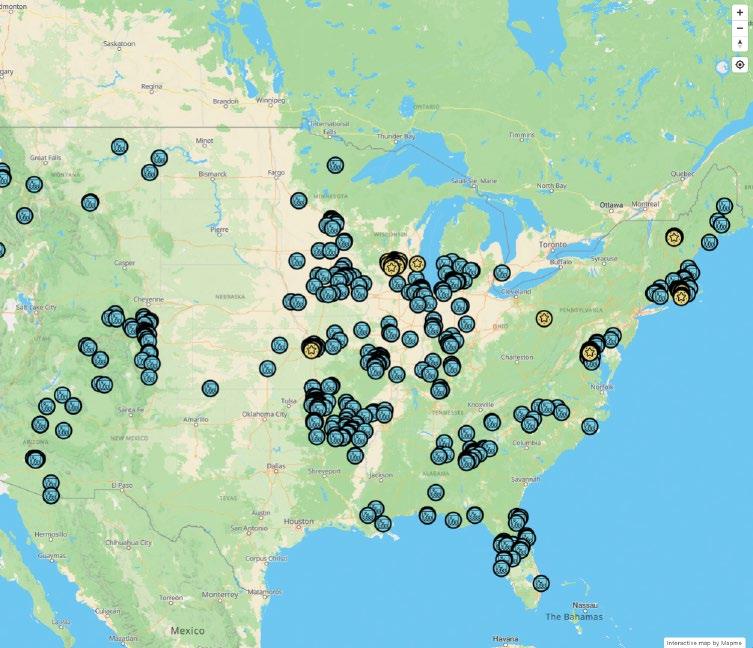
Alongside the report, we also set out to map the movement through our national survey of cycling education providers. Based on the survey and our own research, we’ve begun building the first-of-its-kind map of in-school on-bike education programs across the U.S. It’s helping us understand where strong programs already exist, where gaps remain, and what support schools and community partners need to expand. Expanding onbike education in schools to all students is at the heart of Ready to Ride and to ensure that cycling education is truly
View the report at bikeleague.org/ready-to-ride.
Expanding on-bike education in schools to all students is at the heart of Ready to Ride and to ensure that cycling education is truly accessible to every student, we’ve prioritized equity in our research, outreach, and policy recommendations.

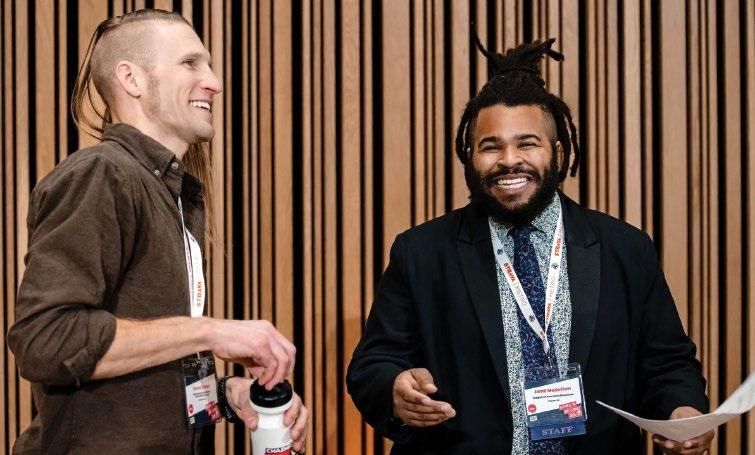
Woonasquatucket River Watershed Council Bicycle Education Director Donny Green and the League's Jamil Modaffari at a Ready to Ride session at the National Bike Summit.
accessible to every student, we’ve prioritized equity in our research, outreach, and policy recommendations.
In addition to research and data collection, we’ve started quarterly peer learning calls for those involved in the cycling education space. We've connected with dozens of cycling educators to troubleshoot common challenges and share what’s working in communities throughout the country. And our team has worked closely with state and local leaders looking to bring cycling education into their schools for the first time.
We’re also investing in the future of how cycling is taught. Behind the scenes, the League is partnering with experts and edu-
Behind the scenes, the League is partnering with experts and educators to update and strengthen our curriculum library for youth-focused instruction.
cators to update and strengthen our curriculum library for youth-focused instruction. This means new resources aligned with school-day implementation, refined materials for teachers and instructors alike, and continued support for our growing network of League Cycling Instructors (LCIs). With more than 3,000 LCIs already certified, we’re working to ensure they have the tools and support to bring cycling education to every classroom that wants it.
As we look forward, we are preparing to publish our second Ready to Ride report this fall which will dive deeper into the benefits of school-based cycling education for students. We’ll also be sharing detailed policy memos, case studies of specific programs, expanding our national map, while continuing to amplify the stories of educators and students who are getting Ready to Ride.
What’s clear after one year is this: the vision behind Ready to Ride is resonating. Whether you’re a teacher, a caregiver, a cycling advocate, or a policymaker, the idea that every kid should learn to ride safely in school is a goal we can all rally behind. With your continued support, we can make that goal a reality and ensure that every student, in every community, is truly Ready to Ride.
BY ALISON DEWEY
BIG RESPONSIBILITY
ROADWAY
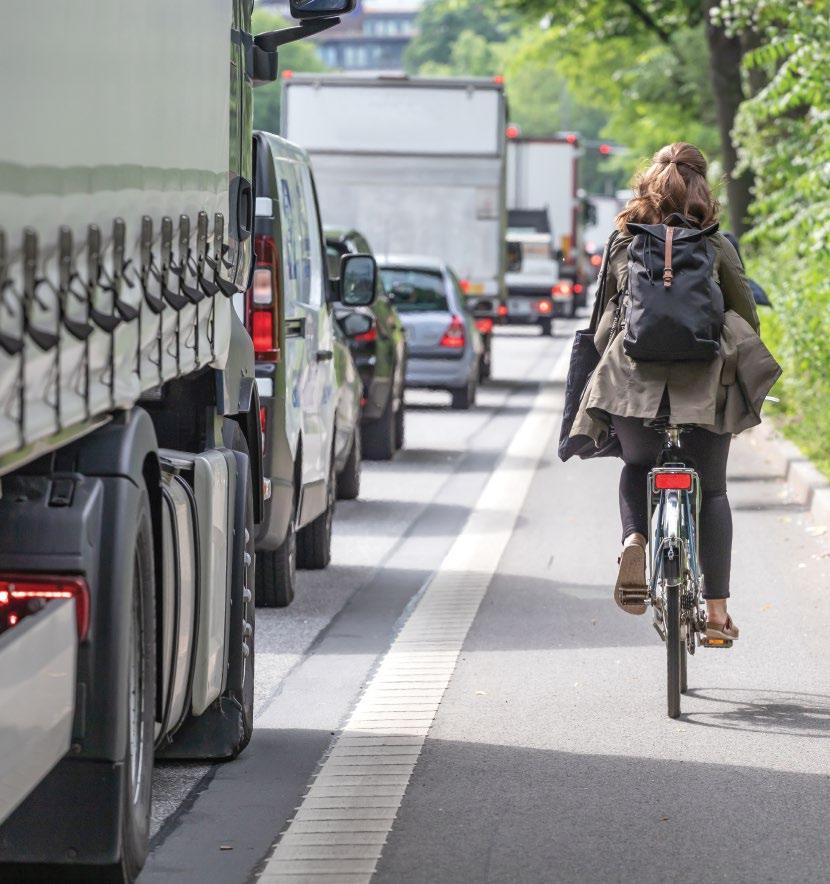
ACCORDING TO THE U.S. DEPARTMENT OF TRANSPORTATION’S VOLPE CENTER, LARGE TRUCKS REPRESENT 4% OF THE VEHICLES ON OUR ROADWAYS, YET THEY ACCOUNT FOR OVER 11% OF BICYCLIST FATALITIES. It’s unacceptable, alarming and must be addressed. Better awareness and understanding about how to share the road with people on bikes is a necessary first step to safer roads and reducing cyclist fatalities.
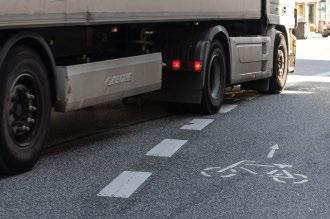
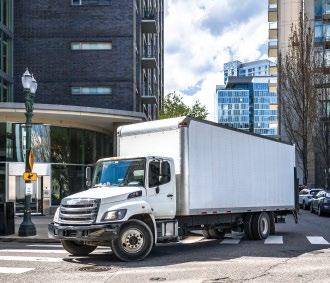
In order to bring more awareness to truck safety, the League of American Bicyclists has created a series of educational videos for truck drivers. The video series is dedicated to the life of Sarah Debbink Langenkamp who was killed by the driver of a flat-bed truck turning across her path while she was riding in a bike lane on her way home from her childrens’ elementary school in Bethesda, Md. Her tragic death, along with the many others that are lost every year due to negligent truck driving, is a stark reminder of the need for better truck driver awareness on our roadways. We honor Sarah’s life and the thousands of others through our educational efforts.
The Big Trucks and Bikes educational video series consists of three short videos. Each is about three minutes in length and is available in English and Spanish on the League’s YouTube channel and also on the League’s Learning Center, where users have access to a short quiz following each video to test their knowledge. Drivers can earn a certificate of completion after they successfully complete the series of quizzes. The Learning Center is free for anyone to use and is always available at learn.bikeleague.org.
The video series contains important information for truck drivers, offered with common roadway terminology and in an approachable manner. The three videos that make up the series are:
Big Trucks and Bikes: Common Crashes informs drivers of common crashes that occur between truck drivers and people on bikes.
Big Trucks and Bikes: Bike Lanes and Safety explains common types of bike lanes and bike infrastructure that truck drivers may see and how to safely share the road with people using it.
Big Trucks and Bikes: A Safety Guide For Truck Drivers offers tips on how truck drivers can avoid crashes with cyclists and gives two simple solutions that can help prevent such deadly crashes.
We hope you’ll check them out and share them in your community.
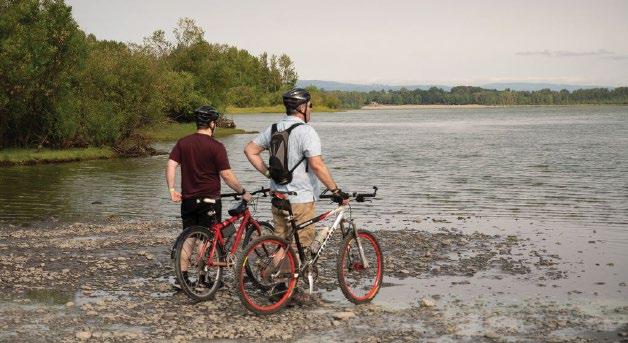
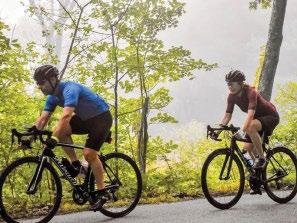
JULY 26
This classic Pacific Northwest event returns for its 41st year. Four exciting routes to choose from and gourmet sandwiches waiting for you at the finish party!
vbc-usa.com/racc
AUGUST 16
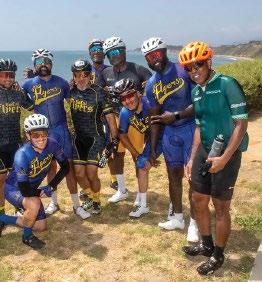
An unforgettable ride along the Southern California coastline with five stunning routes to choose from. Don't miss out on their signature Popsicles at Rincon Park! cibike.org/cool-breeze.html
AUGUST 16
One of the most picturesque and festive cycling events of the season — now featuring a mixed terrain route! Meander through historic towns of Boston’s North Shore and southern New Hampshire along farms, marshes, beaches and waterways as well as notable New England architecture and landmarks. nscyc.org/blazing-saddles-century-2025
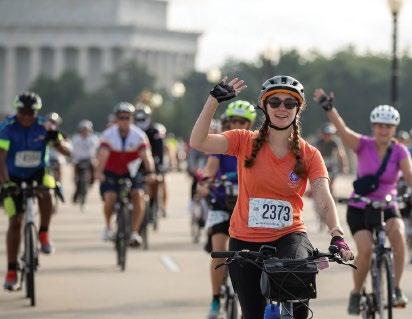
SEPTEMBER 6
Right in our backyard! Join League staff at the annual DC Bike Ride, featuring 20 miles of car-free Washington streets with 10,000 of our closest friends. Ride along the National Mall, the Tidal Basin, across the Potomac River and into Georgetown. See you there!
dcbikeride.com
SEPTEMBER 21
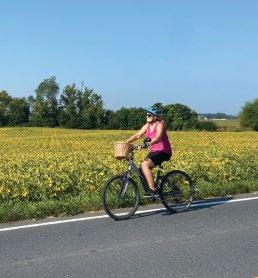
Harrisburg Cycling Club’s largest fundraiser of the year, which additionally funds local non-profits focused on cycling and wellness. Ride the Three Creek Century for beautiful routes, friendly volunteers and fresh baked cookies!
bit.ly/40bNsue




BY MARLEE TOWNSEND
APRIL SHOWERS BRING MAY FLOWERS, AND MAY FLOWERS BROUGHT US… A BIKE PERSONALITY
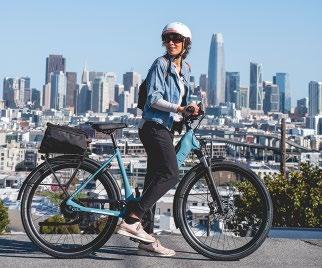
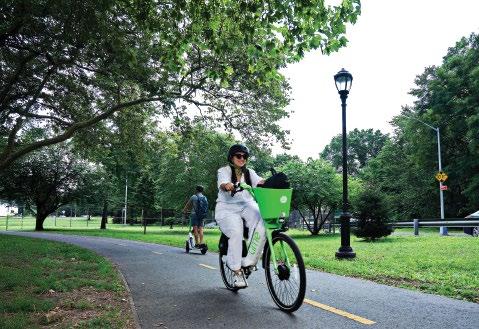
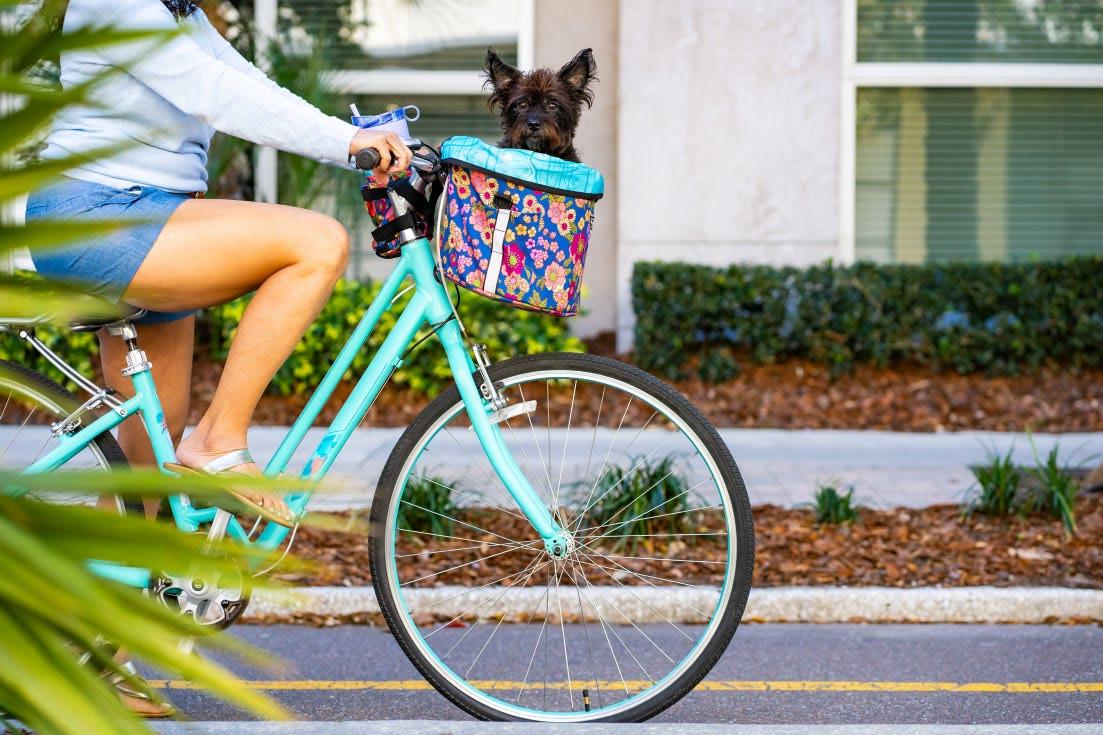
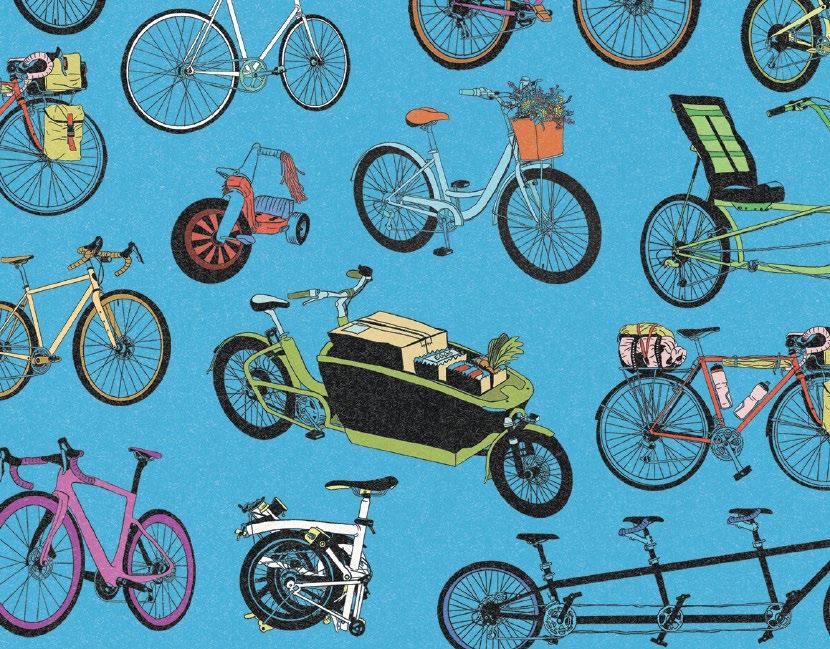
QUIZ! Yep, that’s right — we unveiled our new “What Bike Are You?” quiz just in time for National Bike Month, but don’t worry if you haven’t taken it just yet. While May is in the rearview mirror, this quiz will keep rolling on.
For this special edition of the SAG Wagon, we asked some of our teammates to take the quiz. The results may surprise you


What bike are you?
Scan the QR code or roll over to bikeleague.org/bike-month-quiz and find out!
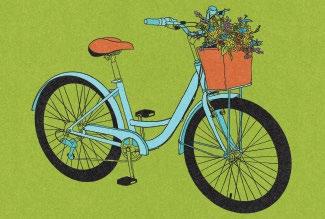
If you’re a Beach Cruiser like Bill and Marlee:
You have a laidback personality and love sunshine and taking it easy. Life's a beach, and you're cruising through it with style! You appreciate comfort, simplicity, and enjoying the journey rather than rushing to the destination.

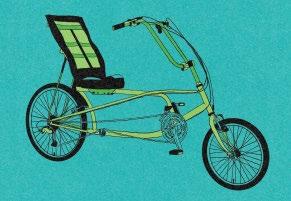
If you got a Recumbent Bike, like Riley:


You’ve mastered the art of comfort and confidence. You’re willing to be different, and your ride reflects that—why not lean back and enjoy the view? Whether you're riding for fun, fitness, or just a better back angle, you roll with purpose and pride. You're thoughtful, adaptable, and not afraid to fly your flag—literally and figuratively.
If you're a Cargo Bike like Alison and Kevin:
You're a utilitarian go-getter who's always prepared and ready for anything. You probably ride with plenty of back-up snacks, a patch kit, and maybe a passenger or two. You’re the type to roll up to a big box store and take home a load of bulk groceries that would put a truck to shame. If a zombie apocalypse hits, no sweat — you’re not about to get stuck in traffic on your way out of town.

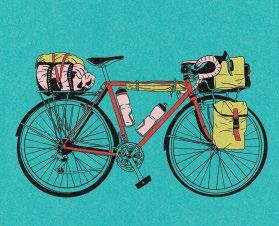
If you're a Touring Bike like Anna:

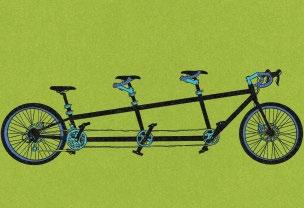
If you got a Tandem Bike, like Ally:


You thrive in company! Whether it's a training partner, your regular crew, or another rider you randomly met on the trail, you're happiest when you're with others. Shared miles are your love language, and you value teamwork and connection. If you’re not riding on the same bike, you’re riding so close to your pals it’s practically a tandem.
You're in it for the long haul — literally. Whether it's a cross-country journey or a long weekend ramble, you're the kind of rider who finds joy in the journey as much as the destination. You pack light (or maybe not), plan routes with scenic stops, and don’t mind a little headwind if it means discovering somewhere new. Reliable, steady, and built for comfort over distance, you’re all about pacing yourself and seeing the world one pedal stroke at a time.





































OUR MISSION
is to lead the movement to create a Bicycle Friendly America for everyone.
OUR VISION
is a nation where everyone, whether they bike or not, recognizes and enjoys the many benefits and opportunities of bicycling and where everyone can experience the joy of bicycling.
Danielle Arigoni Chair
Jim Baross
Ed Fendley
Katherine Garcia
Jimmy Hallyburton
Kecia McCullough
Vivian Ortiz
Michael Payne
Lori Richman
Mike Sewell
Torrance Strong
Triny Willerton
Anna Zivarts
American Bicyclist magazine (ISSN 0747-0371) is published by the League of American Bicyclists, Inc. to help the organization achieve its mission to educate the public and promote awareness of bicycling issues. ©2025 League of American Bicyclists. Reproduction in whole or in part without permission is prohibited. Article queries should be addressed to communications@bikeleague.org. Your submission of manuscripts, photographs, or artwork is your warranty that the material in no way infringes on the rights of others and that the material may be published without additional approval. Opinions expressed by writers are their own and do not necessarily reflect the policies of the League.
Kevin Dekkinga Director of Membership & Development
Alison Dewey Education Director
Monique Hyatte Operations Specialist
Lauren Jenkins Communications Director
Ally Mabry Graphic Designer
Shelby Ottengheime Federal Policy Fellow
Ken McLeod Policy Director
Amelia Neptune
Bicycle Friendly America Program Director
Bill Nesper Executive Director
Kelly Gray Membership Coordinator
Anna Tang Bicycle Friendly America Program Specialist
Riley P. Titlebaum Education & Summit Coordinator
Marlee Townsend Communications Specialist
Chris Vaughn BFA Program Coordinator
Caron Whitaker Deputy Executive Director
Nearly one-third of people in the U.S. cannot drive due to age, ability, financial constraints, and other barriers. Yet, our communities are still designed around driving.
The Week Without Driving is an annual initiative designed to give decision makers and individuals an oppor tunity to set aside their car keys to see what life is like for those who cannot drive. By taking other forms of transpor tation, par ticipants experience both the limitations and benefits of traveling wtithout driving.
September 29 - October 5, 2025
Sign up and take par t in the Week Without Driving. Encourage an elected official to par ticipate. Invite your family, friends, and neighbors to par ticipate.