











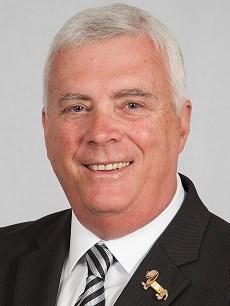
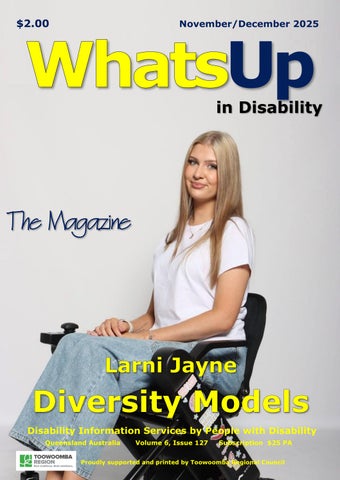
Charlie Kirk
When the NEWS broke of this terrible event, I knew that I had to write about my feelings on the public murder of this outstanding and compassionate person. But the words continued to escape me.
Then I came across a post from my friend Councillor Tim McMahon and as I read his post, I felt that he was saying what I was trying to say, almost word for word and I include his words in my report from the Editor’s Desk.
“A break from flowers to reflect on the events surrounding Charlie Kirk. People being murdered for their opinions is not a new thing.
Cheering and applause over someone’s death, often from bot or fake accounts online is also not new, it’s the world we live in.
It hits home that the most powerful weapon we possess is critical thinking and alliteration.
The ability to speak your argument clearly is the most profound weapon there is.
I don’t think there has ever been any person ever that I agree with on every single thing. Yet if we can’t sit down and talk about differences of opinion, this is the biggest concern for me.
Keep having the conversation on important issues, not celebrating death.
As is often the case, when someone like this passes, their life work gains exponential increase. I don’t think his business name ‘Turning Point’ is at all coincidental.
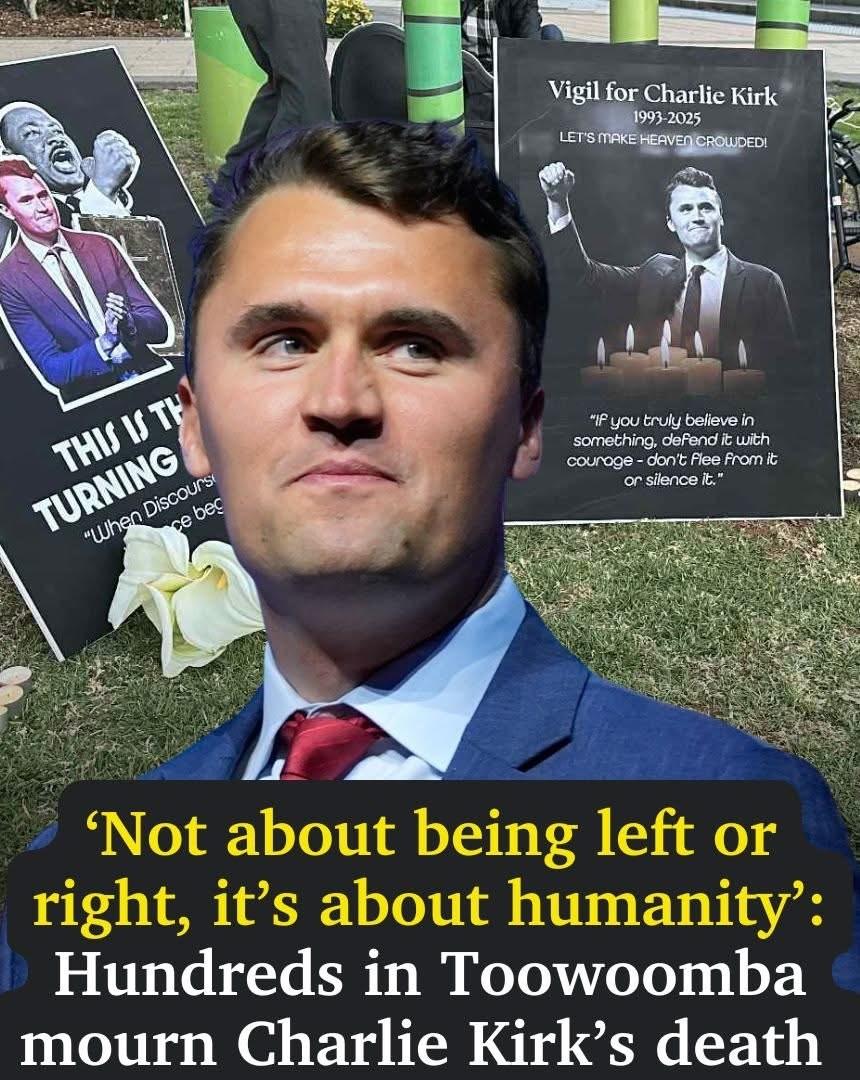
Thank Charlie for having the conversation, the debate that many wouldn’t have.
I look forward to seeing how this brings positive change to our world. I’m in.”
Cr Tim McMahon
“His work, his voice, his drive to push boundaries, let them live on through us. Let us honour him by choosing love over hate, unity over division, conversation over confrontation. Rest in Peace”
Eric Abetz
Liberal Member for Franklin
Steven Paull WhatsUp in Disability
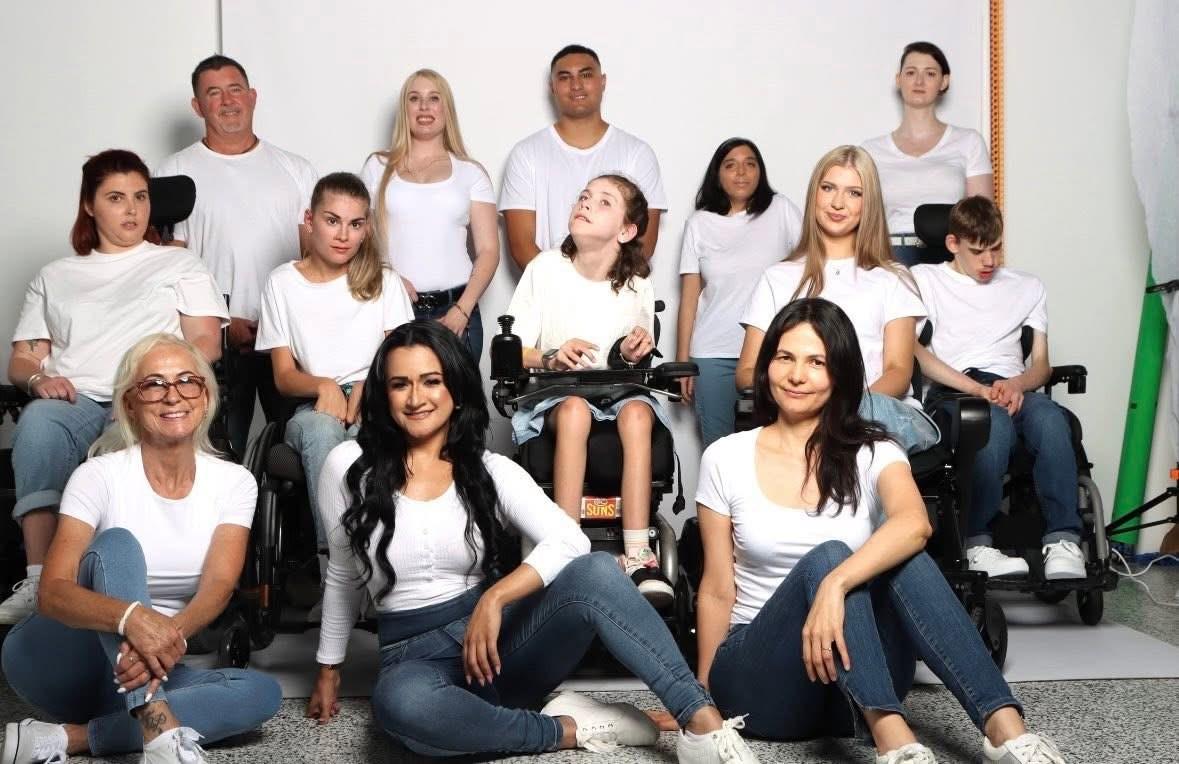
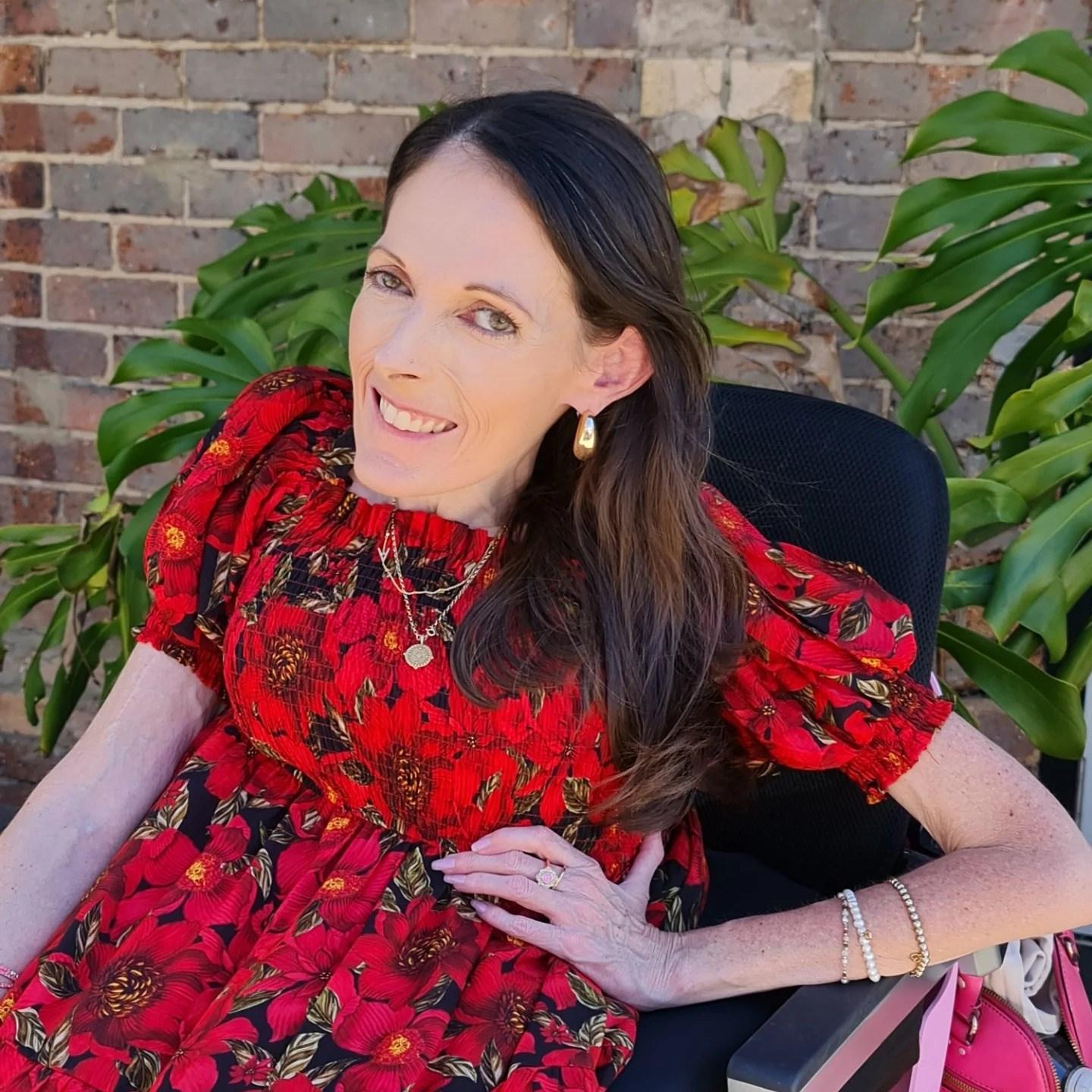
Monique Jeremiah loves the spotlight. She's entered beauty pageants, always dreaming of a career in front of the camera. But when that failed, she opened a disability modelling agency. More diversity and representation can only be a good thing, right? Well, if you ask those who signed on with her, and we did, they've been taken advantage of, underpaid, with Monique pocketing more than her fair share.
Monique loves the camera, walking many catwalks in her time. I am very confident in myself. She's been on that many TV shows, we stopped counting. One time she even went on national television renting out half her bed. Then her own modelling career didn't kick off.
“I was too multicultural, too short, too curvy and too old. So I gave up my dream,” says Monique.
That's when she started Diversity Models, NDIS registered. She claims it's an inclusive agency, although she doesn't include everyone.
“Our modelling agency is very simple. We're not going to go for models that are excessively obese. But on the other side, we won't accept models that are anorexic or a size 4 to 6. We don't really represent trans or gender fluids or that particular demographic,” says Monique
Among the models Monique does accept is Hayley Liversy, a legally blind Brisbane woman.
“She did mention that sometimes people, companies, organisations do want you to look disabled. Monique basically asked me, you know, do you have a walking stick? And I said, no. And she said, well, I basically need one for this
shoot,” says Hayley.
You were told to look more disabled but don’t use a walking stick?
But it gets worse. Monique is accused of unfairly pocketing what could have been paid to her young clients living with disabilities.
“She needs to be stopped, and people need to know what she's doing and what she's capable of. I wouldn't stop until she gets it through her mind. Don't get in the way of disabled people. Don't be discriminatory against disabled people. And don't push your luck,” says Hayley.
Brandon Mirazai is one of Monique's Sydney-based models living with cerebral palsy and epilepsy. He was one of several models hired from her agency to shoot an advertisement for a company.
“I got messages from Monique saying that the payment was going to be $500 for me and when we got to the location of the photo shoot in Queensland the producer asked us to sign a document and I noticed the number was completely different, saying $1,300 for every single model. That's when the red flags appeared as the pricing difference would actually be exactly $800 difference, and when we noticed the massive difference, we started questioning Monique,” says Brandon.
Brandon says the producer refused to pay Monique's agency and transferred directly to each model.
“If she didn't step in, each of us would have only been given the $500 that Monique wanted to give us, and Monique would have taken the rest for herself.”
“She was trying to recruit you to go on
this content creation modelling retreat. And it was advertised as learning how to model, learning how to pose, learning how to interact with people, those kinds of things. But really the main event was a disability expo Monique was speaking at. We were put to work to go to showcase for Monique while she spoke there.”
“Basically (it) felt like free marketing but we were paying to be there. The cost of this weekend trip, almost $5,300. That only included carry-on luggage and the models had to share a room. I had asked multiple times of a breakdown of what we were actually paying for because it was quite a substantial amount of money. And I wanted to know is this going to enhance or, you know, get me paid work basically. And we didn't re-
ceive any of that.”
“That's if they ever got a spot in front of the camera if Monique was around. In almost every gig I had where she would step in and be a part of the photo, which in my perspective is pretty much stupid, she doesn't need to be,” said Brandon
“The client wants the model; they don't want her. Why don't you carry on with your modelling career and keep vulnerable people out of it?”
“I'm interested in the welfare and the success of my models who achieve paid employment across Australia. It's not just about me; it's about the disability community. You know, some of them aren't able to speak up for themselves, but I want to be that voice for them,” said Monique in summarising the interview with A Current Affair.
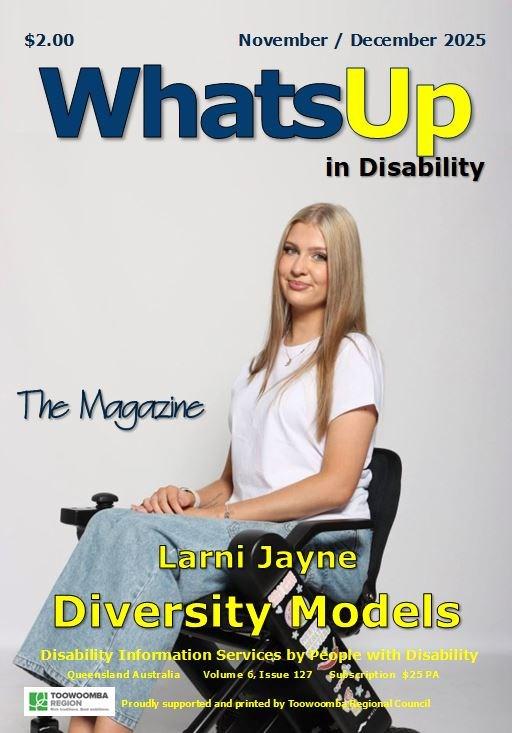
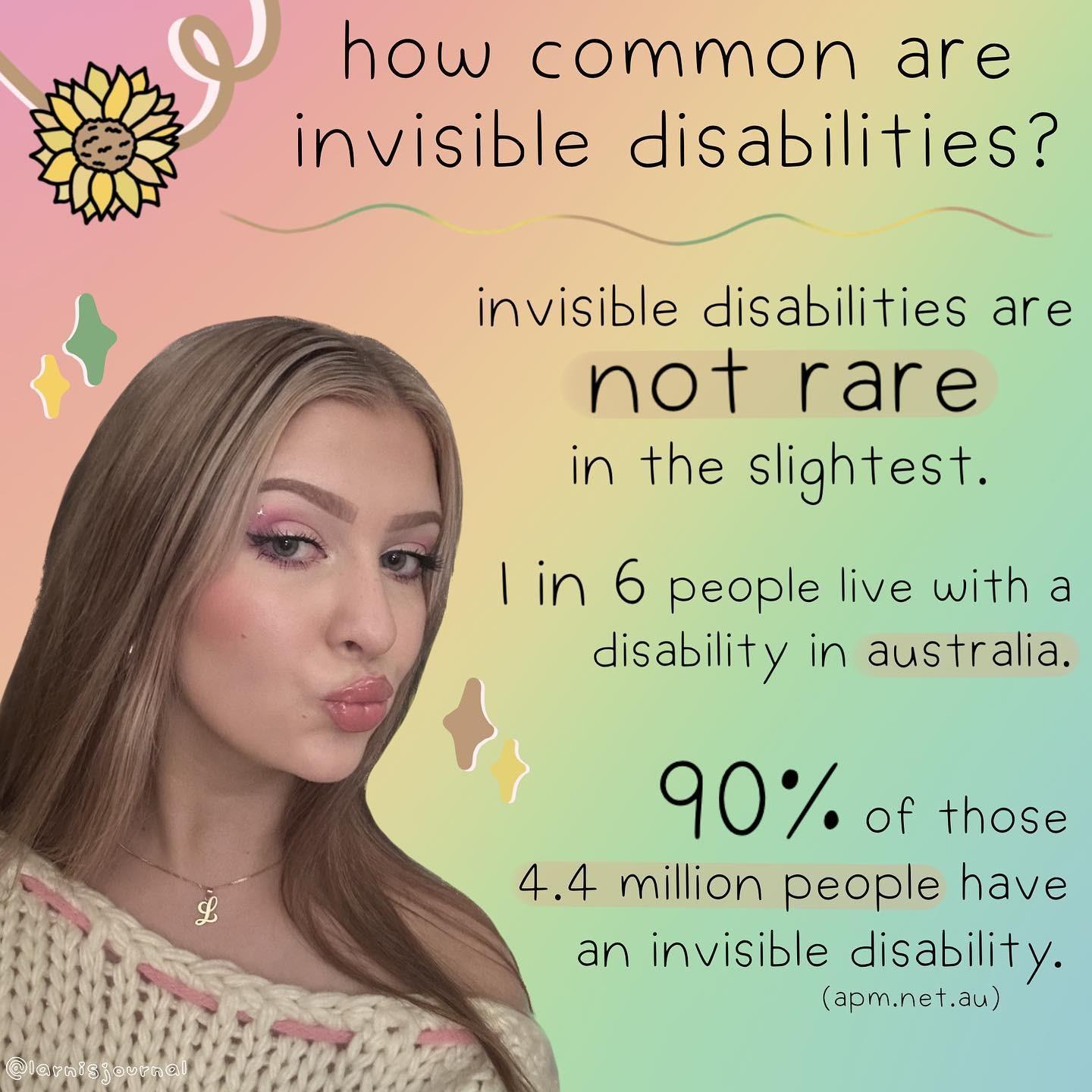
My name is Larni, and I did a modelling shoot with Diversity Models in November of 2023 for the cover of the Disability Support Guide for 2024.
This was promoted on Facebook by Monique Jeremiah in Gold Coast groups for a search for disabled models to be a part of this free shoot. She had only just started up Diversity Models. I was excited for this opportunity as I had wanted to start modelling as a disabled person since I was unable to work at this point in time. I was excited to possibly join an agency and earn some income.
I went to the shoot and quickly noticed that it was all about Monique. There were around 15 disabled models at the shoot with many different disabilities, but Monique would almost always place herself in the centre of the photos. She would line all of us models up and put herself (and her hair stylist and makeup artist?) in front of us.
She asked one of the models to hold a walking cane who didn't use one. Monique called it a prop, and the disabled girl was verbally upset about this. I felt so uncomfortable when this happened and realised, she had no knowledge on people with disabilities. I was shocked to watch a video and see she did it to someone else.
The cover of the photo shoot was eventually released and of course Monique was on the front of the Disability Support Guide - I say this, not because I expected to be on the cover, but I expected actual disabled people to be featured (as this was what we were casted for!)
She reached out to me to become a model for Diversity Models but expected a large sum of money for sign up fees,
portfolio images and hair and makeup. It was extremely unaffordable for a disabled person, yet this is the community that her company is apparently supporting.
I actually wrote to Monique in 2023 letting her know that the costs were unreasonable for disabled people to afford.
I did not become a model with this agency and I'm so angry and upset to see that Monique is ripping off other disabled people continuo
I attached images for further proof and am open to an interview or call to provide more information because I believe it is very important for her to be investigated by the NDIS and have her company shut down.
WhatsUp reached out to Larni...
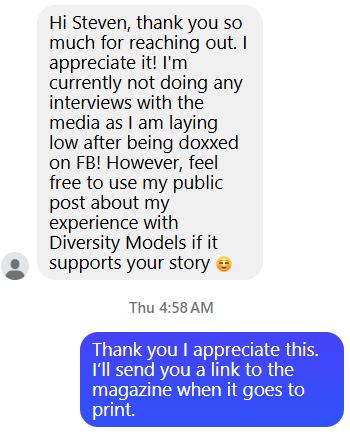
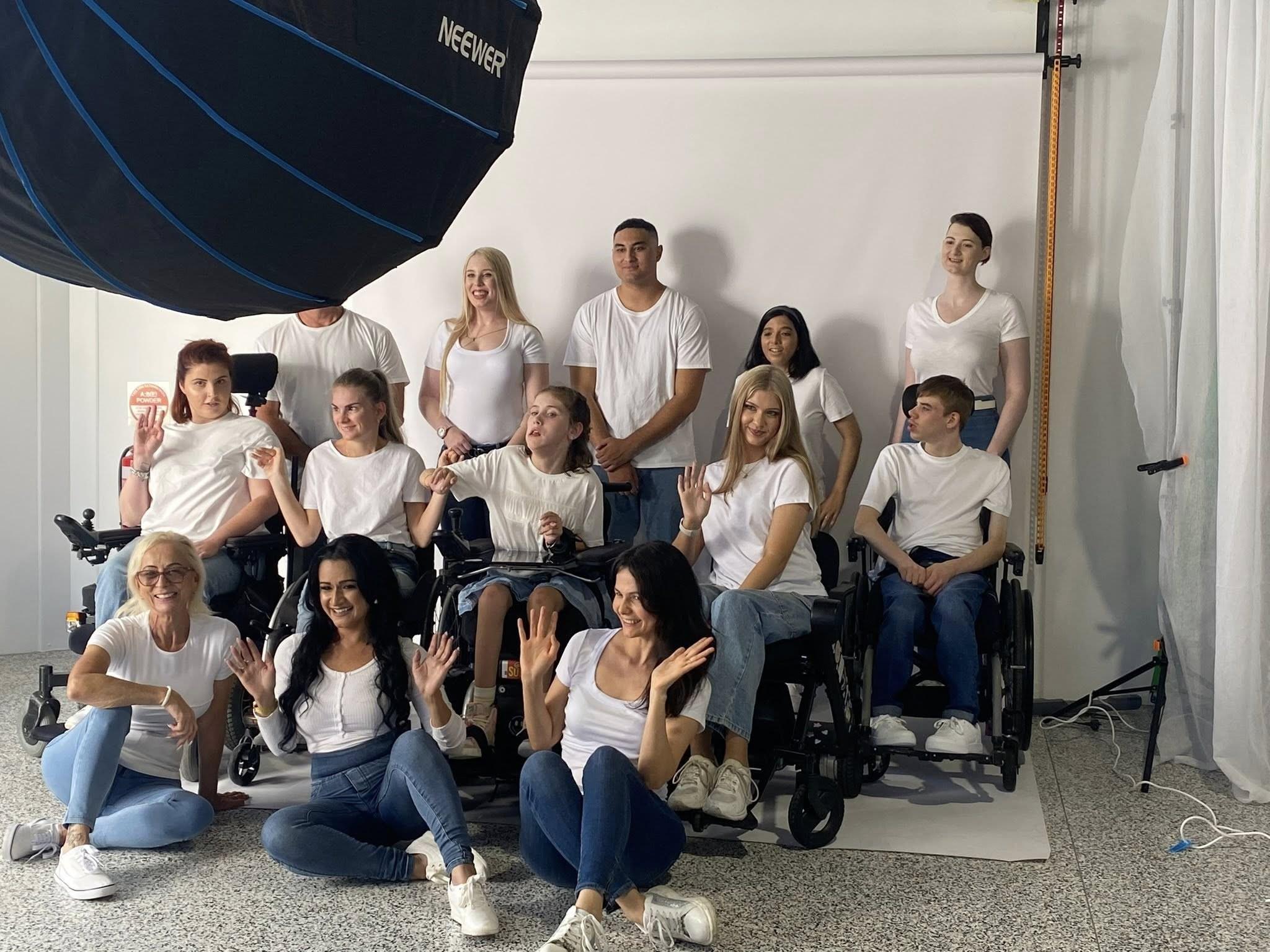
“I’d love the opportunity to model but the costs are unaffordable for disabled people.”

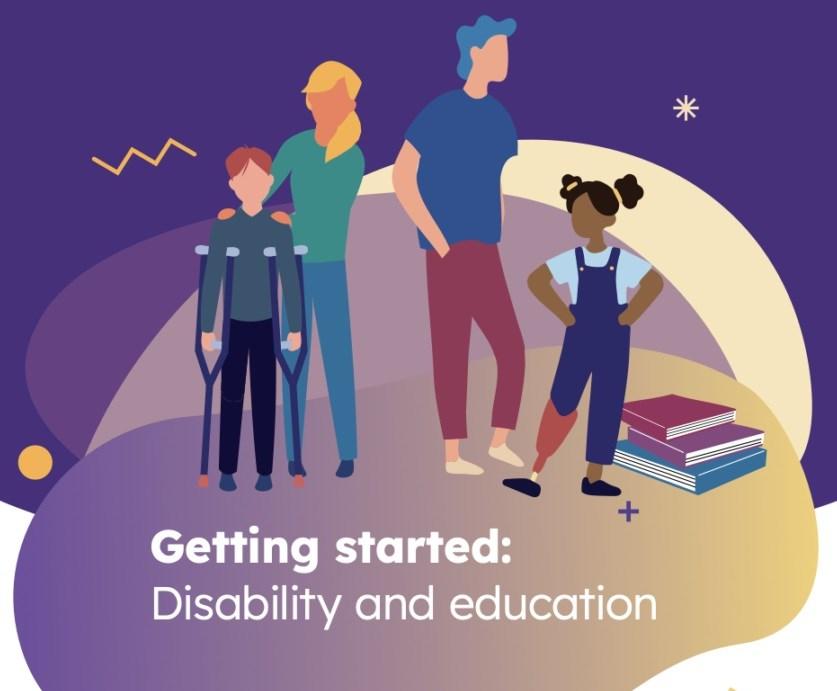
The Australian Government is reviewing the Standards to make sure they are supporting students to access and participate in education and training.
The 2025 Review is considering three topics:
1. How well the Standards are being implemented,
2. What more can be done to support inclusive decision-making and complaints handling, and
3. Whether responsibilities for assessment authorities and course developers are clear.
They want to hear from anyone with an interest in making sure students with disability can access and participate in education and training.
They are interested in the experiences and views of current, former and prospective students with disability and their families and carers.
They also want to hear from people and organisations with responsibilities in the Standards, such as education providers, educators and education leaders.
The closing date for feedback is 21 November 2025.
US President Donald Trump has attracted condemnation from health experts, after he sought to claim there was a link between the widely used painkiller Tylenol and autism.
Accompanied by his Health Secretary Robert F Kennedy Jr, Trump said doctors would soon be advised not to recommend the drug - called paracetamol in some other countries, including the UKto pregnant women.
The claims have been attacked by medical experts. The American College of Obstetricians and Gynaecologists said the announcement was "unsettling" and not based on "reliable data", while the UK's National Autism Society called Trump's statement "dangerous, it's antiscience and it's irresponsible".
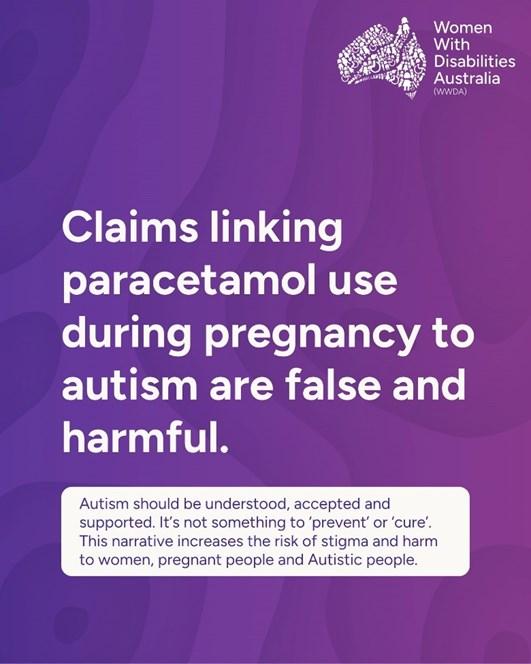
Autism doesn’t need a “cure.” It needs understanding, acceptance and support. Stigmatising autism harms Autistic and neurodivergent people and pushes inclusion backwards.
Recent claims linking paracetamol use during pregnancy to autism are false. When leaders spread this misinformation, it is structural
violence, an effort to control pregnant people’s bodies, limit safe care and increase gendered blame.
Women and gender-diverse people with disability already face high rates of violence and medical gaslighting.
Debunked pregnancy myths pile guilt onto mothers, deter essential care like fever control, and set inclusion back.
A long time ago, in a galaxy far, far away… the NDIS Review recommended compulsory registration or enrolment for all NDIS providers.
OK, granted, December 2023 was not that long ago but given all that has happened on planet NDIS since then, it does feel quite an age!
Since then, we have had a Taskforce, a series of consultation papers, industry forums and town hall style meetings and a Regulatory Reform Roadmap. Most recently, after months of waiting, the NDIS Quality and Safeguards Commission released two summary papers on the outcome of the consultations for the mandatory registration of Supported Independent Living (SIL) and Support Coordination (SC) Providers and Platform Providers. In this article, we’ll look into the feedback from the SIL and Support Coordination consultation and what it might mean for the future of NDIS registration. In our next article, we’ll look at the feedback from the Platform Provider consultation.
As of today’s count, there are some 260,000 NDIS providers, with 16,000 (6%) being registered. The clear message from the government is that a stronger, more robust system of provider registration is necessary for a thriving NDIS.
The story so far - The NDIS Review and the Registration Taskforce
When the NDIS Review was handed down in December 2023 it included a recommendation for the development of a risk-proportionate model of registration for all providers and workers. While this type of model (where services with higher risk attract greater registration requirements) has been in place since 2018, the big difference here was the express aim to capture ALL providers and make some level of registration mandatory.
In principle, this recommendation was seen as an important way to increase visibility over the providers in the sector and to support increased quality and safety. However, many participants and families worried it would undermine their choice and control.
Knowing there was more work to be done, the government established a Provider and Worker Registration Taskforce and charged it with consulting with the disability community to provide advice on the design and implementation of the regulatory model proposed by the NDIS Review.
In summary, the Taskforce proposed the following model of registration:
• Advanced Registration for providers who offer high-risk supports such as behaviour support and services in closed settings.
• General Registration for providers who offer medium-risk supports such as personal care, high-intensity daily personal activities, community access and therapy with a lot of one-on-one
ByThereseMorganteDSC
contact. This registration category would capture most of the current disability support services that are delivered in-home or community.
• Self-Directed Support Registration for participants/support network who contract all of their supports directly. E.g. direct employment, Services for One.
• Basic Registration for providers who offer lower-risk supports. Such as some sole traders or supports, where social and community participation involves limited one-on-one contact with participants.
• No registration is required for goods bought from mainstream retailers, with visibility maintained through purchasing arrangements.
Following the completion of the report from the Taskforce, in September 2024, the government announced that Platform Providers, Support Coordinators (SC) and Supported Independent Living (SIL) Providers would be the first providers to face mandatory registration, with a promise that this would occur no earlier than 1 July 2025.
The NDIS Commission has just released the outcomes of the consultation process in 2 “What we heard” reportsSupported Independent Living and Support Coordination Providers and Platform Providers. In this article, we’ll look at the findings from the SIL and SC paper, but stay tuned for more content on Platform Providers.
Many of those involved in the consultation for SIL and SC Providers, including participants and families, registered and unregistered providers and peak bodies identified benefits to mandatory registration. This includes improving overall quality and safety of the NDIS, ensuring greater accountability and promoting participant outcomes.
The NDIS Commission particularly sought feedback on the transition timeframes. The proposal in the consultation paper was that SIL and SC Providers would have 3 months to register with a further 12 months to pass the quality audit. This was seen as achievable by some, while others were concerned that 12 months may not be enough time for providers “who need to overhaul their business practices, policies, and procedures to comply with the new requirements”.
Many unregistered SIL and SC Providers are no doubt digesting this information. Trying to understand the registration process and make a business decision about whether to commence now or wait for further announcements, is likely consuming a lot of time and energy.
If you want to get ahead of the game, make sure you check out our workshop: Preparing for NDIS Registration.
The NDIS Commission has committed to holding more targeted consultations with those most affected by the changes.
The scheme more broadly is moving more to the question of functional impairment. That is the way assessments will work into the future. And there’s no question that there will be significant numbers of people with autism still on the scheme because they have a level of autism that is permanently and significantly disabling, and that is as it should be.
The concern I’ve raised and is the subject of substantial conversation in the community, is the degree to which young children with more mild and moderate levels of developmental delay or autism are on a scheme, frankly, because there’s nothing else – a scheme set up for permanent, significant disability. That unintended consequence of the establishment of the NDIS is what I’ve said today we intend to deal with.
is the best choice for Australia’s children and their parents with the level of developmental delay and autism I’m talking about. Over that sort of transition period while we’re building that system, parents will make a choice if there are two options available to them.
But I come back to the point, the whole reason for both of those two challenges I’ve talked about, is to secure the future of this scheme. We should celebrate this scheme as probably the most significant example of social progress in the last 30 years. It has transformed the lives of people living with permanent, significant disability. And I feel very deeply the responsibility to do everything I can to secure its future for the long term.
Parents ultimately make up their minds when there are alternative systems. I’m absolutely convinced that a mainstream, broad-based system of supports for Thriving Kids, to support Thriving Kids,
But from 1 July 2027, there will be access and eligibility changes put in place that do steer those parents and their children towards the system of Thriving Kids. That will be entirely appropriate. First of all, I made it clear that quite a bit of design work needs to happen between states and the Commonwealth, in partnership with the sector and with parents themselves. We've obviously, through the agency, been doing work to model the numbers of children with more mild to moderate levels of developmental delay and autism.
States are keen to understand that as much as we are because we do have to work out financing, the scheme design and things like that, and that work is still
BytheHonourableMarkButlerMP
underway. Precise numbers, precise design of the program is something I've indicated we do need to start work on with states, because this work has drifted.
But I also want to reinforce my sense of the urgency of this. Children with mild to moderate levels of developmental delay and autism should not, in my view, be on a scheme set up for permanent disability. It is not the right fit. But I recognise it is the only port available to so many parents, tens and tens of thousands of parents. We should treat as a matter of urgency the need to provide them with a more suitable system of broad-based mainstream support. Yes, there's more work to do, but it is urgent work. It has drifted for the last couple of years, and we need to start to deliver it.
Some parts of Australia like the Hunter or South Australia more broadly were early launch sites or pilot sites for the NDIS in relation to children, so they're a little bit further down the road than some other parts of the country. That reinforces the need for action, because looking at where those parts of the country are up to gives you a sense of where the rest of the country is likely to head if we don't make serious change here. But like so many things in the health, aged care, veterans care, disability care sector, there are challenges getting workforce out into the region. That’s why as much as possible leveraging mainstream broad-based systems like primary care, infant and maternal health systems that states run, schools, early childhood education and care is going to provide a much better system of access for parents including in region-
al Australia.
Foundational supports is a generic term, I think you take from the Bonyhady and Paul review, to describe a system of supports that would be targeted at quite different cohorts. Children naught to nine is our first piece of work, but adults with quite severe and complex mental illness is another cohort identified in that review. It's a generic term. It’s appropriate that we refocus that principle into something that speaks to parents and speaks to the sector, and that's why we're using different terminology. We are focused on helping those kids thrive. That's what we should be focused on.
As to where states are at, I've heard a couple of pieces of feedback from states. The first is that states felt that they shouldn't have to take full responsibility for leading this program, which is why I've indicated today we want to lead. We want to hold the pen on this with them. We think that it's far preferable to have a single, nationally consistent program for Thriving Kids rather than eight different programs developed at state and territory level. That's certainly been the feedback, not just from states, but I've also got from the community more broadly. It doesn't make sense in 2025 not to have that single national consistency.
Also, feedback I received from states was that they were concerned that we hadn't committed funding on an ongoing basis beyond the five years that were talked about at the National Cabinet meeting in 2023.
Today, I make that commitment to ongoing funding, not just for that fixed period of time.
The Australian Government is restoring the NDIS to its original purpose – supporting people with permanent and significant disability – and ensuring the Scheme remains sustainable.
Reforms announced by Minister Butler on 20 August 2025 will secure the future of the Scheme and put people with disability and their families back at the centre of the NDIS.
Establishing an effective national system of support for parents and children outside the NDIS is an important part of these reforms.
The Australian Government has announced its commitment to contribute $2 billion towards Thriving Kids, commencing from 1 July 2026. The final program design will be settled between the Australian Government and state and territory governments, informed by experts and the significant
community input received through the Independent Review of the NDIS, and the Thriving Kids Advisory Group cochaired by Professor Frank Oberklaid.
Thriving Kids will focus on identifying developmental concerns earlier and establishing a national system of supports for children aged 8 and under with mild to moderate developmental delay and autism, and their families. Children with permanent and significant disability will continue to be supported through the NDIS.
The program will be delivered by scaling and building on existing mainstream and community services that can better support families and children in settings they already are connected to. This includes child and maternal health, GPs, playgroups, early childhood education and care and schools, as well as digital and phone-based supports. There are already many examples of evidence-based services that guide parents and help their kids thrive. The Government will work to leverage those existing systems, such as the infant and maternal health systems that states run, the primary care systems that the Commonwealth funds through Medicare and supports in community health centres. These supports will help children to thrive, right through the life course, from the time they're born, into the time they get into formal schooling This would include supporting the parent or carers with routines and advice on things they can do at home and what their child may
need in other everyday environments where they learn and play.
Shaping these supports
The Government will work with state and territory governments and experts to finalise the design and implementation arrangements for Thriving Kids.
Design is being informed by the findings of the Independent Review into the NDIS, national consultation on Foundational Supports held at the end of 2024 and continuing community consultation across multiple jurisdictions.
Minister Butler will establish the Thriving Kids Advisory Group, co-chaired by Professor Frank Oberklaid. This will provide expert advice to the Minister around the program design and implementation arrangements over the coming months. It will help to ensure the design looks at how to best support child development from a national system perspective. It will consider findings from the NDIS Review, as well as the broader evidence base.
The Government will continue to prioritise work with state and territory governments to finalise the design of Thriving Kids program this year.
It is expected the Thriving Kids program would rollout in phases. The first services are expected to be available from 1 July 2026 and would continue to ramp up over 12 months.
This will ensure national services are in place ahead of broader changes to NDIS access arrangements from mid-2027.
The Australian Government is focused on ensuring children with developmental delay or disability, who can be better supported outside of the NDIS, have access to services and supports that help them to thrive. This will help to ensure that the NDIS remains sustainable and can support people with permanent and significant disability for generations to come.
Children who are already on the Scheme will continue to receive supports, subject to usual arrangements, including reassessments.
Reforms to NDIS access, and establishment of additional supports outside the NDIS, will be carefully designed with early childhood experts and families. Reforms will carefully consider impacts on existing participants including timing and transition arrangements for children.
We will continue to put people with disability at the heart of NDIS reforms and ensure that children with significant and permanent care and support needs who require the NDIS continue to be supported.
Tis’ the season for consultations (though honestly who’s to say when that season starts and ends these days). The latest is a consultation from the new Department of Health, Disability and Ageing on a nationally consistent Community Visitors Scheme (CVS). It builds on the Australian Government’s initial response to the Disability Royal Commission (DRC) in July 2024, which called for consistent CVS across all states and territories. As part of that response, the government committed $4.4 million over 2 years (2024–25 to 2025–26) to advance national approaches.
To support the consultation process, the government has released a paper with a characteristically long title: Discussion paper 1: Nationally Consistent Approaches to Community Visitor Schemes - Discussion Paper: Strengthening Community Visitor Schemes in Australia.
Let’s take a look.
Firstly, what is a Community Visitor Scheme?
CVS are independent oversight programs where trained community visitors (sometimes called official visitors) conduct announced or unannounced visits in congregate accommodation settings such as group homes, psychiatric facilities and supported residential services (or boarding houses). They can meet privately with residents, inspect conditions and documents, and escalate any concerns they observe or learn from residents. For people with disability, particularly those with limited informal supports, CVS can be a critical layer of protection against abuse and neglect.
These schemes operate in most jurisdictions and started before the NDIS, but they vary significantly. Some states use paid staff, others rely on volunteers and some have additional visit functions like out of home care and day programs. At the moment, only Western Australia and Tasmania don’t operate CVS for disability services.
With the introduction of the NDIS in 2013, disability accommodation shifted from mostly government-run facilities to a largely privatised system. This created more home and living options for people, such as smaller group homes supported under Supported Independent Living (SIL) and other personalised arrangements. Each state and territory has its own laws that define where community visitors are allowed to visit. This means that people who live in accommodation settings outside of those defined in legislation can’t receive CVS visits, leaving gaps in oversight. The supported accommodation settings that are visited vary across different schemes, with some visiting NDIS disability accommodation, others government-run disability accommodation and some visiting specialist disability accommodation (SDA) settings. Currently, CVS do not generally visit people living in private dwellings (with some exceptions in some jurisdictions). As a result, CVS now face the challenge of ensuring their legislative functions are suited to the contemporary landscape.
Another issue facing CVS programs is resourcing. With the rapid growth in dis-
ByJessicaQuiltyDSC
ability housing options, there are far more sites to visit than before. Jurisdictions manage this in different ways, some schemes use a rolling schedule, prioritising homes that have never been visited, while others visit only when concerns are raised. This can create gaps which mean people may go without the protection of regular, independent oversight.
There is also confusion about the role of CVS in relation to the NDIS Commission. The Commission regulates providers, responds to complaints and enforces compliance. While CVS focus on human rights and person-centred safeguarding inside closed settings. This means CVS can escalate concerns to the most relevant body, including and beyond the NDIS Commission. For example, if there was a concern with a person’s housing, they might escalate the issue to a landlord or state government housing department. If there were concerns about the quality of support provided in the home, they might escalate the concern to the provider, a state regulator or safeguarding unit, and/or the NDIS Commission, depending on the situation.
The DRC found that CVS struggle to share information effectively with the NDIS Commission and the NDIA. Current processes are unclear and often require community visitors to frame issues as formal complaints when sometimes this is not appropriate. Privacy rules also mean community visitors rarely receive feedback on what happens after they raise concerns, making it harder to ensure issues are resolved. Although CVS
are a critical safeguard, their role is not formally recognised in the NDIS Act or the NDIS Quality and Safeguarding Framework. This creates a mismatch, because while state laws empower visitors, at the national level, there is no official acknowledgement of their function. Without this recognition, CVS are less integrated into the broader disability safeguarding system.
Since March 2025, the federal government, together with its research partner Whereto has been working with state and territory governments to explore how to make CVS more consistent across Australia. They have also started discussions with disability representative organisations.
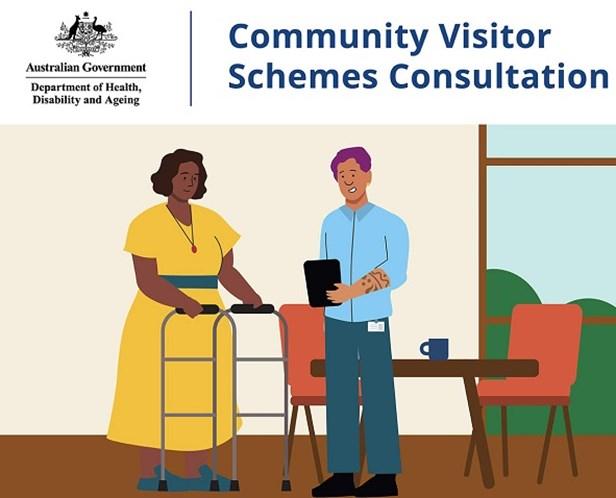
The government also wants to hear from the general public, people with disability, their families, carers and disability service providers about CVS. For example, should community visitors be able to enter a private home?
Editor
The objective of the audit was to assess the effectiveness of the NDIS Commission in exercising its regulatory functions.
The NDIS Commission is the regulator for the NDIS. The NDIS provides funding to a large number of participants as at 30 June 2025 there were 739,414 NDIS participants with approved plans. The NDIS also forms a significant portion of government spending, with total scheme payments of $46.3 billion in 2024–25.
The NDIS operating environment has been subject to a number of reviews in recent years, which have made a range of recommendations including seeking improvements in information sharing, provider registration, restrictive practices, complaints handling and compliance and enforcement arrangements.
This audit provides independent assurance to Parliament over whether the NDIS Commission is effectively exercising its regulatory functions.
The objective of the audit was to assess the effectiveness of the NDIS Commission in exercising its regulatory functions.
To form a conclusion against the objective, the following criteria were adopted: Does the NDIS Commission have effective intelligence gathering and information sharing arrangements in place?
Has the NDIS Commission developed a risk-based strategy to guide regulatory decision-making?
Has the NDIS Commission effectively
By AustralianNationalAuditOffice

implemented risk responsive and proportionate monitoring, compliance and enforcement activities?
The NDIS Commission is partly effective in exercising its regulatory functions. The Commission does not have full visibility of the market it regulates. From 2023–24 to 2024–25 the total number of active providers grew by 25%, with active registered providers and active unregistered providers growing by 15% and 26% respectively. In regulating a market that is expected to see continued growth in the number of participants and providers, the Commission’s effectiveness as a regulator would be improved by taking a risk-based approach to regulating the NDIS that is underpinned by quality data, and targets available resources to areas of greatest risk.
The NDIS Commission has partly effective intelligence gathering and information sharing arrangements in place. The Commission has established policies relating to information management and the management of personal information. The effectiveness of the Commission’s collection, correlation and analysis of intelligence has been impacted by limitations of the Commission Operating System (COS). The Commission engages with the disability sector and has documented arrangements to sup-
port information sharing with some government entities. These arrangements are not complete and are under review. The Commission does not have processes to ensure information disclosures meet legislative requirements.
Regulatory decision-making is not guided by a risk-based strategy. Since commencing operations in 2018 and becoming a national operation in 2021, the Commission has not established a framework for assessing, prioritising and managing risks of provider noncompliance. In the absence of a regulatory risk framework and assessment of regulatory risks, the Commission’s overarching compliance and enforcement approach and regulatory decision-making has not been informed by risk. The Commission has implemented a range of compliance activities. It has not effectively implemented risk responsive and proportionate monitoring, compliance and enforcement activities. The Commission does not have oversight of all the NDIS providers delivering services in the market as there is no requirement for all providers to be registered. In the fourth quarter of 2024–25, 94% of active providers were unregistered and received 42% of plan managed NDIS payments.
• The Commission’s arrangements to monitor the market and provider compliance did not include arrangements to monitor and mitigate the risks of unplanned service withdrawal — a core function of the NDIS Commissioner under the National Disability Insurance Scheme Act 2013 (NDIS Act).
• The Commission undertook 9,520 compliance actions in 2022–23; increasing 3.73 times in 2023–24 to 35,519 compliance actions. Additionally, the Commission has seen large growth in the number of complaints received from 16,305 in 2022–23 to 29,054 in 2023–24. The NDIS Commission does not have quality assur-
ance processes for compliance activities. In the absence of a quality assurance program the Commission is not able to assess its effectiveness in detecting and addressing noncompliance.
• The NDIS Commission had arrangements for executive oversight of annual performance although these were not fully executed. The Commission has developed a Planning and Performance Framework, but this does not address government expectations for regulators. Data reported in the Commission’s quarterly performance reports could not be reconciled with the data reported in the Commission’s 2023–24 Annual Performance Statements.
The Minister for the NDIS issued a Statement of Expectations to the NDIS Commissioner on 20 December 2022 and the NDIS Commissioner responded with a Statement of Intent dated March 2023. The NDIS Commission has not sought a new Statement of Expectations consistent with government expectations of regulators. The Commission published annual compliance priorities for 2019–20 to 2021–22, 2023–24 and 2024–25. The compliance priorities are not risk-based or informed by data and the Commission has not established arrangements to address or report on specific priorities. The Commission has an overarching approach to compliance and enforcement through the Regulatory Approach, Operating Model and Compliance and Enforcement Policy. These are not informed by risk.
Compliance monitoring activities were not carried out under a risk-based strategy or work program. The Commission has not established or documented an approach to monitoring and mitigating the risks of unplanned service withdrawals – a core function of the NDIS Commissioner under the NDIS Act.
Recommendation 1
To support intelligence and information analysis, the NDIS Commission implement:
• an overarching risk-based plan to guide information analysis and correlation activities; and
• guidance on establishing and conducting own motion inquiries.
Recommendation 2
The NDIS Commission develop and implement a quality assurance process to meet legislative requirements and ensure completeness of the information disclosures record.
Recommendation 3
The NDIS Commission:
• prepare for a refreshed Ministerial Statement of Expectations with close engagement with the appropriate minister and portfolio secretary; and
• prepare and issue a responding Regulator Statement of Intent in a timeframe consistent with the Direction to the NDIS Quality and Safeguards Commissioner under section 181K of the National Disability Insurance Scheme Act 2013 – No. 1/2023.
Recommendation 4
The NDIS Commission:
• develop a process for setting compliance priorities to ensure they are riskbased;
• implement action plans to ensure that regulatory interventions are driven by compliance priorities;
• regularly report on compliance priorities and action plans, including public-
ly; and
• publicly outline its regulatory processes and decision-making criteria to support public understanding of how the Commission regulates the NDIS
Recommendation 5
The NDIS Commission develop, document and maintain a framework to assess, prioritise and manage regulatory risks. Regulatory priorities should be underpinned by risk assessment, data and evidence. The framework should articulate how identified risks are managed in line with well-defined risk tolerances, risk-profiling, and appropriate compliance actions.
The NDIS Commission develop and implement an entity-wide compliance monitoring strategy, consistent with its Compliance and Enforcement Policy, that includes the monitoring activities the Commission intends to undertake, frequency of planned activities, links compliance monitoring activities to identified risks, and sets out reporting arrangements and intended results.
The NDIS Commission:
• develop and document a strategy or plan that sets out the Commission’s approach to market oversight, including monitoring and mitigating the risks of unplanned service withdrawal; and
• works with the NDIA to update the joint operational protocol on market stewardship and oversight to include the Commission’s planned approach to market oversight developed in part (a) above.
Recommendation 8
To provide assurance that the NDIS Commission is taking effective regulatory action using powers provided under the NDIS Act and meeting the requirements of the Australian Government Investigations Standards, the NDIS Commission implement quality assurance processes for complaints, reportable incidents, compliance matters and investigations.
Recommendation 9
The NDIS Commission support staff to apply a consistent approach to compliance actions through:
• finalising fit-for-purpose policies and procedures for compliance actions; and
• developing guidance to assist staff with selecting and using the most suitable compliance tool for specific circumstances.
Recommendation 10
The NDIS Commission:
• implement measures to address errors in the Commission’s data holdings;
• ensure the accuracy of performance reporting in compliance with the PGPA Act and PGPA Rule, and address issues identified in relation to Annual Performance Statements for Commonwealth entities in line with expectations;
• accurately record and explain performance in line with regulator performance expectations; and
• disclose and provide written explanation for changes to and errors in publicly reported information to enhance the transparency and public confidence of performance reporting.
NDIS Quality and Safeguards Commission response: Agreed in principle.
The peak body for occupational therapists (OTs) says NDIS price freezes have left hundreds of occupational therapy businesses on the brink of financial ruin, risking the care of thousands of NDIS clients.
New data from Occupational Therapy Australia (OTA) shows closures and service reductions related to recent NDIS price increases could impact more than an estimated 17,300 people, including more than 4500 in regional and remote areas, if the seven-year price freeze on rates for occupational therapists is not lifted.
In July, the NDIS cut travel reimbursement rates for home visits by half, while leaving OT services at $193.99 per hour, unchanged since 2019.
OTA’s claims are based on a survey of more than 600 occupational therapy businesses, that showed more than half failed to make a profit in the past financial year.
According to the survey 14% of businesses are already planning to close their doors and a further 50% of providers are actively considering exiting the sector within the next 3 years.
As well, 92% of service providers said they have had to cut back on travel and outreach to clients, which impacts rural and remote communities.
It’s the latest bad news for the sector, after the Health Services Union last week released data revealing a burnout crisis amongst disability workers.
OTA chief occupational therapist Michelle Oliver called on the Federal Government to immediately increase pricing and travel allowances to keep OTs across the nation in business.
“We are beyond calling this a crisis, we are talking about market failure. We are now seeing providers being pushed to the brink and people unable to access the care they need most,” Oliver said.
OTA is calling for an immediate price uplift of at least 7%, restoration of travel rates, and a thorough review to create an allied health-specific pricing model reflecting real-world business costs.
“This survey is the canary in the coal mine. If swift action is not taken, we will see hundreds of therapists exit the sector. This will have grave consequences –especially for people in regional, rural and remote areas,” Oliver said.
Centacare is the latest NDIS provider to close, cutting services for 700 participants. With Annecto, PlayAbility and Afford also scaling back, here’s why so many disability providers are struggling to survive.
Centacare, a major disability service provider in south-east Queensland, has announced it will close all of its NDIS disability services by November, affecting around 700 participants and 600 staff. Families were given 90 days’ notice, leaving many scrambling to find new providers in time for Christmas. Parents say the news came “out of the blue.” One mother, whose daughter attends a Centacare life-skills hub, said the move will be deeply disruptive. “She really struggles with change for her to have to move somewhere else will be really difficult,” she said.
Centacare leaders said an independent review found the services were no long-
ByStevenPaull
er financially sustainable. After more than 40 years in disability support, they could no longer absorb mounting losses.
Unions warn closures are becoming “more and more common” as organisations face cost pressures they cannot meet under current NDIS pricing.
• Funding doesn’t keep up with costs: Price caps and limited indexation leave providers running at a loss, especially after wage rises.
• Rural pressures: Cuts to travel reimbursements make it harder to deliver services in regional areas.
• Workforce stress: Staff shortages, high turnover and rising admin demands push organisations to the brink.
Each closure means participants and families must rebuild relationships, routines and trust with new providers. In many areas, there are limited alternatives. Advocates warn this is leaving some people without the supports they need.
Sector leaders are calling for urgent action to make the NDIS sustainable for both participants and providers. Without change, more closures could follow — and the promise of choice and independence for people with disability risks being eroded.
Superannuation is one of the largest assets for many Australians and offers significant tax advantages, however, strict rules apply to when it can be accessed. While super is most commonly accessed at retirement, death or disability, there are limited situations where earlier access may be possible.
Early access is generally available in two situations:
Financial hardship – where you are receiving a qualifying Centrelink/DVA payment for a minimum period and cannot meet immediate living expenses.
Compassionate grounds – Funding for certain specific scenarios which include preventing a mortgage foreclosure or meeting medical expenses for a life-threatening injury or illness or to alleviate severe chronic pain. Compassionate grounds access requires an application to be made to the ATO which needs to be accompanied by relevant medical certificates or mortgage information. If approved the ATO will provide instructions to the individual’s superannuation fund to release an amount to cover the expense. We have included some ATO links with more detailed information on compassionate grounds and financial hardship below.
When accessing superannuation under compassionate grounds you would usually collect the relevant supporting documentation and personally make the application for approval using your MyGov account.
ByCanningTaxandAdvisory

It has come to the ATO’s attention that there may be medical and dental providers exploiting this access and assisting super fund members to access amounts for cosmetic reasons (you may have even seen advertisements pop up on your social media showing people with a new sparkling smile – and a lower super balance).
The ATO’s concerns are discussed on the following website. https:// www.ato.gov.au/media-centre/ separating-fact-from-fiction-onaccessing-your-super-early Superannuation fund members and SMSF trustees should be aware that there can be substantial penalties applied when super is accessed outside of the legislated conditions of release. You should never provide another party with access to your MyGov login or allow a third party to make applications on your behalf. Penalties may also apply for making false declarations.
Tonight, I got an unsolicited call from a private number at 20 minutes to 7 to just "check in". What other people, other than disabled people, have to put up with this bullshit? I was totally unprepared, without reports or support.
Even as an advocate I am tired and bristly with them when they pull stunts like this! She said I had been notified. I had not.
I was assured repeatedly that it wasn't a plan review! But it was a total interrogation, why have I underutilised one bucket and overused another?
They say it's a welfare check because perhaps I am not getting the right care, HAHA! They asked why I used all my consumables and then went "Ohhh", when they realised, I have two wheelchairs and a bi-pap machine.
In return I asked why they can't pay invoices on time.
This was their warning, I will be one of the people who will need new FCA and physio reports to have my needs met. No more roll overs (that I didn't want or ask for). But that isn't where it ends. Dear gentle reader the NDIS has new rules and decides which disability you are eligible for support for, guess what mine is?
Category - Other: *Neurological brain condition*
I had to ask her to repeat it.
Neurological brain condition...
ByAlyceNelligan
And not only that they have decided I did not supply medical evidence in 2017, when I did. So, I need to go and get all new medical evidence. Remember when Labor said they won't make anyone do that anymore? I technically have only met access level after almost a decade. When I do that, then I can *ask* the planner to change my listed disability, but they might not so I would have to go to ART. But U am not supposed to tell anyone this conversation happened either!
I had so much trouble getting on the system, getting what I need in the system and now to even stay on the system.
So who do I sue for being labelled as having a brain disorder? This absolutely impacts the way the NDIS deals with me and what care I am eligible for.
I am so disillusioned right now.
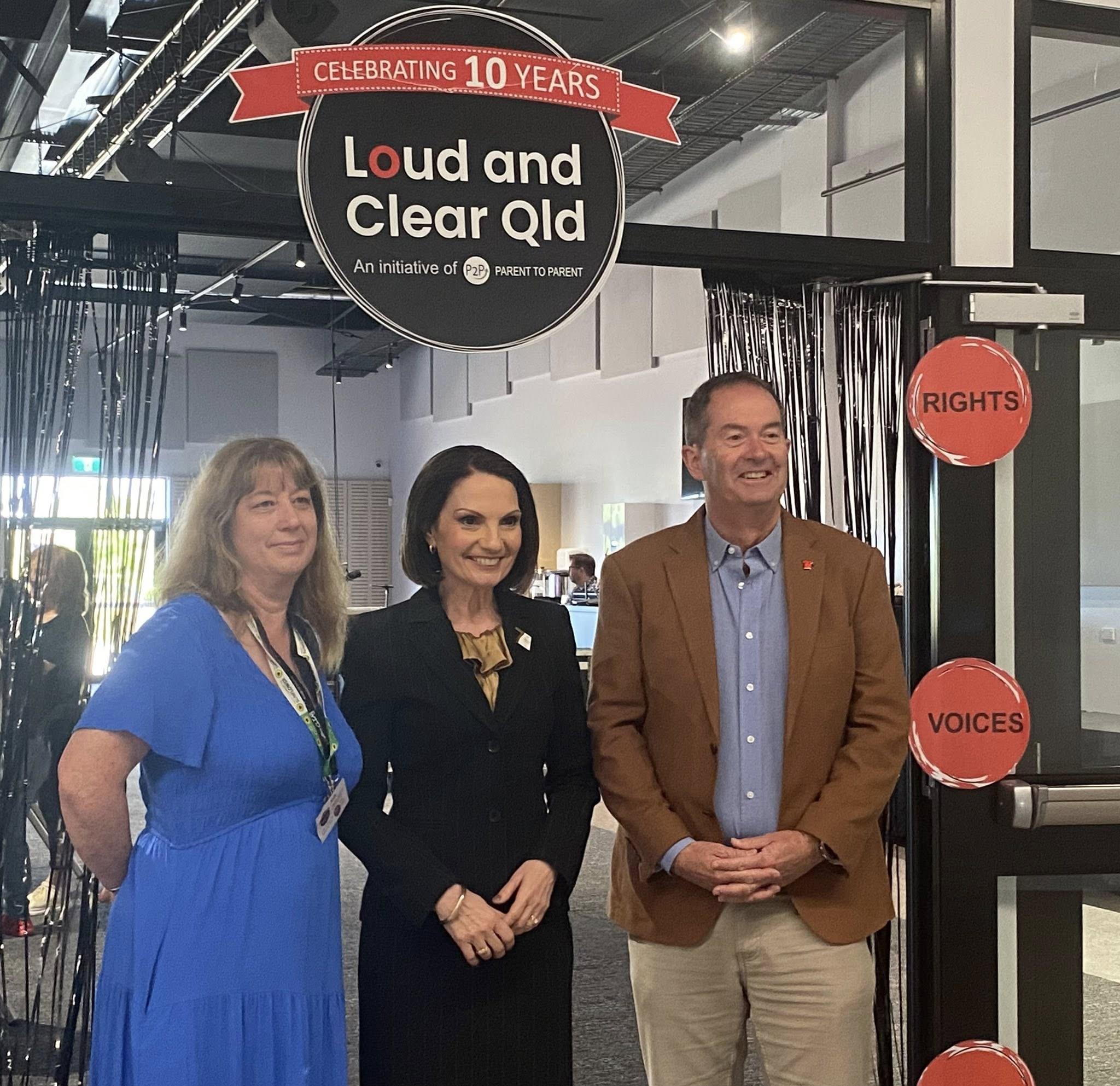
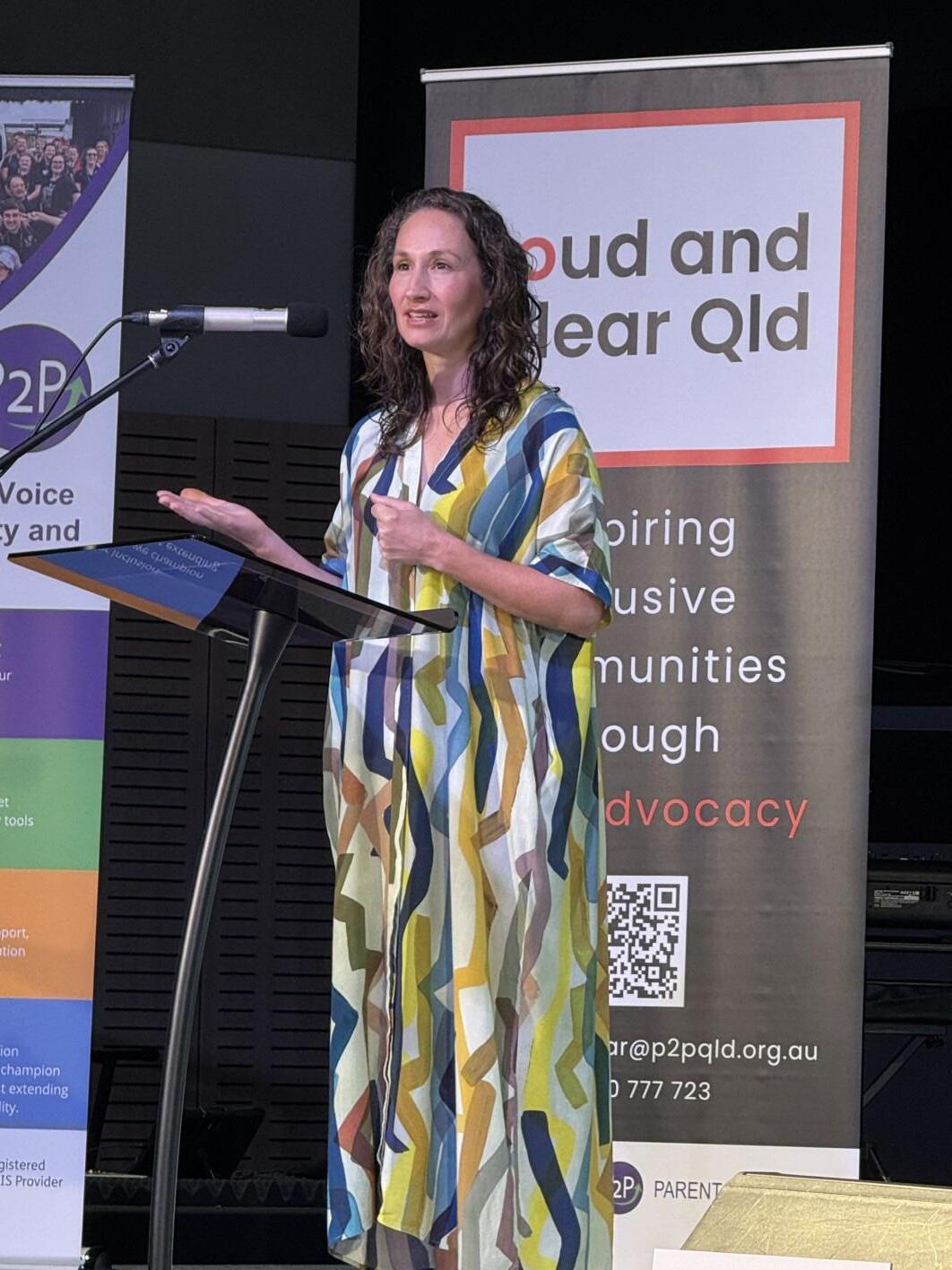
Celebrating 10 Years of Loud and Clear!
WhatsUp in Disability joined the Loud and Clear team for a milestone celebration as they marked their 10th anniversary of bringing communities together through advocacy, learning and music.
This year’s theme was “Rights, Voices and Choices”, and the event brought together people with a disability, carers and families in a safe and inclusive environment. The event provided peer-led learning opportunities, built connections, and gave a space to have fun making lasting memories!
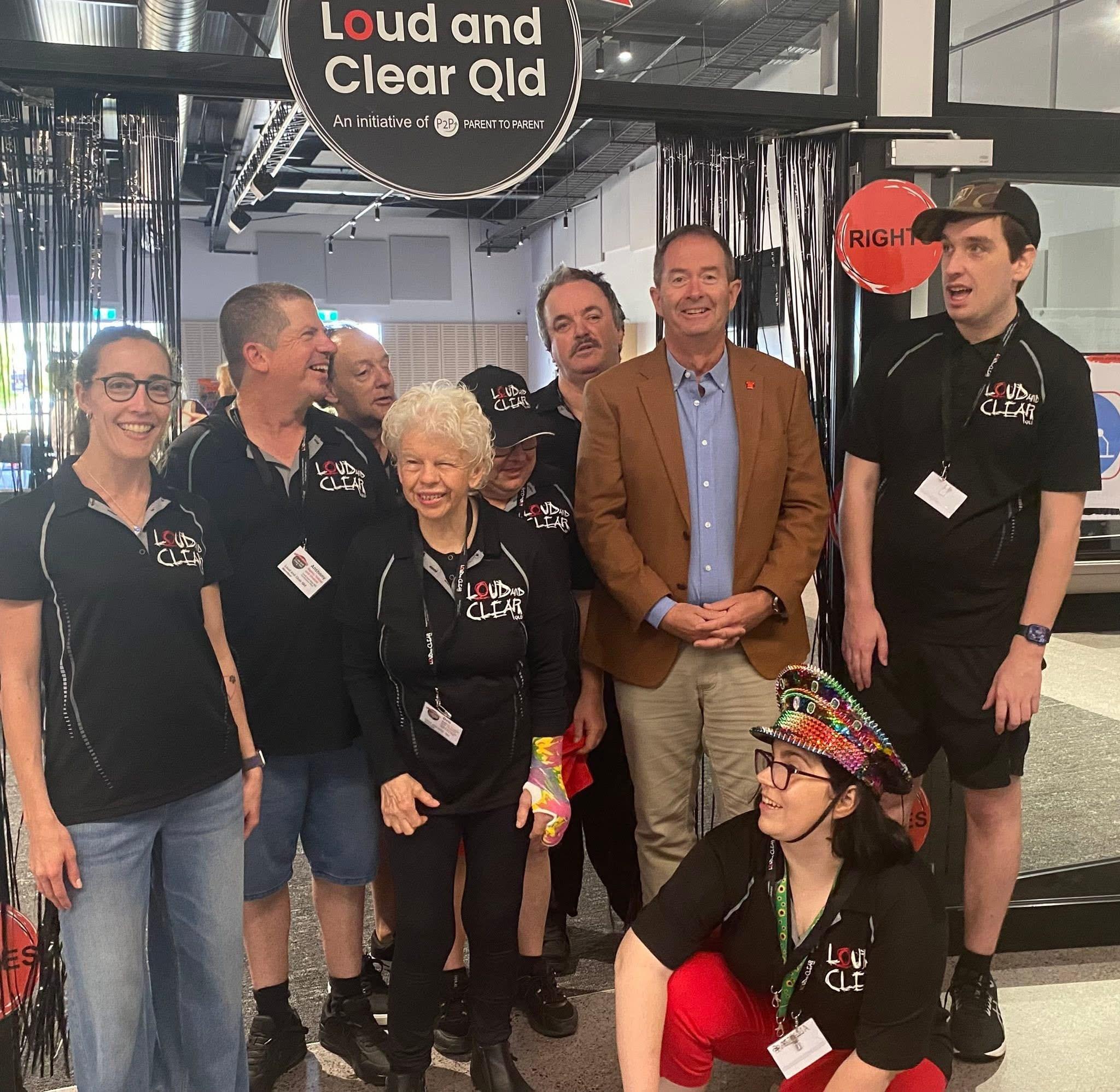

Loud and Clear is supported by Parent 2 Parent Queensland
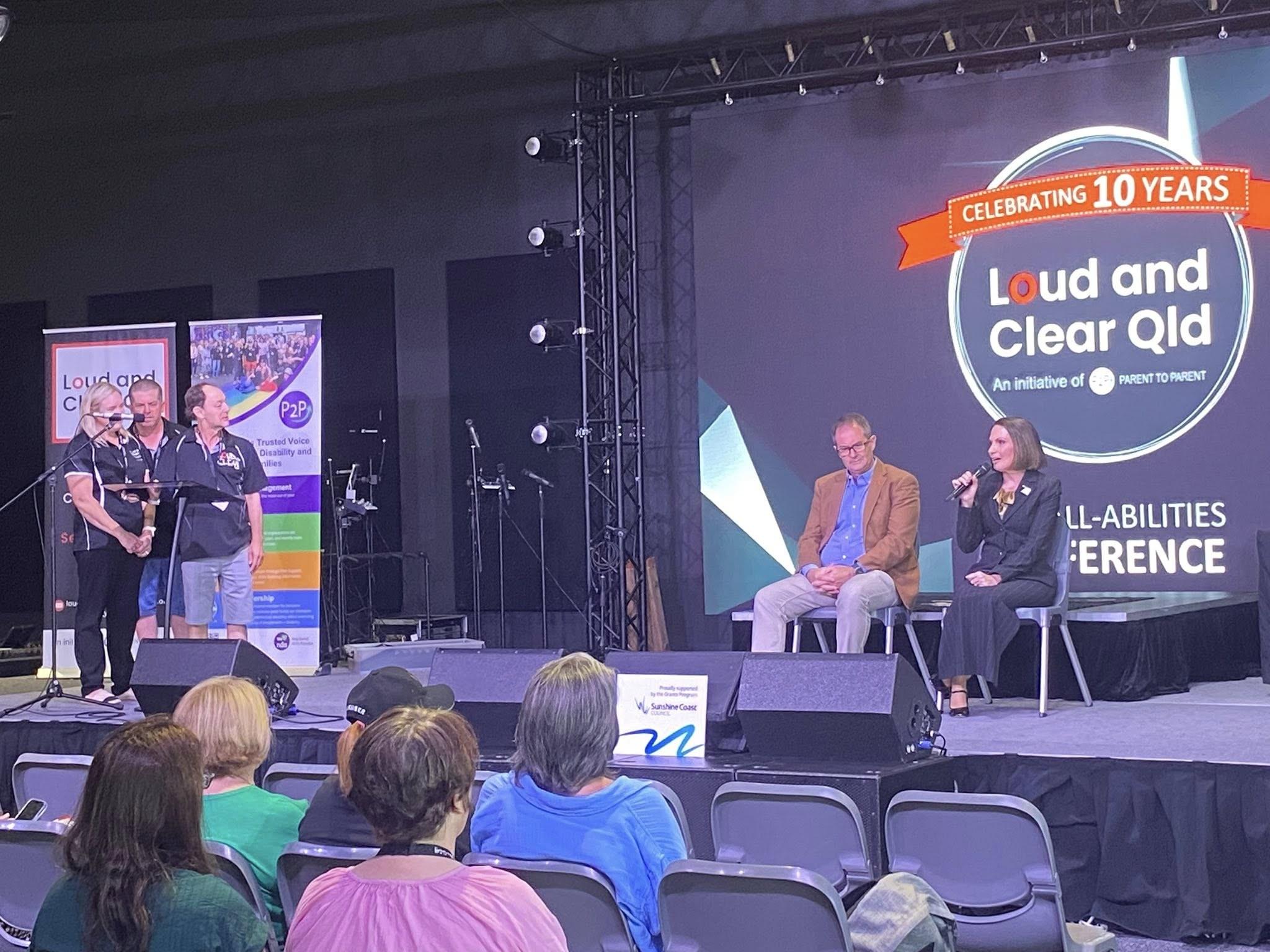


102.7 FM is proud to be out in the community this morning with Hugh Fisher and Steven Paull commentating the

ByStevenPaull


A huge thank you to everyone who joined us for JB’s Chapter III – Oh What a Night at Rumours International!
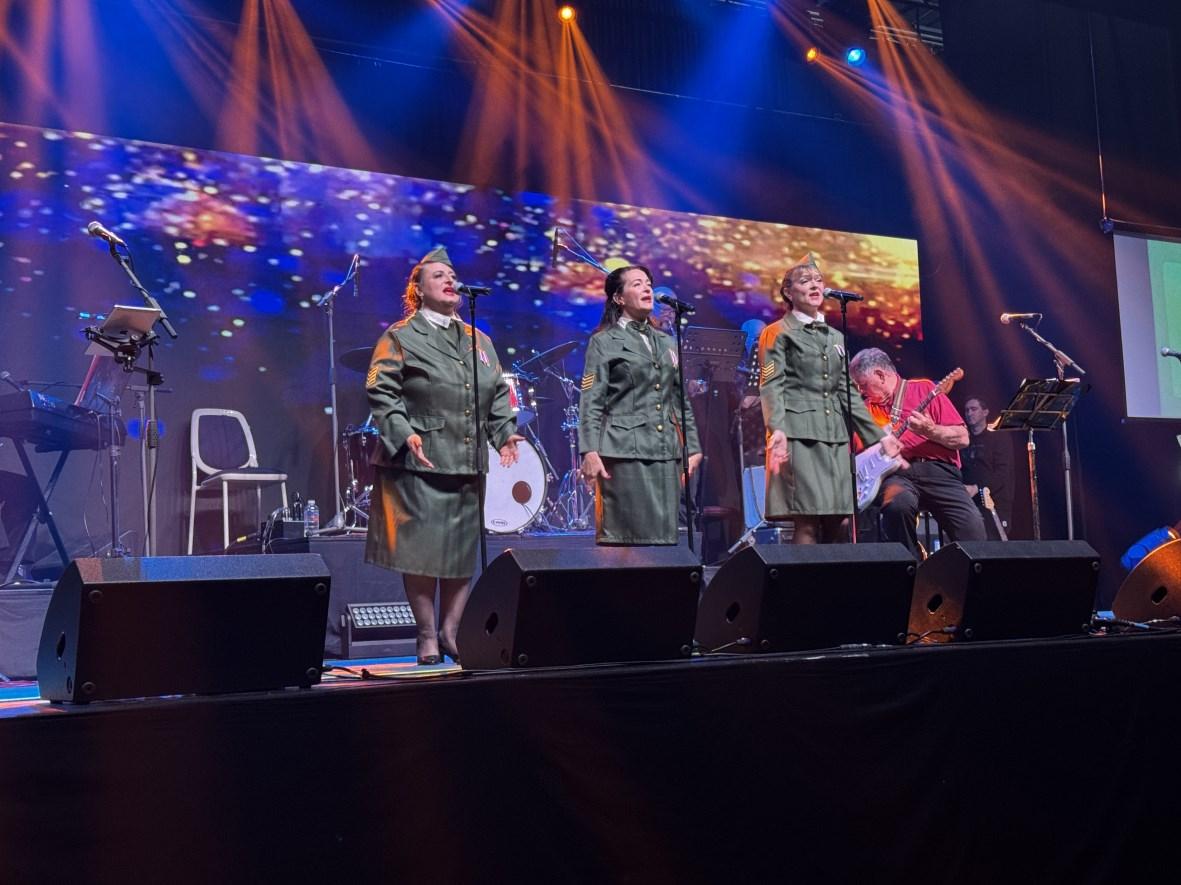
Chapter III and The Gowrie Gals had the dance floor pumping with 60s–80s hits, bringing the community together for a great cause, raising $11,666.55 for the Toowoomba Hospital Foundation.













STEVEN
PAULL President
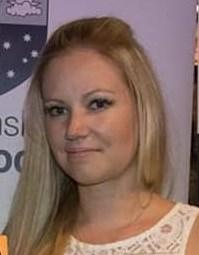
COURTNEY CARROLL Editor

JESS WRIGHT
Secretary
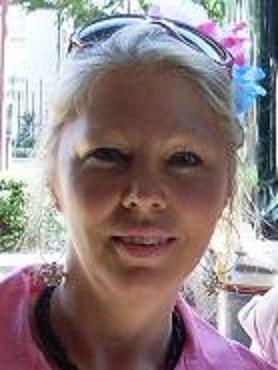
ANN PAULL Treasurer
PUBLISHER: Disability Media Association Inc (Australia)
TELEPHONE: (07) 4632 9559
OFFICE: Paul Myatt Community Centre 11-15 Alexander Street Toowoomba (open Monday to Friday 9:00am-3:00 pm)
E-MAIL: steven@bigdog.au
MANAGEMENT BOARD: Steven Paull (President) Courtney Carroll (Editor) Jess Wright (Secretary) Ann Paull (Treasurer)
CONTRIBUTORS: Bronwyn Herbertson, Sharon Boyce, Aidan Wilcock, Dean Gill, Jess Wright, Steven Paull and many others.
PUBLISHED
January/March/May/July/September/November
ABN: 72 821 350 911
PRINT POST APPROVED: PP 424022/ 1811
Articles and adverts reproduced on these pages are accepted and published in good faith. It is a condition of acceptance that advertisers and article writers accept full responsibility for their advertisements and articles, and will fully indemnify the producers in the event of any claims or legal proceedings against them. Articles published are not necessarily the view of the publishers. Advertisements are also accepted on the basis that they do not conflict with any discrimination laws or other laws currently in force.
Although we are a volunteer and non profit organisation, we are not funded in any way, and have to cover costs of this publication by charging for advertising. WhatsUp reserves the right to adjust, resize or move advertisements when necessary to allow for editing
WhatsUp IS AVAILABLE FROM:
1) SUBSCRIPTION (In advance) $25 per year (includes delivery/postage).
2) A single edition of WhatsUp can be bought at the office and selected outlets. You may also subscribe by using the form on the outside cover.
3) Reference copies are held in the Tourist Office and Toowoomba Library.
COPYRIGHT
Copyright Protected. All pages are subject to copyright law and may be copied only with the permission of WhatsUp. Copies are not to be used commercially or for profit or for personal financial gain. Permission may be granted to copy only if the purpose is to give it away to others for their personal interest but not to any other organisation or service.
All articles are accepted in good faith and are not necessarily the view of the Editorial team or Management. Articles are accepted on the understanding that in the event of any claims against WhatsUp, the writer of the article will take full responsibility and indemnify WhatsUp in the event of legislation against it. Articles are also accepted on the understanding that the contents do not breach any Disability laws or other legislation currently in use.
WhatsUp In Disability is provided as a Master Copy to individuals and organisations or to view online at our website. We are environmental friendly, we do not print any more copies than is absolutely necessary. We prefer and encourage the practice of passing the magazine from person to person or copying the whole magazine to pass on to others. Permission is needed to copy (see Copyright above) When copying the magazine we require that the pages be marked ‘copy’.

TRC Mayor and Local Disaster Management Group (LDMG) chair, Cr Geoff McDonald, said it was important for residents to heed Get Ready Week’s vital messages.
“Preparing for disasters saves lives. When a natural disaster or extreme weather event strikes, every minute counts – people need to act quickly to stay safe,” Mayor McDonald said.
“It’s crucial that residents are ready by knowing their risk, have a plan and an emergency kit ready to go. A few simple steps now can help to safeguard your family and property before a disaster occurs.
“Our community knows all too well how quickly disasters can hit. Council has a Local Disaster Management Plan (LDMP) ready for when disasters strike, and Get Ready Week is about ensuring every household has an individual plan too.
“It is important for residents to be fully informed about the best precautions they can take and how they will respond in an emergency.
“There are free resources which residents can access to ensure they are prepared for extreme weather, including Council’s Disaster Dashboard and the Queensland Government’s Get Ready website.”
The Toowoomba Region is highly likely to experience bushfires, severe storms, floods and heatwaves, given the right conditions, so residents need to anticipate what could happen and be aware that the situation can change quickly. For more information go to: https://disaster.tr.qld.gov.au/
www.whatsupindisability.org
To contribute to the next edition please send your article to steven@bigdog.au
by the 20th February/April/June/August/October/December to reserve your sponsorship or story