Throughout the development of my design career I found myself enamored with the inherent beauty found in light and nature. I poured into garden design, xeriscaping, and material to imbue an idyllic ambiance in each project. I aim to look to nature as the ultimate precedent and weave historical context with ecological practices to form buildings that are healthy for both the occupant and the world. I also have developed an interest in deconstructing architectural design and method through literary critique and analysis.
selected work
pg.3 the hiveline hexagonal urban planning
riverside connections
mainstreet activated festival space 02 pg.11
03 pg.17
cave-themed battle arena 04 pg.23
architecture of dead space 05 pg.31
the hiveline
ivan bernal // kent state university // dadeland-miami // 2023
Brief
The studio will develop highly surgical design interventions to programmatically challenge as well as charge the ten-mile “Underline” project developed by James Corner Field Operations for Miami, expanding on a platform for addressing the housing issues facing the city, immigration, and seasonal activities such as the Miami Fair. The goal is to operate with varying temporal structures that adapt, mutate, and influence their context and produce speculative urban ecologies that address these topics.
Process
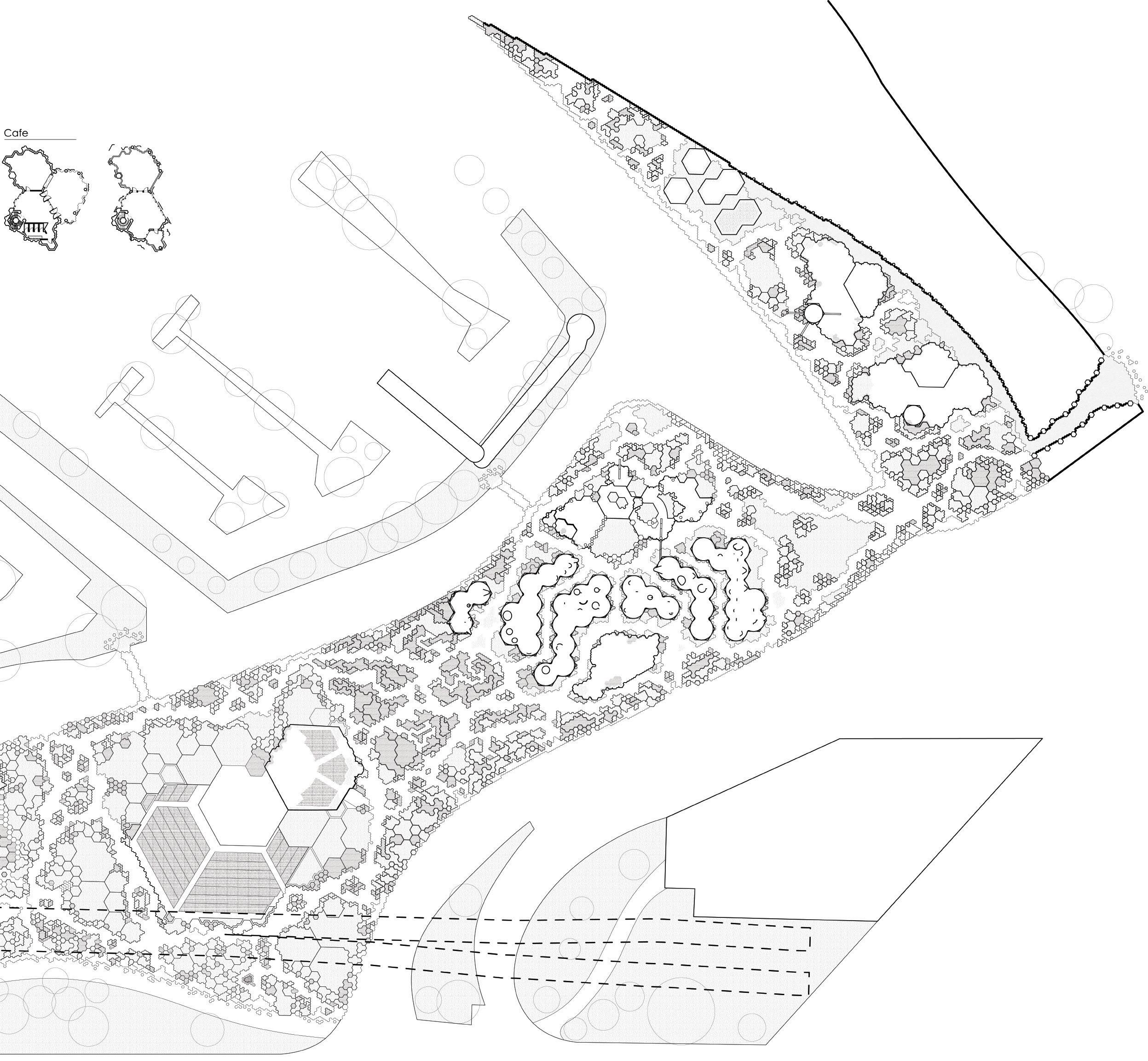
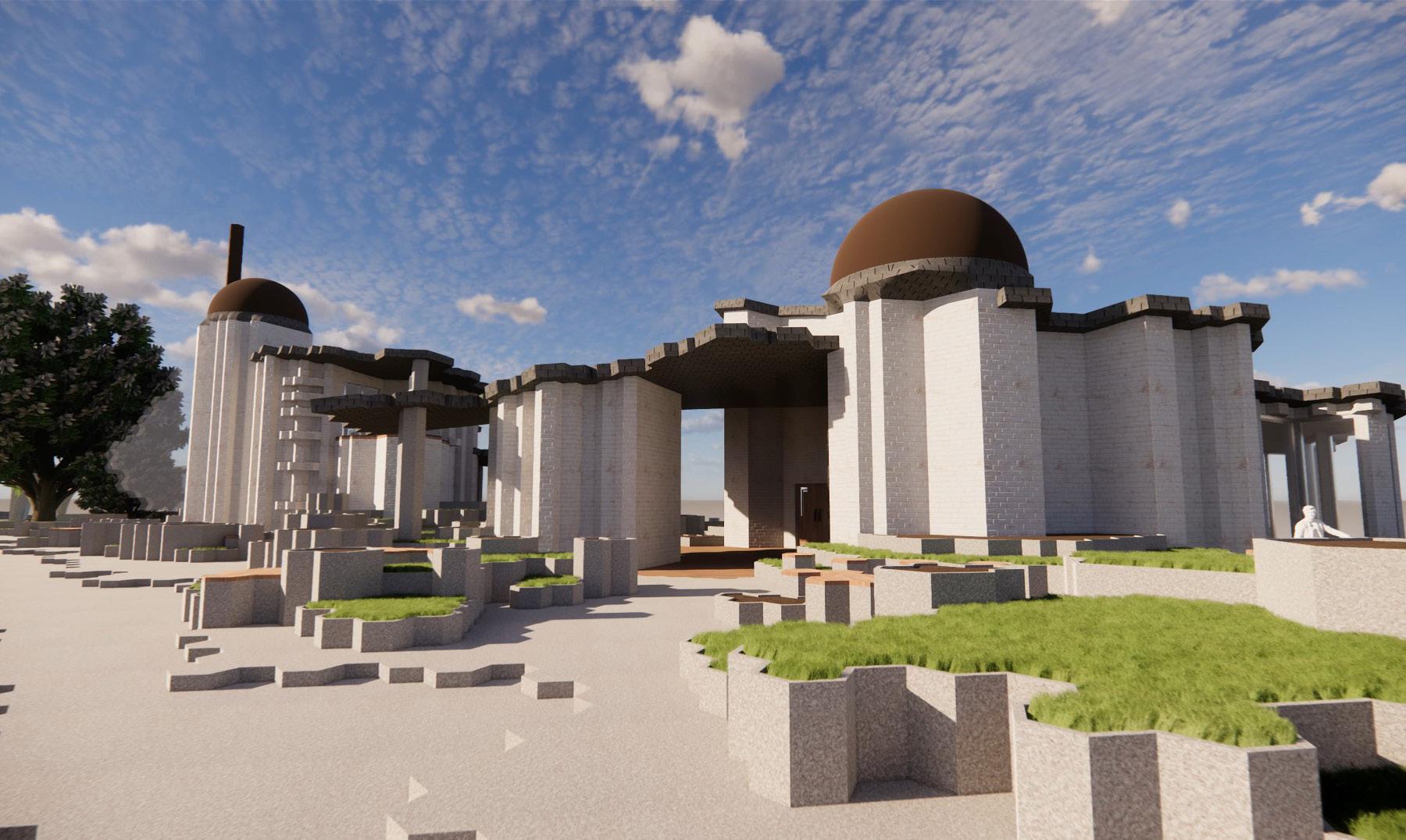
The form of this project was found from analyzing the overlaps and paths created by repeating patterns and changing scale, with the basic unit used to be a hexagon.
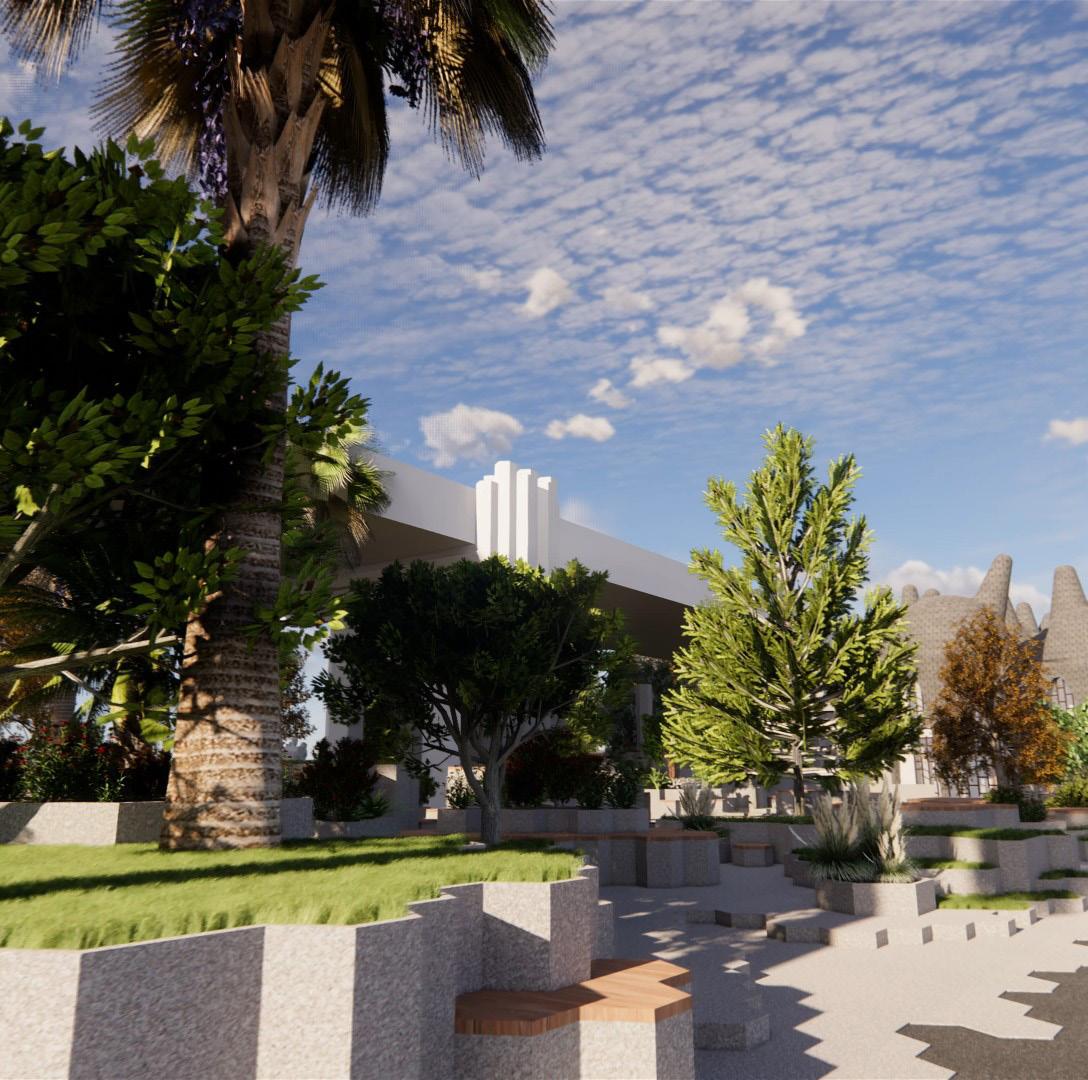
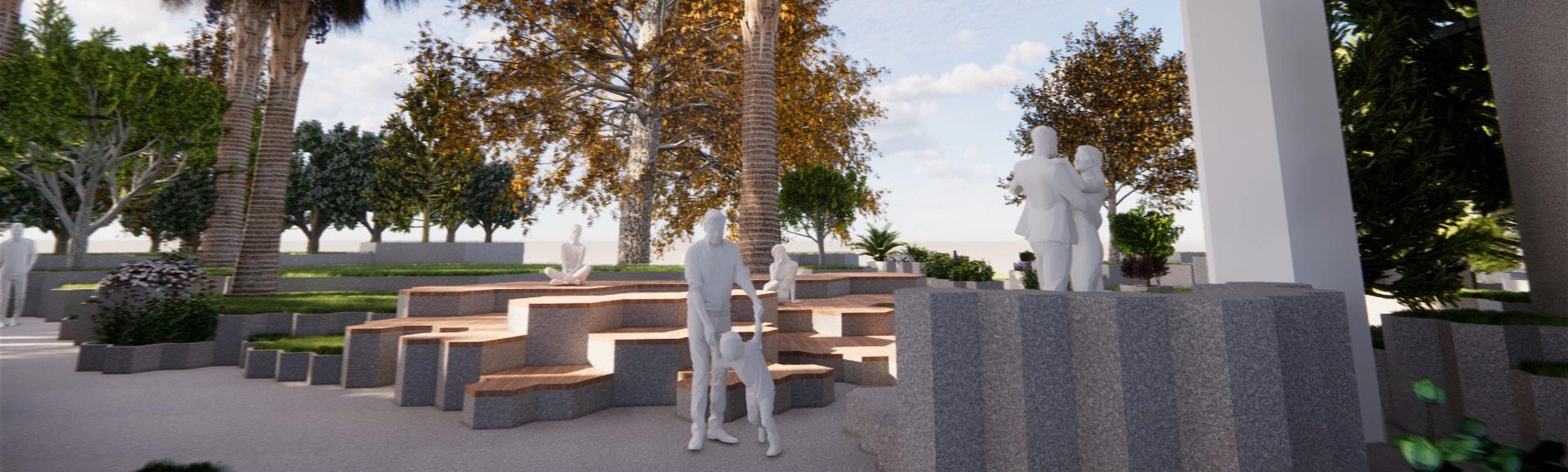
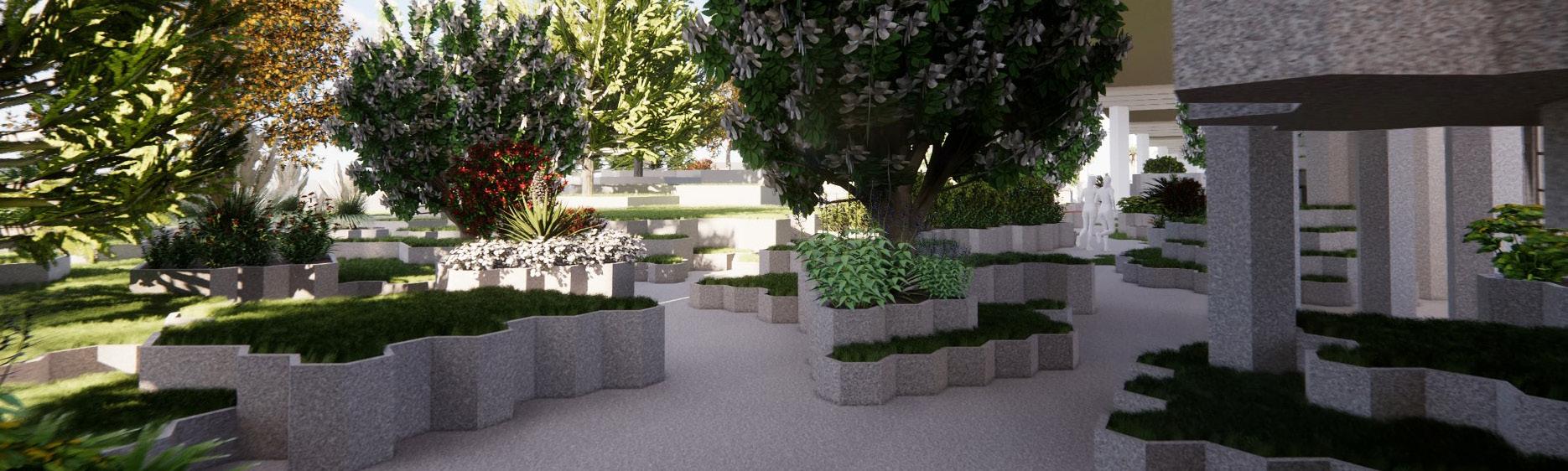
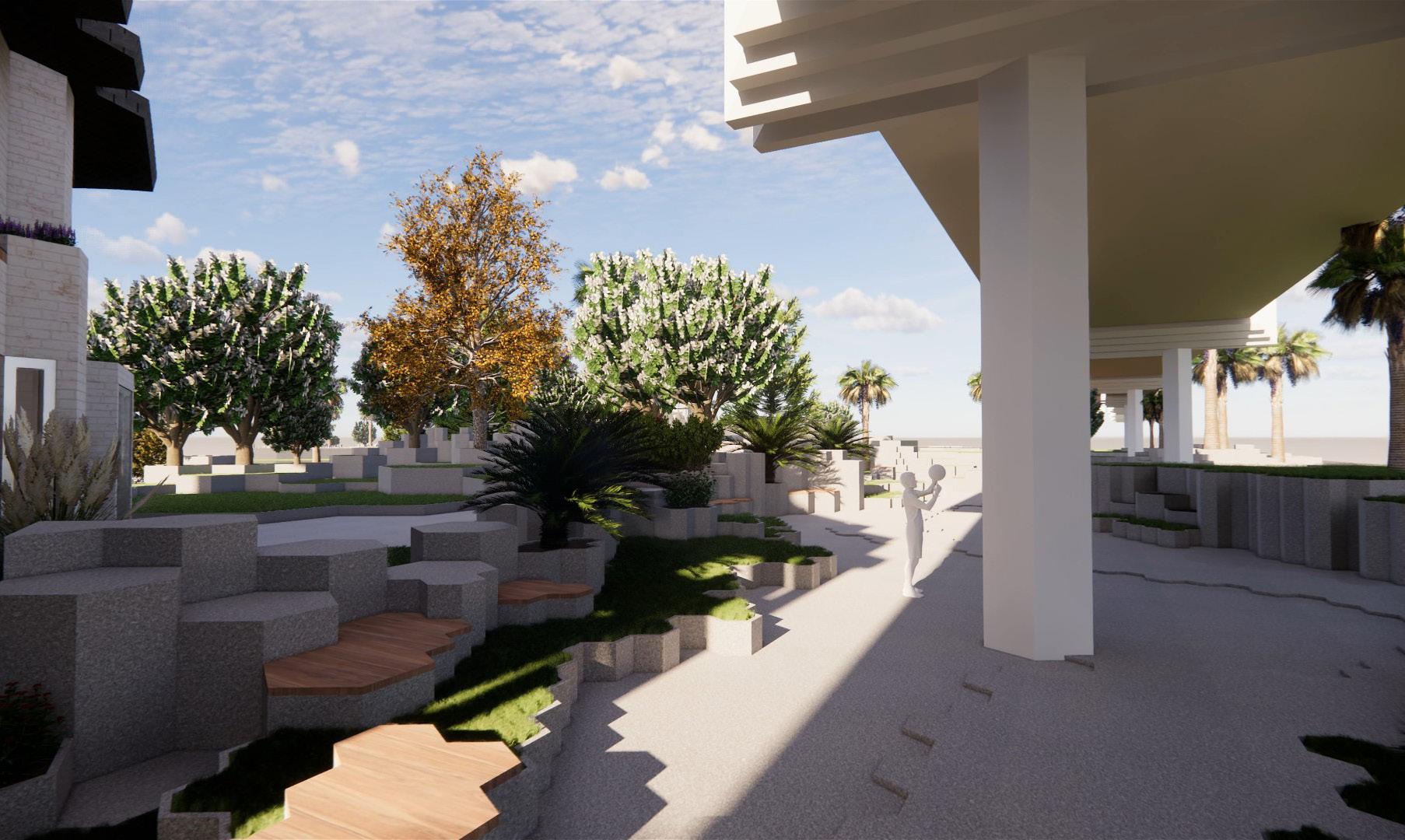
The hexagon is very key to this design as its soft angles are what allow the paths to form and weave throughout the site. The angles of the hexagon provide a sort of subconscious bifurcation which is employed in diverting various
pathways out without making it seem like new paths. The goal was to create an area which developed its own ambiance outside the city and an important part of achieving this was a subconscious isolation, achieved through the slowly winding labyrinthian path system.
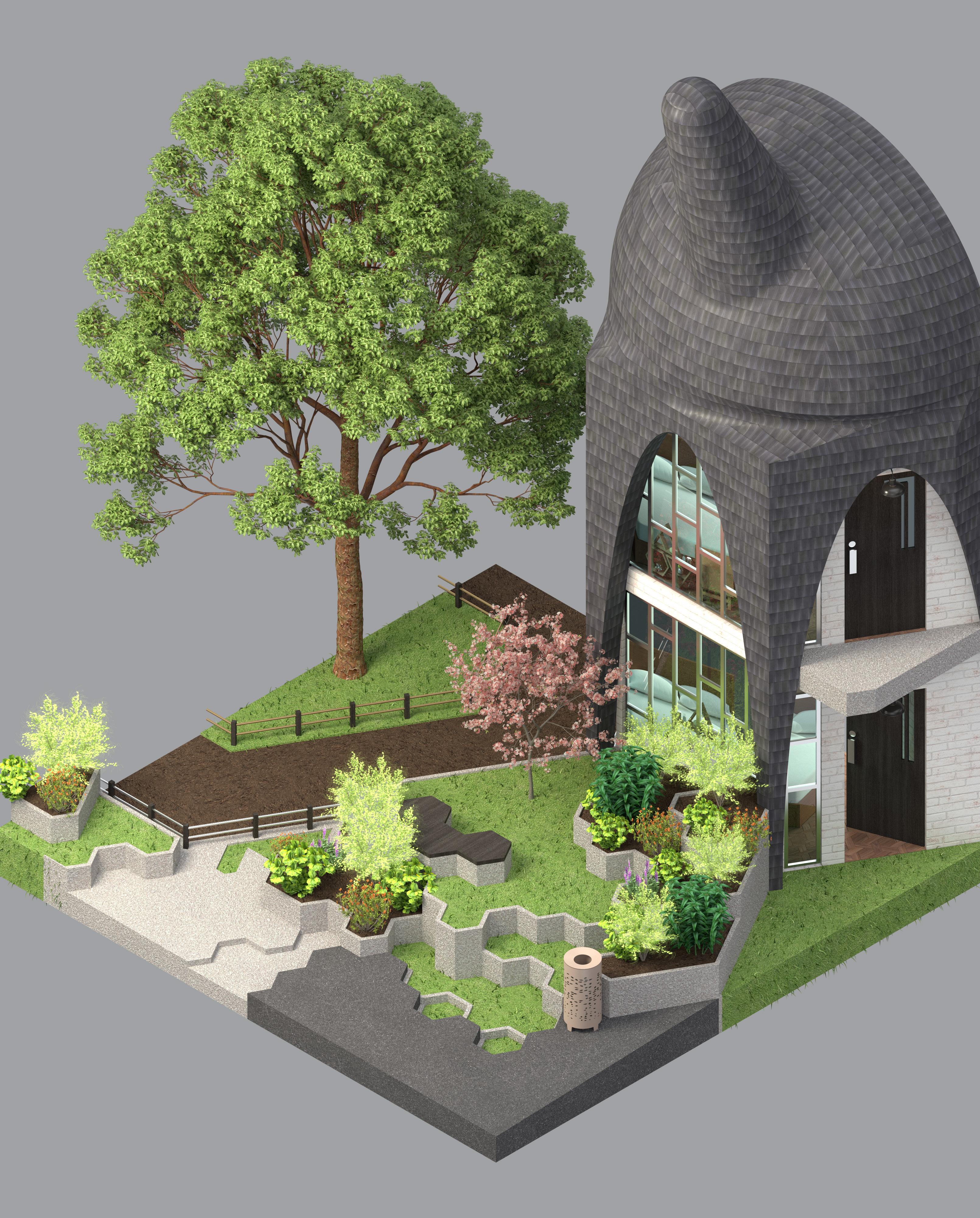
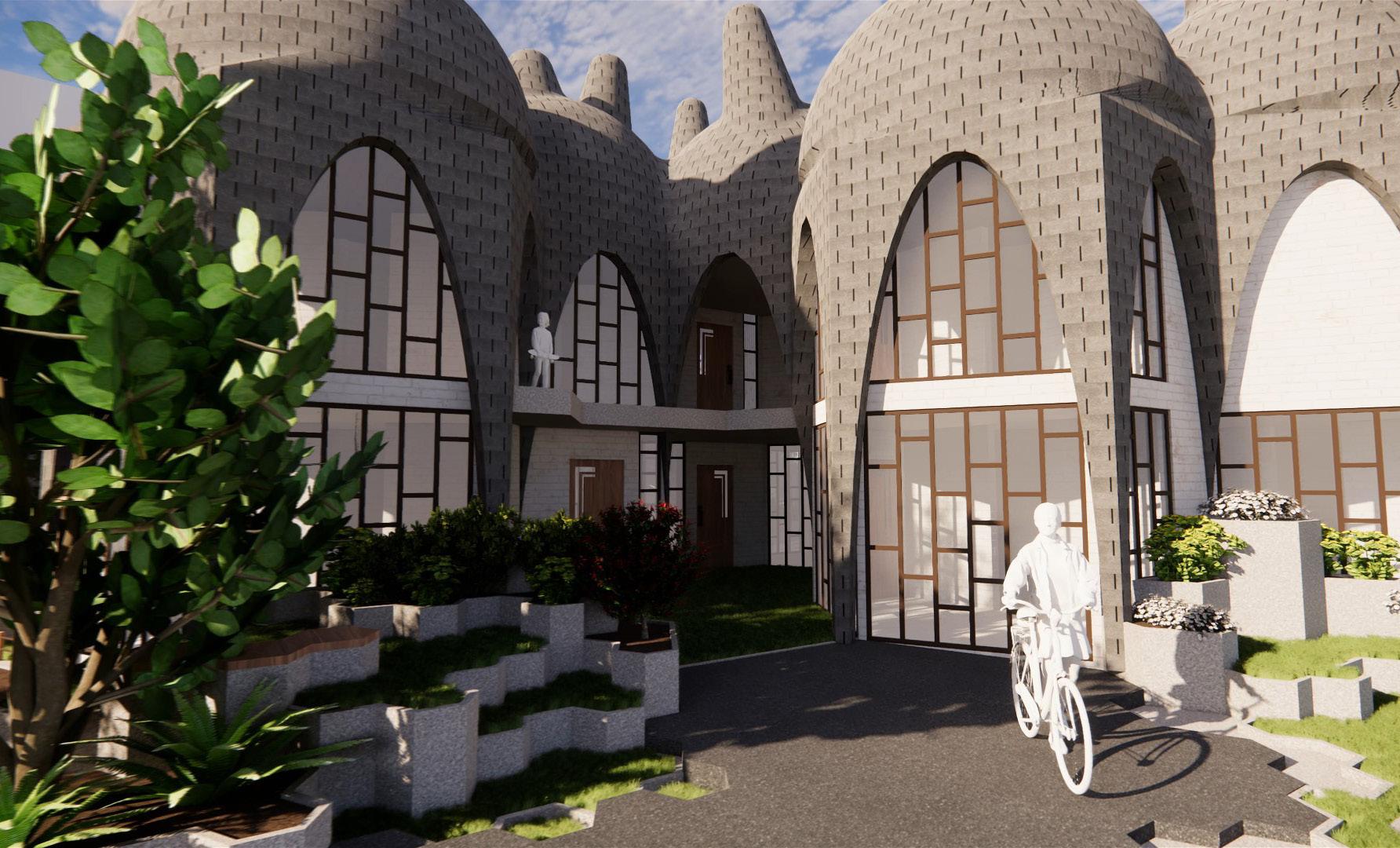
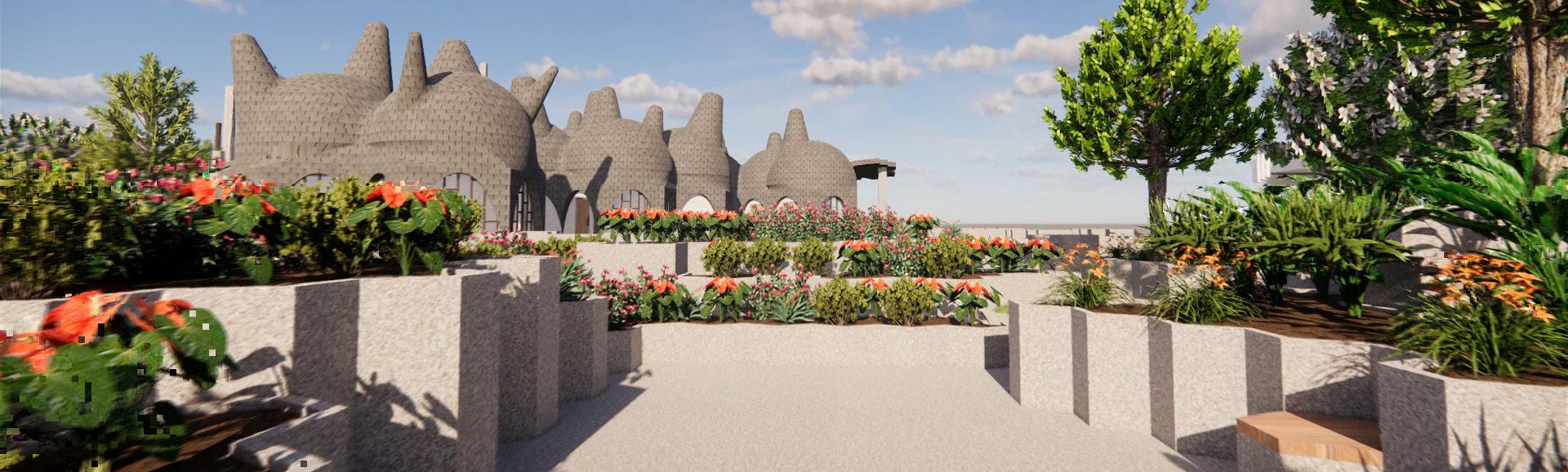
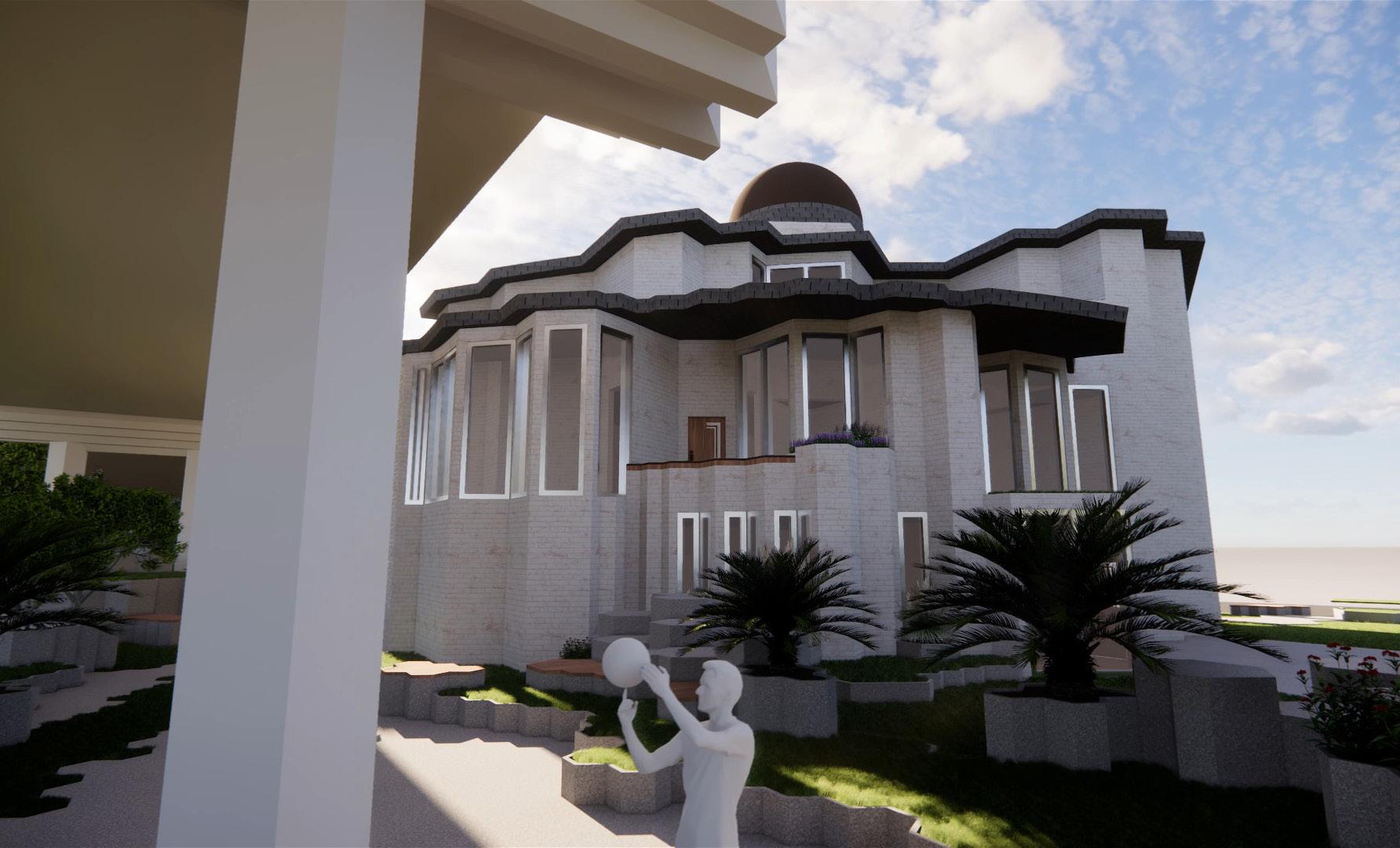
The project was required to have a form of housing, of which I chose a dormesque space that would be able to house queer youth who are kicked out of their homes. As the site location was in Florida, an area bordering on totalitarian genocide when it comes to queer people, I wanted to be able to create a safe space for those targeted by violent design, law, and culture. An important aspect of maintaining the safety of the inhabitants in a design sense came with the roof. The Clark Thenhaus-inspired forms soften the edges of the structures and envelop them with a tensile curtainlike form. Seen from above the housing is hardly noticeable, and from a distance it’s hidden behind the urban-scape, requiring one to actively seek out the site to be able to see and access it.
A form of entertainment was also needed, relating to the Miami-Dade County Fair. I already knew I wanted to do something endemic to really own the site, so after searching through the preexisting events, pig racing caught my eye. It was so strange, so rare, that I felt it had to be included to truly create an isolated piece that could only exist in the site it occupies.
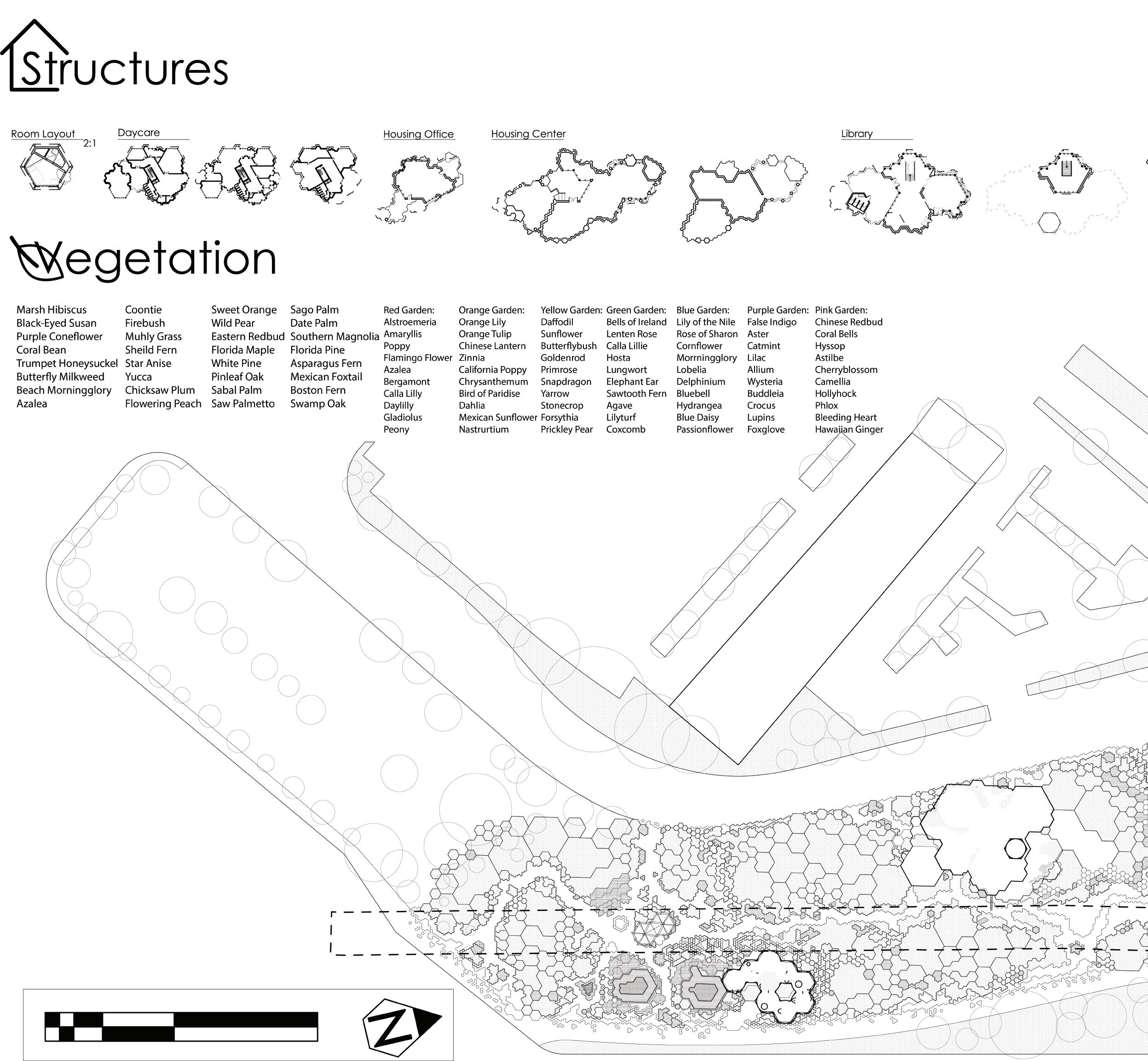
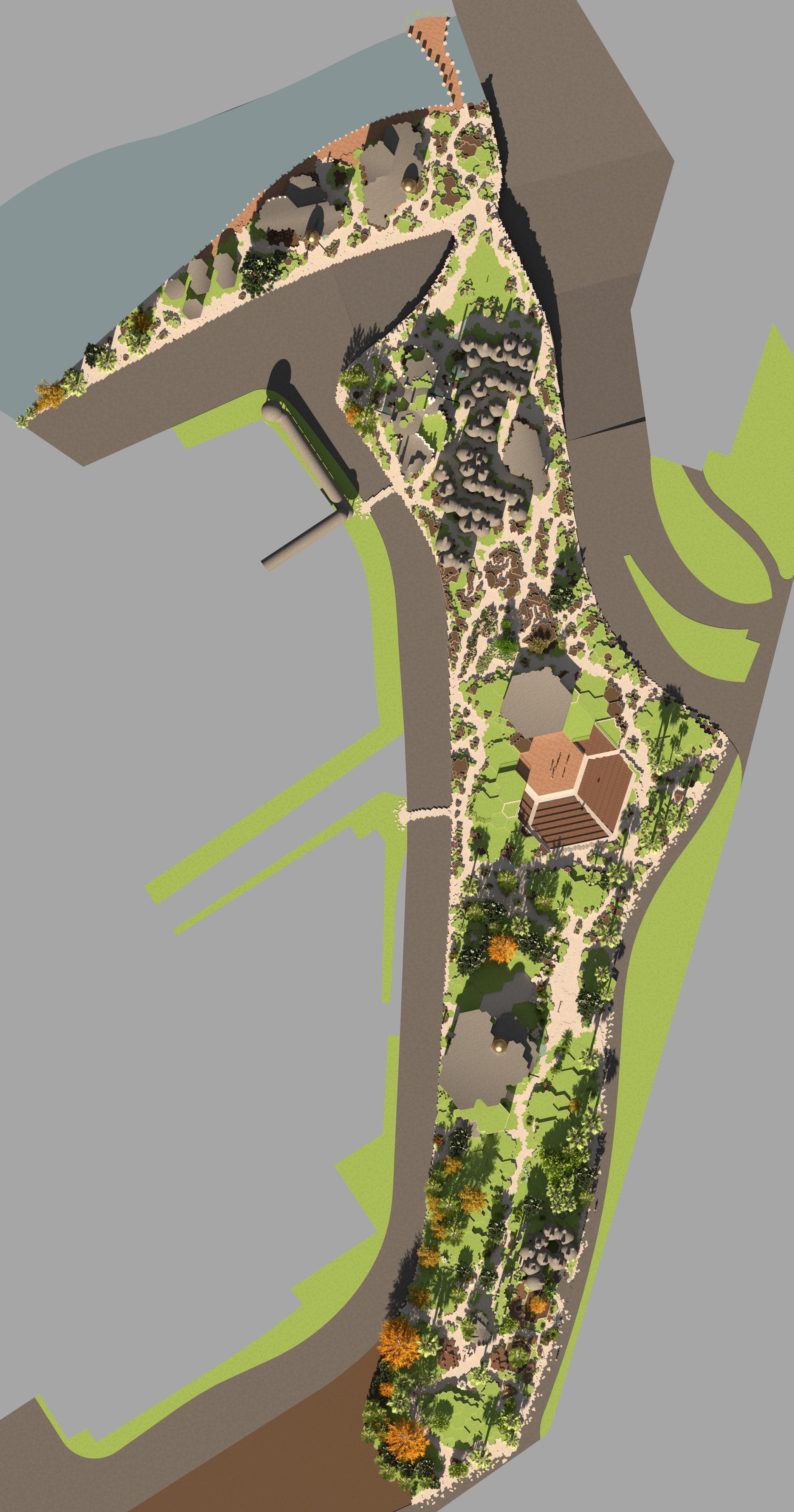
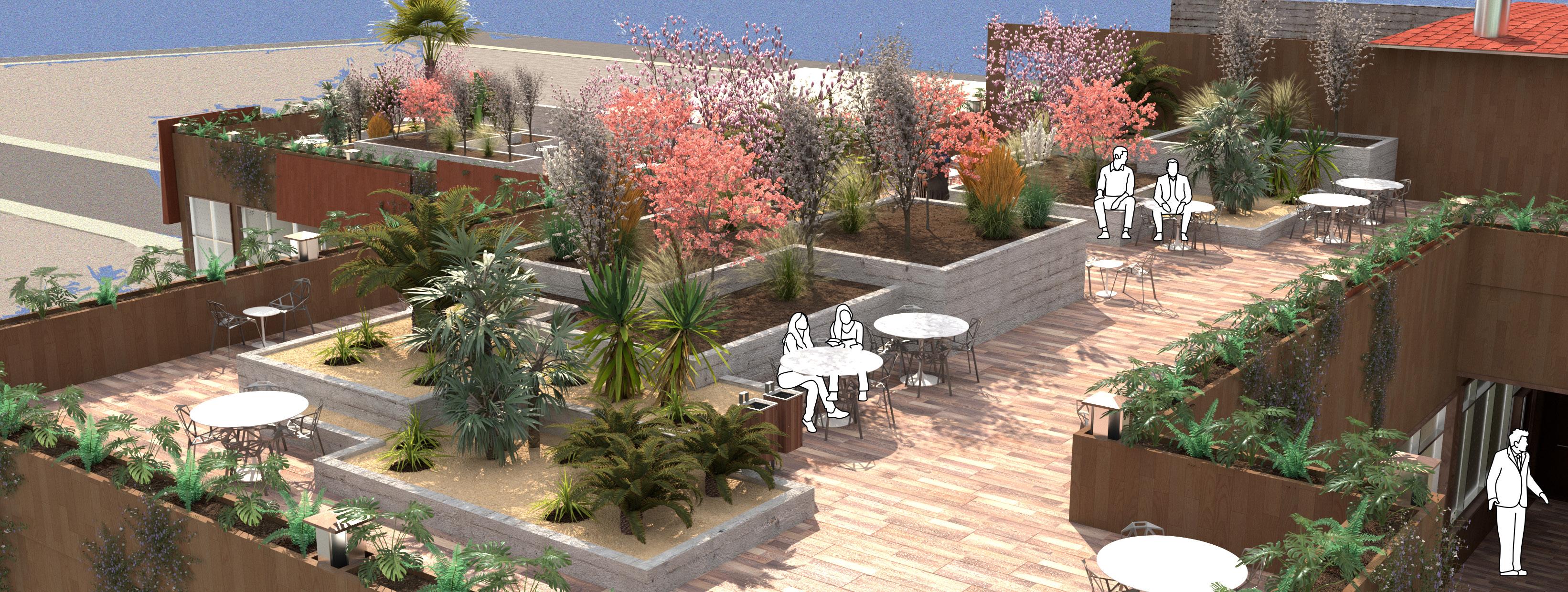
Gardens and fields populate the design, creating an ecologically sound oasis of life within a concrete jungle. The two main groups of gardens include areas of landscaped natural vegetation, used at the highest frequency,and the rainbow gardens, which are only employed in a dedicated area within the center of the site. As the name suggests, the rainbow gardens are a collection of flower beds each sharing a color. However, while all the plants share color characteristics they hail from all over the world, communicating the rich cultural diversity and beauty in Miami.
site plan with included vegetation and plans of structures
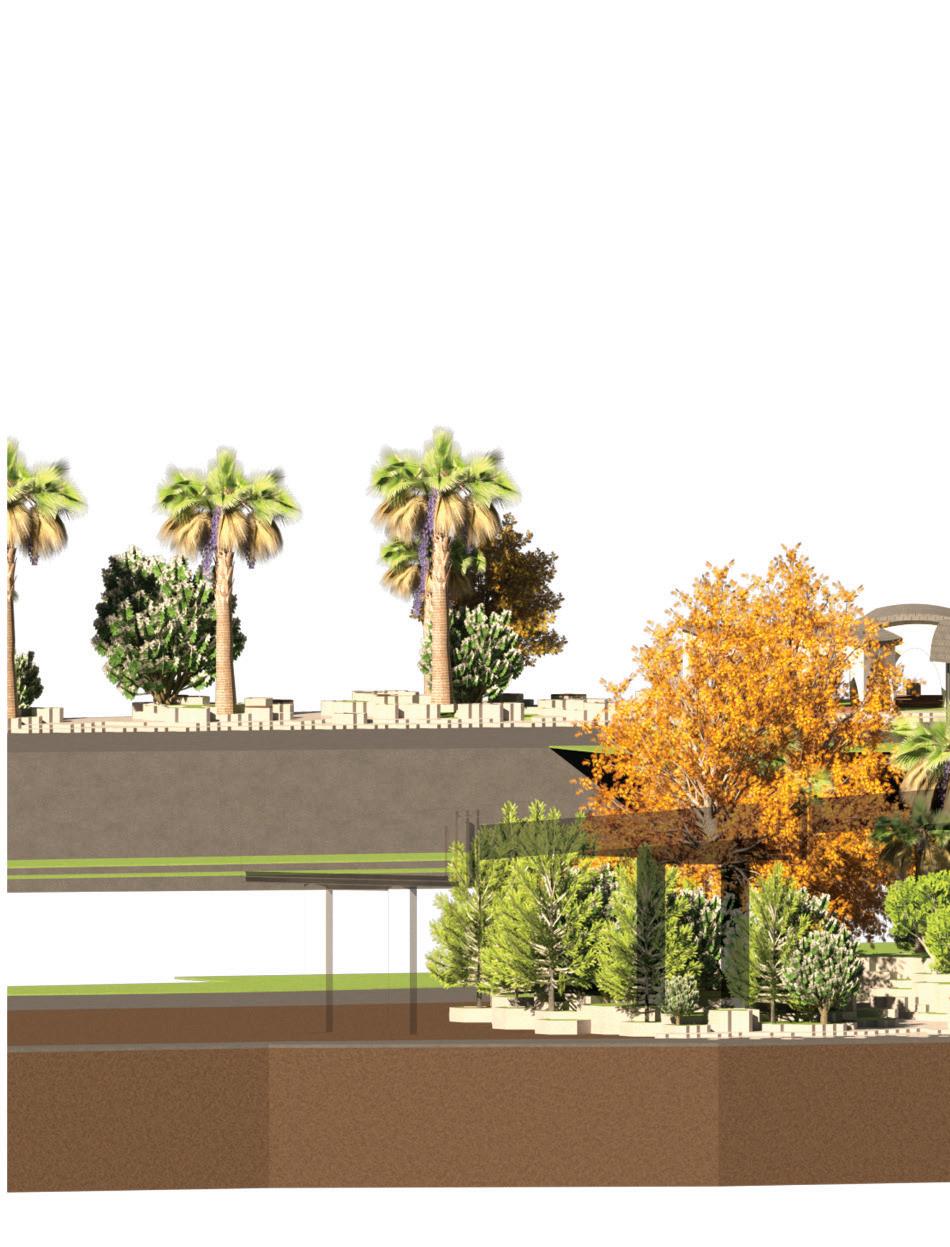
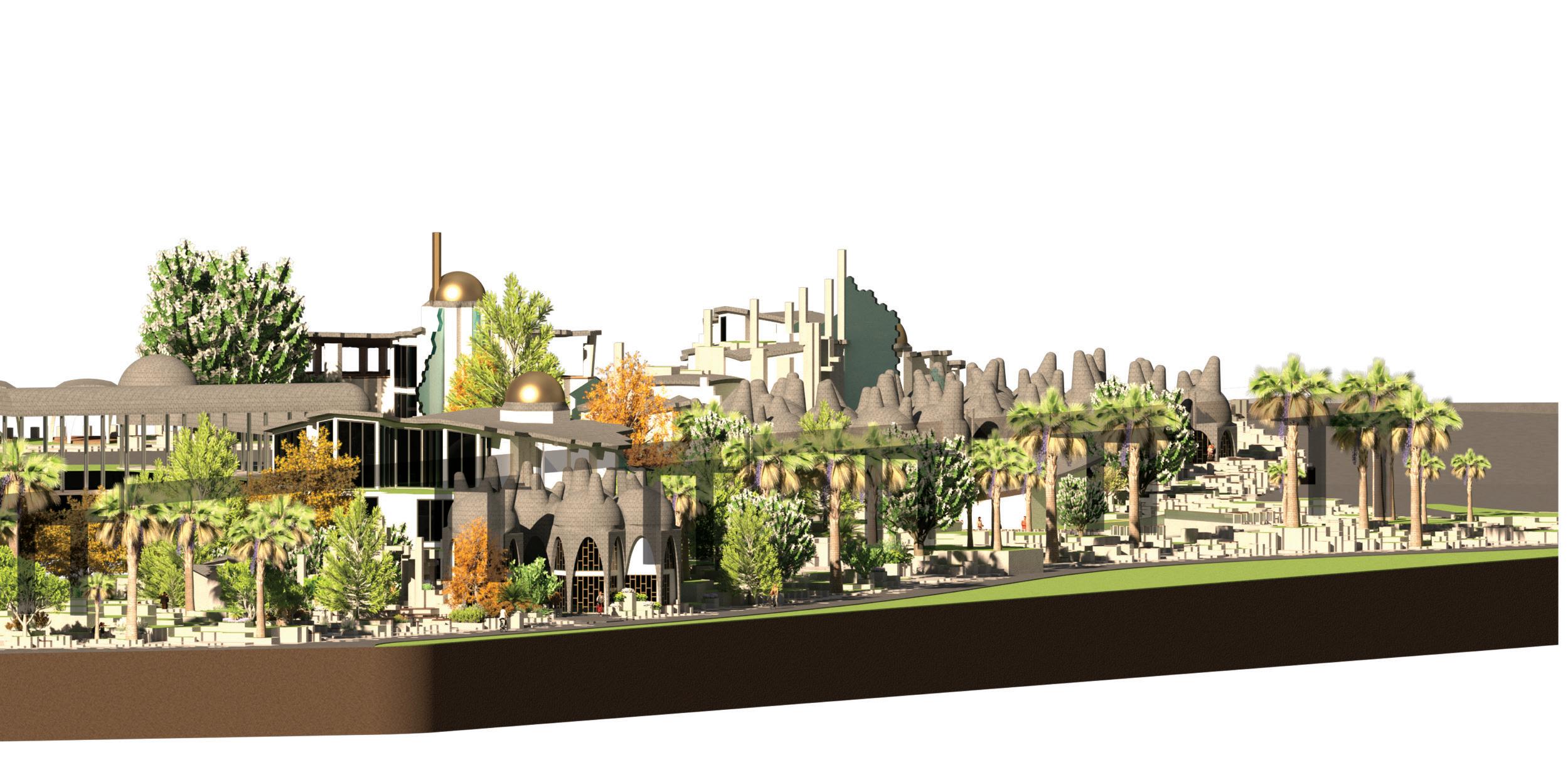
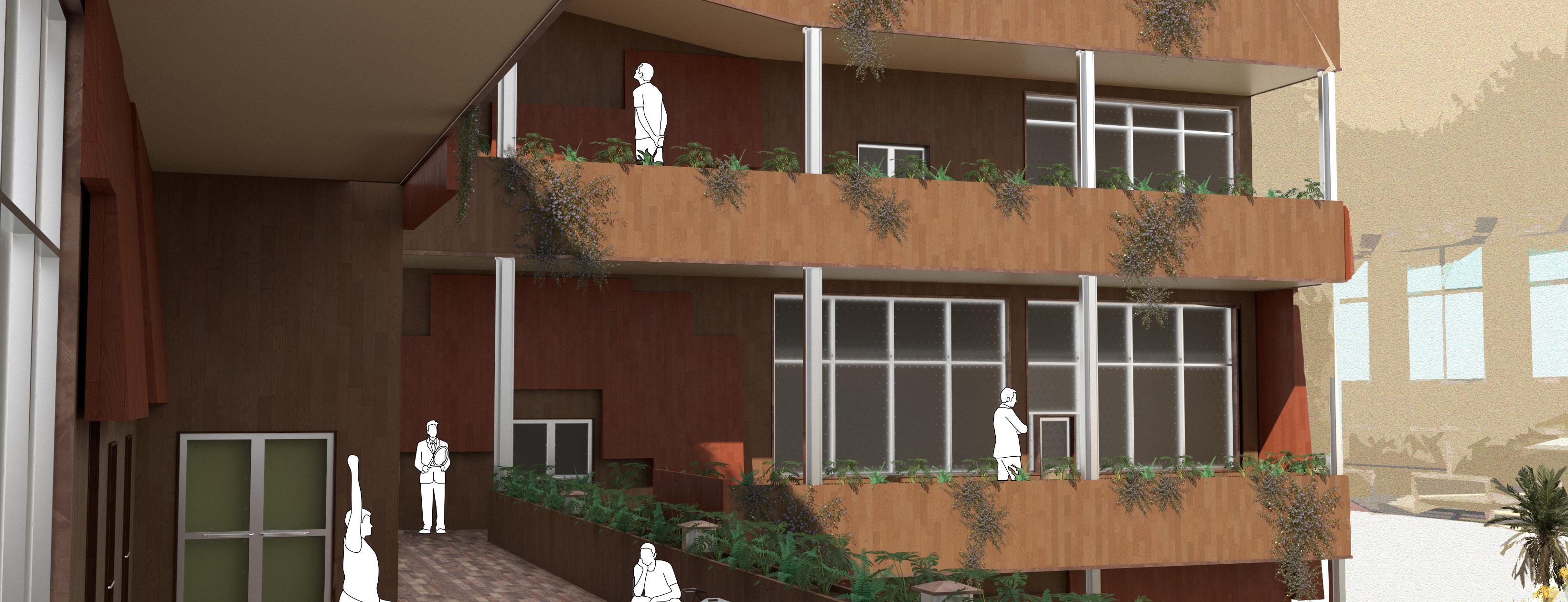
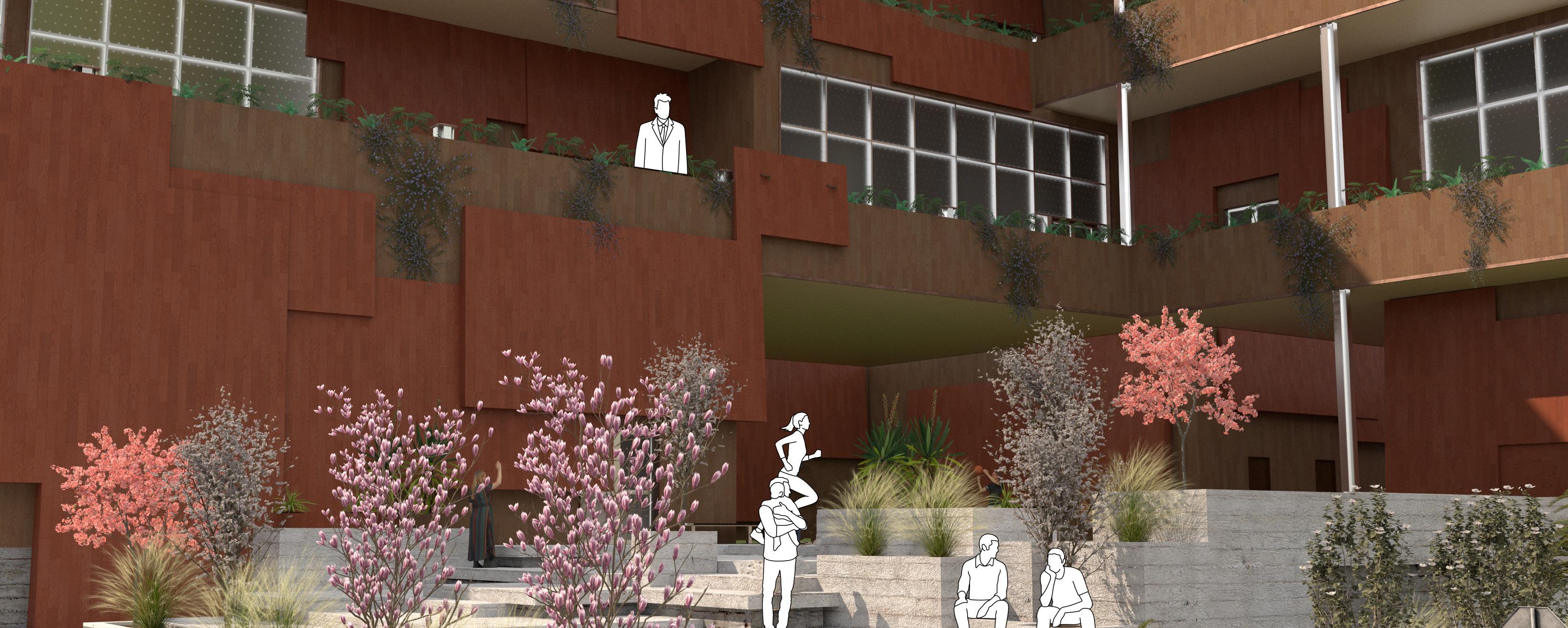
render of long side of the site
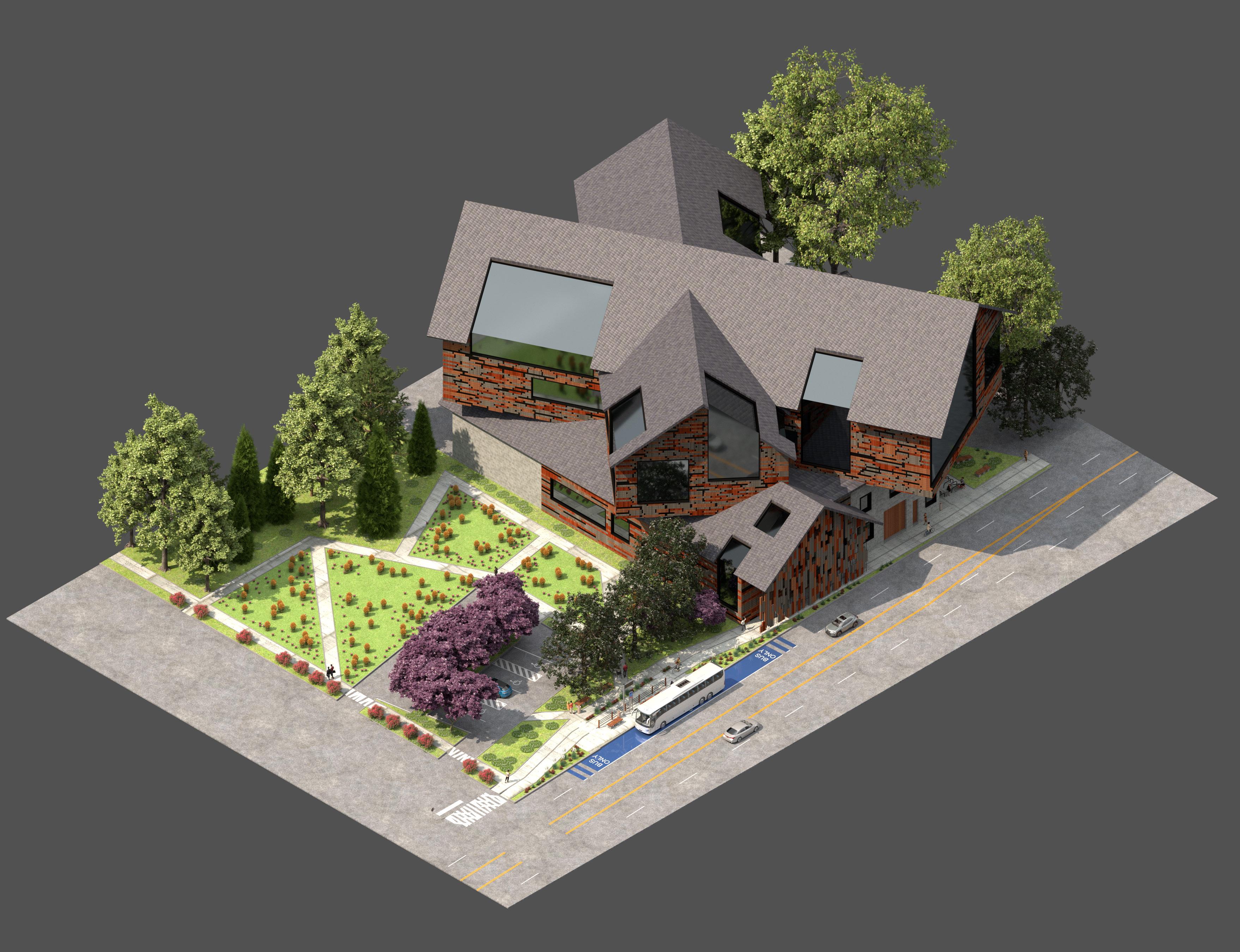
aerial render
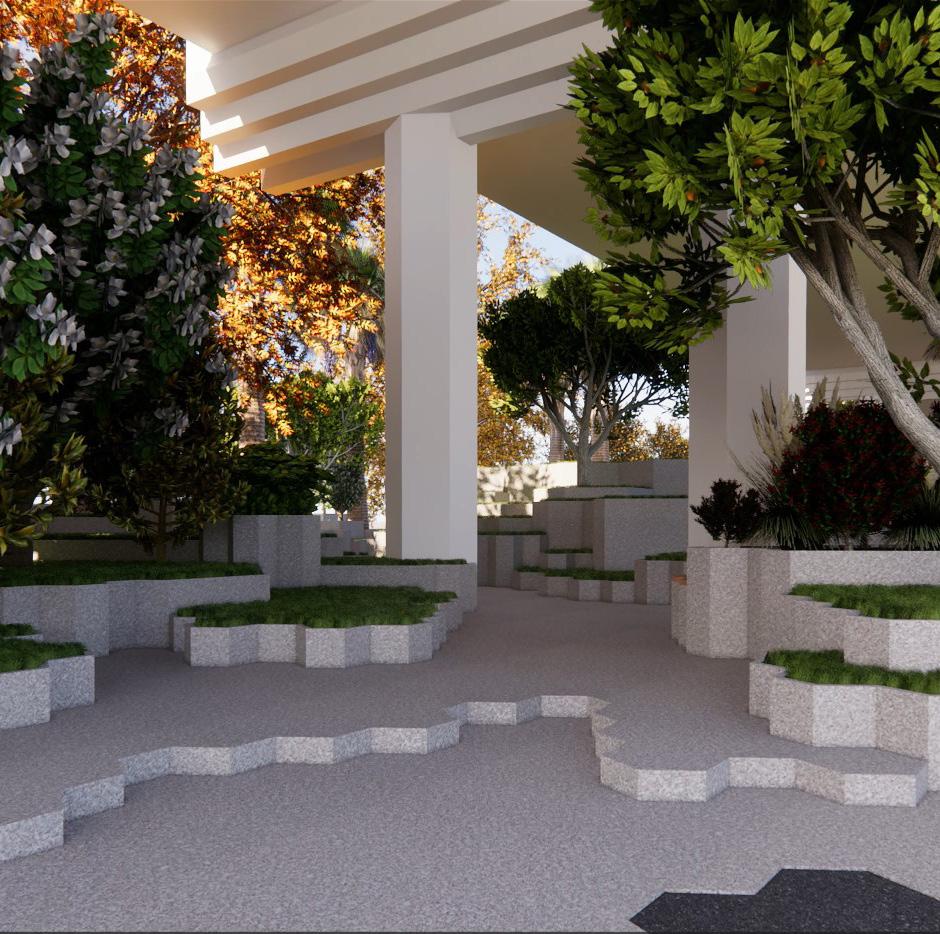
entrances onto the site from the main road
giARNOdini
alberto francini // kent state university, florence campus // florence, italy // 2022
Brief
This project, which was done during a semester studying abroad, had the goal to develop a sparse riverside area. The project focuses on the Arno, a massive piece of both cultural history as well as a large piece of the physical landscape of the city, and a remaining torrino, a remnant from the medieval history of the city.
Method
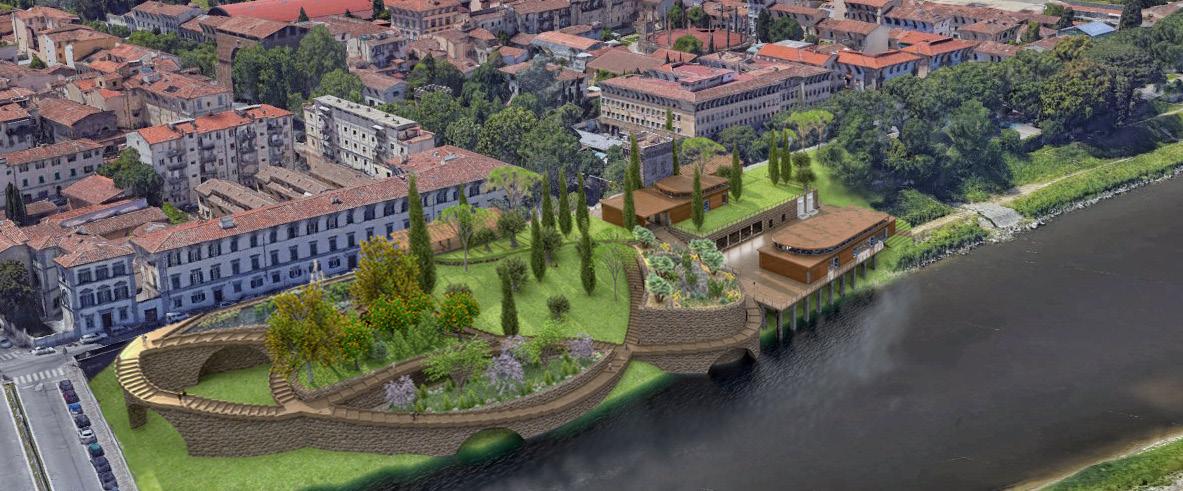
I decided to use the river bank space to create a lengthened threshold, a transition space between the urban and natural.
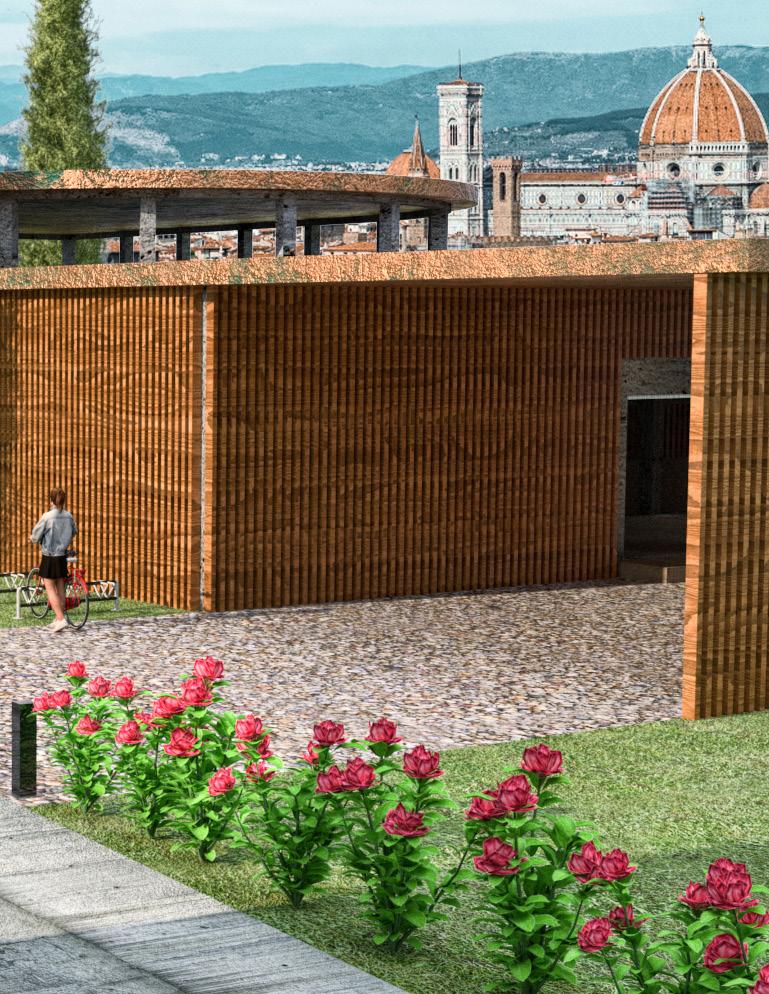
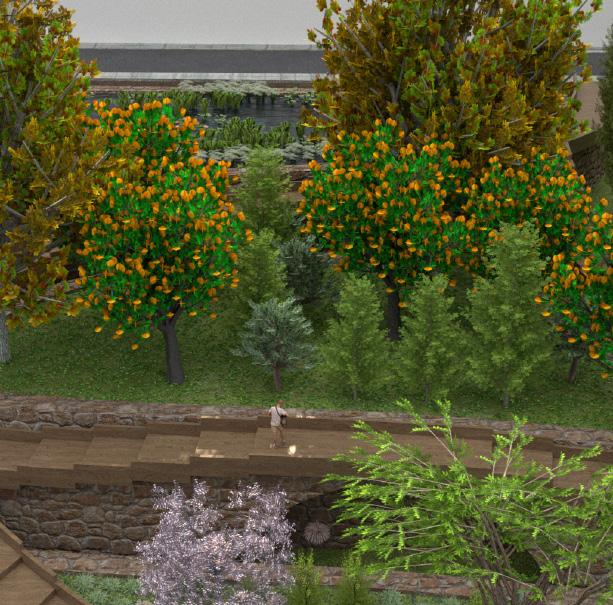
Starting at the city’s edge, the site entrance boasts very organized hedge designs, reminiscent of the formal organization of renaissance-era garden design of Italy. As one progress through the site the gardens grow more wild and less manicured, ending at the edge of the river where the land has been naturally scaped to allow for a thriving riverside ecosystem of common and native plants.
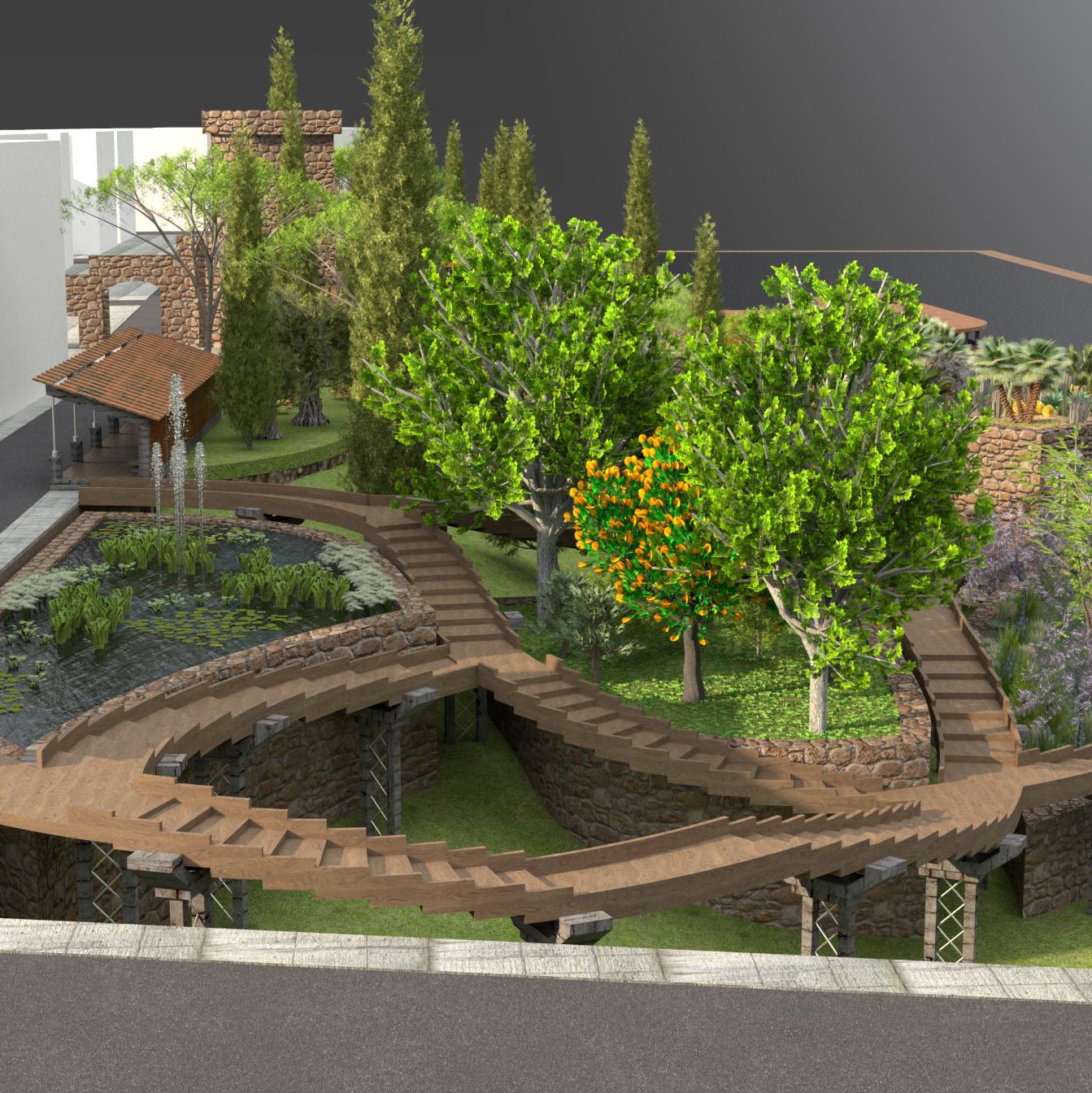
I really focused on the landscape aspect of the project, working to rigorously research different tenants of garden design, seasonal change, site ecology, and isolationism. For this research I drew heavily on the body of work of Gilles Clement and ideas of ambiguous space in the urban sphere. A majority of the structures are floated above the site in order to provide as little ecological impact as possible, with the bank being reclaimed by nature.
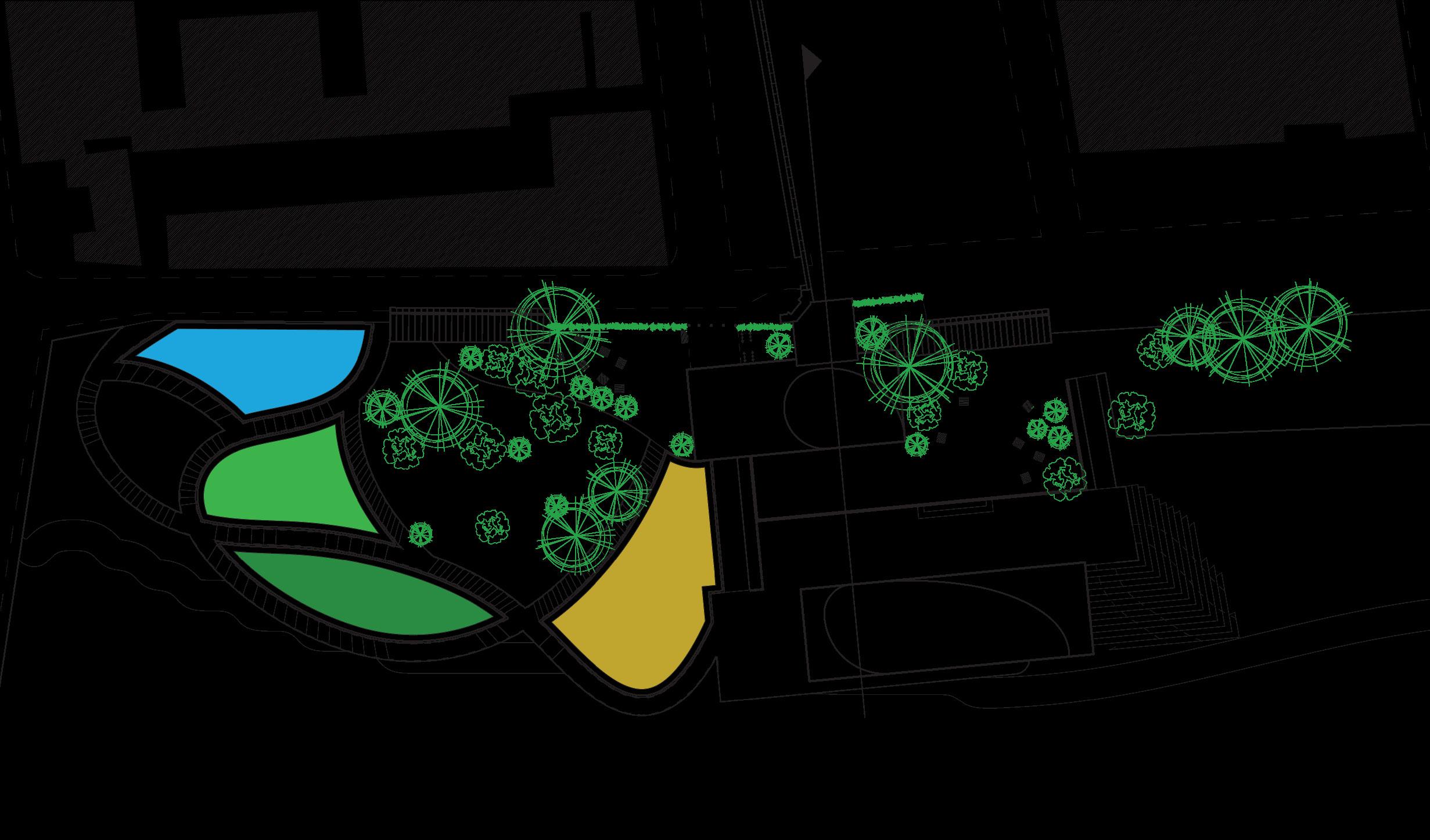
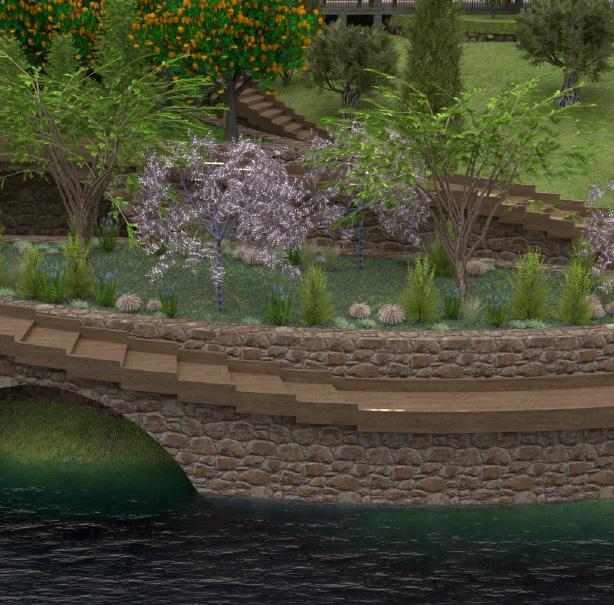
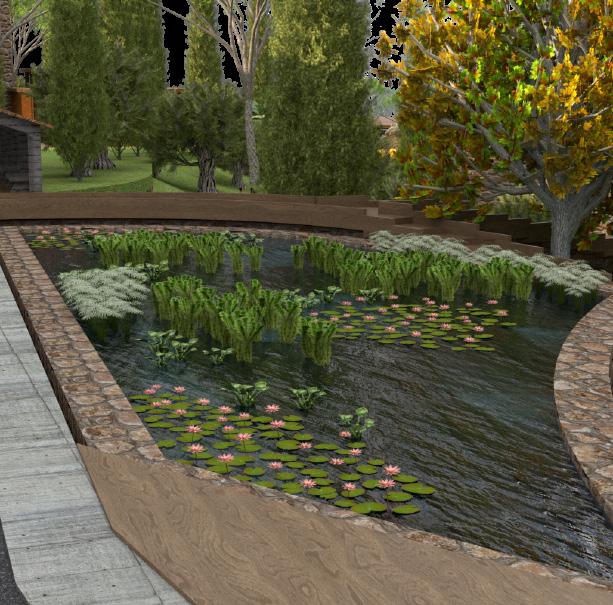
Four gardens are featured that each represent a piece of Florentine culture, nestled in a nature landscape that hearkens back to the natural history of the area. The garden closest to the road is a water garden, bounding the site by a wet environment but told in extremely different ways. This garden is the most manicured and regulated, contrasting the complete natural takeover of the river. The next garden is the Medici garden, featuring iconic Italian plants as well as the signature orange trees of the family that built the renaissance
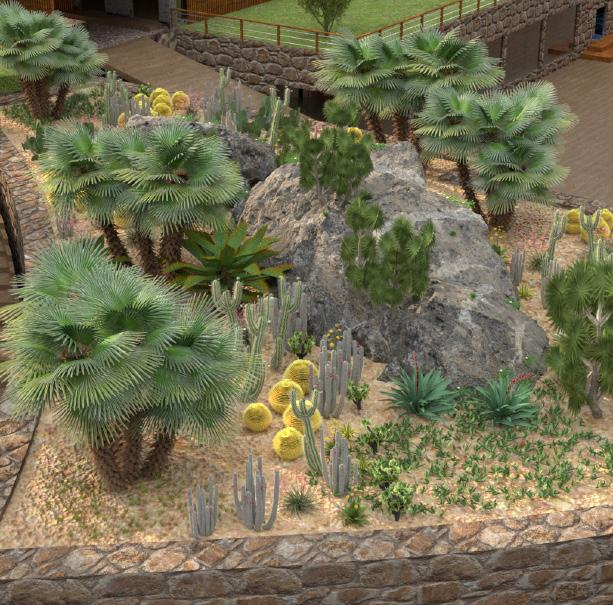
city. Further down is the peace garden, housing positive-ambiance plants such as lavender and wisteria. This garden acts as a place of rest and careful contemplation of design. The final garden represents a possible future. A succulent garden demonstrates resiliency and adaptability even in the harshest environments, something that is absolutely necessary in an era of increasing extreme weather events and mass climate change.
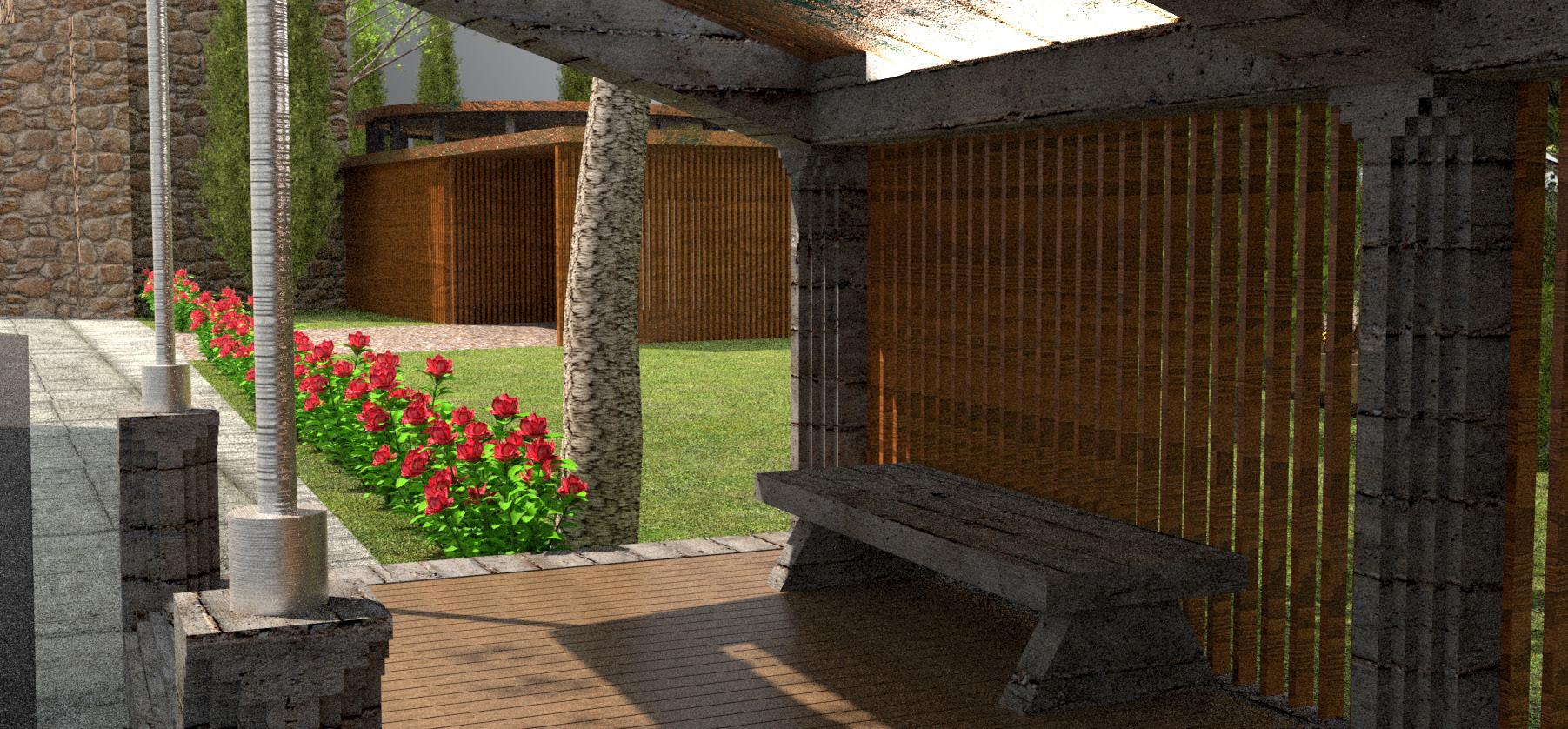
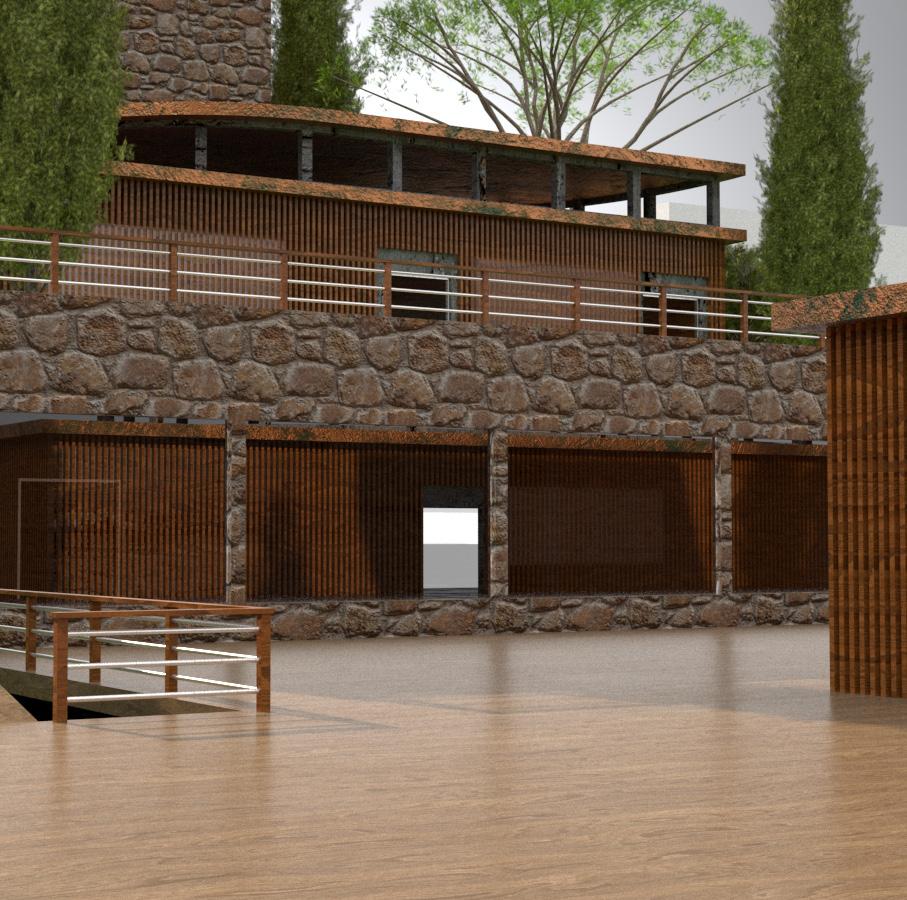
It was also important to create a way that the site could only be accessed if the initiative was taken to view it, mirroring how conservation can only thrive if it is a goal constantly present in all steps of design. Wooden slats cover the facade of the buildings and loggias in a vertical assembly that, when viewed from afar or the side, appear completely opaque. When close to the site, however, the space between the slats can be seen and the beauty of the river is opened up.
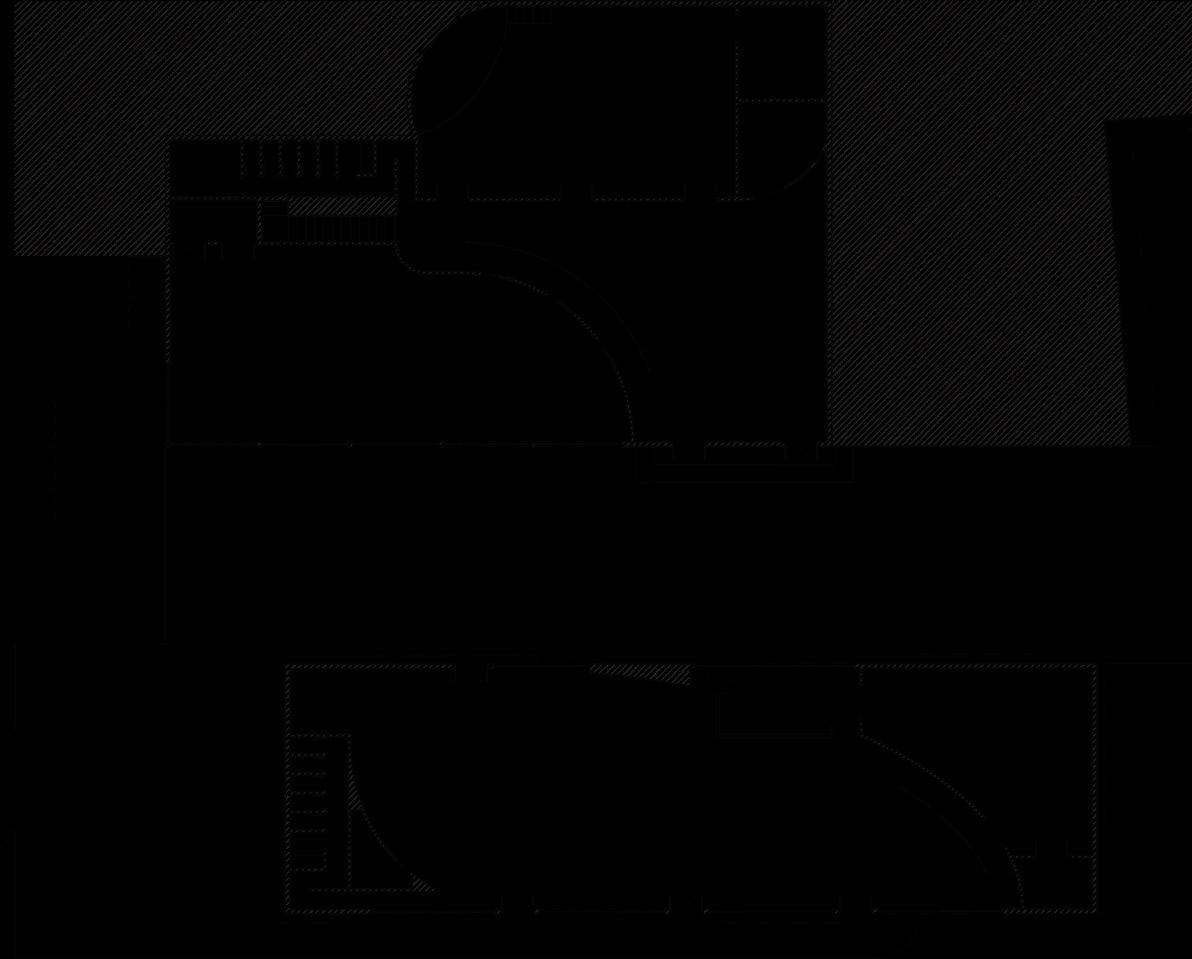
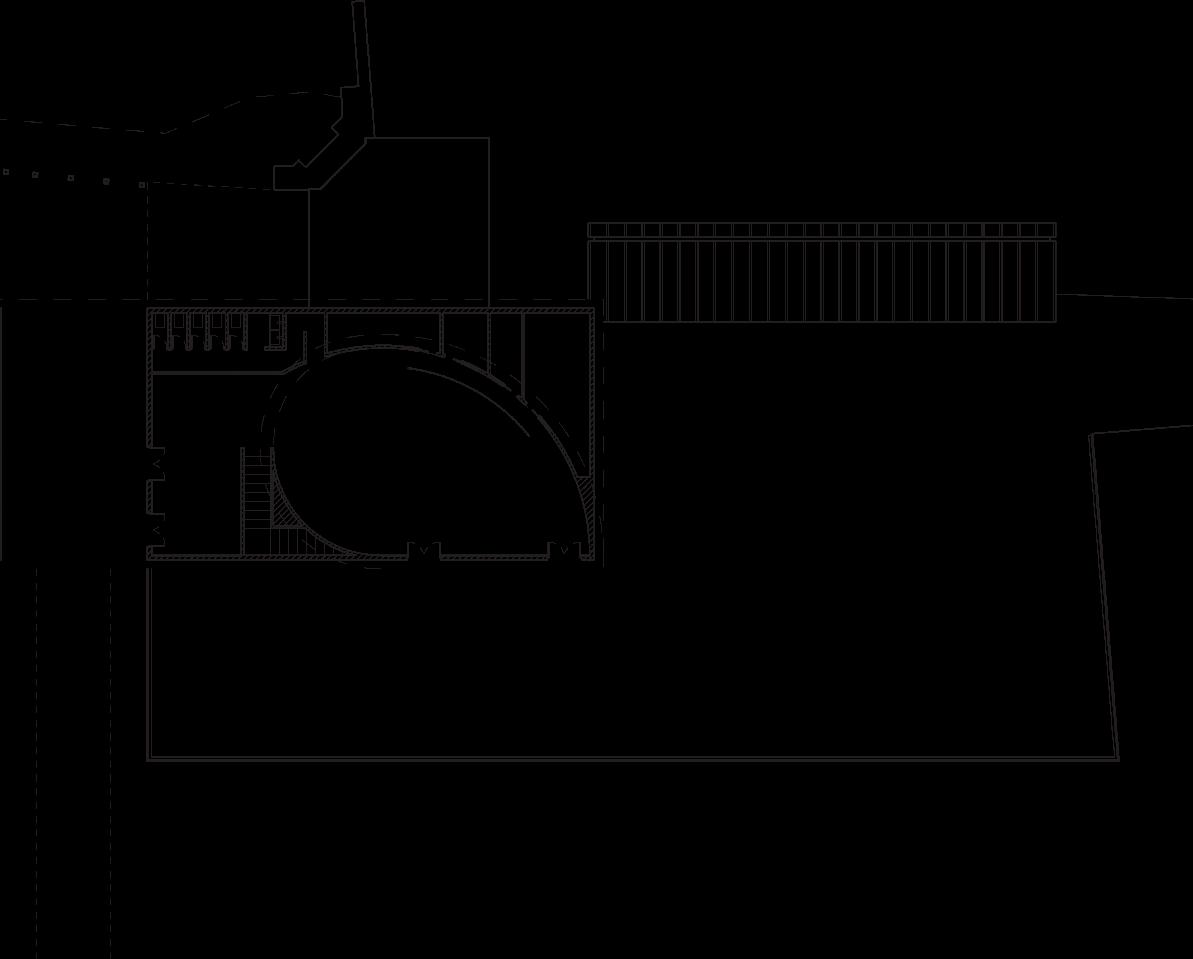
site plan, basement plan, and ground floor plan are shown above
1. lecture hall
gn bathrooms
multi-purpose classroom space
historic exhibition 5. book nook 6. riverside cafe
local art exhibition
outdoor courtyard
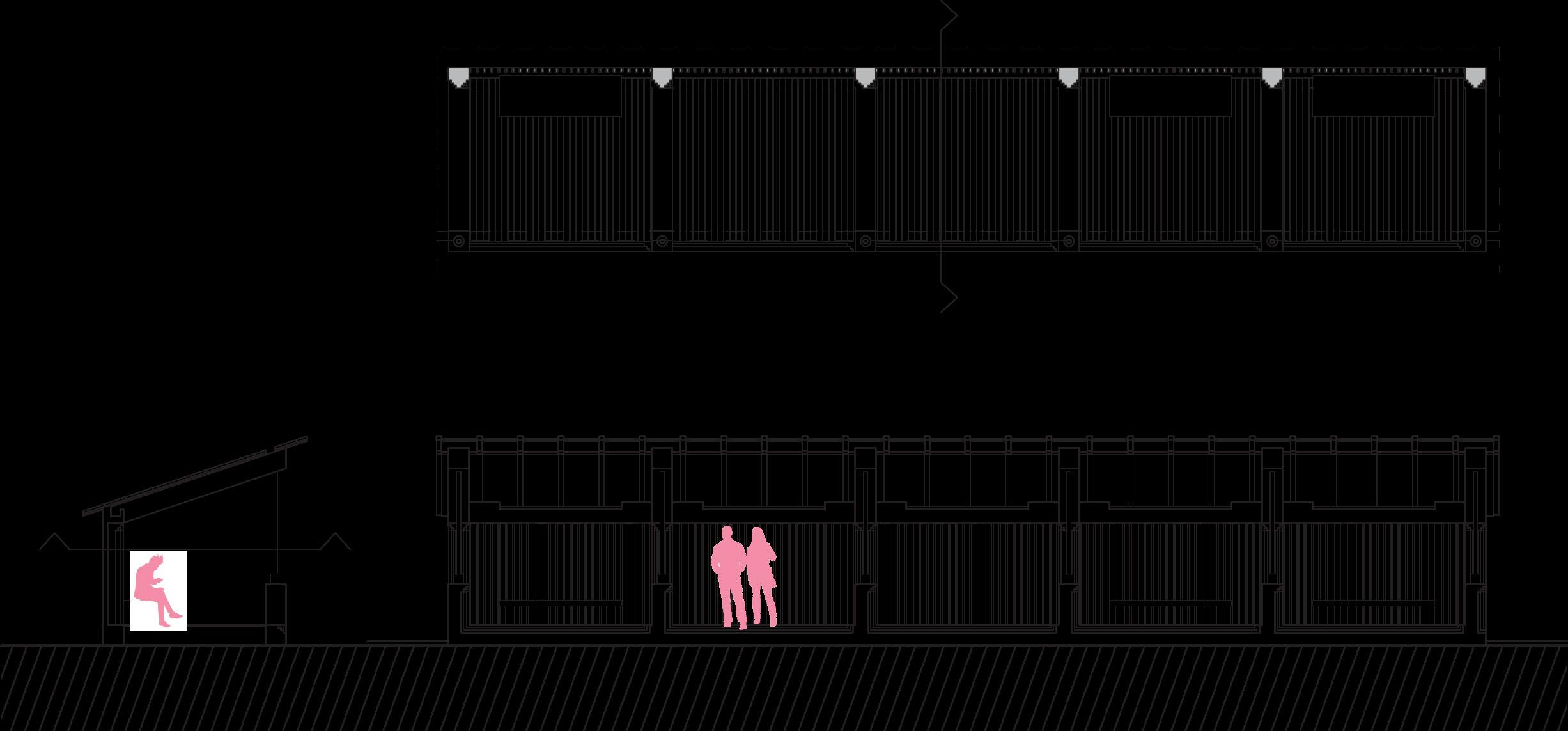
bus stop loggia
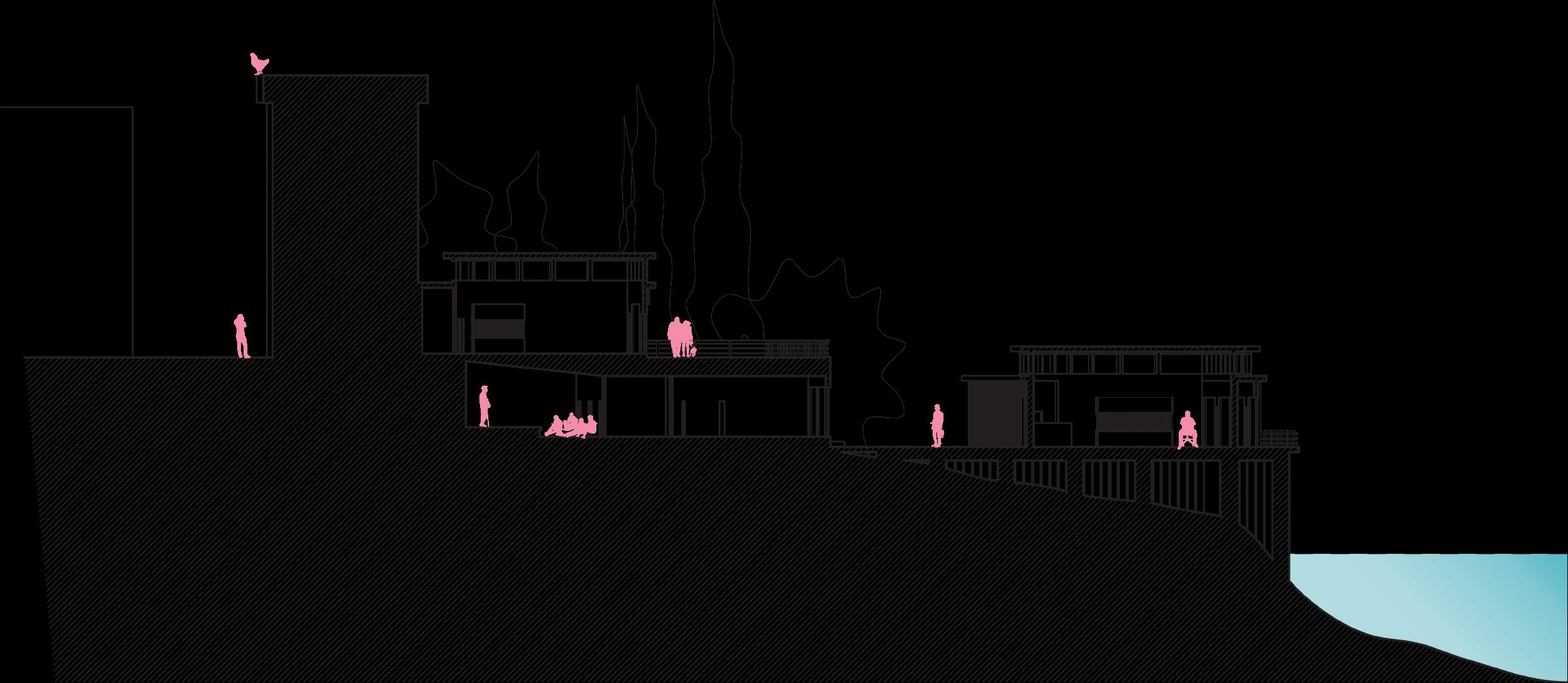
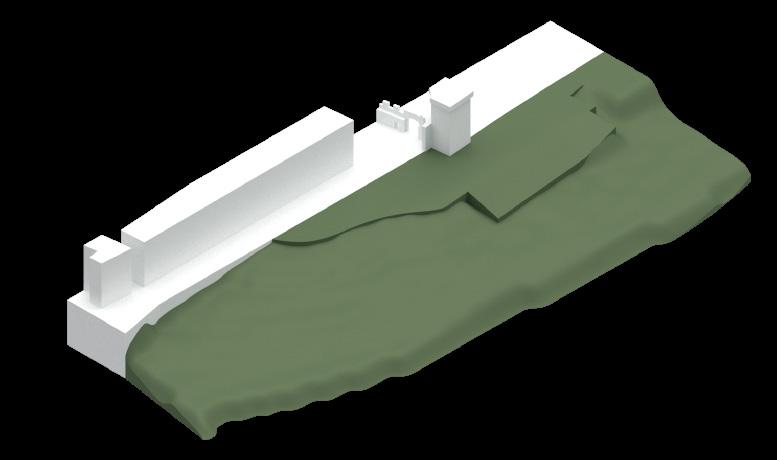
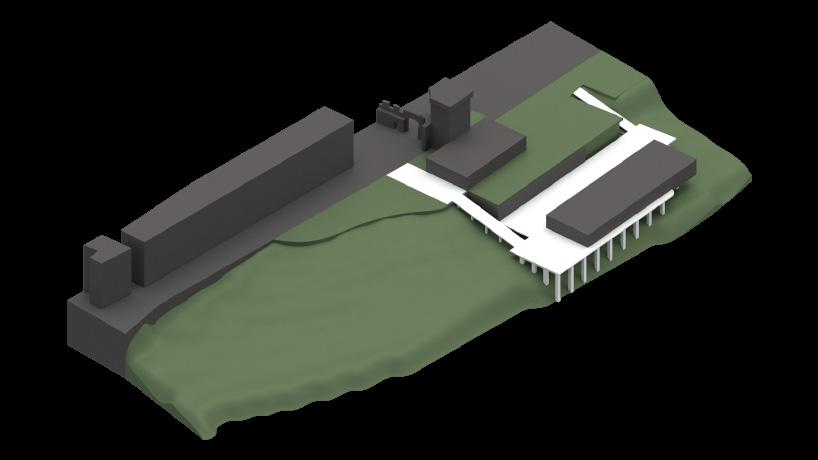
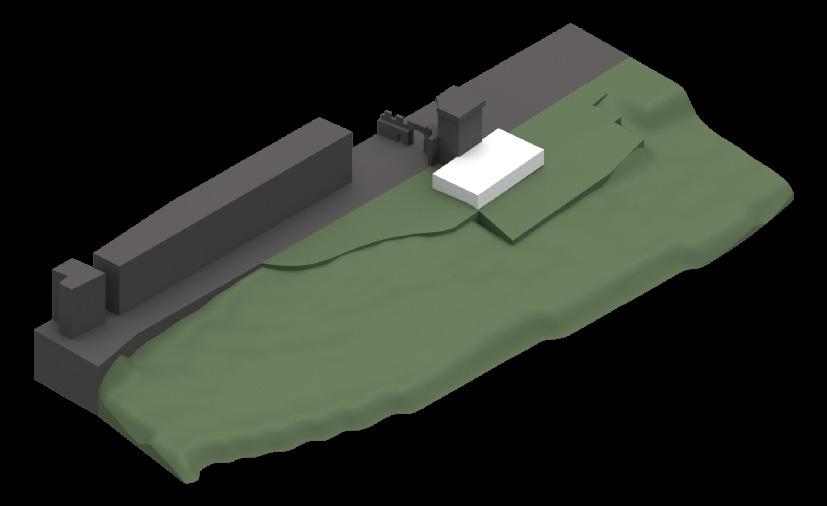
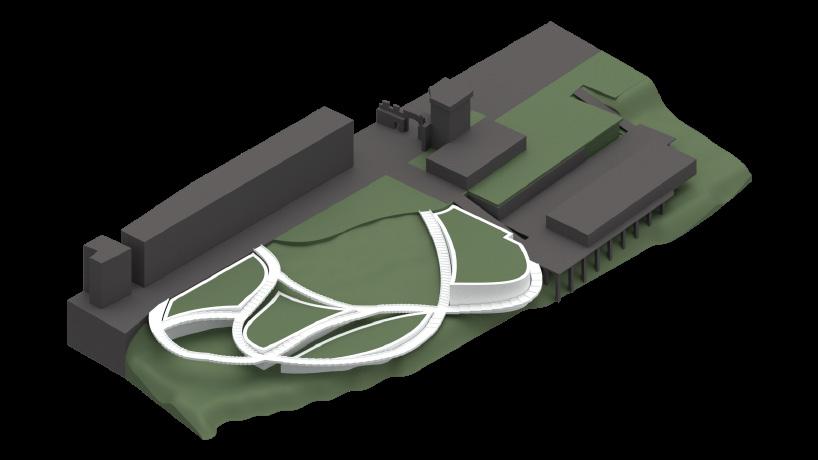
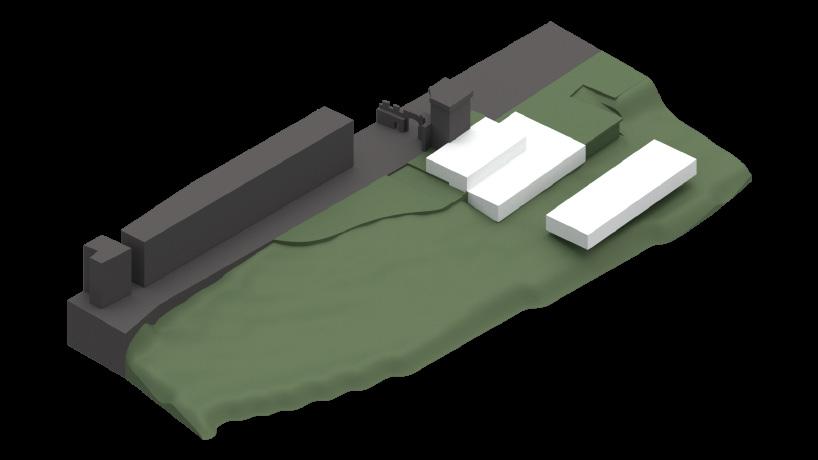
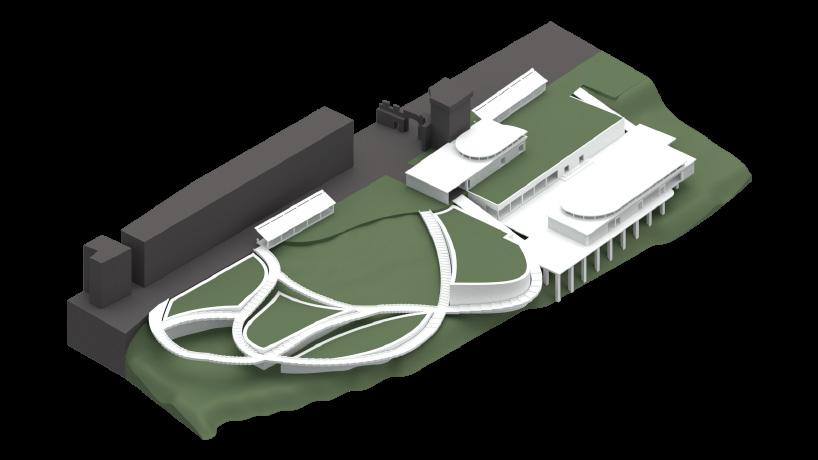
the design process I followed started with examining the site and the historical context it housed, then boxes were placed on the site each with varying interfaces, one sitting on top of the ground, one sitting in the ground, and one suspended above the ground. A deck was put in to further contextualize the massing within the site and finally the gardens were added with a winding path connecting them, the structure, the city, and the river.
drawn section
While in Italy I interacted with public space in an entirely new way, specifically in the typology of the Italian Loggia. A loggia is a large covered public space with open columnar walls on three sides and a building facade on the last. While this was originally developed as an area of public transition, I found it strange that almost every loggia I saw was gated and locked, completely alienating the public which it was designed for.
Within my project I combined the abstract nature of the loggia with the more modern typology of a bus stop in order to create a place of public rest as well as transportation. These modern loggias barricade the site, forming natural constraints that dash the threshold between nature and city. They also seek to address issues of sheltering the unhoused population in a human way as architecture and society transitions to be less violent.
succulent garden peace garden medici garden water garden
holocene sports complex
matt hutchinson // Kent State University // digital work // 2024
in/exclusion // architecture of dead space
jean jaminet // Kent State University // cleveland, ohio // 2023
Breif
This studio recasts the practices of institutional building conservancy through alternative methodologies in experimental preservation. These open-ended processes ask questions about reality by negotiating the territory between tangible building artifacts and the illusory experiences of culture. This domain between the real and the artificial is increasingly complicated by excessive media interference. Our project to adapt an abandoned industrial complex in Cleveland, Ohio for occupation by a new school of media arts sets these debates in motion. The studio will therefore develop experimental preservation strategies that introduce alternative visual and tactile conduits for image-making in architecture.
Method
Architects try to make things that will last a lifetime or more, but we, as architects and more so human, ask ourselves the question, what will remain when we disappear?
With one of the driving design themes within the studio being the idea of experimental preservation, I sought to develop a project that not only paid homage to historic vernacular but still placed itself within a modern context. It further evolved into a highly dialectic project that, in method, explored the grey space between new and old, inclusivity
and exclusivity, and architecture and the self.
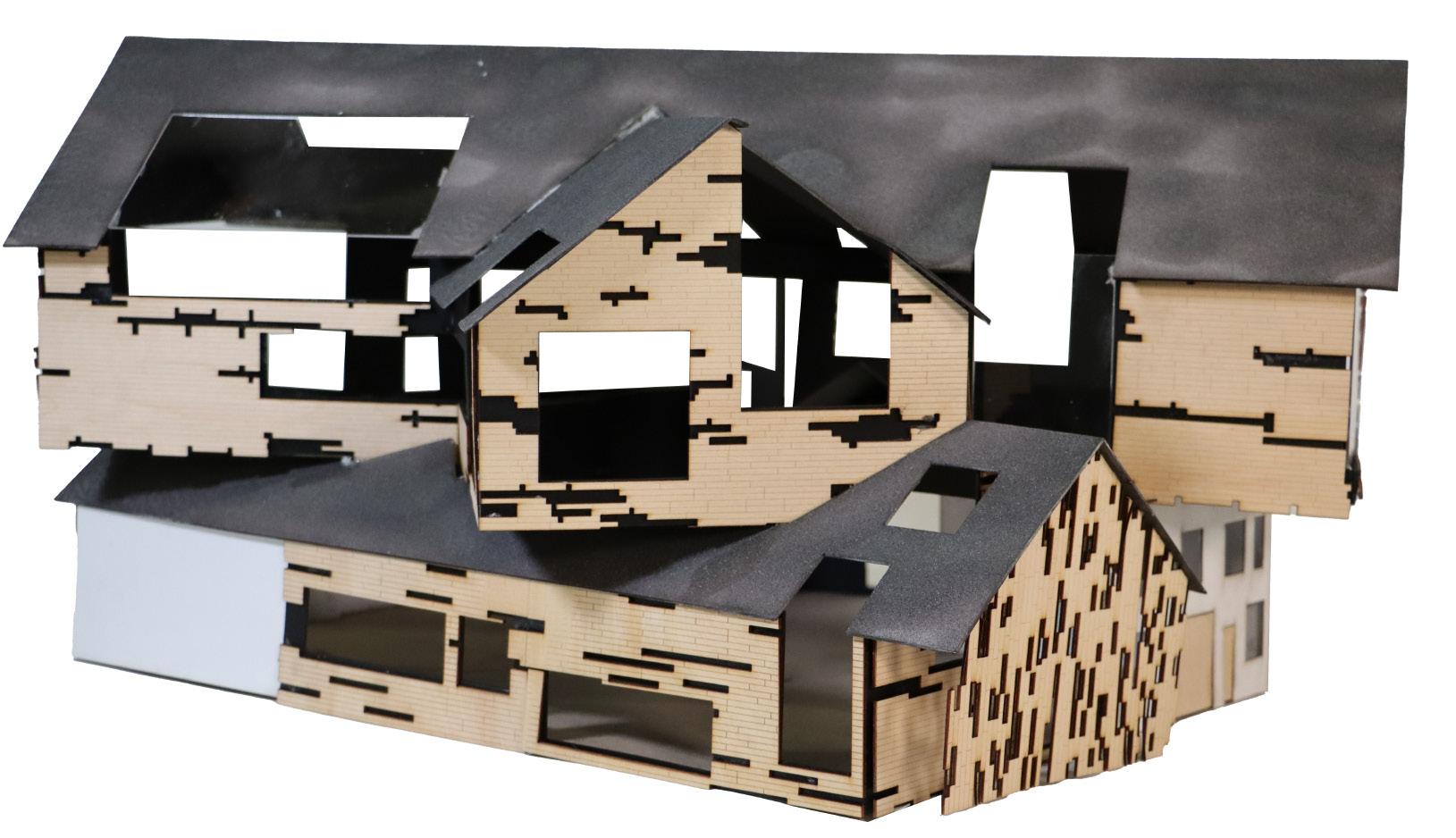
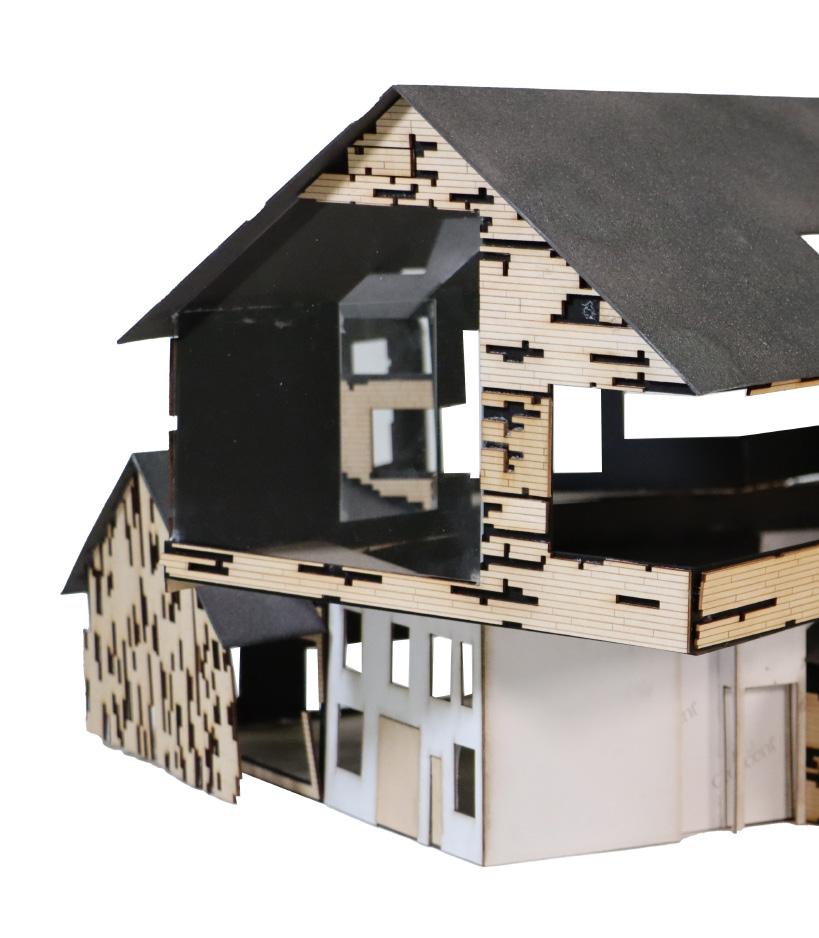
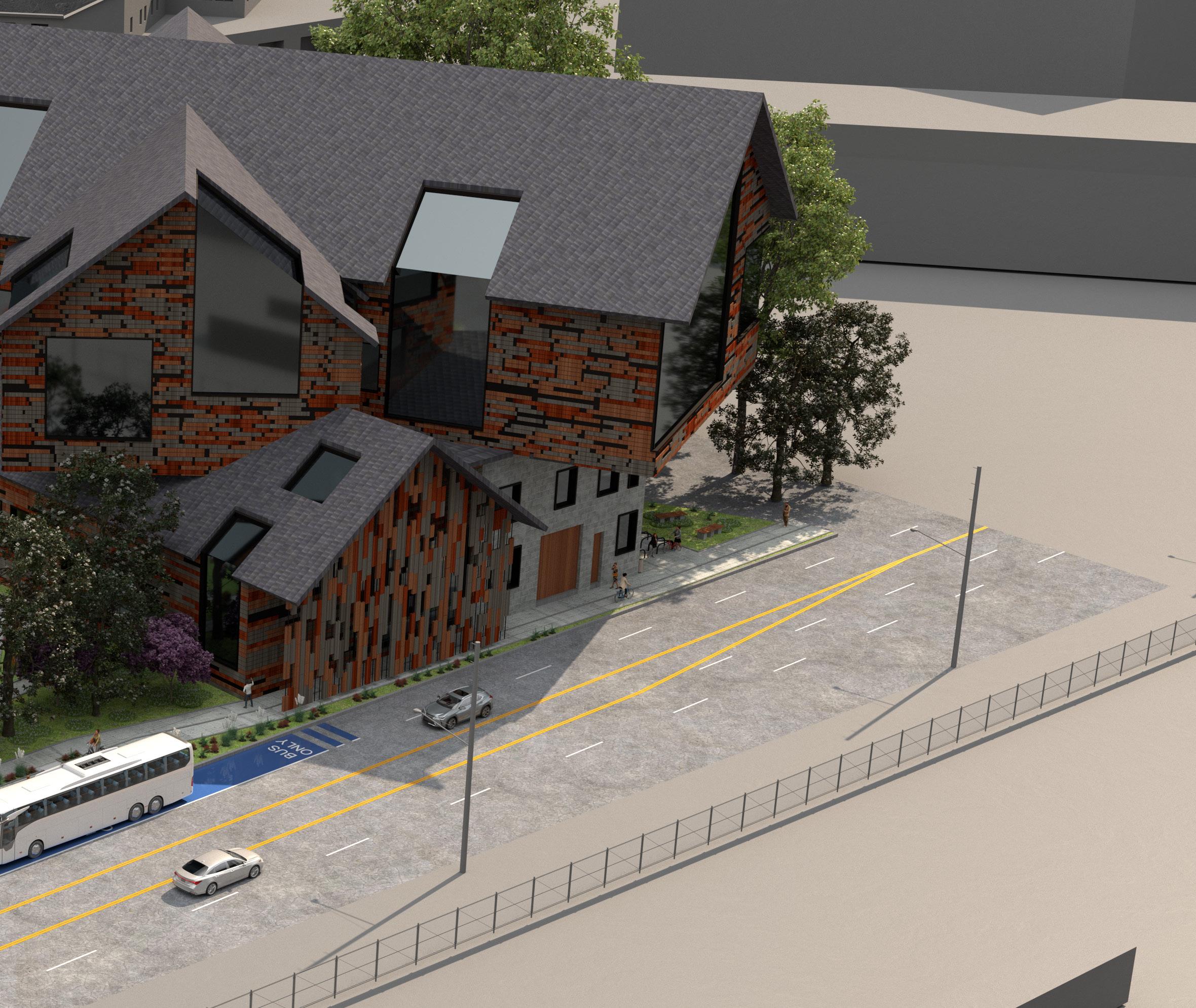
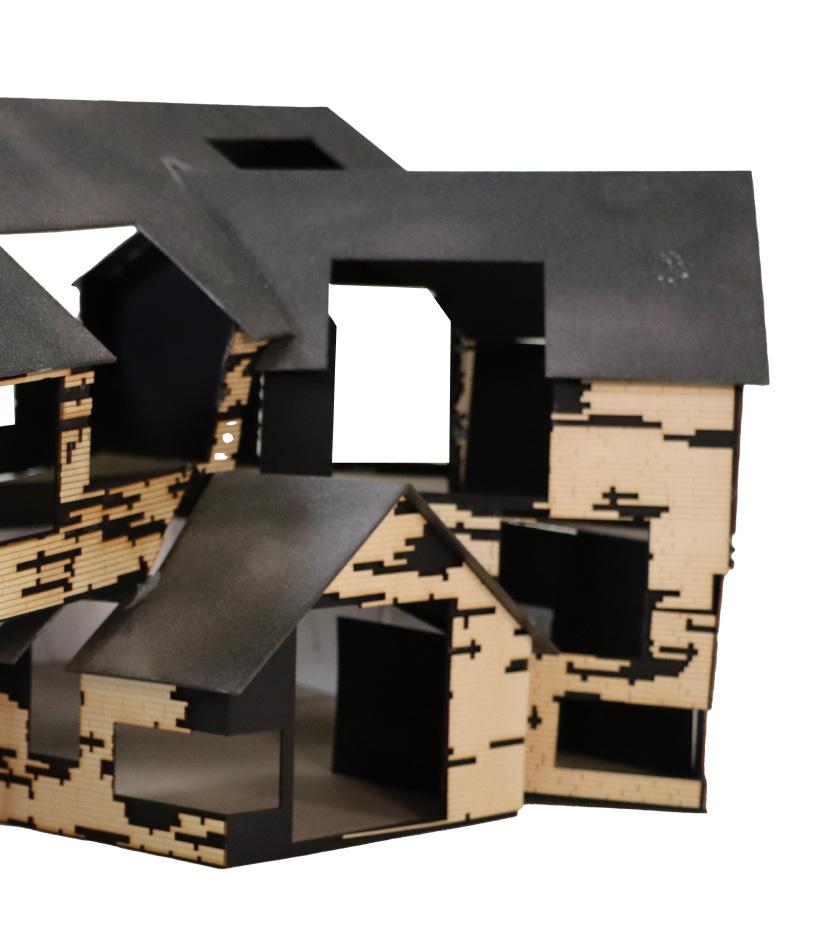
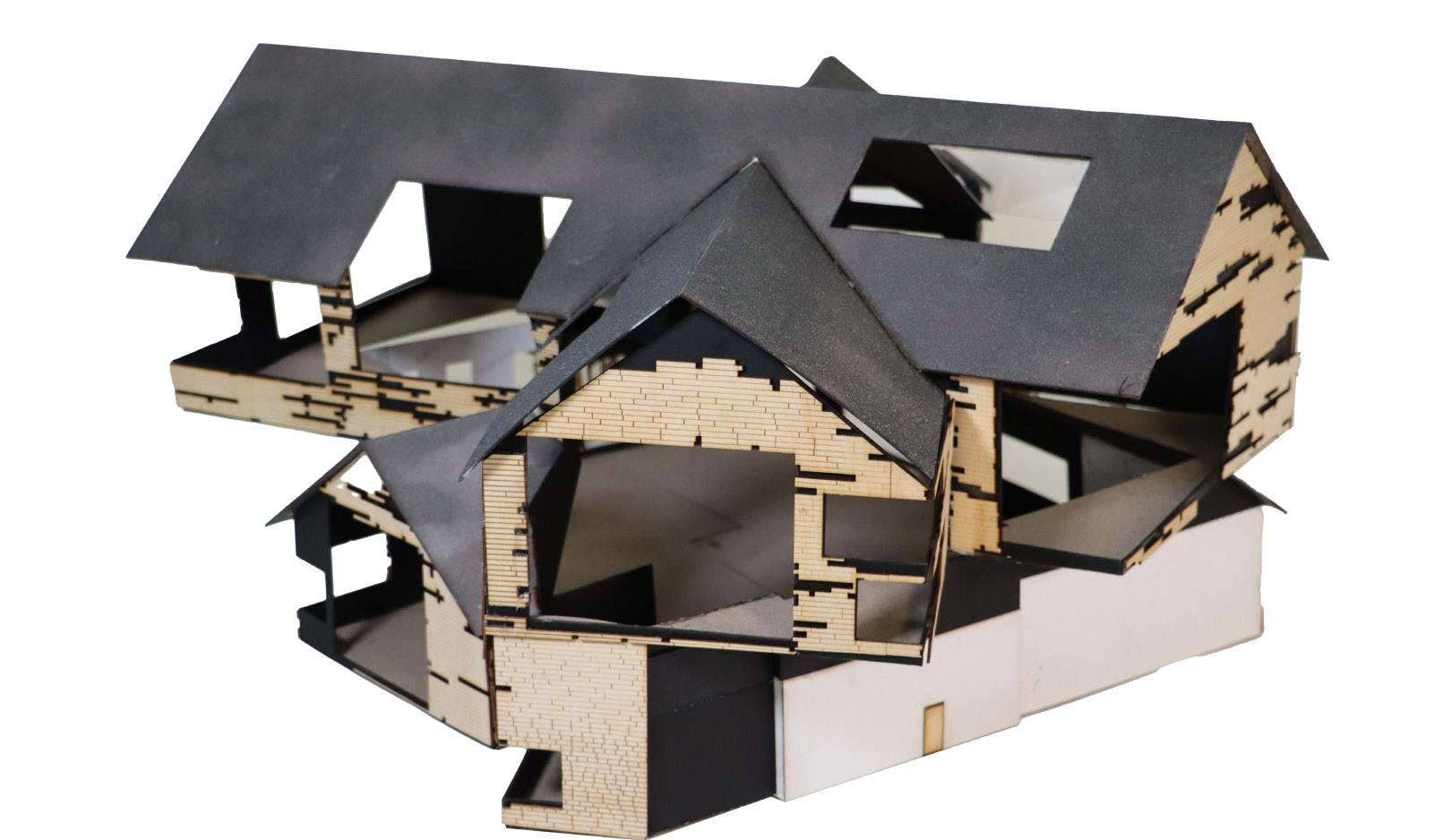
When analyzing preservation and reconstruction, it is paramount to frame the scope of the project in a way that recognizes itself as an extension of use, without falsely puppeting the former project, this applies even more so to an experimental sort which seeks to reshape contemporary ideas of use and culture. In a self-acknowledged way, this structure has been rebuilt and refitted for use, without hiding the frankensteiniannature of its construction.
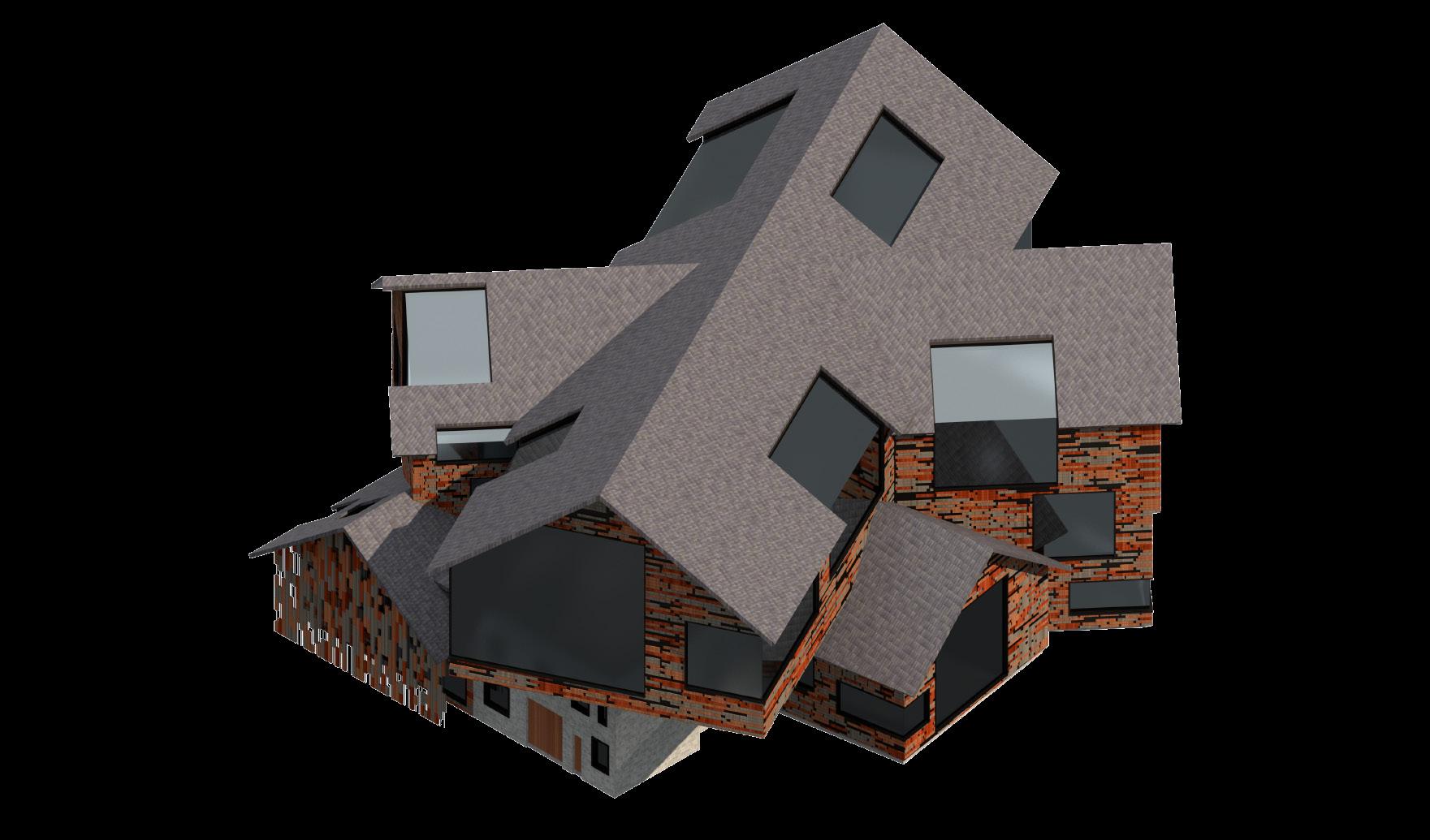
As one more closely views the structure more “flaws” appear; anachronisms of reconstruction that further humanize the design. Overlapping layers of muscle, skin, and bone – facade, glazing, and structure, are pieced back together in a way that complicates itself by deploying these ideas of a false reconstruction; a system that, in isolation, makes sense with understandable connections between disjointed gaps of knowledge, but in situ forms a reconstruction that is clearly that, a reconstruction. This effect is not in form alone, but asks questions about the culture of preservation and normativity as well as addressing the manufactured culture of perfection that so commonly exists in western architecture and society.
As we increasingly become a more technologically driven society, I think our communication has shifted to become more similar to the mode of carrying information, the binary, and will continue to be. Because of this I think architecture that explores the nature of the inbetweens is paramount in reframing dialectics as an important cultural tool of inclusion.
It’s important to also think about the nature of preservation and reuse, mainly asking what are we preserving and why? Mostly buildings and structures are preserved for their “cultural significance” but that comes with a massive amount of bias – there’s a reason we preserve the plantation homes but not the slave quarters. The effect I sought to generate really asks, what are we trying to preserve, what should we preserve, and how will our society be viewed from reconstructions and reproductions of it.
It’s a similar question faced by NASA scientists when putting together Voyager 1 and 2’s “golden record”, what images will remain when nothing else does, what could be used to piece back together the story of humanity long after we’re gone.
1. main lobby
2. aquaponic system (f1)
3. gallery and lounge
4. cafe
1. classroom space
2. aquaponic system (f2) 3. studio space
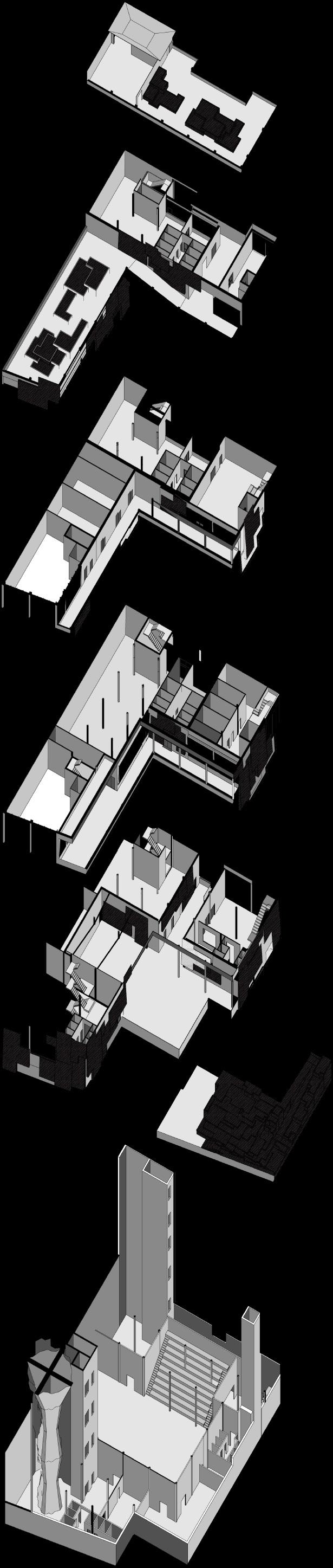
From plan view, these large masses break though each other forming various series of interlocking space at the overlaps. This space is dealt with in a variety of ways throughout the project, sometimes being walled off from the other mass, sometimes being shared between the masses, and sometimes being completely isolated, forming a new mass altogether in an interplay between inclusion and exclusion. The changing ceiling also reflects the interlocking masses, forming gable-like structures that intersect and cut though each other, subtly denoting space in places where walls do not.
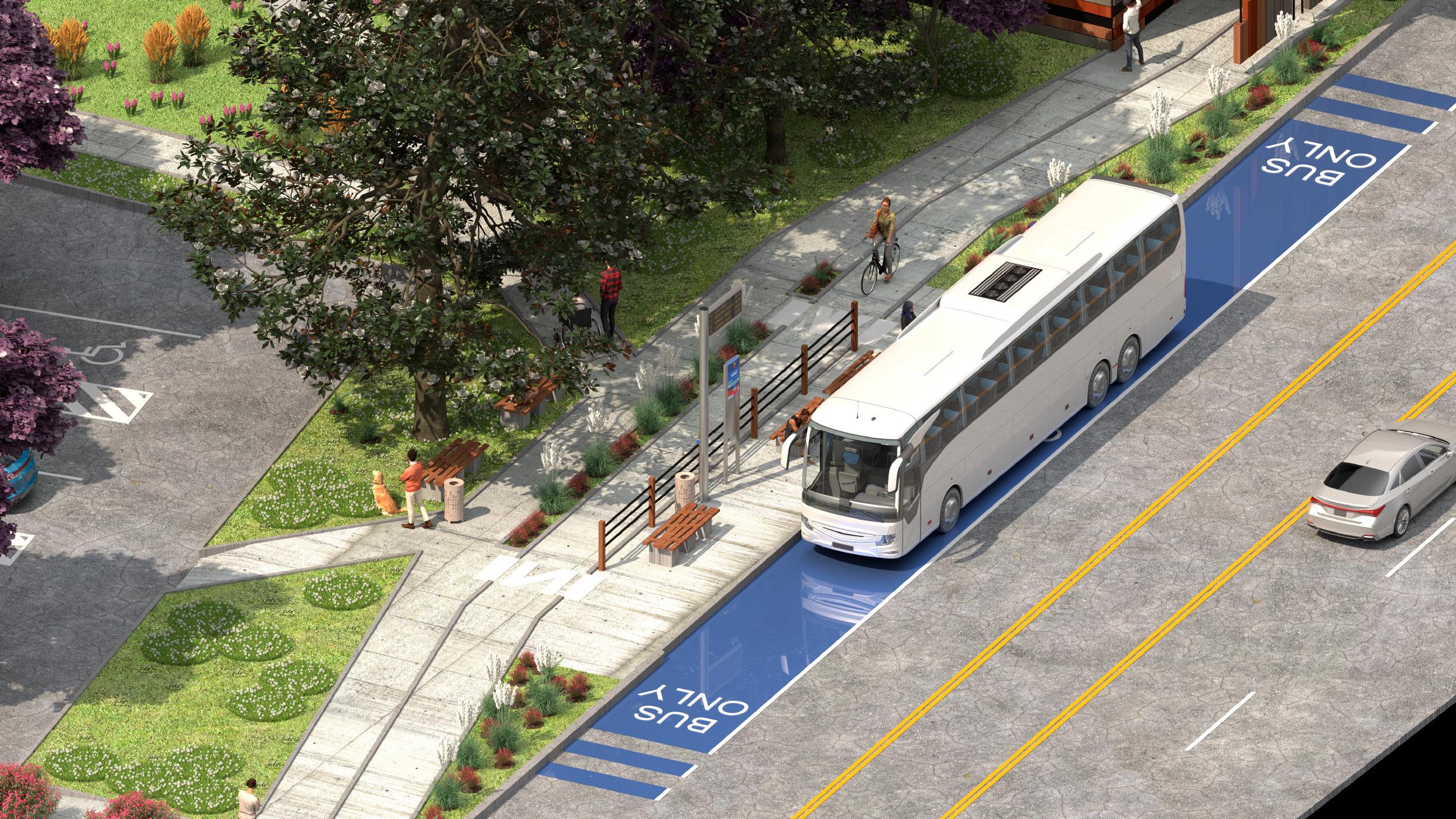
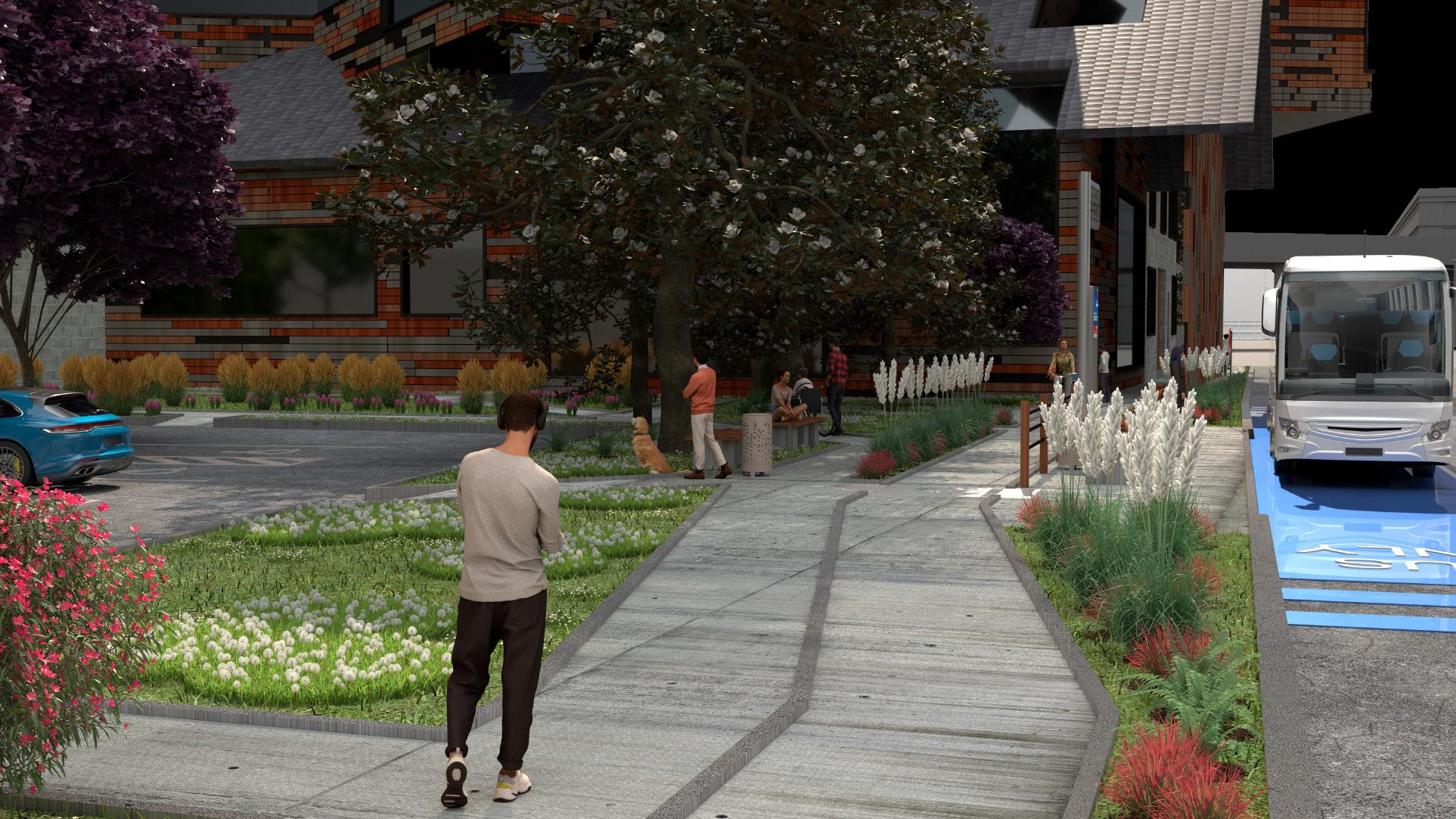
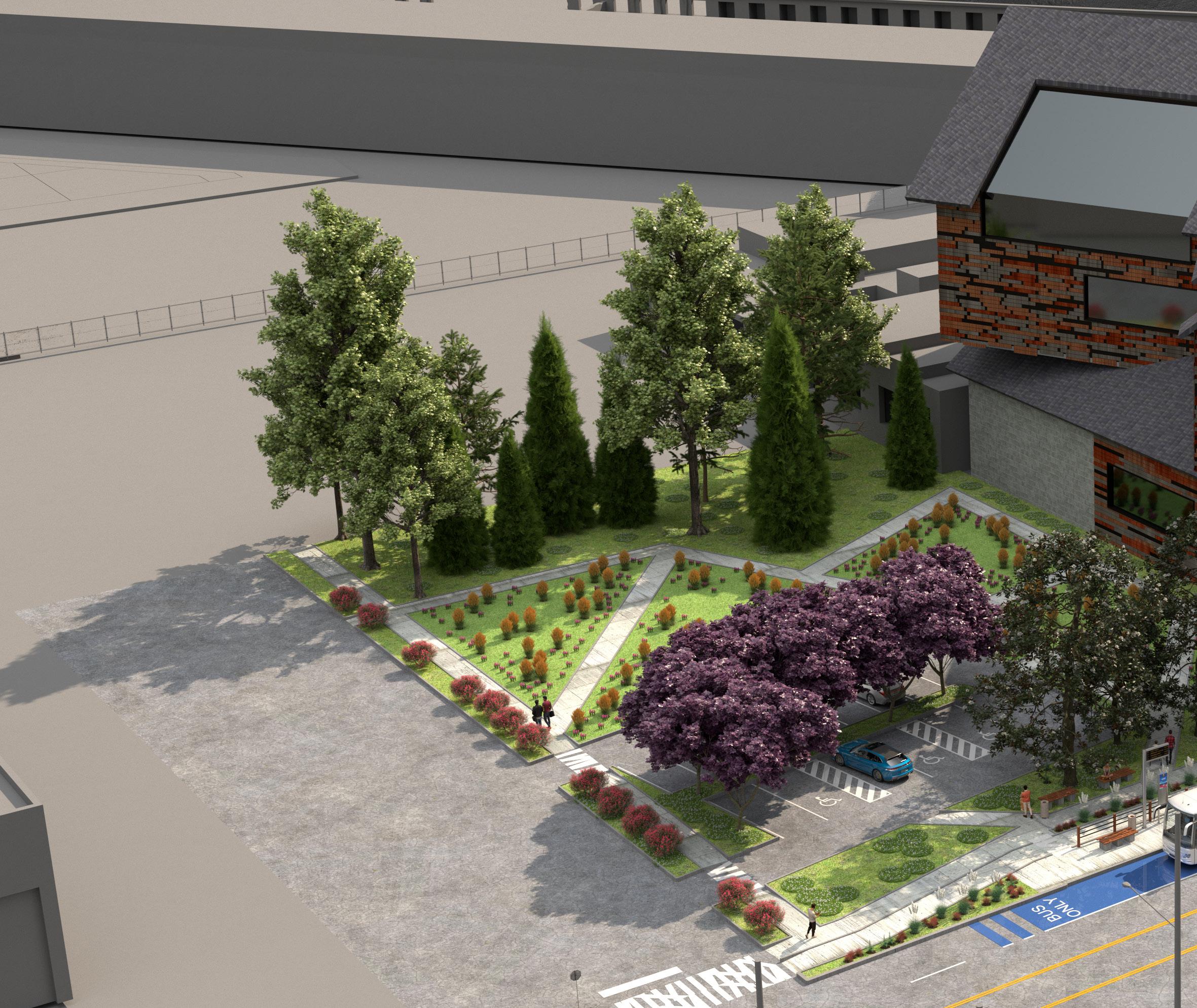
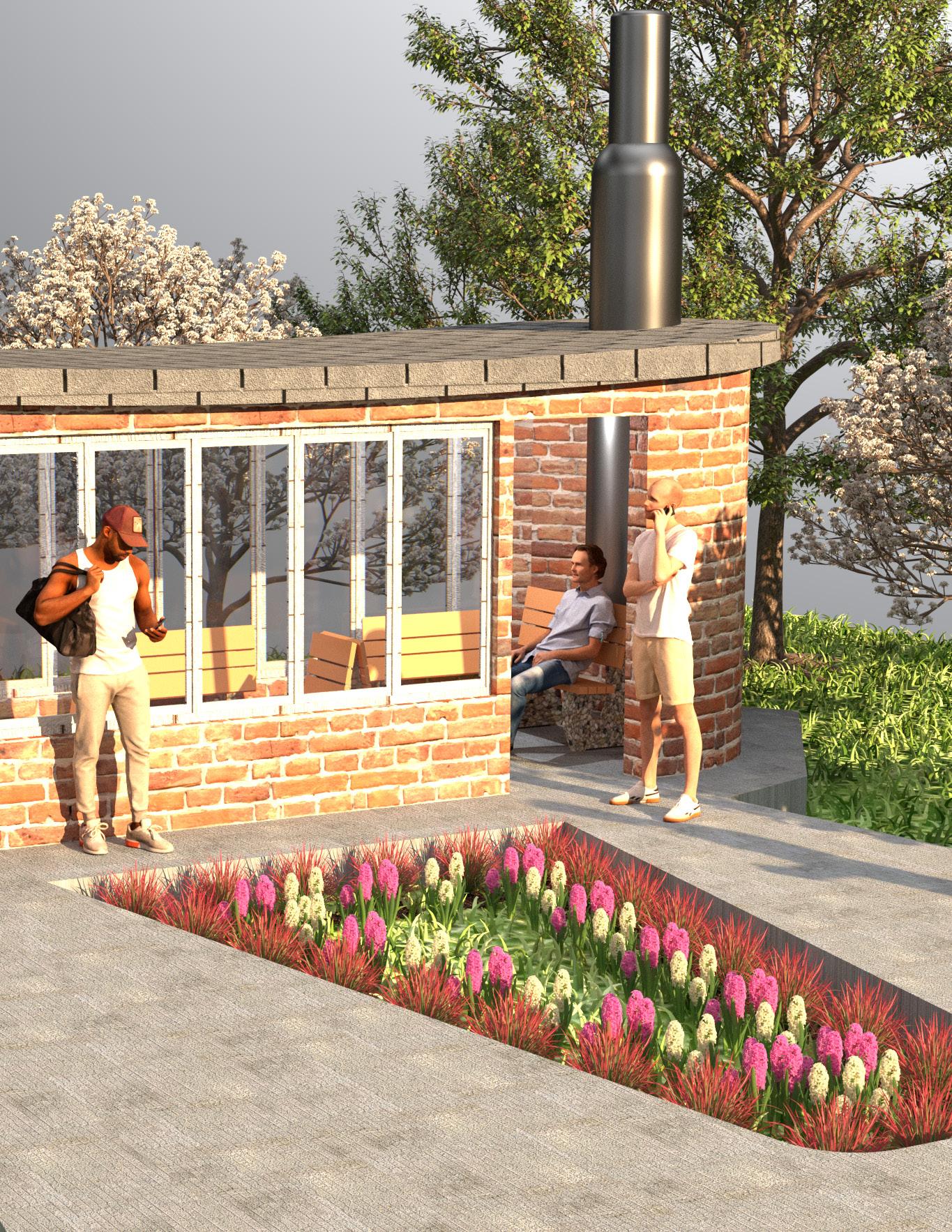
View of the bus stop, the main form of transportation to the site. Because this was to be something mainly utilized by locals and residents of the community, rather than as a tourist attraction, parking was limited and a bus stop and bike path were added as more eco-friendly ways to travel. All parking spots on the site are either for compact cars or ADA complient spaces.
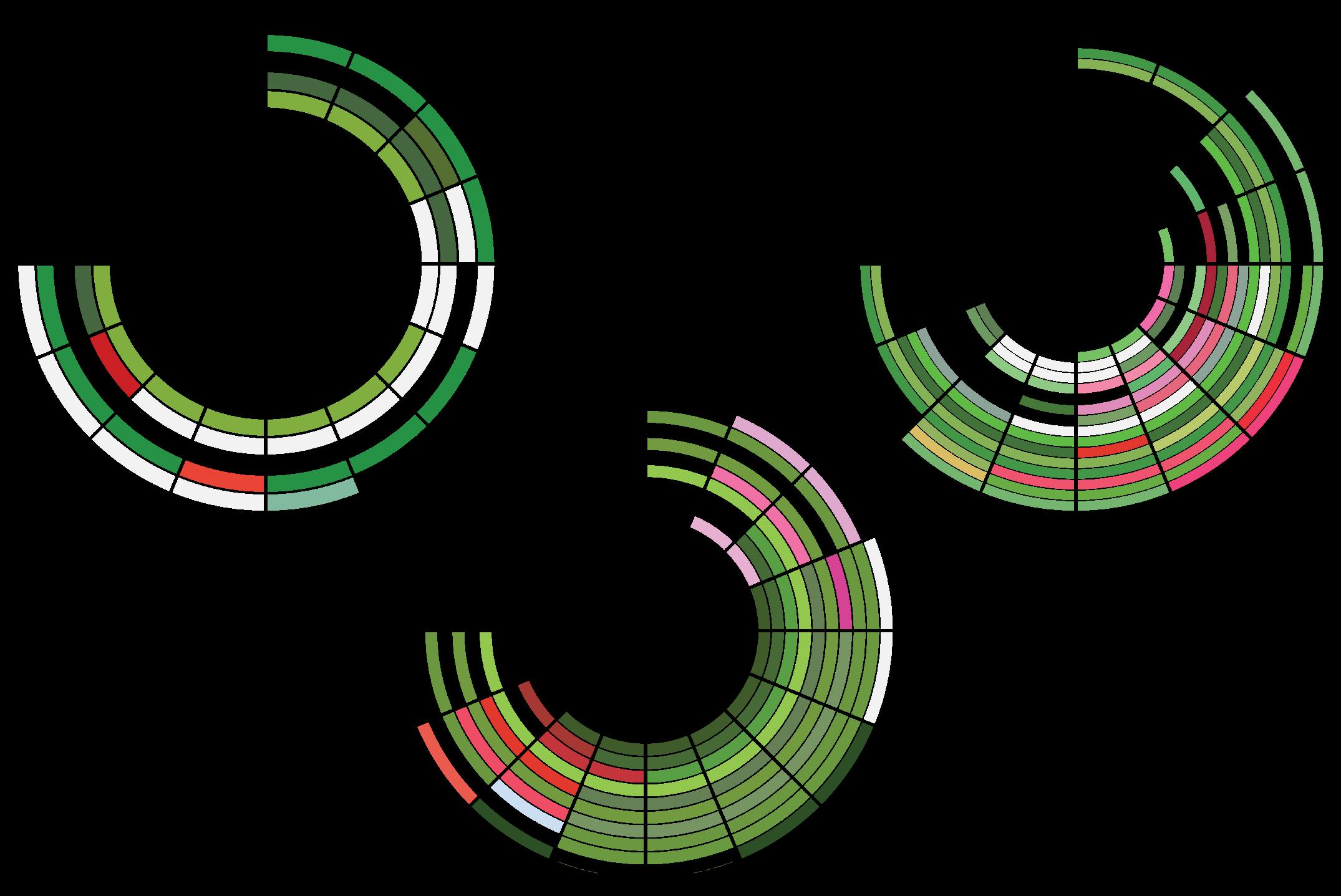
The bloom chart shows the progression of the site by season, cycling through white, to pink, to red, and then dormancy, representing cycles of life. All landscaping is native to the Northeastern Ohio area.
moving mainstreet
ryan scavnicky // kent state university // akron, ohio // 2022
Brief
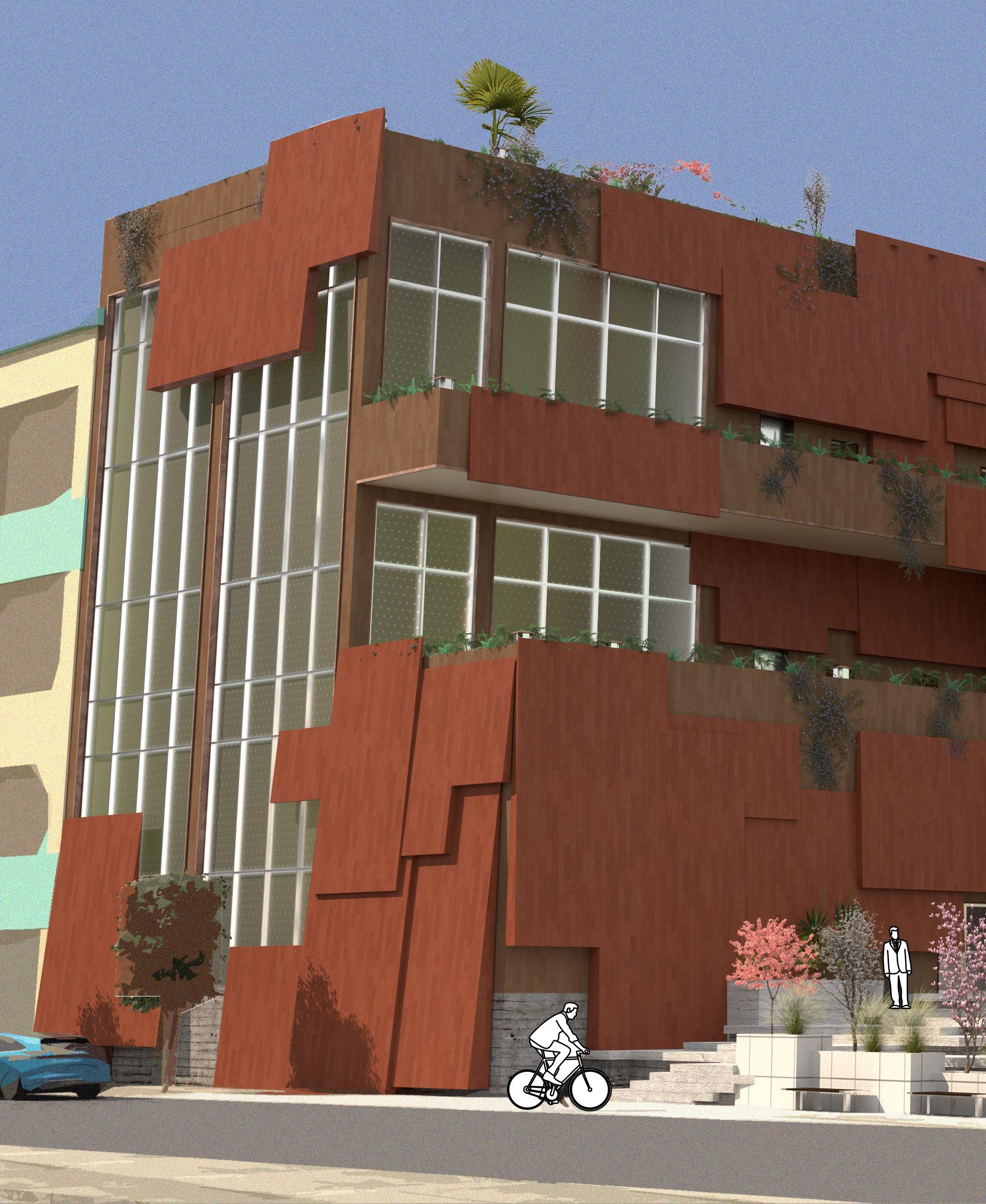
The studio designed a new building in the North Hill neighborhood in Akron which, once a year, would turn into a festival. In order to accomplish this programmatic shift as well as capture the public imagination, the studio used video games and art direction in order to explore various forms of architectural detailing.
Method
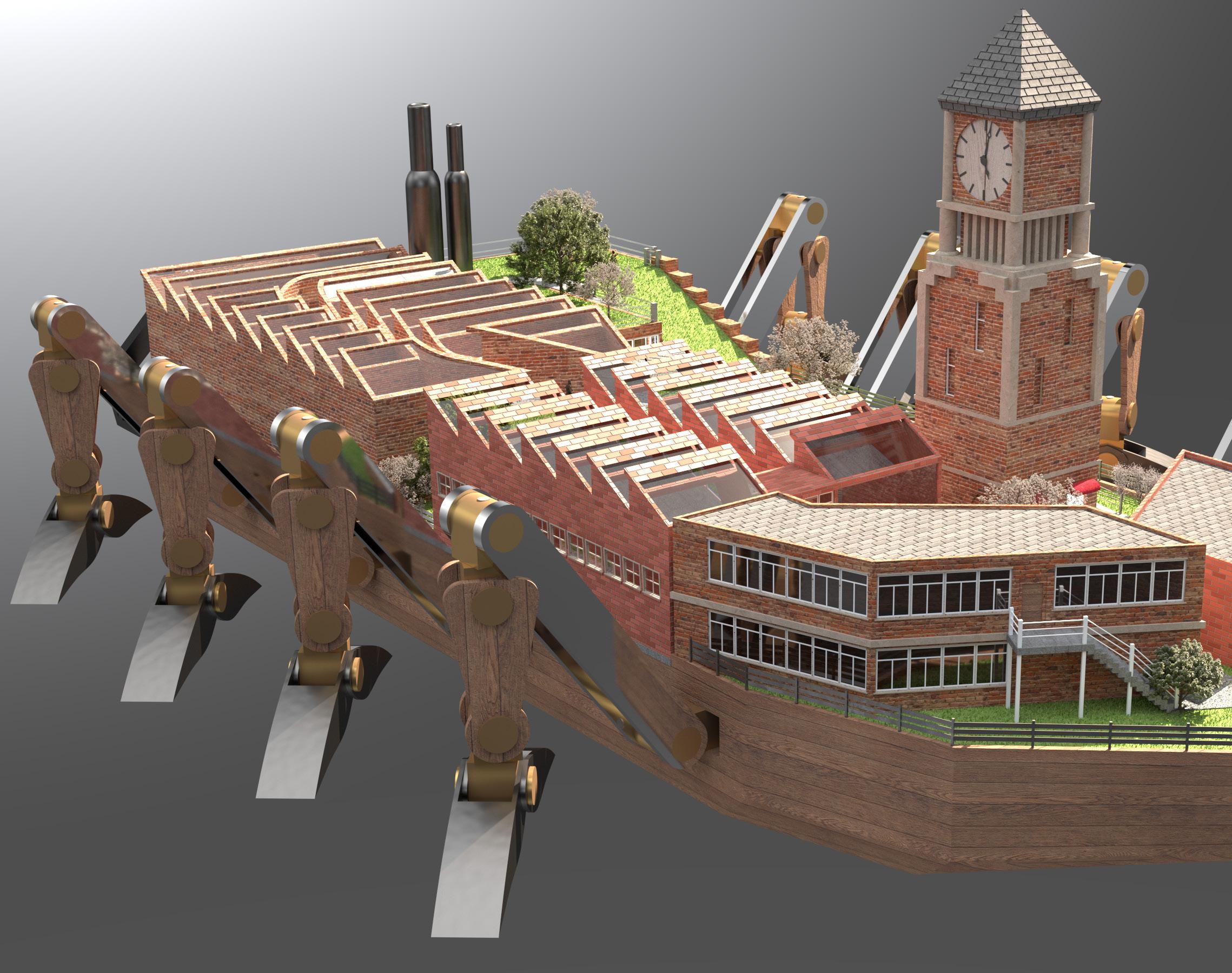
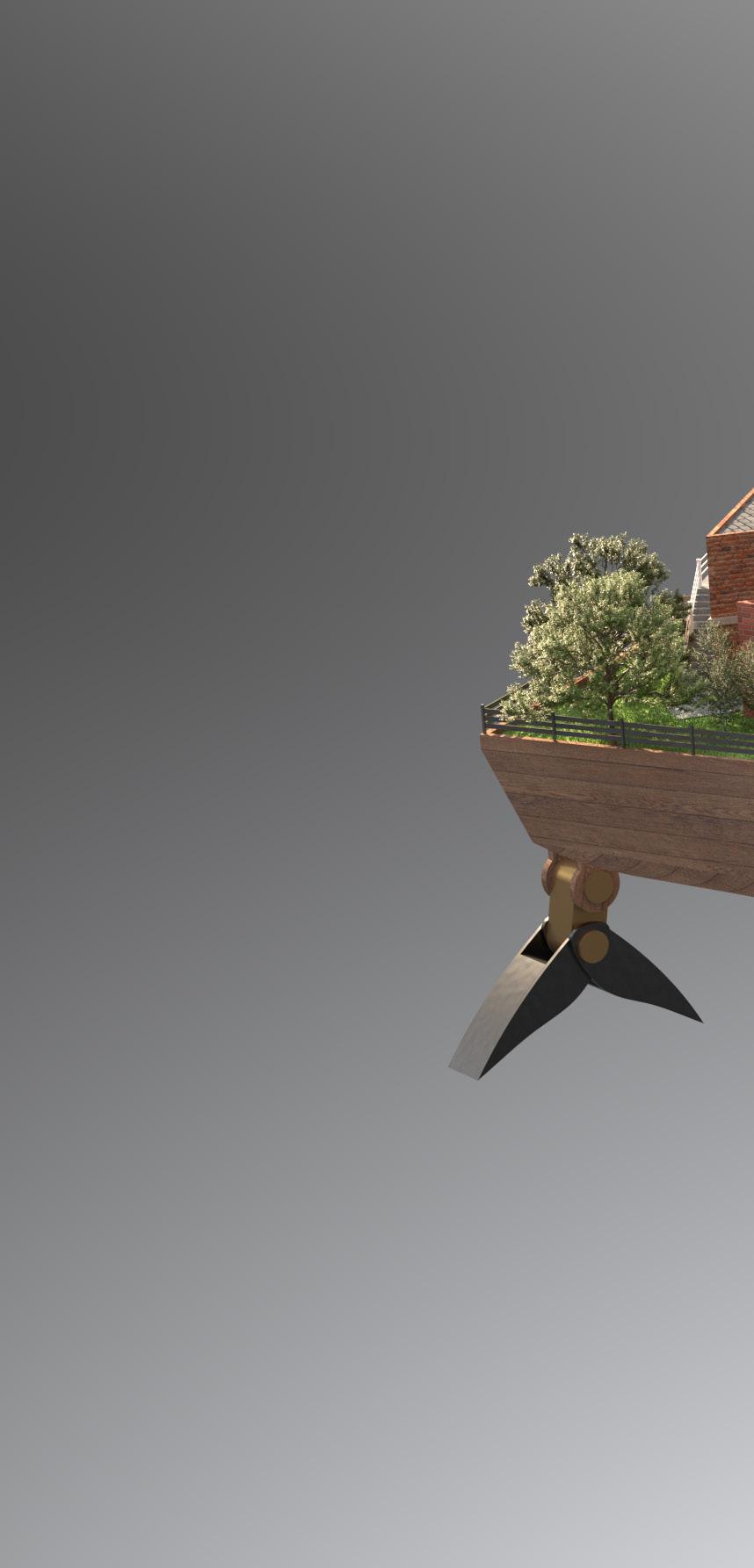
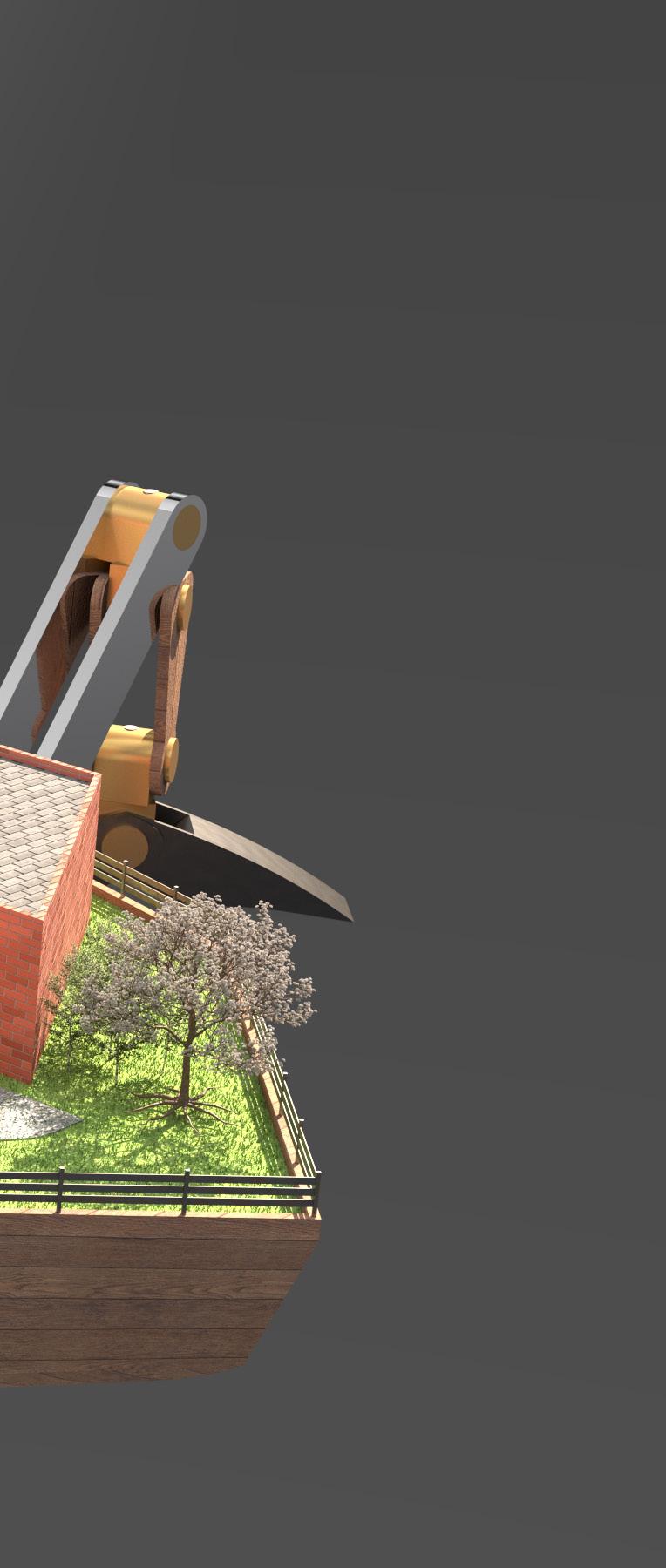
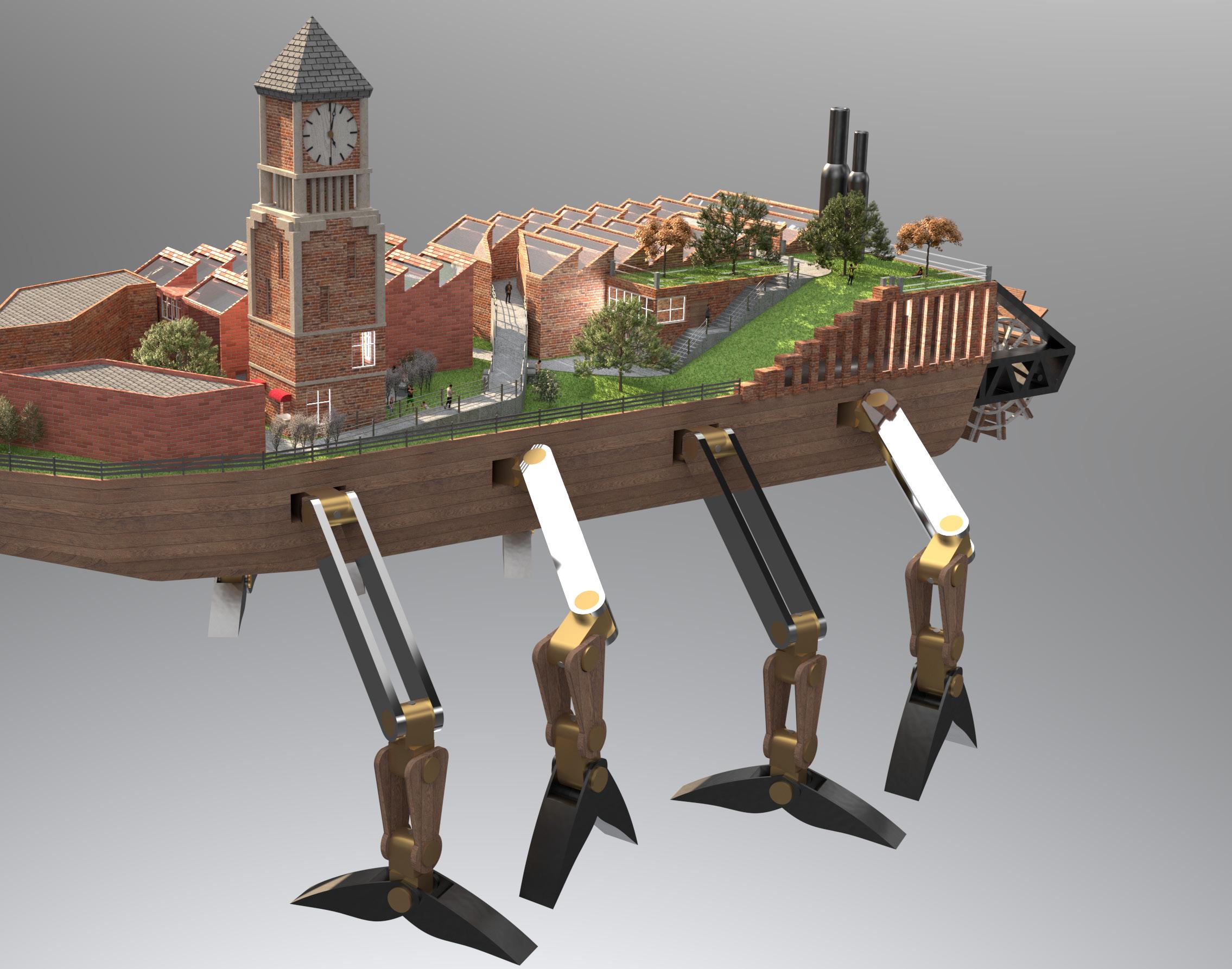
If Howl’s Moving Castle had a more Rust-Belt-Esque cousin twice removed, it might look a little something like this.
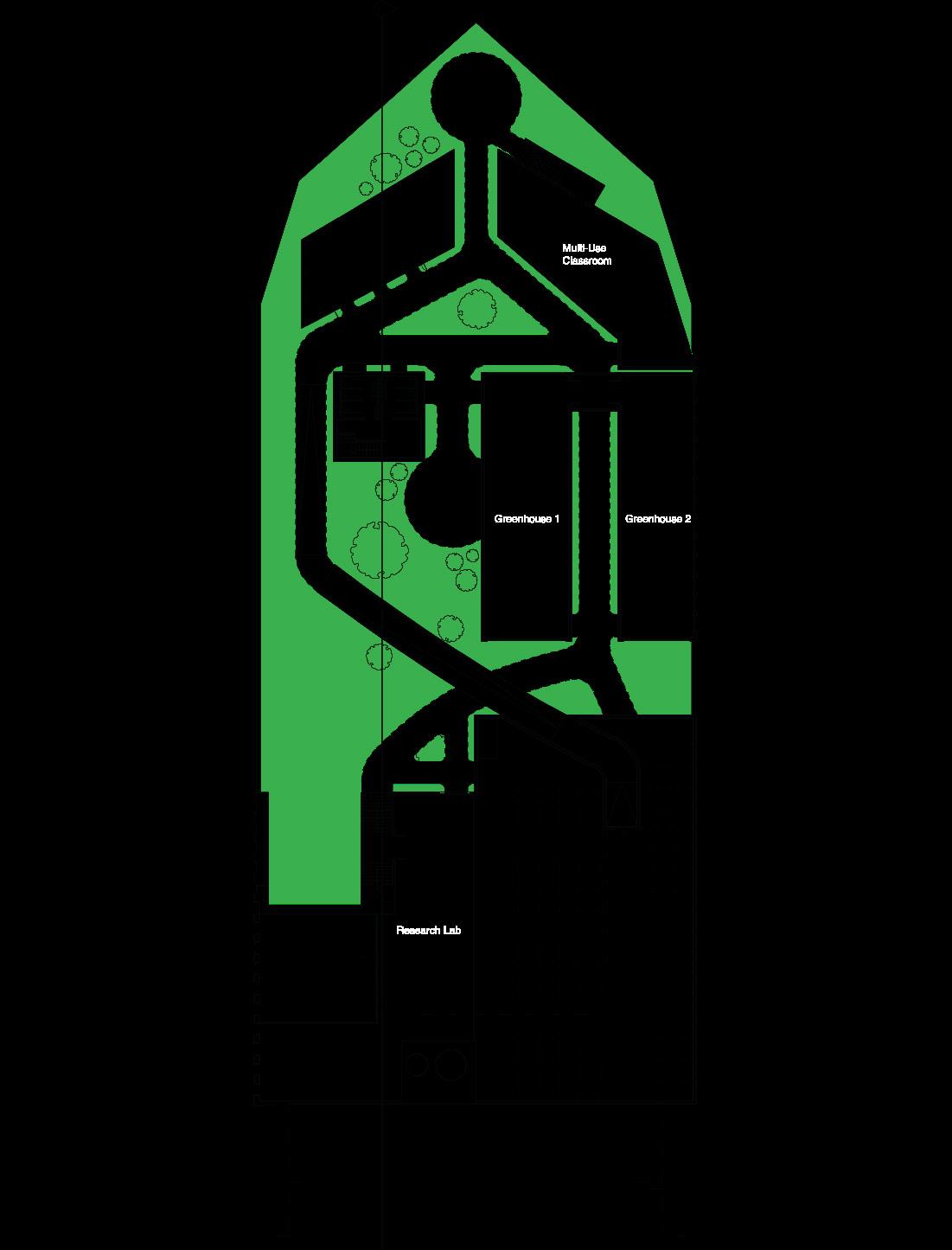
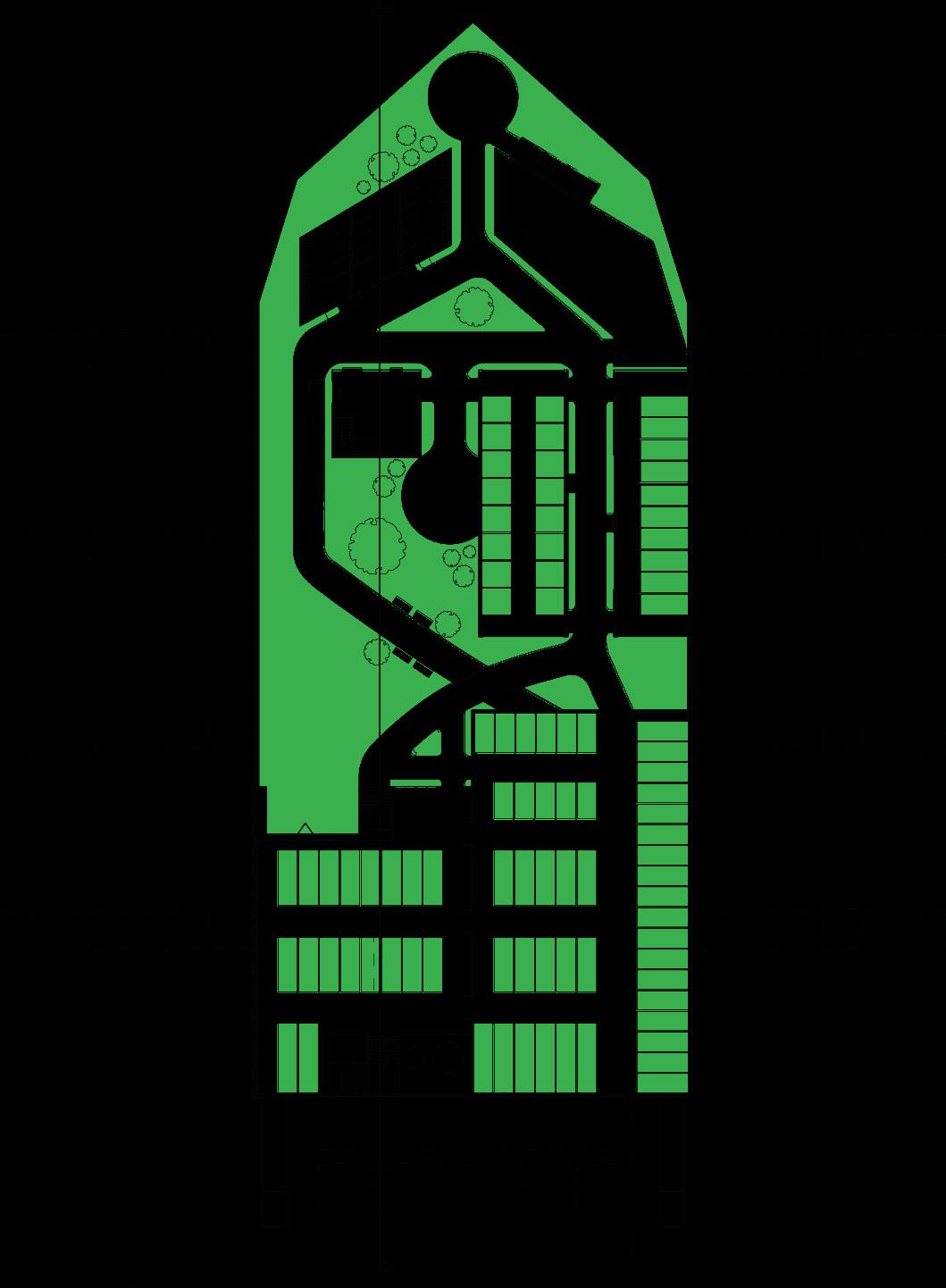
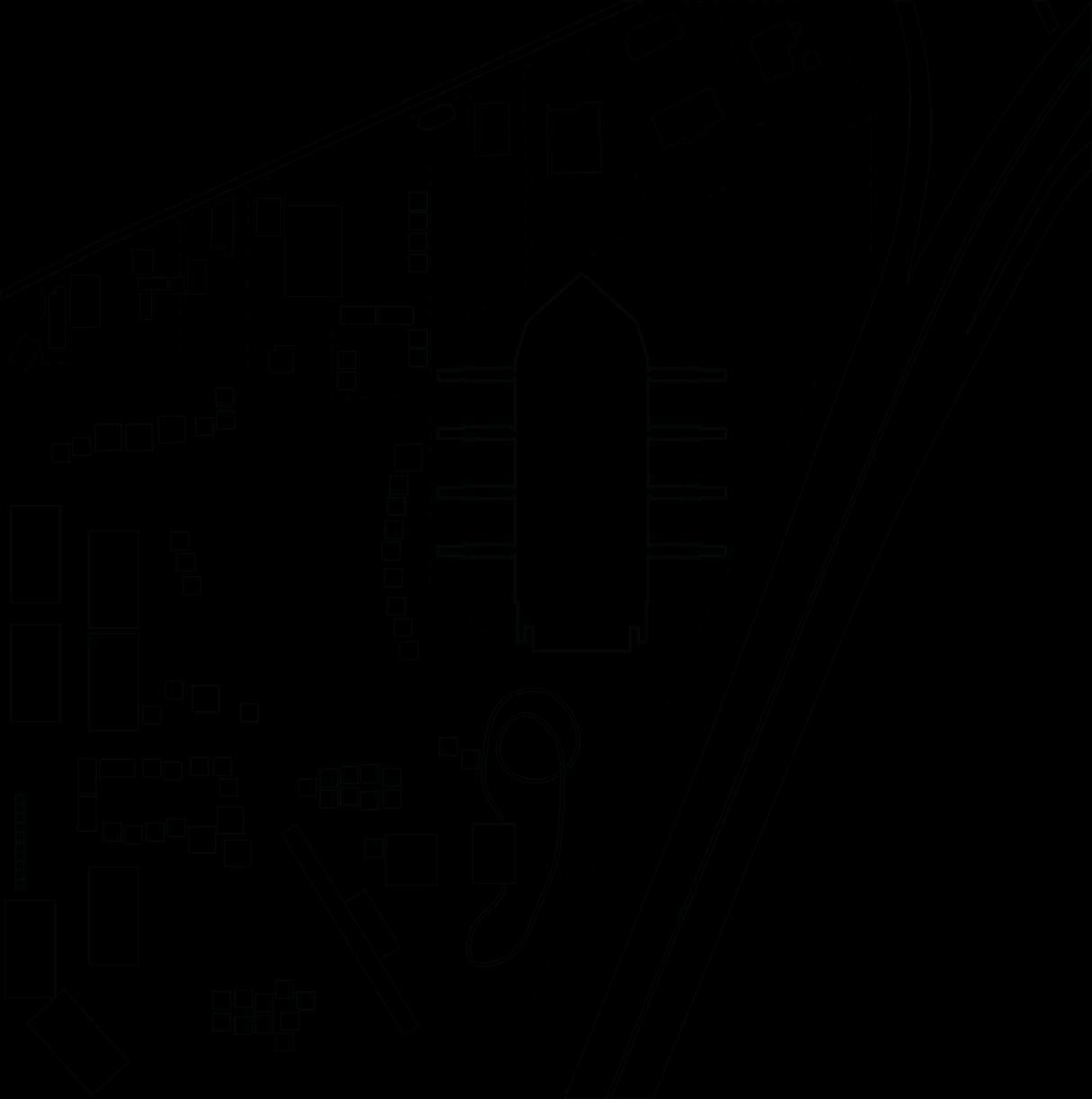
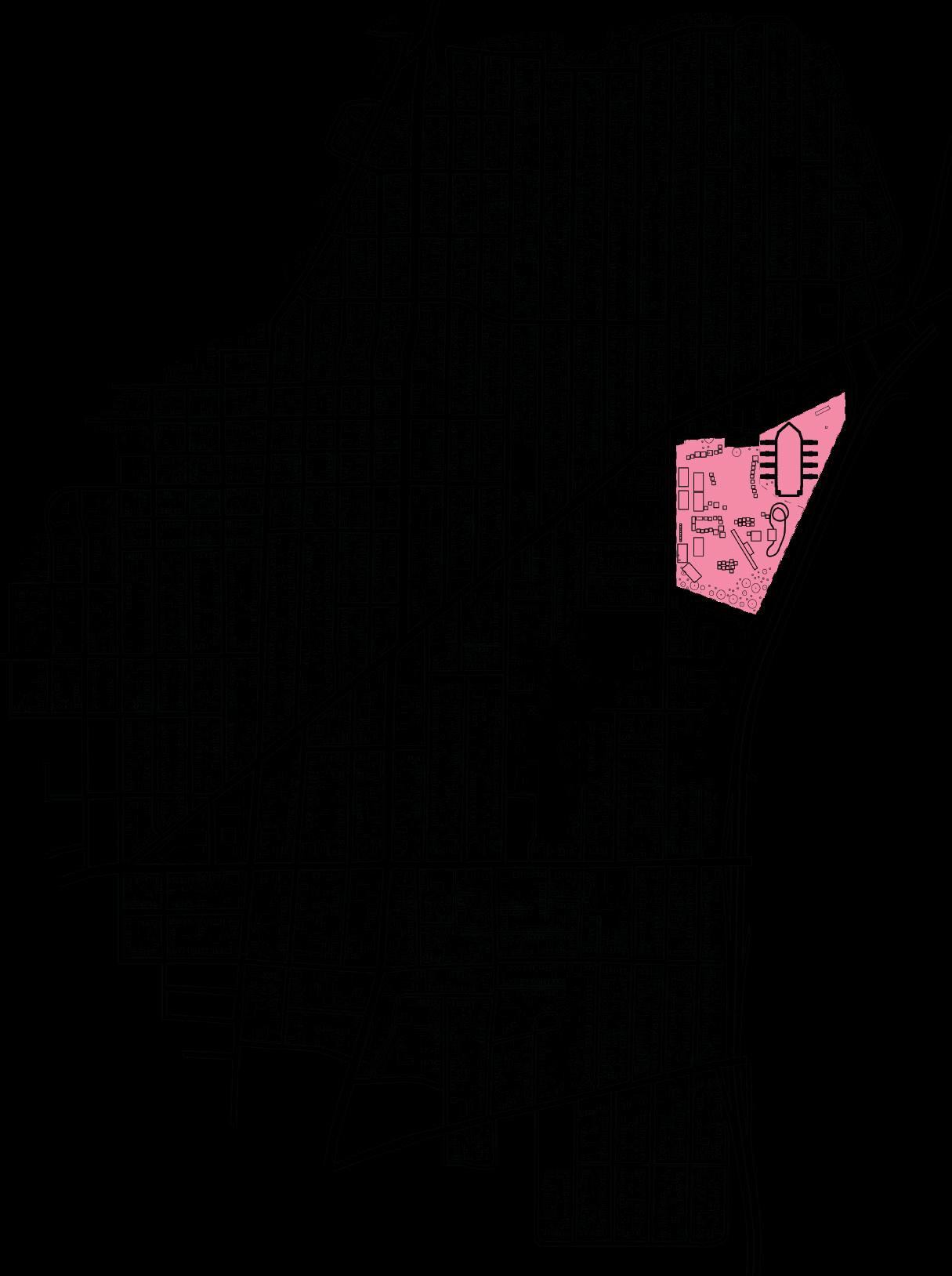
This project was an exploration into possible mutations of city planning; how would a city block look if the typical rectangular form was twisted into a figure eight. The result of this would be an urbansphere much more geared towards community on a human scale. On-foot transit would become much more people friendly as one could snake around and on top of buildings to get to
their destination.
This figure eight path is populated with facades reminiscent of classic midwestern americana design, glimpses into the mainstreet USA style of our past. Acknowledging the past with revivalist ideals that don’t seek to destroy, masquerade, or change.
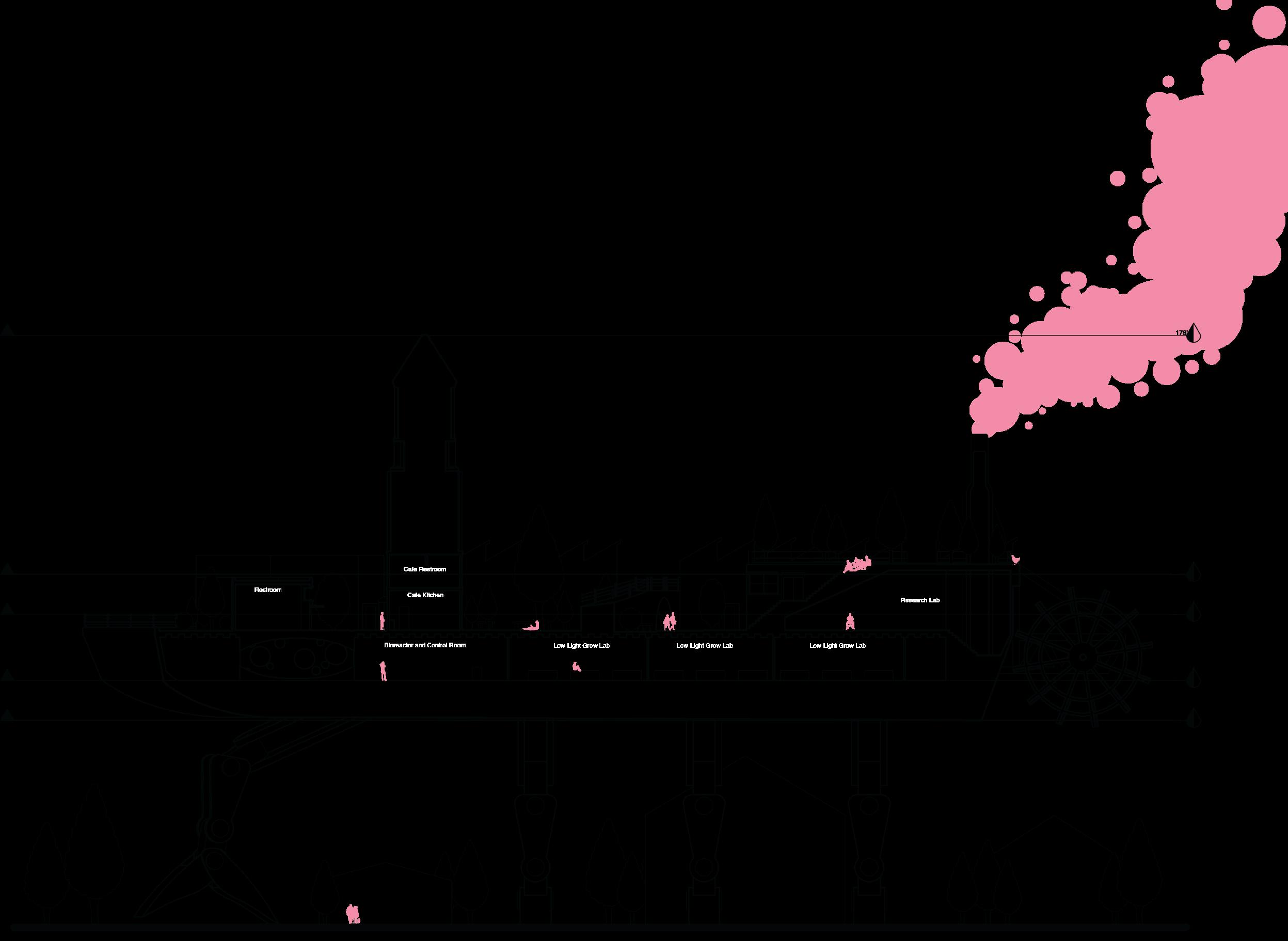
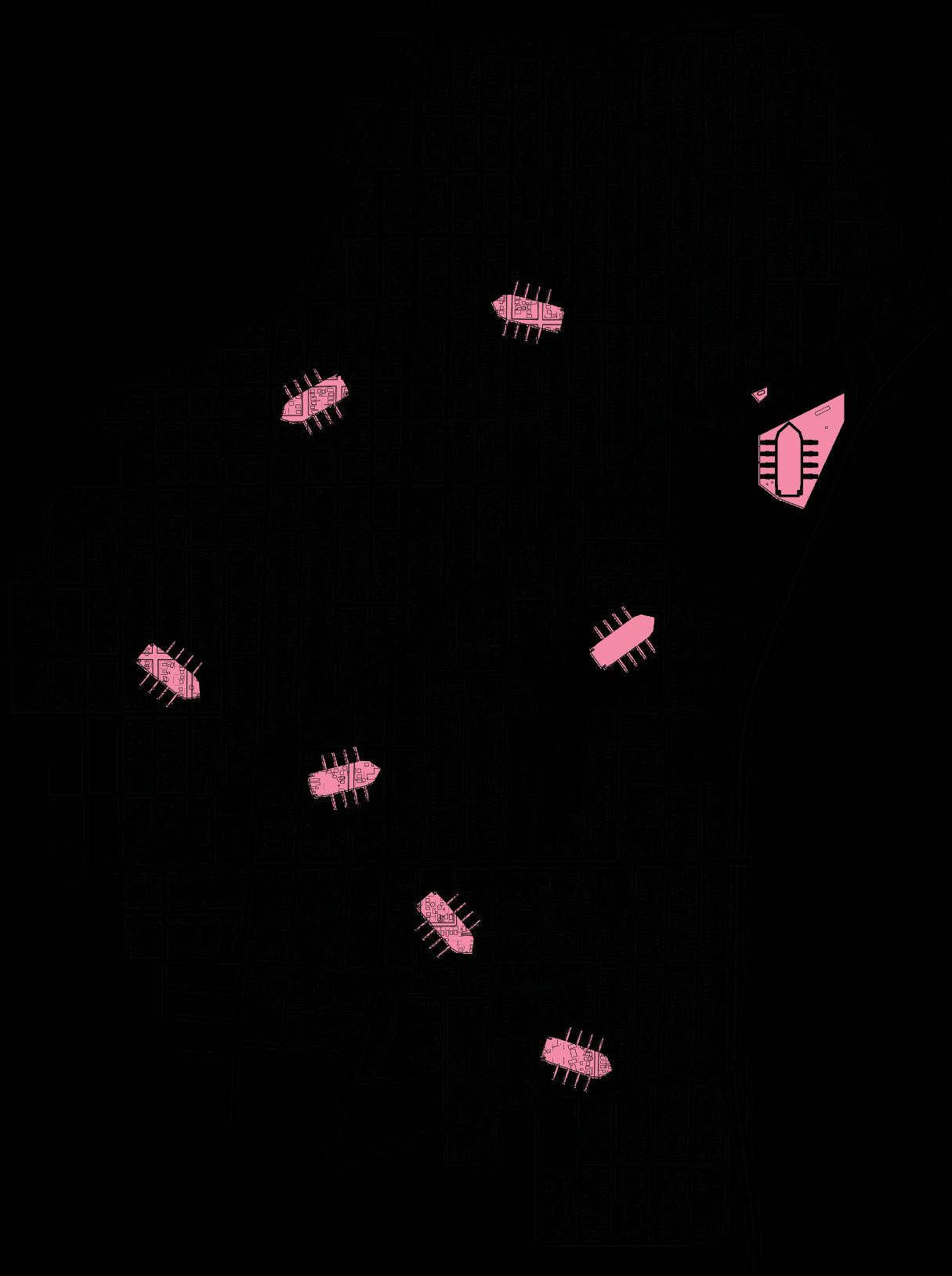
This superstructure houses the campus of an agricultural research and education facility. The entire “block” of the twisted urbansphere is then affixed a steamboat, similar to the ones that would traverse the Ohio and Cuyahoga Rivers, continuing to build on to the historical form-finding. The agricultural facility walks throughout the city and helps to address community issues of food deserts by supplying produce as well as knowledge of agricultural methods and resources.
The prompt given for this project was to create a building that could transform to
activate space for a festival that would take place in North Hill, Akron. I created my festival to be about berries, One of Ohio’s only natural fruit families. This fit with both the historic theming and the agricultural aspects of the program. During the off season the building gently moves around the city but as the festival takes place it remains in place and a county fair is put up around it.
On a personal level, it was extremely important for me to tackle this project in a way that does not lead to gentrification, an issue all to frequent with urban renewal projects. That is why there are so many eclectic historicist typologies present in the design as well as the program being strictly for the betterment of the pre-existing community. On a metaphysical level the behemoth structure acts as a guardian of the past, protecting the history of North Hill and ensuring a future for all of it’s residents.
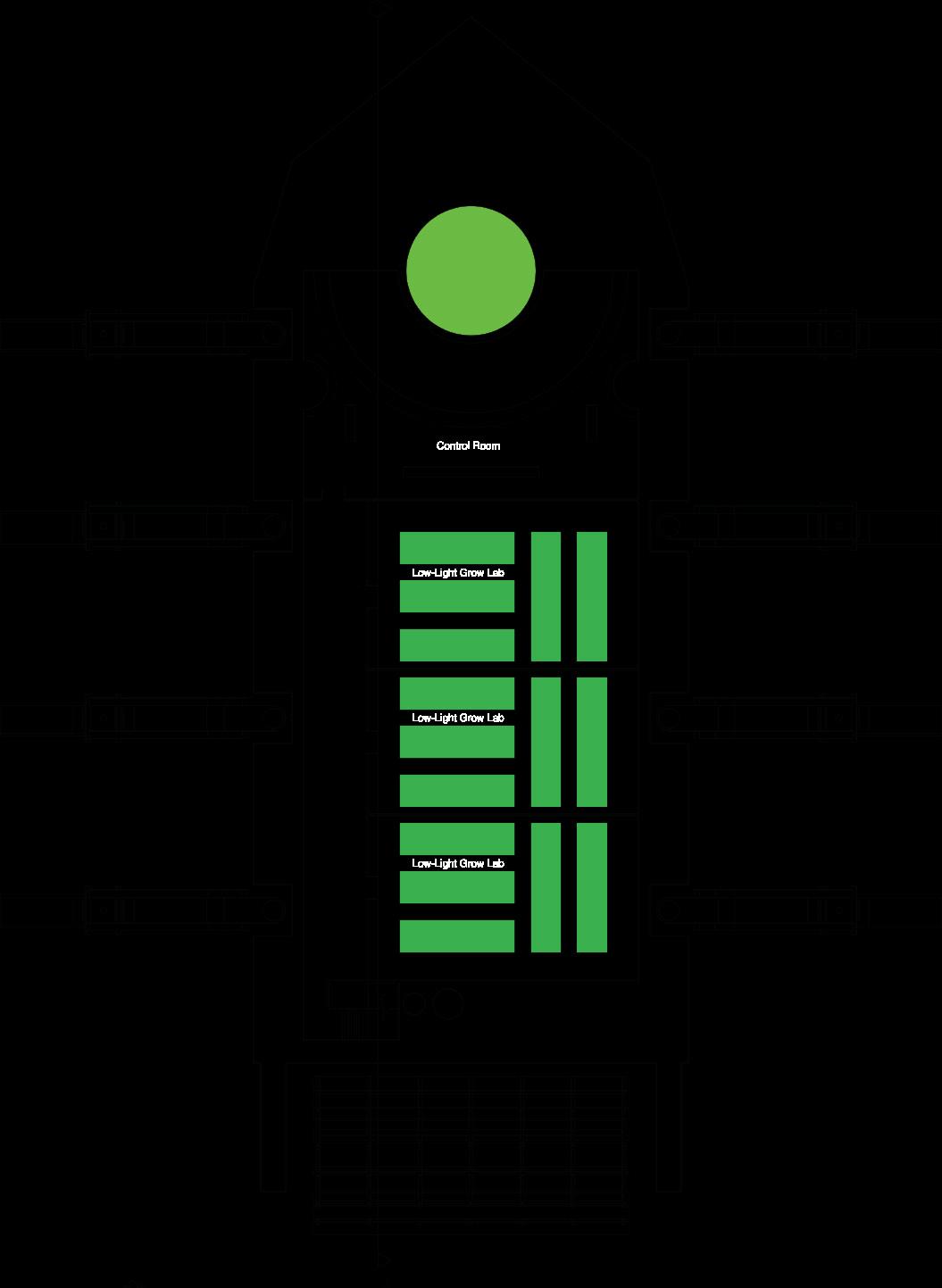
1. m/gn/f restrooms
cafe
bioreactor
low-light grow lab 5. research lab
multi-use classrooms
prow lookout
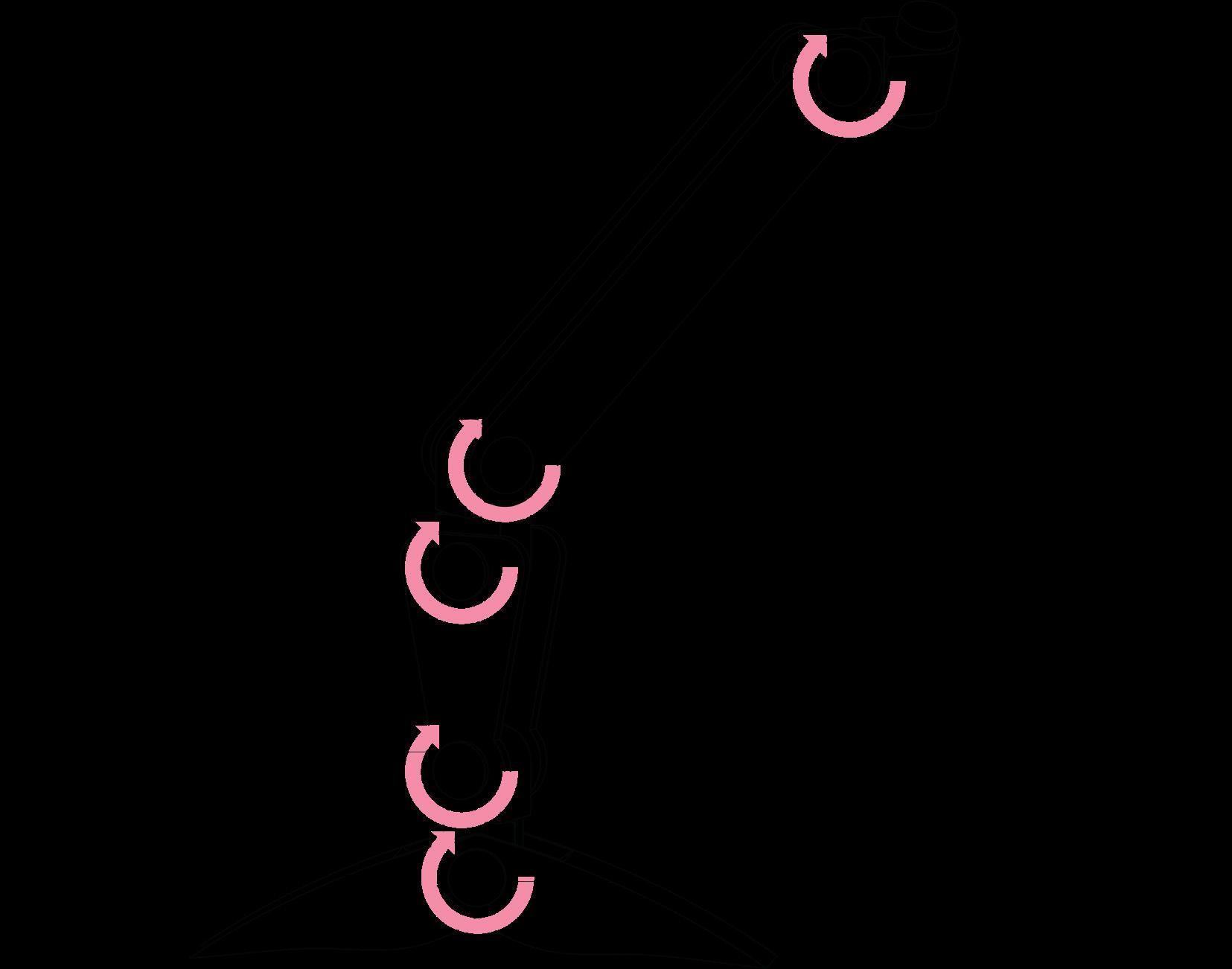
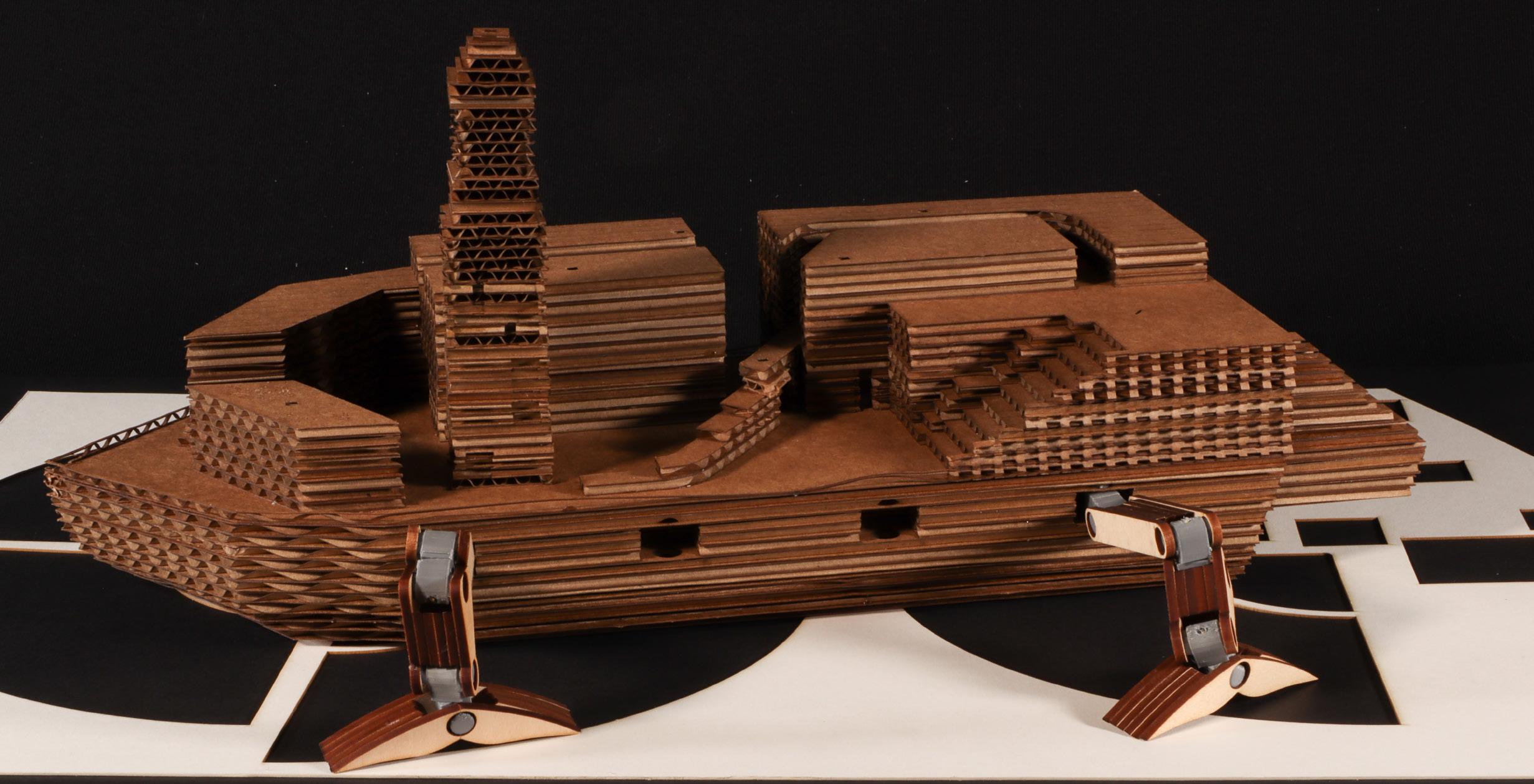
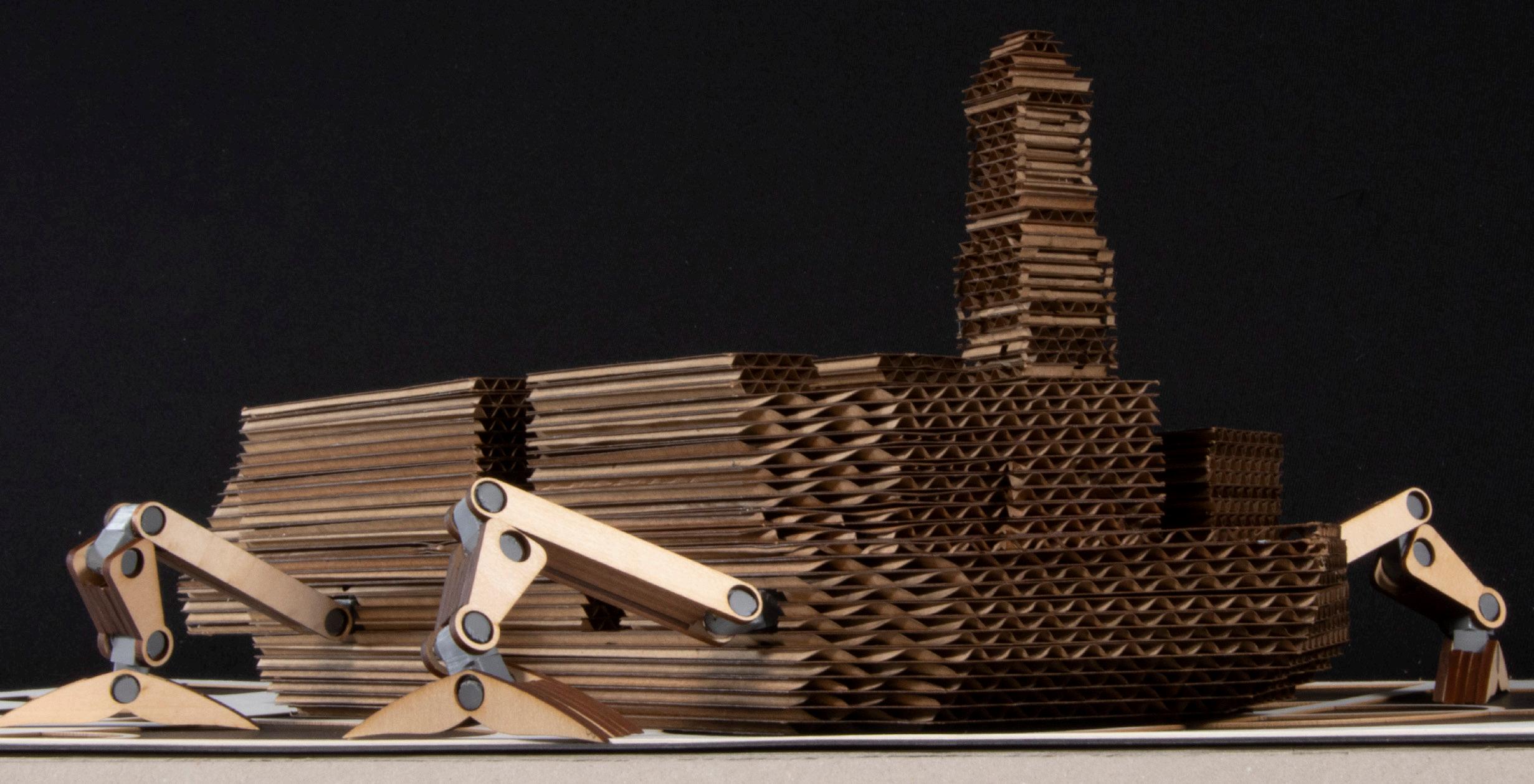
Part of the requirements of the project was to develop a system for action or movement. For this building’s mechanical locomotion a hypothetical diagram of one leg is shown with parts labeled.
7. greenhouse
Planted and walking renders
diagrams detailing movement throughout the city in the off-season as well as the de-activation of the structure but activation of the public space for the festival
allow for full range of motion and leg structure was
Model made from precisely sliced and stacked pieces of corrugated fiberboard. Leg joints were hand-modeled and 3D printed to
cut from basswood sheets. Model is fully prehensile and durable.