
Doughnut

“

“
Chanukah candles need to be lit to last for half an hour after night. You are allowed to put them out after half an hour if a danger exists, or if you have to leave the candles unattended. IMPORTANT! ”
There are an average of 25 preventable home fires in the U.S. per day caused by lit candles.
• Unless it is a minor contained fire, do not attempt to put the fire out yourself.
• If there is smoke, get as low to the ground as possible and keep your mouth covered.
• Call 911 once you are in a safe area and do not re-enter the house.
• If you or your clothing catch fire, don’t run. Cover your face and “STOP, DROP, AND ROLL.”
DBefore Chanukah, practice a family fire emergency escape plan.
DHave working smoke and carbon monoxide detectors and fire extinguishers.
DBe mindful of loose clothing, sleeves, ties, and hair when lighting the menorah.
DUse only non-flammable menorahs that are not made from wood or plastic.
DIf using oil cups with wicks, make sure the cups are properly secured into the menorah.
DSet menorahs up on a sturdy heat-resistant surface with aluminum trays or foil underneath and keep out of children’s reach.
DLight the candles only in areas that are 4 feet away from any flammable items such as curtains, draperies, blinds, cabinets, etc.
DUse long barbecue style matches or the shamash candle to light the candles, especially if children are lighting.
DMake sure all children’s menorahs are set up in front of other menorahs so children don’t have to reach over a menorah to light their own.
DWhen lighting on a windowsill, make sure there is enough room and nothing flammable nearby.
DIf necessary, the best way to extinguish candles is to blow them out.
U Never leave lit candles unattended.
U Never leave children or pets alone in a room with a lit menorah.
U Don’t set the menorah up in an area where it can be easily knocked over.
U Don’t use any types of tablecloths underneath the menorah.
U Don’t leave matches, lighters, candles, wicks, or oil near the candles.
U Don’t move menorahs while the candles are lit.
UNever use water to extinguish wax candles - hot, liquid wax is a fuel, and water can cause the fire to spread.

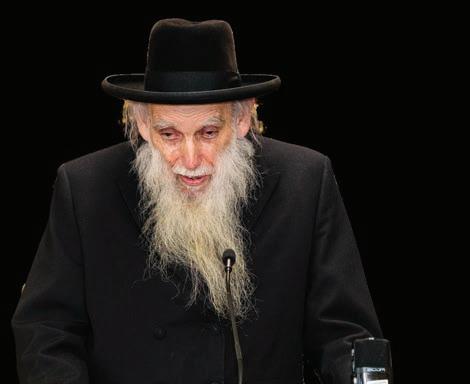
Rav Moshe Heinemann, Shlit”a &


Chanukah arrives this year not merely as a celebration, but as a living reminder of how our people endure. The miracle of the Pach Shemen was not just about oil burning; it was about a small spark pushing back against overwhelming darkness.
was never simply a historical line, it is a present-tense description of our reality. Once again, we find ourselves the “few,” surrounded by louder, sharper voices that attempt to redefine morality and rewrite truth. The world calls us aggressors, when all we want is the ability to live, build, and grow. The contradiction is painful, but it is familiar. Through generations, we have stood exactly where we stand today.
And yet, we persist. The very essence of Jewish strength has never been physical dominance; it has been spiritual endurance. Yosef HaTzadik embodies that idea. He was cast into pits twice, alone, betrayed, and cut off from everything familiar. He had no support system, no comfort, no reassurance. By all accounts, that should have been the end. But it wasn’t. Rabbi YY Jacobson explains that Yaakov continued to cry and daven for his son, refusing to accept that he was gone. Those tears, quiet, unseen, persistent, became Yosef’s water. From beneath the ground, Yosef sprouted, not merely surviving but rising to greatness.
That single drip of spiritual nourishment mirrors the Pach Shemen. A tear-sized amount of oil was all that remained. Yet in that oil lay everything – hope, continuity, belief. The Greeks had stripped Torah from public life, outlawed mitzvos, and tried to bury holiness beneath culture, power, and ideology. And
still, Klal Yisroel held on. Like Yosef in the pit, they were underground, outnumbered, and seemingly forgotten. And then one drop ignited eight nights. Our story has repeated itself a thousand times over. We were buried in Europe, and from the ashes we rebuilt schools, communities, yeshivos, families. We were buried under ridicule and discrimination in lands not our own, and yet we remained rooted. And now, in today’s backward moral landscape, where evil is celebrated and decency is mocked, we again feel surrounded. But if history has taught us anything, it is that being underground is never the end. As long as tefillos continue, as long as tears still fall, growth is still taking place.
And so as we light the menorah this year, perhaps the message is not simply “remember the miracle,” but “see it happening now.” Each flame begins small, yet pushes away enormous darkness. Every act of achdus, every moment of giving, every word of Torah learned, every tefillah whispered quietly – that is oil. That is water nurturing growth we cannot yet see. We are a people built on seeds planted in hidden places. And those seeds always surface.
Wishing you a Chanukah of strength and renewal. May the small sparks within our homes, our hearts, or our nation, grow into flames that illuminate far beyond what logic allows. We have seen such miracles before. And with Hashem’s help, we will see them again.
Have a peaceful Shabbos and freilichin Chanukah! Aaron M. Friedman
and mazal tovs to
be featured in coming editions!
Comfort Year-Round:
Experience stable indoor temperatures, and reduce drafts, with warm winters and cool summers, when you upgrade to spray foam insulation in your attic.

Save Big on Energy Costs:
Cut your heating and cooling bills by 30-50% and make your HVAC system work smarter, not harder.
Breathe Better:
Enjoy improved air quality with reduced drafts and outdoor pollutants, creating a healthier living environment.


By: BJLife Newsroom
Athletes For Israel (“AFI”), a non-profit organization that is transforming the public conversation about Israel through the power of athletic influence, brought more than 100 Jewish student-athletes from across the country to Auburn University for a three-day immersive experience blending basketball, leadership, Jewish pride, and community engagement in late November.
Students from Fuchs Mizrachi, Kushner, HAFTR, Beth Tefiloh, and Atlanta Jewish Academy traveled to Auburn with AFI for the “Auburn Experience” trip. While there, students met with former basketball coach Bruce Pearl and new head coach Steven Pearl at the Tigers’ practice facility, and watched the Auburn Basketball teams play against Jackson State and Georgia State, respectively. The students had the opportunity to meet
and speak with the Tigers players. They also participated in “Bagels with Bruce” with the Auburn Hillel, where Coach Pearl, a vocal advocate for Israel and the Jewish people, led inspiring discussions with the students.
Off the courts, the group was introduced to AFI’s newest initiative, “AFInity Dinners”. The program brings high school teams together for shared Shabbat meals, fostering connection and respect before they face off on the court. They also participated in local community service projects, where the students packed boxes for the homeless, spent time with children with special needs, and supported local organizations.
“Over three days, the Auburn Experience showcased the powerful intersection of sports, identity, and service,” said Daniel Posner, Chairman and Founder of Athletes For Israel.



Ahundred and fifty fathers, grandfathers and boys attended the first Toras Simcha Avos Ubonim. The boys learned with their father or grandfather for thirty minutes, enjoyed pizza and snacks,
and made phone calls for the yeshiva’s annual campaign. After that, Rabbi Shai Scherer distributed many prizes and grand prizes. The boys also received a special Chanukah draidel (with four-sided gimel design). Be careful if you play
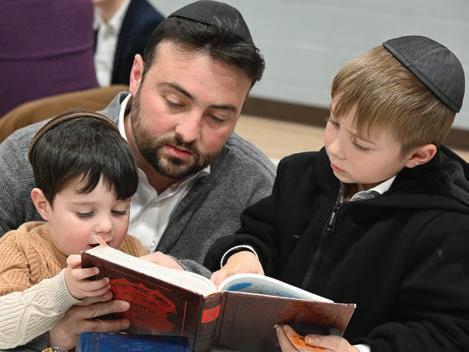
draidel with one of the YTS students. He is guaranteed to win!
The following morning, the mothers enjoyed a delicious catered brunch. Rabbi Noson Newman
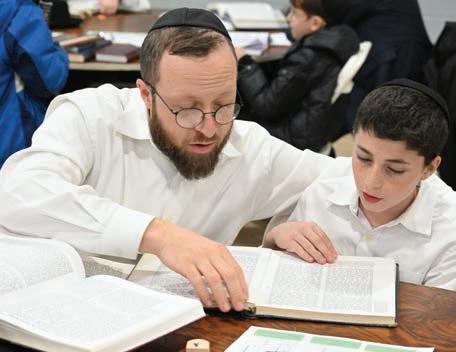
addressed the women and told a powerful personal story about how his parents overcame tragedies and flourished as a family. Afterward, the women made phone calls for our annual campaign.
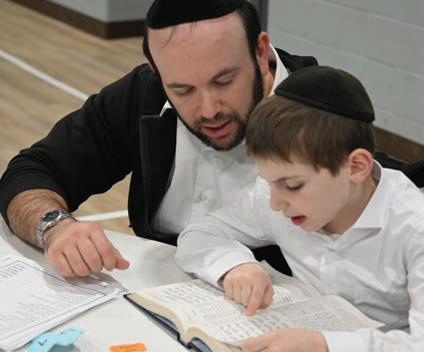
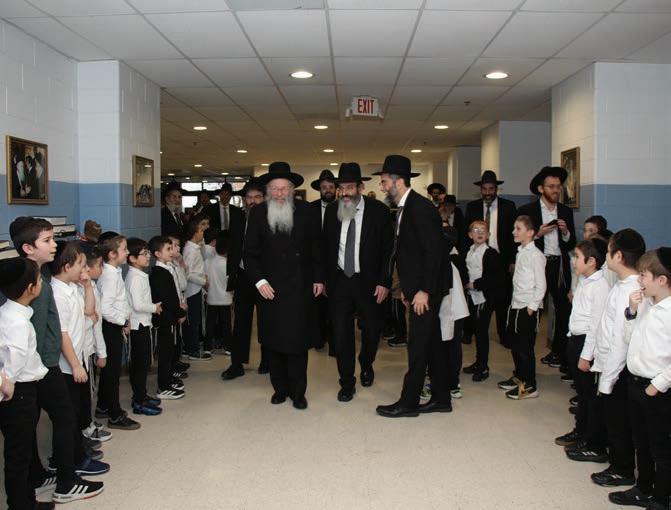
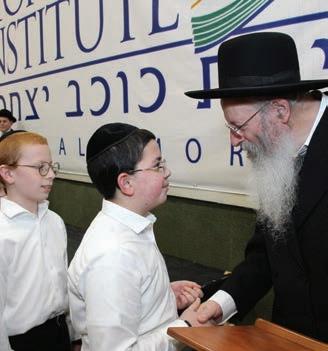
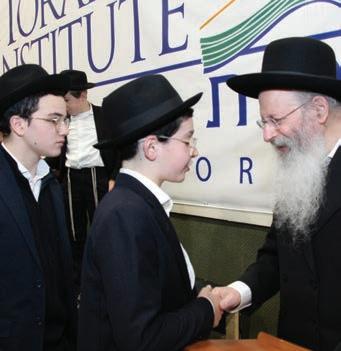
Torah Institute Yeshivas Kochav Yitzchak had the Zechus this week of welcoming Harav Malkiel Kotler, shlit”a, Rosh Yeshiva of Beth Medrash Govoha. The Talmidim lined the hallways to greet the Rosh Yeshiva as he entered the building, creating an atmosphere of excitement and Kavod
Hatorah. Harav Kotler addressed the boys with heartfelt words of Chizzuk, emphasizing the power of their daily Limud HaTorah and the responsibility of each Talmid to grow in Ruchniyus. His warm message left a deep impression on both students and staff, inspiring renewed Koach in their learning and Avodas Hashem.
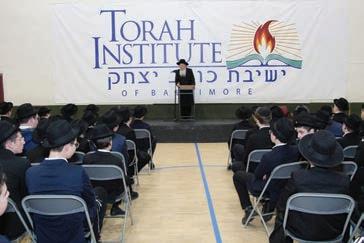



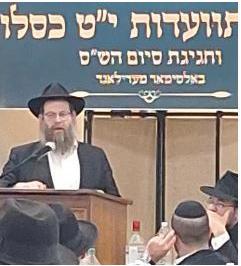
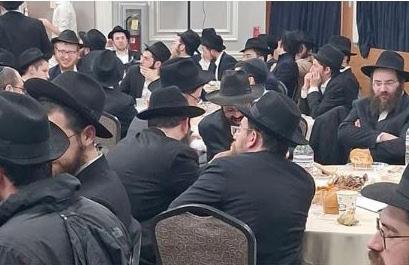
Hundreds gathered last night at Kol Torah for a powerful Yud Tes Kislev celebration, marking what is known as the Rosh Hashanah of Chassidus. It marks the 1798 liberation of Rabbi Shneur Zalman of Liadi, the founder of Chabad-Lubavitch, from imprisonment in czarist Russia.
The atmosphere was warm and spirited as attendees wished one another Gut Yom Tov, followed by a Siyum HaShas and a festive seudah. The highlight of the evening was an inspiring address by Rabbi Elyahu (Eli) Nosson Silberberg, Rosh Yeshiva, Ohr Eliyahu Lubavitch Mesivta,
Chicago, who spoke about the enduring light and relevance of the day.
By: BJLife Newsroom
By: Rabbi Dovid Jaffee
Rabbi Daniel Kalish came to Baltimore to give words of chizuk. He shared a revolutionary concept in self-acceptance and in chinuch. As one of the only mechanchim in the crowd, I would like to share his message with all mechanchim, parents, and growth-oriented individuals.
He related how one day, at his yeshiva, the shiur was having a very animated discussion about the sugya that they were learning. Everyone was getting excited and worked up, and had something to say. That is, almost everyone. One bachur approached him after the shiur and said it was boring.
How would we respond to that bachur? One approach may be to tell him to keep his comments to himself. “We are learning Hashem’s Torah, which sustains the entire world. Can’t you see how excited everyone was? How can you say that you are bored?! You really need to work on yourself. Get back to your learning and don’t complain.”
Another approach may be to instruct him to keep pushing through. “That’s life! Not everything is exciting. You just have to do it anyway. I don’t always find my learning exhilarating, but I don’t let that stop me.”
A third, more optimistic approach, may be to try to convince him that he’s not really as bored as he thinks.
“I saw that you wanted to join your friends and ask a question. I could see in your eyes that you found the discussion interesting. Don’t be down on yourself. Try to be more self-aware, and you’ll see how much you really do connect to learning!”
A new-age approach might be to encourage him. “Torah is so geshmak! Just keep trying, and the enjoyment will come. It’s guaranteed. Just keep hanging on, and you’ll see.”
However, Rabbi Kalish didn’t use any of these approaches. Instead, he said something that most of us wouldn’t even consider saying. He said, “You’re bored. That’s a really healthy space to be in. It’s okay to be bored.” He then went further, “We were learning sugya of kiddush b’makom seuda. That’s your very sugya. It’s about bringing kedusha into our physical lives; merging ruchniyus and gashmiyus. That’s exactly what you are struggling with!”
Do we appreciate the brilliance of this approach? Every other approach pushed away that bachur’s feelings. This first one shamed him for even having such feelings. The second approach simply disregarded his emotions. The third told him that he misunderstood his own feelings. And the fourth approach implicitly told him that those feelings are a problem, but he’s like a sick person who will be healed one day. The common denominator in all four

approaches is that the bachur, who was clearly struggling in the first place, feels that his rebbe doesn’t understand him and will now be plagued with guilt about his feelings. At best, he will be sure to always push his feelings under the rug, since they have been deemed negative or dangerous. At worst, he will be too honest to push away his feelings, and he will either reject the rebbe or Torah, chas v’shalom.
Contrast this to Rabbi Kalish’s approach. He accepted the bachur’s feelings and led the boy to self-acceptance. The boy’s expression of boredom was his way of expressing a lack of connection to the Torah, but it was also a cry that he wanted to connect – yet he couldn’t. Rabbi Kalish didn’t push away his feelings, and he didn’t push away the Torah. This is the first step in paving the path of connection.
All of us are educators and mentors - whether we are educating our
students, our children, or ourselves. Most of us, for some reason or another, absorb and convey the message that our job is to negate our feelings. We believe that success comes from ignoring our emotions or even condemning them. Nothing could be further from the truth. Emotions are part of us. Running away from them or distorting them is running away from ourselves. It is only when we are in touch with ourselves that we can truly begin the process of growth.
In my opinion, this is the message that our generation needs to hear. The number of young people I meet who are struggling on some level is staggering. A rebbe from another yeshiva recently commented to me that it seems that mental health is rapidly declining. As Rabbi Kalish says, we are a generation of p’ninimius (inner meaning), and we need to learn to connect with ourselves and others in that realm.


AN ELUCIDATION OF THE CLASSIC WORK OF HAGAON RABBI AVROHOM YESHAYA KARELITZ
Chazon Ish: Emunah and Bitachon, one of the great Torah classics on Jewish faith and trust in Hashem, has inspired generations to deepen their emunah, bitachon and their connection to Hashem. This sefer is a roadmap to strength, serenity, and a truly meaningful life.
The Chazon Ish’s original work is profound, and even seasoned scholars sometimes find it difficult to understand due to its poetic style and uncommon terms. Now, with Rabbi Yehuda Heimowitz’s masterful elucidation, explanatory footnotes, and fascinating insights, this work’s timeless truths are presented with clarity and faithful precision — unlocking the Chazon Ish’s wisdom for every reader.
Greater Washington: Around the Community
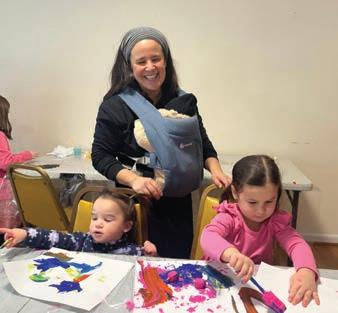
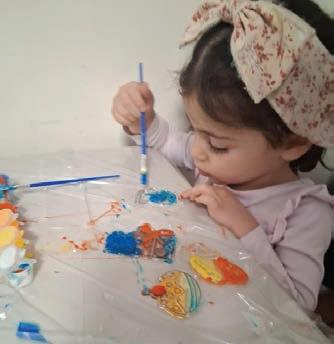
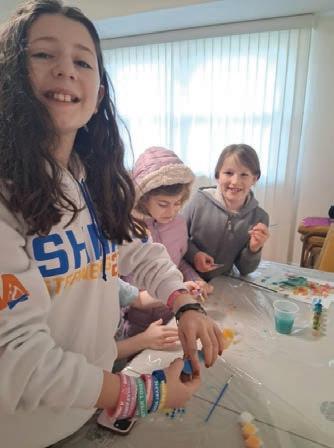
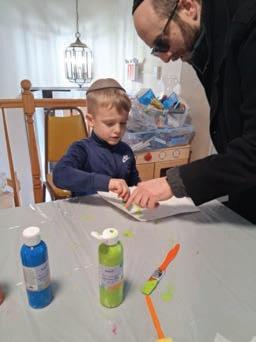
YISE hosted a joyful pre-Chanukah crafting event, bringing families and community members together for an afternoon of creativity and Chanukah spirit!
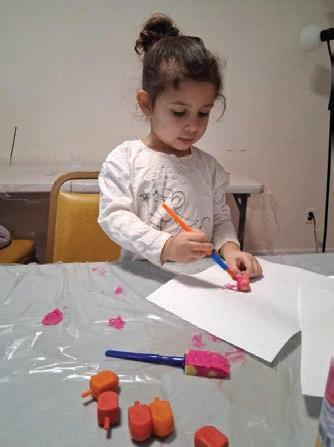
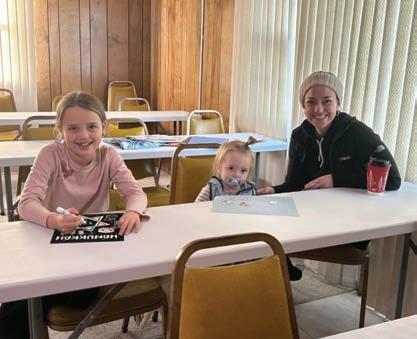
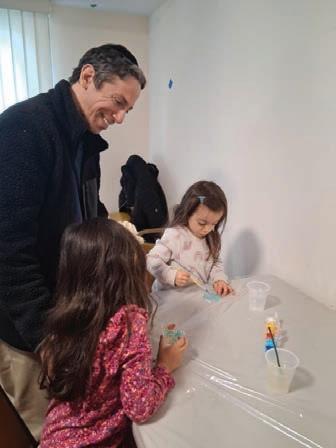
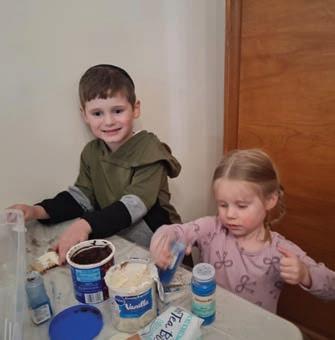
ilver Spring’s newest café has officially opened its doors for dinner, bringing a vibrant and much-needed dairy dining option to the community. Café K is already drawing visitors from near and far, eager to sample its delicious cuisine and explore the thoughtfully crafted dinner menu.
Evenings at Café K have been nothing short of magical. Guests enjoy a warm, elegant atmosphere enhanced by soft background music, while Chef Paul presents beautifully plated, flavorful dishes that consistently impress. Customers are leaving with a genuinely positive experience, praising both the food and the ambiance.
With its upscale yet welcoming setting, Café K is poised to become a go-to destination—perfect for families, business meetings, and date nights alike.






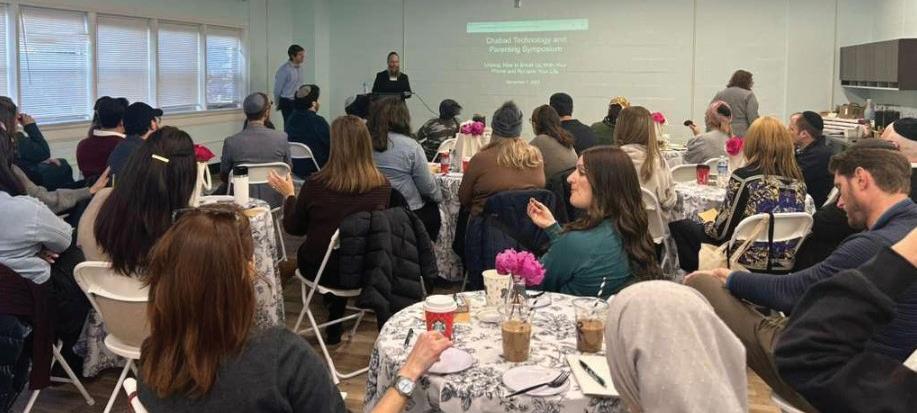
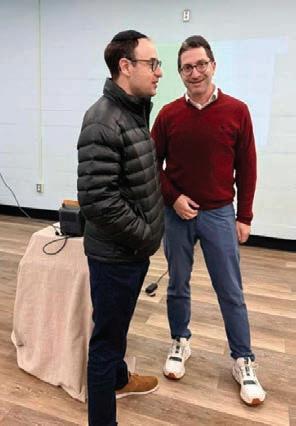
The Gan recently hosted its second annual Parenting Symposium, held in loving memory of Mrs. Raizel Wolvovsky, A”H. Parents gathered on Sunday morning for an inspiring and uplifting program featuring Richard Simon, author of Unplug, who shared practical tools for “breaking up with your phone” and fostering a healthier, more balanced relationship with technology.
The event brought together men and women for camaraderie, connection, and meaningful learning focused on strengthening our roles as parents. Following the lecture, participants enjoyed a delicious brunch and coffee bar, and the feedback has already been overwhelmingly positive. It was a memorable and enriching morning for all who attended.


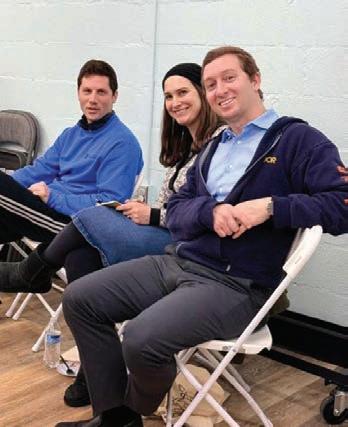
N’shei Ohr HaTorah hosted Mrs. Leah Trenk at the home of Rabbi Yaakov and Tzirel Rutstein for the women of Silver Spring. Close to 80 women were in attendance enjoying an interactive style talk with Mrs. Trenk who spoke about her unique approach to raising children.
She described the task of raising children as exactly that--intentionally teaching our children from the time they are very young through conversation, modeling and choosing to give compliments instead of criticism. Sometimes, Mrs. Trenk quipped, parents tell children to “grow up! As though the kids should already know how to act. But parenting is exactly the opposite; children only know how to act because we are raising them.” No one is born knowing how to be kind and good and parents have the power to help their kids become good by how we see them!
Additionally, she shared a powerful anecdote about her husband Rav Dovid

Trenk zt”l who was once served a cup of vodka (in place of water) by a new student as a prank. Instead of lashing out or even discussing the incident with his student, Rabbi Trenk chose to never say a word about it. Over time, this student developed a close relationship with Rabbi Trenk and went on to become “a gadol,” said Mrs. Trenk.
She gave snippets of how to teach our children to take responsibility for themselves rather than telling them what to do every minute as well as how to make it exciting to help at home. She modeled ways to express
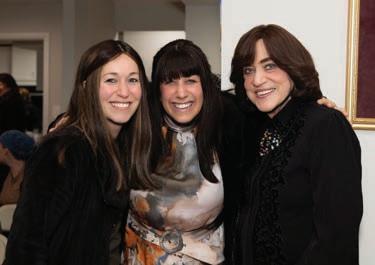

sincere appreciation for when our children decide to help and highlighted how such an approach can completely change the atmosphere and relationship of parents and children.
Mrs. Trenk’s full parenting course is comprehensive and sophisticated

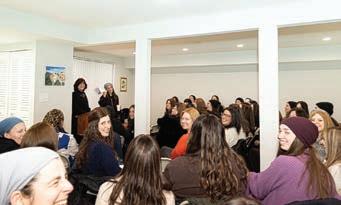
but in an hour and a half the audience was able to walk away with a taste of what it means to care for and raise our children with love and respect so that they want to emulate our values and continue to want to do good and be good!














According to Lebanese Foreign Minister Youssef Rajji, the terror group Hezbollah will not disarm unless Iran tells it to do so.
In an interview published Saturday, Rajji told news outlet Saudi Al Arabiya that he has discussed the matter with Iranian FM Abbas Araghchi, adding that the terror group’s disarmament is among the Lebanese government’s top demands.
In October 2024, year-long skirmishes between Israel and Hezbollah escalated into a full-blown war, with the Jewish state launching a ground campaign into Lebanon. In November, the two sides agreed to a ceasefire, which conditioned Israeli withdrawal upon Hezbollah disarmament. However, because the terror
group has still failed to disarm, the Israel Defense Forces have yet to withdraw from five strategic border posts.
“Hezbollah won’t hand over its weapons without an Iranian decision,” Rajji said. “Right now, [Hezbollah] is concerned with preserving itself and regaining power.”
He added that Hezbollah, an Iranian proxy group, is focused on “rebuilding itself in many ways” and restoring its power, as its war with Israel left it weak.
Rajji also expressed disappointment in Hezbollah’s refusal to disarm, adding that disarmament would be in the best interests of both Lebanon and Hezbollah, as a political party.
“The credibility of the state today depends on the extent to which it extends its authority over all Lebanese territory and confines the weapons of all armed groups to the legitimate security forces in its own territory and with weapons exclusively in its hands,” he said. “Disarming Hezbollah and dismantling its military structure are a Lebanese demand, regardless of the international demand.”
He noted Hezbollah’s ineffectiveness, contrary to its own claims, highlighting
the terror group’s failure to “support Gaza, liberate Jerusalem or defend Lebanon.”
According to Rajji, the Lebanese Armed Forces aim to have confiscated all Hezbollah weapons in southern Lebanon by the end of 2025. In the beginning of 2026, Lebanon plans to expand its operations further north, seizing weapons in other regions.
He added that Hezbollah “provokes the government every day with the talk by its chief, Sheikh Naim Qassem, about rearming.” On Wednesday, Qassem alleged that Beirut was giving Israel a “free concession” by sending a civilian rather than a military envoy to Lebanon’s first direct talks with Israel in decades. The talks, which are aimed at advancing last year’s ceasefire, took place at the U.N. peacekeeping forces’ headquarters in Naquora, Lebanon, with National Security Council Deputy Director for Foreign Policy Uri Resnick representing Israel and former ambassador to the U.S. Simon Karam representing Lebanon.
Rajji said the decision to send a civilian instead of a military official to the meeting would hopefully prove to be a “positive step” which could “spare Leb-
anon a large-scale military operation by Israel.” Such an operation is possible if Hezbollah does not disarm.
Officials from Israel called the meeting productive and said economic cooperation proposals were discussed. Lebanese Prime Minister Nawaf Salam, however, downplayed the likelihood of economic cooperation between the two countries. Rajji said that the talks only concerned “military issues.” Lebanon has said it would only normalize relations with Israel if a Palestinian state is established.
A day after the meeting, Hezbollah weapons depots in southern Lebanon were targeted by Israeli airstrikes.
According to a statement released Friday by the International Atomic Energy Agency, the Chernobyl nuclear disaster site’s steel protective shield was severely damaged in what is believed to be a Russian airstrike.
6:15 am Young Israel Shomrai Emunah M-F
6:25 am Southeast Hebrew Cong., Knesset Yehoshua M-F
6:30 am Beth Sholom Congregation M-F
Beit Halevi (Sfardi) M, T
Chabad of Silver Spring M-F
Ohev Shalom Talmud Torah OLNEY M-F
Young Israel Shomrai Emunah S YGW M, Th
6:35 am Ohr Hatorah M, Th
6:40 am YGW S, T, W, F
Magen David Sephardic Congregation M-Th
6:45 am Beit Halevi (Sfardi) S, T, W, F
Kemp Mill Synagogue M, Th
Ohr Hatorah T, W, F
Young Israel Shomrai Emunah M, Th
6:50 am Woodside Synagogue/Ahavas Torah M, Th Silver Spring Jewish Center M-F
Chabad of Upper Montgomery County M-F
6:55 am Young Israel Shomrai Emunah T, W, F
7:00 am Kemp Mill Synagogue T, W, F
Southeast Hebrew Cong., Knesset Yehoshua S Silver Spring Jewish Center S
Woodside Synagogue/Ahavas Torah T, W, F
Young Israel Ezras Israel of Potomac T, W, F
7:05 am Kesher Israel M, Th
7:15 am Kemp Mill Synagogue M, Th Kesher Israel T, W, F
Ohev Sholom Talmud Torah/The National Synagogue M-F
Ohr Hatorah S
7:30 am Chabad of DC M-F
Chabad of Potomac M-F JROC M-F
Kemp Mill Synagogue T, W, F
Southeast Hebrew Cong., Knesset Yehoshua M-F
Young Israel Shomrai Emunah S Young Israel Shomrai Emunah (Sfardi) M-F
7:45 am YGW (Yeshiva Session Only) S-F
8:00 am Beth Sholom Congregation S
Kemp Mill Synagogue S Kesher Israel S
Ohev Shalom Talmud Torah OLNEY S
Southeast Hebrew Cong., Knesset Yehoshua S
Chabad of Upper Montgomery County S Woodside Synagogue/Ahavas Torah S
8:00 am YGW (High School; School-Contingent) S-F
Young Israel Ezras Israel of Potomac S Young Israel Shomrai Emunah (Sfardi) S
8:05 am Ezras Israel Congregation of Rockville M, Th
8:15 am Ohr Hatorah S Ezras Israel Congregation of Rockville S, T, W, F Kehilat Pardes / Berman Hebrew Academy S-F Silver Spring Jewish Center M-F
8:30 am Chabad of DC S Chabad of Potomac S JROC S Ohev Sholom Talmud Torah/The National Synagogue S Silver Spring Jewish Center S YGW (Summer Only) S-F
8:45 am Young Israel Shomrai Emunah S-F
9:00 am Chabad of Silver Spring S Kemp Mill Synagogue S
12:30 pm YGW S
1:00 pm Silver Spring Jewish Center S-F
2:10 pm YGW M, T, W
2:45 pm YGW S-Th
3:00 pm YGW Middle School School Days mincha
Before Shkiah (15-18 minutes), S-TH
Beit Halevi (Sfardi)
Beth Sholom Congregation
Chabad of Potomac
Chabad of Silver Spring
Chabad of Upper Montgomery County
Ezras Israel Congregation of Rockville (20 min before, S-F) JROC
Kemp Mill Synagogue
Kesher Israel
Magen David Sephardic Congregation
Ohev Sholom Talmud Torah/The National Synagogue
Ohr Hatorah
Silver Spring Jewish Center
Southeast Hebrew Congregation
Woodside Synagogue/Ahavas Torah
Young Israel Ezras Israel of Potomac
Young Israel Shomrai Emunah (Asheknaz) Young Israel Shomrai Emunah (Sefarhadi) maariv
7:30 pm YISE M-Th
8:15 pm SEHC S-Th





A week ago, the IAEA visited the site and found that the shield, which is called the New Safe Confinement (NSC), was no longer working, having “lost its primary safety functions, including the confinement capability.”
The shield, which officials built in 2016, was meant to stop the spread of radioactive material from the Chernobyl power plant’s Reactor Four. It covers a smaller Soviet-built concrete structure called the Sarcophagus. The NSC was built following Reactor Four’s catastrophic explosion in 1986. The NSC’s installation cost $1.75 billion.
According to Ukrainian officials, a Russian drone in February hit the area, triggering a fire that engulfed the NSC for weeks, leaving it with a 160-squarefoot hole in the shield, which is 360 feet tall at its peak.
“Limited temporary repairs have been carried out on the roof, but timely and comprehensive restoration remains essential to prevent further degradation and ensure long-term nuclear safety,” said IAEA Director General Rafael Mariano Grossi.
Russia has denied Ukraine’s claim that it deliberately targeted the Chernobyl site. Russia originally captured the site in 2022 but later withdrew.
Emergency firefighting work led to 330 openings in the NSC’s outer cladding. Now, the shield requires significant repairs for it to function again.
More than 5,000 people took part in a marathon on Kish island in Iran on Friday. But some women running the race did so without their hair covered.
On Saturday, Iranian authorities opened a criminal case against the organizers of the marathon, after images emerged of women competing without a hijab.
The law enforcing the Islamic republic’s strict dress code for women – including a hijab – was enshrined into law in the early 1980s.
“Despite previous warnings regarding the need to comply with the country’s current laws and regulations, as well as religious, customary, and professional principles…the event was held in a way that violated public decency,” the local prosecutor was quoted as saying in the judiciary’s official news outlet, Mizan Online.
“Considering the violations that
occurred and based on the laws and regulations, a criminal case has been filed against the officials and agents organizing this event.”
Conservative-aligned outlets including Tasnim and Fars had earlier condemned the marathon as indecent and disrespectful to Islamic laws. Adherence to hijab laws have become more sporadic since protests rocked the country after the death of Mahsa Amini in 2022. The morality police had arrested the young woman in Tehran for allegedly flouting the strict Islamic dress code for women. She died in custody.

Hundreds of people, including dozens of members of the security forces, were killed during the protests across the country, and thousands of demonstrators were arrested and several of them executed.
Earlier this week, a majority of lawmakers in Iran’s parliament accused the judiciary of failing to uphold the hijab law. Chief Justice Gholamhossein Mohseni Ejei later called for stricter enforcement.
Iran’s government under President Masoud Pezeshkian has refused to ratify a bill passed by the parliament that would have imposed tough penalties for women who do not observe the dress code. Since coming to power in July 2024, Pezeshkian has maintained that women cannot be forced to wear the hijab.
According to a 2014 religious decree, or fatwa, issued by supreme leader Ayatollah Ali Khamenei, women must dress in such a way as to leave only the face and hands visible.
In May 2023, the head of Iran’s athletics federation resigned after women without headscarves took part in a sporting event in the southern city of Shiraz.
Several hundred works in the Louvre’s Egyptian department were damaged in a water leak in November. The museum revealed the incident this week.
“Between 300 and 400 works” were affected by the leak discovered on November 26, said the French museum’s deputy ad-
Have a Happy




ministrator Francis Steinbock, describing them as “Egyptology journals” and “scientific documentation” used by researchers.
The damaged items date from the late 19th and early 20th centuries and are “extremely useful” but are “by no means unique,” Steinbock noted.
“No heritage artefacts have been affected by this damage,” he said, adding: “At this stage, we have no irreparable and definitive losses in these collections.”
A month before that, in October, four people raided the world’s most-visited art museum in broad daylight, stealing jewelry worth an estimated $102 million in just seven minutes before fleeing on scooters. At least five people have been arrested in connection to the heist, but none of the jewels have been recovered.
The Louvre’s most senior officer said that 20 “emergency measures” had been implemented in November to bolster security at the sprawling facility.
The Louvre said there would be an internal investigation into the November leak, which was caused by the accidental opening of a valve in the heating and ventilation system that led to water seeping through the ceiling of the Mollien wing, where the books were stored.
The “completely obsolete” system has been shut down for months and is due to be replaced from September 2026, the museum administrator said.
As for the works, they will “be dried, sent to a bookbinder to be restored, and then returned to the shelves,” he added.
The Louvre is the world’s most visited museum, with 8.7 million visitors in 2024. Around 69% of those visitors were from abroad. In late November, the Louvre said it would raise ticket prices for most non-EU visitors, meaning U.S., British and Chinese tourists among others will have to pay 32 euros (about $37) to get in.
The museum said that the 45% price hike aims to boost annual revenues by up to $23 million to fund structural improvements at the cultural institution.
More than 300 children were kidnapped from a Nigerian Catholic school in Papiri on November 21. The church learned over the weekend that 100 of those children were released, although more than 100 others remain in captivity.
At least 303 schoolchildren were seized together with 12 of their teachers
when gunmen attacked the St. Mary’s Catholic School. Fifty of them managed to escape in the hours that followed. It was not immediately clear how the 100 schoolchildren were freed or if any arrests were made. No group has claimed responsibility for the abductions. Locals blamed the armed gangs that target schools and travelers in kidnappings for ransoms across Nigeria’s conflict-battered north.
The Niger state attack was among a spate of recent mass abductions in Nigeria and took place four days after 25 schoolchildren were seized in similar circumstances in neighboring Kebbi state’s Maga town, which is around 100 miles away. A church in the southern Kwara state was also attacked around the same time; the 38 worshippers abducted in that attack last month have been freed.

U.S. President Donald Trump has alleged that Christians are being targeted in Nigeria’s security crisis. Nigerian President Bola Tinubu has promised he will not relent until all hostages are freed.
The International Criminal Court (ICC) sentenced a Sudanese militia leader to 20 years in prison for atrocities committed during a civil war more than two decades ago.
Ali Muhammad Ali Abd-Al-Rahman had been convicted in October on 27 counts of war crimes and crimes against humanity in the Darfur region. This week, he received the prison sentence.
Known as Ali Kushayb, he was one of the leaders of the Janjaweed, a government-backed group that terrorized Darfur, killing hundreds of thousands of people.
Kushayb, 76, is the first person to be tried by the ICC for atrocities committed during the civil war. In his defense, he says that the charges were a case of mistaken identity.
Presiding judge Joanna Korner said, “Abdal Raman not only gave the orders which led directly to the crimes but... also personally perpetrated some of them.”









Survivors described how their villages were burned down, people were slaughtered, and women were taken into slavery.
Judge Korner said Kushayb had given orders to “wipe out and sweep away” non-Arab tribes and told soldiers “don’t leave anyone behind. Bring no one alive.”
The charges against Kushayb centered on attacks committed between 2003 and 2004.
The civil war lasted from 2003 and 2020 and was one of the world’s gravest humanitarian disasters, with allegations of ethnic cleansing and genocide against the region’s non-Arabic population. Now, five years later, Darfur is a key battleground in another civil war, this time between Sudan’s army and the paramilitary Rapid Support Forces (RSF), whose origins lie in the Janjaweed.
The Darfur war began after the Arab-dominated government at the time armed the Janjaweed, in an attempt to suppress an uprising by rebels from black African ethnic groups. The Janjaweed systematically attacked non-Arab villagers accused of supporting the rebels, leading to accusations of genocide.
It’s been one year since President Bashar al-Assad was forced to flee Syria as rebels overtook the capital. For fourteen years, the country was embroiled in a civil war that left half a million people dead and millions others displaced.
Assad’s downfall was the end of the Assad family’s 50-year rule of Syria.
Assad’s abdication came as a shock, even to the insurgents who unseated him.
In late November 2024, groups in the country’s northwest — led by Hayat Tahrir al-Sham, an Islamist rebel group whose then-leader, Ahmed al-Sharaa, is now the country’s interim president — launched an offensive on the city of Aleppo, aiming to take it back from Assad’s forces.
They were shocked when the Syrian army collapsed with little resistance, first in Aleppo, then the key cities of Hama and Homs, leaving the road to Damascus open. Meanwhile, insurgent groups in the country’s south mobilized to make their own push toward the capital.
The rebels took Damascus on December 8 while Assad was whisked away by Russian forces. He remains in exile in Moscow.
Russia, a longtime Assad ally, did not
intervene militarily to defend Assad and has since established ties with the country’s new rulers and maintained its bases on the Syrian coast.
Since his sudden ascent to power, alSharaa has launched a diplomatic charm offensive, building ties with Western and Arab countries that shunned Assad and that once considered al-Sharaa a terrorist. Just last month, President Trump hosted the Syrian leader in the White House, the first Syrian president to visit Washington since the country’s independence in 1946.
Despite the acclaim on the world stage, the situation is far from perfect in Syria. Outbreaks of sectarian violence in which hundreds of civilians from the Alawite and Druze minorities were killed by pro-government Sunni fighters have marred the south. Local Druze groups have now set up their own de facto government and military in the southern Sweida province.
There are ongoing tensions between the new government in Damascus and Kurdish-led forces controlling the country’s northeast, despite an agreement inked in March that was supposed to lead to a merger of their forces.
Israel is also wary of Syria’s new Islamist-led government, even though al-Sharaa has said he wants no conflict with the country. Israel has seized a formerly UN-patrolled buffer zone in southern Syria and launched airstrikes and incursions since Assad’s fall. Israel also intervened amid the clashes in Sweida, responding to calls from its own Druze community. Negotiations for a security agreement between Israel and Syria have stalled.
Syria still needs to rebuild. The World Bank estimates that rebuilding the country’s war-damaged areas will cost $216 billion. For now, most rebuilding is done small-scale, with owners of businesses and homes paying to fix their own properties.


















man Gofman, the premier’s military secretary and friend, as the next Mossad director. Gofman is expected to replace David Barnea, the agency’s current chief, when his five-year term expires in June 2026. Netanyahu selected Gofman over two people recommended by Barnea.
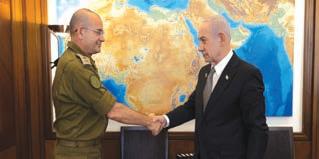
Netanyahu’s pick of Gofman is not nearly as controversial as his decision to select David Zini, a former IDF general, to head the Shin Bet. Zini, in October, was sworn in, following weeks of court petitions and appeals to prevent his appointment. Now, the Advisory Committee for Senior Appointments must review Netanyahu’s pick for the Mossad, though they aren’t expected to object.
“Gofman is a highly distinguished officer,” Netanyahu’s office stated. “His appointment as the prime minister’s military secretary in the midst of the war… proved that he possesses exceptional professional capabilities, from his rapid entry into the role to his immediate and significant in-
volvement in the seven arenas of the war.”
Netanyahu’s office added that Gofman “maintained continuous coordination with all intelligence and security agencies, especially the Mossad” and praised his “creativity, initiative, ingenuity, deep knowledge of the enemy, complete discretion, and strict confidentiality,” adding that the prime minister sees Gofman as “the most qualified and suitable candidate to serve as Mossad director and wishes him great success in this important role.”
On Thursday, IDF Chief of Staff Lt. Gen. Eyal Zamir met with and congratulated Gofman on his appointment. The IDF said that Zamir “emphasized that cooperation between the organizations is important for the security of the state and that the IDF will stand behind him and assist as needed in order for him to succeed in his role.”
Gofman’s family made aliyah in 1990 when he was 14 years old, moving from Belarus, where he was born and raised. Since 2024, he has served as Netanyahu’s military secretary. As part of that role, he traveled on Netanyahu’s behalf and supervised the implementation of the premier’s IDF directives.
In 1995, Gofman joined the IDF’s Armored Corps. Eventually, he became a

tank commander in the 188th Armored Brigade. He became the commander of the 7th Armored Brigade’s 75th Battalion in 2011 and rose to the rank of operations officer of the 36th Division in 2013. He became leader of Judea and Samaria’s Etzion Regional Brigade in 2015. In 2017, he returned to the Armored Corps and led the 7th Armored Brigade. In 2020, Gofman was selected as the 210th “Bashan” Regional Division’s commander, taking charge of the Israel-Syria border. In 2022, he led southern Israel’s Tzeelim training base and was injured while fighting with Hamas terrorists at Sha’ar Hanegev Junction on October 7, 2023. From there, he briefly served as the chief of staff at the Defense Ministry’s Coordinator of Government Activities in the Territories (COGAT), before becoming Netanyahu’s military secretary.
Gofman has been involved in a handful of controversial matters over the course of his career. He has urged IDF officials to stop avoiding the use of ground forces and has suggested that Israel should keep control of the Gaza Strip even after the war ends and Hamas is defeated. A few years ago, he was also involved in a scandal that involved a teenager leaking classified information as part of an unauthorized social media influence campaign.
On Thursday, the body of Sudthisak Rinthalak, a Thai agricultural worker who was murdered and taken hostage during the October 7 massacre, was returned home. He was 43 years old when he was killed.
The Palestinian Islamic Jihad said that they found his body on Wednesday morning in northern Gaza. The next day, the Red Cross gave over his remains to the IDF.
Now that Rinthalak’s remains are home, the only remaining murdered hostage in Gaza is Master Sgt. Ran Gvili, a police officer who was kidnapped and killed on October 7 while defending the community of Alumim from Hamas. The final remaining living hostages were freed on October 13, after a U.S.-brokered ceasefire went into effect. The remains of 27 murdered hostages had been released over the past seven weeks.
The Prime Minister’s Office expressed its condolences to the Rinthalak family and said that Israel is “determined, com-
mitted and working tirelessly” to bring Gvili home for burial.

“For 789 painful days, Sudthisak was held hostage in Gaza,” President Isaac Herzog said. “His family back in Thailand have waited in agony for his return. Now, Sudthisak can finally be laid to rest with dignity.”
He added, “When we say we won’t stop until every last hostage is home, we mean it.”
“On behalf of the people of Israel, I send my deepest condolences to King Maha Vajiralongkorn of Thailand, Sudthisak Rinthalak’s family, and the entire Thai people,” Herzog added. “I also express my appreciation for the Thai community in Israel, who continue to contribute so much to our country.”
On October 7, Palestinian terrorists killed 39 Thai nationals and took hostage 31 of them, 28 of whom were returned alive. The other three were killed.
Rinthalak’s loved ones and Boonyarit Vichienpuntu, the Thai Ambassador to Israel, expressed “their thanks and deep recognition to Israel for the efforts to return Sudthisak and the constant support for the family since the war broke out.”
The Thai Foreign Ministry’s spokesperson, Nikorndej Balankura, thanked Israel for ensuring the release of all the Thai hostages and said it notified Rinthalak’s family of his return.
Rinthalak, who was previously divorced and had no children, leaves behind his parents, Thong Ma and Orn, and his older brother, Thepporn. He was from the Rattanawapi District of Nong Khai province in northeastern Thailand. He moved to Israel three months before the October 7 massacre.
“He was employed by farms in the Gaza border region, where he was known as hard-working and well-liked by his coworkers,” the Hostages and Missing Families Forum said.
Rinthalak supported his family overseas with the money he made as an agricultural worker in Kibbutz Be’eri. His brother said he encouraged Rinthalak to go to Israel, adding that Rinthalak hoped to find a wife in Israel. Some time before his murder, his family asked him to come home, as they hadn’t seen him in a while.
This Chanukah, imagine a world built on compassion, hope and the power of community. A world where we say yes to the challenges that matter most and bring light to the places that need it most.
As you light each candle, say YES to
Fighting antisemitism
Caring for those in need
Say YES to The Associated.
Strengthening Jewish identity
Supporting the people of Israel

We wish you and your family a very happy Chanukah.
All homes damaged in the two worsthit neighborhoods of Kibbutz Be’eri near the Gaza border will be demolished. One home will remain standing as a memorial to the destruction and bloodshed of the October 7, 2023, Hamas attack.
The house will initially remain standing for five years. The kibbutz did not specify which home will be preserved.
Ofer Gitai, Be’eri’s community director, said on Monday, “Between the desire to move forward and the obligation to leave testimony for future generations, we have chosen a path that allows for both.”
The decision by the members of the kibbutz followed months of discussion, consultation, and community dialogue.
Gitai said the move would help “preserve the memory of the October events, in a way that respects the narrative that the community chooses for itself, and will leave it in full control of the story.”
The preserved building will form a part of the community’s testimony, along with documents, visual materials, and
objects. The latter have been selected as part of a special visual history program at the Yad Ben Zvi research institute.
On October 7, 102 residents of Kibbutz Be’eri – a tenth of the community – were murdered. Thirty residents of the kibbutz – some murdered and some alive – were kidnapped and taken into Gaza and have since been returned.
A kibbutz spokeswoman related that most of the 62 homes in the two neighborhoods slated for demolition were burned or damaged and that all would be pulled down, except the one to be left for testimony. There were no plans to rebuild on the site.
New construction is underway on the other, eastern side of the community, where 80 houses are being built with funding from the Tekuma Directorate, the state agency tasked with rehabilitating the Gaza border area.
Around 80 Be’eri residents have returned to the kibbutz, while most are in temporary accommodations at Kibbutz Hatzerim, also in the Negev region of southern Israel. They expect to return home next summer.
“We rebuild, remember, commemorate, and continue to live,” said Gitai.
This week, the Interior Ministry awarded municipal emblems to eight settlements in Judea and Samaria that have either recently been legalized by the government or were formerly neighborhoods of separate settlements that have now been recognized as independent.
The bestowal of a municipal emblem by the Interior Ministry is a symbolic step that completes the legalization process.
The settlements that were formerly illegal outposts are Harasha, Adei Ad, and Ahiya, while Nofei Prat, Tal Menashe, Migron and Shvut Rachel were until now considered neighborhoods of nearby towns. Additionally, the old settlement of Sa Nur, which was evacuated in 2005 but is in the process of being rebuilt and repopulated, had its former emblem formally reauthorized.
A month ago, the commander of IDF Central Command, Maj. Gen. Avi Bluth, approved and signed off on the jurisdictional boundaries of the eight settlements following preparatory work carried out
by the Civil Administration department of the Defense Ministry, which is under the authority of Finance Minister Bezalel Smotrich.
“We are advancing de facto sovereignty [of Judea and Samaria] on the ground to prevent any possibility of establishing an Arab state in Judea and Samaria,” said Smotrich in announcing the new emblems. He thanked the Interior Ministry, Bluth and others for pushing through the legalization process.
Last week, Costco became the first and, thus far, only major retailer to take the Trump administration to court over the issue of tariffs.
Costco is the largest company suing the U.S. Customs and Border Protection in the Court of International Trade, joining many others, including canned foods



maker Bumble Bee, motorcycle manufacturer Kawasaki, and Ray-Ban parent company EssilorLuxottica, among others.
Last month, the Supreme Court heard arguments regarding whether President Donald Trump is legally allowed to impose tariffs on almost all countries. In the weeks or months to come, the court is supposed to rule. If the court rules against the administration, Costco and other companies may receive major refunds for costs incurred due to the tariffs.
Around one-third of Costco’s sales are imported goods, according to Chief Financial Officer Gary Millerchip. The company’s tariff payments were set to be liquidated by customs officials by December 15.
The Trump administration has defended its sweeping tariffs measures by framing trade restrictions as a means of reducing the U.S.’s annual trade deficit, which Trump declared a “national emergency” earlier this year.
Unlike other major retailers, Costco can afford to clash with the Trump ad
and its membership grows 6% annually. Earlier this year, after the Trump administration crusaded against diversity, equity, and inclusion initiatives, Costco insisted on keeping DEI, despite political ramifications.
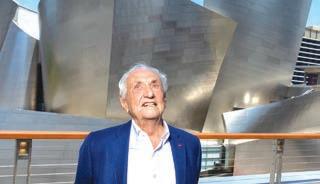
Frank Gehry, who was dubbed the greatest architect of all time, passed away at his Santa Monica home on Friday at age 96, following a brief respiratory illness.
Gehry’s buildings doubled as works of art. He was acclaimed for his creativity and originality — for his unusual and
Los Angeles; Berlin’s DZ Bank Building; and other masterpieces. He won every architectural prize in existence, including the Pritzker Prize, as well as the Royal Institute of British Architects gold medal, the Americans for the Arts lifetime achievement award, and the Companion of the Order of Canada, his native country’s highest honor.
Gehry was born in Toronto on February 28, 1929, to Polish Jewish parents. His real name was Ephraim Owens Goldberg, but he changed it at the behest of his first wife, who thought that his career could be held back by antisemitism — a decision he later said he wouldn’t have repeated.
As a young teenager, he was not religious. However, he acknowledged in a 2018 interview with the Jewish Journal that Judaism played an important role in his career.
“There’s a curiosity built into the [Jewish] culture,” he said. “I grew up under that. My grandfather read Talmud to me. That’s one of the Jewish things I hang on to probably — that philosophy from that religion… I was brought up with that curiosity. I call it a healthy curiosity. Maybe it is something that the

religion has produced. I don’t know. It’s certainly a positive thing.”
His family moved to Los Angeles in 1947. In 1954, he earned a degree from the University of Southern California in architecture. Afterwards, he went on to study urban planning at Harvard University. He founded his architectural firm, Gehry Partners LLP, in 1962.
It took time for Gehry’s career to take off. Though he always had inventive architectural ideas, he initially played it safe, crafting plans that were typical. That soon changed.
In his 90s, he still worked as an architect. And even after his firm grew to over 130 employees, he still personally oversaw every project.
In 2011, he became a professor of architecture at his alma mater, the University of Southern California. He also lectured at Columbia and Yale University.
Some criticized Gehry’s designs as too complex, big, and messy. His works were revolutionary but not simple. Despite his undeniable artistic genius, he ultimately thought of himself as an architect, not an artist.







Florida Governor Ron DeSantis issued an executive order this week naming the Council on American-Islamic Relations (CAIR) and the Muslim Brotherhood as foreign terrorist organizations.
“Florida is designating the Muslim Brotherhood and the Council on American-Islamic Relations (CAIR) as foreign terrorist organizations,” DeSantis wrote on X on Monday.
According to the executive order, the state says that both organizations have ties to anti-Israel groups, including Hamas, Hezbollah, and other Palestinian organizations.
Additionally, it authorizes the Florida Department of Law Enforcement and the Florida Highway Patrol to take steps to prevent what it describes as unlawful activities connected to the groups. It also blocks individuals or entities that have provided material support to CAIR or the Muslim Brotherhood from receiving state contracts, funding, or benefits.
On Tuesday, CAIR and CAIR-Florida released a joint statement on Facebook in response to the designation.
“From the moment Ron DeSantis took office as Florida governor, he has prioritized serving the Israeli government over serving the people of Florida,” CAIR stated. “He hosted his very first official cabinet meeting in Israel. He diverted millions in Florida taxpayer dollars to the Israeli government’s bonds. He threatened to shut down every Florida college’s Students for Justice in Palestine chapter, only to back off when CAIR sued him in federal court.”
The statement added, “We look forward to defeating Governor DeSantis’ latest Israel First stunt in a court of law, where facts matter, and conspiracy theories have no weight. In the meantime, we encourage all Floridians and all Americans to speak up against this latest attempt to shred the Constitution for the benefit of a foreign government.”
On X, CAIR also added, “Unfortunately for Mr. DeSantis, none of his political stunts work out. He has been politically irrelevant ever since Donald Trump handed him a humiliating defeat on the campaign trail. We will do the same to Mr. DeSantis in a court of law, G-d willing. See you there soon, Ron. We hope you have better lawyers than Greg Abbott. By the looks of your provably
false and clearly unconstitutional proclamation, you’re going to need them.”
In November, Texas Gov. Greg Abbott had designated the Muslim Brotherhood and the CAIR as foreign terrorist organizations and transnational criminal organizations.
“The Muslim Brotherhood and CAIR have long made their goals clear: to forcibly impose Sharia law and establish Islam’s ‘mastership of the world,’” Abbott said in a press release. “The actions taken by the Muslim Brotherhood and CAIR to support terrorism across the globe and subvert our laws through violence, intimidation, and harassment are unacceptable.”
Abbott argued in a proclamation that the Muslim Brotherhood was founded as a jihadist movement dedicated to establishing a caliphate and had already been banned or limited in Austria, Bahrain, Egypt, Jordan, Saudi Arabia, and the United Arab Emirates due to engaging in terrorism or destabilization.
He noted that branches of the Muslim Brotherhood, such as the Arms of Egypt Movement and Liwaa al-Thawra, had already been designated by the U.S. as terrorist groups, as had Hamas, which was born from the movement’s Palestinian branch. The governor added that Hamas had kidnapped and murdered American citizens during the October 7, 2023, massacre.
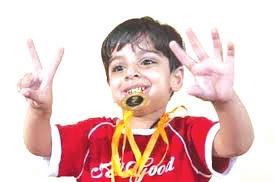
Sarwagya Singh Kushwaha is just three years old, but he’s already reigning as a world champion.
At the age of 3 years, 7 months and 20 days, Sarwagya became the youngest chess player to earn an official rating from chess’s international governing body. He was rated 1572 in rapid chess by FIDE after beating opponents many times his age. The rating is considerably higher than the minimum 1400 required.
To be rated by the International Chess Federation, a player must score points against at least five already rated players at official events.
SALES & DEALS EVENTS & CAMPAIGN RESTAURANT SPECIALS NO NEWS. JUST BUZZ.





Sarwagya, who comes from the central Indian state of Madhya Pradesh, joins a growing list of young Indian players who have come to dominate the sport in recent years.
He started playing chess when he was just 30 months old.
His father, Siddharth Singh, said, “We pushed him into chess last year because we noticed his mind was a sponge and he would pick up things very quickly. In a week of being taught chess he could name all the pieces accurately.”
Now, the toddler plays chess for four to five hours a day, including one hour at a training center.
His victories this year have included matches against Yogesh Namdev, 20, with a rating of 1696; Abhijeet Awasthi, 22 (1542); and Shubham Chourasiya, 29 (1559).
Sarwagya broke the record by almost a month, dethroning another Indian boy, Anish Sarkar, who last year was rated 1550 at the age of 3 years, 8 months and 19 days.
India’s growing prowess culminated in an iconic moment in June, when Gukesh Dommaraju, 19, defeated Magnus Carlsen, 35, who is widely considered one of the greatest players of all time and
who ended the match by slamming his fist on the table. Last year, Dommaraju became the youngest-ever world champion.
Sarwagya could also train to become a grandmaster, his father said, following in the footsteps of Indian stars such as Dommaraju and five-time world champion Viswanathan Anand.
The record for youngest grandmaster is held by the American Abhimanyu Mishra, who in 2021 became one at the age of 12 years, 4 months and 25 days, three months earlier than Dommaraju.
Checkmate.
A raccoon drank a bit too much last week and passed out in a liquor store.
An animal control officer was summoned to the store in Virginia where the pest had broken in, ransacked the shelves and passed out drunk in the bathroom.
Hanover County Animal Protection and Shelter said on social media that an officer responded over the weekend to a report of an animal break-in at the ABC store in Ashland.
The officer found the Black Friday
break-in had been perpetrated by a raccoon that had “ransacked several shelves,” sampled multiple different varieties of liquor from broken bottles, and then settled down to sleep it off on the floor of the store’s bathroom.
The raccoon’s “liquor-fueled rampage” came to an end when the officer “secured our masked bandit and transported him back to the shelter to sober up before questioning,” the post said.
The especially trashed “trash panda” was found to be uninjured, “other than maybe a hangover and poor life choices,” officials wrote.
The animal spent some time at the shelter sobering up and then was released into the wild.
Sure hope he learned his lesson.
Although police knew they had their suspect, it took them quite a few days to gather evidence in this case.
On Friday, New Zealand Police said that they recovered a James Bond-inspired Fabergé pendant. The necklace had been swallowed by a suspect in an Auckland jewelry store six days prior.
Authorities had to wait until the pendant made its way through the suspect’s body before gathering their evidence.
The limited-edition, Fabergé egg pendant was inspired by a 1983 James Bond film in which a jewel-smuggling operation involves a fake Fabergé egg.
The egg and its long chain – along with the price tag – survived the journey inside the person’s body. The jewelry is worth around $19,000.
The store’s website says the egg, one of only 50 made, was crafted from gold, painted with green enamel and encrusted with 183 diamonds and two sapphires. The pendant is 3.3 inches tall and is mounted on a stand.
“The egg opens to reveal an 18 carat yellow gold octopus nestled inside, adorned with white diamond suckers and black diamond eyes,” an item description said.
The man was arrested inside the store on November 28 shortly after the alleged theft. He made an appearance the next day, but he didn’t enter a plea to a charge of theft. Since then, he’s been in police custody and officers had been stationed round the clock with the man to wait for the evidence to reemerge.
A great egg-sample of good police work.



4:33-5:17pm 11th grade Eng
5:20-6:05pm 9th grade Eng
Bachelor’s degree required.
SE ND YO UR RESUM E : SSTEINBERG@TALMUDICALACADEMY.ORG
Sun 8:00-10:00am, Mon-Thurs: 8:00am-5:00pm
SE ND YO UR RESUM E : TFEIGENBAUM @TALMUDICALACADEMY.ORG
C ompet iti ve C ompen s atio n
Qu al ifi ed T ui ti o n Red u ctio n
Caf eter ia P l an fo r V i si o n, Denta l and Dependant C ar e
Di s abi lit y & L if e Ins ura nce P la ns
Gr ou p Dent a l P lan s
Hi ghly S ub si di zed JC C Membershi p
By Rabbi Zvi Teichman
The portions of Vayeishev and Miketz, which record the painful episode of the conflict between Yosef and his brothers, are always read in the proximity of Chanukah.
Rav Nosson Nota Shapira, the great kabbalist and Rav of Cracow, writes in his Megaleh Amukos, that Yosef HaTzadik, is the counterforce to the negative influences of the Assyrian-Greek kingdom that we faced during that exile known as Galus Yavan.
His role as antagonist to Yavan is indicated in the fact that the numerical value of his very name, ףסוי, is equal to ןוי ךלמ, as well as to the king’s actual name, סכויטנא. (156)
Yet, aside from numerous mystical allusions within many of the verses in these portions that relate to Chanukah, the narrative seems to have no obvious connection to the challenges we faced in those later years with Yavan.
At the onset of the tale Yaakov displays great love for Yosef engendering jealousy among the brothers.
The verse tersely states: they hated him, ולכי אלו — and they could not, speak to him peaceably.
From that point on it was all downhill.
Why couldn’t they speak to him? Did they suddenly lose their faculty of speech and become physically incapable of communicating with him? More likely ‘they chose’ not to speak to him and out of resentment simply did not ‘want’ to talk to him.
So why does it use the phrase, ולכי אלו — they could not?
Targum Unkelos, who usually translates this verb, לוכי, when it appears elsewhere as ליכי אל — could not, diverts here and offers more precisely, ןבצ אלו — they were not willing.
Perhaps, although they ‘chose’ not to speak to him, and were certainly capable of overcoming their resistance, the verb used by the Torah is instructive in implying that they felt it was literally impossible for them to speak to him and were convinced it was beyond the realm of choice.
The lesson therein is that one must be brutally honest with oneself and admit that if we really want to make amends we could. One should never use the excuse that it is impossible.
The Midrash adds an additional facet that takes this to another level. It states that although the Torah casts the brothers in a negative light, nevertheless we may observe in their behavior something positive. What held them back from responding kindly to Yosef was their inability to portray themselves dishonestly in speaking, בלב דחאו הפב דחא — speaking one thing but feeling differently in one’s heart. So, what compelled them to refrain from talking to Yosef was their ‘noble’ commitment to honesty and integrity, they simply couldn’t permit themselves to not present themselves wholeheartedly. Indeed, a worthy attribute.
But they were condemned for their behavior, moral excuses notwithstanding. I believe the lesson derived is that one should never couch
one’s misbehavior under a guise of moral correctness. One should rather slough off the resentment, as difficult as that may be, and display wholeheartedness in a positive way.
I discovered an even more remarkable and positive spin on their otherwise errant conduct, expressed in the Sefer B’fikudeicha Asicha, authored by Rav Avraham Kroll.
The first half of the verse quoted above first reports ‘how his brothers saw that it was he, whom their father loved most of all his brothers, so they hated him...’. He suggests that they genuinely wanted to ‘speak out their feelings and differences’, as emotionally explosive it may get, as the Alshich teaches, that ‘duking it out’ is sometimes the best way to dispel pent-up emotions, putting feelings openly on the table, and bringing conflict to a healthier resolution. But they hesitated in expressing their anger, as they feared their father would not understand, knowing how much their father favored Yosef. So, they opted to stay angry rather than extract the hatred from their hearts.
Although this elevates their dilemma to a much more sophisticated struggle, even emphasizing their goal of reconciliation, nonetheless, they placated their conscience by subconsciously ‘placing’ the blame on Yaakov’s favoritism of Yosef, that stifled their otherwise ‘valiant’ intention to ‘confront’ Yosef. They still neglected the optimal approach, do not harbor resentment. Another vital lesson derived.
The story of Chanukah teaches us that nothing, if one truly desires it,
is impossible. So often we write off opportunities because we claim we are not equipped for the job, or because there are impediments beyond our control.
Yosef HaTzadik could have come up with many excuses for how impossible it was to survive the many challenges he faced. But he never did. He never said that as a teenager he could not possibly be expected to control his desires in face of the temptations he faced. We live by different rules of nature than the rest of the world. What is beyond human endurance is merely a challenge for us to overcome.
We say in Al HaNissim how they sought to make us ‘forget the Torah and compel us to stray from ךנוצר יקח — statutes of His will’. The word קח, can also translate as the ‘nature’ of Your will, referring to the ‘natural’ law of Torah, where the impossible becomes the probable.
We descended into the clutches of Yavan, the moment we erred in thinking we ‘cannot’ overcome impulses or obstacles; when we think others are the cause of our inability to act as we please; when we misguidedly claim it is the ‘principles’ we live by that prevent me from acting.
Yosef taught us otherwise — nothing is unconquerable. The Chashmonaim accomplished that which others scoffed at as inconceivable.
May we live with the spirit of Yosef never submitting to defeat, never saying ‘we can’t’!
You may reach the author at: Ravzt@ ohelmoshebaltimore.com
Yaakov settles in the Land of Cana’an, the very place where his father inhabited. Yosef’s brothers get angry with him. Yosef is thrown into a pit and sold. Incident with Yehuda and Tamar. Peretz and Zarach are born. In the house of Potiphar, Eishes Potiphar tries to seduce Yosef, but he has the courage to refuse. Yosef is framed and thrown into prison. There, he meets the chief butler and chief baker of Pharaoh. They have dreams, and Yosef interprets them to perfection.
Pesukim - 112
Words - 1558
Letters - 5972
Mitzvos - 0
The Rebbe of Meriminov says that a Jew is supposed to live in the realm of
, constantly becoming more and more!
“Even one who is far from perfect will grow tremendously by just ”hanging around” great people.“

-Reb Shlomo Freifeld, zt”l
The gematria of םינוי (Greeks) is 116.
I t’s interesting to point out that the 116th w ord of Chapter 39 of the parsha is the w ord ןאמיו - and he refused. The pasuk is d iscussing Yosef HaTzaddik refusing the d emands of Eishes Potiphar.
A s we approach Chanukah, it is up to us to b e like Yosef and have the courage to r efuse the demands of society and Western c ulture.

The Torah tells us at the beginning of the parsha: ויבא
בשיו , Yaakov settled in the land where his father had sojourned.
It is pointed out (see Rav Hirsch) that these two words – בשיו and ירוגמ – are opposites. Settling and sojourning are quite different from each other!
Rashi famously says how Yaakov was הולשב בשיל שקב , he wanted to dwell in tranquility, but Hashem had other plans for him. I t wasn’t time to just rest.
Perhaps, the Torah is trying to teach us a lesson and message, namely, that the mission of a Jew is to be able to experience בשיו amidst the ירוגמ . To find a way to “settle” and have yishuv ha’daas amidst the sojourns and goings of life.
This idea is alluded to in the words תודלות
. Yaakov was a
, always searching and becoming more!
The “offspring” and “byproduct” of Yaakov was “Yosef,” which means additional and more.
Jewish wisdom teaches us about the importance of not remaining dormant in our Divine service; instead, we must constantly, like Yaakov, seek more!
The word םיספ (from Kesones Pasim) is related to the word ספרכ, the food we dip in salt water on Pesach... Even though Yosef was cast in a pit and sold many times, Hashem made it that the caravans had good smelling spices, for the honor of Yosef!

J ust like Yosef, when we say “No” to the o utside world, we can overcome the i deology of the Greeks!

Rabbi Ori Strum is the author of “Ready. Set. Grow.” “Dove Tales,” and “Karpas: The Big Dipper.”
His shiurim and other Jewish content can be found on Torah Anytime and Meaningful Minute. He may be reached at 443-938-0822 or rabbistrumo@gmail.com
It has been said that the only constant in life is change! Life, by definition, has movements and fluctuations. It is our job to have bitachon and remain “settled” amidst the journeying of life.

Chanukah is coming soon! My book on Chanukah, DOVE TALES, is now available on Amazon. I would honestly be so thrilled, humbled, and honored for you to get a copy. If you wouldn’t mind leaving a review too, that would be so appreciated.
The word ןאמיו (and he refused) that describes when Yosef refused to listen to Eishes Potphar, has a shalsheles above it. Why? What does this symbolize? How does it connect to Chanukah?

Scan the QR code to view Torah classes from R’ Ori Strum on Torah Anytime!
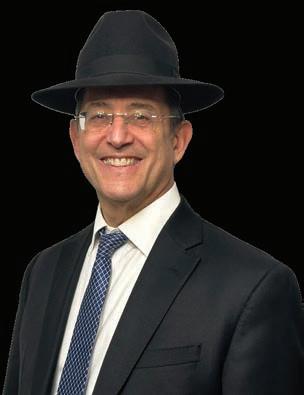
RABBI & MRS. DAVID SILVERMAN
GUESTS OF HONOR
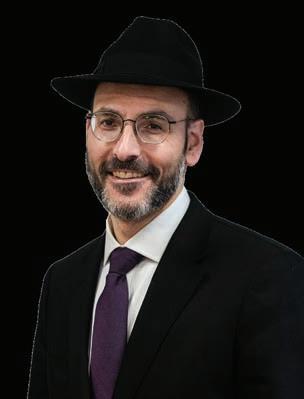
RABBI & MRS. PESACH SKULNICK
הרות רתכ AWARD
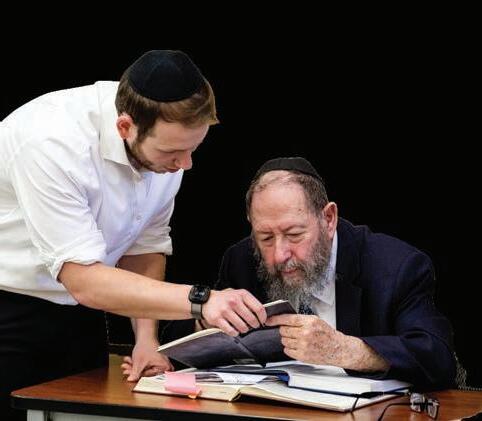
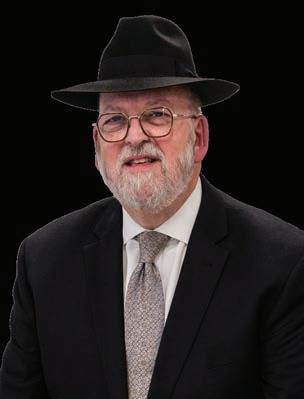
MR. & MRS. BILL GOLDBERG
AWARD
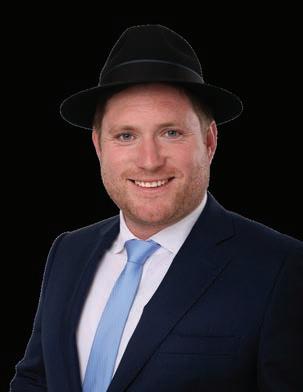
MR. & MRS. BEN TZION (ZACH) THURM
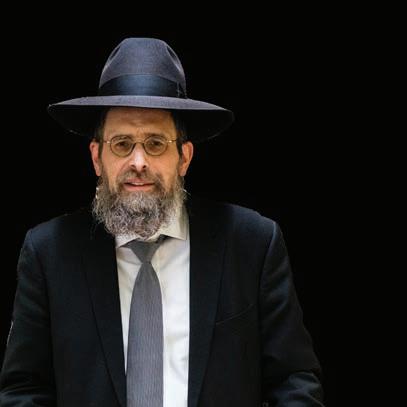
YOUNG LEADERSHIP AWARD
THE MECHINA CLASS OF 2000
25 YEAR REUNION
THE MECHINA CLASS OF 2015 10 YEAR REUNION
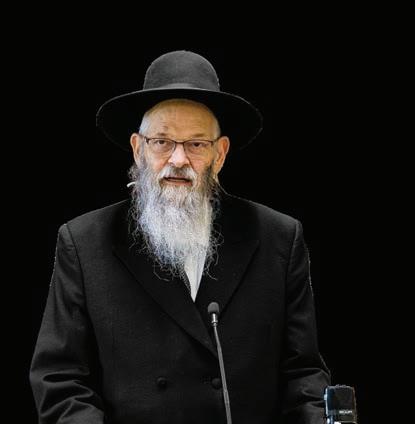



Mercaz Torah U’Tefillah: EVERY 15 MINUTES
M-F: 6:15 AM, S-F: Neitz, 6:30 AM, 6:45 AM, 7:00 AM, 7:15 AM,
7:30 AM, 7:45 AM, 8:00 AM, 8:15 AM, 8:30 AM, 8:45 AM, 9:00AM, 9:15AM, 9:30AM, 9:45AM, 10:00AM
Neitz Beit Yaakov [Sefaradi] M-F
Mercaz Torah U’Tefillah S-F
Ohel Yakov S-F
6:00 AM Shomrei Emunah Congregation M-F
6:10 AM Agudath Israel of Baltimore M, Th
6:15 AM Kol Torah M, TH
Shearith Israel Congregation M, TH
6:20 AM Agudah of Greenspring M, TH
Agudath Israel of Baltimore S, T, W, F
Arugas HaBosem (Rabbi Taub's) S-F
Bais Dovid-Bais Medrash of Summit Park M-F
Bnai Jacob Shaarei Zion Congregation M-F
Kehilath B'nai Torah M, TH
Pikesville Jewish Congregation M, TH
Shomrei Emunah Congregation S, M, TH
6:30 AM Agudah of Greenspring T, W, F
Chabad of Park Heights M-F
Darchei Tzedek M-F
Kehilath B'nai Torah T, W, F
Khal Bais Nosson M-F
Khal Ahavas Yisroel/ Tzemach Tzedek M-F
Kol Torah T, W, F
Ohr Yisroel M-F
Pikesville Jewish Congregation T, W, F
Shearith Israel Congregation T, W, F
Shomrei Emunah Congregation T, W, F
6:35 AM Aish Kodesh (downstairs Minyan) M, TH
Ohel Moshe M, TH
6:40 AM Aish Kodesh (downstairs Minyan) T, W, F
Bnai Jacob Shaarei Zion Congregation M, TH
6:45 AM The Adas: Chofetz Chaim Adas Bnei Israel M, Th
B”H and Mesivta of Baltimore (Dirshu Minyan) S-F
Beth Abraham M, TH
Greenspring Sephardic Synagogue M-F
Ner Tamid M-F
Ohel Moshe T, W, F
Suburban Orthodox Congregation Toras Chaim M-F
6:50 AM Agudath Israel of Baltimore M, TH
Ahavat Shalom [Sefaradi] M, TH
Bais Medrash of Ranchleigh M, TH
Bnai Jacob Shaarei Zion Congregation T, W, F
Community Kollel Tiferes Moshe Aryeh M, TH
Derech Chaim M-F
Kol Torah M-F
Ohel Moshe S
Ohr Hamizrach [Sefaradi] M, TH
Shomrei Emunah Congregation M, TH
The Shul at the Lubavitch Center M, TH
6:55 AM The Adas: Chofetz Chaim Adas Bnei Israel T, W, F
Beth Abraham T, W, F
Kol Torah M, TH
7:00 AM Aish Kodesh (upstairs Minyan) M-F
Agudath Israel of Baltimore S, T, W, F
Ahavat Shalom [Sefaradi] T, W, F
Arugas HaBosem (Rabbi Taub's)S
Bais Medrash of Ranchleigh T, W, F
Community Kollel Tiferes Moshe Aryeh T, W, F Greenspring Sephardic Synagogue S
Khal Ahavas Yisroel/ Tzemach TzedekS
Kol Torah T, W, F
Moses Montefiore Anshe Emunah M-F
Ohr Hamizrach [Sefaradi] S, T, W, F
Shearith Israel Congregation S, M, TH
Shomrei Emunah Congregation T, W, F
Shomrei Mishmeres Hakodesh M-F
The Shul at the Lubavitch Center T, W, F
Tiferes Yisroel M-F
7:05 AM Machzikei Torah (Sternhill's) M, TH
7:15 AM Kedushas Yisrael S Kol Torah S
Machzikei Torah (Sternhill's) S, T, W, F
Ner Israel Rabbinical College S-F
Shearith Israel Congregation T, W, F
Shomrei Emunah CongregationS
Suburban Orthodox Congregation Toras Chaim S
The Adas: Chofetz Chaim Adas Bnei IsraelS
Tzeirei Anash M-F
7:20 AM Agudath Israel of Baltimore M, TH
Beth Tfiloh Congregation M-F
Kol Torah M-F
Ohr Hamizrach [Sefaradi] M, TH
Shomrei Emunah Congregation M, TH
7:30 AM Agudah of Greenspring S
Agudath Israel of Baltimore S, T, W, F
Ahavat Shalom [Sefaradi] S
Bais Haknesses Ohr HaChaim S-F
Bais Hamedrash and Mesivta of Baltimore S-F
Bais Medrash of Ranchleigh S
Beit Yaakov [Sefaradi] S
Bnai Jacob Shaarei Zion CongregationS
Chabad of Park Heights S
Community Kollel Tiferes Moshe Aryeh S-F
Darchei Tzedek S
Kedushas Yisrael S-F
Khal Bais Nosson S
Ner Israel Rabbinical College (Mechina) S-F
Ohr Hamizrach [Sefaradi] S, T, W, F
Shomrei Emunah Congregation T, W, F
7:45 AM Bnai Jacob Shaarei Zion Congregation M-F
Talmudical Academy S-F
Darchei Tzedek M-F
Mesivta Kesser Torah S-F
Mesivta Shaarei Chaim S-F
7:50 AM Derech Chaim S
Ner Tamid S
Ohel Moshe M-F
8:00 AM Agudath Israel of Baltimore S-F
Bais Dovid-Bais Medrash of Summit ParkS
Beth Abraham S
Chabad Israeli Center M-F
Darchei Tzedek S
Khal Ahavas Yisroel/ Tzemach TzedekS
Kehillas Meor HaTorah S
Ohr Yisroel S
Pikesville Jewish CongregationS
Shearith Israel Congregation S
Shomrei Emunah Congregation S-F
The Shul at the Lubavitch CenterS
Tiferes Yisroel S
Tzeirei Anash S
Yeshiva Tiferes Hatorah S-F
8:15 AM Kehilath B'nai Torah S Kol Torah S
8:20 AM Bais Haknesses Ohr HaChaim S-F
8:25 AM Ohr Chadash Academy (School Days Only) S-F
8:30 AM Agudath Israel of Baltimore S-F
Chabad Israeli Center S
Machzikei Torah (Sternhill's) S-F
Ohel Moshe S
Ohr Hamizrach [Sefaradi] S
Shomrei Emunah Congregation S-F
Shomrei Mishmeres HakodeshS
9:00 AM Aish Kodesh S
Bais Haknesses Ohr HaChaim S
Beth Tfiloh Congregation S
Bnai Jacob Shaarei Zion CongregationS
Moses Montefiore Anshe EmunahS
Shomrei Emunah Congregation S-F
Suburban Orthodox Congregation Toras Chaim S-F
Mincha Gedolah Mercaz Torah U’Tefillah
Khal Ahavas Yisroel/Tzemach Tzedek
continued
1:00 PM Agudath Israel of Baltimore (S-F)
10045 Red Run Blvd Suite 295
Milk & Honey Bistro 1777 Reisterstown RD
1:25 PM Bais Haknesses Ohr HaChaim
1:30 PM Agudath Israel of Baltimore (S-F)
1:45 PM Ohel Moshe
Wealcatch Insurance
1:50 PM One South Street, 27th Floor (M-Th)
2:00 PM Agudath Israel of Baltimore (S-F)
Big Al @ The Knish Shop Party Room
Kol Torah (Sunday)
Market Maven
Mercaz Torah U’Tefillah
Reischer Minyan - 23 Walker Ave 2nd Floor
2:15 PM Pikesville Beis Medrash - 15 Walker Ave
2:30 PM Bais Medrash of Ranchleigh
Community Kollel Tiferes Moshe Aryeh
Tov Pizza Mincha Minyan
Ner Israel Rabbinical College
Mercaz Torah U’Tefillah
Mesivta Shaarei Chaim (Etz Chaim Building)
Shearith Israel Congregation
2:45 PM Kollel of Greenspring
Shearith Israel Congregation (S-Th)
3:00 PM Agudath Israel of Baltimore (S-F)
Bais Haknesses Ohr HaChaim
Mercaz Torah U'Tefillah
3:05 PM Kedushas Yisrael
3:15 PM Hat Box
3:22 PM Ohr Chadash Academy (School Days Only, Call to Confirm)
3:30PM Mercaz Torah U’Tefillah
4:00 PM Agudath Israel of Baltimore (S-Th)
Mercaz Torah U'Tefillah
10 Min Before ShkiAh Chabad Israeli Center
14 Min Before ShkiAh Kol Torah
Aish Kodesh
Agudath Israel of Baltimore
Agudah of Greenspring
continued
Ohr Yisroel
8:50 PM Mesivta Shaarei Chaim (Etz Chaim Building)
8:55 PM Community Kollel Tiferes Moshe Aryeh
9:00 PM Agudath Israel of Baltimore
Arugas Habosem
Bais Dovid-Bais Medrash of Summit Park
Shomrei Emunah Congregation
Suburban Orthodox Congregation Toras Chaim
9:20 PM Kol Torah
9:30 PM Agudah of Greenspring
Agudath Israel of Baltimore
Kedushas Yisrael
9:40 PM Ahavat Shalom [Sefaradi]
9:45 PM Bais Haknesses Ohr HaChaim
Kollel Erev Birchas Yitzchok (Luries)
Kollel of Greenspring
Machzikei Torah (Sternhill's)
Ohr Hamizrach [Sefaradi]
Yeshiva Tiferes Hatorah
9:50 PM Aish Kodesh
Community Kollel Tiferes Moshe Aryeh
Ohel Moshe
10:00 PM Agudath Israel of Baltimore
Darchei Tzedek
Kehilath B'nai Torah
Khal Ahavas Yisroel/ Tzemach Tzedek
Shearith Israel Congregation
Shomrei Emunah Congregation
10:05 PM Kol Torah
10:10 PM Ner Israel Rabbinical College
10:15 PM Derech Chaim
Khal Bais Nosson
10:30 PM Agudath Israel of Baltimore
11:00 PM Agudath Israel of Baltimore
Agudah of Greenspring - 6107 Greenspring Ave
Agudath Israel of Baltimore - 6200 Park Heights Ave
Before Shkiah
Bais Dovid-Bais Medrash of Summit Park
Bais Haknesses Ohr HaChaim
Beth Abraham
Bnai Jacob Shaarei Zion Congregation
Darchei Tzedek
Derech Chaim
Kehillas Meor HaTorah
Kehilath B’nai Torah
Khal Ahavas Yisroel/ Tzemach Tzedek
Machzikei Torah (Sternhill’s), 5:00pm
Mercaz Torah U’Tefillah
Ner Tamid
Ohel Moshe
Ohr Hamizrach [Sefaradi]
Ohr Yisroel
Pikesville Jewish Congregation
Shearith Israel Congregation
Shomrei Emunah Congregation
Shomrei Mishmeres
Suburban Orthodox Congregation Toras Chaim
The Adas: Chofetz Chaim Adas Bnei Israel
The Shul at the Lubavitch Center
Tiferes Yisroel
Ahavat Shalom - 3009 Northbrook Rd
Aish Kodesh - 6207 Ivymount Rd
Arugas HaBosem - 3509 Clarks Ln
Bais Dovid-Bais Medrash of Summit Park- 6800 Sylvale Ct
Bais Haknesses Ohr HaChaim - 3120 Clarks Ln
Bais Hamedrash and Mesivta of Baltimore - 6823 Old Pimlico Rd
Bais Medrash of Ranchleigh - 6618 Deancroft Rd
Beit Yaakov - 3615 Seven Mile Ln
Beth Abraham - 6208 Wallis Ave
Beth Tfiloh Congregation - 3300 Old Court Rd
Bnai Jacob Shaarei Zion Congregation - 6602 Park Heights Ave
Chabad Israeli Center - 7807 Seven Mile Ln
Chabad of Park Heights - 3402 Clarks Ln
Community Kollel Tiferes Moshe Aryeh - 3800 Labyrinth Rd
Darchei Tzedek - 3201 Seven Mile Ln
Derech Chaim - 6603 Pimlico Road
Greenspring Sephardic Synagogue 6611 Greenspring Ave.
Kedushas Yisrael - 6004 Park Heights Ave
Kehilath B’nai Torah - 6301 Green Meadow Pkwy
Kehillas Meor HaTorah - 6539 Pebble Brooke Rd
Khal Ahavas Yisroel/ Tzemach Tzedek - 6811 Park Heights Ave
Khal Bais Nosson - 2901 Taney Rd Kol Torah - 2929 Fallstaff Rd
Kollel of Greenspring - 6504 Greenspring Ave.
Machzikei Torah - 6216 Biltmore Ave
Mercaz Torah U’Tefillah - 6500 Baythorne Rd
Mesivta Kesser Torah - 8400 Park Heights Ave
Mesivta Shaarei Chaim - 5415 Greenspring Ave
Moses Montefiore Anshe Emunah - 7000 Rockland Hills Dr
Neuberger, Quinn, Gielen, Rubin & Gibber One South Street, 27th Floor
Ner Israel Rabbinical College - 400 Mt Wilson Ln
Ner Tamid - 6214 Pimlico Road
Ohel Moshe - 2808 Smith Ave
Ohel Yakov - 3200 Glen Ave
Ohr Chadash Academy - 7310 Park Heights Avenue
Ohr Hamizrach [Sefaradi] - 6813 Park Heights Ave
Ohr Yisroel - 2429 Lightfoot Dr
Pikesville Jewish Congregation - 7644 Carla Rd
6:00
6:30
7:00
7:30
8:00
8:30
PM Agudath Israel of Baltimore
PM Agudath Israel of Baltimore
PM Agudath Israel of Baltimore
PM Agudath Israel of Baltimore
PM Agudath Israel of Baltimore
PM Agudath Israel of Baltimore
12:30
PM Agudath Israel of Baltimore (S-F)
12:50 PM One South Street, 27th Floor, Baltimore, MD 21202
Kol Torah
8:45
Derech Chaim
PM Darchei Tzedek
Ner Israel Rabbinical College (Mechina)
Shearith Israel Congregation - 5835 Park Heights Ave
Shomrei Emunah Congregation - 6221 Greenspring Ave
Shomrei Mishmeres Hakodesh - 2821 W Strathmore Ave
Suburban Orthodox Congregation Toras Chaim - 7504

By Eliyahu RosEnBERg
People always say that the purpose of music is to bring people together. But i think we’re in an era, we’re in a time, where we need to bring people to themselves. We need to inspire people to accept themselves. and that’s my music. That’s my message.
i chose what chose me. i chose what chose me to be in israel. i chose what chose me to grow up in a Jewish family in north Tel aviv, writing music in israel, and serving in the army... something against all odds chose me to be here. and learning about am yisrael, i realized that it’s a nation that, against all odds, still exists. nations have tried to destroy us, but am yisrael still remains. a nd somehow, from all the souls in the world, hashem chose little howie from the Philippines for this journey.
My adopted grandmother was a holocaust survivor, and she always smiled. and she always said, ‘Think good, and it’ll be good.’ you could always find reasons why everything is bad, especially nowadays. you could talk about politics and get angry; you could talk about society and how everything just doesn’t make sense anymore; you could talk about inflation. There are always reasons to complain. But we can’t live like that. We have to find something good... We want to make sure that the next generation grows up in a positive and great world. so, let’s make it better. let’s see the good in the world and concentrate on that.
During Howie Danao’s upbringing, he wandered the streets of North Tel Aviv — his mind a haze, his soul lost, and his identity crushed beneath the weight of countless unanswerable questions.
“Who am I?” he wondered. Was he an Israeli? A Christian? A Filipino boy?
“Why am I here?” Why did his mother leave the Philippines and move to Israel, where he was born and raised?
“Why am I fighting for this country?” Why was he, as an IDF reservist, risking his life to protect a land and a people he didn’t belong to?
There were many parts of his background and life that confused him. Why did he love music? Why was he raised by his mother and an adopted Jewish family? Why was his life the way it was?
To him, it seemed as though he had little agency, virtually no control over his destiny — that his life and fate had been predetermined by the actions of others. Howie recalls asking his mother one day: “Why Israel? When you left the Philippines, why did you move to the most conflicted country in the world?” Her answer wasn’t very satisfying. It just “felt right,” she replied, offering Howie a response that only confused him more.
As an adult, he would think long and hard, hoping that contemplation would resolve his troubling identity crisis. But he’d always arrive at the same conclusion, no matter how long he thought: His questions had no answers. Simply put, Howie realized that he didn’t choose his life; his life chose him.
“My childhood felt normal to me,” Howie recalls. “But to most people, I
have a unique story: My mother came from the Philippines to Israel. She wanted to work as a nurse, but things didn’t really work out. So, she worked as a housekeeper for a secular Israeli family, and at the same time, she found out that she was pregnant with me. So, instead of going back to the Philippines, her employers offered to raise me with them. So, I was raised by my biological mother and two adopted Israeli parents. So, I have my biological mother, who I call Mommy, and I have two adopted parents, who I call Imma and Abba, and I have brothers and sisters from them. I have two mothers and one father. And for me, that was normal.”
At home, he felt like he belonged. In his words, “It didn’t feel separated. It felt like one big family.” His adopted siblings were, as far as he was concerned, his real brothers and sisters. But out in the real world, he struggled. He was the only Filipino kid in his neighborhood and school. In his mind, at least, his race made him stick out like a sore thumb. And unlike most Israeli children, he was raised Christian.
“At first, I also had a language barrier. My mother spoke English, so I used to hear a lot of English when I grew up. I only formally learned Hebrew when I was five years old,” he recalls. “So my first language was either Tagalog — that’s the Filipino language — or English. And then I started to learn Hebrew, but everything just mixed up.
“But, like I always say, music is my main language. Give me an instrument, and that’s how I communicate.”
Howie was just 10 years old when he discovered his passion for music. At that
age, he began writing songs, driven to fill the void within him. He didn’t have many friends, so he dedicated his free time to hobbies. Later, as a teenager, he would compete as a singer in Israel’s version of American Idol
Howie’s identity crisis intensified after he reached adulthood and joined the IDF.
“Every day, I experienced an identity crisis. Because what am I serving? Let’s say, G-d forbid, I go out to fight one day, and I don’t come back? What did I serve?” Howie shares. “My mindset and perception of Judaism, Israel, and Am Yisrael was that I wasn’t a part of it and that they’re against me… I always saw Judaism as just a religion, which means you could choose to be a Jew, just like you could choose to be a Christian or Muslim. And I always thought that religion wasn’t important; that it’s not the thing that defines you. Most of my perception about Judaism came from extremes: seeing Charedim on TV burning a dumpster or protesting. That’s the only thing I knew. When it came to Judaism, all I knew was that they’re against me. They’re against everything I believe in. They’re against my lifestyle. And that’s how I developed this really big hatred towards Judaism and the people who represent it.”
* * *
For a while, he carried his questions in silence. They were always inside him, but it wasn’t until he joined the IDF that he had the courage to really consider them. As he explains, he was previously too afraid to ask his questions because he feared that they’d lead him to answers he didn’t want — the sort of answers that would force him to change his life. But after participating in Nativ, a program that is meant to connect non-Jewish IDF soldiers to Israel and Judaism through an educational trip around the country, Howie finally mustered up the courage to face his identity crisis head-on.
“For a while, I thought I was
an atheist — that I don’t believe in anything. But for most of my life, I was mad at something. I was mad, but I didn’t know who to be mad at. I felt like I just wanted to shout at someone,” Howie recounts. “When I grew up Christian, I couldn’t say J—. When I went to church with my mother and everybody prayed, I always said, ‘I don’t know who You are. I don’t know what You are. You’re not J—. But You are something.’ Something in me just felt that there could only be one G-d. There has to be one singular power, a higher power that controls everything. And I always had that spark in me.
“With all my questions, I always had one answer: That there’s no answer at all. None of us chose to be here. None of us chose to grow up the way we did. And for me, thinking about my life story, I always knew I was different. But I didn’t realize that my situation wasn’t only unique and unusual; it was special. What’s the probability and possibility of me growing up in Israel in North Tel Aviv, being Filipino, Israeli, Christian, and writing music?” he continues. “I didn’t choose any of this. But I realized that something had chosen me. None of us have the power to control our life stories. So, there has to be something much bigger than us that exists and creates our stories, lives, and realities. You know, people always tell me, ‘That’s not true. You chose to be a Jew.’ But that’s not accurate: I chose what chose me. I chose what chose me to be in Israel. I chose what chose me to grow up in a Jewish family in North Tel Aviv, writing music in Israel, and serving in the army.”
Howie adds: “Something against all odds chose me to be here. And learning about Am Yisrael, I realized that it’s a nation that, against all odds, still exists. Nations have tried to destroy us, but Am Yisrael still remains. And somehow, from all the souls in the world, Hashem chose little Howie from the Philippines for this journey.”
It took three years for Howie to become a Jew. On the day of his conversion,
one of the first mitzvot Howie did was completing a minyan. He chose that one, he explains, because it’s a mitzvah that represents being a part of a nation. “It’s about being a part of a nation that has this unbreakable contract with Hashem,” he says.
Recently, Howie visited the United States for the first time in his life. He came to New York to inspire American Jews through his story and music. But upon arriving in the States, he felt lost again. He had trouble connecting to and embracing Jews in chutz la’Aretz . He didn’t know what to think.
After speaking to his rabbi about the issue, he realized that his relationship with others is a reflection on his relationship with himself. The fact that he had trouble accepting American Jews meant that he had neglected to accept something about himself.
“There’s two types of teshuva: teshuva with yirah, with fear. And teshuvah with ahavah, with love. And for a while, my whole journey was teshuva from fear — fear of not going back to where I came from,” Howie explains. “There’s something that I didn’t accept about myself. I realized that I hadn’t forgiven myself, I hadn’t forgiven this part of me that used to be a goy.
“For a long time, I thought that there’s one way to be a Jew. But the truth is that every Jew feels different in the Jewish world,” he adds. “And that’s the beauty about Judaism: that nothing could measure your Judaism. Nothing could measure your essence. They can say you’re not Jewish enough, or you’re too Jewish, or you’re a good Jew, or a bad Jew, or you’re not Jewish at all. But at the end of the day, no one could really measure your essence, your identity. And when I came to the U.S. and I realized that for the first time, that’s when I made my teshuva of ahavah.”
When Howie converted, he took on the Hebrew name “Yosef.” He likens his conversion to a spiritual rebirth, but he realizes that the “Howie” in him — and his past as a non-Jew — is still a part of
his identity. And when he accepted himself for who he is and was, that’s when he learned how to accept others. “Teshuva isn’t about erasing and denying a part of you,” he declares. It isn’t about deleting the past; it’s about resolving it.
Today, Howie is a proud Jew. He recently got married. And he’s working hard to use his musical talents to inspire his brothers and sisters.
“People always say that the purpose of music is to bring people together. But I think we’re in an era, we’re in a time, where we need to bring people to themselves,” Howie shares. “We need to inspire people to accept themselves. And that’s my music. That’s my message.”
* * *
“I love it when people stare, when people ask me questions. Why? Because it gives me an opportunity to explain to them who I am; to tell them my story,” Howie declares. “And my story is just my story. If you don’t feel like you belong in the Jewish world, you probably have your own story. Share that story. Share that light and explain it. When people ask you questions and you feel judged, you have two choices: You could push them away from you. Or you could bring them closer.”
Howie advises us to choose the latter. He explains that judgement, more often than not, stems from ignorance, not malice. Hatred and disrespect come from distance. Love comes from familiarity.
“Choose to bring them closer. Think about the next person that they’d speak to,” Howie concludes. “When people react to me in a certain way, I know it’s because they never had the opportunity to really talk to someone like me. And I know that after we’d speak, after we communicate, after I tell my story, after they listen to me — the next time they see someone who’s different from them, their thinking will be different.
“So, if you feel different in the Jewish world, you actually have a gift. You have the power, not just to bring that person closer to you, but to bring that person closer to everyone.”
By Larry Domnitch
The Chanukah of 1967 signaled change, a new era for Spain which made amends for sins of its past. Currently, the significance and impact of that new era is in doubt.
Almost five hundred years after the expulsion of Jews from Spain, freedom finally arrived.
On June 28, 1967, after much debate, law number 44 was passed in Spain’s Parliament granting religious freedom to all non-Catholics to worship publicly. Spanish Jews, Protestants and Muslims were finally granted that freedom.
Spanish Jewry had experienced a long history of antisemitism. The Visigoths in the seventh century forced conversions upon Jews. Islamic Almohade invaders in the 12th century established a caliphate and also subjected the Jews to forced conversions. The Christian Reconquista (re-conquest) of Spain resulted in anti-Jewish massacres. In the pogroms of 1391, tens of thousands of Jews were massacred, and many adopted Christianity and in subsequent years under duress. In 1478, Spain institutionalized the Inquisition to discover those Jews who converted but were covertly observing their traditions. The mass expulsion of Spanish Jewry was enacted in 1492, and for the following centuries living as a Jew in Spain was prohibited as the Inquisition was imposed until 1834.
In 1967, living and praying openly as Jews as a community was finally officially permitted.
Tolerance was in the air. Primary schools removed offensive reference to Jews. The Jewish community of Madrid was growing.
The Beth Yaakov Synagogue of Madrid officially opened in December of that year. A dedication ceremony marking its
opening was held during Chanukah, on December 16, 1968, attended by six-hundred local figures and Jewish dignitaries worldwide. That day, the Spanish Minister of Justice Antonio Oriol had officially repealed the Alhambra Decree of Expulsion of 1492.
Chanukah in Madrid in 1969 brought with it an official dedication of a synagogue and a rededication by Spain of freedom for all its inhabitants.
Their Chanukah event was a vindication that the might of tyrants does not extinguish the light of freedom.
While religious freedom was granted, Spain still did not recognize the State of Israel. To the contrary, in 1979, Spain had invited and hosted PLO leader Yassir Arafat. In response, member organizations of the Conference of Presidents of Major American Jewish Organizations had even considered boycotting Spain, but by 1986, relations with Israel were finally officially established.
Recently, darkness has returned to Spain.
Spain has become an environment of increasing Israel hatred fueled by its Prime Minister Pedro Sanchez and his leftist coalition allies. Sanchez has broken ties with the Jewish State as he peddles anti-Israel canards reminiscent of antisemitic libels of the past.
On May 14, Sanchez stood before parliament and accused Israel of being a “genocidal State,” an inflammatory and dangerous lie. Five days later, he did not back down but called for Israel’s expulsion from the annual Eurovision song contest while again falsely pointing the accusing finger at Israel and declaring solidarity with “the people of Palestine who are experiencing the injustice of war and bombardment.”
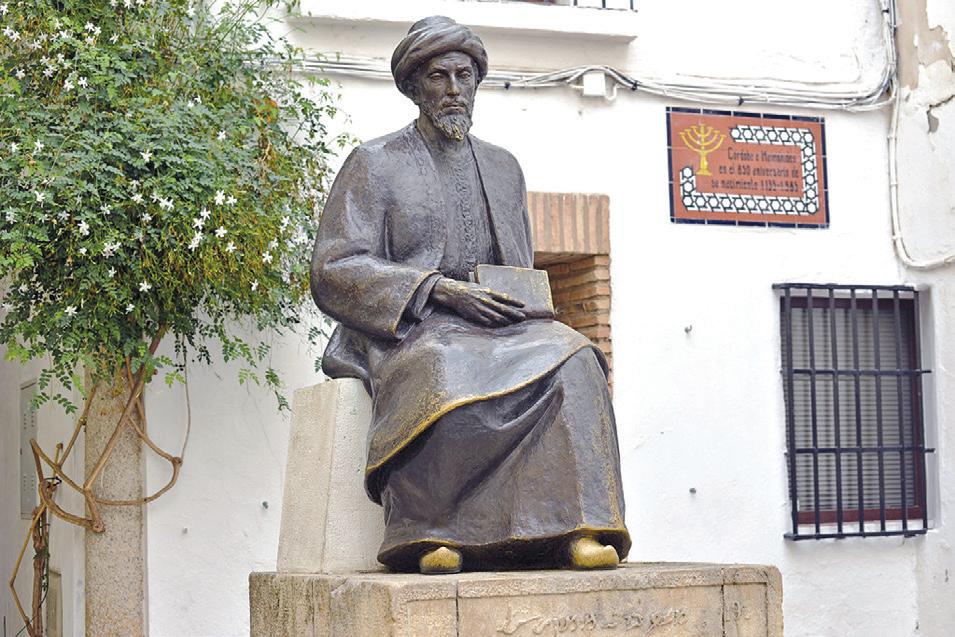
On September 8, 2025, Spain announced a total arms embargo of the Jewish State. Sanchez, invoking Hamas propaganda, stated in regards to the decision, “There is a difference between defending your country and bombing hospitals or starving innocent children.”
Sanchez called for Israel to be barred from international sports events after pro-Palestinians disrupted the finale of the Vuelta cycling race in Madrid, prompting a response by Israel’s Foreign Minister Gideon Saar, who accused the prime minister of being “an anti-Semite and a liar,” as he asked, “Did Israel invade Gaza on October 7 or did the Hamas terror state invade Israel and commit the worst massacre of Jews since the Holocaust?”
Sanchez had the gall to issue the following reproach and admonition, “Spain, as you know, does not have nuclear bombs. Nor does it have the aircraft carriers or large oil reserves. We alone cannot stop the Israeli offensive, but that does not mean we still stop trying.”
Prime Minister Benjamin Netanyahu responded, calling his words a “blatant genocidal threat to the world’s only Jewish state.” He continued, citing Spain’s past persecution of the Jews, “Apparently, the Spanish Inquisition, the expulsion of the Jews from Spain, and the systematic mass murder of Jews in the Holocaust is not enough for Sanchez.”
Members of Sanchez coalition have also expressed their animus towards the Jewish State. Labor Minister and 2nd
Deputy Prime Minister Yolanda Diaz, who leads the leftist Sumar party, publicly repeated the often-heard chant from anti-Israel protesters, “from the river to the sea.” Despite her denials, its message is clear. Such statements are calls to dismember the Jewish State. They are not about policy disagreements.
Member of Parliament Gabriel Rufian made an outrageous statement that equated Gaza with Auschwitz: “The difference between Gaza and Auschwitz is the world still has time to stop what’s been happening in Gaza.”
Spain has seen a significant rise in antisemitic activity, which includes public taunts at soccer games against Israelis, massive and often raucous anti-Israel protests in the streets, anti-Israel graffiti on synagogues, and physical attacks upon Jews.
In May 2024, Spain formally recognized a Palestinian state, a move consummate with its recent anti-Israel stands.
The Sanchez government has brought shame to Spain for forsaking truth for Hamas propaganda and leading Spain towards its dark antisemitic past.
One can only hope that dignity will someday be restored to Spain.
On Chanukah 1968, Spain rose from its shameful past. Presently, its government has lost its way.
Larry Domnitch is the author of The Impact of World War One on the Jewish People, by Urim Publications. He lives in Efrat.







Aaron Borgen (Monsey) & Avigail Zelinger (Baltimore)
Azriel Perlman (Baltimore) & Shiffy Peromsik (Pawtucket R.I.)
Yitzchak Schwob & Shoshana Grynheim
Eliyahu Masinter (Baltimore) & Shira Pfeffer (Ramot)
Avi Kohen & Sarah Fruman (Both Baltimore)
Dave Pollack (Baltimore) & Sarita Harari (Brooklyn)
Reuben Mellman & Elana Adler (Silver Spring)
Want to see your simcha here? Email mazeltov@baltimorejewishhome.com or text 443-675-6507 to submit your simcha!

Devorah & Donni Krainess on the birth of a daughter
Samantha & Guy Herschmann on the birth of a son
Rabbi & Mrs. Reuvain (Adam) Venick on the birth of a daughter
Adam & Kayla Rubin on the birth of a son
Want to see your simcha here? Email mazeltov@baltimorejewishhome.com or text 443-675-6507 to submit your simcha!

As a nation, we’re great at coming up with products that should exist and then selling them, especially when it comes to the yomim tovim. For example, last year, I wrote an article about actual helpful Chanukah products that exist, such as Chanukah-shaped cookie cutters, the “My First Chanukah” coffee mug, dreidels filled with nosh, dreidel-shaped ice cubes, Chanukah-print napkins, Chanukah-print juggling balls, and Chanukah-print stress balls, for when people are using the Chanukah-print juggling balls near the candles.
There’s even such a thing as pre-made cups of oil, so that you don’t have to go through the hassle of pouring oil into a cup, like some kind of caveman. You just put out a cup of hard oil that looks like the top of the chicken soup when you take it out of the fridge, and you’re done, and you can spend all the extra time you saved waiting around until it’s time to light candles. They’re also great for recipes. I’m actually not sure why they don’t sell pre-made cups of kiddush and havdallah, where you just take it out of the fridge and drink through the layer of fat. But this is very convenient when it comes to Chanukah, mostly because we buy oil by the jug, and we can’t pour it into a tiny cup without filling the living room knee deep in oil.
But there’s room for improvement. For example, why are Chanukah-themed napkins the least absorbent napkins? And that’s all they have at the party. How are we supposed to sop oil out of our food?
So last year, I reached out to readers with my greasy, oily hands and asked them to write in with ideas for more Chanukah products that don’t exist but that we need Not that we don’t need Chanukah print-stress balls, especially at family get-togethers.
“Is there anything here that I could eat without keeling over?”
“Yeah, I brought Greek salad.”
“Oh. Are we allowed to eat that?”
“I don’t know. It has olives…”
Many readers wrote in with great responses, which I’m printing here as a gift to you. If you don’t hold of gifts, please send me money.
We’ve also included a first step for each of these ideas to get them off the ground.
-One reader, J.S.S., writes that we need a self-flipping latke pan. How safe would that be? You’d have to be out of the room when you’re using it. Though I’m still all for it, because what I really need is something to help me flip omelets, seeing as I have never once done so without the omelets falling apart. Whenever I try flipping them, I make the egg and the ceiling treif.
TO START: Maybe some kind of eject button on the handle, like in military jets.
-C.C. suggested colored kids’ candles that don’t break so easily. Because there are exactly 44 candles in a box, which his exactly how many candles one person needs, assuming none of them are broken. Are we supposed to just melt them back into one piece? Do I have to buy an entire second box because at least one candle in each box will be cracked? Also, kids are handling them.
TO START: Something like Liquid Skin. In multiple skin tones, such as purple.
- N.G. writes that we need some invention to get yesterday’s used wicks out of those little metal tubes
“My wife keeps getting mad at me for getting the family tweezers all oily,” he says.
I just usually stick one end of the tube in my mouth and blow, and worry about the far side of the room later.
TO START: Some sort of wet/dry vac.
- We should also, as C.K. suggests, some sort of quake-proof hadlakah table. We always have to get as far away from the can-
By Mordechai Schmutter
dles as we can when we dance while also being able to still see them while going around in a circle facing inward. My wife doesn’t even let the jumpier kids into the same room as the candles. So much for pirsumei nisa. Though I suppose they can see them from outside the house. Maybe that’s where we’re supposed to dance. This was much easier when we lived in a basement apartment.
Maybe we can also use this table for dreidel, so no one gets accused of cheating.
TO START: Shocks, like on a car? Also, a softer niggun for Maoz Tzur.
-C.C. also thinks we should invent some kind of dreidel detector that will collect dreidels from all over the house. Dreidels just naturally roll around and under furniture and migrate around the house and down the stairs and into the laundry, and you’re finding dreidels for several months after you clean up from Chanukah. Why on earth do we have so many dreidels? Pesach cleaning’s biggest treasure is a handful of dreidels.
But there are options. A lot of toys nowadays have features so that you won’t lose them, such as lights and sounds that make noise the entire Shabbos, or when your kid walks away, and don’t stop talking until you pick them up.
TO START: a little button that when you press it, the dreidel beeps, like a car in a parking lot. Or make all dreidels glow in the dark. This would also bring a fun twist to the games: Dark Dreidel.
“Hey! Who keep swiping the pot?”
We also need some kind of locator for our latkes if we get the self-flipping latke pan. Making them glow in the dark hasn’t been enough.
Mordechai Schmutter is a freelance writer and a humor columnist for Hamodia and other magazines. He has also published eight books and does stand-up comedy. You can contact him at MSchmutter@gmail.com.





I decided to make a change. Charging my phone outside my bedroom allowed me to get up and begin a productive day without first reaching for my phone. At first, it was annoying, but it started to steer my morning routine in a more positive and active direction. It feels good now to get moving right when I wake up and choose to do my catching up on my phone with a cup of coffee after my day starts. Yes, I had to purchase a clock with an alarm to replace my phone, but it was worth it.
How did my children get access to the internet on that device? It’s a gaming device! I thought this app was for learning a new language – so how did my daughter meet and start chatting with a “new friend” she’s never met before? My son was shopping on Amazon, and he somehow wandered into movies and products that I’m very uncomfortable with him seeing. It never even occurred to me that any of that could happen.

Why is it that kids seem to find these things, and get around all the safeguards we set, while we never even imagined it was possible? The issue is, like many people, we assume others look at things the same way we do. It’s hard to see the world from someone else’s perspective. But when it comes to protecting our children, we must learn to see things through their perspective.
As one parenting book put it, “Adults look at a new device or app and ask themselves, ‘What can this do for me?’ Kids look at that same device or app and ask, ‘What can this thing do?’”
Kids are curious, sometimes mischievous—and that’s a good thing. We want our children to discover and explore; they’re hard-wired for it. But part of parenting is understanding our children through their own eyes, so we can guide them toward what’s meaningful, safe, and conducive to real growth.





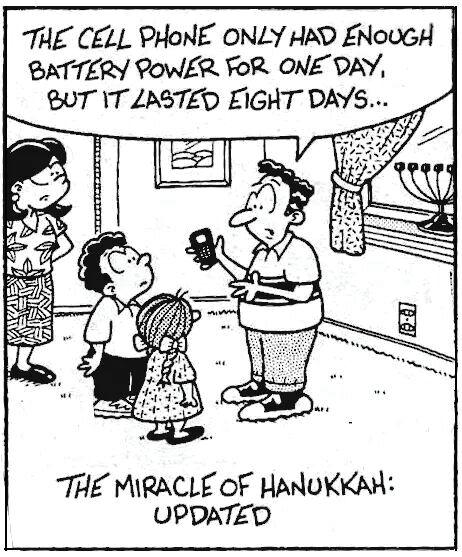




By David Ignatius

The past two years of war brought death and destruction to the Middle East, but they also created remarkable openings for change in Gaza, Lebanon, Syria and Iran. Sadly, those opportunities might be squandered because of mishandling and delay by the United States, Israel and the Arab states.
“Everything is stuck,” a senior Israeli defense official told me this week. Because diplomats have failed to capitalize on the disarray of Iran and its allies, “all the fronts in the Middle East are still open,” he warned. Most of Gaza’s population is still controlled by Hamas, Lebanon hasn’t fully regained its sovereignty from Hezbollah, and Iran is rebuilding its battered military.
President Donald Trump’s bold peace initiative ended the Israel-Gaza war and raised hopes that breakthroughs might be possible across the region. But the lack of follow-through
by Washington and its partners leaves a Middle East that’s still waiting for a stable “day after.” Other than the release of all living Israeli hostages from Gaza, most of the goals of Trump’s 20-point peace plan appear stillborn.
Israel achieved some stunning successes in its bloody campaigns against Hamas, Hezbollah and Iran. But Robert Satloff, director of The Washington Institute, cautioned in an interview this week that “the Israelis so far have failed to translate battlefield victories into political achievements. These are sad and regrettable lost opportunities.”
Gaza illustrates the limits of Israeli military power to achieve political results. More than 70,000 Palestinians died in the war that followed Hamas’s Oct. 7, 2023, terror attack. But analysts tell me that Hamas still controls about half of Gaza – where roughly 85 percent of the population lives. Trump’s peace plan called for an International Stabi-
lization Force to disarm Hamas and a “Board of Peace” to oversee a massive reconstruction effort there. But for now this vision of a revitalized postwar Gaza is just a fantasy.
What’s going wrong? Nations that had volunteered to join the international force, such as Indonesia and Azerbaijan, have been backing away, and donor countries are refusing to begin reconstruction projects until there’s security in Gaza. Jared Kushner, Trump’s sonin-law and one of his Gaza envoys, has proposed building “alternative secure communities” in the half of Gaza controlled by the Israeli military, hoping that magnet might draw Palestinians. But skeptics doubt that many Palestinians will cross the line into Israeli-controlled areas.
How can Trump and his partners break this logjam? They can recognize the screamingly obvious fact that the only force that can effectively disarm
Hamas will be Palestinians, allied with a reformed version of the Palestinian Authority. Many Israeli military and security officials have long embraced this view. It’s time for Trump to face that reality, too – or watch his peace plan crumble into dust.
An opportunity to reanimate the Trump Gaza peace effort could come this week, as Mike Waltz, Trump’s ambassador to the United Nations, visits Israel and Jordan. Waltz was forced to resign as national security adviser in May after a trivial flap over use of the private messaging app Signal. But he’s one of the administration’s most capable officials, and perhaps he can restart the stalled Gaza peace process.
Lebanon is the second missed opportunity – but it, too, is salvageable with some work. Israel’s attacks broke Hezbollah’s stranglehold on the Lebanese state. That gave the country a chance to regain its sovereignty – and,
with a nudge from the Biden administration, it did so, electing Joseph Aoun, its army commander, as president. But to fully achieve this prize, Lebanon has to act like a sovereign state by disarming Hezbollah and reclaiming a monopoly of force.
Sadly, Lebanon is failing that test. Aoun has disarmed Hezbollah south of the Litani River but not to the north, as was promised would happen by the end of this year. Israel is striking Hezbollah targets on its own, but that just repeats the old “mow the grass” formula. Israel needs a real Lebanese government as much as Beirutis do. Trump should press Aoun to deploy the Lebanese Armed Forces everywhere. As Satloff says, “If the LAF can’t do it now, when will they ever be capable?”
Lebanon finally seems to have realized that a perpetual state of war with Israel is idiotic. Aoun said in October, after the Gaza ceasefire, “Today, the general atmosphere is one of compromise, and it is necessary to negotiate.”
Satloff believes that Lebanese peace talks with Israel are now “a real opportunity.” But Israel, which proclaims that it wants peace with all its neighbors, is
balking. It should take yes for an answer.
Israel is missing an opportunity with Syria, too. Trump has made good relations with President Ahmed al-Sharaa a personal project, and he’s eager to broker a security agreement between Damascus and Jerusalem. But Israel
with Syria’s evolution into a prosperous State.” Meaning, get it done, Bibi. Netanyahu countered Tuesday that Israel was ready for a deal with Syria but only if it gained a buffer zone.
Iran is the citadel of the status quo in the Middle East, and it was rocked by Israel and America in the 12-day war in
Trump’s problem is that he’s juggling so many diplomatic balls at once that some of them will inevitably tumble to the ground.
doesn’t want to lose its freedom of action in Syria, so it’s wary.
Here again, Israeli Prime Minister Benjamin Netanyahu should find his way to “yes.” Trump prodded him with a Truth Social post Monday: “It is very important that Israel maintain a strong and true dialogue with Syria, and that nothing takes place that will interfere
June. Trump imposed a ceasefire there, too. But he didn’t cap the victory with a diplomatic deal that could constrain Iranian military power in exchange for the economic help the country desperately needs.
Opportunity knocks at the U.S.-Iranian door. An Iranian message proposing renewed peace talks was carried to



Washington last month by Saudi Crown Prince Mohammed bin Salman, according to a Reuters report confirmed to me by a source close to the Saudis. Supreme Leader Ali Khamenei disavowed the reported letter as “pure lies.” But the source close to the Saudis tells me that quiet conversations with Iran are taking place through Saudi, Omani, Emirati and Qatari emissaries to see if serious dialogue with the U.S. are possible.
Trump’s ambition as a peacemaker appears boundless. “Iran does want to make a deal … I am totally open to it,” he said during the crown prince’s visit. Trump’s problem is that he’s juggling so many diplomatic balls at once that some of them will inevitably tumble to the ground. That’s what happened after his Gaza peace deal. He promised far more than he has so far delivered.
Trump is now trying to broker a desperately needed Ukraine peace agreement. But his credibility as an omnidirectional mediator will be enhanced if he can demonstrate that he not only announces projects with fanfare but gets them done.
© 2025, Washington Post Writers Group


ABy Rabbi Shraga Freedman
couple of months ago my brother from Lakewood NJ was picking up a prescription at a local branch of CVS and felt compelled to compliment the pharmacist. While some employees at drug stores tend to be brusque and abrasive, he was impressed with this man’s patient and pleasant manner, and he made a point of telling him so.
The pharmacist’s response was eye-opening.
“To tell you the truth,” the pharmacist said, “I always enjoy dealing with your community. It is always a very pleasant experience to serve Orthodox Jews at the counter.”
He paused for a moment and then added, “There is one thing in particular that has always impressed me. We tend to hear all sorts of foul language from other customers; people are sometimes frustrated when they can’t fill a prescription or when something else goes wrong, and they let loose with all sorts of profanities. But I don’t think I have ever heard a religious Jew uttering a single bad word.”
The pharmacist turned to his coworker to corroborate his assertion. “Jim, have you ever heard anyone from the Jewish community use foul language?”
“Nope,” the other employee replied flatly. “Not even once.”

Kedushah, sanctity, is one of the most powerful means for the creation of a kiddush Hashem. When we demonstrate that we are holy, that we are imbued with a sanctity that distinguishes us from the people around us, we bring great honor to Hashem. As we declare in the chazzan’s repetition of Mussaf on Rosh Hashanah, “Na’eh l’Kadosh pe’er mikedoshim — It is proper for a Holy One [Hashem] to be glorified by holy ones.”
“The Talk of the Town” — a brandnew Kiddush Hashem children’s comic book published by The Circle — is now available in your local seforim stores. Inspiring, entertaining, and transformative, it’s a must-have for every home and classroom.
Rabbi Shraga Freedman is the author of Sefer Mekadshei Shemecha, Living Kiddush Hashem, and A Life Worth Living.
Email LivingKiddushHashem@ gmail.com for a free sefer. Visit LivingKiddushHashem.org for more resources
Living Kiddush Hashem was founded with the goal of imbuing every Jew with a powerful sense of mission — the mission to be mekadeish Sheim Shamayim in his or her own unique way. We strive to accomplish this by raising awareness of the paramount importance of the mitzvah of Kiddush Hashem and its centrality in everything we do.











So, how are you going to burn off those jelly doughnuts? The key is exercise. If you want, you can join my exercise regimen of:
Jumping to conclusions
Climbing the walls
Beating around the bush
Swallowing my pride
Passing the buck
Throwing my weight around
Dragging my heels
Pushing my luck
Making mountains out of molehills
Hitting the nail on the head
Wading through paperwork
Bending over backwards
Jumping on the bandwagon
Balancing the books
Running around in circles
Eating crow
Tooting my own horn
Climbing the ladder of success
Pulling out the stops
Adding fuel to the fire
Opening a can of worms
Putting my foot in my mouth
Starting the ball rolling
Going over the edge
Picking up the pieces
You are given two coins for Chanukah gelt. Together they add up to thirty cents, and one of them is not a nickel. What are they?

Answer: A quarter and a nickel
Two menorahs are sitting in the window.
The first one says, “Wow, it’s getting hot with all these candles.”
The second one says, “Wow, a talking menorah!”


So, are you one of those people who takes a selfie with your food every time you go out to eat? (You look great near that penne alla vodka). Well, you can keep those photos. However, we’d love to see your Chanukah photos. Send in your Chanukah, Chanucka, Channnuka or even your Chanukcah pictures in order to win a gift certificate to Berrylicious! See details on Letters to the Editor page (the place serious people air their grievances). Hey, do me a favor? Smile big in the pictures, no sour faces, OK?
Happy
Channuuukkkcckckhhaaa!
Your Favorite Centerfold Commissioner
1. How many pounds of potatoes does the average American eat each year?
a. 14 pounds
b. 27 pounds
c. 48 pounds
d. 110 pounds
2. In which country did the Potato Famine of 1845-1849 take place?
a. England
b. Ireland
c. Scotland
d. Finland

c. “Jeopardy!” host Alex Trebek
d. Former “Tonight Show” host Jay Leno
5. Who introduced French fries to America?
a. Ronald McDonald
b. Thomas Jefferson
c. Benjamin Franklin
d. George Auguste Escoffier
6. Which U.S. state grows the most potatoes per year?
a. Utah
3. Potato chips were invented in Saratoga Springs in 1853 by Chef George Crum. Why did he create this crunchy treat?
a. He realized that packaged snacks were becoming popular so he invented chips.
b. He worked at an old age home, and he realized that they were a good alternative to cookies.
c. A frustrated customer thought his French fries were too thick and repeatedly requested that they be made thinner.
d. There was an excessive amount of potatoes, and he needed to figure out what to do with them.
4. Who famously misspelled the word potato, while participating in an elementary school spelling bee, by spelling it p-o-t-a-t-o-e?
a. Former vice president Dan Quayle
b. Former Scripps Spelling Bee champion Vasvvvavvauch Vvasilaivlovivav

b. Iowa
c. Idaho
d. California
7. In 2015, a group of students at Binghamton University, called the “Potato Posse,” smashed the record for mashed potatoes. How many pounds of mashed potatoes did they make?
a. 355 pounds
b. 744 pounds
c. 983 pounds
complained that the fries were too thick. Although Crum made a thinner batch, the customer was still unsatisfied. Crum finally made fries that were too thin to eat with a fork, hoping to annoy the extremely fussy customer. The customer, surprisingly enough, was happy – and potato chips were invented!
4) A- The other thing he is famous for? Nothing.

5) B- Jefferson, having encountered them while serving as American Minister to France from 1784 to 1789. He served them at a White House dinner in 1802…and America has never looked
d. 2,641 pounds
Answers:
1) D- (Remember that the “average” American eats 110 pounds, but you cholent and kugel eaters should add around 100 pounds a year. So, you basically eat your weight in potatoes every year.)
2) B

6) C- Idaho grows an average of 13.8 billion pounds of potatoes per year. While speaking at the 90th annual convention of the Idaho Grower Shippers Association, Idaho Potato Commission President Frank Muir noted that the Idaho potato industry ships 412 pounds of potatoes every second, which translated to 2.2 million pounds shipped during his 90-minute presentation. (Wait, he spoke about potatoes for 90 minutes…and people didn’t throw potatoes at him?)
7) D
Potato Log:
6-7 correct: Mr. Muir, when you were a child, did you say, “I’d like to grow up to be the president of the Idaho Potato Commission?”
3) C- Crum was a chef at the Moon Lake Lodge resort in Saratoga Springs, NY. French fries were popular at the restaurant, and one day a diner
3-5 correct: You know a thing or two about taters…
0-2 correct: Mr. Quayle, you don’t do too well with the potatoe; stick with the tomatoe!

For years, the Dems treated criminality like it was another lifestyle choice and now we have a guy who wakes up in the morning thinking, “How many narco boats can I vaporize before lunch?” And there really is no harm in bragging about it. In fact, bragging gets that message out, and that message is “no mos’ amigos,” which is Spanish for, “Your…boat is on fire!”
- Greg Gutfeld
Historically, this front has been underfunded and sabotaged at every opportunity – and that is before we get on to a total lack of message discipline within the Israeli government and to politicians making statements, geared toward their base, that end up doing tremendous damage to us internationally.
- Eylon Levy, who served very effectively as the spokesperson for Israel in the immediate aftermath of October 7 (until Netanyahu fired him allegedly at the behest of Sarah Netanyahu), talking to the Jerusalem Post about why Israel is losing the PR war
In the end, it’s a combination of things: a vicious and premeditated information war against Israel designed to delegitimize it, and a state apparatus that is basically ignorant of the threat and hasn’t dedicated the necessary resources to it.
- ibid.
We’ve achieved everything we have as a country and somehow, over 250 years, we’ve gotten where we are without the help of Somali refugees, which is really a testament to our skill as Americans.
They didn’t care about the … kids being attacked, or the [assaults], and they didn’t care about the victims of recidivism. They didn’t even care about the victims that we talked about for years, women being thrown in front of subway trains. They only care about victims when it becomes political, expedient, when they see an election approaching.
- Greg Gutfeld, responding to Democrat outrage over the Trump administration blowing up drug boats
It doesn’t – they don’t know. Suddenly, they’re experts on war crimes. They all went on AI, and went like, what’s a war crime? Could this really happen? You know, I do not believe they care. I refuse to invest any amount of caring on those people on the boat because they are terrorists. If you have not developed the hoax instinct after the last 10 years and your reflex is still to say, wow, this sounds really bad, you need to reverse lobotomy.

- ibid. He did not just write this book—he lived it.
- Erika Kirk talking about
of G-d: Why Honoring the Sabbath Will Transform Your Life”


Charlie didn’t write this book without doing what he’s talking about in this book. That’s not the way he was, not the way he operates. We have over 50 books on our bookshelf about the Sabbath. He wanted to know it so deeply, and he saw the fruit of what it was like to actually detach from the world, stop the noise, stop the scrolling and just put pause on everything and just focus on your family.
– ibid.
At first, it started with an hour, two hours, but then once he fully incorporated it into his life, he totally elevated. He became a next-level husband.
- ibid.
I understand the focus on ‘28 and all that. But there will be a marble bust of me in Congress. I am a historic figure like any vice president of the United States ever was.
- Kamala Harris when asked by The New York Times if she plans on running for president in 2028
Thousands of people are coming to hear my voice…thousands and thousands.
- ibid.
New details suggest Ilhan Omar may be related to some of the Somali fraudsters. She denied this saying, “If she was related to them, she would already be married to them.”
– Greg Gutfeld
I wouldn’t wish upon anyone what I have been through, and I support the Second Amendment as well.
- Erika Kirk when asked at the NYT DealBook Summit whether she still supports the Second Amendment
I don’t expect everyone to understand. It’s not because you’re weak, it’s not because you think what the assassin did was correct. That’s the exact opposite. Forgiveness is…for those of you who’ve been wronged, you know what it feels like to forgive someone. And in a way, where it frees you from a poison, and it frees you to be able to think clearly and have a moment where your heart is free and you’re not bound to evil. - ibid.

Rosie O’Donell promised her therapist that she wouldn’t blast Trump for a few days but only lasted a few hours. But thankfully, it still gave her therapist time to fake his own death.
– Greg Gutfeld


Moderated by Jennifer Mann, LCSW of The Navidaters

Dear Navidaters
Thank you for the opportunity to ask my question. I’ve been dating a guy for five weeks, and things are going well. For reference, I am 26 years old and have been dating since I’m 22. We seem to align religiously and also based on our life goals and the way we look at things.
The thing is, though, he has some hobbies that I’ve absolutely no interest in. He enjoys playing golf, sports, loves going hiking. Personally, I really don’t enjoy any of those things. On a Sunday, I would much rather go shopping, a nice cafe, or chill somewhere indoors.
I realize that a guy like this is not coming along often so I don’t want to let him go. But I also don’t want to continue if it’s just a mismatch between us. I haven’t really told him I don’t enjoy those things yet... I’ve just told him what I prefer to do instead.
Is something like this a deal breaker situation, and if it can work out, how?
Thank you,
Laya*
Disclaimer: This column is not intended to diagnose or otherwise conclude resolutions to any questions. Our intention is not to offer any definitive conclusions to any particular question, rather offer areas of exploration for the author and reader. Due to the nature of the column receiving only a short snapshot of an issue, without the benefit of an actual discussion, the panel’s role is to offer a range of possibilities. We hope to open up meaningful dialogue and individual exploration.


Dear Readers,
We want to offer YOU an opportunity to be part of the discussion! Please email us at MichelleMondShadchan@gmail.com, subject line “reader’s response,” if you would like to participate in the new “A Reader’s Response” columnist spot. We will send you a question and publish your answer in an upcoming Navidaters edition.
If you have a question you would like the Navidaters to answer, please reach out to this email as well.
Looking forward!
Michelle, the “Shadchan”
Rebbetzin Faigie Horowitz, M.S.
Laya, this is not a deal breaker. Mature people know that they each have to have their own space and interests in a relationship, not just shared space and interests. One half of a couple has to be a person in their own right and respected as such. Both need to be able to make choices and be involved separately in activities, growth, and pastimes.
It would be helpful to talk about the fact that you have different interests and explore some opportunities for joint activities such as volunteering, hosting, and working on a community project with others. Life is not just about your own interests and hobbies. The question you want to answer is can you and he support each other in your separate interests (accompany each other, for example) and give time and effort to matters that matter to both of you (working against antisemitism, delivering for Tomchei Shabbos, kiruv, tutoring a child who is struggling in school, to name some examples).
If either of you cannot and do not spend time outside your own interests and needs, it may be a sign of selfishness and lack of ability to give.
Michelle Mond
Dear Laya,
The fact that you’ve found a guy
who you enjoy spending time with and share common goals, values, and hashkafos is something to celebrate. In regards to your concern, while there are some couples who enjoy all the same hobbies, there are others who simply don’t, and it can work out.
What you will have to do is respect his interests and give him space to pursue them. This might mean encouraging him to play golf with his friends on a Sunday, while you go with your friends to a cafe. You can also broaden your horizons and ac company him on a nice hike, even though it’s not your favorite activity.
Part of growing up and starting a life with someone is recognizing how two dif ferent people can be flexible and respect ful despite their differences. You can have a respectful conversation with him about this topic. As long as he is on the same boat about being respectful of your differences, you are really in a good place! Think about how many women go from a Sunday after noon “coffee clutch” while single to accom panying their husbands and sons to Sunday afternoon football league. It’s just a matter of recognizing change in life is normal, if one wants to move forward in life.
As long as flexibility and respect is there, there should be no problem navigat ing life like this.
Hatzlacha!
Dr. Jeffrey Galler
Dating a good guy who shares your perspectives, goals, and values is
very special. He sounds like a wonderful, potential life partner.
Many years ago, my wife and I agreed that she would not expect me to go shopping with her, and I would not expect her to sit in front of the TV to watch a Yankees game with me.
(Have you ever noticed a few husbands, in the far corner of a women’s clothing store, sitting on extremely uncomfortable chairs, pretending to be busy with their cell phones, looking absolutely miserable, while their wives hunt busily through the racks? Please, ladies, never subject your husbands or boyfriends to this indignity.)
Here’s the important point. There are some activities that couples should be doing together, and there are other activities that folks do by themselves or with their friends.
Specifically, it is healthy for you to stroll leisurely through your favorite
stores, without a guy constantly checking his watch and offering unsolicited fashion advice. And, it is equally healthy for a guy to play a very competitive game of basketball or handball with his buddies, without female participation.
Nevertheless, you can also try to





blend some activities. A pleasant visit to a nice café could be a great shared experience. Just avoid taking him to a place that caters exclusively to feminine tastes, where the menu features nothing but trendy salads and acai bowls.
Similarly, even if you are not outdoorsy by nature, you might, nevertheless, enjoy a relaxed, not-too-rigorous, walk in a park together. That is, of course, as long as he doesn’t expect you to scale mountains with him.
If you share the same goals, values, and aspirations, and not only tolerate, but also support, each other’s individual interests, this could be the start of a wonderful relationship.
Meanwhile, may I respectfully suggest that you buy him a Yankees (or Mets) baseball cap or wristband for Chanukah. And, if the young man is reading this column, he would be wise to delight his girlfriend with a Sephora gift card.
Kayla Lasson Navidaters’ Reader
Laya, it sounds like you really like this guy and are trying to work through
Dear Laya,
This is such a real question and one so many people quietly stress about early on. And I want to start by saying this plainly: you are not wrong for wondering if lifestyle differences matter. They absolutely can. And they also don’t always mean what we think they mean at five weeks in.
Here’s the honest truth. Some couples really do share everything. They hike together, train together, travel the same way, spend Sundays the same way. That works beautifully for them. Other couples are total opposites on weekends. One is outdoorsy. One is indoorsy. One wants movement, one wants calm. And that works, too. There is no one right model.
There is also a middle space that no one talks about enough, which is compromise with love. Sometimes, we do the
hike even if it’s not our favorite thing because being with our partner matters. Sometimes, our partner shops with us even though it’s not their ideal Sunday. Not every shared activity has to be your dream activity. Part of building a life with someone is learning when to stretch and when to rest in yourself.
And just as important as togetherness is separateness. Healthy couples are not fused. It is actually a good sign when two people can enjoy different things, trust each other with independence, and come back together with stories, energy, and space to miss one another. A relationship where you have to do everything together can quietly become suffocating.
What matters most is not whether
a “rough patch.” However, I do not think of this as a “rough patch” at all. Here is what you should do. Plan two separate dates. For the first date, you will join him for one of his preferred hobbies, like hiking. For the second date, he will join you at an indoor cafe. An extra date if you’re interested will be both of you trying a new hobby together.
This is only a “mismatch” if you believe it is. I don’t doubt that you can find hobbies and activities to enjoy together as a couple. If you really like each other – which it sounds like you do –spending quality time together can only strengthen your relationship regardless of which activity you choose.
Part of building a life with someone is learning when to stretch and when to rest in yourself.
Lastly, to address you not sharing an interest in what he prefers to do, you should feel comfortable with him and it may actually bring you two closer together if you tell him, “I don’t think I’ll enjoy golfing, but I am willing to give it a try because it is important to you and I enjoy spending time with you.” You may surprise yourself by realizing you do actually like sports!
Good luck.
you like hiking. It is whether:
- You feel comfortable being honest about not liking it.
- You respect that he genuinely loves it.
- You can sometimes join without feeling trapped.
- And you both can also live full lives without needing the other to mirror you.
You mentioned that you “don’t want to let a guy like this go because he doesn’t come along often.” I want to say this gently. You should never stay because someone is rare. You stay because the connection is alive, mutual, and emotionally safe. Scarcity thinking has kept a lot of people in relationships that slowly made them smaller.
You also shared that you haven’t fully told him you don’t enjoy those things. That is actually the most important part of your question. Because five weeks in is
not the time to perform compatibility. It is the time to build honesty. You are not asking him to give up who he is. You are simply showing him who you are.
This is not a deal breaker right now. It becomes one only if:
- You feel pressured to constantly bend.
- You feel guilty for having your own rhythm.
- You start abandoning yourself to keep the relationship intact.
So yes, this can work. And yes, it’s also OK if you discover it doesn’t. The next step isn’t a dramatic decision. It’s a truthful conversation. Let him meet the real you. Not the flexible version of you that is afraid to lose him.
That’s where real answers come from.
Warmly, Jennifer
Jennifer Mann, LCSW is a licensed psychotherapist and certified trauma healing life coach, as well as a dating and relationship coach working with individuals, couples, and families in private practice at 123 Maple Avenue in Cedarhurst, NY. To set up a consultation or to ask questions, please call 718-908-0512. Visit www.thenavidaters.com for more information. If you would like to submit a dating or relationship question to the panel anonymously, please email JenniferMannLCSW@gmail.com. You can follow The Navidaters on FB and Instagram for dating and relationship advice.
By Rabbi Azriel Hauptman
Motivation is a word that describes the willingness of someone to do something. It is interesting to note that Hebrew does not have a word for motivation. That is why in Modern Hebrew motivation is “Motivatziyah”! Is this because in ancient times motivation was not an issue? Perhaps. Nowadays, motivation is most definitely an issue that so many of us grapple with on a day-to-day basis.
However, a further analysis of the sources indicates that a lack of motivation was most definitely an issue in ancient times. As we all know that there is nothing new under the son (Koheles 1:9). The source for this is Mishlei (Ch. 24) where Shlomo Hamelech describes the sorry state of a vineyard
of someone who lacks motivation to attend to his vineyard’s needs:
“It was all overgrown with thorns, its surface was covered with weeds, its stone fence lay in ruins. I observed and took it to heart; I saw it and learned a lesson. A bit more sleep, a bit more slumber, a bit more hugging yourself in bed, and poverty will come calling upon you.”
Does this sound very familiar? Doesn’t this perfectly describe someone who really wants to be successful with his vineyard, but just cannot seem to pull himself out of bed? What terminology does Shlomo Hamelch use to describe such a person?

Let us look at Pasuk 30 where this person is described as someone who is “lacking a heart”. This is the key to understanding the essence of a motivational problem. Your heart is not in it. In essence, we are being told that in your mind you have all of the information, but your emotions are not in sync with what you know to be true. This disconnect between mind and emotions is at the root of many psychological challenges and motivational challenges are no different. Let us explore in broad strokes some of the different emotional possibilities that can hijack one’s innate motivation.
Depressed Mood: Clinical depression requires a host of symptoms to be present in order to qualify for a diagnosis. However, many of us have a tinge of a depressed mood and do not notice it that much in our day-today life. However, when it comes to motivation, even a tinge of depression can be a real motivation killer. A depressed mood takes away part of that spark of excitement and zest that keeps us focused and active.
Anxiety: Anxiety makes us feel the emotion of fear even in situations where the fear is unfounded or unhelpful. Regarding motivation, confidence or optimism in the outcome is a key for having the energy to move forward. Getting out of our comfort zone can be very hard when one’s present space is familiar and predictable. Anxiety about the risks involved in changing one’s situation can really compromise one’s motivation.

ADHD: Individuals with ADHD (Attention Deficit Hyperactivity Disorder) commonly have a split in their motivational issues. Sometimes they can be super motivated to do a task, and other times even the simplest task will be incredibly difficult. For example, if he or she has a passion for carpentry, they will be able to be laser-focused on the project on hand with boundless motivation, but when asked to pick up
a screw off of the floor they might feel so little motivation to complete that task that it almost feels like torture. This relates to the brain chemistry of an individual with ADHD that is excitement-driven and not importance-driven.
Physical Issues: The mind-body connection is at the source of many challenges in our lives, including motivation. Lack of a proper diet and exercise can lead to a sluggish body which will sap our energy and interfere with our motivation.
As mentioned before, a lack of motivation might not seem as if it is driven by depression, anxiety, ADHD, or physical issues. This is because we all walk around with sub-clinical amounts of challenges that can really impact motivation. If we all had zero depression, zero anxiety, zero ADHD, and were in perfect physical health, it is hard to imagine that motivation would be much of an issue. This is why at the heart of many of the popular strategies to boost motivation are methods to enhance one’s mood and excitement in fulfilling one’s goals.
One of the takeaways of this article is that therapists would be one of the appropriate interventions for motivational issues since they are trained in dealing with many of the issues that are the underpinnings of a lack of motivation.
Chazal teach us (Tamid 32a) that one is considered wise if he can anticipate future events. Indeed, the greatest wisdom is figuring out how to base one’s present behavior on future consequences. This indeed is the essence of motivation and this most definitely requires a lot of wisdom.
This is a service of Relief Resources. Relief is an organization that provides mental health referrals, education, and support to the frum community. Rabbi Yisrael Slansky is director of the Baltimore branch of Relief. He can be contacted at 410-448-8356 or
By Etti Siegel

Q:Dear Etti, My 5-year-old daughter is having a very hard time adjusting to school this year. To be honest, she wasn’t very compliant last year either, but things seem worse now. Her teachers say she wanders around during circle time, refuses to join the group, runs up to the board to try to erase what the teacher is writing, takes things away from the other children, and is generally very disruptive.
The school called us in for a meeting, but no one seems to have any concrete answers or guidance. What does the school want from us? We obviously can’t show up every day and sit next to her to make sure she follows the rules!
Sincerely,
Concerned and Confused
A:Dear Concerned and Confused, First, I want to reassure you that there are some young children who do struggle with structure, transitions, and group expectations, especially in the early grades. At five years old, children’s self-regulation skills are still forming, and some children simply need more time, modeling, and support to learn the routines that school requires. What you’re describing is challenging, but it’s not hopeless.
Let’s break this into a few parts so you know what’s realistic, what’s helpful, and what might be going on beneath the surface.
1. What the school really wants from you
Schools do not expect parents to come in every day and sit next to their child. What they are hoping for is a partnership:
• They want to see your willingness to acknowledge that your daughter is struggling.
• They want to see your openness to a plan.
• They want to know you are ready to collaborate in reinforcing the same language and expectations at home.
The school is not trying to assign blame. They are asking for teamwork.
2. Why she may be acting this way
Children don’t act out because they’re “bad.” They act out because a task is too hard, too overwhelming, too unstructured, too uncomfortable, or too confusing. When she wanders the room or races to the board, she is communicating something, because behavior always communicates something, and it is often one of the following messages:
• The expectations are unclear or feel too long for her attention span.
• She has trouble staying still without support.

• She is seeking connection or attention in the only way she knows how.
• She is struggling with being part of a group and wants to be the only one getting attention.
• Transitions feel stressful or unpredictable to her.
• She may need more sensory input or movement to stay regulated.
None of these are moral failings. They are developmental challenges.
3. What the school can put in place
Children don’t act out because they’re “bad.”
A productive meeting should lead to actual interventions, not just describing the problem. Effective supports might include a spot to sit near the teacher or assistant teacher, visual schedules and timers, movement breaks built into her day, clear, consistent language for expectations (“first circle, then play”), and an adult who takes her out of the room when she is disruptive.
Your daughter should feel successful, not punished. She might require a paraprofessional/shadow, an adult who is hired to dedicate her time focusing and helping only her, as the teacher has other students and cannot give your daughter the undivided attention she seems to be craving from an adult.
4. What you can do at home (that doesn’t require you sitting in class!)
Here are a few gentle, realistic things that can help a lot:
• Practice short “sit and listen” moments at home with a story, a game, or a simple routine. Celebrate small successes.
• Play turn-taking and direction-following games like “Simon Says,” “Freeze Dance,” or “Red Light, Green Light.” These actually build early self-regulation.
• Use language like, “In school, the teacher is the leader. Your job is to follow the leader, even if you don’t feel like it.”
• Keep mornings calm and predictable; dysregulated mornings equal dysregulated school days.
• Notice if you are being firm and clear with her when
you ask her to do something or if you allow her to dictate how life runs in your household. If she does not have boundaries and rules at home, she might be struggling with the fact that there are boundaries and rules at school.
5. When to request additional support
If the behaviors persist despite consistent routines and scaffolds, it is appropriate to ask for the school’s support staff to observe her. Early childhood consultants, occupational therapists, and behavioral specialists can pinpoint what is triggering her behavior and recommend specific strategies.
Early support is not labeling; it’s giving her the tools she needs. Be open to hearing and following their suggestions.
6. Have a long view
The vast majority of children who struggle at 4-5 years old do learn to regulate, participate, and thrive. What they need is consistency, patient adults, clear expectations, and a plan that everyone sticks to
Your daughter is telling the adults in her world, “I need help managing school.” With the right approach, she can absolutely succeed.
I know several mothers who wisely sought out parenting support when they realized that some of their approaches, though well-intentioned, were not serving their children in the long run. With guidance, they gained the tools and perspective to parent in ways that truly support their child’s development and emotional growth.
You’re not expected to be in the classroom with her. But your willingness to partner with the school, combined with the school’s responsibility to implement real strategies, can make all the difference.
I’m rooting for her, and for you. Let’s help her grow into school one step at a time.
- Etti
Mrs. Etti Siegel holds a MS in Teaching and Learning/Educational Leadership and brings sound teaching advice to her audiences culled from her over 35 years of teaching and administrative experience. Etti is an Adjunct at the College of Mount Saint Vincent/Sara Shenirer. She is a coach and educational consultant for Catapult Learning, FACTS Education Solutions, Brienza Academic Advantage, Yeled V’Yalda; is a sought-after mentor and workshop presenter around the country; and a popular presenter for Sayan (a teacher-mentoring program), Hidden Sparks, and the Consortium of Jewish Day Schools. She is a frequent contributor to Hamechanech magazine and The Journal for Jewish Day School Leaders and has a weekly column in The Jewish Home.

By Aliza Beer MS, RD, CDN

Chanukah is a beautiful time that spans eight nights and is filled with family gatherings. Unfortunately, Chanukah can also pose challenges for maintaining healthy habits, especially when it comes to foods like latkes, doughnuts, and chocolate. However, with a mindful and realistic approach, you can enjoy Chanukah without compromising your health goals.
The first step to navigating Chanukah healthfully is shifting your mindset. Chanukah is meant to be enjoyed, and traditional foods are part of the experience. Rather than labeling foods as “bad,” consider them as treats that should be limited. Eating with awareness can help you enjoy these foods without overindulging.
Many traditional Chanukah foods
can be modified without losing their taste or form. For example:
• Latkes: Instead of deep-frying in large amounts of oil, try baking them in the oven with a light brush of olive oil or using an air fryer. You can also go beyond just adding vegetables by making fully zucchini or cauliflower latkes without any potatoes to help minimize carbs.
• Doughnuts: If doughnuts are made at home, try using whole-grain flour or baked versions to reduce sugar and fat content. However, when buying, the key strategy here is portion control. Instead of eating a whole doughnut, have half or even less. It also helps to enjoy treats earlier in the day rather than late at night, since you have more opportunity to burn off the extra calories. This tip applies to all indulgences since timing and portion size make a big difference. For example, if you really want that lotus doughnut, eat just half for breakfast and make the rest of the
day super clean and healthy.
Small swaps like these allow you to maintain flavors while reducing calories and saturated fat.
It is easy to overeat simply because the food is plentiful and readily available. Mindful portion control is key. Use smaller plates, serve yourself one portion at a time, and avoid snacking throughout the evening. When it comes to treats like chocolate, allow yourself 1-2 pieces rather than an entire bar. Pairing sweets with protein or fiber-rich foods, like nuts or fruit, can help stabilize blood sugar and reduce cravings.
Many Chanukah gatherings center around food. Social interactions can distract us and make it easy to simply keep snacking and overeating without realizing. Mindful eating is about
paying attention to your food and your body’s signals rather than eating on autopilot. Eat slowly and notice your hunger and fullness in order to prevent overeating.
Use these party strategies to enjoy the celebration without feeling deprived or overwhelmed:
• Bring a Healthy Dish: Contribute a healthy option like roasted vegetables, a salad, or a lighter version of a traditional recipe. This ensures there’s at least one dish you can enjoy without guilt.
• Offer to Make Food: Taking part in the cooking gives you more control over ingredients and portions, allowing for healthier swaps without compromising tradition.
• Fill Your Plate Strategically: Use a large plate for salads so you can load up on vegetables and add a good source of protein. It’s important to fill up on vegetables and protein first before adding in-
dulgent items. This helps satisfy hunger and slows the pace of eating, making it easier to enjoy smaller portions of richer foods. For the rest of the meal, stick to a smaller plate to help manage portions. Aim to keep it a one-plate meal and avoid going back for seconds.
• Sample, Don’t Overload: It’s OK to taste desserts and treats, but limit yourself to small portions.
• Focus on Socializing: Shift your attention from the food to conversations, games, or shared activities. Engaging fully in the social aspects of the holiday can help reduce mindless snacking.
While fried and sugary foods often take center stage during Chanukah, there’s plenty of room for nutrient-dense options. Incorporating roasted vegetables, fresh fruit platters, or whole-grain side dishes not only adds fiber and essential nutrients but also helps balance heavier, indulgent foods. Even small swaps, such as serving baked apples
restricting calories—you should never go into a celebration starving. Avoid the temptation to “save calories” by skipping breakfast or lunch, as this often leads to overeating later in the evening. Instead, choose nutrient-dense, balanced options like eggs, yogurt, vegetables, or salads to help keep your hunger steady and your energy stable throughout the day.
Before heading to the party, drink at least two cups of water to help curb excessive hunger and prevent mindless eating once the celebration begins.
Balance with Activity
Chanukah is a perfect time to incorporate family-friendly movement. Short walks after meals, dancing to music, or even playing games with children can help offset extra calories and boost your mood. If you have an established exercise routine, aim to maintain it, even if sessions are shorter. The key is consistency rather than perfection.
Avoid the Guilt
Finally, it’s important to practice
Eating with awareness can help you enjoy these foods without overindulging.
or fresh berries alongside latkes and doughnuts, can boost flavor and nutrition. This also gives you the chance to fill up with healthy foods first, making the unhealthy treats less tempting. Get creative by giving healthy dishes a festive Chanukah twist, making them both appealing and fun! (See apple recipe below!)
Parties often include beverages that can contribute hidden calories, such as sweetened coffees, wine, or cocktails. Moderation is important. Try to stick to water or sparkling water, and limit the alcoholic or sugary drinks. This strategy reduces unnecessary calorie intake while keeping the celebratory feel intact.
Rather than focusing solely on individual meals, think about your overall week. If you know a big Chanukah dinner is planned, aim for lighter breakfasts and lunches earlier in the day. This doesn’t mean skipping meals or severely
Ingredients
• 10 oz. frozen cauliflower rice defrosted in microwave for 1 min.
• 3 TBS oat flour
• 1 small onion, blended in food processor
• 2 eggs
• 1 tsp avocado oil
• Avocado oil spray
• 2 turns Trader Joe’s garlic salt
• 1 tsp onion powder
• 1 tsp garlic powder
• ¼ tsp pepper
• 2 tsp sea salt
Preparation
• Preheat oven to 350°F.
• Combine eggs, avocado oil, oat flour, and spices.
• Then, add blended onion and the defrosted cauliflower rice. Mix well.
• Preheat a non-stick skillet and spray with avocado oil spray.
• Scoop the cauliflower mixture into the hot pan and try to flatten out the mixture.
• Pan fry on both sides, about 1-2 minutes a side.
• Transfer to a parchment lined baking sheet.
• Bake in the oven for 6½ minutes until firm
self-compassion. Chanukah is meant to be joyful, and perfection isn’t the goal. If you overindulge one night, avoid guilt or drastic compensatory behaviors. Focus on returning to your healthy habits the next meal or day. Mindfulness, moderation, and balance are far more sustainable than over-restriction.
Celebrating Chanukah in a healthy and realistic way is all about balance and intentional choices. By planning ahead, modifying recipes, practicing portion control, staying active, and focusing on nutrient-rich foods, you can fully enjoy the chag without compromising your health.
Wishing all of my readers a freilichen Chanukah!
Aliza Beer is a registered dietitian with a master’s degree in nutrition. She has a private practice in Cedarhurst, NY. Patients’ success has been featured on the Dr. Oz show. Aliza can be reached at alizabeer@gmail. com, and you can follow her on Instagram at @alizabeer
Ingredients
• 4 large apples, sliced ½” thick (Honeycrisp, Fuji, Granny Smith)
• 2 cups trader Joe’s 72% dark chocolate chips
• Popsicle sticks
• Topping Ideas: coconut flakes, freeze dried strawberries
Preparation
• Wash/dry apples thoroughly. Slice vertically into 1/2” rings and core.
• Using a paring knife, cut a slit in the apple. Carefully insert a popsicle stick or cake pop stick into the bottom of each slice, pushing it about halfway into the apple.
• Melt the chocolate chips.
• Dab the sliced apples dry with paper towels immediately before dipping in chocolate. If the apples are moistened with juice, the chocolate will not adhere.
• Dip the dried apple slices into the chocolate to coat. Be sure to cover the whole slice, just past where the popsicle stick meets the apple.
• Lay the slices on a baking sheet lined with parchment paper and decorate with toppings.
• Refrigerate the apples for 5-10 minutes, until the chocolate is set.
By Sara Rayvych, MSEd
For eight days, we light up our homes with humble but powerful flames. A little light illuminates so much darkness. The simple beauty of the flames personifies so much of our nation – we appear small, but we have a tremendous impact. Our little light shines throughout the world, bringing warmth and life to those around us.
One of the hallmarks of Chanukah was the specific focus of the Yevanim. They were not out to destroy our bodies, rather our hearts and souls. It was the spiritual presence of the Torah Jew they couldn’t handle. They recognized who we are deep in our core, and that was unbearable for them. Their goal was to make us embrace their culture, beliefs and (lack of) morals.
Our generation is greatly challenged to keep our beliefs, customs and standards in a world ever decreasing in its own. This moral decline is very noticeable to many of us but is far less clear to children and young adults. I know every generation seems very good at lamenting any observed declines, but we certainly have what to shake our heads at.
We are blessed to live in such a wonderful country – a medinah shel chessed. In many ways, this only increases the challenge. We are given access to all areas of American life. We can receive a high level of education and a job in any profession we qualify for. We’re invited to “holiday” parties and encouraged to join all areas of society. We’re accepted – and that just may be where our greatest challenge lies.
We have a different way of life than the world around us. We have a constant awareness of Hakadosh Baruch Hu accompanying us, with the Torah as our guide and generations of mesorah to lead us. Life can be confusing, but we at least have a light in that darkness. We need to pass on our appreciation for the beauty of that flame to the next generation.
I’ve heard many supposed “chachomim” mock, assuming we live only in an ancient – and irrelevant – world. “How
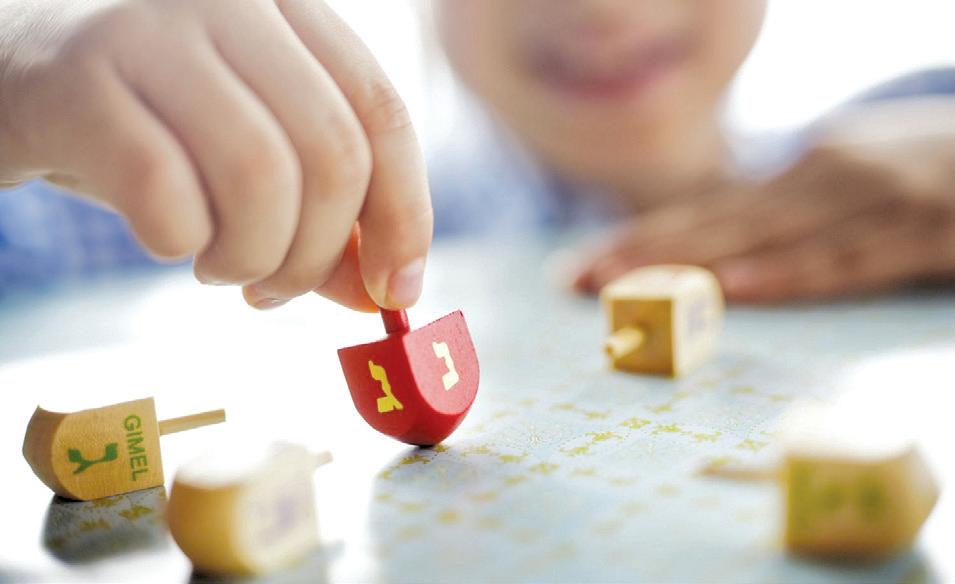
could you know it’s forbidden to drive on Shabbos when cars didn’t exist back then?”
“Really, you think anyone cares what you eat?” It’s amazing what a little ignorance can do. I could waste more time on such nonsense, but there is no need. It’s difficult to explain that the Torah contains principles that are applicable to all situations and isn’t simply a “do and don’t” list. It’s called a “Toras chaim,” a living Torah, for a reason, and it’s a source of life to those who embrace it.
Jewish children should be proud of who they are, and shouldn’t, chas v’shalom, feel like they’re less than others. Only by being aware of who they are, and proud of their status, will they be less vulnerable to the temptations of those around them. Recognizing that a particular behavior is beneath your status keeps your priorities straight. We want to build them up with an awareness of who they are, not leave them vulnerable to outsiders that can’t see the same.
Pride isn’t the same as being conceited, and the two shouldn’t be confused. Children should not look down at others nor treat others with disrespect. It’s a sign of insecurity to feel the need to put down others, and many children will wrongly try to push someone down rather than build themselves (and others) up. It’s the child who is truly secure in themselves that wants to elevate others.
We also need to remember that knowledge is power. Without a solid chinuch it’s impossible to stand up to the storm outside our homes. The formal education they receive is a crucial component of this, and our community stresses chinuch for good reason. A major part of knowing who we are is having in-depth proficiency in all areas of our heritage. Others may ask them questions, and they will need to have answers.
More than having answers for others, they need to have answers for themselves. We forget some of the less obvious parts of their chinuch. Children have questions, and questions demand answers. We assume children understand all of the foundations of Yiddishkeit, yet there can be gaps, and those require a serious response. Many areas of hashkafa will come up as questions to parents. Perhaps the child is embarrassed to ask it in school, or maybe they are having difficulty formulating their thoughts. We can take time to think before responding or to ask others for help, but we can’t ignore their queries.
The very honest truth is that these questions will make us uncomfortable. We may not know how to answer, or we may ask ourselves why they need to know them. It’s challenging to go out of our comfort zones, but we still need to answer them. Our answers need to be true and respectful of the questioner. We also need to be careful not
to make them feel bad or embarrassed.
Children should view the Torah lifestyle with happiness. It’s very ineffective to say, “Do this because you’re supposed to – even if you’re miserable.” There should be simcha in their day, and Chanukah is the perfect example. We can easily make the minhagim of Chanukah meaningful and joyous. We can do the same with all other areas – even if it requires a bit more forethought. Rather than see our lifestyle as restrictive, we should do what we can to help them recognize the joy in it. Torah should be a source of simcha, and truly feeling that will make everything sweeter.
What we (their parents) value should be clear to everyone who sees us. Our children should understand what our values are because we live them. With kids, there is no faking it, and we can’t pretend to be someone we are not. Our children know what’s important to us because they hear our conversations and they see our behavior – fortunately, they can’t actually read our thoughts.
With all areas of parenting, it’s our personal example that speaks loudest. Lectures are not popular and will only turn kids off if we appear hypocritical. Criticizing kids is rarely effective. Parents may think it’s their duty as part of chinuch, but putting kids down or speaking hurtfully is never helpful. We want to build our children up, not cut them down.
Chanukah is a special, meaningful and fun time of the year. There is so much to appreciate and value, as we bring light and happiness into our homes. May this light and simcha remain with us always.
Chanukah sameach!
Sara Rayvych, MSEd, holds a master’s degree in general and special education. She has been homeschooling for over 15 years. Sara provides personalized parent mentoring services, addressing a variety of general and specific parenting concerns. She can be contacted at Sara. Rayvych@gmail.com with comments, questions or for private consultations.

























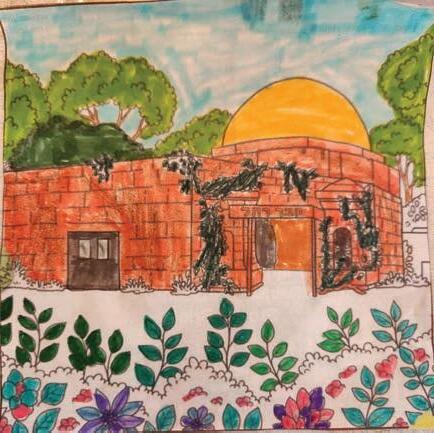










Note: Not all submission have been published. Keep sending in your artwork for another chance to be featured!


















Note: Not all submission have been published. Keep sending in your artwork for another chance to be featured!

By Naomi Nachman
I recently had Morah Tziri Preis, who has a children’s podcase called Inkredible Kids, on my cooking show
Sunny Side Up on kosher.com. Together we made Chanukah-inspired deli roll, and she shared practical ways to involve kids in the kitchen, such as offer compliments (the ones they want to hear) and help them feel proud of what they create!
◦ 1 sheet Gefen Puff Pastry dough
◦ 2 tablespoons garlic mayonnaise (store-bought)
◦ 1 (6 oz.) package pastrami, chopped into small strips (or any deli)
◦ 1 Tablespoon olive oil
◦ 1 small onion, chopped OR 2 cubes frozen sautéed onions
◦ 1 cube frozen garlic (or 1 clove minced garlic)
◦ 1/4 cup duck sauce
◦ “Everything but the Bagel” seasoning OR sesame seeds
Make the Pastrami Filling
1. Heat olive oil in a frying pan over medium heat.

Assemble the Roll
1. Preheat oven to 375°F. Line a baking sheet with parchment paper.
2. Place the defrosted puff pastry sheet flat on the baking sheet. Spread a thin layer of garlic mayo evenly over the pastry.
3. Spread the pastrami mixture evenly over the puff pastry sheet.
4. Starting from one side, roll it up jelly-roll style. Place the seam side down on the baking sheet.
5. Brush the top with duck sauce.
2. Add chopped onion (or frozen onion cubes). Sauté until soft and fragrant.
3. Add garlic (frozen cube or fresh) and stir for about one minute.
4. Add the chopped pastrami strips and sauté for about three minutes, stirring continuously, until the meat is heated through, slightly crisp in spots, and well combined with the onions and garlic.
5. Remove from heat and let it cool slightly.
6. Sprinkle with “Everything but the Bagel” seasoning or sesame seeds, or for a Chanukah-inspired look, use Chanukah-shaped cookie cutters to cut out shapes from additional pastry dough. Place the shaped dough onto the deli roll log, and sprinkle only the shapes with sesame seeds/poppy seeds/everything seasoning.
7. Bake for 20-30 minutes, until golden, puffed, and cooked through. Keep an eye on it so it doesn’t burn.
8. Slice into thick pieces and enjoy warm!
Naomi Nachman, the owner of The Aussie Gourmet, caters weekly and Shabbat/ Yom Tov meals for families and individuals within The Five Towns and neighboring communities, with a specialty in Pesach catering. Naomi is a contributing editor to this paper and also produces and hosts her own weekly radio show on the Nachum Segal Network stream called “A Table for Two with Naomi Nachman.” Naomi gives cooking presentations for organizations and private groups throughout the New York/New Jersey Metropolitan area. In addition, Naomi has been a guest host on the QVC TV network and has been featured in cookbooks, magazines as well as other media covering topics related to cuisine preparation and personal chefs. To obtain additional recipes, join The Aussie Gourmet on Facebook or visit Naomi’s blog. Naomi can be reached through her website, www.theaussiegourmet.com or at (516) 295-9669.