






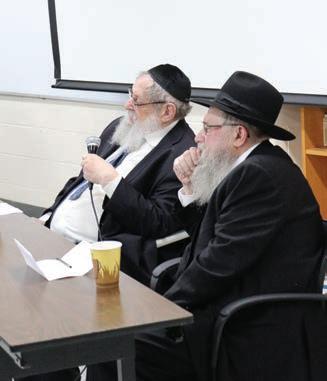
This past Shabbos, our community lost someone whose impact is almost impossible to measure: Rabbi Shlomo Porter ZT”L, founder of Etz Chaim. For decades, Rabbi Porter stood at the forefront of kiruv in Baltimore, building what would become one of the longest-standing outreach organizations in the country. But titles never captured who he was. If you want to understand what makes a true kiruv professional successful, it isn’t marketing or programming or clever campaigns. It’s heart – an oversized heart with room for anyone who needed it. With Rabbi Porter, there was always room. Room when someone needed guidance. Room when someone had questions they were embarrassed to ask. Room when someone needed a place to land, or a listening ear, or simply a seat at a Shabbos table. Kiruv is a field filled with joy and with heartbreak. You can spend months working with someone, see them inspired, growing, excited, only to watch them pull away. It takes an unusual kind of person to ride those waves without becoming jaded. To stay patient, open, steady, and giving requires the kind of character that can set ego aside and deal with whatever the day brings. It feels fitting that he was niftar during the weeks when we read about Avraham and Sarah. The Torah tells us of a tent open in all directions, welcoming every traveler. But the tent wasn’t the point; it was the people behind it. Their hearts were open long before their doors were. Rabbi Porter and his wife, Rebbetzin Shoshana Porter, embodied that same spirit. Whether you were Torah-observant or barely connected, whether your background matched his or not at all, you were welcomed the same way. There was no judgment, no pressure, no performance – just warmth, curiosity, and a real desire to help another Jew take a step forward.
The name “Etz Chaim” itself feels like a commentary on his life’s work. An etz chaim, a tree of life, is strong, steady, rooted, and enduring. A tree bears fruit long after the planter is gone, and Rabbi Porter’s tree reaches far beyond his family. It includes every person he guided, taught, encouraged, or simply stood behind when no one else did. The men and women who became Torah-observant because he believed in them, and now their children and grandchildren, are the living branches of that tree. His impact stretches farther than anyone can count, a testament to what one person can build with sincerity and love.
As many of the illustrious speakers at the levayah pointed out, what made Rabbi Porter so successful wasn’t only his technique or charisma, it was that he wasn’t just a kiruv professional. He was a genuine talmid chacham who lived the Torah he shared with others. For over fifty years, he learned daily with my uncle, R’ Leib Hoffman א”לדבי. Their learning endured despite the real physical challenges each of them faced in recent years. Nothing stopped them. That kind of quiet, steady mesirus nefesh said more about who Rabbi Porter was. It gave his words authenticity and made people trust him, follow him, and grow because of him.
Rabbi Porter leaves behind a legacy that is both broad and profound, within the Baltimore community, around the world, and within his beautiful family, including my dear friend R’ Yisroel. But he also leaves behind a message for all of us: open your heart a little more. Make room for another Jew. Create space the way he did, without keeping score and without needing credit.
If we can carry even a small piece of that forward, his Etz Chaim will keep growing.
Wishing everyone a peaceful Shabbos
Aaron M. Friedman
Send us your: community events, articles & photos, and mazal tovs to editor@baltimorejewishhome.com to be featured in coming editions!
Comfort Year-Round:
Experience stable indoor temperatures, and reduce drafts, with warm winters and cool summers, when you upgrade to spray foam insulation in your

Save Big on Energy Costs:
Cut your heating and cooling bills by 30-50% and make your HVAC system work smarter, not harder.
Breathe Better:
Enjoy improved air quality with reduced drafts and outdoor pollutants, creating a healthier living environment.


As this week’s paper went to print, the community witnessed a milestone unlike anything seen here in recent memory. The Charidy campaign for Miriam’s Library officially crossed 3,000 donors, raising over $2.3 million and marking one of the largest fundraising efforts in Baltimore in years.
What began quietly — a vision to establish a library and after-school learning center in memory of Miriam Mintz a”h — rapidly grew into a broad communal effort. Support came from every corner: parents, teachers, neighbors, alumni, local families, and countless individuals who never met Miriam but were moved by the cause. Donations ranged from modest contributions to more substantial gifts, all carrying the same message: people wanted this project to happen.
The response was steady and overwhelming. Organizers describe
it as a level of participation rarely seen in a local grassroots effort — not driven by pressure, but by a shared belief in creating a space where children can learn, read, and receive the academic support so many need.
The campaign’s success now sets the stage for the next phase: transforming a 14,000-square-foot building into a fully operational center featuring a children’s library, homework lounge, tutoring programs, and additional community learning spaces. The project is expected to serve hundreds of children each year.
Beyond the numbers, this week marked a clear moment of unity. Thousands came together around one goal: building something meaningful, practical, and lasting for the community’s future.
The campaign has ended, but the work is only beginning.







"This is a very important community event. I urge everyone to attend."

Rav Yaakov Hopfer
Rav
of Shearith Israel President of the Vaad Harabonim


Featuring an elegant dairy buffet, including a delicious variety of fish, pasta, soup, salad, and dessert
Join us to celebrate the journey and achievements of the nation's longestrunning Citizens on Patrol organization–where community, commitment, and success come together!
Saturday Night
December 6, 2025 8:00pm
Congregation Shomrei Emunah 6221 Greenspring Avenue Baltimore, MD 21209
Donation: $75 per person
Reservations by November 24th
Information and reservations: 410-664-6927 ext. 8 or email rsvp@nwcp.info
Payments and donations: nwcp.info
If you thought the regular season had excitement, drama, and more lead changes than a Shabbos afternoon game of “Rummikub,” the JCFL Playoffs said, “Hold my OU certified beer.”
Two thrillers. Four teams leaving everything they had on the field. And now, just one game remains—the TYH Roofing Bowl, this Sunday (11/23) on the Turf Fields at New Town High School. Just fifteen minutes from the community, which is basically “around the corner” by Baltimore standards. Grab your kids, your neighbors, your kids’ neighbors - this is the showdown you do not want to miss.
Below are the highlights, heart-stoppers, and heroics from a Playoffs Sunday we’ll be talking about for years (or at least until the JCSL season starts).
Evergreen Benefits Group 32 — Tripping Kosher 30
Thriller? Understatement. Classic? That word feels inadequate.
This was the kind of game that will play on a loop on JCFL Classics—the Yidflicks show that doesn’t exist yet, but honestly should.
With hundreds of fans braving the elements, captains Chaim Finkelstein and Yoyo Strauss put on a show worthy of its own documentary. These two are the Brady and Manning of the JCFL - if Brady and Manning both kept kosher, had multiple family members on the sidelines, and played through winds strong enough to blow off your ShayneCoat.
Tripping Kosher struck first, wasting zero time. Evergreen answered. Tripping Kosher struck again. Evergreen answered again. This ping-pong pace continued all half long—except for extra points, which the wind rejected like a picky toddler rejecting vegetables.
Tripping Kosher capitalized on some rare Evergreen miscues and built a 24–12 halftime lead. But Evergreen doesn’t do “give up.” They do “plot twist.”
Cue the famous Finkelstein-to-Finkelstein connection— Chaim to his brother Yoni—for a beautiful corner endzone grab. Tripping Kosher responded with another score for a 30–18 lead, but Evergreen… well, they don’t know the meaning of the word quit.
Akiva Stutman, the league’s resident ankle-collector, juked three defenders and took off for his second long TD of the day. Add in the game’s only two-point conversion and a midair interception worthy of a slow-motion highlight reel on the next drive, Stutman had suddenly given Evergreen the ball back with a chance to win.
Enter pilot Gershon Vegh, who soared—literally—past a defender to haul in the go-ahead touchdown in the back of the endzone. Evergreen’s defense then produced a massive fourth-down stop, highlighted by pressure from lineman Moshe Segelman, who treated the backfield like it owed him money.
Needing one first down to seal the deal, Chaim Finkelstein did what Chaim Finkelstein does—fired a precision strike to Chaim Fink, and that was all she wrote.
Once again, Chaim leads his squad back to the JCFL Championship— this time for a rematch with Yaakov Schmell – Allstate Insurance and their QB, Avi Yudkowsky.
Yes, the popcorn will be sold out by halftime.
Yaakov Schmell – Allstate Insurance 18 — Tidy Up 7
Schmell-Allstate showed up on this windy and cold Sunday morning juiced up, in no small part due to the Team DJ, Avner Shotz, getting the team going with his carefully curated playlist.
But despite the music, the team came out cold—literally. Between the frigid weather and the extended pregame delays caused by what must have been a record number of official conferences, Schmell-Allstate struggled early.

Their first drive stalled, and Tidy Up struck first with a touchdown pass from QB Ari Hettleman to Mitch Gross for a 7–0 lead.
But as it turned out, that would be the only dust Tidy Up managed to collect all day.
Schmel-Allstate’s defense— anchored by the relentless Neil Gertsman and David Moinzadeh—brought pressure all afternoon. Chaim Goldman and Zack Lerner shut down the deep threats, forcing Tidy Up to work for every inch.
With just one minute left in the half, DJ Shotz worked his magic again, urging QB Avi Yudkowsky to remove his sweatshirt and “let the guns out.” Avi obeyed… and the offense immediately came alive. A rapid-fire drive ended with Yudkowsky hitting Chaim Goldman for a touchdown, bringing Schmell-Allstate within one heading into halftime.
In the second half, both defenses traded stops until Avi found Aaron Hoffman streaking down the right sideline. Hoffman snagged the pass, turned on the jets, and delivered the go-ahead TD: 12–7 Allstate.
After a crucial defensive stand, linemen Daniel Gunzberg and Neil Gertsman gave Avi the pocket he needed. Zack Lerner drifted into a soft spot in the defense, caught the pass, and trotted into the endzone


untouched to stretch the lead to 18–7.
Tidy Up had one last chance, but with two minutes left, Allstate’s defense slammed the door shut to punch their ticket to a highly anticipated championship rematch with Evergreen Benefits Group.
See You Sunday. Bring Your Voice. Bring Your Passion. Bring Your Kids’ Extra Gloves.
It’s Evergreen. It’s Allstate. It’s a rematch. It’s the TYH Roofing Bowl.
And yes—someone will soon be hoisting the beautiful, shiny Premier Financial Trophy, probably while their kids run around asking if they can hold it too.
See you on the sidelines!
Sunday, November 23, 2025 10:00 am
•
•
•
•
•

Photos: Dovid Kapenstein
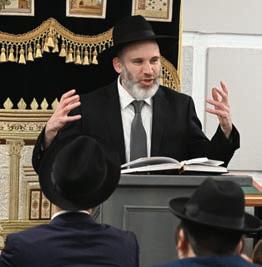
Rav Yosef Scheinerman, Rosh Yeshiva of Roosevelt Yeshiva, Monsey NY, spoke to the Toras Simcha middle school students after mincha. Through a mashal from the Dubna Magid, he illustrated the difference between the enthusiasm of Avraham Avinu during the two days leading up the the Akeda and Yitzchak Avinu’s acceptance of the Akeda.
Enthusiasm and alacrity bring reward in this world, but the true reward in the world to come is destined for Yitzchak Avinu for his unwavering acceptance. That is why we refer to the Akeda as Akedas Yitzchok while at the same time it is one of Avraham Avinu’s most difficult tests. Both are true, and it is not a contradiction.
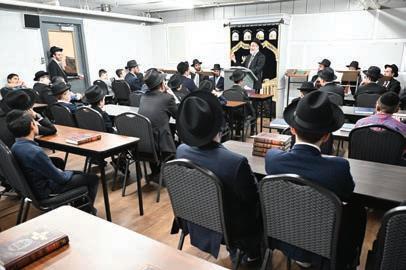
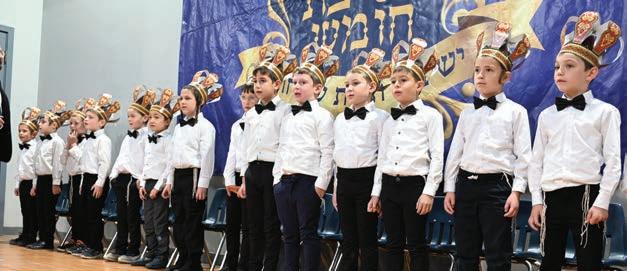
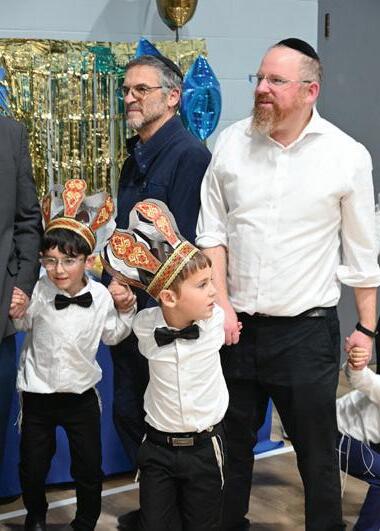
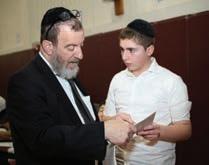
Yeshivas Toras Simcha firstgrade students celebrated receiving their first Chumash this morning. Under the direction of their rebbe, Rabbi Tuvia Tessler, and assistant Dovid Berendt, the boys entertained their parents and grandparents with songs and dancing in honor of the occasion. The boys also started learning Parshas Breishis and provided much nachas to their families.






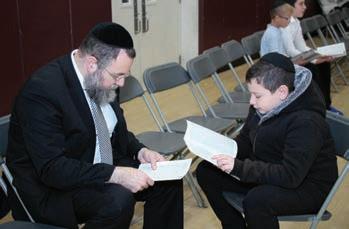
The Cheder hosted an inspiring BYOM (Bring Your Own Mishnah) event, marking the exciting launch of the school’s Chemdas Program, run by S’gan Menahel Rabbi Mendy Reischer.
Students in grades 3–8 came together for an incredible morning of Torah learning, collectively completing hundreds of Perakim of Mishnayos!
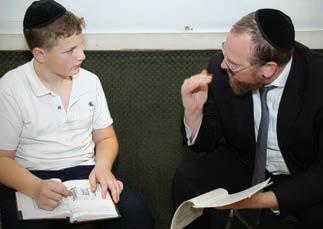
The atmosphere was filled with enthusiasm, and a deep love of Torah as each Talmid contributed to this remarkable accomplishment, with each boy receiving a snack and drink.
The event set the tone for a year of continued growth in learning and dedication to their Chemdas goals. What a powerful beginning to this journey in Torah achievement!















BY BEST SELLING AUTHOR
RABBI MOSHE BAMBERGER
With majestic, full-color imagery and the eloquent words of our sages, this book traces the extraordinary saga of Klal Yisrael from Creation to contemporary times, vividly bringing each seminal event to life with clear summaries, profound commentary, inspiring stories, and striking images. It transforms Jewish history into a rich journey of emunah, insight, and inspiration, revealing history as an unfolding chronicle of Divine Providence.




By: BJLife Newsroom
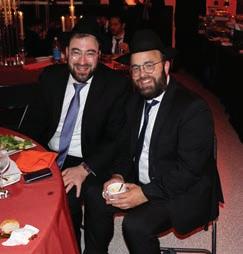
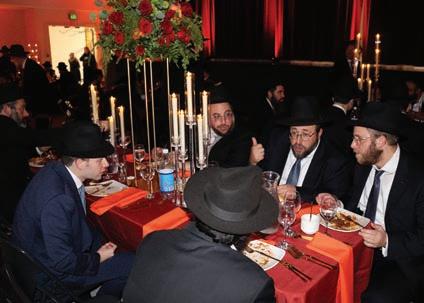
Por Pirchei Agudath Israel of Baltimore held its annual Hasmada banquet as a reward for participating in a learning program over the recent Succos vacation.The attendees were boys, grades 1–5, attending local yeshivos and their fathers.
To qualify, one had to learn a certain amount of Torah over the recent Succos vacation.
The event took place at Greengate Jewish Center with approximately 600 people in attendance.
The students were encouraged and charged to become great by Rabbi Moshe Heinemann, shlit’a, and served a yummy, kid-friendly supper

by
O’Fishel’s Catering. Rabbi Yaakov Horowitz, Pirchei’s director, welcomed the boys, directed the event, and ran the raffle.
The audience was thoroughly engaged and enthralled by the incredible




science show led by Mr. Yochanan Ghoori. All in all, the audience enjoyed the evening and left inspired and motivated to continue learning and become involved in good deeds and mitzvos.
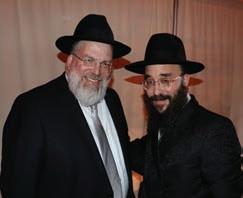
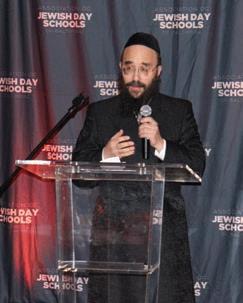
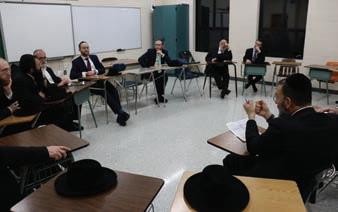
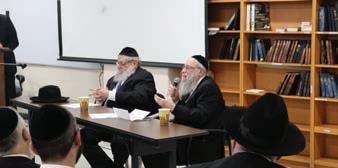
The Baltimore Association of Jewish Day Schools hosted its annual Gala Evening of Professional Learning and Melava Malka for all Rabbeyim, morahs, teachers, support staff, and office staff from local mosdos.
Rav Yaakov Hopfer and Rav Shragi Neuberger provided answers
to stimulating questions related to chinuch, and Rav Nosson Muller, the Principal of Yeshivas Tiferes Tzvi in Chicago, served as the keynote speaker during the Gala Melava Malka. The achdus among all our schools was palpable and uplifting. This event was co-sponsored by the Jewish Educational Services of Baltimore.








events per year (8-9 of which take place in Lakewood and NY to meet bachurim).
BJH: Have you found that this growth has produced tangible results?

BJH: So, it has been a few years since we last spoke. How long have you been with The Shidduch Center now?
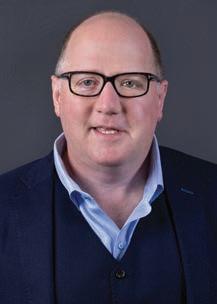
Rabbi Shlomo Goldberger: Chasdei Hashem, it has now been 10 years in my role at The Shidduch Center. A pleasure and privilege from day one until today!
BJH: Wow, a decade! Time sure flies. Reflecting back, what would you say has changed, and what has remained the same in the work and world of The Shidduch Center?
RSG: Well, let’s start with what hasn’t changed. Our core mission remains the same: to increase the number of dates for singles in our community. One of the most effective ways we have accomplished this is by identifying talented upand-coming shadchanim and providing them with the resources they need to become more successful and productive - whether that’s financial support, access to a broader network of singles, or
any other tools that help them facilitate dates. Additionally, The Shidduch Center strives to be a comprehensive resource for everything related to dating - education, guidance and logistics etc., and always with dignity and sensitivity.
BJH: That is very impressive how steadfastly you have kept to your primary objective. And what would you say has changed?
RSG: The growth and breadth of our work in the community. In our early years, we had 4-6 shadchanim we worked with in the above mentioned initiatives, all of whom were located here in Baltimore and Silver Spring. We also ran about 5-6 events per year for the broader shadchan community to meet single men and women. Ten years later… we have 13 shadchanim on staff – 5 of whom work exclusively with single women ages 25 and above – located in Baltimore, Silver Spring, Lakewood, Five-Towns, and Monsey, and we are running over 20
RSG: Absolutely. Early on, we were setting up approximatly100 different couples on dates annually, which led to 10-12 shidduchim for our community per year. When you compare that to our current standing, where we are annually setting up over 300 couples, which over the last year alone has led to 45 new shidduchim for our community (a record year for us, BH!!), I think it is quite clear that our model has produced exponential results for our local single men and women in shidduchim.
BJH: BH, that is outstanding! What have the results been over the last decade?
RSG: In total, bez’H, we have now set up over 2,200 different couples on dates, which has led to 236 resulting shidduchim!!
And furthermore, with the increase in dates, attendance at our events, meetings with team members and community members reaching out for personal guidance or assistance, we are servicing well over 1,000 local families each year!
BJH: Truly amazing. What are the next steps for The Shidduch Center?
RSG: This is a question we continually ask ourselves, as there is always more work to be done and new goals to achieve. Moving forward, we remain committed to identifying and developing quality shadchanim, while expanding our reach to connect with more single men and women in the community.
We are also working to establish a more efficient intake process and comprehensive database. This will enable our team members to access information about community members quickly and easily, thereby allowing them to work on shidduchim for an even larger group of singles.
Finally, we are excited to announce that we will soon be launching our newly redesigned website!
BJH: Thanks so much for the catch-up! Any parting thoughts?
RSG: But of course! The Shidduch Center’s annual campaign is coming up on Dec. 1-3. We have tremendous gratitude for the past generosity from our wonderful community. Please participate in our upcoming Matching campaign, so that we can continue our mission of helping even more singles to find theirs!
May our community’s support be a zechus for all those in shidduchim who are near and dear to us, and, indeed, for all of Klal Yisroel!


Judy Landman: As an alumna, it was fun walking down memory lane of “old Baltimore” and exciting to hear Mrs. Mintz’s vision for Bais Yaakov, along with her ability to bridge the past and the present for the future.
JL: What is your connection to Baltimore
Mrs. Mindi Mintz: I was born in Baltimore, and we lived here for a few years. My father was learning in Ner Yisroel’s Kollel, and my mother taught in Bais Yaakov. Then we moved to Monsey, where I grew up.
My Baltimore connection is strong. My grandfather was Rabbi Binyomin Steinberg zt”l, the Menahel of Bais Yaakov for many years, and my mother attended Bais Yaakov Baltimore. My mother-in-law was Mrs. Helene Mintz, a”h, the beloved 6th grade Morah, who lived and breathed Bais Yaakov.
JL: You have a rich family history of chinuch - what is your chinuch experience?
Mrs. Mindi Mintz: I grew up in a home that was klal – oriented. My mother ran JEP for many years, and we were involved in and supportive of her myriad initiatives. After marriage, I lived in Eretz Yisrael and taught in seminary. We were fortunate to then spend many years in St. Louis, where I had the privilege of teaching at every grade level, eventually becoming Principal in el-
ementary school. Most recently, I served as Principal in Bais Yaakov Middle School of Toronto and also had the opportunity to give adult classes. I appreciate teaching all ages and stages, yet my passion is certainly high school! That’s just one reason I am excited to join Bais Yaakov, under the leadership of our prestigious Principal, Rabbi Yechezkel Zweig. We are very proud of our students - they are reflective and intelligent, with exemplary middos. Bais Yaakov is gifted with staff members who are role models for our girls, organically giving over the beauty and joy of Yiddishkeit.
JL: How did you switch gears from a smaller school to the bigger one we have here in Baltimore?
Mrs. Mindi Mintz: Chinuch is chinuch wherever you are. The human condition is the same. Everyone wants to be treated with respect and dignity. It’s the implementation that may be different. As Rabbi Zweig likes to say, “we’re not a big school, we’re a tzibur.” This doesn’t detract from our focus on the individual.
In every office that I have occupied, there hangs a special framed document. It is my grandfather’s key principles of chinuch. He penned seven ideas shortly before his petira, bequeathing them to his staff. Rabbi Steinberg called them: Suggestions and Guidelines for Bais Yaakov and Torah Mosdos. In each of my positions, this has been my guide as well. Torah is emes and applies in each and every community no matter the size and differences. (Authors note: As a
talmidah of BYB and Rabbi Steinberg, I appreciated seeing this document immensely.)
JL: What is something that guides you strongly as a Mechaneches?
Mrs. Mindi Mintz: My deep belief in the inherent goodness and potential that exists in every single person. Connecting to that goodness is the only way to reach and teach our students and children, and in fact, to exercise any form of influence.
JL: What is something you appreciate about Bais Yaakov of Baltimore?
Mrs. Mindi Mintz: The integrity of the staff and students, the high standards of learning, and the openness to honest conversation and growth. As well, the mesirus nefesh of our hanhalah and staff is unparalleled. I am thankful for the warm, welcoming reception by staff, students and parents!
JL: How do you reach girls who don’t naturally excel in academics?
Mrs. Mindi Mintz: A student doesn’t have to be academically inclined to be inspired. Bais Yaakov offers a rich smorgasbord of co-curricular programming, engaging our students in learning and growth outside the classroom, and enabling them to shine and use their talents. The process is perhaps even more important than the end result, as the girls work together, encounter challenges and discover inner strengths. Whether it’s G.O., Mishmeres, Discovery, Chessed, Gedolei Yisrael,
Production, or Exhibit, the opportunities to learn and develop abound!
JL: How does Bais Yaakov support the student who needs help?
Mrs. Mindi Mintz: Our Learning Center and tutoring programs offer robust academic support, collaborating with the teachers and assisting the students. Our Dean of Students, Rabbi Shaul Engelsberg, guidance counselor, and school nurse work closely with the administration, advocating for and overseeing the health of the students. We partner with the parents and engage outside resources when necessary. Our holistic approach nurtures every aspect of a student’s well-being, spiritually, scholastically and emotionally.
JL: What does the Bais Yaakov girl look like to you?
Mrs. Mindi Mintz: My ideal graduate is passionate about her ruchniyus and avodas Hashem; it is real and vibrant to her. She should possess simchas hachayim and a cheishek (desire) for continued learning and growth. She should comport herself with dignity, tznius and self-respect in all circumstances. She is “other focused” and understands that meaningful relationships are built through giving and caring. A girl’s ability to daven and to connect with Hashem through both formal and informal tefillah will IY”H carry her through every stage of life. And it goes without saying – our graduates should conduct themselves with middos tovos and derech eretz – and always be a mentch!


Shomrei Emunah
Suburban Orthodox Bnai Jacob Shaarei Zion Drop off toys at these locations:
Ohr Chadash
Bais Yaakov High School Park Heights JCC

BJH: Please share with us how Ateres came to be
AB: Baltimore is, Baruch Hashem, blessed with a burgeoning Jewish population. The rabbonim identified a growing need for another girls school to keep up with the existing and expanding demand. Dedicated askonim were tasked with staffing, funding, and providing the necessary infrastructure to start a school from scratch. After a few years of hard work, Ateres is be’ezras Hashem a reality!
BJH: Where is Ateres currently located?
AB: With much siyata d’Shmaya, Ateres is currently housed at Liberty Jewish Center. The ample space has been converted into a warm and richly equipped learning environment adjacent to a beautiful yard with
playground equipment. The hallway is decorated with bright and tasteful bulletin boards. There is room for our classrooms as well as a dedicated room for auxiliary service providers, such as speech, OT, social work and reading intervention.
As Ateres grows be”H, our tireless team will be looking for a larger and more permanent location.
BJH: What can you tell us about the student experience at Ateres?
AB: Ateres sets a high academic standard in an environment of nurturing and connection. Ateres leadership has researched the very best in current curricula, presenting timeless values through current methodology. Kriability and ReadBright curricula provide a multisensory experience that engage the children and systematically build
their skills. The Hebrew language curriculum is integrated throughout the learning, reinforcing the skills in a natural way. An innovative math curriculum explores math concepts through tiered games that grow with the child as they master each skill. Talented teachers inspire joyful, curious learners and build confidence, creativity, and critical thinking skills. The power of play is harnessed through studies in our thematic units curriculum, incorporating language, literacy, phonemic awareness, pre-reading skills and math. It’s exciting to watch the girls’ joy as they build themselves up with confidence and growth as a bas yisrael, learning through instruction, play and song.
Ateres has incorporated a lot of extracurricular activities as well. We’ve had a shofar demonstration, a beekeeper presentation, a chicken for kaparos and a trip to the zoo! This is all in addition to our steady specials, like gym, music, and library. Our talmidos look forward to Rosh Chodesh assemblies which include exciting, hands-on activities.
BJH: What ages does Ateres currently serve?
AB: Right now we have nursery and kindergarten serving 4- and
5-year olds. We look forward to our expansion as the years progress!
BJH: Who is the leadership of Ateres?
AB: Ateres is fortunate to be led by an active and involved Vaad HaChinuch. They bring a broad range of Torah and Chinuch experience from across Baltimore’s schools and neighborhoods to their direction of all areas of Ateres, large and small.
The menaheles, Mrs. Rochel Froehlich, has taught and guided students at all levels from preschool to post-high school. She brings her years of chinuch experience to the vision and day-to-day operations of Ateres. Talmidos and parents alike are drawn to the warm and vibrant ruach that fills Ateres’ halls.
This is so exciting for our community! How can someone find more information?
AB: You can visit our website –ateresmd.org – for more information and for applications. You can call our office at 443-418-8463, or email office@ateresmd.org with any questions. Tours are currently underway for those considering Ateres for the upcoming school year.

Britain’s Labour government has unveiled a series of changes to its asylum policies in an effort to placate citizens who are concerned with mass immigration.
The Home Office (interior ministry), headed by Shabana Mahmood, announced on Saturday that Britain would no longer be obligated to provide housing, allowances, and other forms of support to asylum seekers who are either criminals or can work but choose not to. Taxpayer funds would instead be directed to local communities and the economy.
Additionally, refugee status will “now be temporary, regularly reviewed and revoked” if it is determined that the home country is no longer dangerous, the Home Office said.
“Our system is particularly generous compared to other countries in Europe, where, after five years, you’re effectively automatically settled in this country. We will change that,” Mahmood said on Sunday in a statement to Sky News, adding that the government would review each refugee’s status every two-and-a-half years during “a much longer path to permanent settlement in this country of 20 years.”
For legal asylum seekers, the pathway to permanent settlement will be 10 years instead of five, the Home Office added.
According to the interior ministry, it hopes its new policy changes would “match and in some areas exceed” those in Denmark and other states in Europe, which have temporary refugee status, conditional support, and expectations of immigrants integrating into society.
The government said it intends for Britain to remain in the European Convention of Human Rights. However, the government has reinterpreted the ECHR’s Article 8 provision, which relates to the right to a family life. Under that provision, many asylum seekers have come to Britain because they have family living there. However, as per Britain’s
new interpretation of the provision, Article 8 will only count immediate family members as “family connections.”
According to polls, immigration is British voters’ number one concern, overtaking the economy. The Reform U.K. party, which campaigns on the immigration issue, has threatened to steal voters from the Labour Party. In an effort to stop the Reform Party’s rise, the Labour Party has recently adopted immigration as one of the issues it wishes to address.
Mahmood added that the government would consider implementing more “safe and legal” routes for asylum seekers.
Pro-immigration organizations have slammed the policy changes.
The German auction house Felzmann, on Monday, planned to auction off items recovered from Nazi concentration camps. However, the auction
was canceled due to public backlash.
The auction was supposed to include over 600 items that belonged to concentration camp victims, including from Auschwitz and Buchenwald. According to reports, the items included a letter written by an Auschwitz prisoner and a Dachau prisoner’s medical diagnosis about forced sterilization.
The cancellation was announced on Sunday by Polish Deputy Prime Minister Radoslaw Sikorski, who praised Johann Wadephul, his German counterpart, for agreeing that “such a scandal must be prevented.”
Politicians and a group representing Holocaust survivors had objected to the auction, which was set to take place in Neuss.
“Respect for victims requires the dignity of silence, not the din of commerce,” Sikorski wrote in a social media post.
“Documents or expert reports by Nazi perpetrators that were offered at the auction are not for private collections,” Wolfram Weimer, Germany’s state minister for culture, said in a statement, adding that future auctions of this sort must be prevented.
6:15 am Young Israel Shomrai Emunah M-F
6:25 am Southeast Hebrew Cong., Knesset Yehoshua M-F
6:30 am Beth Sholom Congregation M-F
Beit Halevi (Sfardi) M, T
Chabad of Silver Spring M-F
Ohev Shalom Talmud Torah OLNEY M-F
Young Israel Shomrai Emunah S YGW M, Th
6:35 am Ohr Hatorah M, Th
6:40 am YGW S, T, W, F
Magen David Sephardic Congregation M-Th
6:45 am Beit Halevi (Sfardi) S, T, W, F
Kemp Mill Synagogue M, Th
Ohr Hatorah T, W, F
Young Israel Shomrai Emunah M, Th
6:50 am Woodside Synagogue/Ahavas Torah M, Th Silver Spring Jewish Center M-F
Chabad of Upper Montgomery County M-F
6:55 am Young Israel Shomrai Emunah T, W, F
7:00 am Kemp Mill Synagogue T, W, F
Southeast Hebrew Cong., Knesset Yehoshua S Silver Spring Jewish Center S
Woodside Synagogue/Ahavas Torah T, W, F
Young Israel Ezras Israel of Potomac T, W, F
7:05 am Kesher Israel M, Th
7:15 am Kemp Mill Synagogue M, Th
Kesher Israel T, W, F
Ohev Sholom Talmud Torah/The National Synagogue M-F
Ohr Hatorah S
7:30 am Chabad of DC M-F
Chabad of Potomac M-F JROC M-F
Kemp Mill Synagogue T, W, F
Southeast Hebrew Cong., Knesset Yehoshua M-F
Young Israel Shomrai Emunah S
Young Israel Shomrai Emunah (Sfardi) M-F
7:45 am YGW (Yeshiva Session Only) S-F
8:00 am Beth Sholom Congregation S
Kemp Mill Synagogue S
Kesher Israel S
Ohev Shalom Talmud Torah OLNEY S
Southeast Hebrew Cong., Knesset Yehoshua S
Chabad of Upper Montgomery County S Woodside Synagogue/Ahavas Torah S
8:00 am YGW (High School; School-Contingent) S-F
Young Israel Ezras Israel of Potomac S Young Israel Shomrai Emunah (Sfardi) S
8:05 am Ezras Israel Congregation of Rockville M, Th
8:15 am Ohr Hatorah S Ezras Israel Congregation of Rockville S, T, W, F
Kehilat Pardes / Berman Hebrew Academy S-F
Silver Spring Jewish Center M-F
8:30 am Chabad of DC S Chabad of Potomac S JROC S Ohev Sholom Talmud Torah/The National Synagogue S Silver Spring Jewish Center S YGW (Summer Only) S-F
8:45 am Young Israel Shomrai Emunah S-F
9:00 am Chabad of Silver Spring S Kemp Mill Synagogue S
12:30 pm YGW S
1:00 pm Silver Spring Jewish Center S-F
2:10 pm YGW M, T, W
2:45 pm YGW S-Th
3:00 pm YGW Middle School School Days mincha
Before Shkiah (15-18 minutes), S-TH
Beit Halevi (Sfardi)
Beth Sholom Congregation
Chabad of Potomac
Chabad of Silver Spring
Chabad of Upper Montgomery County
Ezras Israel Congregation of Rockville (20 min before, S-F) JROC
Kemp Mill Synagogue
Kesher Israel
Magen David Sephardic Congregation
Ohev Sholom Talmud Torah/The National Synagogue Ohr Hatorah
Silver Spring Jewish Center
Southeast Hebrew Congregation Woodside Synagogue/Ahavas Torah
Young Israel Ezras Israel of Potomac
Young Israel Shomrai Emunah (Asheknaz) Young Israel Shomrai Emunah (Sefarhadi) maariv
7:30
8:15
8:45
9:00
9:30
9:45





“For victims of Nazi persecution and Holocaust survivors, this auction is a cynical and shameless undertaking that leaves them outraged and speechless,” said Christoph Heubner, an executive vice-president of the International Auschwitz Committee (IAC), adding that the items “belong to the families of the victims.”
“They should be displayed in museums or memorial exhibitions and not degraded to mere commodities,” Heubner said.
Polish Culture Minister Marta Cienkowska said that the culture ministry would investigate whether the items belong in Poland.
Traces of asbestos were found in samples of widely-used play sand in Australia last week. Product recalls were issued on Saturday, affecting 69 schools in the Australian Capital Territory (ACT).
Inspections are underway and could “take days,” ACT Education Minister Yvette Berry said in a post on Facebook, adding that testing so far had come back “negative to airborne asbestos” from all schools. People who have been in contact with the sand do not require a clinical assessment, health officials say.
The Australian Competition & Consumer Commission (ACCC) said there was a low risk that the asbestos could become airborne or fine enough for inhalation.
The recall follows a similar sand scare last week, sparking fears the playground drama is far from over.
Several schools and preschools in the region were fully or partially closed on Friday after a warning over asbestos risks in children’s sand sold by Officeworks, before the further product recalls were issued.
“Unfortunately, these sand products are even more widely used in our schools than the Officeworks products,” said Berry, adding that State Emergency service volunteers and school staff spent their weekends walking through buildings and “mapping all colored sand they see.”
The government is “required to eliminate risk as much as reasonably practicable,” she continued.
Exposure to asbestos, once widely used in building materials, is known to cause lung cancer, mesothelioma and other cancers, and it is linked to more
than 40,000 deaths in the U.S. each year. Australian law prohibits the import or export of asbestos or goods containing asbestos. In 2024, the U.S. Environmental Protection Agency announced a comprehensive ban on the mineral.
Justice Minister Yariv Levin’s decision to appoint Asher Kula, the State Ombudsman for Judges, to investigate the Sde Teiman video leak was overruled Sunday by the High Court of Justice. The court, however, has said it would allow Levin to select another official to investigate the incident.
The court banned Kula from investigating the case, since the law does not permit the ombudsman for judges to serve or act in any other capacity. Despite that, the ruling was still somewhat in Levin’s favor, as the court permitted him to appoint a different official. Normally, the justice minister would not be allowed to do so, but the court decided to deviate from the precedent given the case’s “irregular and extreme circumstances.”
To ensure the investigation isn’t politically motivated, the court has allowed Levin to select an official who is not a part of prosecution agencies, has no political affiliation, and has strong law enforcement credentials.
The case concerns the leaking of footage that allegedly shows Israeli soldiers mistreating Palestinian prisoners at the Sde Teiman military facility in July 2024. Last month, Yifat Tomer-Yerushalmi, a former military advocate general, confessed to having authorized the leak. Many have pointed out that the video does not show any specific abuse and say that the film and allegations were fabricated. An initial probe overseen by Attorney General Gali Baharav-Miara and the State Attorney’s Office recommended closing the case without a criminal investigation. Levin’s lawyers used that apparent conflict of interest to defend his decision to appoint Kula, who also had a conflict of interest given his role.
Meanwhile, liberal government watchdog groups petitioned the court to



Make memories while making a difference!
Mentorship from a specialized medical & therapy team
Brand-new bunk houses with AC
Private lake with a wide variety of adapted water sports
Action-packed programming for staff & campers


reject Kula’s appointment.
In response to the court’s decision, Likud MK Avichai Buaron, who has previously urged the court to bar Baharav-Miara from playing a role in the investigation, said the ruling was “a great victory for everyone for whom the truth and justice are important” and that it affirmed his belief that the justice minister is the only official qualified to appoint the person who oversees this particular investigation.
The Israel Democracy Guard, which was among the groups that petitioned the court against Kula’s appointment, said it would scrutinize the next official Levin selects.
In her opinion, Justice Yael Willner took note of Baharav-Miara’s involvement in the original investigation and added that several senior officials who were involved in the initial probe might have to give testimony and, as such, would not be able to supervise or play a role in the investigation.
Willner noted “the principle of the independence of the criminal prosecution service has an elevated status in our legal system, and therefore the rule is that there is no room for any political entity to interfere in criminal investigations.”
However, the case’s “irregular and extreme circumstances” justified a “demarcated and limited departure” from the precedent, she wrote, adding that Levin’s role in the investigation would be limited to re-delegating authority from the attorney general to a different public official who is both qualified and independent.
The ruling suggests that Baharav-Miara might be allowed to get involved in the case once her conflict of interest in the case is resolved.
New York City Mayor Eric Adams met with Israeli officials, including the Jewish state’s president and prime minister, during a trip to Israel this week.

At the Kirya military headquarters in Tel Aviv, Adams met with Prime Minister Benjamin Netanyahu. During the meeting, Netanyahu thanked Adams “for his great support for Israel and on being a true friend of the Jewish people,” according to the Prime Minister’s Office.
President Isaac Herzog and Adams met in Jerusalem at the President’s Residence.
“You are a dear, dear friend of Israel and the Jewish people,” Herzog told Adams, remembering the mayor’s “historic visit” to Israel following the October 7 massacre.
“As you know, we are worried about how things will look post the mayoral elections in New York,” Herzog added, thanking Adams for his opposition to anti-Israel Mayor-elect Zohran Mamdani’s campaign.
Regarding the recent election, Adams said, “We want to clearly send the right message that 49 percent of New Yorkers made it clear that they don’t embrace the philosophy of anti-Israel. We still consider Israel as an ally and as a friend.”
“We’re not going to deny the fact that there’s an increase in antisemitism across the globe, and some of the words that are coming from New York is something that we’re not going to deny. And I think right now, we need clarity…and I’m going to
provide that clarity to fight against hate wherever it shows its face,” said Adams, whose term finishes at the end of 2025.
In Jerusalem, Adams also met with Foreign Minister Gideon Sa’ar, who called the mayor “a true friend of Israel.”
“Mayor Adams stands, and has stood, unequivocally by Israel throughout the years,” Sa’ar posted on X. “He has always expressed a clear, moral voice against antisemitism of all kinds and in favor of Israel’s right to defend itself.”
At a reception hosted in his honor on Sunday by the Combat Antisemitism Movement in Tel Aviv, Adams reportedly vowed to continue supporting Israel and said he would be concerned if he were a Jewish New Yorker.
“If I were a Jewish New Yorker, I’d be concerned about my children,” Adams said, adding that “the community must prepare itself” because “everything is not fine.”
“As I finish, I wanted to come back here to Israel and let you know that I served you as the mayor, but I want to continue to have the title that’s more important to me than anything: I’m your brother.” Adams remarked during a Sunday visit to the Western Wall.
On January 1, Adams will be succeed-




ed by Zohran Mamdani, who won the mayoral election after defeating independent Andrew Cuomo, the former New York governor.
Germany will lift an order suspending some weapons sales to Israel beginning next week, according to a German government spokesperson.
The decision to continue with the weapon sales will be contingent on the maintenance of the ceasefire between Israel and Hamas.
“The government will, as a general rule, revert to case-by-case reviews in decisions on arms exports and respond to further developments,” Sebastian Hille said in the announcement.
The ceasefire “is the basis for this decision, and we expect everyone to abide by the agreements that have been made,” he said, adding that it “includes maintaining the ceasefire. It also means that humanitarian aid is provided on a large
scale and that the process continues in an orderly manner, as agreed.”
According to Hille, the decision will take effect on November 24.
Foreign Minister Gideon Sa’ar celebrated the decision in a post on X, urging other countries to take similar measures: “I welcome Chancellor Merz’s move to revoke the decision regarding the partial ’embargo.’ I call on other governments to adopt similar decisions, following Germany.”
Berlin suspended some arms trade with Israel in August over the Israeli cabinet’s decision to take over Gaza City in its war against Hamas in Gaza.
Germany is the second-largest arms exporter to Israel, after the United States, and is Israel’s main backer in the EU. Germany provided 30 percent of Israel’s major arms imports in 2019-2023, primarily naval equipment, including Sa’ar 6-class frigates (MEKO A-100 Light Frigates), which have been used in the Gaza war.
At the time, Merz said, “The German government will not approve any exports of military equipment that could be used in the Gaza Strip until further notice.”
He argued that the decision to move on Gaza City “makes it increasingly difficult” to see how the goals of reaching
a hostage deal and disarming Hamas would be achieved.
After the decision to halt weapon sales in August, Prime Minister Benjamin Netanyahu said Germany was “rewarding Hamas terrorism.”
Now, ahead of Germany’s announcement to resume arms trade, Merz and Netanyahu spoke on the phone Sunday about “diplomatic and regional matters,” in what the premier’s office described as a “good and friendly conversation.”
Other countries that have suspended arms trade or implemented embargoes on Israel during the war in Gaza include Spain, which enshrined a “total embargo” in law last month, as well as more limited moves from Italy, Canada and the Netherlands and Belgium. The UK also decided last year to suspend dozens of arms export licenses with Israel, though it insisted the move was not an embargo.
On Monday, hundreds of people gathered to pay their respects to Meny Godard, who was killed in the October
7 massacre and was finally brought back to Israel for burial.
Godard, 73, was murdered by Palestinian Islamic Jihad terrorists in Kibbutz Be’eri on October 7 along with his wife, Ayelet, 63. He was buried at the cemetery in the kibbutz.

Godard’s family said in a statement ahead of the funeral that he “loved this land, its songs and its people.”
“We stand here today and say goodbye to you. But in fact, the farewell words are dedicated to the memory — to you and Ayelet, the love of your life,” President Isaac Herzog said in his eulogy at the funeral on Monday.
“I stand here today as the president of Israel, and I know that to ask for your forgiveness is not enough. As president of the State of Israel, I am sorry that we weren’t here to protect you. I’m sorry that it took over two years to return dear




Meny to his homeland,” Herzog said, and asserted the need to investigate the October 7, 2023, massacre.
“When we look around at the gravestones of all of the [kibbutz] members buried in the Be’eri cemetery, we can see that on October 7, Hamas terrorists murdered the best of humanity!” Herzog posted on X afterward.
The Godards had four children, Mor, Gal, Bar, and Goni, and seven grandchildren.
More than 100 people were killed in Be’eri on October 7. The kibbutz held a funeral for Meny and Ayelet after their murder was announced in February 2024. At the time, the kibbutz said that Meny had “a love of sports, the ocean and people.” He was a professional soccer player in the 1970s before enlisting in the army and fighting in the Yom Kippur War. In the kibbutz, he worked in a variety of positions, including in the printing house and the local store, as chief economist, and as a lifeguard.
The Hamas terror group is still holding the remains of three captives. As part of the ceasefire deal, Israel has returned the remains of 15 Palestinians for each deceased Israeli hostage it receives.
On Monday, the UN Security Council voted to adopt a U.S.-sponsored resolution authorizing the establishment of an International Stabilization Force (ISF) that will help secure the Gaza Strip, in line with U.S. President Donald Trump’s 20-point plan for ending the war in the area.
The U.S. ceasefire agreement was inked on October 9. But the truce is under strain, as Israel has pledged to continue fighting if Hamas does not disarm. The U.S. has said that Hamas leaders pledged to disarm before the deal was signed and has worked in recent weeks to negotiate the decommissioning of its weapons with limited success, Trump’s 20-point plan also indicates that the ISF will take part in the demilitarization of Gaza.
Countries interested in contributing troops to the foreign force needed an international mandate backed by the UN in order to move forward. For weeks, the U.S. has worked on gathering a coalition,
holding talks with Security Council members as well as key Arab and Muslim allies that were also consulted in the formation of the original 20-point plan.
Both Russia and China abstained from the vote.
U.S. Ambassador to the UN Mike Waltz told the Security Council before Monday’s vote that the resolution authorizes “a strong coalition of peacekeepers — many from Muslim-majority nations like Indonesia, Azerbaijan, and others — to deploy under a unified command.”
The resolution states that the ISF will help secure Gaza’s borders, protect civilians, secure humanitarian aid, train Palestinian police and — most critically to Israel — “ensure the process of demilitarizing” the Strip.
The resolution also “welcomes the establishment of the Board of Peace,” which will be chaired by Trump and tasked with overseeing the redevelopment of Gaza and the establishment of a technocratic Palestinian government that will be tasked with administering daily services in the Strip.
Neither the Board of Peace nor the Palestinian technocratic government have been staffed yet, but the 20-point plan states that the board will include
former UK prime minister Tony Blair, and the U.S. has been considering various names for both panels over the past several months, according to Arab diplomats. The Board of Peace and the ISF will operate in Gaza until the end of 2027.
Point 19 states, “While Gaza re-development advances and when the Palestinian Authority reform program is faithfully carried out, the conditions may finally be in place for a credible pathway to Palestinian self-determination and statehood, which we recognize as the aspiration of the Palestinian people.” This statement has angered many in Israel, who see this as a pathway for Palestinians to have their own state.
The final point reads, “The United States will establish a dialogue between Israel and the Palestinians to agree on a political horizon for peaceful and prosperous co-existence.”
The PA welcomed the resolution’s passing, stressing that it’s willing to work with the international community to implement it “in a way that ends the suffering of our Palestinian people in the Gaza Strip, the West Bank, and East Jerusalem, and advances the political path leading to peace, security, and stability between Palestinians and Is-










raelis, based on the two-state solution.”
Hamas, however, blasted the resolution, asserting that “it fails to meet Palestinians’ rights and demands and seeks to impose an international trusteeship on the enclave that Palestinians and resistance factions oppose.”
“Assigning the international force with tasks and roles inside the Gaza Strip, including disarming the resistance, strips it of its neutrality, and turns it into a party to the conflict in favor of the occupation [Israel],” the terror group stated, while claiming that “resisting occupation by all means is a legitimate right.”
Shortly after the resolution passed, Trump published a post on Truth Social “congratulating the world,” and saying that the Board of Peace that he will chair will include “the most powerful and respected leaders throughout the world.”
On Tuesday, a man died when he was stabbed to death in a terror attack at the Gush Etzion Junction. Three other people were wounded in the attack that was carried out by two Palestinians.
The terrorists accelerated their vehicle into people at the junction. Then, one terrorist got out of the car and stabbed several victims.
Both terrorists were shot dead by security forces at the scene, the IDF and first responders said. They were later identified by Palestinian officials as Imran al-Atrash and Walid Sabarneh, both 18 years old. They had set out on their murderous spree from Hevron. One was living in Hevron; the other lived in Beit Ummar.
In the aftermath of the attack, several explosive devices were discovered in the vehicle and disarmed.
Three people were transported from the scene to hospitals in Jerusalem, the Magen David Adom ambulance service said, including a woman in her fifties in serious condition, along with a 30-yearold man and a 15-year-old boy in moderate condition. The 55-year-old woman was mistakenly hit by the Israeli troops’ gunfire during the melee.
In response to the deadly attack, Yisrael Beytenu chair Avigdor Liberman blamed the terrorism on the government’s “feebleness and submissiveness.”
“When terrorism smells weakness, it raises its head and goes out to kill,” he said in a statement. “Terror attacks are not a decree of fate, but a struggle that
requires determination, strength and independence, everything that this government of negligence does not have.”
The Yesha umbrella council for West Bank settlements said that the attack was connected to the U.S.-sponsored resolution passed by the UN Security Council the day before, which authorized the establishment of an international force to secure the Gaza Strip and indicated a path to Palestinian statehood.
“When Israel quietly enables a path to a Palestinian state, terrorism again raises its head,” the Yesha Council said. “We said all along, it is either [Israeli] sovereignty [via annexation] or a Palestinian state [in the West Bank]. The Israeli government is refraining from sovereignty, and we are getting a tailwind in the sails of a terrorist state in the heart of the country.”
Former prime minister Naftali Bennett, who is mounting a bid for the premiership in the next elections, also blamed the government for the terror attack.
“Oslo on steroids,” he declared in a statement that appeared to refer to Netanyahu’s support of Monday’s UN Security Council vote to adopt the U.S.-sponsored resolution on Gaza.
“A government that, after the most horrific massacre in the country’s history, awards the enemy the prize of a Palestinian state bears responsibility for reigniting terrorism against Jews. We will fix it soon,” he vowed.
The Oslo peace accords in the 1990s created the Palestinian Authority to administer parts of the West Bank and Gaza, although the PA was later ousted from Gaza by Hamas in 2007.
On Wednesday, November 12, at a special event in Philadelphia, the U.S. Mint pressed its final 1-cent coins. President Donald Trump had announced plans to scrap the penny back in February
The United States may soon begin to feel the effects of Trump’s decision to stop penny production. With some stores facing penny shortages, many businesses have begun rounding prices to the nearest five cents; some round down, while others round up.
“Some businesses are asking cash-paying customers to voluntarily round up for



donations to avoid needing pennies to make change and to stay compliant with state and local laws, while other places are rounding down for everyone (not just cash payers),” noted Brandon Sheridan, associate professor of economics at Elon University, adding that rounding down will “become costly for businesses over time.”
At least 10 states have laws banning rounding transactions to the nearest five cents. As such, new legislation will be required for all businesses to adapt.
The U.S. Mint will no longer make pennies. However, “pennies will remain legal tender,” noted Bill Maurer, dean of the School of Social Sciences at the University of California, Irvine, and director of UCI’s Institute for Money, Technology and Financial Inclusion. Additionally, pennies will continue to circulate, albeit more slowly, since there are around 250 billion in circulation, according to the American Banking Association.
“As those coin terminals close to pennies, the circulation of pennies is slowing down,” Maurer added.
Trump ordered the Treasury Department to stop minting pennies, as one penny costs 3.69 cents to make, costing Fiscal Year 2023 taxpayers over $179
million. Nickel production may also stop eventually, as one nickel costs over 13 cents to make, according to the U.S. Mint. Experts, however, believe that the nickel is here to stay.
“The cost to consumers of rounding transactions to the nearest nickel is estimated to be around $6 million, the cost to round to the nearest dime is closer to $56 million,” Sheridan said. “Therefore, the cost-benefit analysis for taxpayers is not nearly as clear for nickels as pennies.”
Before Trump, others have tried ending penny production, including U.S. Representatives Jim Kolbe of Arizona and James Hayes of Louisiana, who unsuccessfully co-sponsored The Price Rounding Act of 1989, and Sens. John McCain and Mike Enzi, who proposed the Currency Optimization Innovation and National Savings (COINS) Act in 2017, which would’ve stopped penny production for 10 years.
The U.S. began minting pennies in 1792. Originally, each penny had a picture of a woman representing liberty. That image was, in 1909, replaced by President Abraham Lincoln in celebration of his 100th birthday. Lincoln was the first president to appear on U.S. coins.







The shortage is unlikely to make pennies significantly more valuable.
A new study has found that bumblebees are, to a certain extent, able to process time, an ability which has yet to be found in any other insect.
The study was led by doctoral student Alex Davidson and his supervisor Elisabetta Versace, a senior psychology lecturer at Queen Mary University of London. According to Versace, the study demonstrates that insects are capable of processing complex patterns.
The research team conducted the study by constructing a maze where the bees would hunt for food. The bees were then presented with circles that lit up with a short flash of light — which lasted 0.5 seconds — and one that lit up with a long flash, which lasted five seconds. By approaching the short flash of light, the bees would receive sweet food, while approaching the long flash of light would yield bitter food.
The lit-up circles were placed in different areas of the maze. Consistently, the
bees chose the short flash of light, which they associated with sweet food. To preclude the possibility that the bees could see or smell the sweet food, the researchers also tested the bees in a maze without food. The research found that the bees were able to tell the temporal difference between long and short flashes of light.
Very few animals are able to tell the difference between short and long flashes of this sort.
The team now hopes to research the neural mechanisms that allow bees to process time.

Health officials on Monday linked for the first time the measles outbreak that began in Texas with another in Utah and Arizona, a finding that could end the United States’ status as a nation that has eliminated measles.
The news came in a phone call, a recording of which was obtained by The New York Times, among officials from the Centers for Disease Control and Prevention and state health departments.
The chain of transmission began in January, in a conservative Mennonite group on the western edge of Texas, and spread to Oklahoma and New Mexico.
Countries lose their elimination status after 12 months of sustained transmission. If the outbreak cannot be extinguished by January, the anniversary of the first cases in Texas, the United States will lose what is known as “elimination status” as determined by the World Health Organization, which it has had for 25 years.
“I wouldn’t call the code yet, but I think the patient’s not looking real good,” said Michael Osterholm, director of the Center for Infectious Disease Research and Policy at the University of Minnesota.
Canada lost its status last week, ending a 27-year run, after failing to control an outbreak that began at a Mennonite gathering in October 2024.
Losing elimination status may not lead to tangible changes, such as travel restrictions. But experts have called the possibility “deeply embarrassing” for a wealthy
country with the medical resources of the United States.
“CDC and state and local health agencies continue to work together to assess transmission patterns and ensure an effective public health response — which is what led to the Texas outbreak being declared over,” Andrew Nixon, a representative from the Department of Health and Human Services, wrote in a statement.
This month, the CDC presented its outbreak information to the Pan American Health Organization. As of Nov. 13, the CDC had confirmed 1,723 measles cases nationwide, 87% of which were associated with a record 45 outbreaks this year. By contrast, 16 outbreaks were reported in 2024.
About 92% of the reported cases this year are among people who are either unvaccinated or of unknown vaccination status.
Another large outbreak in two schools in South Carolina is close to being contained. Rockland County, New York, has four reported cases, the first since a massive outbreak in 2018 that lasted 10 months. That outbreak raced through Orthodox Jewish communities, some of which had vaccination rates below 70%. (© The New York Times)

Zmanim are courtesy of MyZmanim and are for the 21209 area. Havdalah Zmanim are at 40 minutes past Shkiah.
Chanukah 5th night!Chanukah 6th night! Chanukah 7th night!
Mercaz Torah U’Tefillah: EVERY 15 MINUTES
M-F: 6:15 AM, S-F: Neitz, 6:30 AM, 6:45 AM, 7:00 AM, 7:15 AM, 7:30 AM, 7:45 AM, 8:00 AM, 8:15 AM, 8:30 AM, 8:45 AM, 9:00AM, 9:15AM, 9:30AM, 9:45AM, 10:00AM
Neitz Beit Yaakov [Sefaradi] M-F
Mercaz Torah U’Tefillah S-F
Ohel Yakov S-F
6:00 AM Shomrei Emunah Congregation M-F
6:10 AM Agudath Israel of Baltimore M, Th
6:15 AM Kol Torah M, TH
Shearith Israel Congregation M, TH
6:20 AM Agudah of Greenspring M, TH
Agudath Israel of Baltimore S, T, W, F
Arugas HaBosem (Rabbi Taub's) S-F
Bais Dovid-Bais Medrash of Summit Park M-F
Bnai Jacob Shaarei Zion Congregation M-F
Kehilath B'nai Torah M, TH
Pikesville Jewish Congregation M, TH
Shomrei Emunah Congregation S, M, TH
6:30 AM Agudah of Greenspring T, W, F
Chabad of Park Heights M-F
Darchei Tzedek M-F
Kehilath B'nai Torah T, W, F
Khal Bais Nosson M-F
Khal Ahavas Yisroel/ Tzemach Tzedek M-F
Kol Torah T, W, F
Ohr Yisroel M-F
Pikesville Jewish Congregation T, W, F
Shearith Israel Congregation T, W, F
Shomrei Emunah Congregation T, W, F
6:35 AM Aish Kodesh (downstairs Minyan) M, TH
Ohel Moshe M, TH
6:40 AM Aish Kodesh (downstairs Minyan) T, W, F
Bnai Jacob Shaarei Zion Congregation M, TH
6:45 AM The Adas: Chofetz Chaim Adas Bnei Israel M, Th
B”H and Mesivta of Baltimore (Dirshu Minyan) S-F
Beth Abraham M, TH
Greenspring Sephardic Synagogue M-F
Ner Tamid M-F
Ohel Moshe T, W, F
Suburban Orthodox Congregation Toras Chaim M-F
6:50 AM Agudath Israel of Baltimore M, TH
Ahavat Shalom [Sefaradi] M, TH
Bais Medrash of Ranchleigh M, TH
Bnai Jacob Shaarei Zion Congregation T, W, F
Community Kollel Tiferes Moshe Aryeh M, TH
Derech Chaim M-F
Kol Torah M-F
Ohel Moshe S
Ohr Hamizrach [Sefaradi] M, TH
Shomrei Emunah Congregation M, TH
The Shul at the Lubavitch Center M, TH
6:55 AM The Adas: Chofetz Chaim Adas Bnei Israel T, W, F
Beth Abraham T, W, F
Kol Torah M, TH
7:00 AM Aish Kodesh (upstairs Minyan) M-F
Agudath Israel of Baltimore S, T, W, F
Ahavat Shalom [Sefaradi] T, W, F
Arugas HaBosem (Rabbi Taub's)S
Bais Medrash of Ranchleigh T, W, F
Community Kollel Tiferes Moshe Aryeh T, W, F Greenspring Sephardic Synagogue S
Khal Ahavas Yisroel/ Tzemach TzedekS
Kol Torah T, W, F
Moses Montefiore Anshe Emunah M-F
Ohr Hamizrach [Sefaradi] S, T, W, F
Shearith Israel Congregation S, M, TH
Shomrei Emunah Congregation T, W, F
Shomrei Mishmeres Hakodesh M-F
The Shul at the Lubavitch Center T, W, F
Tiferes Yisroel M-F
7:05 AM Machzikei Torah (Sternhill's) M, TH
7:15 AM Kedushas Yisrael S Kol Torah S
Machzikei Torah (Sternhill's) S, T, W, F
Ner Israel Rabbinical College S-F
Shearith Israel Congregation T, W, F
Shomrei Emunah CongregationS
Suburban Orthodox Congregation Toras Chaim S
The Adas: Chofetz Chaim Adas Bnei IsraelS
Tzeirei Anash M-F
7:20 AM Agudath Israel of Baltimore M, TH
Beth Tfiloh Congregation M-F
Kol Torah M-F
Ohr Hamizrach [Sefaradi] M, TH
Shomrei Emunah Congregation M, TH
7:30 AM Agudah of Greenspring S
Agudath Israel of Baltimore S, T, W, F
Ahavat Shalom [Sefaradi] S
Bais Haknesses Ohr HaChaim S-F
Bais Hamedrash and Mesivta of Baltimore S-F
Bais Medrash of Ranchleigh S
Beit Yaakov [Sefaradi] S
Bnai Jacob Shaarei Zion CongregationS
Chabad of Park Heights S
Community Kollel Tiferes Moshe Aryeh S-F
Darchei Tzedek S
Kedushas Yisrael S-F
Khal Bais Nosson S
Ner Israel Rabbinical College (Mechina) S-F
Ohr Hamizrach [Sefaradi] S, T, W, F
Shomrei Emunah Congregation T, W, F
7:45 AM Bnai Jacob Shaarei Zion Congregation M-F
Talmudical Academy S-F
Darchei Tzedek M-F
Mesivta Kesser Torah S-F
Mesivta Shaarei Chaim S-F
7:50 AM Derech Chaim S
Ner Tamid S
Ohel Moshe M-F
8:00 AM Agudath Israel of Baltimore S-F
Bais Dovid-Bais Medrash of Summit ParkS
Beth Abraham S
Chabad Israeli Center M-F
Darchei Tzedek S
Khal Ahavas Yisroel/ Tzemach TzedekS
Kehillas Meor HaTorah S
Ohr Yisroel S
Pikesville Jewish CongregationS
Shearith Israel Congregation S
Shomrei Emunah Congregation S-F
The Shul at the Lubavitch CenterS
Tiferes Yisroel S
Tzeirei Anash S
Yeshiva Tiferes Hatorah S-F
8:15 AM Kehilath B'nai Torah S Kol Torah S
8:20 AM Bais Haknesses Ohr HaChaim S-F
8:25 AM Ohr Chadash Academy (School Days Only) S-F
8:30 AM Agudath Israel of Baltimore S-F
Chabad Israeli Center S
Machzikei Torah (Sternhill's) S-F
Ohel Moshe S
Ohr Hamizrach [Sefaradi] S
Shomrei Emunah Congregation S-F
Shomrei Mishmeres HakodeshS
9:00 AM Aish Kodesh S
Bais Haknesses Ohr HaChaim S
Beth Tfiloh Congregation S
Bnai Jacob Shaarei Zion CongregationS
Moses Montefiore Anshe EmunahS
Shomrei Emunah Congregation S-F
Mincha continued
1:00 PM Agudath Israel of Baltimore (S-F)
10045 Red Run Blvd Suite 295
Milk & Honey Bistro 1777 Reisterstown RD
1:25 PM Bais Haknesses Ohr HaChaim
1:30 PM Agudath Israel of Baltimore (S-F)
1:45 PM Ohel Moshe
Wealcatch Insurance
1:50 PM One South Street, 27th Floor (M-Th)
2:00 PM Agudath Israel of Baltimore (S-F)
Big Al @ The Knish Shop Party Room
Kol Torah (Sunday)
Market Maven
Mercaz Torah U’Tefillah
Reischer Minyan - 23 Walker Ave 2nd Floor
2:15 PM Pikesville Beis Medrash - 15 Walker Ave
2:30 PM Bais Medrash of Ranchleigh
Community Kollel Tiferes Moshe Aryeh
Tov Pizza Mincha Minyan
Ner Israel Rabbinical College
Mercaz Torah U’Tefillah
Mesivta Shaarei Chaim (Etz Chaim Building)
Shearith Israel Congregation
2:45 PM Kollel of Greenspring
Shearith Israel Congregation (S-Th)
3:00 PM Agudath Israel of Baltimore (S-F)
Bais Haknesses Ohr HaChaim
Mercaz Torah U'Tefillah
3:05 PM Kedushas Yisrael
3:15 PM Hat Box
3:22 PM Ohr Chadash Academy (School Days Only, Call to Confirm)
3:30PM Mercaz Torah U’Tefillah
4:00 PM Agudath Israel of Baltimore (S-Th)
Mercaz Torah U'Tefillah
10 Min Before ShkiAh Chabad Israeli Center
14 Min Before ShkiAh Kol Torah
Before Shkiah
continued
Ohr Yisroel
8:50 PM Mesivta Shaarei Chaim (Etz Chaim Building)
8:55 PM Community Kollel Tiferes Moshe Aryeh
9:00 PM Agudath Israel of Baltimore
Arugas Habosem
Bais Dovid-Bais Medrash of Summit Park
Shomrei Emunah Congregation
Suburban Orthodox Congregation Toras Chaim
9:20 PM Kol Torah
9:30 PM Agudah of Greenspring
Agudath Israel of Baltimore
Kedushas Yisrael
9:40 PM Ahavat Shalom [Sefaradi]
9:45 PM Bais Haknesses Ohr HaChaim
Kollel Erev Birchas Yitzchok (Luries)
Kollel of Greenspring
Machzikei Torah (Sternhill's)
Ohr Hamizrach [Sefaradi]
Yeshiva Tiferes Hatorah
9:50 PM Aish Kodesh
Community Kollel Tiferes Moshe Aryeh
Ohel Moshe
10:00 PM Agudath Israel of Baltimore
Darchei Tzedek
Kehilath B'nai Torah
Khal Ahavas Yisroel/ Tzemach Tzedek
Shearith Israel Congregation
Shomrei Emunah Congregation
10:05 PM Kol Torah
10:10 PM Ner Israel Rabbinical College
10:15 PM Derech Chaim
Khal Bais Nosson
10:30 PM Agudath Israel of Baltimore
11:00 PM Agudath Israel of Baltimore
Agudah of Greenspring - 6107 Greenspring Ave
Agudath Israel of Baltimore - 6200 Park Heights Ave
Ahavat Shalom - 3009 Northbrook Rd
Aish Kodesh
Agudath Israel of Baltimore
Agudah of Greenspring
Bais Dovid-Bais Medrash of Summit Park
Bais Haknesses Ohr HaChaim
Beth Abraham
Bnai Jacob Shaarei Zion Congregation
Darchei Tzedek
Derech Chaim
Kehillas Meor HaTorah
Kehilath B’nai Torah
Khal Ahavas Yisroel/ Tzemach Tzedek
Machzikei Torah (Sternhill’s), 5:15pm
Mercaz Torah U’Tefillah
Ner Tamid
Ohel Moshe
Ohr Hamizrach [Sefaradi]
Ohr Yisroel
Pikesville Jewish Congregation
Shearith Israel Congregation
Shomrei Emunah Congregation
Shomrei Mishmeres
Suburban Orthodox Congregation Toras Chaim
The Adas: Chofetz Chaim Adas Bnei Israel
The Shul at the Lubavitch Center
Tiferes Yisroel
Suburban Orthodox Congregation Toras Chaim S-F
Mincha Gedolah
Mercaz Torah U’Tefillah
Khal Ahavas Yisroel/Tzemach Tzedek
12:30 PM Agudath Israel of Baltimore (S-F)
12:50 PM One South Street, 27th Floor, Baltimore, MD 21202
Kol Torah
6:00
6:30
7:00
7:30
8:00
8:30
8:45
PM Agudath Israel of Baltimore
PM Agudath Israel of Baltimore
PM Agudath Israel of Baltimore
PM Agudath Israel of Baltimore
PM Agudath Israel of Baltimore
PM Agudath Israel of Baltimore
Derech Chaim
PM Darchei Tzedek
Ner Israel Rabbinical College (Mechina)
Aish Kodesh - 6207 Ivymount Rd
Arugas HaBosem - 3509 Clarks Ln
Bais Dovid-Bais Medrash of Summit Park- 6800 Sylvale Ct
Bais Haknesses Ohr HaChaim - 3120 Clarks Ln
Bais Hamedrash and Mesivta of Baltimore - 6823 Old Pimlico Rd
Bais Medrash of Ranchleigh - 6618 Deancroft Rd
Beit Yaakov - 3615 Seven Mile Ln
Beth Abraham - 6208 Wallis Ave
Beth Tfiloh Congregation - 3300 Old Court Rd
Bnai Jacob Shaarei Zion Congregation - 6602 Park Heights Ave
Chabad Israeli Center - 7807 Seven Mile Ln
Chabad of Park Heights - 3402 Clarks Ln
Community Kollel Tiferes Moshe Aryeh - 3800 Labyrinth Rd
Darchei Tzedek - 3201 Seven Mile Ln
Derech Chaim - 6603 Pimlico Road
Greenspring Sephardic Synagogue 6611 Greenspring Ave.
Kedushas Yisrael - 6004 Park Heights Ave
Kehilath B’nai Torah - 6301 Green Meadow Pkwy
Kehillas Meor HaTorah - 6539 Pebble Brooke Rd
Khal Ahavas Yisroel/ Tzemach Tzedek - 6811 Park Heights Ave
Khal Bais Nosson - 2901 Taney Rd Kol Torah - 2929 Fallstaff Rd
Kollel of Greenspring - 6504 Greenspring Ave.
Machzikei Torah - 6216 Biltmore Ave
Mercaz Torah U’Tefillah - 6500 Baythorne Rd
Mesivta Kesser Torah - 8400 Park Heights Ave
Mesivta Shaarei Chaim - 3702 Fords Ln
Moses Montefiore Anshe Emunah - 7000 Rockland Hills Dr
Neuberger, Quinn, Gielen, Rubin & Gibber One South Street, 27th Floor
Ner Israel Rabbinical College - 400 Mt Wilson Ln
Ner Tamid - 6214 Pimlico Road
Ohel Moshe - 2808 Smith Ave
Ohel Yakov - 3200 Glen Ave
Ohr Chadash Academy - 7310 Park Heights Avenue
Ohr Hamizrach [Sefaradi] - 6813 Park Heights Ave
Ohr Yisroel - 2429 Lightfoot Dr
Pikesville Jewish Congregation - 7644 Carla Rd
Shearith Israel Congregation - 5835 Park Heights Ave
Shomrei Emunah Congregation - 6221 Greenspring Ave
Shomrei Mishmeres Hakodesh - 2821 W Strathmore Ave
Suburban Orthodox Congregation Toras
The anticipation is palpable across the olam haTorah. In batei medrash from Lakewood to London, Bnei Brak to Brooklyn, lomdim are counting down the final blatt of Maseches Chagigah, the culmination of an unprecedented six-year journey. The dream that began with a single amud is now reaching its magnificent climax: the historic Oraysa Siyum on Seder Mo’ed.
This is your chance to take part in a maamad kavod haTorah that will go down in history — a celebration of perseverance, of hasmadah, and of the eternal message that Yisroel v’Oraysa v’Kudsha Brich Hu chad hu.
A Revolution in Limud HaTorah
When Oraysa was founded just six years ago, it immediately transformed the way thousands approach limud haTorah. Its unique amud-v’chazara structure — learning one amud a day, reviewing consistently, and mastering masechtos in their entirety — brought clarity, retention, and excitement back into countless daily sedorim.
The results have been nothing short of revolutionary. Today, tens of thousands of lomdim across the globe participate in the Oraysa cycle, uniting baalei batim, yungerleit, and talmidei yeshivos in a single melody.
Now, for the first time in history, these lomdim will complete an entire Seder of Shas together — Seder Mo’ed — marking a monumental milestone for Torah v’lomdeha the world over.
This will not merely be a siyum. It will be a majestic maamad kavod haTorah and a celebration of the power of hasmadah and the unbreakable bond between Klal Yisroel and the Torah.
Gedolei Yisroel and Roshei Yeshiva from across the Torah world will grace the event with their presence, including Rav Dovid Cohen shlit”a, Rav Shraga Shteinman shlit”a, Rav Noach Isaac Oelbaum shlit”a, Rav Avrohom Gurwicz shlit”a, Rav Malkiel Kotler shlit”a, Rav Aharon Dovid Goldberg shlit”a, Rav Yosef Elefant shlit”a, and Rav Dovid Ozeri shlit”a — along with many other prominent Rabbanim, Roshei Chaburos, and of course, thousands of lomdei Oraysa from around the world.
Under this one roof, talmidei chachomim, baalei batim, and families will gather to
Kehillos across Lakewood, Monsey, and Chicago to Yerushalayim, London, and Antwerp now have established Oraysa chaburos. Each day, the same amud reverberates across continents, connecting Yidden of every background through the timeless words of the Gemara.
celebrate this momentous siyum, embodying Klal Yisroel’s achdus through Torah.
And as one Seder concludes, another begins: Seder Nashim. The simcha of the siyum will flow directly into the start of a new phase of learning and growth, inviting even more participants to join the Oraysa revolution.
Your
If you’re reading this, you’re invited to join and be a part of history !
The asifa will take place in Cure Arena, located at 81 Hamilton Avenue in Trenton, New Jersey on 3 Kislev/November 23, 2025. Doors open at 5:30 p.m., with the program beginning promptly at 6:30 p.m.
The evening will feature stirring divrei chizuk, uplifting niggunim, and heartfelt shiros v’sishbachos led by Hershy Weinberger and Shloime Daskal.
With groups flying in from across the globe to be part of this unforgettable maamad, the window to secure your spot at this unparalleled maamad kavod haTorah is closing fast.
Don’t Miss This Once-in-a-Generation Maamad!
Every amud, every daf, every line of Gemara learned by thousands around
the world has led to this moment. The Oraysa Siyum on Seder Mo’ed will be a living testament to what can be achieved when Klal Yisroel learns together, chazers together, and grows together.
Now, it’s your chance to be part of it.
And as Oraysa turns the page from Seder Mo’ed to Seder Nashim, now is the perfect time to join the movement that has transformed the landscape of being koveia ittim l’Torah.
Experience the simcha and sippuk that come from clarity, mastery, and consistency at a pace that works. Because with Oraysa, every amud is not just another page. It’s another step in a lifelong journey of aliyah, another layer of understanding, and another connection to Torah that will uplift your day and transform your life. Be part of the simcha. Be part of the legacy. Be part of Oraysa.
Visit OraysaSiyum.org or email Siyum@Oraysa.org.
Oraysa will begin Seder Nashim this coming Wednesday November 26th. For more information, or to set up or join a shiur or chaburah in your neighborhood, please contact Oraysa at 914.8.ORAYSA or email info@oraysa.org.

Pini & Adrienne Zimmerman on the birth of a daughter
Yehuda & Adina Steiner on the birth of a daughter
Yehuda Leib & Zehava Dalia Hendeles on the birth of a son
Shlomo & Gitti Salb on the birth of a son
Yaakov & Yaffa Eisenmann on the birth of a son

Shmuly & Dr. Sheindel (Ifrah) Golfeiz on the birth of a son
Elozer & Tehila Goldkrantz on the birth of a son
Noson & Tzippy Weiss on the birth of a daughter
Mr. & Mrs. Shmuel Leshnoff on the birth of a son
Meir & Tziri Preis on the birth of a daughter




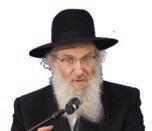

Shlomo Yehuda Rechnitz
Shloime Daskal




By Margie Pensak
About 6 years ago, when Rabbi and Mrs. Mordechai Ginsberg, of London, England, had to be with their daughter who was being treated at Johns Hopkins Hospital for a few months, it meant moving with their entire family to Baltimore.
“All Bikur Cholims are wonderful organizations, but the Bikur Cholim of Baltimore had something which was outstanding,” shares Rabbi Ginsberg. “When a family member is in the hospital, the whole family gets turned around for that choleh, but the family usually goes on, and the problems we face - and the things we must do daily - goes on. It’s not like everything stops because a member of the family is hospitalized, so, it makes life very hard. Usually, there are a lot of askanim in a community who are



involved with a choleh, but I found in Bikur Cholim of Baltimore that everything you want can be found by calling one central number.”
The Ginsbergs discovered this from the very beginning, when they needed an apartment for their family as soon as they arrived in Baltimore.
“I called Rabbi Pinchos Rabinowitz and he was the one-stop askan,” recalls Rabbi Ginsberg. “He was like a real estate agent in finding us a house and a maintenance manager in arranging for workers to come if something wasn’t working properly. He was the askan who arranged to put our children into local Baltimore schools. He found us the best pediatric dentist and babysitters, when needed. And, when I called Rav Pinchos and told him I needed a







Baruch Cenker (Atlanta) & Neshama Lebowitz (Baltimore)
Yisroel Meir Sofer (Jackson) & Hudi Sandhaus (Baltimore)
Want to see your simcha here? Email mazeltov@baltimorejewishhome.com or text 443-675-6507 to submit your simcha!
chavrusa to learn with, he himself became my chavrusa -- for months. He took on our whole case. All I needed to do was call one number, and everything I needed to take care of got done. Of course, he also took care of everything in the way of facilitating communication with the doctors and nurses regarding things like Shabbos and Yom Tov. It made being with our daughter in the hospital so much easier; this Bikur Cholim was not only there for the choleh’s needs, but the needs of our entire family.”
To illustrate the breadth of Bikur Cholim’s services down to the last detail, Rabbi Ginsberg relates that when they first arrived in Baltimore, he did not have a cell phone charger for his old British cell phone. He looked for one, unsuccessfully, in seven stores, before he thought of calling Rabbi Rabinowitz. Maybe he would know where to buy one? Somehow, Rav Pinchos obtained one for him.
“We felt the whole time we were at Hopkins that Bikur Cholim of Baltimore was not doing us a favor, but we were doing them a favor by accepting what they gave and did for us. It’s fascinating how devoted this Bikur Cholim is to fulfilling ruchnius and gashmius needs. Even today, six years later, I still have a connection with Rav Pinchos and speak to him monthly. Bikur Cholim of Baltimore should have a lot of hatzlacha and take care of cholim only for good reasons, for simchas, for babies.”
About 17 months ago, Yankel Kohn was hospitalized with a blood infection for more than a week in Johns Hopkins. “It happened in one second,” recalls Yankel. “I was in shul and, suddenly, in the middle of davening, I couldn’t stand any more. It took a few days for the doctors to figure out what it was -- an infection that came from my gums that went into my blood that went into my back and knocked me out.”
Yankel was hospitalized for a bit over a week and benefited from Bikur Cholim of Baltimore’s services, even after he was released when he needed a wheelchair and walker from its medical equipment gemach, because he couldn’t walk.
“Family is not always available to come when you’re in the hospital, so laying there by myself and having Pinchos come visit me, in addition to his son, Rabbi Naftoli Rabinowitz, a Johns Hopkins chaplain, was wonderful. They got the right medical experts involved in my case and got my questions answered quickly. They made sure I was taken care of, spoke to the doctors for me, and checked out what was going on. It was an amazing thing.”
Yankel, who is the manager of the Seven Mile Market deli department, notes, “I am impressed by all the food sent by Bikur Cholim and their Shabbos package which includes everything you need down to the last detail. That same year, for a week, I was in Hopkins with my son who had his appendix removed. Again, Bikur Cholim was always there, making sure we had food every night and that we were taken care of. The pantry is a place where you can get a hot cocoa, and daven, and meet other people. It’s a place where you can get away a little bit and get what you need.
“I’ve experienced the Bikur Cholim pantry at Sinai Hospital, too, when my wife gave birth. They have seforim, magazines, and everything is fully stocked beautifully, daily. It makes it very easy and it’s a place you can take a break, whether you are there for a simcha or are in a hard situation.
“Pinchos is always accessible, always available – which is amazing,” concludes Yankel. “You can call him or message him 24 hours a day. He goes above and beyond any hour of the day to get you what you need as fast as he can.”

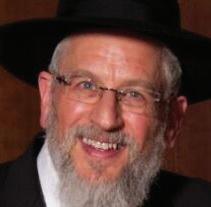
By Rabbi Zvi Teichman
Rivkah, concerned she has an errant child agitating in her womb, hurries to the Academy of Shem, hoping to solicit the prophet’s help in gaining divine guidance.
The Holy Chida, quoting from ‘earlier sources’, explains Rivkah’s dilemma.
Rivkah observed that Avraham had fathered two children from separate wives — Yitzchok from Sarah, and Yishmael from Hagar. She realized that Avraham, the progenitor of the Jewish people, evidently had to filter out the spiritual flaws he was bequeathed from his idolatrous ancestors by begetting Yitzchok through the pristine Sarah, and siphoning off his inherited impurities through Hagar, with Yishmael embodying those impurities.
She now wondered whether the agitation within her womb was due to some further flaws within the character of the Patriarchs that might require further sifting, with her being the instrument to slough off those negative influences, personified in Esav. If so, she requested to have that tainted child be born from another woman, as was Yishmael from Hagar, allowing Rivkah to mother the pure Yaakov alone.
The response she was given, “Two םיוג — nations, are in your womb…”, was instructive.
The word for ‘nations’ is written as םיִיגֵ, which translates as ‘exalted ones’, referring to the two royal descendants of these two children within her womb. The great Rabbi Yehuda HaNasi, a descendant of Yaakov, and his comrade, the Roman
emperor, Antoninus, the offspring of Esav, who through their friendship was influenced to eventually convert.
Rivkah was thus told that her active role was critical since only she was worthy enough to carry and raise the wayward child, Esav, whose nascent descendant would one day eventually convert.
The Chida quotes the Arizal who says this is the reason why we find many illustrious converts over the generations descending from Edom, the nation of Esav — such as Rabbi Akiva, Shmaya and Avtalyon, and others, but none from Yishmael. (ךנא תמוח)
What differentiates the descendants of Esav from those of Yishmael, that gives them a glimmer of hope to find the truth while Yishmael’s children will never get it?
The Torah goes into much detail listing the various wives Esav took for himself.
Two of them possess names quite unusual for what we would expect.
One is תידוהי — Yehudis. We are taught that her original name was Ahalivama, and Esav conferred upon her the name Yehudis. The root of this name is הדוה — gratitude, or admission. Esav knowing his wives were ardent idol worshippers, something very foreign to his parents’ home, sought to feign her allegiance to monotheism by calling her Yehudis with its intimation of one who ‘admits’ to a single G-d, denying idolatry, placating his parents’ fears.
Ironically, we as a nation are labeled as Yehudim because we pay
allegiance to one G-d and deny the existence of any other, yet Esav was the first to implement — albeit disingenuously — its usage.
Another wife is called תלחמ — Machalas, rooted in לחמ — to forfeit, alluding to the dictum that one who marries, his sins are forfeited and forgiven. Esav bestowed this new name on the daughter of Yishmael — Basmas, upon the occasion of his marriage to her and the pardoning of sins that is promised with it.
Was Esav sincere in his desire for forgiveness? Was he possessed by a sudden epiphany and change of heart?
After years of moral depravity, murderous behavior, and wanton indulgence, Esav is still trying to impress his parents. Were they so clueless?
The Torah reports how the wives of Esav ‘were a source of spiritual rebellion to Yitzchok and Rivka’, with Rashi adding that it was from the smoke of the incense they offered their idols that blinded Yitzchok.
Clearly, Yitzchok and Rivka were aware of their despicable behavior, yet concealed their wrath and disgust from Esav, lest they alienate him and lose any hope for his repair.
They were so convincing of their love for Esav that he sought to still impress them with his righteous desire to quash idolatry and pursue forgiveness for his sins.
Yitzchok and Rivkah understood that Esav’s desire to impress them meant that he still sought their admiration and had a need for validation. The moment Esav might think his
parents deemed him worthless, would be the moment he would become a terrorist, who has lost any sense of self-respect, ready to do whatever it took to feed his needs without any notion of civility or humanity.
By their never giving up hope on him, Esav would harbor within himself a seed of hope, even if it might take two thousand years to sprout.
Yishmael was disposed of by his mother like trash once she sensed he would not survive. What hope could such a child have that might ever buoy him back to a life of worthiness, respect, and hope?
The world is raging in battle over the forces of hope, and those of despair; of those who value themselves and seek purpose and meaning, and those who merely want freedom without direction or self-definition, merely feeding their whims and whimsies; a world of order versus a world of chaos.
We must remain the banner of sanity.
We too, must never be complacent nor distracted, but must strive for greatness, discovering the talents within us, honing them in creating a more profound connection to G-d, His Torah and His Mitzvos.
May the day of victory arise soon, when the forces of Yishmael be defeated, the influence of Esav tamed, and the presence of Hashem inspiring our every thought, word, and action, enthusing a world with our brilliant unity, supernal values, and absolute devotion to the Honor of Heaven!
You may reach the author at: Ravzt@ ohelmoshebaltimore.com
Yaakov and Eisav, the twins of Yitzchok and Rivka, are born. Eisav emerges from the womb reddish and covered in hair, and Yaakov emerges grabbing the heel of Eisav. The boys grow up, and Yaakov buys the birthright from Eisav for a bowl of lentil soup. Yitzchak moves to Gerrar due to a famine; he prospers and redigs the wells of his father. Yaakov takes the blessings from Eisav, and Eisav plans to kill Yaakov. Yaakov runs away and is instructed to marry. Eisav marries Yishmael’s daughter.
“The world is full of wonders and miracles, but man takes his little hand and covers his eyes and sees nothing.”

-Baal Shem Tov
The Chasam Sofer says that the gematria (numerical value) of קחצי הקבר together is 515, which is the same as the gematria of הלפת , prayer.
He points out that קחצי and הקבר represent in Kabbalah the דוס (secret) of הליפת !

Yitzchak and Rivka both prayed to Hashem, and the Torah tells us that Hashem listened to Yitzchak. Rashi explains that “The prayer of a tzaddik ben tzaddik is not comparable to the prayer of a tzaddik ben rasha , that’s why he was answered, and not her.”
You would think that the prayer of a tzaddik ben rasha (a righteous person that is the child of a wicked person) is greater because despite growing up and be ing surrounded by evil, that person left those evil ways behind!
HaRav Moshe Shternbuch shlit”a explains that the nisayon (challenge) of complacency is greater than the nisayon of being surrounded by evil and leaving it behind! As such, the challenge of Yitzchak growing up in a good home was in a way more difficult.
Pesukim - 106
Words - 1432
Letters - 5426
Mitzvos - 0
Reb Avrahom Dov of Avritch, known as the Bas Ayin, says that Eisav is called לודג (bigger) because he is the source of all הואג, or haughtiness.
However, Yaakov is called ןטק, or small, because his nature was one of holiness fueled by humility.
The nature of the yidden is to live with an overall sense of humility, not seeing ourselves as lowly and bad, but seeing our greatness as a Divine gift and mission.
The day that Yaakov fed Eisav lentils was the day that Avraham Avinu passed away.
The fragrance on the garments of Yaakov smelled like Gan Eden!
Rivka “stood” by the house of Torah/Prayer since she wanted to embrace the holiness in that place.

We learn from these great people the powerful nature of prayer and the importance of beseeching Hashem for their needs.

Rabbi Ori Strum is the author of “Ready. Set. Grow.” “Dove Tales,” and “Karpas: The Big Dipper.”
His shiurim and other Jewish content can be found on Torah Anytime and Meaningful Minute. He may be reached at 443-938-0822 or rabbistrumo@gmail.com
Yitzchak did not become complacent. He didn’t rely on his yichus (esteemed lineage). Instead, he worked each day mighty hard to become the best person he possibly can.

Chanukah is coming soon! My book on Chanukah, DOVE TALES, is now available on Amazon. I would honestly be so thrilled, humbled, and honored for you to get a copy. If you wouldn’t mind leaving a review too, that would be so appreciated.
Rashi tells us that when Rivka passed by the House of Torah/Prayer, Yaakov “ran”, but when she passed by the House of Idolatry, he leaves out the word ץר? Why the difference?


By Eliyahu RosEnBERg
n tenth grade, Tamir Goodman was a relatively unknown yeshiva student. In eleventh, he was a superstar.
When I was in eleventh grade, every-
thing just exploded,” Tamir recalls. “I ranked the 25th best basketball player in the country. I was getting scholarship offers. And then, the University of Maryland — which had one of the great-
The sixth lubavitcher Rebbe said something that i think about almost every day: ‘no hard work goes without some type of growth.’
i really believe the world is about relationships. hashem created the world for us to have relationships with him and other people.
The question i often get is: ‘Doesn’t Judaism get in the way of basketball and your dreams?’ a nd i say, ‘absolutely not,’ because Judaism gives you the blueprint for everything in life, including athletics. Because we’re uplifting everything we do for hashem. Think about how we’re constantly strengthening our minds, whether it’s learning Torah, whether it’s the holidays, whether it’s working on ourselves every day. That’s what Judaism is: constant growth. a nd that’s exactly what you need for basketball. Every single day, you need consistency. Why does hashem ask us to daven the same exact tefillos three times a day? isn’t it boring? no. hashem is teaching us greatness. if you want to be great, you need consistency.
hashem invests in everyone, hashem believes in everyone, and everyone has a mission.
est college basketball teams of all time — called up my yeshiva and said, ‘We’re coming to watch you play tonight.’ After one night, one game, they offered me a four-year full athletic scholarship.”
From one moment to the next, Tamir had become an overnight basketball sensation — a celebrity that every media outlet was trying to access. News channels featured him. Newspapers wrote about him. Radio show hosts praised him. His rise to fame was meteoric.
When Sports Illustrated wrote a piece on Tamir, dubbing him the “Jewish Jordan,” the magazine sent an NBA photographer to the boy’s house. After the photographer captured shots of Tamir shooting hoops, the teenager turned to the photographer and made a suggestion.
“You know, I know you take pictures of basketball players. But for me, this isn’t about basketball,” Tamir confessed. “This is about representing the Jewish people and Israel, and I’d like to do that.”
“How? What did you have in mind?” the photographer asked.
“Here, let’s go to my room.”
There, the boy grabbed his tefillin and donned them in front of the photographer.
“Even though I already davened, I put my tefillin back on,” Tamir shares. “And I told him, ‘This is how Jewish people pray.’ I’m almost 43 now, but that picture of me in Sports Illustrated wearing my tefillin — almost anywhere I go in the world, people will stop me and say they still remember that photo.”
Indeed, Tamir never saw basketball as just a “game.” At a young age, while growing up in Baltimore, he developed an intense passion for the sport. One day, in fact, young Tamir walked into his kitchen after losing a basketball game to his older brother. The young boy was terribly distraught.
“Why does Tamir take basketball so seriously?” his brother Reuven, who was seven years his senior, complained to their mother. “I’m older than him. I’m supposed to beat him. Why does he get so upset?”
Tamir turned to his mother and, for the first time, articulated his deep love for the sport.
“Ima, it’s not just a game for me,” the young boy declared. “I really love basketball. And someday, I’d like to play professionally.”
At that point — when he shared his view that basketball was more than a game — he meant it literally: there was little he loved more than shooting hoops. But years later, when Tamir became the first Shomer Shabbos Jew to receive a Division I athletic scholarship, that sentiment — that basketball wasn’t just a game — took on a new meaning. To Tamir, basketball wasn’t just about shooting hoops or becoming famous; it was about making a Kiddush Hashem.
The next two years of Tamir’s life — eleventh and twelfth grade — felt like a hurricane. All so suddenly, the 17-yearold found himself in the public eye and
quickly discovered that life in the spotlight wasn’t all that glorious.
“If I had a bad night, it wasn’t just in the paper. It was spoken about everywhere. I remember one night I didn’t want to go to the press conference after the game, but coach said I had to,” Tamir shares. “And I said, ‘Well, what am I going to tell them?’ And he told me to just say that I shot really poorly tonight and that I have to get back in the gym. And so I learned, at 17 years old, to face national media.”
To make matters worse, in twelfth grade, Tamir had to switch schools because the media attention had become too much for his yeshiva. And so, he switched to a predominantly African-American Christian school for Seventh Aay Adventists (a group of people who also, to a certain extent, observe the Sabbath and, as such, don’t play on Shabbos).
“That came with a lot of challenges, but looking back at it now, it was a tremendous blessing for me because it really helped me a lot academically and athletically,” Tamir explains. “I had to leave my comfort zone, and it really prepared me for some of the things I was going to experience in college and professional basketball. So, because I played well that year at the Christian school, I got invited to play at the Capital Classic All-Star game, and Hashem blessed me to be the MVP of that game.
“It was very special that I was able to do that with my kippah on, playing against the best players in the country. And I think that’s one of the main reasons Hashem sent me to the Christian school.”
Initially, the University of Maryland agreed to Tamir’s one condition for joining the team: that he wouldn’t have to play on Shabbos. After the school suddenly reneged on that agreement, Tamir forfeited the scholarship and accepted a Division I offer from a different school: Towson University. Miraculously, the team agreed to change its schedule to accommodate Tamir. Soon thereafter, he met his college dorm roommate, a nearly seven-foot-tall Muslim basket-
ball player named Mohammad.
At first, Tamir’s college experience as an Orthodox Jew went well. But during his first Sukkos on campus, he came to the sobering realization that leading a Jewish lifestyle at Towson wouldn’t be as simple as he’d hoped.
Going into Sukkos, he thought he had everything he needed. A sukkah on campus? Check. Kosher food? Check. He was excited for the chag. But then, on Friday night Sukkos, he realized that he’d forgotten one thing: there was no eiruv. Thus, he had no way of bringing his food across the campus from his dorm room to the sukkah.
Tamir stared out his dorm window, devastated, until his roommate asked him if he was okay.
“Hey, why do you keep looking out the window?” Mohammad asked.
“You see on the other side of the campus that there’s this little teepee over there?” Tamir replied, pointing at the sukkah in the distance.
“Yeah, what is that?”
“Well, long story short, I have to eat in there tonight, but I’m not allowed to carry my food there,” Tamir told his roommate, sharing his impossible dilemma.
“Hmm,” Mohammad replied. “Well, am I allowed to carry the food?”
Tamir hadn’t thought of that.
“I said, ‘Yeah, why not?’ So, he literally walked across campus with my challah and everything, almost seven feet tall, ducked into the sukkah, put my food down on the table, and that’s how I was able to celebrate,” Tamir recalls. “So, there were challenges, but because my teammates were so incredible, I was able to do it: I was able to play Division I basketball on a full scholarship without playing on Shabbos or any Jewish holidays.”
“Thank G-d, I had a really unbelievable freshman year. My teammates would go out of their way to help me. We won a lot of games. We built an incredible brotherhood. I was living the
dream. You know, before this, I struggled tremendously academically. I have dyslexia, so I could barely read or write or do math. I barely passed my SATs to even be able to play college basketball. And yet, here I was in college, starting as a freshman, Dean’s List, being able to learn Torah. Everything was perfect,” Tamir shares. “And then, unfortunately, I got a phone call during spring break. It was my head coach.”
Tamir immediately knew that something was wrong.
“I’ve got some bad news,” the coach told Tamir.
“Uh, what’s wrong, coach?”
“Well, there’s gonna be a press conference tomorrow, and I didn’t want you to find this out through the media. So, I wanted to tell you personally.”
“What is it?” Tamir replied.
“I’ve just been fired, and our entire staff has been fired,” the coach told him. “And I don’t think that you should stay at Towson because…I know who they hired instead of me.”
Tamir was, in his words, “crushed at that moment.”
“I felt like I had gone through so much in my life — giving the scholarship back to Maryland, having to transfer my senior year and graduate from a Christian school — so many ups and downs, and I finally found my home at Towson. They told me they were building the team around me. And to hear this news was really crushing for me,” Tamir explains. “And I didn’t listen to coach. I decided that the school went out of its way to accommodate me, and it would be rude if I transferred now. But coach was right. When the new coach came in, I realized from day one that I wasn’t going to be able to play there as a Jewish athlete.”
Soon thereafter, Tamir was physically attacked in the locker room — and that was the straw that broke the camel’s back. He left Towson and quit college basketball.
Tamir was, in his words, “beyond broken, emotionally, physically, and spiritually.” Moreover, he was confused. He had spent years training, lit-
erally pushing himself to tears. After all the obstacles he overcame, how could Hashem just let his accomplishments fade away?
For a while, he decided to forget about basketball in its entirety.
“And then, one day — I don’t know where I got the courage — I just woke up and I said, ‘I’m losing my identity by quitting basketball, and that’s not helping me feel better. And no, I can’t understand why this happened to me, but what does make sense is that Hashem invests in everyone, Hashem believes in everyone, and everyone has a mission. My mission is to make a kiddush Hashem through basketball. And I can’t let anyone take my mission away.’”
He started training again. And soon thereafter, he got a phone call from Maccabi Tel Aviv, an Israeli basketball team, inviting him to join their team in Israel. He accepted.
At long last, it seemed like Tamir’s life was back on track. But then, early on in his rookie season, his team traded him. And just like that, his dream had ended.
“I felt disappointed, especially after everything that I’d gone through and how I picked myself back up. It was really hard for me. But looking back, it was an unbelievable miracle — because, only after I got traded did I meet my wife,” Tamir shares. “And that was and is the greatest blessing of my life. Meeting her was just the greatest miracle, and I still can’t wrap my head around it and how amazing a blessing my wife is for me and my life. How did Hashem do that? So, there were a lot of challenges, but sometimes when we feel like we’re going down the wrong way on a one-way street, it just means that we’re one step closer to finding our biggest blessing. And that’s what happened to me. And having to go through everything I went through in college and then being traded away in my rookie season — it was all worth it, because ultimately it brought me to my biggest blessing.”
* * *
In 2009, at age 27, Tamir Goodman
retired from basketball following a series of injuries and surgeries.
“After that last injury, I just knew that I couldn’t play anymore,” Tamir recounts. “I called my wife and I told her, and she told me the most beautiful thing. She said, ‘You know what? You’re going to be doing the same thing; you’re just gonna be wearing a different uniform.’ And that was the most brilliant answer anyone could have ever told me.”
Though he is no longer a professional basketball player, Tamir’s mission remains the same: to make a kiddush Hashem through basketball.
“I know 100% that if I had stayed healthy, I would have had better statistics, but I wouldn’t have reached my potential as a person,” he remarks. “My injuries made me much more sensitive. They made me a better father, a much better husband. Ev -

erything I’m doing now is because of my injuries. I’m coaching thousands of kids now, but I couldn’t have coached the kids that are struggling had I not lost my dream… In certain ways, coaching is more fulfilling than playing because I could look back at all the hard things that I went through and say, ‘Hey, now I know I went through that, and I learned something there so that this player doesn’t have to go through the same thing.’”
Years ago, Tamir once played with an extraordinary basketball player. But before the game — as Tamir sat in the locker room and learned Torah — he saw that man drunk, with tears streaming down his cheeks.
“What’s wrong, man?” Tamir asked him.
“Let me tell you something,” the man replied. “When you have a dream of materialism, and then the materialism doesn’t make you happy anymore, it’s
the most depressing thing in the world. So, you want to become a pro, and you get that. You want to get that fancy car, and you get that. Whatever you want materially, you have it all. And then, that stuff just doesn’t make you happy anymore. And it’s really devastating.”
As the player expressed how unfulfilled he felt, Tamir felt very grateful to be Jewish.
“With Judaism, you’re attaching yourself to Hashem, Who is infinite. There’s infinite growth, infinite love, infinite spirituality. It doesn’t stop like materialism. There’s no limit,” Tamir notes. “So, of course, it was devastating for me that I’m a basketball player and I can’t play anymore. But on the other hand, it helped me grow spiritually because I started focusing on what Hashem wants for me instead of what I want from Hashem. So, it’s hard, but thank G-d, every single day I get to do exactly what I want to do, living in Israel
with my wife and five kids, and doing so many incredible things through basketball. I have an incredible job at Fabric as their head of sports.”
Tamir recently published a picture book called Live Your Dream, in which he recounts his story. He also recently founded a sports technology company called Aviv Sports.
“The challenges in life are springboards,” Tamir concludes. “Hashem’s not giving us a challenge to break us. Hashem’s giving us a challenge as a springboard to help us reach our true potential. And we need to be resilient. We need to take care of our heart, mind, and body. We need to get the proper rest, get the proper Torah study in, surround ourselves with the right people. And we will almost always see that when we overcome that challenge, it’s gonna take us to a height that we could have never imagined. And then we’ll smile and say, ‘Thank you, Hashem.’”





















As part of my neverending quest to force knowledge on my students against their will, I’ve been teaching them vocabulary.
They don’t love it. Especially since they found out that they had to learn how to spell the words too.
I’ve been building my lesson themes around the Latin word roots, because otherwise we’re just memorizing a dictionary. And that’s how I came across a huge list of phobias. There are a lot of phobias out there – way too many, I would even say. And they all have names, like enough people were scared of a given thing that they decided it would be far more convenient to just make a word for it.
Sure, some of these phobias are serious conditions, but a lot of them sound like people are just looking for things to be afraid of. Kids in war-torn countries aren’t scared of bananas or the number 13. So today, we’re going to take some of these fears and shine a light on them, except for photophobia, which is the fear of bright lights.
Claustrophobia – fear of enclosed spaces Other phobias might be more common, but this is the one that’s definitely used the most in everyday conversation. People are proud to have it. They say, “I’m a little bit claustrophobic here!” like that’s going to suddenly cause everyone to congratulate them and then back off.
Aerophobia – fear of flying. And it doesn’t help to know that planes are hands-down the safest way for a human being to fly, or that for thousands of years, the only method of human beings achieving flight was angry giants. You’re in a tube held aloft through some science you don’t understand, and the person holding your life in his hands is someone who, every time he gets on the speaker, has to tell you that this is your captain speaking. Who else would it be?
Anatidaephobia – the fear that you’re being watched by a duck. Maybe from behind a newspaper. I don’t know why this duck is choosing to watch a crazy person.
Pediophobia – fear of dolls. Their eyes are always open, looking at you, like some kind of duck.
Sidonglobophobia – fear of cotton balls “Don’t be afraid of cotton balls,” you can tell them. “They’re soft.” But your words will fall on deaf ears, because these people don’t use Q-tips.
Alektorophobia – fear of chickens. Like you go to the zoo, and all the animals are in cages except for some random chickens that are just wandering around for some reason.
“They got out? These are the escape artists?”
It’s them and the ducks. And one peacock. Though I suppose it’s possible that the zoo management does it on purpose. (“Should we bother building a cage for the chickens?” “Nah; where are they gonna go?”)
Arachnophobia – fear of spiders. A lot of people say, “Yeah, but spiders are our friends; they eat insects.” Well, I don’t know who you hang out with, but I don’t have any friends who eat insects. To me, a spider is an insect. I don’t really see the difference. I’m not walking up to them and counting their legs. All I know is that I have slightly fewer harmless little insects crawling around, because the big scary insects that drop down from the ceiling are eating them.
Theophobia – fear of G-d. But not the kind of fear that you’re thinking about. Or even the kind like where you’re afraid that a duck is constantly watching you. It’s more like arachnophobia, where you’re afraid that G-d is suddenly going to drop down from the ceiling at any moment and bite you.
Triskaidekaphobia – fear of bar mitzvah boys. Actually, it’s the fear of the number 13. In fact, a lot of buildings specifically don’t have 13 floors – they just stop at 12. Which is ridiculous, because isn’t there also a basement?
Pentheraphobia – fear of mothers-in-law Plural, for some reason. You’re afraid of yours and other people’s. And you can’t talk to your wife about it, because she thinks that YOUR
By Mordechai Schmutter
mother is the mother-in-law. And speaking of mothers-in-law,
Telephonophobia – fear of talking on the phone. I might have that. When I’m on the phone, I make it extremely obvious that my priority is to get the other person off the phone as quickly as possible.
Bananaphobia – fear of bananas. Though the more common fear by far seems to be touching the brown spot. (Also, apparently the Latin word for banana is banana, from the Hebrew banana, meaning banana.)
Chrometophobia – fear of money. This isn’t the fear of not having money. That’s called “adulthood”. It’s the fear of dealing with money at all. And who wouldn’t be scared of money? It’s germy paper festooned with dead people and eyeballs and giant birds and you have no idea how it works, yet you want to collect them all, like gedolim cards.
I recommend immersion therapy.
Omphalophobia – fear of belly buttons Plural. And why not? They’re weird. They’re a small alcove that serves as evidence that you were born. The soft spot on your head goes away, so why doesn’t your belly button? It just sits around, collecting dust. Literally.
Hippopotomonstrosesquippedaliophobia – fear of long words. That word is just mean.
DOCTOR: “I have your diagnosis, but you’re not going to like it.”
PATIENT: “To be honest, I didn’t even like the word diagnosis.”
My students actually have this fear, because as soon as I put this word on the board, they asked me if they need to know it for the spelling test.
Mordechai Schmutter is a freelance writer and a humor columnist for Hamodia and other magazines. He has also published eight books and does stand-up comedy. You can contact him at MSchmutter@gmail.com.











By Rabbi Shraga Freedman
“Such Kindness Lifts My Soul”
This story happened a little while ago in Yeshiva Yesodei HaTorah in Toronto.
has been driving around with a broken rear passenger window. He has been using a towel to keep the outside elements away. As we all experience each winter, our cold season can be frigid.
Thank-you note from the crossing guard:
THANK YOU TO THE YYH COMMUNITY!
I knew from my first day on the job that I was fortunate to land at the corner of Glenrush and Frontenac… It is your smiles, waves, and gratitude that warm my tummy, my toes, and my heart, providing much pleasure
Without a doubt, you and your fine children make me the luckiest crossing guard in all of T.O., and my work a pleasure. I think you will agree that that is among the most precious of gifts.
I was preparing to compose this thank-you note when Benjamin called me to present me with a new back window for Old Betsy, my faithful
Your, I am proud to say “our” YYH community is Number One!
Thank you!
Douglas
Kindness is a quality of the soul — a middah of Hashem that resides within each of us. When we bring it out in our interactions, it awakens, and deeply resonates with the soul of another. That is bringing more G-dliness into the world. That is Kiddush Hashem.
Rabbi Shraga Freedman is the author of Sefer Mekadshei Shemecha, Living Kiddush Hashem, and A Life Worth Living.
Email LivingKiddushHashem@ gmail.com for a free sefer. Visit LivingKiddushHashem.org for more resources





By Dr. Aliza Goldstein
Choosing a spouse can be a frightening prospect. Questions like “How do I know if they’re the one?” or “What if I make the wrong choice?” are natural because committing to a life partner is one of the most life-altering decisions, with no guarantees. For some, though, this normal unease becomes overwhelming, trapping them in endless loops of doubt that prevent them from fully engaging or moving forward.
A certain amount of anxiety, or “cold feet,” is a normal and healthy part of decision-making in dating. It reflects care, responsibility, and awareness of the stakes involved. However, when the anxiety becomes distressing, time-consuming, and interferes with one’s ability to connect, commit, or fully engage in a relationship, it may be a sign of Obsessive-Compulsive Disorder (OCD), specifically a form known as Relationship OCD (ROCD).
Relationship OCD OCD causes unwanted, intrusive thoughts (obsessions) and repetitive behaviors (compulsions) aimed at easing anxiety or gaining certainty. Unfortunately, these compulsions only offer short-term relief and often worsen the problem over time.
ROCD centers on obsessive doubts about one’s partner or the relationship. Common questions include: Am I truly in love? Is this how I should feel? What if there’s someone better? The mind demands impossible certainty.
To quiet the anxiety, people may repeatedly analyze interactions or compare relationships, seek reassurance from friends, rabbis, or online forums, make endless “pros and cons” lists, or end relationships prematurely to escape the doubt.
Some of these behaviors happen only in the mind. People might replay conver-
sations, test their feelings over and over, or mentally compare their partner to others in search of certainty. From the outside, this can look like normal overthinking, but it is actually a form of compulsion that keeps the anxiety cycle going. These mental loops may bring brief relief, yet the doubt always returns, making it harder to be present and to truly experience the relationship.
Here’s how ROCD might look like in the frum community:
Yaakov is a 26-year-old frum man who’s been dating Rivky for several months. Objectively, Rivky shares his values, is kind, and they enjoy spending time together. However, as the possibility of engagement becomes real, Yaakov finds himself tormented by intrusive “what if” thoughts: “What if I’m making a huge mistake? What if there’s someone I’ll connect with more deeply?” He constantly reviews their conversations in his mind, searching for a moment that will confirm she’s “the one” and frequently asks his rebbe and close friends for reassurance. Each time he feels a wave of clarity, the doubts creep back in, making him question even more. Yaakov notices these worries take up hours and make it hard for him to be present or enjoy dating. He fears leading Rivky on, yet can’t seem to feel certain enough to move forward.
How to Cope with RelationshipThemed Obsessions and Dating Anxiety
1. Let Go of the Myth of Certainty
If you find yourself overwhelmed by “what ifs,” remember that nobody has absolute certainty that they are marrying the right person. Certainty is not a fact; it is a feeling that fluctuates. Some people feel sure early on, while others never have a lightning-bolt moment, and that can still

lead to lasting, loving marriages.
2. Accept Imperfection in Yourself and in Your Partner
People with ROCD often hold perfectionistic expectations: the perfect partner, the perfect emotional state, the perfect love story. In reality, healthy love includes moments of boredom, irritation, and even doubt. Feelings ebb and flow, but that does not mean the relationship is wrong. Infatuation fades as love matures into something steadier and more complex. That shift is not failure; it is growth.
3. Shift from Compulsions to Values
ROCD sufferers often think, What if my doubts mean I am in the wrong relationship? Unfortunately, there is no test for certainty. What matters more is how you respond to the doubt. If you are chasing constant reassurance, that is likely the OCD talking.
Rather than solving every “what if,” focus on what truly matters:
• What qualities are most important in a partner?
• What kind of life do I want to build together?
• Are there genuine red flags, such as dishonesty or disrespect, or am I chasing an unrealistic sense of perfect comfort?
If there are true red flags, such as dishonesty or disrespect, those should never be ignored. But if the discomfort comes from chasing perfect certainty or perfect feelings, that may be anxiety rather than intuition. Choosing a partner and moving forward in the relationship according to your values is far more important than trying to achieve absolute certainty.
4. Practice Mindfulness
When your mind is busy analyzing, it is hard to experience connection. The more you resist the urge to check, compare, or
seek reassurance, the more present you can be. That is how you actually gather real-world information about your relationship: not through rumination, but through experience.
If your worries feel impossible to shut off or are keeping you from enjoying your relationship, it may be time to reach out for professional help. Early support can make it easier to change these patterns before they take hold.
Therapy for OCD, including Relationship OCD, focuses on learning new ways to respond to intrusive thoughts and anxiety. The most effective treatment is called Exposure and Response Prevention (ERP), a specialized form of cognitive-behavioral therapy that helps people face uncertainty and reduce compulsive behaviors. Acceptance and Commitment Therapy (ACT) can also help individuals reconnect with their core values and live meaningfully alongside doubt, rather than trying to eliminate it entirely.
If you are not sure whether what you are experiencing is OCD, or if anxiety is preventing you from moving forward with someone who may be a wonderful match, specialized care can make all the difference. You deserve a relationship built on connection and presence, not fear and doubt.
Remember that doubt is part of being human. The goal is not to eliminate uncertainty but to live meaningfully alongside it.
Dr. Aliza Goldstein is a clinical psychologist and the director of Anxiety Care NY, a private practice specializing in OCD, anxiety, and relationship-related concerns. She sees patients in her office in Rockville Centre or virtually anywhere in New York and New Jersey.


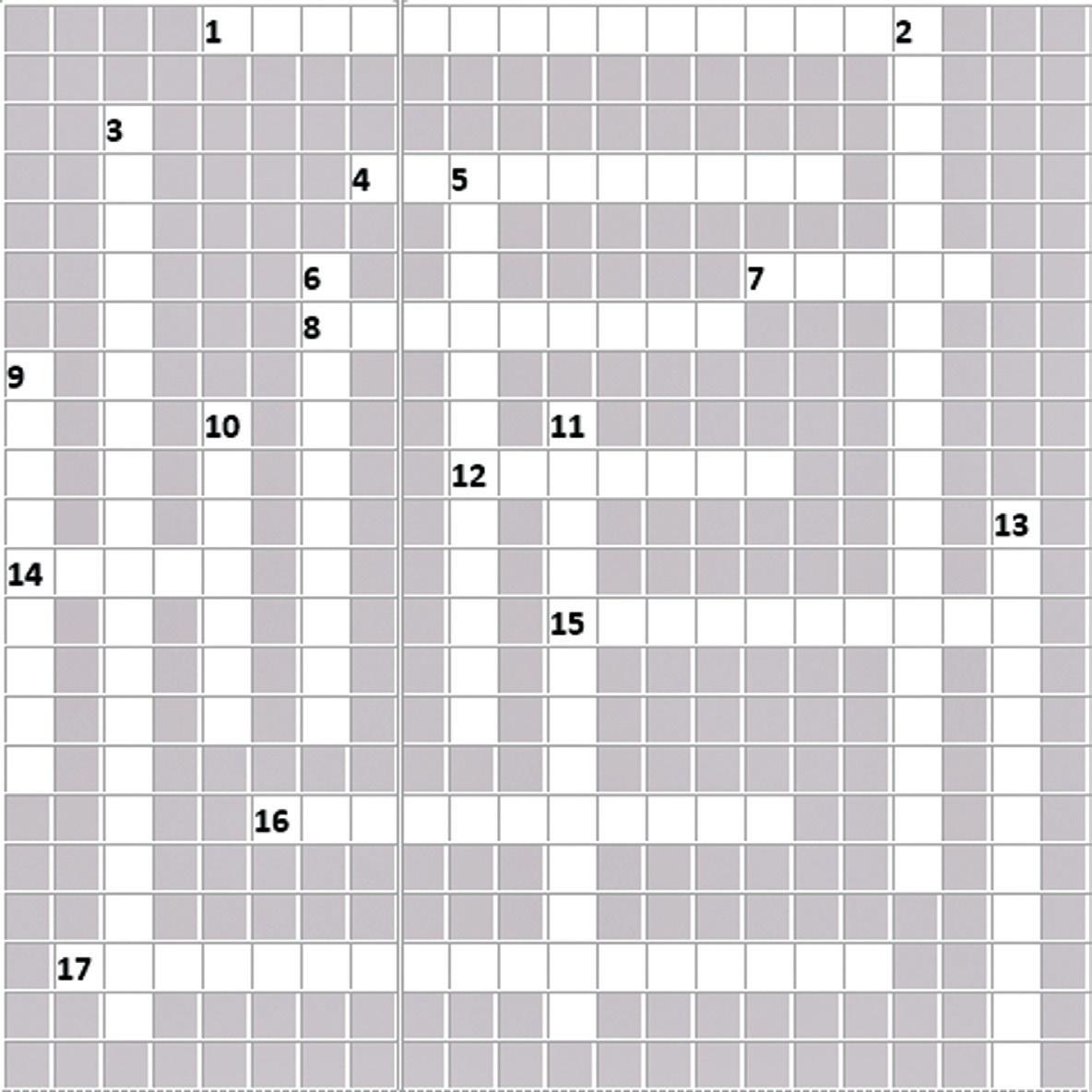
OliverWendellHolmes 5. IrvingBerlin 6. JoeMontana 9. JamesPolk 10. Sputnik 11. PartitionPlan 13. Thanksgiving
Across 1. JFK’s killer
4. Resigned as VP due to charges of income tax evasion on kickbacks received while governor of Maryland
7. The nation focused on these hanging things in Florida after the 2000 elections
8. Won Heisman Trophy Award in 1968 but is most infamous for the crimes leading to a white Ford Explorer chase through L.A.
12. In 1962, these guys from Liverpool had their first recording session under the name of their newly formed band.
14. Egyptian president who made historic visit to Israel
15. President Reagan reveals secret arm deal
16. Celebration of those who serve.
17. “Four score and seven years ago…”
Down
2. Chicago Tribune’s election eve snafu
3. Writes “Old Ironsides.”
5. Composer of “G-d Bless America”
6. 49ers QB who completed NFL record 22 consecutive passes
9. 11th president of U.S.
Beatles
13. Pass the turkey, please Answers: Across 1. LeeHarveyOswald 4. SpiroAgnew 7. Chads 8. OJ Simpson
10. The world’s first inhabited space capsule launched by Russia
11. Famous UN plan voted on November 29, 2007
1. Behind the dryer, living its best independent life.
2. In your pant leg, waiting to embarrass you at work.
3. In your kid’s backpack, stuck to a folder since October.
4. In the laundry basket you “checked three times.”
5. In the universe’s glove compartment.
6. Inside a fitted sheet, plotting.
7. In your spouse’s sock drawer (they’ll deny it).
8. In the dog’s stomach (proof not required).

14. Wrapped around a dryer drum like it’s holding on for dear life.
15. Behind the couch, next to three pens, seven crumbs, and your will to clean.
16. Inside a pillowcase — sock nesting season.
17. Behind the washing machine, planning a revolution.
18. In your laptop bag, beside that granola bar from 2019.

9. In the dryer lint trap, fused to history.
10. In a parallel dimension where all socks live happily ever after.
11. Inside the fitted sheet fold — the Bermuda Triangle of bedding.
12. Stuck to the inside of a hoodie sleeve like a sock-parasite.
13. In the freezer, next to the waffles, looking suspiciously comfortable.
19. Behind the toilet… why? HOW??
20. In a suitcase from a trip you never emotionally recovered from.
21. Mixed into the clean towels pretending to upgrade its lifestyle.
22. Inside a board game box, replacing a missing game piece.
23. Jammed into the vacuum hose like it tried to escape the chores.
24. In the pantry, snuggled up to the potatoes like it’s joining a new family.
25. On your own foot, under another sock, because life is confusing.
Someone has a diamond ring and has put it in one of four locked boxes. If you figure out which box it’s in, you can keep it.
The boxes are numbered 1,2,3,4, in that order. There are four different keys that each has their own color. Use the clues below to figure out which key goes in which box and to find the box where the diamond ring is being kept.
1. The green key goes to the third or fourth box
2. The ring is to the left of the fourth box
3. The ring is to the right of the first box
4. The yellow key is to the left of the ring
5. The blue key is to the right of the yellow key and to the left of the green key
6. The red key goes to the first box

The ring is in the third box. The red key goes to the first box. The yellow key goes to the second box. The blue key goes to the third box. The green key goes to the fourth box. Finders keepers!
Answer:

All of these people from the right that fill their mouths with or use the words “rule of law” and defend the war against the narco, the war against the narco is illegal. Because, like I said or have said on various occasions, it’s permission to kill, without any trial, that in Mexico, no one or very few are in favor of. Second, it did not do anything (in the past) but raise the number of murders in Mexico and the level of violence. These authoritarian calls to go back to that are a call to fascism.
- Mexico’s President, Claudia Sheinbaum, denouncing the war on drugs
I don’t think it would be a bad idea to tear it down.
- Rep. Steve Cohen, D-Tenn., who suffers from BDS, suggesting that the privately funded $300 million ballroom that Pres. Trump is building at the White House should be torn down if a Democrat wins the presidency in 2028
It’s good to be a young leader, but it’s not good to be a young, uneducated leader. I think he should brush up on economics, antisemitism, and who the bad guys are.
- Prime Minister Netanyahu talking about Zohran Mamdani with conservative podcast host Erin Molan
No. I would’ve behaved a [heck] of a lot better in college.
- Former President George W. Bush when asked by Eli Manning on ESPN’s “ManningCast” if he always planned on going into politics
Let me explain something to white people. Our hair comes out of our head naturally in a curly pattern. When we straighten it to follow your beauty standards, we are trapped by the straightness. That’s why so many of us can’t swim; that’s why we run away from the water.
- Michelle Obama in a recent interview
People won’t go to the gym because we’re trying to keep our hair straight for y’all. It’s exhausting, it is expensive, and takes up so much time.
- ibid.
You know who has straight hair? Koreans, Japanese, Chinese, Peloponnesians, Egyptians, West Africans.
– Greg Gutfeld, Fox
Have you been to the Jewish community lately? They have curly hair. Some even brag about it.
– Tyres, joking in response
Scientific Algorithm Determines Most Oppressed Person In History is Michelle Obama
- Babylon Bee headline
I’m not saying that there is a Holocaust, and by the way, I’m not saying that Donald Trump is Hitler because Hitler had an ideology. And he had a grand plan. Donald Trump is purely corrupt. Donald Trump is a narcissistic sociopath who only cares about one thing, and that’s Donald Trump.
- Hunter Biden on a recent podcast
He’s more like Idi Amin than he’s like Hitler. -ibid, referring to the military dictator who was dubbed the “Butcher of Uganda”
At first, I thought, “I’m not good enough at anything to be the best in the world,” but after my children showed me all the different world records I began thinking I might be able to find one I had a shot at breaking.
-Martin Ströby, who earned a Guinness World Record by stuffing 81 matches up his nose
As a father I want my children to look up to me in the same way I look up to my father who has taught me more than I can write down. -ibid.
It’s the best fragrance.
-President Trump to Syrian President al-Sharaa after spraying the Syrian leader with Trump-branded cologne in the Oval Office
How many wives? One?
-ibid. after offering another bottle of cologne for al-Sharaa’s wife
With you guys, I never know. -ibid.
If you thought my face looked bad before, wait until you see it now!
- Sen. John Fetterman (D-PA), in a statement from the hospital after he fell and hit his face
I waited for the election before signing, and now I’m not signing. I’m not signing any more leases in New York. I’ll keep what I have. We’re not expanding in New York, but we are pursuing further opportunities in Miami and other cities.
- Restauranteur Stratis Morfogen in an interview after Mamdani won the NYC mayoral election
Government that promises more costs more but delivers less. New York State mirrors the city. Its spending has risen from roughly $70 billion in 2000 to more than $230 billion today, about twice Florida’s budget even though Florida has several million more residents. When voters see that record, they conclude, not unreasonably, that more money is not the answer. Yet Democrats’ instinctive response to every problem remains the same: spend more.
- CNN’s Fareed Zakaria

Democrats must recognize that Zohran Mamdani is the future of the party. Unfortunately, it’s the Republican Party.
- Bill Maher
And if you missed his victory speech in last week’s mayoral election in New York, don’t worry, you’ll see it in every attack ad for the next two years.
- ibid.


I’m honored to stand before you as the very first former McDonald’s fry cook ever to become president of the United States. And I actually was there for about 30 minutes, and that was 30 minutes longer than Kamala [Harris] was there, despite her job at McDonald’s. That didn’t work out too well.
- Pres. Trump addressing McDonald’s franchise owners at the 2025 McDonald’s “Impact Summit”
Sen. John Fetterman was released from the hospital after a serious fall. Many people are concerned that he hit his head so hard that he will go back to thinking like a Democrat.
– Greg Gutfeld
I prepare a lot for the briefings, and I walk in there with a good grip on what they’re going to ask, because I read and I watch and I prepare all day, all morning.
- Karoline Leavitt, 28, the youngest White House press secretary in history, explaining to “Pod Force One” how she runs the press room
I think they realized that maybe there’s something to this guy. If 70 million Americans elected him, not once, but twice, maybe we should have a little bit more respect and treat this administration with a little more decency.
- ibid., explaining why the media is more respectful to Trump in his second term
40% of the population of rent-controlled housing in New York City are foreign-born. Think about that. In one of the largest metropolitan areas in the world, 40% of rent-controlled properties are being lived in by people who weren’t even born in the country. What kind of system is this?
- White House Deputy Chief of Staff for Policy and Homeland Security Advisor Stephen Miller speaking with Rob Schmidt on Newsmax
It’d be pretty cool to go play in Jerusalem. That’d be sick!
- Dolphins quarterback Tua Tagovailoa, who just played a game in Madrid, Spain, when asked where else he’d like to play
This brain rot among the kids…this 6-7, sigma, ban it all! Every parent out there knows all this stuff.
– Commentator Sott Jennings, CNN
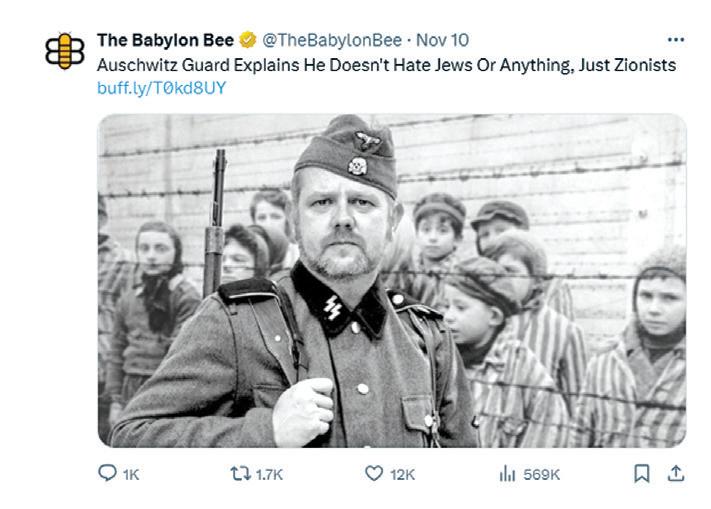

By Bret Stephens
The good news from the recent donnybrook over Tucker Carlson’s interview with Nick Fuentes, the Hitler fanboy with a sizable social-media following, is that it has at last forced conservatives to reckon with the sewer pipe of antisemitism bursting through their walls.
Better news: many have risen to the occasion. That includes Sen. Ted Cruz, who called out his fellow Republicans for being too timid to condemn Carlson; The Wall Street Journal’s editorial board, which denounced “this poison in their own ranks”; and Heritage Foundation people who resigned in disgust after Kevin Roberts, the organization’s president, offered a lickspittle apologia for Carlson. Even Roberts felt compelled to disavow his own performance, though he persisted in describing Carlson as “my friend.”
The bad news is that none of this is going away anytime soon. If ever.
Antisemitism was supposedly banished twice from the conservative universe: first in the 1950s, when William F. Buckley Jr. decreed that nobody on the masthead of the antisemitic American Mercury would appear in the pages of his own National Review; second in the 1990s, when he said it was “impossible to defend” Pat Buchanan from charges of antisemitism. Such was Buckley’s prestige on the right that none other than Carlson issued his own denunciation of Buchanan: “I’m not hysterical on the subject,” he said on C-SPAN’s “Washington Journal” in 1999, “but I do believe that there is a pattern with Pat Buchanan of needling the Jews.”
Now the Heritage Foundation and various conservative publications are pressing the Trump administration to award an unrepentant Buchanan the Presidential Medal of Freedom. The notion that Winston Churchill, not the German Führer, was the villain in World War II — another of Buchanan’s hobbyhorses — is again gaining ground on the right. Buchanan’s obsessive loathing of Israel, along with his convic-

tion that the pro-Israel lobby dictates U.S. foreign policy, is also gaining ground — a mirror image of the views of the anti-Israel left and a reminder of the French aphorism “Les extrêmes se touchent.” Extremes meet.
How did this happen? Cynicism is one reason. “The fact that antisemitism is the socialism of fools is an argument not against, but for, antisemitism; given the
become more overt.
A second factor is the forced merger of Christianity with conservatism.
Mainstream American conservatives used to believe our sacred texts were the Declaration of Independence and the U.S. Constitution; “Reflections on the Revolution in France” and “The Road to Serfdom.” Now it’s the New Testament. We once
“The fact that antisemitism is the socialism of fools is an argument not against, but for, antisemitism; given the fact that there is such an abundance of fools, why should one not steal that very profitable thunder?”
fact that there is such an abundance of fools, why should one not steal that very profitable thunder?” Leo Strauss, the philosopher, observed in 1962. Bluntly, his point was that a bigotry for morons — aka, “The Jews did it” — will always be political gold in a world of morons. Candace Owens, the right-wing podcaster, gets this: her popularity has soared as her Jew-hatred has
thought that religious convictions should be a little more respected in our secular Republic. Now this is supposed to be a Christian regime that tolerates Jews. (Others, not so much.) When Carlson, speaking at Charlie Kirk’s memorial service, compared the slain conservative to [Yashkeh] brought down by “a bunch of guys sitting around eating hummus thinking about, ‘What do
we do about this guy telling the truth about us?’” the inference could have been lost on nobody. Among conservatives, he paid virtually no price for it.
Then there’s political ideology. The MAGA movement is not antisemitic. But many of its core convictions are antisemitic-adjacent — that is, they have a habit of leading in an anti-Jewish direction.
Opposition to free trade, or to a welcoming immigration policy, or to international law that crimps national sovereignty, are legitimate, if often wrongheaded, political positions. But they have a way of melding with hoary stereotypes about “the International Jew” working across borders against the interests of so-called real Americans. You can be sure that, somewhere on social media, someone will respond to this column by pointing out that my Kishinev-born grandfather changed his name from Ehrlich to Stephens — evidence, supposedly, of sneakiness in my DNA. It’s the type of right-wing identity politics you inevitably get where the question of where you are from matters more than the question of where you are trying to go.
Finally, it bears reminding that antisemitism isn’t merely a prejudice. It’s a conspiracy theory about Jews. Who actually killed [Yashkeh]? Or brought on the bubonic plague? Or got America embroiled in unnecessary wars in the Middle East? Or replaces American workers with cheap immigrant labor? The idea that modern politics amounts to a malicious scheme organized by an insidious cabal of deepstate insiders and globalists at the expense of ordinary people is now received wisdom on the right, paralleling far-left convictions about the purported evils of Zionists and their billionaire backers.
Jews don’t have the luxury of being indifferent to either threat. The tsunami of progressive antisemitism that hit after Oct. 7 is being followed by another wave, just as tall.
© The New York Times
Moderated by Jennifer Mann, LCSW of The Navidaters

Dear Navidaters, Love your column, thanks for all you do!
It seems like with the new “shidduch lounge” initiative, there are lots of events popping up with mixed crowds— men, women, and shadchanim all in one place. With that said, what’s the proper etiquette for approaching a guy in such a setting where there isn’t as much structured facilitation? I grew up talking to guys, so this is a very natural thing for me. I don’t want to end up looking like I’m being in any way inappropriate by being too friendly, but I don’t want to come across boring either. What are your guidelines?
Thanks!
Malka*
Disclaimer: This column is not intended to diagnose or otherwise conclude resolutions to any questions. Our intention is not to offer any definitive conclusions to any particular question, rather offer areas of exploration for the author and reader. Due to the nature of the column receiving only a short snapshot of an issue, without the benefit of an actual discussion, the panel’s role is to offer a range of possibilities. We hope to open up meaningful dialogue and individual exploration.


Dear Readers,
We want to offer YOU an opportunity to be part of the discussion! Please email us at MichelleMondShadchan@gmail.com, subject line “reader’s response,” if you would like to participate in the new “A Reader’s Response” columnist spot. We will send you a question and publish your answer in an upcoming Navidaters edition.
If you have a question you would like the Navidaters to answer, please reach out to this email as well.
Looking forward!
Michelle, the “Shadchan”
Rebbetzin Faigie Horowitz, M.S.
Malka, be yourself. Use openers that are comfortable for you and that you regularly use.
It sounds like you are a little nervous about the setup and the newness of the initiative. The shadchanim who have worked on bringing this to fruition are largely good, caring, local women who are seasoned and I know personally. They are also up-to-date and understand the current environment for daters. They will be very approachable if you need a little reassurance and support. They have been working on shidduchim for community young people in various formats for years. They are trusted by people in the Five Towns. Trust them and trust your own skills.
Michelle Mond
Ilove this new initiative, and I love your question! It’s always important to make the best first impression. You sound like a friendly girl who’s comfortable in this type of environment. You’re just scared to put yourself out there in that way due to perceived judgements.
I assure you though, as long as you are being socially appropriate, friendly, and aware of boundaries, you will do great! Your personality is exactly why it’s great that this shidduch lounge exists. Personality doesn’t shine on a resume; it’s a piece of paper and falls flat. When someone meets you, they will see your excitement for life and bubbly demeanor. Most guys will find this a breath of fresh air.
I will also outline a few things to keep in mind when going to these types of events. Be mindful of the cues the other person is giving off. If the person you are talking to looks at his watch or keeps looking away, it might be time to appropriately cut the conversation to an end. Try not to interrupt others’ conversations just because you want to speak to a person. Be mindful of nervous laughter and try to be as down-to-earth and calm as possible. Watch the energy you’re exuding. People pick up on anxious vibes and don’t like it. Being positive/genuine is the name of the game, and the right guy will pick up on this.
Hatzlacha!
Dr. Jeffrey Galler
This new initiative is a breath of fresh air. It is long overdue, and I hope it spreads to many other communities.
The quick and easy answer to your question is YES! You can simply go over to anyone you’d like to meet and introduce yourself. That is the purpose of these relaxed and wholesome Motzei Shabbos events. Of course, if you, or anyone, is a bit shy, there are always facilitators and shadchanim present,who would gladly make the introduction for you.
For readers who are unaware, there is a new project, called The Shidduch Lounge of the 5 Towns. I urge all interested singles to visit their website (shidduchlounge.com).
Their stated goal and mission is to create a “warm, relaxed, and thoughtfully curated environment where singles can meet both shadchanim and one another naturally, with games, great food, and music.”
Their mission statement speaks for itself:
*We believe that meaningful rela-
Personality doesn’t shine on a resume; it’s a piece of paper and falls flat.
tionships are built best when people are given the right setting – one that reflects Torah values and allows each person’s personality to come through in a genuine way.
*Our events are thoughtfully designed to bring together singles with shared backgrounds and hashkafic outlooks, providing a comfortable pressure-free atmosphere where both shad-

chanim and participants can connect with ease.”
How wonderful! G-d bless the visionaries behind this project. We encourage singles to explore it and to participate in the available programs.
The Singles’ Perspectives Rivki D.
Dear Malka, When approaching a guy at one of these events, prioritize respect, genuine interest, and awareness of his social cues. Start by going over with a friendly smile and introducing yourself. Keeping
the conversation light – find some common interests to get a feel for his vibe. Balance a warm smile (avoid over-smiling because that’s creepy) with relaxed, approachable body language. Pay close attention to the guy’s social cues, and if he seems uninterested or uncomfortable be sure not to push him too far. Keep a slightly mysterious air by sharing just enough about yourself without being overbearing.
Most importantly, be yourself! People are naturally attracted to authenticity. Good luck!
DJ Kasriel
ear Malka, Your natural comfort talking
The Navidaters
Dating and Relationship Coaches and Therapists
Dear Malka, I love this question because it hits on something I see all the time — not just at events, but in my office. Beautiful, warm, normal people who suddenly don’t know how to be themselves because the system has conditioned them to second-guess every move, every smile, every instinct. And it breaks my heart, because the biggest casualty of the shidduch world is often a person’s relationship with their own authenticity.
So let me say this clearly, gently, and with all the love in the world: you are not doing anything wrong by being yourself.
These new Shidduch Lounge events
are wonderful, but they may come with this unspoken pressure:
Don’t be too friendly.
Don’t be boring.
Don’t be forward.
Don’t be invisible.
It’s exhausting. And it puts people into these tiny, airless boxes when all they really want is to be human.
You asked for guidelines, so here are mine — and they’re simple:
1. If something comes naturally to you, trust that.
You grew up talking comfortably to
to guys is a real strength. Not everyone has that. You have an easy, warm way of starting a conversation, and that puts people at ease. In a room full of singles who are overthinking every hello, that is a gift.
So keep being yourself. As long as you stay respectful and genuine, nothing about your approach is inappropriate. In fact, it is probably the thing that will help the right guy notice you.
And here’s the funny part. If you start second-guessing your own approach, you’ll end up acting just like the other guys and girls in the room who are also nervous. They are so busy worrying about how they come across that they won’t even notice whatever you’re concerned about. Fear makes everyone blend together. Confidence helps you stand out.
You don’t have to choose between being appropriate and being authentic.
There is absolutely nothing wrong with having experience talking to boys. It puts you ahead in social comfort. Walk in, smile, start a simple conversation, and let your personality do the rest. Light and friendly is more than enough.
Be yourself. That is exactly what will attract the right person.
guys. Wonderful. That’s a strength, not a liability. Say hello. Ask a simple question. Make a comment about the event. Be warm. Be yourself.
That’s not forward. That’s not inappropriate.
That’s called being a person.
2. You are allowed to show up as the fullest version of you.
Not the “shidduch-approved” version.
Not the watered-down version.
Not the quiet, careful, “please-don’tjudge-me” version.
Just you.
Because the right person is going to be drawn to that — not to a character you play for twenty minutes in a crowded lounge.
3. Watch for whether he meets you where you are.
If a guy is interested, he’ll lean in, smile, ask you something back.
If he doesn’t, that’s not a rejection —
that’s clarity.
Either way, you stay you.
4. Please don’t shrink yourself to fit an imaginary rulebook.
Most of that rulebook is fear-based and nobody is actually happy following it.
And finally…
5. People don’t regret being themselves.
They regret the moments they hid.
They regret the times they played small.
They regret the years they spent thinking something was wrong with them when really… the system didn’t leave them room to breathe.
Malka, you don’t have to choose between being appropriate and being authentic. You can be friendly, warm, respectful, and still be you. And that’s who someone is going to fall in love with.
Sincerely, Jennifer
Jennifer Mann, LCSW is a licensed psychotherapist and certified trauma healing life coach, as well as a dating and relationship coach working with individuals, couples, and families in private practice at 123 Maple Avenue in Cedarhurst, NY. To set up a consultation or to ask questions, please call 718-908-0512. Visit www.thenavidaters.com for more information. If you would like to submit a dating or relationship question to the panel anonymously, please email JenniferMannLCSW@gmail.com. You can follow The Navidaters on FB and Instagram for dating and relationship advice.
By Rabbi Azriel Hauptman
Is therapy worth it? Yes! Is it possible to pour well-earned money down the drain through therapy? Also, yes! Will therapy help you unravel years of unhealthy thinking patterns, change your perspective on your life’s complexities, and give you strategies for improving your relationships? Yes! Will therapy sometimes leave you in just about the same situation you were in when you started? Also, yes! How can all of these statements be true? Because you will most likely gain immensely from therapy. That is unless you encounter one of the following (surmountable) hurdles.
The educational system for psy-
chotherapy educates therapists in certain general skills. It also grants them an overview on the different conditions that might affect one’s mental illness. All of this does not translate into a specialty. Many disorders respond much better to treatment when the therapist has specific training in that field. Some examples include ADHD, OCD, eating disorders, trauma, and addictions. This does not mean that therapy will be useless without specific training, but it will definitely get much less bang for the buck.
A therapist is not simply a repository of useful information. Therapists connect with their cli-
ents and form a therapeutic alliance that serves as the bedrock of the therapy. Sometimes, the therapist comes highly recommended and just does not click with this specific client. Someone who knows you and the therapist might have been able to predict that this is not a good Shidduch. But, occasionally the match does not meet your expectations and the therapist and client simply don’t “click”.
In every field, you will find individuals who reflect badly on their profession. Car mechanics, dry cleaners, physicians, plumbers, police officers, and the list goes on. The profession of psychotherapy does not claim to be any better than any other profession that is staffed by human beings. Therefore, you might discover a therapist who is not suited for this occupation and nevertheless does not hesitate to put out a shingle.

your own worst enemy by showing up to therapy and not committing yourself to doing the work.
As readers of this column surely know, therapists practice a variety of modalities and techniques. The smorgasbord of approaches that therapists may choose from presents a tremendous difficulty for the uninitiated consumer who does not know the difference between one approach and another. Some techniques can work for a wide variety of issues, but there are many potential clients who would really benefit from a specific form of therapy. Some clients will vary on their needs based on where they are located on their therapeutic journey. This further complicates a client’s search for the appropriate therapist.
How many therapists do you need to change a light bulb? We all know the answer is that it does not matter, since the light bulb needs to want to be changed. Therapy is hard - really hard. Life has presented you with all kinds of problems that you have swept under the rug, and a very large part of you wants all of that refuse to stay there. Your therapist’s job entails helping you face your demons and do the work to clean up your proverbial house from all of the debris that you have pushed into that deep abyss that is inside of your head. In other words, therapy is not a walk in the park. You have to commit yourself to the process of change, and if you are a card-carrying member of the human species this will be a daunting task. Therefore, you can be
With all of these possible pitfalls, the reader is probably wondering how anybody ever finds the appropriate therapist. For this issue, there is indeed a solution. There is an organization that has at the top of its list of priorities these exact concerns. Relief Resources operates an entire staff of dedicated referral specialists who are trained in the art of matching therapists and clients. The process is not foolproof, but it can save a client years of frustrations. Healing takes time, but you have to start the process. In the game of therapy, finding the right therapist is first base. Relief Resources lives in that gap between home plate and first base. Give them a call and start trotting down the baseline.

By Bassy Schwartz, LMFT
Unfortunately, there are far too many causes and campaigns for those who are suffering on every level. We could cry endless tears over our personal, communal, and national tragedies, which never seem to have a limit. But in the private space of therapy, a different struggle shows up; I often find myself gently pulling clients away from the woes of the world and back toward their own internal landscape — the private hurts that are so much harder to sit with than someone else’s crisis.
It’s striking how natural it is for us to pour our time, attention, and energy into supporting others (sometimes more easily than tending to our own inner world).
That “Eishes Chayil” who is always delivering meals, organizing the shul event, collecting for families in need, and answering the panicked phone call from every friend. Or the guy with a high-profile job and a packed schedule, juggling responsibility after responsibility with ease. He manages to sit on multiple boards, support community projects, show up at every siyum, and take every networking call that comes his way. People admire them, respect them, and wonder how they somehow manage to do it all.
We revere these kinds of folk. We call them superhuman, so special, constantly focusing on how much they do for the community. But the notion that our external output is the indicator of our value is a mistake. True strength comes from allowing ourselves the time and presence to nurture our own well-being, our own relationships, and being particular about where we spend our finite resources in this world. I hate to be the bearer of bad news, but “Superhuman” isn’t real — and it doesn’t need to be.
Over the years, both as a therapist and as a human trying to build an empire of my own, I’ve come to appreciate something both simple and surprisingly difficult: accomplishment doesn’t just mean doing everything. It’s in knowing

when to stop. When to turn inward. When to recognize that each of us is one piece of a much larger puzzle, and that doing it all often means doing some of it at the expense of what truly nourishes our authentic selves.
Growing up in Bais Yaakov, we were taught that chessed starts at home. It took me years, and becoming a mother to three little ones (while still learning how to respect myself), to understand
ers channel their strengths into work, friendships, or the home — places where they feel confident and dependable. Men often do the same. They pour their energy into their careers, into leadership, into the shul or community roles where they feel purposeful and appreciated. These are not flaws. They’re gifts. The work is simply making sure that the same care we extend outward is also offered inward.
The greatest kindness we can offer the world is to be present, grounded, and emotionally available for the people closest to us.
what that really means. It’s not about minimizing community responsibility; it’s about recognizing that the greatest kindness we can offer the world is to be present, grounded, and emotionally available for the people closest to us.
When our inner world feels shaky, most of us turn toward the places where we naturally shine. Some women express this through chessed, through creating warmth, order, and support for others. Oth -
It’s worth pausing here to acknowledge just how admirable these roles are. Caring for others, building, and giving back are beautiful qualities — traits that keep families, shuls, and communities thriving. At the same time, it’s important to recognize that even the most positive efforts can unintentionally be an avenue to avoid sitting with our own vulnerability and unmet needs.
At some point, each of us has to pause and ask the uncomfortable questions:
What are we running toward? And what are we running away from? Where does our energy go — and what is the cost?
Community thrives when homes thrive. And homes thrive when the people inside them feel seen, valued, and prioritized — not squeezed in between emails, errands, chessed runs, WhatsApp chats, and meetings.
Turning inward is not selfish. It’s responsible. It’s holy. It’s the quiet avodah nobody claps for but the one that actually sustains a family.
We’re not meant to operate at a superhuman pace. Even the most capable among us need rest, need help, need emotional space to breathe and reflect. The men and women who seem to handle everything effortlessly are often the ones who need that space most desperately.
Sometimes, the bravest and most impactful decision we can make is to say
“I can’t do everything.”
“My family needs more of me.”
“I need more of me.”
And that’s not failure. That’s the not so glamorous version of success that is rare but necessary to maintain a secure foundation.
There is a time for community; and we each can (and should) do a little bit to help run the village. But when our marriages, our children, and our own emotional stability are not prioritized, the effects ripple through the community. Strong homes are the bedrock of a strong Klal.
Bassy Schwartz, LMFT is the founder of Core Relationships, a boutique therapy practice in the Five Towns offering individual, couples, and family therapy. Her work centers on helping clients build safer, more authentic connections by healing the patterns that block intimacy and trust. Bassy is trained in Emotionally Focused Therapy (EFT) and integrates trauma-informed care and relational insight in her approach. She believes therapy is not about “fixing” people — it’s about creating the safety to be fully human.
By Avi Heiligman
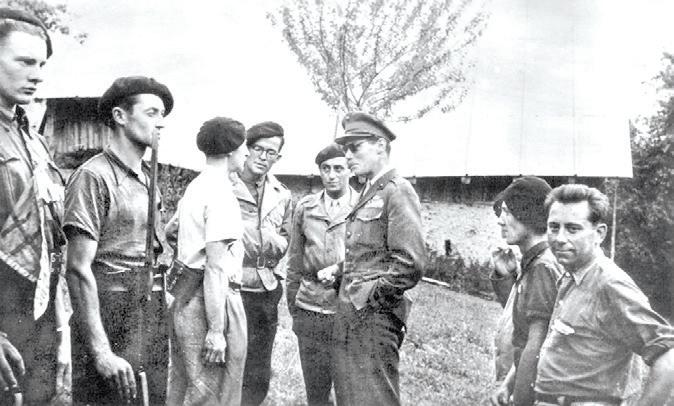
As the United States was preparing to fight the Axis powers on several fronts during World War II, it became apparent that an intelligence network would be needed for a wide variety of missions. In 1942, the Office of Strategic Services (OSS) was formed after President Franklin Roosevelt tasked World War I hero and Wall Street lawyer William Donovan to head the agency. Donavan recruited several people who, in turn, looked for unique individuals who could perform dangerous missions behind enemy lines. The OSS’s most highly decorated member was a marine who had previously served overseas for a foreign country for five years. Peter J. Ortiz was not an ordinary marine, and he used his knowledge and background to become one of the OSS’s most valuable agents in Europe.
Born in 1913 in New York City, Pierre Julien Ortiz (he later went by the name Peter) was sent to France for school. The adventurous young man traveled to Algeria and when he was nineteen joined the French Foreign Legion. His father wasn’t pleased with his son’s enlistment and went to North Africa to try and get his son out of the army. However, he was impressed with the Legion and soon became one of its big supporters. His son had joined the 1 st Regiment and ex-
celled during operations and underwent parachute training. Peter soon became the Legion’s youngest non-commission officer and was awarded several medals including the Croix de Guerre. After five years in the army, Peter returned to his family in La Jolla, California.
World War II broke out in September 1939, but the United States didn’t join the war until December 1941 after the Japanese bombed Pearl Harbor. Ortiz knew that if could make it to Europe he would be able to rejoin the French Foreign Legion, but the trip wouldn’t be easy. He made his way to Canada to board a Europe-bound ship, but it was torpedoed by a German U-boat. Finally, he found passage on a French destroyer that made it to Europe, and he was sent to fight in the North African Desert with the Free French Army that was fighting together with the British Eighth Army.
For the next two years, Ortiz fought in Africa and was given a battlefield commission with the rank of second lieutenant. Wounded while trying to blow up a fuel dump, Ortiz stayed on the front lines. He was captured after the Germans overran his position and was sent to Austria as a prisoner of war. He eventually escaped and made his way to the U.S. via Portugal. Ortiz finally was able to rest and recover from his wounds,
but the respite wouldn’t last long. It was June 1942, and the U.S. was gearing up for a bitter struggle on multiple fronts. Ortiz decided to enlist in the marines after being rejected by the army due to his wounds. During training at Parris Island, Ortiz excelled and was commissioned as an officer after just a few weeks in the marines. Ortiz’s military background, knowledge of North Africa and his fluency of multiple languages hadn’t gone unnoticed and led to his recruitment into the intelligence units. After more parachute training, Ortiz was sent back to North Africa and was only one of a few American marines to have served in the North African or European theaters. Tasked with leading Arab tribesmen on scouting missions, he gathered vital intelligence on the Germans and sent it back to headquarters. Ortiz was captured by American troops after their landing during Operation Torch in November 1942 and was held until he convinced the officer that he was actually an American marine.
After recovering from more wounds he received in North Africa, Ortiz was recruited into the OSS and prepared for operations in France. In January 1944, he parachuted into France with a Frenchmen and a British officer with the mission of evaluating French resistance
and to train Maquis fighters. One night he was at a café and overheard Germans talking about their disdain of the Maquis and the Americans. Ortiz heard enough, went over to them and showed them two pistols while wearing his Marine uniform. The Germans couldn’t believe their ears when he made them toast President Roosevelt and the Marine Corps! Ortiz then managed to leave the café before slipping away in the night.
In addition to these tasks, he also assisted downed Allied airmen reach safety. He had helped four British airmen reach Spain and soon was helping the survivors of an American aircraft.
A B-24 Liberator heavy bomber had been hit by enemy fire and went down over France on May 5, 1944. All of the occupants safely ejected, including Jewish pilot Murray Simon and bombardier John Mead. Mead was credited with helping two dazed crewmen in the plane put on parachutes and safely exit the doomed aircraft. Only after the rest of the crew had jumped did Mead leave the plane. For his actions on May 5, he was awarded the Silver Star. Mead was rescued by local partisans and soon was taken in by SOE (Special Operations Executive, the British underground agency) operative Robert Lyon. Instead of being sent back to England, Mead

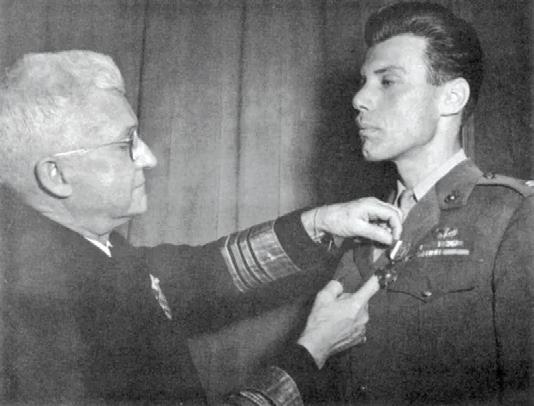
stayed in France and joined the underground. He was awarded another Silver Star for his gallantry in action while leading several operations against the enemy and for preparing for the American invasion of France.
The pilot, Murray Simon, parachuted out of the burning Liberator bomber but almost didn’t reach the ground. His parachute had gotten stuck on a tree, but soon he was cut loose. For the next
to escape to England, both Ortiz and Simon drove in a stolen SS car and then took trains and trekked through Spain until they reached Gibraltar. Murray finally arrived back in England and was able to send a message back to his parents who had previously received notice that he was missing in action. Simon wrote to his worried parents, “I am well and safe. No need for worry. Write to my old address.”

mans. After a firefight, Ortiz was faced with a difficult situation. Even though he knew that if he was captured the Germans would torture him since there was a large bounty on his head, Ortiz decided to give up and negotiated with the Germans to spare them retribution. Ortiz tried several times to escape on the journey to a POW camp and tried a few more times when reaching their destination. He managed to escape in April 1945, only to return once he found out that the prisoners had for the most part taken control of the camp.
These are just some of the exploits of one of the OSS’s most fearless underground agents. Operatives like Ortiz performed clandestine and covert activities that helped rescue the world from fascism, and their bravery will never be forgotten.
Avi Heiligman is a weekly contributor to The Jewish Home. He welcomes your comments and suggestions for future columns and can be reached at aviheiligman@gmail.com.



By Sara Rayvych, MSEd
Every age and stage has their own unique dynamics. There are challenges but also lots of joy and fun in each one. While adults of all different ages can be on similar ground, with children, even a few months can make a major difference.
When writing articles, I often have to stress how these age differences and cognitive milestones will affect parenting. Afterall, an eight-year-old isn’t a tenyear-old, nor is a ten-year-old a fourteenyear-old. Even while writing about some of the unique challenges of each age, I often have to take into account a very special sub group: toddlers and preschoolers. This is a relatively wide age range, but it still has unique characteristics.
As we know from babies, they change quickly. Newborns grow by the day, and a three-week-old is relatively far more advanced than a one-week-old. The younger they are, the more pronounced and dramatic the difference. Toddlers and preschoolers are developmentally much younger than school-aged children, and we often can’t apply regular behavioral techniques with them.
This age group is adorable, and their antics keep us busy all day. Even as I write about the different developmental milestones, I feel like I rarely do justice to this age group. Understanding the unique needs and challenges of this age category can assist parents in dealing with the many daily situations that arise.
This age is busy. They always have something to do, and parents know to be concerned when the house is suddenly “too quiet.” Many parents have wished they could bottle some of that energy for themselves. Sadly for us, that superpower of energy belongs exclusively to them.
This constant level of activity can be overwhelming for adults. Parents may feel like they’re always chasing, cleaning
up after or saving their little one from dangerous behavior. It probably feels like that for parents because it is true. We are continuously on the job with this age. Unless they’re sleeping, we are on alert. This is developmentally appropriate. It can be frustrating and overwhelming, but it’s normal and healthy.
It can be tempting to put away each item as it’s removed, but it’s often going to be played with again soon afterwards. In many cases, it’s easier to do set clean ups during or after the day, rather than continuously chasing and cleaning after a moving, dirtying target.
Toddlers’ attention spans are short, as is their memory. This adds a challenge to many areas, such as discipline and conversation.
Children of this age do not remember what they did earlier. It’s relatively useless to try disciplining them unless it’s done immediately after the event. With even a minimal delay they are unable to connect their adult’s current message of chinuch to the behavior of minutes prior.
It’s important to communicate with children effectively. This age category does not have the ability to focus for a long shmooze, and they’re lost after the first few words. While always wise to think before speaking, it’s even more crucial with little ones who are so limited.
When speaking with such little kids we need to keep the conversation on their level and not too sophisticated for their development. Concepts that seem simple to us may still be advanced for such youngsters.
Young kids lack impulse control. They see it, and they do it. There is little time to think between “see” and “do.” It’s unreasonable to expect them to control themselves in any given situation. In other words, don’t leave the cookies in front of them if you don’t want them eaten. Also, the distance from sidewalk to street is very short. Hold

their hands and keep a close watch. They are sweet and well-intentioned. When we say to them, “Will you clean up after your snack?” they will honestly respond, “Yes.” When they gave you that “yes,” they may have had every intention of fulfilling it. The problem is the delay between their “yes” and the expected action. This is an unrealistic expectation for this age group. It’s better to say, “Let’s clean up quickly, and then you’ll have your snack.”
Seeing is Believing
Humans start off as concrete thinkers. If I see it, then it exists. A common example is object permanence. This is the understanding that something exists even when it’s no longer visible. Infants are tested for this by showing them an exciting toy and then hiding it from their view to see if they still search for it. If they continue to look for the hidden item, then we know they understand object permanence. It’s considered a milestone when infants attain this level of understanding. As adults, we readily know objects exist outside of our view, and there is a functioning world of people and places we’ve never seen.
Adults routinely think abstractly. We can think of future events and that food we dislike can remain on our plate and not be thrown on the floor. As frum Jews, this is a constant part of our day. We know Hashem exists even without a physical body. Shabbos is inherently different from a weekday. A sefer Torah is not mere parchment.
We are so used to abstract thinking that we often forget how advanced certain concepts are. When speaking with young children, we need to be mindful of how a child will process the conversation. A common but basic example is when children ask when something will happen. We might give a seemingly reasonable answer such as “two weeks.” Two weeks is simple for us,
but meaningless to a very young child. Saying “after two more Shabboses” or counting the days on a calendar with them will still be somewhat abstract yet more concrete than sticking with “two weeks.”
Little kids have feelings too, and we need to be mindful to not laugh at or embarrass them. Teasing that may seem benign to us can still be upsetting to them. Sometimes, they can even get upset over something nice we said. Their lesser understanding of verbal and body language can unintentionally cause hurtful feelings. We need to be mindful of their responses and use simpler language and clarify our words when they don’t understand us correctly.
Parents can easily be so overwhelmed that they forget to enjoy their little one. Kids in this stage are at an incredibly sweet and innocent age. Their immaturity naturally results in the funniest of comments and antics. It’s such a shame that we can be so busy we forget to take a few minutes to enjoy what we’re doing, who we’re with, and shep a little nachas.
Taking some time to just have fun together can go a long way towards parent-child bonding and adding some happiness into our active adult lives. They keep us busy, often wishing we could harness their energy for our own use, but they make us smile and give the best hugs.
Sara Rayvych, MSEd, holds a master’s degree in general and special education. She has been homeschooling for over 15 years. Sara provides personalized parent mentoring services, addressing a variety of general and specific parenting concerns. She can be contacted at Sara.Rayvych@gmail.com with comments, questions or for private consultations.




































Note:




















Note: Not all submission have been published. Keep sending in your artwork for another chance to be featured!

By Naomi Nachman
This past weekend, my daughter and her family stayed over, and for Sunday breakfast I made these waffles with my grandson. We typically serve the waffles with a smorgasbord of different toppings, such as whipped cream, fresh fruit, chocolate sauce, and ice cream (let your inner-chef go wild!).
Cook’s note: Try it with the Belgium pearl sugar. You can order the sugar with an OU on Amazon. It gives the waffles an extra crunch and texture.

Ingredients
◦ 2 cups all-purpose flour
◦ 1 teaspoon salt
◦ 4 teaspoons baking powder
◦ ½ cup white sugar or 1 cup Belgium Pearl Sugar
◦ 2 eggs
◦ 1½ cups warm milk
◦ 1/3 cup butter, melted
◦ 1 teaspoon vanilla extract
Preheat waffle iron to desired temperature.
In a large bowl, mix together flour, salt, baking powder and sugar; set aside.
In a separate bowl, beat the eggs. Stir in the milk, butter and vanilla.
Pour the milk mixture into the flour mixture; beat until blended.
Ladle the batter into a preheated waffle iron.
Cook the waffles until golden and crisp.
Serve immediately and enjoy!
Naomi Nachman, the owner of The Aussie Gourmet, caters weekly and Shabbat/ Yom Tov meals for families and individuals within The Five Towns and neighboring communities, with a specialty in Pesach catering. Naomi is a contributing editor to this paper and also produces and hosts her own weekly radio show on the Nachum Segal Network stream called “A Table for Two with Naomi Nachman.” Naomi gives cooking presentations for organizations and private groups throughout the New York/New Jersey Metropolitan area. In addition, Naomi has been a guest host on the QVC TV network and has been featured in cookbooks, magazines as well as other media covering topics related to cuisine preparation and personal chefs. To obtain additional recipes, join The Aussie Gourmet on Facebook or visit Naomi’s blog. Naomi can be reached through her website, www.theaussiegourmet.com or at (516) 295-9669.