MASS IN B MINOR
Johann Sebastian Bach (1685 1750)
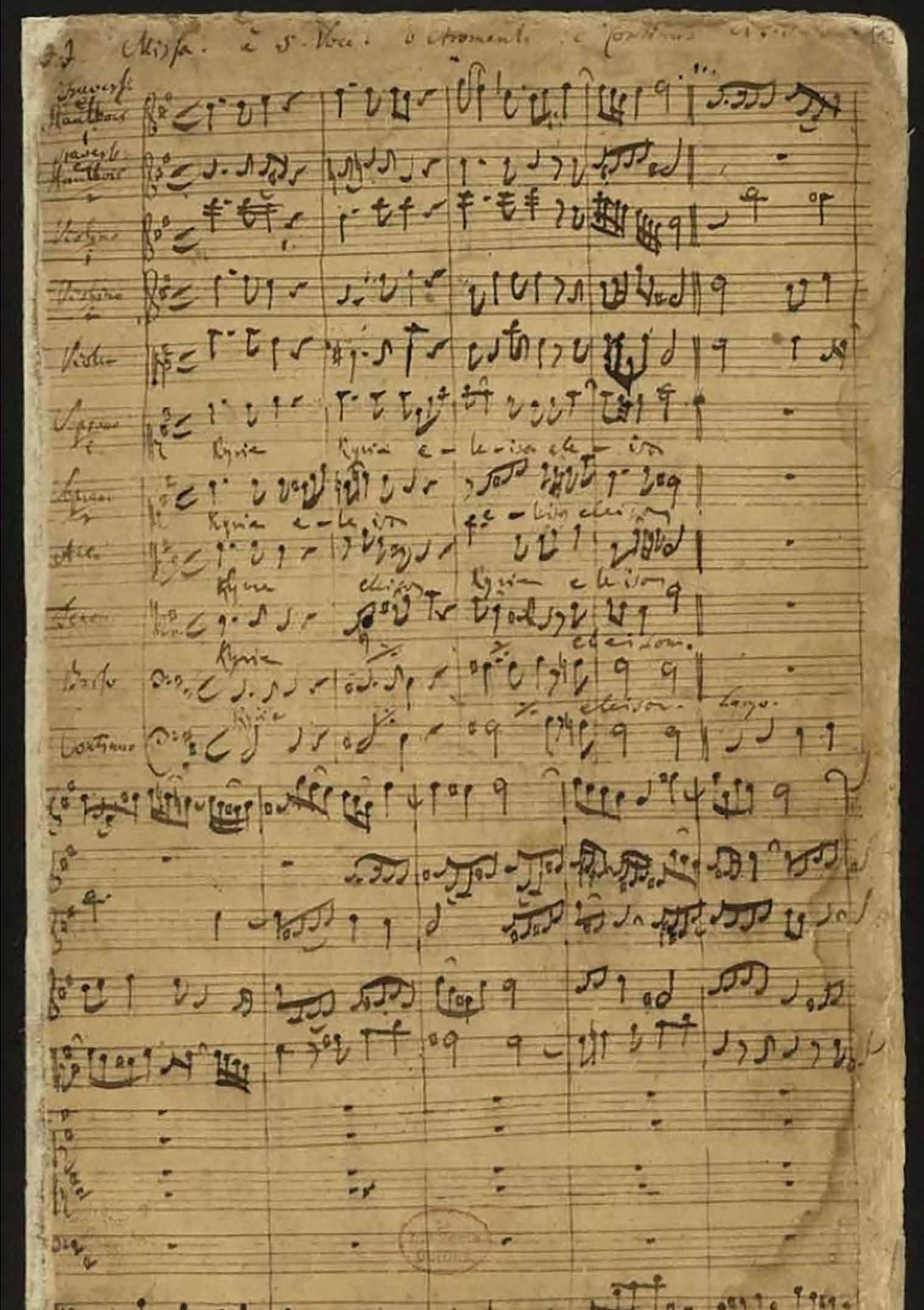
Mass in B minor, BWV 232 for choir, orchestra and soloists
I. Missa INTERMISSION
II. Symbolum Nicenum
III. Sanctus
IV. Osanna, Benedictus, Agnus Dei et Dona nobis pacem
Netherlands Bach Society
Richard Egarr, harpsichord and leader
soloists
Johanna Ihrig, soprano 1
Mary Bevan, soprano 2
Helen Charlston, alto
Guy Cutting, tenor
Matthew Brook, bass
vocal ensemble
Amelia Berridge, Marta Paklar, soprano 1
Michaela Riener, Valérie Stammet, soprano 2
Sofia Gvirts, Iris Bouman, alto
Adriaan De Koster, Jasper Dijkstra, tenor
Matthew Baker, Mitchell Sandler, bass
orchestra
Evgeny Sviridov, concertmaster
Lucia Giraudo, Annelies van der Vegt, violin 1
Anneke van Haaften, Ivan Iliev, Natascha Pichler, violin 2
Femke Huizinga, Bernadette Verhagen, viola
Octavie Dostaler Lalonde, Barbara Kernig, cello
Robert Franenberg, double bass
Anna Besson, David Westcombe, traverso
Rodrigo López Paz, Katharina Verhaar, Laurine Marmi, oboe
Benny Aghassi, Javier Sánchez Castillo, bassoon
Bart Aerbeydt, horn
Robert Vanryne, Amir Rabinovitz, Christopher Price, trumpet
Arjan Jongsma, timpani
Daniel Seeger, organ
by Thomas Batelaan
The Mass in B minor is one of Bach’s most popular works, and yet it is not always so accessible. In contrast to pieces like the St Matthew Passion, where you can at least rely on an exciting and emotional story, the Mass in B minor is sometimes harder to decipher. What is a Mass actually about?
In the Mass in B minor, Bach sets the words of the Mass, which have been heard in Catholic worship for centuries, to music. He turns it into a real ceremony, giving nearly every phrase of the Mass its own music. The opening chorus, for instance, contains just two words, which Bach elaborates into a lengthy supplication. He keeps returning to it, shedding different light on it and setting it to another harmony, until its sublime nature is revealed almost as a matter of course. This meditative attention makes even non believers feel the huge significance of those words.
In Bach’s day, the first two parts of this Latin Mass text were commonly used in the Lutheran church as well. Bach composed several Lutheran Masses consisting only of a Kyrie (a supplication) and a Gloria (praising God’s greatness). The rest of the long Catholic text was either translated into German for the Lutherans
or no longer appeared at all. In the Catholic church, the whole text was still read in Latin, including a confession of faith (the Credo), a hymn of praise (the Sanctus) and a short piece revolving around Jesus’s sacrifice (the Agnus Dei). So why did the Protestant Bach set a distinctly Catholic text to music?
As Bach incorporated a lot of his earlier music into the Mass in B minor, it was long believed that he composed this work not for a particular reason, but rather as a compilation of all his best music at the end of his life: a sort of greatest hits collection. The Catholic Mass provided him with a form that didn’t depend on a specific occasion, but could be used all year round. However, we also know that Bach seldom composed without a commission – in the eighteenth century, that was rather like building without a plot of land. Recently, a musicologist discovered that it’s conceivable that Bach composed the Mass for a big ceremony at the Stephansdom in Vienna, on 22 November, in honour of St Cecilia, the Catholic patron saint of musicians.
The fact that we’ve long had to guess at the precise reason for
“BACH’S MUSIC IS LIKE A BOUILLON –EVEN WITH THE VERY BEST INGREDIENTS, IT NEEDS TIME AND LOVE TO DEVELOP ITS FLAVOUR.”
Bach writing the Mass in B minor didn’t stop it becoming one of Bach’s best loved works, filled with highlights from the composer’s oeuvre. So the original commission doesn’t actually matter. What does matter is how listeners have grown to love the Mass in B minor even more over the centuries. Music history research has shown time and again that music only truly comes to life when the audience starts talking about the work and becoming ‘familiar’ with it. This is why Bach’s works have been able to surpass their original commissions. They’ve become part of the world heritage because Bach’s work now has the potential to belong to all of us, and not just to the courtiers in Vienna or the orthodox Lutheran congregation in Leipzig.
Bringing Bach to the people That didn’t happen by itself, of course. Although Bach’s music is extremely beautiful, listeners
haven’t always been receptive to it – and even today not everyone is convinced of Bach’s mastery. So in order to open people’s ears to Bach’s music, there was plenty of work to be done, especially between 1800 and 1900. Bach’s oeuvre became part of the repertoire because composers, musicians and critics believed in it and tried to convince others of its merits. Composers like Mendelssohn, Schumann and Brahms worked hard on bringing out the best in Bach’s music, which is like a bouillon – even with the very best ingredients, it needs time and love to develop its flavour.
The Mass in B minor played a key role in this. Bach’s cantatas, which formed his biggest output, were not very popular in the centuries after his death. They had originated in a totally different world view. Moreover, they are short pieces, often lasting no more than twenty minutes, and are usually written for a relatively small number of musicians. So the cantatas paled away alongside the bombastic works of the nineteenth century, such as Beethoven’s Ninth Symphony, the Deutsches Requiem by Brahms and Mozart’s large scale Masses. But Bach’s big Passions were not always so palatable either, as the
texts sounded very different to the German of Goethe and Schiller, as did the texts of the cantatas, and they lacked a certain elegance. Their length was also a challenge, as a performance could easily last three hours. Even Mendelssohn, a Bach evangelist par excellence, made big cuts in the St Matthew Passion in order to make it more accessible.
The Mass in B minor, on the other hand, fitted the bill perfectly as Bach’s magnum opus. It comprised a great deal of his most beautiful music, while having none of the drawbacks above. The piece is big, yet not too monumental. It is a religious piece, yet not as specifically Lutheran as the St Matthew or the St John Passion. In addition, Bach uses traditional Latin texts that were often used by other composers as well. Altogether, these features make the Mass in B minor a perfect crowning glory of Bach’s oeuvre.
Bach wrote hardly any new music for the Mass in B minor. Instead, he adapted music from cantatas and shorter Lutheran Masses written throughout his working life. The ‘Kyrie’ and the ‘Gloria’ from the Mass in B minor were taken from a short Mass he had already composed in 1733 for the court of the Elector of Saxony, Frederick Augustus II.
The Mass in B minor is like an album of only highlights. Nowhere does the interest wane. So there are no real high or low points either. However, the quiet choral passage linking the ‘Confiteor’ to the exuberant ‘Et expecto’ has to be one of the most mystical pieces in the history of choral literature. Bach floats through the music, in search of a key to linger on, while the words tell of waiting for the day when all the dead will rise again, signifying the start of a new era on earth for Christianity. Every time you think a resting point has been reached, Bach pulls the rug from under you again. Bach carries on like this for so long that you begin to wonder if we will ever reach this new world, or whether we will remain in uncertainty forever. And then suddenly, the fireworks explode.
But already in the first bars of the ‘Kyrie’, we immediately come up against a rock face of sound. The whole ensemble comes together in one cry: ‘Lord, have mercy’, which is the last time in the piece we hear such a cry. The second sopranos break free, climb upwards and pull the rest up with them three times, until they reach the top in an
“EVERY TIME YOU THINK A RESTING POINT HAS BEEN REACHED, BACH PULLS THE RUG FROM UNDER YOU AGAIN.”
unshakable, open chord. All the voices fade away for a moment. Then Bach starts to reconstruct the ensemble. It’s a procession, with all the parts joining in again, one by one; first the instruments and then the singers, with the bass coming last. Then it begins all over again, now starting with the bass. Bach alternates this type of monumental choral section (of which there are far more than in his St Matthew Passion) with sections for smaller groups of musicians.
As we said, the Mass in B minor is so full of gems that it’s impossible to mention all the important passages. However, the aria ‘Agnus Dei’ — in many other Mass settings a big choral section rather than an aria — is one of the most meditative parts of the Mass. Deeply melancholic, broad and searching, Bach once again gets down to an essence here, although it’s impossible to say which one. Fortunately, we have the music for that.
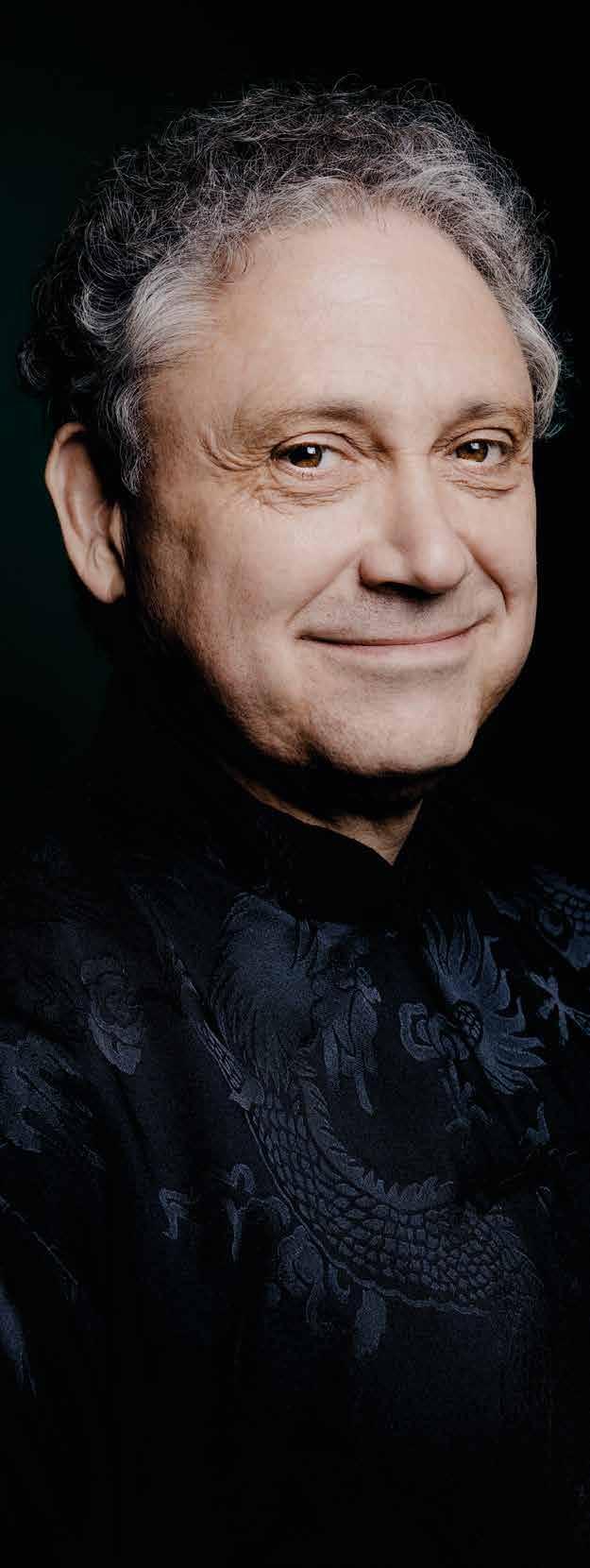
The British musician Richard Egarr (Lincoln, 1963) is in great demand as a conductor and harpsichordist. Since 2019, he has been a permanent guest conductor with the Residentie Orkest, in The Hague. He is also an Artistic Partner of the Saint Paul Chamber Orchestra and until recently was Music Director of the Philharmonia Baroque and Chorale and Music Director of the Academy of Ancient Music. As a harpsichordist, Richard Egarr performs in various chamber music ensembles and as a soloist. He has conducted the London Symphony Orchestra, the Royal Concertgebouw Orchestra and the Philadelphia Orchestra, among others. Along with his wife, pianist Alexandra Nepomnyashchaya, he formed Duo Pleyel, which focuses on performing the quatre mains repertoire of composers like Johann Christian Bach, Mozart, Fauré, Debussy and Ravel.
Richard Egarr started his musical career as a choirboy at York Minster, and went on to study organ at Clare College and later harpsichord with Gustav and Marie Leonhardt, in Amsterdam and Cambridge. He used to teach harpsichord and fortepiano at the Conservatorium van Amsterdam and is currently a guest teacher at the Koninklijk Conservatorium Den Haag. With the Netherlands Bach Society, Richard Egarr has recorded Concerto in D major (BWV 972), ‘Brandenburg’ concerto no. 5 in D major (BWV 1050) and Violin Concerto in D minor (BWV 1052r) for All of Bach.
Watch
Richard Egarr on All of Bach






















We wish you a wonderful evening










1. Koor Kyrie eleison.
2. Duet – sopraan 1 en 2
Christe eleison.
3. Koor
Kyrie eleison.
4. Koor
Gloria in excelsis Deo, et in terra pax hominibus bonae voluntatis.
5. Aria – sopraan 2
Laudamus te, benedicimus te, adoramus te, glorificamus te.
6. Koor
Gratias agimus tibi propter magnam gloriam tuam.
7. Duet – sopraan en tenor
Domine Deus, Rex coelestis, Deus Pater omnipotens.
Domine Fili unigenite
Jesu Christe altissime. Domine Deus, Agnus Dei, Filius Patris.
8. Koor
Qui tollis peccata mundi, miserere nobis, suscipe deprecationem nostram.
Lord, have mercy.
Christ, have mercy.
Lord, have mercy.
Glory to God on high, and on earth peace to persons of good will.
We praise you, we bless you, we worship you, we glorify you.
We give you thanks on account of your great glory.
Lord God, heavenly king, God Father almighty, Lord only begotten Son, Jesus Christ most high, Lord God, Lamb of God,Son of the Father.
You who take away the sins of the world, have mercy on us; you who take away the sins of the world, accept our prayer.
9. Aria – alt
Qui sedes ad dexteram Patris, miserere nobis.
10. Aria – bas quoniam tu solus sanctus, tu solus Dominus, tu solus altissimus, Jesu Christe.
11. Koor
cum Sancto Spiritu in gloria Dei Patris, amen.
You who sit at the right hand of the Father, have mercy on us, for you alone are holy, you alone are Lord, you alone are most high, Jesus Christ, with the Holy Spirit in the glory of God the Father, amen.
12. Koor
Credo in unum Deum.
13. Koor
Credo in unum Deum. Patrem omnipotentem, factorem coeli et terrae, visibilium omnium et invisibilium.
14. Duet – sopraan, alt Et in unum Dominum Jesum Christum, Filium Dei unigenitum et ex Patre natum ante omnia secula. Deum de Deo, lumen de lumine, Deum verum de Deo vero, genitum, non factum
I believe in one God.
I believe in one God, the Father almighty, maker of heaven and earth, of all things, seen and unseen.
And I believe in one Lord, Jesus Christ, the only begotten Son of God, born of the Father before all the ages, God from God, light from light, true God from true God, begotten, not made,
consubstantialem Patri, per quem omnia facta sunt, qui propter nos homines et propter nostram salutem descendit de coelis.
15. Koor et incarnatus est de Spiritu Sancto ex Maria virgine, et homo factus est.
16. Koor
Crucifixus etiam pro nobis sub Pontio Pilato, passus et sepultus est,
17. Koor et resurrexit tertia die secundum scripturas, et ascendit in coelum, sedet ad dexteram Dei Patris, et iterum venturus est cum gloria judicare vivos et mortuos, cuius regni non erit finis.
18. Aria – bas
Et in Spiritum Sanctum Dominum et vivificantem, qui ex Patre Filioque procedit; qui cum Patre et Filio simul adoratur et conglorificatur; qui locutus est per Prophetas. Et unam sanctam catholicam et apostolicam ecclesiam.
19. Koor
Confiteor unum baptisma in remissionem peccatorum.
of one substance with the Father; through whom all things were made, the Son who on account of us human beings and on account of our salvation, came down from the heavens,
and was embodied in flesh, from the Holy Spirit, of the Virgin Mary, and was made a human being.
He was also crucified for us under Pontius Pilate; he suffered on the cross and was buried, and rose again on the third day in accordance with the scriptures, and ascended into heaven, sitting at the right hand of God the Father; and he will come again with glory to judge the living and the dead, of whose reign there will be no end.
And I believe in the Holy Spirit, the Lord and giver of life, who proceeds from the Father and the Son; who is worshiped and glorified together with the Father and the Son, the Spirit who spoke through the Prophets; and I believe in one holy, world-wide, and Apostolic Church.
I confess one baptism for the forgiveness of sins,
20. Koor et expecto resurrectionem mortuorum et vitam venturi seculi, amen. .
and I look forward to the resurrection of the dead; and the life of the age to come, amen.
21. Koor
Sanctus Dominus Deus Sabaoth. Pleni sunt coeli et terra gloria eius.
Holy Lord God of Hosts, heaven and earth are full of his glory.
22. Koor Osanna in excelsis.
23. Aria – tenor Benedictus qui venit in nomine Domini.
24. Koor Osanna in excelsis.
25. Aria – alt Agnus Dei qui tollis peccata mundi, miserere nobis.
26. Koor Dona nobis pacem.
Hosanna on high.
Blessed is he who comes in the name of the Lord.
Hosanna on high.
Lamb of God, you who take away the sins of the world, have mercy on us.
Grant us peace.
The Netherlands Bach Society is a unique, leading, vocal-instrumental ensemble. We started out over hundred years ago by performing Johann Sebastian Bach’s St Matthew Passion in the Grote Kerk, in Naarden.
The Netherlands Bach Society is a unique, leading, vocal instrumental ensemble. We started out over hundred years ago by performing Johann Sebastian Bach’s St Matthew Passion in the Grote Kerk, in Naarden.
Since then, we have put our heart and soul into sharing Bach’s music with the world. Through educational projects, talent development programmes and around sixty concerts a year, we fulfil our mission: Bach for all. In addition, music lovers all over the world can enjoy All of Bach: our YouTube channel full of top quality recordings of Bach’s music.
Our ensemble comprises professional players and singers, who play historical instruments and are driven by their curiosity and love of performing. Their hearts beat for Bach and his contemporaries.
bachvereniging.nl/en youtube.com/bach
about our musicians
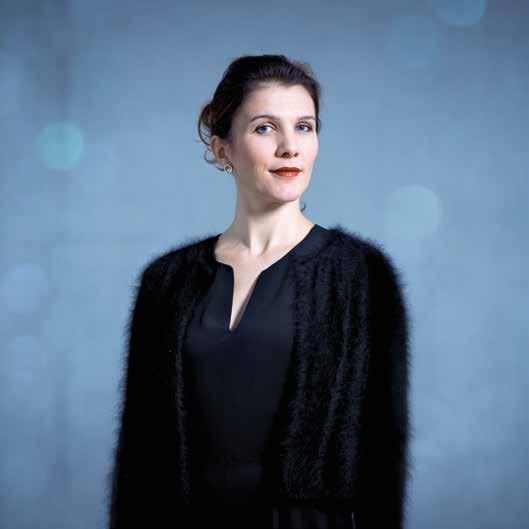
Each concert, get to know a singer or instrumentalist from our ensemble. This time:
Michaela Riener Mezzo soprano
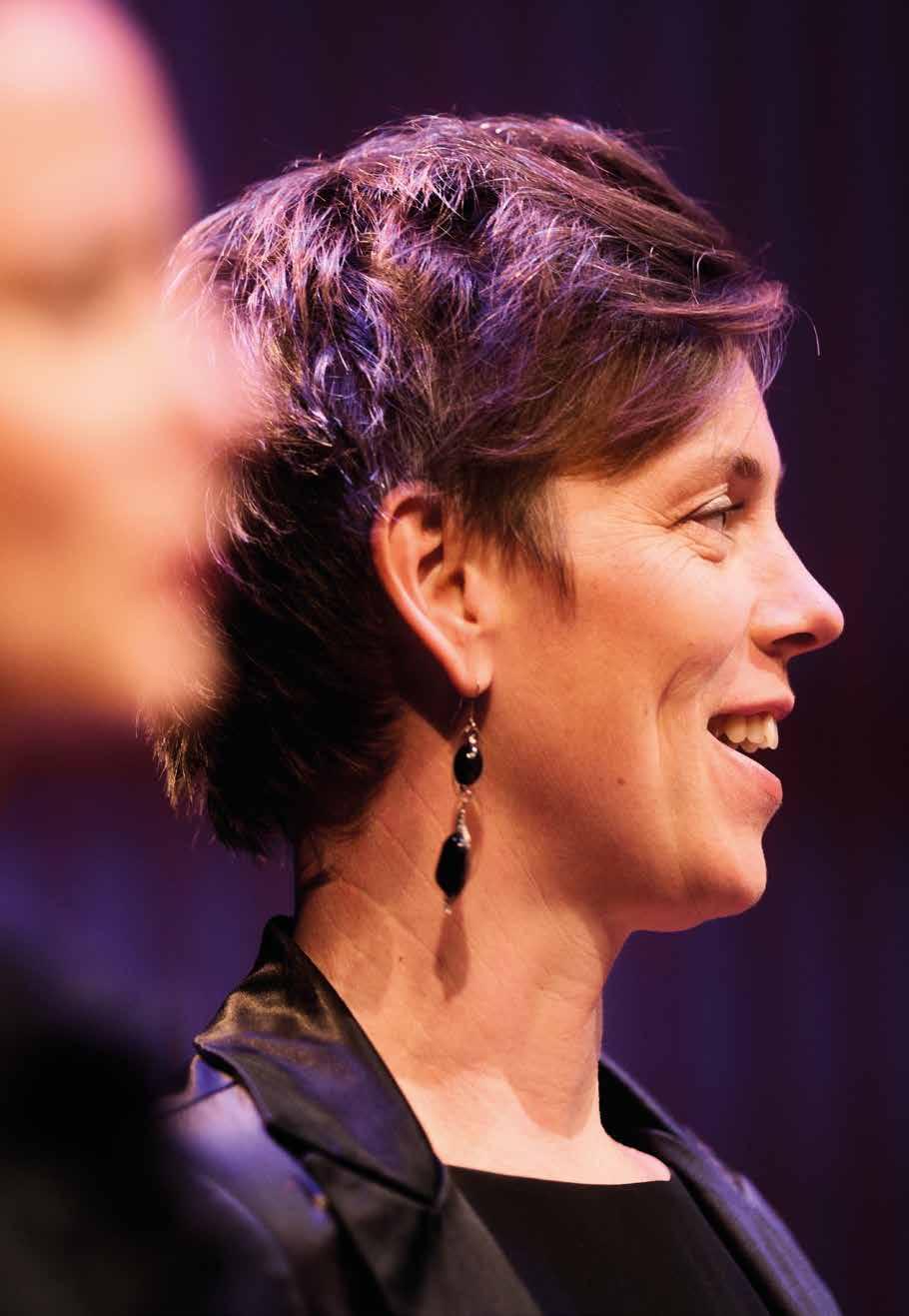
Making music has always been really important to me at Christmas time. As a child, I played recorder duets and trios with my family, while we waited in excitement for the Christkind to ring the doorbell and the living room to be suddenly lit up by the Christmas tree. We’d practiced all the Christmas carols, and we sang and played them beside that magical tree. We always finished off with Silent Night – and only after that were we allowed to open the presents.
Later in the evening came the Christmette, in our little village
in Austria. I took part in that Christmas Eve Mass as an organist and singer, conducted the choir and sang the Christmas Gospel. It always felt festive and warm.
My studies taught me to make music in a more professional way than in the homely atmosphere back then, but the spirit of togetherness has stayed the same. So it feels like a real Christmas present to be on tour in this period with the Mass in B minor. Although it’s different to home, there’s the same strong feeling of connection – between the musicians themselves, and also with the audience.
Especially these days, the ‘Dona nobis pacem’ is a particularly intense moment for me: grand, moving and filled with hope. To my mind, the Christmas message is precisely that – a hope that stands firm because it’s shared; borne aloft by the music of J.S. Bach.
Grants
Ministerie van Onderwijs, Cultuur en Wetenschap
Gemeente Utrecht

Premium partner
Deloitte
Sponsors
Aegon nv
Bomhof Holding B.V.
Delen Private Bank
EQT Life Sciences
EValuation Capital Management B.V.
Grant Thornton
Heijmans Nederland B.V.
INCISION, Sharing Surgical Skills
Kapp Nederland
Koninklijke Boskalis B.V.
KPMG
McKinsey & Company
Philips Nederland bv
Pot Jonker Advocaten
Schiphol Nederland bv
Shionogi B.V.
Simac Techniek NV
TBI Holdings
TenneT Holding bv
Unilever
Vereniging VvAA
VriendenLoterij
Wealth Management Partners NV Wester Investments
The Bach Society is supported on an annual basis by more than one hundred Patrons and over 2000 Friends. We thank all of them for their continued support.
Partners
Pillows Hotels MWH4impact
Private donors

All of Bach is supported by hundreds of donors from home and abroad, for example by adopting an All of Bach recording.
The Bach Society has twelve donors who donate on an annual basis to the Jos van Veldhoven Fund, which invests in talent development, and a select group of donors who support our educational projects.
For the current list of grants, donors and supporters, visit bachvereniging.nl/ support-us.
Contact our department Fundraising & Legacy Giving at development@ bachvereniging.nl or check our website, bachvereniging.n/en/support.
Colofon
Netherlands Bach Society texts Thomas Batelaan, Brechtje van Riel
editor-in-chief Brechtje van Riel translation texts Pond translations translation lyrics Daniel R. Melamed and Michael Marissen beeld Marco Borggreve, Simon van Boxtel, Eduardus Lee, Emile Vrolijk design Atelier Blanco print Opmeer
Netherlands Bach Society Mailbox 295, 3500 AG Utrecht +31 (0)30 - 251 3413
info@bachvereniging.nl bachvereniging.nl/en youtube.com/bach
The Opera Circus with OPERA2DAY 11 January ‑ 13 March 2026
Bezin met Bach Joke Hermsen on nostalgia 26 February 2026
St Matthew Passion with Masaaki Suzuki 21 March 4 April 2026