


Dr
Joanne Harmon

This November edition is jam packed with lots of pain goodies. With the usual spring weather, now is a good time to take a break and have a cuppa with the latest APS news.
To begin with, instead of mowing the lawn or weeding the garden, start planning for next year’s APS conference in Adelaide. With an excellent array of topical sessions- this will be a blast. Not to mention the social functions as well. It is such an inspiration to be able to also share the impact that our APS conference has had on those who received travel grants.
Check your social diaries people! It is exciting to see upcoming APS social networking events are coming to a state/territory near you. Please do send us your photos when you attend as we love to highlight what our members are up to.
We have a great array of interesting articles for reading and the latest report from our president.
As always, keep sending us your publications, we do appreciate the opportunity to share what is happening with our readership.
Kind regards
Dr Joanne Harmon
Bernadette Smith
Welcome!
Reflecting on the past two months since our Strategic Planning Meeting, one thing is clear, the Australian Pain Society (APS) is shaping its future, with a renewed focus on better meeting the needs of our members and the pain sector we serve. With that in mind, I’m trialling a new feature called In the Loop, a snapshot of the exciting initiatives unfolding across APS and the thoughtful work happening behind the APS Board table as we continue shaping our future together.
Now, I am aware that what most weary clinicians, researchers, and students don’t need is another long President’s column competing for their limited attention. So, in the spirit of clarity (and everyone’s sanity), I’ll keep this short, sharp, and hopefully worth the read.
Each edition will feature brief, easy-to-digest highlights of the work driving APS forward. We’ll also be putting a spotlight on different aspects of APS, from our committees to key projects, with a callout for members to engage, contribute, and be part of it.
Our members are, quite simply, our superpower. The Board and committees from the SPC to the SIG’s might be small but mighty, yet it’s your knowledge, energy, and

enthusiasm that keep APS alive, evolving, and well ahead of the curve. By staying connected and drawing on the immense expertise within our community, we can continue to grow and better serve both our members and the broader pain sector.
The Board is currently navigating both exciting developments and significant governance decisions to ensure APS remains sustainable, adaptive, and relevant in a changing environment, keeping members at the heart of every decision. We’re investing differently, focusing on initiatives that deliver value directly to our members, such as the new APS website and member hub, set to launch at the 2026 APS Conference in Adelaide.
In the Loop — and our new digital journey — are all about keeping you informed, strengthening connection, and opening new opportunities to get involved. We’ll be listening, learning, and inviting your feedback as we move forward. Together, we can build a stronger, more connected APS, one that continues to reflect the passion, purpose, and expertise of its members!
Bernadette Smith President Australian Pain Society
Big things are happening at the Australian Pain Society (APS)!
The Board has officially approved the start of discovery work on a new APS website and rebrand, and we could not be more excited to share the journey with you. This is the first of our strategic projects to be rolled out.
This is not just a facelift. It is part of a bigger strategy to listen to our members and invest back into the APS community. Our vision is to create a modern, member-focused hub, a digital home that not only showcases what we do now but also provides the scaffolding for what is ahead for APS.
We are thrilled to announce that SOUL has been appointed to lead this exciting project. Their creative and technical expertise will help us shape a website that’s contemporary, functional, and built around you, our members.
A huge thank-you to Duncan Sanders, (APS Treasurer) who has done a stellar job in leading this project now supported by ACT Director Anjelo Ratnachanda.
Our current website has served us well, a loyal companion through countless conferences, projects, and updates. But we have heard your feedback that it has begun to feel a little ‘vintage’… more flip-phone than smartphone!
Members have told us they would love a site that is easier to navigate, mobile-friendly, and genuinely engaging, one where information is not hiding ‘three clicks deep’, the design needs to feel fresh. So the new platform aims to:
• Deliver a streamlined, intuitive member experience
• Reduce administrative hurdles for joining, renewing, and staying connected
• Support growth through learning, events, and online offerings
• Create a central hub for collaboration across SIGs, members, and partners

We are kicking off with the Discovery Phase, starting with sessions involving the Board, Secretariat, committees and Special Interest Groups (SIGs) to help define what our digital future should look like. But that is just the beginning, this will be a co-designed project, and over the coming months, we will be inviting members to gain your thoughts and provide feedback via newsletter and socials.
Stay tuned for opportunities to get involved as we build a platform that reflects the energy, expertise, and community spirit of the APS.
Here’s to a bright, connected, and memberdriven future!
2. Behind the Scenes –APS Pushes for Pain in National Standards
Advocacy and the role of APS were key discussion points at our recent Strategic Planning Meeting, exploring what advocacy means for us and how we can amplify our collective voice. With that in mind, APS has once again stepped forward in national advocacy, lodging a submission to the Australian Commission on Safety and Quality in Health Care as part of the first consultation round for the NSQHS Standards (3rd Edition). The submission calls for pain management to be recognised as a core element of healthcare quality and safety.

This marks APS’s third attempt to have pain included within the national standards. Previous efforts, led by previous presidents Professor Malcolm Hogg, Dr Geoffrey
Speldewinde and Fiona Hodson with previous directors Joy Burdack and Diann Black, did not quite get across the line, but if there is one thing APS is known for, it is persistence. This latest submission, led with clarity and commitment by Laura Prendergast, APS President-Elect presents a strong and timely case for change.
The submission highlights a major gap: while pain affects up to 80% of hospital inpatients, it is mentioned only once in the current standards. APS argues that effective pain management should be a core measure of quality care, shaping outcomes, recovery, and patient experience.
Our sincere thanks go to Laura Prendergast for her outstanding leadership and to the Faculty
of Pain Medicine (FPM) for their valued letter of support and partnership. Although the consultation timeframe was tight, we hope this submission marks the start of a collaborative effort with the FPM and other key stakeholders to bring pain management to the forefront of quality and safety in healthcare.
Persistence really is our strong suit — and this submission is another proud step in that ongoing effort.
If you are interested in contributing to future advocacy efforts, please get in touch with the APS Secretariat. If the submission progresses to the next consultation phase, we’ll also be calling on members keen to lend their voice to this important change.
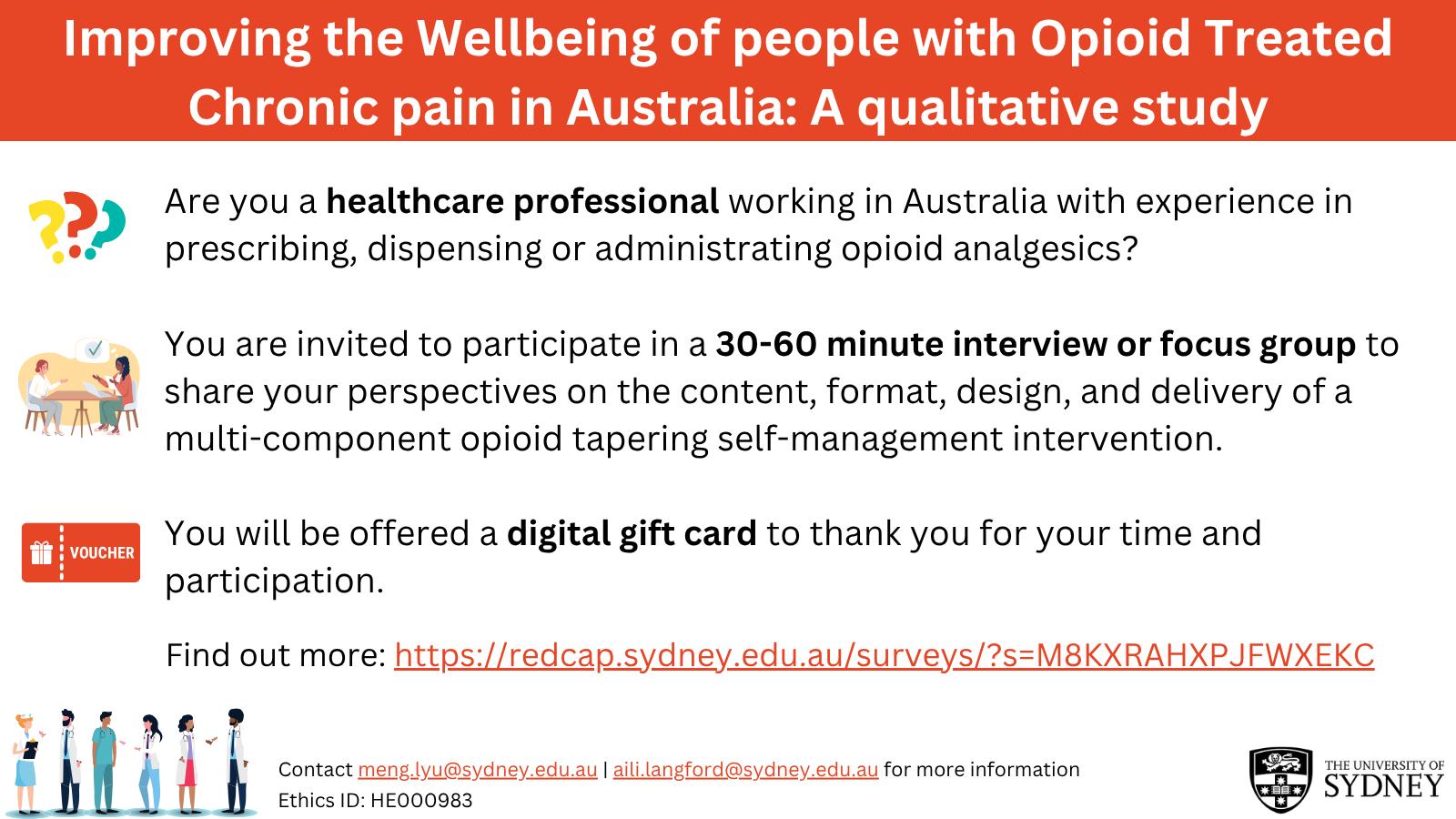
We are excited to see you at the 2026 Australian Pain Society 46th Annual Scientific Meeting. We will be meeting on the lands of the Kaurna people, who are the traditional owners and custodians of the beautiful Adelaide Plains, and we are thrilled to be hosting APS 2026 in Adelaide.
Here are a few things to look forward to in November!
Registration Opens: Tuesday 18 November 2025
Registration information is available on the conference website.
The full conference program will be released shortly, including the list of concurrent sessions and pre-conference workshop programs.
Accommodation options are also available.
Now is the time to start planning your trip to Adelaide next year.
Travel Grant Applications Close: Sunday 30 November 2025
Travel Grant applications close Sunday 30 November.
Further information can be found here: Travel Grants
Professor Michael Cousins AO Travel Grant
If you have any questions, please contact the APS Conference Secretariat: apsasm@dccam.com.au
Secure your spot early and join us at Australia’s leading multidisciplinary pain management conference. It is the only event that brings together experts from medical, nursing, research, and allied health. Together, we offer expert insights and innovation for managing the complex nature of chronic pain.
Complete the Expression of Interest form to be kept up to date with conference news as it becomes available.
Become a member and save on your Australian Pain Society (APS) 2026 registration fee!
Early Bird Register before 24 February 2026
Non-Member Registration Price VS
Becoming an APS Member
APS Student Member Registration Price
$1,495 OR
Being a member saves you up to $420 after membership fees!
Only $300 Being a member saves you $1,130 after membership fees!
Tell your colleagues who are interested in becoming members so they can save on their registrations too!
Become an APS Member and start saving straight away!
We look forward to welcoming you to Adelaide Convention Centre, SA. Should you have any queries about the conference, please contact the Conference Secretariat.
For timings, registration fees and further information on the Pre-Conference Workshops visit: https://www.dccam.com.au/aps2026/Pre-Conference_Workshops
Morning Workshops

For further information: www.dccam.com.au/aps2026
Questions? Please email us at apsasm@dccam.com.au


For further information: www.dccam.com.au/aps2026
Questions? Please email us at apsasm@dccam.com.au

For further information: www.dccam.com.au/aps2026
Questions? Please email us at apsasm@dccam.com.au
ACUTE PAIN DAY
Pre-Conference Workshop
8:30am - 5:00pm, Sunday 19 April 2026
Adelaide Convention Centre, SA
Registration Fees starting from $160
WORKSHOP OVERVIEW
The Acute Pain workshop is open to all pain clinicians, nurses and allied health members with an interest in acute pain. Attendees can attend as the full day or two half day workshops with exciting practice leaders speaking on topics that are at the forefront of our minds in day to day practice.
Further information coming soon
Pre-Conference Workshop
Beyond Words: Skills for Communicating about Pain with Children
8:30am - 12:30pm, Sunday 19 April 2026
Adelaide Convention Centre, SA
Registration Fees starting from $160
WORKSHOP OVERVIEW
Effective pain communication with children requires creativity, adaptability, and confidence in using language, imagery, and interactive modalities. This workshop will provide participants with opportunities to practice and refine their communication skills with children of different ages, abilities, and cultural backgrounds.
Participants will learn to use hypnotic and mind–body techniques; explain pain and coping creatively; and how to integrate digital technologies into children’s pain care.
Participants will leave with practical tools and strategies; greater communication Confidence and adapt communication to age and needs.
Pre-Conference Workshop
TBC
8:30am - 5:00pm, Sunday 19 April 2026
Occupation-based Approaches for What Matters Most - 12:30pm, Sunday 19 April 2026
Adelaide Convention Centre, SA
Registration Fees starting from $160
WORKSHOP OVERVIEW
To be provided.
This workshop explores the value of occupation-based approaches in persistent pain management through a biopsychosocial lens. Participants will explore theoretical models of practice, debate the role of goals and values in care planning, and apply trauma-informed principles to foster safety and collaboration.
The session will highlight evidence-informed therapy approaches, including single session interventions, to support meaningful engagement and function despite ongoing pain. Attendees will gain practical strategies to enhance therapeutic effectiveness, address psychological and social influences on pain, and increase confidence on using occupation as a therapeutic tool. By the end of the workshop, participants will be equipped to deliver holistic, person-centred, occupation-based care for individuals living with persistent pain.
For further information: www.dccam.com.au/aps2026
Questions? Please email us at apsasm@dccam.com.au
Pre-Conference Workshop
For further information: www.dccam.com.au/aps2026
Questions? Please email us at apsasm@dccam.com.au
further information: www.dccam.com.au/aps2026
Please email us at apsasm@dccam.com.au
Managing Pain in the Context of Functional Neurological Disorder (FND)
8:30am – 12:30pm, Sunday 19 April 2026
Adelaide Convention Centre, SA
Registration Fees starting from $160
WORKSHOP OVERVIEW
The pre-conference workshop provides an opportunity for multi-disciplinary discussion around key areas associated with managing the broader psychological issues in pain management. This workshop acknowledges the complexity of managing pain and FND, with three key learning objectives:
1. To provide a deeper understanding of FND, where pain is a significant factor.
2. To establish principles for the effective assessment and management of patients with FND who experience chronic pain; and
3. To identify the management and treatment options for pain associated with FND.
Pre-Conference Workshop
8:30am - 5:00pm, Sunday 19 April 2026
Adelaide Convention Centre, SA
Registration Fees starting from $160
WORKSHOP OVERVIEW
The Acute Pain workshop is open to all pain clinicians, nurses and allied health members with an interest in acute pain. Attendees can attend as the full day or two half day workshops with exciting practice leaders speaking on topics that are at the forefront of our minds in day to day practice.
Pre-Conference Workshop
Occupation-based Approaches for What Matters Most
1:30pm – 5:00pm, Sunday 19 April 2026
Adelaide Convention Centre, SA
Registration Fees starting from $160
WORKSHOP OVERVIEW
The Basic Pain Research Workshop will bring together lab-based pain researchers, clinicians, and students interested in the latest advances in pain science.
The first session will feature three leading speakers exploring mechanisms and clinical translation of treatments for endometriosis pain. The second session will present three talks on fundamental pain signalling pathways and their therapeutic implications. To support the next generation of pain researchers, the workshop will also host a Three Minute Thesis competition, with a prize sponsored by APAC Scientific. Attendees will gain fresh insights into translational pain research, opportunities for discussion, and inspiration for advancing future discoveries.
For further information: www.dccam.com.au/aps2026
Questions? Please email us at apsasm@dccam.com.au
For further information: www.dccam.com.au/aps2026
Questions? Please email us at apsasm@dccam.com.au
Pre-Conference Workshop
1:30pm - 5:00pm, Sunday 19 April 2026
Adelaide Convention Centre, SA Registration Fees starting from $160
WORKSHOP OVERVIEW
This interactive workshop is designed for health professionals involved in perioperative and chronic pain management. Led by experts in anesthesiology, pharmacy, and clinical pharmacology, the session will explore evidence-based use of ketamine, lidocaine, dexamethasone, NSAIDs, and skeletal muscle relaxants.
Participants will engage in case-based discussions and panel Q&As to deepen understanding of pharmacologic strategies and identify future priorities for improving medication use. Drawing on lessons from opioid stewardship, the workshop aims to equip attendees with practical insights to reduce medication-related harms and enhance patient outcomes through tailored, multidisciplinary approaches.
Pre-Conference Workshop
Clinical reasoning for pain physiotherapists
1:30pm – 5:00pm, Sunday 19 April 2026
Adelaide Convention Centre, SA
Registration Fees starting from $160
WORKSHOP OVERVIEW
This workshop will be focussed on developing the clinical reasoning skills for physiotherapists working with people with complex and/or chronic pain.
We will critically review current existing clinical reasoning frameworks, and present and evaluate a new model that captures a biopsychosocial approach to the assessment and treatment of pain. Using clinical vignettes, participants will be invited to evaluate the usability, clarity, and potential implementation into their clinical setting of a newly developed clinical reasoning tool for physiotherapists working with complex and/or chronic pain. There will also be plenty of time for facilitated question time with our expert panel.
The Australian Pain Society (APS) is pleased to announce the availability of several Travel Grants for members to present their research at our Annual Scientific Meeting (ASM).
Travel Grants are awarded as follows:
• PhD students (up to the value of $500)
• A single dedicated Travel Grant for a Pain in Childhood (PinC) SIG member ($500)
• A single dedicated Travel Grant for a Basic Pain Research (BPR) SIG member ($500)
• If funds permit, further travel grants may be offered to nurses, allied health professionals, and other post-graduate students.
This Travel Grant program is designed to encourage contribution to, and participation in the ASM, and is made possible through an allocation of a capped pool of APS operating funds.
Full eligibility criteria and Terms and Conditions are available on the Travel Grants webpage.
Professor Michael Cousins AO Travel Grant
In honour of Professor Michael Cousins AO, the APS is pleased to announce a single, dedicated Travel Grant for an Allied Health Practitioner (AHP) member to present their research abstract at our Annual Scientific Meeting (ASM).
The Professor Michael Cousins AO Allied Health Practitioner Travel Grant includes:
• Complimentary ASM registration at the relevant early bird rate
• $500 towards ASM travel and accommodation expenses
To be considered for any Travel Grant:
a. an EOI for a Travel Grant must be indicated when your abstract is submitted; AND
b. a Travel Grant Application form must be submitted to aps@apsoc.org.au by 5pm AEDT on 30 November 2025 – no exceptions.
Michael Ferraro
Michael Ferraro is a doctoral researcher at the Centre for Pain IMPACT, Neuroscience Research Australia and the School of Health Sciences, University of New South Wales. His research focuses on the evaluation of treatments for chronic pain.
2025 Australian Pain Society 45th Annual Scientific Meeting
Thanks to the generous support of the Australian Pain Society (APS) Travel Grant, I was able to attend the 2025 Annual Scientific Meeting (ASM) in Melbourne. The grant covered my travel and accommodation from Sydney and enabled me to participate fully in the conference program and networking events.
At this year’s ASM, I had the opportunity to present findings from our Cochrane systematic review and meta-analysis of ketamine for chronic non-cancer pain. This review evaluated the available randomised controlled trial evidence for ketamine across a range of pain conditions, focusing on both benefits and harms. I was fortunate to receive the Best Free Paper Award for this presentation, and I appreciated the thoughtful feedback and discussion it prompted. Several delegates shared reflections on their clinical experience with ketamine, which was useful for contextualising our findings and considering gaps to address in future research. It was encouraging to see the topic resonate with both researchers and clinicians. I feel fortunate to have had the opportunity to disseminate our work to a national audience.
This was my fourth APS ASM, and it continues to be the meeting I look forward to most each year. While I regularly attend other national and international conferences, APS offers a valuable opportunity to engage with the Australian pain research and clinical community. The program strikes a good balance between scientific depth and clinical

relevance, and the size and structure of the meeting fosters connection and collaboration across disciplines and career stages. I always leave APS feeling more informed about the current landscape of pain research in Australia and better connected to the people working to advance it.
There were many excellent presentations this year, but one that particularly stood out was Professor David Bennett’s plenary on voltage-gated sodium channels and pain. His talk provided a compelling overview of how rare genetic pain disorders have advanced identification of novel drug targets, as well as the challenges of translating these findings into new treatments. The talk closely aligned with my own interests in identifying effective treatments for neuropathic pain.
The conference provided a valuable opportunity to reconnect with colleagues and speak with researchers working on related topics. A few of these conversations have continued since the meeting, with some early discussions around potential collaboration.
I am really looking forward to APS 2026 in Adelaide - particularly the plenary presentations and the chance to see new work from local research groups. It is always a privilege to be part of the APS community, and I am grateful for the Society’s ongoing support for early and mid-career researchers.
Declaration: Michael Ferraro has nothing to declare.
Dolores Huang
Dolores Huang is a third-year PhD candidate at the University of Sydney, based in the School of Medicine and Health. Her research focuses on the neural mechanisms underlying chronic pain, with a particular interest in using ultrahigh field MRI to investigate altered brain activation patterns in conditions such as complex regional pain syndrome (CRPS).
2025 Australian Pain Society 45th Annual Scientific Meeting
I am sincerely grateful to have been a recipient of the Travel Grant for the 2025 Australian Pain Society (APS) Annual Scientific Meeting (ASM). Receiving this support made it financially feasible for me to attend the conference in Melbourne and share my research with a broad and engaged community of pain researchers and clinicians.
At the meeting, I presented a poster titled “Altered subcortical and brainstem activation patterns in response to a noxious heat stimulus in complex regional pain syndrome: an ultrahigh resolution magnetic resonance imaging study.” This project used 7T MRI (7 Tesla Magnetic Resonance Imaging) to investigate how individuals with complex regional pain syndrome (CRPS) process noxious stimuli, highlighting changes in regions such as the periaqueductal grey, thalamus, and other subcortical structures compared to healthy controls. It was encouraging to see strong interest from attendees, particularly those working in imaging, pain modulation, and translational neuroscience. Several thoughtful questions and comments during the poster session helped me think more critically about how to frame and extend this work.
This was my third time attending the APS ASM, and once again it stood out for its balance of clinical and research perspectives, as well as its highly collegial and welcoming atmosphere. Compared to other conferences I have attended—often focused more narrowly

on neuroscience or imaging—the APS meeting consistently fosters a sense of interdisciplinary dialogue, which I greatly appreciate.
One of the most memorable sessions for me this year was the free paper session titled “Central Mechanisms of Pain.” I was particularly impressed by the presentation on the role of thalamocortical dysrhythmia in chronic pain states, which complemented some of the neuroimaging themes in my own work. It is exciting to see this kind of mechanistic research increasingly incorporated into clinical conversations.
While I did not meet any potential collaborators this time, the interactions I had—particularly with early-career researchers and clinicians— were still very valuable. These conversations often extended beyond the research itself to broader discussions around career development, mentorship, and the evolving challenges in pain research.
Attending the APS ASM continues to be a highlight of my academic calendar, and I am already looking forward to returning next year. I hope to present follow-up analyses from this CRPS study or possibly new data from related work in neuropathic pain conditions. The community built around APS is not only intellectually stimulating but also deeply supportive, and I feel fortunate to be part of it.
Thank you again to the APS and the Travel Grant committee for enabling my attendance.
Declaration: Dolores Huang has nothing to declare
Hyunsol Lim
Hyunsol Lim is a PhD candidate at the University of Sydney in the School of Medical Sciences [Neuroscience]. Their research focuses on the cellular mechanisms underlying the development and maintenance of chronic orofacial neuropathic pain, with particular interest in the brainstem trigeminal nuclei.
2025 Australian Pain Society 45th Annual Scientific Meeting
The Australian Pain Society (APS) Annual Scientific Meeting (ASM) is a hallmark event of the year, an opportunity to share and celebrate the progress we have made as a community in broadening our understanding of pain and providing better pain management. I am incredibly grateful to have been awarded the Australian Pain Society (APS) Travel Grant to attend the 2025 APS Annual Scientific Meeting in Melbourne. I was able to fully engage with the conference program, present my research, and connect with peers and senior researchers from across Australia and beyond.
This year marked my third time attending the APS Annual Scientific Meeting, and each year has provided me with invaluable professional and academic growth. Over the past three years, I have presented a poster on different stages of my honours and PhD research, progressively building upon the previous year’s findings. I was able to present data from a study that compares neuronal activation following trigeminal nerve injury between male and female rats, recognising the importance of sex differences in chronic pain research. This more inclusive approach reflects real-world chronic pain populations and contributes to a more comprehensive understanding of orofacial neuropathic pain mechanisms.
My poster received thoughtful feedback and sparked several insightful conversations with clinicians and researchers working in related fields. It was rewarding to see the interest in my work, particularly regarding the translational

potential of understanding sex-based differences in pain processing. The conference environment was, as always, supportive and intellectually stimulating, with many attendees taking the time to ask detailed questions about the experiment and share relevant perspectives.
One of the most valuable aspects of attending the APS ASM is the opportunity to interact with other pain specialists and strengthen professional relationships that can be difficult to maintain across distances. The meeting provides a central hub for researchers and clinicians with a shared interest in pain to reconnect, share updates on ongoing projects, and discuss ideas for future collaborations. It is a space where networking feels genuine, across various disciplines, and career stages.
Unsurprisingly, my favourite sessions this year were those focused on neuropathic pain. The complexity of neuropathic pain continues to challenge and motivate my research. It is exciting to hear from clinicians and researchers who are tackling these issues from different angles—whether through basic science, translational models, or patient-centred care.
Looking ahead, I am already excited about returning to the APS ASM next year. I plan to present new data on astrocyte GFAP expression in the trigeminal nuclei following trigeminal nerve injury in both sexes. I believe this work offers a novel contribution to the field and will shed light on the cellular mechanisms involved in the development and maintenance of chronic orofacial neuropathic pain.
The APS ASM is more than just a meeting—it is a space for learning, connection, and inspiration. I am deeply thankful for the support and look forward to continuing to contribute to the community in the years to come.
Declaration: Hyunsol Lim has nothing to declare.
Please join us for an Australian Pain Society (APS) social event! Come along and catch up with your local APS colleagues and learn more about what other people are doing in your state.
In fact, if you have friends/colleagues with an interest in pain management but who are not members of the APS, why not bring them along too, so that they can connect with the APS community and find out more about how the APS can help support them.
The evenings will be largely unstructured so you can focus on meeting and connecting with others. Hope you can make it!
Bernadette Smith
APS President

Adelaide – Thursday 13 November 2025
5.00pm onwards
West Oak Hotel (Beer Garden)

Darwin – Thursday 13 November 2025
5.30 – 7.00pm
The Oyster Bar, Darwin Waterfront Precinct 208 Hindley Street, Adelaide 19 Kitchener Drive, Darwin RSVP by 07 November 2025 here!
RSVP by 10 November 2025 here!

Perth – Thursday 13 November 2025

Mebourne – Wednesday 26 Nov 2025
6.30 – 9.00pm 6:30pm onwards
The Brisbane Hotel (The Garden) State of Grace 292 Beaufort Street, Highgate, Perth 27 King Street, Melbourne RSVP by 07 November 2025 here!
RSVP by 19 November 2025 here!
WATCH THIS SPACE! Further events are being organised, more details to follow…
For more information
Australian Pain Society www.apsoc.org.au
New Zealand Pain Society www.nzps.org.nz
Faculty of Pain Medicine, Australian and New Zealand College of Anaesthetists www.fpm.anzca.edu.au
International Association for the Study of Pain (IASP) www.iasp-pain.org



Dr Saurab Sharma
Dr Sharma is an NHMRC Emerging Leadership Fellow and Chief Clinical Scientist at the Pain Management and Research Centre, Royal North Shore Hospital, Northern Sydney Local Health District, Sydney. Dr Sharma’s research aims to improve pain care for vulnerable populations around the world. He currently co-chairs the 2025 IASP Global Year on Pain in Low/MiddleIncome Settings.
2025 Global Year: Pain Management, Research and Education in Low- and Middle-Income Settings
Chronic pain is a global problem disproportionately affecting people from the vulnerable groups. People living in low/middleincome countries (LMICs); people living in rural/remote areas in high-income countries; migrants, non-dominant cultures, refugees and asylum seekers in high-income countries; and Aboriginal peoples in colonised countries are some examples that are, at least partly, a result of sociopolitical and systemic factors. Globally, research to inform effective and (culturally)

safe high-quality care in these communities are limited, therefore, also limiting high-quality pain care in these communities.
The 2025 International Association for the Study of Pain (IASP) Global Year focuses on pain management, research and education in low-middle-income settings. It includes a taskforce with members from 26 countries (>60% members from LMICs). The key aims are to raise awareness of pain in low/middleincome settings as a major global issue, and promote advocacy for supporting and improving pain research, management and education in these settings. Sixteen factsheets have been published on the IASP website. Up to 10 webinars are being organised, and peer-reviewed publications for PAIN and Pain Reports have been convened and featured. This is a historic and forward thinking first step, and in the right direction, to address this overlooked field of pain. All IASP chapters and federations are well positioned to promote this initiative beyond the 2025 Global Year.
When I became interested in pain as a physiotherapist/educator/researcher in Nepal, there were only a handful publications on pain a decade ago. Pain was not listed as a research priority. We had limited to no data on pain prevalence and burden. There was no local research to support culturally sensitive and appropriate pain assessment and treatment. With a small IASP collaborative grant, collaboration and mentorship from international researchers, and enthusiastic support from some local students and colleagues, we were able to identify pain research priorities, develop a pain research program in Nepal, and address key research priorities.
This program of research, with advocacy, led to musculoskeletal conditions including low back pain and osteoarthritis being included as national health research priority, and a question around low back pain was also included within the national health survey. The latter was critically important to understand the burden and correlates of low back pain at the population burden. We now know that chronic pain affects up to one in two peoples in Nepal and one in four people are affected by activity and/or work limiting low back pain. We still have a long way to go to address this burgeoning public health problem. Local clinical, research and policy champions are needed to advance the field, not just locally but internationally.
LMICs constitute 85% of the world population. The majority of the low-income countries and several middle-income countries lack pain research still. To understand, support and advance pain research and care in these countries, we have convened a consortium of pain researchers, educators, clinicians, and people with lived pain experience from over
35 countries with an initial focus on low back pain. One key emphasis of this network is on research capacity building in LMICs to support high-quality pain research. LMIC-specific PhD and research training scholarships, especially for the countries where pain research is at an early stage could springboard the pain research landscape in these countries. Mentorship across borders is necessary to support early career researchers in LMICs particularly where local mentorship is lacking. APS members are well positioned to champion and lead by example, just like many have. International collaborative research grants to facilitate pain research in LMICs are also needed.
At an individual level, everyone can contribute to close the global disparity in pain research and care. We could advocate for more scholarships and grants prioritising candidates and research in LMICs institutionally and nationally. Small efforts can go long way! In 2015, I made my first overseas trip to Australia to attend a small pain conference and a workshop on pain. The registration fees were kindly waived for me. Such act of kindness from the organisers was pivotal point in my career. A decade later, speaking at the APS conference as a plenary speaker was beyond my imagination. This opportunity fills me with more enthusiasm to be the voice for the most vulnerable members of these communities and partner with them to identify and address their pain care needs.
Declaration: Dr Sharma has received Emerging Leadership Investigator Grant from the National Health and Medical Research Council and seed funding from the Australia New Zealand Musculoskeletal Clinical Trials Network to advance pain management for culturally diverse Australians.
Wednesday 26 November 2025, 1-2pm AEDT (via Zoom)
The purpose of our Basic Pain Research Special Interest Group (BPR SIG) is to share, improve, and promote scientific knowledge and understanding of the mechanisms of nociception and pain across all levels of investigation, from molecular and cellular analyses to preclinical or clinical studies.
This forum will provide an informal platform to promote and share our research and insights, from early career researchers (ECRs) (including students) and senior colleagues.
Session 15: Spinal Cord Signalling and Proteomic Profiling in Chronic Pain
Summary:
The spinal cord dorsal horn is a critical hub where sensory information is integrated and modulated, shaping how we perceive pain. In chronic pain, the electrophysiological signalling of dorsal horn neurons is profoundly altered, driving persistent hypersensitivity and maladaptive processing.
This session will focus on bridging rodent model findings with human spinal cord tissue recordings and translating these insights back to experimental systems.
Presentation 1: Cellular electrophysiological signalling in the spinal cord dorsal horn in chronic pain: from rodent to human and back again by Professor David Spanswick
Second-order neurons in the superficial laminae of the spinal cord receive primary afferent sensory input from the periphery and are extensively modulated by inputs from higher centres. As such, they have been a principal area of interest for developing novel analgesics, unfortunately with limited success. This has been suggested to reflect a lack of translational capacity of rodent models to humans. However, a lack of understanding of the functional organisation and operation of the spinal circuits contributing to chronic pain may also significantly contribute. Using in vitro electrophysiological approaches in isolated spinal cord slice preparations from rodents, primates and humans, Professor Spanswick's presentation will describe properties of neurones in chronic pain states and signalling mechanisms that may be highly conserved across species, representing new targets for novel therapeutic approaches to treat chronic pain.
Presentation 2: Acute to Chronic Pain Transition, Proteomics and Prediction by Associate Professor David Mahns
Chronic pain affects over 20% of the population and is a major burden on the healthcare system, often leading to ineffective treatments and increased opioid use. This contributes to high rates of hospital and emergency department visits among pain patients. To better understand chronic pain, we are using an integrative systems approach that combines psychophysical data, brain activity, nerve function, and plasma proteomics across various groups, including healthy individuals and fibromyalgia patients. Our goal is to identify biological pathways that predispose people to chronic pain, and we have recently discovered a novel proteomic signature that can predict the transition from acute to persistent pain in healthy individuals.
The invited speakers:
• Professor David Spanswick, Faculty of Biomedical and Psychological Sciences, Monash Biomedicine Discovery Institute, Monash University, VIC, Australia
• Associate Professor David Mahns, School of Medicine, Western Sydney University, NSW, Australia
All are welcome to attend, including postgraduate students.
Please be advised that the speakers and most of the audience may not have clinical or healthcare backgrounds. Therefore, they may not be able to provide advice about managing pain from a healthcare perspective.
We look forward to seeing you there, please register here.
MacDonald DI, Jayabalan M, Seaman JT, Balaji R, Nickolls AR, Chesler AT. 2025. Pain persists in mice lacking both Substance P and CGRP signaling. eLife 2024;13:RP93754.
Reviewer: Dr. Dusan Matsuica, Senior Lecturer and Group Lead – Pain and Sensory Cell Biology Lab, Flinders Health and Medical Research Institute, College of Medicine and Public Health, Flinders University, South Australia.
DOI: doi.org/10.7554/eLife.93754
Review of article
Study group
The investigators utilised Tac1 and Calca double knockout mice (lacking Substance P and calcitonin gene-related peptide signalling, respectively) and wild-type mice as controls. Both male and female mice were included, with relevant sample sizes reported for each behavioural assay, ranging from six–19 animals per group, typically aged six weeks at the start of the experiments. Exact participant numbers per experimental condition are provided in figure legends within the supplementary material.
Aims
The primary objective was to determine whether the combined loss of two canonical neuropeptides, Substance P and calcitonin gene-related peptide (CGRPα), would critically disrupt pain-related signalling and behaviour. Given their high expression within painresponsive neurons throughout the nervous system and their long-standing implication in both acute and chronic pain pathways, the authors hypothesised that simultaneous deletion of both peptides might be required to observe substantial analgesic effects, potentially overcoming redundancy observed upon single-peptide deletion.
BLOG WEB
Generation of Tac1 and Calca double knockout mice was confirmed by immunohistochemistry, which showed an absence of neuropeptide staining in dorsal root ganglion (DRG), spinal cord dorsal horn, and key brainstem regions. The mice underwent a wide range of somatosensory and pain-relevant behavioural assays, including mechanical, thermal, chemical, visceral, and inflammatory pain models, as well as assays for itch, neurogenic inflammation, and neuropathic pain following nerve injury or chemotherapeutic insult. Detailed methods are provided for behavioural, in vitro, and immunohistochemical procedures, with blinding and randomisation protocols described.
Contrary to expectations, double knockout mice displayed largely intact responses across all tested pain modalities, regardless of stimulus type or chronicity. Acute pain, chronic inflammatory pain, neurogenic inflammation, and neuropathic pain after nerve injury or chemotherapy were all observed at levels indistinguishable from wild-type controls. Key physiological assays confirmed that neither mechanical nor thermal withdrawal thresholds, nor viscerally-induced pain behaviours, were altered in knockout animals.
The authors conclude that even in combination, Substance P and CGRPα are dispensable for acute and chronic pain phenotypes in mice. These results challenge prevailing assumptions about the critical importance of these peptides for pain transmission and suggest a need to reevaluate the neuropeptide-centric view of pain pathways.
Reviewer's critique & take-home message
This article makes a substantial contribution to pain neurobiology by using rigorous knockout models to reassess the roles of Substance P and CGRPα. However, a major limitation is the lack of direct investigation into the mechanisms of pain within nervous tissue at a cellular or synaptic level. The behavioural assays, though extensive, measure only gross output and do not explore cellular circuit adaptations, central sensitisation, or synaptic plasticity—areas critically relevant to chronic pain and its prevention. The study’s reliance on immunohistochemistry and receptor assays leaves open critical questions regarding compensatory neuropeptide function or glutamatergic transmission at DRG, spinal cord dorsal horn, and higher brain centres. Moreover, the paper does not clarify how the absence of these well-established neuropeptides might impact migraine pathogenesis or the efficacy of CGRPα-based therapies in humans. Given the proliferation of clinical use of CGRPα monoclonal antibodies and antagonists for migraine, understanding their mechanistic basis—especially when pain persists after genetic ablation—is vital. Thus, the missed opportunity lies in failing to probe deeper into nervous tissue responses (e.g., electrophysiology, transcriptomic changes, or microcircuit mapping) following knockout, which would have illuminated alternate pain pathways and informed new analgesic strategies.
This study robustly demonstrates that Substance P and CGRPα are dispensable for pain behaviours in mice, but it also highlights a persisting gap in preclinical pain research. Rodent models, while invaluable, cannot fully recapitulate human chronic pain, especially where comorbidities modulate neuroimmune interactions and tissue microenvironments. The study’s finding, that canonical neuropeptides are ultimately non-essential for pain in mice, raises the provocative possibility that pain mechanisms are far more complex and contextsensitive than previously assumed. However, the translational relevance for human chronic pain remains to be addressed, and the authors have provided a solid platform that should encourage the investigation of mechanistic insight within nervous tissues and implications for migraine and chronic pain pharmacology building on these behavioural endpoints.
In summary, while this study robustly deconstructs a long-held hypothesis, advancing our understanding of redundant and nonessential pain signalling pathways in rodents, it also accentuates the urgent need for innovative strategies to interrogate pain mechanisms in human nervous tissues, particularly with chronic pain development as a key focus.
Declaration
No conflicts of interest to declare. This review is completed independently and reflects the reviewer’s interpretation of the article’s methodological strengths and limitations.
Ding Y, Zuo Y, Zhang B, Fan Y, Xu G, et al.
"Comprehensive human proteome profiles across a 50-year lifespan reveal aging trajectories and signatures." Cell. 2025;188:5763–5784.
Reviewer: Dr. Dusan Matsuica, Senior Lecturer and Group Lead – Pain and Sensory Cell Biology Lab, Flinders Health and Medical Research Institute, College of Medicine and Public Health, Flinders University, South Australia.
DOI: doi.org/10.1016/j.cell.2025.06.047
Review of article
Study group
The study included 76 individuals, spanning 14 to 68 years of age, with both genders represented. A total of 516 tissue samples were procured, covering 13 distinct human tissues from multiple organ systems including cardiovascular, digestive, immune, endocrine, respiratory, integumentary, musculoskeletal systems, and blood.
Aims
The primary aim was to generate a comprehensive, multi-tissue human proteomic atlas across five decades of life. Secondary objectives included profiling age-related proteomic changes within and across tissues, constructing tissue-specific biological ageing clocks, and identifying circulating plasma proteins serving as biomarkers of systemic and organ-specific ageing.
Methodology
This cross-sectional study utilised quantitative mass spectrometry-based proteomics to analyse human tissue and plasma. Protein expression was paired with transcriptomic profiling, and relevant histological validation was provided. Advanced computational methods, including elastic net regression and network analyses, were used for developing
organ ageing clocks and mapping inter-tissue interaction networks.
Summary of results
I. Identified over 12,700 proteins across the sampled tissues, with distinct patterns of age-associated protein expression.
II. Demonstrated widespread decoupling of protein abundance from mRNA (Messenger RNA) transcript levels in aged tissues, indicating translational and proteostatic dysregulation.
III. Developed tissue-specific proteomic clocks able to predict biological organ age and highlighted asynchronous ageing rates, blood vessels (notably the aorta) age early and are highly susceptible.
IV. Discovered circulating plasma senoproteins (such as GAS6 and GPNMB) implicated in driving vascular and systemic ageing, establishing a potential link between circulating factors, organ-specific changes, and chronic disease risk.
This study provides the most extensive human proteome reference atlas for ageing to date. It identifies multisystem patterns, organ-specific rates of ageing, and circulating proteins that may serve as targets for diagnostic and therapeutic intervention. The work emphasises the utility of protein-based ageing metrics for understanding and potentially intervening in chronic diseases associated with ageing.
Reviewer's critique & take-home message
The authors deserve massive recognition for constructing a groundbreaking large-scale, multi-organ, multi-omic atlas of human ageing, with granular insights into proteostasis and organ crosstalk. However, a critical shortcoming of the work is the absence of direct nervous tissue (e.g., brain or peripheral
nervous system) in the analysis. This omission is particularly significant given the increasing evidence that nervous system ageing, dysfunction, and chronic pain are deeply intertwined, particularly in the context of late life multimorbidity and neurodegenerative disease.
The study’s focus on tissues with easier procurement risks perpetuating the gap in understanding of how nervous tissue proteome dynamics govern chronic pain, an area where disruptive insights are urgently needed. Nervous tissue is notoriously challenging to collect ethically and at scale, but failure to address these obstacles means missed scientific and clinical opportunities. Establishing detailed nervous tissue proteomics in ageing, despite practical and regulatory impediments, remains crucial not only for clarifying pain mechanisms in the elderly but also for informing interventions targeting sensory, cognitive, and motor decline.
Future research should prioritise partnerships with brain banks and post-mortem tissue consortia to address these critical gaps. More importantly, establishment of a tissue donation programs whether on a state or national basis in Australia would provide a significant global
advantage to our medical research community investigating chronic pain as well as more broadly across multiple disciplines. Without such datasets, our understanding of ageand pain-related proteomic reprogramming remains incomplete, potentially limiting the translational reach of multi-organ ageing signatures into the domains most relevant to chronic pain, neurodegeneration, and quality of life in older adults.
The take-home message is that while the study establishes a valuable foundation for proteomics-driven understanding of ageing, the omission of nervous tissue underscores an urgent, unmet need to champion the logistical, ethical, and methodological challenges inherent in central nervous system (CNS) and peripheral nervous system (PNS) research. Only by closing this gap, will chronic pain and age-related neurodegenerative burdens be effectively addressed.
No conflicts of interest to declare. This review is completed independently and reflects the reviewer’s interpretation of the article’s methodological strengths and limitations
Chen, Y.-C., Bullock, B., Ogbeh, D. I., Ai, J., Okoh, J., Liu, J., Qiang, Y., & Hsia, S. V. (2025). In Vitro Modeling of Human Dorsal Root Ganglion Neurons for GCaMP6-Based Calcium Imaging of Sensory Responses to HSV-1 Infection. Journal of Virological Methods, 115264, SEP25
Reviewer: Benjamin Hoy, PhD StudentPain and Sensory Cell Biology Lab, Flinders Health and Medical Research Institute, College of Medicine and Public Health, Flinders University, South Australia
Dr. Dusan Matsuica, Group Lead - Pain and Sensory Cell Biology Lab, Flinders Health and Medical Research Institute, College of Medicine and Public Health, Flinders University, South Australia
DOI: doi.org/10.1016/j.jviromet.2025.115264
Review of article
Study group
The study utilised the HD10.6 cell line, an immortalised human dorsal root ganglion (DRG)-derived neuronal model. These cells are derived from human embryonic DRG and were immortalised via v-myc transfection and can differentiate into neuron-like cells with nociceptive characteristics, expressing sensory neuron markers and robust electrophysiological properties, including action potential firing and functional expression of nociceptive ion channels such as TRPV1. Note: The characterisation and transcriptomic validation of the HD10.6 cell line, has been conducted by the Molliver laboratory, University of New England, Maine, USA.
Aims
This study aimed to further develop and validate the HD10.6 cell line as a functional model for sensory activation imaging. The study explored the utility of the genetically encoded calcium indicator GCaMP6s, as a molecular
BLOG WEB
tool for imaging sensory activation in HD10.6 cells. By integrating GCaMP6s, a fusion protein comprising GFP, calmodulin (CaM), and the M13 peptide, to monitor intracellular calcium fluctuations for real-time optical imaging of sensory neuron responses, specifically during acute HSV-1 infection. The study also sought to validate this platform for broader applications in sensory physiology and drug screening.
Multiple plasmids were utilised for the production and purification of adeno-associated virus serotype 9 (AAV9) to deliver GCaMP6s efficiently into neuronal cultures, generated via transfection of HEK-293 cells. HD10.6 human dorsal root ganglion cells, differentiated under the influence of nerve growth factor, were infected with AAV9-GCaMP6s and cultured for ten days prior to imaging. Functional responses of HD10.6-GCaMP6s neurons were assessed by fluorescence microscopy following chemical (capsaicin for TRPV1), optogenetic (AAV9-ChR2mCherry), and acute HSV-1 infection (using mCherry-tagged virus for viral replication visualisation). Calcium dependence of neuronal responses was further studied by modulating extracellular calcium concentrations and quantifying HSV-1 gene expression via RT-qPCR.
GCaMP6s was successfully delivered and expressed in differentiated HD10.6 cells, demonstrated by fluorescence responses. Chemical stimulation via capsaicin activated TRPV1, inducing dose-dependent increases in calcium influx as detected by GCaMP6s imaging. Optogenetic stimulation confirmed ChR2-mediated neuronal activation, though the mCherry fluorescence may require further optimisation to track co-infection. Upon HSV1 infection, the HD10.6 cells showed a rapid, transient calcium influx at five minutes postinfection, which declined to background within three hours. Cells with high HSV-1 mCherry
signal exhibited minimal GCaMP6s activation, whereas newly infected neurons retained high activity, implicating viral load in suppressing neuronal calcium dynamics. These results reveal that GCaMP6s-based calcium imaging reliably reports neuronal activity in HD10.6 cells during sensory activation and infection, with activity modulated by extracellular calcium levels and viral replication status.changes, and chronic disease risk.
This study establishes AAV9-delivered GCaMP6s in differentiated HD10.6 human DRG neurons as a scalable, sensitive platform for real-time imaging of calcium-dependent sensory responses, revealing mechanistic details of chemical, optogenetic, and viral activation. The work highlights cellular heterogeneity and dynamic interplay between neuronal activity and viral replication, affirming the model's utility for pathophysiological research and screening therapeutic interventions in sensory biology.
Reviewer's critique & take-home message
This study establishes GCaMP6s-expressing HD10.6 cells as a promising human-derived model for monitoring sensory neuronal activity in response to chemical, optogenetic, and viral stimulation. The model offers translational value for drug discovery and viral neurobiology, enabling scalable, high-throughput optical assays of human dorsal root ganglion-like neurons. By integrating genetically encoded indicators into an immortalised human sensory cell line, this work addresses the major challenge in translational pain research, bridging the gap between rodent preclinical models and human biology.
Human and rodent sensory neurons differ significantly in terms of molecular markers,
size, gene co-expression, neuroanatomical development, as well as functional recovery after injury, making these differences highly relevant for translational neuroscience research. A key limitation is that HD10.6 originates from a single embryonic donor, meaning it represents one genetic and epigenetic background, and this constrains its capacity to capture the diversity inherent in human sensory systems, such as sex-, age-, and genotype-specific differences. Nonetheless, it is the only immortalised, and phenotypically characterised human sensory neuronal cell line currently available, offering a reproducible and scalable system for probing sensory excitability and signal transduction. The alternative: accessing primary human dorsal root ganglion tissue at scale for pursuing high-throughput discovery research in nociceptive neurobiology, poses major ethical and logistical, barriers. Establishing human neuronal tissue banks suitable for research is still many years away, requiring donor coordination frameworks, biobanking infrastructure, and ethical alignment across institutions.
However, despite its single-donor origin, HD10.6 provides an essential, reproducible, and mechanistically rich platform. It represents a critical translational bridge; the first accessible human nociceptive-like culture system that meaningfully advances the field beyond rodentbased models. More importantly, understanding species-specific molecular features will drive the refinement of future animal models, develop better in vitro human neuron models, and interpret experimental outcomes more accurately with respect to human diseases.
Declaration
The reviewers have nothing to declare.
The Australian Pain Society (APS) is keen to share publications from our members with their colleagues via our eNewsletter. If you’ve had an article accepted or published recently, please contact our Assistant Editor Joanne Harmon via the APS Secretariat (aps@apsoc.org.au) with the title, authors, and reference (i.e., journal, volume, and DOI) of your article and request the submission template. We would love it if you also supply a short commentary (300 words max) to give our readers the gist of the article.
An evaluation of a one-day pain science education event in a 16–18 years school setting targeting painrelated beliefs, knowledge, and behavioural intentions: A mixed-methods, non-randomised controlled trial
Thank you to APS member Jashua Pate and their colleagues J Mankelow, C.G Ryan, N Skidmore, J Potter, D Ravindran, R Chattle, S Browne, A Graham and R Newport for sharing the following recent publication.
the Pain Beliefs Questionnaire (PBQ [organic and psychological subscales]), Concepts of Pain Inventory (COPI-Adult), a case vignette, and reflexive thematic analysis of semi-structured interviews.
Article first published online: October 2025
Journal Reference: Mankelow, J., Ryan, C.G., Skidmore, N., Potter, J., Ravindran, D., Chattle, R., Browne, S., Suri, S., Graham, A., Pate, J.W. and Newport, R., 2025. An evaluation of a one-day pain science education event in a 16-18 years school setting targeting painrelated beliefs, knowledge, and behavioural intentions: A mixed-methods, nonrandomised controlled trial. Musculoskeletal Science and Practice, p.103385.
DOI: https://doi.org/10.1016/j.msksp.2025.103385
Abstract
Background
Public understanding of persistent pain is fraught with misconceptions. Pain education in schools may improve public understanding long-term. This study evaluated the impact of a one-day Pain Science Education (PSE) public health event delivered in a 16–18 year old school setting.
Methods Subjects
This was a multi-site, non-randomised controlled, mixed-methods study with three data collection time points: baseline, post intervention, and threemonth follow-up. Participants were high school students ≥16 years old. Pain beliefs, knowledge, and behavioural intentions were assessed with
Results Subjects
Thirty intervention (mean age 16.6 years, 37% female, 63% male) and 24 control group participants (16.9 years, 63% female, 37% male) were recruited. Attending the pain education event was associated with reductions in Organic Beliefs [mean difference −4.4 (95 % CI, −6.0, −1.9)] and increases in Psychological Beliefs [4.6 (2.7, 6.4)] compared to the control group. This represents a shift away from biomedical beliefs in the intervention group compared to the control group. This shift was partially sustained at three months. A similar pattern was seen for the COPI-Adult and case vignette assessments. Semi-structured interviews (n = 13) identified an increased awareness of chronic pain and varying degrees of reconceptualisation of pain towards a biopsychosocial understanding.
Conclusions
Attendance at a one-day PSE-based public health event was associated with improved knowledge, beliefs, and behavioural intentions regarding persistent pain. This exploratory study supports the need for a robust mixed-methods RCT of pain education for school children with long-term follow-up.
Conclusions
JWP has received speaker fees for presentations on pain and rehabilitation. He receives royalties for educational children’s books.
The Australian Pain Society (APS) is keen to share publications from our members with their colleagues via our eNewsletter. If you’ve had an article accepted or published recently, please contact our Assistant Editor Joanne Harmon via the APS Secretariat (aps@apsoc.org.au) with the title, authors, and reference (i.e., journal, volume, and DOI) of your article and request the submission template. We would love it if you also supply a short commentary (300 words max) to give our readers the gist of the article.
A qualitative analysis of a nationally representative survey of the state of chronic non-cancer pain management in
Thank you to APS members Ingrid Bindicsova, Katherine Brain, Fiona Hodson and Melissa Day and their colleague Leanne Hides for sharing the following recent publication.
Article first published online: September 2025
Journal Reference: Ingrid Bindicsova, Katherine Brain, Fiona J Hodson, Leanne M Hides and Melissa A Day, 2025. A qualitative analysis of a nationally representative survey of the state of chronic non-cancer pain management in Australia. Australian Journal of General Practice, Vol 54, Issue 9
DOI: 10.31128/AJGP-08-24-7387
Abstract
Objective/Background
General practitioners (GPs) are the first-line treatment providers for chronic non-cancer pain (CNCP) in Australia. However, the experience of patients in receiving treatment in this context is not well documented. The aim of this study was to qualitatively explore patients’ experiences with GPs managing their CNCP.
Design
This study analysed non-identifiable information collected cross-sectionally via Chronic Pain Australia’s 2021 National Pain Survey. Data collection took place between 3 May and 6 June 2021. Participation was completely voluntary.
Setting
Data was collected online via a national survey; therefore, participants could complete the survey at the location of their choosing.
Subjects
Participants were recruited via Chronic Pain Australia’s website, social media, and e-newsletters and via snowball sampling. All participants were from Australia, aged ≥18 years and lived with CNCP. A total of N=2,233 participants provided responses, with n=1,460
of those responding to the current study’s first question and n=1,440 to the second. Using a computer-generated randomisation tool, n=200 participants who responded to both questions were randomly selected for inclusion in the current study.
Methods
Chronic Pain Australia’s 2021 National Pain Survey consisted of 34 questions; however, this study focused on two open-ended questions:
1. What are the most important things for GPs to know, understand and do when treating someone living with CNCP?
2. If there was one thing your GP could do now to help manage and support your CNCP, what would it be?
Qualitative responses to these two open-ended questions were thematically analysed.
Results
Five themes were identified that related to GP skills and attributes that participants valued: effective treatment; communication with patients; common therapeutic factors; shared expertise; and the importance of mental health. Five themes regarding patients’ needs were also identified: access to services; access to medication treatment options; the importance of GPs staying up to date; communication; and common therapeutic factors.
These first-hand, lived experiences describe how patients with CNCP are not simply visiting their GPs to receive medications to relieve their pain, as is commonly described, but also want their GP to have enhanced skills, knowledge and relational attributes. The results identified several critical, unmet needs of patients when visiting their GPs. Adopting a patient-centred approach that prioritises individual needs in the first-line management of chronic pain can foster stronger relationships between GPs and their patients, ultimately enhancing health outcomes. Further studies are necessary to explore
general practitioners’ firsthand experiences and to more clearly determine which elements of GP consultations are considered effective and satisfactory by both doctors and patients in the management of CNCP. This would have the capacity to inform evidence-based streamlining and optimisation of services for CNCP, with the potential to improve the patient–physician relationship and long-term health outcomes.
Declaration
Ingrid Bindicsova was a recipient of a Higher Degree Research scholarship from The University of Queensland (UQ), which supported her time in conducting this study.
Katherine Brain and Fiona J. Hodson are affiliated
with Chronic Pain Australia, and the Chronic Pain Australia National Pain Survey was sponsored via an ‘unrestricted educational grant’ by Seqirus in 2021.
Leanne M. Hides has nothing to declare. Melissa A. Day has nothing to declare. The content is solely the responsibility of the authors and does not necessarily represent the official views of Seqirus or UQ.
Developed by the Australian Pain Society in collaboration with the National Ageing Research Institute, this FREE ‘train-the-trainer’ pain management program is for use by sta in both residential aged care facilities and organisations that provide aged care in the community, as well as NDIS providers.
Eight (8) painACT modules: One for the trainer called “How to use the painACT trainer program”, and seven modules for the trainer to train their sta :
Developed by the Australian Pain Society in collaboration with the National Ageing Research Institute, this FREE ‘train-the-trainer’ pain management program is for use by sta in both residential aged care facilities and organisations that provide aged care in the community, as well as NDIS providers.


The APS is pleased to announce its endorsement of the ENTRUST-PE framework.
The ENhancing the TRUSTworthiness of Pain Evidence ENTRUST-PE project convened an international, interdisciplinary network of leaders with expertise in undertaking and publishing pain research across the spectrum of research disciplines (pre-clinical and clinical), the credibility of research and people with lived experience of pain. The network met on multiple occasions between September 2023 and August 2024, including a two-day meeting at Brunel University London with the goal of developing an integrated framework for enhancing and facilitating the trustworthiness of pain research.

The ENTRUST-PE framework proposes that trustworthiness is multidimensional and underpinned by seven Core Values:
• Integrity and Governance
• Equity, Diversity and Inclusivity
• Patient and Public Involvement and Engagement
• Methodological Rigour
• Openness and Transparency
• Balanced Communication
• Data Authenticity
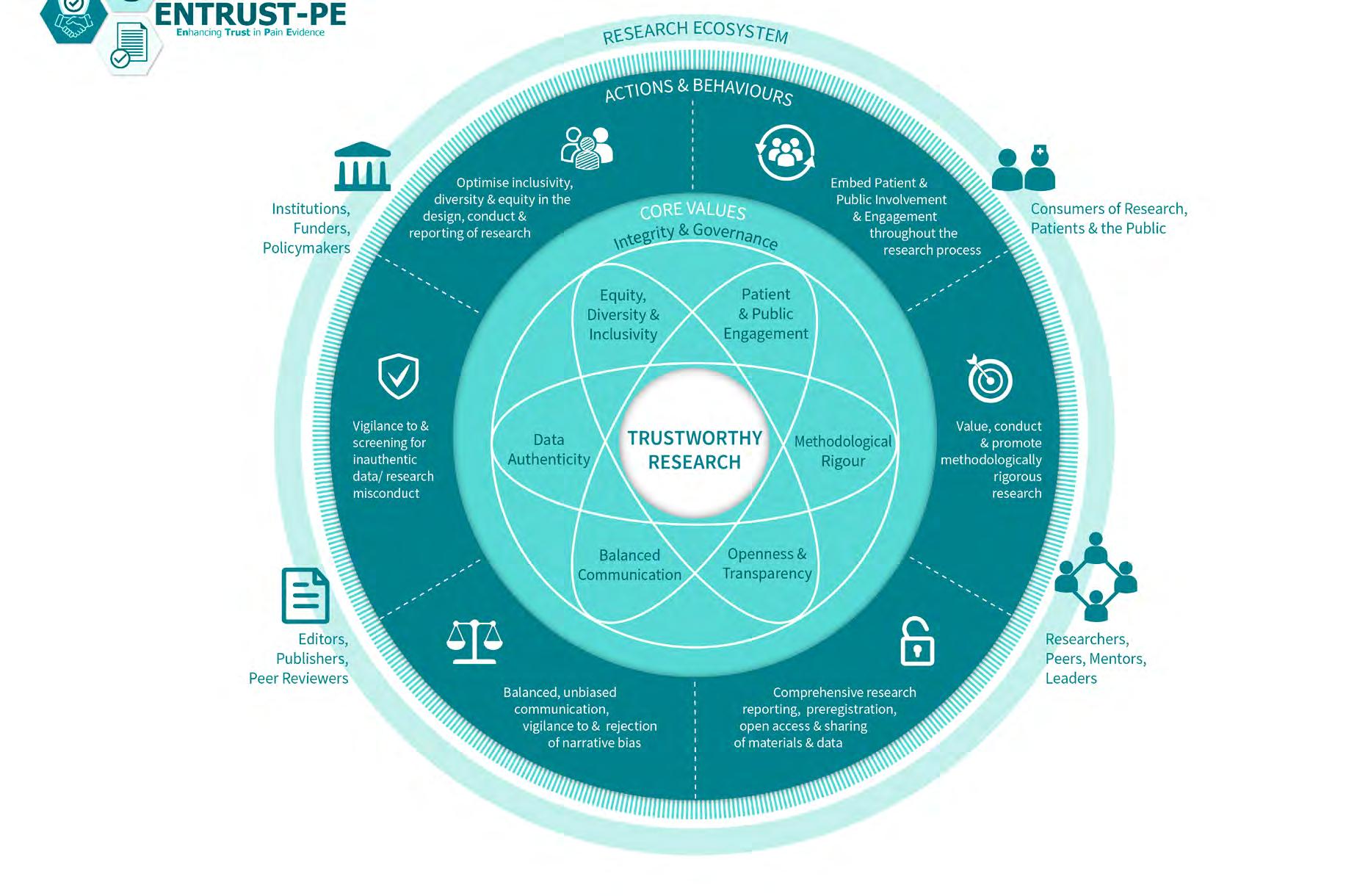
Each core value should drive actions and behaviours that will enhance trustworthiness across all roles and stages of the research process. The ENTRUST-PE framework recognises that researchers operate within a complex ecosystem of stakeholders containing myriad pressures and incentives that can positively or negatively affect behaviours. This includes institutions that conduct research, research funders, journal editors, publishers and peer reviewers, regulators, and policymakers, consumers of researchers, and researchers themselves. Action is recommended at every level. The framework offers specific recommendations for each stakeholder group for each Core Value and signposts the reader to resources to support those recommendations.
The central objective of ENTRUST-PE is to synthesise available resources into a comprehensive framework that minimises threats to the reliability of pain research. This initiative not only benefits researchers and healthcare professionals but also serves patients and the public by promoting more effective and transparent pain management strategies. For more information about ENTRUST-PE and its objectives, please visit the project’s official page.



EXPRESSIONS OF INTEREST ONLINE: www.dccam.com.au/aps2026
Registrations open 18 November 2025
IMPORTANT DEADLINES

Topical Sessions 2 September 2025
Rising Star Award 7 October 2025
Free Papers & Posters 28 October 2025

INTERNATIONAL KEYNOTE SPEAKERS

Professor Yves De Koninck


Yves De Koninck is Professor of Psychiatry and Neuroscience at Université Laval and interdisciplinary approach to study the pathophysiology of neuromusculoskeletal conditions with the ultimate goal to improve management for patients.
For sponsorship and exhibition opportunities or more information please contact the APS Conference Secretariat: DC Conference & Association Management (DCC&A) P: 61 2 9954 4400 E: apsasm@dccam.com.au
> The APS has proudly endorsed the Australian Rheumatology Association (ARA) Juvenile Idiopathic Arthritis Standards of Care (JIA SoC)
Other items of interest for our members:
> Latest opioid data from the Australian Bureau of Statistics: Opioid induced deaths in Australia.
> Australia’s annual overdose report 2025 from the Pennington Institute
> Australian Atlas of Healthcare Variation Series: This series explores how healthcare use in Australia varies depending on where people live. It investigates reasons for variation that may be unwarranted, and provides specific achievable actions to reduce unwarranted variation
> ePPOC: electronic Persistent Pain Outcomes Collaboration: The electronic Persistent Pain Outcomes Collaboration (ePPOC) is an Australasian initiative that aims to improve the quality of care and outcomes for people who experience chronic pain.
> PainHEALTH: painHEALTH‘s aim is to help health consumers with musculoskeletal pain access reliable, evidence-based information and tips to assist in the co-management of musculoskeletal pain. painHEALTH is an initiative of the Department of Health, Western Australia
> Stanford University CHOIR: CHOIR Collaborative Health Outcomes Information Registry
> Opioid Podcasts for GPs: These podcasts are produced by David Outridge GP, and FAChAM Trainee as a project under the auspices of Dr Steven Kelly Staff Specialist in Addiction Medicine, Kullaroo Clinic Gosford. A weekly series from the Hunter Postgraduate Medical Institute (University of Newcastle)
> Airing Pain: Pain resources via an online radio show produced by Pain Concern, a UK registered Charity
> Indigenous Resources: Webpage on the APS website aggregating Indigenous resources
> Tame the Beast: Free educational tool that aims to inspire research-based action in the treatment of chronic pain
TGA
> Codeine information hub
NSW Agency for Clinical Innovation resources:
> Brainman and Pain Tool Kit translations
> Pain Management Resources
> Quicksteps to Manage Chronic Pain in Primary Care
> Built into Quicksteps: “How to de-prescribe and wean opioids in general practice”
> A list of helpful apps for consumers and clinicians
> Chronic Pain in the ED
14-16 November 2025
Royal Australian College of General Practitioners
GP25
Brisbane Convention and Exhibition Centre, Brisbane, QLD
19-21 November 2025
Australian & New Zealand Spinal Cord Society
ANZCoS 2025: Rivers of Innovation
Brisbane Convention and Exhibition Centre, Brisbane, QLD
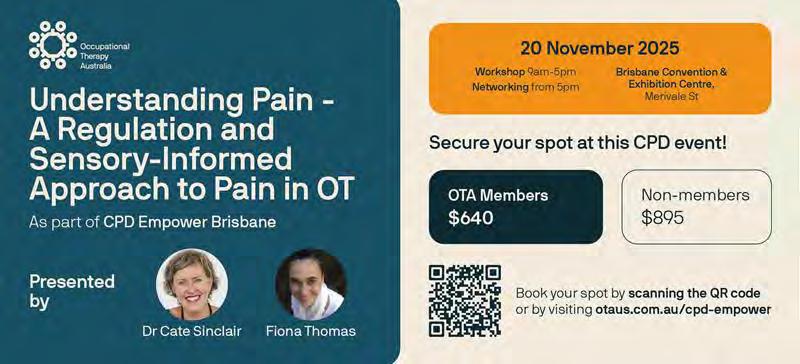
20 November 2025
Occupational Therapy Australia CPD Empower
Understanding Pain - A Regulation and SensoryInformed Approach to Pain in OT
Brisbane Convention and Exhibition Centre, Brisbane, QLD
13 February 2026
Dietitians Australia
National Nutrition & Dietetics Research
Summit 2026 (In-Person & Virtual)
Deakin Downtown, Collins Square, Melbourne, VIC
18-21 March 2026
New Zealand Pain Society (NZPS)
NZPS26 - The Right Fit
Christchurch Town Hall, Otautahi Christchurch, NZ
17-18 April 2026
Pain in Child Health (PICH)
PICH2GO Adelaide 2026
University of South Australia, Adelaide, SA
19-22 April 2026
Australian Pain Society
2026 Australian Pain Society 46th Annual Scientific Meeting
Adelaide Convention Centre, Adelaide, SA
23-24 June 2026
Occupational Therapy Australia
OT Exchange 2026: From Ideas to Impact
Brisbane Convention and Exhibition Centre, Brisbane, QLD
Ms Wanyun Huang Physiotherapy
Mrs Deborah Laidley Pharmacy
Mr Gi Kon Nam Addiction Medicine
Jacintha Bell
Jacintha is a mental health occupational therapist with a special interest in pain, currently working in private practice. Jacintha is also the WA Director for the Australian Pain Society, and a Mum of three teenagers.
In April this year, the Australian Pain Society (APS) wrapped up a pilot of its Mentorship Program. This initiative was the brainchild of our prior APS President, Trudy Maunsell, and designed to connect professionals and foster growth within the pain management community. The program brought together 18 clinician and research mentors and mentees in a flexible manner over a nine month period, fostering engagement, development and confidence.
Feedback from both mentors and mentees was overwhelmingly positive. The matching process was considered a great success overall, with the majority of participants feeling they were well-paired and had a good connection. One mentee felt the match was "very supportive and intentional" because their mentor's expertise aligned closely with their interests. A mentor noted that they "enjoyed connecting with the mentee assigned" to them, finding them "interesting and engaging". Additionally, another mentor felt they had a "good connection" with their mentee and were "well matched". Not all matches are made in heaven though. We look forward to being able to further hone our matching process with a larger cohort in the future.
With respect to the whole mentorship program experience, mentees cherished the opportunity to gain an outside perspective, which helped them reframe challenges and connect with the wider Australian pain community. One mentee described the program as a "unique opportunity for connection, learning, and professional growth", while another felt supported by a mentor who was "generous with his time, flexible in approach, and respectful of my goals and direction". They also noted that the discussions helped clarify where to focus

their attention and even provided new ideas for integrating mentorship into their own practice. A mentor stated that they had a "very positive experience participating in the APS mentorship program pilot". Another mentor highlighted that the most valuable thing they gained was meeting a "bright, enthusiastic researcher".
Many participants appreciated the program's informal structure, which allowed mentoring relationships to evolve naturally. However, some also suggested a need for more structure and clearer expectations for future iterations. A mentor noted the need for a more comprehensive program that includes guidance, resources, and support. Another mentor felt the program, in its current form, was "really just an email introduction service".
Based on the pilot's success, the APS Board has approved the continuation of the Mentorship Program and has formed a committee to reshape the program based on the insightful feedback of the 2024 participants. The new framework will provide more scaffolding and structure for mentees and mentors who would like it, including resources such as discussion prompts for initial meetings between mentees and mentors to help get the conversation flowing.
We are excited to announce that the new and improved APS Mentorship Program is set to relaunch at the 2026 Annual Scientific Meeting.
The APS Board are dedicated to the future of the APS Mentorship Program and the associated benefit for our members, and for the broader pain community in Australia. Thank you to everyone who participated in the pilot and provided valuable feedback—your insights are shaping a seamless, supportive and beneficial experience for future participants in this worthwhile program.
Declaration
Jacintha was a member of the inaugural APS Mentorship Committee.
Renewal notices for 2026 will be sent by email to members
Thank you for your continued support and membership of the APS.
Please note:
1. We understand that circumstances change, so each year we ask you to select your appropriate level of membership.
2. This system of self-reporting subscription levels was implemented in 2009 for the benefit and fairness of all members.
3. Membership fees have NOT increased
Please refer to the rates below for your 2026 membership fee:
a. Regular A $130
b. Regular B $260
c. Regular C $440
d. Retired $65 Concessional Rate
e. Student $65 Concessional Rate
Before renewing, please ensure you review and update your member profile online.
Payments can be made by Credit Card or BPAY.
Did you know that the Australian Pain Society is a registered charity with ACNC? Your donation will help the Society to promote the prevention and control of diseases in human beings associated with pain.
All donations of $2 or more to APS are tax-deductible.
Vision:
All people will have optimal pain management throughout life.
Purpose:
The Australian Pain Society is a multidisciplinary association whose purpose is to advance pain management through education, research, and advocacy for transformational improvements in clinical care.
Priorities:
In order to achieve our purpose, the Australian Pain Society will provide:
> Membership
> Research
> Education
> Services and resources
> Good governance and operations
> Advocacy



President:
Mrs Bernadette Smith
Psychology Plus
South Burnie TAS
Tel: 03 6431 9959 Fax: 03 6431 9950
President-Elect:
Dr Laura Prendergast
Persistent Pain Management Service
Northern Health
Broadmeadows VIC 3047
Tel: 03 8345 5166 Fax: N/A
Work days Mon & Thu
Treasurer & Interim Secretary
Dr Duncan Sanders
Pain Management Unit, Sydney Medical School, University of Sydney / Managing Pain Clinic and E3 Physio
Gold Coast QLD
Tel: 07 5620 1234 Fax: 07 3009 0420


ACT Director:
Mr Anjelo Ratnachandra
Beyond Pain Pty Ltd
Belmont VIC 3216
Tel: 0400 202 803 Fax: N/A
NSW Director:
Dr Connor Gleadhill
Department of Health and Aged Care
Primary Care Division
Newcastle NSW 2038
Tel: 0405 203 661 Fax: N/A






NT Director:
Dr Amelia Searle
Flinders Medical Centre Pain
Management Unit
Bedford Park SA 5042
Tel: 08 8204 5499 Fax: 08 8204 5440
QLD Director:
Mrs Karla Wright
Fernvale Priceline Pharmacy
Fernvale QLD 4306
Tel: 07 5427 0695 Fax: 07 5427 0698
SA Director:
Ms Heather Gray
Royal Adelaide Hospital
Adelaide SA 5000
Email: heather.gray@sa.gov.au
TAS Director:
Mr Sinan Tejani
Launceston General Hospital
Launceston TAS 7250
Tel: 0469 967 841 Fax: N/A
VIC Director:
Mrs Alison Sim
10 South Sports Medicine
Geelong VIC 3220
Tel: 0488 988 315 Fax: N/A
WA Director:
Ms Jacintha Bell
Lifeworks Occupational Therapy
Mount Lawley WA 6050
Tel: 0451 178 880 Fax: 08 6323 3329




Immediate Past President:
Mrs Joyce McSwan
Gold Coast Primary Health Network
Persistent Pain Program, QLD and PainWISE
Tel: 0412 327 795 Fax: 07 3539 9801
SPC Chair:
Professor Kevin Keay
Department of Anatomy
University of Sydney
Sydney NSW 2006
Tel: 02 9351 4132 Fax: 02 9351 2817
IASP Liaison:
Professor Fiona Blyth AM
Sydney School of Public Health
Faculty of Medicine and Health
University of Sydney
Camperdown NSW 2006
Email: Fiona.blyth@sydney.edu.au
Communications Coordinator:
Mrs Bernadette Smith
Psychology Plus
South Burnie TAS 7320
Tel: 03 6431 9959 Fax: 03 6431 9950
Newsletter Editor:
Clinical A/Prof Kylie Bailey
Sagacity Services
Mount Hutton NSW 2290
Tel: 0447 905 085



Newsletter Assistant Editor:
Dr Joanne Harmon
School of Clinical and Health Sciences
University of South Australia
Adelaide SA 5000
Tel: 08 8302 1442
Grant Selection
Subcommittee Co-Chairs:
Emeritus Professor Maree Smith AC
Centre for Integrated Preclinical Drug Development
University of Queensland St Lucia QLD 4072
Professor Luke Henderson
Anatomy & Histology, School of Medical Sciences
Brain & Mind Centre
University of Sydney
Camperdown NSW 2006

Secretariat:
DC Conference & Association
Management Pty Ltd
PO Box 637
North Sydney, NSW 2059
Tel: 02 9016 4343
Email: aps@apsoc.org.au
Website: apsoc.org.au