Can you believe how quickly the year has flown by? This edition is packed with great content we know you’ll enjoy. Dive into insightful study reviews from the Pain in Childhood Special Interest Group and catch up on social networking updates from Western Australia, Northern Territory, and South Australia. There is a fun suggestion from the SA branch for a pain trivia challenge between State and Territory branches!
We’re also excited to share the Global Year Report update from Associate Professor Roger Goucke—see what the Australian Pain Society is doing as part of the IASP Year promoting pain management, research, and education in low- and middle-income settings.
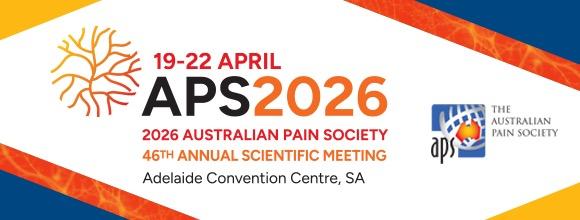
Registrations are now open for the APS Annual Scientific Meeting in Adelaide next year! Take advantage of Early Bird rates and explore our conference workshops while you’re there.
Missed the abstract submission deadline? Good news! The Late Breaking Abstract Call opens from Wednesday 28 January to Thursday 5 February 2026.
Thank you for your ongoing support of APS throughout the year. We truly value your membership and contribution. Wishing you a Merry Christmas and a joyful holiday season. We look forward to seeing you in the New Year!
Kylie
BLOG WEB
President's Report
Bernadette Smith
Welcome!
It has been a full and energising month, and I am feeling incredibly grateful for the many opportunities to listen, learn and connect across this amazing pain community. Since my last update, I have travelled to the Faculty of Pain Medicine Spring Meeting, Treating the Whole Person, had the pleasure of attending another engaging PainAdelaide meeting, and being a part of RANZCOG-Tas Education Day. Each of these brought its own spark. Cutting across all these meetings, one message came through again and again: chronic disabling pain requires truly interdisciplinary care. Not a referral list, not managed in professional silos, but shared work. We also heard about innovation; how important it is to explore new approaches while holding onto the core evidence base. Balancing the two is not always neat or linear, but it is where real progress happens.
On the flip side, a familiar challenge continued to show up across these meetings, the ongoing effort to have pain recognised as a genuine health priority. APS member Dr Irina Hollington spoke with real passion at the FPM Spring Meeting about what can be achieved when consumers and clinicians stand together. She shared the story of their tertiary pain clinic facing eviction — and how collective advocacy protected the service and the people who depend on it. It was a powerful reminder that sustained advocacy is both necessary and demanding.
We also heard from our past president, Professor Anne Burke, at PainAdelaide, who spoke powerfully about the ongoing challenge of securing data-driven investment in pain care. A reminder that while data helps us to know what works, ensuring the system supports it is still very much a work in progress. Systemic change requires science, relationships, advocacy and stamina!
These conversations sit alongside the incredible work happening in clinics, research centres, and community teams every day. And of course, the ongoing challenge remains: ensuring pain is recognised as a genuine health priority.
Three Highlights
The Power of Yarning – Dr Dilip Kapur (FPM Spring Meeting)
Dr Dilip Kapur’s reflections in the closing session were incredibly powerful. He spoke about yarning, the First Nations practice of deep listening, open conversation, and building trust and understanding is formed.
In the context of pain care, this is a powerful lesson. Yarning mirrors what we know to be essential in contemporary pain practice: connection before intervention. It acknowledges that pain is shaped by identity, emotion, relationships, culture and story, not just biology.
It was a grounding reminder that effective care starts with relationship, and that healing happens in context. As we continue our work, we hold in mind the importance of listening first, understanding the person before the condition, and walking in partnership with
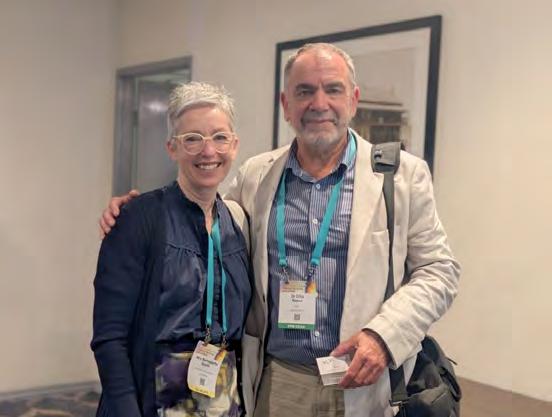
Photo L to R: Bernadette Smith and Dr Dilip Kapur
PainAdelaide – Edutainment at Its Finest
A special mention has to go to Lorimer Moseley, who once again managed to take complex ideas and deliver them in true edutainment style. His closing summary of PainAdelaide was given as a poem – funny, sharp, and deeply on message.
The heart of it was clear:
We need to keep shifting away from siloed, illness-centered approaches and toward co-designed, community-driven, evidencebased pain care and education that genuinely change lives in the real world.
It was a reminder that good science doesn’t have to be dry and that warmth, creativity and connection are part of how knowledge lands and sticks.
We now wait with interest (and mild anticipation) …
PainAdelaide 2027 summary: interpretive dance? I wouldn’t put it past Loz!
RANZCOG-Tas & Speaking to the Gender Pain Gap
Speaking at the RANZCOG-Tas event also led to something quite meaningful. In the day following the release of Victoria’s Bridging the Gender Pain Gap report, APS was invited to join a collaborative statement with RANZCOG, AGES, FPM and NZPS in response to the release of this important report. It is a privilege to stand alongside colleagues across disciplines who are deeply committed to improving care and outcomes for women and girls. Please see the APS statement on our website
In closing,
And before I sign off… we have exciting news in relation to the 2027 APS Annual Scientific Meeting. Rather than squeeze it in here, the Board has shared a little preview of what’s ahead in the In the Loop section below.
So, as we head into the final stretch of the year, I hope there’s a moment (even a small one) for rest, connection, or whatever helps you feel grounded. Thank you for the work you’re doing, in your clinics, hospitals, universities, research centres, communities and beyond. Every conversation, every person supported, every small shift matters.
Bernadette Smith President
Australian Pain Society
Photo L to R: Jacintha Bell, Bernadette Smith and Dr Karin Jones, APS Medical Advisory Committee Member
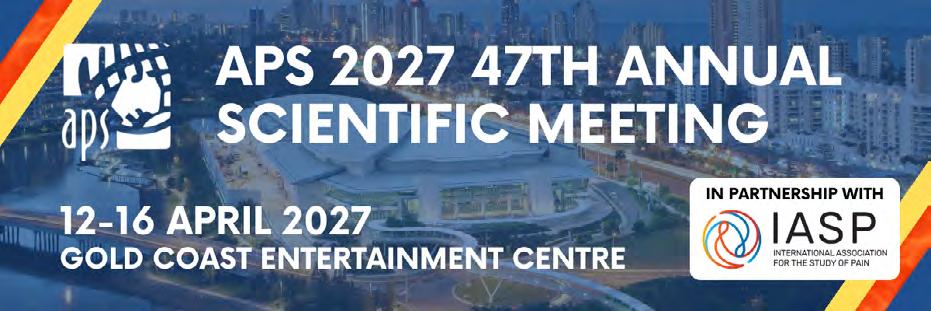
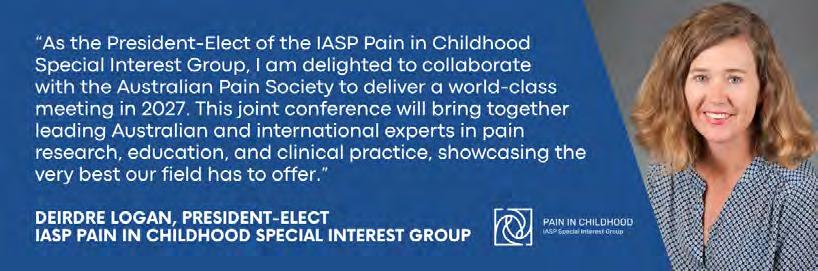
The Australian Pain Society (APS) is delighted to announce that in 2027, we will partner with the International Symposium on Paediatric Pain (ISPP), a division of the International Association for the Study of Pain (IASP), to host a joint international conference on the Gold Coast.
This exciting collaboration will see both organisations co-sponsoring the event, with the APS taking the lead role. The joint conference will provide an exceptional platform for Australian pain clinicians, researchers, and experts to showcase their expertise on the international stage.
While the APS 2027 47th Annual Scientific Meeting (ASM) and the International Symposium on Paediatric Pain will run concurrently, the programs will feature shared crossover sessions and plenary presentations, fostering global collaboration and dialogue across the pain community.
The APS 2027 program will continue our wellestablished and successful conference format, featuring a diverse range of presentations, expert speakers, and valuable networking opportunities for the Australian pain community. What will make the 2027 conference truly unique is the inclusion of shared plenaries with ISPP. This will offer attendees the opportunity to hear from leading international experts and engage in discussions on the latest developments in paediatric and nonpaediatric pain management
Laura Prendergast, Incoming 2027 APS President, commented: “The APS 2027 program will be a truly international, multidisciplinary pain meeting encompassing all pain populations. With the ISPP program running concurrently, participants will also have access to an additional dedicated paediatric and nonpaediatric stream.”
Bernadette Smith, APS President, said: “This is a great opportunity for the two organisations to collaborate and deliver a truly international pain conference in Australia, led by the Australian Pain Society and our members.”
Together, the APS and ISPP will deliver a world-class meeting that highlights the best of Australian and international pain research, education, and clinical practice. Thus the APS and ISPP teams will work closely to coordinate shared elements and ensure a seamless international conference experience, preventing duplication or overlap.
More Information to Come
In the upcoming months, we will reach out to members to gather input on conference topics and speakers. Stay tuned for updates.
REGISTRATIONS NOW OPEN!
Secure Your Spot Today!
Join Australia’s premier multidisciplinary conference dedicated to exploring the complex nature of pain management. Gain invaluable insights from leading experts across medicine, nursing, research, and allied health.
Please click here to register Considering the benefits of Australian Pain Society membership?
Become a member and save on your Australian Pain Society (APS) 2026 registration fee!
Early Bird Register before 24 February 2026
Non-Member Registration Price VS
Becoming an APS Member
$1,495 OR
Being a member saves you up to $420 after membership fees!
APS Student Member Registration Price Only $300
Being a member saves you $1,130 after membership fees!
Tell your colleagues who are interested in becoming members so they can save on their registrations too!
Become an APS Member and start saving straight away!
We look forward to welcoming you to Adelaide Convention Centre, SA. Should you have any queries about the conference, please contact the Conference Secretariat
BLOG WEB
PROGRAM NOW AVAILABLE
The APS Scientific Program Committee is delighted to bring you an exciting program
You can look forward to an extensive program including seven pre-conference workshops, plenary of international keynote speakers, national leaders in the field of pain, 18 topical sessions and three social functions.
Follow the links to start planning your conference experience today!
Program Overview
Keynote Speakers
Pre-Conference Workshops
Topical Concurrent Sessions
Social Program
For information on APS 2026 visit the conference website
We look forward to welcoming you to Adelaide, SA!
LATE BREAKING ABSTRACT CALL
Did you miss your chance to submit your abstract for inclusion at APS 2026 in Adelaide?
Finalised your research only after the original abstract deadline? If yes, we’ve got you covered!
This late breaking research call is your last opportunity to submit an abstract for the 2026 conference.
Take up this opportunity and have your work featured as a poster presentation at the only multidisciplinary conference in Australia and New Zealand offering insights into the complex nature of pain management from a variety of medical, nursing, and allied health perspectives. Abstracts can be submitted between Wednesday 28 January – Thursday 5 February 2026.
All accepted authors must register for the conference by the early bird deadline of Tuesday 24 February 2026.
Connect with renowned experts and hear them speak about new advances in pain management.
Enjoy clinical and research topical sessions
Be a part of the future of pain science and management!
For further information please visit the conference website. Should you have any queries regarding your submission or the process, please contact the Conference Secretariat.
We look forward to receiving your submissions.
BLOG WEB
For timings, registration fees and further information on the Pre-Conference Workshops visit: https://www.dccam.com.au/aps2026/Pre-Conference_Workshops
Morning Workshops
For further information: www.dccam.com.au/aps2026
Questions? Please email us at apsasm@dccam.com.au
For further information: www.dccam.com.au/aps2026
Questions? Please email us at apsasm@dccam.com.au
For further information: www.dccam.com.au/aps2026
Questions? Please email us at apsasm@dccam.com.au
ACUTE PAIN DAY
Pre-Conference Workshop
8:30am - 5:00pm, Sunday 19 April 2026
Adelaide Convention Centre, SA
Registration Fees starting from $160
WORKSHOP OVERVIEW
The Acute Pain workshop is open to all pain clinicians, nurses and allied health members with an interest in acute pain. Attendees can attend as the full day or two half day workshops with exciting practice leaders speaking on topics that are at the forefront of our minds in day to day practice.
Further information coming soon
PAIN IN CHILDHOOD
Pre-Conference Workshop
Beyond Words: Skills for Communicating about Pain with Children
8:30am - 12:30pm, Sunday 19 April 2026
Adelaide Convention Centre, SA
Registration Fees starting from $160
WORKSHOP OVERVIEW
Effective pain communication with children requires creativity, adaptability, and confidence in using language, imagery, and interactive modalities. This workshop will provide participants with opportunities to practice and refine their communication skills with children of different ages, abilities, and cultural backgrounds.
Participants will learn to use hypnotic and mind–body techniques; explain pain and coping creatively; and how to integrate digital technologies into children’s pain care.
Participants will leave with practical tools and strategies; greater communication Confidence and adapt communication to age and needs.
ACUTE PAIN DAY
PURPOSE BEYOND PAIN
Pre-Conference Workshop
TBC
8:30am - 5:00pm, Sunday 19 April 2026
Occupation-based Approaches for What Matters Most - 12:30pm, Sunday 19 April 2026
Adelaide Convention Centre, SA Registration Fees starting from $160
WORKSHOP OVERVIEW
To be provided.
This workshop explores the value of occupation-based approaches in persistent pain management through a biopsychosocial lens. Participants will explore theoretical models of practice, debate the role of goals and values in care planning, and apply trauma-informed principles to foster safety and collaboration.
The session will highlight evidence-informed therapy approaches, including single session interventions, to support meaningful engagement and function despite ongoing pain. Attendees will gain practical strategies to enhance therapeutic effectiveness, address psychological and social influences on pain, and increase confidence on using occupation as a therapeutic tool. By the end of the workshop, participants will be equipped to deliver holistic, person-centred, occupation-based care for individuals living with persistent pain.
Morning Workshop
For further information: www.dccam.com.au/aps2026
Questions? Please email us at apsasm@dccam.com.au
PSYCHOLOGY IN PAIN MANAGEMENT
Pre-Conference Workshop
Managing Pain in the Context of Functional Neurological Disorder (FND)
8:30am – 12:30pm, Sunday 19 April 2026
Adelaide Convention Centre, SA
Afternoon Workshops
For further information: www.dccam.com.au/aps2026
Questions? Please email us at apsasm@dccam.com.au
further information: www.dccam.com.au/aps2026
Please email us at apsasm@dccam.com.au
Registration Fees starting from $160
WORKSHOP OVERVIEW
The pre-conference workshop provides an opportunity for multi-disciplinary discussion around key areas associated with managing the broader psychological issues in pain management. This workshop acknowledges the complexity of managing pain and FND, with three key learning objectives:
BLOG WEB
1. To provide a deeper understanding of FND, where pain is a significant factor.
2. To establish principles for the effective assessment and management of patients with FND who experience chronic pain; and 3. To identify the management and treatment options for pain associated with FND.
ACUTE PAIN DAY
Pre-Conference Workshop
8:30am - 5:00pm, Sunday 19 April 2026
Adelaide Convention Centre, SA
Registration Fees starting from $160
WORKSHOP OVERVIEW
The Acute Pain workshop is open to all pain clinicians, nurses and allied health members with an interest in acute pain. Attendees can attend as the full day or two half day workshops with exciting practice leaders speaking on topics that are at the forefront of our minds in day to day practice.
BASIC PAIN RESEARCH
Pre-Conference Workshop
Occupation-based Approaches for What Matters Most
1:30pm – 5:00pm, Sunday 19 April 2026
Adelaide Convention Centre, SA
Registration Fees starting from $160
WORKSHOP OVERVIEW
The Basic Pain Research Workshop will bring together lab-based pain researchers, clinicians, and students interested in the latest advances in pain science.
The first session will feature three leading speakers exploring mechanisms and clinical translation of treatments for endometriosis pain. The second session will present three talks on fundamental pain signalling pathways and their therapeutic implications. To support the next generation of pain researchers, the workshop will also host a Three Minute Thesis competition, with a prize sponsored by APAC Scientific.
Attendees will gain fresh insights into translational pain research, opportunities for discussion, and inspiration for advancing future discoveries.
Afternoon Workshops
For further information: www.dccam.com.au/aps2026
Questions? Please email us at apsasm@dccam.com.au
PHARMACOLOGY IN PAIN MANAGEMENT
Pre-Conference Workshop
1:30pm - 5:00pm, Sunday 19 April 2026
Adelaide Convention Centre, SA Registration Fees starting from $160
WORKSHOP OVERVIEW
This interactive workshop is designed for health professionals involved in perioperative and chronic pain management. Led by experts in anesthesiology, pharmacy, and clinical pharmacology, the session will explore evidence-based use of ketamine, lidocaine, dexamethasone, NSAIDs, and skeletal muscle relaxants.
WEB
Participants will engage in case-based discussions and panel Q&As to deepen understanding of pharmacologic strategies and identify future priorities for improving medication use. Drawing on lessons from opioid stewardship, the workshop aims to equip attendees with practical insights to reduce medication-related harms and enhance patient outcomes through tailored, multidisciplinary approaches.
For further information: www.dccam.com.au/aps2026
Questions? Please email us at apsasm@dccam.com.au
PHYSIOTHERAPY IN PAIN MANAGEMENT
Pre-Conference Workshop
Clinical reasoning for pain physiotherapists
1:30pm – 5:00pm, Sunday 19 April 2026
Adelaide Convention Centre, SA Registration Fees starting from $160
WORKSHOP OVERVIEW
This workshop will be focussed on developing the clinical reasoning skills for physiotherapists working with people with complex and/or chronic pain.
We will critically review current existing clinical reasoning frameworks, and present and evaluate a new model that captures a biopsychosocial approach to the assessment and treatment of pain. Using clinical vignettes, participants will be invited to evaluate the usability, clarity, and potential implementation into their clinical setting of a newly developed clinical reasoning tool for physiotherapists working with complex and/or chronic pain. There will also be plenty of time for facilitated question time with our expert panel.
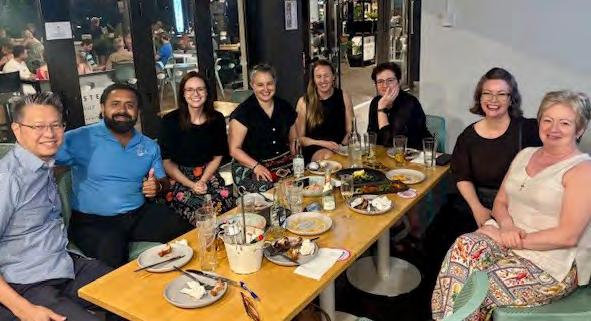
NT Social Networking Event held Thur, 13 November 2025
Cindy Wall, former NT Director & Amelia Searle, NT Director
It was a very successful evening with a great multidisciplinary representation - including OT (hand therapist), rehab physician, psychology, and physiotherapy. Much discussion ensued for the entire evening, and the vibe was very upbeat and collegial.
At the meeting an update was provided on the Australian Pain Society (APS) happenings including the upcoming 2026 ASM and the Expressions of Interest for the Scientific Program committee. There was agreement on the value of clinician participation in this important committee, as it ensures relevance for frontline practitioners—particularly with the inclusion of rural and remote representation
The group expressed appreciation to the APS for providing the opportunity to connect members of the NT pain community, via this event. We were also pleased to hear of a renewed focus on better meeting member’s needs, and of course, the planned changes to the website and membership portal.
There was much rich discussion and lots of laughs. The food was good, and the airconditioned venue appreciated in the midst of a top-end build-up season.
BLOG WEB
Photo L to R: Gavin Chin, Kanna Mongohoran, Lauren Kardash, Rachel Canavan, Kate Connor, Kirsty Duncan, Kate Shepherd, Louise Cotton
SA Social Networking Event held Thursday, 13 November 2025
Heather Gray, SA Director
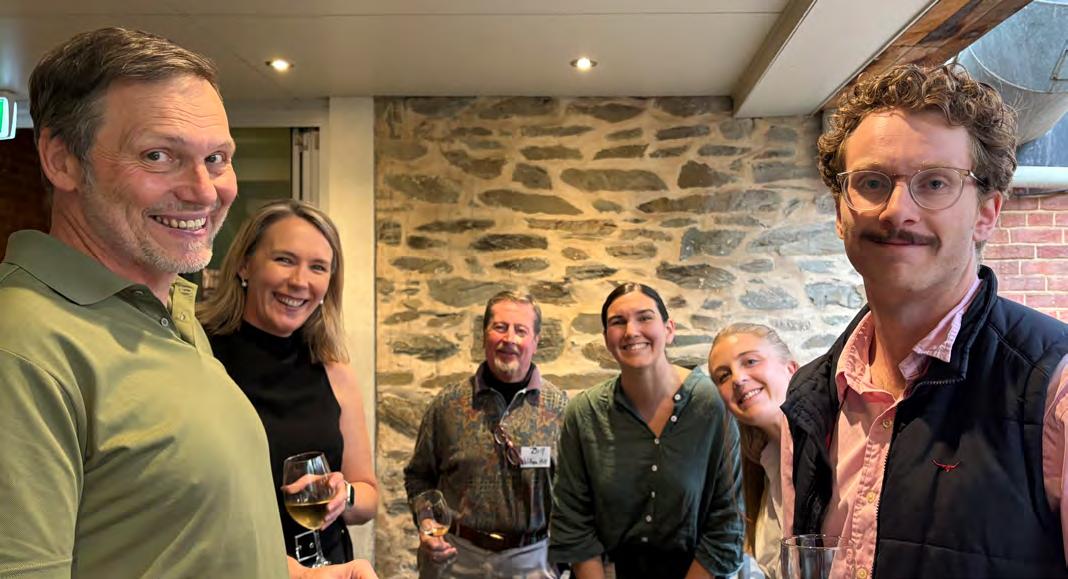
The third annual Australian Pain Society (APS) (South Australia) social gathering at the West Oak was held on November 13th. It may have drawn a smaller crowd than in previous years, but what we lacked in numbers we more than made up for in enthusiasm. In true APS fashion, the space buzzed with researchers and clinicians - past and presentrepresenting a wonderfully diverse collection of disciplines. If ever proof were needed that APS is genuinely multidisciplinary at its core, this cheerful mix of attendees provided it.
We were especially delighted to welcome a past APS president and a former APS SA director, whose presence added welcome
depth and continuity to the evening. Conversations flowed easily, with colleagues sharing stories, comparing notes, and offering glimpses into the inspiring work happening across the pain field. It was one of those occasions where professional passion and relaxed socialising met perfectly in the middle.
As the night wound down, the pub’s weekly quiz was just kicking off. Watching teams assemble, one couldn’t help but wonder: could the collective “pain brain trust” hold its own in a trivia showdown next year? Perhaps that’s a challenge for the fourth annual gathering – along with another excellent night of connection and conversation.
Photo L to R: Rainer Haberberger, Anne Burke, William Hill, Monique Wilson, Erin MacIntyre and Benjamin Hoy
News from the West: Networking Event Success! 13 November 2025
Jacintha Bell, WA Director
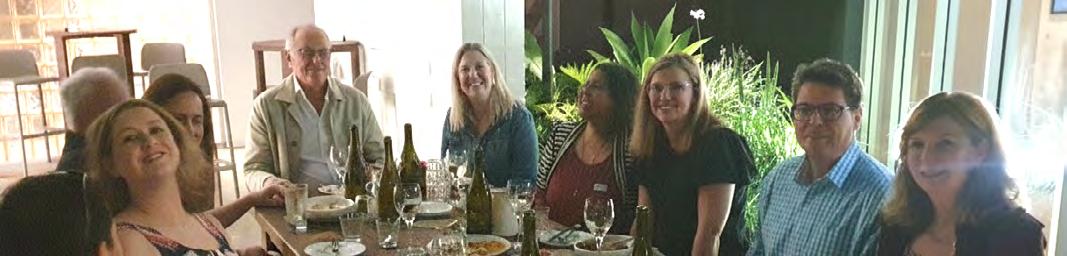
On a clement Perth spring evening, the Australian Pain Society (APS) hosted a highly successful social networking event. Nine dedicated 'stalwarts' of the WA Pain Clinician community, along with a couple of welcome new faces, gathered at The Brisbane Hotel (yes, confusingly located in Perth, not Queensland!) for an evening of delicious food and refreshing drinks.
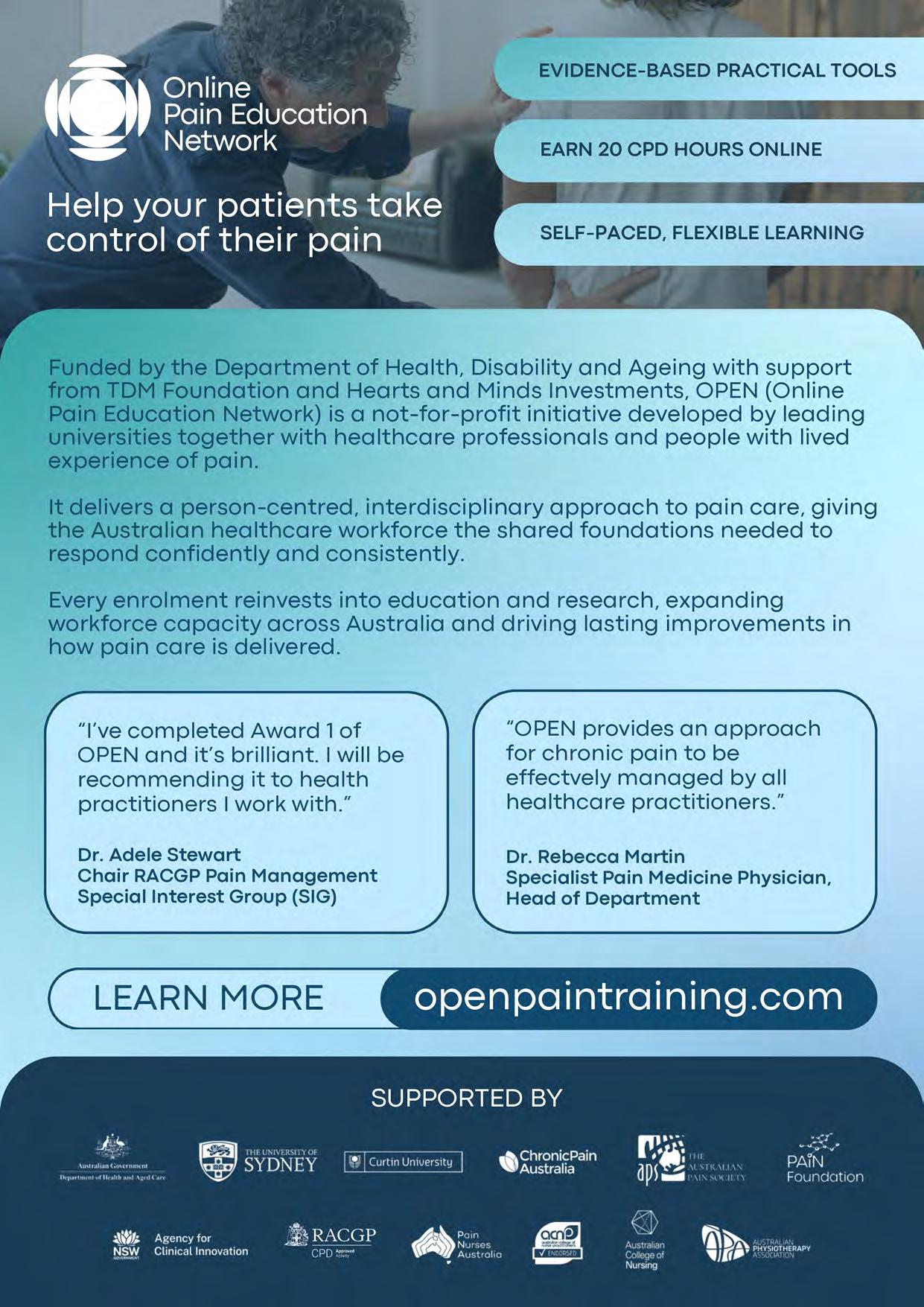
The event fostered a rich and cross-disciplinary dialogue, with medicine, psychology, physiotherapy, occupational therapy, nursing, research, and philosophy all well represented. The conversation covered the entire spectrum of 'all things pain', from the practicalities of setting up new clinics and the nuances of current pain treatments, to broader topics like the new OPEN training, emerging research
projects, and early intervention strategies. The discussions even veered into more lighthearted areas. This included retirement and the latest in technology, such as self-driving TESLAs—with whispers of a test drive or two!
The evening was a superb example of the strong connection within the WA pain management community. We extend our sincere thanks to all who attended for their invaluable support of the Australian Pain Society, their interest in the Society’s offerings, and their commitment to furthering the connection of clinicians and researchers in WA. A special thank you also goes to The Brisbane Hotel for the truly fabulous food and attentive service.
To those who were unable to join us, we certainly hope to see you at our next event!
BLOG WEB
Photo L to R: Anon, Melanie Galbraith, Heidi Perera, Dr John Quintner, Dr John Salmon, Jacintha Bell, Natalie Raymond, Elyse Graham, Dr Michael Veltman and Michelle du Plessis.
Photo L to R: Dr John Salmon, Natalie Raymond, Elyse Graham, Michelle du Plessis, Melanie Galbraith, Heidi Perera and Dr John Quintner.
2025 Global Year
Pain Management, Research and Education in Low - and Middle -Income Settings
For more information
Australian Pain Society www.apsoc.org.au
New Zealand Pain Society www.nzps.org.nz
Faculty of Pain Medicine, Australian and New Zealand College of Anaesthetists www.fpm.anzca.edu.au
International Association for the Study of Pain (IASP) www.iasp-pain.org
Global Year Report
Associate Professor Roger Goucke
Roger Goucke is an Associate Professor at the University of Western Australia (UWA) and a specialist pain medicine physician associated with the Department of Pain Management at Sir Charles Gairdner Hospital. He is a codeveloper of the Essential Pain Management (EPM) program and is widely recognised for his contributions to pain medicine education.
As noted in recent newsletters, 2025 is the IASP Year promoting Pain Management, Research and Education in Low– and Middle-Income Settings. The Australian Pain Society (APS) has long championed these goals through active collaboration with the Association of Southeast Asian Pain Societies (ASEAPS). We have achieved this by promoting education and research with our colleagues in the region. I would like to share how the APS continues to support these initiatives and strengthen capacity in pain management across diverse settings.
The APS has joined the biennial ASEAPS congresses, supported a best paper presentation and provided support for a participant to attend their “pain camps” which are run in association
with the ASEAPS congress. For example, many readers of the Newsletter will have seen reports from Dulce Calado in Timor Leste in the August edition and from Emeli Fuakilau, Labasa Hospital, Fiji in the July edition. Further, the APS is a very active member of the IASP and support for our colleagues in the Pacific and Southeast Asia should continue to be part of our mandate.
As part of the IASP 2025 Global Year, the authors (two Australasians and one South African) wrote “Pain management education in low- and middle-income settings”. See https://www. iasp-pain.org/resources/fact-sheets/ for this and other 2025 fact sheets. This is an extract from IASP Fact Sheet 3:
“Globally, pain is an underdiagnosed and undertreated healthcare problem. Patients the world over suffer from pain of all types, including cancer and end-of-life pain, acute pain, and chronic non-cancer pain (CNCP).
In many low-resource countries, treatment may be very limited or even absent – there is a ‘treatment gap’ between what could be done and what is being done.”
Strategies for improving pain management in low-resource countries can be broadly grouped into three areas: advocacy, improving treatment availability, and education. These areas are interdependent, but education is arguably the most important. Educational programmes are required to improve knowledge and change attitudes to pain management, both for health care workers and for patients and their families. Education therefore underpins both effective advocacy and efforts to improve treatment availability.
Because the current treatment gap is large in many low-resource countries, there is potential for significant gains with relatively simple and low-cost educational strategies. Based on our international experience, we suggest two key educational strategies. First, simple multidisciplinary education of healthcare workers to increase general pain management knowledge. Second, education of pain management specialists who will advocate for improved pain management and drive change –the so-called “pain champions”.
An existing example of a simple multidisciplinary programme is Essential Pain Management, EPM (essentialpainmanagement.org). The course was specifically designed for doctors, nurses and other healthcare workers working in lowresource environments and was first trialled in Papua New Guinea in 2010. Since then, the course has been translated into seven languages and used in over 60 countries worldwide, including some high-income countries.
An example of specialist pain education for doctors working in low-resource countries is the Bangkok Clinical Pain Management Fellowship – a collaboration between IASP, WFSA (World Federation of Societies of Anesthesiologists) and Siriraj Hospital, Mahidol University, Bangkok, Thailand. This fellowship provides a one-year clinical attachment for anaesthesiologists from low-resource Asian countries wishing to specialise in pain management. The program started in 2005 and, to date, has trained over 30 international fellows from twelve countries. All fellows have returned home, and many are playing a key role in the development of pain services in their own countries. Other programs also help to develop and support pain specialists
in low-resource countries, such as WFSA Fellowships in other parts of the world, and wellestablished IASP Pain Camps in Southeast Asia.
Addressing the global disparities in pain management requires a multifaceted approach. By empowering healthcare workers with fundamental knowledge, fostering the development of pain management specialists, and promoting cultural sensitivity in training, we can begin to close the treatment gap in low-resource settings. Programs such as Essential Pain Management (EPM) and specialist fellowships are examples of targeted, costeffective educational strategies which have the potential to yield transformative results, improving clinical outcomes and patient experiences.
The ultimate aim of healthcare systems, educators, and advocates in low-resource countries should be the same as those in highincome countries. That is the normalisation of effective pain management as a fundamental component of human dignity and equitable healthcare.
Roger Goucke FANZCA, FFPMANZCA, MBChB, University of Western Australia, Perth, Australia
Wayne Morriss FANZCA, MBChB, University of Otago, Christchurch, New Zealand
Sean Chetty MBChB, FCA(SA), PhD, Stellenbosch University, Cape Town, South Africa
Disclosures
Roger Goucke is a member of the Australian Pain Society and Wayne Morriss is a member of the New Zealand Society of Anaesthetists, and both are co-developers of the Essential Pain Management (EPM) programme. Sean Chetty is the current Chair of the WFSA’s Pain Management Committee and a member of the South African Pain Society.
Announcing the APS/CFK Clinical Research Grant #8
Recipient
The boards of the Australian Pain Society (APS) and Cops for Kids (CFK) are pleased to announce that the APS/CFK #8 Clinical Research Grant has been awarded to Catherine (Kate) Kotzur for her project titled “DOLPhIN: Phase 1 Feasibility & Safety of J-Tip® Lidocaine for Paediatric PIVC Insertion” which will commence from March 2026.
Kate has devoted 27 years to paediatric nursing and is passionate about improving the hospital experience for children. As a Nurse Practitioner in Anaesthetics and Pain Management at the Queensland Children’s Hospital, she focuses on reducing pain and anxiety, supporting children through procedures, and preventing trauma.
Her special interests include nurse-led procedural support, clinical hypnosis, and strengthening procedural support capacity for both patients and nurses. She also focuses on promoting autonomy in young patients and advancing interdisciplinary research to develop evidencebased approaches that ensure children receive the highest quality care.
Congratulations Kate, we look forward to following your progress as you complete your research project.
Childhood maltreatment and chronic “all over” body pain in adulthood: a counterfactual analysis using UK Biobank
Timmins, K. A., Hales, T. G., & Macfarlane, G. J., on behalf of the Consortium Against Pain InEquality (CAPE) investigators and Chronic Pain Advisory Group. (2025). Childhood maltreatment and chronic “all over” body pain in adulthood: a counterfactual analysis using UK Biobank. PAIN, 166(5), 1204–1211.
Reviewer: Dr Nicky Pope, Implementation Support Lead, Monash Centre for Health Research and Implementation, Faculty of Medicine, Nursing & Health Sciences Monash University, in partnership with Monash Health and Implementation Support Practitioner, Murdoch Children’s Research Institute, Melbourne Australia
The study analysed data from 118,347 adults (57% female, median age 57 years) enrolled in the UK Biobank. Participants were mostly of White ethnicity (97%), with varied educational attainment and socioeconomic backgrounds. Childhood maltreatment exposure was reported by 42% of the sample, and 5% reported chronic “all over” body pain.
Aim
The aim was to determine whether childhood maltreatment causally contributes to chronic widespread pain in adulthood, and to explore the roles of adult stressful life events and mediating factors (e.g., mental health, social support, sleep, deprivation).
Method
This was a large-scale, population-based cohort study using counterfactual causal
inference methods. Childhood maltreatment was assessed via the Childhood Trauma Screener. Chronic widespread pain was measured in 2019 through self-report of persistent and generalised pain lasting over three months. Analyses applied doubly robust estimation with inverse probability weighting, examined effect modification by sex and ethnicity, included a negative control exposure (childhood sunburn), and tested mediation pathways through mental health, social support, sleep problems, and deprivation.
Summary of results
Childhood maltreatment was associated with higher risk of chronic widespread pain (6.3% vs 4.0%; relative risk 1.57, 95% CI 1.49–1.66). Risk remained elevated in sex-stratified analyses (females: 8.1% vs 5.0%; males: 3.9% vs 1.3%).
Adult stressful life events independently increased risk, with a supra-additive effect when combined with childhood maltreatment. Mediation analyses suggested that mental health explained the largest proportion of indirect effects (RR 1.09), followed by sleep, deprivation, and social support. Negative control analyses using childhood sunburn showed only small risk differences, suggesting minimal recall bias. A dose–response was evident, with greater frequency of maltreatment conferring higher risk.
Conclusions
Childhood maltreatment is causally linked to increased risk of chronic widespread pain in adulthood (6.3% vs 4.0%; relative risk). Mental health difficulties, adult stressful life events, and social/environmental factors play important mediating and interacting roles, highlighting opportunities for intervention across the life course.
Reviewer's critique
This study is notable for its rigorous causal framework, very large sample size, and innovative use of a negative control exposure to address recall bias. The involvement of people with lived experience in shaping the analysis adds further strength. Limitations include reliance on retrospective maltreatment data, potential unmeasured confounding, and restricted generalisability due to the UK Biobank’s “healthy volunteer” bias. Nonetheless, the study supports the importance of early prevention of childhood maltreatment and the need for targeted interventions addressing mental health and stress across adulthood.
Take-home message
Preventing childhood maltreatment and intervening early with mental health and stress management strategies could reduce the burden of chronic widespread pain in adulthood.
Declaration
The reviewer has no conflicts of interest to declare.
BLOG WEB
Chronic pain in children and young people with cerebral palsy: a narrative review of challenges, advances, and future directions
Harvey, A., Smith, N. L., Smith, M., Ostojic, K., & Berryman, C. (2024). Chronic pain in children and young people with cerebral palsy: a narrative review of challenges, advances, and future directions. BMC Medicine, 22, 238.
Reviewer: Kiara Corso, Research Assistant, MCRI/ University of Adelaide
DOI: https://doi.org/10.1186/s12916-024-03458-0
Review of article
Study group
This is a narrative review of children and young people with cerebral palsy (CP). It covers multiple studies rather than having a single primary sample. The review synthesises data from studies involving various numbers of participants, some studies with large samples, others smaller. Key subgroups include older vs younger children, ambulant vs non-ambulant, with and without communication/cognitive impairments.
Aim
The review aims to summarise recent research advances in understanding the prevalence, characteristics, assessment, and management of chronic pain in children and young people with CP. This research also highlights what progress has been made and where there are gaps.
Method
The study has a narrative review design. The authors searched empirical, validation, experimental studies, and reports from advocacy bodies over the past ~30 years (including ~75% of work published in the last 10 years). The researchers focus on prevalence, lived experience, classification, assessment tools, and management strategies. They also
consider perspectives of children, young people, and caregivers.
Summary of results
The review highlights that chronic pain is highly prevalent among children and young people with cerebral palsy, with rates varying depending on age, sex, motor severity, and type of CP. Pain often goes under-recognised, particularly in those with communication or cognitive difficulties, yet many are capable of self-reporting when supported with appropriate tools. Most studies included in the review focussed on pain intensity and frequency, while fewer examine pain interference, coping strategies, or quality of life. Advances have been made in developing and adapting assessment tools, but evidence for effective management strategies remains limited and inconsistent.
Conclusions
The authors conclude that while understanding of chronic pain in CP has improved (in terms of prevalence, lived experience, assessment tools, and classification), there remains a large gap in effective management approaches. Future research should focus on generating highquality evidence of interventions, improving communication- and cognition-inclusive assessment. They also recommend tailoring management strategies to individual abilities and context.
Reviewer's critique
This review offers comprehensive coverage across key domains, prevalence, lived experience, assessment, classification, and management, providing a holistic picture of chronic pain in children and young people with CP. A particular strength is the
Pai n i n Childhood
inclusion of lived experience, ensuring that the perspectives of children, young people, and caregivers are considered. The authors also emphasise the importance of adapting assessment tools to meet the needs of those with communication, cognitive, or language impairments, which remains a crucial issue in CP care.
However, the evidence base for management remains limited. Few interventions have been rigorously tested in CP populations, and many have not been adequately adapted to different levels of motor or cognitive impairment. In addition, heterogeneity across studies—including variations in age ranges, severity of CP, definitions of chronic pain, and outcome measures—makes it difficult to generalise findings.
Take-home message
Chronic pain is extremely common in children and young people with CP, even in those with mild motor impairment or communication limitations, underscoring the need for proactive assessment. Assessment should extend beyond pain intensity or frequency to consider interference, coping, and quality of life, using tools adapted or co-designed with children who face communication or cognitive challenges.
Recommendation: There is an urgent need for rigorous trials of management interventions tailored to CP, with attention to individual severity, communication ability, and lived experience.
Declaration
The reviewer has no conflicts of interest to declare.
BLOG WEB
Digital health solutions for caregivers of children experiencing acute pain: a scoping review
Dol, J., Chambers, C. T., Parker, J. A., Cormier, B., Pope, N., Stinson, J. N., Birnie, K. A., Hughes, B., Matthews, B., Irish, B. N., Noeli, M., & Hancock, K. (2025). Digital health solutions for caregivers of children experiencing acute pain: A scoping review. PAIN Reports, 10(5), e1335.
Reviewer: Meredith Smith, Lecturer –Physiotherapy, University of Adelaide
This scoping review synthesised evidence from 33 studies involving over 7,000 caregivers of children aged 0–19 years. Caregivers were predominantly mothers (95%), with very limited inclusion of fathers or other caregiver groups. Most interventions targeted caregivers of infants (0–1 year), especially during needlerelated procedures such as vaccinations, heel lances, or blood draws.
Aim
The review aimed to identify, characterise, and synthesise caregiver-targeted digital health solutions for children’s acute pain management. The review focussed on caregiver, child, and implementation outcomes, as well as the design components of these solutions.
Method
Following Joanna Briggs Institute (JBI) methodology for scoping reviews, the authors searched MEDLINE, Embase, CINAHL, and PsycINFO for studies published between 2010 and 2025. Eligible studies described a digital health solution targeted at caregivers
for children’s acute (non-surgical) pain, and reported on at least one caregiver, child, or implementation outcome.
Summary of results
The review identified 15 unique digital health solutions, most commonly short educational videos hosted on platforms such as YouTube. Twenty-one studies reported caregiver outcomes, primarily knowledge and selfefficacy about pain management, with mixed evidence of benefit. Eleven studies examined child outcomes, most often pain intensity and distress, though findings were inconsistent. Implementation outcomes were most frequently reported (28 studies), with high acceptability and adoption but little data on cost, feasibility, or sustainability. Few interventions targeted non–needle-related acute pain, and inclusivity was limited, with most research conducted in white, maternal caregiver samples.
Conclusions
Digital health solutions show promise in supporting caregivers to manage their child’s acute pain, particularly in improving knowledge and confidence. However, most existing solutions are narrow in scope, focussed on vaccinations in newborns, and evaluated mainly in mothers. The review emphasises the need for greater diversity, innovation (e.g., beyond videos to interactive or personalised platforms), and more comprehensive evaluation of outcomes such as cost and sustainability.
Reviewer's critique and take-home message
This scoping review provides a valuable map of the current evidence and highlights important gaps. A strength is its comprehensive coverage of caregiver, child,
and implementation outcomes, along with attention to inclusivity and equity. However, the evidence base is uneven, interventions are limited in diversity (both in populations and pain contexts), and outcome measurement lacks standardisation.
For clinicians and researchers, the findings underline that caregiver-targeted digital health tools are feasible, acceptable, and widely adopted, but they need to be
broadened beyond newborn vaccination pain, co-designed with diverse caregivers, and evaluated for cost and sustainability. Digital health represents a powerful avenue for empowering caregivers, but innovation and inclusivity must be prioritised for real-world impact.
Declaration
The reviewer has no conflicts of interest to declare.
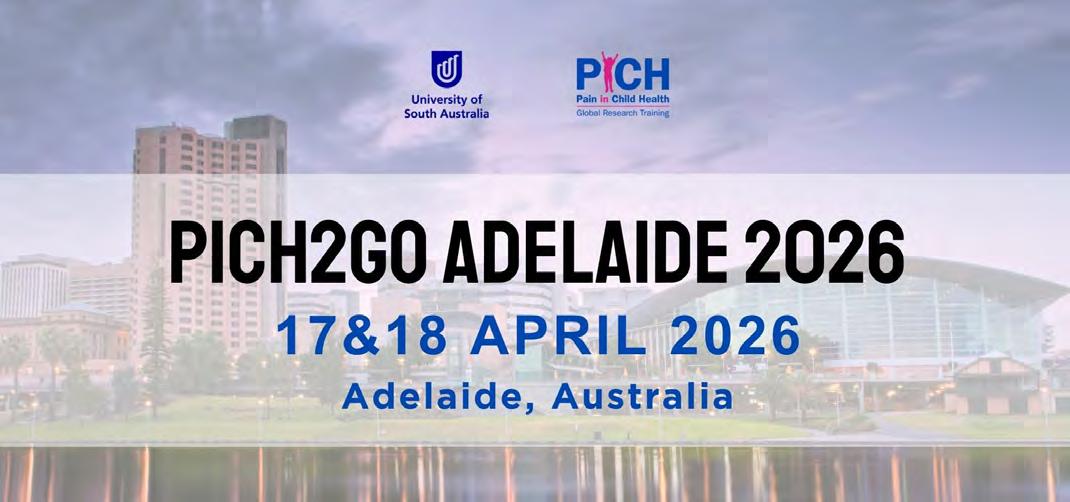
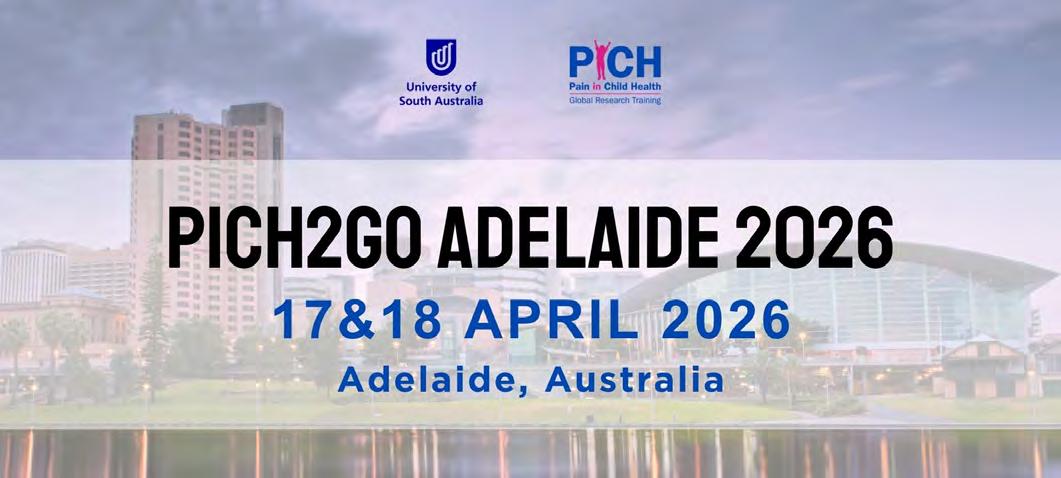
In collaboration with the University of South Australia, Pain in Child Health (PICH) is delighted to invite you to PICH2GO Adelaide, held April 17–18, 2026 (right before the APS Annual Scientific Meeting) in beautiful Adelaide, Australia.
This dynamic two-day event is designed specifically for paediatric pain research trainees worldwide.
Kick-off: Science Comedy Night: April 17
We’ll open with a night of science, humour, and connection as talented PICH trainees present their research in a fun, accessible, and comedic format during our networking dinner.
Full Day of Trainee Development: April 18
The second day features engaging sessions focused on building research skills, strengthening professional networks, and fostering mentorship. Trainees will connect with PICH faculty, peers, and professionals from across the paediatric pain community.
Whether you’re eager to present your work, learn from global leaders, build your network, or simply enjoy a paediatric pain–themed laugh, PICH2GO Adelaide is an event you won’t want to miss.
Registration opens soon — stay tuned! We look forward to welcoming you to Adelaide.
BLOG WEB
Ketamine and other N-methyl-D-aspartate (NMDA) receptor antagonists for chronic pain
Thank you to APS members Michael Ferraro and Aidan Cashin and their colleagues Eric Visser, Christina Abdel Shaheed, Michael Wewege. Benedict Wand, Sylvia Gustin, Neil O’Connell and James McAuley for sharing the following recent publication.
Article first published online: August 2025
Journal Reference: Michael C Ferraro, Aidan G Cashin, Eric J Visser, Christina Abdel Shaheed, Michael A Wewege, Benedict M Wand, Sylvia M Gustin, Neil E O'Connell and James H McAuley, Cochrane Database of Systematic Reviews 2025; Issue 8. Art. No.: CD015373
N-methyl D-aspartate (NMDA) receptor antagonists—including ketamine, memantine, dextromethorphan, amantadine, and magnesium—are increasingly used to manage chronic pain despite uncertain benefits and harms. This review aimed to evaluate the benefits and harms of these medicines compared with placebo, usual care, or other medicines in adults with chronic non-cancer, non-headache pain.
Methods
Searches were performed on CENTRAL, MEDLINE, Embase, and three trial registries (to 3 June 2025) to identify randomised controlled trials (RCTs) in adults with pain lasting ≥ 3 months. Critical outcomes were pain intensity and adverse events; important outcomes were disability, depressive symptoms, healthrelated quality of life, tolerability, and opioid consumption. Data were synthesised using random-effects meta-analyses with mean differences or risk ratios and 95% confidence intervals. Risk of bias and certainty of evidence were assessed using Cochrane Risk of Bias 2 and GRADE, respectively.
Results
Sixty-seven RCTs (2309 participants) were included: ketamine (39 studies), memantine (10), dextromethorphan (9), amantadine (3), and magnesium (8). Most compared these agents with placebo and were conducted in highincome countries.
For intravenous ketamine versus placebo, there was no clear evidence of pain reduction in the immediate term (48 hours to 1 week) (mean difference −15.79 points on a 0–100 scale; 95% CI −32.09 to 0.51; 3 studies, 173 participants; very low certainty) or the short term (>1 week to 3 months) (MD −5.32; 95% CI −15.51 to 4.87; 4 studies, 114 participants; low certainty). Intravenous ketamine may increase adverse events (risk ratio 3.26, 95% CI 1.05–10.09; low certainty), including psychotomimetic effects, nausea, and vomiting. There was no clear evidence that oral or topical ketamine reduced pain intensity at any timepoint.
Across other NMDA receptor antagonists (memantine, dextromethorphan, amantadine, magnesium), evidence was low to very low certainty, and confidence intervals encompassed both benefit and no effect. Few studies reported outcomes beyond three months, comprehensive safety data, or data on depressive symptoms or opioid consumption.
Conclusions
The available evidence, which is of low or very low certainty, provides little to no certainty about the effects of ketamine, memantine, dextromethorphan, amantadine, or magnesium for chronic pain. Intravenous ketamine may increase risk of adverse events, although the overall safety of ketamine and other NMDA receptor antagonists remains uncertain. Larger, well-designed trials are needed to determine the benefits and harms of these medicines for chronic pain.
Declaration
Michael C Ferraro has nothing to declare. The review received no dedicated funding.
Developed by the Australian Pain Society in collaboration with the National Ageing Research Institute, this FREE ‘train-the-trainer’ pain management program is for use by sta in both residential aged care facilities and organisations that provide aged care in the community, as well as NDIS providers.
Bite-sized 10 minute training modules!
Eight (8) painACT modules: One for the trainer called “How to use the painACT trainer program”, and seven modules for the trainer to train their sta :
to pain in aged care Impact of pain on the person, family and sta Conversations about pain
Source reference: Pain in Residential Aged Care Facilities: Management Strategies, 2nd Edition
painACT is available on the Australian Pain Society website and consists of:
> trainer learning module documents
Developed by the Australian Pain Society in collaboration with the National Ageing Research Institute, this FREE ‘train-the-trainer’ pain management program is for use by sta in both residential aged care facilities and organisations that provide aged care in the community, as well as NDIS providers.
For more information:
> short training video clips, and > participant handout material apsoc.org.au/painACT-Online-Learning
Have you had an article accepted for publication recently?
The Australian Pain Society (APS) is keen to share publications from our members with their colleagues via our eNewsletter. If you’ve had an article accepted or published recently, please contact our Assistant Editor Joanne Harmon via the APS Secretariat (aps@apsoc.org.au) with the title, authors, and reference (i.e., journal, volume, and DOI) of your article and request the submission template. We would love it if you also supply a short commentary (300 words max) to give our readers the gist of the article.
2026 Australian Placebo Nocebo Symposium
20th February 2026
University of Sydney
Click here to register or scan the QR code:
IMPORTANT DATES
Concurrent Session Submissions Open Tuesday 19 August 2025
For sponsorship and exhibition opportunities or more information please contact the RMSANZ Conference Secretariat
DC Conference & Association Management (DCC&A)
P +61 2 9954 4400 | E rmsanzasm@dccam.com.au
W dccam.com.au/rmsanz2026
Abstract Submissions Open Tuesday 16 September 2025
Concurrent Session Submissions Deadline Monday 20 October 2025
Online Registration Opens Tuesday 11 November 2025
SUPER Early Bird Registration Deadline Tuesday 3 February 2026
Late Breaking Abstract Submissions Open Monday 16 March 2026
Late Breaking Abstract Submissions Deadline Monday 23 March 2026
Early Bird Registration Deadline Tuesday 26 May 2026 SAVE THE DATE
Registrations open 18 November 2025
IMPORTANT DEADLINES
Topical Sessions 2 September 2025
Rising Star Award 7 October 2025
Free Papers & Posters 28 October 2025
Early Bird Registration 24 February 2026
INCLUDING
• National and International Speakers
• Pre-Conference Workshops
• Topical Sessions
• Extensive Industry Exhibition
• Sponsored Sessions
• Mentor Sessions EXPRESSIONS
INTERNATIONAL KEYNOTE SPEAKERS
Professor Yves De Koninck
Yves De Koninck is Professor of Psychiatry and Neuroscience at Université Laval
• Welcome Reception
• Conference Gala Dinner
• Additional social activities to help delegates connect and network with like-minded peers
and interdisciplinary approach to study the pathophysiology of neuromusculoskeletal conditions with the ultimate goal to improve management for patients.
For sponsorship and exhibition opportunities or more information please contact the APS Conference Secretariat: DC Conference & Association Management (DCC&A) P: 61 2 9954 4400 E: apsasm@dccam.com.au
7
NEW!
> Bridging the Gender Pain Gap from the Victorian Department of Health
RANZCOG, AGES, APS, NZPS Joint Statement: Best Practice Approaches to the Management of Endometriosis and Pelvic Pain, 17NOV25
APS Response to the Victorian Government’s Bridging the Gender Pain Gap Report, 11NOV25
Other items of interest for our members:
> Latest opioid data from the Australian Bureau of Statistics: Opioid induced deaths in Australia.
> Australia’s annual overdose report 2025 from the Pennington Institute
> Australian Atlas of Healthcare Variation Series: This series explores how healthcare use in Australia varies depending on where people live. It investigates reasons for variation that may be unwarranted, and provides specific achievable actions to reduce unwarranted variation
> ePPOC: electronic Persistent Pain Outcomes Collaboration: The electronic Persistent Pain Outcomes Collaboration (ePPOC) is an Australasian initiative that aims to improve the quality of care and outcomes for people who experience chronic pain.
> PainHEALTH: painHEALTH‘s aim is to help health consumers with musculoskeletal pain access reliable, evidence-based information and tips to assist in the co-management of musculoskeletal pain. painHEALTH is an initiative of the Department of Health, Western Australia
> Stanford University CHOIR: CHOIR Collaborative Health Outcomes Information Registry
> Opioid Podcasts for GPs: These podcasts are produced by David Outridge GP, and FAChAM Trainee as a project under the auspices of Dr Steven Kelly Staff Specialist in Addiction Medicine, Kullaroo Clinic Gosford. A weekly series from the Hunter Postgraduate Medical Institute (University of Newcastle)
> Airing Pain: Pain resources via an online radio show produced by Pain Concern, a UK registered Charity
> Indigenous Resources: Webpage on the APS website aggregating Indigenous resources
> Tame the Beast: Free educational tool that aims to inspire research-based action in the treatment of chronic pain
TGA
> Codeine information hub
NSW Agency for Clinical Innovation resources:
> Brainman and Pain Tool Kit translations
> Pain Management Resources
> Quicksteps to Manage Chronic Pain in Primary Care
> Built into Quicksteps: “How to de-prescribe and wean opioids in general practice”
> A list of helpful apps for consumers and clinicians
> Chronic Pain in the ED
BLOG WEB
Calendar of Events
13 February 2026
Dietitians Australia
National Nutrition & Dietetics Research
Summit 2026 (In-Person & Virtual)
Deakin Downtown, Collins Square, Melbourne, VIC
20 February 2026
Sydney Placebo Lab
2026 Australian Placebo Nocebo Symposium
University of Sydney New Law Building Annex (F10A), Camperdown, Sydney, NSW
18-21 March 2026
New Zealand Pain Society (NZPS)
NZPS26 - The Right Fit
Christchurch Town Hall, Otautahi Christchurch, NZ
17-18 April 2026
Pain in Child Health (PICH)
PICH2GO Adelaide 2026
University of South Australia, Adelaide, SA
19-22 April 2026
Australian Pain Society
2026 Australian Pain Society 46th Annual Scientific Meeting
Adelaide Convention Centre, Adelaide, SA
1 May 2026
Australian and New Zealand College of Anaesthetists & Faculty of Pain Medicine
2026 FPM Symposium - Kotahi tatou i te waka: United in the journey of pain care
JW Marriott Auckland Hotel, Auckland, New Zealand
1-5 May 2026
Australian and New Zealand College of Anaesthetists (ANZCA)
ANZCA 2026 Annual Scientific MeetingHerenga Waka Herenga Tangata (From Home to Home)
New Zealand International Convention Centre (NZICC), Auckland, New Zealand
23-24 June 2026
Occupational Therapy Australia
OT Exchange 2026: From Ideas to Impact
Brisbane Convention and Exhibition Centre, Brisbane, QLD
19-22 July 2026
Rehabilitation Medicine Society of Australia & New Zealand
RMSANZ 2026 9th Annual Scientific Meeting
- Bridging the Rehabilitation Gaps
Darwin Convention Centre, Darwin, NT
07-09 August 2026
Neuromodulation Society of Australia & New Zealand
2026 NSANZ 19th Annual Scientific Meeting
Sheraton Grand Mirage Resort, Gold Coast, QLD
14-16 September 2026
National Rural Health Alliance 18th National Rural Health Conference
International Association for the Study of Pain (IASP)
IASP 2026 World Congress on Pain
Bangkok International Trade & Exhibition Centre (BITEC), Bangkok, Thailand
BLOG WEB
APS Membership Renewals 2025
Renewal notices for 2026 have been sent by email to members
Thank you for your continued support and membership of the APS.
Please note:
1. We understand that circumstances change, so each year we ask you to select your appropriate level of membership.
2. This system of self-reporting subscription levels was implemented in 2009 for the benefit and fairness of all members.
3. Membership fees have NOT increased
Please refer to the rates below for your 2026 membership fee:
a. Regular A $130
b. Regular B $260
c. Regular C $440
d. Retired $65 Concessional Rate
e. Student $65 Concessional Rate
Before renewing, please ensure you review and update your member profile online. Payments can be made by Credit Card or BPAY.
Did you know that the Australian Pain Society is a registered charity with ACNC? Your donation will help the Society to promote the prevention and control of diseases in human beings associated with pain.
All donations of $2 or more to APS are tax-deductible.
New Member as at 23 November 2025
Mrs Nicole Campbell Psychology
Mr Moges Getnet Physiotherapy
Mrs Taylor-Jane Hermes Psychology
Miss Annabel Horsburgh Psychology
Ms Tabitha O'Neill Nursing
Ms Hannah Scarborough Science Research
Mr Mitchell Smith Podiatry
Ms Holly Stokes Psychology
Dr Lisa Vaccaro Psychology
Mrs Kelly Walsh Physiotherapy
Vision, Purpose & Priorities
Vision:
All people will have optimal pain management throughout life.
Purpose:
The Australian Pain Society is a multidisciplinary association whose purpose is to advance pain management through education, research, and advocacy for transformational improvements in clinical care.
Priorities:
In order to achieve our purpose, the Australian Pain Society will provide:
> Membership
> Research
> Education
> Services and resources
> Good governance and operations
> Advocacy
Directors
President:
Mrs Bernadette Smith
Psychology Plus
South Burnie TAS
Tel: 03 6431 9959 Fax: 03 6431 9950
President-Elect:
Dr Laura Prendergast
Persistent Pain Management Service
Northern Health
Broadmeadows VIC 3047
Tel: 03 8345 5166 Fax: N/A
Work days Mon & Thu
Secretary:
Ms Jacintha Bell
Lifeworks Occupational Therapy
Mount Lawley WA 6050
Tel: 0451 178 880 Fax: 08 6323 3329
Treasurer:
Dr Duncan Sanders
Pain Management Unit,
Sydney Medical School, University of Sydney / Managing Pain Clinic and E3 Physio
Gold Coast QLD
Tel: 07 5620 1234 Fax: 07 3009 0420
ACT Director:
Mr Anjelo Ratnachandra
Beyond Pain Pty Ltd
Belmont VIC 3216
Tel: 0400 202 803 Fax: N/A
NSW Director:
Dr Connor Gleadhill
Department of Health and Aged Care
Primary Care Division
Newcastle NSW 2038
Tel: 0405 203 661 Fax: N/A
NT Director:
Dr Amelia Searle
Flinders Medical Centre Pain
Management Unit
Bedford Park SA 5042
Tel: 08 8204 5499 Fax: 08 8204 5440
QLD Director:
Mrs Karla Wright
Fernvale Priceline Pharmacy
Fernvale QLD 4306
Tel: 07 5427 0695 Fax: 07 5427 0698
SA Director:
Ms Heather Gray
Royal Adelaide Hospital
Adelaide SA 5000
Email: heather.gray@sa.gov.au
TAS Director:
Mr Sinan Tejani
Launceston General Hospital
Launceston TAS 7250
Tel: 0469 967 841 Fax: N/A
VIC Director:
Mrs Alison Sim
10 South Sports Medicine
Geelong VIC 3220
Tel: 0488 988 315 Fax: N/A
WA Director:
Ms Jacintha Bell
Lifeworks Occupational Therapy
Mount Lawley WA 6050
Tel: 0451 178 880 Fax: 08 6323 3329
BLOG WEB
Office Bearers
Immediate Past President:
Mrs Joyce McSwan
Gold Coast Primary Health Network
Persistent Pain Program, QLD and PainWISE
Tel: 0412 327 795 Fax: 07 3539 9801
SPC Chair:
Professor Kevin Keay
Department of Anatomy
University of Sydney
Sydney NSW 2006
Tel: 02 9351 4132 Fax: 02 9351 2817
IASP Liaison:
Professor Fiona Blyth AM
Sydney School of Public Health
Faculty of Medicine and Health
University of Sydney
Camperdown NSW 2006
Email: Fiona.blyth@sydney.edu.au
Communications Coordinator:
Mrs Bernadette Smith
Psychology Plus
South Burnie TAS 7320
Tel: 03 6431 9959 Fax: 03 6431 9950
Newsletter Editor:
Clinical A/Prof Kylie Bailey
Sagacity Services
Mount Hutton NSW 2290
Tel: 0447 905 085
Newsletter Assistant Editor:
Dr Joanne Harmon
School of Clinical and Health Sciences
University of South Australia
Adelaide SA 5000
Tel: 08 8302 1442
Grant Selection
Subcommittee Co-Chairs:
Emeritus Professor Maree Smith AC
Centre for Integrated Preclinical Drug Development