Acreage of a new variety expands in Eastern Canada PG. 20
u g99 wheat stem rust update Canadian wheat breeders develop resistant cultivars
PG. 5
l ighten up
Nondarkening beans meet market preferences
PG. 7
Nu-Trax™ P+ fertilizer puts you in charge of delivering the nutrition your crops need for a strong start. It features the right blend of phosphorus, zinc and other nutrients essential for early season growth. And because Nu-Trax P+ coats onto your dry fertilizer you are placing, these nutrients close to the rooting zone where young plants can easily access them, when they are needed most.
Take control of your crop’s early season nutrition with Nu-Trax P+ and visit .
Rethink your phos
TOP CROP
5 | Ug99 wheat stem rust update Canadian wheat breeders continue to develop cultivars with resistance.
Treena Hein
pythium and phytophthora control in corn and soybean
Making a career of it
Lianne Appleby, Associate Editor
| Lighten up
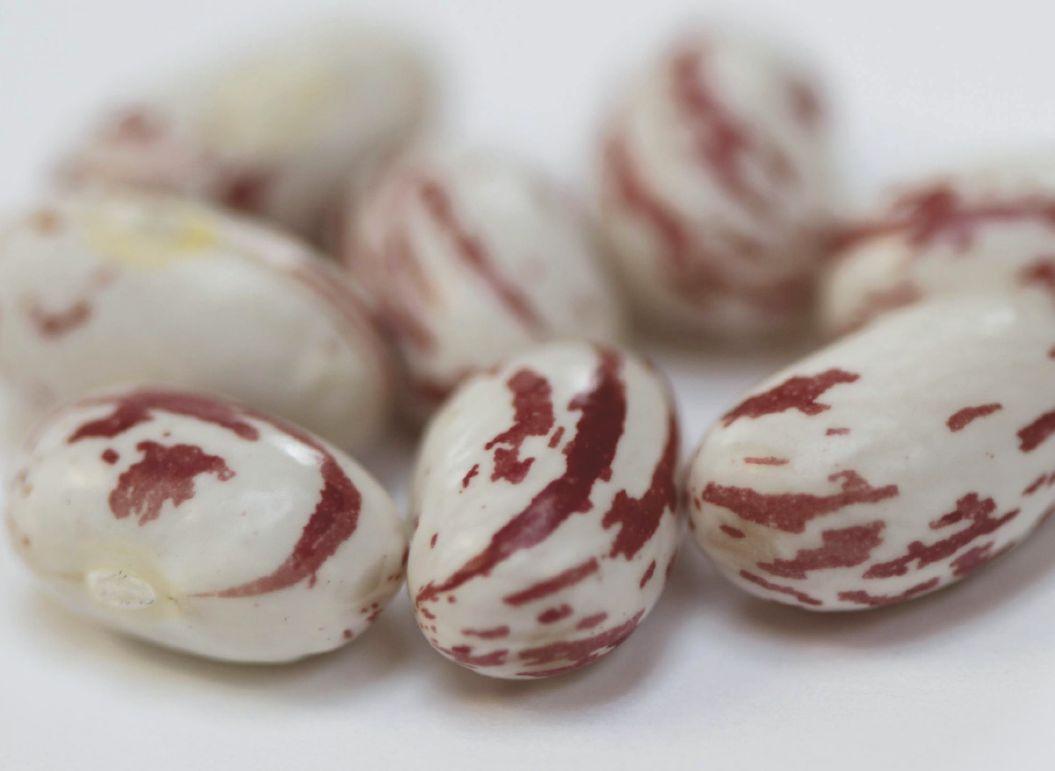
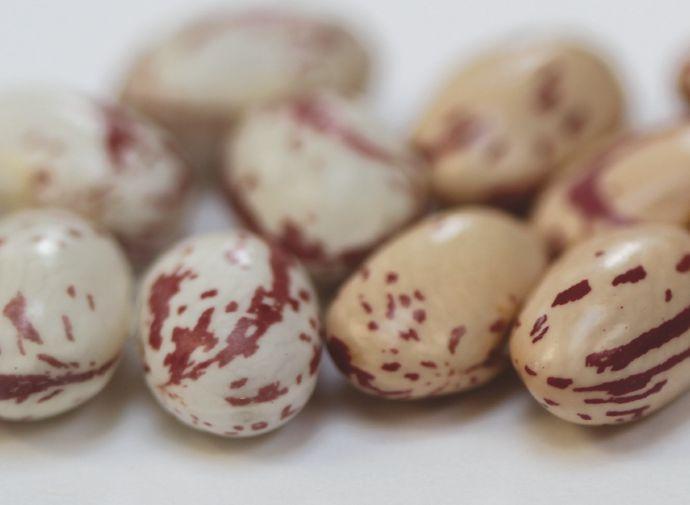
nondarkening cranberry and pinto beans to meet market preferences.
Carolyn King
John Dietz
Julienne Isaacs
20 | Quinoa takes the field acreage of a new variety well-suited to Central and eastern Canada is expanding.
Treena Hein
Small but mighty – and mighty complex
Carolyn King
removing moisture from grain
Treena Hein
Photo courtesy of Peter Pauls,
Photo courtesy of Katan Kitchens.
LIANNE APPLEBY | ASSOCIATE EDITOR
VoluNteerS mAke A cAreer of it
Agriculture has increasingly been in the spotlight lately, especially among consumers. What was once taken for granted – food – is now under the microscope as consumers demand to know more about where it comes from, and how it’s produced.
That’s not a bad thing, though. Keen public interest in the “farm to fork” process can also be used to the industry’s advantage. ensuring food is sustainably and safely produced means the agri-food system must transform, restructure – and promote. So, not only does this mean increased innovation via ongoing research and development, but also in recruitment of bright young, enthusiastic talent into the industry.
according to agriculture and agri-Food Canada (aaFC), employment in most industries in Canada’s agri-food system is on an upward trend. In 2013, agriculture and agri-food provided one in eight jobs in Canada, employing over 2.2 million people, despite the fact that many people are actually removed from primary production.
That’s because the system is a complex and integrated supply chain that doesn’t stop with farmers. It includes service suppliers, food and beverage processors, food retailers, wholesalers and foodservice providers – a whole suite of jobs that a student contemplating their post-secondary education may have overlooked.
Yet, in 2014, agriculture took a hit in terms of preparing students for a career in agriculture when the University of guelph announced that it would shut down its college campuses in alfred and Kemptville, for financial reasons. Quite rightly, the agriculture community was furious at the news and began campaigning to keep the campuses – and more importantly, the agriculture programs they offered – alive. and that effort wasn’t futile.
In July, the government of ontario announced the establishment of a working group to explore what courses and programs could be offered at the campus, as well as which organizations could help deliver them. according to the government, the group will look at ways for the Kemptville campus to continue to focus on agriculture and food education as well as considering offering courses in health and wellness, business, and trades training. The working group will submit their findings later in 2015.
aaFC claims that in 2013, the agri-food industry generated $106.9 billion – accounting for 6.7 per cent of Canada’s gDp as students return to school, whatever the findings of the Kemptville working group, this time of year serves as a good reminder that in a huge industry like ours, people remain our greatest resource.
Fall fairs are winding down so, as we give thanks, let’s save a little kudos for the thousands of volunteers working to turn others on to agriculture and promote the sector at its most basic level – that of food provision and security. people with a passion for teaching and promoting agriculture are increasingly important in this era of cutbacks and discontinuation. In the face of institutions and regulations that seem not to support the primary producer, fair committees, 4-H volunteers, Junior Farmer leaders and the like are the ones who really can (and are) the thin “green” line, ensuring a new appetite for careers in our sector.
Thanks to all of our agriculture volunteers who make a career of it.
PreSIDeNt Sue Fredericks, Director of Soul/cOO
MAIL AGREEMENT #40065710 returN uNDeLIVerAbLe cANADIAN ADDreSSeS tO cIrcuLAtION DePt P.O. Box 530, Simcoe, ON N3Y 4N5 email: subscribe@topcropmanager.com
SubScrIPtION rAteS Top Crop Manager West - 9 issues - February, March, Mid-March, April, June, September, October, November and December - 1 Year - $45.00 Cdn. plus tax
Top Crop Manager East - 7 issuesFebruary, March, April, September, October, November and December - 1 Year - $45.00 Cdn. plus tax
Potatoes in Canada - 2 issues - Spring and Summer 1 Year - $16.00 CDN plus tax
All of the above - $80.00 Cdn. plus tax
Occasionally, Top Crop Manager will mail information on behalf of industryrelated groups whose products and services we believe may be of interest to you. If you prefer not to receive this information, please contact our circulation department in any of the four ways listed above.
All advertising is subject to the publisher’s approval. Such approval does not imply any endorsement of the products or services advertised. Publisher reserves the right to refuse advertising that does not meet the standards of the publication. topcropmanager.com
u g99 whe At Stem ru St updAte
Canadian wheat breeders continue to develop cultivars with resistance.
by Treena Hein
First, the bad news. The spread of Ug99 (a lineage of wheat stem rust) across eastern africa and western asia is slow but steady, and new strains continue to appear. There is general consensus that Ug99 will eventually arrive in north america. “In addition,” says Tom Fetch Jr., “a resistance gene that was effective against Ug99 and most other races of stem rust called SrTmp, which has been widely used in winter wheat breeding and some spring wheat breeding, has recently lost its efficacy.”
With this information in hand, you will likely agree that efforts to breed new resistant varieties by Fetch, an agriculture and agri-Food Canada (aaFC) crop pathologist and Canada’s leading stem rust expert, and his colleagues at home and around the world continue to be very important.
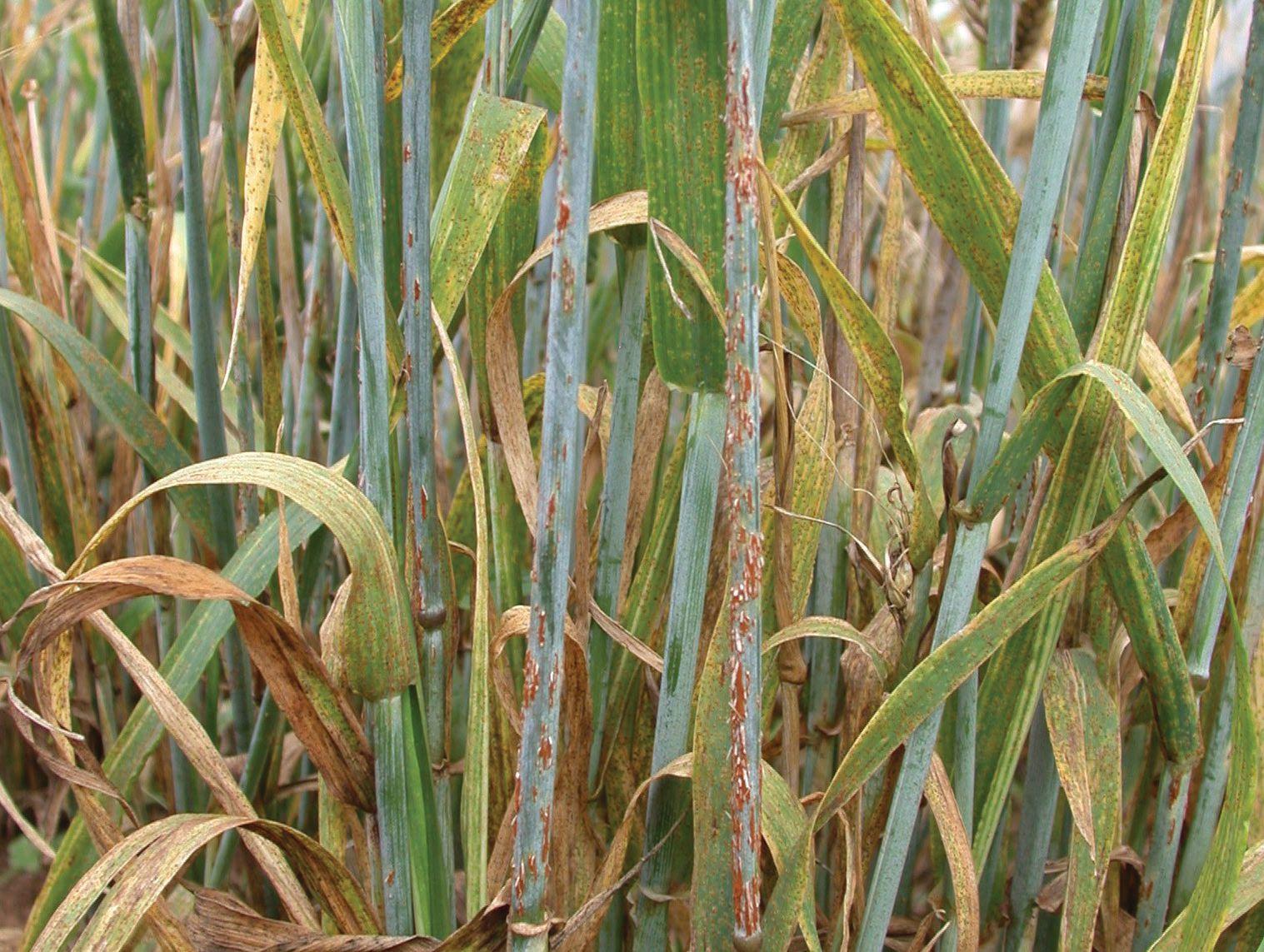
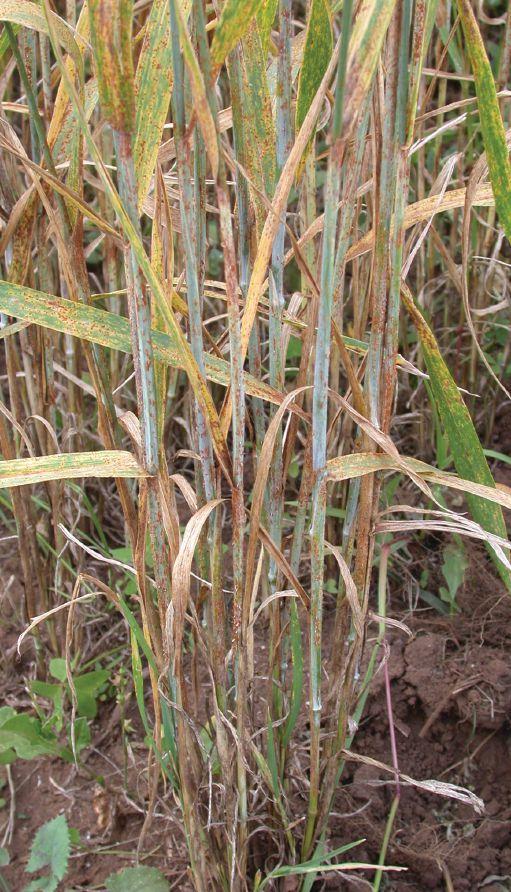
Ug99 stem rust was discovered in Uganda in 1999 (hence the name Ug99) and is now present in 13 countries, with rwanda and egypt being the newest ones in which it’s been detected. Three new strains have appeared over the last few years, which brings the current total to 10. The disease is characterized by the presence of
brick red, elongated, blister-like pustules that often lead to the death of the plant. Towards the end of the growing season, black spores are produced which overwinter and later can infect the alternate host (barberry shrub) in the spring. It’s estimated that 80 to 90 per cent of global wheat varieties are susceptible to the Ug99 strains. The strains are unique in their ability to attack the Sr31 gene, which was the only one protecting many of the world’s wheat cultivars.
The good news, Fetch notes, is that he and his colleagues at the aaFC Cereal research Centre understand the disease quite well and are achieving success using genes in combination to create multigene stacks of resistance. Indeed, over the years, aaFC has invested over $14 million to develop new resistant wheat varieties and fund other related Ug99 work. “We’ve identified three new genes, we’re identifying molecular markers, and we’re examining other sources of resistance,” Fetch explains. “We also receive isolates from Kenya
aBOVE: New derivatives of Ug99 were isolated in Kenya in 2006 and 2007.
and eritrea and test them to see whether it’s a new Ug99 strain or something else.”
The two Canadian varieties with the best resistance were aC Cadillac and peace, but aaFC has just released a new registered cultivar called aaC Tenacious. “It has a good resistance complement, a two-gene stack, with one providing what’s called ‘seedling’ or ‘allplant’ resistance that works throughout the life of the plant,” Fetch explains. “The other gene provides ‘adult plant’ resistance, which is not effective at the seedling stage but begins working at later stages of the plant. The genes work in tandem to restrict the size of the rust infection. The pustules will be smaller and spore production will be lessened so that the plant can tolerate Ug99 infection and still produce seed.” He notes that aaC Tenacious also has good Fusarium head blight (FHB) resistance and says that wheat breeders can use it as a dual source of both stem rust and FHB resistance.
It is expected that more varieties with this two-gene resistance stack will be released by aaFC in the near future. “as with most crop breeding, it’s a multi-year process,” Fetch notes. “For several years before he recently retired, Dr. Doug Brown at aaFC in Winnipeg developed many crosses with the ‘Cadillac’ resistance to Ug99, so a lot of his work will bear fruit in the coming years.”
over the years, aaFC has also sent seed of resistant Canadian varieties to wheat breeders in the United States and at the International Maize and Wheat Improvement Center (CIMMYT) in Mexico, so that breeders there can develop improved local varieties in affected areas and areas most at risk of spread. “Many fungal pathogens affect wheat, but stem rust is really dangerous and can cause 100 per cent losses in wheat over a short period of time,” Fetch explains. “In affected areas of africa such as Kenya, where there is family subsistence-level farming, it can be devastating.”
Wind is the most common cause of Ug99 dissemination. The spores are picked up and blown long distances, causing the disease to move incrementally across adjacent countries and has been documented to traverse oceans. “If it gets to China, that would be very concerning,” Fetch notes. “We know there have been events where dust particles have blown across from China to north america, and a rust spore is equal to or even lighter in weight compared to these particles.” There is also another way Ug99 could turn up in north america –and that’s through human transfer. “rust spores can be transported on clothes,” Fetch says. “This is how stripe rust was introduced into australia. We don’t know how likely it is or how soon Ug99 could be introduced into north america in this manner, but the more Ug99 spreads, the greater the chance that someone – or wind currents –could bring it over here.”
We know there have been events where dust particles have blown across from China to North america
Iran is of particular concern in terms of Ug99’s spread, because of a common native shrub called the barberry which is susceptible to stem rust. Ug99 normally reproduces asexually, releasing billions of spores that are mostly clonal, although mutation to new strains occurs frequently. However, if the barberry bush gets infected, sexual reproduction of Ug99 with other stem rust strains already present can occur. This allows genetic recombination of virulence genes from both parents, with the possible development of offspring with different traits than either parent and a high potential for new virulent strains to appear. Fetch has recently begun collaborating with scientists Marcia Chavez and Jose Martinelli in Brazil, as barberry is native to that country as well. They have just begun identifying the types of rust that infect barberry there.
Stem rust has been uncommon in wheat and barley in Canada for over 60 years, because wheat breeders and pathologists have ensured varieties with good resistance were produced. albert Tenuta, ontario Ministry of agriculture, Food and rural affairs (oMaFra) field crop pathologist, stresses that although a lot of attention is put on Ug99, there is also the possibility that a new stem rust race could develop here in north america.
Having said that, Tenuta and Fetch are both hopeful as a great deal of breeding work is being done. There also are new fungicides always being developed which are very effective against not only stem rust, but other cereal rusts such as stripe and leaf rust. “However, we need to be vigilant,” Tenuta says. “We now have two generations of growers that haven’t seen stem rust, but we do talk about it in presentations on other invasive species, so hopefully some awareness is there. We are covering our bases from both a monitoring and surveillance perspective – in collaboration with aaFC and the wheat industry –and taking proactive measures.”
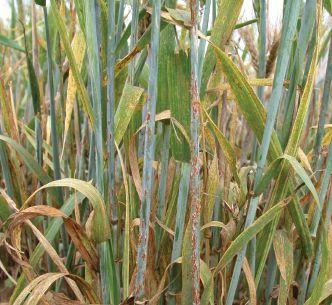
an example of a heavy stem rust Ug99 infection, taken in fields in Kenya.
l ighte N up
Developing nondarkening cranberry and pinto beans to meet market preferences.
by Carolyn King
Dry beans with coloured markings on a white background – cranberry and pinto beans – are prone to darkening after harvest, which can cause their price to be discounted. So peter pauls at the University of guelph (Uofg) is leading a research effort to develop nondarkening varieties for ontario.
post-harvest darkening is an issue all along the value chain, right up to the consumer. “pinto and cranberry consumers are quite knowledgeable about our products and demand a bright and natural colour for their product use. The visual stimulation of the cranberry and pinto colours is a big factor in consumer purchases,” notes Brad Chandler, commercial business manager for the Hensall District Co-operative (HDC), a farmer-owned, diversified agri-business that includes dry bean processing and marketing.
Darkening is influenced in part by how the beans are handled and stored; it tends to happen faster if the beans are exposed to light, heat and high humidity.
“Let’s say I spill some cranberry beans on the ground when I’m harvesting. If they’re left out in the sun for a day, they will be brown,” says Mike Donnelly-Vanderloo, who chairs the ontario Bean growers’ research committee. “In a very short time, cranberry
beans can go from a nice creamy white with these beautiful reddishmaroon stripes, a very colourful bean, to a tan to medium brown bean where you can hardly distinguish the stripes. pintos have the same problem; when they darken, you don’t see the natural colour patterns of the bean.”
With proper handling and storage, the beans are much slower to darken. “Typically, bean moisture and storage conditions are key factors to modifying colour loss, and we take great efforts to ensure that our beans are at optimum moisture and in proper warehouse storage,” Chandler says.
However, it may be a year or more before the beans are consumed, so pinto and cranberry beans that never darken would be an advantage.
Chandler notes, “Having [nondarkening varieties] will ensure our consumers receive a consistent, bright-coloured product, regardless of the harvest date. HDC would expect to see retail and food service sales strengthen as consumers gain an awareness of the lack of colour deterioration.”
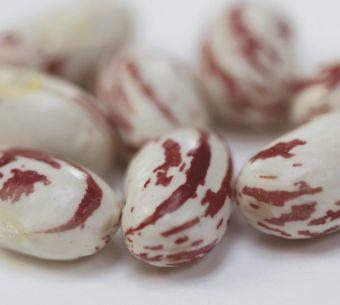
aBOVE: guelph researchers are developing nondarkening varieties of cranberry beans (shown here) and pinto beans for Ontario growers.
Photos courtesy of Peter Pauls, u niversity of Guel P h.
From Donnelly-Vanderloo’s viewpoint, the key advantage of nondarkening beans for growers is risk reduction. He observes that ontario crop insurance rates for cranberry bean are higher than those for other dry beans. For instance, the maximum coverage available for cranberry bean is 80 per cent and costs $33.24 per acre. For white beans, the maximum coverage is 85 per cent and costs only $16.91 per acre. “part of the reason for the higher insurance for cranberry beans is because they can deteriorate in the field quite quickly, especially if harvest is delayed. They really weather and part of that has to do with this darkening,” he says.
Donnelly-Vanderloo is especially interested in the possibility of nondarkening cranberry beans because of the importance of this bean to ontario growers. In 2014, cranberry bean (also called romano bean) was the second most commonly grown dry bean in the province.
Breeding brighter beans
To breed nondarkening cranberry and pinto beans, pauls’ research team began by screening hundreds of bean lines. “We ordered bean germplasm from around the world to look for ones that didn’t darken,” notes pauls, who is a professor and chair of the Uofg department of plant agriculture.
“You can accelerate the darkening by exposing the beans to ultraviolet light, sort of like a sun tanning light. If you do that overnight, the beans will be brown the
next morning, so it is an easy screen to sort through material,” he explains.
“We found one accession from the Fort Collins germplasm bank that didn’t darken at all. It was a very pale cranberry bean, with very pale pink markings on a white background, and that white background didn’t change at all even when exposed to the UV light.”
Unfortunately, the line they found wasn’t really a commercial bean and had some undesirable traits. So the researchers began crossing it into elite pinto and cranberry bean lines to bring the nondarkening trait into those lines.
The pinto breeding work has proceeded relatively quickly. pauls says, “The normal breeding timeline, from the time you make a cross to the time it has a commercial impact, is typically about eight to 10 years. It has been six years since we made the initial cross, and we now have a nondarkening pinto line in the provincial bean trials for yield.”
This nondarkening pinto line has beans that look like regular pintos, plus the plant is an upright bush. He adds, “pintos are notorious for being viny and growing along the ground, but this line has a nice plant architecture that’s suited to direct combining.”
Development of nondarkening cranberry bean lines is going a little slower. The researchers now have nondarkening lines, but so far the red stripe on the seed is not quite as intense as it is on a typical cranberry bean.
Donnelly-Vanderloo emphasizes pauls’ research team is using traditional plant breeding, so these are non- gMo beans, which is particularly important in european markets. “a lot of ontario beans head off to europe, with the cranberry beans going to Spain, portugal and Italy.”
assessing nutrition and more
In addition to the breeding work, pauls’ team is looking into several consumerrelated aspects of nondarkening beans. one component involves evaluating the beans’ taste and cooking characteristics. pauls explains consumers care about the darkness of pinto and cranberry beans because they associate darkness with older beans, and they associate older beans with harder-to-cook traits, like longer soaking and cooking times. So the researchers are starting cooking and taste trials to see if nondarkening beans differ from darkening beans in these characteristics.
another component of this research is investigating how the nondarkening trait relates to the health benefits of the beans. Studies by other researchers have indicated that darker coloured beans appear to have higher levels of antioxidants, which are beneficial for human health. So pauls’ group is wondering if post-harvest darkening might be related to higher antioxidant levels.
To answer that question, their nondarkening and darkening lines are being included in some broader studies to evaluate the health effects of beans, led by Krista power, a research scientist with agriculture and agri-Food Canada (aaFC) in guelph. Currently, power and her research associate Jennifer Monk are examining the effects of beans on gut health, using mice feeding trials. a recent trial assessed the effects of beans on colitis, a type of inflammatory bowel disease. “Those tests show a protective effect of beans against that severe intestinal inflammation, and this beneficial effect occurs whether the beans are darkening or nondarkening,” pauls says.
That’s good news, and pauls is hopeful that the ongoing health studies will continue to show that nondarkening beans are just as healthy as regular beans.
His team is also digging deeper into the genetic and biochemical aspects of the nondarkening trait. For instance, with the genetic work, the researchers are already fairly certain that a single gene controls whether or not a bean will darken after harvest. They are now conducting a number
Nondarkening beans (left) maintain their attractive colours while regular beans start to turn brown when exposed to light, high humidity and heat.
of studies, with both the cranberry bean and the pinto bean, to find out more about that gene, such as determining exactly where it is located along the plant’s Dna, and developing Dna markers to help breeders select for the nondarkening trait more efficiently.
The research on nondarkening pinto and cranberry beans involves many players. Mohammad erfatpour, one of pauls’ phD students, is playing a major role in the pinto work, examining the genetics of the nondarkening trait as well as conducting the cooking and taste tests in collaboration with Lisa Duizer, who is an associate professor in the food science department at Uofg. Masters student Dana Mcrobert is working on the genetics of the nondarkening
cranberry beans. pauls’ colleague gale Bozzo is working with phD student Jose Freixas Coutin to investigate which genes are turned on and which are turned off in nondarkening. Mahbuba Siddiqua, a postdoctoral researcher in pauls’ lab, is looking into other aspects of gene expression. and aaFC research scientist rong Cao and his graduate student peter Chen are conducting biochemical analyses of the compounds involved in the darkening reaction. all this work may seem like a lot of effort going into a single trait, but this research is helping to shed light on many factors that are very important for high quality dry bean varieties such as seed coat appearance, nutritional value and cooking characteristics.
“people make a lot of decisions about what to purchase based on what a product looks like. In beans, appearance is important because it defines a bean’s market class. Very small differences in the genetics can define those classes. But at this point we don’t understand a single one of those traits in enough detail to be able to [identify the particular genes involved]. For plant breeding, we would like to understand the traits at that level,” pauls says. “This research gives us tools in terms of making the breeding easier. and it also helps us to try to anticipate advantages or disadvantages of the traits we are working with.”
For more on plant breeding, visit topcropmanager.com
c ome r A i N or come Shi N e
Researchers are working to develop Canadian soybeans that do well in wet and dry conditions.
by Carolyn King
Dry conditions can significantly reduce soybean yields, so a five-year project is underway in ottawa to add drought tolerance into Canadian soybean varieties.
“Drought stress is the major abiotic constraint to high stable soybean yields in eastern Canada. From 2000 to 2012, ontario had five summers that were drier than the long-term average. That is one year in three with drought,” notes Malcolm Morrison, the project’s principal investigator. He is a plant physiologist at the eastern Cereal and oilseed research Centre (eCorC) of agriculture and agri-Food Canada (aaFC).
Morrison explains the project isn’t about prolonged periods of extreme drought like the Dirty ’30s. Instead it’s about short periods of dry weather within a growing season. “This is called ‘periodic drought,’ and it can be quite dangerous for soybean yield, especially if the dry weather occurs during sensitive growth stages,” he says.
“We’ve found that the first three or four weeks after the beginning of first flower is about the most sensitive stage to changes in precipitation. If you get precipitation at that time, you will be rewarded with a higher yield. But if you get drought, you will get
fewer flowers producing pods and fewer seeds in those pods, and that will affect yield.”
along with yield reductions, dry conditions can also influence seed quality. as rainfall decreases, protein content decreases and oil concentration generally increases slightly. In addition, the seeds tend to be smaller and may be misshapen or wrinkled.
Morrison points out the ability to tolerate periodic drought is particularly important for reliable soybean production in Canada. With our relatively short growing season, a soybean plant will have little time later in the season to compensate for a reduction in seeds that has occurred due to dry weather.
screening for multiple mechanisms
The project, which runs from 2013 to 2018, is screening non- gMo soybean lines from aaFC and Sevita International for drought tolerance. The selected lines go to the breeders for development of
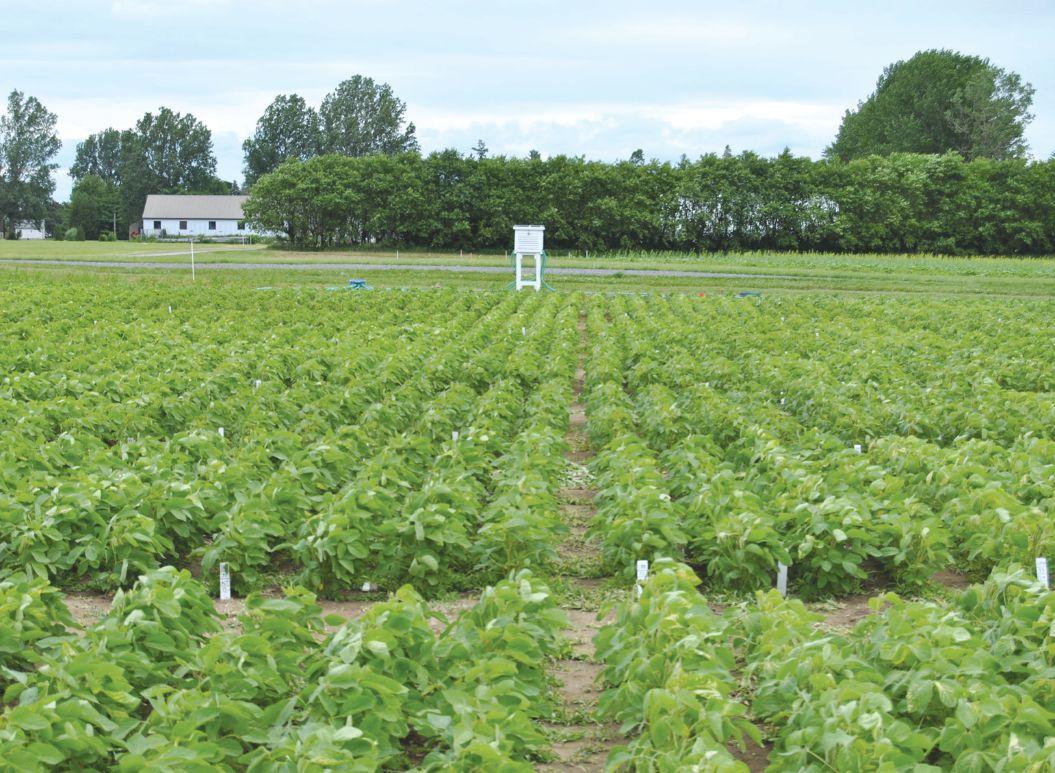
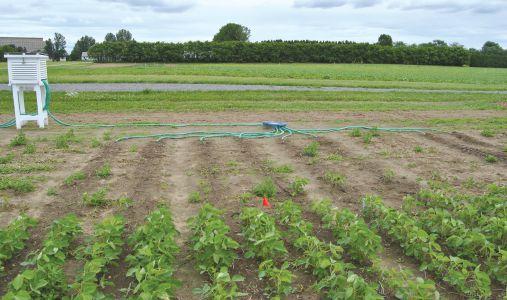
aBOVE: soybean lines with subsurface irrigation are compared to the same lines with only natural rainfall, so the researchers can identify plants that yield well under both wet and dry conditions.
Photos courtesy of Malcol M Morrison, aafc
new and improved Canadian soybean varieties.
Many characteristics can influence how well a soybean plant does under dry conditions; some examples include a deeper root providing access to deeper soil moisture, or early vigour so the plant shades the soil surface sooner, or more efficient water use, or earlier closure of leaf pores, called stomata, to stop water loss from the plant.
“There are lots of different drought-tolerance mechanisms that can be brought into play in a plant, but those mechanisms can be detrimental to yield in a year with a lot of moisture,” Morrison explains.
He gives the example of earlier stomata closure. When the stomata are open, they allow water vapour and oxygen to escape from the leaf, and carbon dioxide to enter. So, earlier stomata closure does more than stop water loss. “If a plant closed the stomata early, then it wouldn’t have enough carbon dioxide for photosynthesis even when the drought conditions aren’t that bad. If we bred a plant like that, it would be really good in dry conditions, but not in wet conditions.”
one key drought-response issue for soybeans is that dry conditions can halt nitrogen fixation. Morrison says, “nitrogen fixation is a symbiotic relationship between a bacterium and the plant that produces the root nodule. The bacteria that live in the nodules receive carbon from the plant and in return supply the plant with nitrogen. But as the plant responds to a dry condition, the stomata close and it stops actively photosynthesizing, it stops producing carbon, and it stops moving that carbon down to the nodules and giving the bacteria food.”
given the complexity of drought-response traits, Morrison isn’t screening for just one or two specific traits. Instead, he is using a method that identifies the plants that “can capitalize on several drought-tolerance mechanisms to produce high yields under dry conditions and high-moisture conditions.”
For this method, Morrison supplies field-grown soybean plants with water every day and then compares the yields of those irrigated plants to the yields of the same soybean lines grown in adjacent plots that have received only natural rainfall. “This is called the Delta Yield concept because it is based on the difference between the yields of the well-watered plants and the yields of the natural-watered ones.” “Delta” refers to the greek letter delta, an abbreviation used in science for “the difference between.”
The researchers want to find soybean lines with very little yield difference between the irrigated and rain-fed plants. “The cultivar with the lowest Delta Yield is the most drought-tolerant, yet won’t suffer a yield drag when there is no drought,” Morrison explains. “This method has been used in the United States to develop a wateruse-efficient corn hybrid that yields 7.4 per cent higher in drought and 3.4 per cent higher in normal water situations.”
For the irrigated plots, Morrison uses a product called Drip Tape made by Toro. “It is a plastic tape that is buried at five inches deep. every 30 centimetres, there is a small slit in the tape, and that leaks at a certain amount when you put water into it. on a daily basis, I give
the plants between two and three millimetres extra precipitation.”
This subsurface irrigation method has a lot of advantages. Morrison says, “It saves on water; we don’t have to apply a huge amount of water to the surface. It also allows us access to the field to take measurements because the soil isn’t mucky. and it allows a fairly precise application of water; we know how much we’re putting on per area.”
From previous research, Morrison knows soybean plants respond well to extra moisture, as long as it doesn’t come all at once and flood the plants. “We’ve done experiments showing that you can get an increase in yield with up to 650 to 700 millimetres of precipitation during a growing season, if the precipitation is evenly distributed.” That amount of rainfall is quite a bit higher than the average growing season rainfall in ontario’s soybean growing areas. For example, ottawa’s 30-year average growing season precipitation is 466 mm. according to Morrison, the Delta Yield approach works very well in most years, although the differences between the irrigated and nonirrigated yields are not as noticeable when precipitation is abundant, as it was in 2014 in the ottawa region. But he adds, “even in 2014, we still had periodic drought in the first two weeks of august. That is always going to occur, and that is why we are doing the research –we’re aiming for a plant that has the capacity to kick-start mechanisms that get it through those rough points in the growing season.”
even though drought-tolerance traits can be doubled-edged in wet years, some drought tolerance is almost always better than none, as shown in research led by Thomas Sinclair of the University of Florida. The researchers modelled the response of soybeans with different drought-tolerance traits using 50 years of weather data for 2655 U.S. locations. “They found that, in the vast majority of times, incorporating any drought-tolerance mechanism is actually beneficial because at some point in time during the growing season you are going to have a periodic drought, even in years of abundant moisture,” Morrison says.
When he first started experimenting with the Delta Yield approach, he tested it on some old soybean varieties. “one of those was Maple arrow, released in 1976. Maple arrow is a watershed variety because it was the first short-season variety. It is the progenitor of all the short-season soybean varieties in Canada. Interestingly, we found that Maple arrow had quite a low Delta Yield in a dry year, so it is inherent in its capabilities for drought tolerance.”
Morrison is making good progress in the current project. “every year, we test 20 Sevita experimental lines and 12 ag Canada experimental lines to try to find drought tolerance. We have found some lines that have great performance under irrigation but not very good performance under normal conditions. and we’ve found some with very low Delta Yields, which is what we’re looking for.”
He notes, “In the first year of the project, we tested a lot of foreign soybean material, lots of Chinese lines and a couple of Indian lines.” However, most of the drought-tolerance genetics they are testing originally came from U.S. soybean breeding programs, which have identified lines with various strategies for dealing with dry conditions. The breeding programs at eCorC and Sevita have been and are breeding those genetics into Canadian-adapted backgrounds for testing by Morrison. For example, elroy Cober, the soybean breeder at eCorC, is currently incorporating genes for drought-tolerant nitrogen fixation, and Morrison will be screening those lines in the future. overall, this project aims to contribute to the development of Canadian soybean cultivars that have greater yield stability across all years – whether the conditions are dry, normal or wet. “This will result in greater average yields and higher profits for Canadian soybean growers,” Morrison says.
Hoses feed into the buried drip Tape, providing water to the irrigated soybean plots.
t we A ki Ng the cor N fActory for Stre SS , ker N el S
Geneticists are manipulating corn to withstand stress and produce more kernels on a stem.
by John Dietz
Seven decades into hybrid corn production, plant scientists are still working on yields and stress tolerance, but there’s a new approach on the research bench.
It isn’t about squeezing another thousand seeds into an acre or making the stems grow a foot taller and it isn’t about importing flashy genetics to protect the corn from fungicides, herbicides or insecticides.
It’s really about the plant architecture and the switches that direct the metabolism. Labs are starting to adjust the flow of sugars in early development, and they are starting to aim for more rows and more kernels to a row.
The net result is a substantial yield boost potential and ability to “come back” after a setback from growing season drought.
Here are two examples, from american labs.
New York
a team at Cold Spring Harbor Laboratory (CSHL) on Long Island, led by David Jackson, has been doing research and creative thinking for more than 15 years on molecular genetics of corn, rice and other grasses.
Back in 2001, Jackson cloned a maize gene now known as fasciated ear2 (fea2). analysis by a colleague, peter Bommert, linked fea2 to a specific point on a chromosome that connects with yield and other complex traits.
When the fea2 gene is missing in maize, the resulting ear is able to produce more than 30 irregular rows of kernels, but the ear is short and deformed. elite modern hybrids produce up to 20 rows of kernels.
reporting a breakthrough in Nature Genetics, February 2013, Jackson said: “our simple hypothesis was that an increase in the size of the inflorescence meristem – the stem-cell reservoir that gives rise to flowers and ultimately, after pollination, to seeds – will provide more physical space for the development of the structures that mature into kernels.”
Jackson’s team produced maize that averaged 18 to 20 rows (up from 16 rows in their normal reference stock) and an average of about 300 kernels (up from around 260) by using a weakened version of the fea2 gene. That’s about 13 per cent more kernels than a typical ear of corn.
The next step, now in progress, is to cross-breed the
Trehalose metabolism was being worked on by a group in the Netherlands. after seeing their results in model plants, Mark lagrimini, now with the University of Nebraska-lincoln, envisioned a way to exploit the properties of trehalose in the corn drought tolerance project.
“weak” fea2 gene variant into the highest-yielding hybrids used today. The work is being carried out by Dupont-pioneer, a seed company that has supported and shares in CSHL plant research.
a broader implication came out in December 2013, when the CSHL group published a report on genetic controls “that shape grain-bearing inflorescences” of cereals.
Corn tassels and ears are two distinct forms of inflorescence in maize. CSHL had identified the molecular mechanisms and gene regulatory networks foundational to the branching architecture of the plant stem cells after the plant flowers. It applies to grasses, including cereal crops, corn, rice and other crops.
Ultimately, the branching patterns in stem cells of inflorescences, called meristems, produce the fruits and grains that feed most of the earth.
In the complex study, Jackson wrote: “our analyses capture dynamic molecular signatures underlying grass-specific developmental programs with clear relevance to grain yield. Together, these data provide a rich resource for studying many aspects of grass
Photo
evolution and development, predictive modeling of crop improvement and translation to other cereal crops bearing grain on panicles or spikes.”
North Carolina
as a sugar factory, corn is famous. Sucrose is the most common sugar in plants. as a disaccharide, it’s composed of glucose and fructose. a bushel of corn will produce about 33 pounds of high fructose corn syrup.
another sugar, extremely rare, is found in all plants, including corn. This sugar, trehalose, is another disaccharide. It is composed of two glucose molecules. Until recently, it was impossible to detect and only a few plant scientists were aware of its existence.
although only trace amounts of trehalose can be found in the corn plant, this novel sugar packs a “mighty wallop” through its role in regulating sugar metabolism. It impacts everything from plant architecture to yield and drought tolerance.
This July, an article in Nature Biotechnology reported it now is possible to improve yield in well-watered and drought stressed corn through manipulating trehalose-6-phosphate phosphatase (Tpp) activity in young developing maize ears. Tpp is one of two enzymes responsible for the production of trehalose.
The study, with 12 co-authors, was conceived at the Syngenta biotechnology facility in research Triangle park, n.C., by Michael nuccio, senior research scientist with Syngenta, and Mark Lagrimini, principal scientist and group leader for Syngenta from 1999-2004. His team took a metabolic pathway engineering approach to improve stress tolerance, leading to today’s outcome. Today, Lagrimini is a professor of plant molecular biology in the department of agronomy and horticulture at the University of nebraska-Lincoln.
“Through a series of mergers forming Syngenta in 1999, the company picked up some intellectual property on the trehalose metabolic pathway,” he recalls. “Trehalose metabolism was being worked on by a group in the netherlands. after seeing their results in model plants, I envisioned a way we could exploit the properties of trehalose in the corn drought tolerance project. The goal of our research was to use the trehalose metabolic pathway to manipulate sugar utilization.”
He adds, “We wanted to find out just how this rare sugar trehalose was able to cause dramatic changes in growth, in reproduction, yield and stress tolerance. We knew once we could control sugar metabolism we could impact plant productivity from many angles.”
Using the available Dna sequence from the rice genome (rice being a close relative of maize), the Syngenta team eventually engineered a switching mechanism, using trehalose levels to regulate sucrose levels in the immature corn ear. By reducing the concentration of trehalose, they increased sucrose in the spikelets that develop into corn ears. This increased the number of kernels and amount of corn available for harvest.
according to their research, field data at several sites and over multiple seasons showed the engineered trait improved yields from nine per cent to 49 per cent under non-drought or mild drought conditions, and from 31 per cent to 123 per cent under more severe drought conditions, relative to yields from nontransgenic controls.
Describing the internal dynamics, Lagrimini says, “We are manipulating the control switch that tells the plant how much sugar it’s going to make or how much starch it’s going to make. Trehalose is in the middle of a triangle with corners for sugar, starch and metabolism.
DATA, DECISIONS, PROFIT
iNtroduciNg pl ANt S with NoVel trAit S
The
regulatory steps involved in bringing plants with novel traits from the lab to the field.
by Julienne Isaacs
Modern farming relies on a combination of the “old” and the “new,” where agricultural systems are built on time-tested knowledge, but rely on constant innovation.
“novelty,” as it applies to innovations in plant breeding, is subject to rigorous regulatory standards to ensure plants with novel traits (pnTs) increase productivity without unintended effects on systems over time. a pnT can be defined as a variety of a species that contains one or more traits that are new to the species. novel traits are used for a range of functions in crops across Canada – from heightened insect and disease resistance to improved agronomic performance.
according to Denis Schryburt, acting manager for the media relations office of the Canadian Food Inspection agency (CFIa), novel traits can be introduced using conventional breeding methods, biotechnology or mutagenesis in Canada. resulting products are evaluated by CFIa based on their performance. “The Canadian biotechnology regulatory system is based on the principle of novelty, meaning that products are regulated based on
their characteristics and not by the process by which they were made,” Schryburt says.
Schryburt says that the CFIa defines “novelty” differently depending on how the product is being used. The CFIa is responsible for assessing the safety of new products for release into the environment and use as livestock feed. Health Canada, on the other hand, assesses the product’s safety for use as food.
“In the context of environmental release, we use the term ‘plant with novel traits’ to [describe] a plant that contains a trait that is both new to the Canadian environment and has the potential to affect the specific use and safety of the plant with respect to the environment and human health,” Schryburt explains.
In novel feeds derived from plant sources, novel traits refer to heritable characteristics that are new to the plant species, or endogenous traits that have been modified to behave outside the plant’s conventional parameters.
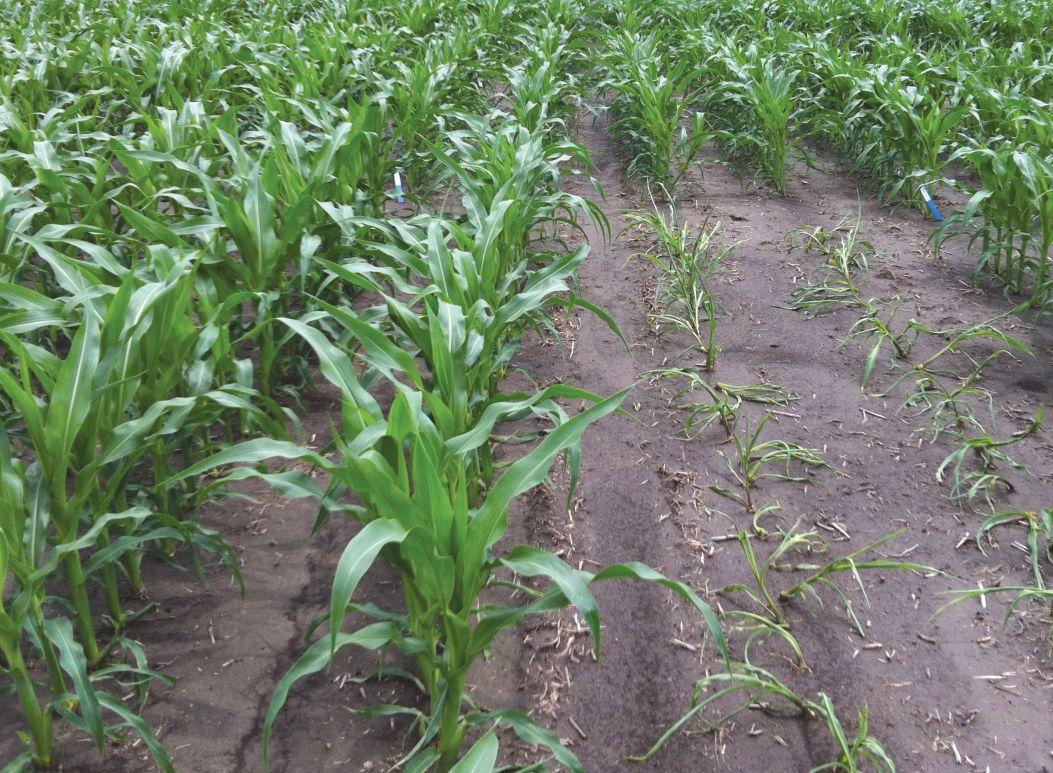
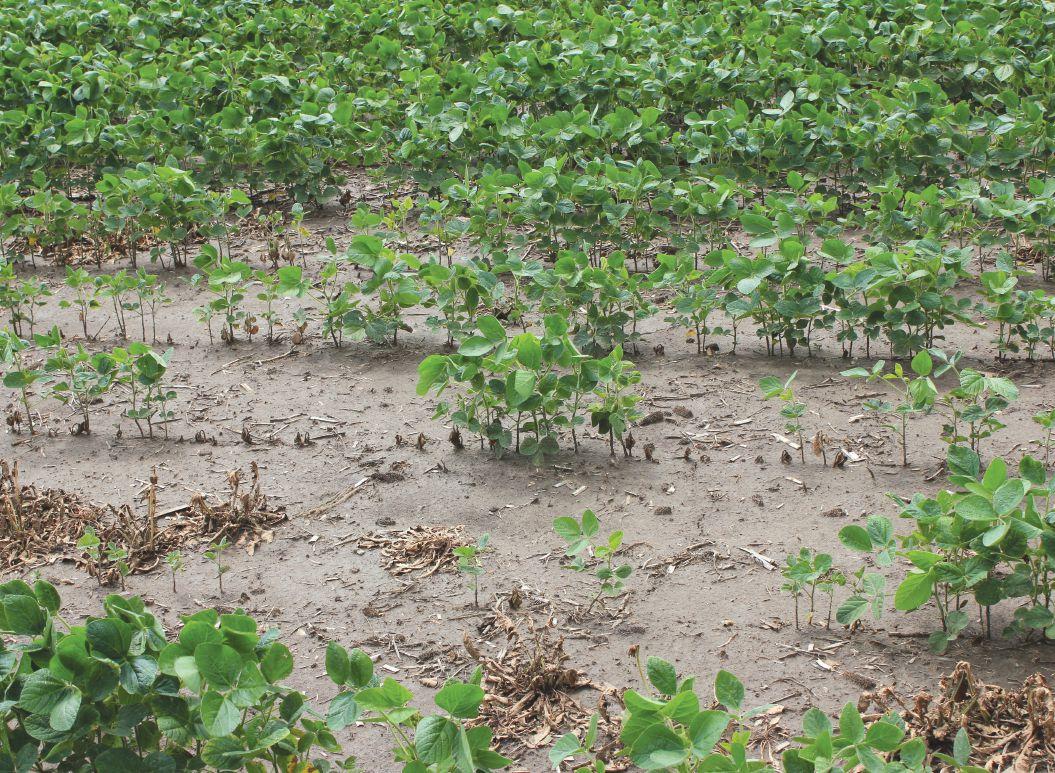
aBOVE: MON 87419 (left) and non-transgenic (right) corn field plots sprayed with dicamba herbicide.
Photo courtesy of Monsanto.
With regard to novel foods, a novel trait is the introduction of a new or altered characteristic not previously observed in that plant.
The CFIa determines the safety of new products differently for each category. For pnTs, the CFIa evaluates the potential of the plant to become a weed or to be invasive, the potential consequences of gene flow to wild relatives, the potential to increase the activity of a plant pest, the potential impact on non-target species and the potential impact on biodiversity.
Products are regulated based on their characteristics and not by the process by which they were made
once safety evaluations have been completed for each pnT, the CFIa and Health Canada post documents outlining the rationale for the decision. “Some of the recently authorized products include herbicide-tolerant canola, herbicide-tolerant and insect-resistant corn, and soybean that has increased yield potential,” Schryburt says.
Three case studies
The CFIa and Health Canada post “notices of submission” for public comment for each new pnT under review on the CFIa website.
The three items that top the list are Monsanto corn products: Mon 87419, genetically modified to exhibit herbicide tolerance; Mon 87403, genetically modified for increased ear biomass; and Mon 87411, genetically modified for insect resistance and herbicide tolerance. each pnT includes a novel trait based on the use of novel genes or uses a previously approved gene in a new crop type.
Mon 87419 uses DMo, or a dicamba mono-oxygenase protein conferring tolerance to the herbicide dicamba, for the first time in corn, though it’s been approved in cotton and soybeans. Mon 87403 uses a novel gene, the aTHB17 gene from the plant Arabidopsis thaliana, for the first time in any plant, to increase corn ear biomass. Mon 87411 contains a novel insecticide trait that uses rna interference to target SnF7, an essential protein involved in intercellular trafficking in corn rootworm.
according to Kevin gellatly, regulatory affairs manager for biotechnology with Monsanto Canada, bringing a new genetically
engineered crop to farmers’ fields is a long and expensive enterprise that costs an average of US$136 million, and takes at least 13 years from product concept to launch.
Monsanto divides the regulatory process into five “phases”: the discovery phase, during which genes or traits are identified (54 months); phase 1, or “proof of concept,” (27 months); phase 2 for early development (30 months); phase 3 for advanced development (37 months) and phase 4 for prelaunch (49 months).
gellatly says the discovery phase begins with Monsanto’s team whittling down a list of thousands of potential gene candidates to primary and secondary candidates, with gene candidates exhibiting potential risks to humans, livestock or the environment eliminated before phase 4. “By the end of phase 4, a single candidate will have been selected based on years of laboratory and field testing, including well-designed scientific studies that must meet the requirements of scientists from dozens of global regulatory organizations,” he says.
gellatly says each of Monsanto’s three new pnTs is at the regulatory approval stage, “which places their progress around the beginning of phase 4,” he explains. “If we include the discovery phase, these pnTs have been ‘in the works’ for approximately 13 years.”
The regulatory process is similar for all three pnTs, according to gellatly. “In Canada, duplicate dossiers are submitted to the Health Canada novel Foods Division and CFIa’s animal Feed Division, which independently review food and feed safety data, respectively, and determine whether the product is authorized for use as food and feed,” he says. “a separate dossier is submitted to the CFIa plant Biosafety office which reviews the environmental safety data and determines whether the product is authorized for environmental release.”
each dossier contains descriptions of the host plant, the modification, the inheritance and stability of the introduced trait, and the novel traits, proof of the absence of toxicity of the novel gene products, a nutritional evaluation of the novel plant, allergenicity/toxicity considerations, and an evaluation of the environmental impact of the novel plant. Historically, Monsanto products receive Canadian food, feed and environmental authorization approximately two years before they are eligible for commercial launch, gellatly says. However, due to changes in some international regulatory systems, launch dates for new products are less certain due to lengthening global approval timelines.
t we A ki Ng the cor N fActory for Stre SS
CONTiNUEd FROM PagE 13
By manipulating that pathway, we can move the emphasis to making more sugar, more starch or more growth.”
The corn plant has multiple copies of the trehalose pathway genes. They are co-opted for a variety of functions in addition to yield, including salt tolerance, insect resistance and control of the day/night cycle.
Work to be published by Lagrimini shows the role of the trehalose pathway in salt stress and highlights the differences between drought and salt stress. There is also overlap between his work on the trehalose pathway and the CSHL research with branched inflorescence.
“a few years ago, Jackson published that the mutation that causes branched inflorescences was determined by a gene in the trehalose pathway,” Lagrimini says. “Hopefully, in the next couple
years, we will understand how that gene in the pathway works to affect branching.”
When he started biotechnology research more than 30 years ago, Lagrimini says the focus was on plant hormones. They were thought of as the main plant regulators. “That’s changing. over the last 10 years, people are finding that sugars and nitrogen are extremely important at regulating things in plants,” he says.
However, how things will change for farming is not really predictable. “When we go in and change the trehalose pathway, we see effects like much bigger leaves, bushier plants, taller plants, plants that dry down faster for harvest, plants that establish better in spring and plants that are more resistant to stress,” Lagrimini says. “We have a significant amount of work to do to understand what’s going on here.”
p ythium AN d phytophthor A coN trol
i N cor N AN d S oybe AN
Ongoing large-scale surveys and lab analysis will lead to resistant crop varieties down the road
by Treena Hein
Last year and this year, with the cool, wet weather at the start of the growing seasons, both Pythium and Phytophthora resulted in re-plantings of corn and soybean. So notes albert Tenuta, ontario Ministry of agriculture, Food and rural affairs (oMaFra) field crop pathologist. “Most fields in ontario have some or both of these fungal root rot pathogens present. We hope that a large U.S.-based project involving ontario will help provide better tools to combat these diseases in future, but farmers must always do their part.”
There are many species of Pythium found in corn and soybeans and there are hundreds of varieties of Phytophthora which primarily affects soybeans. To achieve good control of either pathogen, it’s important for growers to fully employ an integrated pest management (IpM) system, notes Tenuta. as oMaFra states on its website (see sidebar), eliminating these diseases is not possible, but crop yield losses can be reduced by following good management practices.
“It’s obviously important to choose soybean varieties with resistance genes as well as field/partial tolerance,” Tenuta explains. “Both should be present. You can have 50 races of Phytophthora in ontario in one field, so it’s hard to have soybeans that are resistant to all of them. That’s why a general tolerance is really important for the plants to have.”
Delay planting as long as you can, until conditions are dryer and will result in a rapid and uniform emergence (13 C and above is recommended). other IpM techniques include the removal of water from fields through tile drainage and minimization of soil compaction. Compaction, notes Tenuta, increases the soil’s waterholding capacity, inhibits root growth and generally stresses the
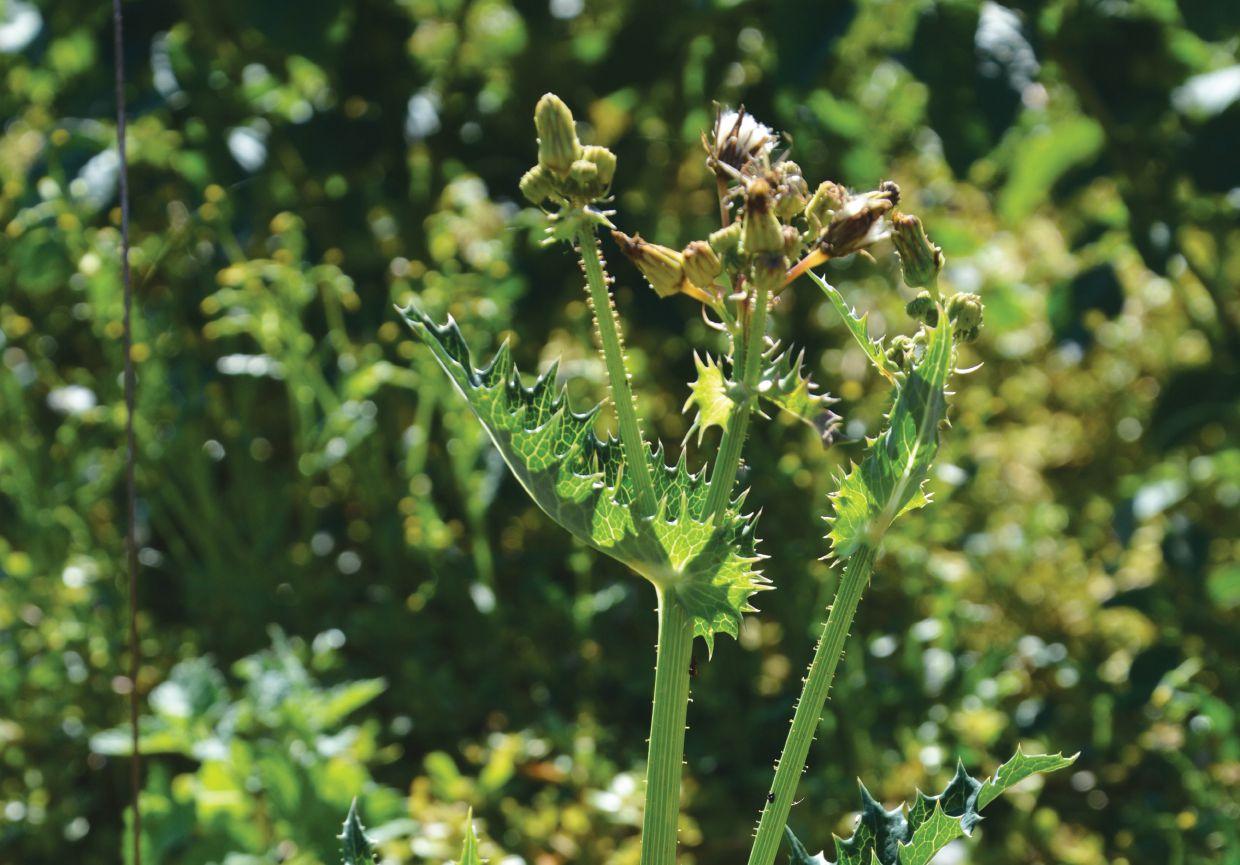
TOP: OMaFRa’s albert Tenuta says there is some potential risk with crop residue, which is left as part of no-till cropping practice, but Pythium and Phytophthora are fungal diseases that primarily survive in the soil and on infected roots.
Photo
WHY ATTEND THE 2016 weed summit?
To gain a better understanding of herbicide resistance issues across Canada and around the world.
Our goal is to ensure participants walk away with a clear understanding on specific actions they can take to help minimize the devastating impact of herbicide resistance on agricultural productivity in Canada.
Some topics that will be discusSed are:
• A global overview of herbicide resistance
• State of weed resistance in Western Canada and future outlook
• Managing herbicide resistant wild oat on the Prairies
• Distribution and control of glyphosate-resistant weeds in Ontario
• The role of pre-emergent herbicides, and tank-mixes and integrated weed management
• Implementing harvest weed seed control (HWSC) methods in Canada
TOP
*FacTs aBOuT PyTHium aNd PHyTOPHTHOra
Lesions that appear water-soaked with brown or purple roots or lower stems are often the result of infection by Pythium, Phomopsis or Phytophthora
A reddish or brown lesion near the soil line is characteristic of Rhizoctonia or Fusarium, respectively
Although older seedlings and mature plants may not die from Pythium infection, their roots are often pruned, resulting in a stunted, poorly anchored, wilted and unhealthy looking plant
(*Taken from the Ontario Ministry of Agriculture, Food and Rural Affairs ‘Diseases of Field Crops’ factsheets entitled ‘Edible Bean Diseases’ and ‘Soybean Diseases’)
crop. also be sure to use new fungicide seed treatments, such as ethaboxam. residue management is important in certain cases. “There is some potential risk with crop residue, which is left as part of no-till cropping practice, but these fungal diseases primarily survive in the soil and on infected roots,” Tenuta explains. “However, residue can be a factor with growers who plant early or have cool wet soil conditions. The residue can make the soil stay cooler and wetter, which is more favourable for both Pythium and Phytophthora.” Pythium generally finds it more difficult to flourish when phosphate levels are adequate for good root growth. Use a good fertility program and make boosting organic matter content a priority, especially in heavier soils. rotate crops with three years between bean crops of any kind.
Breeding efforts
There are no resistance genes yet to these fungal pathogens, but those involved in a large-scale bilateral ongoing project hope to change that. “This north americawide initiative was started four years ago to look at distribution of these diseases, particularly the northern corn and soybean growing areas, genetic diversity and potential sources of resistance in corn and soybean,” Tenuta explains. “There are many partners involved.” He says that through surveys and lab work, if we can get a good handle on the distribution of infection rates and see if we have strains unique to northern production areas, this can aid in breeding programs.
alison robertson, associate professor and extension field crops pathologist in the department of plant pathology and microbiology at Iowa State University, is one of the leaders of the project. She says so far, she and her colleagues and grad students have learned much about distribution of these diseases, particularly in the northern corn and soybean growing areas. “I would say the pathogens that cause these diseases are widely distributed across the Corn Belt, but do not cause a problem every year since it all comes down to the disease triangle – pathogen plus host plus environment equals disease,” she explains. “From the surveys we did in 2011 and 2012, we do see some variability in the species present by latitude, although there are a few species that may be found at all latitudes.”
robertson says the most important thing the team has probably learned with regards
Photos courtesy of Kurt s te P enitz, Michi G an s tate u niversity.
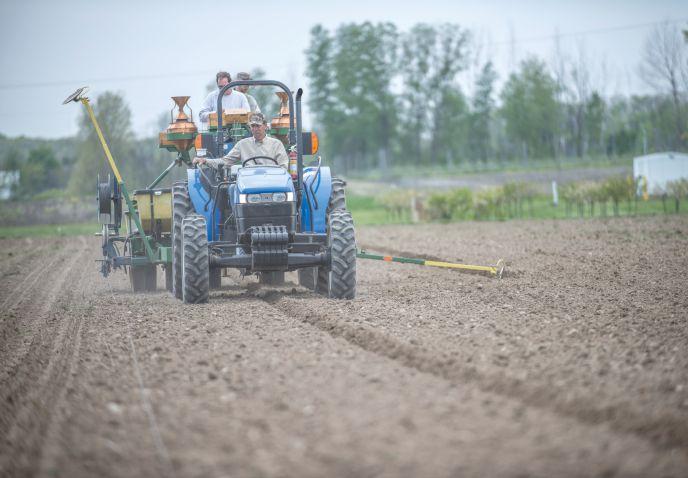
Technicians plant soybeans for root rot research trials.
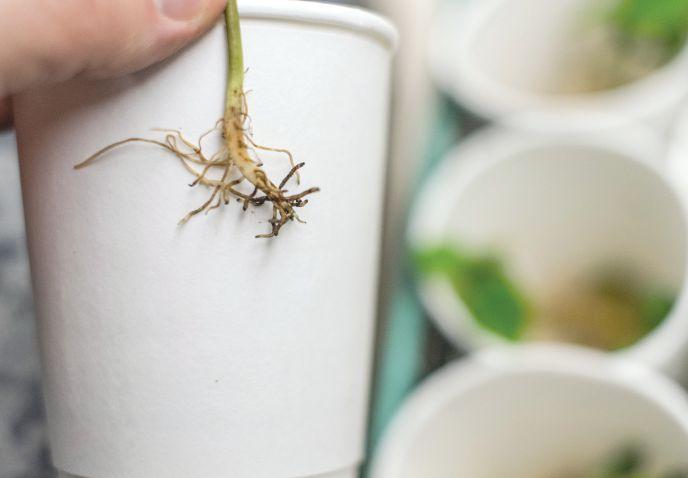
a young soybean showing root rot.
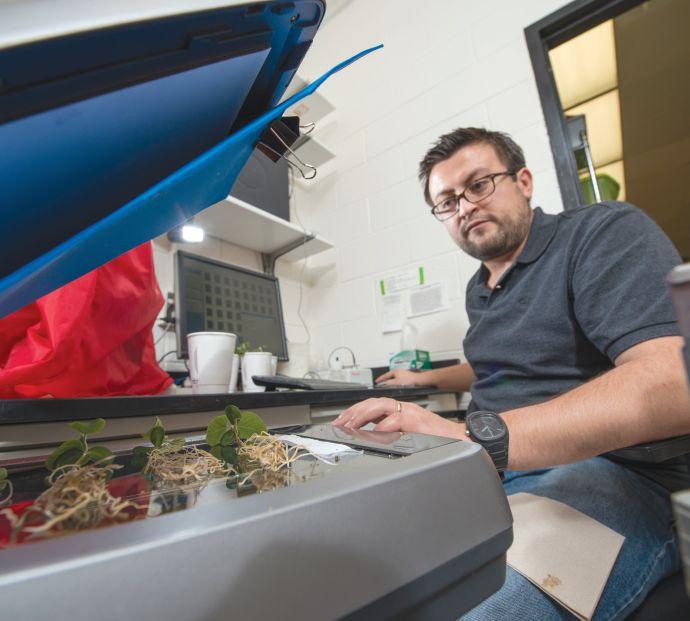
a research technician scans soybean roots to look more closely at Pythium species for the ability to cause root rot.
to biology of these pathogens is that pathogenicity is affected by temperature – some species cause more disease when it is cool, and some species prefer it warm. “We also know that susceptibility to fungicides used in seed treatments can vary among species,” she says. “regarding infection, some species seem to cause more seed rot, and others more root rot, so the mechanism of resistance to each species may be slightly different. In addition, soybean may be more susceptible to certain species at certain stages of germination and emergence. Basically, we still have a lot to learn.”
Study of pathogen genetic diversity is yet to come. “Most isolates in each species are very similar, although in preliminary studies we have identified a couple of ‘black sheep,’” robertson says. “We need to confirm that these are truly members of the species in question.”
gearing up for harvest, make note of what pests and diseases are in each field
Marty Chilvers, assistant professor in the department of plant pathology at Michigan State University, is also a project leader. He has been doing molecular work with colleagues and grad students, including the development of diagnostic tools. “We now have diagnostic assays for a few Phytophthora soybean and corn pathogens, which allow for faster diagnosis,” he says. “right now, samples have to be sent to the lab, but one type of assay (isothermal) will eventually be able to be used in the field by crop consultants and pathologists.”
In terms of what growers in ontario and eastern Canada should do this year, Tenuta says that if they noted Phytophthora
seedling issues in their soybeans, they should be scouting in late July and in august for disease presence. “gearing up for harvest, make note of what pests and diseases are present in each field,” he says. “This is critical with future management plans, and also helps determine whether the variety you’ve planted has enough resistance/tolerance to provide adequate protection under local conditions.”
Trait Stewardship Responsibilities Notice to Farmers
Monsanto Company is a member of Excellence Through Stewardship® (ETS). Monsanto products are commercialized in accordance with ETS Product Launch Stewardship Guidance, and in compliance with Monsanto’s Policy for Commercialization of Biotechnology-Derived Plant Products in Commodity Crops. Commercialized products have been approved for import into key export markets with functioning regulatory systems. Any crop or material produced from this product can only be exported to, or used, processed or sold in countries where all necessary regulatory approvals have been granted. It is a violation of national and international law to move material containing biotech traits across boundaries into nations where import is not permitted. Growers should talk to their grain handler or product purchaser to confirm their buying position for this product. Excellence Through Stewardship® is a registered trademark of Excellence Through Stewardship.
ALWAYS READ AND FOLLOW PESTICIDE LABEL DIRECTIONS. Roundup Ready® crops contain genes that confer tolerance to glyphosate, the active ingredient in Roundup® brand agricultural herbicides. Roundup® brand agricultural herbicides will kill crops that are not tolerant to glyphosate. Acceleron® seed treatment technology for canola contains the active ingredients difenoconazole, metalaxyl (M and S isomers), fludioxonil and thiamethoxam. Acceleron® seed treatment technology for canola plus Vibrance® is a combination of two separate individually-registered products, which together contain the active ingredients difenoconazole, metalaxyl (M and S isomers), fludioxonil, thiamethoxam, and sedaxane. Acceleron® seed treatment technology for corn (fungicides and insecticide) is a combination of four separate individually-registered products, which together contain the active ingredients metalaxyl, trifloxystrobin, ipconazole, and clothianidin. Acceleron® seed treatment technology for corn (fungicides only) is a combination of three separate individually-registered products, which together contain the active ingredients metalaxyl, trifloxystrobin and ipconazole. Acceleron® seed treatment technology for corn with Poncho®/VoTivo™ (fungicides, insecticide and nematicide) is a combination of five separate individually-registered products, which together contain the active ingredients metalaxyl, trifloxystrobin, ipconazole, clothianidin and Bacillus firmus strain I-1582. Acceleron® seed treatment technology for soybeans (fungicides and insecticide) is a combination of four separate individually registered products, which together contain the active ingredients fluxapyroxad, pyraclostrobin, metalaxyl and imidacloprid. Acceleron® seed treatment technology for soybeans (fungicides only) is a combination of three separate individually registered products, which together contain the active ingredients fluxapyroxad, pyraclostrobin and metalaxyl. Acceleron and Design®, Acceleron®, DEKALB and Design®, DEKALB®, Genuity and Design®, Genuity®, JumpStart®, RIB Complete and Design®, RIB Complete® Roundup Ready 2 Technology and Design®, Roundup Ready 2 Yield®, Roundup Ready®, Roundup Transorb® Roundup WeatherMAX®, Roundup®, SmartStax and Design®, SmartStax®, Transorb®, VT Double PRO®, and VT Triple PRO® are registered trademarks of Monsanto Technology LLC, Used under license. Vibrance® and Fortenza® are registered trademarks of a Syngenta group company. LibertyLink® and the Water Droplet Design are trademarks of Bayer. Used under license. Herculex® is a registered trademark of Dow AgroSciences LLC. Used under license. Poncho® and Votivo™ are trademarks of Bayer. Used under license. All other trademarks are the property of their respective owners.
Qui NoA tA ke S the field
Acreage of a new variety well-suited to Central and Eastern Canada is expanding.
by Treena Hein
Don’t be surprised if in the near future you see quinoa growing in a region near you. Steady progress is being made in the quest to create a viable Canadian quinoa market, thanks in large part to the pure ontario Quinoa project, led by “superfood” development firm Katan Kitchens.
“We currently have over 200 acres planted in ontario,” says president and Ceo, Jamie Draves. “While we’re focused on establishing quinoa in this province, we also have a few small test plots in the Maritimes, and are working to expand to parts of Western Canada. We are also starting test plots in Manitoba and Saskatchewan this year.” Draves says they have had interest from over 150 farmers across ontario and other parts of Canada.
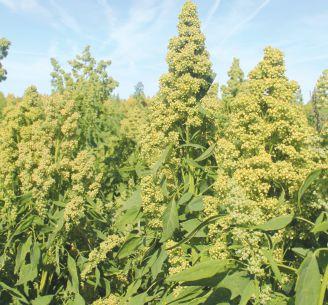
Katan Kitchens is mostly planting their own variety called Quinta r, developed through natural breeding for Canadian growing conditions over the past three years. The company is also exploring other varieties but has found Quinta r to be best suited to the climate, and to produce consistently even and high-yielding harvests.
In addition to aiming for a high-yield crop, Draves and his research and breeding partners have been breeding for other traits. Ideally, they want to produce a plant three to five feet tall, with a single seed head and the ability to form a thick leaf canopy to out-compete weeds. “Time to maturity is also important in order for quinoa to fit into a farmer’s crop rotation,” Draves explains. “and what is also very much key to our varieties is a superior nutritional profile compared to what is currently on the market. We are aiming to produce a locally-grown ‘super of the superfoods.’ our engagement with industry and academic partners is continuing in order to improve our seed variety, develop our brand – called Quinta Quinoa – and bring this ontario-bred quinoa to market.”
Quinoa is a complete plant protein and is continuing to gain popularity as a vegan protein source, Draves adds. “The demand for quinoa in north america and worldwide is very high, but there continues to be concerns about the quality and consistency of product being imported from South america,” he says. “Most of the farmers we’ve spoken to and those we are working with are excited about the challenges of trying a new crop to help diversify their fields and offer a new avenue of profits for a growing market.”
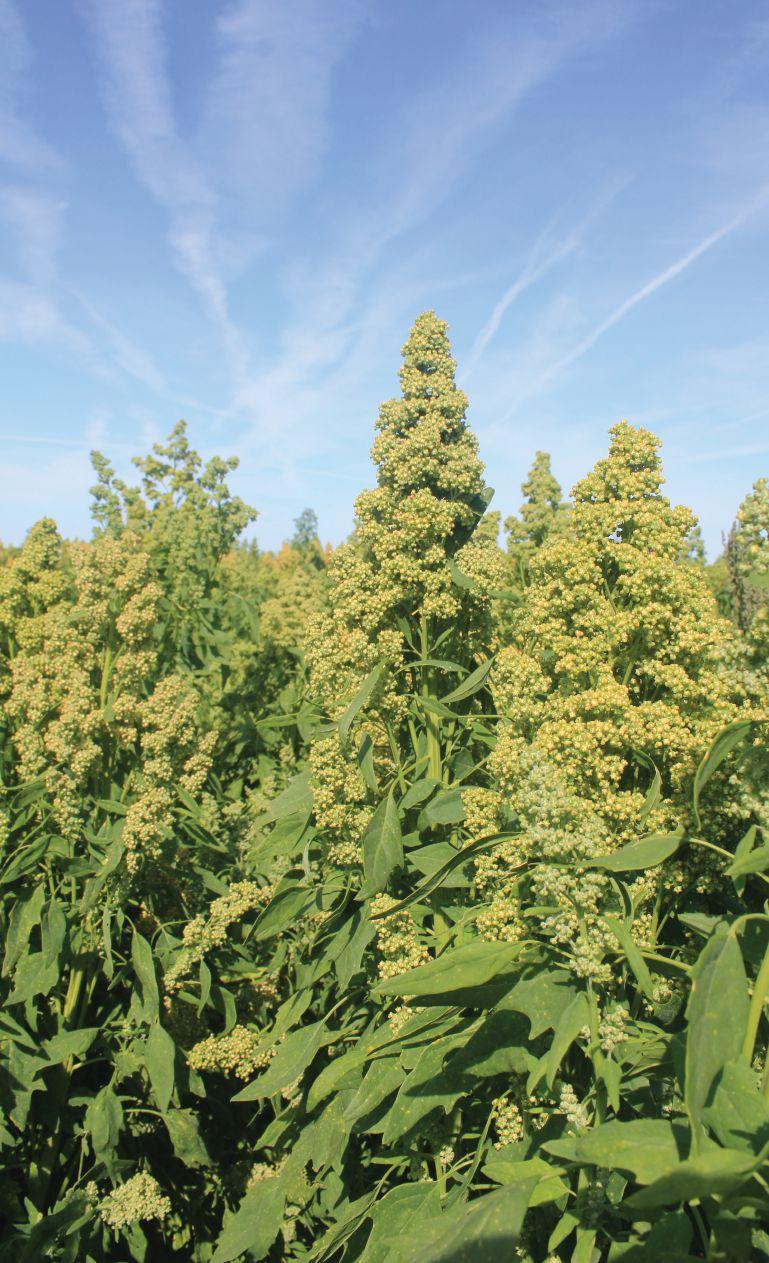
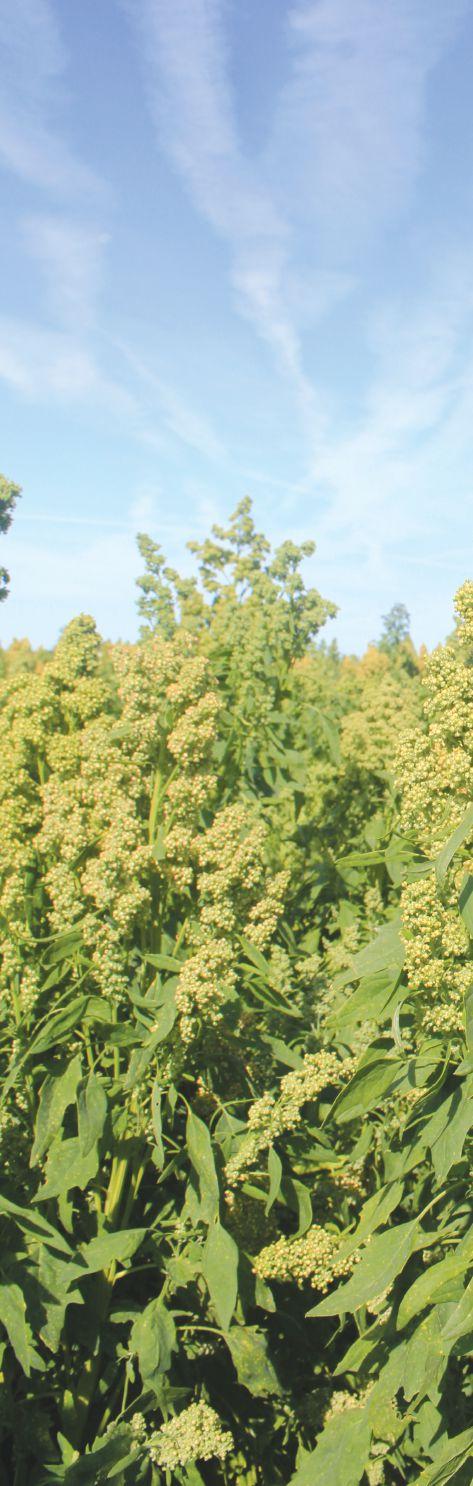
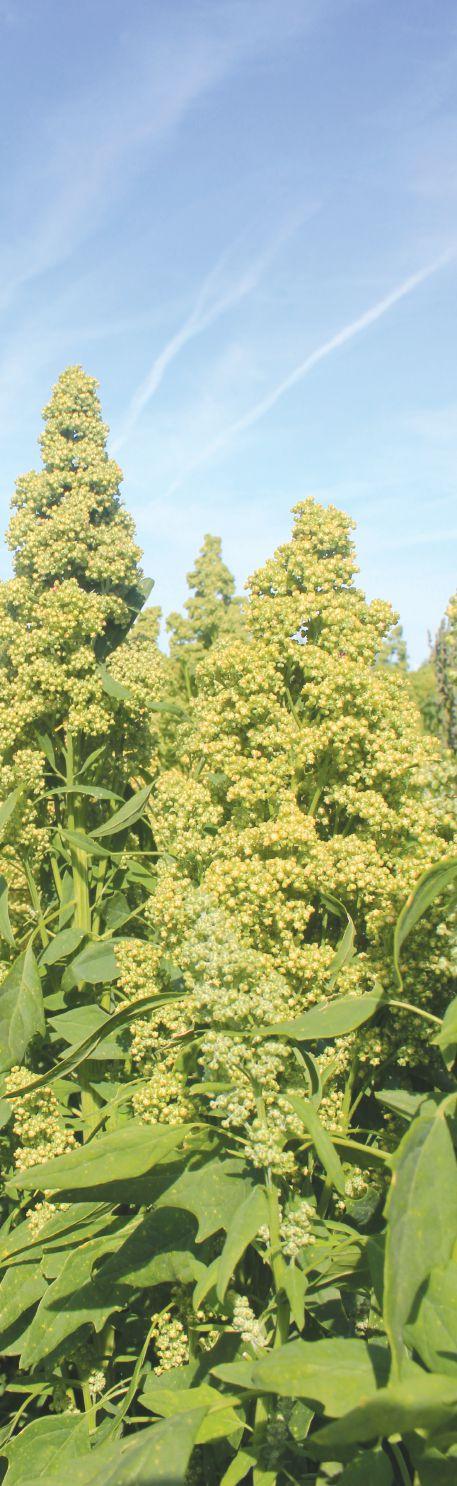
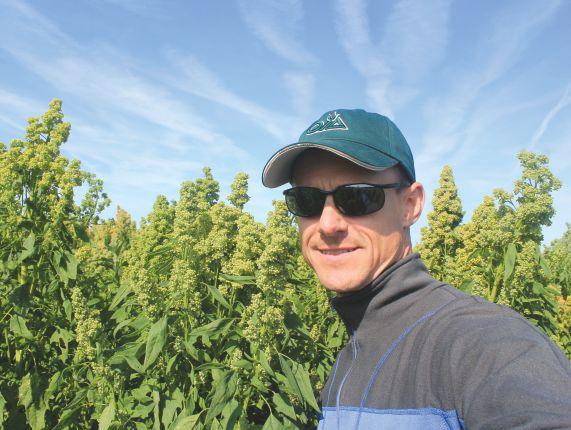
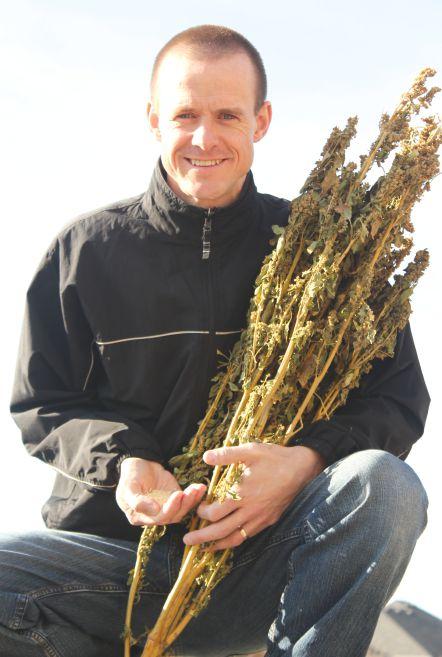
<lEFT: in addition to aiming for a high-yield crop, Katan Kitchens and its breeding partners have been breeding for other traits. ideally, says president and CEO, Jamie draves, they want to produce a plant three to five feet tall, with a single seed head and the ability to form a thick leaf canopy to out-compete weeds.
<lEFT: Katan Kitchens is mostly planting their own variety called Quinta R, developed through natural breeding for Canadian growing conditions over the past three years. The company is also exploring other varieties, but has found Quinta R to be best suited to the climate, and to produce consistently even and high-yielding harvests.
What growers should know
The size of quinoa seed is similar to clover or alfalfa. The crop is planted in midMay to early June and is usually harvested in September. The plant grows a single seed head that can be harvested using traditional combine equipment.
Draves notes that as with any new crop, things like weed and disease control are still being worked on. “We have been involved with a large number of governmentfunded trials with industry and academic partners over the past four years in order to explore the best agronomic practices for commercially producing quinoa in ontario,” he says. “Funding provided by nSerC [the national Sciences and engineering research Council], the ontario Centers of excellence, agriculture and agri-Food Canada and oMaFra, among many others, has allowed us to partner with many experienced researchers and consultants in order to execute research trials and develop commercialization plans.”
Through these projects, Draves says he and his partners have been able to finetune field prep, seeding and harvesting methods to a point where commerciallyready yields (enough seed for farmers to plant for commercial production) and quality has been achieved. However, this information is proprietary. The company works with producers through a “seed agreement” in which all the quinoa seed is owned by Katan and can only be sold back to them. The agreement also includes confidentiality around sharing of the research and development the company has invested in over the past four years.
Interested producers are sent a general questionnaire to be completed in order for the company to assess a partnership fit based on location, land availability, soil type and equipment capabilities, among other requirements. as a baseline, Katan looks for producers with well-drained soils, as quinoa is a drought-tolerant plant. The company prefers to trial one to 50 acres with producers in their first year, then scale up production after an individual assessment of the best practices for each producer’s land is conducted.
Processing planned part of developing the brand and bringing it to market is ensuring end-product quality is superior to any product currently available in the market.
Photos courtesy of Katan Kitchens.
Sm A ll but mighty –AN d mighty complex
Boosting microbial communities that boost crop yields.
by Carolyn King
Many types of soil microbes influence crop growth, health and yields. Figuring out how to harness these tiny organisms to enhance crop production is chockfull of intriguing challenges and potential benefits, as george Lazarovits knows.
Lazarovits is research director at a&L Biologicals in London, ont., and an adjunct faculty member in plant pathology and soil ecology at the University of Western ontario. He and other researchers in Canada and around the world are investigating the identities of microbes that live near, on and in crop plants, determining the roles these microbes play, and exploring how to manage these microbes to benefit crops.
Microbes can help plants in significant ways. “a very large proportion of the bacteria that live in soil can actually make things that are hormonal to the plant – indoleacetic acid, gibberellins, cytokinins. These affect plant growth and development in a huge way,” Lazarovits says.
another very valuable function is to fix nitrogen gas into a form of nitrogen that plants can use. He explains, “Bacteria are the only organisms on the planet that have a major role in nitrogen fixation. The biggest group of nitrogen-fixing bacteria
is the rhizobia, the bacteria that make nodules on legume roots.” other important microbial activities include controlling plant pathogens, making phosphorus and other soil nutrients available to the plant, and protecting the plant against abiotic stresses like drought.
Rhizobia for non-legumes
Many crop growers are familiar with inoculants of rhizobial species (such as Rhizobium and Bradyrhizobium) for nitrogen fixation in legume crops. But scientists have also been looking into the use of rhizobia with cereals. as an example, Lazarovits highlights the work of Frank Dazzo, people from his lab at Michigan State University, and their colleagues.
Their research shows big benefits from inoculating rice crops with rhizobia. For instance, in large-scale field trials in egypt conducted over five growing seasons, the researchers inoculated five rice varieties with seven strains of rice-adapted clover rhizobia.
TOP: a&l Biologicals is comparing three green manure crops in part of dean glenney’s strip-cropped corn-soybean field. The idea is to push glenney’s 300 bushel corn yields even higher by making the field’s microbial ecosystem even healthier.
Photos
These rhizobia naturally colonize rice roots in the nile delta, where rice has been rotated with clover for centuries. In the trials, crop response to inoculation depended on the rice variety and the rhizobial strain. Inoculation significantly increased rice yields in 19 of 24 trials. Using the most effective inoculant strains, yield increases averaged 19.5 per cent, with a maximum increase of 47 per cent. Through lab studies, the researchers determined that the rhizobia are endophytic in rice – they colonize the interior of the plant, rather than forming nodules on the roots.
Studies by Dazzo’s group and other researchers on such cereals as rice, wheat and corn show that endophytic rhizobia can provide many crop benefits. Some of the identified benefits are: higher root and shoot biomass, greater photosynthetic activity, greater water use efficiency, better nitrogen fertilizer use efficiency, greater ability to acquire various nutrients and higher crop yields.
Lazarovits sees great potential for other types of microbial inoculants, too. He and his colleagues, as well as other researchers, are working with microbes that perform specific functions in one type of plant and seeing if they can transfer the microbe, and its function, to a different type of plant. In the long
run, they hope to create not only singlefunction inoculants, but also inoculants with groups of beneficial microbes.
He explains, “Within the next three or four years, you’re going to see a whole slew of consortia – groups of organisms with different functions that can live together happily – being put together as a family of organisms that can do all the functions the plant needs. However, one of the things researchers need to do is make sure these organisms are compatible with each other, and no one has really gone into that yet.”
In one current project, a &L Biologicals will be doing laboratory analysis for e ngage a gro’s crop trials with the bacterium Gluconacetobacter diazotrophicus , or “g d.” a British company called azotic Technologies is developing g d as a crop inoculant called n -Fix. Through a partnership with azotic, g uelph-based e ngage a gro is testing n -Fix’s effectiveness in several Canadian crops.
gd is known for its nitrogen-fixing role in sugarcane. “The woman who developed sugarcane [for ethanol] as a major industry in Brazil went to farms where sugarcane had been grown for three or four centuries. She selected cultivars that performed really well in the absence of inputs like fertilizers. That allowed Brazilian sugarcane to be produced at a very low cost,” Lazarovits says.
It turns out that, in those low-input sugarcane cultivars, most of the crop’s nitrogen needs are provided by a thriving community of different microbial species living within the plant, with gd as the most important nitrogen fixer. Studies also show that gd has other talents like fighting sugarcane pathogens and producing hormones that promote plant growth.
Lazarovits wonders if modern breeding programs may have created crop varieties that have lost some of their ability to have beneficial microbial interactions. “In our breeding programs, we usually do the exact opposite of what was done with sugarcane in Brazil: we make it perfect for the plants we’re breeding.” However, he says some researchers are now selecting breeding lines under low-input conditions. That could lead to varieties that work especially well with beneficial microbes, and perhaps to identification of native microbial species and strains that are especially helpful.
disease-suppressing bacteria
one of the main types of disease-suppressing microbes is a group of bacteria
known as fluorescent pseudomonads –‘fluorescent’ because they glow under ultraviolet light, and ‘pseudomonads’ because they belong to the genus Pseudomonas. James Cook and his students at Washington State University carried out four decades of studies related to these bacteria. This research sprang from the surprising observation that take-all, a serious fungal disease of wheat, could be eliminated from a field by growing continuous wheat.
“The researchers found that after six or seven consecutive wheat crops, take-all disappears,” says Lazarovits, who was one of Cook’s students. “not only that, if you take some of the soil from the field where the disease has disappeared and mix it at a ratio of 1 to 99 with a soil that has the disease, then the disease disappears from that soil.”
Cook’s group eventually figured out that fluorescent pseudomonads were causing the take-all suppression. “and the most important Pseudomonas species were the ones that were making a very large number of antibiotics. These antibiotics, which are on the wheat plant’s roots, prevent the take-all fungus from affecting the plant,” Lazarovits explains.
“repeated cultivation of wheat allows the Pseudomonas bacteria to reach a critical mass in the soils, and this critical mass then becomes self-sustaining.”
Studies by other researchers have identified various fluorescent pseudomonad species that are effective in controlling other diseases in other crops. In fact, Lazarovits notes that Dna testing for Pseudomonas populations can be useful for diagnosing and tracking soil health. “You can now test soil samples to see if they have sufficient amounts of this antibiotic production capacity to be diseasesuppressive.
So crop growers who have built up an ecosystem with a disease-suppressive soil are now diagnosing their soil to have this health condition, and they are checking to be sure that crops they add to their rotation don’t destroy those organisms.”
Rotation explorations
The fact that wheat monocropping controls take-all goes against the common recommendation that diverse rotations are better for reducing disease – and yet certain pathogens do tend to build-up in monocropping systems.
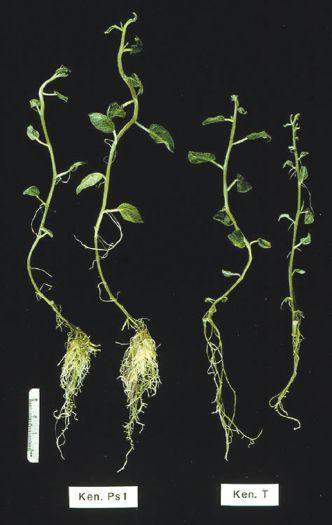
in research with Kennebec potatoes grown from tissue culture, lazarovits and his colleagues compared plants inoculated with a growth-promoting bacterium (left) to non-inoculated plants (right).
“as far as I’m concerned, we still don’t really understand what we’re doing in the ecosystem in agriculture. We make assumptions, and a lot of times our assumptions are wrong,” Lazarovits says. Soil microbial communities are often very complex, with huge numbers of microorganisms and a wide diversity of species. and the communities are dynamic, changing as field-scale factors like agronomic practices and weather patterns change.
The researchers found that after six or seven consecutive wheat crops, take-all disappears
So, what should crop growers do if they want to try to develop a more beneficial agro-microbial ecosystem in their own fields?
Lazarovits suggests adding green manures to their rotations. “We have seen that adding green manures to the soil has a huge beneficial effect. It is a way of feeding the soil and keeping the microbial population levels up high.”
a&L Biologicals is working on green manure trials with Dean glenney, a Dunnville-area farmer with an innovative, highyielding cropping system. Using no-till, controlled traffic practices, glenney grows a corn-soybean rotation, with the two crops grown in alternating strips. over the years, his production system has
Qui NoA tA ke S the field
CONTiNUEd FROM PagE 21
To that end, Katan Kitchens is working hard to establish a processing facility in northern ontario, in the Cochrane region. The facility will be equipped to process Quinta Quinoa, as well as other gluten-free cereal crops such as oats, canola, buckwheat and peas. Quinta Quinoa will be handled via a highly controlled, verifiable traceability and identity preservation system, from seed production through harvesting, storage, cleaning, packaging and distribution.
“We have local, national and international customers who are ready to purchase high-quality ontario quinoa and other superfood products once they are available,” Draves states. “We hope to expand to other superfoods in the near future. Identity preservation and traceability is very important to marketing Quinta Quinoa as it allows us complete transparency with our customers and validation of the pure, high-quality product throughout the entire value chain from production to retail shelves.”
Draves notes there are both benefits and opportunities in northern ontario, but there are also unique challenges, including the lack of infrastructure and potential political barriers. “To date, the government has been unwilling to provide the support to address the challenges to building a successful facility in northern ontario, despite incredible support from the local communities, agricultural associations and industry partners,” he reports. “But we continue to strive towards this goal and the opportunity to expand superfood production and food processing in the north. and right now, we are securing other avenues in southern ontario and Quebec to process our ontario quinoa to bring to market this fall.”
gradually built up beneficial soil microbial populations. However, certain pathogenic microbes have also built up, which may be preventing glenney’s crops from reaching their maximum yield potential. So glenney and Lazarovits want to see if green manuring would suppress those pathogens – and enable glenney’s 300 bushel corn yields to get even higher.
economics can be a concern with green manures because there is no harvested crop. according to Lazarovits, glenney has built planting equipment for underseeding a green manure crop once the corn crop has reached the right stage. That way, glenney could earn money from the corn crop while also having a green manure.
Lazarovits hopes the green manure trials with glenney will also shed light on what other growers could do to increase their crop yields through boosting beneficial microbes. In the future, he sees exciting potential with intercropping.
“although the biological mechanisms are not well understood, many farmers are looking into green manures and especially intercropping where, for instance, they plant potatoes and also plant three or four other crops in between the potato rows. people used to think an intercrop is a crop competitor, but they are finding that intercropping with different types of crops actually reduces pathogens and enhances the potato yields.”
He adds, “Farmers do more experimentation than scientists can even imagine.”
steady progress is being made in the quest to create a viable Canadian quinoa market, thanks in large part to the Pure Ontario Quinoa project, led by “superfood” development firm Katan Kitchens and its president and CEO Jamie draves.
remoViNg moiSture from grAiN
Things to consider in decisions about grain drying and storage
by Treena Hein
How to handle many aspects of farming depends on the individual nature of each unique farm, as well as the farming systems used. grain drying certainly falls under this category, but while there are many different ways to accomplish it, universal rules still apply.
“In general, the capability of a producer to dry, condition and store their own grain can provide flexibility and open up some marketing options,” notes James Dyck, ontario Ministry of agriculture, Food and rural affairs (oMaFra) engineer for crop systems and environment. “If you do it yourself, you avoid elevator drying charges, and you can dry and condition the grain to your own requirements. It also allows growers to market their harvests at their preferred time.”
grain dryers and storage systems come with the same questions that apply to any new on-farm equipment. There are capital installation costs to consider, as well as ongoing maintenance and repairs, operational differences, benefits and risks.
In grain drying, both natural and heated moving air can be used. Dyck says that choice depends on the crop to be dried, incoming moisture level, desired final moisture content and ambient air conditions. “numerous systems are available, including bin aeration, batch-in-bin, elevated-batch-in-bin (drying section on top of bin, with stored dry grain below the drying section), autofeed, continuous flow and portable dryers,” he says. “There are also multiple fan technologies, including backward-curved centrifugal and axial flow. each technology has different requirements, options and efficiencies, and the merits and drawbacks of each must be considered when determining the best fit.”
a good moisture tester is an important tool for producers planning to store their own grain. Dyck says many commerciallyavailable testers allow for easy recalibration, and can be readily checked against an elevator tester. “Some newer testers also have the ability to link to a computer via USB and an online connection, and can be quickly and easily calibrated or updated in this way,” he says. “remember that periodic calibration is prudent to ensure consistent results.” Dyck adds that proper care and storage of the tester is also key. Leaving a tester exposed in freezing temperatures or in high-moisture conditions such as dew or rain may be detrimental to the device’s operation and lifespan.
Hybrid selection may have some bearing on drying and storage in Dyck’s view, and a primary consideration in choosing varieties is ensuring they will have time to mature before harvest. The local climate and the planting date will have significant impact on this, he notes, and each hybrid will pollinate, mature and dry
differently. given that weather is always unknown at the start of a growing season, planting a range of hybrids can allow a producer to spread this risk.
Whether or not to use a pre-cleaner to remove fines is another consideration. “It can be beneficial, but similarly to dryers, precleaners present another source of costs, maintenance and repair,” Dyck explains. “I think that for control of fines in stored grain, coring bins are very important. Fines tend to collect in the centre of a bin as it is filled. Coring removes grain with the highest concentration of fines and also establishes the flow funnel through the bin. This all results in better airflow patterns.” Coring should be done within a few days of filling the bin, to prevent fines from setting up, he notes. Cored material can be sold or cleaned and put back into the top of the bin.
The capability of a producer to dry, condition and store their own grain can provide flexibility and open up some marketing options
once grain is dried, maintaining grain condition is all about aeration. aeration accomplishes many important things, such as removing heat, equalizing bin temperature, helping to eliminate hot spots and preventing convective air movement within the grain. For long-term storage, Dyck says grain mass temperature should be maintained within a few degrees of ambient air (and in winter, this means the grain is frozen), and aeration is key to accomplishing that. “It will maintain uniform grain temperature profiles and prevent spoilage as ambient air temperatures change,” he says.
Spot monitoring of stored grain can be used to check for temperature differences, but Dyck points out that inserting sensors more than a few inches into dense grain in a bin can be difficult. “and even with sensors, it’s important that growers remember that hot spots can be missed,” he states.
grain producers deal with many uncontrollable variables, chief among them the weather, but also including market conditions, fuel prices, disease and pest pressure, and maintenance issues. But once the harvest is complete, it’s all about looking after it. “In drying your grain, there is no ‘magic bullet’ best system or strategy or equipment to consistently achieve the best results,” Dyck says. “I advise growers to study the issue thoroughly. There are many resources available to producers to assist with these decisions, including industry publications, manufacturers’ information and also oMaFra resources, to name a few.”
Strip away the paint, ignore the logos and take a look inside any rotary combine. You’ll find the single rotor technology we introduced over 35 years ago. But unless it has more bells and whistles with fewer belts and chains, it’s not a Case IH Axial-Flow ® combine. You’ll get more quality grain in the tank while reducing your maintenance. And our SCR-only engine design provides more power while using less fuel. Which is why the Axial-Flow rotor is at the heart of our harvesting expertise. Learn more at caseih.com/heartbeat.