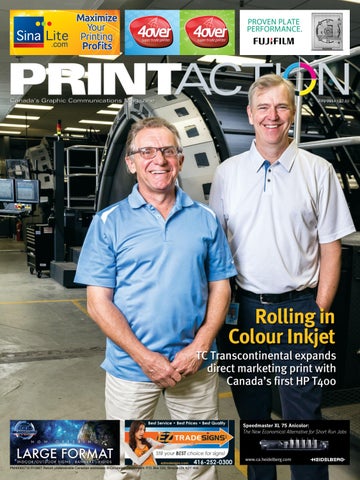
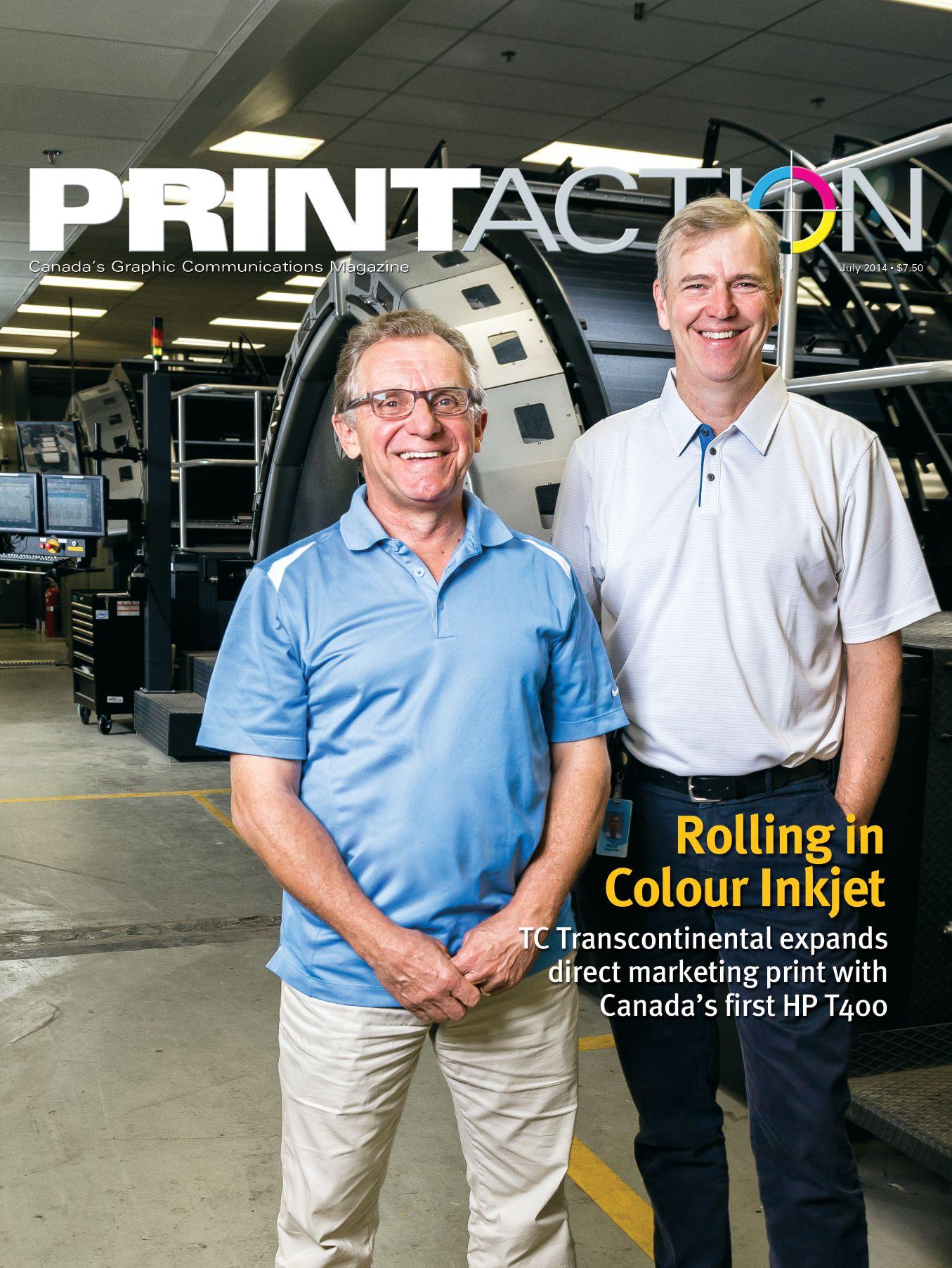
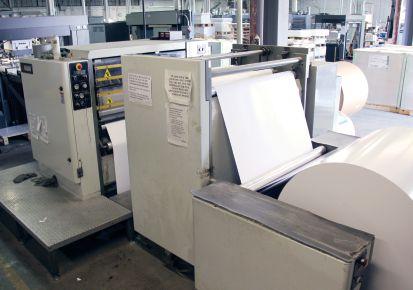
TC Transcontinental’s 310,000-square-foot printing plant in Aurora generates new direct-marketing business with Canada’s first 42-inch HP T400 12
PointOne Rejuvenates
Printing Infrastructure
A pictorial report on PointOne Graphics’ multi-million-dollar investment over the past year to reshape its growing trade-printing operation
digital differentiation
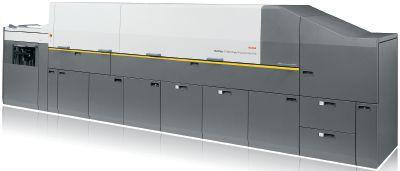
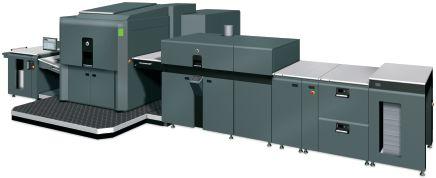
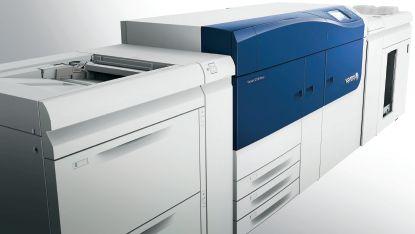
Canadian leaders for HP, Kodak and Xerox discuss the new business of digital printing with specialty software, larger sheet sizes, Webto-print and unique substrates 14 17 15
Technology Report:
Printing Software
Detailing some of the newest applications for driving the frontend, including MIS modules, colour management, data handling, imposition and general workflow
NEWS
6
Unisource and xpedx merger to be named Veritiv, Brian Mulroney is set to become Quebecor’s Chairman, and Johannes Gutenberg’s Bible is stolen in Moscow
MARKET & INSTALLATIONS
7
Insource celebrates new tech and Olympic Gold, Advocate Printing gets a Duplo 646, and Entreprises Lamcoil installs three finishing systems from KBR Graphics
9
CALENdAR
Book Manufacturers’ Institute arrives in Bonita Springs, Consac Imagemakers takes place in Mississauga, and the Canadian Printing Awards gala is set for November
MARTIN HAbEKOST
Packaging and Impressions from Interpack
Finding hidden gems among the 2,700 exhibitors and 175,000 attendees at the world’s largest exhibition dedicated to packaging technology
22
July 1989
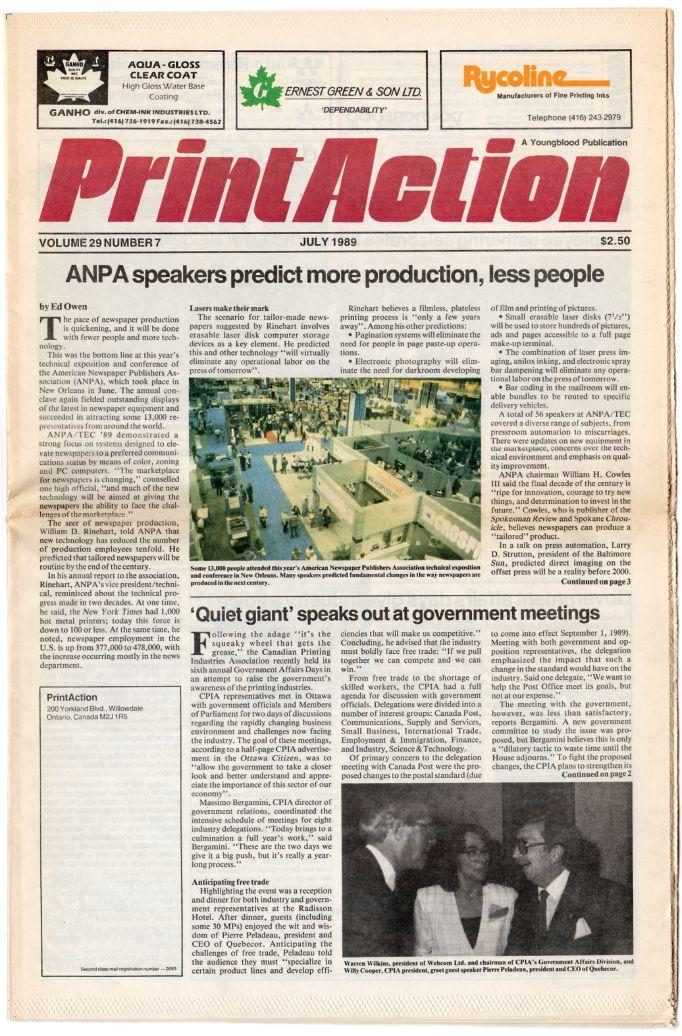
The B-2 Spirit Stealth Bomber makes its first flight; Nintendo releases Game Boy, and pagination systems are predicted to eliminate page paste-up operations
Market Leading Substrates
• Pearlescent
• Textured Uncoated
• Fine Art Cover
• Colour Cover
• Starlight Photo Lustre Cover
High Speed vs. High Quality
P
resses in the offset world provide printers with both high speed and high quality, which is a key reason why this process continues to dominate the industry, despite its heavy make-ready. Like most economic models, there are an infinite number of variables at play, but this balance of speed (format-size) and quality keeps both toner and inkjet presses at bay. Most commercial printers, however, wonder for how much longer.
• Polyester Specialty Fine Papers
• Silver Mirri® Board
Pressure Sensitive Films
• Flex Vinyl
• Permanent Block-out
• Window Cling Vinyl
• ClingZ® Vinyl Magnetic Substrates
Non-Adhesive Films
• Synthetic
• Ultra Green Film®
• Styrene
• Rigid Vinyl
• Teslin®
Pre-Converted Substrates
• Ultra Digital®
• FlexBind® Layflat Pages
• Mazina® Specialty
• Book Finishing Papers
• Specialty Application Substrates
• DigiMag® XTRA Flex Magnetic Material by Magnum Magnetics No charge Auto Desk Magnetizer Usage Available
“Not many printers today can fathom a $1 million investment – likely more – for technology that is still in development, for productivity mostly on one side of a sheet and at speeds not seen since the handfed cylinder,” wrote Nick Howard, describing the challenges facing the development of cut-sheet inkjet presses in PrintAction’s August 2013 issue. Howard, arguably Canada’s foremost expert on offset press technology, was, of course, describing how the current lineup of cut-sheet inkjet presses lack the true production speed, let alone resolution, registration and substrate latitude, crucial for commercial work.
Howard, who has reconditioned and sold offset presses for decades, continued to explain, “The more traditional spend of $2 million on litho presses also seems to be on the back burner, mostly because the industry does not feel confident enough to look beyond a couple years out. Financing of a new press needs at least five, if not seven years, to bring down the monthly cost.”
In just a few lines of his column, Howard accurately portrayed the press-investment dilemma shared by so many of today’s legacy commercial printers, who are not specialized enough in their manufacturing to jump feet first into new multi-million-dollar presses – offset or otherwise. The challenge, however, is avoiding the trap of standing still and waiting for the right mix of production speed and quality.
This month, PrintAction speaks with three Canadian leaders from the digital press makers HP, Kodak and Xerox about how recent advances in their machines – and associated software and consumables – are providing new applications and revenue opportunities for commercial printers. Digital printing, depending on how a vendor defines it (toner, inkjet or both), still only accounts for between five and 10 percent of all pages printed globally.
This month, we also take a look at TC Transcontinental Printing’s 40-inch HP T400 Web Inkjet Press, installed in October 2013 to produce direct-marketing materials, where both speed and reproduction quality play a heavy hand in acquiring new business. The resolution quality of this relatively new press line can still be improved, among other factors, but the results by Transcontinental clearly indicate a balance has been struck between high speed and colour output. It might soon become more of a viable commercial printing option if such companies can step outside of their cut-sheet legacy.
Jon Robinson, Editor
Canada’s Graphic Communications Magazine. Proudly published for two generations. Editor Jon Robinson • 905.713.4302 • jrobinson@annexweb.com
Contributing Writers Zac Bolan, Peter Ebner, Chris Fraser, Victoria Gaitskell, Dr. Martin Habekost, Nick Howard, Thad McIlroy, Nicole Rycroft, Dr. Abhay Sharma, Trish Witkowski
Publisher Sara Young • 905.726.5444 • syoung@annexweb.com
Associate Publisher Stephen Longmire • 905.713.4300 • slongmire@annexweb.com
Group Publisher Paul Grossinger • 905.713.4387 • pgrossinger@annexweb.com
Advertising Sales Sara Young • 905.726.5444 • syoung@annexweb.com Stephen Longmire • 905.713.4300 • slongmire@annexweb.com
Art Director Clive Chan • 905.713.4301 • cchan@annexweb.com
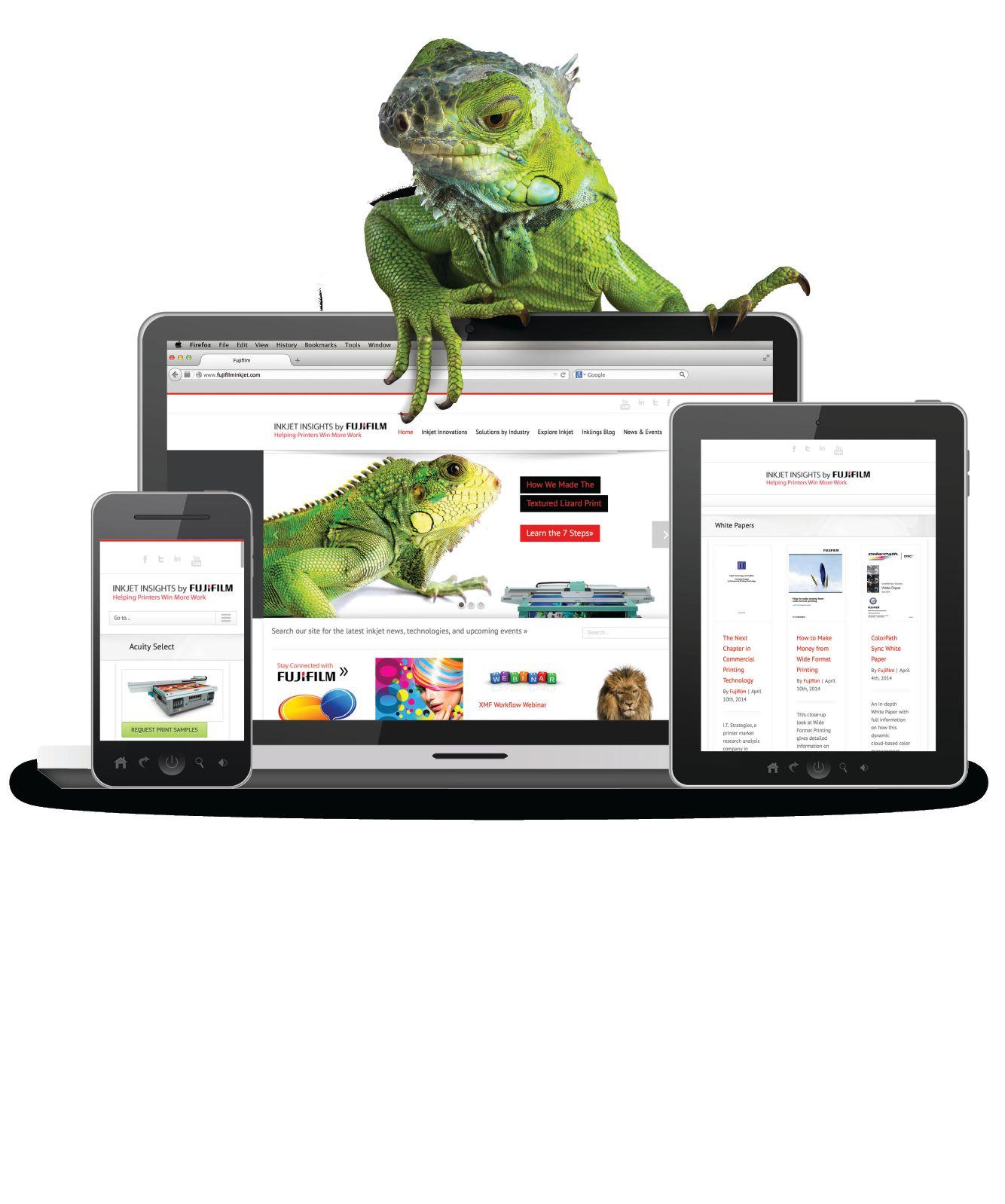
Now there’s a website dedicated to helping printers win more of their customers work by providing the latest insights in inkjet technologies. Visit fujifilminkjet.com for:
• White papers
• Videos
• Printer testimonials and case histories
• Latest inkjet solutions by industry
• Inkjet education and webinars
• Print samples and demonstration opportunities
• And more
One site dedicated to keeping you up to date on the latest inkjet innovations, trends and information. Visit fujifilminkjet.com today to experience inkjet productivity coming to life!
INKJET INSIGHTS by Helping Printers Win More Work
fujifilminkjet.com
claus Bolza-scHüneMann, CEO of Koenig & Bauer AG (KBA), updated the Fit@All program to restructure the German press maker, to be presented at the next Annual General Meeting. He reported that between 1,100 and 1,500 jobs from the company’s current figure of approximately 6,200 are to be cut by the end of 2015. “We aim to achieve an overall cost base at which group sales of € 1 billion will lead to appropriate earnings,” stated Bolza-Schünemann. KBA also introduced its new CFO in Munich-born Mathias Dähn (46), who worked with MAN Group in 2005 as director of the group controlling the sale of Manroland. From 2011 to 2013, Dähn was CFO of Austrian lighting manufacturer Zumtobel.
epson sold its hundredth SurePress, engineered for primary label production, to Kanae Co. Ltd. of Nagano, Japan. The inkjet-based printing platform was first launched in October 2010 with the SurePress L-4033A. In December 2012, Epson then launched the SurePress L-4033AW with white ink, using its Micro Piezo and soluble ink technology, which marked significant progress based on label market’s need to run white ink at high speed. Epson states that as many as 20 percent of SurePress customers have purchased two or more units. A new SurePress model will be launched in Summer 2014 driven by new PrecisionCore print heads.
Moscow uniVersity’s precious copy of the Johannes Gutenberg Bible, printed in the 15th century, was taken from a safe by Sergei Vedishchev, a colonel in Russia’s FSB security service, who received a 3 ½ year jail sentence. Reuters reported the conviction involved two other members of the FSB, who were caught in a sting set up by the FSB with Vedishchev planning to sell the valuable book for around $1.15 million. He was responsible for security at the university. Reports suggest this copy of the Gutenberg Bible would fetch at least $22 million on the open market, although one of its pages was damaged during the incident.
tc transcontinental, led by CEO François Olivier, finalized its approximate $75 million agreement to acquire the 74 weekly newspapers of Sun Media in Quebec, as well as their related Web properties. Transcontinental now owns all the weekly newspapers acquired from Sun Media, which is controlled by Quebecor through its Quebecor Media group. After the deal was first announced in December 2013, Canada’s Competition Bureau set a requirement for Transcontinental to put 34 of the 154 newspapers in its portfolio up for sale for a period of 60 days, including some that are part of the transaction with Sun Media.
Brian Mulroney, former Canadian Prime Minister, is set to become Chairman of Quebecor Inc. in what business analysts describe as a move to provide stability for the media and telecom gi ant after the departure of Chief Execu tive Pierre Karl Péladeau. In early March 2014, Péladeau, who took over the reins at Quebecor shortly after the 1997 death of his father, announced his resignation from Quebecor to pursue politics as a provincial candidate for the Parti Que becois. He won a seat in the riding of Saint-Jérôme. Quebecor also recently suffered the departure of CEO Robert Depatie, the former Videotron executive who steered Quebecor into the wireless arena, because of health reasons.
HeidelBerger druckMascHinen, during an event at its Wiesloch-Walldorf site, unveiled the Speedmaster XL 145 with a new top speed of 18,000 sheets per hour, as well as the XL 162 reaching 16,500 sheets per hour, using what the company calls its Packaging Speed Performance (PSP) configuration. The PSP-enabled XL 145 press can produce upwards of 70 million sheets per year and is primarily aimed at folding-carton work. Heidelberg reports that over 100 large-format presses in formats 6 and 7 have now been sold worldwide since the start of series production in 2009. Approximately 70 percent of these installations are be
lee sHort becomes VP of Sales for K-North Services, which is the dealer for Komori printing presses in Ontario and Western Canada. Short will be in charge of the complete product line that K-North Services sells, including Komori presses, Brausse converting equipment and Kuda paper cutters. He will also spearhead the sale of Axis Management Information System (MIS) software. Prior to K-North Services, Short served as VP of PDQ North America, which developed the Axis MIS and PDQ estimating software.
roBert leitH, who had a long and successful career in Canada’s printing industry, passed away at age 81 in Toronto on May 28, 2014. Leith was the founder of The Laird Group, which grew into one of the most highly respected operations in Toronto’s printing market. It was one of the first printing operations in Canada to install Indigo presses. Leith was born in Kilmarnock, Scotland, and moved to Canada in 1948 with his parents, settling in Toronto. He was married to Greta for almost 60 years, two years after she also moved from Scotland to Canada in 1952.
roB young, VP of Operations for Pollard Banknote in Winnipeg, joins the Board of Trustees for the Canadian Printing Industries Scholarship Trust Fund (CPISTF), which provides assistance to top Canadian students in, or about to enter, post-secondary programs dedicated to the printing industry. Last year, CPISTF awarded 46 students from across Canada with a combined $61,250 in scholarship funding. Young also sits on the board of the Manitoba Print Industry Association, as well as the Manufacturing & Technology Committee of Magazines Canada.
VeritiV is to be the name for a new publicly traded distribution giant once xpedx, a business of International Paper, and Unisource Worldwide, complete their merger first announced in January 2014. The name Veritiv, according to the companies, comes from the roots of three words: Verity, Active and Connective. Common stock of the new company, to be lead by chairman and CEO Mary Laschinger, is expected to trade on the New York Stock Exchange under the symbol VRTV. The new company will have projected annual revenues in the range of $9 billion to $10 billion with approximately 9,500 employees.
and Field Marketing, for Ricoh Canada. He had spent the past 21 years with Fujifilm Canada, including several senior marketing roles. At Ricoh, Karg will provide support to the operation’s direct and dealer channels around promotions, tradeshow events and channel marketing initiatives. Headquartered in Tokyo, Ricoh is one of the world’s largest imaging companies with more than 108,000 employees and 223 companies (as of March 31, 2014) around the globe.
stefan orBacH (50) becomes Chief Information Officer of Heidelberger Druckmaschinen, succeeding the departing Uwe Herold. Orbach began his career in 1992 as a project manager at Alcatel SEL AG in Stuttgart, Germany. In 1999, he was put in charge of process optimization and application engineering for branches of Deutsche Post AG. In mid-2000, Orbach joined IBM Global Business Services where he was responsible for IT service and consulting for consumer goods customers in Western and Eastern Europe. In 2007, he was given overall responsibility for the company’s ERP system operations. He has served as the head of IT at Carl Zeiss AG in Oberkochen, Germany, since 2008.
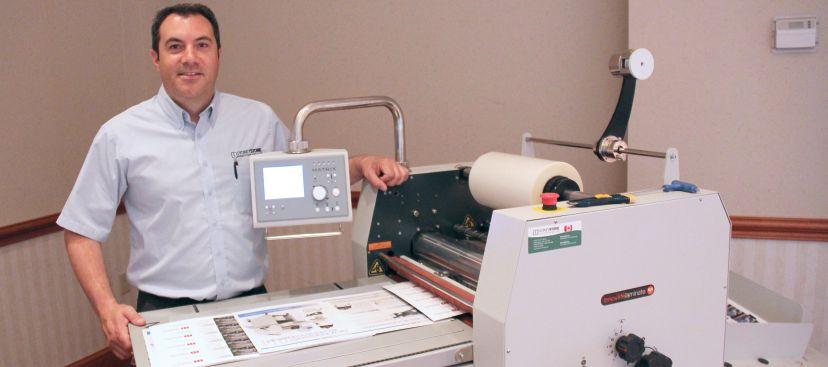
Sydney Stone Wraps up Equip 2014
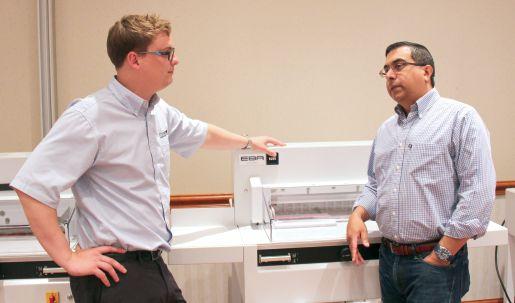
Sydney Stone completed its Southern Ontario demonstration tour of new finishing technologies, called Equip 2014, in Richmond Hill, Ontario. The four-stop tour began in early March in Hamilton featuring EBA’s recently released cutting systems, including the 5560, 5255 and 6660. EBA has reengineered its cutting line with features like pneumatic operation, ergonomic paddle controls, IR light beam guides, and a new touchscreen. Sydney Stone has been a Canadian exclusive distributor of EBA since 1982.
Sydney Stone also highlighted the new Duplo DC616 system for slitting, cutting, creasing and perforating primarily short-run toner work. The DC-616 can run 24-up business cards on a sheet based on a new
Insource Celebrates Olympic Gold and New Tech
design that positions the trimmer near the end of the unit. It can process up to six slits, 25 cuts, and 20 creases in a single pass. Two models are available, including the basic version and the DC-616 PRO with PC controller software and PC Pole Mount for easy job setup, CCD scanner to read barcodes and registration marks, ultrasonic double feed detection, and a perforating unit.
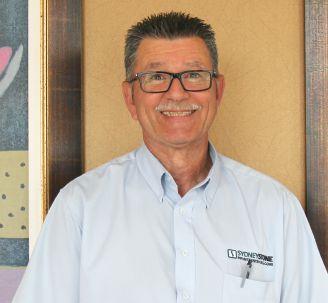
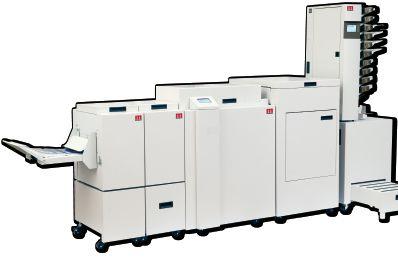
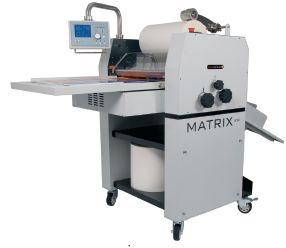
Clockwise from top: Michael Steele, Managing Director of Sydney Stone, with the Matrix 530 laminator; Brennan Wright speaks with Rajiv Persuad of Bluetree Publishing about the new generation of EBA cutting systems; Industry veteran Erik Bell, who has spent the past couple of years helping Sydney Stone establish customer programs, is preparing to retire this July.
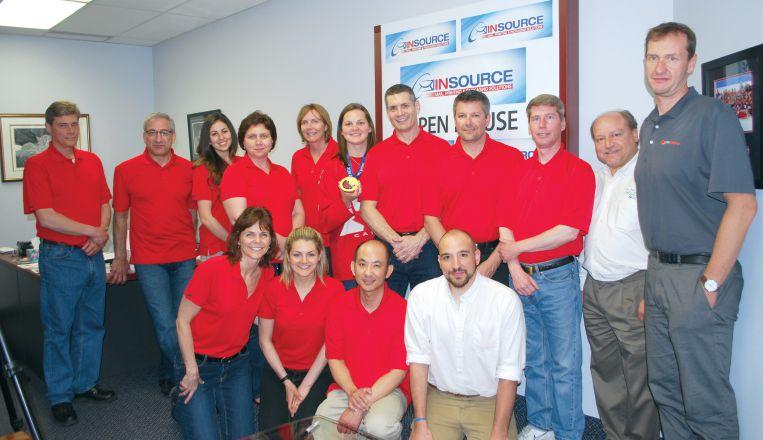
Insource Corp. held an open house in its Markham, Ontario, headquarters to highlight new equipment lines for the Canadian printing industry, while also celebrating the Gold Medal performance of Canadian Olympian Jennifer Wakefield.
Founded nine years ago by Tim Wakefield, Insource supplies and supports technologies primarily aimed at the industrial paper handling, card handling, packaging and fulfillment markets. Attendees of the open house had the opportunity to meet Jennifer Wakefield, daughter of Tim and Suzanne Wakefield, who recently helped steer the Canadian Women’s Hockey Team to Olympic Gold in Sochi, Russia.
With staff in Montreal and Vancouver, Insource’s open house included new systems from Petratto and RISO, as well devices like Astro (MI and M2), Print and Apply (Weber), KR497 tipping system with GMS gluer, KR 535 triple web tabber Tabmaster, Flagship iAddress software, and the Digibinder. Insource is the exclusive Canadian distributor for Kirk Rudy, Winkler-Dünnebier, KAS Paper Systems, Petratto, SCS Automaberg, RISO and Astro.
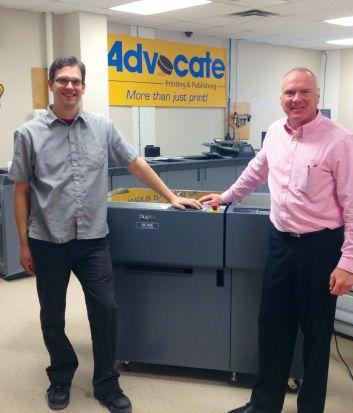
Advocate Printing & Publishing acquired a new Duplo DC-646 finishing system with all-in-one capabilities as a slitter, cutter, creaser and perforator for its production facility in Dieppe, New Brunswick. With business roots dating back to 1891, Advocate is based in Pictou, Nova Scotia, and collectively runs more than 10 printing and publishing operations in Eastern Canada.
Purchased through Sydney Stone, the mid-range Duplo DC-646 device was first launched in January 2014 to succeed the DC-645. The new version performs up to six slits, 25 cuts, and 20 creases in a single pass (compared to six slits, 15 cuts and 10 creases on the DC-645). The DC-646, according to Duplo, prevents toner cracking on fold lines at up to 30 sheets per minute.
The Insource team takes time from demonstrating equipment to pose with Canadian hockey star Jennifer Wakefield.
Advocate’s Mike Caissie, Prepress Technician, and Tom Badger, General Manager, with the new Duplo DC-646.
PRINT MARKET & INSTALLATIONS
Avanti Reports Record Quarter
Days after its annual User Conference held on Toronto’s lakeshore, Avanti Computer Systems reported a record-setting second quarter to its financial year with revenue up 13.1 percent in comparison to the corresponding period of last year.
The software developer points to last year’s launch of its new Slingshot Management Information System as a primary reason for its revenue growth. (PrintAction August 2013 cover story, The Slingshot Effect.) Released in the fourth quarter of 2013, Avanti Slingshot incorporates business intelligence, production planning, warehousing, shipping and billing. “We continue to help printers move beyond print and have developed a platform that can support their multiple lines of business including conventional and digital print, large format, mailing, data management, marketing services and fulfillment,” says Patrick Bolan, President and CEO of Avanti.
C.J. Group Presents The Redgees
DesignEdge Canada last month handed out its 2014 Canadian Regional Design Awards at the Berkeley Church in Toronto, hosted by Jay Mandarino, Chairman and Founder of the C.J. Group of Companies, which controls DesignEdge. The format of the Canadian Regional Design Awards program, colloquially known as The Redgees, divides the country into eight regions in which design firms compete against others within their geographic location.
Close to 500 submissions were entered into this year’s program, comprising 14 different print and digital graphic design categories. The 16 judges awarded Best of Region recognition to Hambly & Woolley of Toronto; Orangetango of Montreal; Gooselane Editions of Fredericton, NB; VentureWeb of Squamish, BC; KiK Innovation of Winnipeg; Luke Despatie & The Design Firm of Port Hope, ON; Intent of Kitchener, ON; and the in-house design team of TMX Equicom in Calgary.
Canadians
Shine at FTA Awards
Six Canadian printing operations and one high school took home medals from the 2014 Excellence in Flexography Awards presented at the Flexographic Technical Association’s INFO*FLEX conference held in Baltimore, Maryland. The fourday event drew more than 1,800 attendees.
In total, 102 awards were broken out into 38 bronze medals, 34 silver medals and 28 gold medals. Nearly one quarter of the awarded medals, 23 percent, went to entries in the Wide Web category, which received the highest number of submissions, but the Narrow Web category saw the largest number of medals at 27.
Canadian award winners included: Master Packaging of Dieppe, NB, and PolyCello of Amherst, NS, in the Wide Web category; Cascades Boxboard, Kingsey Falls, QC, in the Mid Web category; Artcraft Label of Burlington, ON, and ASL Print FX of Vaughan, ON, in the Narrow Web category; RockTenn Company of Canada (Candiac, QC) in the Preprinted Linerboard category; and Gordon Graydon Memorial Secondary School of Mississauga, ON.
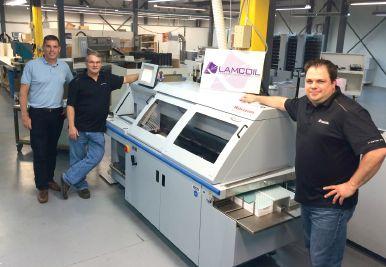
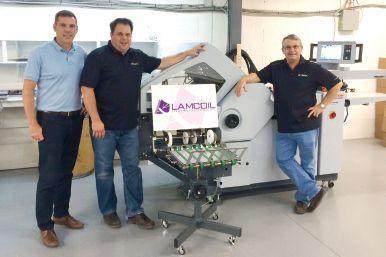
Entreprises Lamcoil Inc. of Laval, Quebec, installed three automated Standard Horizon systems, purchased through KBR Graphics, including: A StitchLiner 5500 saddle-stitcher, AFC-566FG automated folder, and BQ-280 PUR perfect binder. Founded in 1995, Lamcoil specializes in both offset and digital print services like lamination, die-cutting, gluing, die-making services and now short-run PUR perfect binding, saddle-stitching and folding.
“The StitchLiner will give us a seamless and efficient tool to provide small short-run quantities of customized products while reducing cycle time and providing fast throughput for offset and digital print,” stated Patrick L’Écuyer, President of Lamcoil. “We will also be able to improve quality control and job reporting to our customers.”
Top: Jay Mandarino, Chairman and Founder of the C.J. Group of Companies with the award recipients.
Above: Leslie Smith, Publisher of DesignEdge at The Redgees in Toronto
Top: Karl Belafi Jr. of KBR Graphics with Patrick L’Écuyer and Patrick Robillard of Lamcoil and the company’s new Standard Horizon BQ-280 PUR perfect binder.
Bottom: Entreprises Lamcoil’s new Standard Horizon AFC-566 FG automated folder.
Attendees from Avanti’s 2014 Learning Conference, held in Toronto from May 27 to 30, take a break for an evening dinner and tour on Lake Ontario.
Proveer/Avery Dennison, Car Wrap Workshop
Proveer facility, Toronto, Ontario, $999*
August 18–20
October 22–24
SGIA Expo 2014
Las Vegas Convention Center Las Vegas, Nevada
September 9–11
Label Expo Americas
Donald E. Stephens Convention Center Chicago, Illinois
September 16–18
Sustainable Forestry Initiative Annual Conference Le Centre Sheraton, Montreal, Quebec
September 19–20
Consac Imagemakers 2014
International Centre, Mississauga, Ontario
Graph Expo 2014
McCormick Place Chicago, Illinois
September 28–October 1
September 30–October 2
PAC Symposium, Retail Trends and Supply
Chain Sustainability
Steam Whistle Brewery & Real Sports, Toronto
October 30–November 1
Proveer/Avery Dennison 2014
Car Wrap Training
Riley’s Reproductions, Calgary Alberta, $999*
November 6
Canadian Printing Awards, hosted by PrintAction Toscana Conference Centre, Hilton Garden Inn, Toronto, Ontario
BMI Annual Conference
Hyatt Regency Coconut Point Resort Bonita Springs, Florida
November 22–24
Print World
Direct Energy Centre, Exhibition Place Toronto, Ontario
June 2–15, 2016
drupa 2016 Messe Dusseldorf Dusseldorf, Germany
SUPPORT YOUR INDUSTRY
Embrace the quality and innovation of Canadian
BUILD YOUR BRAND
Awards are powerful, cost-effective and perpetual marketing tools
MEASURE YOUR PERFORMANCE
Benchmark your printing against Canada’s best
MOTIVATE YOUR STAFF
Leverage the reach of PrintAction magazine TOSCANA CONFERENCE CENTRE HILTON GARDEN INN, VAUGHAN, ON
Boost your staff’s sense of accomplishment
PUBLICIZE YOUR ACHIEVEMENTS
Bonita Springs, Florida
Packaging and Impressions from Interpack
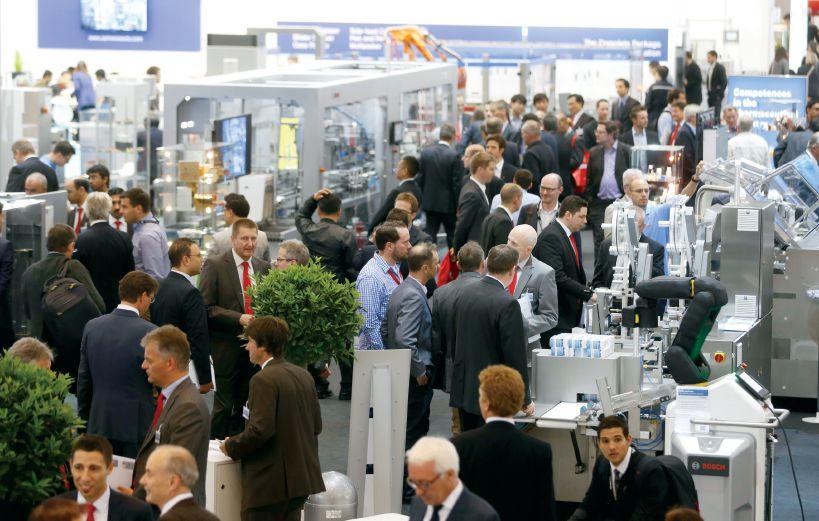
The Interpack 2014 tradeshow took place from May 8 to May 14, 2014, at the Düsseldorf fair grounds, the same sprawling location that hosts the drupa tradeshow every four years. According to Interpack, this year’s exhibition attracted 175,000 visitors and approximately 2,700 exhibitors. The main sector trends, again according to Interpack, are resource efficiency for plant and machinery, as well as for packaging material usage, quality and safety to guarantee perfect and counterfeit-proof finished products (especially in such touchy segments as food/beverage and pharmaceuticals), diversity and flexibility for an ever wider range, and shorter product cycles.
The primary trend of shorter product cycles in packaging was emphasized by many exhibitors, most notably Esko. It was also a focal point for many exhibiting print companies that, in addition to the many machine manufacturers, demonstrated how their equipment can accommodate a sudden change in the packaging requirements to quickly build a new product. This can be done through a modular set up of the machine or an intelligent control logic system that is able to fill containers of different sizes.
Highlights and vignettes
Packaging is much more than just the design of the package. Manufacturers and designers alike must also consider variables like what type of material is being used, types of sleeves that go over the package, the stability of the package, and what kind of weight needs to be protected and transported.
Flexographic printing is the dominant process currently being used for producing all kinds of labels, sleeves and other wrappings. Paper bags are also printed with this technology. A Swiss print company at Interpack showcased the same design printed digital, HD flexo and gravure. At a first glance, the prints looked very similar in colour and appearance. Only a closer look revealed differences between the printing processes especially in the highlights and vignettes.
Hewlett-Packard made a big splash by exhibiting new three digital printing machines that are aimed at the packaging industry. HP showed its Indigo 20000 and 30000 devices, while also debuting the HP Scitex 15000 press. The HP 20000 press is aimed at the label printing market with a web width of 30 inches. The workflow for controlling the HP 20000 is powered by Esko technology. The HP 20000 can be used for printing flexible packaging, labels and shrink sleeves with a maximum repeat length of 44 inches. Printing materials can include film, paper and aluminum. The HP 20000 features seven imaging stations that can be used for printing even opaque white. The well-known personalized Coke campaign was printed on an HP 20000.
Esko has teamed up with HP in regards to the workflow and converting of spot colours to extended gamut printing using CMYK plus O, G and V. The Esko software shows how far, in ∆E, the converted colours are from the original Pantone colour when four, five, six or seven
colours are used to simulate the brand colour. Through the addition of either orange, and/or green and/or violet, the ∆E will get less, meaning the colour is closer to the original. Esko is also supplying its MIS software to HP, making it possible to have short turnaround times from when the job enters the print company until it is printed and ready for delivery.
The HP 30000 is designed for printing folding cartons with offset matching print quality. The maximum sheet width is 29.5 inches and prints on sheets of carton. The press can print on paperboard, metallized board and plastics. Like the Indigo 20000, the 30000 also features up to seven colour print stations which make it possible to achieve brand colours through dedicated Pantone inks or through HP’s IndiChrome technology that uses four, six or seven colours for on-press brand colour emulation. The maximum board thickness is 24 pt. It is even possible to add an inline coater for UV and water-based coatings. The Indigo technology makes it possible to print VDP cartons. This was also shown during the press demonstration at the tradeshow.
The third HP press shown was the Scitex 15000 for corrugated board printing. This inkjet press can print four boards at the same time. At Interpack, the imaging giant showed the printing of boxes for big screen LED TVs.
This very interesting demonstration of technology continues the momentum HP showed at drupa 2012. Although the print speeds are not that of offset and flexographic printing presses, it enables print companies to serve the quick turnaround market. I predict even more innovative solutions will be shown by HP at drupa 2016.
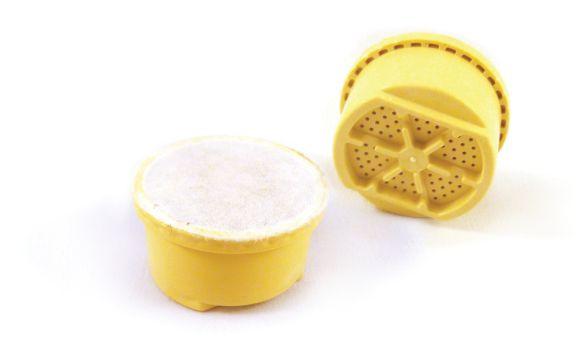
Bioplastics were seen throughout Interpack, including this compostable single-serve coffee pod shown by BASF, which is produced with its EcoVio material.
Stand out from the crowd. Be colorful. Be productive. Be green.
Request
Inkjet printing with pigment ink, Cascades Enviro Jet, 24 lb.
bioplastics, boxes and pouches
QuickLabel Systems of the United States showed its Kiaro! Printer, a small, tabletop on-demand, roll-fed label system based on inkjet technology. It comes with Windows software that can also do VDP. Depending on the model you buy, Kiaro! can print with up to an eight-inch web-width at 40 feet per minute and at 1,200-dpi resolution. The maximum repeat length is 17.92 inches.
I found this product quite impressive, since it is an affordable solution for quick turnaround, short-run label production that has no make-ready and is perfect for small businesses that do not need large quantities of labels.
At Interpack 2011, bioplastics were an interesting trend, which I wrote about in PrintAction June 2011. At the time, this was a little side exhibition of Interpack squeezed into part of one hall. At the 2014 event, however, many suppliers showed materials made from bioplastics. Personally, I found it very interesting to see a coffee pod made completely from bioplastic. This means that you can throw the coffee pod directly into the kitchen garbage after brewing your single-serve coffee. The pod composts in 90 days. It is a little know fact that the currently manufactured coffee pods for the various single-serve coffee machine pose quite a problem in the recycling stream, since they can not be properly recycled.
Kolbus, a German company with sales offices in Canada, showed an interesting
machine configuration that manufactures high-quality boxes with magnetic closure. The inside has a stable tray that protects the packaged product. The stand had a produc tion line set up that inserted the magnets, secured them with tape, flipped the boxes over, scored the preprinted cover and then inserted the box. Interestingly enough, the outside of the box was printed digitally.
The company can also make various angled cuts into the box lid for 90, 130, 180 and multi-angle cuts to wrap the lid of the box around a round object. These boxes are designed for packaging high-quality items to give them a touch of luxury.
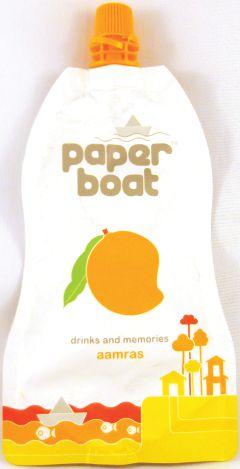
Pouches made for all kinds of purposes were also a dominant part of the packaging options highlighted at Interpack. These pouches today can hold a vast array of liquids from water and juices to baby food and soups to motor oil. The important thing is that the pouch is well made, the seams are properly formed and sealed, and the correct spout for dispensing the product has been inserted at the top.
Food materials and footprints Interpack’s Halls 1 to 4 held all kinds of machinery for the production of food, mostly for grinding cocoa and chocolate manufacturing (hollow figure manufacturing), but also for candy and gum manufacturing. Many companies showed machines for the manufacturing of wafers and ice cream cones. These were halls were you could get many edible samples. I wasn’t quite sure what these machines had to do with packaging, but after getting through these food items, machines for packaging freshly made food items were shown.
High-quality pouches with properly formed seams and spouts are finding a dominant position in packaging.
Throughout the show it was clear that the traditional materials used to create packaging like PE, PS, PET are now available in all kinds of shapes and sizes. The trend is to use the material more wisely, meaning less of it and have the shapes more friendly/economic for stacking on skids, meaning less trucks are needed to transport the same amount of packages making the packaging product more sustainable. The use of less packaging and less material to create a smaller carbon footprint was a general
trend of Interpack.
Recyclability was also a big topic weaving its way through the various exhibits. The special metal packaging plaza showcased not only the versatility of metal packaging, but stressed also the point that metal packaging can be recycled over and over again. Many high-quality metal packages were shown.
All of the wonderful packaging technology at Interpack spoke very little about one thing, all of these labels, wraps and special products need to be printed somehow. A few print companies were present at the tradeshow and showcased their high-quality print products using mainly the flexographic print process. Some print companies combined the flexographic printing presses with digital printing or rotogravure printing.
Like drupa, the Interpack tradeshow is a very interesting exhibition of printing potential, with regards to the protection of the product and the message it gives to the customer. Relative to commercial printing, short-run and quick turnaround technology finally seems to be a key focus for the packaging industry. This new focus of technology will surely disrupt the market, as there remains significant demand for printing labels, foils, cardboard and corrugated board.
Dr. Martin Habekost is Associate Chair of Ryerson University’s Graphic Communications Management program and can be reached at mhabekos@ryerson.ca
On SEPTEMBER 9-11 label and package printing explorers from across the Americas and the rest of the world will descend upon LABELEXPO AMERICAS 2014 – the industry’s largest event this year.
Join other converters, brand owners and designers to discover new opportunities in this growing market, see the latest technology in action and learn how to stay ahead of your competitors.
But come prepared – there are over 400 exhibitors and only three days to see it all!
Transcontinental’s 310,000-square-foot plant in Aurora, Ontario, is the critical piece of the Montreal company’s printing position in direct marketing. Picked up in March 2012 when it purchased Quad/ Graphics Canada, the Aurora plant bares the name Transcontinental PLM after the majority of PLM’s production assets were moved over from Markham, Ontario. Transcontinental purchased PLM Group for approximately $130 million in 2007 to extend its position in direct mail.
The original PLM plant in Markham continues to operate focused on printing in-store marketing materials, such as point-of-purchase for large retail clients. The Transcontinental PLM (TPLM) Aurora plant also produces some in-store marketing materials, along with a scattering of commercial work, but the majority of this massive site’s assets focus on direct marketing. Beyond its litho presses, both sheetfed and web, TPLM’s production floor holds a range of cut-sheet laser devices, inline and offline inkjet systems, and cut-sheet four-colour Indigo presses.
In October 2013, TPLM’s direct-marketing production took on an entirely new direction when it became the first operation in Canada to install an HP T400 Inkjet Web Press. Previously, the plant’s high-end direct-mail work was primarily done with preprinted litho shells.
really good and it is improving as they [HP] provide us with software upgrades and so on. As a matter of fact, when the press was delivered the quality was even better than what we anticipated.” During his drupa 2012 visit, Courville also took note of HP’s new technology partnership with Epic Products International, a coating systems developer.
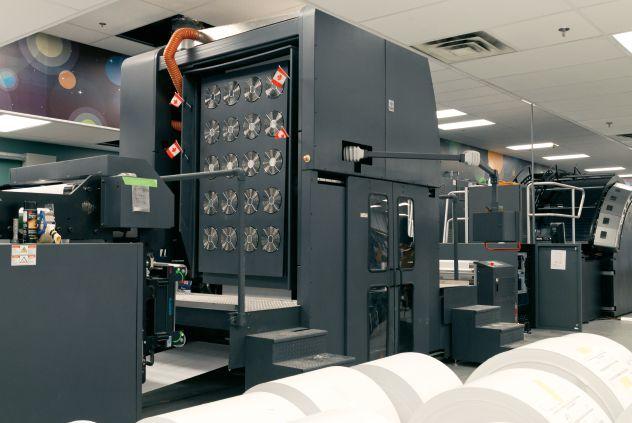
Transcontinental PLM’s T400 is unique in the printing world based on its inline integration of an Epic WebCoat 400 coating system, positioned at the back of the press just after a Videk DocuVision 8600 web inspection system.
Rob Seccareccia, Director of Direct Mail Services at TPLM, initiated the operation’s investigation of high-speed colour inkjet printing when he visited Germany’s quadrennial drupa exhibition in 2008.
“We knew then eventually this is the direction that we have to go in,” he recalls.
“It was just a question of when is this stuff going to evolve to the point that we think it will meet our customers’ requirements.”
When Marcel Courville, Senior Vice
President, In Store Marketing and Direct Marketing for Transcontinental Printing, attended drupa 2012, he surmised highspeed inkjet technology had reached a strong level of reproduction quality, which has only become more powerful in HP’s newest generation T400 press. “It is not at the litho level at this point and we know that,” says Courville, who oversees the Aurora operation. “Customers are aware of it, but the colour is becoming
“We have been in this direct marketing business for a lot of years and we understood the importance right away of running coated paper on this press, because when we analyzed our mix of work at least 50 percent of it was coated stocks,” says Seccareccia. The Epic WebCoat 400 basically flash dries the print work to provide a protective layer over the print, he explains, ensuring the tight roll does not have issues like tacking.
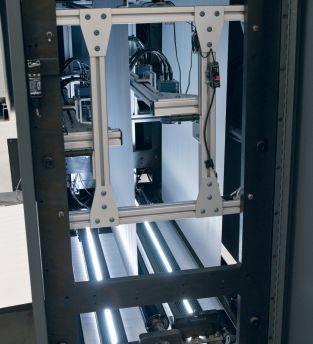
The Videk DocuVision 8600 integrated on the T400 by TPLM has the ability to scan every inch of the work printed on the press’ scalable 42-inch-format width.
“We also added a vision system on to the press for direct mail and data integrity,” says Seccareccia. “When you are running 400 feet a minute and you are going from roll to roll we wanted to make sure our customers had comfort that the data was
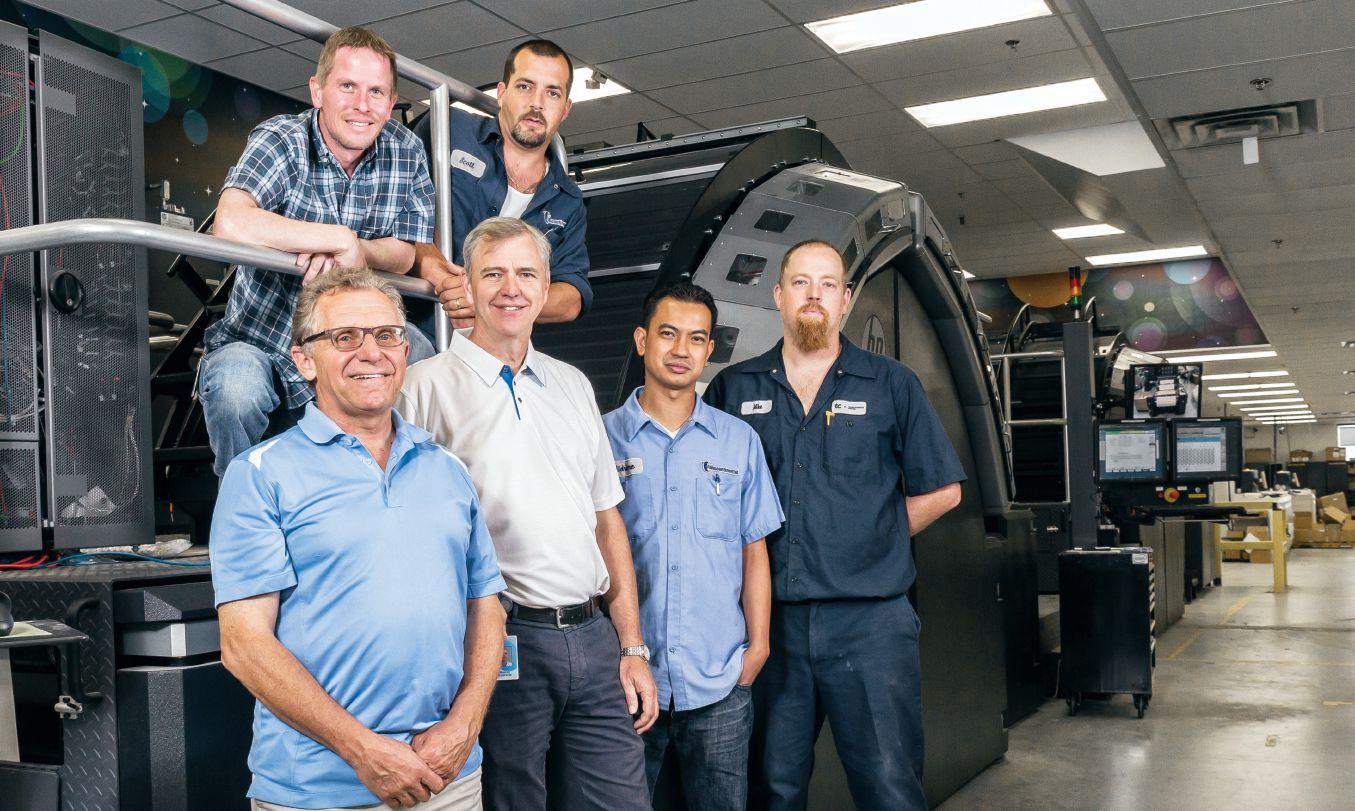
Key leaders of TC Transcontinental PLM’s HP T400 program include (clockwise from top left): Dan Shrubb, Laser Manager; Scott Kucher, Press Operator, Mike Macbean, Press Operator; Aldrine Empeno, Press Operator; Marcel Courville, Senior Vice President; and Rob Seccareccia, Director of Direct Mail Services.
Transcontinental PLM’s HP T400 was the first such press in the world to be integrated with an Epic WebCoat 400 coating system, which is key to the operation’s production of four-colour direct marketing work.
Story by Jon Robinson PHotos by Clive Chan
printed accurately on both sides.”
The T400’s roll-to-roll production with a 42-inch printing format was a key reason for its purchase by TPLM, because it fits the plant’s existing post-press capabilities to accommodate laser, toner and narrow-web continuous inkjet work. “We basically physically handle it as two 20-inch formats,” says Courville, describing the inkjet web press’ paper slitter that sits on the end of the press line, following the Epic coater and Videk system.
Slitting the T400’s 42-inch format into two 20-inch rolls presented an enormous challenge for TPLM’s data and forms composition department. “We are very proficient in making clients’ jobs data friendly for the postal system to maximize on the benefits of Canada Post or USPS,” explains Seccareccia. The data team worked through a range of structure and format scenarios – with letter sizes like 8 ½ x 11, 8 ½ x 14, 14 x 17 and 12 x 12 self mailers – to understand how the data should be laid up on the press.
“We are able to take a relational database and target an audience of one, putting in print messages that relate only to you; and the T400 can do that in four colour images, whereas before we could basically only do it in text,” says Seccareccia. “The market has come a long way, because the world has gone digital in the
last number of years. With the evolution of digital, clients’ databases have become more sophisticated and they are buying into this technology.”
The T400 presents TPLM with an enormous boost in the speed of producing four-colour direct mail, relative to its preexisting processes. “One of the main advantages for our customers is that we can offer four-colour variable at press speeds that we can get to the market very quickly,” says Courville, who notes the T400’s capacity has allowed TPLM to generate new business. The plant, for example, works with several loyalty programs, which are a natural fit for high-speed four-colour variable inkjet printing given the amount of data collected from participants, who readily share product preferences for reward.
“You are able to produce on this [T400] press, in a perfect scenario, 90,000 A4 impressions an hour whereas in the traditional world on one cut-sheet laser you could produce about 8,500,” says
Seccareccia. The T400 displaced both a continuous inkjet system and a webfed toner press. He describes a recent direct-mail job that was several 100,000 pieces and took around 16 hours to complete, two shifts, on the T400, which previously would have taken TPLM a couple of weeks to do on a cut-sheet toner press.
“A key factor from a customer point of view is that ability to produce highvolume personalized mail [in four colour] that targets an audience of one and really you could not do that before because the technology was too slow.”
In addition to speed, Seccareccia describes the T400 as a very flexible system allowing TPLM to produce small runs in the thousands and to also target longer runs in the hundreds of thousands. The primary hindrance to shorter runs is the need to burn through a couple hundred feet of paper whenever it needs to be thread through the press. This chief make-ready concern, in addition to data management, pales in comparison to the costs of litho make-ready and moving work through three or four production stages before it is ready for delivery.
“Obviously, this is a more streamlined manufacturing method, but that is not what is going to win you the business from our point of view, because the marketplace is so price competitive, demand-
ing and tight,” says Seccareccia. “The key advantage is that ability to show your customer that I can give you a more targeted personalized audience.”
Courville explains Transcontinental PLM will continue to run a mix of printing processes to address clients’ direct-marketing needs. TPLM is now starting a third shift for the T400 press, running five days a week. “I would say [direct-mail work] is quite consistent. There has even been some growth in certain areas especially on the four colour,” says Courville, who also notes the advantage of reducing waste for clients who traditionally required a print inventory of preprinted shells.
“Economics are one thing, from a cost point of view, but the big win is return on their investment for the mailing. If you look at any stats on the comparison of colour versus monochrome in the direct-mail world, the return on investment with colour is leaps and bounds ahead of monochrome – it is multifold.”
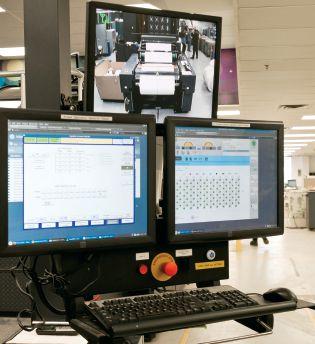
The Videk DocuVision 8600 (left) inspects the HP T400’s web for print and data integrity, while the operator can also keep a close eye on the press’ roll slitter and print-head redundancy (right).
PointOne Rejuvenates Printing Infrastructure
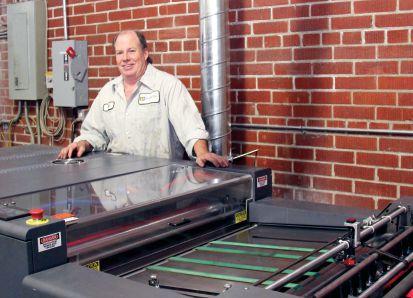
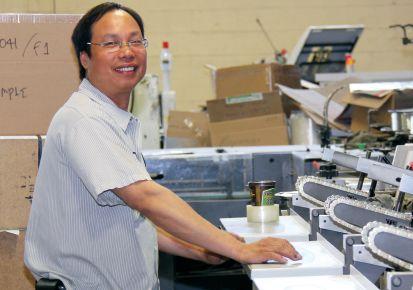
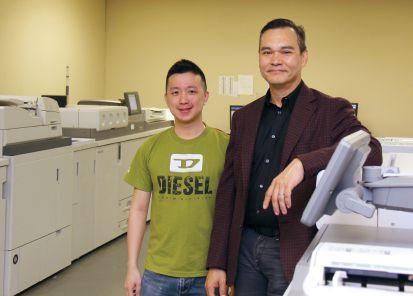
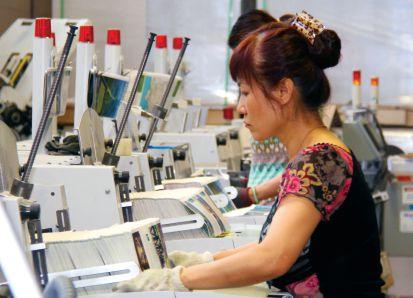
PointOne Graphics of Etobicoke, Ontario, continues its year of technological renewal including highlights like a new perfecting Heidelberg XL 106, two Suprasetters, a Ricoh Pro C901s, Vivid UV coater and a new EFI Hagen MIS.
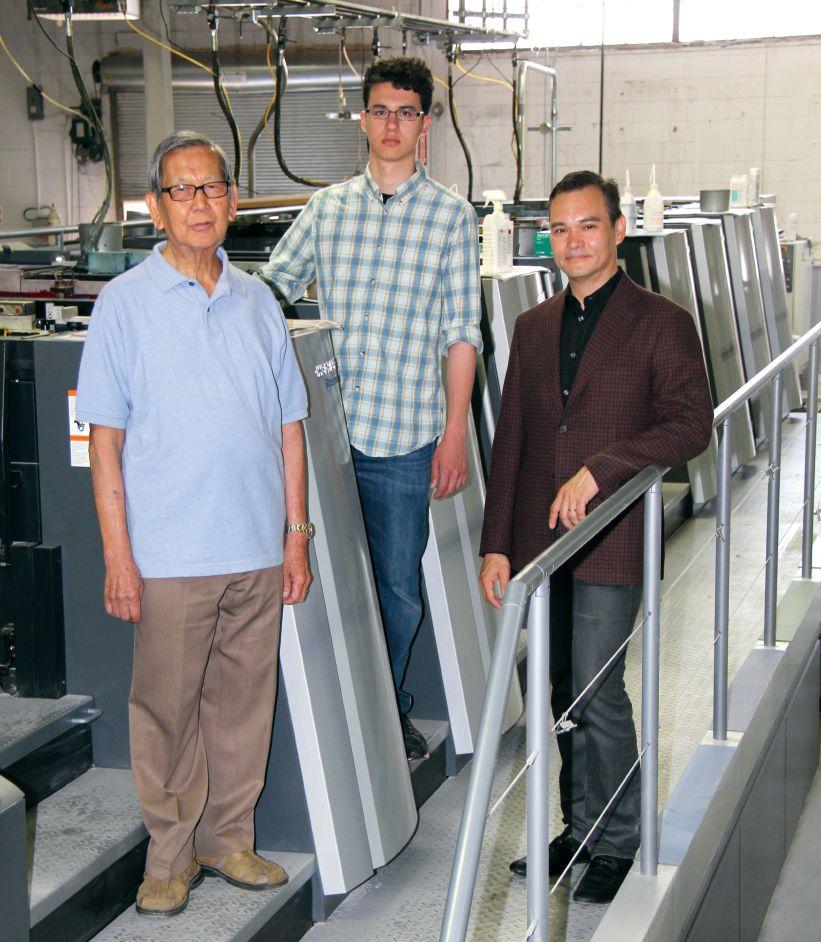
The 70,000-square-foot trade-printing operation, with more than 100 employees, now runs three primary 40/41-inch Heidelberg presses, including the eight-colour XL 106 perfector with coater (installed three months ago), a second eight-colour XL 106 perfector with coater (installed 18 months ago), and a six-colour Heidelberg Speedmaster XL 105 with coater (installed six years ago).
The most-recent XL 106 perfecting press is driven by Heidelberg’s new Prinect Press Center and Prinect Impress Control – tuned to PointOne’s GRACoL certified shop – for colour management. It is capable of running 24-point board.
The full-size sheetfed presses are fed with Magnum roll-to-sheet systems, which PointOne began to use around six years ago. PointOne recently opened a separate 22,000-square-foot warehouse nearby in the GTA to receive paper shipments by rail. The high-ceiling facility in mid-June was holding approximately 6-million tonnes of paper rolls.
The new Ricoh Pro C901s Graphic Arts Edition, installed two months ago, joins an existing Ricoh Pro C901 that has been on PointOne’s production floor for a year and a half. Both systems are set up with modules for inline finishing. The newer machine is equipped with a Plockmatic BK5010 booklet maker, adding the ability to do three-sided trimming and thicker perfect-bound jobs.
The company is also continuing to renew its postpress department, which today includes equipment like a Heidelberg Stitchmaster 450, installed about six months ago, and an automatic Polar cutter, as well as a new Digimaster for the toner production department.
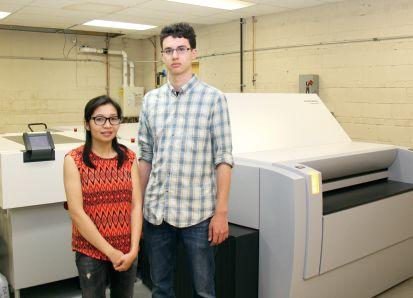
The two new Heidelberg Suprasetters, also installed two months ago, replace Kodak CTP systems that have been running at PointOne for about a decade. They primarily image Fujifilm LH-PJ plates produced with Kodak Prinergy workflow.
PointOne is also currently running a 5-colour MAN Roland Rotoman (22.75 x 38) web press installed in 2007. – Jon Robinson
Three generations of PointOne, including (left to right) C.K. Low, Adrien and Dennis.
Thoa Nguyen and Adrien Low in PointOne’s prepress-imaging department.
Cody Lu, Digital Press Operator, and Dennis Low, President, with the Ricoh Pro C901s.
Operator Glenn Rich with the Vivid UV Coater.
Anna Wang operates PointOne’s new Heidelberg Stitchmaster.
Fan Lu oversees PointOne’s large bindery and finishing department.
PointOne’s Magnum Sheeter feeds the company’s sheetfed-based presses.
Digital Differentiation
The volume of offset-press work to have migrated onto digital presses remains well below what most would have predicted a decade ago. Estimates for the total volume of all print pages being produced via digital today range anywhere from three to 10 percent, suggesting substantial growth opportunity remains in this sector.
With a saturated on-demand printing environment, however, today’s digital-press opportunity is found in differentiation like toner gang-runs, larger sheet sizes, Web-to-print workflow and a range of emerging unique applications driven by substrate, high-quality data and robust inline finishing. PrintAction spoke with three leaders who oversee the adoption of digital presses in the Canadian market for HP, Kodak and Xerox about their newest technological platforms and customer strategies.
Greg Running National Sales Manager Kodak Graphic Communications Canada
Why did Kodak restructure around printing?
Running: There is a lot of intellectual property that we have developed over the years. A key to this is also the various acquisitions we did 10 years ago… The technologies we invested in heavily from 2004 are the future of Kodak. We are now a much smaller company with just over $2 billion in revenue and approximately 8,000 employees. Our focus is on workflow, CTP, plates, digital printing (both toner and inkjet), flexography and packaging, including a new area called Smart Packaging. The most-important thing I like to point out is that we are the only vendor to the printing industry that touches every aspect of it with our own solutions. During the Chapter 11 process, we continued to develop 10 new technologies announced at drupa a couple of years ago and by the end of last year we had released all 10. So even during the Chapter 11 process we continued to develop new technologies and to push the envelope.
VP
Sales & Marketing, Graphic Arts HP Canada
Is it surprising digital printing today only accounts for a few percentage points of the total print market?
Ionescu: While digital print comprises a small percentage of the total print market, its share has been growing. In this space, even growing fractionally at single-digit percentage points is huge. That means huge revenue dollars –huge revenue dollars – so there is a lot at stake here and that is why we at HP are making huge investments in digital print.
Are most commercial printers now fully engaged with digital printing?
Actually you would be quite surprised... I will give you a percentage with respect to my last quarter mix of net new customers versus existing digital users of technology. This is a Canadian statistic: Nearly 80 percent of HP Indigo placements that we put out into the market were net new to digital... there is still a tremendous amount of opportunity out in the marketplace.
Have commercial printers, those rooted in offset presses, truly embraced digital printing?
Over the last five or six years you have seen pretty much every commercial printer adopt some form of digital. Many have gone with entry-level or light-production devices, because that is a more economical entry point, but the most successful have realized that digital printing now rivals offset printing in terms of print quality. Those who have put in a production-level device such as a NexPress have been able to achieve the most success.
Are most printers running digital using NexPress tools to create unique jobs? It is a good mix of both actually. There are those who have chosen it as a platform to differentiate themselves with the unique print features you can do on the fifth unit, especially Gold or Dimensionally Clear that allows for raised and texturized printing. But we have equally seen a lot of printers, given the production-level
Is the primary focus of digital press buyers to shift offset pages onto that press or to find new pages?
Not all ROI analytics will have justification for transfer work [only]. It is not the reality today... If you are transferring over 40 percent of your jobs from offset to digital, for example, it may not be enough to support the purchase of capital production equipment. You may need to produce 20 percent of net new. And then the conversation ensues. What do we need to do to drive 20 percent growth in our business, in our topline, in order for us to justify this capital expenditure purchase?
How do Web-to-print operations compensate salespeople?
One of the biggest challenges in this industry is getting salespeople to stay within your organization... which creates tremendous stress within a lot of these businesses. Adoption from the sales team is required, because they have to be able to talk about the benefits of Web-to-print and essentially it is removing them from future orders...
Chris Connor
National Managing Director, Graphic Communications Xerox Canada
Why is the new Versant 2100 press important for Xerox?
Connor: It is a clean-sheet design built from the ground up. It is targeted at the [high-end] entry production segment of the market and we are planning for it to be a replacement for our 8080 product. Once again, we are continuing to evolve our technology and bring value to the table.
What differentiates the Versant?
There are four key things that give Xerox and the 2100 a competitive advantage. The first one is performance. Part of this is learning from other R&D developments… the automation capabilities that we have added. Image quality is stunning. It is at a minimum 2,400 x 2,400 in digital quality. The press will run up to 1,200 x 1,200 in up to 10-bit mode… with EA toner, it is fantastic image quality. And then flexibility: We have so many different configuration options you can build in this solution. If you start on a more basic configuration you can up-
grade later, so the modularity in the way this press has been designed provides a huge advantage for clients. The last [key advantage] is productivity and uptime… people need their presses to run.
What is the Versant’s full width array? It is effectively a high-resolution scan bar that sits in the press… it intelligently scans the image and the colours that are being put down... what is most important about the full width array is the intelligent capability of being able to auto-detect issues with the image and auto correct those issues on the fly as the press is printing – so, there is a completely closed-loop system.
How are printers taking advantage of the Xerox iGen extended format? In terms of the larger sheet size, specifically, this is available on the iGen4 110 and the iGen 150 today and it allows us to go from 14.33 inches wide, which is the standard width of an iGen throughout all of the platforms, up to a length of 26 inches… We are running that 26-
PRINT NEWS
It has to be part of the overall go-to-market strategy... Sometimes the compensation structure needs to support a sales rep selling these high-value pages that are much more lucrative to the business owner versus large quantities that are based on a commodity print job run.
How does HP help Indigo users adopt Web-to-print?
We are very proud of our Web-to-print product HP SmartStream Director, which is essentially a full turnkey solution. For a small business that wants to portray itself as a big business out on the Internet, this is a tremendous tool. Within an hour and a half we can demonstrate how SmartStream Director can look in the eyes of an end user customer on behalf of this trade printer or commercial printer... it is a very affordable tool without having to make hundreds of thousands of dollars of investments to put that infrastructure up. It is all optics. Small businesses want to showcase their creativity. They want to showcase their strength. They want to showcase their products, but they do not want to showcase they are a very small business. They want to showcase their inner bigness.
How does HP help Indigo users push beyond printon-demand into high-value pages?
We believe our differentiator in the marketplace is to be able to bring capabilities and enhanced tools for our partners, our customers, like specialty-effects printing: White ink, printing on synthetic substrates, plastics and PVC, static-clings, raised ink, digital watermarks and textured effects… You are able to do all of this with your HP Indigo press.
Why did HP develop a large portfolio of presses? We go to market with specialization within segments. The HP Indigo 10000, 20000, 30000 platforms… each
nature of the press, focused on straight four-colour work. Recently a shop in Toronto, which has one of the original NexPress’, reached almost 80 million impressions on it... It is a press that can provide unique quality and design features and, at the same time, it can be used 24/7 in a high-volume type of production environment.
Are commercial printers effectively using Web-to print to drive digital-press work?
I think Web-to-print is an interesting topic, because it has been around for a long time and there is a lot of promise to it. There are some who are truly leveraging Web-to-print within an automated workflow to its maximum and achieving fantastic benefits, but I think for a lot of printers it is still a bit of a struggle. All of the different solutions have made it easier to set up Web-to-print sites, but it is a mindset and a relationship with your end user that will enable you to really capitalize on the automation.
How are commercial printers compensating salespeople in the digital-printing space?
There are some who have decided to bring on a new sales force to sell digital, because the traditional print sales rep isn’t too interested in $40 or $60 jobs. But where the successful printers have made that leap is realizing that for every $40 job or $100 job there is usually longer-run, more profitable work behind it by building a relationship.
What NexPress hardware tools should printers take note of?
With a single platform you can now get many different finishes with a very quick changeover in minutes. You can go from a regular finish to a matte finish to a coated finish to a high-gloss finish to a texturized finish with one press. Also, it was always designed
inch sheet at 40 impressions a minute on our iGen4 110 and running it at 50 impressions per minute on our iGen 150, which is the fastest in the industry.
The reason we went to 26 inches as opposed to 29-inch is that our engineers are telling us, at this stage of the game, with the knowledge capabilities we have as a company and with the requirements that the marketplace has in terms of being able to image in full colour at high quality, at high speed, on two sides of the paper, with good registration, it is very, very difficult to do that beyond 26 inches today and still maintain the uptime, reliability, quality, back-to-front register in full colour. As a result, we stopped at this stage of the game with the iGen platform at the 26-inch length.
Many of our clients have adopted it, in fact, because we want to maintain the investment that our clients are making in our technology.
Is that to say developing a true 29-inch format, not landscape, is not a priority right now for Xerox? Whatever is a priority to our clients is a priority to us. We have always been the leader in the digital production market and our full intention is to continue to be. You can bet your boots that we are investing in R&D in many aspects… I am 100 percent confident Xerox will get to 29-inch capability at some point going forward, but we are only going to do it on our terms, which means we are not going to comprise reliability, quality or productivity for our clients.
How is Xerox helping customers move into new printing markets?
Let’s make no mistake about it, Xerox follows the money and so does our client base. And the money is in new digital applications. If we can equip our customers with technology that enables new digital applications then it is more money for them and for us.
Continued on page 20
Printing Software
Given today’s ability for software engineers to build robust modular architecture, there is a constant stream of new applications and solutions to both streamline and enhance print production, which is only matched by the needs of print manufacturers to stay in front of their customers. The following new software applications for the frontend, including MIS modules, colour management, data handling, imposition, and general workflow, illustrate some of the newest tools driving print.
Technologies Featured
• Accura EDocBuilder
• Agfa Apogee/Asanti StoreFront 2.2
• callas pdfaPilot 5.0
• Color-Logic Metallic
• DALIM ES4
• Esko Suite 14
• GMG ColorServer 4.9
• Newtec IC3D Suite
• Pageflex Storefront, Server, and Campaign Manager 8.3
• PrintPoint 6.5.5
• Taopix Online
• Ultimate Impostrip Configurator 10
• Xerox FreeFlow Digital Publisher
Esko Suite 14
Scheduled for release in July 2014, Esko Suite 14, built on Adobe’s PDF Print Engine platform, is a collection of new and updated software geared toward packaging preproduction and management, which can be leveraged by brand owners, premedia houses, converters, sign-and-display producers and commercial printers. Esko explains Suite 14 development focused on five key trends, including: Workflow automation, the use of smart templates; quality; task-based user interface; and integration of the supply chain via The Cloud.
Used for application interconnectivity, WebCenter 14 is now a 64-bit application supporting HTML 5. A series of new colour tasks are now integrated into the Automation Engine, which also features a new Connect software kit. The updated ArtiosCAD editor provides BOM capability directly from the ArtiosCAD browser. Esko states Suite 14 also gives ArtiosCAD users more realistic 3D visualization when folding corrugated and paper board. Suite 14 lets users of Studio Designer to go beyond the normal 3D view to add special effects and finishing details when creating packaging graphics in Illustrator. Store Visualizer, created in partnership with VTales Graphics, allows users to place virtual objects in photographed scenes. For the Studio tool, two new and one enhanced flexible bag types are available in Suite 14, including the popular quattro seal bag.
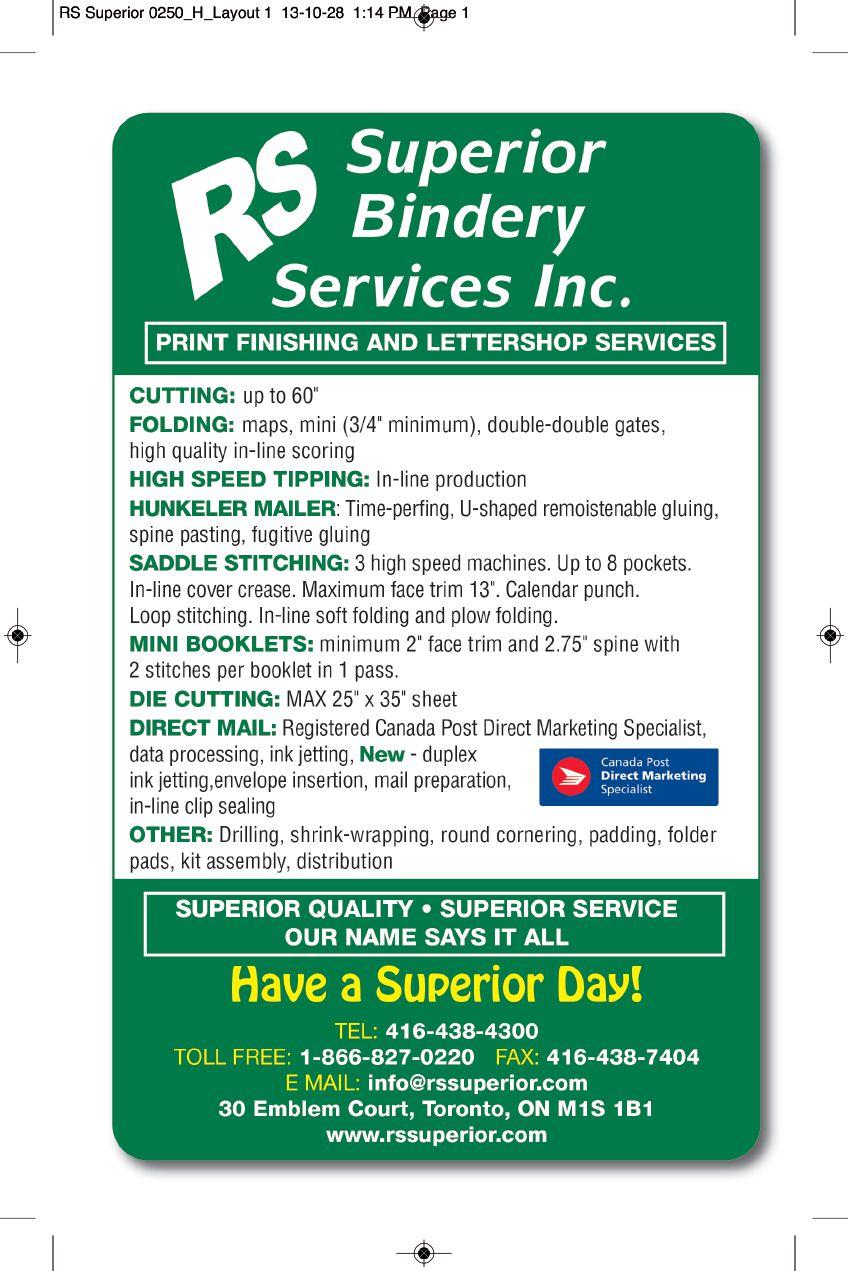
7 Ways RS Superior Saves You Time and Money
1. ONE-STOP SHOP
Die Cutting, Bindery, Data & Lettershop –all under one roof.
2. ONGOING INVESTMENT IN SUPERIOR TECHNOLOGY
Die crease without a die, then fold and even glue all on the same machine, up to 30 pt.
3.
INTEGRATED MODULAR UNITS
Combined in-line finishing: crease, fold, glue, tipping, envelope inserting, ink jetting (Duplex), clip seal (3 sides), mail prep.
4.
SAVE ON POSTAGE COSTS
As a Certified Canada Post Direct Marketing Specialist, we get contract pricing reductions.
5.
RETURN MAIL PRODUCTS
Customized “Return Mailers” created in-line with “U” or “BOX-shape” remoistenable glue, time perfed applications and envelope formation.
6.
MINI-BOOKLETS
We can saddle-stitch and trim 2-up booklets in-line to the size of a business card. No need to trim off-line, or do 2 passes.
7.
HIGH SPEED EQUIPMENT
High speed Tipping, Folding, Saddle-stitching and soft folding ensuring on time delivery.
Top: Esko Suite 14’s new Visualizer in Illustrator. Above: The Store Visualizer.
Accura EDocBuilder
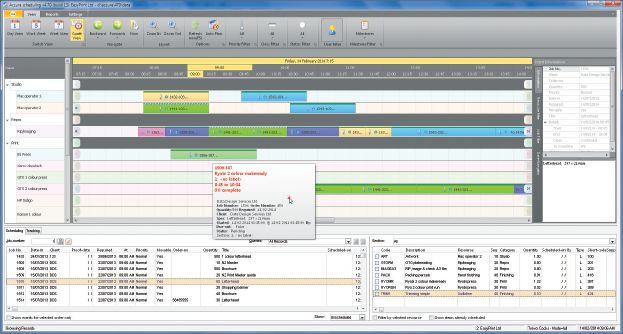
In April 2014, Accura introduced new features for its Management Information System platform, including scheduling and online functions. The new EDocBuilder Interactive Designer, which is part of the existing EDocBuilder Web-to-print engine hosted by AccuraOnline, is a drag-and-drop tool for artwork design with consumer-based products like greetings cards and promotional products. Accura has also introduced a new Production Scheduling module, which includes a resource level planning board, tracking and RDC integration. New features for the Time & Attendance module, a bolt-on to the RDC module, provide paid/unpaid hours and payroll reporting and will soon be released. Accura has also introduced courier API integration capabilities.
GMG ColorServer 4.9
Introduced in June 2014, GMG ColorServer version 4.9 now includes PDF/ VT-1 compatibility, more CMYK to RGB conversions and support of new IDEAlliance file standards. The current 32-bit version of ColorServer has been optimized to deliver colour-management processing times of up to 3,500 variable-data PDF pages per minute. GMG also introduced a 64-bit native version of ColorServer 4.9. The improved Paper Adaption Tool in ColorServer 4.9 allows print service providers to recalculate a file’s colour data against a particular support material, even if the particular proof simulates a different final stock. For example, the Paper Adaption tool can adjust your print data to match an ISOcoatedV2 proof, even if the production material is different. GMG ColorServer 4.9 also supports the new FD 5 and FD 7 spectrophotometers from Konica Minolta, as well as the latest GRAcol 2013 (CGATS 21 RPC-6) and SWOP 2013 (C3 and C5) profiles.
Agfa Asanti StoreFront 2.2
In May 2013, Agfa released version 2.2 of Asanti StoreFront, which is specifically designed for the sign-and-display sector. The new version automatically exports order data to the prepress workflow, regardless of RIP, which assists in accessing needed content. Users who do not have an Agfa Graphics workflow can automate order handling by having StoreFront export all order data to their FTP-server. The new version also provides PayPal Express Checkout to add online payment to Web-to-print stores. This allows users to set up Express Checkout without a high activation cost or expensive monthly fees. Companies who require all orders in a store to be approved can now create groups of users and assign one or more order approvers to each group, which Agfa describes as being useful for large companies with multiple divisions or subsidiaries. Other new features of StoreFront v2.2 include auto-fill forms based on profile data and
previous orders, and custom order IDs for categorization. All of the features in Asanti StoreFront 2.2 are also available in Apogee StoreFront 2.2.
Ultimate Impostrip Configurator 10
In May 2014, Ultimate TechnoGraphics of Montreal released Impostrip Configurator version 10 to be available with Enfocus Switch 12 Mac and Windows. This new configurator integrates and automates multiple Impostrip products such as Impostrip Automation, Impostrip Scalable and Impostrip Solo for Mac with Enfocus Switch. Impostrip Configurator version 10 also better accommodates a mixed environment of Mac and Windows platforms. Ultimate explains Impostrip provides users with dynamic imposition, speed in processing, automated ganging of different jobs, centralizing imposition to drive multiple presses, a mixed brand environment, as well as simple connectivity.
Xerox FreeFlow Digital Publisher
Introduced to Canada in May 2014, and building on the September 2013 launch of FreeFlow Core, the new FreeFlow Digital Publisher application is designed to extend print publishing into digital publishing from a single workflow platform. Users can prepare and route files to their Xerox press for printing or for sending digital versions of the same project through Web browsers or mobile apps that can be downloaded from Apple iTunes Store, Google Play or the Amazon App Store. Developed with GTxcel, FreeFlow Digital Publisher can include video or audio with electronic versions of print campaigns. The software also includes analytic features to track metrics like readership, open rate reports, app tracking data, and clicks by platform. The software allows users to manage each publication with an included dashboard, in order to manipulate placement of rich media, restrict access, manage email subscriptions and push notifications. FreeFlow Core is built on a Web-based architecture as modular and scalable central workflow system.
DALIM ES4
Introduced November 2013, ES4 is customer facing Web-based production management software with tools for print, packaging, ePub, video and web content. This fourth version is designed to support all types of media formats and to integrate with MIS and ERP. For print workflows, ES4 features an imposition module that can import both CFF2 and JDF templates to automate classic step-and-repeats. Beyond print files, ES4 now offers DAM features to automatically catalogue, enrich and share images and other assets, such as video or ePub. It can also be integrated with 3D augmented reality models.
PrintPoint 6.5.5
PrintPoint 6.5.5, a Management Information System currently in beta with a release scheduled for the end of July 2014, provides tools for estimating, quoting, job creation, tracking, scheduling, invoicing, purchase orders and shipping. Version 6.5.5 includes Windows 8.1 and Mavericks certification, as well as a new feature to automatically create postpress items for related boxes when producing estimates. For invoicing, version 6.5.5 defines how pricing is determined, while documents can be attached in emailing function and keywords can now be viewed in Listview. Also new, users can delete existing schedules and calendar events can be shared, while the Report Manager function saves reports without leaving the area. In PrintPoint version 6.5, the company added Time Based Estimating, a new release of its Visual Scheduling Job Board version 2.0, a Web-to-print Storefront, and enhanced CRM capabilities including a new Request For Quote Module. The software’s Graphic User Interface was completely modernized for Windows and Macintosh platforms, as well as products built using SVG. Using SQL database technology, PrintPoint can be purchased as self-contained client/server architecture, but it does not require a server-class operating system.
callas pdfaPilot 5.0
In March 2014, callas software launched pdfaPilot version 5.0 with the new ability to archive emails in PDF/A format, aimed at long-term reproducibility and system independence. All versions of the ISO-standardized format are supported, such as PDF/A-3, allowing digital messages, including attachments, to be stored in a single archival PDF/A document. The saved PDF/A files are searchable with relevant metadata embedded for long-term archival. pdfaPilot 5.0 is available as either a desktop application or as a fully unattended server solution that can work with hot folders or through command lines. It also includes support for the German ZUGFeRD data format, optimized transparency flattening for PDF/A-1, and improvements for PDF/UA (PDF for universal accessibility) and EPUB book format.
Newtec IC3D Suite
In June 2014, Newtec of Kettleby, Ontario, became a Canadian distributor of the IC3D Suite visualization software for packaging production. Developed by
UK-based Creative Edge Software, IC3D is designed to provide a 3D simulation for a range packaging applications from cartons and flexible work to bottles or store visualization. The software can also work with unique materials like refracting glass, metallic effects, holographics and lenticular effects. IC3D Suite uses patented Auto Mesh Mapping software that allows labels and artwork to be placed onto complex packaging models without the need for UVW mapping of texture coordinates. IC3D Suite comes with a direct link into Adobe Illustrator allowing 2D Illustrator artwork to be directly mapped onto 3D models as base artwork or as labels.
Pageflex Storefront, Server, and Campaign Manager v8.3
Pageflex in May 2014 released version 8.3 of its Storefront, Server, and Campaign Manager software applications. The new release includes support for user upload of native Microsoft Office documents, an updated engine for HTML products, a new user interface for simplified PDF ordering, new API methods, among other enhancements. Pageflex was an early developer of variable data and Web-to-print storefronts, and has expanded to offer software for multi-channel campaign management, dynamic publishing, and back-end production automation. Pageflex software is based around the company’s patented variable publishing engine and Adobe InDesign to personalize print, e-mail or Web communications.
Taopix Online
In April 2014, Taopix introduced its new HTML5-based online design tool for photo-book and photo gifts, which is driven through the company’s new Taopix Online entity. The move to HTML5 includes a new user interface, which works well across a range of devices, including iPad and Android. The update includes a new tool bar called the S.T.U. bar, which stands for the Simple To Use tool bar. It appears prominently within the designer, presenting the user with a small selection of features, represented by icons. The features dynamically change according to where they are in the designer and what the user is currently focusing on. In addition to the new user interface, Taopix Online provides flight check and a shopping-cart e-commerce platform.
Color-Logic Metallic
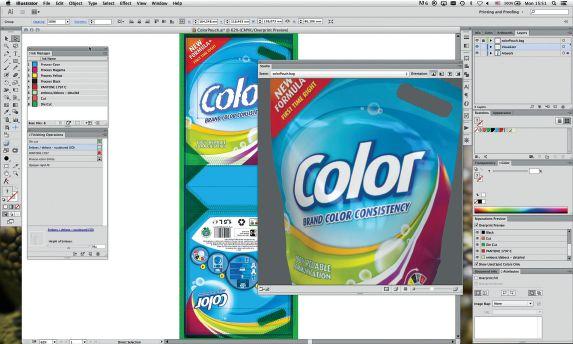
In June 2104, Color-Logic introduced its file format adoption for using the Process Metallic Color System now supported by Esko visualization software. As a result, users can now see the ColorLogic special effects and metallic colours on their monitor. Conversely, Esko users can utilize the full Color-Logic Design Suite tool set, including changing substrates for visualization when printing on metallic substrates with white ink or with metallic ink on regular stock. In the concept state, this allows users to create white ink masks necessary for holographic and metallic substrates. The Color-Logic format changes are part of Esko Studio Suite 14 release, which includes Visualizer 14.
one of these products specifically creates value in their respective segments... When you develop technology to be able to be that focused, you are able to push the job runs and make the crossover points much more attractive because now you are dealing with specific opportunities within those specific segments.
How many 10000s are out in the market?
Globally, we have nearly 100 installations in 25 countries [as of May 2014] and a large percentage of those customers are repeat buyers of HP Indigo technology. We are extremely thrilled with that level of success.
Why should a commercial printer invest further into digital press technology instead of cut-sheet inkjet?
The technology for inkjet brings tremendous value for that high-volume work needed to serve those segments… If you want high-quality output that rivals offset, whether it is cut-sheet or a web solution, HP Indigo ElectroInk technology is the best solution out in the marketplace – bar none.
What do you consider to be a significant breakthrough in digital printing? Having a digital printing device is not just going to be the answer… What is so, so, so important has been the evolution and automation of the workflow. We have been investing a tremendous amount of R&D dollars in terms of making workflow automation a top priority, alongside with printing.
What does a successful commercial printer look like in today’s economy?
I will use some adjectives. I see energy, passion. I see innovation. I see dedication in how they serve their customers and I see forward thinking in terms of how they better suit their product offering to their end user customers by leveraging technology as a whole.
If we can expand our technological capabilities to do offset transfer in a more cost effective and productive fashion for our clients, they are going to move on it, because arguably between three and four percent of all printed materials are being done digitally today. So there continues to be opportunity for Xerox in the movement of volume from offset to digital.
In this market, the iGen platform across the board, arguably, has the widest array of substrate capabilities of any digital production press in the industry today. We can produce poly-stock. We can produce UV coated window cling material. We can produce magnet stock. We can print on fabric. We now have a kit that can print up to 24-point SBS board, which supports the folding-carton market. There are over a dozen implementations of our what we call our XAP solution – Xerox Automated Packaging solution – installed in Europe.
as a digital production press similar to an offset press and, therefore, it does not require digital substrates. In fact, it can use most of the same substrates that you use in the offset pressroom, so that is a key feature.
Some of the newer features would be the 36-inch maximum length, which is opening up all kinds of new applications such as 6-page and 8-page brochures, digital presentation folders, short-run packaging. Last year, we came out with Gold Dry Ink which is the first metallic ink for digital and that not only allows you to push into metallic in terms of colour range, it allows you to create really great digital effects – again to differentiate yourself.
What is new with NexPress software? We have a feature called Smart RGB mainly aimed at the photo space. It uses algorithms and image-processing applications to keep detail and then enhance the neutral tones and skin tones. It is all done automatically and does not slow down the press. We have another feature called Ink Optimization and, while it does save a little bit on ink usage, its primary feature is to maintain really good colour accuracy, sheet to sheet, job to job, month to month.
Why should a commercial printer today invest in digital press technology instead of cut-sheet inkjet?
I have no doubt that [cut-sheet inkjet] will get there one day and there are solutions available, but they are very capital cost intensive and it is a new technology that hasn’t quite settled in yet... Right now, we view inkjet technology as a high-speed, high-volume application. When going down to sheets with 4-up or 6-up formats, toner is the more proven technology... It might change in three or five years, but right now what you can do on a toner press is far more functional and far more productive.
Are your most successful customers driving work through Web-to-print?
If it is easier for me to do business with you, I am probably going to continue doing business with you. If it provides me faster turnaround time it, if it allows me as an end client to have more control over what I want to do with my job, those are critical things. [Xerox customers] are asking us to come in to help them take those Web-based interfaces and integrate them into their MIS systems and into the workflow. The software intelligence allows us to pull data off of the FreeFlow Print Server and feed it back into their MIS system, which then gives clients real-time management information. It will show them that plant, or a specific set of machines in the plant, or a specific machine, not only its uptime but what the profitability is on a particular press over the course of a day, week, or a month.
Connor continued
PREPRESS TECHNICIAN
Large Format Printer oPerator
BmS Printing - Brampton, on
BMS Printing is a new print shop in the Brampton area who can print anything on anything. We are looking to hire an operator who wants to be part of a company with a speedy growth structure.
Why Work For BmS Printing?
• Commission & profit sharing may be available after a 6 month period
• Fun environment that challenges your skills and is always growing
• Great team
• High-tech equipment
• Work in a bright, well-lit workspace
SucceSSFuL candidateS muSt:
• Enjoy working with customers and providing excellent customer service
• Have some previous sales experience
• Be able to use creative problem solving skills to solve printing problems & facilitate client expectations
• Be able to make & process quotations in a timely manner
• Review work order to determine job specifications are prepared and met
• Operate and monitor printing machines during print run and make adjustments
• Perform Daily/Weekly/Monthly routine maintenance & part replacement as needed
• Have knowledge to properly clean equipment (or be able to learn how)
• Set up the machine for proper processing
• Examine work for defects and ensure quality before job goes to client
• Arrange shipments with shipping dept. to required locations
• Install some printed materials for clients
• Know how to use the following document types (.ai/.eps/.pdf/.psd/etc.)
• Know basic data management (document server)
• Have effective communication & writing in English hoW to aPPLy: If you are as excited as we are to have you as a member of our talented team, please email your resume to: careers@bmsprinting.com or fax it to (905) 793-6410.
FOR SALE
Prepress Technician 3+ years’ experience required. Some overtime required. North Etobicoke.
• Kodak Prinergy and PREPS Resumes: hr@harmonyprinting.com
FOR SALE
Straightline Folder Gluer G&F 36” with autobottom, lots of accessories G&F IIjima BF1000 autoplaten diecutter with stripping, completely rebuilt, under power for demo. Call: (416) 803-6341
CONTENTS FOR SALE, MAKE US AN OFFER!
Toronto photo studio re-locating, surplus office furniture and equipment, even a cool motorcycle. Full size kitchen and stove etc. Priced to sell.
Call or email Marissa today: (416) 7218656 info@castlerockstudios.com
• Screen 4000 (Fuji PTR 4000) platesetter with processing unit. This is a productive, economical 4 page thermal platesetter. Compatible with a wide range of plate sizes and types. Chemistry free processor and RIP included. Minimum plate size: 324 x 394 mm (12.8”x 15.5”) Maximum plate size: 830 x 645 mm (32.7” x 25.4”). Productivity: 16 plates per hour - $22,500, new 2002. Symphony Adobe Workflow, with Preflight, Trapping, PDF proofing, Adobe PDF RIP, Monitor proofing, Proof module for Epson 78803. PC with Core 2 Duo CPU technology, 3.0 GHZ, 4GB RAM, 19” monitor. Azura CTP processor with bridge and stacker • MBO T49 Folder with Right Angle, 20” x 29”, 1990s. In Great Condition. - $10,000. • 1990 Heidelberg Quickmaster 46-2 - $10,000. • Baum Ultrafold 714 table top folder - $1000. • Tabber - $750. • Challenge single head drill - $750. • Epson Ultrachrome 7880 ink jet printer, 24” - $1000. • Royal Shrink wrapper - $2,500. Eliminates the need for traditional “L” sealer and tunnel shrink wrap machine formations for manual operations by encasing the heating zone under a transparent hood. Save space by dropping that old dryer tunnel and switching to a nexgen machine. • Light table - 30 x 40 inches • Duster 1800 Island Air - filtration system, best offer. The Duster 1800 removes dust, odors, smoke, voc’s, mists, spray powder, toxic fumes, pollen and bacteria, and a lot more. This unit is perfect for industrial or print shops where fumes and particles are present in the air. Used to clean 2,200 sq. ft. building. Please call Albert: (416) 222-4021
July 1989
Northrop Grumman B-2 Spirit Stealth Bomber makes its first flight; Nintendo releases the Game Boy portable video game system; 16th James Bond movie “License to Kill” premieres; and Mike Tyson KOs Carl Williams in 1:33 for heavyweight boxing title.
ANPA Predicts More Production, Less People
William Rinehart, a seer of newspaper production, told the American Newspaper Publishers Association (ANPA) that new technology has reduced the number of production employees tenfold. He predicts that tailored newspapers will be routine by the end of the century.
In his annual report, Rinehart reminisced about the technical progress made in two decades. At one time, he said, The New York Times had 1,000 hot-metal printers; today this force is down to 100 or less. He noted newspaper employment in the U.S. is up from 377,000 to 478,000 with the increase incurring mostly in the news department.
The scenario for tailor-made newspapers suggested by Rinehart involves erasable laser-disk computer storage devices as a key element. He believes a filmless, plateless printing process is “only a few years away.” Among Rinehart’s other predictions for the newspaper:
• Pagination systems will eliminate page paste-up operations,
• Electronic photography will eliminate darkroom development,
• Small erasable laser disks (7 ½ inches), accessible, terminals, will store hundreds of pictures and ads,
• Combination of laser imaging, anilox inking, and electronic spray bar will eliminate press labour, and
• Mailroom barcoding will enable bundles to be routed to specific delivery vehicles.
Government deals Graphica a Winning Hand
Graphica Playing Cards in Sherbrooke, Quebec, has come up with an unbeatable five-of-a-kind hand, thanks to a $550,000 wildcard grant from the Federal government – announced by MP Jean Charest. The money will defray the cost of a new six-colour printing press… Graphica President Pierre Moisan said the money represents roughly a quarter of a $2.2 million investment to help increase the company’s share of the Canadian card market from 20 percent to between 30 and 35 percent.
Moisan explained the company, which began in 1902 as Page Printing, has gone through a metamorphosis over the years, at least three changes, before specializing in playing cards and cards for board games like Risk, Monopoly and Clue. About 70 percent of Graphica’s business stems from producing playing cards. The new press, a Japanese-made Komori L640, is due in August.
Interface 89: A conference for desktop publishing and prepress
Interface 89, established by PrintAction magazine, welcomed over 100 people to a series of workshops about the breakneck pace of computer technology adoption in the printing industry. Jim McLean, President of typographic house Cooper & Beatty, chaired the first morning session and woke up the audience with a bold statement: “Even the experts now have trouble telling desktop publishing quality from traditional black-and-white methods.” As for the future, McLean predicts that soon the prepress process will be completely electronic and, as a result, more and more work will be done in-house.
Press foreman George Ducharme of Graphica Playing Cards.
Agfa-Gevaert’s Alec Couckuyt discusses photography in prepress at Interface 89.
Thomas likes to succeed.
He knows that his business success depends on rising above the competition… with print that delivers added value to his clients, and smart technology investments that maximize resources while driving margins.
So as Thomas took a look at integrating digital print capabilities, the Kodak NexPress Press platform stood alone. It delivers exceptional productivity, consistency and ease of use, making short-run color jobs both efficient and cost-effective. Not only that, the NexPress Press offers unique capabilities and virtually endless application opportunities, with a flexible, modular design that can be enhanced over time, as business and client needs evolve.
Enhanced revenue potential. Margin improvement. Scalability. You can’t beat that. Make the shift to the NexPress Press platform and stand out from the crowd.
Download New Whitepaper “Trends and New Applications for Digital Communications” and learn more at kodak.com/go/nolimits
Predicting the future isn’t easy. Preparing for it is.
Be ready for tomorrow with HP Indigo. Whatever happens, you’ll have the long-term advantages of HP’s market leadership, unrivalled innovation and industry commitment as a partner by your side. And with the largest digital portfolio to choose from, your business is better prepared than ever.
Find out more at www.hp.ca/go/indigo or call 866.828.3649