
City of London changes the way people move with new transit system


4 From the editor
Our population is growing. Is your city prepared? by Michelle
Malcolm-Francis
5 The first word
Gearing up for the fall season! by Micheal
Mooney, C.E.T.
18 Learning curve
Leveraging differences for team optimization: Electrical technician case study at Mohawk College by Christine
Boyko-Head, PhD
20 Sign of the times
First round of infrastructure funding to support almost 50k new homes in Peel by Kristen Frisa
6 OACETT in action
Sharing the latest news, happenings and announcements from your professional association and more!
31 New members
Recognizing new and certified members
34 Chapters at work
Events and news from OACETT’s regions and chapters
22

Making bus transit rapid
City of London changes the way people move with new transit system
City of London changes the way people move with new transit system by Dennis Furlan
26 PowerON helps municipalities move to an electrified future
Transit fleets begin the inevitable switch to electricpowered vehicles to reduce carbon emissions by Kristen Frisa

TOur population is growing. Is your city prepared?
he other day, I was gobsmacked when I read how much Ontario’s population has grown over the past five years. In a short span of time, we went from almost 14.5 million people in 2019 to just shy of 16 million people in 2024, an increase of about 1.5 million. Wow, that’s a lot of people!
Indeed, I could see the growth happening before me. Still, I didn’t realize to what extent Ontario had become Canada’s economic engine and a major hub for jobs, transportation, culture, finance, sports, tourism, innovation and immigration.
You know what else? Out of all the provinces in Canada, most of the population growth happened in Ontario. Is it because we’re the best province – no bias at all? Is it because most of the jobs are in Ontario? Could it be Ontario’s vast infrastructure? No matter what, rapid population growth in a short period causes economic pressure and a need to deliver infrastructure more quickly to meet increasing demands.
Let’s not forget population growth’s impact on urban sprawl and the need to build more houses, relieve road congestion, and modernize our systems. For example, the City of London’s population is expected to increase to 574,000 by 2035. As one of the fastest growing urban cities, they are taking strides to build more homes, reimagine their cityscape and invest in their public transit system. Our
cover story, “Making bus transit rapid,” on page 22, shows how the City of London has taken critical steps to change how people move with their newly designed highcapacity transit system – connecting more people to more places, using frequent and more reliable service. The new system will also help ease traffic flow along major corridors while adding streetscape elements and enhanced stations.
Their investment in public transit will also reduce pollution, which supports Ontario’s efforts to reduce carbon emissions. Many municipalities are committed to reducing their carbon footprint and have begun converting their fleet to e-powered vehicles. On page 26, our second feature, “PowerON helps municipalities move to an electrified future,” takes you inside PowerON’s end-to-end fleet electrification partnership operations that help transit systems reduce their fleet’s cost and emissions with their turnkey planning, design, installation, operation, and energy management services.
Our Signs of the Times column on page 20, “First round of infrastructure funding to support almost 50k new homes in Peel,” discusses the Ontario government’s Housing Enabling Water System Fund, which supports municipalities with funds to improve water and wastewater services to meet the population growth needs. These stories and a lot more are inside.
Enjoy this issue!
OACETT is dedicated to excellence in the engineering and applied science technology profession in a manner that serves and protects the public interest.
The Ontario Technologist is published bi-monthly by:
The Ontario Association of Certified Engineering Technicians and Technologists (OACETT) 10 Four Seasons Place, Suite 700 Etobicoke, Ontario, Canada M9B 6H7 Tel: (416) 621-9621 • Fax: (416) 621-8694 www.oacett.org
Please direct all inquiries, submissions and subscription requests to OACETT at the above address.
The Ontario Technologist is published in conjunction with:
Annex Business Media 111 Gordon Baker Road, Suite 400 Toronto, ON M2H 3R1 Tel: (416) 442-5600 • Fax: (416) 442-2230
EDITOR
Michelle Malcolm-Francis editor@oacett.org
ART DIRECTION
Svetlana Avrutin
ACCOUNT COORDINATOR Cheryl Fisher
SALES CONTACT
OTads@oacett.org
Subscriptions:
One year: $24 (Canada), $48 (U.S.A.), $96 (International). Please add 13% HST. HST Registration #107796658
©2024. The opinions expressed in this publication are not necessarily those of the Association. Neither The Ontario Technologist nor OACETT assumes any responsibility or liability for damages arising from any error or omission or from the use of any information or advice printed in this publication.
Letters regarding the journal should be addressed to the Editor at the Association’s address. Letters regarding the Association and other related subjects may also be addressed to the Editor for forwarding.
International Standard Serial Number (ISSN) 0380-1969. Publications Mail Agreement #40062764.
Return undeliverable Canadian address to: Circulation Department, 10 Four Seasons Place, Suite 404, Etobicoke, ON M9B 6H7.


The Ontario Association of Certified Engineering Technicians and Technologists, a self-governing, non-profit organization, maintains standards of excellence in the practice of engineering and appliedscience technology in Ontario. Founded in 1957, the Association became provincially legislated in 1984, and has statutory powers and responsibilities.
PRESIDENT
Micheal Mooney, C.E.T.
PRESIDENT-ELECT
Christopher van Dop, C.E.T.
PAST-PRESIDENT
Rosanna Tyrer, C.E.T., rcji, CAPM
CENTRAL REGION
Governance, Strategy and Policy Committee
Norman Sandberg, C.E.T.
EASTERN REGION
Finance and Audit Committee Chair
Brian Raymond, C.E.T.
HORSESHOE REGION
Diversity, Equity and Inclusion Committee Chair
Shelley Parker, A.Sc.T.
NORTHERN REGION
Registration and Professional Practice Committee Chair
Stephanie Pesheau, C.E.T.
TORONTO REGION
Member Engagement and Services Committee Chair
Roy Sue-Wah-Sing, C.E.T.
WESTERN REGION
Human Resources Committee
Member-At-Large
Samuel Nammari, C.E.T., P.Eng.
Young Professionals Committee Chair
Mladen Ivankovic, C.E.T.
Student Representative
Liam Croft
APPOINTEES
Daniel Liao
Heads of Technology Representative
Alex Lusty, LLB Public Representative
EX-OFFICIO MEMBER
Cheryl Farrow, MBA, CAE OACETT Chief Executive Officer
DIRECTOR, FINANCE AND CORPORATE SERVICES
Lily Rudeychuk, CPA
DIRECTOR, REGISTRATION AND PROFESSIONAL PRACTICE
Barry Billing
DIRECTOR, MEMBER ENGAGEMENT, SERVICES AND GOVERNMENT RELATIONS
David Terlizzi

don’t know if this is a uniquely Canadian phenomenon, but it is amazing how our business cycles mirror the school year, and everything just slows down a bit over the summer. Probably so that we can all take the time to enjoy our “never long enough” summer!
However, I can attest that this is not the case at OACETT. With lots of work underway for the second half of the year, I thought I would share a sneak peek of what you can expect to see this fall and winter. We will be releasing two key initiatives this fall that impact our Association’s future: our new strategic plan for 20252027 and our first diversity, equity, and inclusion framework and strategy. We were pleased to see so many members share their feedback as part of these two initiatives, helping us ensure that the outcomes truly represent our members’ priorities.
We will host our annual Career Event for Internationally Educated Professionals on Thursday, October 10. This event continues to grow in popularity, with individuals taking advantage of the hybrid-style (online and in-person) event, which allows them to engage in career and professional development experiences and connect with industry professionals. A fantastic way to support IEPs in their career journey!
The week of November 25, we launch the inaugural National Engineering and Applied Science Technology (NEAT) week! One of the anchor events will be a national capstone competition of college projects from across the country. The Ontario competition to select our finalist for the national event takes place in October. We can’t wait to see what the future of engineering technology is creating and what project is selected from Ontario for the big event.
Changes are also coming to OACETT’s mandatory CPD Program. We have heard
We will be releasing two key initiatives this fall that will impact our Association’s future: our new strategic plan for 2025-2027 and our first diversity, equity, and inclusion framework and strategy.
your concerns about the current model’s complexity and lack of clarity, so the goal is to streamline the requirements and ensure equivalency in evaluating eligibility. We also have a new dedicated staff person starting with a specific focus on CPD offerings (one of our commitments coming out of last year’s member survey), and this additional capacity will help us increase the number and variety of CPD offerings available to our members.
Also in the works for this fall is the launch of a mentorship program (another commitment coming out of the member survey) and an OACETT Ambassador Program that will help us support our 21,000-plus members in promoting their certification, association and profession to their employers, colleagues, and related groups in their community.
Whew, definitely lots on the go! But if there is more that you would like to see us doing, we will be holding our next Fireside Chat in mid-November! Watch for this opportunity for a live update of what’s new at OACETT and your chance to ask questions or seek information about anything OACETT-related. And, of course, if you need assistance at any time, don’t hesitate to reach out to our awesome staff or me at president@oacett.org.
Micheal Mooney, C.E.T., is president of OACETT.
by Nate Simpson, C.E.T.
Annual strategic planning and budgeting are essential for evaluating progress on corporate goals and deploying new initiatives, though many organizations leave inadequate time for these critical processes. Additionally, ignoring or inadequately funding business development can negatively impact organizational health and client relationships.
Firms often rely too heavily on an expectation of repeat and referral business, which can lead to the misconception that structured business development planning and budgeting are unnecessary. This mindset can cause companies to miss out on transformative opportunities, leaving them at a competitive disadvantage against their rivals.
Even companies that budget for business development may become complacent, using justifications like, “We’re too busy to take on more work.” While the full impact of complacency may not be immediately apparent, over time, the organization’s health and client relationships will suffer, be it 12, 18 – or more – months down the road.
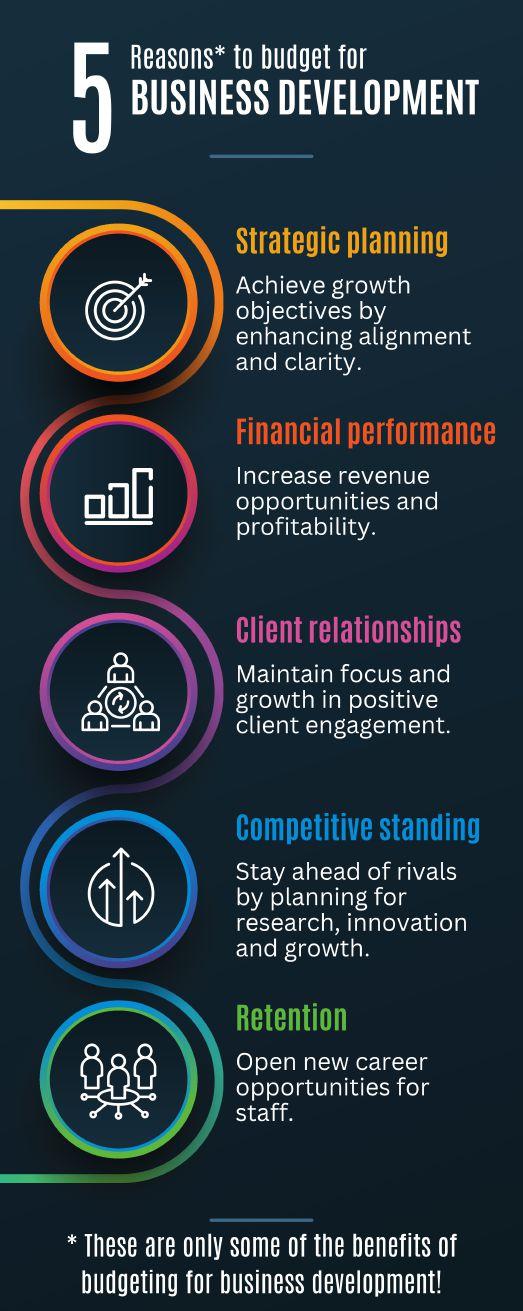
Failing to include business development in the budgeting process can lead to many negative impacts, such as gaps in strategic planning, lack of competitive awareness, and declining client relationships and staff retention. Conversely, some benefits of incorporating business development in a company’s budget include:



Strategic planning: A clear definition of how corporate goals for growth and other dynamics will be achieved. This will help the alignment and engagement of the entire organization in working to accomplish these goals.
Financial performance: Identify opportunities to increase revenues from existing clients and develop higher-margin services. Improving financial performance by focusing on existing relationships is a cost-effective way of helping clients navigate challenging economic times.
Client relationships: Nurture client relationships through adequate pre-planning and funding of client engagement programs. The company’s financial and staff resources will
be more effectively deployed, reducing costs, improving retention dynamics, and monitoring changes in clients’ purchasing behaviours.

Competitive standing: Maintain a competitive edge through deliberate, structured processes and budgeting to support research, innovation and growth. Without appropriate funding, a company will fall behind their competitors who are proactively investing in these areas.

Retention: Uncover and support opportunities within the company for staff career transition and development. Budgeting for appropriate training and mentorship of the company’s current and future business developers will help provide long-term, sustained growth.
Companies that are not already incorporating business development into their budgets can start with a few key steps. Research what similar-sized firms spend as a percentage
of total revenues and adjust for the company’s unique goals and market conditions. Research and determine a budgeting methodology that best suits the organization, (e.g. projection, percentage, or goal-based approaches). Labour rates should be factored in for all staff, especially technical and those in ‘seller-doer’ capacities.
Finally, regardless of experience, every company should conduct regular reviews (e.g. monthly, quarterly) of their business development expenditures and progress against the budget.
Current economic, demographic, and market trends only increase the need for robust organizational planning and preparedness. Effective budgeting for business development helps companies achieve goals related to growth, staff retention, and client relationships while mitigating risks from competitors.
Nate Simpson, C.E.T., is principal of Nate Simpson Business Development. He has over 25 years combined experience as a building and fire code specialist in the fire protection engineering sector and as a business development leader.









by Ana Sierra, CAE
OACETT, in partnership with PROLINK, is proud to offer members exclusive group rates on life insurance, critical illness coverage, and a 24-hour accident protection plan to help protect your family’s future.
It’s easy to feel invincible when you’re in good health. But life’s twists and turns can throw even the best-laid plans off course. Health issues can arise anytime, leaving you worried about your ability to support your family. It’s hard enough to picture a future where you can’t provide as you do now, but the thought of your loved ones struggling without you is even more unsettling.
With PROLINK’s Guaranteed Issue plans, securing coverage is simple and accessible, regardless of your current health situation. PROLINK’s plans offer practical solutions, financial flexibility, and a hassle-free application process—no medical exams needed. Plus, as a member of OACETT, you can benefit from exclusive group rates, ensuring care and coverage without compromise.
1. Critical illness insurance from Chubb Life Insurance Company of Canada provides a one-time, lumpsum payment if you’re diagnosed with a critical illness or injury.
What’s in it for you?
• Coverage includes 23 different eligible conditions specified by your policy.
• Flexible support allows you to use the funds for medication, treatment, or non-medical expenses, like bills, childcare, or mortgage payments.
• Guaranteed issue with no medical exam required until age 65; once you apply, you’re covered.
2. Life insurance from Chubb Life Insurance Company of Canada protects your loved ones by covering funeral, burial, and other end-of-life expenses in the event of an untimely death.
What are the advantages?
• Guaranteed issue with a quick medical questionnaire; no medical exam required for coverage up to $50,000 until age 65.
• Extends coverage to your partner and children through a single policy.
• Four times the coverage amount is paid out for accidental death, providing additional support during difficult times.
3. The 24-hour accident protection plan from Zurich Insurance provides financial assistance to your loved ones in the event of accidental loss of life or severe bodily harm.
Why you should get this coverage?
• Complements your existing life and critical illness insurance policies.
• Includes coverage for additional support services, like rehabilitation, occupational retraining, childcare, home, workplace, and vehicle modifications, and more.
• Guaranteed issue with no medical exam required for you, your partner, or children.
• Affordable and competitive premium amounts that don’t increase with age.
Interested in learning more about PROLINK? Call 1-877-543-0236, email life@prolink.insure or visit their website at https://prolink.insure/. You can also start your application by visiting https://myportal.prolink. insure/oacett_application.
PROLINK Canada’s Insurance Connection is a national, independent, insurance and risk management firm with over 30 years of experience delivering advice and insurance solutions.

Recruit top talent on our CTEN job board and connect with more than 21,000 engineering technology and applied science professionals.
Increase your brand exposure to a targeted audience of government officials, municipalities, colleges, students, and other companies.
Engage with the OACETT network through ongoing events, chapter activities, and OACETT’s digital and traditional marketing channels. For more information about OACETT’s 360 Partnership Program, email: 360partners@oacett.org.

Matthew Chan, C.Tech., recently advanced to the role of estimator at EllisDon Corp. He previously served as a junior estimator at the same company for one year. Chan’s primary responsibilities in his new position include performing cost planning and cost estimates for various ICI projects. He also manages the procurement and tendering process, collaborating closely with the project management and site teams to ensure successful project execution.
Jim Galloway, C.E.T., a professor who teaches in Conestoga’s Welding Engineering Technology programs, was awarded the Canadian Welding Bureau Association 2023 Gold Award for his work in welding research at the annual CWB Group awards dinner in June 2024. Galloway’s paper, titled
“Shielding Gas Selection for GMAWSP on Steels,” presented findings of applied research conducted at the college into the critical role that altering the proportion of carbon dioxide and argon compounds in shielding gas plays in the common GMAW (‘mig’) welding process. The study aimed to document the opportunity to lower production costs and improve welding performance and quality by using alternative but less common gas blends for the Canadian industry.
Jinson Joseph recently joined SickKids Hospital as a lab equipment service tech. Before this role, Joseph worked as a dental and medical equipment service tech at Hatch Group Inc. for three years and six months. Joseph’s extensive experience servicing medical and lab equipment will con-

tribute to his ability to ensure reliable and efficient operation at SickKids.
Sunil Sujakhu started at S&T Electrical Contractors Limited as a civil estimating/project coordination specialist after completing his post-graduate studies in project management and construction project management. Previously, he was a project coordinator for hydropower projects at Units Engineering Consultancy Pvt. Ltd. At S&T, Sujakhu is responsible for preparing total cost estimates, coordinating project administration, analyzing proposals, negotiating contracts, supporting the project manager and superintendent with day-to-day duties, and ensuring successful project execution.
Mohammad Jaynul Islam Chowdhury has joined the Toronto Transit Commission (TTC) as a technical writer. Previously, he worked as a service delivery provider at RACV in Melbourne, Australia, for four years. He is a member of the Institution of Engineering and Technology, UK and an associate member of OACETT. In the TTC’s rail cars & shops department, Chowdhury is responsible for creating and maintaining technical manuals, developing and updating departmental procedures, converting legacy documents, ensuring consistency through copy-editing, collaborating with suppliers and experts, and observing maintenance activities on-site.
29, 2024 at 4:30 p.m.
What’s new? We want to hear from other members who have recently changed jobs, received a promotion or an award, or completed an educational program. Make sure your fellow OACETT members read about it in The Ontario Technologist. Promote your success – send your submissions to the editor at editor@oacett.org.
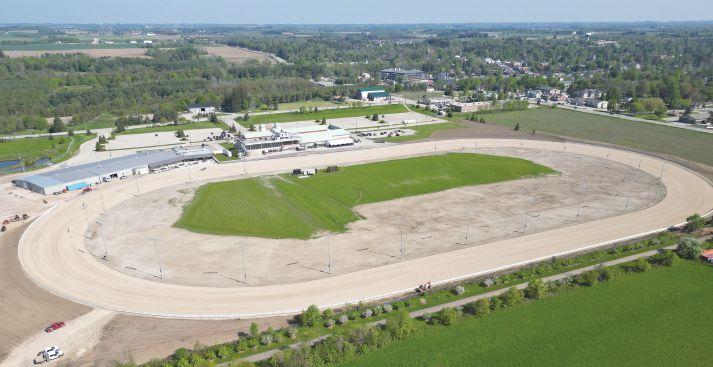
In 2021, the Grand River Raceway (GRR) in Elora, Ont., a family entertainment venue featuring dining, events, and, most importantly, horse racing, decided to enhance its customers’ experience with a racetrack upgrade.
GRR planned to lengthen the track from 0.805 kilometres to 1.006 kilometres. The expanded track would change the race from two complete laps to one and three-eighth laps, allowing for races with up to nine horses as opposed to the current limit of eight. With longer straightaways and curves, the expanded track would give the horses more room to move and create the opportunity for more action and positioning throughout the race.
GRR turned to GEI Consultants Inc. to make this goal a reality. GRR was already familiar with the GEI team when its legacy company, Gamsby and Mannerow Ltd., designed the original track and facilities in 2001.
For the modern expansion project, GEI’s team was ready to build on its previous work and meet GRR’s goal of
designing and constructing a more extensive and exciting horse racing track.
GEI’s main challenge for the project was the tight schedule. GRR is a popular and active racetrack, and the operator wanted the work completed between the racing seasons. As a result, the main construction window would need to begin at the end of September 2023 and be completed by April 2024, so the horses would start training over the new surface in May 2024 for the beginning of the June 2024 racing season.
At the start of the project, the GEI team completed a full topographic survey of the existing track and surrounding area to prepare the existing conditions plan. The plan showed the existing buildings, fencing, buried infrastructure, and elevations.
GEI’s familiarity with the site and the owner helped identify additional site challenges and lessons learned from the previous project, including the existing groundwater conditions, the site drainage patterns, and the attention to detail required for track grading.
If you were certified in 2023 or were supposed to certify in 2023 and did not, your CPD cycle is January 1, 2024 –December 31, 2026.
You must complete four CPD activities including one mandatory activity in either technical knowledge or management/leadership. For more information visit www.oacett.org/cpd or email: cpd@oacett.org.
After discussions with horse track consultants from Kentucky, the GEI team considered several proposed track alignment layouts before selecting a final alignment. The final design included spiral curves between the straightaway sections and the large circular curves at each end to help smooth the transition for the horses entering or exiting the corners.
GEI started the grading design after the horizontal alignment was confirmed. The new track would have a four per cent crossfall in the straightaways, changing to an 11 per cent crossfall in the turns. Because of this design, horses were expected to gain speed in the straightaways and hold speed through the corners.
GEI’s solution for the stormwater quantity pond was to incorporate an additional dry pond in the infield to accommodate the increased volume. The existing stormwater pond continues to provide quality control for the overall site.
The project was tendered for construction, and GRR selected a local contractor – James Thoume Construction Ltd. – for the track’s upgrade. Thoume began topsoil stripping and area grading in areas outside the perimeter of the existing racetrack in August 2023. This six-week head start on area grading allowed the contractor to move more than 50 per cent of the earth’s material without interfering with the active racetrack.
When the 2023 racing season ended in late September, construction began the very next day on the track demolition.
First, the racetrack’s fencing and posts were carefully removed and set aside for reuse. The top layer of stone dust was also stripped off and piled in the grandstand straightaway for reuse. Over 60 per cent of the new track was outside the original track area.
The contractor began installing the sub-drain drainage system once the new track was graded to the proposed subgrade elevation. Due to the groundwater conditions and the track’s sensitivity to moisture, the contractor paid much care and attention to this critical design feature of the project.
Once most of the subdrainage system was in place and the track was set to subgrade, the contractor began reclaiming the existing track granular base. Thankfully, the granular base from the existing track provided all the required granular subbases for the new track, saving money and environmental costs.
With the granular subbase on grade and compact, the next step was to import and place the upper granular layer, then put the reclaimed stone dust as the initial stone dust layer.
Constructing a racing surface is an art that requires a delicate touch. For example, the contractor installed the new stone dust in 50 mm lifts, compacted it, and carefully and accurately placed it on grade with a machine-controlled grading system. Each 50 mm lift was compacted, and then the stone dust was scarified with the track conditioner unit before the next lift was placed.
While the main task was the track construction, the project also included several related tasks, which included the following:
• The entire track lighting system was removed and upgraded with a new LED lighting system.
• The old camera towers (which originally had active camera operators during race events) were upgraded to camera poles with remote cameras relaying the race back to the video room.
• A portion of the area in front of the grandstand was regraded and repaved, and the fence along the grandstand viewing area was also replaced.
The newly constructed track runs alongside The Grandway restaurant and patio, which required a small retaining wall and new fencing. Now, when guests sit at the patio’s edge, they are right next to the racing action.
Once the project was complete, the horses started training at the track the next day. GRR and the entire racing community were excited to see the upgrades and watch the first scheduled races of the 2024 season.
From top to bottom, this project had a great team. The owner, contractor, and engineering team worked together to complete the new racetrack, and the results showed. Ultimately, the project team was thrilled to see the race venue expansion in action, especially knowing their work would live on for many years.
Now, it’s up to the horses, drivers, and the announcer to continue bringing the newly designed racetrack to life one race at a time.
November 5-6
2024 Canadian Aerospace Summit Shaw Centre, Ottawa www.aerospacesummit.ca
December 4-6
The Buildings Show 2024 Metro Toronto Convention Centre, Toronto
https://www.mtccc.com/single-event/thebuildings-show-2024/
November 19
The 2024 iTech Conference and Exhibition Metro Toronto Convention Centre, Toronto
https://www.itechconference.ca/torontodowntown/

technicians and technologists since 1965.

by Michelle Malcolm-Francis
Years ago, OACETT member Norman Kallio, C.E.T., and his wife Constance made the big decision to invest in the future of engineering technology when they planned their estate. In 2023, the Fletcher Foundation became the beneficiary of their pledge to support the profession and created the Norman Kallio Bursary Award in his honour.
This is what happens when you seize an opportunity to be a part of something important. It creates legacy—a legacy of caring and changed lives.
Often, leaving a legacy starts with matters close to our heart, like wanting to help engineering technology students reach their highest potential and are exercised through your will or estate planning, which ensures your gift to the charitable cause of your choice is planned and given, honouring your values and vision.
That’s what donors like the Kallios did, resulting in The Fletcher Foundation establishing the Norman Kallio Bursary Award. These two new annual bursaries support two OACETT student members per year who have demonstrated financial need by funding them to write the OACETT PPE exam while studying at an Ontario college.
In 2023, the foundation was thrilled to receive close to $25,000 from the Aqueduct Foundation on behalf of the Kallios, which led to the board of trustees’ decision to create this new bursary award. In addition, the Fletcher Foun-

When
dation trustees were pleasantly surprised earlier this year when the Kallios’ legacy fund gifted another $26,000 to the foundation. Recently, the trustees decided to use $2,500 of the donation to assist Collège La Cité with reaching their $40,000 endowment target, which means that the Fletcher Foundation will have achieved its 25 for 25 Building Forward Campaign’s vision. The remaining balance of the $26,000 donation will be used to double the annual PPE exam bursaries to four each year.
You, too, can leave a meaningful gift, big or small, through a bequest to the Fletcher Foundation that will allow you to have a lasting impact on technology students well beyond your lifetime.
Often, a legacy gift is a planned, future gift that designates a portion of a person’s asset as a donation to charity. It allows you to make a major charitable contribution that may not be possible during your lifetime. Plus, it reduces the tax payable on your estate, enabling you to make a meaningful impact on your community while benefiting your estate.
You can give gifts such as cash, insurance policy nominations and other assets like stocks, bonds and jewelry. An attorney who prepares wills, trusts and other estate planning documents can provide more details.
If you determine the charity you’d like to leave a legacy gift for is the Carole and George Fletcher Foundation, meet
with your attorney to plan your giving, and if desired, contact the Fletcher Foundation president Cheryl Farrow (cfarrow@oacett.org) to discuss the legacy gift to the Fletcher Foundation. She can help you determine if you want to allocate funds for a specific purpose.
When drafting the will, use “Carole and George Fletcher Foundation” for our legal name. Our charitable registration number is 890966740RR0001.
Whether it be a named endowment in honour of the donor or others or supporting a program the donor is enthusiastic about, the Fletcher Foundation will use gifts from estates as the donor directs.
We encourage you to etch your name in history by being part of the outstanding work the Fletcher Foundation has accomplished for over 35 years and will continue to do. These achievements include building skilled capacity for the engineering technology and applied science field through its support for education, promoting enhanced educational experiences and awarding bursaries to exceptional students enrolled in engineering technology programs. Your planned gift is key to building on this success.
For more information, email: fletcherfoundation@oacett.org.
Join this global day of giving! Donate to the Fletcher Foundation. It’s a chance to change many student lives in one day.
Donate through PayPal

WAYS
Donate via OACETT Member Portal to give to the Fletcher Foundation


Louis Savard, C.Tech., conducts thought-provoking interviews with industry leaders, government officials, academia and influencers on hot topics relevant to the engineering and applied science profession.
Gail Willis, C.E.T. Willis Technical
EPISODE 10 Integrating nature: The role of green infrastructure in urban planning
In this episode of Tech Takes, host Louis Savard, C.Tech., investigates the importance of integrating green infrastructure technology in urban planning.
Savard talks about the technology with OACETT member Gail Willis, C.E.T., of Willis Technical Services. Together they explore how communities in Ontario are embracing sustainable practices to manage storm water, conserve energy, and enhance resilience to climate change.
Listen to this episode and you’ll learn how green infrastructure serves as a valuable tool in building sustainable and resilient communities.
We thank you for your generosity in advance.
Listen to the podcast at https://www.oacett.org/tech-takes or on your favourite podcast app!
by Dennis Furlan
When the TV cable goes out, people are grateful for the workers who restore the service. The same thing is true for electricity. There is so much praise when the lights come back on. But have you ever heard about the same thing happening with water?
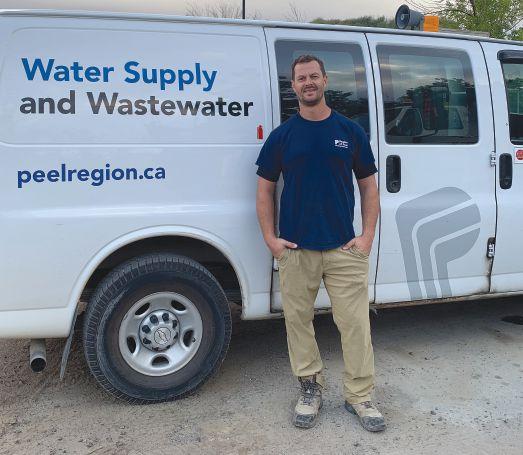
Cory Yanuzzi, C.Tech., points this out as the 38-year-old describes his 15 years of service in water/wastewater and related services, much of it working for the Peel Region. He says, “Whether it’s fixing a burst water pipe on a street or preventing it from happening in the first place, much of what we do seems to go unnoticed – possibly because it doesn’t impact people’s daily life quite as much.”
Whether his work goes noticed or unseen, Yanuzzi loves his job. He says, “Whether it’s part of a two-person team doing minor maintenance or a larger team that has to fix an emergency situation, I just love doing whatever it takes to get the job done.”
A multitalented technician
And doing whatever it takes is part of Yanuzzi’s approach to the job. He says he’s not content learning to do one thing















To join or for more information, visit www.oacett.org or email 360partners@oacett.org.
I was always interested in the environment. That’s why I have a degree in environmental science and an advanced diploma in environmental engineering technology.
and just sticking to that. “Especially when there’s a big job if I can learn what the machine operator is doing, that’s great. Repair. Great. Again, whatever it takes,” he adds.
Yanuzzi says he developed that approach partly from family. He says, “My dad worked on roads, did maintenance, and plowed — stuff like that. From him, I learned always to strive to be an asset and a benefit to the team and the people I work for. That’s why I want to do as many tasks on the job as possible. It helps prove my worth and value.”
Asked why he entered the field of water/wastewater, Yanuzzi says, “Well, I was always interested in the environment. That’s why I have a degree in environmental science and an advanced diploma in environmental engineering technology. But working on the water system means I get to work with my hands, and that’s what I love to do.”
Another reason Yanuzzi loves to learn as much as he can on the job is that it adheres to his basic philosophy. He says, “Well, as the saying goes, knowledge is power. The more you know in this field, the more you can do. And, in a job where you must fix and maintain water system elements, knowledge means getting results.”
Yanuzzi’s pursuit of knowledge isn’t just focused on learning on the job. As already alluded, he has a university degree from Royal Roads University in Victoria, B.C., and a diploma from Georgian College in Barrie. However, it didn’t stop there.
Yanuzzi says, “Getting my C.Tech. has been a big benefit to me, not just in terms of the knowledge and training I get for my field but also in terms of the people I meet, the relationships I develop, and the experiences we share. I don’t think you can get that anywhere else.”
And it might well be the most important time to be in the water/wastewater field to utilize all that knowledge and experience. Yanuzzi says, “Much of the infrastructure and the pipes in the water system are about 40 years old, which is approaching the end of their life cycle. So, we might end up being busier than we’ve ever been.”
Yanuzzi is okay with that because he recognizes that replacing the aging infrastructure can provide more opportunities to impact his profession and the Peel community positively.
Dennis Furlan is a contributor with The Ontario Technologist.

November 13-25, 2024
BY CHRISTINE BOYKO-HEAD, PHD
Imagine a band jamming together, but each performer does their own thing at their own pace. The drummer performs a solo concert while the guitarist improvises the beginning notes of new tunes. The keyboardist continually tunes the keys and listens for the perfect pitch, and the vocalist questions the lyrics’ meaning, accuracy, and musical history.
The difference between this band and a well-functioning team is that the team harmonizes its talents for the sake of performance or task and communicates, collaborates, and manages its creative preferences toward one unified goal. This can be tricky business, for sure, and students need to be prepared for this common workplace scenario.
The Electrical Technician Program at Mohawk College culminates in a high-stakes capstone electrical design project presented to the industry in their students’ final semester. Students go into diverse teams of people they may or may not know and are asked to create a business with a mission, vision, value statements, logo, slogan and strategic and marketing plans to solve an electrical design challenge. It seems simple enough until you consider the industry research on teams and the research on student resistance to teamwork.
According to experiments conducted by Stanford psychological scientists P.B. Carr & Gregory Walton, 86 per cent of employees’ lack of collaboration and ineffective communication cause workplace failures. Furthermore, a study by Fierce Inc., shows that 97 per cent of employees believe a lack of team alignment regarding the task and how to accomplish it directly impacts the task outcome. Another 2017 report by Tolman and Kremling shows that student resistance to teamwork is a motivational state stemming from systemic factors within collaborations, such as unequal contributions, undervalued knowledge, strengths and talents, misinterpretations, miscommunication and inequitable assessment practices by instructors.
Mohawk’s electrical technician coordinator Glenn Kinaschuk noted resistance among student teams over the years, leading to numerous ‘firing’ attempts. The career advancement and design project courses are an example of interdisciplinary collaboration between the trades and the communications department at Mohawk, so tackling the ‘firing’ issue head-on was imperative.
Focusing on enhancing transferable skills, including creative-critical thinking, empathetic communication, and equitable collaboration, career advancement skills develop-


ment teaches students to recognize and leverage their individualized problem-solving preferences and appreciate team diversity as an innovative, process-related advantage to accomplishing a collective goal. We do this not through emotion-laden discussion but through the application of science.
Since 2018, electrical technician students at Mohawk College have taken the FourSight Thinking Preferences Assessment. The online tool produces individual and group reports showing how participants prefer to solve complex problems. Based on the Osborn-Parnes Creative ProblemSolving model, the assessment charts the person’s inclination toward clarifying, ideating, developing and implementing solutions. After the assessment, students participate in a two-hour interactive debrief demonstrating the creative problem-solving model, their profile, cohort profile, and how they can apply judgement-neutral language to actions, mitigating misunderstandings that could lead to team conflict and breakdown.
Returning to the opening scenario, each band member follows their preference regardless of each other. The vocalist must clarify information, ensuring it is accurate and supported. The guitarist is imaginative and prefers to try
different ideas, while the keyboardist prefers perfection to improvisation, and the drummer doesn’t care about perfection or details; they just want to play. While they can come together to play a song, they must also realize when their preference for specific steps in the process can be an asset and when it can become a liability. Unlike personality tests, thinking preferences make our tendencies transparent, so we manage ourselves and others ethically, equitably and empathetically.
While we all go through these stages when problemsolving, we may not do them equally and with an equal distribution of energy and excitement. Our problem-solving preferences may take over, prevent us from understanding the tendencies of others, and hijack us from performing the required actions in the other stages. These blind spots can impact performance and relationships with others on the team. Through hands-on activities, students see cognitive differences through a new lens and learn to appreciate how people approach challenges uniquely. The aim of this work is to achieve the following:
• Enhance self awareness
• Enhance appreciation of others
• Enrich empathetic communication
• Create equitable collaborations
• Develop creative critical-thinking
• Improve team productivity
Mohawk students have done the Intercultural Competency Inventory self-assessment for the last two years to add further value to their workplace preparedness. Many students have cited the benefits of working better on a team. One student commented, “Working with a team of people I did not know before was an important learning experience as you cannot always choose who you work with on a job site. It is important to be open and understanding with different personalities and thinking styles.”
“I want to explore the different ways I can implement thinking preferences into my personal and work life and to develop the skills that come along with the other preferences,” another student said.
Both comments prove that doing the work prepares Mohawk students for future employment in the engineering technology field and beyond.
To learn more, read my article “Thinking Preference Awareness, Leadership Skills and Learning Behaviour” in the International Journal of Talent Development and Creativity (2021) at https://bit.ly/thinkingpreferenceawareness
Christine Boyko-Head, PhD, is a professor at Mohawk College.



In August, Ontario’s government announced a $970 million investment in 54 water projects to support housing infrastructure across the province. As part of Ontario’s Housing Enabling Water Systems Fund, the money will help fund, develop, expand, and repair the infrastructure that provides homes with water and wastewater services.
Increased infrastructure will provide the services needed to allow Ontario to build 500,000 new homes, representing some steps toward alleviating the province’s ongoing housing shortage.
A second round of applications for infrastructure funding opened in mid-August, resulting in a total investment of $1.2 billion that month.
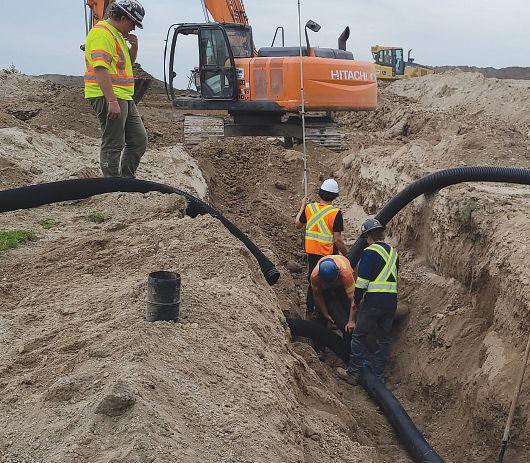
The first round of funding, totalling $35 million, is set to go to the Regional Municipality of Peel to expand the G.E. Booth Water Resource Recovery Facility. That project will extend water systems and add an aeration tank and filtering systems, increasing the facility’s capacity by 40 million litres per day and allowing the region to add nearly 50,000 new housing units.
“Wastewater treatment processes are primarily designed to treat sanitary sewage or wastewater, but rainfall does get into the sanitary sewer system,” said Jeff Hennings, director of water and wastewater for the Regional Municipality of Peel. “Peel Region has been upgrading our infrastructure for several years to keep rainfall from entering the sanitary sewer system. Heavy rainfall events are best managed using dedicated stormwater infrastructure helping convey rainfall into the receiving body of water, which in Peel Region is Lake Ontario.”
“G.E. Booth currently processes an average of 518 million liters of wastewater per day,” said Peel regional chair and CEO Nando Iannicca. “Earlier this year, Peel Region council approved an investment of $130 million to increase flow capacity. This increased flow capacity will support the province’s goal of helping build more homes.”
The Ontario government set aside over $1.8 billion in housing-enabling infrastructure as part of its 2024 budget through two separate funds intended to support the construction of new homes: The Municipal Housing Infrastructure Program and the Housing-Enabling Water Systems Fund. The latter program shares the cost of funding projects between municipalities and the province – the province will cover up to 73 per cent of project costs to a maximum of $35 million.

Peel Region’s G.E. Booth Water Resource Recovery Facility will be updated with increased capacity, an aeration tank, and filtering systems that will support an additional 50,000 new housing units in the area.
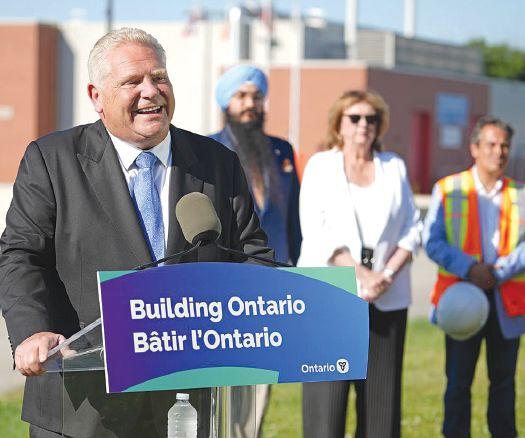
Premier Doug Ford in Mississauga on August 7, 2024, announcing a $1.2 billion water infrastructure fund that will support the construction of more than 500,000 homes in 60 municipalities across Ontario.
Acknowledging that the lack of adequate infrastructure was a major barrier to new home construction, the Ontario government has pledged to move $275 million from the Municipal Housing Infrastructure Program to the HousingEnabling Water Systems Fund to address urgent needs.
The province says there will be more announcements about the remaining funding soon.
In 2022, Ontario’s government pledged to build 1.5 million new homes by 2031 to increase the supply and affordability of housing for its residents. Measures to reduce roadblocks to building and improve infrastructure have followed.
Housing starts dipped through the first half of 2024, with June seeing a 44 per cent drop from the previous
year. New home sales have also dropped between 2023 and 2024, as interest rates remain high, and affordability continues to be an issue. However, housing starts are expected to rebound in 2025 and 2026, aided by the province’s expected population growth of more than two million by 2031.
The Ontario government’s growth in infrastructure funding bodes well for OACETT’s new Municipal Infrastructure Designations. OACETT created its new designations to enhance the quality and value of non-transportation municipal infrastructure investments, recognizing highly skilled talented people are required to service, design and inspect vulnerable or revitalized water systems as infrastructure needs grow. The Municipal Infrastructure Inspector (mii) and Municipal Infrastructure Contract Administrator (mica) designations verify that engineering technology professionals met the requirements to perform inspections and contract administration on municipal infrastructure related to water, wastewater and stormwater. The Region of Peel’s wastewater expansion project is one example of that and aligns perfectly with our new designations and the growth of wastewater facilities.

Ttransit is often associated with things that go fast, such as a train, subway, etc.
People generally don’t think of buses, which travel relatively slowly, make many stops, and often have lines of cars stuck behind them, as a rapid mode of transportation. However, London, Ont., is implementing a bus rapid transit (BRT) designed to make much of the city’s transit significantly faster.
project manager for major projects, environment and infrastructure for the City of London, London’s BRT began construction in 2022 and is set for completion by 2028 at an estimated cost of about $475 million. When all is said and done, the way that people get around in London should change dramatically.
Williams says, “When I went to school at Fanshawe College, which is at one end of London, I often travelled to see my girlfriend, now wife, at the other end of town because she
went to Western University. And that would take about an hour.”
“When the BRT is completed, to make that same trip, you take one bus to downtown, and the other bus north, and it will take about the same amount of time driving a car. That kind of efficiency encourages people to take the bus and eases congestion by having people travel less by car. It’s an ideal win-win situation.”
In fact, Williams says the BRT literally makes buses rapid because they
A rendering showing a brightlypainted red dedicated bus lane on King St. at Talbot St. as part of the Downtown Loop. In this instance, the bus is travelling in the same direction as traffic.

A rendering that includes the bright red paint that is a signature of the rapid-transit bus lanes. In this case, it’s the protected, centre lanes at Wellington and Bradley as part of the Wellington Gateway.
have their own dedicated lanes. He says, “We’ve all been on a traditional city bus before. You miss it, and you’re left standing there freezing in the Canadian winter, waiting 20 minutes for the next bus to arrive. Bus rapid transit is different.”
“In some cases, you’d only have to wait 90 seconds until the next bus arrives. And there’s no being stuck behind other cars during the ride or having other cars stuck behind you. The routes and stops are designed for maximum speed and efficiency so that the time it takes to reach a

destination is much faster than a traditional city bus.”
In essence, bus rapid transit involves dedicated bus lanes, which are painted bright red. In some areas, the bus lane is in the middle of the road, separated from traffic by large physical barriers. However, dedicated bus lanes on the sides of the road will be on both the left side and the right side, which means some buses run in the opposite direction from traffic.
In addition, at intersections, buses will have their own set of traffic signals alongside the traffic signals for regular vehicles. Although the bus signals are a different colour — for example, a black light replaces the yellow light — and the signals are separate from the regular signals and accompanied by a sign indicating they’re for bus traffic, Williams admits there’s a learning curve involved for commuters.

He says, “When roundabouts first came to North America, it caused some confusion with drivers. However, eventually, people adjusted, and I think there’s a general acknowledgement that they can be more efficient than stop signs and traffic signals. I think this same adjustment and acknowledgement period will happen with rapid bus transit, too.”
London’s BRT will consist of three
main corridors: the Downtown Loop, which will add various faster access points related to London’s downtown; the East London Link, which is about 6 km of road connecting Fanshawe College to London’s downtown; and the Wellington Gateway, which is designed to revitalize traffic along perhaps London’s most recognized road, Wellington Road/Street, for a 6 km distance from Highway 401 to the downtown.
As you may have noticed, downtown London is a focal point for the city’s BRT. Phase one of the Downtown Loop has already been built. Each corridor has several phases, and it’s these phases that Alex Williams manages along with many other project managers. They each preside over the construction of a particular phase. And when that’s done, they move on to the next phase.


Williams says, “Well, each phase is an enormous task. For example, East Link 3C, which is at Highbury from Oxford to Dundas, has come in just shy of $29 million, and 3B, which is the bridge, comes in at $24 million. So, these are obviously not small amounts. Each phase is quite an undertaking. Believe me.”

A huge, complex undertaking Williams provides a broad overview of what managing these phases is like. He says, “From a day-to-day perspective, it’s managing every little detail of the project. As an example, we have one person who’s dedicated to dealing with the businesses that are impacted by the construction.” He suggests to them when they should take care of a delivery, and similiar things like that.
“However, from a broader perspective, each phase involves almost literally digging up a large section of the city, replacing the water infrastructure, building new traffic lights at intersections, demolishing some houses along the route, and on and on. This is a big project that most definitely has a big impact on the city and its citizens.”
The impact that constructing the BRT is having on the city is considerable. It affects where people live, do business, and drive, and the city is most aware of such inconveniences.
But Williams emphasized the longterm goals of the project.
He says, “No doubt, there is some short-term pain for long-term gain. We are literally carving out the city and building new infrastructure on top of it so that the current congestion that is the reality of living in the City of London will be alleviated. And I think people understand that.”
Asked if he ever envisioned himself managing such huge, impactful projects when he decided to enter the field of civil engineering technology, he says, “Heck no. I guess I’ve been a bit fortunate. I went from managing some relatively smaller projects, such as a housing subdivision, to these very large BRT phases, and it’s been quite an experience. I’m part of a great, diverse team. They all bring something unique to the table. I personally love doing it and couldn’t imagine doing anything else.”
Dennis Furlan is a contributor with The Ontario Technologist.

Transit fleets begin the inevitable switch to electric-powered vehicles to reduce carbon emissions
BY KRISTEN FRISA

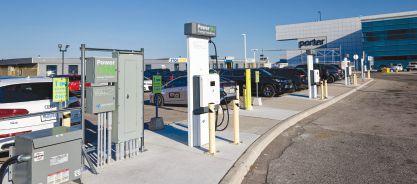
DC fast charging solution designed for heavy-duty electric trucks and commercial fleets.

PowerON is helping municipalities around Ontario and across the country meet carbon emissions goals by supporting transit fleets’ switch to electric-powered vehicles (EVs).
Any transition as large as a change to public transit comes with significant risks to municipalities – PowerON helps manage those risks, guiding municipalities through the process from planning to maintenance and operation of EV charging infrastructure.
PowerON supports fleet owners in transitioning their vehicles from gas or diesel-powered to electric vehicles. They have worked on large projects with the Toronto Transit Commission (TTC) and Oakville Transit and are in talks to partner with Durham Region Transit. PowerON is also working on a large project with Regina Transit that is outside of Ontario.
“PowerON helps municipalities by providing infrastructure, design, procurement, construction, operations, maintenance, and energy management solutions for electrifying vehicle fleets — especially large fleets like transit vehicles,” says Tyler Seed, transit electrification lead at PowerON.
PowerON doesn’t manufacture fleet vehicles or the batteries that power them. Rather, its role is to provide full-service planning, support, and infrastructure for electrifying fleets.

Many municipalities across Ontario are striving to electrify part or all of their fleets of public transit vehicles. Electrification offers many benefits, including reduced costs over the vehicles’ lifetimes and drastically reduced emissions.
Electrification is a particularly clean option in Ontario, where electricity comes almost entirely from low or nocarbon generation.
“We’ve got a really good mix of hydro and nuclear power in Ontario, so it’s extremely low carbon,” explains Seed. “Switching from fossil-fueled to electric vehicles gets greater emission savings in Ontario than in just about anywhere else in North America where there’s a lot more coal or natural gas on the grid.”
Appropriate use of hydro can net further benefits in Ontario, where the type of hydro generation often results in excess power at certain times of day. Electrification can provide additional benefits in Ontario, which often has surplus power during certain periods, particularly at night. Ontario’s energy mix, which includes high percentages of nuclear and hydroelectric sources, can result in excess capacity during off-peak hours when demand is lower. Charging presents an opportunity to make use of this surplus. Seed says,
“Nighttime EV charging can help to soak up that excess capacity, ultimately putting downward pressure on electricity rates.”
Buses are ahead of the game for electrification for political and logistical reasons. Since buses are owned by the municipalities that run them, decision-making about fleet management can focus beyond the preliminary financial investment to consider the advantages to the community’s overall well-being, like service quality and lower emissions.
Practically speaking, the predictability of bus routes and schedules makes it easier to determine necessary battery sizes, charge times, and locations, making buses one of the most obvious choices for the switch to electric.
Electrifying an entire fleet of vehicles requires more than just buying new buses. Municipalities face a slew of new challenges when they move to a fleet powered by the energy grid.
“Buying and storing gas requires a simpler infrastructure than what you need to support charging, particularly on heavier duty vehicles,” Seed says.
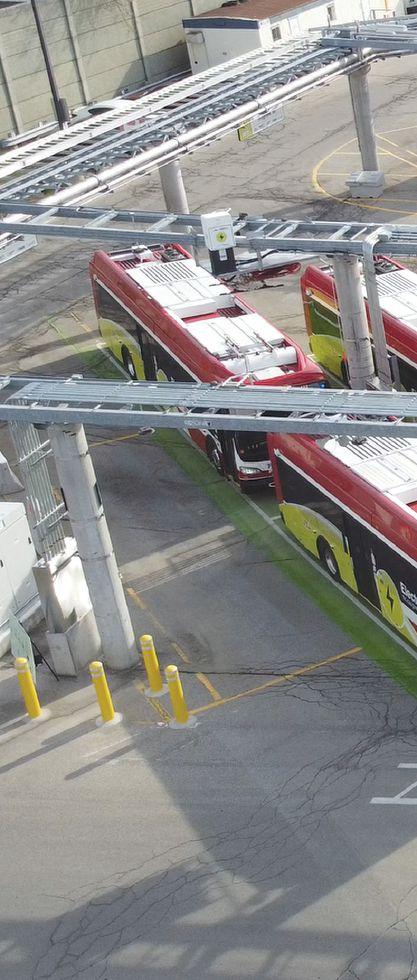
Bus depots need enough energy
“Switching from fossil-fueled to electric vehicles gets greater emission savings in Ontario than in just about anywhere else in North America where there’s a lot more coal or natural gas on the grid.”
bandwidth to serve the fleet of buses, many of which may be charging simultaneously. There must also be enough space to house the buses and chargers and supporting infrastructure.
In addition, many municipalities will need to upgrade the energy service at their facilities to manage these needs.
Further, the technology on electric buses is constantly evolving technology, which means transit agencies require significant maintenance support and need to ensure interoperability between generations of technology on the vehicle and charger sides.
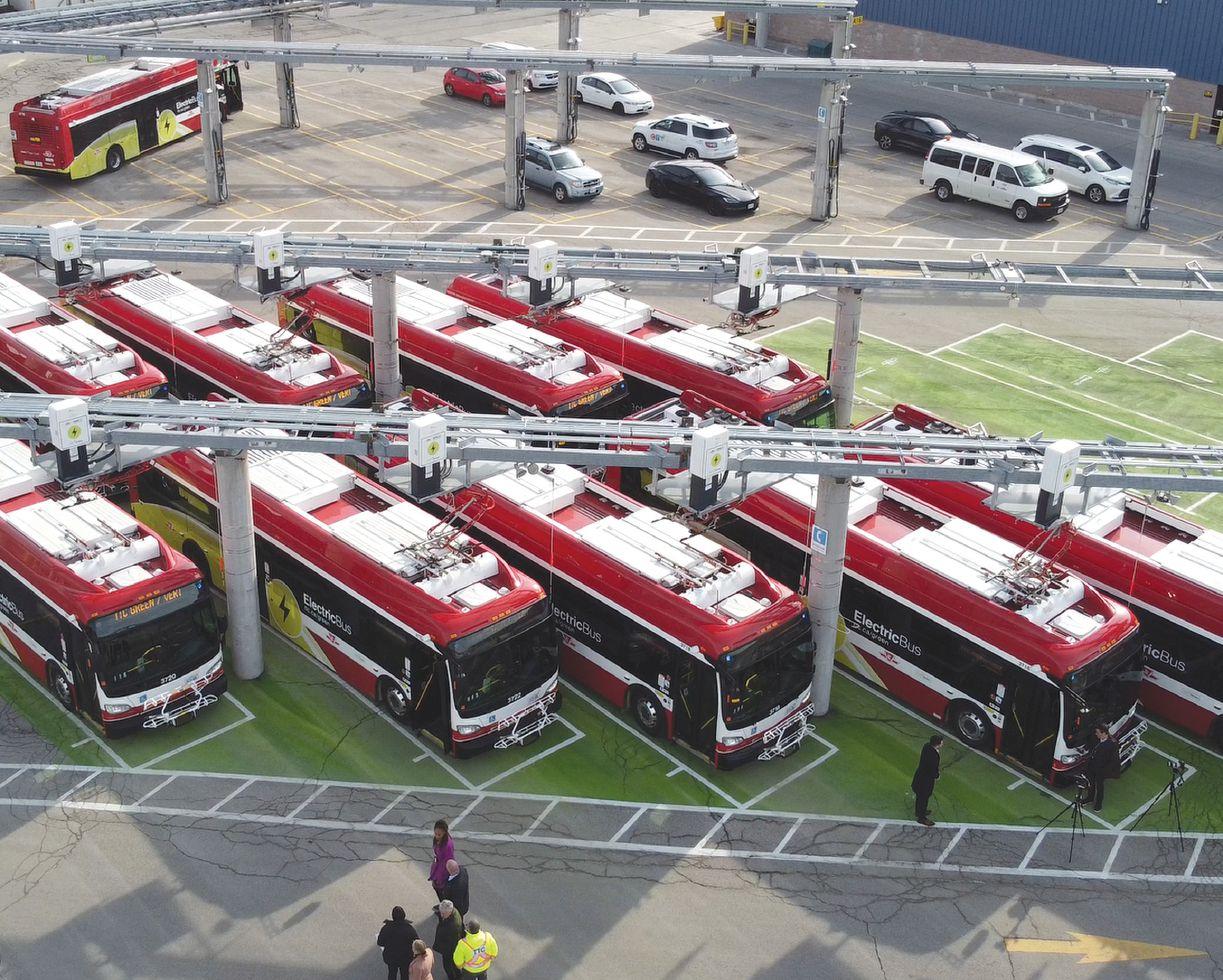
However, sometimes the chargers miscommunicate with the buses, leading to issues like the wrong charger being activated as the bus travels through the depot. These technical challenges require careful troubleshooting that can lead to delays and complications, particularly for municipalities that don’t have the in-house expertise to handle these complexities.
As fleet owners consider moving to electric vehicles, they must consider all the above logistical challenges and the
inherent risk of trying something new. PowerON works to help municipalities through it with end-to-end service backed by the experience of having worked through the switch numerous times before.
PowerON’s experience designing and building EV infrastructure may help municipalities redistribute costs to make things easier for fleet owners to manage.
One of the challenges municipalities face is finding limited space for charging and vehicle storage within existing depots. A planner might simply divide
the available space by the number of buses to determine if there is enough room for a fixed number of chargers. However, with a combination of energy management and battery storage, the experienced PowerON team may determine that the same space can support even more chargers than initially planned, all within the same space and power constraints. This would allow the municipality to defer utility upgrades that could cost millions of dollars and take years to complete. While fleet operators and transit commissions may not have the experience and expertise to make that call, PowerON does.
Because PowerON is backed by Ontario Power Generation (OPG) and has a strong relationship with the Canada Infrastructure Bank, they are working on financing options that align payments with the operational savings from switching to electric vehicles.
The company also helps navigate funding opportunities to help cover costs. Federal programs like Clean Fuel Regulation Credits can offer a source of revenue for municipalities who switch to EV fleets. PowerON can assist in reporting and tracking credits, marketing them, and selling them to fossil fuel producers and primary suppliers.
PowerON removes much of the risk involved in fleet upgrades, including providing performance guarantees. For instance, expert grid management can minimize single points of failure within the electrical distribution.
“We simplify the complexity of electrification by offering a turnkey service

DC fast charger to support electric buses undergoing testing and commissioning, ensuring they are ready for operational use.
that integrates all aspects of charging infrastructure, but also power backup systems like batteries or generation in case of a grid outage and software systems that manage the energy usage,” Seed explains.
Fleet owners transitioning to electric vehicles face challenges in training the existing workforce to use new equipment effectively. Realizing all the benefits of electrification requires drivers to alter driving habits to maximize battery life and overall vehicle efficiency.
As more municipalities strive to meet ambitious carbon-emissions goals,
PowerON is supporting those needs. For example, PowerON is working on projects that involve installing rooftop solar panels to generate power and providing more renewable energy for their operations.
PowerON also supports a significant initiative to electrify Ontario’s Ministry of Transportation’s ferries near Kingston.
As municipal needs grow, so does PowerON. The company started with only four individuals and now employs over fifty people, hiring continuously to keep up with demand. Plus, their specialized knowledge and experience in transitioning fleets to electric vehicles help to fill an expertise gap in the field.
PowerON’s extensive background in the field and OPG backing offer a rare stability in the field that allows the company to offer performance guarantees and comprehensive support throughout the fleet electrification process.
Kristen Frisa is a contributor with The Ontario Technologist.

W E B I NA R S
Join OACETT for a webinar on the benefits of becoming a Certified Engineering Technologist (C.E.T.) and Certified Technician (C.Tech.).
WHY ATTEND?
• Learn how OACETT certification can boost your career — higher salary, networking, and marketability.
• Learn about CTEN.ca, OACETT's career site.
• Learn about OACETT certification requirements.
To register for a webinar, visit: Students: www.oacett.org/student-road-to-certification
Internationally Educated Professionals: www.oacett.org/iep-road-to-certification QUESTIONS? Contact Trishia at ttedoldi@oacett.org.
WEBINARS DATES AT A GLANCE
COLLEGE STUDENTS:
Monday, Nov. 4, 11, 18 & 25
Monday, Dec. 2 & 9 @ 12:00 p.m.
INTERNATIONALLY EDUCATED PROFESSIONALS:
Friday, Nov. 1, 8, 15, 22 & 29
Friday, Dec. 6 & 13 @ 1:00 p.m.
June 2024
Certified Engineering Technologists
Cameron Buck, C.E.T.
Philippe Campbell, C.E.T.
Nana Kwame Danquah, C.E.T.
Mitchell Davidson, C.E.T.
Blair Henderson, C.E.T.
Olivia Lun, C.E.T.
Justin McDonald, C.E.T.
Amy Olsen, C.E.T.
Divyesh Patel, C.E.T.
Ramdass Ramlakhan, C.E.T.
Bikramjeet Sandhu, C.E.T., P.Eng.
Ramsin Sotouadeh, C.E.T.
Certified Technicians
Younes Alchaer, C.Tech.
Ryan Alden, C.Tech.
Meseret Amde, C.Tech.
Sehajdeep Singh Anand, C.Tech., rcji
Nirvaan Bhagwandass, C.Tech.
Digish Bhattji, C.Tech.
Chun Kit Cho, C.Tech.
Michael Conversano, C.Tech.
Curtis Davis, C.Tech.
Spencer D’Souza, C.Tech.
Sherry Dunn, C.Tech.
Onoriode Eka, C.Tech.
Robert Ervin, C.Tech.
Aden Finlay, C.Tech.
Marc Gallant, C.Tech.
John Graham, C.Tech.
Jianzhong Guan, C.Tech.
Beatriz Hernandez, C.Tech.
Adam Iamarino, C.Tech.
Andre Imbeault, C.Tech.
Akshaykumar Jani, C.Tech.
Shamil Khafizov, C.Tech.
James Killgore, C.Tech.
Jeremy Latta, C.Tech.
Sarah Long, C.Tech.
Blake Maciel, C.Tech.
Trevor Marks, C.Tech.
Eric McClure, C.Tech.
Marie Modeley, C.Tech.
Mark Nowak, C.Tech.
Alexander Papadatos, C.Tech.
Mehul Patel, C.Tech.
Neel Patel, C.Tech.
Terrance Ramsden, C.Tech.
Noah Resendes, C.Tech.
Yi Sang, C.Tech.
Jaskaranjit Singh Semar, C.Tech., rcji
Soham Shukla, C.Tech.
Meem Siddique, C.Tech.
Andrew Sioen, C.Tech.
Nevena Stankovic, C.Tech.
Christopher Toews, C.Tech.
Josip Vujica, C.Tech.
Derek Wong, C.Tech.
Connor Wright, C.Tech.
Associate Members
Asha Aravindakshan
Shashikala
Hassan Alame
Bailey Alfieri
Amandeep Amandeep
Zoukaa Babik
Wasie Baig
Ramongil Nino Baquilta
Stephanie Barstad
Jenina Ross Casaba
Franco Casciaro
Lok Sum Chan
Changhoon Choi
Mohammad Jaynul Islam
Chowdhury
Sergio Jr Dela Cruz
Ryan Delill
Jomil Delos Reyes
Ilia Deriglazov
Vihang Desai
Abhishek Gabani
Andrew Gajich
Harmandeep Singh Gill
Raviraj Gowreea
Afsaneh Halabian
Samer Hendy
Evan Huctwith
Talha Imran
Amil Joy
Thavaruban Kabilan
Vivek Bipinchandra Kacha
Paras Kankad
Biomba Kapajika
Youngrim Lee
Steven Leung
Daniel Loungxay
Ambreen Malik
Ritty Mathai
Anju Mathew
Colin McBain
Erik Millar
Mojtaba Modaresi
Joseph Murray
Anujinth Naghanathen
Smit Navadiya
Ravinder Pal
Kush Patel
Meet Patel
Shubh Patel
Sujalkumar Patel
Tinsha Paul
Steve Persaud
Tristan Piche
Brittany Pleskina
Neena Prakash
Austin Presland
Brendan Proulx
Naz Qassab
Savansinh Rajpurohit
Farshid Rasti Boroojeni
Daniella Richards
Aaron Rows
Asif Saleem
Fatima Shahid
Shazleena Shareef
Vikas Sharma
Kamau Simba
Amanpreet Singh
Jagpreet Singh
Navtej Singh
Sanjeevan Sivayogan
Casian Stoica
Trevor Stutchbury
Hamed Taheri Azad
Eric Steve Tessac Teutu
Chun Kin Ting
Kamalkumar Vaghasiya
Verna Valliere
Kongphop Wilaiprapakorn
Alem Meaza Woldegebreal
Lit Man Norman Wong
Hiren Zalavadiya
Matthew Zambelli
Yingbin Zhao
Student Members
Archana Adhikari
Mohammed Ali Imran
Aditya Anand
Helena Binoy
Mohammed Brakat
Tushar Dhaduk
Jasmine Fetter
Abhishek Ghadiya
Uday Chandra Gotoor
Aditya Gupta
Elke Hellingman
Myat Htut
Prakruti Jobanputra
Steffin Jose
Nandish Kapadia
Aalian Khan
Arun Kumar
Muhammad Faisal Kunnath
Abdul Samad
Alexander Littleton
Janitha Lokugamage
Madison Macdonald
Danish Mallick
Ganesh Mankar
Yasar Miri
Dennis Muraya
Abedalrhman Nabas
Hien Nguyen
Ajin Jastin Olakkengil
Sanjana Zaman Orchee
Jaykumar PAtel
Krupesh Patel
Shiv Patel
Merin Rose Paul
Lloyd Pigeau
Vishnu Puthiya purayil
Marianne Rocafor
Bhupendra Saud
Mingma Dorjee Sherpa
Jacob Tinney
Arcamille Vanessa Tolentino
Haoyu Wang
Yogesh Yogesh
Existing Members in Road
Construction
Certified Engineering
Technologists
Mohammad Abdullah, C.E.T., rcca, P.Eng.
RECOGNIZING NEW AND CERTIFIED TECHNICIANS AND TECHNOLOGISTS
Belay Abegaz, C.E.T., rcji
Steven Burt, C.E.T., rcji
Christopher Harbottle, C.E.T., rcji
Yamileth McCarthy, C.E.T., rcji
Edward Metcalfe, A.Sc.T., rcca
Robert Smith, C.E.T., rcji
Certified Technicians
Kevin Arsenault, C.Tech., rcji
Rudenc Crroj, C.Tech., rcji
Harshpreet Sharma, C.Tech., rcji
Vincenzo Policheni, C.Tech., rcji
Municipal Infrastructure
Inspector
Sajmir Zesllari, C.E.T., rcca, mii
Associate Members
Mohammad Faisal, rcji
Ali Feyzian, rcji
Abhilash Gautam, rcji
Bipin Jha, rcji
Harpreet Kaur, rcji
Emily LeBlanc, rcji
Bansary Patel, rcji
Abhishek Pathania, rcji
Gagandeep Singh Saini, rcji
Muhammad Shah, rcji
Sultan Singh, rcji
Ryan Spotswood, rcji
Gurmilap Sran, rcsi
Eric Steve Tessac Teutu, rcji
Kamalkumar Vaghasiya, rcji
Rejean Vaillancourt, rcsi
Bradley Wilcox, rcji
July 2024
Certified Engineering Technologists
Tyler Crawford, C.E.T.
Ivan Drewnitski, C.E.T.
Juan Enriquez, C.E.T.
Mitchell Gualtieri, C.E.T.
Chris Jolie, C.E.T.
Phillip Klein-Swormink, C.E.T., rcca
Zachary Koomans, C.E.T.
Janusz Langowski, C.E.T.
Gavin Laviolette, C.E.T.
James Luzuriaga, C.E.T.
Lindsay Markle, C.E.T.
Nirmal Naik, C.E.T.
Carlon Orr, C.E.T.
Vijaykumar Patel, C.E.T.
Reynald Santiago, C.E.T.
Neha Sharma, C.E.T.
Michal Sokol, C.E.T.
Michael Trentin, C.E.T.
Ramakrishnan Vellaichamy, C.E.T.
Certified Technicians
Amer Alhakim, C.Tech.
Alena Ashoni, C.Tech.
Thomas Bertin, C.Tech.
Nicholas Bovell, C.Tech.
Rade Brezo, C.Tech.
Patrick Bruneau, C.Tech.
Wai Hei Chan, C.Tech.
James Dematteo, C.Tech.
Siar Esckendari, C.Tech., rcji
Timothy Fuke, C.Tech.
Colin Gaudet, C.Tech.
Karl Gross, C.Tech.
Barbara Harrington, C.Tech.
Adam Harris, C.Tech.
Daniel Hinde, C.Tech.
Komalpreet Kaur, C.Tech.
Stuart Maclaughlin, C.Tech.
Farai Oscar Magodora, C.Tech.
Kevin McCormick, C.Tech.
Harroop Singh Munde, C.Tech., rcji
Jignesh Patel Naini, C.Tech., rcji
Caren Netto, C.Tech.
Ravi Oli, C.Tech.
Izel Ozbay, C.Tech.
Matthew Parker, C.Tech.
Ryan Penney, C.Tech.
Michael Pereira, C.Tech.
Parth Prajapati, C.Tech., rcji
Aditi Rajavat, C.Tech.
Kevin Sanza, C.Tech.
Gurneet Sidhu, C.Tech.
Mohit Solanki, C.Tech.
Ryan Spotswood, C.Tech., rcji
Scott Stovel, C.Tech.
Yu Chee Tan, C.Tech.
Dien Tran, C.Tech.
Olivier Zanetti, C.Tech.
Associate Members
Abdulaziz Abukarsh
Ebubechukwu Agbo
Adedamola Akin-Adewale
Siddharth Arora
Muhammad Rehan Arshad
Nathaniel Asamoah
Ne Aung
Khun Aung Huey
Bijo Baby
Jan Berard
Maxime Brunet
Peter Cameron
Sumit Chapagain
Jordan Charles
Vinayak Vinod Chavan
Sheung Lah Matthew Cheung
Smit Christian
James Clarke
Muhammad Dar
Brennan DeLaurier
Angelo Della-Gatta
Kaljinder Dhaliwal
Ighoyohwo Dukefe
Lucas Ferreira Maurer
Cody Fisher
Mobin Ghanimi
Gordon Greene
Patrick Greene
William Guthrie
Cory Hill
Hnin Myat Hlaing
Jason Horvath
Joseph Hudson
Theju Kumar Janamane
Poovappa
Nemesio Jr. Jaromay
Sajan Kachhadiya
Muhammad Awais Khan
Muhammad Ayub Khan
Yeongdeuk Kim
Taofikq Lawal
Jomar Maravilla
Kevin Mootooveeren
Doran Moreau
Daniel Naccarato
Jocelyn Nana Njakeu
Bianca Noseworthy-Coles
Steven Pace
Louie Paderagao
David Pankratz
David Parfitt
Tyson Parker
Akash Patel
Kirtankumar Patel
Pratik Niteshkumar Patel
Pooya Pourakef
Tarik Rahal
Md Mostafizur Rahman
Jayden Rampersad
Ashlee Jerom Revilla
Curtis Rice
Dylan Robinson
Daniel Sepe
Jay Shah
Tian Chen Shen
Divjot Singh
Gagandeep Singh
Gagandeep Singh
Navendra Singh
Ranjeet Singh
John Spoenlein
Benjamin Stewart
Michael Stone
Shyam Sundar Sundaran
Saood Ahmed Syed
Krishna Tamang
Alvin Tancinco
Sydney Thompson
Danny Trifunovich
Cameron Tyance
Patrick Cris Valenzuela
Gopi Venkatachalam
Craig Walkling
Martin Wanyika
Adam Wilcox
Seokhyun Yun
Student Members
Marbeth Adaza
Abdulkader Aidou
Akhil Babu
Margaret Bowers
Ruel Catigan
Jagnoor Cheema
Adarsh Parokaran Devasia
Giordano DiSalvo
Joshua Elson
Ali Hamoudeh
Christy Jacob
Alan John
Krish Kapadia
Muhammad Khan
Thanarin Kosuthat
Gulshan Kumar
Johnny Ledgley
Andrii Ligun
Ivanne Caryl Maranan
Kenny Melo
Anthony Nwode
Aung Phyo Oo
John Osma
Jaykumar Patel
Mithil Patel
Jacob Poirier
Manoj Kumar Pun Magar
Prova Rahman
Shoun Thomas Regi
Juan Romo Mosquera
Arijeet Sarkar
Jerin Jomon Shaji Sherly John
Pasang Sherpa
Kamalesh Sivakumar
Trevor Stephenson
Akash Suma Ullas
Basil Varghese
Manveer Singh Virk

Lucus Wynne
Ruslan Zhabashkanov
Existing Members in Road Construction
Certified Engineering Technologists
Paul Anyia, C.E.T., rcca
Nicholas Morrisseau, C.E.T., rcji
Nand Sharma, C.E.T., rcsi
Syed Tanveer, C.E.T., rcji
Certified Technicians
Scott Baas, C.Tech., rcca
Mina Fanous, C.Tech., rcsi
Nabil Khan, C.Tech., rcji
Harroop Singh Munde, C.Tech., rcji
Jignesh Patel Naini, C.Tech., rcji
Gary Noble, C.Tech., rcca
Thomas Piasetzki, C.Tech., rcca
Royce Sararas, C.Tech., rcca
Cole Sutcliffe, C.Tech., rcji
Existing Members in Municipal Infrastructure
Municipal Infrastructure Inspector
Jaewon Choi, C.Tech., mii
Municipal Infrastructure
Contract Administrators
Robert Bailey, C.E.T., mica
Lester Bruno, C.Tech., mica
Brandon Demeester, C.E.T., mica
Sean Isley, C.E.T., mica
Cam Johnston, C.E.T., rcca, mica
Kathryn-Grace Maton, C.E.T., rcsi, mica
Denise Morris, A.Sc.T., rcsi, mica
Arben Saraci, A.Sc.T., mica
Stephen Yirenkyi, C.Tech., mica
Associate Members
Jagandeep Batra, rcji
Nirmal Bhatt, rcji
Robert Cramero, rcji
Sanjay Dallakoti, rcji
Muhammad Dar, rcji
OACETT remembers former regional councillor Ed Prillo, C.E.T.
Ashley Elhami, rcji
Afsaneh Halabian, rcji
Talha Imran, rcji
Keegan Janke, rcji
Vivek Bipinchandra Kacha, rcji
Paras Kankad, rcji
Jason Kobold, rcji
Jun Liu, rcji
Colin McBain, rcji
Smit Navadiya, rcji
Imtiaz Rehman, rcji
Mirmasoud Seyyedhamzeh, rcji
Vikas Sharma, rcji
Verna Valliere, rcji
Staff and members of OACETT send their sincere condolences to the family and friends of the following members. They are remembered.
Bennet Kopecki, C.E.T.
James McConkey, C.E.T.
Ronald Orr, C.E.T.
This past August, former OACETT Council member Ed Prillo, C.E.T., passed away, ending a lengthy and highly esteemed era of volunteer service with OACETT at the regional and chapter level. In the eighties and nineties, Prillo was an OACETT Toronto East Chapter executive, serving as chapter chair, secretary, and director and contributing to the overall success of the chapter’s events and activities. In 1999, he went on to serve OACETT at the regional level, sitting on OACETT’s Council as the Institute of Engineering Technology of Ontario’s councillor for the Toronto region and serving as chair of the Admissions Committee. He served in this capacity until 2015 and was honoured with a Council Service plaque at the OACETT president’s dinner at the end of his final term. In 2014, Prillo also received a recognition award for 35 years of contributions as a volunteer. When Prillo left Council in 2015, his absence was noticed by fellow councillors on a personal and professional level. His enthusiasm, friendliness and support of OACETT will be sorely missed by all who knew him, including OACETT members (many of whom were his friends), colleagues, and fellow volunteers.

Changiz Sadr, long-time PEO member and OACETT advocate has passed away
Over the summer, OACETT lost one of his closest friends with the passing of Changiz Sadr, P.Eng., C.E.T. Sadr was an extremely well-respected PEO member who volunteered with the association for more than 21 years in various roles, sitting on the board of directors, committees, advisory boards and serving as a mentor. He also served on the OACETT Council from 2013 to 2017 as the PEO liaison representative and was instrumental in expediting the Licenced Engineering Technologist (LET) instatement. From holding meetings with various committees to connecting with the appropriate decision-makers at PEO, Sadr did everything he could to gain PEO’s acceptance of the LET. In other ways, he was also an active participant on the OACETT Council, including his willingness to meet between council meetings to assist OACETT when its voice needed to be heard at important meetings and events. His life work shows his passion for helping others with their careers and supporting the Iranian community. He was a strong leader, mentor, educator, and, most of all, a great friend to many. He will be greatly missed.
Dwayne Hofstetter, C.E.T., rcsi Grand Valley Chapter, chapter executive
Q: Tell us about yourself.
A: Over the past 24 years, I have been working for GHD, Engineering, Architecture & Construction Services. Currently, I am the engineering manager and project director. I graduated from Conestoga College’s Civil Engineering Technologist program.
Q: When did you begin volunteering?
A: I started volunteering for the Grand Valley Chapter in 2005 as a
Patrick Lau, C.E.T. York Chapter, secretary
Q: Tell us about yourself.
A: I work at a provincial transit agency as an estimating lead. My role involves providing internal estimates for budgeting new projects and supporting the organization with various estimating tasks, including evaluating change orders for different projects with my team. I am an internationally trained construction professional from Hong Kong, holding BBA and MBA degrees, along with other professional credentials from the U.K. In 2010, I joined OACETT the first year after I immigrated to Canada with my family.

director, but I volunteered in other organizations prior to volunteering with OACETT.
Q: What volunteer roles have you fulfilled?
A: I have had a few roles within the local chapter, including director, secretary, treasurer, and co-chair.
Q: When did you begin volunteering?
A: I began volunteering in 2019 when the York Chapter chair conducted the Annual Chapter Meeting, and the chair allowed me to participate in chapter activities. Jennifer Hazelton, C.Tech., continues to inspire me as she volunteers for the Association.
Q: What volunteer role was the most rewarding? And why?
A: All the volunteer roles were rewarding. They gave me more insight into public speaking and financial planning and more confidence in communicating with professionals inside and outside my organization.
Q: What do you enjoy most about being an OACETT volunteer?
A: I enjoy increasing members’ attendance at our chapter meetings and activities. I also enjoy helping to build a strong network of young professionals who have joined or will join OACETT.
Q: What volunteer roles have you fulfilled?
A: I have served as the York Chapter secretary for four years, providing support to my chapter chair to ensure the smooth operation of all chapter events.
Q: What do you enjoy most about being an OACETT volunteer?
A: I enjoy gaining new knowledge shared by fellow members. Simultaneously, I contribute my skill set to ensure the smooth operation of the chapter and to serve other members effectively. I am consistently thrilled to find that every executive committee member, regardless of background, contributes their ideas for each event and topic during our regu-
Q: What is your most significant personal or professional achievement?
A: My most professional achievement is becoming the principal within my organization.
Q: What advice would you give a prospective member and/or volunteer?
A: OACETT is one of the doorways to enhancing a larger professional network; while volunteering, you are growing your personal brand and making connections with future clients and colleagues!
lar chapter meetings. Their dedication has served our regional members well and promotes the Association’s image—a value I believe every professional should embody.
Q: What is your most significant personal or professional achievement?
A: I am grateful to see my younger son, a C.E.T., work with the Ministry of Transportation, partly because I influenced him. Professionally, my significant achievements include recently achieving my MBA and being a corporate member of professional institutes. I want to earn another technology degree to widen my knowledge of the current adverse effects of climate change.

OACETT members prepare for a round of golf at the chapter’s golf tournament.

Paul Hayes, A.Sc.T. (standing left) and Dwayne Hofstetter, C.E.T. (standing right) giving away prizes to the chapter’s golf tournament attendees.
The Grand Valley Chapter hosted two annual events this summer. The roadside cleanup drew significant attendance and allowed members to contribute to their community while networking with peers. School-aged children who participated in the
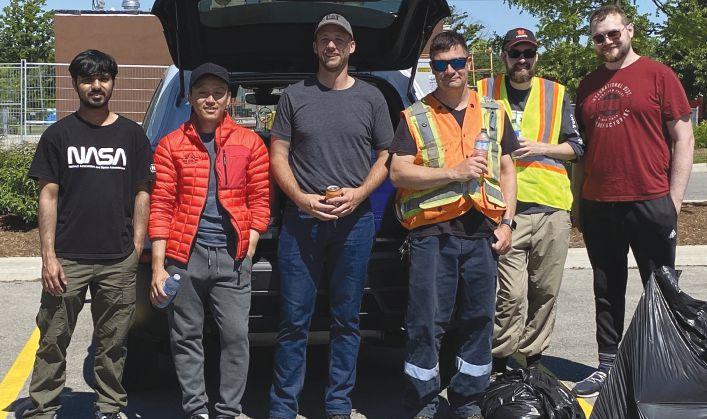
cleanup also potentially earned volunteer hours requirements by their high school. During the event, the chapter expressed gratitude to David Lupton, C.E.T., for his role in organizing this impactful initiative.
In addition, the Grand Valley Chapter held a golf tournament at the Ariss Valley Golf and Country Club, which proved to be a big success. More than 70 members, colleagues, and friends attended the event for a day of cama-
raderie and enjoyed an extravagant lunch and 18 holes of golf. Plus, many participants left the event with prizes. The chapter acknowledged the efforts of Dwayne Hofstetter, C.E.T., and Paul Hayes, A.Sc.T., for their dedicated organization and coordination of the entire day’s activities.
Mike Luyckx, C.E.T., is Grand Valley Chapter chair: grandvalley-chapter@ oacett.org.
•
•
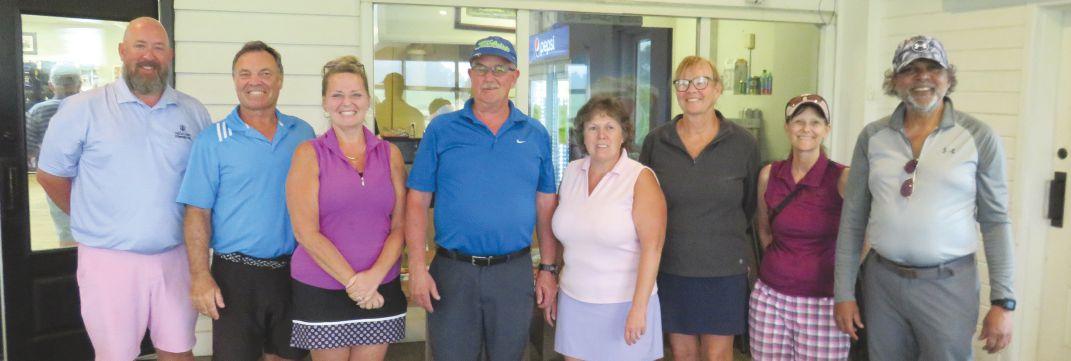
The 28th Annual Stewart Baxter Memorial Golf Tournament was held at Oak Gables Golf Club in Ancaster on June 22. OACETT members, friends and guests enjoyed a fine day of golf with an afternoon shotgun start playing under golf scramble format rules provided by Dave Rasmussen, C.E.T.
The golfers had a delicious lunch and prizes were awarded to the following golf tournament winners:
• Team: Ted Inch, Lila Inch, John Maxwell, C.Tech., and Lana Maxwell
• Longest drive (Women): Amber Morrison
• Longest drive (Men): Jay Monkhouse, C.E.T.
• Closest to the pin (Women): Sandra Hanlon
• Closest to the pin (Men): Rocky Baljit, C.E.T., rcca
The Hamilton Chapter would like to recognize and thank the tournament sponsors: Alectra Utilities, A&W High Voltage Contracting, Black & McDonald, Burlington Hydro, K-Line Insulators, NBM Engineering, RR Power Consult-
ing, Stantec, The Personal Insurance, and TransPower.
Mark Jakubowski, A.Sc.T., is Hamilton Chapter chair: hamilton-chapter@ oacett.org.
The Peel Chapter recently held a dynamic seminar sponsored by Schneider Electric. The event focused on collaborative robots (cobots), an innovative advancement in industrial automation. Engineering technology professionals from various disciplines attended to explore the transformative potential of cobots in shared workspaces with humans. The seminar provided a comprehensive overview of cobot technology, emphasizing its applications in manufacturing, healthcare, and logistics. Attendees participated in lively discussions and practical demonstrations, illustrating how cobots can enhance productivity, safety, and operational efficiency. The presentation provided insights on integrating cobots into workflows, programming strategies, and maintenance best practices, reinforcing the chapter’s commitment to forefront technological advance -
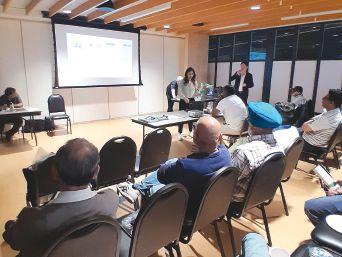
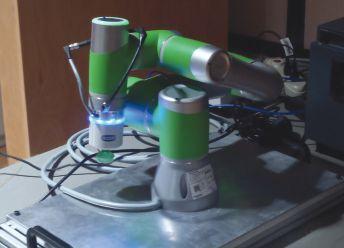
ments in engineering and applied sciences through knowledge-sharing and hands-on learning initiatives.
Anil Kolassery, C.E.T., is Peel Chapter chair: peel-chapter@oacett.org.

Chapter members at the
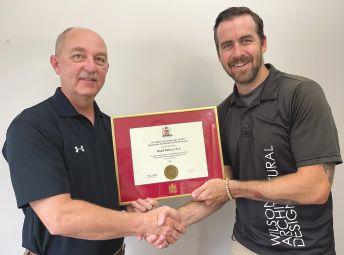
Dale Phippen, C.E.T., Cornwall Chapter executive member (left) presented a framed Decade Award Certificate to Brock Wilson, C.E.T. (right) at the Wilson Architectural Design office in Martintown on August 9.
On August 11, the Cornwall Chapter held a barbecue for its members and families at Guindon Park despite the threat of bad weather. Members networked among peers in a casual setting, overseeing the beautiful St. Lawrence River. All chapter members present enjoyed the afternoon, which ended before torrential rain fell.
Chapter chair Réjean Fortin, C.Tech., served as grill master for the event and demonstrated his burger patty-flipping abilities to all members present. In addition to the delicious burgers and social engagement, the event spawned ideas for other social events that will take place in the fall.
Rejean Fortin, C.Tech., is Cornwall Chapter chair: cornwall-chapter@oacett.org.

Chapter chair Bruce Fudger, C.E.T. (left) receives thank you award for OACETT’s sponsorship of Lake Effect Robotics team for 2023/24.
On May 16, the chapter held its monthly meeting at the BGC Southeast Robotics Lab, where they were honoured with a thank you award for their 2023/24 sponsorship. Team 2708 Lake Effect, a robotics competition team affiliated with the Limestone District School Board (LDSB) and open to high school students from that board, hosted the event. The evening began with an awards ceremony; a thank you dinner and a demonstration of their new 150-pound competitive robots. The display showcased impressive engineering from the LDSB lineup.
In August, the Renfrew County Chapter organized a Women in Technology (WIT) and technical factory tour at Haley Magellan Aerospace in August. Details of the event, including pictures and a list of attendees, will be reported later in the fall.
Over the summer, Trishia Tedoldi-Smith, manager of colleges at OACETT, conducted engagement planning with the chapter to increase OACETT’s visibility and involvement at Algonquin College’s Pembroke Campus in September. The chapter’s activities at the college included a draw for a free student membership and the possibility of participation from a student chapter representative from Algonquin College’s Environmental Technology and Radiation
Bruce Fudger, C.E.T., and Ryan Klein, C.E.T., represented the chapter at OACETT’s 2024 Conference and President’s Awards Dinner in June. Fudger received the Fellow OACETT designation and was congratulated by all. The chapter executives are considering tours of the Military Communications and Electronics Museum and Pump House this fall. They plan to participate in the Kingston Climate Expo and the Net Zero tour in October.
Bruce Fudger, C.E.T., is Kingston Chapter chair: kingston-chapter@oacett.org.
Safety program. The chapter is also planning a Chalk River event at CNL Nuclear Labs with ongoing efforts to finalize the details. Support from CNL unions, human resources, and the MES team is instrumental in organizing this crucial event and tour to increase OACETT’s membership in this key technical engineering area. The chapter also intends to engage with high schools over the 2024/25 school season. A team of members are prepared to visit high schools to present OACETT’s educational videos. The goal is to provide real-world examples of technologists and technicians’ work at career day events.
Larry McHenry, C.E.T., is Renfrew County Chapter chair: renfrew-chapter@oacett.org.
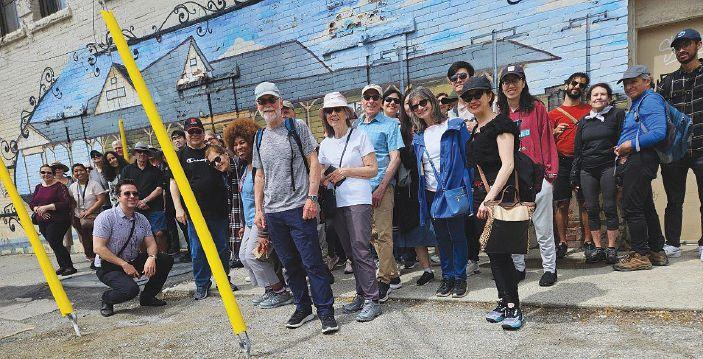
Toronto Central Chapter members attend ExperienceTO’s Junction Historical Tour.
The Toronto Central Chapter (TCC) held its third fiscal year meeting on June 25. During the meeting, the chapter executives explored ways to enhance outreach efforts for the 2024-2025 year.
The chapter is always open to ideas for events and learning opportunities, and members are encouraged to share their suggestions at torontocentralchapter@oacett.org.
The chapter is also looking for volunteers, especially those interested in shadowing as treasurers, which provides a chance to learn the role and step into the position of chapter treasurer.
Additionally, several TCC members participated in a free interactive walking tour titled, “The Junction Historical Tour” on May 18. This tour was conducted by Alex Rascanu, founder of ExperienceTO, a commercial real estate broker and an avid student of architectural history. The Junction, a neighbourhood in west Toronto, is named for the intersection of four railways: the Metrolinx Weston subdivision’s GO Transit Kitchener line, the CPKC North Toronto subdivision, the CPKC Galt subdivision, and the CPKC MacTier subdivision. According to Rascanu, The Junction has a rich and
fascinating history, and a small-town charm is still profoundly felt despite its growth and revitalization. Most of the original architecture and character remain intact.
Shalevia Briscoe, C.Tech., is Toronto Central Chapter chair: torontocentralchapter@oacett.org.
The Toronto East Chapter and Toronto Central Chapter held their Annual Members and Family Picnic/BBQ on August 11 at Thomson Park in Scarborough.
Despite the gloomy weather, many families from both chapters came out to have lunch and meet other members and their chapter’s executives. It was a pleasure to see and chat with old friends and colleagues, network, have a nice meal and watch children participate in organized games.
The day also had its sombre moment with members remembering Toronto East Chapter past chair Ed Prillo, C.E.T., who passed away on August 4.
Pasha Mohammed, C.Tech., is Toronto East Chapter chair: torontoeast-chapter@oacett.org.
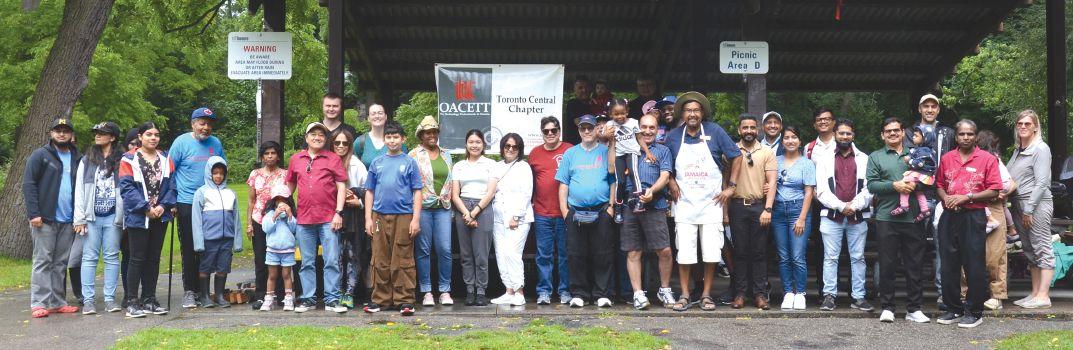
Toronto East Chapter and Toronto West Chapter members and their families at the chapters’ Annual Members and Family Picnic/BBQ.