EDITOR’S NOTE:
EDITOR’S NOTE:
Jarrod Stackelroth Editor
While the fittings and venue and aesthetic were beautiful, the whole day was a little disconcerting for me.
My wife and I were happy to get away and attend a friend’s wedding. We’ve attended so many weddings during our relationship, and it’s always a special event to come together and celebrate the love of someone we care for.
The wedding in question was sentimental, nostalgic for the couple. It was designed as they wanted it, personalised and perfect . . . almost.
You see, while the fittings and venue and aesthetic were beautiful, the whole day was a little disconcerting for me.
This was the first wedding I’ve been to that has not reflected on the institution of marriage or acknowledged a higher power or reason for being together.
In many ways it was the same as any other wedding I’ve been to. A beautiful song kicked off proceedings. Then the celebrant gave a speech. However, the speech focused on the couple, how they met, fell in love and the challenges they’d overcome in their relationship. Never mind a Bible passage or two, there were not even any inspirational quotes from the poets or culture. There was no call to stay together because marriage is bigger than themselves. Just love for love’s sake.
As someone who has been married now for 14 years, I know how hard marriage can be. It has seasons where it is so difficult. Yes, they have a good foundation. It’s cute how they met and admirable that they’ve survived the challenges they have. But an external threat is potentially much easier to face head on together than an internal one that threatens to pull them apart. What holds a marriage together when it’s pulling apart from the seams?
Marriage has been shown to be good for you. Harvard Health claims that married people take less risks, eat better and take better care of their health. Financially there are real world benefits. Men who are married (sorry ladies) live longer and are more stable and secure.
So even a secular wedding could appeal to something higher—a greater good or benefit to society. But that’s just the thing. Marriage has been stripped of its higher meaning and reduced to something largely sentimental. It’s often treated as the final boss of a relationship, preceded by moving in together, having kids, getting a dog and travelling the world. If marriage is simply the final stage to tick off, then what’s the next step? What happens after that?
My wife and I had challenges before we were married. Looking back now, many of them pale in comparison to the things we have faced while married. And one of the things that kept me going in the most difficult seasons was our vows. We used the vow of Ruth in our wedding ceremony: “For where you go I will go, and where you lodge I will lodge. Your people shall be my people, and your God my God. Where you die I will die, and there will I be buried. May the LORD do so to me and more also if anything but death parts me from you” (Ruth 1:16,17).
Until “death do us part”. Where you go, what you go through, I’ll be right there beside you.
In the darkest times, it’s only the covenant you’ve made in front of God and friends and family that might hold you together. I fear for those who have no higher vision for marriage, that they will easily succumb to separation and suffer all the pain and problems that divorce can bring. Of course, sometimes divorce is necessary and we must have compassion for those who go through it. But it is not something to be wished on any couple or their children and it is hard for everyone involved.
I pray all the best for the couple, that they are happy, that they find deeper meaning and purpose because they find God and He changes their lives. And maybe, when they renew their vows at 10 or 15 or 30 years, it can be a more spiritual service.
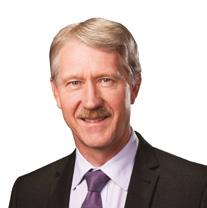
Brad Kemp Adventist Media CEO
In a former role, I used to travel to Sopas Hospital in the Enga Province of Papua New Guinea to chair the hospital board. On one such visit I remember sitting at a table in the meeting and looking up to see an elderly man walking towards me. Now I had never met this man before and I had no idea what he wanted. But as he came alongside, the next thing I knew, I was being punched in the head.
And then, with some encouragement, he turned around and went outside. I wondered what had just happened and why. I had never met the man. Never caused him harm. What had I done to deserve such a thing?
I spoke with that man after the meeting and learned that his wife had died in the hospital that night. He was angry and needed to express it. He even apologised for punching me.
As I reflect on this incident it seems to me that too often it is the way we deal with slights, hurts and perceived threats that causes the most trouble in the Church. Doctrine usually takes a distant second place. It is these things that give the Church a bad name and dulls its witness. And then we allow pride to get in the way and forgiveness and reconciliation become difficult.
So how should we address these social and often personal challenges in our communities?
The first place to look is Matthew 18 where we are instructed to resolve the matter either personally or with help from a trusted friend or leader. The second is 1 John 4 where we are told to love one another because this is what God is like and how He wants His church to be.
Like my Engan friend, we can often resort to giving in to our feelings and want to strike out. However, as Christians we are exhorted to love our enemies, do good to them who hate us and to resolve our differences in a Christlike manner. “And he has given us this command: Those who love God must also love their Christian brothers and sisters” (1 John 4:21).


Wahroonga, NSW | Juliana Muniz
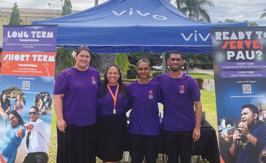
Church members connected to Adventist university communities will now have easier access to local and international volunteering opportunities.
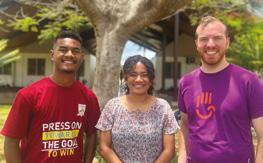
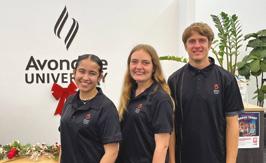
Adventist Volunteer Service (AVS) is expanding its campus-based Ambassadors initiative in 2026, with trained representatives serving at Avondale University, Pacific Adventist University (PAU) and Fulton Adventist University.
First introduced in late 2024, the AVS Ambassadors initiative places student representatives on tertiary campuses to serve as local points of contact for people interested in serving through AVS. After its initial rollout and first year of activity, the program is entering a new phase in 2026, with an expanded cohort and a stronger focus on connecting students and nearby church communities with service opportunities.
AVS ambassadors function as a “mobile mission office” on campus, promoting volunteering pathways and supporting people who want to explore local service projects, short-term mission trips or longer-term placements. The ambassadors work alongside university leadership and campus churches and are expected to coordinate service-focused initiatives.
“Ambassadors bring mission to life on campus; they make it visible, relatable and achievable for students,” said South Pacific Division AVS manager Rose Miranda. “For AVS, they are the heartbeat of engagement, showing that mission isn’t just an idea. It’s a practical, transformative experience.”
During its first year, ambassadors at each campus trialled different approaches to mission engagement, reflecting the needs of their local communities.
At PAU, in Papua New Guinea, previous initiatives included the “I Will Go” cycling ministry, in which students travelled by bicycle to nearby villages, schools and communities to share literature, offer prayer and engage in community service. At Fulton, in Fiji, ambassadors supported a mission trip to Nagigi Seventh-day Adventist Primary School in the province of Cakaudrove on Vanua Levu, where
students assisted the school as part of a community service outreach.
In Australia, Avondale AVS ambassadors focused on local service initiatives, including campus serve days that connected students with the surrounding community. During one recent serve day, students volunteered as part of a free car wash, offering practical support while building relationships with community members.
Former AVS ambassadors said the role helped students recognise service opportunities within the Church and in everyday life. “Being an ambassador has shown me how many service opportunities are available,” said former Avondale AVS ambassador Brooke Howard. According to former Fulton AVS ambassador Torika Ligatabua, participating in the mission trip encouraged students to step beyond their comfort zones and consider future service opportunities.
This year, the program is expanding with a new cohort of ambassadors appointed across all three campuses—four at Avondale, three at Fulton and two at PAU. In addition to continuing to coordinate service-focused initiatives, the new teams will also organise mission-focused church services and at least one mission trip per campus each year.
While ambassadors are based on university campuses, Ms Miranda said the initiative is designed to support people of all ages. Local church members, including professionals and retirees, are encouraged to connect with ambassadors through campus churches to explore service opportunities suited to their stage of life.
“Service isn’t limited to youth; it’s a lifelong journey. Older adults bring experience, wisdom and perspective that can greatly enrich mission efforts. Through AVS, they can explore service opportunities that fit their season of life,” said Ms Miranda.
To learn more about Adventist Volunteer Service opportunities visit volunteers.adventistchurch.com or contact the AVS team at <volunteers@ adventist.org.au>.
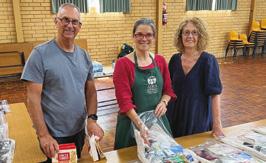
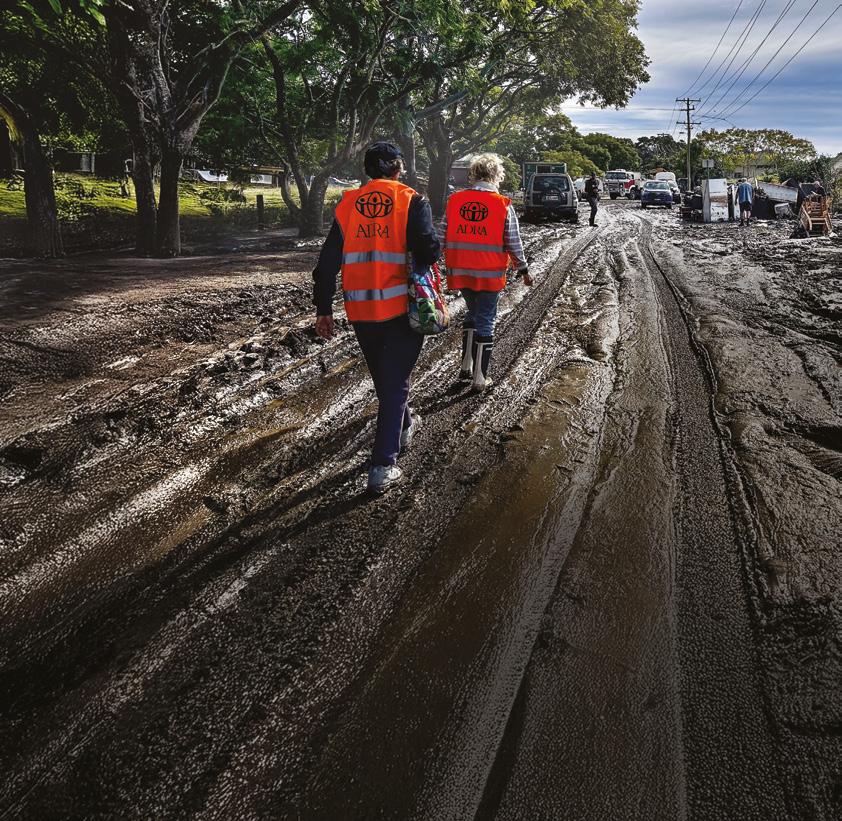
ADRA Australia activated its National Emergency Management Plan in early January in response to bushfires across Victoria, working alongside local Adventist churches and community partners to provide emergency assistance.
Declared a State of Disaster by the Victorian Government, the fires affected multiple regions, resulting in loss of life, hundreds of structures destroyed and widespread damage across hundreds of thousands of hectares.
Some Adventist activities were also impacted. On January 8, the Victorian Conference Youth Department evacuated campers and volunteers from Camp Howqua and concluded one of its summer camps early due to fire conditions in the area. The Adventist Alpine Village in Jindabyne (NSW) was evacuated as a precaution during the peak of the fires.
ADRA’s response focused on practical relief and psychosocial support for affected communities. More than 650
emergency evacuation kits were prepared and distributed across Victoria through local churches and ADRA sites. The kits included hygiene items and information about support services for evacuees.
In Wangaratta, members of the local Adventist church opened the church to receive donations and assemble evacuation kits with support from residents, charities and local businesses. About 150 carloads of donated goods were received in one evening.
“Once we put the call out for donations, everyone pitched in to support people really doing it tough,” said church member and a lieutenant with the Country Fire Authority Dale Mitchell.
ADRA also supported local firefighters by providing drinks and snacks, and partnered with organisations including Sanitarium, Follow Bless Collective and Share the Dignity to assist affected communities.
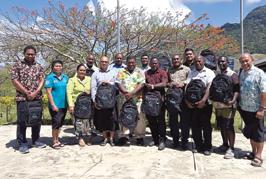
The Master of Ministry program at Fulton Adventist University has continued to gain momentum since its official launch in 2024.
The pioneer cohort began with seven students from the Solomon Islands and Fiji. In 2025, enrolment more than doubled, with 15 students participating in the program, representing various Pacific island nations.
As part of the coursework, students completed the Community Health and Medical Missionary Work module, which explores the role of health ministry with pastoral practice. The unit provided students with a practical understanding of community health, emphasising the importance of prevention, education and service-based outreach.
Through hands-on learning, pastors developed skills in community health assessment, program planning and evaluation, enabling them to respond more effectively to the needs of their local communities.
With preventable diseases placing an increasing burden on communities and churches across the Pacific, demand is growing for leaders trained in a holistic approach to ministry. The Master of Ministry program seeks to address this need by equipping pastors to deliver health-focused initiatives that are affordable, practical and relevant to the communities they serve.
The module was supported by George Kwong, 10,000 Toes regional ambassador for the Trans Pacific Union Mission, along with his team, who conducted a half-day orientation and compliance training session. Students also received 10,000 Toes health kits to support future community outreach and health initiatives.
Participants expressed strong enthusiasm for the program, noting its value in strengthening the integration of sound health principles into pastoral ministry and community engagement across the Pacific.
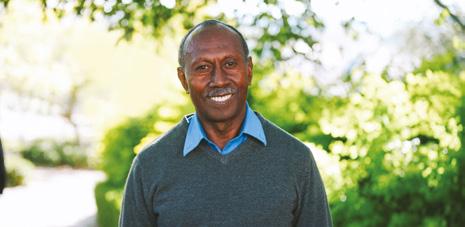
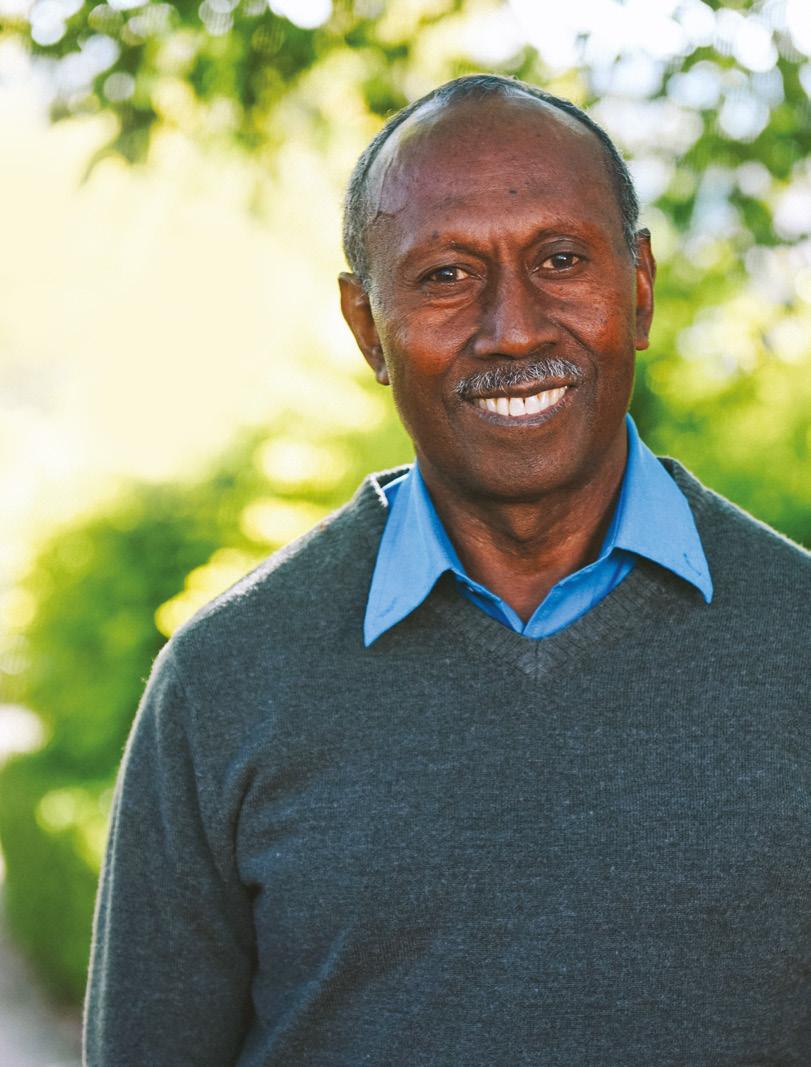
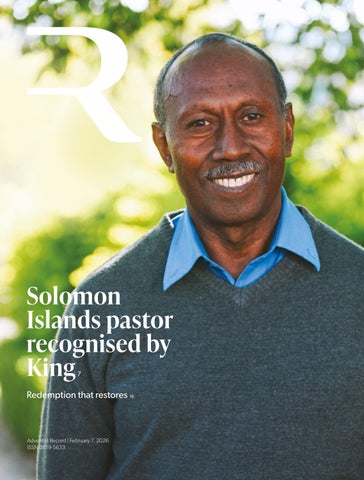
An Adventist pastor from the Solomon Islands has been recognised in the 2026 New Year’s Honours for his service to the Seventh-day Adventist Church locally and internationally.
Pastor Lawrence Gilmore Peter Tanabose was appointed a Companion of the Order of St Michael and St George, one of the highest honours conferred in the Solomon Islands. The honour was announced by Governor-General Sir David Tiva Kapu during his New Year’s address and was approved by King Charles III.
Pastor Tanabose served the Adventist Church for 37 years in a range of pastoral, educational and senior administrative roles across the Solomon Islands, Papua New Guinea, Fiji and Australia. His service included leadership positions at mission, union and division levels within the Church.
Among his key contributions was his involvement in brokering peace during the Solomon Islands ethnic conflict between 1998 and 2003, when church leaders worked alongside community and government representatives during negotiations between Guadalcanal and Malaita groups. He also played a role in uniting the Eastern and Western Solomon Islands missions into a single entity.
Pastor Tanabose was also the first Pacific Island national to serve as a senior administrator at the South Pacific Division (SPD), where he held the role of general secretary from 2008 to 2014.
SPD president Pastor Glenn Townend, who was serving as president of the Western Australia Conference and on the SPD Executive Committee when Pastor Tanabose was secretary of the Division, reflected on his contribution. “During that time, Lawrence was an astute spiritual leader, focused on prayer and relationships,” said Pastor Townend. “He read people and situations well. Courage and compassion, and standing for what was right were exemplified in his life.”
At 73, Pastor Tanabose said he received news of the honour with gratitude. “It is a privilege to be recognised in this way,” he said, acknowledging the colleagues and communities he served throughout his ministry. Despite officially retiring in 2015, Pastor Tanabose continued to serve. “He continued supporting church work as a retired pastor until his physical and mental strength would not allow him to carry on,” said his son, Gilmore Tanabose. “His ministry truly reflects a servant’s heart and a steady commitment to caring for others in both everyday moments and more formal roles.”
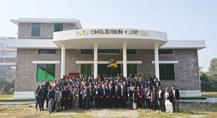
The Pakistan Union Section opened a new children’s care centre for children without parental care, with the US$150,000, 50-child facility dedicated on December 11, 2025, in the presence of Northern Asia-Pacific Division president Kang Soon-Gi. The centre grew from the long-term prayers of a California church member and a cross-Pacific partnership.—NSD
The Glasgow Adventist Gospel Choir performed at one of Scotland’s largest prisons for an Advent-themed concert on December 14, sharing gospel music, carols and Bible readings during a service organised by the Church of Scotland Chaplaincy. The visit included an inmate accompanying the choir on piano and an emotional response to “Amazing Grace”.—ANN
A retired Adventist pastor in Saint Lucia gained national recognition after his Kweyol (Creole) translation of the country’s national anthem was officially adopted and widely performed at schools, public events and political gatherings. Pastor Wulstan Charles’ work helped make the anthem’s message of unity accessible to Kweyol speakers.—IAD
Bible app YouVersion has revealed that Isaiah 41:10 is the most engaged verse of 2025, for the fourth time in six years. The announcement of the top verses follows a record-breaking surge in global Bible use across YouVersion’s family of apps. The organisation said the trend reflected a deep spiritual hunger emerging in every region of the world.—Vision Christian Media
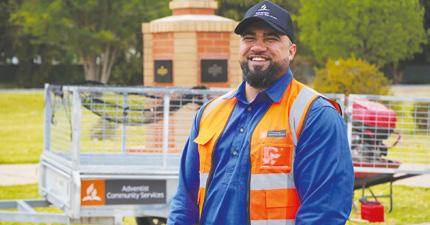
Churches across Australia can now access unified Adventist Community Services branding for local outreach activities. The new initiative, by the South New South Wales and North New South Wales conferences, includes t-shirts, hats and other merchandise featuring the Adventist Community Services logo and the message “Here to Serve”, aimed at increasing public recognition of the Church’s community service. It responds to national research showing low awareness of the Adventist Church’s role in serving those in need. Conference leaders say consistent, visible branding can help communities better connect practical acts of service with the Adventist Church’s mission and values. More information is available at <adventistmerch.com> —Tracey Bridcutt
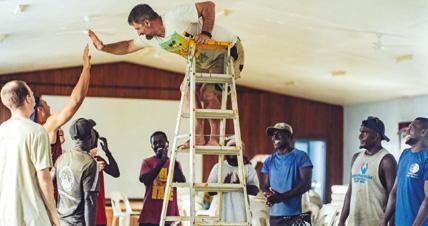
A mission project coordinated by Adventist Media (AM) raised $A20,000 for the purchase and shipment of a solar power system and battery for Tangibangara Seventh-day Adventist Church on Choiseul Island, Solomon Islands. AM adopted the project after video editor Gilmore Tanabose, originally from Tangibangara, shared that the church’s only available power source was a petrol generator, limiting worship and outreach activities and placing financial strain on the local church. The mission team, including a solar technician, travelled from October 19 to 29 and also provided IT and media training, assisted teachers and conducted children’s programs. The solar installation is expected to save the church around $A6000 annually, enabling funds to be redirected toward ministry.—Juliana Muniz
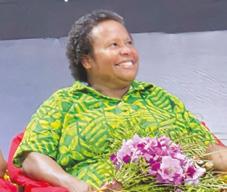
Sonoma Adventist College (PNG) has farewelled outgoing principal Dr Jennifer Litau, concluding more than three years of leadership at the college and 27 years of service to the Adventist Church. During her time at Sonoma, Dr Litau oversaw key developments and was recognised for her integrity, humility and commitment to staff and students. Now retired, she intends to focus on prison ministry. In her farewell address, Dr Litau urged Sonoma staff to unite in love, creating an environment where non-Adventist students can find Jesus.—Garry Laukei
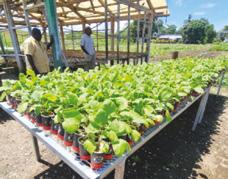
A new nursery house has been completed at Betikama Adventist College in the Solomon Islands, with the aim of improving the wellbeing of students and helping build resilience. The Cocoa Nursery House will be used to establish both vegetable and cocoa nurseries. Project manager Gibson Apusae said the project is progressing well and has received strong enthusiasm from the school community.—Denver Newter

The Adventist Church in Vanuatu recorded 2046 baptisms nationwide in 2025, reinforcing its position as one of the country’s largest Christian denominations.
The baptisms bring total Adventist Church membership in the country to 31,245.
According to the Vanuatu Bureau of Statistics, the Adventist Church is the second-largest Christian denomination in the country, after the Presbyterian Church. With a national population of about 335,000, almost one in 10 people in Vanuatu identify as Seventh-day Adventist.
The baptism figures were recorded across all provinces during 2025 and were formally presented as part of the Mission secretary’s report at the Vanuatu Mission constituency session in December 2025.
Outgoing Mission secretary Pastor Max Senembe said the results reflected the collective involvement of pastors, elders and church members at the local level.
“This growth shows that people are responding to God’s call and that our members are actively sharing their faith in villages, towns and islands across Vanuatu,” Pastor Senembe said.
He noted that small group ministries, health outreach programs and public evangelism campaigns contributed to the baptismal results recorded during the year.
Youth-led evangelism initiatives, music ministry and digital outreach were among the approaches used to engage communities, alongside radio programs and local visits aimed at sharing Biblebased messages —Juliana Muniz
have news to share?
Send info and photos to <news@record.net.au>
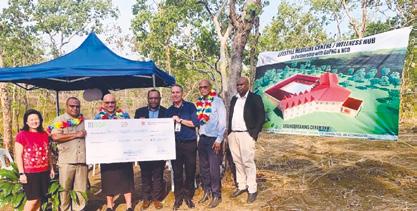
A groundbreaking ceremony has marked the start of construction of a lifestyle medicine centre at Pacific Adventist University in Port Moresby, Papua New Guinea. The new centre will train 10,000 Toes Campaign ambassadors to lead the fight against diabetes and other non-communicable diseases in the region. Dr Geraldine Lagani, who will serve as medical director at the clinic, said, “I see it as a lighthouse—a place of guidance, practical support and hope, where a dedicated team of professionals can offer holistic care and help patients make real and lasting changes for better health.”
—Tracey
Bridcutt

Sanitarium Health Food Company continues to support community sport and wellbeing through its Grassroots Community Support Program, which assists local sporting clubs and individuals with funding, uniforms and merchandise. The initiative supports a range of grassroots activities across Australia, including Sanitarium employees involved in community sport. One recipient, graduate revenue analyst Tim Rye, received assistance to compete with the Central Coast Rhinos during the 2024–25 Australian Ice Hockey League season, helping cover travel and equipment costs. Mr Rye said the support enabled him to continue competing while staying connected to his local sporting community. “It feels great to know my workplace backs both me and my passions,” he said. Sanitarium representatives say the program reflects the company’s broader commitment to health, wellbeing and community connection. —Record staff

They arrive exhausted. Stressed. Sometimes grieving. Often unsure of what they are looking for—only that they need time away.
Within days, something begins to shift.
For more than three decades, Cedarvale Health and Lifestyle Retreat has offered a place to slow down, reset and heal. Named after the striking red cedar trees dotted throughout the property, the retreat feels worlds away from the hustle and bustle, nestled amid 150 acres of pristine rainforest in Kangaroo Valley in southern New South Wales. Cedarvale is a supportive ministry of the Seventh-day Adventist Church, welcoming people from all backgrounds seeking to improve their health and wellbeing.
Long before health retreats became popular, Adventist couple Geoff and Belle Richardson purchased the undeveloped bush block in the 1960s. In retirement, Geoff, a builder and architect, gradually began shaping the rugged terrain, including the addition of a transportable site office that became the first building on the property. His vision was shared and nurtured by others—particularly Eric and Hazel Hon, and Doug and Marge Easthope—who saw the potential for the property to operate as a health retreat. Hazel began hosting weekend programs, planting the seeds for what would follow.
In 1990, a weekend retreat hosted by Sydney Van Ministry proved pivotal. This led to a small team, including Scott Tindall, Adrian Dorman and Angela Kerr, going to Cedarvale and giving it a clear vision to become an ongoing health retreat.
Before his death in 1992 at the age of 85, Geoff took a decisive step that would shape Cedarvale’s future—establishing it as a not-for-profit charitable trust.
Today, Cedarvale is governed by a diverse Adventist board and its structure remains intentionally different from most health retreats.
According to former manager and current board member Andrew Wigglesworth, what makes Cedarvale unique is that nobody owns it. “It’s a trust . . . it’s not here for profitable enterprise, it’s here to minister to the community,” he says.
Operating a not-for-profit ministry in the current economic climate has its challenges—especially as the rising cost of living and higher interest rates have affected guest numbers—but the commitment remains.
With a team of seven and accommodation for up to nine guests at a time, Cedarvale Kangaroo Valley operates at an intimate scale. Most guests come from Sydney and Canberra, though some travel from further afield, including interstate and even New Zealand.
Cedarvale’s relationship with the Adventist Church is both practical and intentional. Conference health directors seek advice or support from the team, and Cedarvale staff contribute—often in their own time—to camps, workshops and outreach programs.
Over the past year alone, Cedarvale staff have presented at the AMEN (Adventist Medical Evangelism Network) Conference, South NSW Big Camp, the ELIA Wellness Summit, Pacific Adventist University’s wellness retreat and local church outreach initiatives.
“If we can support the Church in its mission of health ministry, we will do whatever we can,” Mr Wigglesworth says. “Our primary purpose is to help people with their health but it’s also helping them connect with God.”
Cedarvale is careful to provide evidence-based educational material, aligning closely with the Church’s lifestyle medicine approach.
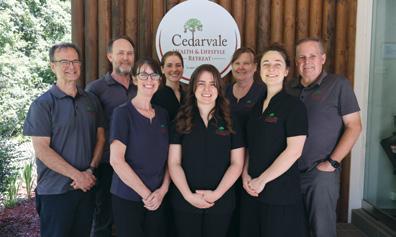
As a not-for-profit ministry, Cedarvale also offers practical support for those who may not otherwise be able to access the retreat.
Through its “Worthy Guest” program, Cedarvale provides subsidised stays for people facing particular challenges, including pastors and teachers experiencing burnout, grief or serious illness. The program is supported through tax-deductible donations—a “pay-it-forward” model that enables others to receive care when they need it most.
The Cedarvale approach is gentle and relational. Of the 1000 guests hosted during the past five years, the vast majority (95 per cent) were from the wider community. People arrive through referrals from health professionals, word of mouth, online searches or simply by noticing the sign on the retreat’s front gate.
Guests come for many reasons, with stress being the most common. Anxiety, sleep issues, lifestyle-related conditions or major life transitions like retirement are other factors. Many are return guests, some nearly every year, seeking a renewed focus.
“We see people, particularly people who are very stressed, able to recalibrate and find the motivation to go back and live life again in perhaps a better way,’’ says Mr Wigglesworth’s wife Jenny, a nurse and Cedarvale’s wellness coach.
“Cedarvale provides the opportunity to relax in a welcoming environment where guests feel nurtured and cared for—that’s a big thing for a lot of people, particularly for those who are living alone, struggling with loneliness.”
The program addresses the whole person—mind, body and spirit—through nourishment, activity, rest and connection. Guests take part in nature walks, health talks, cooking classes, exercise sessions and treatments ranging from massage to skin therapies to hydrotherapy. Nutritious plant-based meals are served throughout the stay, and guests receive a recipe book to take home.
What many notice most, however, is the atmosphere. Guests regularly comment that “there is something
different about this place”. Some ask questions, seeking to know what it is that makes it different. Others recognise it readily as the presence of God.
Spiritual conversations arise naturally—over meals shared with staff, during one-on-one wellness coaching or on quiet walks through the rainforest. Staff will sometimes offer to pray before a guest’s treatment, depending on where that person is on their spiritual journey.
Adventist books and other resources are on display and shared with guests, and connections are developed. Over the years, Cedarvale staff have witnessed countless stories of transformation and have connected many people with local pastors and churches.
“It’s not our purpose to preach to people here but we are always willing to have a conversation with those who are inquiring, and so there have been discussions on all sorts of doctrinal issues,” Mrs Wigglesworth says.
“You can establish trust with people very quickly in a setting like this that may take longer if it was not in this kind of environment. It’s recognising that it’s God’s work that keeps you going because it is a work that takes all of your focus and attention. We definitely rely on the Holy Spirit to guide the words that we say.”
That reliance on God’s guidance has shaped not only individual encounters with guests, but Cedarvale’s story as a whole. “We could have written probably a dozen books by now just with the stories of how God has protected this place,” reflects Mr Wigglesworth, recalling fires, floods and other incidents. “We see that God has been able to protect and keep the place safe from serious calamities.”
In recent years, Geoff Richardson’s original vision for “Cedarvale Health and Lifestyle Retreats” has begun to take new shape. In 2023, a second Cedarvale site opened in Victoria’s Yarra Ranges.
“For us that was an exciting moment,” Mr Wigglesworth says. “Geoff always had a vision that there would be more than just this site here at Kangaroo Valley and it wasn’t until the last couple of years that that vision has been realised.”
The purpose-built wellness facility and training centre is designed to minister to the needs of the Victorian public and also support the health ministry work of the Victorian Conference and wider church ministries.
While the work continues to expand and adapt, Cedarvale’s core purpose remains unchanged. It offers something increasingly rare in our fast-moving and often fragmented world: a place shaped by faith, where people are given time, space and care to begin again.
Tracey Bridcutt communication director, South Pacific Division.
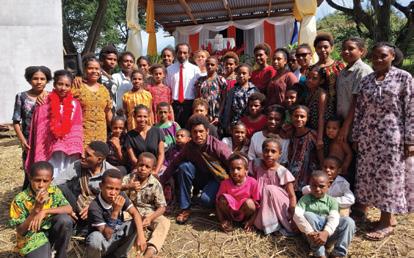
"I thought I was alone"
During a recent Pathfinder community service activity at the Granville Seventh-day Adventist Church in Papua New Guinea, the youth ministries team met Thomas Kamboi, a man living alone in a deteriorating home in 9 Mile.
Thomas, a former mine worker, had lost his health, his home and his family support. Despite this, he remained faithful in prayer and Bible study, pleading for God’s help.
When the Pathfinders arrived to deliver water and offer support, Thomas welcomed them with tears and gratitude. “God has led you here,” he said. “I thought I was alone.”
The youth prayed with him, cleaned his surroundings, provided food supplies and supported his breathing needs.
IThat same week, Thomas attended Sabbath worship with great joy.
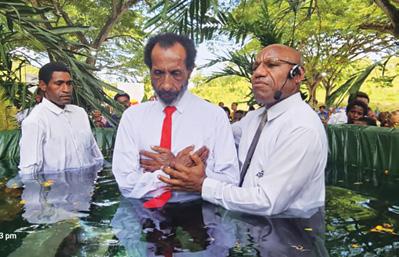
Feeling God’s call, he requested baptism. After attending evangelistic meetings held from November 24–29, 2025, Thomas was baptised on Sabbath, November 29, along with 13 others.
Thomas is now a member of the Granville Seventh-day Adventist church. Let us continue to pray for him and for many others who may be waiting for God to send help their way.
n a heartwarming act of compassion, a nine-year-old boy named Ricksey has touched the hearts of my missionary family originally from Okapa, Eastern Highlands Province.
I received an unexpected but deeply moving gift on the evening of July 28, 2025.
Around 7pm, young Ricksey, who lost his mother a year ago and lives with his father and six siblings, quietly visited my family and brought three pieces of firewood. Early the next morning, at around 9am, he returned with two more pieces.
Curious and moved, I asked him, “Why are you doing this?”
With a soft voice and tender heart, Ricksey replied, “I feel compassion on you, so I brought you wood.”
The humble words and kind act brought tears to my eyes. Touched by the boy’s sincerity I said, “Thank you very much for the effort and the heart you have towards our family. May God bless you.”
This simple gesture by a young boy has now become a powerful reminder of the beauty of compassion and the impact of kindness, no matter how small.
Harry Nasi
pastors Kupoda Church under the Kerenda Organised Church in Imboungu District, Southern Highlands Province, PNG.


They’re so simple to make, offer grab-and-go convenience and can be customised to your taste. Plus, you can pack them full of veggies to help you reach your five serves a day.

You may love them, but do you find yourself wondering why you feel hungry straight after drinking them? This guide provides you with an easy formula to build a perfectly balanced smoothie that will help keep you feeling full and firing on all cylinders this summer.
The short answer is: sometimes. They’re a great option when you’re time poor, need an easy portable breakfast that can pack in the nutrients or to get some extra fruit, veggies, nuts and seeds into the kids. If you’re overloading it with sweeteners and forgetting the healthy fats, protein and complex carbs, then you are likely consuming something that’s high in calories but not satisfying—so you’ll be hungry five minutes after drinking it. The best smoothies don’t just taste great, they’re also nutritionally balanced—with a nice mix of healthy wholefoods, good fats and protein. A well-made smoothie can be a healthy choice at any time of the day and is a great alternative to skipping meals completely. It’s just a matter of getting the balance right.
Have fun with fruit: Include at least one fruit and if you like a creamy smoothie, frozen bananas are a great addition for taste and texture. Using frozen fruits are also a good way to help with food waste and use up fruit that may be past its best. Chop them up and store in a container in the freezer ready to be blended.
Pack It With Protein: Include a protein to help keep you feeling fuller for longer. You can add soy or dairy milk, yoghurt and nut butters for a tasty smoothie-friendly protein hit.
Don’t Forget The Veg: Add at least one veggie such as baby spinach, carrot or cucumber for maximum nutrition and fibre. Adding vegetables to your smoothie is a simple way to help you reach your goal of five serves a day. Most blend easily without altering the taste.
Go For Good Fats: Include healthy fats like nut butters, seeds or avocado for longer satisfaction. Avocado can also help give your smoothie a nice creamy texture without impacting on flavour. Grab a grain: Adding wholegrains to your smoothies is a great way to help meet your recommended 48g of wholegrains per day. Plus they can help you feel fuller for longer and help make the smoothie nice and thick. Add wholegrains such as 1 WeetBix, ¼ cup rolled oats or dates.
If you can, take the time to sip it and savour the taste. Studies have shown that eating slowly and mindfully helps with a feeling of fullness and satisfaction. When you’re eating (or drinking!) too quickly, your body doesn’t get a chance to signal to the brain that you’re getting full and should probably stop eating.
Head to our website for some delicious smoothie ideas!

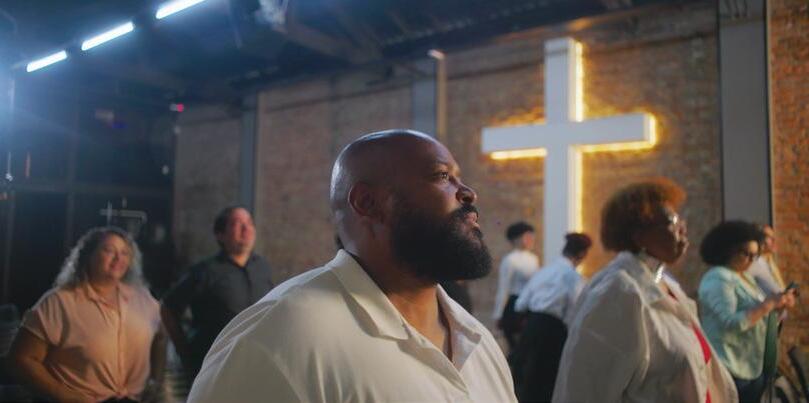
Our Church stands at a defining moment—a call to refocus our mission on what matters most: making disciples who live and share the love of Jesus. Christ’s command in Matthew 28:19,20 still echoes through time: “Go and make disciples of all nations, baptising them . . . and teaching them to obey everything I have commanded you.”
This call is not just an activity or program—it is our identity. To be a disciple is to walk daily with Jesus, allowing Him to shape every corner of our lives. To live as a steward is to recognise that everything—our time, talents, treasure and testimony—belongs to God and must be used to advance His kingdom.
Perhaps you’re reading about Mission Refocus for the first time, or you’ve heard the term but wonder what it means for you personally. Mission Refocus is a strategic initiative designed to help our Church return to its core purpose: making disciples of Jesus Christ who transform their communities. At its heart, Mission Refocus asks three fundamental questions: Are we truly making disciples? Are our members growing in their relationship with Jesus? Are we effectively reaching our communities with the gospel?
This framework matters because it addresses a challenge many churches face: the drift from mission to maintenance. Over time, churches can become focused on preserving programs rather than pursuing the Great Commission. Mission Refocus calls us back to intentional discipleship and purposeful stewardship—not as new burdens, but as pathways to vibrant, meaningful faith. Whether your church has formally adopted Mission Refocus or not, its principles offer every believer a practical way to deepen their walk with Christ and multiply their impact for His
kingdom. The beauty of this approach is that it doesn’t require institutional approval—it begins with individual commitment.
Discipleship and stewardship are inseparable. Discipleship is the lifelong process of inward transformation that happens when we surrender fully to Jesus. Stewardship is the outward expression of that transformation—how we live, serve and give. When woven together, they form a vibrant, Christ-centred faith. Discipleship without stewardship becomes shallow, while stewardship without discipleship becomes mechanical. But when both unite, they ignite spiritual growth, generosity and missional living.
Barnabas offers a powerful biblical example. In Acts 4:36,37, he sold his land to support the church—an act of stewardship born from his devotion to Jesus. Later, in Acts 11:22–26, he sought out Paul and helped nurture the believers in Antioch. Barnabas lived a faith that was both generous and missional, showing how discipleship and stewardship work hand in hand to build the church and expand God’s mission.
When we embrace intentional discipleship, our faith moves from just going through the motions to an intentional, daily relationship. Prayer becomes conversation, not obligation. Bible study becomes discovery, not duty. We find ourselves genuinely changed by our encounters with Jesus, not just informed about Him.
When we practise faithful stewardship, our lives gain purpose and direction. Every resource we possess—our pay cheque, our spare time, our natural abilities, our life experiences—becomes an opportunity to partner with God in His mission. Together, these principles answer the deep
human need for meaning and significance. We’re not just attending church; we’re advancing God’s kingdom. This framework helps us live with intention, grow with purpose and give with joy.
Faithful stewards of God’s mission
Psalm 24:1 reminds us, “The earth is the Lord’s, and everything in it.” As stewards, we are caretakers—not owners—of God’s gifts. Our calling is to manage these resources with faithfulness and purpose.
Peter urges us, “Each of you should use whatever gift you have received to serve others, as faithful stewards of God’s grace” (1 Peter 4:10). Paul adds, “God loves a cheerful giver” (2 Corinthians 9:7). Jesus’ parable of the talents (Matthew 25:14–30) and the widow’s offering (Mark 12:41–44) both teach that what matters most is not how much we have, but how faithfully we use what God has given us. When we live as faithful stewards, our resources—spiritual and material—become instruments of mission. Stewardship is not just about money; it’s about mission partnership.
Ellen White ties discipleship and stewardship together beautifully. In Steps to Christ she writes, “If any man be in Christ, he is a new creature . . . all things are become new” (2 Corinthians 5:17). This transformation is the essence of discipleship—a life lived under the lordship of Christ. In Counsels on Stewardship she adds, “As stewards of the grace of God, we are handling the Lord’s money . . . God tests us here by committing to us temporal possessions, that our use of these may show whether we can be entrusted with eternal riches.”
Stewardship, then, is a test of trust—a training ground for eternity. Ben Maxson, in Get Normal, expands on this truth, describing stewardship as “a lifestyle lived within the lordship of Jesus Christ—discipleship”. When stewardship flows from discipleship, generosity becomes natural, and mission becomes personal.
The power of combining discipleship and stewardship is best seen in real lives—such as those of Sarah and Michael.
Sarah, a single mother, felt her faith dimming until she joined a small Bible study group. Through prayer and community, she rediscovered Jesus and began journalling her gratitude each morning (discipleship). When she offered her photography skills to support church outreach, her photos drew new people to community events and worship (stewardship of talent). Her faith and service became a living witness of Christ’s love in action.
Michael, a retired mechanic, once hesitated to tithe from his small pension. After hearing a sermon on trust, he chose to give faithfully. Soon, an unexpected refund reminded him that God provides. Later, he began
mentoring teens in Pathfinders, sharing stories of God’s faithfulness (stewardship of testimony). His walk with Jesus deepened as he poured into others (discipleship).
Stories like theirs capture the essence of missional living: everyday believers growing in discipleship and using their gifts in stewardship to make a difference in their communities. This is what renewal looks like—not in grand programs, but in transformed lives multiplying Christ’s influence one relationship at a time.
Whether your congregation has formally adopted Mission Refocus or you’re simply seeking to deepen your faith, the call is the same: shift from passive attendance to active discipleship, from occasional giving to intentional partnering, from program maintenance to people transformation.
Discipleship and stewardship together empower this shift. Discipleship gives us purpose; stewardship gives us the tools. Ellen White’s counsel still guides us: Christ’s method alone brings true success—mingling with people, showing sympathy, meeting needs and inviting them to follow Him. That is both discipleship and stewardship in motion.
This approach works because it’s biblical, practical and reproducible. It doesn’t require elaborate structures or budgets—just willing hearts. It transforms churches because it first transforms individuals.
A personal challenge: where will you start?
Mission begins with me. Take a moment to reflect:
• How is Jesus calling me to grow as His disciple?
• How can I use my time, talents, treasure or testimony to advance His mission?
Here are practical first steps: Join a discipleship group or start a Bible study with a friend. Mentor someone younger in faith. Volunteer for a ministry that meets community needs. Commit to regular, proportional giving that supports evangelism and service.
Start small but start today. Let your discipleship guide your stewardship, and your stewardship fuel your discipleship. Together, they form the heartbeat of renewed mission—a movement of believers living and giving for the glory of God and the blessing of others.
This is how personal faith becomes a powerful witness. This is how ordinary church members become extraordinary agents of transformation. The question is not whether your church has adopted Mission Refocus formally. The question is: Will you embrace these principles personally?
The mission begins now. The mission begins with you.
Nicu Dumbrava stewardship and discipleship director, Australian Union Conference.
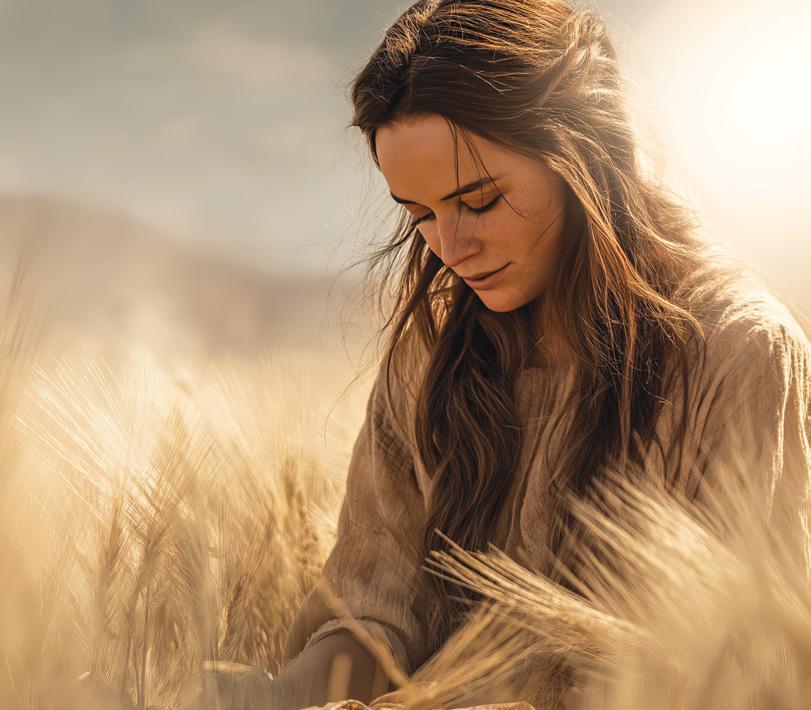
The book of Ruth presents one of Scripture’s most beautiful portrayals of redemption through the Hebrew concept of the Go’el, commonly translated as “kinsman redeemer”. Rooted in Israel’s covenantal law, the Go’el was a close relative entrusted with restoring what had been lost: be it land, lineage, freedom or dignity. Far more than a legal mechanism, the Go’el embodied God’s compassionate concern for the vulnerable and His commitment to covenant faithfulness. Set during the turbulent era of the Judges, a period marked by moral decay and spiritual instability, Ellen White observes the people of Israel were continually lapsing into idolatry. The book of Ruth, however, shines as a narrative of hope, loyalty and divine providence.1 At its heart stands a foreign widow, Ruth the Moabitess, whose radical faithfulness to the God of Israel reveals that redemption is never confined
by ethnicity, status or past failure. Through the actions of Boaz, the narrative ultimately points beyond itself to Christ, the ultimate Go’el, whose redemptive work secures eternal restoration for God’s last-day people.2
The Hebrew term Go’el derives from the verb ga’al, meaning “to redeem”, “to reclaim” or “to restore”. Within ancient Israelite society, the Go’el functioned as a family protector, responsible for preserving the integrity of the clan. According to Leviticus 25:25, if an Israelite fell into poverty and sold ancestral land, the nearest relative was obligated to redeem it so the inheritance would not be permanently lost. This law safeguarded both economic stability and covenant identity. The role of the Go’el extended beyond property redemption. In cases of childless death,
the redeemer could marry the widow to preserve the deceased lineage (Ruth 4:4–6; cf. Deuteronomy 25:5–10). Additionally, the Go’el could act as an avenger of blood to uphold justice within the community (Numbers 35:19).3
Collectively, these responsibilities reveal a theology of redemption deeply embedded in Israel’s social and spiritual fabric; redemption that restored life, identity and hope. Ellen White affirms this divine pattern, stating that God’s laws were designed to preserve justice, mercy and compassion among His people.4 Significantly, Scripture also presents God Himself as Israel’s ultimate Go’el. In Exodus 6:6, the Lord declares His intent to redeem Israel from Egyptian bondage “with an outstretched arm”. This divine self-revelation establishes a theological pattern where human redeemers operate as visible instruments of God’s redemptive character.
Within the narrative of Ruth, Boaz emerges as the embodiment of the Go’el ideal. Introduced as a “worthy man” of the clan of Elimelech (Ruth 2:1), Boaz is characterised by integrity, generosity and reverence for God. His interaction with Ruth, a poor, foreign widow gleaning in his fields, demonstrates covenant kindness (hesed) in action. Ruth’s arrival in Boaz’s field “by chance” (Ruth 2:3) is, from a theological perspective, a manifestation of divine providence. Boaz not only ensures Ruth’s safety but exceeds legal obligation by offering protection, provision and dignity. His actions reflect a redeemer who is both willing and able: the two essential qualifications for true redemption.5
In Ruth 3:9–13, Boaz formally acknowledges his role as redeemer, yet he proceeds with integrity by honouring the rights of a nearer kinsman. At the city gate (Ruth 4:1–10), Boaz legally redeems both the land of Elimelech and Ruth herself, uniting justice with mercy. His redemption restores Naomi’s future, Ruth’s security and the family line, revealing redemption as both personal and communal.
Redemption, restoration and covenant hope
The culmination of Boaz’s redemptive act is found in Ruth 4:13–17. The birth of Obed transforms Naomi’s emptiness into fullness and her bitterness into joy. The women of Bethlehem proclaim that the child will be a “restorer of life”, acknowledging that redemption ultimately comes from the Lord. This restoration is not merely material but deeply relational and spiritual. Importantly, Obed becomes the grandfather of King David, anchoring the story of Ruth within the broader messianic narrative.6 In a time when “everyone did what was right in his own eyes” (Judge 21:25), God quietly advances His redemptive purposes through faithfulness, obedience and covenant love. The book of Ruth reveals that divine redemption often unfolds through ordinary acts of faithfulness that yield eternal consequences.
Theologically, the Go’el motif in Ruth functions as a typological foreshadowing of Jesus Christ. Like Boaz, Christ is a near kinsman, fully human, yet also uniquely qualified to redeem. Through His incarnation, Christ enters humanity’s poverty; through His death, He pays the redemption price; and through His resurrection, He restores what sin has destroyed. Paul affirms this truth, declaring that “in Him we have redemption through His blood” (Ephesians 1:7). Unlike earthly redeemers, Christ redeems not merely land or lineage, but humanity itself, delivering believers from sin, death and eternal separation from God.7 For lastday followers of Jesus, this truth carries urgent missional significance: the same Redeemer who restored Ruth now calls His people to reflect His redemptive character in a broken world.
The book of Ruth presents a timeless portrait of redemption grounded in covenant love, faithfulness and divine providence. Through Boaz, the Go’el ideal is vividly displayed, revealing a redeemer who acts with justice, compassion and self-sacrificial love. Yet the narrative ultimately directs the reader beyond Bethlehem’s fields to Calvary’s cross, where Christ fulfils the role of the ultimate Kinsman-Redeemer. For God’s last-day people, the message of Ruth is both comforting and compelling: redemption is real, restoration is possible and God is actively at work through faithful lives surrendered to Him. As Christ’s redeemed community, believers are called not only to rejoice in their redemption but to participate in God’s mission of restoring others until the final redemption is fully realised at His glorious return.
1. Ellen White, Patriarchs and Prophets (Washington DC: Review and Herald, 1890), 545.
2. GK Beale, A New Testament Biblical Theology: The Unfolding of the Old Testament in the New (Grand Rapids: Baker Academic, 2014), 28-31;593-597.
3. Daniel Isaac Block, Judges, Ruth, The New American Commentary Gen. Ed. David Dockery 6 (Nashville, Tenn: Broadman & Holman Publishers, 1999), 609–13.
4. Ellen White, The Desires of Ages (Mountain View, CA: Pacific Press, 1898), 308.
5. Block, Judges, Ruth, 670–76.
6. Katharine Doob Sakenfeld, Ruth, Interpretation, a Bible Commentary for Teaching and Preaching (Louisville, Ky: John Knox Press, 1999), 34–89.
7. Christopher JH Wright, The Mission of God: Unlocking the Bible’s Grand Narrative, Second edition. (Downers Grove, IL: IVP Academic, 2025), 262–66; 477–80.
Raicula Rokovou and Manoa Nailiva Compiled while studing at Fulton University, Fiji, in 2025. Raicula is now working as a pastor in Fiji, while Manoa is a missionary in South-East Asia.
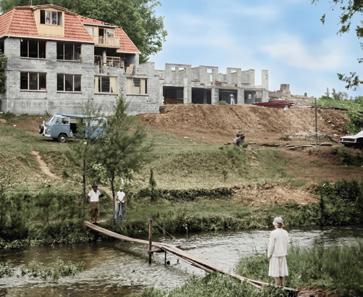
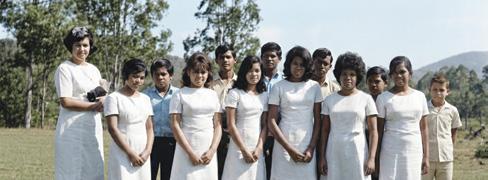
in that very valley, the team had only $600. However, God provided miraculously. During a lunch in Melbourne, a doctor spontaneously donated the $10,000 deposit. Devoted to making the rest of the dream a reality, Pastor Rosendahl then mortgaged his own home to finance the remainder of the $38,000 purchase price, eventually contributing $27,000 of his own funds.
You may have never heard of Mirriwinni, meaning “The last hill before the Promised Land“, but for 30 years this Indigenous ministry in Bellbrook, New South Wales, supported the Adventist education of over 1500 local Indigenous children.
During the late 1960s, the community of Aboriginal and Torres Strait Islander peoples from the Armidale church expressed concerns regarding the future and education of their children. This desire for Christian education fulfilled a much older dream by an Aboriginal man named Thinnegan, who had foreseen the arrival of the gospel to the area years prior in a dream about a white man holding a black book. This man was later identified as Pastor Philip Bulpit Rudge. Pastor Rudge mentored two young cousins, Lena Quinlin and Eileen Holten, who upon returning to the Bellbrook Mission became the driving force behind the school's establishment, asking Pastor Edward Rosendahl, “What can we do for our children?“
In response, Pastor Rosendahl and his wife, partnering with members of the church and community, decided to start up a boarding school in 1967 at Five Day Creek. Money was in such short supply that they purchased old timber cottages for the price of a single building with a roof that leaked “like a sieve“.
After only four years, however, the school was unfortunately forced to close due to financial difficulty and opposition from the state education area inspector. But this decision sparked a passion within Pastor Rosendahl to try again, this time with proper facilities. He promised to return to the area when he retired to help re-establish the school.
The location for this new beginning was confirmed by a spiritual vision given to Thungutti Elder Reuben Kelly, who dreamt of angels singing in the Nulla Nulla Creek valley. When the time came to purchase the 480-acre property
I, along with Fay Oliver, Beryl and Rex Marshall, Elizabeth and Mervyn Cohen, the Kellys and others, started the Mirriwinni Gardens Aboriginal Academy. Classes for the new school officially began in 1978 in a converted cowshed. The construction was a labour of pure grit; when shovels ran out, Samson Bobongie Senior mixed cement with his bare hands. Senior students spent their afternoons making bricks, and when funds for a bridge were insufficient to hire an engineer, the team built it themselves by faith—a structure that still stands today against the full impact of floodwaters.
I served as the teacher in those early years, with Fay Oliver taking on the role of principal in 1979 and remaining in charge for many years. Beyond the physical labour, the team had to overcome deep emotional hurdles. In the wake of the Stolen Generation, many parents initially feared the school was an attempt to take their children away. The school also struggled to shake the label of being “independent“ when they simply desired to be part of the Church’s mission.
Yet, the school flourished. Volunteers from Fiji, the Solomon Islands and Tonga joined the local Indigenous staff, creating a vibrant multicultural family. Ms Oliver, the only female Aboriginal principal in Australia at the time, shared that at the end of most months when bills needed to be paid, there was no money—but she would gather the children together to pray to God to supply their needs, and God never let them down. Ms Oliver never drew a salary in her time working at Mirriwinni.
The success of Mirriwinni wasn’t only academic. Many students came from homes with alcohol, drug abuse and health problems. In 1990 alone, 12 students were baptised—a quarter of the enrolled population of students.
The school was forced to close in 2009 due to financial difficulties, but the work of those who selflessly served there will never be forgotten. It remains a place where impossibilities were turned into possibilities when we prayed and obeyed His leadings.
June Bobongie former principal and teacher at Mirriwinni Gardens Aboriginal Academy. This article was adapted from the Encyclopedia of Seventh-day Adventists.
For God so loved the world that he gave his one and only Son, that whoever believes in him shall not perish but have eternal life” (John 3:16).
We live in a world where value is often measured by performance. As humans, we tend to place expectations on the people around us—our employees, family members, even friends—and judge their worth based on how well they meet those expectations.
Think about it: if you're an employer, do you truly see and appreciate your employees beyond their tasks? If you’re someone in charge of a household, do you value the babysitter or relative who stays with you? Or have they become invisible labour—people you rely on but rarely affirm?
Too often, we treat others like tools to meet our needs rather than souls worthy of love and appreciation.
But God sees things differently.
John 3:16 is more than a memory verse, it’s a

declaration of a love that sees beyond performance. “For God so loved the world . . .” Not just the good, the obedient or the productive. He loved everyone. Enough to send His only Son to die for us not because we earned it, but because we were worth it to Him.
God’s love isn’t transactional. It doesn’t demand perfection before affection. He values each person deeply, simply because they are His creation. And if God sees such worth in people, shouldn’t we?
This truth calls us to live differently. To slow down, to see people the way God does. To value those we take for granted. To affirm the dignity of the quiet worker, the overlooked helper, the imperfect relative.
When we love like this, we reflect the very heart of the gospel.
A male monarch is a king, while a female monarch is a queen; similarly, royal children are princes or princesses; a knighted male is a knight while a knighted female is a dame; there are also actors and actresses, hosts and hostesses, lords and ladies, and the list could go on.
Why not find a title for commissioned/ordained females that honours them with a title that recognises both their calling to ministry as well as their unique perspectives, skills and contributions as females. This may also solve some issues in some minds.
Gordon Stafford, via email
I am concerned and horrified by the inclusion of a heinous
story of domestic violence in the Teacher Comments of the Adult Sabbath School Quarterly (Lesson 1, Dec 27-Jan 2). A true account of a woman’s painful death from horrendous burns inflicted by her abusive husband is used as an example of God’s love. As she died, the woman protected her abuser from facing any consequences of her murder by saying it was an accident. At no point in the lesson is there a statement encouraging women to seek safety if they are being abused; nor is the behaviour of the husband condemned.
Almost 1 in 3 women around the world will be the victim of physical or sexual violence at some point in their lives. In Australia, 1 in 6 women experience domestic violence, with 77 women dying in violent circumstances
in 2025. We can be certain that there are women in our congregations today who have been, will be or are currently being abused by an intimate partner. Abusive men use stories like this to keep women under their control. The Church has an obligation to present the horrors of domestic violence accurately and not put vulnerable women at risk.
Karen Collum, via email
In response to “Voice of Justice” in Conversations (December 6, 2025), I fully agree with the sentiment of the letter. But I’d like to respond with the following verse: “The whole world was filled with wonder and followed the beast” (Revelation 13:3).
John McKay, via email









https://hyveinternational.org/southpacific

CALDWELL–STANTON.
Benjamin James Caldwell, son of Peter (Olinda, Vic) and Tracey (Smiths Gully) Caldwell, and Katie Michelle Stanton, daughter of Ken and Wendy Stanton (Riverside, Tas), were married on 14.9.25 in Lalla, Tas. Katie and Ben met at Avondale and exchanged their vows of loyalty surrounded by jonquils and azaleas at the Lalla Flower Farm chapel, with family and friends travelling from across Australia and New Zealand to share in their joy. Ben works as a business analyst with TasNetworks and Katie is employed as a Maria Island visitor services officer with Parks and Wildlife Tasmania. They have established their home in Sandy Bay, Tas. Harley Stanton
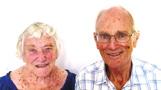
O’HARA, Lynton and Norma (nee Lettis) celebrated their 60th wedding anniversary on 21.12.25. They met as school teachers in Warburton (Vic), where they were later married by the late Pastor LC Coombe. They have two sons, Dean (a ranger) and Julian (a mechanical engineer). They plan to continue their anniversary celebration with a cruise around New Zealand.

PAGE, Rowena Carmel (nee Theuerkauf), born 11.7.1934 in Mackay, Qld; died 17.10.25 in Cooranbong, NSW. Carmel was predeceased by her first husband, Reginald in 2003, and second husband, David in 2022. She is survived by daughters, Rowena Jones (Qld) and Karen and Dale Williams (Central Coast, NSW); son, Len and Pam Jones (Qld); seven grandchildren and 15 great-grandchildren. Carmel was a loving mother, grandmother and great-grandmother who affectionately referred to her family as “her treasures”. She loved the Lord and her family.
Steven Magaitis

ROZENBLAT, Valma, died 28.12.25 in Sydney, NSW. Val is survived by her brother, Paul Bentley; sister-in-law, Sheryl; and nieces and nephews, Nicole, Darren, Gail and Craig. A member of the Stanmore Adventist Church, Val will be greatly missed by all.
The Adventist family owned and operated business, caring for you from Sydney to Newcastle and Wollongong. Contact Arne Neirinckx, who understands our Adventist philosophy. Contact us on 1300 982 803 or 0408 458 452 or <arne@absolutecarefunerals.com.au>, even if you have already paid for your funeral.
Is your church receiving the correct number of Record magazines? Adjust your numbers by notifying Kelli Geelan at <subscriptions@record.net.au> or on +61 (03) 5965 6300.
PARKES ADVENTIST CHURCH 120TH ANNIVERSARY. Past and present members and friends are invited on Sabbath, March 14, 2026, for a commemoration service and potluck lunch. For more details or to RSVP go to facebook.com/ ParkesSDAChurch or phone 0428 641 156 or 0407 708 709.
HARRISVILLE 50TH CHURCH BUILDING ANNIVERSARY. All past ministers and members are invited to celebrate this special occasion on February 21, 2026. Our day will start with Sabbath school at 9:30am, church, potluck lunch and an afternoon program. 27 Mary Street, Harrisville, Queensland.
IN THE STEPS OF PAUL TOUR OF TURKEY AND GREECE. 13 Sep to 4 Oct 2026. Follow the footsteps of the apostle Paul, connecting faith to the ancient sites of Ephesus, Corinth, Thessaloniki and Philipi. Visit the Seven Churches of Revelation and overnight on the Isle of Patmos. Conducted by Dr Peter Roennfeldt. Contact Anita at alltrav@bigpond.net.au or 0405 260 155.
THE INCREDIBLE JOURNEY
Explore the biblical sites of Israel, Jordan and Egypt, Oct/Nov 2026. An amazing travel journey led by Pastor Gary Kent. For full details please contact Anita at Allround travel <alltrav@bigpond.net.au> or 0405 260 155.
STUDY THE ADULT SABBATH SCHOOL LESSON YOUR WAY
Accessible formats for vision loss (large print, audio CD, app, YouTube, podcast, and braille) or hearing loss (Hope SS captioned). Contact CVHS on +61 (0)2 9847 2296 or email <cvhs@adventistmedia.org.au>.
NOTE: Neither the editor, Adventist Media, nor the Seventh-day Adventist Church is responsible for the quality of goods or services advertised. Publication does not indicate endorsement of a product or service. Classified advertisements in Adventist Record are available to Seventh-day Adventist members, churches and institutions only. All advertisements, appreciation, anniversary, wedding and obituary notices may be submitted via <ads@record.net.au> or online at <record.adventistchurch. com>. Notices will not be reprinted unless there is an error of fact caused by Record staff.
abn 59 093 117 689 vol 131 no 2
Consulting editor
Glenn Townend
Editor
Jarrod Stackelroth
News editor
Juliana Muniz
Assistant editors
Ashley Jankiewicz
Danelle Stothers
Copyeditor
Tracey Bridcutt
Graphic designer
Theodora Pau’u
Noticeboard
Julie Laws
Letters editor@record.net.au
News & photos news@record.net.au
Noticeboard ads@record.net.au
Subscriptions subscriptions@record.net.au
+ 61 (03) 5965 6300
Mailed within Australia and New Zealand
$A60.00; $NZ90.00
Other prices on application
Website record.adventistchurch.com
Mailing address
Adventist Media
Locked Bag 1115
Wahroonga NSW 2076
Australia + 61 (02) 9847 2222
Cover credit
Gilmore Tanabose
Next issue
Record February 21