As I walked down the courthouse steps, I felt as though an enormous weight had been lifted from my shoulders.
As I drove to the courthouse, I thought to myself, don’t throw up. And don’t call him “your honour”. I had been summoned to appear before the local magistrate. Not to be dramatic, but my future depended on his verdict.
As I made my way to the stand, I visibly shook. With a stammering voice, I answered the magistrate’s questions. Then, after what seemed to be an eternity, he took his glasses off, peered down and delivered his verdict.
Even if you’ve never been to court, you no doubt have felt the dread-inducing weight of condemnation. I don’t know about you, but for me, it’s debilitating. To know I’ve messed up and that I’m going to have to pay the price for my mistake is one of the worst feelings I’ve experienced.
The apostle Paul gave flesh to the feeling when he wrote to the Galatians, “For all those who rely on the works of the law are under a curse” (Galatians 3:10). The law is good—Paul admits as much (Romans 7:7), yet it stands as an accuser. Though we all want to do what’s right, we’re also at war with ourselves. These ambivalences create conflict, which, if left unchecked, often lead to the same place that Paul himself came to that made him exclaim, “What a wretched man I am! Who will rescue me from this body that is subject to death?” (Romans 7:24).
On that day so many years ago, I felt this condemnation clearly. I knew I had done wrong and had no choice but to throw myself upon the mercy of the law. Likewise, when we do wrong, we too (figuratively) stand before the great Judge of the cosmos. Unlike a human magistrate, we can’t argue with God. No excuse nor justification makes a difference to the God who knows our innermost thoughts, feelings and motivations. We can perhaps trick other people from time to time but with God, there’s no hope. As Martin Luther reflected on his constant efforts to please God, “Though I lived as a monk without reproach, I felt that I was a sinner before God with an extremely disturbed conscience.”
Perhaps you’re wondering what happened that day at court. Don’t worry—I won’t leave you hanging. After deliberation, the magistrate said, “Young man, a driver’s licence is a privilege, not a right.”
“Yes sir,” was all I could manage.
Looking down again to the papers I’d provided, he cleared his throat. “I don’t want to see you here again, is that understood?”
“Yes sir, thank-you sir,” I stammered, before being shown the door. And just like that, it was all over.
As I walked down the courthouse steps, I felt as though an enormous weight had been lifted from my shoulders. The condemnation I had felt so keenly in the weeks leading up to my court appearance evaporated like mist in mid-morning. I was free.
That day I faced the magistrate, he could have “thrown the book at me”. Instead, he chose mercy—a decision for which I was incredibly grateful. However, there’s a distinct difference between a human magistrate and God. With a human, there is rarely assurance on the part of the defendant regarding the final verdict (unless they’ve been bribed). If, on the other hand, we embrace the sacrifice that Jesus made on our behalf, rely on Him to stand in our place before God and live in trust that the Cross is enough, there will be no question as to God’s judgement. After his outburst in Romans 7:24, Paul follows up with, “Thanks be to God, who delivers me through Jesus Christ our Lord!” The law, though it accuses us, has no power against the grace of God given through Jesus. We can have full assurance of salvation, not needing to fear, content that no matter our guilt, it has been washed clean by the blood of the Lamb. As Luther later said, “When I look at myself, I do not see how I can be saved; but when I look at Christ, I do not see how I can be lost.” May you trust in Jesus today—the only One who can save.
Preparation
Glenn Townend South Pacific Division president
A remote highlands village in Papua New Guinea (PNG) received a batch of godpods: solar-powered devices that broadcast the Bible and Adventist spiritual material in “Tok Pidgin”—the common local language. They were distributed among Adventist believers who could not read, and who cherished them because they had not heard God’s Word so clearly in their language. Other local villages wanted godpods but there were not enough to go around so a group of young men from a neighbouring village took the matter into their own hands, breaking into an Adventist home and stealing one. It was passed among many villagers until eventually a group from other villages approached the local missionary and asked to be taught more about God. We may have ethical questions about the way the message of God spread, but God’s Word will bring about a change when received by receptive people.
While in PNG recently I was encouraged by the plans for South Pacific for Christ by the PNG people, who want their closest neighbours to experience what God is doing in their country. When I talked about the plans the most common response was “we will pray for Australia and the Trans Pacific”. Their advice for the success of the harvest programs was “pray and fast”. For months before PNG for Christ, some churches would gather at 4am and pray for an hour before work. It seems that prayer is the answer to see God move in all the countries of the South Pacific in a similar way. Here are two promises from Jesus worth claiming: “Therefore, I tell you, whatever you ask for in prayer, believe that you have received it, and it will be yours” (Mark 11:24). “And I will do whatever you ask in my name, so that the Father may be glorified in the Son. You may ask me for anything in my name, and I will do it” (John 14:13,14). Ellen White also says, “The greatest victories . . . are not those gained by talent or education, by wealth or the favour of men. They are those victories that are gained in the audience chamber with God” (Patriarchs and Prophets, p203); and “Prayer and faith will do what no power on earth can accomplish” (Ministry of Healing, p509). Will you join me to pray that the message of Jesus triumphs in every country of the South Pacific in the next five years?
SPD opens consultation on long-term plans for Avondale and Wahroonga estates
Wahroonga, NSW | Tracey Bridcutt
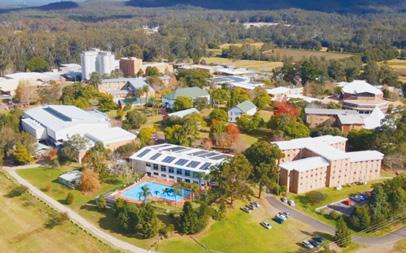
The South Pacific Division (SPD) has begun the process of creating long-term masterplans for both the Wahroonga Estate in Sydney and the Avondale Estate in Cooranbong.
Leaders emphasise that the process is in its early, consultative stages, with nothing locked in. The focus is on preparing the estates for the decades ahead by addressing long-standing zoning issues, understanding infrastructure needs and supporting the mission of the Church across both sites.
SPD chief financial officer Francois Keet said the masterplans will be shaped through extensive consultation with all entities on each estate, including the local churches.
“This is an open conversation,” Mr Keet said. “We are asking questions and listening. The churches have been invited into the process because they are an important part of the estate. They can choose to participate or choose not to—either choice is fully respected.
“We’re at the stage of dreaming and possibilities. Nothing is predetermined. This is simply an opportunity for churches and other entities to consider what their future ministry could look like in 20 or 30 years, if they want to explore those ideas.”
Why masterplans are needed
At Wahroonga, a pending fire safety order on the San’s Clifford Tower has required the SPD to review the long-term needs of the precinct. “When there are major infrastructure challenges, it’s wise to step back and look at the broader estate to understand what’s required for the future,” Mr Keet said.
At Avondale, the need is different but equally important. Since the 1800s, the estate has been divided into numerous small lots separated by “paper roads”—roads marked
on plans but never built. The local council has asked the SPD to resolve these anomalies so the estate can operate cohesively.
A further consideration is the zoning of the old Sanitarium factory site, which is still classified as industrial land. This limits how the land can be used. “As it stands, the old factory can only be used for industrial purposes,” said Division Property Trust manager Lorin Bradford. “But the Church may want to use that land to support Avondale University or other ministry needs in the future. Without a zoning change, none of that is possible.
“Cooranbong is no longer a small rural town,” he added. “It’s part of a rapidly growing region. We want the estate to be structured in a way that supports the Church’s mission into the future, not locked into restrictions from more than a century ago.”
Opportunities for local churches—if they choose
While participation is optional, leaders say masterplanning opens the door for local churches to consider longterm ministry possibilities such as developing centres of influence for their communities.
“The churches have the freedom to simply continue as they are, or to explore new possibilities. Either option is perfectly acceptable,” Mr Keet said. “This is about opportunity, not obligation.”
Leaders stress that the purpose of masterplanning is to strengthen mission by ensuring the estates are functional, future-ready and able to support the ministries located on them.
“This is about mobilising resources for mission,” Mr Keet said. “We are preparing the estates so the Church can continue to thrive for generations to come.”
Avondale Estate . . . masterplanning is aimed at strengthening mission. The Wahroonga Estate . . . the SPD is looking at the long-term needs of the precinct.
Women’s retreat raises more than $A30,000 for children in Cambodia
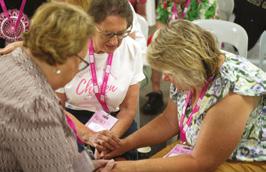
The North New South Wales (NNSW) Women’s Ministries’ RESET retreat raised more than $A30,000 to support Asian Aid’s NightCare for Little Ones initiative, which provides night care for children living in Cambodia’s red-light districts.
Held October 24–26 at Yarra Holiday Park, the retreat brought together around 140 women for worship, workshops and fellowship under the theme “Chosen”.
Funds were raised through offerings, a dessert café and an art auction featuring works donated by women artists. With $A9000 already collected at the women’s fundraising dinner during Big Camp in April, the goal was to reach $A20,000 at the retreat. An anonymous donor pledged to match the amount dollar-for-dollar if the goal was met, resulting in a total of
$A40,000 for the project.
“I’m actually overwhelmed that there’s such generosity,” said NNSW women’s ministries director Beryl Landers. “This is a miracle. And it’s evidence that if we just put our foot in the water, God will open the floodgates and He will bless our efforts.”
Fundraising has been a key component of the women’s ministries programs in NNSW this year, with the team choosing to support the NightCare initiative throughout 2025. Mrs Landers said the focus reflects a desire to serve beyond the event setting. “When we see that children are suffering, women are trapped, trafficked and abused, we can’t sit and just enjoy all these lovely gatherings. Our gathering must bless others. And that’s one of the pillars of our ministry,” she said.
ATSIM Bible supporting Scripture engagement across Australia
Ringwood, Vic | Lorraine Atchia
Growing partnerships between Aboriginal and Torres Strait Islander Ministries (ATSIM) and community organisations are helping expand the distribution of the Easy Reading Family Bible, also known as the ATSIM Bible, across Australia.
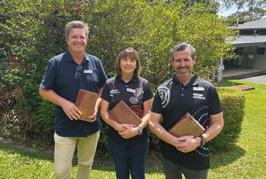
In October, Mission Australia CEO Sharon Callister, deputy CEO Ben Carblis and regional leader for North Queensland Dr Phil Flint each received an ATSIM Bible. Mission Australia is a national community services organisation in Australia that helps vulnerable people overcome homelessness, poverty and disadvantage.
The connection between Mission Australia and the Adventist Church has been strengthened through the work of Daniel Gela, former Mamarapha College student and Mission Australia community chaplain in Cairns Southside, and Uncle Noel Wason, whose earlier ministry in Yarrabah helped establish community relationships.
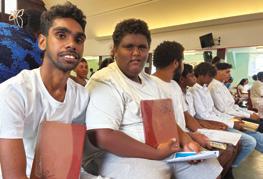
Earlier this year, Reverend Leslie Baird, a former Anglican minister who runs Thursday night Bible studies for young people in Yarrabah, received an initial supply of 60 ATSIM Bibles. Aware that the Bibles were produced by the Adventist Church, he welcomed the opportunity to make them available to local youth. According to Reverend Baird, “the response was overwhelmingly positive” with young people and families expressing gratitude and requesting additional copies for personal and family use.
Following the response in Yarrabah, Mission Australia’s head office has ordered 120 ATSIM Bibles for use in several regions across Australia, including Far North Queensland, Mornington Island, Dubbo, Coffs Harbour, Whyalla, Darwin and Perth.
The ATSIM Bible is available for churches and community organisations. For enquiries about bulk orders, contact <atsim@adventist.org.au>.
Stuarts Point, NSW | Juliana Muniz
Dr Phil Flint, Sharon Callister and Ben Carblis.
Around 140 women attended the event [Credit: Edgard Lopez].
Confirmation service in Yarrabah, where the young people received their ATSIM Bibles.
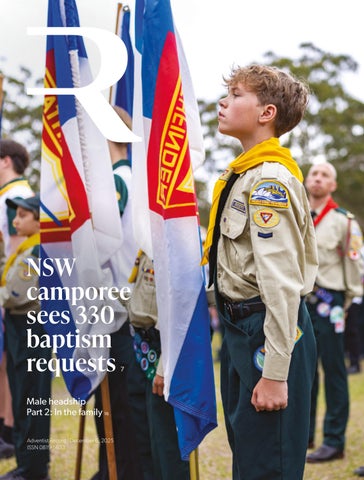
NSW camporee sees 330 baptism requests
Stuarts Point, NSW | Juliana Muniz
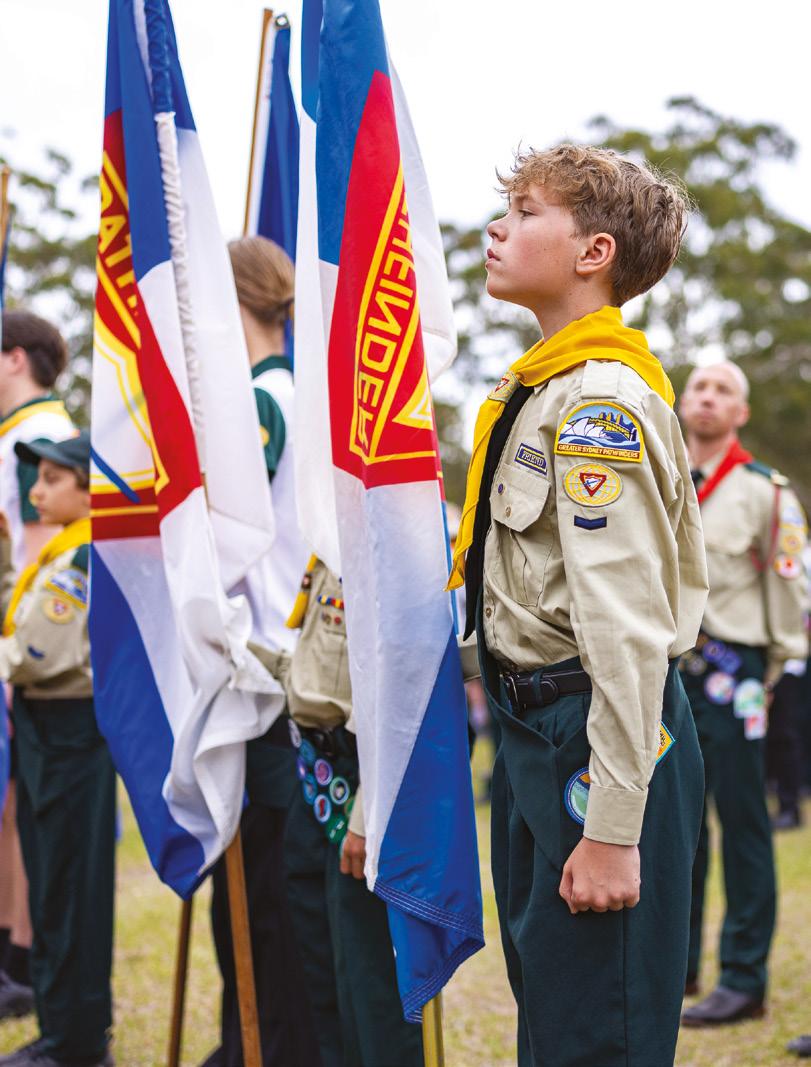
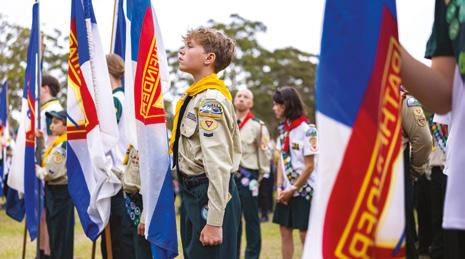
For the first time, Pathfinders from across NSW gathered for a combined state camporee. The event brought together clubs from the North New South Wales (NNSW), South New South Wales (SNSW) and Greater Sydney (GSC) conferences at Yarra Holiday Park on October 7-12.
More than 1500 attendees took part in the event, which featured drama presentations, group worship, honour classes and a range of outdoor activities.
Themed “Fearless in Faith”, the camporee focused on the biblical story of Esther. General Conference youth director Pastor Busi Khumalo served as the guest speaker and called the youth to “be fearless in faith, to rise for such a time as this and to stand boldly for God, for their church and for their communities”.
“Throughout the days, young people opened up, prayed together, encouraged one another and discovered what fearless faith truly means,” said GSC youth director Pastor Dejan Stojkovic
The camporee’s spiritual focus led to hundreds of young people responding to appeals. More than 330 Pathfinders requested baptism and many others requested Bible studies.
“Seeing so many young people stand and say, ‘I want to follow Jesus’ made everything worth it,” said NNSW youth director Pastor Ashley Smith. “That’s why we do this.”
SNSW youth director Pastor Rangi Eiao added, “Some of the parents and leaders were crying with tears of joy. They would tell me, ‘Our kids stood up for baptism—even some who aren’t from Christian homes.’“
In addition to the spiritual program, Pathfinders had the opportunity to participate in activities that encouraged interaction between clubs, such as a market day and a statewide pin-trading initiative.
“It was all about bringing our young people together and breaking down barriers,” Pastor Eiao said. Some clubs from his conference travelled long distances to attend, with some journeys taking up to 12 hours each way. But Pastor Eiao said the effort was worthwhile: “They know this is a place to grow spiritually and get to know real friends.”
For Pastor Stojkovic, the camporee demonstrated the value of collaboration across conferences. “When we walk together in mission, guided by God’s love, we can cross boundaries, support one another and help ensure no young person is left behind.”
making headlines
From streets to stage
In a community in Zimbabwe where drug abuse has trapped many young lives, one Adventist young person is using dance to restore hope. Makadunyiswe Moyo, 26, founded Mamero, a traditional dance group to keep kids off the streets and give them a purpose. The award-winning group integrates members into Pathfinder clubs, reinvests prize money into community service projects and uses dance as a creative form of evangelism.—AR
Seven day service
A community wellness centre has opened in the central Philippines funded by students and teachers from Wisconsin Academy (US) who redirected unused 2020 mission trip funds. The 7-Day Wellness Centre offers free health, education and community services seven days a week and aims to serve rather than preach, opening hearts through practical care.—ANN
Still the best
Loma Linda University Children’s Hospital has been recognised as the Best Children’s Hospital by US News & World Report for the fifth consecutive year, ranking 8th in California and 9th in the Pacific Region overall.—ANN
Hidden cancer shield
Centuries after doctors noticed that nuns had some of the highest rates of breast cancer, new research found that breastfeeding can leave long-lasting immune cells that help protect against the disease and improve outcomes for aggressive types of breast cancer. The study also found that for every year a woman breastfeeds, her lifetime risk of developing breast cancer drops by 4 per cent.—The Guardian
More than 1500 attended the first NSW-wide Pathfinder camporee.
Lights, mics, ministry
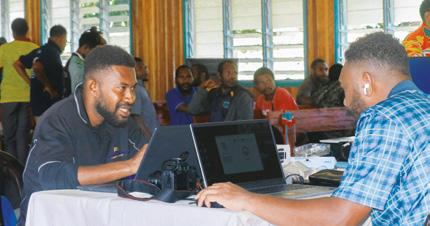
Communication leaders, pastors, elders and young people from Menyamya and Komako (PNG) participated in a Communication and Media Training from October 27 to 31. Facilitated by the Markham 1 District communication and media department, the program equipped 84 participants with practical, digital skills, covering digital software, Adventist audio and video production, branding guidelines, church website development and digital ministry. The training aimed to help local churches improve their reports, strengthen their media presence and set up quality audio for evangelistic programs. Organisers said the program has laid a foundation for ongoing digital capacity-building in the region
—Ken Doulos
Echoes of PNG for Christ
An evangelistic campaign held at Bundahei church (PNG) on November 4-13 drew strong community interest in the Western District of Manus. Adventist members, visitors from other denominations and community members joined the meetings throughout the series with an average attendance of 900 people each evening. A total of 28 candidates were baptised on November 12, in a ceremony conducted by semi-retired pastor Samuel Silas and Nuwok church pastor Rathur Sapulai. Themed “Even at the Door”, the campaign was led by minister Wilson Hosea, from Vanuatu, who was accompanied by members of his home congregation, Atara church. The 10day program was supported by the seven Adventist churches in the district and sponsored by Manus Province governor Charles Benjamin, the son of missionary teacher Benjamin Daverun Boyoi.—Nay Savon
Betikama boost
A volunteer team from Australia and New Zealand spent 13 days at Betikama Adventist College (Solomon Islands) completing a series of infrastructure upgrades to support the school community.
Led by Wahroonga Adventist Church member Carl Erceg, the group included volunteers from Sydney, Gosford, Cooranbong, Newcastle, New Zealand and Fiji, with several participants returning to the region due to long-standing family mission ties. Significant fundraising—supported by Wahroonga church’s Sing Praise concert and a combined Waitara–Wahroonga event—enabled the purchase of building materials, guttering, audio-visual equipment and supplies.
Working across three teams, volunteers installed new water tanks and roof guttering for five staff houses, carried out internal and external renovations on a double-storey home, and upgraded the church’s audio system. A major focus was the restoration of the school’s computer lab: only three of the school’s 25 computers were functioning prior to the visit. By the end of the trip, all but two machines had been repaired, and 10 additional donated computers were installed to support lessons and planning.
Each day began before sunrise to avoid the heat, with volunteers completing masonry, carpentry and site preparation. The project delivered significant improvements to staff housing, student learning spaces and the wider school community.—Shirley Fatnowna/ Record Staff
One woman's calling
When you meet Pastor Marita, the first thing you notice is her quiet strength. She has many talents, yet her greatest treasure is a heart that beats for the Word of God.
She is a wife, a mother of three sons and a grandmother. Her story is a lifelong journey of faith, perseverance and a calling that has touched countless lives.
Marita’s journey began in her small hometown in east Finland, near the Russian border, where two elderly Adventist lady evangelists visited each week to share Bible stories and songs with children. For years, those Sunday morning gatherings nurtured her faith.
At 13, an invitation left on the family’s kitchen table changed everything. It was for evangelistic meetings at a newly built church. Marita went, listened and loved what she heard. For two years she faithfully attended the twice-weekly meetings, and at 15 she made the bold decision to be baptised.
Not everyone rejoiced with her. Her mother strongly opposed her choice, and many evenings Marita returned home to find her family gathered around the television while her father drank heavily. She would slip away to her bedroom and find solace in books like The Desire of Ages, her heart set on the hope she had discovered.
One of six children, Marita prayed constantly for her family—and God answered. Three of her sisters, and eventually her parents, gave their lives to Christ. Her mother, once so resistant, became a fellow believer. Her father laid aside alcohol and tobacco, later serving faithfully as church treasurer for two decades. Known for his kindness, on Sabbaths he would provide rides to church for those without transport.
Marita pursued her studies at an Adventist boarding school, then earned a nursing degree with a specialisation in midwifery. Her dream had always been to serve as a missionary nurse in Africa, but God had a different path in mind. A young man named Onni entered her life, and together they began a ministry journey that has now spanned 45 years of marriage.
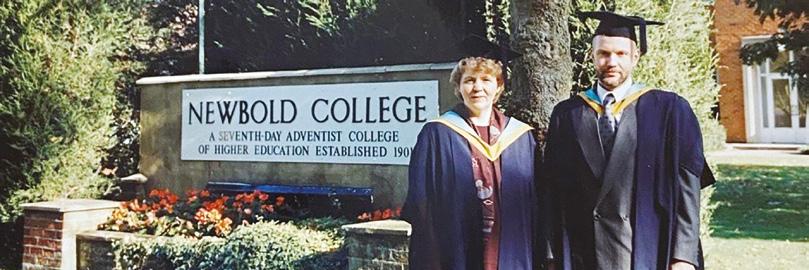
Both studied theology, completing their degrees at Newbold College in the UK. But life brought trials alongside blessings. Their middle child, Juha, was severely disabled as well as autistic. He never spoke and was often restless. From a young age he was placed in a care facility, though Marita and Onni visited regularly, bringing healthy food and
sometimes taking him home for the holidays. Through Juha, their eyes were opened to the world of parents living with the daily challenges of disability and their compassion deepened.
Juha tragically passed away in hospital during the pandemic. With deep sorrow, Marita and Onni laid him to rest after nearly 40 years of life—yet they hold firmly to the assurance of the resurrection, promised in God’s Word.
Even in the midst of such heartache, Marita pressed forward in her calling. Back in their homeland, she often cared for multiple congregations at once—sometimes four churches spread across distant towns. Sabbaths meant long hours of travel, preaching and fellowship. The weeks were filled with sermon preparation, business meetings, evangelistic planning, Bible studies and home visits. She also spent time in hospitals and nursing homes, where she would sit with elderly members whose memories had faded, gently holding their hands and singing hymns.
Over the years, Marita has had the joy of baptising new believers, though she often deferred this privilege to her husband. She has officiated at many weddings and personally conducted numerous funerals, standing with grieving families and offering words of comfort. Each of these moments, she says, has been a sacred privilege.
Now officially retired for six years, Marita continues to serve. With few younger pastors willing to take up posts in remote areas, she still visits small country congregations, offering encouragement and the steady presence of a shepherd.
Her life is a testament to faith that endures, love that perseveres and service that bears eternal fruit. One woman, faithfully answering God’s call—impacting countless souls for His kingdom. Through it all, God has been faithful.
Kristiina Somerville is a freelance writer who attends Springwood church in Queensland.
From Battle Creek to the South Pacific:
Our Shared Heritage of Adventist Mission
Battle Creek, Michigan, may seem a world away from the South Pacific. Yet, for Seventh-day Adventists, this American village is also part of our story. What began in Battle Creek in the mid-19th century helped shape the development of Adventism in Australia, New Zealand and the Pacific Islands.
In May 1863, a handful of Adventist pioneers gathered in Battle Creek and formally organised the Seventh-day Adventist Church. It wasn’t in a grand cathedral, but in a simple meeting space. Out of that small beginning came a structure that gave direction, unity and focus to the mission. The pioneers believed that organisation wasn’t an end in itself but a way of advancing the gospel with order and unity.
From there, Battle Creek quickly became the heartbeat of Adventist life. The Review and Herald Publishing House, Battle Creek College (the first Adventist higher education institution, chartered in 1874) and the Western Health Reform Institute (later the world-famous Battle Creek Sanitarium) were all established there. God’s Spirit guided the pioneers in building institutions that combined preaching, education and health—a vision of holistic mission that mirrored the ministry of Jesus, who cared for body, mind and spirit (Matthew 4:23,24; Luke 2:52; 7:22,23; John 10:10).
Battle Creek was also a place where the church learned how to be global. By the late 1800s, the church recognised that its message could not remain in North America alone. By 1901, the leaders reorganised the church into a global movement to support worldwide mission, and just two years later, the headquarters moved to Washington, DC, indicating that the church was no longer a North American body—it was becoming a global family. Ellen White wrote just after the move, “The removal to Washington of work hitherto carried on in Battle Creek is a step in the right direction. We are to continue to press into the regions beyond, where the people are in spiritual darkness.”1 This transition underlines the theological mandate of a global vision: the everlasting gospel is for every nation, tribe, tongue and people (Revelation 14:6), making Adventism’s identity an inherently worldwide movement.
How did this affect the South Pacific? In May 1885, the first organised mission party led by Elder Stephen Nelson
Haskell and a team of 11 aboard the Royal Mail Steamship left San Francisco and arrived in Sydney the following month to begin the organised work there. “The expedition to Australia was part of a new phase in the evolution of Adventism; it was moving out from being a small American sect to being a worldwide and rapidly growing movement, stretching out to almost every corner of the globe.”2 Their mission methods reflected what they had seen in Battle Creek: public evangelism, strong literature work and the establishment of institutions. Within months, they were printing Bible Echo, which later became Sign of the Times. In this way, the DNA of Battle Creek’s publishing work was transplanted into Australia. Five years later, in 1890, the two-masted schooner Pitcairn sailed from San Francisco on its first missionary voyage. Its crew visited Pitcairn Island, Tahiti, Tonga, Samoa, the Cook Islands, Norfolk Island and Fiji, distributing literature, holding meetings and providing medical care. Each voyage of the Pitcairn was a living extension of Battle Creek’s legacy: printing, training, providing medical care and sending people determined to take the gospel to the regions beyond.
Ellen White, during her years in Australia (1891–1900), saw the same sacrificial spirit she had witnessed in Battle Creek. Speaking of the work in Cooranbong, she wrote: "the same process [of sacrificing] must be gone through again [in Australia] as when. . . we started the work in Battle Creek."3 In Cooranbong, she helped inspire the establishment of Avondale College (now Avondale University) and the Sydney Sanitarium (now Sydney Adventist Hospital), both modelled on the integrated mission approach developed earlier in Michigan. White’s guidance ensured that the South Pacific work carried the distinctive blend of health, education and publishing that had been nurtured in Battle Creek.
Today, the South Pacific Division is home to vibrant churches, schools, hospitals and publishing work. Every one of them, in some way, is fruit from seeds planted in Battle Creek. The Adventist pioneers in Michigan could never have imagined how their vision and sacrifice would one day reach our shores.
And yet Battle Creek’s story continues to live on. The Adventist Village, preserved today as a heritage site, invites visitors to step back in time and witness the origins of the Seventh-day Adventist movement. The village features
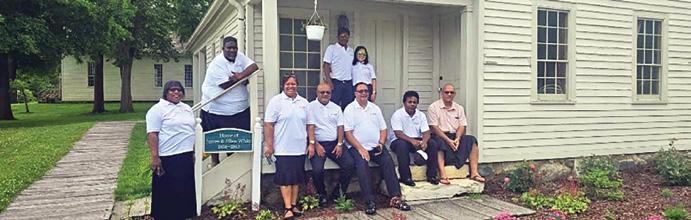
restored historical buildings such as the 1857 Parkville Church, the Second Meetings House, the home of James and Ellen White, and the restored homes of early leaders like Uriah Smith and John Harvey Kellogg. Visitors can explore exhibits of early printing presses, period furniture and artifacts that illustrate the growth of Adventism’s health, education and publishing ministries. The Battle Creek Sanitarium building, though no longer Church–owned, still stands as a testament to the Church’s innovative health vision. Each year, heritage tours and reenactments attract visitors from around the world who come to walk in the footsteps of the pioneers and rediscover the movement’s beginnings.
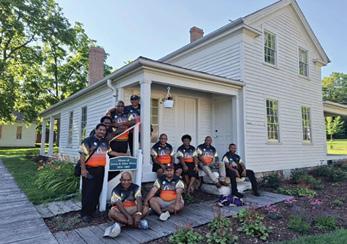
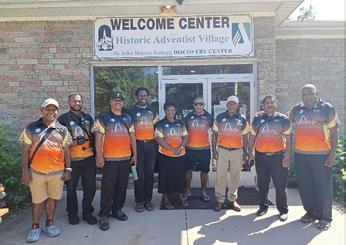
In July, the story of Battle Creek’s enduring influence gained fresh expression. As delegates from around the world journeyed to St Louis, Missouri, for the 62nd General Conference Session, many paused along the way to visit this historical site of Adventist mission. Among them were faculty members from Fulton Adventist University and Pacific Adventist University, as well as pastors and ministers from the Central Papua Conference. Their presence in Battle Creek symbolised more than a historical tour—it was a living connection between the cradle of the Adventist movement and the vibrant mission fields of the South Pacific. Standing where the early pioneers once prayed, printed and planned for global evangelism, these leaders represented the fruit of the same missionary vision now flourishing across the islands of the Pacific.
Battle Creek is not just an American Adventist story—it is
our story too. It reminds us that God often begins His greatest works in small and seemingly insignificant places. From a humble meeting room to a global fellowship, the journey of Adventism is a living witness that faithfulness in one corner of the world can ripple out to transform lives across oceans. Visiting this heritage site, therefore, offers believers in the South Pacific a special opportunity to connect with our spiritual roots, draw inspiration from the pioneers’ unwavering faith and renew our commitment to the worldwide mission that began here. For Adventists throughout the South Pacific, Battle Creek calls us to cherish our past while living with renewed purpose—many cultures, one people, united in one mission.
1. Ellen White, Letters and Manuscripts, vol.18 (1903), par. 04. See <m.egwwritings.org/en/book/14068.8568001> (accessed Oct 10, 2025).
2. Noel Clapham, “Origins,” in Seventh-day Adventists in the South Pacific, 1885-1985 Australia, New Zealand, South Sea Islands, (Warburton: Signs Publishing, 1985): 13.
3. White, Letters and Manuscripts, vol. 14 (1899): pars. 25–26. See <m.egwwritings.org/en/book/14064.5785001> (accessed Oct 10, 2025).
Peter Ohura Korave is a PhD student in Religious Studies, Andrews University.
From betelnut to peanut
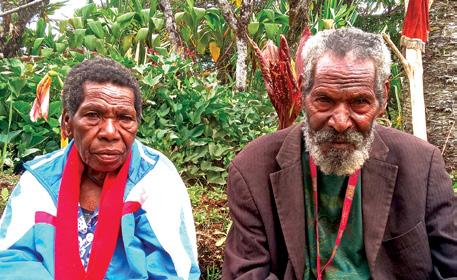
In a quiet village of the Southern Highlands Province, Papua New Guinea, lived an elderly mother devoted to her Catholic faith. For years, she made a humble living by selling betelnut—chewing nut deeply embedded in the culture, but often tied to habits that brought little peace. She would often visit the local pastor’s home, asking for rice ball flour on credit, promising to repay once she sold her day’s betelnuts.
Then, something changed.
Her husband and son began studying the Bible deeply and discovered truths about the Sabbath and God’s commandments. They were moved by the light they found in Scripture, especially regarding the seventh-day Sabbath. Their hearts were stirred, and they made a courageous decision—to leave behind Catholic rituals such as counting rosary beads and displaying statues of Mary in their home. As a family, they began attending the Seventh-day Adventist church at Kupoda in the Imbounggu District.
The transformation didn’t end with church attendance. This old mother began to reflect the spiritual change in her daily life. Realising her income from betelnut didn’t align with the new life she was embracing, she made a simple yet powerful decision: she switched her trade from selling betelnut to selling peanuts.
Today, she walks to the marketplace with dignity,
carrying her small bags of peanuts. I, the church pastor, often buy her peanuts when I see her. She no longer comes for credit; she comes with products born of honest labour and renewed purpose.
This is more than a story about changing from betelnut to peanut—it’s about the power of truth to transform lives. It’s about choosing integrity over convenience and aligning your life with God’s Word, even when it costs you something.
This testimony reminds us that. . .
1. When we walk in God’s light, our old ways no longer feel right.
2. True faith shows itself in the choices we make every day.
3. God honours the humble heart willing to change.
4. Your small beginnings can lead to honourable living.
5. When we let go of what’s not pleasing to God, He opens better doors for us.
This mother’s story is a reminder: no-one is too old to change, and no habit is too strong to overcome when the heart is surrendered to God.
Nasi is a volunteer missionary in the Southern Highlands Province.
Harry
Nourish Bowl
Serves 1 Prep 15 Cook 15
Nourish bowls make healthy eating effortless! Fresh flavours, great texture and a whole lot of feel-good energy in every bite. Perfect for using up leftovers, they’re nutrient-rich, flavour-packed and super easy to put together — a wholesome comfort food to fill your belly and soul.
Ingredients
Grains (½ cup cooked per bowl) barley
• quinoa
• brown rice couscous
Protein (1 egg or 1 cup per bowl) legumes (eg chickpeas, black beans)
• tofu, sliced
• egg Vegetables (2-3 cups per bowl)
• roasted—sweet potato, beetroot
• raw—carrot, zucchini, tomato, snowpeas
• pickled—sauerkraut
• steamed—broccolini, corn
Healthy fat (topping)
• ½ small avocado
Method
Step 1: To assemble each bowl, place ½ cup of chosen grain in bowl
Step 2: Place protein of choice over grain
Step 3: Arrange a mixture of roasted, raw and pickled vegetables around the bowl.
Step 4: Top with avocado and sprinkling of nuts and seeds.
Tip: Nourish bowls are all about creativity—use your imagination, taste buds and whatever’s in the fridge to build a bowl bursting with nutrition, colour, texture and flavour. Have a go, mix it up and have fun!
• Sprinkle of nuts/seeds (eg chia seeds, sesame seeds, pinenuts)
• Drizzle of tahini/hummus/olive oil
Nutritional Information (per serving)
Scan the QR code to read about our impact.
From Carmel to a cave
Elijah’s epic showdown on Mount Carmel, against almost 900 priests of Baal and Asherah, is the standout episode of Elijah’s life story, a children’s classic that we learned early on. Its message is simple. Stand up for God and God will show up. He is real, and He is more powerful than other false gods.
Yet recently, I’ve been able to relate to another, less flashy episode of his life, that has made a big impact on me. To understand that episode however, we start on Mount Carmel.
For hours, the pagan priests parade around screaming and cutting themselves, and nothing happens. With some next level “trash talk”—what cricketers would call sledging— Elijah confronts them. “Is your god having a nap? Perhaps he’s on the loo?”
Finally, Elijah pours water all over his offering and sends a simple prayer to heaven. Fire comes down and consumes the altar and the stones—everything, in the blink of an eye.
He has held the faith, withstood the trials and when everything is done, he can finally breathe again. He has won. Then suddenly, with a death threat from a Disney villain-style queen, his world crumbles.
Sometimes, when we experience spiritual highs and
mountain-top experiences, we are left drained and depleted when the hype wears off. Especially if we’ve facilitated the experience through our service or ministry in some way and we are physically and mentally spent in the aftermath. It is an uncomfortable reality of life.
Before the showdown, Elijah makes a telling comment. “I am the only one of the Lord’s prophets left.” We find out later in Elijah’s story that this is not true, but this is how Elijah feels at the time, alone, battling against the current. And maybe it is a clue to explaining his later actions.
Elijah has waited through years of drought with only his reliance on God.
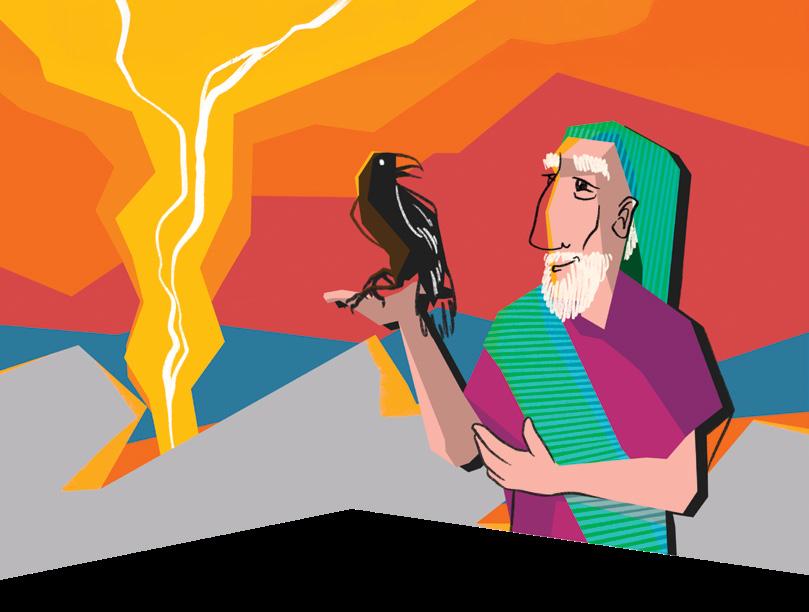
He is even fed by God in the wilderness via ravens. Then he returns to civilisation and challenges the king to a showdown of priests. His reliance on God is verified.
Yet, we speak critically of Elijah. “He did so much and then he lost faith” we say, nodding to ourselves that it can happen to the best of us.
I don’t know about you, but I’ve been there. Close to burnout. Questioning everything. Ready to throw in the towel.
The pandemic was wild, but for me and my little family, we made it through, happy to see more of each other, blessed to be at home for the first six months of
my daughter’s life. Yet as things started to get “back to normal” it became harder. Many of my colleagues transitioned to new roles, which meant we were training and starting from scratch with everyone all at once. For a period of six months or more, we were one key staff member down. I was overloaded and overwhelmed, and then we were blessed with a second baby. But it meant less sleep, and everything felt so much harder than it did with the first (as we were no longer locked in together and life was a lot busier).
The whole period lasted for some time. I was stressed, resentful, comparative of others and I was questioning a lot of things. It’s not that I lost faith in God, just that things seemed overwhelming.
Maybe that’s why this part of Elijah’s story has been speaking to me lately.
If Elijah, one of God’s chosen prophets, can go through a season of doubt and still hold onto his faith, there is hope for all of us.
Let’s pick up the story again.
Elijah runs into the wilderness and lies down, praying that he might die. He wants to give up. He’s fulfilled the calling God placed on him and feels alone and isolated. After trying to see revival in Israel, nothing has changed. So, he’s ready to give up.
There an angel ministers to him. When he had eaten and napped, he travelled 40 days to the mountain of the Lord. In this way, Elijah did the right thing. In his depleted state, he still sought God.
When Elijah gets to the mountain of God, we get a fascinating interaction between God and Elijah.
The story is thick with parallels to Moses’ visit with God on the same mountain. There is earthquake, wind and fire, but the biblical account says that God is not in them. Then Elijah hears a still, small voice. We don’t know what the voice says but it causes Elijah to cover his face and go to the mouth of the cave he has been sheltering in.
Twice, God asks Elijah what he is doing there. God already knows the answer but he wants to hear it from Elijah. Twice Elijah gives the same answer. In Elijah’s answer you can hear his despondency, his disappointment and his loneliness. Elijah has remained true and faithful but not felt affirmed in that calling. He has felt isolated and threatened. He thought he had facilitated a great victory for God and yet nothing in his life changed.
“I have been very zealous for the LORD God Almighty. The Israelites have rejected your covenant, torn down your altars, and put your prophets to death with the sword. I am the only one left, and now they are trying to kill me too” (1 Kings 19:14).
God’s response to Elijah is telling. Like so often when God is recorded answering His people, He doesn’t directly tackle the question.
Instead, God gives Elijah a plan of action—one that allows him to pass on his legacy and offers hope for
change in the future. Elijah’s focus can now shift to specific work that needs to be done. God still uses Elijah—the man who felt spent, alone and ineffective; the prophet suffering from burnout and doubt. God calls Elijah and gives him the opportunity to anoint his successor, Elisha, one of the clearest examples of mentorship and (non-hereditary) succession planning in the Bible.
And God gently assures Elijah that he is not actually alone—“Yet I reserve seven thousand in Israel—all whose knees have not bowed down to Baal and whose mouths have not kissed him” (1 Kings 19:18).
It's easy to feel alone, especially if you believe you’re doing the right thing or have made sacrifices for the cause. But God often goes before us in ways we don’t see or understand right away.
Even after Elijah’s detour, God gives him one last task— to pass his faith on to another who ends up asking for a “double portion” of his spirit. And Elijah is still taken to heaven in a fiery chariot.
Elijah did not fail. He fulfilled his duties faithfully. His doubts and depression are only speed humps in his legacy.
You and I are not Bible heroes, but we can still seek God in difficult times. We can pour into others. The antidote to doubt and burnout in my life was tenaciously clinging to God, who eventually showed me what He was doing in me and others—slowly answering my prayers and reframing my perspective.
Another thing that helps us survive the hardest times of life is remembering the miracles God has done and the ways He has led us in the past.
The contemporary Christian song “Remember the miracles” by Brandon Lake and Hank Bentley, captures this feeling:
“When the doubt creeps in and my faith grows thin
And I’m questioning, I’ll remember the miracles
When the lights go out, I feel more lost than found Stuck on shaky ground, I’ll remember the miracles”
In the midst of burnout, I remembered God’s leading in my life and it helped me hold on for a better day. I pray that if you trust God even in the tough times, you will see His hand at work and He will lead you out of your cave and into His glorious legacy.
Jarrod Stackelroth managing editor, Adventist Record and Signs of the Times
Male headship
Part 2: In the family
Scripture tells us that God’s original plan was for husband and wife to “become one flesh” (Genesis 2:24). This ideal, however, was marred by sin, resulting in a rupture of the “one flesh” relationship between Adam and Eve. In Genesis 3, when God questions them about what they have done, Adam and Eve respond with defensiveness and blame,
showing evidence of the rift that occurred between man and woman because of their sin. God then pronounces judgements, including telling Eve that her husband will “rule over” her (Genesis 3:16). Old Testament scholars view this judgement of God in a variety of ways, ranging from permanent prescription, ie, that God prescribed hierarchy in marriage for
the purpose of maintaining harmony, to predictive description, ie, that God described the hierarchy that would exist between men and women because of sin. Most scholars, however, agree that one “ruling over” the other was not God’s original plan for the relationship between men and women.1
Whether we view this judgement of God as prescriptive or descriptive, human history has given evidence to the consequences of sin on the relationships between men and women—from ancient times to the modern era, men have tended to dominate and control, while women have tended to be subjugated and denied legal rights, including access to education, employment, inheritance and the owning of property. The women’s suffrage movement of the 19th century and the broader feminist movements of the 20th century challenged these hierarchical structures, striving for greater gender equality; however, as these movements reshaped traditional gender roles, some men in the 21st century have begun to feel disenfranchised, particularly as the rise of automation and globalisation have disproportionately affected male-dominated industries.2 At the same time, girls outperform boys in learning outcomes and tertiary education enrolment.3 As a result, the 21st century has seen the rise of men’s rights and anti-feminist movements, which have impacted Christian perspectives on men and women, including a rise in vocal proponents of male headship within our own denomination. So how should Adventist Christians think about relationships between men and women, and more specifically, male headship in the family?
When considering this question, it’s important to acknowledge that we all bring our own unconscious biases to every passage of Scripture. This means that we read Scripture through the lens of our experiences in the world. For example, most of us in the 21st century read the words, “Slaves, obey your masters with respect and fear”, and recognise that Paul was speaking within a certain context, rather than that he supported slavery. Why is this? It’s because of our experiences in the world. For most of us, our education has included history classes, books and films that have helped us see the abhorrence of slavery. As a result, we interpret the passages of Scripture that mention slavery through the lens of our experiences, and most of us would not argue that Scripture supports slavery.4
In a similar way, our experiences in the world shape the way we read the passages of Scripture that relate to gender. Take, for example, Ephesians 5:22-24, which in traditional Christian cultures and communities is used as the quintessential text to support male headship in the family:
“Wives, submit yourselves to your own husbands as you do to the Lord. For the husband is the head of the wife as Christ is the head of the church, his body, of which he is the Saviour. Now as the church submits to Christ, so also wives should submit to their husbands in everything.”
Our experiences, particularly in our family of origin,
shape the way we view this passage. If, for example, we grew up in a hierarchical family where our father led in a way that was generally loving and respectful, we may assume that hierarchy within marriage is God’s ideal for relationships. However, it’s possible that we grew up in a family where our father enforced his will abusively. While many factors contribute to the abuse of women, including past trauma, poverty and alcohol, research shows that the main driver of domestic violence and abuse is the belief that men should make all the important decisions and women should submit.5 If we grew up in an abusive home, our experience shapes the way we view male headship in the family. For example, daughters may reject the notion of submission altogether, whereas sons who grow up in abusive homes are more likely than other men to abuse their own partners.6
Or consider another family dynamic. We may have grown up in a family where our father’s temperament was not suited to leading the family, but our mother’s temperament was. If our parents’ relationship was harmonious and our mother did not shame our father for his lack of leadership, our experience of this may have been positive. In contrast, if our mother was overbearing and we saw our father as weak, our desire may be for something very different in our own marriage.
Given the many ways our family experiences shape the way we view the passages of Scripture that relate to gender, how can we be more objective in our reading of Scripture, particularly passages such as Ephesians 5:22-24, which appear to support male headship in the family?
First, our presuppositions or biases are often subconscious, so it’s important that we acknowledge and interrogate our experiences and the way they have shaped us. Ask yourself: How does my parents’ relationship shape the way I view marriage? How does my own experience with the opposite gender shape my understanding of male/female relationships? And how do these experiences shape the way I read Scripture? Is it possible that I’m reading this passage through the lens of my experience?
Second, it’s important that we read Scripture in its historical context. Thus, when reading Ephesians 5:22-24, ask yourself: What was the understanding of gender relationships at the time this passage was written? What were the social hierarchies that first-century Christians needed to abide by? We know that slavery was socially accepted in the first century AD and that Paul does not speak against it. We also know that the submission of women was the norm in ancient Greco-Roman and Jewish societies. Paul, however, encourages Christian women to submit to their husbands “as to the Lord”—a radical concept that implies voluntary submission. Further, Paul addresses these words to women rather than to men, which is revolutionary in the context of the first century AD, as it indicates that Christian men were not to assert their authority over their wives, because a Christian wife’s primary allegiance was to the Lord.
Third, it’s important that we read Scripture in its literary
context. Thus, when reading Ephesians 5:22-24, ask yourself: What are the verses that come before this passage? What are the verses that come after it? How might the broader context shape the way I should read these verses? For example, directly before this passage (v21) are the words, “submit to one another out of reverence for Christ”; and directly after this passage (v25) are the words, “Husbands, love (agape) your wives, as Christ loved (agape) the church and gave himself up for her.” Furthermore, these words, “gave himself up,” are also used in verses 1 and 2, where Paul urges Christians to love as Christ loved and “gave himself up”. In other words, when we read Ephesians 5:22-24 in its literary context, we see that Paul is encouraging wives to voluntarily submit to their husbands in the context of (i) the love that should characterise all Christian relationships; (ii) the mutual submission that should exist between husbands and wives; and (iii) the sacrificial love of their husbands. Once again, Paul’s vision for Christian relationships between men and women was revolutionary in the context of the ancient Greco-Roman and Jewish families.7
And fourth, it’s important that we read Ephesians 5:22-24 in its whole of Scripture context. Ask yourself: How does this passage align with everything else I read in Scripture? How does it fit with what else I know about gender relationships? For example, as outlined above, we know that God’s ideal plan for the relationship between men and women was unity and equality (Genesis 1,2). We also know that God’s ideal was broken by sin, changing the relationship between men and women (Genesis 3). Within this Genesis 1-3 context, ask yourself: Is God’s judgement that man will “rule over” woman prescribing hierarchy within marriage? Or is it describing the consequences of sin?
We believe that the evidence points to this being a description of the consequences of sin.8 However, it’s important that we broaden the whole of Scripture context beyond Genesis 1-3. We know that the whole of Scripture is a story of divine grace; of God’s promise that, through His justifying grace, He will atone for what was broken by sin; and that, through His sanctifying grace, He desires to restore what was broken by sin. God’s desire for us has not changed. His ideal for all relationships is still unity and equality, and God’s promise to humanity is that the world of Genesis 1,2 will ultimately be restored (Revelation 21:1).
But until that day, in our marriages, the promise of His sanctifying grace is “designed to lead [us] back as much as possible to the original plan of harmony and union between equal partners without hierarchy”.9
1. For a detailed exposition of God’s original plan for equality and His judgement of post-Fall inequality, see Richard Davidson, Flame of Yahweh: Sexuality in the Old Testament, p58-80.
2. B Lerch, “From Blue- to Steel-Collar Jobs: The Decline in Employment Gaps?” American Economic Journal: Macroeconomics, 17:1 (2025) p126-160.
3. <cambridge.org/news-and-insights/girls-outperform-boys> cf. <https://www.oecd.org/en/publications/gender-education-and-skills_34680dd5-en.html> Accessed Nov 7, 2025.
4. See Darius Jankiewicz, “Hermeneutics of Slavery: A ‘Bible-Alone Faith and the Problem of Human Enslavement,” Journal of Adventist Mission Studies: Vol. 12: No. 1, 47-73. < digitalcommons.andrews. edu/cgi/viewcontent.cgi?article=1314&context=jams>.
5. See, for example, L Heise and A Kotsadam, “Cross-National and Multilevel Correlatives of Partner Violence: An Analysis of Data from Population-Based Surveys,” The Lancet 3 (2015), p. 332-340; cf. K Giles, The Headship of Men and the Abuse of Women: Are They Related in Any Way?, 2020; and J Hill, See What You Made Me Do: Power, Control and Domestic Abuse, 2019.
6. See, for example, DS Black, S Sussman and JB Unger, “A Further Look at the Intergenerational Transmission of Violence: Witnessing Interparental Violence in Emerging Adulthood,” Journal of Interpersonal Violence, Oct. 2, 25:6 (2009), p. 1022-1042.
7. See Darius Jankiewicz, “Breaking Down the Gender Walls of Antiquity,” Spes Christiana 34:1, 2023, 5-26. <works.hcommons.org/ records/72kxa-7y711>.
8. RM Davidson, p58-80.
9. RM Davidson, p76.
Drs Edyta and Darius Jankiewicz serve at the South Pacific Division as family ministries director and field, ministerial secretary and Spirit of Prophecy coordinator.
Conversations
Voice of justice
In response to two leadership articles: “OneVoice27” and “Looking like the gospel” (November 15). Sadly neither article look like the full gospel to me. They resemble more a truncated version of it. Both stop short of addressing God’s voice in todays world. What the Lord requires is a voice of justice in the storm of injustice. Our leadership public voice played safe during Nazi Germany's injustices and said nothing. Our leadership public voice continued in silence in South Africa’s apartheid injustice. And now while ICE raids and rampages families in America, our public leadership voice remains muted. While Israel bombs hospitals and schools killing women and children in their drive to eradicate Hamas, we remain silent.
Sadly, for me, my current gospel voice is Pope Leo. Risking the ire of MAGA Catholics and Christian Nationalists, he has spoken. He has not entered debating the opposition. He has simply publicly stated his gospel perspective on injustice. I respect him for that.
Graham Sutherland, via email
Sunday laws
In my letter to Conversations in the August 2 edition of Record, I suggested that “the return of the unpredictable Donald Trump to the presidency of the USA, and the appointment of American Pope Leo
XIV, should be sounding alarm bells to all Seventh-day Adventists that the time of trouble is almost upon us, to be followed by Sunday laws, persecution and the return of our Lord Jesus Christ”.
Since then, significant events have occurred involving another key figure, King Charles. In September, King Charles hosted Donald Trump for the president’s second state visit to the UK. In October, King Charles met with Pope Leo XIV and the pair prayed together in the Sistine Chapel, the first such event in 500 years.
This three-way alliance could be ideal for the launching of Sunday laws. However, we should not forget that our Australian Prime Minister, Anthony Albanese, is a committed Catholic and has been busy developing close relationships with the abovementioned trio. In May, Albanese attended the inauguration of Pope Leo and had a private audience with him, the first Australian PM to do so in 16 years. In September, he had his fourth royal audience with King Charles and, in October, he met with Donald Trump in what was generally regarded as a very successful meeting.
We should all be watching events closely and deciding how we will respond when Sunday laws are thrust upon us.
Richard Morris, via email
Contrary to science
In response to “God’s book of
nature” (Conversations, October 4).
The author encourages us as individual church members and the church administration, to listen to the science. The author states, “Science is the study of nature—God’s other book—therefore Christians should embrace scientific understandings, not reject them.”
I personally have an issue with following mainstream science without question. For example, my understanding is that mainstream science says that man evolved, and I have a BIG question mark on that one, because the Bible says, contrary to science, that man was created in the Garden of Eden. The Bible plainly says it and that is good enough for me. On any given topic I think it is fair to say that there are scientists on both sides of the fence with differing views.
So, my thinking is that the church does well to stick to interpretations of the Bible as we know that the Bible can be trusted. It is the TRUTH. On other topics, the members can all have their own views on which scientists we want to believe as there are any number of eminent scientists we can quote from on either side of the fence.
My thinking is that if the church gets involved in matters that are not spiritually based, it is just providing an opportunity for the disenchanted to say “and that’s why I left the church”.
Vince Hebbard, via email
Obituaries
KEDDELL, Margaret
Ellen (nee Mcintyre), born 5.6.1946 in Ferntree Gully, Vic; died 2.5.25 in Warburton. On 21.1.68 she married Eric Keddell. She is survived by her husband (Warburton); children, Tracey and Nick Gabbitas (East Warburton), and Paul (Ferntree Gully); and grandchildren, Matthew and Dillon (East Warburton). She was a much-loved wife, mother, grandmother and friend. Margaret will be sadly missed by all her family and friends.
Peter Watts
WILLIAMS, Ellen
Lynette Maie (nee Capon), born 12.10.1941 in Frankston, Vic; died 25.3.25 in Carrum Downs Nursing Home. Lynette is survived by her husband,
Positions Vacant
Garnet; children, Deidre and Geoff Bartlett (Maryborough), Rohan and Sharon Williams (Skye), Carolyn and Ben van den Akker (Sunbury), Andrea and Adolphus Adera (Albuquerque, USA); grandchildren, Jessica, Michael, Jonah and Micah; and great-grandchildren, Mackenzie and Lucas. Lynette and her family were foundation members of Frankston Adventist Church. She served faithfully in many roles and was affectionately known as “Aunty Lyn”. Her faith in God carried her and blessed those who cared for her.
Gavan Grosser
Advertising
MISSIONARIES LUNCH
December 13 at 1pm. Kressville Activities Centre. Missionaries, descendants and friends welcome. The theme this year for your talk is “Teachers and Teaching”. Queries to Warren Martin. Phone: 0428 727 384.
PLATFORM ENGINEERING LEAD—FAITH FM
RINGWOOD, VICTORIA
STUDY THE ADULT SABBATH SCHOOL LESSON YOUR WAY
Accessible formats for vision loss (large print, audio CD, app, YouTube, podcast, and braille) or hearing loss (Hope SS captioned). Contact CVHS on +61 (0)2 9847 2296 or email <cvhs@adventistmedia.org.au>.
ABSOLUTE CARE FUNERALS
The Adventist family owned and operated business, caring for you from Sydney to Newcastle and Wollongong. Contact Arne Neirinckx, who understands our Adventist philosophy. Contact us on 1300 982 803 or 0408 458 452 or <arne@absolutecarefunerals.com.au>, even if you have already paid for your funeral.
RECORD QUANTITIES
Is your church receiving the correct number of Record magazines? Adjust your numbers by notifying Kelli Geelan at <subscriptions@record.net.au> or on +61 (03) 5965 6300.
Are you a dedicated and innovative professional with a passion for making a difference? Faith FM is seeking a full-time platform engineering lead to help advance our mission of sharing the gospel of Jesus Christ across Australia. You’ll play a vital part in amplifying Faith FM’s presence across Australia by keeping us on the air and connected to our audience. With experience in relevant technological spaces and programs, you’ll work with the team to ensure smooth and consistent connection. If you’re ready to apply your expertise in a role that combines purpose, innovation and impact, we’d love to hear from you! For more details or to apply please go to <adventist.org.au/auc/careers>. Applications close January 31, 2026.
PROMOTIONS AND ENGAGEMENT LEAD FAITH FM
RINGWOOD, VICTORIA
Are you a confident and engaging professional looking to reach others? Faith FM is seeking expressions of interest for a full-time promotions and engagement lead, focused on sharing, communicating and strengthening the gospel of Jesus Christ across Australia. You’ll be responsible for growing listener and church engagement, building sponsorship opportunities and developing strong partnerships with key stakeholders. You’ll play a key role in elevating Faith FM’s brand and visibility nationwide, helping us fulfil our mission to share the gospel of Jesus Christ. If you’re passionate about making a lasting impact and keen to apply your skills in a role that combines purpose with strategic influence, we’d love to hear from you. For more details or to express your interest please go to <adventist.org.au/auc/careers>. Applications close January 31, 2026.
VARIOUS POSITIONS—ADVENTIST SCHOOLS VICTORIA VICTORIA
Adventist Schools Victoria (ASV) is recruiting for more than 30 teaching, leadership and support positions across our six schools and early learning centres for 2026. Key positions include: early learning centre manager and teachers; learning and teaching coordinator; maths teacher; primary teachers; and deputy head of primary. Some of the many benefits of working for ASV include: work in a genuinely Christ-centred learning community; staff discounts on tuition fees; opportunities for career growth; lower student-teacher ratios and strong early career teacher support; paid professional development opportunities; and relocation support for successful applicants. Apply or refer someone today at <asv.vic.edu.au/careers> or contact <asvhr@adventist.org.au> for a confidential conversation.
NOTE: Neither the editor, Adventist Media, nor the Seventh-day Adventist Church is responsible for the quality of goods or services advertised. Publication does not indicate endorsement of a product or service. Classified advertisements in Adventist Record are available to Seventh-day Adventist members, churches and institutions only. All advertisements, appreciation, anniversary, wedding and obituary notices may be submitted via <ads@record.net.au> or online at <record.adventistchurch. com>. Notices will not be reprinted unless there is an error of fact caused by Record staff.