


EDITOR’S NOTE:
EDITOR’S NOTE:
Ashley Jankiewicz Assistant editor
Unfortunately, Christmases can sometimes be lonely. Families might be far away or a source of unhappiness.
I grew up mostly without Christmas. That might seem strange, but I come from a culture where Adventists haven’t traditionally celebrated Christmas. Don’t get me wrong, I love Christmas and I celebrate it now, but there were only a few years growing up that I had the “real Christmas experience”. Don’t worry, I don’t feel too deprived. I always spent the holidays with my grandparents and other extended family, and we often went to the beach and had a nice meal. Christmas just wasn’t mentioned. And Santa? Forget about him. My only memory of Santa was when my sister and I told a friend of ours that he wasn’t real. That didn’t go down well.
But I have experienced a few memorable Christmases. For example, when I was living overseas and spent the holidays with my best friend. The day before Christmas we were in Prague, wandering through a cute little neighbourhood, empty of tourists. The cobblestone streets were narrow, with no cars, and the houses and little apartment blocks crowded together like gingerbread houses. It was also strangely silent, until we followed the sound of laughter and came upon crowds of locals, who were congregating in the cold and handing around hot drinks, talking and laughing with one another. It felt like a moment trapped in time. The houses weren’t really decorated and no-one seemed to be in a hurry. It was just a community come together to celebrate the joy of living.
“The true meaning of Christmas” is a phrase so cliché I can’t believe I just wrote it down, but the reality is that we talk about it, roll our eyes and continue on with nothing changing. Could it perhaps be that we don’t know how to combine what we as Christians see as the true meaning— Jesus’ birth—and the way our society celebrates it today?
I think there’s a way. It starts with the origin story of Christmas, which is harrowing to begin with. I cannot imagine the fear that Mary and Joseph must have experienced, tucked away in a stable all alone while Mary went into labour. But they made it through, and Mary “gave birth to her firstborn, a son. She wrapped him in cloths and placed him in a manger” (Luke 2:7). But the story gets even more special when the first guests arrived.
The shepherds were probably poor, and not who you’d expect to be the firsts to meet the King. I guess it foreshadowed Jesus’ ministry and His attention to those on the margins of society. The second group to meet Jesus were wealthy, but they were foreigners. They brought gifts, but they were not Jewish—also not who you’d expect to be at the birth of Jesus.
See the first Christmas was about Jesus, yes, but it was also about the people who came to see Him, that quiet connection with unconventional people and the lives that were changed as a result. Christmas today is also about connecting with our community and loving those around us despite differences. As Ephesians 2:14 says, “For he himself is our peace, who. . . has destroyed the barrier, the dividing wall of hostility.”
Unfortunately, Christmases can sometimes be lonely. Families might be far away or a source of unhappiness. But community can be found in unlikely places—a lonely church member or someone of a different faith, a neighbour, friend or distant relative you’ve lost touch with. Growing up, even though I didn’t have all the Christmas trappings, I didn’t feel deprived because I was surrounded by people who loved me and made an effort to show it. While decorating and giving presents can bring a lot of joy, I’ve seen that sometimes it brings more stress than it should. And it can never substitute for genuine human connection.
Just like in Prague, the true heart of Christmas was in the little back neighbourhoods, not in the Christmas markets in the main square. Just standing in the cold street, offering a neighbour a hot drink and a moment of conversation.

Glenn Townend
South Pacific Division president
This Christmas, as we celebrate the birth of Jesus—the most influential Leader the world has ever seen—I’ve been thinking about leadership. About what it means to lead, to be led, and how God continues to guide His Church through the seasons of change.
This year has been a big one for leadership transitions across our Church and that’s expected in a year of constituency meetings and sessions. For me personally, there have been significant changes too. I have a new boss—Pastor Erton Köhler, our General Conference president—a new vice president, and three new union presidents.
Change brings a mix of feelings—hope and excitement, but also uncertainty. We ask: What will change? What will stay the same? How will this new leader relate to me and develop me? What’s their vision and how can I support them?
The best way to find out is to engage—to listen, to learn and to serve with enthusiasm.
Leadership is something that we share; it’s a journey we take together. But even the best human leaders will sometimes disappoint us. The Bible shows us that. It’s full of stories of leaders—some faithful, others deeply flawed. And yet through it all, God reminds us that He Himself wants to lead His people. That’s what Christmas is all about: God revealing His best leadership through His Son, Jesus Christ. Hebrews 1:1,2 says, “In the past God spoke through the prophets in many and various ways, but in these last days He has spoken to us through His Son.”
Jesus—the Creator—became one of us. He experienced our struggles and joys. And though He was without sin, He gave His life to conquer sin and death, offering us forgiveness, hope and eternal life. That’s leadership like no other— humble, self-sacrificing, redemptive. And that’s what we celebrate at Christmas: that God came near to lead us personally into hope and a new life.
This Christmas, may you experience His peace, His joy and His hope. Because Jesus—the true Leader—is still guiding His Church, He’s still King of the earth and leading each one of us.


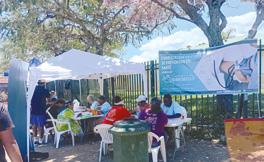

The 10,000 Toes Campaign in New Caledonia partnered with local nonprofit Solidarité Presqu’île de Ducos (SPID) on November 9 to deliver a free community health program in Kaméré, one of the areas in Noumea hit hardest by the 2024 riots.
The neighbourhood experienced significant damage during the civil unrest, including the destruction of the local college and disruptions to transport, employment and community services. SPID was created after the riots began, to assist locals with food distribution, transportation, and educational and cultural support for local schools. Along with other volunteer community support groups, 10,000 Toes was part of a larger effort to restore confidence and social connection within the community.
Seventeen 10,000 Toes volunteers operated an eight station health circuit, offering overall health assessments, nutrition advice and follow-up
health counselling to 40 participants.
Organisers said the event was well received by community members. “[They] were touched by the warm welcome, the attentive listening and the professionalism of the volunteers,” said New Caledonia Mission Adventist health ministries associate director Ruth Thio. “Some were in good health, others faced more serious conditions, but all showed a genuine interest in taking care of themselves.”
The volunteers had the opportunity to meet visitors who were unfamiliar with the Adventist Church. Several expressed interest in the Church’s wholistic approach to wellbeing and community engagement.
Associate director Andree Alexis said, “This event was truly a moment of connection, comfort and rebuilding—physically, relationally and spiritually. Health can be a powerful missionary and social channel, serving unity and hope.”
Faith FM recently celebrated a milestone, airing their 1000th advertisment for a local church around Australia. With more than 130 ads so far in 2025, the team is hoping for even more ads for churches next year.
“We’re probably the most informed ministry in Australia when it comes to knowing what’s happening with local church outreach,” said Faith FM producer Bradley Martin. “In the last few weeks, we’ve created ads for healthy cooking classes in Beaudesert (South Queensland), ADRA Community Connect Garden events in Wauchope (NSW), a De-Stress health series in Manjimup (WA), and Christmas concerts in Wahroonga (Sydney), Mullumbimby (NSW) and Gisborne (Victoria). Everything can be an opportunity!”
Faith FM has nearly 3 million monthly listeners according to a recent McCrindle Research survey, with approximately half the listenership describing themselves
as non-Christian or non-religious. The network has over 370 stations, with sites in every state, territory, and major city in Australia, along with more remote and unusual locations like Lord Howe Island, Broken Hill, and Taranaki Peninsula, New Zealand.
“Whatever we air has two purposes: to share the gospel message with Australia, and to help listeners connect with local churches,” said Faith FM content manager Pastor Benjamin Ng. “We aim to make it as easy as possible to help local churches share with their community. Advertising on Faith FM for local churches is a free service, and we provide support for all parts of production.”
Faith FM also helps promote other church ministries, including Avondale University, Signs of the Times, ADRA and Hope Channel Australia.
You can submit ad requests for local church events at <faithfm.com.au/ads>, or by calling 1800 FAITH FM (1800 324 843).
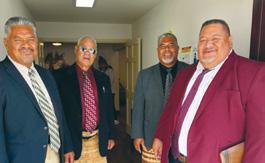
Alumni from Beulah Adventist College (Tonga) gathered on November 5 and 6 for their annual fundraising event, hosted this year by the To’uola class of 1980 to 1989 at the Hawthorne Seventh-day Adventist Church, California, USA. The program featured guest speaker Pastor Fanueli Mataele, Tonga Mission president, whose message emphasised unity, gratitude and continued investment in Beulah’s future.
The two-day gathering brought together alumni and supporters from across the country and resulted in more than $US100,000 being raised.
The Beulah College Alumni of the USA has raised $US704,000 toward the construction of a new girls’ dormitory, with plans to raise an additional $300,000 by next year. Alumni associations outside the US have also submitted pledges, to help reach its $US1 million goal.
“I am overwhelmed with gratitude
towards our Lord and Saviour who has led these past five years,” said Pastor Etuini Mounga, president of the Beulah Alumni of USA. “We are just ordinary people, many of whom do not hold special degrees or positions, and labour in fields such as caregiving and construction just to make ends meet. But the sacrifice for Beulah comes out of love, to see students are taken care of for years to come.”
The last major construction project of this scale was the Vaka Ua Hall, a $US500,000 undertaking at the time.
Alumni from every generation have contributed what they can during the past five years, united by a shared desire to provide a better future for the students of Beulah.
Groundbreaking for the new girls’ dormitory was scheduled for December 8. The alumni are aiming for the project to be completed in 2026.
More at <beulahalumniusa.org/>.
Port Moresby, Papua New Guinea | Reginah Harihi
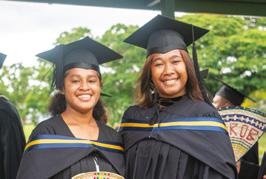
Pacific Adventist University (PAU) celebrated a major milestone in its history, sending forth its 40th graduating class in a ceremony distinguished by its record-breaking number of graduates.
A total of 396 students received their academic awards, marking the largest graduating class in the university’s 40-year history.
“The achievement reflects PAU’s continued growth and its commitment to preparing graduates ‘equipped and willing to serve their community, their country, their church and their God,’—a mission that has guided the institution since its establishment in 1984,” said PAU vice-chancellor Dr Lohi Matainaho.
The record-setting class of graduates crossed the stage, representing diverse fields of study across the university’s Schools of Business, Humanities, Education and Theology, Science and Technology, and Health Science.
“The impressive numbers signify the increasing demand for highquality, values-based tertiary education in Papua New Guinea and the wider South Pacific region,” said Dr Matainaho.
The ceremony was attended by key dignitaries, faculty, alumni and proud family members, all bearing witness to the historic day.
“The high turnout of graduates is a testament to the students’ hard work, dedication, and the robust support provided by PAU’s dedicated staff and the broader community,” said deputy vice-chancellor Dr Lalen Simeon.
“As these 396 new professionals step out into the Pacific and the world, they carry with them the distinct PAU ethos, prepared not only for professional careers but also to be agents of positive change in their communities.”
Sabeto, Fiji | Elisapesi Manson/Jarrod Stackelroth
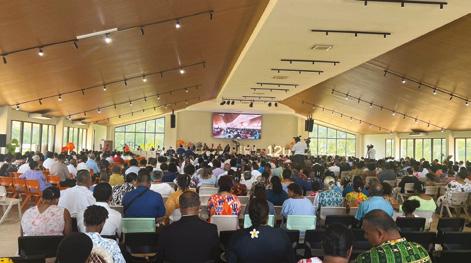
Fulton Adventist University celebrated its first graduation as a university on November 23, with the highest number of graduates in its 120-year history. More than 300 graduates were addressed by special guest Steven Chand, chairman of the Higher Education Commission in Fiji. Academic awards were presented and vice chancellor Professor Ronald Stone also addressed the gathered students.
The graduation ceremony began a week of celebration for the South Pacific’s newest Adventist university, with more than 500 alumni, church members, stakeholders and friends gathering at the Sabeto campus from November 25-29 for the institution’s 120th anniversary.
The highlight of the program was the opening of a new $F3.6 million chapel by Dr John Hammond, former Fulton head of teacher education from 1982 to 1983 and principal from 1984 to 1985. Students had previously worshipped in the multi-purpose centre, but the campus now has a dedicated worship space.
Three new classrooms are located under the chapel and were also dedicated along with a new gym and health clinic.
“The program paid tribute to alumni contributions and generations of learning, faith and service,” said Dr Elisapesi Manson, South Pacific Division education director.
According to Dr Manson, approximately 80 per cent of the new chapel “was generously donated by alumni, friends and church members—an overwhelming affirmation of denominational loyalty to Adventist education through Fulton Adventist University”.
During the week, ground was broken on new student accommodation—two new duplex houses that will become home to married students from Solomon Islands and Vanuatu. Attending the groundbreaking ceremony were a former prime minister of the Solomon Islands, president and secretary of the Vanuatu and Solomon Islands Missions, and the Trans Pacific Union Mission president. Some attendees also travelled across the island to tour the old Fulton campus.
“Fulton Adventist University’s 120-year journey of faith with Adventist education in Fiji and the Pacific is more than a number,” said Dr Manson. “[This milestone] is a testament of God’s faithfulness, Adventist education’s perseverance, and to the power of a shared mission for others until Jesus comes again.”
The Adventist Church in Nepal dedicated its long-awaited headquarters on November 20, marking the end of a decades-long struggle to operate without a permanent office. Leaders say it is not only the completion of a new building but also the culmination of a journey of faith and perseverance, declaring a new beginning for the work in Nepal.—NSD
ADRA Kazakhstan turned an abandoned health centre into a community school which brings together children, youth and seniors for learning, recreation and social support. With overseas funding from a nonprofit in Taiwan and donations from locals, the centre includes classrooms, activity spaces and areas for sport and community events.—ESD
At Andrews University (US), 380 volunteers packed 8200 care packages for people in prison in 190 minutes— an extraordinary one bag every 1.4 seconds—as part of a community effort with Christmas Behind Bars.
The project united students, Pathfinders, church members and local families, with a smaller group visiting the correctional facility to personally share the care packages with inmates. Adventist Review
A study using artificial intelligence to examine 50 chapters of the first nine books of the Hebrew Bible, known as the Enneateuch, has revealed three distinct writing styles, offering fresh insight into the authorship of some of the Bible’s oldest books.—Vision Christian Media
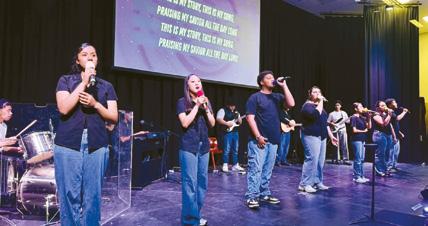
More than 300 students gathered for a high school worship night hosted at Mountain View Adventist College (MVAC) in Doonside (NSW) on November 14. The event brought together young people from the four Adventist high schools in Sydney. MVAC coordinated the event, which featured studentled music and a message from guest speaker and former student Jahnneric Sulu-Afele. The worship night is part of an ongoing collaboration between school chaplains and the Greater Sydney Conference youth department to strengthen spiritual connection and fellowship among high school-aged students. The next high school worship night is scheduled to be held at Wahroonga Adventist School on March 27, 2026.—Record staff/GSC
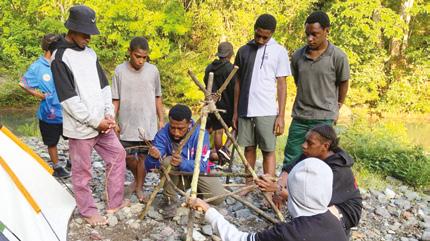
More than 60 Pathfinders and instructors from Wildlife (North East district) and 15 Mile (Bisiatabu district) Seventh-day Adventist churches (Bisiatabu district), Central Papua Conference, Papua New Guinea (PNG), including their branch churches, successfully completed a combined hike from Bisiatabu to Furimuti along the Yamagi Mountain Range. The three-day journey helped the young people fulfil their investiture requirements while focusing on teamwork, endurance and spiritual growth. Pathfinders took part in pioneering activities such as building bridges, towers and tables using knot-tying techniques, learning survival skills and exploring nature. Daily morning devotions and evening campfire worship strengthened their faith as they faced the challenges of the trail together.—Rose Maine Sinias
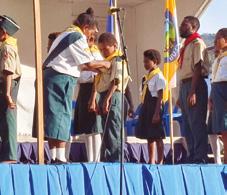
The Gabensis Adventist English and Pidgin churches under the Huon Gulf District of the Morobe Mission (Papua New Guinea) held a combined Adventist Youth Ministry (AYM) Investiture Program, celebrating a year of commitment, perseverance and spiritual growth on November 29. A total of 61 Adventurers and 59 Pathfinders were invested and the theme of the day was “Pressed”, reflecting the challenges faced by both leaders and members—particularly financial and personal struggles —Nathany Sam
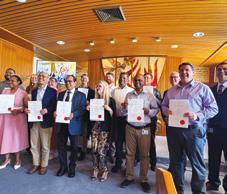
Students from the Sydney Adventist Hospital, Avondale and online community gathered in the San Chapel to celebrate the San Clinical Pastoral Education (CPE) Graduation Ceremony. The event, held on November 25, honoured 23 graduates who successfully completed their CPE training, under the tutelage of centre director Pastor Cheryll Bird —Yvonne Hypolite

Two Adventist primary schools have been recognised for their creative entries in the 2025 ACA Health Primary Schools Video Competition, an annual initiative promoting healthy habits among students.
This year, the competition invited students from Adventist primary schools across Australia to produce short videos exploring topics such as hydration, drinking water and reducing screen time. Schools used health resource activity books developed by final-year Education students at Avondale University and distributed by ACA Health. Macarthur Adventist College’s (NSW) Year 4GU received the award for Most Facebook Votes, earning a $A1000 prize, which will go toward sports equipment for the primary school. “It was such a joy to see our students work together creatively and share their message with the wider community,” said Year 4 teacher Giovanna Ufagalilo. Toronto Adventist School’s (NSW) Years 2–6 received the Judges’ Choice Award for Most Creative Video. Principal and teacher Celia Moncrieff thanked ACA for the initiative. “Toronto Adventist School teachers and students would like to thank ACA Health for investing in children’s health by providing engaging resources for primary school children.” This year’s winning entries can be viewed on the ACA Health Benefits Fund Facebook page. Adventist schools are invited to participate in future competitions. Contact <marketing@ acahealth.com.au> —Juliana Muniz
have news to share?
Send info and photos to <news@record.net.au>
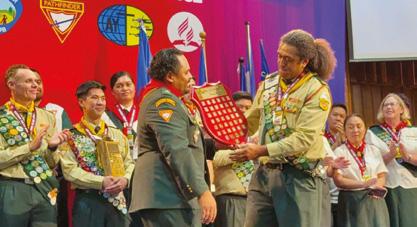
Rain poured outside Wahroonga Seventh-day Adventist Church on November 22, but inside hundreds of Pathfinders, leaders and families from around Greater Sydney Conference (GSC) filled the sanctuary with celebration, faith and unbreakable community spirit. The GSC Drum Corps opened the event with a stirring parade. Long-serving members were honoured and clubs were celebrated for earning the Club 200 Award. The first teams to complete the 2024-2025 Pathfinder Bible Experience were acknowledged and leadership awards presented. Pastor Richard Reid delivered the sermon.—Dejan Stojkovic
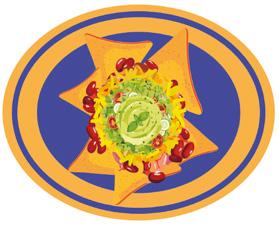
The Haystack honour has become the top Pathfinder honour ordered by Australian clubs on the ABC webstore in 2025, followed by Swimming, Paper Airplanes, Esther and Orienteering. The honour, which explores the history, ingredients, spiritual object lesson and preparation of Haystacks, was launched in 2024 by Glen Draeger of South Queensland Conference, and launched nationally by the Australian Union Conference in 2025. More than 1000 Pathfinders earned the Haystack honour this year—nearly double the next most popular honour. Of the 380 different honours ordered, 57 only had a single order, including Scuba Diving, Cryptology, Artificial Intelligence, Refugee Assistance and Laughter Honours. The top Adventurer awards earnt this year were Birds, Picnic Adventure, Creation, Camper and Hands of Service.—Scott Wegener
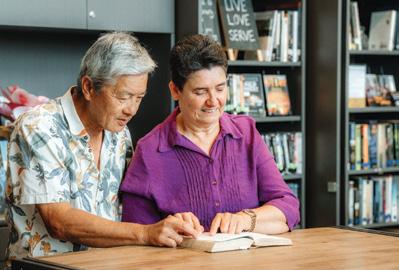

or many people who are deafblind, connecting with God’s Word can feel challenging. Yet, with the help of technology and the willingness of sighted friends, the Bible becomes a shared experience that builds faith and friendship. This is Carleeta Manser’s story—a story of courage, faith and the transforming power of reading Scripture together—written with support from Dr Ken Long.
I love reading the Bible because the Word of God is deeply meaningful in my life. Through Scripture, I learn who God is and how to live by faith. His Word changes me—it shapes my thinking, comforts my heart and teaches me how to become more like Jesus. Every time I read, I feel encouraged and receive wisdom for the day ahead.
One of my favourite passages is Psalm 139, which reminds me that God knows me completely and formed me in my mother’s womb. When I reflect on verses like these, I think about who God is and what He’s doing in my life. Sometimes that reflection is painful because it shows me areas where I need to grow—but even then, God gently guides and encourages me on His path.
Doing Bible readings with someone else brings me great joy. In the past I have read the Bible on my own but being deafblind means that it can be a lonely experience.
Reading with Dr Ken Long has helped me grow in many ways. He finds topics that truly interest me. Because I am deafblind, it can be frustrating and time-consuming to find resources that work for me, and I avoid studies that use video content. That’s why I really appreciate clear written readings that can be shared on the YouVersion Bible app.
When Ken and I discuss the Scriptures, I understand more about God and see His amazing character more clearly. Talking about what we read together opens my eyes to new insights and strengthens my faith.
The YouVersion app is a big part of my spiritual life. I use it every morning and evening for Bible readings and prayer. When reading with someone else, I can write comments on each day’s devotional and Bible texts and read their reflections in return. These exchanges help me feel connected, even across distance, and help me see Scripture from a new perspective.
I use a Focus 14 Braille display connected to my iPhone to access the app. It has been a game-changer, though
it isn’t always smooth sailing—sometimes the connection drops out, or certain features don’t work perfectly. Still, I’ve learned to be patient and find ways around these challenges because the reward is worth it.
Reading Scripture gives me courage and comfort, especially when life feels hard. Romans 5:2 reminds me that we stand in God’s grace and can be full of joy as we hope in His glory. Ken brought to my attention 2 Corinthians 1:3,4. It talks about how God comforts us in all our troubles so that we can comfort others. I’ve come to see comfort as a kind of stewardship: God comforts me so I can share that same comfort with others. This gives my deafblind life purpose that was missing before and encourages me that God has a plan for my life.
There are times when life feels heavy, but I find peace in God’s promises—like in Philippians 4:6,7. It says, “Do not be anxious about anything, but in every situation, by prayer and petition, with thanksgiving, present your requests to God. And the peace of God, which transcends all understanding, will guard your hearts and your minds in Christ Jesus.” I love the promise that His peace guards our hearts and minds. That peace is real for me.
Reading with Ken every day has helped me grow not just in faith, but also in patience and friendship. We take turns writing comments, reflecting and encouraging one another. I appreciate that he listens to my thoughts, corrects me gently when I misunderstand something, and always includes me in the conversation. These shared readings remind me that I’m part of a community of faith.
Working with people who are deafblind can be a deeply rewarding experience. I encourage sighted people to take the time to learn how to communicate and study the Bible together. It may require patience and adaptation, but the blessings are immense. When you share God’s Word with someone who is deafblind, both hearts are touched—and His love shines brighter through the journey you share.
Christian Vision and Hearing Services provides audio and Braille resources for people who are totally and partially blind, as well as for those who cannot read standard print due to disability. Support the offering on January 17, 2026 (page 4).
Carleeta Manser attends Kellyville Church, NSW.
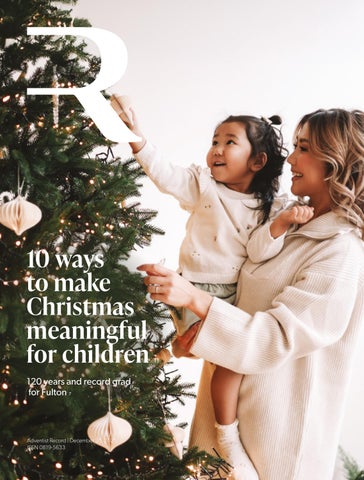
It’s especially easy for children to get caught up in the excitement and anticipation of presents during Christmas time. It’s easy for us adults to do the same. It is, after all, a season of joy, gifts and giving. While we may be able to see past the commercialisation and materialism of Christmas, we need to consciously help our children do the same. Here’s how.
Explore its true meaning

Christmas, at its core, is about giving, not gifts. Take time to talk about the birth of Jesus and God’s greatest gift to us: God becoming human, bearing the consequences of our wrongdoing and rescuing us from eternal separation from Him.
Create traditions beyond presents
Children often remember experiences more than things. Baking together, going camping, singing carols or driving around to see Christmas lights can create lasting memories and give children something meaningful to look forward to beyond what’s under the tree.
Limit the wish list
This will encourage your children to think intentionally about what they truly value. It also helps to teach contentment.
Involve them in giving
One of the most powerful ways to shift the focus from “getting” to “giving” is to let children be part of it. This could be helping to choose a gift for a sibling, being part of a charity drive such as Operation Christmas Child or giving to ADRA. Involving children also helps to cultivate in them compassion, empathy and emotional intelligence.
Acts of kindness
Christmas is the perfect time to model kindness to your children. Together, leave thank-you notes for delivery drivers, help out at a soup kitchen or pick flowers for a neighbour.
Help your children see the thought and care that goes behind each present—especially the ones they may not appreciate—and why they should be thankful for it. Even better, guide your children to pause and think of something they’re thankful for from the past year. Often, it will be a memory or an experience that extends beyond material stuff.
Keep it simple
The holidays don’t need to be extravagant to be meaningful. Sometimes the pressure to create a “perfect” Christmas adds more stress than joy. Children notice our attitude more than the number of presents under the tree.
Slow down
Holidays can be overstimulating. Show your children the value of slowing down by setting aside moments where they can pause, reflect and reset.
on presence
The fondest memories our children will have are of the times spent together. Make sure to pause from the Christmas rush to spend time with them.
Christmas gatherings are the perfect time to highlight that relationships matter. Emphasise that the celebration is about who you’re with more than what you receive because relationships bring the deepest fulfilment.
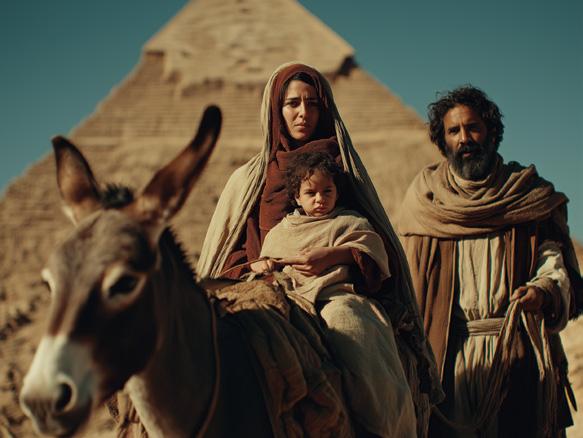
It's common to hear those who speak on refugees and asylum seekers appeal to the story of Jesus' family’s escape from the military threats of Herod’s army as a reason for identification with and compassion for the plight of refugees and other immigrants in the world today.
In its simplest terms, it is urged that “Jesus was a refugee”. But is such a statement accurate in the context of contemporary political debates?
The story is told in Matthew 2. Sometime after the birth of Jesus, a group of “wise men from the east” arrived in Jerusalem, searching for “he who has been born king of the Jews” (verses 1,2).* This caught the attention of Herod the Great, the Roman-appointed king of Judea from about 34 BC to his death in about 4 BC. After consulting with these wise men and Jewish religious leaders, Herod was able to ascertain the place and time of this birth and sent soldiers to kill “all the male children in Bethlehem and in all that region who were two years old or under” (v16). However, according to the biblical narrative, Jesus’ father Joseph had been warned in a dream to escape to Egypt, so avoiding this “massacre of the innocents”. Jesus’ family remained in Egypt until the death of King Herod—likely a period of a few years—before returning to their home in Nazareth.
In terms of Article 1 of the Convention and Protocol Relating to the Status of Refugees (2010), it seems clear that the family of Jesus had a “well-founded fear of being persecuted” for religio-political reasons. The reason they were targeted is explicit in the story, even if these identification and claims were made about them, not by them. The violence from which they escaped demonstrated the reality of the threat against them.
The challenge of identifying the family of Jesus as
refugees under the modern definition hangs on the understanding of the nation state, less recognised and less defined in the ancient world. Emma Haddad, CEO of the nonprofit organisation St Mungo's, points out that “jurisdictional boundaries in the medieval world were more porous and overlapping than the rigid, impenetrable borders of the modern world.”1 Such porous boundaries were even more so in the ancient world and under the broad reach of the Roman Empire in the first century BC. Both Judea and Egypt were merely provinces and their rulers appointed by the authority of Augustus Caesar, whose jurisdiction was acknowledged in the other biblical birth narrative of Jesus (see Luke 2:1).
By this technical definition, the claim “Jesus was a refugee” is inaccurate: “As nation-states are constructed, so the refugee is also constructed and the two concepts in some sense reinforce each other.”2 The absence of sufficiently border-defined nation states in the ancient world precludes the possibility of this designation.
However, that Jesus’ family found protection in Egypt, beyond the reach of Herod, his soldiers and his threats demonstrated a clear refugee-like experience. Daniel Carroll’s summary is more correct: “The migration of this family locates the Jesus story within a movement that spans history, of people desiring a better life or escaping the threat of death”.3 While not as pithy, this should illicit no less empathy and compassion from those who claim this story of faith as formative for their lives and public engagement. As Jesus would put it later in His life, identifying with these are so many other human experiences: “I was a stranger and you welcomed me” (Matthew 25:35).
Or not (see Matthew 25:43–45).
*Bible quotations from the English Standard Version.
1. Emma Haddad (2003), “The Refugee: The Individual between Sovereigns,” Global Society 17(3), page 302.
2. ibid, page 299.
3. Daniel Carroll (2013), Christians at the Border: Immigration, the Church and the Bible (2nd edition), Brazos Press, page 106.
Nathan Brown book editor, Signs Publishing.
With summer sunshine and Christmas celebrations on the horizon, it can be easy for healthy habits to slip. Between family dinners and catch-ups with friends, the festive season often brings plenty of delicious temptations, but enjoying this time of year doesn’t have to come at the cost of your wellbeing.
With a little planning and a few smart swaps, you can make the most of every celebration while keeping your health goals on track. Here are some simple tips to help you feel your best right through to the new year.
1. Eat dinner before going to a party
The easiest way to avoid overdoing it at the food table is to eat beforehand. Having a light, healthy dinner before heading out means you’ll arrive feeling satisfied and less tempted to graze all night.
2. Eat smart
Most party spreads include at least a few healthy options —look for cut-up veggies with hummus or salsa, fruit platters, sushi or a handful of nuts. Choosing these over chips and fried snacks will leave you feeling lighter and energised.
3. Don’t skip breakfast
Breakfast is the perfect time to start your day with something light and nourishing. Enjoy a healthy option where you’re staying, or grab your own on the go. Eating breakfast helps stabilise your appetite and reduces the chance of overindulging later.
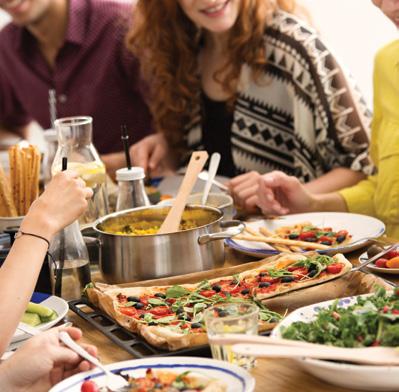
4. Smart snacking
Skip the chips and lollies that leave you feeling flat. Bring along snacks you’ll actually enjoy—think nuts, oat-based muesli bars, fruit or wholegrain crackers. These betterfor-you choices keep you energised and satisfied between meals.
5. Keep water close
It sounds simple, but staying hydrated can make a big difference during party season. Water is the healthiest drink around and helps you stay cool in the summer heat. Regular sips can also stop you mistaking thirst for hunger.
6. Dining out decisions
When eating out, how food is cooked matters. Choose grilled or baked meals over fried or battered options— they’re lighter and lower in fat, without sacrificing flavour.
7. Healthy swaps
Look for dishes with wholegrains like brown rice or wholemeal pasta and plenty of vegetables. Ask to swap fries for a salad or extra veg, and choose tomato or vegetable-based sauces instead of creamy or cheesy ones. Small swaps can make a big difference.
impact.


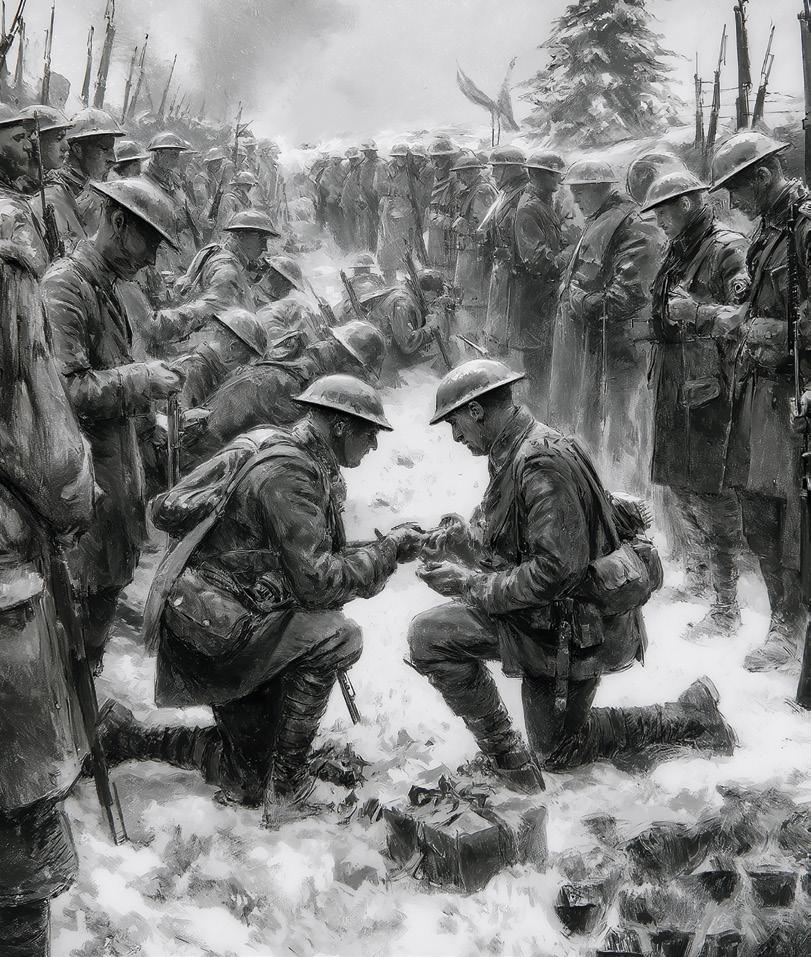
In 1914, an unlikely event took place so unexpected that it’s often believed to be a myth. Yet there is good historical evidence that it indeed happened.
“The Christmas truce” refers to Christmas Day during The Great War (World War I) when German and British soldiers on the front line of the Western Front put down their weapons and celebrated Christmas together. Instead of shooting at each other, as they had been doing, they sang Christmas carols, buried their dead, exchanged gifts and even played football (soccer).
These men, who had been mortal enemies, decided for a brief time in the middle of unimaginable horror, that they would celebrate Christmas, sometimes against the wishes of their commanders.
The Great War had been brewing for some time before it broke out in Europe. Many of the young men (especially the Germans) had been raised on a wave of nationalistic pride. Told they would be embarking on an adventure and that the war would be over by Christmas, eager volunteers signed up across Europe. Yet, crushing reality soon
sank in. The trenches were dirty, held stagnant water and were a breeding ground for disease. In his poignant poetry documenting the war, Wilfred Owen, who was killed just months before the Armistice, paints the picture of a young man who has been gassed, thrown on a wagon “eyes writhing in his face”, blood “gargling from froth-corrupted lungs”.
The poet finishes his poem with these lines:
“My friend, you would not tell with such high zest
To children ardent for some desperate glory,
The old Lie: Dulce et decorum est
Pro patria mori.”1
“Sweet and fitting it is to die for one’s country.” That Latin saying had been a catchcry glorifying and softening the brutal, life-ending realities of war. The young men who were told they would sweep in and vanquish the enemy, returning to a heroes’ welcome, soon woke up from their fantasy, senses assaulted by the insistent boom of shells, the clinging mud and stench of the trenches.
Yet on Christmas Day, 1914, some places along the
front saw a break in the fighting. Reports from the Imperial War Museum (IWM) verify the soldiers’ tales.
The IWM documentary The Christmas Truce features recorded interviews with soldiers who experienced this unlikely event.
Marmaduke Walkinton of the Queen’s Westminsters said, “We were in the front line. We were about 300 yards from the Germans . . . on Christmas Eve, we’d been singing carols and this, that and the other, and the Germans had been doing the same, and we’d been shouting to each other, sometimes rude remarks, more often just joking remarks.
Eventually a German said, ‘Tomorrow you no shoot, we no shoot’.”
Somehow, the suggestion stuck. “What was interesting at Christmas is that both sides actually started to communicate in more friendly terms,” said Anthony Richards, IWM head of documents and sound. “It really began with the Germans singing Christmas carols and setting up Christmas trees on top of their parapets. And so, they came to very much empathise with one another.”
A German artillery officer, only known as Mr Rickner, shares, “I remember the Christmas Day when the German and the French soldiers left their trenches, went to the barbed wire between them with champagne and cigarettes in their hands and had feelings of fraternisation and shouted that they wanted to finish the war. And that lasted only two days . . . and then strict orders came that no fraternisation was allowed, and we had to stay back in our trenches.”
Officers were worried that such fraternisation would dampen the men’s enthusiasm for battle.
This truce was not negotiated in a board room by leaders, nor banged out in the exchange of hostages or with concessions. It was the simple desire of young men to not fight and die at Christmas. People at home were incredulous about the reports. They didn’t believe that the enemy, who had been demonised and dehumanised, could exchange such pleasantries with their “boys”.
Yet the event did happen—not everywhere and not for long—but up and down the front. On the eastern front, Russian soldiers who had been bombarding the Polish fortress of Przemys´l left three Christmas trees in no-man’s land with a polite note to the defenders: “We wish you, the heroes of Przemys´l, a Merry Christmas and hope that we can come to a peaceful agreement as soon as possible.”2
In our society today, Christmas has become known for the saccharine sweetness of jingles, rich food and an excessive display of materialism as parents fight in aisles over presents for their children. Even the “spirit of Christmas” has become a bit of an urban legend—a nebulous concept of generosity and sacrifice.
Christians around the world celebrate Christmas to mark the occasion of the birth of Jesus. While scholars would agree that Jesus’ actual birthday is not December 25, the
date has been part of Christian tradition for more than a millennium and while some get bogged down in that detail, many around the world celebrate the nativity.
The Gospel of Luke has one retelling of the story. An angel comes to a group of shepherds in the Judean coun tryside and proclaims to them that a special baby has been born.
“Do not be afraid, for behold, I bring you good tidings of great joy which will be to all people. For there is born to you this day in the city of David a Saviour, who is Christ the Lord. And this will be the sign to you: You will find a Babe wrapped in swaddling cloths, lying in a manger” (Luke 2:10–12, NKJV3).

The shepherds would have had something in common with the men in the trenches of Europe. They were rough, uncultured men, probably from lower classes of society. They were accustomed to sleeping in rough terrain and to going without.
Yet, they heard the message of this heavenly messenger, when kings and rulers would not. Luke tells us that with this angel, a host appeared singing this phrase: “Glory to God in the highest, And on earth peace, goodwill toward men!” (2:14)
“Peace and goodwill toward men.” This phrase brings some insight into the mission and purpose of this “Babe wrapped in swaddling cloths” who was to be the Saviour of the world. “Saviour” means “one who saves” or “rescues”. Jesus, the Baby who was born that day, is that Saviour.
Jesus showed His followers a new way. He encouraged them to love their enemies, going against human nature. If someone does me wrong, my natural inclination is to repay them in kind. Yet Christmas celebrates the birth of Jesus, the One who came to bring peace. The kind of peace Jesus wants to bring doesn’t last for a day. He wants to bring wholeness to you and me, to restore broken relationships, to heal cultural and national divides, to have former enemies put down their weapons and share gifts and an embrace. The choir of angels wished for peace on earth and in this broken world, we still long for peace.
Our world is wracked by war and suffering and yet, when we remember Christmas, we are encouraged to heal hurts and be peacemakers, even with our enemies.
The Bible records that the shepherds—captivated by this vision of peace—came “with haste” to the place and found the Baby they had been told about, before telling everyone they knew of the strange encounter. Perhaps like the Christmas truce, some didn’t believe them. But those rough men would remember that encounter for the rest of their lives.
Let us pray for peace this Christmas.
1. Wilfred Owen, “Dulce et Decorum est”. Posthumously, 1920.
2. Max Hastings, Catastrophe: Europe Goes To War 1914. William Collins, 2013.
Jarrod Stackelroth managing editor, Adventist Record and Signs of the Times
|


Growing up, I heard countless stories of the giants of faith in the Bible. Whenever I heard them, I felt a mix of curiosity and longing. Was it possible for me to experience something like this?
One person in the Bible whose life was filled with miraculous experiences is Aaron. His story is a testament to the goodness of God. Slavery was all he knew . . . until it wasn’t.

God intervened and worked through Aaron in amazing ways. Aaron was used by God to hold the rod that became a serpent, turn water into blood, dust into gnats and performed many other wonders to freed God’s people. He walked through the Red Sea as it opened and closed like a storybook. By day, he travelled under the shade of God’s presence in the cloud; by night, he rested in the warm glow of God in the pillar of fire. He even heard God speak directly to him on a mountain. Eventually, God called him
to be His mediator—His High Priest. That's a pretty big leap for someone who had long been a slave.
When I think about Aaron’s time with God, I’m amazed. He spent his life seeking to follow God. His purpose was to rescue the Israelites from slavery, lead them into freedom and experience the love of his Saviour. He was also called to share that love with others and offer atonement on behalf of the people. Israel was learning how to be God’s people and Aaron was at the heart of it all.
As a Christian, my goal in life is the same: to know God and walk through life with Him. But sometimes, when spiritual highs give way to long stretches of waiting and wandering in the wilderness, that goal can feel a little fuzzy.
Aaron knew his purpose and identity, yet his need to please others often pulled him off course. When Moses went up the mountain to meet God, Aaron was left in
charge. Though Aaron knew God and had seen His glory, he struggled to fully devote himself and was still trying to please others. Moses didn’t return from the mountain quickly. Weeks passed. The Israelites grew impatient and wanted to take matters into their own hands. As a result, Aaron ended up doing some wild things. He melted down gold earrings to make a calf statue, then credited the people’s redemption from Egypt to it and tried to honour God by naming it after Him—as if he could appease both God and the people. But God doesn’t work like that. Because of his lack of obedience, Aaron’s actions caused many problems, including the death of many people and a plague. This wasn’t his only slip-up. His family faced challenges that led to his sister getting leprosy and his disobedience meant that he died before he made it into the promised land. So, Aaron lived this crazy life, saw amazing, incredible miracles . . . and made many mistakes along the way. In a strange way, I’m thankful for that, because I do too.
I remember when I was graduating from university, I didn’t know what I was going to do with my life. By the time I finished, I had little to no desire to use my degree. Instead, I felt like God was calling me to do mission work. Not only did I love travel, but I also wanted to use the Spanish I’d been studying and do something meaningful to help others. God absolutely exceeded my expectations. I ended up in a mountain town in the Cloud Forest of Costa Rica, teaching English to kids. My relationship with Jesus blossomed during this time, and like the Israelites and Aaron, my reality was transforming as He became the centre of my life. As I read Scripture, the words of who He is became a living reality. I was finding freedom from old thought patterns and skewed beliefs, experiencing my own little Exodus from confusion and pain into true freedom. On top of this, I was learning a new language and culture, meeting beautiful people and having so many adventures. I remember sitting on a terracotta floor, looking out at the rainforest, feeling on top of the world, and thinking I had arrived. Smooth sailing from here on, right?
But like Aaron, I have since found myself wandering in the wilderness, in a constant process of learning and unlearning. Like Aaron, I’m far too often guilty of choosing to please others over God. Like Aaron, I try to accomplish God’s purpose for my life with my own strength, according to my desires, not His.
When Aaron was confronted with his grievous mistake after the calf was made, he became defensive, played the blame game and lied to prove his innocence. But God gave him and the Israelites a choice: “Then Moses stood in the entrance of the camp and said, 'Whoever is on the Lord’s side—come to me!' And all the sons of Levi gathered themselves together to him” (Exodus 32:26).
God knew Aaron would make mistakes—but God's call came with the promise that He would never abandon him. Even as Aaron wavered between pleasing God and
pleasing others, God remained faithful. He didn’t wait for Aaron to get his act together before using or working through him. Instead, He taught him lessons along the way. That’s what the wilderness can be for us too: a place where we can unlearn old habits and allow God to teach us how to walk in freedom.
Just as Aaron helped lead the people out of bondage, Jesus came to rescue us from the bondage of sin. But unlike Aaron, who never entered the earthly promised land, Jesus will lead us into the true Promised Land where we will know Him for eternity.

I often feel overwhelmed by both my past and present mistakes. But Aaron’s story gives me hope. Disobeying God will always have its own natural consequences, and for the benefit of ourselves and others, we should strive to follow Him wholeheartedly. Yet even when we miss the mark, God wants to forgive us and teach us through our failures. He’s not looking to condemn, but to help and save us. If His goal was punishment, He wouldn’t have continued to use Aaron after the golden calf incident. As Jesus says, “For God did not send his Son into the world to condemn the world, but to save the world through him” (John 3:17).
After Aaron’s mistake, he had a choice: side with the Lord and receive forgiveness, or bear the full consequence of his disobedience. We face the same choice. We can dwell on our mistakes—or we can focus on God’s call to walk from bondage to freedom, not just for ourselves but to lead others. Yes, we’ll stumble, make poor decisions and wander from time to time—but that doesn’t have to stop us from coming back to God and seeking to obey Him.
God has created us to know Him, to walk in freedom and to learn to trust Him as we go. When we stumble, we get back up. We let Him teach us through it. As Hebrews 4:16 reminds us, “Let us therefore come boldly to the throne of grace, that we may obtain mercy and find grace to help in time of need.”
Cora Fleming from Tennessee, USA, has found home in many corners of the world. She’s passionate about exploring cultures, spending time in nature and learning from life wherever it takes her. She currently lives in Kingscliff, Australia.
Have you ever received a message from God? If so, you are not alone.
God does give personal messages. He can speak to us in different ways. He can call.
Long ago, there was a knock on the front door. A very firm knock. The young woman living there possibly wondered Who could that be?
Her thoughts may have focused on several things. Was it the local food vendor? Had her neighbour called to help with her wedding plans? Had she forgotten to put out the rubbish bin? Was it the handyman calling to fix the broken lamp?
We tend to wonder about the unexpected. Especially when someone comes calling.
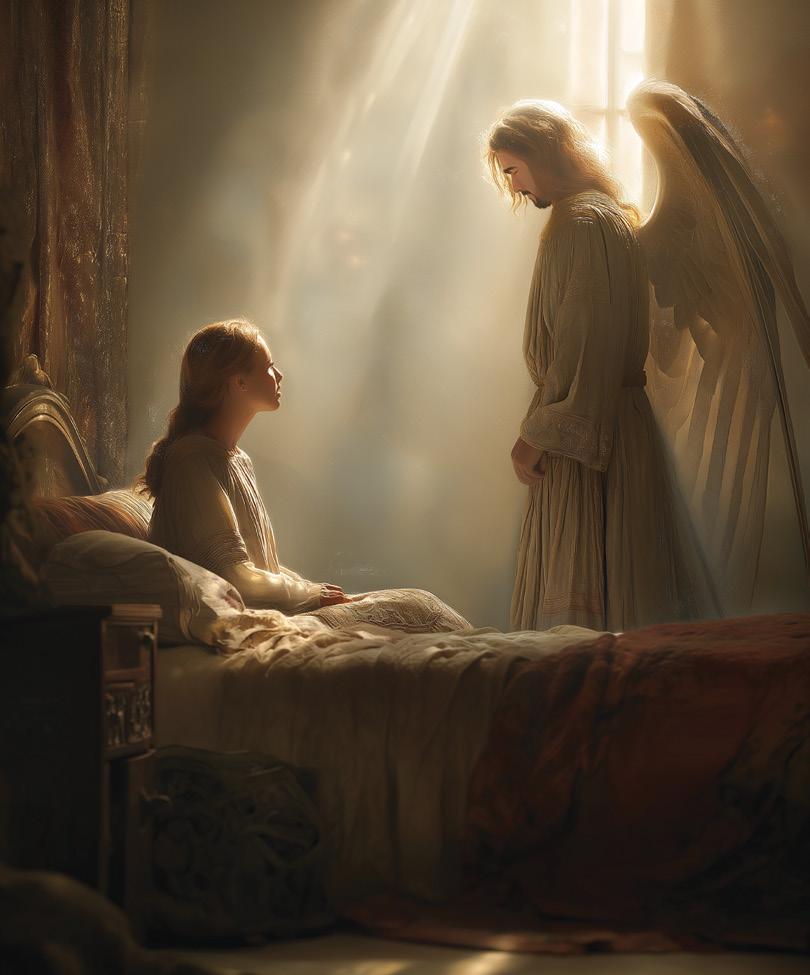
Meanwhile, on the other side of the door stood Gabriel the angel. He had come from standing in the very presence of God (Luke 1:26). Gabriel knew the time was right. The decision had been made. It was clear. The message was set for right now! Gabriel needed to speak to the young woman urgently. He had to pass on the message.
As she went to the door, the young woman’s initial thoughts are not recorded. However, Scripture records that Gabriel spoke to the woman we know as Mary.
Mary was initially troubled at Gabriel’s message. Gabriel sought to reassure her.
“Mary, do not be afraid. You have found favour with God. See you are to become a mother and have a Son. You are to give him the name Jesus . . . He will be called the Son of the Most High . . .” (Luke 1: 30–32).
Still Mary exclaimed, “How will this be since I am a virgin?” (Luke 1:34).
Gabriel again reassured her. “For God can do all things” (Luke 1:37).
Mary soon accepted what God asked her to do.
We may wonder why the message was so urgent?
Because, God so loved the world!
Unto us, a Saviour was born!
Neville Biddle
retired public servant, Brisbane, Queensland.
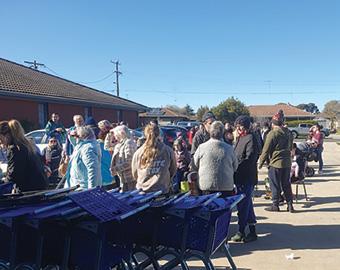
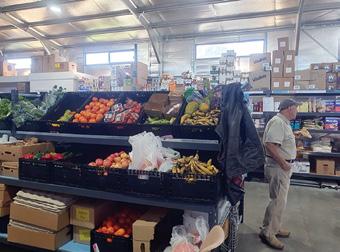
estimated that $A100-150 worth of food and goods are given out in each trolley. This equates to a minimum of $A10,000 each week and half-a-million dollars annually.
In 2017, a small group of Ballarat church folk bravely started an outreach called The Good Samaritan, giving out food and clothing from Ballarat’s second Adventist church in Wendouree.
Now a huge shed with freezers, fridges, a sink, storage sheds and cupboards, piled high to the roof with supplies week after week, stands as a testimony to the wonderful love and power of God.
The ministry, now called Soul + Food, runs every Thursday, supporting members of the Ballarat community who are going through challenging times. Along with clothing and food collection, the church kitchen/café now provides a big help-yourself morning tea to some of the more than 100 members of the Ballarat community who are going through challenging times. People are also cared for with $A5 haircuts, Centrelink support, utility grant advice and child and family services representatives, along with services for the homeless. Furniture and electrical goods have been provided, as well as a health check day where diabetes, hypertension and other health needs have been addressed.
Each of the community members are collecting, on average, for three or more family members. It has been
The volunteers begin their mornings with announcements and a short devotional and prayer. This is integral to invite the Holy Spirit’s presence and to build a cohesive team from the approximately 30 amazing, blessed volunteers, roughly half of whom are from the church and half community volunteers. They are all kind people who have been helped themselves and are now inspired to help others and “pass it on”. There is another half-hour worship at 11 am for the public and any volunteers who can take a brief break from their “giving” duties. This “spiritual food” is alternately provided by the eldest pastor who is almost 90 years of age, and the youngest intern pastor in training.
Here at Soul + Food we long to care for others physically, mentally and spiritually. It is a vital, joyous place for both volunteers and community members. So much more than just food and clothing is dispensed: TLC, love, a prayer in times of need, a smile, a joke and a warm weekly welcome from familiar faces. We are doing as Jesus did and through His strength experiencing how blessed it is to give.
Food and clothing are donated through many sources in the community: Foodbank and local businesses like McCain, Natures Cargo and Aldi. Soul + Food acknowledges and is grateful for all our wonderful supporters, locally and beyond. Their partnerships enable us to have a greater impact within our community. Along with these donors, church members, as well as youth, have made several big food collection runs in the community.
We are trusting God for yet another miracle, to raise funds for a commercial grade, fully metal verandah for both summer sun and winter rain protection. This will further help the elderly, families, babies, those who are ill or in wheelchairs, to be sheltered.
We stand in faith knowing the many miracles we have seen with this God-blessed venture in the past, despite the fact it comes with an approximate $A25,000 price tag.
Be inspired. Maybe your church could do this too. It is the same Holy Spirit, the same “God who works in us all, both to will and to do of His good pleasure.”
For further information, please contact Veronica at <veronicatirchett1@hotmail.com>.
Male headship Part 1: In the church (November 29)
In Corinthians 11:3, Paul calls attention to certain considerations that help to form a correct opinion on the matter. Head meaning “lord,” or “master” and "man" (Greek ane¯r ). Man as distinguished from woman thus introduces three degrees of submission:
1. The man is to acknowledge Christ as his Lord and Master;
2. the woman, while recognising the supremacy of Christ as Lord over all, is required to acknowledge that in domestic life she is placed under the guidance and protection of man;
3. Christ, although equal with the Father (John 1), is represented as recognising God as head.
Even among equals there may be a head. A committee of men of equal rank still selects its chairman. Some see a reference here to a voluntary submission of Christ in the working out of the plan of salvation. See further in 1 Corinthians 15:25–28.
The power and dignity of the husband depends on the position he holds toward Christ, his Head, therefore the dependence of the wife on her husband is in the true sense dependence on Christ through the husband. The dependence of the wife on her husband was a divinely appointed plan for the good of both spouses (see PP 58, 59).
However, the dependence does not in any way imply the slightest
degree of degradation. As the church does not experience dishonour by being dependent on Christ (Ephesians 1:18–23; 3:17–19; 4:13,15,16), neither does woman by being dependent on man.
Sairusi Bosenaqali, Facebook
We keep going around in circles saying this wasn't what God intended. True, however we no longer live in a world that reflects Genesis 1 and 2. We live in a post-Genesis 3 world and the effects of sin are all around us.
We now look to the guidelines that God has given us (post-sin), the rules and order that have been set before us, and if we want to be obedient to His requirements then we as a gender need to stop trying to be that which we aren't.
I don't understand the power-grab from women wanting to hold the position of church overseer/pastor/ elder when there is so much else we can do to serve God selflessly, humbly and with meekness.
Elly Conduit, Facebook
It’s not about wanting leadership but about taking away gender barriers for all—men and women—to be exactly where God called them to be. This headship theology centres around pastoral roles but has huge implications for attitudes towards women across all aspects of life.
Growing up, I never saw women preach or lead from the front of
church, unless it was with kids or music. That meant I didn’t know it was even a possibility for a woman to be a pastor. Representation matters on so many levels:
- It allows our girls to envision themselves as full partners in all church work.
- The congregation benefits from the strengths both men and women bring to the table when decisions are being made at high levels of leadership.
- Where women lead, the environment is safer for vulnerable people in the congregation.
Also, in patriarchal societies the outcomes for women and children are statistically worse as it empowers abusive men to continue to abuse.
That’s why it matters.
It’s not about individual power. It’s about creating structures and policies that allow the full image of God to be reflected in everything we do. When women are absent, that is impossible.
Karen Collum, Facebook
Korah and 250 prominent leaders rebelled against Moses and Aaron because he was jealous of Aaron's position and believed that he and the other Levites should have equal access to the priesthood, even though it was God who had chosen Aaron for that role. The same spirit exists today. 1 Timothy 3:2 is very clear ". . . a bishop then must be blameless, the husband of one wife". Last time I checked "husband" refers to a man.
Peter Cieslar, Facebook




FRANKLAND–HUMPHRIES.
Brock Frankland, son of Joe and Sheralee Frankland, and Brittney Humphries, daughter of Simon and Melinda Humphries, were married on 11.11.25 at Summergrove Estate, Carool, NSW. Brock and Brittney met at NNSW Big Camp and they will settle in Darwin, NT. They plan on Jesus being a big part of their future together.

BUCKLER, Jenny Ann, born 10.1.1948 in Melbourne, Vic; died 8.9.25 in Melbourne. In 2021 she married Alex. Jenny is survived by her husband; sister, Beverly; niece, Julienne; and nephew, David. She was a faithful follower of Jesus and His truth. She shared her faith fearlessly along with her husband and encouraged a good number
of souls who went forward in baptism. We look forward to seeing Jenny again on the glorious resurrection morning.
David Pearce

ELLIOTT, Wilma
Laurel (nee Meissner), born 8.10.1941 in Rockhampton, Qld; died 10.11.25 on the Sunshine Coast. On 18.11.1961 she married Morris (Morrie) Elliott. Wilma is survived by her husband of nearly 64 years (Sunshine Coast); sister, Helen Pascoe (Melbourne, Vic); daughters, Laurel and Adrian (Newcastle, NSW), and Karen and Andrew (Bundaberg, Qld); sons, Geoff and Narelle (Brisbane), and Brad and Renee (Buderim); 10 grandchildren; and five great-grandchildren. For Wilma, family was everything. Suffering from declining health in recent years, she now rests in Jesus, eagerly waiting when everything will be made new. She will be sadly missed.
Adrian Raethel
HEISE, Kathleen (Ena) (nee Crombie), born 12.11.1923 in Aberdeen, Scotland; died 1.8.25 in Avondale House, Cooranbong, NSW. Ena was predeceased by her husband, Fred; daughter,
Jennifer; and granddaughter, Sharney. She is survived by her children, David and Delmae (Wyee Point), Bruce and Julia (Sydney), and Lance and Antela (Niagara Park); grandchildren, Julie-Anne, Carl, Delena, Adam, Ryan, Luke, Cathy, Paul, Lysander, Roxanne and Shiloh; and eight great-grandchildren. Many will remember her passion for gardening, her selfless service in leading young people to Jesus and her deep love for the Lord. She went to sleep in peaceful assurance that when she wakes, she will see her Saviour and loved ones.
JONES, Maxwell Neil, born 13.2.1947 in Manurewa, NZ; died 14.11.25 in Hamilton. Max is survived by his wife, Grace (Hamilton); son, Rowan and Nanda Jones (Hamilton); daughters, Brenda and Trevor Goldstone (Hamilton), and Linda and Chris Jones (Papakura); grandchildren, Aaron, Joshua, Leah and Nathan, Kyle, Markus, Natalie, Timothy, Samuel, and Luke; and great-grandchild, Olivia Craw. Max was devoted to his Lord, family and community. His faith journey began at a Billy Graham crusade in Auckland. Through the invitation of a workmate, he visited Papakura church and
embraced Adventism. He was a cherished member of Manna Park and Hamilton churches, where his presence and commitment were deeply valued.
Bob Larsen, Jordan Spangler

MCCUTCHEON, Mavis Clytie (nee Latto), born 22.3.1942 in Como, WA; died 17.11.25 in Perth. Clytie is survived by her husband, Hylton Raine McCutcheon; sons, Raymond and Igustin (Langford), and Heath and Samantha (High Wycombe); and grandchildren, Charlene (Langford), Tayla (High Wycombe), Liam (High Wycombe) and Matthew (Sydney, NSW). She passed away peacefully, surrounded by her family. No longer suffering and sleeping now until Jesus returns. Kyle Richardson

MILLER, Jennifer Eileen (nee Wright), born 8.12.1952 in Tarawa, Kiribati; died 27.10.25 on the Central Coast, NSW. In 1971 she married Wayne Miller. Jenny is survived by her husband (North Avoca); children, Kerry (Perth, Tas), Luke (Cooranbong, NSW), Tamma (North Avoca) and Tiana

(Kingscliff); nine grandchildren; and brothers, Lyndon (Kersbrook, SA) and Geoffrey (Glenning Valley, NSW). Jenny spent her early years in Kiribati and Fiji where her parents were missionaries. Jenny loved her family, friends, music and animals, and faced ill-health with courage and full confidence in her Saviour.
Ray Roennfeldt, Lyell Heise

NORRIS, Lynne
Maree (nee Thompson), born 25.7.1946 in Newcastle, NSW; died 25.9.25 in John Hunter Hospital, Newcastle after a battle with an incurable illness. On 6.10.1968 she married George Norris. Lynne was predeceased by her daughter Genene in 2021. She is survived by her husband (Wallsend); children, Melissa (Newcastle), and Stuart and Elsa (Sydney); and granddaughter, Amy and her fiancé, Tom (Newcastle). Lynne faithfully served in children’s Sabbath school for many years. Her passion for babies carried over
X` into her hobby of knitting, creating baby jackets, booties and bonnets for families and regularly donating them to the maternity ward at John Hunter Hospital.
Brad Rae, Ian Cangy
REITZE, Clement Worrell, born 24.3.1936 in Esperance, WA; died 22.9.25 in Gateshead, NSW. Clem was predeceased by his wife Mairi on 4.11.16. He is survived by his children, Joy and Neil; and his brothers, Max and Roger. Resting in peace awaiting the soon coming of Jesus.

WALLIS, Laurelle
Alice (nee Reid), born 18.1.1954 in Launceston, Tas; died 18.8.25 in Launceston. In 1988 she married Stan. Laurelle is survived by her husband (Gravelly Beach); daughter, Sarah (Melbourne, Vic); and son, Mitchell (Melbourne). Laurelle spent her childhood in Tasmania, the second of four children of George and Monica Reid. She studied at Avondale in 1972–73 before moving to
PLATFORM ENGINEERING LEAD—FAITH FM
RINGWOOD, VICTORIA
Melbourne, where she worked at the Adventist Book Centre and in Adventist Education. She led children’s ministries at Preston Church for 25 years and served as church clerk for 34 years. A trustworthy friend with a great sense of humour, resting until Jesus comes.
Joshua Wood
HARRISVILLE 50TH CHURCH BUILDING ANNIVERSARY. All past ministers and members are invited to celebrate this special occasion on the 21st February, 2026. Our day will start with Sabbath school at 9:30am, church, potluck lunch and an afternoon program. 27 Mary Street, Harrisville, Queensland.
AVONDALE FAMILY FUNERALS offering compassionate cremation and burial services with dignity and care at your cemetery of choice in NSW led by an Adventist funeral director. Contact Mark Windus on 0411 797 854 or <director@ avondalefamilyfunerals.com.au>.
Are you a dedicated and innovative professional with a passion for making a difference? Faith FM is seeking a full-time platform engineering lead to help advance our mission of sharing the gospel of Jesus Christ across Australia. You’ll play a vital part in amplifying Faith FM’s presence across Australia by keeping us on the air and connected to our audience. With experience in relevant technological spaces and programs, you’ll work with the team to ensure smooth and consistent connection. If you’re ready to apply your expertise in a role that combines purpose, innovation and impact, we’d love to hear from you! For more details or to apply please go to <adventist.org.au/auc/careers>. Applications close January 31, 2026.
PROMOTIONS AND ENGAGEMENT LEAD—FAITH FM
RINGWOOD, VICTORIA
Are you a confident and engaging professional looking to reach others? Faith FM is seeking expressions of interest for a full-time promotions and engagement lead, focused on sharing, communicating and strengthening the gospel of Jesus Christ across Australia. You’ll be responsible for growing listener and church engagement, building sponsorship opportunities and developing strong partnerships with key stakeholders. You’ll play a key role in elevating Faith FM’s brand and visibility nationwide, helping us fulfil our mission to share the gospel of Jesus Christ. If you’re passionate about making a lasting impact and keen to apply your skills in a role that combines purpose with strategic influence, we’d love to hear from you. For more details or to express your interest go to <adventist.org.au/auc/careers>. Applications close January 31, 2026.
Empower people and drive culture excellence at ADRA Australia! Are you passionate about HR leadership and workplace culture? Join us as a people and culture manager—drive strategy, implement HR systems and champion staff wellbeing. Use your expertise to enhance performance, foster engagement and build a high performing, values driven organisation. Submit your expression of interest and CV to <HR@adra.org.au>. Applications close January 18, 2026.
NOTE: Neither the editor, Adventist Media, nor the Seventh-day Adventist Church is responsible for the quality of goods or services advertised. Publication does not indicate endorsement of a product or service. Classified advertisements in Adventist Record are available to Seventh-day Adventist members, churches and institutions only. All advertisements, appreciation, anniversary, wedding and obituary notices may be submitted via <ads@record.net.au> or online at <record.adventistchurch. com>. Notices will not be reprinted unless there is an error of fact caused by Record staff.
abn 59 093 117 689 vol 130 No 25
Consulting editor
Glenn Townend
Editor
Jarrod Stackelroth
News editor
Juliana Muniz
Assistant editors
Ashley Jankiewicz
Danelle Stothers
Copyeditor
Tracey Bridcutt
Graphic designer
Theodora Pau’u
Noticeboard
Julie Laws
Letters editor@record.net.au
News & photos news@record.net.au
Noticeboard ads@record.net.au
Subscriptions subscriptions@record.net.au + 61 (03) 5965 6300
Mailed within Australia and New Zealand
$A60.00; $NZ90.00 Other prices on application Website record.adventistchurch.com
Mailing address
Adventist Media Locked Bag 1115 Wahroonga NSW 2076 Australia + 61 (02) 9847 2222
Cover credit
Eyeem Mobile GMBH —Getty Images
Next issue
Adventist Review January 10