IDA-SOPHIE HEGEMANN – WHAT ’ S THE PRICE OF PROFESSIONALISM?
WYDER – WHAT GUIDES YOU?
OSA ANSA – THE NEW GENERATION
PABLO VILLA – A TOUCH OF SPANISH SENSITIVITY
PHILIPP REITER – MAN OF MANY TALENTS
RENÉ CLAUSSNITZER – THE COMMUNITY AT HEART
CROFT – FINDING HERSELF
114 LEGENDARY RACES
184 TRAILS TO DREAM OF
WORLD’S MOST BEAUTIFUL ROUTES
232 SERVICE AND PRACTICE
PEOPLE & MOMENTS
Daniel Keppler prefers to be behind the lens instead of in the spotlight. He can always be found juggling running, his camera, and new perspectives.
DANIEL KEPPLER: HOW IS THE RUNNING SCENE IN CHINA?
A bundle of prejudices
Daniel is a man of few words. First and foremost, he has no love of being in the spotlight. He runs races, seemingly pretty chill about them, and occasionally makes it to the podium, but never makes a fuss about himself or his achievements. In fact, he prefers to watch from the sidelines, often through the viewfinder of his camera. According to Daniel, it’s always been that way. He is no fan of self-promotion, neither is he drawn to the limelight. His preference is to work behind the scenes, place others center stage, and watch rather than be watched.
“As a Chinese brand, one of their main challenges is not to be seen as an Asian brand.”
Moving to China
In 2024, Daniel and his wife Julia moved from Munich to Shenyang in northeast China, when Julia accepted a job offer from her employer and Daniel came along. A big leap into the unknown, far away from home and family. Daniel did not have a job lined up, but was open to the opportunities arising from the move. Quite a change from cozy Munich with its trails along the River Isar, its beer gardens, and the mountains on the horizon. “Things we take for granted at home just don’t exist here. Trail running is a few steps behind, and I think that’s also because of the lack of freely accessible trails,” Daniel explains. On top of that, it’s necessary to be able to afford the sport and the lifestyle that comes with it. “People with the income to buy the products or invest the time in training usually live in mega-cities,
where there is little access to technical trails.” It’s a different world. And yet outdoor activities and trail running are booming in China too.
“Things we take for granted at home just don’t exist here. Publicly accessible nature is much less available.”
Pride and Prejudice
China—a country that many still view as exotic and foreign. Often, distance grows out of a lack of experience—out of stories and images shaped from the outside. But anyone lucky enough to visit the country quickly realizes that it is more open than would seem at first glance. “I wish there was
IDA-SOPHIE HEGEMANN: WHAT DOES PROFESSIONALISM COST?
A conversation about finding yourself
Ida and Kimi, Kimi and Ida. We are constantly asked whether such a close friendship is even possible between two competitors who run for different brands. What a shame, I think. Does our shared passion and the similarities in our career choices mean we can never be friends? Absolutely not: quite the opposite! It was trail running that brought us together and sealed our friendship
Today, Ida and I are the “Höhenmeter pro Kilometer-Gespann.” Two friends and trail runners who are similar in many ways, yet actually very different. Over time, we have built a close friendship from our initial rapport, so it should come as no surprise that part of Ida’s story is presented here. It is an honest insight into Ida’s emotions, and a critical scrutiny of the true price of professionalism.
“My biggest fear at the time was that I would not meet the squad standard and would end up back home and at my old school, and that this would be regarded as my failure.”
At boarding school
The Ida I know is a real family person. Her little sister Mimi, her mother Karin (who she is very close to), and her fatherLars, who is her constant fount of calm and strength. And her brothers, who she has been competing with—and comparing herself to—since she was small. That’s how siblings are, but perhaps there is a little more involved, since Ida’s competitive streak was probably there from the start. Ida developed an interest in running through school sports;
her PE teacher quickly spotted her talent and realized she could keep pace with the boys in her year and match tenth-graders’ times. But Ida had little interest in the 800 meters (2,600 feet), and even less in sprints. Even back then, it was the longer endurance runs through the woods that fired up her ambition. Her talent for endurance running took her from her first state championships to a local athletics club, and right into Germany’s top times for 5 kilometers (over 3 miles). “That’s when I really started to fo-
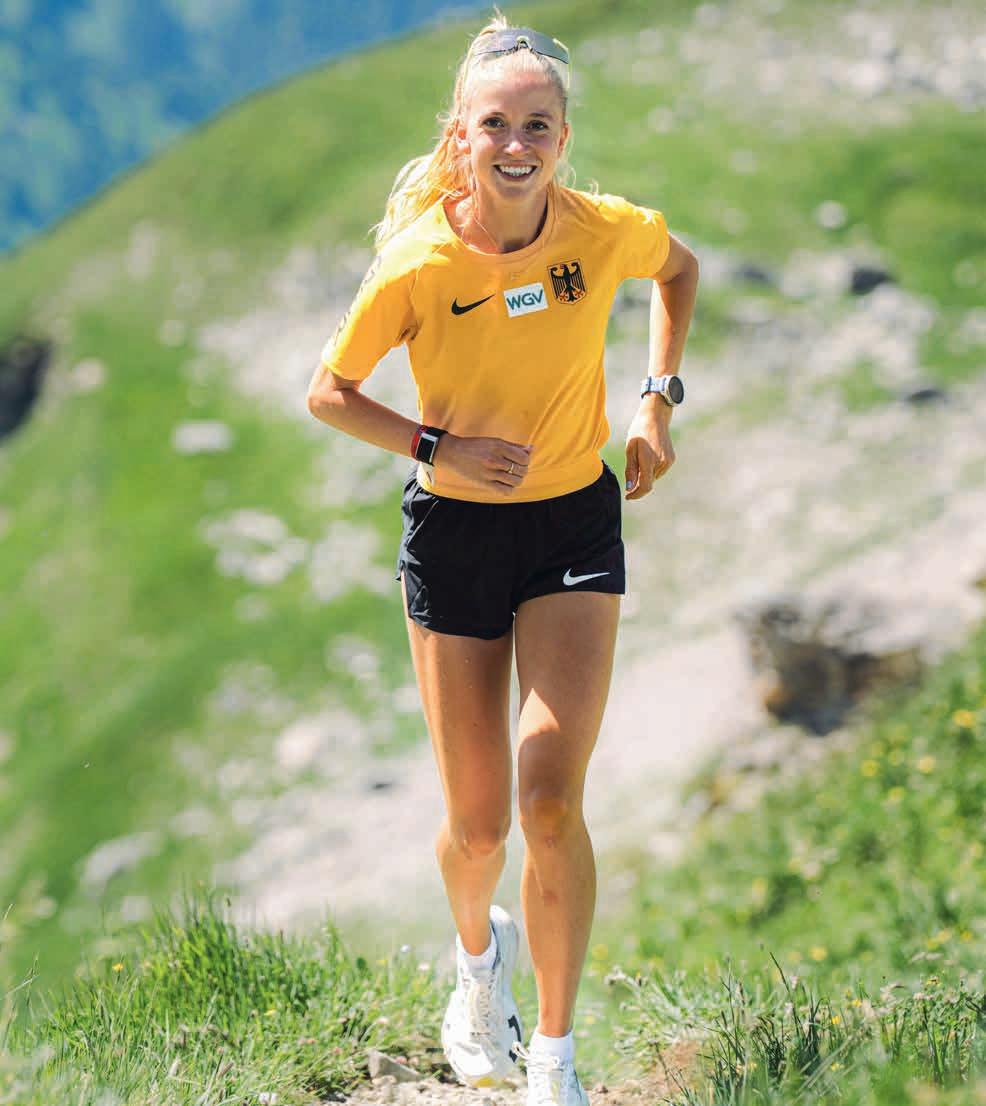
Ida-Sophie in the German national jersey. This is the second time she has made it onto the German squad to represent her home country.
THE AUTHENTIC ICONS
In my view, no other race series has a more authentic vibe than the World Trail Majors. This group, currently numbering ten internationally recognized and major races worldwide, brings together events with a focus on sustainability and diversity, and encourages everyone to keep the roots of trail running alive amid all the commercialism and innovation. The series takes in independent classics like the Hong Kong 100 Ultramarathon, Transgrancanaria on Gran Canaria, the Madeira Island Ultra-Trail in Portugal, and the Ultra-Trail Cape Town in South Africa. These are races that are not only integral elements of the series, but also stand on their own as unique and diverse trail running experiences.
Because of this structure, none of the races have to change their own values or ideas to fit the series. Authenticity and freedom are standout characteristics. The World Trail Majors feel so genuine because each event retains its own character and respects and supports local communities, cultures, and roots. No complicated index tailored to the series, no claims to exclusivity, no focus on pro athletes. The World Trail Majors are all about appreciating trail running for what it is: a one-of-a-kind sport amid epic natural surroundings, lived, breathed, and celebrated by an open, international community.
But alongside all the individuality, there is still a standardized points system and an overall ranking—otherwise it wouldn’t be a series. However, the basic rule is that anyone can take part.
Any trail running enthusiast can sign up for one or more Majors events with no elimination process, no nominations, and no Stones. All that matters is the joy of trail running—and signing up promptly, because these spots are sought after, too. No matter how great your trail running spirit, if a race is sold out, that’s it. And that is a key aspect of this series: no matter how much we love trail running, nature should not be overwhelmed. Hence the limited starting spots.
Amateur runners can register normally using the individual event registration procedures. The same basically applies to elite runners, although this category offers free starting places and other support. Elite or amateur, runners are included in the rankings from their first successful participation in at least one World Trail Majors race. The two best results count towards the overall ranking at the end of the year. Appropriate prize money is awarded for both the age group rankings and the elite. The race series does not go overboard in boasting—although it certainly could, given all the well-known events that are part of it. While prestige is also a factor here, the focus is clearly on community, authenticity, and enjoyment of the sport. The Majors have no agenda of outdoing other series or standing out in a sea of competitions. They aim to remind us that trail running once took place with no commercialism and media sophistication, and that in addition to performance, it was primarily about having a good time together in beautiful natural surroundings.
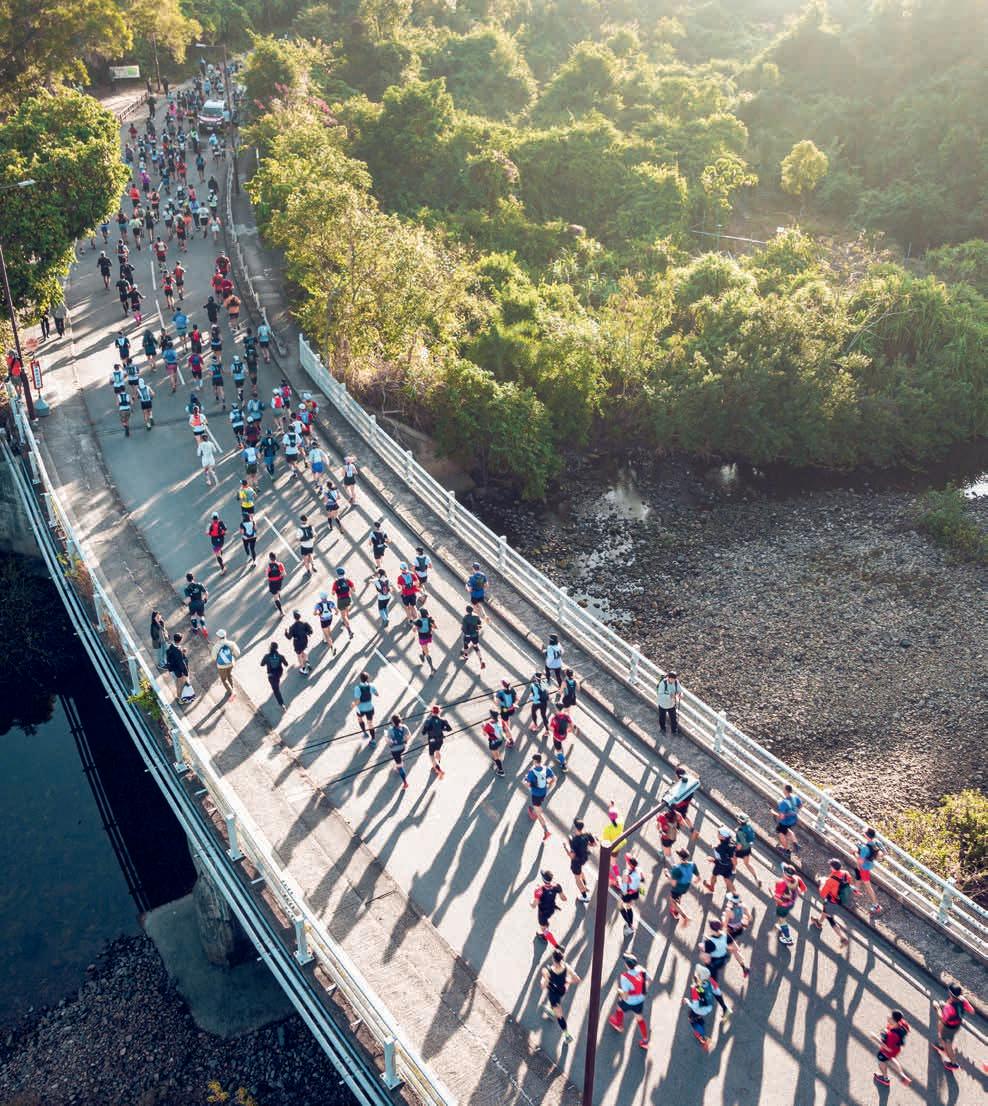
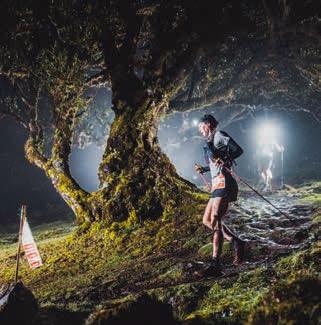
Left page: At the Hong Kong 100, the wide starting line on asphalt is a total contrast to the rest of the course; soon afterwards, runners hit steep climbs and technical trails. Below: At MIUT, the night section passes through dense laurel forests—an iconic part of the 115-kilometer race (71.5 miles), famous for its long, steep climbs and ultra-technical trails.
BROKEN ARROW
WESTERN STATES 100
The legendary Western States 100 is considered to be the birth of modern trail running. The 100-mile race has its roots in the Tevis Cup, an endurance race for horses. In 1955, Wendell T. Robie and five other riders rode the Western States Trail from the post office in Tahoe City to Auburn to prove that horses could cover 100 miles in a day. Their feat led to the creation of the Western States Trail Foundation and the Western States Trail Ride, also known as the Tevis Cup. In 1974, Gordy Ainsleigh ran the same route on foot and proved that the 100 miles could also be covered by a human on foot— not only on horseback. He completed the distance in 23 hours and 42 minutes, and the legend was born. The first
(USA)
official Western States Endurance Run was held in 1977 with fourteen runners at the start line; three of them finished in Auburn. Interest in the face soared, and the number of participants rose year by year. The Western States was first held independently from the Tevis Cup in 1978—the same year that saw the first woman, Pat Smythe, crossing the finish line.
Western States is now one of the foremost trail races in the world. Only 369 official starting places are awarded each year through a lottery. Elite athletes can qualify by amassing top finishing places and “Golden Tickets,” which guarantee automatic entry. The race organization limits the number
of spots for environmental reasons—a pretty remarkable and forward-thinking move, especially these days when so many events simply keep growing. Any stories about the Western States weekend always repeat one word over and over again: magic. Dylan Bowman, podcaster and live commentator over the past five years, has named Western States the “granddaddy of trail racing,” and there’s no arguing with that. The race has more than 1,500 volunteers on site, an incredible 20 aid stations along the course, plus ten medical checkpoints. The race crew members stay on their feet around the clock and stick it out until the 30-hour cutoff to welcome as many runners as possible to Auburn. Phenomenal! The last weekend in June is, and will always be, Western States 100 weekend, a celebratory date on the trail running calendar and an event that stays true to its roots. No frills, no exaggeration: just pure dedication and passion for a one-of-a-kind event with genuine tradition. There is still no prize money to be won, but there is plenty of prestige and some serious sponsorship cash awaiting the winners. And all official finishers under 30 hours win a famous Western States belt buckles—in silver or bronze depending on the finish time.
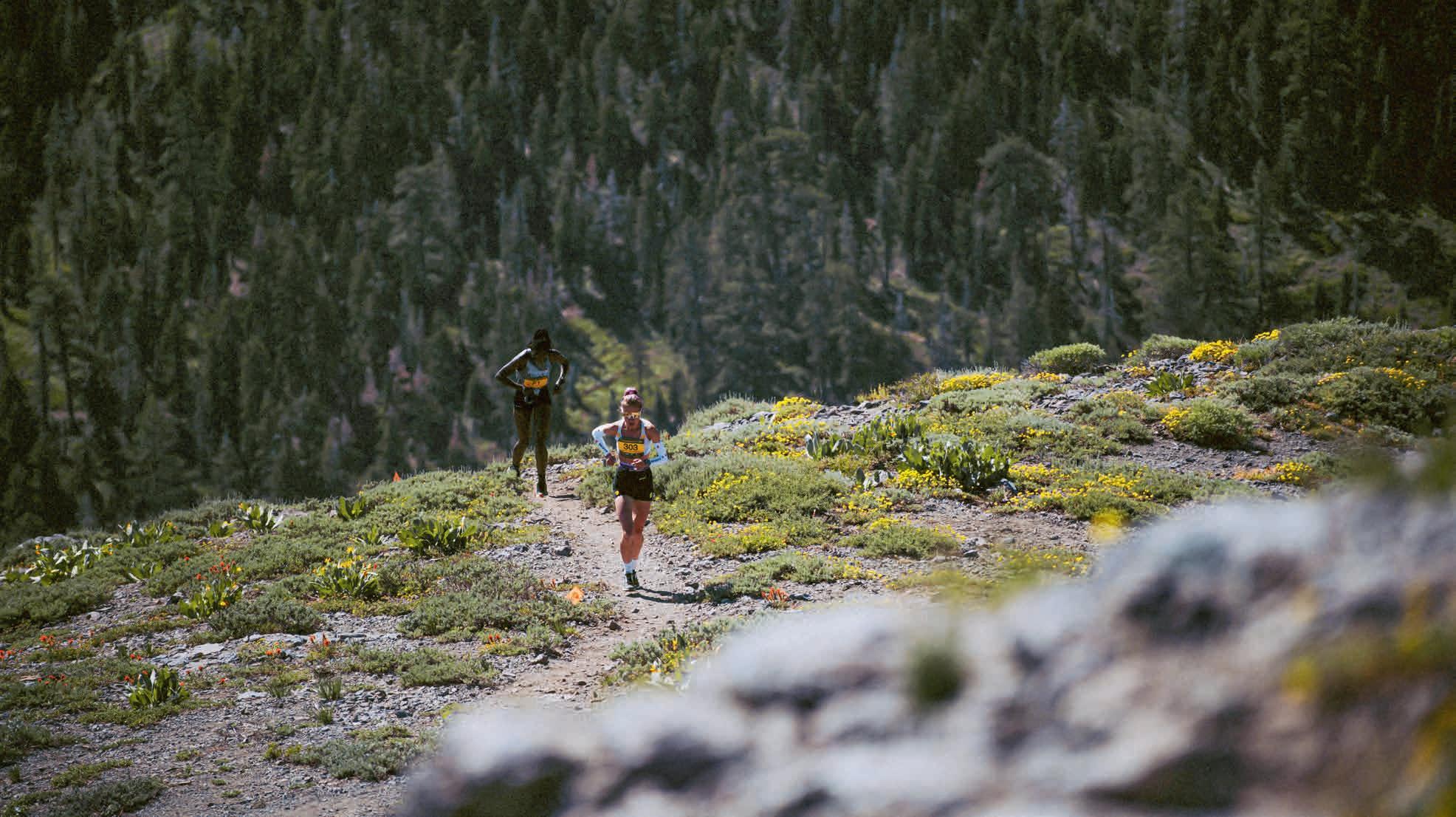
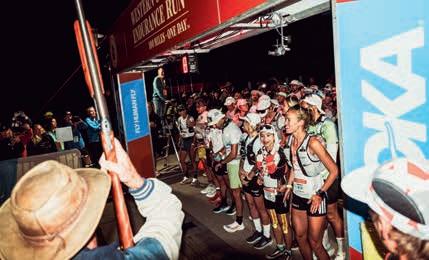
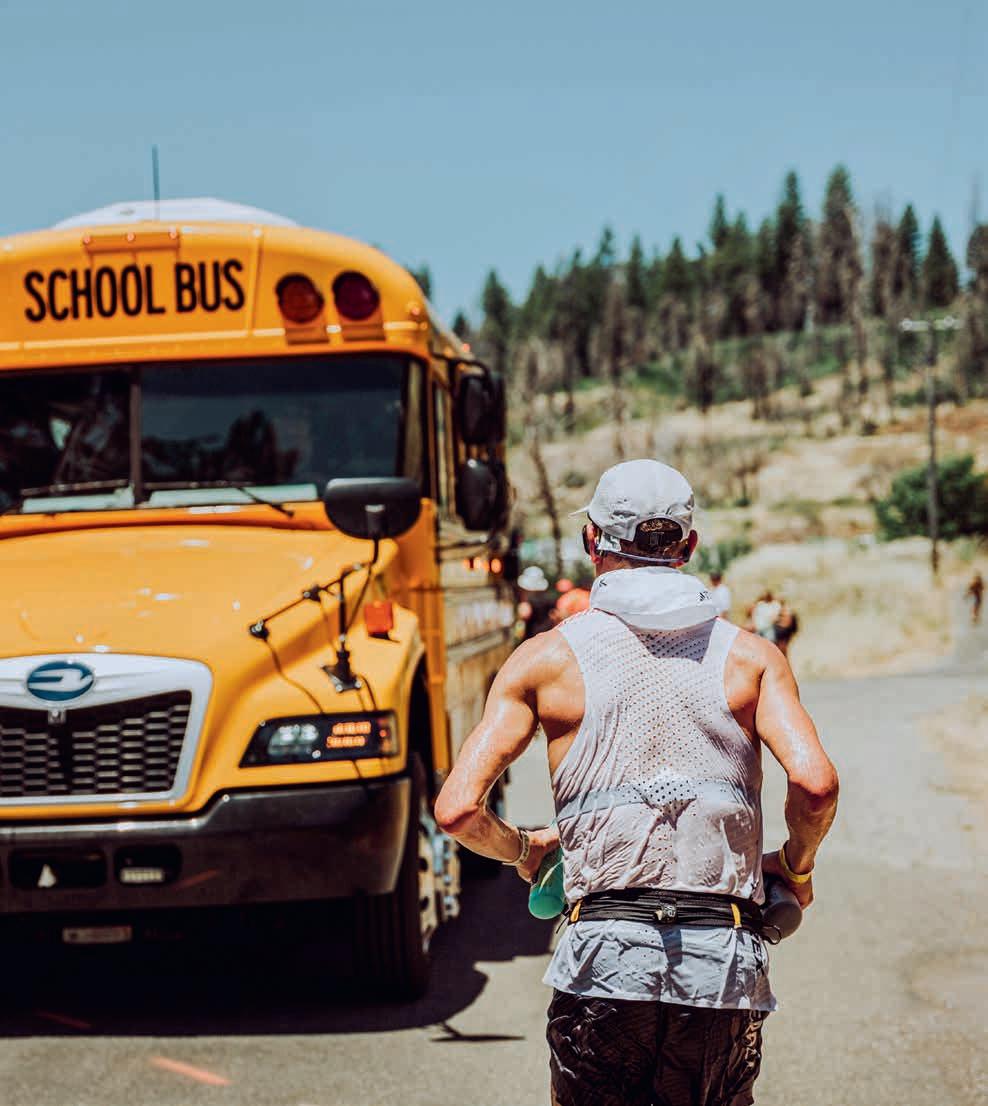
Below: The start of Western States 100 follows a set ritual: A single gunshot kicks off the oldest 100-mile race in the world and sends the field on their way to Auburn. Right page: At Western States 100, unusual encounters like this are part of the deal. On public roads, runners share the course with everyday California life.
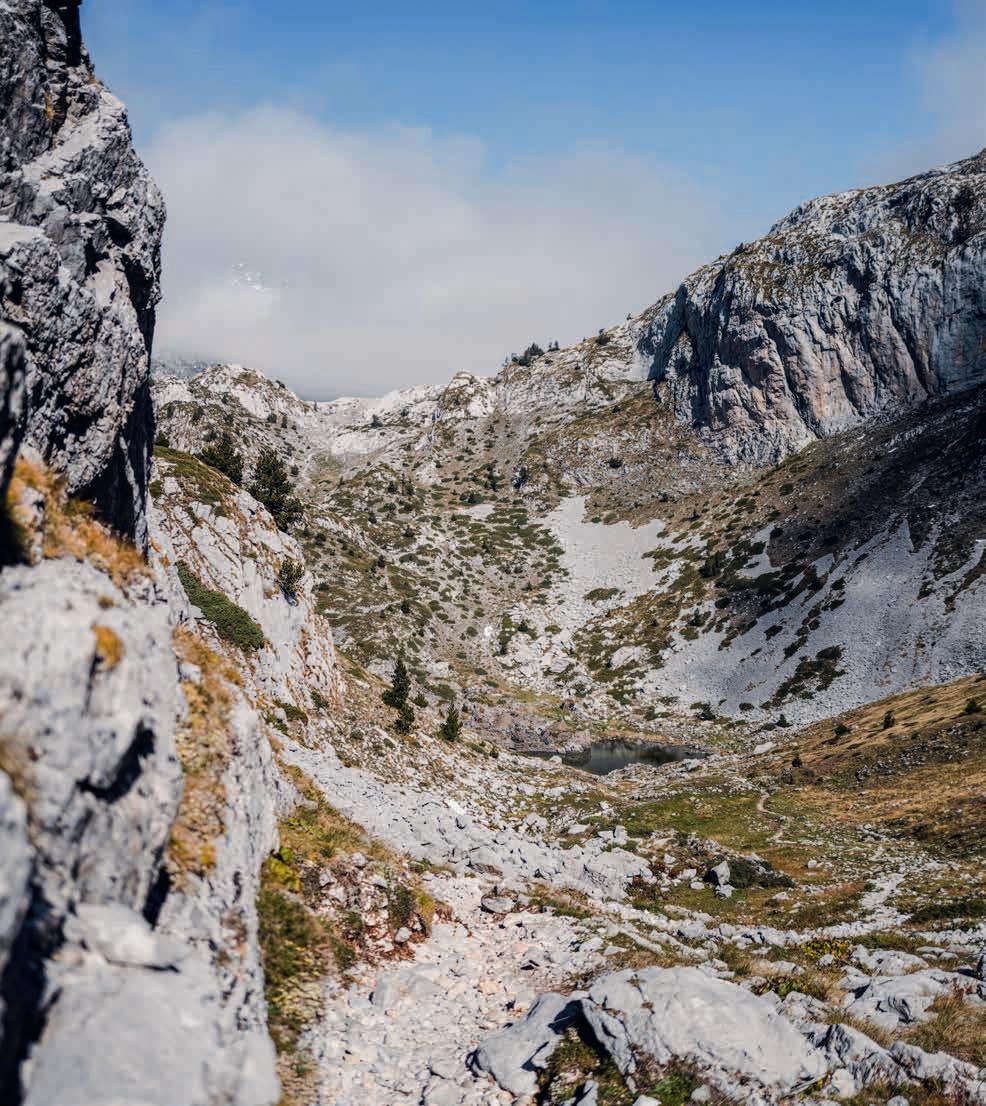
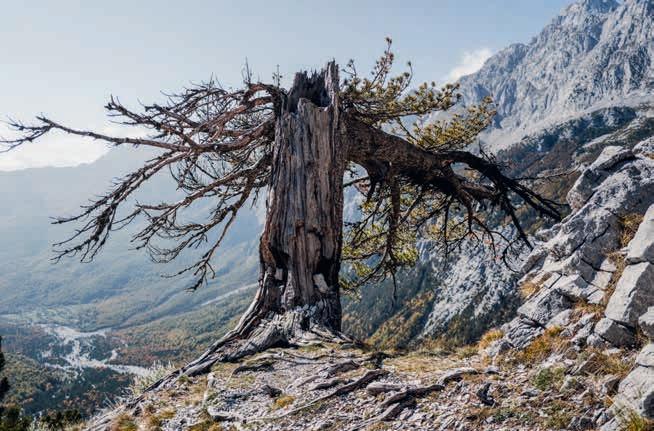
Left and right page: The Peaks of the Balkans alternate between barren karst valleys, clear mountain lakes, and wind-shaped trees. A route full of contrasts that showcases off the diversity of the high mountains.
Bibliographic information of the German National Library: The German National Library lists this publication in the German National Bibliography; detailed bibliographic data can be found online at dnb.dnb.de.
This work, including all its parts, is protected by copyright. Any use outside the narrow limits of copyright law is not allowed without the publisher’s consent. and will be prosecuted. This applies especially to reproductions, translations, microfilming, and storing or processing in electronic systems. We explicitly reserve the right to use our works for text and data mining as per German Copyright Act, Art. 44b UrhG.
This book was made in CALLWEY QUALITY just for you. It was printed and bound in Germany by optimal Media, Röbel/Müritz.
KIM SCHREIBER lives and breathes trail running as both an athlete and a writer. She is familiar with starting-line nerves and summit euphoria from her own personal experience. As a freelance writer, she has spent years writing about sports, the outdoors, and travel. Together with Ida-Sophie Hegemann, she presents the podcast Höhenmeter pro Kilometer, which takes a wry and authentically down-to-earth look at runners’ everyday life.
We hope you enjoy this book: Project management and editing: MAJA FANGMANN