SPRING 2026
Park Books
Niederdorfstrasse 54
4/5
Lytle Shaw
Mysteries of a Communist Cave
8/9
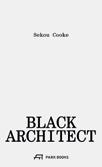
Sekou Cooke
Black Architect
6/7
Amy Holmes, Julie Cirelli (eds.)
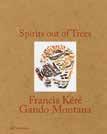
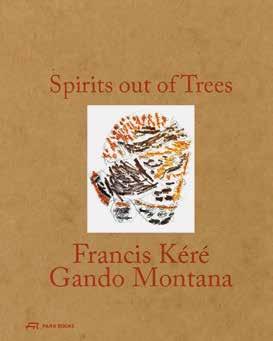
Spirits out of Trees
Francis Kéré—Gando Montana
10/11
Suzanne Lettieri, Anya Sirota (eds.)
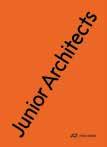
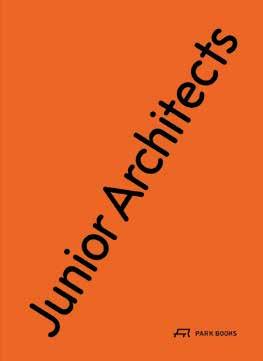
Junior Architects
New Paradigms in Design Education
12/13
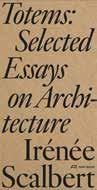
Irénée Scalbert
Totems
Selected Essays on Architecture
16/17
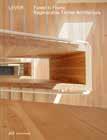
LEVER Architecture, Julia van den Hout (eds.)
Forest to Frame Regenerative Timber Architecture
14/15
Thomas Weaver (ed.)
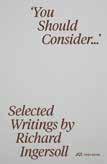
You Should Consider…
Selected Writings by Richard Ingersoll
18/19
John Håkansson (ed.)
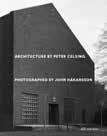
Architecture by Peter Celsing
Photographed by John Håkansson
8001 Zurich, Switzerland
Tel. +41 442621662
www.park-books.com
Publisher
Thomas Kramer
Tel. +41 442536454
publisher@park-books.com
Sales
Patrick Schneebeli
Tel. +41 442536453
sales@park-books.com
Marketing
Lara Kroha
Tel. +41 442536457
marketing@park-books.com
Publicity
Domenica Schulz
Tel. +41 442536456
publicity@park-books.com
20/21
AFF Architekten (eds.)
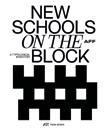
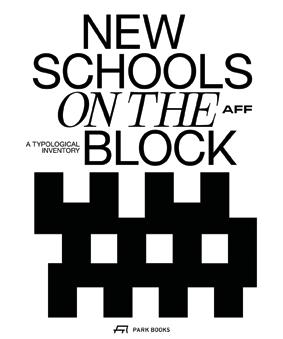
New Schools on the Block School Buildings—A Typological Inventory
24/25
Robert Hutchison (ed.)
Memory Landscapes
Parafictional Proposals for Coastal Resilience in Japan
28/29
Santiago Bogani, Igo Kommers Wender, Isabella Moretti, Florencia Rodriguez (eds.)
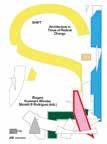
SHIFT
Architecture in Times of Radical Change
32/33
Monika Platzer, Susanne Rick, Architekturzentrum Wien (eds.)
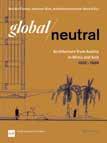
Global—Neutral
Architecture from Austria in Africa and Asia 1955–1989
36/37
Kashef Chowdhury (ed.)
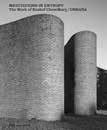
Meditations in Entropy
The Work of Kashef Chowdhury / URBANA
22/23
Matthias Drilling, Fabian Neuhaus (eds.)
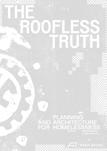
The Roofless Truth Planning and Architecture for Homelessness
26/27
Sung Hong Kim
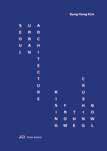
Seoul Urban Architecture Rising from the Crushing Bowl
30/31
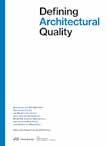
José Manuel Pozo, Wilfried Wang (eds.) Defining Architectural Quality
34/35
Pedro Baía
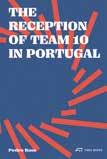
The Reception of Team 10 in Portugal
38–39
Recent Releases and Key Titles
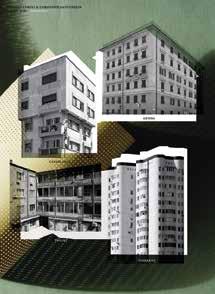
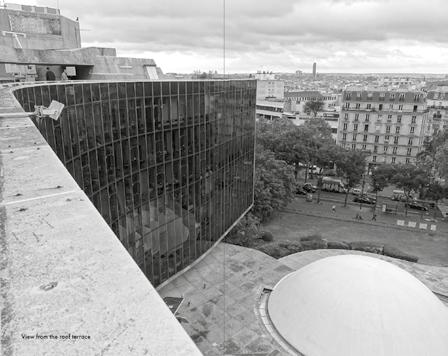
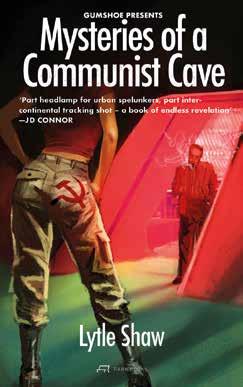
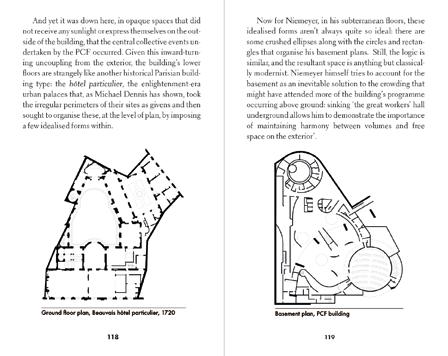
Gumshoe is a new series of architectural books that introduces an original approach to the writing of architectural history. Emulating the detective novel, the focus is on actual buildings rather than on speculative designs and theories. The style and form is fresh and scholarly but also easy and enjoyable to read. In Mysteries of a Communist Cave, the second book in the Gumshoe series, Lytle Shaw conducts an investigation of Oscar Niemeyer’s building for the French Communist Party’s (PCF) central committee in Paris.
Designed in 1965, just as party theorists began to rethink many bedrock assumptions about representation, Oscar Niemeyer’s PCF building is a microcosm of the shifting political and architectural landscape of the 1960s. It is also a literal Marxist structure that can thus help us concretely picture just exactly what Structuralist Marxism might have been. Shaw draws out the PCF’s language and context one element at a time and puts the elegant curtain-wall building with its cave-like assembly hall into revelatory dialogue with interlocutors in film, philosophy, anthropology, and politics.
Perhaps the ultimate mystery of the communist cave is that its owners have not more often and more powerfully presented their landmark building as the vivid source of imagery it could be for the kind of world the PCF might like to construct.
Second book in the Gumshoe series of “architectural crime stories,” following the acclaimed initial volume The House of Doctor Koolhaas.
Lytle Shaw is Professor of English at New York University and a contributing editor for Cabinet Magazine. His books include The Mollino Set, New Grounds for Dutch Landscape and Frank O’Hara: The Poetics of Coterie. He has also published catalogue essays on artists including Gerard Byrne, Zoe Leonard, Robert Smithson and the Royal Art Lodge, and for institutions including the Dia Center for the Arts, the Museo Reina Sofia, and the Drawing Center.
Thomas Weaver is an architectural writer, educator, and editor based in London. He also lectures at the Academy of Architecture in Mendrisio, Switzerland.
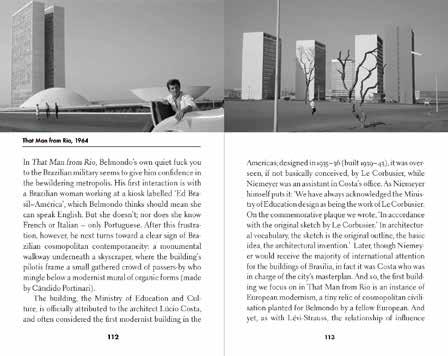
Illustrates how Oscar Niemeyer’s building for the French Communist Party in Paris focalized the massive philosophical and political debates of the 1960s
First book about Structuralist Marxism that explores its possible relation to an actual Marxist structure
Fundamentally reconceives the relationship between theory and architecture
The Gumshoe series investigates singular buildings, emulating the style and book format of a detective novel
Distinguished authors from various countries write on notable buildings from across architectural history
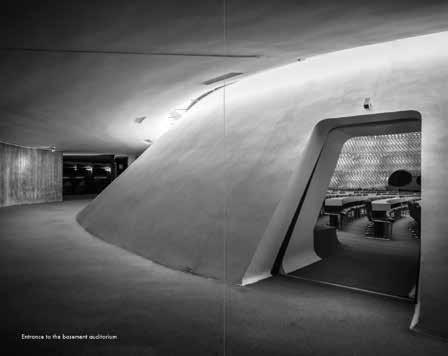
Lytle Shaw
Mysteries of a Communist Cave
Edited by Thomas Weaver
Gumshoe #2
Book design by Adrien Vasquez and Teresa Lima (John Morgan Studio)
Paperback approx. 352 pages, 150 b/w illustrations 11 × 17.5 cm 978-3-03860-447-1 English
sFr. 19.00 | € 19.00 | £ 15.00 | $ 19.00
June 2026 (Europe) | August 2026 (US)
Two buildings designed by Francis Kéré in the United States and Burkina Faso, geographically and culturally far apart yet united by their underlying philosophy.
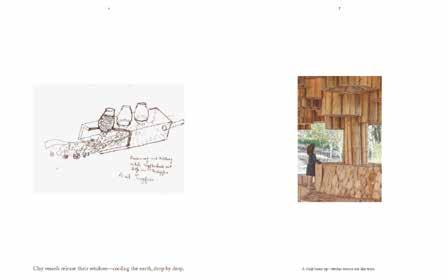
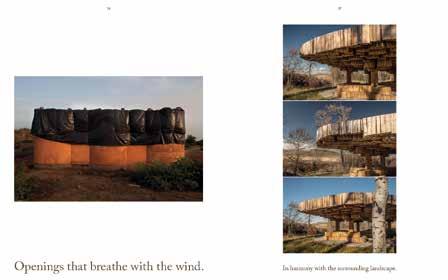
Spirits out of Trees traces the interwoven stories of two architectural works by Burkinabé-German architect Francis Kéré: Xylem, a contemplative pavilion nestled within the aspen groves of Tippet Rise Art Center in Fishtail, Montana, and the Naaba Belem Goumma Secondary School, built for Kéré’s hometown community of Gando, Burkina Faso. Though separated by geography, climate, and culture, the two buildings are united by a shared philosophy: architecture as a site of gathering, learning, and care.
The book explores how trees—literal and metaphorical—inform Kéré’s design language. Xylem evokes the spiritual and structural intelligence of trees, offering a space of quiet communion and passive cooling. Naaba Belem Goumma Secondary School transforms local materials into a living, breathing environment for education, shaped by and for its community.
Combining architectural documentation and photography with personal writing and original poetry, Spirits out of Trees is both a tribute to Francis Kéré’s vision and to the enduring metaphor of the tree as shelter and a symbol of regeneration. Designed with the same humility and clarity that defines Kéré’s work, the volume offers a deeply resonant meditation on sustainability, cultural continuity, and the power of architecture to root us more fully in the world around us.
Francis Kéré is a Burkinabé-German architect and 2022 Pritzker Prize laureate. His Berlinbased firm Kéré Architecture is widely recognized for creating innovative works that are often sustainable and collaborative in nature. He is also a professor of architectural design and participation at the Technical University of Munich.
Amy Holmes is the Program Officer for the Sidney E. Frank Foundation and Executive Director of the Adrian Brinkerhoff Poetry Foundation, both based in New York.
Julie Cirelli is a Stockholm-based American journalist and editor and co-director of Zurich-based architecture publishing house Park Books.
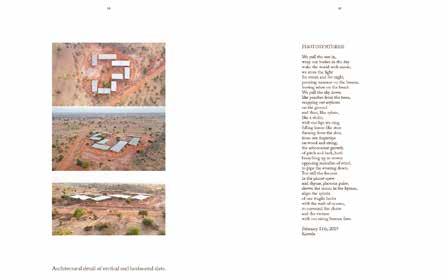
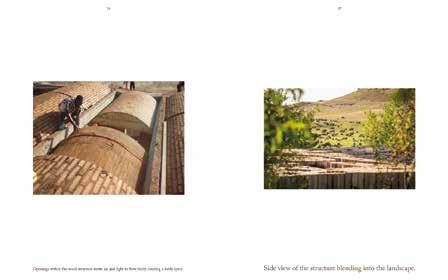
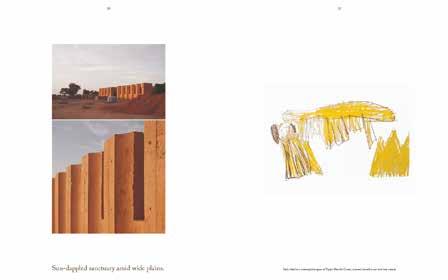
Documents two recent public buildings in the United States and Burkina Faso designed by celebrated Burkinabé-German architect Francis Kéré
A unique combination of architectural documentation and photography with personal writing and original poetry
A deeply resonant meditation on sustainability, cultural continuity, and the power of architecture to root us more fully in the world around us
Francis Kéré was the first African-born architect to receive both the Pritzker Prize (2022) and the Praemium Imperiale (2023)
Amy Holmes, Julie Cirelli (eds.)
Spirits out of Trees
Francis Kéré—Gando Montana
Book design by Samuel Bänziger (Bänziger Hug)
Paperback approx. 144 pages, 130 color and 20 b/w illustrations 20 × 25 cm 978-3-03860-461-7 English
sFr. 39.00 | € 38.00 | £ 35.00 | $ 45.00
April 2026 (Europe) | June 2026 (US)
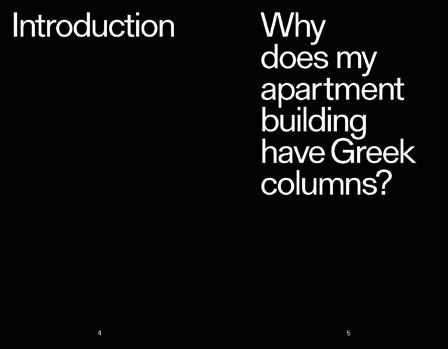
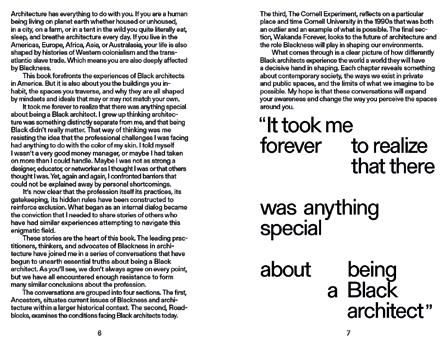
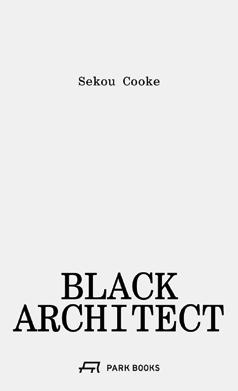
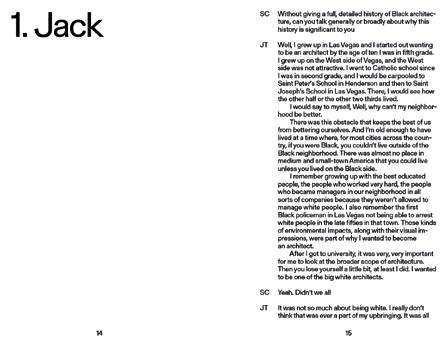
Architect Sekou Cooke examines, through personal narratives and interviews, the challenges that Black architects face in the United States. A timely and instructive book also for those who are neither Black nor architects.
Black Architect is a provocative and deeply personal investigation into the intersection of race, identity, and the built environment. Written by architect and educator Sekou Cooke, author of HipHop Architecture, this book blends memoir, cultural critique, and a series of candid conversations with leading Black practitioners to explore what it truly means to be a Black architect in America. Cooke traces his journey from a childhood in Jamaica and an early fascination with architecture to Ivy League institutions and into a professional field shaped by Eurocentric ideals, confronting readers with an uncomfortable reality: architecture in the United States continues to be constructed—both literally and conceptually—through a predominantly white lens. But what happens when Blackness enters that space, not just as identity but as a mode of thinking, designing, and living?
Through a compelling mix of personal narrative and interviews with some of today’s most influential Black designers and thinkers, Black Architect offers answers to that question. The book charts the historical marginalization of Black voices in architecture, the structural and cultural obstacles they face, and the alternative visions they bring to the discipline. It offers both a critical reckoning with architecture’s exclusionary past and a hopeful blueprint for a more inclusive future. Most importantly, it highlights why the subject matters to everyone, including those who are neither Black nor architects.
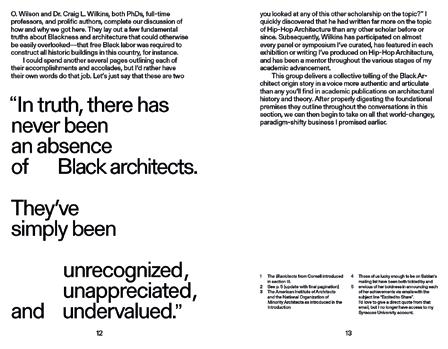
A provocative and personal investigation into the intersection of race, identity, and the built environment
A compelling mix of Sekou Cooke’s personal narrative and interviews with some of today’s most influential Black designers and thinkers
Charts the historical marginalization of Black architects and the structural and cultural obstacles they face
Highlights the alternative visions Black architects and designers bring to their discipline
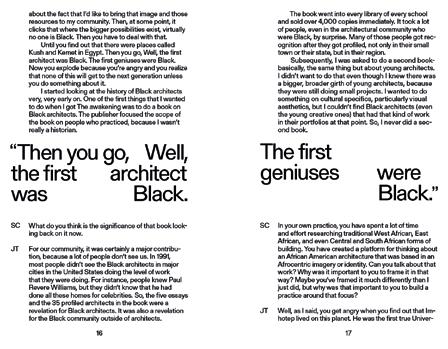
Sekou Cooke Black Architect
Book design by Alexis Mark Paperback 160 pages 12.5 × 19.5 cm 978-3-03860-382-5 English
sFr. 29.00 | € 29.00 | £ 25.00 | $ 35.00
April 2026 (Europe) | June 2026 (US)
Junior Architects traces the pursuit of equity in architecture and design education through historical analysis, critical theory, and comparative case studies from across contemporary US contexts. At a moment when architecture schools are grappling with urgent calls for racial and economic justice amid growing political backlash, this incisive volume asks how early-learning interventions can expand access to the profession and influence the ways it is taught, valued, and practiced. It situates the current crisis in design education within a long arc of exclusion in American higher education, showing how elite institutions, accreditation systems, and resource-intensive pedagogies have reinforced narrow authorship of the built environment.
Organized into three parts—Institutions, Instruction, and Practice—and anchored by case studies, the collection moves from examining how universities, Historically Black Colleges and Universities (HBCUs), and alternative programs are redefining recruitment and retention, to investigating pedagogical strategies that shift from gatekeeping to genuine civic empowerment, and finally to exploring how professional pathways might be restructured to prioritize pluralism, reciprocity, and public purpose.
Far from a triumphalist account, this is a field report from contested terrain, offering perspectives from both within and alongside institutions. Junior Architects invites us to envision a discipline that does not simply diversify its margins, but rethinks its foundations, transforming architecture from a rarefied profession into a shared language for civic life.
A reader tracing the pursuit of equity in architecture and design education in the United States amid larger political rifts concerning race and class issues.
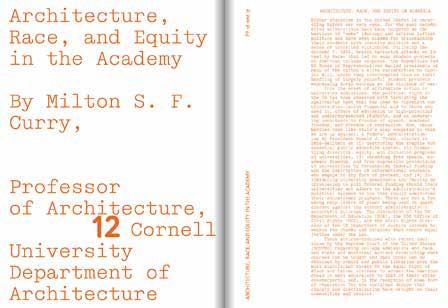
Suzanne Lettieri is a designer, educator, and co-principal of Detroit-based firm JE-LE. She is Assistant Professor in the Department of Architecture at Cornell University.
Anya Sirota is an architectural designer, co-founder of Akoaki design studio in Detroit, and Professor and Senior Associate Dean of Academic Initiatives at the University of Michigan’s Taubman College of Architecture and Urban Planning.
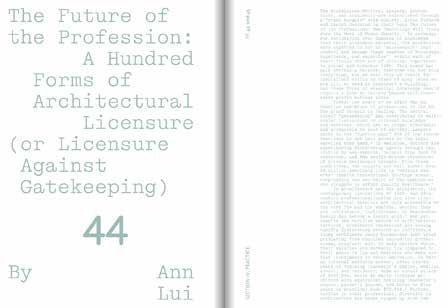
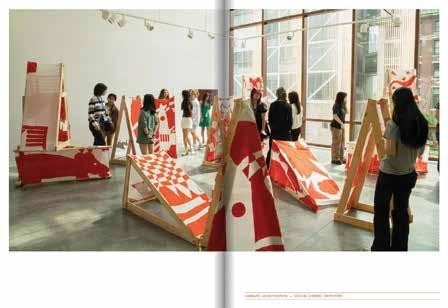
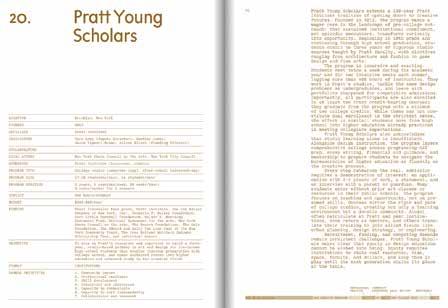
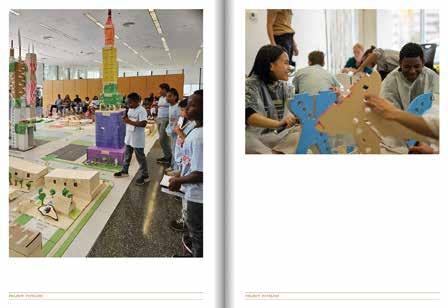
Examines the evolving landscape of architectural and design education in the US, driven by student-led movements advocating for a liberating learning approach
An insightful and timely probe into both existing and prospective pathways for realizing sustainable diversity in design education in the US and abroad
Offers 25 case studies focused on pathway programs as strategies for recruitment, institutional evolution, and bold experimentation
An indispensable resource for educators, practitioners, and policymakers
Suzanne Lettieri, Anya Sirota (eds.)
Junior Architects
New Paradigms in Design Education
Book design by Davis Ngarupe, Actual Source
Paperback approx. 308 pages, 27 color and 9 b/w illustrations 20.5 × 28 cm 978-3-03860-403-7 English
sFr. 39.00 | € 38.00 | £ 35.00 | $ 45.00
April 2026 (Europe) | June 2026 (US)
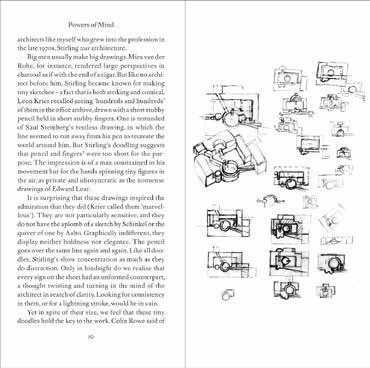
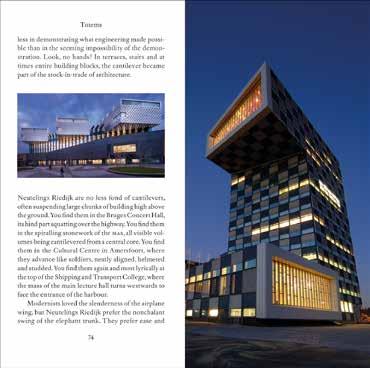
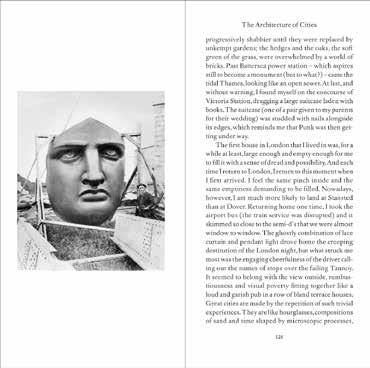
Totems brings together ten texts by architect, historian, and critic Irénée Scalbert. Written between 2001 and 2025, they reflect nearly three decades of critical engagement with architecture and its cultural contexts. Ranging in length and register—from concise meditations to extended analytical essays—the collection captures the evolution of Scalbert’s thinking as a critic, teacher, and participant in architectural discourse.
Organized thematically into sections on buildings, cities, and the environment, Totems traces a loosely autobiographical arc. Earlier pieces echo Scalbert’s formative years in London during a period of architectural ferment are marked by the work of James Stirling and Norman Foster, influential figures from Europe such as Aldo Rossi, as well as his close association with a generation of contemporaries including Peter St John (Caruso St John Architects), and Tom Emerson and Stephanie Macdonald (6a architects). Later texts expand outward, both geographically and conceptually, as Scalbert brings a speculative and at times personal lens to questions of urbanism, nature, and meaning in contemporary architecture.
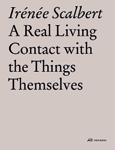
Also available:
Irénée Scalbert is a French-born architect, historian, and critic based in London. His work critically examines post war European architecture and its intersections with landscape, ornament, and social meaning.
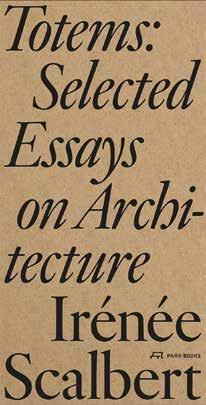
New collection of essays by distinguished architectural historian and critic Irénée Scalbert
Elegantly written, the texts reflect nearly three decades of critical engagement with architecture and its cultural contexts
Irénée Scalbert explores questions of urbanism, nature, and meaning in contemporary architecture through a speculative and at times personal lens
Irénée Scalbert
Totems
Selected Essays on Architecture
Book design Fred Birdsall
Paperback
184 pages, 28 color and 16 b/w illustrations 11.3 × 22.5 cm 978-3-03860-462-4 English
sFr. 29.00 | € 29.00 | £ 25.00 | $ 35.00
March 2026 (Europe) | June 2026 (US)
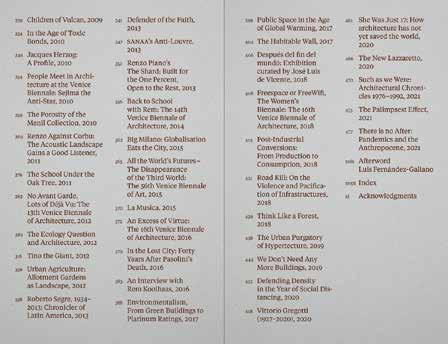
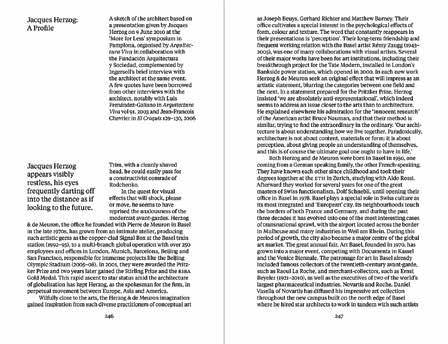
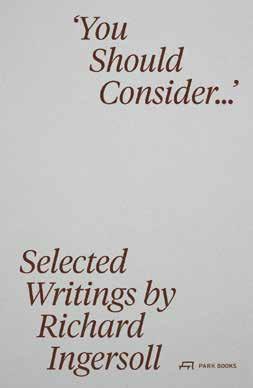
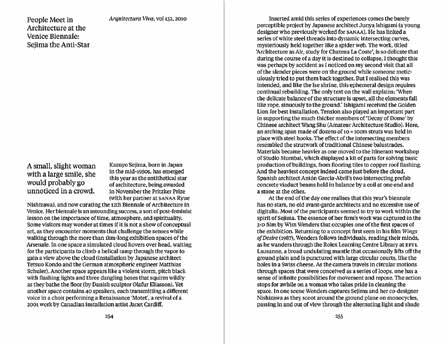
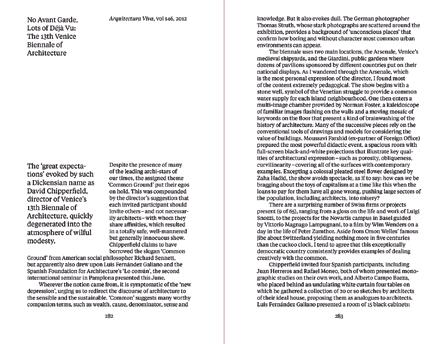
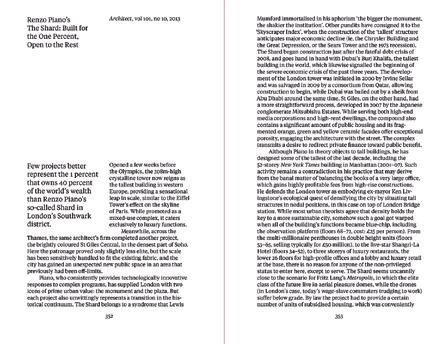
You Should Consider … brings together texts by American architecture critic Richard Ingersoll (1949–2021) from five decades, published in magazines such as Domus, Arquitectura Viva, and Lotus: critiques of key buildings and personalities, and reflections on topics and trends in architecture since the 1970s. The collection also offers a selection of his compelling editorials in the groundbreaking magazine Design Book Review, which he directed as editor-in-chief in the period 1983–98. Contributions by architectural historian Kenneth Frampton and architects John A. Loomis and Luis Fernández-Galliano place Ingersoll’s work in historical context.
Ingersoll was one of the most eloquent and astute architectural critics of his generation. Although born and educated in California, and heavily influenced by Spiro Kostof, his mentor at the University of California, Berkeley, Ingersoll’s intellectual, cultural, and architectural outlook is essentially European, and more especially Italian, where he spent most of his working life. This European sensibility is expressed in many of the texts in this collection, in which he persistently writes about the need for diversity and equality, as well as a more sympathetic approach to the environment—decades before others realized the importance of these causes. Intelligence and clarity, astute analysis, vivid imagery and conciseness, as well as a subtle sense of humor, characterize Ingersoll’s captivating prose.
An anthology of texts from five decades by Richard Ingersoll, one of the most eloquent and astute writers on architecture of his generation.
Richard Ingersoll (1949–2021) was an American architectural critic, editor, and educator. He was editor-in-chief of Design Book Review, based at the University of California, Berkeley (1983–98). Living in Italy since the 1990s, he contributed to leading international magazines such as Architecture, Arquitectura Viva, Bauwelt, Domus, Giornale di Architettura, Lotus, World Architecture, and C3. He also taught as a lecturer at Rice School of Architecture (1986–97), and later at Syracuse University in Florence, the Departments of Architecture at the University of Ferrara and ETH Zurich, and at the University of Navarra in Pamplona.
Thomas Weaver is an architectural writer, educator, and editor based in London. He also lectures at the Academy of Architecture in Mendrisio, Switzerland.
First ever anthology of writings by distinguished and influential architectural critic Richard Ingersoll (1949–2021)
Brings together texts by Richard Ingersoll from five decades that appeared in major international magazines such as Arquitectura Viva, Design Book Review, Domus, and Lotus
Offers enlightening reading for students, architects, researchers, and anyone interested in architecture and cultural history
A rich source of inspiration and examples for anyone who writes about architecture
With a foreword by architectural historian Kenneth Frampton and an introduction by John A. Loomis
Thomas Weaver (ed.)
You Should Consider…
Selected Writings by Richard Ingersoll
Book design by Studio Christopher Victor, Rosa Nussbaum
Paperback approx. 524 pages, 1 color and 3 b/w illustrations 15 × 23 cm 978-3-03860-476-1 Englisch
sFr. 39.00 | € 38.00 | £ 35.00 | $ 45.00
May 2026 (Europe) | July 2026 (US)
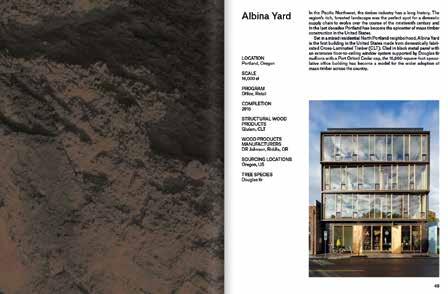
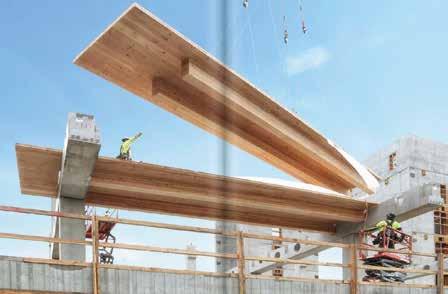
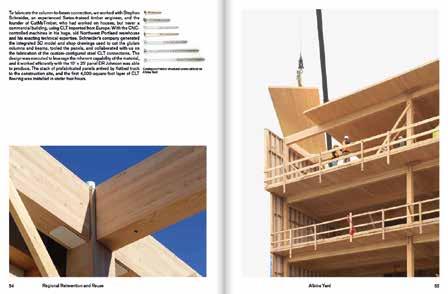
Forest to Frame: Regenerative Timber Architecture explores diverse themes in advanced wood design—such as tall timber, hybrid structures, sustainable and equitable sourcing, and next generation materials—through 14 projects and research studies by LEVER Architecture. A leading practice recognized for its design excellence and material innovation, their approach demonstrates how architecture can transform supply chains, strengthen communities, and deepen our relationship to the landscapes from which our materials are drawn. At once practical and visionary, these projects illustrate a path toward buildings that give more than they take—environmentally, socially, and culturally.
LEVER Architecture, based in Portland, Oregon, and Los Angeles, have earned international acclaim with their designs. They create models for making real change in the building industry, and expand our understanding of wood innovation as something deeper and more nuanced than a single product like cross-laminated timber. Behind their projects are individual stories that signal the impact of material choices and their ability to address some of the pressing challenges of our time.
LEVER Architecture, based in Portland (Oregon) and Los Angeles, was founded in 2009 by Thomas Robinson and Pamela Kislak. The firm’s widely recognized work encompasses multiple scales and types, and they collaborate with communities, institutions, and creative companies to design buildings and spaces that elevate the human experience.
Julia van den Hout is an architecture and design writer, editor, and curator. She directs Original Copy, a New York-based studio specializing in editorial, curatorial, and communications projects within architecture and design.
Holistic
sustainability in timber construction—ecologically, socially, and culturally: innovative designs and applied research by LEVER Architecture.
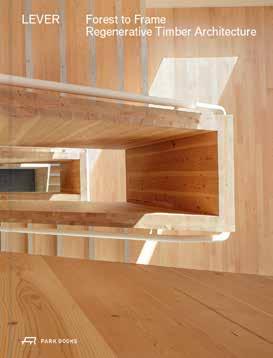
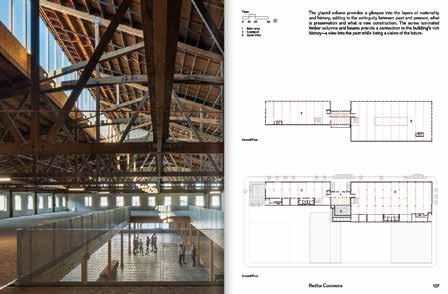
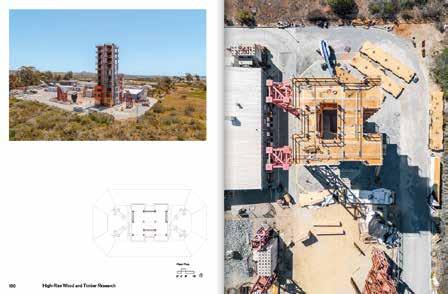
First monograph on the work of American design firm LEVER Architecture
LEVER Architecture’s approach demonstrates how architecture can transform supply chains, strengthen communities, and deepen our relationship to the environment
The book explores diverse themes in advanced wood design through 14 projects and research studies by LEVER Architecture
A rich resource for everyone interested in innovative design and construction with mass timber

LEVER Architecture, Julia van den Hout (eds.)
Forest to Frame
Regenerative Timber Architecture
Book design by Neil Donnelly Studio
Hardback
approx. 304 pages, 225 color and 125 b/w illustrations 21.6 × 25.4 cm 978-3-03860-477-8 English
sFr. 49.00 | € 48.00 | £ 45.00 | $ 55.00
April 2026 (Europe) | July 2026 (US)
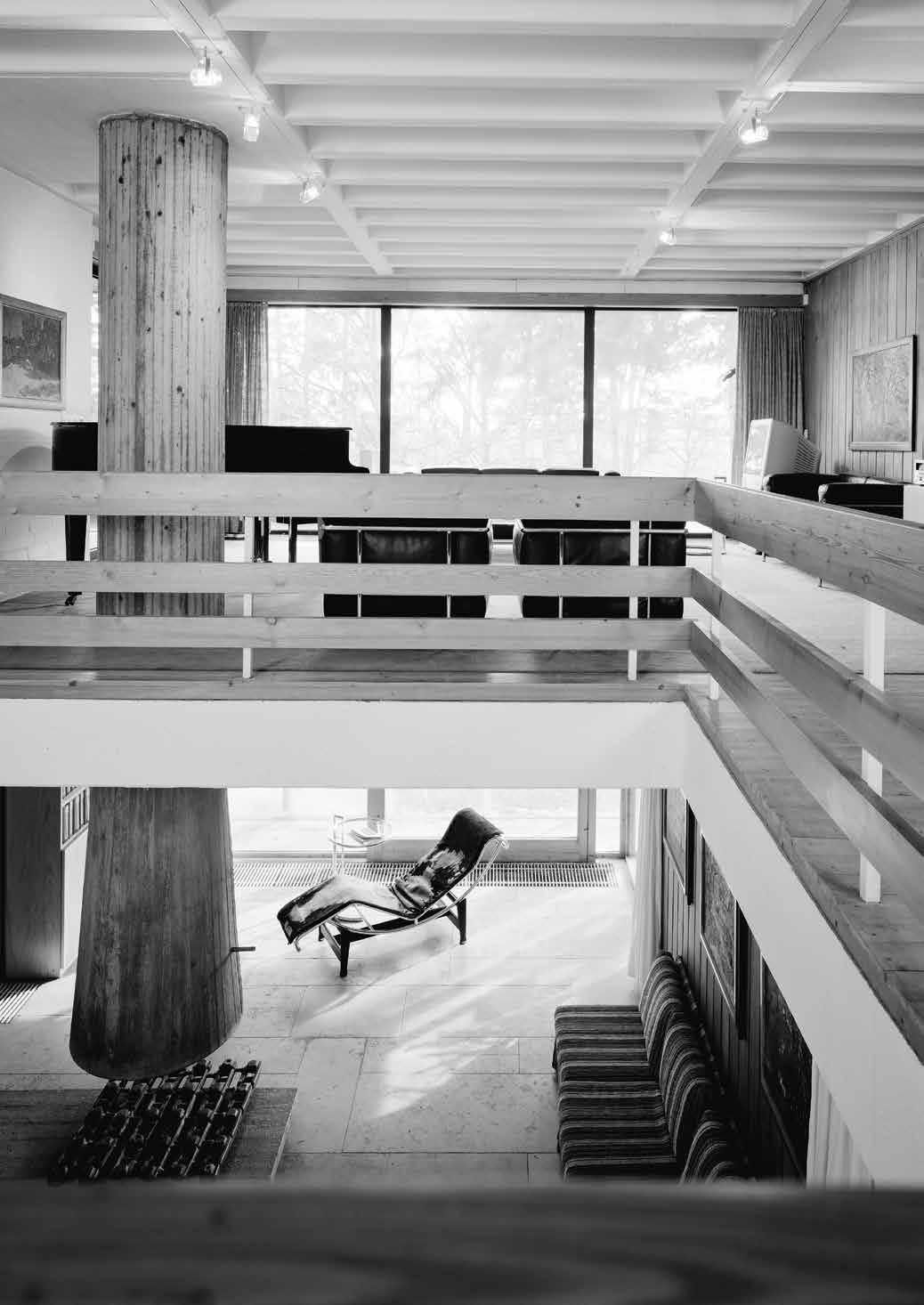
A time capsule of Swedish architect Peter Celsing’s work in the mid-1990s.
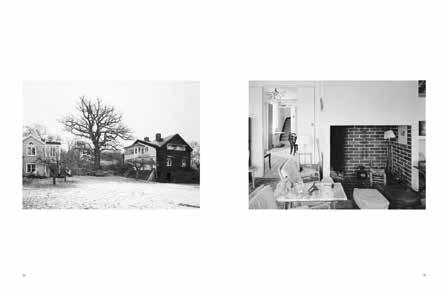
Peter Celsing (1920–74) belongs to the small group of Swedish modernist architects, including luminaries such as Gunnar Asplund (1885–1940) and Sigurd Lewerentz (1885–1975), who have rightly attracted attention beyond the country’s borders. How Celsing approached and carried out his commissions testifies to a great understanding of architecture as an applied art, where function and economy are important parameters. At the same time, during a major shift in the construction industry from the small-scale and artisanal to the large-scale and prefabricated, Celsing managed the feat of running his projects with artistic integrity.
John Håkansson’s black-and-white photographs, taken in the mid-1990s, capture the essence of Celsing’s buildings. In many cases, the images are now a valuable document of that era, since some of the buildings have changed, and not always in a favorable way. In this beautiful volume, supplemented by insightful texts contributed by architect Staffan Henriksson and artist Maria Lantz, Håkansson’s skillful photography forms a loving and sensitive portrait of Celsing’s architecture.
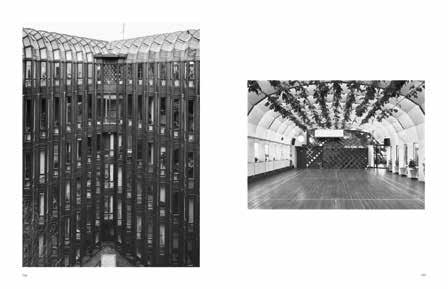
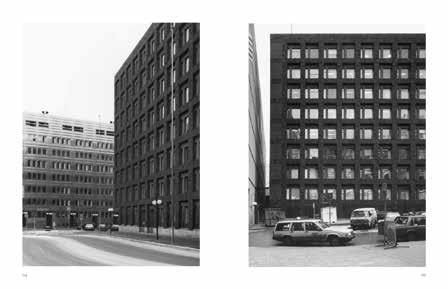
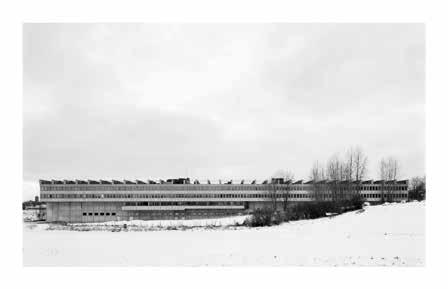
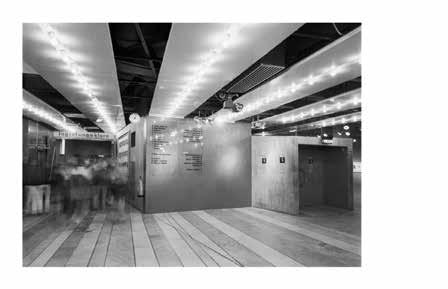
A loving and sensitive portrait of eminent Swedish modernist Peter Celsing’s (1920–74) architecture
John Håkansson’s photographs capture the essence of Peter Celsing’s buildings
Taken in the 1990s, the images now form a document of that era, as many of Peter Celsing’s buildings have since changed greatly—and not always favorably
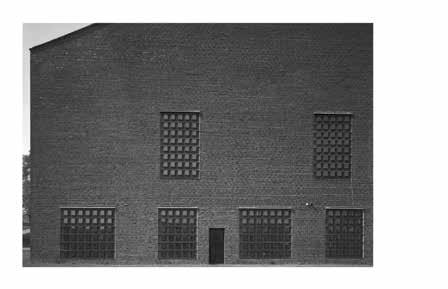
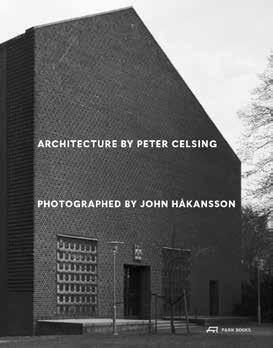
John Håkansson (ed.)
Architecture by Peter Celsing
Photographed by John Håkansson
Book design by John Håkansson Hardback
168 pages, 103 b/w illustrations 24 × 31 cm
978-3-03860-465-5 English
sFr. 49.00 | € 48.00 | £ 45.00 | $ 55.00
Available (Europe) | May 2026 (US)
School buildings are among the most complex design, planning, and construction tasks for architects. They reflect educational concepts as well as cultural and spatial ideas of their time.
New Schools on the Block offers a survey of a decade of school building design by Berlin- and Lausanne-based AFF Architekten, a collective of architects, researchers, and crafts people. AFF’s understanding of schools is that they are spaces of identification as much as they are places of learning. They aim to create buildings which open up spaces for experiences that foster identity through the interplay of shape and use.
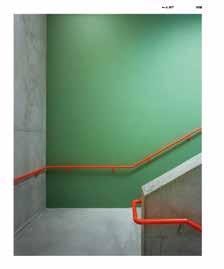
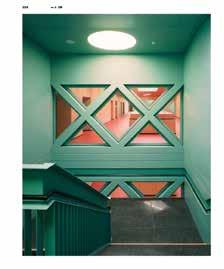
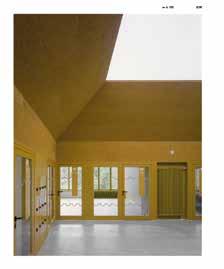
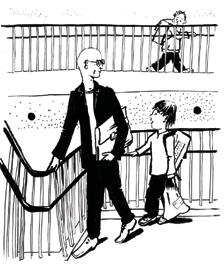
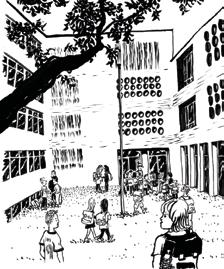
New Schools on the Block is a typological inventory. It features 40 of AFF’s school designs, built and unrealized, for towns and cities in Germany and Switzerland through floor plans and photographs of their surroundings, entrance halls, stairwells, classrooms, recreational and storage spaces. While floor plans invite the imagination of spaces, images of realized buildings demonstrate that even details such as a handrail or a sanitary room can be instructive. A comic strip about everyday school life adds an extra touch of realism.
Essays on historic and contemporary school building design and a conversation with AFF Architekten provide background information.
A survey of a decade of school building design by Berlin- and Lausanne-based design firm AFF Architekten.
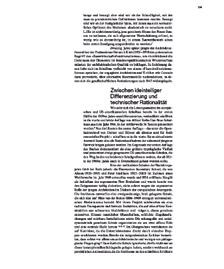
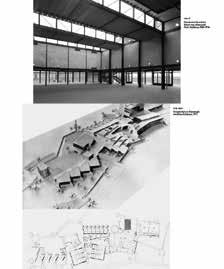
AFF Architects was founded in Weimar in 1997 by brothers Martin and Sven Fröhlich and now operates as a collective of architects, crafts people, and researchers with offices in Berlin and Lausanne. Martin Fröhlich also teaches as an associate professor at EPFL’s School of Architecture, Civil and Environmental Engineering in Lausanne.
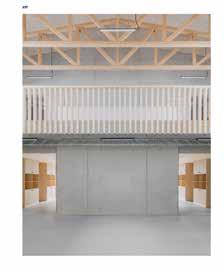
School buildings are among the most complex building tasks, both for society and for architects
School building design is one of the core fields of activity of Berlin- and Lausanne-based firm AFF Architekten
The book offers deep insights into typologies and spatial design for school buildings from AFF Architekten’s practice
Illustrated with more than 300 previously unpublished plans and photographs
Essays by distinguished authors offer background information
AFF Architekten (eds.)
New Schools on the Block School Buildings—A Typological Inventory
Book design by Studio Patric Dreier Hardback
336 pages, 137 color and 171 b/w illustrations and plans 25 × 30 cm
978-3-03860-470-9 English
978-3-03860-469-3 German
sFr. 49.00 | € 48.00 | £ 45.00 | $ 60.00
April 2026 (Europe) | July 2026 (US)
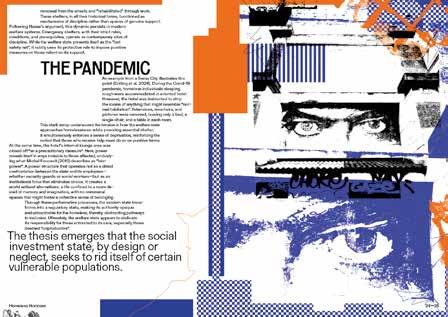
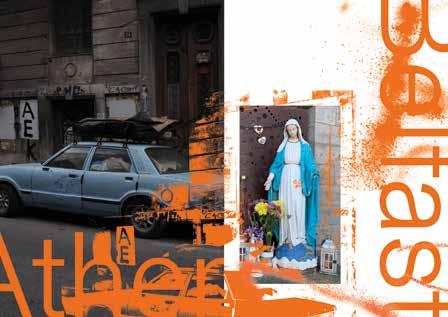
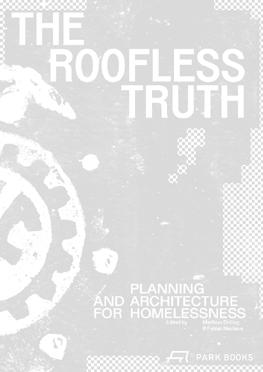
Homelessness is one of the most pressing social challenges of our time, and is closely linked to issues of urban design and architecture. Homeless people are part of urban society and depend on accessible public spaces and urban infrastructure. Yet, in cities around the world, local governments use policies and urban planning to ward off street people, aiming at making them invisible in the cityscape and deliberately impeding certain forms of stay. Urban design always reflects power structures—it can exclude or open up avenues for participation.
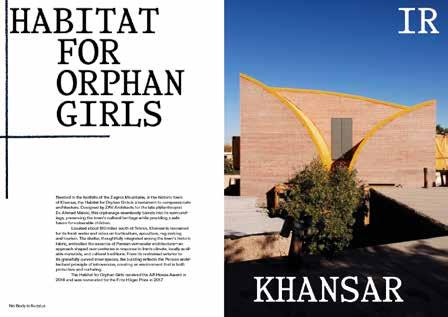
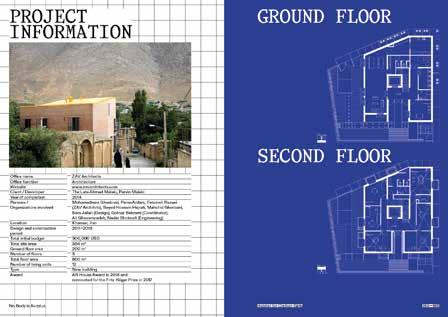
The Roofless Truth brings together contributions by international researchers and practitioners from the fields of architecture, urban development and design, sociology, ethnology, social work, and education. It offers academic analyses and essays, field reports, and student proposals for interventions in public space, and features award-winning projects and initiatives in Canada, Germany, Iran, Switzerland, and the US.
The book highlights how public spaces should be designed to offer protection, dignity, and opportunities for homeless people, and to facilitate encounters and interaction. The featured examples impressively demonstrate that even the smallest spatial decision can determine inclusion or exclusion. The Roofless Truth paints a multifaceted picture of planning and design as a social practice beyond representation and prestige.
How should public space be designed to offer protection, dignity, and opportunities for homeless people, and to facilitate encounters and interaction? A comprehensive survey of homelessness, urban planning, and architecture.
Matthias Drilling is a professor at Zurich University of Applied Sciences’ School of Social Work, Institute of Diversity and Social Integration. He taught as visiting professor at the University of Calgary’s School of Architecture, Planning, and Landscape in 2024–25.
Fabian Neuhaus is an associate professor at the University of Calgary’s School of Architecture, Planning, and Landscape, where he directs the NEXTCalgary Research Lab.
First comprehensive survey on the pressing challenge of homelessness and what urban design and architecture contribute to fight it
Brings together groundbreaking research, field reports, and award-winning projects and initiatives from Canada, Germany, Iran, Switzerland, and the US
Offers insights into current topics such as trauma-informed design, design justice, hostile architecture, architecture of asylum, and tactical urbanism
Includes a comprehensive glossary of key terms related to homelessness
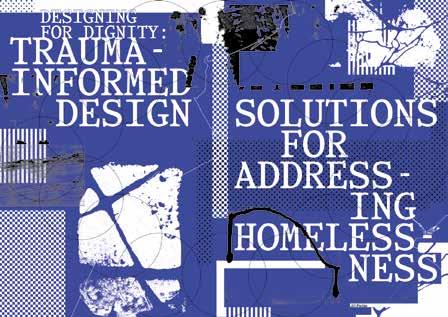
Matthias Drilling, Fabian Neuhaus (eds.)
The Roofless Truth
Planning and Architecture for Homelessness
Book design by Noah Drilling
Paperback approx. 400 pages, 150 color and 50 b/w illustrations 20.5 × 29 cm 978-3-03860-475-4 English
sFr. 39.00 | € 38.00 | £ 35.00 | $ 45.00
April 2026 (Europe) | July 2026 (US)
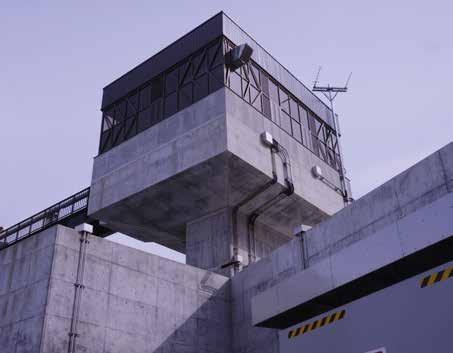
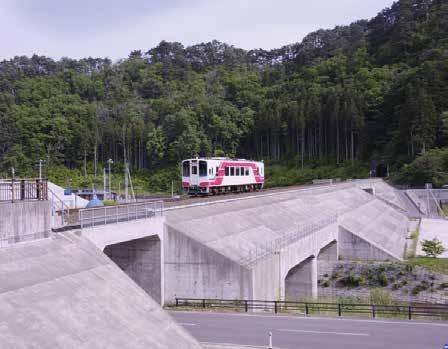
Memory Landscapes introduces a conceptual project by Seattle-based architect and educator Robert Hutchison that explores the power of collective memory in designing for new futures following natural disaster. Focusing on eastern coastal Japan, which was devastated by the 2011 earthquake and tsunami, it examines how lessons learned through the act of remembrance can inform future constructions of public space that instill joy and build connection.
Government-built infrastructure in the form of massive seawalls, constructed along the Tohoku coastline as a safeguard against future events, severs local communities from the landscapes that hold them. Through a detailed photographic study of existing sociological, geological, and constructed conditions of the region, Memory Landscapes offers a series of parafictional proposals for these coastal communities that would reconnect this severance and co-opt the seawalls as a form of restitution of public space. The book combines Hutchison’s own photographs and architectural proposals with interviews and contributions from Japanese architects and artists as well as community members from Tohoku. Their work and experiences address memory, material, and community in the aftermath of the 2011 earthquake and tsunami.
How collective remembrance can inform the future construction of protective infrastructure to create public space that instills joy and builds connection.
Robert Hutchison is principal of Robert Hutchison Architecture based in Seattle. He also teaches as an affiliate associate professor in the Department of Architecture at the University of Washington, where he directs architectural design studios.
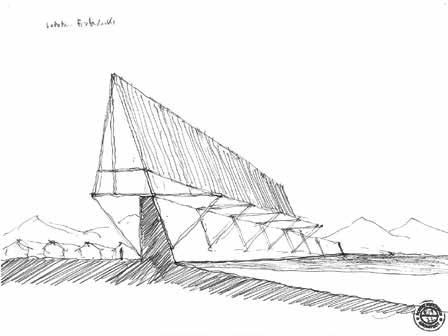
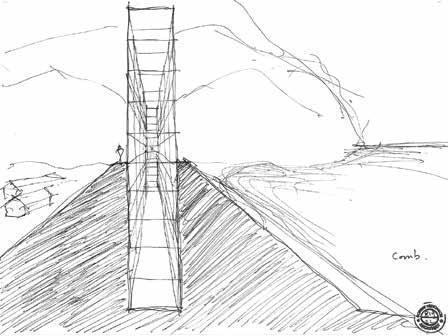
Introduces a conceptual project for architectural interventions to increase the resilience of coastal communities living under the constant threat of natural disasters
Based on on-site research of existing sociological, geological, and constructed conditions on the Tohoku coast in Japan that was devastated by the 2011 earthquake
Combines photographs and visualizations of architectural proposals with interviews and contributions from Japanese architects and artists as well as community members from the Tohoku coast
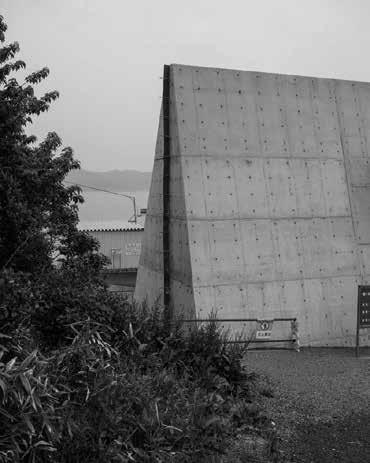
Memory Landscapes
Parafictional Proposals for Coastal Resilience in Japan
Book design by Folder Studio
Paperback approx. 224 pages, 160 color illustrations 20 × 28 cm 978-3-03860-442-6 English / Japanese
sFr. 39.00 | € 38.00 | £ 35.00 | $ 45.00
June 2026 (Europe) | August 2026 (US)
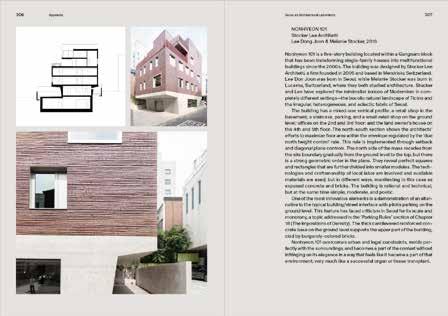
Seoul Urban Architecture is a powerful and original study of Seoul’s urban and architectural evolution, told through the lens of an architect and educator who has lived and worked in the city for over four decades. In his book, which is part memoir, part cultural history, and part urban analysis, Sung Hong Kim traces how South Korea’s capital—once a walled city shaped by Confucian ideals—has become a sprawling, vertical metropolis marked by rapid modernization, deep structural contradictions, and a fierce, creative resilience.
Organized into four parts, Kim surveys Seoul’s urban landscape from the late 14th century to the aftermath of the Korean War, illuminating the layers of occupation, destruction, and imposed planning that have shaped the city’s foundation. He guides the reader through periods of urban, legal, technological, and cultural constraints that eventually gave birth to new vitality, creativity, and innovation from an emerging generation of architects. His reflections on displacement, constraint, and ingenuity speak to a broader global condition faced by architects and urban designers alike: how to find meaning and agency within environments shaped by forces beyond their control.
At once personal and panoramic, Seoul Urban Architecture offers a vital perspective on this city of paradoxes, where fragments of history coexist with radical new forms, and where the uneven fabric of urban life reveals the story of a nation that has risen, in several bursts, from the ruins of war and colonization to become a cultural and economic powerhouse.
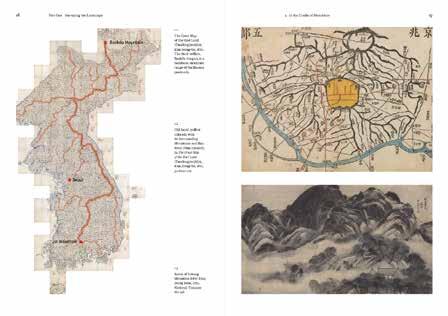
Sung Hong Kim is a Seoul-based architect, educator, critic, and curator, whose career bridges theory and practice with urban research and cultural analysis. He teaches as a professor of architecture and urbanism at the University of Seoul’s Department of Architecture.
A history of South Korea’s capital Seoul through the lens of architecture and urban life.
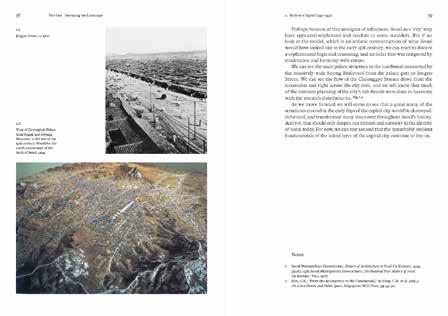
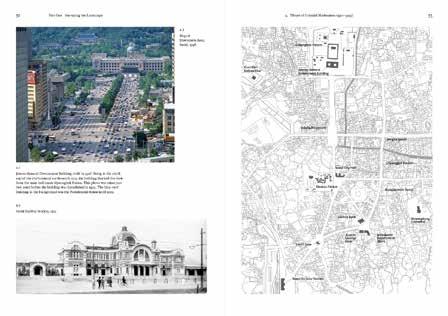
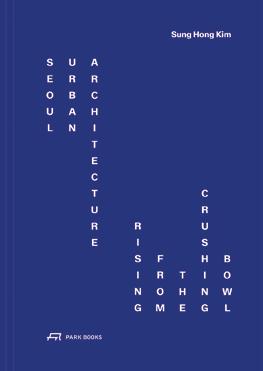
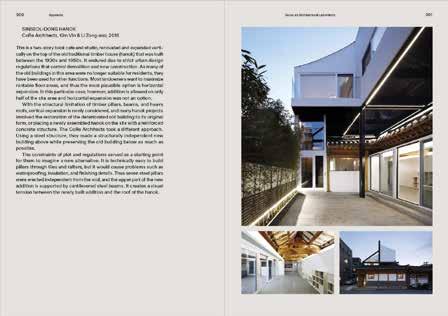
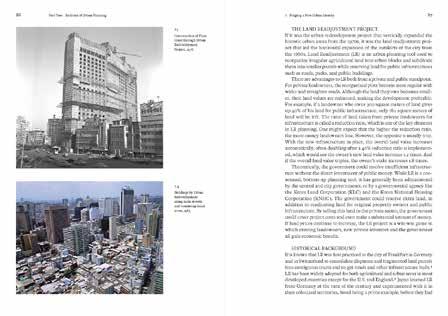
A powerful and original study of Seoul’s urban and architectural evolution from the 14th century to the present
Tells the architectural and cultural history of South Korea’s capital through the lens of an architect who has lived and worked in the city for over four decades
Sung Hong Kim’s reflections address the globally topical question of how to find meaning and agency within environments shaped by forces beyond one’s own control
The book is essential reading for architects, planners, scholars of East Asia, and anyone interested in how cities evolve under pressure and how people continue to build within them
Sung Hong Kim
Seoul Urban Architecture
Rising from the Crushing Bowl
Book design by Konst & Teknik
Paperback
336 pages, 120 color and 32 b/w illustrations 17 × 24 cm
978-3-03860-466-2 English
sFr. 49.00 | € 48.00 | £ 42.00 | $ 55.00
March 2026 (Europe) | May 2026 (US)
Provocative inquiries about a redefinition in the substance and fundamentals of architecture: the official book for the 2025 Chicago
Architecture Biennial.
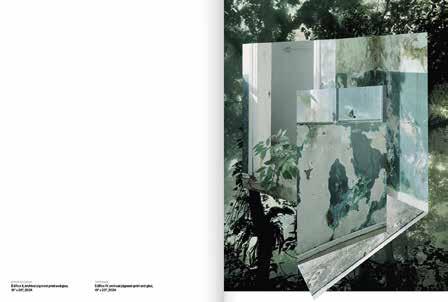
SHIFT: Architecture in Times of Radical Change is published in conjunction with the 6th Chicago Architecture Biennial (CAB 2025) under the artistic direction of Florencia Rodriguez. In a world defined by crisis and uncertainty, where architects are researching, relearning, and reimagining, the volume marks not only a change in direction but also presents provocative inquiries about a redefinition in the substance and fundamentals of the field. It is an invitation to think with others, to project with intention, and to set new grounds for the interpretation and design of our built environments. In the same spirit, the book unfolds the many faces of CAB 2025 exhibition through collective, multilayered, and multidimensional conversations, visual essays, and manifestos.
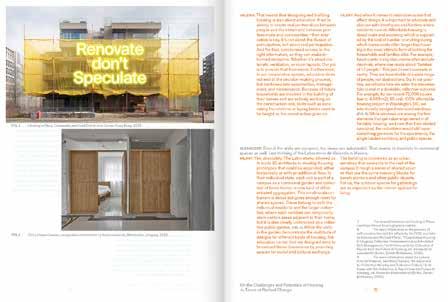
CAB 2025 participants’ voices are brought to print through a transcript of a five-hour conversation marathon that tackled topics such as new realism, the magic in the ordinary, pleasures in the urban, and the need to critically shift architecture’s language, as well as a repository of manifestos exploring other possible worlds. Beyond the exhibition, SHIFT: Architecture in Times of Radical Change also calls upon practitioners from different fields to discuss the current state of education in architecture schools, the challenges of material culture, the future of housing, and exhibitions as devices for change.
Santiago Bogani is an architect, editor, and landscape designer based in Barcelona.
Igo Kommers Wender is an architect, editor, and cultural producer based in Chicago, and associated curator of the 2025 Chicago Architectural Biennial.
Isabella Moretti is an architect, researcher, educator, and editor based in Buenos Aires.
Florencia Rodriguez is associate professor at the University of Illinois Chicago’s School of Architecture and artistic director of the 6th Chicago Architecture Biennial.
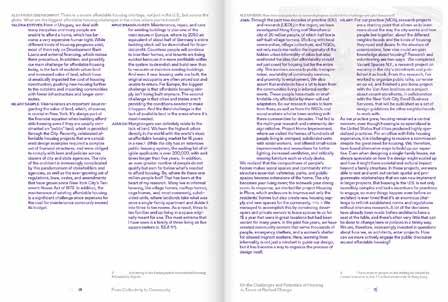
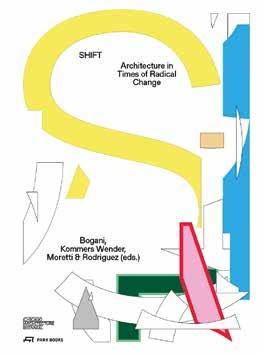
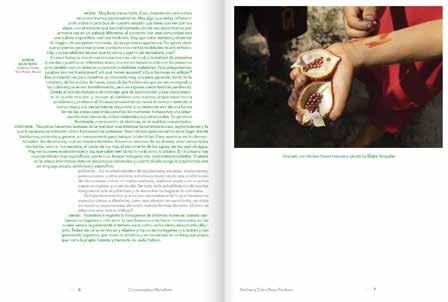
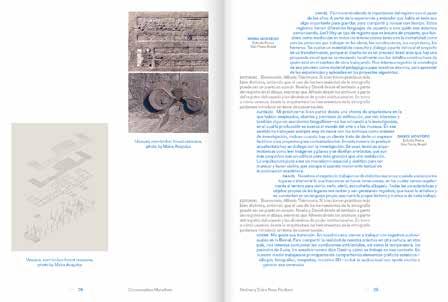
Unfolds the many faces of the 6th Chicago Architecture Biennial (CAB 2025) exhibition
SHIFT: Architecture in Times of Radical Change across a dynamic constellation of editorial and speculative formats
Expands beyond CAB 2025 to discuss the current state of education in architecture schools, the challenges of material culture, the future of housing, and exhibitions as devices for change
Chicago Architecture Biennial is North America’s largest international survey of contemporary architecture and design
Santiago Bogani, Igo Kommers Wender, Isabella Moretti, Florencia Rodriguez (eds.)
SHIFT
Architecture in Times of Radical Change
Book design by Estudio Margem
Paperback
320 pages, 106 color and 8 b/w illustrations 20 × 27 cm 978-3-03860-468-6 English
sFr. 39.00 | € 38.00 | £ 32.00 | $ 35.00
March 2026 (Europe and US)
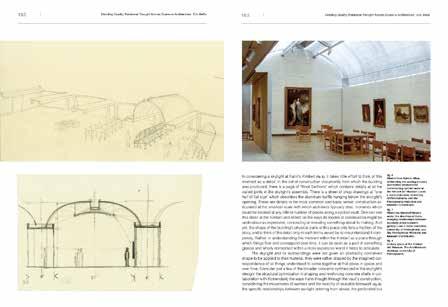
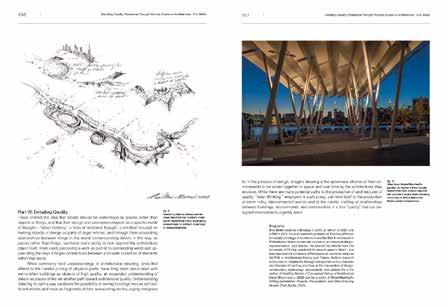
The essays collected in this volume cover the spectrum of issues that determine the quality of architecture. For example: What exactly is architectural quality? Is it based on physical facts? Is it a matter of cultural context? Does it lie in the eye of the beholder or is it actually beauty that matters? Do architects’ intentions and ideas provide the keys to a building’s evaluation? Does it rest primarily in its form? Or in the ethical attitude it expresses? Or is it just a group of critics deciding these issues among themselves?
While quantitative-technical evaluations of buildings abound internationally, the qualitative assessment of architectural works has so far been largely neglected. This unique anthology on definitions of architectural quality ranges from general observations and theories to case studies, and lays a rigorous foundation for assessing works of architecture.
What is high-quality architecture, and what exactly defines architectural quality? The contributions to the 2022 International Conference on Architectural Criticism lay a rigorous foundation for assessing works of architecture.
Also available:
On the Duty and Power of Architectural Criticism
978-3-03860-271-2
English
sFr. 39.00 | € 38.00
£ 35.00 | $ 39.00
ISBN 9783038602712
Architecture as Built Criticism
9 783038 602712
978-3-03860-423-5
English
sFr. 39.00 | € 38.00
£ 35.00 | $ 45.00
ISBN 9783038604235
9 783038 604235
José Manuel Pozo is an architect and coordinator of the International Conference on the History of Modern Architecture at the University of Navarra in Pamplona, and secretary of the Latin-American Architecture Biennial (BAL).
Wilfried Wang is a Berlin-based architect and president of the International Committee of Architectural Critics (CICA). He is also Changjiang Distinguished Scholar and a professor at Tongji University’s College of Architecture and Urban Planning in Shanghai.
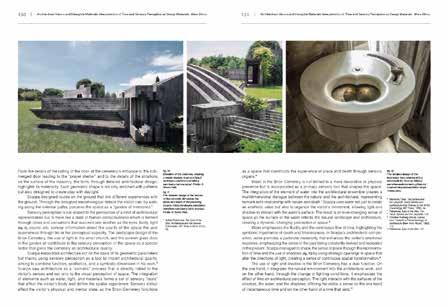
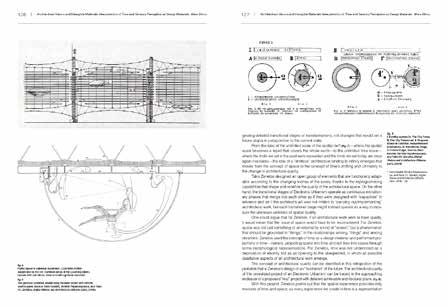
A comprehensive collection of accessible texts covering the entire spectrum of issues relating to the qualitative evaluation of architecture
Explores all aspects of the topic and offers for the first time a complete definition of architectural quality
The qualitative evaluation of buildings is largely neglected worldwide in favor of quantitative and technical assessments
The International Conference on Architectural Criticism has established itself as a center of competent and independent architectural criticism
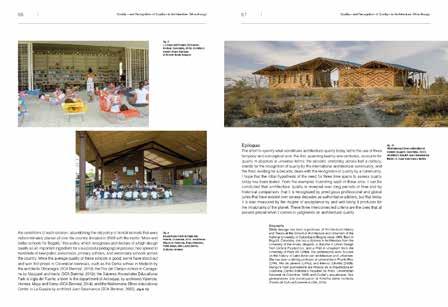
José Manuel Pozo, Wilfried Wang (eds.) Defining Architectural Quality
Book design by Sabine Hahn
Paperback
192 pages, 101 color and 35 b/w illustrations 19 × 26 cm
978-3-03860-471-6 English
sFr. 39.00 | € 38.00 | £ 35.00 | $ 50.00
April 2026 (Europe) | July 2026 (US)
Austria’s little-known global architectural history: designs by Austrian architects in African and Asian countries between 1955 and 1989 and their contexts.
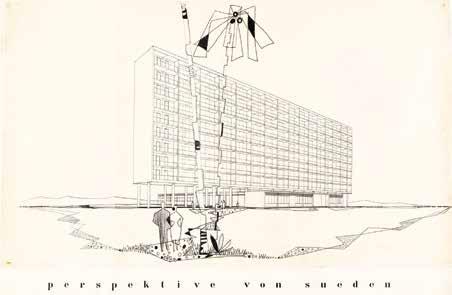
Global—Neutral embarks on an architectural search for traces in postcolonial contexts. It documents buildings and projects by Austrian architects in African and Asian countries realized between 1955 and 1989—a period of global political upheaval during which numerous states gained independence from European colonial powers and international cooperation was increasingly marked by Cold War tensions. Designs by Djamshid Farassat, Hans Hollein, Shahrzad Seradj-Kraupp, Helene Koller-Buchwieser, Norbert Heltschl, Carl Pruscha, Hannes Lintl, Roland Rainer, and Anton Schweighofer, among others, illustrate transnational dimensions and reveal surprising connections between Austria and the Global South.
In seven chapters, lavishly illustrated with reproductions of plans, images of models, photographs, and other documents from Architekturzentrum Wien’s collection, the book guides readers through the complex entanglements of architecture, geopolitics, development cooperation, and transnational knowledge exchange. Scholarly essays and other contributions by international authors expand on historical, political, and cultural contexts and offer local reflections from Nepal, Indonesia, Nigeria, and Abu Dhabi.
Monika Platzer is a curator and head of collections at Architekturzentrum Wien.
Susanne Rick is a curator at Architekturzentrum Wien and a PhD candidate at the Academy of Fine Arts Vienna, conducting a research project on the transnational activities of Austrian architects in Asia and Africa between 1955 and 1979.
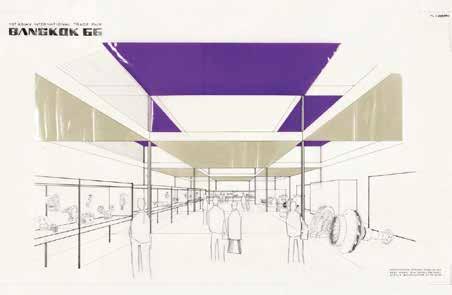
Architekturzentrum Wien is Austria’s museum of architecture and has gained international renown as a public space for exhibiting, discussing, and researching the ways in which architecture and urban development influence and shape our everyday life.
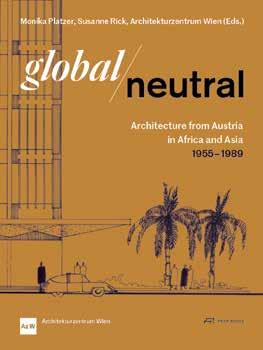

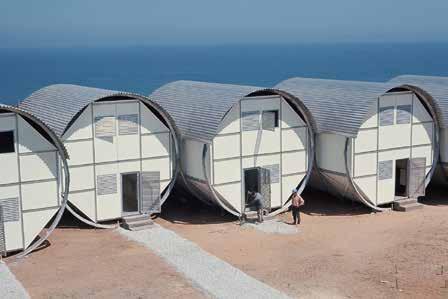
First book on the global and postcolonial entanglements of Austrian architecture during the Cold War
Documents previously unpublished buildings and projects by eminent Austrian architects in Africa and Asia
Lavishly illustrated with reproductions of plans and images of models, photographs, and documents
Contributions by international authors offer a dialogical presentation of the topic, broaden perspectives, and relate different regional experiences
Exhibition: Global—Neutral: Architecture from Austria in Africa and Asia 1955–1989 at Architekturzentrum Wien (April 16 to September 7, 2026)
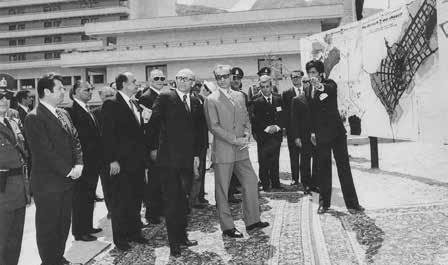
Monika Platzer, Susanne Rick, Architekturzentrum Wien (eds.)
Global—Neutral
Architecture from Austria in Africa and Asia 1955–1989
Gestaltet von Rainer Dempf, Steinbrener/Dempf & Huber
Paperback approx. 256 pages, 200 color and 50 b/w illustrations 21 × 28 cm 978-3-03860-473-0 English
sFr. 39.00 | € 38.00 | £ 35.00 | $ 50.00
May 2026 (Europe) | August 2026 (US)
Team
10 in Portugal: a strident group of young European architects and its deeply influential criticism of the modernist ideology on the post-WWII period.
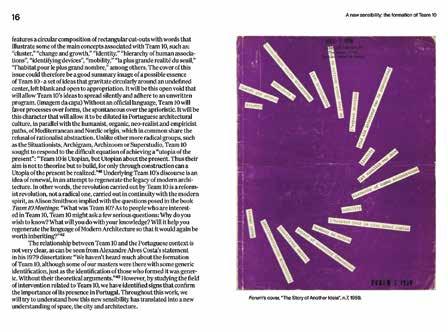
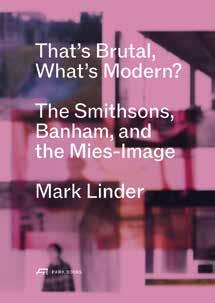
Team 10—also known as Team X and Team Ten—was an international group of young and strident architects that emerged from the Congrès International d’Architecture Moderne (CIAM) and existed from 1953 to 1981. The group criticized the dogmatism of Le Corbusier and other proponents of classical modernism. Its most notable members included Alison and Peter Smithson (Britain), Georges Candilis and Shadrach Woods (USA), Jacob Bakema and Aldo van Eyck (Netherlands), Giancarlo De Carlo (Italy), and Stefan Wewerka (Germany).
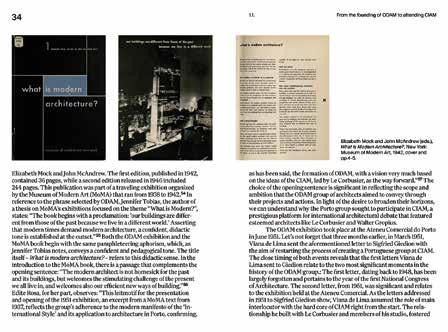
In this book, architectural historian Pedro Baía examines the influence of Team 10 on Portugal’s architectural culture. At the time, the country was largely cut off from Europe’s architecture hotspots. Using projects, completed buildings, images, texts, and statements by members of Team 10, he illustrates how the group’s ideas and work were interpreted, disseminated, and appropriated in the critical discourse of the Portuguese architectural scene.
Pedro Baía is a Porto-based architect, editor, educator, and researcher. He works as an integrated researcher at the University of Porto’s Center for Architecture and Urbanism Studies (CEAU/FAUP) and teaches as visiting assistant professor at the Autonomous University of Lisbon’s Department of Architecture (DA/UAL). He is also the founder-director of Circo de Ideias, an independent space for architecture in Porto.
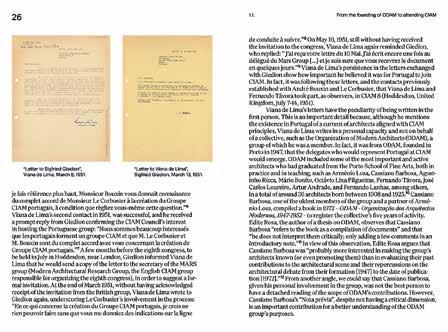
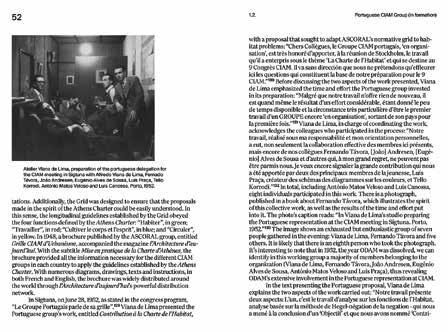
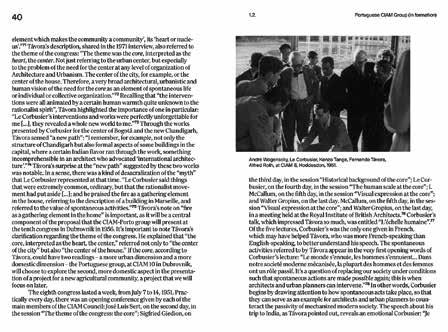
Team 10 was a group of young European architects that emerged from the Congrès International d’Architecture Moderne (CIAM)
Team 10’s deeply influential criticism contributed significantly to the revision of CIAM’s dogmatic modernist ideology in the post-WWII period
Portugal’s architectural scene of the 1950s to the 1970s proved to be exceptionally receptive to Team 10’s ideas and work
Team 10 is an exemplary case study of the dissemination and reception of architectural ideas and concepts
Pedro Baía
The Reception of Team 10 in Portugal
Translated from Portuguese by Catarina Chase Aleixo
Book design by Catarina Matos
Paperback approx. 436 pages, 100 color and 50 b/w illustrations 13.5 × 20 cm 978-3-03860-474-7 English
sFr. 39.00 | € 38.00 | £ 38.00 | $ 50.00
April 2026 (Europe) | July 2026 (US)
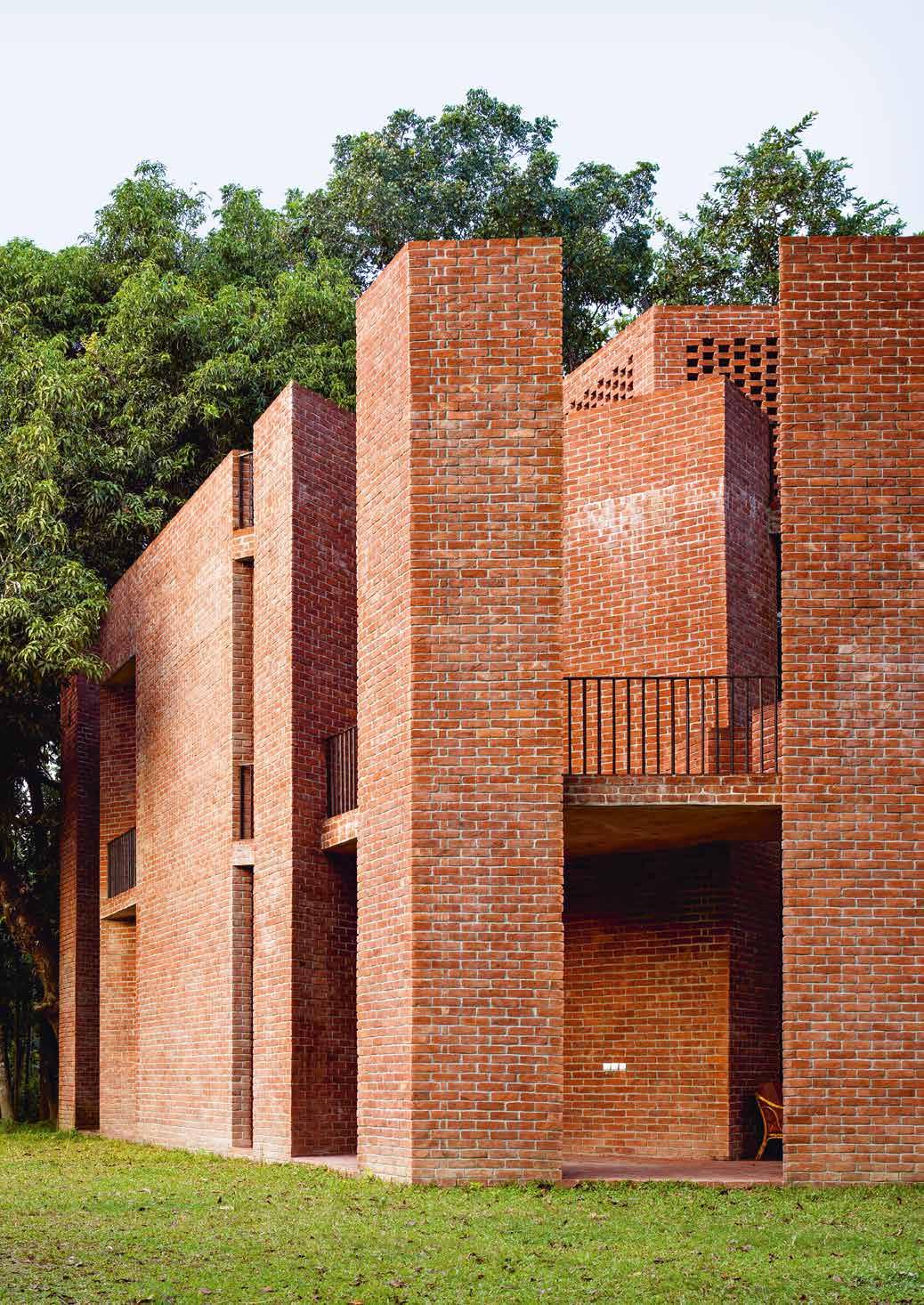
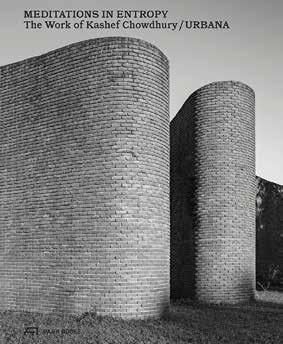
The first full monograph on the work of Bangladeshi architect Kashef Chowdhury and his Dhaka-based firm URBANA.
“The changing climate is no longer debatable in Bangladesh, it is this country’s unfeigned, monstrous reality.” Kashef Chowdhury
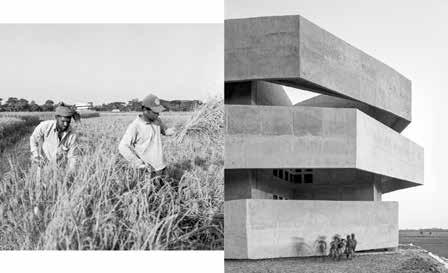
Since 1995, Dhaka-based architecture firm Kashef Chowdhury / URBANA has produced an astonishing collection of works of divergent scales, typologies, and contexts located in one of the most meteorologically challenging regions in the world. A hospital introduced into an economy decimated by rising oceans, a shelter against cyclones in Bangladesh’s southern coastal region, and architectural interventions in one of the world’s densest metropolitan areas: Kashef Chowdhury / URBANA’s designs are incisive, critical responses to varied issues and urgencies rooted in the belief that architecture must be a reflection of, and sympathetic to, increasingly fragile ecological conditions.
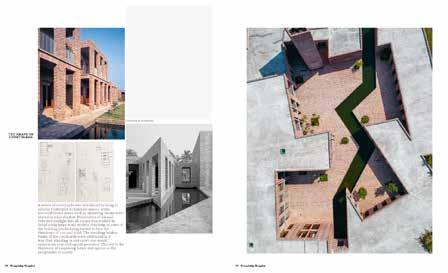
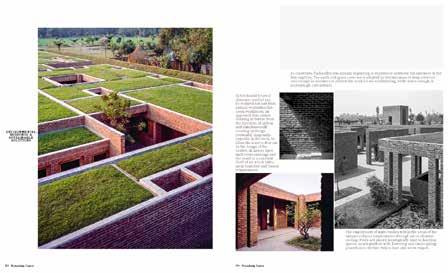
Meditations in Entropy is the first full monograph on the work of Kashef Chowdhury / URBANA. It features 18 of the firm’s realized designs in detail through photographs by acclaimed architectural photographer Hélène Binet as well as numerous plans, drawings, sketches, and other images. Perceptive essays are contributed by the distinguished critics and historians Kenneth Frampton, Robert McCarter, William J. R. Curtis, and Philip Ursprung, and by Ainun Nishat, a renowned water resource and climate change specialist. An illustrated catalogue of Kashef Chowdhury / URBANA’s projects and realized buildings rounds off this beautifully designed volume.
Kashef Chowdhury is a Dhaka-based architect, educator, and photographer, and principal of the architecture firm Kashef Chowdhury / URBANA.
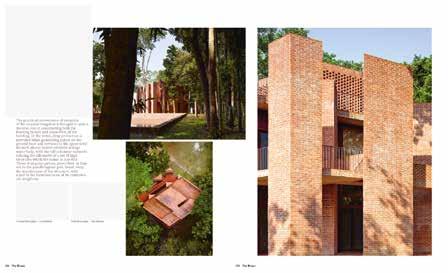
First-ever monograph on the internationally recognized Dhaka-based architecture firm Kashef Chowdhury / URBANA
Traces three decades of Kashef Chowdhury / URBANA confronting immense challenges, such as complex weather conditions and climate change, major migration movements, and high urban density
Features in detail 18 realized designs that demonstrate Kashef Chowdhury / URBANA’s unique focus on these pressing issues
Richly illustrated with photographs by acclaimed architectural photographer Hélène Binet, as well as plans, drawings, and sketches
With contributions by distinguished architecture critics and historians Kenneth Frampton, Robert McCarter, William J. R. Curtis, and Philip Ursprung
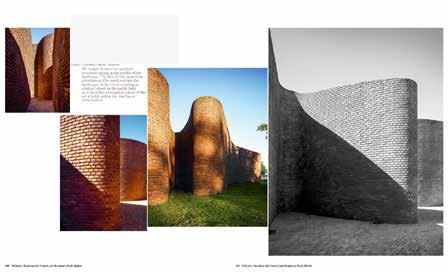
Kashef Chowdhury (ed.)
Meditations in Entropy
The Work of Kashef Chowdhury / URBANA
Book design by Samuel Bänziger, Rosario Florio, Larissa Kasper
Hardback
518 pages, 406 color and 650 b/w illustrations, plans, and drawings 23 × 28 cm 978-3-03860-329-0 English
sFr. 59.00 | € 58.00 | £ 55.00 | $ 65.00
Previously announced Available (Europe) | March 2026 (US)