FUNDAÇÃO GRAMAXO

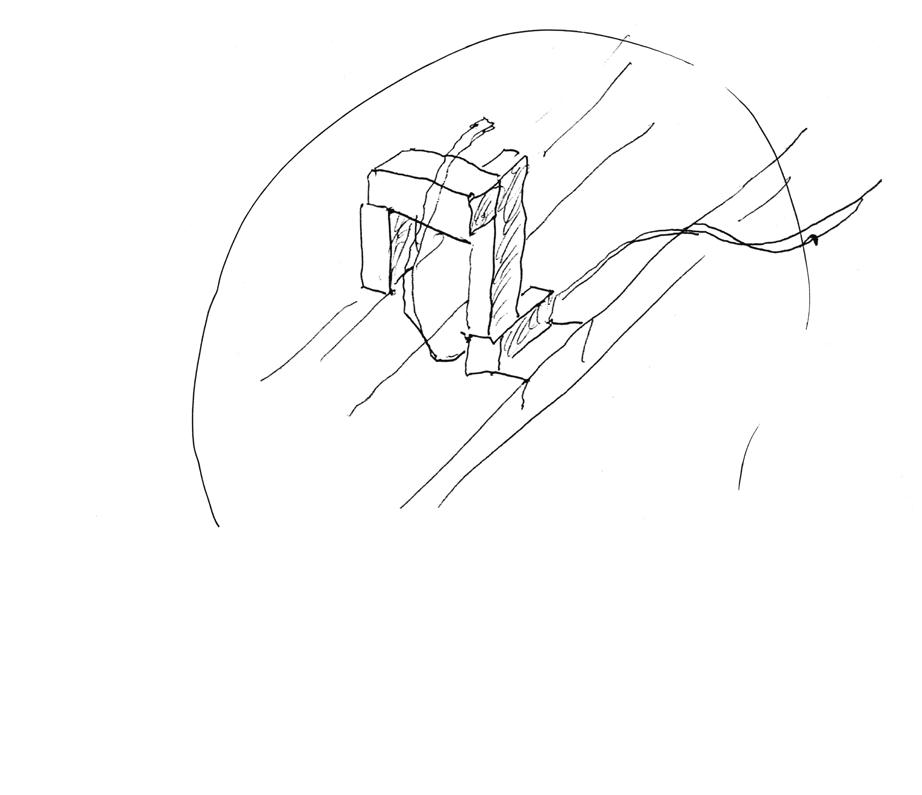
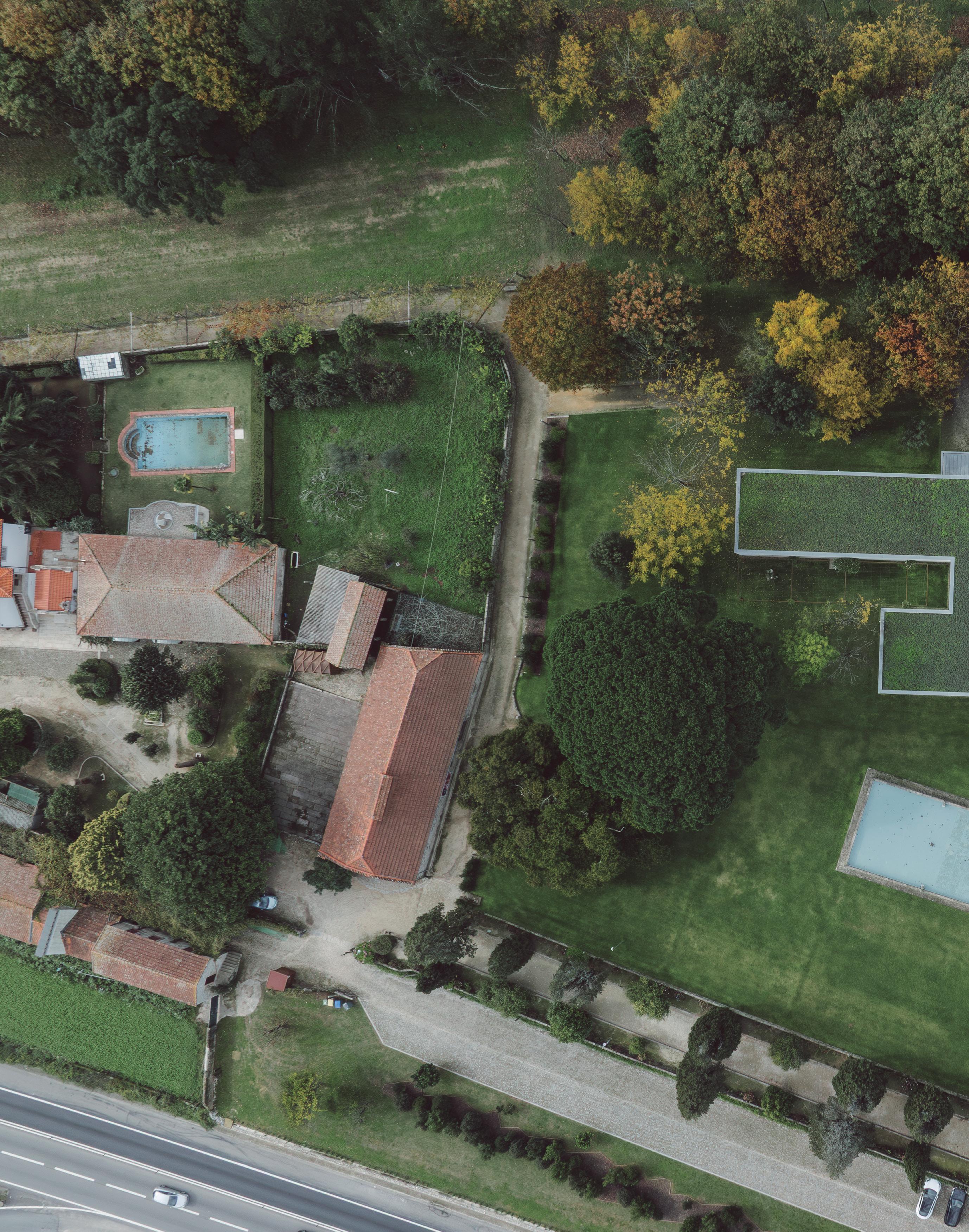
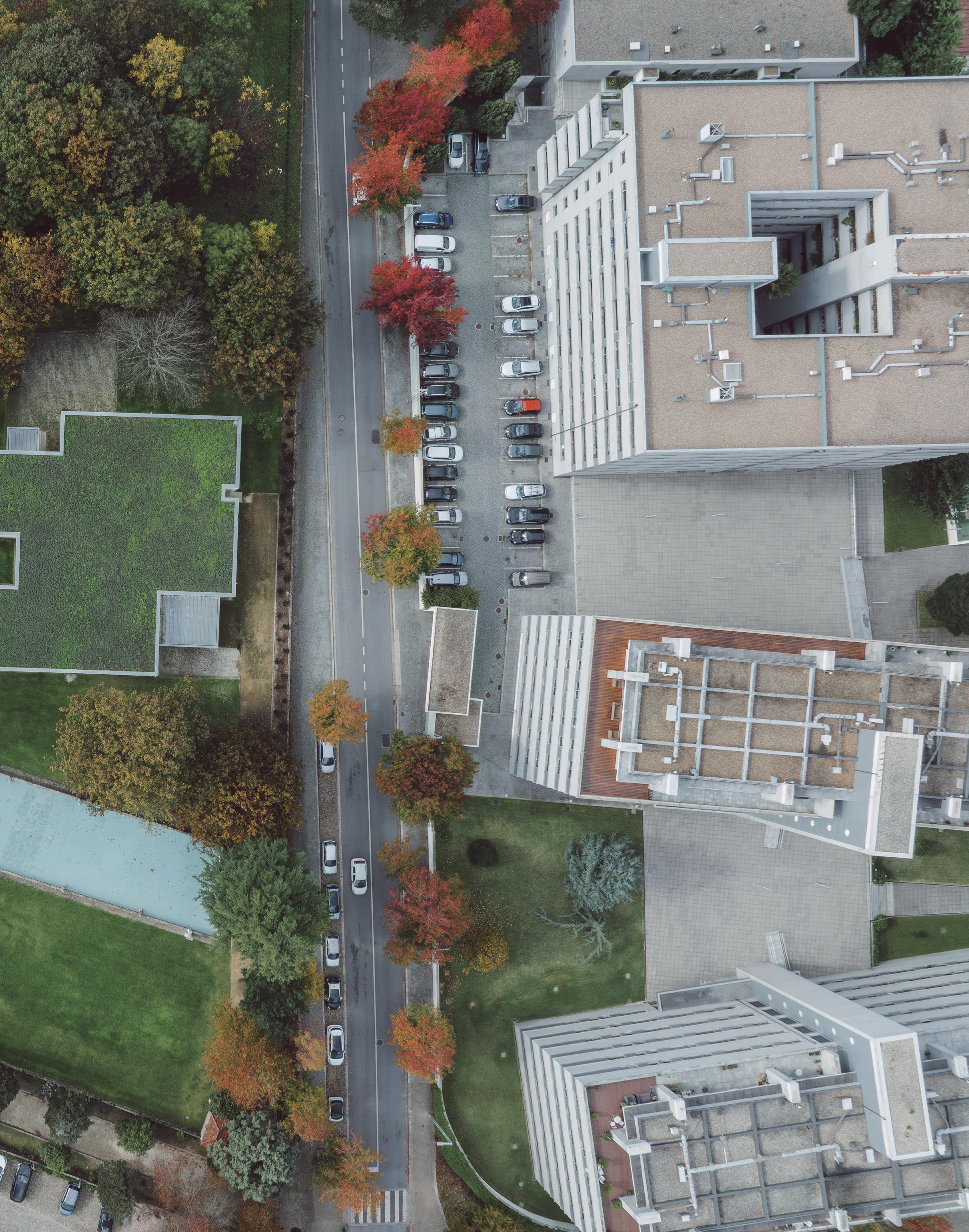
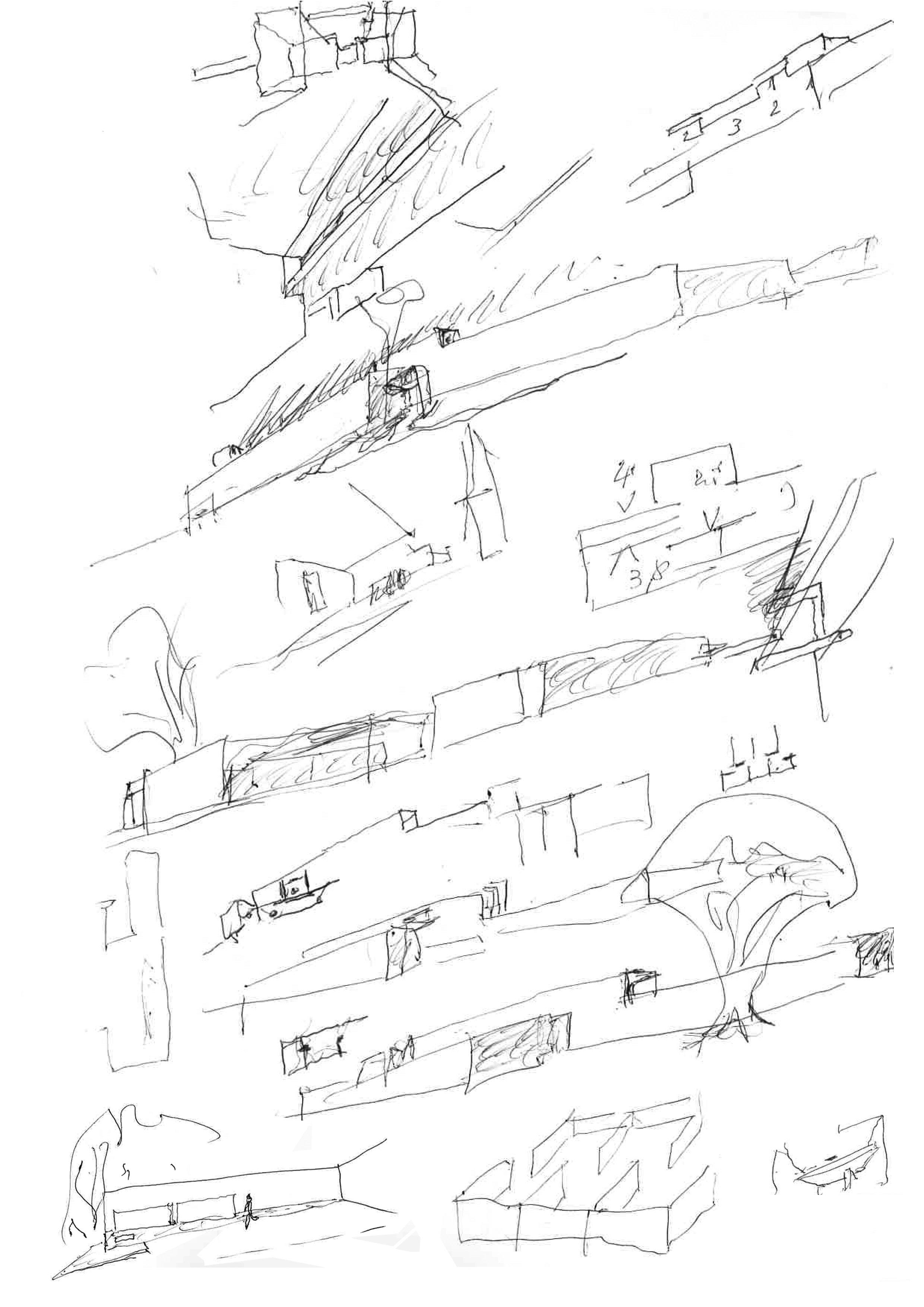
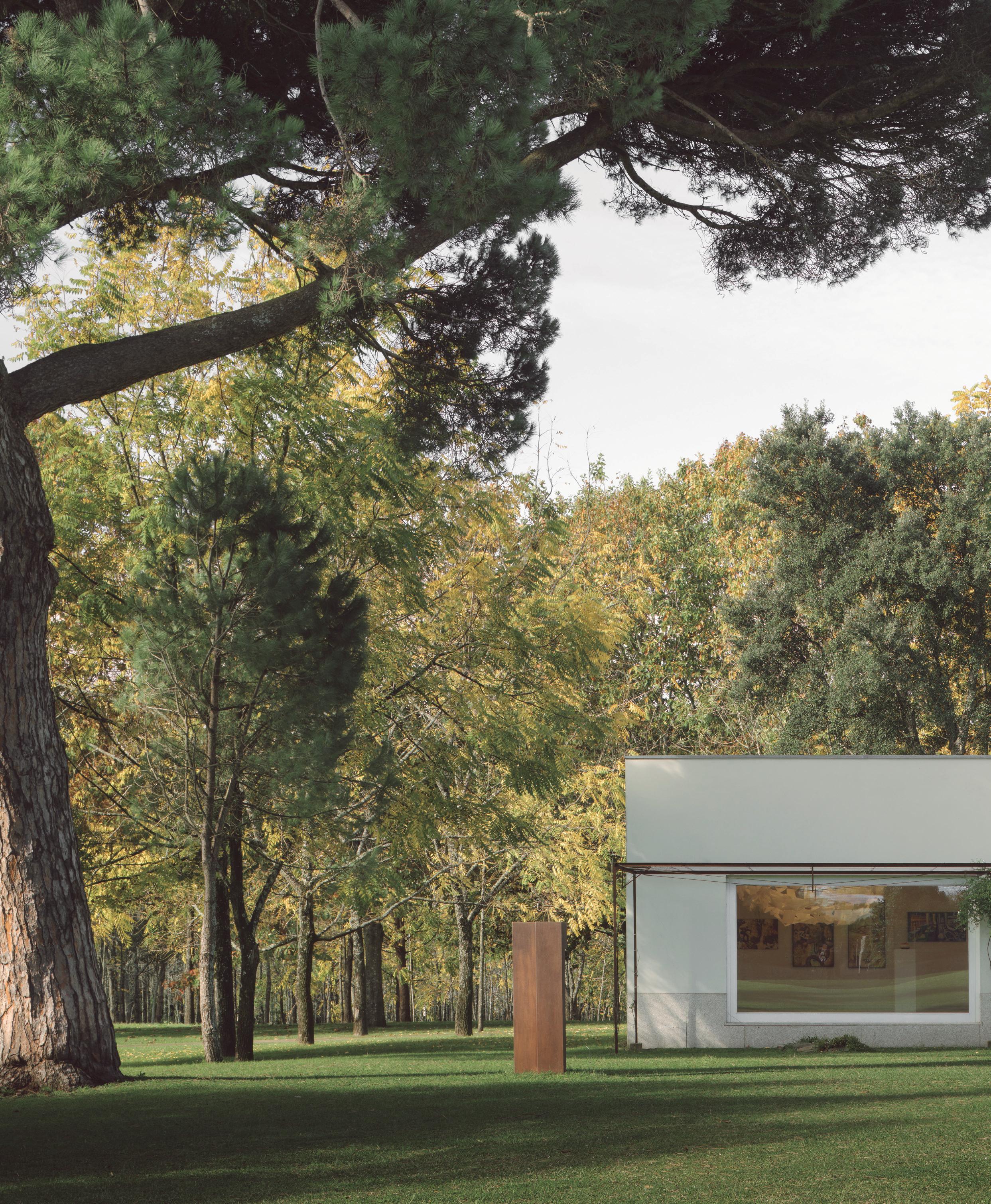
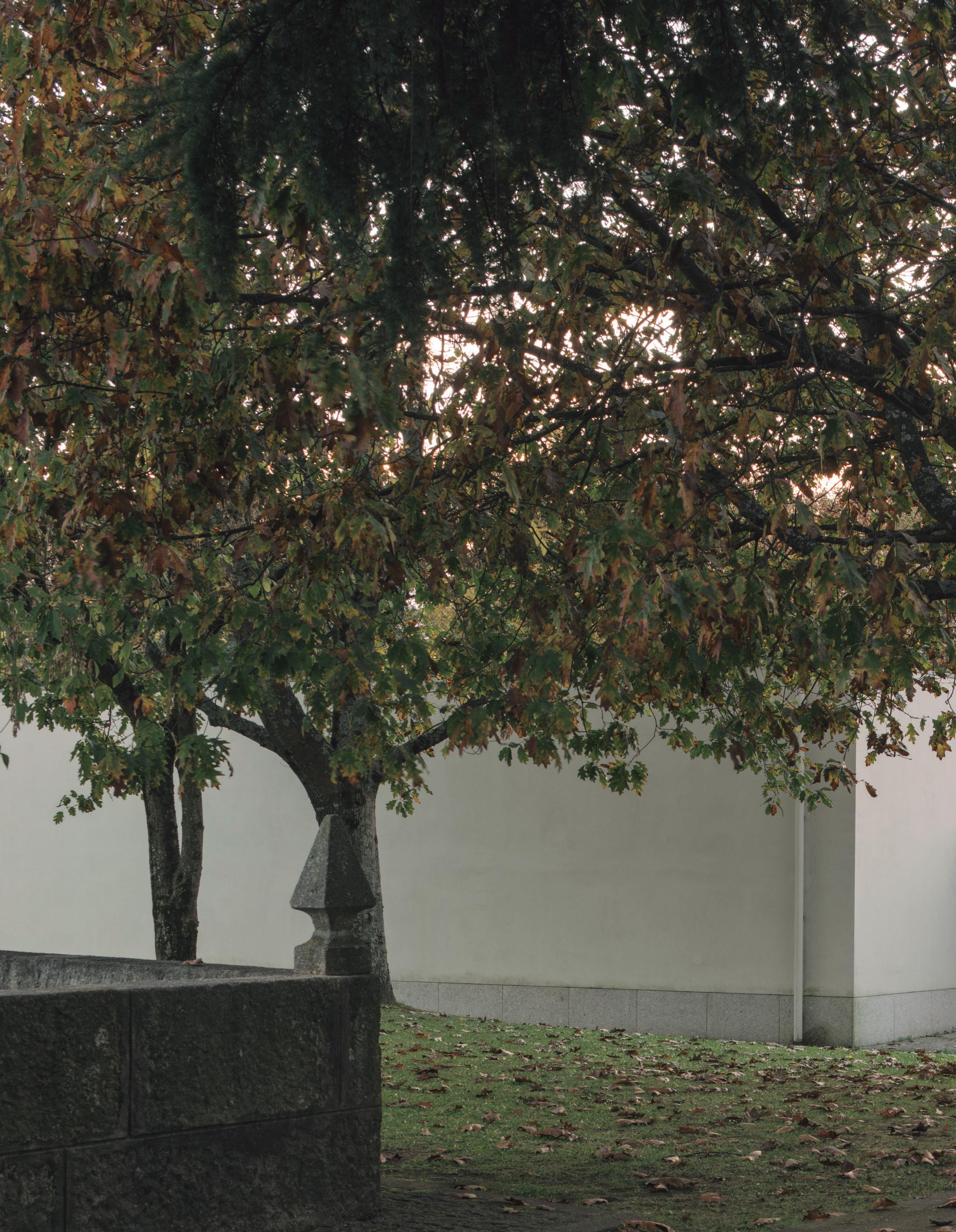
The Gramaxo Foundation, represented by the Chair of the Board of Directors, Mrs. Maria de Fátima Gramaxo, intends to construct a single-storey building on land it owns, to be located as shown in the attached topographic plan. The new building, the “HEADQUARTERS HOUSE OF THE GRAMAXO FOUNDATION,” is intended to showcase the family’s artistic heritage and will also include a room for temporary exhibitions and a multipurpose hall with seating for approximately 100 people. The current request follows a previous submission that was addressed by the offices of the Secretaries of State for Trade and for Forests and Rural Development, under Dispatch No. 2606/2016. The building is positioned almost parallel to the existing granite tank—scheduled for restoration—and to the tree-lined avenue that leads to the main residence from the magnificent Baroque gate. The existing ground levels will be largely maintained. Pedestrian access is provided perpendicularly to the avenue, following the boundary wall to the north. The loading and unloading area is located parallel to the avenue, on the west side of the new building, accessed from an existing path. Parking for 25 vehicles is planned along the wall east of the avenue, with an independent access gate, as indicated in the drawings.
All rooms will be naturally ventilated except for the restrooms, storage room, archive, pantry, and permanent exhibition rooms, which will be mechanically ventilated. All mobility standards will be respected, including door dimensions, circulation spaces, and sanitary facilities.
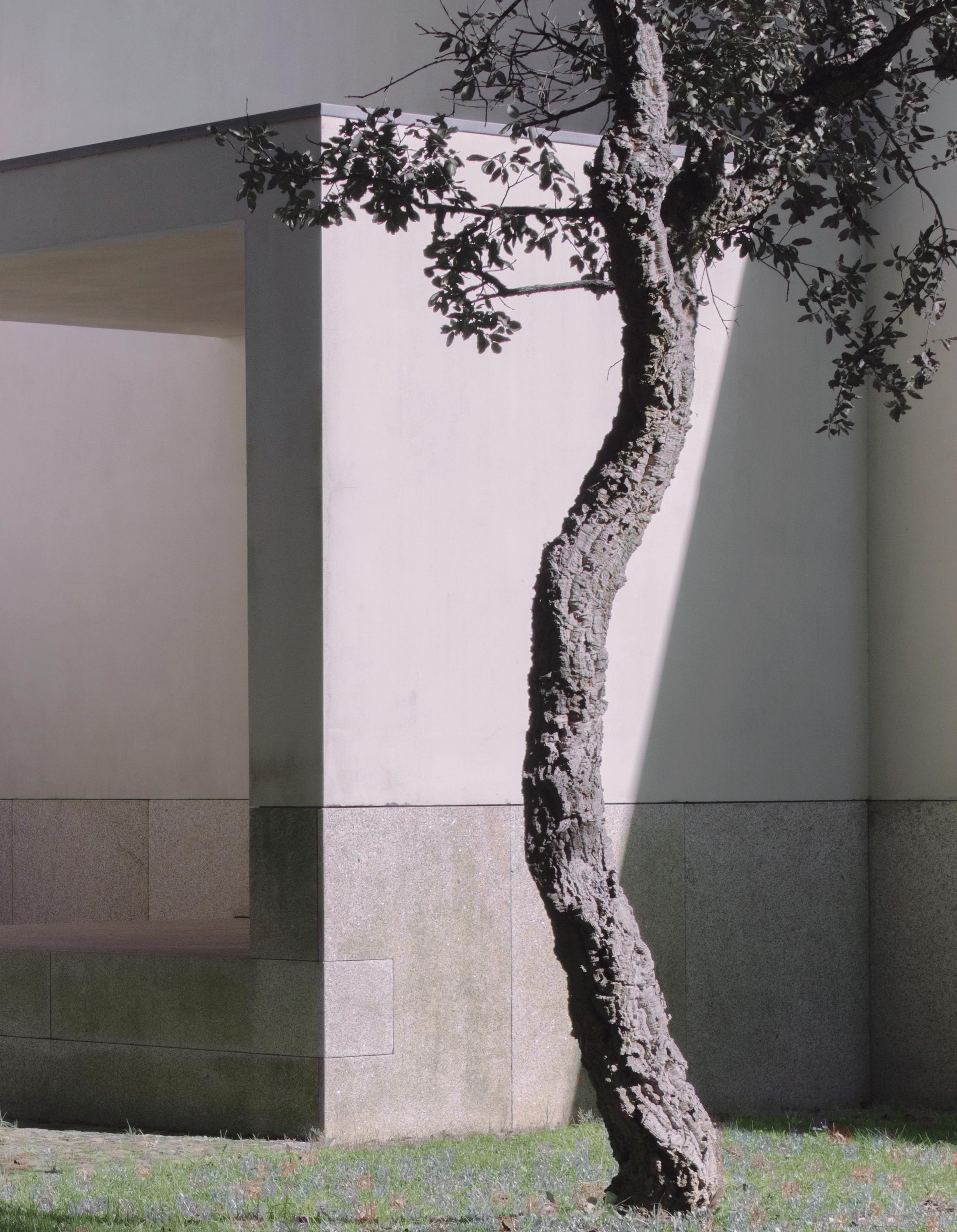
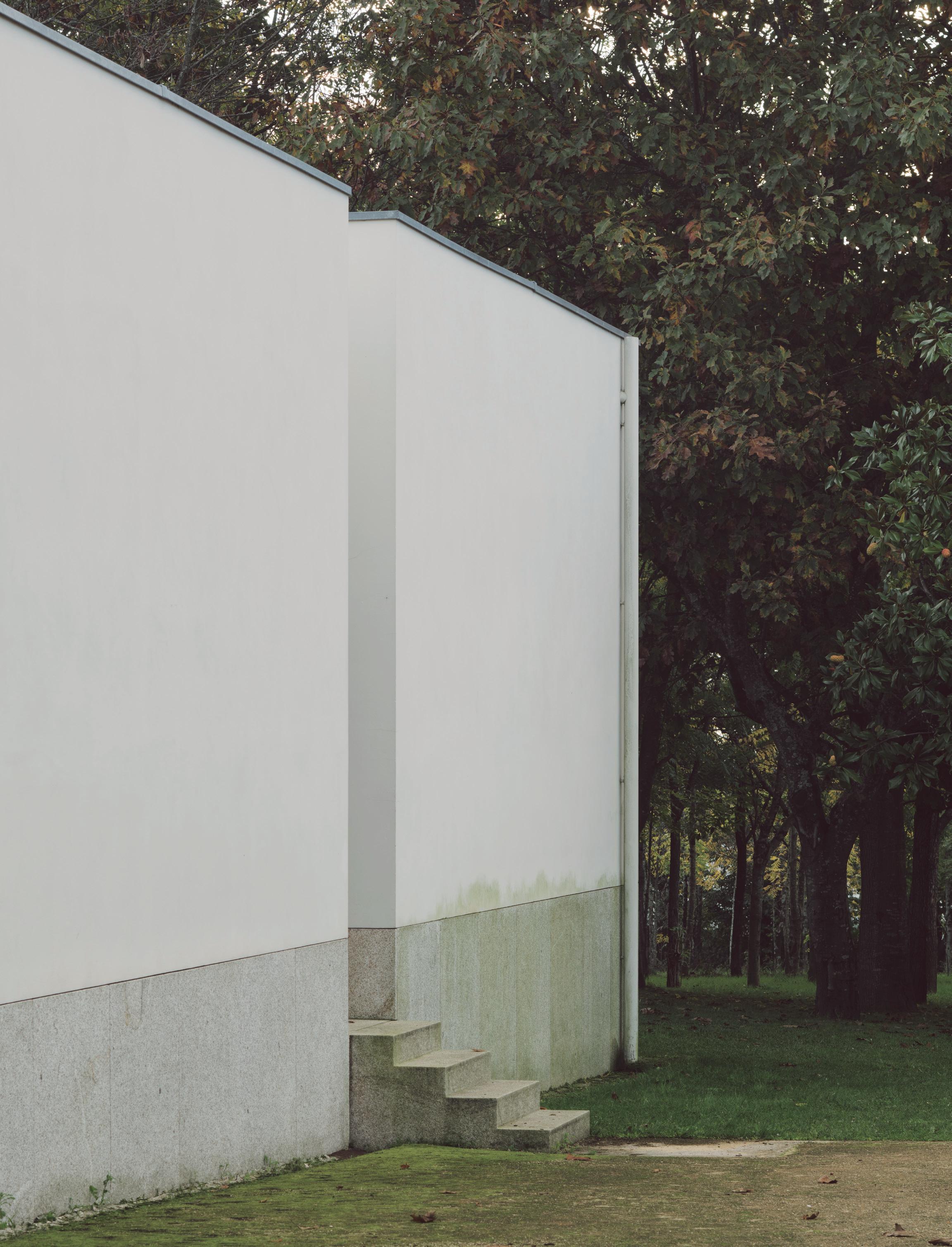
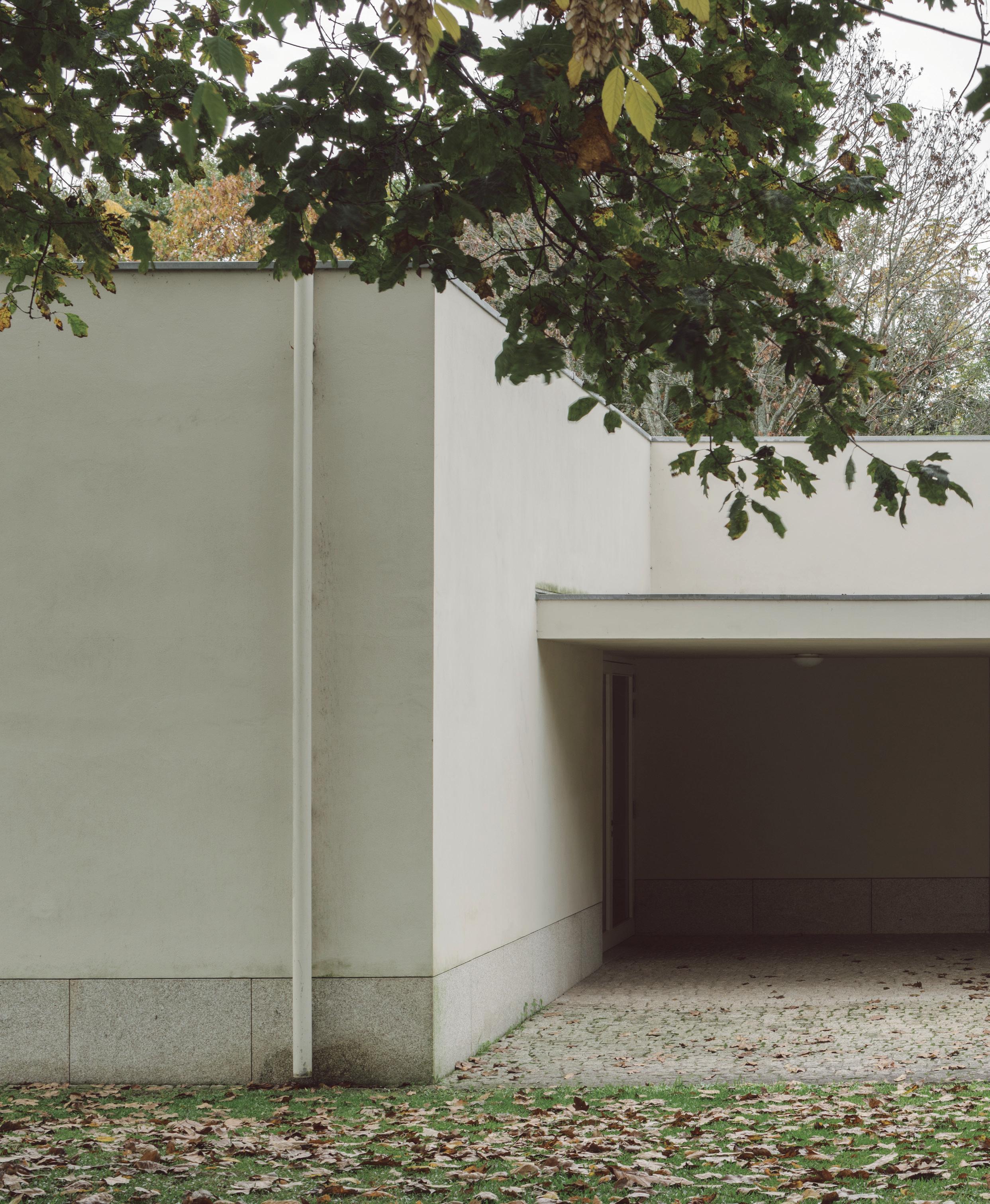
Exterior structural walls will consist of thermal brick, plastered and lime-washed on the exterior, with a granite baseboard as shown in the drawings. They will be thermally insulated on the interior with extruded polystyrene and finished with double gypsumboard panels. Interior structural walls will be in reinforced concrete, also lined with double gypsum-board panels. Non-structural partitions will consist of double gypsum-board panels. Interior walls and ceilings will be plastered and painted, with marble skirting and wainscoting in wet areas. The roof will be a reinforced-concrete slab, thermally insulated and waterproofed with asphalt membranes covered by topsoil. Downpipes will be painted iron; flashings and gutters will be zinc. Exterior and interior frames will be lacquered wood with laminated double glazing. Interior floors will be wood, with marble used only in wet areas.
Exterior paving will consist of compacted earth, gravel, and granite, in the areas indicated in the attached drawing.
Water and electricity meters will be located in a technical cabinet embedded in the existing external wall, with access from Conselheiro Costa Aroso Street. The water-treatment equipment for the existing tank will be located in a basement accessed via a hatch in the storage room.
Any trees located within the building footprint will be transplanted. Exterior areas and access routes will connect to existing paths, using permeable compacted-earth paving and semi-permeable stone paving near the main and service entrances. The impermeable area will total 944.78 m², and the semi-permeable area 699.96 m².
ÁLVARO SIZA
Descriptive and Justifying Report – Headquarters House of the Gramaxo Foundation.
Porto, 30 October 2017
FUNDAÇÃO
GRAMAXO MAIA, PORTUGAL
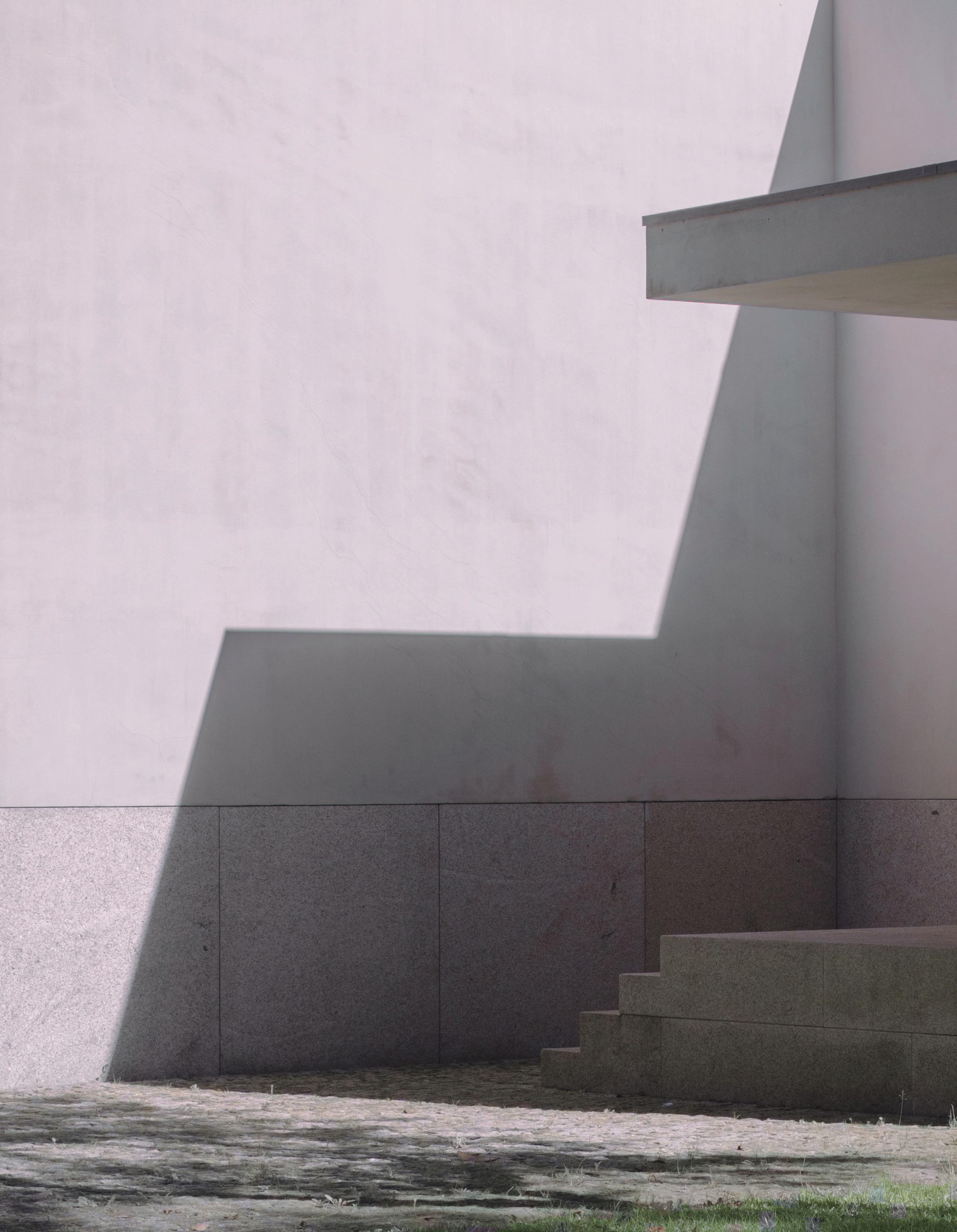
First and foremost, the Gramaxo Foundation building is an act of understanding the site. In the centre city of Maia, amidst the intensity of urban life, an extensive garden enclosed by a granite wall endures. Within this wall, surrounded by dense vegetation, the building emerges…
I could continue describing the remarkable way in which Siza transforms the place, achieving a harmony between the existing and the new, between the built and the natural, as an enhancement of the territory in which the new simultaneously becomes an inseparable part of what is already there. However, what struck me most in this first project on which I collaborated, was the intelligence and sensitivity with which Siza interpreted and responded to the commission.
Siza created a large house rather, and not a small museum.
In 2016, Maria de Fátima Gramaxo, the client, commissioned Siza to design the Headquarters House of the Gramaxo Foundation: a new building positioned as close as possible to her residence, intended to house her collection of nineteenth-century paintings and furniture that, until then, had remained closed in her own home. From the outset, the client feared that her belongings might be displaced and ultimately reduced to static artworks hung on a white wall.
In response to this concern, Siza conceived a large house and not a small museum. But not in a single gesture. He designed a contemporary building capable of hosting both the permanent collection and temporary exhibitions.
Through a flexible spatial scale defined for each function, one moves through the spaces and experiences a sequence of contractions and expansions as a zoom-in/zoom-out effect.
This oscillation places us in a constant state of reflection: are we inhabiting a domestic space or a cultural one?
In truth, both.
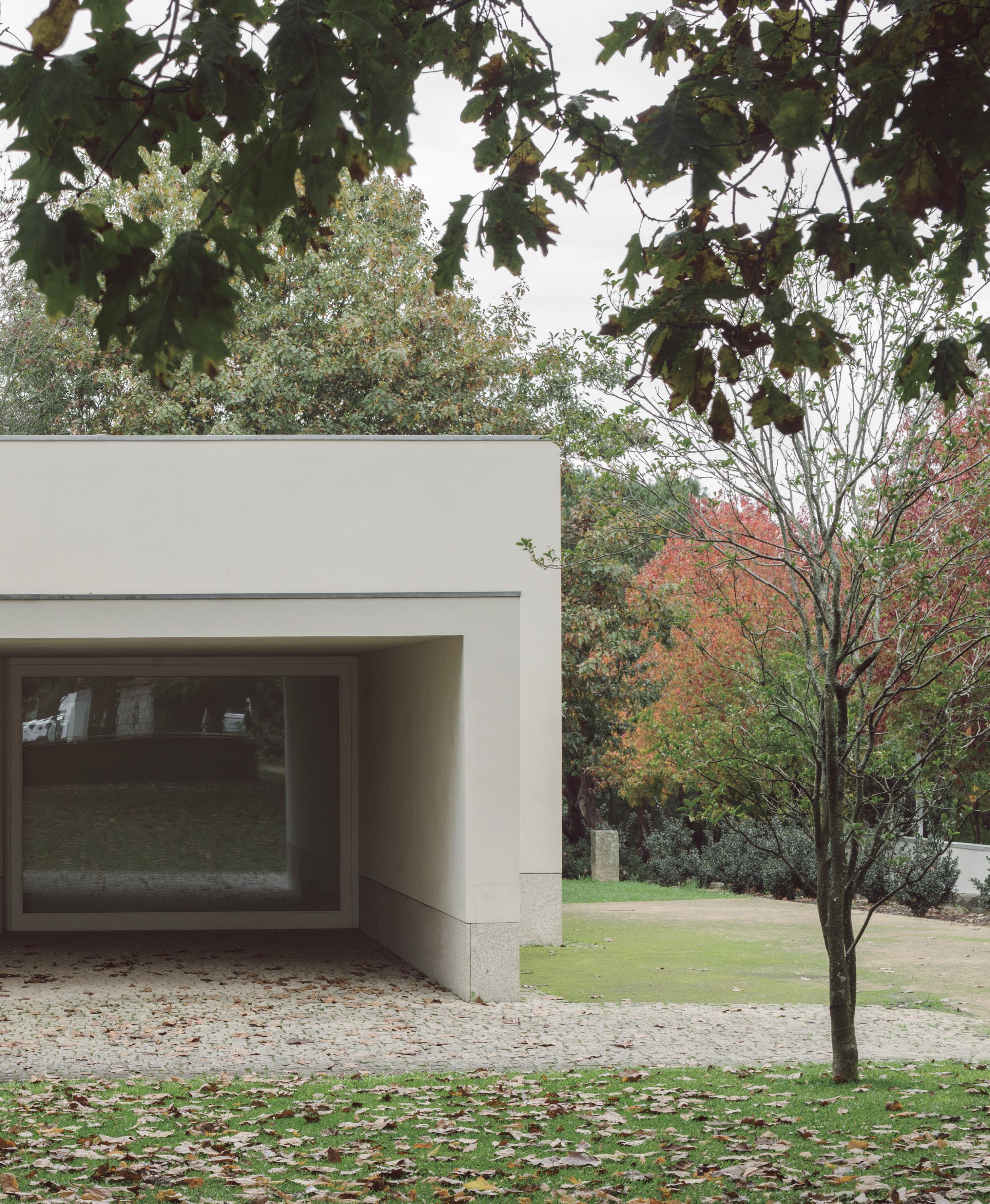
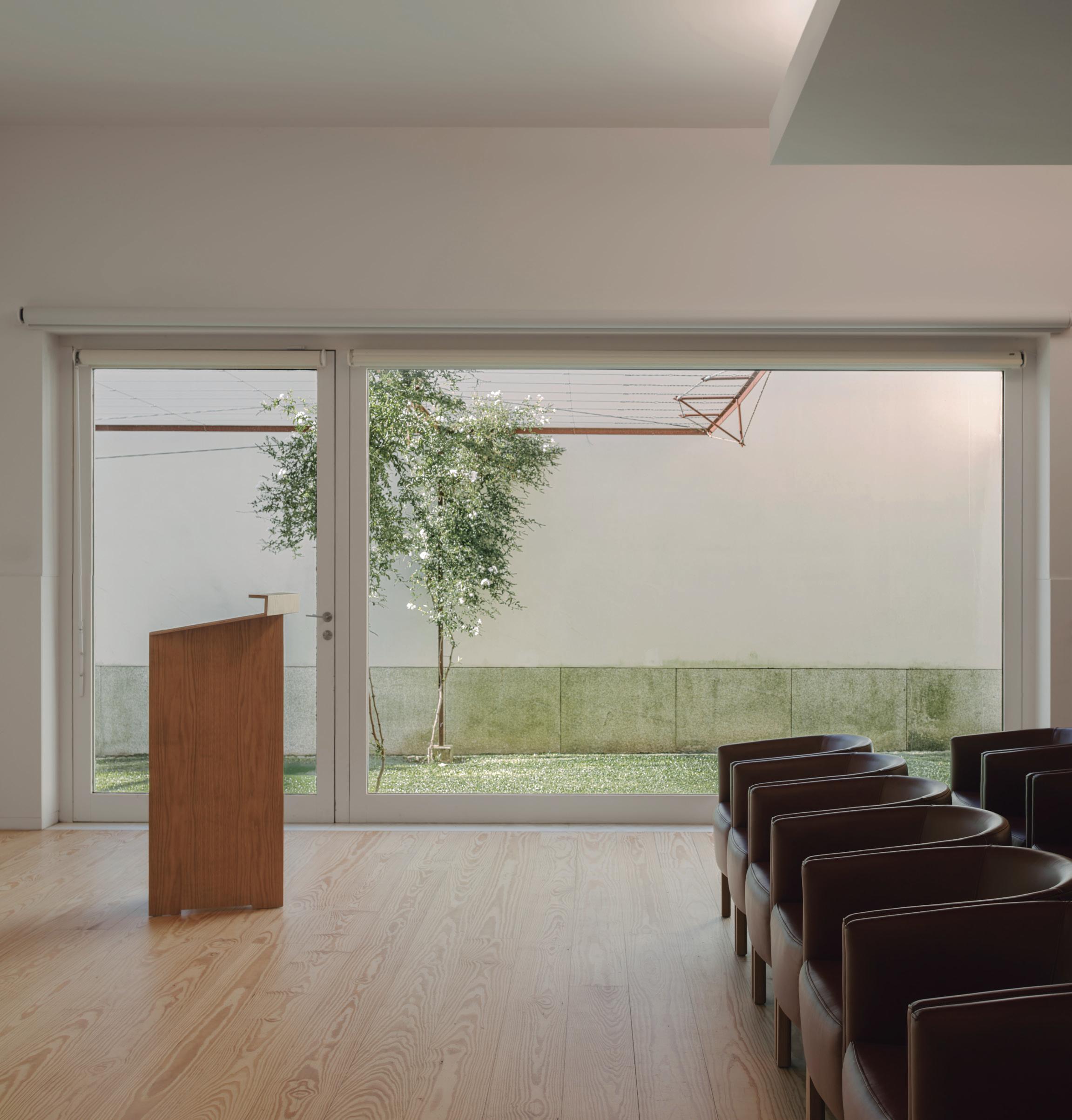
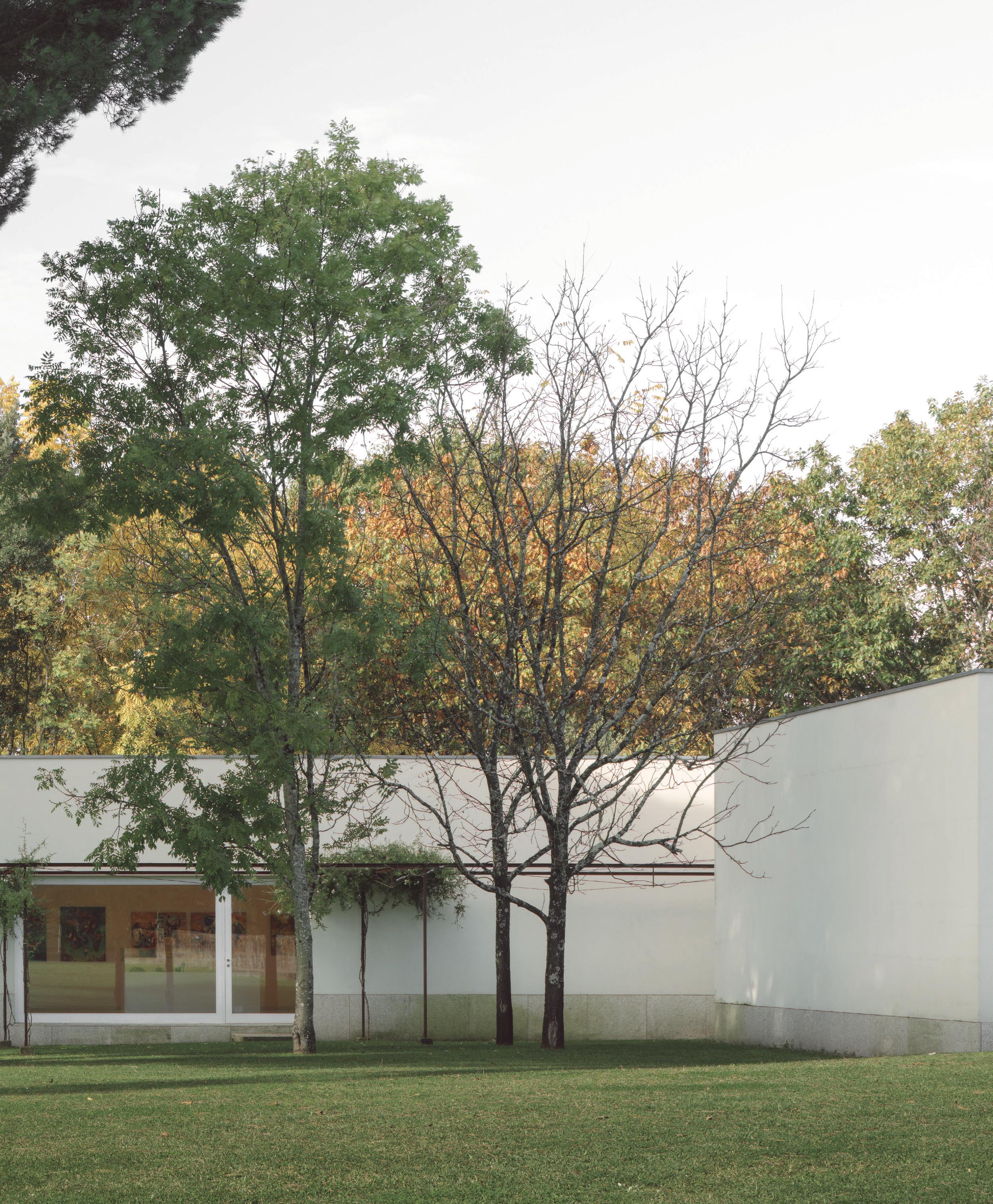
The single-storey U-shaped plan resembles a house opening onto a courtyard. The direct connection with the exterior lends the building a distinctly domestic quality. We may enter and exit at any moment, according to our own rhythm.
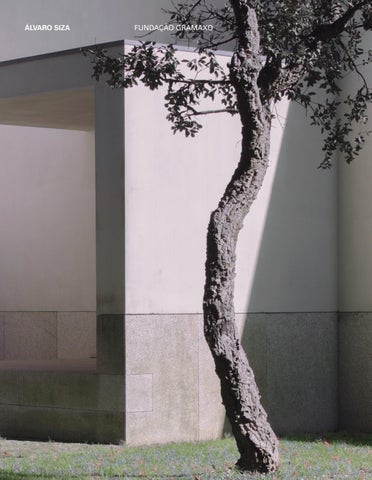
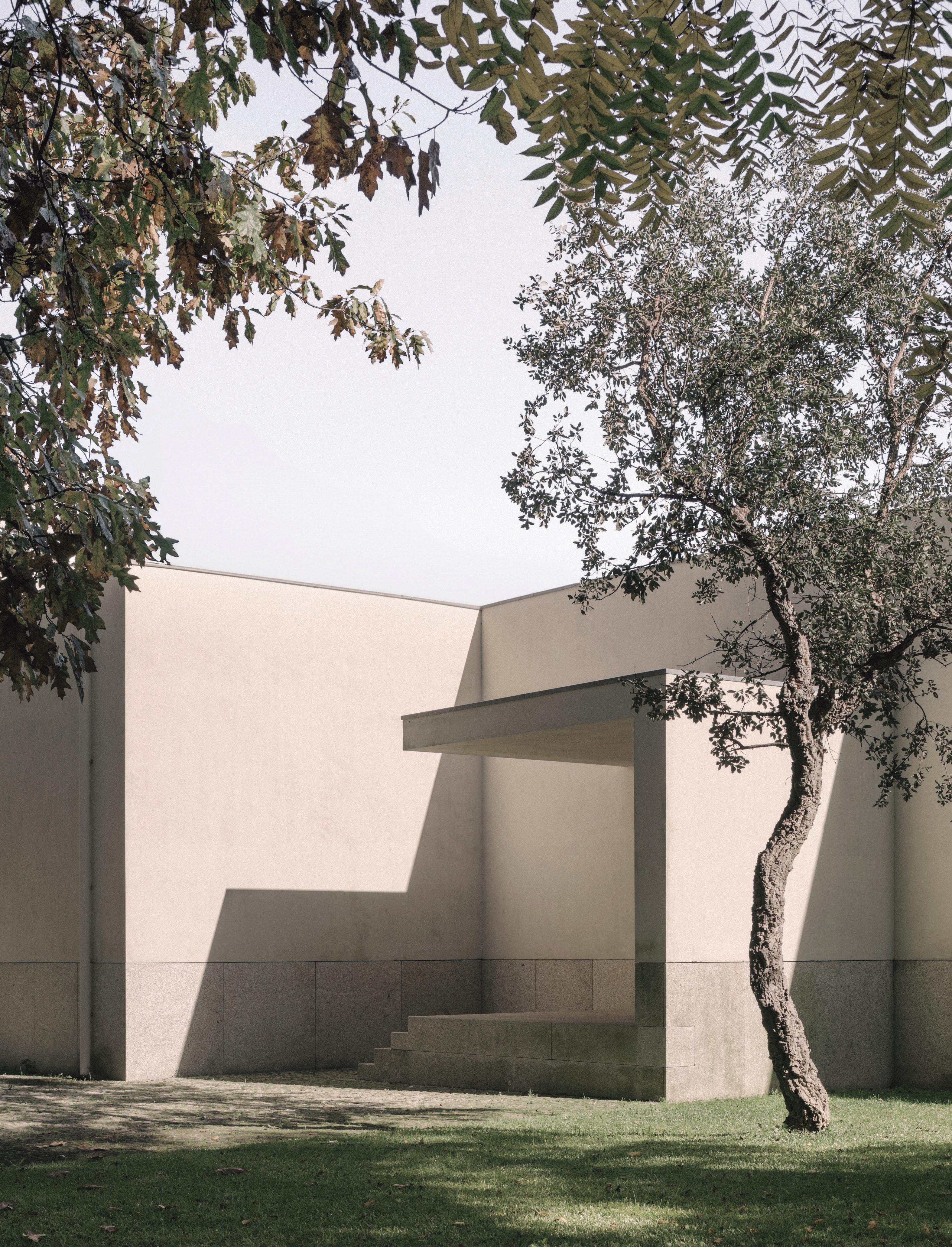
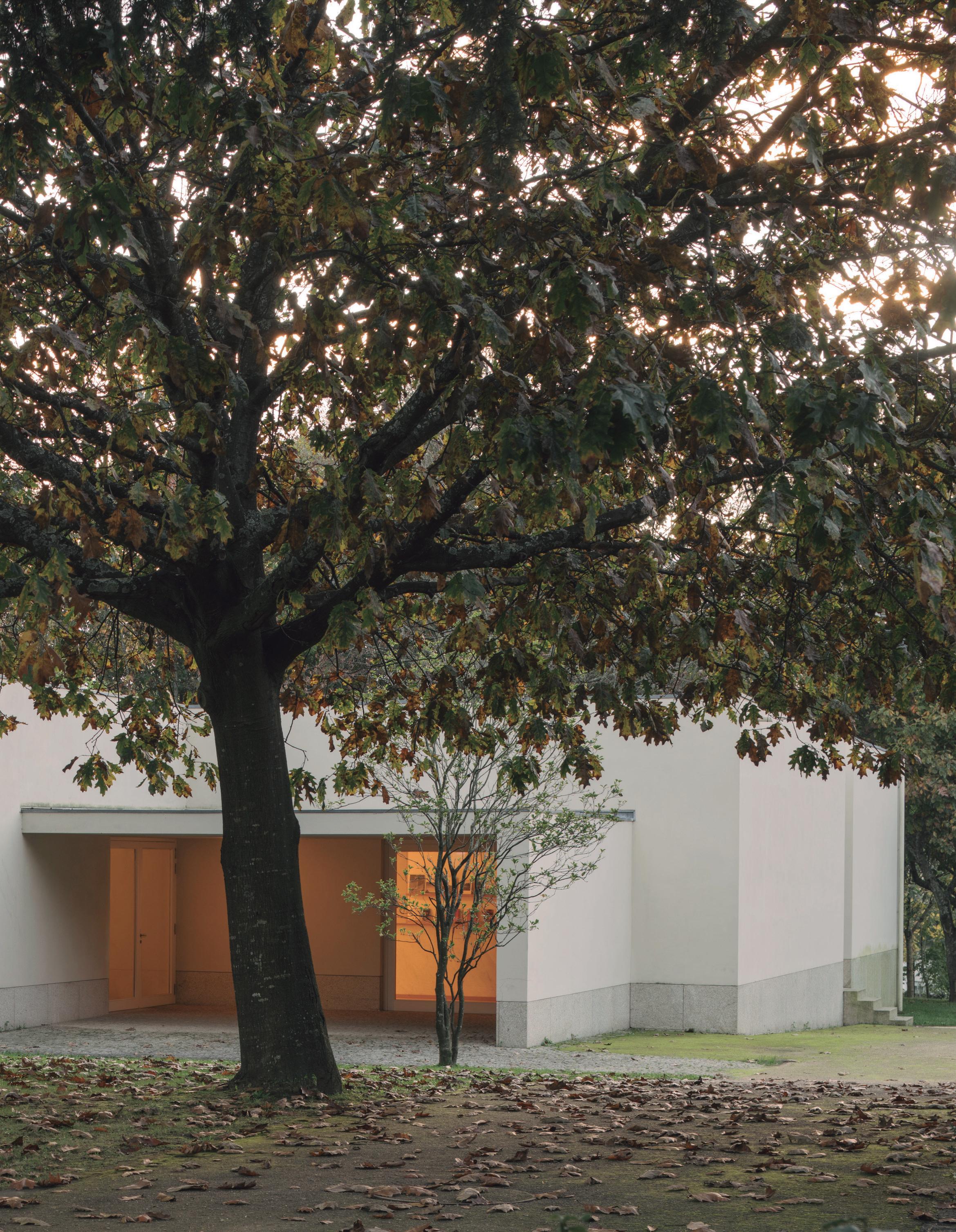
From the garden, a gravel path traced across the meadow leads us to the entrance, as informal as the entrance door itself. From this perspective, the absence of openings makes the building’s true scale ambiguous. Only under the porch, constrained by its deliberately low ceiling height, do we encounter a lateral door. There is no vestibule or automated mechanism; the door remains closed, and it is up to us to turn the handle and step inside.
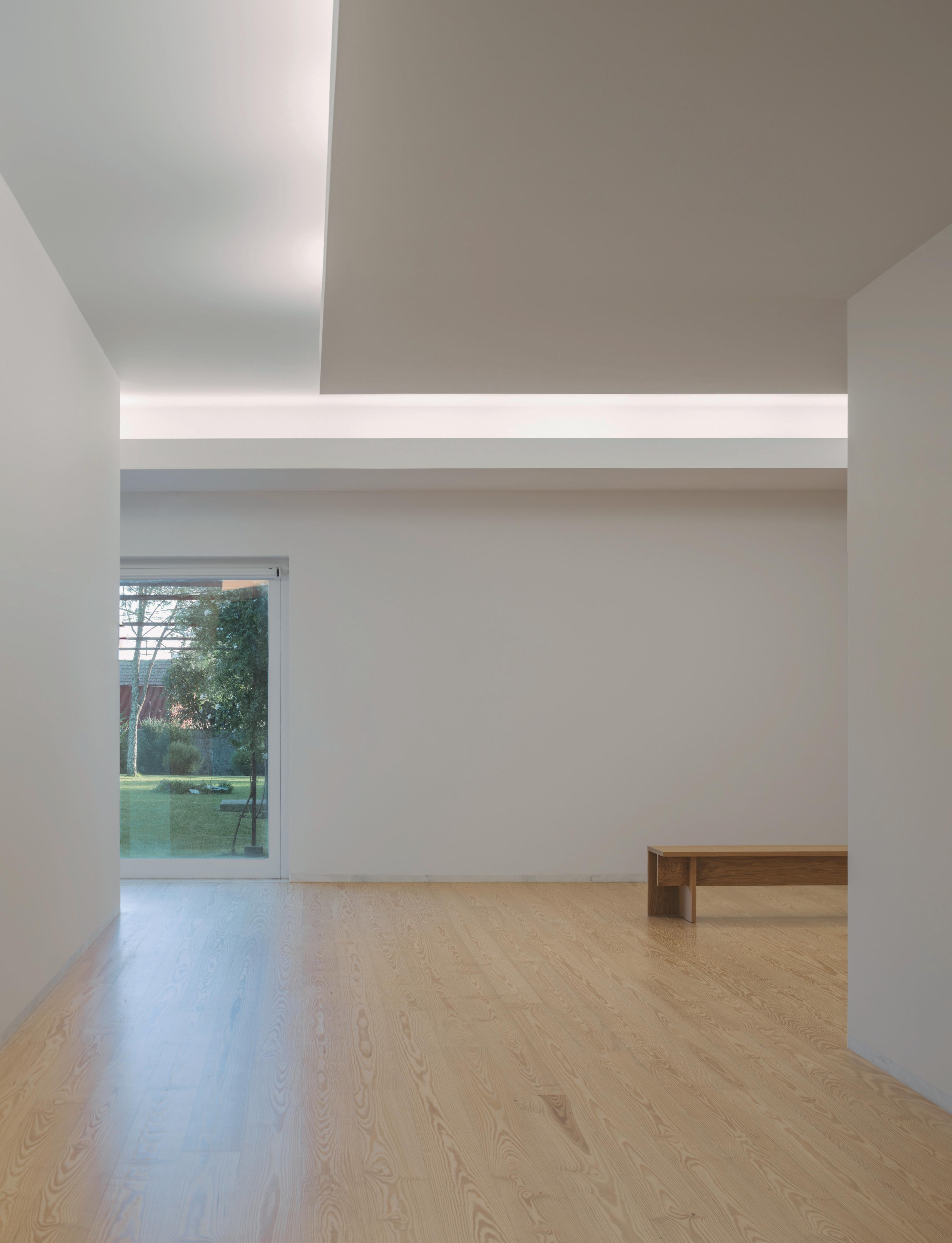
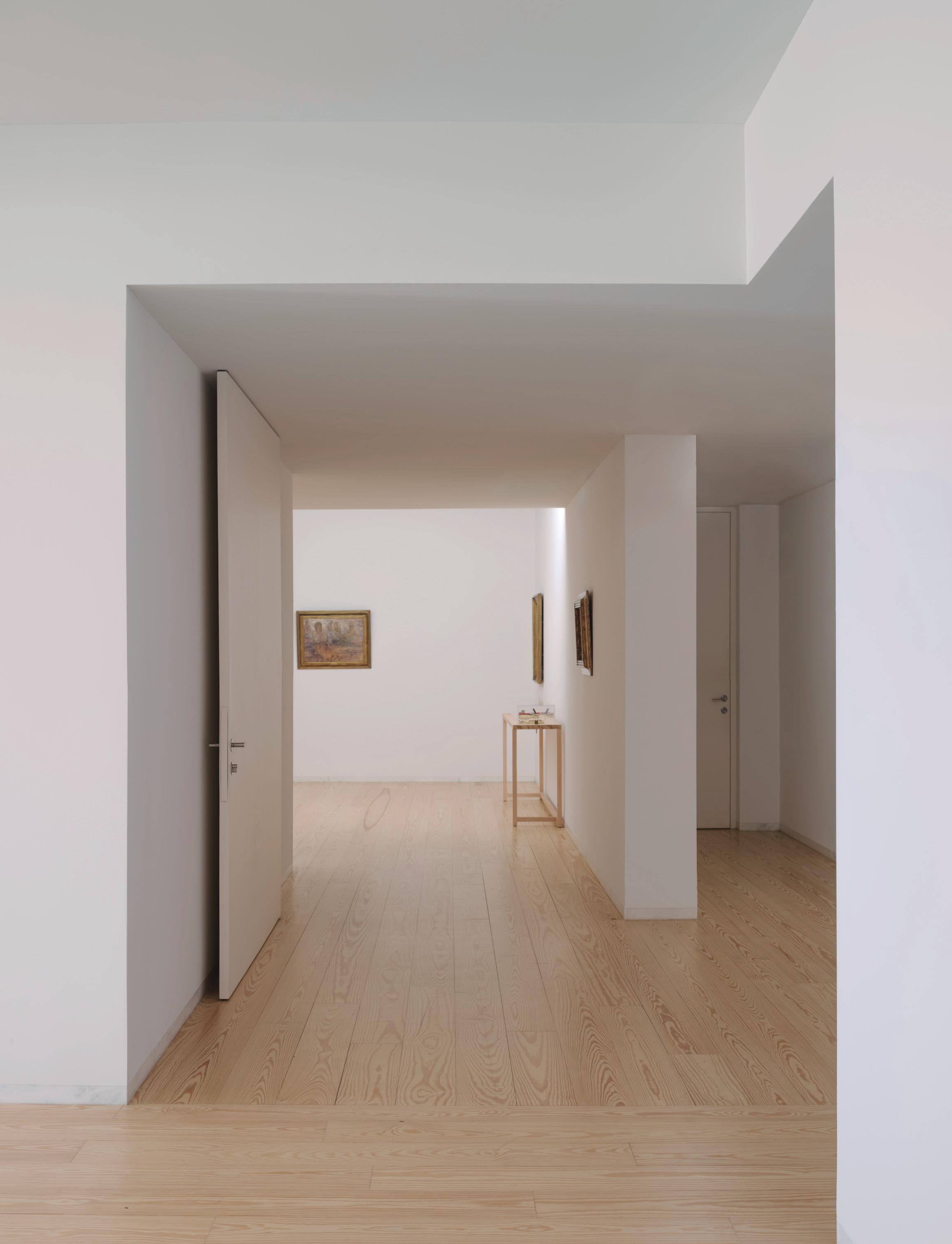
Once inside the hall, after wiping our feet on the mat to keep the house clean, we are guided by a beam of light that draws us to the main atrium. Here we are confronted with a surprising spatial breadth, suffused with indirect light from above. The plan unfolds as an “open” composition: the walls, by never fully intersecting, create thresholds that give access to the rooms of the house. In these transitions, the spaces compress, and framed views to the exterior allow nature to interrupt the abstraction of the white planes, grounding us once again in the domestic context.
The temporary exhibition hall, the longest wing of the U, opens toward the pergola of the exterior courtyard. It is an open living room, without doors, welcoming its guests. Through a single doorway, we enter the more intimate realm of the house: the collection wing. We zigzag through five interior alcoves designed to receive the family pieces, moving along a corridor without walls, defined instead by a lower ceiling. The collection becomes accessible to the public without relinquishing the character or the original spatial scale of the rooms it once inhabited.
More than a museum, the Gramaxo Foundation building is the extension of a house that opens onto a garden, and to all who visit it. Working with Siza makes such an experience possible: nothing is immediate; everything unfolds slowly, gradually, and above all, through lived experience.
MARIA SOUTO DE MOURA
FEATURED WORK
FUNDAÇÃO GRAMAXO
MAIA, PORTUGAL
2017-2021
Architecture ÁLVARO SIZA VIEIRA
Client Fundação Gramaxo
Collaborators
Maria Souto de Moura
Area 920509 m2
Engineering
GOP – Gabinete de Organização e Projectos
Nunes da Silva
Raquel Dias
Alexandre Martins
Raul Bessa
Raquel Fernandes
Landscaping
Atelier BBV
Acoustics
Engº Octávio Inácio - INACOUSTICS
Construtor Matriz
Images © João Rey with exception of page 42 © Igor Boechat
ÁLVARO SIZA FONDS, SERRALVES FOUDATION, PORTO; GIFT OF ÁLVARO SIZA.
SPECIAL THANKS
Álvaro Siza Vieira
Catarina Sampaio
Fátima Gramaxo
João Soares
Rafaela Sousa
Sílvia Sacadura
Sónia Oliveira
PUBLICATION DATA INFORMATION
COLLECTION
AMAG LONG BOOKS
VOLUME
LB 38
TITLE
ÁLVARO SIZA
fundação gramaxo
ISBN 978-989-36626-0-1
PUBLICATION DATE
December 2025
EDITOR-IN-CHIEF AND GENERAL MANAGER
Ana Leal
EDITORIAL TEAM
Ana Leal, architect
Filipa Figueiredo Ferreira, designer
João Soares, architect
Inês Rompante, designer
PRINTING
Graficamares
LEGAL DEPOSIT
480255/21
RUN NUMBER
1000 numbered copies
PUBLISHER AND OWNER
AMAG publisher
VAT NUMBER 513 818 367
CONTACTS
hello@amagpublisher.com www.amagpublisher.com
/1000
LONG BOOKS COLLECTION
LB 01 DAVID ADJAYE mole house
LB 02 NICHOLAS BURNS guimarães chapel
LB 03 DAVID ADJAYE the webster
LB 04 CARVALHO ARAÚJO casa na caniçada
LB 05 ANDRÉ CAMPOS | JOANA MENDES
centro coordenador de transportes
LB 06 ANDRÉ CAMPOS | JOANA MENDES PEDRO GUEDES DE OLIVEIRA fábrica em barcelos
LB 07 DAVID ADJAYE winter park library & events center
LB 08 DAVID ADJAYE 130 william tower
LB 09 BRANDENBERGER KLOTER ARCHITECTS community hall laufenburg
LB 10 BRANDENBERGER KLOTER ARCHITECTS
school pfeffingen
LB 11 BRANDENBERGER KLOTER ARCHITECTS
double kindergarten rüti
LB 12 BRANDENBERGER KLOTER ARCHITECTS
school aarwangen
LB 13 BRANDENBERGER KLOTER ARCHITECTS
school birrwil
LB 14 ANGELO CANDALEPAS the castle
LB 15 PAUL MURDOCH ARCHITECTS
flight 93 national memorial
LB 16 ÁLVARO SIZA monte da lapa volume l
LB 17 SO – IL amant
LB 18 AFF spore initiative
LB 19 LYNCH ARCHITECTS n2
LB 20 VIANA DE LIMA casa das marinhas
LB 21 SPASM parikrama house
LB 22 JOSEP FERRANDO social center
LB 23 SJB 19 waterloo Street
LB 24 KENGO KUMA cam
LB 25 TOMOAKI UNO terabe guest house
LB 26 AM2 Arquitectos | ARENAS & ASOCIADOS | NOARQ halo
LB 27 LYNCH ARCHITECTS westminster coroner’s court
LB 28 CHRIST & GANTENBEIN swiss national museum
LB 29 CAMILO REBELO côa museum
LB 30 CAMILO REBELO ovo
LB 31 CAMILO REBELO mim
LB 32 NICOLA BAVIERA apartment house urdorf
LB 33 VINCENT VAN DUYSEN casa m
LB 34 EDUARDO SOUTO DE MOURA vaticano chapel
LB 35 EDUARDO SOUTO DE MOURA casa em braga
LB 36 CAMILO REBELO promise
LB 37 LUISA PENHA duas portas
LB 38 ÁLVARO SIZA museu fundação gramaxo, is the thirty-eighth title from LONG BOOKS COLLECTION.
AMAG LONG BOOKS COLLECTION brings together a unique selection of projects that establish new paradigms in architecture.
With a contemporary and timeless conceptual graphic language, the 1000 numbered copies of each LONG BOOK will document works with different scales and formal contexts that extend the boundaries of architectural expression.