LUÍSA PENHA
Born in Porto in 1958. Attended the Architecture program at ESBAP from 1976 to 1981.
Graduated from F.A.U.P. in the academic year 1985/86 with a final grade of 16 (Eng. António de Almeida Award for the highest grade in the 1985/86 academic year).
Collaborated with Architect Álvaro Siza Vieira from 1978 to 2006.
Has been practicing independently since 1984.

FRANCESCO DAL CO
Born 29 December 1945 is an Italian historian of architecture.
He graduated in 1970 at the University Iuav of Venice, and has been director of the Department of History of Architecture since 1994.
He has been Professor of History of Architecture at the Yale School of Architecture from 1982 to 1991 and professor of History of Architecture at the Accademia di Architettura of the Università della Svizzera Italiana from 1996 to 2005.
From 1988 to 1991 he has been director of the Architectural Section at the Biennale di Venezia and curator of the architectural section in 1998.
Since 1978 he has been curator of the architectural publications for publishing House Electa and since 1996 editor of the architectural magazine Casabella.
LUÍSA PENHA, DUE EDIFICI IN UNO
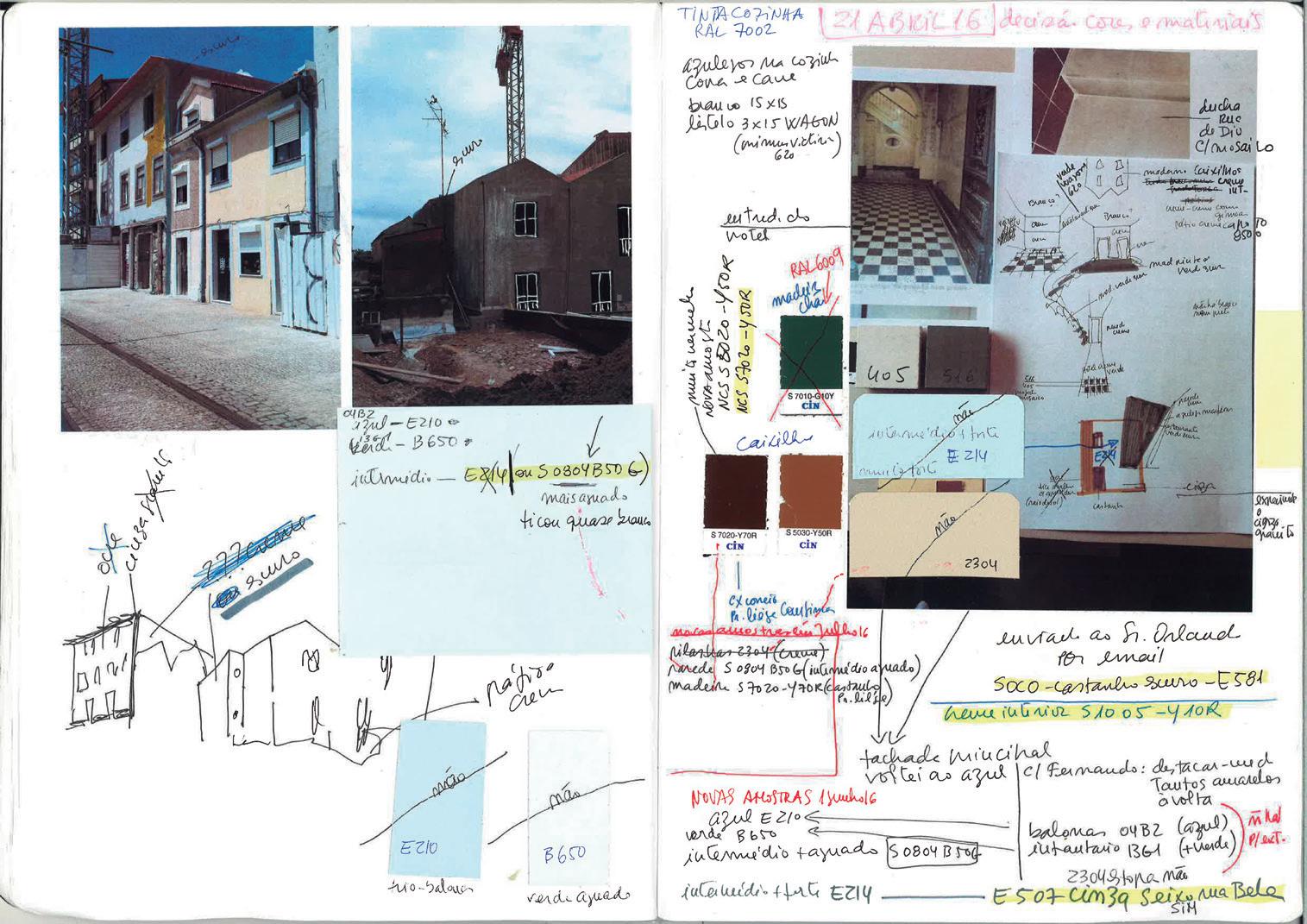
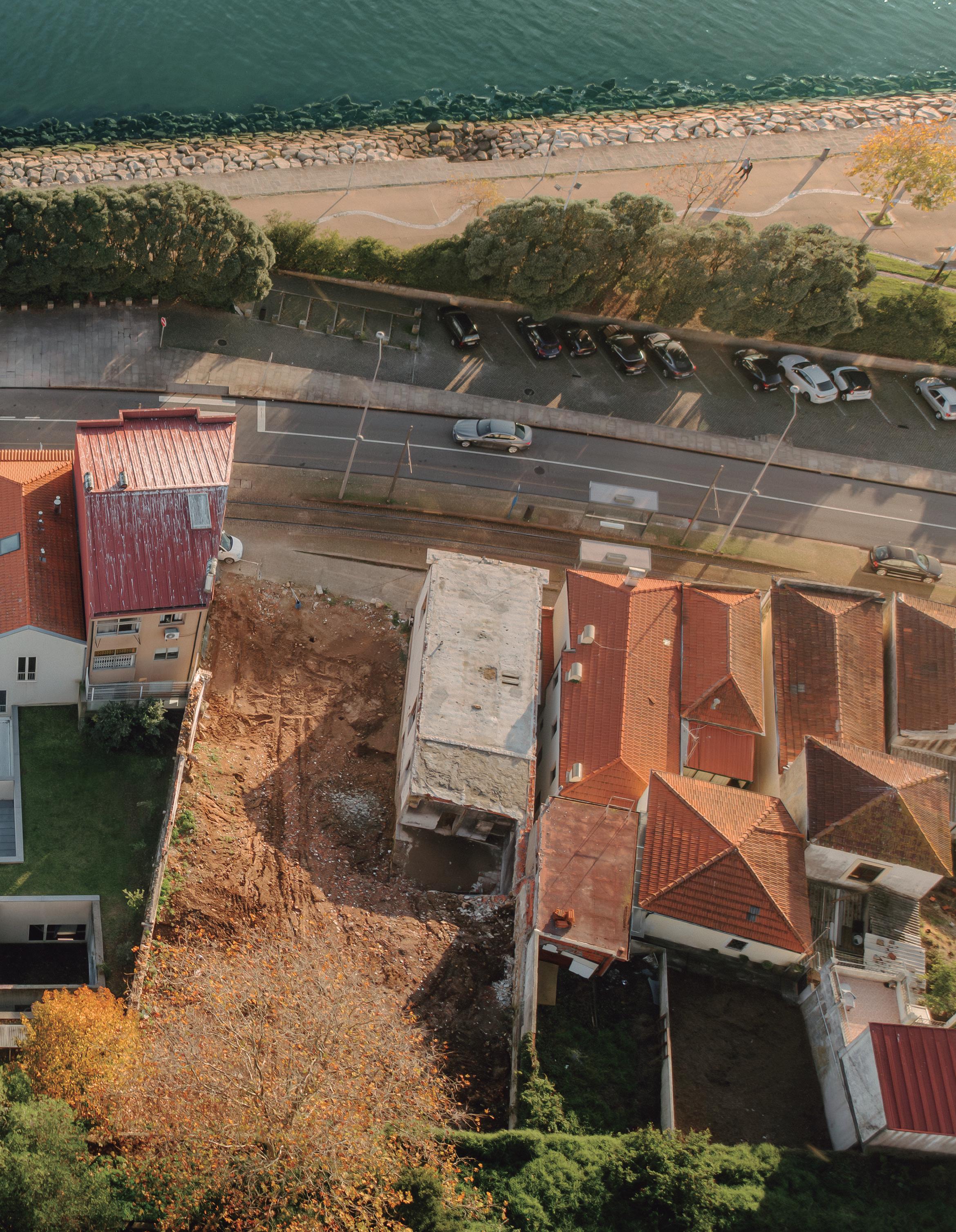
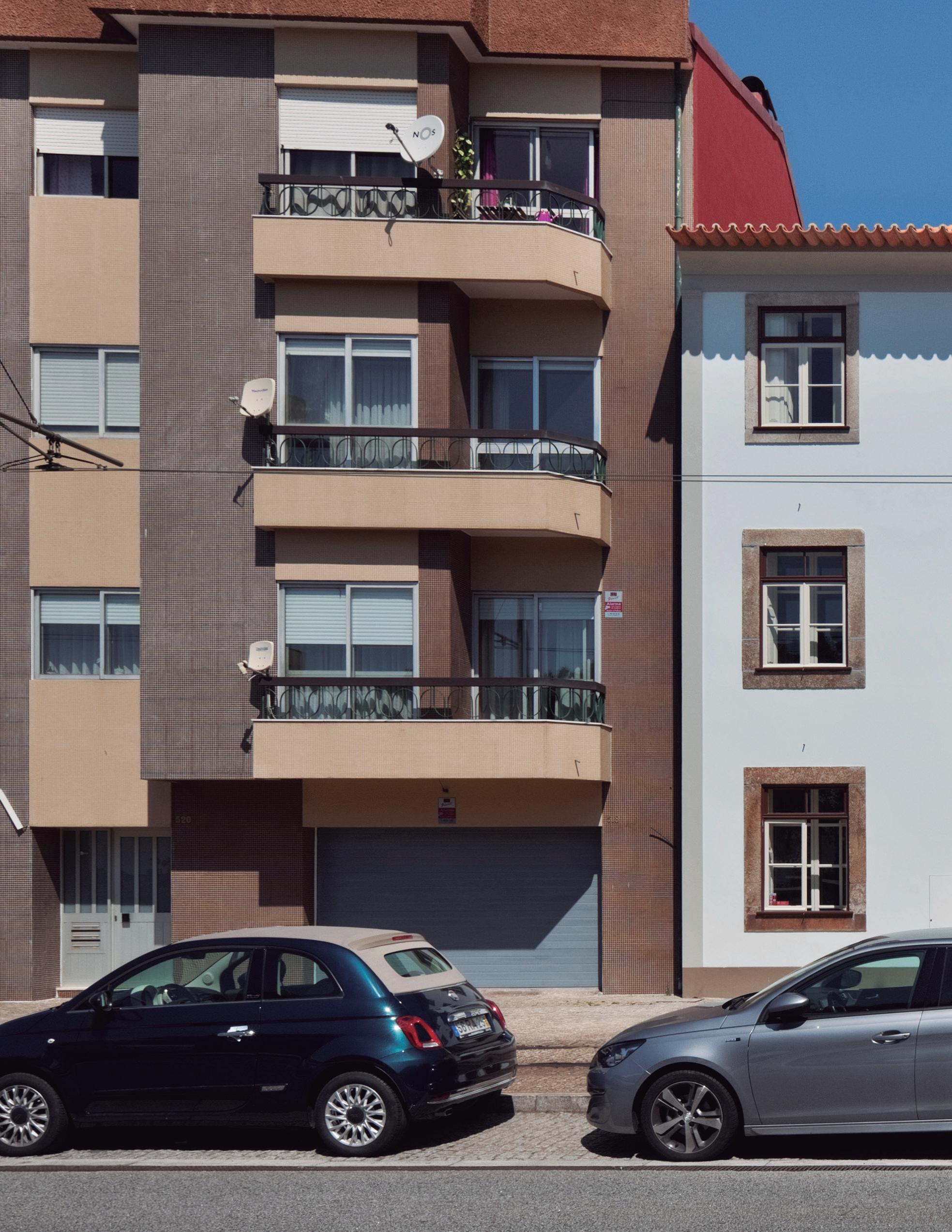
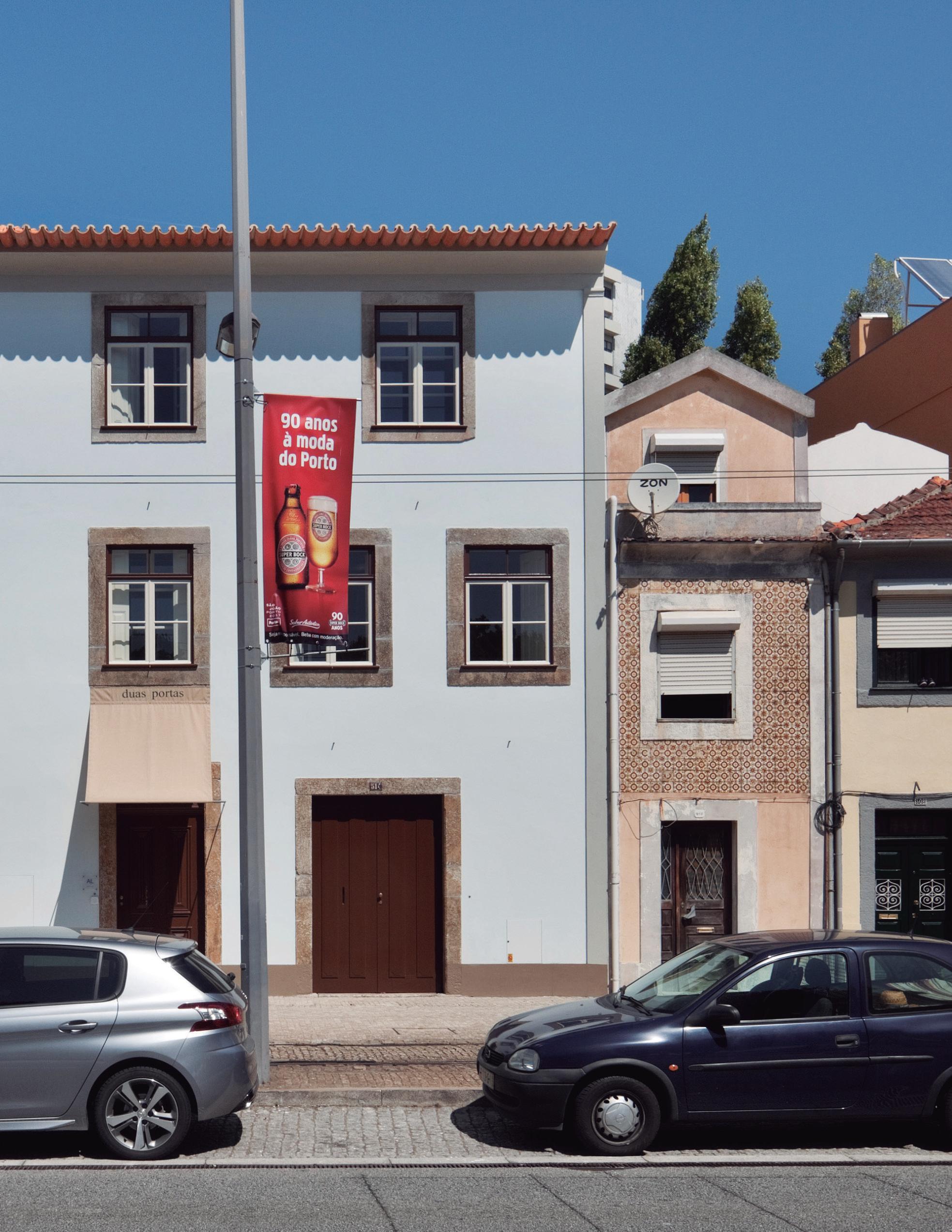
Rua das Sobreiras is the stretch of road that follows the Douro from Porto towards Foz. On the side opposite the river stands a line of modest houses once occupied by the working classes linked to the city’s port activities. These are low buildings, rarely more than four storeys high, set on narrow plots that extend deep into the slope behind, where the courtyards open, often on different levels. Over time, this pattern has produced a distinctive urban type born of repetition and habit — a building practice based on the use of granite, cut in blocks of varying sizes, roughly dressed and bound together with smaller pieces of stone. The main walls facing both the street and the courtyards are rendered, sometimes partly covered with strips of azulejos. Yet also these ceramic panels do not break the visual continuity of the street frontage, punctuated by granite window frames set in plastered walls and by the slight overhang of the tiled roofs. This quiet uniformity defines an urban setting where the ordinary, the imperfect, even the banal, are simply expressions of an unconscious taste — the form that everyday life gives itself through repetition and collective habit. It is a texture of the city shaped by time rather than design, as can still be read in the continuous front of houses along Rua das Sobreiras.
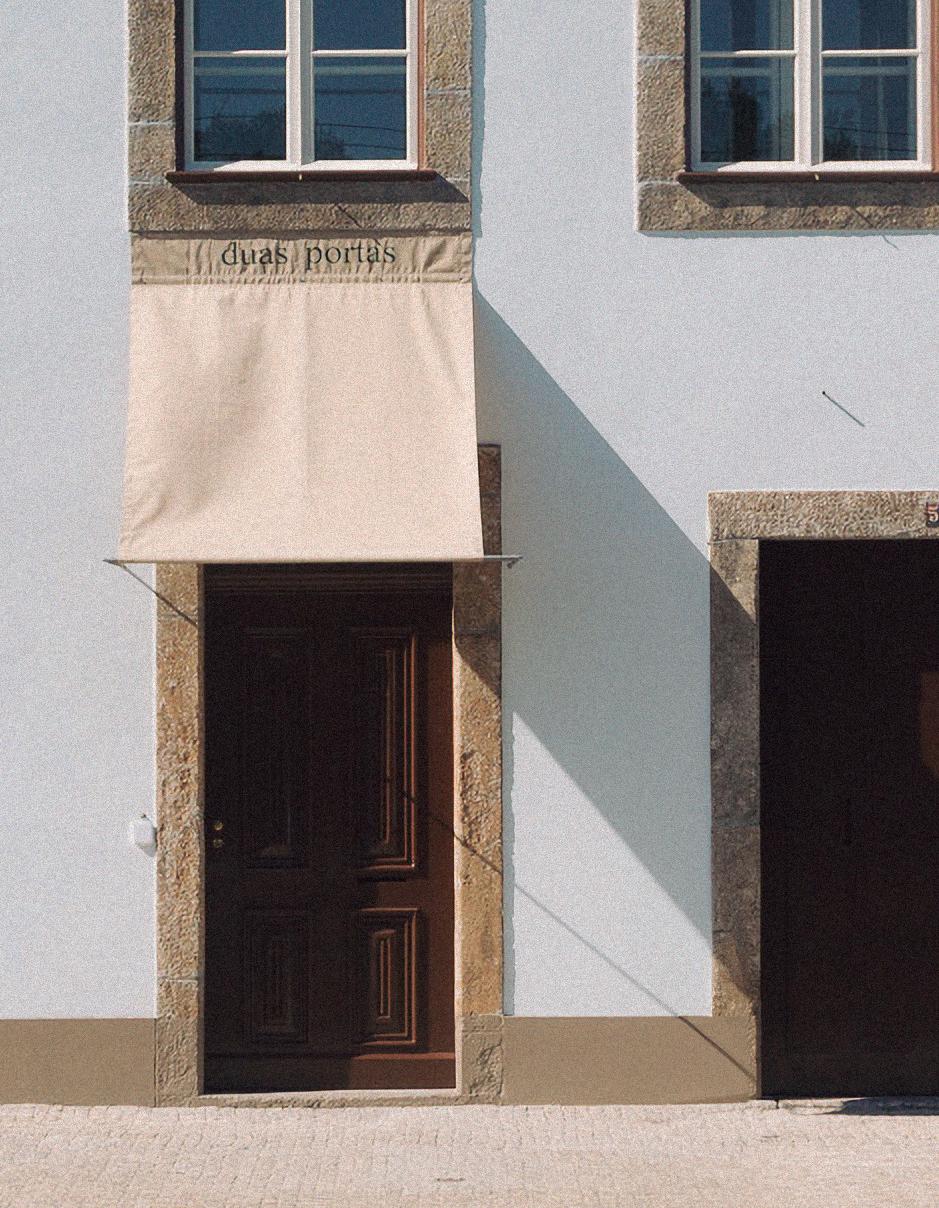
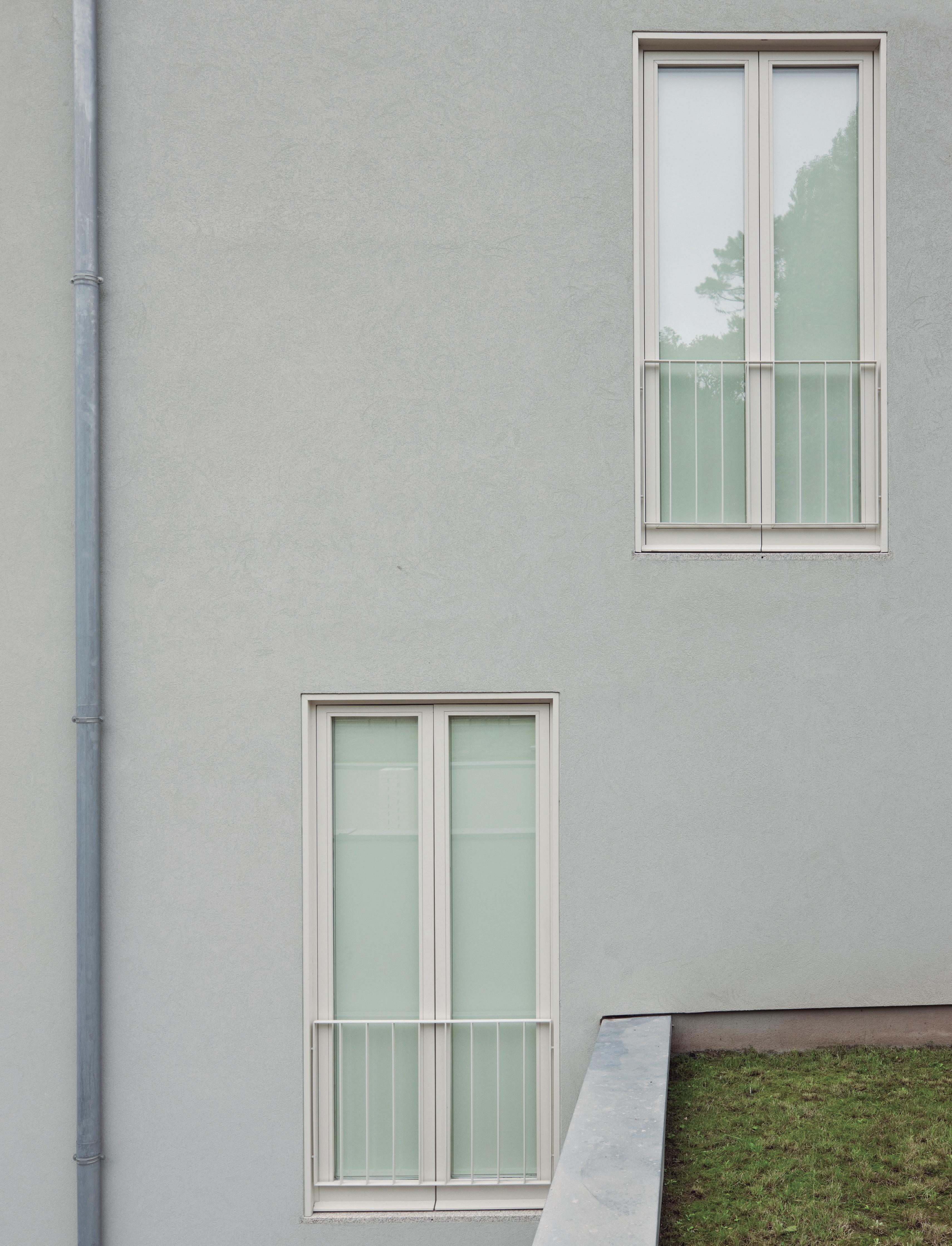
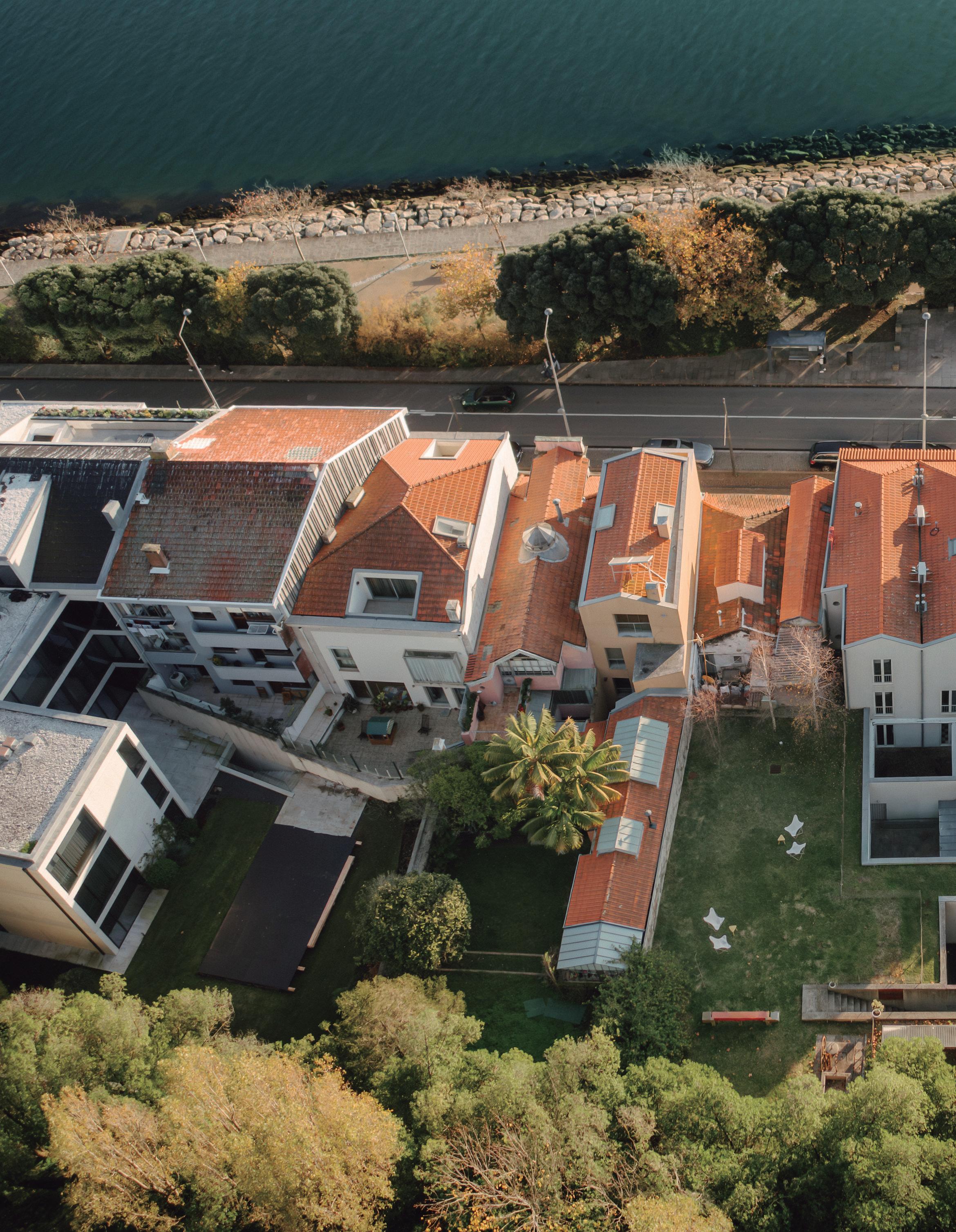
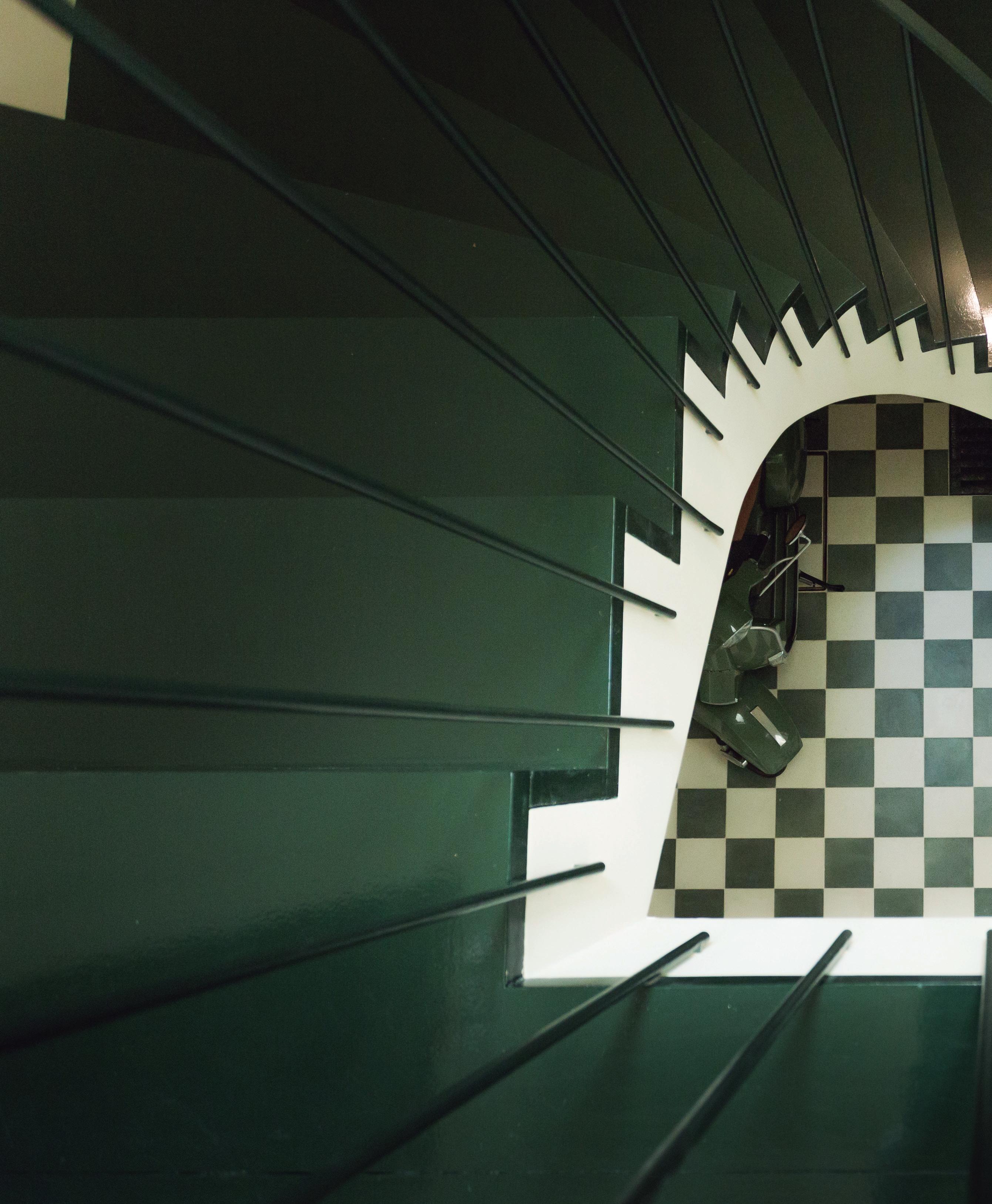
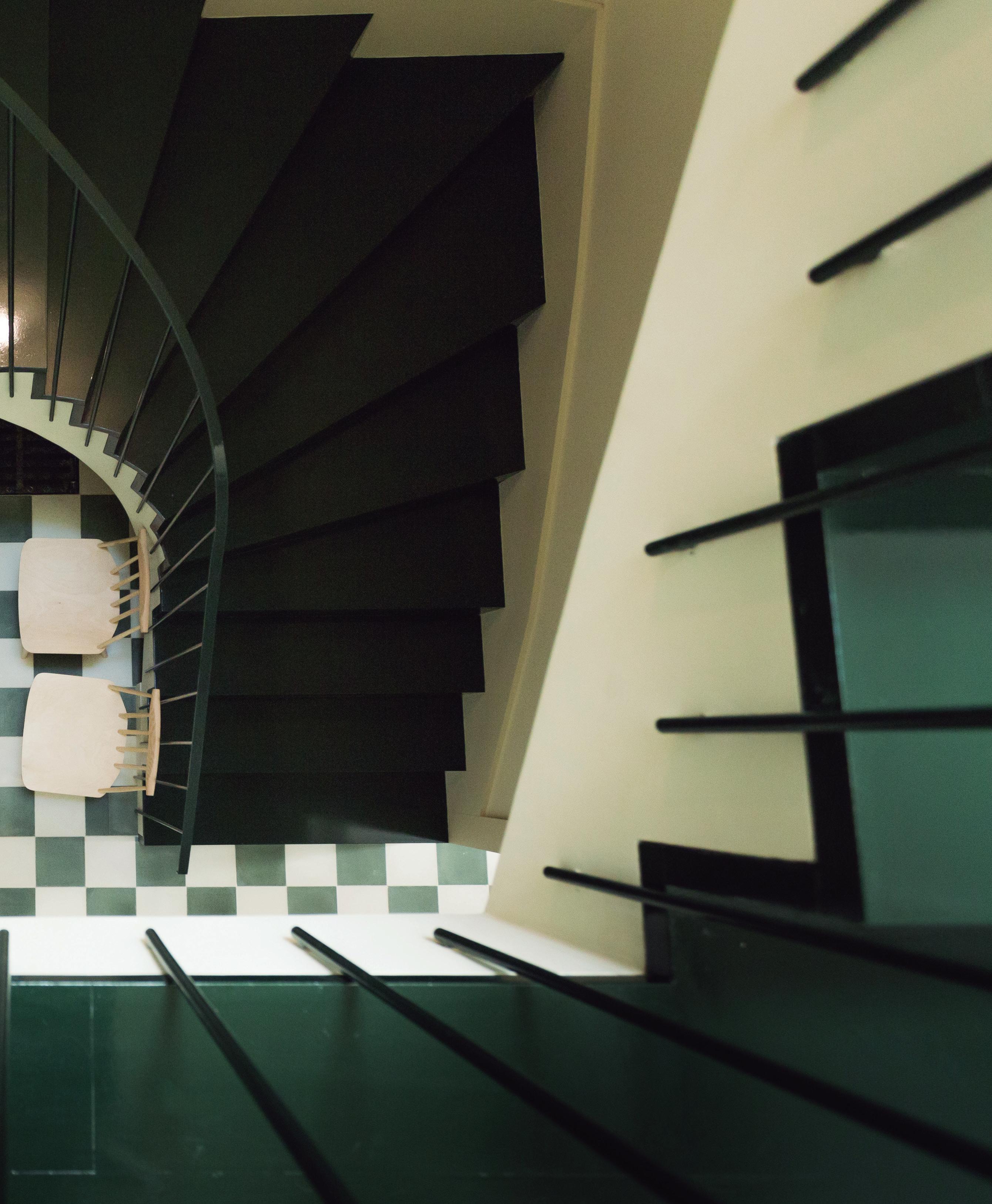
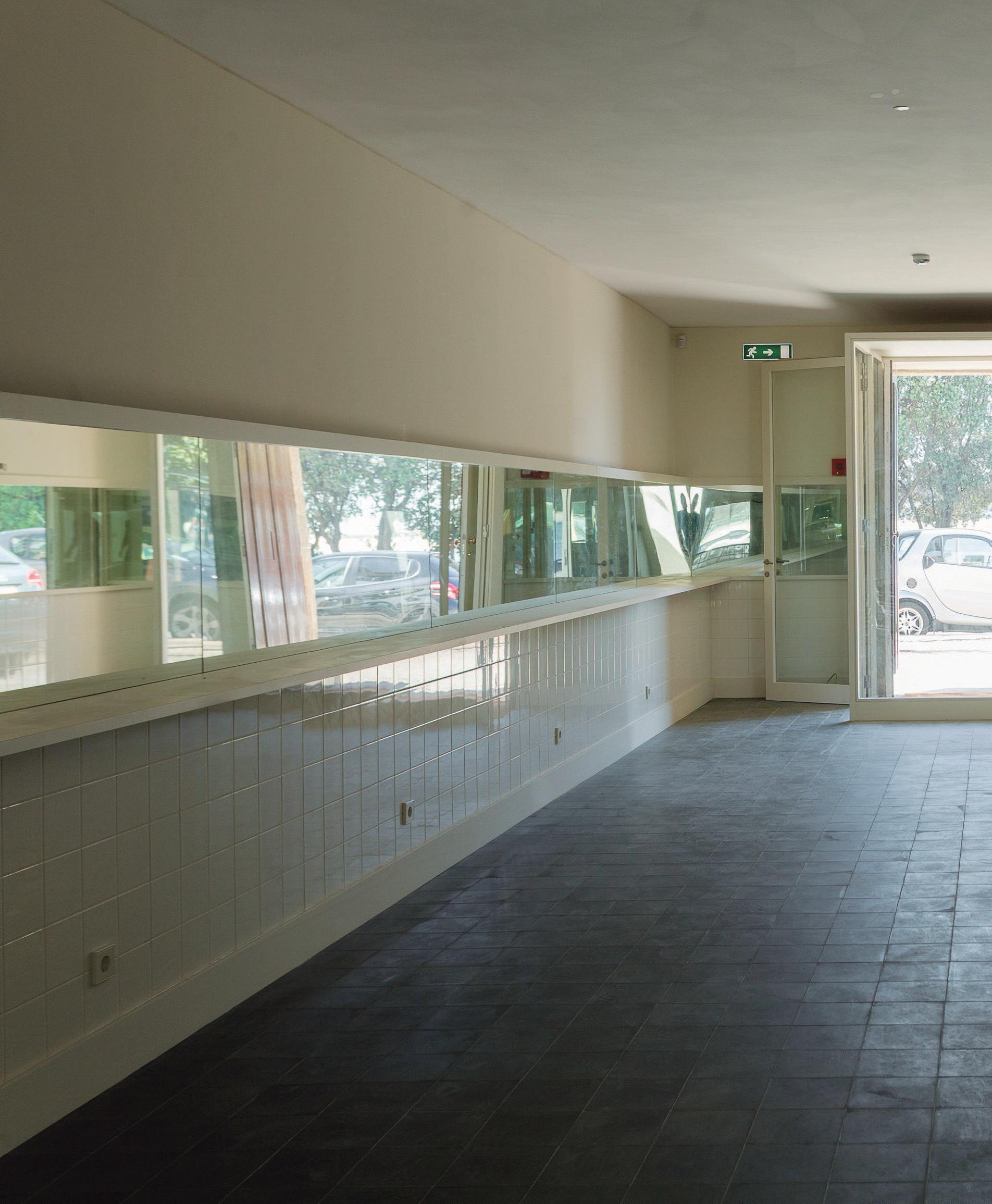
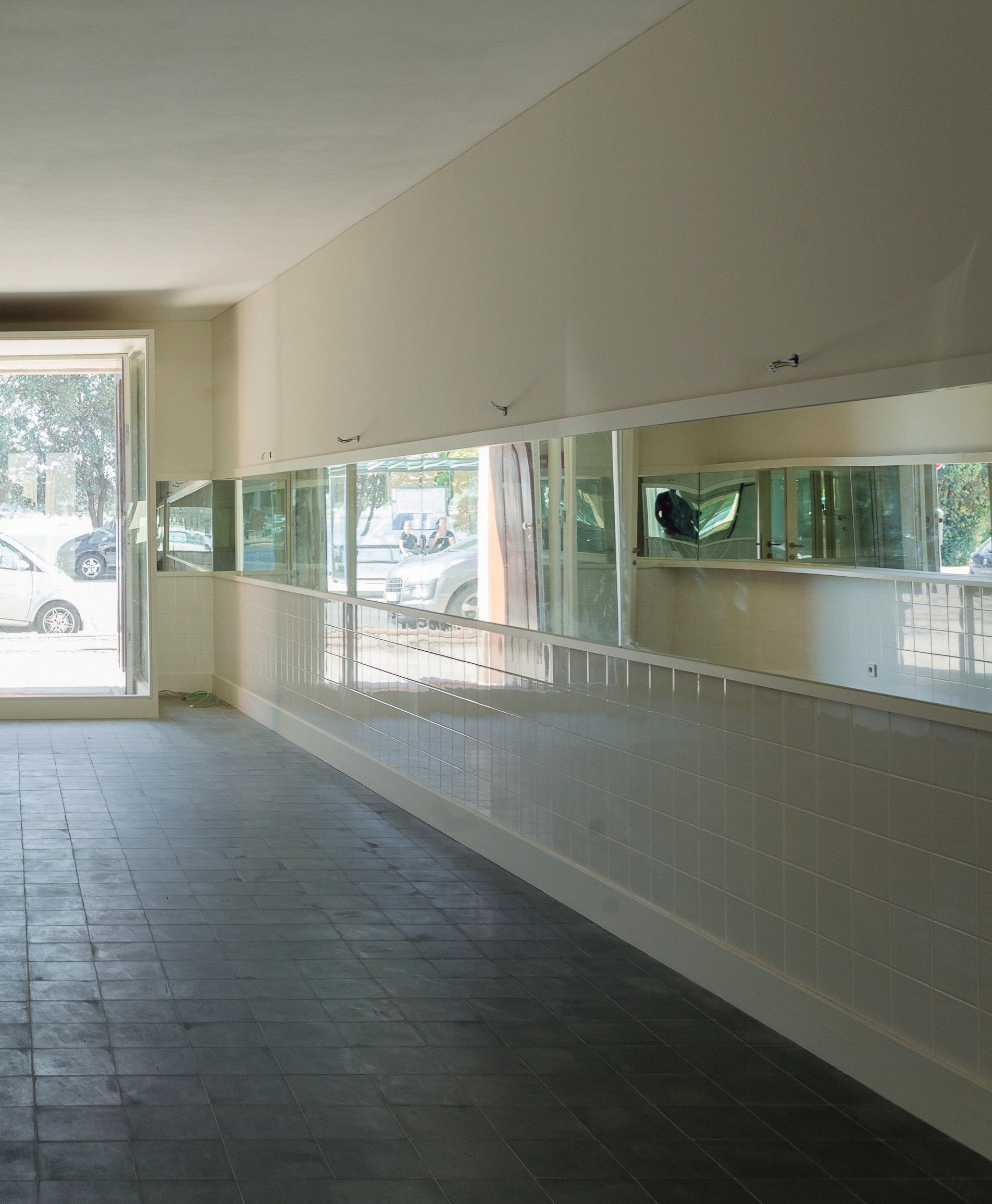
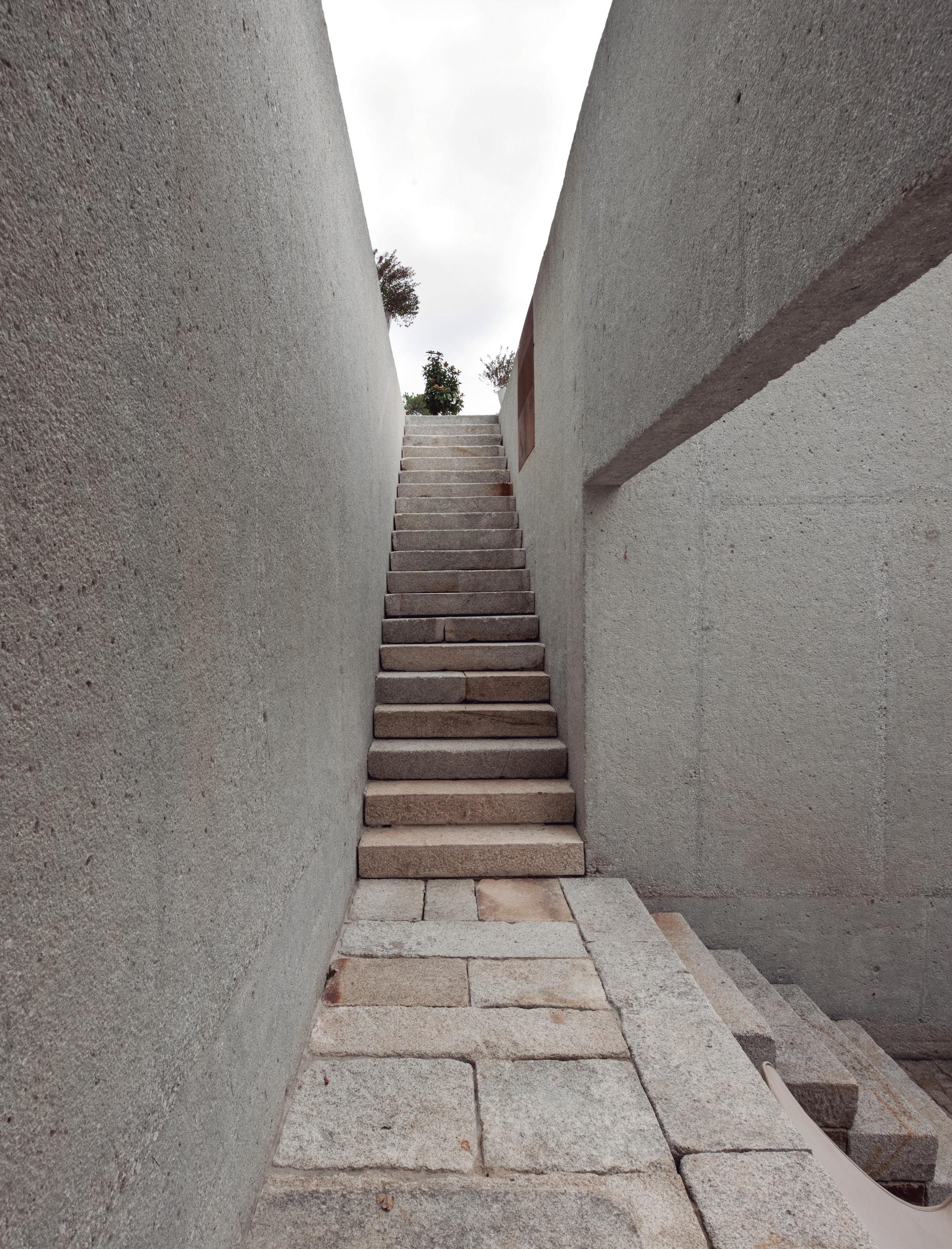
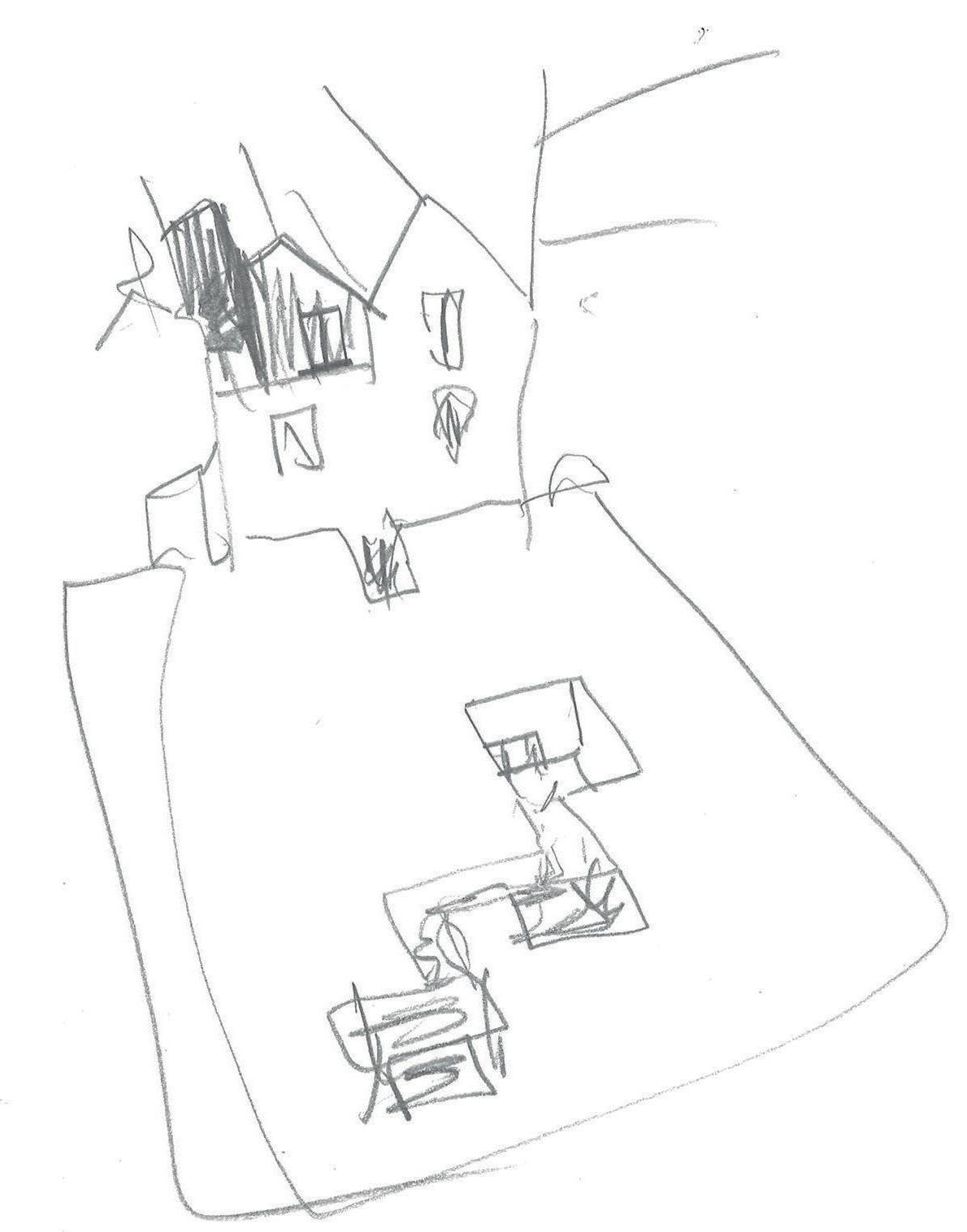
Within this frontage lies Duas Portas, the residence Luísa Penha created by transforming one of these existing houses. The name – “Two Doors” – comes from her central design gesture: keeping the original entrance of the old dwelling and turning the second, once the access to a store, into a “virtual” door framed in granite but permanently closed. The project does not seek to stand out from its surroundings but to interpret them from within, recognising in their limits and conventions a kind of quiet elegance and restraint. The interior has been reorganised with simple clarity. On the ground floor are the entrance, reception area, new staircase and lift, and a small sitting room connected to the restaurant, which has its own independent access – the second of the two doors. The upper floors contain eight rooms arranged along the staircase, looking out towards the Douro or the garden at the rear. At the back of the long, narrow plot, two small patios adjoin the kitchen and breakfast room; from the latter, a third patio carved into the rock leads by a stone stair to a raised garden that closes the sequence of spaces. Here the construction materials begin to change. A reinforced-concrete beam frames the entrance to the stair like a portal, while the granite window surrounds disappear, replaced by openings of different sizes in the reconstructed rear façade. This elevation, split into two parts and topped with pitched roofs, provides the project’s quiet surprise. It bears little relation to the front façade and makes no attempt to blend in with its surroundings. Instead, through its proportions and rooflines, it maintains a courteous relationship with its neighbours while clearly asserting its difference — the result of rebuilding a volume that had been lost, demonstrating how an economy of means can itself be a mark of architectural intelligence.
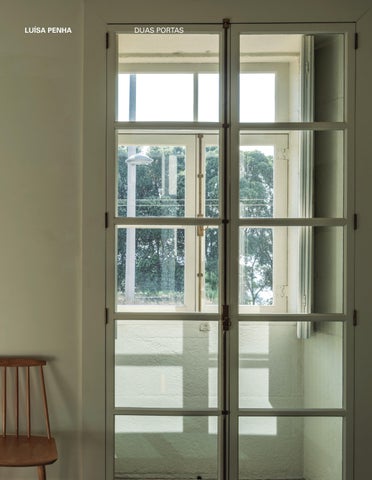
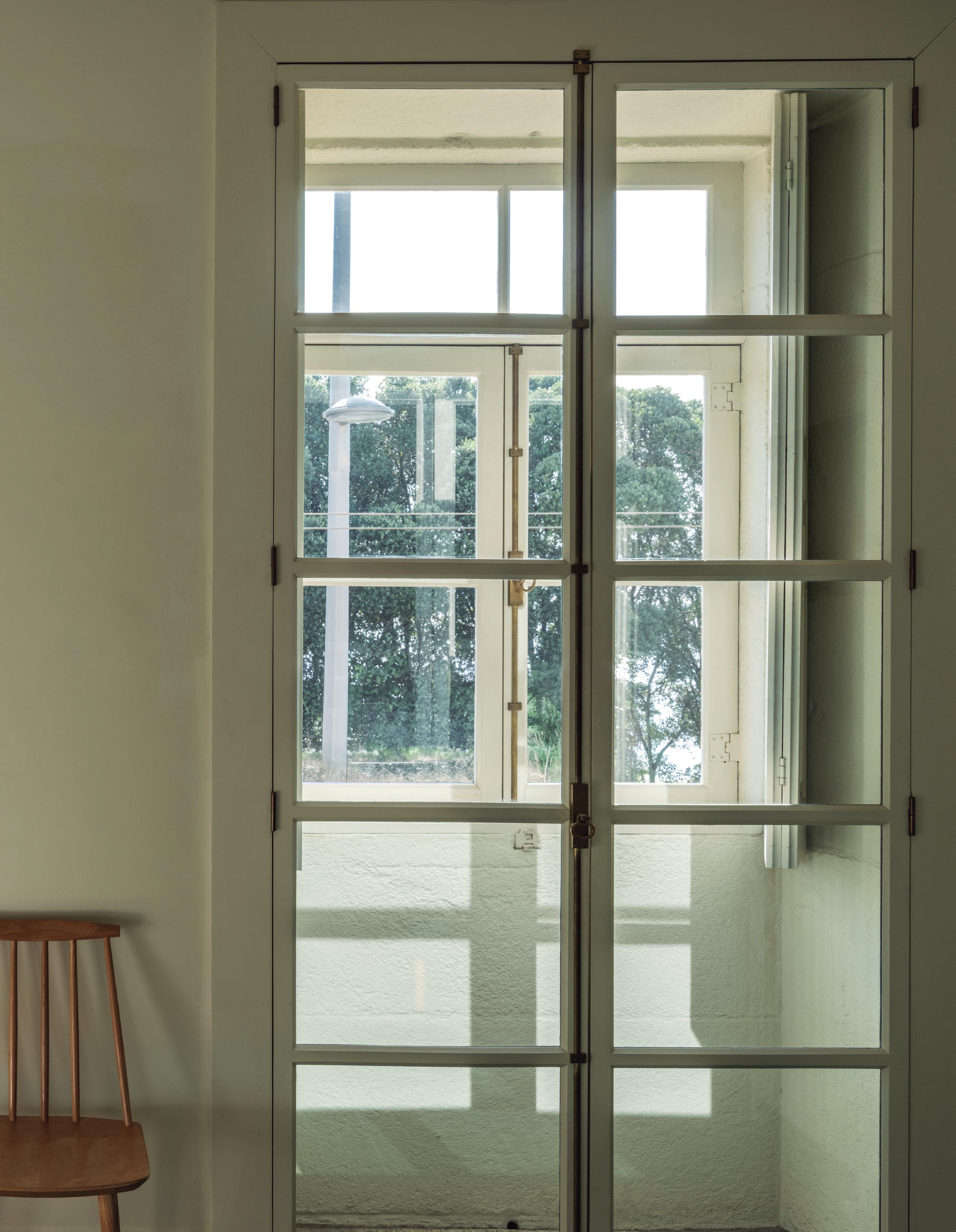
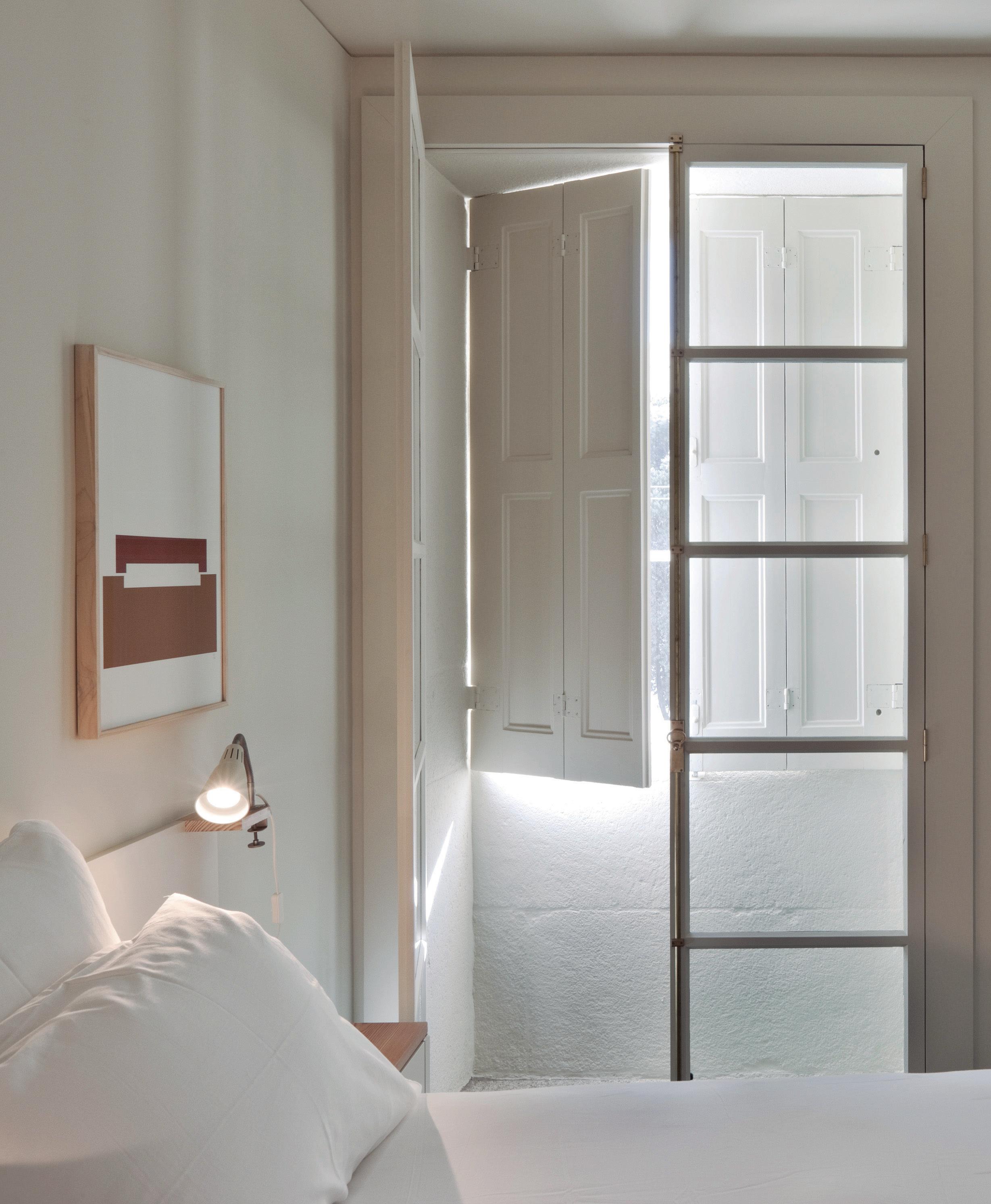
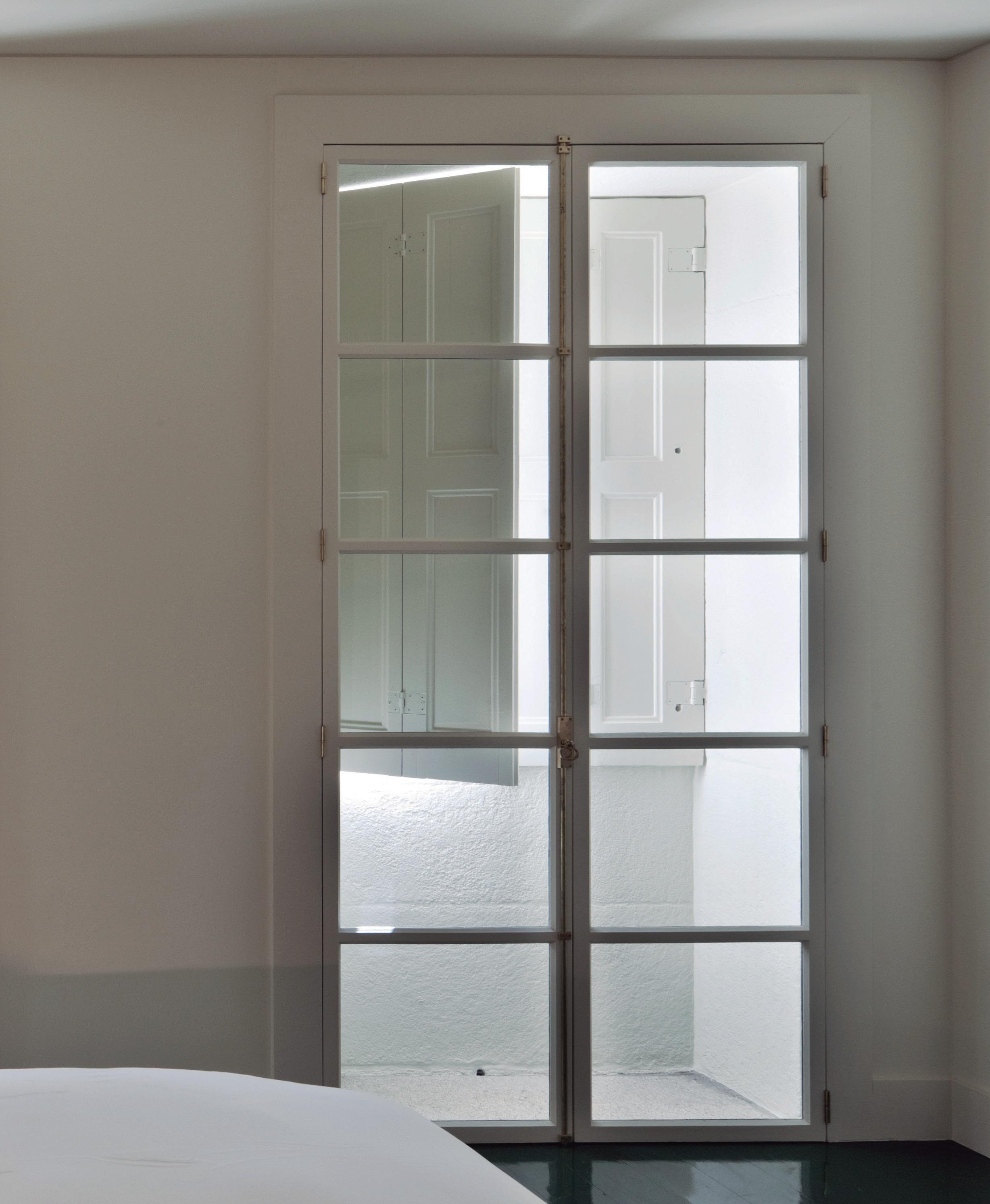
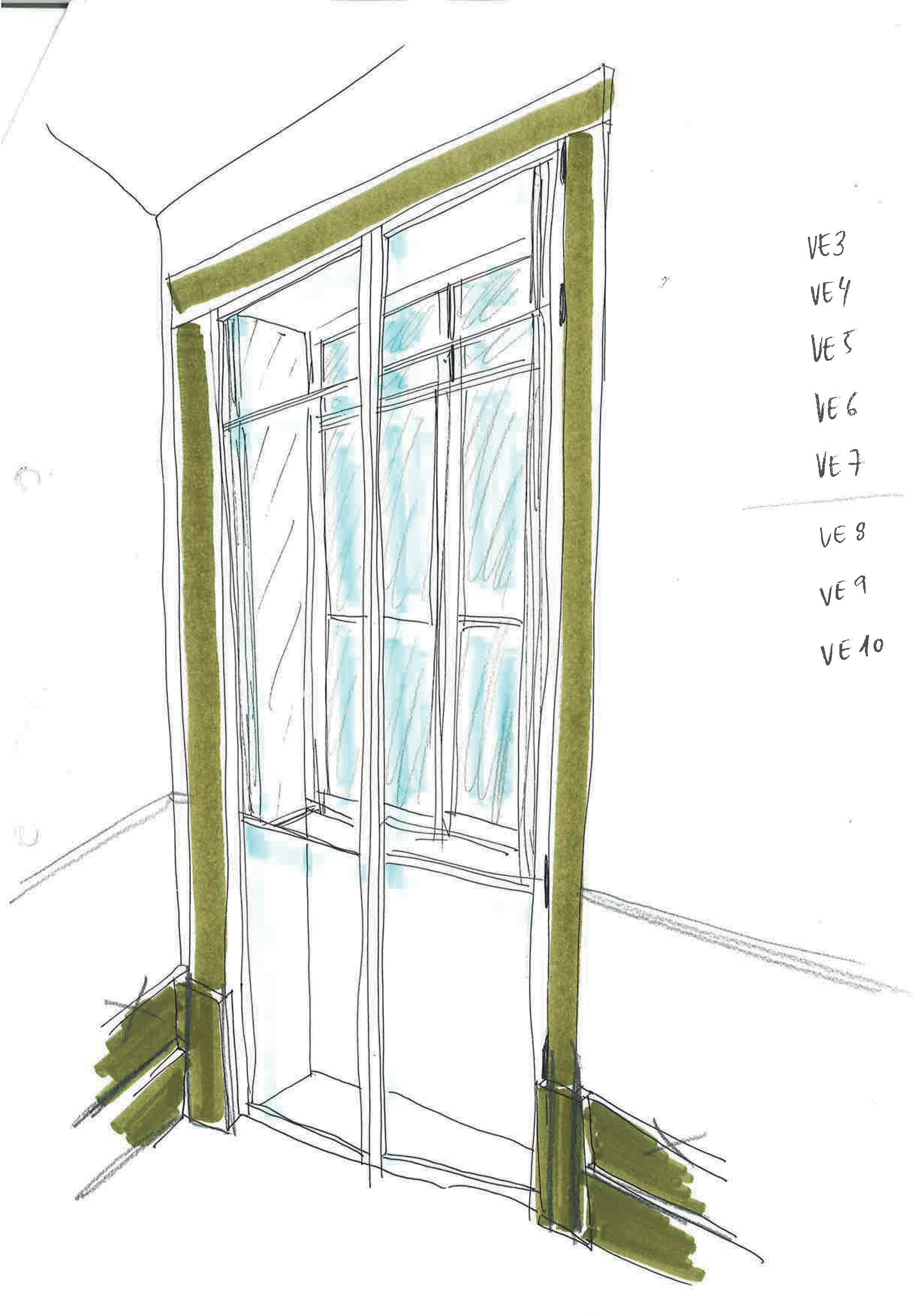
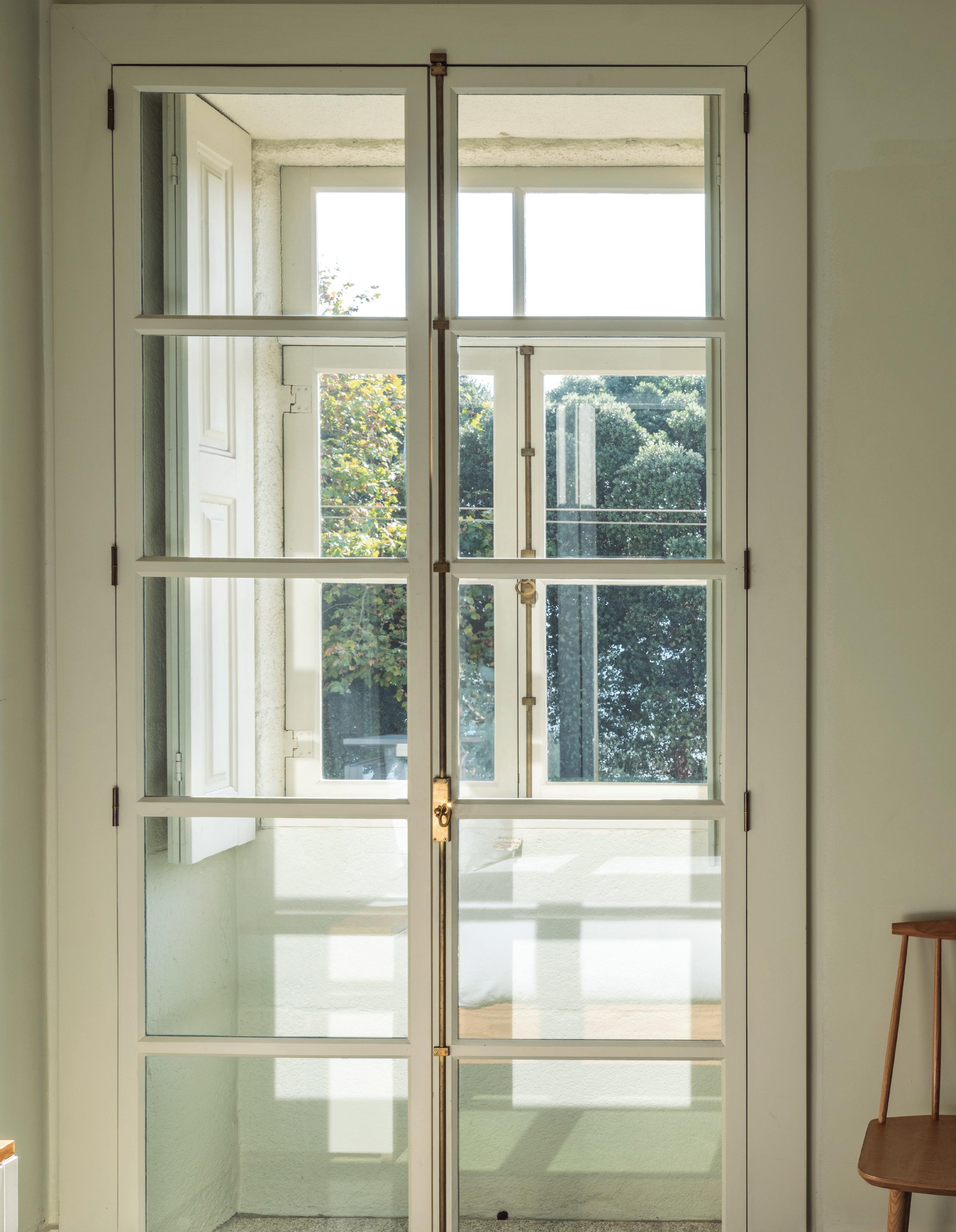
The project rests, in appearance, on a continuity of materials and design choices. In reworking the street façade, raised by one level, Penha seems intent on respecting the character of the buildings around her. She keeps the size and rhythm of the openings and their granite frames, even preserving the original timber windows with their single panes of glass, adding only a second inner frame to shield the rooms from the street noise. Inside, the photographs reveal a rare balance between rigour and warmth. Granite, bush-hammered concrete, and timber and ceramic floors are handled with a bourgeois sense of measure and discretion — qualities that Penha translates into contemporary values. Yet her architecture is not nostalgic; rather, it is a quiet form of resistance to the pull of fashion, as shown in the disciplined simplicity of the reconstructed portion of Duas Portas. Perhaps, now more than ever, this ability to practise sobriety and embrace the ordinary without noise or excess is one of the truest forms of modernity we have left.
DUAS PORTAS PORTO, PORTUGAL
2013 - 2017
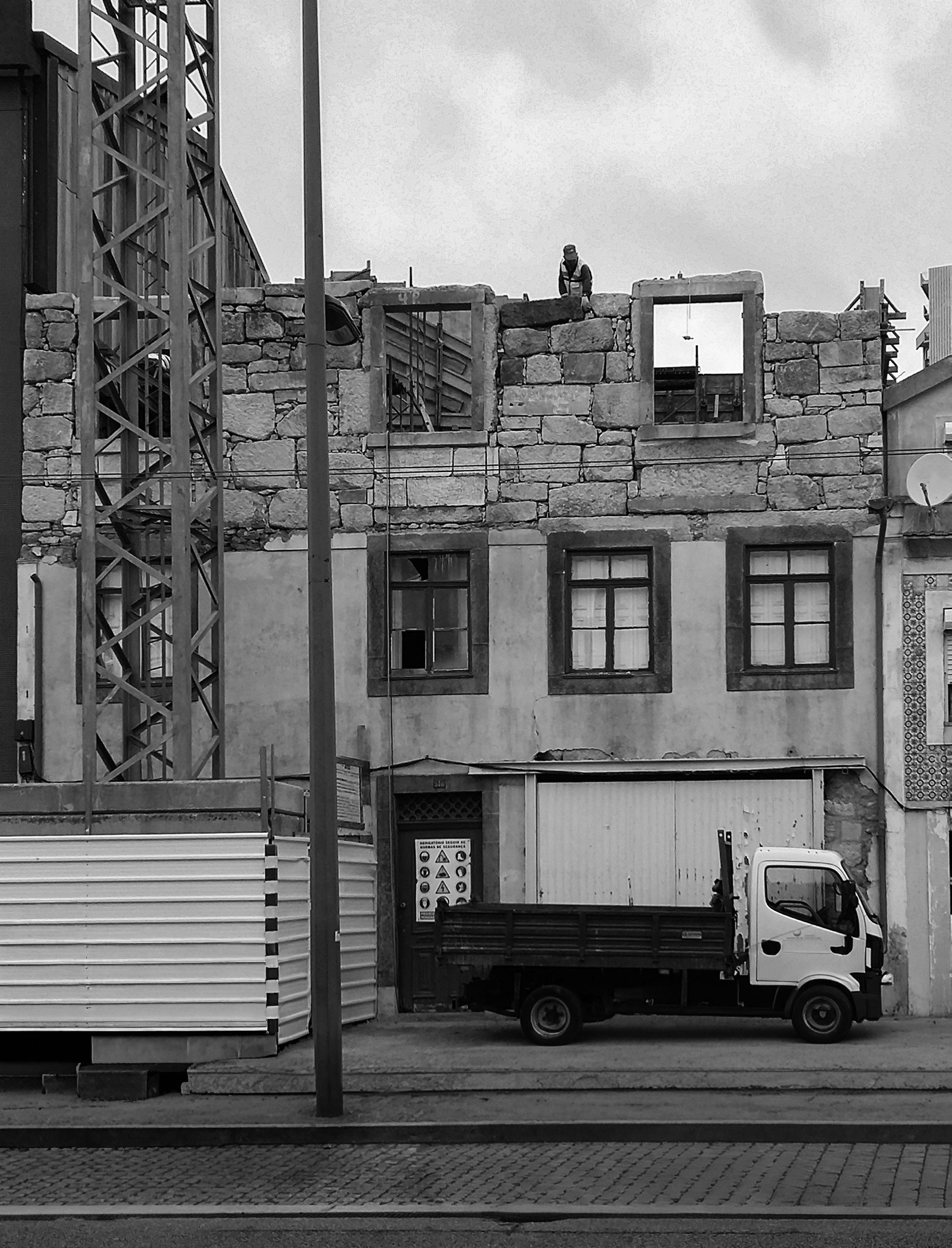
The initial decision was to refrain from demolishing the house, thereby preserving the continuity of the existing built fabric. The project consists of the restoration and extension of a 19th-century house to accommodate a restaurant and a small eight-room hotel.
The main façade was preserved and expanded using the stonework recovered from the demolition of the rear façade. This façade established the constructive coherence of the entire intervention,
while the comfort and modern standards required were seamlessly i ntegrated. The ground floor, housing the hotel’s common areas, extends beneath the elevated garden. The relationship between these two levels is articulated through sunken c ourtyards.
The extension beneath the garden gradually frees itself from the constraints of the restoration, adopting a language more closely aligned with my architectural approach.
LUÍSA PENHA

FEATURED WORK
DUAS PORTAS
PORTO, PORTUGAL
2013 - 2017
Office
Luisa Penha
Client
Caída, Sociedade Imobiliária LDA
Licensing 2013
Specialities AFA consult
Area
700 m2
Images © Alexandre Delmar pages 02, 24-25, 31 and 32-33
© Luís Ferreira Alves pages 04,18-19, 22, 29, 36, 38-39, 40-41, 47, 51, 52, 55 and 60-61
© João Rey pages 06 and 07
© Miguel Ribeiro pages 10, 12, 15, 57 and dust jacket
© Luísa Penha pages 21, 45 and 62
Filipa Varela
Francisco Dal Co
Helena Simões
Luísa Souto de Moura
Miguel Ribeiro
Pedro Simões
Sandra Pereira
COLLECTION
AMAG LONG BOOKS
VOLUME
LB 37
TITLE
LUÍSA PENHA
duas portas
ISBN
978-989-36284-8-5
PUBLICATION
DATE
December 2025
EDITOR-IN-CHIEF AND GENERAL MANAGER
Ana Leal
EDITORIAL TEAM
Ana Leal, architect
Filipa Figueiredo Ferreira, designer
João Soares, architect
Inês Rompante, designer
PRINTING
Graficamares
LEGAL
DEPOSIT
480255/21
RUN NUMBER
1000 numbered copies
PUBLISHER AND OWNER
AMAG publisher
VAT NUMBER 513 818 367
CONTACTS
hello@amagpublisher.com www.amagpublisher.com
LONG BOOKS COLLECTION
LB 01 DAVID ADJAYE mole house
LB 02 NICHOLAS BURNS guimarães chapel
LB 03 DAVID ADJAYE the webster
LB 04 CARVALHO ARAÚJO casa na caniçada
LB 05 ANDRÉ CAMPOS | JOANA MENDES
centro coordenador de transportes
LB 06 ANDRÉ CAMPOS | JOANA MENDES PEDRO GUEDES DE OLIVEIRA fábrica em barcelos
LB 07 DAVID ADJAYE winter park library & events center
LB 08 DAVID ADJAYE 130 william tower
LB 09 BRANDENBERGER KLOTER ARCHITECTS community hall laufenburg
LB 10 BRANDENBERGER KLOTER ARCHITECTS
school pfeffingen
LB 11 BRANDENBERGER KLOTER ARCHITECTS
double kindergarten rüti
LB 12 BRANDENBERGER KLOTER ARCHITECTS
school aarwangen
LB 13 BRANDENBERGER KLOTER ARCHITECTS
school birrwil
LB 14 ANGELO CANDALEPAS the castle
LB 15 PAUL MURDOCH ARCHITECTS
flight 93 national memorial
LB 16 ÁLVARO SIZA monte da lapa volume l
LB 17 SO – IL amant
LB 18 AFF spore initiative
LB 19 LYNCH ARCHITECTS n2
LB 20 VIANA DE LIMA casa das marinhas
LB 21 SPASM parikrama house
LB 22 JOSEP FERRANDO social center
LB 23 SJB 19 waterloo Street
LB 24 KENGO KUMA cam
LB 25 TOMOAKI UNO terabe guest house
LB 26 AM2 Arquitectos | ARENAS & ASOCIADOS | NOARQ halo
LB 27 LYNCH ARCHITECTS westminster coroner’s court
LB 28 CHRIST & GANTENBEIN swiss national museum
LB 29 CAMILO REBELO côa museum
LB 30 CAMILO REBELO ovo
LB 31 CAMILO REBELO mim
LB 32 NICOLA BAVIERA apartment house urdorf
LB 33 VINCENT VAN DUYSEN casa m
LB 34 EDUARDO SOUTO DE MOURA vaticano chapel
LB 35 EDUARDO SOUTO DE MOURA casa em braga
LB 36 CAMILO REBELO promise

LB 37 LUÍSA PENHA duas portas, is the thirty seventh title from LONG BOOKS COLLECTION.
AMAG LONG BOOKS COLLECTION brings together a unique selection of projects that establish new paradigms in architecture.
With a contemporary and timeless conceptual graphic language, the 1000 numbered copies of each LONG BOOK will document works with different scales and formal contexts that extend the boundaries of architectural expression.