
Students find Torat Eretz Yisrael trip informative and inspiring
By Avital Rokhkind Sophomore Editor
Thirty seniors at YOFHS went on the first-ever Torat Eretz Yisrael trip in Israel earlier this November with the goal of visiting yeshivot and seminaries where they are considering spending their gap year. The goal of the trip was to help students decide whether to spend next year in Israel, and for those already planning to go, to guide them toward choosing which school. Rabbi Hertzberg, feeling that the trip was successful, explained that, “the goal was not necessarily to enable students to make their final decisions but to give them the tools to evaluate the schools and help them identify the questions they need to consider as they continue their decision-making journey.”
Over the course of the four-day trip, the seniors visited nearly 20 yeshivot and seminaries, including MTVA, Yeshivat Netiv Aryeh, Yeshivat Eretz HaTzvi, and Midreshet Eshel. Students toured the schools in depth, interacted with current students, and connected with alumni while also exploring inspirational sites throughout Israel.
Senior Rebecca Tamir thought that the trip was really successful in its mission. “I was unsure about wanting to go to seminary at all, but when I saw a particular school [Midreshet Moriah] and saw the day-to-day life of alumni in seminary I changed my mind and now am more open-minded and considering Israel for the year.” Tamir especially enjoyed speak-
continued on page 3
FDNY requires YOF to remove doorstops
By Marcus Mezrahi Features Editor
A routine inspection of the school by an FDNY fire marshall on December 3 identified some issues regarding the school’s compliance with NYC fire code requirements, the most surprising of which was doorstops, Rabbi Galpert confirmed.
Rabbi Galpert explained that the inspection required corrections related to the school’s ongoing construction work, which has been in progress for several years. He stated that the school is in communication with the appropriate authorities and is working on rectifying the issues. The school’s operations and safety lead, Grace Minyan, referred all questions to Rabbi Galpert, noting that she does not handle public inquiries.
Rabbi Galpert confirmed that one of the issues regarding the school’s fire code infraction involved the use of doorstops. Doorstops are devices that keep doors held open. For decades, almost every door in the school had a doorstop attached,

including all classroom doors, bathroom doors, the doors to the staircases, and even the big doors in the middle of each hallway in the old building.
No longer. By the time the school day began on December 8, all the door stops had been removed.
According to NYC Fire Code §27-371, “Doors for required exits shall be self-closing swinging doors with a one and onehalf hour fire protection rating. … Smoke stop doors shall normally be in the closed position, except that they may be left open if they are arranged to close automatically by an approved device which is actuated
CUNY Chancellor visits Flatbush to assess dual enrollment program
By Valerie R. Tabush Junior Editor
The City University of New York (CUNY) Chancellor, Félix V. Matos Rodriguez, and the Brooklyn College President, Michelle Anderson, recently visited Flatbush with the aim of assessing the school’s newly implemented Dual Enrollment program.
The program, in which more than 30,000 high school students from approximately 600 schools participate, was brought to Flatbush this school year and is currently offered to juniors. 23 Flatbush juniors are currently enrolled, with an additional 30 students taking college calculus for credit. Its objective is to provide an opportunity for nonhonors students to partake in challenging, college-level courses, in subjects including English, Algebra, and Physics. Additionally, these classes, taught at a more intense level than the standard junior curriculum but not quite as demanding as AP courses, strengthen students’ academic transcripts prior to the college application process.
Furthermore, the program gives its students insight as to what college classes are all about, the coursework required of college students, and the core subject material taught there. Junior Rebecca Weinwurzel, a participant in the program, emphasizes this element, believing that “it really builds our understanding of a college level class for when we move on to college in a few years.”
Students in the program also earn 21 college credits in just one year, with an additional 12 college credits likely available if they remain in Dual Enrollment senior year as well. These credits go toward any
by an interior fire alarm system.” This is a relatively new rule that exists to ensure that stairwell and exit doors can fully close during an emergency, helping to contain smoke and fire and preserve a safe path for evacuation.
The inspection arrives at a time when students have become increasingly desensitized to the fire alarm systems. Throughout the past year, fire alarms have sounded numerous times due to construction, often prompting students to pause for a mo-

of the seven CUNY undergraduate colleges, on the condition of maintaining a B or above throughout all courses.
Jacob Hanan, a junior in Dual Enrollment, expressed that the program is truly benefiting him since he is receiving college credits before even beginning college itself. Hanan also takes note of the fact that his “peers are in very similar classes, except they aren’t getting credits like I am. It’s a great head start for me to get ahead of the game!”
The recent visit was intended for CUNY leaders to see the program in action, evaluate its success, and acknowledge the new collaboration between Flatbush and CUNY schools. College guidance counselor Ms. Cristine DePalo, the Dual Enrollment Coordinator, highlighted that the visit displayed our “shared commitment to expanding college access and academic opportunity for our students.” She also explained that the visit will help to “continue strengthening pathways that support students in earning college credit while still in high school,” emphasizing the all-around benefits brought to students in the program.
Moreover, research has surprisingly shown that students who complete dual enrollment programs have “higher degree completion rates than their peers who did not participate in such programs,” CUNY officials explained. Because earning a college degree can take several years, it is easy to believe that the Dual Enrollment program makes obtaining a degree more efficient and attainable. This is yet another example of the many long-term advantages of Flatbush’s Dual Enrollment class.
The credits can be transfered to other colleges outside the CUNY system.
ment to determine whether an announcement will clarify whether it is a false alarm before evacuating. While these prior incidents are not connected to the recent inspection, they have contributed to a broader student awareness of fire safety on campus.
Rabbi Galpert said the school expects to make all required adjustments in compliance with the fire code.

Yeshivah of Flatbush Joel Braverman
The hallway doors no longer stay open
Advice from seniors to freshmen
By Marcus Mezrahi Features Editor
Every senior knows what it was like to walk into Yeshivah of Flatbush for the first time. New teachers, new hallways, new expectations, and a whole lot of confusion. Now that we’re a few months into the year, most students have found their footing, but new questions are starting to pop up in the minds of freshmen. Which clubs should I join? Should I take an AP? Who are my friends? Seniors who once faced these same uncertainties share some advice they wish someone would have told them when they were freshmen.
One of the most common messages from seniors is simple: don’t overload yourself. With dozens of clubs, challenging classes, and new social opportunities, it’s easy for freshmen to stretch themselves too thin. Senior Izzy Esses emphasized the importance of choosing activities intentionally. “Be smart with the extracurriculars you choose to do, and choose them based on your interests. Don’t overload yourself with coursework or clubs.”
Boaz Harel agreed, adding that balance
is just as important as ambition. He urged students to “get involved in the school and always challenge yourself. But it’s also super important to not let that consume your life. Make a lot of time, especially as a freshman, to meet new people and hang out with friends. As long as you manage your time well, everything will turn out right.”
Salomon Dayan shared similar advice: “Get good grades and take clubs seriously, but don’t stress yourself out too much. Have fun at school and make friends.”
Many seniors said that freshman year is the ideal time to experiment without fear of failure or judgment. “When it comes to finding what you want to do and what you love, especially when you’re choosing a club, don’t force it,” Ilana Kroub advised. “Try new things out and your passion will find you. It will guide you toward your future, especially college.”
Victor Kbariti offered nearly the same message, “Keep an open mind and be willing to try things even if you are not sure you will enjoy them at first,” he said. “Sometimes the things you think you will not be interested in end up becoming the
things you love the most. … The more you explore, the more you learn about who you are and what really matters to you.”
Liam Ouanounou and Joey Esses also encouraged freshmen to take Tsei U’Lmads, which are extracurricular academic classes given during lunch or after school. They specifically recommend the stock and investment course, with Mr. Toussie, which educates juniors and seniors on the intricacies of the stock and real estate market. But students should focus on Tsei U’Lmads that match their interests.
Academic demands can feel intimidating, especially when AP classes become an option. Baruch Elmann stressed that students should never feel like they’re facing these challenges by themselves. “There are always a million resources out there to help you if you’re struggling in an AP. From a teacher to a friend or a classmate, never feel like you’re alone,” he shared.
David Askenazi offered another interesting perspective: “You can do better than you think you can do.”
Albert Shamah emphasized building real relationships with teachers. “Don’t
Faculty Freshman: Ms. Rosy Shamah
By Emily Tarrab Editor-in-Chief
From an early age, Ms. Rosy Shamah felt deeply drawn to the richness of Tanakh and the power of Chesed. Brooklyn born and raised, Ms. Shamah attended Flatbush for elementary and high school, where her love of Tanakh truly took root. “I became a very strong, independent Tanakh learner there, and I have to give Flatbush full credit—100% hakarat hatov,” she reflected.
Shamah continued her studies at Brooklyn College, majoring in Judaic Studies, followed by a master’s in Educational Administration from Midreshet Yerushalayim and a Tanakh master’s degree from Herzog College. To deepen her understanding of personal and spiritual development, she later earned a Positive Psychology certification from The Flourishing Institute.
One of the most defining moments of Ms. Shamah’s teaching career came unexpectedly. After joining Barkai Elementary as a substitute, she was suddenly asked to permanently take over the two classes she was teaching for the remaining eight months, before she had ever officially taken up a full-time teaching job. “It was the biggest blessing I ever received; it fell from G-d,” she recalls. That experience allowed her to experiment, grow, and discover which teaching methods resonated most. “It was an eye-opening taste test.”
After many years in education, in-
cluding a meaningful few years living in Israel with her family, Ms. Shamah eventually found her way back to Flatbush. “I knew this was where I wanted to be. This is my home. I am who I am because of this place.” She joined the faculty this year as a Tanakh teacher, teaching three freshmen classes and one senior class, and was also offered the role of Chesed and Events Coordinator.
Living in Deal, Ms. Shamah brings a fresh perspective to Flatbush’s Chesed programming. Although the Syrian community spans both Brooklyn and Deal, the two groups can sometimes feel separate. Ms. Shamah made it her mission to bridge that divide, connecting Flatbush students with Deal-based Chesed initiatives such as the LEV Organization, helping kids from divorced homes, and the Ellie Ruby Foundation, which raises awareness for pediatric cancer. Through a collaboration with Make Chesed Fun (MCF) and the Ellie Ruby Foundation, she helped students assemble over 250 care packages for hospitalized children. Her first Friday on the job set the tone for a busy, yet exciting, semester. With many students away at SBH Dude Ranch, she simultaneously planned and executed Chesed Day for the freshmen and sophomores, all while teaching two completely new curricula to her four Tanakh classes. The day became even more hectic as she had to learn the school’s modes of opera-
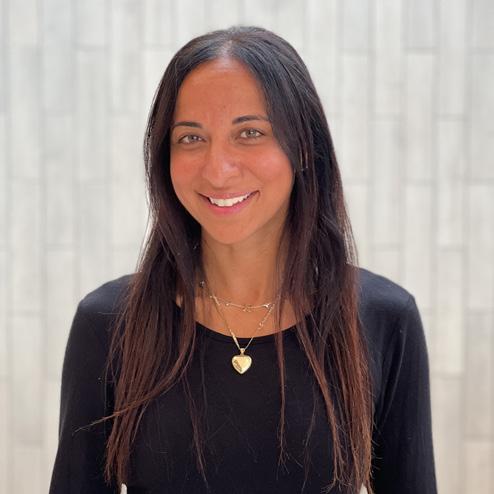
tion on the fly, from realizing she needed to email Grace Minyan for tables to finding out last minute that she needed to notify security about the speakers coming in for Chesed Day. Yet she looks back with gratitude: “I got it all done, and I’m grateful I get to do what I do best—I’m a very social person.” The experience energized her, showing her what she was capable of and how deeply the administration supports Chesed at Flatbush.
Transitioning from a relatively small school to Flatbush’s large student body has presented some challenges for Ms. Shamah. As a Tanakh teacher, she describes the shift from “a familiar place where I had the same students every year and really watched them grow” to a much bigger environment, where she doesn’t have the same students each year, as an adjustment. And as Chesed Coordinator, she finds it difficult to connect deeply with as many students as she would like—especially when much of her time is devoted to running events and making sure everything goes smoothly on scene rather than schmoozing with participants.
Still, she emphasizes how embraced she has felt. “Everyone is so warm, supportive, and loving.” She also notes that one of her favorite parts of teaching Tanakh at Flatbush is the opportunity to teach Ivrit b’Ivrit, a skill she feels well-equipped for thanks to the Hebrew foundation she
take school so seriously that you lose perspective,” he said. “Do your work, but never at the expense of anything important. And build real relationships with at least one teacher. Go to office hours even when you don’t have a question. Those conversations can genuinely shape your experience here. Some of my most interesting, helpful, and refreshing conversations have been during lunch, talking with teachers.”
Beyond academics, friendships often define the “four years for the rest of your life” high school experience. Several seniors urged freshmen not to limit themselves socially. “Instead of having just one friend group, you should branch out and try to make as many friends as possible,” Rami Harari advised. Meeting new people, seniors said, will create a more connected freshmen grade, ultimately making the school feel warmer and more welcoming. High school can feel overwhelming and stressful at first, but the seniors agree on one thing: it doesn’t have to stay that way. With a balance of curiosity, responsibility, and openness to new experiences, freshmen can build a high school journey that’s not just successful, but genuinely rewarding. One last point for thought: everyone in the school wants you to succeed and flourish; always know it is a safe space to be yourself and grow.
The Phoenix Staff
Editors-in-Chief: Yvette Dweck, Emily Tarrab
Managing Editor and Fashion Editor: Rachael Kopylov
School News Editors: Olivia Shamah, Olivia Shamayeva
Religion Editor: Salomon Dayan
Features Editor: Marcus Mezrahi
World News Editor: Lili Hanan
Entertainment Editors: Sarah Kezra, Emme Nidam
Fun and Games Editor: Leslie Mishaan
Sports Editor: Elliot Cohen
Business Editor: Baruch Elmann
Photography Editor: Viviane Baghdadi
Junior Editors: Lyla Ashkenazie, Vera Esses, Jenny Khabih, Jaclyn Lazerowitz, Sylvia Mizrahi, Joseph Shamayev, Valerie R. Tabush
Sophomore Editors: Avital Rokhkind, Ben Sutton
Design: Carolina Cohen
Faculty Adviser: Adam Hofstetter
received at Flatbush and her three years spent in Israel.
In her free time, Ms. Shamah loves to give Judaic classes, exercise, and shop. She takes her fashion game seriously, and has consistently heard, “You should start a fashion blog” from students over the years! She sees fashion as a meaningful way to connect with students, hoping to inspire them and show that being religious can also mean being fashionable. But perhaps her most unexpected and breathtaking hobby is trapezing! She even plans family vacations around places where she can trapeze, going once every few months. Describing the thrill it gives her, she shares that her favorite moment is when the instructor catches her midair, a signal that “you made it.” Ms. Shamah proudly notes that she “never knew I was good at it until I tried it once on vacation,” when instructors immediately told her she was a natural. She hopes her story encourages others to be brave, try new things, and discover the hidden talents and joys that may be waiting within them.
Ms. Rosy Shamah is only just getting started at Flatbush and she aspires “to cultivate both intellectual curiosity and moral responsibility, empowering students to become thoughtful, compassionate contributors to the world.” She prioritizes guiding “students toward academic growth while nurturing a genuine commitment to chesed, so they come to see themselves as capable, responsible, and caring members of the community.”
High School Administration
Rabbi Joseph Beyda, Head of School
Ms. Esther Hidary, Associate Principal
Rabbi Yigal Sklarin, Associate Principal
Dr. Michael Atlas, Associate Principal
Rabbi David Galpert, Associate Principal

SGO’s efforts show more substance this year
By Ben Sutton Sophomore Editor
Our school’s Student Government Organization, belovedly referred to by students as the SGO, is known for the exciting activities and opportunities they provide for our student body. In years past, however, their involvement has been largely limited to planning a few events and activities. This year, students and administration report that the SGO have taken their involvement to the next level, organizing events more frequently, adding new activities, and advocating for students in a more substantive manner than usual.
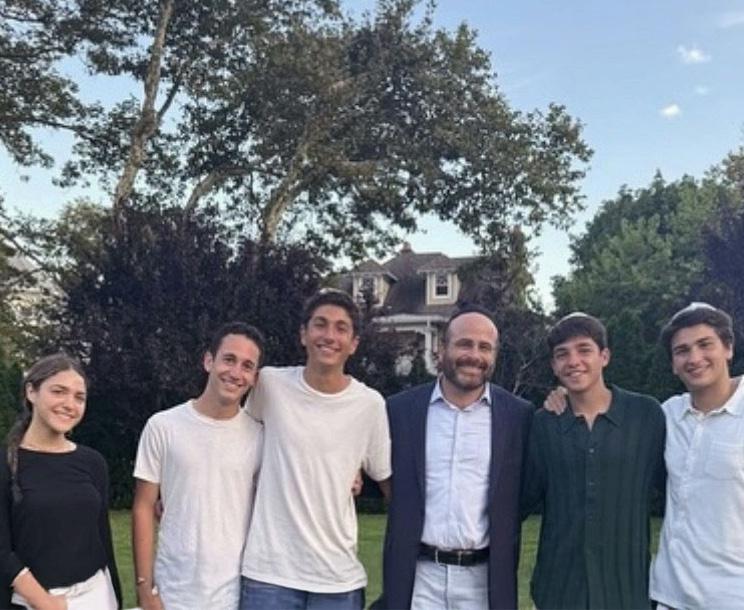
and bond through singing and mazza Eli Chehova, an active participant in the program, said that he loves “the tunes and atmosphere the program provides, ultimately making Erev Shabbat feel more special.” Chehova also added that he’s always trying to get more people to come, and that he looks forward to the program every Friday. Chehova and other students involved in the program show a passion for pizmonim, but felt that the school didn’t provide them with the opportunity to learn and sing them—thanks to SGO, the creation of this program helps them do that.
How to deal with college rejections
By Olivia Shamah School News Editor
With college acceptances right around the corner, seniors are anxiously waiting to hear back from colleges. While some students will be excited to receive their acceptance letters, the inevitable truth is that many students will also be rejected from their top choices. After working hard for four years, it is disheartening to many students to receive a rejection letter from a school that they have worked hard to be admitted to, but members of our guidance and college guidance departments offered some insight into the process and how to cope with and respond to college rejection.
Even before this school year began, our SGO has been committed to improving the Flatbush student experience. They kicked things off early in last year’s spring semester with the Elective Fair, allowing sophomores and juniors to learn about each elective from a student perspective before choosing their classes. They also showed appreciation for teachers by encouraging students to write cards to their teachers for Teacher Appreciation Week. In the summer, before school, they hosted a welcome back class with YOF Rabbinical Leader Rabbi Harari, where they served brick oven pizza to students getting them excited for the new year. At the start of the school year, they satisfied our sweet tooths with ice cream, and initiated a weekly pizmonim program with Rabbi Mizrachi.
The SGO’s efforts and events have resulted in much success and enjoyment for the students. For example, the weekly pizmonim program that SGO started meets every Friday, and consistently gathers around 30 boys to come together
SGO meets weekly, as well as participating in meetings with the administration once a month. This is where the magic happens and future plans are discussed, developed, many times scratched, or planned out further. Some current efforts include a ping-pong table, disposable cameras on Seminar, and perhaps some sweet treats during finals week.
The year is just getting started and there is so much to be done, with many questions still unanswered. What will Color War be like this year? Who is going to play in the student/faculty basketball game? Will the SGO catch a case of senioritis as the year goes on like we have seen in the past? Whatever happens, one thing is certain: with the SGO leading the way, our school year is guaranteed to be full of surprises, spirit, and unforgettable memories. So don’t be shy if you see Michael Mosseri, Leslie Mishaan, Baruch Elmann, Daniel Hafif, or Jacob Hanan in the halls; they’re always open to new ideas to help create experiences that you won’t forget.
Torat Eretz Yisrael trip informative and inspiring
Continued from page 1
ing to the current seminary students since it gave her a glimpse into what the year could like.
Similarly, Judah Beyda expresses his feeling that “the trip was overall successful and it helped me understand what my preferred school was all about.”
The experience also proved valuable for Olivia Shamayeva, a student who wasn’t planning to apply to seminary and instead went on the trip to visit Israel for the first time. She explained that if she had been applying, the trip would’ve given her a lot of clarity on which school she would have picked, since the group spoke to so many alumni, toured in detail, and saw dorms firsthand, something an information session alone can’t provide. She mentioned that, for many of her peers, these visits either confirmed their choices or helped them find strong backup options. She said she found the trip especially meaningful because it was her first time in
Israel, and hearing from inspiring speakers allowed her to experience the country in a deep and memorable way.
Despite the many students who felt the trip helped clarify their seminary decisions, Sarah Kezra experienced the opposite. She explained that the trip actually made her seminary decision more confusing because it opened her eyes to new possibilities. “What I thought I would love ended up not being what I expected, and I learned about new schools I never thought I would be drawn to,” she explained. Kezra shared that this unexpected shift was ultimately a positive one: “Without this trip, I never would’ve gotten that new perspective, and I would not have known where to apply.”
Beyond visiting schools, students also travelled to meaningful sites and shared powerful experiences. Shamayeva added that she “loved the idea that it wasn’t solely based on visiting seminaries since
A major mistake that students make is overestimating the predictability of the college admissions process, specifically by overemphasizing certain parts of their application over others. One of the key parts of the application that students place emphasis on is the demographic section, which asks about things like race, sexual orientation, and financial situation, which students think they can manipulate in certain ways to give them a better chance of admission. However, college guidance counselors explained that these criteria matter less than most students think, as they ultimately serve to give the admissions committee a better picture of the applicant as a whole. More emphasis is placed on academic rigor, performance, and standardized testing.
Even so, why do some students get rejected from schools while having a strong academic and extracurricular profile?
“Each college aims to build a well-balanced class,” explained Ms. Emily Mottahedeh, director of college guidance. “Within this class, the students need to meet certain criteria that diversifies the student body. For example, if two students have identical transcripts and test scores, but one student fits a certain extracurricular criteria that the other does not, then the first one is more likely to be accepted. They are not able to generally evaluate each person as an individual, but how they fit into something larger.” Therefore, being rejected from a college doesn’t equate with inadequacy, as college admissions extend far beyond an applicant’s academic achievements, but also aim to anticipate their role in a class as a whole.
When they receive rejections, students
we got to see so many different parts of Israel in such a short amount of time.” They visited the Old City, Bethlehem, and the Nova Memorial, where students wrote a letter in a Sefer Torah in memory of those who were lost. The group also toured Har Herzl, where they reflected on the lives of fallen soldiers, and Joy Harari delivered a moving tribute to her cousin Sammy Harari (HS ‘07) z”l.
Kezra added that the group “accomplished so much because not only did we visit seminaries and Yeshivot but we also did incredible touring like visiting Yad Vashem.” Tamir added that the whole experience was impactful for her, especially getting to connect with soldiers, and visiting powerful places like the Kotel and an army base. She said that one of the most
typically experience frustration, dejection, and may even feel like they have worked hard to no avail. Additionally, early decision applicants may have been looking forward to relief that did not come, which can lead to exhaustion and burnout. Many students feel a need to find closure or know definitively what their next step in life is, which Dr. Etty Mizrahi explained is a normal part of the developmental process. Students tend to get wrapped up in this one tangible decision that dictates the next part of their lives, so they assign more importance to it than is necessary. Dr. Mizrahi suggests that students who are feeling frustration or disappointment due to college rejection “feel the feelings, and then figure out how to be action oriented to figure out the next step.”
Many students tie their college acceptance to their self-worth, which can be detrimental to their self-esteem and image. Although coping with rejection looks different for everybody, leaning on a support system and acknowledging feelings is generally a good place to start. Ms. Mottahedeh also shared that, “for a lot of people here, where you go to college is not going to make or break your future. It’s not like if you went to one or the other, then you’re not going to succeed.” This is fortunate for most students who have other opportunities to succeed, whether it be through another college, or even internships or graduate schools later on.
Further, Ms. Mottahedeh recommends that after taking a moment to reflect and what she calls “intellectualizing the situation,” which helps students put their circumstances into perspective as they focus on the next steps in their college admissions process. “I tell them to get excited about the next set of schools, and focus on what to do next,” she said.
She also mentioned that students better understand the college process nowadays, which helps them cope with rejection. Because of this, students are able to have more realistic expectations and therefore are able to be more rational about the outcome. “When they understand rationally and logically, it removes some emotion,” Ms. Mottahedeh shared. This type of understanding is rare among her experience, but she feels that the senior grade embodies it well. “I am so proud of them for this that has never happened before. The decisions are rooted in a real understanding of this process.”
meaningful parts of the trip was participating in a Bat Mitzvah program for young girls, which added a deeper sense of purpose to the experience.
On the third day of their trip, the seniors heard from a Yamam officer, who fought to defend the Sderot police station on October 7, as well as from Amit Ades, a survivor of Kfar Aza. They met heroic fighters who fought for 48 hours straight on October 7, and heard from mothers of fallen soldiers, whose words of faith and strength left a profound impact.
By the end of the trip, students returned not only with greater clarity about which yeshivah they may like to attend, but with a deeper connection to Israel and its deeply powerful places.
SGO hosted a learning event with Rabbi Harari in August
Georgia accused of using chemical weapons to quell protests
By Lili Hanan World News Editor
What would happen if a government, today, were to use a chemical weapon last deployed on the battlefields of World War I—not in a war against another country, but against its own citizens? That’s the question that was raised by a recent BBC investigation, which reports that Georgian authorities may have sprayed an early-20th-century chemical agent on protesters during the massive demonstrations that shook the capital city, Tbilisi, during the past few months. The substance, known as camite (bromobenzyl cyanide), was infamous for causing burning pain, respiratory distress, and long-lasting contamination. It was abandoned decades ago as too dangerous even for warfare.
experts, even the possibility that a modern state revived a near-forgotten WWI chemical agent is alarming.

Protest movements, in democracies and authoritarian states alike, are becoming more frequent, visible, and heavily policed. From student demonstrations in the U.S., to farmers’ protests in Europe, to pro-democracy rallies across Asia, the way governments respond to dissent has become a defining issue of our era. The Georgia case raises a difficult question: what lines are states willing to cross to maintain control?
D’var Torah: Jealousy
vs. accountability: An analysis of Judah’s transformation.
By Salomon Dayan Religion Editor
This week’s parasha begins the story of Joseph that we all know: Joseph was beloved by his father. He was also a dreamer, and he wasn’t afraid to share those dreams with his father and brothers. His dreams suggested superiority over his brothers and even his father, insinuating that they will bow down to him just as their metaphorical wheat stalks and celestial bodies did. Joseph’s brothers didn’t take well to it. They are jealous of their brother for their father’s love and his big dreams. They decide to kill him when they see him alone in a field. Judah, a leading figure among the brothers, suggests they sell him into slavery instead, citing monetary incentives, and they follow Judah’s proposal.

When Judah found out, he demanded Tamar be executed. At this point, she presented to him the collateral, saying that it was from him, using the same words “
to ask if Judah recognized the collateral and call him out. These are the only two times in the entire tanach that the phrase “
” is used. At this point Judah faced the choice of taking accountability for not giving over his son, or going on with the execution. Judah was undoubtedly reminded of his previous actions with Joseph, selling him out and lying about it instead of taking accountability and trying to fix his mistake. Judah realized the errors of his ways and took responsibility for his actions, saying “
According to BBC, evidence suggests this chemical may have reappeared in the chaos of Georgia’s political unrest. Protesters described water-cannon blasts that felt like “acid on the skin,” leaving many with severe burns, persistent coughing, vomiting, and breathing problems. Medical surveys found that almost half of exposed individuals suffered symptoms for more than a month, and doctors reported unusual heart-rhythm issues in those examined. Internal documents, obtained by journalists, referenced chemical codes linked by experts to camite, while former riot-control officers claimed compounds similar to the ones used had been tested and used in previous years.
The Georgian government has forcefully denied the allegations, calling the BBC report “absurd” and “politically motivated.” Officials insist no banned substances were used and have announced plans to sue the BBC in international courts. But the denials have done little to quiet global concern. For human-rights organizations and chemical-weapons
International law permits tear gas for crowd control but strictly bans chemical agents whose effects are long-lasting, corrosive, or life-threatening. If camite was used, it would not just be a domestic scandal but it would signal a dangerous erosion of global norms meant to protect civilians from chemical harm. This is especially relevant as countries worldwide debate new policing tools, border security tactics, and “enhanced” methods to contain unrest.
For students and young readers who are growing up in a time of rising activism, the story also hits close to home. It’s a reminder that the fight for civil liberties isn’t something happening only in history textbooks. It’s happening now, in real time, sometimes quietly, sometimes violently. And the chemicals used on streets halfway around the world could set precedents that eventually shape how protests are handled anywhere.
As Georgia prepares its legal fight against the BBC and as international watchdogs push for transparency, the world will be watching to see whether this becomes a turning point in global protest rights, or another warning sign that governments are willing to reach into the darkest corners of history to silence dissent.
Rather than controlling his emotions and attempting to coexist with Joseph, Judah acted out of jealousy and contempt and sold his brother into slavery, expecting never to see him again. He opted to act out of revenge. This decision would haunt him until he was given the opportunity to make amends to Joseph almost 20 years later.
Then, breaking up the Joseph story, we read the story of Judah and Tamar. At first glance, this story seems misplaced and irrelevant, interrupting the flow of a major biblical story. The story goes that Judah married off his son to a woman named Tamar. That son died, so, as was the custom at the time, Judah gave his second born son, Onan, to Tamar to do yibum. Onan also died, causing Judah to fear giving Tamar his third son, Shela; he made excuses, saying that Shela still needed to grow up.
Upon his wife’s death, Judah went to recover in תנמת with his flock. When Tamar heard that Judah was going to תנמת, realizing that Shela grew up and wasn’t given to her and seeing no other option, she dressed as a harlot and seduced Judah, demanding collateral for the future payment. Tamar disappeared and later realized she was pregnant.
”: Tamar was more righteous than me. Judah realized that he had wronged Tamar. This story marks Judah’s transformation from a jealous, misguided brother into a mature leader capable of self-reflection, teshuvah, and moral courage. The Torah juxtaposes the episode of Joseph’s sale with the story of Judah and Tamar to show the inner work that Judah does. Confronted with the same phrase “
”—the very words he once used to deceive his father—Judah finally recognizes not only the objects before him, but the truth about himself. This story that initially seems misplaced is incredibly relevant to the story of Joseph, having many parallels and showing Judah’s growth; his newfound accountability leads him to take responsibility for Benjamin and to sincerely apologize to Joseph.
Judah’s transformation is a lesson for us all. If we can move past our negative emotions and disagreements and learn to see the good in others, we open the door to repairing relationships and self-growth. Judah teaches that growth comes not from perfection but from confronting our failures honestly and choosing differently the next time we are tested. When we choose responsibility and compassion, we not only repair relationships but elevate ourselves.
Anti-aging drug for dogs almost ready for market
By Rachael Kopylov Fashion Editor
Clinical veterinary company Loyal recently reached a critical stage in the development of their new anti-aging drug for dogs. The senior dog longevity drug, LOY-002, received the first stage of FDA approval: the reasonable expectation of efficacy (RXE). This essentially means that the FDA believes that there’s evidence toward the drug working, but it hasn’t reached full approval yet. After affirming that the drug will likely produce its intended result, the FDA now has to approve both the safety and manufacturing of the drug, a process that Loyal predicts to finish by 2026. Loyal is in the process of developing two forms of the drug—one for senior dogs and another for large dogs. The version for seniors is intended to correct metabolic dysfunction in dogs
that are over the age of 10. A spokesperson for Loyal, the company behind the drug, said by targeting the metabolic health of dogs it aims to “reduce the impact of age-associated diseases and maintain their quality of life as they age.” Right now, this drug is set to hit the markets before the other version. It is in its companion dog clinical trial stage, the step right before FDA conditional approval, where upwards of 1,300 dogs and 70 clinics are participating in “STAY,” the largest clinical trial in veterinary medicine.
The second drug intended to increase lifespans in heavy dogs through correcting overexpression of genes in these dogs after maturity is projected to gain FDA approval and be made available to purchase in 2027. Unlike the drug for seniors, this drug comes as both a daily pill and an injectable. It comes in two versions: LOY-001, which
targets dogs over the age of seven and 40 pounds, and LOY-003, made for dogs over 5 years old and 60 pounds.
Loyal is also quick to address the skepticism surrounding the drug on their website, noting that some animals who experience clinical trials may face side effects. “We have extensive safety data for this drug at doses much higher than those used in the study. Even so, anytime your dog takes medication there is the possibility of a side effect. There will be more information about safety in the Informed Consent form you’ll receive from your veterinary team,” it says. “If your dog does experience side effects from the drug, you’ll be supported with safety resources, including training on how to recognize side effects and access to a 24/7 hotline.”
Scientists hope that the research behind this drug can further the understanding we have about anti-aging in
humans, potentially laying the groundwork for similar medical treatments for humans. Dogs are known to serve as good models for human research as they have the same number of genes and acquire the same diseases. Dogs have already been used for human cancer research, muscular dystrophy research, and much more.
With the FDA now reviewing the safety and manufacturing data, Loyal believes the coming years will be crucial not only for senior dogs but for the future of longevity science. If successful, LOY-002 and its companion drugs could mark the first time an anti-aging treatment becomes commercially available for pets. And as researchers continue to explore the biological pathways that shape canine aging, many hope that this work will ultimately inform and accelerate similar breakthroughs for humans as well.
A man waves a Georgian flag in front of a burning barricade near the parliament building in Tbilisi
Entertainment
Students produce original music using school’s studio
By Rita Setton Contributing Writer
With the help of the YOFHS recording studio, several students and alumni have produced their own original music over the past two years.
Under the name “Rach,” senior Rachael Kopylov recently released an entire album on Spotify, entitled Bildungsroman. The album features five songs: “Little Bird,” “Sticky Note Heart,” “Yours,” “Perfect Storm,” and “Favorite Stranger.” Kopylov also released “Perfect Storm,” an original single, in 2024. She has since had 5 Spotify Wrapped appearances.
Using the same Flatbush studio, senior Robin Shatzkes recorded and released a song titled “They Care” in 2024, under the stage name “robin.” It currently has more than 3,100 streams on Spotify.
The studio is replete with a variety of high-quality musical instruments and state-of-the-art recording equipment, but that isn’t the only reason students frequent the space and choose to record songs there. Said Shatzkes, “If I didn’t have the studio, I would’ve had to pay a lot to record just one song, so I like that it’s free and that it’s so easily accessible.” She added that she spends “so much time there for fun.”


Select alumni have also released music using the studio. In 2024 and 2025, Jacob Nussbaum used the studio to record his songs “Strong Enough” and “Underpass,” respectively. “Strong Enough” has been streamed on Spotify more than 10,500 times. In 2024, Linda Benun wrote and released an original song, “Ghost,” in collaboration with fellow alumna Rivkah Lahav. Lahav then recorded and released her own original song, “North Star.” Additionally, Sophia Salem used the studio’s equipment to record her song “a lament to friendship (void)” under the stage name “sophia rebecca,” which has been streamed more than 3.700 times. This rapidly growing collection of student-produced musical works can all be found on Spotify.
“I always felt like Flatbush had a great musical outlet, but being able to record and release my own song, in a studio that was within the school, was never something I thought I would be able to do,” Salem explained. “It’s a great privilege to be able to utilize such resources, and I’m so grateful for what Flatbush has offered me in order to relish in my musical hobbies. Working with [choir director] Ricky [Sasson] is such a pleasure as well, and everything about the experience was so much fun.”
Mr. Fantasy, KJ Apa’s alter ego, confuses and delights
By Yvette Dweck Editor-in-Chief
Mr. Fantasy came out of nowhere, but was able to catch the attention of millions. He posted his first TikTok on August 19th, wearing a black bob wig, orange sunglasses and fake teeth while enjoying a song by the Parcels. He captioned the post “Hello TikTok. Hello Los Angeles. Hello World.” Fans took to the comments, immediately recognizing Mr. Fantasy as Riverdale actor KJ Apa from his tattoos.

cizing his persona. Mr. Fantasy performed his new single, “Catapult,” at the parade dressed as a pirate. His float was a huge pirate ship and included many dancers.
Mr. Fantasy is also known for appearing in random places. He appeared on a zamboni at a LA Kings hockey game and has been fond of dancing with street performers. Additionally, at this year’s iHeartRadio Jingle Ball, Mr. Fantasy was found on the red carpet obsessing over Ryan Seacrest.
KJ Apa’s real name is Keneti James Fitzgerald. Born and raised in New Zealand, Apa is the son of a New Zealand village Matai (chief). His career had its breakthrough with his role as Archie Andrews in Riverdale and recently, he played Jack in the new romance The Map That Leads to You, with co-star Madaline Cline.
No one completely understands what Mr. Fantasy is. Is he a musician? Can he be considered a comedian? Maybe he’s an influencer? While Mr. Fantasy is all of these things, his music career is what really boosted his persona. He has three songs (“Mr. Fantasy,” “Catapult,” and “Wayuwanna.”) One would assume that these songs are jokes, and probably listen to them once and forget about them. Except these songs are actually good and are getting a significant amount of streams. His song “Mr. Fantasy” has over 5 million streams on Spotify.
The ironic part of Mr. Fantasy is that, although the character was created as a joke, he’s been getting legitimate attention. The Macy’s Thanksgiving Day Parade is one of the most anticipated events in New York, but Mr. Fantasy was able to get a float just a few months after publi-
Mr. Fantasy’s fame also allowed him to meet and collaborate with many different celebrities. He got a backstage tour of Dancing With the Stars given by judge Derek Hough, collabed with Taylor Lautner after obsessing over him in a TikTok, and was able to meet his idol, James Franco. These experiences highlight just how quickly his online persona had transformed into a mainstream presence.
This attention has caused many brands to reach out to Mr. Fantasy for advertisements and collabs. Mr. Fantasy collaborated with Ollipop, a prebiotic soda, and Miniverse, a popular DIY collectible toy line. You can also find Mr. Fantasy on many billboards in Times Square advertising his new singles.
While many fans speculate that Apa created Mr. Fantasy to simply have fun and fool people, there may be legitimate intelligence behind the persona: a means to launch Apa’s career as a musician. Mr. Fantasy keeps fans fixated with his secret-but-not-so-secret identity and uses that interest to market and promote his music. All this hype has fans guessing when, or if, Mr. Fantasy will ever reveal his true identity.
Whitney Leavitt finds new stage beyond the ballroom
By Michelle Anteby Contributing Writer
After her controversial run on Dancing with the Stars ended, many fans thought Whitney Leavitt’s dance journey was over; instead, she’s proving that it’s only the beginning with her new role as Roxie Hart in the Broadway production of Chicago
On November 26, Leavitt and her Dancing with the Stars partner, Mark Ballas, performed the freestyle routine they didn’t get to perform on the show due to their elimination in the semifinals. They performed on Alex Cooper’s podcast, Call Her Daddy, with support from the actual Dancing with the Stars team, and went viral quickly after being released. The dance was set to a remix of Frank Sinatra’s song, “My Way.” The production told a story of Leavitt overcoming hate and pressures, symbolizing her strength. Viewers called it her best performance yet, and said it showed a new side of her as a performer.
While many Dancing with the Stars fans supported Leavitt’s dancing ambitions and were impressed with her freestyle, many fans were disgusted by her as well. She got eliminated because fans didn’t vote for her. While she might be an incredible dancer, Dancing with the Stars isn’t only about celebrities’ skills; it’s about their appeal to the audience and display of improvement throughout the competition, categories in which Leavitt failed to excel.
Performing the freestyle routine she and her partner had prepared for the finals on the day after the Dancing with the Stars finale angered fans, who felt like she was trying to steal the spotlight from the winner, Robert Irwin.
On a similar note, the host of the Call Her Daddy podcast is Alex Cooper, who has bad blood with Alix Earle, a finalist on Dancing with the Stars. Fans are speculating that Cooper hosted Leavitt on her podcast a day after the finale to specifi-
cally steal the thunder from the Dancing with the Stars finalists. By supporting, promoting, and publishing the dance with the podcast, ABC Network and the actual Dancing with the Stars staff made the situation seem far less intentional or malicious.
Leavitt isn’t stopping her journey at one viral dance. In the days and weeks following her elimination, she has dropped many hints that she may be starting a new chapter of her life on Broadway. Her social media posts have shown her in New York City, rehearsing in studios and taking pictures in famous theaters in Times Square. Before there was any formal confirmation, fans speculated that she may be joining that cast of Chicago: The Musical. The possibility of seeing her swap the ballroom floor for the Broadway stage has many fans on their feet and rooting for her next big move.
As of December 1, the rumors were confirmed: Leavitt will make her Broad-
way debut. She is officially cast as Roxie Hart in the production of Chicago for a six-week run tht begins on February 2 at the Ambassador Theatre, and ends on March 15.
For many young performers, Leavitt’s story is inspiring. She entered Dancing with the Stars as a social media influencer and mom, receiving both support and hate from viewers. Yet, instead of taking a step back after her elimination, she turned disappointment into hope. Her ability to transform a setback into an opportunity symbolizes the notion that it is never too late to follow a new dream and start from scratch.
Leavitt has found a way to keep dancing on her own terms. And as her fans keep on refreshing their feeds for the next announcement, it is clear that she is not done shocking audiences just yet. Her journey is a symbol for us all that even when plans fall apart, it’s possible to create something new and even better.
Bildungsroman
“They Care”
Is AI the next dot-com bubble?
By Baruch Elmann Business Editor
For the past three years, artificial intelligence has been the single most powerful force driving financial markets. NVIDIA’s market capitalization soared past $4 trillion, OpenAI unveiled a $500 billion vision for new data centers, and Big Tech collectively issued over $100 billion in bonds in 2025 alone. AI-linked stocks now dominate the S&P 500 more than any sector at any point in modern history, and companies are pouring billions into building data centers, purchasing advanced chips, and training even-larger models—all under the assumption that AI will reshape entire industries.
Yet, as excitement grows, so do concerns that this rapid expansion may be forming a bubble reminiscent of the dotcom boom of the late 1990s.
The dot-com bubble was fueled by investor optimism surrounding the internet. Companies that promised to rev-
olutionize communication, shopping, and entertainment attracted massive capital, even when they had little to no revenue, untested business models, and unclear paths to profitability. Stock prices surged, fueled more by speculation rather than actual performance. By early 2000, doubts began to surface. Once confidence faltered, stock prices collapsed, and hundreds of companies went bankrupt. The NASDAQ, which had skyrocketed during the boom, fell nearly 80 percent. Retirement accounts were wiped out, personal savings evaporated, and widespread layoffs rippled across the tech sector. Today, some analysts worry that AI could be on a similar trajectory.
The parallels are striking. Many AI companies are spending far more than they earn. Investors are valuing startups at levels unsupported by revenue. Some of the largest AI developers report massive losses despite enormous user bases and constant media attention. It seems as if history is repeating itself.
Ask Merle
Hey Merle,
Now that finals are approaching, how am I supposed to make sure I’m actually prepared for every test? I am very stressed out.
– Frightened Freshman
Frightened,
Don’t worry! There is nothing to be scared of. We’ve all gone through our first (and very daunting) finals week. First, I would say not to get too anxious or overwhelmed. Usually this is where students make their biggest mistake because they psych themselves out into thinking they’re incapable of studying for so many tests. But really, you have more time than you think. Which brings me to my second piece of advice: Buy. A. Planner. You have more time than you think every day to study for your tests, and planning out your days is helpful when trying to make the most of your study days. I hope this helps, and, I promise you, you will survive.
– Merle
Hi Merle,
With Chanukah right around the corner, what can I do to make my holiday more festive? A lot of the time my Chanukah seems dull and gloomy since we’re dealing with the freezing weather.
– SAD Sophomore
SAD,
Good question. I’ve been wondering the same thing. My mom usually buys sufganiot for me from Ostrovitsky’s down the block, and they always taste delicious. I recommend treating yourself to sufganiot or other sweet treats. Also, I would say organizing grab bags with your friends or family always makes Chanukah more spe-
Despite these risks, investment continues to surge. Public perception of AI remains overwhelmingly positive, with the technology often described as transformative. Yet the economic payoff has been far more mixed. Millions use AI tools weekly, but most businesses report limited productivity gains. In fact, a 2025 McKinsey survey found that, while 70% of companies adopted AI tools, only 15% reported measurable productivity improvements underscoring its lack of usefulness.
Experts attribute this gap to several factors: integration costs, the need for employee training, and the time it takes to redesign workflows around AI systems. In other words, while AI can generate impressive outputs, turning those outputs into meaningful business results has proven more challenging than many expected.
So, what happens if the AI bubble bursts? Economists predict outcomes similar to the dot-com era. Companies with weak financial foundations would likely collapse first, especially those without proven revenue models. Developers heavily reliant on debt could default, and investors concentrated in AI-focused
Fun & Games
cial. It’s even more fun to have an event to look forward to on the holiday where you get to exchange gifts and see your loved ones. Let me know if you end up trying any of these! Happy Holidays.
Hi Merle,
How do I set New Year’s resolutions that I’ll actually keep?
– Thoughtful Junior
Hi, Thoughtful.
I love this question. I think a lot of the time people set either too many goals for the new year, or their goals may be too unrealistic. My advice is to first make some smaller goals so you feel you can accomplish them, and don’t make an overwhelming amount. Make a few practical, small goals and they will be easy to incorporate as habits into your life. Also, you should know yourself and what you are ready to take on right now. This way, you will actually be able to accomplish the few smaller changes in your life instead of failing to accomplish many unrealistic goals. Good luck, you will do great!
Hi Merle,
Everyone keeps talking about college apps, even juniors. How do I stop comparing myself to everyone?
– Insecure Senior
Hey, Stressed.
I’m having this issue myself, as I am going through the college application process. It’s helpful to remember that every person is different and has their own aspirations in life, and therefore their own journey regarding their college decision. What is right for somebody else is probably not right for you, which is important to keep in mind when your mind starts comparing yourself to others. Also, every person struggles with a different part in completing their application—whether
stocks could incur steep losses. But as with the internet crash, a downturn would not halt the technology entirely; it would instead separate sustainable innovations from short-term hype, leaving the strongest firms to redefine the industry.
Some analysts argue that today’s AI boom differs from the late 1990s. Tech giants now are more profitable, have stronger balance sheets, and fund AI projects with cash rather than relying solely on debt. AI tools also have larger real-world user bases than early internet companies did, suggesting a more resilient foundation. These factors may help the industry withstand turbulence if growth slows.
Still, the sheer scale of investment is historic, and the coming years will test its sustainability. If AI delivers on its promise, the massive spending may be justified; if not, the economy may recalibrate toward a slower, more measured phase of growth. Either way, the outcome will shape the next chapter of the tech industry and, potentially, global financial markets. Who knows? Maybe we are witnessing the birth of a new era … or the start of the next crash.
it’s teacher recommendations, the APs they’re taking, or their extracurricular activities—so what is going better for you can be what somebody else is struggling with. This is why it’s important not
to compare yourself to others during this stressful process. Good luck on your college application process; it all works out in the end.
Phoenix Crossword Puzzle
By Albert Shamah Contributing Writer

A sunny day at Flatbush
Standard of Fabulous
Chanukah gift inspo
By Sylvia Mizrachi Junior Editor
With Chanukah coming up, it’s safe to assume that you’re probably scrambling to find cute and practical gifts. Whether you’re shopping for your sister, best friend, cousin, or … yourself (no shame), here are some of the best winter-friendly picks that anyone would be excited to unwrap.
Staying Warm
Heated Blanket
Cozy blankets are a winter essential— but what’s even better than that? Heated blankets. The best feeling is cozying up to a fireplace with your warmest blanket. With a heated blanket, you get a built-in and portable fireplace to follow you wherever you go.
Aritzia Super Puff
The Super Puff remains one of the most popular winter jackets for a reason: it’s warm without being bulky, matches with practically anything, and is a great pick if you’re looking for the perfect winter gift.
PARKE Sets
Everyone knows how perfect an Alo or Aerie sweatshirt can be, but a new comfort company is rising in the ranks with their fashion able sets: Parke. Parke creates high-end sweatshirts and sweatpants perfect for any occasion. A company that gained its popularity from pop up shops in SoHo became known for their sold-out mocknecks. These mocknecks are especially perfect for Flatbush students as they provide the comfort of a hoodie without the actual hood.
Chanukah is also the perfect time to ask for these clips because they can be a little expensive for a small accessory.
Evry Jewels Jewelry
The best website for inexpensive, trendy, and fake jewelry. Their variety sets are perfect because you can match your jewelry to your outfit without spending a ton, switching up your jewelry every now and then. Also, Evry Jewels has the perfect jewelry for stacking or layering.
Pela Phone Cases

Quarter zips trending for boys
By Jaclyn Lazerowitz Junior Editor
This fall, the quarter zip has officially claimed its place as the must-have fashion essential for boys at school. Its popularity isn’t exactly surprising; the quarter zip manages to check all the boxes. It’s comfortable, convenient, and an effortlessly put-together look that makes it the obvious choice for lazy mornings and long school days. What once felt like a rushed wardrobe choice has quickly turned into a fashion statement.
outside of school.
Perfect Accessories
Emi Jay Claw Clips
Claw clips have consistently been trendy for a long time now but Emi Jay can take your clips to a new level. They are practical, sturdy, trendy, and stylish.

If you’re looking to accessorize your phone with a unique and fun case, take a look at Pela. Pela offers 100% biodegradable, plantbased cases that are protective, stylish, and planet-friendly— the first of their kind. They also curate special collections, many of which are collaborations with small artists. Currently, they’re running a big sale (buy one, get one; two, get three; three, get four), so this Chanukah is a perfect time to grab a unique, eco-friendly, and tasteful new phone case for yourself and others!
Bigger Asks
Dagne Dover Bags
Dagne Dover is an NYC bag company. Their bags are perfect for school, travel, and even everyday looks. Suitcases and all different types of bags also come in matching colors, so your entire travel look can match. These bags are perfect if you’re going away for the summer, taking a trip, or just want a reliable and trendy bag. Their trav el sets are especially perfect for se niors, whether they are traveling to Israel for the year or have to commute between college and home.
Ralph Lauren Wallet
This is definitely a big ask,
Senior grade dean Mr. Berkowitz explained the school’s policy regarding quarter zips. He noted that quarter zips may be worn as part of school attire, provided there is a visible collared shirt underneath. He emphasized that the collar requirement “has always been a rule,” but that now, “it’s just being reinforced.” He also added that numerous emails and announcements have been sent to all grades regarding the strict reinforcement of the school dress code since hoodies were banned in September. Mr. Berkowitz commented that the school is “not talking about revisions” to this rule, but he, on behalf of the administration, is happy that students are “adjusting very well” and that “it is something the students will have to deal with.”
The quarter zip trend has its roots tied to athletic wear, where quarter zips have long been staples for sports teams, training seasons, and school athletic teams and programs. Many boys were introduced to them through team gear or from TV sports, and the piece gradually transitioned from an athletic layer to an everyday favorite. Over the past few months, the quarter zip has moved firmly beyond its sporty beginnings and has begun showing up in classrooms, clubs, and even
but is a great present for any high school student. Now that there is no Apple school, it’s easy for money and credit cards to be misplaced.

Ralph Lauren offers high-quality classic wallets that are reasonably priced.
David Yurman
David Yurman is the perfect place to get high-
Major brands have played a huge role in the quarter zip’s trendiness. Nike, Under Armour, and other mainstream labels continue to release new versions and lines each season, and their influence has helped keep the quarter zip as an essential part of the current school wardrobe. Students appreciate the flexibility, as they can wear it practically anytime, anywhere. It also works as a stand-alone top on warmer days but functions just as well as a layering jacket as we approach the winter. It’s a clean and simple design that makes it adaptable to almost any style, ranging from a spectrum where the quarter zip can be basic and beige or it can be bold and colorful.
The practical side of the trend is another reason it has been taken on so quickly. Quarter zips are easy to pull on, comfortable to wear all day, and cool for a school environment without feeling too sophisticated. They bridge the gap between lazy and fancy, landing in a spot that appeals to students who want to look good without trying too hard. The quarter zip trend also echoes the “old money aesthetic,” which emphasizes luxury and high-end materials—such as cashmere, merino wool, and high-quality cotton—without breaking the bank.
As the weather continues to shift, the presence of quarter zips around school only seems to grow. New patterns, materials, and brand variations are already appearing. For now, the quarter zip stands as the clear champion of seasonal fashion. It’s cozy, reliable, and adaptable, making it a staple that deserves a place in every student’s closet. With its blend of comfort and style, the quarter zip has become more than a trend; it’s a symbol of practical fashion that defines this school year.
end men’s and women’s jewelry. Their selection of jewelry for men is impressive, offering everything from chains to bracelets, and even necklaces with Jewish stars. They also have an incredible women’s collection—especially their mixed metal collection. The collection combines gold and silver in its designs, giving you the freedom to mix and match metals effortlessly.
Fashion as Art: Inside the Met’s 2026 theme
By Jenny Khabih Junior Editor
The Met Museum announced the theme of its spring 2026 exhibition, taking fashion to the next level with “Costume Art.” In the art world, there has always been a hierarchy between fashion and fine art, with art traditionally placed on a pedestal. This theme is meant to level the two by showcasing the importance of the body in the museum’s collection and emphasizing that fashion is artwork, and the body is a canvas.
Andrew Bolton is the head curator of The Costume Institute at The Met. His gallery will open in the newly designed
12,000-square-foot Condé Nast Galleries, a hall created to place fashion in a museum setting beside art. The exhibition will present sculptures, objects, and paintings spanning five centuries, alongside garments and accessories. These garments will be displayed on mannequins raised on six-foot platforms, paired with artworks that correspond to each piece.
The exhibit will be divided into three sections: bodies widely encountered in art, undervalued bodies, and the universal anatomical body. There will be real, genuine-looking mannequins wearing these rare clothes, with mirror adorned heads meant to help viewers imagine themselves in the piece. The entire display will
be showcased at the Met Gala, as always, before opening to the public on May 10th and running through January 2027.
One point of confusion each year is the distinction between the exhibition theme and the gala dress code. “Costume Art” is the theme of the museum exhibition, not necessarily the dress code for the red carpet. The dress code, which guides what celebrity guests will wear, is announced separately and closer to the event. While the dress code often draws inspiration from the exhibition, it isn’t always identical. In 2024, the exhibition theme was “Sleeping Beauties: Reawakening Fashion” which focused on delicate historical garments that must be displayed in glass cas-
es. Meanwhile, the dress code of the night was “The Garden of Time” which called for outfits embodying “fleeting beauty” through floral motifs, vintage, and sustainable looks. Fashion experts think this year’s dress code will have something to do with turning the body into art, but it remains unconfirmed until Vogue releases it nearer to May 4.
This intriguing exhibit has sparked widespread speculation and excitement about where Vogue will take this ambiguous theme, and how celebrities will translate it into their own unique, creative, oneof-a-kind pieces for the 2026 Met Gala.
McLaren jeopardizes Norris’s chance at F1 world championship
Yvette Dweck Editor-in-Chief
Lando Norris, a McLaren F1 driver, has a real chance to cease Max Verstappen’s world championship reign over F1. Verstappen, an Oracle RedBull Driver, has won the F1 World Championship for the past four years, consistently dominating the paddock, but this year fans went into the season with a hope for competition—and competition they got. Oscar Pisatri, the other McLaren driver, started the season leading World Championship points, with his teammate, Norris, close behind and Verstappen far behind the two of them. Except the pressure got to Piastri and Lando took the lead from him around the middle of the season. This was around the same time that Verstappen started picking up the pace and winning races.
On November 22, Norris placed second in the Las Vegas Grand Prix, giving him greater security in winning the championship and a huge lead. Except later that night, F1 officials released a statement disqualifying both McLaren cars from the Vegas Grand Prix, causing Norris and Piastri to lose all the points they won that weekend. The reason for McLaren’s disqualification was that the underside planks of their cars were found to have worn past the permitted 9mm thickness. This wear came from excessive bouncing of the cars and too much contact with the
track. With this disqualification, Norris’s world championship wasn’t so secure; he now had Verstappen and Piastri gunning for him.
At the second-to-last race of the season, in Qatar on November 30, McLaren again made a huge mistake. Norris started the race in P2, and when a safety car was brought out in the beginning of the race due to debris on the track, every team pitted and changed the tires of their cars … except for McLaren. They thought they were using a smarter and more deceitful strategy that ended up causing Norris to finish the race in 4th place, after he started in 2nd.
After the race, the team owner of Mclaren, Zak brown, admitted that the team made a strategic mistake and let both Norris and Piastri down. Now, in the last Grand Prix of the season, Abu Dhabi (December 7), Norris has to place first, second or third in order to win the championship. If he places lower than that and Verstappen places above him, he can lose the world championship. A world championship that was so obviously Norris’s is now up for grabs.
Many F1 fans have stormed social media, sending death threats to rookie Kimi Antonelli, blaming him for giving Norris a greater chance at winning the Championship in Abu Dhabi. In the last lap of the Qatar Grand Prix, Norris was in fifth place with Antonelli right in front of him. It’s relatively difficult to overtake another
Sportsman Spotlight:
car in the Qatar circuit, so fans assumed Norris would stay and finish the race in 5th place. However, during the last lap of the entire race, Antonelli went off track on a turn allowing Norris to overtake him and finish in fourth.
Verstappen’s fans were outraged with Antonelli, the 19-year-old rookie driver for Mercedes. In giving Norris 4th place, Antonelli was giving him a better chance to beat Verstappen for the world championship. If Norris were to have finished in 5th place, his world championship would have been much more difficult to achieve.
Fans speculated that Antonelli went off track on purpose and intentionally gave Norris the position since he supports Norris’s quest to the championship. Others argue that Antonelli is a rookie and a true racer, and wouldn’t jeopardize his career to do someone a favor. Instead, they claim that going off track was a genuine mistake.
The social media warfare and death threats got so bad that Antonelli switched his profile picture to plain black and went silent. Mercedes also released a statement condemning online abuse and threats, and reached out to the F1 authorities in an attempt to put a stop to this hate.
Ultimately, with tensions rising both on and off the track, the fate of the world championship now comes down to Abu Dhabi, where even the slightest oversteer can make all the difference.
Tawil spikes her passion for volleyball
By Olivia Shamayeva School News Editor
Since joining the volleyball team in freshman year, senior Eliane Tawil has become one of the team’s steadiest, most spirited, and most reliable players. Now a co-captain alongside her teammate Gracy Benun, Tawil brings not only skill but a calm, confident presence that shapes the team’s dynamic both on and off the court.
Tawil’s volleyball journey started as something simple and familiar. “I was friendly with girls who were already on the team, and it just looked like a fun team to be on.” What started as a fun extracurricular activity quickly turned into a meaningful place where she was able to challenge herself and grow into a leader her teammates could rely on.
Though the team rotates positions each point, Tawil defies expectations by rising up as a spiker. “It’s funny because I’m the shortest one on the team, but spiking has always been my strongest position, especially when I’m next to Yvette [Dweck]—she’s my setter,” Tawil explained. Her quickness and energy allow her to become a key player in every match.
Becoming captain pushed Tawil to see
the game differently, including “realizing even if you have an off day or a few bad plays, you have to get back in it because we play as a team.” Together with Benun, she works to keep the team motivated and focused. “We try to encourage everyone during games,” she explained. “When one of us is in our head, we try together to help ourselves snap out of it.”
Their teamwork and collaboration extend beyond games and pep talks. Tawil and Benun set the tone, making sure every teammate feels supported and uplifted, whether it’s before a game or during practice. Tawil helps create a positive environment for everyone on the team.
that although these games are friendly and very competitive, they always end up being the highlight of her summer. These tournaments sharpen her skills and provide her with fresh energy to bring back to the team in the fall.

Her dedication to volleyball extends far beyond the school season. Tawil participates in co-ed summer tournaments that challenge her in new ways while still being competitive and fun. This past summer she won Ball for Israel, sharing
Avdija goes from supporter to star
By Eddie Saadia Contributing Writer
When the Portland Trailblazers acquired Israeli player Deni Avdija from the Washington Wizards in 2024, most people saw it as a small move. Although Avdija was the 9th overall pick in the 2020 draft, he did not live up to the hype right away. In his 4 years in Washington, Avdija averaged just 9.5 points per game.
Most fans saw the move as just an acquisition of a role player who didn’t live up to his potential. The Trailblazers were rebuilding, and a 6’8” playmaking forward like Avdija was a great fit to help the young stars that the Trailblazers had drafted.
In Avdija’s first season with Portland, he showed signs of becoming much more valuabe. He went from 9.5 points per game to 17, while also averaging 7 rebounds and 4 assists. Had Avdija become a new player?
In April, Avdija shocked the NBA when he dropped 32, 36, and 37 points in consecutive games. That surge proved he wasn’t just a supporting actor, but rather could be a go-to option in the Trailblazers’ offense. This season, Avdija’s growth has been consistent. He’s averaging 25.5 points, 6.4 rebounds, and 5.5 assists per game, a massive jump from the year before. His usage rate also has risen significantly, meaning the Trailblazers are giving him the green light more often. Additionally, advanced stats show a surge in his per-40-minute production and a jump in his True Shooting percentage (TS%) too.
It seems the Trailblazers have gotten the best deal in the league. His contract has become a bargain compared to the rest of the league. Currently, Avdija is making about $14 million dollars a year, which means a whopping 119 players currently make more money than him. This is absurd, considering Avdija ranks 15th among all players in points and 19th among all players in assists.
However, for Tawil the most important part of volleyball isn’t winning. It is about teamwork and celebrating the experiences they create. “Being part of a team means we all work together,” she mentioned. “There’s really no ‘I’ in team.” That mindset combined with her dedication, hardwork, and leadership has made her a captain her teammates respect and rely on.
Looking forward, Tawil plans to continue playing volleyball after graduation. Her leadership, love for the sport, and her ability to motivate others and bring out the best in her teammates, ensure that she will leave a lasting impact on the team even after her final season ends.
So what is really behind Avdija’s enormous leap? First, instead of being a passive player like he was last season, Avdija is proactively making things happen and dictating the game. That confidence and assertiveness make a big difference as it helps increase his scoring and his ability to get to the free throw line. In fact, Avdija went from shooting just five free throws per game last year to nearly ten attempts per game this season.
Another reason for Avdija's drastic improvements is that his playing time has increased. According to Stat Muse, Avdija’s usage rate has doubled from last season, going from just 14% to nearly 30% this year.
What makes Avdija’s leap so special is that it isn’t built on unsustainable hot shooting or a temporary streak. His growth i rooted in real skill development, increased opportunity, and a playing style that translates every night on the court. The numbers back it up, the film backs it up, and most importantly, his confidence backs it up. His emergence has changed the direction of the franchise and given the team a legitimate building block moving forward. If his improvement continues, Avdija may not just be one of the NBA’s biggest surprises, rather he could soon be one of the league’s next All-Stars.