LECTRONICS

Fast. Precise. Compact.
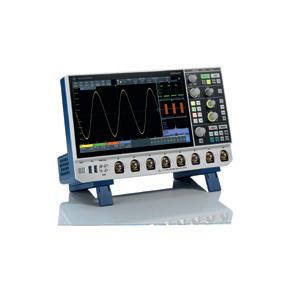
The new MXO 3 Series puts big capabilities in a small package.




cover story
Rohde & Schwarz
(Australia) Pty Ltd www.rohde-schwarz.com.au
Rohde & Schwarz is one of the world’s largest manufacturers of electronic test and measurement equipment. R&S products set standards in research, development, production and service. As a key partner of industry and network operators, R&S offers a broad spectrum of market-leading solutions for the newest wireless technologies as well as for RF and microwave applications up to 500 GHz.
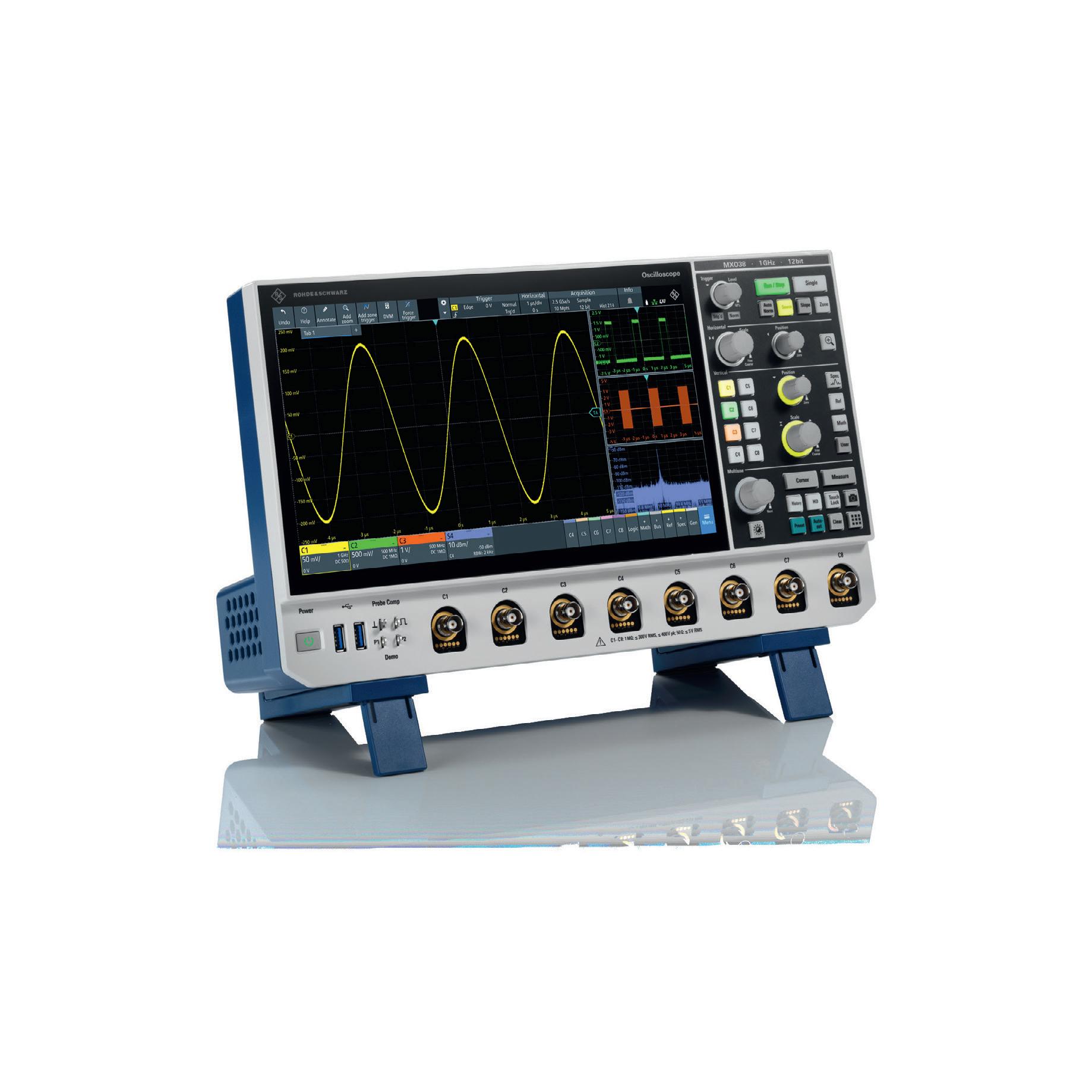
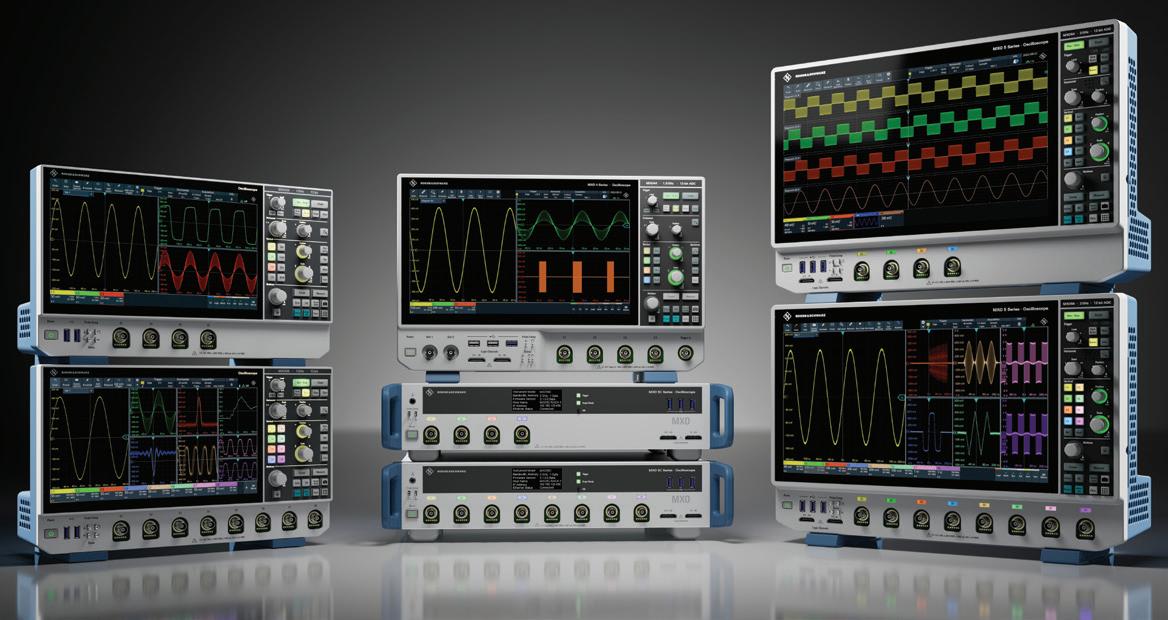
The MXO 3 is the latest Next Generation Oscilloscope from Rohde & Schwarz — engineered for speed, accuracy and versatility. As part of the launch promotion, every MXO 3 now includes the full application bundle at no extra cost — with all software options activated straight out of the box.
Rohde & Schwarz believes that every test and measurement challenge, whether routine or revolutionary, makes a meaningful contribution to our world. Which is why, no matter if you’re testing printed circuit board designs in an electronics lab, or pushing boundaries in 6G research, the extensive range of test and measurement instruments and solutions from R&S is designed to meet your specific needs.
Rohde & Schwarz is striving for a safer and connected world with its leading-edge solutions. Committed to innovation for more than 90 years, the independent technology group acts long-term and sustainably, making it a reliable partner to its industry and government customers worldwide.
Westwick-Farrow Media
A.B.N. 22 152
www.wfmedia.com.au
Head Office Unit 5, 6-8 Byfield Street, North Ryde Locked Bag 2226, North Ryde BC NSW 1670 Ph: +61 2 9168 2500
Editor
Ashna Mehta wnie@wfmedia.com.au
Publishing Director/MD Janice Williams
Art Director/Production Manager Linda Klobusiak
Art/Production Marija Tutkovska
Circulation Alex Dalland circulation@wfmedia.com.au
Copy Control Ashna Mehta copy@wfmedia.com.au
Advertising Sales
Account Manager
Sandra Romanin – 0414 558 464 sromanin@wfmedia.com.au
Asia
Tim Thompson - 0421 623 958 tthompson@wfmedia.com.au
Printed and bound by Dynamite Printing Print Post Approved PP100007394 ISSN No. 0728-3873
All material published in this magazine is published in good faith and every care is taken to accurately
and any dispute should be referred
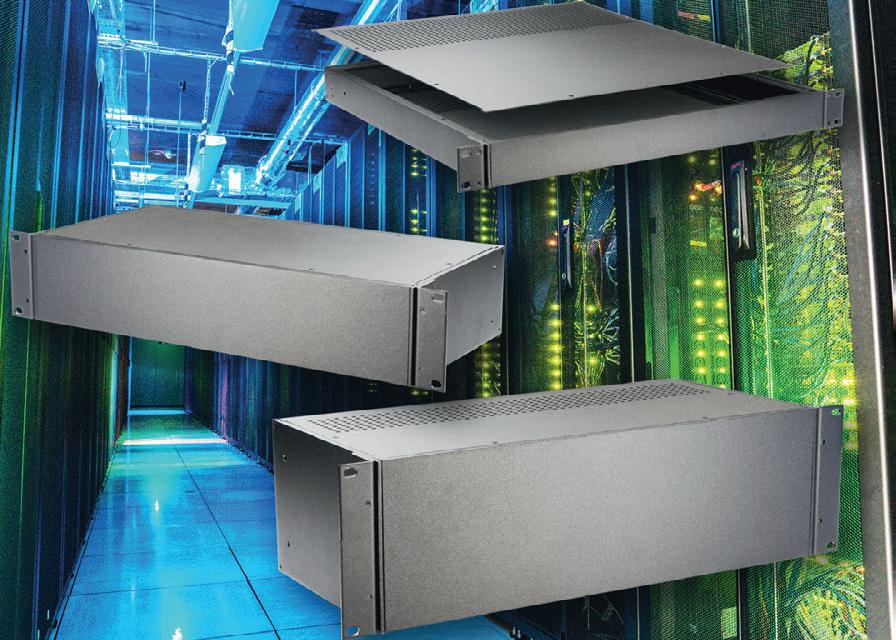
From left to right: The MXO 3, MXO 4, and MXO 5 Series Oscilloscopes from Rohde & Schwarz
New nanomaterial takes shape

The potential use of low-energy light to shape ferroelectric thin films for micro-devices is advancing, with a team of researchers reporting success with ‘photostriction’. Light-induced non-thermal deformation of materials, or photostriction, has the advantage of directly converting photon energy into mechanical motion, offering exciting possibilities for wireless, light-powered sensors and optomechanical devices, said Flinders University researcher Dr Pankaj Sharma.
Since its discovery in the 1960s, scientists have explored photostriction in a wide range of materials — from semiconductors and oxides to ferroelectrics and polymers. However, many of these systems face challenges.
“Conventional semiconductors show weak responses, lead-based materials raise environmental concerns, and some light-sensitive compounds are unstable,” said Sharma, lead and corresponding author of the new article in ACS Nano.
“Ferroelectrics, the electrical analogues of magnets, show promise but are mostly limited to UV light, and epitaxial thin films grown on substrates are constrained by their supports,” Sharma said.
Now, the research team has demonstrated major photostrictive
Catalyst enhances zinc–air
effects under visible light in unconstrained thin films of BiFeO3 — a multiferroic. BiFeO3, or bismuth ferrite, is an inorganic compound with a perovskite structure that is a room-temperature multiferroic material, meaning it exhibits both ferroelectric and antiferromagnetic properties. Its ability to have its magnetic and electric properties controlled by external fields makes it a promising material for new electronic and spintronic devices, as well as for applications like photocatalysis and energy storage.
The new study shows that these nanostructured films exhibit record-high light-driven strains using low optical power. “Light can precisely control the internal structure and electronic responses of these films. This points to a future where micro-devices can be powered and actuated entirely by light,” Sharma said.
Dr Haoze Zhang, first author of the study, added, “These materials could form the foundation for light-controlled actuators, wireless sensors and self-powered optomechanical systems.”
By tuning light wavelength and intensity, the team demonstrated fine control over piezoelectric and ferroelectric properties, establishing a versatile platform for energy-efficient, multifunctional nanoscale devices.
battery performance
Engineers from Monash University have unveiled a breakthrough catalyst that could supercharge next-generation batteries, offering more power, longer life and lower costs.
While zinc–air batteries are currently used in small devices like hearing aids, this opens the door to rechargeable, high-power applications, moving the technology closer to realworld, grid-scale and transport uses.
Using a clever heat treatment, researchers turned a 3D material into ultra-thin carbon sheets and added individual cobalt and iron atoms, creating a catalyst that makes the battery’s oxygen reactions much faster and more efficient.
Lead authors Saeed Askari and Dr Parama Banerjee, from the Department of Chemical and Biological Engineering, said it outperformed standard commercial catalysts made from expensive metals like platinum and ruthenium.
“By engineering cobalt and iron as individual atoms on a carbon framework, we achieved record-breaking performance in zinc–air batteries, showing what is possible when catalysts are designed with atomic precision,” Askari said.
“Our advanced simulations revealed that the cobalt–iron atom pairs, combined with nitrogen dopants, enhance charge transfer and optimise reaction kinetics, solving one of the biggest bottlenecks for rechargeable zinc–air batteries.”
Banerjee said the principles behind this design could also be applied to other clean energy technologies including fuel cells, water splitting and CO2 conversion.
“Running a rechargeable zinc–air battery continuously for more than two months is a milestone for the field. It demonstrates that this technology is ready to move beyond the laboratory and into practical applications,” Banerjee said.
“These catalysts not only solve a key bottleneck for zinc–air batteries, but their design principles can be applied across the energy landscape — from fuel cells to water splitting — offering broad impact for clean energy.”
The research findings have been published in the Chemical Engineering Journal.
Light-controlled ferroelectrics for future electronics
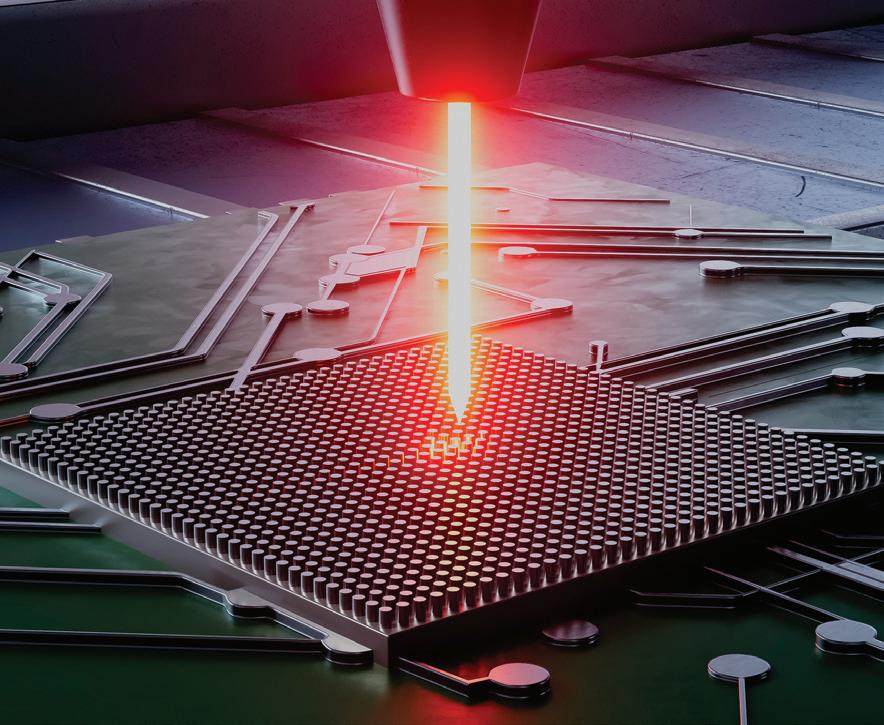
A team of scientists led by Le Phuong Hoang and Giuseppe Mercurio from the European X-Ray Free-Electron Laser Facility (XFEL) has developed a new way to manipulate the properties of ferroelectric materials using light, achieving control on ultrafast timescales. The development could enable memory devices and electronic components to become faster and more energy-efficient.
Ferroelectrics are crystals in which positive and negative charges are slightly displaced, producing an internal electric field known as spontaneous polarisation. This polarisation can normally be reversed only with an applied electric field, a feature that has made ferroelectrics suitable for applications such as nanoscale switches and advanced data storage.
Using bright and short X-ray flashes and optical lasers, the researchers studied barium titanate (BaTiO3), a prototypical ferroelectric oxide. They tracked simultaneous changes in polarisation, lattice structure and electronic state with a temporal resolution of 90 femtoseconds — about one-millionth of a billionth of a second.
The experiments found that within only 350 femtoseconds of laser excitation, the polarisation of the material shifted dramatically, while the underlying crystal lattice remained unchanged. The researchers were also able to show that polarisation can be altered independently of lattice distortion, something that had long been theorised but never observed.
“This result tells us that electrons excited by light can drive changes in polarisation far more quickly than the crystal structure itself can respond. It gives us a new lever for controlling material behaviour at the electronic level,” Hoang said.
“If light alone can achieve what previously required complex circuitry and external fields, the design of future devices could become much simpler. We may even find ways to apply similar principles to materials that combine electric and magnetic properties, opening new frontiers for multifunctional electronics,” Mercurio said.
The study demonstrates a new mechanism for controlling material properties; by leveraging ultrafast light pulses rather than electric circuitry, researchers believe the work marks an important step towards light-controlled electronics with potential applications in sensing technologies, data processing and energy-efficient information storage.
Novel semiconductor shows superconducting promise
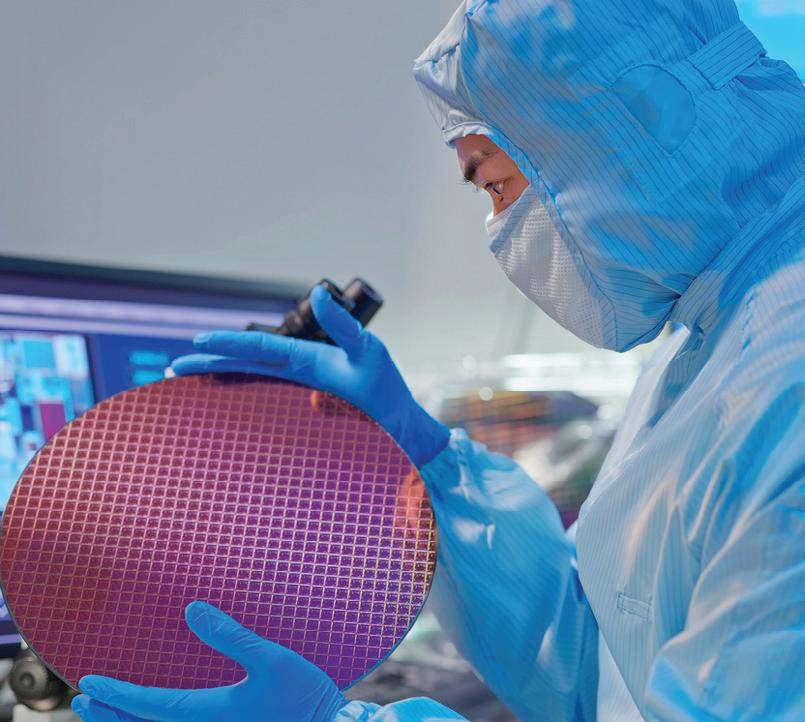
Scientists have paved the way for next-generation quantum circuits by successfully making a semiconducting element commonly used in electrical devices superconducting.
A research team from The University of Queensland’s School of Mathematics and Physics and Australian Institute for Bioengineering and Nanotechnology and New York University have shown germanium can conduct electricity without resistance.
The discovery, which had eluded physicists for more than 60 years, unifies the building blocks of classical electronics and quantum technologies.
Dr Peter Jacobson said the result opens a pathway for a new era of hybrid quantum devices. “These materials could underpin future quantum circuits, sensors and low-power cryogenic electronics, all of which need clean interfaces between superconducting and semiconducting regions,” Jacobson said.
“Germanium is already a workhorse material for advanced semiconductor technologies, so by showing it can also become superconducting under controlled growth conditions there’s now potential for scalable, foundry-ready quantum devices.”
Dr Julian Steele said previous efforts to integrate superconductivity directly into semiconductor platforms had failed when structural disorder and atomic-scale imperfections were introduced.
“Rather than ion implantation, molecular beam epitaxy (MBE) was used to precisely incorporate gallium atoms into the germanium’s crystal lattice,” Steele said. “Using epitaxy — growing thin crystal layers — means we can finally achieve the structural precision needed to understand and control how superconductivity emerges in these materials.”
Dr Carla Verdi showed this ordered atomic structure reshapes the electronic bands in a way that naturally supports superconductivity.
“This theoretical work confirmed that gallium atoms substitute neatly into the germanium lattice, creating the electronic conditions for superconductivity. It’s an elegant example of how computation and experiment together can solve a problem that has challenged materials science for more than half a century,” Verdi said.
The research has been published in Nature Nanotechnology

Making regular GPS ultra-precise
Ingebjørg Hestvik, Norwegian University of Science and Technology

SELF-DRIVING CARS NEED TO KNOW EXACTLY WHERE ON THE ROAD THEY ARE LOCATED AT ALL TIMES. A NEW INVENTION COULD REVOLUTIONISE THE DEVELOPMENT OF DRIVERLESS VEHICLES — AND GIVE US MORE ACCURATE GPS ON OUR MOBILE PHONES AND FITNESS WATCHES TOO.
We mostly take it for granted that the position shown by our GPS is correct.
But if we are in a new city and use the map app on our phone to find our way back to the hotel, it can often look like we are jumping around from one point to another — even though we are actually walking perfectly normally on the same pavement the whole time.
“Cities are brutal for satellite navigation,” said Ardeshir Mohamadi, a doctoral student at the Norwegian University of Science and Technology (NTNU).
Mohamadi is working on how to make affordable GPS receivers (like the one in your mobile phone or your fitness watch) much more accurate without having to use costly additional services. Having accurate GPS position is especially important for cars that are designed to operate without a driver — so-called autonomous or self-driving vehicles.
Urban canyons
Mohamadi and his colleagues at NTNU have now developed a system to help autonomous vehicles navigate safely within cities.
“In cities, glass and concrete make satellite signals bounce back and forth. Tall buildings block the view, and what works perfectly on an open motorway is not so good when you enter a built-up area,” Mohamadi said.
The problem is that signals are reflected between buildings and take longer to reach the receiver. As a result, the calculation of the distance to the satellites is incorrect and the position becomes inaccurate.
These types of difficult city environments are often called ‘urban canyons’. It is as if you are at the bottom of a deep ravine. The GPS signals that reach you, or the self-driving vehicle, may have been reflected many times on their way down into the ravine.
“For autonomous vehicles, this makes the difference between confident, safe behaviour and hesitant, unreliable driving. That is why we developed SmartNav, a type of positioning technology designed for ‘urban canyons’,” Mohamadi said.
Almost down to the centimetre
Not only are the satellite signals disrupted down between the tall buildings, but the signals that are correct do not have sufficient precision.
In order to solve this problem, the researchers have combined several different technologies to correct the signal. The result is a computer program that can be integrated into the navigation system of autonomous vehicles.
To achieve this, they received help from a new Google service, but before we go any further, it might be helpful to know how GPS works. >
GPS — the Global Positioning System — comprises many small satellites orbiting the Earth. The satellites send out signals using radio waves, which are received by the GPS receiver. When the receiver receives these signals from at least four satellites, it is able to calculate its position.
The signal consists of a message with a code indicating the satellite’s position and the exact time the signal was transmitted — like a text message from the satellite.
Replacing the code with the wave
It is this code that often becomes incorrect when the signal bounces around between buildings in a city. The first solution the NTNU researchers studied was therefore to drop the code altogether. Instead, information about the radio wave can be used.
Is the wave travelling upwards or downwards when it reaches the receiver? This is called the carrier phase of the wave.
“Using only the carrier phase can provide very high accuracy, but it takes time, which is not very practical when the receiver is moving,” Mohamadi said.
The problem is that you have to stay still until the calculation is good enough — not just a microsecond, but for several minutes.
However, there are other ways to improve a GPS signal. The user can use a service that corrects the signal using base stations called RTK (Real Time Kinetics).
RTK works fine as long as the user is in the vicinity of one of these stations. This solution, however, is expensive and intended for professional users.
Having an accurate GPS position is especially important for cars that are designed to operate without a driver —so-called autonomous or self-driving vehicles.
An alternative approach is PPP-RTK (Precise Point Positioning — Real-Time Kinematic), which combines precise corrections with satellite signals. The European Galileo system now supports this by broadcasting its corrections free of charge.
But there is even more help available.
Google and the wrong-side-of-the-street problem
While the researchers in Trondheim were working on finding better solutions, Google launched a new service for its Android customers.
Imagine you are planning a holiday to, say, London. You open Google Maps on your tablet. You then enter the address of your hotel and you can immediately zoom in on the street environment, study the hotel’s façade and the height of the surrounding buildings.
Google now has these types of 3D models of buildings in almost 4000 cities around the world. The company is using these models to predict how satellite signals will be reflected between the buildings. This is how they will solve the problem of it appearing as if you are walking on the wrong side of the road when using the map app, for example when
trying to find your way back to your hotel.
“They combine data from sensors, Wi-Fi, mobile networks and 3D building models to produce smooth position estimates that can withstand errors caused by reflections,” Mohamadi explained.
Precision you can rely on
The researchers were now able to combine all these different correction systems with algorithms they had developed themselves. When they tested it in the streets of Trondheim, they achieved an accuracy that was better than 10 cm 90% of the time.
According to the researchers, this provides precision that can be relied upon in cities.
The use of PPP-RTK will also make the technology accessible to the general public because it is a relatively affordable service.
“PPP-RTK reduces the need for dense networks of local base stations and expensive subscriptions, enabling cheap, large-scale implementation on mass-market receivers,” Mohamadi said.
This is a modified version of a news item published by the Norwegian University of Science and Technology.
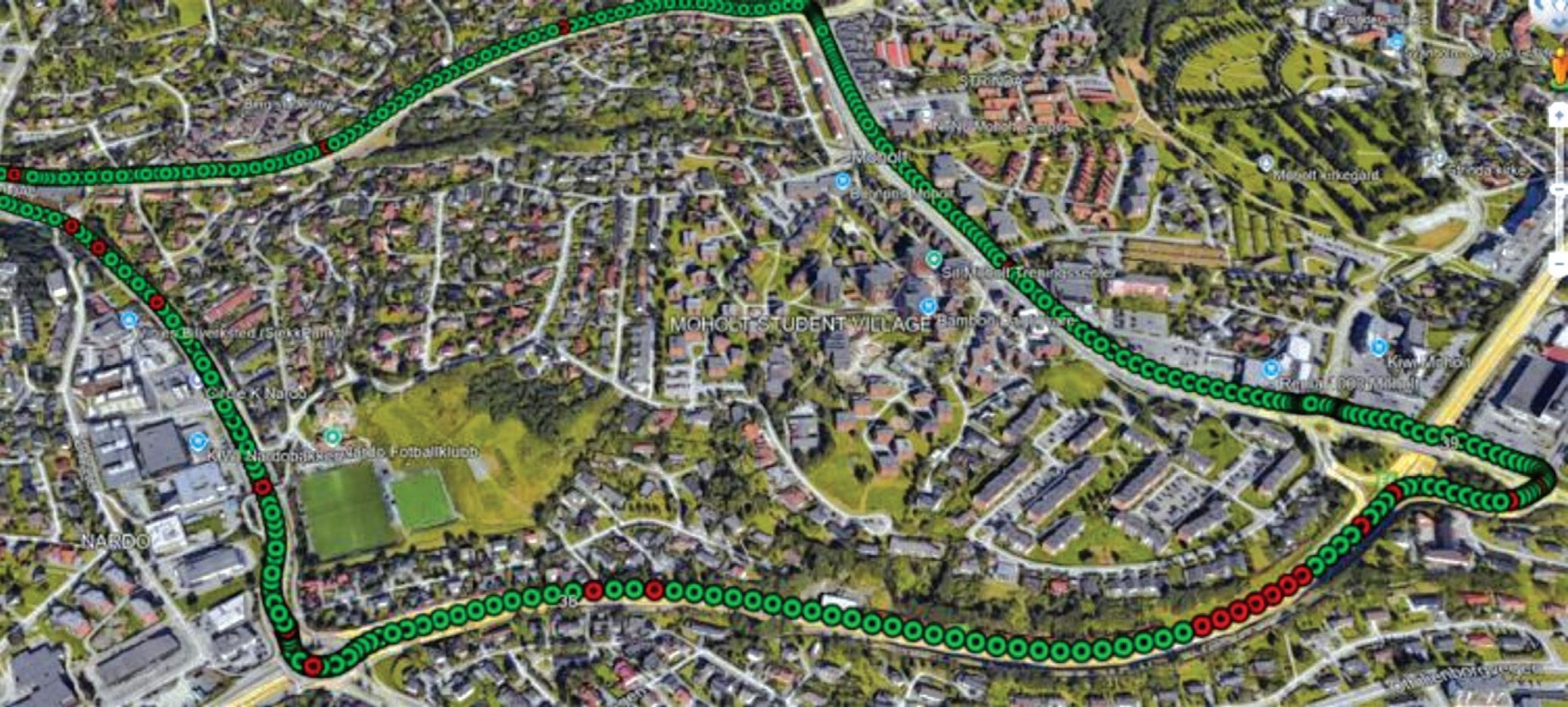
Image credit: Ardeshir Mohamadi.
Result of a test drive with a driverless car in Trondheim, where NTNU researchers used their PPPRTK–assisted solution. The green dots show position measurements with an accuracy better than 10 cm.
Scientists build fluid-based chip with brain-like memory

Scientists at Monash University have created a tiny fluid-based chip that behaves like neural pathways of the brain, potentially opening the door to a new generation of computers.
Roughly the size of a coin, the chip was built from a specially designed metal–organic framework (MOF) and channels ions through tiny pathways, mimicking the on/off switching of electronic transistors in computers. But unlike conventional computer chips, it can also ‘remember’ previous signals, mimicking the plasticity of neurons in the brain.
Co-lead author, Sir John Monash Distinguished Professor and ARC Laureate Fellow Huanting Wang, Deputy Director of the Monash Centre for Membrane Innovation, highlighted the potential of engineered nanoporous materials for next-generation devices.
“For the first time, we’ve observed saturation nonlinear conduction of protons in a nanofluidic device. This opens up new opportunities for designing iontronic systems with memory and even learning capabilities,” Wang said.
“If we can engineer functional materials like MOFs just a few nanometres thick, we could create advanced fluidic chips that complement or even overcome some limitations of today’s electronic chip.”
To demonstrate its potential, the team built a small fluid circuit with multiple MOF channels. The chip’s response to voltage changes mimicked the behaviour of electronic transistors, while also showing memory effects that could one day be used in liquid-based data storage or brain-inspired computing systems.
Co-lead author Dr Jun Lu, from the Monash Department of Chemical and Biological Engineering, said the development is a major step towards computers that think more like humans, using liquid instead of solid circuits.
“Our chip can selectively control the flow of protons and metal ions, and it remembers previous voltage changes, giving it a form of short-term memory,” Lu said.
“What makes our device truly special is its hierarchical structure, which allows it to control protons and metal ions in entirely different ways. This kind of selective, nonlinear ion transport hasn’t been seen before in nanofluidics.”
Electronex expo returns to Sydney in 2026
Following the success of the Melbourne Electronex – Electronics Design and Assembly Expo held in May, the launch of Electronex 2026 Sydney has generated a strong response, with over 85% of exhibition space already booked.
The 2026 Expo will take place at Rosehill Gardens Event Centre, Sydney, from 3–4 June 2026, in conjunction with the annual SMCBA Conference.
The Melbourne show, staged alongside National Manufacturing Week (NMW), attracted a record number of engineers, managers and senior decision-makers from across the manufacturing and electronics industries. With 85 stands representing more than 100 companies, it was the largest Electronex held to date. More than 250 exhibiting staff also took part in valuable networking opportunities, including the popular Exhibitor Networking Function sponsored by What’s New in Electronics and Dyne Industries.
“The turnout for the Melbourne Expo exceeded expectations,” said Noel Gray, Managing Director of organiser Australasian Exhibitions & Events (AEE). “Visitor numbers were around 15% higher than the 2023 Melbourne event, and exhibitors were delighted with the quality of enquiries. Face-toface contact remains invaluable for discussing technical requirements and discovering new technologies in this vital high-tech manufacturing sector. Electronex is now in its 14th year and firmly established as Australia’s premier event for the electronics industry.”
Strong visitor engagement and industry support
The Melbourne Expo drew 1978 trade visitors from all Australian states and New Zealand, reflecting the show’s national reach. The concurrent Surface Mount and Circuit Board Conference featured a stellar line-up of local and international speakers, offering deep insights into current and emerging technologies.
Competitions and technical highlights
Free on-floor seminars were also well attended, giving exhibitors a platform to present the latest innovations and solutions. The SMCBA, Australia’s association for electronics design and assembly professionals, with support from IPC International, also conducted the Australian rounds of the IPC Hand Soldering Competition and the inaugural IPC/WHMA Wire Harness Competition on the show floor.
In a closely contested HSC, Tony Cimino from the Australian Centre for Robotics took first place, ahead of Rodney Tacey from Bluefish444. Cimino received a JBC B-Iron Soldering Station and an invitation to compete in the World Finals in Munich, Germany. The Wire Harness Competition winner was Sai Praneeth Jasti from Design 2000, with Cimino taking runner-up honours. Join the industry at Electronex 2026
With 85% of exhibition space already sold, companies interested in participating in Electronex 2026 Sydney are encouraged to secure their stands early.
For exhibitor enquiries, contact Australasian Exhibitions & Events on 03 9676 2133, or email: info@auexhibitions.com.au.

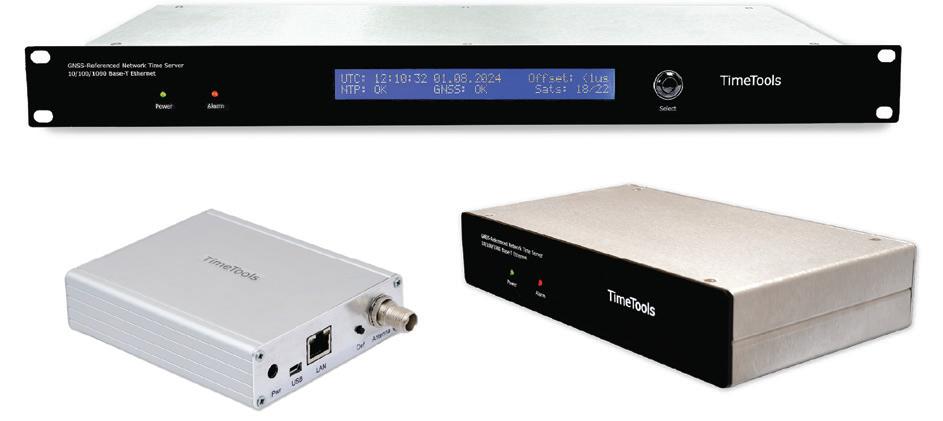
Time server
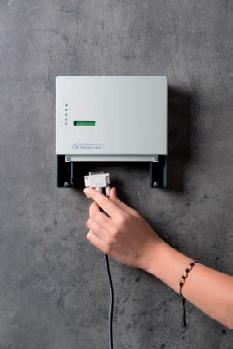
Time Tools TA110 GPS NTP Server is a compact solution designed for accurate time synchronisation of computer networks or NTP/SNTP compatible systems. The TA110 achieves Stratum-1 time reference, providing GPS accuracy of up to 30 nanoseconds and NTP accuracy up to 2 microseconds. The unit supports IPv4 and IPv6 Internet protocols and features 10/100/1000 Mb auto-sensing with a single auto-MDIX Gigabit Ethernet port.
The T Series (models T100, T300 and T550) will be superseded by the TA Series, featuring the TA110, TA210, TA310 and TA610 time servers. The alternatives provide the same NTP time synchronisation with enhanced functionality including TCXO extended Stratum-1 holdover and Gigabit Ethernet connection, as well as flexible tracking channel and enhanced NTP polling capabilities of up to 50,000 NTP polls per second. This enables a wider variety of applications, from data centre synchronisation to providing a timing reference for critical applications.
STEP GLOBAL PTY LTD www.stepglobal.com
UPS system
Metromatics, the Australian distributor for Acumentrics, has launched the Model AHB1002 rugged 2U half-rack UPS system. Designed for defence, aerospace and industrial environments, this next-generation uninterruptible power supply delivers 1000 W/1250 VA of power in a compact 2U half-rack chassis.
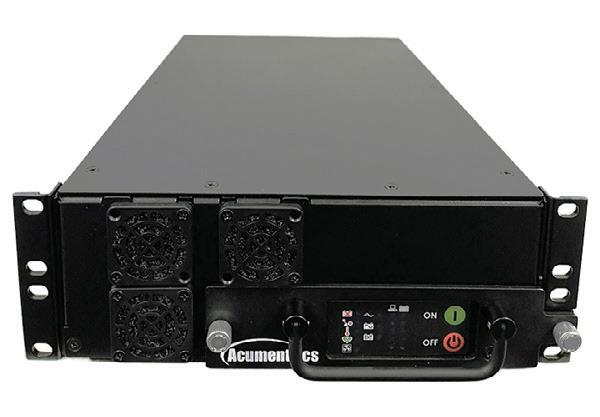
The half-rack UPS is engineered to perform in a range of conditions, with dual AC/DC input (100–265 VAC, 47–63 Hz and 22–32 VDC) for flexible deployment. It also features a wide operating temperature range of -20 to +55°C. The system is also MIL-STD-810G and MIL-STD-461G compliant for vibration, shock, EMI/RFI and environmental extremes
With dimensions of 8.9 x 23.9 x 38.1 cm and weighing approximately 8.2 kg, the 2U half-rack design reduces rack space and overall system weight while maintaining 1000 W output. This makes it suitable for mobile command centres, transit-case deployments, and high-performance computing platforms such as DTECH, KLAS and PACSTAR.
Metromatics provides Australian-based technical support, installation and servicing, meaning that defence primes, integrators and industrial customers have local expertise from purchase to deployment.
METROMATICS PTY LTD
www.metromatics.com.au
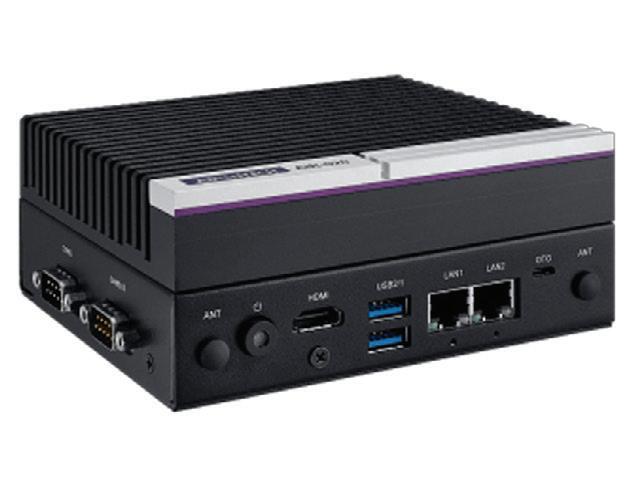
Edge AI inference system
Advantech has launched the AIR-020R, an ultra-compact, fanless Edge AI inference system powered by the NVIDIA Jetson Orin Nano Super Mode, delivering up to 67 TOPS of AI computing performance. Designed for industrial vision AI — including defect inspection, robotics and traffic monitoring — the device offers seamless integration with Advantech’s 2D USB camera for streamlined deployment.
Equipped with an NVIDIA Ampere GPU (1024 CUDA cores, 32 Tensor Cores) and a six-core Arm Cortex-A78AE CPU, the device runs deep learning models for object detection, OCR, defect analysis and visual anomaly inspection. Supporting NVIDIA JetPack 6.2 and Advantech Edge AI Suite, it allows developers to deploy pre-trained AI models from frameworks like PyTorch or ONNX, optimised via TensorRT for lowlatency, real-time inference.
The AIR-020R also features a rugged IP40-rated enclosure, fanless thermal design and a –10~50°C operating range. It supports 12–24 VDC input and resists up to 3 Grms vibration, enabling stable performance in harsh factory environments. For flexible integration, the device includes 2× Gigabit Ethernet, 3× USB 3.2 (2 Type-A, 1 Type-C), 2× RS-232/422/485, 1× CAN bus, 8-bit DIO and 1× HDMI (4K@30Hz). It comes with 128 GB M.2 NVMe storage preloaded with JetPack 6.2 and offers miniPCIe with Nano SIM for wireless expansion, making it a ready-todeploy AI vision solution for next-generation industrial automation.
ADVANTECH AUSTRALIA PTY LTD www.advantech.net.au
Pluggable communication module
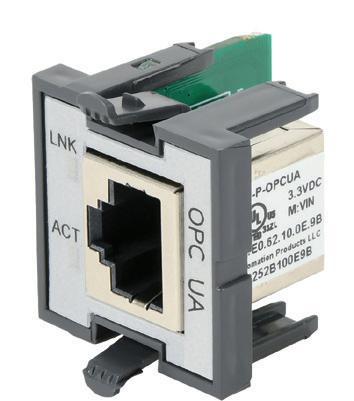
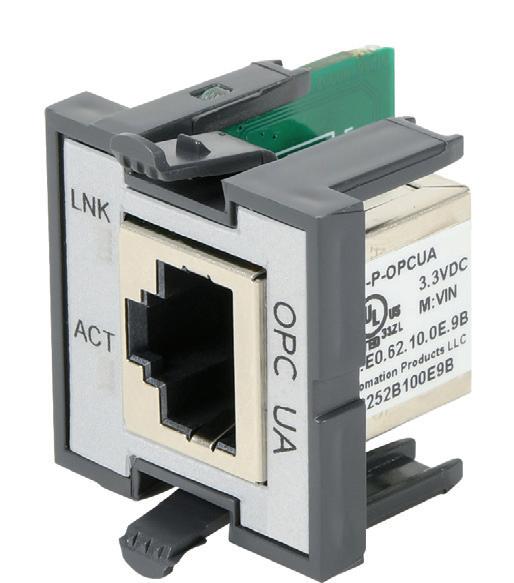
The BRX BX-P-OPCUA from Direct Automation is a pluggable communication module (POM) designed for use with all BRX PLC CPUs. This module provides OPC UA connectivity and includes (1) Ethernet 10/100Base-T (RJ45) port. It installs directly into the BRX CPU’s pluggable option module slot.
The module allows BRX PLCs to integrate directly with OPC UA networks, providing standardised data exchange between industrial control systems and higher-level applications. This makes the module suitable for applications requiring communication between plant-floor controllers and SCADA, MES, enterprise systems or cloud platforms.
The module supports secure data transmission using built-in encryption and authentication, providing reliable access to process data. Users can easily browse and select PLC tags to be shared, and configure read or read/write access as needed. Because the module is directly integrated into the BRX Do-more! software platform, setup is streamlined and requires minimal configuration.
This pluggable option format also supports flexibility in system design. Communication interfaces can be selected or changed as system requirements evolve, without affecting the main controller or wiring. The BX-P-OPCUA POM offers a simple method to enable standardised, vendor-neutral communication within new or existing automation architectures.
DIRECT AUTOMATION PTY LTD www.directautomation.com.au





The engineer’s guide to specifying plastic enclosures for IIoT sensors
Industry 4.0’s insatiable appetite for IIoT sensors has fuelled demand for plastic enclosures. They have gained traction in smart factories where metal housings would previously have been the first choice.
These plastic enclosures must be tough. In the past, ABS was popular due to its high impact resistance, dimensional stability and tensile strength. But ABS is vulnerable to UV rays; they can discolour and embrittle it. ASA is more UV stable. Better still is an ASA+PC blend that adds polycarbonate for extra strength. It also o ers UL 94 V-0 flammability resistance.
Small, fast-fit sensor enclosures such as MINI-DATA-BOX and EASYTEC are moulded from ASA+PC as standard. Rated IP 65, they o er complete protection against dust ingress and can resist lowpressure (30 kPa) water jets.
Flanges make MINI-DATA-BOX and EASYTEC quick to install with cable ties or screws. MINI-DATA-BOX can also be specified without flanges, though it retains the distinctive ‘diamond cut’ lid design of the flanged version.
This weight-saving lid bevelling may be a subtle design touch but it shows how important aesthetics have become in the Industry 4.0 workplace. It gives MINIDATA-BOX character but the enclosure remains discreet. Small is beautiful…but not ostentatious.
The proliferation of sensors in IIoT environments means that most must be wireless, enabling flexible deployment. Most engineering-grade plastics such as ABS, PC and ASA are RF transparent (though this in turn raises EMI/RFI issues).
RF transparency means that an antenna can be placed inside the enclosure. Alternatively, the flat sides can be machined to accommodate an external antenna for greater range or enhanced signal reliability.
Opting for an external antenna can also overcome some EMI/RFI interference issues — it is free to radiate signals outside the EMC-shielded enclosure. EMI and RFI can pose significant issues in RFdense environments packed with wireless sensors, actuators, gateways, access points, controllers, RFID readers, NFC tags and machine-to-machine (M2M) links.
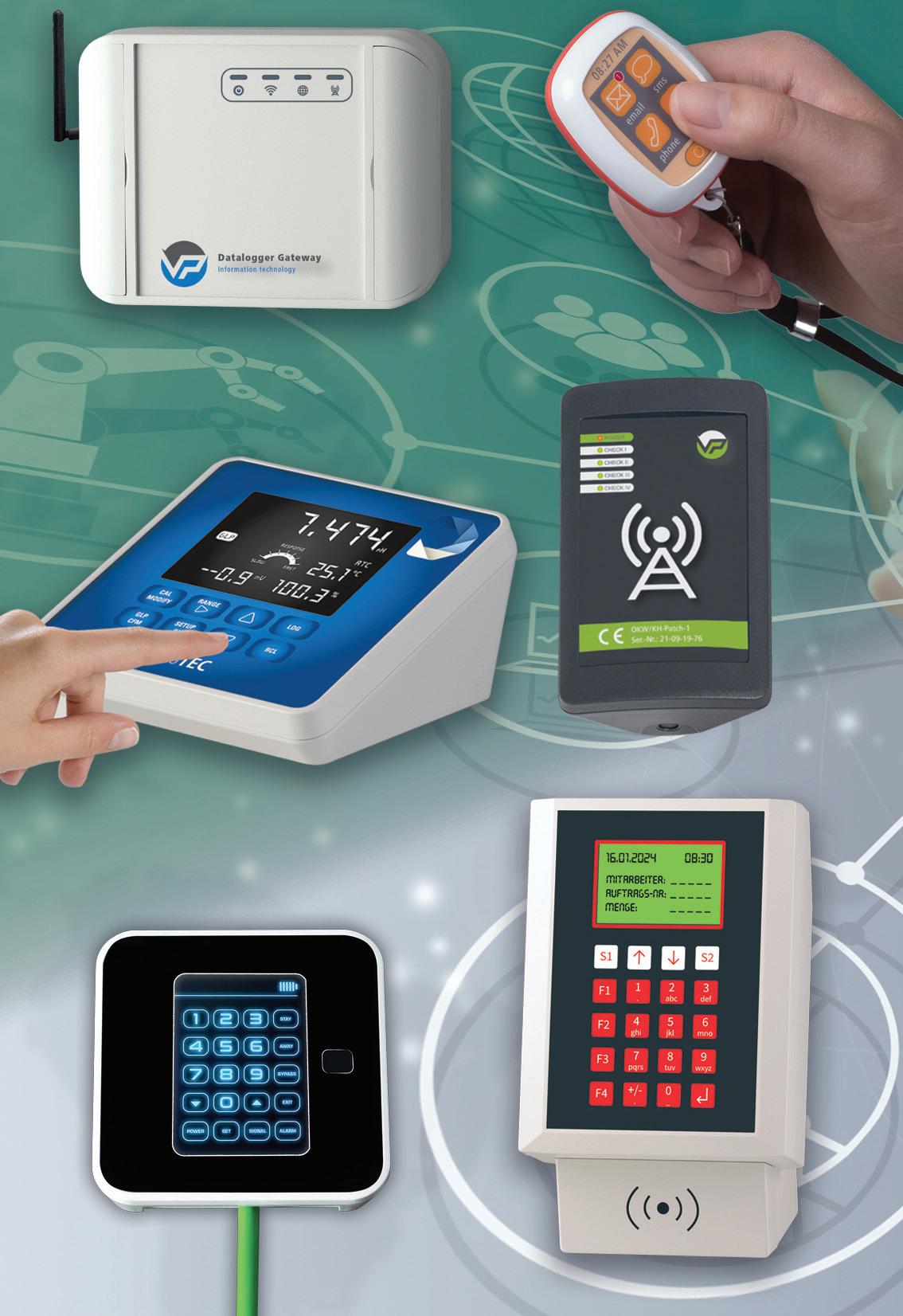
The large number of devices in IIoT networks highlights the need for an enclosure model that comes in lots of shapes and sizes. This makes it easier to specify the ideal housing and minimises the amount of customisation required.
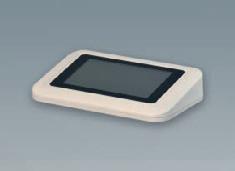
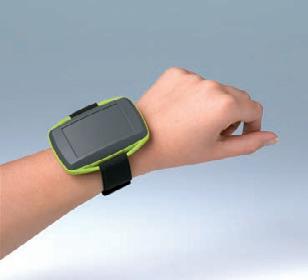
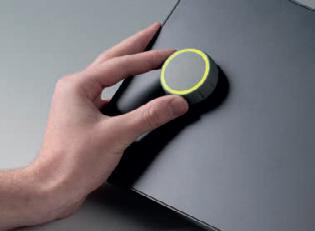
One example is ART-CASE, a range of round, square, rectangular and obloid enclosures for wall/ceiling-mount, desktop and mobile applications. Ergonomic contours create a modern look and a
shared design language. Options include a 30° or 55° sloping top as standard.
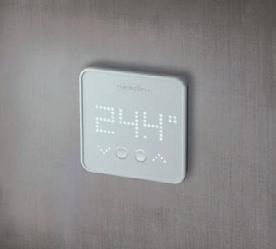
Increasingly popular are small wallmount enclosures for touch screens. Elegant SMART-PANEL has been designed to fit standard flush-mount/cavity wall boxes. This — and the screwless assembly — makes installation swift and simple. Reopening is with a plastic tool set (accessory).
An alternative is DIATEC, which also fits flush-mount boxes but its smallest XS
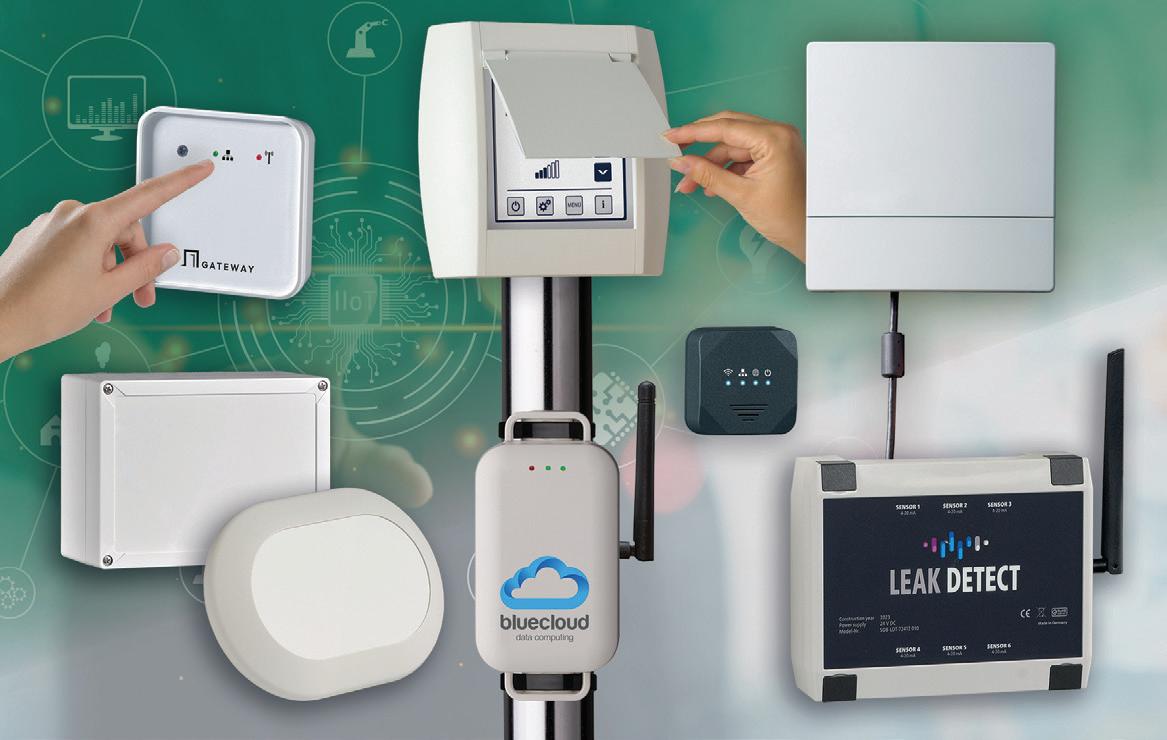
version (150 x 37 x 155 mm) is three times the size of the biggest SMART-PANEL. Again, the assembly is designed to deter tampering, though this time it is with Torx screws, and tabs that lock the side panels.
Unlike SMART-PANEL, DIATEC’s recesses are not merely confined to the front. One edge is also recessed to help protect connectors and interfaces. This useful feature is also evident (though more pronounced) on NET-BOX (IP 65) which conceals connectors beneath a removeable front lid. Optional infill covers close this underside opening to create more space for PCBs or assemblies.
Enclosures like NET-BOX are designed for network nodes, gateways, data acquisition and central control units. Aesthetics come to the fore with its slim profile, curved top and the concealment of its anti-tamper Torx assembly screws.
NET-BOX can also be specified for desktop duties by adding non-slip feet (accessory). Surprisingly, there have been few standard wall-mount enclosures designed to fit an internal corner. One such is SMART-CONTROL (IP 55), a wedgeshaped ASA+PC housing that is at home in 90° corners or on flat walls. Like NET-BOX, it can also be used for desktop electronics (by specifying an optional stand set). However, IIoT’s industrial settings sometimes call for more rugged enclosures that can cope with challenging conditions. Look for housings with impact ratings of IK 07 or IK 08 and ingress protection of IP 66 (temporary flooding) or IP 67 (shallow immersion). IK 07 (2 joules) is equivalent to dropping a 0.5 kg mass from a height of 400 mm, whereas IK 08 (5 joules) is the equivalent of 1.7 kg mass dropped from 300 mm.
This is territory for industrial electronic enclosures such as SOLID-BOX (IK 08, IP 66/IP 67) and IN-BOX (IK 07 ABS, IK 08 PC, IP 66, IP 67). IN-BOX can be wall mounted either directly or with brackets (accessory). By fitting these brackets to the enclosure first, you can install IN-BOX lid closed, protecting the electronics in dusty or wet conditions. SOLID-BOX also o ers ‘lid closed’ installation with separate channels for the concealed lid and mounting screws.
Most enclosures will require customisation, usually machining and printing. Other services include lacquering, decor foils, laser marking, special materials, EMC shielding, and installation/assembly of accessories.
ROLEC OKW Australia New Zealand Pty Ltd Managing Director Shane Dwight said: “It takes surprisingly little customisation to transform a standard enclosure into a unique housing ideally suited to a specific application. Sometimes it can be as little as some machining and the addition of a touch screen display or a membrane keypad.”
For more information, view the OKW website: https://www.okw.com.au/en/ Products/IIoT-sensor-enclosures.htm.




Industrial monitors
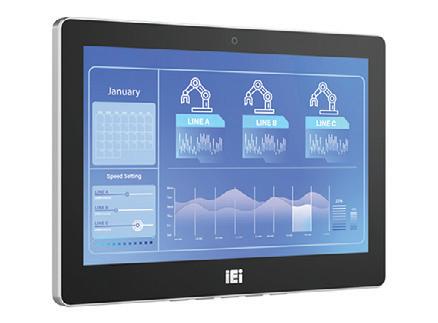
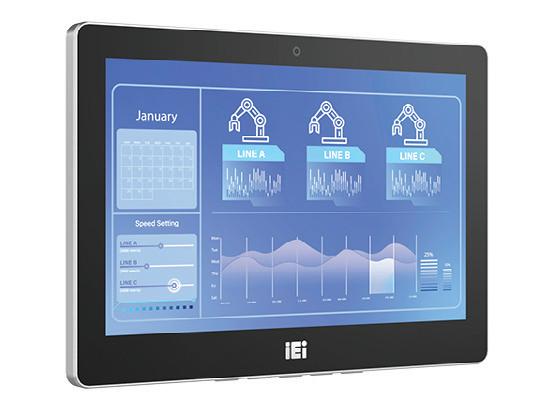
ICP Electronics Australia has launched iEi’s DM2 Series of industrial display solutions — a comprehensive line of industrial touch monitors built to withstand a range of demanding environments.
Designed for applications such as factory automation, transportation hubs, kiosks and more, the industrial monitors blend robust engineering with sleek, modern aesthetics. With screen sizes ranging from 10.1 to 23.8″, including square, widescreen and ultra-wide formats, the DM2 Series offers flexibility for diverse installation needs.
Each monitor features a highbrightness display (up to 1000 nits) with anti-glare and anti-UV PCAP touchscreens, providing clear visibility in bright or outdoor environments.
The rugged design also features an IP65-rated front panel for protection against dust and water, and the entire unit supports an operating temperature range of -20 to 60°C.
Beyond durability, the industrial monitors are designed with usability in mind. Optional features such as a builtin 720p camera, dual 2W speakers and an integrated USB hub enhance user interaction and system integration. With multiple mounting options and frontaccessible OSD buttons, installation and adjustments are made simple and accessible.
Whether upgrading an existing industrial HMI setup or building a new interactive system from the ground up, the IEI DM2 Series offers a versatile and rugged solution.
ICP ELECTRONICS AUSTRALIA www.icp-australia.com.au
High-performance computers
Advantech has launched the AIR410 and AIR-420 compact Edge AI high-performance computers (HPCs). Powered by AMD Ryzen 7000/8000/9000 processors, scalable GPU options (up to four PCIe slots) and Advantech’s Edge AI SDK, these systems are designed for data-intensive workloads such as LLMs, medical imaging and automated inspection.
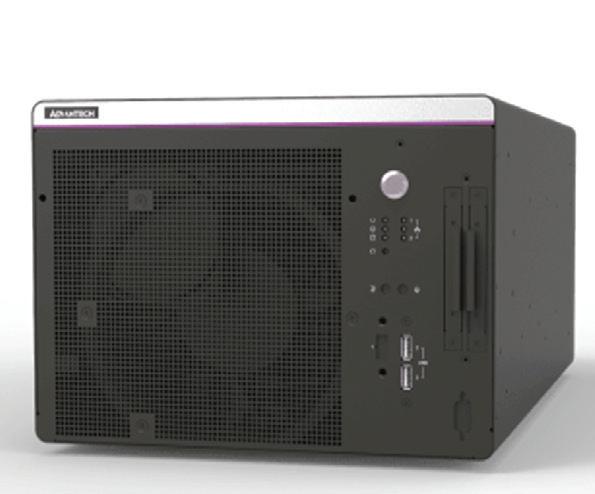
By combining hardware and software into a single platform, the HPCs lower total cost of ownership by cutting expenses in hardware, energy and maintenance, while offering stronger data security than traditional servers. Both models feature compact chassis, advanced thermal design and stable power for edge deployment.
The AIR-410 is a quiet, compact system supporting one 3-slot GPU, including NVIDIA RTX PRO 6000 Blackwell Max-Q, AMD Radeon PRO W7900 and Qualcomm Cloud AI 100 Ultra. It provides up to 96 GB DDR5 RAM, 14 TB storage and rich I/O, making it suitable for semiconductor inspection, medical imaging and on-premise LLM inference.
The AIR-420 is built for demanding GenAI and Vision AI workloads, supporting dual 600 W GPUs within a 28.6L chassis. With redundant power, optimised CPU/PCIe layout and Advantech tools — aiSSD, aiDAPTIV+ and GenAI Studio — it enables efficient on-prem fine-tuning. GenAI Studio supports both full and parameter-efficient methods (PEFT, LoRA), helping enterprises adapt LLMs for edge applications.
The AIR-410 and AIR-420 are designed to deliver compact and scalable solutions, enabling up to 96% savings compared to rack-mounted servers.
ADVANTECH AUSTRALIA PTY LTD www.advantech.net.au
TFT LCD module
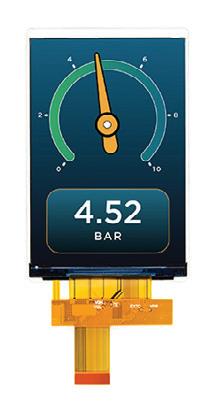
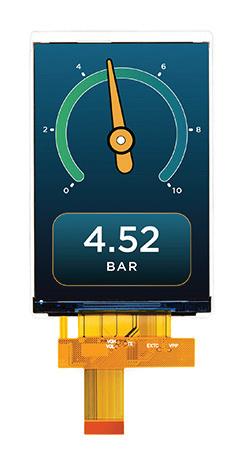
The Displaytech 3.5-inch TFT LCD module (DT035CTFT-IPS-SHB and DT035CTFT-IPS-SHB-PTS) features a 320 x 480 resolution. The module also provides sharp text, graphics and animations, making it suitable for a range of embedded applications, from simple icons to complex user interfaces.
A key feature of this module is its dual interface support. The 16-bit RGB interface offers fast, full-colour rendering for smooth graphics and quick updates, while the 4-Line SPI interface provides a simplified connection option for designs where pin count is limited. This flexibility allows integration across both resource-rich and resource-constrained systems.
The display also incorporates a high-brightness LED backlight, facilitating readability in varied lighting conditions, including bright indoor spaces and outdoor environments with direct sunlight. Its 80° viewing angle in all directions maintains consistent image quality regardless of device orientation.
With its slim profile and lightweight build, the module is designed to fit into spaceconstrained products without compromising mechanical stability. Engineered for long-lasting performance, it is well-suited for industrial control systems, handheld instruments, medical devices and consumer electronics.
By combining sharp resolution, interface flexibility, strong visibility and rugged construction, the Displaytech 3.5-inch TFT LCD provides a compact yet powerful display solution that enhances both the functionality and user experience of modern embedded devices.
IMP ELECTRONICS SOLUTIONS PTY LTD www.imppc.com.au
Digital isolators
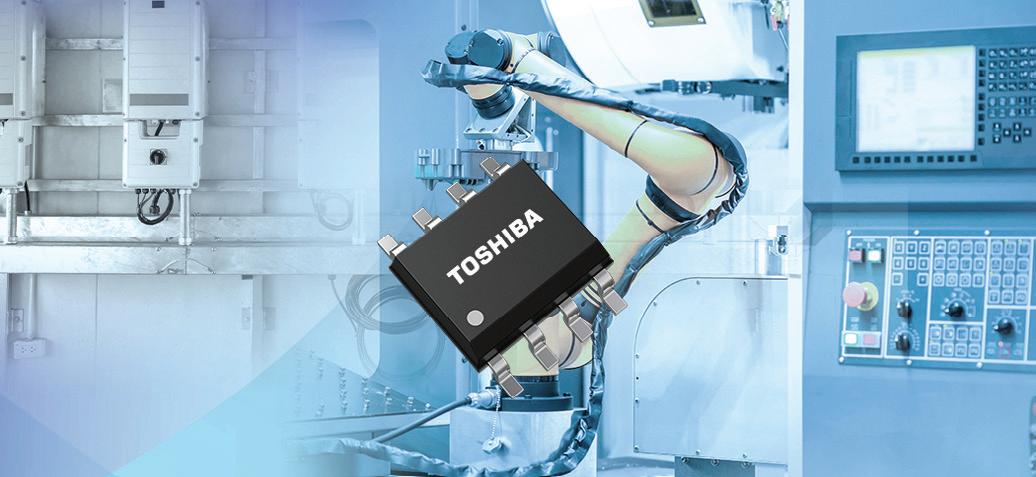
Toshiba has launched four dual-channel, high-speed standard digital isolators for industrial equipment. The DCL52xx00 Series products support stable operation with high common mode transient immunity (CMTI) of 100 kV/µs (typ) and high-speed data rate of 150 Mbps (max).
The channel configuration of DCL520C00 and DCL520D00 is two forward channels, while DCL521C00 and DCL521D00 have one forward channel and one reverse channel. These new dual-channel products join the previously released quad-channel products in the DCL54xx01 Series as standard digital isolators for industrial equipment.
The DCL52xx00 Series products use Toshiba’s proprietary magnetic coupling type isolated transmission method to achieve a high CMTI of 100 kV/µs (typ), the same as DCL54xx01 Series products. This delivers high level resistance to electrical noise between input and output in isolated signal transmission, enables stable control signal transmission and contributes to stable equipment operation.
In addition, a low pulse width distortion of 0.8 ns (typ) and a high-speed data rate of 150 Mbps (max) are also achieved. The new products are suitable for multi-channel high-speed communication applications such as I/O interfaces with UART and I2C communication.
Toshiba has started mass production of standard digital isolators for industrial equipment and automotive equipment. Going forward, the company will increase the lineup of packages and number of channels in both areas. It will also continue to provide isolation devices and photocouplers that support the reliability and real-time data transmission required by industrial and automotive equipment.
TOSHIBA (AUSTRALIA) PTY LTD www.toshiba.com.au

Creating the truck of tomorrow
Mark Patrick, Director of Technical Content, EMEA, Mouser Electronics
LIGHT COMMERCIAL VEHICLES (LCVs) MAKE UP A SMALL PROPORTION OF AUSTRALIA’S VEHICLE FLEET AND HEAVY VEHICLES (HVs) ACCOUNT FOR ONLY A FRACTION OF TOTAL ROAD TRAFFIC.
Despite that, the road freight sector is responsible for over 80% of freightrelated CO2 emissions and roughly one-third of Australia’s total transport emissions — around 36 million tonnes annually1. With freight volume predicted to increase by 77% by 20502, electrifying this sector is key to achieving the country’s climate targets.
Electrifying this sector, however, is not straightforward. Unlike passenger electric vehicles (EVs), commercial vehicles operate across a wide spectrum of applications, from long-haul freight to dense urban deliveries, each with unique demands on range, payload and operational efficiency. While adoption is uneven, certain niches are surging ahead, such as city buses, shortrange delivery trucks and specialised fleets,
demonstrating the practical and economic viability of electrification today.
This article explores the evolving landscape of commercial vehicle electrification, highlighting the technological hurdles OEMs face, the innovative solutions that are emerging, and the broader shifts in last-mile logistics that are redefining how goods move in cities and across regions.
Challenges for commercial EV OEMs in Australia
While passenger EV adoption continues to rise steadily, the electrification of commercial fleets faces a distinct set of challenges. Freight vehicles operate across a broad spectrum of applications, from urban deliveries to long-haul interstate transport, each with specific requirements

for payload, range and operational efficiency. In Australia, there are currently fewer than 3500 public charging stations, with only around 470 classified as fast chargers.3 This sparse infrastructure poses a major obstacle for commercial operators relying on highutilisation routes and is largely inadequate for larger heavy vehicles.
Weight and payload considerations
HVs must balance vehicle weight with payload capacity, and adding large battery packs can complicate this calculation. Unlike light passenger EVs, where battery weight has a smaller operational impact, heavyduty trucks risk reduced cargo capacity if batteries are oversized.
Optimising vehicle design to ensure adequate range without compromising
payload is critical, particularly for refrigerated freight or long-haul operations where both energy density and battery management play a pivotal role.
Infrastructure and network planning
The Australian Renewable Energy Agency (ARENA) commissioned engineering consultancy AECOM to assess the infrastructure requirements for electrifying road freight. Their report provides a clear roadmap for what will be needed to support electric freight operations, outlining a potential network of up to 165 dedicated charging hubs4 along intrastate and interstate routes — a ‘first-of-its-kind’ national overview.
While this initial assessment identifies key locations and capacities, the study notes that further localisation will be required to match fleet operations, route patterns and regional energy availability. Expanding highcapacity charging along freight corridors will be essential to ensure reliable, efficient operation of battery-electric trucks across the country.
Cost and total cost of ownership
While upfront costs for electric trucks remain higher than conventional diesel equivalents, commercial operators are increasingly evaluating the total cost of ownership (TCO), factoring in lower fuel costs, reduced maintenance and potential government incentives.
While early-stage infrastructure development and higher capital outlays are offset over time by operational efficiencies, these benefits are contingent on the availability and reliability of charging networks — an area where Australia’s system is still maturing.
Regulatory and operational hurdles
Fleet operators also contend with regulatory requirements, including vehicle weight limits, road access restrictions and driver rest periods, which influence charging schedules and route planning. Aligning fleet operations with these regulations while integrating charging strategies adds a further layer of complexity for OEMs and logistics managers alike.
In summary, commercial EV adoption in Australia faces a multi-dimensional challenge: technological, infrastructural and regulatory, and overcoming these barriers requires collaboration between OEMs, government agencies and infrastructure providers.
Solutions and recommendations
As Australia’s freight sector moves towards electrification, developing the ‘Truck of Tomorrow’ represents a critical challenge. Among the most pressing obstacles is managing vehicle range across the country’s vast distances. However, a coordinated approach combining technological innovation, infrastructure expansion and supply chain resilience can make electric freight operations viable.
Technological solutions to extend range
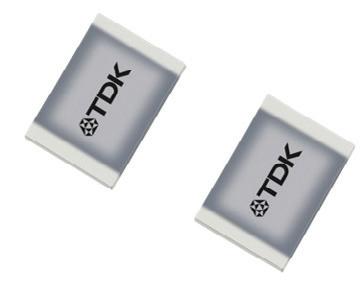
Extending the operational range of nextgeneration trucks relies on a combination of advanced battery and drivetrain technologies. Maximising battery utilisation and improving drivetrain efficiency can significantly reduce energy consumption, while emerging highenergy-density solutions, such as solid-state batteries, offer potential for larger-scale implementation. For example, smallscale innovations like the TDK CeraCharge Rechargeable Solid-State SMD Battery (Figure 2) showcase the potential of solidstate batteries, albeit at a much smaller scale!
High-voltage battery architectures, such as 800 V systems, can significantly accelerate charging times. At these elevated voltages, advanced silicon carbide (SiC) devices, including onsemi’s NXH80B120MNQ0 SiC MOSFETs, are required to replace conventional silicon components, reducing switching losses while supporting the higher breakdown voltages necessary for heavy-duty trucks.
Hydrogen fuel cells also offer a promising solution for extending range on long-haul routes. Additionally, battery-swapping technology can provide a flexible alternative to conventional charging, minimising downtime and supporting high-utilisation freight operations.
Infrastructure development strategies
Establishing a strong and reliable charging and refuelling network is crucial to enable the widespread adoption of electric trucks across Australia. This involves deploying highpowered charging stations along key freight corridors and, where suitable, integrating battery-swapping hubs to reduce downtime.
Equally important is the rollout of hydrogen refuelling stations and truck stops powered by renewable energy with
Figure 2: The CeraCharge rechargeable solidstate SMD battery, developed by TDK. Image courtesy of Mouser Electronics.

localised generation, ensuring even remote and off-grid routes are accessible. By taking a strategic, coordinated approach to infrastructure development, stakeholders can address range limitations and support the seamless, continuous operation of electric freight vehicles nationwide.
Reinforcing the supply chain
A resilient and adaptable supply chain is also vital for the successful deployment of Australia’s electric freight network. This involves securing access to advanced battery packs, hydrogen fuel cells and supporting technologies, while also developing local maintenance and service capabilities.
Collaborative partnerships between government agencies, OEMs, logistics operators and energy providers must help mitigate risks, streamline technology deployment and support the broader adoption of innovative freight solutions.
Further evolution
The electrification of commercial vehicles is following a trajectory similar to that of passenger vehicles, yet new opportunities are emerging through advances in intelligent automotive sensing and control systems. These technologies are set to transform the way goods are transported and distributed, from long-haul freight to urban deliveries.
Autonomous trucks
Companies such as Sweden’s Einride are pioneering electric autonomous trucks capable of fully self-driving operation over long distances. In more complex environments, such as loading docks or congested urban areas, human operators can take remote control to ensure safe manoeuvring (Figure 3).
This human-backed autonomous technology helps offset the higher upfront cost of electric trucks by lowering the total cost of ownership (TCO). In comparison with conventional diesel operations, Einride reports an average reduction of up to 95% in greenhouse gas emissions.5
Last-mile deliveries
For many Australians working from home, the sight or sound of a delivery van or truck passing by the front door has become a daily routine. With e-commerce continuing to surge, rethinking last-mile logistics, particularly in dense urban environments, is critical to reducing congestion, emissions and operational costs.
Autonomous delivery robots
One promising solution is autonomous delivery robots, such as Starship’s platform, which has now completed over five million deliveries globally. These compact, electricpowered robots rely on 12 onboard cameras and GNSS tracking to navigate urban streets at a speed of around 6.5 km/h.
Because of their low-speed electric drivetrains, these robots can safely travel along footpaths and cycleways, following more direct routes than vehicles constrained by roads. This makes them particularly suited to Australia’s inner-city environments, where traffic congestion and narrow streets can slow conventional delivery vehicles.
Drone deliveries
In addition to ground-based options, delivery drones offer another avenue for efficient last-mile transport. By flying above road networks, drones can take more direct routes than conventional vans, bypassing congestion entirely.
In Australia, the Civil Aviation Safety Authority (CASA) is in the process of approving drone delivery trials in remote and regional areas, where traditional road access is slower or less reliable.6 These trials aim to provide faster delivery to communities across challenging terrain while reducing emissions from diesel-powered logistics vehicles.
Conclusion
The transition to electric haulage and delivery vehicles represents a pivotal moment for sustainable innovation in commercial transport. While passenger EV developments provide valuable lessons, commercial vehicles bring unique operational challenges that demand tailored solutions. Success will rely on a combination of advanced battery and fuel cell technologies, high-capacity charging and refuelling infrastructure, and business models that make electrification practical and cost-effective.
Across Australia, initiatives such as autonomous truck trials, drone deliveries and battery-swapping hubs illustrate the diverse strategies needed to enable reliable, zero-emissions logistics. Achieving a fully electrified commercial fleet will require collaboration among manufacturers, fleet operators, infrastructure providers and policymakers to ensure a smooth, scalable transition.
1. https://arena.gov.au/assets/2025/07/AECOM%E2%80%93-Electrifying-Road-Freight-Report.pdf
2. https://arena.gov.au/assets/2025/07/AECOM%E2%80%93-Electrifying-Road-Freight-Report.pdf
3. https://www.infrastructureaustralia.gov.au/ipl/ national-highway-electric-vehicle-fast-charging
4. https://arena.gov.au/assets/2025/07/AECOM%E2%80%93-Electrifying-Road-Freight-Report.pdf
5. https://einride.tech/
6. https://www.drones.gov.au/benefits-and-usecases-drones/drone-deliveries
Figure 3: Einride’s Gen 2 autonomous truck.

GNSS receiver
Quectel Wireless
Solutions has launched the Quectel LR700A smart connected GNSS receiver — an all-inone, high-performance quad band base station solution that is capable of connecting to the cloud to deliver GNSS correction data, usable either standalone or within an RTK station network. Available for use globally, the modular design integrates the GNSS receiver with cellular, Wi-Fi and antenna systems, while providing extension slots for Zigbee short-range communication.
Cellular connectivity makes the system highly versatile, enabling deployment anywhere without requiring existing infrastructure. The integrated short-range communication capabilities make it suitable for pairing with nearby rovers, creating a complete RTK solution for localised high-precision applications.
This quad-band GNSS receiver enables simultaneous reception of signals from GPS, Galileo, BDS, GLONASS, QZSS and NavIC constellations across the L1, L2, L5 and E6 frequency bands. The receiver also supports 1040 channels, enabling flexible data transmission and remote management with cellular, ethernet and Wi-Fi networks.
Designed to function as a base station, the receiver provides GNSS corrections and positioning for high accuracy applications including smart agriculture and precision farming use cases, surveying and mapping, autonomous vehicles and outdoor robotics, such as lawnmowers.
The device’s low power consumption makes it suitable for power-constrained use cases with typical consumption of up to approximately 2.1 W with ultra-wide range voltage support from 9–36 V. The LR700A weighs 2.1 kg, has a diameter of 220 mm and height of 149 mm and operates in the -40 to 85°C temperature range. Support for local Wi-Fi web user interfaces and remote cloud configuration enable simplified field installation.
QUECTEL www.quectel.com

Fully rugged tablets
Getac Technology Corporation (Getac) has launched its nextgeneration UX10 and UX10-IP fully rugged tablets. The UX10 is aimed at professionals in the defence, manufacturing, utilities, public safety, and transportation and logistics industries, who need versatile devices that are designed for a range of challenging operational scenarios. The UX10-IP is purpose-built for emergency healthcare and public safety professionals, featuring a sealed design that enables the device to be repeatedly cleaned and disinfected.
The tablets are the latest Getac devices to meet Microsoft’s Copilot+ PC criteria. Both new devices are powered by an Intel Core Ultra 200V series processor and Intel AI Boost neural processor unit (NPU) with up to 48 TOPS, which can accelerate AI-driven tasks and enhance real-time analytics. Other Copilot+ PC key features include up to 32 GB LPDDR5X memory, up to 2 TB PCIe NVMe SSD storage, and Windows Hello face authentication (an optional fingerprint reader is also available).
The tablets also include a range of further upgrades over the previous generation. These include improved power efficiency for longer runtime between charges, a slimmer and lighter bridge battery (optional) for enhanced overall mobility, Wi-Fi 7 for seamless connectivity, and two Thunderbolt 4 Type-C ports for ultra-high-speed data transfer.
The devices are also MIL-STD-810H and IP66 certified, vibration- and 1.8 m drop-resistant and feature an operating temperature range of -29 to 63°C. Despite all this, they weigh just 1.15 kg, making them suitable for all-day use in the field.
GETAC TECHNOLOGY CORP www.getac.com
Deep space antenna launched in New Norcia, WA
European Space Agency (ESA)
THE EUROPEAN SPACE AGENCY (ESA) HAS EXPANDED ITS CAPABILITY TO COMMUNICATE WITH SCIENTIFIC, EXPLORATION AND SPACE SAFETY MISSIONS ACROSS OUR SOLAR SYSTEM WITH THE INAUGURATION OF A NEW 35 M DIAMETER DEEP SPACE ANTENNA – THE FOURTH FOR ESTRACK, ESA’S DEEP SPACE TRACKING NETWORK.
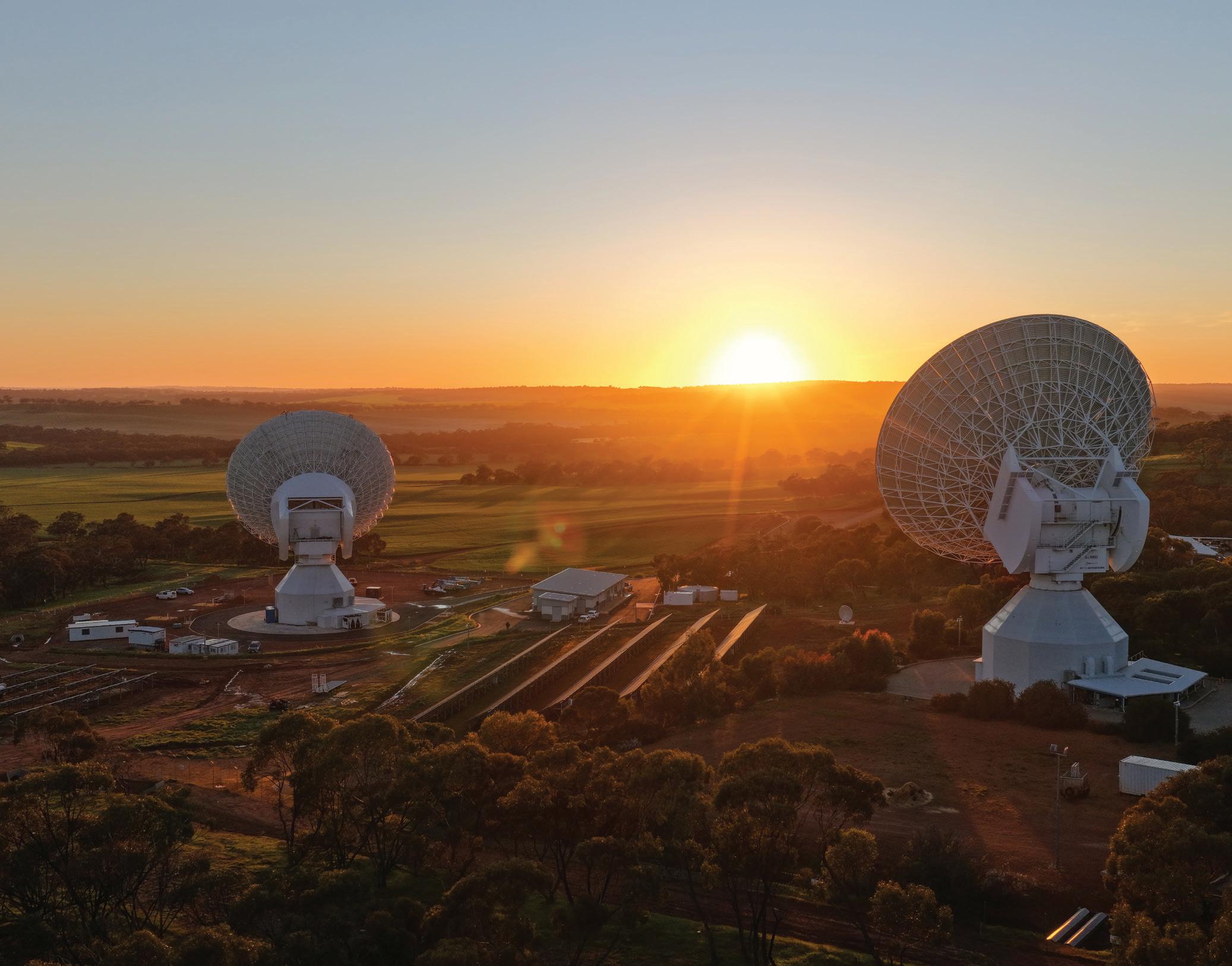
Located in New Norcia, about 115 km north of Perth, Western Australia, the ‘New Norcia 3’ antenna will help meet the agency’s fast-increasing data download needs and secure Europe’s independence and leadership in space.
Speaking at the inauguration on 4 October, Josef Aschbacher, Director General of ESA, said, “This strategic investment reinforces ESA’s deep-space communication capabilities and maximises the return of our missions’ most valuable asset: data delivered from spacecraft voyaging far from Earth. New and exciting opportunities between the European and Australian space sectors are opening up with Australia announcing this week a mandate to begin negotiations on a cooperative agreement with ESA.”
Started in 2021 and delivered on schedule, this construction is the result of the outstanding capabilities of ESA, European and Australian industry, and excellent cooperation with a range of Australian partners. When the new deep space antenna enters service in 2026, it will support ESA’s current flagship missions flown as part of the agency’s scientific, exploration and space safety fleets, including Juice, Solar Orbiter, BepiColombo, Mars Express and Hera, and will be a critical enabler for upcoming missions including Plato, Envision, Ariel, Ramses and Vigil.
The new antenna, as part of the Estrack network, will also serve ESA’s efforts towards international collaboration. As part of mutual cross-support arrangements with
the agency’s partners, the new antenna can support other space agencies such as NASA, Japan’s JAXA and India’s ISRO as well as commercial space missions, boosting science return and operational efficiency for all parties involved.
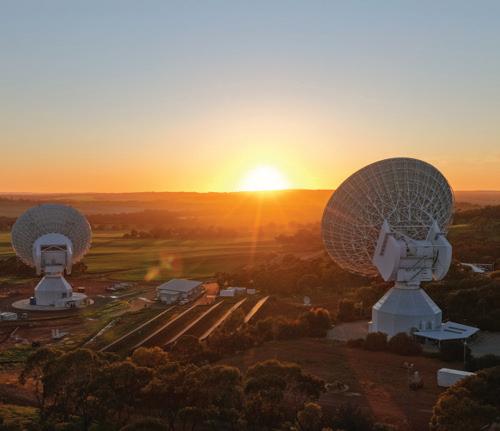
ESA’s fourth deep space antenna, the second one on the site at New Norcia, is the most technologically sophisticated antenna to date. It incorporates advanced deep space communication capabilities, including components cryogenically cooled to around –263°C, near absolute zero. This sensitivity allows it to detect extremely weak signals from distant spacecraft and to maximise data return. For transmission, a 20 kW radio-frequency amplifier enables transmission of commands to spacecraft millions and even billions of kilometres away from Earth. The antenna also features advanced clock and timing systems and world-class radio frequency communication tools and techniques to support deep space communication.
ESA’s first and fourth deep space antennas, in New Norcia, Australia.
Image credit: European Space Agency (ESA).
ESA’s fourth deep space antenna, the second one on the site at New Norcia, is the most technologically sophisticated antenna to date.
A symbol of ESA partnership with Australia
Opened in 2003, ESA’s Estrack station at New Norcia, Western Australia, demonstrates ESA’s strong engagement in the Asia–Pacific region and especially Australia, part of the long-term cooperation between ESA and Australia in the space domain. It enables significant economic, technological and scientific benefits for both partners, and will pave the way for further collaboration in areas such as communications, space safety and mission operations.
Enrico Palermo, Head of the Australian Space Agency, ASA, said: “Australia is well known as a trusted, experienced and capable operator in deep-space communications. This investment by ESA and the Australian Government will unlock millions of dollars in local economic value as well as employment over the projected lifetime of 50 years. It’s another chapter in the story of Australian and European partnership in space, which we will grow further as we begin to negotiate a new Cooperation Agreement between Australia and ESA.”
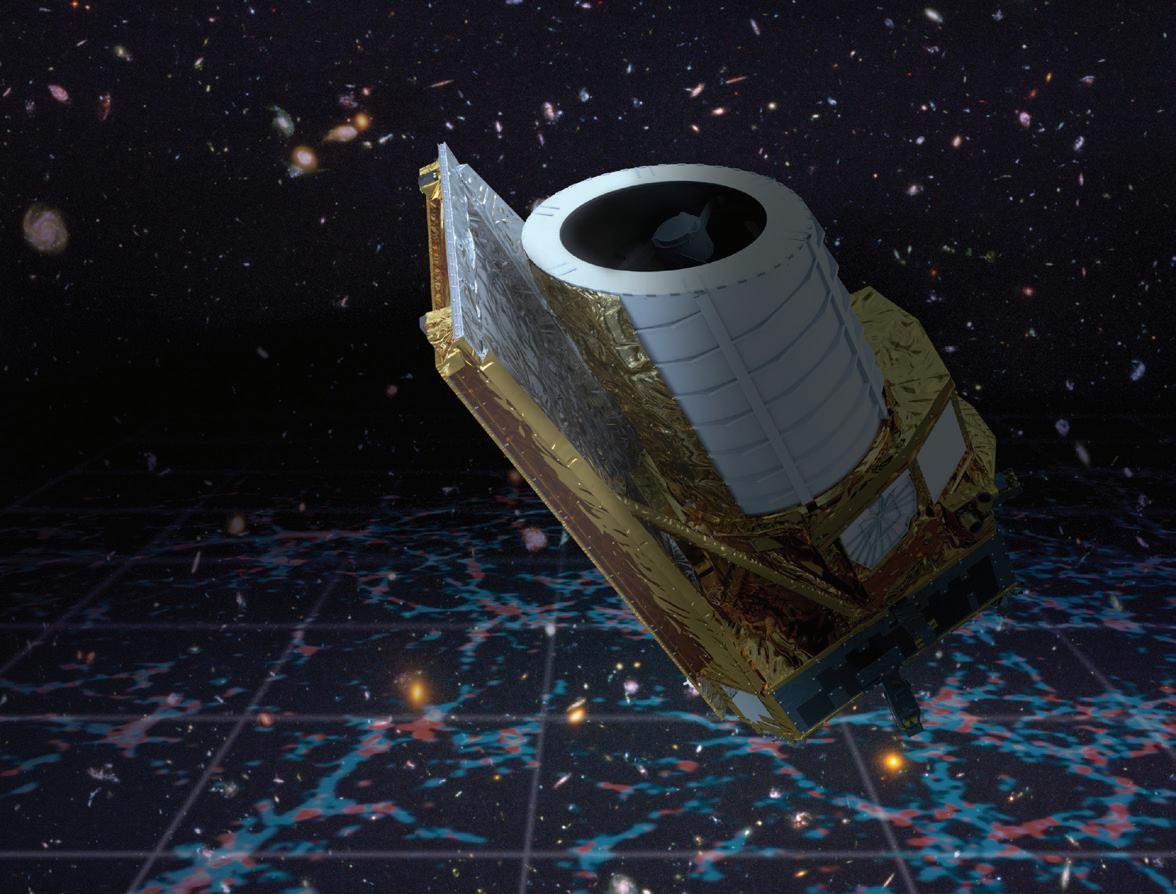
As part of its final calibration, the new antenna successfully received its first signal coming from ESA’s Euclid spacecraft. The challenge is to pick up very faint signals and then boost them considerably for transmission from
and to objects in deep space.
Construction of the new antenna was led by European industry, with Thales Alenia Space (France) and Schwartz Hautmont Construcciones Metálicas (Spain) as coprime contractors. A significant portion of the budget was spent in Australia with the involvement of several Australian companies including TIAM Solutions, Thales Australia, Fredon and Westforce Construction.
“This new deep-space antenna is a cornerstone for European and Australian space industries,” said Hervé Derrey, CEO of Thales Alenia Space. “Its inauguration demonstrates our capacity to build strategic, world-class space infrastructure anywhere. It required implementing advanced
technologies and shows we are able to deliver the mission operations infrastructure that enables European scientists to go where they wish to explore.”
A new antenna at ESA’s New Norcia ground station
New Norcia provides a strategic geographical position allowing around-theclock coverage for deep space missions, with a perfect complement to ESA’s stations in Malargüe (Argentina) and Cebreros (Spain). Once the new addition is made operational, New Norcia will become ESA’s first ground station equipped with two deep space antennas.
ESA’s ground station and antennas in New Norcia are locally operated by CSIRO, Australia’s national science agency. CSIRO similarly operates NASA’s deep space communication complex located at Tidbinbilla near Canberra.
Western Australia is also the location over which payloads launching from Europe’s Spaceport in Kourou, French Guiana, separate from their launcher. Located a few hundred metres from the deep space antennas, a smaller, more agile 4.5-metre antenna tracks Vega-C and Ariane 6 rockets and acquires critical telemetry used to monitor the in-flight status of those launch vehicles.
The station also hosts a custom-built transponder antenna to calibrate the measurements of ESA’s Biomass mission, launched in 2025. The Biomass Calibration Transponder will be visited a couple of times per year by the satellite over the course of its five-year survey of Earth’s forests.
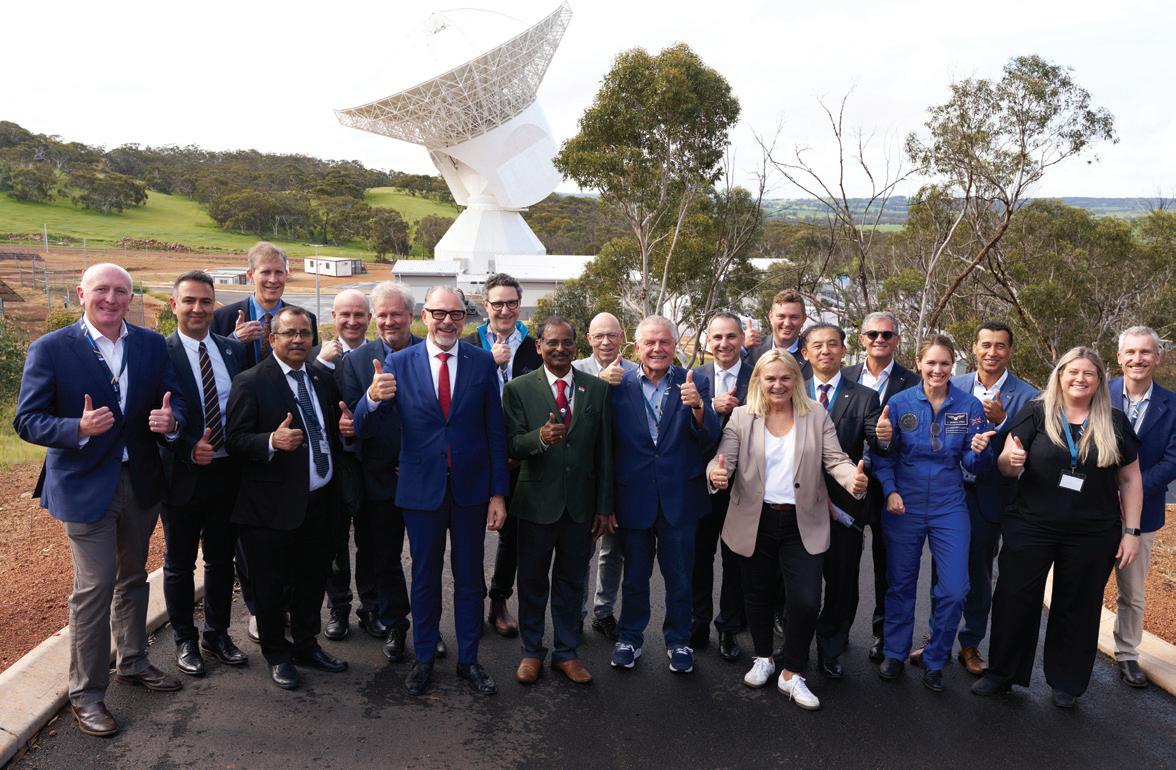
The inauguration ceremony was led by ESA Director General Josef Aschbacher alongside Enrico Palermo, Head of the Australian Space Agency.
(ESA).
Line scan camera
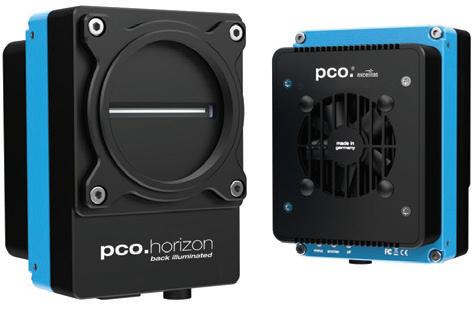
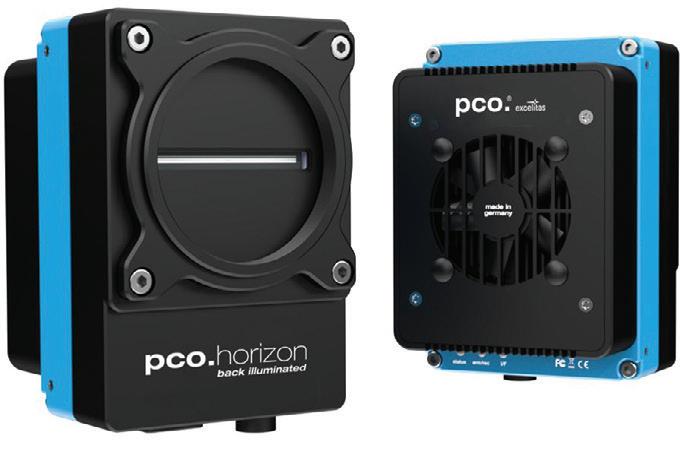
The pco.horizon 9.1 bi TDI CLHS Line Scan Camera by Excelitas features 9K resolution and 256 TDI stages for precise inspection applications requiring sensitivity, resolution and image stability. Its robust design, flexible thermal management and easy integration make it suitable for tasks in semiconductor inspection, material testing, print verification, web inspection, flat panel inspection, industrial quality inspection, machine vision, optical inspection, PCB and electronics inspection and wafer inspection.
Equipped with a temperature-stabilised, back-illuminated CMOS sensor and dual photosensitive bands, it delivers enhanced image quality and sensitivity at line rates up to 600 kHz. The Camera Link HS (CLHS) interface enables fast data transmission with simplified cabling, facilitating seamless integration into high-performance vision systems.
With a sensor pixel size of 5 µm, resolution of 9072 pixels and 256 TDI stages, the camera is designed for speed and image stability in precision environments. It features a backilluminated CMOS sensor and dual photosensitive bands, delivering enhanced light sensitivity and signal-to-noise performance. The camera’s temperature-stabilised sensor also provides consistent image quality over time, even in thermally challenging environments.
SCITECH PTY LTD www.scitech.com.au







DIN rail enclosures
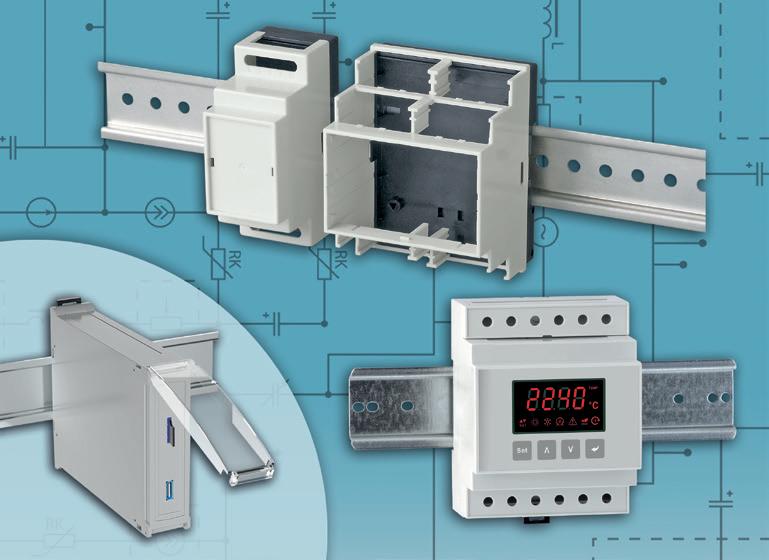
For industrial and automated systems, it is important to be able to install devices easily. OKW’s DIN rail enclosures are designed to bring structure to the control cabinet, as the electronic components are clearly arranged and easily accessible, thereby improving safety and reducing maintenance.
OKW offers DIN rail enclosures for TH35, TH15 and G32 rails in modular widths from 1 to 12 units.
The RAILTEC B enclosure family is characterised by its simple and fast snap-in installation on DIN rails complying with EN 60715 TH35. Available in six sizes (2–12 modules) based on DIN 43880, size 1, the enclosures have a modular design and are offered in various versions suitable for terminal blocks, plug headers, front connectors and D-Sub connectors. They can be installed as complete enclosures or as open enclosures for individual configurations (terminal covers, partitions, front panels, etc.). The enclosures are also available either with or without ventilation slots to improve heat dissipation.
The panel-mounted variant RAILTEC BP, M22 is notable for its simple and flexible assembly, featuring screwless enclosure mounting. As an accessory for this version, a transparent, hinged cover is available to provide added protection for integrated display and control elements while providing a clear view of the applications.
The RAILTEC C product group has a similar structure (adapters are also available as accessories for TH15 and G32) but is also suitable for direct wall mounting. This range includes modular subrack systems — RAILTEC SUPPORT — which allow for individual assembly and offer greater flexibility through the replacement of interfaces.
DIN rail enclosures are suitable for applications in Industry 4.0, smart factories, enclosure and safety technology, automation, heating/air conditioning/environmental technology, lighting control, sensors and much more.
Standard enclosures can also be adapted to specific requirements through customised modifications. Various options are available, including mechanical processing, painting, printing, laser marking and decorative foils, as well as assembly and packaging.
ROLEC OKW AUSTRALIA NEW ZEALAND P/L www.okw.com.au
Turning waste wood into biodegradable PCBs
Anna Ettlin, Empa
MODERN PRINTED CIRCUIT BOARDS ARE MADE FROM PETROLEUM-BASED MATERIALS AND ARE DIFFICULT TO RECYCLE. EMPA RESEARCHERS HAVE DEVELOPED A BIODEGRADABLE VERSION — AN IMPORTANT STEP TOWARDS SUSTAINABLE ELECTRONICS. THEIR BIOMATERIAL IS BASED ENTIRELY ON WOOD AND CAN BE PROCESSED INTO FUNCTIONAL CIRCUIT BOARDS FOR ELECTRONIC DEVICES.
They are the ‘heart’ of every electronic device, from laptops to electric toothbrushes: printed circuit boards, also known as PCBs. These rigid boards are covered with copper traces and soldered electronic components and are usually a tell-tale green colour. They are, however, not exactly environmentally friendly.
The substrate generally used for the traces and components is a laminate made of fibre-reinforced epoxy resin. This composite material is based on petroleum and cannot be recycled. Proper disposal is costly, for example in a special pyrolysis furnace with exhaust air purification — a challenge, given the large quantities of discarded circuit boards that accumulate for disposal each year.
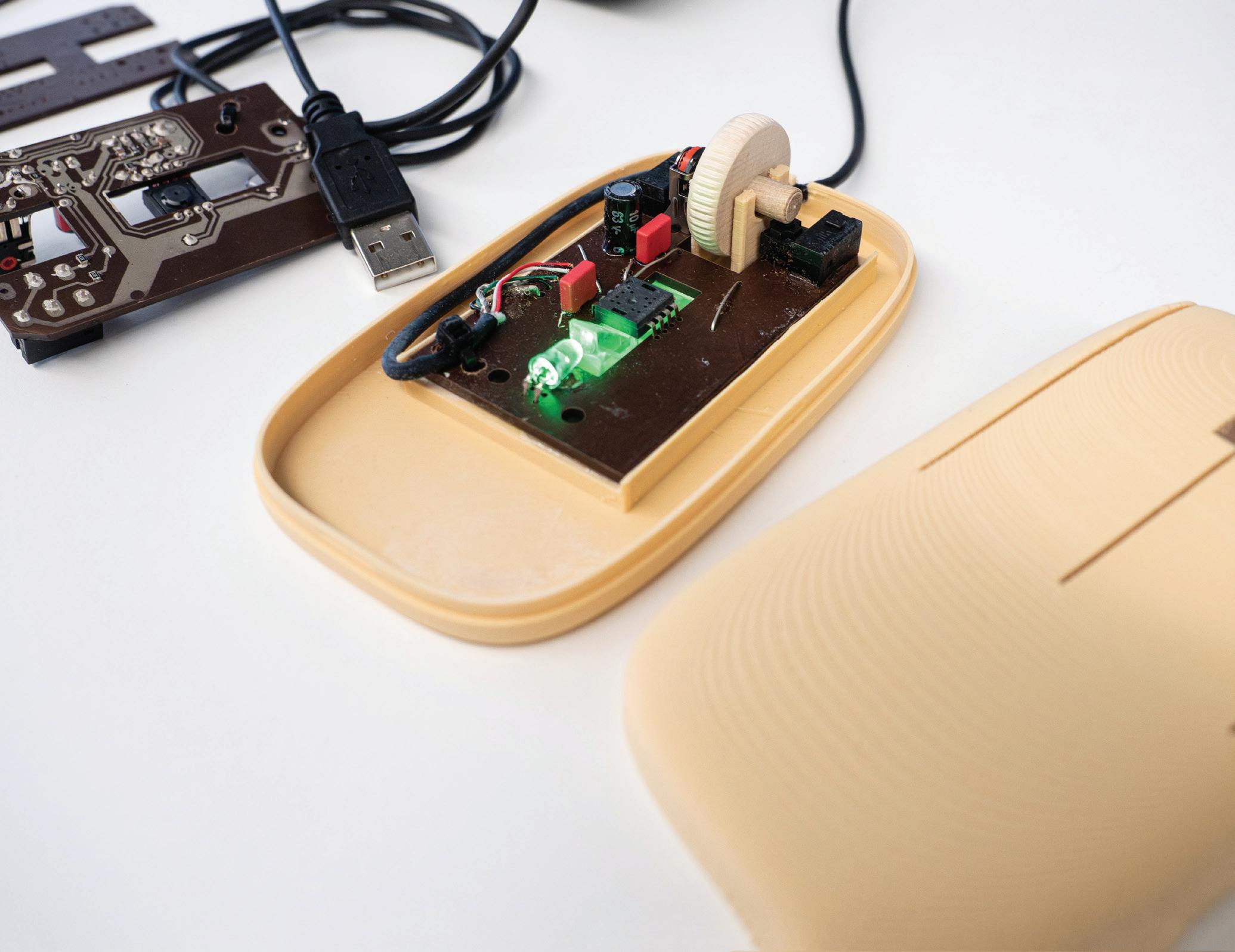
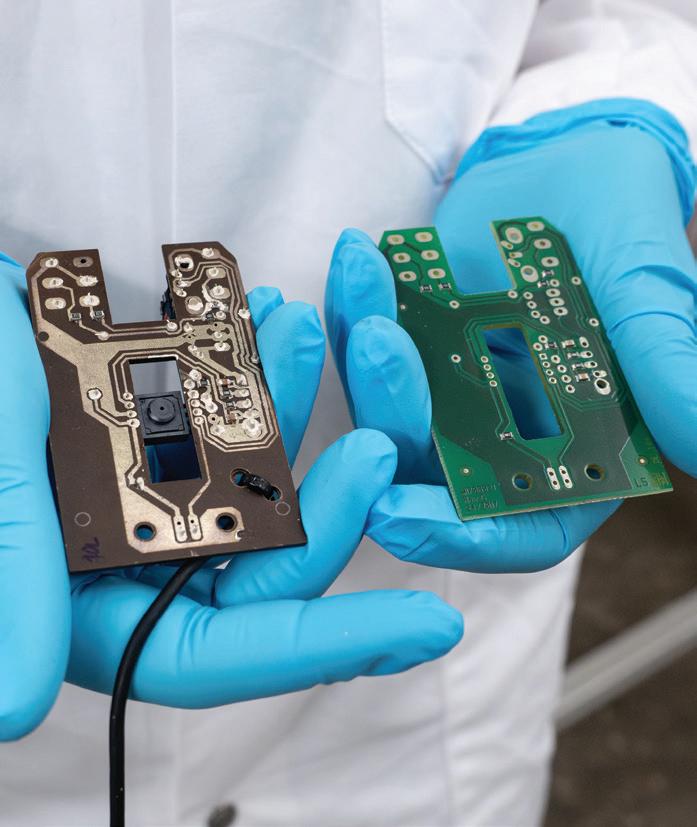
Researchers led by Thomas Geiger from Empa’s Cellulose and Wood Materials laboratory are working on a ‘green’, ie, sustainable, option — which is actually brown. As part of the EU research project HyPELignum, they developed a wood-based substrate for PCBs that can compete with conventional epoxy resin — and is also completely biodegradable. The researchers have incorporated the boards made from this material into functioning computer mice.
Dream team of fibrils and lignin
The source for the carrier material is a natural mixture of cellulose with a small amount of lignin. Strictly speaking, it is a waste product. “Our partners at the TNO research institute in the Netherlands have developed a process for extracting the
raw materials lignin and hemicellulose from wood,” Geiger said. “What remains is brownish lignocellulose, for which there has been no use so far.” Geiger, who has a long track record of research into electronics made from cellulose, saw the potential of the raw material.
In order for the flaky lignocellulose to become a high-tech product such as a PCB, it must first be ground by adding water to break down the relatively thick cellulose fibres into thinner fibrils. This >
Images credit: Empa.
Left: Not only is the casing of this computer mouse made from biodegradable material, but so is its circuit board.
Above: The ‘green’ circuit board is actually not green, but brown: on the left is a mouse circuit board made of lignocellulose, on the right is a conventional mouse circuit board made of non-renewable raw materials.
Many electronic devices are only in use for a few years before they become obsolete so it doesn’t make sense to manufacture them from materials that can last for hundreds of years.

creates a fine network of slender fibrils that are interconnected. In a next step, the water is squeezed out of the mixture under high pressure. The fibrils move closer together and dry to form a solid mass. The researchers call this process hornification. “The lignin contained in the material serves as an additional binding agent,” Geiger said. The resulting hornified board is almost as resistant as a conventional circuit board made of fibre-reinforced epoxy. This is because the compostable board is still sensitive to water and high humidity. But water is needed because, “if no water can penetrate the carrier material at all, microorganisms such as fungi can no longer grow in it — and it would thus not be biodegradable”, Geiger said.
Configurable module
A compostable computer mouse
Nevertheless, the researchers are confident that the resistance of lignocellulose-based biomaterials can be further improved with suitable processing methods. “For certain applications, however, we also need to rethink our relationship with electronics. Many electronic devices are only in use for a few years before they become obsolete — so it doesn’t make sense to manufacture them from materials that can last for hundreds of years,” Geiger said.
The researchers have printed conductive traces on their sustainable circuit boards and fitted them with components to produce functioning electronic devices, such as a computer mouse or an RFID
card. At the end of its service life, such a device could be composted given the right conditions. Once the carrier material has decomposed, the metallic and electronic components can be removed from the compost and recycled.
Next, the researchers want to make their biomaterial for circuit boards more resistant without compromising its biodegradability. The project partners also plan to produce further demonstration devices with lignocellulose plates at the end of the HyPELignum project in 2026. Transfer to industry is also a must: “Together with Swiss and European companies, we want to develop further applications for the lignocellulose material,” Geiger said.
Metromatics has launched the XMC-FZU7EV, a powerful XMC FPGA configurable module designed for mission-critical applications across defence, aerospace, research and industrial sectors.
Built on the AMD (Xilinx) Zynq UltraScale+ MPSoC architecture, the module delivers a combination of processing power, programmable logic and rugged design. By integrating a quad-core ARM Cortex-A53, dual-core ARM Cortex-R5, Mali-400 GPU and H.264/265 video codec into a single device, the module provides the flexibility and performance required for a range of demanding real-time systems.
The module is also compatible with a range of carrier boards including VPX, VME and PCIe systems, allowing engineers to accelerate deployment and integration. Its modular design enables adaptability for evolving system requirements, from AI and sensor fusion to imaging and deep learning applications.
The XMC-FZU7EV is now available in Australia and New Zealand through Metromatics.
METROMATICS PTY LTD www.metromatics.com.au
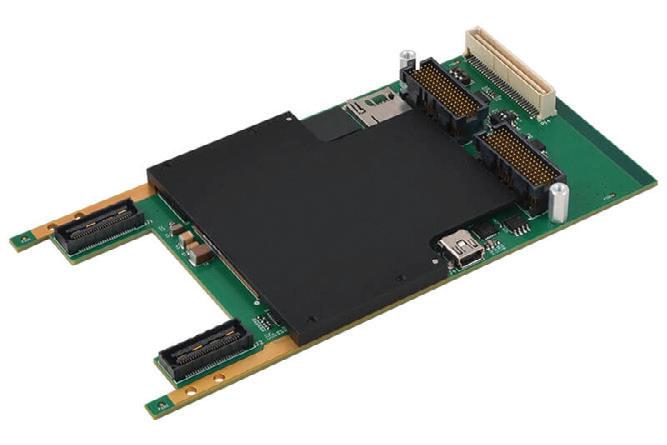
Image credit: Empa.
From raw material to finished product: the lignocellulose (left) is ground with water and pressed into hornified plates. The plates are cut to the desired shape and fitted with the conductor tracks and electronic components.
NEWS from the SMCBA Conference: The forum for global electronics manufacturing success
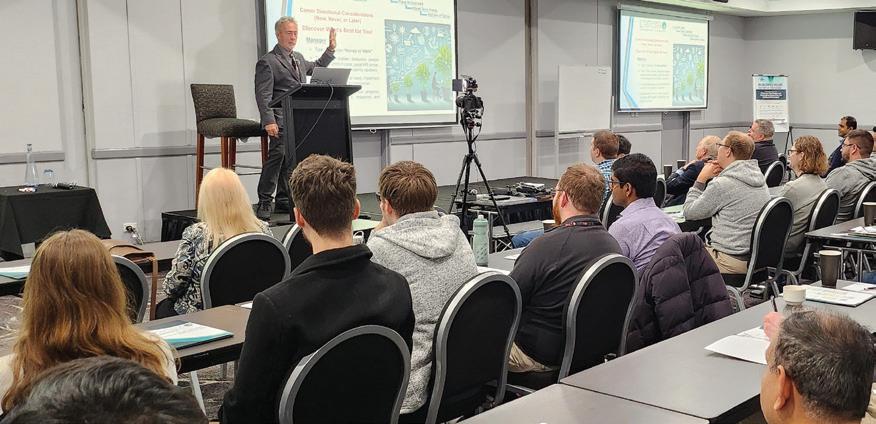
Each year, the SMCBA Electronics Design and Manufacture Conference brings together Australia’s most innovative engineers, manufacturers and technology leaders for three days of concentrated learning, networking and industry insight.
Past conferences have featured highly regarded technical seminars, from deep-dive Design for Manufacture workshops to strategic presentations on strengthening Australia’s sovereign electronics supply chain, giving attendees practical skills they can apply immediately in their own PCB and PCBA development workflows. Sessions exploring upcoming manufacturing roadmaps, materials trends, assembly challenges and quality assurance have consistently made the event a go-to knowledge hub for anyone working at the cutting edge of electronics.
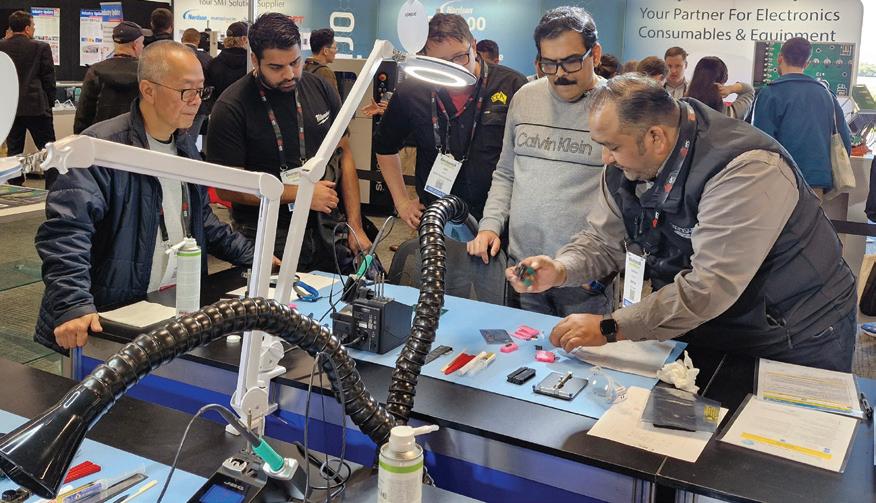
The partner event ElectroneX expands the conference even further, offering attendees direct, hands-on looks at new cuttingedge components, advanced inspection systems, innovative test equipment and a wide range of contract manufacturing solutions.
With the 2026 program still being finalised, now is the ideal moment for forward-thinking professionals to secure their place. While the full schedule has yet to be announced, registrations for next year’s SMCBA Conference’s will open soon and an early-bird discount will be available for January only, making it the best time to register.
Whether you’re designing complex boards, managing electronics production, navigating supply-chain demands or simply aiming to stay ahead of industry change, the SMCBA Conference remains one of the most valuable events on the calendar, as a concentrated investment in both professional development and the future of Australia’s rapidly evolving electronics industry.










Quantum signals sent with Standard Internet Protocol
Ian Scheffler, University of Pennsylvania School of Engineering and Applied Science

ENGINEERS AT THE UNIVERSITY OF PENNSYLVANIA HAVE BROUGHT QUANTUM NETWORKING OUT OF THE LAB AND ONTO COMMERCIAL FIBRE-OPTIC CABLES USING THE SAME INTERNET PROTOCOL (IP) THAT POWERS TODAY’S WEB.
Reported in Science, the research shows that fragile quantum signals can run on the same infrastructure that carries everyday online traffic. The team tested their approach on Verizon’s campus fibre-optic network.
The Penn team’s ‘Q-Chip’ coordinates quantum and classical data and speaks the same language as the modern web. That approach could pave the way for a future ‘quantum internet’, which scientists believe may one day be as transformative as the dawn of the online era.
Quantum signals rely on pairs of ‘entangled’ particles, so closely linked that changing one instantly affects the other. Harnessing that property could allow quantum computers to link up and pool their processing power, enabling advances like faster, more energy-efficient AI or designing
new drugs and materials beyond the reach of today’s supercomputers.
Penn’s work shows that a chip can not only send quantum signals but also automatically correct for noise, bundle quantum and classical data into standard internet-style packets, and route them using the same addressing system and management tools that connect everyday devices online.
“By showing an integrated chip can manage quantum signals on a live commercial network like Verizon’s, and do so using the same protocols that run the classical internet, we’ve taken a key step toward larger-scale experiments and a practical quantum internet,” said Liang Feng, professor in Materials Science and Engineering (MSE) and in Electrical and Systems Engineering (ESE), and the Science paper’s senior author.
The challenges of scaling the quantum internet
Erwin Schrodinger, who coined the term ‘quantum entanglement’, famously related the concept of a cat hidden in a box. If the lid is closed, and the box also contains radioactive material, the cat could be alive or dead. One way to interpret the situation is that the cat is both alive and dead. Only opening the box confirms the cat’s state.
That paradox is roughly analogous to the unique nature of quantum particles. Once measured, they lose their unusual properties, which makes scaling a quantum network extremely difficult.
“Normal networks measure data to guide it towards the ultimate destination,” said Robert Broberg, a doctoral student in ESE and co-author of the paper. “With purely quantum networks, you can’t do that, because measuring the particles destroys the quantum state.”
Coordinating classical and quantum signals
To get around this obstacle, the team developed the Q-Chip (short for QuantumClassical Hybrid Internet by Photonics)

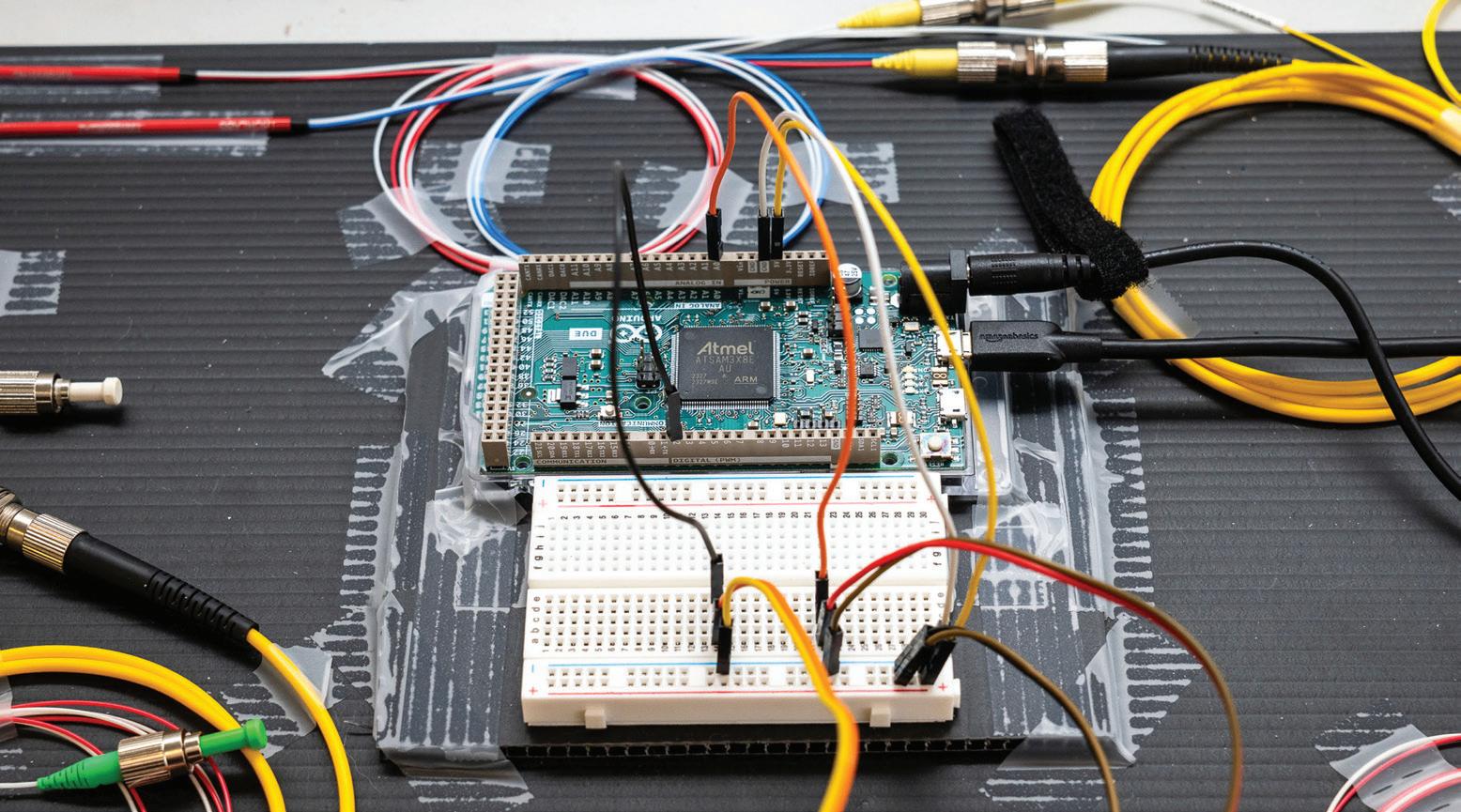
Adapting quantum technology to the real world
to coordinate ‘classical’ signals, made of regular streams of light, and quantum particles. “The classical signal travels just ahead of the quantum signal,” said Yichi Zhang, a doctoral student in MSE and the paper’s first author. “That allows us to measure the classical signal for routing, while leaving the quantum signal intact.”
In essence, the new system works like a railway, pairing regular light locomotives with quantum cargo. “The classical ‘header’ acts like the train’s engine, while the quantum information rides behind in sealed containers,” Zhang said. “You can’t open the containers without destroying what’s inside, but the engine ensures the whole train gets where it needs to go.”
Because the classical header can be measured, the entire system can follow the same ‘IP’ or ‘Internet Protocol’ that governs today’s internet traffic. “By embedding quantum information in the familiar IP framework, we showed that a quantum internet could literally speak the same language as the classical one. That compatibility is key to scaling using existing infrastructure,” Zhang said.
One of the greatest challenges to transmitting quantum particles on commercial infrastructure is the variability of real-world transmission lines. Unlike laboratory environments, which can maintain ideal conditions, commercial networks frequently encounter changes in temperature, thanks to weather, as well as vibrations from human activities like construction and transportation, not to mention seismic activity.
To counteract this, the researchers developed an error-correction method that takes advantage of the fact that interference to the classical header will affect the quantum signal in a similar fashion. “Because we can measure the classical signal without damaging the quantum one, we can infer what corrections need to be made to the quantum signal without ever measuring it, preserving the quantum state,” Feng said.
In testing, the system maintained transmission fidelities above 97%, showing that it could overcome the noise and instability that usually destroy quantum signals outside the lab. And because the chip is made of silicon and fabricated using established techniques, it could be mass produced, making the new approach easy to scale.
“Our network has just one server and one node, connecting two buildings, with about a kilometre of fibre-optic cable installed by Verizon between them. But all you need to do to expand the network is fabricate more chips and connect them to Philadelphia’s existing fibre-optic cables,” Feng said.
The Penn team’s ‘Q-Chip’ coordinates quantum and classical data and speaks the same language as the modern web.
The future of the quantum internet
The main barrier to scaling quantum networks beyond a metro area is that quantum signals cannot yet be amplified without destroying their entanglement.
While some teams have shown that ‘quantum keys’, special codes for ultrasecure communication, can travel long distances over ordinary fibre, those systems use weak coherent light to generate random numbers that cannot be copied, a technique highly effective for security applications but not sufficient to link actual quantum processors.
Overcoming this challenge will require new devices, but the Penn study provides an important early step: showing how a chip can run quantum signals over existing commercial fibre using internet-style packet routing, dynamic switching and on-chip error mitigation that work with the same protocols that manage today’s networks.
“This feels like the early days of the classical internet in the 1990s, when universities first connected their networks; that opened the door to transformations no one could have predicted. A quantum internet has the same potential,” Broberg said.
Image credit: Sylvia Zhang.
Part of the equipment used to create a node of the quantum network, roughly one kilometre’s worth of Verizon commercial fibre-optic cable away from its source.
All-in-one controller
Rockwell Automation has launched the ControlLogix 5590 controller, the core of the Logix platform. Designed to meet the evolving demands of modern manufacturing, this all-in-one controller delivers software integration and multidiscipline control across the enterprise to streamline operations.
Manufacturers are navigating a range of challenges, from rising global competition and workforce shortages to growing safety and security risks. Contributing to the complexity are disconnected control and data systems built on propriety technologies, which limit flexibility and keep costs high. The all-in-one controller is a purpose-built solution to help manufacturers tackle these challenges and take control of their operations.
The controller includes advanced, integrated functional safety capabilities designed to help protect people, equipment and operations, without the need for separate safety models. Certified to meet global standards, it helps customers build safer systems with less complexity and more confidence.
The controller is also designed to deliver high-speed processing and expanded memory capacity to support complex operations. The controller includes built-in security features designed to help protect systems from current and emerging cyber threats. These protections are based on global standards (IEC 62443) and help customers keep their operations connected and compliant with modern security requirements.
A unified software suite, including Studio 5000 Logix Designer and FactoryTalk Design Studio, helps streamline development, accelerate deployment and simplify workflows across the enterprise.
ROCKWELL AUTOMATION AUSTRALIA www.rockwellautomation.com/en-au.html
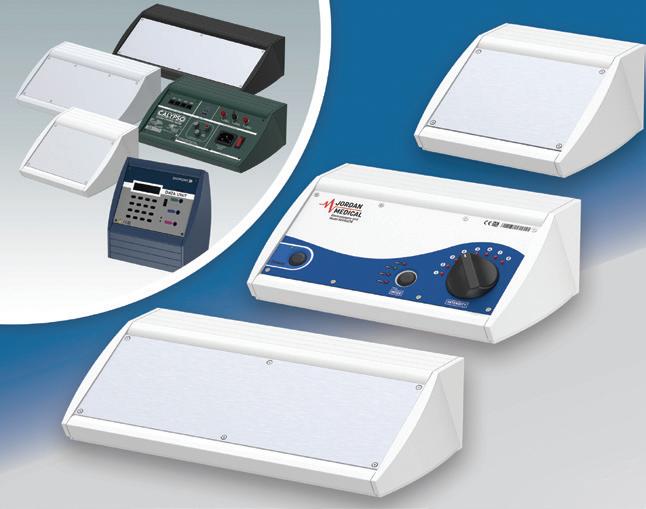
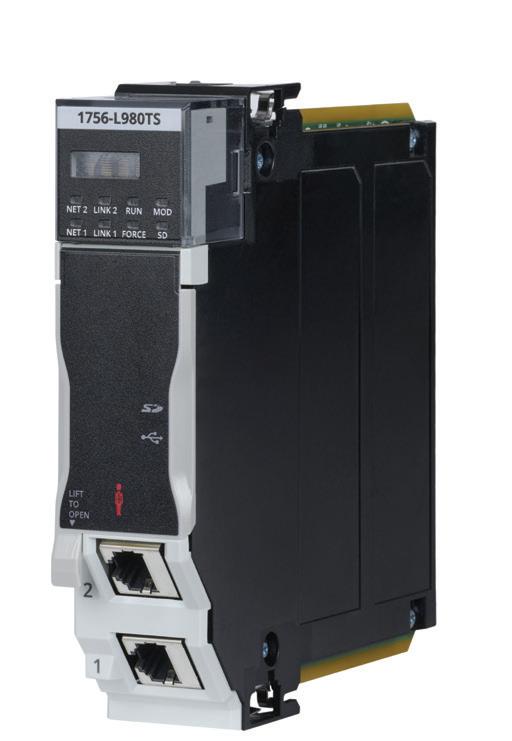
Sloping-front terminal enclosures
The UNIDESK sloping-front terminal enclosures from METCASE are now available in three standard colours: black (RAL 9005), light grey (RAL 7035) and new traffic white (RAL 9016). Custom colours are also available.
These desktop and wall-mount aluminium enclosures are suitable for a range of electronic and electro-technical applications including office systems, point-of-sale, medical devices, industrial/machine control and security.
UNIDESK has a pre-assembled case body with a flat rear panel for connectors, switches and power inlets. The front panel (accessory) is recessed to accommodate a membrane keypad. The base has pre-punched PCB fixing points. Four non-slip rubber feet are supplied, along with M3 Torx T10 and Pozidriv fixings.
IP 54 (VDE tested) ingress protection is optional with gaskets for the front and base panels. This protection is dependent on the addition of PCB pillars (accessory). The enclosures are available in three standard sizes: 200 x 200 x 102 mm, 300 x 200 x 102 mm and 400 x 200 x 102 mm.
Accessories include matt anodised aluminium front panels, wall mount kits, a PCB mounting kit and PCB/panel fixing screws. METCASE can supply UNIDESK fully customised. Services include custom widths, custom front panels, CNC machining, fixings and inserts, painting and finishing, and photo-quality digital printing of legends, logos and graphics.
ROLEC OKW AUSTRALIA NEW ZEALAND P/L www.metcase.com.au
Digital displays
In industrial and commercial environments, accurate and dependable weighing is a necessity. London Electronics has developed the FUSION series of digital displays, designed to deliver real-time, precision measurements for a range of applications.
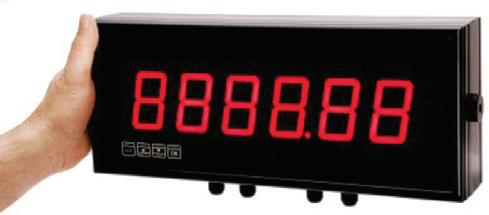
Built for seamless integration into new or existing systems, the displays are used across the UK and internationally in applications ranging from vessel monitoring to process control on the factory floor. The digital indicators are designed for performance, longevity and ease of use. The FUSION series offers a clear visual interface, robust construction and flexible input/output options, making it suitable for a range of industrial weighing tasks.
AMS INSTRUMENTATION & CALIBRATION PTY LTD www.ams-ic.com.au

Aussie researchers claim efficiency record for solar cells
The University of Sydney
A UNIVERSITY OF SYDNEY-LED TEAM HAS SET A RECORD FOR SOLAR TECHNOLOGY, CREATING THE LARGEST AND MOST EFFICIENT TRIPLE-JUNCTION PEROVSKITEPEROVSKITE-SILICON TANDEM SOLAR CELL REPORTED.
Led by Professor Anita Ho-Baillie, John Hooke Chair of Nanoscience at the University of Sydney Nano Institute and School of Physics, the result demonstrates high efficiency and durability, important steps for overcoming barriers to the development of perovskite tandem solar cell technology.
The team’s 16 cm2 triple-junction cell achieved an independently certified steadystate power conversion efficiency of 23.3%, the highest reported for a large-area device of this kind. At the smaller scale, a 1 cm2 cell recorded 27.06% efficiency and set new standards for thermal stability.
The results have been published in the journal Nature Nanotechnology
In a global first, the 1 cm2 cell passed the International Electrotechnical Commission’s (IEC) Thermal Cycling test, which exposes devices to 200 cycles of extreme temperature swings between -40 and 85°C. This cell retained 95% of its efficiency after more than 400 hours of continuous operation under light.
A triple-junction solar cell uses three interconnected semiconductors, each absorbing a different part of the solar spectrum to maximise conversion of the Sun’s energy into electricity.
How the team did it
Professor Ho-Baillie, also part of the University of Sydney Net Zero Institute, said
this latest advance was achieved by reengineering the chemistry of the perovskite material and the triple junction cell design.
“We improved both the performance and the resilience of these solar cells,” Ho-Baillie said. “This not only demonstrates that large, stable perovskite devices are possible but also shows the enormous potential for further efficiency gains.”
The researchers replaced less stable methylammonium, commonly used in highefficiency perovskite cells, with rubidium, creating a perovskite lattice that is less prone to defects and degradation. They also replaced the less stable lithium fluoride with piperazinium dichloride for a new surface treatment.
To connect the two perovskite junctions, the researchers used gold at the nanoscale and, using advanced transmission electron microscopy, clarified that gold at this scale is in the form of nanoparticles, not as a continuous film as many perceived. The team used this knowledge to engineer gold nanoparticle coverage to maximise the flow of electric charge and light absorption by the solar cell.
These developments enabled the triplejunction cell to sustain high efficiencies over more time and under stress.
Future solar energy
Perovskites are an emerging class of photovoltaic materials valued for their low-cost manufacturing and ability to capture more of the solar spectrum when stacked in multiple layers with silicon. Until now, however, scaling devices beyond the laboratory and ensuring their stability under real-world conditions have been major challenges.
“This is the largest triple-junction perovskite device yet demonstrated and it has been rigorously tested and certified by independent laboratories,” Ho-Baillie said. “That gives us further confidence that the technology can be scaled for practical use.”
The research was carried out in collaboration with international partners from China, Germany and Slovenia, with support from the Australian Renewable Energy Agency (ARENA) and the Australian Research Council.
“It is an exciting time for solar research,” Ho-Baillie said. “Perovskites are already showing us that we can push efficiencies beyond the limits of silicon alone. These advances mean we are moving closer to cheaper, more sustainable solar energy that will help power a low-carbon future.”
This is
The research team holding the 1 cm2 perovskite cells.
CRYPTO CHIP KEEPS WATER FLOWING IN RURAL COMMUNITIES
Twisthink has integrated Microchip’s ATECC608B crypto chip into an IoT pump sensor for non-profit organisation charity: water, thereby enabling secure, reliable and scalable cloud connectivity.
The challenge
More than 50,000 wells across 28 countries required monitoring to sustain long-term access to clean water. Manual maintenance can cause weeks or months of downtime, leaving communities without access to safe drinking water. An IoT-based predictive maintenance solution required secure device identity, tamper-resistant credential storage and efficient cloud provisioning at scale.
Twisthink developed two IoT pump sensor designs (India Mark II and Afridev 3) to monitor pump health with capacitive sensing and cloud connectivity. At the centre of both designs is the Microchip ATECC608B CryptoAuthentication device, selected for its robust hardware-based security, straightforward MCU interface and streamlined credential provisioning into charity: water’s AWS-based cloud platform.
The ATECC608B provides a secure element that protects cryptographic keys and provides device identity. It has the ability to perform Elliptic Curve Cryptography operations for authentication and key agreement, as well as Advanced Encryption Standard for data encryption, which is a fundamental feature that enables end-to-end data security.
Pre-generated credential files from Microchip allow turnkey provisioning process where the chips are preprogrammed with unique device certificates and private keys by Microchip, which drastically simplifies the secure onboarding of devices at scale.
The ATECC608B uses a simple I2C interface, which is a widely supported communication protocol on most microcontrollers. This low pin count and straightforward communication bus minimises the need for complex external circuitry, simplifying the bill of materials and the overall circuit board layout.
Industry impact and use-cases
With the crypto chip integrated, Twisthink’s IoT sensors securely capture 13+ million water samples daily, transmitting authenticated telemetry to the cloud. The secure hardware foundation minimises cost and electronics complexity, accelerates compliance with IoT security best practices and supports more than 10 years of field operation at just 2% of total pump cost. Beyond water access, this architecture is applicable to industrial monitoring, grid energy systems and any IoT deployment where secure provisioning and long-lifecycle reliability are critical.
Microchip Technology Hong Kong Limited www.microchip.com