
6 USING A LIMS TO IMPROVE LABORATORY MANAGEMENT
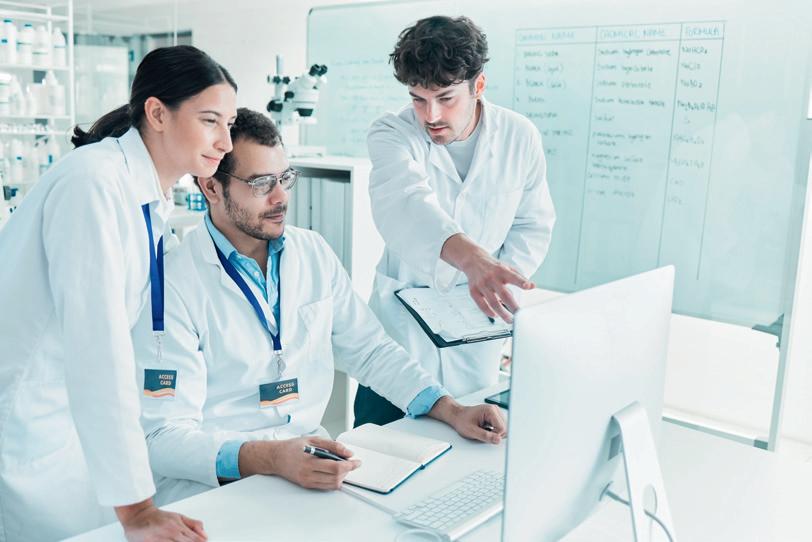
Many lab managers may be surprised at how a LIMS can improve efficiency and help support the needs of industry standards and regulations such as ISO/IEC 17025 and GxP.
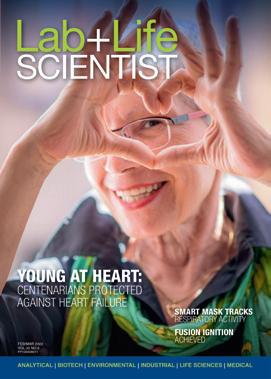
14 WE HAVE IGNITION –FUSION IGNITION
The US Department of Energy says the achievement of fusion ignition is a major scientific breakthrough that will pave the way for advancements in defence and the future of clean power.
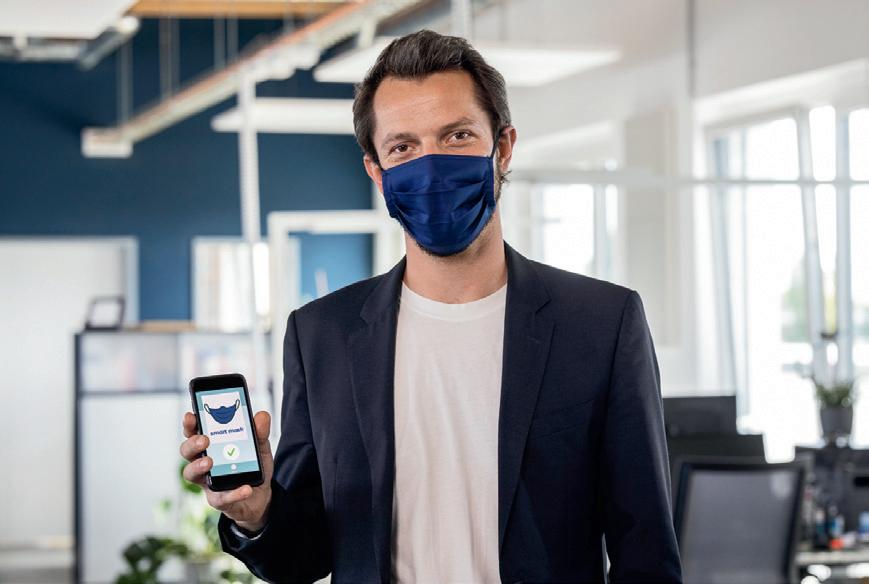
16 SMART MASK TRACKS RESPIRATORY SOUNDS FOR DISEASE IDENTIFICATION
The smart mask utilises a highsensitivity, wide-bandwidth flexible sensor that can detect and record daily human respiratory activity, such as breathing, coughing and speaking.
18
‘GEL SHEET’ ABSORBS
3X MORE LIQUID THAN A PAPER TOWEL
Researchers used a hydrogel — a gelatin-like material in the form of a dry sheet — to craft so-called ‘gel sheets’ that absorb and hold liquid, while also being foldable and cuttable.
26 IDENTIFYING INTRINSICALLY DISORDERED PROTEINS IN CROWDS
Australian scientists have revealed new insights into intrinsically disordered proteins and protein regions (IDPs)/ (IDRs) and how they behave under various physiological processes.
29 GENE IN CENTENARIANS PROTECTS AGAINST HEART FAILURE

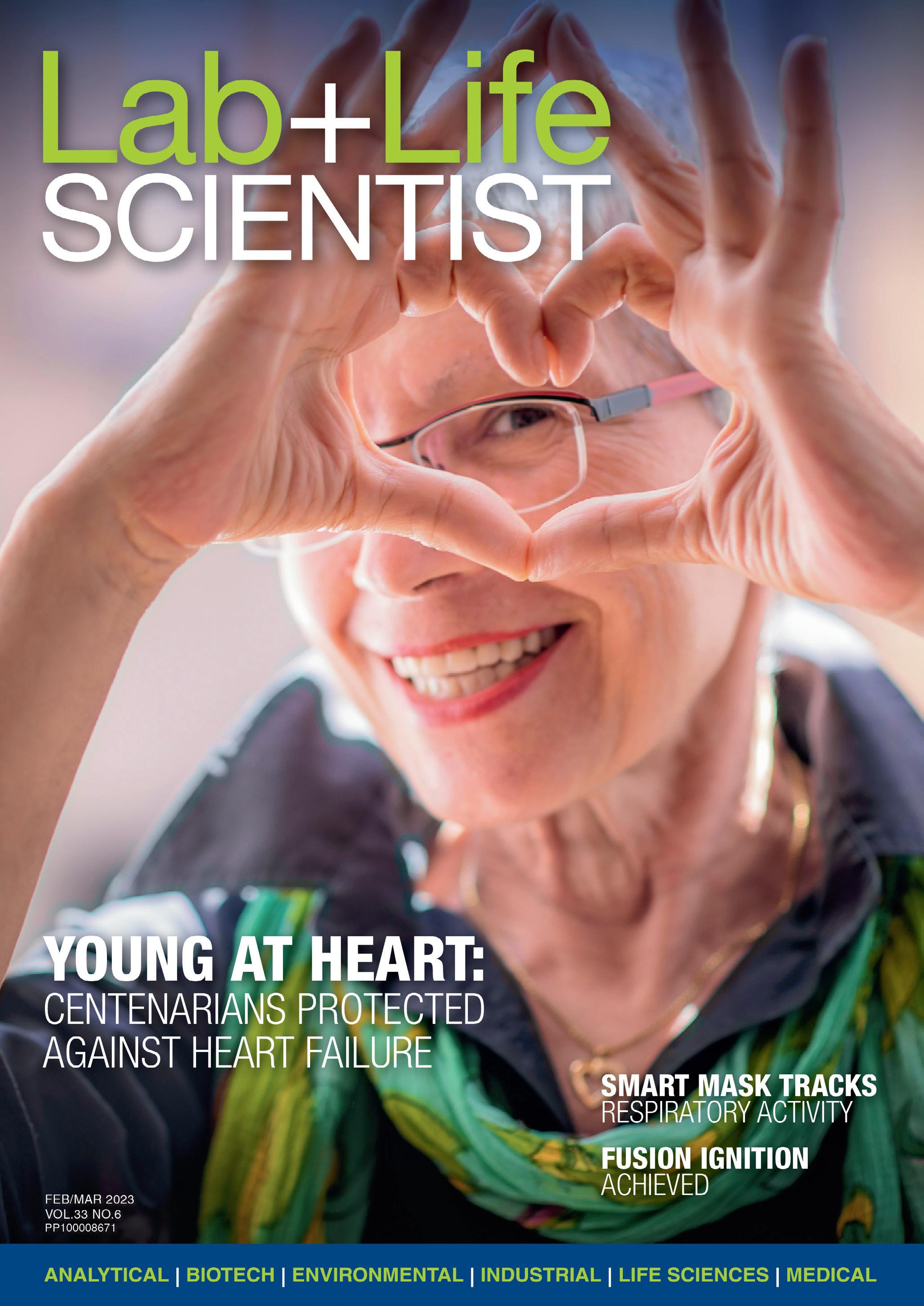
An anti-aging gene discovered in a population of centenarians has been shown to rewind the heart’s biological age by 10 years.
32 NEW X-RAY TECHNIQUE TO IMAGE FLUCTUATIONS IN MATERIALS
The technique, dubbed coherent correlation imaging (CCI), allows for the creation of sharp, detailed movies without damaging the sample by excessive radiation.
LAB+LIFE SCIENTIST - Feb/Mar 2023 | 3 www.LabOnline.com.au | www.LifeScientist.com.au Contents
14 29 This issue is available to read and download at READ ONLINE! www.labonline.com.au/magazine feb/mar 2023
16 6 Cover image: iStock.com/TeoLazarev
Journey to the West
It has come to my attention that Western Australia has been in the news quite a bit lately. It all started in December last year, when construction finally began on the world’s largest radio astronomy observatory and one of the biggest science facilities on Earth — the SKA Observatory (SKAO). An international collaboration of 16 countries, the SKAO will initially comprise 131,072 antennas in Australia (SKA-Low), which will be built at Inyarrimanha Ilgari Bundara, the CSIRO Murchison Radio-astronomy Observatory in WA; and 197 dishes in South Africa (SKA-Mid). Together, these telescopes will provide an unparalleled view of the universe, with SKA-Low set to map the structure of the infant universe, when the first ever stars and galaxies were forming, for the first time.
Of course Inyarrimanha Ilgari Bundara is already home to the ASKAP radio telescope, and in January it was revealed that this had been used (along with the Parkes radio telescope) to create what is believed to be the most detailed radio image yet of the Milky Way galaxy. A composite image from the two telescopes showcased a region of the Milky Way where astronomers could see
extended emission associated with hydrogen gas filling the space between dying stars, as well as hot bubbles of gas called supernova remnants, which are all that remains when a star dies. Over 20 new possible supernova remnants have been discovered as a result of the composite image, where only seven were previously known, and astronomers say that the discovery of further remnants will help to unlock more of an understanding of our galaxy and its history.
But the biggest news out of WA lately would have to be the loss — and subsequent recovery — of a tiny radioactive capsule, somewhere along 1400 km of desert road. It was a baffling story that attracted worldwide attention, and at the time of writing details are still scarce on how the capsule of Caesium-137 managed to make its way loose from where it was meant to be securely stored on the back of the truck, just a couple of hundred kilometres from where it set out. The news does however highlight how support agencies including the Australian Radiation Protection and Nuclear Safety Agency and the Australian Nuclear Science and Technology Organisation (ANSTO) managed to band together to track down the capsule only a week after it was reported missing, while also serving as a significant wake-up call surrounding the safe transport and handling of radioactive materials.

Safety in all its forms is on the agenda for this issue of Lab+Life Scientist, as our story on page 16 looks at smart face masks that can recognise different coughing and breathing patterns automatically, indicating potential use for the diagnosis of respiratory-related diseases in the future. Alternatively, turn to page 32 to learn about a new X-ray technique for capturing high-resolution images of materials at the nanoscale, without damaging the samples by excessive radiation. Our lead article on page 6, meanwhile, shows how LIMS can help with many different laboratory management functions — including supporting various industry standards and regulations.
Until next time, stay safe!
Regards, Lauren Davis
LLS@wfmedia.com.au
Lauren Davis
4 | LAB+LIFE SCIENTIST - Feb/Mar 2023 www.LabOnline.com.au | www.LifeScientist.com.au editorial
iStock.com/jasonbennee
Using a LIMS to improve laboratory management

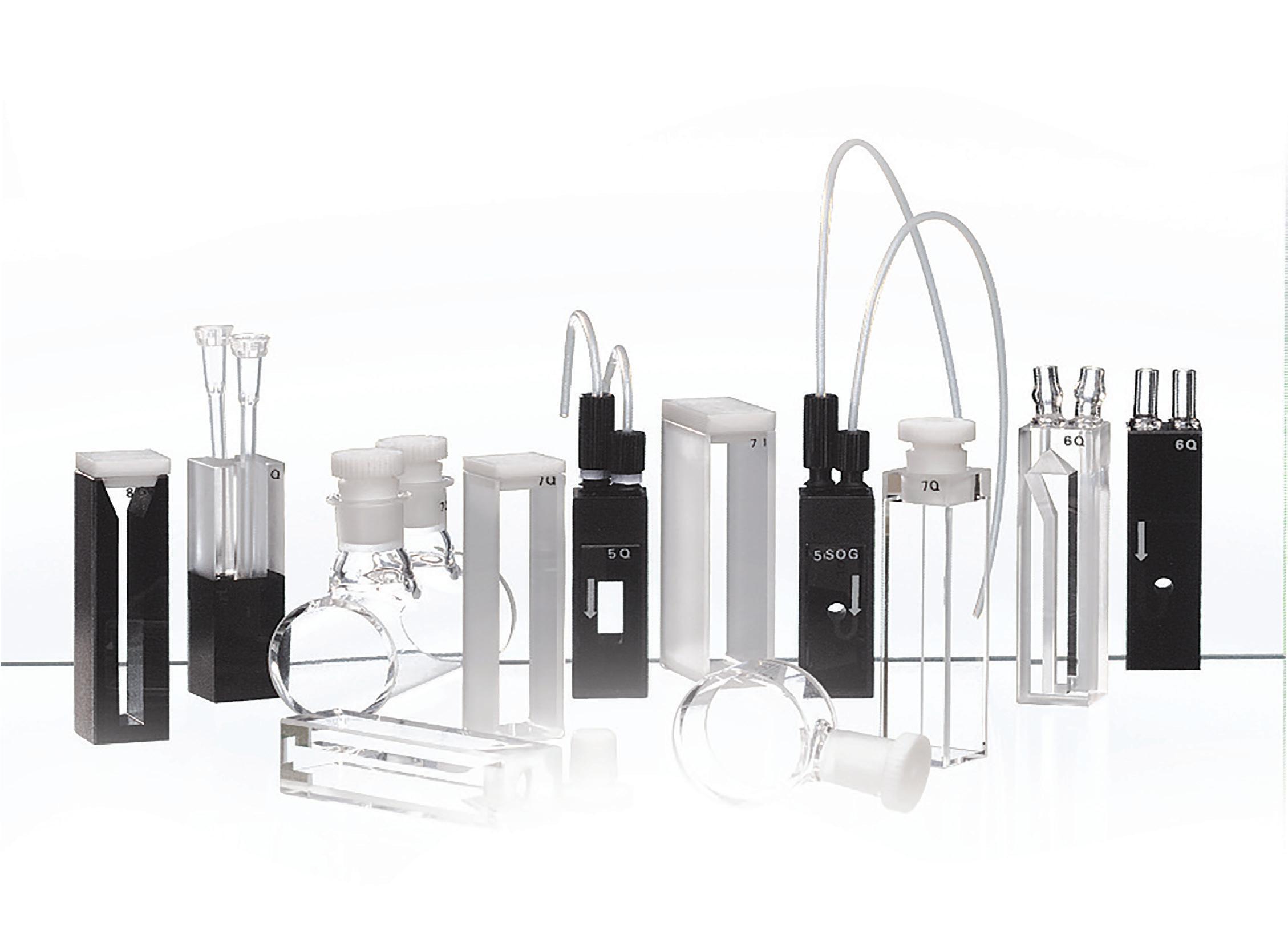
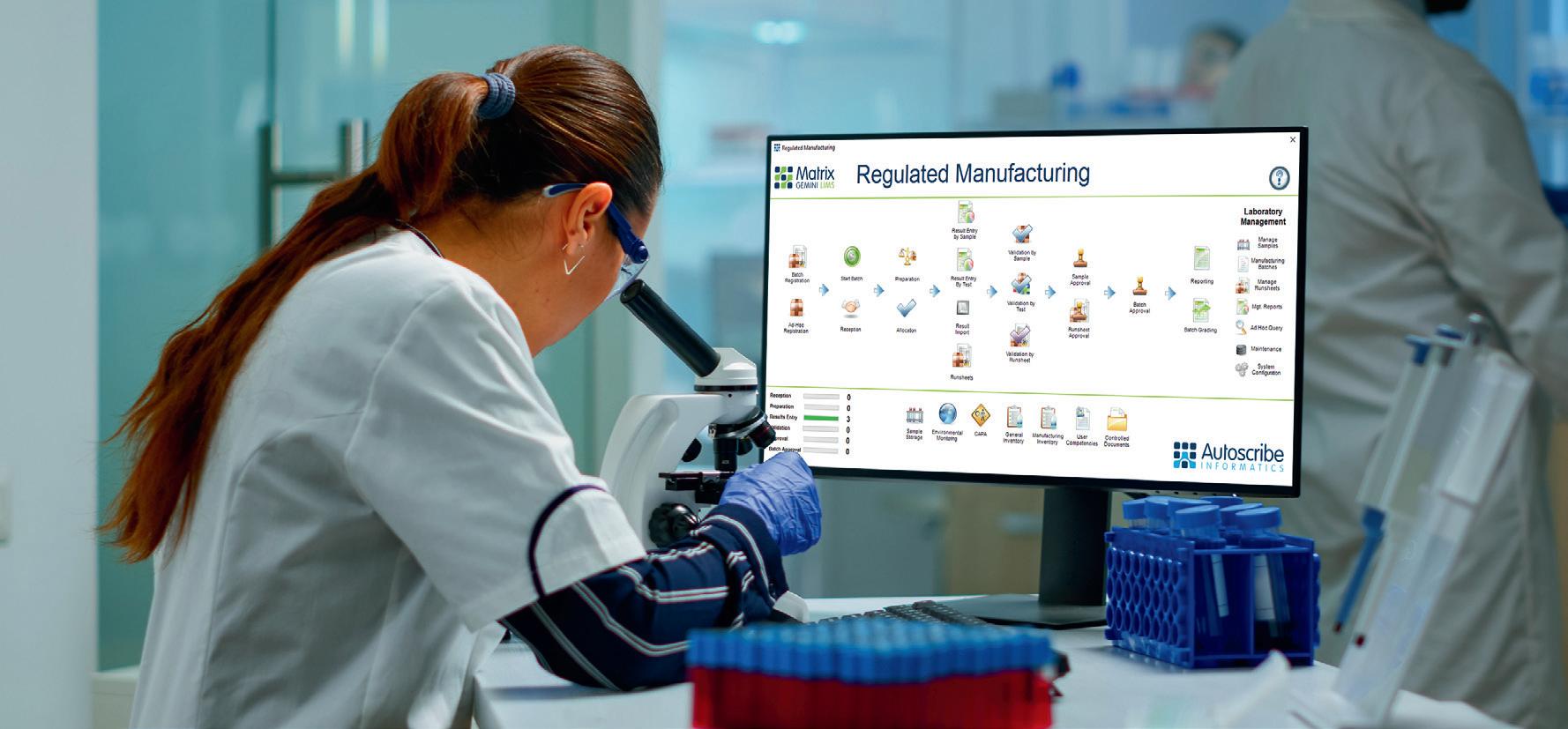
Laboratory information management systems (LIMS) are well known for their ability to manage sample data and their associated test results. However, many lab managers may be surprised at how LIMS can also help with many other laboratory management functions to improve efficiency and help support the needs of industry standards and regulations such as ISO/IEC 17025 and GxP.
Expanding the basic testing functionality
Commercially available LIMS can improve basic operational laboratory efficiency through:
• automatic allocation of tests and workflow tasks to samples at registration;
• elimination of time-consuming paperwork and other cumulative process-related time savings;
• elimination of transcription errors through automatic data capture;
• automated checking of results against defined specifications or limits;
6 | LAB+LIFE SCIENTIST - Feb/Mar 2023 www.LabOnline.com.au | www.LifeScientist.com.au Tim Daniels*
• enforcement of workflow steps such as doubleblind data entry and independent verification of results;
• streamlining of final report production and delivery based on the needs of the laboratory and the customer.
Many other benefits are available from a fully functioning LIMS. For example, laboratory workload can be managed through calendar scheduling of testing, based on resource availability. In support of this, a LIMS can be used to record

the operational status of each piece of equipment to prevent work being allocated to an instrument that is out of calibration or maintenance. Such a system will also keep a history of all maintenance and calibration events for audit purposes and provide reminders of pending calibration and maintenance tasks.
Having this data available also allows the laboratory to evaluate maintenance costs and instrument reliability. Not only must instruments be available in an operational state, the staff allocated
to use them must also be appropriately trained. Indeed, ISO/IEC 17025 requires documentation that all staff are suitably qualified for the tasks that they undertake in terms of appropriate education, training, experience and/or demonstrated skills. A LIMS should include functionality to record and manage personnel skills and training records. Attendance at training courses can be recorded for lab personnel and certificates of competency issued and stored to provide a historical record of skills acquired. Automatic renewal reminders can be issued for time-dependent qualifications. Unqualified personnel, or personnel whose qualifications have lapsed, can be prevented from carrying out specific tasks. A LIMS can also be configured to include the costs associated with running different tests to allow the automatic generation of quotations and invoices. While there are clear benefits here for contract testing laboratories, this capability can also help internal labs keep track of their operating costs.
Supporting the full testing process
Any sophisticated LIMS should support all aspects of the sample and test life cycle to drive efficiency and best practice; for example, full support for analytical worksheets including the automatic inclusion of the required blanks, controls, standards and spikes as well as the unknown samples. These worksheets can also be used to generate instrument runsheets that can be automatically uploaded to the required instruments with the completed results sent back to and automatically entered into the LIMS. This both increases the efficiency of the laboratory and eliminates human-based transcription errors.
Work allocation — defining which laboratory technician will work on which samples and what equipment they will use to perform the work — can also be managed by a LIMS. This ensures that the most appropriate equipment and staff are used for each task to maximise overall efficiency of the laboratory. Once allocated, work lists or work instructions can be created to ensure everyone knows their allocated tasks.
LAB+LIFE SCIENTIST - Feb/Mar 2023 | 7 www.LabOnline.com.au | www.LifeScientist.com.au laboratory management
iStock.com/PeopleImages
Reagents and other consumables in a laboratory may be managed by an inventory manager within the LIMS. This helps ensure laboratory staff only use items that are within their shelf life. Stock levels can also be monitored and reordering triggered when levels drop to a predefined level. Managing inventory in this way ensures the laboratory always has appropriate levels of valid stock for its normal operation.
Sample storage is yet another area where a LIMS can improve efficiency dramatically. The LIMS can note exactly where a sample is stored, whether that be in long-term storage in a freezer or in a reception fridge awaiting accession. Using the storage management feature built into a LIMS, users will always be able to locate and retrieve samples quickly, wherever they are. This storage location functionality can also form the basis of a biobank management system designed to manage specimen storage and usage.
This review illustrates that, beyond the basic functionality that many people associate with a LIMS, there is much functionality that helps drive good laboratory management and daily working practices. There are few, if any, laboratories that cannot benefit from the implementation of a LIMS.
Wider-ranging management capabilities
A LIMS can also be used to address or support wider lab management functions, many of which are requirements for accreditation to ISO/IEC 17025:2017(E)1. These include:
• control of management system documents;
• control and management of other records;
• actions to address risks and opportunities;
• quality and management improvement;
• corrective actions (CAPA);
• internal audits;
• management reviews.
All laboratory processes and procedures should be documented and provision made for access for everyone who needs them. It is possible for a LIMS to track, store and distribute all documents from a central location. Document versioning provides a full audit trail, allowing the history of revised documents to be traced for internal and external auditing and reporting.
Laboratories also need to be accountable for the analytical results that they produce. ISO/ IEC 17025 requires policies to be in place to deal with customer complaints, with records of any complaints and subsequent investigations undertaken and corrective actions implemented being maintained. A LIMS can also be used to document and monitor any preventive action plans that laboratories have in place to identify improvement opportunities and potential sources of nonconformities.
Utilising the data
By providing access from a single integrated source to the type of operational and management data described above, very many of the requirements of ISO/IEC 17025 can be addressed. In addition, historical data that can be of huge value to an organisation is available in the LIMS. Using statistical process control methods, it is possible to monitor the laboratory processes to reveal trends, identify areas for potential improvement and detect serious problems. The LIMS can be used to model the effect of potential business changes. For example, by using historical information on turnaround times and the number of trained analysts available, it is possible to assess the impact on the laboratory that an increased sample throughput could have.
Choosing a suitable LIMS
Given the diversity of data that can be managed using a LIMS, the software must be flexible enough to support the different needs and working practices of any laboratory. Most commercial LIMS can be adapted to meet the requirements of the individual laboratory, but the ability to configure the LIMS at the user level without writing any new code streamlines the process. In this way, the system can be readily adapted to the needs of the laboratory and the inevitable future changes can be simply incorporated.
A well-configured LIMS offers much more than just a repository of information regarding sampling, testing and results. It becomes a business-critical system that enables informed decisions to be made regarding a multitude of laboratory processes, as well as providing the foundation for ISO/IEC 17025 accreditation and other regulatory or standardisation requirements.
1. http://www.iso.org/standard/66912
*Tim Daniels has 30+ years of experience working in national and international markets across a range of software/high-technology products. He has been Marketing Manager at Autoscribe Informatics for eight years. Autoscribe Informatics provides database management solutions such as laboratory information management systems (LIMS) that are graphically configurable, requiring no scripting or custom coding to configure solutions. Tim’s broad background provides a unique blend of practical knowledge and insight to drive all aspects of product and corporate marketing within Autoscribe Informatics.
8 | LAB+LIFE SCIENTIST - Feb/Mar 2023 www.LabOnline.com.au | www.LifeScientist.com.au laboratory management
Autoscribe Informatics Pty Ltd www.autoscribeinformatics.com.au





Anti-COVID cleaning spray has commercial potential
Researchers at The University of Queensland, led by Dr Heather Shewan, have developed a long-lasting surface spray that has the potential to kill viruses such as COVID-19 as well as potentially deadly bacteria such as E. coli and Staphylococcus aureus
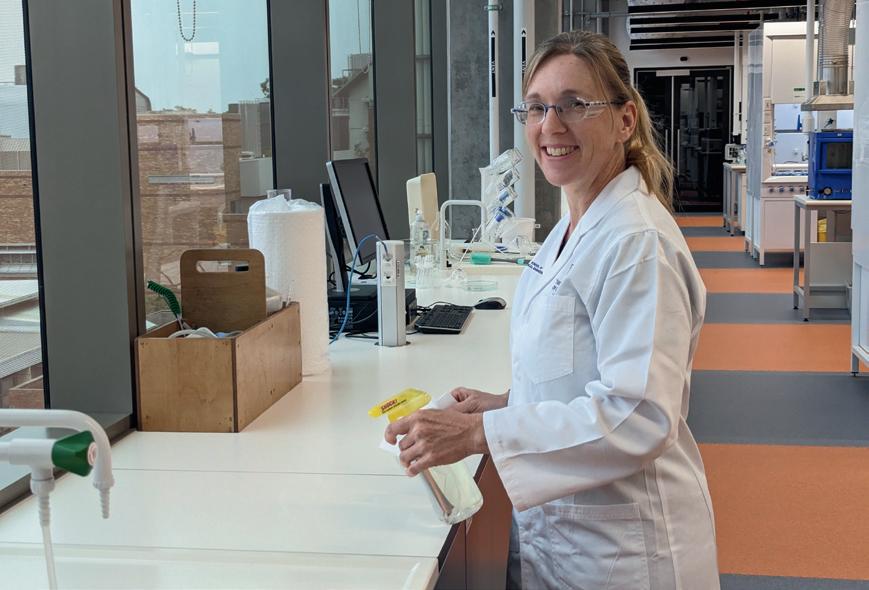
The spray contains a protein that allows it to stick to surfaces and remain effective for 24 hours and is being assessed by the Therapeutic Goods Administration for commercial cleaning use.
“We used hydrolysed gelatine, which essentially helps create a thin film that allows the spray to stick on surfaces and can stay there for at least a day and potentially longer,” Shewan said.
“This durability means it is effective over a longer period than a standard cleaner and has the potential to be used in high-use areas such as in public transport, kitchens, hotels, retail outlets, hospitals and public areas.”
The research was undertaken in partnership with Australian cleaning product manufacturer OzKleen, with the protein supplied by GELITA Australia. Shewan enlisted the help of virologist Dr Kirsty Short and microbiologist Dr Deirdre Mikkelsen to provide the multidisciplinary expertise required.
The team used several methods to test the spray, which is claimed to be cost-effective to manufacture and not harmful to the environment. Short said, “In one test we sprayed glass surfaces with the cleaner and let it dry on the surface, and after 24 hours we added the COVID virus and further testing showed it did not survive.
“We also conducted other tests that showed even after rinsing surfaces with water, the spray significantly reduced the amount of virus that was able to survive on stainless steel.”
OzKleen CEO Mark Quinn said the spray would be manufactured and produced in Queensland and potentially exported across the world. He said, “This is a very exciting initiative and the results show this product can be used in public places across the globe and will help to make the world a safer place.”
Queensland Innovation Minister Stirling Hinchliffe said the spray’s development was made possible through an Advance Queensland Industry Fellowship grant of $90,000 and is now gaining international attention.
“Once approved, it will be manufactured at the Gold Coast and has the potential to create up to 30 good, secure jobs for Queenslanders,” he said.
The report’s authors also share new data illustrating increasing frequency of extreme heat events, rising global tree cover loss because of fires, and a greater prevalence of the mosquito-borne dengue virus. Further, they note that atmospheric carbon dioxide levels have reached 418 parts per million, the highest on record.
OSU Professor William Ripple and postdoctoral researcher Christopher Wolf are the lead authors of the report, which is co-authored by 10 other US and global scientists — including Australia’s own Dr Thomas Newsome from The University of Sydney. According to Wolf, the annual surges in climate disasters indicate that we are “now in the midst of a major climate crisis, with far worse to come if we keep doing things the way we’ve been doing them”.
Climate change has pushed Earth to “code red”: report

An international coalition of researchers, led by Oregon State University (OSU), has stated in the journal BioScience that the Earth’s vital signs have reached “code red” and that “humanity is unequivocally facing a climate emergency”.
In the special report ‘World Scientists’ Warning of a Climate Emergency 2022’, the authors note that 16 of 35 planetary vital signs they use to track climate change are at record extremes. These signs include human population growth, greater consumption of gas, increasing greenhouse emissions including carbon dioxide and methane, shrinking ice and glaciers, rising sea levels, warming oceans, and climbing numbers of hoofed livestock.
The report comes five years after Ripple and colleagues published in BioScience ‘World Scientists’ Warning to Humanity: A Second Notice’, which was co-signed by more than 15,000 scientists in 184 countries, and 30 years since more than 1700 scientists signed the original ‘World Scientists’ Warning to Humanity’ in 1992. The report points out that, in the time since the original warning was published, global greenhouse gas emissions have increased by 40% — and that current policies will push the planet to about 3°C of warming by 2100.
“As Earth’s temperatures are creeping up, the frequency or magnitude of some types of climate disasters may actually be leaping up,” Newsome said.
“If there are major shifts — such as decreases in greenhouse gases — we would expect the graphs to be trending away from record highs. Until this happens, the effects of climate change will only worsen.”
10 | LAB+LIFE SCIENTIST - Feb/Mar 2023 www.LabOnline.com.au | www.LifeScientist.com.au
Image credit: UQ.
Image credit: Kim Bernard, OSU
movers&shakers
Urine could play a key part in biotech systems
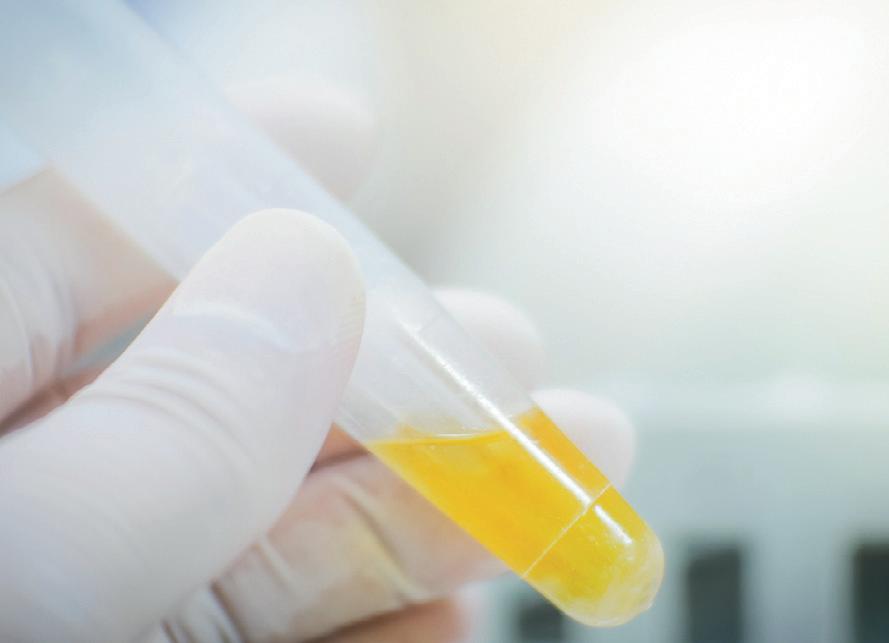
A common chemical found in urine can be used to kick-start large-scale production of proteins such as hormones and antibodies used by biotech companies, with researchers at the University of Birmingham and Aston University developing a system that uses urea to trigger the production of these proteins in the large quantities needed by the biotech industry.
Typically, in this process, small pieces of DNA are introduced into bacteria such as E. coli to persuade them to overproduce certain proteins. Overproduction, however, is typically triggered by ‘inducer’ molecules, which can be costly and often need careful handling, such as refrigeration. By using urea instead, the researchers have developed a method that is cheaper, more straightforward and uses easily accessible materials.
In a study, published in the journal New Biotechnology, the team investigated both purified urea and the urea contained in common garden fertilisers. They showed that similar results could be achieved using either source; study co-author Professor Steve Busby, from the University of Birmingham, said the aim was to make the technology “available to biotech companies who want to explore how to optimise their processes and also keep their costs down”.
The team also showed it was possible to fine-tune the amounts of protein triggered by the urea molecule, by varying the concentrations used. This is important to avoid harming or exhausting the host bacteria. They found it was possible to optimise production to quantities similar to those produced using medium-strength promoters currently used as standard by the biotech industry.
The study builds on earlier work in which the team successfully demonstrated that nitrate — a cheap, stable and abundant inorganic ion — could also be used as a trigger. Nitrate is commonly found in many commercial fertilisers and even in some garden fertilisers, meaning that it is always readily available, even in areas where other types of promoter chemicals might be inaccessible.
“Both urea and nitrate will be much more readily available, and easy to use, in locations where infrastructure limits access, for example where maintaining a cold supply chain is challenging,” said study co-author Dr Joanne Hothersall, also from the University of Birmingham. “We hope these new approaches will open up new avenues of research for biotech industries.”
Microbiome linked to depression in major studies
Dutch researchers say they have delivered the most extensive evidence to date of a relationship between the composition of the microbiome — ie, the variety of microorganisms that live on and in the human body — and instances of depression. Their research has been published in two papers in the journal Nature Communications
The research involved 3211 participants from the HELIUS study, which was initiated by Amsterdam UMC and GGD Amsterdam in 2010 in order to gain insight into health differences among Amsterdammers with a multi-ethnic background in an urban environment. It showed that a microbiome containing less diverse bacteria, or in which certain bacterial species are underrepresented, was associated with having depression or more depressive symptoms. This association was as strong as established risk factors for depression such as smoking, alcohol consumption, a lack of exercise and being overweight.
Influencing the microbiome may therefore be hugely relevant for the treatment of depression. Anja Lok, a psychiatrist and researcher at Amsterdam UMC, said, “Now that we know which disturbances in the microbiome are significant for depression, this opens up new possibilities for treatment and prevention, which is urgently needed.”
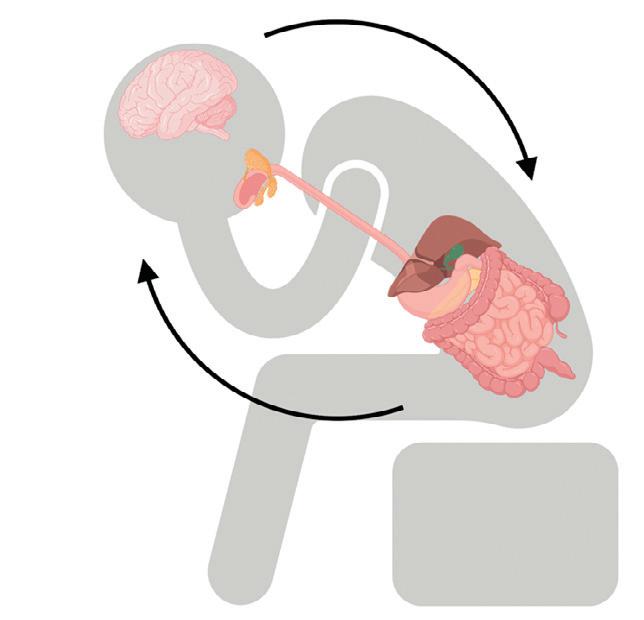
Microbiome composition also appears to play a role in the differing rates of depression across different ethnic groups. Previous research from the HELIUS study had illustrated ethnic differences in both the composition of the microbiome and the occurrence of depression, but until now there was no known connection between the two.
“The substantial ethnic differences in depression do indeed appear to be related to ethnic differences in the microbiome. We don’t know exactly why this is yet,” said researcher Jos Bosch, from the University of Amsterdam. “This association was not caused by differences in lifestyle such as smoking, drinking, weight or exercise, and merits further investigation. For example, diet could play a role.”
In the second paper, data from the HELIUS study was compared with the ERGO study, a long-term population study by Erasmus MC among people aged 40 and older in Rotterdam. This comparison confirmed a consistent association between 12 groups of bacteria and the occurrence of depression. It also offered an explanation: the 12 bacterial groups produce substances such as glutamate, butyrate, serotonin and gamma amino butyric acid — neurotransmitters that play an important role in depression.
“These results therefore clearly provide direction for future research into possible treatments, such as the use of probiotics, prebiotics and synbiotics or faecal microbiota transplantation as well as changes to lifestyle and diet,” Lok said.
12 | LAB+LIFE SCIENTIST - Feb/Mar 2023 www.LabOnline.com.au | www.LifeScientist.com.au
iStock.com/toeytoey2530
the
the
Image
V
movers&shakers
Link between
composition of
microbiome and depression.
credit:
Korenblik.
Smart sensor sniffs out target gases
A chemical sensor endowed with artificial intelligence can learn to detect certain gases in the air with high sensitivity and selectivity. The device, developed at the King Abdullah University of Science and Technology (KAUST) and described in IEEE Sensors Journal, uses machine learning to differentiate the gases according to the way they induce slight temperature changes in the sensor as they interact with it.
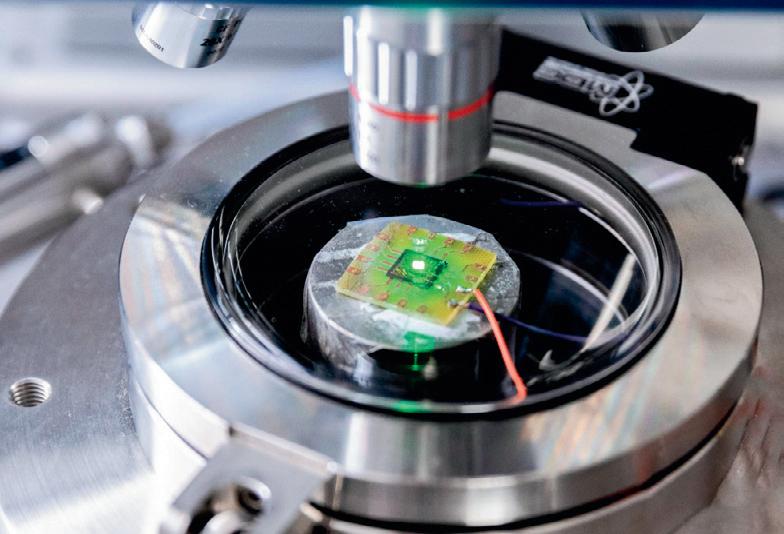
Smart electronic sensors that can detect specific airborne molecules are in great demand for use in applications from medical diagnostics to the detection of dangerous industrial gas leaks. The challenge is to accurately detect the target gas among the complex mixture of chemicals typically found in the air, with KAUST postdoc Usman Yaqoob noting, “Existing sensing technologies still suffer from cross-sensitivity.”
Rather than turning to exotic materials or special coatings to try to improve sensor selectivity, KAUST researchers applied machine learning. On the hardware side, the heart of their device is a heated strip of silicon called a microbeam resonator. When the microbeam is clamped at both ends, so that it is bent almost to buckling point, the frequency at which the microbeam resonates is very responsive to changes in temperature.
“When operated near buckling point, the heated microbeam shows
significant sensitivity to different gases when they have a heat conductivity lower or higher than air,” Yaqoob said. Gases with a higher thermal conductivity than air, such as helium and hydrogen, cool the microbeam, which increases its stiffness and its resonance frequency. Gases such as argon, with a lower thermal conductivity, have the opposite effect.
“The shift in resonance frequency is detected using a microsystem analyser vibrometer,” Yaqoob said. The team then used artificial intelligence to analyse the data and identify characteristic changes in resonance frequency corresponding to the different gases.
“Data processing and machine learning algorithms are used to generate unique signature markers for each tested gas to develop an accurate and selective gas classification model,” Yaqoob said. Once trained on data from the sensor’s response to helium, argon and CO2, the algorithm could then identify these gases with 100% accuracy in an unknown dataset.
“Unlike traditional gas sensors, our sensor does not require any special coating, which enhances the chemical stability of the device and also makes it scalable,” said research leader Mohammas Younis. “You can scale the device down to the nanoregime without affecting its performance since it does not need a big surface for the coating.”
Genetic mutation linked to childhood glaucoma
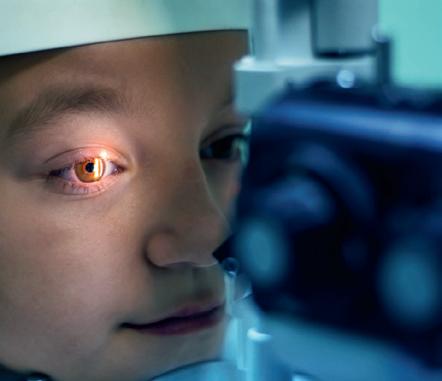
A team of international researchers, led by the Mass Eye and Ear research group at Harvard University, has discovered a new genetic mutation that could lead to the development of severe childhood glaucoma. Their breakthrough, described in The Journal of Clinical Investigation, could lead to improved screening for childhood glaucoma and earlier and more targeted treatments to prevent vision loss in children with the mutation.
Childhood, or congenital, glaucoma is a rare but serious disease that presents in children as early as birth and as late as three years of age. Despite its rarity, childhood glaucoma is responsible for 5% of cases of child blindness worldwide.
When research began 30 years ago, scientists were only able to identify regions of the genome affected in glaucoma. Thanks to advances in genomic technology, researchers gained the ability to review the complete genetic makeup of individuals with and without glaucoma to determine which specific genetic mutations play a role in the disease. Later collaborations with colleagues at Flinders University sought evidence of any childhood glaucoma families with thrombospondin mutations.
Through advanced genome-sequencing technology, led by Flinders and other Australian ophthalmology experts, the researchers found a mutation in the thrombospondin-1 (THBS1) gene in three ethnically and geographically diverse families with childhood glaucoma histories. The researchers then confirmed their findings in a mouse model that possessed the genetic mutation and went on to develop symptoms of glaucoma driven by a previously unknown disease mechanism.
“This is a very exciting finding for families affected by childhood glaucoma,” said Janey L Wiggs, Associate Chief of Ophthalmology Clinical Research at Mass Eye and Ear as well as the Vice Chair for Ophthalmology Clinical Research and Paul Austin Chandler Professor of Ophthalmology at Harvard Medical School.
“With this new knowledge, we can offer genetic testing to identify children in a family who may be at risk for the disease and start disease surveillance and conventional treatments earlier to preserve their vision. In the future, we would look to develop new therapies to target this genetic mutation.”
“This work highlights the power of international collaborations,” said study co-author Associate Professor Owen Siggs, from Flinders University. “There’s such incredible genetic diversity across the globe, and comparing this information is becoming more and more critical for discoveries like this.”
Co-author Lachlan Wheelhouse Knight, also from Flinders, said that with about 1 in 30,000 born with the condition in Australia and other largely European countries, the international collaboration means more individuals can be captured in the data collaboration. The researchers will continue to look for new genes associated with childhood glaucoma in the hopes of one day developing very comprehensive screening.
iStock.com/bluecinema
LAB+LIFE SCIENTIST - Feb/Mar 2023 | 13 www.LabOnline.com.au | www.LifeScientist.com.au movers&shakers
fusion ignition We have ignition —
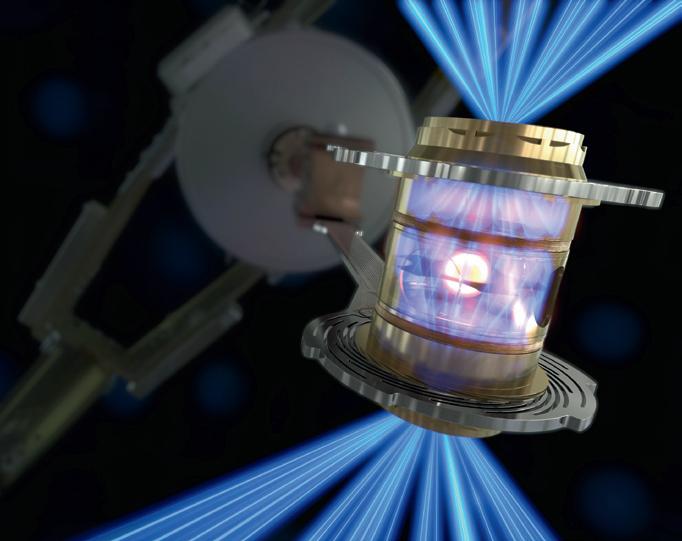
The US Department of Energy (DOE) and National Nuclear Security Administration (NNSA) have announced the achievement of fusion ignition, describing it as a major scientific breakthrough decades in the making that will pave the way for advancements in defence and the future of clean power.
and development in lasers, optics, diagnostics, target fabrication, computer modelling and simulation, and experimental design.
Fusion is the process by which two light nuclei combine to form a single heavier nucleus, releasing a large amount of energy. In the 1960s, scientists at the Lawrence Livermore National Laboratory (LLNL) in California hypothesised that lasers could be used to induce fusion in a laboratory setting. Led by physicist John Nuckolls, who later served as LLNL director, this revolutionary idea became inertial confinement fusion, kicking off more than 60 years of research
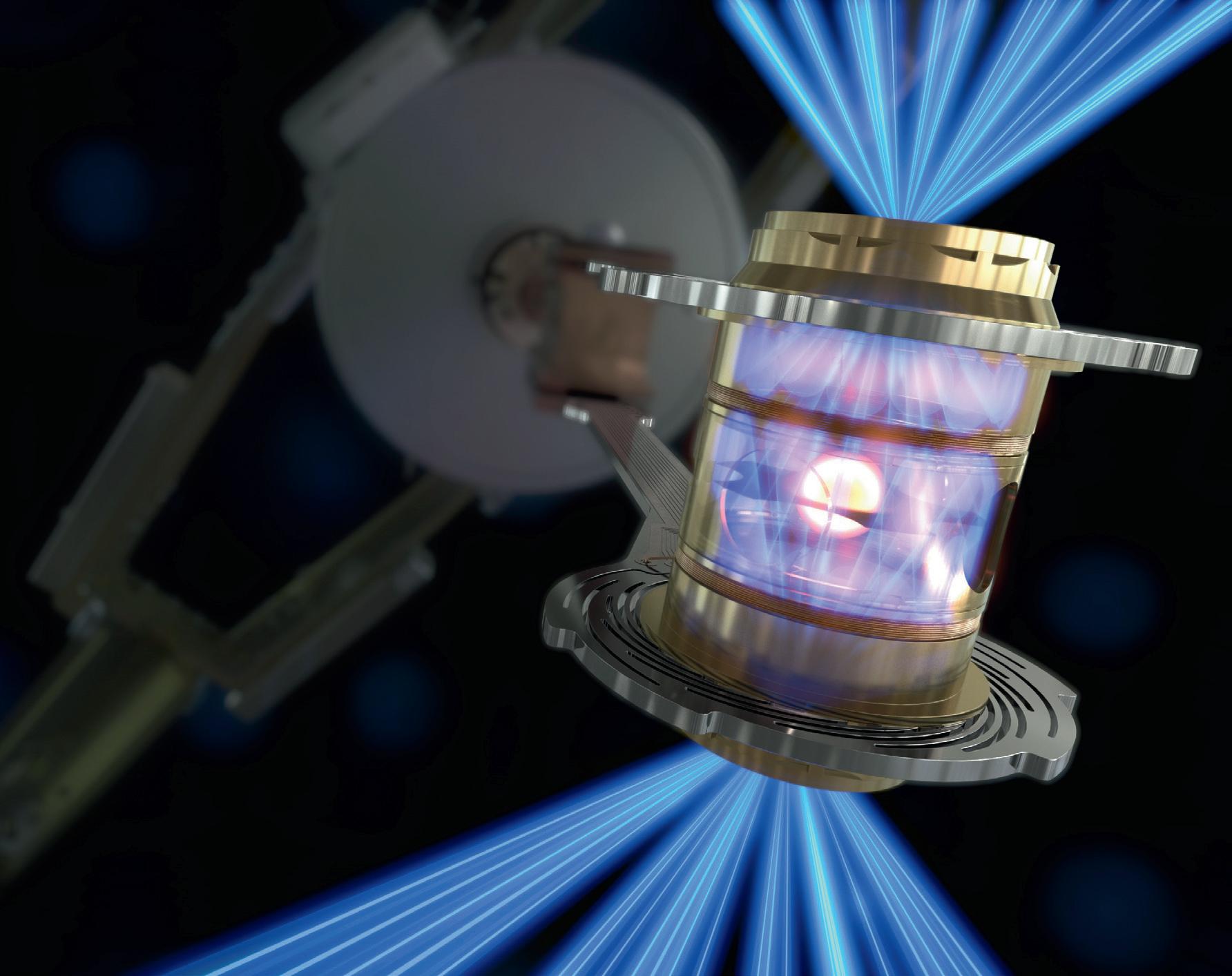
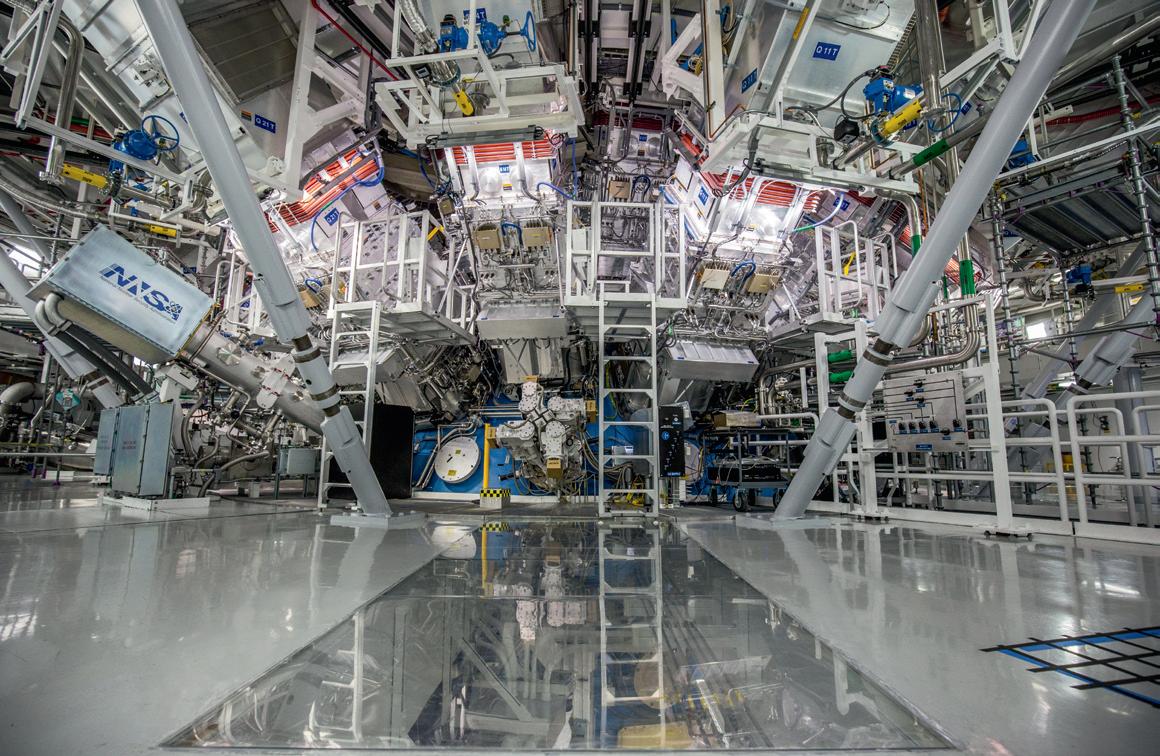
The lab built a series of increasingly powerful laser systems, leading to the creation of the National Ignition Facility (NIF) — known as the world’s largest and most energetic laser system. The NIF is the size of a sports stadium and uses powerful laser beams to create temperatures and pressures like those in the cores of stars and giant planets, and inside exploding nuclear weapons.
On 5 December 2022, NIF scientists conducted the first controlled fusion experiment in history
known to reach fusion ignition, also known as scientific energy breakeven, meaning it produced more energy from fusion than the laser energy used to drive it. This achievement is expected to provide unprecedented capability to support the NNSA’s Stockpile Stewardship Program as well as invaluable insights into the prospects of clean fusion energy, which would accelerate efforts to achieve a net-zero carbon economy.
LLNL’s experiment surpassed the fusion threshold by delivering 2.05 MJ of energy to the target, resulting in 3.15 MJ of fusion energy output, demonstrating a most fundamental science basis for
14 | LAB+LIFE SCIENTIST - Feb/Mar 2023 www.LabOnline.com.au | www.LifeScientist.com.au
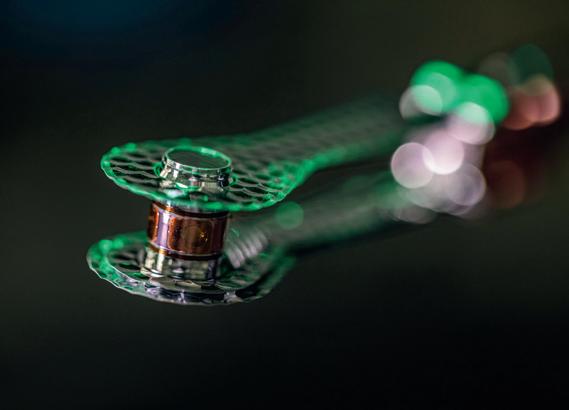
To create fusion ignition, the National Ignition Facility’s laser energy is converted into X-rays inside the hohlraum, which then compress a fuel capsule until it implodes, creating a hightemperature, high-pressure plasma.
inertial fusion energy (IFE). Many advanced science and technology developments are still needed to achieve simple, affordable IFE to power homes and businesses, and DOE is currently restarting a broadbased, coordinated IFE program in the United States.
“I am thrilled that NIF — the United States’ most cutting-edge nuclear research facility — has achieved fusion ignition, potentially providing for a new clean and sustainable energy source in the future,” said US Representative Eric Swalwell. “This breakthrough will ensure the safety and reliability of our nuclear stockpile, open new frontiers in science, and enable progress toward new ways to power our homes and offices in future decades.”
“This astonishing scientific advance puts us on the precipice of a future no longer reliant on fossil fuels but instead powered by new clean fusion energy,” added US Senate Majority Leader Charles Schumer. “I commend Lawrence Livermore National Labs and its partners in our nation’s Inertial Confinement Fusion (ICF) program, including the University of Rochester’s Lab for Laser Energetics in New York, for achieving this breakthrough.
“Making this future clean energy world a reality will require our physicists, innovative workers and brightest minds at our DOE-funded institutions, including the Rochester Laser Lab, to double down on their cutting-edge work. That’s why I’m also proud to announce today that I’ve helped to secure the highest ever authorisation of over $624 million this year in the National Defense Authorization Act for the ICF program to build on this amazing breakthrough.”
Also commenting on the news was Dr Warren McKenzie, founder and MD of Australian laser fusion company HB11 Energy. He said the breakthrough is as significant to the global energy industry as the first moon landing was for the space industry, as it finally unlocks the prospect of unlimited clean energy.
“The National Ignition Facility result is also significant because it shows that lasers, rather than magnetic confinement, may be the fastest pathway to commercial and scalable fusion energy production,” McKenzie said.
“This is why we are today announcing that HB11 Energy has created a coalition of global laser technology heavyweights to kickstart a new high-power laser industry, including by developing a petawatt-class laser facility on Australian soil,” he said. Petawatt-class lasers have a range of applications beyond fusion energy — including medical imaging and radiobiology, advanced sensing, directed energy and the elimination of long-lived radioactive waste — so establishing a local petawatt laser facility would expand critical
research while also creating new industrial opportunities, international partnerships, industries and applications, according to HB11 Energy.
McKenzie said the new consortium will see Australia pioneer many new areas of technology, including clean fusion energy generation, sovereign advanced manufacturing capability, and ultrashort and short pulse laser (USPL) education and talent. It will include, among others, engineering multinational Thales Group, Japanese laser fusion company EX-Fusion, the University of Adelaide, the Institute of Laser Engineering at Osaka University, engineering firm BECA and laser component manufacturer Southern Photonics.
The goals of the coalition are as follows:
• Achieve Australian petawatt laser capability, as an internationally significant research infrastructure investment;
• Build the partners’ capabilities for participation in large scientific partnerships, including public–private partnerships (PPPs) for laser fusion energy;
• Develop applications for USPL systems, including directed energy and laser fusion for clean energy generation;
• Identify laser design, engineering and development opportunities as a focus for investment, and acquire an Australian petawatt laser;
• Establish a local sovereign advanced manufacturing industry for key components of USPL systems; and
• Build a workforce of experts in USPL science, design and manufacture as a foundation to grow the emerging industry.
“Australia needs a large-scale solution as it phases out its legacy energy systems and embraces clean energy,” McKenzie said. “This is exactly what fusion energy can provide: clean energy that does not use any radioactive fuels and does not generate radioactive waste. It has the scale of a nuclear reactor and the safety of traditional renewable sources, while also generating electricity directly, without the requirement of a steam cycle.
“Recent breakthroughs have propelled laserbased fusion to the front of the global race towards this holy grail of energy generation. However, the lack of lasers capable of performing fusion experiments is the primary bottleneck limiting progress globally.
“This presents an opportunity for Australia to develop the next-generation of purpose-built laser systems and advanced manufacturing that would also see Australia become a global leader in fusion energy science, amongst our allies UK, US and Japan.”
LAB+LIFE SCIENTIST - Feb/Mar 2023 | 15 www.LabOnline.com.au | www.LifeScientist.com.au energy
The hohlraum that houses the type of cryogenic target used to achieve ignition at LLNL’s National Ignition Facility.
The target chamber of LLNL’s National Ignition Facility, where 192 laser beams delivered more than 2 million joules of ultraviolet energy to a tiny fuel pellet to create fusion ignition.
Smart mask
tracks respiratory sounds for disease identification
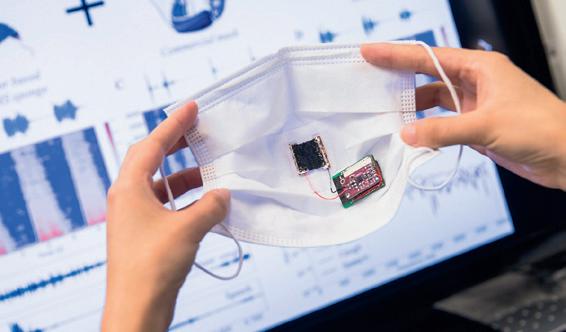
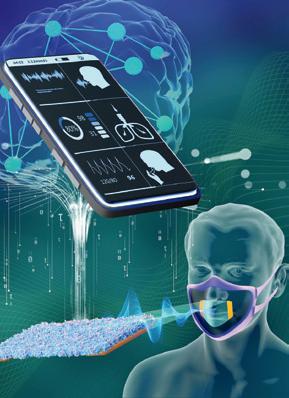
Wearing face masks has been recognised as one of the most effective ways to prevent the spread of COVID-19 and other respiratory diseases, but the potential for smart masks to monitor human physiological signals is also being explored. A research team led by the City University of Hong Kong recently invented a mask, integrating an ultrathin soundwave sensor, which is capable of detecting the respiratory sounds of breathing, coughing and speaking.
Using machine-learning algorithms and a high-sensitivity soundwave sensor operable across a wide bandwidth, the smart mask has opened new avenues for the identification of respiratory diseases. The ultra-lightweight, wearable technology has been described in the journal Advanced Science
“Many countries now believe that COVID-19 will soon become endemic,” said team member Professor Li Wenjung. “However, we must set aside optimism and be realistic about the likely levels of illness, disability and death associated with this disease in the coming years. It is important to remember that endemicity does not correspond to harmlessness.” Thus, he suggested that people should continue to be cautious about COVID-19 and use available and proven measures, including masks, to control the spread of the virus.
The smart mask developed by Li and his colleagues has a sponge-like structure as thin as 400 µm, fabricated with carbon nanotube and polydimethylsiloxane (CNT/PDMS) materials, using a novel modified
The smart mask is expected to help improve personal and public health. Image credit: City University of Hong Kong.
sacrificial-release technique. The team’s ultrathin, lightweight sensor can be practically integrated and work effectively with both rigid masks and deformable non-woven fabric masks.
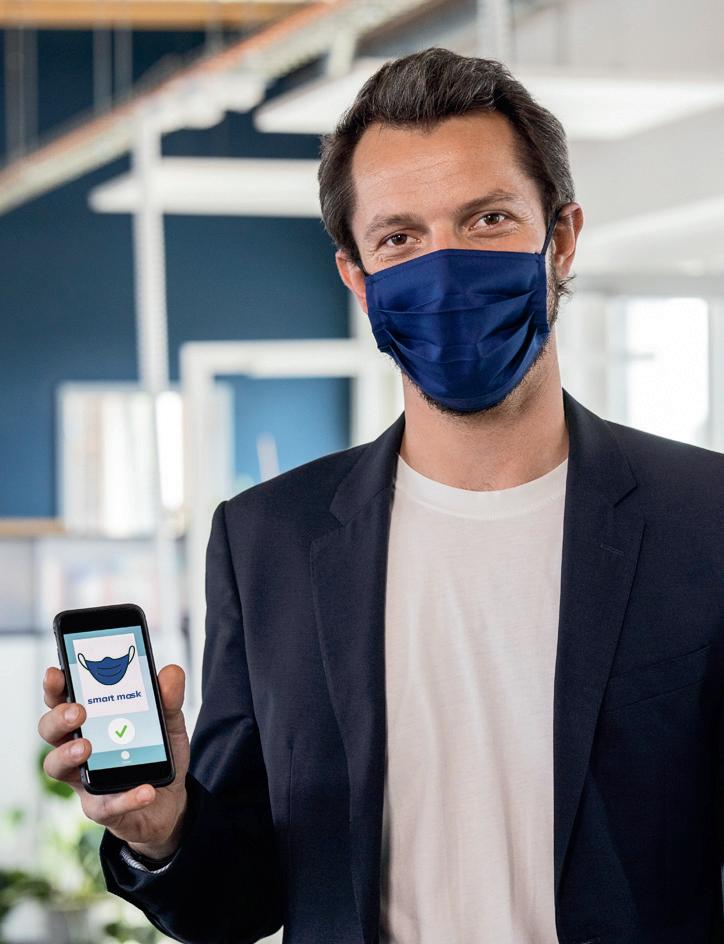
“This smart mask utilises our self-developed, high-sensitivity, wide-bandwidth flexible sensor that can detect and record daily human respiratory activity, such as breathing, coughing and speaking, for cloud data storage,” Li said.
The team recruited 31 people in order to collect their respiratory activity while they wore the smart mask, and the findings showed that the acoustic wave sensor was highly sensitive in measuring both static and dynamic pressure. Besides performing well in the static pressure range of 27.9 Pa to 2.5 kPa, the sensor also responded to high-frequency dynamic pressure generated by the human voice, ie, sound harmonic acoustic energy up to 4000 Hz.
Illustration of the overall concept of the smart mask, which integrates an ultrathin nanocomposite soundwave sensor to detect various respiratory sounds of breathing, coughing and speaking. Image credit: City University of Hong Kong.
In addition, the sensor can sense air movement, including directional flow and vibration.
These findings suggest that the sensor could be used to detect human respiratory activity by integrating it with a commercial polycarbonate mask. It also demonstrated that the smart mask could detect and differentiate three common respiratory functions: breathing, coughing and speaking.
“Advanced artificial intelligence technology enables the integrated mask to recognise different coughing and breathing patterns automatically, indicating its potential use to diagnose respiratoryrelated diseases in the future,” said team member Professor Wang Jianping.
“Presently, researchers use commercial sensors to detect temperature changes and airflow to count the number of coughs, but they cannot capture important physiological information contained in the human voice, coughing and breathing. Our smart mask is sensitive to both subtle air pressure and highfrequency vibrations and can detect three phrases of coughing,” Li added. The speech-detection ability of the smart mask can also help resolve the sound attenuation problem caused by wearing masks.
The team aims to eventually develop realtime diagnostics algorithms for applications such as pneumoconiosis symptom assessment. Team member Dr Yu Xinge concluded, “As a potentially low-cost, daily smart wearable device, this new IoT smart mask will help personal and public health management of respiratory disease screening and diagnosis, especially in cities with a dense population.”
16 | LAB+LIFE SCIENTIST - Feb/Mar 2023 www.LabOnline.com.au | www.LifeScientist.com.au
ppe
iStock.com/alvarez
‘Gel sheet’ absorbs than a paper towel 3x more liquid
Paper towels and rags are normally sufficient for cleaning up spills in the kitchen, while gauze is typically used to soak up blood in the operating room. Now, researchers at the University of Maryland have used a hydrogel — a gelatin-like material in the form of a dry sheet — to craft so-called ‘gel sheets’ that absorb and hold significantly more liquid, while also being foldable and cuttable. Their results have been published in the journal Matter
also stayed soft and flexible in ambient conditions for a year, indicating stability.
There are generally two types of materials that absorb liquids: porous materials and hydrogels. Porous materials like cloth and paper are flexible, foldable and easy to use, but not very absorbent. On the other hand, superabsorbent hydrogels that are made of polymer, a web of large molecules, can soak up more than 100 times their weight in water. However, when dried, these hydrogels become brittle solids that crumble.
“We reimagined what a hydrogel can look like,” said Srinivasa Raghavan of the University of Maryland. “What we’ve done is combine the desired properties of a paper towel and a hydrogel.”
To craft the gel sheets, the research team first mixed in acid, base and other ingredients for the hydrogel in a zip-lock bag. Like vinegar meeting baking soda, the mixture released carbon dioxide bubbles within the gel, creating a porous and foamlike material. Next, the bag was sandwiched between glass slabs to form a sheet and then exposed to UV light, which sets the liquid around the bubbles, leaving pores behind. Lastly, the team dipped the set sheet in alcohol and glycerol and air-dried it.
The result was that the dried gel sheet felt soft and flexible, similar to a fabric’s texture. The sheet
“We are trying to achieve some unique properties with simple starting materials,” Raghavan said.
“To our knowledge, this is the first hydrogel that has been reported to have such tactile and mechanical properties.”
Compared to a commercial cloth pad and a paper towel, a gel sheet the same size can absorb more than three times the amount of liquid than others. When researchers placed the gel sheet over 25 mL of spilled water, the sheet swelled and soaked it up within 20 seconds, holding the water without dripping. The cloth pad only absorbed about 60% of the water, leaving drips behind.
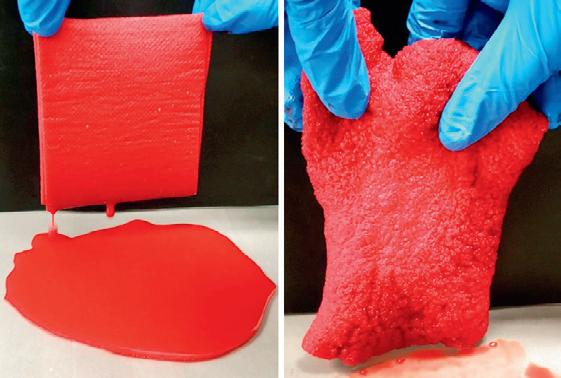
The gel sheet also performed well with thick liquids, such as syrup, blood and even fluids that are a million times thicker than water. The researchers found that the gel sheet could absorb nearly 40 mL of blood within 60 seconds, while gauze dressing soaked up only 55% of the blood. The gel sheet also holds its liquid well, whereas the blood-soaked gauze trickles. Compared to sanitary pads, sponges and gauze, the gel sheet absorbed over two times more blood than the others.
Next, the team plans to optimise their gel sheets by increasing absorbency, strengthening the material, lowering the cost and making the
The commercial gauze (left) only absorbs 55% of the blood and, moreover, the blood drips out when held vertically. The gel sheet (right) absorbs 99% of the blood and the swollen sheet does not drip when held vertically. Scale bars = 2 cm.

Credit: Matter/Choudhary et al.
sheets reusable. The researchers are also looking to develop gel sheets for absorbing oil.
“In principle, the gel sheets could be a superior form of paper towels,” Raghavan said. He envisions the gel sheets picking up spills in kitchens and laboratories, as well as cleaning up blood from surgeries and menstrual bleeding. Because of their flexible and absorbent nature, gel sheets also have the potential to stop bleeding from severe wounds as dressing.
“I’m always interested in taking our inventions further than just publishing a paper,” Raghavan said. “It would be wonderful to take it to actual practical use.”
18 | LAB+LIFE SCIENTIST - Feb/Mar 2023 www.LabOnline.com.au | www.LifeScientist.com.au
materials testing iStock.com/SchulteProductions
The S-Monovette® is the revolution in blood collection.
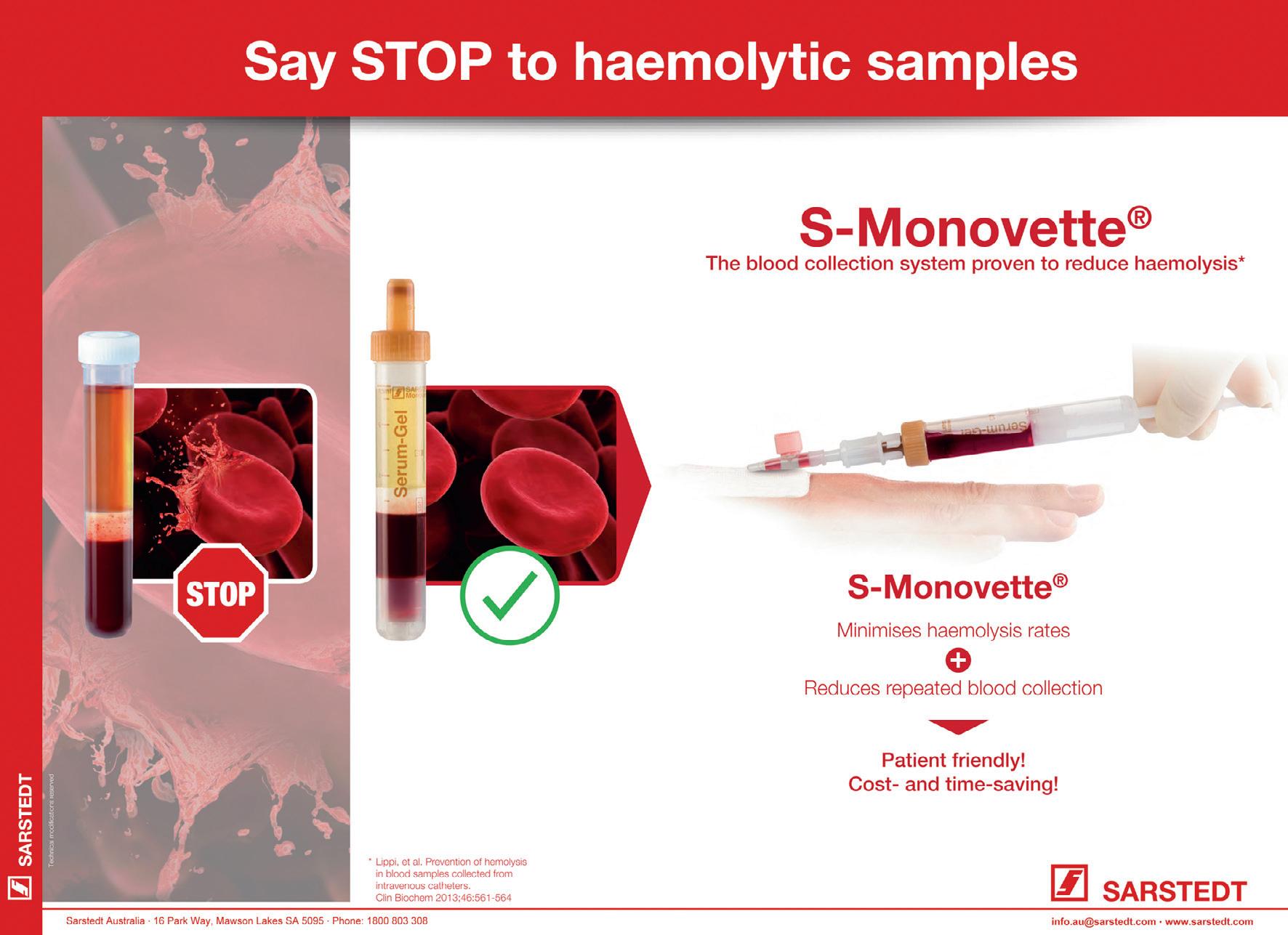
The S-Monovette is an innovative enclosed blood collection system that allows the user to draw blood from the patient using the syringe or vacuum method, uniting the advantages of both techniques in a single product.
When used as a syringe, the phlebotomist has full control over the speed at which the blood is drawn into the tube. This is particularly useful for patients with fragile veins, such as the very young or elderly, where the use of the aspiration technique prevents even the most fragile veins from collapsing. When the tube has been filled, the plunger is simply snapped off to leave a primary sample tube which can be centrifuged and is compatible with all major analysers.
The S-Monovette can also be used as an evacuated tube by drawing the plunger fully down and snapping it off immediately
prior to blood collection. This creates a fresh vacuum and ensures a precise filling volume, ensuring a correct dilution ratio.
The reduced vacuum pressure in the S-Monovette drastically reduces the rate of haemolysis and vein collapse, meaning increased sample quality and reduced costs associated with repeat collections. Furthermore, unlike pre-evacuated tubes, the S-Monovette does not have to hold a vacuum for many months after manufacture, which allows the membrane stopper to be thinner and more easily penetrated by the needle sheath. This minimises the movement of the needle in the vein when attaching the tube, ensuring optimum patient comfort.
The S-Monovette needle is ready to use so that there is no need for assembly to
a holder. The needle is of a compact, low profile design, which reduces the chance of haematoma by allowing for a reduced angle of puncture and eliminates the possibility of needle stick injury caused by assembly of the needle and holder. The compact design also results in approximately one sixth of the sharps volume caused by using a preevacuated system, giving significant cost savings.
If you would like a visit from one of our Sales Representatives to demonstrate this system, please contact us on toll free 1800 803 308
Sarstedt Australia www.sarstedt.com

LAB+LIFE SCIENTIST - Feb/Mar 2023 | 19 www.LabOnline.com.au | www.LifeScientist.com.au SPONSORED CONTENT
Bioreactor for single-use, customisable bioprocessing
Getinge has been a supplier of life science products for over 50 years. With extensive experience in the pharmaceutical and biomedical research industries, the company concentrates its knowledge on the development of industry standard solutions.

Building on a long history of bioreactor design, the AppliFlex ST has been designed to make life in the lab easy. The bioreactor is available in 500 mL, 3 L and 15 L capacities.
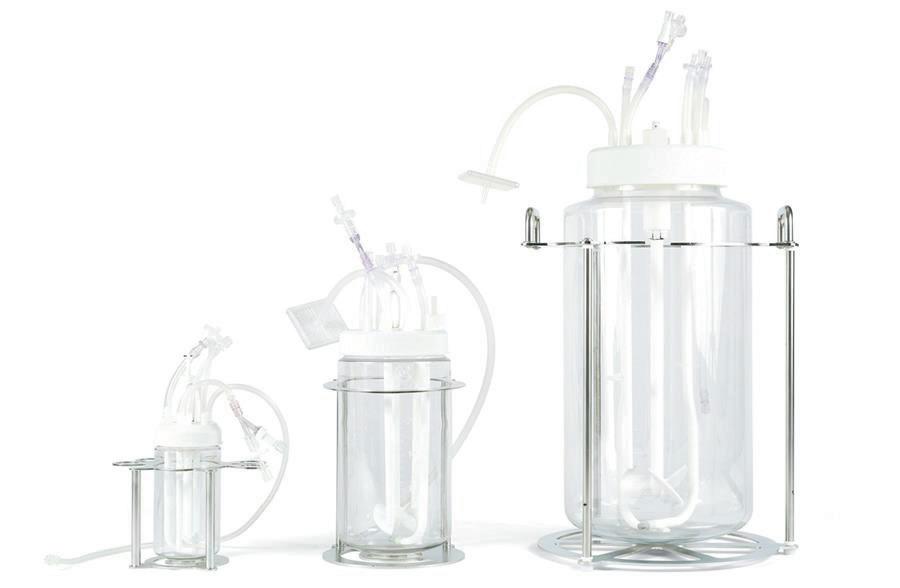
The Box-to-Bench workflow provides fast processing, so the bioreactor is ready for operation straight from the box. 3D printing enables flexible design, as the company can optimise the bioreactor to match the user’s process and application.
Single-use bioreactors enable high throughput due to their easy, optimised set-up and operation. Single-use bioreactors also allow for minimal operator handling, which reduces the ever-present risk of contamination.
Headplates and impellers manufactured by 3D printing allow for any bioreactor configuration to accommodate the user’s specific process. Users can focus on their bioprocesses instead of cleaning, preparing and sterilising bioreactors, while improving the reproducibility of their experiments.
Getinge Australia Pty Ltd

www.getinge.com/anz
Data-independent acquisition tool
SCIEX has launched Zeno SWATH DIA, a useful tool in biomarker discovery and translation workflows. Available on the company’s ZenoTOF 7600 system, the process provides a digital record of a sample that can enable researchers to discover more potential biomarkers to be used in the development of clinical tests and in the discovery of new therapies.
By combining the sensitivity and robustness of the ZenoTOF 7600 system and the high dynamic range of Zeno SWATH DIA, researchers should be able to routinely quantify more cell and plasma proteins than previously possible with SWATH approaches. The ability to quantify large numbers of lesser abundant proteins that were previously undetectable means that more potential biomarkers can be taken through to verification.
To enable translational research, this performance can be delivered at large scale. Runtimes can be shortened to as little as 5 min with minimal compromise in proteome coverage. Large population-scale proteomic studies can be achieved in a matter of weeks, without compromising on the depth of information obtained. This means the potential for the development of clinical tests for early detection of disease is increased.
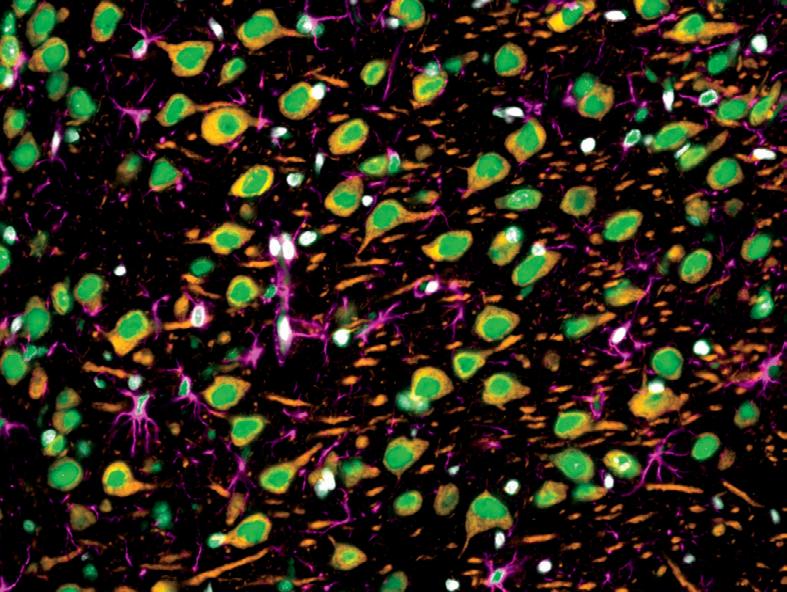
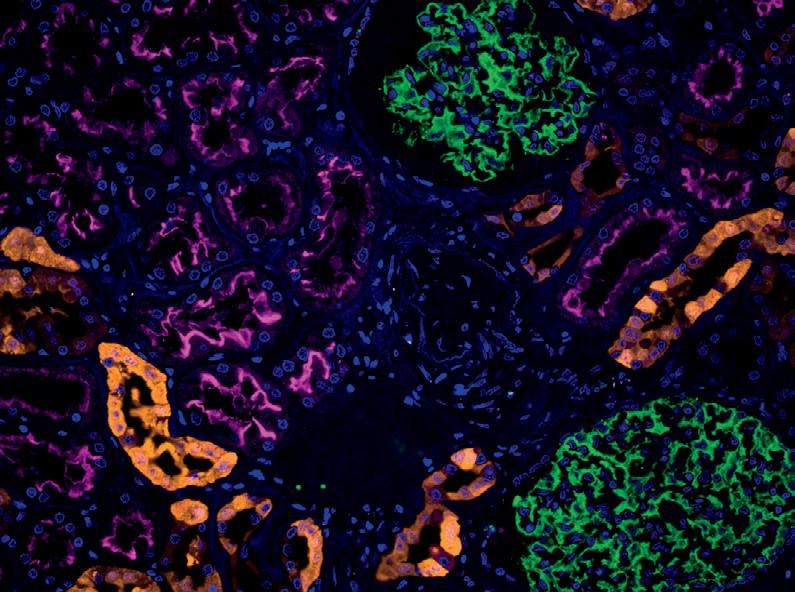
The sensitivity of the process also enables large num -
what’s new
Oil-in-water analyser
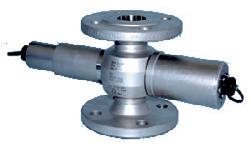
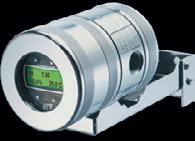
Designed for demanding and/or dirty plant environments, ECD’s OIW80 oil-in-water analyser’s rugged sensor features a built-in wiper cleaning system to remove biosolids and films that might cloud the sensor window’s visibility. The sensor features a built-in automatic screen window wiper, to reduce technician manual checks and the frequency of scheduled maintenance cleanings.
The intelligent analyser is designed to precisely measure oil over a wide range of 0 to 30 ppm (mg/L) and can be factory preconfigured to measure oil in multiple ranges or easily set in the field. The rugged, high-performance analyser’s responsive sensor operates over a broad temperature range from 5 to 45°C to quickly detect leaks and alert plant technicians.
The heavy-duty construction of the OIW80 sensor’s rugged housing utilises strong, corrosion-resistant stainless steel (standard) or optional titanium, and meets the IP68 water ingress standard. Every aspect of the sensor’s design has been tailored for years of operation and trouble-free service in the demanding wet environments typical of industrial and municipal water and wastewater treatment applications.
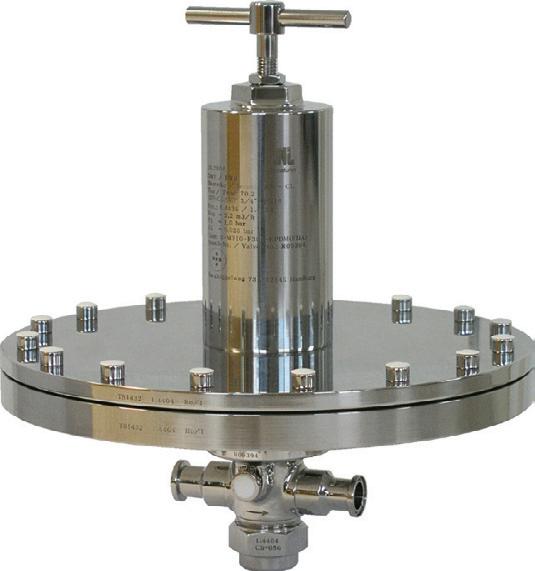
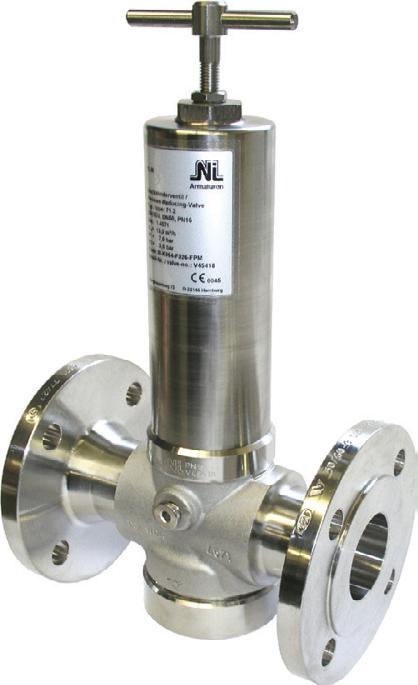
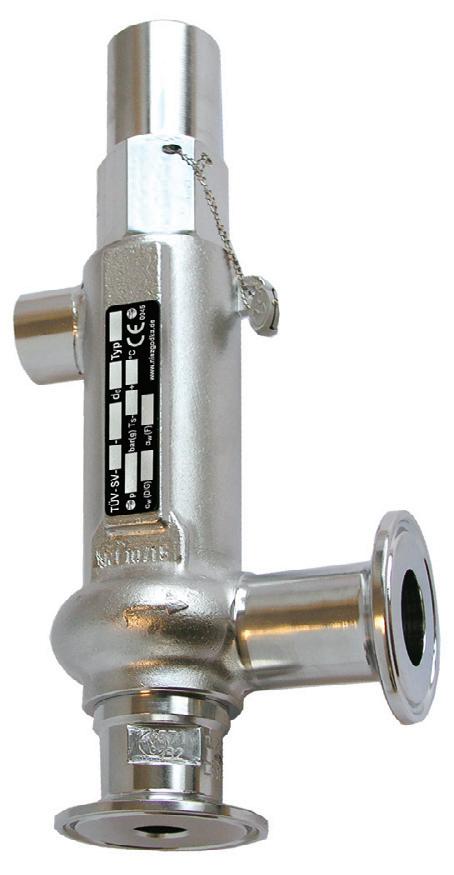
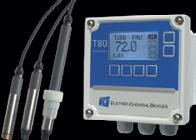
The sensor utilises state-of-the-art fluorescence sensing technology for measurement of oil in water, which is typically proportional to its concentration. The sensor communicates directly with ECD’s versatile T80 universal transmitter when oil is detected.
During installation, the OIW80 system is connected to the intelligent ECD T80 transmitter and the sensor’s calibration range information is automatically uploaded to the analyser. It then automatically configures the displays and outputs of the transmitter to the values appropriate to the oil sensor’s measurement parameters.
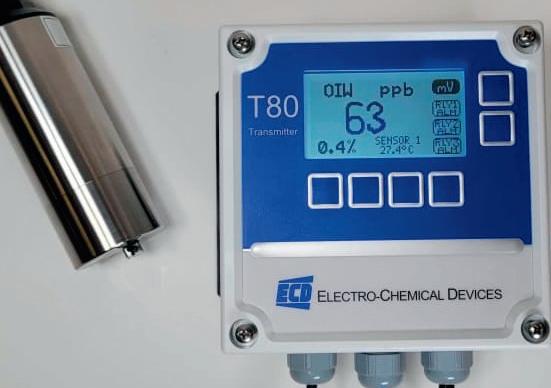
Transmitters are available as either single- or dual-channel devices, allowing one analyser to measure up to two parameters or two ranges. The transmitter is available in a 24 VDC or a 100/240 VAC power configuration. All versions are available with an optional HART output to support integration with larger control systems.
AMS Instrumentation & Calibration Pty Ltd
www.ams-ic.com.au
LAB+LIFE SCIENTIST - Feb/Mar 2023 | 21 www.LabOnline.com.au | www.LifeScientist.com.au what’s new Tel: (03) 9699 7355 www.pressureandsafetysystems.com.au 9334/BP&SS-WNIFT We handle Pressure ® STAINLESS STEEL SurfAcE poLIShEd vALvES IdEAL for dAIry procESSINg, BEvErAgE inc MIcro BrEwEry, food, phArMAcEuTIcAL, chEMIcAL pLANTS. clean-in-place gas blanketing carbonating
Compact benchtop shaking incubator
The Axygen Microtube Shaker allows uniform heating, cooling and mixing of precious life science samples with a touch of the intuitive control panel. It is a handy piece of lab equipment with multiple uses.
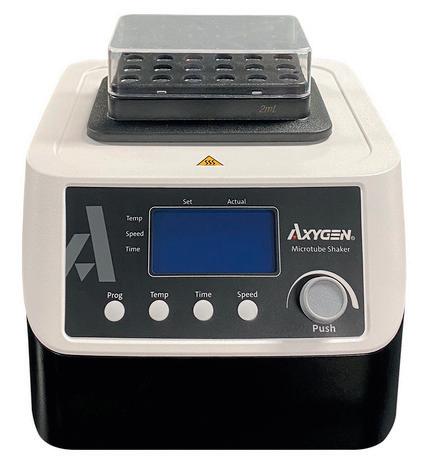
Aluminium blocks, compatible with PCR plates, centrifuge tubes and microcentrifuge tubes, are available for every life science application. The blocks utilise magnetic adhesion technology and are self-recognised once exchanged.
Key features and benefits include: programmability (up to six steps per nine programs); temperature control for heating and cooling (temp range at -15°C ambient to 100°C); calibration mode for accurate temperatures within ±0.5°C after every block exchange; flexible block selection (96- or 384-well format); options for 0.5, 1.5 and 2 mL microcentrifuge tubes and 5 and 15 mL standard lab tubes; and quick interchange of blocks with magnet adhesion technology without any tools.
Pacific Laboratory Products
www.pacificlab.com.au
sCMOS camera
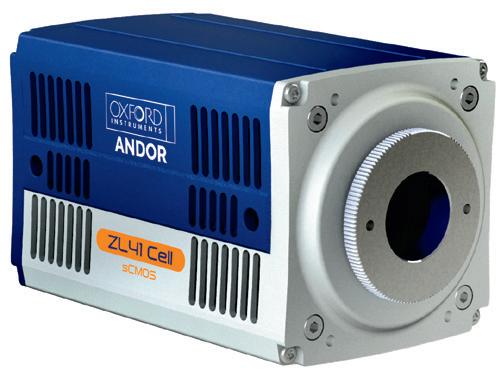
ZL41 Cell is the next generation in the Zyla sCMOS series from Andor, making it possible to transform a normal fluorescence microscope into a super-resolution microscope using Andor’s exclusive SRRF-Stream+ technology. ZL41 Cell offers flexibility as well as good sensitivity, speed and resolution, making it suitable for those that are upgrading their imaging system or those that have specific application needs, such as live-cell imaging or single-molecule localisation microscopy.
The combination of the ZL41 Cell and SRRF-Stream+ is set to open up super-resolution capabilities to a wider range of researchers than ever before. The user can use their existing labelling protocols and normal fluorescence microscope to obtain detailed and vibrant images in real time. Therefore, super-resolution to 100 nm becomes accessible even to those that previously considered the technique to be difficult or costly.
Coherent Scientific Pty Ltd www.coherent.com.au
Micro-bioreactor
Erbi Biosystems is the developer of the 2 mL Breez micro-bioreactor — a micro-scale, fully automated, functionally closed and continuous perfusion cell culture platform.
The product is claimed to transform continuous process development through automation, increasing operator throughput by up to four times compared to other benchtop-scale systems to yield high-performing continuous processes that should lower the cost of manufacturing and increase speed to market. Compared to competitive bioreactor platform technologies, it is said to require less bench space and no biosafety hood.
Merck Pty Ltd www.sigmaaldrich.com/AU/en
Automated live cell imaging system
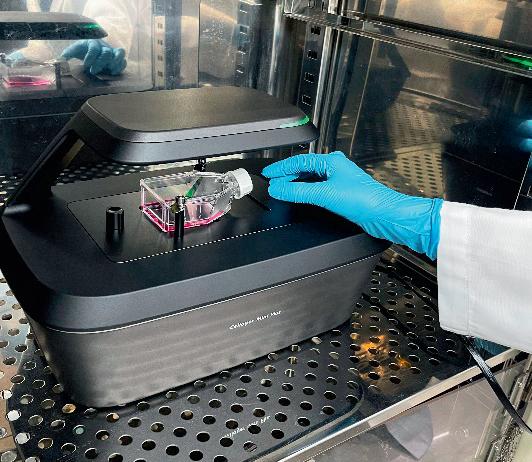
The CURIOSIS Celloger Mini Plus is an automated live cell imaging system based on bright-field and fluorescence (green/red) microscopy.
Instead of having a movable stage, the camera inside the system moves on X, Y and Z axes to capture the images. The system can be tailored to individual research protocols using functions that are optimised for cell research, such as automatic focusing and real-time multi-position imaging.
The system supports a broad range of laboratory research applications, including cell migration studies; cell morphological changes, confluency and proliferation; wound healing and drug screening cytotoxicity; measurement of transfection efficiency of cultivated cells; co-culture and multipoint cell monitoring; along with cell growth monitoring for bioprocessing QC.
Key features of the system include its compact size, which easily fits into standard CO2 incubators; fully motorised multi-position imaging of up to 96-well plates; compatibility with various cell and tissue culture vessel holders that clip onto the main surface of the device depending on use; Z-stack imaging capturing multiple focal planes; ability to acquire confluency data via intuitive UI/UX; and increased focus speed and reproducibility with autofocusing function and image stitching, which enables analysis of larger sections. The Celloger Mini Plus is for research use only and not for use in diagnostic procedures.
Capella Science
www.capellascience.com.au
22 | LAB+LIFE SCIENTIST - Feb/Mar 2023 www.LabOnline.com.au | www.LifeScientist.com.au what’s new
Small animal irradiator
The Rad Source RS 2000, an X-ray system designed for life science, is a small animal irradiator with 95% or greater dose uniformity.
Researchers need cost-effective and flexible irradiation solutions for applications that require high dose uniformity and dose rates. Rad Source biological irradiators are designed for cancer and immunology research applications such as myeloablation, cell arrestment and more. The company has installed more than 1000 irradiators in renowned hospitals, universities and pharmaceutical, government and life science institutions worldwide.
The RS 2000 was developed in 1999 as a Cesium-137 replacement device for the research irradiation of small animals, cells, tissue and more. The product uses a form of filtration specifically designed for small animal irradiation — mA combinations plus patented RADPlus research solutions that prevent skin burns at a higher kV.
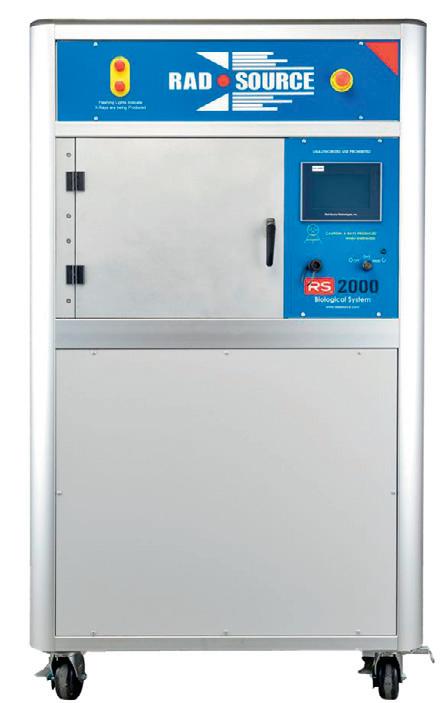
RADPlus research tools are engineered to reduce animal stress while providing beam uniformity of 95% or higher and will not cause skin burns to the animal. Animals stay in their cages, which also reduces cross-contamination.
The portable instrument can act as a direct replacement for nuclear source irradiators and features a multi-level chamber exposure system with guides. With no radioactive source, there are no ongoing regulatory hassles and no ongoing monitoring costs.

Bio-Strategy Pty Ltd





www.bio-strategy.com

DNA kit for soil

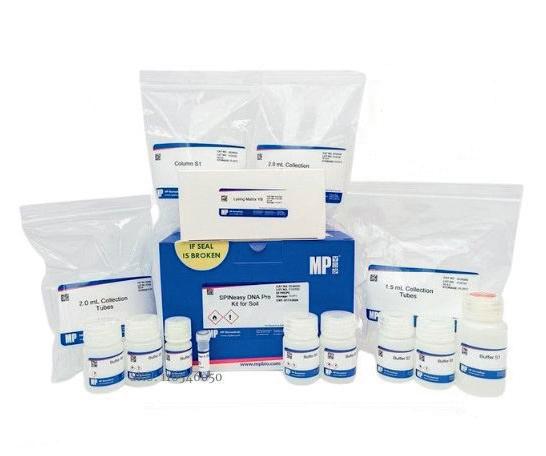
MP Biomedicals’ SPINeasy DNA Pro Kit for Soil has been carefully designed for the isolation of pure microbiome genomic DNA from challenging soil types, including those with low biomass or those highly contaminated.
The SPINeasy DNA Pro Kit for Soil effectively lyses various microbiome population, including bacteria, fungi, viruses and protists. The kit provides similar yields to that of the company’s FastDNA SPIN Kit for Soil, but with improved purity and reduced processing time.
MP Biomedicals Australasia P/L www.mpbio.com/au/
LAB+LIFE SCIENTIST - Feb/Mar 2023 | 23 www.LabOnline.com.au | www.LifeScientist.com.au what’s new
Vortex mixer
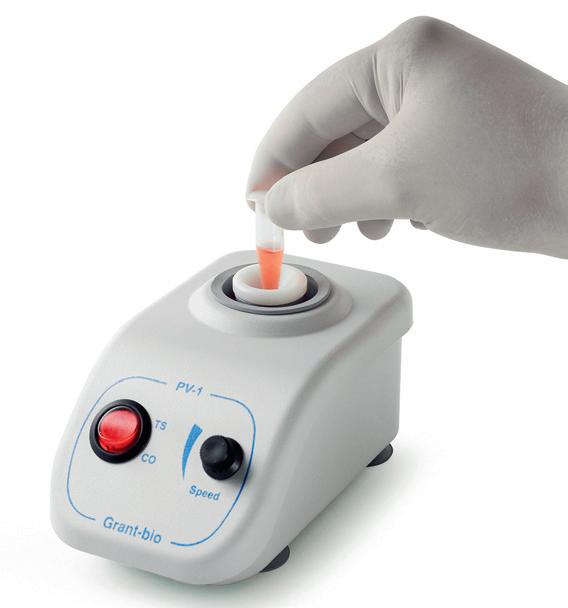
The Grant PV-1 vortex mixer is compact, with a low profile and small footprint to sit in almost any location. Suitable for personal use, it has been designed to fit in the palm of the hand without needing to compromise on performance.
The motor produces regulated and reproducible agitation throughout the speed range. With variable speed from 750 to 3000 rpm, the unit can be used for gentle through to vigorous mixing and pellet resuspension in 0.5, 1.5 and 15 mL tubes.
The product features a pressure-sensitive cup for tubes up to 20 mm diameter. Rubber suction pads hold tight to the work surface to prevent the unit from ‘walking’, and they also absorb vibration which prevents its transmission to the workbench.
The device is suitable for use at 4 to 40°C ambient (80% relative humidity, non-condensing) in a cold room or incubator. It is easy to operate — simply select either ‘continuous’ or ‘touch’ operation and turn the knob to adjust the speed. In ‘touch’ mode, agitation starts in response to pressure on the pressure-sensitive cup.
Bio-Strategy Pty Ltd
www.bio-strategy.com
PFAS quantitation workflow
FIB-SEM system
In the preparation of samples for transmission electron microscopes (TEM), high precision and thin samples are required. JEOL’s JIB-PS500i is a combined system with an FIB (focused ion beam) that is designed to process with high accuracy and an SEM (scanning electron microscope) with high resolution.
The FIB column enables processing with a large-current Ga ion beam up to 100 nA. The high-current processing is particularly effective in preparing cross-section samples for large-area imaging and analysis. In addition, the FIB column is set to a short working distance, for good processing performance at a low accelerating voltage.
A super conical lens system is built into the SEM column, designed to improve the image resolution at a low accelerating voltage. This imaging is useful for checking the end-point milling status of a lamella specimen using the SEM.
The product features a large specimen chamber and specimen stage, increasing the stage movement range and thus accommodating a large specimen. In addition, a STEM detector can be used with the stage tilt at 90°, allowing for a seamless transition from the TEM specimen preparation to STEM observation.
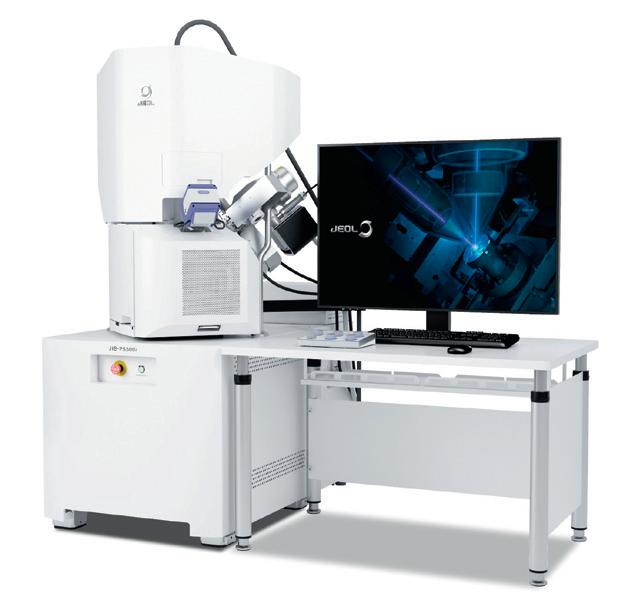
For the operating GUI, the company’s SEM Center software is employed, enabling full integration of EDS analysis. A double tilt cartridge and a dedicated TEM holder allow for good alignment while making specimen transfer between TEM and FIB easy. JEOL
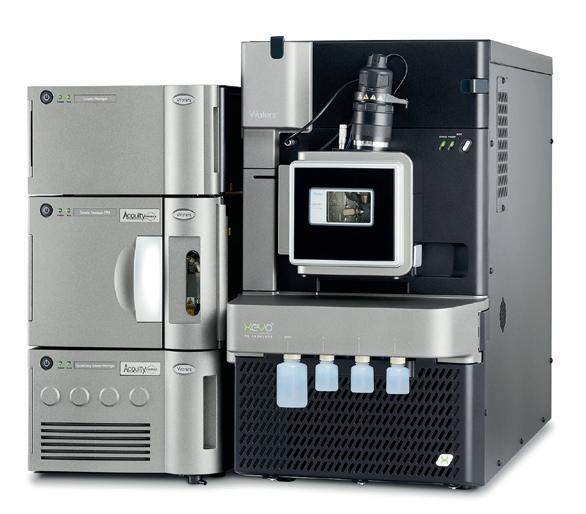
Waters has announced a per- and polyfluoroalkyl substances (PFAS) quantitation workflow enabled by enhancements to its waters_connect for quantitation software. Through a combination of ultrasensitive instrumentation, sample prep chemistries and software, the end-to-end workflow is designed to simplify and automate the measurement of PFAS in food, soil, air and water at parts-per-quadrillion levels that meet and exceed regulatory detection limits.
As we find more PFAS in the environment and we learn more about their potential toxicity, the list of chemicals that environmental and public health laboratories will be expected to monitor will continue to grow. The end-to-end PFAS quantitation workflow is said to minimise risks in obtaining trace-level PFAS measurement data by eliminating manual transcription errors and automating data processing and reporting in compliance with regulatory requirements.
A key component of the quantitation software is the MS Quan app, which includes an Exception Focused Review feature allowing users to implement tailored rulesets to focus the review process on only those results that fall outside specified targets. This is said to cut data review time by up to 50%.
In addition to the software, the PFAS quantitation workflow solution consists of everything needed for laboratories to measure PFAS accurately and reproducibly in a variety of sample matrices. Products include Waters’ ultrasensitive liquid chromatography and mass spectrometry instruments, separation columns and sample preparation cartridges.
Waters Australia Pty Ltd
www.waters.com
24 | LAB+LIFE SCIENTIST - Feb/Mar 2023 www.LabOnline.com.au | www.LifeScientist.com.au
what’s new
Pty Ltd
(Australasia)
www.jeol.co.jp/au/
Digital imaging system for rapid cell counting
Cell counting is an essential step in routine cell maintenance and for obtaining accurate and consistent experimental results. The CELENA S Digital Imaging System is an allin-one imaging and data analysis instrument that can replace the complex set-up of traditional fluorescence microscopes, extensive imaging equipment, computers and image analysis software.
Small, powerful and easy to use, the CELENA S Digital Imaging System makes capturing publication-quality fluorescence, brightfield and phase contrast images simple. Userfriendly software accommodates a wide range of imaging applications, such as image capture, analysis, live cell imaging, Z-stack imaging and even automated cell counting.
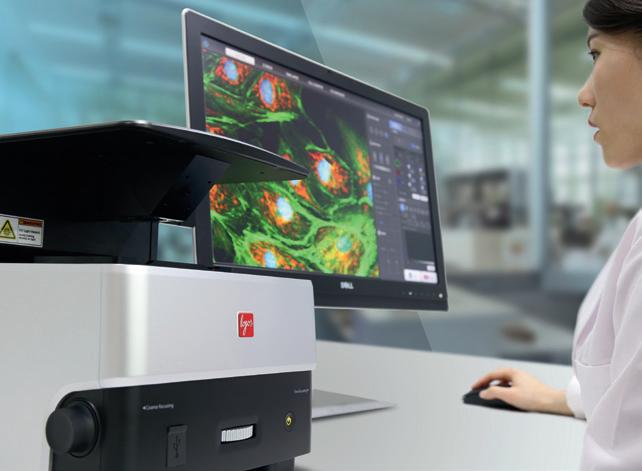
The automated cell counting feature offers a quick way to count stained cells. Users can select cell detection parameters (such as cell size and shape) to count different types of cells and the CELENA S does the rest, adjusting focus and light for optimal cell detection. An image of the cells is captured, analysed and labelled to automatically distinguish live and dead cells. Cell count and viability results appear next to the image and can be exported easily via USB.
ATA Scientific Pty Ltd
www.atascientific.com.au
Extracellular vesicle isolation kit
Extracellular vesicles, such as exosomes, are 30–150 nm vesicles released from cells that contain heterogeneous mixtures of proteins, nucleic acids, lipids and sugars, and are found in a variety of bodily fluids including plasma, serum and urine.
Cayman Chemical’s Extracellular Vesicle Isolation Kit provides a simple, quick and convenient precipitation-based method for isolating extracellular vesicles from serum and plasma. The volume of extracellular vesicle isolation reagent provided is sufficient for processing up to 24 mL of serum or plasma, and it enables rapid isolation within 1 h.
Also provided is a storage medium for stabilising extracellular vesicles during frozen storage. This optional reagent will not interfere with protein assays and is formulated to be compatible with typical downstream analyses.
Sapphire Bioscience
www.sapphirebioscience.com

LAB+LIFE SCIENTIST - Feb/Mar 2023 | 25 www.LabOnline.com.au | www.LifeScientist.com.au what’s new
Identifying intrinsically disordered proteins in crowds
Australian scientists from RMIT, ANSTO and CSIRO have revealed new insights into intrinsically disordered proteins and protein regions (IDPs)/(IDRs) and how they behave under various physiological processes.

the SARS-CoV-2 virus: their adaptability not only enables them to latch onto a cell for viral entry, but also to evade immunity.
IDPs carry out a range of important biological tasks and play a key role in several biological functions, including various metabolisms, cellular signalling, infections, illnesses and tissue repairs, as well as drug delivery. Unlike other functional proteins, they do not have a stable three-dimensional structure; rather, the same protein can rearrange in multiple pathways and may adapt to engage in different interactions with different consequences. The best example of IDPs/ IDRs is the spike protein within the envelope of
Professor Naba Dutta of RMIT said the new study provides previously unknown experimental evidence and a theoretical framework to predict how these proteins change shape in the complex, crowded environment of the cell. He noted, “They have the ability to transform from one shape to another, very fast, in response to the local environment. This makes it very challenging to analyse them using conventional techniques.”
Dutta and his collaborators conducted several high-tech experiments and provided evidence that Rec1-resilin, which is exceptionally elastic and
commonly used to form various tough materials for biomedical applications by the group, is an IDP with unique characteristics; for instance, the resilin protein enables insects such as fleas with the ability to jump more than 100 times their own height in microseconds. The group meticulously described the protein’s structure and interface, and its evolution in a complex, crowded environment, in the journal Science Advances.
“We first got interested in these proteins when we were working on the development of materials for biomedical applications, such as hydrogels using silk and resilin,” said senior instrument scientist Dr Jitendra Mata, an expert in small angle scattering techniques at ANSTO.
26 | LAB+LIFE SCIENTIST - Feb/Mar 2023 www.LabOnline.com.au | www.LifeScientist.com.au
iStock.com/luismmolina
“Silk is very tough and resilin is very elastic, so when you mix the two together you get a material that has exceptional properties and can be used for tissue repair.
“So, in developing these materials, we realised we did not have a good understanding of how these proteins function at a fundamental level, especially in a crowded environment. This knowledge is essential to develop materials for biomedical applications.”
Rec1-resilin responds to multiple stimuli and responds to changes in its environment, such as temperature, pH and the presence of ions and other substances, making it valuable as a responsive biomaterial — for performing tasks such as tissue repair or therapeutic delivery, for example. But as Dutta noted, “We all know that characterising an isolated protein in pristine conditions will not provide you the information you need, because it is not the environment where it normally operates.” It was only through deuteration, followed by ultra-small and small angle neutron scattering (USANS and SANS), that the researchers could identify the IDP and
its metamorphosis in the soup of molecules that typically crowd the cellular environment.
The Rec1-resilin was produced by researchers at CSIRO. Deuteration of the protein, in which hydrogen is replaced by deuterium, was performed at ANSTO’s National Deuteration Facility (NDF). The deuterated protein was biosynthesised at the NDF before being used for SANS and USANS experiments at ANSTO’s Australian Centre for Neutron Scattering (ACNS). Experimentally identifying the shapes of the ensembles of IDPs and their metamorphosis under various crowding circumstances revealed the links between their sequences and functions.
By performing a series of contrast-matching experiments on deuterium-labelled proteins that enabled the scientists to ‘hide’ one component and study the other, the group examined the effect of crowding on the shape, size, stability and structure and the metamorphosis of an IDP. Theoretical modelling was also used to develop a framework that predicts the 3D structure of resilin in the presence of five different crowding agents at various concentrations.
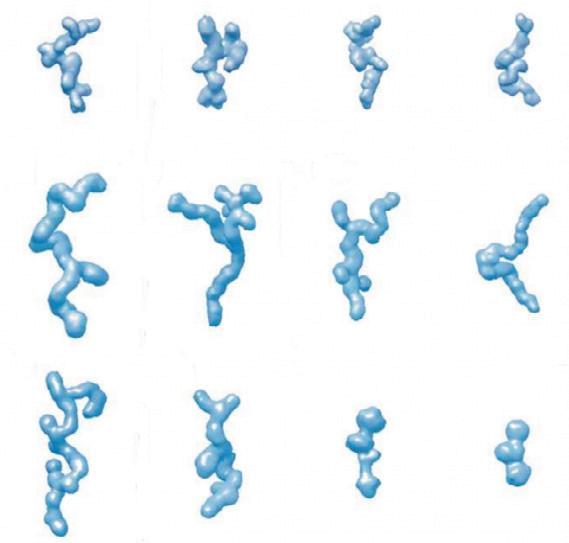
Simulations of deuterated Rec1-resilin under crowded macromolecular conditions. Image shared under CC BY-NC 4.0
To date, there have been very few studies of the impact of macromolecular crowding on the dynamic shapes of IDP ensembles, their stability and their transformation. With their study now completed, Dutta and the team look forward to seeing how their research will be taken to the next level.
Safe Storage at Ultra Low Temperatures



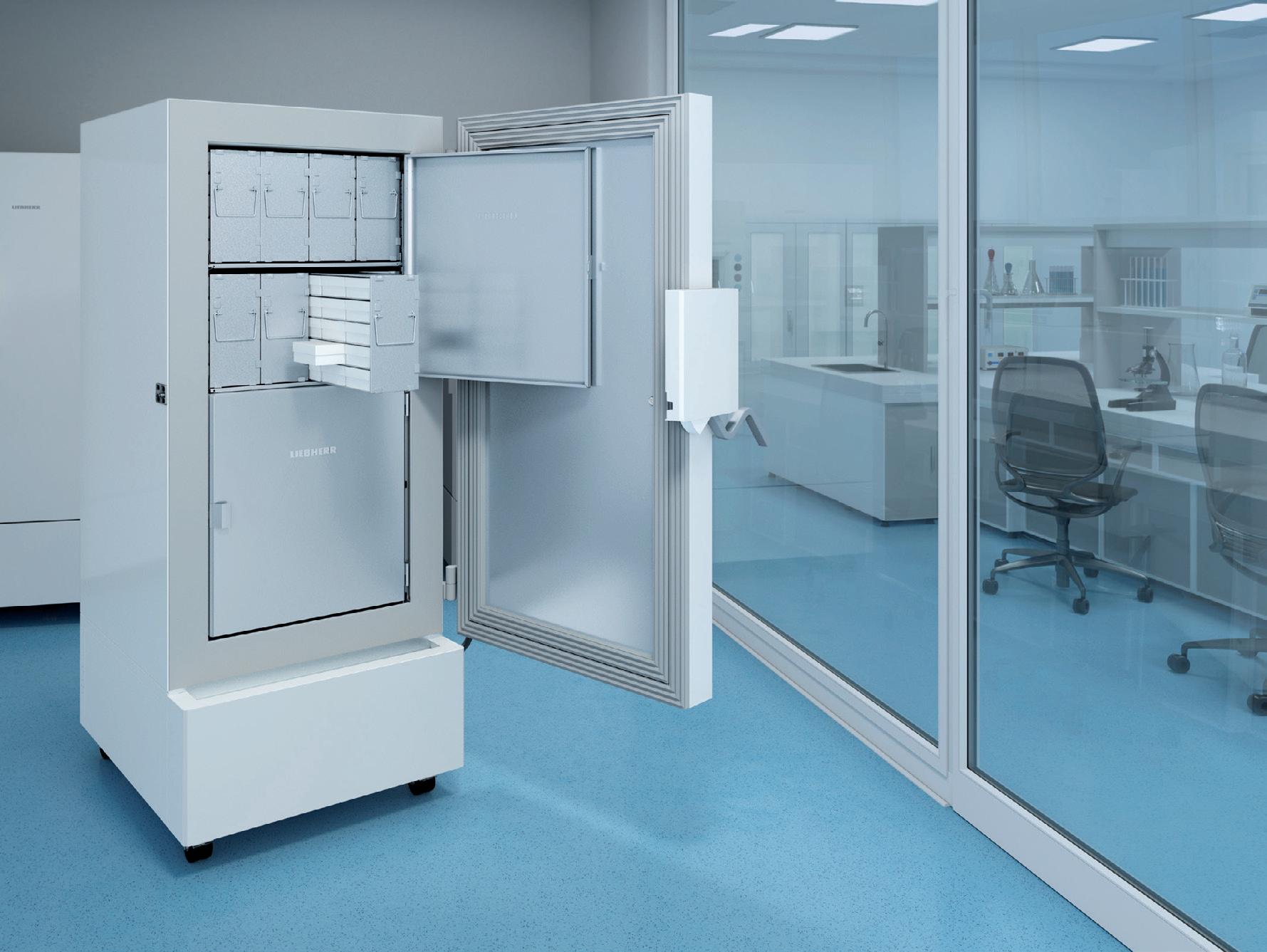
Setting the benchmark in the temperature range of -40°C to -86°C, our new ULT Freezers are engineered to store highly sensitive substances that meet the special safety & hygiene regulations required for vaccines! home.liebherr.com.au Laboratory
LAB+LIFE SCIENTIST - Feb/Mar 2023 | 27 www.LabOnline.com.au | www.LifeScientist.com.au proteomics
& Pharmaceutical
by: Contact Us: 1800 685 899 Email: sales@andico.com.au
Distributed
Bag filters
Camfil launched the Hi-Flo bag filter range in 1969 and now introduces the Next Generation.
Hi-Flo bag filters are designed to suit all kinds of commercial and industrial HVAC applications. They clean the air of particles and improve indoor air quality and workplace conditions.
The Hi-Flo bag filter series is focused around providing efficient and sustainable clean air solutions to customers. The Next Generation range continues this legacy with a specific focus on improving the ePM1 60% and ePM10 60% range.
The Hi-Flo Next Generation bag filter is designed to offer a reduction in energy consumption of 12% when compared to the old Hi-Flo series products, and up to 30% lower energy consumption than the industry average.
When air flows as freely as possible through the pockets of an air filter, with low resistance, the filter will perform better. The Hi-Flo bag filter achieves this with conical pockets and a developed seam design and stitching technique, distributing air over the entire filter surface for maximum use of the filter media.
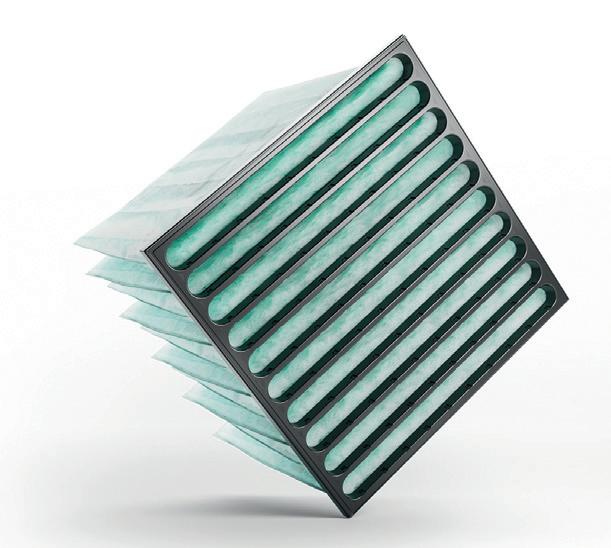
The bag filter series is tested according to ISO 16890 and certified by Eurovent for optimal filter and system performance.
Camfil Australia Pty Ltd
www.camfil.com/en-au
Real-time PCR system
Bio-Rad Laboratories has launched the CFX Opus Deepwell Dx Real-Time PCR System — a real-time PCR system listed with the US FDA for in vitro diagnostic (IVD) testing and developed in accord ance with the European Union’s regula tions for in vitro diagnostic medical devices (EU 2017/746). Bio-Rad will continue to seek regulatory approvals for additional global markets in the coming months.
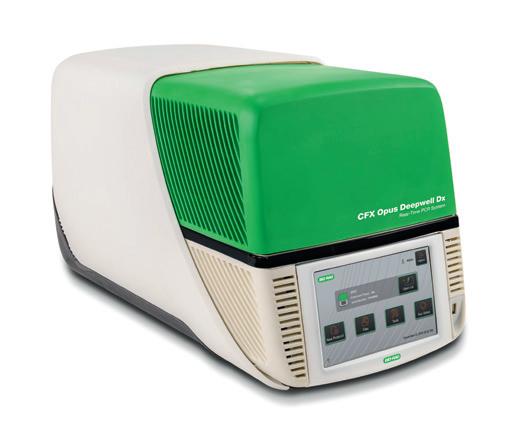
The system is designed to offer precise quantification with flexibility for reactions up to 125 µL in a 96-well format for quantitative PCR (qPCR) diagnostic assays. It is also available in a 96- and 384-well reaction block format.
All systems in the range are open platforms that can multiplex up to five targets to enable efficient IVD assay development and diagnostic testing. The systems offer easy-to-use desktop management and analysis software with integrated security features for electronic signature, audit and user control.
Bio-Rad Laboratories Pty Ltd
www.bio-rad.com
UHPLC column for proteomics applications
Proteomics provides a greater understanding of the complexity of life than other forms of in-depth biological research approaches, as it provides deep insight into the structure and function of proteins and how they react within the cell in response to their environment. IonOpticks has developed the Aurora Frontier UHPLC column to meet the demands of users and mass spectrometry vendors who wanted better separation of samples, providing the opportunity to understand the proteome at greater depths than mass spectrometry has achieved before.
The product is a 60 cm nanoflow UHPLC packed emitter column and offers high performance using long sample gradients, which should enable researchers to get more depth of coverage due to its good peak capacity when compared to other nanoflow chromatography. It is claimed to produce more than 10,000 unique protein IDs, over 25% more than the next highest performing commercially available column for single species samples.
The device allows researchers to get as much as possible from their samples, which are often precious and labour-intensive to generate. Having a deeper understanding of the proteome will help with understanding disease, defining opportunities for early diagnosis, in addition to increasing the capacity to identify targets and monitor outcomes for the benefit of therapy intervention.
IonOpticks
ionopticks.com/
Mobile table
HEMCO’s Mobile Table is designed to support lightweight laboratory equipment. It has a standard height of 0.76 m, with size options including 0.97 and 1.22 m wide and 0.61 and 0.76 m deep.
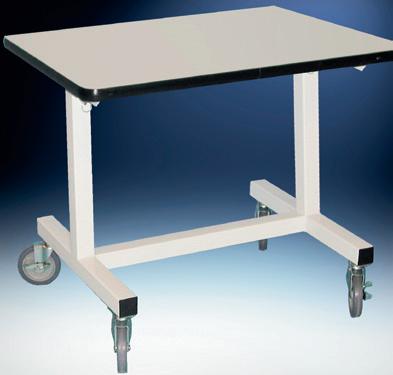
The product is made of 16-gauge rectangular tubing with welded construction. It has four wheels, a capacity of 113.4 kg and lockable casters.
The work surface is plastic laminate with a matte finish and black perimeter edge bumper. The powdercoated finish is chemical resistant.
HEMCO Corporation
www.hemcocorp.com
28 | LAB+LIFE SCIENTIST - Feb/Mar 2023 www.LabOnline.com.au | www.LifeScientist.com.au what’s new
Gene in centenarians

protects against heart failure
An anti-aging gene discovered in a population of centenarians has been shown to rewind the heart’s biological age by 10 years. The breakthrough, published in the journal Cardiovascular Research and led by scientists at the University of Bristol and the MultiMedica Group, offers a potential target for patients with heart failure.
variant of the BPIFB4 gene, previously proved particularly frequent in centenarians, can protect cells collected from patients with heart failure requiring cardiac transplantation.
The Bristol team, led by Professor Paolo Madeddu, has found that a single administration of the mutant anti-aging gene halted the decay of heart function in middle-age mice. Even more remarkably, when given to elderly mice, whose hearts exhibit the same alterations observed in elderly patients, the gene rewound the heart’s biological clock age by the human equivalent of more than 10 years.
“The heart and blood vessel function is put at stake as we age,” Madeddu said. “However, the rate at which these harmful changes occur is different among people. Smoking, alcohol and sedentary life make the aging clock faster, whereas eating well and exercising delay the heart’s aging clock.
The three-year study was also performed in test tube human cardiac cells in Italy. Researchers from the MultiMedica Group, led by Professor Annibale Puca, administered the gene in heart cells from elderly patients with severe heart problems, including transplantation, and then compared their function with those of healthy individuals.
“The cells of the elderly patients, in particular those that support the construction of new blood vessels, called ‘pericytes’, were found to be less performing and more aged,” said Monica Cattaneo, a researcher at the MultiMedica Group. “By adding the longevity gene/protein to the test tube, we observed a process of cardiac rejuvenation: the cardiac cells of elderly heart failure patients have resumed functioning properly, proving to be more efficient in building new blood vessels.”
Centenarians pass their healthy genes to their offspring; the study demonstrates that a healthy gene found in centenarians could be transferred to unrelated people to protect their hearts. Other mutations might be found in the future with similar or even superior curative potential than the one investigated by this research. Madeddu and Puca believe the study may thus fuel a new wave of treatments inspired by the genetics of centenarians.
“Our findings confirm the healthy mutant gene can reverse the decline of heart performance in older people,” Madeddu said. “We are now interested in determining if giving the protein instead of the gene can also work. Gene therapy is widely used to treat diseases caused by bad genes. However, a treatment based on a protein is safer and more viable than gene therapy.
“We have received funding from the Medical Research Council to test healthy gene therapy in Progeria. This genetic disease, also known as Hutchinson-Gilford syndrome, causes early aging damage to children’s hearts and blood vessels. We have also been funded by the British Heart Foundation and Diabetes UK to test the protein in older and diabetic mice, respectively.”
Associated with exceptional longevity, carriers of healthy mutant genes, like those living in blue zones of the planet, often live to 100 years or more and remain in good health. These individuals are also less prone to cardiovascular complications. Scientists believe this gene helps to keep hearts young by protecting them against diseases linked to aging, such as heart failure. In this new study, researchers demonstrated that a naturally occurring
“In addition, having good genes inherited from parents can help to stay young and healthy. Genes are sequences of letters that encode proteins. By chance, some of these letters can mutate. Most of these mutations are insignificant; in a few cases, however, the mutation can make the gene function worse or better, like for the mutant anti-aging gene we have studied here on human cells and older mice.”
Puca added, “Gene therapy with the healthy gene in mouse models of disease has already been shown to prevent the onset of atherosclerosis, vascular aging and diabetic complications, and to rejuvenate the immune system.
“We have a new confirmation and enlargement of the therapeutic potential of the gene/protein. We hope to test its effectiveness soon in clinical trials on patients with heart failure.”
LAB+LIFE SCIENTIST - Feb/Mar 2023 | 29 www.LabOnline.com.au | www.LifeScientist.com.au
genetics
iStock.com/MEDITERRANEAN
Combined rapid antigen test for Flu A/B and COVID-19
Australians are now able to purchase Touch Biotechnology’s combined rapid antigen test for COVID-19 and Influenza A and B at pharmacies nationally. The SARS-CoV-2 & Flu A/B Antigen Combo Test (Self-Testing) Kit has a sensitivity of more than 98% and was one of the first TGA-approved multi-virus rapid antigen tests in the Australian market, with approval obtained in September 2022.
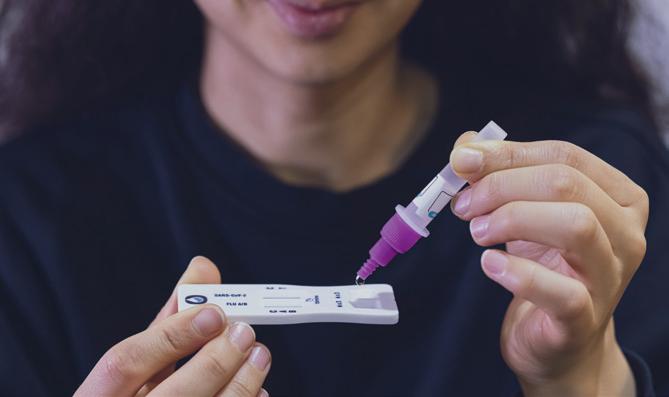
As the symptoms of COVID-19 and Flu A/B are very similar, the combined rapid antigen self-test kit enables people to test for all three at the same time. This helps them to identify their symptoms within 15 min, get a consultation from a health professional for the right treatment and make timely decisions about their interactions in the community from the comfort of their own homes.
In collaboration with national wholesalers and distributors such as Symbion, the kits can now be purchased from selected stores of TerryWhite Chemmart, Good Price Pharmacy Warehouse and more. People are recommended to use the kits when they feel unwell, have any symptoms or have been in contact with someone who has COVID-19 or Influenza A or B viruses.
TouchBio Australia
www.touchaustralia.com.au
Master assay for respiratory viruses
Seegene’s Allplex RV Master Assay can distinguish 21 targets for 19 different respiratory viruses, including COVID-19, flu and common colds. Specifically, the assay can identify three genes of COVID-19, Flu A, Flu B, metapneumovirus, two types of respiratory syncytial virus, four types of parainfluenza virus, six types of adenovirus and three types of human rhinovirus.
Symptoms of COVID-19, such as coughing and fever, can also be a sign of other respiratory infections. This makes it difficult to identify the exact viral cause and the appropriate treatment for each patient. Testing is critical for proper care as treatments can vary by infection type and to reduce the potential of co-infection.
Applying patented technologies like DPO, TOCE and MuDT, the syndromic test allows medical specialists to swiftly find out which viruses are making the patient sick with a single sample. The product can detect respiratory viruses that can occur all year round to simplify the diagnostic of the ‘new normal’ respiratory virus composition.
Integrated Sciences Pty Ltd
www.integratedsci.com.au
Human serum-based non-endotoxin pyrogen testing
Lonza has launched the PyroCell Monocyte Activation Test - Human Serum System (PyroCell MAT HS System), which uses human serum instead of foetal bovine serum.
The in vitro pyrogen testing system is designed to exhibit sensitivity for detection of non-endotoxin pyrogens as well as reduced interferences from complex drug products such as biologics-based pharmaceuticals. By replacing foetal bovine serum, the system reduces the need for experimental animals and animal-derived components in pyrogen testing.
The Monocyte Activation Test (MAT) is an in vitro pyrogenicity test that mimics the human immune response to both bacterial endotoxin and non-endotoxin pyrogens (NEPs). The MAT serves to replace the rabbit pyrogen test, thereby reducing reliance on experimental animals.
Conducting the MAT involves a cell culture step that requires a serum source, and different serum sources provide different reactivity profiles. The use of human serum may exhibit decreased interferences from complex product matrices and increased sensitivity to NEPs.
Capsugel Australia Pty Ltd lonzabioscience.com.au
IP68-rated mouse
GETT Asia’s Easymouse is an IP68-rated mouse that is suitable for medical applications where cleaning standards are stringent. With medical facilities being continuously exposed to infectious diseases, especially in the era of a pandemic, cleanliness is key.
Gaps and grooves in computing equipment are ideal places for pathogens to gather unnoticed and multiply. This is particularly disastrous for people with compromised immune systems, in intensive care units, for example. It is vital to remove any sources of danger, which could worsen people’s state of health.
The IP68-rated plastic mouse is easy to clean and has been designed so that bacteria and germs cannot collect in tiny grooves, making it suitable for use in medical settings. It features a scroll wheel, optical detection capabilities and USB plug with protection cap.
Backplane Systems Technology Pty Ltd www.backplane.com.au
30 | LAB+LIFE SCIENTIST - Feb/Mar 2023 www.LabOnline.com.au | www.LifeScientist.com.au what’s new
Electronic pipetting helps to streamline drug development
Pharmaxis is an Australian pharmaceutical company in that develops drugs for inflammatory and fibrotic diseases, with notable expertise in treating respiratory conditions and myelofibrosis. The company uses INTEGRA Biosciences’ ASSIST PLUS pipetting robot, plus VIAFLO 96 and VIAFLO 384 electronic pipettes, to help streamline sample and reagent preparation for small molecule screening to identify drug candidates for a number of debilitating diseases.
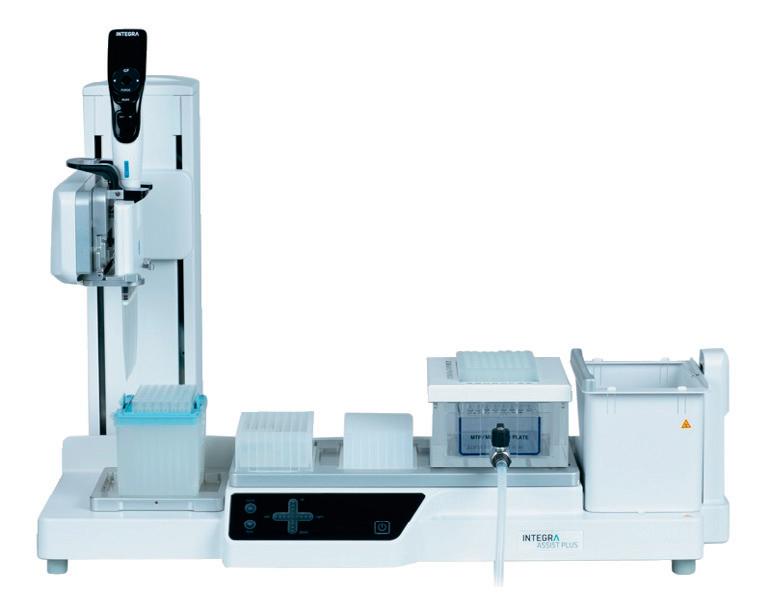
Pharmaxis operates a highly productive drug discovery engine to evaluate vital treatments for inflammatory and fibrotic diseases, from synthesis and screening right through to Phase II clinical trials. The company already has two approved respiratory products available on the global market for cystic fibrosis and asthma, and many more in clinical trials, including a promising candidate for the treatment of bone marrow cancer myelofibrosis. Pharmaxis has become a global leader in mechanism-based inhibitors of amine oxidases and uses its platform to synthesise a wide range of compounds offering different properties to treat an array of diseases.
Drug development and screening require equipment that is both efficient and flexible, so that it can be applied to different techniques and approaches as demands change and projects progress. As explained by Ross Hamilton, Research Scientist at Pharmaxis: “We were looking for an all-round liquid handling solution that offered the flexibility to be applied to a number of different workflows in our lab, and came across the ASSIST PLUS pipetting robot from INTEGRA. In combination with 12-channel VIAFLO electronic
pipettes, this system has been incredibly useful for all of our pipetting tasks, from compound dilution to preparing microplate reader assays.
“We use this set-up across almost every stage of the workflow, along with the company’s VIAFLO 96 and VIAFLO 384 handheld electronic pipettes — which we have with various pipetting heads ranging in volume sizes of 50 to 1250 µL — for whole plate filling and transfers. Previously, we were manually pipetting in 96- and 384-well formats, which was a daunting task, but now we can seamlessly fill entire plates, saving us an incredible amount of time.”
It is also vital to maintain pipetting accuracy for drug development protocols, in order to obtain data that you can rely on. Hamilton said: “The accuracy of these instruments is really good, and pipetting multiple channels in parallel helps to eliminate the risk of human error, as there is nothing worse than getting halfway through a plate and forgetting where you were. We also like the GripTips pipette tips for this reason, as we never have to worry about them leaking or falling off, which could potentially disrupt our concentration and hinder accuracy.
“The systems are also extremely straightforward to set up and use, and we have protocols saved to the instrument for each task, so it’s as simple as adding the plates and hitting run. We’ve been using all three instruments for over two years now, and we operate them every single day — they’ve become the dependable workhorses of the lab.”
BioTools Pty Ltd www.biotools.com.au
LAB+LIFE SCIENTIST - Feb/Mar 2023 | 31 www.LabOnline.com.au | www.LifeScientist.com.au what’s happening iStock.com/scanrail
Image courtesy of Pharmaxis.
New X-ray technique to image fluctuations in materials
Scientists from Germany and the US have developed a revolutionary new method for capturing high-resolution images of fluctuations in materials at the nanoscale using powerful X-ray sources. The technique, which they call coherent correlation imaging (CCI), allows for the creation of sharp, detailed movies without damaging the sample by excessive radiation.
By using an algorithm to detect patterns in underexposed images, CCI opens paths to previously inaccessible information. The team demonstrated CCI on samples made of thin magnetic layers, with their results published in the journal Nature
The microscopic realm of the world is constantly in motion and marked by unceasing alteration. Even in seemingly unchanging solid materials, these fluctuations can give rise to unusual properties — one example being the lossless transmission of electrical current in high-temperature superconductors. Fluctuations are particularly pronounced during phase transitions, where a material changes its state, such as from solid to liquid during melting. Scientists also investigate very different phase transitions,

such as from non-conductive to conductive, non-magnetic to magnetic, and changes in crystal structure. Many of these processes are utilised in technology, and also play a crucial role in the functioning of living organisms.
Too much illumination might damage the sample
Studying these processes in detail, however, is a difficult task, and capturing a movie of these fluctuation patterns is even more challenging. This is because the fluctuations happen quickly and take place at the nanometre scale — a millionth of a millimetre. Even the most advanced high-resolution X-ray and electron microscopes are unable to capture this rapid, random motion. The problem is fundamentally rooted, as exemplified by this principle of photography: in order to capture a clear image of an object, a certain level of illumination is required. To magnify the object (zoom in), more
illumination is needed. Even more light is necessary when attempting to capture a fast motion with a short exposure time.
Ultimately, increasing the resolution and decreasing the exposure time leads to a point where the object would be damaged or even destroyed by the illumination required. This is exactly the point science has reached in recent years: snapshots taken with free-electron lasers, the most intense X-ray sources available today, inevitably led to the destruction of the sample under study. As a result, capturing a movie of these random processes consisting of multiple images has been deemed impossible.
Using an algorithm to detect patterns in dimly lit pictures
The international team of scientists has now found a solution to this problem, having realised that the fluctuation patterns in materials are often not
32 | LAB+LIFE SCIENTIST - Feb/Mar 2023 www.LabOnline.com.au | www.LifeScientist.com.au
The principle of CCI is used to image a random process, such as a coin toss. A single, brief image of the coin may not be sufficiently exposed to clearly identify the image on the coin. However, a new algorithm can sort and combine multiple images to produce clear images of both sides of the coin, which can then be accurately assigned to the moment of exposure. Image credit: Christopher Klose/Max Born Institute.
entirely random. By focusing on a small portion of the sample, the researchers observed that certain spatial patterns repeatedly emerged, but the exact timing and frequency of these patterns were unpredictable.
The scientists thus developed CCI, a novel non-destructive imaging method. To create a movie, they take multiple snapshots of the sample in quick succession while reducing the illumination enough to keep the sample intact; this results in
individual images where the fluctuation pattern in the sample becomes indistinct. Nevertheless, the images still contain sufficient information to separate them into groups. To accomplish this, the team first had to create a new algorithm that analyses the correlations between the images, hence the method’s name. The snapshots within each group are very similar and thus likely to originate from the same specific fluctuation pattern. It is only when all shots in a group are viewed together that a clear image of the sample emerges. The scientists are now able to rewind the film and associate each snapshot with a clear image of the sample’s state at that moment in time.
Filming the ‘dance of domains’ in magnetic layers
The scientists created the method to tackle a specific problem in the field of magnetism: microscopic patterns that occur in thin ferromagnetic layers. These layers are divided into regions known as domains, in which the magnetisation points either upward or downward. Similar magnetic films are used in modern hard drives where the two different types of domains encode bits with ‘0’ or ‘1’. Until now, it was believed that these patterns were extremely stable, but the scientists wanted to confirm if this was really true.
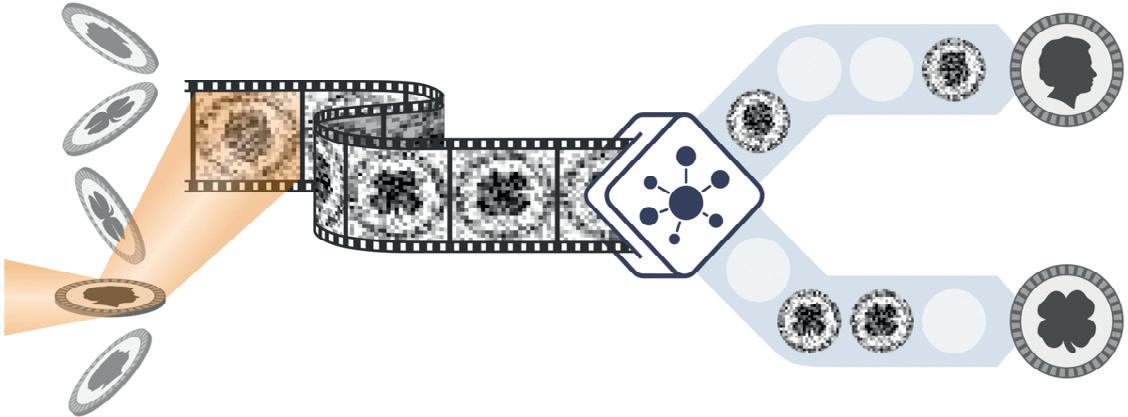
To answer this question, the team investigated a sample consisting of such a magnetic layer at the National Synchrotron Light Source II on Long Island, using the newly developed CCI method. Indeed, the patterns remained unchanged at room temperature. But at a slightly elevated temperature of 37°C, the domains began to move back and forth erratically, displacing each other. The scientists observed this ‘dance of the domains’ for several hours. Subsequently, they created a map showing the preferred location of the boundaries between the domains. This map and the movie of the movements led to a better understanding of the magnetic interactions in the materials, promoting future applications in advanced computer architectures.

New opportunities for materials research
The scientists’ next objective is to employ the novel imaging method on free-electron lasers, such as the European XFEL in Hamburg, to gain deeper insights into even faster processes at the smallest length scales. They are confident that this method will improve our understanding of the role of fluctuations and stochastic processes in the properties of modern materials and, as a result, discover new methods of utilising them in a more directed manner.
LAB+LIFE SCIENTIST - Feb/Mar 2023 | 33 www.LabOnline.com.au | www.LifeScientist.com.au imaging
Map of the borders between the magnetic domains shifting back and forth in time. The whole map is only about 700 nm in width. Image credit: Christopher Klose/Max Born Institute.
ASID Annual Scientific Meeting 2023
April 3–5, Adelaide
The ASID Annual Scientific Meeting serves to connect clinicians, microbiologists and other health professionals with a common interest in infectious diseases and provides a friendly forum for the exchange of scientific advances in the prevention, diagnosis and management of clinical infectious diseases.
International speakers will offer expert global perspectives, while Australasian research and expertise will be highlighted with keynote lectures and symposia. https://asid.eventsair.com/asid-asm-2023/
Cutting Edge Symposium: Efficient use of plant biomass for different feedstocks
March 7–9, Canberra https://events.csiro.au/Events/2022/August/25/ Efficient-use-of-plant-biomass-for-different-feedstocks
SMP (Science Meets Parliament) Online
March 7–9, online https://sta.eventsair.com/science-meetsparliament-2023/
GeneMappers 2023
March 8–10, Hobart
https://www.genemappers2023.org/
Australasian Exploration Geoscience Conference
March 13–18, Brisbane
https://2023.aegc.com.au/
SMP (Science Meets Parliament) On The Hill
March 22, Canberra
https://sta.eventsair.com/science-meetsparliament-2023/
Building the SABRE Biosecurity Alliance
March 23, Canberra
https://sta.eventsair.com/science-meetsparliament-2023/
TSANZSRS 2023
March 25–28, Christchurch https://www.tsanzsrsasm.com/
35th ISE Topical Meeting: Electrochemistry for energy, environment and health
May 7–10, Gold Coast https://topical35.ise-online.org/
Science on the Swan 2023
May 8–10, Perth
https://scienceontheswan.com.au/
AusMedtech 2023
May 24–25, Adelaide https://www.ausmedtech.com.au/
EcoSummit 2023
June 13–17, Gold Coast https://ecosummitcongress.com/
Cutting Edge Symposium: Locking Carbon in Minerals
June 19–23, Perth
https://events.csiro.au/Events/2022/July/28/ Locking-Carbon-in-Minerals
21st International Conference on Nucleation and Atmospheric Aerosols
June 26–30, Brisbane https://www.icnaa2023.com.au/
The Australian Society for Microbiology Annual National Meeting
July 3–6, Perth https://www.theasmmeeting.org.au/
20th International Conference on Biological Inorganic Chemistry
July 16–21, Adelaide https://icbic2023.org/
31st International Symposium on Lepton Photon Interactions at High Energies
July 17–21, Melbourne https://www.leptonphoton2023.org/
National Science Week 2023
August 12–20, Australia-wide https://www.scienceweek.net.au/
IUCr 2023
August 22–29, Melbourne http://iucr2023.org/
Australasian Radiation Protection Society 2023 Conference
October 22–26, Gold Coast https://arpsconference.com.au/
AusBiotech 2023
November 1–3, Brisbane https://www.ausbiotechnc.org/
ASC 50th Annual Scientific Meeting
November 3–5, Surfers Paradise https://www.cytology.com.au/annual-scientificbusiness-meeting
Acoustics 2023
December 4–8, Sydney https://acoustics23sydney.org/
Westwick-Farrow Media
A.B.N. 22 152 305 336 www.wfmedia.com.au
Head Office Unit 7, 6-8 Byfield Street, (Locked Bag 2226) North Ryde BC NSW 1670, AUSTRALIA
Ph: +61 2 9168 2500
Editor Lauren Davis LLS@wfmedia.com.au
Publishing Director/MD
Geoff Hird
Art Director/Production Manager Julie Wright
Art/Production
Linda Klobusiak, Marija Tutkovska
Circulation
Dianna Alberry circulation@wfmedia.com.au
Copy Control Mitchie Mullins copy@wfmedia.com.au
Advertising Sales Sales Manager: Kerrie Robinson Ph:0400 886 311 krobinson@wfmedia.com.au
Nikki Edwards Ph: 0431 107 407 nedwards@wfmedia.com.au
Tim Thompson Ph: 0421 623 958 tthompson@wfmedia.com.au
If you have any queries regarding our privacy policy please email privacy@wfmedia.com.au
Printed and bound by Dynamite Printing
Print Post Approved PP100008671
ISSN No. 2203-773X
All material published in this magazine is published in good faith and every care is taken to accurately relay information provided to us. Readers are advised by the publishers to ensure that all necessary safety devices and precautions are installed and safe working procedures adopted before the use of any equipment found or purchased through the information we provide. Further, all performance criteria was provided by the representative company concerned and any dispute should be referred to them. Information indicating that products are made in Australia or New Zealand is supplied by the source company. Westwick-Farrow Pty Ltd does not quantify the amount of local content or the accuracy of the statement made by the source.
34 | LAB+LIFE SCIENTIST - Feb/Mar 2023 www.LabOnline.com.au | www.LifeScientist.com.au
the world about your event: email LLS@wfmedia.com.au event horizon
Tell
YEARS CELEBRATING
iStock.com/D-Keine
to industry and business professionals










www.WFMedia.com.au/subscribe The magazine you are reading is just one of 11 published by Westwick-Farrow Media. To receive your free subscription (magazine and eNewsletter), visit the link below. FREE
D R YIN G A N D C O A T I N G
TE CH NO L OG Y
Proven
Perfect Your Products with Greater Efficiency and Innovation
From pharma to food, cosmetics to chemicals, Fluid Air delivers big ideas that help you preserve active ingredients, accelerate production, and reduce waste - all with cost efficiency in mind.
Our innovative PolarDry® technology utilises milder temperatures to produce powders, leading to large efficiency gains for your business.
Electrostatic spray drying is a low-temperature drying technique that combines dual-fluid atomisation and electrostatic charge in a single-step process for conversion of liquid feed into powder.
Fluid Air has the range to suit the size and needs of your business with machines tailored for R&D, feasibility studies, as well as small, medium, and large-scale commercial manufacturing.
For enquiries, contact us at mark.condro@spray.com.au
D EF I N
N
THE NEX
I
G
T GEN ER A TI ON O F SPR A Y
1300
998 Spraying Systems Co. 8 Moorinna Way, Truganina Victoria Australia 3029 s p r a y. c om. a u
Phone
079
to
in
work
the pharmaceutical industry
