16 DAYS OF ACTIVISM


Advancing the voices and leadership of Latinas and women of color in shaping policies and communities committed to ending gender-based violence
Maria Victoria Juarez
PUBLICATION DISCLAIMER
The content in t and challenging violence (GBV), p It is intended for not represent pr officially endorse Peace, Security, Readers are enc thoughtfully, see qualified experts to their own circ
WCAPS LEADERSHIP MESSAGE
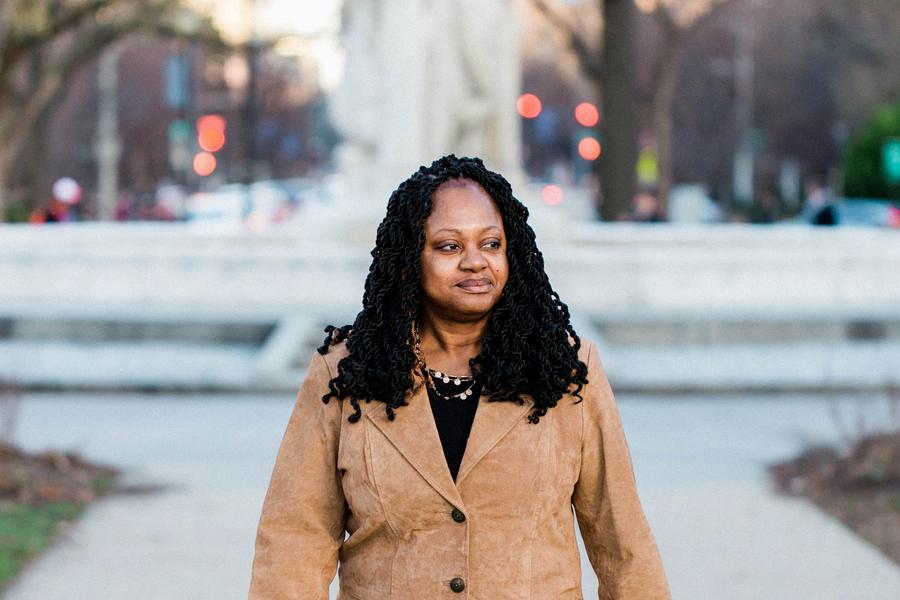
Today, on the final day of the 16 Days of Activism, WCAPS reaffirms that our commitment to ending gender-based violence must extend far beyond this global campaign. These 16 days are a call to action, but our responsibility is year-round. Gender-based violence persists in every region, across every woman of color community, and addressing it requires sustained attention, resources, and collective will.
Meaningful progress demands engagement at every level: from governments crafting and enforcing policy, to nongovernmental organizations providing essential support, to community groups and advocates creating safe spaces, and to families, friends, and allies standing beside survivors with compassion and accountability And most importantly, it requires listening to and uplifting the voices of those who have endured violence, ensuring they are heard, protected, and empowered
As we move from this year’s campaign into the months ahead, let us carry forward the momentum, the courage, and the urgency that these 16 Days represent Let us each commit to actions - big or small - that contribute to prevention, protection, and lasting change. If we remain steadfast in our efforts, together we can help reduce the instances of gender-based violence in our world and build a future rooted in dignity, safety, and respect for all.
Ambassador Bonnie Jenkins Executive Director and Founder
MESSAGE FROM PROGRAM ADVISOR
When I think about En Voz Alta, I think about possibility. I think about what happens when someone has the space to grow, speak confidently, and lead with purpose. This program was created to open that space, and today it matters more than ever. What inspires me most is the strength and perspective that Latinas bring to peace and security transformation. Their experiences, resilience, and sense of community shape solutions that combine courage and care.
En Voz Alta exists to support that strength, sharpen it, and ensure it is heard. To anyone reading this, whether you are already part of our network or finding us for the first time, know this: Leadership is not about having all the answers It is about being willing to step forward, stay curious, and trust that your voice has value
En Voz Alta is here to support you as you do that Our mentors and speakers continue to guide this work with heart and intention They remind us that progress comes through connection, shared wisdom, and the simple act of showing up for one another Their presence proves that growth is not a solo journey
As we look ahead, I feel hopeful. I am committed. I am proud to stand with a community that believes in lifting others, building confidence, and preparing leaders who can create a more secure and humane future. If this message reaches even one person who needed encouragement today, then it has done its job.
Keep going. Your voice matters, and we are here to help you use it well.

CALL FOR ACTIVISTS | EVERY WOMAN
Every Woman is a global coalition of over 4,000 women’s rights activists from 165 countries, working together to develop a safer world free of Violence Against Women and Girls.
You can learn more about our work at everywoman.org.
Resilient Collective
Every Woman has launched the Resilient Collective an academy of shared learning targeted at building mindsets and skillsets that support our individual, collective, and organizational health. This is not just another training program. It’s a space for us to grow our skills, strengthen our leadership, share learnings, and find strategies to sustain ourselves and our movements It’s a community where we can lean on each other, replenish our energy, and deepen our collective impact
We will share more details in the coming months, but here is what you can expect: New Capacity-Building Programs rooted in your responses to the resilient movement survey Focus areas have been shaped directly by your input, such as:
Workshops on Grant Writing and Fundraising activities
Skill-building around Advocacy, Public Speaking and Storytelling Support and resources towards burnout and trauma-informed healing
Tools for Organising & Advocacy in the current climate
Speaker Series that highlights stories of resilience from the coalition and other international leaders of the movement.
Community-building events that bring us closer as a community of practitioners and as individuals on this journey.
A resource hub that helps source global granting, advocacy, training, media and speaking opportunities for you to access and share.
Expert educators, trainers and instructors from around the world who have lived experiences in the regions we represent and are deeply rooted in our work
For those interested in joining the Every Woman coalition and registering for the Resilient Collective, please contact -
Zainab Ali Khan Co-Founder - Every Woman zainab@everywoman.org
ACKNOWLEDGEMENTS
Thank you to all EVA members for your ongoing support, and to the staff at Every Woman for your steadfast work in this space and your solidarity with WCAPS during our first 16 Days of Activism campaign initiative We also extend our gratitude to the entire WCAPS staff for your diligence during these stagnating times, and to our EVA mentees and mentors for helping us sustain this crucial program
Furthermore, we honor the journalists, activists, survivors, and those impacted by gender-based violence for sharing their stories, dedication, and tireless commitment to advancing the rights and safety of women of color globally WCAPS stands in solidarity with you and recognizes the courage and perseverance required to drive meaningful change
OUR EDITORS:


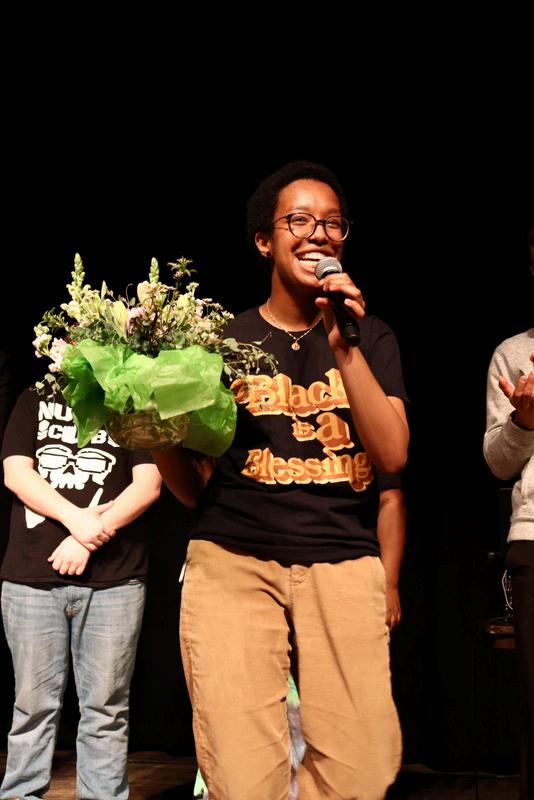
Jada Quinland is a global citizen serving as Program Officer at WCAPS, where she supports both general programmatic initiatives advancing the leadership, empowerment, and visibility of women of color in peace, security, and conflict transformation, as well as outward-facing programs designed for students and early-career professionals navigating this ever-changing field She is dedicated to fostering mentorship, advocacy, policy analysis, and community-driven research that promotesustainablechangeandequityglobally
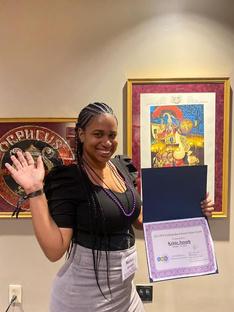
KelsieJosephisaninternationalaward-winningintersectionalfeministactivist,organiser,andchalk artist from Trinidad and Tobago She graduated with a Bachelor of Science in Sociology with minors in Gender and Development Studies and Criminology from the University of the West Indies, St Augustine Campus As Co-founder and Project Lead of Catcalls of UWI, an IGDS Ignite project, she uses story-sharing, chalk graffiti, cyber activism, and community-based interventions to combat street harassment and Gender-Based Violence at UWI and across her country Committed to advancing gender justice, Kelsie is working toward becoming a Gender-Based ViolenceinEmergencies(GBViE)Specialist
Lourdes Sanchez is a Communications Strategist at WCAPS, dedicated to expanding representation and shaping narratives that reflect the diverse communities brands serve Blending cultural insight, creativity, and research, she works to elevate authentic storytelling and drive more inclusivepracticesacrossthecommunicationsfield
RuhamaSolomonisanculturalanddiasporicactivistandartistpursuingaMaster’sinInternational Human Rights At the Josef Korbel School of Global and Public Affairs, University of Denver, RuhamaisalsoearningaCertificateinGlobalJustice Herworkcentersontransnationaljusticeand human security in the Horn of Africa and across the African diaspora Taking an interdisciplinary approach, she explores how identity, conflict, and sustainable development intersect Ruhama known for her curious and energetic nature, aspires to a career in diplomacy and multilateral engagement,advancinginclusivegovernancewithinherancestralregionandglobally
Kelsie Joseph
Jada Quinland
Lourdes Sanchez
Ruhama Solomon
FOREWARD
The 16 Days of Activism Against Gender-Based Violence is a global campaign that runs each year from November 25th to December 10th to annually highlight that violence against women and girls is a human rights violation. It aims to raise public awareness and drive action to end various forms of gender-based-violence through dialogues, community initiatives, and campaigns.
As editors, we are honored to introduce this 16 Days of Activism publication, a collection of reflections, analyses, and lived experiences crafted by our En Voz Alta (EVA) mentees. Throughout this campaign, they have chosen to confront difficult truths, engage with sensitive issues, and illuminate forms of violence that are too often overlooked or dismissed Their voices offer not only testimony, but clarity, courage, and conviction
This publication is not meant to provide definitive answers It invites readers to pause, question, and consider the many ways gender-based violence continues to alter and oppress our communities, cultures, policies, and global systems Each piece reflects the mentees’ commitment to understanding the nuances of harm and the complexities of safety within families, institutions, borders, and identities
We recognize that some of the topics presented may be challenging to read. They are challenging to write as well. Yet it is through this willingness to engage with discomfort that advocacy becomes possible. Our hope is that these pages encourage deeper dialogue, thoughtful action, and a renewed dedication to creating environments where all people can live free from fear and violence.
We extend our sincere appreciation to the EVA mentees for their honesty and their bravery, and to the broader WCAPS community for fostering spaces where emerging leaders can develop the skills and confidence needed to drive meaningful change May this publication serve as both a testament to their work and an invitation for each of us to continue learning, listening, and taking action
In solidarity,
Jada Quinland, WCAPS Program Officer
Kelsie Joseph, Feminist Activist and Chalk Artist
Sanchez, WCAPS Communication Strategist
Solomon, Cultural and Diasporic Activist
Lourdes
Ruhama
ACTIVISM ESSAYS
By 2025 EN Voz Alta (EVA) Mentees
ANA PEREYRA BARON
Ana Pereyra Baron is a first-generation college graduate and bilingual international affairs professional with over three years of experience advancing legislative advocacy, stakeholder communications, and international human rights. Fluent in English and Spanish, she has worked closely with human rights activists across Latin America, U.S. policymakers, and global organizations to promote democracy, accountability, and human rights.
She currently serves as a Program Officer at Kids in Need of Defense (KIND), where she supports the Global Legal team through programmatic and administrative coordination. Ana previously worked with Freedom House’s Emergency Assistance Program and the Latin America Working Group, leading advocacy initiatives and supporting human rights defenders across the Americas.
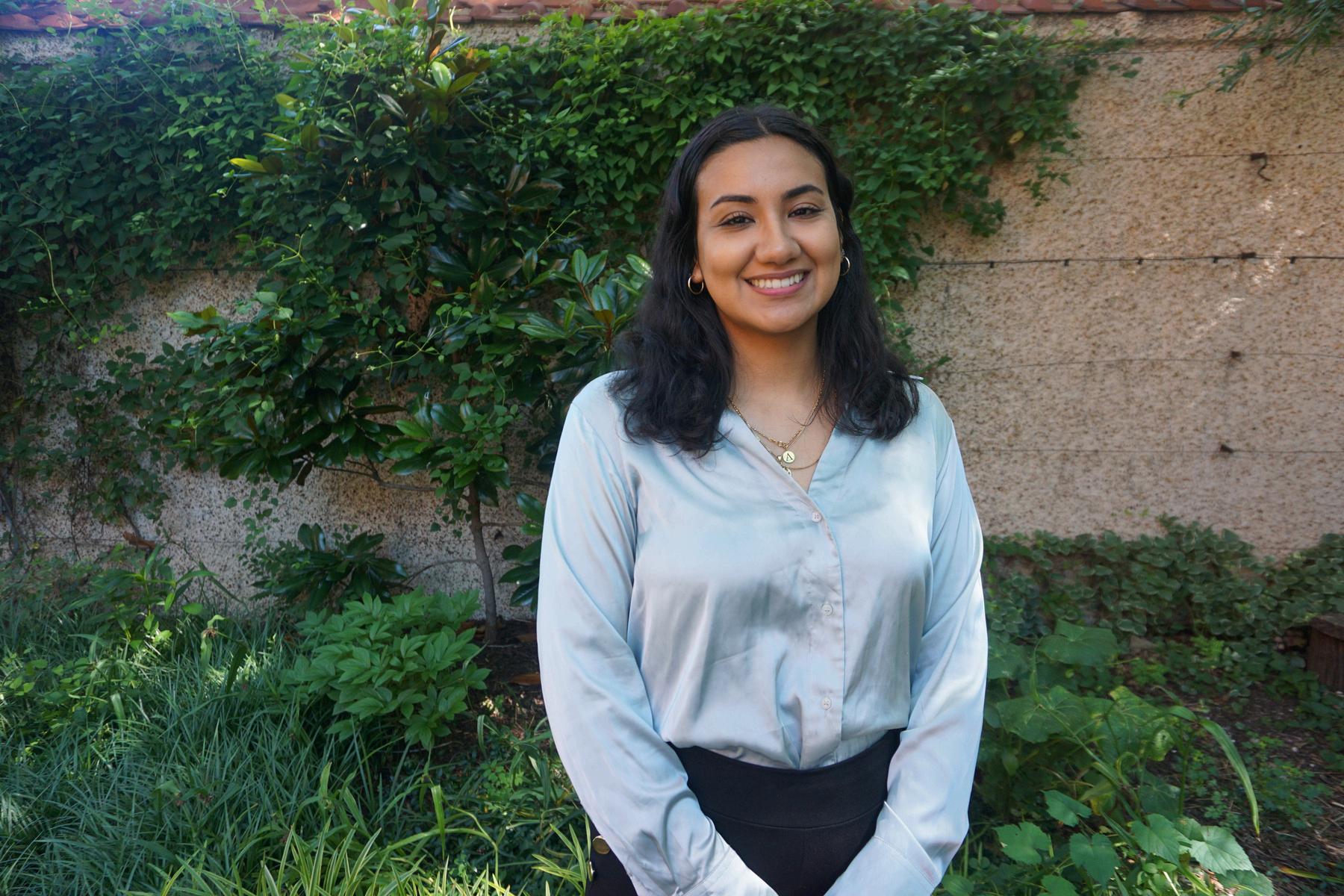
She holds a BA in International Studies from American University and is a proud alumna of the Public Policy and International Affairs (PPIA) Program at Carnegie Mellon University.
ICE OUT OF MY CITY: PERSPECTIVE OF A LATINA LIVING IN THE HEART OF D.C
Every year, the world observes the 16 Days of Activism Against Gender-Based Violence, a campaign that raises awareness of the violence women and girls face in every corner of the world, often without justice For me, these 16 days are not just a global campaign; they reflect my everyday reality I am a brown Latina living in Washington, DC , where armed men patrol my streets, Immigration and Customs Enforcement (ICE) agents rip mothers away from their children, and fear lingers behind the eyes of every immigrant woman I encounter. Gender-based violence doesn’t always bleed; sometimes it whispers. Sometimes, it looks like silence, surveillance, and systemic intimidation. These journal entries are my way of resisting that silence. This is my voice, and this is my activism.
August 13, 2025
The federal agents began to invade the streets of Washington, D.C., in early August under claims of being called in to combat crime I heard about the ICE raid happening right outside my neighborhood's grocery store on Rhode Island Avenue My heart drops This is next to my apartment complex I pass by the store almost every day The videos of men and women screaming and running in the parking lot make me even more frustrated I’m just one person I can’t do anything to change the situation we are in I’m learning that safety doesn’t always wear a badge because I feel safer in a room full of immigrants than with one ICE agent
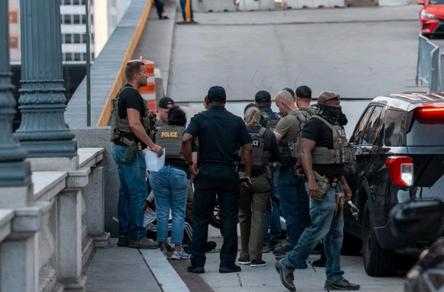
Credit: https://wwwcnncom/2025/08/25/us/masks-arrests-ice-tactics-immigration
August 22, 2025
I walk outside my apartment complex to find myself surrounded by agents Two officers are questioning two teenagers, and another two are looking around The agents, of course, had covered their faces with masks and large sunglasses At that moment, I didn’t know what to do My body was filled with anger, frustration, and hopelessness The only thing I could think of was to give them the nastiest look I thought to myself, this is my act of defiance I stared at their badge for as long as I could I was frustrated because I wanted to scream, kick, and even spit at them, but I couldn’t do anything I told myself, these acts of resistance are small, but if not me, who? I wanted them to feel uncomfortable because what they were doing was wrong
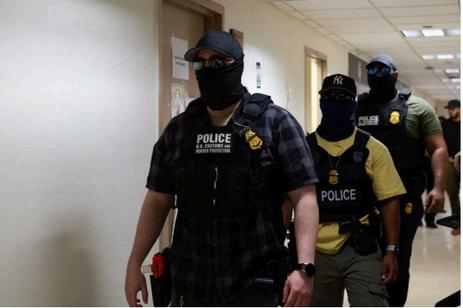
Credit: https://wwwnprorg/2025/07/25/nx-s1-5480219/lawmakers-ban-federal-immigration-agents-masked
As I calmed down, I also wondered what it must feel like to be in their position, carrying out orders that may go against their own values Perhaps some of them feel conflicted, caught between their job to feed their families and their conscience This does not excuse the irreparable harm being done to other families, but it reminds me that systems of power often force people into morally difficult choices I don’t understand their decision, but I am someone who tries to see all sides of the story
September 4, 2025
I join every Teams meeting with the same apology: “Sorry, everyone, there is a lot of noise outside” I don’t have the luxury of soundproof windows, so police sirens have become the soundtrack of my days The sound now triggers something deeper, reminders of danger, fear, and the constant surveillance that many men, women, and children live under
September 8, 2025
As I get off the Red Line train, I see troops and agents looming over me on the second floor of the station. My body tenses instantly. I scan every direction, instinctively lowering the volume on my headphones just in case something happens. I think to myself, how strange it is that the people who are supposed to protect me make me feel uneasy, as when someone walks too closely behind me at night.
That same tightening in my chest. That same alertness was born out of fear. I reach for my phone to take a picture, but I hesitate Can they stop me? Will I become a threat just for looking back? At that moment, I realize how institutional authority in the wrong hands can force a woman to feel unsafe in so many forms, whether through a stranger’s shadow on a dark street or through an uniformed presence During the 16 Days of Activism Against Gender-Based Violence, we are reminded that violence is not only physical It is psychological, institutional, and systemic It is the fear that follows us women into every public space, reinforced in this present time by those who are meant to keep us safe
September 9, 2025
I work part-time at my local gym, and I frequently interact with the housekeeping team I speak to them in Spanish, and when I do, I can see the relief in their faces We talked about the immigration raids in Mt Vernon, and I could hear the anxious tone in their voices These are hard workers who walk for 15 minutes and take a one-hour bus ride to get to their jobs just to make ends meet. I reassured them that the gym is a private business and that ICE agents are not allowed in unless they have a warrant. As I listened to them share more about their experiences, I couldn’t help but feel frustrated that people who contribute so much are treated with such fear and suspicion simply because of their race or because they speak their native language. It made me realize how unfairly our system can treat those who are only trying to build a better life.
September 23, 2025
I periodically take breaks from social media, but still come across videos of masked men in plain clothes pretending to be ICE agents. No identification provided, yet they are allowed to assault and kidnap people based on their race There are also very few publicly available statistics about the makeup of ICE Their hats, masks, and sunglasses act as shields to avoid any accountability This disguise allows them to intentionally harass men, women, and children And when a crisis hits, women and children are always the most vulnerable I think to myself, I am a brown woman living in a world where a group of men can simply put me in a car and drive away with me just because of the way I look or because I speak Spanish, without any consequences
October 5, 2025
It’s been a while since I wrote one of these entries It feels like the tension in the city has calmed down, and the attention has shifted to other cities like Chicago, New York City, and Portland I wonder how they are choosing which city to target Is there a method to their madness? What city is next?
October 7, 2025
Last night, as I was getting on the Red Line train to go home, I found myself in a National Guard sandwich. Three guards stood in front of me on the escalator, four behind me, accompanied by other police officers. I took a video and sent it to my family, saying, “This is the new D.C.” But I don’t want to accept that this is the new normal. We cannot let the pictures and videos of people being ripped away from their families frighten us into a new normal. I cannot be apathetic to the injustices happening in my city or across the country.
It is a privilege not to live in fear. It is a privilege to go to the grocery store. It is a privilege to have your family together Let us use our ability to speak up for those who are unable to
Activism doesn’t have to be a big, extravagant gesture. It can be as small, everyday acts of protest, such as using language intentionally or supporting marginalized groups through simple decisions like where you shop and what you share We, as a community, can all be the voice of those forced to be silenced by fear
And don’t forget ICE melts under pressure
Works Cited
Carbajal demands answers on ice racial profiling US Representative Salud Carbajal (2025, September 11) https://carbajalhousegov/news/documentsingle aspx?DocumentID=3343
Faguy, A (2025, August 12) Trump deploys National Guard to Washington DC and pledges crime crackdown BBC News https://wwwbbc com/news/articles/cm2110me5g4o
Kaste, M (2025, July 25) Lawmakers seek to ban federal agents from wearing masks NPR https://wwwnprorg/2025/07/25/nx-s1-5480219/lawmakers-ban-federal-immigration-agentsmasked
Lenthang, M (2025, February 3) Here are the cities where ice raids are taking place NBCNewscomhttps://wwwnbcnewscom/news/us-news/are-cities-ice-raids-are-taking-placercna189390
Levenson, E. (2025, August 25). Masked agents and public arrests: A closer look at Ice’s increasingly aggressive tactics. CNN. https://www.cnn.com/2025/08/25/us/masks-arrests-ice-tacticsimmigration
NBC4 WASHINGTON. (2025, August 20). Officers detain man in apparent ICE enforcement on National Mall. YouTube. https://www.youtube.com/watch?v=u7co4D87KLw
ISSABELLA ROMO
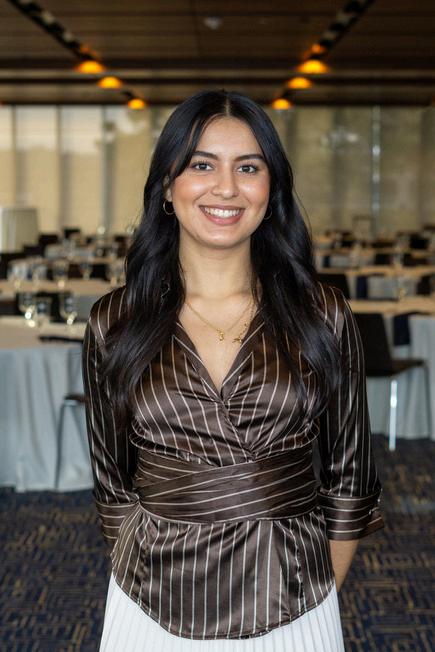
Issabella Romo is a second year Master of Public Policy Candidate at Georgetown University. Her professional experience spans all levels of government and various non-profits with a focus on human rights, education policy, and civic engagement As President of the McCourt Policy in Practice group at Georgetown, she leads client recruitment efforts and provides pro-bono international development consulting services to NGOs based in Latin America. Issabella previously served as Programming Coordinator for the Social Equity through Education Alliance, helping scale the youthled non-profit and its youth engagement initiatives in local and state education policy.
While an undergraduate, Issabella spearheaded intergenerational dialogue at Commonwealth Club World Affairs, represented the UC Berkeley student body and advocated for its legislative priorities as Director of Federal Government Affairs, and led community-building and basic needs initiatives as an elected student government Senator. She also conducted rigorous qualitative and open-source research on international democracy promotion, femicide and machismo, and human rights violations for the Institute of International Studies, Legal Studies Department, and Center for Human Rights.
A California native, she graduated with highest honors from the University of California, Berkeley where she earned degrees in Legal Studies and Political Economy and a minor in Human Rights. Issabella strives to use her policy expertise to protect human rights through evidence-based and sustainable policymaking, and to make governments more accessible and accountable to their constituents globally
INCORPORATING CULTURAL INFLUENCES INTO GENDERBASED VIOLENCE PREVENTION STRATEGIES
The annual 16 Days of Activism Against Gender-Based Violence campaign, collectively led by international organizations, strives to raise awareness around and inspire global action to eradicate violence against women and girls (Together for Girls, 2017). Gender-based violence (GBV) encompasses all harmful acts committed against an individual “based on socially ascribed/gender differences between males and females.” UNICEF claims that GBV “stems from unequal power relations between men and women and the resulting discrimination against women” (nd, p 1) This is particularly apparent in Mexico, where the cultural phenomenon of machismo influences the act of and response to femicide The Mexican gender norms and femicide crisis warrant prevention and response strategies from a gender perspective that would foster meaningful progress towards the global eradication of all forms of GBV
The Mexican femicide crisis persists, with roughly 10 women and girls “killed every day by intimate partners or other family members” (UNHR, 2023) Femicide – the misogynistic killing of women “motivated by hatred, contempt, pleasure, or a sense of ownership” (Frías, 2023, p 4) – is a form of gender-based and structural violence rooted in social, political, economic, and cultural inequalities (Fregoso & Bejarano, 2010) These same inequalities are promoted by machismo, a cultural system of hypermasculinity and male superiority that positions men as dominant and resists reform to protect “vulnerable people such as women and children” (Morena, 2020; Merry, 2006, p 101) Feminist lawyers have identified machismo in Mexican society as one of the greatest barriers preventing citizens from having a minimum of security and access to justice if they suffer a crime (Rojas, 2018).
Machismo’s history in Mexico can be traced back to its colonization beginning in the 16 century. Early Mexican gender norms were influenced by Spanish, French, and U.S. colonialism, particularly through “the French Civil Code, which inspired much of early Mexican law” and th positioned women as “dependents of men in all aspects of life” (Morena, 2020). Colonial subjugation fostered a national inferiority complex, leading to the emergence of the macho figure – an aggressive male asserting dominance in defense of wounded national pride Women, in turn, became symbolic of a colonized Mexico: passive, violated, and defenseless (MacíasGonzález & Rubenstein, 2012, p 197)
In Mexico, nearly “73% of the population expresses at least one belief that represents a gender bias in the area of physical integrity” (Brewer, 2025) as found by the United Nations Development Program’s 2023 Gender Social Norms Index Women have not been exempt from contributing to the perpetuation of machista ideals, some arguing that they need a macho man because he will be able to stick up for himself and provide for his family Many men are aware of the cultural conditioning behind their behavior Gutmann (2006) notes that men often cite “la cultura machista” as the cause of their violence, claiming it is unfair to blame them for being “taught to be machos” (p 210) However, it’s critical that men not be permitted to justify their actions by blaming machismo While social condemnation of domestic violence has increased, the occurrence of violence may actually be rising (Gutmann, 2006, pp 210–211) There must be a w idespread social rejection of both male chauvinist beliefs and human rights violations
The machista history deeply ingrained in society has also enabled institutional machismo to persist within the Mexican government and law enforcement Machismo was identified in official narratives framing femicide as a byproduct of armed conflict, cutbacks to women’s legal support, and dismissive rhetoric by President López Obrador. This ideology “devalues women, silences discussions on gender violence, and justifies violent police protocols,” reinforcing stereotypes that sustain systemic inequality (López, 2022). Law enforcement’s response to femicide has been repeatedly grossly insufficient and unjust. Before the 2009 Inter-American Court of Human Rights ruling, most femicide cases in Juárez showed police negligence. Evidence often disappeared, authorities fabricated perpetrators, and victims were frequently criminalized through gendered stereotypes (Núñez, 2020, p. 174). Authorities frequently fail to prosecute “attacks on women as attempted femicide despite overwhelming evidence,” downplaying the scale of violence against women and perpetuating a culture of impunity (UNHR, 2023)
Institutional machista practices undermine the significance of Mexico’s notable progress made towards achieving gender parity in government and in addressing the femicide crisis The 2007 General Law on Women’s Access to a Life Free of Violence and gender alerts, in particular, have yielded “limited gains” (Sánchez & Pesce, 2022) despite their great potential in tailoring resources to local challenges with femicide Persistent law enforcement inaction and impunity render these measures ineffective (Núñez, 2020, p 173) Moreover, the National Registry lists over 23,000 disappearances from 2018–2020, yet fewer than one-third are linked to criminal investigations, exposing systemic impunity (WOLA, 2021) No matter the legislation outlining definitions and punishments for femicide, measures to address the femicide crisis cannot be effective without a widespread belief that women and girls are entitled to justice and the protection of their human rights
The creation of exclusively female services, spaces, and interventions in an effort to prevent and respond to GBV offers many benefits to women seeking community and tailored resources. However, this approach only addresses one facet of a gender dimensional approach to the issue. It notably disregards the fact that all genders experience GBV and that each individual’s experience with GBV is compounded by their intersectional identities. A 2015 study found that 24.8% (27.6 million) of men in the U.S. experienced some form of contact sexual violence in their lifetime (Smith et al, 2018, p. 3). These rates are higher in conflict zones as seen in Liberia where 32.6% of male combatants experienced sexual violence, according to one study (Johnson et al, 2008, p 676) Moreover, a 2019 UK study found that LGBTQI+ women are more than twice as likely to experience unwanted touching, sexual assault or rape than men (TUC, 2019)
Having lower educational attainment, having a disability, residing in an Indigenous community, and other identity factors significantly affect different genders’ risk level for experiencing GBV and their needs after having been subjected to GBV The new policy measures currently being developed and implemented by Mexican President Sheinbaum offer new opportunities to close resource gaps and address male chauvinist gender norms underlying GBV The government has already completed the Women's Rights Booklet, an educational tool for all genders that is now being translated into 68 native languages and will be disseminated through community engagement efforts (Government of Mexico, 2025) Moreover, a constitutional reform stipulates that “public security and investigative institutions must act with a gender perspective, and public prosecutors’ offices must have specialized prosecutors for gender violence against women” (Brewer, 2025) However, these prosecutors' offices are not sufficient to overcome the common deficiencies in criminal investigations, “nor to guarantee a gender perspective and avoid revictimization” (Brewer, 2025)
To comprehensively address the femicide crisis – and GBV globally – however, these measures should be complemented by localized efforts to deconstruct machista ideals among all genders. A Mexican pilot program, for instance, indicated that “combining cash transfers with interventions that address gender norms can more effectively reduce intimate partner violence” (Abdul Latif Jameel Poverty Action Lab). This program should be expanded nationally and accompanied by school-based interventions, parenting programs, and other interventions that have demonstrated success in various countries (Maruo et al., 2023). Increased investments in women’s organizations must be made in light of the new evidence that one in three organizations have suspended anti-GBV programs due to insufficient funding (UN Women, 2025) Gender mainstreaming, the integration of gender issues into every aspect of an organization’s priorities and procedures, must occur across every government branch –transportation, health, housing, etc – in partnership with civil society to foster institutional, anti-patriarchal cultural shifts that translate into policymaking and society (True, 2016)
The case of machismo and femicide in Mexico underscores a widespread truth: GBV is sustained by deeply rooted social norms that privilege male dominance and silence victims and survivors Raising awareness of these dynamics transforms understanding into action, encouraging global movements to dismantle harmful gender norms, promote accountability, and center the voices of survivors The spirit of the 16 Days of Activism campaign calls for collective transformation, one that transcends binaries, acknowledges intersecting inequalities, and mobilizes all genders to build cultures of respect and equity in the name of eradicating gender-based violence
Works Cited
Abdul Latif Jameel Poverty Action Lab (J-PAL) (2025, October) Strengthening initiatives to support women facing violence through a government collaboration https://wwwpovertyactionlaborg/case-study/strengthening-initiatives-support-womenfacing-violence-through-government-collaboration
Brewer, S (2025, March 7) “The Era of Women”: challenges and priorities in the women’s human rights agenda in Mexico WOLA https://wwwwolaorg/analysis/the-era-of-women-challenges-and-priorities-in-the-wom ens-human-rights-agenda-in-mexico/
Fregoso, Rosa-Linda & Bejarano, Cynthia (2010) Introduction: A Cartography of Feminicide in the Américas 101215/9780822392644-001
Frías, S. M. (2023). Femicide and Feminicide in Mexico: Patterns and Trends in Indigenous and Non-Indigenous Regions. Feminist Criminology, 18(1), 3–23.
Government of Mexico, Office of the President (2025, March 7). Presidenta Claudia Sheinbaum presenta la Cartilla de Derechos de las Mujeres en el marco del 8M. https://www.gob.mx/presidencia/prensa/presidenta-claudia-sheinbaum-presenta-la-car tilla-de-derechos-de-las-mujeres-en-el-marco-del-8m
Gutmann, M C (2006) The Meanings of Macho: Being a Man in Mexico City University of California Press https://doi-orglibproxyberkeleyedu/101525/9780520933538
Johnson, K, Asher, J, Rosborough, S , Raja, A , Panjabi, R, Beadling, C , & Lawry, L (2008) Association of combatant status and sexual violence with health and mental health outcomes in postconflict Liberia JAMA, 300(6), 676–690 https://doiorg/101001/jama 3006676
López, M (2022, May 20) ‘We are tired of being told it is not a big deal’: Institutional Machismo in Mexico Georgetown Journal of International Affairs http://gjiageorgetownedu/2022/05/20/we-are-tired-of-being-told-it-is-not-a-big-deal-i nstitutional-machismo-in-mexico/
Macías-González, V . M., & Rubenstein, A. (Eds.). (2012). Masculinity and Sexuality in Modern Mexico. University of New Mexico Press.
Maruo, M., Grossi, A. M. D. M., Arango, D. J., & Contreras-Urbina, M. (2023, November 27). From evidence to action: How to prevent and respond to gender-based violence. World Bank Blogs. https://blogs.worldbank.org/en/investinpeople/evidence-action-how-prevent-and-respo nd-gender-based-violence
Merry, S E (2006) Human Rights and Gender Violence: Translating International Law into Local Justice University of Chicago Press
Morena, I de la (2020, May 19) Machismo, Femicides, and Child’s Play: Gender Violence in
Mexico. Harvard International Review. http://hirharvardedu/gender-violence-in-mexico-machismo-femicides-and-childs-play/ Núñez, F (2020) Can a law stop the feminicide in Mexico? Travail, Genre et Sociétés, (43), 173–178
Rojas, A G (2018, October 11) ‘Monstruo de Ecatepec’: ¿Por Qué Este Municipio de México Es El Más Peligroso Para Ser Mujer? BBC News Mundo https://wwwbbc com/mundo/noticias-america-latina-45821520
Sánchez, F, & Pesce, F (2022, December 26) Femicides in Mexico: Little Progress on Longstanding Issue AP News https://apnewscom/article/mexico-caribbean-gender-6594c9b2c9ea39a52dc3204e16b e704c
Smith, S. G., Zhang, X., Basile, K. C., Merrick, M. T., Wang, J., Kresnow, M., & Chen, J. (2018, November 1). The National Intimate Partner and Sexual Violence Survey: 2015 data brief – updated release. Centers for Disease Control and Prevention.
Together for Girls. (2017, December 8). Get involved: 16 Days of activism against gender-based violence.
https://www.togetherforgirls.org/en/blog/16-days-of-activism-against-gender-based-viol ence-activism-ideas
True, J (2016) How effective is gender mainstreaming in international peace and security policymaking? In D Tepe & J Steans (Eds), Handbook on Gender in World Politics (pp 457–466) Edward Elgar Publishing https://doiorg/104337/9781783470624 00066
TUC – Trades Union Congress (2019) Sexual harassment of LGBT people in the workplace: a TUC Report https://wwwtuc orguk/research-analysis/reports/sexual-harassment-lgbt-people-workp lace
UN Women (2025, October 27) One in three organizations have suspended or shut down programmes on ending violence against women due to funding cuts https://wwwunwomenorg/en/news-stories/press-release/2025/10/one-in-three-organizationshave-suspended-or-shut-down-programmes-on-ending-violence-against-womendue-to-funding-cuts
UN Women (2024) Facts and figures: Ending violence against women.
UNHR. (2023, July 3). ‘We’re Here to Tell It:’ Mexican Women Break Silence over Femicides. UNICEF. (n.d.). Gender-Based Violence Information Pack. https://www.unicef.org/serbia/en/media/16751/file
WOLA. (2021, August 31). Mexico: Thousands of Disappearances from 2018-2020 Not Being Investigated as Mexican Anti-Disappearance Law Orders” WOLA, August 31, 2021 wwwwolaorg/2021/08/mexico-thousands-disappearances-not-being-investigated-mexi can-antidisappearance-law-orders/
KRISTIE MOORE
Kristie Moore is a Mexican-Slovak American from Southern California. She is currently an undergraduate student at the University of California, Berkeley studying Global Studies with a concentration in Peace and Conflict Studies. Her specific interests revolve around conflict resolution, mass atrocity prevention, and peacebuilding in Central Asia and the South Caucasus. She has extensive experience studying and conducting research in the region, having previously spent time in Russia, Kyrgyzstan, Armenia, Georgia, Kazakhstan, and Tajikistan on various scholarships and fellowships. Her research considers nationality, identity, conflict, and interethnic relations in the Post-Soviet space. This research is complemented by her studies of the Russian, Ukrainian, Tajiki, Azerbaijani, and Kyrgyz languages
Kristie is an alumna of the National Security Language Initiative for Youth (NSLI-Y) and Critical Language Scholarship (CLS) programs, a student researcher for UC Berkeley’s Human Rights Investigations Lab, and the founder of Female Leaders of the Americas, a 501(c) (3) nonprofit that provides education and empowerment opportunities for young women from North, South, and Central America. Over the last 5 years, FLOTA has served 700 young women from 20 countries in the region Kristie’s interests and passions are directly tied to her background and her family’s own story of immigration from Mexico and Czechoslovakia.
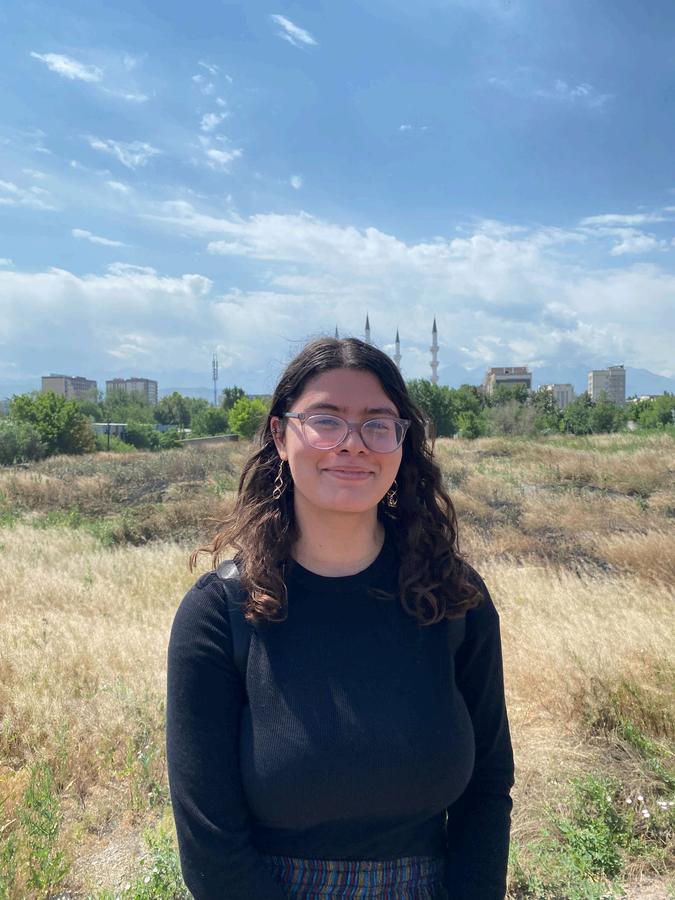
Originally from Irvine, California, Kristie is currently based in Dushanbe, Tajikistan, where she is studying Tajiki on a Boren Scholarship
GENDER-BASED VIOLENCE AMID THE 2010 OSH CONFLICT
Personal Reflection
My early life was marked by a diversity of languages, cultures, and lived experiences both within my family and outside of it With this came stories of hardship and struggle, but also of perseverance My mother shared stories of immigrating to the United States from Mexico, detailing why her family ultimately left in search of safety and opportunity My father shared stories of how his grandparents survived the Holocaust, ensuring we grew up knowing the scale of atrocities that have been committed not only against Jews, but others around the world
Beyond their stories, I have learned so much from my coursework, professional endeavors in the human rights and genocide prevention space, and from the friends I have made while studying and conducting research abroad. These stories and my own experiences as a Mexican-Slovak American woman have shaped me into the person I am today. They serve as the cornerstone of my desire to create change and contribute to the development of a more peaceful and safe world for all. They also serve as the foundation of this paper. Unfortunately, conflict is commonplace throughout the world, both between countries and within them. This reality has been a source of great pain and suffering, resulting in death, destruction, and displacement on a great scale. Violence against women, in particular, is a major issue that is exacerbated by violent conflict Gender-Based-Violence refers to any violent act committed against an individual on the basis of their gender Unfortunately, women are overwhelmingly impacted by this violence
Moreover, it is often women who are left to carry the weight of picking up the pieces of broken families and communities Despite this, their experiences are overwhelmingly overlooked, disregarded, and at times, covered up to seemingly hide cultural shame This reality is something that the United Nations 16 Days of Activism Against Gender-Based Violence campaign aims to address This essay will look at violence against women during times of conflict, and the subsequent lack of justice by considering the 2010 Osh Violence as a case study It aims to illuminate the need for a more female-centered approach to conflict resolution and peacebuilding post-conflict Only by actively centering women in these processes, can governments and international organizations work to prevent violence against women, and ensure they can receive justice for themselves and their communities This paper includes heavy mentions of rape and other forms of sexual violence Reader discretion is advised
Women During Periods of Conflict
During times of conflict, women experience gender-based violence, including rape and other forms of sexual violence, at the hands of government actors, non-state militaries, community members, and even the peacekeeping forces sent to restore order (Manjoo and McRaith, 11). Rape and sexual abuse are the most common and are often inflicted brutally, involving gang-rape and rape with foreign objects. Women are also subjected to additional violence post-conflict through direct violence resulting from increased domestic violence rates in recovering conflict zones, and because their needs are often not adequately addressed by transitional justice mechanisms; such as, truth commissions and reparation schemes (Manjoo and McRaith, 12)
After surviving sexual violence, they often experience physical harm and trauma from their abuse. This trauma is paralyzing and prevents women from undertaking their normal routines and activities The social stigma they may carry after their rape is also important to note: many women have difficulty finding a husband, and those who are married are often divorced by their partners Moreover, they often receive judgement from family members, coworkers, and neighbors Unfortunately, gender-based violence continues to be an overlooked form of violence during periods of conflict, with many seeing it as an “unfortunate but unavoidable part of war” (Manjoo and McRaith, 14) Gender based violence must be seen as a continuation of violence experienced during peacetime, and as a critical form of violence that must be prevented It is also important that gender-based violence receives more of a focus when discussing conflict
Gender-Based Violence during the 2010 Osh Ethnic Clashes
In 2010, interethnic violence broke out in Southern Kyrgyzstan between ethnic Kyrgyz and Uzbeks in response to a fight outside the Casino This was the second outbreak of violence in the region, with previous violence taking place in 1990 upon the fall of the Soviet Union (Human Rights Watch). Conflict quickly spread throughout the city, with violent attacks being committed and the torching of homes and businesses. It is estimated that 400 people died during the conflict, with another 400,000 people being displaced (UNHCR). A critical component of this conflict was the pervasiveness of violence against women (Human Rights Watch). Organizations like Human Rights have received credible information about various instances of sexual violence. According to the Alliance of Women’s Legislative Initiatives, more than 60 women were raped in the Osh and Jalal-Abad areas during the June interethnic clashes (International Federation for Human Rights). Another report released shortly after the violence by the United Nations Population Fund, indicates that the number of sexual violence cases could be anywhere in the range of 45-300 (UNFPA) These numbers are more likely higher knowing that many women did not report their rape During the violence, gang rape and other extreme forms of sexual violence emerged as a common form of sexual violence There was an ethnic component as well, “Most of the rapes and sexual violence were committed by Kyrgyz men, often in groups, against Uzbek women and girls, although there were also instances of Uzbek men raping Kyrgyz women The rapes were accompanied by verbal ethnic abuse and severe physical violence” (Human Rights Watch) This is only one instance of rape being used as a weapon of war to humiliate and dehumanize the other side through the violation of their women Despite the prevalence of sexual violence, this conflict has almost exclusively been evaluated through the lens of ethnic identity With regards to gender-based violence, little has been done to achieve justice for victims and survivors due to the government’s reluctance to properly investigate sexual violence and the cultural stigma associated with rape
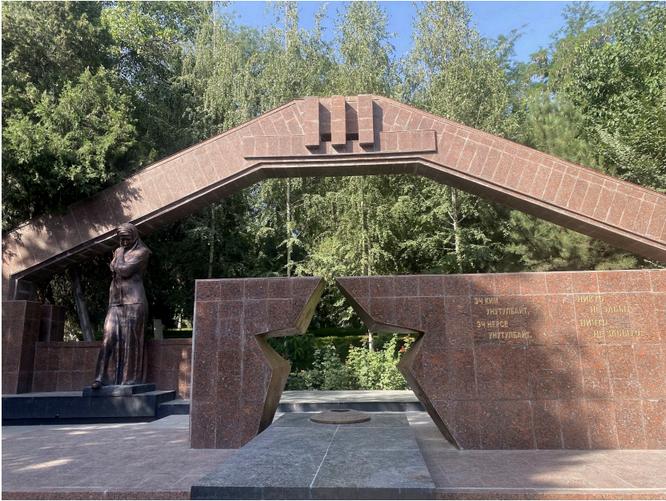
Located in the center of Osh, the “Mother’s Tears” monument serves as a memorial to the lives lost during the 2010 ethnic conflict The monument depicts two women, one Kyrgyz and one Uzbek, united by grief for their communities
The stories of victims illuminate the horrifying scope of the sexual violence that took place in Southern Kyrgyztan. In a Human Rights Watch report, a 16-year-old Uzbek girl shared her experience of being raped, stating, “two men dragged me out of the house. I was trying to resist, and then a third one hit me hard on the lower back and I was in so much pain I couldn't fight with them any more. The men dragged me to the toilet in the yard of the house, and the two of them raped me. Then another three came and raped me, too. I lost consciousness, and I am not sure how long I stayed there after they left” (Human Rights Watch). According to the report, she was visibly in a state of deep shock while telling her story to interviewers
Another survivor of rape woke up naked and covered in blood and bruises (RFE/RL) She continues to experience trauma from this event, stating, "I don't even want to see a man I just can't If someone sits next to me -- even my brother, if he just touches me with his hand, I feel sick I start to shake My brother will say, 'Why are you shaking?' He's my older brother He really loves me a lot; he's always hugging me And I just tremble I don't want to tremble like that It just happens" (RFE/RL)
Other women, like Sevara, who was raped by someone she considered a close friend, continue their lives knowing their rapists continue to live freely in their city She recounted her attack stating, “But when he got there, he started to say terrible things," she continues "'I offered you something and you turned it down' I told him he was wrong, that we were friends, and it had never been like that
He had two co-workers with him, and he said to them, 'That's it -- I'll go first and then you can have her' And then they took me into a room and raped me -- first him and then the other two I said to him, 'You're my friend!' And he said, 'You always led me on, and this is your punishment' I said, 'But I respect you!' And he said he didn't care about any respect; he just thought all Uzbeks should die" Her testimony is an example of how conflict often gives way to gender-based violence, empowering men to commit violence they otherwise wouldn’t commit
Recovering after Conflict
In the process of investigating the conflict and seeking justice, the Kyrgyz government failed to meet the needs of women or involve them in the process In the aftermath of the conflict, the Kyrgyz government developed a National Commission of Inquiry, which was tasked with “the comprehensive study of causes, consequences, and recommendations in connection with the tragic events in the south of the Republic” (Amnesty International) A majority of the members of this commission were men, which impacted its ability to conduct interviews and gain a deeper understanding of the state of gender-based violence. This was primarily due to the fact that many women did not feel comfortable opening up about their experiences. Moreover, the commission repeatedly underscored the severity of gender based violence when speaking to the media, despite a lack of concrete evidence. There is also the immense cultural stigma that women face as a result of their rape. This has led to many women carrying the weight of their trauma alone, a process that is incredibly harmful in itself. When speaking to interviewers for an Association for Human Rights in Central Asia (AHRCA) report, one woman stated, “I have four grown-up sons, the eldest is forty years old, and the youngest is seventeen. They know that I have been raped. I am suffering not only because I’ve been through so much, but also because they are suffering, too. I can no longer hug my children like I used to I am dirty now And they have become even dearer to me! But they are ashamed of me now Even when cooking, I now use gloves ” (AHRCA) There continues to be no accountability on the side of the abusers, while victims continue to face victim blaming and cultural shame
After a woman is raped, they often fear the shame that will come upon their family Thus, they feel the need to stay silent, instead of living with overwhelming guilt for their loved ones This is exemplified by one woman’s statement that, “My husband was working in Russia His relatives know what happened to me I am suffering from pain in my lower abdomen, and I'm still bleeding My husband's relatives have refused to be related to me in any way They brought me to my parents and told them: ‘treat her yourself’, after which they would not let me back in their house” (AHRCA)
Another woman expressed that, “I am constantly afraid. I am afraid of everything. I am afraid of being alone, afraid that my husband will insult me or humiliate me. And I am afraid that my children won’t love me. I am afraid of everything...I am afraid...(crying). I won’t go to the office of public prosecutor, and I won’t go to the hospital. Nobody will marry me then...(crying) (AHRCA). These testimonies lay bare how deep and lasting wounds caused by rape can be.
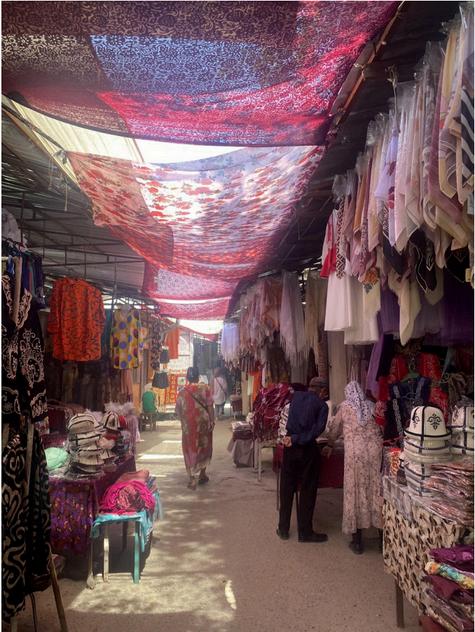
Photo from inside the Jayma Bazaar Sections of this market were set on fire during the Osh 2010 violence, with Uzbek businesses and sellers being the primary target In the years since, much of the bazaar has been rebuilt – but lasting scars remain
Conclusion
Despite taking place over a decade ago, the legacy of the Osh 2010 Violence is a haunting reminder of the danger of conflict and the recurring shortcomings of international organizations, governments, and peace processes, not centering women in their practices. It is critical that women who suffer from such trauma receive the proper psychological and psychiatric care It is also critical that moving forward, women are given an active role in peacebuilding post-conflict as their voices are critical to ensure that women receive the resources and justice they need to move on post-conflict This will require intentional planning by the government and police forces to put in place policies that protect women during both times of peace and times of war It also means ensuring accurate representation of women in peacebuilding positions Only through the implementation of these measures can gender-based violence in Kyrgyzstan be addressed and prevented moving forward The critical need for change in Kyrgyzstan is why we advocate for women like those from the Osh conflict during the 16 Days of Activism
Works Cited
Coping with the Aftermath of Civil Unrest in Kyrgyzstan (2025) United Nations Population Fund https://wwwunfpaorg/news/coping-aftermath-civil-unrest-kyrgyzstan
Eshalieva, K (2021) Why survivors of sexual violence can’t get justice in Kyrgyzstan OpenDemocracy
https://wwwopendemocracynet/en/odr/why-victims-sexual-violence-cant-get-justice-k yrgyzstan/
Kyrgyzstan: Justice Elusive 10 Years On (2020, June 9) Human Rights Watch https://wwwhrworg/news/2020/06/09/kyrgyzstan-justice-elusive-10-years
Kyrgyzstan: Sexual violence amidst ethnic conflict (2010) Association for Human Rights in Central Asia.
Kyrgyzstan: Still waiting for justice: One year on from the violence in southern KyrgyzstanAmnesty International. (2021, September 23). Amnesty International. https://www.amnesty.org/en/documents/eur58/001/2011/en/
Manjoo, R., & McRaith, C. (2011). Gender-Based Violence and Justice in Conflict and Post-Conflict Areas. Cornell International Law Journal.
Partial Truth and Selective Justice: The Aftermath of the June 2010 Violence in Kyrgyzstan (2010) Amnesty International
Sindelar, D (2011, June 9) A Year On, Osh Rape Victims Still Live In Shadows RadioFreeEurope/RadioLiberty; RFE/RL https://wwwrferlorg/a/kyrgyzstan osh rape kyrgyz ubeks ethnic clashes/24229595 html
MARIA VICTORIA JUAREZ
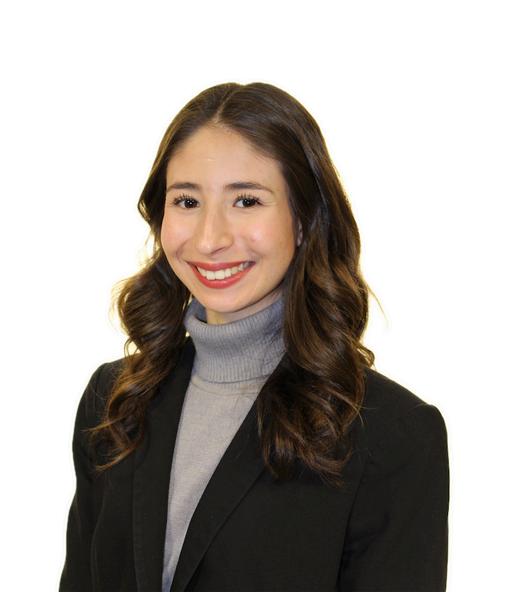
Maria Victoria Juarez is a recent graduate of St. Norbert College, where she earned her B.A. in Political Science, International Studies, and Spanish, graduating summa cum laude. Victoria is originally from Argentina, she moved to the United States in 2016 Moving sparked in her a lifelong curiosity about cultures and languages, which has since has grown into a passion for international affairs and a commitment to addressing global challenges. Victoria expanded her academic learning by pursuing hands-on experiences including an internship conducting in-depth research on human rights violations and foreign affairs at the Pedro Arrupe Human Rights Institute in Bilbao, Spain, and taking on leadership roles like promoting international education as part of the Study Abroad Leadership Team at St. Norbert College. Throughout college, Victoria worked in student admissions as a campus tour guide and office assistant and as a Spanish peer tutor for the Academic Success and Support office at St. Norbert College, providing academic support to Spanish language learners. Alongside these roles, Victoria represented student voices as a Senior Representative in Student Government, served as a club recruitment chair, volunteered in the community, and competed as a student-athlete on the cheerleading team. Across all of these commitments, she has demonstrated a consistent dedication to inclusivity and promoting intercultural dialogue. She has carried these values forward as a counselor for the World Affairs Seminar over the past two summers Victoria is now focused on building a career that allows her to address global challenges and contribute to mission-driven organizations at both local and global levels.
RESISTANCE FROM THE VOLCANO: HOW IXCANUL (2015) CHALLENGES GENDER-BASED VIOLENCE THROUGH AUTHENTIC INDIGENOUS REPRESENTATION
Introduction
In hegemonic systems of visual representation, the image of indigenous women has been created from a colonial and eurocentric perspective (Bolaños, 2023, p. 219). Indigenous women of Latin America and the Caribbean have been portrayed in cinema as inferior, primitive, exotic, passive, and deprived of their own voice and agency. This viewpoint has produced stereotypes that reinforce the idea that these women are destined for subordination and suffering. In this way, widely distributed films (mainstream cinema) have upheld power structures that propagate both racism and gender-based violence (GBV) Still, amid these dominant narratives, a different perspective has emerged: that of Indigenous cinema The film Ixcanul (2015), directed by Jayro Bustamante, is an example of indigenous cinema Staged at the foot of the Pacaya volcano in Guatemala, the film offers an authentic glimpse into the life of María, a young Kaqchikel Mayan woman The film situates viewers within the Kaqchikel community- the second-most populous Mayan group, native to the southern Guatemalan Highlands Through its faithful representation of the Kaqchikel worldview, Ixcanul moves away from the eurocentric and patriarchal perspectives that predominate in mainstream cinema
This essay will analyze how Ixcanul offers an alternative perspective that challenges the flawed stereotypes of indigenous women By showing that indigenous communities also have their own valid ways of living, the film creates a space of resistance against dominant narratives that perpetuate inequality and GBV It further advances an authentic vision that seeks to dignify indigenous women by portraying them as complex individuals, restoring their voice and agency in shaping how their identities are represented on screen. As part of the global 16 Days of Activism campaign, this analysis positions Ixcanul to challenge the visual and narrative structures sustaining violence against Indigenous women and girls, reinforcing the campaign’s call to advance global efforts to eliminate GBV for all.
1
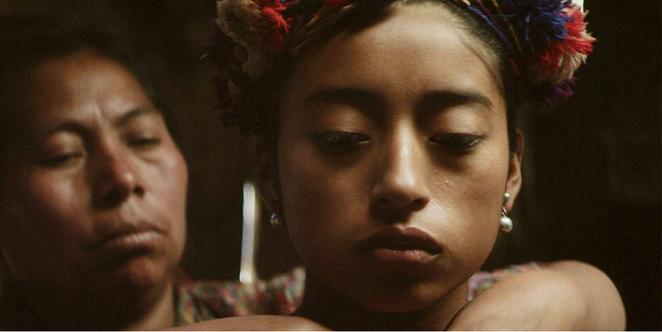
Note. María and her mother Juana, two Kaqchikel women, share an intimate moment as Juana gently dresses her daughter. Still from Ixcanul, directed by J. Bustamante, 2015, La Casa de Producción.
Gender-Based Violence Reproduced by Eurocentric and Patriarchal Hegemonic Cinema
The supremacy of one cultural and ethnic group over others has been systematically and historically legitimized throughout the world (Bolaños, 2023, p 220) This occurs when one group establishes its position as superior or more important than others. In regions such as Latin America and the Caribbean, this phenomenon has been prolonged by colonialism (Alfaro Córdoba, 2020, p. 12). These hierarchies are not accidental, but rather sustained through dominant narratives that work to justify them. In cinema, this dynamic becomes visible through the construction of social imaginaries, where images and audiovisual narratives reinforce the perspectives of the dominant group (Bolaños, 2023, p. 223). These imaginaries shape not only what audiences see, but also what they come to expect. Social imaginaries define what is considered “correct” or “desirable,” and these narratives are presented as universal and true (Bolaños, 2023, p. 223). In hegemonic cinema with a eurocentric and patriarchal lens, these perspectives are perpetuated in ways that place the dominant group, with its culture, values, and models of knowledge, at the center, considering them superior (Alfaro Córdoba, 2018, p 12-13) This generates cinematic narratives that cast dominant norms as the primary framework through which audiences interpret the world
As a result, the imposition of eurocentric culture as superior has led to the minimization of the contributions of other cultures, especially those of indigenous communities In mainstream cinema, this is manifested through representations that frame indigenous peoples as inferior, primitive, and exotic (González de Canales Carcereny, 2020, p 8)
Figure
Such representations uphold the belief that the Western model is the only valid expression of progress and modernity, erasing indigenous knowledge systems and identities By denying the legitimacy of alternative paths to development or well-being, hegemonic representations promote a distorted vision based on domination This ideology assumes the subordination of indigenous peoples, especially indigenous women, who are often portrayed as culturally inferior and who must be silenced, assimilated, or “civilized” (Bolaños, 2023, p 221) Hegemonic cinema reinforces segregationist stereotypes that normalize inferiority (Bolaños, 2023, p 221) In this way, the marginalization of indigenous peoples is justified by diminishing the value of their person, perspectives, and ways of life
Indigenous women are often portrayed as figures whose value is not defined by their own voice or agency, but rather by how dominant narratives choose to represent them Frequently confined to ethnographic or documentary representations, they are viewed through an external negative lens that reduces their individuality (Bolaños, 2023, p 219) Hegemonic cinema often transforms them into the “external other” (Villamanan and Melgaço, 2023, p. 54). This means they are positioned as fundamentally different and inferior from the dominant cultural norm. Through these recurring visual and narrative codes, hegemonic cinema maintains a hierarchy that privileges the masculinity of the dominant group, while positioning indigenous femininity as its inferior opposite. In doing so, colonial and patriarchal stereotypes constructed through social narratives and reinforced by the hegemonic media not only reflect GBV, but actively reproduce and legitimize it.
Indigenous Cinema: Ixcanul and the Authentic Representation of Indigenous Women
In this cinema of patriarchal and eurocentric perspective, also known as Indigenista cinema, Indigenous women occupy a particularly vulnerable symbolic space Since their images have been filtered through frameworks that strip them of agency and complexity, the Indigenous woman becomes a figure shaped by external interpretation rather than self-definition In response to negative representations of indigenous communities in mainstream cinema, Indigenous cinema emerges to offer a contrasting vision Indigenous cinema is a type of cinema that seeks to represent indigenous peoples from a perspective of cultural and ethnic diversity (González de Canales Carcereny, 2020, p 9) As Bolaños explains, “for the plurality of the world's cultures to be politically taken into account, it is essential that the diversity of identities be told and narrated to us” (Bolaños, 2023, p 223) Indigenous cinema is a tool for making cultures outside the mainstream visible, awakening new ways of seeing and understanding (Bolaños, 2020, p 219) Yet, this type of cinema is not limited to only offering a new cultural perspective; it also seeks to represent indigenous communities as authentically as possible. It creates a space where communities can be represented without falling into exoticization or marginalization (Bolaños, 2020, p. 219).
Indigenous cinema marks a transformative shift. As a new cinematic practice, it resists the gaze of Indigenista films shaped by eurocentric and patriarchal frameworks, focusing instead on stories told from within Indigenous epistemologies. By recovering narrative control, Indigenous filmmakers generate visibility for marginalized voices and invite audiences to see beyond the stereotypes imposed by hegemonic storytelling. Indigenous cinema emphasizes selfrepresentation as a means of reclaiming agency
This cinema grants power for Indigenous women to shape how their identities are portrayed on screen In this way Indigenous women shift from being objects of representation to subjects who speak for themselves Alfaro Córdoba (2018) affirms that indigenous cinema recognizes not only the ability of Indigenous peoples to speak, but also to act and exercise agency, and to redefine their own place in history and culture (pp 12–15) By positioning Indigenous voices with agency and dignity, these films dismantle dominant narratives that cast Indigenous people as passive subjects
Jayro Bustamante’s Ixcanul (2015) stands as a landmark of Indigenous cinema, offering a powerful and authentic portrayal of the Kaqchikel Mayan community in Guatemala Ixcanul tells the story of María, a young Kaqchikel woman living and working with her parents on a coffee plantation at the foot of the Pacaya volcano The film follows María from within her cultural and linguistic world, rather than through an external or ethnographic lens The film’s use of the Kaqchikel language, non-professional actors from the local community, and scenes portraying daily life create a sense of lived authenticity that resists exoticization. As Alfaro Córdoba (2018) notes, by filming in Kaqchikel and collaborating with community members to shape the dialogue, Bustamante ensured the film authentically represents Indigenous perspectives instead of projecting outsider viewpoints (p. 6). This authenticity transforms Ixcanul into a film of resistance, where the Kaqchikel culture is represented with dignity before a global audience. By choosing to center the story on the relationship between María and her mother, Juana, Bustamante constructs a deeply human narrative that highlights Indigenous women’s resilience and emotional complexity. María and Juana’s intimate moments of working, praying, and confronting hardship together challenge colonial and patriarchal depictions that render Indigenous women negatively as the “external other” These scenes show instead women whose experiences and feelings are real beyond imposed hegemonic stereotypes that cast them as inferior, exotic, and passive The film affirms that their existence and ways of living are equally legitimate and not lesser than those of the dominant culture At the same time, the film presents María as a complex subject with desires, curiosity, and strength Bustamante resists simplistic portrayals of Indigenous women by giving them central roles and a meaningful voice in his film By centering the film to María’s perspective, the narrative invites audiences to recognize Indigenous women’s humanity and dignity
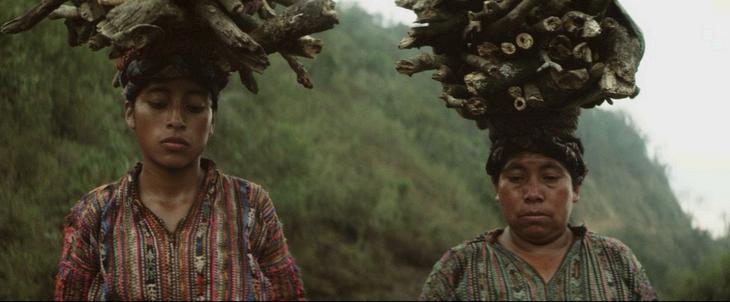
Note. María and her mother walking side by side. Each woman is carrying a large bundle of firewood balanced on her head, supported by a woven cloth wrap. Still from Ixcanul, directed by J. Bustamante, 2015, La Casa de Producción.
Figure 2
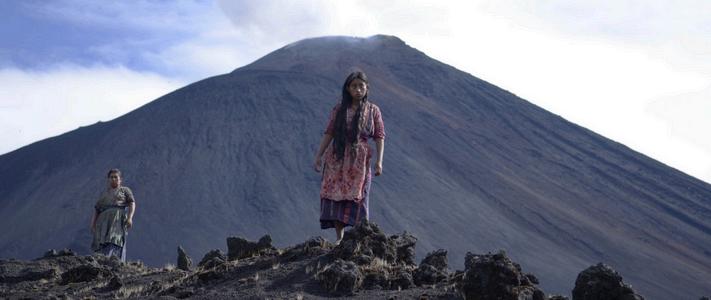
Building on this resistance, Bustamante also challenges the oppressive conditions that shape María’s world Through María’s experiences (her arranged marriage, pregnancy, and loss) the film exposes how colonial and patriarchal systems deny Indigenous women control over their bodies and futures One clear example of this appears in the hospital scene, where María is taken after being bitten by a snake At this moment, doctors speak only Spanish, disregard her pain, and fail to explain what is happening to her or her baby Their indifference and the language barrier erase her voice and reveal a form of GBV Bustamante gives light to these injustices in the film with moments of silence and stillness that emphasize María’s struggles and bring the audience to confront her reality Rather than portraying her condition as inevitable, the film interrupts passive acceptance by pushing viewers to question the systems that allow such violence to persist In doing so, Ixcanul sets itself apart from hegemonic films that present these conditions of suffering for the “external other” as natural or given In Ixcanul, the recurring image of the volcano symbolizes the potential for eruption and the need for change (see Figure 3) As Bustamante explains, Ixcanul which means “volcano” translates in Kaqchikel to “the internal force of the mountain which boils looking for eruption” (Miranda, 2016). This force reflects the condition of women oppressed by patriarchal and eurocentric perspectives whose immense strength has yet to be unleashed. Ixcanul not only visualizes forms of GBV, it also calls for action by centering Indigenous women’s experiences as worthy of recognition and respect.
For readers who wish to further engage with the film’s visual and narrative power, Ixcanul is available to view on Amazon Prime Video, Apple TV, Netflix, and YouTube (please note that access may require a subscription or the purchase/rental of the film)
Conclusion: Reclaiming Narratives
Through its commitment to authenticity, Indigenous cinema rejects the notion of Indigenous women as “external others” and instead portrays them as complex individuals navigating the intersecting forces of social hierarchy This type of authenticity in storytelling can challenge entrenched conceptions that perpetuate gender-based violence
Figure 3
Note. María and her mother at the foot of the volcano. Still from Ixcanul, directed by J. Bustamante, 2015, La Casa de Producción
By portraying indigenous women as complex and resilient individuals, rather than exoticized or victimized figures, the film breaks with the colonial and patriarchal lenses that have historically silenced their voices By giving María a voice, rooted in her cultural and linguistic reality, Jayro Bustamante restores humanity and agency to those who have long been denied both By challenging hegemonic visual traditions, he opens pathways for transformation
The film urges viewers not only to watch, but also to listen It reminds us that ending genderbased violence requires rethinking how stories are told, who tells them, and whose voices are heard Authentic storytelling transforms understanding into solidarity When we engage with stories like María's and other victims/survivors represented by the 16 days of activism campaign, we begin to unlearn the patterns that have long normalized silence and inequality Beyond the media, this message calls for broader transformation Cultural exchange holds the power to either reinforce or challenge the hierarchies Ixcanul exposes Moving forward means committing to spaces where diverse perspectives actively inform and transform the narratives that shape our shared world.
References
Alfaro Córdoba, A (2018) Can maría speak?: Interpreting ixcanul/volcano (2015) from a decolonial perspective Studies in Spanish & Latin American Cinemas, 15(2), 187–202 https://doiorg/101386/slac 15 2187 1
Betancourt, M (2020) Latin-American Indigeneity On-Screen Film Quarterly, 73(3), 83–88 https://wwwjstororg/stable/48713774
Bolaños Guerra, T (2023) Cine: Mirada y Vínculo Para Transformar Chasqui (13901079), (152), 217–234 researchebscocom/linkprocessor/plink?id=4750a499-1bf8-32b8-94f2-a9c7c3a3e6b5
Bustamante, J (2016, August 19) Ixcanul Apple TV https://tvapplecom/ca/movie/ixcanul/umc cmc 77l4isuuy7250gxzkxlm1zvu4
González de Canales Carcereny, J. (2020). Películas en lenguas indígenas producidas en países hispanohablantes: Ixcanul y El abrazo de la serpiente. Diálogo: An Interdisciplinary Studies Journal, 23(1), 7–19. https://doi.org/http://research.ebsco.com/linkprocessor/plink? id=438941a8-5a65-3453-98f2-287e115487cf
Miranda, C. A. (2016, January 7). Q&A: How “Ixcanul” director Jayro Bustamante found a feminist tale on a guatemalan volcano. Los Angeles Times. https://www.latimes.com/entertainment/arts/miranda/la-et-cam-jayro-bustamante-ixcanulguatemala-palm-springs-film-fest-20160106-columnhtml
Villamanan Alba, M, & Melgaço, L (2023) Representación social de la violencia contra las mujeres indígenas en los filmes La teta asustada e Ixcanul Volcano Diálogos, 27(3), 49-72 https://doiorg/104025/dialogosv27i368750