Let the Games Begin: How Sports and Entertainment are Shaping the South Bay
Register and learn more about the sponsorship opportunities
See Back Cover
A HERO’s Welcome
Newly formed organization partners with the SBCCOG in its mission to help unhoused individuals achieve housing stability through a personcentered approach
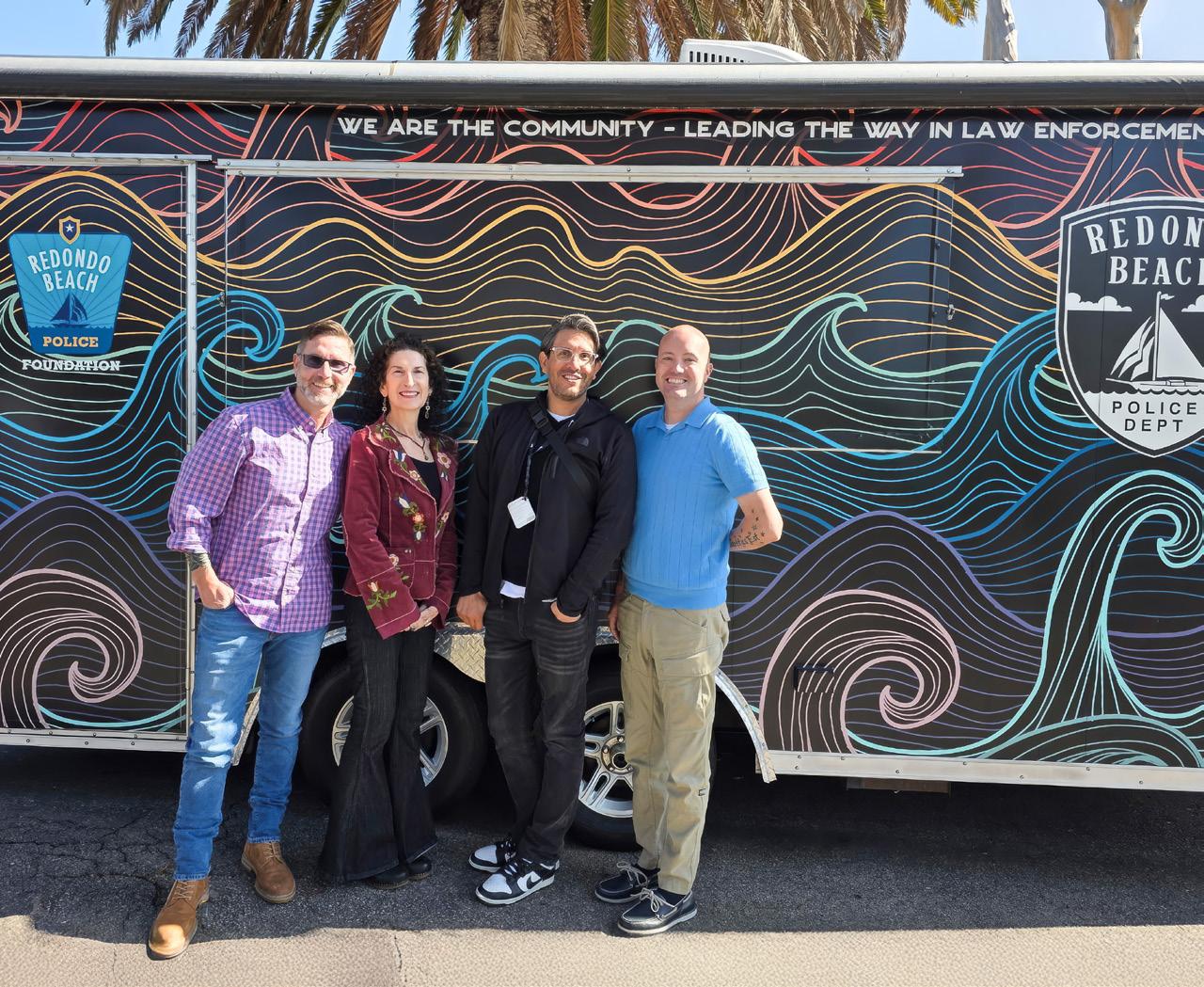
From left: The HERO Community Services team—Matthew Brennan, housing retention specialist, Yvonne Golub, CalAim consultant, William Gray, co-founder and case manager, and Joshua Heinzman, co-founder and consultant—recently paid a visit to the Redondo Beach Homeless Court, a program that offers unhoused individuals opportunities to erase criminal infractions that prevent employment and housing in exchange for completing social programs.
PAGE 4
Measure R and M Funding Bring Major Transportation Upgrades to the South Bay
PAGE 6
The SBCCOG Helps Cities Connect the Energy Efficiency Dots at Technology Showcase
PAGE 7
Coastal Access Wasn’t Always Guaranteed: A Look at how the Protection Battle was Fought and Won
PAGE 8
The 26th General Assembly Explores how Sports and Entertainment are Shaping the South Bay
A HERO’s Welcome
Newly Formed Organization Partners with the SBCCOG in its Mission to Help the Unhoused Through a Care-First, PersonCentered Approach
On a late Friday afternoon in November, William Gray, a manager for Beach Cities Case Management Services, received a call from El Segundo Police Sgt. Jonathan Chavez. An unhoused individual sleeping at El Segundo’s Metro Green Line station had expressed interest in being connected to shelter services. Within 15 minutes Gray joined Chavez at the station and engaged with the individual to determine what services would be most appropriate and available. Friday afternoons are typically challenging times to secure shelter beds. But Gray made a few calls and learned of an available bed at Safe Landing in the West Athens district of Los Angeles. The individual agreed to accept a ride from the El Segundo Police Department to the shelter site.
“William was a godsend. He showed up so fast, and he knew exactly what to say and the right questions to ask to get a shelter bed,” Sgt. Chavez said. “Our training is in law enforcement, not homeless services, so it can be challenging for us to find beds. He (William) knows the system, who to call, and speaks the right language. It’s truly a partnership.”
The sheltered individual is working with Gray and fellow case manager Jan Parsons toward the goal of permanent supported housing.
Beach Cities Case Management is a newly formed service created to help unhoused individuals in El Segundo, Hermosa Beach, Manhattan Beach and Redondo Beach connect to shelters, interim housing and permanent housing options. Case management is one of three types of services to be provided to the South Bay by a newly formed organization called HERO (Housing, Empowerment, Recovery and Outreach) Community Services.
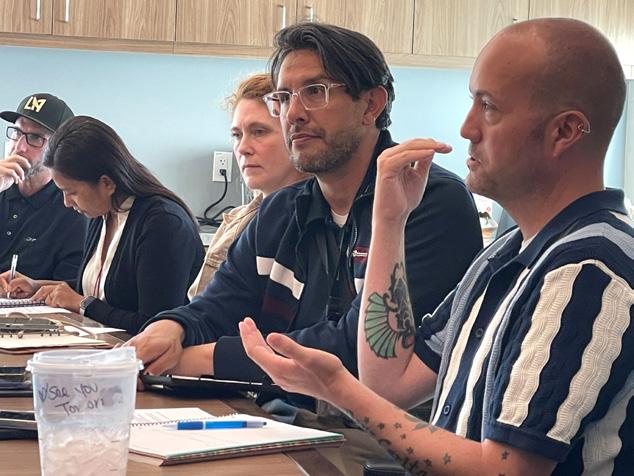
Joshua Heinzman explains to El Segundo city staff HERO’s goal of being “casual and approachable” when interacting with the unhoused. This includes wearing plain clothes instead of a uniform when in the field. Also pictured from left: Matthew Brennan, housing retention specialist, HERO Community Services; Marizen Ramos, special projects administrator, City of El Segundo; Becky Robinson, communications manager, City of El Segundo; and William Gray, co-founder and case manager, HERO Community Services.
“These types of successful interventions stand as a testament to what’s possible when empathy meets coordination—from first responders to behavioral health professionals through case managers provided by the South Bay Cities Council of Governments (SBCCOG),” said Joshua Heinzman, president and chief executive officer of HERO. “Each member’s contribution ensures that every individual in crisis is met not with punishment or neglect, but with compassion, care and connection.”
The SBCCOG retained HERO’s services through the South Bay’s allocation of voter-passed Measure A funds filtered through the Local Solutions Fund and the L.A. County Affordable Housing Solutions Agency (LACAHSA). LACAHSA designates dollars to assist SBCCOG member cities in implementing local services for the unhoused and those at risk of becoming unhoused.
Through the arrangement, HERO will deliver person-centered, field-based outreach, case management and housing retention services designed to help individuals and families experiencing or exiting homelessness achieve long-term housing stability and wellbeing. Together they will collaborate to serve areas throughout the Beach Cities region and the
Los Angeles County Department of Public Health Service Planning Area 8.
WORKING TOWARD FUNCTIONAL ZERO
“HERO’s mission aligns with our viewpoint that a ‘set-it-and-forget-it,’ one-size-fits-all approach to homelessness doesn’t work,” said Ronson Chu, Homeless Services program manager for the SBCCOG. “As we work toward expanding our successful Functional Zero Street Homelessness Program to all of our South Bay cities, we continue to fine-tune a by-name system that empowers cities to coordinate strategies tailored to meet the specific needs of individuals who are experiencing homelessness.”
In 2024, the SBCCOG helped the City of Redondo Beach decrease its unhoused population by 90% through the Functional Zero Street Homelessness program that the SBCCOG developed in partnership with the city. Functional Zero is reached when the inflow of people experiencing homelessness is less than the outflow and median time spent unhoused is less than 90 days. The SBCCOG is now working with Hermosa Beach, Manhattan Beach and Torrance to expand the program.
Through the partnership, the SBCCOG will further expand its assistance to cities toward reaching Functional Zero accountability goals, which are based on homelessness data collected and analyzed weekly. HERO will provide critical field-based data, as well as support and follow-up case management to individuals experiencing homelessness.
FILLING SYSTEM GAPS
Heinzman and Gray, longtime leaders in Los Angeles County’s human services network, founded HERO Community Services in the fall of 2025. It emerged from Heinzman’s hands-on work with city and county partners, where he identified consistent gaps in responsiveness, relationshipbuilding and real-time service delivery.
Having led programs for nonprofit and government-funded agencies, including homeless services programs for the Los Angeles Centers for Alcohol and Drug Abuse, he saw the need for a “smaller, intentionally right-sized organization” focused on “quality, compassion
and accountability, rather than large-scale bureaucracy.”
“We formed HERO to bring a more human, relationship-centered approach to homelessness and behavioral health services—one that treats every person as seen, heard and valued,” said Heinzman. “We recognized that many existing systems, though well-intentioned, had become too large and procedural to respond effectively to individual and city needs.”
The SBCCOG also works with St. Margaret’s Center to support efforts for the unhoused in areas near Los Angeles International Airport, including Inglewood and the Watts Labor Community Action Committee in the City of Los Angeles communities within the SBCCOG subregion.
“At the SBCCOG, we are very selective about whom we partner with,” said Chu.“HERO brings passion and a breadth of experience to the table that will help us to expand our services, get more individuals inside and off the streets, and prevent them from returning to homelessness.” •
El Segundo city staff, including representatives from the El Segundo Police Department and members of the SBCCOG Homeless Services team, recently met with HERO Community Services to collaborate with the city’s PATCHES (Proactive Approach to Combating Homelessness in El Segundo) program. PATCHES aims to address homelessness with compassion, while maintaining public safety and cleanliness across the community.
HERO’S SERVICES
The SBCCOG and HERO collaboration will offer a full range of homeless and behavioral health services.
1. Comprehensive case management: help connecting to shelters, interim housing and permanent housing
• Housing navigation and documentation support
• Coordination with the L.A. County Department of Mental Health
2. Housing retention specialist: help to remain housed
• Home visits to assess stability
• Guidance on lease compliance and independent living skills
• Mediation with tenants and property managers to prevent eviction
• Connections to community-based services
3. CalAIM consultant: ensures that HERO’s housing and outreach programs align with the California Advancing and Innovating MediCal (CalAIM) initiative; works to streamline access to CalAIM services
Dollars Bring Transportation Improvements to the South Bay
MEASURE R: IMPROVING THE SUBREGION’S HIGHWAYS
Measure R, passed by voters in 2008, is a half-cent sales tax used to finance new transportation projects and programs, and accelerate those already in the pipeline. The SBCCOG manages nearly $831 million in Measure R funds through the South Bay Highway Program.
Measure R funds in the South Bay are reserved for improvements on the state highway system or projects located on primary roadways generally within a 1-mile corridor of any state highway.
In 2020, the SBCCOG board established the South Bay Transit Investment Program, which transferred $400 million in measure R funds in unprogrammed funding from the South Bay Highway Program to fund transit capital projects in the subregion.
Total South Bay Measure R Projects: 91
Completed Projects: 46
Active Projects: 35
Transit Projects: 10
Total Funding Assigned to South Bay Projects:
$830,689,909
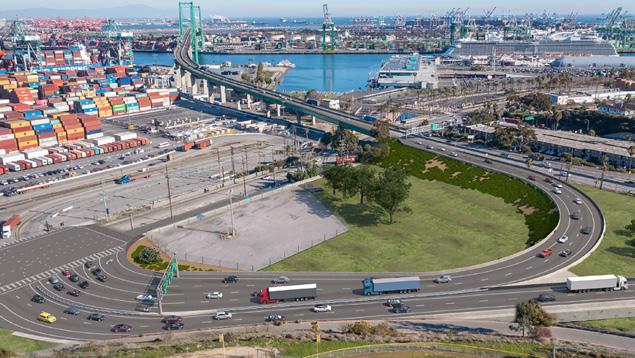
The SBCCOG contributed $49.3 million to Port of L.A. from Measure R funds to reconfigure a major interchange at State Route 47/Vincent Thomas Bridge and Front Street/Harbor Boulevard in San Pedro. This interchange connects to I-110, provides access to San Pedro, Wilmington and Terminal Island, and serves the West Basin Container Terminal. The reconfiguration will reduce travel times, alleviate congestion, and improve motorist and pedestrian safety at this highly traveled roadway juncture.
SUBREGIONAL PROJECTS
• $86.4 million to Caltrans for I-405 at 182nd Street/Crenshaw Boulevard auxiliary lanes and on/ off ramp improvements
• $49.3 million to Port of Los Angeles for Vincent Thomas Bridge on/ off ramp improvements at Harbor Boulevard
• $8.1 million to Caltrans for the design of the I-110 auxiliary lane from SR-91 to Torrance Blvd. and I-405/I- 110 connector
• $9 million to Caltrans for intelligent transportation systems (ITS) improvements on Pacific Coast Highway
• $22.85 million to Metro for I-105 integrated corridor management
CITY PROJECTS
• $5 million to Carson for traffic signal upgrades
• $9.1 million to Manhattan Beach for the seismic retrofit of the bridge at Sepulveda Boulevard/ Rosecrans Avenue
• $7.55 million to Hawthorne for Hawthorne Boulevard improvements from El Segundo Boulevard to Rosecrans Avenue
• $20.5 million to Torrance for PCH/ Hawthorne Boulevard intersection improvements
TRANSIT PROJECTS
• $12.4 million to Gardena Transit for bus purchases
• $35 million to Torrance Transit for Mary K. Giordano Regional Transit Center
• $32 million to Beach Cities Transit for a transit operations and maintenance facility
• $11.5 million to Carson Circuit for Fashion Outlet Regional Transit Center
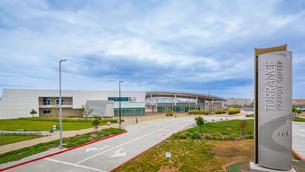
$35 million has been allocated to Torrance Transit for construction of a parking structure at the Mary K. Giordano Regional Transit Center.
MEASURE M:IMPROVING CONGESTION AND SAFETY
To facilitate additional funding and also more flexibility in how those funds are used, in 2016 Los Angeles County voters passed Measure M, a second half-cent sales tax, with 71.15% support. When Measure R expires in 2038, Measure M will become a onecent sales tax.
In the South Bay, the SBCCOG also prioritizes and manages the spending and disbursement of these funds to member jurisdictions for local projects, many of which are smaller in cost and scale and take less time to implement than Measure R projects, which can take decades to plan and complete.
Measure M funds are used to fund projects to ease traffic, repair local streets and sidewalks, and expand public transportation with the goal of improving congestion and safety for motorists, pedestrians and active transportation, such as bikes and scooters.
The South Bay will receive nearly $2 billion in funding between 2017 and 2057, provided in annual allocations and approved by the Metro board each year in September.
Total South Bay Measure M Projects Since 2016: 93 Completed Projects: 9
Active Projects: 84
Total Funding Assigned to South Bay Projects Since 2016: $396,886,739
El Segundo Boulevard underwent improvements with $4.05 million in Measure M funds.
TRAFFIC IMPROVEMENT PROJECTS
• $13.12 to City of Inglewood for Prairie Avenue dynamic lane control system
• $11.24 million to City of Gardena for Redondo Beach Boulevard arterial improvements
• $4.05 million to City of El Segundo for El Segundo Boulevard improvements
• $1.2 million to City of Manhattan Beach for Aviation Boulevard east bound left-turn improvements
cities to launch the Local Travel Network through Measure M funding.
BIKE, PEDESTRIAN AND MICROMOBILITY PROJECTS
• $10.54 million to City of Carson to install bike lanes
• $4 million to City of Redondo Beach for Riviera Village pedestrian and multi-modal enhancements
• $8.2 million to City of Torrance for school safety and accessibility program
• $15 million total to cities of El Segundo, Redondo Beach, Carson, Lomita and Lawndale to implement the Local Travel Network
INTELLIGENT TRANSPORTATION SYSTEMS (ITS) PROJECTS
• $17.71 million to City of Manhattan Beach to implement the advanced traffic signal system
• $13 million to City of Inglewood to implement the Downtown ITS Project
• $6.89 million to various South Bay cities to implement the South Bay Fiber Network
• $1.05 million to City of Torrance for Torrance Fiber Network and traffic signal optimization
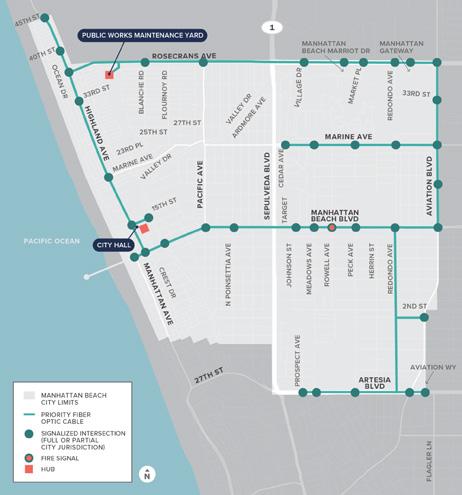
The map indicates the location of signalized intersections (green dots) scheduled for upgrades through Measure M which will help support emerging traffic management technologies, such as dynamic signal timing, vehicle-to-vehicle communication, autonomous vehicle communication, emergency response priority treatment at traffic signals and other “smart cities” initiatives.
Lomita will be among the next South Bay
The SBCCOG Forges City Connections with Energy-Saving Technology
Many municipal buildings in the South Bay need equipment upgrades to make them more energy efficient. One challenge is finding the right contractors and design firms to make things better. For the City of Rancho Palos Verdes, connecting with a supplier that specializes in “retrofitting and making things” is the key objective, according to Cesar Rodriguez, a facilities project manager for the city.
In October, the SBCCOG hosted an energy efficiency technology showcase at its office in Torrance to advance those connections. It offered an opportunity for SoCalREN-approved businesses to present services and energy technology options to cities and agencies. Representatives from eight cities and one special district across the South Bay attended. Eight businesses, ranging from building resource companies to energy contractors, showcased their offerings.
“The aim is to facilitate more conversations about energy efficiency so that our agencies can move forward on projects and be
more energy efficient and sustainable in the South Bay,” said Shawn Fujioka, energy efficiency project coordinator at the SBCCOG.
Elias Gallegos, project manager at Stasis Energy Group, attended to promote energy storage technologies that lessen energy demand during peak hours. He says many people aren’t aware of this technology. For Rodriguez, it was also an opportunity to learn about available project funding opportunities for projects at the cities.
The event’s outcomes align with the SBCCOG’s mission to help public agencies implement both energy- and money-saving programs. “It’s exciting to see the different agencies connecting with each other and businesses to learn more about opportunities that are available,” said Fujioka.
Addie Aubley, Energy Efficiency CivicSpark fellow with the SBCCOG, added, “Even if businesses and cities don’t end up working together, it’s good they get to know each other and that we create a great community of resources addressing sustainability and energy efficiency in the South Bay.” •
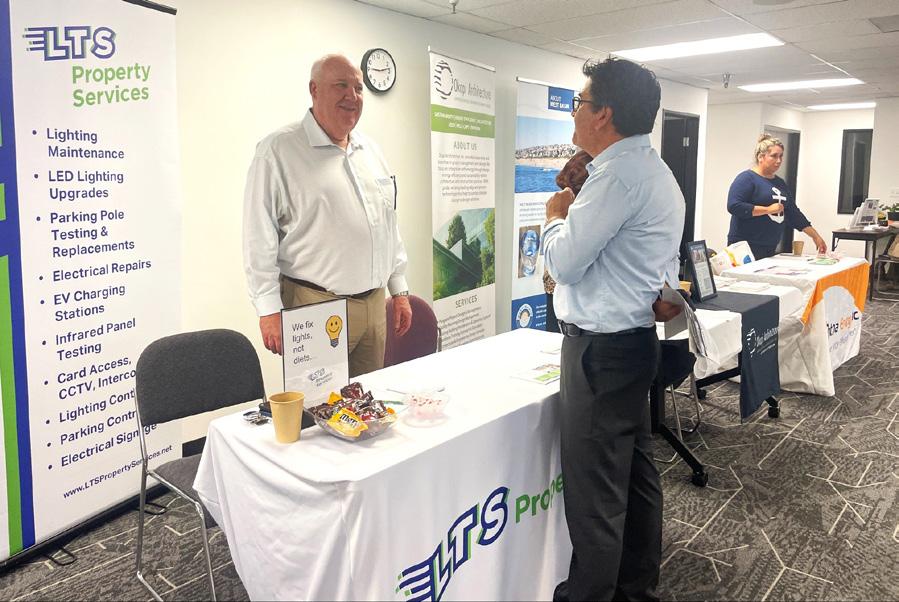
From left: Thomas Wray, business development manager at LTS Property Services, discusses lighting retrofit options with Lucho Rodriguez, public works director for the City of Lawndale.
King tides crash into Fisherman’s Wharf in Redondo Beach on Nov. 16, 2024.
Reflections from a New California Coastal Commissioner
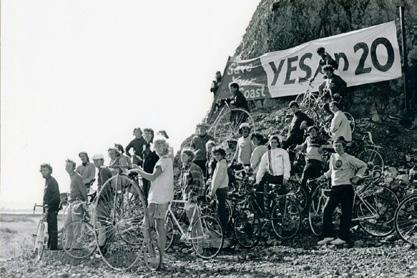
California Senator Jim Mills led a bicycle tour of the coast from San Francisco to San Diego in 1972 in support of Proposition 20, which created the California Coastal Commission.
By Raymond Jackson, California Coastal Commissioner, Hermosa Beach City Council Member and SBCCOG 2nd Vice Chair
Public access to the beach is so deeply tied to who we are as Californians that it’s hard to imagine a time when it wasn’t guaranteed. When developers once tried to fence off parts of the coast, Californians pushed back and built the strongest coastal protections in the nation.
Proposition 20—the “People’s Initiative” of 1972, which created the California Coastal Commission—was a defining moment in shaping how we protect our coastline. It cemented California’s identity as a state that values open beaches, thriving wildlife and responsible development. Keeping our coast accessible to everyone while balancing preservation and progress remains one of our greatest challenges.
Before my appointment to the Coastal Commission, I had no idea how much work went into defending those protections every single day. As a city official in a beach town, I often heard people grumble about the commission. But after seeing the work up close, I have realized that most frustrations
come from not fully understanding what the agency actually does.
LOCAL CONTROL MATTERS
The Coastal Commission is not a faraway bureaucracy calling all the shots. About 80% of coastal development permits are handled locally by cities and counties that know their communities best. The process can feel slow (we’re always looking for efficiencies), but that is what ensures decisions are fair, transparent and consistent up and down the coast.
PUBLIC ACCESS IS EVERYTHING
Having grown up in Florida, I have seen how quickly beaches can become off-limits once private interests move in. In California, the commission’s enforcement team works tirelessly to keep our beaches open to all. It investigates complaints, takes legal action when needed and protects everyone’s right to enjoy the ocean, especially people from inland communities who might otherwise be left out.
COASTAL EROSION IS REAL
Anyone who spends time on the coast can see it: Our beaches are shrinking. Through sand replenishment, dune restoration and other nature-based projects, the commission helps local governments slow erosion and plan ahead. Millions of dollars in grants support research on where shoreline armoring makes sense and where retreat might allow beaches to move inland as sea levels rise.
These efforts are not just about policy; they are about protecting what makes California, California. Our ocean-based economy brings in more than $40 billion a year, and that success did not happen by accident. It is the result of generations who believed our coastline should remain public and protected.
Serving on the Coastal Commission has given me a new appreciation for that legacy. Protecting our coast is not just environmental policy; it is a promise to future generations. In California, the beach belongs to everyone. Keeping it that way will always be worth the effort. •
Photo:
26th General Assembly to Examine Impact of Sports, Entertainment on South Bay
Los Angeles is gearing up for the FIFA World Cup 26, Super Bowl LXI, and 2028 Summer Olympic and Paralympic Games. The South Bay has always been the home of great beaches, fine art and culture. Over the last decade, it has transformed into a hub of state-of-the-art sports and entertainment venues that will serve as a major axis for these events.
This year’s General Assembly will explore the impact this evolution is having on the South Bay’s economy, environment, transportation and infrastructure, and how the South Bay is preparing to take the world stage. It will examine the government’s role of encouraging and regulating, while keeping the South Bay livable for residents, promoting its businesses and sustaining a hub for leisure activities. Join us at the 26th annual conference that brings together South Bay communities to address emerging issues facing our subregion. The conference will feature panel discussions and interactive exhibits. The community and county, state and federal legislators representing the South Bay are invited to hear an array of speakers. This event is made possible by the SBCCOG’s generous sponsors.
Where:
westdrift Manhattan Beach, 1400 Parkview Avenue, Manhattan Beach
Time:
9 a.m. to 3 p.m.
THANK YOU TO OUR SPONSORS
GOLDEN CIRCLE
westdrift Manhattan Beach
BENEFACTORS
Southern California Edison Company
SPONSORS
SoCalGas
For more information and to register, visit southbaycities. org/2026-general-assembly
Contact Rosemary Lackow at rosemary@southbaycities.org to sign up for one of the following sponsorship categories:
Golden Circle: $10,000 & above
Patron: $7,500
Benefactor: $5,000
Sponsor: $2,500
South Bay Watch is a quarterly bulletin by the South Bay Cities Council of Governments to inform local leaders of subregional progress and alert them to emerging issues.
Governing Board: Chair
Bernadette Suarez, Lawndale 1st Vice Chair
Bill Uphoff, Lomita 2nd Vice Chair
Ray Jackson, Hermosa Beach
Immediate Past Chair
Rodney Tanaka, Gardena
Members:
Carson, Los Angeles County, El Segundo, Gardena, Hawthorne, Hermosa Beach, Inglewood, Lawndale, Lomita, Los Angeles, Manhattan Beach, Palos Verdes Estates, Rancho Palos Verdes, Redondo Beach, Rolling Hills, Rolling Hills Estates, Torrance