Víctor Hugo Alcocer Yamanaka Comisión Nacional del Agua
Erick R. Bandala González Desert Research Institute, EE. UU.
Benito Corona Vázquez udlap
Johanness Cullmann World Meteorological Organization Geneva
Carlos Díaz Delgado Instituto Interamericano de Ciencias del Agua, México.
Carlos Escalante Facultad de Ingeniería, unam
Matthew Larsen Smithsonian Tropical Research Institute, EE. UU.
Humberto Marengo Mogollón Instituto de Ingeniería, unam
Einar Moreno Quezada udlap
Carlos Patiño Gómez udlap Consultant
Sofía Ramos President Luminario Education Strategies, USA.
José Ángel Raynal Villaseñor Consultant
José D. Salas Colorado State University, EE. UU.
Jim Thomas Desert Research Institute, EE. UU.
Juan Valdes University of Arizona, EE. UU.
http://www.udlap.mx/catedraunesco/
Climate change and hydrometeorological hazards 2019- Chair Seminar
The drought in México during 2019
Regina Mijares Fajardo
Water and hydrometeorological hazards
New blog of the Chair
Climate change and hydrometerological hazards.
Review of Dr. Cecilia Conde’s lecture at the seminar of the Chair
María Elena Cerecedo Arroyo
RISKS 2019- CHAIR SEMINAR
Participation of the Chair in the discussion of the General Law on Water
Scarcity index: an indicator of availability or a tool for water management? Summary of recent publications by members of the Chair
Call for the Doctorate in Water Sciences International call
The seminar, which was held as an expert meeting, brought together specialists from the Desert Research Institute, University of California in Davis and Luminaria Education Strategies, from the United States; the University of Costa Rica; the UNESCO Chair in Water and Education for Sustainable Development, based in Argentina; and several institutions in México,
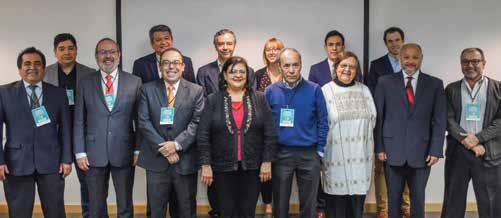
s an important part of its annual activities, the unesco Chair in Hydrometeorological hazards held the international seminar on Climate Change and Hydrometeorological hazards on November 2019.
The seminar, which was held as an expert meeting, brought together specialists from the Desert Research Institute, University of California in Davis and Luminaria Education Strategies, from the United States; the University of Costa Rica; the unesco Chair in Water and Education for Sustainable Development, based in Argentina; and several institutions in México, such as the Inter-American Institute of Water Science and Technology, the National Meteorological Service, unam, the Federal Electricity Commission, and the University of the Américas Puebla.
The schedule of lectures was as follows:
NOVEMBER 7th, 2019
8:30 - 9:00 h Accreditation
9:00 - 9:30 h Accreditation
9:30 - 10:15 h Ricardo Prieto González
National Weather Service, México
10:15 - 11:00 h Eric Alfaro
Costa Rica University
11:00 - 11:15 h Break
11:15 - 12:00 h Cecilia Conde
Hydrometeorological hazards in México
Hydrometeorological hazards in the Central American Dry Corridor
National Autonomous University of México Climate change and hydrometeorological extremes
12:00 - 12:45 h Polioptro F. Martínez Austria UNESCO Chair in Hydrometeorological hazards
12:45 - 13:00 h Break
13:00 - 13:45 h Carlos Patiño Gómez
UNESCO Chair in Hydrometeorological hazards
13:45 - 14:30 h Carlos Díaz Delgado
Inter-American Institute of Water Science and Technology
14:30 - 16:00 h Lunch
16:00 - 16:45 h Miguel Lovino
Universidad Nacional del Litoral, Argentina
(National University of the Litoral, Argentina)
Climate trends identified in Northwest México
Hydrological modeling and climate change
Seasonal changes in climate variables (1960–2010) and their implications for food security in the Lerma–Chapala–Santiago basin
Vulnerability of Latin America to climate change and variability
16:45 - 17:30 h Alyssa DeVincentis University of California, Davis
17:30 - 18:15 h Jorge Aquiles Alcalá Hernández Federal Electricity Commission
NOVEMBER 8th, 2019
9:00 - 9:45 h
Samuel Sandoval Solís University of California, Davis
9:45 - 10:30 h Erick Banadala Desert Research Institute, EE. UU.
10:30 - 11:15 h Einar Moreno UNESCO Chair in Hydrometeorological hazards
11:15 - 11:30 h Break
11:30 - 12:15 h Ismael Aguilar Barajas Tecnológico de Monterrey
Status of research on climate change and water in Latin America and the Caribbean
Seismic risk in dams. Faults and consequences
Climate change and transboundary basins
Water and inflation in México
Water and inflation in México
Economic importance of the Rio Bravo basin
12:15 - 13:00 h Sofía Ramos Luminario Education Strategies, EE. UU. Gender and water management
13:00 - 14:00 h Summary and closure
The seminar was distinguished by the multidisciplinary approach to climate change from different points of view, such as environmental, meteorological, financial, and gender aspects. Furthermore, it will allow the working group of the Chair to be expanded, as it is part of the unesco mission to create research and knowledge networks.
In this newsletter, and in successive issues, reviews of some of the lectures given at the seminar will be presented.
WATER AND HYDROMETEOROLOGICAL HAZARDS
NEW BLOG OF THE CHAIR
The young researchers’ chapter of the unesco Chair has launched a blog entitled Water and hydrometeorological hazards, which publishes articles related to the topics of the Chair prepared by its members, at least once a week.
The blog was launched in November 2019, and among its most popular entries are the articles: Top 11 Most Dangerous Hurricanes in the history of Mexico, What You Need to Know about Forest Fires, and Drought in Mexico during 2019.
Participation of the Chair in the
DISCUSSION OF THE GENERAL LAW ON WATER
https://blogcatedraunesco.udlap.mx/
MÉXICO IS FACING SEVERAL CHALLENGES THAT THREATEN ITS WATER SECURITY, CLOSELY RELATED TO THE GOVERNMENT, ITS INSTITUTIONS, AND CLIMATE CHANGE, BUT PRIMARILY TO THE CITIZENSHIP, WHICH MUST UNDERSTAND THAT THE USE OF WATER IS NOT CHEAP; IT COSTS A LOT TO TAKE IT OUT FROM THE AQUIFERS AND MAINTAIN THE ENTIRE INFRASTRUCTURE TO SUPPLY WATER TO THE HOMES.
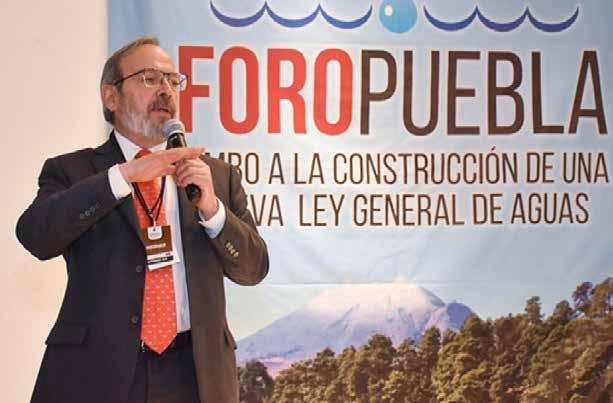
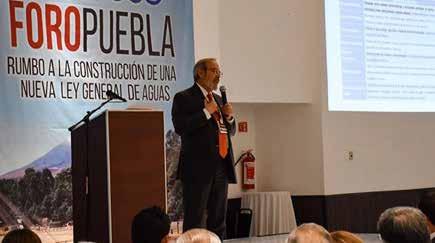
México is facing several challenges that threaten its water security, closely related to the government, its institutions, and climate change, but primarily to the citizenship, which must understand that the use of water is not cheap; it costs a lot to take it out from the aquifers and maintain the entire infrastructure to supply water to the homes. This was stated by Dr. Polioptro Martínez Austria, professor of UDLAP, during his participation in the Puebla Forum: “Towards the construction of a new General Law on water.”
“If we are going to demand the service to be good, we have to pay for the services we receive,” were the words of Dr. Martínez Austria in his conference speech on “Water Security,” given at the event organized by the Commission of Hydraulic Resources, Drinking Water and Sanitation, from the Chamber of Representatives of the Honorable Congress of the Union, who called on diverse voices from all orders of government, basin organizations, academic institutions, experts, organizations of the civil society, and water operators to make presentations around the central topic: the human right to water and its implications in the context of national and local interests.
First, the professor defined water security as ensuring the availability of quality water for human, economic, and environmental uses. Because all goods and services require the vital liquid, it is a matter of priority and national security. “We have to ensure it for domestic use, services, food production, industry, and also for the environment,” he said. He also added that such security today faces latent hazards such as shortages, pollution, extreme climate change, conflicts, and the environmental deterioration of watersheds and aquifers. The main force behind this is urbanization,
because more water is needed to be brought to large cities rather than to rural areas. For example, the México City aquifer that feeds a generous urban concentration is being overexploited and has put pressure on both the populations and the government itself.
In view of the above considerations, Dr. Polioptro Martínez gave three recommendations to deal with these hazards that involve the government, NGOs, companies, and the population: first, manage the deficient governance of water caused by the mismatch between administrative and functional units that work on their own with different attributions; second, maintain a balance in water consumption and not spend more than they have; third, recognize that the use of the liquid is not a cheap or free process.
“We as users have to learn that there is no more cheap water, it is very difficult for us to take it out of the aquifers, to maintain the infrastructure and dams, and after using it, it is very difficult for us to clean it. We have to get used to the fact that, and if we are going to demand good service, we have to pay,” concluded the director of the unesco-udlap Chair in Hydrometeorological Hazards.
THE DROUGHT IN MEXICO
DURING 2019
This article provides an overview of the progress of the drought in the country during the months of 2019. This monitoring is possible owing to the tool “Drought Monitor in Mexico” published by the National Meteorological Service.
To estimate whether a territory suffers from drought conditions and to be able to categorize the intensity of the phenomenon (abnormally dry, moderate drought, severe drought, extreme drought, and exceptional drought), the NMS uses the following indexes and indicators:
• Standardized precipitation index (SPI)
• Rainfall anomaly in percent of normal
• Satellite Vegetation Health Index (VHI)
• Soil Moisture Model Leaky Bucket CPC-NOAA
• Normalized Difference Vegetation Index (NDVI)
• Average temperature anomaly
• Percentage of water availability in the country’s dams
• Local experts’ opinion
Regina Mijares Fajardo
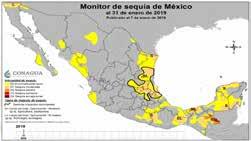
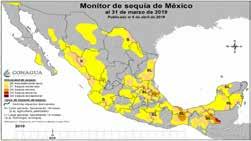
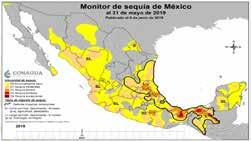
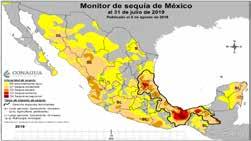
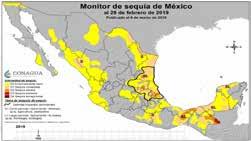
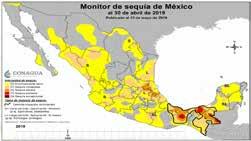
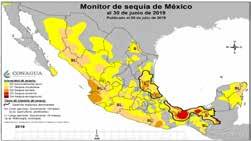
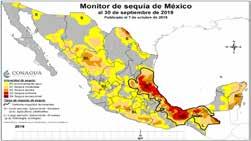
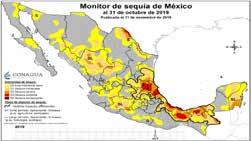
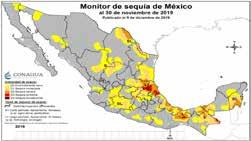
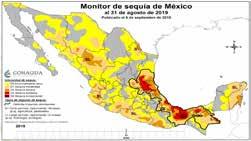
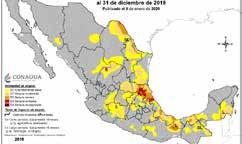
The following images show the state of drought in the country, reported up to the last day of each month in 2019, up to November.
SOURCE: National Water Commission - National Meteorological Service
In the diagrams, it can be seen that August and September were the months with the most critical situations. In August, the country had the highest percentage of drought in the year, 47.2%, (NMS, 2019). Likewise, “August 2019 was the fifteenth driest August in history; it accumulated 110.8 mm of rain at a national level, which represent a deficit of 17.8% with respect to the average value (1981–2010) for an August: 134.7 mm” (NMS, 2019). The most affected regions, as shown in the maps, were the northern and central gulfs.
On the other hand, September was the month with the highest percentage of territory covered by an exceptional drought, 0.42% (NMS, 2019). However, the drought conditions decreased from this month onwards; events that were related to this change were the tropical rainstorms Fernand and Narda, together with Hurricane Lorena, which provided conditions that favored the recovery of soil moisture.
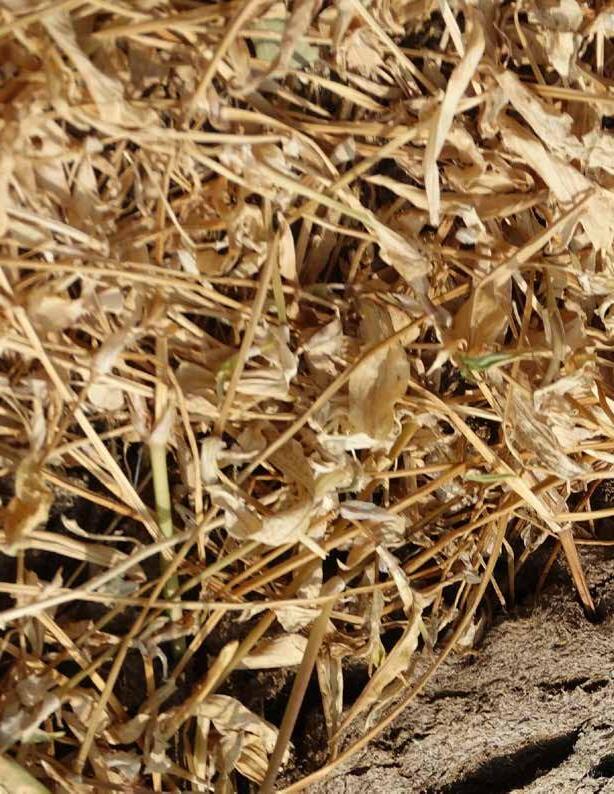
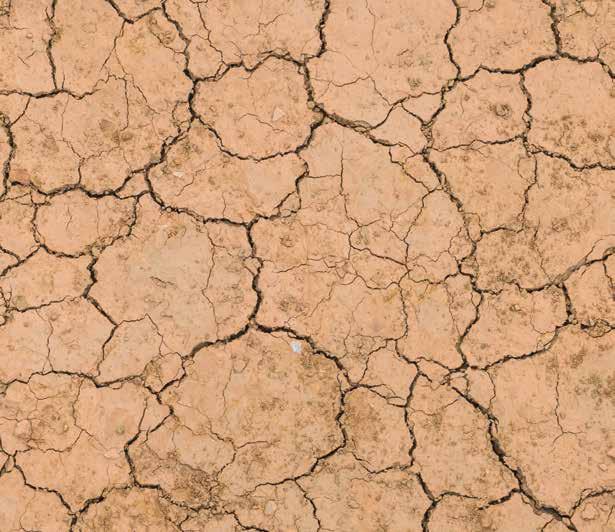
These months (August and September) are critical for agriculture and livestock as they constitute approximately half of the rainy season. For states located in the center of the country, where agriculture is practiced on a seasonal basis, droughts significantly impact the economy. Similarly, in the livestock sector, the drought left significant consequences. Below is an image taken in November 2019 at the Leopoldo Carvajal cattle farm located in the state of Tlaxcala. Here it can be seen that although the drought levels reported by the National Meteorological Service decreased, in some regions of the country, it still has substantial repercussions.
Finally, the months of October and November were exceptionally wet, which allowed the country to recover from the drought condition recorded during summer. 1 5 9 11 2 6 10 12 3 7 4 8
CLIMATE CHANGE AND HYDROMETEROLOGICAL HAZARDS
Review of Dr. Cecilia Conde’s lecture at the seminar of the Chair María Elena Cerecedo Arroyo
« As Diana Liverman points out, the arguments presented go from the unequivocal to the uncertain, which constitutes a serious problem of communicating current and future risks associated with global and regional climate change Cecilia Conde México, México ante el cambio climático p. 17»
Dr. Cecilia Conde, from the Universidad Nacional Autónoma de México, on November 7th, during the international seminar Climate Change and Hydrometeorological Hazards at the Universidad de las Américas Puebla, gave a speech on the topic “Climate Change and Hydrometeorological Extremes.”
She began her lecture by pointing out that global warming is both a political and a technical issue, and that using this type of approach would be more appropriate for dealing with the studies, applications, and combating of situations triggered by climate change.
SHE ESTABLISHED THE CONNECTION BETWEEN SCIENCE AND POLITICS, WHERE POLITICIANS WILL BE THE ONES TO POINT OUT THE NEEDS OF A SOCIAL GROUP IN ENVIRONMENTAL TERMS, AND SCIENTISTS WILL CONDUCT THE NECESSARY STUDIES, INTERPRET THEM, AND LOOK FOR OPTIMAL SOLUTIONS THAT THE AUTHORITIES MAY APPLY IMMEDIATELY TO THE PROBLEMS ARISING FROM GLOBAL WARMING.
She established the connection between science and politics, where politicians will be the ones to point out the needs of a social group in environmental terms, and scientists will conduct the necessary studies, interpret them, and look for optimal solutions that the authorities may apply immediately to the problems arising from global warming.
The proposed relationship between science and politics will create a synergy with components of equality, equity, human rights, and collective rights; so she called on social scientists to join all projects involving climate change.
Later, she stated the need for specific and correct studies to find alternative solutions in ecological terms, involving several researchers or scientists from different fields as required, so that they know and determine how global warming affects the elements of the biosphere, oceans, soil, and social sectors that are immersed in this problem.
Because of the climate change and the problems involved, some treaties and protocols have been signed to protect the environment, involving joint decisions among most countries. One of the most important ones has been the Paris agreement.
She also referred to the climate variations on Earth, which have become a scientific and social concern, since all the governments of the world know about the serious socio-economic and political consequences of a natural disaster.
She identified the difference between climate variation in certain regions of the world and the increase in temperature due to climate change. The temperature increase is expected to be limited in the range of 1.5°C–2°C, a condition that has already resulted in the melting of glaciers, an increase in heat waves, and that will lead to the disappearance of coral reefs at the global level and a decrease in water supply, which will have significant effects.
She reflected on the idea of temperature and climate: what is expected during spring, summer, autumn, and winter, if it is going to be cold, hot, what to wear, if is appropriate to bring a sunshade, etc., since our life experience has led us to acquire this knowledge. However, according to her, we have already experienced the contrasts that climate change has brought during the seasons of the year: increase in temperature, unseasonal rains, more prolonged droughts, extreme heat during periods that should be cold, among many others. These phenomena represent the unequivocal condition that climate change is present; however, they produce conditions of uncertainty owing to the variation that they present and because they do not follow a pattern that can be defined to take it as a formula representing the future.
For the abovementioned reasons, the doctor concludes that climate change is a complex and uncertain issue, where scientists and scholars from different fields involved must come together to contribute with the knowledge of the effects it has brought to their field of study, to determine the adequate measures to reverse them as much as possible.
SCARCITY INDEX: AN INDICATOR OF AVAILABILITY OR A TOOL FOR WATER MANAGEMENT?
Paul Hernández Romero, Carlos Patiño Gómez, Benito Corona Vásquez, Polioptro F. Martínez Austria
Summary of recent publications by members of the Chair
La Universidad de las Américas Puebla convoca
A los egresados de Instituciones de educación superior nacionales y extranjeras interesados en ingresar, en agosto 2020, en los siguientes programas académicos pertenecientes al Programa Nacional de Posgrados de Calidad:
Doctorado en Ciencia de Alimentos
Doctorado en Ciencias del Agua
Doctorado en Creación y Teorías de la Cultura
Doctorado en Sistemas Inteligentes
Doctorado en Biomedicina
Water shortages in a region or basin occur when water supplies are no longer adequate to meet the requirements for different uses, including the environment, that is, when the amount of water bodies (surface and groundwater) demanded is greater than a certain percentage of surface runoff and aquifers. Thus, water stress is aggravated in regions where there is a high rate of population growth and continuous changes in consumption patterns due to climate variability. Water resources are increasingly stressed with increasing scarcity at different geographical levels (regions, countries, states, and watersheds). A regional analysis (Vörösmarty, Lévêque and Revenga, 2005) revealed that global water use increased at a rate of approximately 20% per decade between 1960 and 2000 and 10% between 2000 and 2010, with clear differences (of between 15% and 32%).
Because water availability in each region varies in space and time, currently only 25% of the world’s population is settled in basins with relative “abundance,” leaving the remaining 75% with moderate to severe water stress. By 2050, per capita water availability is projected to decrease by an average of 50% under normal weather conditions due to population increase alone.
The Water Security Index (WSI) is an indicator that allows the analysis of water availability in a region or basin where it is implemented. However, its scope goes far beyond just “indicating” whether water is available; it is a management tool that assesses whether there is historical information on demands made against natural drainage over the years,
and thus helps water managers make better decisions based on the resulting trends. It also allows focusing on critical basins, such as the one analyzed in this work, with the objective of prioritizing and implementing a more efficient water management strategy. Finally, WSI, supported by a geographic information system (GIS), allows the assessment of regions with urban or agricultural settlements that demand more water in a basin, and thus proposes and implements sustainable measures such as reuse, technification, and artificial aquifer recharge. Similarly, this management tool can help in establishing public policies that contribute to the conservation of the resource.
requisitos generales:
A presentar junto con la Solicitud de Admisión al proceso de selección, en copias simples:
1. Certificado oficial de estudios o documento oficial en el que se dé constancia de haber obtenido un promedio mínimo de 8.5 en la licenciatura.
2. Copia simple de Título y Cédula Profesional de Licenciatura (En caso de no contar con estos documentos, tendrá que acercarse al área de Servicios Escolares para revisar la situación académica y poder continuar con el proceso).
3. Currículo en extenso, con fotografía reciente.
4. Carta de intención, en la que se argumenten las razones por las que ha elegido la institución, el programa de doctorado y el área de estudios.
5. Tres cartas de recomendación emitidas por profesores o autoridades vinculadas con el desempeño académico y/o profesional del aspirante, escritas en hojas membretadas y entregadas en sobre sellado (máximo un año de antigüedad).
6. Comprobante de resultados del examen EXADEP con puntaje mínimo de 570 o GRE con puntajes mínimos de 150 en razonamiento verbal, 130 en razonamiento cuantitativo y 3.5 en redacción analítica. (La vigencia de los comprobantes no debe ser mayor a 5 años).
7. Comprobante del examen TOEFL Institucional (puntaje mínimo 550) o cualquiera de los siguientes: TOEFL IBT (puntaje mínimo 79), IELTS (puntaje mínimo 6), o Cambridge English: Advanced (CAE). La vigencia del comprobante no debe ser mayor a 2 años.
Los interesados que hagan su solicitud por vía remota, deberán enviar en un solo correo la documentación completa en formato digital (PDF). Todos los interesados que hayan aprobado las evaluaciones deberán realizar los trámites de ingreso y los trámites relativos a su beca requeridos por la Universidad ante las instancias correspondientes. Una vez que los interesados hayan completado satisfactoriamente todos los trámites, su status será de admitido al Doctorado correspondiente y deberán dedicar tiempo completo a sus estudios y actividades de investigación previstas en su plan de estudios.
requisitos adicionales
Los siguientes requisitos son necesarios para aquellos interesados en ingresar al Doctorado en Creación y Teorías de la Cultura:
1. Certificado oficial de estudios de maestría o su equivalente con un promedio mínimo de 8.5 y constancia de título de grado que muestre el promedio.
2. Copia simple de Título y Cédula profesional de Maestría (En caso de no contar con estos documentos, tendrá que acercarse al área de Servicios Escolares para revisar la situación académica y poder continuar con el proceso).
3. Tesis de maestría o en su defecto un trabajo extenso escrito (35 págs).
4. Presentación del protocolo del proyecto de Investigación a desarrollar durante el doctorado.
procedimiento (consta de 3 etapas)
Etapa Inicial
Presentar su Solicitud de Admisión y documentación mencionada en Requisitos
Generales y Requisitos Adicionales, de acuerdo al doctorado de interés, en la:
Dirección de Investigación y Posgrado
Oficina NE 201
Universidad de las Américas Puebla
Ex Hacienda Santa Catarina Mártir
Cholula Puebla · C.P. 72810
se puede solicitar directamente al correo electrónico antes señalado.
1. Una vez analizada la solicitud y los documentos que la acompañan, la Dirección de Investigación y Posgrado procederá a informar al Coordinador del Doctorado correspondiente, quien agendará una cita directamente con el solicitante.
Etapa Académica
1. El solicitante acudirá el día y la hora fijada con el Coordinador del Doctorado, quien le informará las líneas de investigación y tutores disponibles, así como el procedimiento a seguir.
2. Al finalizar la etapa académica los aprobados, serán notificados por la Dirección de Investigación y Posgrado para continuar con la etapa administrativa.
Etapa Administrativa
1. Los candidatos presentarán ante la Dirección Escolar la documentación complementaria que esta área les indique.
2. Una vez que esta Dirección apruebe toda la documentación, el candidato cambiará su status a admitido y será notificado por Dirección Escolar.
becas
Todos los candidatos admitidos contarán con una Beca Académica UDLAP Investigación que cubre la colegiatura y manutención mensual durante todo el programa, esta última en caso de no contar con otra beca que la cubra. No existe la posibilidad de ingresar o permanecer en el doctorado sin contar con la Beca Académica UDLAP Investigación. En el caso de estudiantes extranjeros que hayan sido aceptados a alguno de los doctorados, deberán contar con visa de estudiante tramitada en su país de origen.
En el caso de los solicitantes a Becas de Excelencia del Gobierno de México para Extranjeros, estos deberán apegarse a los lineamientos de la convocatoria vigente de la Secretaría de Relaciones Exteriores, así como a los tiempos y formas del proceso de admisión descrito en la presente convocatoria.
fechas
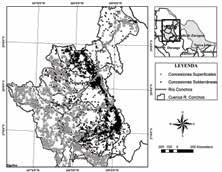
Figure 1. Surface exploitation and underground of the Conchos river basin.
United Nations Educational, Scientific and Cultural Organization
UNESCO
BOLETÍN DE LA CÁTEDRA UNESCO EN RIESGOS HIDROMETEOROLÓGICOS
NEWSLETTER OF THE UNESCO CHAIR ON HYDROMETEOROLOGICAL RISKS
EDITORIAL COORDINATIONS
Editor
Polioptro F. Martínez Austria
Style correction
Aldo Chiquini Zamora
Andrea Garza Carbajal
Editorial design
Andrea Monserrat Flores Santaella
The unesco Chair on Hydrometerological Risks Newsletter is a quarterly publication which reports on the activities of the Chair and its members, unesco news related to it, as well as general information on disasters and hydrometeorological risks. It is elaborated by the Universidad de las Américas Puebla. Ex hacienda Sta. Catarina Martir s/n. C. P. 72810, San Andres Cholula, Mexico.
The authors are responsible for the choice and presentation of the opinions contained in this newsletter. Likewise, of the opinions expressed therein, which are not necessarily those of UNESCO and do not commit the Organization.