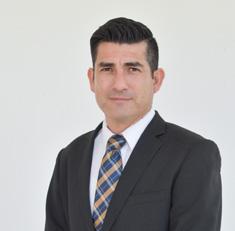
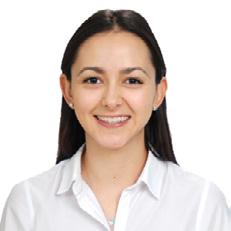
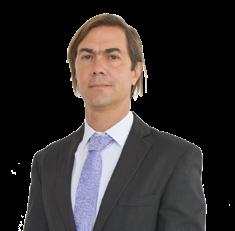
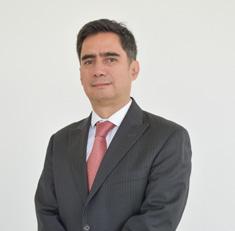
Víctor Hugo Alcocer Yamanaka Comisión Nacional del Agua
Erick R. Bandala González Desert Research Institute, EE. UU.
Benito Corona Vázquez udlap
Johanness Cullmann World Meteorological Organization Geneva
Carlos Díaz Delgado Instituto Interamericano de Ciencias del Agua, México.
Carlos Escalante Facultad de Ingeniería, unam
Matthew Larsen Smithsonian Tropical Research Institute, EE. UU.
Humberto Marengo Mogollón Instituto de Ingeniería, unam
Einar Moreno Quezada udlap
Carlos Patiño Gómez udlap Consultant
Sofía Ramos
President Luminario Education Strategies, USA.
José Ángel Raynal Villaseñor Consultant
José D. Salas Colorado State University, EE. UU.
Jim Thomas Desert Research Institute, EE. UU.
Juan Valdes University of Arizona, EE. UU.
The Chair opens a new chapter for young scientists.
International Seminar: Climate Change and Hydrometeorological Risks
Ninth phase of the International Hydrological Program. Collaboration of the Chair
THE CHAIR OPENS A NEW CHAPTER for young scientists
OHydrological modeling through satellite information
The eleven most intense hurricanes that have affected Mexico
Invitation: Ph. D. Program in Water Sciences
http://www.udlap.mx/catedraunesco/
ONE OF THE MAIN GOALS OF THE UNESCO CHAIR ON HYDROMETEOROLOGICAL RISKS IS TO TRAIN HUMAN RESOURCES TO ACHIEVE THE HIGHEST ACADEMIC LEVEL.
ne of the main goals of the unesco Chair on Hydrometeorological Risks is to train human resources to achieve the highest academic level. Hence, the Chair opens a new young researchers chapter aimed at graduate student members. This first phase will include PhD students in the Water Sciences program of the Universidad de las Américas Puebla, who often collaborate closely with the Chair.
In addition, users of the services provided by the Chair will benefit from the talent and creativity of these young scientists. Although they have just started their activities at the unesco Chair, they have already published a blog with initial contents—which can be accessed at https://blogcatedraunesco.udlap.mx/ - to allow greater dissemination of issues related to hydrometeorological risks and climate change.
Thus far, the initial members of this young researcher chapter are María Elena Cerecedo, David Eduardo Guevara, Paul Hernández, Regina Mijares, Uxmal Rodríguez, and Pedro Sánchez.
Students associated with the chair
MARÍA ELENA
CERECEDO ARROYO
Research line: droughts. climate change elena.cerecedoao@udlap.mx
DAVID EDUARDO GUEVARA POLO
Research line: modeling and hydrological processes david.guevarapo@udlap.mx
PAUL HERNÁNDEZ ROMERO
Research line: water security and GI´S applications to water management paul.hernandezro@udlap.mx
REGINA
MIJARES FAJARDO
Research line: hydrometeorological risks regina.mijaresfo@udlap.mx
UXMAL RODRÍGUEZ MORALES
Research line: precipitation trends in southern Mexico and its relationship with oceanic and atmospheric large scale phenomena uxmal.rodriguezms@udlap.mx
PEDRO ANDRÉS SÁNCHEZ GUTIÉRREZ
Research line: analysis of precipitation trends and effects of climate change pedro.sanchezgz@udlap.mx
THROUGH SATELLITE INFORMATION HYDROLOGICAL MODELING
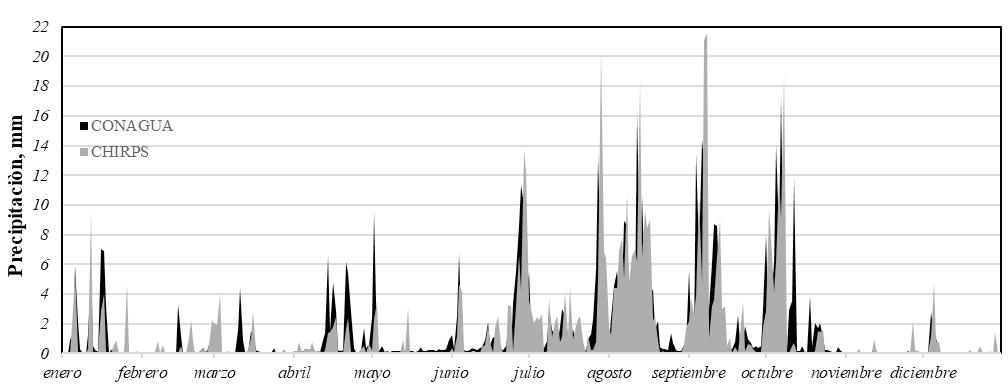
One of the main challenges faced when trying to model controlled or non-controlled basin floods is the existence of runoff data. A commonly used solution is using rain-runoff models, which allow for runoff estimations based on rainfall data. Nevertheless, for many basins, the rainfall information is still insufficient, mostly due the existence of few weather stations, or because the few existing stations yield poor-quality information. Within this context, satellite technologies have become an option since they provide almost continuous information for the whole basin. However, this is a relatively novel technology, which means that further validation and intercalibration exercises are required, using site data as reference. For these purposes, Paul Hernández Romero, a PhD candidate in Water Sciences from UDLAP, with cooperation from several Chair members, conducted the Rainfall/Runoff Hydrological Modeling Using Satellite Precipitation Information study, which validated the effectiveness of using satellite information for modeling rainfall runoff processes focusing on the Conchos river basin as a case study.
ONE OF THE MAIN CHALLENGES FACED WHEN TRYING TO MODEL CONTROLLED OR NON-CONTROLLED BASIN FLOODS IS THE EXISTENCE OF RUNOFF DATA.
HURRICANE 1959
Making landfall near the Manzanillo coast, on October 27, 1959, at a speed of 138.9 km/h, this hurricane had been reported as category 5, but was later reassessed as category 4. Significantly, in this period, the hurricane-naming system had not yet been established, which means that there is no official name for the 1959 hurricane. Its occurrence and damage to the Minatitlán, Colima community inspired historian Raymundo Padilla Lozoya to write a book called The ’59 Hurricane: History of the Disaster and Reconstruction of the Minatitlán, Colima Community.
HURRICANE GILBERT (1988)
On September 14, 1988, this hurricane passed through the northeastern area of the Yucatan Peninsula, and was classified as category 5. Since Hurricane Camille in 1969, it was the first category 5 hurricane of the Western Hemisphere. After this, it proceeded through the Gulf of Mexico, while losing intensity. Later, on September 16, it made landfall on the coast near the La Pesca, Tamaulipas community, as category 3 storm.
THAT HAVE AFFECTED MEXICO THE ELEVEN MOST INTENSE HURRICANES
David Eduardo Guevara Polo
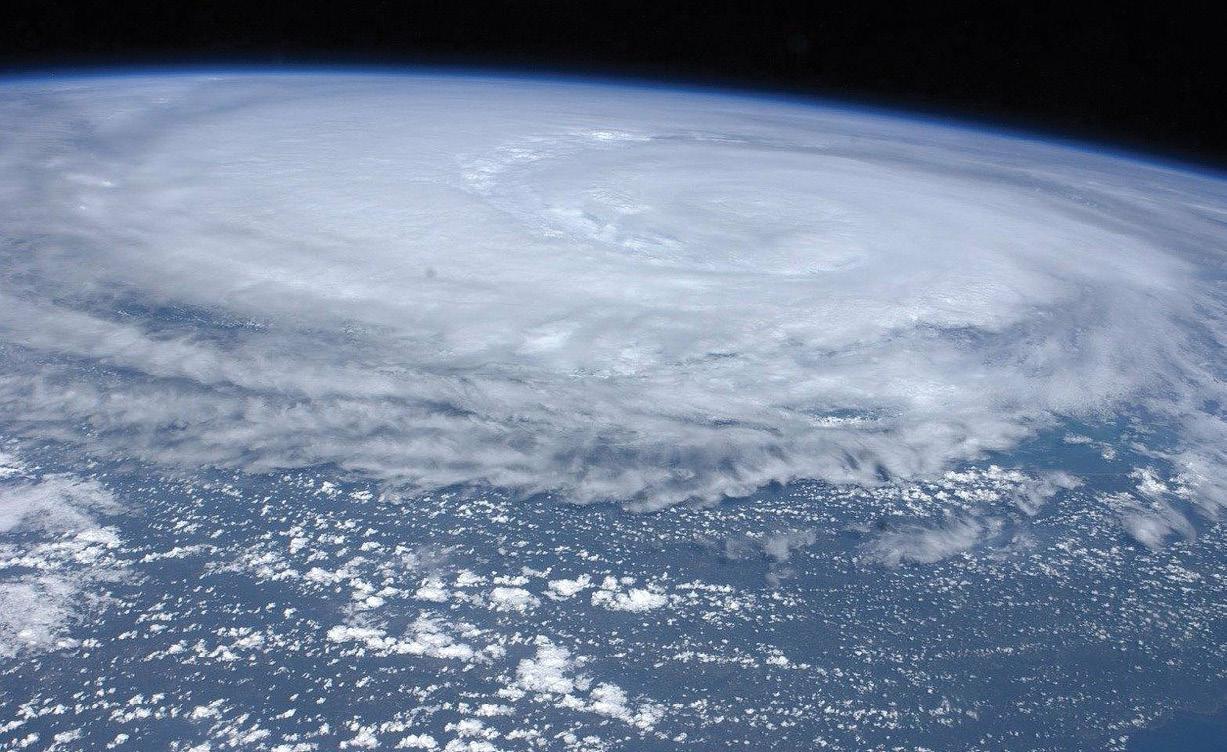
DUE TO ITS GEOGRAPHICAL POSITION, MEXICO IS OFTEN EXPOSED TO HURRICANES COMING FROM BOTH THE PACIFIC OCEAN AND THE GULF OF MEXICO AND THE CARIBBEAN.
Due to its geographical position, Mexico is often exposed to hurricanes coming from both the Pacific Ocean and the Gulf of Mexico and the Caribbean. In fact, many people easily remember the destructive consequences of some hurricanes through history. Hence, this article seeks to recall the eleven most intense hurricanes that have occurred in this country, in chronological order.
HURRICANE OPAL Y ROXANNE (1995)
Although its major effects occurred on the northern Gulf coast of the United States, in the beginning of October 1995,
Hurricane Opal also crossed the Yucatan Peninsula while still being a tropical depression, causing floods that killed 19 people.
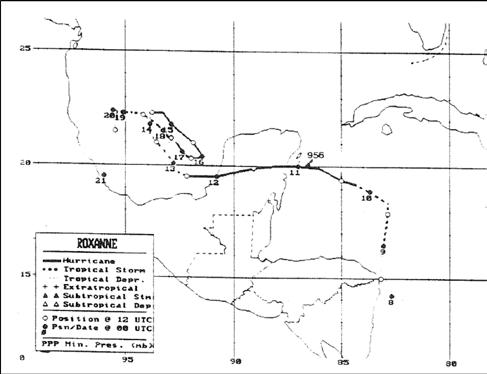
Within a week, in the Caribbean Sea, Hurricane Roxanne started to develop and later reached category 3. On October 10, its maximum wind speed of 211 km/h was reported, with weather stations in Veracruz and Tabasco registering approximately 250 mm rainfall. According to Mexican authorities, over 40,000 homes were affected in Campeche, Quintana Roo, Tabasco, Veracruz, and Yucatan. It was noted that the road that joined El Carmen and Campeche was also destroyed. Damages caused by both hurricanes in the Yucatan Peninsula were valued at 1.5 billion dollars.
HURRICANE PAULINE 1997
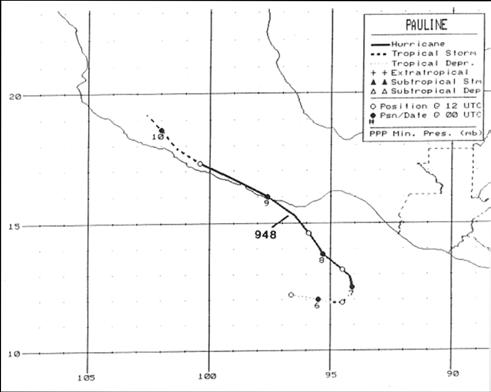
In the beginning of October 1997, this hurricane affected the Mexican Pacific coastline. When it was 320 km south of Puerto Angel, Oaxaca, it was classified as a hurricane, causing this community to be deprived of communication. On October 7, it reached category 4. The president of Puerto Ángel stated that they were unprepared for a similar situation as, luckily, these phenomena had never affected them in the past and many people were not aware of what a hurricane was.
Figure 1. Path of Hurricane Roxxane. (Source: NOAA, 1995)
Figure 2. Path of Hurricane Pauline. (Source: NOAA, 1997)
HURRICANE EMILY 2005
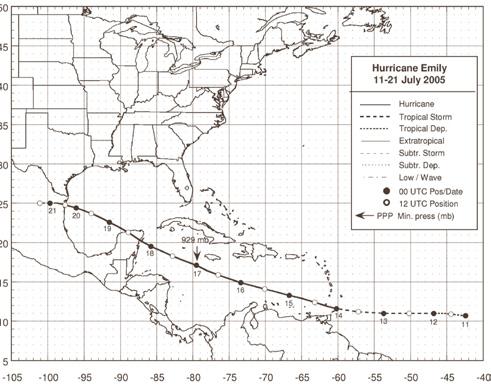
Emily, a category 5 hurricane, affected the Yucatan Peninsula, specifically Playa del Carmen, Tulum, and Cozumel islands, when it first landed, causing heavy flooding. On its second landfall, it impacted the fishing community of Laguna Madre, Tamaulipas, where 85% of homes were destroyed. Additionally, it caused destruction in Grenada, Jamaica, Trinidad, and Tobago.
HURRICANE DEAN 2007
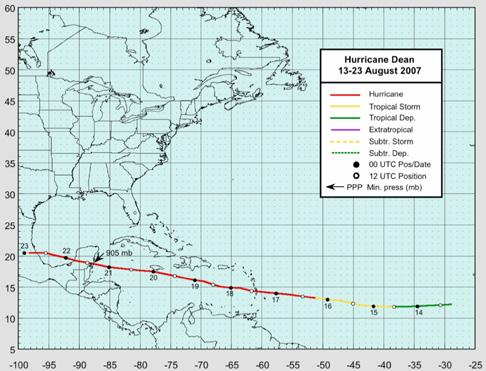
Hurricane Dean reached category 5 and impacted several countries in the Caribbean Sea. In Mexico, it made two landfalls. On August 21, the first time, near Majahual, Quintana Roo, where its wind speed reached 280 km/h, and the second time, after crossing the Yucatan Peninsula and emerging from Campeche Bay, on August 22, near Tecolutla, Veracruz. By then, it had become a category 2 hurricane, with wind speed of 160 km/h. In the first impact, Hurricane Dean produced damages to hundreds of buildings and provisional closing of the ports along the Mayan Coast.
HURACANE INGRID AND TROPICAL MANUEL 2013
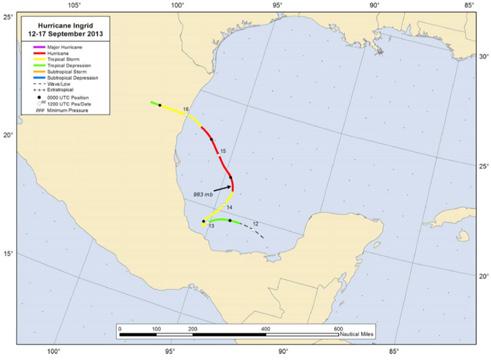
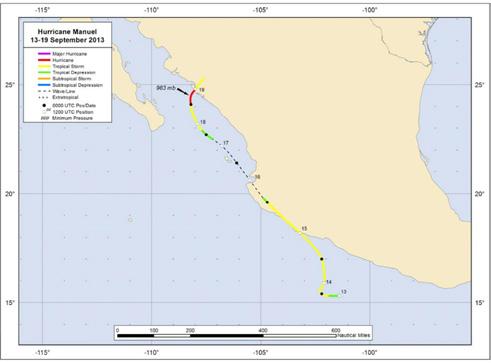
These two events caused significant combined impacts in Mexico. From September 12 to 17, Hurricane Ingrid caused impacts in the Gulf of Mexico, reaching a maximum wind speed of 140 km/h. Hurricane Ingrid made landfall south of La Pesca, a community in Veracruz, with wind speed of 100 km/h to later fade away. Ingrid caused damages in Mexico assessed at 230 million dollars and its heavy rainfalls pro-
duced an overflow of 68 bodies of water and damages to over 14 thousand homes in the state of Veracruz. At the same time, from September 13 to 20, Hurricane Manuel was present in the Pacific Ocean. It landed near Pichilinguillo, a community in the state of Michoacán, at a speed of 110 km/h. After Hurricane Manuel emerged from land, south of the Gulf of California, it became stronger and reached maximum wind speed of 120 km/h.
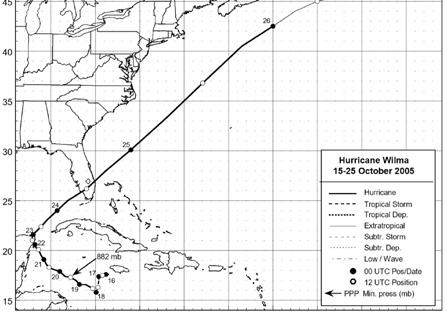
An interesting fact about this event was that just within 24 h, wind speeds increased from 110 to 280 km/h, an unprecedented aspect for an Atlantic system. It made landfall at Cozumel island, on October 21, 2005, with wind speeds exceeding 240 km/h (category 4) and traversed the Yucatan Peninsula a few hours later, emerging with a fraction of its original intensity. In the end, it significantly impacted the Florida peninsula, producing the longest power outage ever in that state.
Figure 3. Path of Hurricane Emily (NOAA, 2005).
Figure 5. Path of Hurricane Dean (NOAA, 2007).
Figure 6. Path of Tropical Storm Ingrid. (NOAA, 2013b).
Figure 7. Path of Hurricane Manuel (NOAA, 2013a).
Figure 4. Path of Hurricane Wilma (NOAA, 2005).
HURRICANE WILMA 2005
HURRICANE PATRICIA 2015
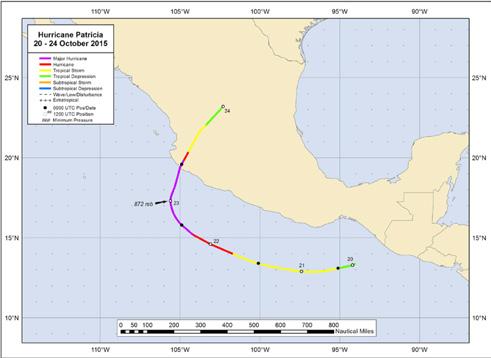
Until 2015, it was the most intense hurricane recorded in the Pacific Ocean. Its wind speed reached 240 km/h when it made landfall, close to Cuixmala beach, Jalisco. After this, it moved over Sierra Madre Occidental, and faded a few days later. Over 10,000 homes were affected by Hurricane Patricia and damaged around 40 thousand hectares of crops. Flooding also occurred in Michoacan and Jalisco.
REFERENCES
CNN. (2019). Dangerous Hurricane Pauline to hit southwest Mexico. Recuperado de https://web.archive.org/web/20060521133856/http://www. cnn.com/WEATHER/9710/08/pauline/index.html
CNN. (2019). Southern Mexico facing perils of Pauline. Recuperado de http://edition.cnn.com/WEATHER/9710/08/pauline.update/index.html
Crespo, R. (2017). Los 5 huracanes más fuertes de todos los tiempos. Animal Político. Recuperado de https://www.animalpolitico.com/2017/02/ los-5-huracanes-mas-fuertes-todos-los-tiempos/
El Universal. (2018)¿Cuáles han sido los huracanes más letales en México? Recuperado de https://www.eluniversal.com.mx/nacion/sociedad/ cuales-han-sido-los-huracanes-mas-letales-en-mexico
Estrada, R. (2017). Los 7 huracanes más devastadores que han golpeado a México. El Financiero. Recuperado de https://www.elfinanciero.com.mx/nacional/ los-huracanes-mas-devastadores-que-han-golpeado-a-mexico
Hagen, A., Morgerman, J., Sereno Trabaldo, E. y González, J. (2016). Hurricane reanalysis. Recuperado de http://www.icyclone.com/upload/now/ feb_2016/Reanalysis_of_Great_Mexico_Hurricane_1959_FINAL.pdf
NOAA & NWS. (2016). Re-analysis of the 1959 Manzanillo Mexico Hurricane Recuperado de https://www.nhc.noaa.gov/news/20160204_pa_1959HurricaneReanalysis.pdf
NOAA. (1988). Preliminary Report Hurricane Gilbert. Recuperado de https://www.nhc.noaa.gov/archive/storm_wallets/atlantic/atl1988-prelim/ gilbert/prelim01.gif
NOAA. (1995). Preliminary Report Hurricane Opal. Recuperado de https://
www.nhc.noaa.gov/data/tcr/AL171995_Opal.pdf
NOAA. (1995). Preliminary Report Hurricane Roxanne Recuperado de https://www.nhc.noaa.gov/data/tcr/AL191995_Roxanne.pdf
NOAA. (2005). Tropical Cyclone Report Hurricane Emily Recuperado de https://www.nhc.noaa.gov/data/tcr/AL052005_Emily.pdf
NOAA. (2005). Tropical Cyclone Report Hurricane Wilma. Recuperado de https://www.nhc.noaa.gov/data/tcr/AL252005_Wilma.pdf
NOAA. (2007). Tropical Cyclone Report Hurricane Dean. Recuperado de https://www.nhc.noaa.gov/data/tcr/AL042007_Dean.pdf
NOAA. (2013a). Tropical Cyclone Report Hurricane Ingrid. Recuperado de https://www.nhc.noaa.gov/data/tcr/AL102013_Ingrid.pdf
NOAA. (2013b). Tropical Cyclone Report Manuel. Recuperado de https:// www.nhc.noaa.gov/data/tcr/EP132013_Manuel.pdf
NOAA. (2015). Tropical Cyclone Report Hurricane Patricia. Recuperado de https://www.nhc.noaa.gov/data/tcr/EP202015_Patricia.pdf
NOAA. (2019a). Hurricane Pauline Recuperado de https://www.wpc. ncep.noaa.gov/tropical/rain/pauline1997.html
NOAA. (2019b). Hurricane Roxanne. Recuperado de https://www.wpc. ncep.noaa.gov/tropical/rain/roxanne1995.html
Padilla-Lozoya, R. (2006). El huracán del 59: Historia del desastre y reconstrucción de Minatitlán Colima Universidad de Colima.
CLIMATE CHANGE AND HYDROMETEOROLOGICAL RISKS
Disasters linked to extreme hydrometeorological events have significantly increased in the world, and in many regions, human losses and related costs are increasing.
A conjunction of demographic, economic, and social factors, along with climate change effects on the hydrological cycle, is increasing risks. Due to the complexity of this phenomenon, the best scientific capabilities must be applied, along with experience in risk management, when severe hydroclimatic events occur.
A CONJUNCTION OF DEMOGRAPHIC, ECONOMIC, AND SOCIAL FACTORS, ALONG WITH CLIMATE CHANGE EFFECTS ON THE HYDROLOGICAL CYCLE, IS INCREASING RISKS.
Based on this background, on November 7 and 8, 2019, the unesco Chair on Hydrometeorological Risks will hold an international seminar on Climate Change and Hydrometeorological Risks at the facilities of the University of the Americas at Puebla, headquarters of the Chair, with participation from renowned specialists from various regions of the American continent. These experts will present keynote conferences on several topics and discuss among themselves, and with the audience, future research lines and recommendations for decision makers. The aim is to gather hydrometeorological risk and climate change specialists, so that they can assess the state of knowledge and perspectives on these
International Seminar:
Figure 8. Path of Hurricane Patricia (NOAA, 2015).
issues, especially regarding the Latin American and Caribbean regions.
The Seminar’s program is as follows:
The seminar plans to hold a meeting of experts, with 14 specialists whose participation has been confirmed. They will be assigned one hour for a keynote presentation, including the period needed for discussion and analysis. The featured speakers come from several institutions, such as the Desert Research Institute of the United States, the UniversiTIME SPEAKER
8:30 - 9:00 h Registration process
9:00 - 9:30 h Opening
ty of California, the Center for Studies of Climate Variability and Change at the University of the Littoral in Argentina, the Center for Atmospheric Sciences at unam, the Inter-American Institute of Technology and Water Sciences at the Autonomous University of the State of Mexico and the Center for Atmospheric Sciences and Engineering Institute at unam, along with chair members from the University of the Americas at Puebla.
9:30 - 10:15 h Ricardo Prieto González National Metereological Service, México Hydrometeorological risks in Mexico
10:15 - 11:00 h Eric Alfaro Universidad of Costa Rica
11:00 - 11:15 h Break
Hydrometeorological Risks in the Central American Dry Corridor
11:15 - 12:00 h Cecilia Conde Universidad Nacional Autónoma de México Climate Change and Hydrometeorological Extremes
12:00 - 12:45 h Polioptro F. Martínez Austria UNESCO Chair on Hydrometeorological Risks Climatic Trends Observed in Northwestern Mexico
12:45 - 13:00 h Break
13:00 - 13:45 h Carlos Patiño Gómez
UNESCO Chair in Hydrometeorological Risks Hydrological Modeling and Climate Change
13:45 - 14:30 h Carlos Díaz Delgado The Inter-American Institute for Water Sciences and Technology
14:30 - 16:00 h Lunch
16:00 - 16:45 h Miguel Lovino National University of the Littoral, Argentina
16:45 - 17:30 h Alyssa DeVincentis, University of California, Davis
Seasonal Changes of Climatic Variables (1960-2010) and their Food Security Implications at the Lerma-ChapalaSantiago Basin
Latin America’s Vulnerability to Change and Climate Variability
Status of Research on Climate Change and Water in Latin America and the Caribbean.
17:30 - 18:15 h Jorge Aquiles Alcalá Hernández Federal Electricity Commission, México Seismic Risk in Dams, Faults and Consequences
9:00 - 9:45 h Samuel Sandoval Solís, University of California, Davis Climate Change and Cross-Border Basins
9:45 - 10:30 h Erick Banadala Desert Research Institute, U.S.A. Extreme Temperatures and Heat Waves
10:30 - 11:15 h Einar Moreno
UNESCO Chair in Hydrometeorological Risks Water and Inflation in Mexico
11:15 - 11:30 h Break
11:30 - 12:15 h Ismael Aguilar Barajas, The Monterrey Institute of Technology Economic Significance of the Rio Grande Basin
12:15 - 13:00 h Sofía Ramos
Luminario Education Strategies, U.S.A. Gender and Water Management
13:00 - 14:00 h Summary and Closing
14:00 - 16:00 h Business Lunch of Speakers
COLLABORATION IN THE PREPARATION OF THE NINTH PHASE OF THE INTERNATIONAL HYDROLOGICAL PROGRAM
The unesco International Hydrological Program (ihp) was developed through phases that mark periods which seek the achievement of strategic objectives in the advancement and dissemination of knowledge and education, which are unanimously considered as critical by the Member Countries.
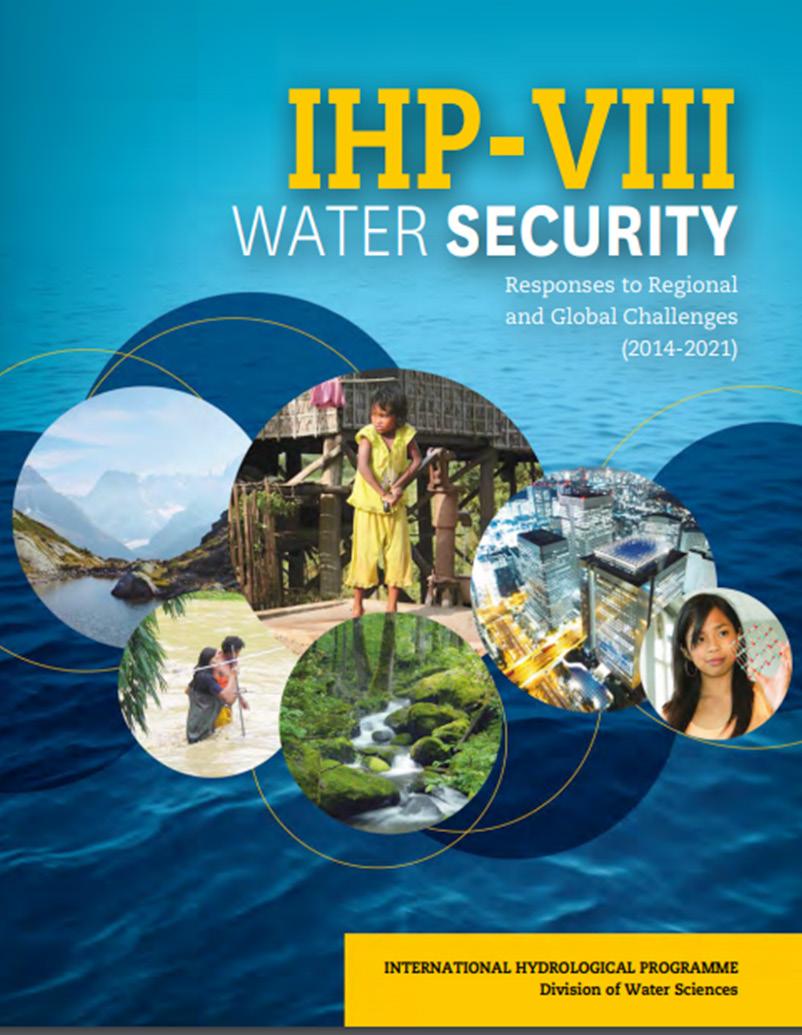
Therefore, for example, the central theme of the eighth IHP phase, currently under development, is “Water Security: Responses to Local, Regional and Global Challenges.” Its specific issues are water disasters and hydrological changes, groundwater in a changing environment, water scarcity and quality, water and human settlements of the future, ecohydrology, and water education and culture.
The eighth phase of ihp is almost concluding, and since it is a worldwide effort, the content, objectives, and goals of
the following ninth phase must already be assessed and an analysis and proposed to unesco member countries.
To prepare the ninth phase of the International Hydrological Program, coordinated by the ihp Secretariat, a group of experts from the Member Countries has been appointed, so that they can support the taskforce that is formulating the proposal. Dr. Polioptro F. Martínez Austria, director of the Chair, has been appointed as a subject-matter expert representing the Latin America and Caribbean regions.
Currently, a proposal for the ninth ihp phase is already being prepared. After it has been approved by the group participating in its development, it will be submitted for broad consultation to the unesco water family, namely unesco’s national committees, centers, and chairs.
La Universidad de las Américas Puebla convoca
A los egresados de Instituciones de educación superior nacionales y extranjeras interesados en ingresar, en agosto 2020, en los siguientes programas académicos pertenecientes al Programa Nacional de Posgrados de Calidad:
Doctorado en Ciencia de Alimentos
Doctorado en Ciencias del Agua
Doctorado en Creación y Teorías de la Cultura
requisitos generales:
A presentar junto con la Solicitud de Admisión al proceso de selección, en copias simples:
1. Certificado oficial de estudios o documento oficial en el que se dé constancia de haber obtenido un promedio mínimo de 8.5 en la licenciatura.
2. Copia simple de Título y Cédula Profesional de Licenciatura (En caso de no contar con estos documentos, tendrá que acercarse al área de Servicios Escolares para revisar la situación académica y poder continuar con el proceso).
3. Currículo en extenso, con fotografía reciente.
4. Carta de intención, en la que se argumenten las razones por las que ha elegido la institución, el programa de doctorado y el área de estudios.
5. Tres cartas de recomendación emitidas por profesores o autoridades vinculadas con el desempeño académico y/o profesional del aspirante, escritas en hojas membretadas y entregadas en sobre sellado (máximo un año de antigüedad).
6. Comprobante de resultados del examen EXADEP con puntaje mínimo de 570 o GRE con puntajes mínimos de 150 en razonamiento verbal, 130 en razonamiento cuantitativo y 3.5 en redacción analítica. (La vigencia de los comprobantes no debe ser mayor a 5 años).
7. Comprobante del examen TOEFL Institucional (puntaje mínimo 550) o cualquiera de los siguientes: TOEFL IBT (puntaje mínimo 79), IELTS (puntaje mínimo 6), o Cambridge English: Advanced (CAE). La vigencia del comprobante no debe ser mayor a 2 años.
Los interesados que hagan su solicitud por vía remota, deberán enviar en un solo correo la documentación completa en formato digital (PDF). Todos los interesados que hayan aprobado las evaluaciones deberán realizar los trámites de ingreso y los trámites relativos a su beca requeridos por la Universidad ante las instancias correspondientes. Una vez que los interesados hayan completado satisfactoriamente todos los trámites, su status será de admitido al Doctorado correspondiente y deberán dedicar tiempo completo a sus estudios y actividades de investigación previstas en su plan de estudios.
requisitos adicionales
Los siguientes requisitos son necesarios para aquellos interesados en ingresar al Doctorado en Creación y Teorías de la Cultura:
1. Certificado oficial de estudios de maestría o su equivalente con un promedio mínimo de 8.5 y constancia de título de grado que muestre el promedio.
2. Copia simple de Título y Cédula profesional de Maestría (En caso de no contar con estos documentos, tendrá que acercarse al área de Servicios Escolares para revisar la situación académica y poder continuar con el proceso).
3. Tesis de maestría o en su defecto un trabajo extenso escrito (35 págs).
4. Presentación del protocolo del proyecto de Investigación a desarrollar durante el doctorado.
procedimiento (consta de 3 etapas)
Etapa Inicial
Presentar su Solicitud de Admisión y documentación mencionada en Requisitos
Generales y Requisitos Adicionales, de acuerdo al doctorado de interés, en la:
Dirección de Investigación y Posgrado
Oficina NE 201
Universidad de las Américas Puebla
Ex Hacienda Santa Catarina Mártir
Cholula Puebla · C.P. 72810
Doctorado en Sistemas Inteligentes
Doctorado en Biomedicina
se puede solicitar directamente al correo electrónico antes señalado.
1. Una vez analizada la solicitud y los documentos que la acompañan, la Dirección de Investigación y Posgrado procederá a informar al Coordinador del Doctorado correspondiente, quien agendará una cita directamente con el solicitante.
Etapa Académica
1. El solicitante acudirá el día y la hora fijada con el Coordinador del Doctorado, quien le informará las líneas de investigación y tutores disponibles, así como el procedimiento a seguir.
2. Al finalizar la etapa académica los aprobados, serán notificados por la Dirección de Investigación y Posgrado para continuar con la etapa administrativa.
Etapa Administrativa
1. Los candidatos presentarán ante la Dirección Escolar la documentación complementaria que esta área les indique.
2. Una vez que esta Dirección apruebe toda la documentación, el candidato cambiará su status a admitido y será notificado por Dirección Escolar.
becas
Todos los candidatos admitidos contarán con una Beca Académica UDLAP Investigación que cubre la colegiatura y manutención mensual durante todo el programa, esta última en caso de no contar con otra beca que la cubra. No existe la posibilidad de ingresar o permanecer en el doctorado sin contar con la Beca Académica UDLAP Investigación. En el caso de estudiantes extranjeros que hayan sido aceptados a alguno de los doctorados, deberán contar con visa de estudiante tramitada en su país de origen.
En el caso de los solicitantes a Becas de Excelencia del Gobierno de México para Extranjeros, estos deberán apegarse a los lineamientos de la convocatoria vigente de la Secretaría de Relaciones Exteriores, así como a los tiempos y formas del proceso de admisión descrito en la presente convocatoria.
fechas
Inicio
BOLETÍN DE LA CÁTEDRA UNESCO EN RIESGOS HIDROMETEOROLÓGICOS
NEWSLETTER OF THE UNESCO CHAIR ON HYDROMETEOROLOGICAL RISKS
EDITORIAL COORDINATIONS
Editor
Polioptro F. Martínez Austria
Style correction
Aldo Chiquini Zamora
Andrea Garza Carbajal
Editorial design
Andrea Monserrat Flores Santaella
The unesco Chair on Hydrometerological Risks Newsletter is a quarterly publication which reports on the activities of the Chair and its members, unesco news related to it, as well as general information on disasters and hydrometeorological risks. It is elaborated by the Universidad de las Américas Puebla. Ex hacienda Sta. Catarina Martir s/n. C. P. 72810, San Andres Cholula, Mexico.
The authors are responsible for the choice and presentation of the opinions contained in this newsletter. Likewise, of the opinions expressed therein, which are not necessarily those of UNESCO and do not commit the Organization.